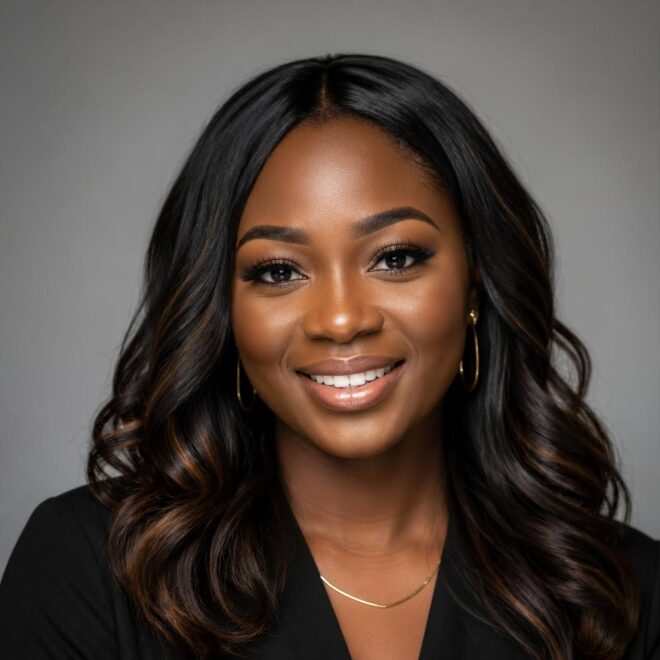


Locs already bring texture to the table. A butterfly braid ponytail takes that texture and gives it shape, lift, and a little movement around the edges, which is why the style looks so good on hair that already has body.
The thing people miss is that the braid itself is only half the story. On locs, the base matters just as much — sometimes more — because the ponytail has to sit cleanly, hold its weight, and stay kind to the hairline. Pull too tight and the whole style looks strained. Leave it too loose and the braid loses its shape before lunch.
That balance is the sweet spot. Some versions lean high and bold, some sit low and easy, and some bring in beads, cuffs, or color so the ponytail feels dressed up without getting fussy. I like styles that still look good when a few locs shift out of place, because that’s real life. Hair moves. People move. The style should handle it.
The first one starts at the crown, where locs can get a lot of lift without turning the head into a hard shape. That’s the version I’d hand to anyone who wants the look to show up fast.
1. High Crown Butterfly Braid Ponytail
A high crown ponytail is the fastest way to make locs look intentional. The placement opens up the face, shows off the length, and gives the butterfly braid loops enough room to breathe instead of collapsing into the neck.
Why the High Version Works So Well
Locs already have weight, so putting the ponytail high changes the whole silhouette. The braid sits up where it can be seen, and the lifted base keeps the style from feeling heavy. If you add braiding hair, keep the extra volume focused in the ponytail itself, not the roots.
A clean elastic at the crown and a wrap of hair around the base make the difference between “done” and “pulled together in a hurry.” I’d keep the base snug, not tight. Snug holds; tight irritates.
Quick Build Note
- Best on: medium to long locs
- Good add-ons: 1 to 2 bundles of pre-stretched braiding hair
- Parting: no part, or a soft center part
- Finish: 2 to 4 gold cuffs or one wrapped loc around the base
Tip: If your locs are thick, split the ponytail into two anchor sections before adding the braid. It keeps the style from sagging by midday.
2. Low Nape Butterfly Braid Ponytail
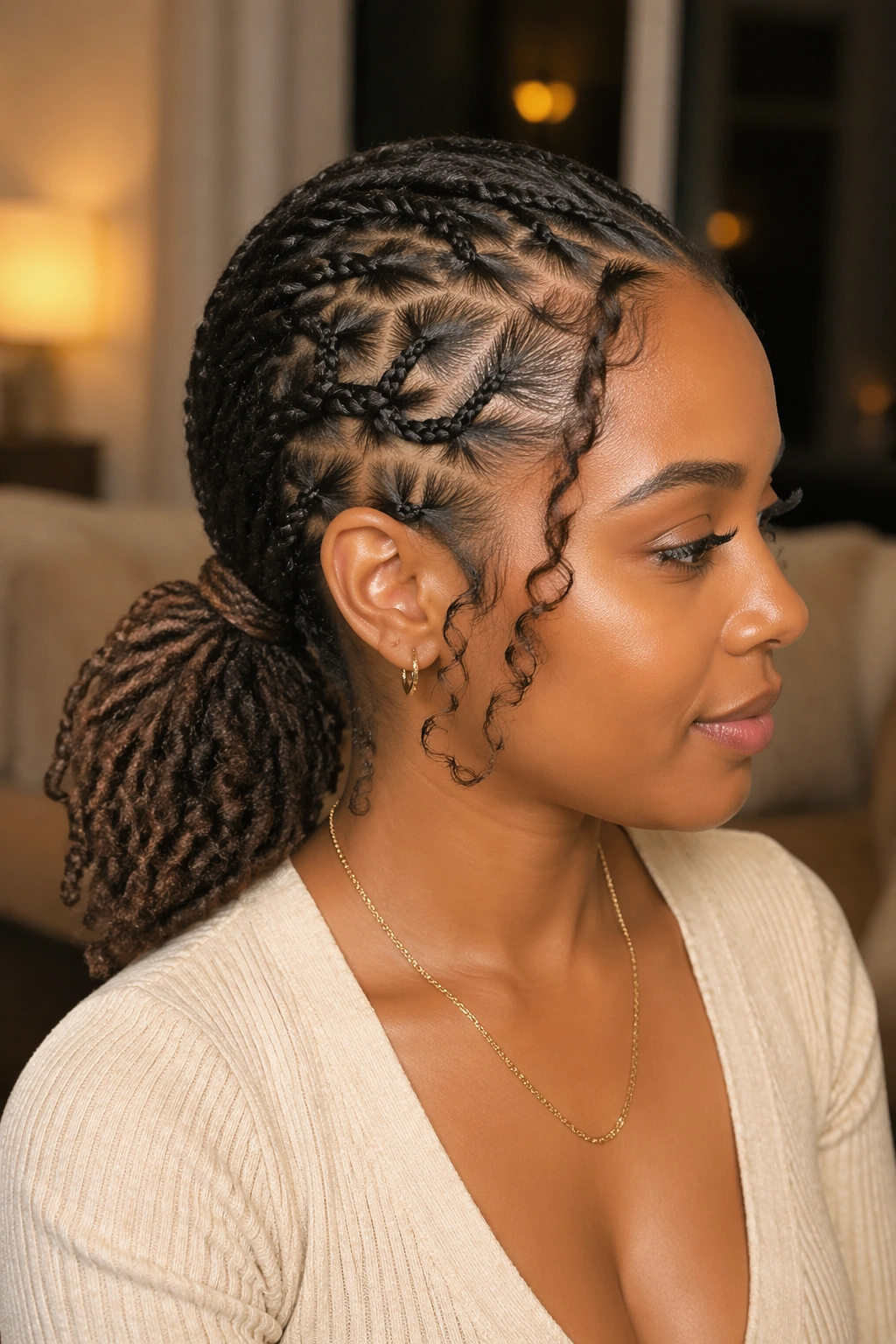
Low ponytails do the quiet work. They are easier on the scalp, easier to sleep in, and easier to keep looking neat when the locs are dense or long.
The nape placement gives the style a calmer shape. Instead of stacking all the weight on the crown, you let the ponytail rest lower, where it can hang straight and move a little more naturally. That matters on locs, because too much height can make the style feel top-heavy fast. A low base also hides a lot of the mechanics, which I like. Not every hairstyle needs to announce itself.
If you want the butterfly braid effect to read clearly, build in more looped texture through the length and keep the front simple. A soft side part or clean middle part is enough. The braid can do the talking; the base does not need to compete.
3. Side-Swept Butterfly Braid Ponytail
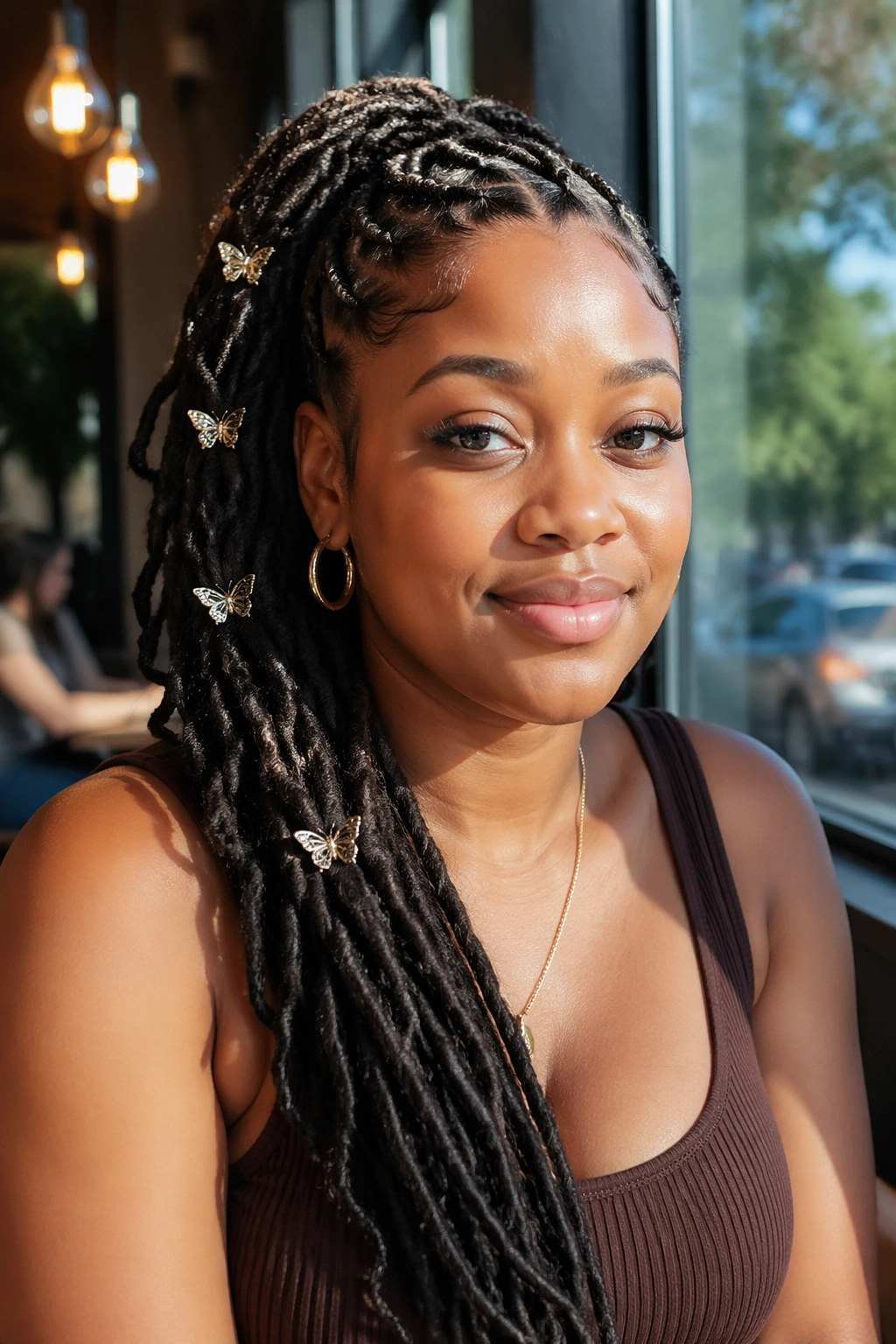
Why does a side-swept version look softer than a straight-back one? Because the diagonal line changes the whole mood. It breaks the symmetry, brings the braid over one shoulder, and makes the locs feel a little more fluid.
That angle is especially nice when your locs are medium to long and you want face-framing without cutting actual face-framing pieces. The side sweep gives the same kind of movement. It also keeps the ponytail from sitting right in the center of the back, which can feel plain on very full locs. A deep side drape makes the braid look deliberate instead of just gathered.
How to Wear It
Ask for a part that begins a little off center and moves toward the high point of one brow. Keep the ponytail base secure enough that the braid can rest on one shoulder without slipping. If you add accessories, put them on the side that faces out. That is the part people notice first.
4. Half-Up Butterfly Braid Ponytail
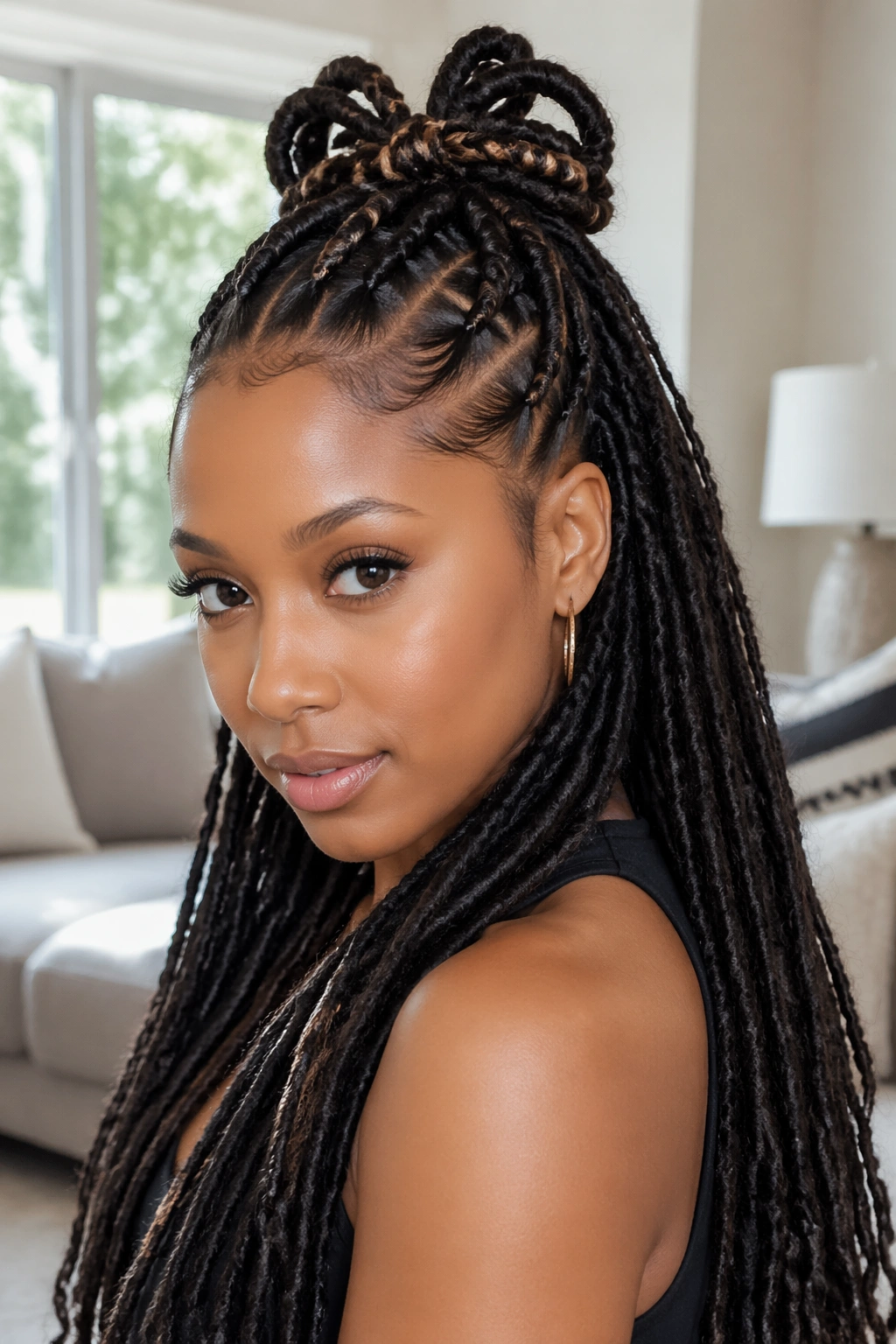
If you want your length on display but still want the braid shape, the half-up version is the one to reach for. It gives you the lift at the top and leaves the rest of the locs down, which feels easy without looking unfinished.
I’ve always liked this on medium-length locs, especially when the ends are healthy and have a little swing. The top section pulls the eye upward, then the loose length keeps the style from feeling too formal. It works for daytime, dinners, and those awkward in-between events where you want to look styled but not overdone.
Keep the Balance Right
- Take the top section from temple to temple
- Leave at least one-third of the locs down
- Use a satin-covered elastic or a gentle snag-free band
- Add 1 or 2 butterfly loops near the crown so the top half has texture
- Leave the bottom section clean, or separate it with light loc jewelry
The whole thing hinges on proportion. If the top half is too small, the style looks accidental. If it is too big, you lose the relaxed feel that makes the half-up version worth wearing.
5. Sleek Center-Part Butterfly Braid Ponytail
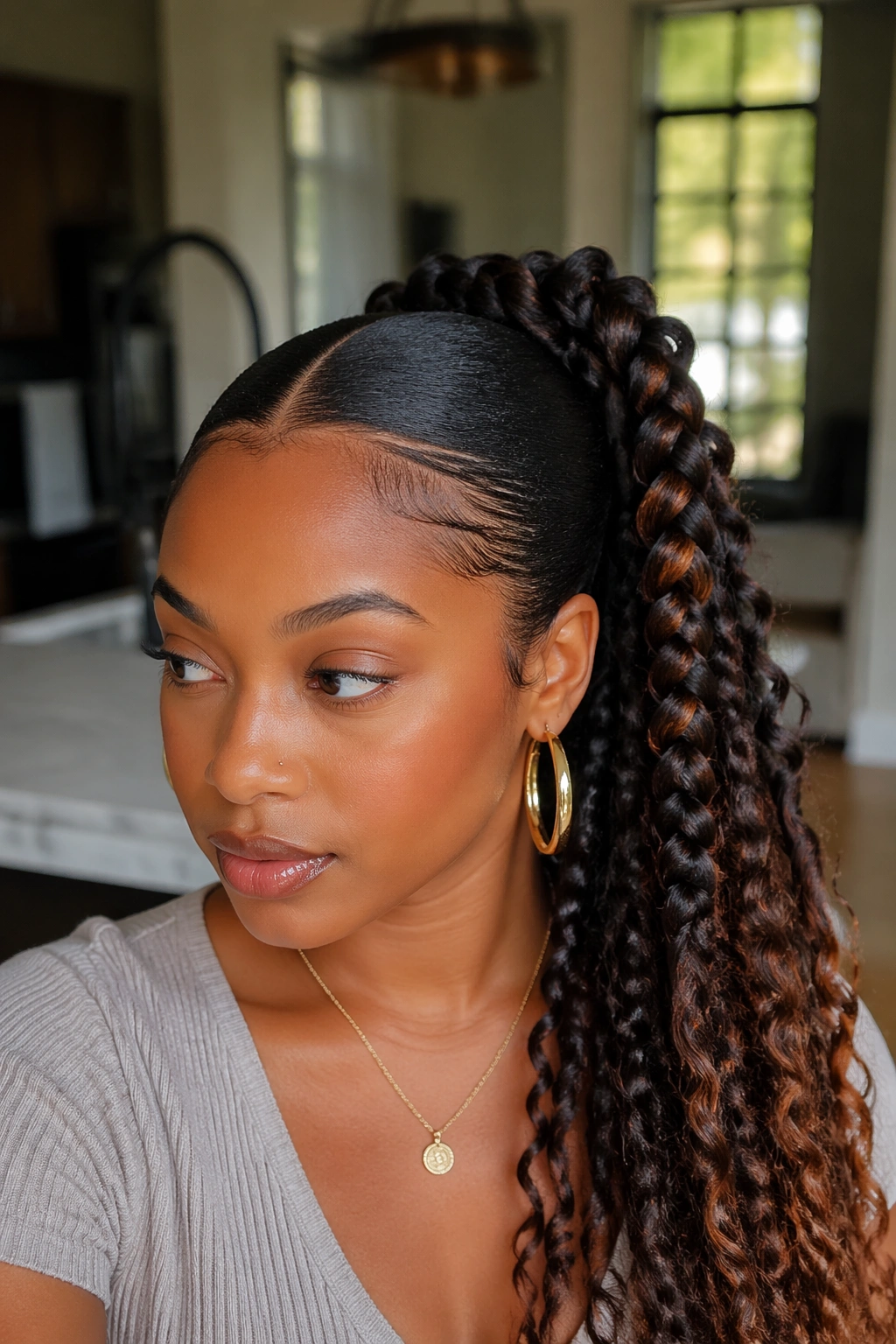
A center part changes the entire read of the style. Suddenly the ponytail looks cleaner, more balanced, and a little more polished, which is a nice contrast against the soft, looped texture of the butterfly braid.
I like this version when the locs are neatly retwisted and the roots are smooth enough to hold a straight part without fighting it. The middle line gives the braid a strong anchor, and the symmetry makes the ponytail feel composed. Clean part, soft braid, controlled finish. That combination works on the kinds of days when you want the hair to look sharp without looking stiff.
Keep the edges lightly laid, not lacquered down. Too much edge control can make locs look pasted to the scalp, and that usually ages the style in a bad way. A thin layer is enough. The braid should still feel like hair, not plastic.
6. Deep Side Part Butterfly Braid Ponytail
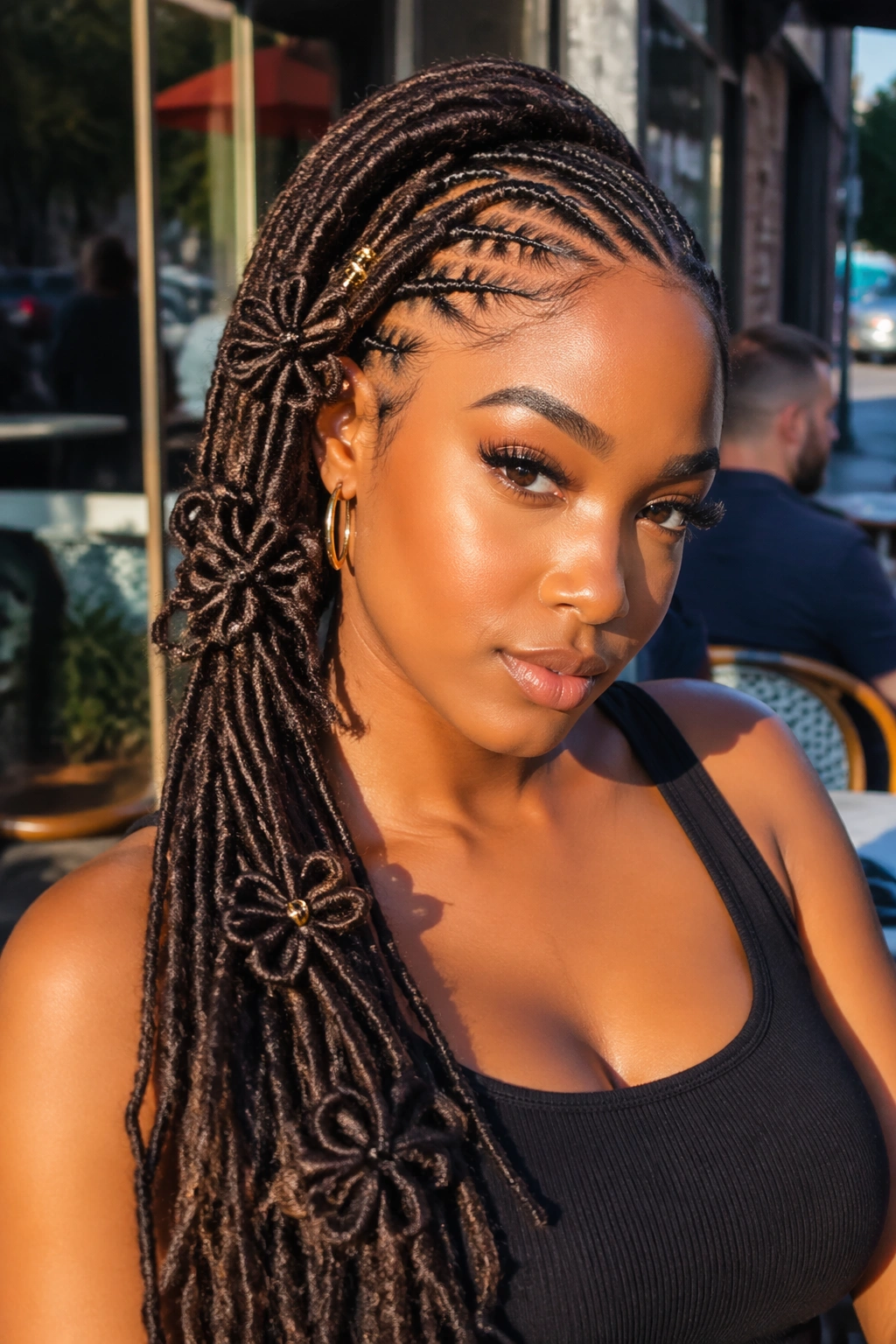
Unlike a center part, a deep side part tilts the whole style toward movement. It is a good choice when you want a little drama but do not want the ponytail to be loud about it.
The part gives more height on one side and a softer fall on the other, which flatters round and square face shapes in a way a straight middle part often does not. It also helps if your locs are very full. A deep side part breaks the bulk into a shape that feels intentional, not crowded. I prefer this on medium to long locs because the sweep has room to show.
If you wear earrings, this is the version that lets them play along. The braid sits off-center, the locs slide over one shoulder, and the whole look feels less formal than the center-part version.
7. Wrapped Base Butterfly Braid Ponytail
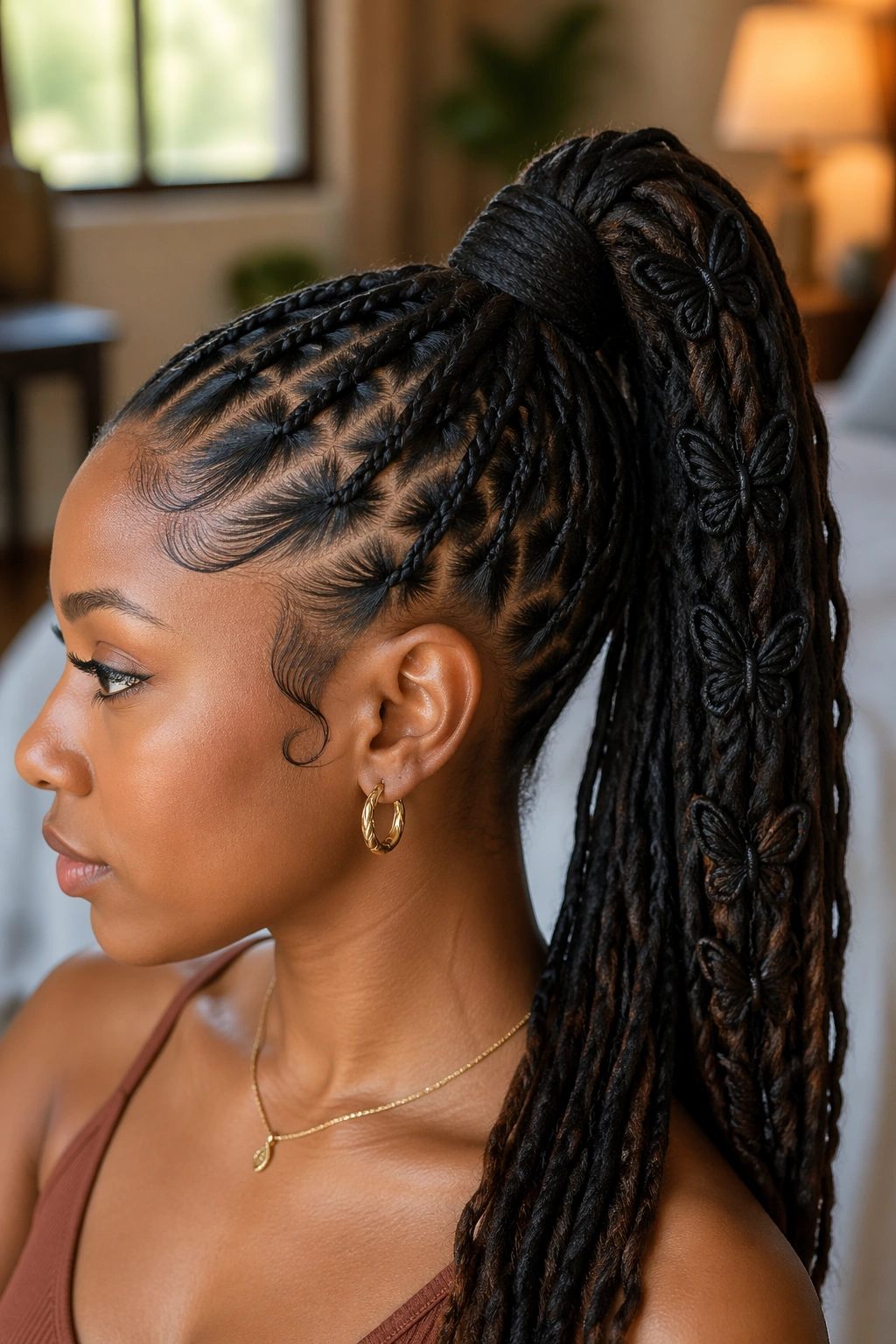
The wrap around the base is a small thing, but it changes everything. It hides the elastic, smooths the transition from scalp to ponytail, and makes the style look finished instead of tied up.
On locs, I like to wrap with either a section of loc itself or a slim piece of braiding hair that matches the shade closely. The goal is not to build a giant knot at the base. It is to create a clean column that holds the ponytail in place and makes the braid look like it belongs there. A wrapped base also spreads the visual weight, which helps if the locs are thick.
One thing that saves this style: pin the wrap underneath the ponytail instead of tucking it on the side. Side tucks can pop out. Underneath stays quieter.
8. Braided Bang Butterfly Braid Ponytail
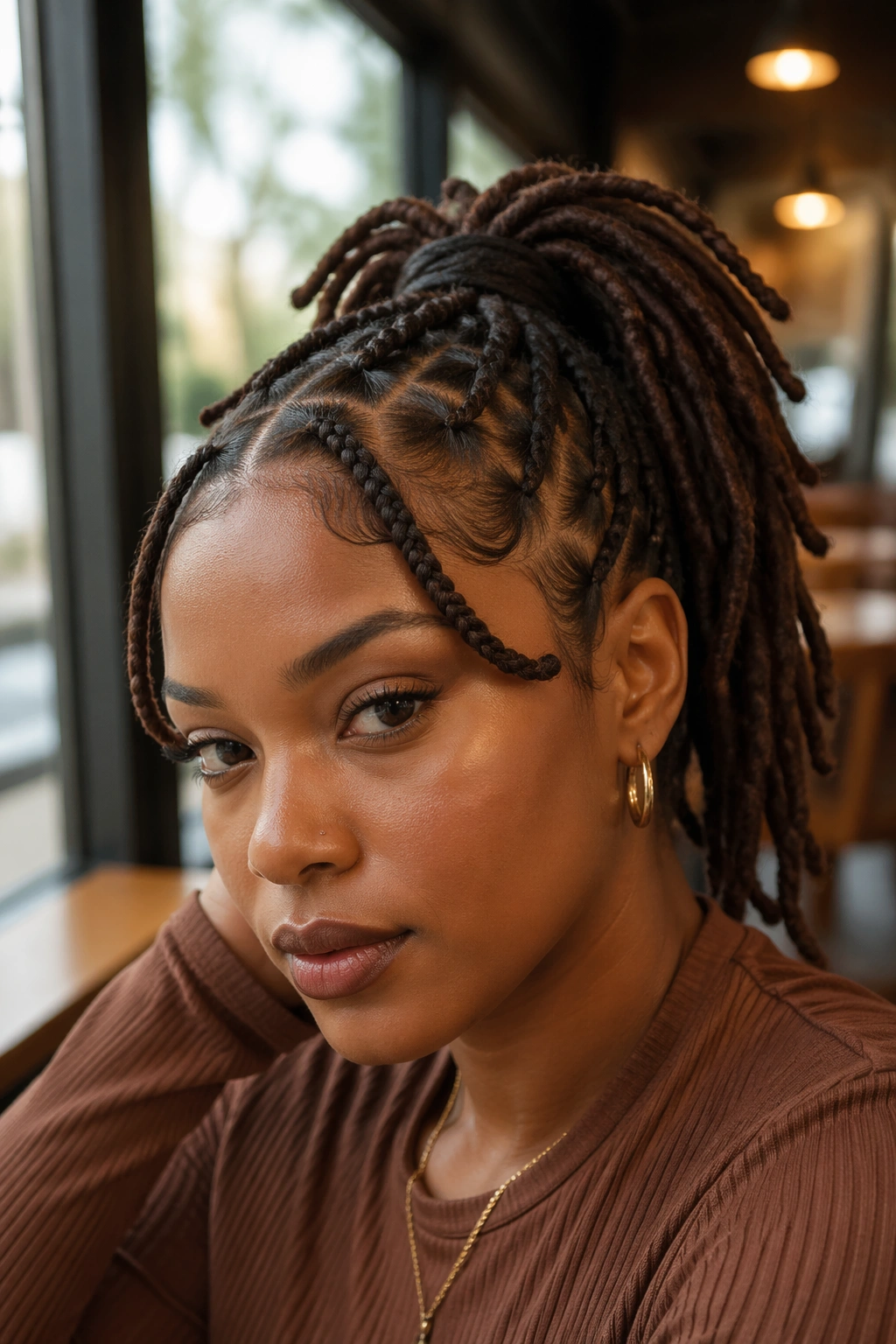
You know that front braid that changes the whole face? This is that idea, folded into a ponytail. The braided bang frames the forehead and softens the hairline, which is handy if you want more face detail without leaving a full curtain of locs out.
A braided bang works best when the front section is narrow enough to sit close to the scalp but not so tight that it feels decorative only. Keep the braid loose enough to bend. If it sits like a strip of rope, the look gets harder than it needs to be.
What to Watch For
- Leave a little space between the braid and the hairline
- Use two bobby pins if the bang wants to drift
- Keep the bang braid shorter than the ponytail so the eye moves back
- Add one cuff or bead near the end if you want a small focal point
This style does a good job of taking the edge off a plain ponytail. The front detail gives the braid a story.
9. Bubble-Section Butterfly Braid Ponytail
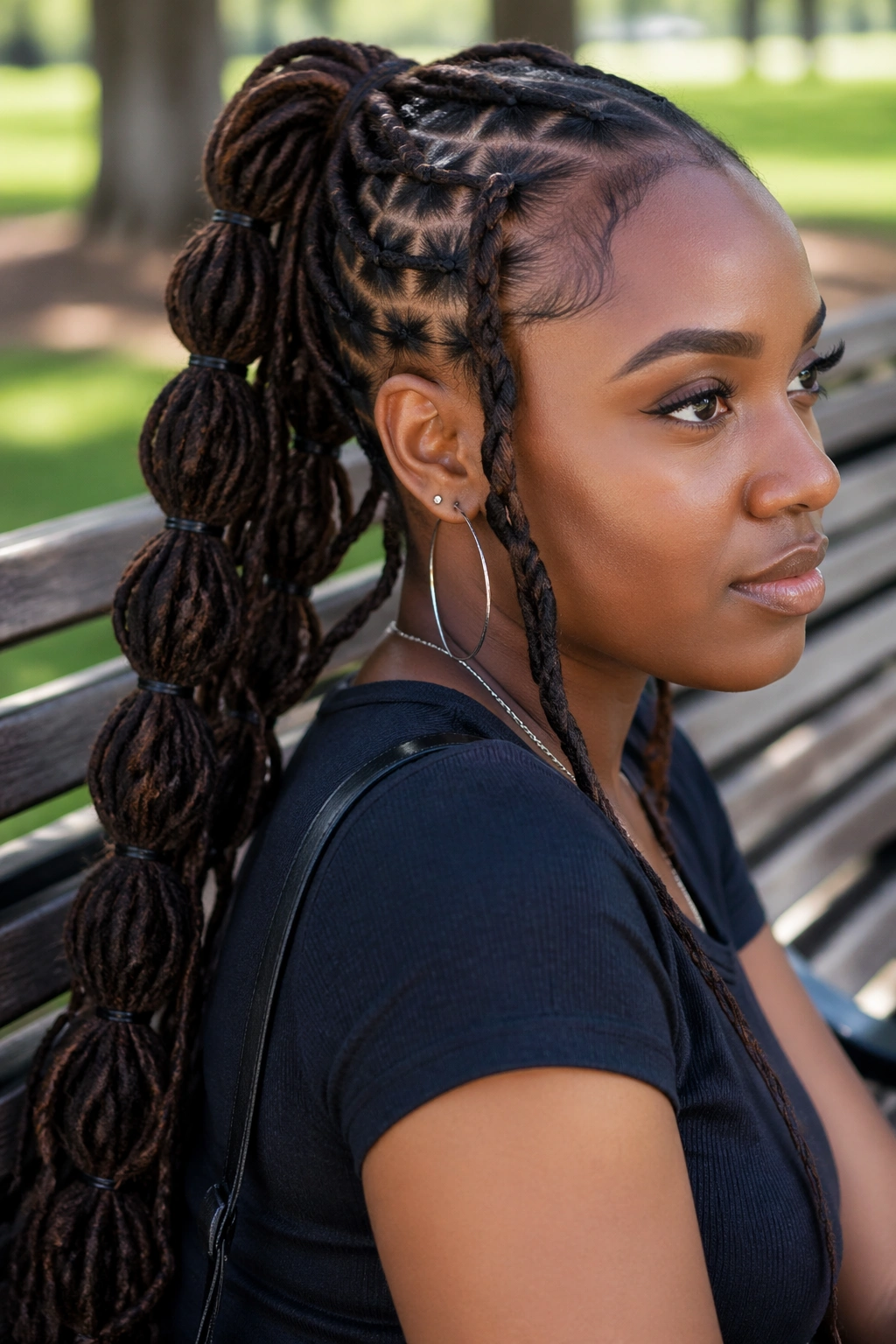
Can butterfly braid texture and bubble sections live together? Yes, and the result is one of the easiest ways to make locs look styled without loading them up with accessories.
The trick is spacing. Put small clear elastics every 3 to 4 inches down the ponytail, then gently pull each section apart until it looks rounded instead of flat. The “butterfly” softness comes from the loops and loosened texture between the bubbles. On locs, this works best when the ponytail already has some length, because the bubbles need room to stack.
How to Space the Bubbles
Use 3 to 5 sections on most medium-length ponytails. Fewer than that can look sparse; more than that can crowd the length. Keep the first bubble closest to the base slightly tighter, then loosen the lower ones more. That makes the ponytail taper in a way that feels natural.
This is one of those styles that looks more complicated than it is. Which, honestly, is half the fun.
10. Jumbo Butterfly Braid Ponytail
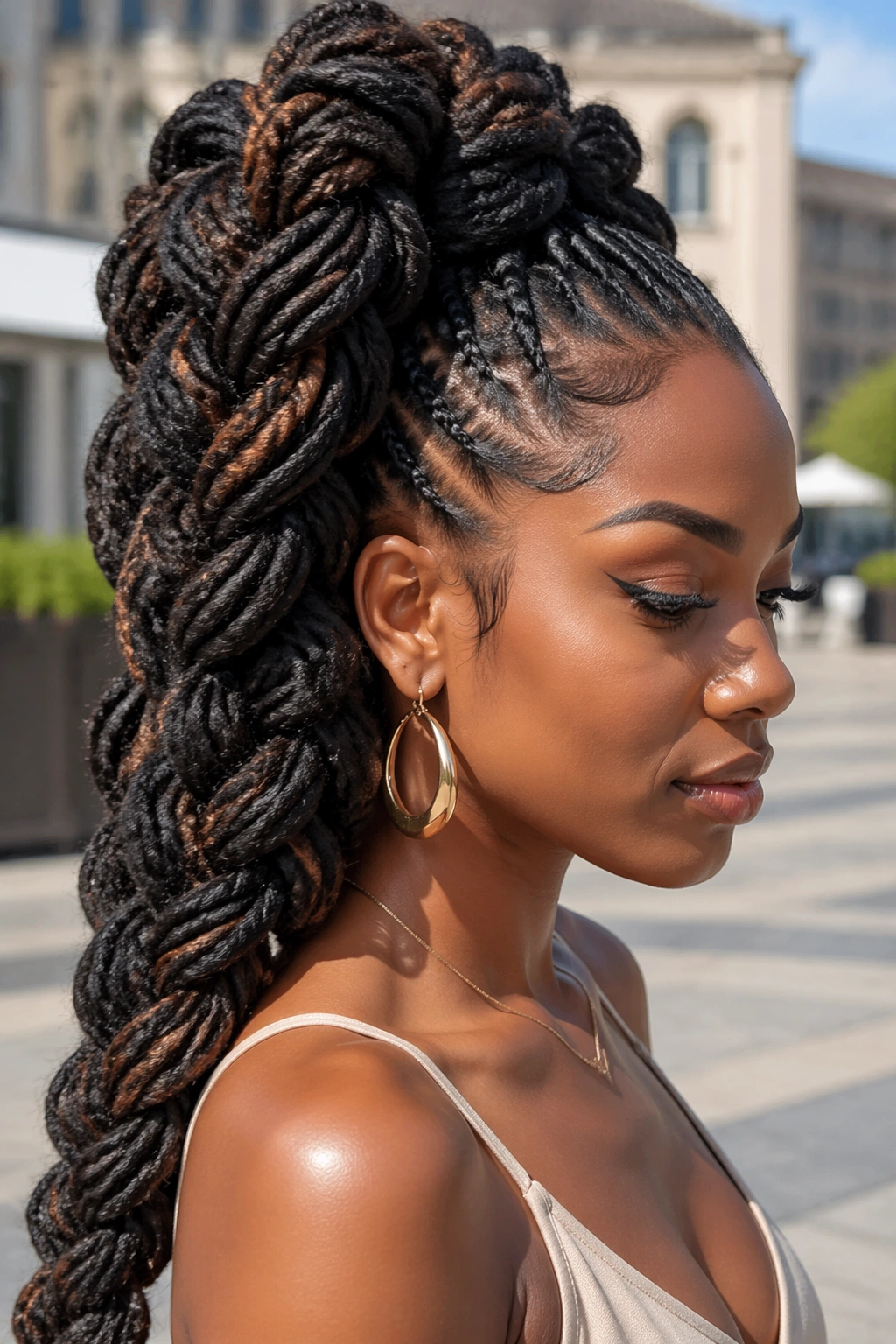
Jumbo braid sections are not subtle, and that is the point. They give locs a big, sculpted ponytail that holds its shape from across the room.
This version works best when the locs are already thick or when you want the ponytail to feel full without piling on a lot of accessories. Bigger braid sections create wider loops, which makes the butterfly texture easier to see. I like this for long locs because the size keeps the braid from disappearing into the length. Small braids can get lost in heavy hair. Jumbo sections stay visible.
The tradeoff is weight. A jumbo style can drag if the base is weak, so anchor it well and keep the crown balanced. Big shape needs a strong base. That is the whole game here. If the roots are tender, this is not the first version I’d pick.
11. Petite Butterfly Braid Ponytail
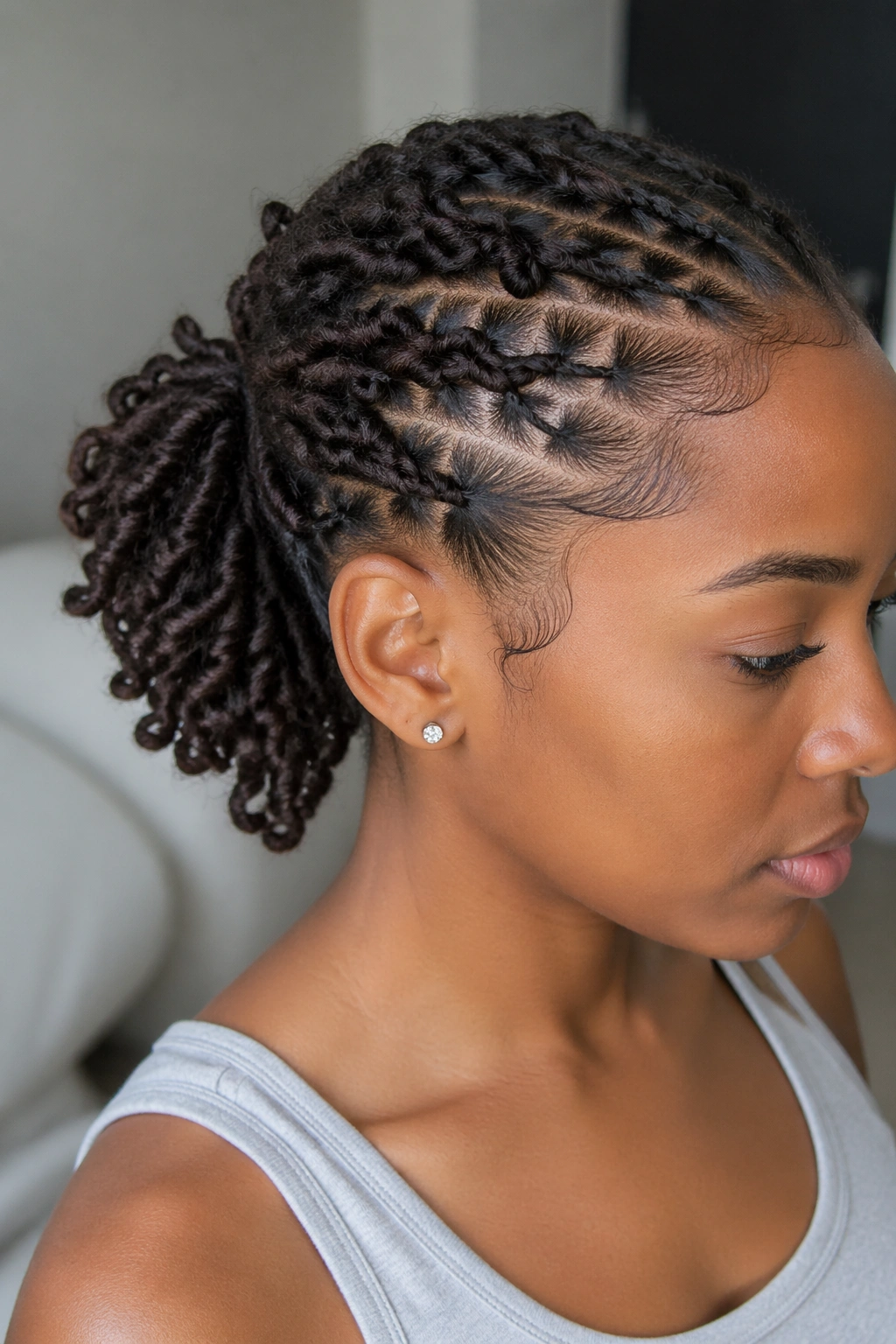
Petite loops do the opposite of the jumbo version. They make the style lighter, neater, and easier to wear when you do not want a lot of bulk sitting on your head.
I reach for this on finer locs, shorter locs, or days when the hair already feels full enough on its own. The small loops give texture without swallowing the length. That matters because locs can get heavy fast, and not every ponytail needs to look like it came with extra drama attached. Petite braids let the shape stay crisp.
Unlike jumbo sections, this version usually looks better with fewer accessories. A small cuff here and there is enough. Too many beads or clips can crowd the finer braid texture and make the ponytail feel busy. If you want the style to read cleanly, let the scale stay small and the parting stay neat.
12. Beaded Butterfly Braid Ponytail
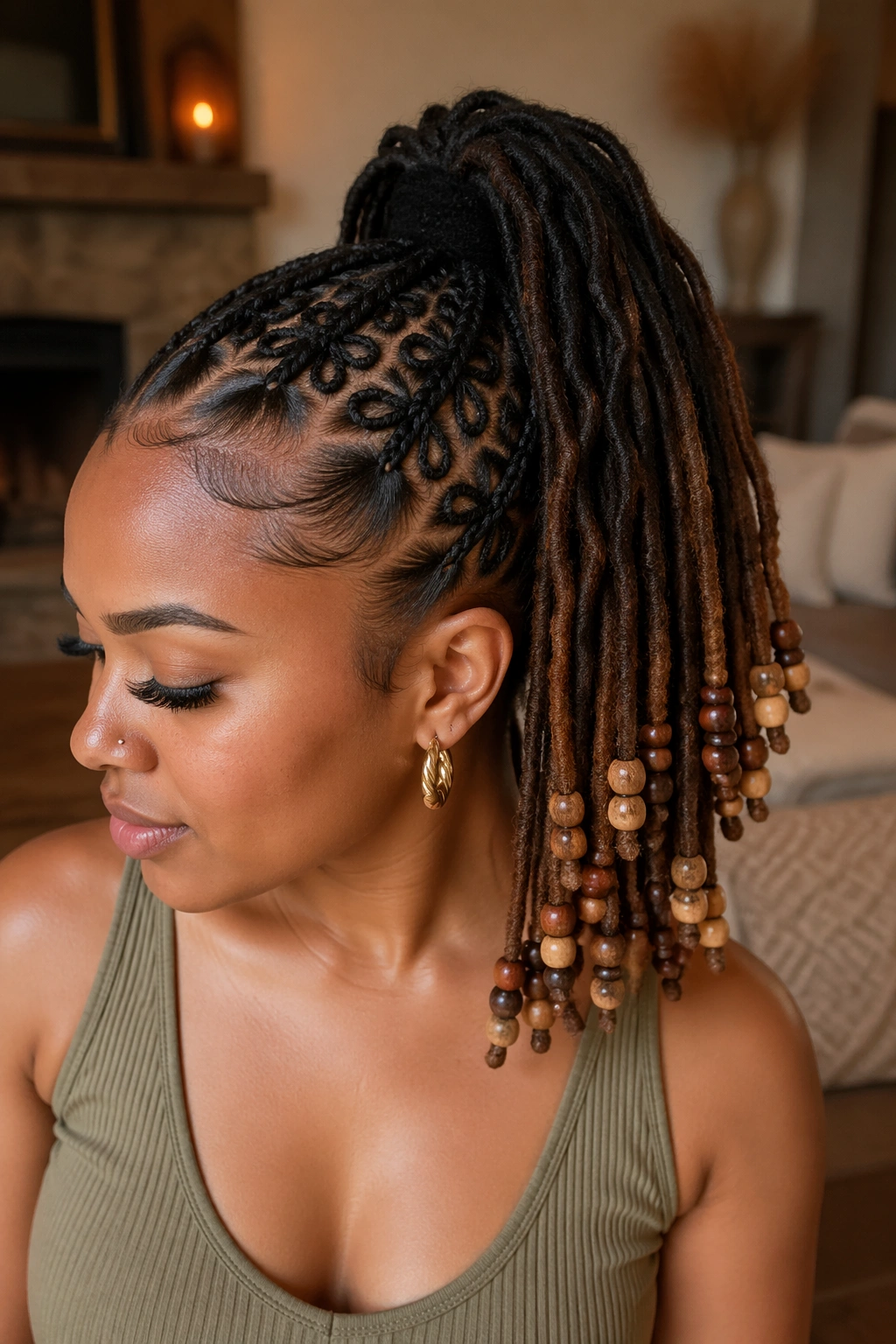
Beads do the styling work when the braid itself stays simple. That is why this version feels so easy to wear. The locs and braid give the structure, and the beads bring the movement.
Wood beads make the style feel earthy. Clear beads feel lighter. Matte black or deep brown beads disappear into the hair and work best when you want the shape, not the jewelry, to stand out. I like placing beads near the ends or in a staggered line through the outer sections, because too many clustered at the base can feel heavy and clunky.
A few practical things matter here:
- Keep bead weight even on both sides
- Use 3 to 6 beads total if the locs are medium thickness
- Choose bead holes wide enough for locs without scraping
- Stop before the ponytail starts to lean
The style looks best when the beads feel like punctuation, not decoration for its own sake.
13. Gold-Cuff Butterfly Braid Ponytail
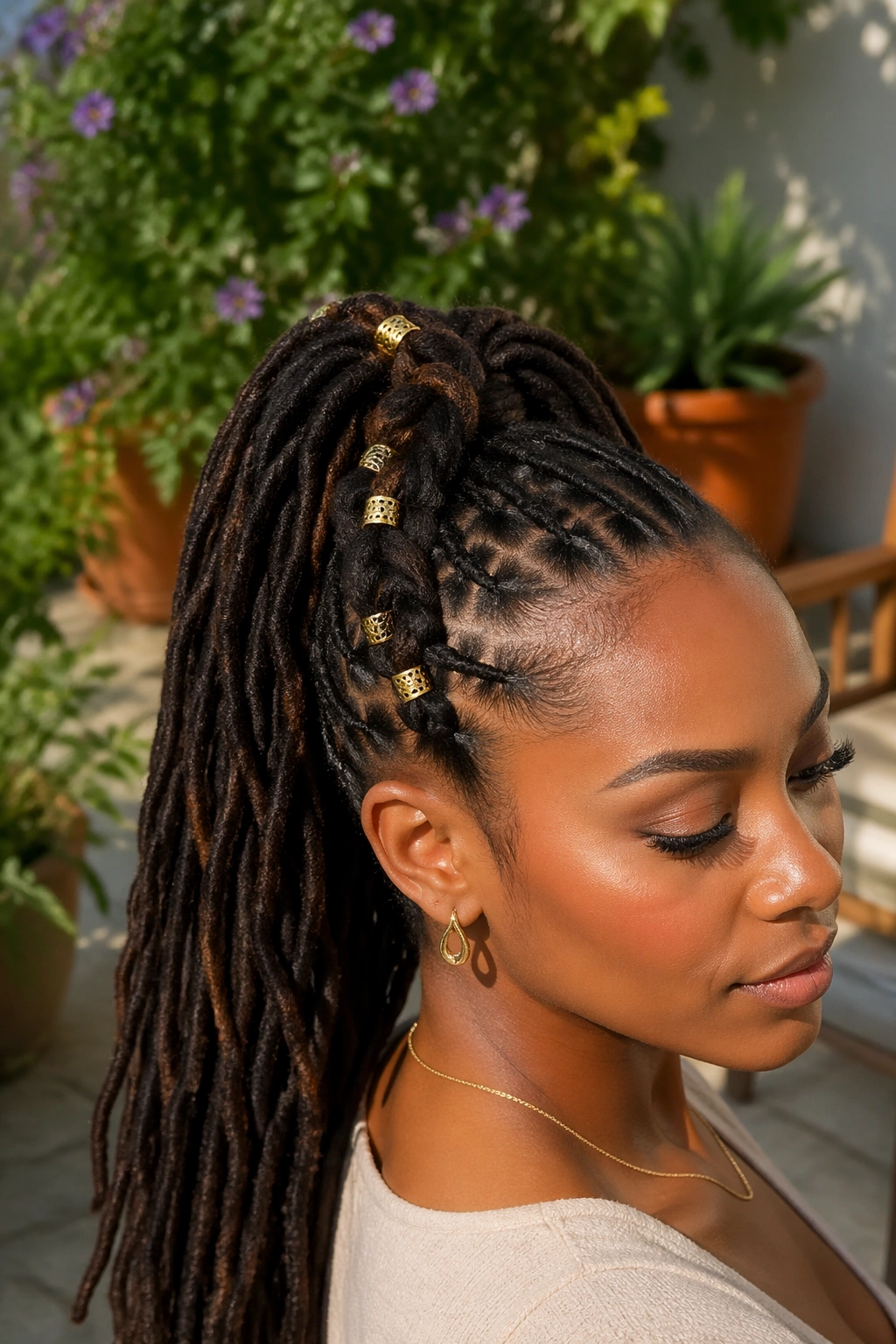
A few gold cuffs can make locs look finished in a way nothing else really does. Not because gold is flashy, but because the metal catches the braid pattern and gives the eye something to follow.
This is one of those styles where restraint matters. Three or four cuffs placed along the visible outer braids are usually enough. More than that can crowd the loops and make the ponytail feel overworked. I prefer warmer brass tones on dark locs; they look softer than bright yellow gold. On lighter locs, brushed gold reads cleaner than a shiny chrome finish.
Where the Cuffs Belong
- Place one near the base to frame the ponytail
- Put one or two through the middle sections
- Keep the ends free if the braid is already busy
- Use cuffs on the side that faces out when the ponytail rests on one shoulder
The cuffs should feel like accents, not armor.
14. Colored Extension Butterfly Braid Ponytail
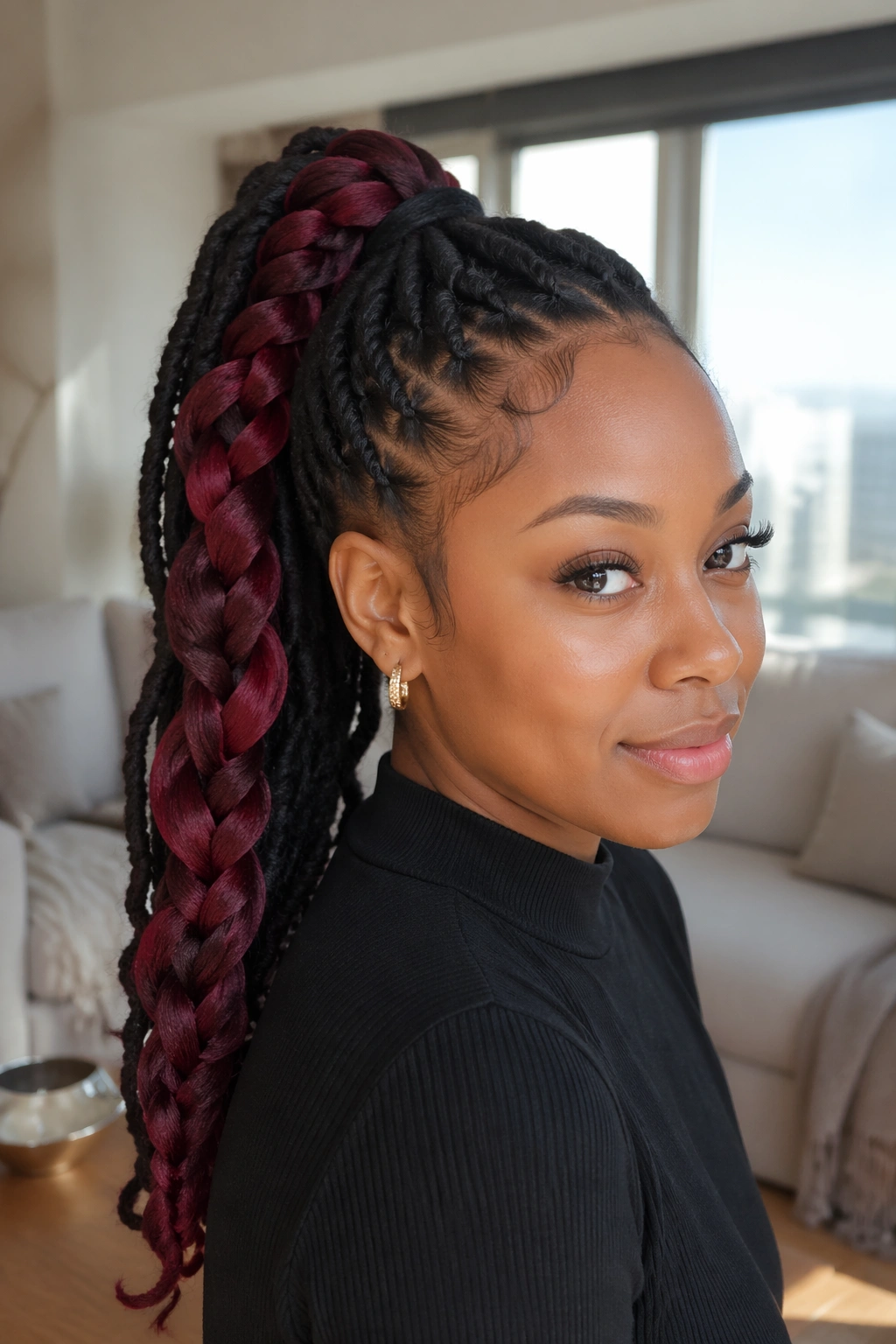
Want color without dyeing the locs themselves? This is the move. A butterfly braid ponytail gives you a place to add burgundy, honey brown, copper, or even soft blond pieces without changing the whole head.
I like color most when it stays in the braid and not at the roots. That keeps the scalp area calm and makes the style easier to wear for more than a day or two. A single shade across the ponytail looks cleaner than mixing three or four tones unless you are going for something loud on purpose. The braid loops show off the color well, especially when the added hair has a slightly different sheen from the locs.
If the locs are dark, a warm brown or cinnamon tone gives the best contrast. If the locs are already light, a deeper shade can add shape without making the style feel busy. Color works best when it supports the braid instead of fighting it.
15. Feed-In Crown Butterfly Braid Ponytail
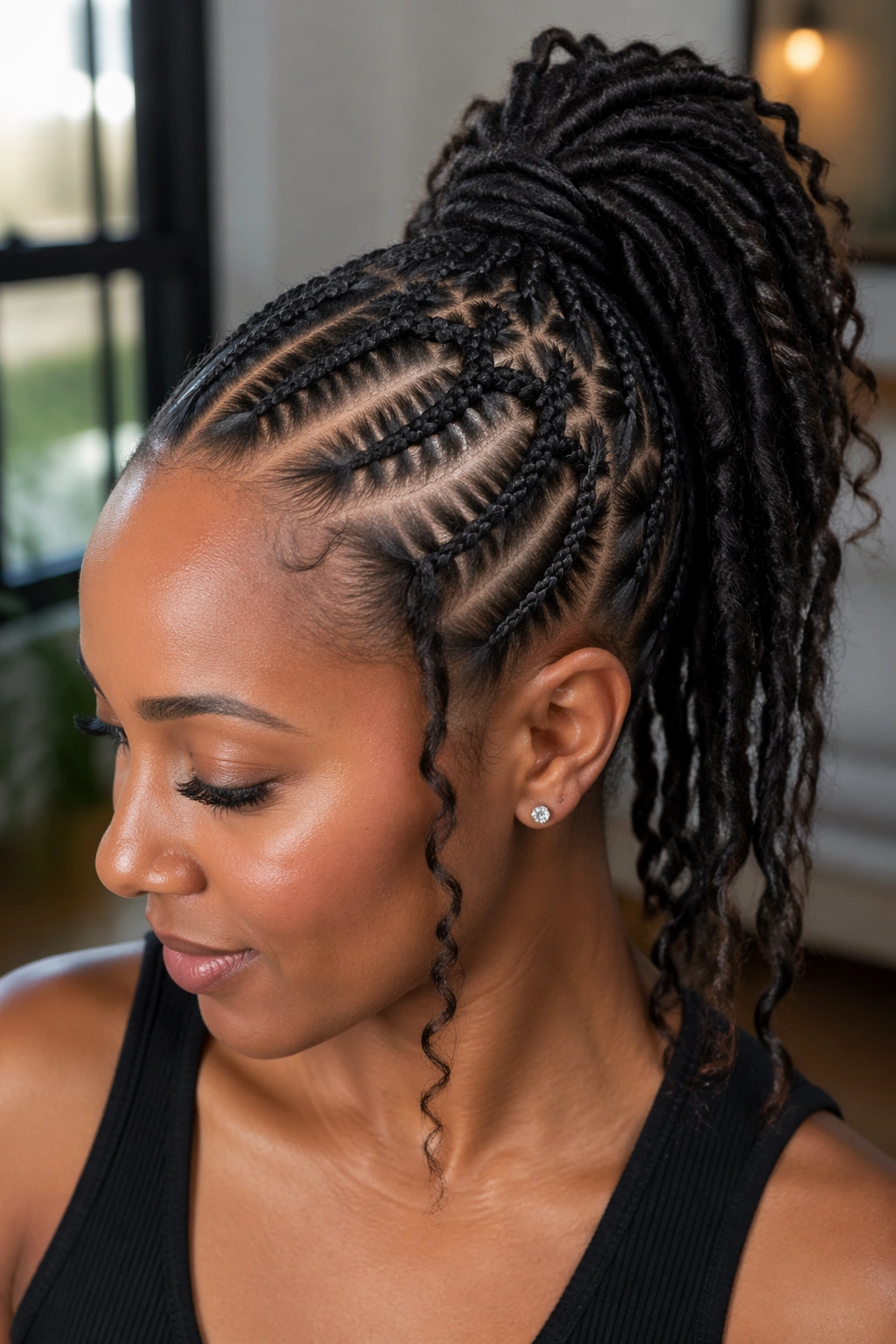
Feed-in braids are a good way to start a ponytail when you want the hairline to look smooth and the weight to spread out a little more. Instead of gathering everything in one hard spot, you feed small amounts of hair into the braid as it moves back.
On locs, that matters. The front sections can be full, and a feed-in pattern keeps the base from feeling like a single tug point. It also gives the crown more detail, which helps if the rest of the style stays simple. I like this on medium-density locs because the feed-in tracks can frame the ponytail without making the front look crowded.
Ask for two, three, or four feed-in rows depending on how much detail you want. Fewer rows keep it clean. More rows turn the front into part of the design. Either way, the base should feel balanced across the scalp. That’s the part people forget when they chase volume first.
16. Twisted Front Butterfly Braid Ponytail
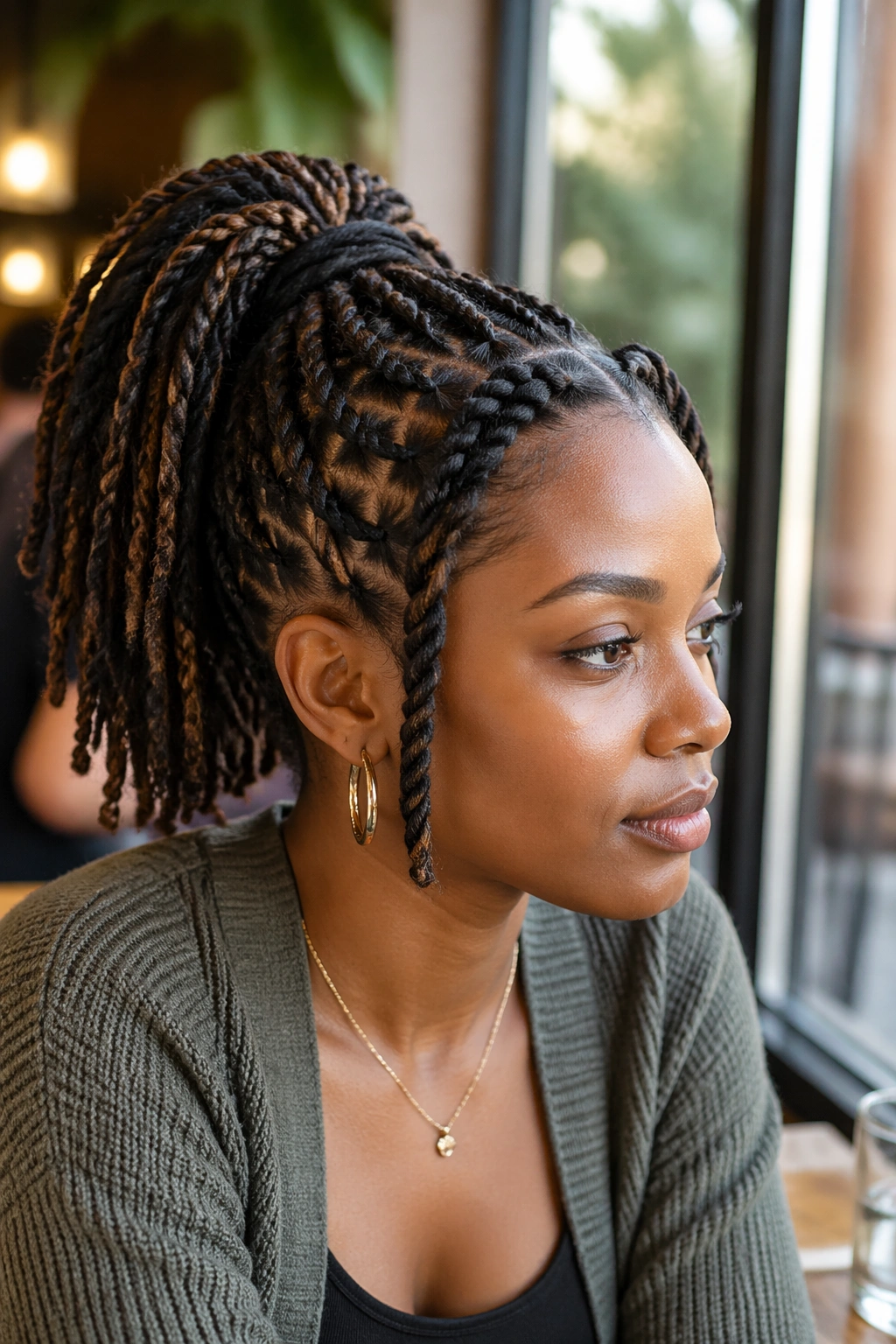
A twisted front gives the ponytail a softer start than a full braid across the hairline. It also takes less time, which matters more than people admit.
The look is simple: two sections at the front twist back toward the ponytail while the rest of the locs gather into the butterfly braid behind them. The effect is tidy without feeling severe. It works especially well when the locs are medium length and you want something you can wear to work, dinner, or a weekend event without changing the whole outfit to match.
Unlike a flat braid across the front, twists create a little roundness at the temples. That roundness softens the face and keeps the style from looking too hard. If your edges are sensitive, this is a smarter choice than a tight front braid. Less pull, same shape. That’s why it earns a spot.
17. Double Ponytail Butterfly Braid Look
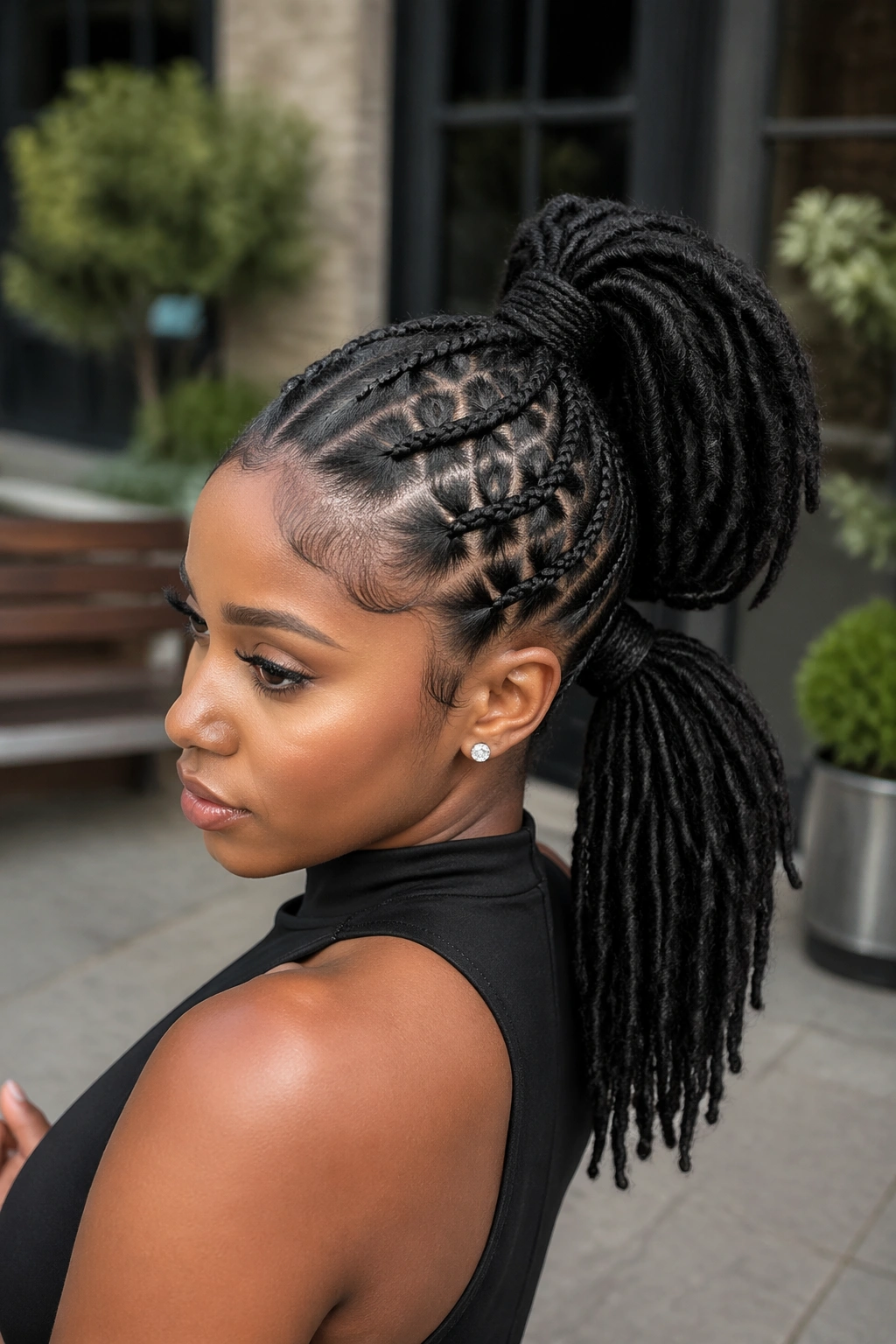
When one ponytail feels too heavy, split the story into two. A double ponytail look keeps the hair off the neck while adding shape in layers, and locs can carry that structure better than most textures.
You can stack the ponytails — one high and one just below it — or place them side by side for a more playful read. I prefer the stacked version when the locs are long, because it keeps the silhouette tall without making the crown look packed. The second ponytail gives the butterfly braid more movement and breaks up the weight.
This style works well for people who love the idea of a ponytail but want something less expected. It also helps if the locs are very full and one large ponytail starts to feel too dense. Two smaller bases can be easier to manage than one giant one. That part is practical, not glamorous, but it matters.
18. Mohawk Butterfly Braid Ponytail
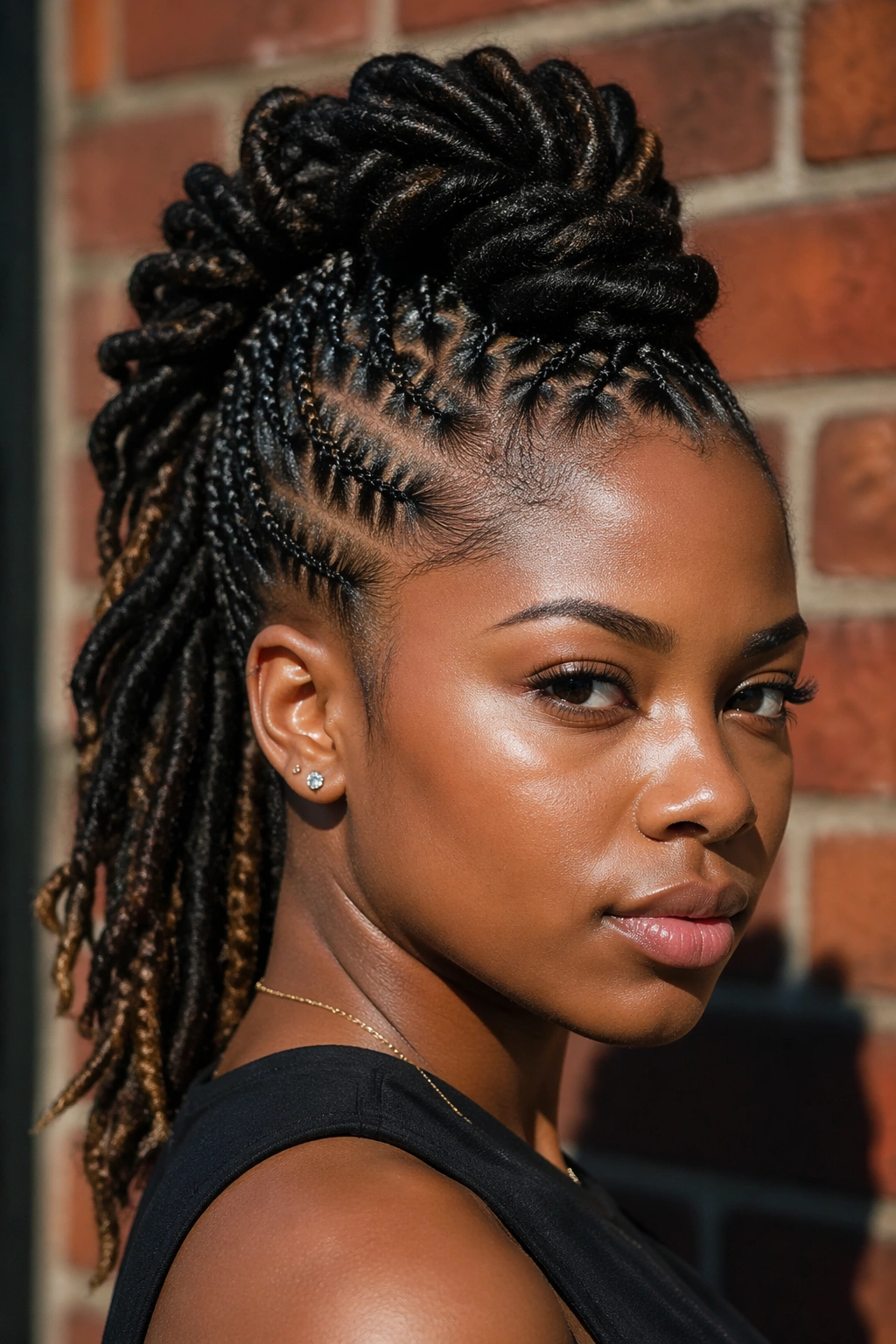
A mohawk version gives the sharpest shape in the whole group. The sides are smoothed down or braided close, the center ridge stays raised, and the ponytail sits right along that middle line like it means business.
I like this when the goal is attitude. Not chaos. Attitude. The height through the center makes the butterfly braid feel bigger without needing a huge amount of extra hair. It also works well on locs because the natural thickness of the hair supports that ridge better than fine loose hair usually does.
What the Shape Needs
- Clean side panels that stay close to the scalp
- A firm center anchor
- A ponytail base that sits high enough to keep the ridge visible
- Light accessories, because the shape is already doing the work
Warning: if your hairline gets sore easily, do not force this style too often. The look is sharp, but the tension should never be.
19. Waist-Length Butterfly Braid Ponytail
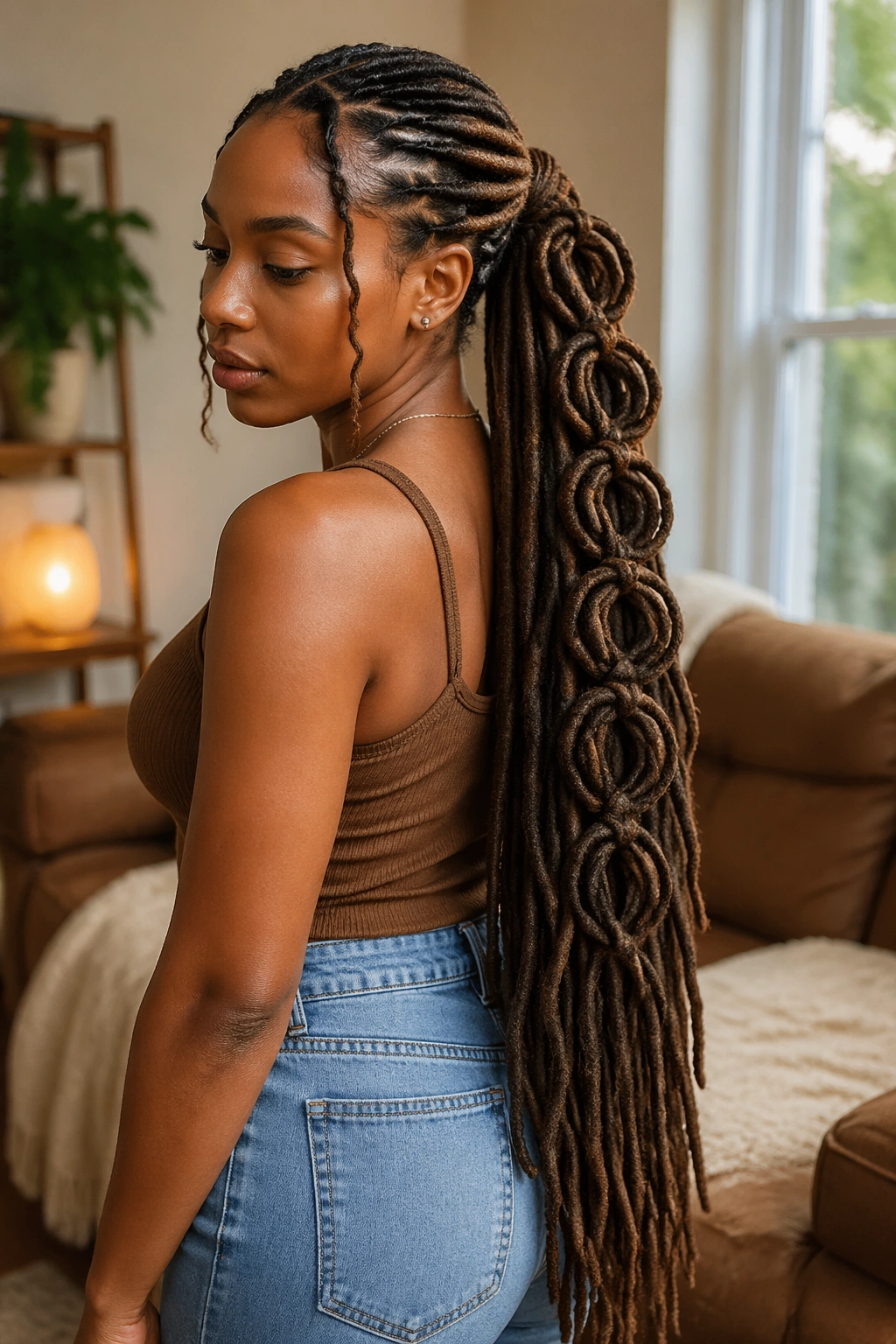
What changes when the locs are already waist-length? Weight. A lot of it. That’s why the longest styles need the calmest bases.
A low or mid placement usually works better than a high crown on waist-length locs, because it keeps the center of gravity down. The butterfly braid loops can still run through the ponytail, but the base has to hold without sliding or pulling. I’d keep the front simple and avoid overcrowding the braid with too many cuffs or beads. The length already gives you enough drama.
Long locs also benefit from a wider elastic or two anchor ties. One tiny tie at the base can dig in and make the style feel unstable. If you can feel the weight shifting every time you move your head, the support is too small. The style should sit, not drag.
20. Shoulder-Length Butterfly Braid Ponytail
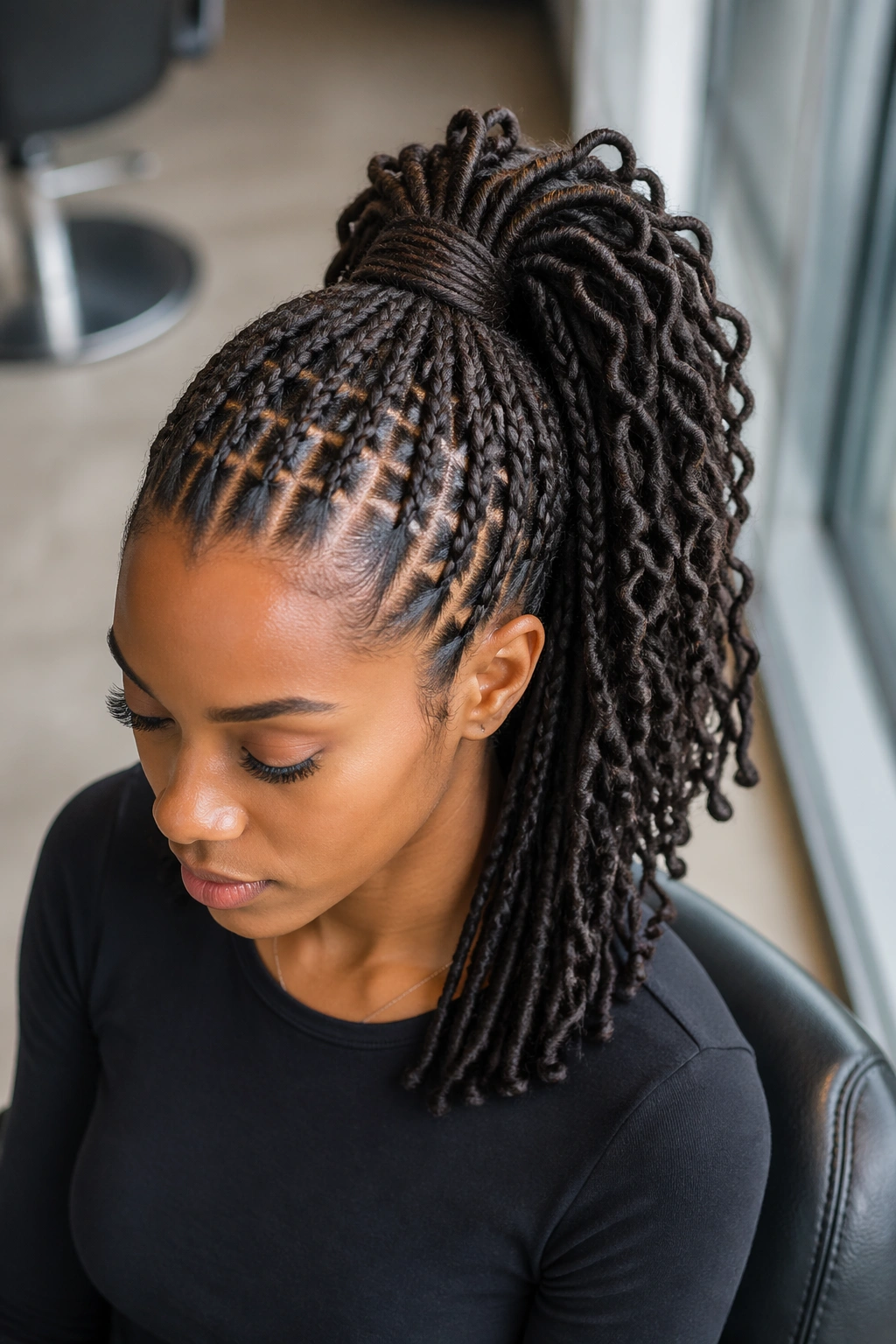
Shoulder-length locs can absolutely carry this style. They just need a little help from added hair so the ponytail has enough length to show off the butterfly texture.
That is the part people get wrong. They think shorter locs cannot do a ponytail like this, when really they only need a smarter build. A shoulder-length base looks best with a braid extension that starts near the crown and extends past the shoulders by a few inches. That extra length gives the loops room to show. Without it, the style can end too soon and feel stubby.
What to Ask For
- A ponytail base at the crown or just behind it
- Added braid hair for length, not bulk
- Small loops through the middle section
- One clean wrap around the elastic
If the locs stop right at the shoulders, this is the version that makes the shape feel finished instead of limited.
21. Event-Ready Butterfly Braid Ponytail with Curled Ends
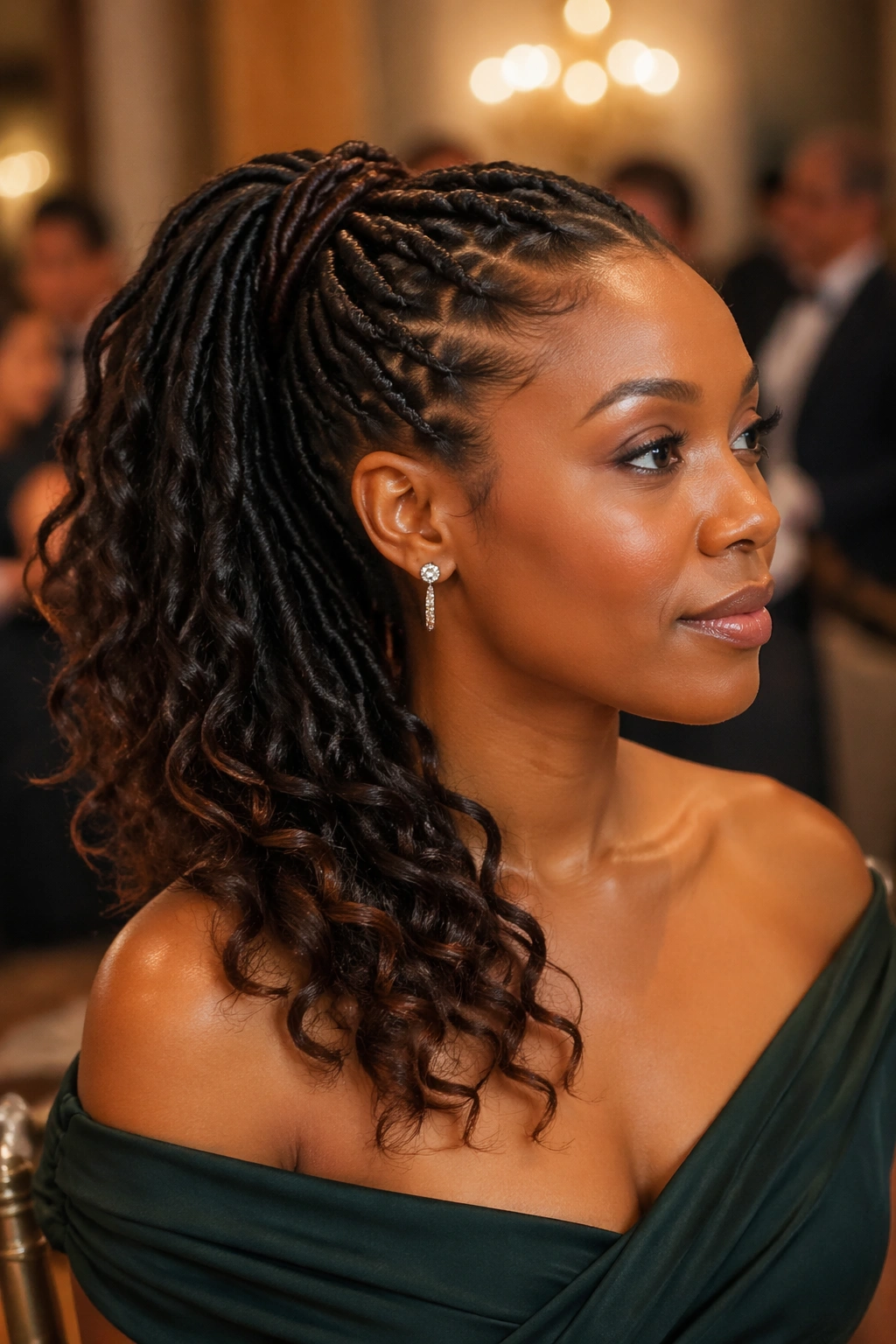
A curled finish turns the ponytail from casual to dressed up in one move. The braid keeps the shape structured, and the curled ends soften the last few inches so the style does not end with a blunt stop.
This works especially well when the braid hair or extension pieces are set with flexi rods or used in a texture that already has a soft bend. On locs, I like the curl only at the ends, not through the whole ponytail, because too much curl can fight the neatness of the braid. A little bend at the bottom is enough to make the style look ready for a dinner, a wedding, or any event where plain hair would feel underdressed.
Keep the curls loose. Tight ringlets can look a bit out of place next to the braid texture. Soft bends read better and move better.
22. Everyday Low-Key Butterfly Ponytail
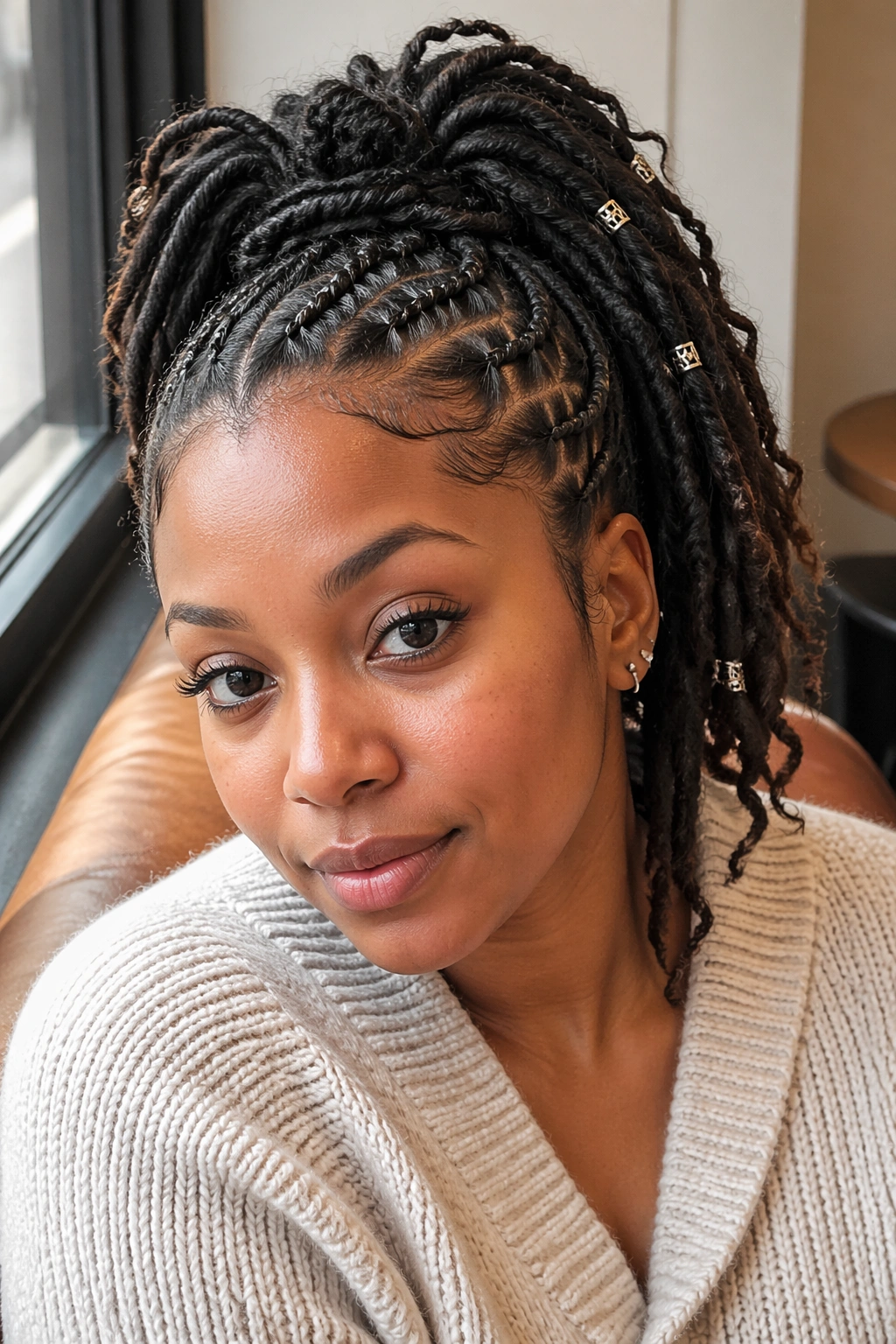
Not every ponytail needs to be noticed from across the room. Some need to survive a long day, a few errands, and maybe a jacket rubbing at the back of the neck.
That is where the low-key version wins. Minimal accessories. Moderate size. A clean base. The butterfly texture is still there, but it does not demand attention. I like this on days when the locs need to stay controlled but I do not want to spend extra time placing cuffs, beads, or color pieces.
This style is also kind to repeat wear. A simpler version usually holds up longer because there is less hardware to shift and fewer points that can snag. If the ponytail needs to transition from work to dinner to a late stop at the store, this is the one I trust. It is not flashy. It just works.
23. Soft, Undone Butterfly Ponytail for Long Wear
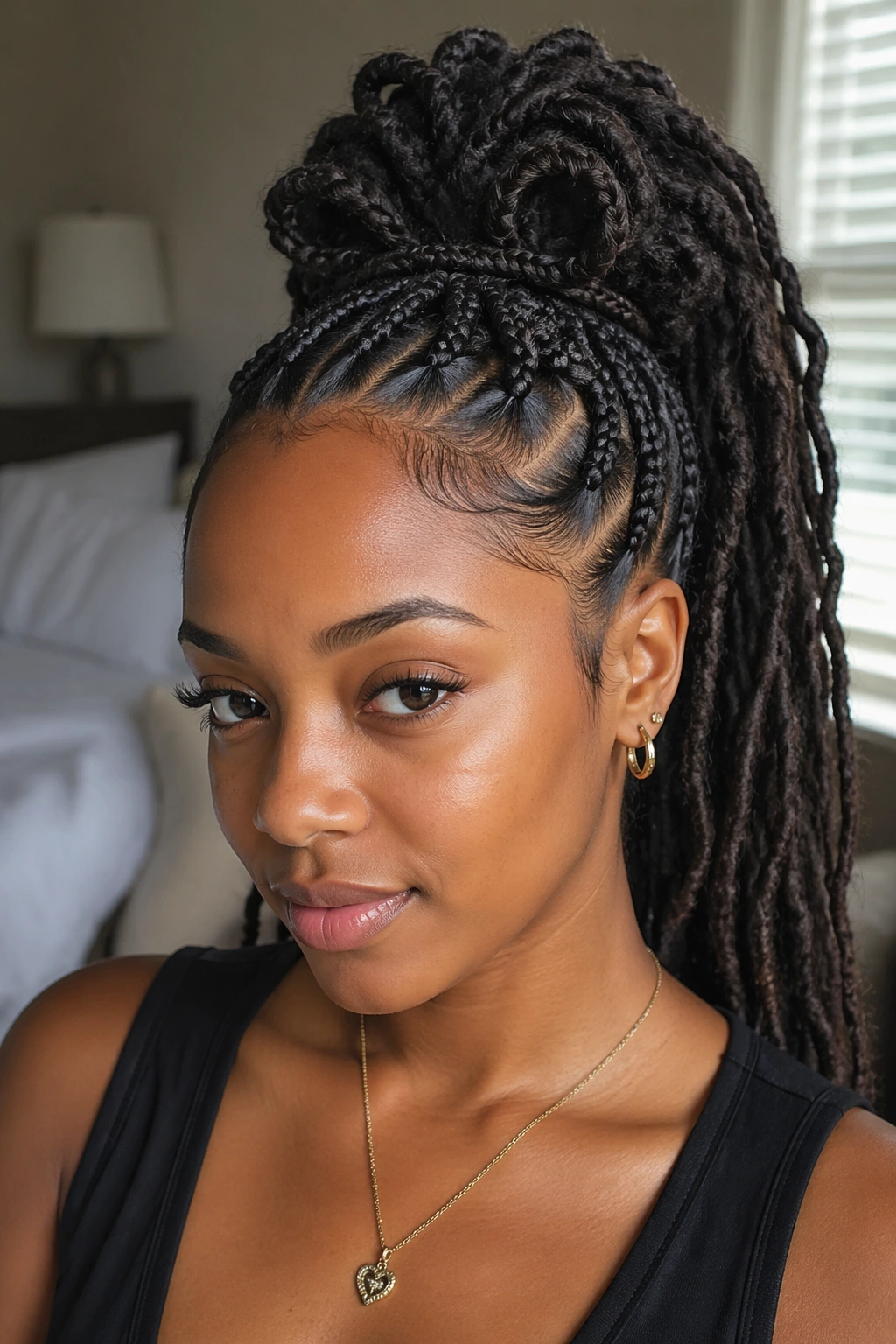
The styles that last longest usually look the least eager. That is the honest truth, and it matters on locs because a ponytail that stays comfortable for days has to start with relaxed tension, not brute force.
This version keeps a few front pieces loose, softens the braid loops instead of locking them in, and lets the ponytail sit with a little movement. The shape is still there, but it does not feel frozen. I like this especially for people who wear locs every day and need a style that won’t fight them by the second morning. A satin scarf at night helps, but the real trick is starting with a base that leaves the scalp calm from the start.
If you want the safest long-wear option, choose medium size, light accessories, and a low or mid placement. The style can still look polished. It just does not need to shout about it.