

Messy ponytails for straight hair work best when you stop trying to make every strand behave. Straight hair loves to slide, flatten, and expose every elastic, so the styles that win are the ones that build a little grip at the roots and a little movement through the tail.
That doesn’t mean you need curls everywhere. It usually means a dry shampoo mist at the crown, a few bends through the ends, and a couple of pieces left out on purpose so the ponytail doesn’t look helmet-stiff. Clean, glassy straight hair can be gorgeous, but when it’s pulled tight into a pony, it can read flat in a hurry.
The good messy ponytail is not random. It’s controlled looseness. A little tease here, a small twist there, maybe a wrapped section over the elastic, maybe a side part that shifts the whole shape. Tiny changes. Big payoff.
1. The Soft Low Messy Ponytail
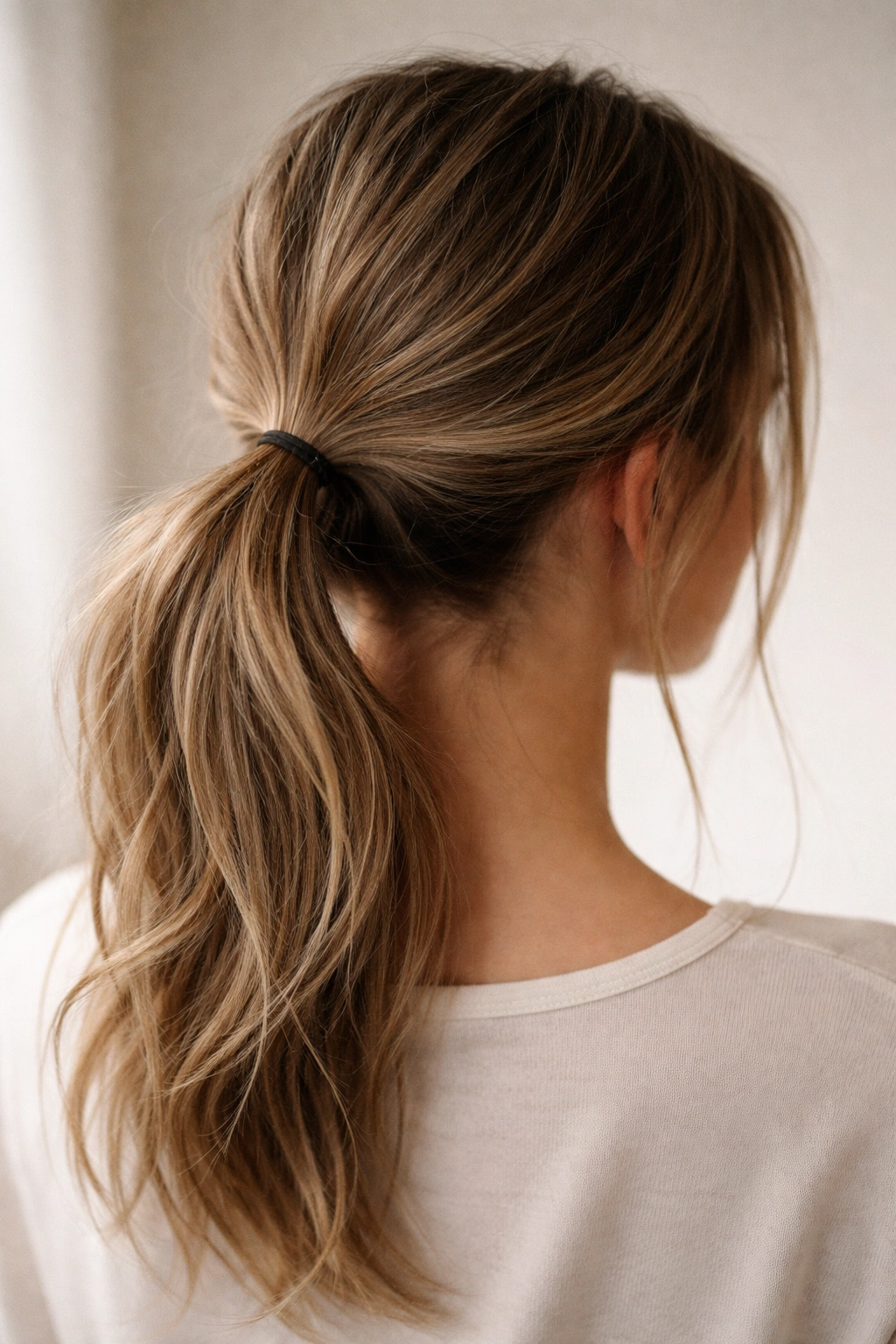
A soft low ponytail is the easiest place to start because it works with straight hair instead of fighting it. The pony sits at the nape, the crown stays slightly loose, and two slim face-framing pieces keep the whole look from feeling severe.
Why It Works on Straight Hair
Straight strands tend to lie flat, so a low placement gives them somewhere to fall without showing every ounce of weight. If you pull the roots tight, the style can look plain in ten seconds. If you leave a little lift at the crown, it feels intentional.
- Mist the roots with dry shampoo or texture spray before you tie anything.
- Use a small elastic so the pony sits close to the head.
- Pull out two thin front pieces after the pony is secured.
- Wrap a 1-inch section of hair around the elastic if you want a cleaner finish.
Best move: tug the crown loose after the elastic is in place, not before. That keeps the pony from sliding down while you work.
2. The High Pony with Piecey Ends
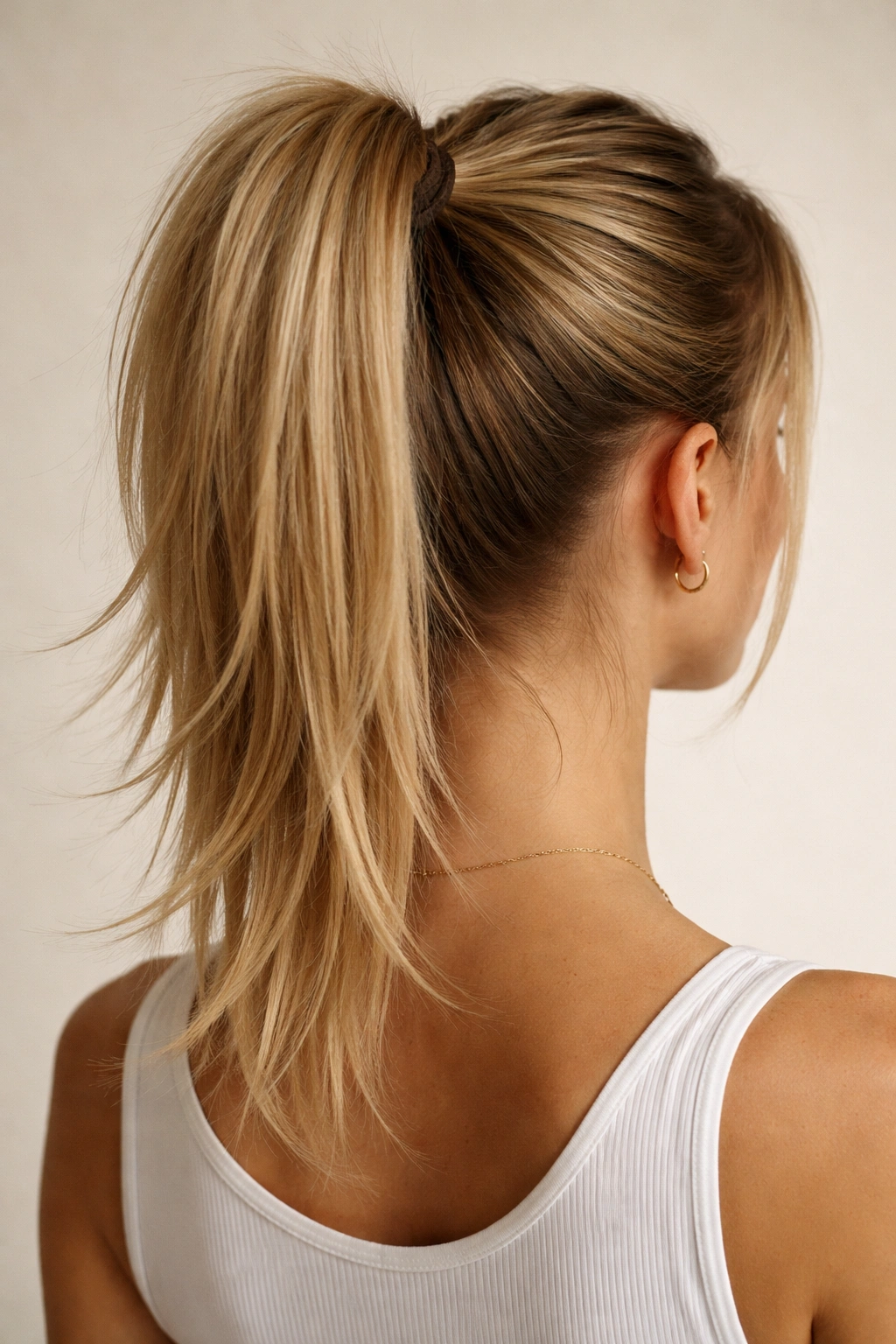
A high ponytail can go one of two ways on straight hair: sharp and sporty, or flat and fussy. The messy version lands in the middle, which is the sweet spot. It’s high enough to lift the face, but loose enough to keep a little movement in the tail.
Start by misting the roots and roughing them up with your fingers. Then tie the pony a touch higher than you think you need. Straight hair drops fast, and a pony that starts too low will sit at a very ordinary middle height by lunch.
The real trick is the ends. Bend the last 3 to 4 inches with a flat iron, or twist the tail around the iron once and let it cool. The goal is not curls. Just a broken line. That tiny bit of shape keeps the tail from hanging like a rope.
3. The Bubble Ponytail with Loose Pulls
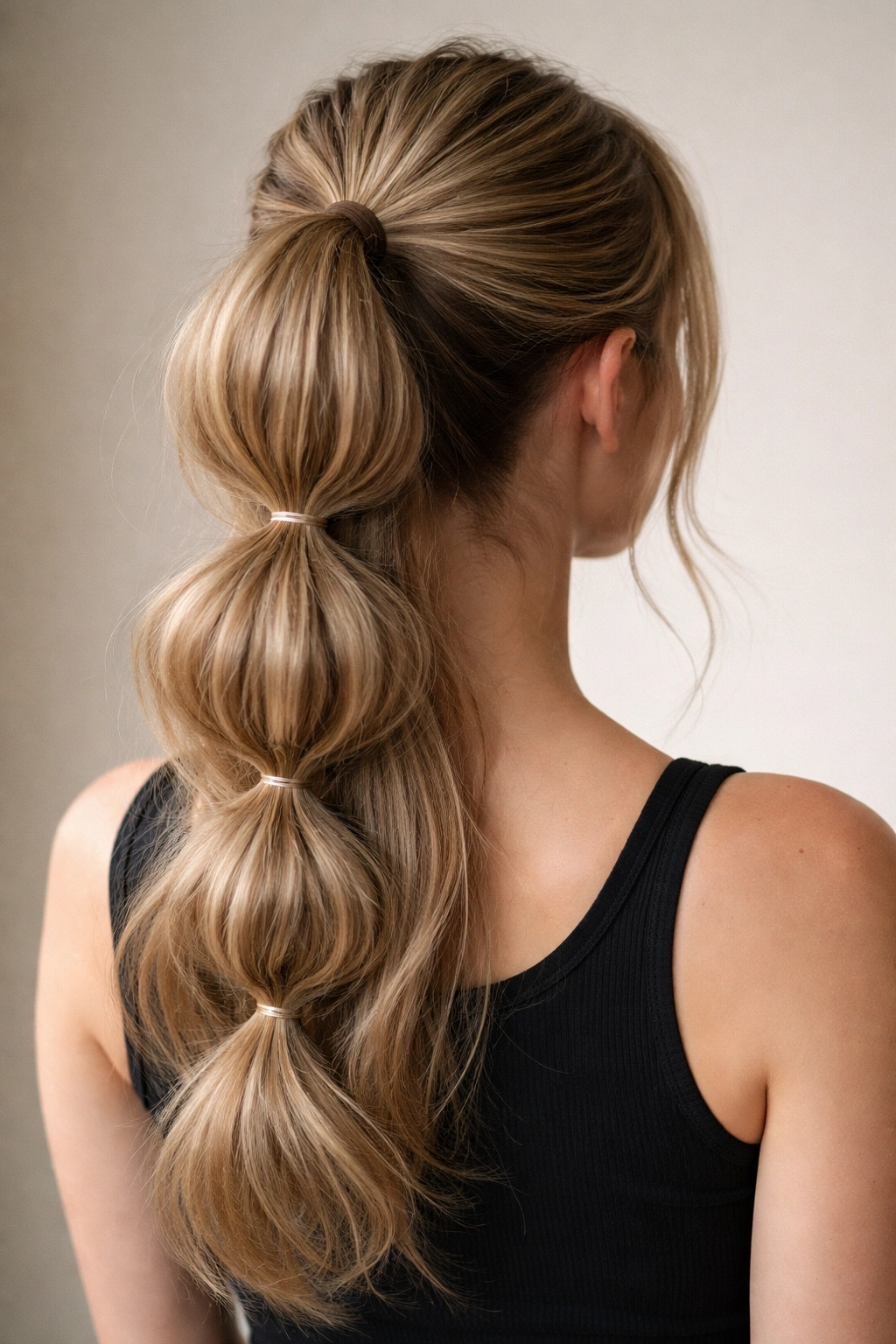
Why does a bubble ponytail work so well on straight hair? Because the shape gives you built-in volume without asking the hair to do something it naturally resists. Each elastic creates a section, and each section catches light and shadow a little differently.
How to Keep the Bubbles Soft
Tie the pony first, then add clear elastics every 2 to 3 inches down the tail. After each section is secured, pinch the sides and pull gently until the bubble looks round, not tight. That’s the whole game.
A straight tail can make bubbles look crisp in a good way, but only if you leave a little space between the elastics. Too close together and the pony looks busy. Too far apart and the shape falls apart. Two or three bubbles is plenty for shoulder-length hair; longer hair can carry four or five.
This style also looks better when the crown is not too smooth. Give the top a quick lift with a tail comb, then stop. Bubble ponytails do the heavy lifting for you.
4. The Twisted Crown Ponytail
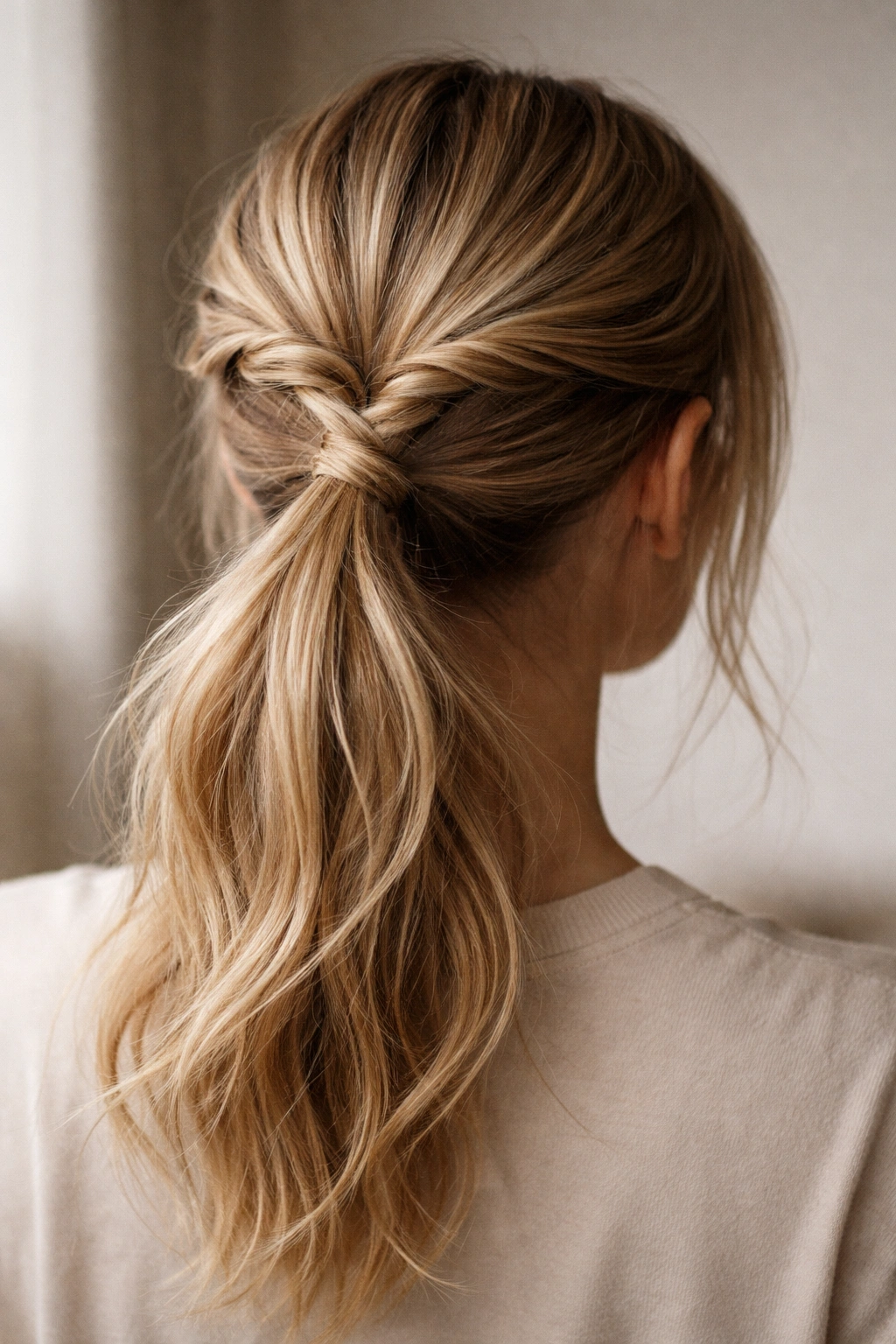
If the front of your hair slips out of a ponytail every time you move, a twisted crown section fixes a lot of that trouble. Take a small section from each temple, twist them back toward the center, and pin them before gathering the rest into a low pony.
The twists give straight hair some shape without needing a braid. They also hide the fact that the crown isn’t perfectly smooth, which is half the point of a messy ponytail anyway. A couple of loose ends at the hairline make it feel softer.
What to Watch For
- Keep each twist about 1 inch wide so it doesn’t get bulky.
- Pin the twists just above the elastic so the base looks neat.
- Leave the pony itself loose through the mid-lengths.
- Use two bobby pins crossed into an X if the twists keep slipping.
This style is especially good if you’re growing out bangs. The front pieces get a job to do instead of just hanging there.
5. The Half-Up Messy Ponytail
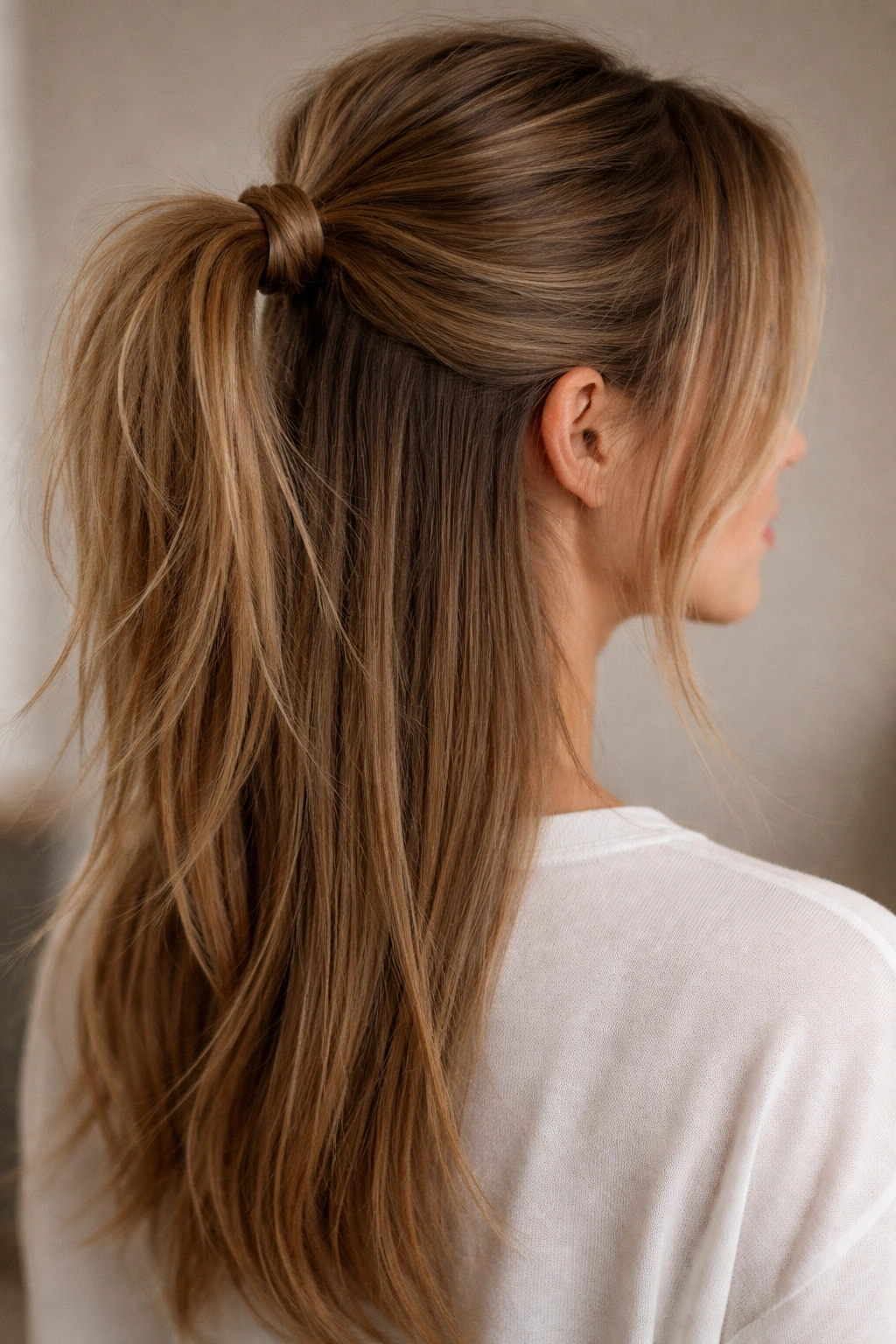
Half-up ponytails are a quiet win for straight hair because they give you lift without asking the whole head to cooperate. The top section gets tied back, the bottom stays down, and that contrast creates more shape than a full ponytail sometimes can.
What I like about this style is the balance. The loose lengths below keep the look from going stiff, while the lifted crown adds just enough energy. If your hair is fine, this is one of the easiest ways to fake more body without overloading it with product.
Pull back the top section from about the outer corners of your eyes to the crown. Don’t make the part line too perfect. A slightly uneven section makes the whole thing look softer, and on straight hair, that softness matters more than people think.
6. The Side-Swept Low Ponytail
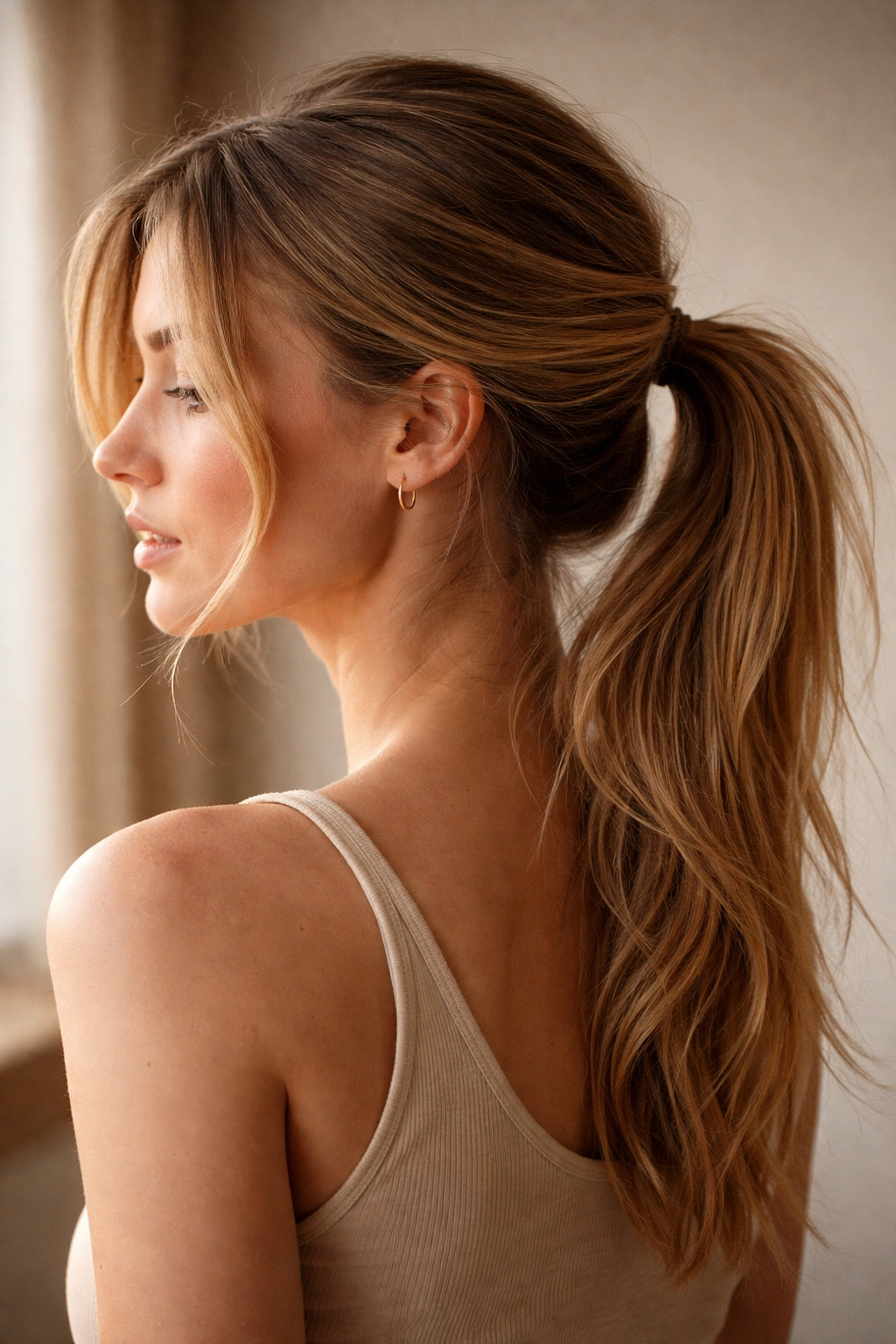
Unlike a centered low ponytail, a side-swept version gives straight hair a little bias and movement. The pony sits low, but it rests over one shoulder instead of hanging straight down the back. That simple shift makes the style feel less formal and more lived-in.
A deep side part helps here, but not a dramatic one unless you want a stronger shape. Brush the hair across the head, secure it low and off-center, then loosen the top with your fingers. The goal is a gentle sweep, not a hard wave.
This is one of those styles that looks better when it is slightly imperfect. If a small piece falls forward near the temple, leave it. That stray piece gives the side profile some softness, and the pony stays from looking too set.
7. The Wrapped Low Ponytail
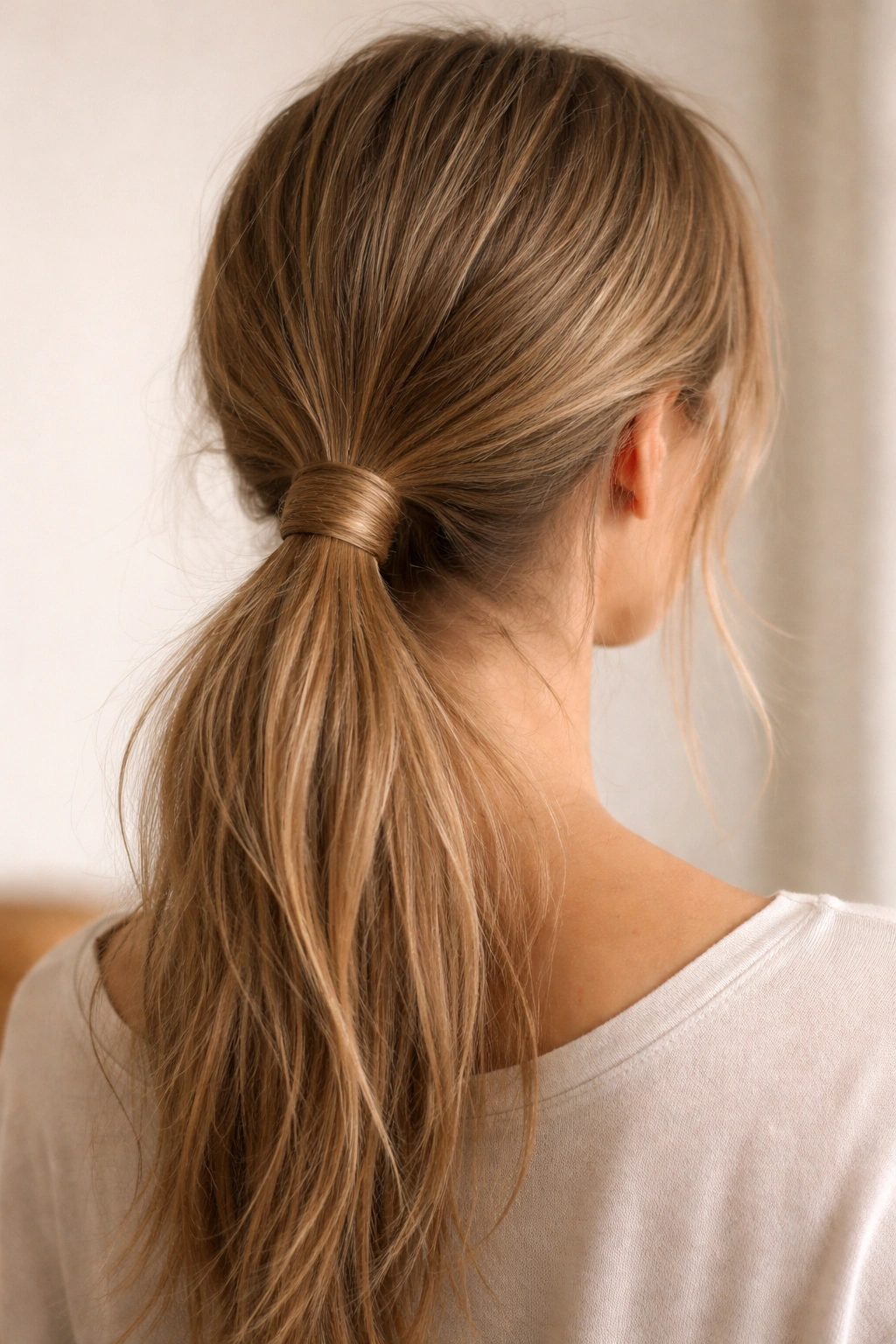
A wrapped low ponytail is the version you reach for when you want the elastic hidden but still want the hair to feel undone. The wrap makes the base look cleaner, while the loose crown and slightly rough tail keep it from turning too polished.
Take a 1-inch section from underneath the pony and wrap it around the elastic two or three times. Pin the end underneath with one bobby pin. After that, pull a few tiny pieces loose at the crown and around the ears. That’s where the “messy” part lives.
The style works especially well on straight hair that has a silky finish, because the wrap breaks up the shine a little. If the hair is slippery, mist the wrapped section with hairspray before you wind it around the elastic. It gives the pin something to hold.
8. The Braided-Base Ponytail
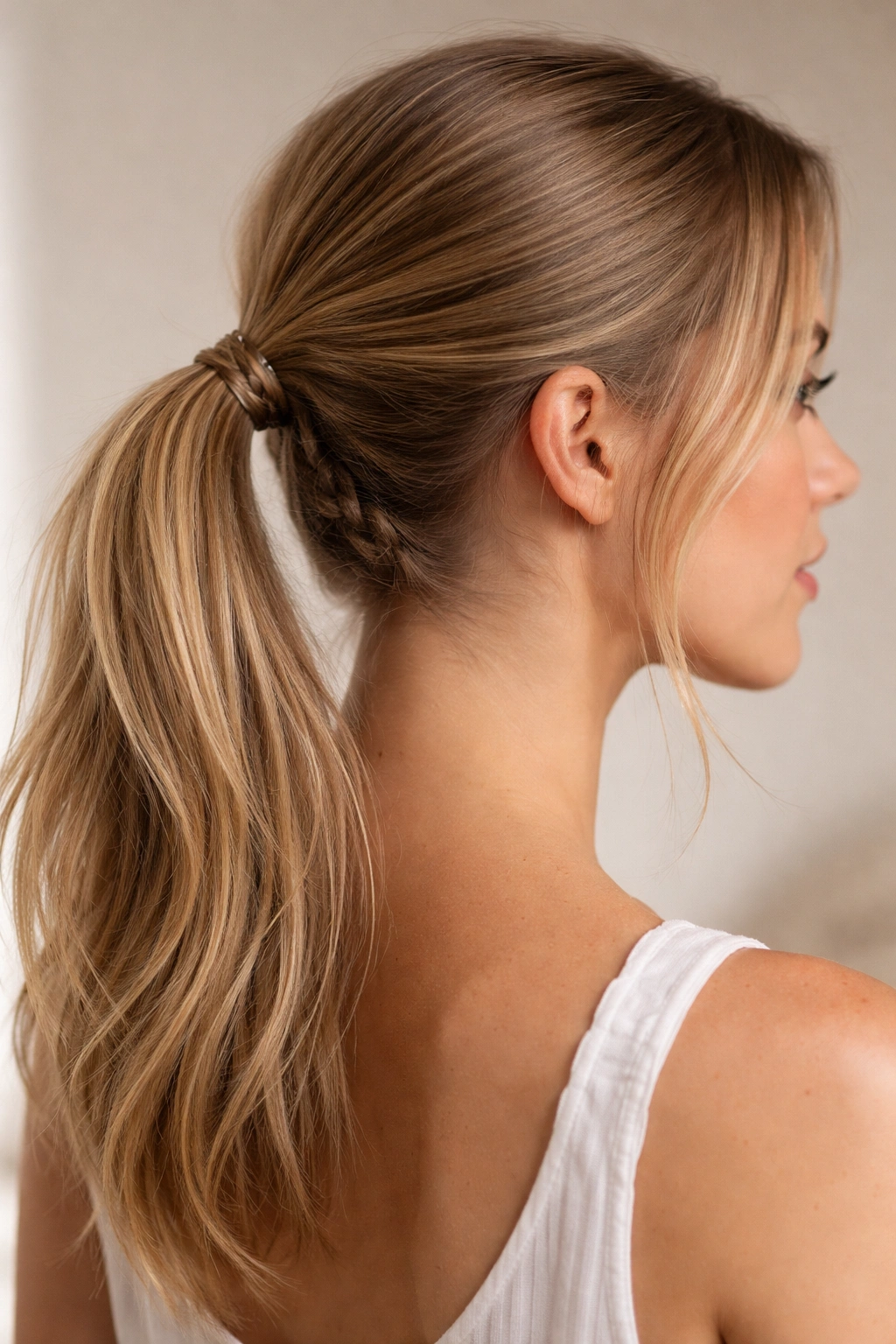
A braided base adds grip where straight hair usually needs it most. Instead of tying the ponytail right away, braid the first 2 to 3 inches of hair at the nape, then secure the rest into a pony. That tiny braid creates texture before the tail even starts.
Why It Beats a Plain Elastic
Straight hair often slides out of a regular ponytail because there’s nothing for the elastic to catch. A braid gives the base more texture and helps the style stay put without pulling too hard. It also looks better from the side, which matters more than people admit.
If your hair is fine, keep the braid loose. If it’s thick, braid it a little tighter so the base doesn’t puff out in a weird lump. Either way, let the pony itself stay soft. The contrast between the structured base and the loose tail is what makes this one feel balanced.
9. The Teased Crown Ponytail
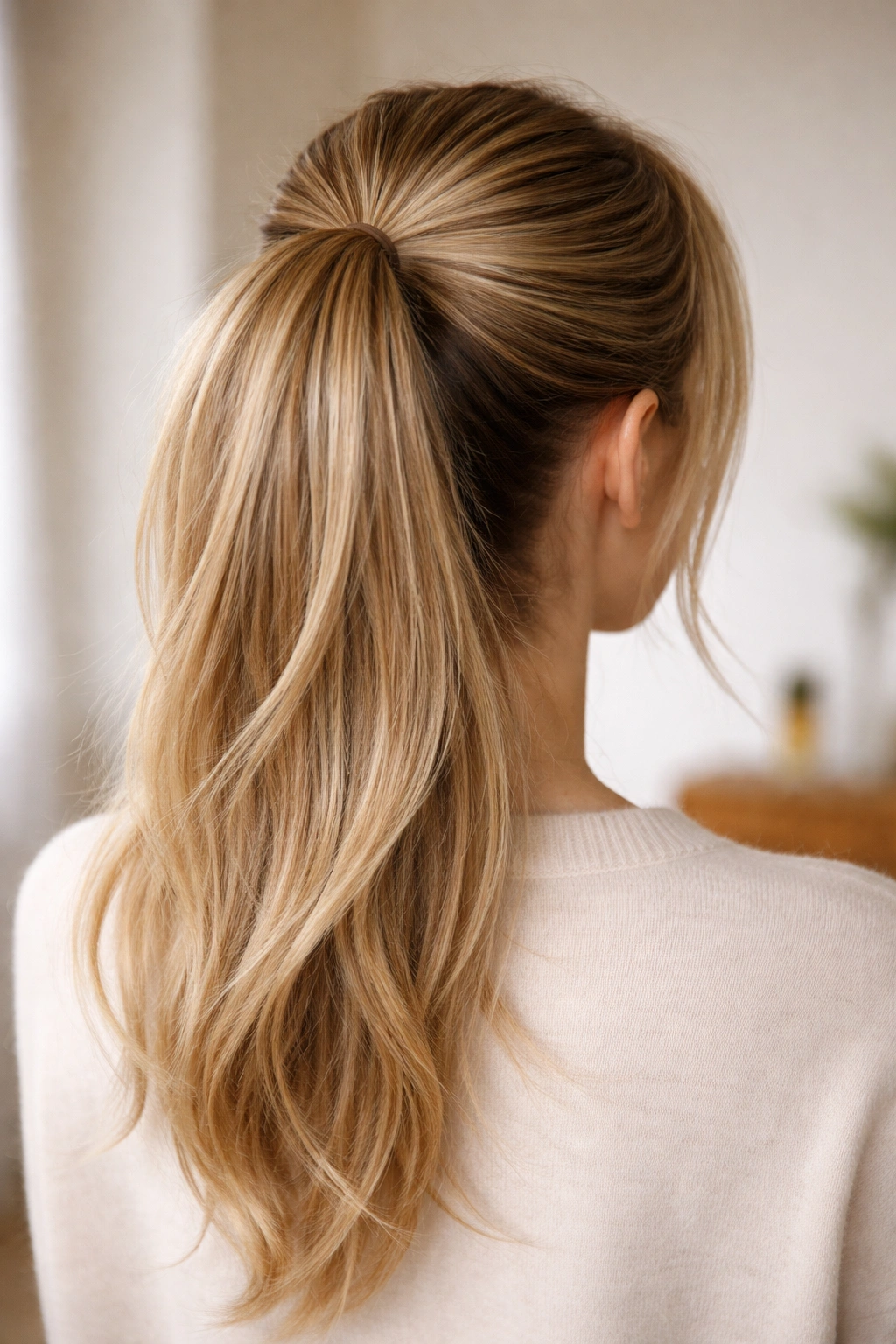
Need more lift without curling the whole head? Tease the crown. Not the whole back section, just the roots at the top where straight hair usually collapses first.
Use a tail comb and backcomb three narrow sections near the crown, then smooth only the top layer over them. That keeps the volume hidden instead of making the hair look ratty. A small mist of flexible-hold spray at the roots helps the lift survive longer than five minutes.
This is the ponytail for people who want body without fuss. It works especially well when the rest of the hair stays straight and clean. You get that little bit of height up top, then the tail hangs in a relaxed way behind it.
10. The Flipped-End Ponytail
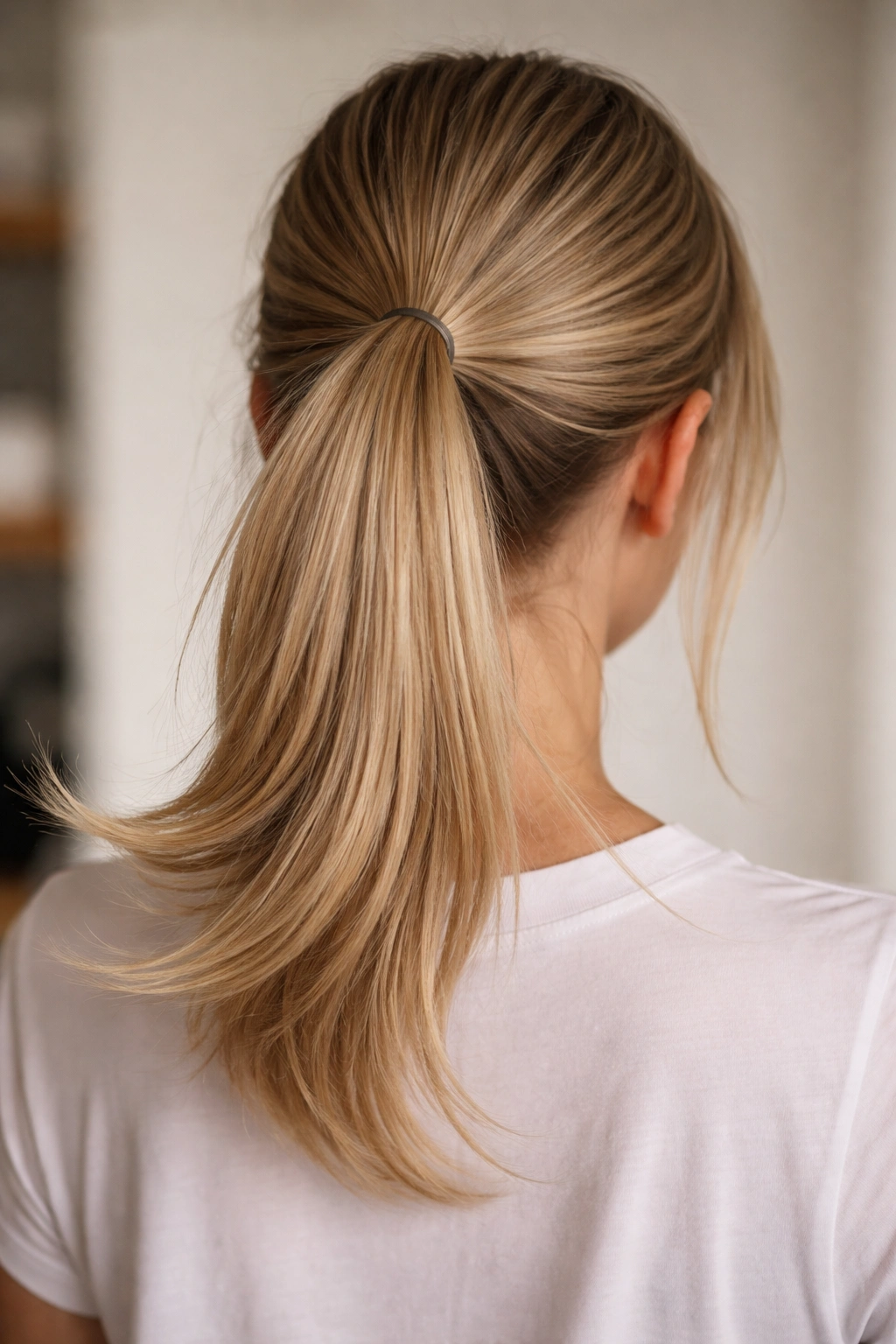
A blunt tail can feel too tidy on straight hair, so a flipped end changes the whole mood. Turn the last few inches outward with a flat iron, or roll them under with a round brush if that’s easier for your hands. Either way, the end line stops looking so severe.
The trick is to keep the root section a little loose. If the top is too sleek, the flip can look like it belongs to a different hairstyle. Leave some airy texture at the crown, then let the tail do the work.
This style is nice when you want movement but you do not want curls. It reads more modern than a full wave and a little less plain than a straight tail. Small thing. Noticeable difference.
11. The Knotted Ponytail
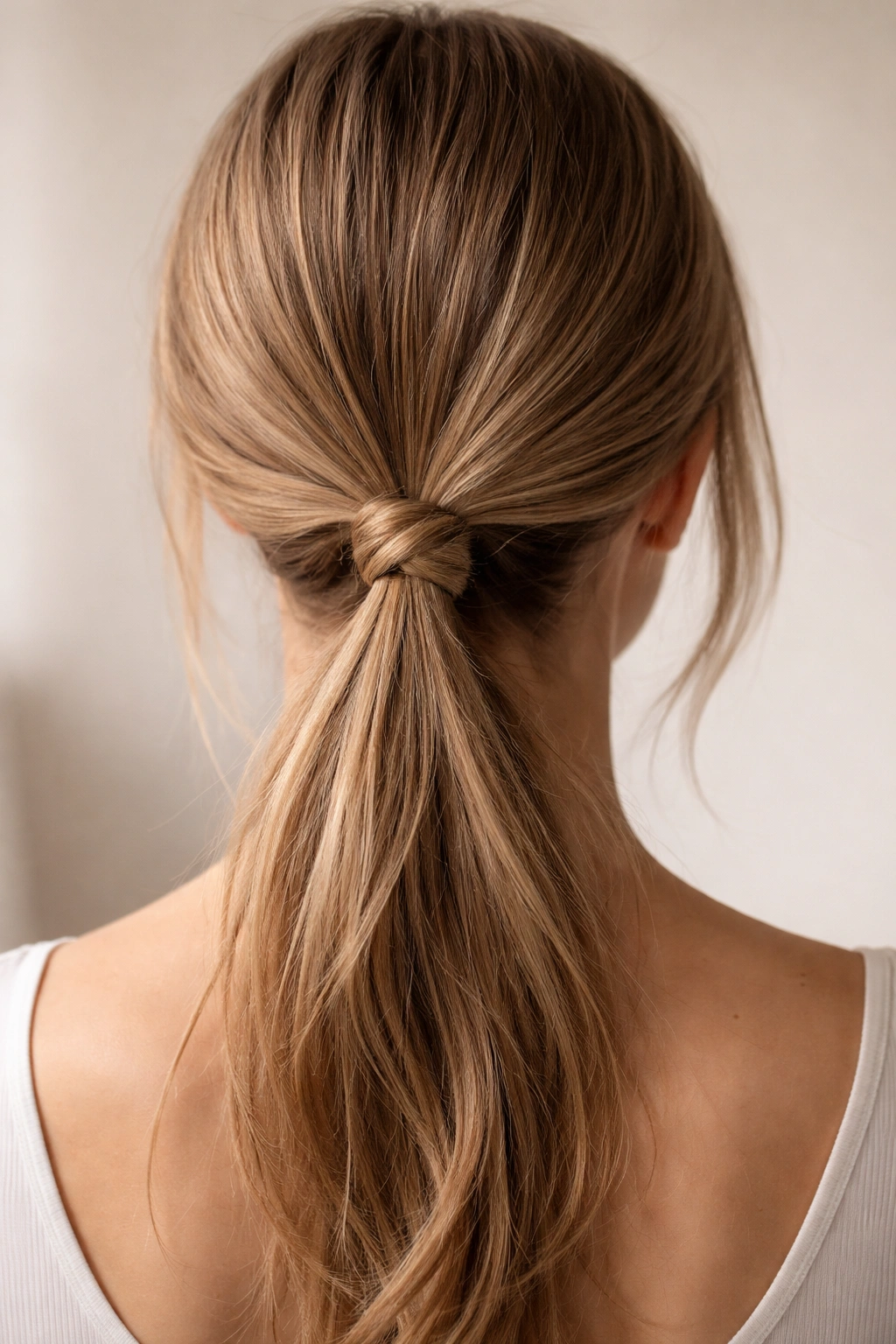
A knotted ponytail feels a bit looser than a braid and less expected than a regular wrap. Take two side sections, tie them into a simple knot, and secure the rest into a ponytail underneath. Straight hair shows the shape of the knot clearly, which is part of the appeal.
Best For Straight Hair That Falls Flat
Silky hair can look heavy in a plain tie-back style. A knot changes the surface and adds a break in the line, so the style looks more textured without needing heat. It also works well on medium-length hair because the knot can sit snug without swallowing the rest of the pony.
Keep the knot low and soft. If you pull it too tight, the shape becomes stiff and loses the undone feel. A little irregularity is the point here. One loop a bit higher than the other? Fine. That unevenness gives it character.
12. The Scarf-Tied Ponytail
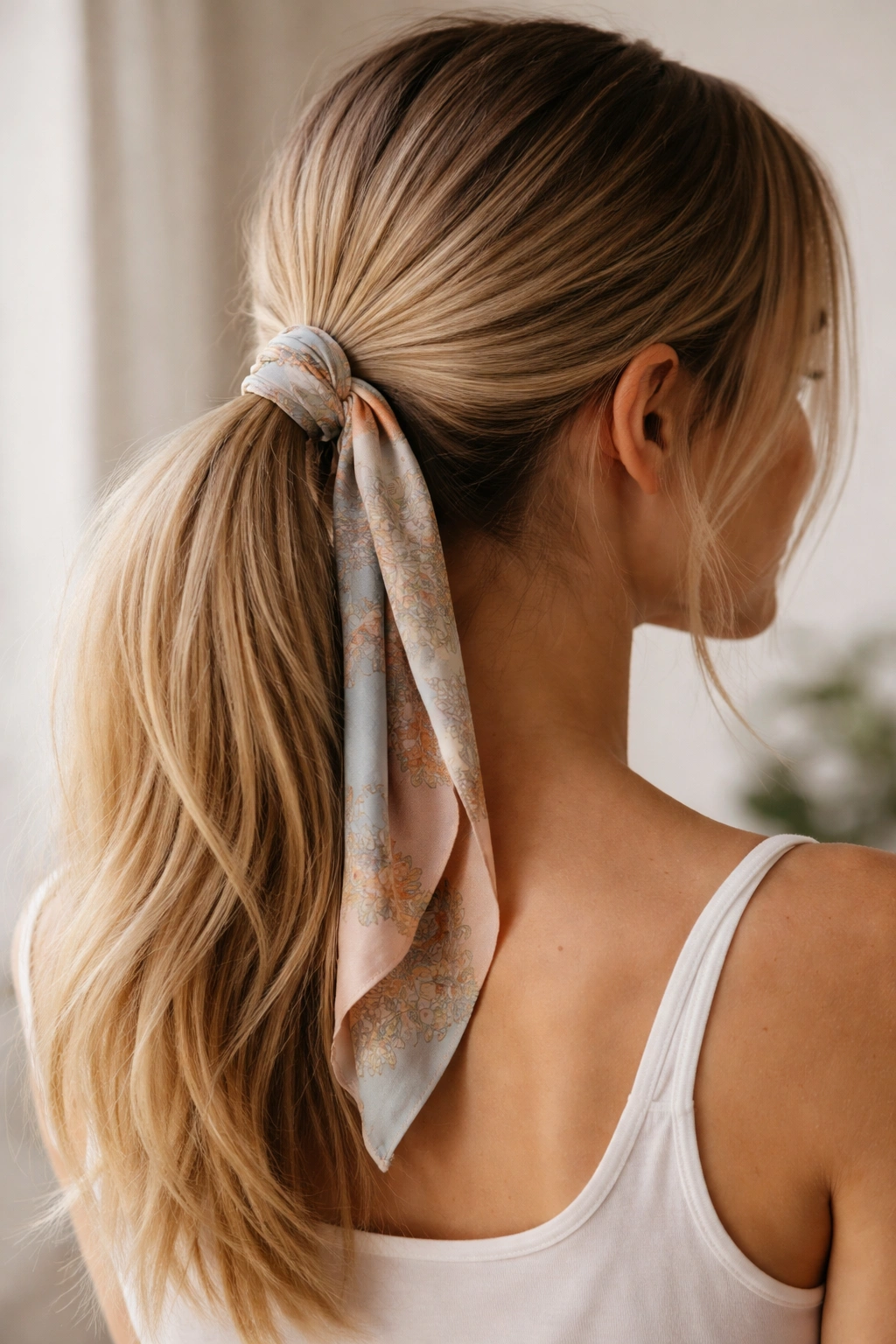
A scarf-tied ponytail is one of the easiest ways to make straight hair feel less plain. Fold a silk or cotton scarf into a narrow strip, tie it around the elastic, and let the tails hang. The fabric breaks up the hard line of the pony and adds color without much effort.
The scarf also helps if your hair is slippery. Tie a tiny clear elastic first, then use the scarf as the visible finish. That keeps the base secure and stops the whole style from loosening too fast. Thin scarves tend to sit better than bulky ones, especially on finer hair.
This one looks best when the rest of the hair is soft, not stiff. A few loose pieces near the ears keep the scarf from feeling too neat. And if the ends of the tail are a little bent or flipped, even better.
13. The Mid-Height Pony with Bent Ends
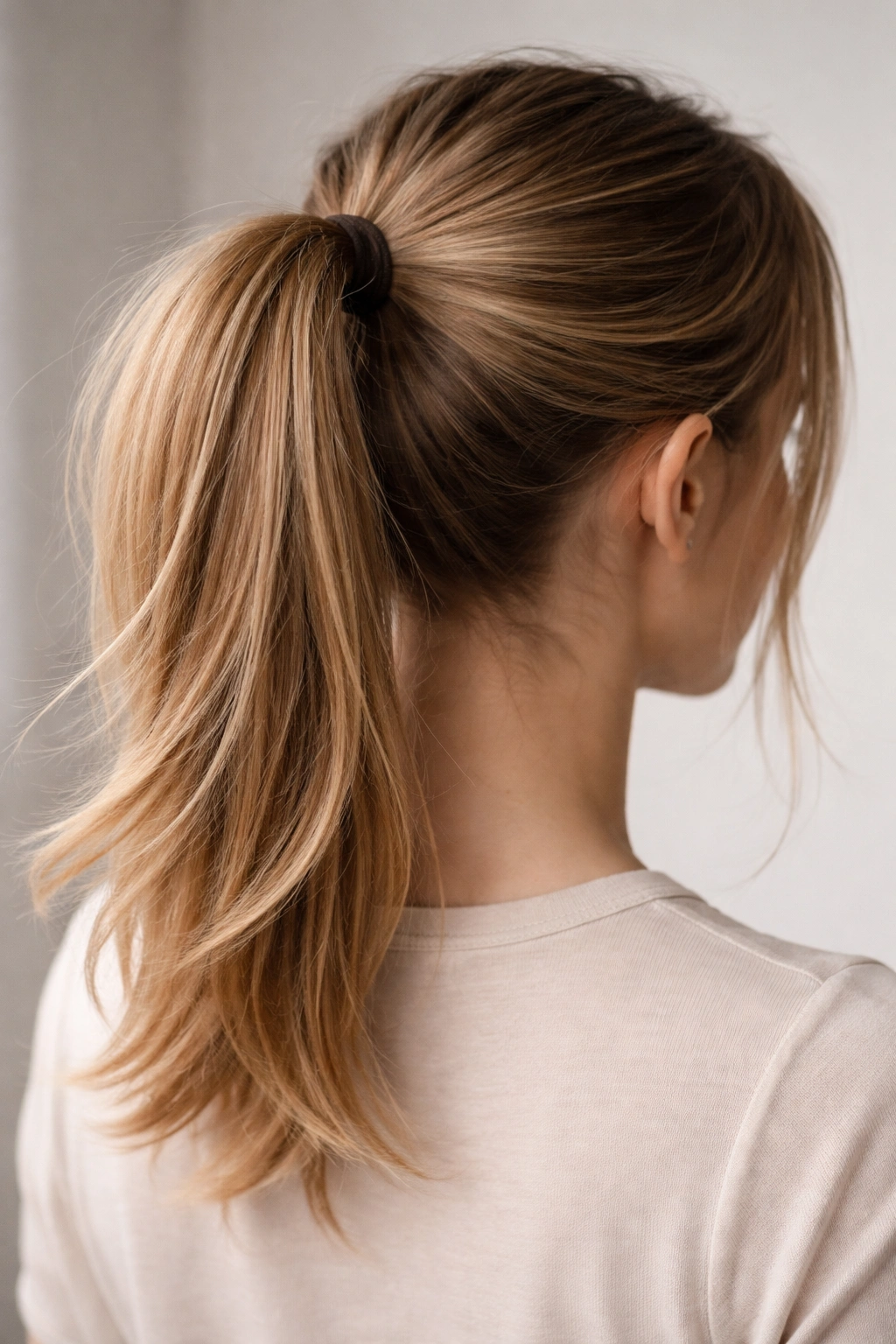
A mid-height pony is underrated. It gives you enough lift to feel styled, but it doesn’t pull the hair up so high that the straight texture gets exposed in an obvious way. Add bent ends, and the whole look gets more movement.
How to Add Shape Without Curling Everything
Use a flat iron on the tail only, bending the hair in alternating directions every 1 to 2 inches. Left, right, left again. The line stops looking straight, but the pony still feels easy. That’s the sweet spot.
This style is especially useful when the top is a little flat and the ends are too clean. Straight hair can look almost too precise, and a bent tail breaks that up fast. If you want, pull a small section free around the cheekbones to soften the profile.
14. The Face-Frame Ponytail
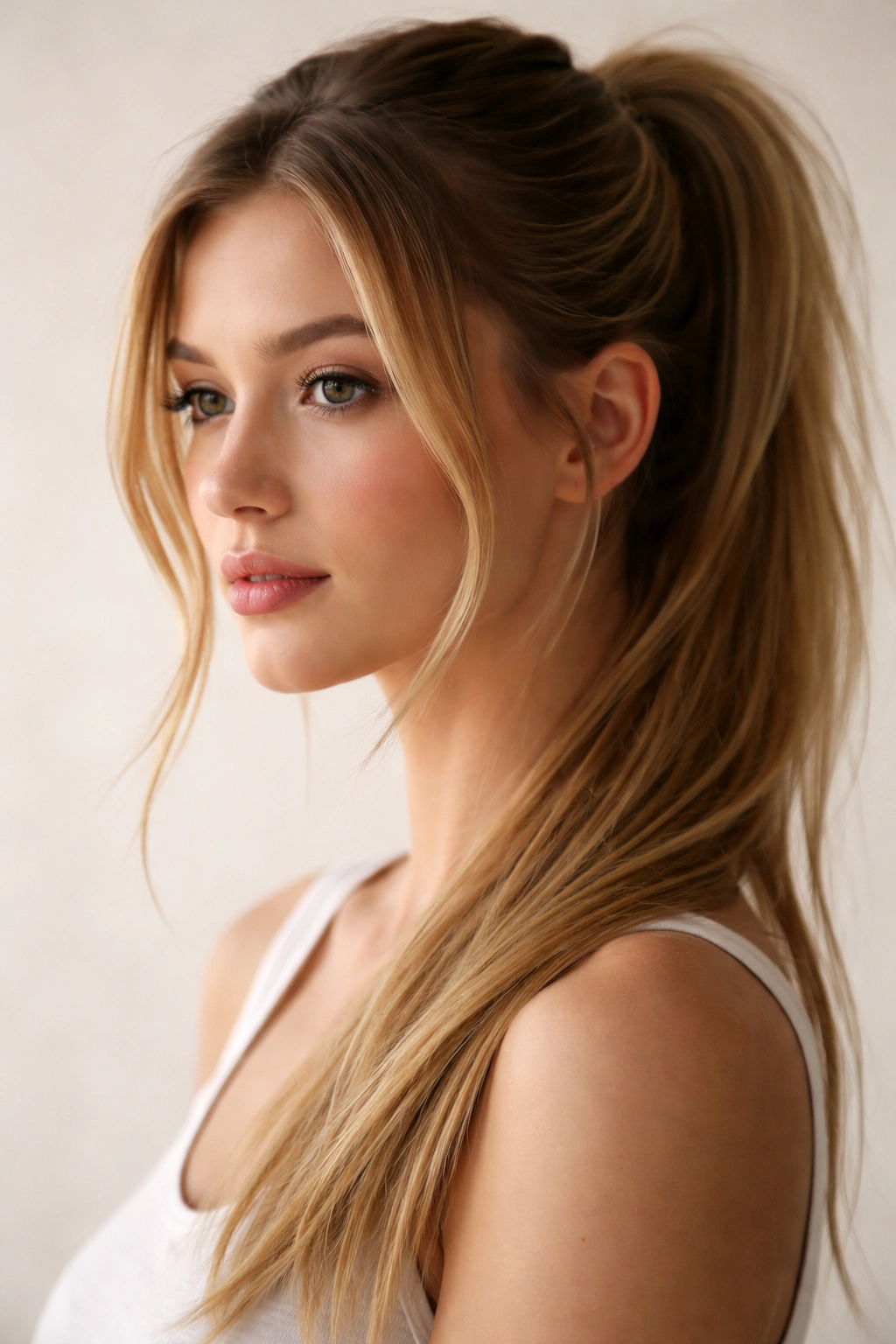
A face-frame ponytail is basically the answer to the “my ponytail makes me look severe” problem. Leave out two front pieces, each about ½ to 1 inch wide, and let them sit beside the cheeks. The rest of the hair can be pulled back with some lift at the crown.
Those pieces matter. They stop straight hair from reading too sharp and give the ponytail some movement around the face, which is where people notice things first. If the pieces are too long, tuck them slightly behind the ear on one side or bend the ends with a flat iron so they don’t hang limp.
This is one of the most flattering messy ponytail hairstyles for straight hair because it fixes the hardest part: the front. The tail can stay simple. The front does the softening.
15. The Double-Elastic Ponytail
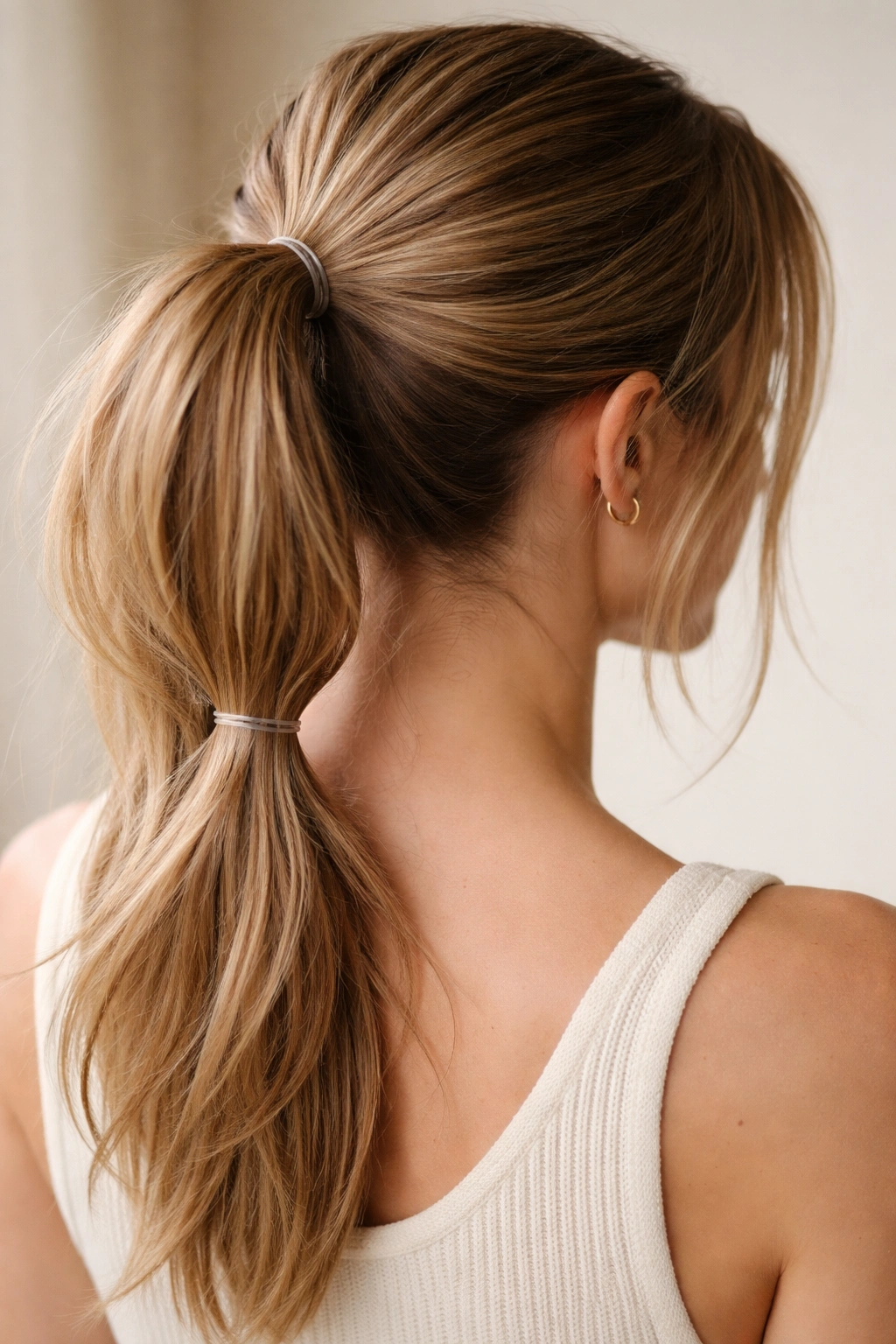
A double-elastic ponytail is the trick for hair that is heavy enough to pull a style down by noon. Tie the first elastic high or mid-height, then add a second elastic about 1 inch below it. That tiny bit of extra support gives the pony more lift and helps the crown stay fuller.
Why Two Elastics Work Better Than One
One elastic does the job, but two spread the tension out. That means less sliding and less flattening at the roots. On straight hair, that matters because gravity tends to win faster than you want it to.
If your hair is thick, this also keeps the pony from stretching itself out. If your hair is fine, don’t pull the second elastic too tight. The style should still look relaxed, not engineered. A few loose pieces around the hairline keep it from looking too held together.
16. The Fishtail Ponytail Hybrid
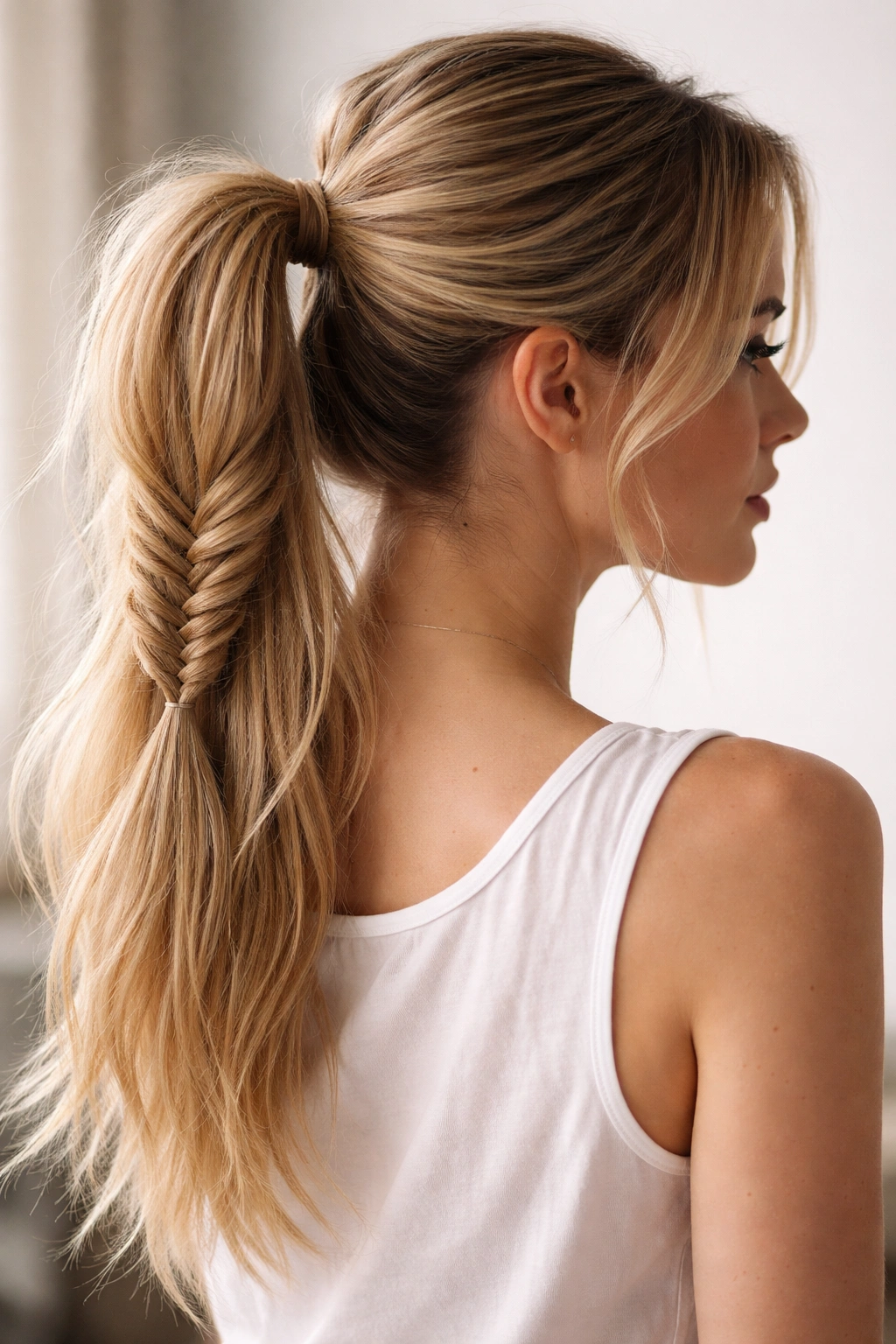
A full fishtail braid can feel too done for a messy ponytail, but a hybrid version hits a nicer balance. Start with a ponytail, then fishtail the first 4 to 6 inches of the tail and leave the rest loose. That gives you texture where straight hair usually lacks it most.
Because straight strands show braid detail so clearly, this style reads well even when it is slightly loose. Pull the braid apart a bit after finishing it so the weave widens. That loosening step keeps the braid from looking stiff and formal.
This one is best when you want the tail itself to be the focal point. The crown stays calm, the braid adds interest, and the ends can stay soft or slightly bent. No need to overwork it.
17. The Curtain-Bang Ponytail
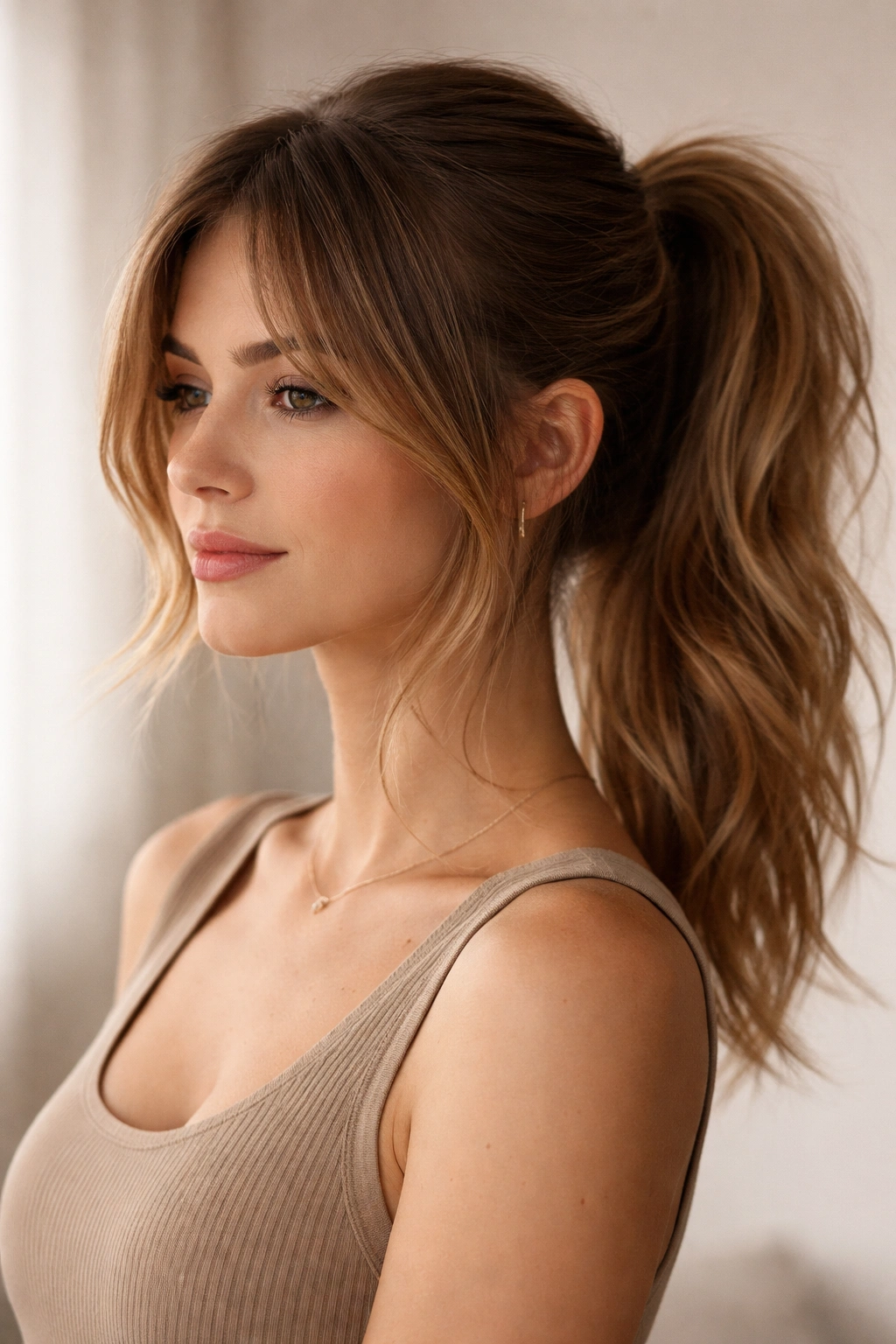
Curtain bangs change the whole mood of a ponytail. Gather the rest of the hair just below the crown and leave the bangs to fall naturally on either side of the face. Straight hair works especially well here because the fringe keeps its clean line while the pony looks a little undone.
If the bangs are too straight and heavy, give the ends a small bend away from the face with a round brush or flat iron. That tiny curve makes the style open up. It also stops the bangs from blending into the rest of the hair in a dull way.
This ponytail is a good one when you want movement without teasing the whole head. The fringe does the softening, the pony stays simple, and the whole style feels easy to wear all day.
18. The Criss-Cross Low Ponytail
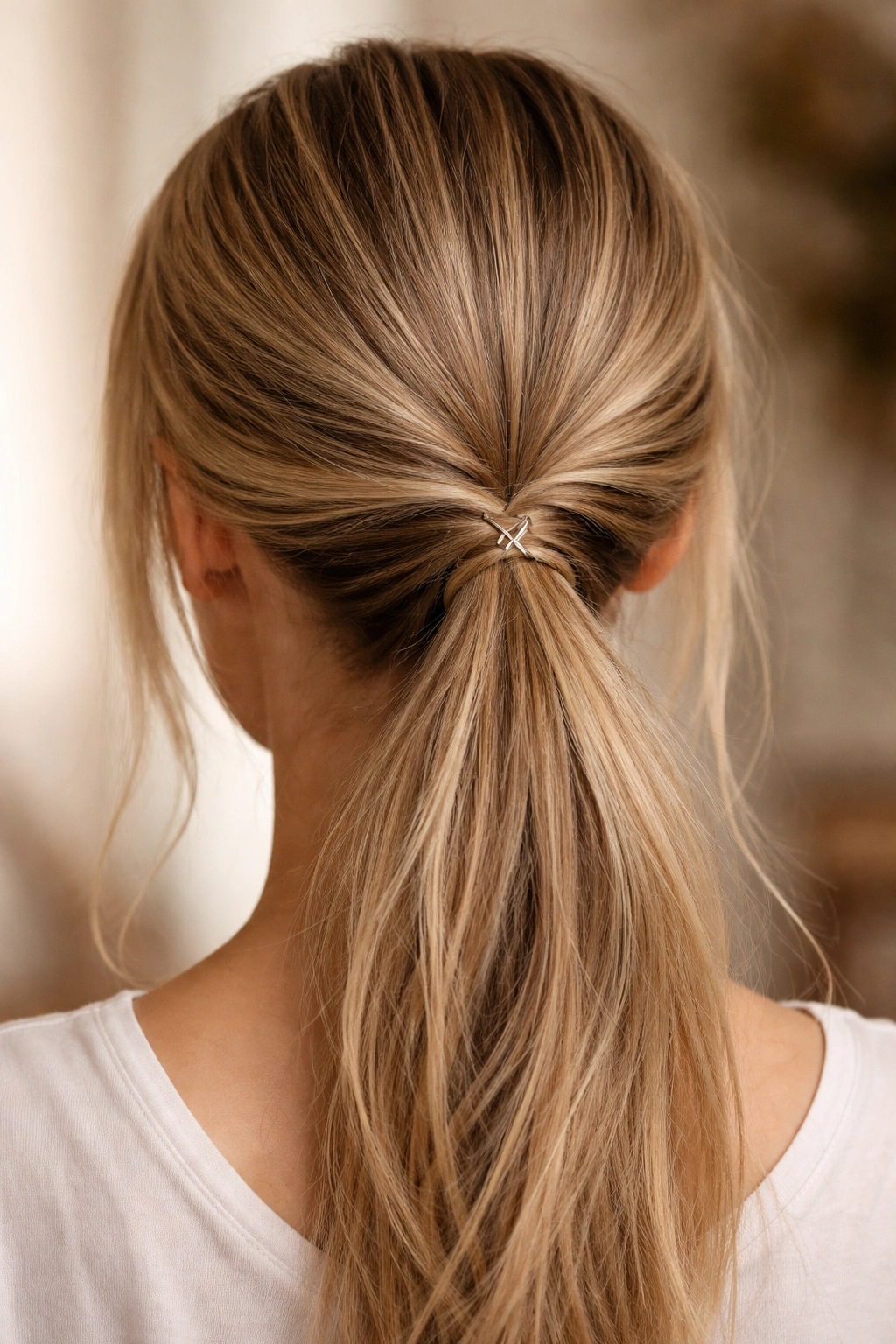
A criss-cross low ponytail gives straight hair some pattern right at the base, which is where a plain pony can look a little empty. Take one section from each side of the head, cross them over the elastic, and pin them underneath. That creates a woven look without needing a full braid.
Small Details That Keep It Neat
- Use 2 bobby pins in an X so the cross stays flat.
- Keep each side section about 1 inch wide.
- Secure the pony first, then do the crossing.
- Tug the hair above the elastic just a touch so the top stays soft.
This is a nice choice when you want something more interesting than a wrap but less involved than a braid. Straight hair shows the criss-cross pattern cleanly, which makes the style look deliberate even when the rest of the pony stays loose.
19. The Claw-Clip Lift Ponytail
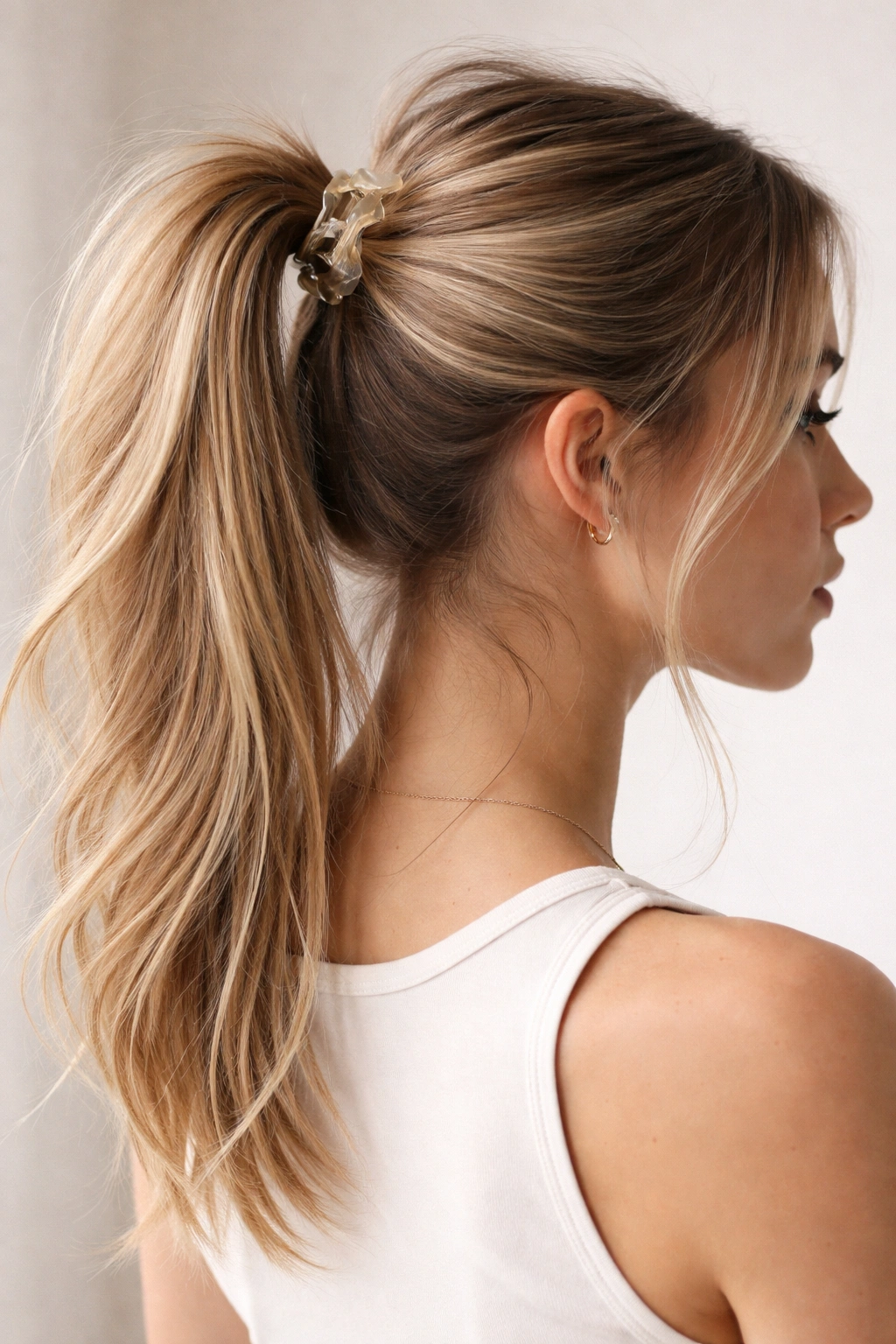
A claw-clip lift ponytail is a handy fix when your roots need help but you do not want a full tease. Clip the top section up for a minute or two, mist the roots lightly, then release and gather the hair into a ponytail. The little bend left behind gives the crown more air.
The trick is using a clip that is small enough to leave a soft wave, not a crease. Big clips can leave a dent that takes forever to smooth out. A medium clip works better on straight hair because it nudges the roots up without pinching them.
This one is fast. That matters. It’s the kind of style you use when you need the hair out of your face, but you still want the pony to look like you made a choice.
20. The Rope-Twist Ponytail
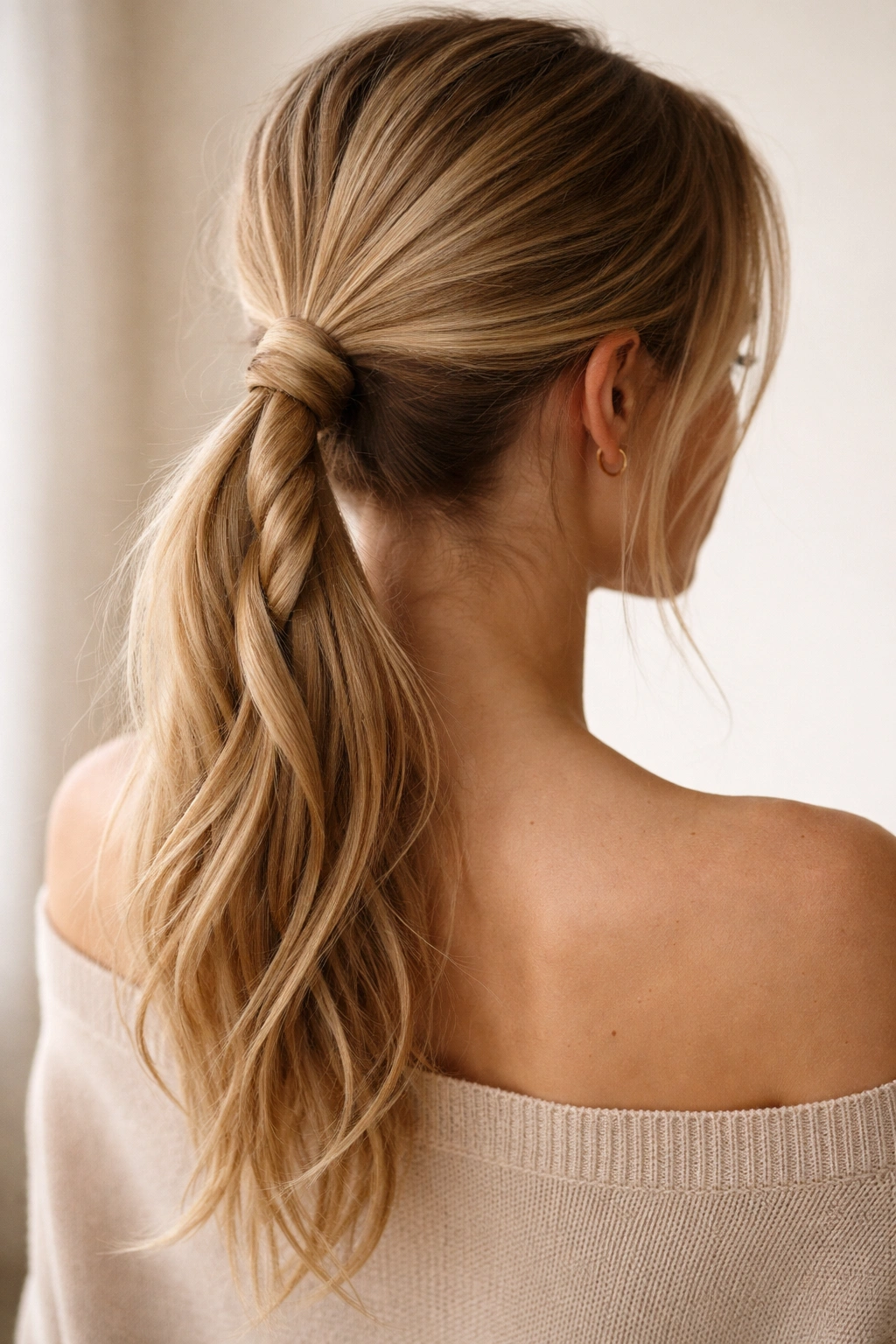
A rope-twist ponytail works because it gives straight hair a different kind of texture. Divide the tail into two sections, twist each section in the same direction, then wrap them around each other in the opposite direction. That counter twist helps the shape hold.
The finished look is tighter than a braid but softer than a smooth tail. If you stop 1 inch before the ends and secure with a clear elastic, the tail still looks a little loose and wearable. Pull at the twist gently to widen it a bit if you want more texture.
This style is good when you want something clean in shape but still messy in spirit. It also travels well through the day because the twist tends to stay in place once it is set.
21. The Long Loose Ponytail
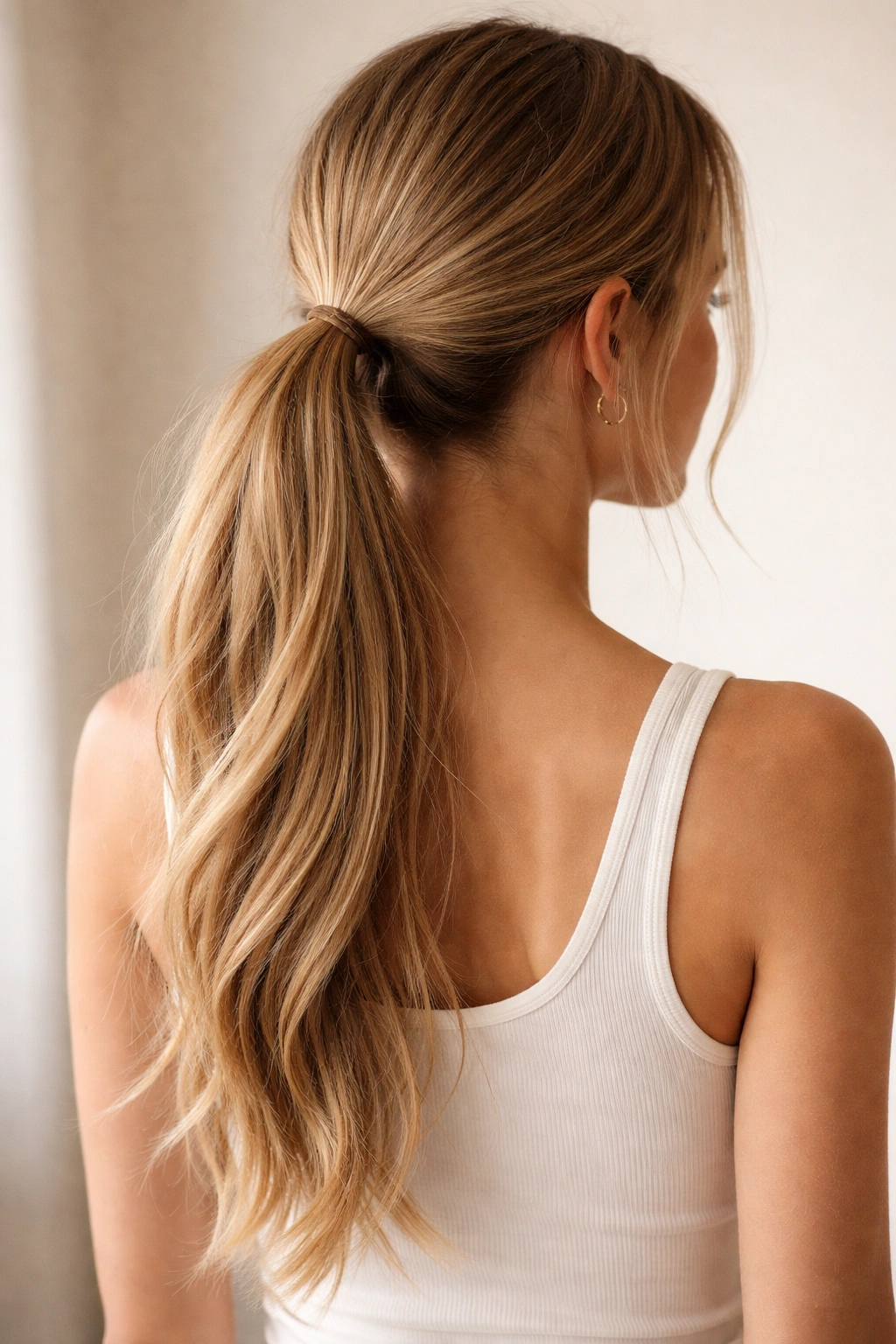
Long straight hair can swallow a ponytail if the style is too tight or too high. A long loose ponytail solves that by keeping the base low or mid-height and letting the length fall in a wide, soft line. The key is not to fight the length.
Use a flexible elastic and avoid pulling the tail through too many times. One or two loops is enough. Then widen the crown a little and pull a few strands free near the nape. That keeps the pony from feeling like a tight knot sitting on top of all that hair.
This version looks especially good when the ends are slightly bent instead of perfectly straight. The curve at the bottom gives the whole ponytail more shape, and straight hair really benefits from that final bit of movement.
22. The Swooped High Ponytail
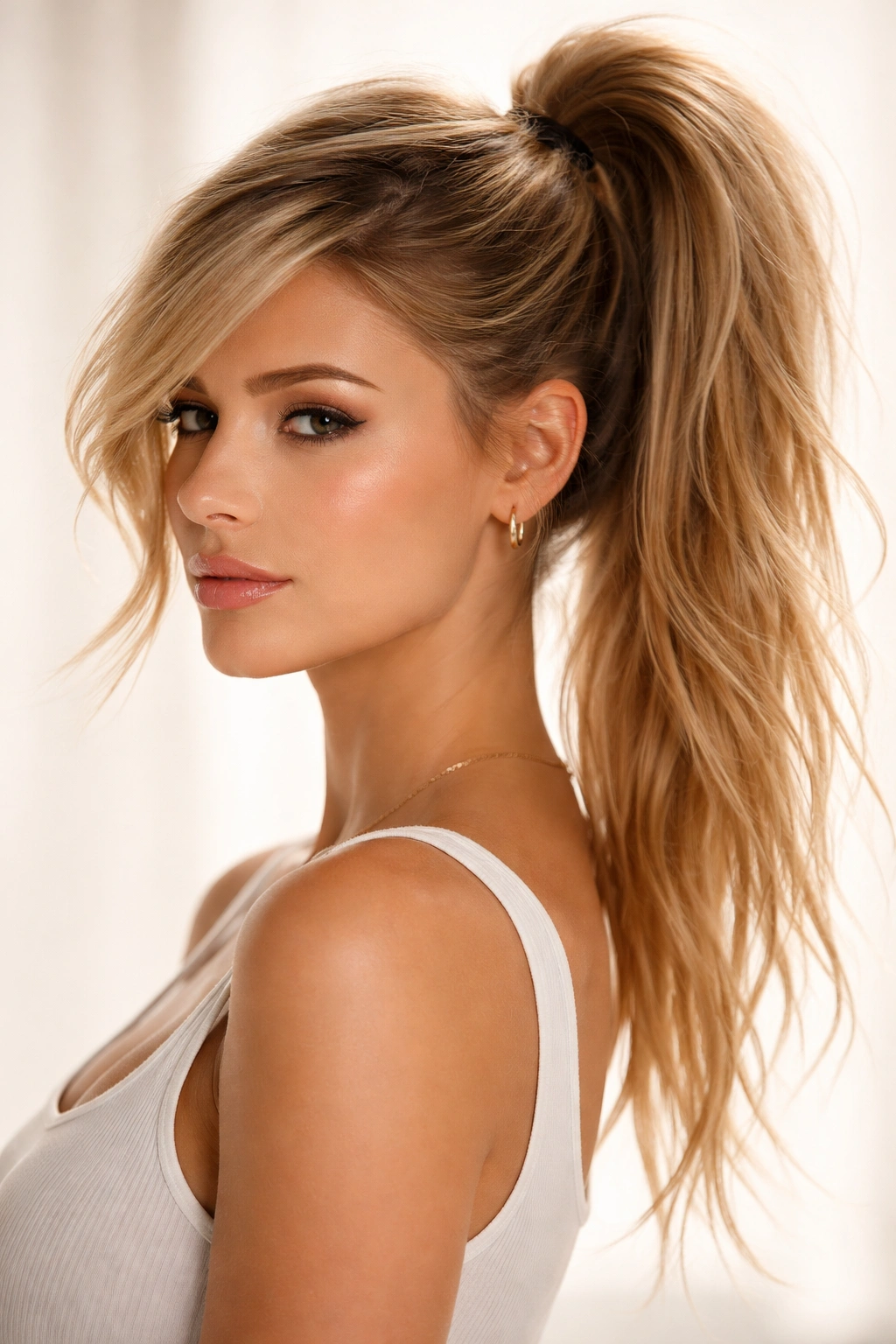
A swooped high ponytail is a little more dramatic than the classic version, but it still belongs in the messy category when the front section is loose and soft. Brush one front section across the forehead in a gentle sweep, then gather the rest of the hair high at the crown.
That side sweep changes the balance of the whole style. Straight hair can sometimes look hard when it is all pulled straight back, and the swoop solves that by softening one side of the face. Keep the tail piecey and a little separated rather than brushing it into one solid rope.
This style likes a small amount of volume at the crown. A pinch of teasing or a lift with your fingers is enough. More than that and it starts to look stiff, which is the opposite of what you want.
23. The Tucked-Under Ponytail
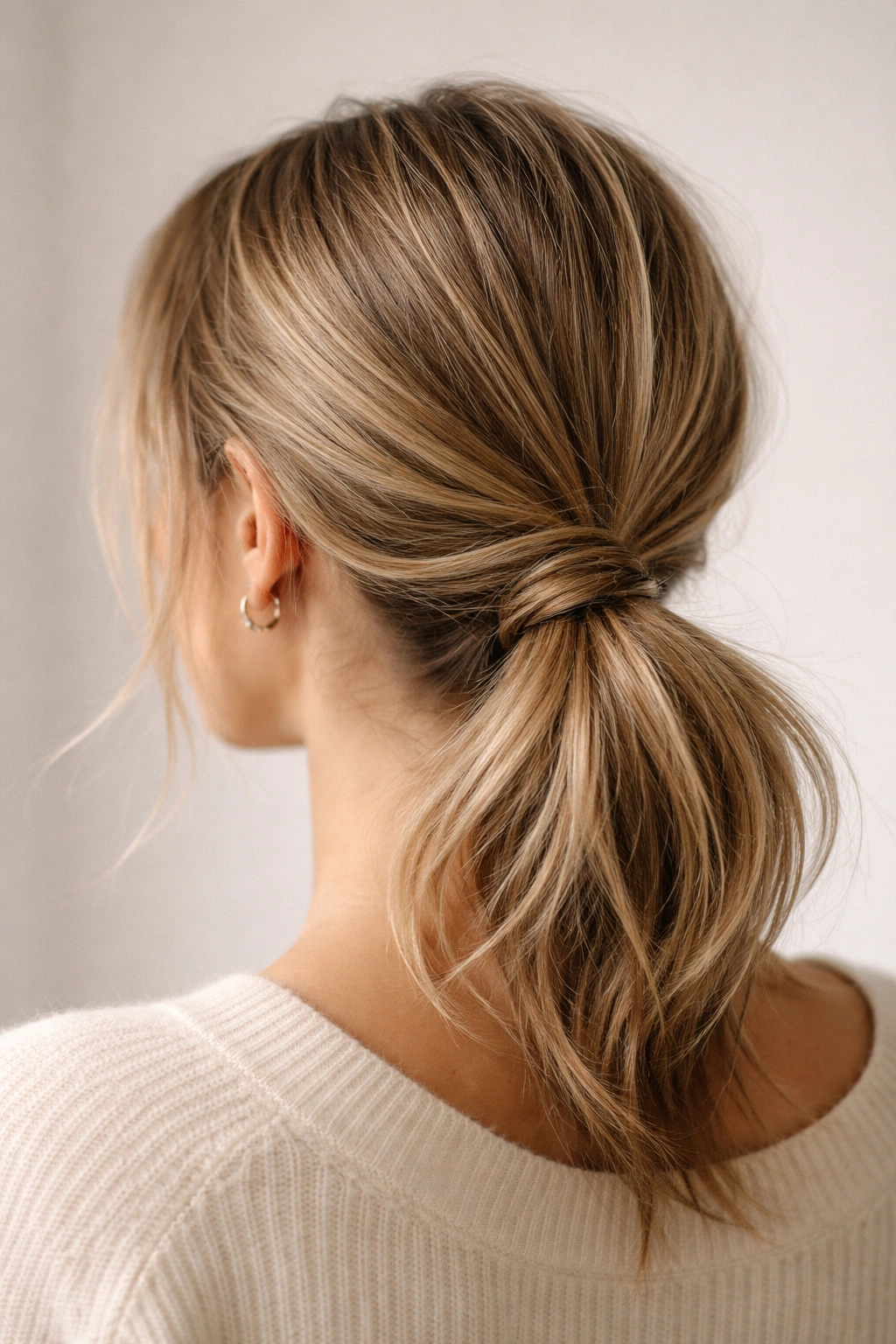
A tucked-under ponytail is a smart fix for straight hair that feels too long and too flat. After tying the pony low, fold the tail under itself and pin it at the base so the ends disappear into the style. The result is fuller and shorter-looking, with a little hidden texture.
What the Tuck Changes
It changes the silhouette. Instead of one long, straight line pulling the eye downward, you get a softer shape that sits closer to the neck. That can be a nice move if your hair is very sleek and needs a little body.
Use 2 to 4 bobby pins depending on thickness. If the tail is heavy, pin from both sides so the tuck does not droop. Pull a few small pieces loose around the hairline, and don’t worry if the tucked part is not perfect. Slight asymmetry makes it look more natural.
24. The Flat-Iron Bend Ponytail
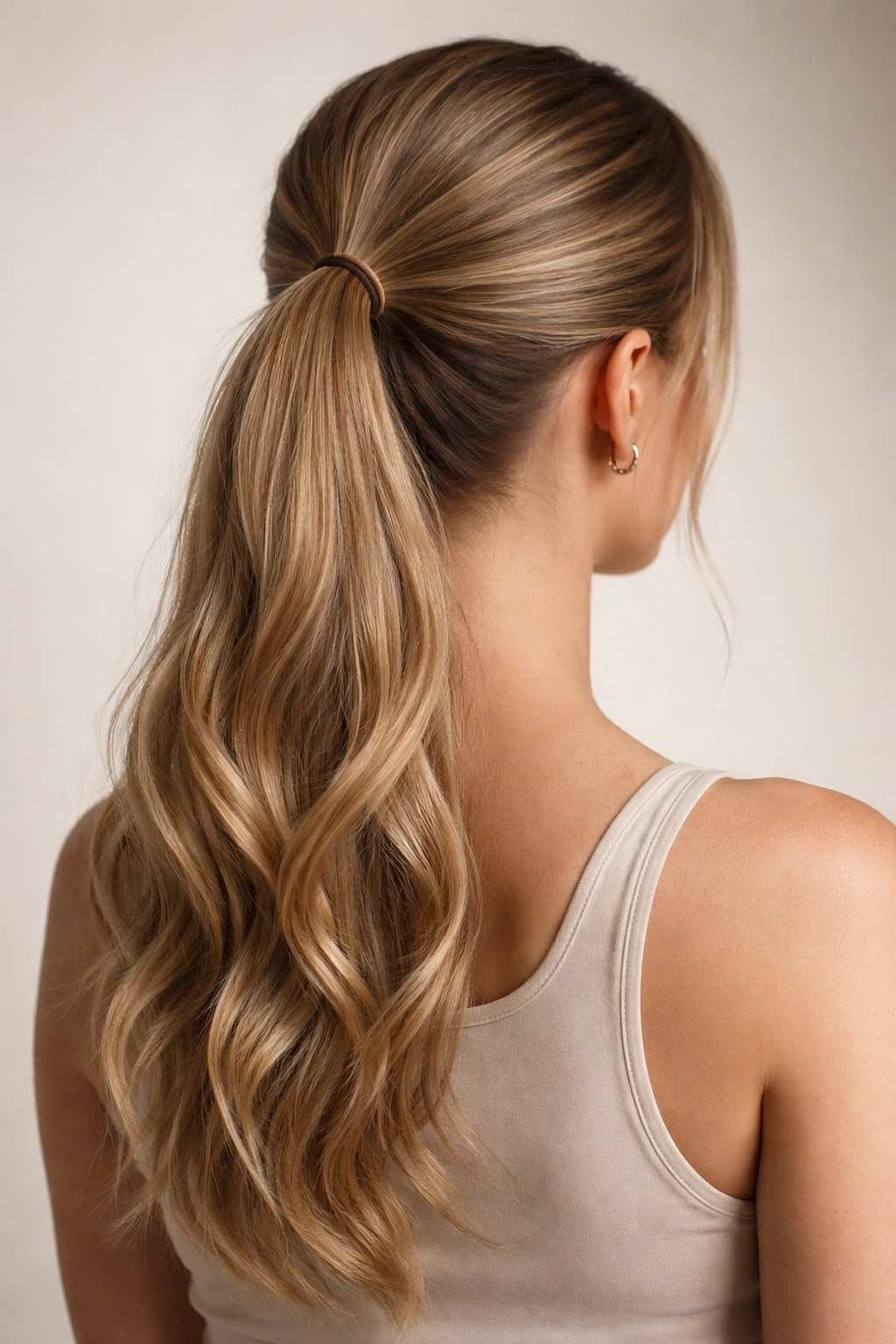
If your straight hair refuses to hold a curl, don’t force one. Make bends instead. A flat-iron bend ponytail is built by clamping the tail in 1-inch sections and alternating the angle of the iron as you move down the length. The result is a loose wave pattern, not a spiral.
This is one of the most useful messy ponytails for straight hair because it changes the tail without changing the texture all the way to the roots. The crown can stay simple while the ends get some shape. That contrast keeps the style from feeling too engineered.
A Good Heat Range
- Fine hair: about 320°F to 340°F
- Medium hair: about 340°F to 360°F
- Thick hair: about 360°F to 380°F
Work fast. One pass per section is enough if the hair is already dry. Too many passes make the ends look fried, and nobody needs that.
25. The Sporty Messy Ponytail
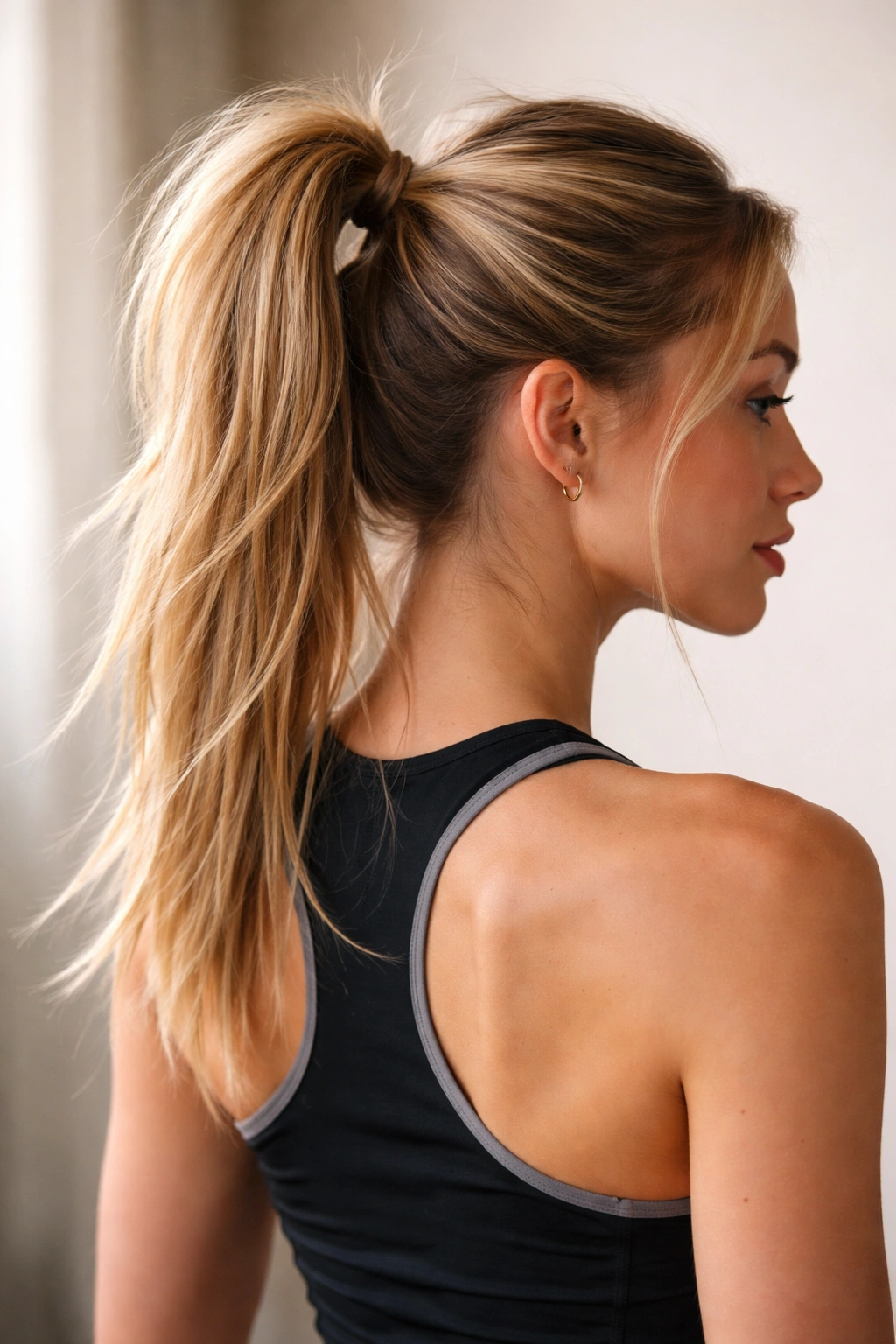
A sporty ponytail can still be messy, and on straight hair that’s often the better version anyway. Keep the base high and secure, then loosen the crown just a little and leave the tail piecey. It should look ready to move, not polished for a mirror.
This style works because straight hair usually does not need much help to look clean. It needs help to look alive. A few bends in the tail and a small puff at the roots are usually enough. If you want extra grip, a tiny spray of flexible hold near the crown keeps the shape from collapsing.
Good for errands. Good for walks. Good for days when your hair needs to stay out of the way but you still want it to look like a hairstyle, not a stopgap.
26. The Romantic Low Ponytail
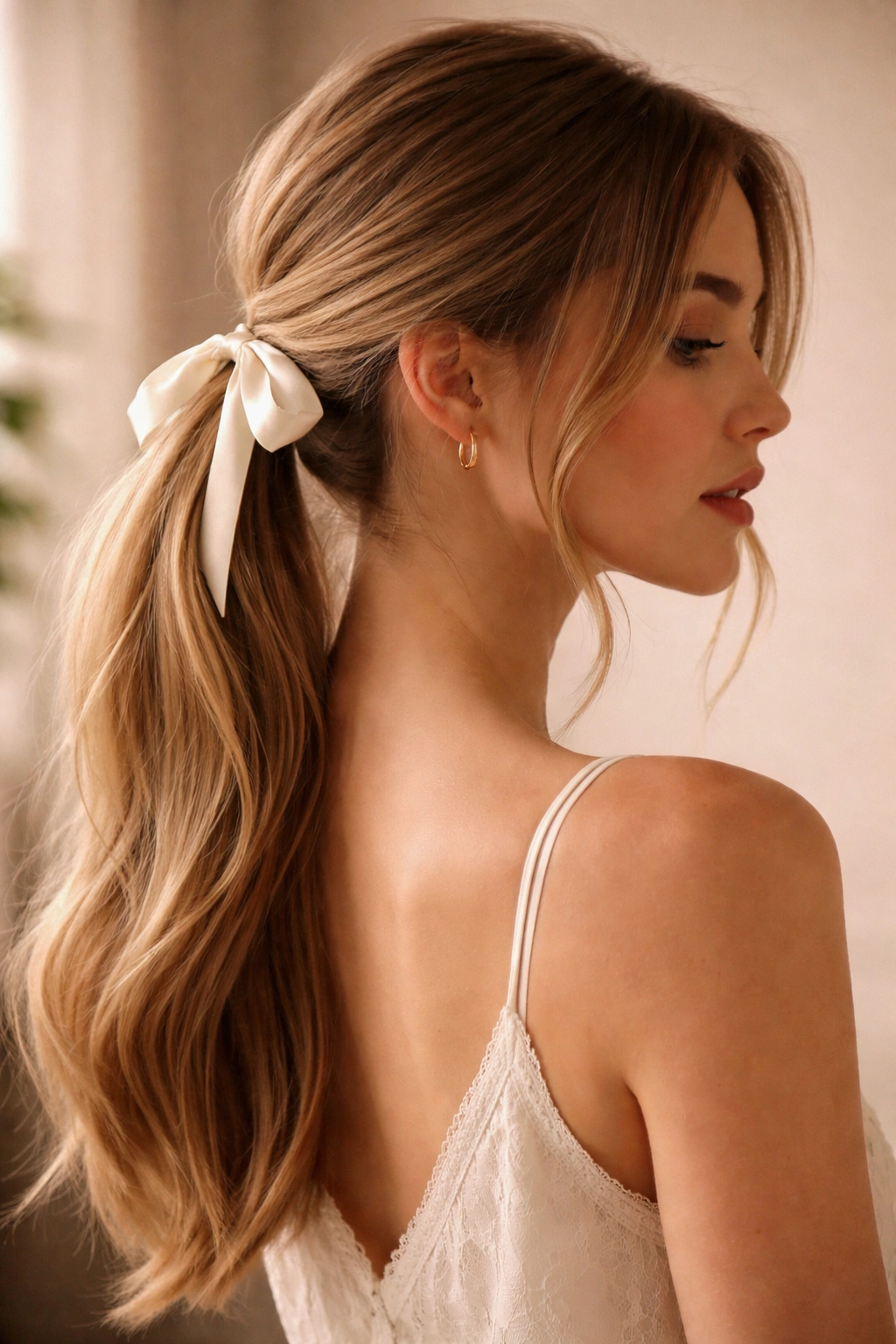
A romantic low ponytail leans soft instead of sharp. The base sits low, the crown stays lightly lifted, and the front pieces are left loose enough to skim the cheeks. Straight hair often needs that little bit of softness, or it can come across as too blunt.
Ribbon helps here. So does a satin tie or a narrow fabric band around the elastic. Keep the tie understated so it doesn’t swallow the hair. The point is to break up the hard line of straight strands, not cover them up.
I like this style on longer hair because the tail has room to drape. If the ends are bent, even better. If not, let them stay straight and focus on the loosened front. That alone can shift the whole feel.
27. The Tousled High Ponytail
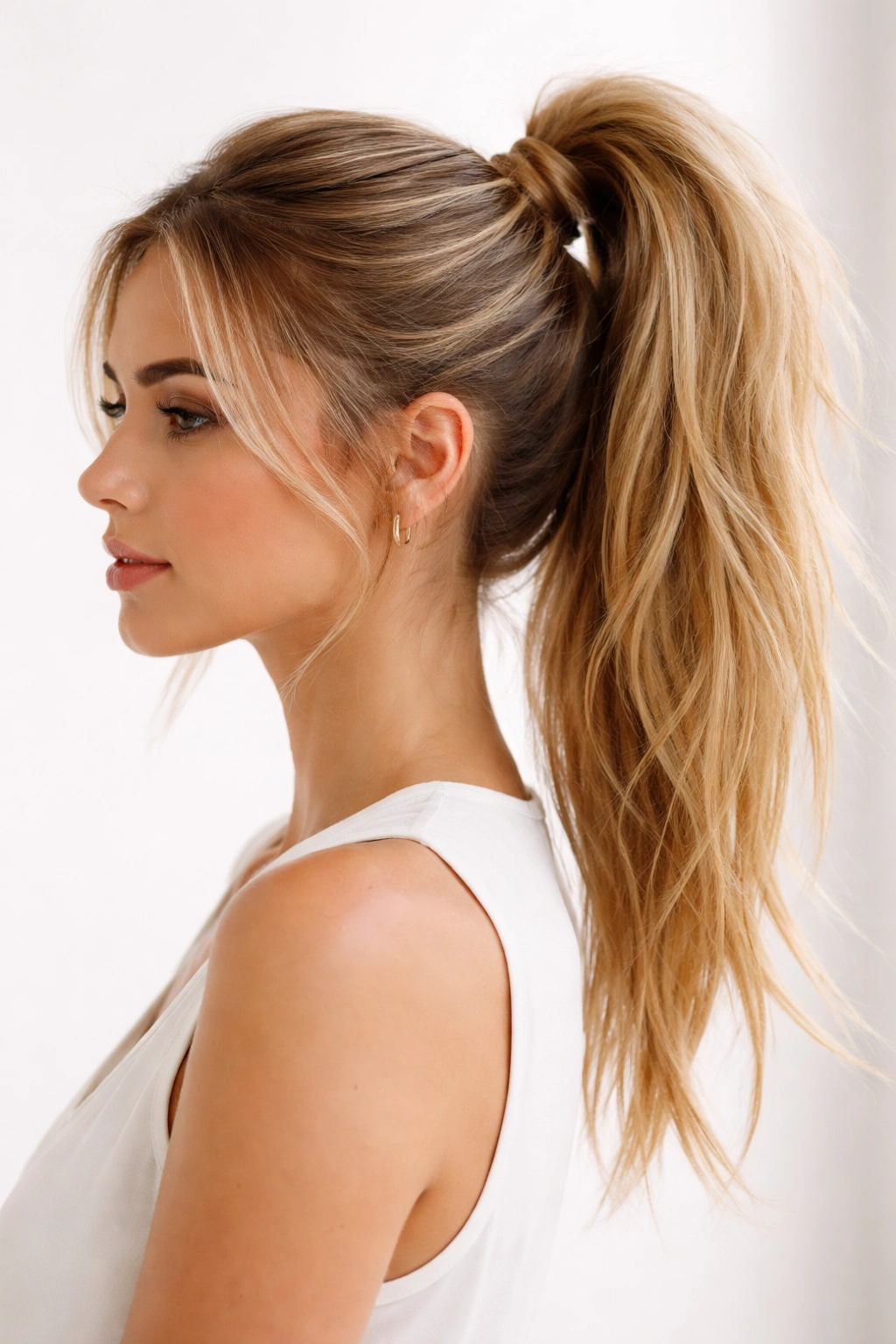
A tousled high ponytail lives halfway between playful and polished. The crown gets lifted, the tail gets separated into a few textured pieces, and the front stays soft rather than slick. Straight hair can carry this style well because the pieces show clearly.
The mistake is making it too even. Don’t. Pull the tail apart in a few places, lift the crown with your fingers, and let one or two wisps fall near the temples. That unevenness gives the style motion. You want the ponytail to look touched, not ironed into place.
This one is especially good when you want height at the top and movement through the ends. A high base and a piecey tail can do a lot with very little effort.
28. The Loose-Braid Ponytail
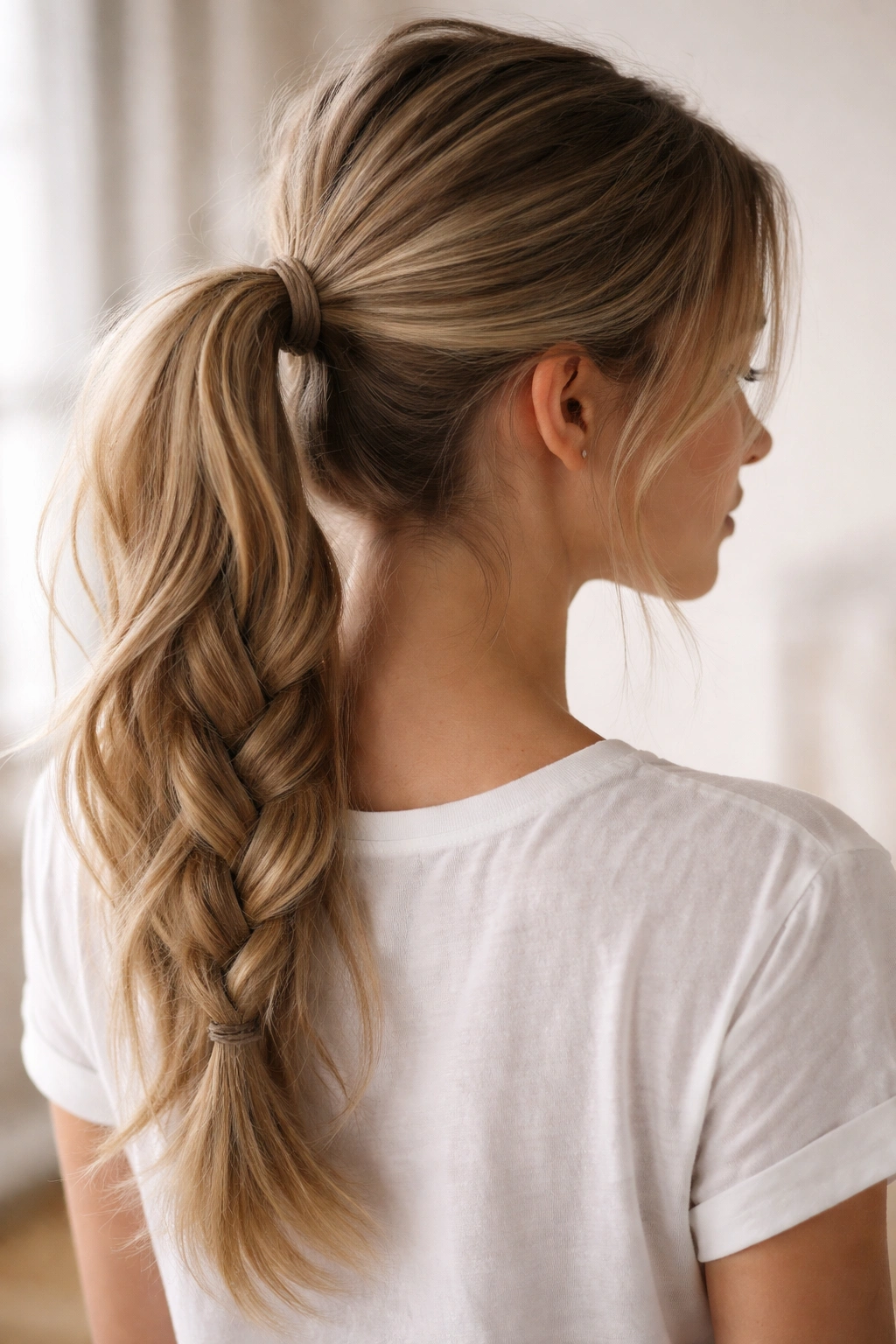
A loose-braid ponytail is exactly what it sounds like: a ponytail first, then a braid through the tail, done with a lighter hand than usual. Braid only part of the length if you want the style to feel more casual, or braid the whole tail and pull it apart afterward.
Straight hair makes braid texture easy to see, which helps here. The braid becomes the detail, and the loose top keeps the style from feeling too tidy. If the braid is too tight, the whole look goes rigid. Keep your grip soft and widen the braid with your fingers once it’s secured.
This is a good choice when you want the tail to stay controlled but not flat. It also lasts well because braids tend to hold shape better than loose lengths.
29. The Party Volume Ponytail
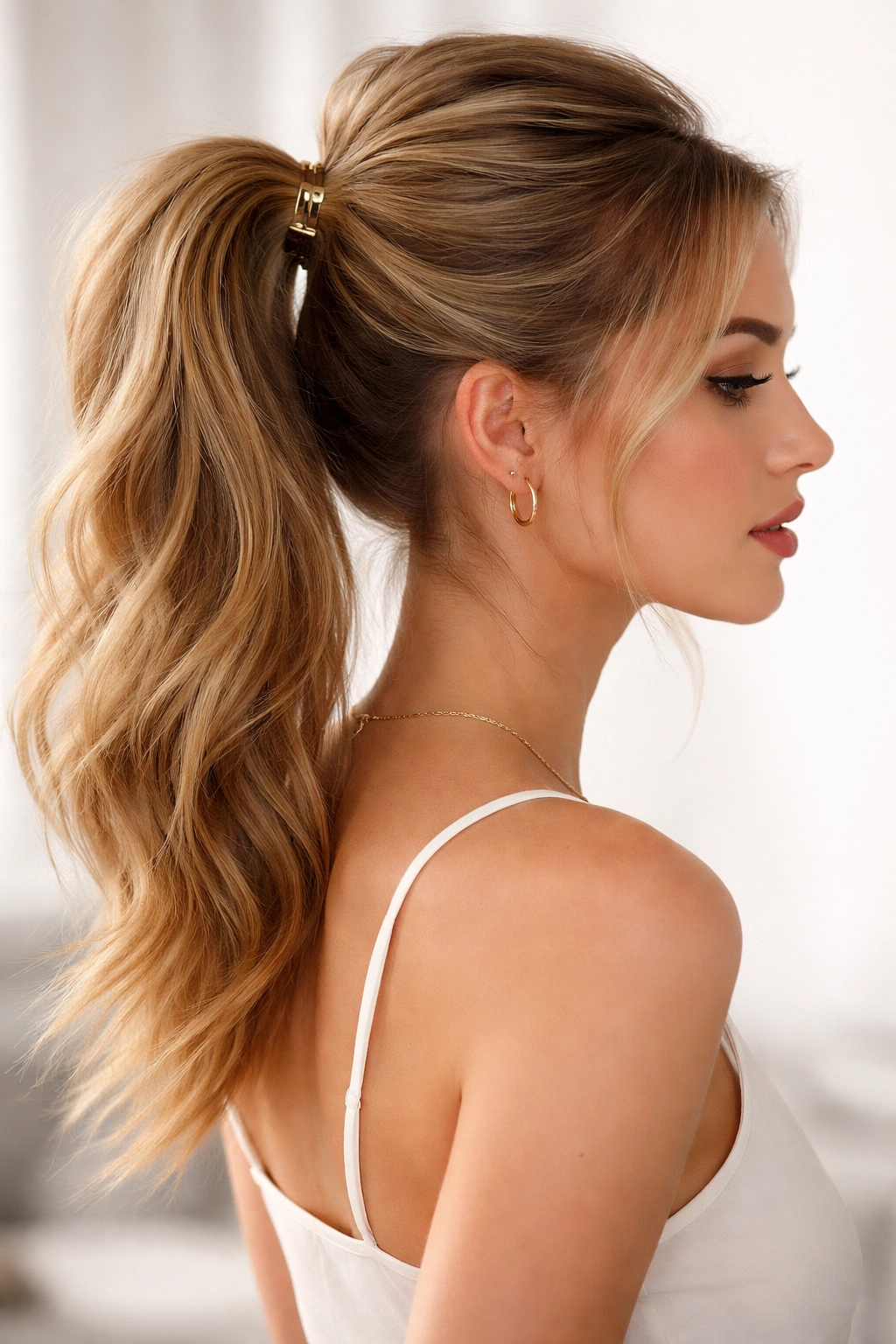
A party volume ponytail is the one you pull out when straight hair needs more presence. Stack the volume at the crown, keep the base secure, and add texture through the tail with a flat iron bend or a loose braid. The style should feel bigger without turning into a formal updo.
A small clip or decorative pin at the base can help, but do not overdo the accessories. The shape already does enough. What matters most is the lift at the top and the movement through the tail. If the crown is flat, the rest of it struggles to look intentional.
This is a good style for long straight hair that tends to disappear in photos. A little extra height and a little extra separation go a long way when the hair normally lies so neatly on its own.
30. The Clean-Edge Everyday Ponytail
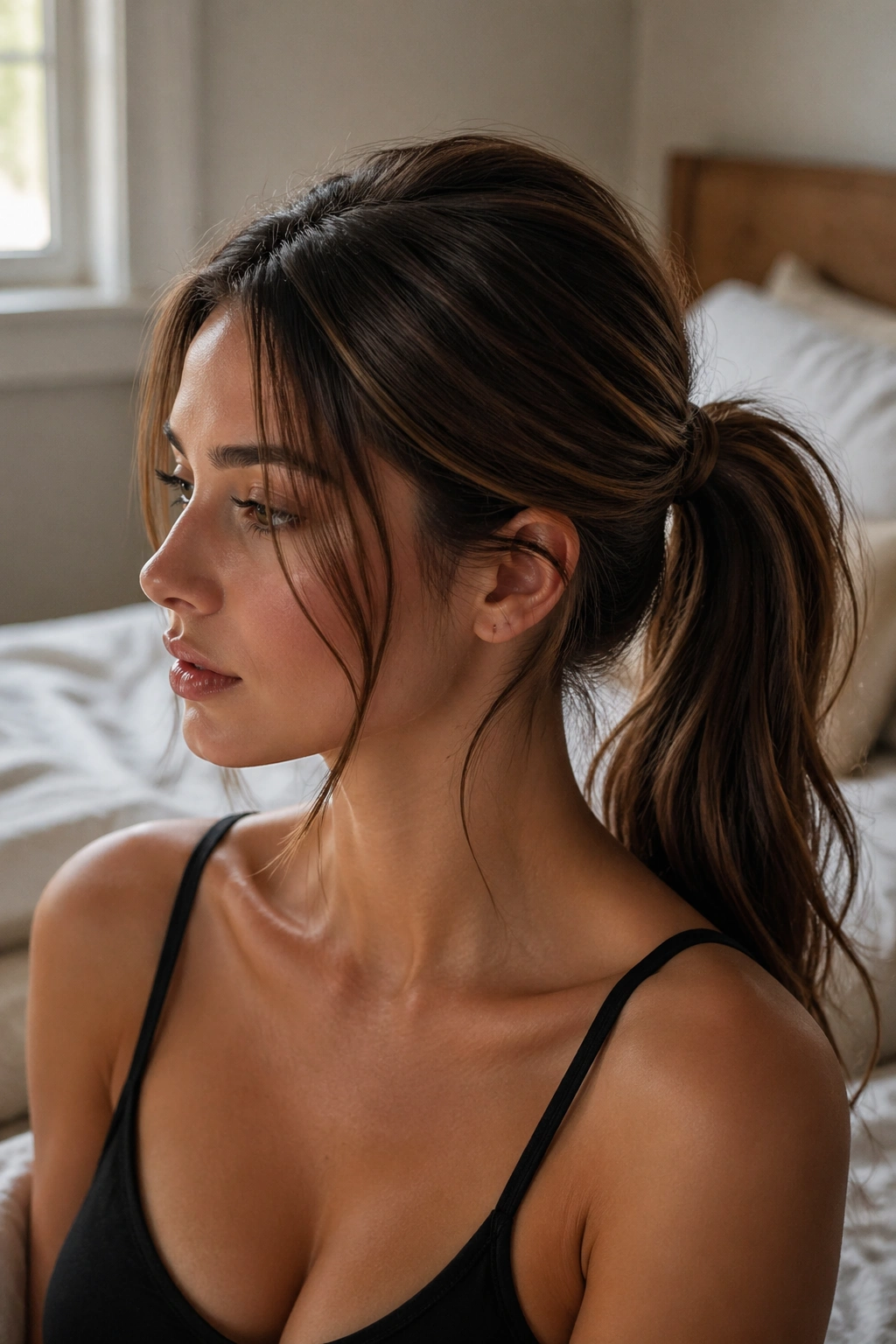
The clean-edge everyday ponytail is the one you’ll probably use most, even if it sounds less exciting than the others. It’s a low or mid pony with a loose crown, a small face-framing piece on each side, and just enough texture spray to stop the hair from falling dead flat. Straight hair likes this kind of balance.
A lot of people think messy ponytails have to look dramatic. They do not. The best daily versions are calm, quick, and a little undone around the edges. If the tail itself is straight, leave it. If the ends have a slight bend, great. Either way, the shape should feel easy to wear.
When your hair feels too sleek, give the roots a little grit and the tail a little movement. That’s most of the job.