Colorful weave ponytails do something plain hair rarely can: they make the whole style look fuller before the tail even swings. A bright shade pulls the eye, sure, but the real trick is shape. A clean base, a dense ponytail, and a smart color choice can turn a simple style into something that looks intentional from every angle.
The best ones are never only about color. They’re about balance. A ponytail that sits too flat at the crown will read thin no matter how loud the shade is, while a ponytail with a little lift, a wrapped base, or a layered tail can look thick even on days when your own hair feels a bit stubborn.
Weave ponytails also give you room to play with texture. Straight hair shows length. Curls show body. Braids show structure. Bubble sections show movement. When color is added on top of that, the whole style gets louder without needing extra fuss.
And that matters, because a ponytail can be neat and still feel fun. It can be polished and still have personality. The looks below lean into that idea in different ways — neon, soft pastels, graphic stripes, glossy reds, and a few shades that look richer once they’re actually on the head than they ever do in a pack.
1. Neon High Colorful Weave Ponytail
A high ponytail is the easiest place to let neon do the work. When the tail sits at the crown, the color gets lifted away from the neck and shoulders, which makes even a simple shade look sharper. Hot pink, electric lime, and bright orange all hit harder in this shape because the silhouette is already doing some of the drama for you.
Why It Works
The slick base keeps the eye moving upward, then the thick tail gives you that full, swingy finish people notice from behind. If you want the ponytail to read dense, not flat, keep the crown smooth and let the length have a little bend. Pin-straight neon can look sharp, but a soft wave gives the color more depth.
- Best with a wrapped base that matches your roots or sits just one shade darker.
- Works well with two bundles or a pre-made ponytail piece if you want the tail to feel heavy.
- Looks strongest when the ends are slightly curled or bent, not dead straight.
- Keep the edges neat, but do not pull them so tight that the whole style looks stiff.
My favorite detail: one neon shade is often stronger than three. Loud does not have to mean crowded.
2. Rainbow Feed-In Braided Ponytail
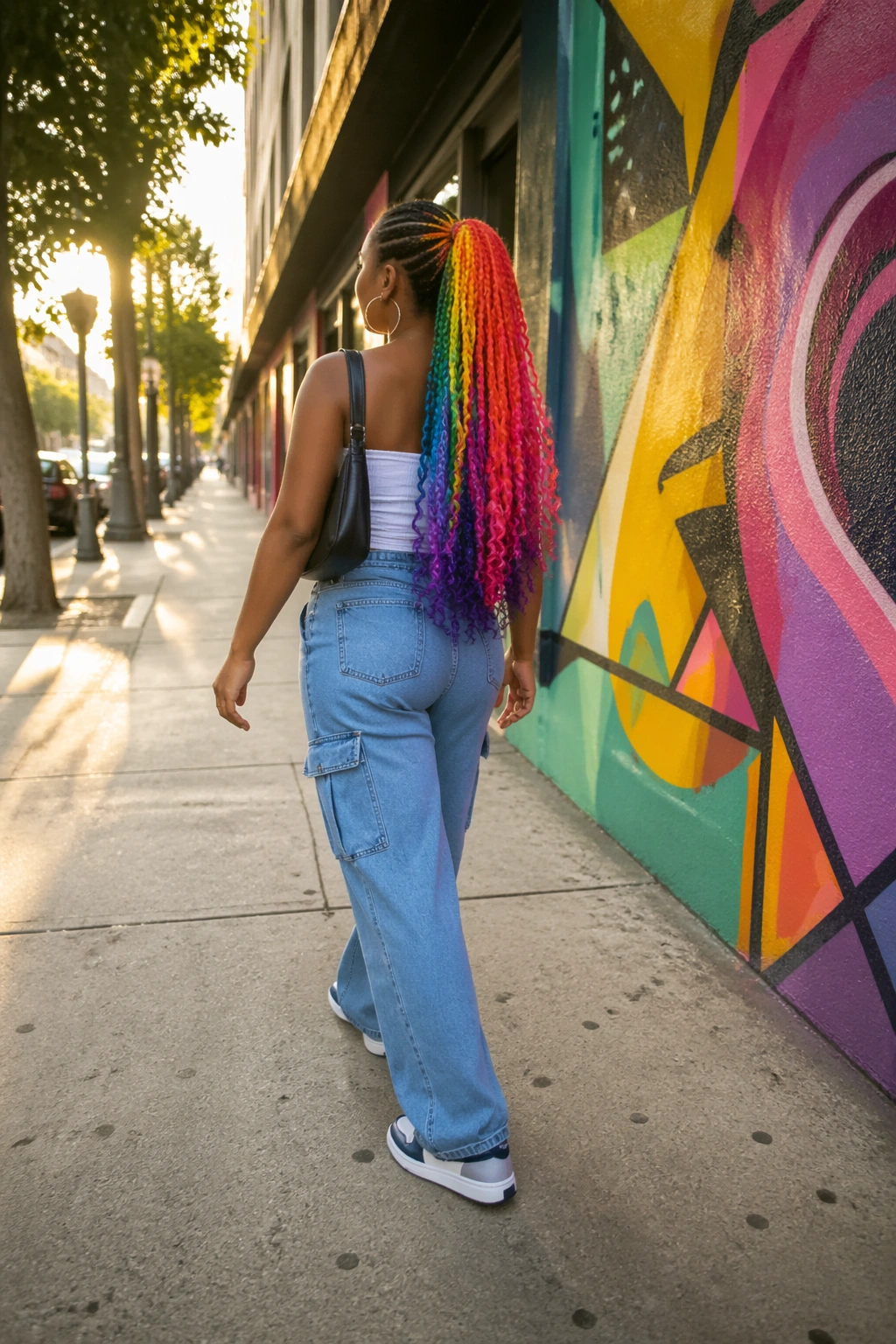
A rainbow braid is loud in the best way. The feed-in base makes the color blend feel deliberate instead of random, so you get a clean braid at the scalp and a thick, full ponytail through the length. That mix matters. Without the braid structure, rainbow hair can read busy. With it, the whole style looks carefully built.
The smartest version uses color placement with a little restraint. Put the brightest tone near the temple or crown, then let the next color take over through the mid-lengths. If every strand shouts at the same time, the braid loses definition. Three shades usually feel cleaner than five, and the braid stays easier to read from a distance.
This is the style I’d reach for if I wanted the ponytail to do the talking and still keep the base neat. It holds well, it photographs from every angle, and it gives you a full shape without needing a giant cloud of curls. That braid line is doing real work.
And yes, it can still feel playful. Just keep the finish smooth so the colors look intentional instead of tangled.
3. Honey Blonde Curly Colorful Weave Ponytail
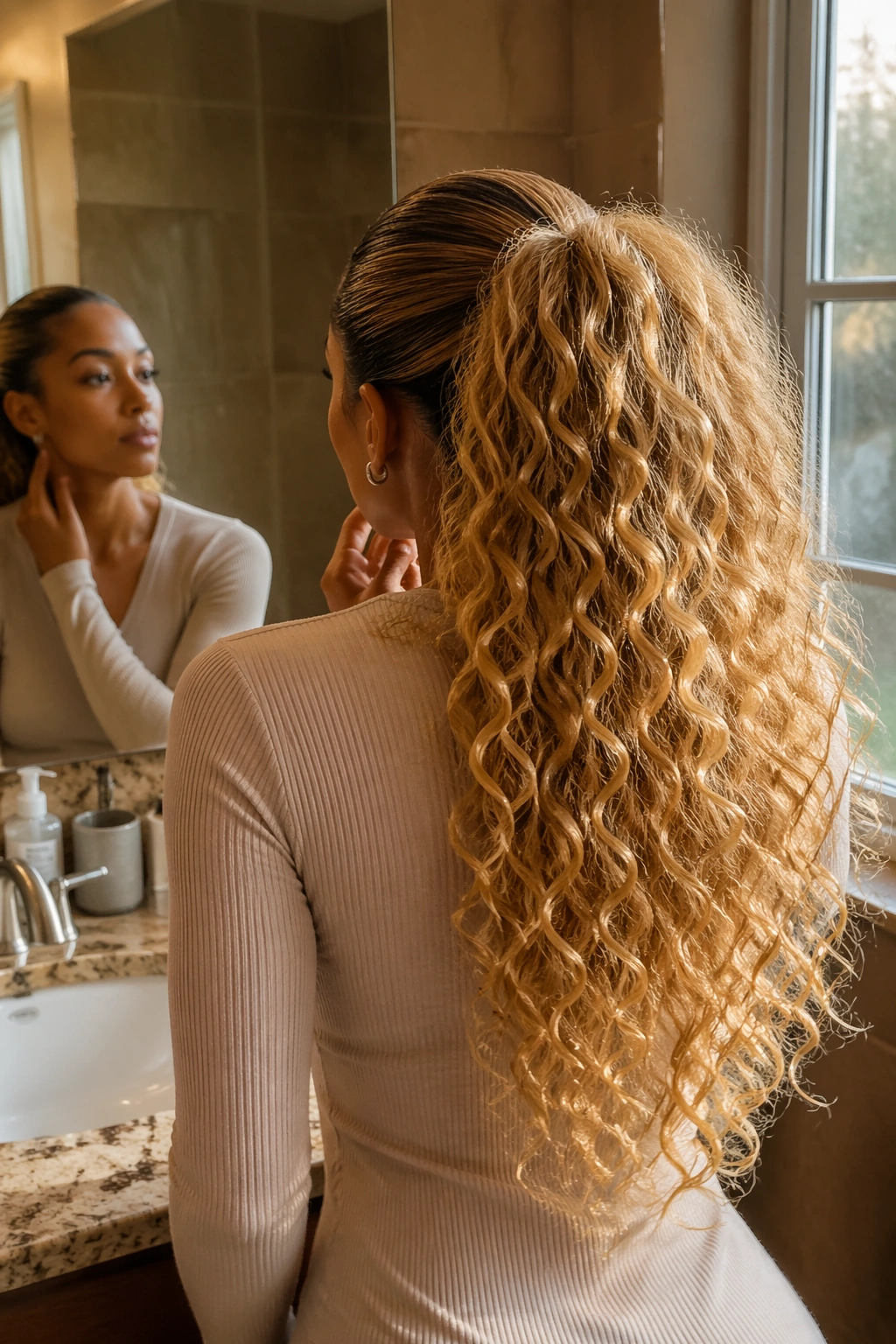
Picture the kind of ponytail that looks soft before anyone even touches it. That is the charm of honey blonde curls. The color sits warm against the skin, and the curls make the tail look thicker than a straight ponytail of the same length ever could. It’s one of those styles that seems easy, but only because the shape is doing the heavy lifting.
What Makes It Stand Out
Honey blonde lands in that sweet spot between bright and wearable. It has enough gold to glow, but not so much contrast that the style feels harsh. Add loose curls and the ponytail starts to feel bigger at the ends, which is exactly what you want if “full look” is the goal.
How to Keep It Full
- Choose large barrel curls or wand curls if you want the tail to look airy and wide.
- Separate the curls with your fingers only after they cool, or they’ll frizz too fast.
- A little mousse at the ends helps the shape stay soft instead of stringy.
- Leave the top smooth and let the fullness live in the tail, where people actually see it.
Softer color helps here. Dark roots can keep the blonde from washing you out, and the curl pattern keeps the whole ponytail from falling flat by the end of the night.
4. Cherry Red Wrapped Low Ponytail
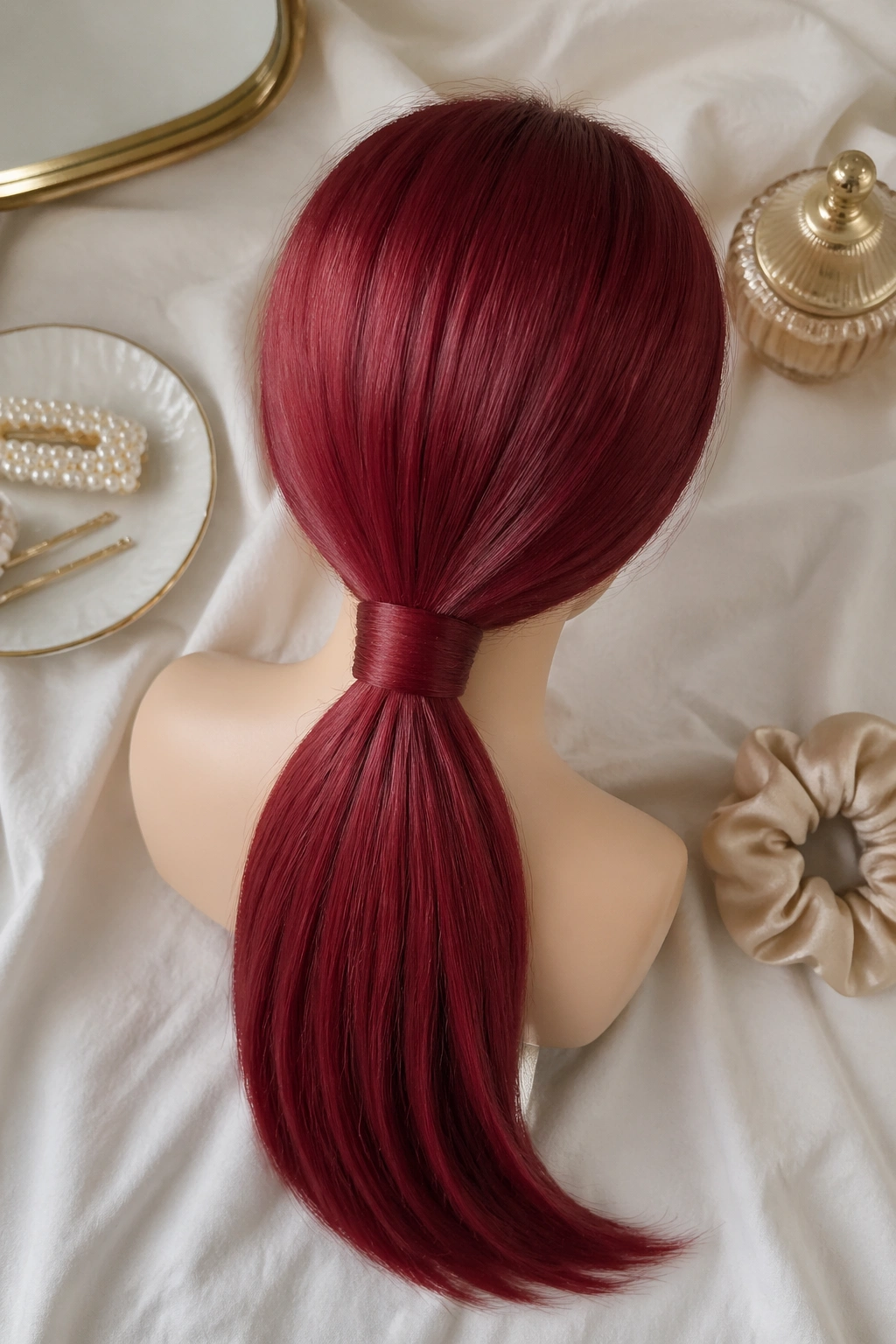
Want color without having the ponytail sit too high? A cherry red low ponytail does that job beautifully. The nape placement keeps it calm, and the red gives it enough personality that nobody mistakes it for an afterthought. Wrapped low ponies are underrated. They look polished, but they still have movement, especially when the tail has a little wave.
The trick is to keep the base smooth and the red tone rich, not muddy. A deep cherry shade looks cleaner than a flat, dull red because it holds its shape in low light. If your own hair is dark, the contrast at the base can be striking, which is why this style often looks fuller than it is. The eye reads the shape first.
How to Wear It
A center part makes the style feel a little more formal. A soft side part makes it feel looser and easier to wear with everyday clothes. Either way, keep one wrapped section around the elastic so the base looks finished instead of rushed.
This is also one of the easiest looks to dress up. Put on earrings, keep the neckline clean, and let the color do the talking.
5. Two-Tone Skunk Stripe Ponytail
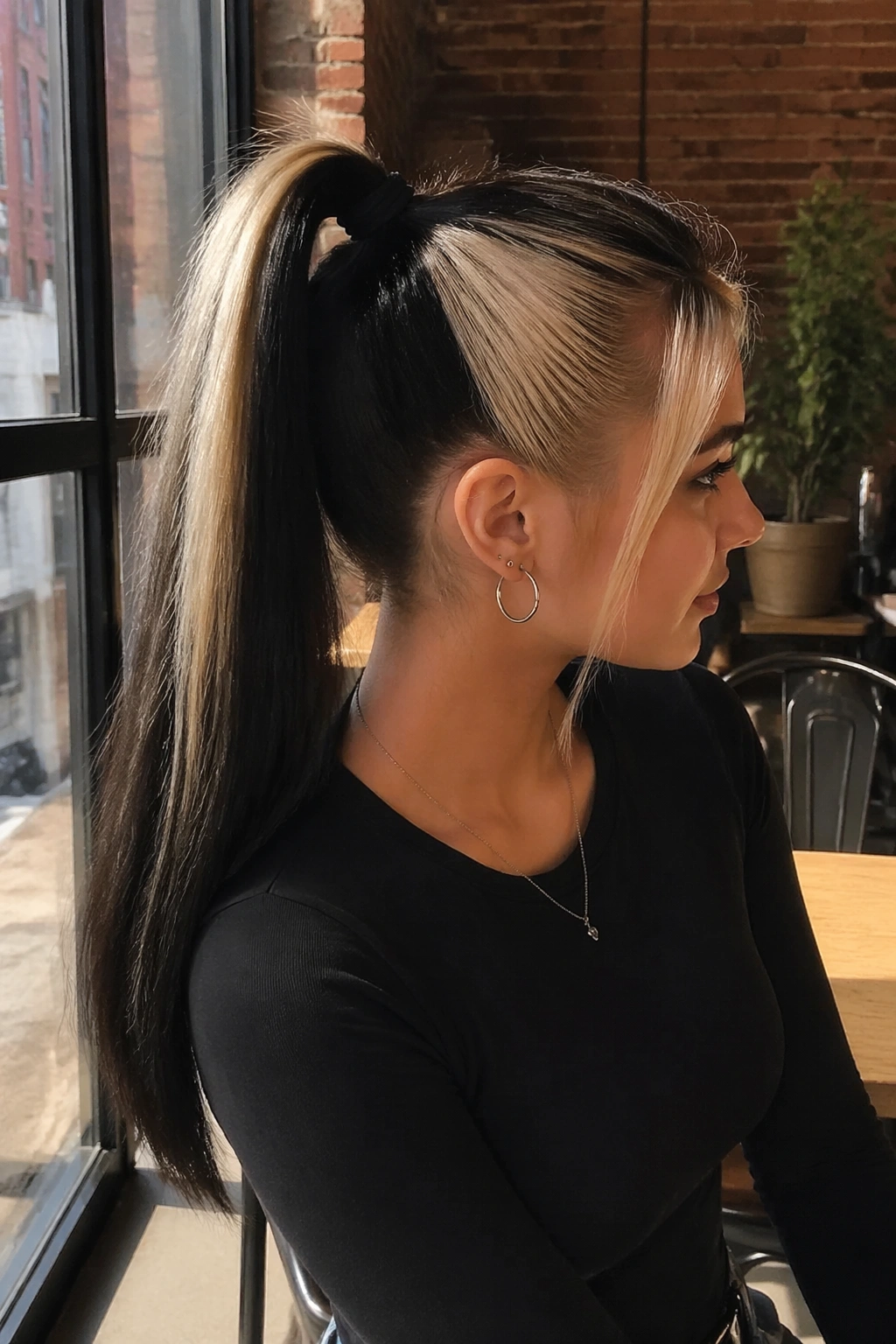
This style is not shy. A two-tone skunk stripe ponytail uses contrast in a way that feels graphic rather than blended, and that’s what gives it so much punch. One bright panel against a darker base can make the whole ponytail look thicker because your eye keeps jumping between the two shades.
Unlike a single-color ponytail, this one works best when the stripe placement is exact. The stripe can live at the front hairline, travel through one side of the ponytail, or hide just under the outer layer for a more surprising effect. I like the front-panel version most, because it frames the face and gives the ponytail a strong outline.
This is the style for someone who wants a little edge without building the whole look around curls or extra length. Keep the base color close to your natural shade if you want the stripe to pop. If both colors fight for attention, the style loses its clean shape.
A crisp line is doing more work here than extra volume ever could. That’s the point.
6. Copper Bubble Ponytail
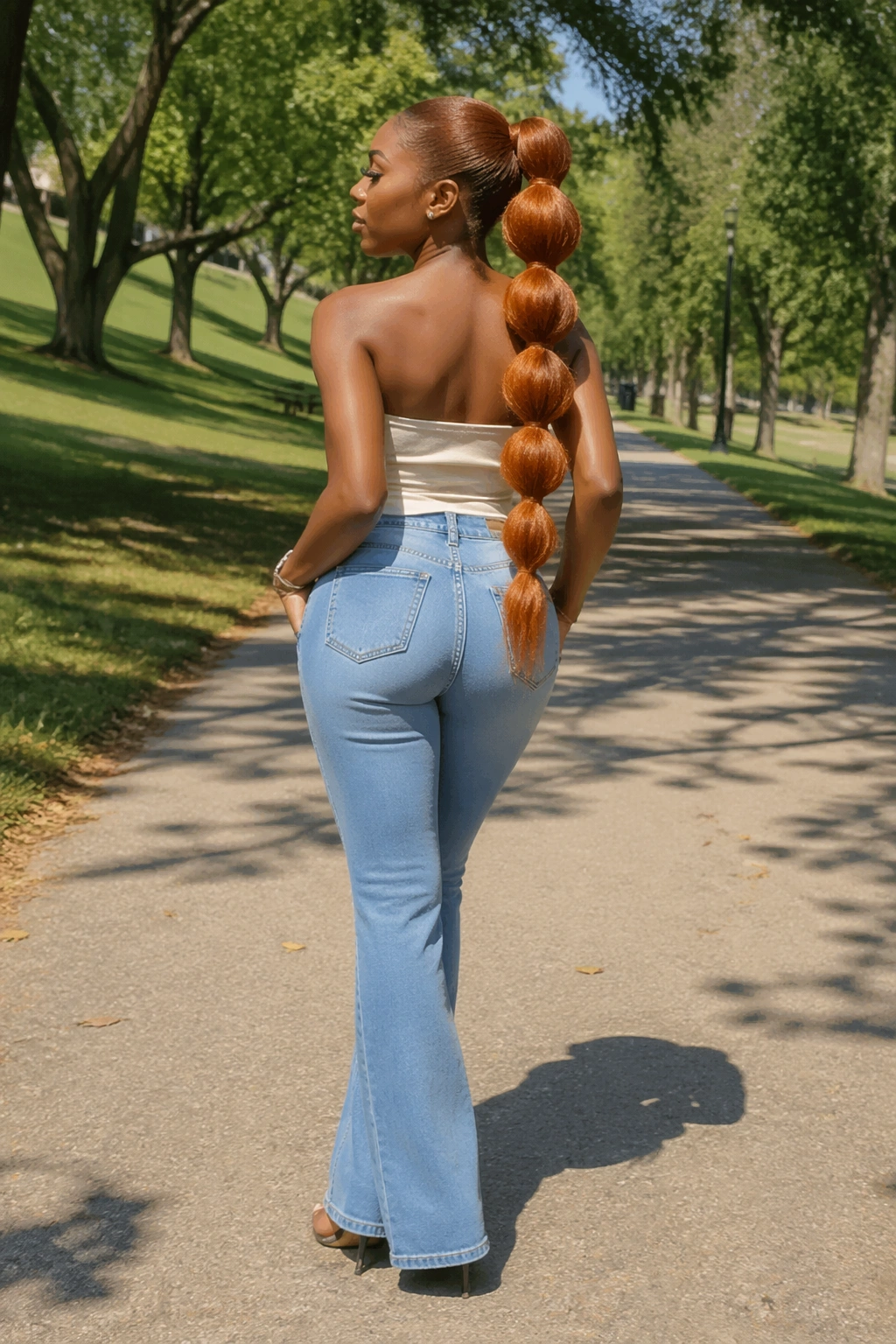
Copper has a way of catching attention without looking loud for the sake of it. Put it in a bubble ponytail and the whole thing changes again. The bubbles break up the length, the color flashes at every section, and the ponytail feels fuller because each puff creates its own little shape.
The best part is that bubble ponytails do not need perfect symmetry. In fact, a slightly imperfect spacing often looks better. Set your elastics every 2 to 3 inches, then gently tug each section until it rounds out. If the hair is too tight, the bubbles can look skinny. If it’s too loose, the style collapses fast. That middle ground matters.
A one-sentence rule helps here. Keep the bubbles soft.
Copper tones work especially well because they shift between gold and brown as the light changes. On a straight base, the color looks sleek. On a wavy base, it looks warmer and thicker. If the ponytail is long, you can usually fit four or five bubbles without crowding the shape. Shorter lengths need fewer, larger sections.
This is one of those styles that looks fussy in theory and easy in practice. That’s a good sign.
7. Blue Ombré Colorful Weave Ponytail Braid
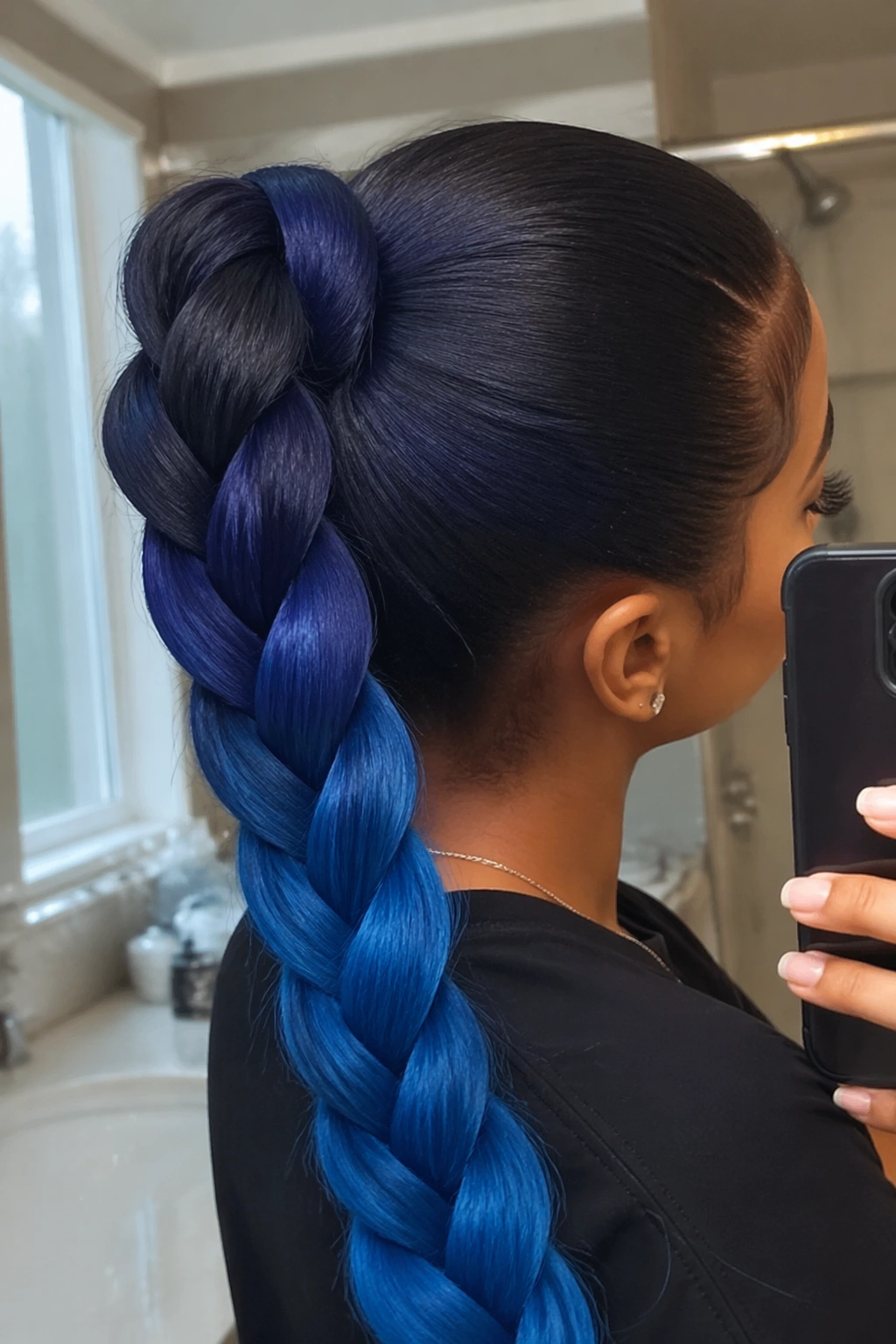
Blue looks best when the darkest shade sits near the scalp. That’s where the eye expects depth, and it gives the braid a strong anchor before the color starts to fade into cobalt or icy ends. In a braid, ombré stops being a novelty and starts acting like structure.
Where the Color Should Begin
Start with navy or deep indigo at the root area, then move into a brighter blue through the mid-lengths. By the time the braid reaches the end, the lighter shade makes the whole thing feel longer. Hard color breaks can look flat. A clean fade looks like intention.
How to Keep the Braid Thick
- Use pre-stretched braiding hair if you want a neater braid line.
- Feed in color slowly so the braid does not look lumpy.
- Keep the braid loose enough to show its pattern, but not so loose that it falls apart.
- Seal the end cleanly if the hair type allows it, especially on synthetic pieces.
Blue braid ponytails are great when you want fullness without a lot of curl maintenance. The braid itself becomes the shape, and the color gives it movement. That combination is hard to beat.
8. Purple Kinky Straight Ponytail
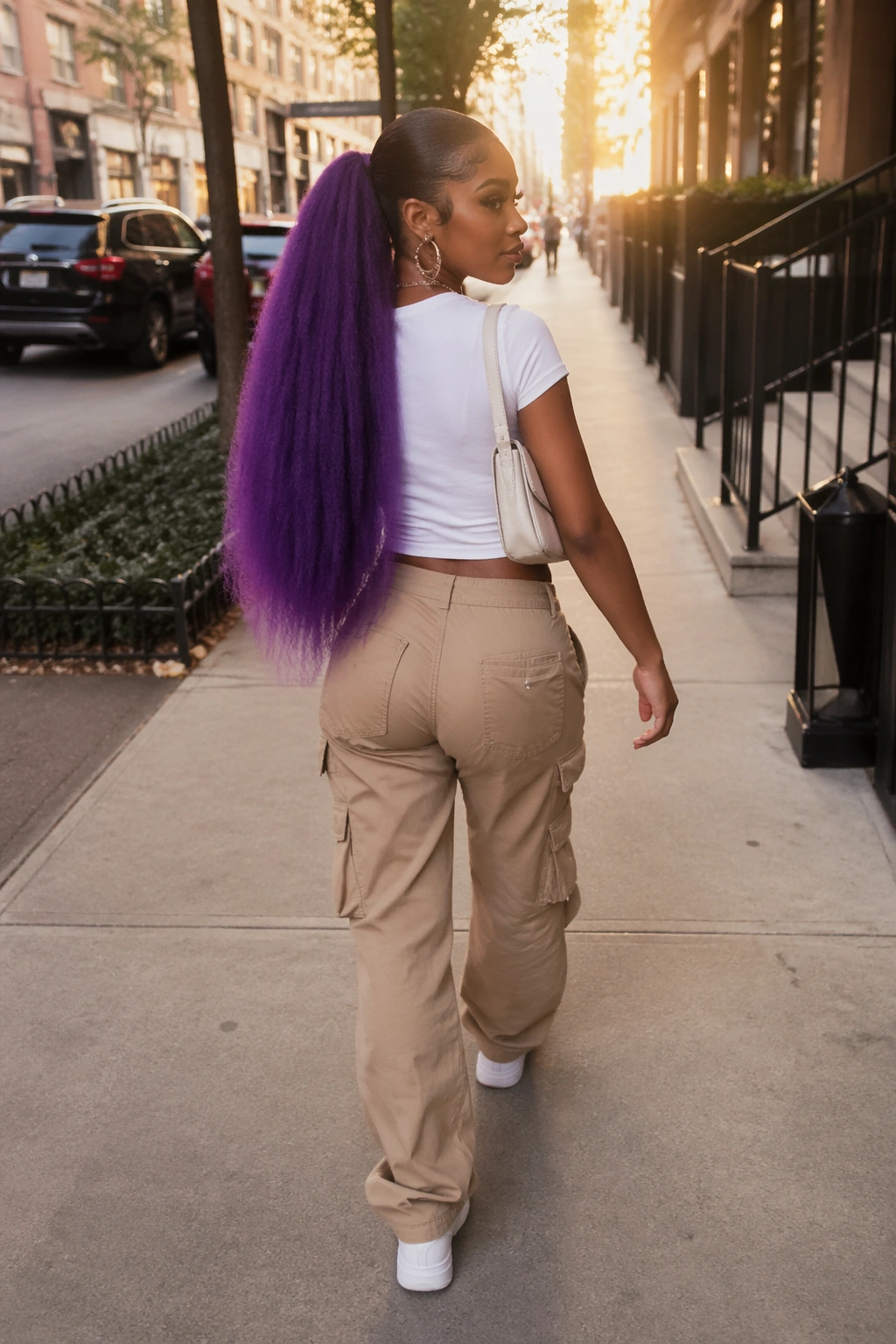
Purple is one of the few colors that can look soft and bold at the same time, and kinky straight texture gives it the body it needs. If you want a ponytail that feels full without relying on curls, this is a smart pick. The texture holds a little volume at the root and through the tail, so the hair never hangs too flat.
What a lot of people miss is that straight purple hair can turn severe fast. Kinky straight keeps the finish from looking too slick, which matters when the color is already strong. Plum shades feel richer. Violet feels cooler. Lavender tips soften the whole look without taking away the shape.
Flat purple is a miss.
A small amount of leave-in and a light brush-through is enough. Too much product weighs the tail down and kills the body that makes this style work. If you want the ponytail to swing, keep the ends feathered rather than blunt. That little bit of texture helps the color catch movement instead of sitting there like a wig display.
This is a strong choice for anyone who wants color but still likes a natural-looking texture. It reads full fast.
9. Silver Ash Colorful Weave Ponytail
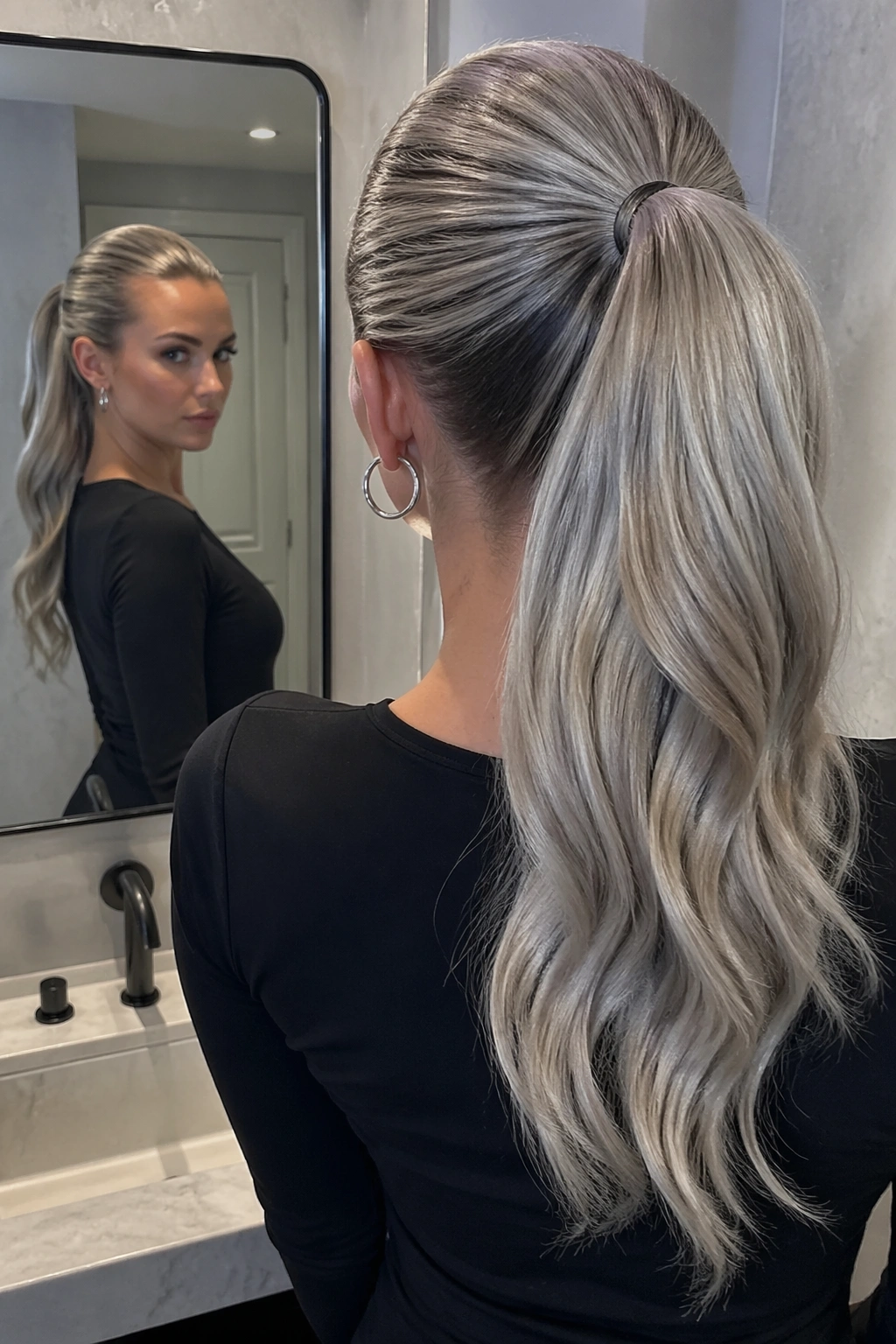
Silver only looks sharp when the base is disciplined. That is the whole story with this style. If the crown is messy, silver can start to look pale instead of polished. If the base is smooth and the ponytail is dense, the color turns crisp in a way that feels almost architectural.
A silver ash ponytail works best with cool undertones in the blend — graphite roots, pale gray mids, and a clean silver finish at the ends. Too much yellow in the tone ruins the whole effect. Too much shine spray can do it too. You want light reflection, not grease.
A few things make this style land:
- A flat, smooth crown with no bumps.
- A wrapped base that matches the root tone.
- Ends that are blunt or softly curled, depending on how sharp you want the finish.
- A light mist of sheen spray, not heavy oil.
This is the ponytail for someone who likes color but wants a cooler, sleeker mood. It looks especially good when the tail is full and the base is tight, because the contrast between control and shine gives it shape.
10. Lemon-Lime Side Ponytail
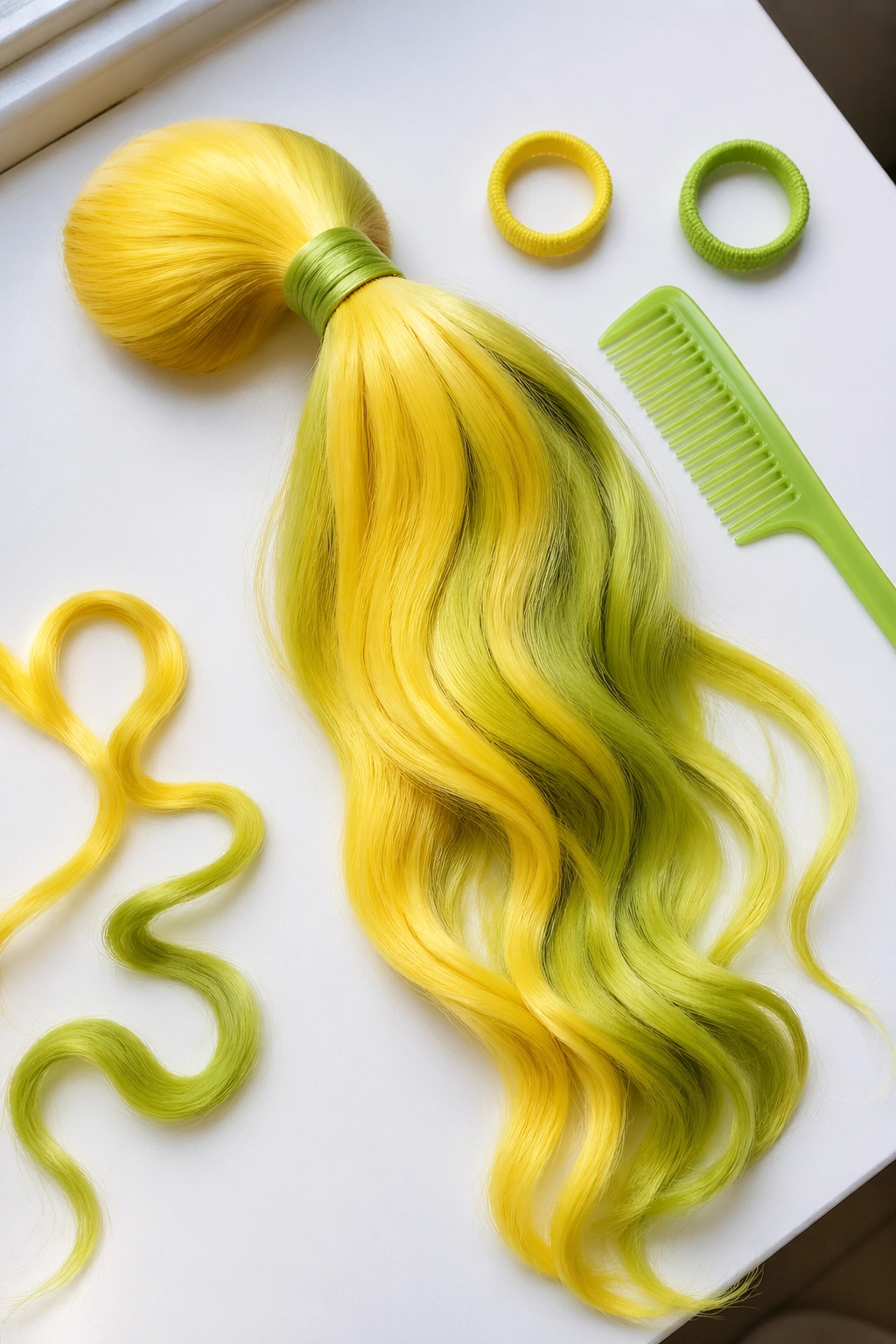
A side ponytail solves two problems at once: it adds movement and makes bright color feel playful instead of chaotic. Lemon and lime are excellent for that because the two shades already have energy, and shifting the ponytail to one shoulder gives them a place to land.
The shape matters more here than people think. A side placement creates volume by default because the hair is no longer hanging in a straight line down the back. The bulk stacks over one shoulder, which makes the ponytail look fuller even before you start curling or waving it. If the tail is long, one loose curl at the end is enough to keep it from looking stiff.
This style also works nicely with a side part that isn’t too deep. A hard part can make the color feel severe. A softer line keeps it wearable. If you want the ponytail to feel a little less costume-like, keep one shade dominant and let the second shade show up in streaks, not blocks.
Good earrings help here. So does a neckline that leaves the shoulder open. The whole look likes a little room.
11. Burgundy Jumbo Braid Ponytail
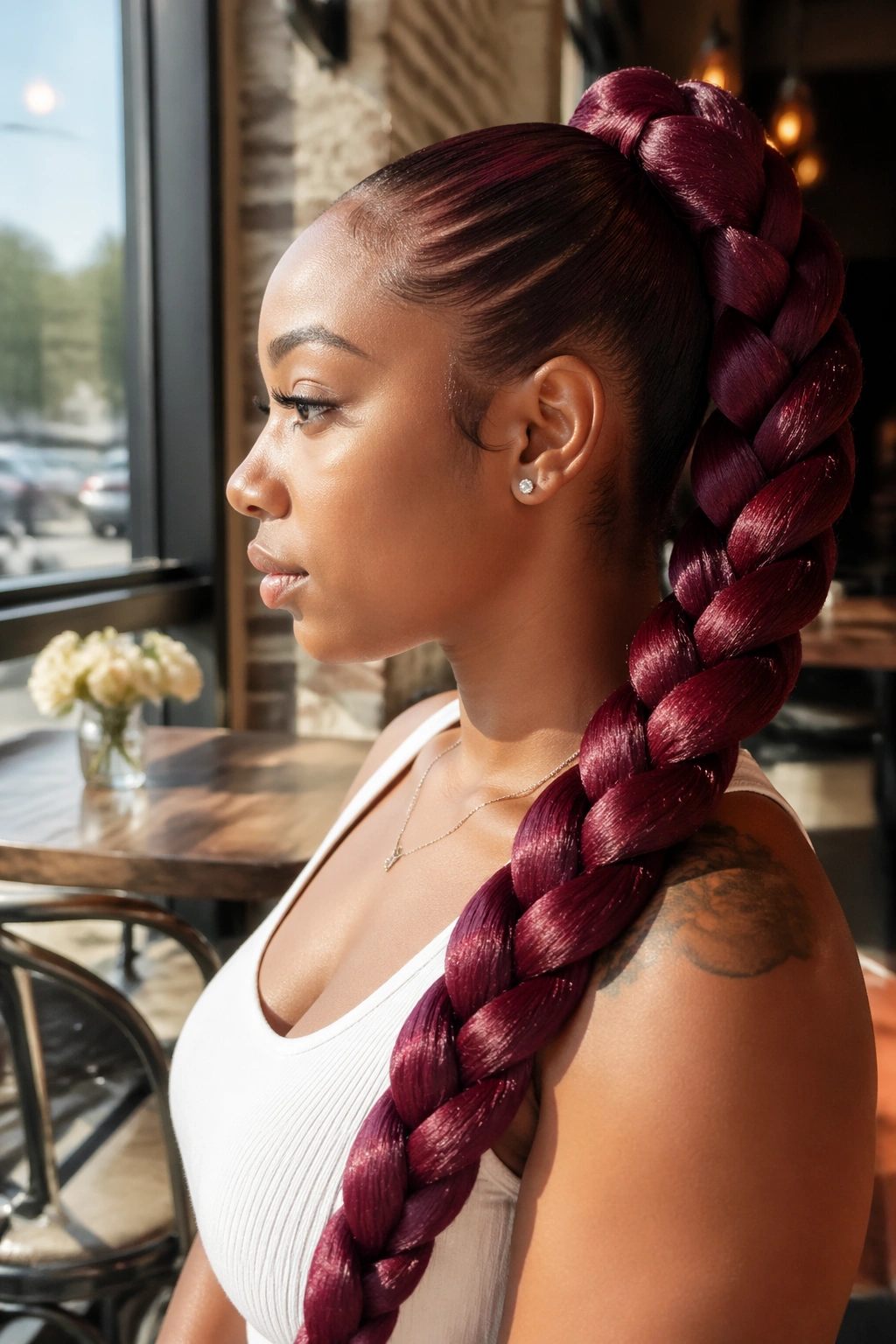
If loose curls feel too busy, a jumbo braid gives you one strong shape to work with. Burgundy makes that shape look richer because the color deepens inside the braid pattern. Every overlap catches a different hint of red, and that is where the fullness comes from. It reads thick because the braid is thick.
The braid also makes this style practical. A jumbo braid holds its form longer than a loose ponytail, and it hides minor frizz better than a straight tail. That is a big deal if you want a colorful style that can survive a long day without needing constant fixing. Feed-in braids at the top can make the base cleaner, while a pre-braided extension gives you a faster finish.
This is the best option when you want bold color but not a lot of maintenance. It works for long wear, travel, and weekends when you want one piece of hair to do all the talking. Burgundy is a good pick because it stays vivid without demanding neon-level commitment.
The braid should feel heavy in a good way. That weight is part of the look.
12. Peach Curly Drawstring Ponytail
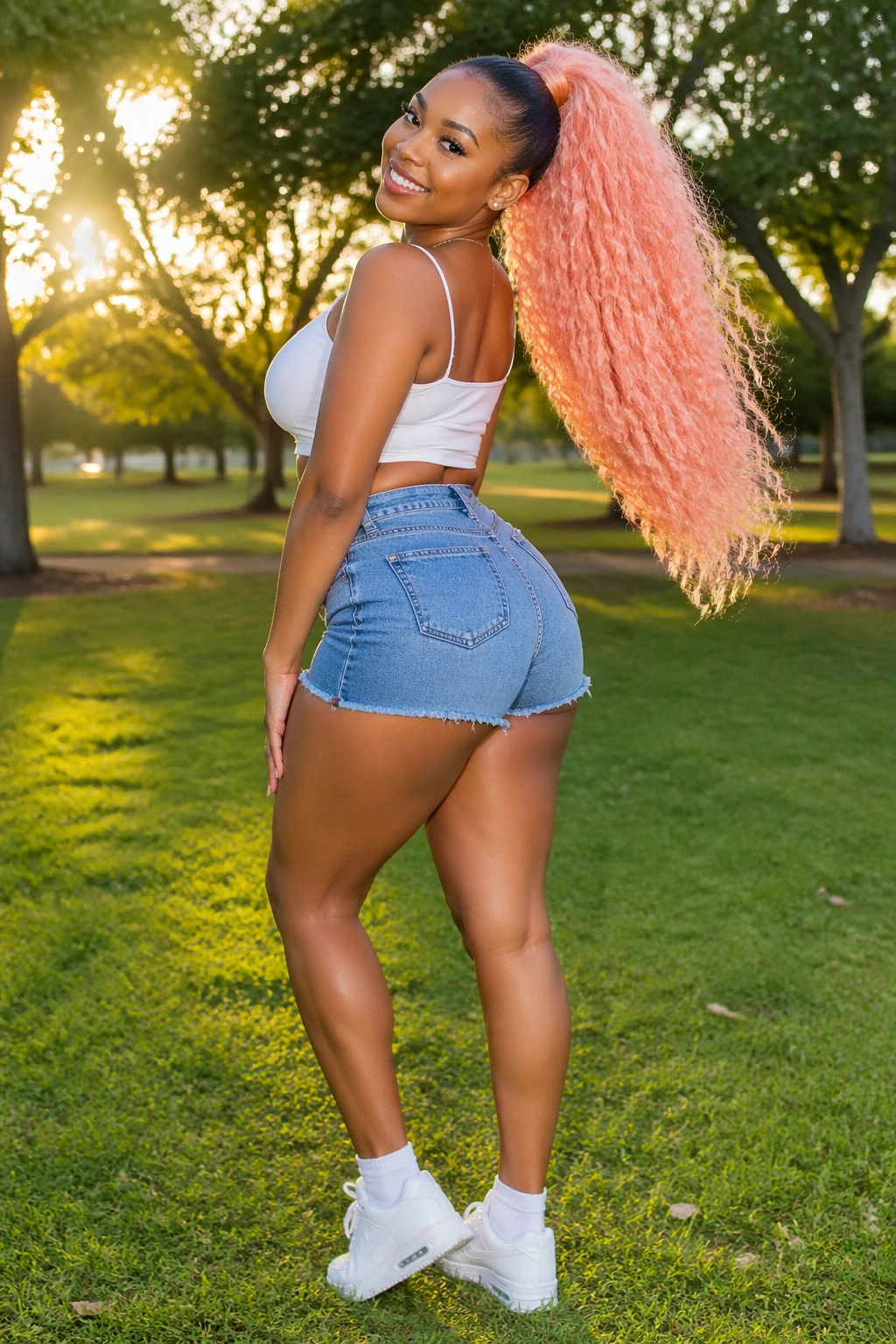
A peach curly drawstring ponytail is one of the easiest ways to get a full look without sitting in a chair forever. The drawstring base gives you instant lift, and the peach color softens the curl pattern so the style feels light instead of overdone. It is a friendly color. Not shy, but friendly.
One-sentence truth: This is the quickest full ponytail on the list.
The curls do most of the volume work, so pick a piece with enough density at the top. Thin curls at the root can make the tail look sparse even when the length is fine. You want the fullness to start where the ponytail sits, not only at the ends. A little finger separation helps the curls spread out without turning frizzy.
This style is especially good for occasions when you want color but do not want a permanent commitment. It can feel playful, feminine, and still neat enough for a polished outfit. Peach also photographs well under warm light because the color stays soft instead of shouting.
If the curls are layered, even better. Layers help the tail move, and movement is what keeps the style from falling flat.
13. Mint Green Layered Ponytail
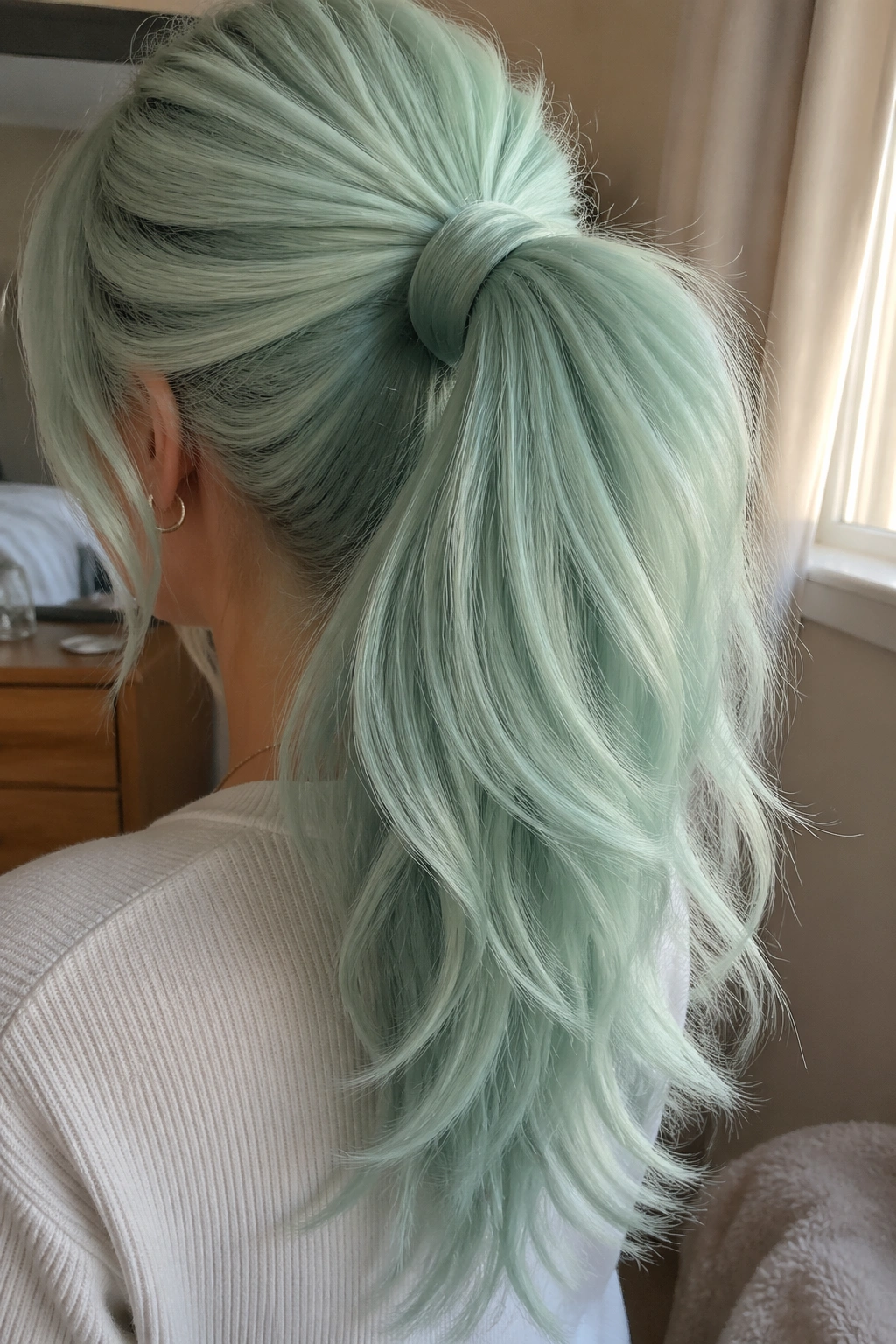
Layers are the thing that save a long ponytail from looking like a rope. With mint green, they matter even more because the color is already eye-catching and can turn rigid fast if the cut is too blunt. A layered tail keeps the shape airy, which is what makes the ponytail feel full instead of heavy.
Why Layers Matter
A few different lengths let the light hit the color at different points. That makes the mint tone feel less like one flat block and more like something with texture. If the ponytail has face-framing pieces, the color gets even more dimension, especially near the cheeks and jaw.
How to Keep It Full
- Ask for long, soft layers rather than a sharp chop.
- Add a slight wave through the ends so the layers separate.
- Keep the crown smooth, but leave room at the base for lift.
- Use a light mousse or foam if the texture starts to collapse.
Mint can look brittle if the tail is too thin, so density matters here. I like this style on people who want color that feels fresh rather than intense. It has edge, but it does not punch you in the face with it.
14. Sunset Ombre Colorful Weave Ponytail
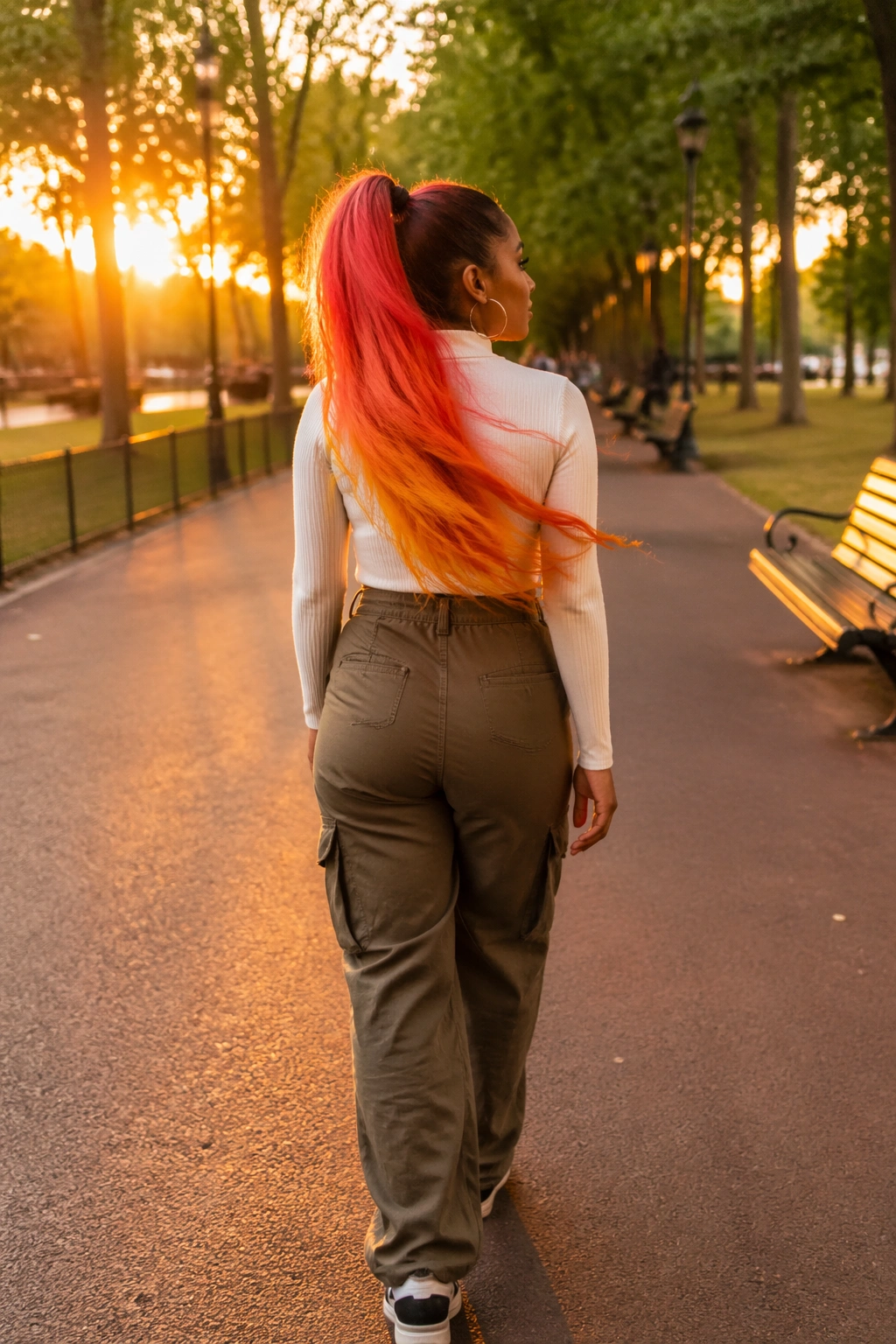
The best sunset ombre ponytail is all about the transitions. Coral into orange, orange into gold, gold into a lighter tip — that slow shift is what makes the style feel full. Hard color breaks can look graphic, which is fine if that is what you want. But if you want movement and warmth, the fade has to be soft.
The ponytail shape helps here because ombré color looks longest when the tail has some curl or bend. Straight hair can flatten the gradient. A soft wave gives each color band more room to show up. That is why this style usually looks richer when the tail is layered or lightly curled instead of pressed pin-straight.
Color Placement That Works
- Keep the deepest tone near the top for a grounded base.
- Let the middle section hold the strongest orange.
- Finish with lighter gold or peach at the ends.
- Avoid packing too many tones into the same inch of hair.
This style has a warm, lively feel without needing neon brightness. It’s one of those looks that can read glamorous or relaxed depending on how neat the crown is. Clean base, soft tail, done.
15. Pastel Platinum Flip Ponytail
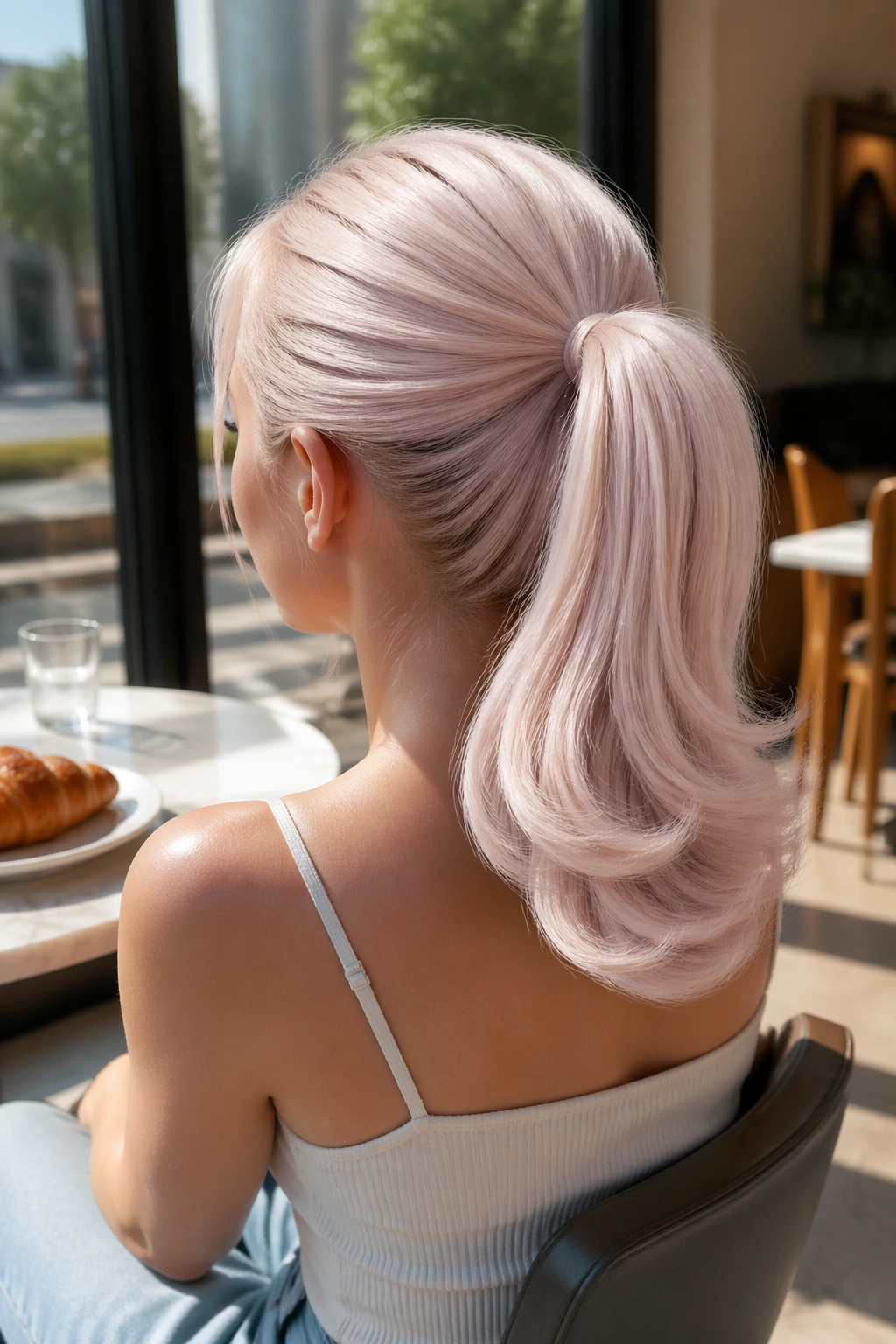
Want something airy that still has enough color to feel special? A pastel platinum flip ponytail does that neatly. The pale tone keeps the style light, and the outward flip at the ends gives the whole ponytail a little bounce. It is a small move, but it changes the mood fast.
The flip matters more than people expect. A straight tail can look sleek, but a flipped end gives the style shape at the bottom, which is where a lot of ponytails lose their energy. Use a 1-inch curling iron or large rollers to turn the ends outward, then brush them lightly once they cool. That keeps the bend soft instead of stiff.
How to Flip the Ends
- Set the ends away from the face so they curve outward.
- Keep the top smooth and polished.
- Add just enough product to hold the bend, not enough to freeze it.
- Let the platinum stay cool-toned so it does not go yellow.
This is the kind of ponytail that feels polished without being heavy. If you want color, length, and movement in one piece, it delivers that with less effort than a big curl set.
Final Thoughts
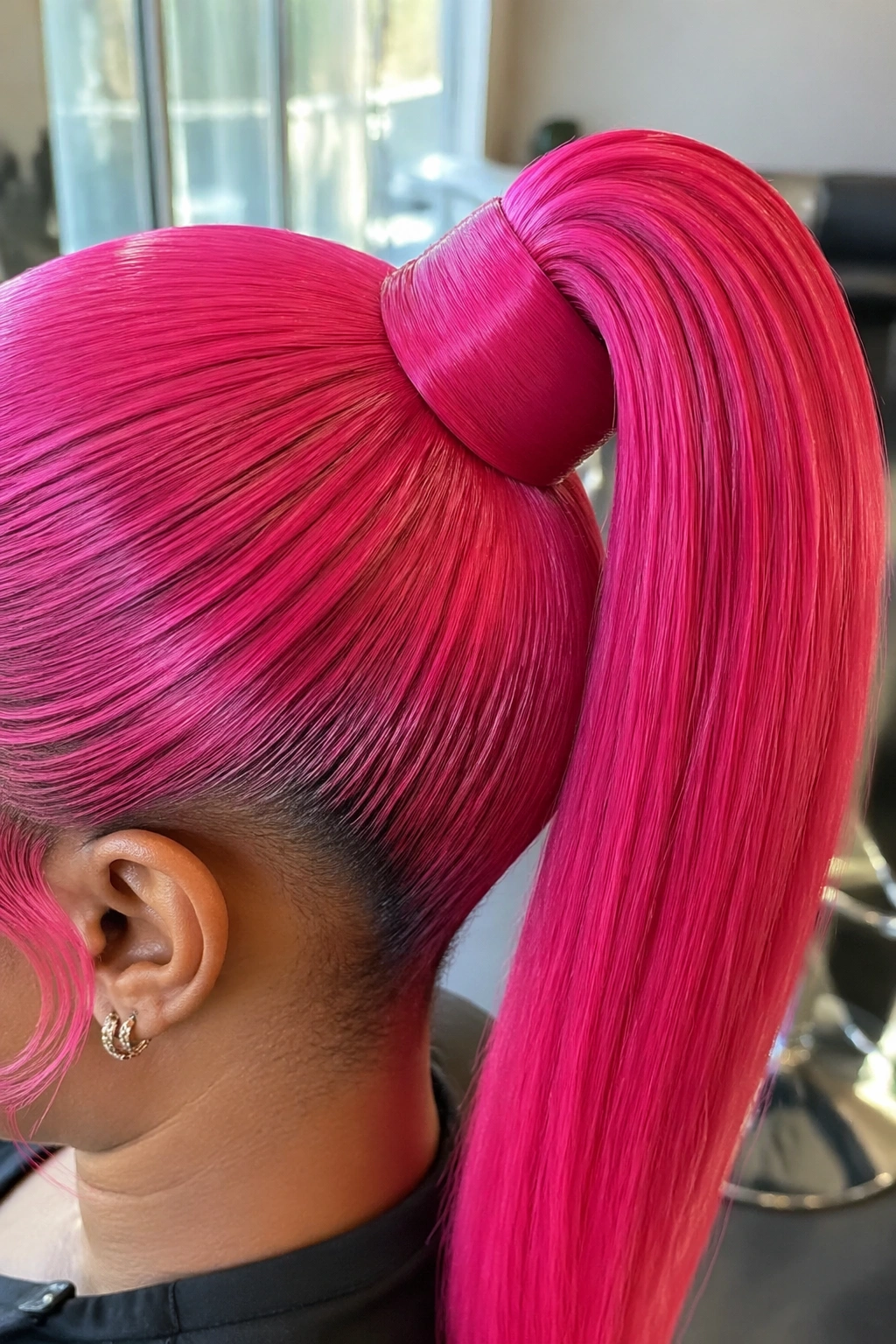
Colorful weave ponytails work best when the color, texture, and shape are doing different jobs. One gives you the visual hit. One gives you body. One keeps the style from falling flat. If all three are strong, the ponytail looks fuller than you’d expect, even before you add extra bundles or curl the tail.
My blunt advice: pick one thing to be the star. If the color is loud, keep the shape clean. If the shape is dramatic, let the color stay more blended. When both are fighting for attention, the style loses the fullness you were trying to get in the first place.
The easiest win is to match the ponytail to the mood you want, not just the shade you like on a color ring. Bright, braided, curly, sleek, or flipped — each one changes how the hair sits on your head and how much volume the eye thinks it sees. That part never stops being the fun bit.