



A low ponytail can look plain in a hurry, but low ponytails with curtain bangs have a sneaky advantage: they make the face look softer without asking for a fancy cut or a curling iron marathon. The ponytail keeps the shape calm and low, while the bangs do the face-framing work up front.
That balance matters more than people think. If the ponytail sits too high, the whole look starts fighting the bangs. If it sits too tight, the bangs can look pasted on instead of airy, which is a shame because curtain bangs are at their best when they move a little.
The sweet spot is usually at the hollow of the neck, or a touch above it, with the bangs blown away from the face and then allowed to fall back into that open-center shape. One pass with a round brush can change the whole mood. Tiny detail. Huge payoff.
Some versions are sleek and glossy. Others lean soft, a little undone, even romantic. The fun part is that the same haircut can play along with all of them, which is why this style keeps showing up in real life, not just in pretty photos. And yes, the difference between polished and sloppy is usually about an inch and a half of placement.
1. Soft Center-Part Low Ponytail
A clean center part makes curtain bangs behave. That sounds almost too simple, but it’s the reason this version works so well: the part gives the bangs a path to fall, and the low ponytail keeps everything anchored near the nape instead of pulling the whole look upward.
I like this one when the hair already has a little bend in it. Let the bangs be soft, not stiff. Smooth the top with a light cream or a few drops of serum, then gather the tail loosely so the crown doesn’t go flat and lifeless.
Why It Flatters So Well
The middle part creates symmetry, which lets the curtain bangs soften the cheeks without covering the face. A low ponytail placed just above the collar line keeps the profile neat, but not severe.
- Best for oval, heart, and round faces
- Works well with straight or slightly wavy hair
- Use a soft brush, not a hard tug
- Keep the elastic low and hidden with a small strand
Best move: let the bangs fall in two clean arcs, then pinch the ends with your fingers instead of overbrushing them.
2. Sleek Low Ponytail With Curtain Bangs
Can a sleek ponytail still feel soft? Yes, if the bangs stay loose and the crown doesn’t get pressed into a helmet. That’s the trick. The ponytail can be smooth enough to look intentional, while the curtain bangs keep the whole style from turning severe.
Start with a middle part and brush the hair back using a boar-bristle brush or a dense paddle brush. A little smoothing cream at the roots helps, but keep it light; too much product turns the top greasy fast. The tail should hang straight, almost glossy, and the bangs should have a gentle bend away from the face.
A sleek low ponytail like this is the one I’d pick for dinner, interviews, or any day when you want the hair to look expensive without doing anything dramatic. No fuss. No fluff. Just a clean line and a soft frame around the eyes.
3. Wavy Low Ponytail With Airy Ends
Picture hair that bends at the mid-lengths and lands in a soft wave at the tail. That’s the sweet spot here. The curtain bangs stay light and lifted, while the ponytail keeps a little movement so the style doesn’t feel stiff or overworked.
This version looks best when the wave starts below the ears, not at the root. If you curl everything from the top, the bangs and the ponytail can fight each other. A 1-inch curling iron or a flat iron bend on the ends is enough for most lengths. Then shake the tail out with your fingers.
How to Get the Softness
- Curl only the mid-lengths and ends
- Keep the bangs parted and brushed away from the face
- Mist with a flexible-hold spray, not a crunchy one
- Pull out a few fine strands near the temples if the style feels too tidy
Small detail, big payoff: the waves should look touched, not styled within an inch of their life.
4. Wrapped-Base Low Ponytail
A wrapped elastic is one of those small changes people notice without knowing why. The low ponytail stays simple, but the hair wrapped around the base makes it look finished, like you took an extra minute instead of ten extra minutes.
This is a strong choice when the curtain bangs are doing the softening up front and you want the back to feel a little sharper. Take a thin strand from underneath the tail, wrap it once or twice around the elastic, then tuck the end in with a bobby pin. Keep the wrap snug. Loose wrapping looks sloppy fast.
It’s also a nice fix for hair ties that are too bright or too sporty. If your elastic is showing, the whole style loses polish. Hide it, and the ponytail suddenly reads as deliberate.
5. Braided Low Ponytail With Curtain Bangs
A braid changes the mood fast. Instead of reading as a plain ponytail, the tail picks up texture and a bit of structure, which gives the curtain bangs a more romantic frame to sit against.
I tend to like a simple three-strand braid here, especially on medium to long hair. It keeps the shape calm near the nape and lets the bangs stay loose and broken up at the front. If your hair is slippery, braid the ponytail after tying it low and secure the end with a clear elastic.
The nice thing about this version is that it looks intentional even when the bangs are imperfect. A curtain bang that separates a little in the middle can be a problem with some styles. Here, it works. The braid gives the eye something else to read.
6. Twisted-Side Low Ponytail
Unlike a straight-back ponytail, this one gathers the hair from both temples in a soft twist before it meets at the nape. That gives the front a little lift and keeps the curtain bangs from feeling like a separate piece stuck on top.
It’s a good pick when you want shape without visible braiding. Twist each side back loosely, pin them just behind the ears if needed, then tie the ponytail low. The result should feel relaxed, not tight. If the twists are pulled too hard, the curtain bangs lose that easy swing that makes them flattering in the first place.
This version suits people who like a little detail but hate anything fussy. It has enough movement to feel dressed up, yet it still reads as simple hair. That’s a nice lane to live in.
7. Face-Framing Tendril Ponytail
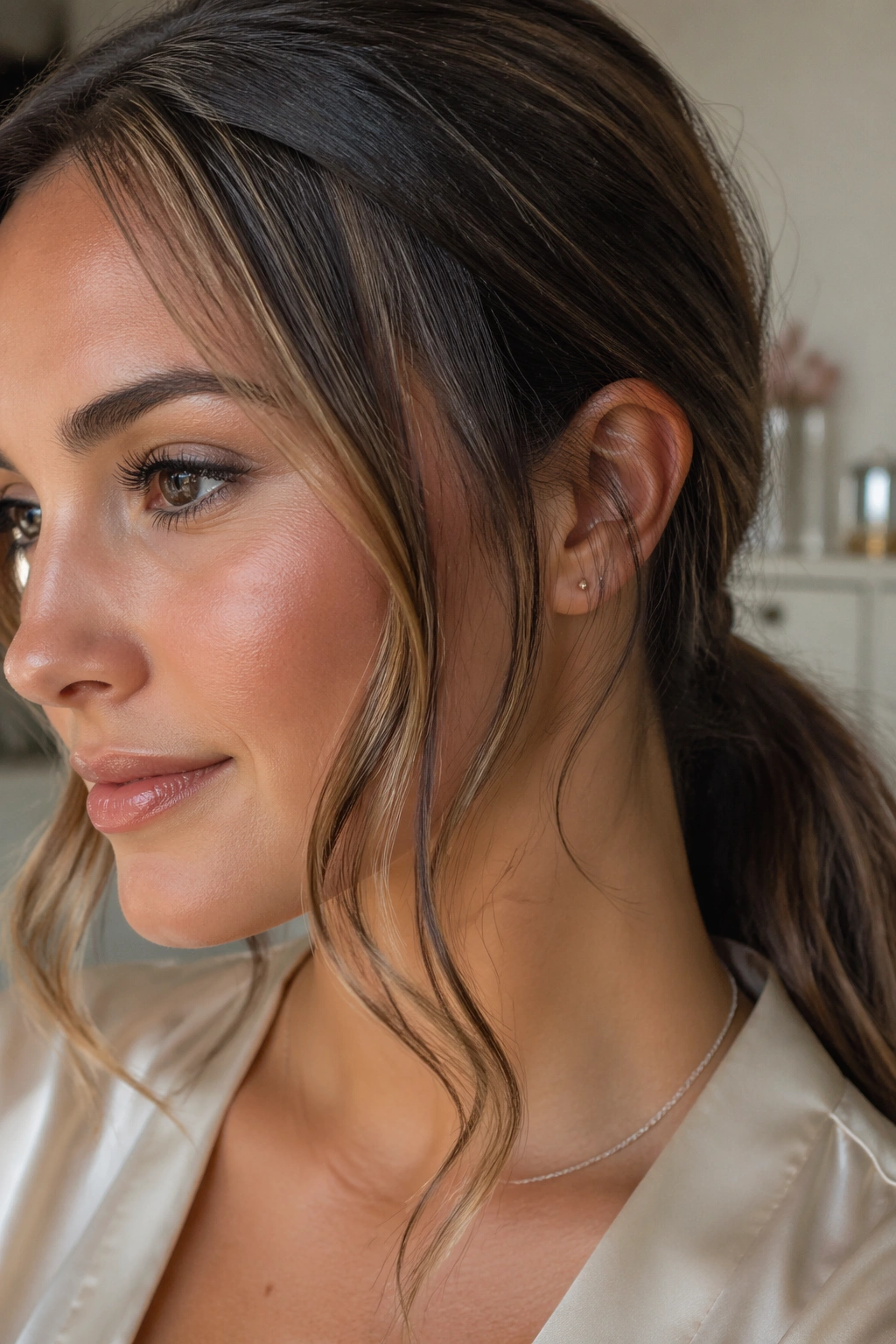
Sometimes the best low ponytail is the one that leaves a few pieces alone. Two thin tendrils near the cheekbones, paired with curtain bangs that open at the center, can make the face look softer without stealing the whole show.
What to Leave Out
Do not pull every strand back. That’s the mistake. Leave the front pieces a little looser than the rest, then lightly curl or bend them so they fall in a curve rather than hanging straight.
The ponytail itself can stay simple and low. What matters is the border around it. The bangs should blend into the tendrils in a way that feels natural, not separated into neat little categories. A few wisps near the jawline help, too, especially if your hair is thick or very straight.
Tip: if the tendrils are too long, trim them mentally before you style them. What looks cute at shoulder length can look heavy once it’s pinned back.
8. Ribbon-Tied Low Ponytail
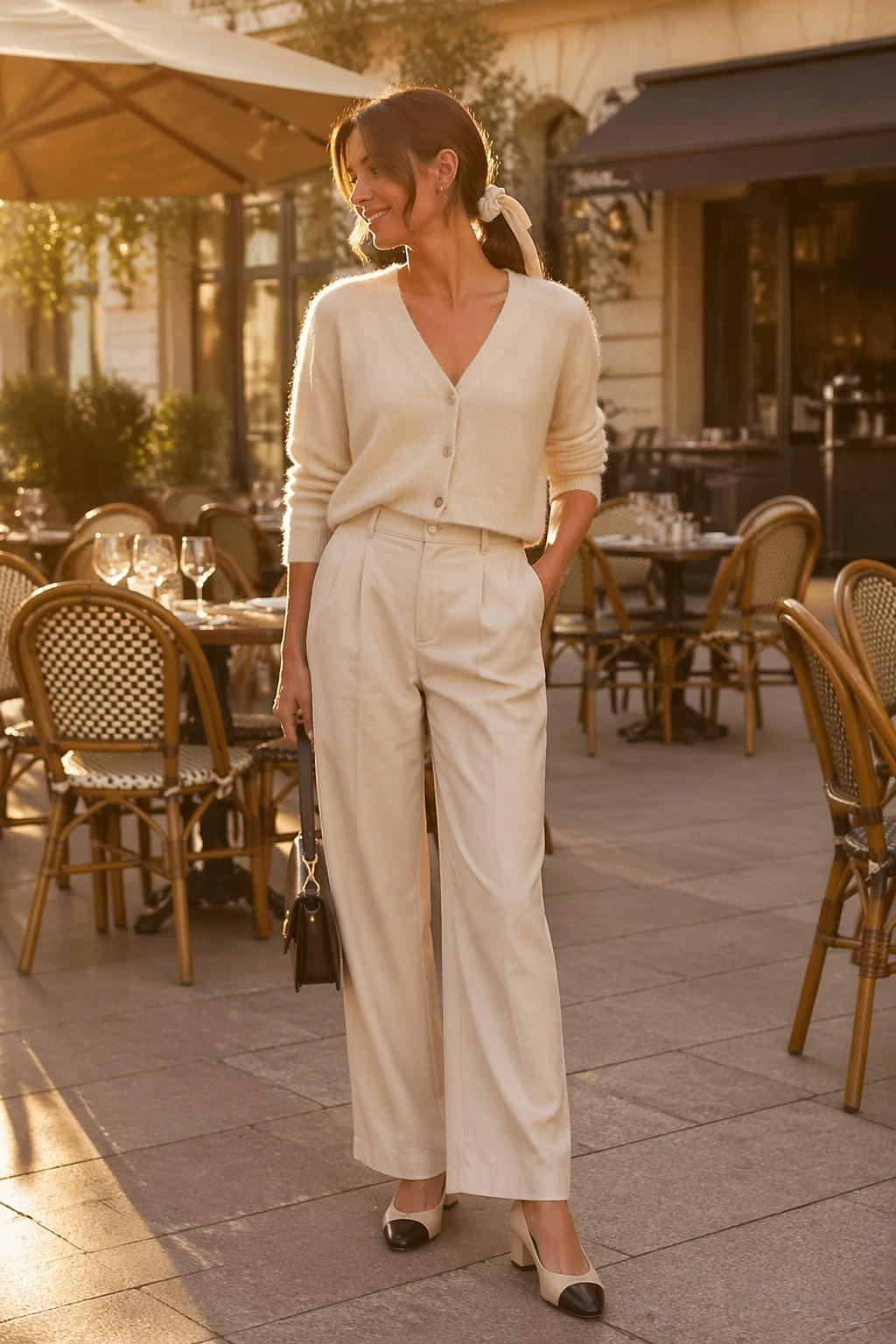
A ribbon gives the ponytail a softer finish than a standard elastic ever will. It also pulls the eye to the base of the style, which is useful when you want the curtain bangs to stay front and center.
Use a ribbon that is about 1 to 1½ inches wide. Thinner ribbons can disappear in the hair, and wide ones can take over. Satin, grosgrain, or velvet all work, depending on the mood you want. Tie it once around the ponytail and let the ends hang slightly uneven. That small bit of looseness keeps it from looking stiff.
I prefer this version on days when the rest of the outfit is simple. White shirt, knit sweater, plain dress. The ribbon adds enough interest on its own, and the bangs keep it from feeling childish.
9. Bubble Low Ponytail
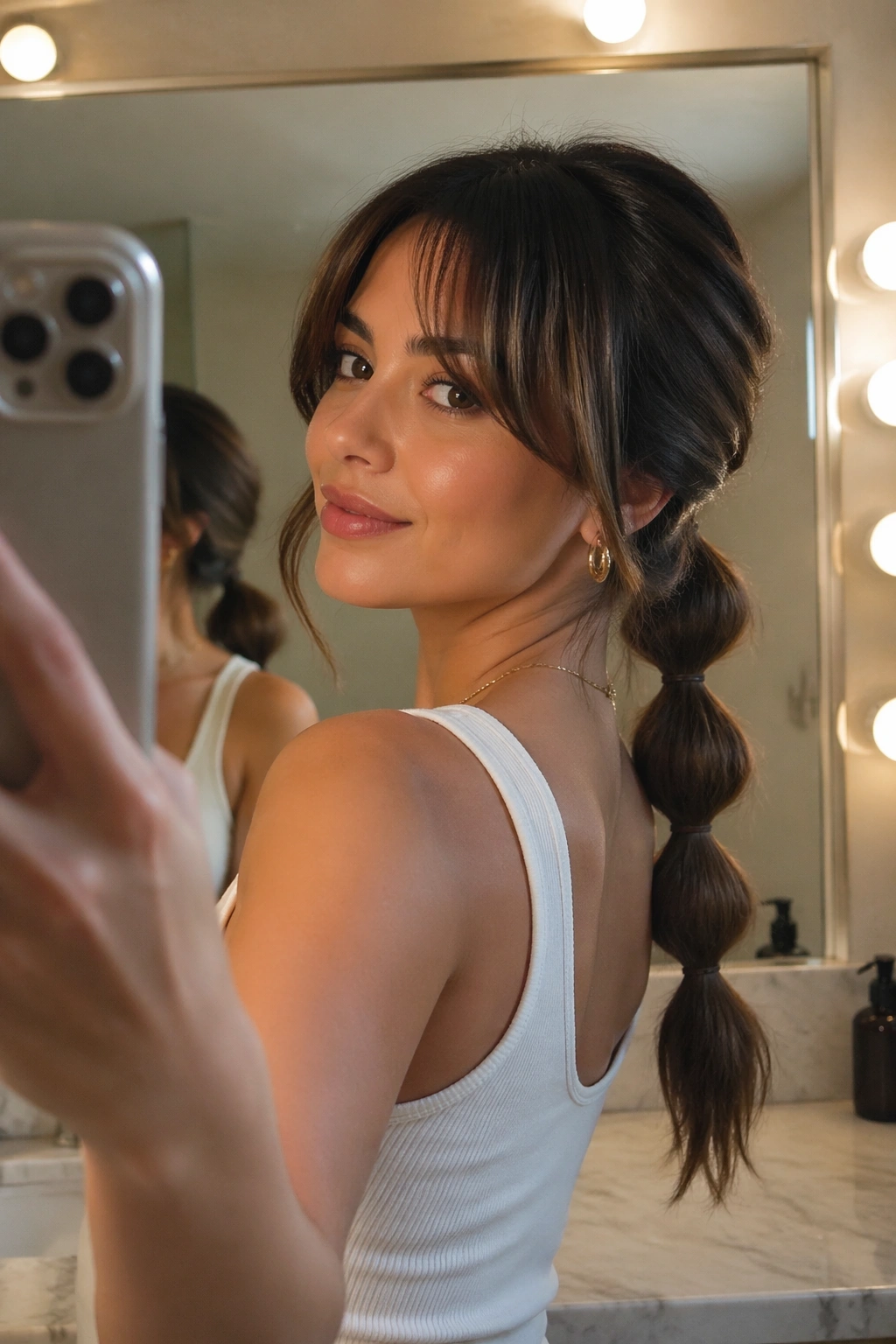
Can a bubble ponytail stay soft enough for curtain bangs? Yes, if the bubbles are spaced out and the top stays loose. The bangs do the face-framing, so the tail can afford to be playful.
Tie the ponytail low, then add small elastics every 2 to 3 inches down the tail. Gently tug each section outward so it puffs into a round bubble. Keep the base smooth and the bangs airy, or the whole style starts looking busy. You want contrast: soft front, structured tail.
How to Keep the Bubbles Even
Use the same amount of hair in each section. That sounds obvious, but it’s where things go wrong. If one bubble is much bigger than the next, the eye goes straight to the imbalance.
- Choose clear elastics if the hair is fine
- Use matte elastics if you want less shine
- Tug from the sides, not the center
- Stop before the tail gets frizzy
The best bubble ponytails look a little relaxed. Not sloppy. Relaxed.
10. Curled-Ends Low Ponytail
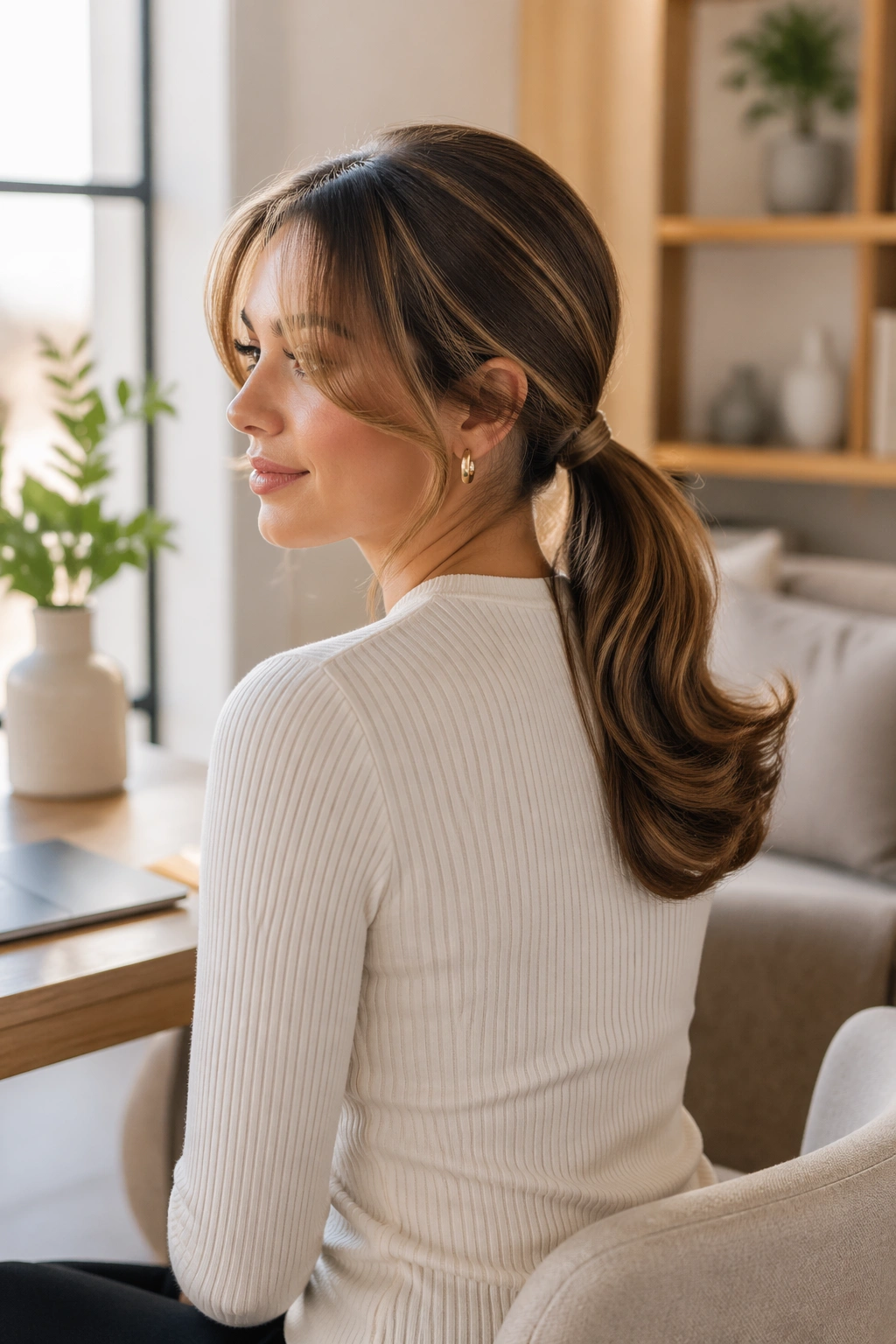
I still think the fastest way to make a low ponytail look special is to curl just the ends. Leave the root smooth, keep the curtain bangs soft, and let the last 3 or 4 inches of hair bend under or away from the face.
This works beautifully for shoulder-length and longer hair. Gather the ponytail low, secure it, then curl the tail in sections with a 1-inch iron. The curl does not need to be perfect. In fact, a slightly imperfect bend looks better here because it keeps the style from feeling overdone.
If your bangs are on the heavier side, this is a smart balance. The front stays light and open, while the tail adds enough shape to keep the whole look from falling flat by noon.
Little details that matter
- Curl away from the face for a softer line
- Hold each section for 8 to 10 seconds
- Let the curls cool before finger-combing
- Finish with a light mist of spray only at the ends
11. Messy Textured Low Ponytail
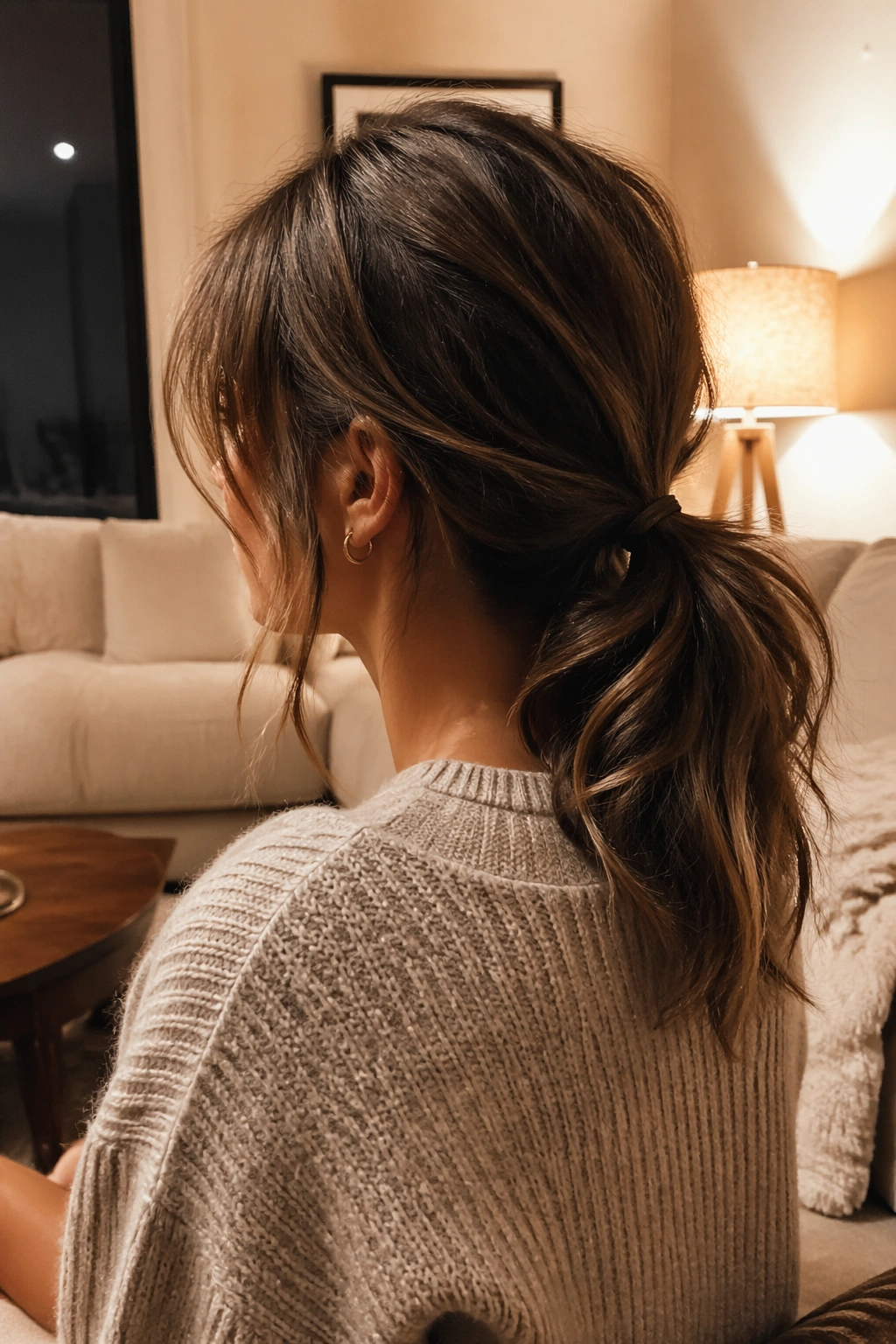
Not every low ponytail needs to look brushed within an inch of its life. A textured version gives curtain bangs room to breathe, which is part of why it feels so easy and wearable.
Start with dry shampoo or texture spray at the roots, then rough up the lengths with your hands before gathering the hair low. The bangs should stay loose and piecey, not smoothed into a single sheet. A little irregularity helps here. It keeps the style from looking too rehearsed.
I like this one on second-day hair, honestly. First-day clean hair can be a little slippery for texture styles. Second-day hair has grit, and grit is useful. The ponytail sits better, the bangs hold their shape, and the whole thing feels like you meant it.
12. Polished Low Ponytail for Work

This is the version that says you paid attention, but not too much. Compared with a messy textured ponytail, the polished work version is smoother at the crown, cleaner at the sides, and a little more serious about the line of the part.
Keep the ponytail low and neat, but do not yank it tight. That’s a bad habit in office hair: too much tension makes curtain bangs lose their shape and gives the face a pulled look. A soft brush, a pea-sized amount of cream, and a hidden elastic are enough.
If you wear this often, learn where your part sits best and stick with it. That saves time, but it also keeps the bangs from splitting unevenly in the wrong places. The result should feel calm and tidy, not strict.
13. Deep Side-Part Low Ponytail
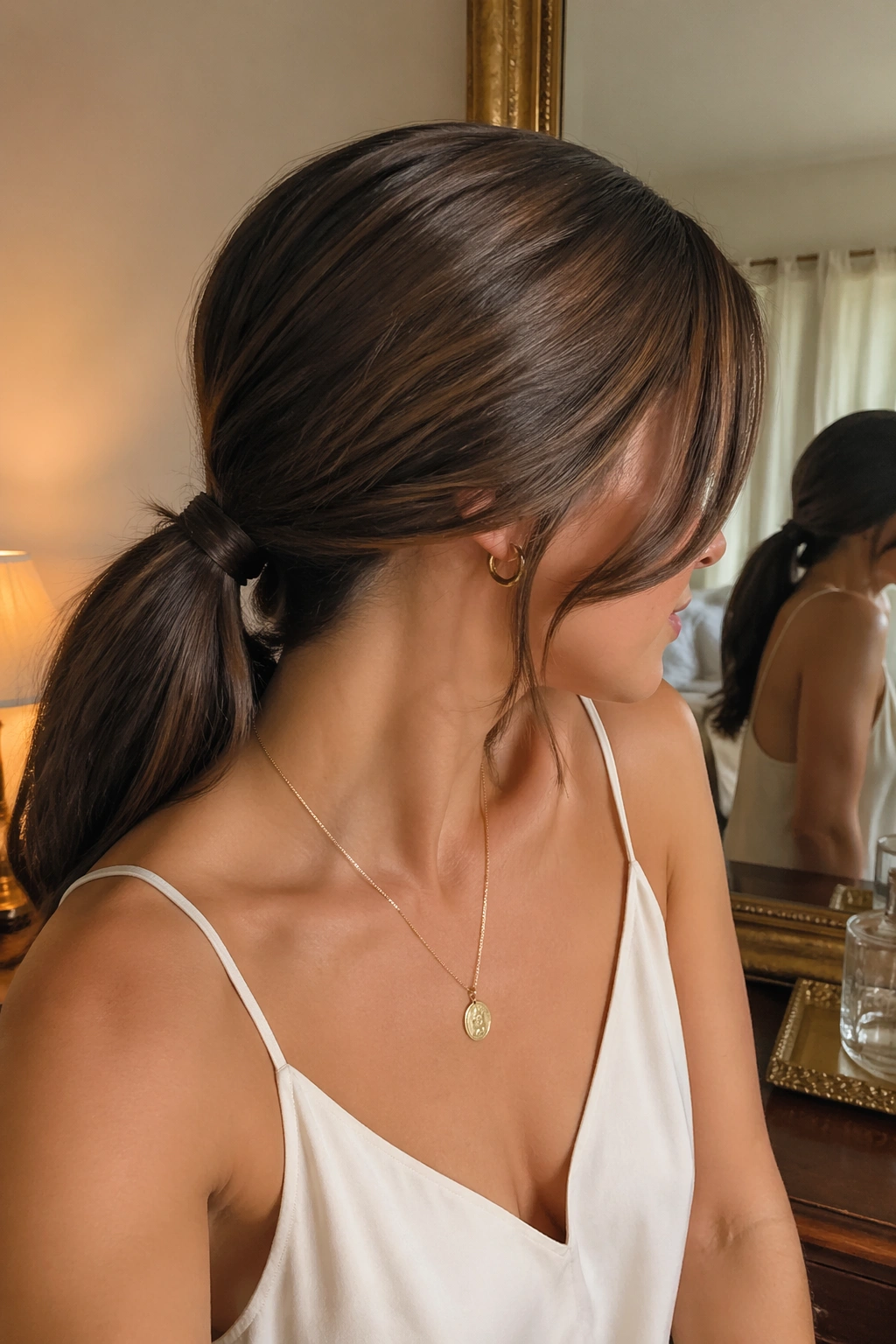
A deep side part changes the whole energy of curtain bangs. Instead of splitting evenly down the middle, the front falls in a stronger sweep, which gives the ponytail a little drama without making it loud.
Why the Angle Matters
The side part draws attention to the eyes and cheekbones. It also works well when the bangs are a bit longer, because the extra length can drape into the side sweep instead of hanging awkwardly.
Use a tail comb to mark the part, then brush the rest of the hair low and secure it just under the occipital bone. That spot—the little curve at the back of the head—keeps the ponytail visible but low. If it sits too far down, the style can look sleepy. If it sits too high, the side sweep loses its shape.
Good fit: round faces, square jawlines, and anyone who wants the bangs to look less symmetrical and more deliberate.
14. Double-Twist Low Ponytail
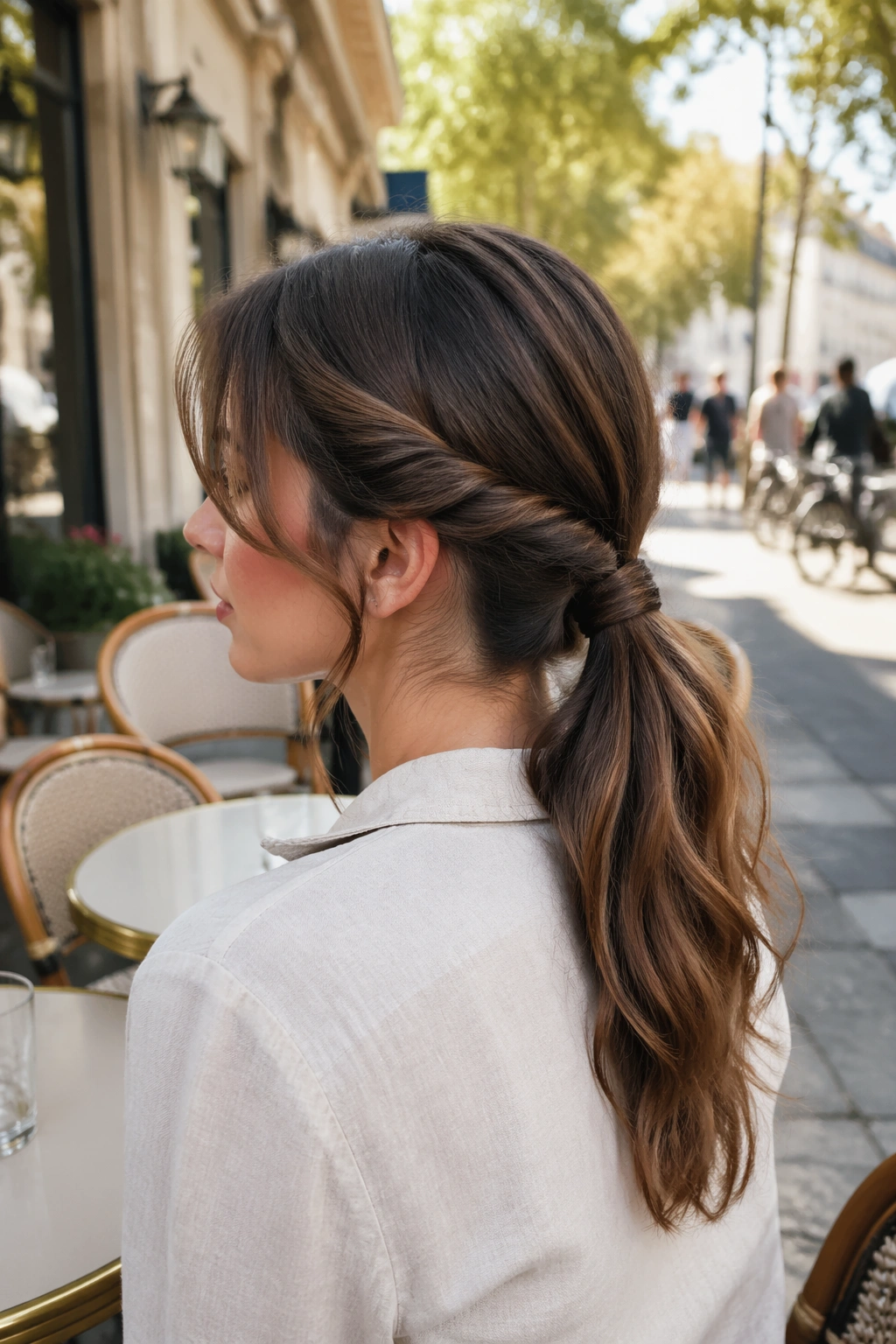
A double twist gives the ponytail more structure than a simple tie, but it still stays softer than braids. You twist one side from the temple back, then do the same on the other side, and let the two meet at the base.
What I like here is the way it keeps the top of the head neat while still leaving a little lift around the bangs. The curtain bangs can stay separated and airy, which helps the twist read as graceful instead of stiff. A few pins behind the ears keep the shape from slipping.
This version is especially good when your hair has layers that want to escape. The twists corral those pieces without forcing every strand into place. That matters. Hair that’s too controlled can look flat by lunchtime.
15. Low Ponytail With a Barrette Stack
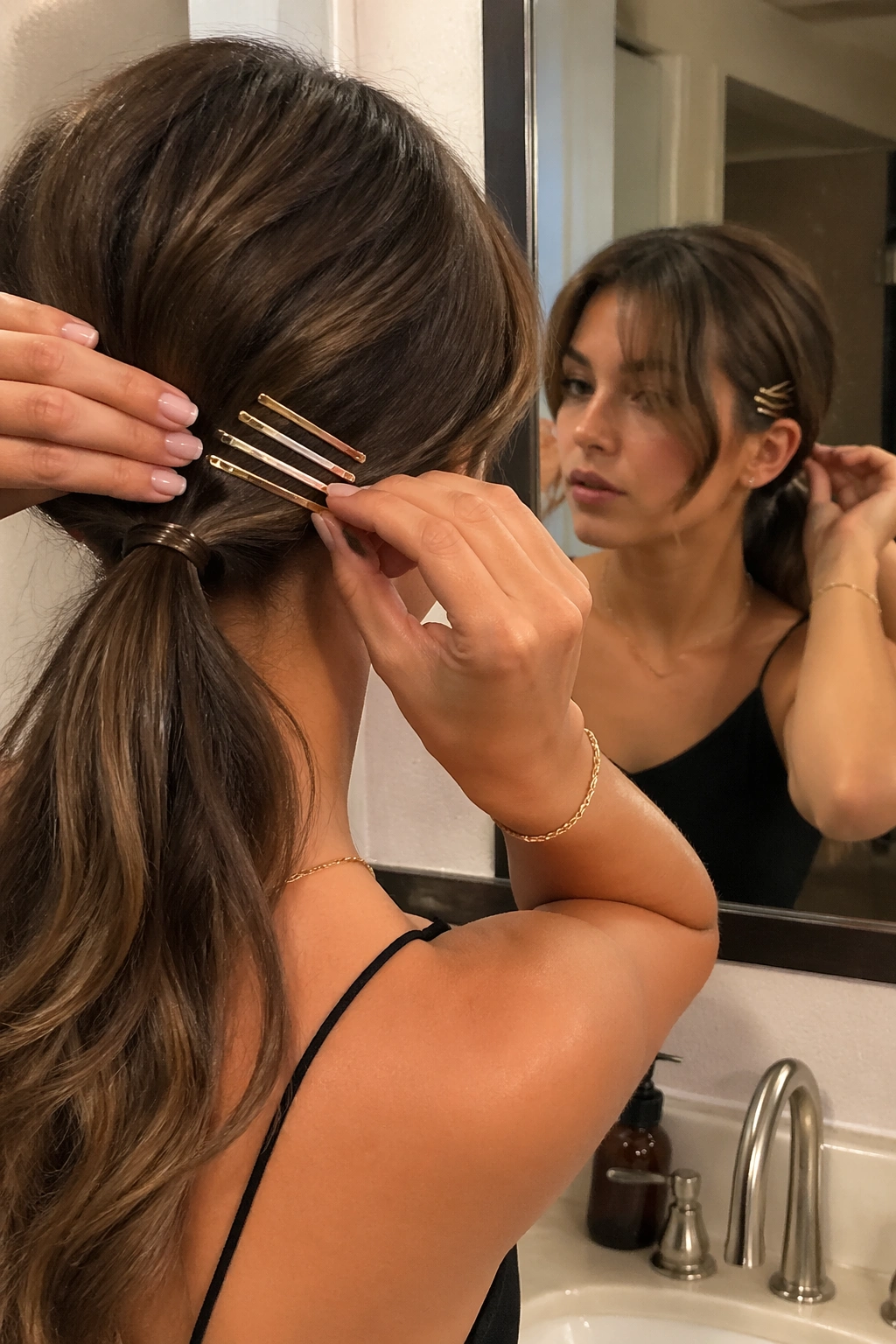
Can two barrettes make a ponytail look more finished? Yes, if you keep them slim and place them with some breathing room. A barrette stack gives the low ponytail a clean accent while the curtain bangs stay soft and loose at the front.
How to Keep It From Looking Fussy
Use one barrette to pin back a small side section, then place a second one an inch or so above or below it. The spacing matters. If the clips crowd each other, the hair starts to look decorated instead of styled.
This is a nice choice for shorter or medium curtain bangs because the clips help control the side pieces without pinning everything flat. Metal, pearl, or matte resin all work. I’d skip oversized clips here. They can steal the entire scene.
A ponytail like this feels sharp but not severe. That’s the appeal. It has just enough hardware to look chosen.
16. Mini-Braid Low Ponytail at the Temples
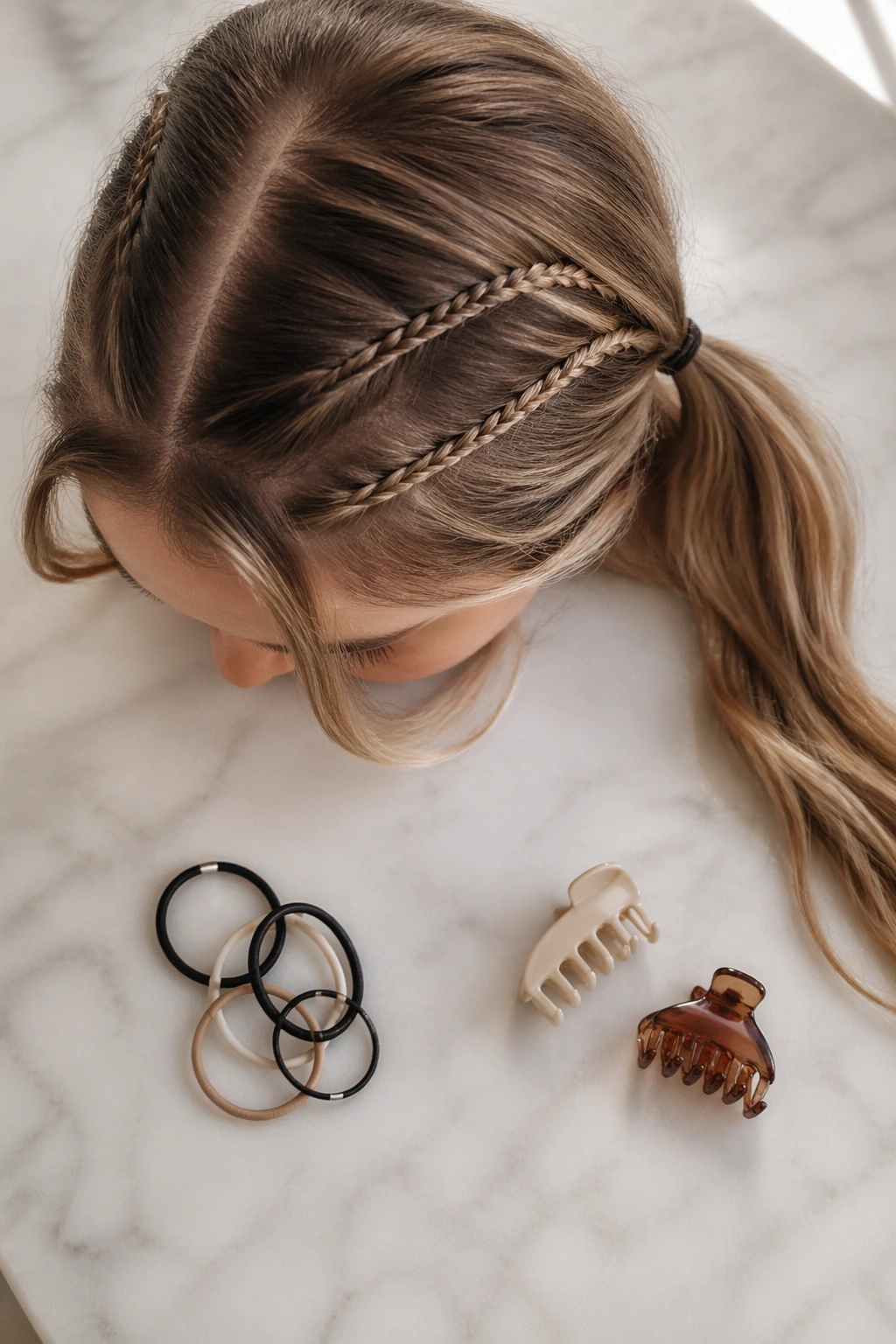
A tiny braid at each temple changes the front of the style in a useful way. It keeps the curtain bangs from drifting too far forward and adds a little grip near the hairline, which helps if your hair slips out of ponytails easily.
Picture two thin braids, each about 2 inches long, feeding into a low ponytail at the back. The rest of the hair stays relaxed. That contrast is what makes it work. The braids create detail where the bangs begin, so the bangs do not have to do all the visual work.
This is one of those styles that looks more complicated than it is. A few small sections, two clear elastics, and a low tie. That’s enough. If you overbraid, the look starts drifting away from the softness that curtain bangs bring.
17. Knotted Low Ponytail
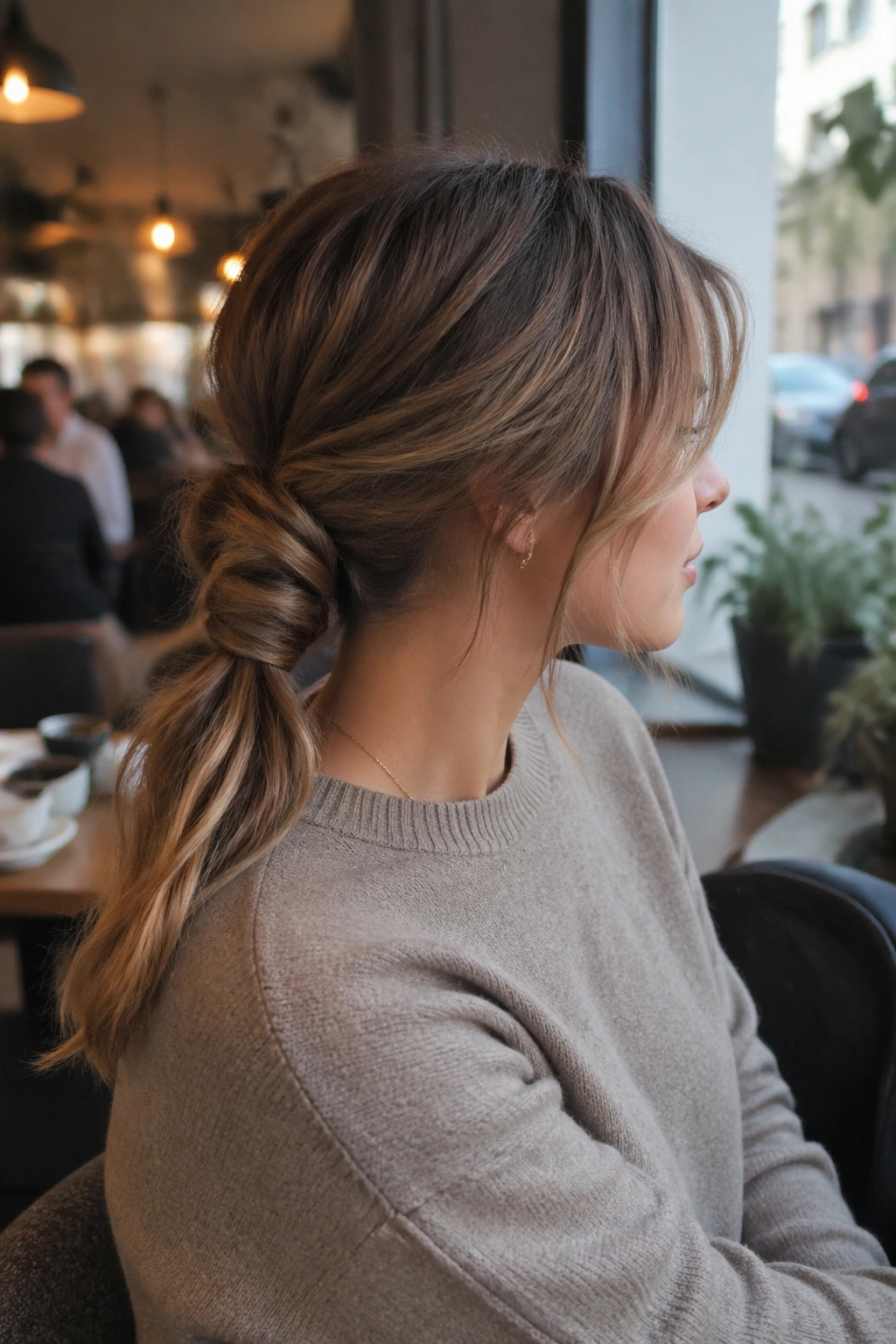
A knotted low ponytail has a slightly undone feel, but it still looks considered. The knot takes the place of a standard elastic wrap, which gives the base of the style a little more texture and makes the curtain bangs feel less formal.
I like this best on medium to long hair with some natural grip. Take two sections, cross them, and tie a loose knot before securing the tail below it. Keep the knot snug enough to hold, but not tight enough to flatten the crown. If the bangs are heavy, leave them a touch wispy so the front stays light.
This style has a slightly casual character, and that’s the point. It doesn’t pretend to be sleek. It just looks like good hair that happened to be tied back with a little more thought than usual.
18. Low Ponytail With a Satin Scarf
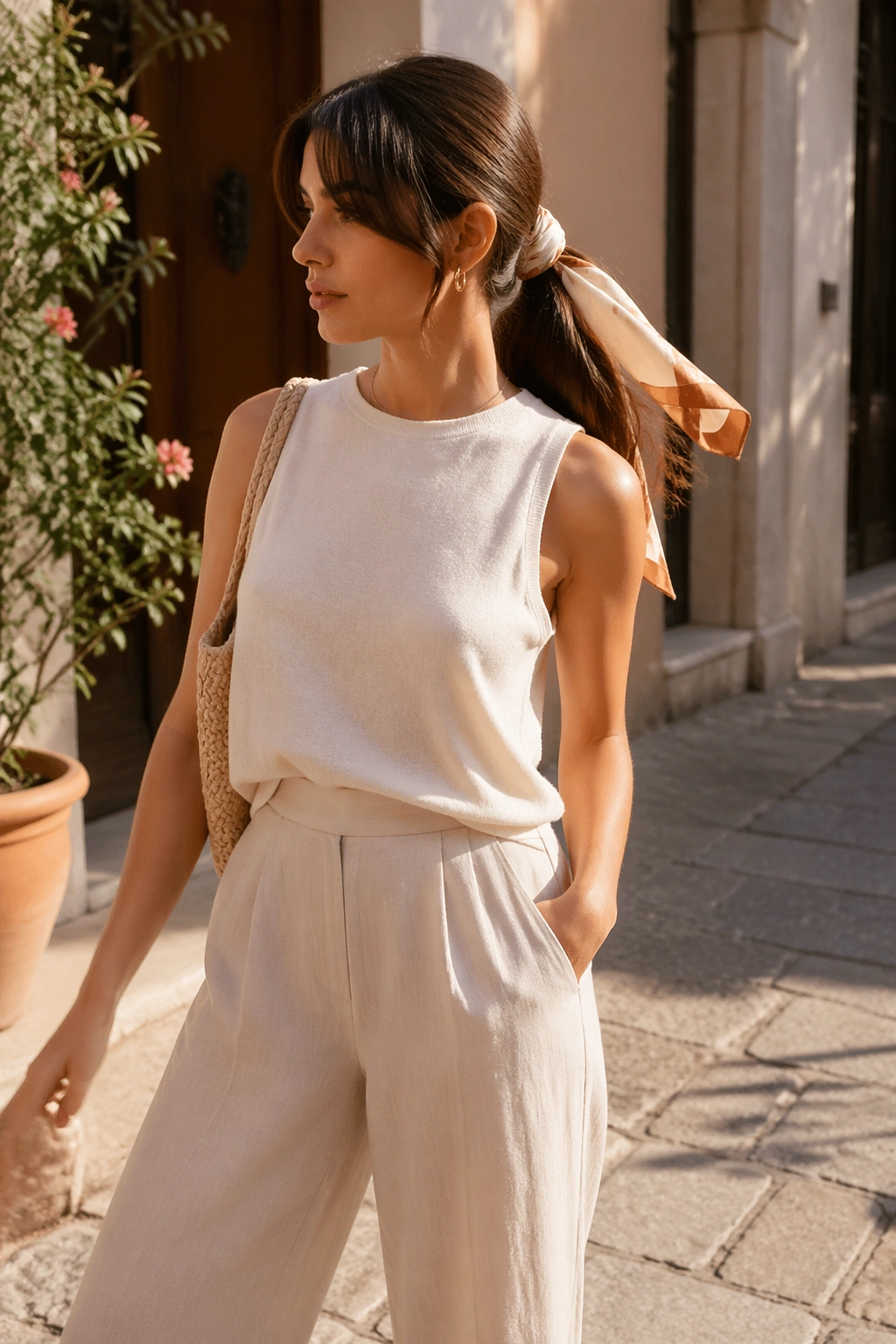
Unlike a ribbon, a satin scarf can cover more of the elastic and add a little color without feeling sugary. The curtain bangs soften the front, while the scarf gives the back a bit of movement when the ends flutter.
Tie the scarf around the base of the ponytail and let the tails hang down beside the hair. If the scarf is too slippery, tie it over a small elastic first so it stays put. A 20-by-20-inch square scarf is usually enough for medium hair; longer hair may need a larger square or a narrow silk wrap.
This version is nice when you want the ponytail to feel dressed, but not fussy. The scarf does the work. The bangs keep it from getting too precious.
19. Low Ponytail With Crown Volume
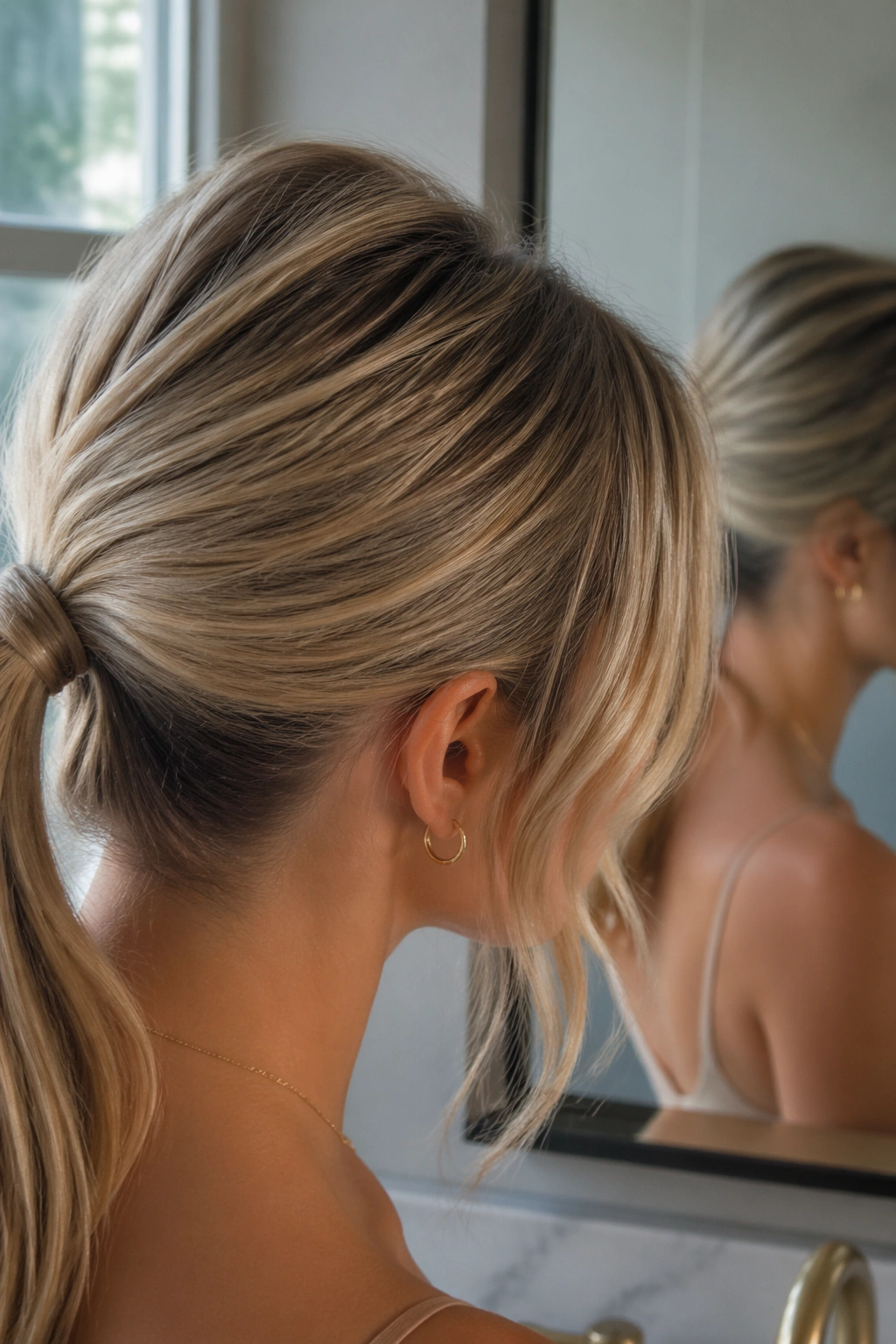
A little volume at the crown can save a ponytail from looking flat, especially when curtain bangs are part of the picture. The bangs need some lift to sit well, and the crown lift helps the whole front half of the head feel alive.
Where to Tease, and Where Not To
Tease only the roots at the crown, not the bangs themselves. That’s the mistake people make. If you backcomb the bangs, they turn fluffy in the wrong way and lose the clean split that makes curtain bangs useful.
Use a tail comb, lift a 1-inch section at the crown, and backcomb lightly at the roots. Smooth the top layer over it, then gather the ponytail low and secure it. The result should be subtle. You want shape, not height that screams for attention.
A small bump at the crown can make the jawline look longer and the ponytail look richer. Strange how that tiny bit of lift changes everything.
20. Low Ponytail for Thick Hair
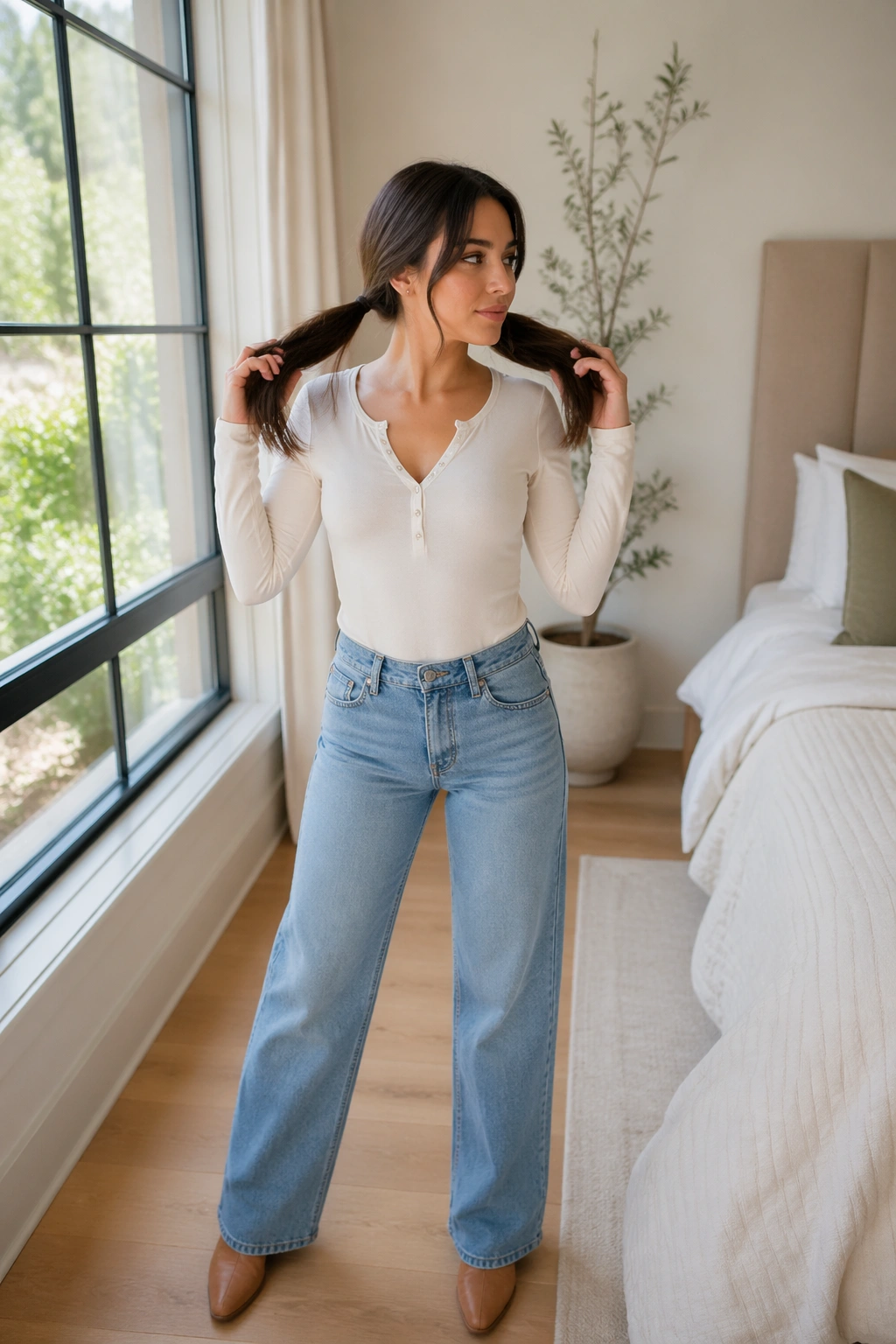
A thick low ponytail needs a bit more planning. Otherwise, the base bulges, the elastic strains, and the curtain bangs end up looking disconnected from the rest of the style.
The easiest fix is to divide the hair into two low sections before tying them together. That reduces bulk at the base and keeps the ponytail sitting close to the neck. Use a strong elastic, then wrap a small section around it so the finish looks cleaner. Thick hair can handle the weight, but it still needs structure.
I’d keep the bangs soft and slightly longer here. Thick hair often fights for space around the face, and shorter curtain bangs can get swallowed by the volume. Give them a little room, and they settle in better.
21. Low Ponytail for Fine Hair
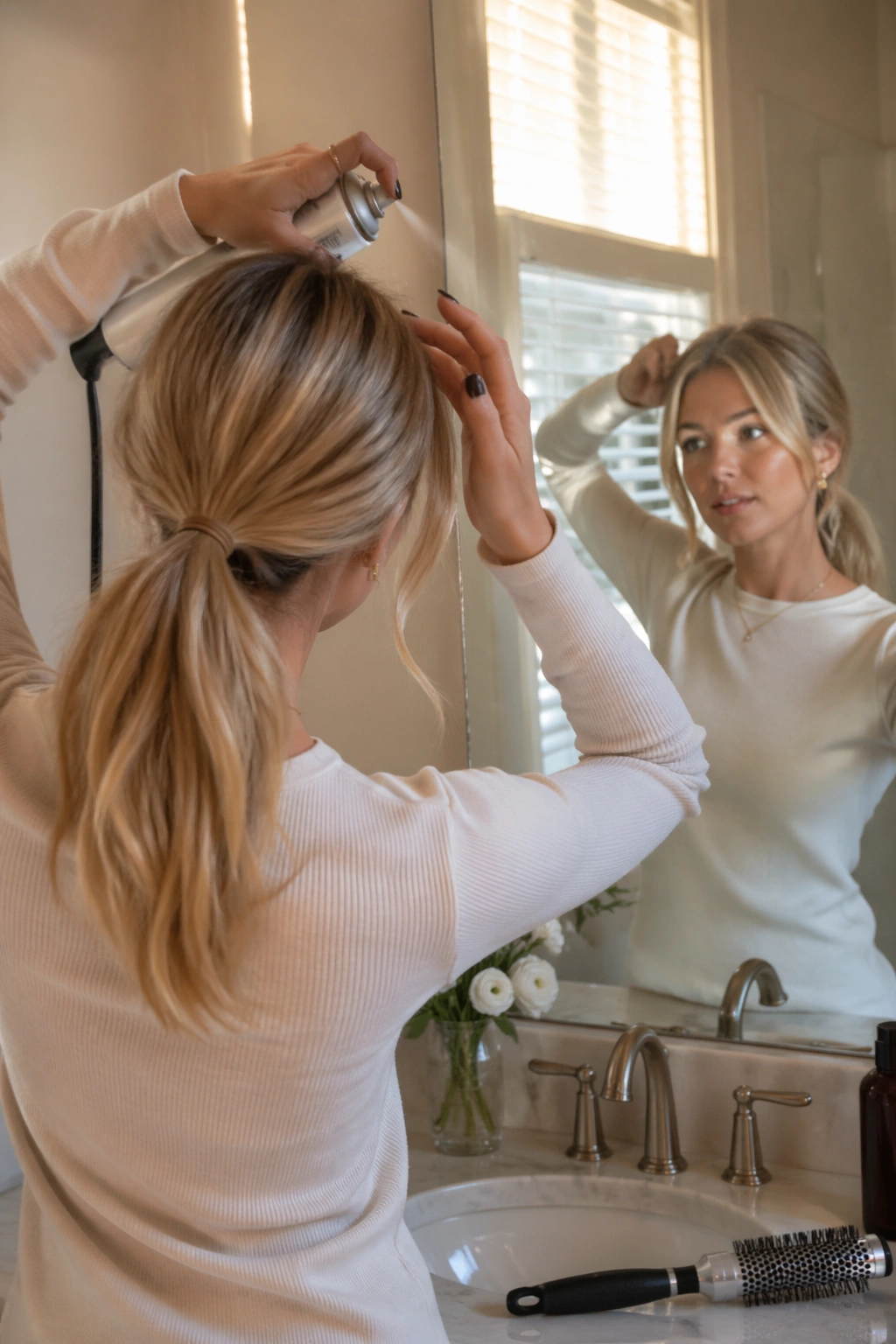
Can fine hair still look full in a low ponytail with curtain bangs? Absolutely, but it needs support. Fine hair likes texture at the roots and a ponytail that sits low enough to avoid exposing every thin section near the crown.
Start with a texturizing spray at the roots, then rough-dry the bangs with a round brush so they bend outward a little. The trick is to make the bangs look airy without making the whole front limp. A smaller elastic helps, because a bulky one can swallow the tail and make it look thinner than it is.
What Helps Most
- Light teasing at the crown
- Dry shampoo on clean roots
- A low tie placed close to the nape
- A tiny wrapped section to hide the elastic
That wrapped section matters more than people think. It gives the eye a cleaner finish, which makes the tail look fuller.
22. Low Ponytail With Short Curtain Bangs
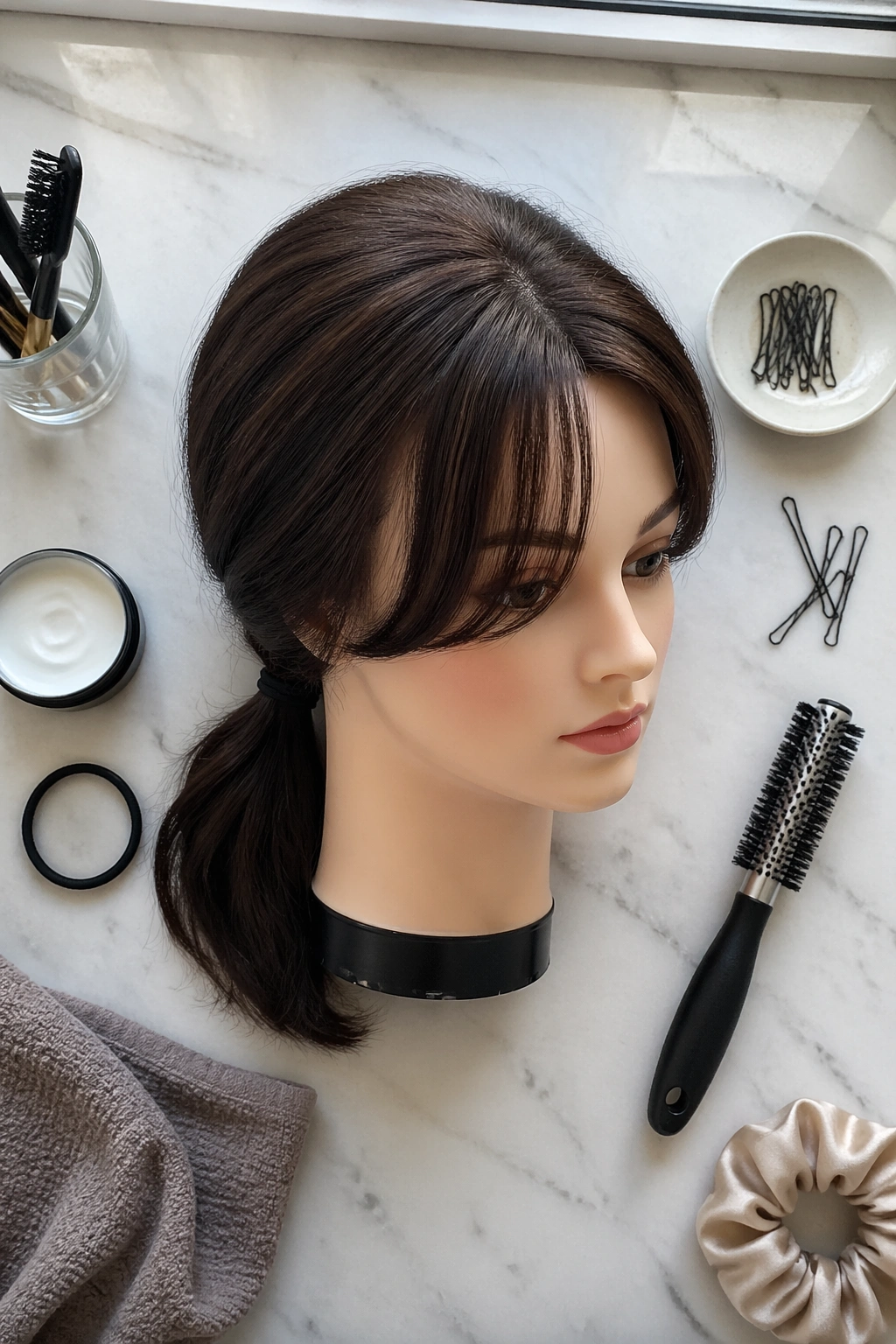
Short curtain bangs can be tricky, but they look sharp with a low ponytail when the shape is handled gently. The front pieces need enough bend to open the face, yet they can’t be forced too far back or they start sticking up.
This is where a mini round brush helps. Blow the bangs forward first, then sweep them away from the face as they cool. If they still feel stubborn, use a tiny amount of wax on the ends only. Too much product will separate the bangs into little greasy chunks. Not cute.
A lower ponytail works better than a mid-height one here because it gives the bangs room to sit naturally. The whole style should feel light around the eyes and neat at the neck.
23. Low Ponytail With Long Curtain Bangs
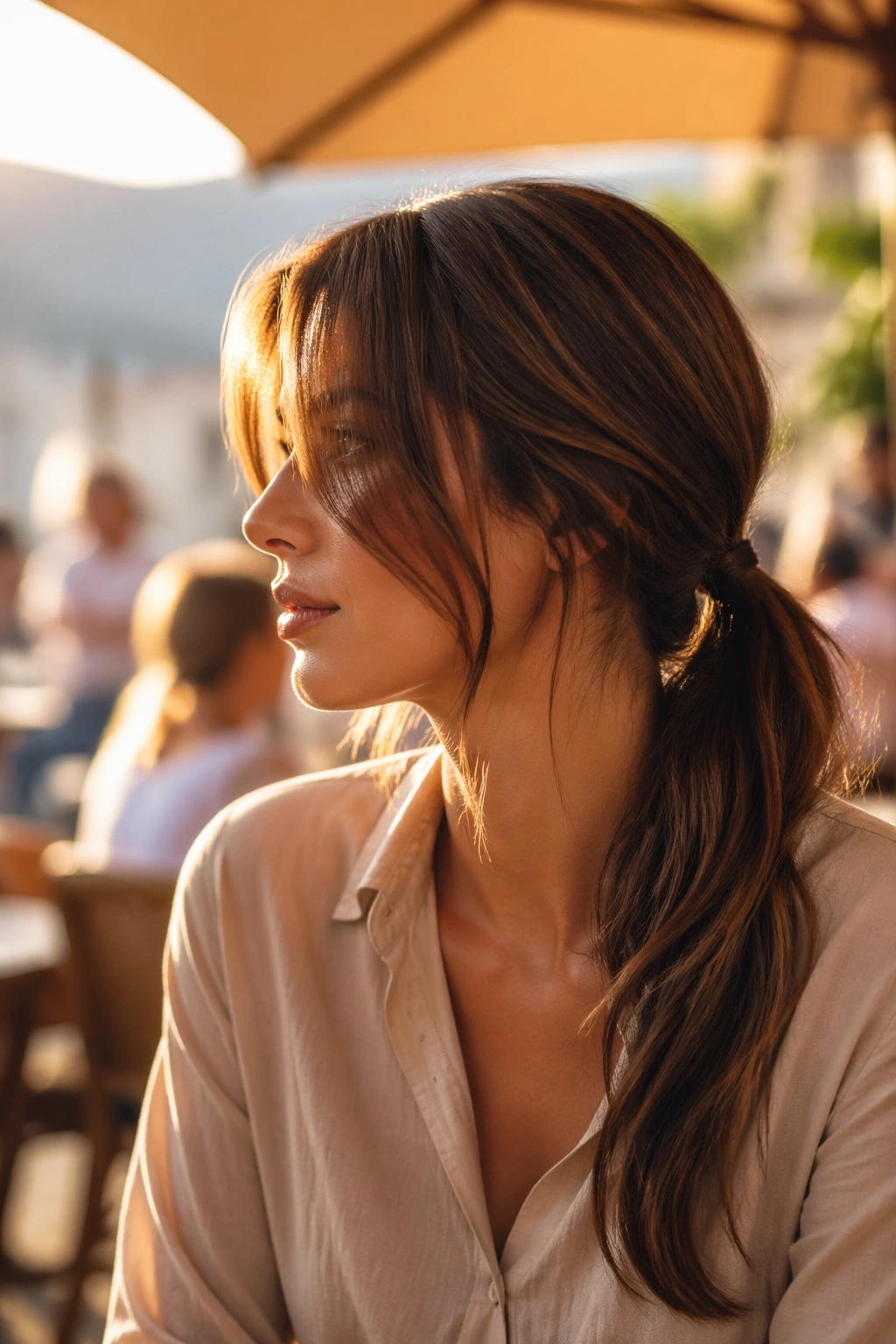
Long curtain bangs are easier to work with, but they can also swallow the ponytail if you are not careful. When they grow past cheekbone length, they start acting like face-framing layers, which means the ponytail has to stay low and calm.
I like this version with hair that reaches the shoulders or beyond. The bangs can blend into the front pieces, then drift toward the tail without making a hard line. That softness is the whole point. If the ponytail sits too high, the lengths of the bangs get trapped in the wrong place and the shape turns messy in a bad way.
The long-bang version gives you room to play. Curl them under, bend them away, leave them loose. There’s less pressure for precision, which is useful on days when you want the hair to look easy and still feel finished.
24. Layered Low Ponytail
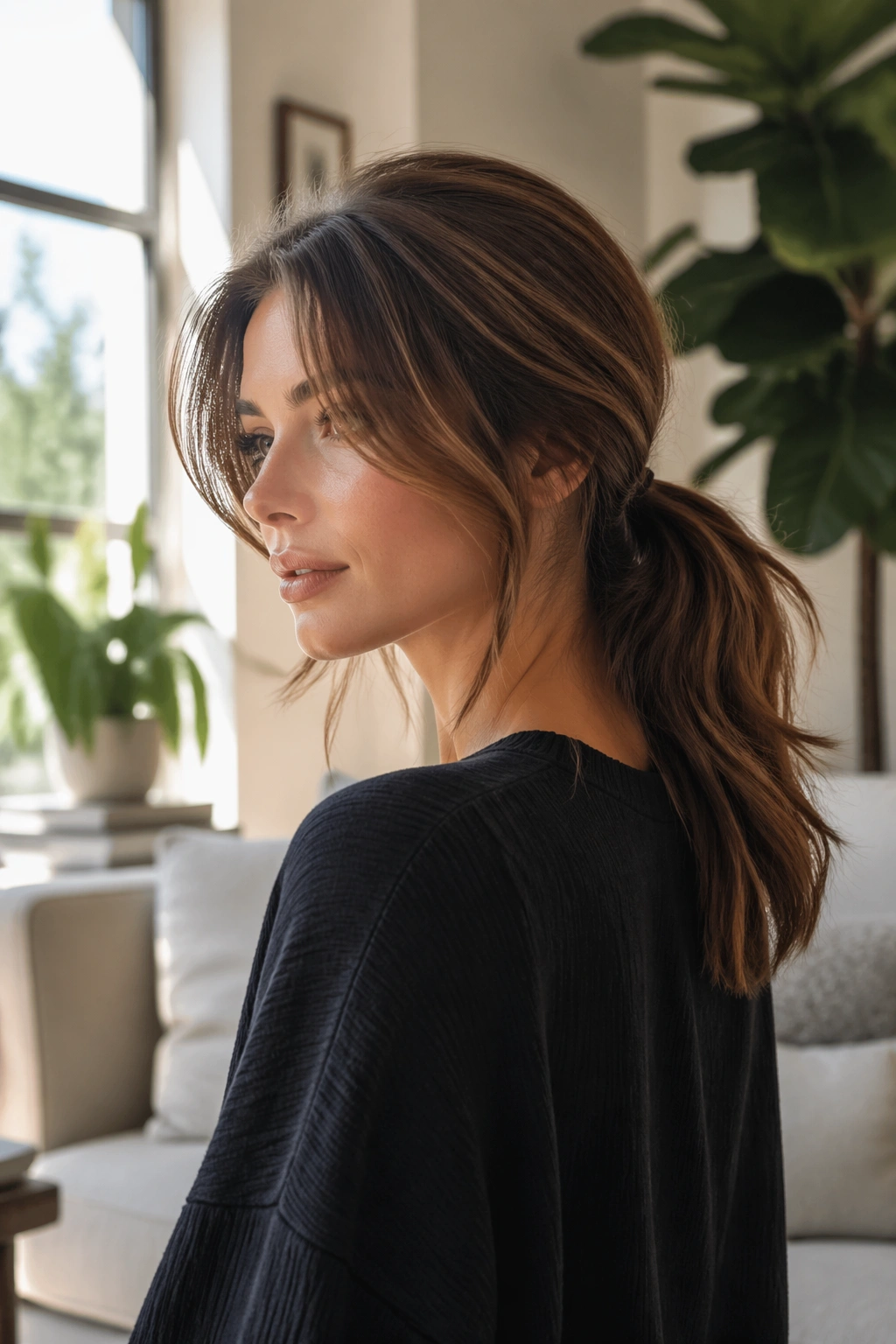
Layered hair makes a low ponytail more forgiving. The shorter pieces move, the longer ones anchor the shape, and the curtain bangs blend into the front without looking too separate.
Unlike one-length hair, layered cuts do not need as much coaxing to look soft. The movement is already there. Gather the hair low, let the shortest layers escape a little around the face, and keep the ponytail low enough that the layers fall in a gentle stack. If you tie it too tight, the layers can stick out in odd little angles.
This style is one of my favorites for hair that needs shape without a lot of product. The cut does part of the work. The ponytail just gives it a home.
25. Mirror-Sleek Low Ponytail
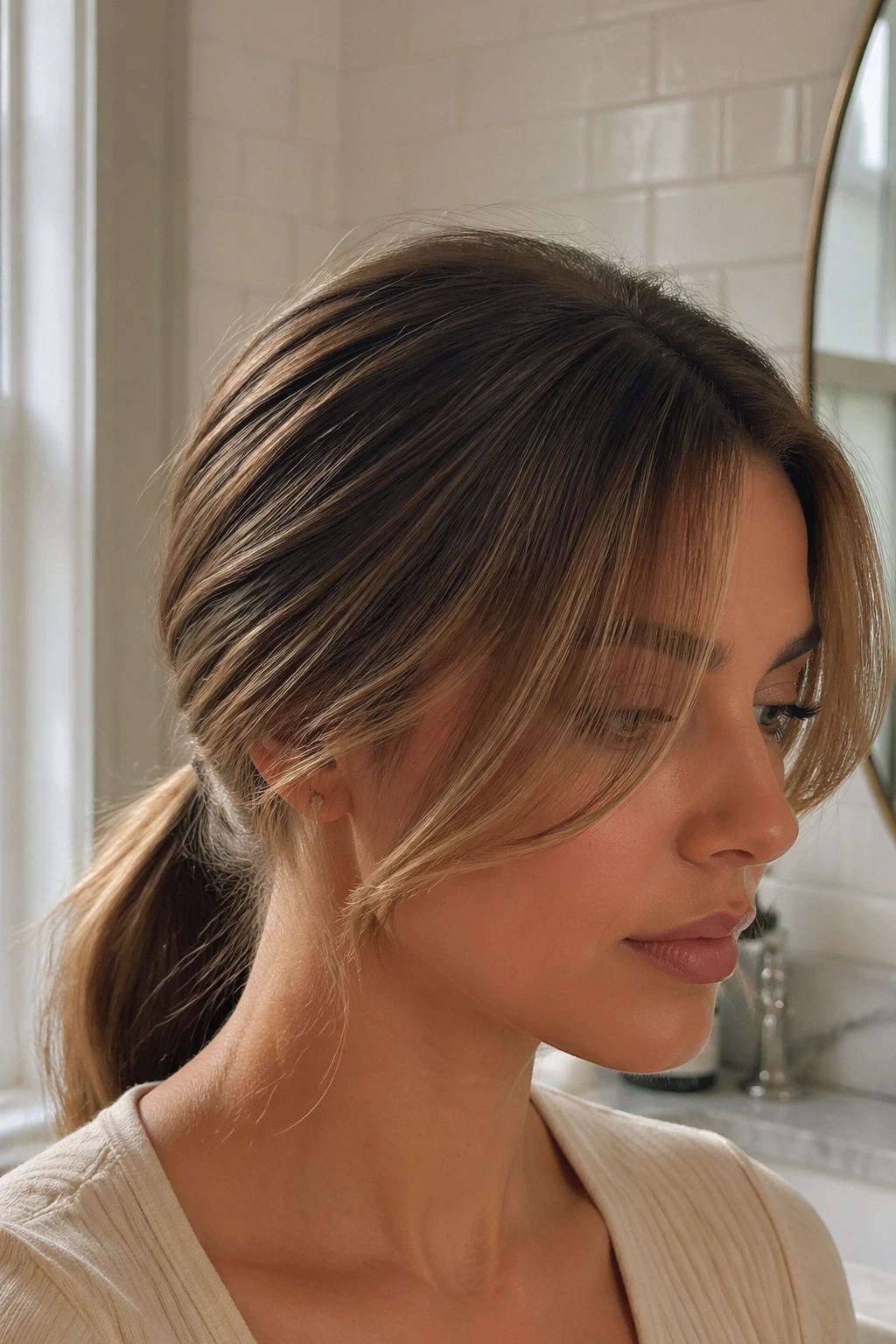
A mirror-sleek ponytail changes the texture story completely. The curtain bangs still soften the face, but everything else goes flat, shiny, and controlled. That contrast can look striking when it’s done with a light hand.
The Shine, Without the Grease
Use a tiny amount of serum or styling cream, then brush the hair back in sections so the top stays smooth. If flyaways keep popping up, mist a toothbrush with hairspray and tap them down. That sounds fussy, but it works fast and avoids overloading the hair with product.
The bangs should remain the only area with visible movement. Let them curve gently away from the face, and keep the ponytail taut enough to look crisp but not strained. If the line gets too sharp, the bangs lose their softness and the whole thing turns severe.
This one is strong with clean necklines, tailored clothes, and earrings. It likes structure.
26. Low Ponytail With a Hidden Elastic
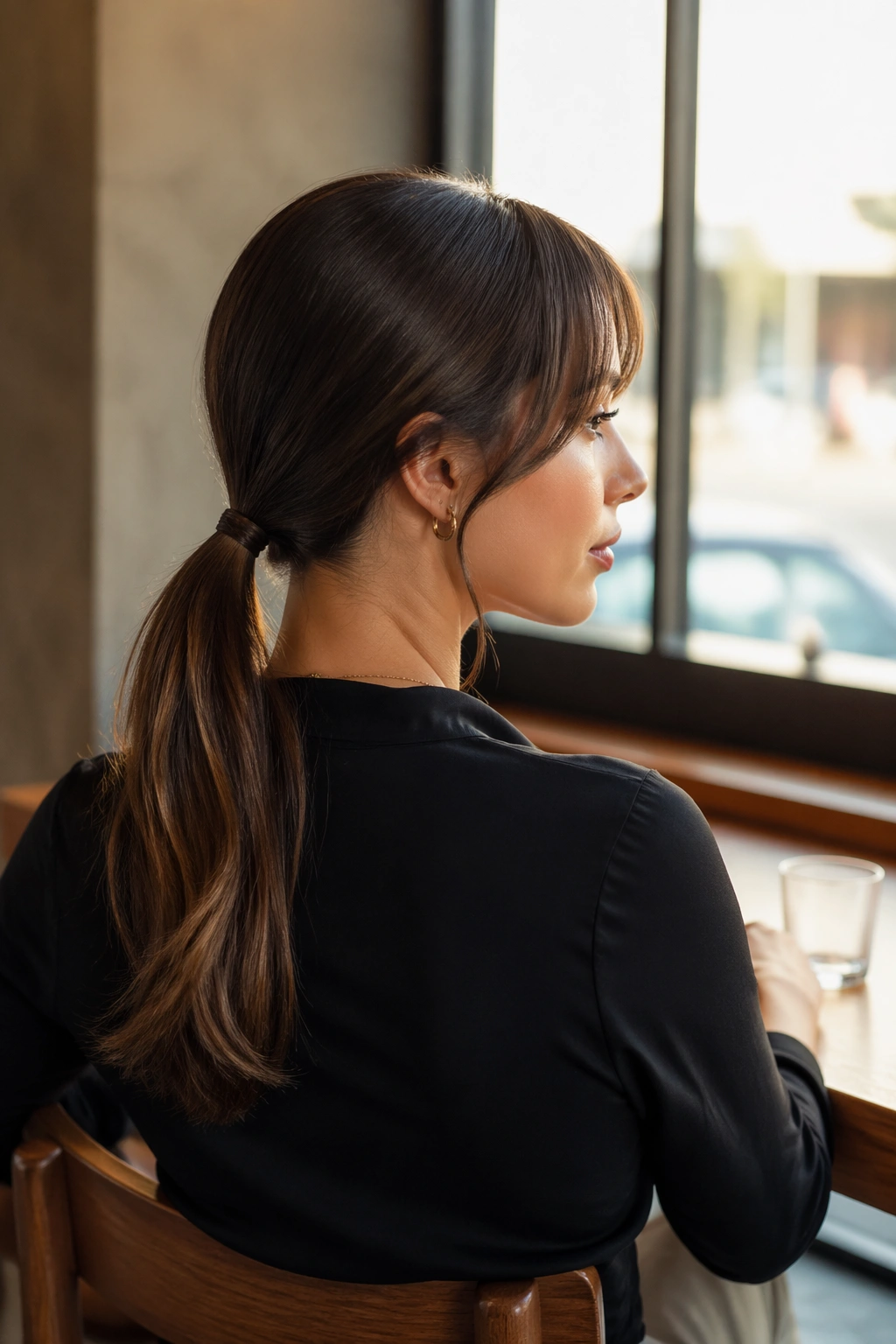
A hidden elastic is one of the easiest ways to make a low ponytail look more expensive than it is. The curtain bangs stay out front doing their softening job, while the back disappears into a neat, uninterrupted line.
Pull the hair low, secure it with a small elastic, then take a thin section from underneath and wrap it over the band. Pin the end underneath the ponytail, where no one can see it. If the wrap looks thick, split it in half before wrapping. That keeps the base neat instead of bulky.
What I like about this version is how quiet it is. No ribbon, no clip, no braid. Just a clean ponytail with a hidden bit of structure. The bangs become the whole focal point, which is often enough.
27. Soft Flip-Under Low Ponytail
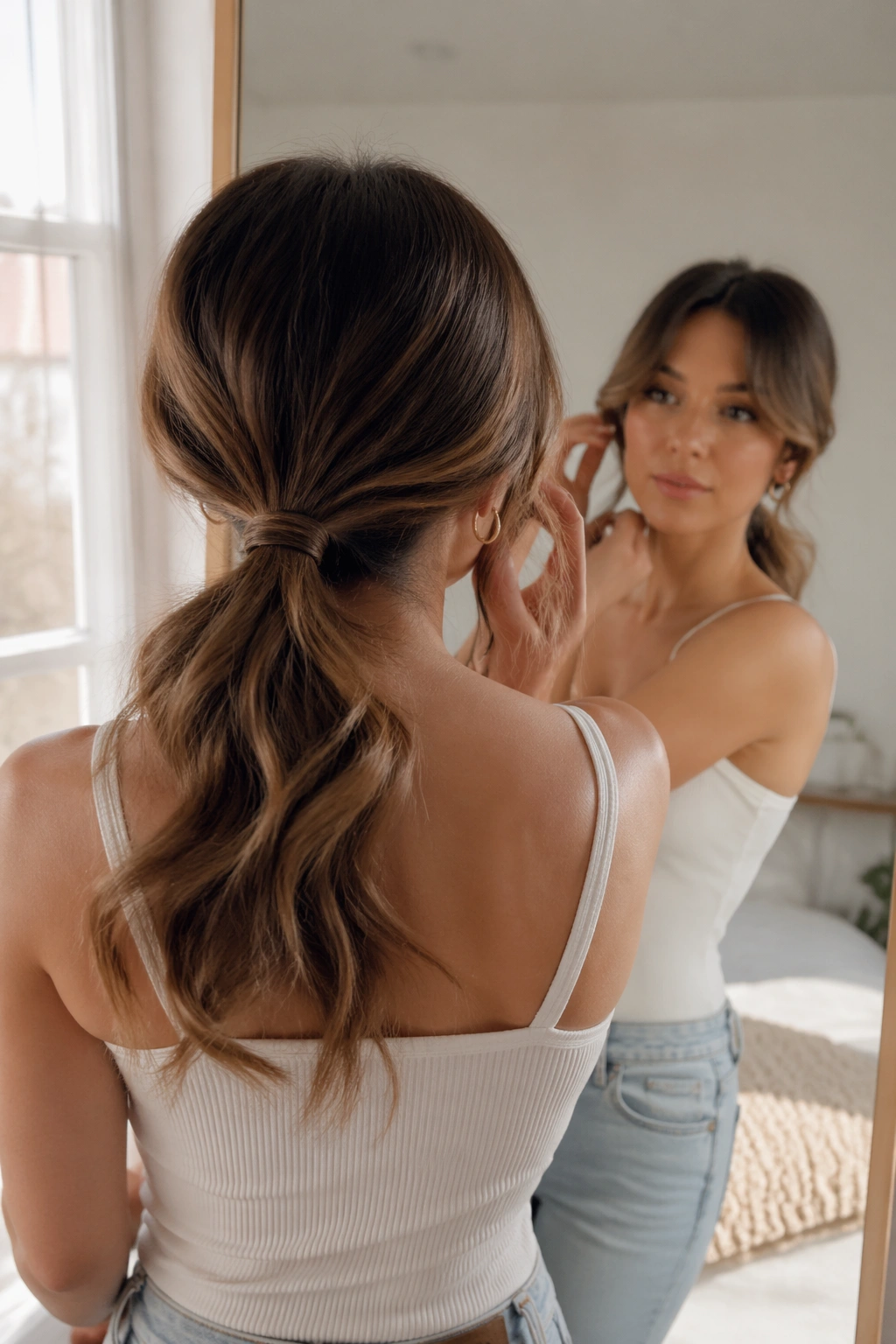
Can a low ponytail look modern without being sleek? Yes, if the ends flip under slightly instead of hanging straight. That small bend gives the style shape and keeps the curtain bangs from feeling like the only soft part of the haircut.
After tying the ponytail, use a round brush or a flat iron to curve the ends inward. Only the last few inches need movement. If you curl too much of the tail, the look turns old-fashioned fast. The goal is a gentle tuck, like the hair settled there on its own.
How to Get the Bend
- Start with dry hair
- Work in 1-inch sections at the ends
- Rotate the brush inward for 5 to 8 seconds
- Let the hair cool before touching it
That cooling part matters. If you touch the ends too early, the flip drops before it has a chance to set.
28. Low Ponytail With Wavy Ends
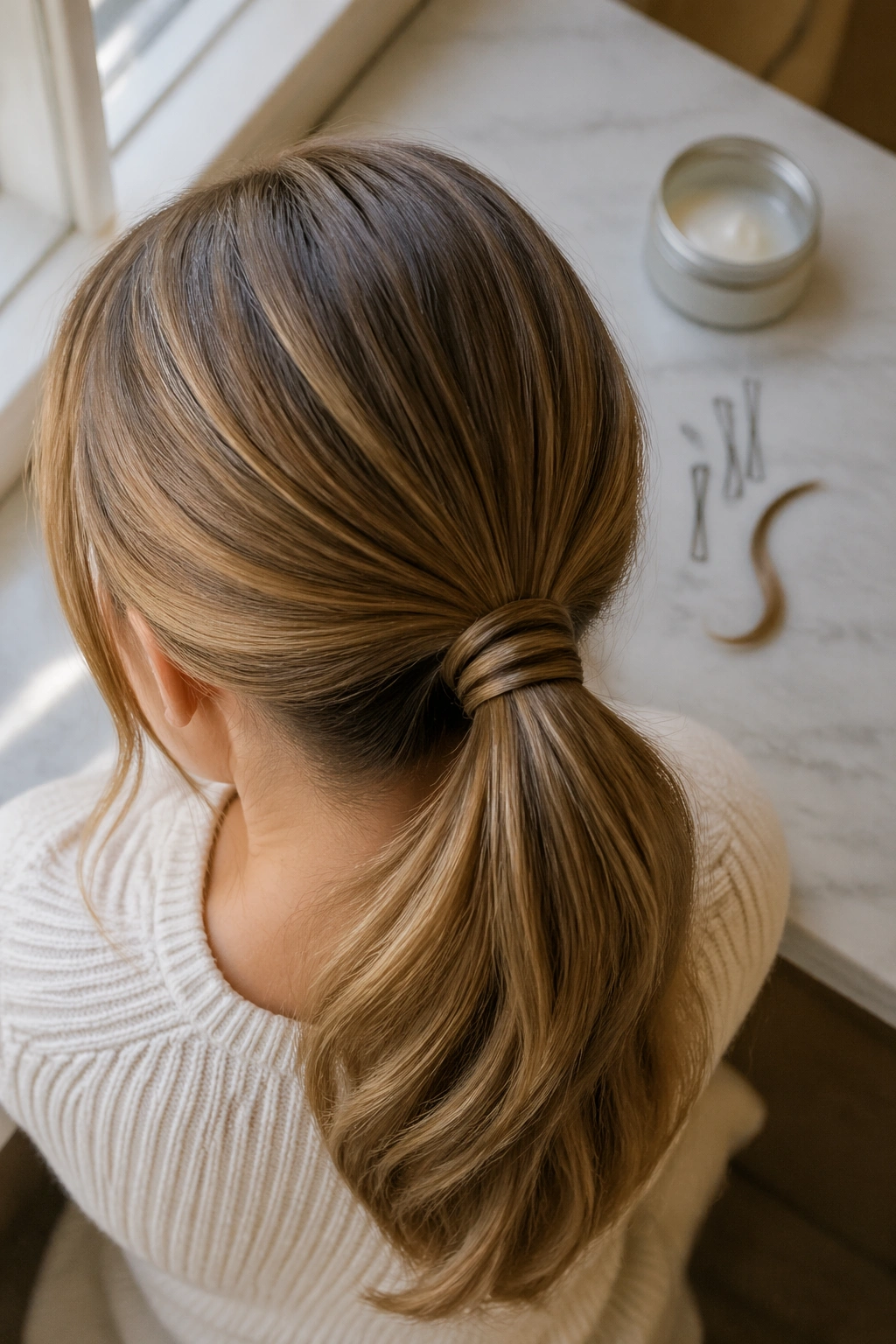
Wavy ends give the ponytail a lived-in finish that plays well with curtain bangs. The front stays soft and broken up, while the tail gets a little swing at the bottom. That keeps the whole style from sitting too still.
Picture a low ponytail where only the bottom half moves. The upper section stays controlled, but the ends bend and separate a little when you run your fingers through them. That contrast is useful. It gives the eye something to follow without making the style feel formal.
This version works especially well on hair that’s naturally wavy or has some old styling left in it. If you start with too much curl, though, the bangs and tail can both get busy. A light hand wins here. Always.
29. Event-Ready Low Ponytail
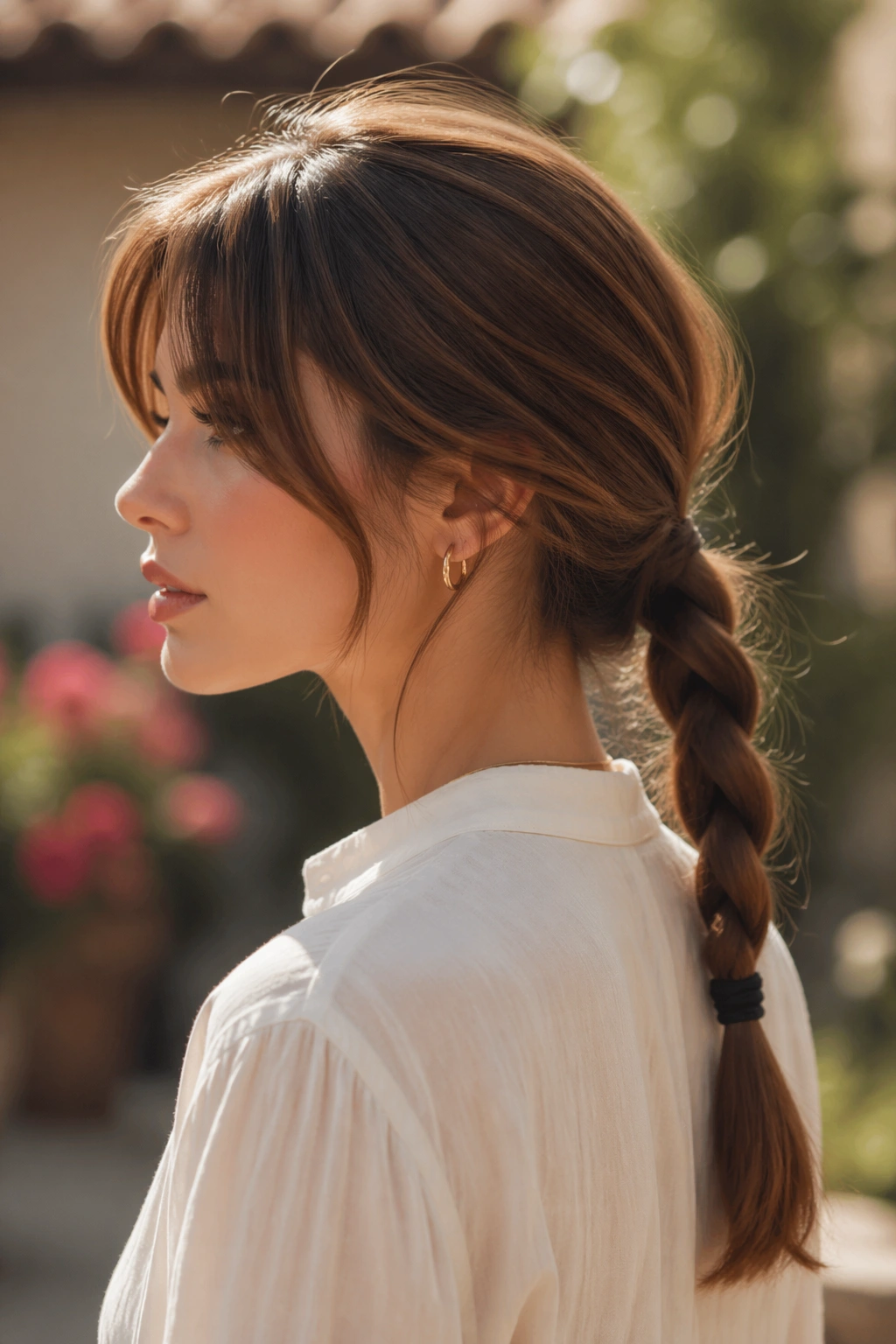
A dressy low ponytail needs two things: shine and restraint. The curtain bangs give the face softness, and the rest of the style should stay neat enough to sit beside a nice dress, a collar, or a pair of earrings without fighting them.
I’d keep the crown smooth, the base hidden, and the tail controlled with a soft bend at the ends. A few strategically placed pins can keep the bangs from sliding too far into the cheeks, which matters if you are going to be moving around. The style should hold its shape from the front and still look loose from the side.
For a formal setting, less decoration usually wins. A single pin, a slim ribbon, or a hidden wrap is enough. The ponytail does not need much else when the bangs are already framing the face.
30. Clean Minimal Low Ponytail
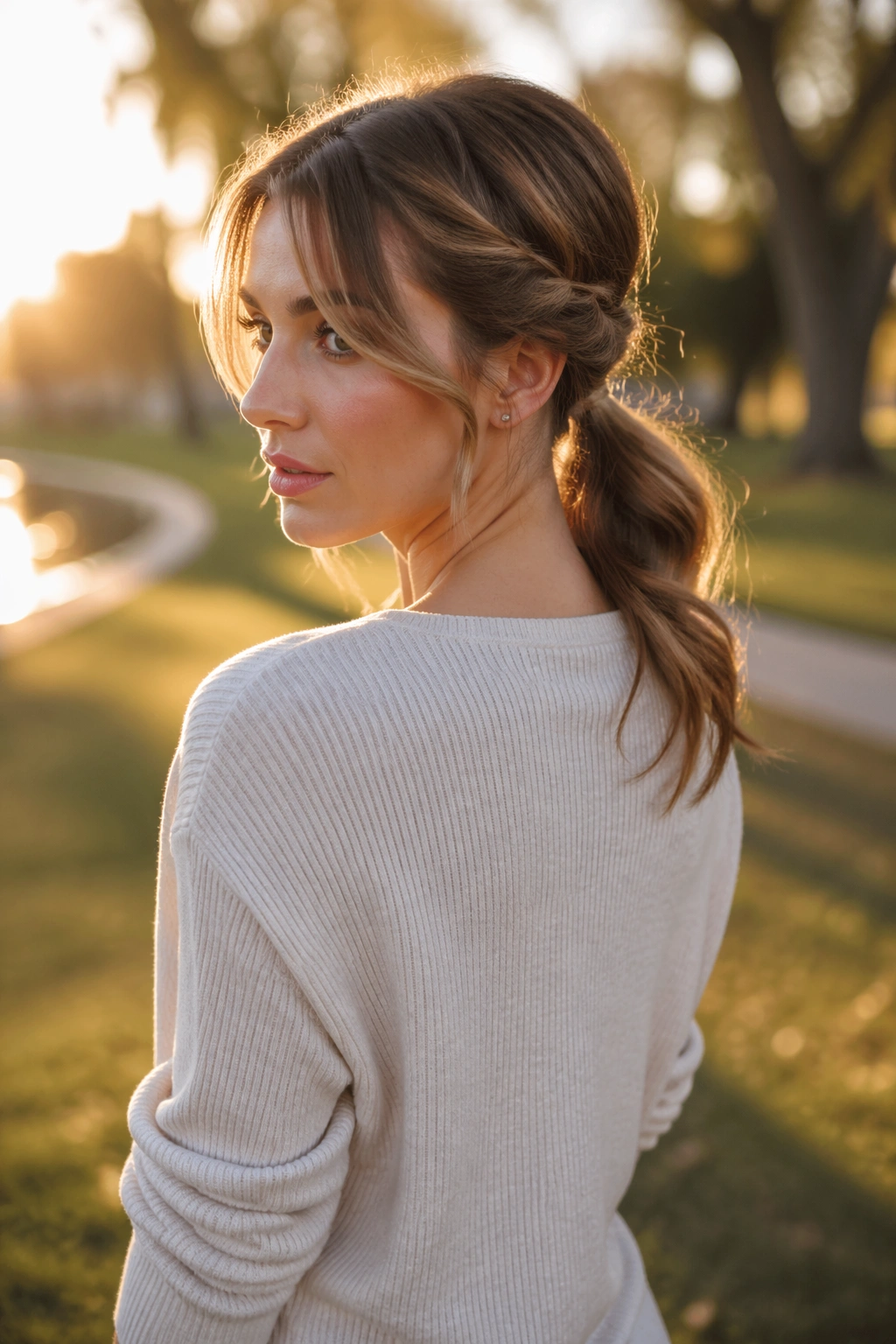
Sometimes the cleanest version is the one that stays out of its own way. A minimal low ponytail with curtain bangs keeps the line simple, the product light, and the front soft enough that the haircut does most of the talking.
This is the style I’d choose when I want the hair to look calm and exact. No extra braid. No clip stack. No scarf. Just a low tie, a middle part, and curtain bangs that fall in two easy panels. If the ends are a little bent, fine. If they’re straight, that’s fine too. The point is the restraint.
The best part is how wearable it is. It works with a tee, a blazer, a dress, or a coat with a high collar. That kind of quiet hair earns its keep.
