



A long weave ponytail can do a lot with very little fuss. It can sharpen your face, stretch your silhouette, and give you that pulled-together look on days when your hair needs a break but your style still needs to show up. For Black women, long weave ponytails hit a sweet spot that few styles can match: polished, wearable, and flexible enough to read sleek, soft, sporty, or glam depending on the texture and the base.
What makes these styles work so well is not just the length. It’s the base work underneath. A clean braid pattern, the right amount of tension, and a tail that matches your natural hair or your desired finish make the difference between a ponytail that looks rich and one that looks stiff or overdone. I’ve always thought the best ponytails are the ones that move when you do. Not floppy. Not helmet-like. Just enough swing to look alive.
And that’s where the fun starts. Some of these long weave ponytails are sharp and snatched. Others are soft and full. A few are loud in the best way, with curls, wraps, or color that do half the talking for you. If you like wearing your hair up but still want length for days, there’s a version here that will make sense for your face, your texture, and your real life.
1. Sleek High Wrap Ponytail with Bone-Straight Length
This is the one people mean when they say a ponytail looks expensive, even though what they really mean is clean. The crown is flat, the base is tight without being painful, and the tail falls straight down with a sharp finish that almost feels tailored. On Black women, this style works especially well when the hairline is smoothed with a light hand and the tail is left long enough to graze the lower back.
Ask for a high ponytail with a wrapped base and straight bundles in a yaki or silky texture, depending on how shiny you want it. I prefer yaki when the goal is realism; it blends with pressed natural hair better and does not scream “fresh bundle” from across the room.
Best for: long faces, oval faces, and anyone who likes a strong profile.
Watch for: too much gel at the hairline. It gets flaky fast.
A single strand of hair wrapped around the base is enough. More than that, and the style starts to look busy.
2. Deep Side-Part Body Wave Ponytail
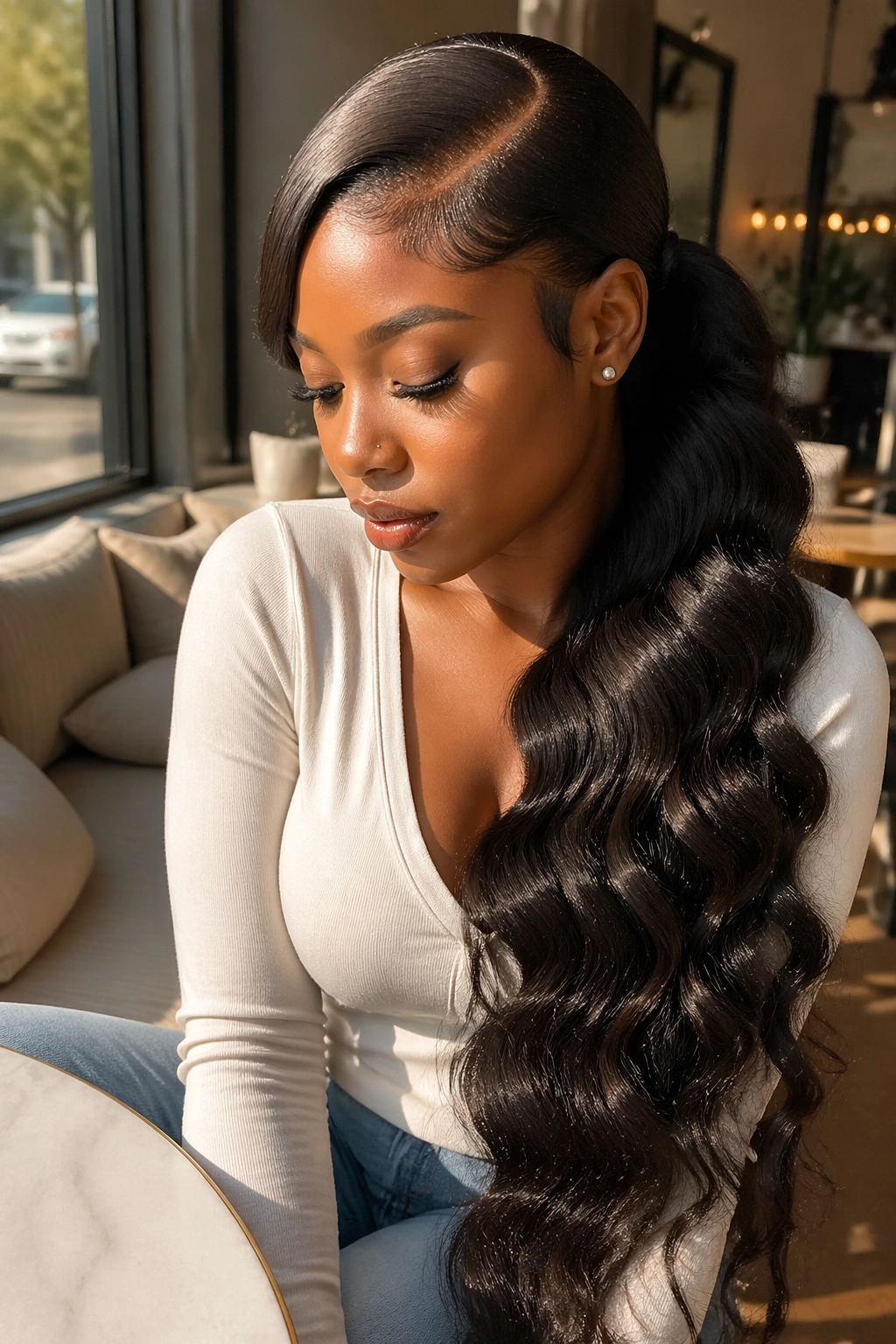
Want softness instead of sharp lines? This one brings it. The side part changes the whole mood of the ponytail, and the body wave length gives the tail a little bend without making it look heavily curled. It feels a little more romantic, a little less strict, and that matters if you do not want your hair to look like it’s headed to a board meeting every day.
The part should sit deep enough to show off the hairline and create a sweep across the forehead, but not so deep that the whole style feels lopsided. Three bundles of 24- to 28-inch body wave hair usually give you enough fullness for a long, soft tail without turning it into a heavy curtain.
How to wear it well
- Keep the crown smooth, but not glassy.
- Use a foam wrap or setting lotion if you want the wave pattern to stay neat.
- Let the tail swing. Don’t brush the life out of it.
This is one of those styles that looks especially good with hoops and a clean neckline. Simple. Effective.
3. Braided High Ponytail with Curled Ends
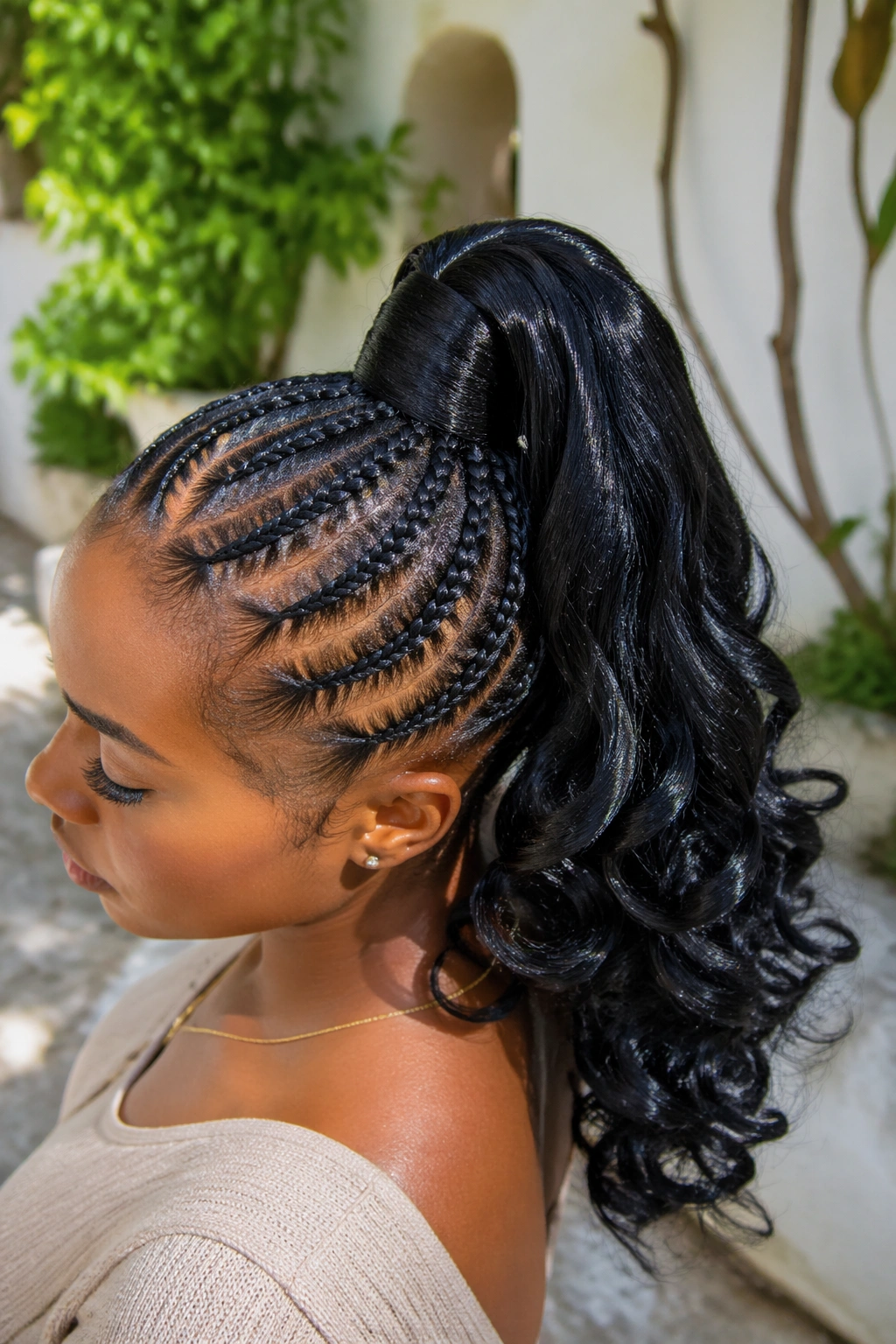
A braided base does two things at once: it gives the ponytail more structure, and it lets the tail feel like it’s sitting on solid ground. That matters when you want height. A high ponytail with a braid pattern underneath has better lift than a style that’s just slicked back and tied down.
For the tail, curled ends give the braid-to-weave transition a little softness. That keeps the whole look from feeling too severe. If you’re going for a style that can move from brunch to a formal event without changing much, this one is a very safe bet.
Why the braid base matters
The braid foundation distributes the weight better than a plain wrap on loose hair. That helps the style stay put, especially if you’re using a long tail with some density. It also keeps the crown flatter, which makes the ponytail sit higher and cleaner.
A nice touch? Curl the last 6 to 8 inches of the tail and let the ends bounce instead of hanging dead straight. That tiny difference changes everything.
4. Low Nape Ponytail with Yaki Texture
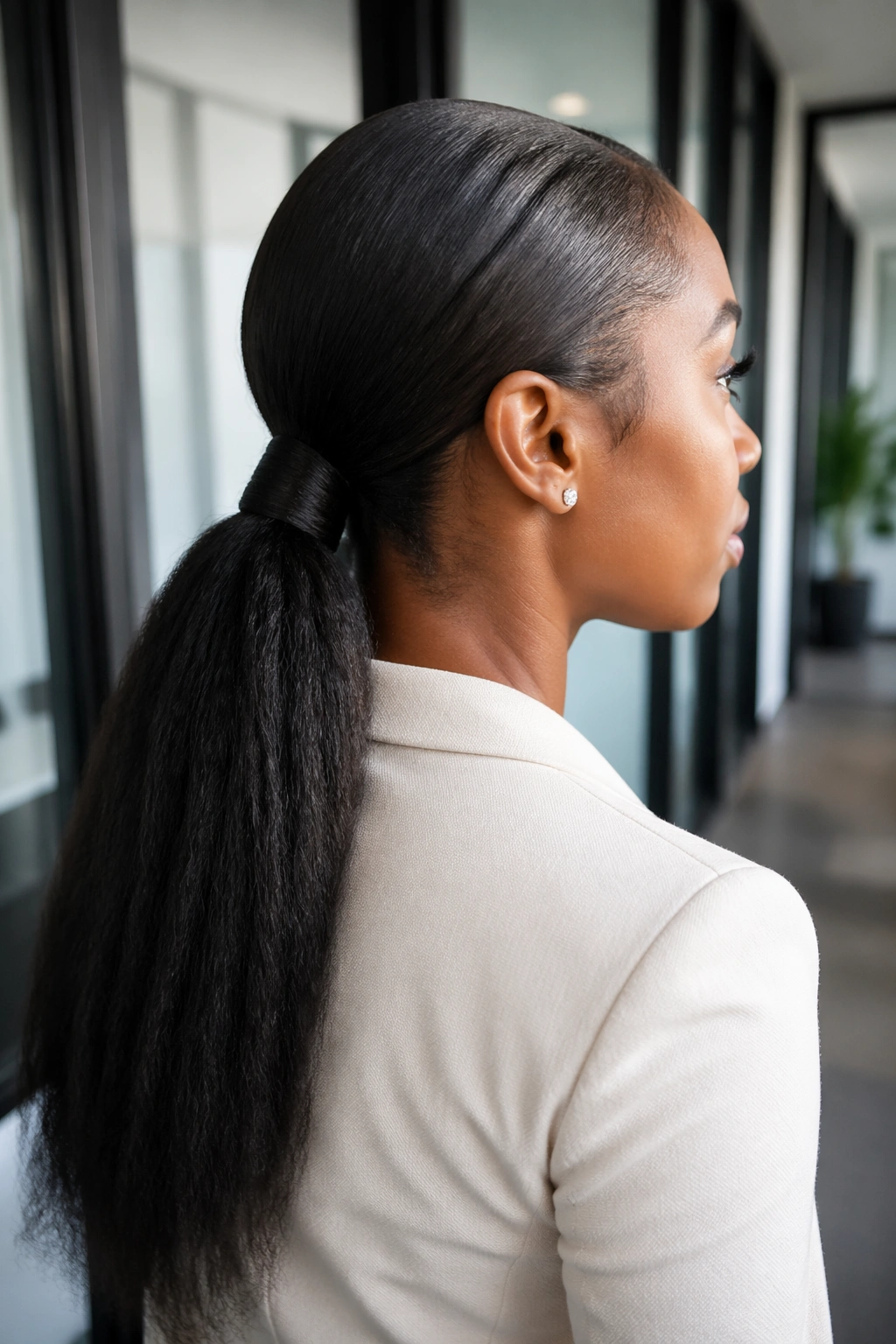
This is the ponytail that feels the least fussy, and I mean that as a compliment. A low ponytail at the nape sits close to the neck, which makes it comfortable for longer wear and easier to pair with a blazer, a dress, or a plain T-shirt. The yaki texture helps the tail blend with blown-out or relaxed hair, so it never looks too glossy or too fake.
If your hairline is sensitive, low ponytails are often kinder than high ones. The tension is spread out more evenly, and the style can still look neat even when you keep the base a little looser. That’s not a small thing. Scalp comfort matters.
Ask for: a low wrap ponytail with 24- to 30-inch yaki bundles.
Skip if: you want a very dramatic lift or a super-snatched effect.
This one is quiet in a good way. It does not beg for attention, but it gets it anyway.
5. Bubble Ponytail with Long Segments
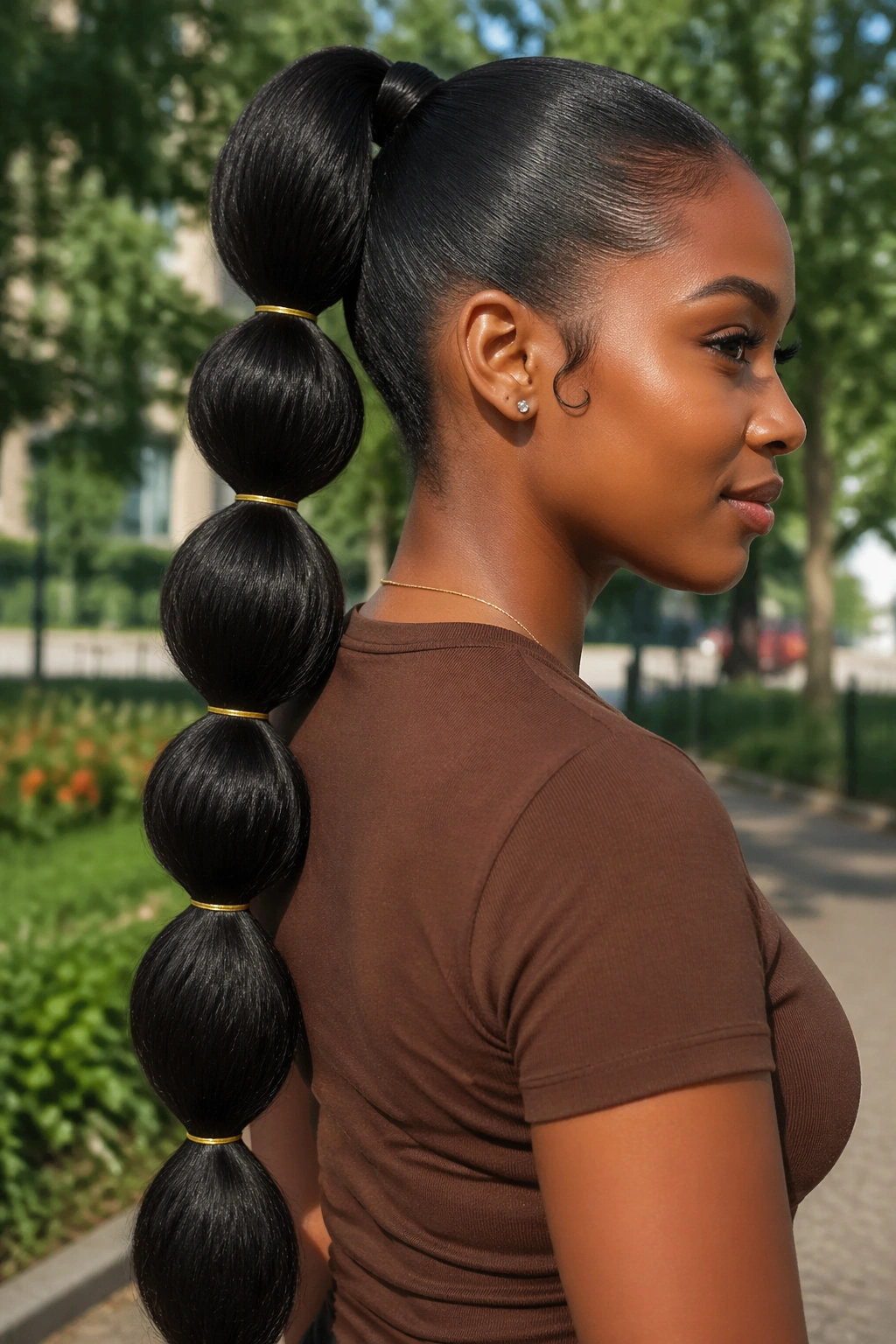
If your ponytail keeps looking flat in pictures, this is the fix I reach for. A bubble ponytail breaks the tail into sections with small elastics, then puffs each section out for shape. The result is playful, but not childish if you keep the tail long and the base smooth.
The spacing matters. Set each elastic about 4 to 5 inches apart, then gently tug each section until it rounds out. Too much tugging and the whole thing starts to look messy. Too little, and you barely get the bubble effect at all.
What makes it different
The style works because it creates volume in places where a straight tail would simply fall. That makes it a smart choice for fine bundles, or for hair that needs a little visual lift. It also photographs well from the side and the back, which is one reason people keep coming back to it.
Try it with straight hair, body wave, or even a soft kinky texture. All three give a different finish. All three can work.
6. Sleek Ponytail with Laid Side Part and Swirl Edges
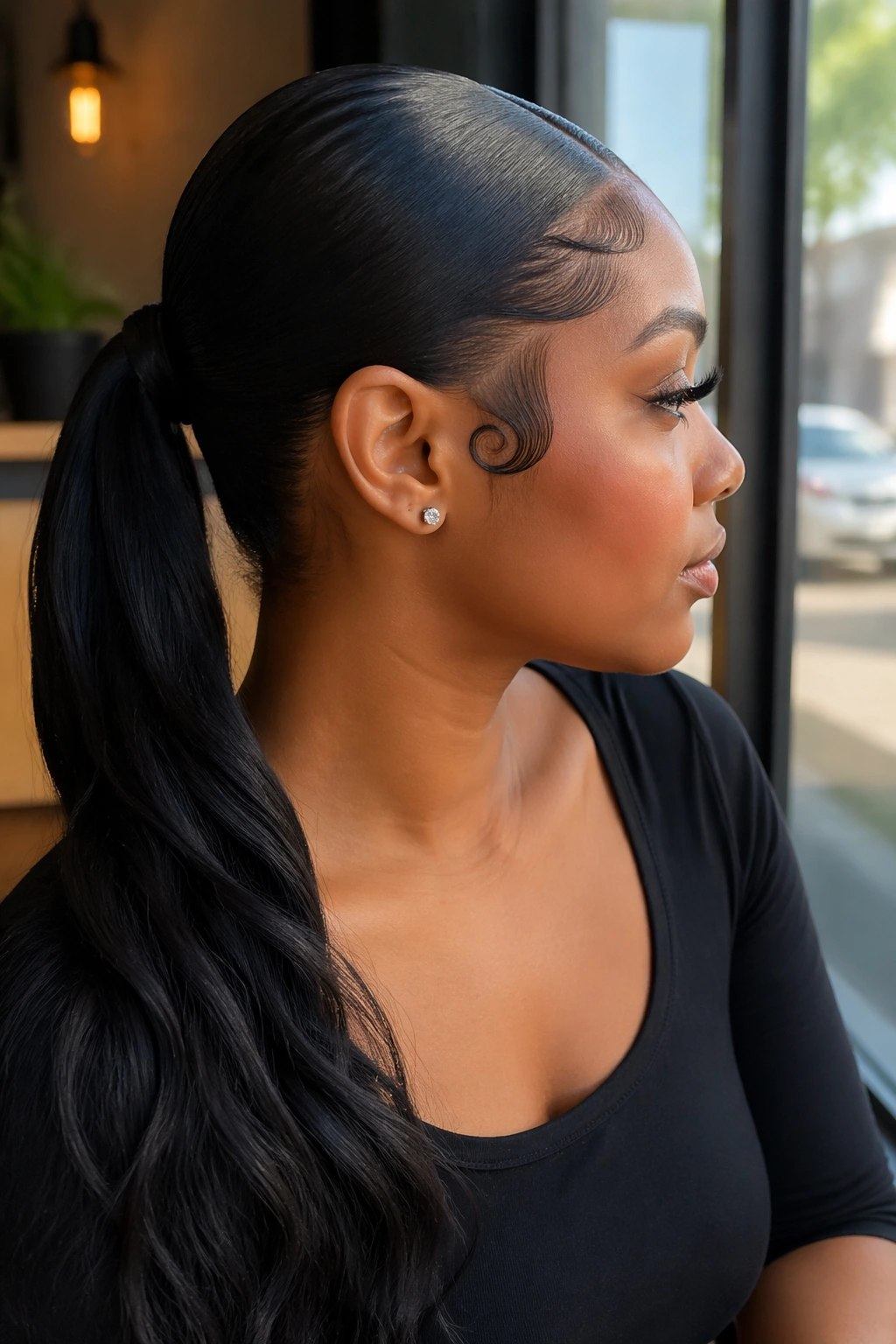
A side part changes the face in a way a center part never will. It softens the forehead, adds a little curve, and gives the ponytail a more sculpted shape before the tail even begins. Pair that with neatly laid edges and a small swirl or swoop at the temple, and the whole style starts to look intentional in the best sense.
This style is especially nice when you want your hair to frame your cheekbones. It does not need much length to feel elegant, but long weave ponytails do give it a fuller finish. I like it with a straight tail that falls past the shoulder blades and stays smooth all the way down.
One warning: don’t overload the edges with product. A little goes a long way, and too much gel will harden into flakes by the end of the day. That ruins the clean look fast.
7. Side-Swept Ponytail with Loose Glam Curls
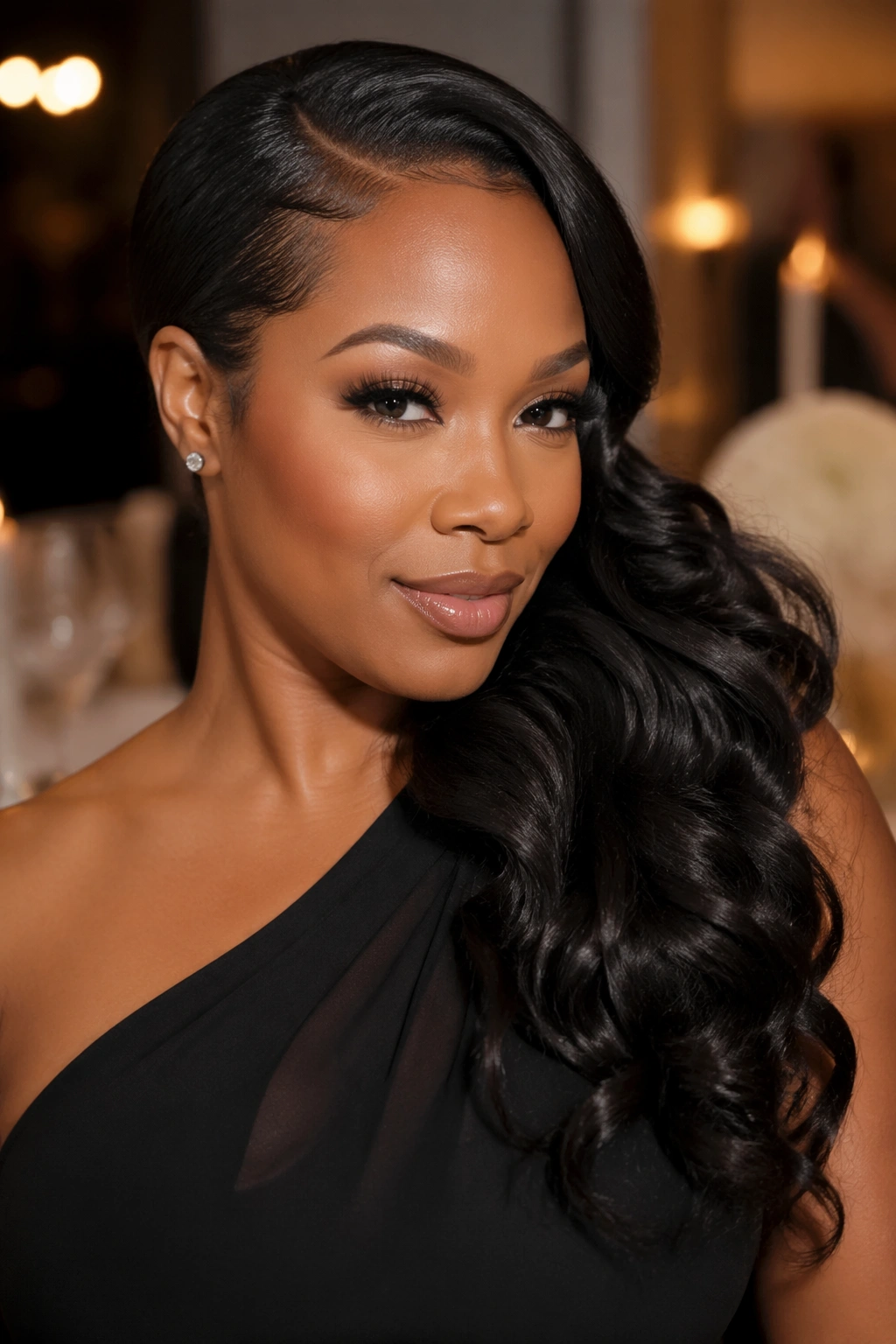
Some ponytails are all about symmetry. This one is not. The side sweep gives the face movement, and the loose curls keep the tail from looking too rigid. It has that soft, dressed-up feel you want for a dinner, a party, or a day when you want your hair to look like it made an effort.
The trick is placement. The ponytail should start slightly behind the ear on the heavier side, so the curls can fall over one shoulder without fighting the part. Use large curls, not tight ones. Tight curls can shrink the tail and make a long style look shorter than it really is.
Best matched with: 26- to 30-inch loose wave or deep wave bundles.
Nice detail: leave the front just a little softer around the hairline. The side sweep does not need a harsh edge to stand out.
This is one of those styles that looks fuller than it is, which is a gift.
8. Extra-Long Straight Ponytail with Invisible Wrap
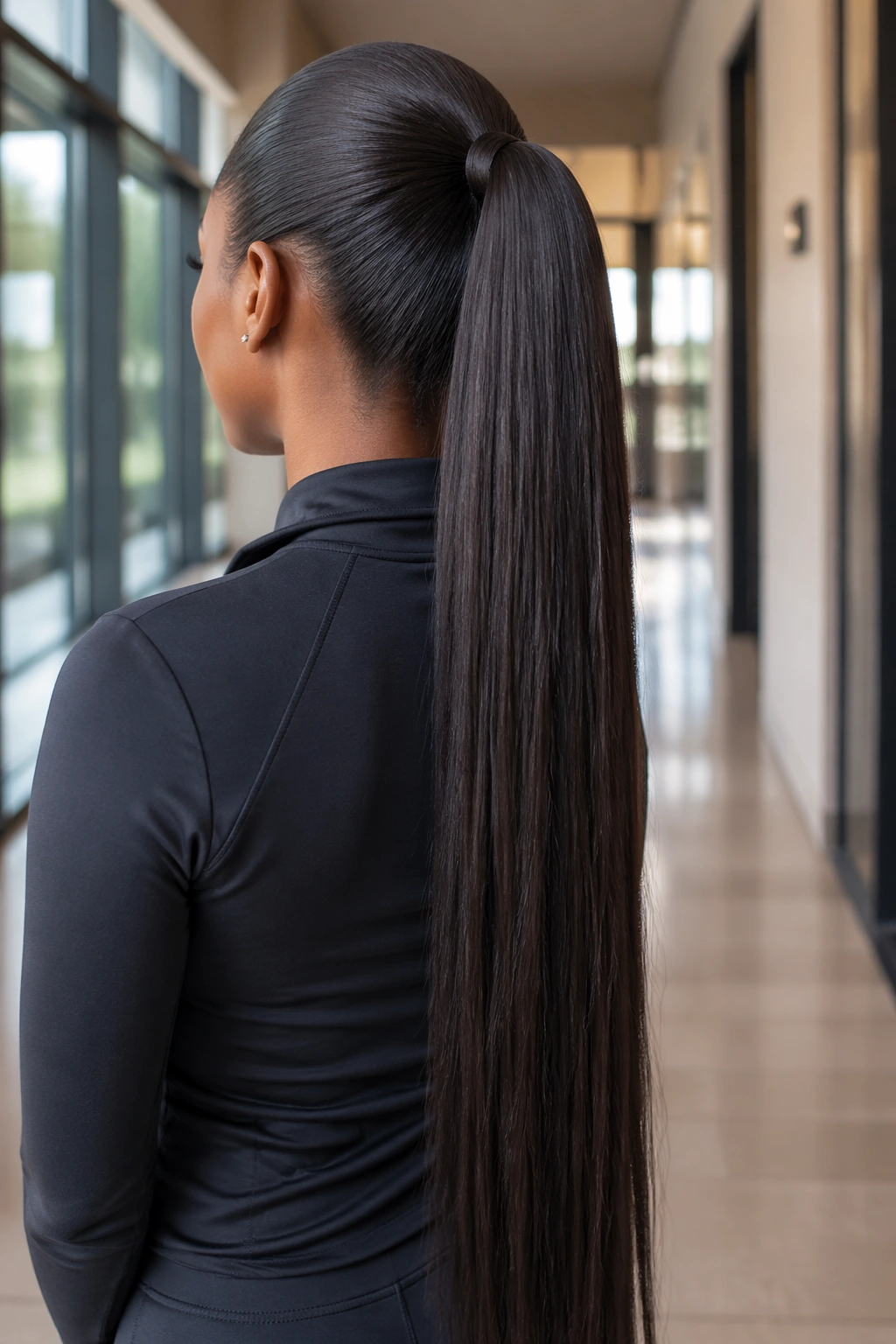
The longer it gets, the cleaner the base has to be. That is the deal with an extra-long straight ponytail. Any sloppy part, any bumpy braid, any visible tie turns into the whole story once the tail drops past the waist. So the base has to be neat. Very neat.
The best version of this look uses lightweight straight bundles and a wrap that disappears into the hair. A small strand of the tail covers the base, and the rest hangs long and even. If the bundles are too heavy, the ponytail pulls down and loses the lift that makes it striking in the first place.
What to look for
- Straight bundles with a soft, natural sheen.
- Enough density for fullness, but not so much that the tail feels like a brick.
- A ponytail holder strong enough to keep the base secure without chewing up the hair.
I like this style when the outfit is simple and the hair gets to do the talking.
9. Half-Braided, Half-Weave Ponytail Hybrid
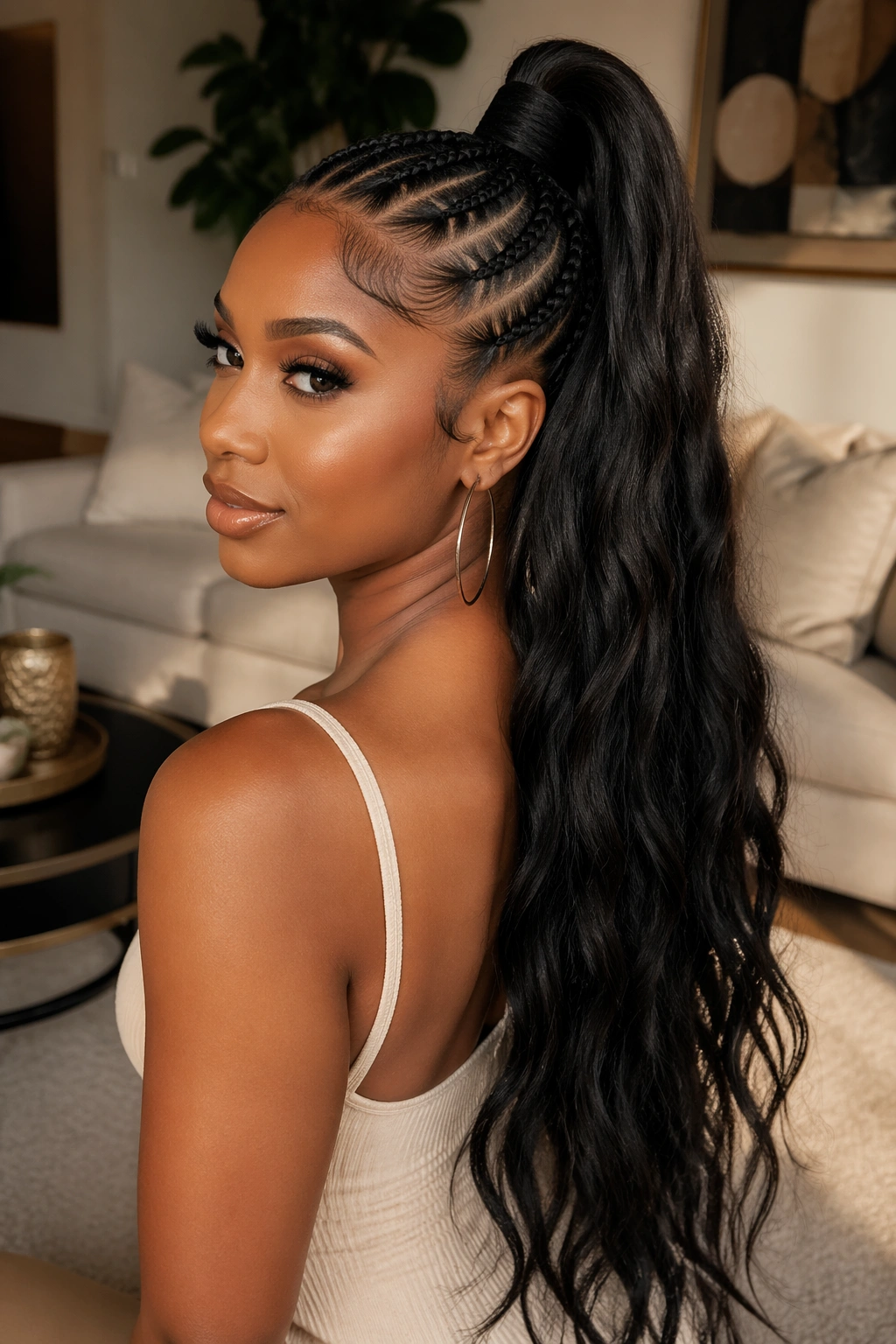
Why choose between braids and weave when you can have both? That’s the whole appeal here. The front or top section can be braided into a sleek pattern, then the ponytail itself flows into long weave lengths. The result feels a little more styled, a little more interesting, and a lot more personal than a standard slick-back.
This hybrid works well if you want some of the visual detail that braids bring, but you still want the motion of a long tail. It is also a smart way to add protection to parts of the hair while keeping the overall look soft. The braid section can be as simple as two feed-ins or as detailed as a few narrow cornrows.
Best for: people who get bored fast.
Stylist note: keep the braids flat and clean so they don’t compete with the tail.
You get texture up top, length at the bottom, and just enough contrast to keep people looking twice.
10. Curly Ponytail with Soft Defined Ringlets
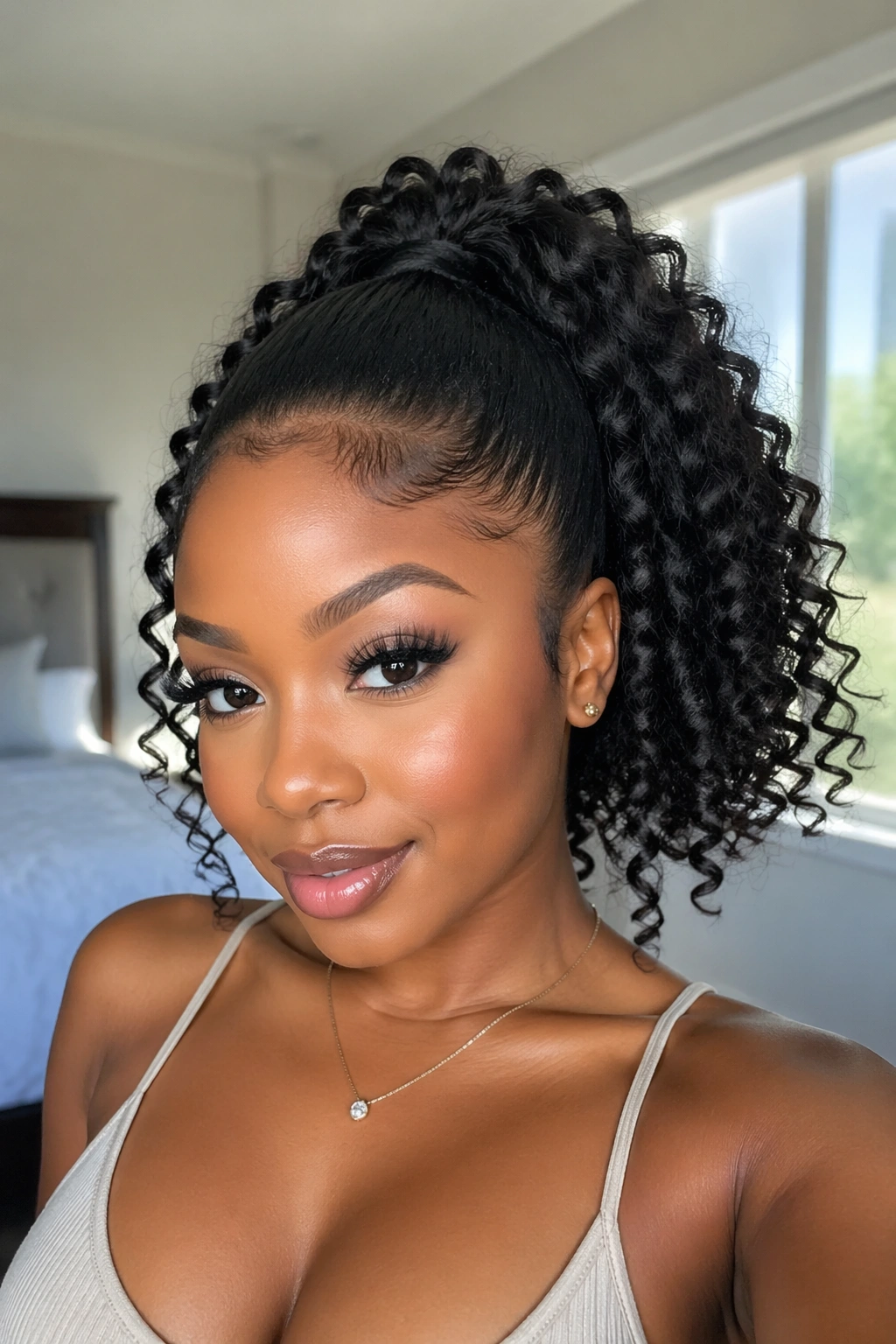
A curly ponytail has a different energy. It feels full right away, even before you add length, because the texture itself does half the work. Soft defined ringlets sit somewhere between polished and touchable, which is why this style lands so well for everyday wear and special events alike.
Moisture matters here. A light mist of water, a little leave-in, and a foam or curl cream can keep the curls looking springy instead of dry. If the curls start to puff at the ends, finger-coiling a few pieces back into shape is usually enough. No need to overwork the whole tail.
If you like volume at the crown and movement through the ends, this one does both. It is also a gift for people who want a ponytail that does not look flat from the side.
11. High Ponytail with Swoop Fringe
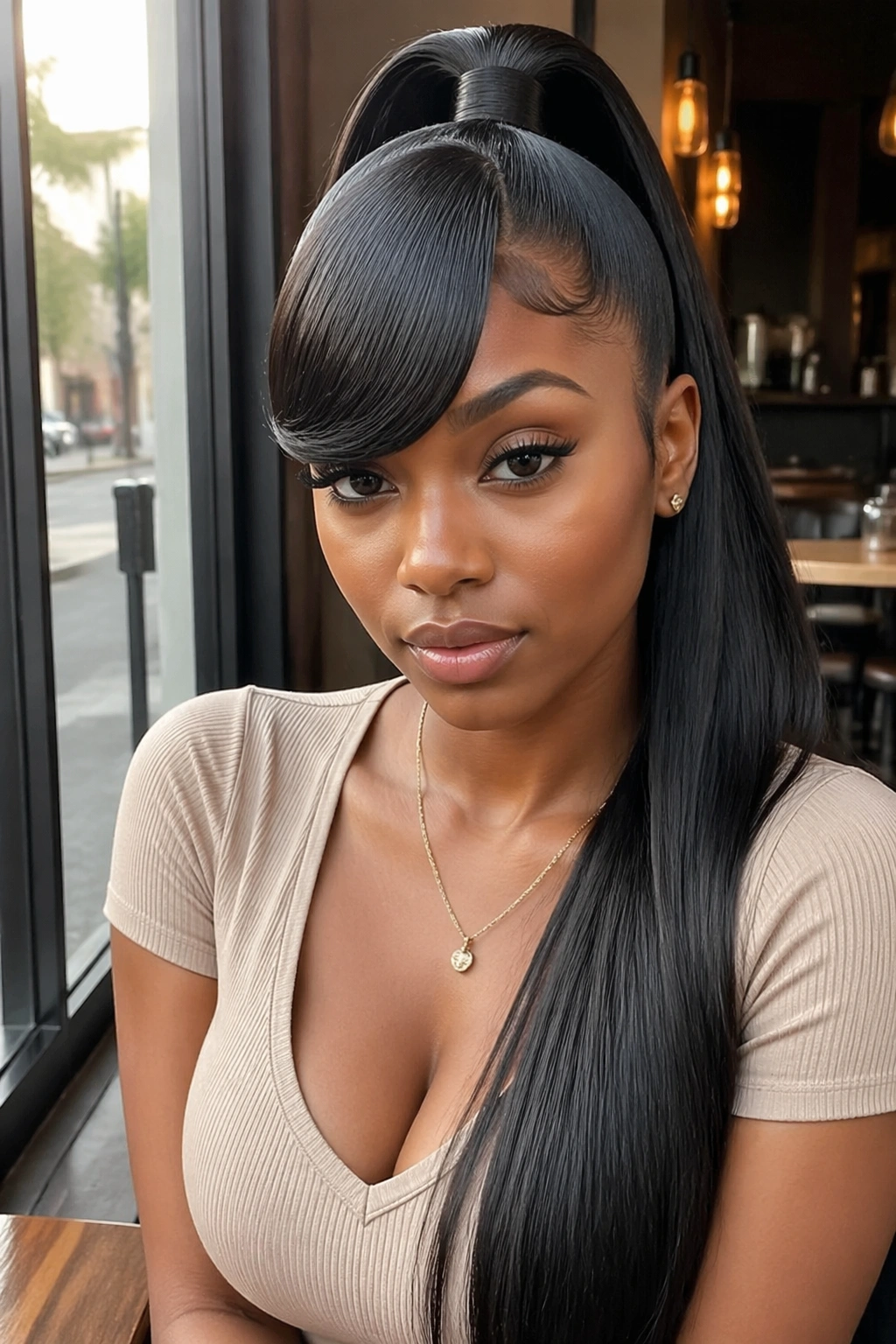
A swoop fringe changes the whole face. It breaks up the forehead, softens the top of the style, and gives the ponytail a little old-school glam without turning it into costume hair. The rest of the ponytail can stay sleek and long, which gives you a nice contrast between the soft front and the sharp tail.
This works best when the fringe is shaped to blend instead of hanging like a separate piece. You want a curve that falls naturally across one brow, not a stiff flap that sits on top of the face. That takes a careful trim or a well-placed wand curl.
There’s a practical upside too. If your hairline is going through a rough patch, a fringe can shift attention upward and away from areas you’d rather not spotlight. I like that kind of problem-solving in a style. It feels smart.
12. Stitch-Braid Foundation Ponytail
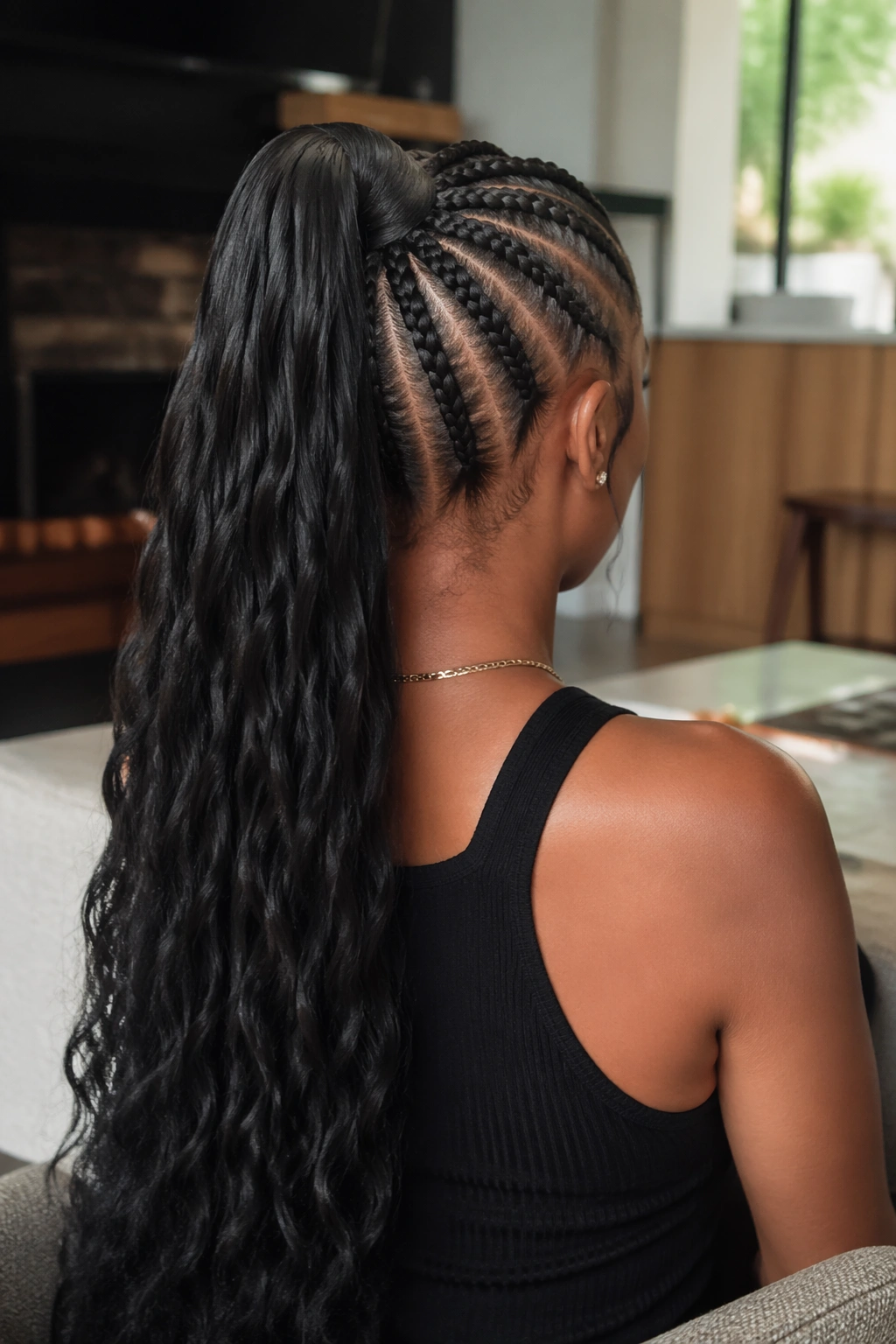
A stitch-braid base gives the ponytail a sculpted look before the tail even comes in. Those neat, straight rows do a lot of visual work. They create order, they anchor the ponytail securely, and they make the whole style feel deliberate from every angle.
This is a good choice if you want the ponytail to look as styled from the back as it does from the front. Stitch parts show off the skill in the base, and that matters because a lot of ponytails look polished only from the mirror side. Not this one.
Best ways to wear it
- Straight back stitch braids for a clean, classic finish.
- Curved parts if you want a softer shape around the head.
- A high ponytail if you want the braids to lead into lift.
If you like precision, this style has it. If you do not, it may feel a little too neat. Some people love that. I usually do.
13. Low Ponytail with Feed-In Cornrows
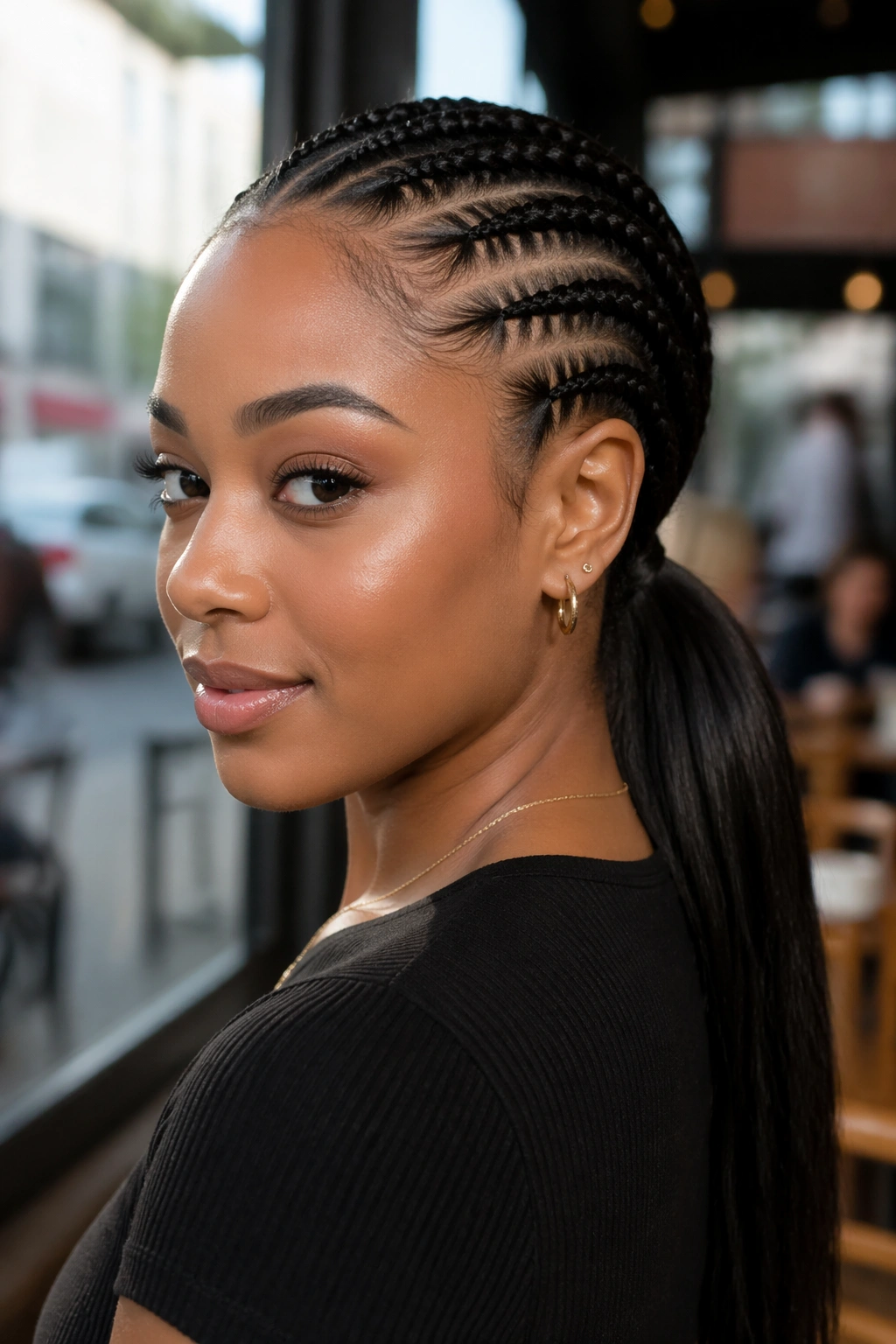
This style gives off calm, controlled energy. The feed-in cornrows draw the hair toward the nape, and the low placement makes the ponytail sit close to the neck instead of standing up and away from the head. It’s polished, but it’s not trying too hard.
The low position also makes this one friendlier for all-day wear. There is less upward pull at the crown, which can matter if your scalp gets tender. The look can still be sleek, but it does not need the same edge tension as a super-high ponytail.
Good with: straight bundles, silky wave, or even a soft body wave if you want movement.
Not ideal for: people who want lots of drama at the top.
I think of this as the grown-up ponytail. Clean lines. Strong shape. No chaos.
14. Romantic Side Ponytail with Glam Waves
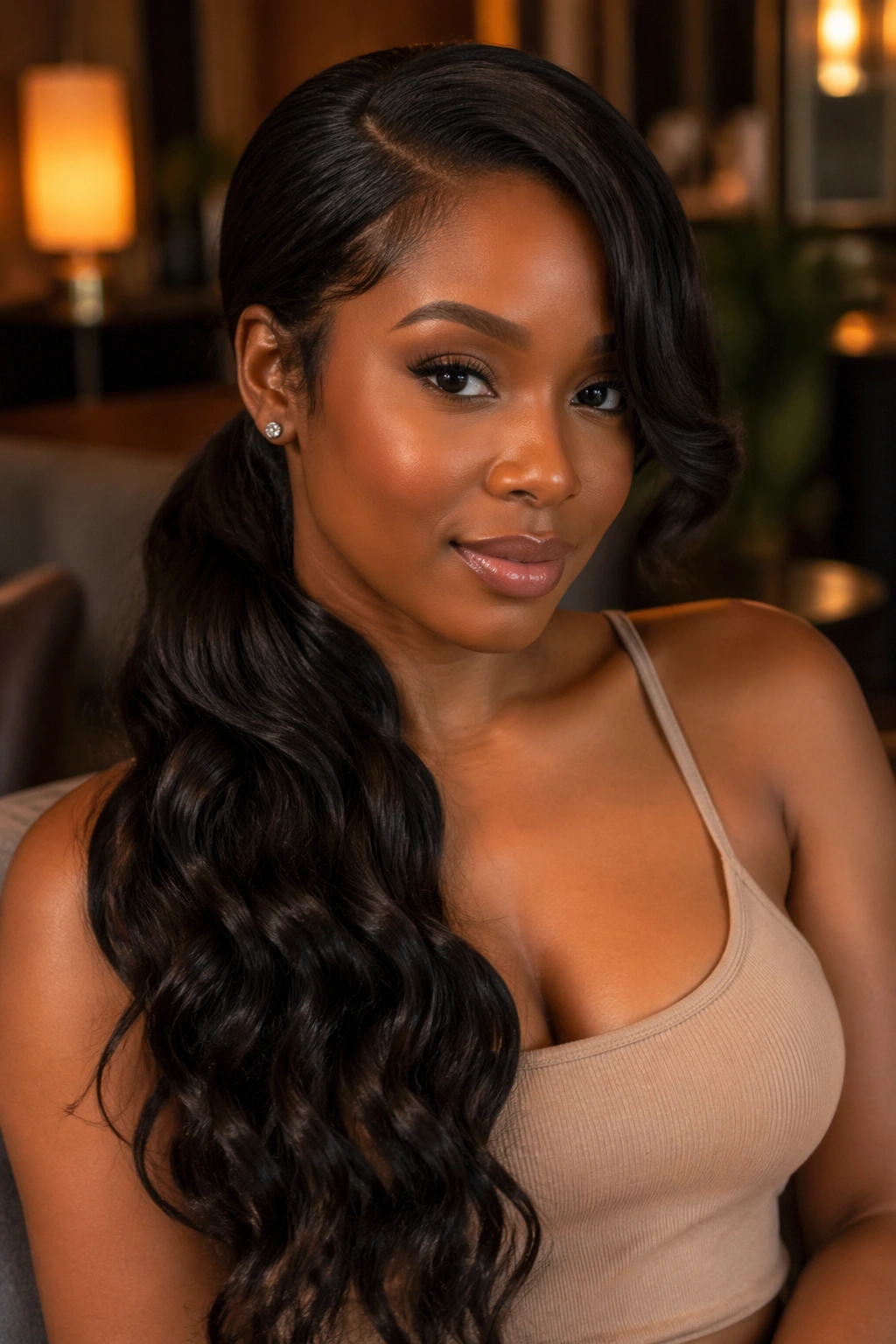
A side ponytail has a softer mood than a center-back version, and that makes it easier to pair with waves that fall in loose S-shapes. The style can feel romantic without becoming sugary, especially when the waves are long and the side placement lets them cascade across one shoulder.
The part can be deep or shallow. A deep side part gives more drama, while a softer side part keeps the look easier to wear during the day. Either way, the wave pattern matters more than a lot of people think. If the waves are too tight, the ponytail reads formal. If they are too loose, the style can lose its shape.
A few face-framing pieces around the front help, but you do not need much. One or two strands are enough. Too many and the style starts acting like a loose down-do instead of a ponytail.
15. Ponytail With Scarf Wrap Accent
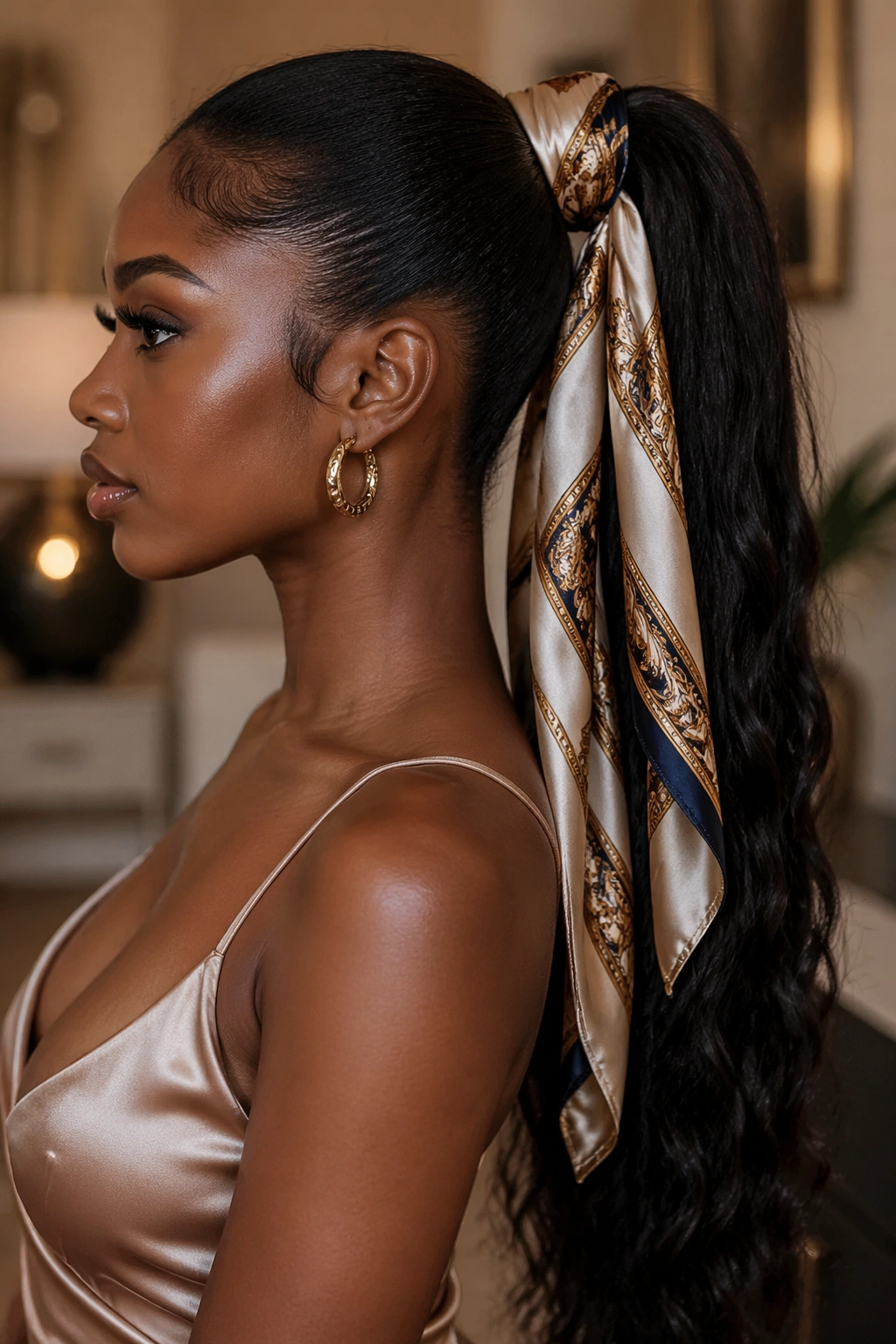
A scarf wrap can make a simple ponytail feel finished without much extra effort. Tie it around the base, let the ends drape, or wrap it once and knot it off to the side. The fabric becomes part of the hairstyle instead of looking like an afterthought, and that matters.
This works especially well with long straight or wavy weave because the scarf gives the eye a place to land before it follows the tail downward. Pick a satin or silk scarf if you want something smooth, or a printed fabric if you want contrast. A narrow scarf gives a cleaner line. A wider one feels bolder.
Try it with
- solid black or deep brown hair for a sleek look
- burgundy or copper hair for color contrast
- gold or cream scarves for a softer finish
The key is restraint. One accent is enough. Two can be too much.
16. Two-Tone Long Weave Ponytail
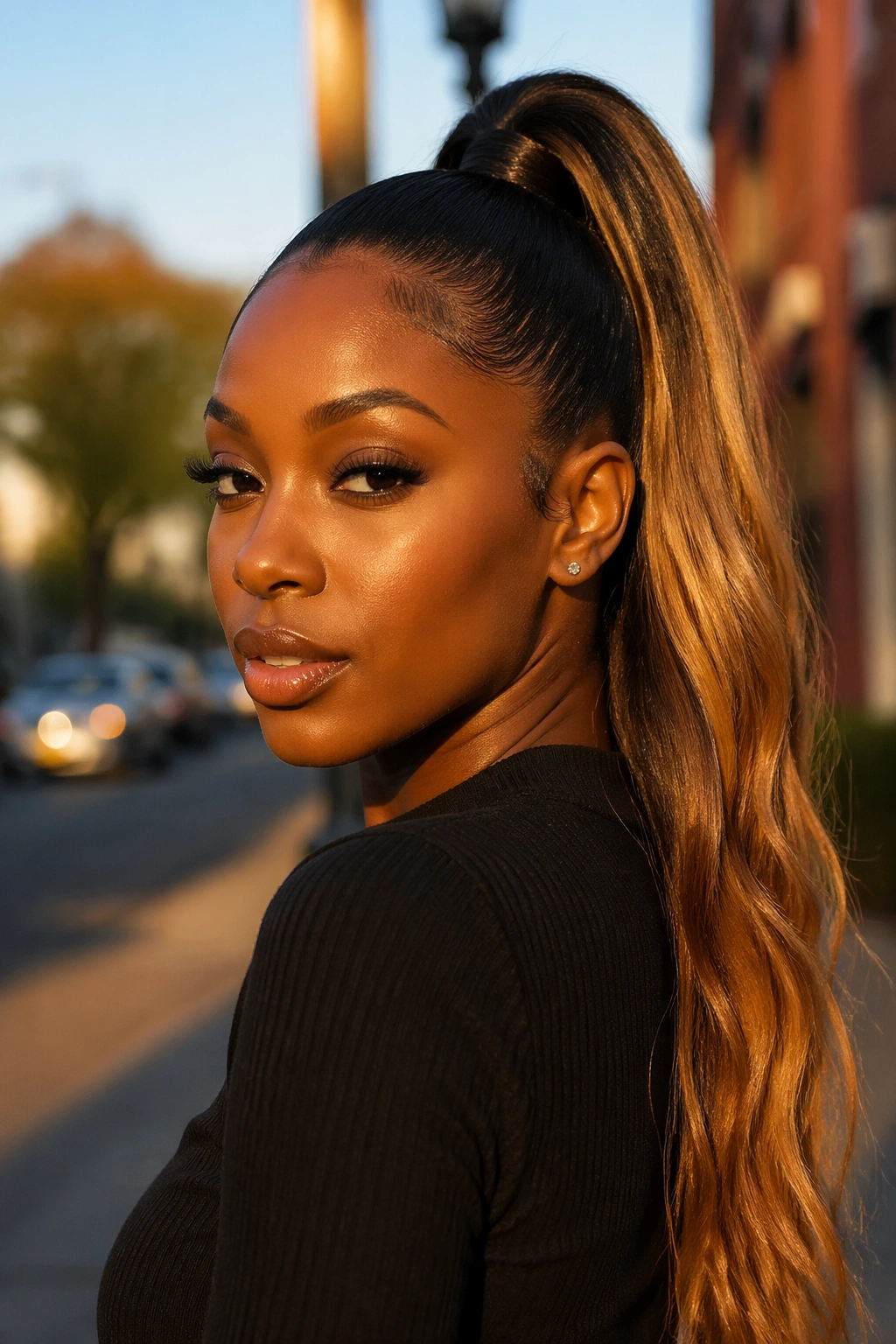
Color changes the whole mood of a ponytail. A two-tone version lets you get dimension without fully committing to one flat shade. Think black roots with honey-brown ends, espresso with auburn, or a deep chestnut tone that shifts when the light hits it from the side.
I like this style because it does what good color should do: it adds depth without demanding constant attention. You don’t need a dramatic ombré to make the look work. Even a subtle shade difference between the base and the tail can give the ponytail more shape.
If you’re using bundles, match the root color to your own hair or the braid base, then let the lower lengths carry the lighter shade. That keeps the style grounded instead of looking like a costume piece. It also makes the tail look longer in a nice visual trick. People notice. They just may not know why.
17. Crimped Long Weave Ponytail
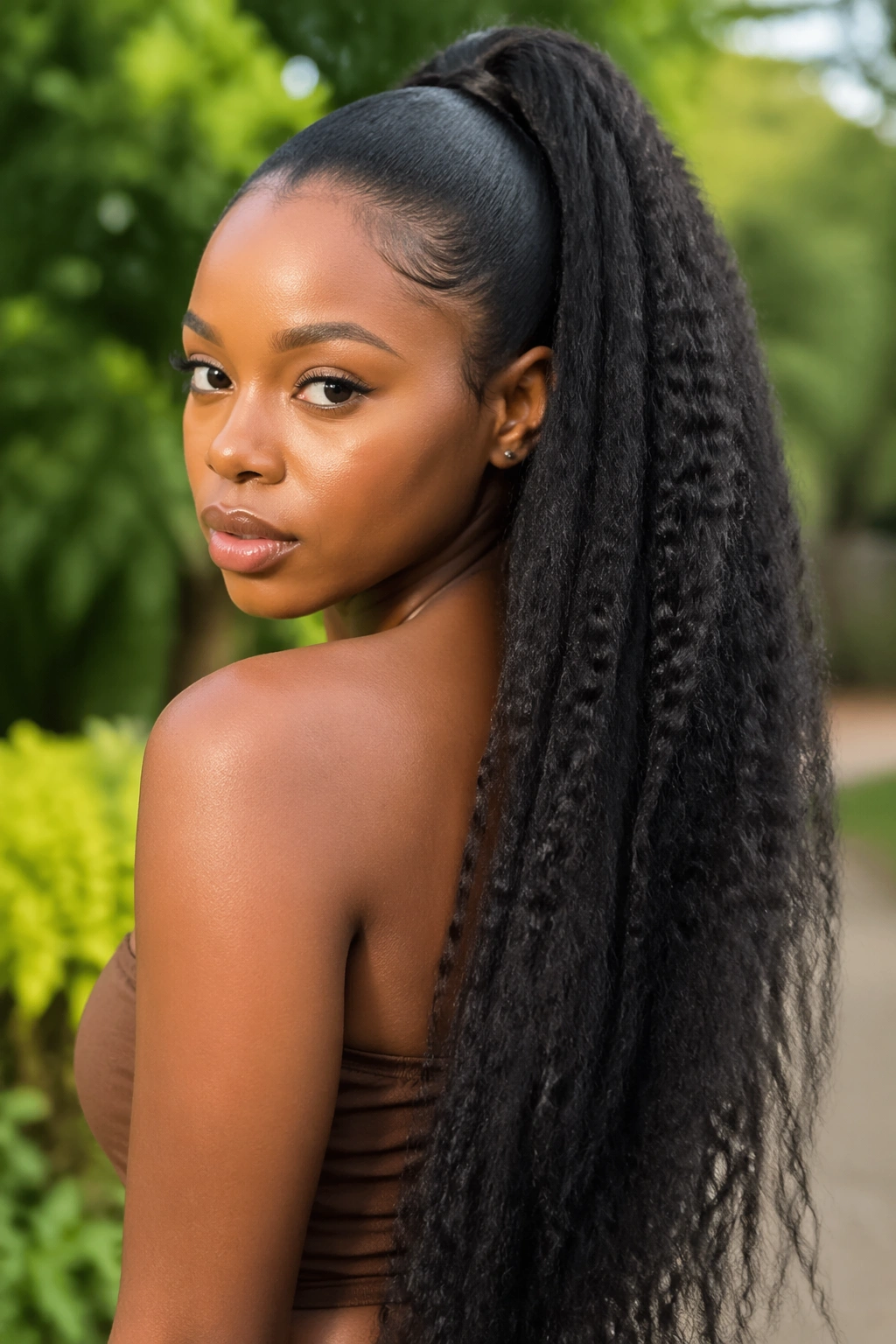
Crimped hair has a texture that feels a little nostalgic and a little bold, which is why it keeps coming back. In a long ponytail, the crimp pattern gives the tail dense body from top to bottom. It looks fuller than straight hair, and it often holds its shape better through a long day.
This style is a smart choice if your bundles are on the thinner side and you want more visual volume. The crimp texture fills space. It also catches movement in a different way, so the ponytail looks lively even when you’re standing still. That part matters more than people think.
A light mist of shine spray can help, but don’t drown it. Crimped hair can lose its crisp shape if you overload it with product. Let the texture stay textured. That’s the point.
18. Middle-Part Ponytail with Face-Framing Pieces
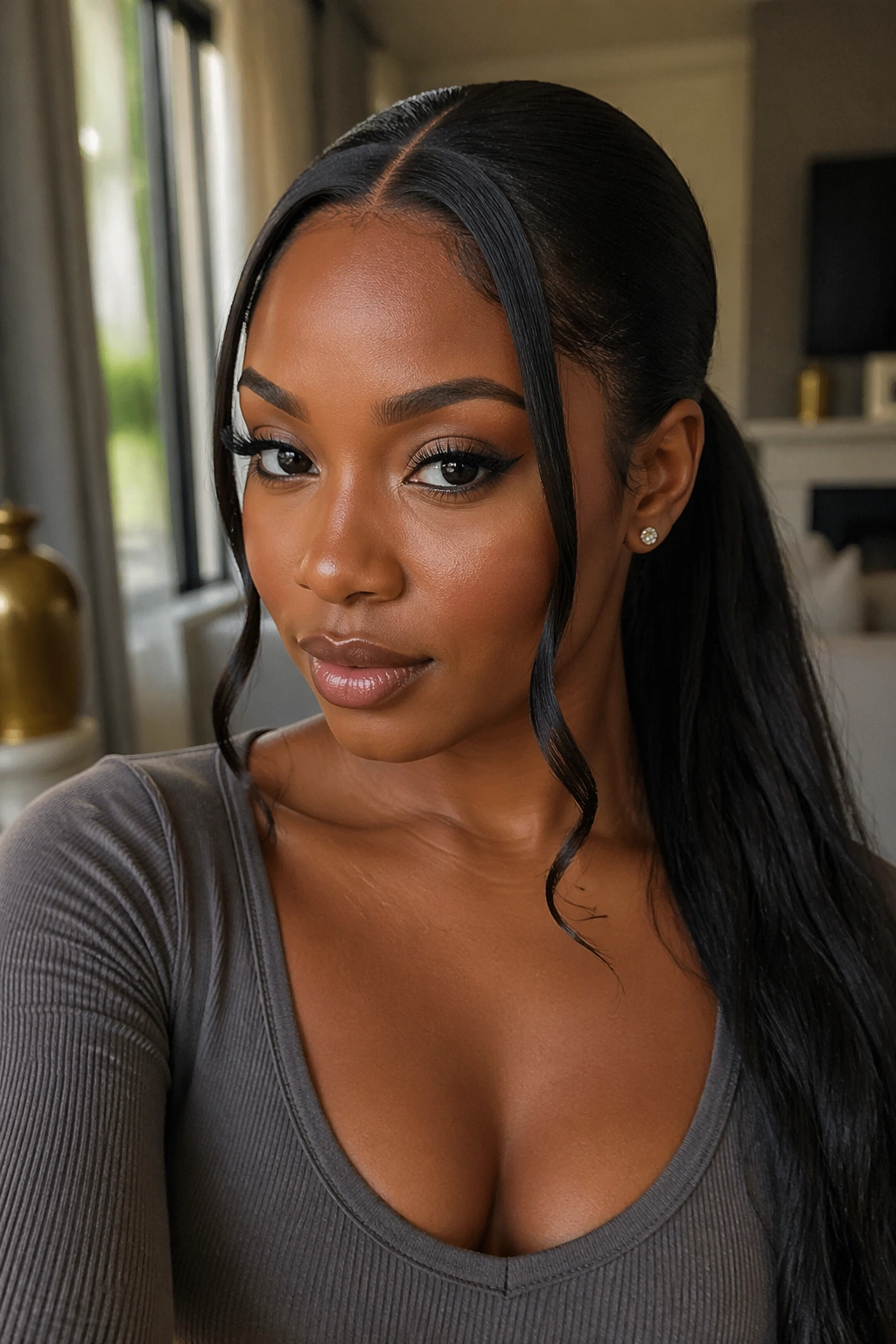
A middle part brings balance. It gives the face a straight line to anchor on, and when you pair it with a long weave ponytail, the effect is calm and clean instead of fussy. Add a couple of face-framing pieces, and the style picks up softness without losing the center-line structure.
This is a strong option if you like symmetry. It also suits people who want the ponytail to sit in the background while the face stays front and center. The little front pieces can be curled under, curled out, or left with a gentle bend so they don’t feel like they were chopped in as an afterthought.
The main thing to avoid is making the front pieces too thick. Two narrow sections are usually enough. Any more and the face starts disappearing under the hair, which defeats the point.
19. Kinky Curly Ponytail for a Natural Blend
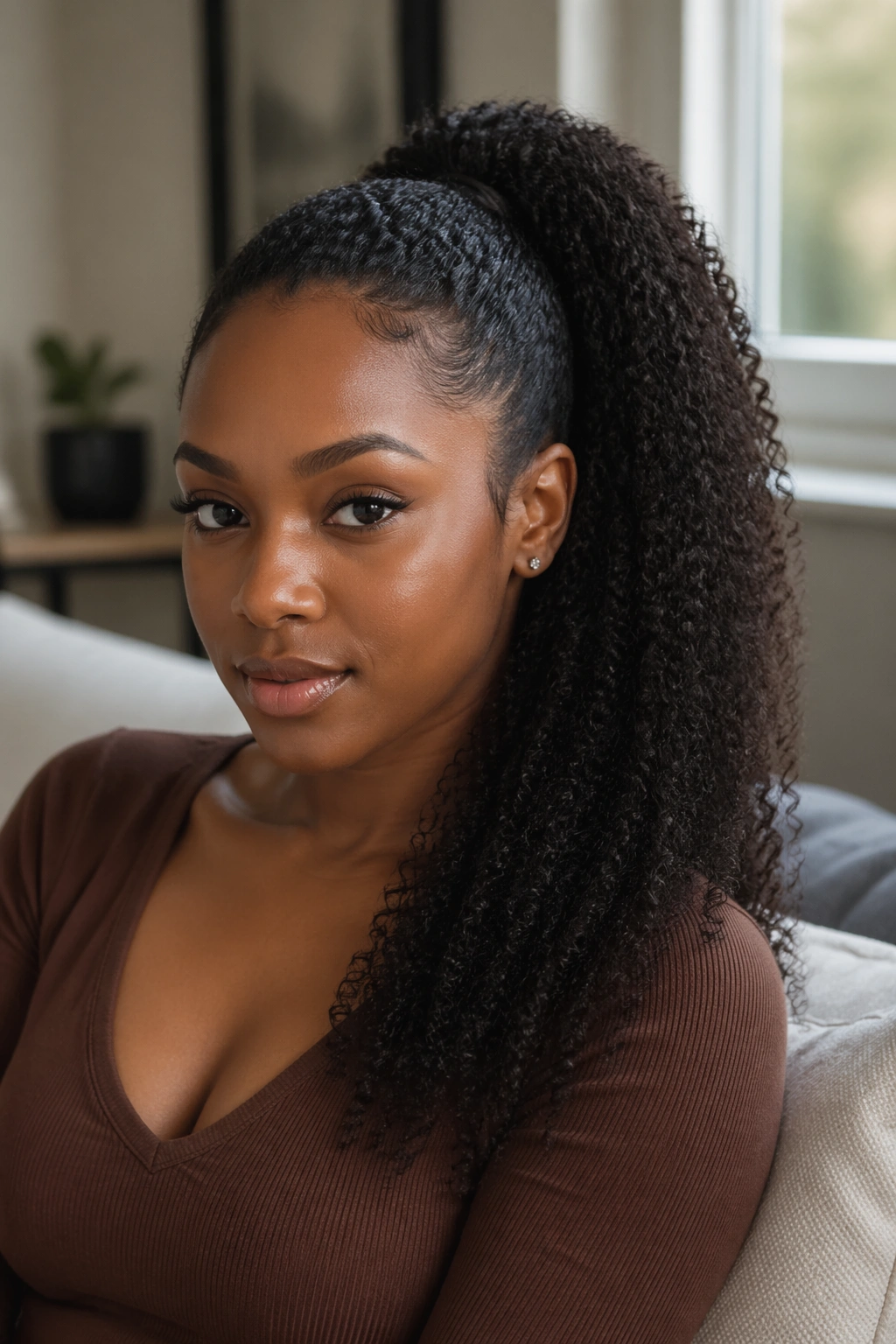
This is the easiest route when you want the ponytail to look like it grew there. Kinky curly texture blends beautifully with stretched or blown-out natural hair, and the density feels familiar instead of overly silky. It is one of the best choices for a soft, natural-looking long weave ponytail.
The curl pattern does a lot of the camouflage work. That means the base does not have to be perfect to the millimeter, which is a relief if you are styling at home. A little edge control, a neat wrap, and the right curl density go a long way here.
What to ask for
- kinky curly or coily bundles
- a tail with enough length to keep the curl pattern visible
- a base that stays flat but not stiff
If your own hair is dense, this style blends like a dream. If it is finer, you can still wear it, but you may want a little extra fullness at the base.
20. Wrapped Ponytail with Gold Cuffs
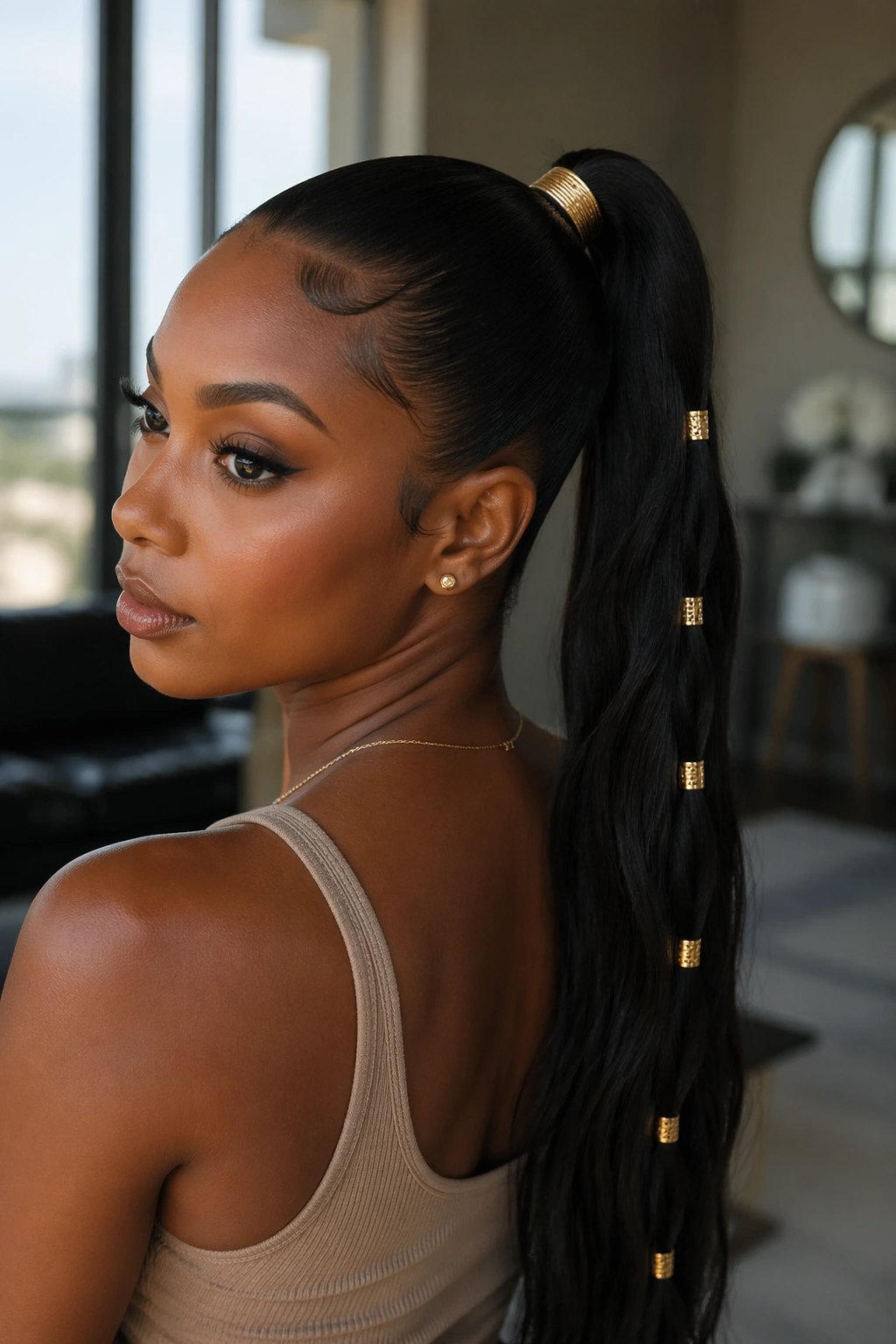
Accessories can go wrong fast, but when they’re used well, they make the style look intentional. Gold cuffs around a long weave ponytail catch the eye in small flashes, and a wrapped base keeps the look tidy so the jewelry does not feel random. The result is clean with a little edge.
I like to keep the number of cuffs low. Three or four spaced down the tail is usually enough. Too many and the whole thing starts jangling visually. One larger cuff near the base and a second one farther down the length can be enough if the rest of the style is already sleek.
This works with straight, wavy, or crimped tails. It just needs the base to be clean. If the ponytail foundation is messy, the accessories only point to the mess.
21. Low Ponytail with Flip-Over Ends
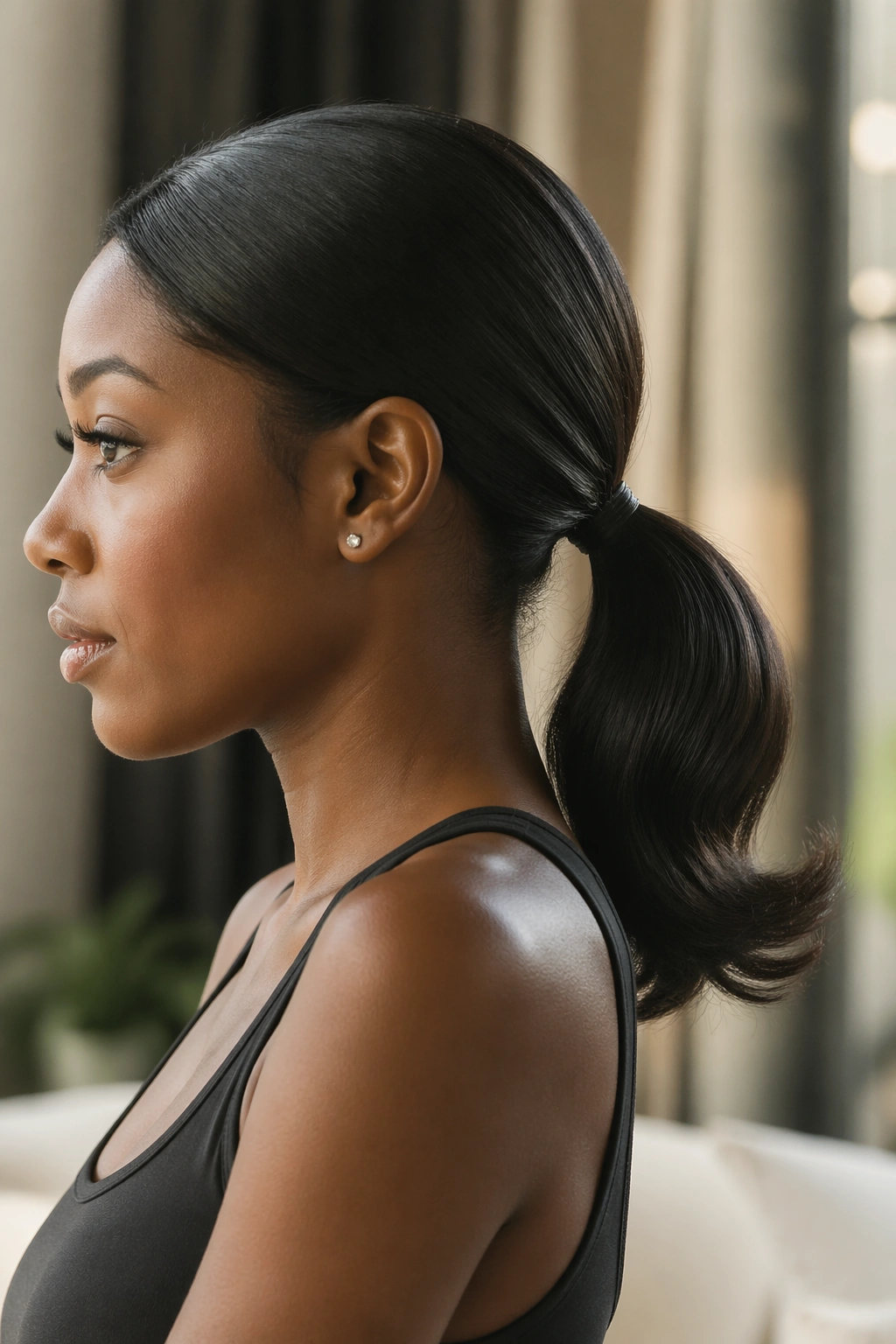
The flip-over finish gives a low ponytail a little retro flair. Instead of letting the tail hang dead straight, the ends bend outward or upward just enough to create movement. It is subtle. That’s why it works.
A low placement keeps the style grounded, while the flip at the ends stops it from feeling too plain. You can get the effect with a round brush, a flexi rod set on the last few inches, or a gentle bend from a flat iron if the hair is heat-safe. The rest of the tail should stay smooth so the flip reads as a feature, not a mistake.
This is the kind of style that looks especially good with turtlenecks, collars, and structured jackets. It frames the neck in a nice way. Small detail, big payoff.
22. Super-High Snatched Ponytail with Extended Tail
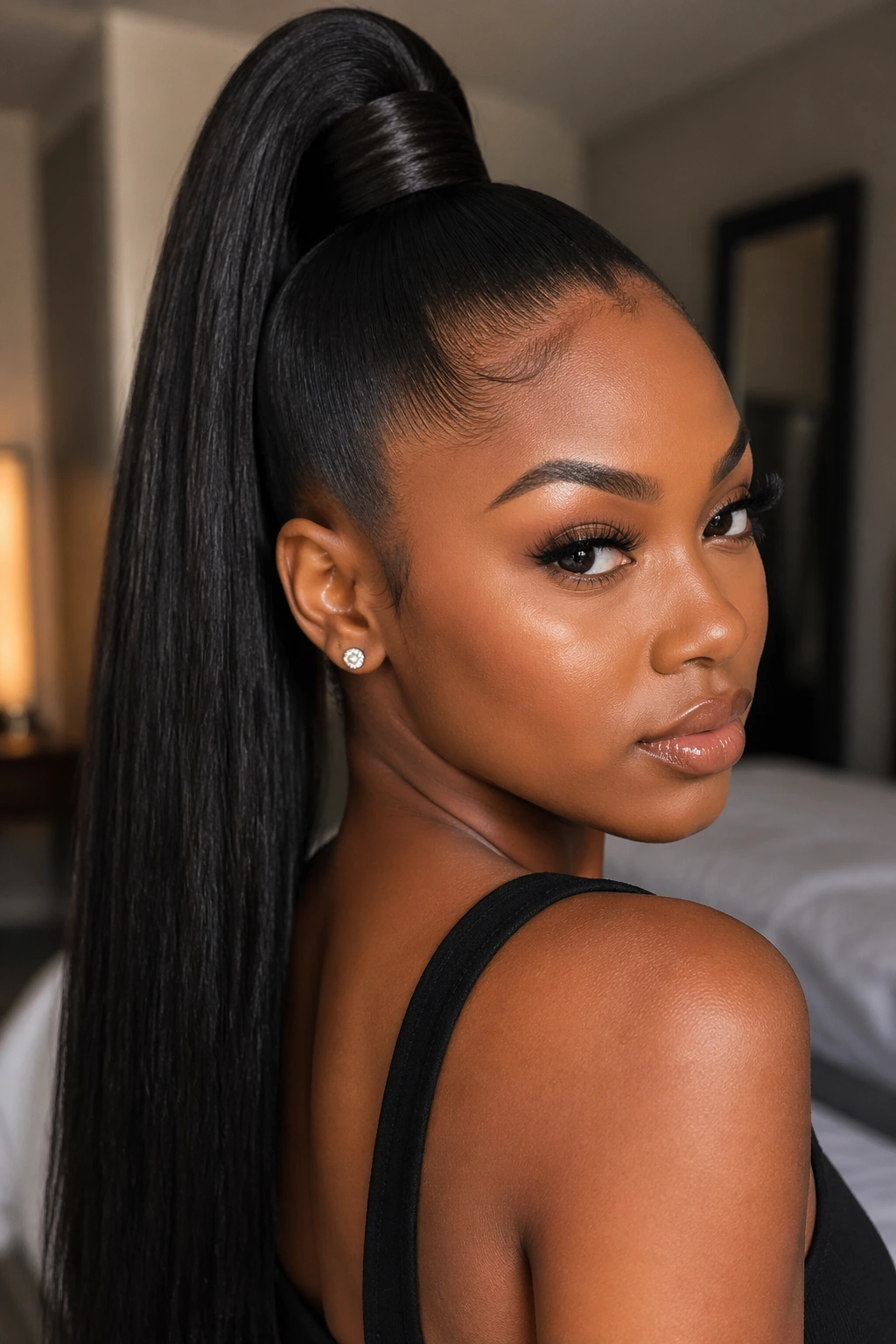
There’s no pretending this one is subtle. A super-high ponytail lifts the face, lengthens the neck, and gives the whole head a sharper outline. Add an extended tail, and the style becomes the loudest thing in the room, even when the rest of the outfit is simple.
The trick is balance. The base has to be firm enough to keep the ponytail upright, but not so tight that your scalp feels sore halfway through the day. A lightweight tail helps here. If the bundles are too dense, the ponytail can drag backward and lose that lifted shape.
Keep it wearable
- use strong hair ties or a secure base wrap
- avoid overloading the crown with gel
- choose lighter bundles if you want more height
I wouldn’t call this an everyday style for everyone. It asks for commitment. But when it works, it really works.
23. Drawstring Ponytail for Easy Wear and Easy Removal
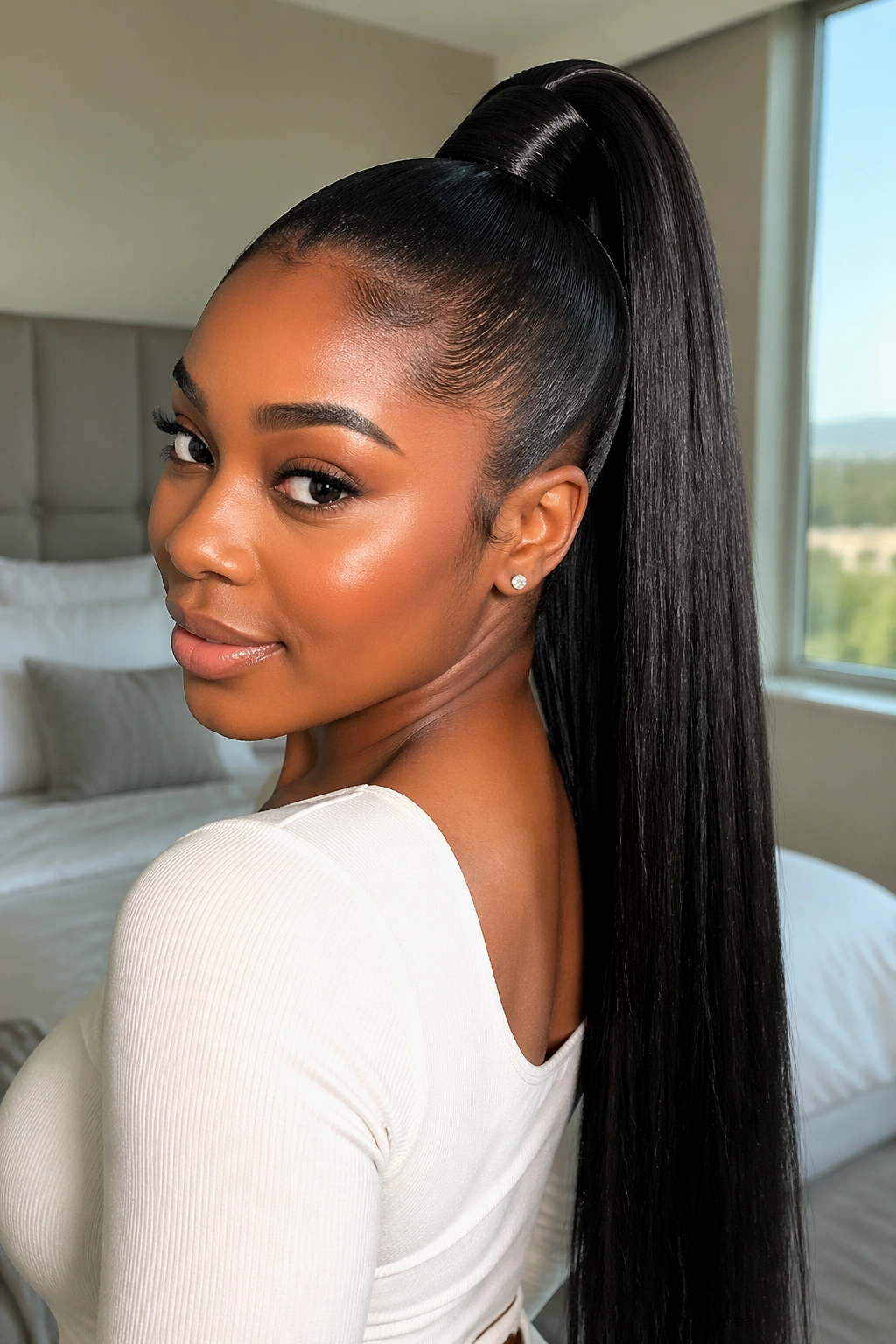
Not every long weave ponytail needs a full install. A drawstring ponytail gives you the length, the swing, and the polished finish without making the whole process a production. That makes it a strong choice for busy weeks, last-minute plans, or any day when you want the style on and off without a long commitment.
This one is especially nice if you like switching between looks. You can wear it high, low, or slightly off-center depending on the vibe you want. The base still matters, though. Smooth your own hair first, flatten the ponytail area as much as you can, and keep the drawstring snug but not punishing. If it hurts, it’s too tight.
A good drawstring ponytail is also a smart way to experiment with texture. One week you can wear body wave. Another week, kinky straight or curly. That flexibility is half the appeal, and honestly, it’s the reason a lot of people keep one in the drawer all the time.
Some styles are about drama. Some are about ease. The best long weave ponytail for you is the one that fits how you actually live, not how the picture looks on a mood board.
