



The best sleek ponytails for bridesmaids solve a problem that sounds simple until you sit down with a comb, a mirror, and three different hair textures in the same bridal party. They need to look polished from the front, clean from the back, and calm enough to sit beside a wedding dress without stealing the whole scene.
That sounds easy. It isn’t.
A ponytail that sits 1 inch too high can fight a high neckline. One that sits too low can disappear into a dress back or look flat in photos. The real work is in the part line, crown tension, and where the wrap hides the elastic. Get those three things right and the style looks deliberate, not rushed.
Bridesmaid hair also has to survive a long day of hugging, moving, dancing, and being photographed from angles nobody checks in the salon mirror. So the smartest versions lean on shine, control, and shape — not curls that fall apart after the first toast. And yes, the back matters. A lot. People turn around, lean in, and stand shoulder to shoulder all day.
1. Center-Part Low Ponytail
A center part makes a low ponytail look crisp in a way that never feels fussy. It’s the quiet workhorse of bridesmaid hair, especially when the dress has a clean neckline or the bridal party wants everyone to look coordinated without looking identical.
I like this one for its restraint. The hair sits close to the nape, the part stays straight, and the silhouette reads neat from every angle. Ask for the crown to be brushed smooth with just enough tension to flatten flyaways, not so tight that the style pulls at the temples.
Why it works
The symmetry does a lot of the heavy lifting here. A center part draws the eye down the face, which helps if the dress has an open front or delicate straps. It also gives the bouquet, earrings, and makeup room to stand out without competing with a big hairstyle.
If you’re styling this at home, start with a blowout or a flat-ironed base and use a light serum on the mid-lengths only. Keep the crown matte enough to hold shape, but glossy enough to look finished.
2. Deep Side-Part Low Ponytail
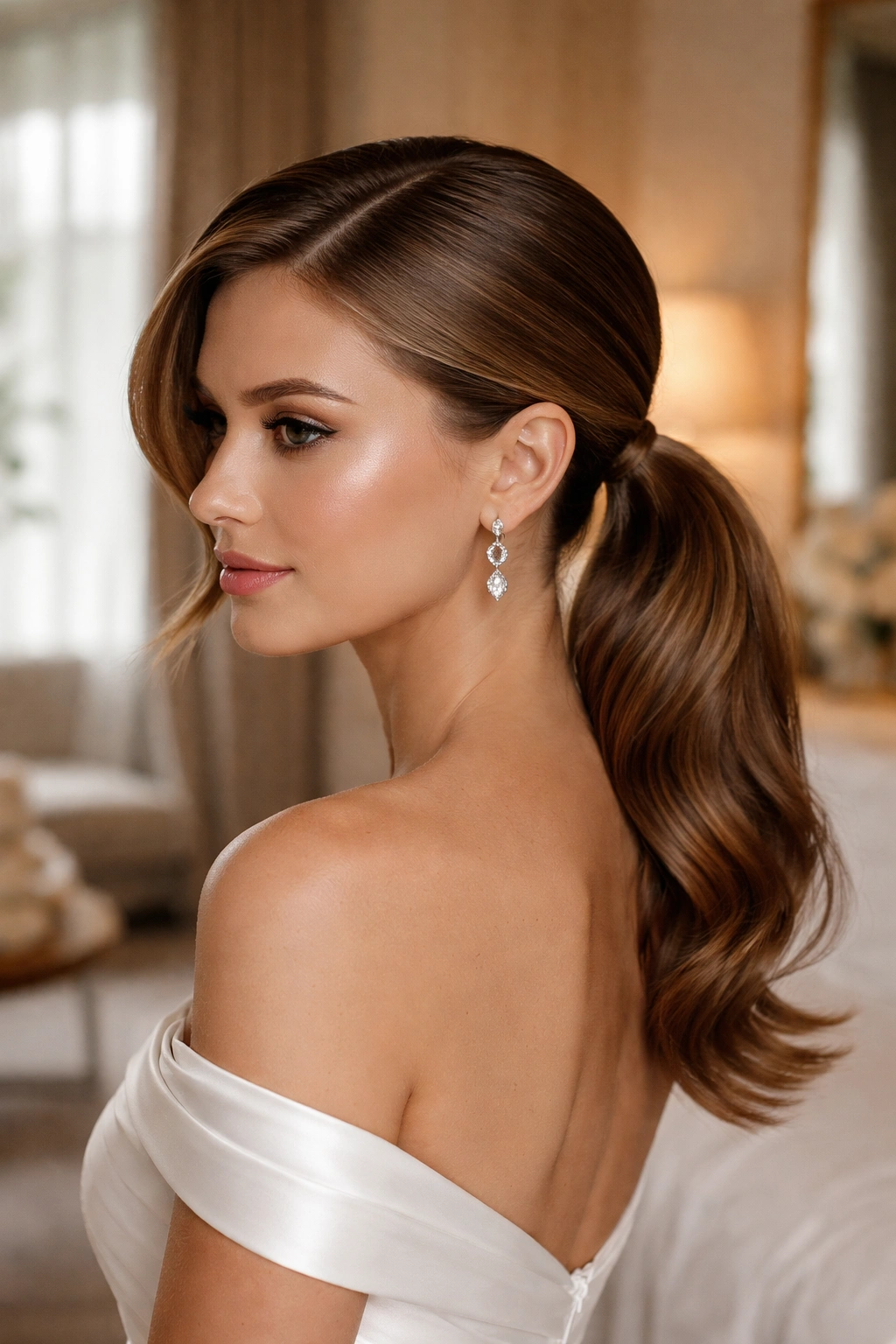
A deep side part gives the same polished finish, but with a little more softness around the face. It’s a nice choice when bridesmaids have different face shapes and the bride wants a look that flatters everyone without turning the lineup into a clone parade.
This version feels especially good with one-shoulder dresses or neckline details that need a bit of balance. The ponytail sits low, often just below the occipital bone, and the side part creates a sweep that makes the whole style feel tailored.
Best way to wear it
The side part should be clean and intentional, not vaguely off-center. Brush one side back with a flat brush and keep the front sleek before gathering the ponytail. A fine-tooth comb and a pea-sized amount of smoothing cream usually do the job.
One small warning: if the part is too shallow, it just looks accidental. Go deep enough that the eye reads the shape right away.
3. Wrapped-Base Low Ponytail
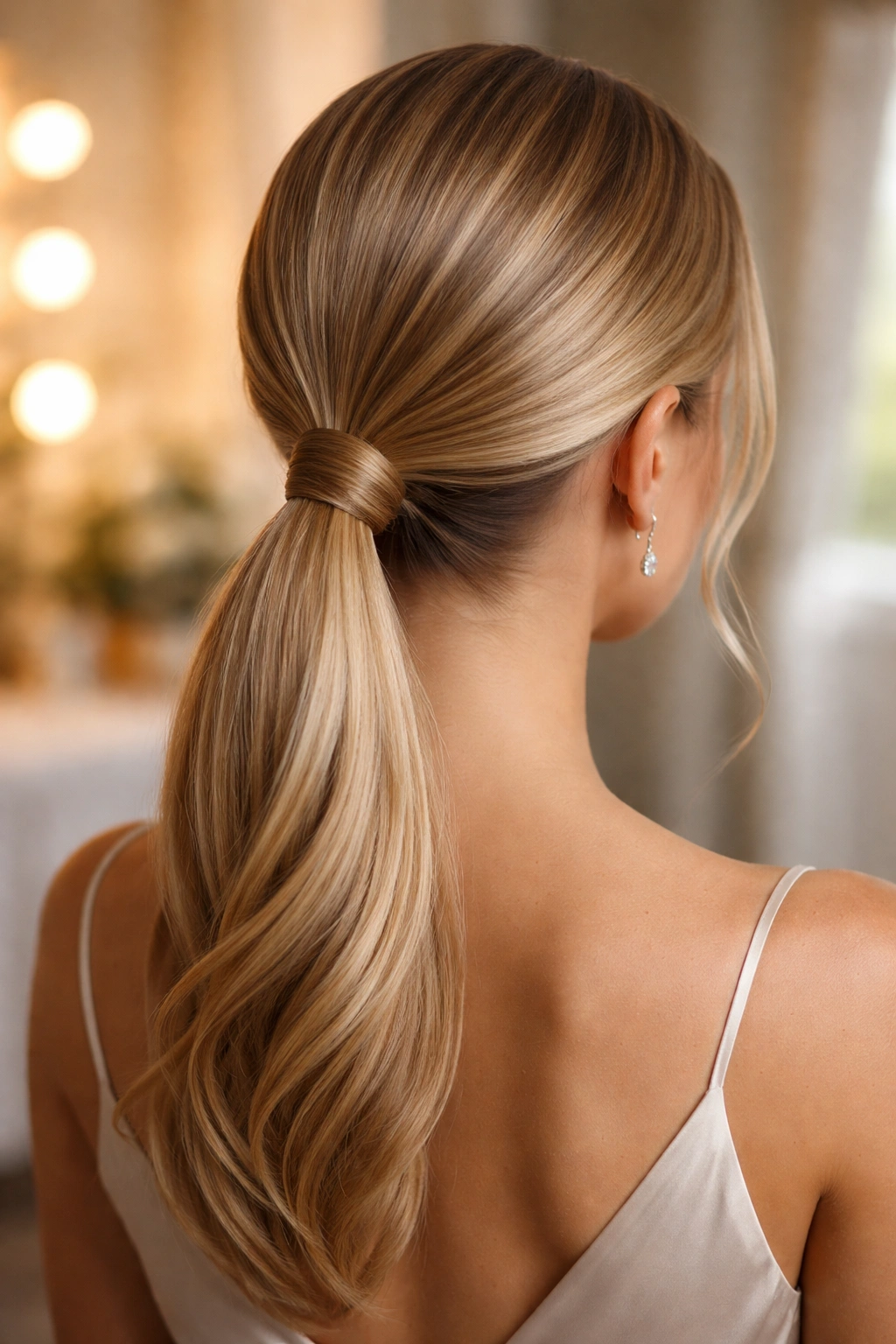
The wrapped-base ponytail is probably the easiest way to make a bridesmaid ponytail look expensive without adding anything complicated. You hide the elastic with a thin section of hair, and that tiny detail changes everything.
It works because the eye lands on a clean band instead of a rubber band. The style reads finished, not improvised. Use a 1-inch section from underneath the ponytail, wrap it snugly around the base, and pin the end underneath with a bobby pin that matches the hair color.
What to watch for
Don’t wrap too loosely. Loose wrapping puffs out after an hour and ruins the clean line. Keep the tail itself smooth, then mist the base with flexible hairspray so the wrap stays put.
This is one of those styles that looks simple from far away and more polished up close. That’s the sweet spot for wedding hair.
4. High Glass-Hair Ponytail
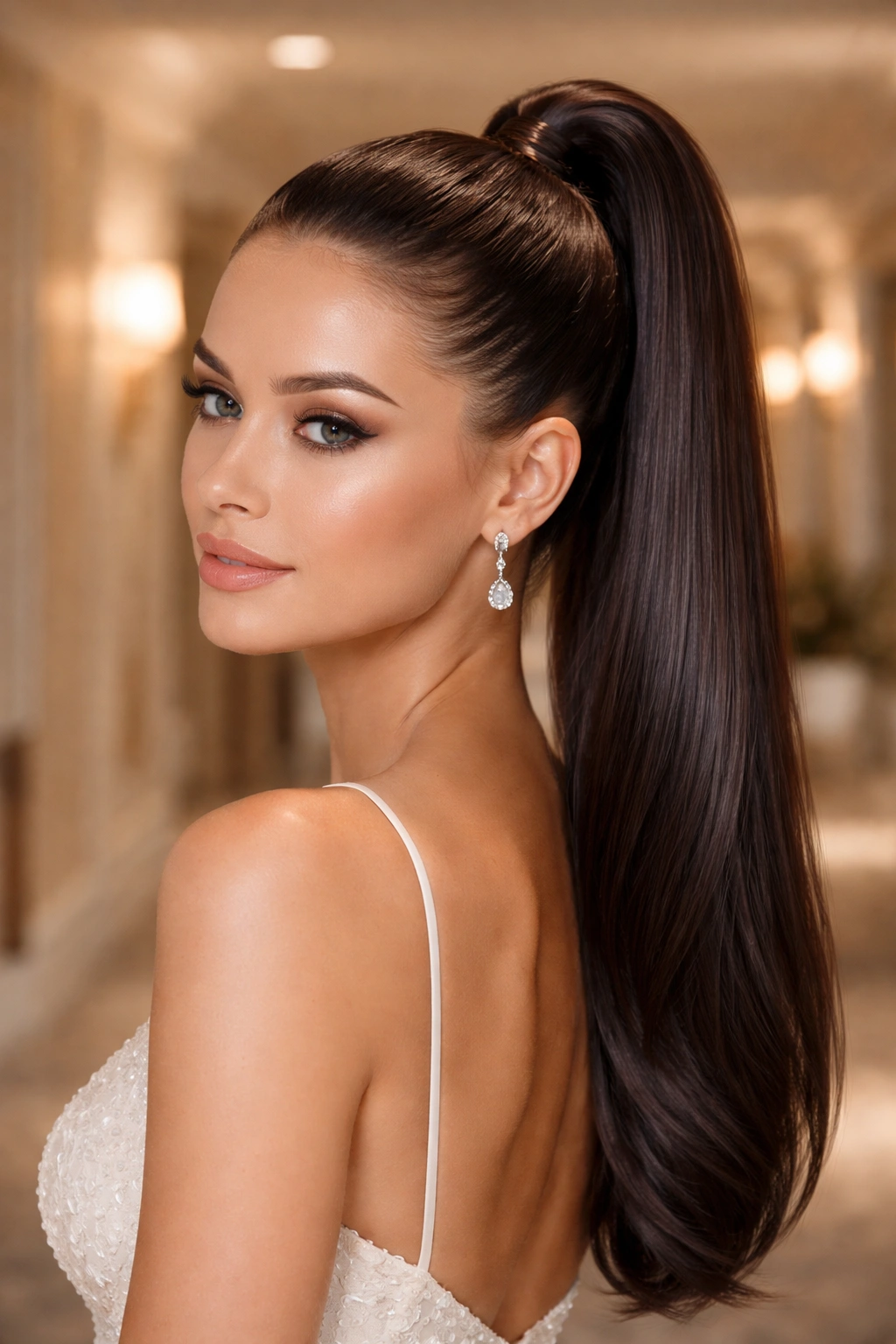
A high glass-hair ponytail feels sharper and more fashion-forward than a classic low style. It’s the one I reach for when bridesmaid dresses are sleek, the ceremony is formal, and the party wants a little lift at the crown.
The “glass” part isn’t about grease. It’s about controlled shine and a surface that looks almost lacquered. You want the hair brushed upward from the temples and sides, then secured high enough to give the face a little lift without drifting into cheerleader territory. This is elegant when the edges are smooth and the tail itself hangs straight.
How to keep it wedding-appropriate
Use gel or cream sparingly at the hairline, then finish with a light mist of strong-hold spray. Too much product makes the hair look stiff in person, and nobody wants that.
This style is best for bridesmaids with medium to long hair, because the ponytail needs length to look balanced. If the tail is short, it can feel abrupt.
5. Bubble Ponytail
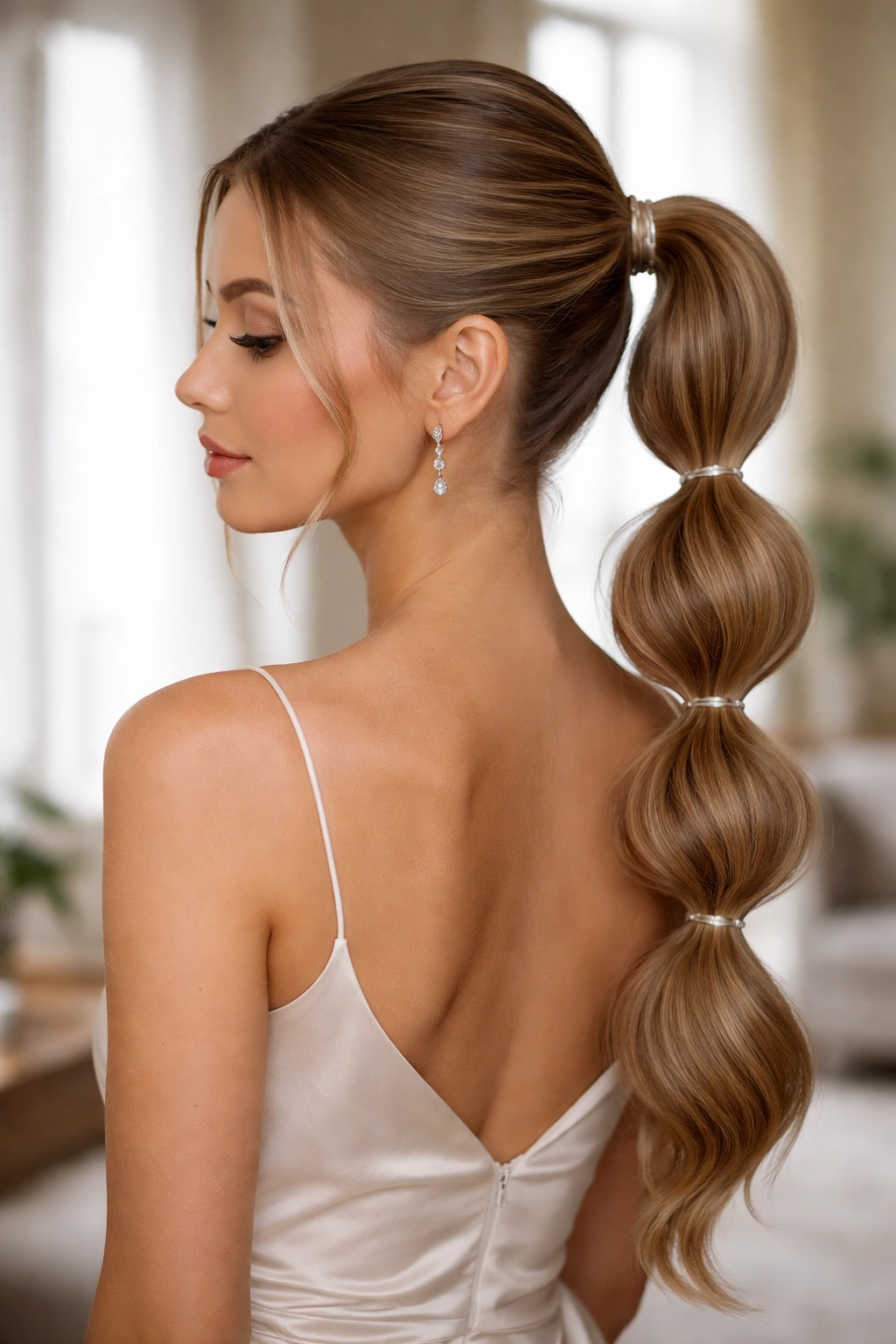
A bubble ponytail brings a modern edge to bridesmaid styling without losing the sleek base that keeps it polished. It’s one of the few playful styles that still looks neat enough for a formal group photo.
The trick is spacing. Secure the ponytail with clear elastics every 2 to 3 inches, then gently puff each section just enough to create a rounded “bubble.” Keep the top smooth. That’s the part that keeps this from wandering into casual-party territory.
Quick styling notes
- Start with straightened or blown-out hair.
- Use clear elastics or thin bands that match the hair color.
- Pinch each bubble gently from the sides, not the center.
- Finish with a shine spray, but keep it off the roots.
This style works especially well if the dress has clean lines or the bridal party wants a little texture without loose curls. It’s not the safest option for very humid settings, though. Bubbles can sag if the hair is heavy or the elastics are too far apart.
6. Braided-Base Ponytail
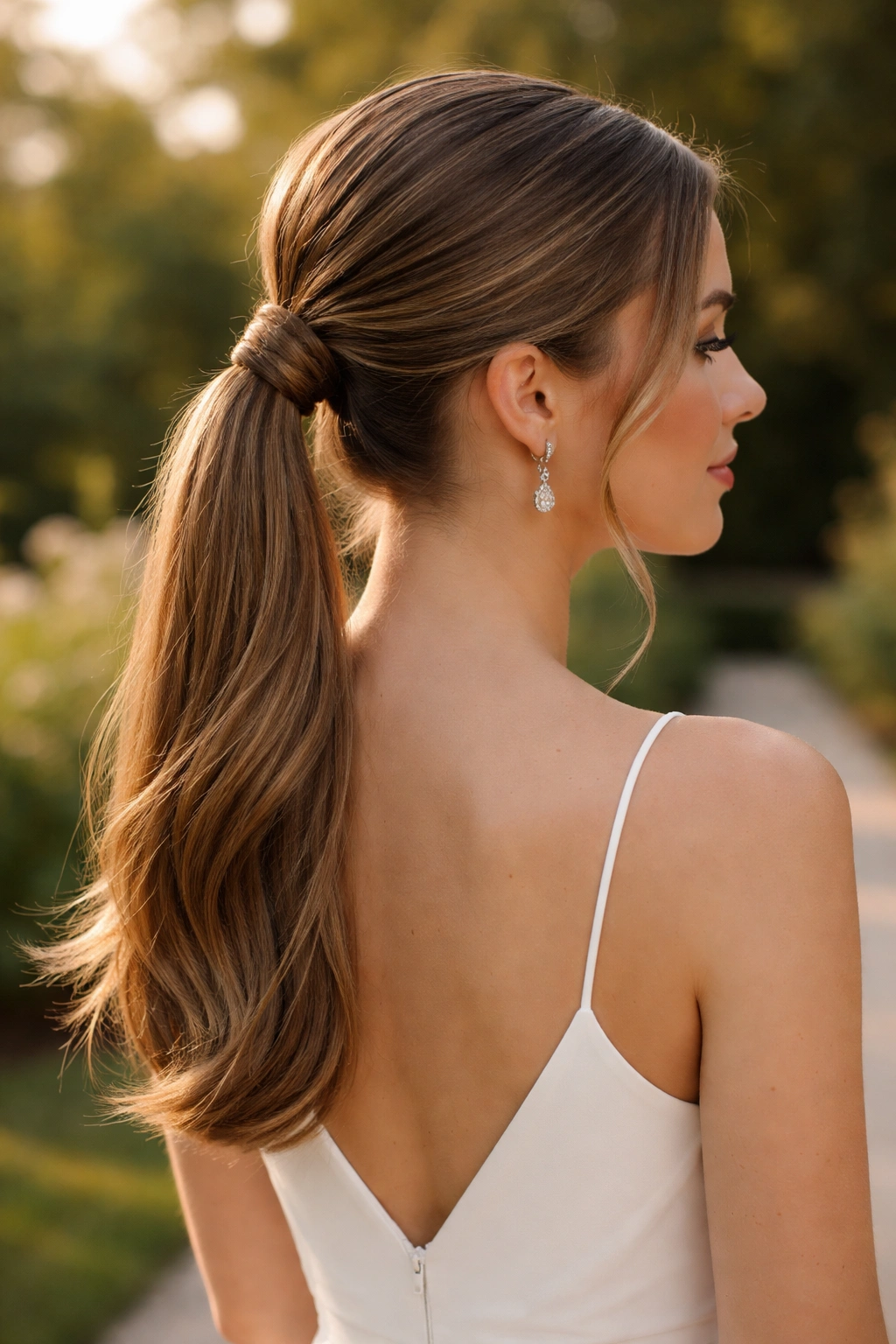
A braided base gives the ponytail a little grip and a lot of visual structure. It’s a smart move for bridesmaids with fine hair, because the braid adds body right where the style usually needs help — at the base.
You can keep the braid tiny and hidden, or make it a visible detail. Either way, it helps the ponytail feel anchored. I like this one for outdoor ceremonies where hair tends to shift. A braid at the base is practical, and there’s nothing wrong with that.
How to style it
Slick the crown back first, then take a small section near the ponytail holder and braid it before wrapping it around the elastic. If you want more detail, braid one or two thin strands from the sides and feed them into the tail.
A very clean braid looks better than a chunky one here. The goal is polish, not boho texture. Bridesmaid hair can handle a little structure.
7. Twisted Crown Low Ponytail
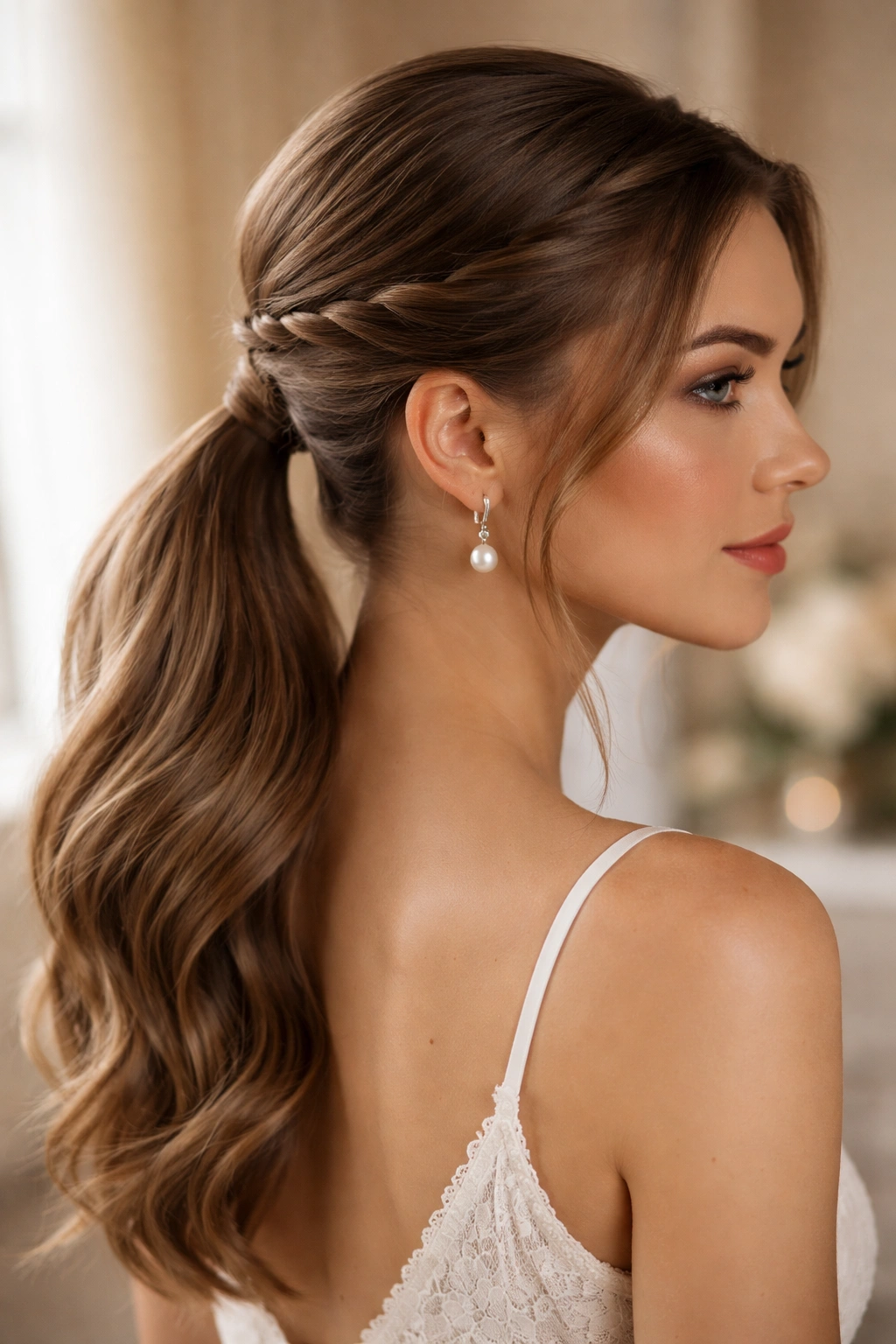
Two small twists at the temples can turn a plain low ponytail into something a little more refined. This is one of my favorite styles for mixed bridal parties because it flatters a wide range of haircuts and still keeps the overall look cohesive.
The twists pull hair away from the face without the harshness of a slicked-back style. That matters when bridesmaids have different makeup styles or if the dresses are simple and the hair needs to carry more of the visual interest.
What makes it work
Twist each side back from the temple, then pin them just behind the ears before gathering the rest into a low ponytail. Keep the twists flat and close to the head. If they puff up, the whole look loses that clean line.
A soft shine cream on the lengths keeps the ponytail from looking dry in photos. The front should feel smooth, not glued down.
8. Satin Ribbon-Tied Ponytail
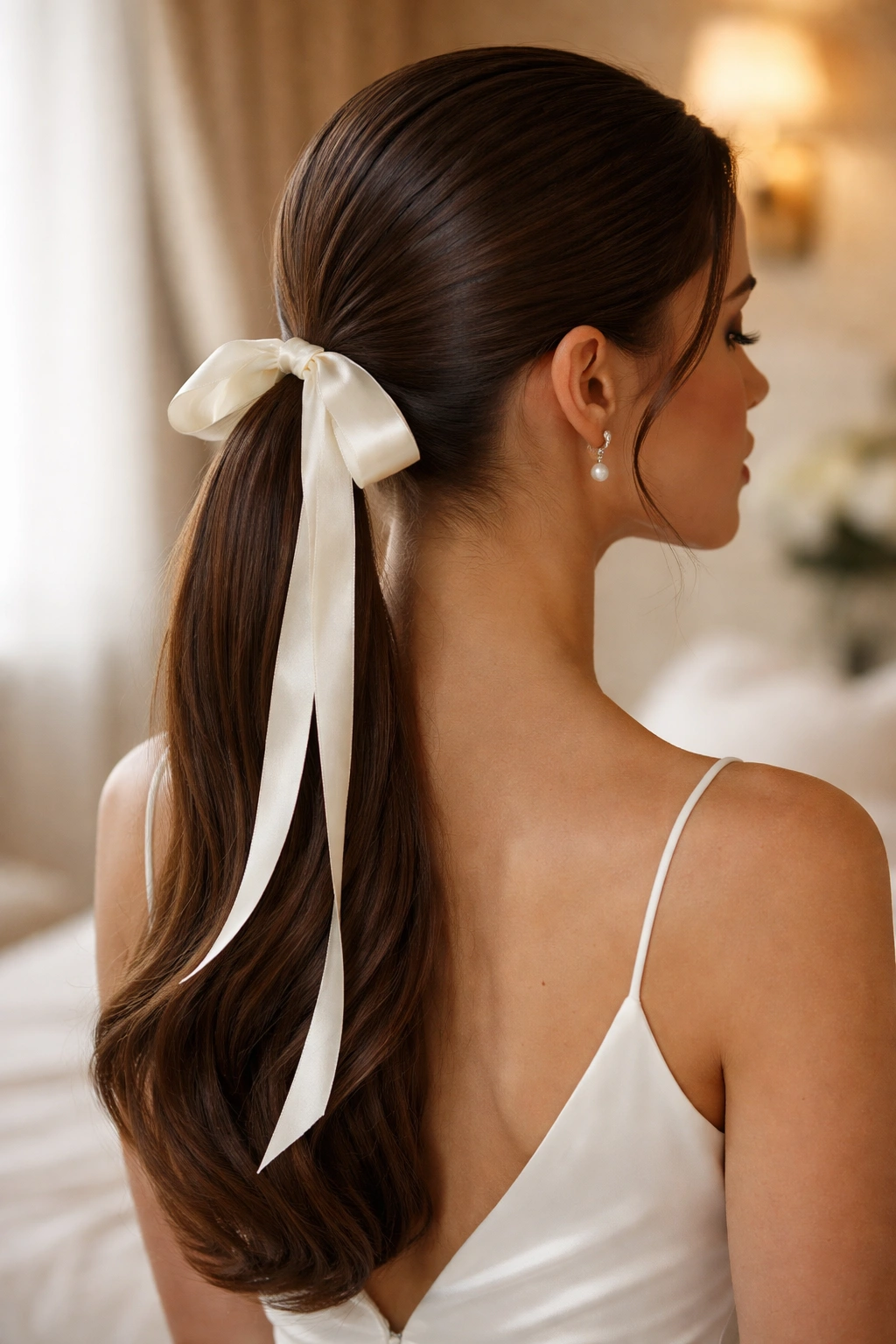
A satin ribbon gives a bridesmaid ponytail a polished finish with almost no effort. It’s one of those details that feels small until you see it against a dress back or a bouquet stem, and then it makes complete sense.
Pick a ribbon that either matches the dress tone or sits one shade deeper. Tie it around the base after the ponytail is secured and wrapped. If the ribbon is long, let the tails fall to mid-back. If the dresses are busy, keep the bow compact so it doesn’t compete with everything else.
A few good rules
- Use satin, not stiff craft ribbon.
- Keep the ponytail low and smooth so the ribbon looks intentional.
- Press the ribbon ends with a flat iron if they curl oddly.
- Secure the knot with a hidden pin if the bow slips.
This is especially nice for softer bridal palettes. It reads feminine without looking precious.
9. Pearl-Pin Ponytail
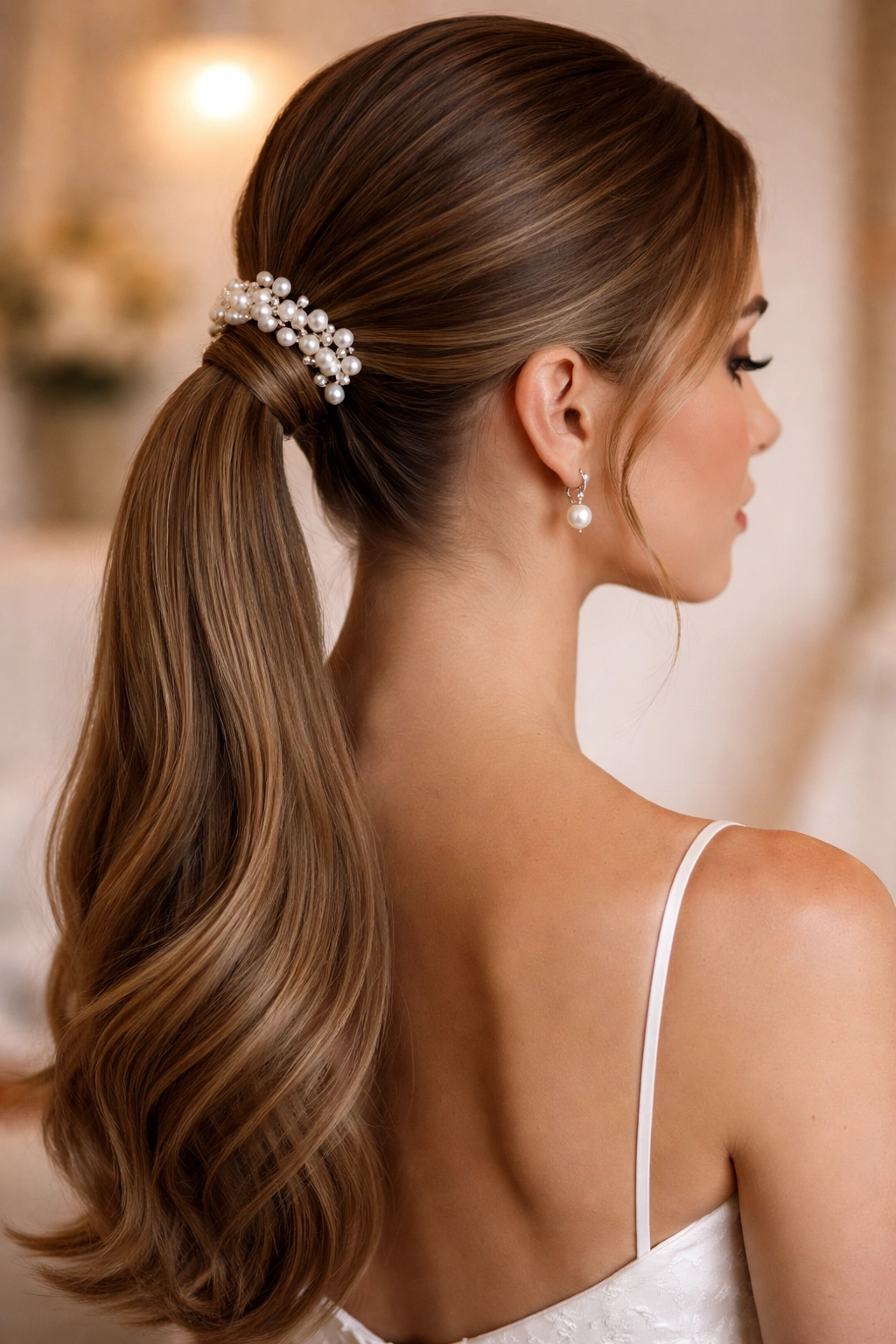
Pearl pins can make a sleek ponytail feel bridal without making it look like the bride’s hair got copied line for line. That matters. Bridesmaid hair should support the scene, not compete with it.
I like placing the pins at the base of the ponytail or along one side of the wrap. A cluster of three to five usually looks better than a scattered sprinkle. The trick is restraint. Too many pearls and the style starts to feel costume-like.
Where to place the pins
Try one cluster at the wrap, then one smaller pin slightly higher on the crown if the dress has a simple neckline. If the dress already has embellishment, keep the pins at the base only.
This style looks strongest on smooth, straight ponytails because the pearls sit against a clean surface. If the hair is too textured, the pins can disappear.
10. Wet-Look Ponytail
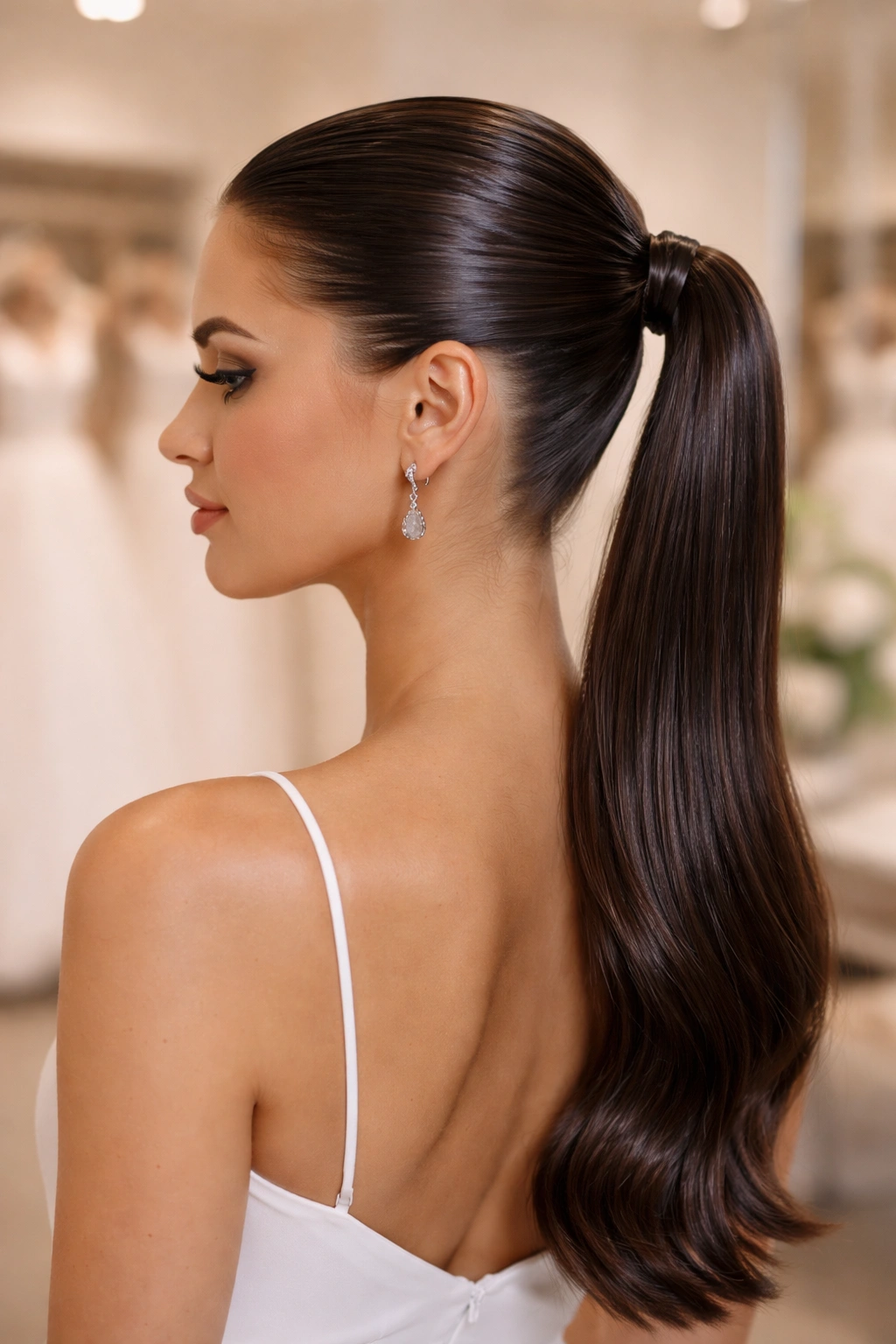
The wet-look ponytail is sharp, sculpted, and a little dramatic, which makes it a surprisingly good fit for bridesmaid hair when the dresses are modern and the makeup has some edge. It’s not for every wedding. It is perfect when the bridal party wants something sleek that feels fresh rather than traditional.
The base should look controlled and close to the head, with gel or styling cream brushed through the top section until it sits flat and reflective. The tail itself can stay smooth and straight. What you want to avoid is actual wetness. That’s a mess. A finished wet look has shine, not dampness.
The practical part
Use product in layers. Start with a little, comb it through, then add more only if the flyaways keep popping up. If you load the hair at once, it goes tacky and flakes.
This one works best with bold earrings and simple dresses.
11. Crisscross-Base Ponytail
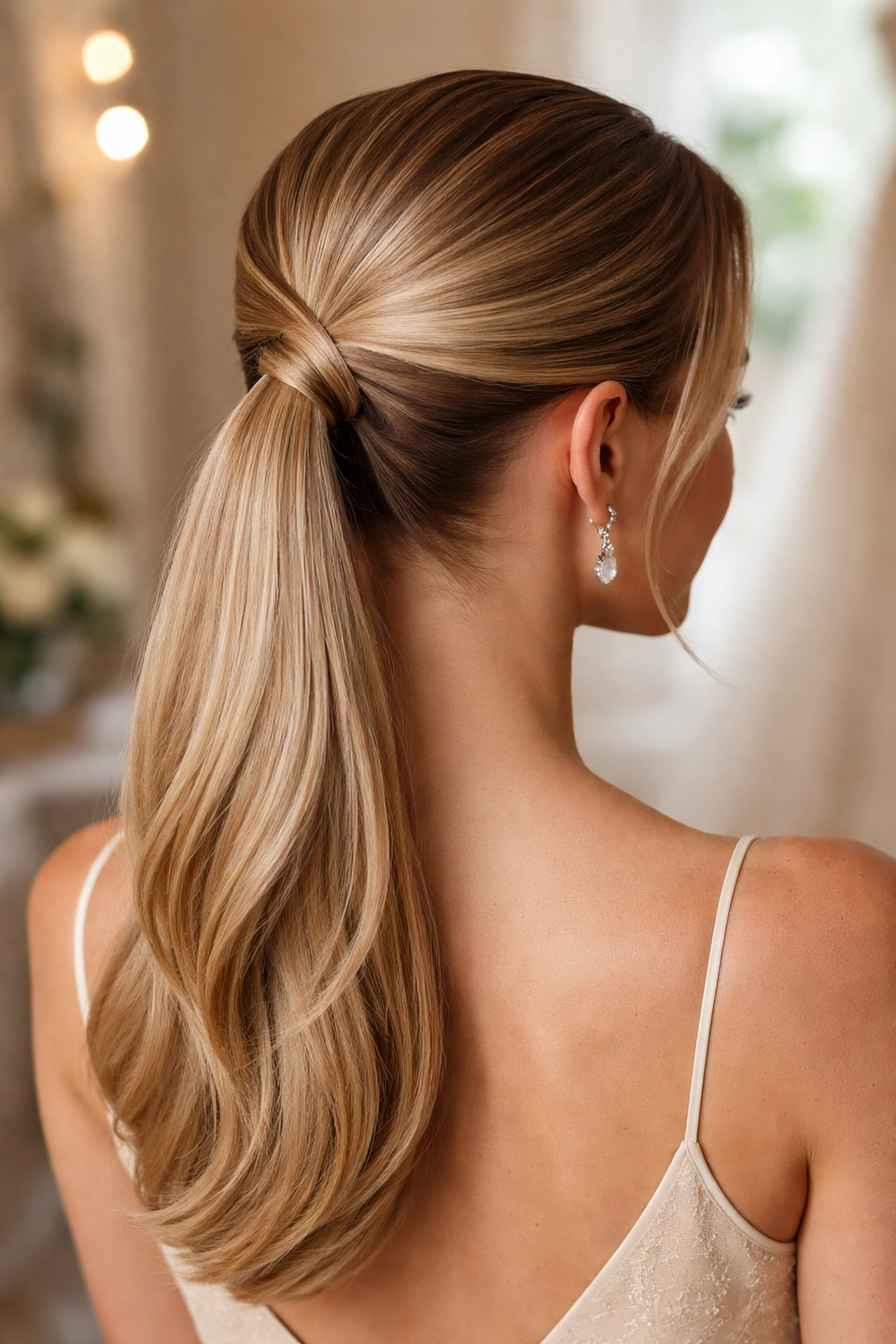
A crisscross base gives the ponytail a tailored, almost corset-like look around the crown. It’s a nice option when the wedding styling leans architectural and the bridesmaids need hair that feels detailed but not fussy.
You create the effect by crossing two thin sections over the secured ponytail, pinning each one flat so they form an X or woven pattern near the base. The result is tidy and a little unexpected. It’s one of those styles guests notice up close.
How to keep it neat
The sections have to be narrow. Thick pieces make the crisscross bulky, and the clean shape gets lost. Use a fine comb to separate the strands, then smooth each one with a tiny bit of cream before pinning.
This is better on medium to thick hair, since the style needs enough body to hold the shape. Fine hair can work too, but the pins need to be placed carefully so the pattern doesn’t collapse.
12. Side-Swept Ponytail
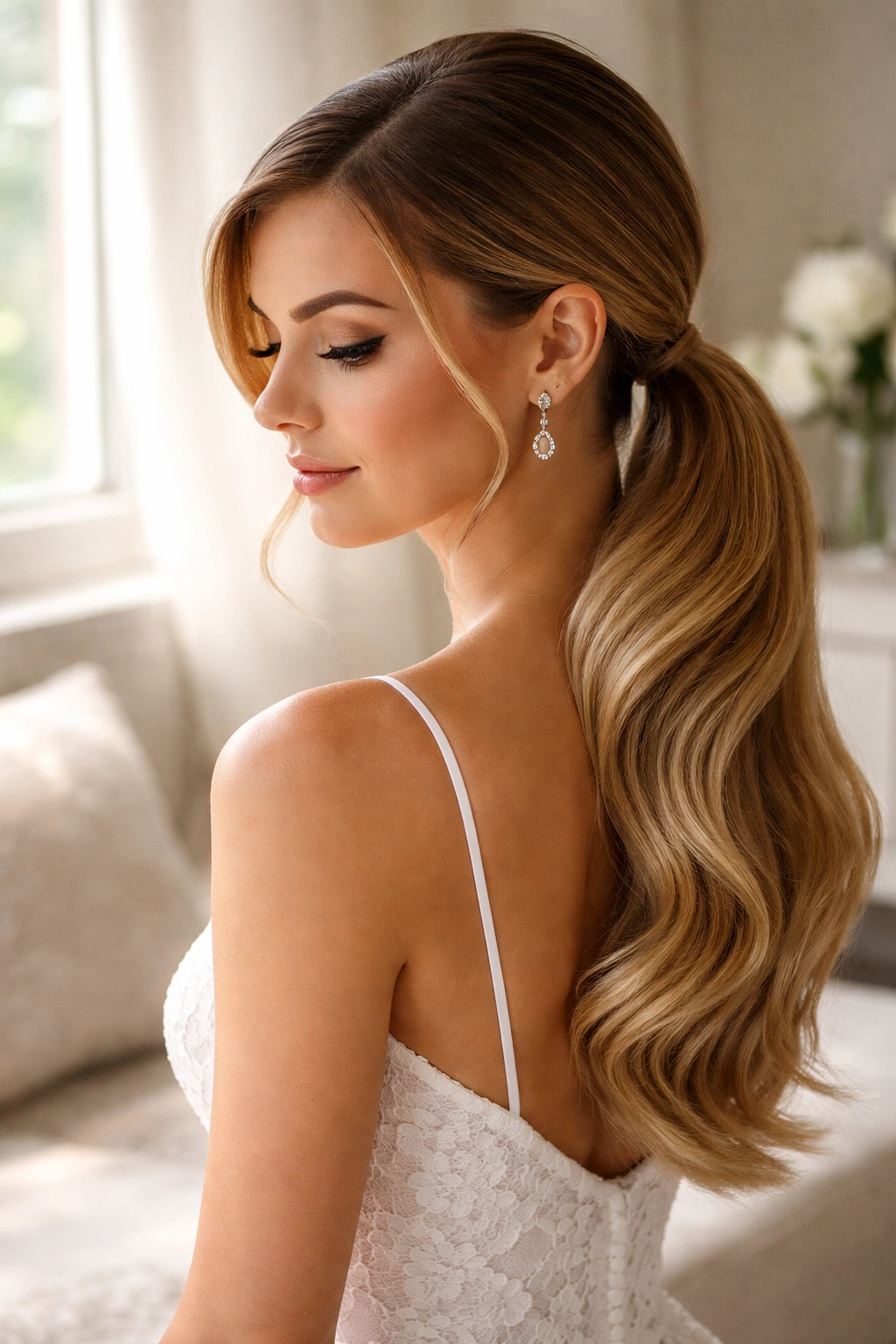
A side-swept ponytail softens the whole bridesmaid lineup without giving up the sleek finish. The hair is drawn low and over one shoulder, which makes it a smart partner for off-the-shoulder dresses, asymmetric necklines, or gowns with strong back details.
It has movement, but it’s controlled. That’s the balance. The base should stay smooth and tucked close to the nape, then the tail falls over one shoulder in a single direction. If the lengths are long enough, this style can look especially elegant in profile.
Best use case
This one shines when the bridal party needs something flattering for different hair lengths. A shorter tail still looks good here because the shoulder placement gives it shape.
A small amount of serum on the ends helps keep the tail from frizzing against fabric. And yes, that happens faster than people expect, especially if the fabric is textured.
13. Sleek Ponytail with Soft Face-Framing Pieces
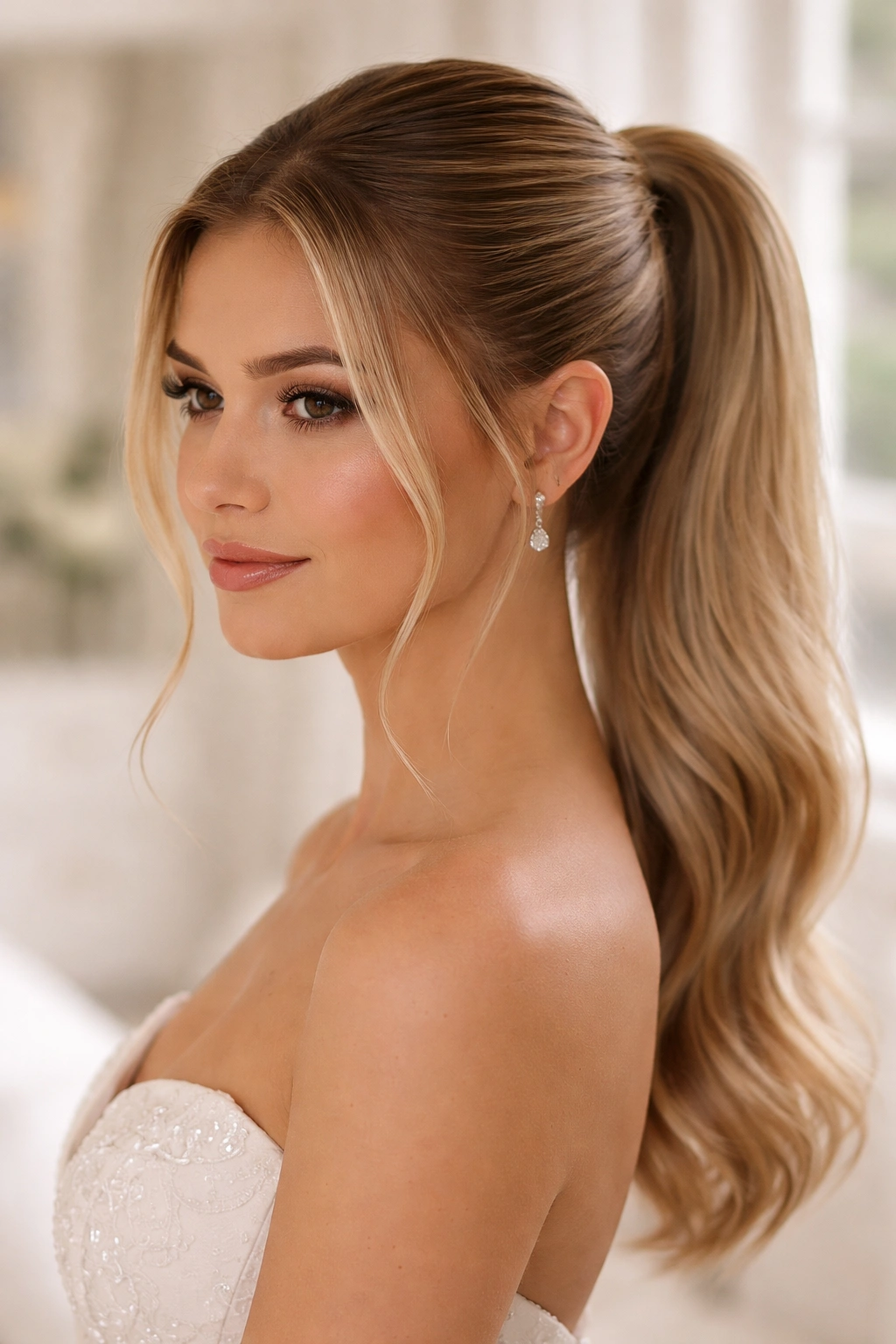
Not every bridesmaid wants every strand locked back. A sleek ponytail with a few face-framing pieces gives you the polish of a smooth ponytail and just enough softness to keep the style from feeling severe.
The pieces should be thin and intentional, not accidental leftovers. Think two wisps near the cheekbones, not a whole layer of hair hanging loose. That detail is useful for bridesmaids with longer faces or strong jawlines, because it softens the profile without undoing the structure.
How to style the front
Leave the pieces out first, then smooth the rest back. Straighten or lightly bend the face-framing sections so they fall cleanly, not fuzzy. If the hair tends to expand around the face, a tiny bit of cream on a fingertip usually controls it better than spraying the whole head.
This style is a good compromise when the bridal party wants cohesion but not rigidity.
14. Knotted Low Ponytail
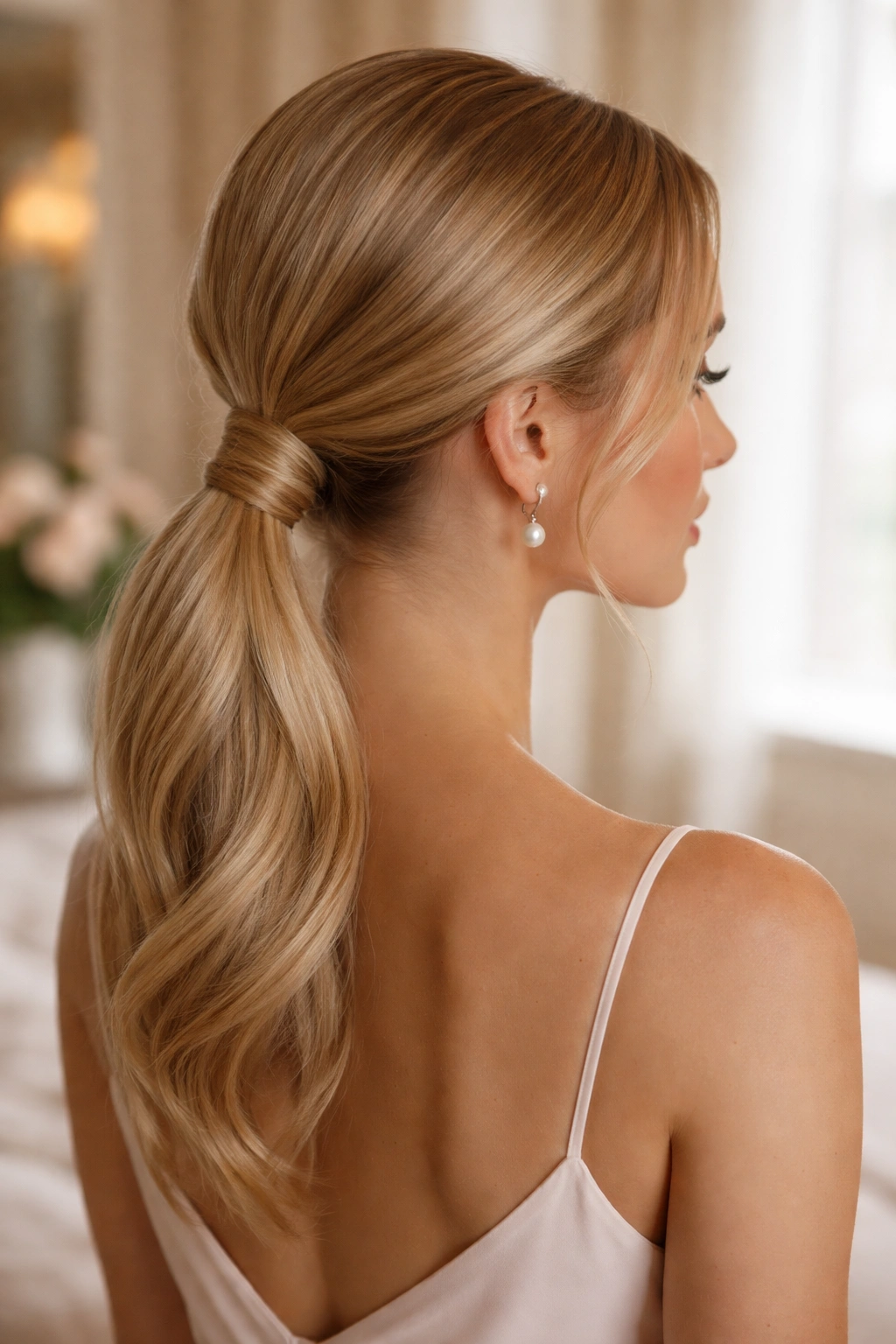
A knotted low ponytail has a little more visual interest than a basic wrap, and that matters when the bridesmaid dresses are simple or the wedding palette is very clean. The knot becomes the detail.
You can create the knot by splitting the ponytail into two sections and tying them once before securing the tail again. The result looks more deliberate than a standard elastic and less formal than a braid. It’s a neat middle ground.
Why it holds up
The knot gives the style shape even if the hair is fine or slightly slippery. Just make sure the first elastic is tight enough to stay hidden. If it slides, the whole knot shifts and starts looking lopsided.
I’d use this for bridesmaids with medium to long hair, and I’d avoid it if the hair is extremely layered. Short layers tend to poke out of the knot and break the line.
15. Long Extension Ponytail
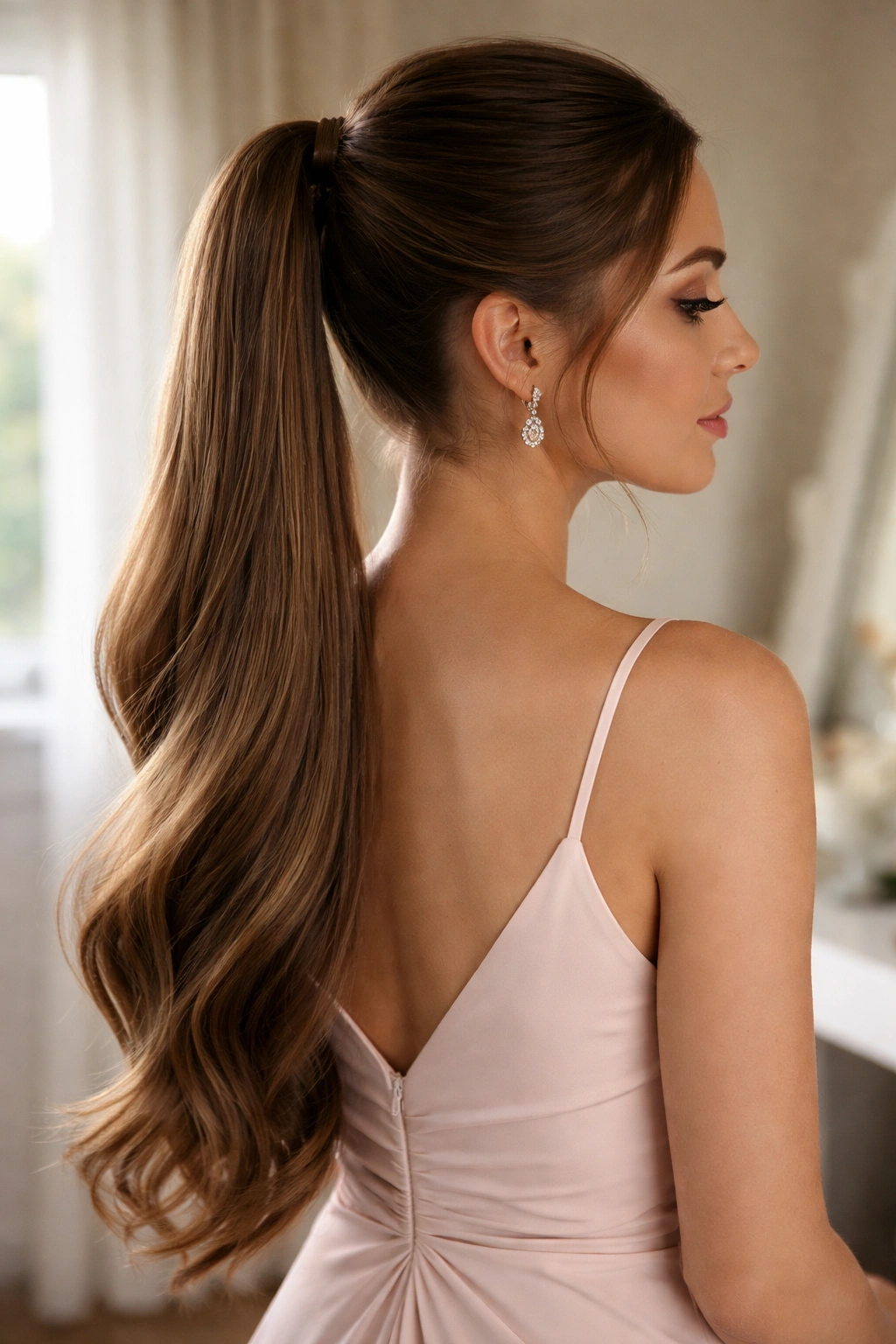
If the bridal party has very different hair lengths, a long extension ponytail can be the simplest way to create a matching look. You get a uniform silhouette, the same swing across the back, and a base that can be styled in several ways.
A clip-in ponytail extension or a wraparound tail works well here. The key is making sure the texture matches the wearer’s natural hair closely enough that the transition disappears. Straight hair with straight extensions. Slightly textured hair with slightly textured extensions. Mixing textures too much shows.
What matters most
- Match color at the mid-lengths, not just the ends.
- Secure the natural ponytail first with two elastics if needed.
- Wrap or pin the extension base tightly so it doesn’t tilt.
- Brush the transition point until it disappears.
This is the style I’d choose when one bridesmaid has a bob, another has waist-length hair, and the bride wants them to look coordinated in photos from the back.
16. Tucked-Under Ponytail
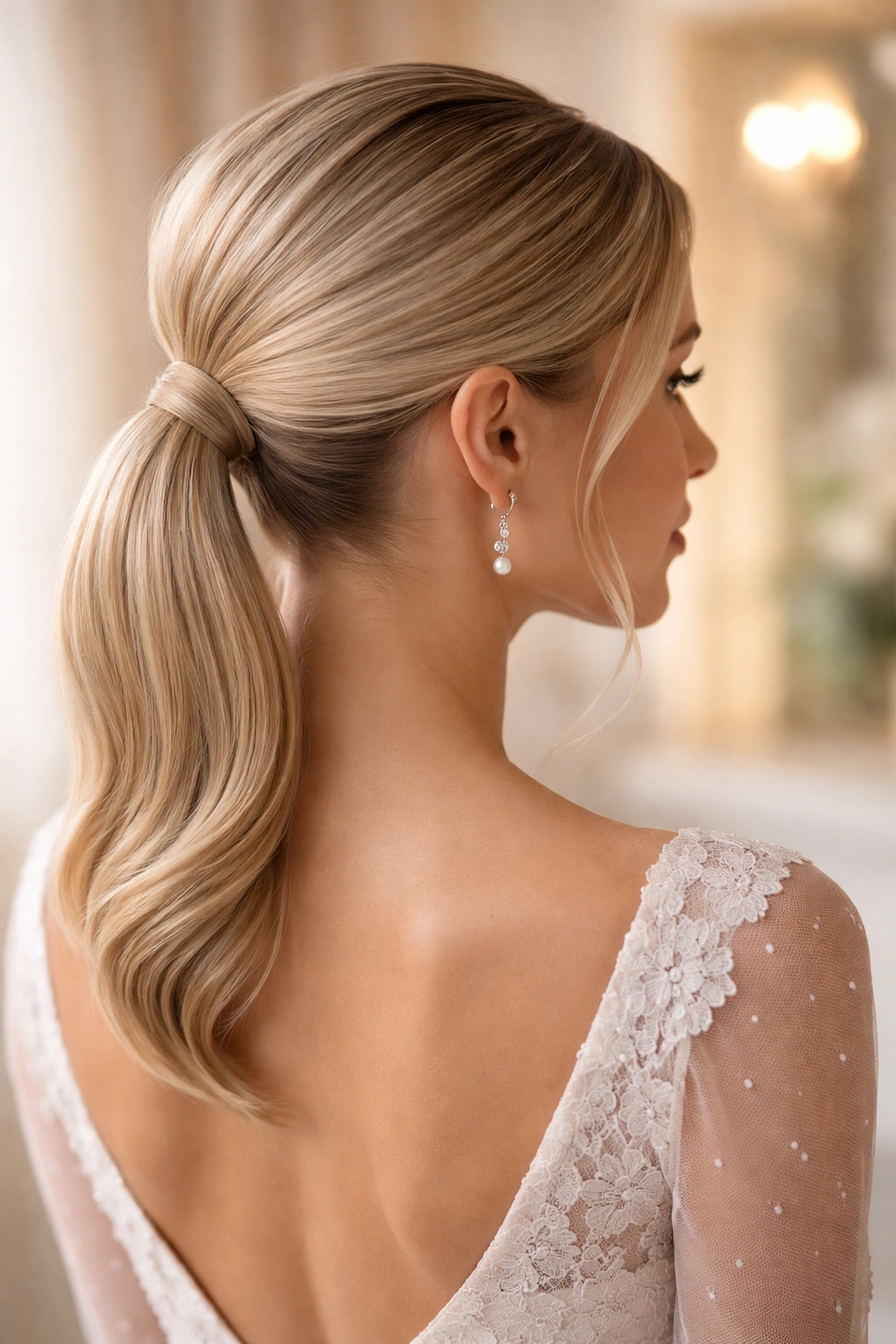
A tucked-under ponytail sits somewhere between a ponytail and a chignon, and that’s what makes it useful. It keeps the sleek feel of gathered hair but removes some of the length so the shape stays compact and neat.
The tail is folded upward or under itself and pinned into place, so the ends disappear beneath the base. From the back, it can read like a soft roll. From the front, it still feels like a ponytail. That hybrid quality is handy for dresses with detailed backs.
Styling note
The hair needs to be smooth before you tuck it. If the ponytail is frizzy, the tucked shape looks bulky and a little tired. Use a flat brush, then a light spray, then pin.
This one is a favorite for bridesmaids with shoulder-skimming layers because it hides awkward ends better than a standard ponytail does.
17. Rope-Twist Ponytail
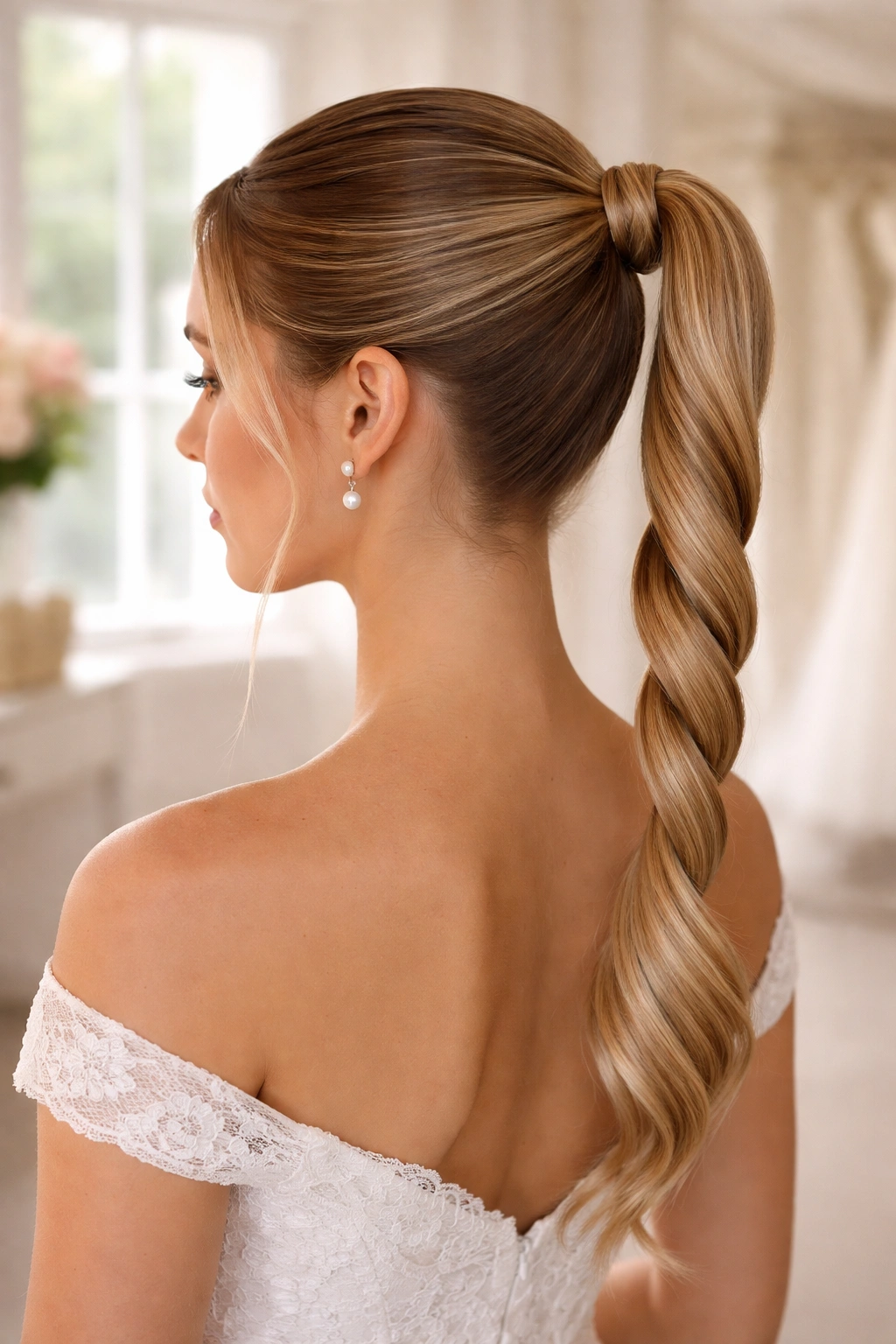
A rope twist adds clean texture without the looseness of curls or the structure of a braid. It looks especially good when the wedding styling is minimal and the hair needs one clear design element.
You create it by twisting two sections around each other until the tail feels snug and rope-like. It can sit as the ponytail itself or wrap around the base. Either way, the twist gives the style a tidy rhythm that feels deliberate in photos.
Small details that matter
Keep tension even while twisting. If one side is tighter, the rope leans and the finish looks uneven. A little shine spray on the lengths helps the twist catch light in a controlled way rather than looking dry.
This style works well on medium-length hair and longer. Very short ponytails can unravel at the ends before the reception starts.
18. Veil-Friendly Low Ponytail
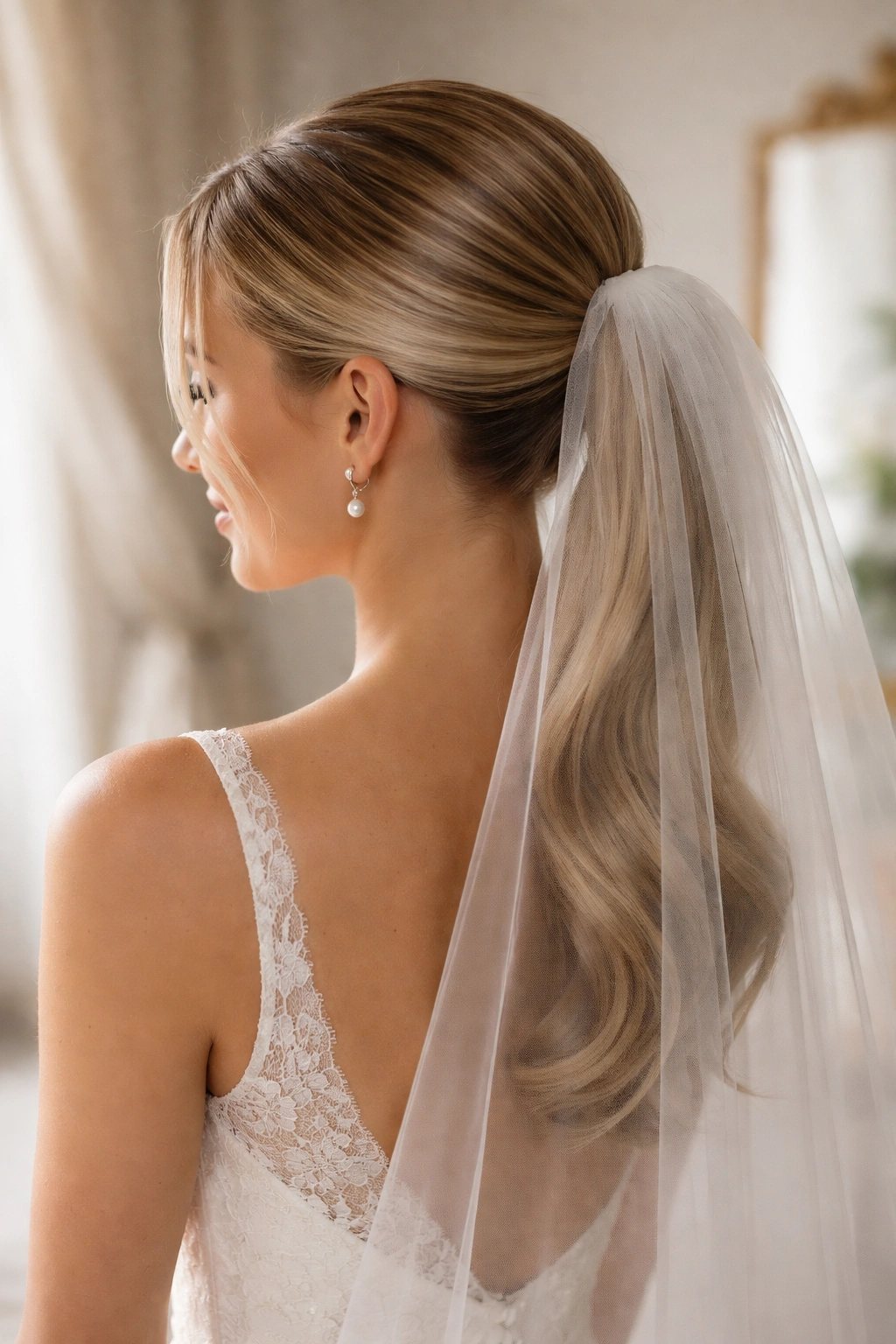
A veil-friendly ponytail is all about placement. It needs to sit low enough that a veil comb can rest above it, or nestle around it, without fighting the shape. For bridesmaids, this matters most when the bridal party is wearing similar accessories or standing close in formal photos.
The base should stay flat and close to the nape. Nothing bulky. That’s the part that makes veil placement easier and avoids weird bumps under the tulle. Even if the bridesmaids aren’t wearing veils themselves, this shape stays friendly to the bridal styling around them.
Best approach
Ask for the crown to be smoothed in a soft arc rather than pulled into a harsh ridge. If there’s a wrap or pin detail, keep it small so it doesn’t interfere with anything sitting above it.
This is the kind of ponytail that looks plain until you realize how useful plain can be. Then it makes sense.
19. Minimalist No-Accessory Ponytail
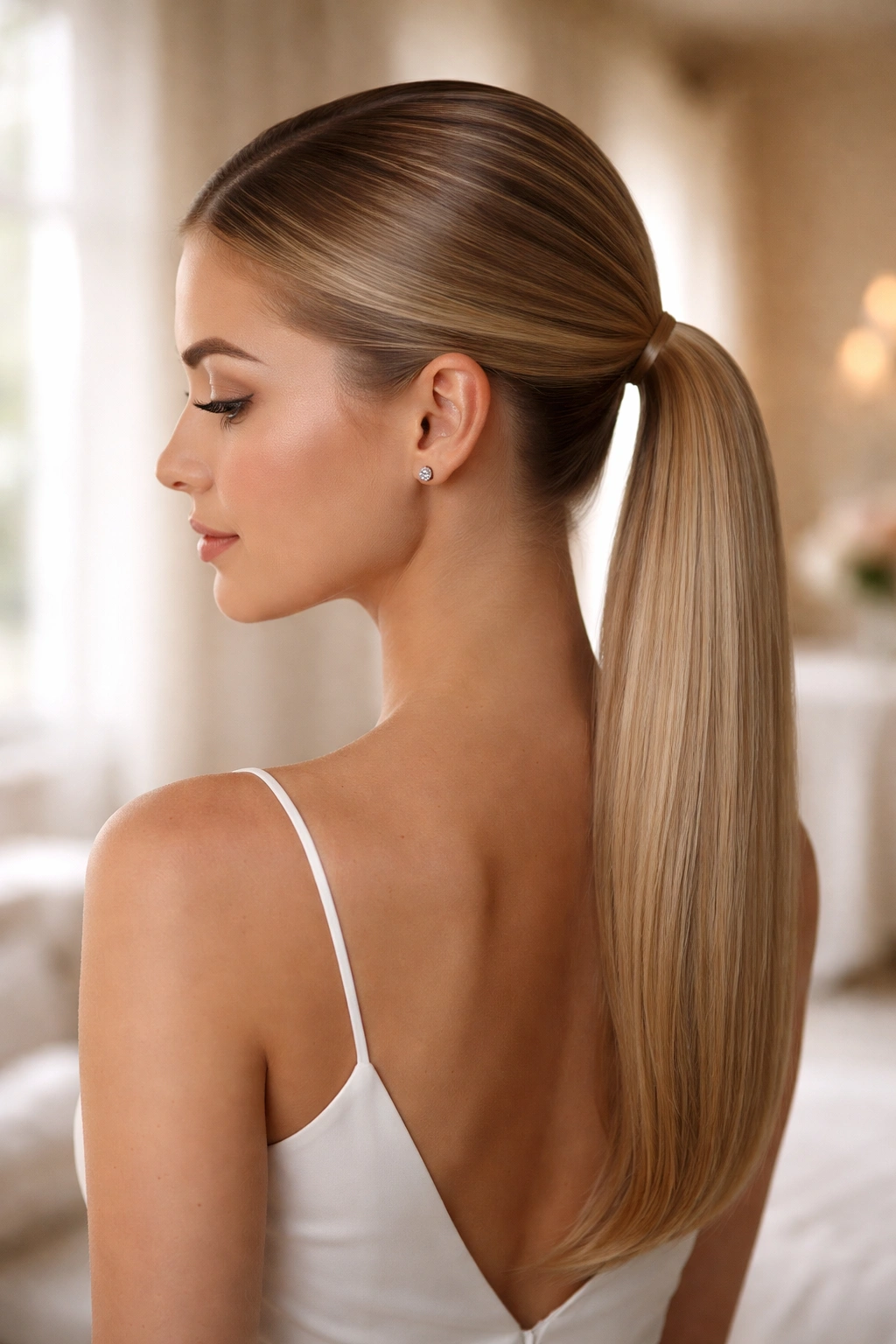
A minimalist ponytail with no pins, no ribbon, and no visible wrap is a strong choice when the dresses already have enough detail. Lace backs, beadwork, dramatic earrings — all of that can make extra hair decoration unnecessary.
The appeal is the clean line. The hair should be sleek from crown to tail, with a natural finish that looks carefully brushed rather than heavily styled. If the ponytail is done well, the absence of accessories feels confident, not unfinished.
What to focus on
The only thing that really matters here is precision. The part has to be neat, the elastic tight, and the tail smooth enough to keep the eye moving. Flyaways should be controlled, not shellacked down.
This style is for bridesmaids who want to look polished without any extra fuss. Sometimes that’s the smartest move in the room.
20. Bow-Back Ponytail
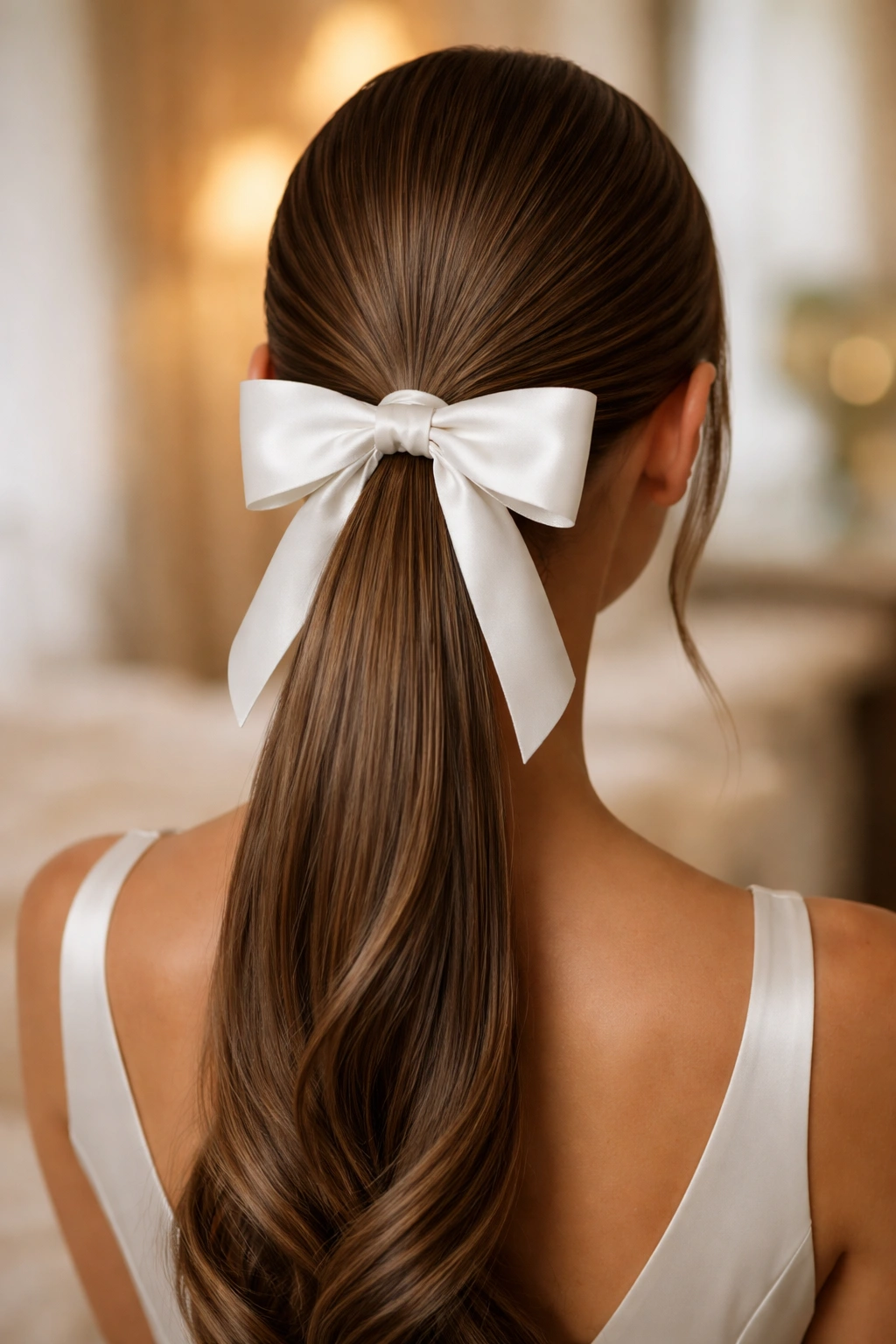
A bow at the back of a ponytail can read sweet or sharp depending on the size and fabric. For bridesmaids, I prefer a bow that feels tailored — satin or grosgrain, medium width, tied close to the base rather than floating halfway down the tail.
The bow adds a clear focal point, which helps if the dresses are simple and the styling needs one small flourish. It also photographs well from the back, where bridesmaid hair gets its most honest view.
Good pairings
- Matte crepe dresses with one clean bow
- Satin gowns with a matching ribbon tone
- Shorter ponytails that need a visual anchor
- Bridal parties that want one repeating detail across different hair textures
If the gown already has a big shoulder detail or a dramatic neckline, keep the bow small. Otherwise the look can tip into too much.
21. Braided Side-Accent Ponytail
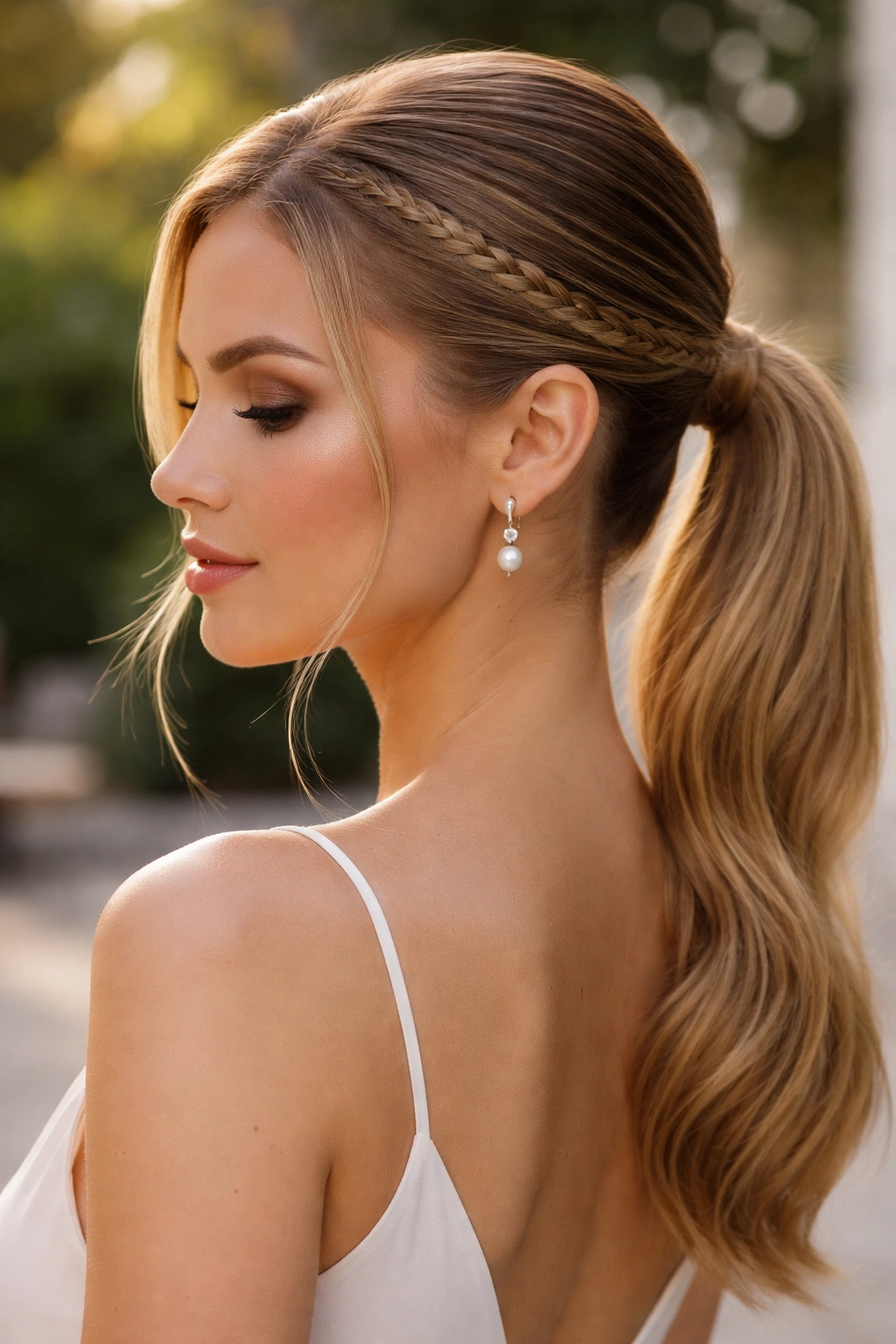
A braided side accent gives the ponytail a little edge without turning it into a full braided style. It’s one of those balanced choices that lets the bridal party share a look while still leaving room for individuality.
Usually I’d braid a thin section from one temple or along the hairline and feed it back into the ponytail. The braid should be slim and flat. Its job is to guide the eye, not dominate the style.
Why bridesmaids like it
It feels polished but not severe. That matters for bridal parties with mixed ages or very different hair types, because it keeps the style friendly instead of overly structured.
A thin braid also helps tame shorter layers at the front. If you’ve ever dealt with those stubborn little pieces that refuse to stay tucked, you know why this matters.
22. Offset Ponytail for One-Shoulder Dresses
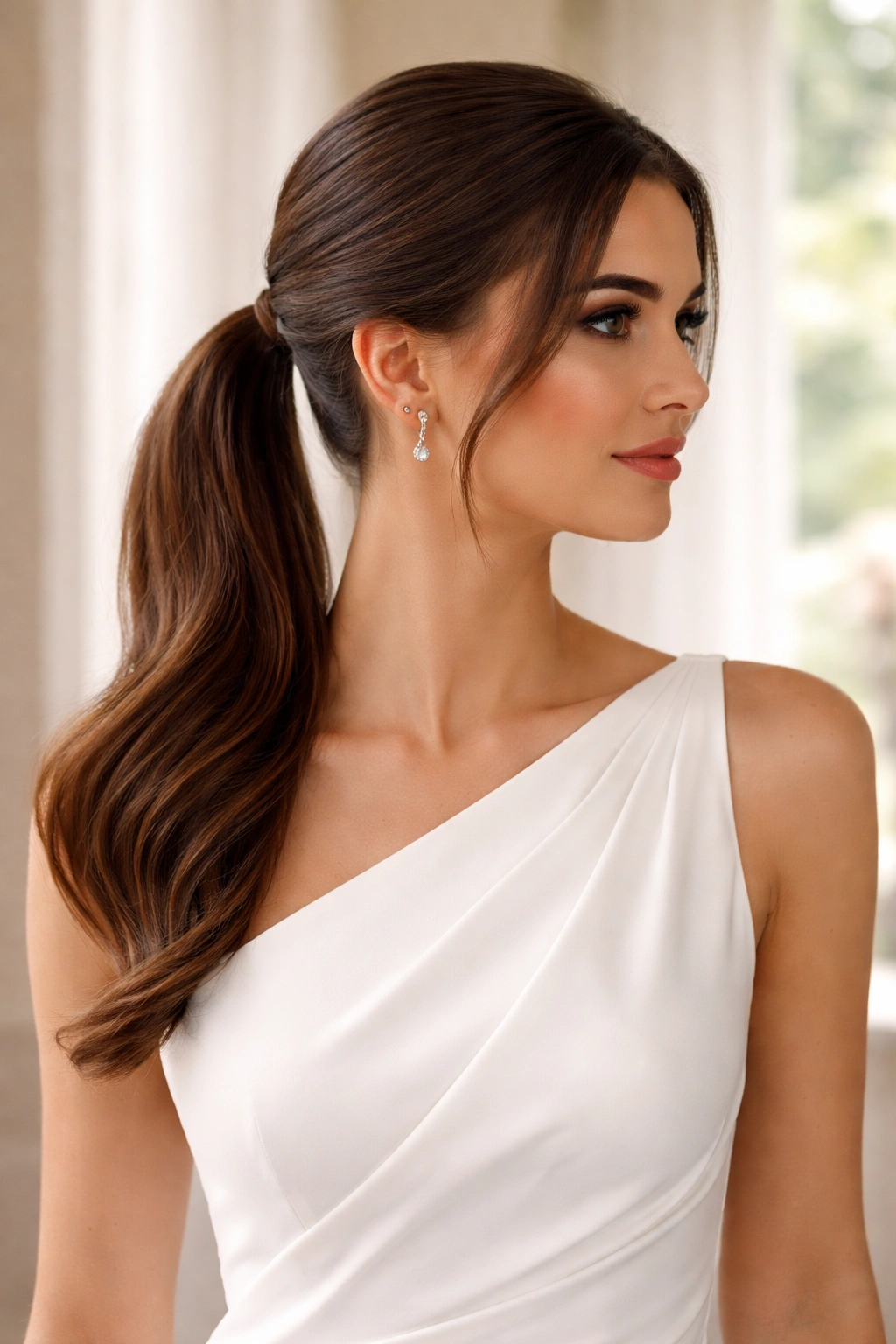
A one-shoulder dress needs hair that respects the neckline. An offset ponytail does exactly that by sitting slightly to one side instead of directly in the middle, which keeps the dress detail visible and gives the silhouette a cleaner line.
The ponytail can sit low and left, low and right, or slightly behind the shoulder that’s covered. The point is balance. The dress gets space, and the hair doesn’t crowd the same area.
How to make it look intentional
Match the side of the ponytail to the dress design, not to habit. Brush the opposite side tighter so the neckline stays open. Then let the tail rest across the back or one shoulder depending on the cut of the gown.
This one works especially well when the bridal party has a mix of necklines and the hair needs to suit all of them without looking identical.
23. Blunt-End Gloss Ponytail
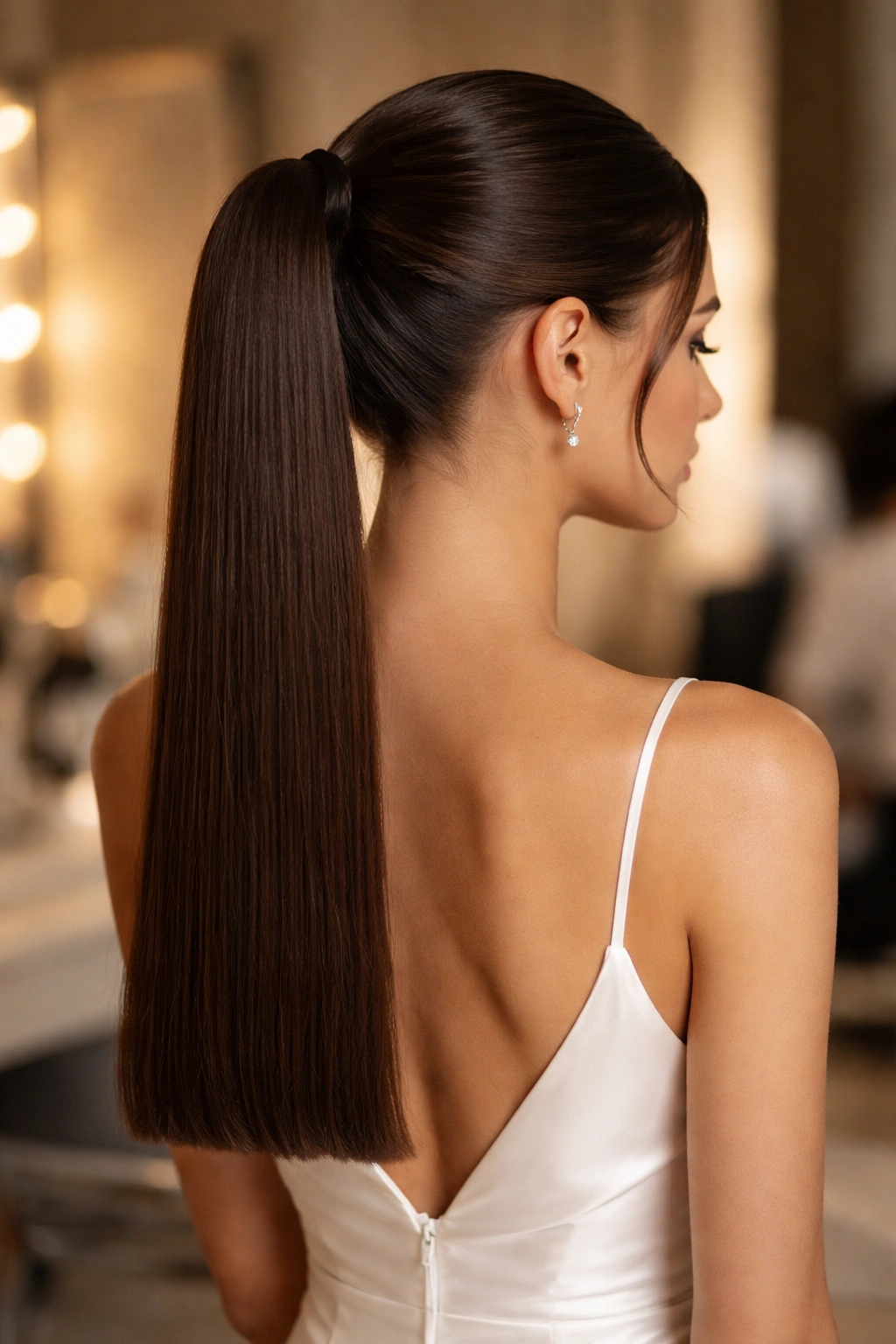
A blunt-end gloss ponytail is sharp in the best sense of the word. The tail is straight, smooth, and finished with ends that sit together in a clean line. No curl, no fluff, no loose bend.
It gives bridesmaid hair a crisp, editorial feel while staying easy to wear. If the group is wearing structured dresses, this ponytail keeps the styling language consistent from head to hem.
The real trick
Flat iron the tail in sections if needed, then run a tiny amount of serum over the surface. Too much serum makes the ends separate and look oily. Too little and the line frays in the dry air of a reception hall.
This style looks especially strong on medium to thick hair. Fine hair can do it too, but it needs careful smoothing or the ends start to look wispy instead of blunt.
24. Micro-Braid Detail Ponytail
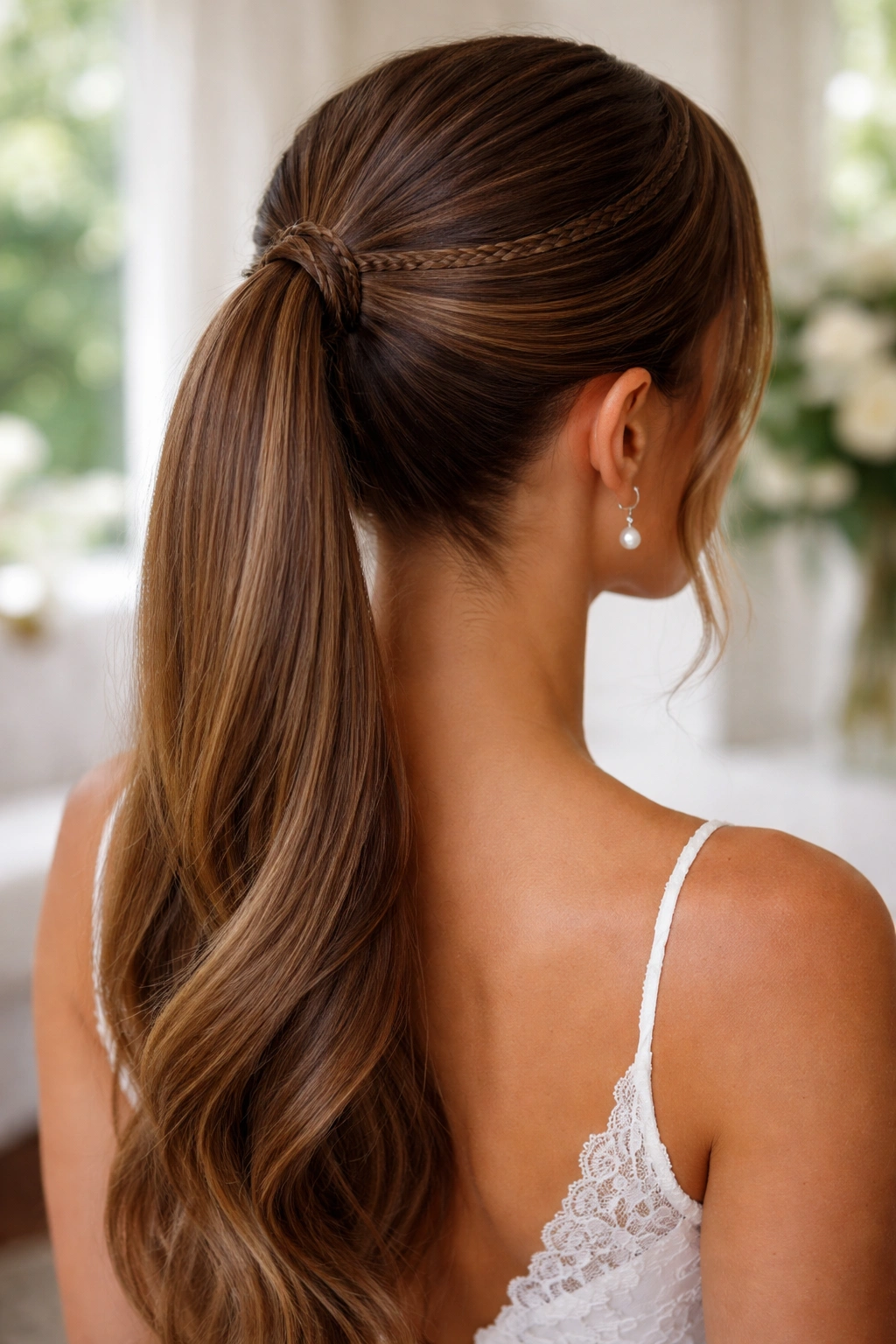
A micro-braid detail is one of the easiest ways to make a bridesmaid ponytail feel special without adding bulk. You hide tiny braids under the top layer or near the base, and the style picks up texture only when someone gets close enough to notice.
That’s the charm. It gives the hair depth without breaking the sleek shape. This is a good choice for bridal parties that want something a little more thoughtful than a basic ponytail but don’t want full braids.
Where to place them
Tuck one or two micro-braids along the temple, or braid a tiny section from beneath the crown and hide it under the wrap. Keep the braids narrow so the ponytail stays smooth.
The best part? It works on straight hair, wavy hair, and extensions. You get detail without needing a whole new style each time.
25. Scarf-Wrapped Ponytail
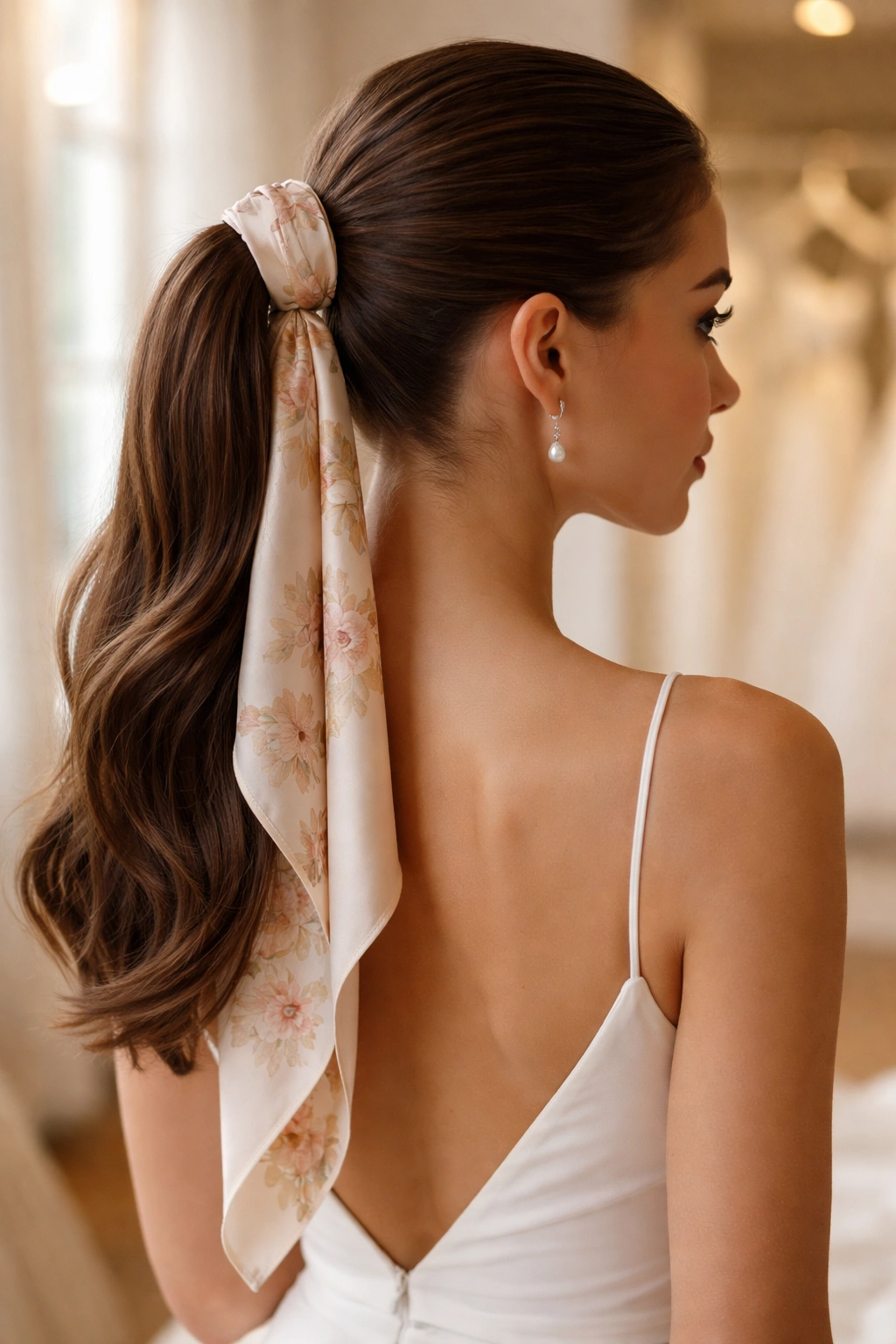
A scarf-wrapped ponytail feels fashion-forward, but it can still be wedding-appropriate if the scarf is chosen carefully. Think silk, satin, or a fine fabric with a soft drape. Nothing stiff. Nothing loud.
The scarf can wrap around the base, trail down the tail, or tie in a neat knot beneath the ponytail. It adds movement and color, which is useful when the bridal party is dressed in a simple palette and needs one coordinated accent.
A few practical notes
- Keep the ponytail itself sleek so the scarf stays the main detail.
- Choose a scarf narrow enough to avoid bulk at the base.
- Match the scarf tone to the dress or bouquet, not both.
- Secure the scarf knot with a hidden pin if the fabric slips.
This one is best for bridesmaids who want something a little less traditional and a little more styled.
26. Chignon-Pony Hybrid
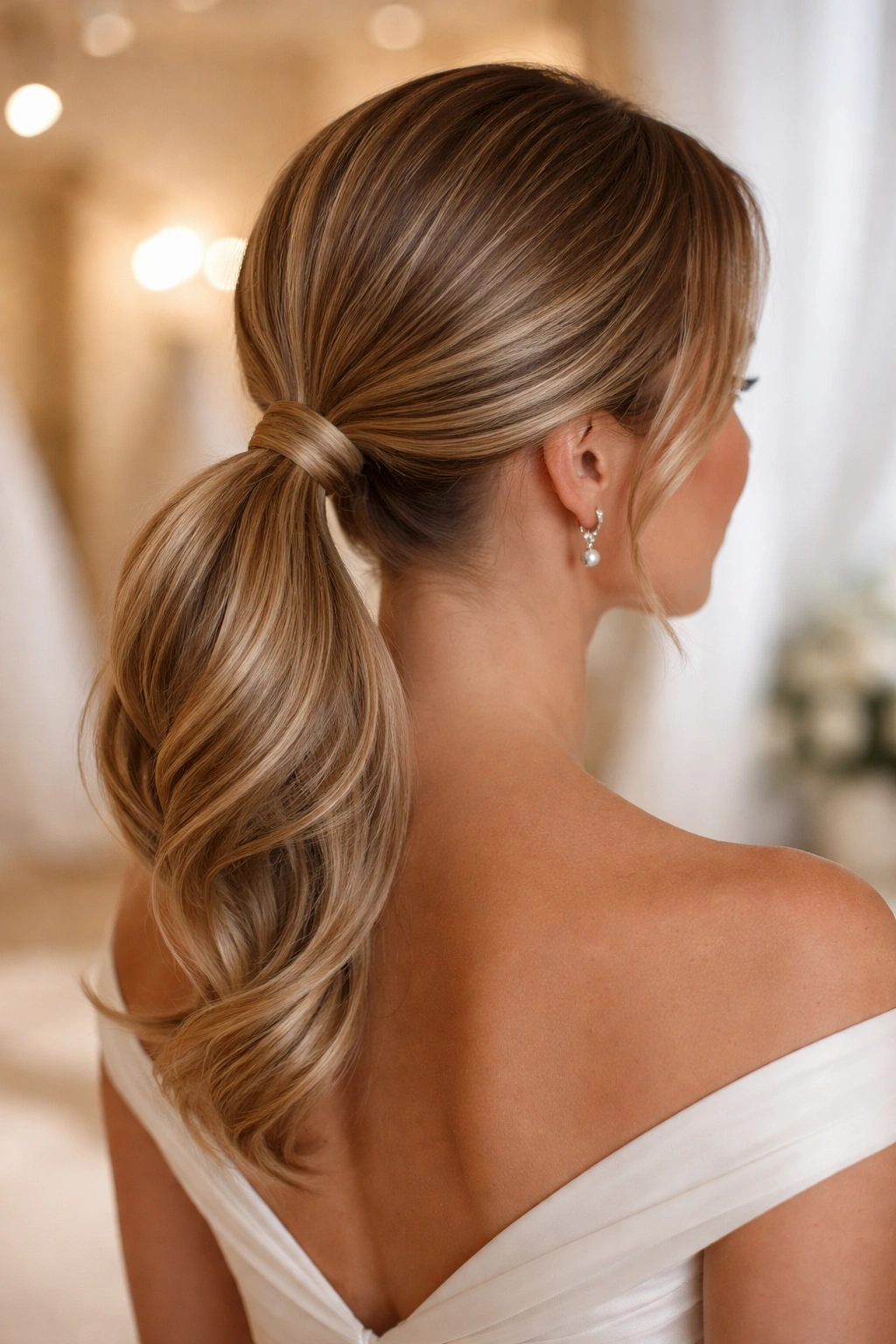
The chignon-pony hybrid sits in that nice middle zone between an updo and a ponytail. The hair is gathered low, then folded or pinned so part of the tail forms a soft loop or tucked shape near the nape.
It works well for formal weddings because it keeps the neck open and the profile clean, but it still feels lighter than a full bun. Bridesmaids often like this when they need to look dressed up without looking too done.
Why it’s useful
The hybrid shape hides layered ends better than a normal ponytail. That matters if the hair is shoulder-length or if the cut has pieces that usually escape at the nape.
I’d pair this with small earrings and a dress that has a detailed back. The hairstyle leaves room for both.
27. Textured-Ends Ponytail
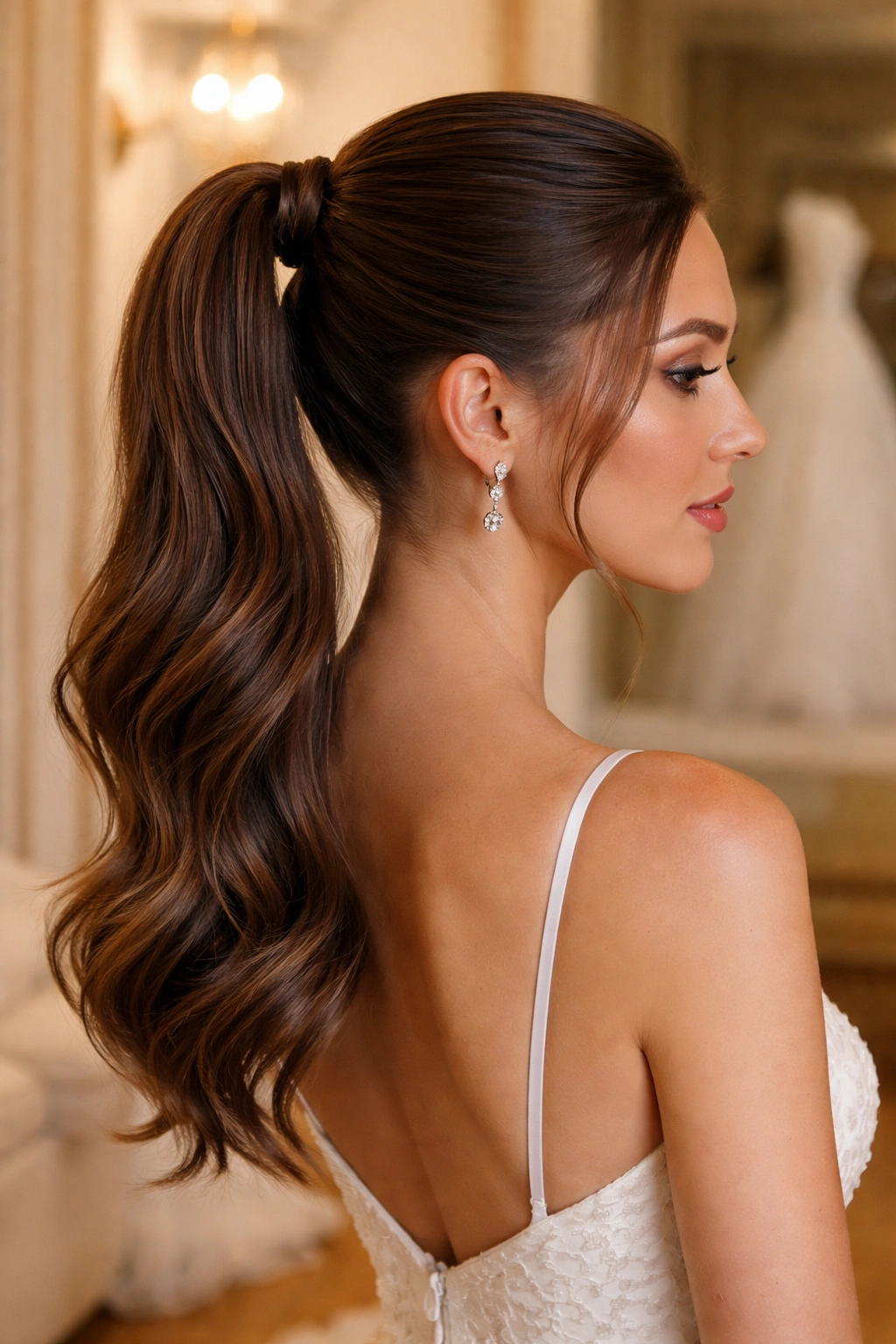
A textured-ends ponytail starts sleek at the crown and finishes with a little bend or movement in the lengths. It’s a good compromise for bridesmaids who want polished hair without the rigid feel of a pin-straight tail.
The key is controlling only the top and middle sections. Leave the ends slightly curved with a flat iron or a large barrel iron. The bend should be soft, not bouncy. You want the finish to feel intentional, not curled.
When it works best
This style is strong for long hair that tends to look heavy when left fully straight. The bend breaks up the length and keeps the shape from looking flat in profile.
Use this one if the bridal party is wearing lighter fabrics, or if the bride wants the group to feel soft and elegant rather than ultra-structured.
28. Bubble-and-Wrap Hybrid
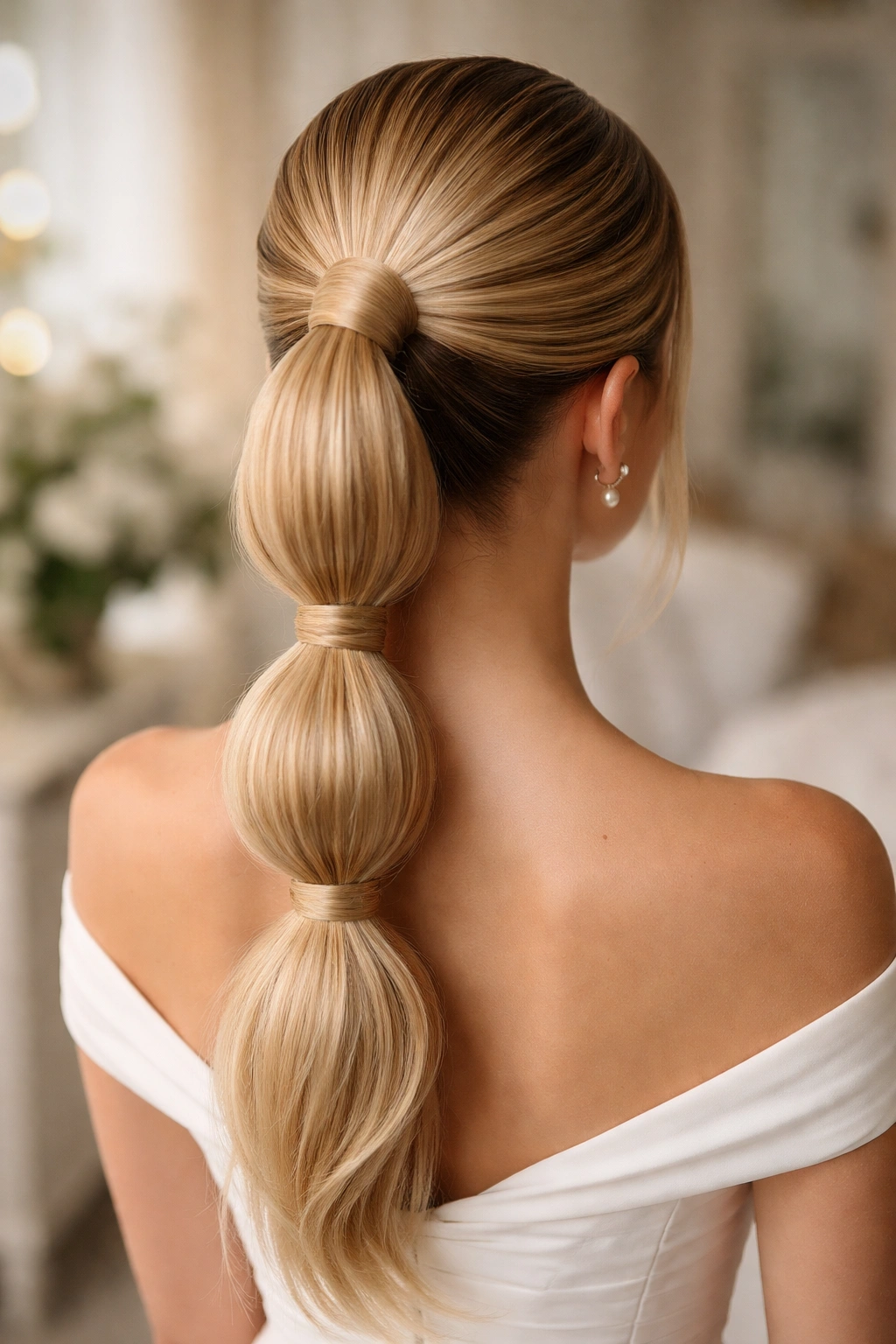
A bubble-and-wrap hybrid takes two clean ideas and puts them together without making the style feel crowded. You wrap the base first, then create a few bubble sections down the tail. That little combination adds structure fast.
I like it for bridesmaids who want the ponytail to read special in photos from behind. The wrapped base keeps it sleek, while the bubbles give it shape and movement. It’s not the most subtle option, but it earns its place when the dresses are simple.
Keep this in mind
The bubbles need room to breathe. Space the elastics evenly and don’t over-puff the sections. If every bubble is overinflated, the style starts to look costume-like.
This one pairs nicely with clean gowns, strong makeup, and venues where the bridal party will be seen mostly from the back or side.
29. Ultra-Smooth Crown Ponytail
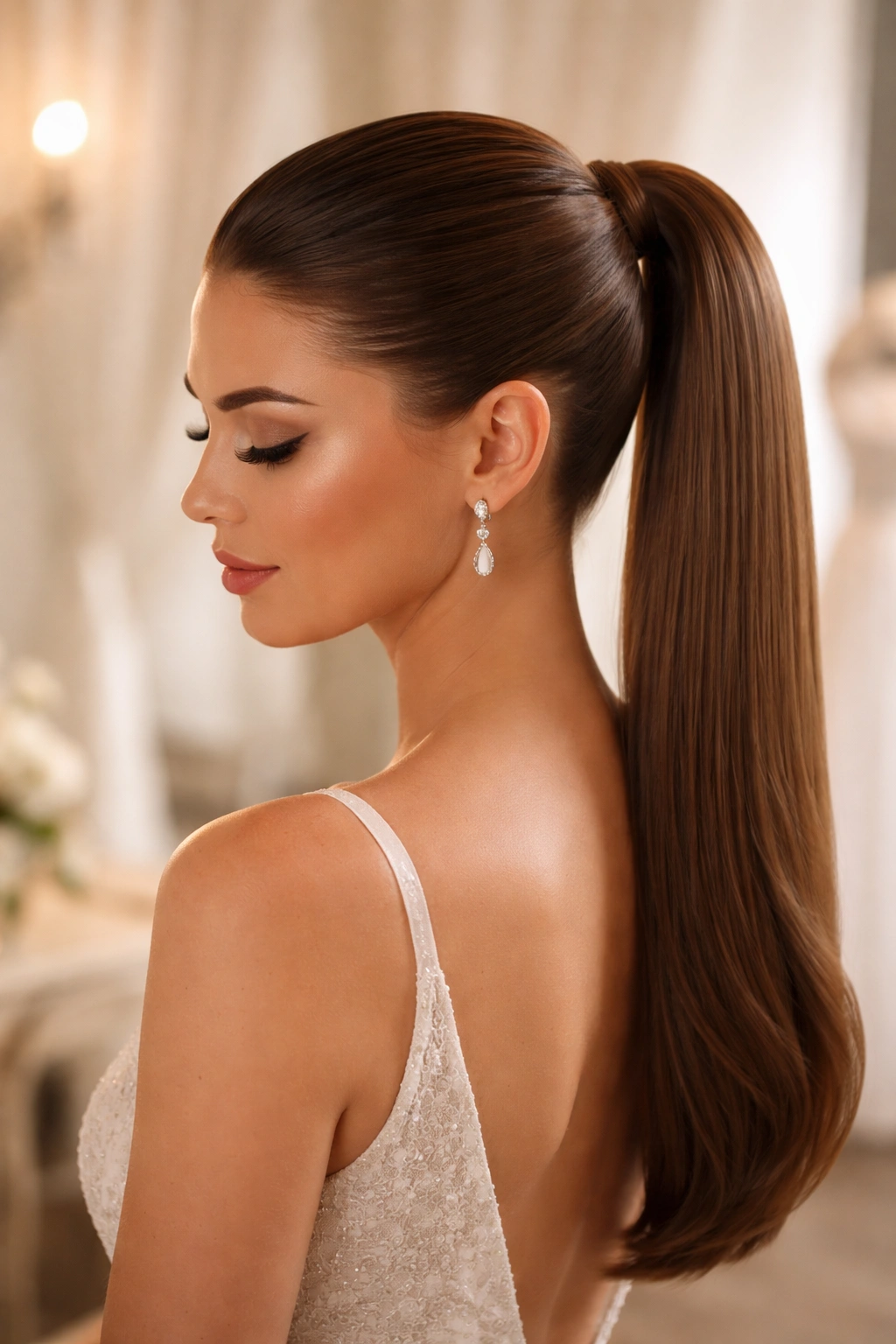
An ultra-smooth crown ponytail is for the bridesmaid who wants zero stray hairs and a very controlled finish. The crown is brushed flat, the part is sharp, and the surface should look almost seamless before the tail even begins.
This style can look plain in theory. In practice, it’s the kind of ponytail that lets the dress, makeup, and earrings carry the outfit while the hair quietly does its job. That’s not a flaw. Sometimes a bridal party needs one style that stays out of the way and still looks expensive.
What keeps it from falling flat
Use a smoothing cream at the roots, a fine brush to guide the hair, and a strong but flexible spray to lock the shape. If you see little gaps at the crown, stop and fix them before moving on. They show later.
This is one of the most reliable choices for matching several bridesmaids at once.
30. Ceremony-to-Reception Finish
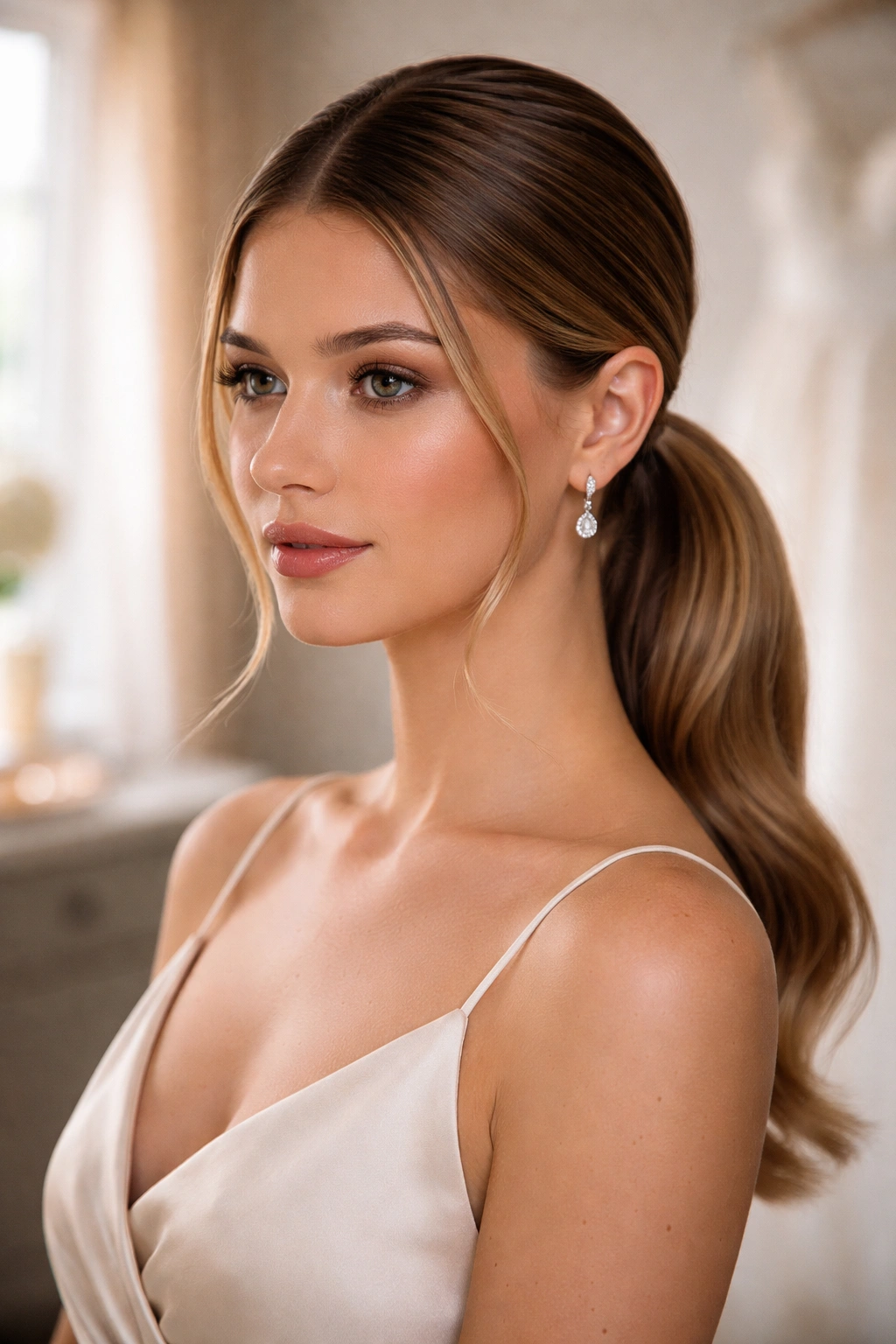
The best bridesmaid ponytail is the one that still looks tidy after the ceremony, the family photos, the dinner, and half a night of dancing. That’s the standard I keep coming back to, because wedding hair has to survive more than one moment.
A ceremony-to-reception finish starts sleek, stays secure, and doesn’t lose its shape when people hug, laugh, or move fast. It might be a low wrapped ponytail, a side-swept version, or a braid-accent style — the exact silhouette matters less than the hold. Use enough product to control frizz, but not so much that the hair turns sticky under warm lights.
The smartest move is to keep a tiny touch-up kit nearby: a few bobby pins, a travel-size spray, a compact brush, and one elastic that matches the hair color. That little kit saves a style more often than people admit. And honestly, that’s the whole point of a good bridesmaid ponytail. It should look composed at the start, then stay that way when the day gets messy.
