

A low knotless braid ponytail changes the whole feel of braids. The base sits lower, the weight drops away from the hairline, and the style usually feels calmer by the second hour instead of tighter.
That matters if your edges are picky, your nape gets sore, or you simply hate the heavy pull that some braid styles create when the hair is gathered high. Knotless braiding helps because the extension hair is fed in gradually rather than anchored with a hard knot at the root, so the start of each braid feels smoother against the scalp.
Low does not mean careless, though. The best versions depend on part size, braid thickness, and where the ponytail is tied. Put the elastic too high and the whole point disappears; make the braids too heavy and the style starts arguing with your neck by lunchtime.
That is the fun part. Some versions are sharp and sleek, some are soft, some lean dressed-up, and some look better with cuffs, curls, or a scarf tied around the base. The first style is the cleanest place to begin.
1. Middle-Part Low Knotless Braid Ponytail
This is the cleanest entry point, and I mean that in the nicest way. A middle-part low knotless braid ponytail gives you symmetry from the top of the head down to the nape, so the style reads neat without looking stiff.
Why It Feels Easy on the Scalp
The center part helps distribute visual weight evenly, which matters more than people think. When the part is straight and the ponytail sits at the base of the neck, there is less temptation to pull one side tight just to make the shape match.
- Keep the part narrow and straight only where it shows.
- Ask for medium braid sizes near the hairline so the roots do not feel crowded.
- Tie the ponytail low enough that it rests on the upper neck, not the crown.
- Leave a little softness at the temples so the style does not feel severe.
Tip: A tiny bit of edge control is enough. Too much product near the front makes the finish look greasy instead of clean.
2. Side-Part Low Ponytail with a Wrapped Base
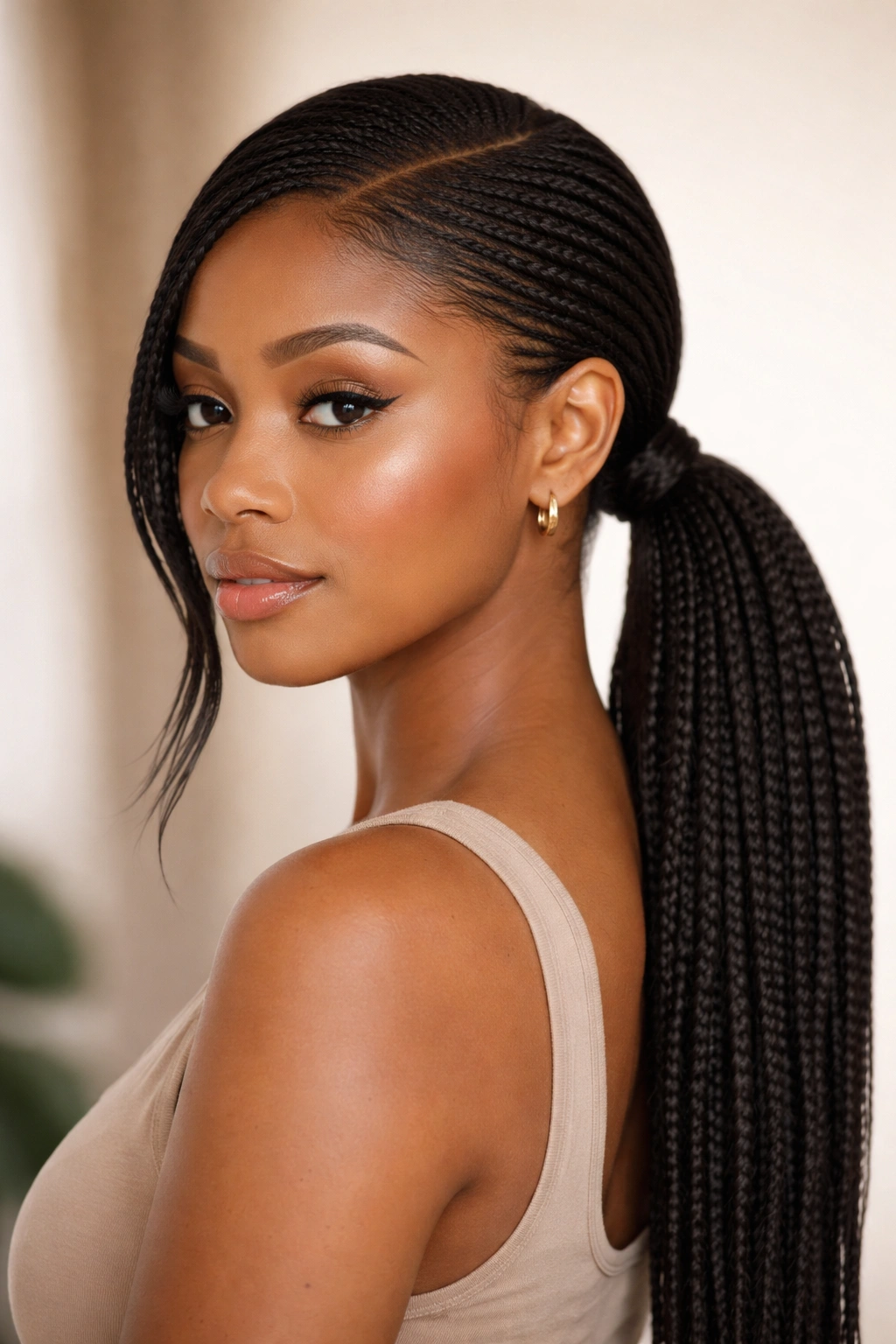
A side part changes the whole mood. It softens strong features, makes the face look a little more relaxed, and gives the low ponytail a more lived-in shape than the center-part version.
The wrapped base is the part I love most. A slim braid or a section of extension hair circling the elastic hides the tie and keeps the ponytail from looking like it was simply gathered and forgotten. That detail sounds small. It isn’t.
For less tension, ask that the heavier side not be pulled back harder than the lighter side. The ponytail should still sit low and loose enough at the anchor point that the scalp feels flat, not braced. If the side part is clean but the base is tugging, the style is doing the wrong job.
3. Curled-End Low Knotless Braid Ponytail
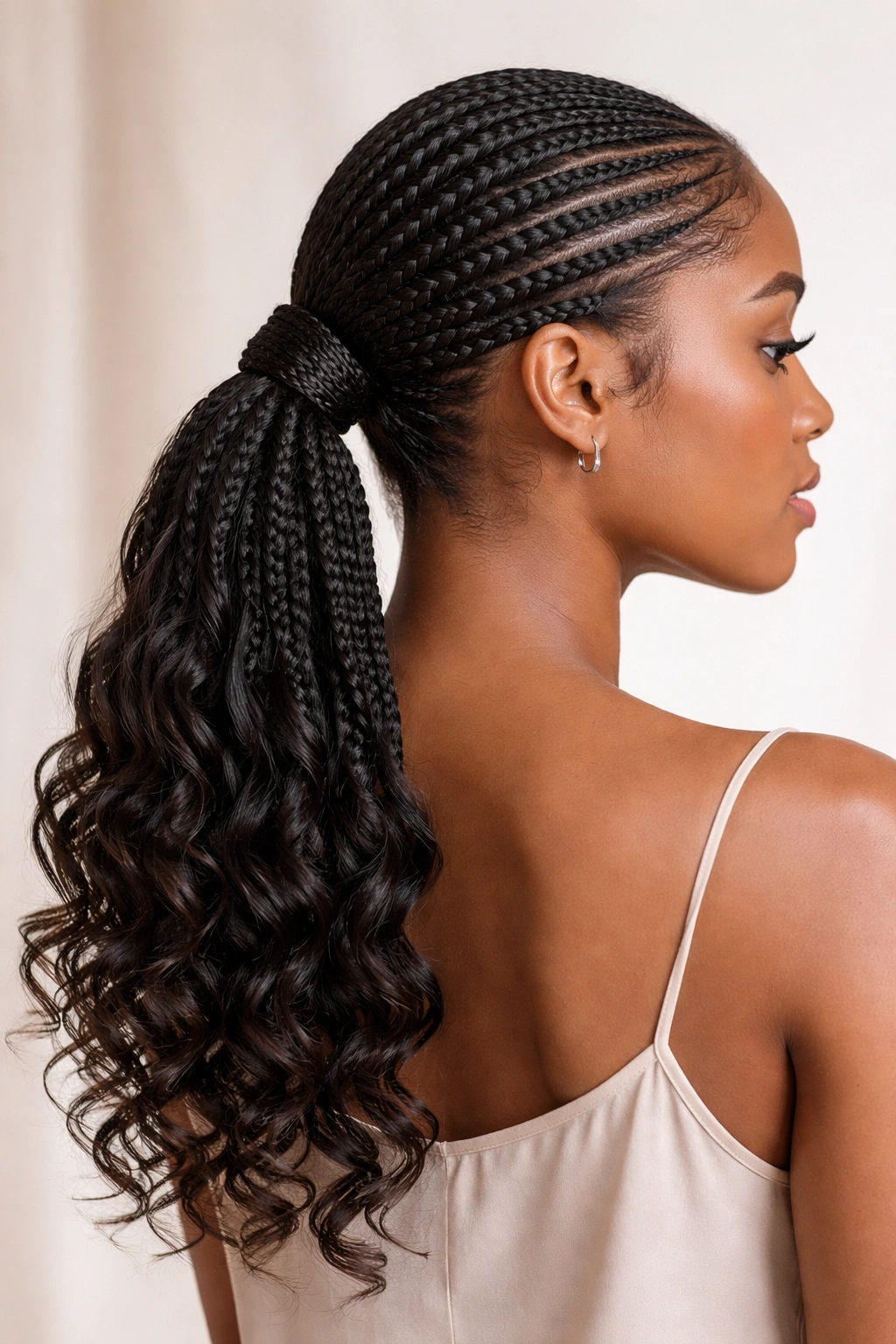
Why stop at straight ends? Curled ends make the whole style feel lighter, even when the braids themselves are long, because the movement starts at the bottom instead of hanging in one rigid line.
How to Keep the Curls Springy
A curly finish works best when the ends are not overloaded with too much hair. If the tail is too dense, the curls fall flat fast and the ponytail starts to look heavy instead of soft. Keep the braid body tidy, then let the ends do the talking.
If you use synthetic hair that takes hot water well, dip only the ends long enough to set the shape, then blot them dry with a towel before letting them air-dry. That short drying window matters. Wet curls that are left bunched up lose definition and start to frizz in all the wrong places.
I like this style for date nights, weddings, or any day when you want the ponytail to move a little when you walk. It has a gentler finish than a straight tail, and that matters when you already have braids doing enough work on the head.
4. Triangle-Part Low Knotless Ponytail
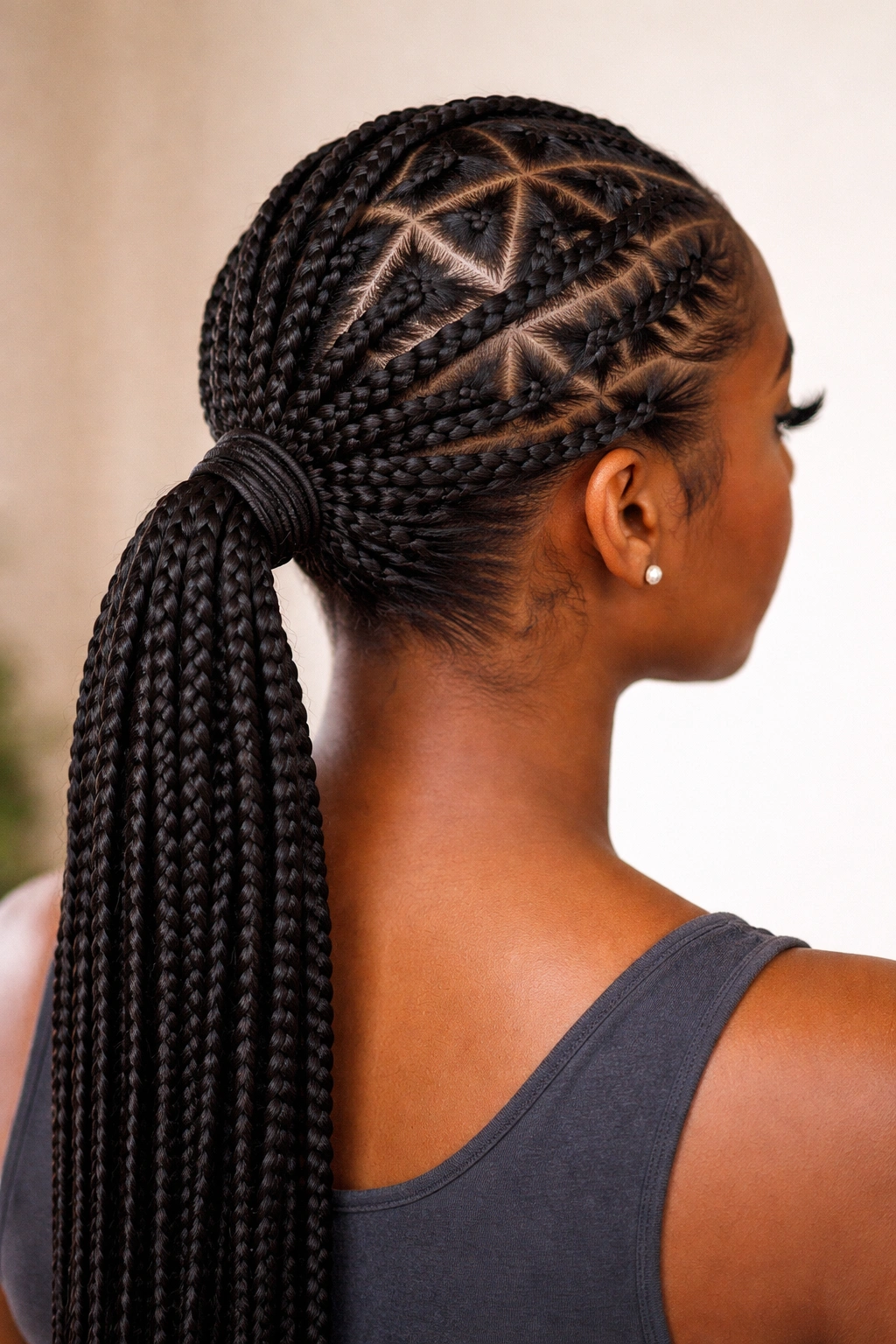
If you like your parts to be seen from across the room, triangle parts bring the personality. The shape gives the scalp a patterned look that feels deliberate, almost architectural, and it plays nicely with a low ponytail because the design stays visible around the top and sides.
The trick is keeping the triangles neat without making every braid tiny. Small parts are not the prize here. Clean part lines are. When the braids are sized with care, the ponytail still feels balanced, and the base sits low enough to avoid that tight, overdone feeling.
Quick Notes
- Triangle parts show best on medium to dark hair textures with a neat finish.
- A low anchor point keeps the pattern from looking crowded.
- Medium braid width usually makes the design easier to wear for long stretches.
- A simple tie or wrap at the base works better than heavy accessories here.
My take: This is one of the nicest options when you want detail at the top and comfort at the root.
5. Jumbo Low Knotless Braid Ponytail
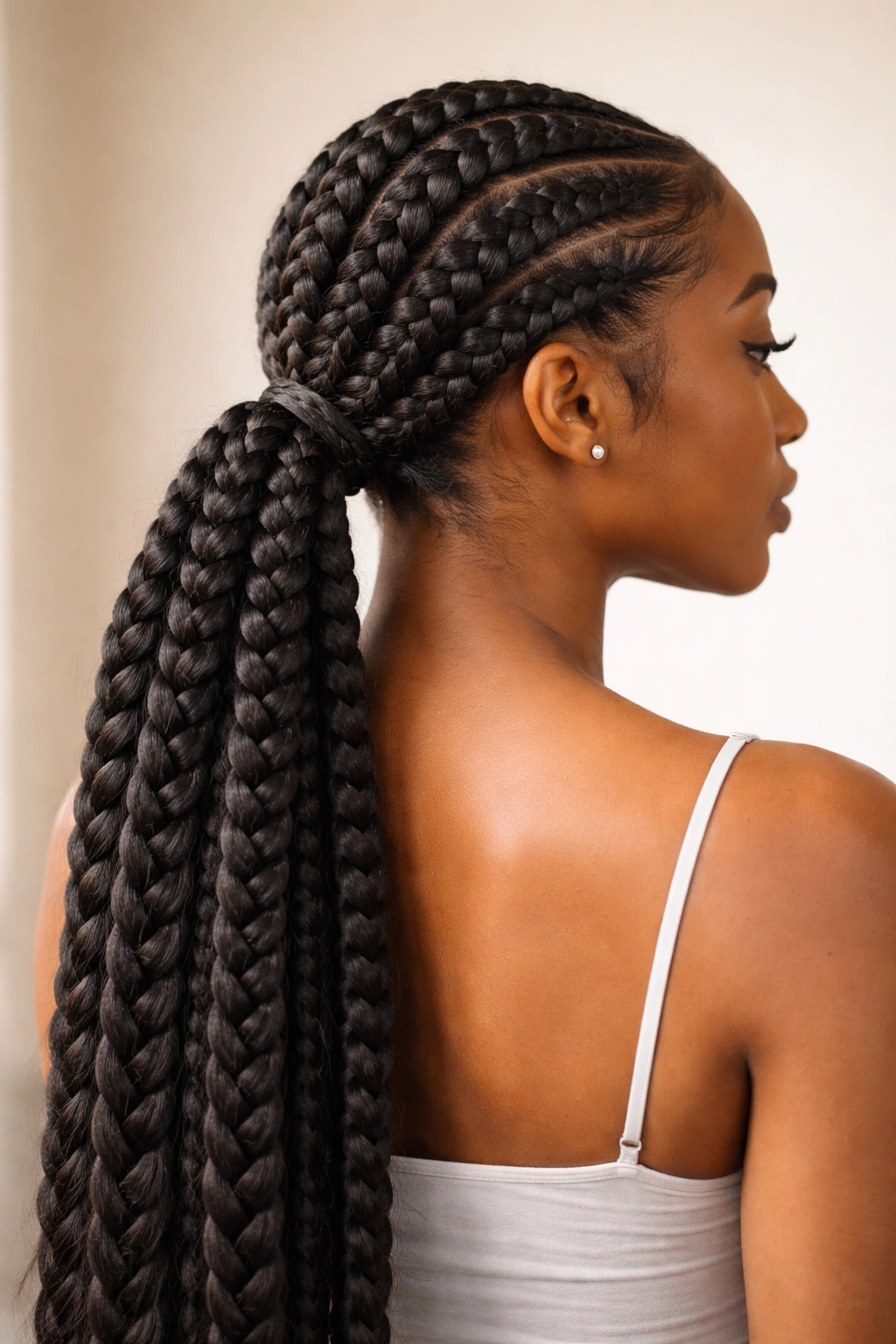
Jumbo braids are for the days when you want presence without spending forever in the chair. Fewer braids mean less overall sectioning, and that can mean less pulling around the perimeter if the parts are done with care.
The catch is weight. Big braids can feel fine at first and then start dragging once the ponytail gathers all of that length into one place. So the real win is not just going jumbo; it is making sure the tail is not overloaded with extra hair. A braid that looks bold should still feel manageable when you turn your head.
I like jumbo versions for people who want a style that reads clearly even from a distance. It is bold, yes, but not fussy. If you keep the base low and the sections clean, the result has a nice heavy-swinging shape without the root pain that comes from tighter, higher styles.
6. Micro Knotless Braids Pulled into a Low Ponytail
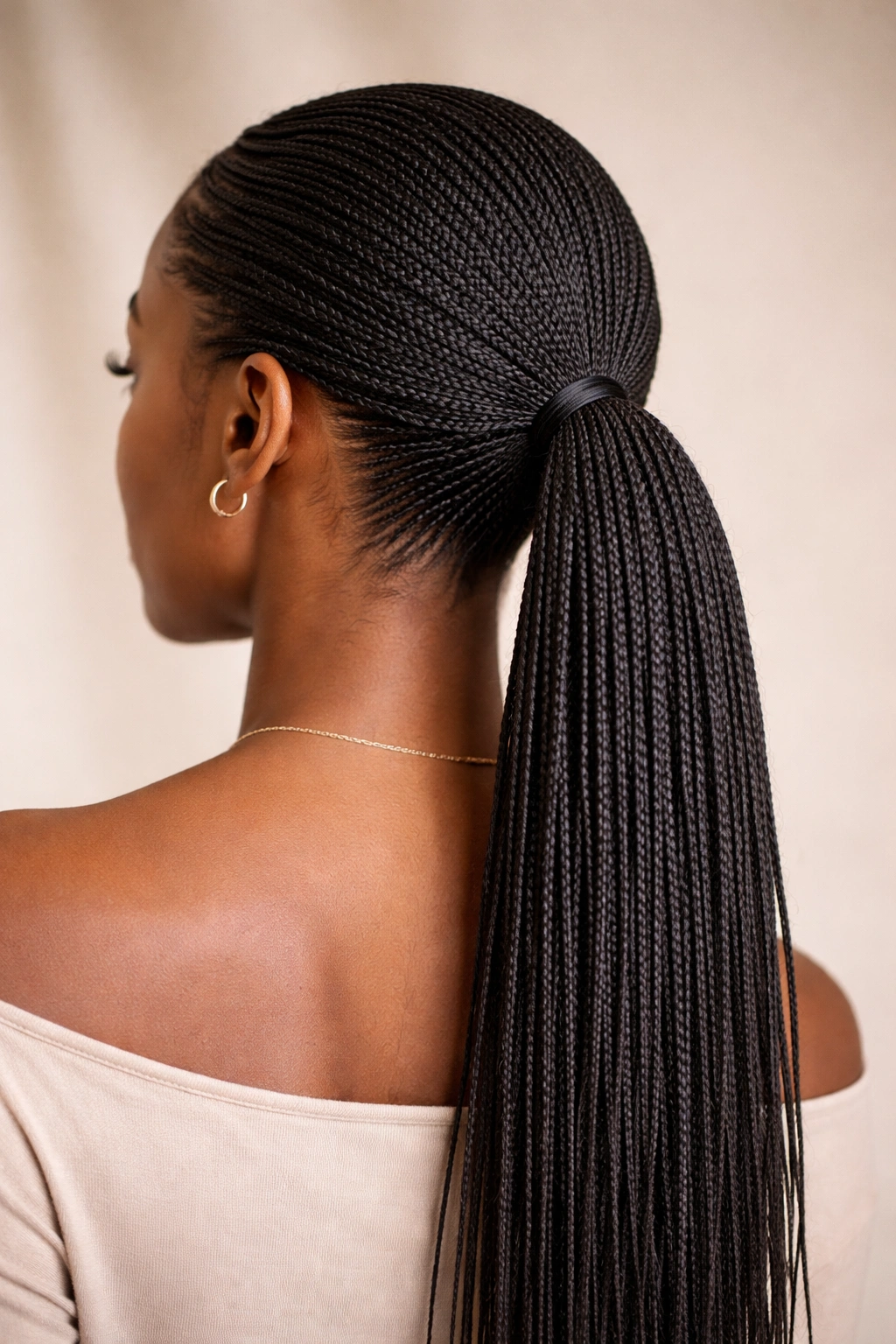
Micro knotless braids do the opposite job. They look finer, drape more like fabric, and give the ponytail a softer fall that moves when you move. That movement is part of the charm.
Unlike jumbo braids, micros need patience. A lot more. The install takes longer, and the finished ponytail can feel dense if the extensions are too long or too thick. But when the sizing is right, the style sits beautifully low and flat at the base, which is a nice trade if you want a polished shape with lots of swing.
This is a good pick for someone who likes wearing braids for a while and does not mind a longer salon day. The ponytail itself should still feel light at the nape. If it does not, the braid count or the extension density is probably too much.
7. Gold-Cuff Low Knotless Braid Ponytail
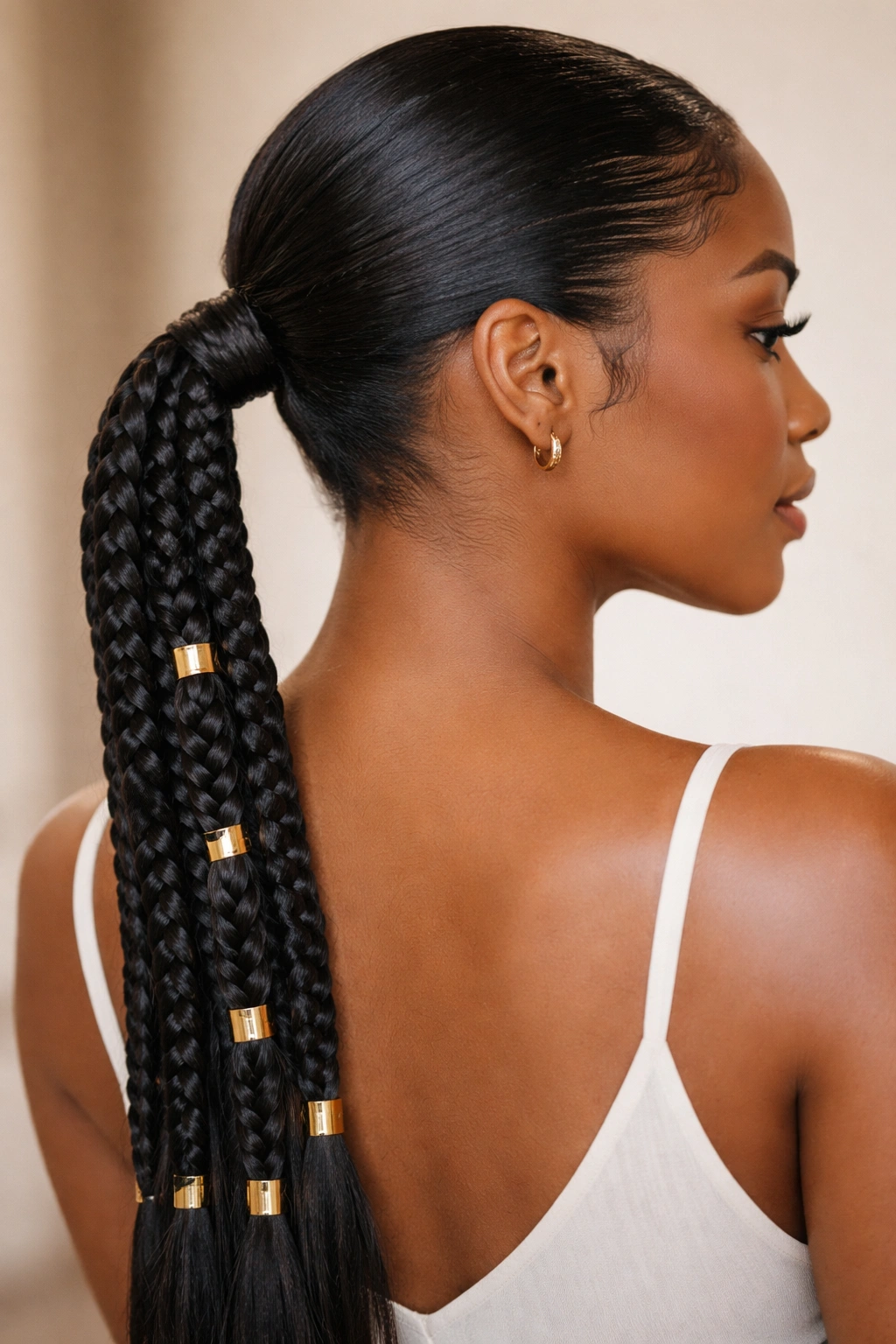
A few gold cuffs can make a low ponytail look finished in seconds. Not crowded. Finished. There is a difference, and accessories can cross that line fast if you stack too many of them near the roots.
Put the cuffs on the mid-lengths or near the ends. That leaves the base calm and keeps the nape from feeling cluttered. I rarely like heavy metal right where the hair is anchored, especially on a style that is supposed to feel easier on the scalp.
If you want the cuffs to stand out, mix one or two larger pieces with a few small ones rather than covering every braid. The eye reads the shine without the style turning loud. Good braid jewelry should look like a detail, not a warning sign.
8. Scarf-Wrapped Low Knotless Braid Ponytail
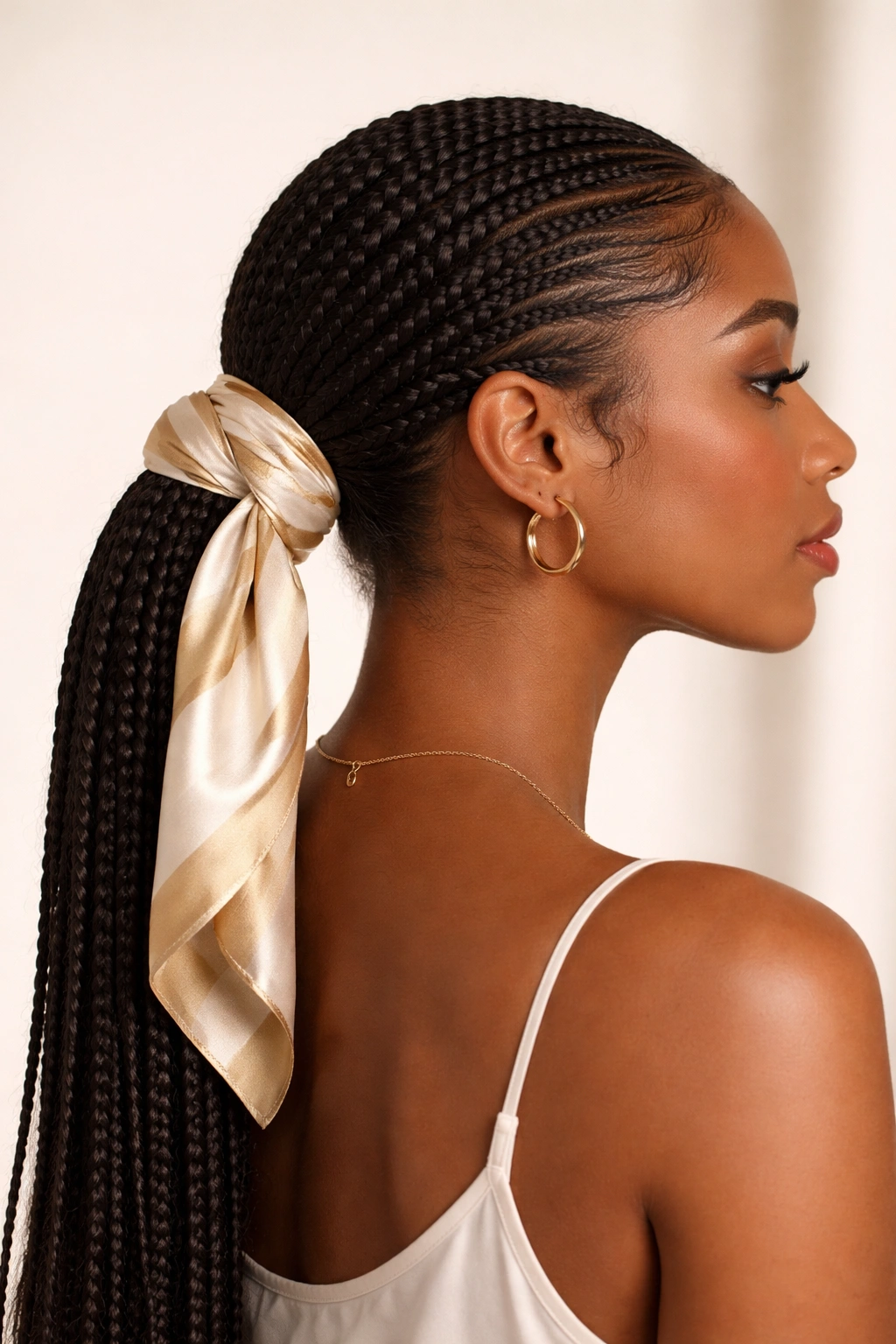
A scarf at the base does two jobs at once. It hides the elastic, and it softens the line where the braids begin to gather, which makes the whole ponytail feel more relaxed.
How to Tie It Without Flattening the Ponytail
Use a satin or silky scarf that is long enough to wrap once or twice around the base. Tie it off to one side instead of dead center, so the knot does not sit under the heaviest part of the tail. That small shift keeps the ponytail hanging cleaner.
The scarf also helps on days when the style needs a little reset. Maybe the ponytail looks fine, but the base feels too exposed. Maybe you want a color hit without adding beads or cuffs. A scarf solves both without changing the braid structure itself.
This is one of those styles that looks more intentional the second you stop trying too hard. Good fabric, one neat wrap, and you are done.
9. Feed-In Low Knotless Braid Ponytail
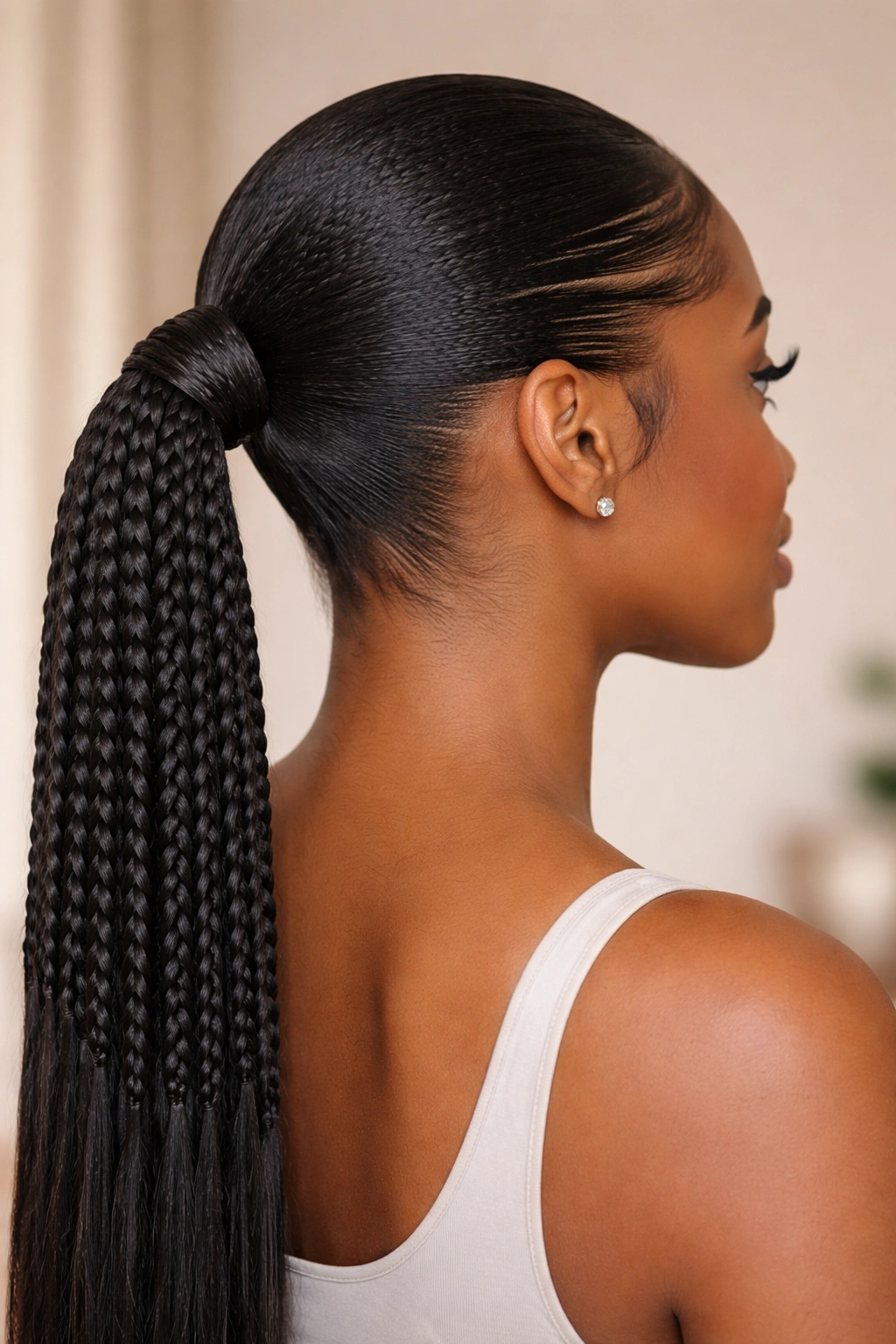
Feed-in braiding is one of the smartest choices if your goal is less tension. The hair is added gradually, so the start of the braid does not feel like a sudden lump at the root. That matters a lot when the final style is a ponytail and every braid is being gathered into one spot.
I like this style for people who want the braid base to look smooth and controlled, not chunky. The ponytail lands well when the feed-in sections stay even, because the transition from natural hair to extension hair is gentle instead of abrupt.
Good Fit For
- Clients who want a clean braided base with less pull.
- Anyone who wears ponytails often and wants a softer nape.
- Styles that need a smooth start before the tail is tied back.
- Hair that looks best with gradual buildup instead of a hard knot.
Watch this: feed-in only helps if the braider keeps the sections neat. Sloppy feeding still feels sloppy.
10. Side-Swept Low Knotless Braid Ponytail
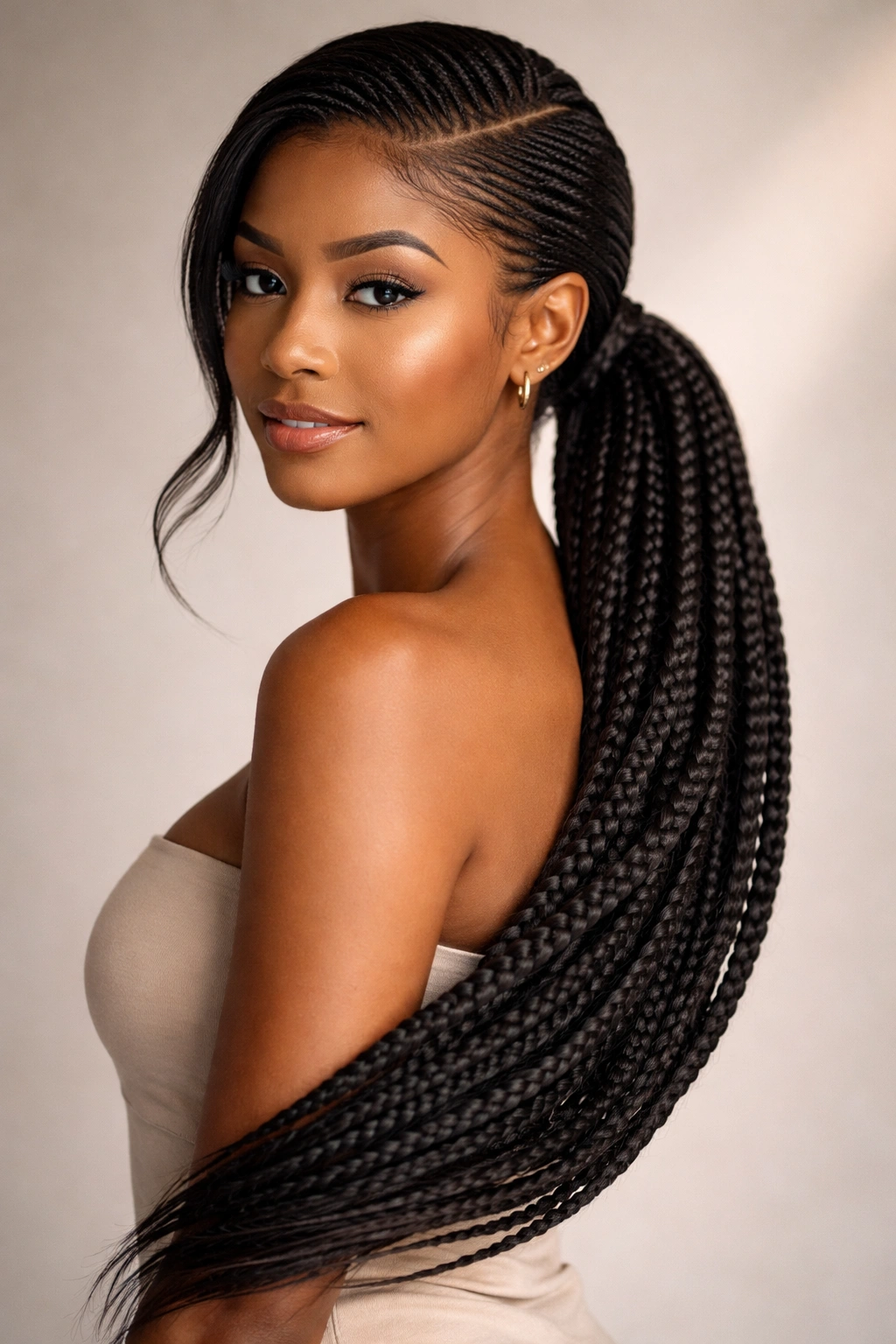
A side-swept ponytail has a little drama built in, which is nice when you want shape without piling the hair high. The sweep over one shoulder softens the look and gives the braids room to fall in a natural line instead of hanging straight down the back.
What I like here is the balance. The base is still low, so the scalp gets a break. But the final shape feels more styled than a plain back ponytail because the tail moves across the body. That makes it a good option for rounder faces, heart shapes, or anyone who likes seeing their hair from the front.
Keep the side at the nape loose enough that the tail can travel without snagging. If the anchor is too tight, the shoulder sweep starts to feel like a tug instead of a pose. That is a miserable trade for a style that should feel easy.
11. Goddess Low Knotless Braid Ponytail
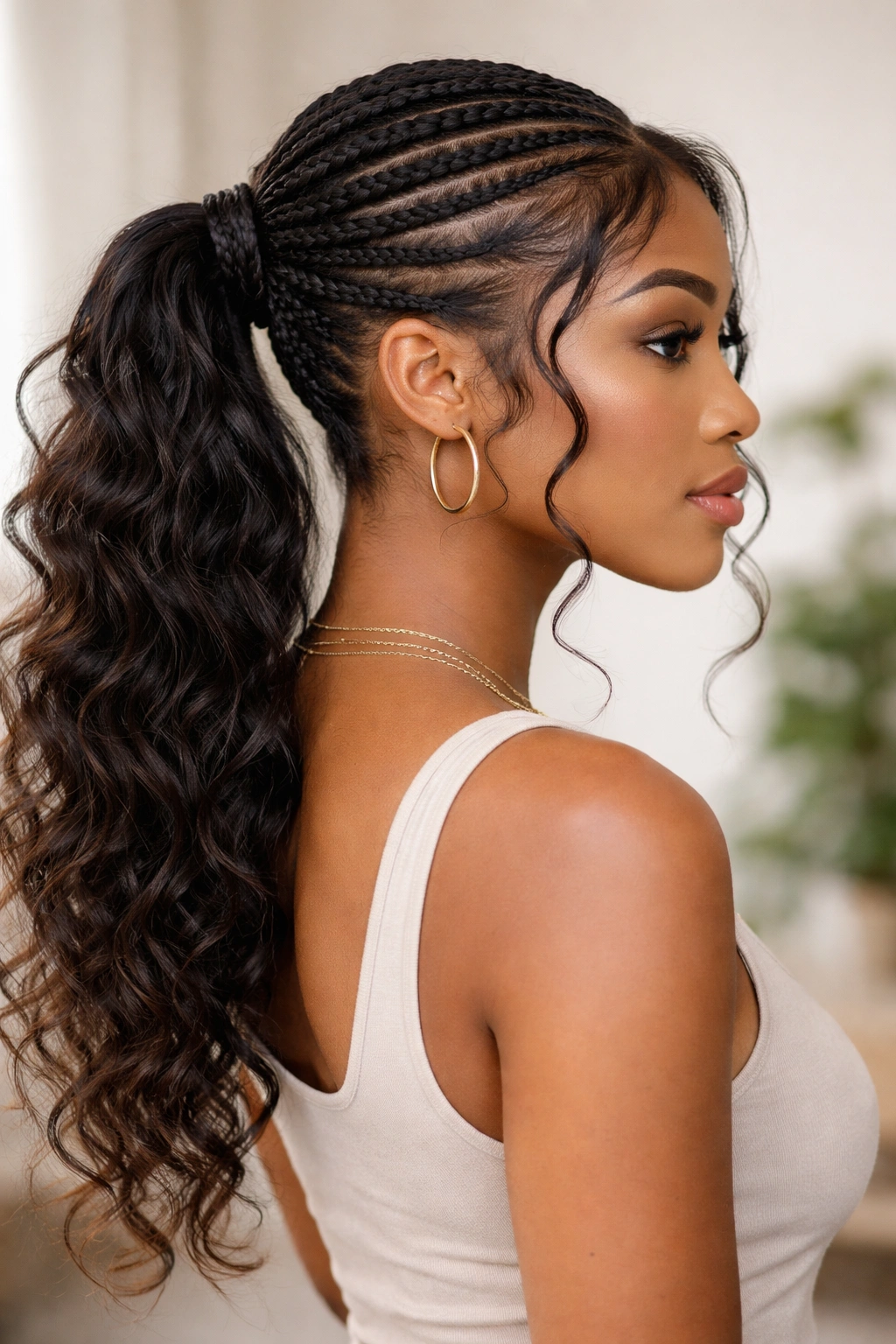
Goddess braids change the energy fast. Add a few loose curly pieces into the tail or around the face, and the ponytail stops reading strict and starts reading soft.
The loose pieces also help if you do not want every braid in full view. They break up the shape in a good way. A straight braided tail can feel a bit formal or severe; a few curls make it friendlier, which is often the better move for everyday wear.
I prefer this version when the outfit is simple and the hair needs to carry some interest on its own. Just do not overload it with too many curls. Two or three curly accents near the front and a few through the tail are enough. Anything more starts to look busy, and low ponytails wear best when the shape can breathe.
12. Twisted-Base Low Knotless Ponytail
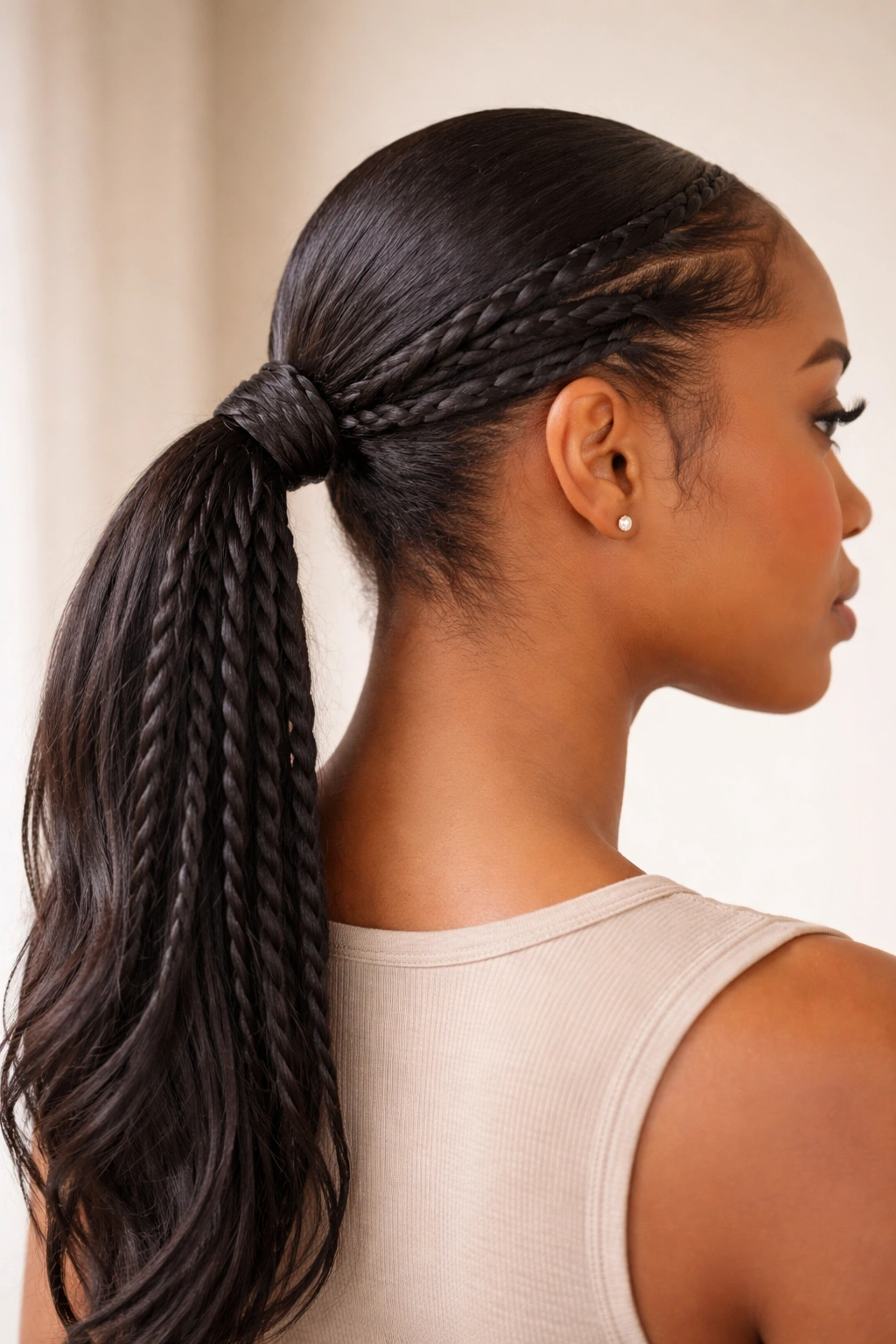
Twists at the base give the ponytail a flatter, calmer start. Instead of gathering every braid into a simple tie, you bring the front sections into two-strand twists or flat twists that run toward the nape before joining the tail.
What Makes It Practical
The twist softens the line where the hair is anchored, which can make the style feel less tight at the root. It also gives you a cleaner path into the ponytail, so the base does not puff up or sit bulky under the tie.
- Good for people who want a low profile at the nape.
- Helpful when you want to refresh the front without redoing the whole head.
- Nice if you like a braid-and-twist mix instead of a single braid pattern.
- Easier to dress up with one small accessory at the join point.
I reach for this one when I want the style to look tidy from the side. It has a nice sculpted feel without needing extra length or extra weight.
13. Crisscross-Part Low Knotless Braid Ponytail
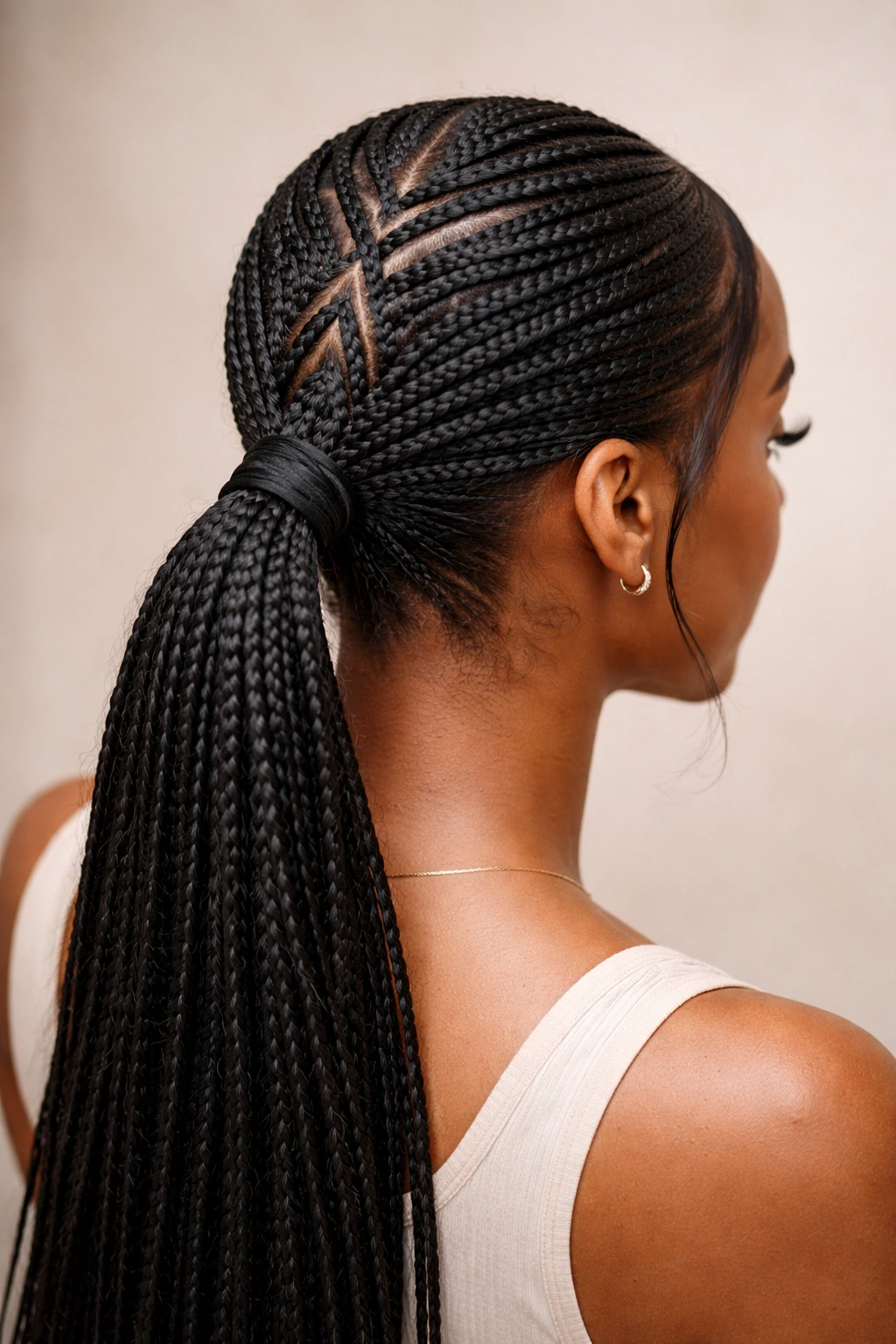
Crisscross parting is one of those details that looks more complicated than it really is. The pattern does the visual heavy lifting before the ponytail even starts, so the finished style has a built-in sense of movement at the crown.
Because the ponytail sits low, the crisscross design stays visible where people actually notice it. That is a big deal. A lot of pretty braid patterns disappear once the hair is gathered, but this one still shows from above and from the side.
Keep the front sections clean, but not too tiny. Tiny front sections can feel fussy if your scalp is sensitive. A slightly larger crisscross pattern gives the same visual punch with less strain, and that is the version I would choose every time.
14. Sleek Low Knotless Braid Ponytail
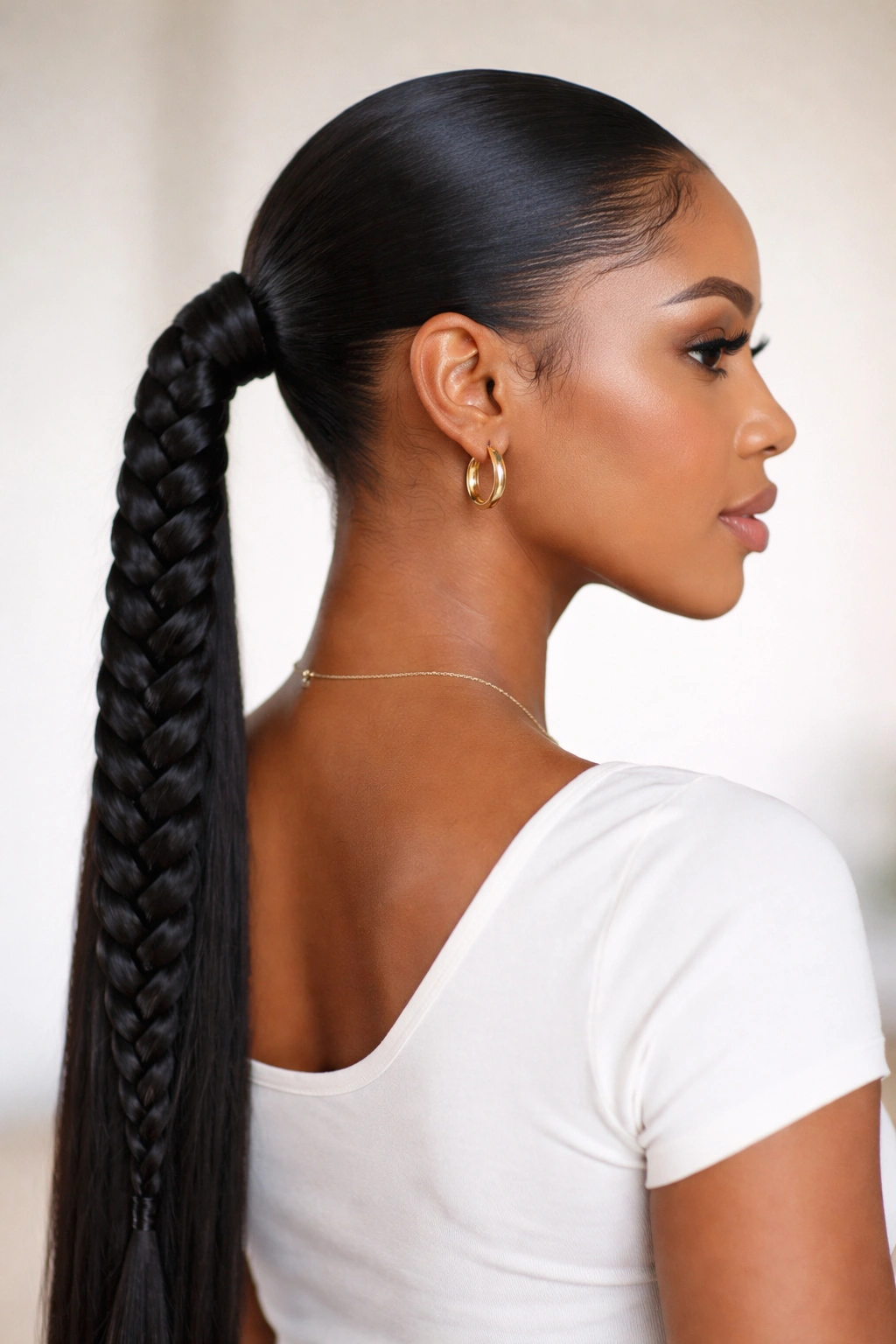
Some days call for less ornament and more shape. A sleek low knotless braid ponytail gives you that clean, smooth line without extra cuffs, curls, or scarf layers getting in the way.
The appeal is simple. The braid pattern stays neat, the ponytail sits low, and the finish looks controlled from every angle. That makes it a strong pick for work, formal dinners, interviews, or any setting where you want the hair to look composed without looking stiff.
A light foam or setting mousse helps tame flyaways before the ponytail is gathered. I would avoid loading the hair with too much edge product, though. The front should look tidy, not lacquered. One of the nicest things about this style is that it can look polished with barely any visual effort, as long as the base is handled well.
15. Waist-Length Low Knotless Braid Ponytail
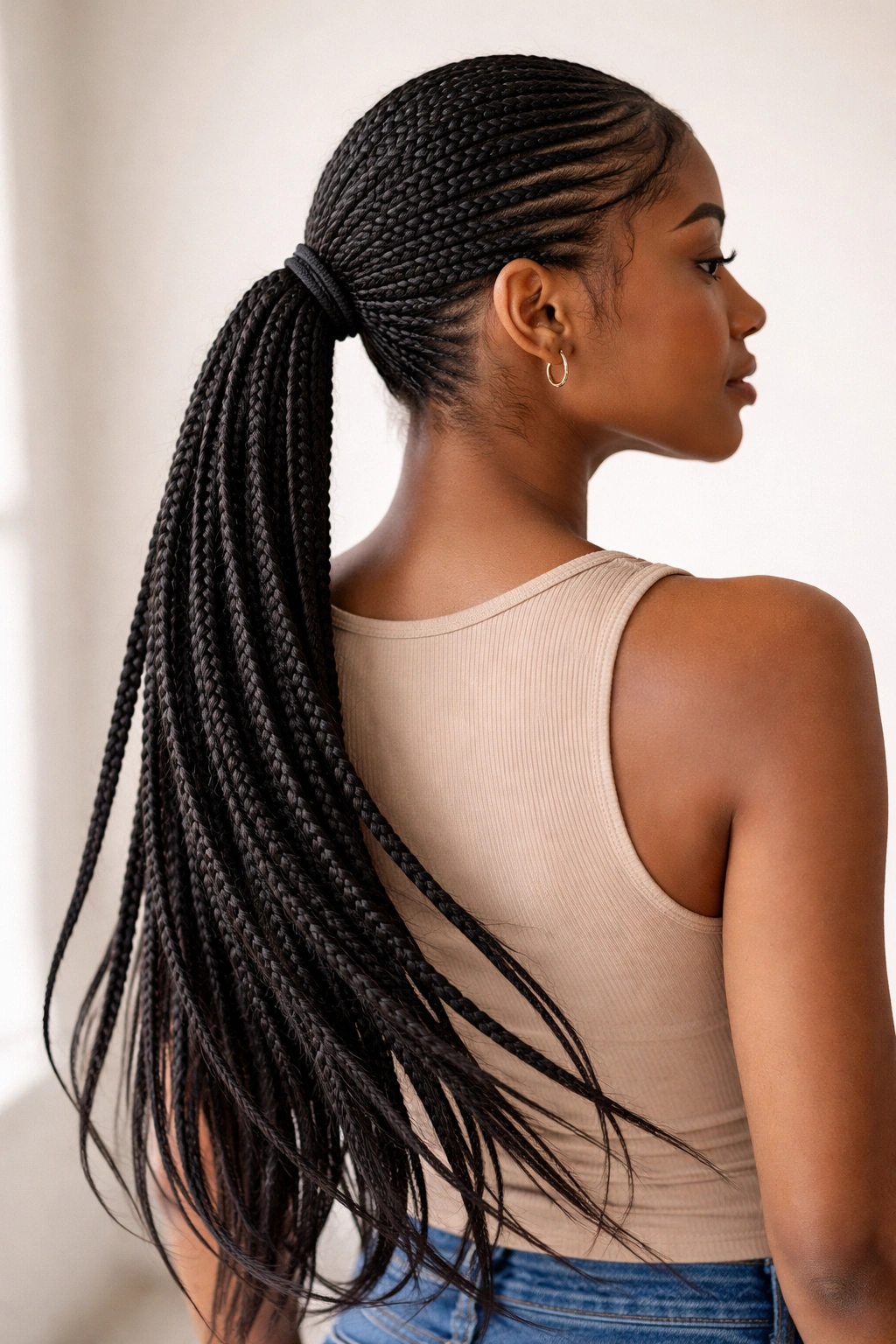
Length changes the whole conversation. Once the ponytail drops to waist length, the style becomes about movement, weight, and how the hair feels when you turn your head.
That is where people get it wrong. Long braids do not automatically look better just because they are long. If the extensions are too dense or the ponytail tie is too high, the whole thing starts to pull on the neck and shoulder line. A waist-length ponytail should swing, not drag.
How to Wear It Well
- Keep the base low enough that the tail falls naturally down the back.
- Use moderate braid thickness instead of stacking extra hair into every section.
- Tie the ponytail securely, but not so hard that the nape feels compressed.
- Trim uneven ends if the finish starts looking ragged.
A long low ponytail is gorgeous when it moves. It is a headache when it behaves like a backpack strap.
16. Layered Low Ponytail with Face-Framing Braids
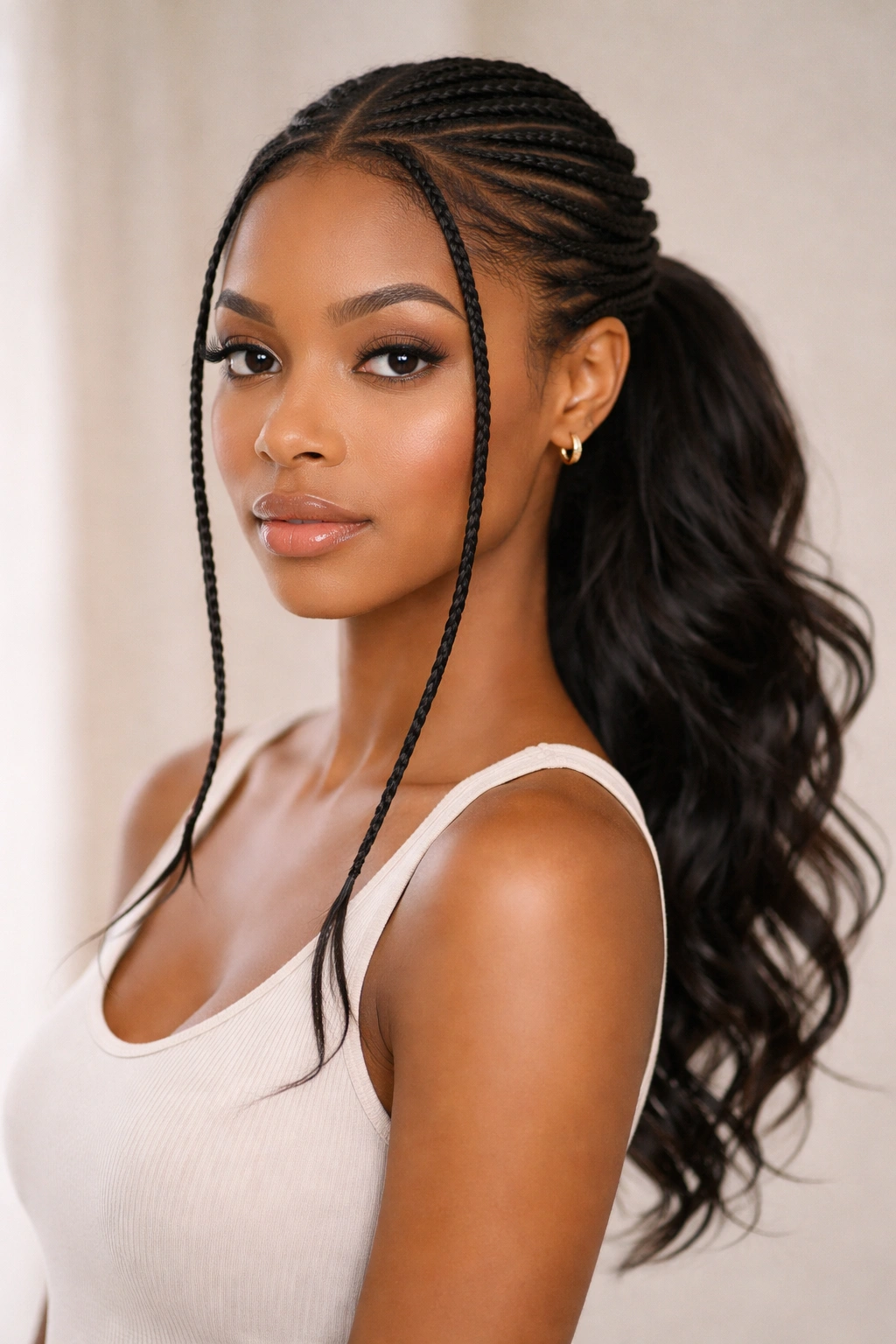
A layered ponytail gives the eye somewhere to go. Instead of one solid curtain of braid length, you get movement in the front, a little separation through the tail, and a shape that feels less severe around the jaw.
Face-framing braids make a big difference here. They soften the line near the cheeks and stop the style from looking too pulled back. I like this for people who enjoy the idea of a low ponytail but do not want the face fully exposed.
The best versions keep the front pieces light and intentional. You do not need a ton of them. Two slim braids or a couple of curled face-framing pieces can do enough work on their own. The rest of the ponytail can stay neat and low, which is the whole point.
17. Crown-Braid Into a Low Knotless Ponytail
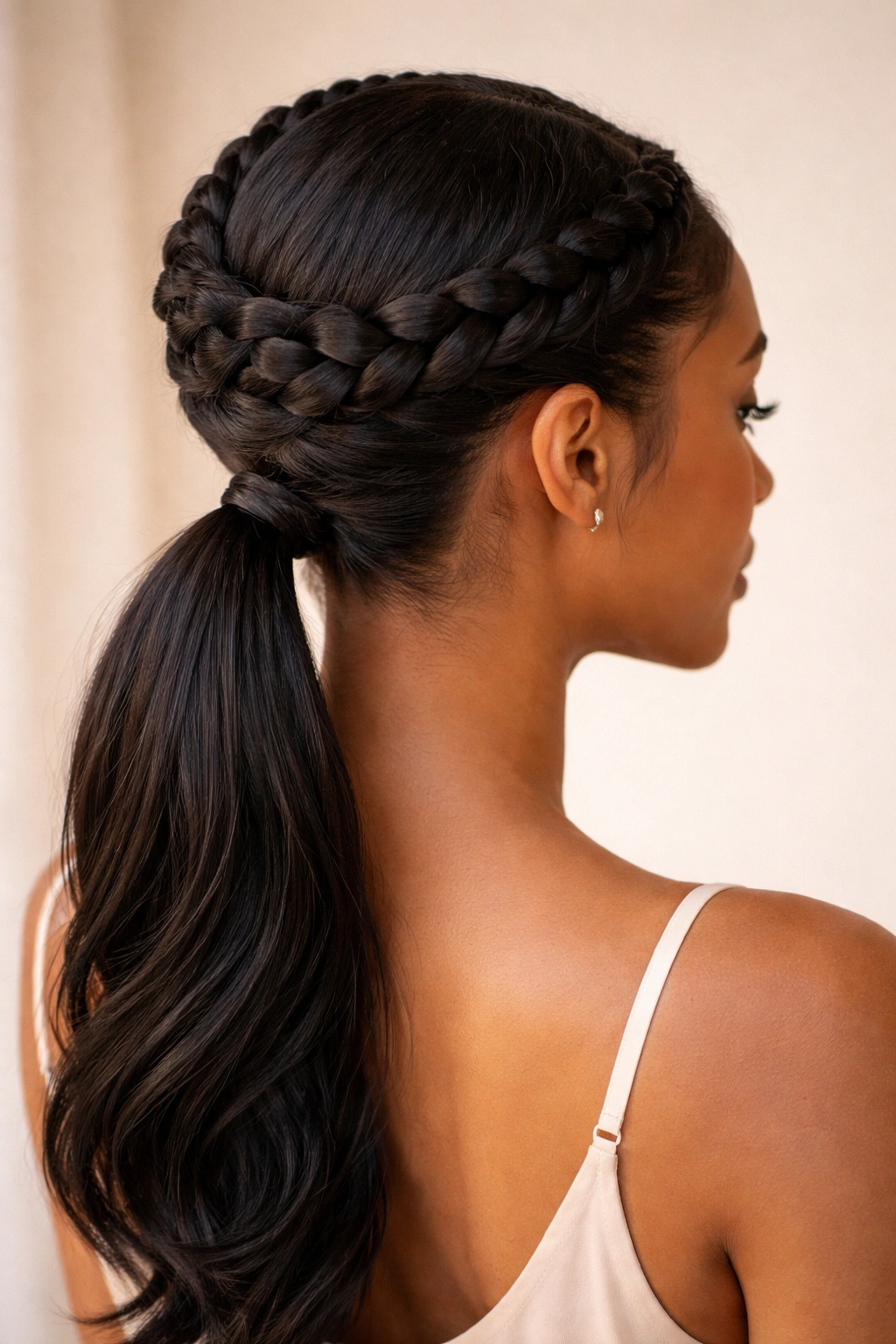
A crown braid into a low ponytail looks formal without feeling locked down. The braid around the top of the head leads the eye back toward the nape, then the ponytail drops out from there in a softer line.
What I like about this version is that it gives structure where the eye first lands, but it does not demand a full updo. You still get length. You still get the low, comfortable base. You just get a cleaner front.
Where the Tension Lives
The crown should sit snug, not pinched. If the braid around the hairline is too tight, the style stops being graceful and starts feeling like a headband someone pulled too hard. Keep the perimeter relaxed, especially around the temples, and let the ponytail itself carry the visual weight.
This is one of the better picks for ceremonies, dinners, or photo-heavy days. It has enough detail to look special, but not so much that it takes over the whole look.
18. Beaded Low Knotless Braid Ponytail
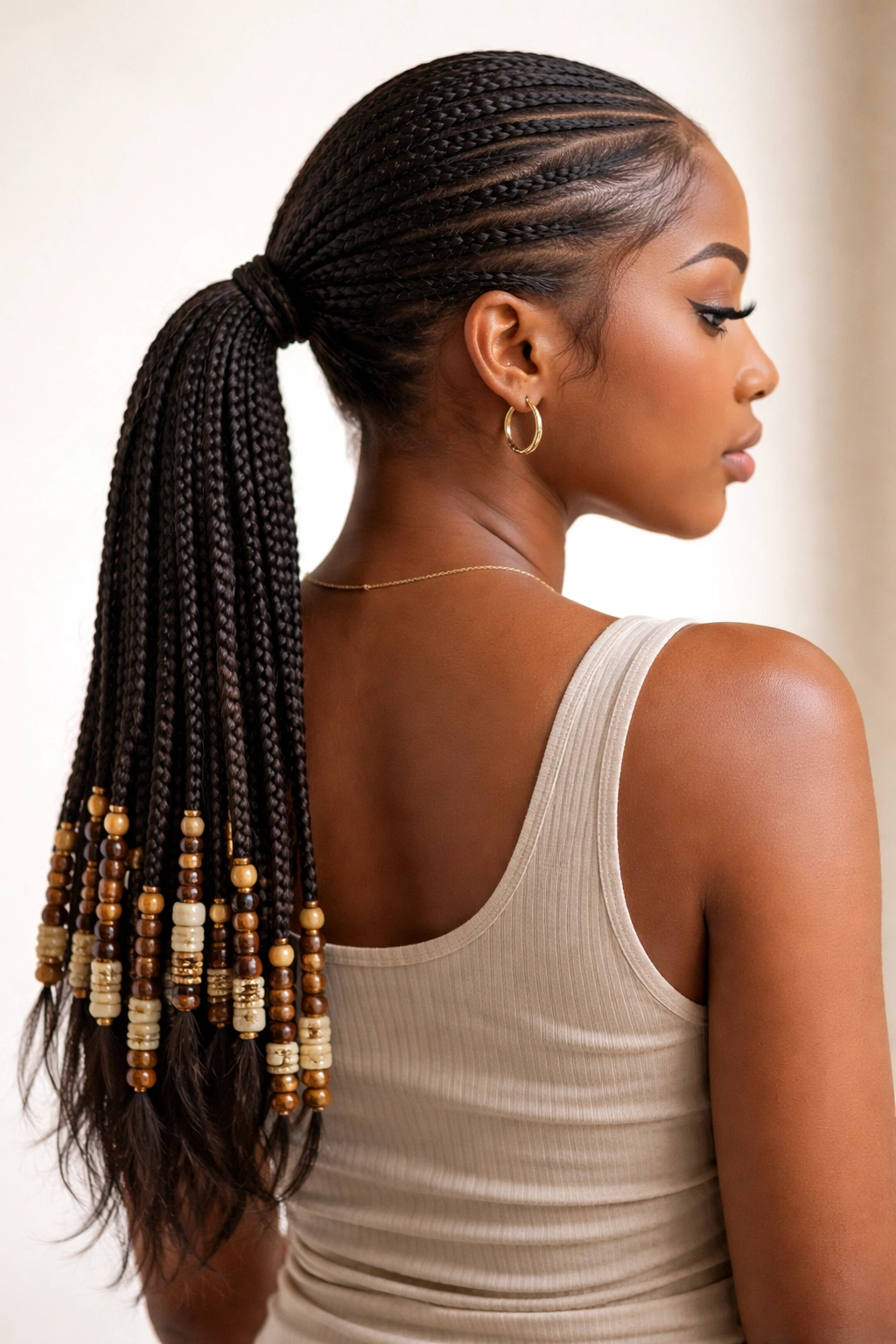
Beads bring sound, motion, and a little edge to a low braid ponytail. They also change the weight distribution, which is why placement matters more than quantity.
Put the beads lower on the tail if your scalp is sensitive. That keeps the base calmer and prevents the ponytail from feeling front-loaded. A few wooden or lightweight plastic beads can look sharp without dragging the whole style down.
- Use lighter beads near the ends, not near the roots.
- Mix one bead size, not four different ones.
- Keep the base free of extra hardware if the hairline already feels tender.
- Let the beaded section move; do not pack it so tightly that the braid loses swing.
I like beads when the rest of the outfit is plain. They carry enough personality on their own.
19. Curved-Part Low Knotless Ponytail
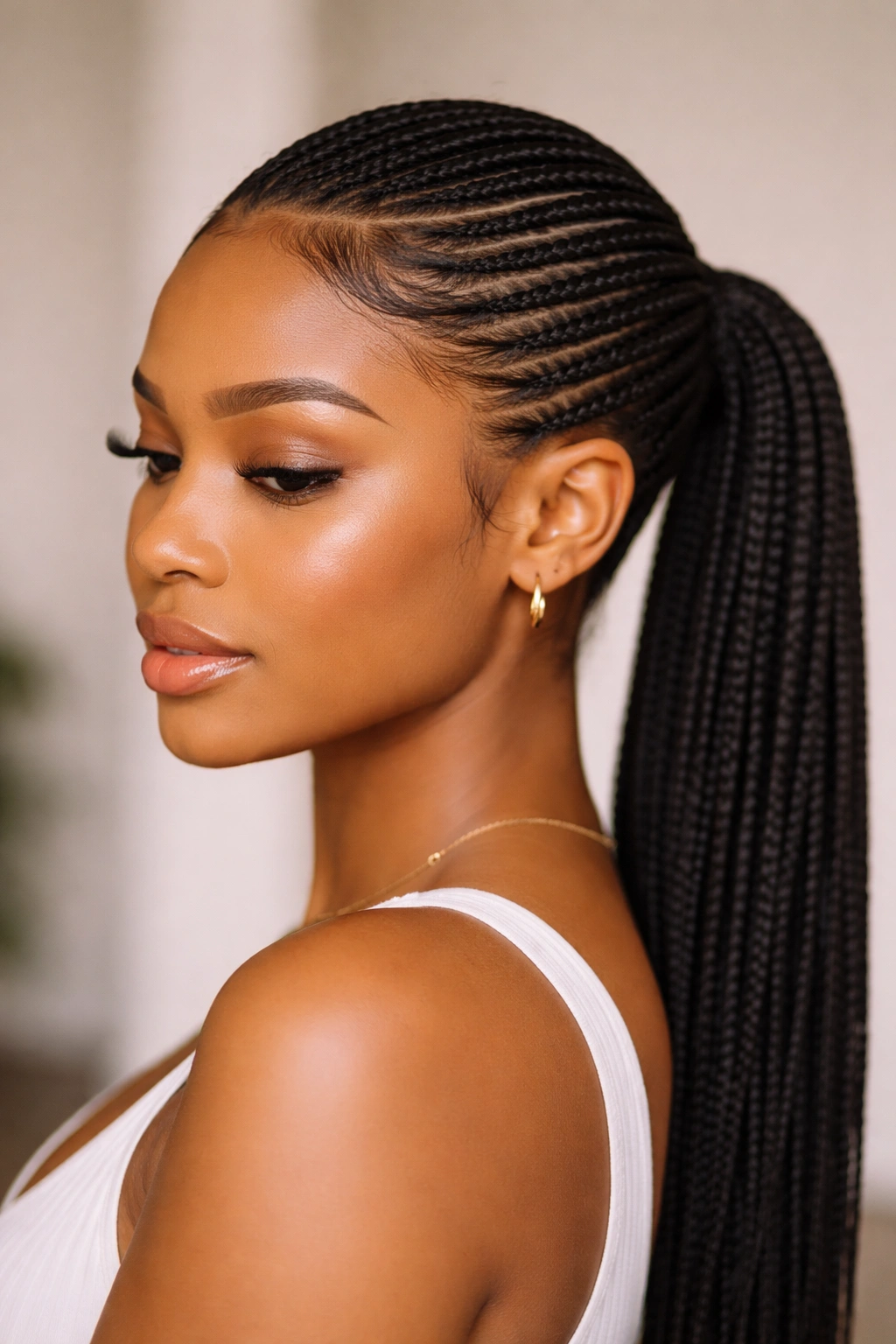
A curved part gives the style a softer start than a straight center line. It arcs gently across the head, which makes the ponytail look more shaped and less rigid.
What to Ask For
- A shallow curve around the front instead of a hard straight part.
- A low anchor point that follows the curve instead of fighting it.
- Enough spacing at the temple so the shape does not feel tight.
- A neat finish at the nape so the curve leads cleanly into the ponytail.
I like this on people whose faces look better with a little movement near the top. A curved part has a prettier flow than a blunt line, and it also helps the style feel less technical. That sounds small, but braid styling is full of little things like this.
The payoff is a ponytail that feels shaped, not forced.
20. Mixed-Size Low Knotless Braid Ponytail
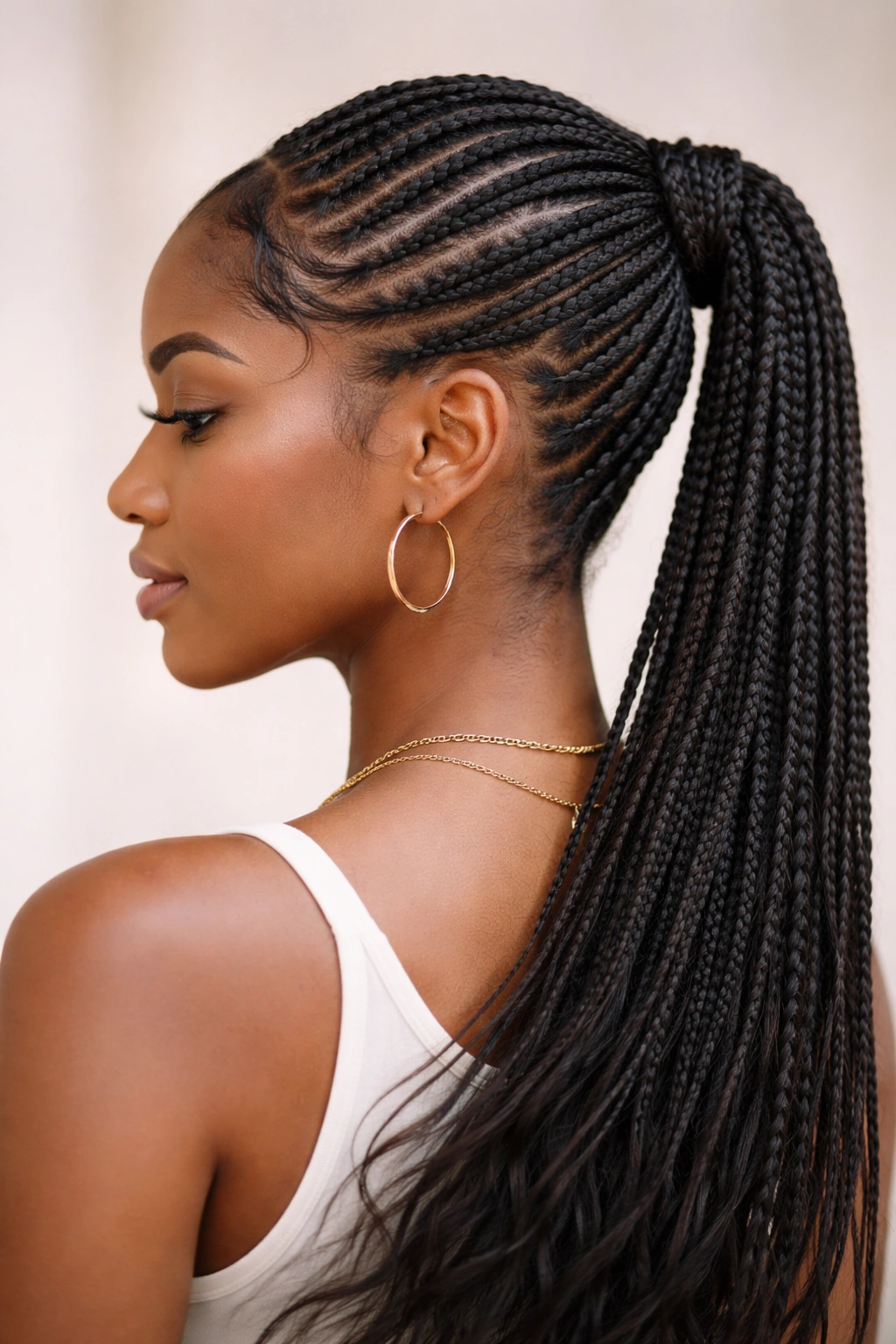
Mixed braid sizes are underrated. Using smaller braids near the front and medium or slightly larger braids toward the back gives the ponytail dimension without making the whole head look uniform.
That difference matters visually and physically. The front can stay detailed without becoming too heavy, while the back can support the ponytail’s length and movement. It is a smart way to get fullness where you want it and a little relief where you do not.
This style works well if you like braid patterns that look hand-built instead of factory-neat. There is a bit of rhythm to it. Not every braid has to be the same size to look good, and a low ponytail is one of the best places to prove that point.
21. Rope-Wrapped Low Knotless Braid Ponytail
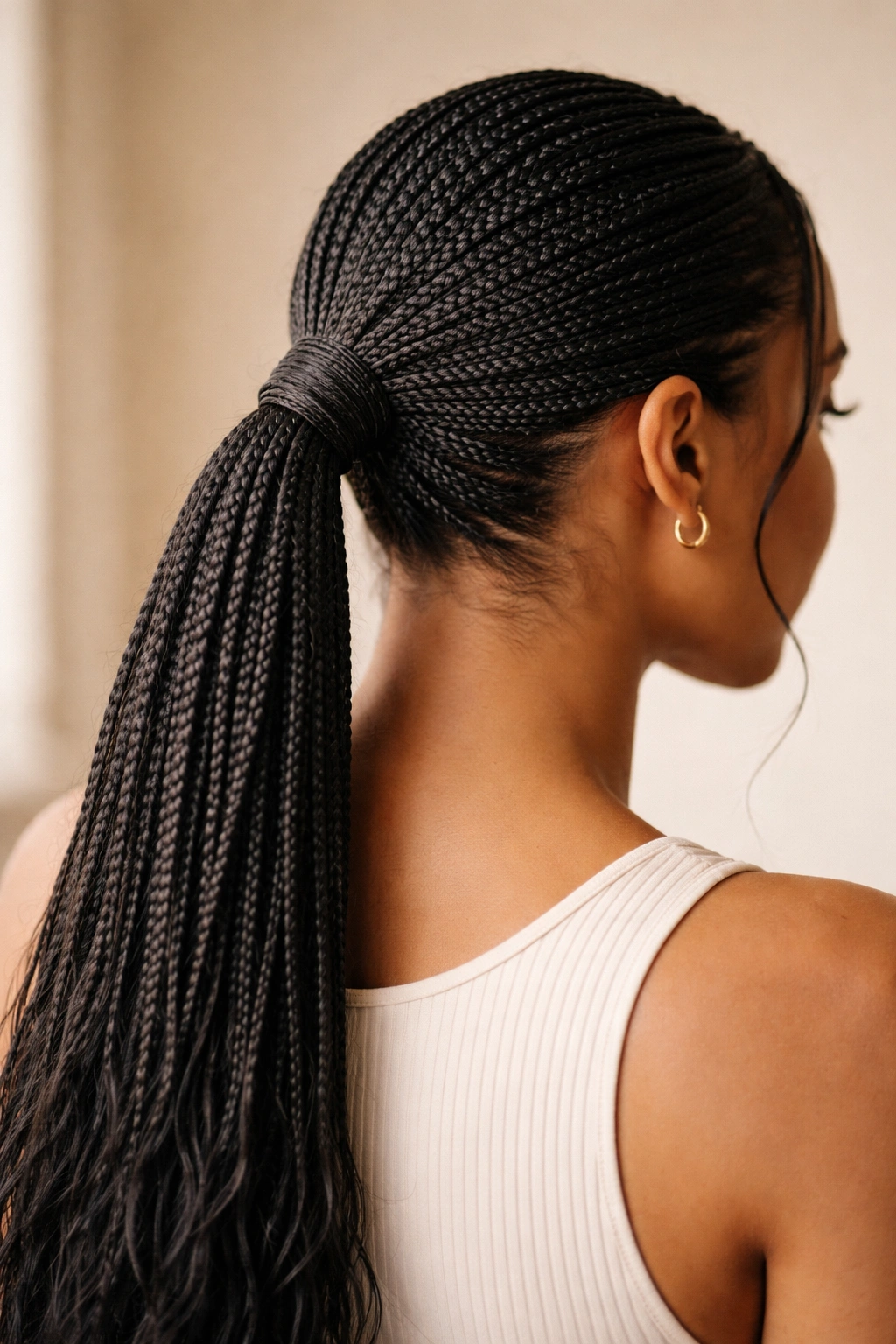
A rope wrap gives the ponytail base a tidy finish and a little extra hold. Instead of a plain elastic showing at the back, a slim braided section circles the join and hides the mechanics of the style.
Why the Rope Wrap Works
The wrap helps anchor the ponytail visually, but it also keeps the base from looking unfinished. That matters with knotless braids, because the braid pattern can be so clean that a visible elastic suddenly feels out of place.
It is also a nice choice when you want the ponytail to survive a long day. The wrap can help the base stay snug without requiring the kind of tight pull that gives you a headache by midafternoon. I still would not overdo the tension, but the style has a more secure feel than a simple tie.
This is a strong option for people who like clean lines and low-maintenance upkeep. It looks intentional from every angle.
22. Soft-Edged Everyday Low Knotless Ponytail
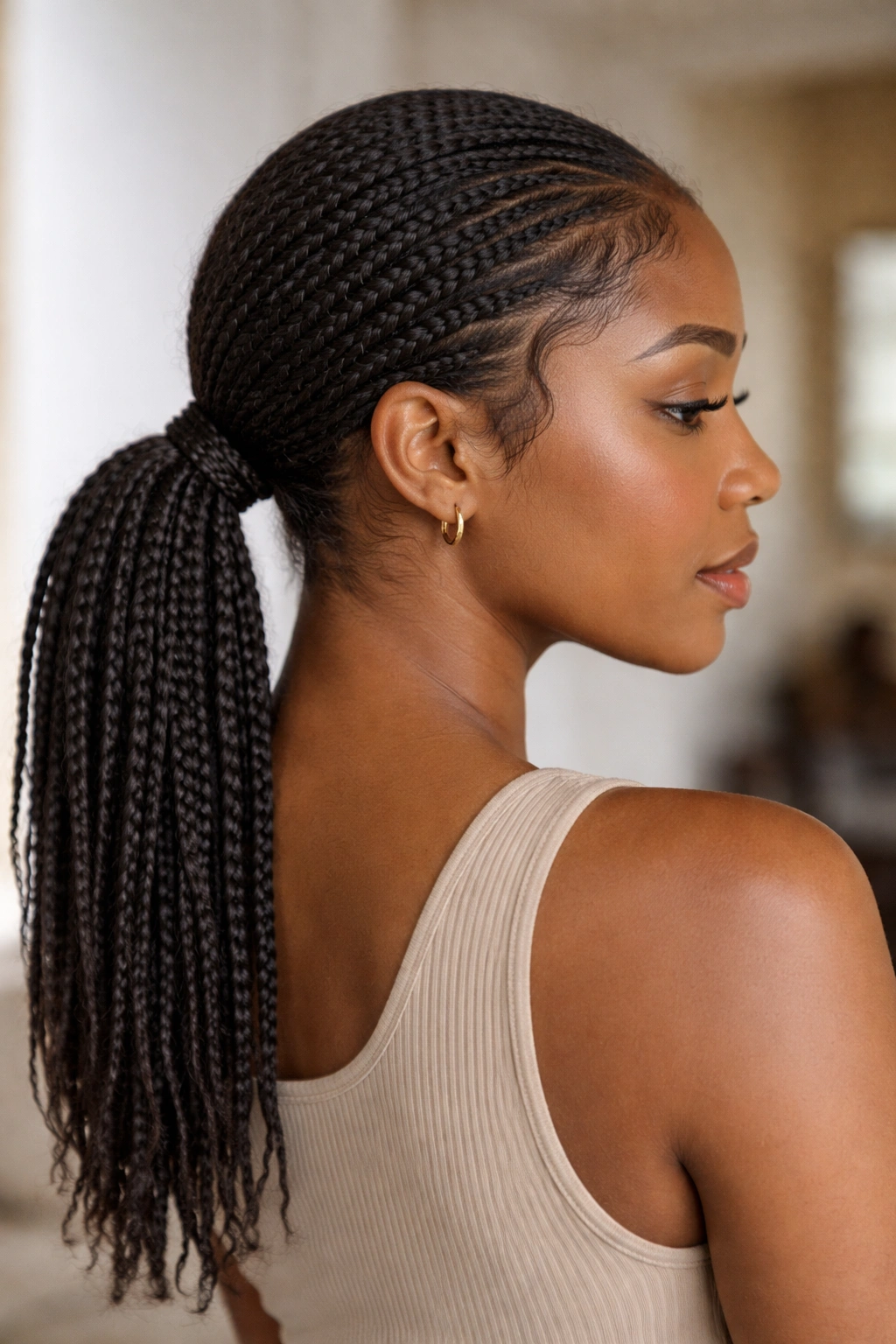
Not every braid ponytail needs to announce itself. Some of the best ones are the quietest: soft edges, a low base, a clean part, and no heavy hardware fighting for attention.
That is the version I reach for when I want a style that can go from errands to dinner without a reset. It feels easier on the scalp because nothing about it is trying too hard. The braids sit where they should, the ponytail hangs naturally, and the finish has room to breathe.
A light touch is the whole point here. Use just enough product to smooth the front, then leave the rest alone. Too much shine or too many accessories can make a low ponytail feel overworked, and braids look better when they keep a bit of texture. Honestly, I think people overlook this style because it does not scream for attention. That is exactly why it works.
23. Bubbled Low Knotless Braid Ponytail
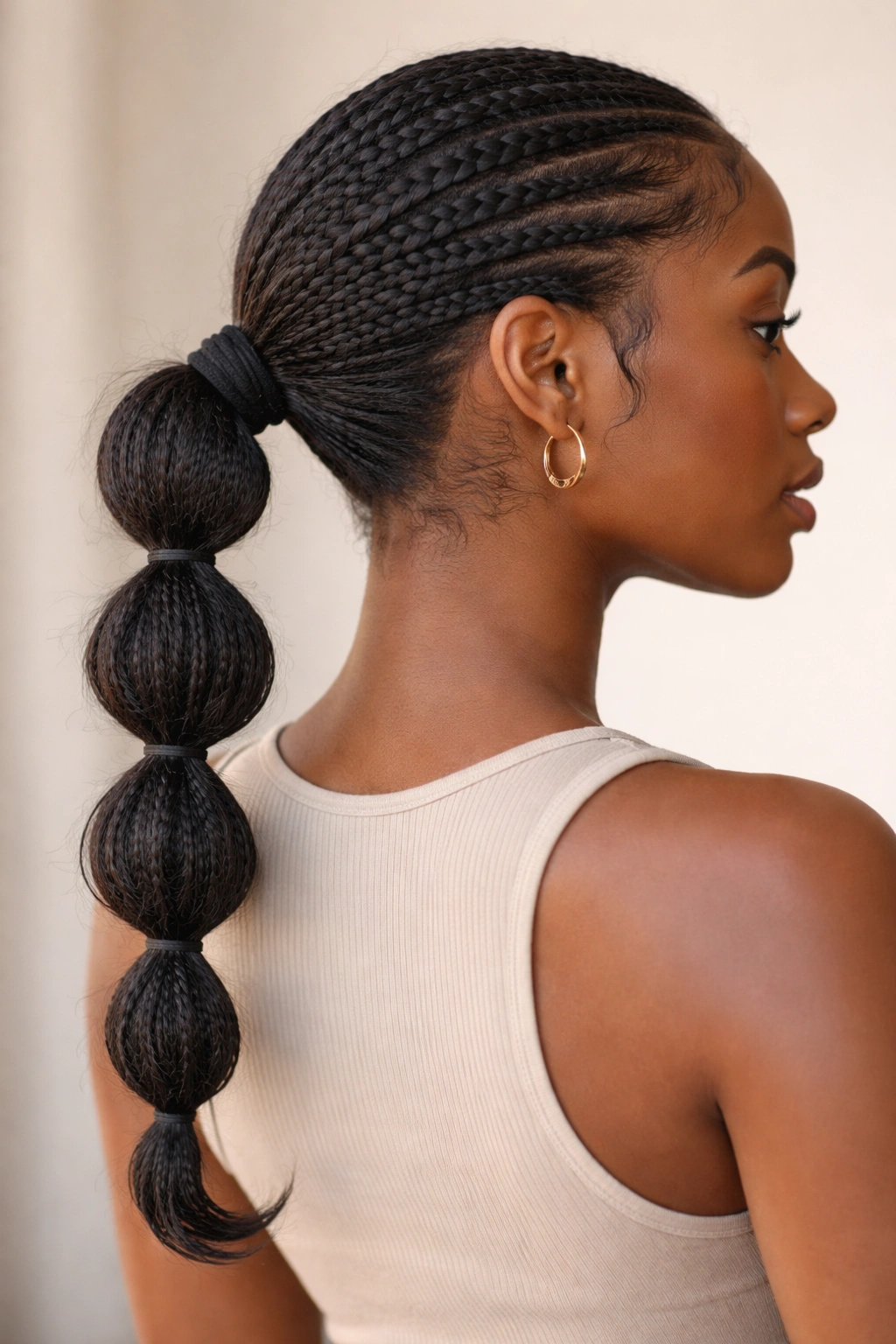
A bubbled ponytail adds shape without adding more braids. You create sections down the length of the low tail with small ties, then gently loosen each section so it rounds out into soft bubbles.
It is playful, but it still works on a low knotless base, which keeps the root calmer than a high ponytail would. The bubbles also let the tail carry the style’s energy, so the base can stay simple and comfortable. That is a smart trade if you want something a little different without changing the braid pattern itself.
A Few Things to Watch
- Leave enough space between each tie so the bubbles do not stack too closely.
- Tighten each section only enough to hold shape, not enough to dent the braid.
- Use clear elastics or small black bands for a cleaner finish.
- Keep the first bubble lower on the neck so the ponytail still feels relaxed.
It is a fun finish, and it photographs well in real life, not just in polished pictures.
Final Thoughts
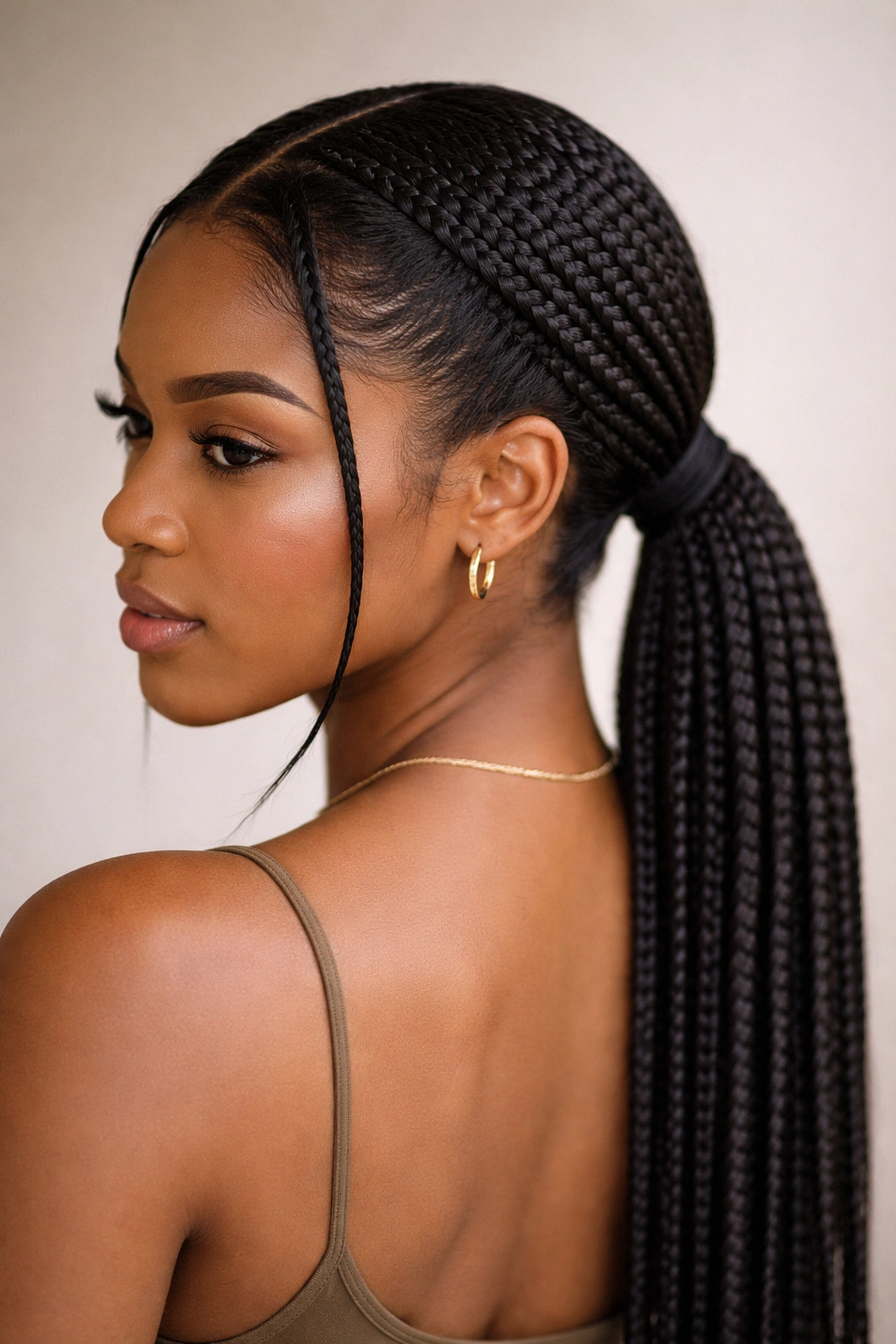
The nicest low knotless braid ponytails have one thing in common: the root feels calm. Everything else is styling. Part shape, braid size, accessories, curls, beads — those are the extras that make the look yours.
If a style starts to ache at the hairline or nape, it is too tight. That part is not negotiable. Braids should sit close, not grip hard.
My personal favorite is still the low, middle-part version with a soft wrap at the base. Clean, easy, and kind to the scalp. Hard to beat that.