



A high ponytail looks easy until the first hour of heat, the first sari pin, or the first time your hair starts sliding out of the elastic at the crown.
Indian high ponytails have their own little set of problems. The hair is often dense, the length is long, and the weight can pull everything down faster than a flimsy top knot ever could. Add humidity, earrings, and a little sweat at the hairline, and a cute ponytail turns into something you keep touching every ten minutes.
The fix is usually not more product. It’s smarter structure: a clean base, the right amount of lift at the crown, and a tie that can handle the weight instead of fighting it. A ponytail that lasts all day usually looks better too, because it keeps its shape instead of slowly sinking into a sad bend halfway through the evening.
So here are 25 Indian high ponytails that hold their own — sleek ones, festive ones, braided ones, soft ones — all with the kind of details that make a style stay put instead of slowly giving up. Start with the classic version; it tells you most of what the others are doing anyway.
1. Classic Indian High Ponytail with a Center Part
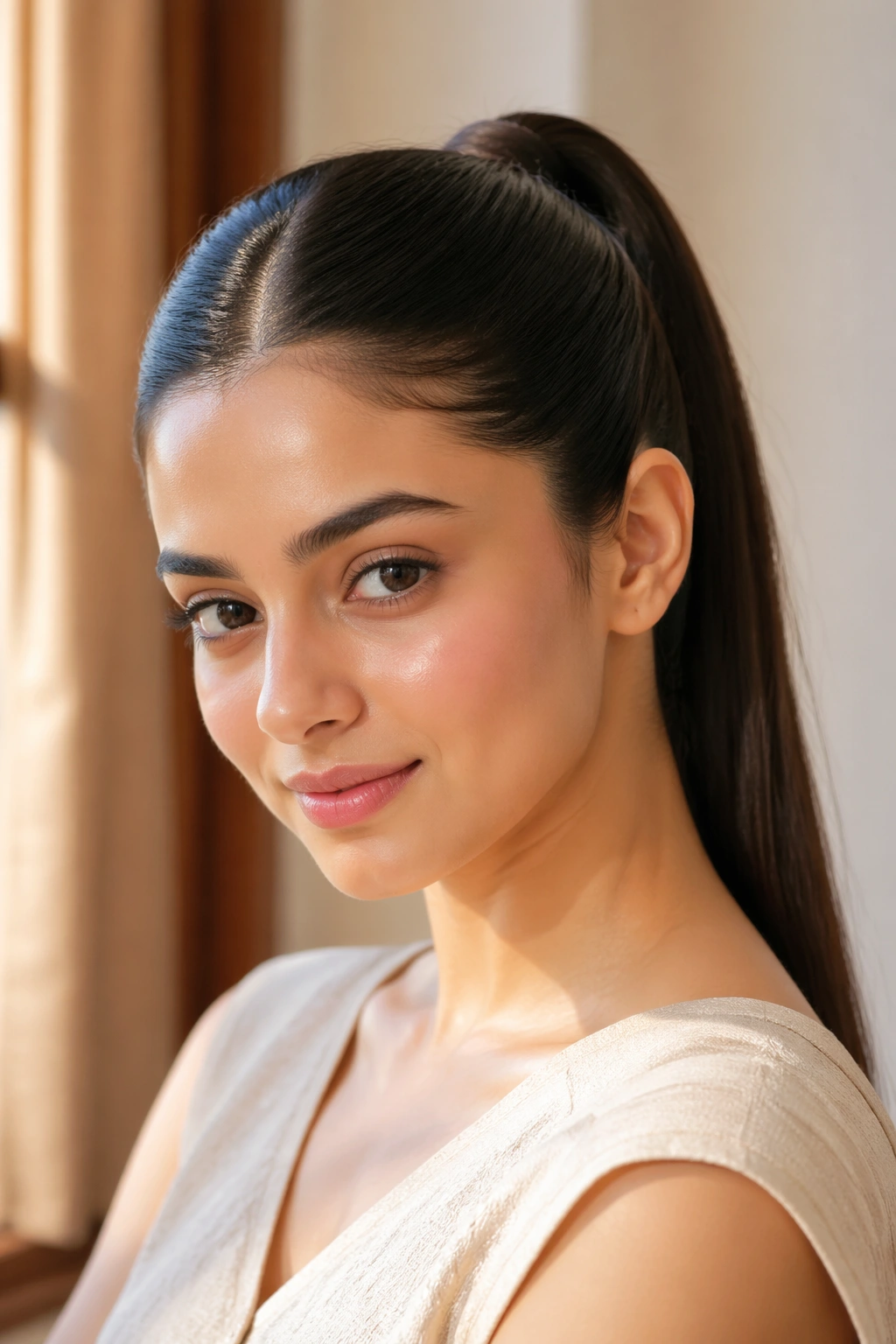
This is the version I reach for when I want hair to look tidy without looking stiff. A clean center part, brushed-back sides, and a ponytail sitting right at the crown give the face a lifted shape that works with almost anything — kurta sets, sarees, sharp earrings, even a plain blouse when the rest of the look is busy.
Why It Holds Better Than It Looks
The trick is to make the base feel small and dense. Section the front with a rat-tail comb, smooth each side back with a boar-bristle brush, and tie the first elastic tight at the crown. Then add a second elastic about half an inch below it. That second tie matters more than people think.
- Keep the part straight, not perfect.
- Use a light mist of spray on the surface hair only.
- Tug the crown upward a few millimeters before you lock the elastic.
Pro tip: if your hair is heavy, pin the ponytail to the top elastic with two crossed bobby pins underneath the base. It hides the anchor and helps the style stay up through a long day.
2. Sleek High Ponytail with a Wrapped Base
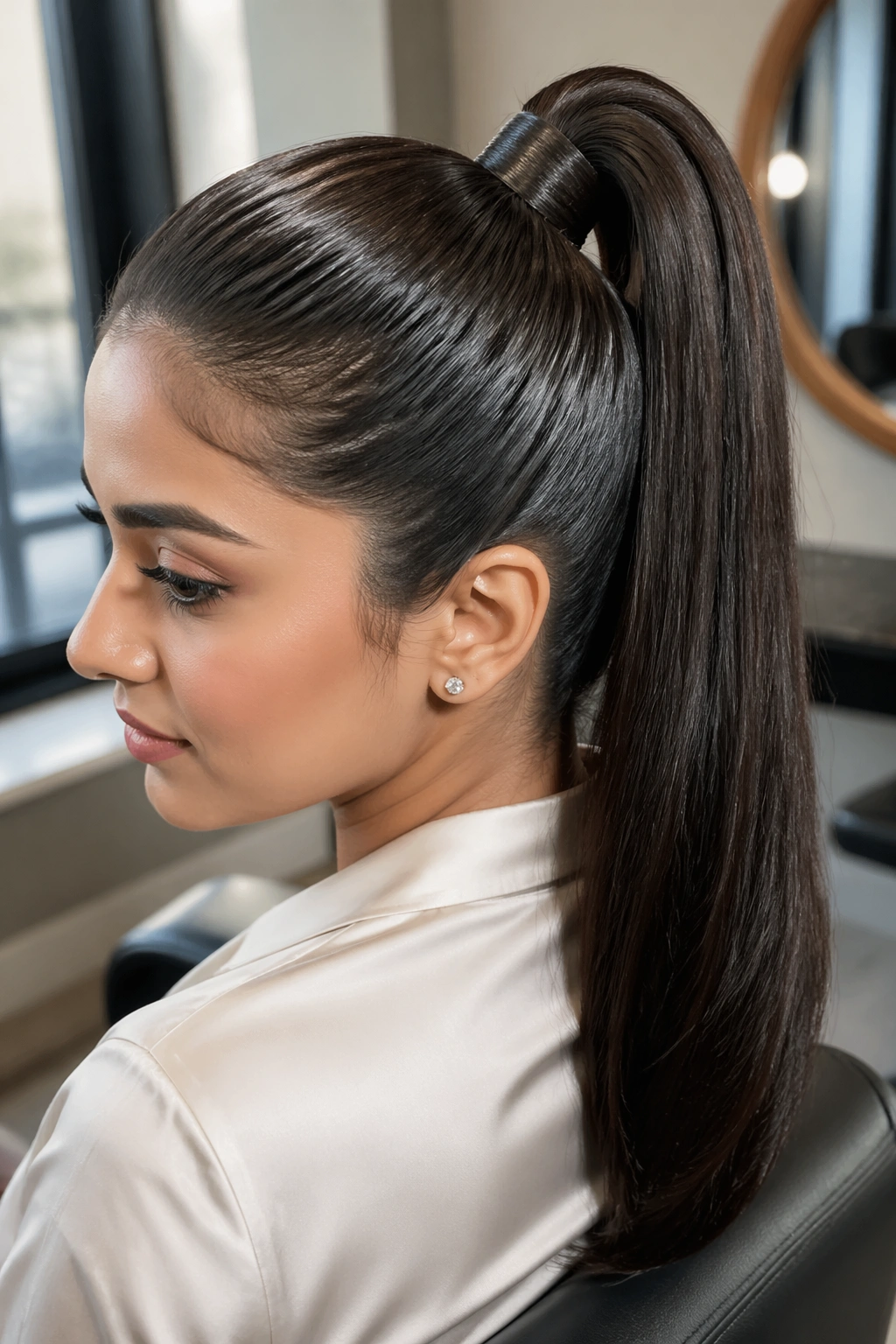
A wrapped base hides the weak spot, which is why this style looks cleaner than a plain elastic from the back.
Leave a narrow strip of hair — about 1 inch wide and 6 inches long — out when you tie the ponytail. Wrap it around the elastic twice, then pin the end underneath with one or two bobby pins. That tiny move does a lot. It makes the ponytail look finished, and it also tightens the visual center so the style feels more secure than it really is.
Use a smoothing cream only from the ears down. Keep it off the crown if your hair slips easily. The top should feel controlled, not greasy. That’s the difference between “sleek” and “why is my ponytail sliding out by dinner?”
3. Side-Parted High Ponytail for Thick Hair
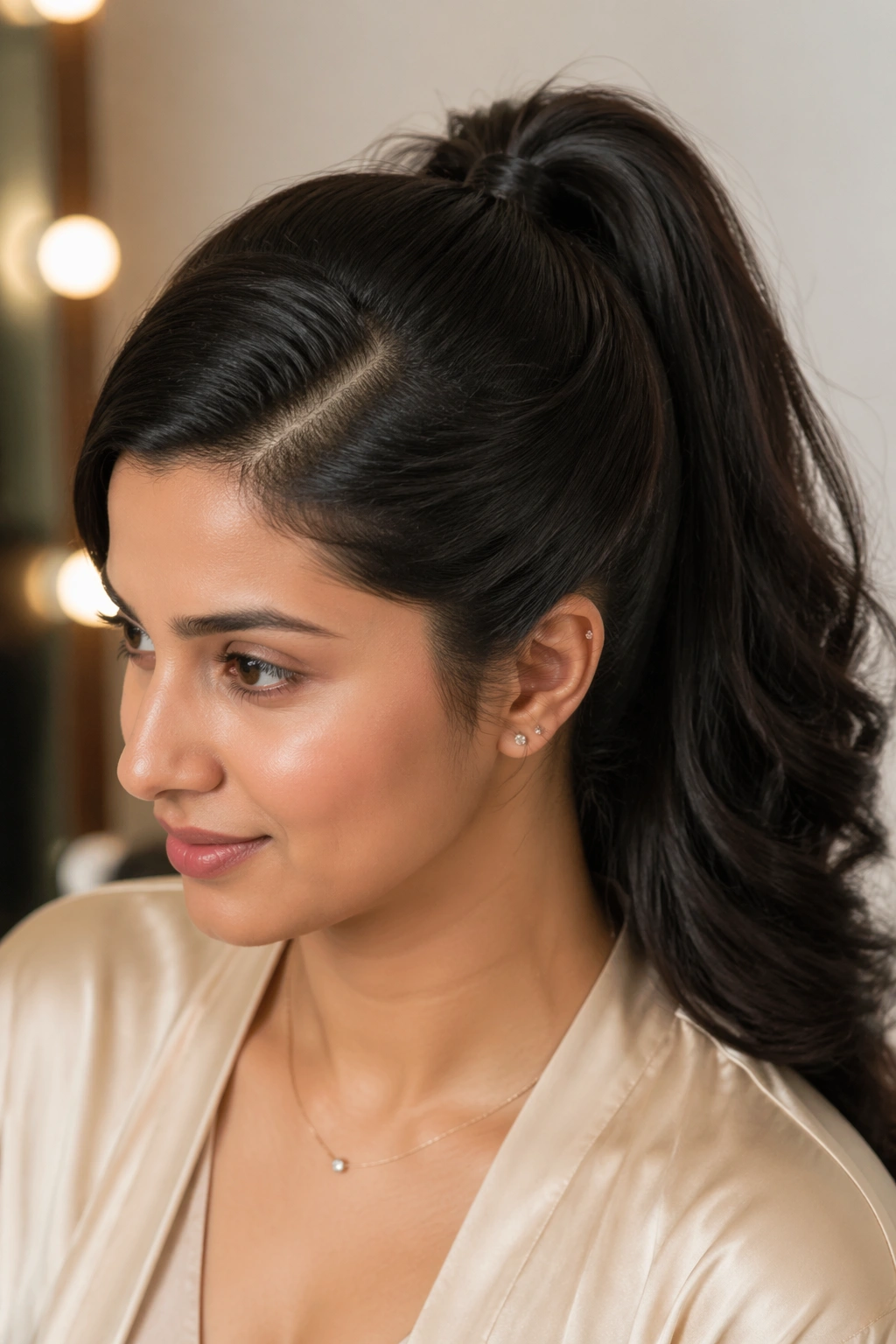
Why does a side part help heavy hair stay up? Because it breaks the weight in a way a center part doesn’t.
If your hair is dense or long, a deep side part can make the front sit closer to the scalp on one side, which gives the ponytail a little more lift where it needs it. Tease a 1-inch strip at the heavier side of the crown, smooth the top layer back, and secure the ponytail at the highest point you can comfortably reach. The style ends up looking softer, too, which is nice if your outfit already has a lot going on.
How to Wear It
- Best with long earrings or a side-swept blouse neckline.
- Keep the part clean, then blur the root area with a light brush.
- If one side collapses, pin it before you worry about the tail.
That last bit matters. Fix the base first. Always.
4. Bubble High Ponytail with Hidden Elastics
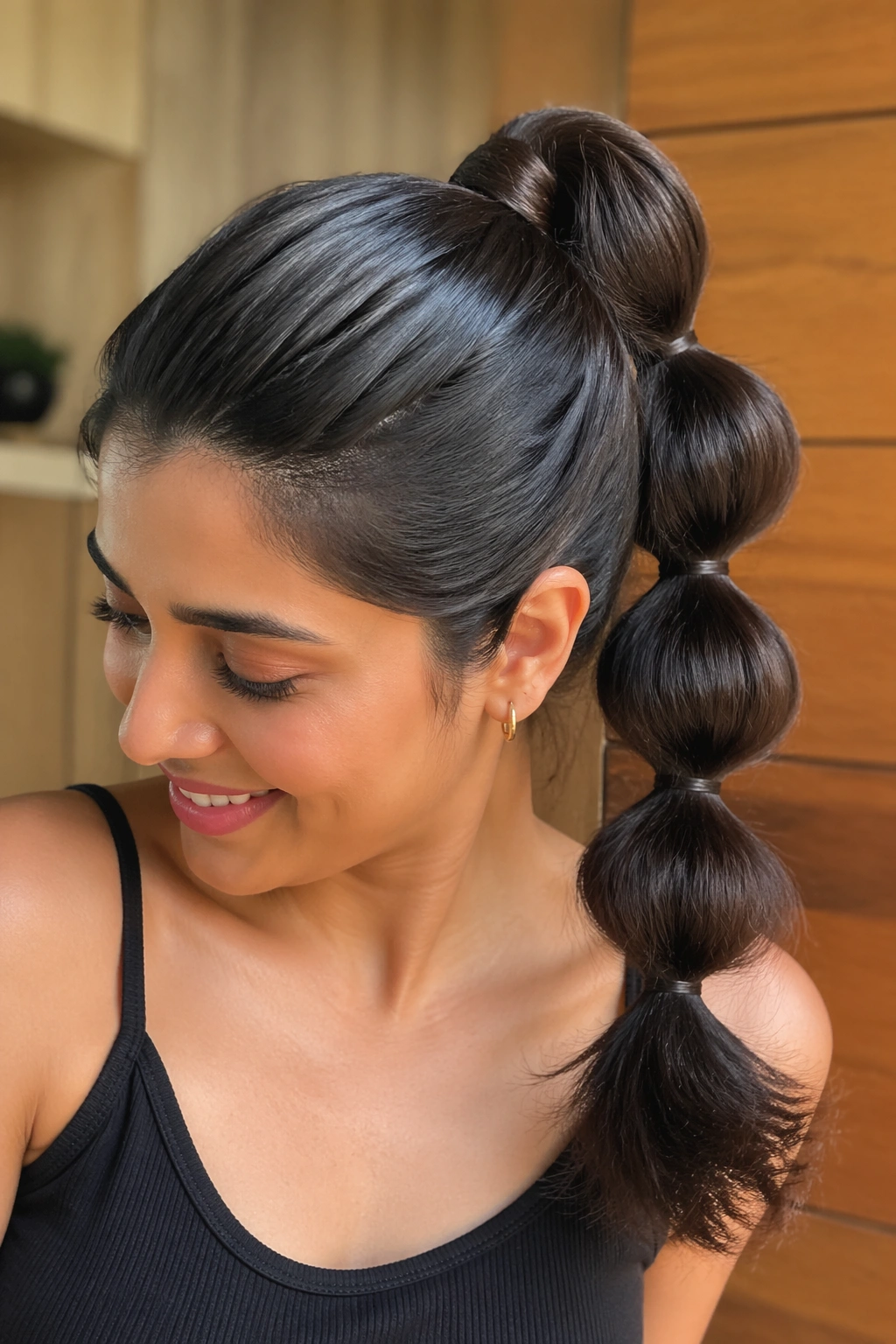
You know the ponytail that survives dancing and still looks intentional? This one.
The bubble shape gives you built-in structure because each section is held separately. Tie the ponytail at the crown, then place small clear elastics every 2½ to 3 inches down the length. Gently pull each section outward with your fingers until it rounds out into a soft bubble. Don’t yank. You want shape, not a puffed-up mess.
- Use 4 to 6 elastics on medium-length hair.
- Wrap a small strand around the first elastic if you want a cleaner base.
- Finish with flexible-hold spray, not heavy lacquer.
This style is especially good on long Indian hair because the extra length gives the bubbles room to breathe. Shorter tails can work too, but the shape reads best when there’s a little swing at the end.
5. Voluminous Crown High Ponytail
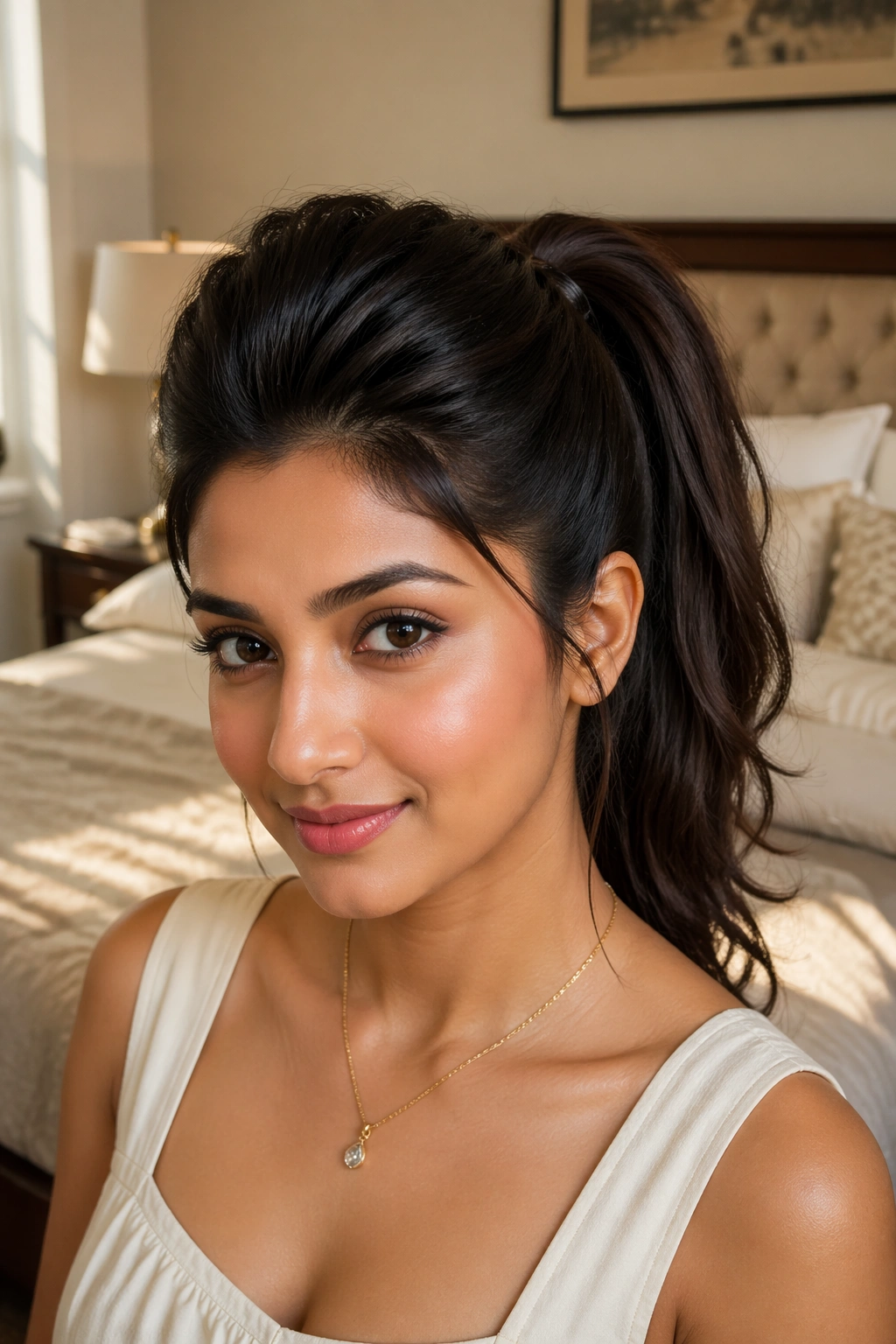
Flat roots ruin a good ponytail.
A little lift at the crown changes everything. Take a 2-inch section from the top, backcomb gently underneath, and smooth the surface layer over it with a brush. Then tie the ponytail at the crown, not just high at the back of the head. That small height shift makes the whole face look more awake.
The point is volume with control. Not teased-to-the-sky drama. Just enough lift to keep the top from collapsing as the day goes on. If your hair is naturally heavy, spray the underside of the crown section before you tease it. That gives the texture something to grip, so the puff doesn’t fall flat in an hour.
This version loves jhumkas, sleeveless blouses, and any outfit where the neckline deserves some space. It also photographs well in real life, which is rarer than people admit.
6. Braided High Ponytail Tail
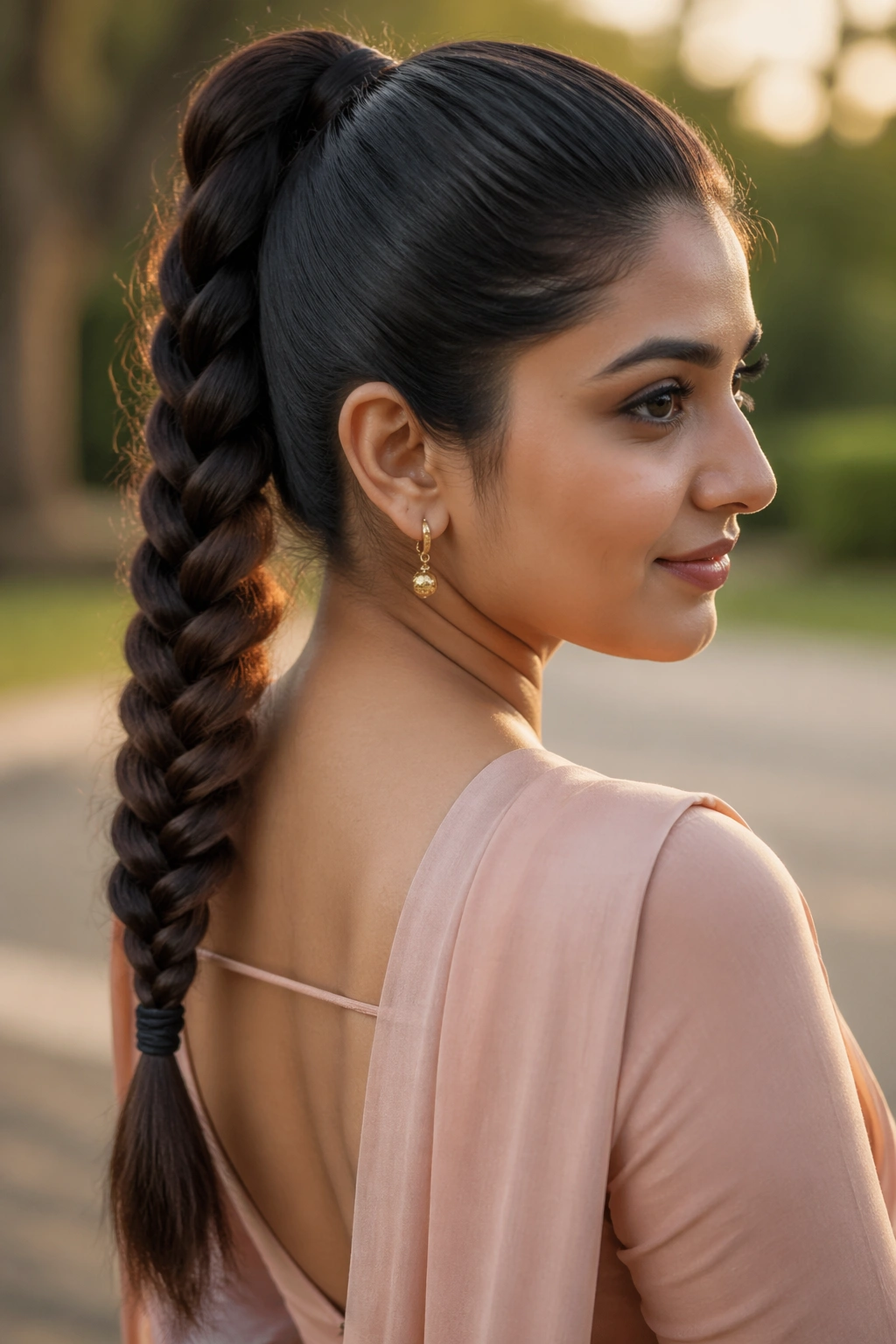
Unlike a loose ponytail, a braid gives the tail its own spine. That is why this version feels calmer and lasts longer when you are moving around a lot.
Tie the ponytail high, then braid the length in a regular three-strand braid or a tighter fishtail if you want a sharper finish. Secure the end with a small elastic, then pancake the braid a little if you want it fuller. The braid keeps layers from slipping out, which matters if your hair is silky or cut in long layers.
Best For
- Long commutes
- Heavy hair that swings too much
- Outfit days when you do not want to keep fixing the ends
It’s one of those styles that looks like more work than it is. That’s the nice part. The braid does the visual heavy lifting, and the base stays neat because there is less loose hair to shift around.
7. High Ponytail with Face-Framing Strands
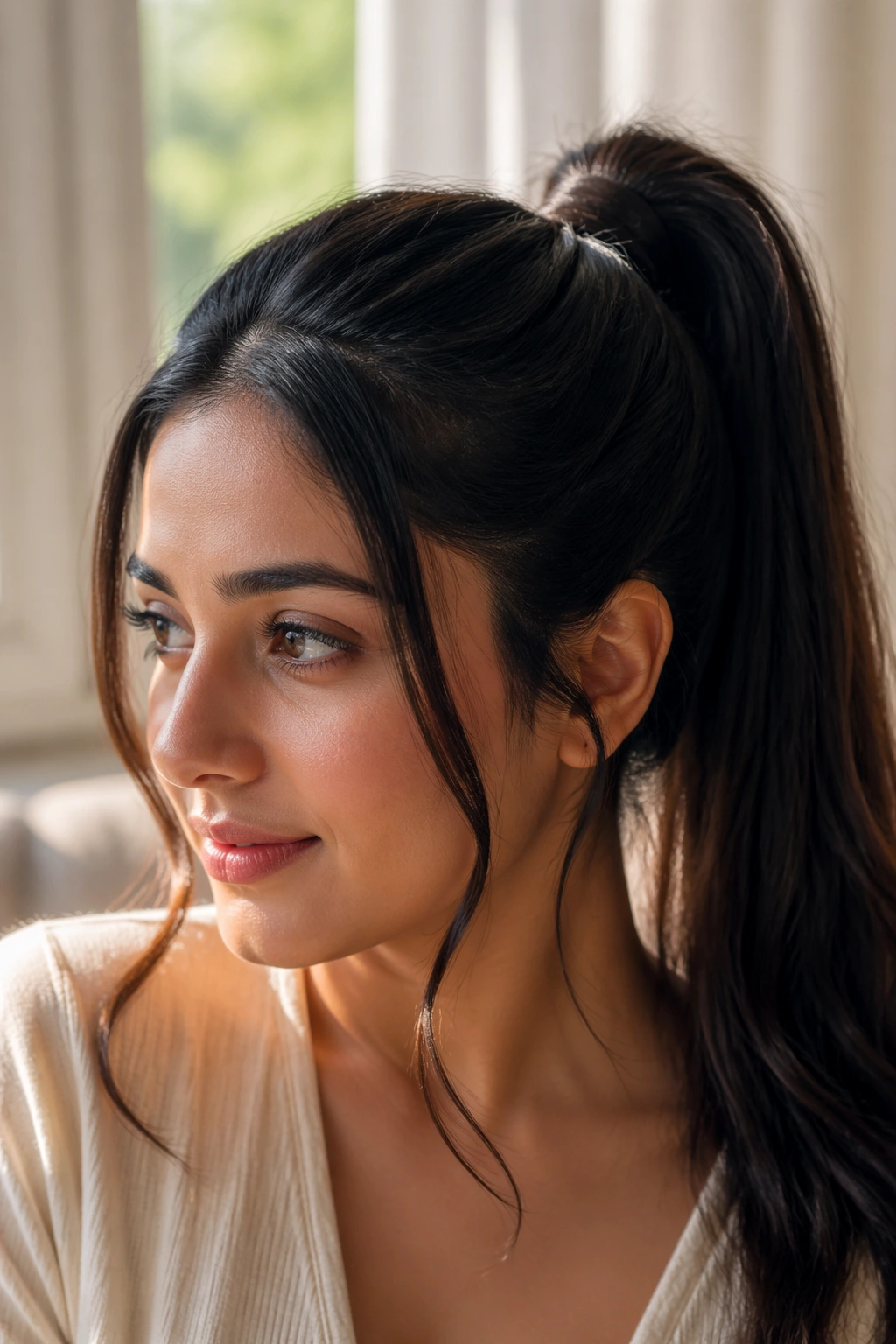
If a fully slicked-back ponytail feels too severe, leave out two slim strands near the temples.
Those pieces soften the look fast. Keep them about ½ inch to 1 inch wide, and curl them lightly if your hair takes shape well. If your hair is straighter and stubborn, leave them natural and let them fall where they want. The ponytail itself should still sit high and tight; the loose strands are decoration, not damage control.
This style works especially well when you want the lift of a high ponytail but still want a bit of softness around the cheeks. It keeps the face from looking boxed in. Nice with daytime functions. Nice with a bindi. Nice with a blouse that has sharp shoulders or a busy print.
Just don’t let those front pieces get too long. Once they start brushing the collarbone, they stop framing and start fighting the rest of the hair.
8. Indian High Ponytail with Gajra Wrap
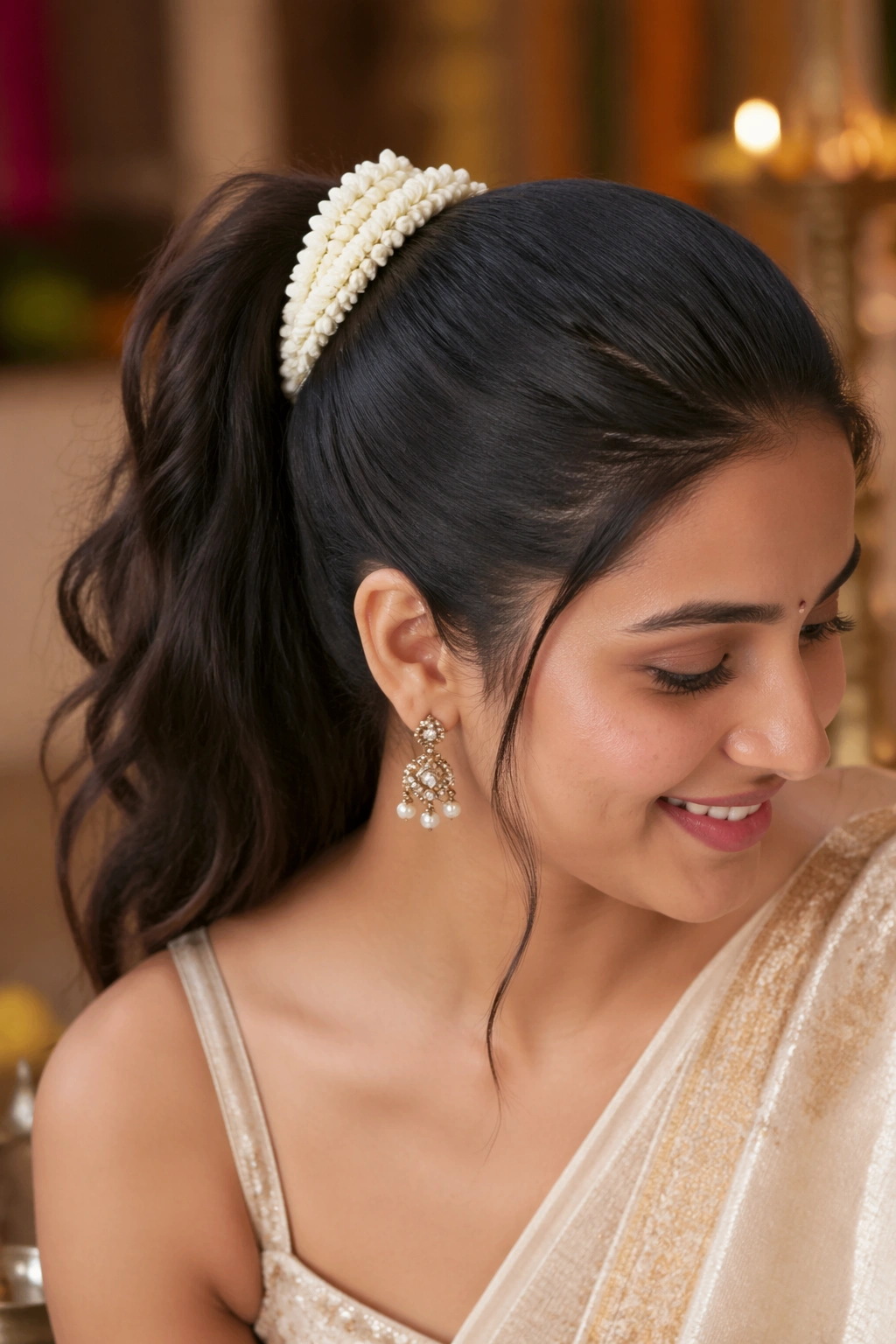
A gajra at the base changes the whole mood of a ponytail. It turns something practical into something festive without asking the hair to do anything fussy.
Fresh jasmine smells lovely, but it also wilts if the event runs long or the room gets warm. Faux gajra is the safer bet when you need the style to survive hours of wear. Wrap it around the elastic after the ponytail is tied, then anchor it with U-pins pushed through the floral band and into the base. That’s the part that keeps it from slipping.
- Best for pujas, mehendi, and wedding guest looks.
- Use a snug base so the flowers have something to sit against.
- Keep the rest of the ponytail sleek or softly waved; both work.
There’s a reason this look keeps showing up in traditional styling. It feels celebratory without looking overdone.
9. Paranda High Ponytail with Traditional Flair
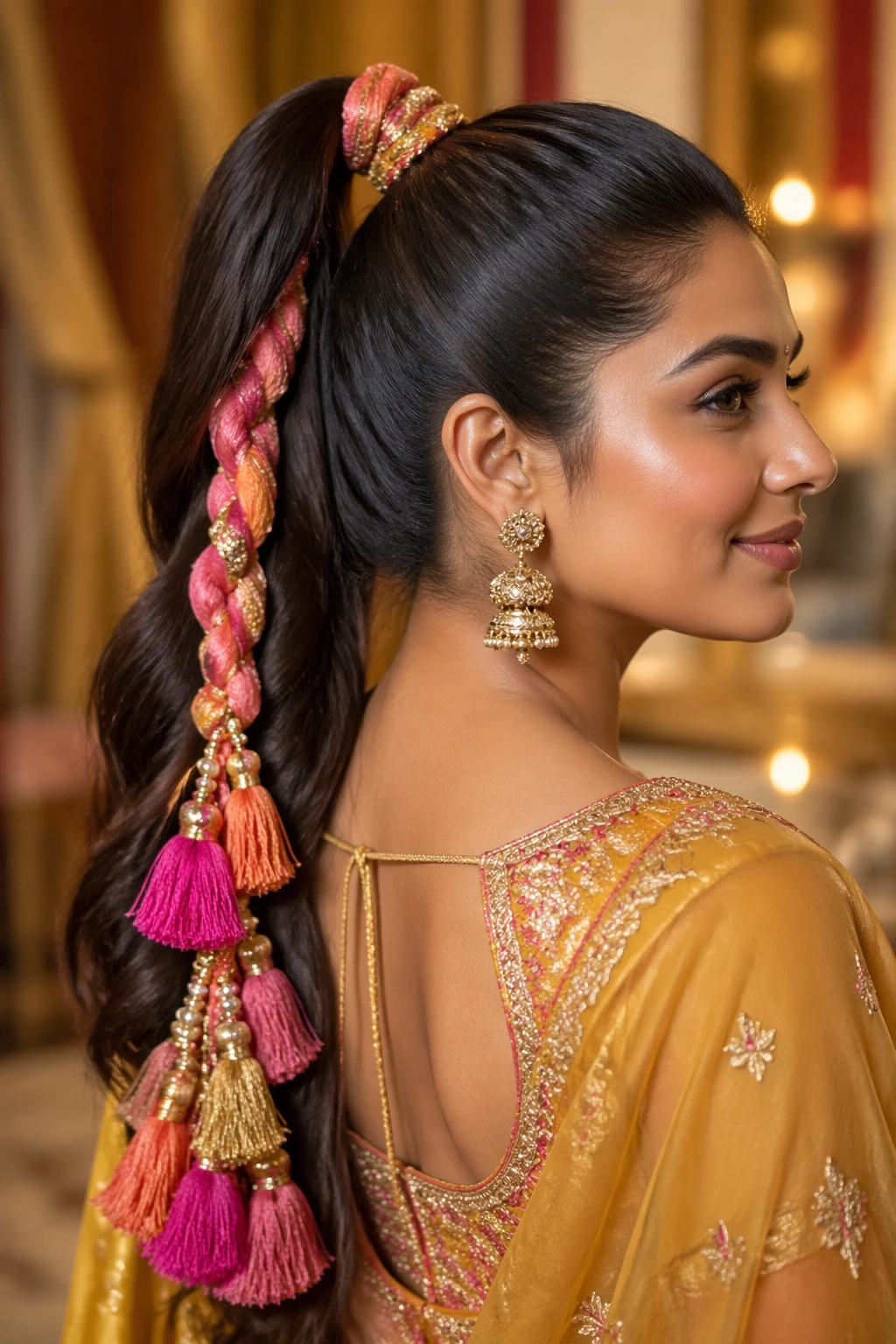
A paranda does more than decorate; it also adds weight, which can help the ponytail hang straighter.
That matters if your hair is very long, layered, or a little too light at the ends. Tie the ponytail first, then secure the paranda underneath the elastic and braid it into the tail, or let it trail from a braided ponytail if you want the color to stand out more. Choose a length that matches the size of your ponytail. A tiny paranda on a thick tail looks lost. A big one on fine hair can feel too heavy.
This is one of those styles that really comes alive with rich fabric, mirror work, or a lehenga that already has texture. It doesn’t need much else. In fact, too many extras can make it look crowded.
If you want the hair to stay anchored, knot the paranda under the elastic first, then braid. That little order change helps more than people expect.
10. Criss-Cross High Ponytail at the Crown
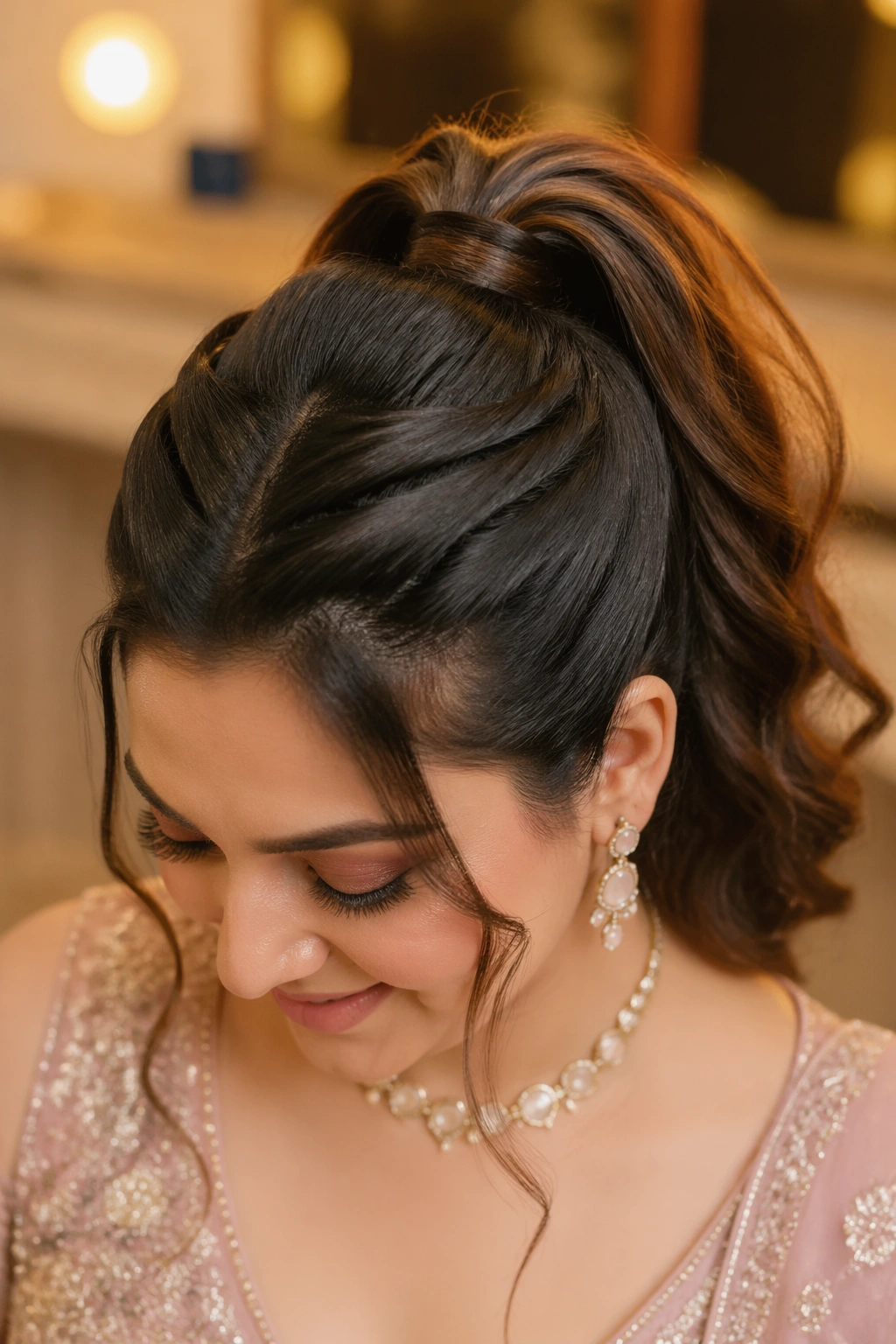
Want the top to look fancier without bringing in another accessory? Cross a few front sections over the base.
Take one section from each side of the front hairline, pull them back, and cross them over the ponytail base before pinning them underneath. Repeat with a second pair if your hair is thick enough. The criss-crossing hides the elastic and gives the crown a neat, tucked-in look that feels more finished than a plain tie.
How to Wear It
This version works well with lehengas, heavy earrings, and blouses that already carry visual weight. The texture at the crown balances all that fabric.
Use 4 small bobby pins, not 12 loose ones. You want the crossed sections to feel locked, not stuffed. If the front pieces are slippery, mist them with a little texture spray before you cross them. That gives the pins something to grab.
11. Curled-End High Ponytail
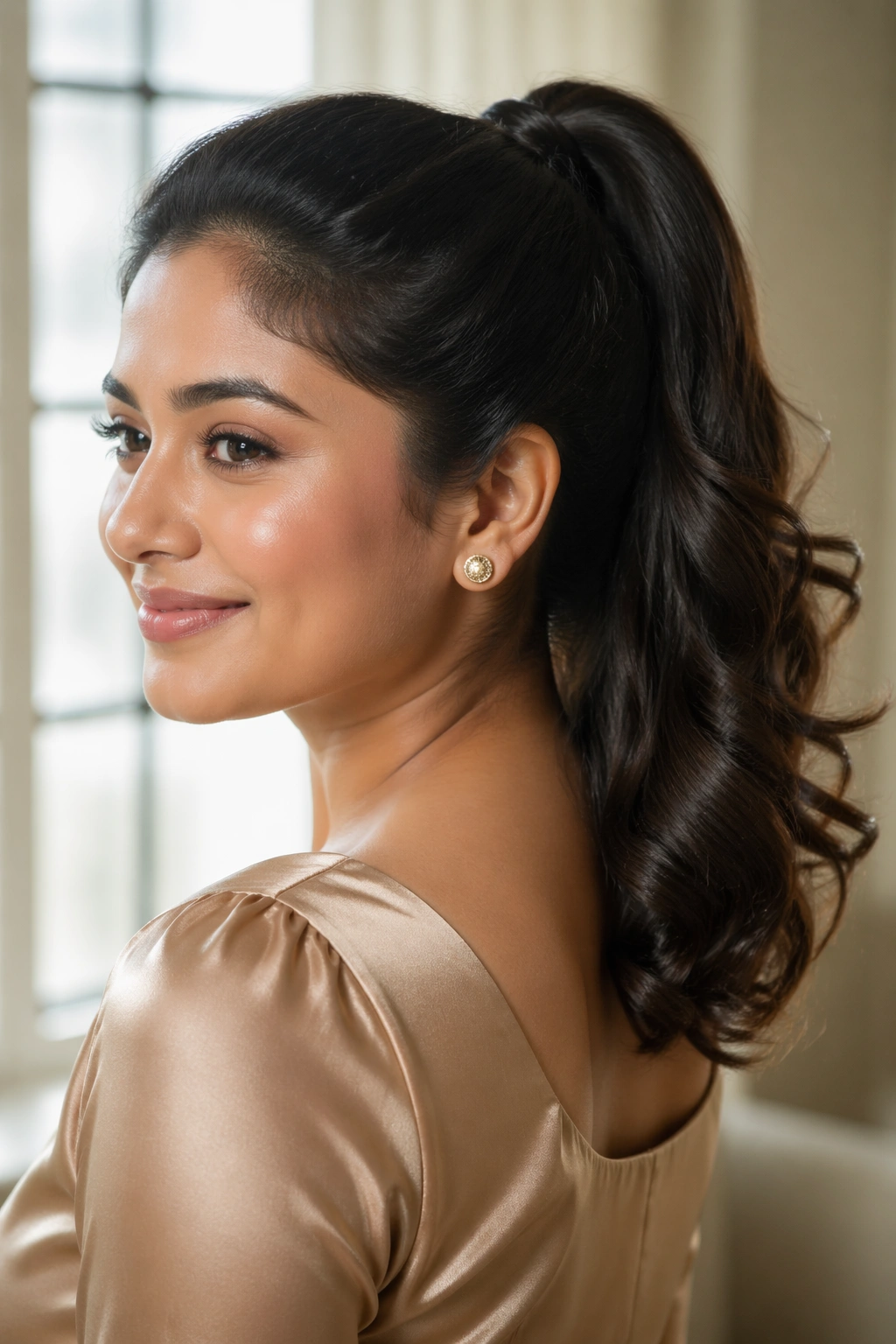
This style is all about contrast. A tight base and soft ends.
Tie the ponytail high and leave the first 2 to 3 inches near the base straight. Then curl only the last 4 to 6 inches with a 1¼-inch iron or large rollers. That keeps the top polished while the ends move a little more gently. The result feels dressy without tipping into pageant territory.
The best part is how forgiving it is. If one curl loosens, the whole tail still looks intentional because the shape comes from the base, not from every strand behaving perfectly. Spray the curls lightly while they cool, then finger-comb them once they’re fully set. Don’t brush them out early. They’ll go from soft to frizzy in seconds.
This one is lovely with satin, silk, or a blouse that has a clean neckline. It lets the hair do enough without stealing the whole outfit.
12. Rope-Twist High Ponytail
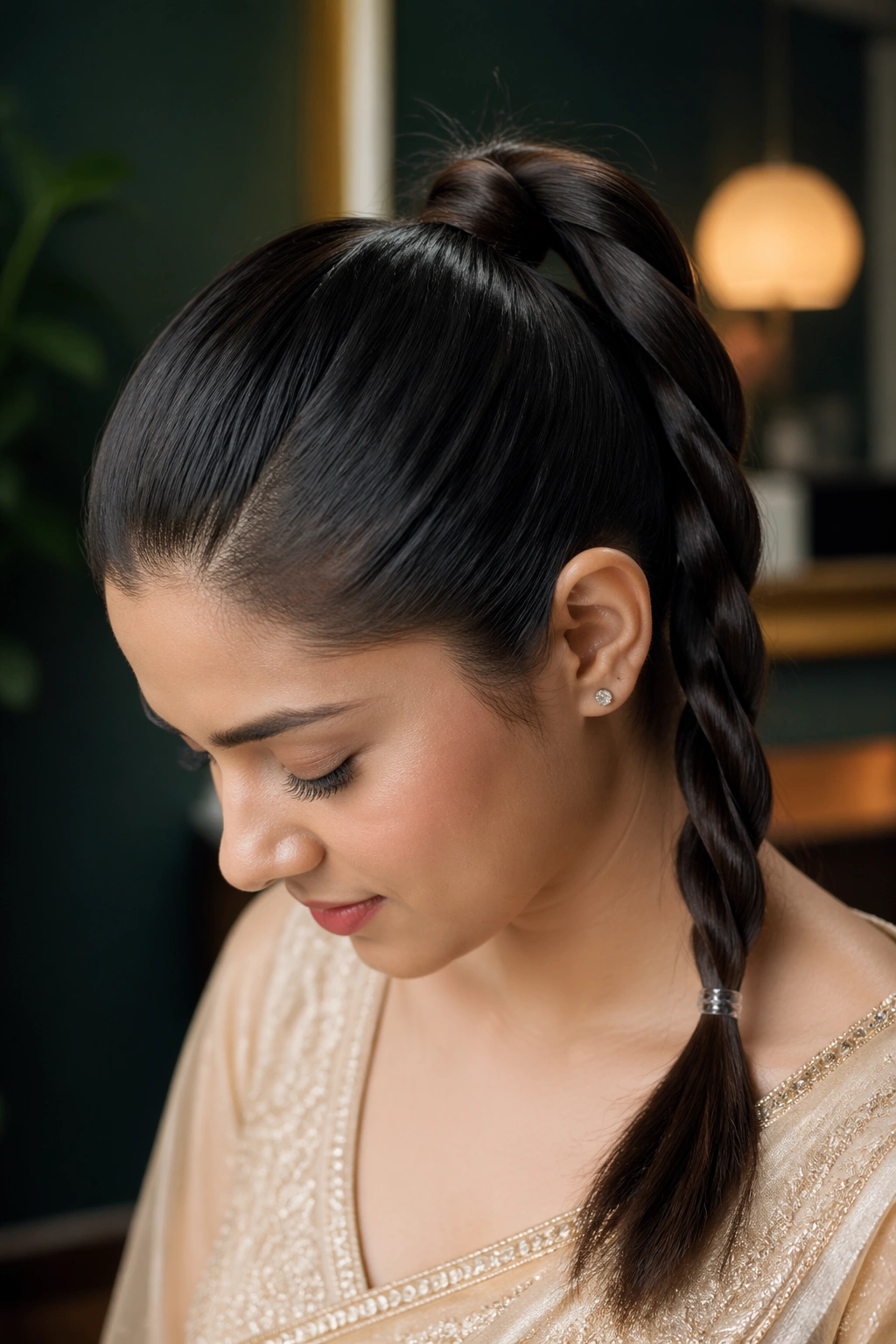
It looks fancy. It isn’t hard.
Split the ponytail into two equal sections, twist each section in the same direction, then wrap them around each other in the opposite direction. That rope pattern gives the tail a tighter, sleeker look than a loose braid, and it often works better on hair that slips out of regular plaits. Secure the end with a clear elastic, then gently tug the twists a little to add width.
The rope twist is useful when you want the ponytail to feel a bit more special but you don’t want a full braid. It also keeps the tail from tangling as fast, which matters if you’ll be moving, dancing, or just wearing it for a long stretch.
A little mousse at the ends helps. So does starting with brushed, detangled hair. If the sections are messy before you twist, the whole thing starts to look fuzzy halfway down.
13. High Ponytail with a Puff at the Front
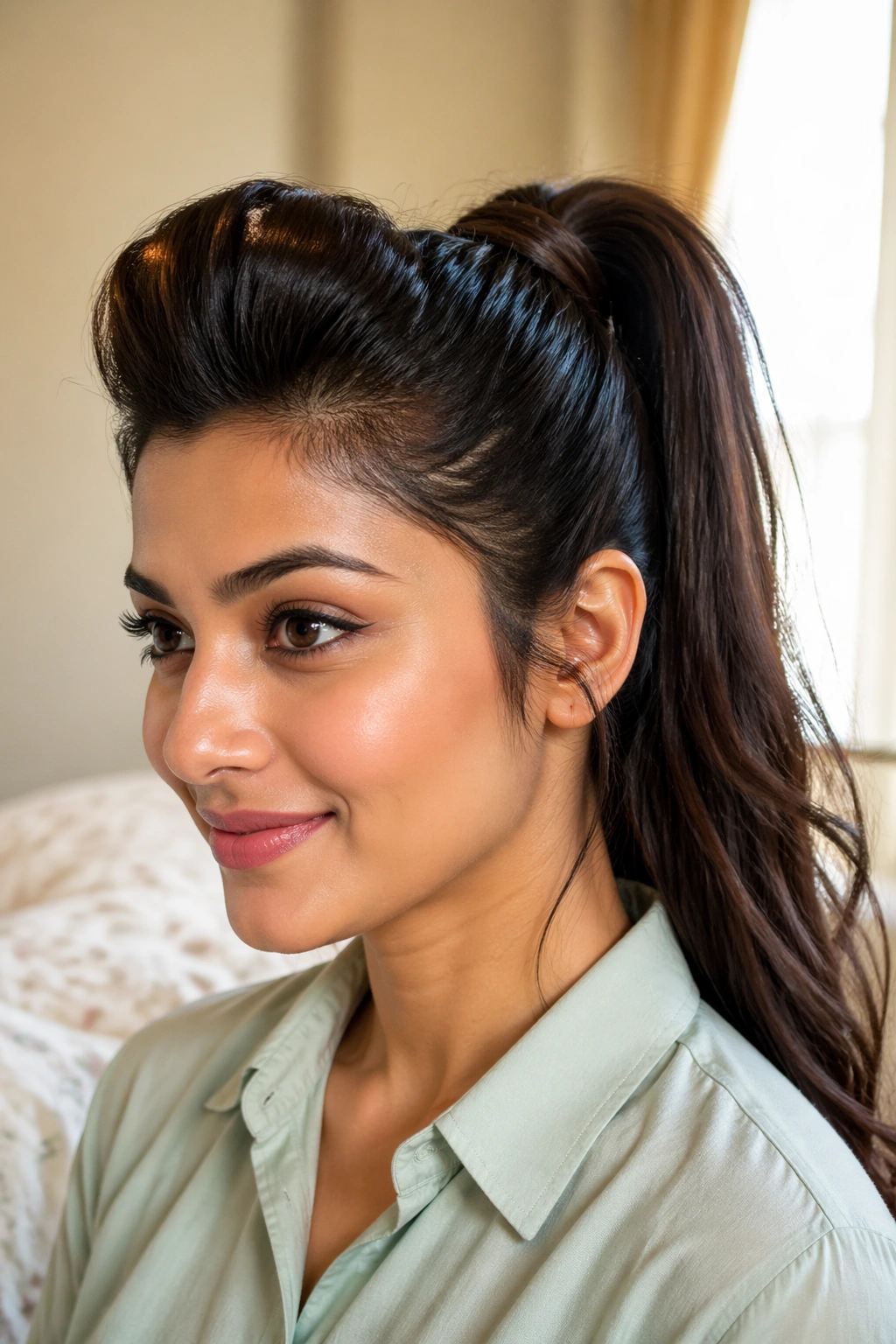
A small puff gives the face height without making the hairstyle feel old-fashioned.
Take a triangular section from the front hairline, backcomb the underside, and smooth the top layer over it. The puff should sit close to the hairline, not halfway back on the head. That’s the mistake that makes the look feel dated. When it stays compact, it adds lift and makes the ponytail feel more dressed up.
What Makes It Different
- The puff is a support piece, not the main event.
- Keep the sides tight so the crown looks neat.
- Use a light spray before you smooth the top layer.
This version is a favorite when you want the face to look a little longer and the ponytail to sit higher. It also pairs well with heavier nose rings or statement earrings because the height at the front balances the rest of the styling.
14. Wet-Look Sleek High Ponytail
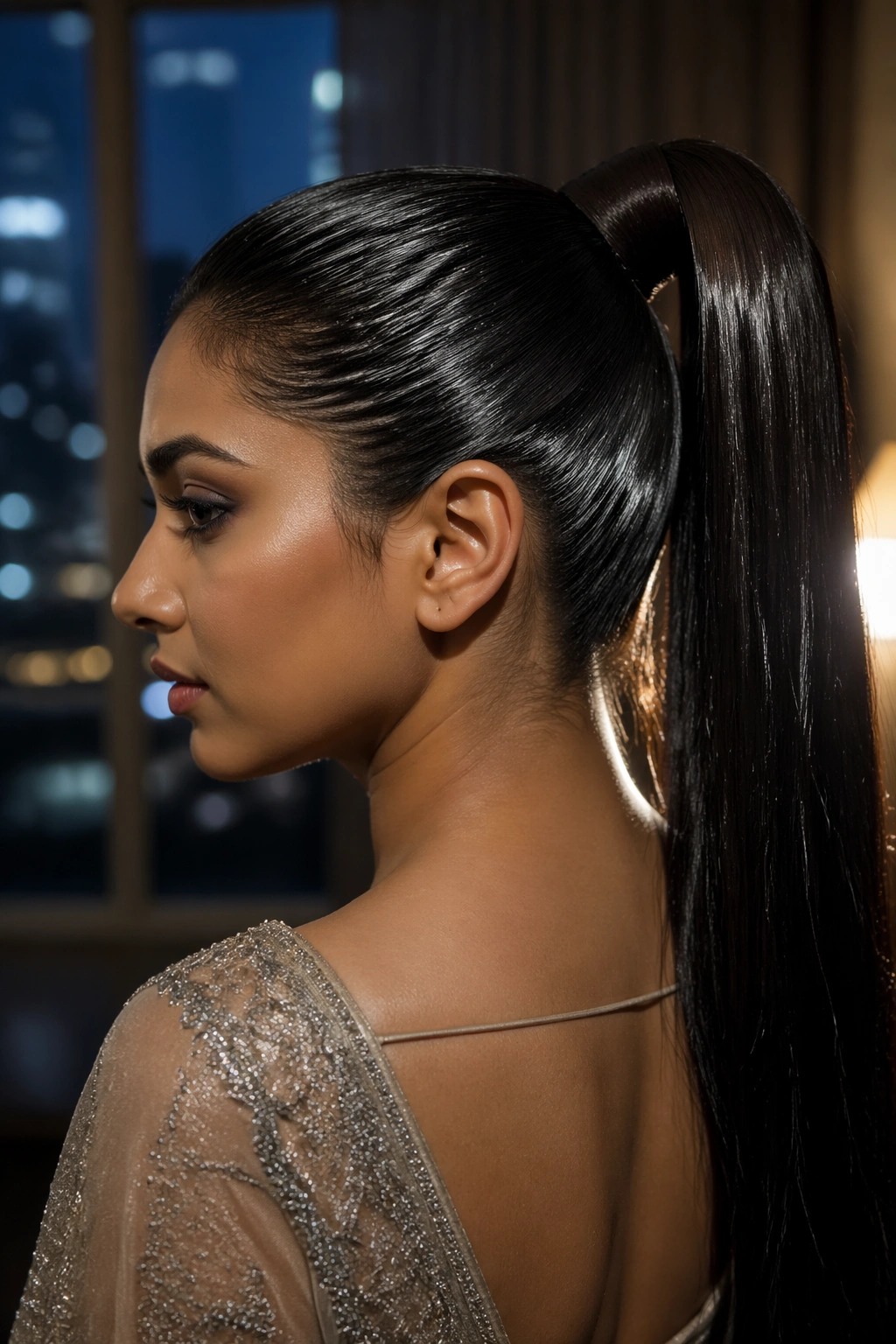
This style asks for commitment. It rewards it too.
Start with damp hair, work a small amount of strong-hold gel through the crown and sides, and comb everything back in sections so the base stays smooth. Tie the ponytail once the top is controlled, then add shine serum only to the tail. Don’t flood the roots with serum. That’s how sleek turns slippery.
The wet-look ponytail is sharp, which makes it a strong choice for evening wear or a fashion-forward blouse. It also tends to hold well in humid air because the structure is already locked in before the hair dries. But there is a catch: if you use too much gel, the hair can dry stiff and flake.
Keep the product thin. Keep the comb clean. And set the top before you worry about shine on the tail.
15. High Ponytail with Curtain Bangs
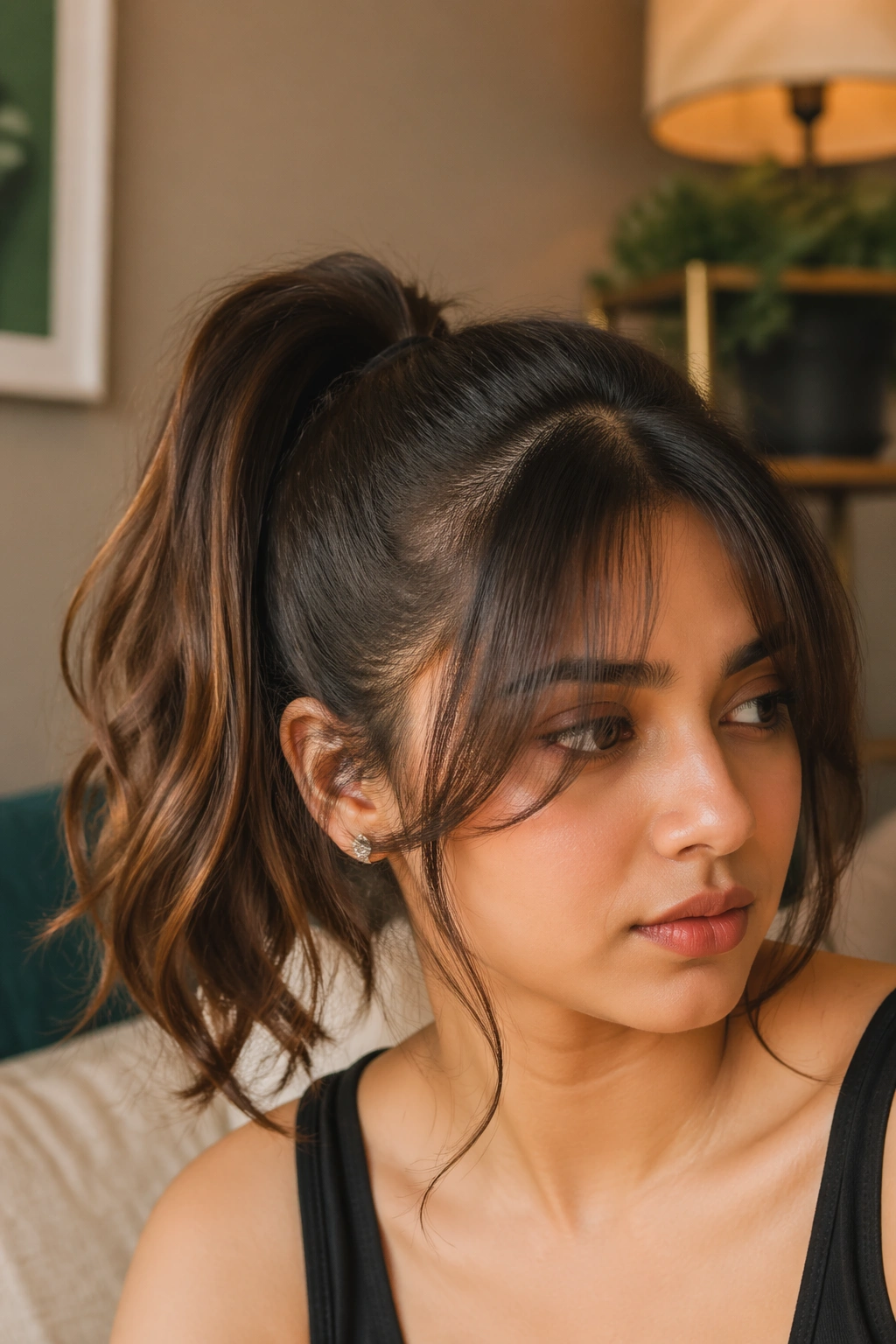
Curtain bangs can make a high ponytail feel less severe.
The bangs soften the forehead area and draw attention to the eyes, which is handy if the ponytail itself is very slick or very high. Blow-dry the fringe away from the face with a round brush, then tie the ponytail high enough that the bangs don’t get pulled too tight against the scalp. If they’re pressed flat, they lose the shape that makes them work.
The Trick with the Fringe
Leave a little extra room at the hairline when you tie the base. About half an inch is enough. That keeps the bangs from looking strained.
The rest of the ponytail can stay simple. You do not need a lot of styling there because the fringe is already doing visual work up front. This is one of those looks that feels easy when the cut and the ponytail are working together, and awkward when they’re not. So keep the fringe lightly shaped, not over-styled.
16. Fishtail-Braid High Ponytail
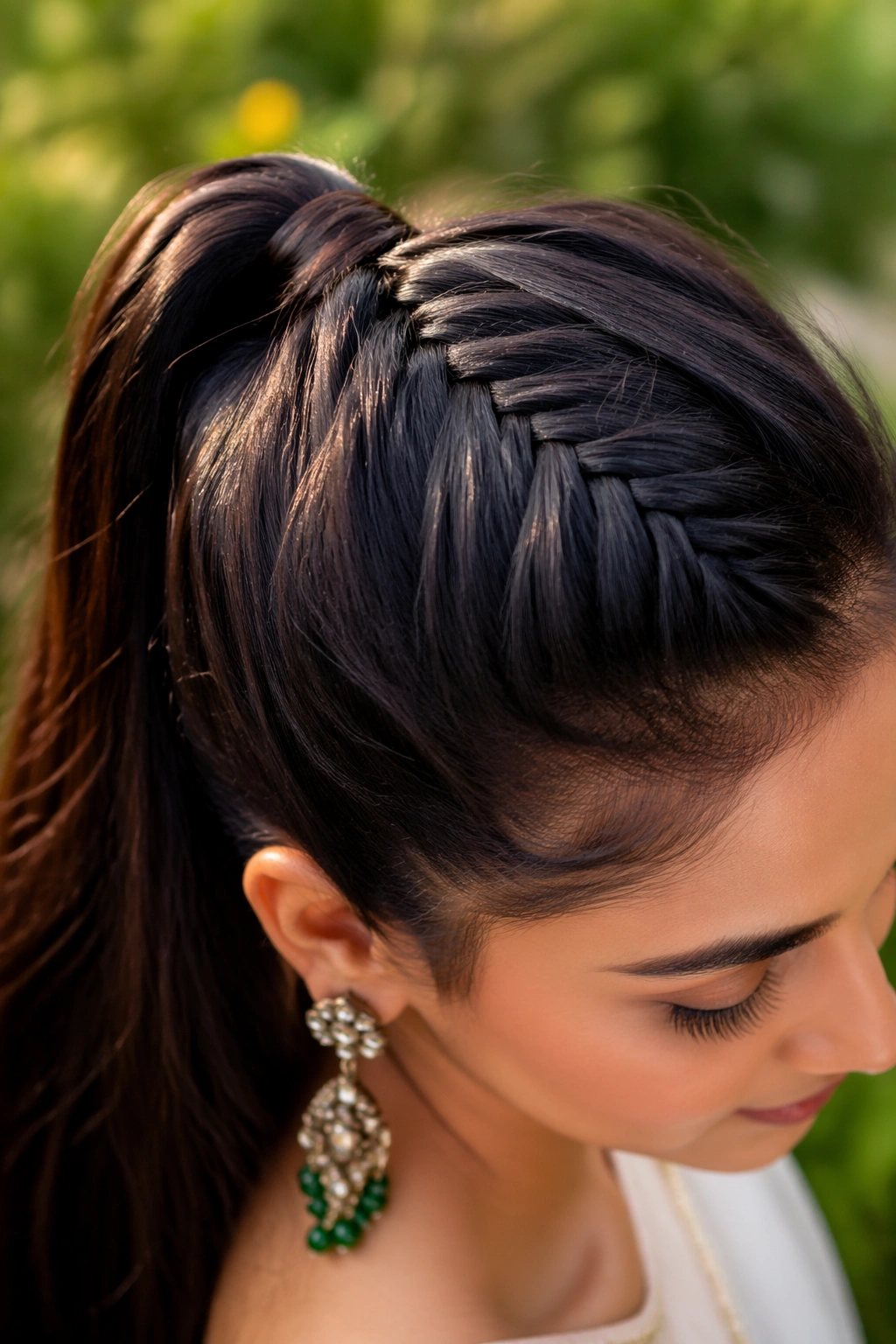
Why do fishtails stay put so well? Because all that crossing creates a tighter pattern than a normal braid.
Tie the ponytail high, split it into two sections, and take tiny outer pieces from each side to cross over. Small pieces matter here. If you grab chunks that are too wide, the braid gets loose and the detail disappears. A fishtail looks best when the sections are thin and the tension stays even from top to bottom.
This style is especially good for long hair that needs a little control. It’s also a nice way to make layered ends behave. Once you finish the braid, pull the edges apart gently if you want more thickness. If you prefer a sharper look, leave it tight and smooth.
A clear elastic at the end helps keep the finish neat. Hide it with a small strand if you want the tail to look cleaner.
17. Messy High Ponytail for Casual Wear
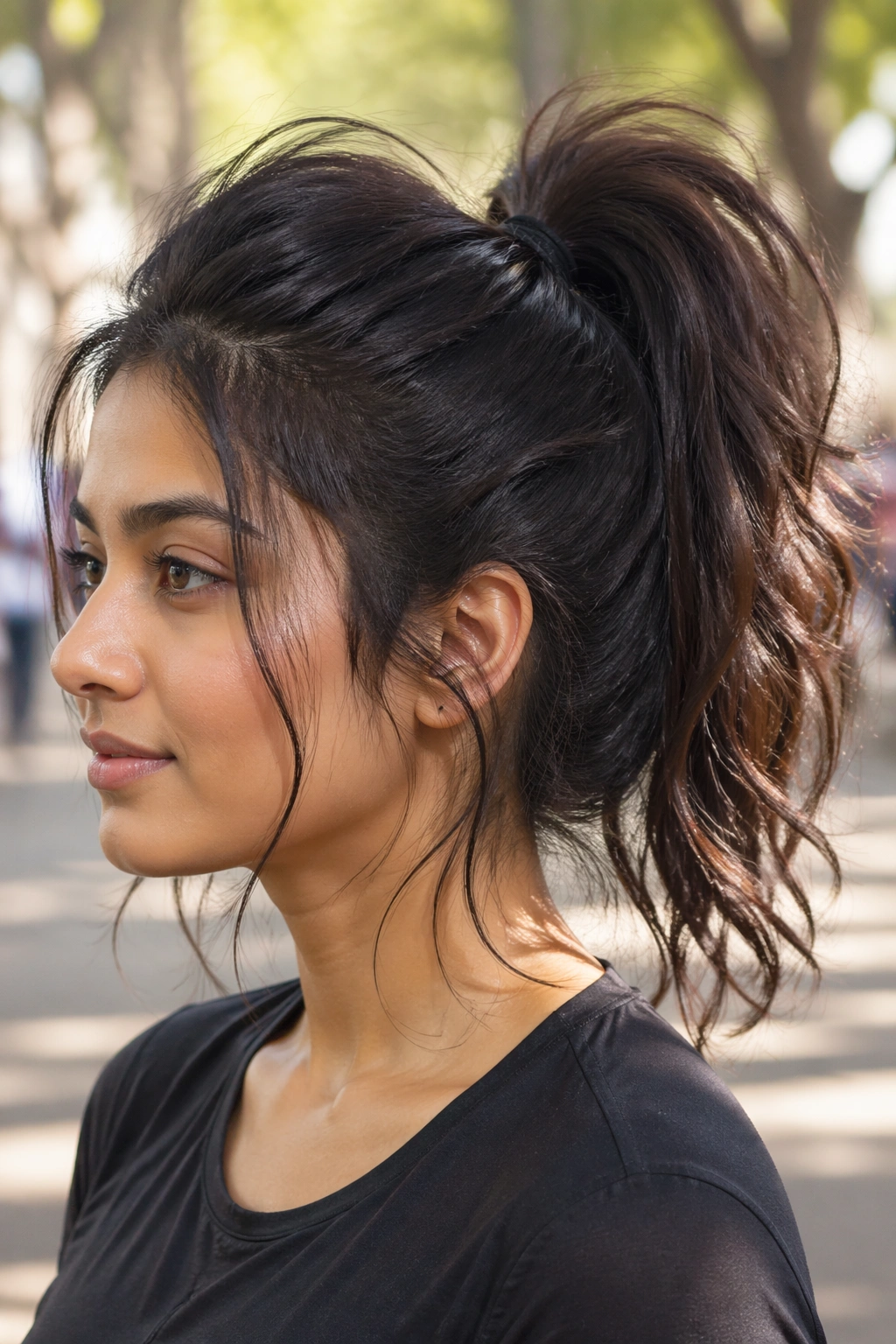
Not every ponytail needs to behave like it’s going to a wedding.
A casual high ponytail can have texture, loose crown pieces, and a little movement around the face, as long as the base stays secure. Use texture spray at the roots, gather the hair at the crown, and leave the top a touch imperfect on purpose. Then pull a few pieces free around the temples and ears. That gives the style a lived-in feel without making it look undone.
- Keep the elastic tight.
- Let the crown look soft.
- Leave the ends slightly uneven if your hair has layers.
This is the version that works with denim, cotton kurtas, quick errands, and lunch plans where you still want your hair to look like you paid attention. It’s casual, but not lazy. There’s a difference, and the base is where it shows.
18. High Ponytail with a Metal Cuff
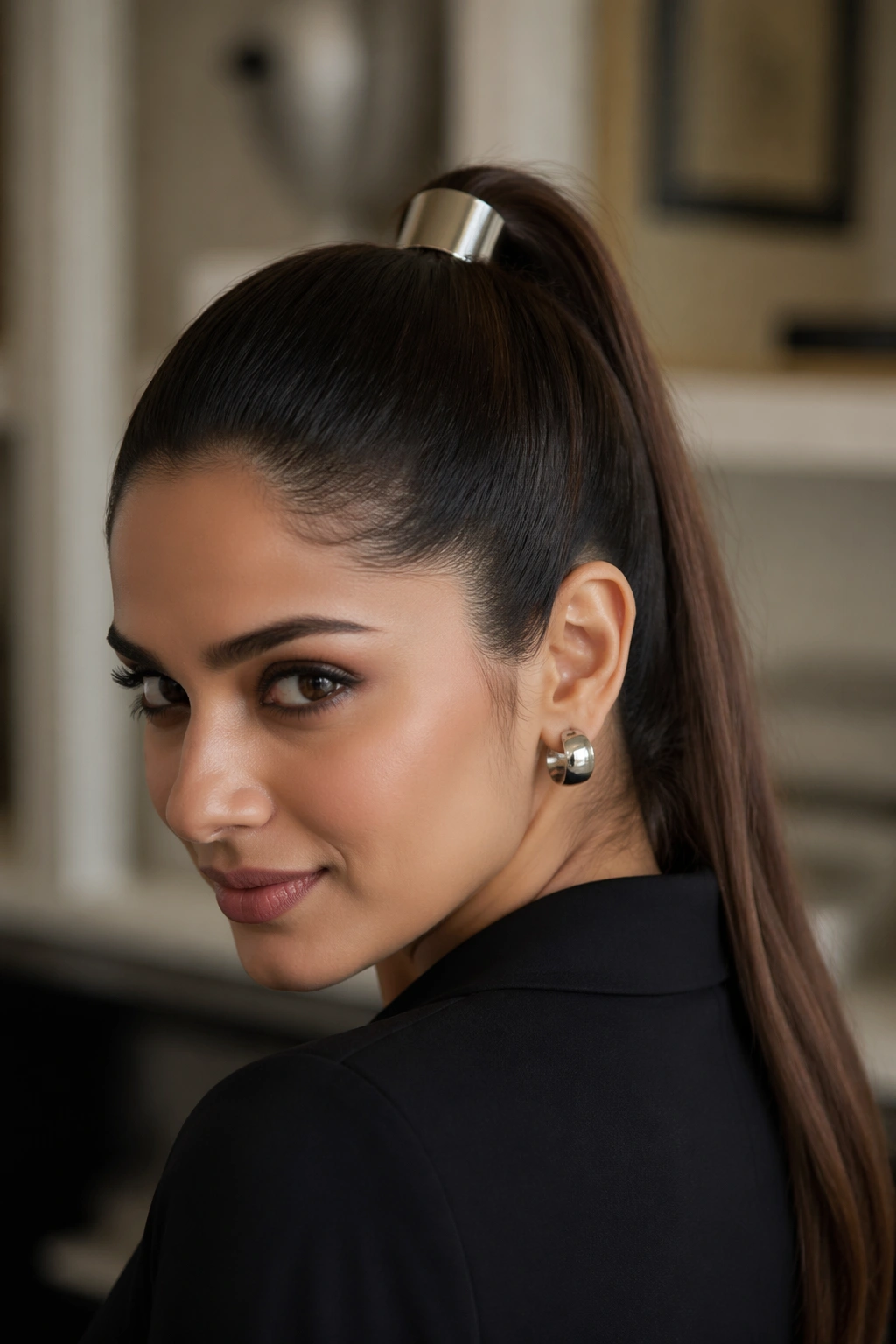
A metal cuff changes the whole mood of the ponytail. It reads cleaner than a scrunchie and sharper than a ribbon.
Use a strong elastic first, then slide the cuff over the base so it sits snugly without squeezing the hair. This works especially well on thick, straight hair because the hair gives the cuff something to hold onto. If your hair is fine, pin the cuff in place with two small bobby pins underneath so it doesn’t spin around.
What to Look For
- A cuff that matches the width of your base.
- Smooth edges so it doesn’t snag.
- Matte gold or silver if your jewelry already has a strong finish.
It’s a good pick for fusion outfits or a polished office-to-dinner look. The cuff gives the ponytail a little edge, but not the kind that screams for attention. It just changes the shape enough to feel deliberate.
19. Twisted Side-Section High Ponytail
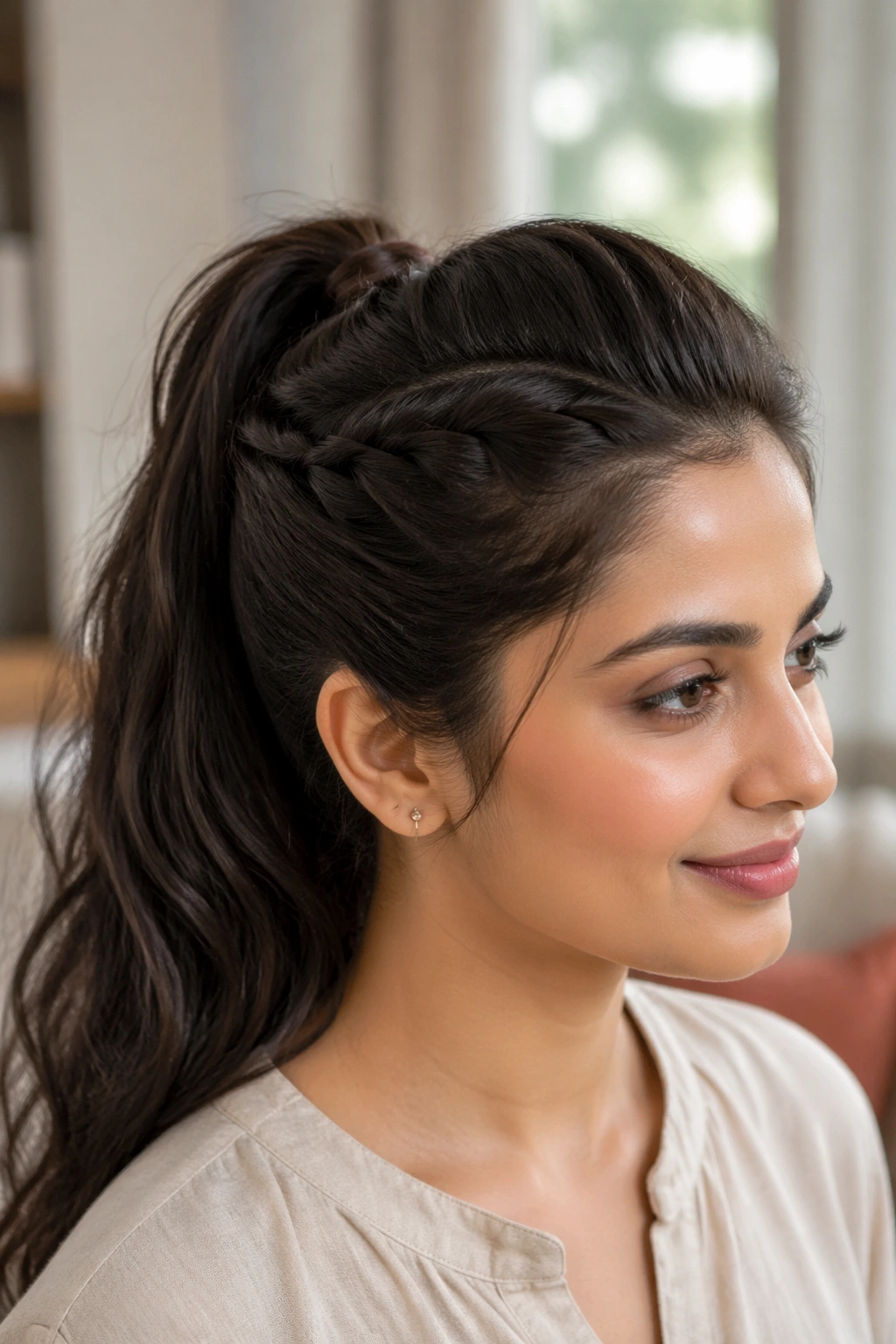
This one is all about the front. Tiny twists near the temples feed into a higher, cleaner base.
Take a section from each side, twist it back toward the crown, and pin it into the ponytail base before securing the full tail. The twists help gather shorter face-framing layers that would otherwise escape by midafternoon. They also create a neat sweep across the sides, which makes the ponytail look tighter at the head and softer through the length.
The style is especially useful if your hair is layered or if the front sections refuse to stay tucked behind your ears. Twisting instead of braiding keeps it faster and less bulky. That matters when the rest of the hair is already heavy.
A light mist of spray before twisting helps. So does pinning the ends underneath instead of along the visible outer edge. The fewer exposed pins, the better the finish.
20. Mini-Braided High Ponytail Base
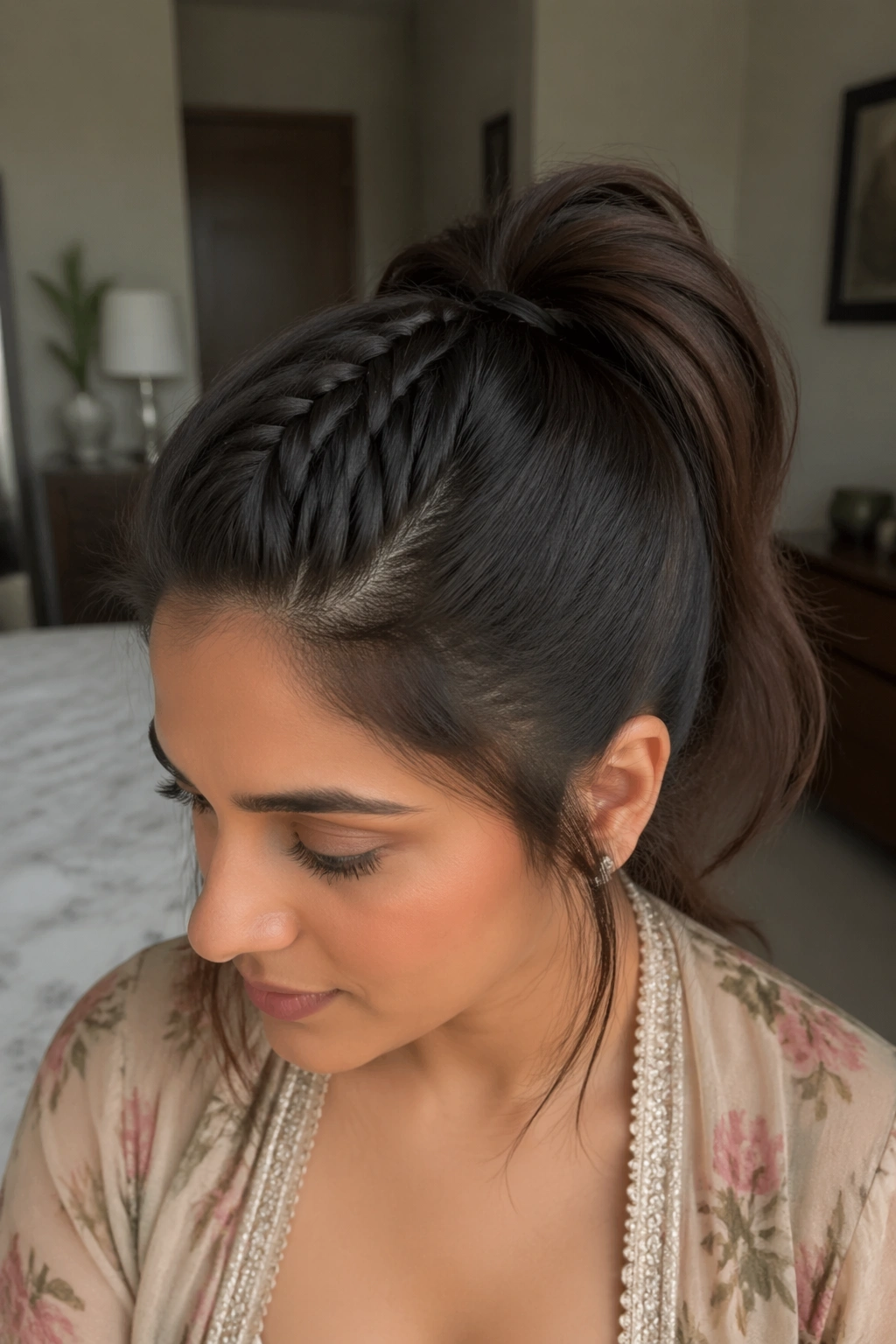
If the crown layer pops loose by noon, braid it first.
A mini braid running from the front hairline into the high ponytail base gives the style extra grip and keeps shorter pieces from falling apart. You only need a small section — usually 1 to 1½ inches wide — and you can braid it back on one side or both if the hair is thick enough. Then gather everything into the ponytail right over that braid.
This is one of my favorite solutions for layered hair because it solves a real problem instead of pretending it doesn’t exist. The braid acts like a track. The ponytail follows it, and the front stays tidy for much longer.
Use this when your hair has short layers near the crown or when the front has a habit of loosening in waves. It’s a small fix, but it changes the whole day.
21. High Ponytail with a Ribbon or Dupatta Tie
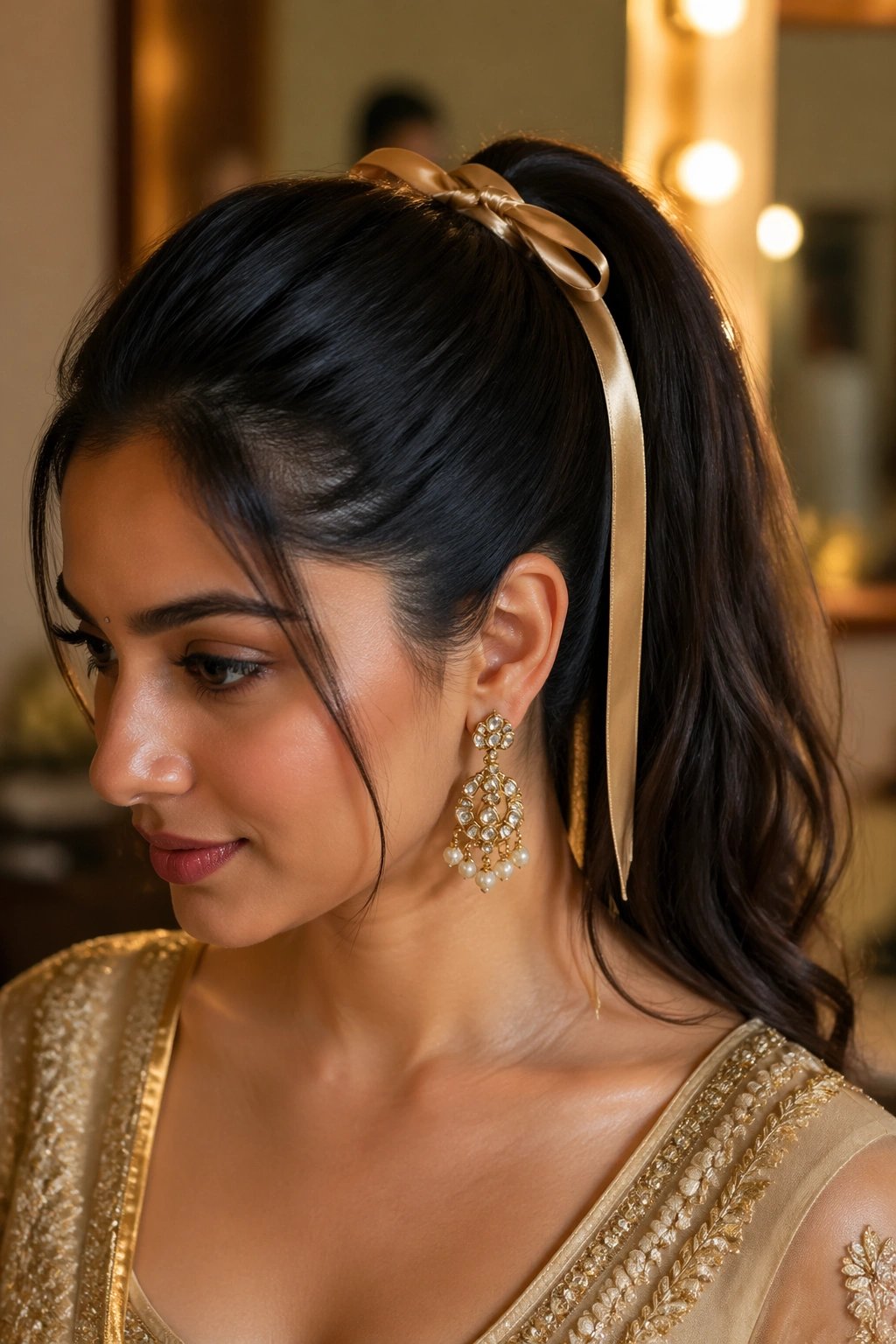
A ribbon or narrow dupatta strip does more than decorate. It spreads the tension around the base and gives the ponytail a softer finish.
Tie the hair first with a strong elastic, then knot the ribbon over it so the fabric sits flat. Satin ribbon works best when you want a neat finish; a narrow fabric strip from a dupatta can feel richer when the outfit already uses matching color or print. Keep the tie snug so it doesn’t drift upward as the hair moves.
- Best for festive daywear.
- Choose a ribbon at least 1 inch wide if the ponytail is thick.
- Tie the ends underneath if you want a cleaner look from the side.
This style can lean sweet, elegant, or traditional depending on the fabric. That’s the nice part. One detail shifts the whole mood.
22. Soft Wavy High Ponytail
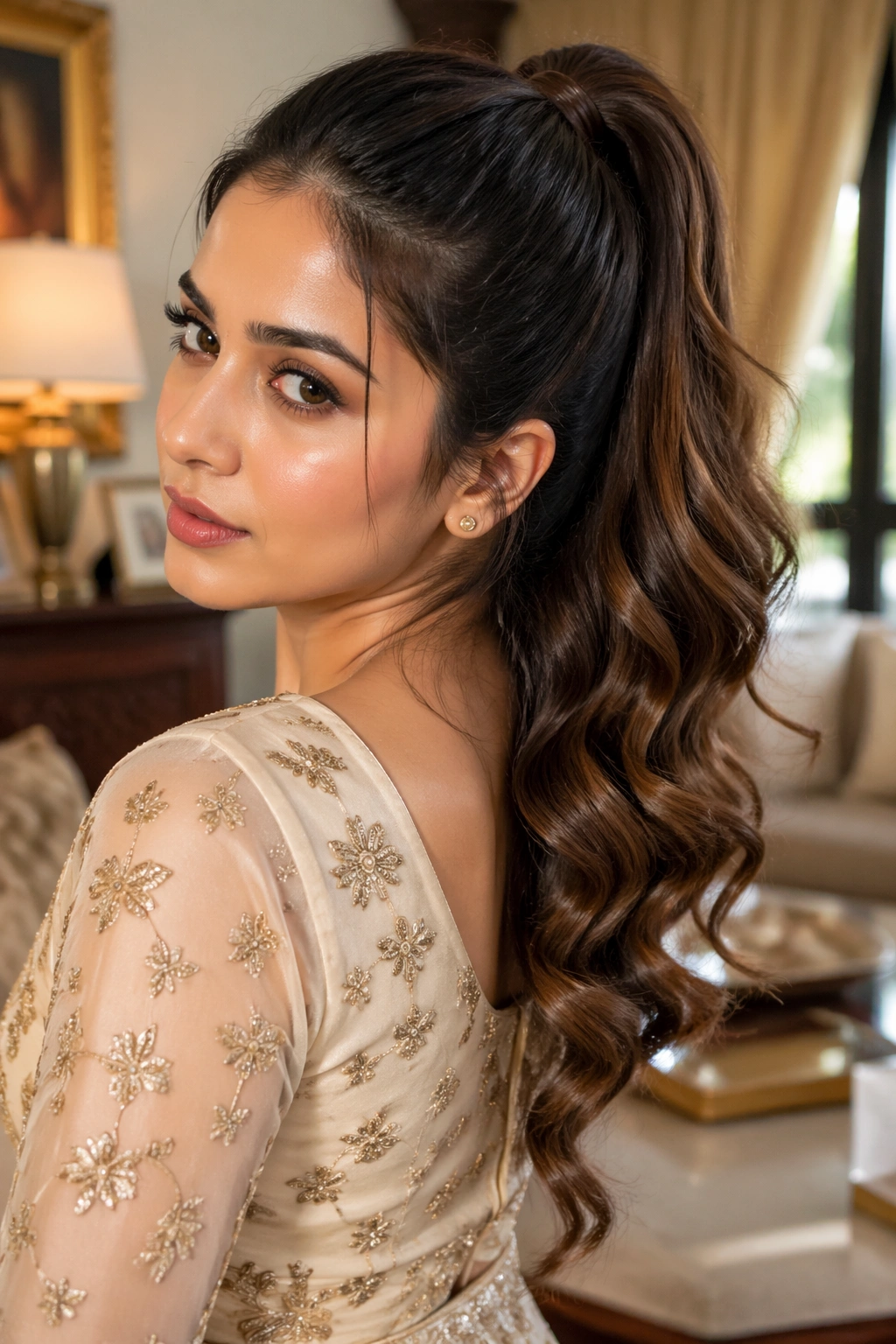
Keep the top calm. Let the tail move.
Tie a high ponytail with a smooth crown, then wrap a curling wand through the mid-lengths and ends only, leaving the first couple of inches near the elastic straight. That contrast makes the style look deliberate instead of overdone. If you curl right up to the base, the ponytail can start to look too puffy at the crown, which is not what you want.
Soft waves work well for guest looks, dinner plans, and outfits that need a bit of softness around the face. The movement at the ends helps long hair feel lighter. If your hair holds curl badly, set the curls while they’re warm and let them cool before touching them. That cooling time matters more than people think.
A flexible spray keeps the shape without making the tail crunchy. Nobody wants crunchy hair.
23. Bridal Indian High Ponytail with Heavy Accessories
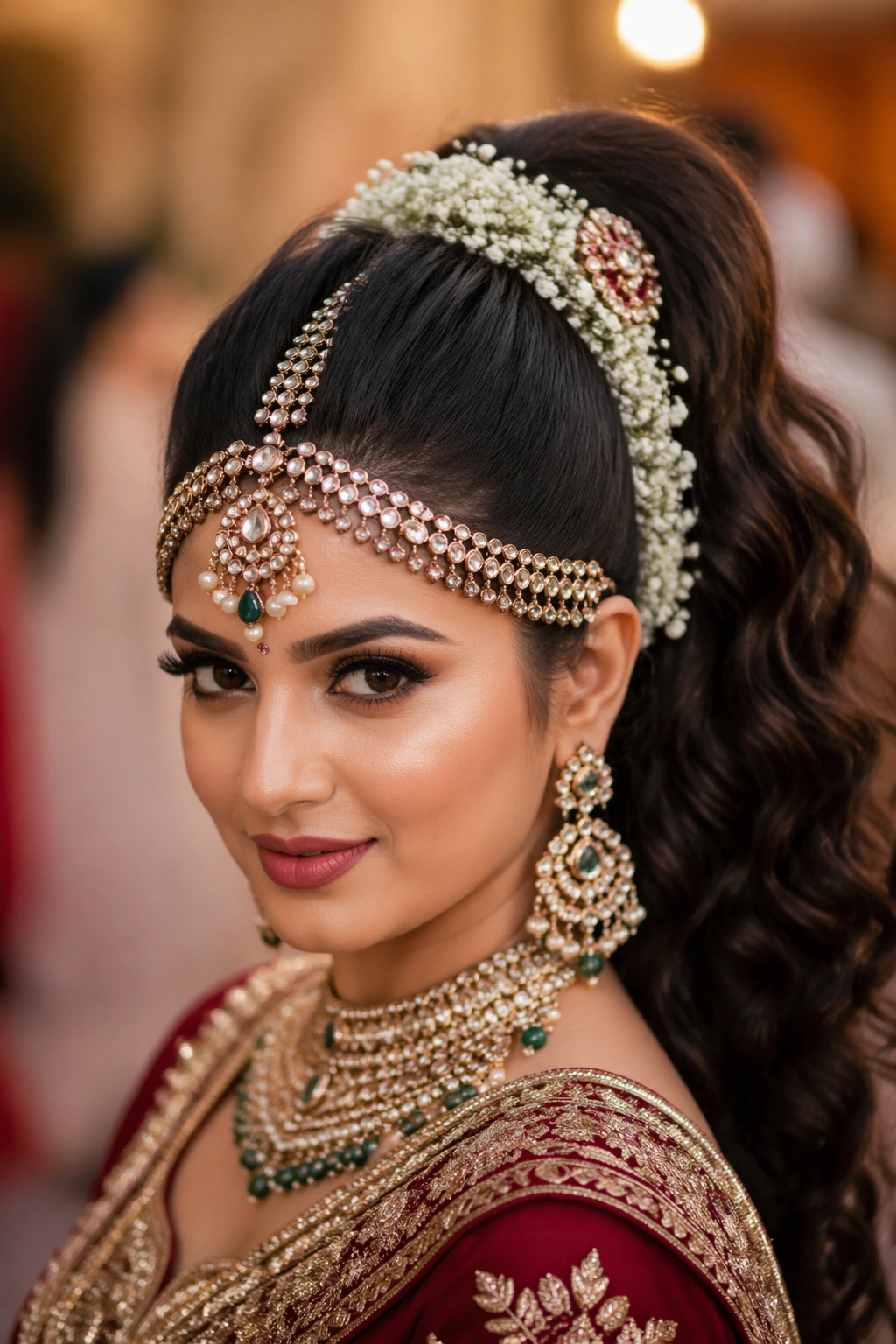
A bridal Indian high ponytail needs a stronger anchor than a regular festive one.
Use two elastics at the base, then cross-pin the ponytail underneath before adding heavier pieces like a gajra, matha patti, or jeweled clips. The accessories should sit on top of a solid base, not replace it. That’s where a lot of bridal styling goes wrong — the decoration looks rich, but the structure underneath is thin. And thin hair support will not survive a long function.
This style suits a lehenga, a silk saree, or any outfit with enough detail to match the hair. Keep the crown smooth and the lift controlled. Too much teasing near the front can fight with heavy jewelry and make the whole look feel cluttered.
If you plan to wear a veil or dupatta, place the pins before the accessory layers. That order keeps the fabric from sliding over the adornments.
24. High Ponytail with a Side Braid Accent
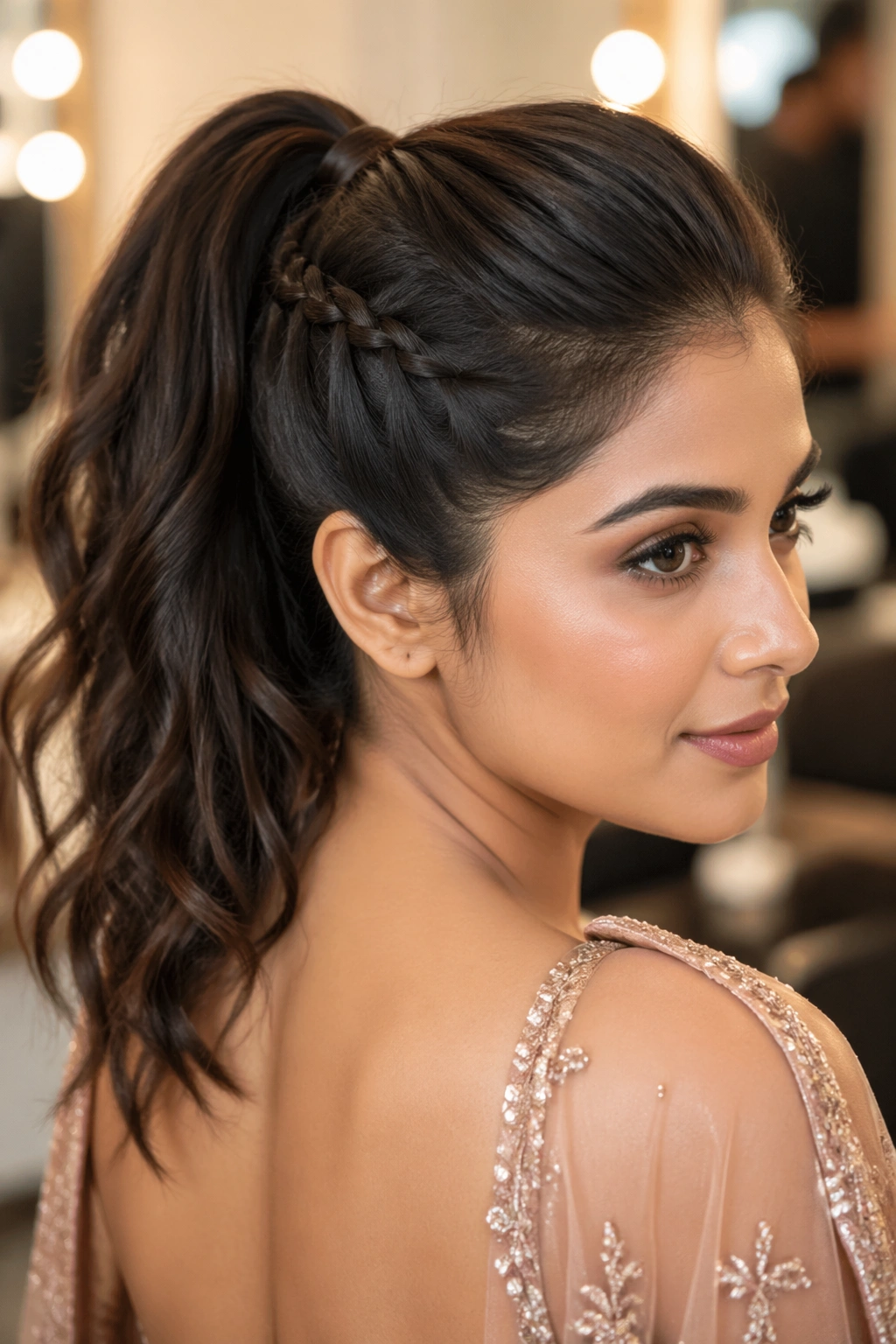
A side braid accent gives the ponytail just enough texture to feel styled without turning into a full braid look.
Braid a narrow section from one side of the head — around the temple or just above the ear — and tuck it into the ponytail base. If your hair is layered, this helps trap loose bits that would otherwise escape. It also gives the style a slight asymmetry that looks nice with saree drapes and one-shoulder blouses.
How to Keep It Neat
- Use a small clear elastic on the braid end.
- Pin the braid under the ponytail, not on the outside.
- Keep the braid slim so it doesn’t bulk up the base.
This is a good middle-ground style when you want a little detail but don’t want the ponytail to feel crowded. It wears well, too, because the braid gives the front a touch more grip.
25. Extra-Long Indian High Ponytail with Clip-In Length
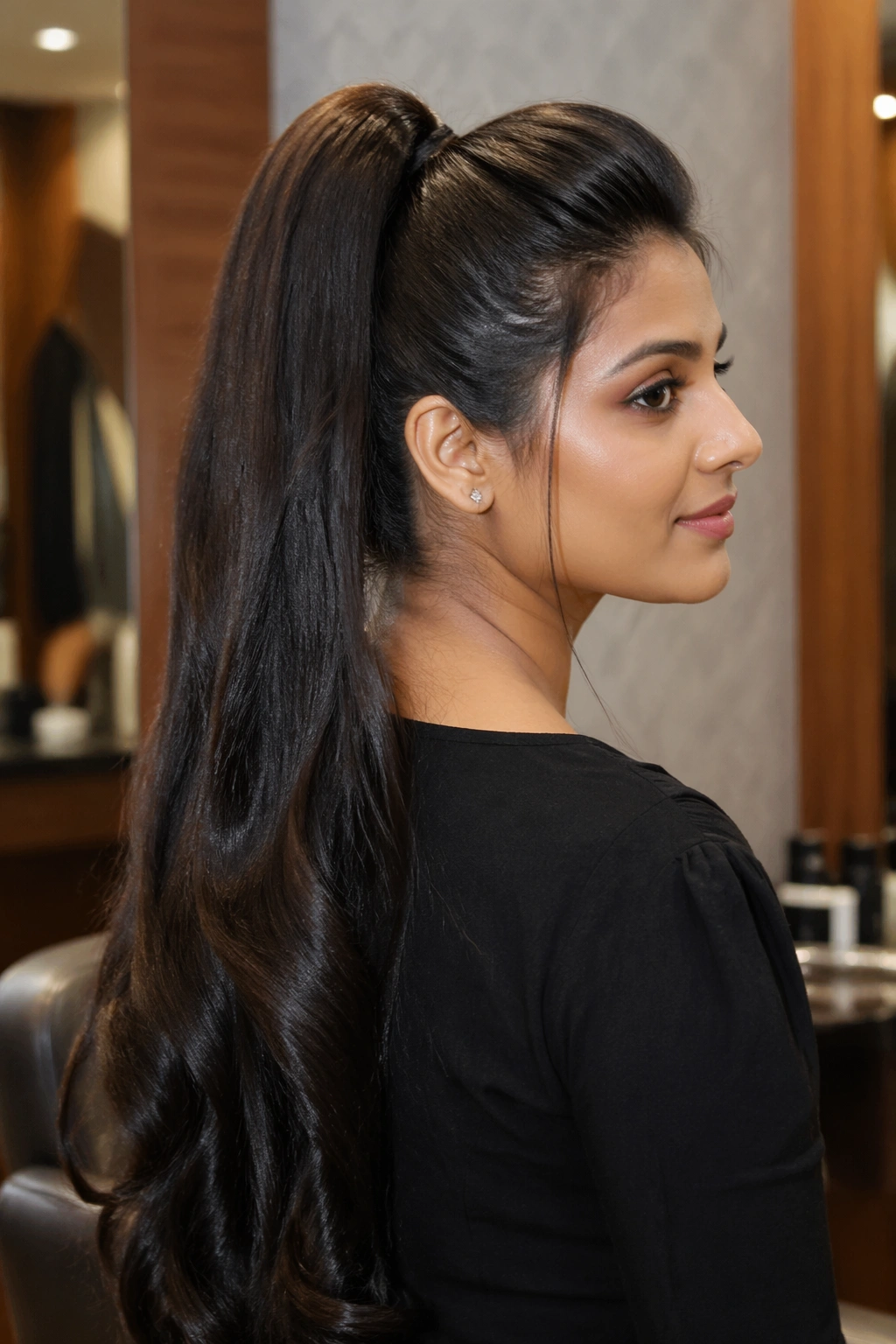
A long ponytail changes the whole posture of a look. It swings differently, sits differently, and pulls the eye downward in a way that feels dramatic without much effort.
If your natural hair doesn’t give you enough length, clip-in ponytail extensions can do the job, but the base has to be strong first. Tie your real hair in a tight high ponytail, then secure the extension over it and lock the attachment points with a few hidden pins. If the clip-in is too heavy, the whole thing will droop at the crown, which defeats the point.
The best versions look like the hair just kept going. Match the texture closely. A straight extension on wavy hair reads fake fast, and a silky tail on coarse hair can look pasted on. A slight wave or soft bend is often safer because it blends more easily.
This is the style for when you want length, confidence, and a little movement down your back. The trick is not the extra hair. It’s the anchor.
Final Thoughts
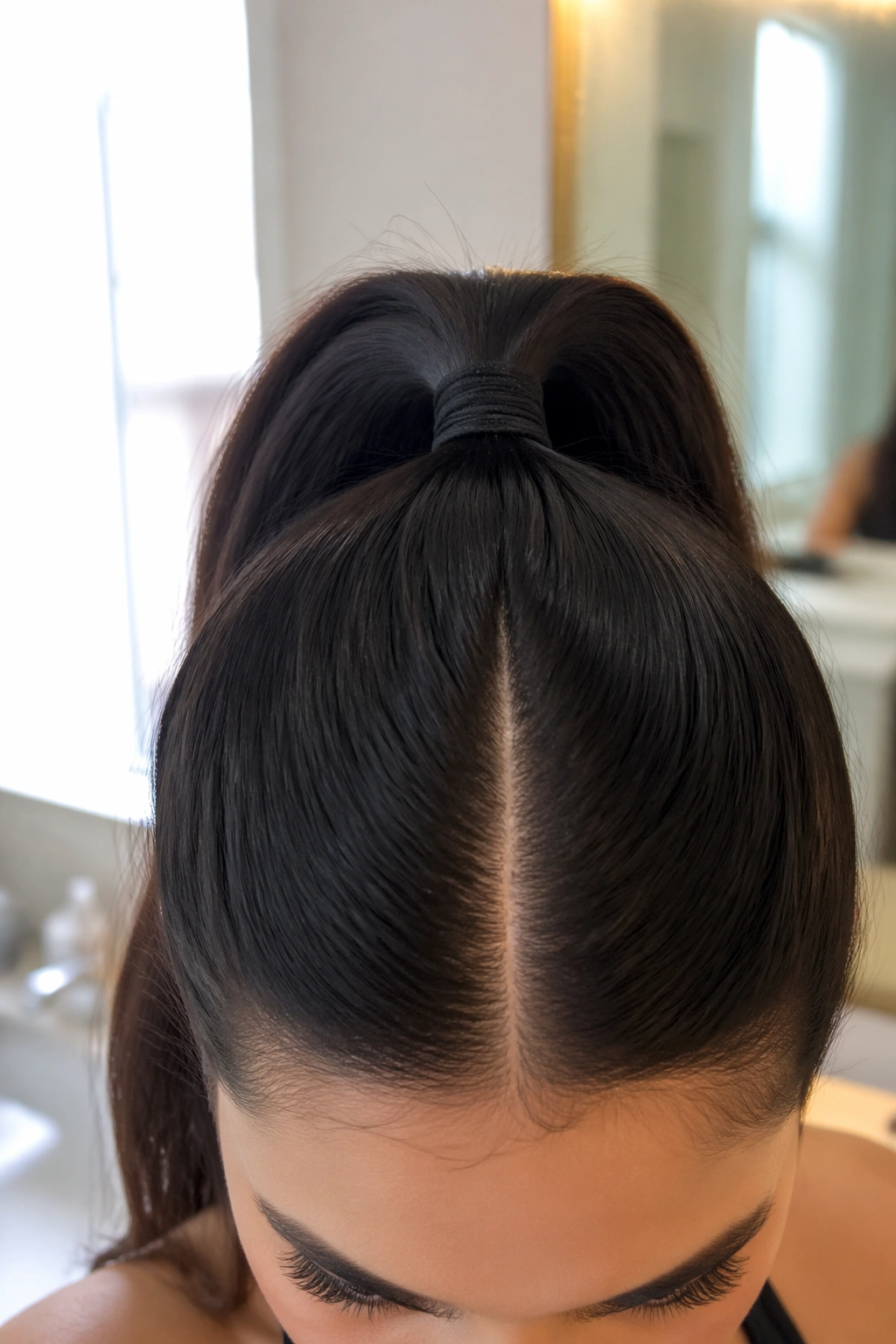
The strongest high ponytails are not the ones loaded with spray. They’re the ones with a base that can actually carry the weight.
If your hair slips easily, start fixing the root problem instead of decorating around it. Two elastics, a few well-placed pins, and a clean crown will do more than a mountain of product ever could. And if you’re wearing jewelry or a dupatta, build the hair first, then add the extras.
Keep two bobby pins and a small comb in your bag. That tiny habit saves more hairstyles than any fancy trick.
