



Thin hair makes ponytails honest. Pull too tight and the scalp shows. Leave too much slack and the whole thing slides down before lunch. The trick is not stacking on more hairspray and hoping for the best; it’s choosing a shape that gives the eye more to look at.
Fine hair and thin hair are not the same thing, either. Fine hair means the strands themselves are small in diameter. Thin hair means there’s less of it on the head. Both can look flat in a ponytail, but they need slightly different handling — a little root grip, a clean base, and a style that does some of the visual heavy lifting.
Day-old hair usually behaves better than freshly washed hair. That’s not a glamorous tip, but it matters. A bit of dry shampoo at the roots, a light mist of texturizing spray through the mids, and a small elastic that actually holds without biting into the hair can change the whole result.
The ponytails below lean on placement, texture, and small details that make a real difference. Some look polished. Some look soft and casual. A few are sneaky little volume tricks, which, honestly, are the best kind.
1. Sleek Low Ponytail With a Wrapped Base
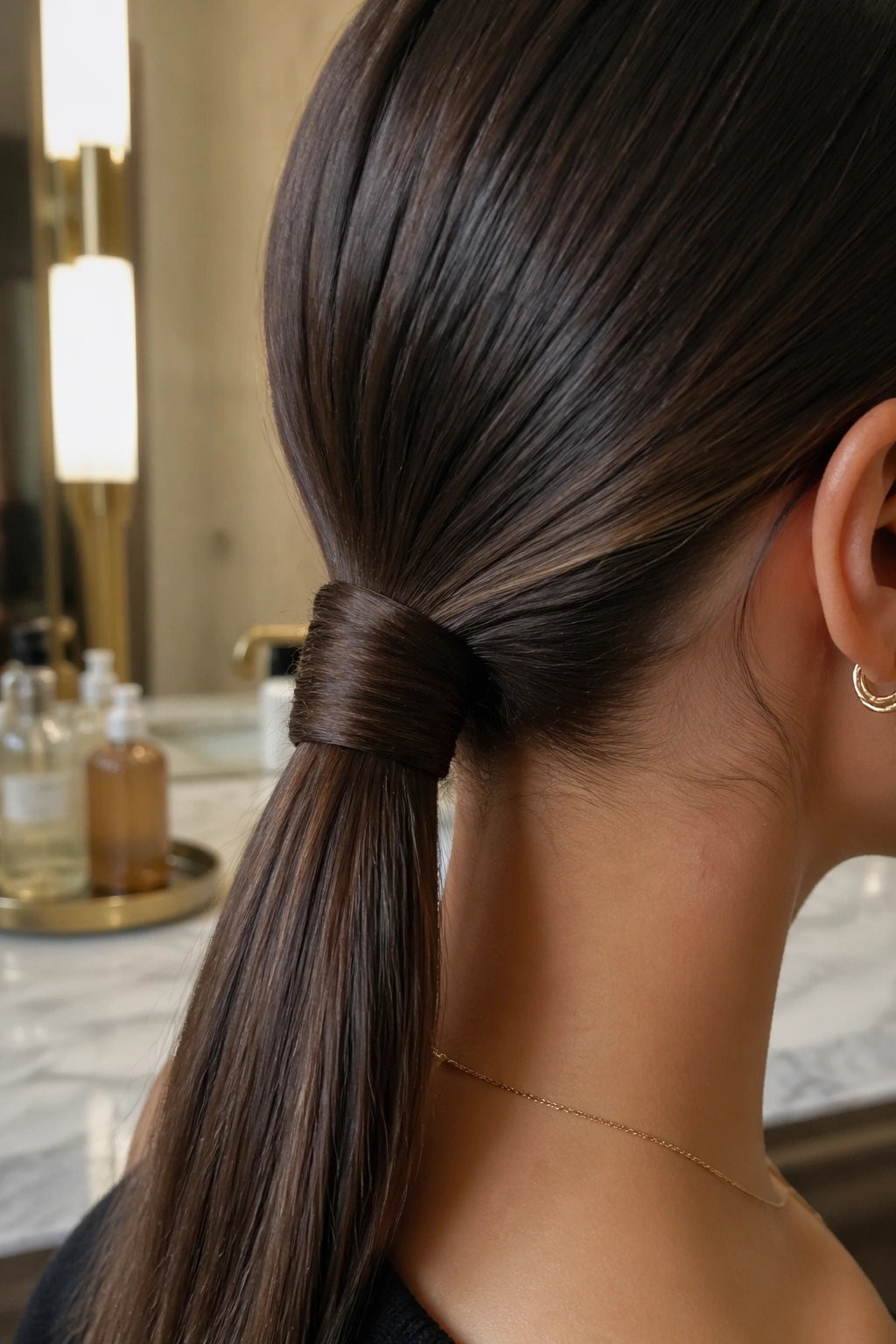
A sleek low ponytail is one of the safest bets for thin hair because it doesn’t fight your hair’s natural shape. Low placement keeps the crown calm, which matters when the top is the area that tends to look sparse first.
Brush the hair straight back with a boar bristle brush or a smoothing brush, then secure it at the nape with a small elastic. Wrap a thin strand around the base to hide the tie, and tuck the end underneath with a bobby pin. Keep the finish smooth, not shellacked.
The reason this works is simple: the eye reads the neat base and polished surface as intention, not lack. If your hair is very fine, use a pea-size amount of cream on the palms first. Too much product turns the hair limp fast.
2. High Ponytail With Crown Lift
Can a high ponytail work on thin hair? Yes, if the lift happens before the tie goes in. A flat high ponytail is the thing that exposes everything; a lifted one looks fuller because the roots stay off the scalp.
How to Get the Lift
Backcomb a 1-inch section at the crown with a fine-tooth comb, then smooth only the top layer over it. Use a little dry shampoo or texturizing powder at the roots before you gather the hair. That extra grit gives the elastic something to hold.
Secure the ponytail at the top-back of the head, not all the way on the crown like a cheer bow. That placement usually looks better on thin hair because it keeps the profile cleaner. If you want a little more body, curl the ends away from the face and let them cool before touching them.
The smallest mistake here is pulling too hard at the sides. Don’t. Leave a tiny bit of softness near the temples, or the style starts looking severe instead of lifted.
3. Bubble Ponytail With Soft Segments
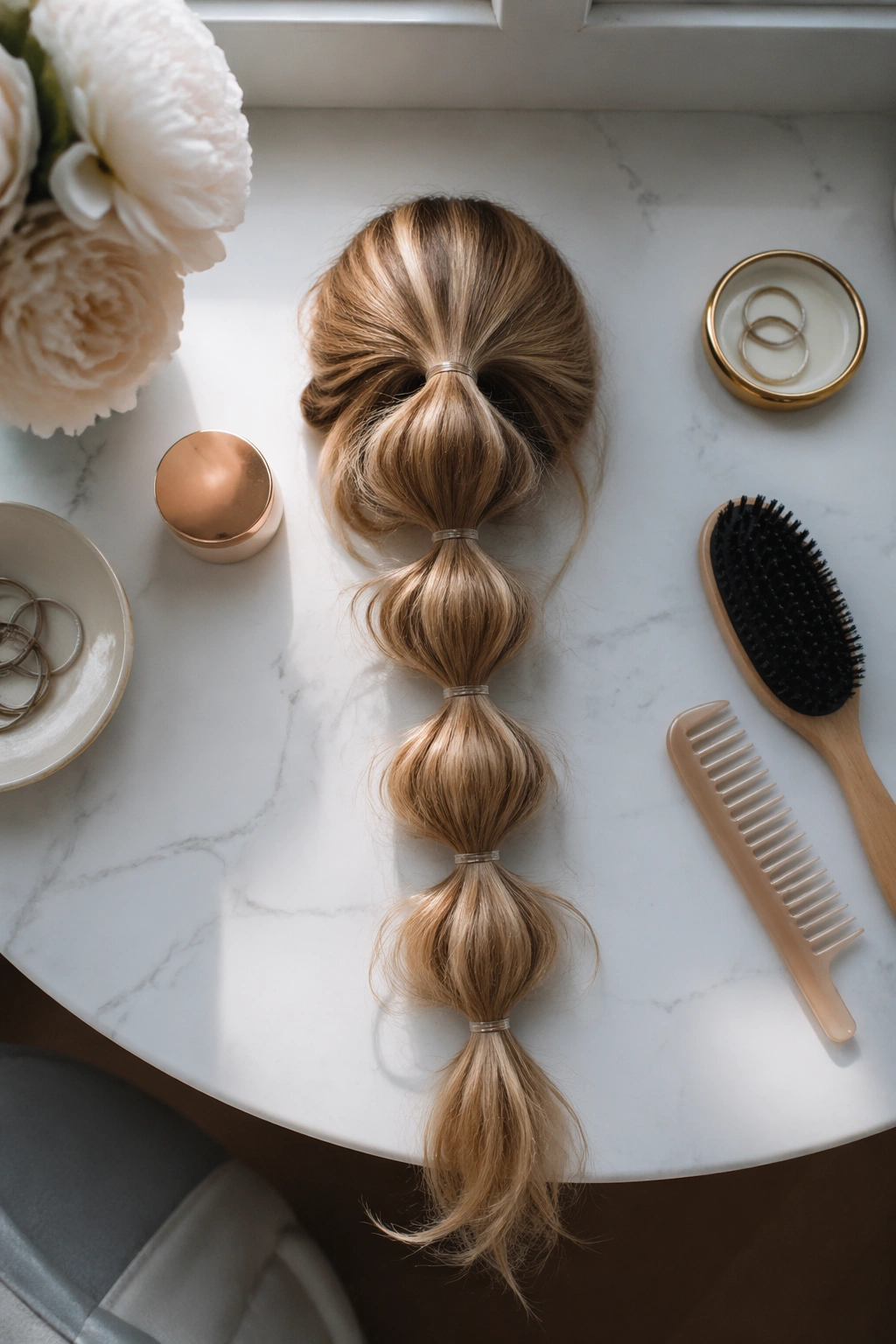
A bubble ponytail is one of the easiest ways to fake fullness, and thin hair likes it because each section gets its own shape. The bubbles create volume where the hair would normally just hang straight.
Start with a regular ponytail, then add clear elastics every 2 to 3 inches down the length. Gently pull each section outward with your fingertips until it puffs into a rounder shape. A light spray of flexible hold spray helps the bubbles stay open without getting crunchy.
This style is especially good when your ends are thinner than your roots. The spacing breaks up the line of the hair, so the tail looks thicker than it is. If your hair is shoulder length, keep the bubbles smaller; long gaps can make the whole thing look sparse.
4. Half-Up Ponytail That Leaves the Bottom Layer Free
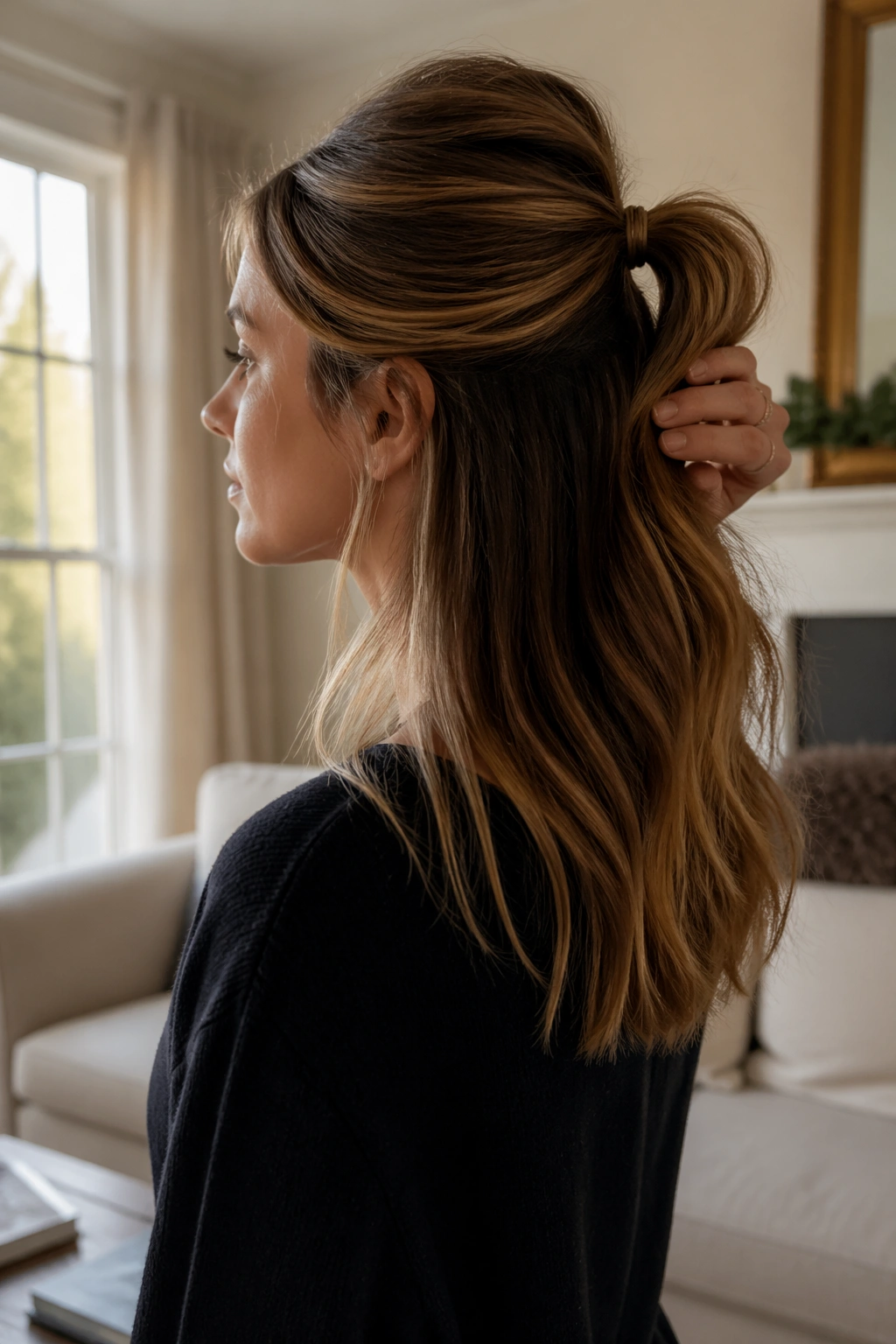
A full ponytail is not always the prettiest answer. Sometimes thin hair looks better when it only has to do half the work, and the loose bottom layer gives the style more visual width.
Gather the top half of the hair from temple to temple and secure it at the back of the head. Then tug the crown slightly with your fingertips to create a small lift. The hair underneath stays free, which makes the whole style feel fuller without asking the ponytail to carry every strand.
Leave the top section a little loose around the sides. Tight half-up styles tend to expose thin temple areas, and that is usually the part people notice first. If you curl the lower layer with a 1-inch wand, the ponytail above it looks more deliberate.
5. Side Ponytail With Loose Bends
A side ponytail can be a smart move when the hairline is thinner on one side or when the crown feels a little flat. The asymmetry does some quiet work for you. It pulls attention away from the most see-through part of the head.
Make a deep side part, then gather the hair just below one ear. Before you tie it off, add a few loose bends through the lengths with a flat iron or curling wand. You want motion, not ringlets. Straight, limp side ponytails often look smaller than they are.
Use one hand to hold the ponytail low while the other smooths the top. That helps keep the surface neat without flattening the sides too much. A side ponytail with soft movement reads as relaxed, not sparse.
6. Twisted Low Ponytail at the Nape
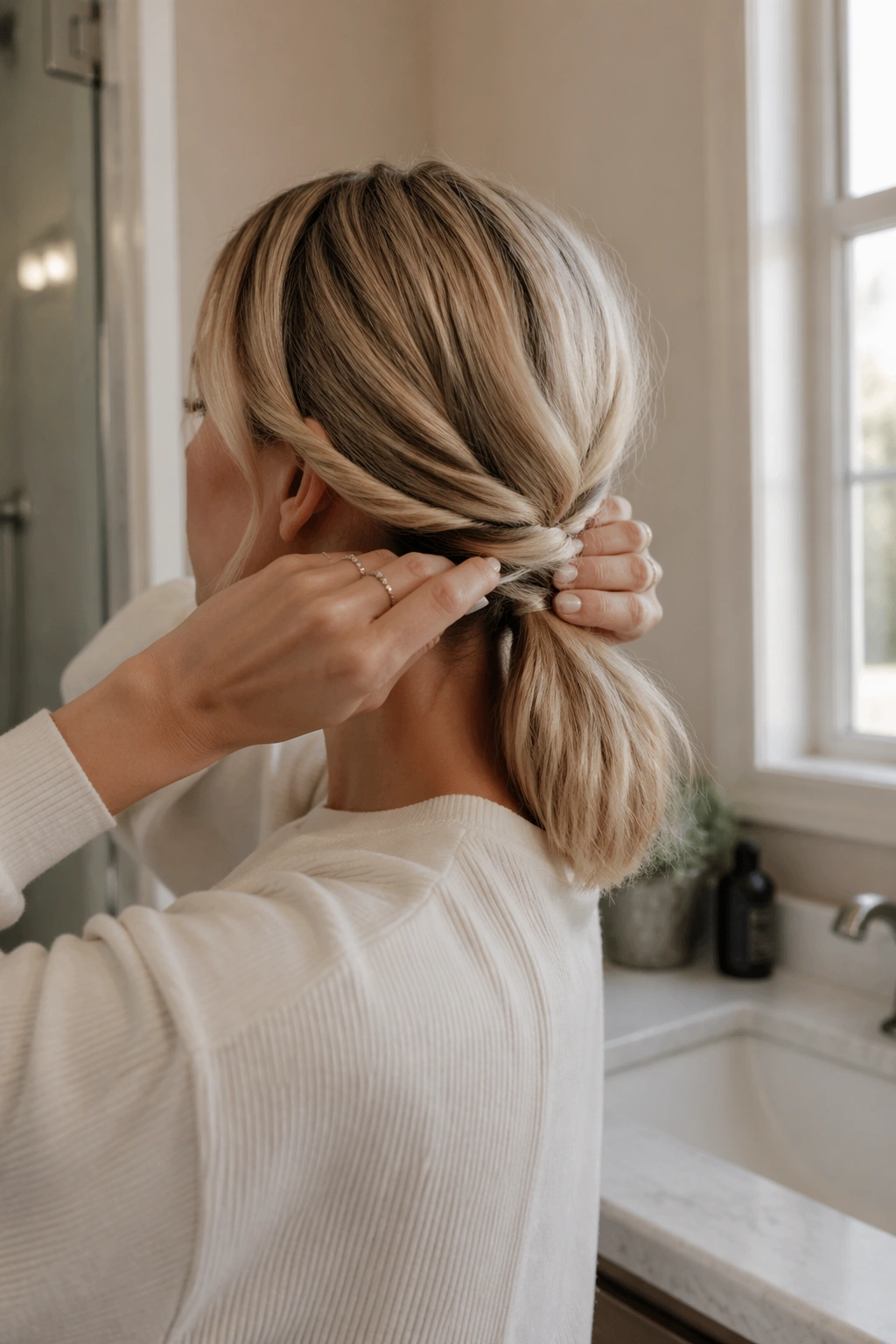
Two small twists can do what one big section cannot. When the hair is thin, twisting the sides back before the ponytail goes in gives the base a little more shape and stops the style from collapsing into the head.
Take a section from each temple, twist it back toward the nape, and pin or hold it in place while you gather the rest into a low ponytail. Then combine everything with a small elastic. The twists create the illusion of width at the sides, which is where a lot of thin hair needs help most.
This one works especially well on layered cuts. The shorter pieces near the face get pulled into the twist instead of sticking out on their own. If the twists feel slippery, spray the lengths lightly first and let them sit for 20 seconds before styling.
7. Teased-Crown Ponytail for Thin Hair
A little teasing is not a crime. Used carefully, it can save a thin ponytail from looking pasted to the scalp, especially when the top is the softest or flattest part of the head.
Why the Crown Matters
Backcomb the underside of the crown in two or three small sections, then smooth the top layer over it with a brush. The goal is to create a cushion, not a nest. If you can see the teasing from the outside, you’ve gone too far.
Gather the ponytail at mid-height and secure it with a firm elastic. Then pinch the hair above the band and lift it slightly to soften the transition from crown to tail. That tiny bit of lift makes the whole style look fuller.
Finish with a light mist of flexible hold spray. Heavy sprays can crush the shape right back down, and there’s nothing more annoying than building volume and losing it in five minutes.
8. Braided-Base Ponytail
Braids add texture fast, and thin hair usually needs texture more than it needs length. A braided base gives the ponytail a thicker-looking starting point, which matters because that’s where the eye goes first.
Braid a 3- to 4-inch section along the hairline or just above the nape, then pull the rest into a ponytail. You can also make one small braid on each side and join them at the back. Either way, the woven detail breaks up the flatness.
If the braid looks too tight and skinny, loosen it by pinching the outer edges. People call this pancaking, and on thin hair it works because it widens the braid without needing more hair. The style holds up nicely on second-day hair, especially with a touch of dry shampoo.
9. Wavy Ponytail That Starts at the Roots
Straight hair often reads thinner than it is. A soft wave pattern changes that quickly because the bends catch the eye and keep the tail from hanging in a single narrow line.
Curl the first few inches from the roots all the way through the mids with a 1-inch curling iron, then brush the waves out lightly before gathering the ponytail. Leave the ends relaxed. You want a loose, touchable finish, not tight curls that shrink the length.
This ponytail is useful when you want movement without a lot of fuss. The waves give the illusion of more hair because they create space between strands. If your hair tends to fall flat by midday, pin the top into very soft bends first and gather only after it cools.
10. Crimped Ponytail for Extra Grip
Crimping sounds retro because it is, and that is part of the fun. On thin hair, though, it solves a real problem: slippery strands.
Use a crimper or braid the hair into several tight plaits and press them with a flat iron if you want a softer version. Then brush the top only enough to hide the pattern at the scalp, leaving the texture through the lengths. The crimping gives the hair grip, which helps the ponytail stay put.
- Spray heat protectant before any hot tool touches the hair.
- Keep crimping under the top layer if you want the finish to look subtle.
- Don’t overload with oil afterward; it kills the texture fast.
This is a good style when your hair is naturally smooth and hard to hold. It gives you bulk without stuffing the ponytail with product.
11. Mid-Height Messy Ponytail
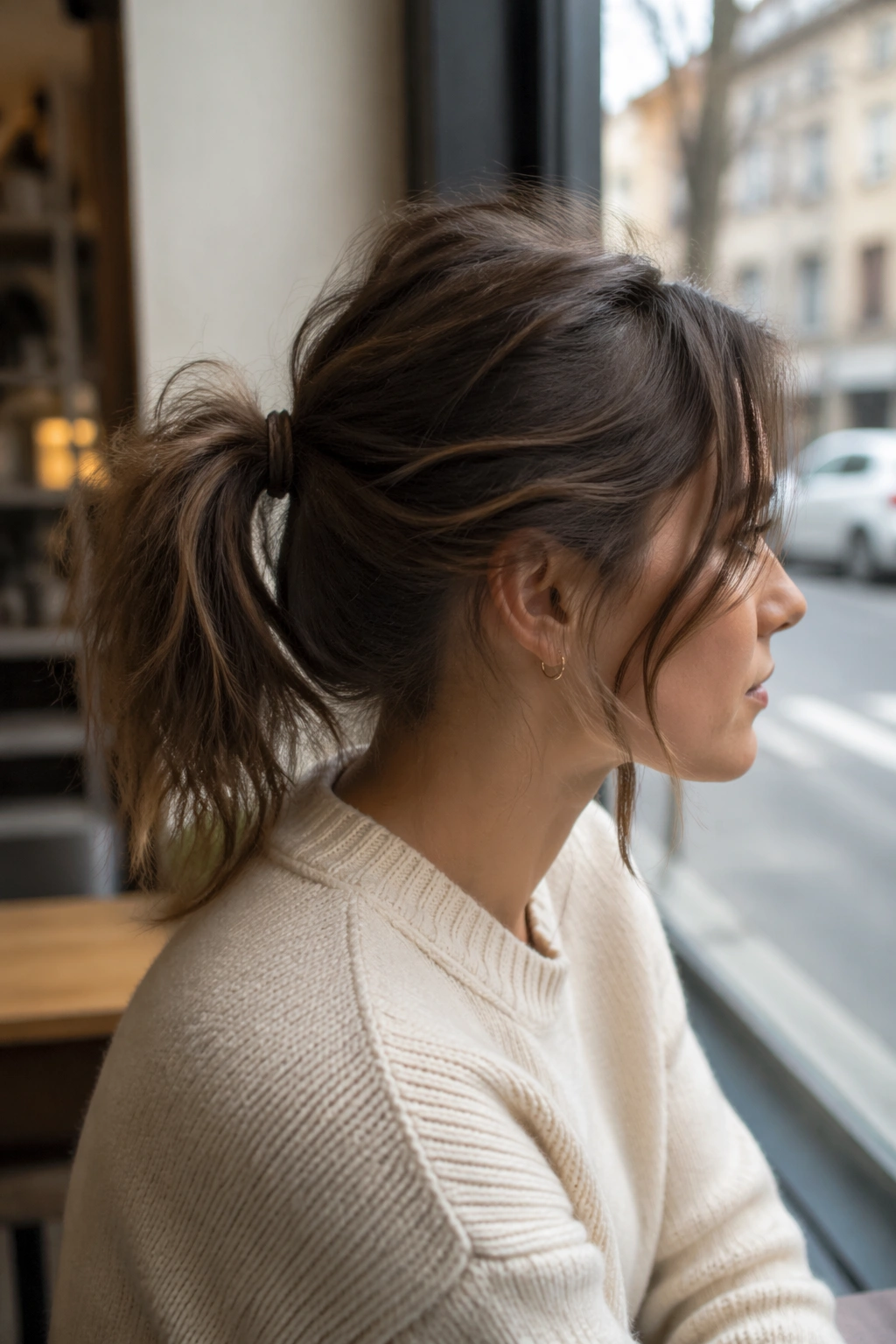
Not every thin-hair ponytail should pretend to be sleek. A mid-height messy ponytail works because it stops fighting the hair’s natural slip and lets the shape look soft on purpose.
Gather the hair around the middle of the back of the head, then pull a few small pieces loose near the temples and the crown. Use your fingers instead of a brush for the last pass. Fingers leave a little life in the hair; brushes tend to flatten everything.
The secret is controlled mess. You still want a clear ponytail base and a shape you can read from across the room. Keep the loose pieces thin and intentional, or the style starts looking unfinished rather than easy.
12. Double Ponytail Trick for Thin Hair
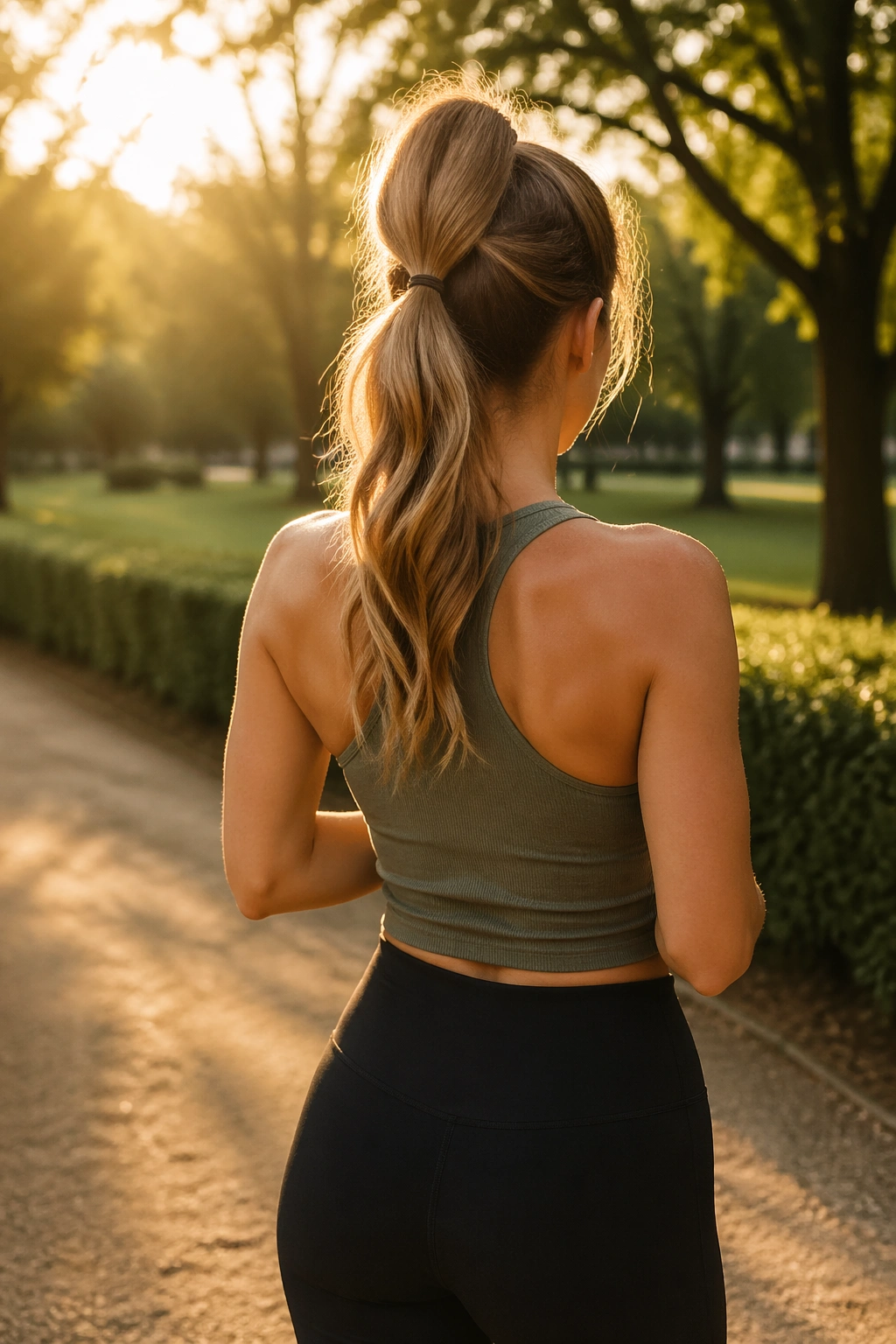
If you want a longer, fuller tail, stack two ponytails on top of each other. This is one of the oldest thin-hair tricks because it changes the proportion of the hair without adding anything fake.
Make a top ponytail using the crown and upper half of the hair. Then make a second ponytail just underneath it with the remaining hair, hiding the lower elastic under the upper tail. When the top tail falls over the bottom one, the result looks thicker and longer.
Where to Place the Second Elastic
Put the lower ponytail about 2 inches below the first one. Too close and you’ll feel the bump; too far and the trick shows. Smooth the top section over both ties, then wrap a strand around the visible elastic to make the whole thing look like one clean tail.
This is especially useful for straight hair that tends to go limp fast. The double base adds shape before the lengths even get a chance to fall.
13. Rope-Braid Ponytail
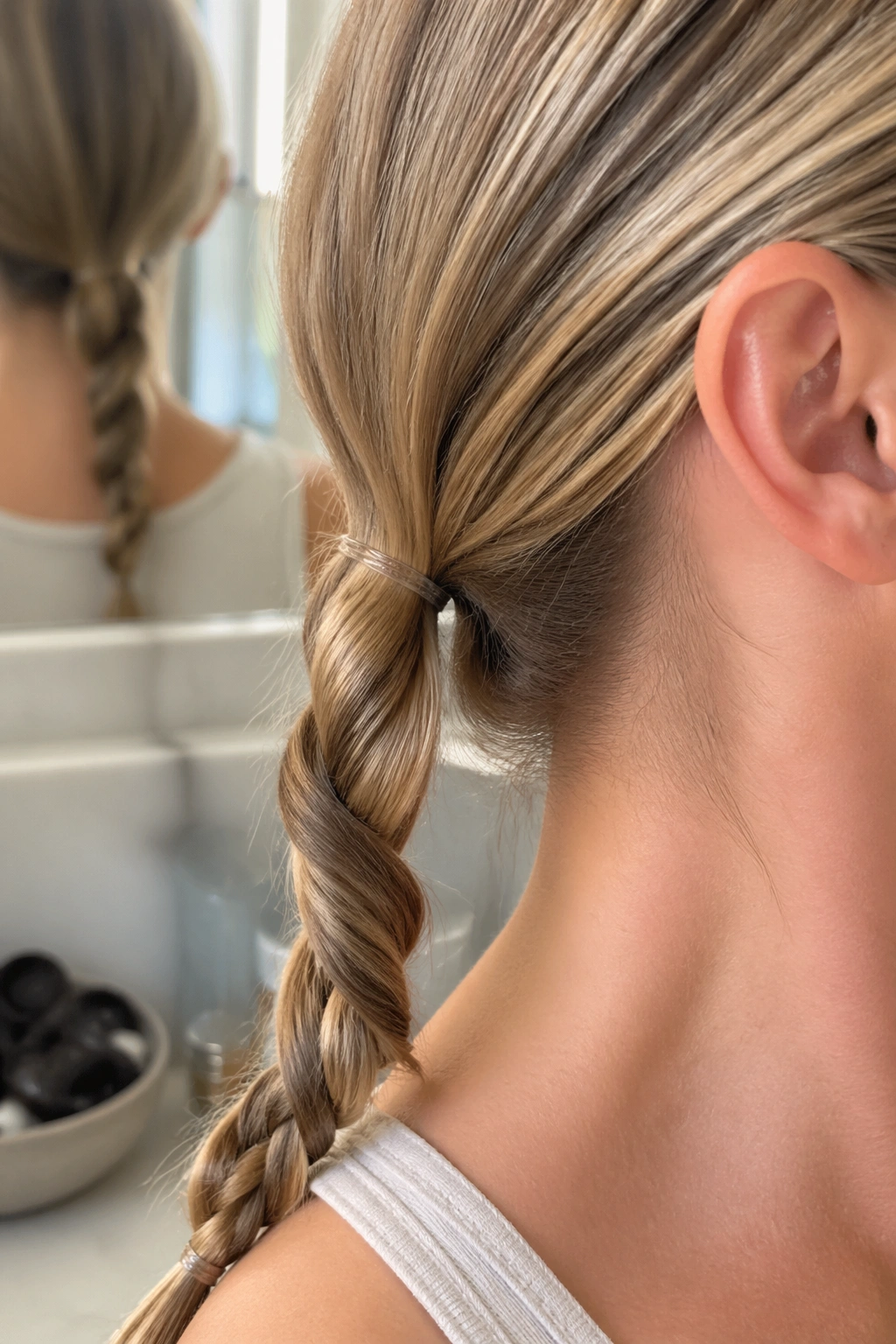
A rope braid gives thin hair a neat, twisted look without asking for much length. It’s cleaner than a full braid and often looks thicker than a plain ponytail because the two sections knit together so tightly.
Split the ponytail into two parts, twist each part in the same direction, then twist them around each other in the opposite direction. That sounds fussy written out, but the motion is simple once your hands learn it. Secure the end with a tiny elastic.
The twist pattern creates a solid visual line, which helps sparse ends look more deliberate. If the rope braid starts to loosen, pinch it in a few places and let a couple of shorter pieces fall free near the base. That little bit of softness keeps it from looking too exact.
14. Flipped-Through Ponytail

A flipped-through ponytail, sometimes called an inside-out ponytail, gives the base a tucked, slightly lifted shape. On thin hair, that matters because a plain elastic can look like the whole style is sinking.
Tie a low or mid ponytail, then split the hair above the elastic and pull the tail up and through the gap. You can do it once for a simple fold or twice for a more defined shape. The movement creates a little bend right at the base, which visually thickens the start of the ponytail.
This is a good style when you want something neat but not stiff. It works especially well on hair that is smooth enough to slide through cleanly. If your strands are coarse, add a drop of serum to the lengths first so the flip does not snag.
15. Scarf-Wrapped Ponytail

A scarf can do more than decorate. On thin hair, it adds visual weight around the base of the ponytail, which makes the style feel fuller before anyone even looks at the lengths.
Choose a scarf with a bit of body — cotton voile, a silk blend, or a thin woven fabric usually works better than a slippery square that won’t stay tied. Fasten the ponytail first, then knot the scarf around the elastic and leave the ends hanging. A low ponytail gives the scarf the most room to show.
The charm here is that the accessory does some of the work your hair would otherwise have to do. Keep the rest of the style simple. A scarf plus a complicated braid can start to feel crowded.
16. Ribbon-Tied Ponytail
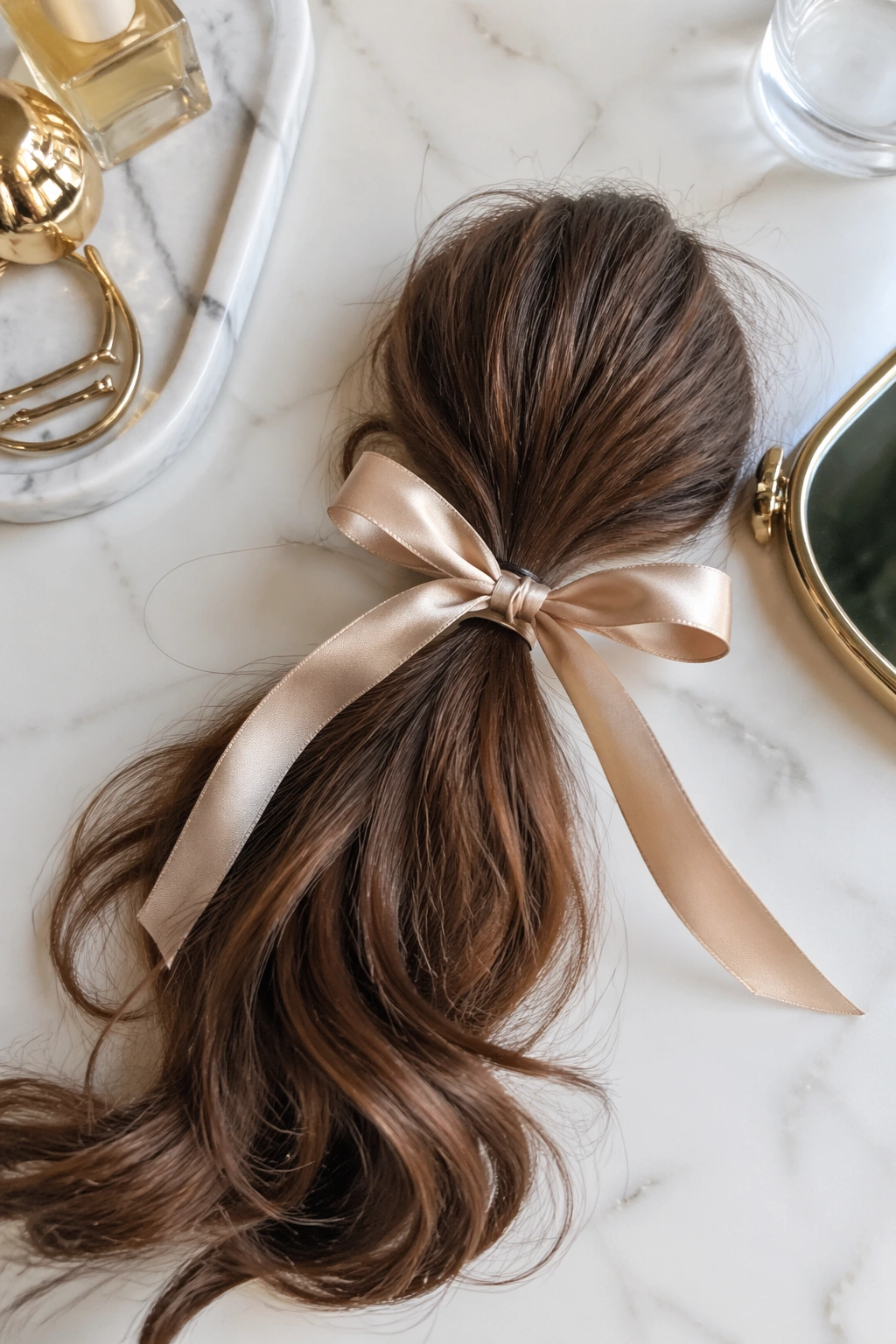
A ribbon gives a ponytail a softer line than an elastic alone, and on thin hair that softness can be a gift. The ribbon adds interest at the base while keeping the tail itself tidy.
Tie the hair back with a small elastic first, then knot a narrow ribbon over it. Satin works for a dressier look, while grosgrain holds its shape better if you want the bow to sit upright. Let the tails trail down the ponytail or tie them into a small bow right under the base.
This style shines when the ends are slightly curled. Straight, narrow ends can make the ribbon look too dominant. A little bend at the bottom balances the proportions and keeps the whole style from feeling top-heavy.
17. Wet-Look Low Ponytail
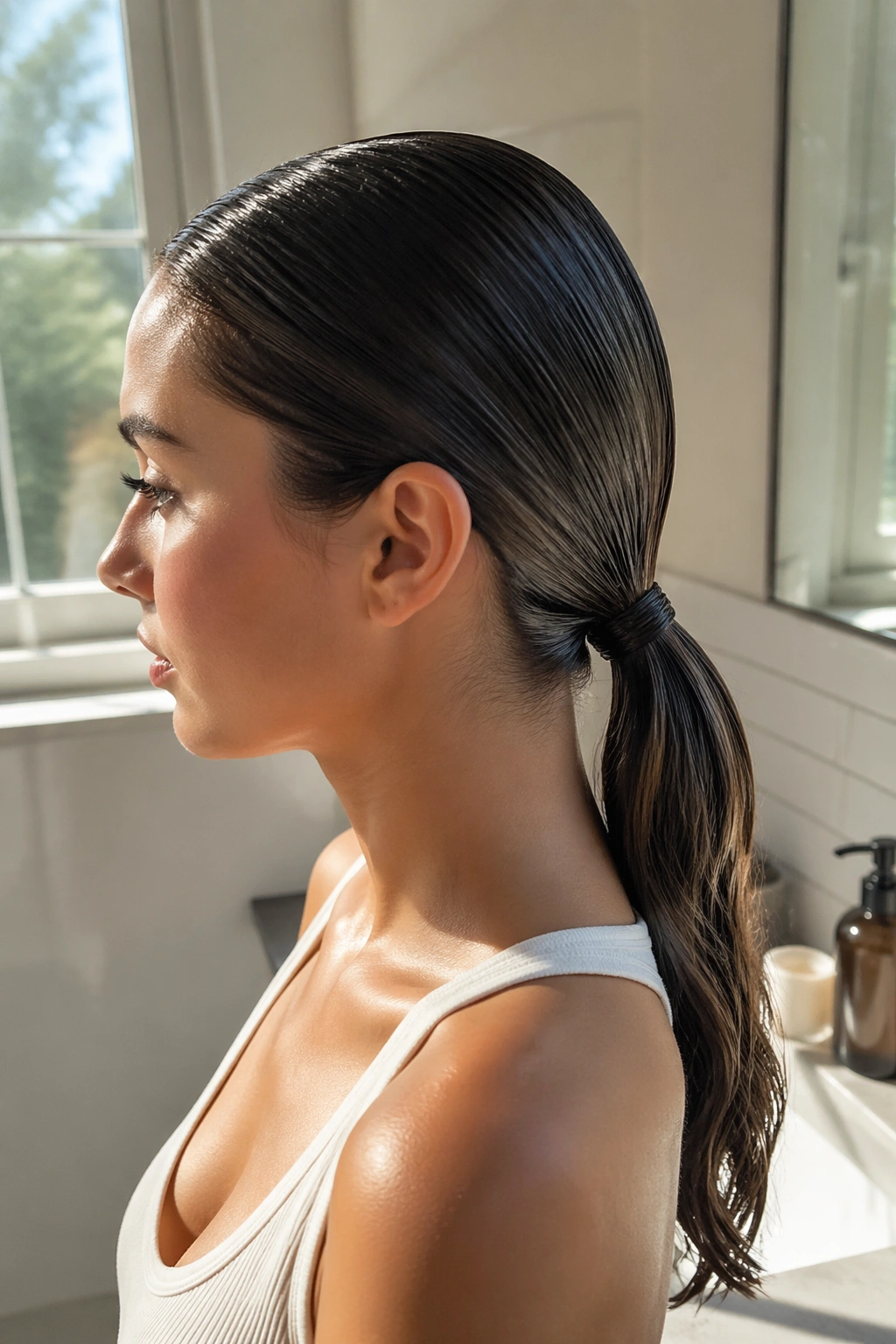
A wet-look low ponytail is one of the few styles where thin hair gets a break. Instead of trying to fake bulk, it leans into shine and shape.
Work a strong gel through the roots and top layer, brushing the hair back until it sits flat and glossy. Secure the ponytail low at the nape, then smooth the tail with a small amount of serum. The result is sleek, controlled, and neat in a way that thin hair often handles well.
Use a toothbrush or tiny edge brush along the hairline if you want the front clean. That sounds fussy, but it helps the whole look stay sharp. This style is good when the weather is damp or when you want earrings and makeup to do more of the visual work.
18. Clipped-Back Crown Ponytail
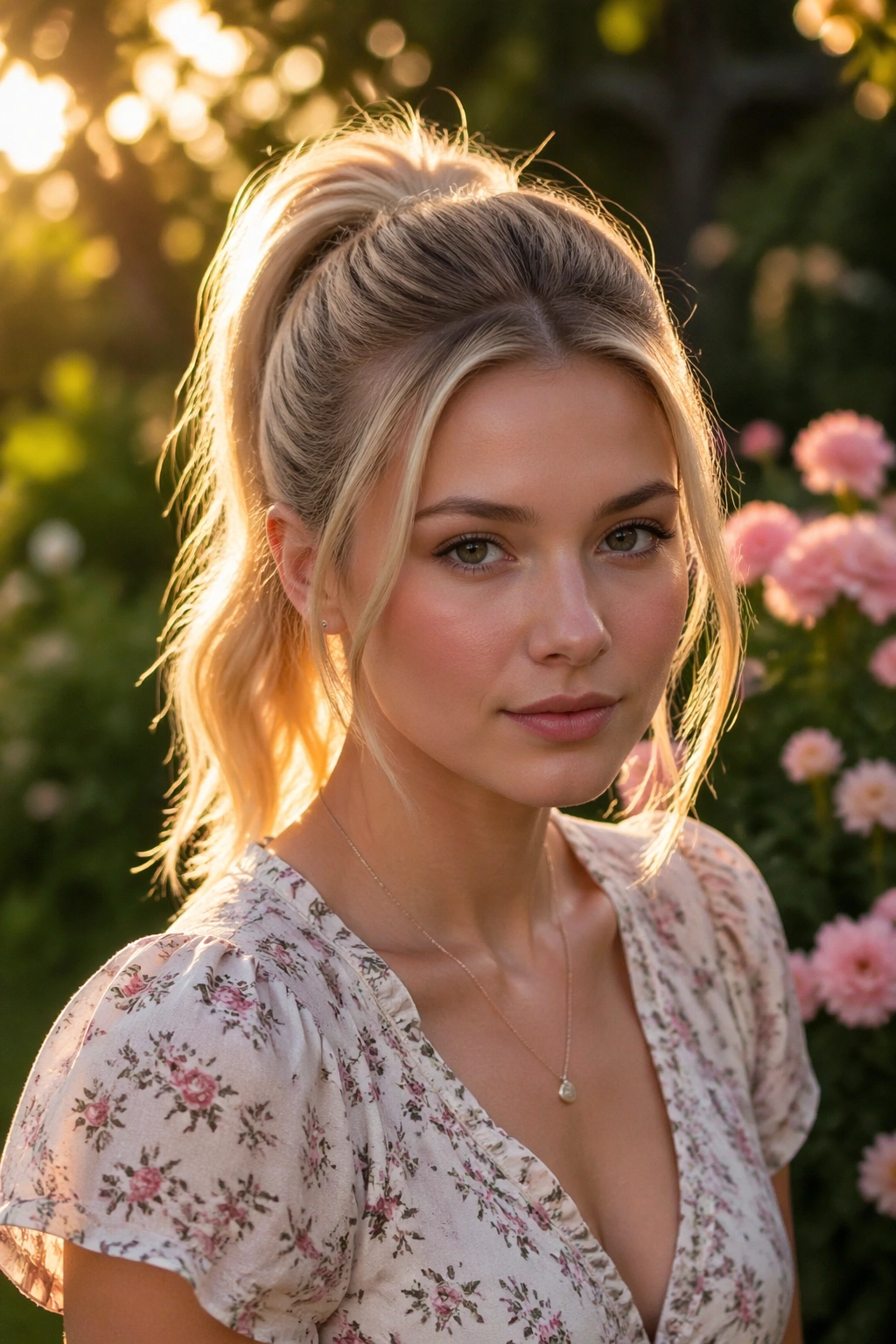
Small clips can create lift before the ponytail even exists. If the crown tends to lie flat, clipping the sides back first gives the top a little structure and helps the final ponytail sit higher and fuller.
Take two small sections from the temples, lift them slightly, and pin them back with discreet clips or barrettes. Then gather the remaining hair into a ponytail just below the crown. The clips stay hidden under the upper layer, but they quietly change the profile.
This works especially well when the hairline is thinner than the rest of the head. The front gets support without looking teased or overstyled. If your clips slide, rough up the roots first with a bit of dry shampoo; smooth hair loves to escape.
19. Curly Ponytail With Bouncy Ends
Curly ponytails can be a gift to thin hair because each curl takes up space. The tail looks fuller when the curls stay separate instead of collapsing into one long strand.
If your hair is naturally curly, gather it loosely at the back and let the texture do the work. If not, use a wand to curl the lengths before tying them back. Leave the crown a little soft so the curls do not get crushed near the base.
A satin scrunchie can help here. It holds without denting the hair as hard as a tight elastic. Refreshing the curls with a little water and curl cream on the ends keeps the ponytail from frizzing out and losing its shape.
20. Faux Hawk Ponytail
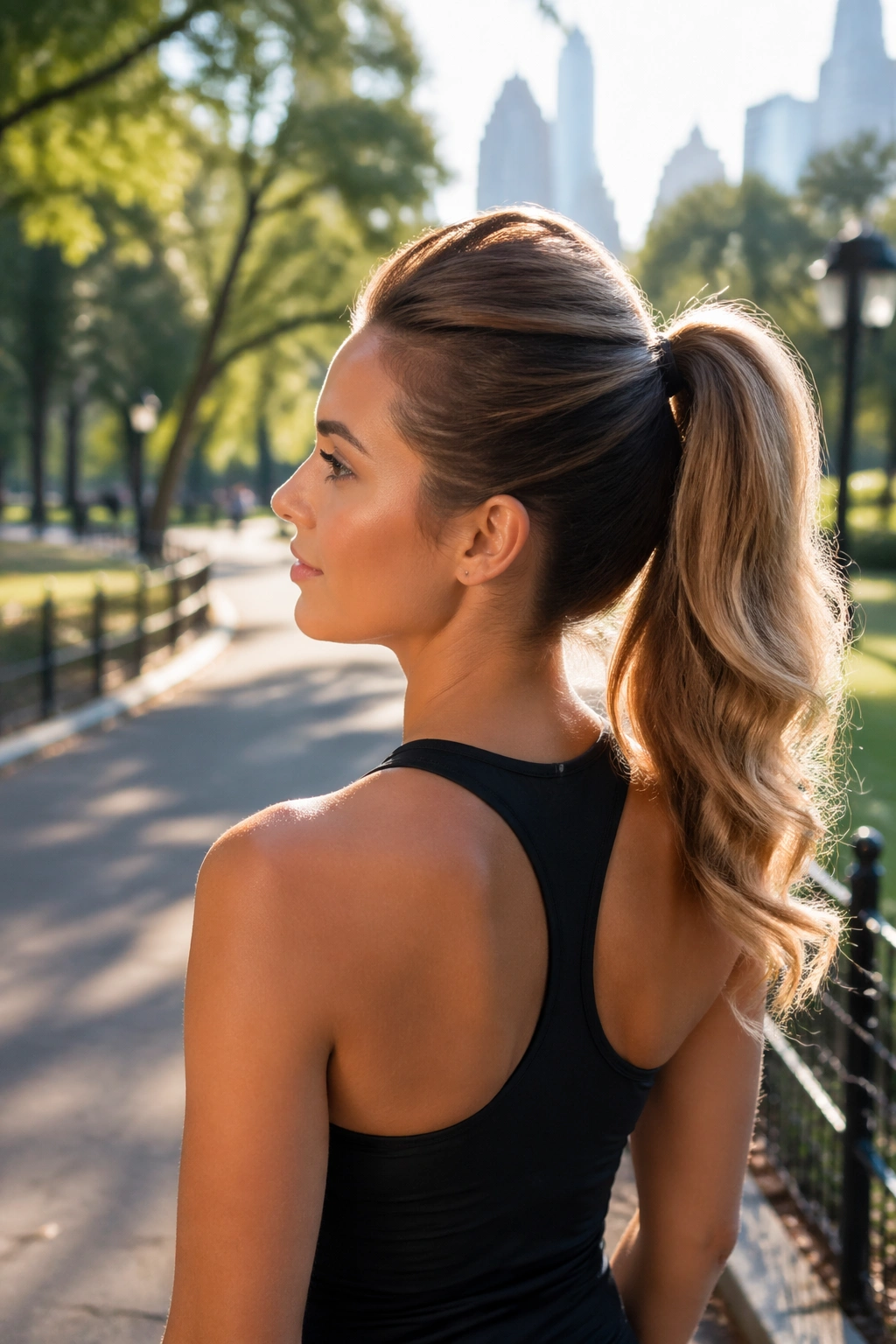
A faux hawk ponytail is bold, but thin hair sometimes benefits from boldness. The style concentrates the hair through the center strip of the head, which makes the crown look higher and the tail look bigger.
Slick or pin the sides close to the head, then gather the top and middle section into a ponytail along the center line. You can tease the center first if you want more lift, or keep it smooth if the hair is already textured. Either way, the side sections disappear into the shape and leave the volume where it matters.
This is a strong choice for evenings, events, or any time you want the ponytail to read as a real style instead of a fallback. It also works nicely with earrings, since the sides stay clean and open.
21. Loop-Through Ponytail
A loop-through ponytail creates a soft knot-like shape with almost no extra work. That small loop at the base makes the style feel fuller, which thin hair often needs.
Pull the ponytail partway through the elastic on the final turn, leaving the ends folded through instead of hanging straight. You can widen the loop a little with your fingers if you want a softer shape. The style looks tidy, but not stiff.
It’s especially useful on hair that sits between short and medium length. Full ponytails can feel flimsy at that length, while a loop gives the illusion of more structure. Use a light mist of spray before you form the loop so the hair holds its bend.
22. Mini Braid Accent Ponytail
A small braid can save a plain ponytail from looking thin and forgotten. It does not need to be big; in fact, a tiny braid often looks better because it adds detail without stealing hair from the tail.
Braid a slim section at the temple, behind one ear, or right above the ponytail base. Then fold it into the tail or pin it where it finishes. That little woven line gives the eye something to follow, which helps the rest of the ponytail feel more deliberate.
This is a good move when you want a simple style that still looks finished. Thin hair often looks best when it has one clear idea. A single braid, a smooth tail, and a clean base usually beat a pile of competing details.
23. Face-Framing Low Ponytail
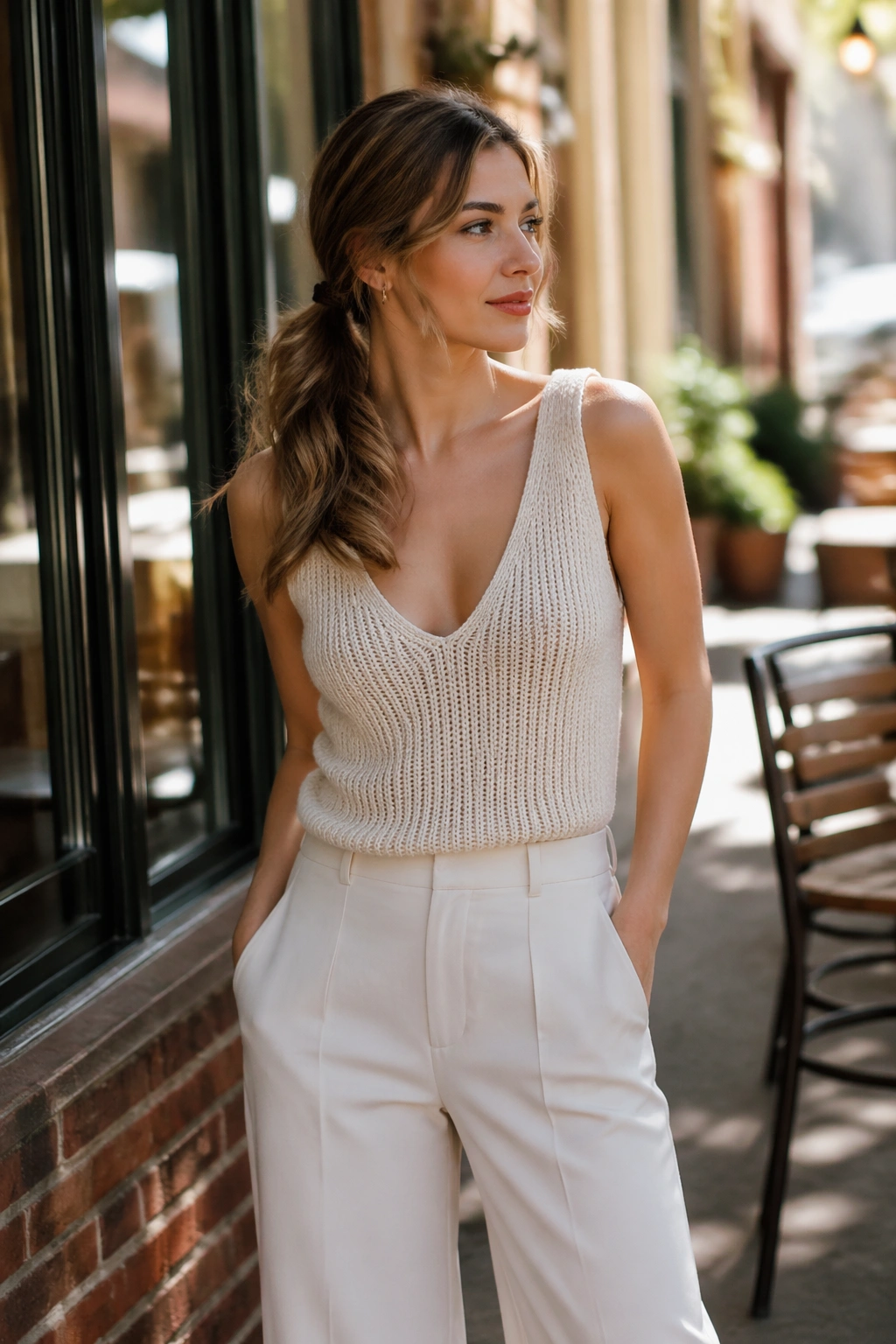
Leaving out two face-framing pieces changes the whole mood of a ponytail. It softens the front and keeps thin hair from being pulled too flat around the temples.
Make the ponytail low and a little loose, then release a small section on each side of the face. Curl those pieces away from the cheeks so they bend outward instead of clinging in. Keep them narrow — about half an inch wide is enough.
This style works because it breaks the outline of the head. A fully pulled-back ponytail can expose thinness around the hairline; soft front pieces hide that without making the style messy. It also photographs well in real life, which matters more than people like to admit.
24. Clip-In Extension Ponytail
If you want a fuller ponytail fast, a clip-in ponytail piece can do the job. It is not cheating. It’s a hair accessory with a purpose, and thin hair often benefits from the extra mass.
How to Match It Without an Obvious Line
Choose a piece that matches your texture first, then your color. A straight ponytail extension on naturally wavy hair tends to look off no matter how close the shade is. Wrap a strand of your own hair around the base to hide the attachment.
Keep the volume believable. If your own hair is shoulder length and softly straight, don’t pair it with a giant, glossy tail that sits halfway down your back. The best version is the one that looks like your hair on a very good day.
This option is especially useful for events, photos, or any day when you want a fuller shape without spending twenty minutes teasing and re-teasing the crown.
25. Sleek Center-Part Ponytail
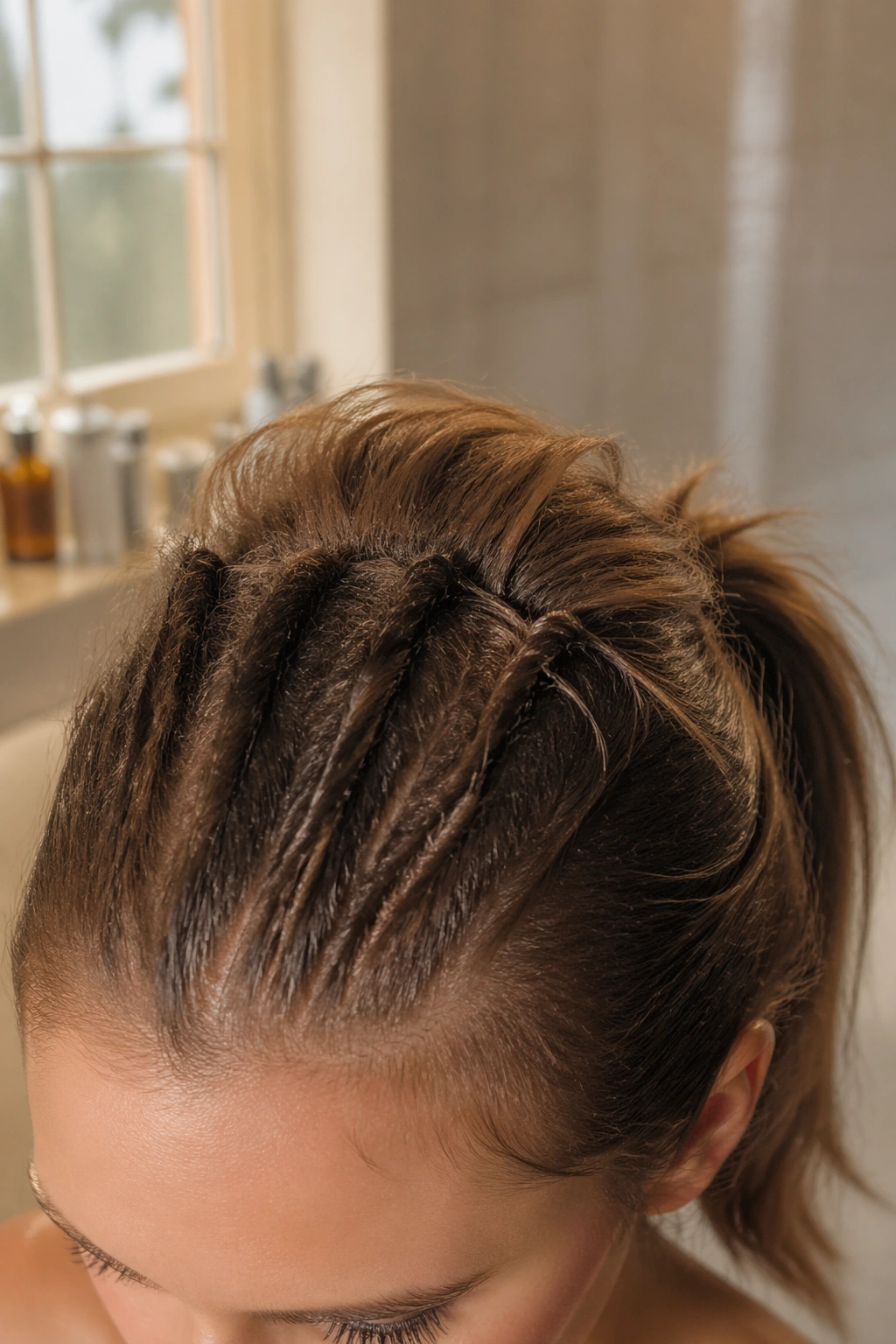
A center part can make thin hair look sharper and more balanced than a side part, especially when the goal is clean lines. Symmetry often reads as density, even when the hair itself is fine.
Part the hair straight down the middle, smooth each side back, and gather the ponytail low or mid-height. Keep the roots neat with a little gel or pomade worked through the front only. The ends can stay soft; the important part is the clean frame around the face.
This style works best when the hair is in good condition and the part is precise. If the scalp shows too much at the part, use a touch of root powder at the top before smoothing. That tiny bit of grit helps the part stay neat instead of separating.
26. Volume-Powder Ponytail
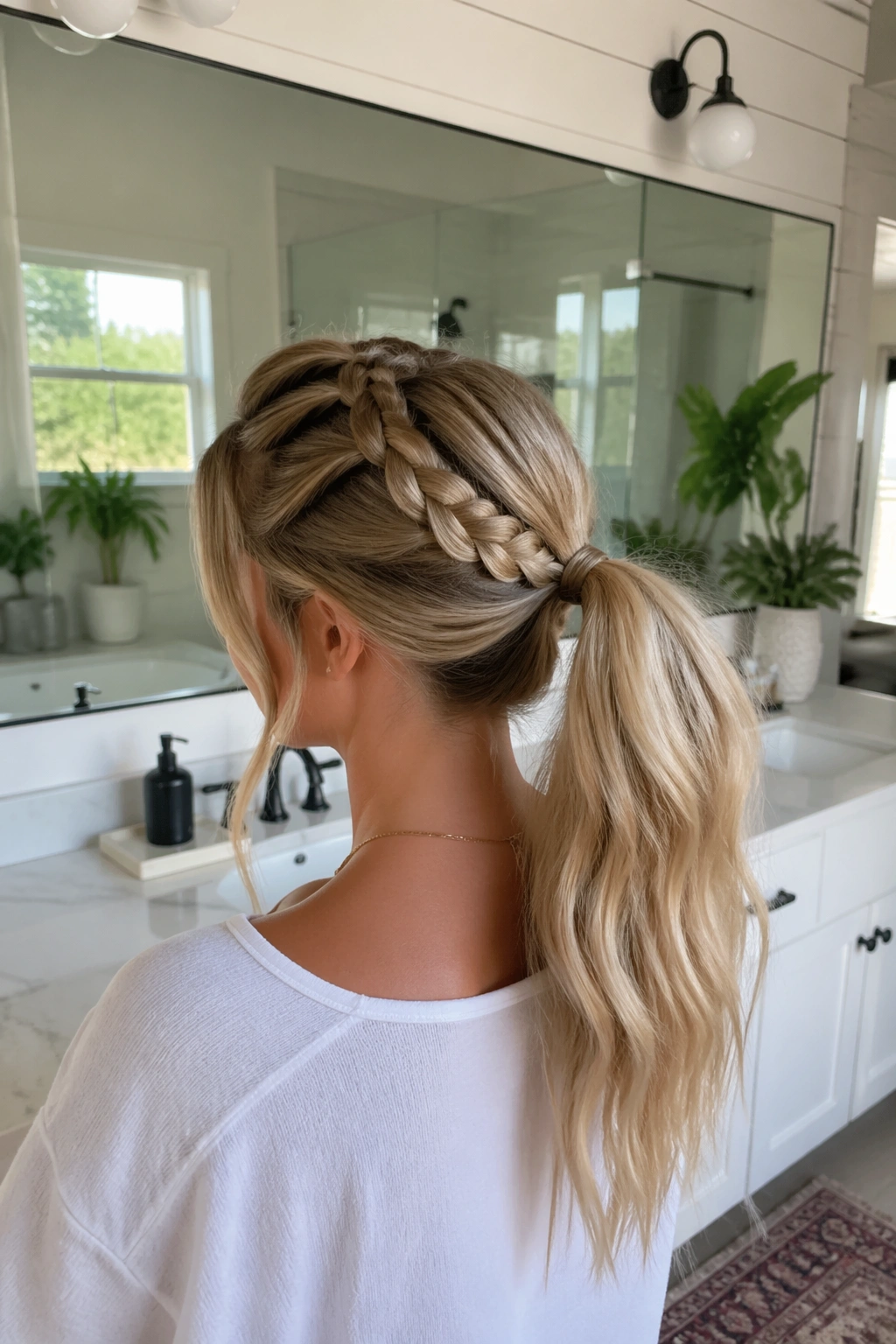
Volume powder is one of those products that seems small until you use it on thin hair. A little at the roots can change the grip, the lift, and the way the ponytail sits on the head.
Tap a small amount into the crown and along the top sides, then massage it in with your fingertips until the roots feel slightly rough. That texture helps the hair stand away from the scalp and gives the ponytail more body before it’s even tied. Use a light hand. Too much powder turns chalky fast.
This is a strong base for almost any ponytail style on this list. Sleek, textured, braided, high, low — they all hold better when the roots are not slippery. If you only buy one styling product for fine hair, this may be the one that earns its shelf space.
27. Soft, Fluffy Everyday Ponytail
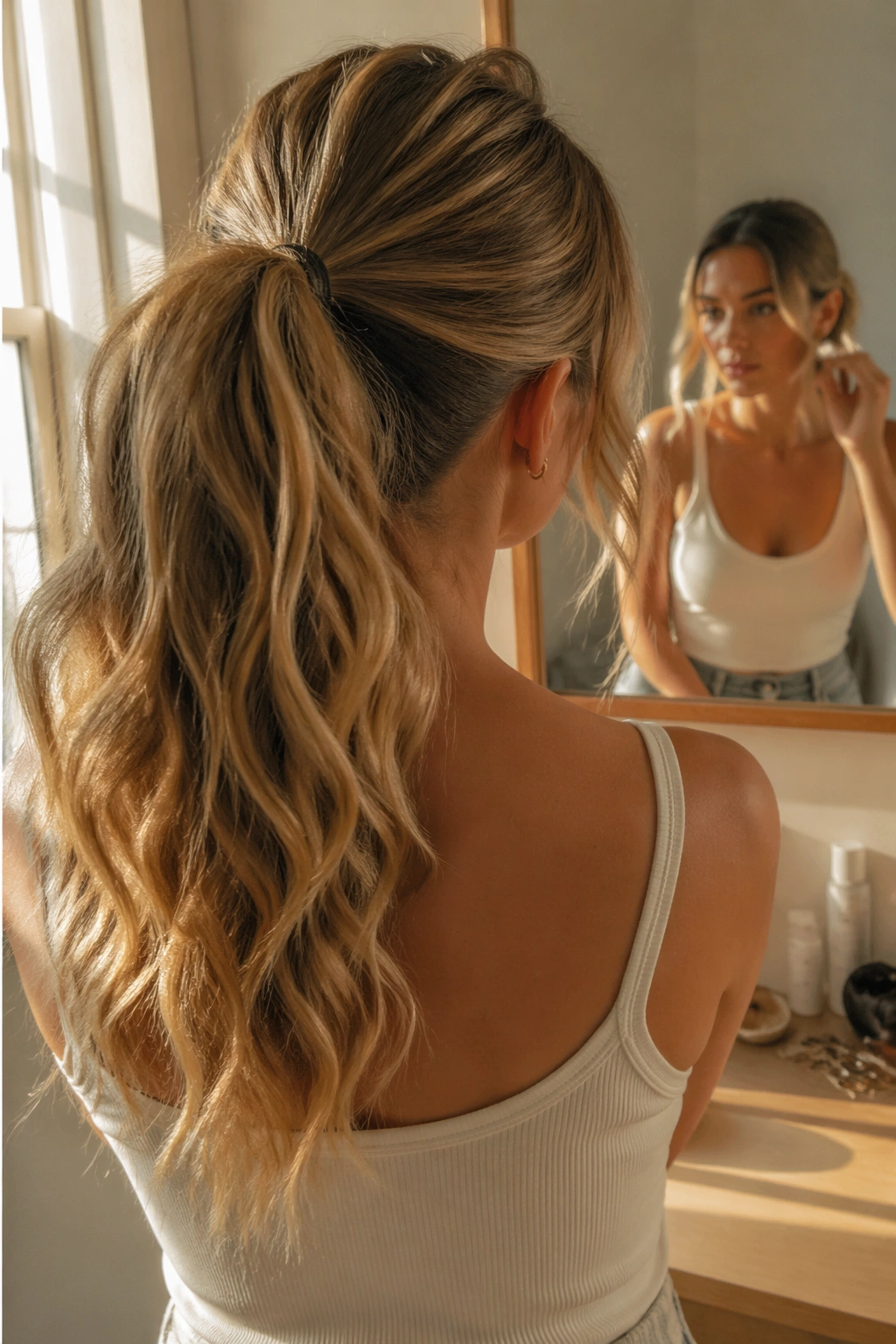
Sometimes the best ponytail for thin hair is the one that stops trying so hard. A soft, fluffy ponytail works because it accepts a little looseness and turns it into shape.
Gather the hair at mid-height or low, leave the crown slightly lifted, and gently pull the tail apart with your fingers after it’s secured. Add a few loose bends through the lengths with a curling wand if the hair is too straight. The finish should feel light, touchable, and easy.
This is the style I’d reach for on an ordinary day. It doesn’t pretend the hair is thicker than it is; it just gives it movement, softness, and a little lift where it counts. That honesty can look better than any overly controlled ponytail.
Final Thoughts
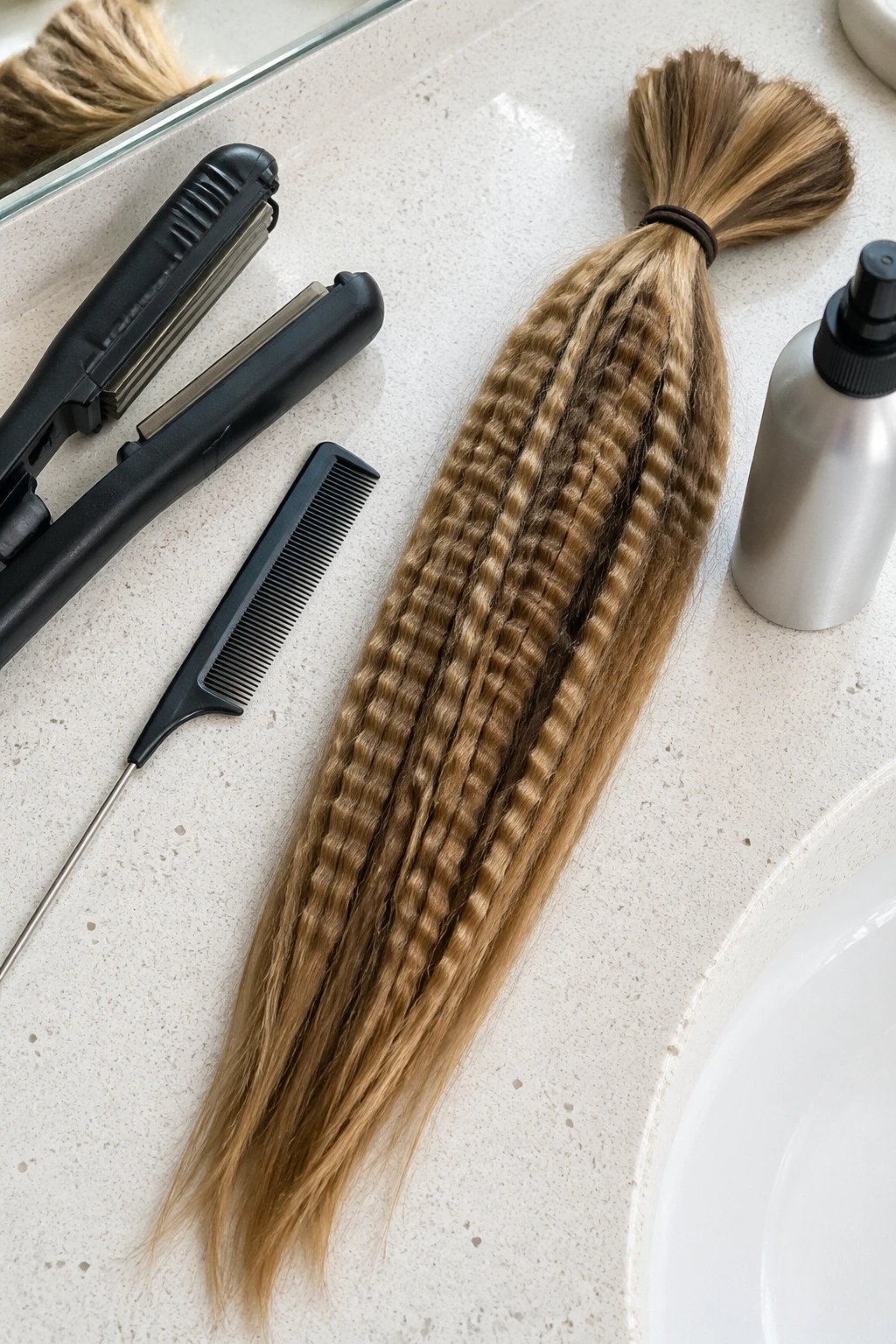
Thin hair is rarely the real problem. Flat roots, a slippery base, and a ponytail that sits in the wrong place are usually the bigger culprits. Fix those, and the whole style starts behaving better.
If I had to pick the most useful ideas from this list, they’d be crown lift, texture at the roots, and a wrapped base. Those three tricks show up again and again because they work across different hair lengths and moods.
Keep a few versions in rotation instead of wearing the same ponytail every day. Hair gets tired, and so does the eye. A small change in placement or texture can make a thin-hair ponytail feel fresh without asking for more hair than you already have.
