



Textured high ponytails for natural hair have a specific kind of charm. They do not need to be pin-straight to look polished, and honestly, that is part of the appeal. The texture gives the style movement, height, and personality that a flat, overworked ponytail never quite matches.
A good high ponytail on natural hair usually lives or dies by the base. If the roots are secure and the crown sits where you want it, the rest can be soft, fluffy, braided, twisted, or full of curl pattern. If the base is weak, the whole style starts slipping, sagging, or pulling at the edges. Annoying. Avoidable, too.
What makes this style family so useful is the range. You can keep it quick with a puff, dress it up with braids, or lean into defined curls, stretched lengths, or locs. Some versions take ten minutes. Others ask for a little more handwork and a mirror that doesn’t wobble every time you lean in.
1. Wash-and-Go High Puff Ponytail
This is the one I reach for when I want volume without fuss. The curls stay front and center, the crown sits high, and the whole look feels alive instead of stiff. A wash-and-go high puff ponytail works especially well if your curl pattern has decent spring and your hair likes a little moisture.
Why It Works
The shape is doing most of the heavy lifting here. Your curls provide the texture, and a soft brush or edge brush smooths the front just enough to frame the face. You are not forcing every strand flat. That is the point.
- Use a moisturized curl cream or leave-in so the puff looks juicy instead of dry.
- Gather the hair with a snag-free elastic or stretchy band.
- Place the ponytail high, then fan the puff out with your hands.
- Keep the edges gentle; a heavy gel line can make the look feel hard.
A small trick I like: tilt your head forward when you secure the ponytail. It makes the crown smoother and keeps the puff sitting high instead of drooping.
2. Sleek-Root Curly Ponytail
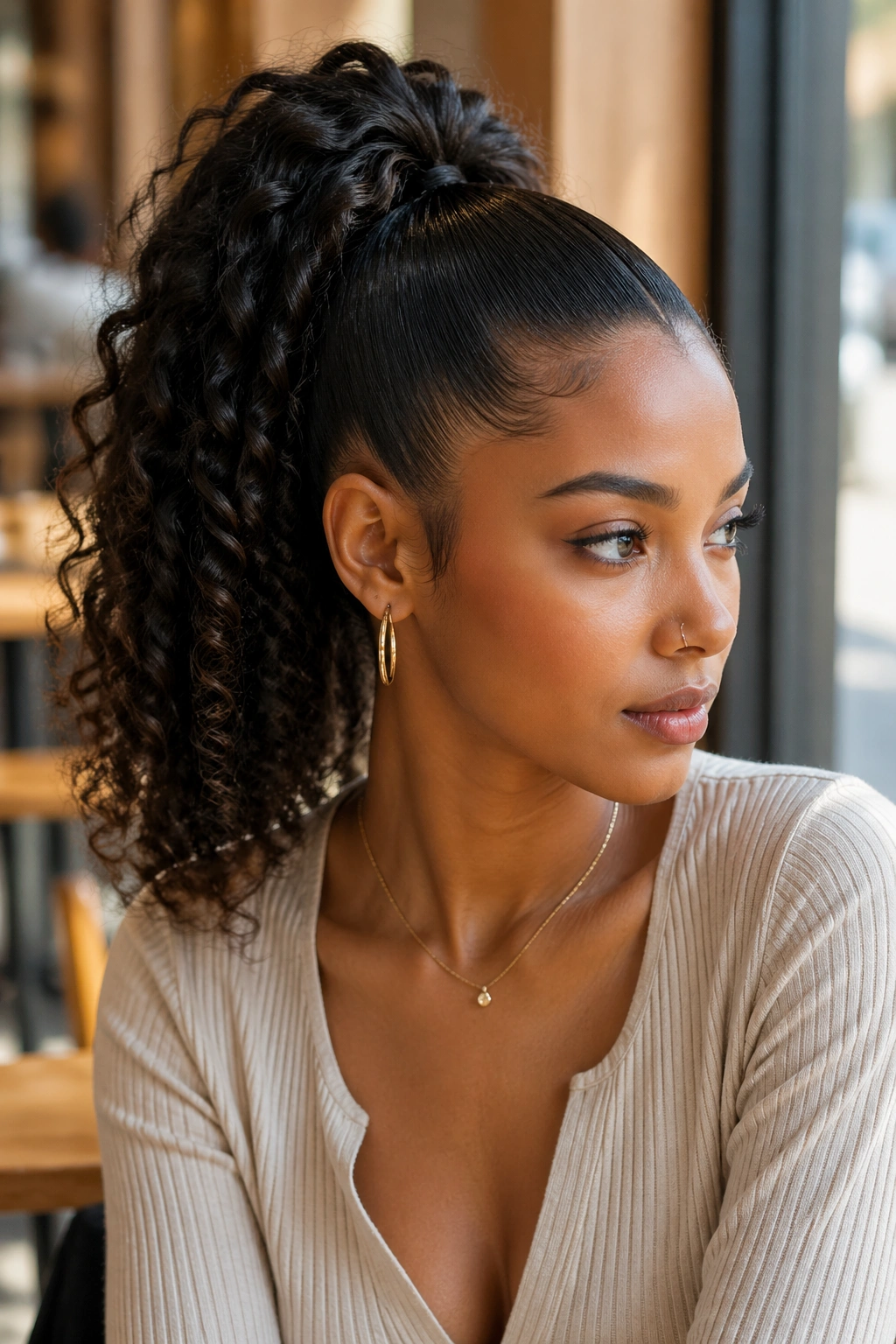
Sleek at the root, curly at the length is one of the easiest ways to make a high ponytail look deliberate. The contrast is what sells it. Smooth edges and a glossy crown draw the eye up, while the curls or coils at the back keep the style from looking too tight.
What I like about this version is that it works on stretched hair, blown-out hair, and even curlier textures with a little shaping. Use a light gel or cream-gel hybrid on the top section, brush it only until it lays flat, and stop. Do not chase perfect glass hair if that means yanking your scalp.
Wear this one when you want the ponytail to look dressed up but not formal. It pairs well with large hoops, a sharp side part, or a clean middle part. If your curls at the tail are more compact than you’d like, finger-separate them after they dry a little. That adds body fast.
3. Braided-Base High Ponytail
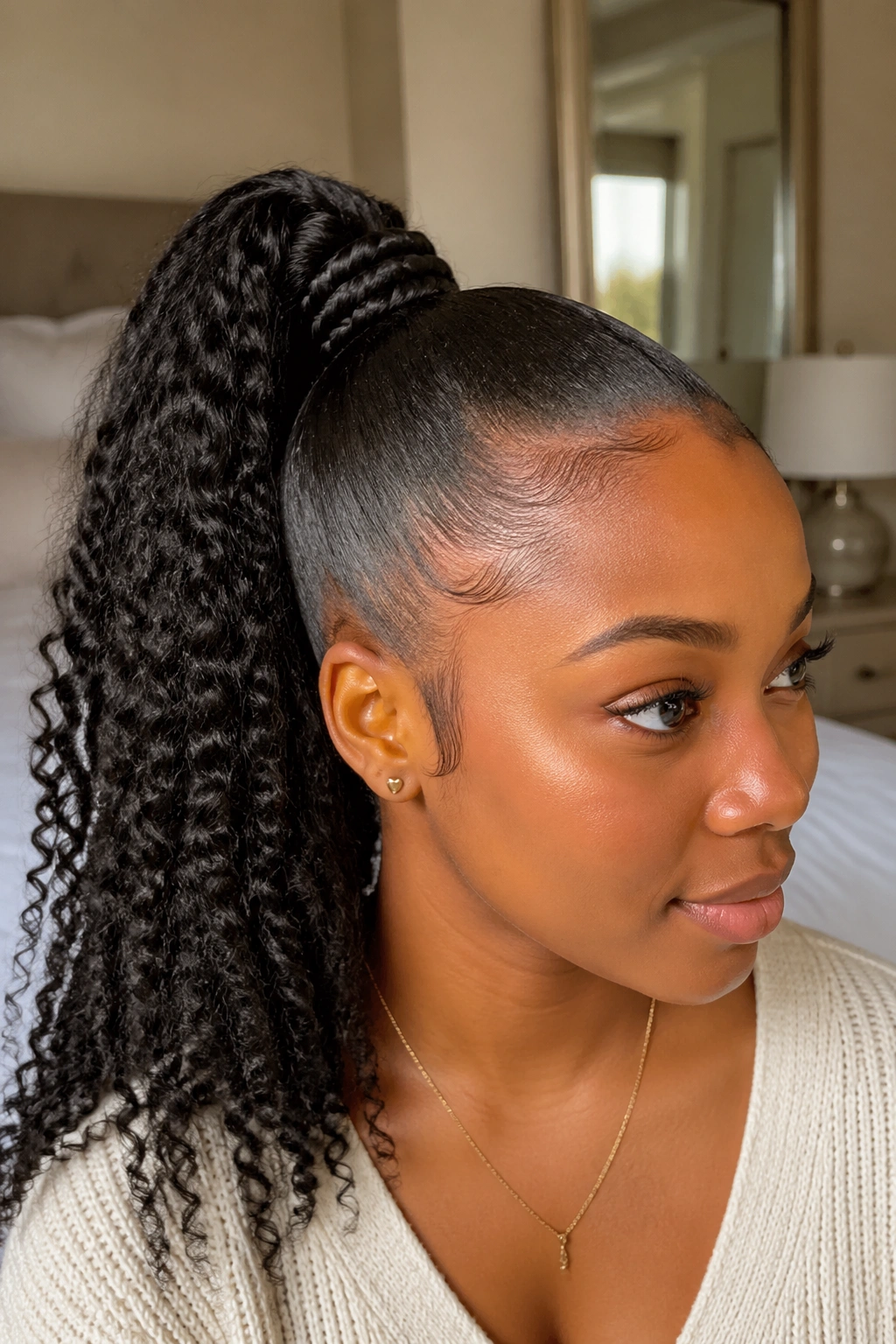
A braided base gives the style a clean finish and helps hide the elastic, which is one of those small details that makes a ponytail look more finished. This version feels a little more secure, a little more intentional, and a lot better if your hair is thick or layered.
How to Keep the Base Neat
Start with a high ponytail secured tight enough to stay up, but not so tight that your temples ache. Then braid the base section around the elastic and pin the tail under or behind it. That braided wrap gives the style a tucked, tidy look without needing a ton of product.
- Best for medium to long natural hair.
- Works nicely on blown-out or stretched textures.
- Use 2 to 4 bobby pins if the braid wants to loosen.
- A dab of styling cream on the braid helps keep frizz down.
This one has staying power. It is the ponytail I would choose for a long day when I still want the back to look clean by evening.
4. Crisscross Wrap High Ponytail
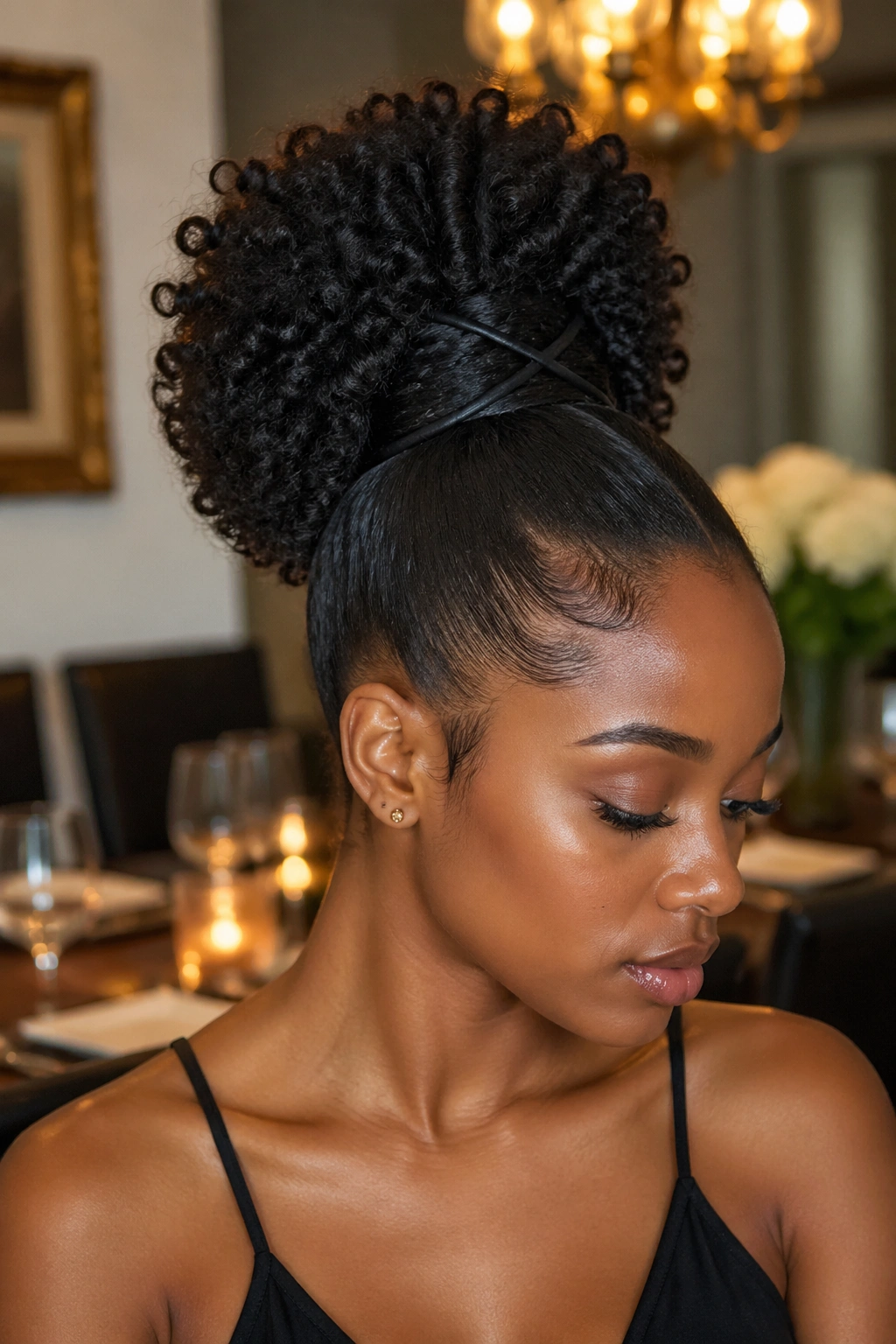
A crisscross wrap is one of those details that looks fancier than it is. Two small sections wrap over and under the ponytail base, crossing in a way that hides the elastic and adds a bit of geometry at the crown. Small move. Big payoff.
You can do it with the natural texture left loose at the tail, or with a lightly stretched ponytail if you want the sections to read more clearly. The key is to keep the wraps snug and smooth before you pin them. If they are loose, they’ll puff up and lose the shape.
I like this style for days when a plain ponytail feels too plain. It has enough polish for dinner or an event, but it still belongs on coily hair. Use a rat-tail comb to section the wrapping pieces cleanly. That makes the whole thing easier to control, and yes, easier to fix when one side starts to wander.
5. Two-Strand Twist High Ponytail
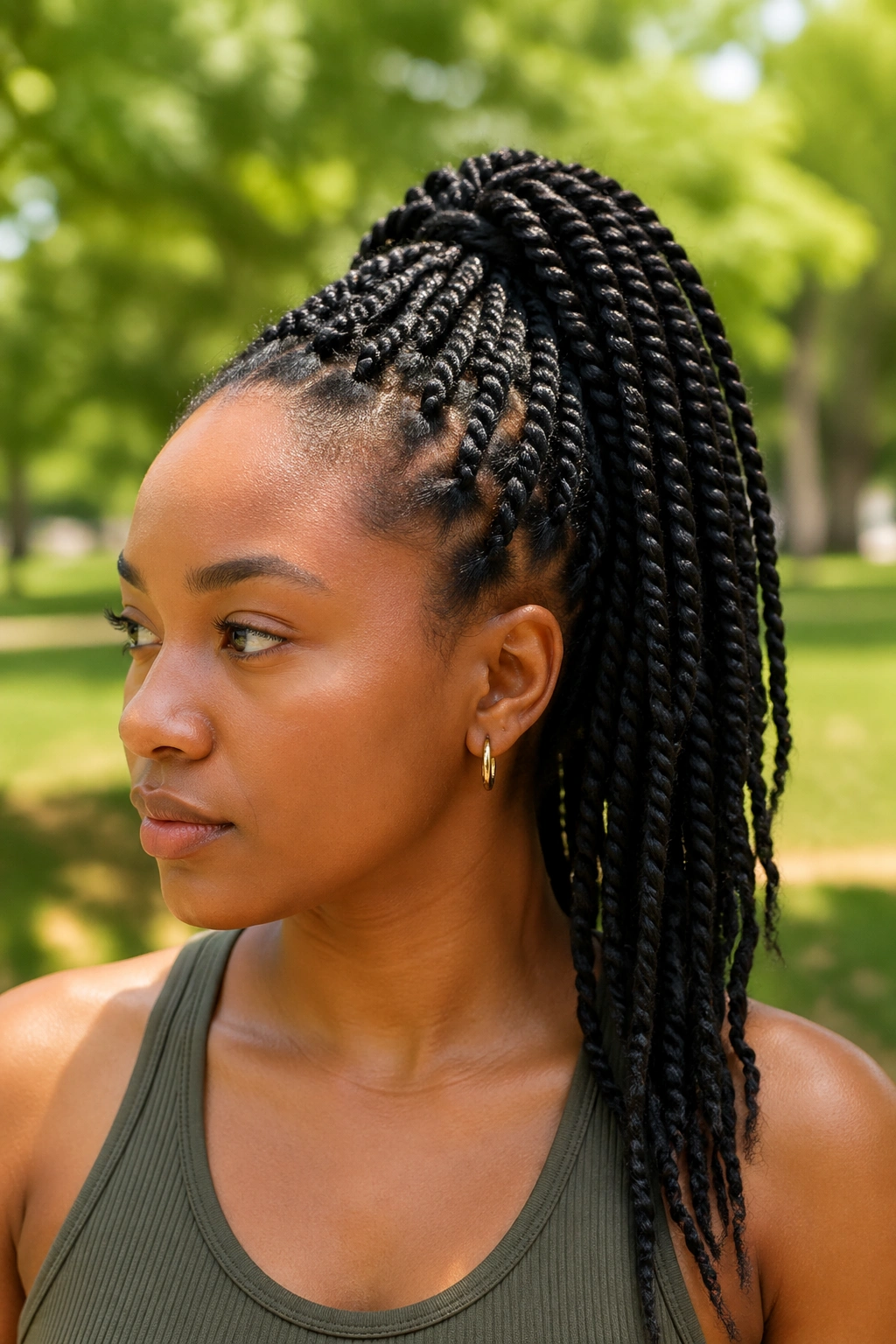
Twists give this ponytail a softer look than braids. The texture reads rounded and rope-like, not sharp, which is a nice change if you like styles that feel a little gentler around the face. A two-strand twist high ponytail also works well when your hair is already stretched from a twist-out or prepped in sections.
The nicest thing about this style is the movement. The twists bounce, the ends can hang loose or tuck under, and the ponytail has a soft, lived-in shape that never feels too done. If your hair tends to frizz fast, twist with a little cream on each section and seal the ends with a small curl rod or perm rod before unraveling.
It suits medium to long hair best, though shorter lengths can still do a compact version. Keep the twists even in size so the ponytail does not look lopsided. Uneven twists can be charming in a messy way, but they can also make the base look crowded. There is a difference.
6. Twist-Out High Ponytail
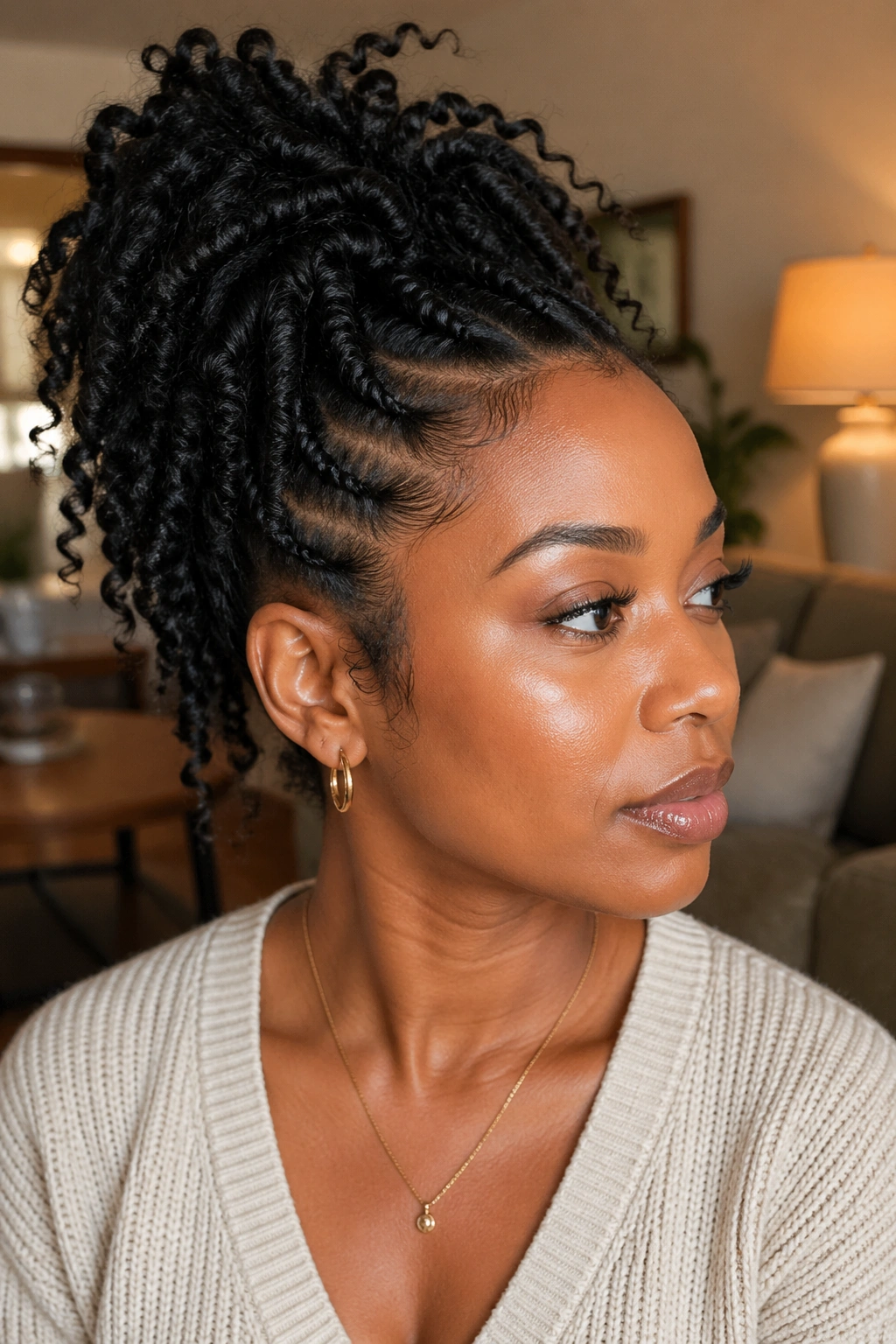
A twist-out high ponytail gives you texture with definition. The strands have that soft, ribbed pattern you get after unraveling twists, which reads fuller than a plain stretched ponytail and more polished than a puff. If you like curl pattern without tight coils everywhere, this is a strong middle ground.
I think this style shines most when the hair has been fully dry before it gets gathered. Damp twist-outs collapse. Fast. Gather too early and the style loses its shape, which is a shame because the texture is the whole point here. Finger-separate only after the ponytail is secure, not before.
What Makes It Different
The twist-out pattern gives the length a lot of visual body. It looks especially good on natural hair with a mix of curls and shrinkage because the pattern stays readable even when the ponytail moves. Use a light oil on your hands while separating the twists so you don’t frizz the whole thing at once.
This one is good for people who want texture without a giant puff.
7. Braid-Out High Ponytail
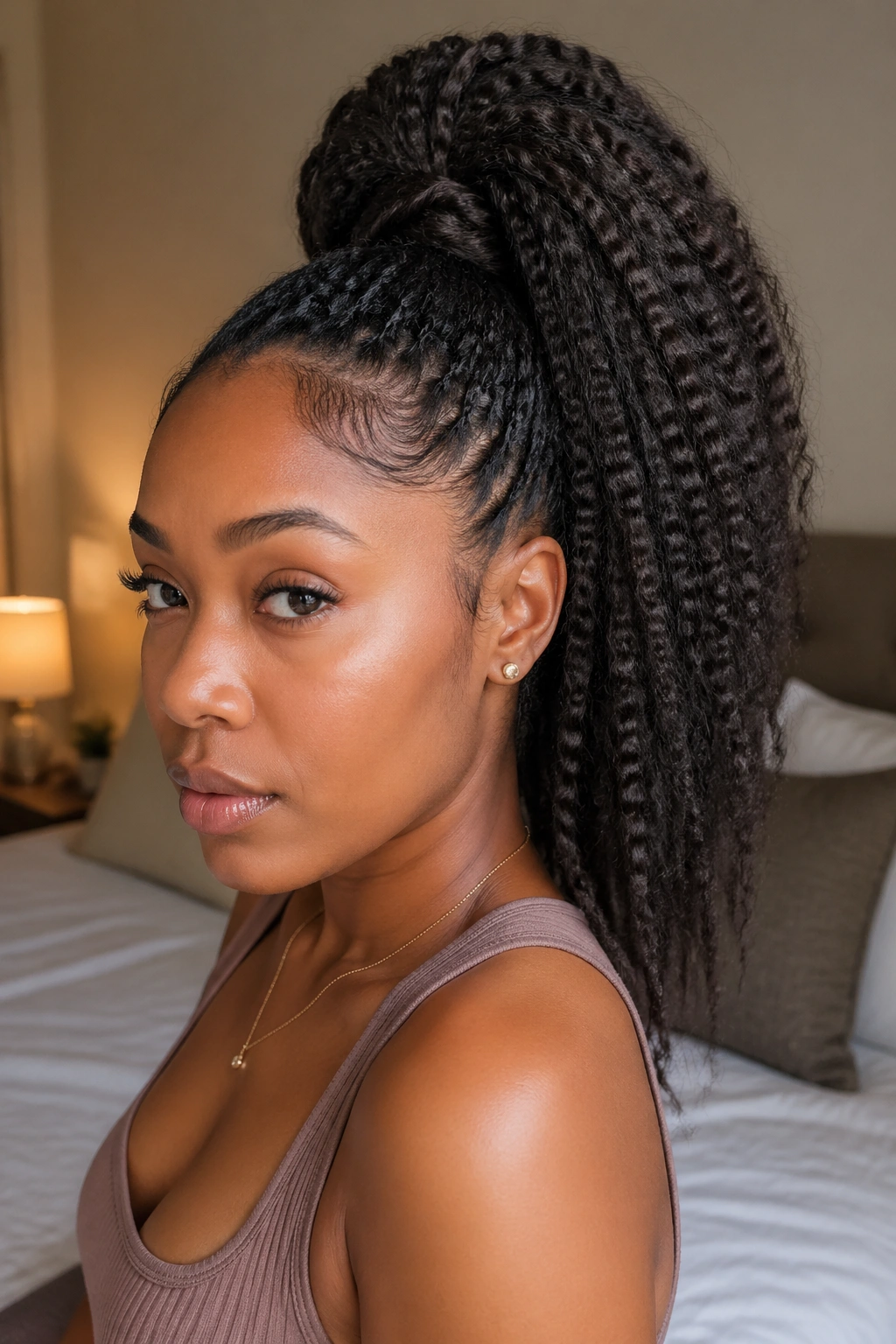
A braid-out ponytail has a different feel from a twist-out. The texture is a little flatter, a little more ribbed, and sometimes a touch wider through the length. That difference matters. If twists feel too round or too springy for your taste, braids give you a softer wave that still looks full.
I like this version when the hair needs to stretch but not go straight. Small braids give tighter definition; larger braids create a looser ripple. Either way, the ponytail ends up with texture that shows from a distance, which is what makes it feel intentional instead of accidental.
Best practice: braid while the hair is lightly damp, not wet enough to stay cold for hours. Dry hair usually keeps the shape better but can feel rough to braid. If your strands snag, smooth a little leave-in between your fingers before you start. Not a lot. Just enough to help the braid glide.
8. Pineapple High Ponytail
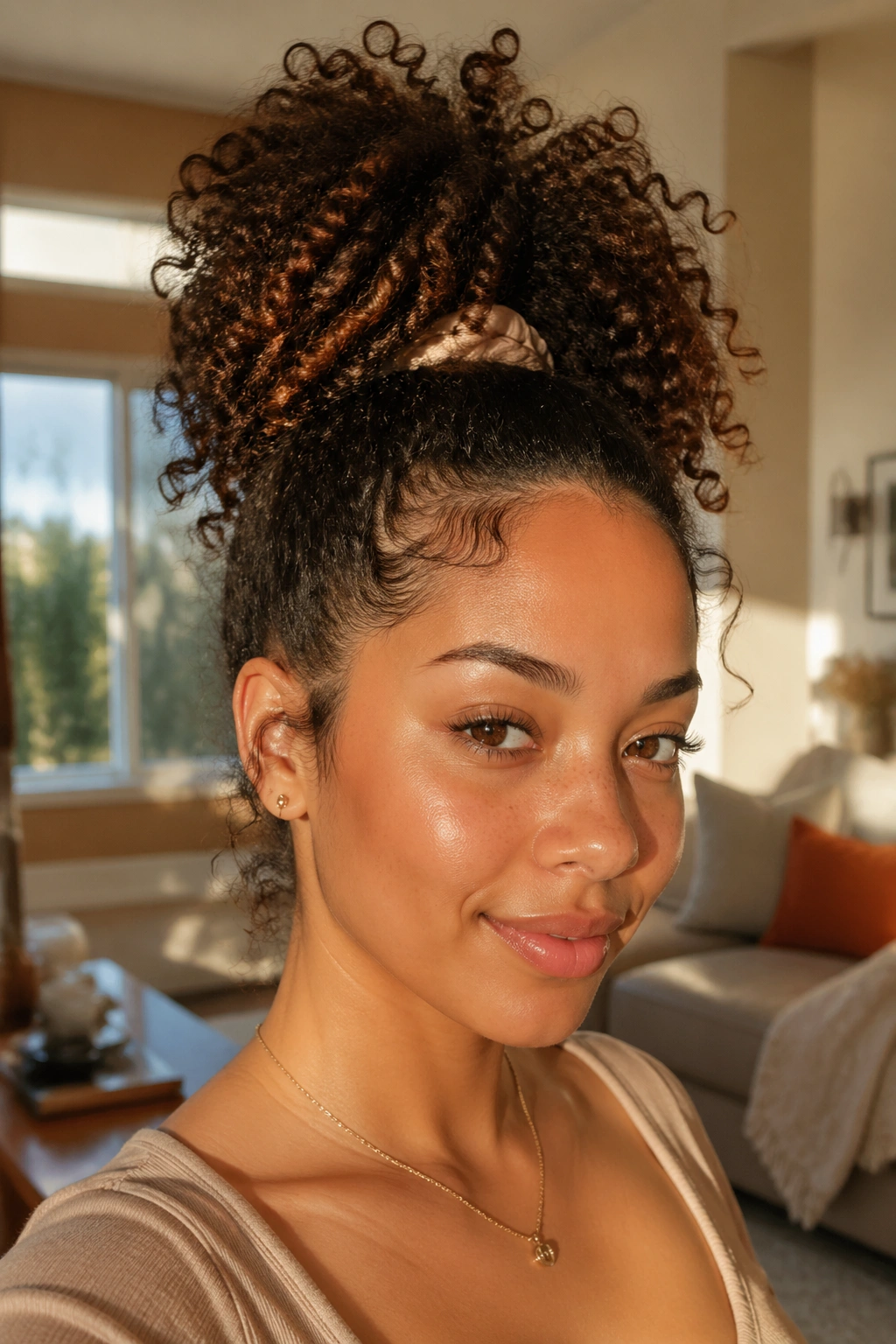
A pineapple ponytail is playful, and I mean that in the best way. The hair is gathered high and forward so the curls stack up and out, which creates a round, lifted shape that works beautifully on curly and coily textures. It is one of the few ponytail styles that looks even better when it is a little imperfect.
If your curls are loose, the pineapple shape can give them more presence. If your coils are tighter, the style creates a soft halo effect around the face and crown. I would not tighten this one too much. The charm comes from that airy, top-heavy shape.
A satin scrunchie is smarter here than a thin elastic, especially if your hair tangles easily. And if the front keeps flattening, flip your head upside down for a minute before you secure it. The extra lift helps the ponytail sit higher and feel fuller without padding.
9. Side-Part High Ponytail
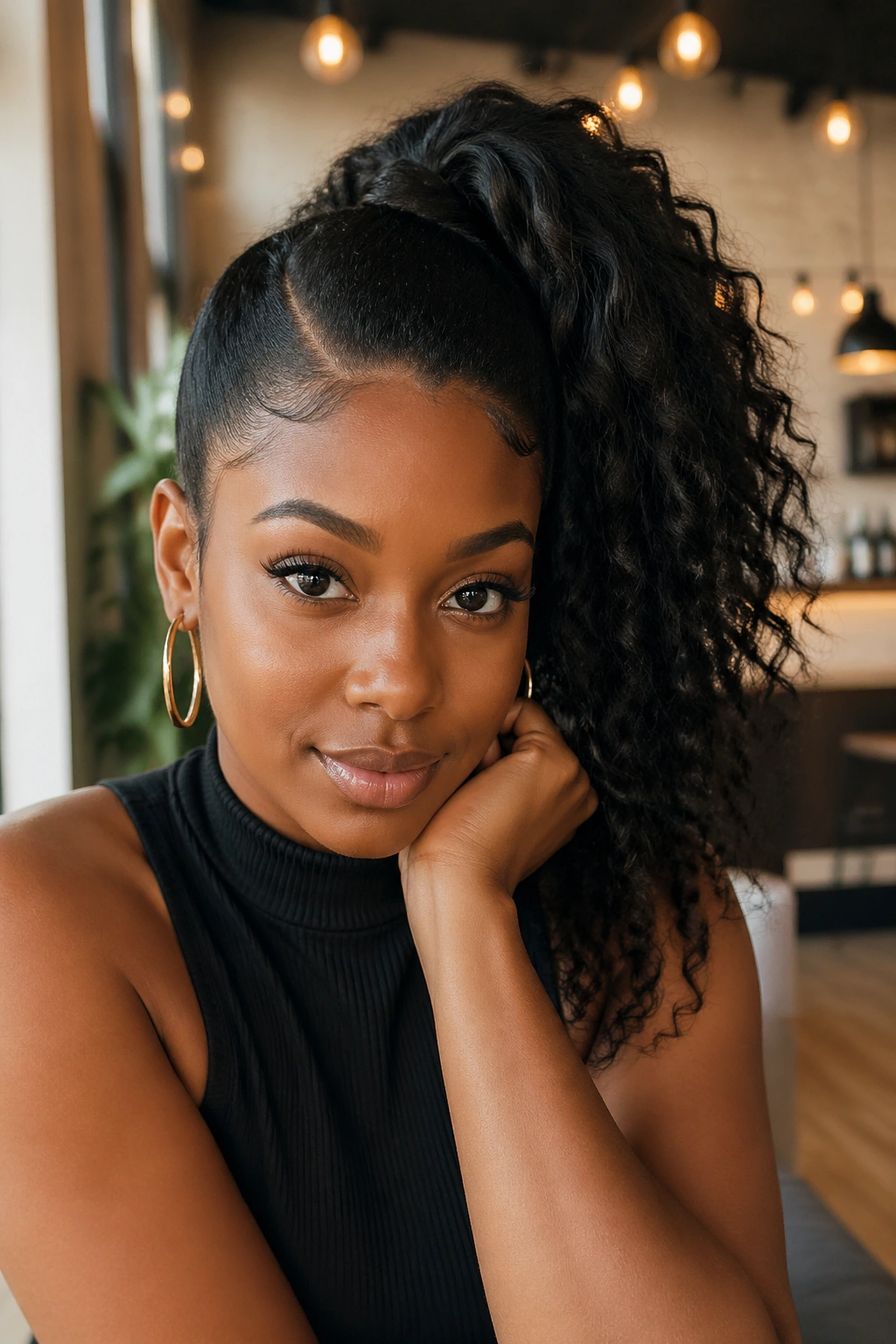
A side part changes the whole mood of a high ponytail. Suddenly the style has angle, asymmetry, and a bit of attitude. A side-part high ponytail works on natural hair when you want the face to look framed rather than fully pulled back.
How to Wear It
Part the hair cleanly before you gather it, then smooth one side more than the other. The deeper the part, the more dramatic the result. On curls, the side with a little more volume often gives the look personality; on stretched hair, the asymmetry reads sleek and sharp.
- Use a fine-tooth comb for the part.
- Keep the ponytail high enough to keep the shape open.
- Let one front section curl softly over the forehead if you want a softer finish.
- Edge control is optional; too much can make the style look rigid.
This is the ponytail I’d choose for a day when I want shape without too much symmetry. Straight down the middle can be pretty. Side parts can be more interesting.
10. Center-Part Sculpted High Ponytail
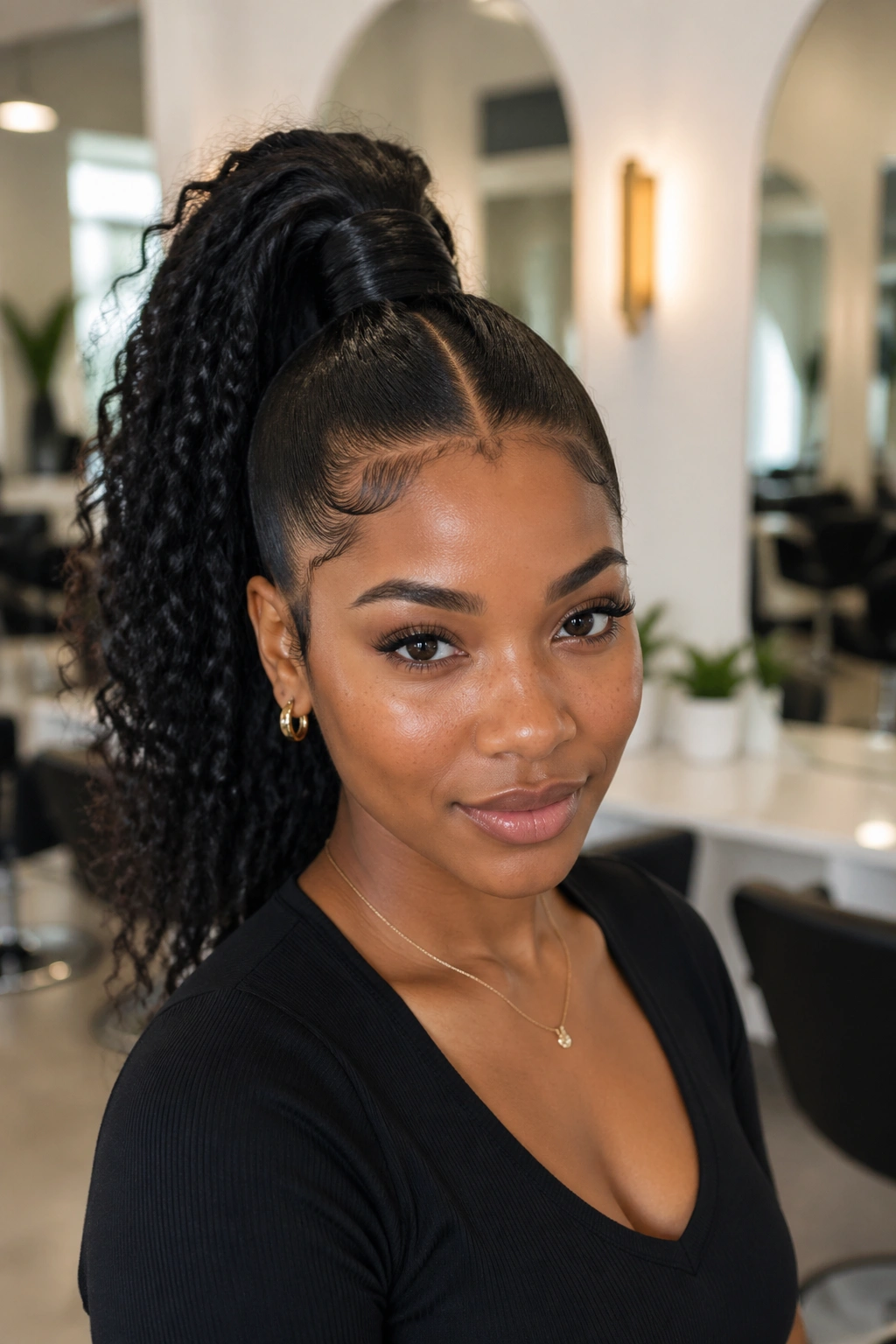
A center-part sculpted ponytail has cleaner lines and a more formal feel. The middle part gives the style structure, while the high placement keeps it from looking severe. On natural hair, the trick is to smooth the top without flattening the whole head into submission.
You want the part crisp, but not cartoonish. A tail comb helps. So does a light mist of water or setting spray before brushing the top section into place. If the hair is too dry, it puffs back up before you finish. If it is too wet, the style can look tacky and take forever to dry.
This ponytail is lovely when the curls or stretched ends are shaped on purpose. I especially like it with a wrapped base and laid baby hairs at the temples. Keep the edges soft if your face is already angular; go sharper if you want the look to feel more editorial. Either way, the middle part does a lot of work.
11. Faux Hawk High Ponytail
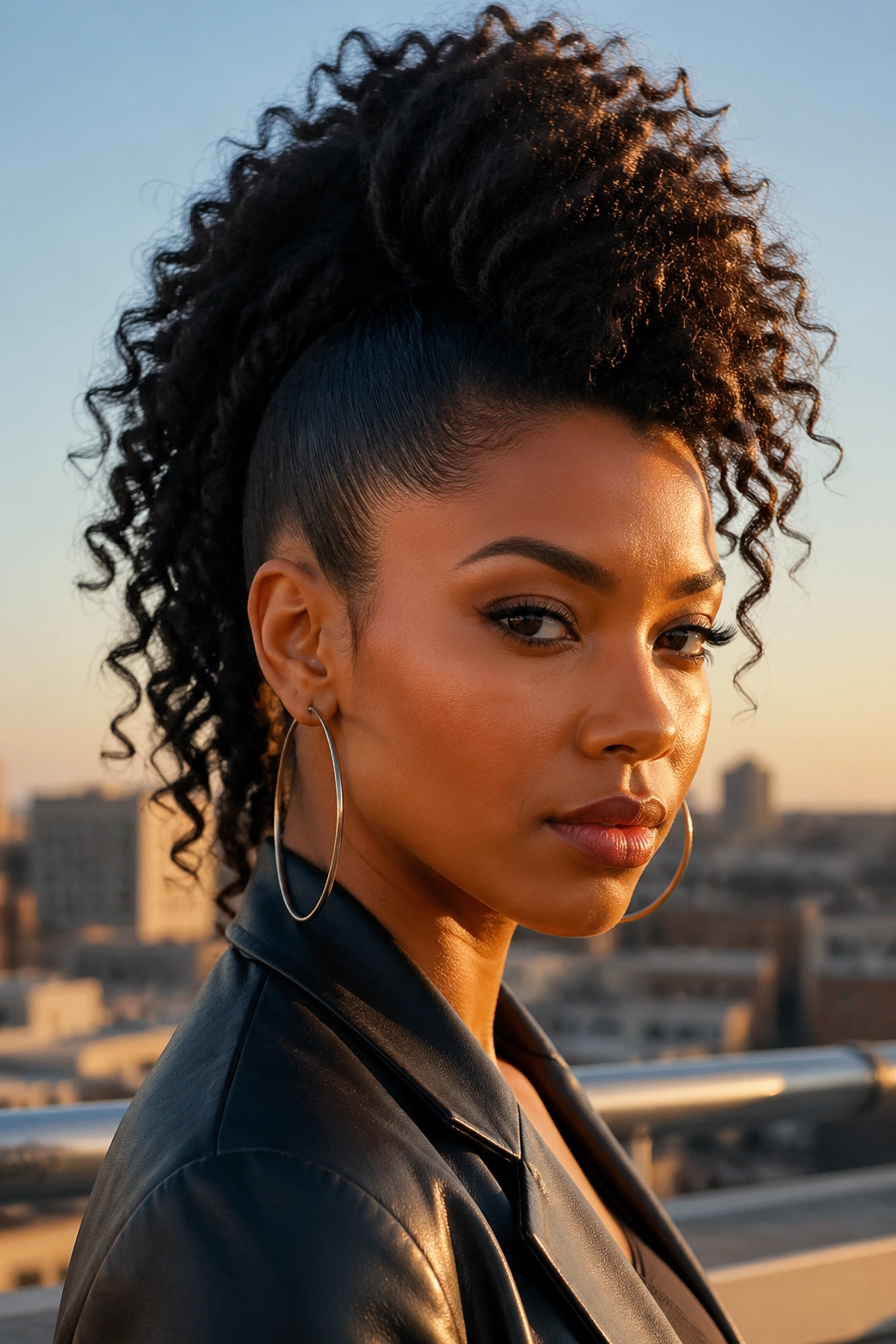
The faux hawk ponytail is for days when a regular high ponytail feels too safe. By pinning or slicking the sides tighter and building height through the center, you get a shape that looks bold without needing an actual cut. It has edge, but it is still wearable.
The best versions keep the sides smooth and the center full. That contrast makes the silhouette pop. On natural hair, I think this style works especially well with stretched curls or blown-out texture because the volume through the middle looks more dramatic. If your hair is very thick, sectioning it before you gather everything helps keep the shape controlled.
Use long bobby pins, not tiny ones that slip out halfway through the day. And don’t try to make the sides paper-flat if your hair refuses. A little texture on the temple area often looks better than a stretched, over-brushed finish.
12. Bubble High Ponytail
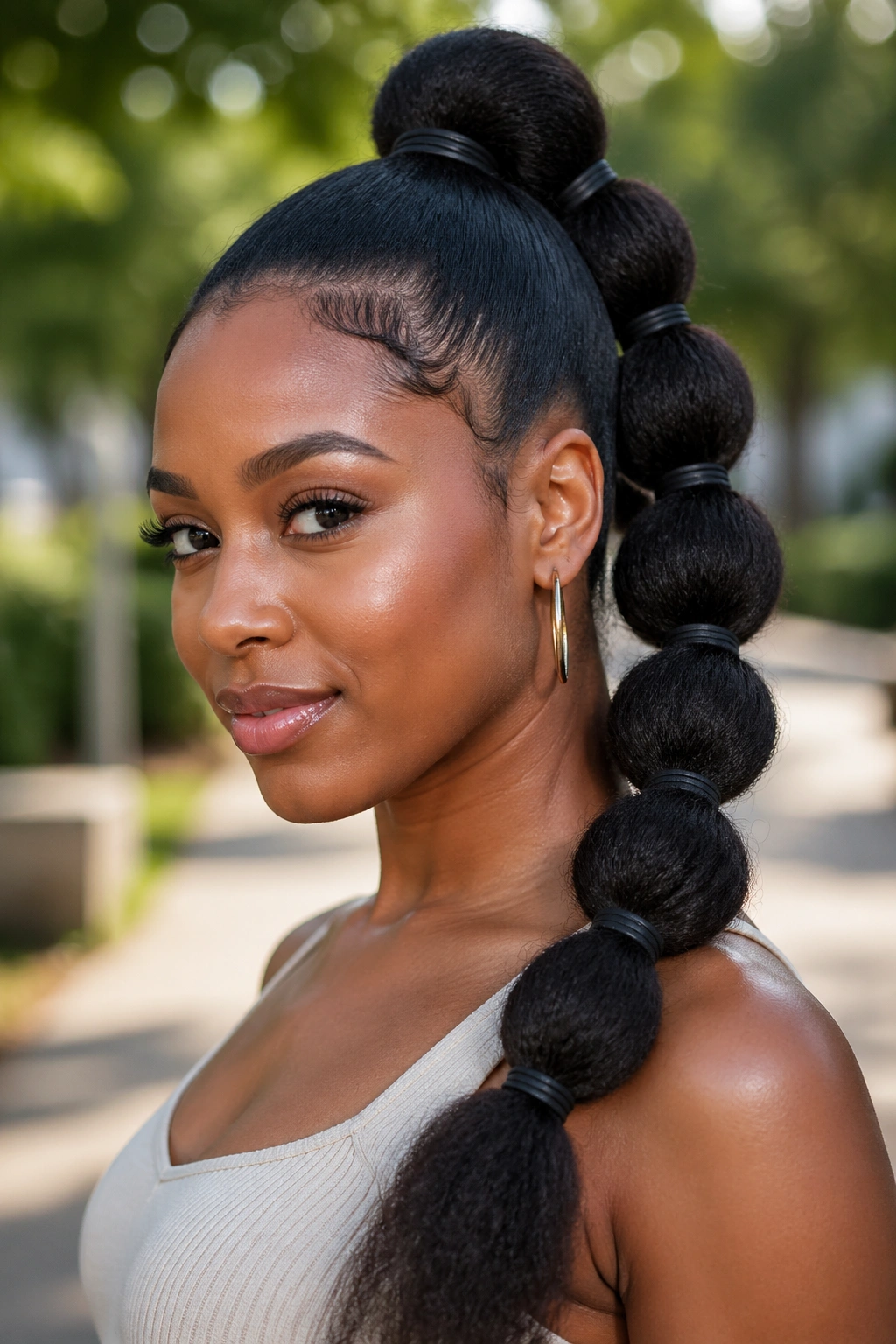
A bubble ponytail is one of the easiest ways to turn a textured ponytail into something more graphic. Add small elastics every few inches down the length, then gently tug each section outward to form rounded “bubbles.” On natural hair, that shape works well because texture gives the bubbles more body.
This style is a smart choice for stretched hair, braid-outs, and even locs. The more length you have, the more bubbles you can build. If your ponytail is shorter, three sections can still look neat and deliberate. I’d keep the elastics covered with a little hair if you want the finish to look softer.
What to Watch For
Pull each bubble evenly. Uneven spacing makes the ponytail look accidental. A light mist of holding spray can help the sections keep their shape, but do not soak the hair or the bubbles collapse into limp loops. That happens fast.
It is a fun style, but it also has a practical side. It keeps the length organized and gives you movement without needing extra hair.
13. Ponytail With Curly Bang
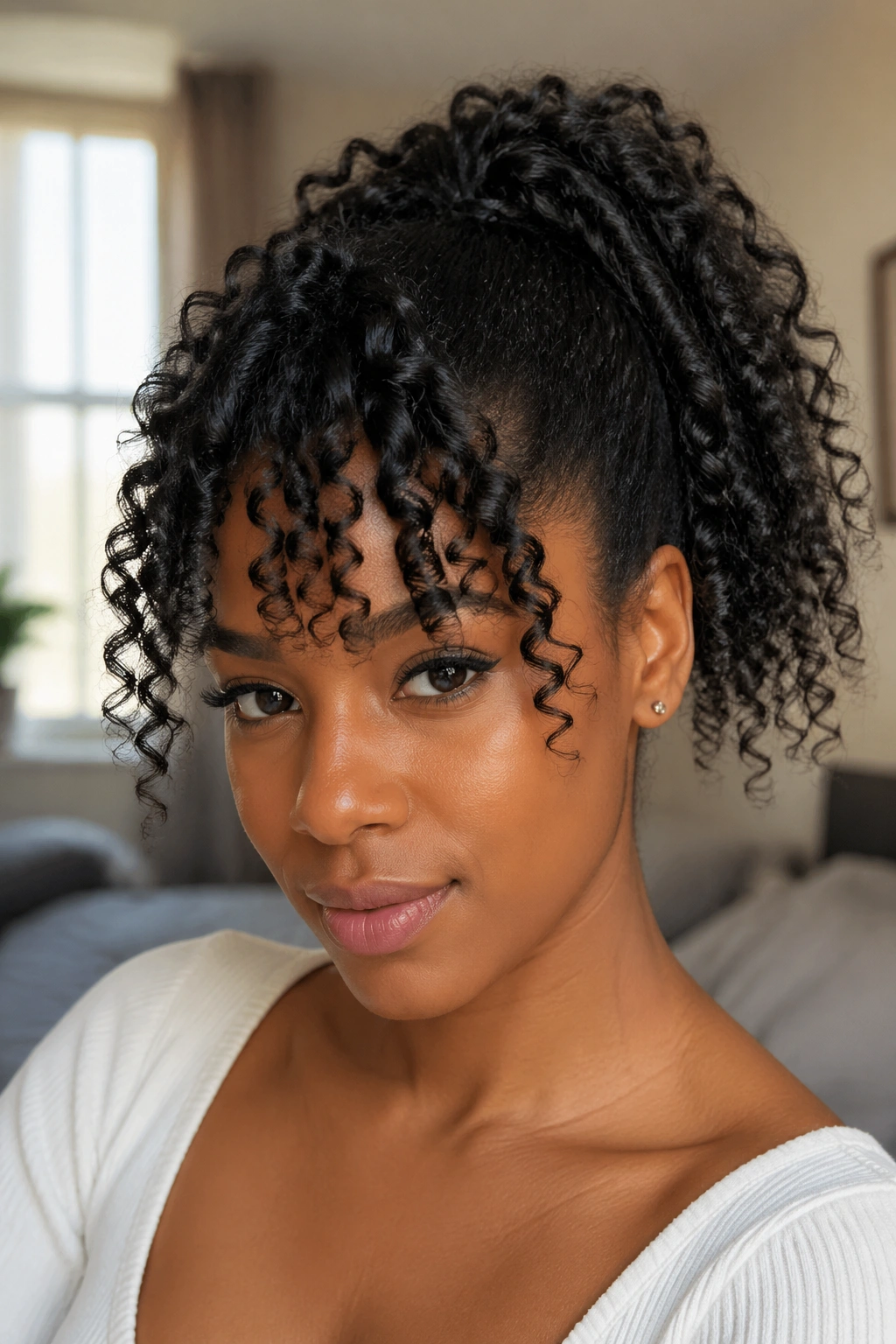
A curly bang changes the whole balance of a high ponytail. Instead of pulling every front piece back, you leave a shaped section loose in front, which softens the face and makes the style feel more playful. If you have bangs already, this is easy. If you do not, you can fake the effect with a front section that has been curled or finger-styled forward.
What matters here is proportion. The bang should feel like part of the ponytail, not a random piece hanging out because it escaped the elastic. Keep it moisturized and defined so it doesn’t frizz into a fuzzy strip by midday.
I like this version for natural hair that needs a little softness around the forehead. It is also a sneaky good option if you want a high ponytail but do not want your whole face exposed. The bang does the framing for you, and the rest of the hair can stay high and full.
14. Loc High Ponytail
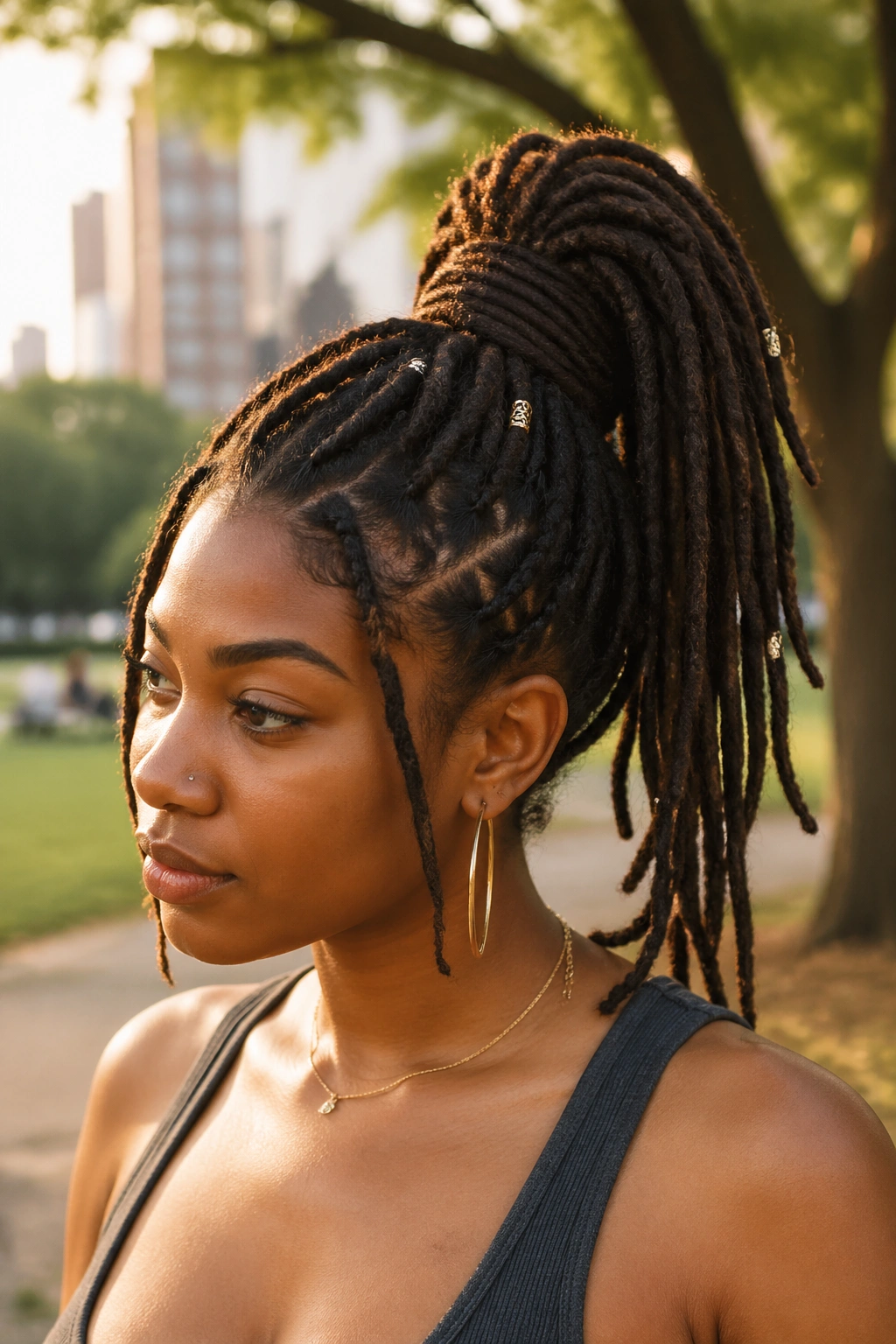
A loc high ponytail is all about lift and shape. Locs already bring texture, weight, and dimension, so the style mostly asks for a secure base and a smart way to distribute the weight. That part matters. If the ponytail is too heavy and too low, it starts to drag. No one needs that headache.
Gathering locs high gives them a cleaner silhouette and keeps the length moving. Use a strong band made for thicker hair, and if your locs are long, wrap the base twice or three times depending on thickness. The style looks nicest when the root area is smooth enough to feel neat but not so tight that it starts to pinch.
I think the best loc ponytails have one small detail: a wrapped base, a few loose locs left to swing, or a front section tucked just slightly to one side. Those touches keep the style from feeling rigid. They also make the hair easier to wear for more than an hour.
15. Feed-In Braid Ponytail With Curly Ends
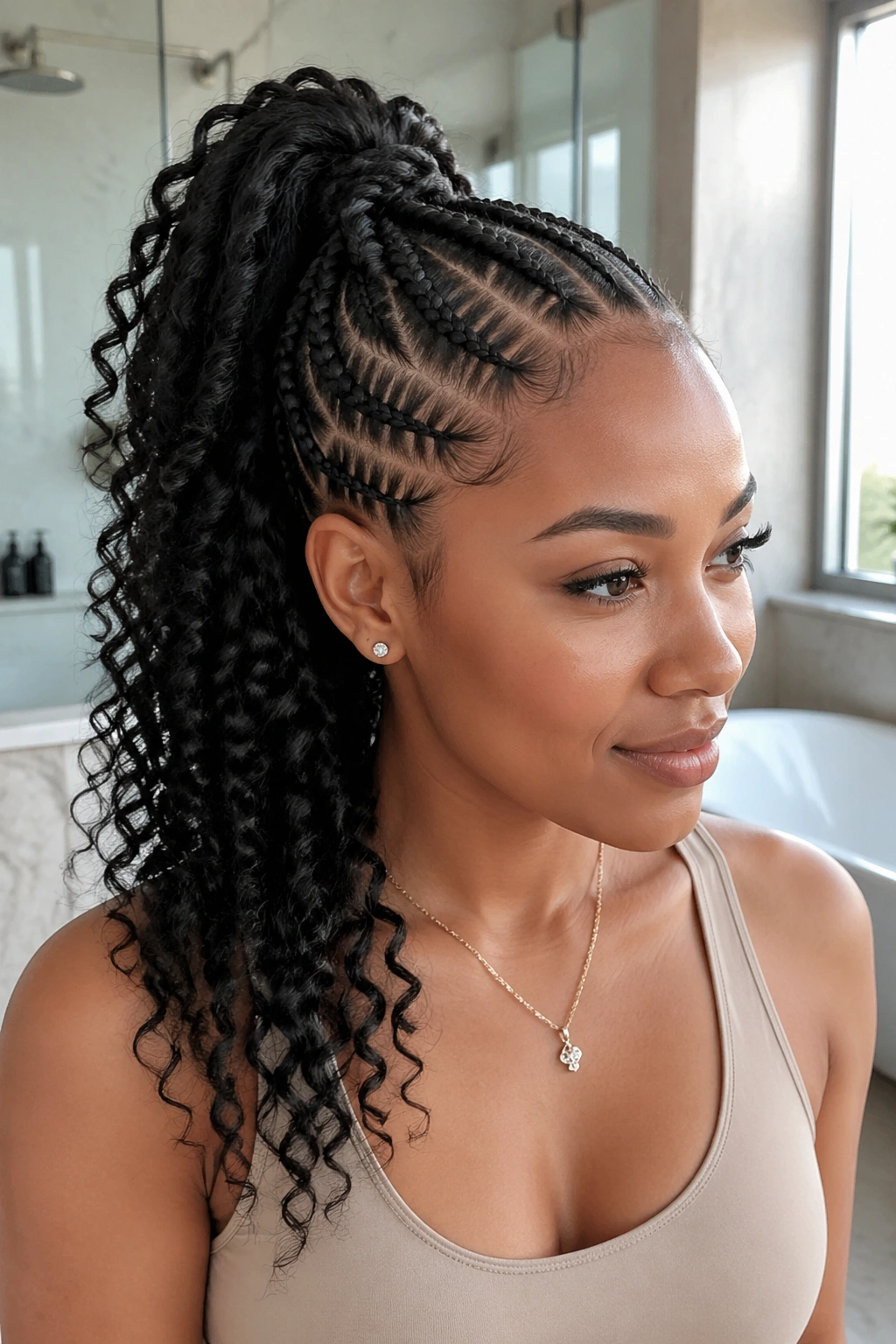
A feed-in braid ponytail gives you structure at the scalp and softness at the ends. The braids start small, build gradually, and merge into a high ponytail that can finish with loose curls, coily extensions, or your own natural ends if there is enough length. The transition is what makes it interesting.
How to Get the Most From It
Keep the feed-in sections even so the braid base sits neatly against the head. If one side is thinner, the whole style can drift off-center. That sounds small, but you can see it in pictures and in mirrors. Fast.
- Braid the front sections with a firm grip, not a death grip.
- Use mousse or light styling foam on the braid length if you want a smoother finish.
- Curl the ends with flexi rods or a curling wand if you are working with added hair.
- Wrap the elastic base with a small braid for a cleaner look.
This one is a good compromise between protective styling and a ponytail that still feels lively.
16. Cornrow-Base High Ponytail
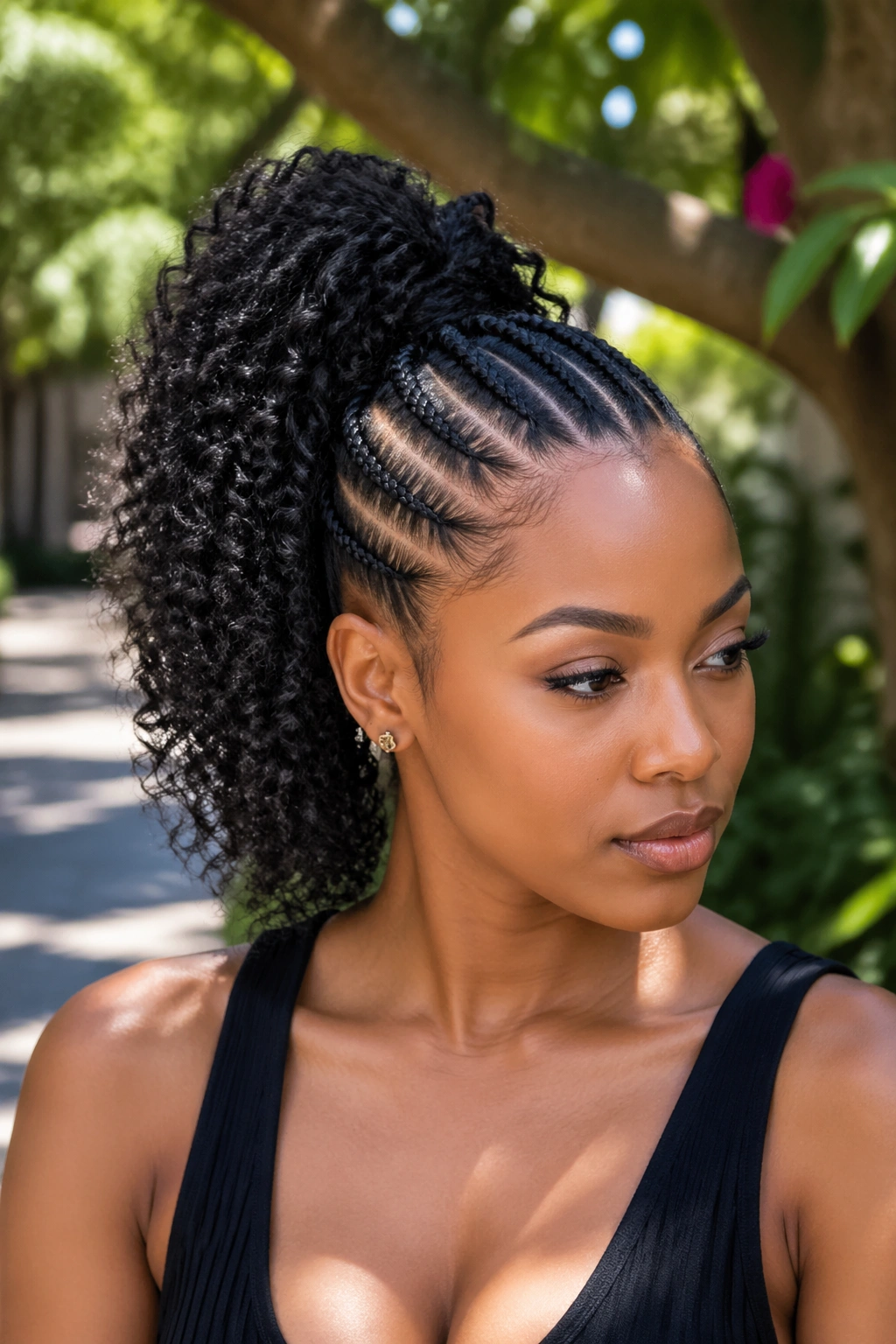
A cornrow base gives the ponytail a sculpted, grounded look. The braids lie flat, the crown stays neat, and the ponytail rises from a clean frame that can be as simple or as intricate as you want. If you like styles that stay put, this one is hard to beat.
I prefer this version when the goal is long wear. Cornrows help distribute tension more evenly across the scalp than a single tight gather can, which is kinder for some hair types. Still, the braids need to be done neatly and with a sensible amount of tension. Too tight is too tight. That never changes.
The ponytail itself can be curly, blown-out, braided, or left natural. A few side braids leading into the base can make the style feel more detailed, but even one or two straight-back cornrows will do the job. It is one of those styles that looks polished with very little ornamentation.
17. Blowout High Ponytail
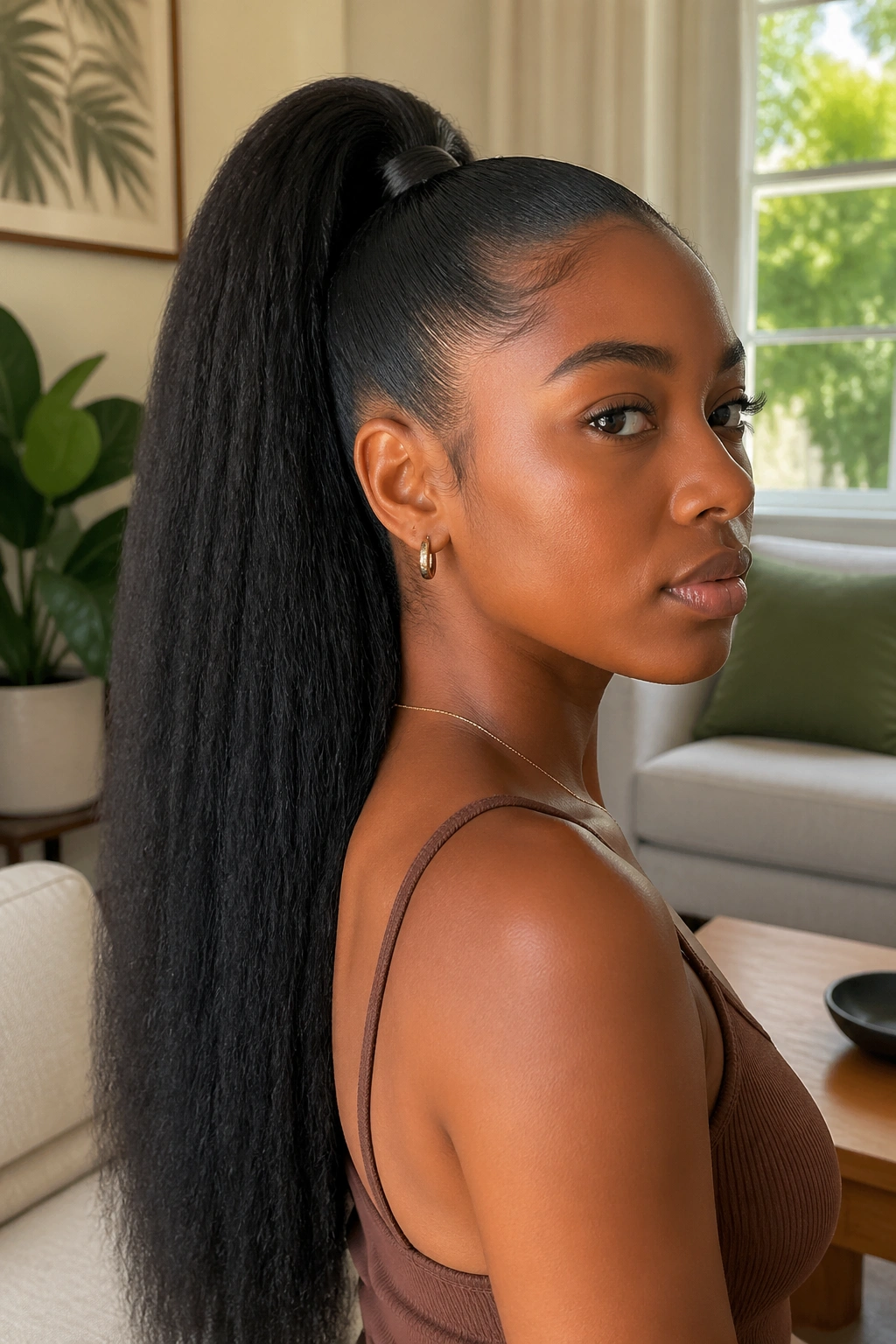
A blowout high ponytail gives natural hair a longer, smoother line while still keeping texture visible. The hair is stretched enough to show length, but not so straight that it loses its personality. That balance is what makes it appealing to people who want movement without a full silk press look.
The best part is the swing. A blown-out ponytail moves differently from a puff or twist-out. It has more drop, a little less shrinkage, and a shape that reads sleek without being stiff. If you use a round brush or a blow-dryer with a comb attachment, keep the heat moderate and work in sections. Rushing usually leaves one side puffier than the other.
This style also makes wrapped bases look especially good because the smooth length gives the detail room to show. I’d wear it when I want a ponytail that feels crisp but still belongs to natural hair texture, not against it.
18. Afro Puff High Ponytail
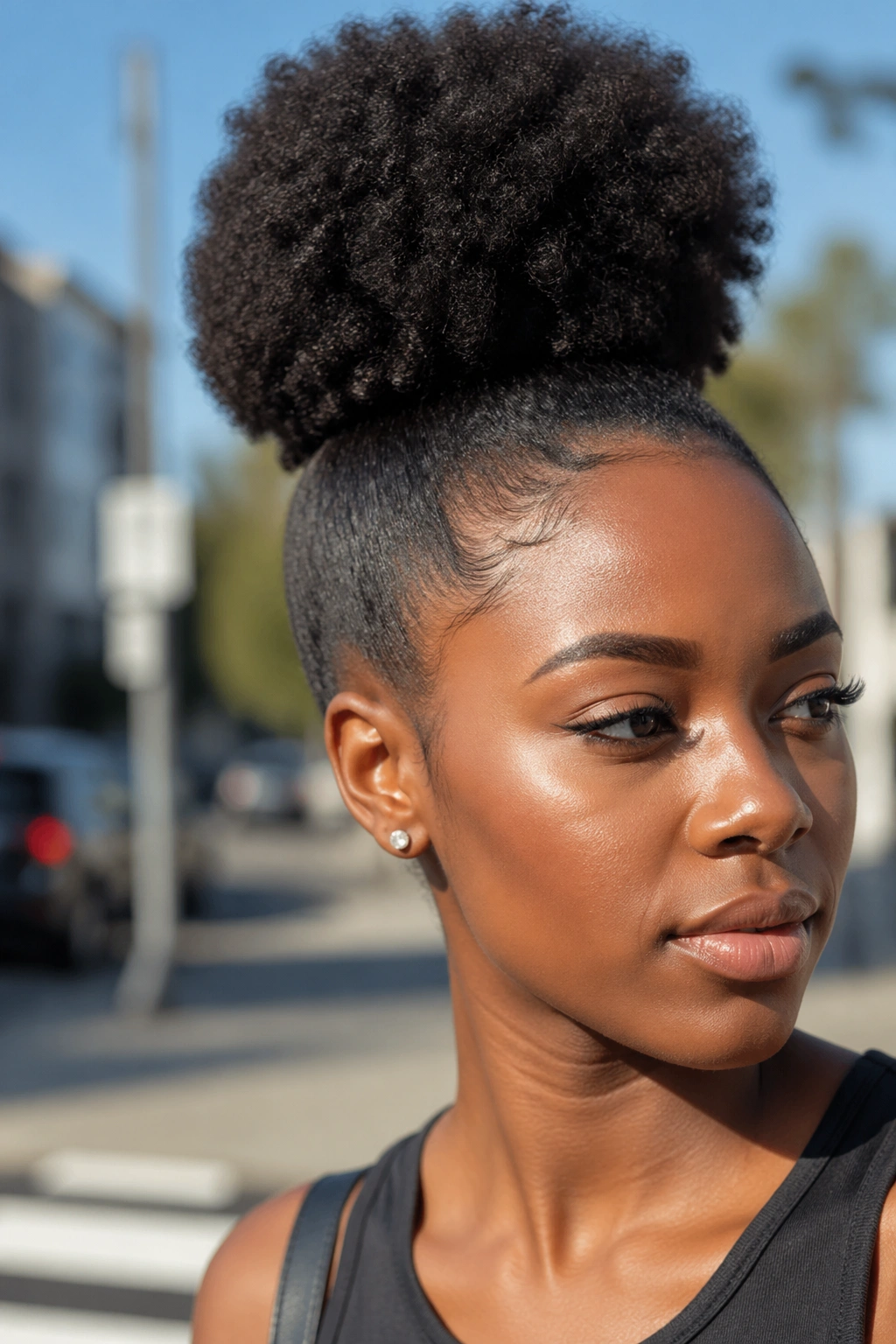
A high afro puff has a different energy from a wash-and-go puff. The texture is bigger, rounder, and often more airy, with the shape doing the talking instead of curl definition. If the wash-and-go version is about definition, the afro puff is about fullness.
The shape works best when the hair is stretched just enough to gather but still has plenty of body. A pick at the roots can help lift the crown before you secure the ponytail. Keep the back balanced so the puff sits centered, not dragged to one side. That sounds obvious until you see how often it happens.
Quick Fit Notes
- Best on short to medium natural hair with dense texture.
- Use a wide elastic or puff cuff if the hair is very thick.
- Shape the puff with your hands after tying it up.
- A small amount of oil on the ends can keep the outline from looking dry.
It is a simple style, but simple does not mean boring.
19. Scarf-Wrapped High Ponytail
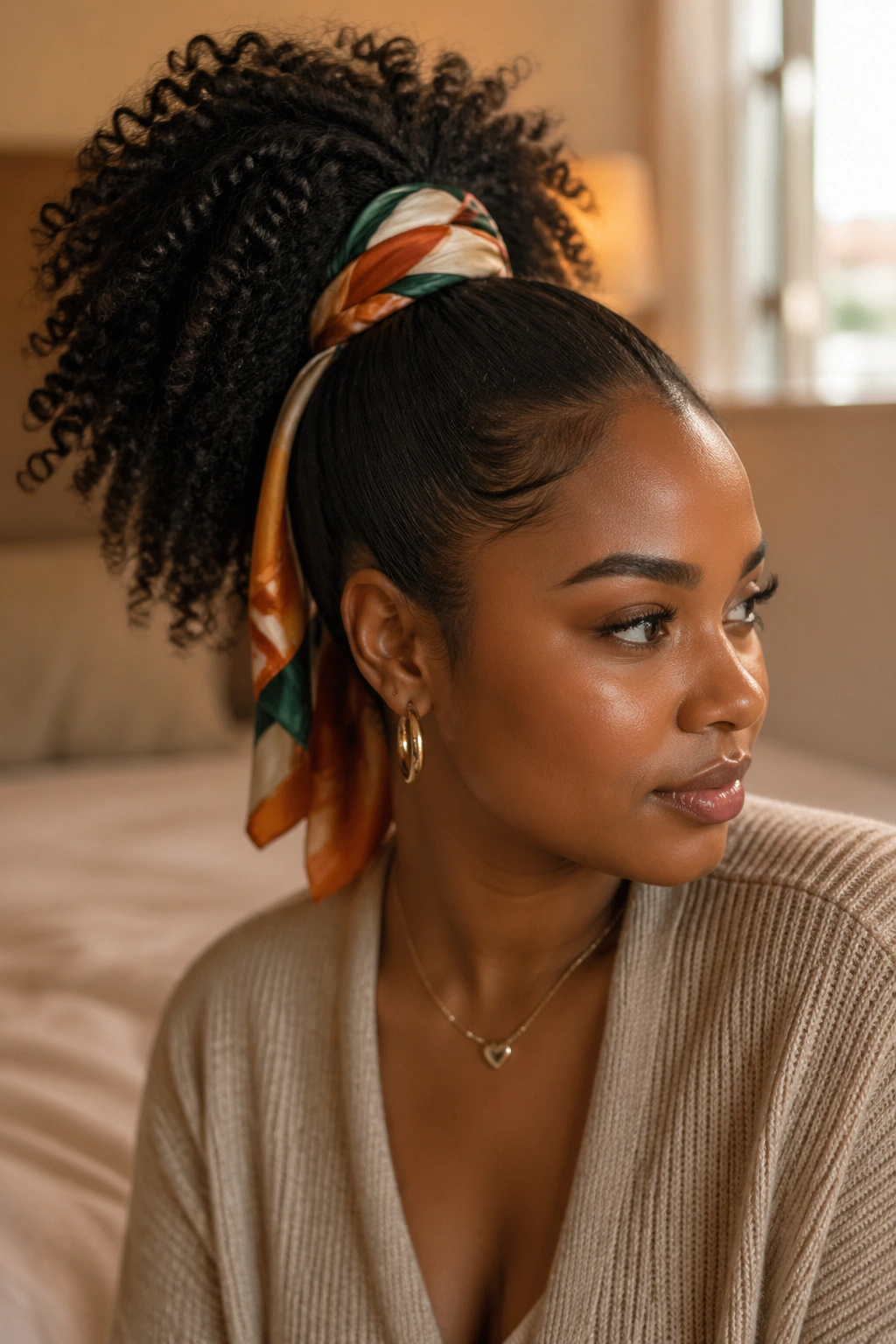
A scarf-wrap can make the simplest high ponytail look finished. Wrap a silk or satin scarf around the base, tie it off neatly, and let the texture of the hair sit above or below the knot depending on how much of the wrap you want to show. The scarf adds color, protects the base, and gives the style a little personality without stealing the show.
This is one of my favorite ways to rescue a ponytail that feels too plain. A printed scarf, a solid jewel tone, or even a narrow silk strip can change the mood quickly. If your hairline is sensitive, keep the scarf soft and avoid tying it too tightly right on the edges.
The ponytail itself can be curly, blown out, braided, or puffed. That flexibility is what makes the style so easy to wear. It is also one of the quickest ways to look like you meant to style your hair, even when the rest of the morning was chaos.
20. Rope-Twist High Ponytail
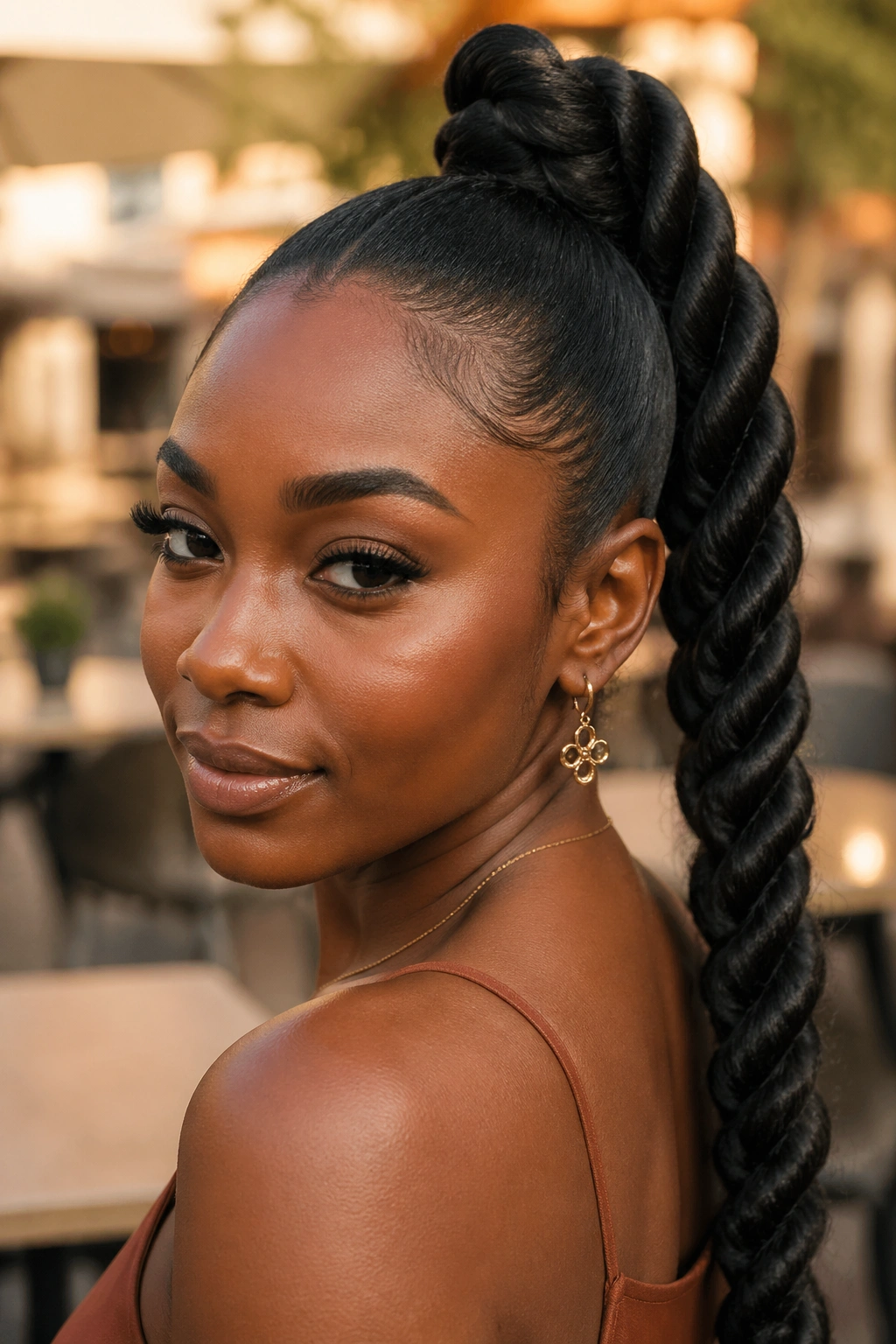
A rope-twist ponytail has a long, sculpted shape that feels cleaner than loose curls and softer than braids. You divide the ponytail into two sections, twist each one in the same direction, then wrap them around each other in the opposite direction. That cross-grain twist is what gives the style its tension and shape.
It works well on stretched natural hair, but you can also build it with added hair if you want more length or thickness. Keep the sections even. If one side is larger, the twist starts leaning and the whole ponytail loses its line. Not the end of the world, but not ideal either.
I like rope twists for formal days because the finish looks controlled. Still, the style has enough texture to stay friendly on natural hair. A little frizz at the ends is fine. A little. Too much and the twist starts to blur.
21. Flat-Twist Crown High Ponytail
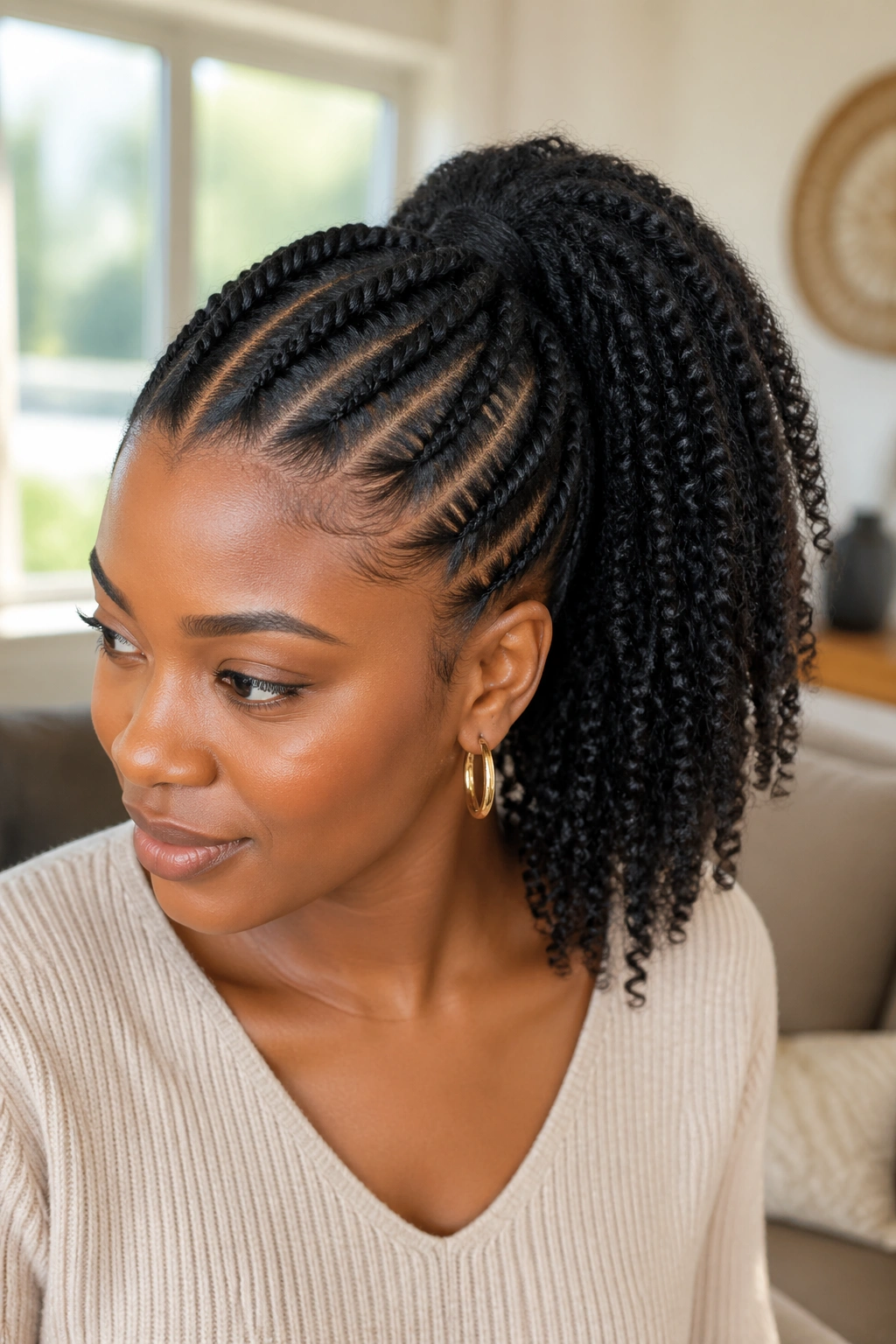
Flat twists across the crown give the ponytail a built-in frame. The twists lay close to the scalp, sweep the eye backward, and feed into a high ponytail that feels both structured and soft. If you like styles that show off parting and pattern, this is a strong pick.
The crown area matters here. Clean sections make the twists look crisp, and crisp parting makes the whole style read more polished. You do not need a dozen twists. Two or four can be enough, depending on how full the hair is and how much scalp pattern you want to show.
This style works especially well when the tail itself has texture of its own—twist-out curls, coil definition, or stretched ends. It gives you two different texture moments in one look. That combination is what keeps it from feeling flat.
22. Bantu-Knot-Out High Ponytail
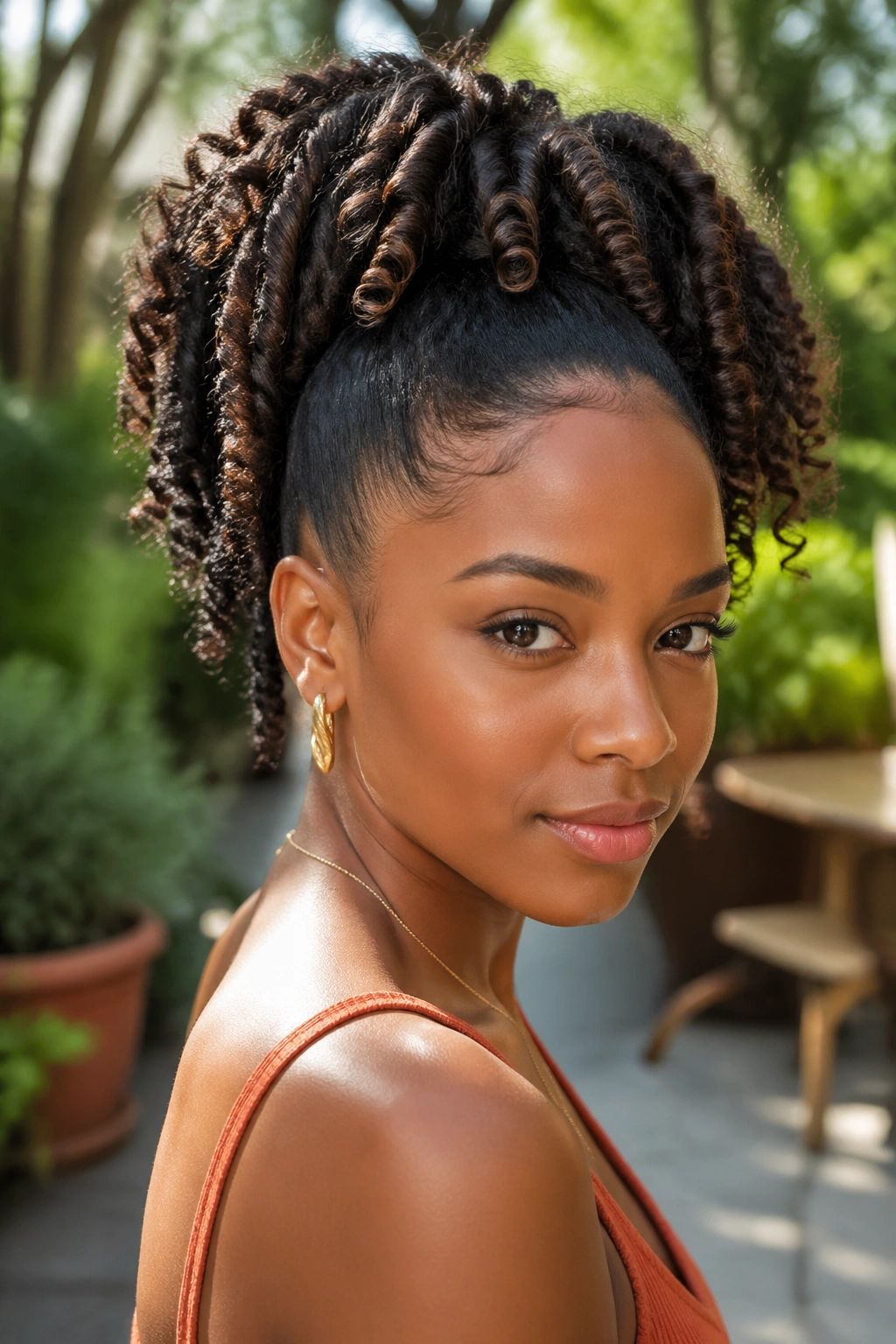
A Bantu-knot-out ponytail has some of the best texture payoff of the bunch. The hair carries that springy, cylindrical pattern from the knots, so the ponytail looks playful and dense at the same time. It is one of the few styles that can make short-to-medium natural hair look unexpectedly full.
The texture is the whole attraction, so the set matters. Bantu knots need to be fully dry before they come down. If they are even a little damp, the pattern drops faster than you want. Use a light cream or mousse while setting, not heavy product that leaves the strands gummy.
I’d wear this when I want the ponytail to feel a little special. The curls do the decorating for you. A wrapped base helps keep the top clean, and a few face-framing pieces can soften the shape if the crown feels too high and round.
23. Braided Crown High Ponytail
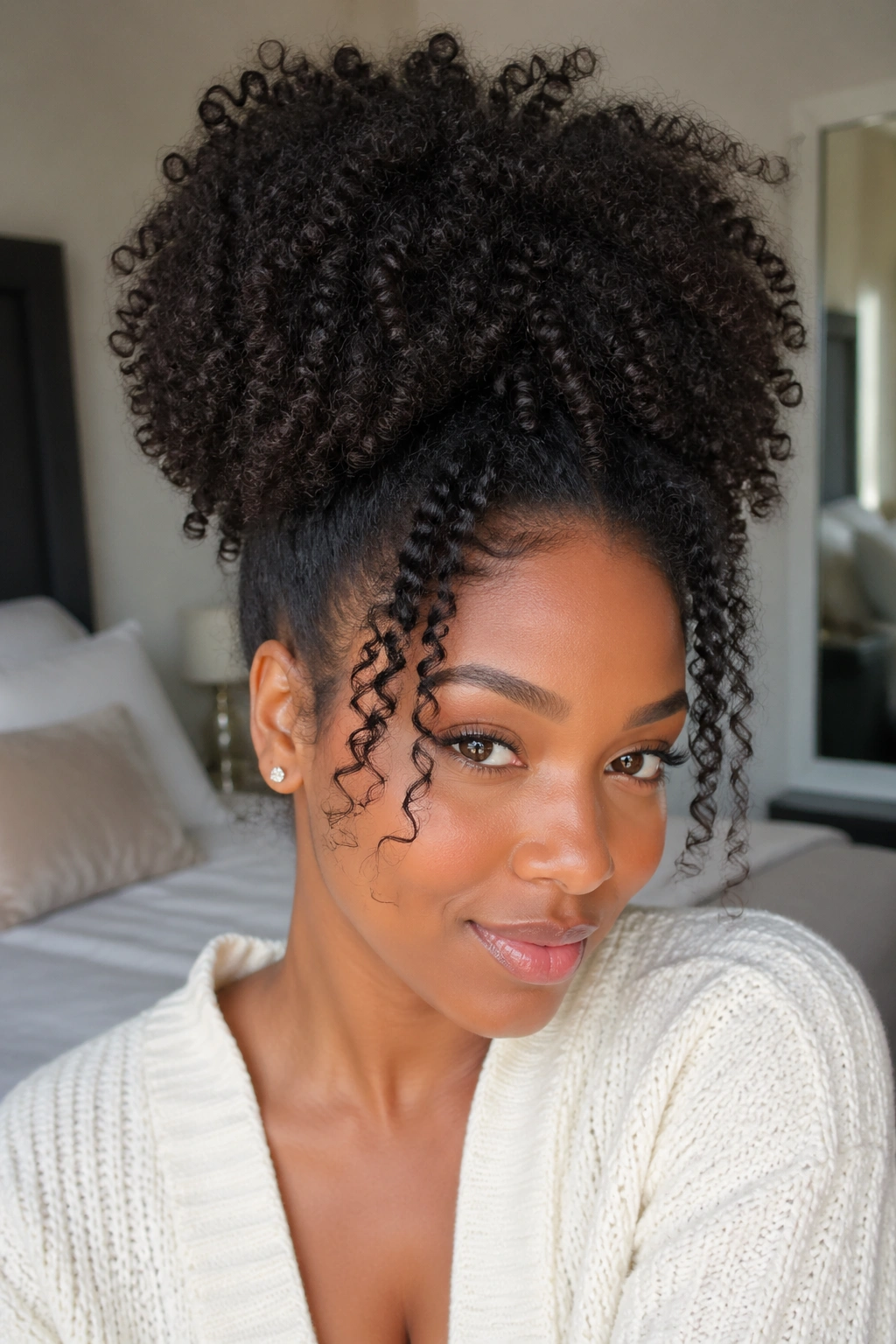
A braided crown high ponytail brings the hairline into the design instead of hiding it. A braid arcs around the front or side like a small crown, then the rest of the hair gathers high behind it. The result feels a bit regal, but not in a costume-y way. More like you cared enough to finish the job.
This style is a good fit for natural hair that needs a little control around the front. The braid keeps the hair out of the face, the ponytail keeps the back lifted, and the texture still gets to show through. If your hair is very dense, keep the braid close to the scalp so it does not puff up too much.
The best versions leave the ponytail itself textured and full. A sleek crown with a fluffy tail is a nice contrast. So is a braid-out tail with a braid that circles the front. It feels balanced, and balance is usually what makes a ponytail look expensive even when it wasn’t.
Textured high ponytails for natural hair work because they leave room for the hair to behave like hair. That is the whole secret, if there is one. Clean base, smart shape, enough texture to keep it interesting. The styles above cover quick mornings, polished events, and everything in between, which is probably why this look keeps hanging around year after year.
