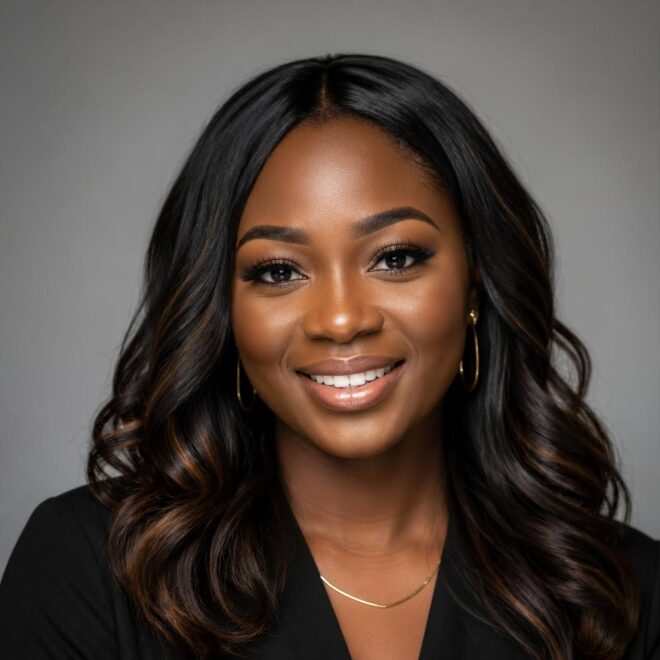


A low ponytail can look flat in a hurry. Add a ponytail extension, and the same style suddenly has weight at the ends, a cleaner line at the nape, and a little more attitude than the average “I threw my hair back and hoped for the best” look.
That’s why low ponytail extensions have such a loyal following. They do the boring work for you. They fill out the tail, disguise thin ends, and make polished hair look a little more expensive without asking for a complicated updo or a ton of teasing.
A good version depends on what your hair already does well. Fine hair usually needs a snug base and a shape that keeps the extension from slipping. Thicker hair can carry more length and a heavier tail, while wavy or curly textures often look best when the extension is blended instead of forced into a pin-straight finish. Small detail, big difference.
1. Sleek Wrapped Low Ponytail
This is the classic for a reason. A sleek wrapped low ponytail gives you instant polish, and the extension does the heavy lifting at the ends so the whole style reads fuller without looking fussy.
Why It Works
The wrap around the base hides the attachment point, which is half the battle with low ponytail extensions. If the base looks neat, nobody spends time hunting for where your own hair stops and the added piece begins.
The shape is especially good when your natural ponytail is thin near the ends. A straight, blunt-looking tail can make extensions obvious. A wrapped base plus a smooth crown does the opposite. It makes the hair look dense on purpose.
Use a fine-tooth comb, a soft brush, and a light gel or cream at the roots. Then leave the lengths with some movement. Too much product near the tail can make the extension feel stiff and plastic-looking.
A center part or no part both work here. I like the no-part version when the goal is a sharper, cleaner finish.
2. Center-Part Glassy Low Ponytail
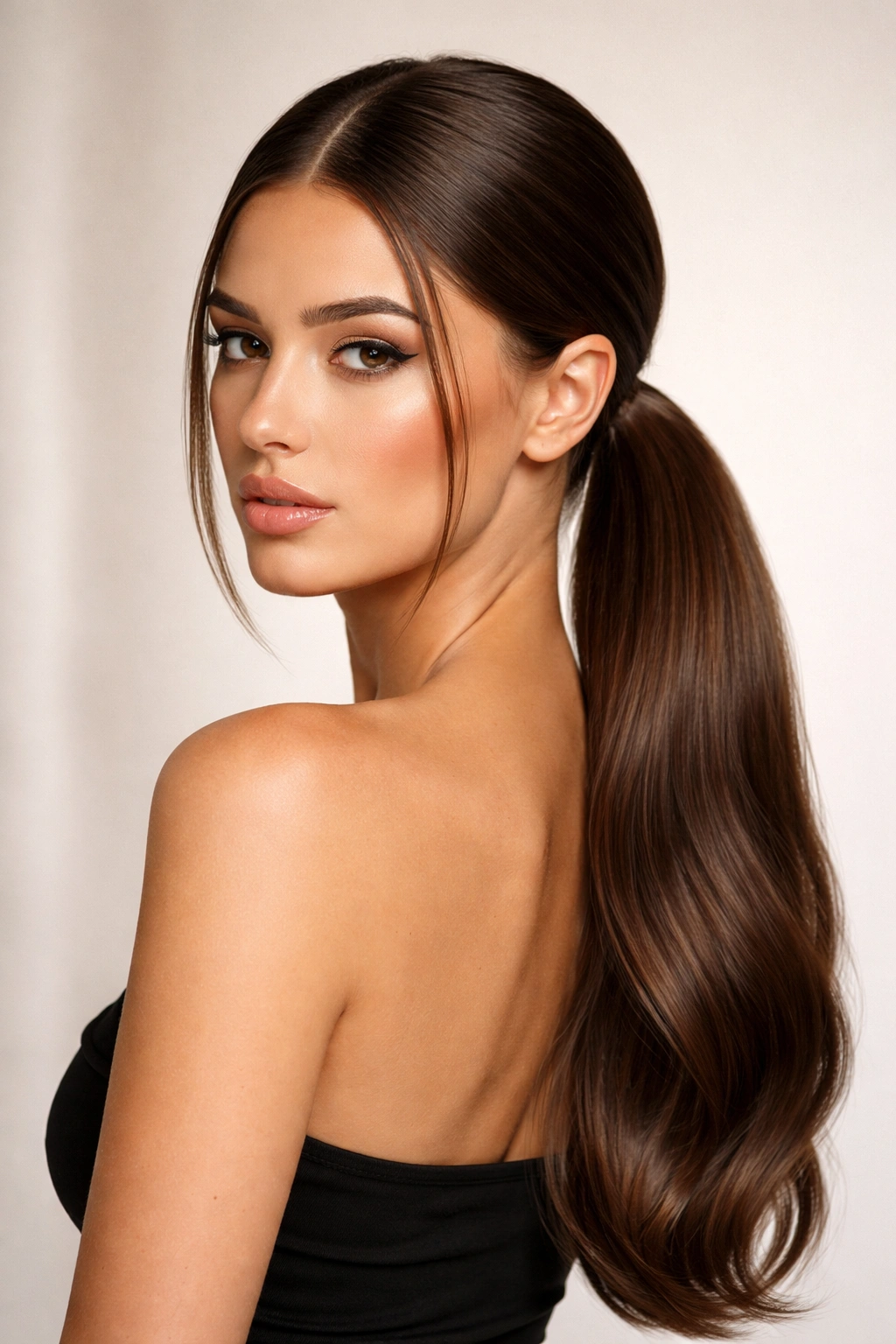
Sharp parts and smooth roots make extensions look intentional fast. That is the real appeal here. The center part gives the whole style a clean line, while the extension adds weight so the tail doesn’t disappear against the back of your clothes.
This look has a little quiet drama to it, but not in a loud way. It works because the shape is orderly: straight part, sleek sides, full tail. If your hair tends to puff at the crown, this style handles that better than a fluffy pony ever will.
A little smoothing cream goes a long way. Use just enough to tame flyaways, then brush the hair back firmly and secure the extension low at the nape. If the lengths are silky, let them be silky. If they have a slight bend, that’s fine too.
For daytime, keep the finish glossy but not wet. For evenings, a touch more shine spray on the mid-lengths makes the tail look thicker under indoor light.
3. Deep Side-Part Volume Ponytail
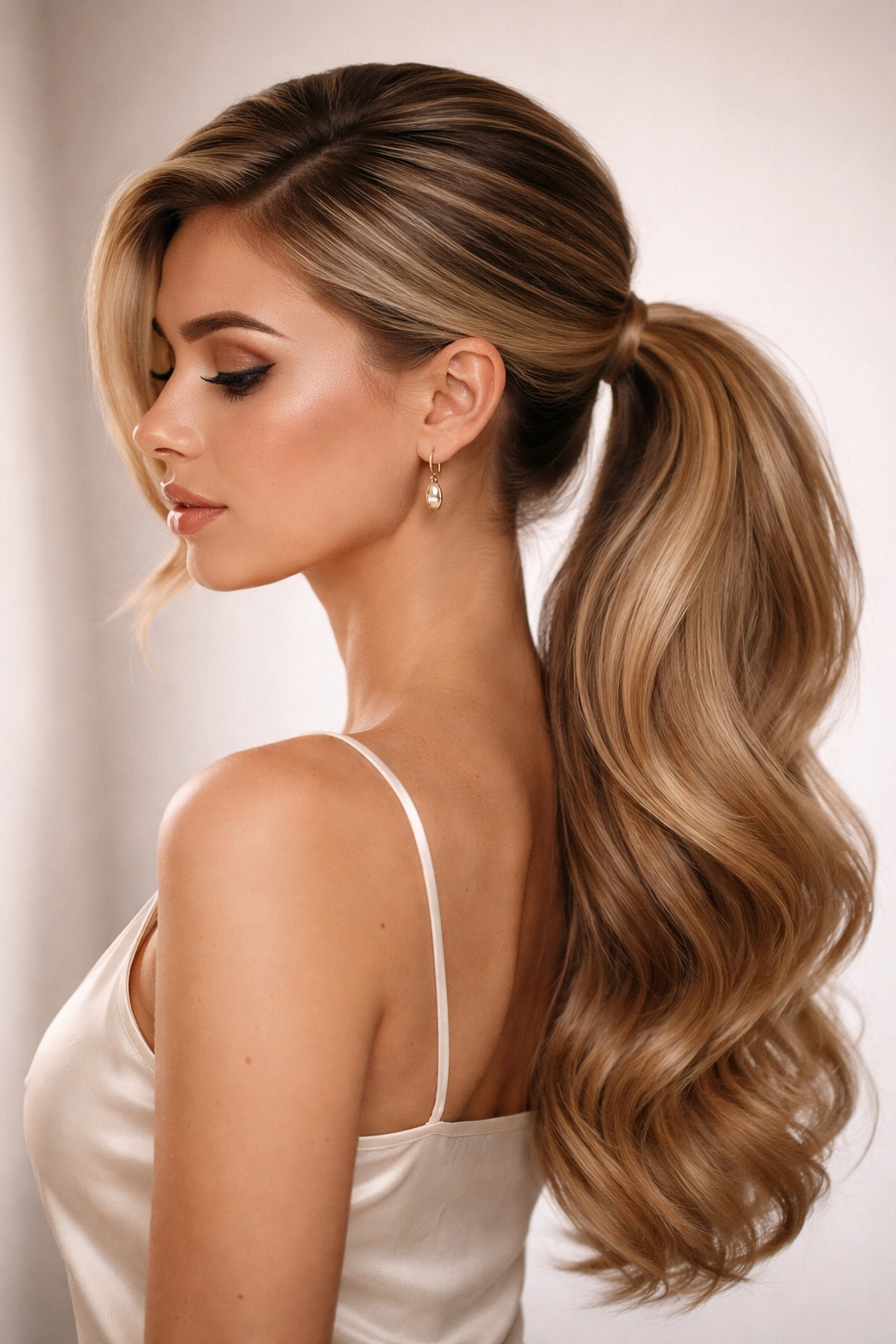
Why does a side part change so much? Because it shifts the eye and gives the crown a natural lift before the ponytail even starts. That little slope at the top makes the extension feel bigger, not flatter.
This is one of my favorite low ponytail extensions looks for anyone who wants volume without obvious teasing. The side part creates softness around the face, and the ponytail itself sits low enough to stay elegant. It’s less strict than a center part, and that makes it easier to wear with a blazer, a slip dress, or even a plain white tee.
How to Wear It
Brush the hair over from the deeper side, then secure the extension a bit off-center at the nape. The slightly asymmetrical base gives the tail a fuller shape. If your hair is fine, lift the roots on the heavier side with a tiny bit of backcombing—just one or two gentle passes, not a nest.
A side part also helps if one side of your hair is flatter than the other. The imbalance becomes part of the style instead of a problem.
4. Bubble Low Ponytail
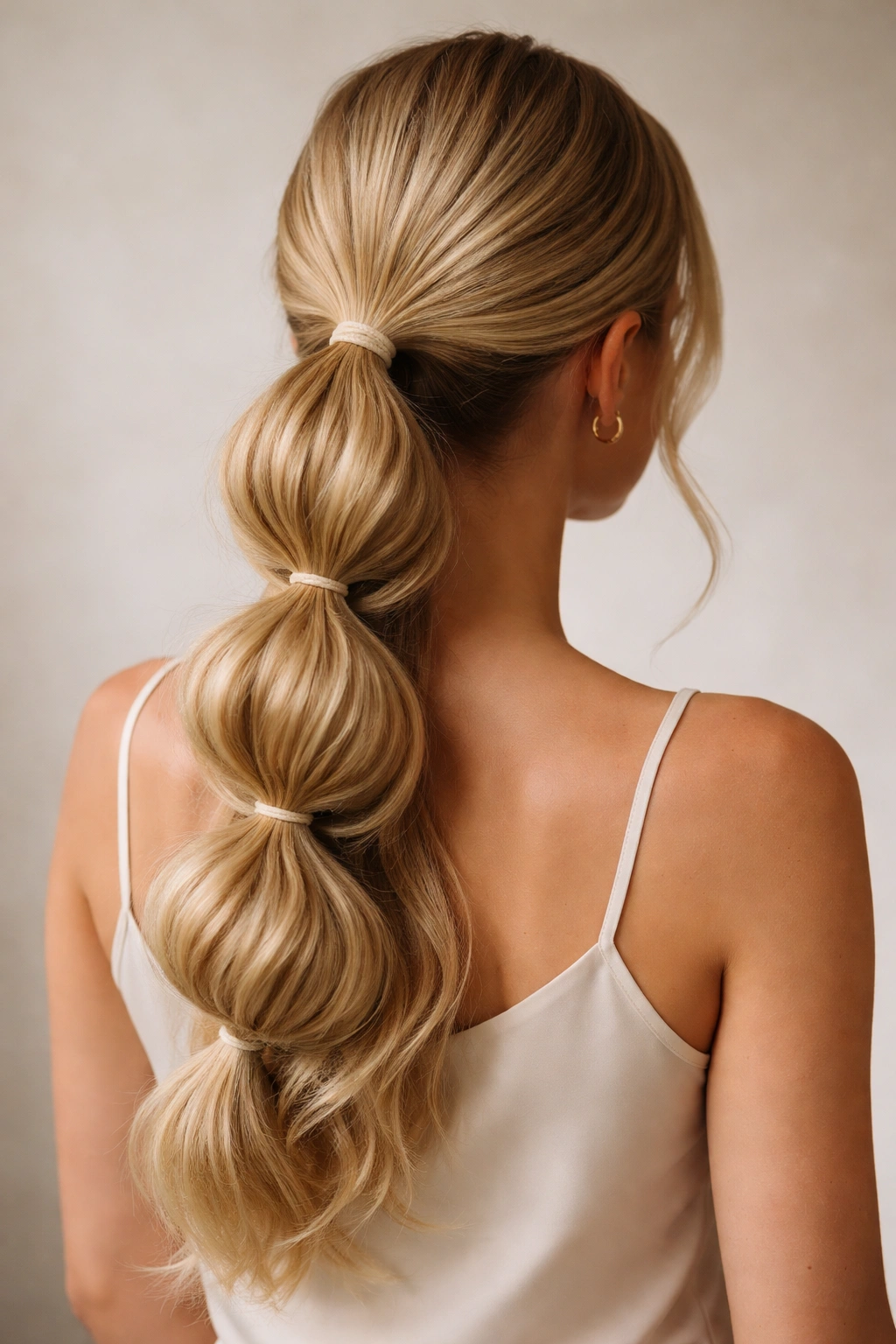
If your ponytail always looks thinner near the ends, the bubble shape is your friend. It breaks up the length into full little sections, so the extension looks intentionally chunky instead of stretched out.
I like this one for hair that needs a bit of playfulness. It’s polished enough to wear out, but it doesn’t have the severe feel of a straight, tight tail. The bubbles also cover a lot of sins. Uneven layering? Hidden. Slight thickness mismatch? Hidden. A wrap that isn’t perfectly neat? Hidden too.
- Secure the ponytail low with one elastic first.
- Add clear elastics every 2 to 3 inches down the length.
- Tug each section outward with your fingers until it looks rounded.
- Mist the bubbles lightly with flexible-hold spray so they keep shape.
The key is spacing. If the elastics sit too close together, the style turns stiff. Give the extension room to puff out.
5. Soft Curved Ponytail with Curls
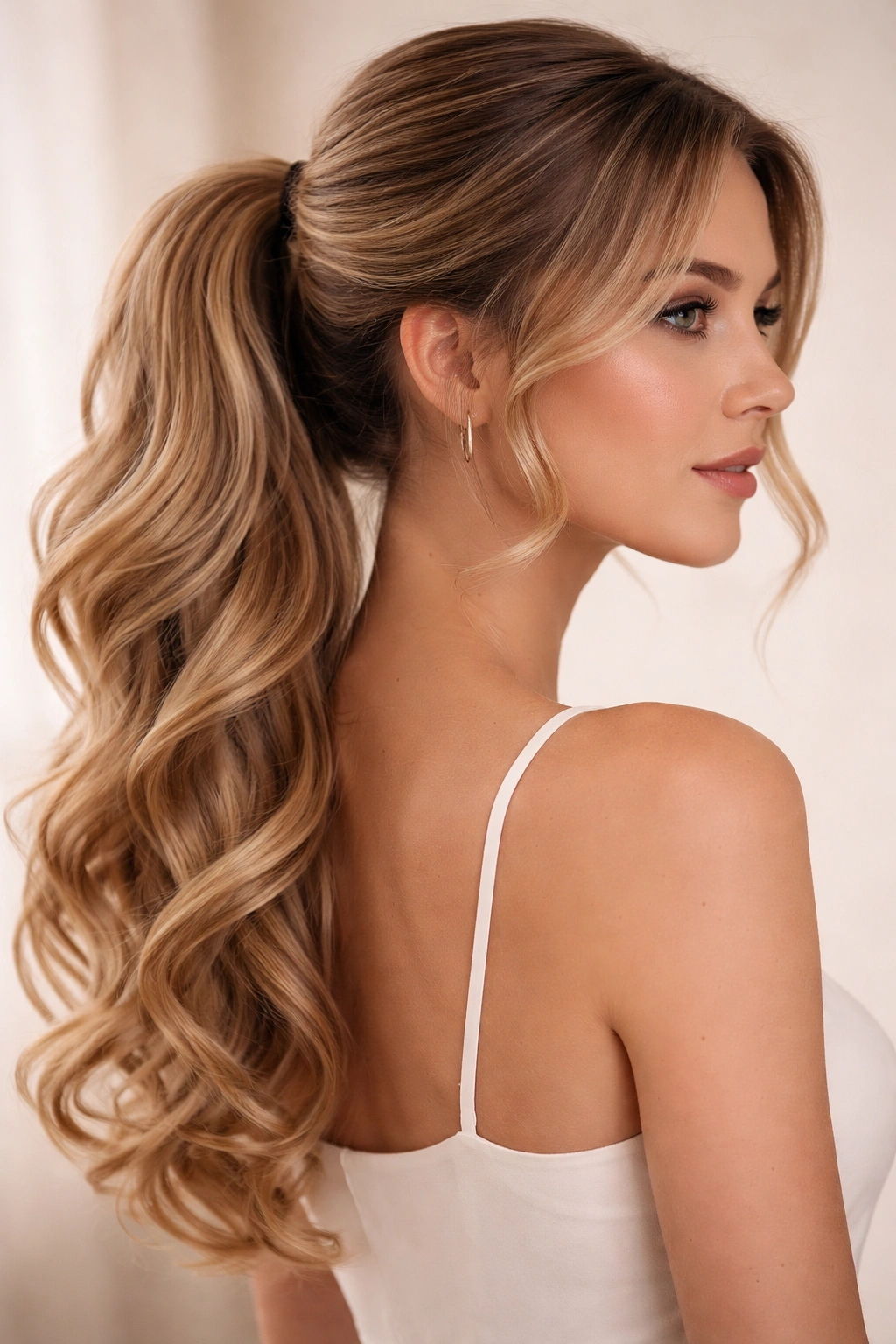
A low ponytail with curled lengths looks fuller because curls take up space. Straight hair lies down. Curled hair stands out. That’s the whole trick, and it works especially well with extensions that need a little visual bulk.
This version has a softer mood than a sleek pony. It’s the one I’d reach for if the outfit is simple and the hair needs to do some work. A loose curl through the extension makes the tail look plush, not stiff. A few face-framing pieces around the jaw keep it from feeling too neat.
The easiest way to get this shape is with a 1-inch or 1.25-inch curling iron. Wrap sections away from the face, leave the last inch out for a slightly undone bend, then brush the curls lightly once they cool. That keeps the tail thick without turning it into a frizzy cloud.
One small warning: don’t overbrush. You want movement, not collapse.
6. Braided-Base Low Ponytail
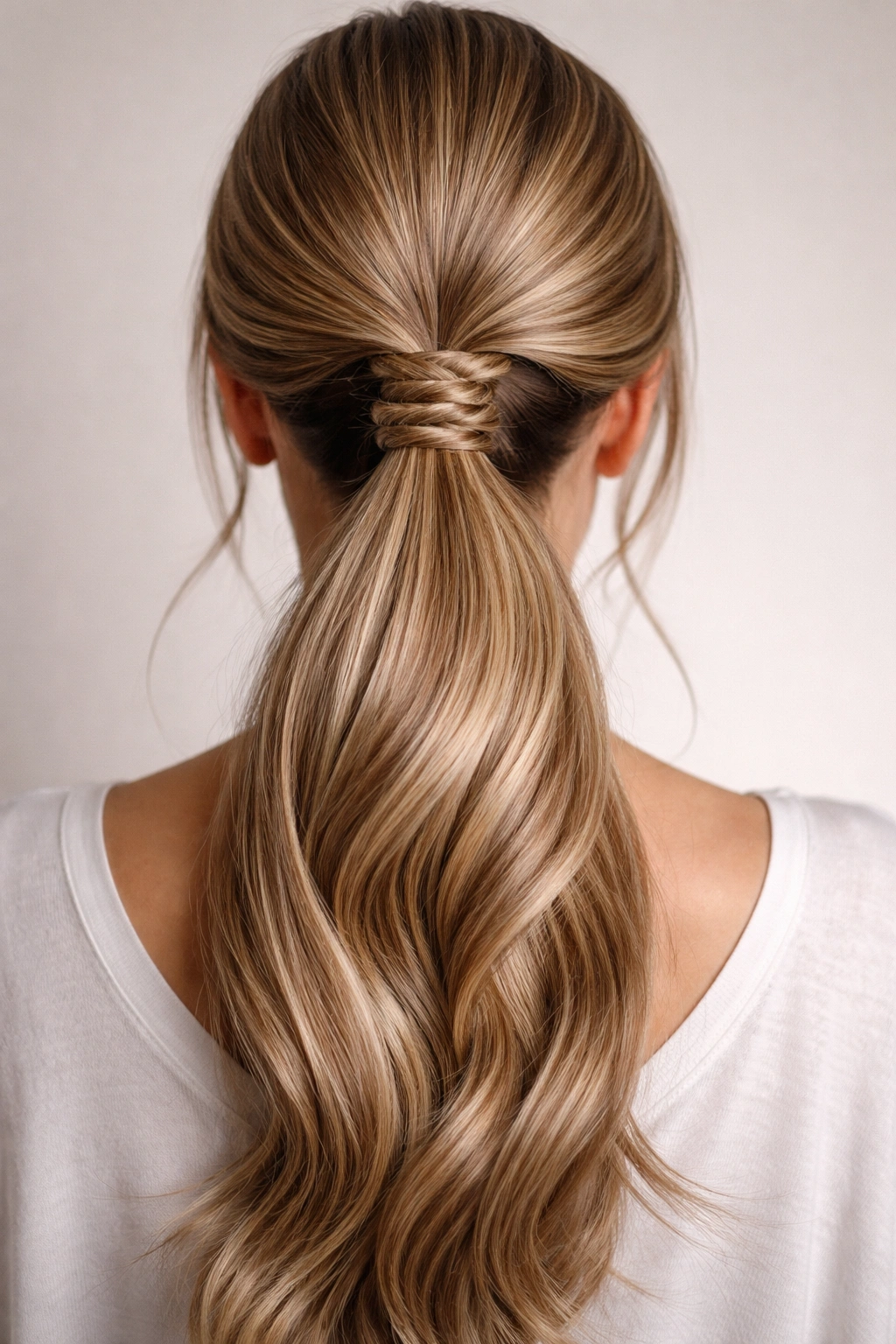
Unlike a plain wrapped pony, a braided base gives the style grip and texture right where the extension starts. That matters more than people think. A secure base keeps the ponytail from sagging by midday.
It’s also a smart choice if your hair is slippery. Fine, silky hair can let extensions slide around unless the anchor is strong. A small three-strand braid at the nape gives you a better hold, and it looks deliberate instead of accidental.
For this style, braid a narrow section from the crown or side into the pony base, then secure the extension below it. The braid becomes part of the design, not just a hidden structure. If your tail is long, keep the braid tight and compact so the rest of the hair stays full.
This is the ponytail I’d recommend to anyone who wants something practical. It holds well, it hides the join, and it survives a long day better than the prettiest loose style.
7. Twisted Low Ponytail with Side Loops
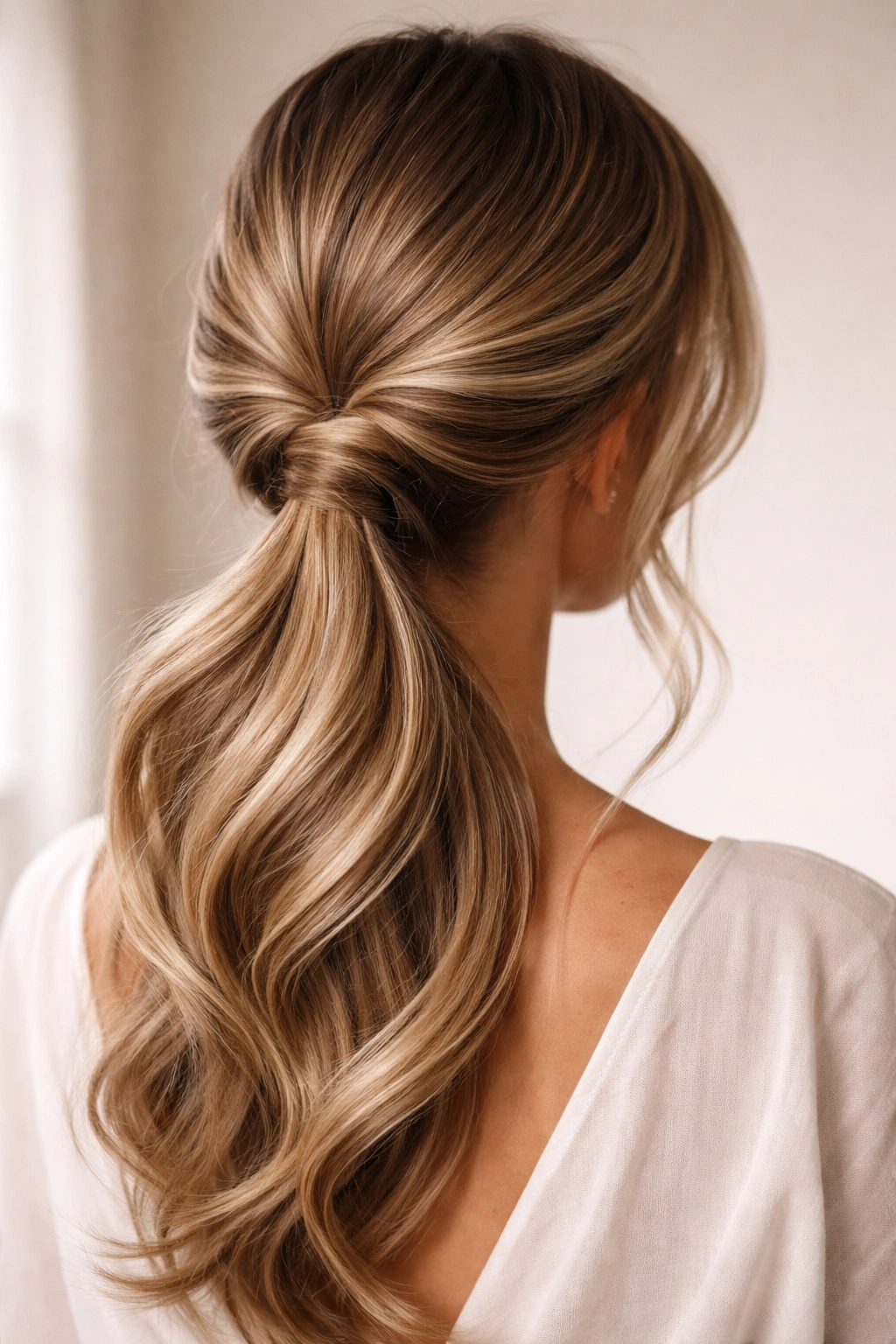
A few twists can change the whole feel of a ponytail. They add shape at the head, and that shape makes the extension look richer because the eye sees more movement before it even reaches the tail.
What Makes It Different
Instead of pulling everything straight back, take two sections from the front, twist them back from each side, and pin or tie them into the low ponytail. The twists create a soft, almost ribbon-like frame around the base.
That soft frame is useful if your hairline is a little uneven or your baby hairs do their own thing. The twists let you hide the rough bits without smothering them in gel.
Practical Detail
Keep the twists loose enough to flatten the head shape a bit, but not so loose that they fall apart. A small amount of texturizing spray helps the sections grip. If the extension is very long, stop the twists before they become bulky. You want interest at the base, not a knot.
8. Barrel-Curled Lengths
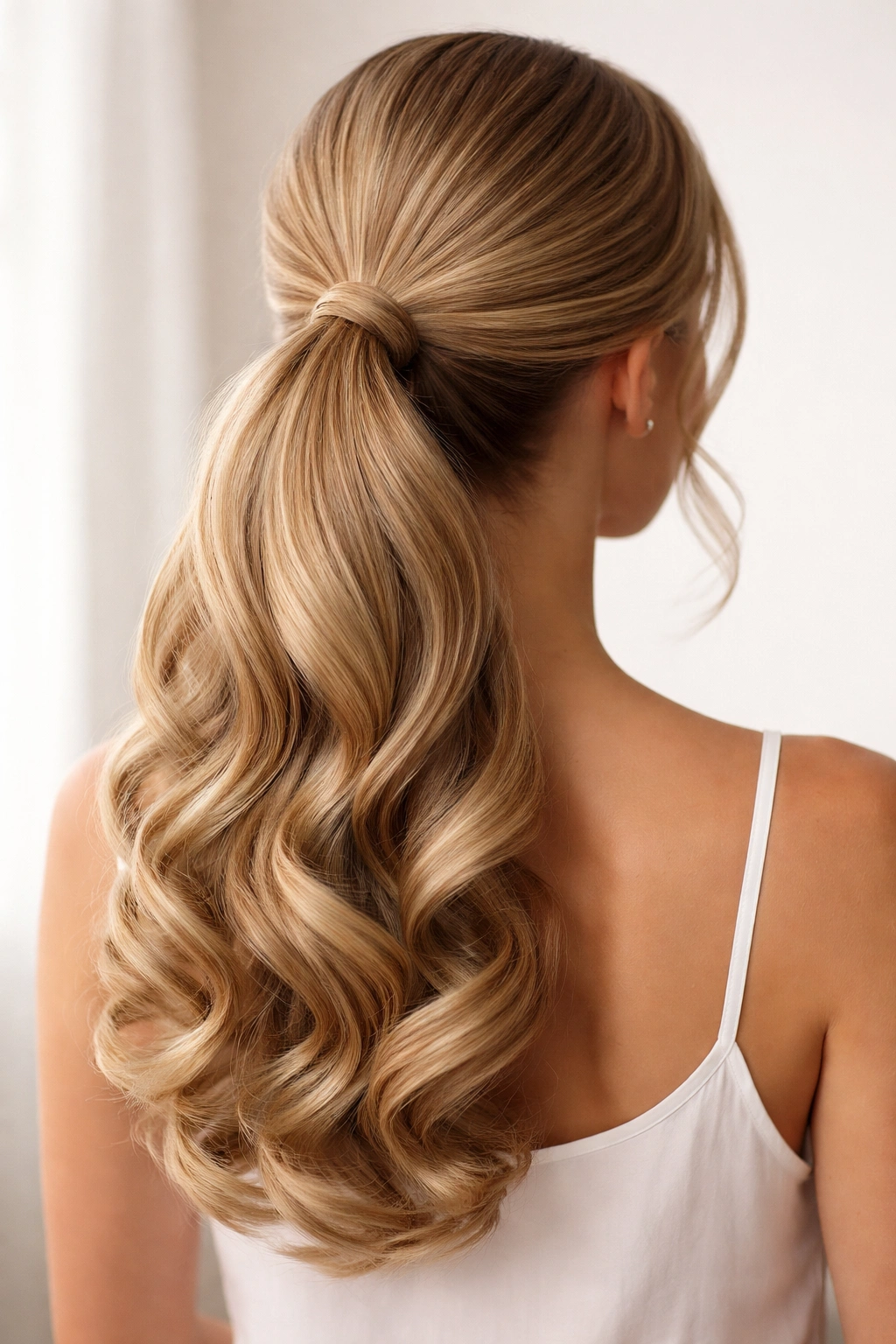
A heavy curl pattern can make a ponytail extension look twice as full. Barrel curls are the quickest route if the ends of your extension need body and swing. They fill space in a way straight hair never can.
This style feels a little more dressed up than soft waves. The curls are clearer, the tail is rounder, and the whole ponytail sits with more presence. It’s a smart choice for thick extensions or hair that falls flat after the first hour.
I like barrel curls on lower ponytails because the nape placement keeps the silhouette grounded. A high pony with barrel curls can feel a bit showy. Low and full feels more controlled. Better, honestly.
Work in medium sections and curl all of them in the same direction for a smoother look, or alternate direction if you want a softer finish. Once the curls cool, separate them with fingers, not a brush. A brush takes out the shape too fast.
9. Velvet Ribbon Low Ponytail
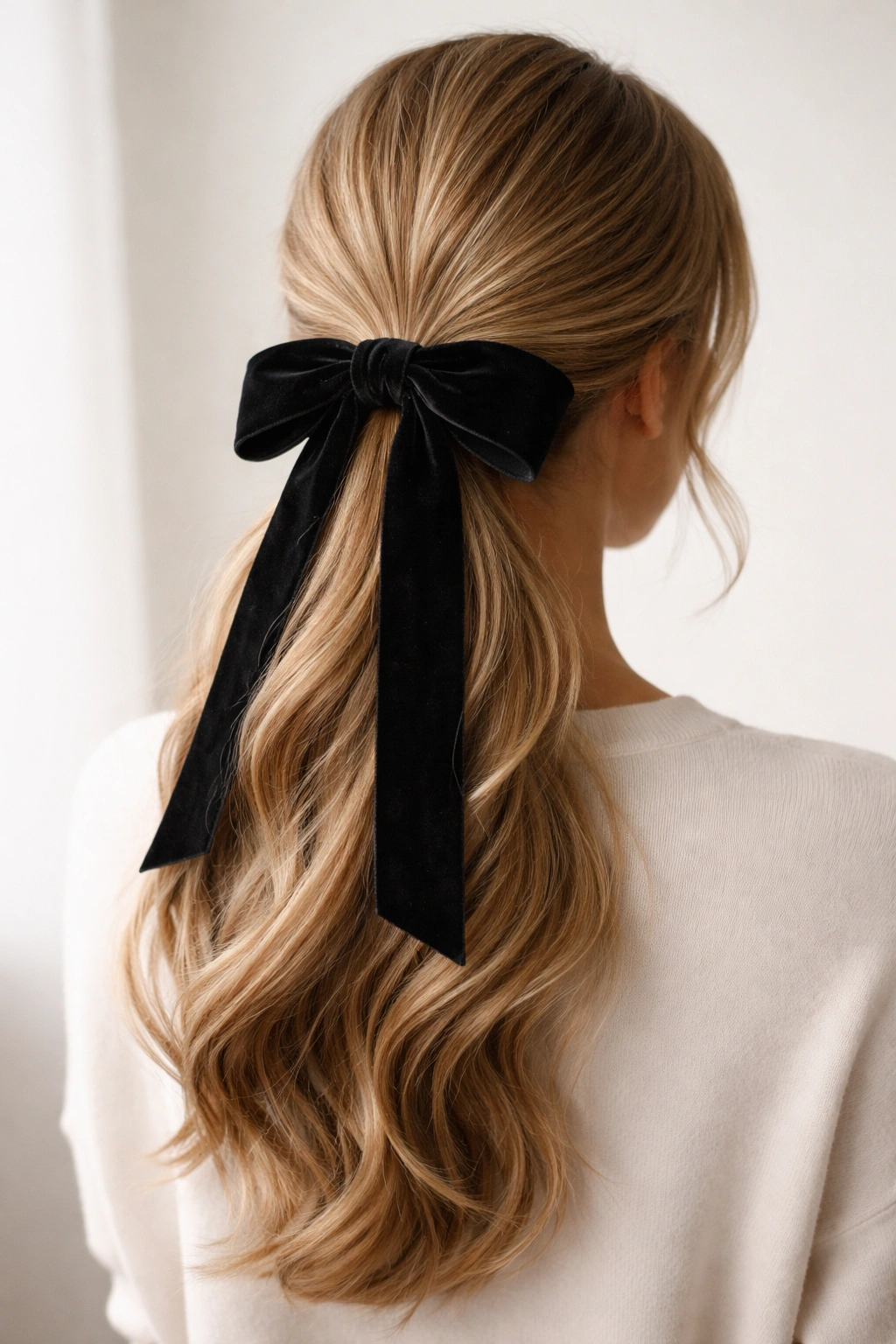
Can a ribbon make the ponytail look fuller? Yes, if the base is already solid. The ribbon is the finishing move, not the fix. It changes the whole mood of the style and makes a low ponytail extension feel more deliberate.
This is one of those looks that sounds simple and ends up doing a lot of work. A velvet ribbon adds weight at the base, which is handy when the ponytail itself is long and the extension needs a visual anchor. The softer fabric also keeps the style from looking too hard or severe.
Tie the ribbon around the base once the extension is secured, then let the tails fall alongside the pony. If the ribbon is too thin, it can disappear. A wider ribbon, around 1 to 1.5 inches, reads better from a distance.
This style is especially nice with silkier hair. The contrast between sleek lengths and soft fabric makes the ponytail feel finished without adding more accessories.
10. Double-Stacked Low Ponytail
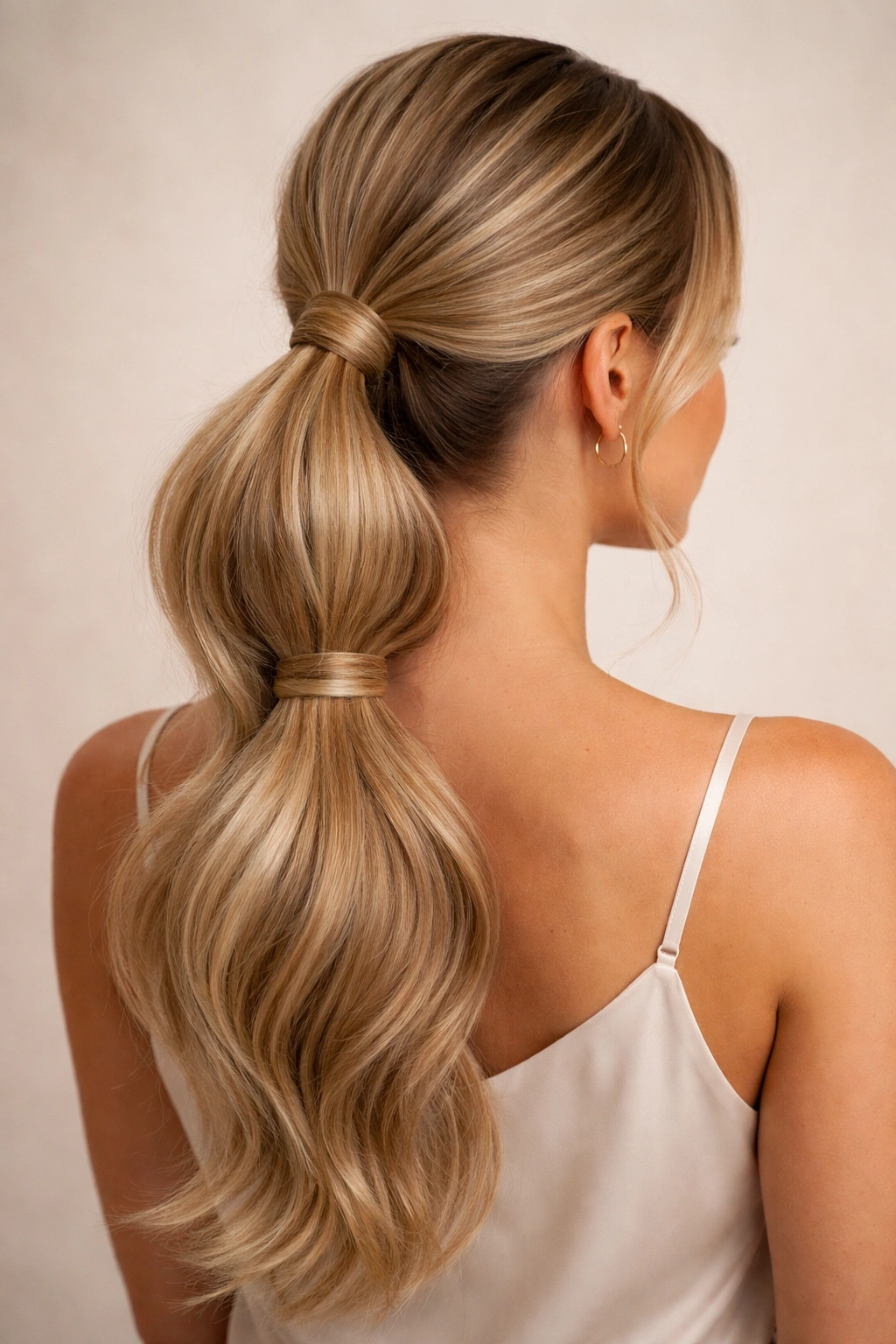
If one ponytail extension is not enough, two stacked low ponytails can fake serious density. The trick is simple: build one ponytail low, then add a second slightly above it and blend the two so the final tail sits thick and heavy.
This works best when the natural hair is medium-length or layered. The upper pony helps support the lower one, and the extension piece covers the join. Nobody needs to know there are two anchors back there.
- Make the first pony at the nape.
- Gather a second section just above it and secure it with another elastic.
- Pull the top pony down to cover the lower base.
- Attach the extension over both points and smooth the blend.
It sounds more involved than it is. Once you do it a couple of times, the shape clicks fast. The result is a ponytail that feels sturdy, which is the whole point if you want volume that lasts.
11. Textured Low Ponytail with Loose Waves
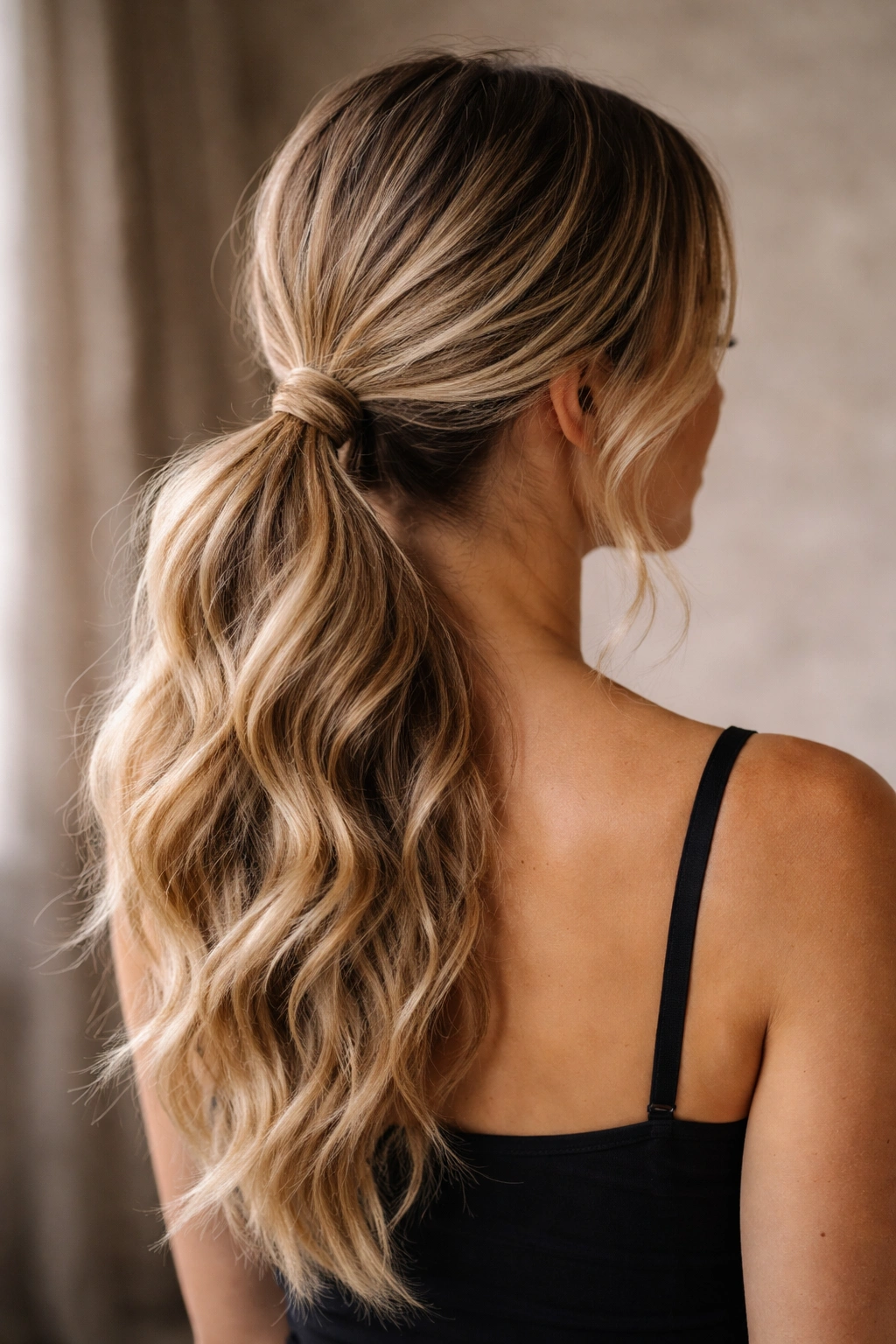
Skip pin-straight hair here. Textured low ponytail extensions look fuller because the bend in the hair breaks up the surface and gives the eye more to look at.
This version is easy to wear on hair that does not behave perfectly. A little grit helps. Rough-dry the roots, work in a light texturizing spray, then add loose bends through the extension with a flat iron or large iron. You are aiming for movement, not ringlets.
The nice part is that this style doesn’t need everything to be precise. A few pieces can stick out at the crown. The ends can be a little uneven. The pony still looks good because texture forgives a lot.
One note: don’t overload it with dry shampoo if your extension hair is already matte. Too much product can make the tail feel dusty, and that kills the softness fast.
12. Hidden Crisscross Low Ponytail
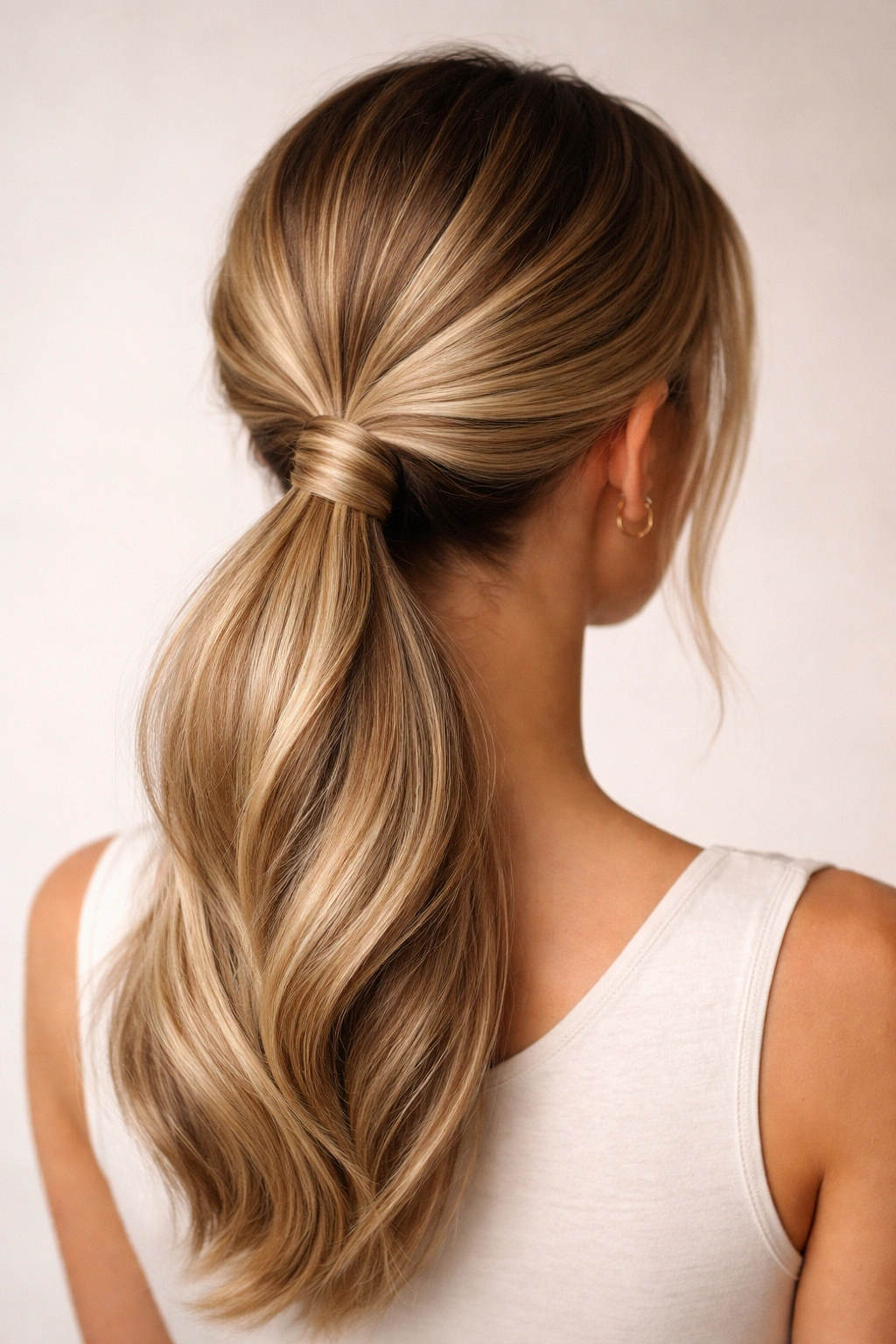
This is the neatest way to hide an extension base without a big wrap. Instead of one obvious cover section, you cross small pieces over each other so the joins disappear into the pattern.
What makes it different from a standard wrapped ponytail is the structure. The crossed sections create a cleaner top line and a little more visual interest at the nape. It’s subtle, which is exactly why it works. You get detail without turning the back of your head into a craft project.
This style suits people who like order. If your everyday look leans tailored, the crisscross base fits right in. It also helps when the extension clip or elastic has to sit a little lower than usual. The crossed pieces cover a lot.
For the best result, keep the sections small and smooth before crossing them. Sloppy pieces make the whole thing look rushed. Tight and neat wins here.
13. Sleek Low Ponytail with Face-Framing Pieces
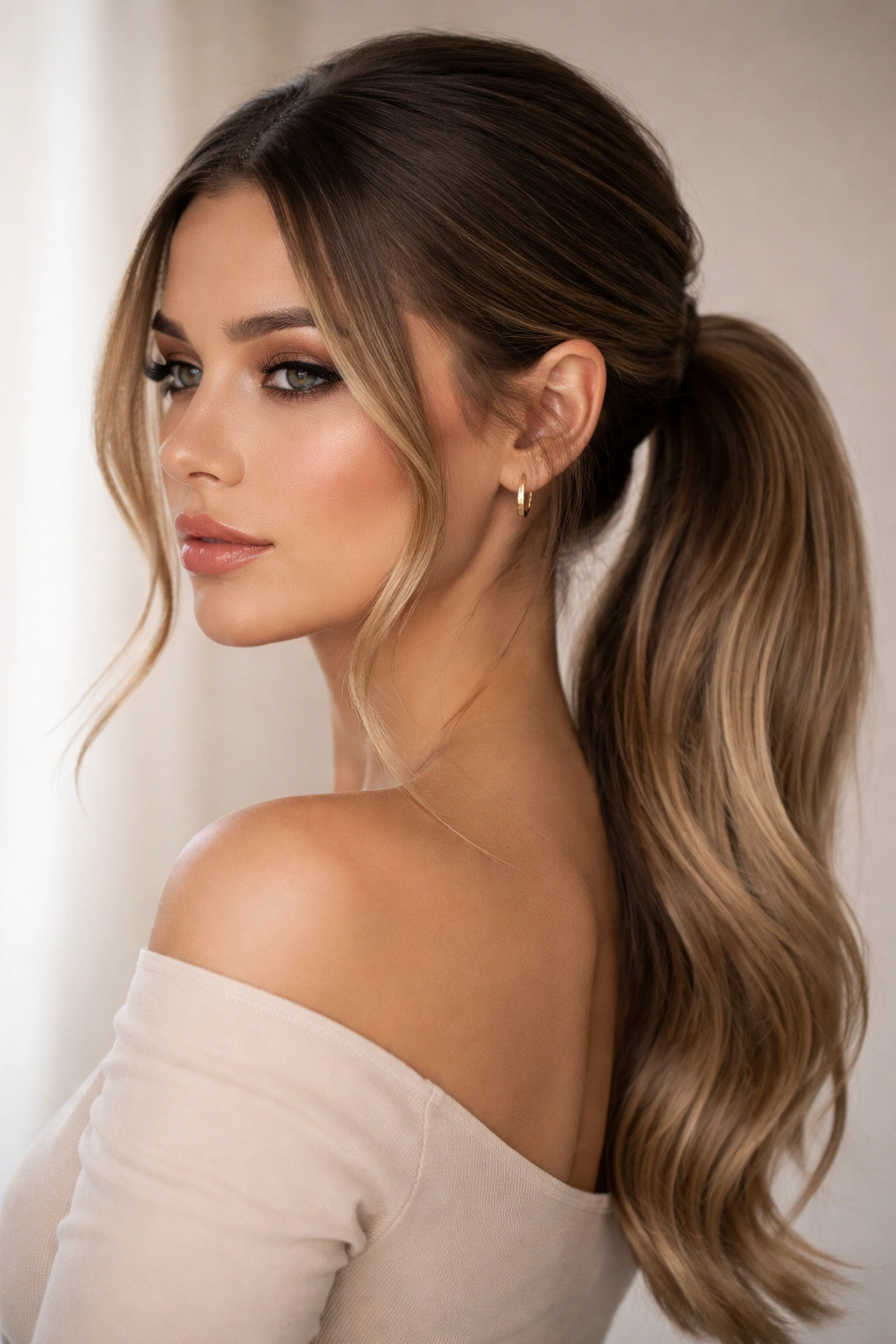
A sleek low ponytail does not have to be severe. Leaving a couple of face-framing pieces out softens the whole style and gives the extension a more natural finish.
Why It Flatters
The front pieces break up the strong line of the ponytail and keep the face from looking boxed in. That’s especially useful if the ponytail extension is thick or long, because a lot of hair at the back can feel heavy without a softer frame at the front.
How to Style It
Keep the crown smooth, then let the front pieces fall around the cheekbones or jaw. Curl them lightly if your hair is straight. If your texture is wavy, a small bend is enough. The ponytail itself should stay polished, or the contrast disappears.
I prefer this style when the outfit has clean lines. Think blazer, knit dress, crisp shirt. It looks balanced, not overworked. And if the face-framing pieces are cut well, they make the extension blend feel easier on the eye.
14. Wet-Look Low Ponytail
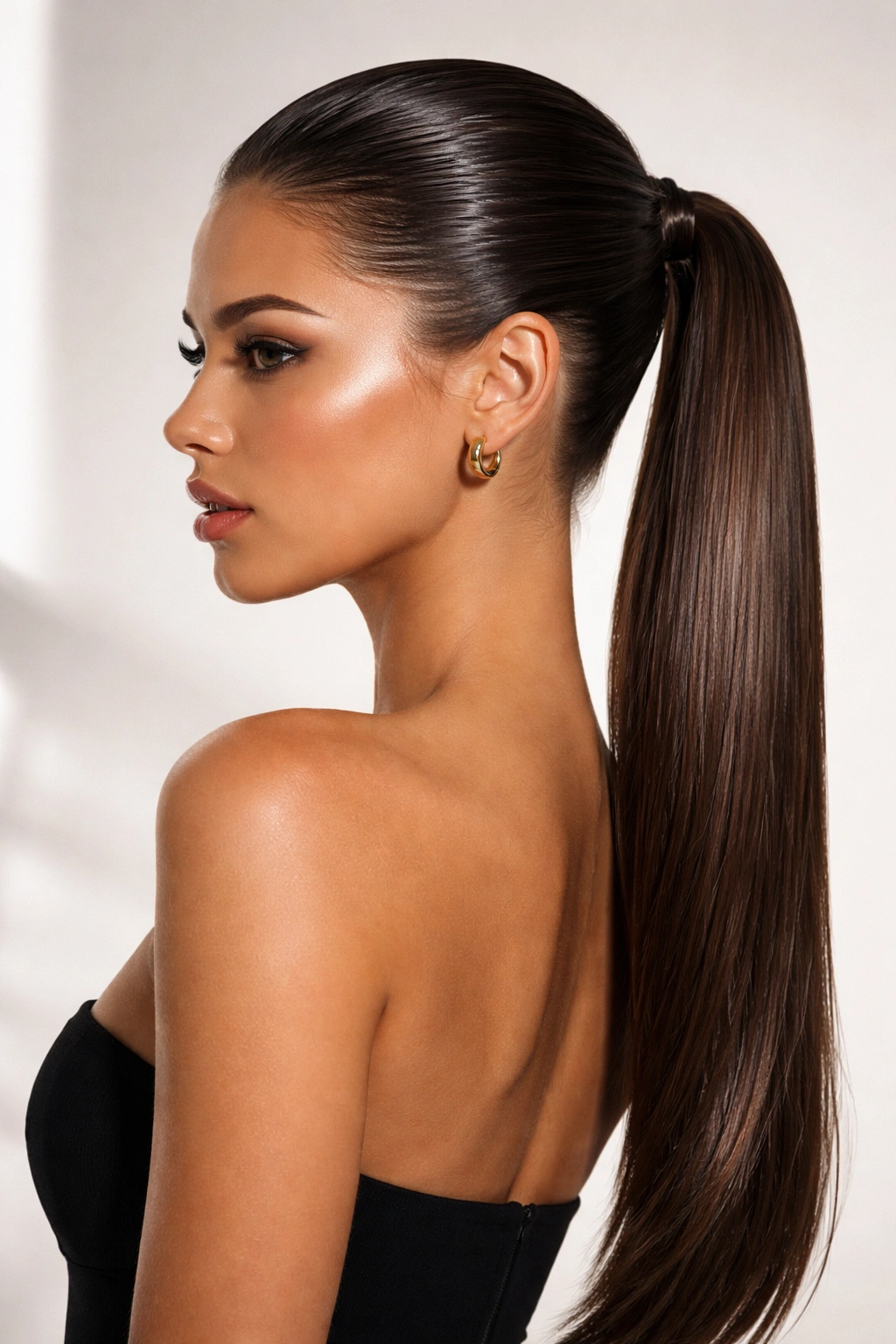
A wet-look ponytail is unforgiving, so the extension needs to be clean and well matched. There is nowhere for a bad blend to hide. That is also why, when it works, it looks so sharp.
This style has a strong, glossy finish and a slightly editorial feel. Use gel or cream at the roots, brush everything back hard, and keep the ponytail itself smooth. The extension should stay straight or only slightly curved at the ends. Too much curl ruins the effect.
A wet look suits hair that naturally lies flat. Weirdly, that’s an advantage here. The slick finish becomes part of the shape. If your hair is frizzy, you’ll need more product and more patience, because flyaways show fast.
I would not wear this every day. It’s a bit intense for casual errands. But for a night out or any situation where you want the hair to look deliberate and a little bold, it does the job.
15. Fishtail-Braided Length Low Ponytail
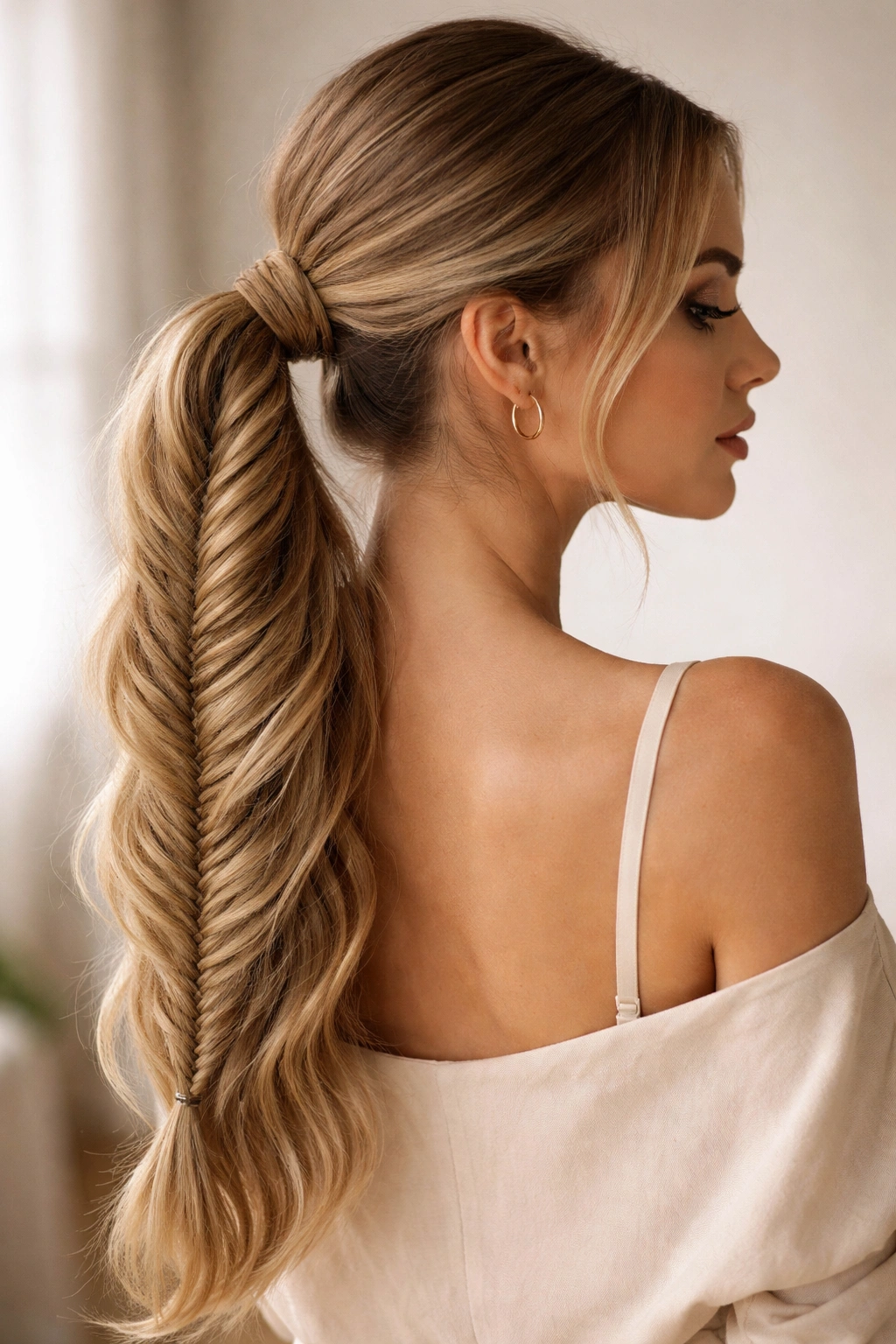
Why does a fishtail braid make a low ponytail extension feel fuller? Because the braid turns all that length into one dense, textured rope. It compresses volume in a flattering way.
The neat part is that the ponytail can be thick without looking bulky at the base. The braid does the visual work through the length, which is useful if the extension is very long or a little layered. It keeps the shape tidy while still giving you a lot of hair to show off.
How to Use It
Start with a secure low ponytail, attach the extension, then divide the tail into two sections for a fishtail braid. Pull tiny pieces from the outer edge of one section to the other, working down slowly. The smaller the pieces, the finer the braid looks.
If you want a softer finish, tug the braid apart a little after tying it off. Not too much. A fishtail that has been over-pulled looks messy fast. A lightly expanded braid feels richer and more relaxed.
16. Mini Bouffant Crown Ponytail
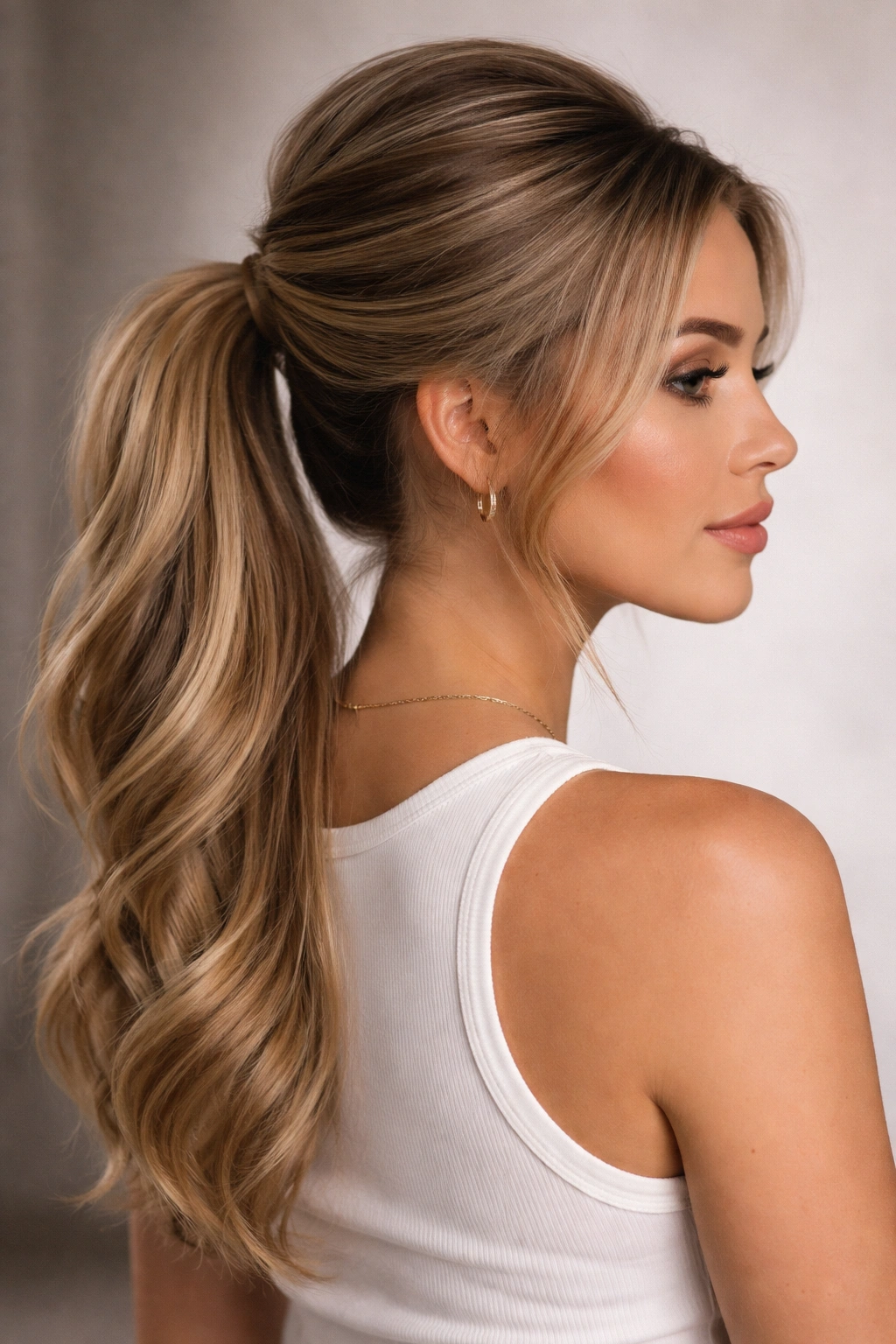
A small amount of lift at the crown changes the whole silhouette. You do not need a giant bump. Just enough height to keep the head from looking flattened.
This style is useful when the low ponytail extension is thick and heavy. Without some lift up top, the contrast between a flat crown and a full tail can look a little awkward. A gentle bouffant balances the weight. It makes the style feel designed instead of just assembled.
- Backcomb a narrow section at the crown, about 1 inch deep.
- Smooth the top layer over the teasing so it stays neat.
- Secure the ponytail low, then attach the extension underneath the lifted section.
- Spray lightly at the crown only, not through the whole pony.
The lift should look soft from the side. If you can see the tease, it’s too much. Keep it hidden and the shape will feel fuller without shouting about it.
17. Flipped-Out Ends
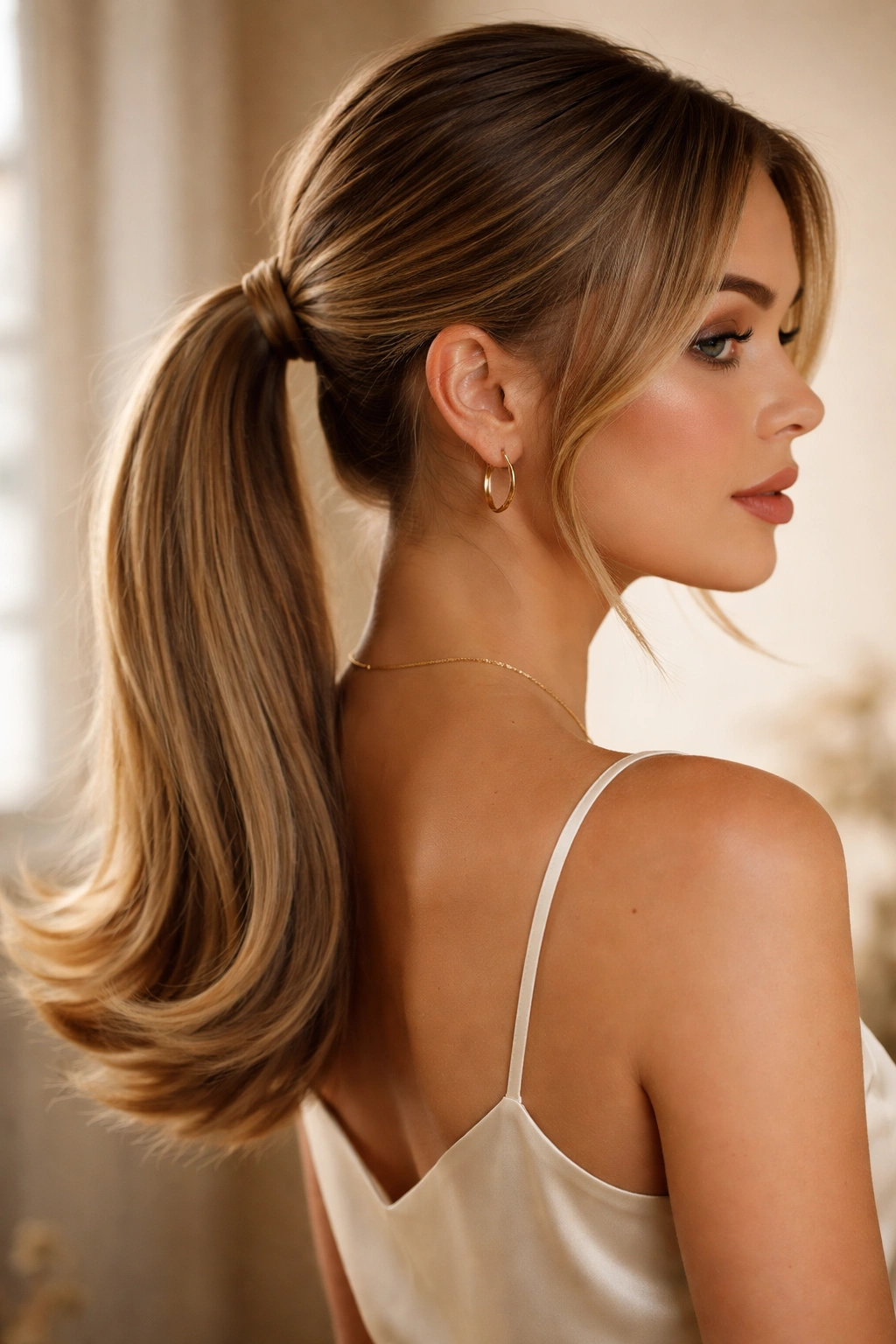
A low ponytail with flipped-out ends has a little retro charm, and I like that it does not demand perfect hair. The extension can be straight through the middle and still look styled because the ends carry the shape.
This is a good option for shorter extensions too. You don’t need waist-length hair to get the effect. A turn at the end of each section, made with a flat iron or round brush, is enough to make the tail feel intentional. The flip adds movement where long hair can sometimes just hang.
One-sentence truth: the ends matter more than people think.
If the ponytail looks heavy, flipping out the last 2 to 4 inches gives it a lighter finish. It also keeps the style from reading too formal. I’d wear this with jeans and a jacket before I’d wear it with a gala dress. It has more personality than polish, and that’s a nice trade.
18. Side-Swept Wave Ponytail
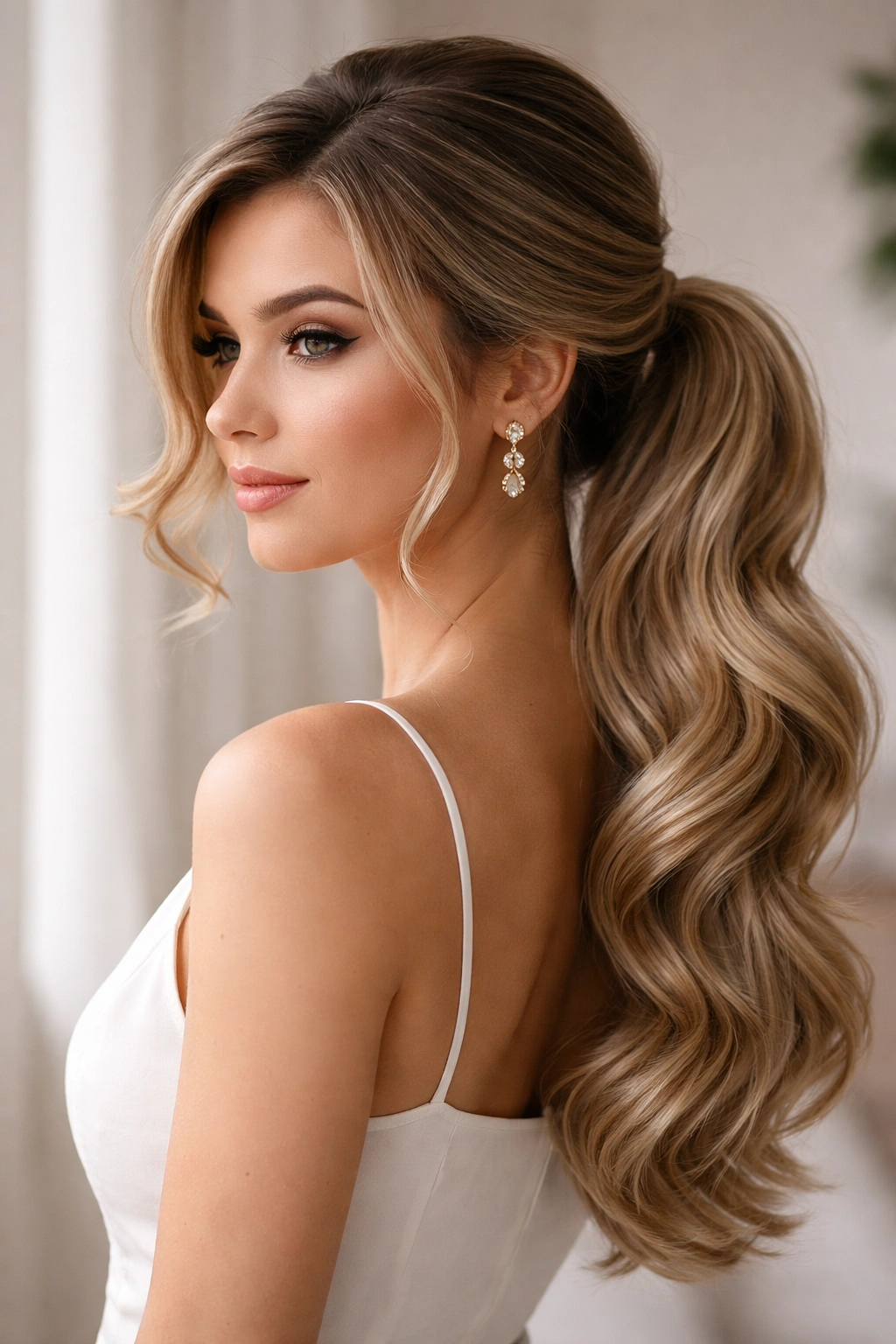
Unlike a strict center-part ponytail, a side-swept wave gives the hair a softer drop across the face before it meets the nape. That shape changes the whole mood. It’s less rigid, more relaxed, and a little easier on softer features.
The wave also helps the extension blend because the hair is not lying in a perfect straight line. Tiny bends create depth. If your own hair is finer than the ponytail piece, this is a forgiving choice because the side sweep distracts the eye from the join.
It’s best for people who like a bit of asymmetry. The ponytail still sits low and neat, but the front sections don’t feel pinned down. That keeps the style from going stiff.
Use a large iron or a round brush to shape the front, then allow the lengths to fall into a smooth curve. Keep the ponytail itself heavier and calmer than the front pieces. That contrast is what makes it work.
19. Wrapped Braided Detail Ponytail
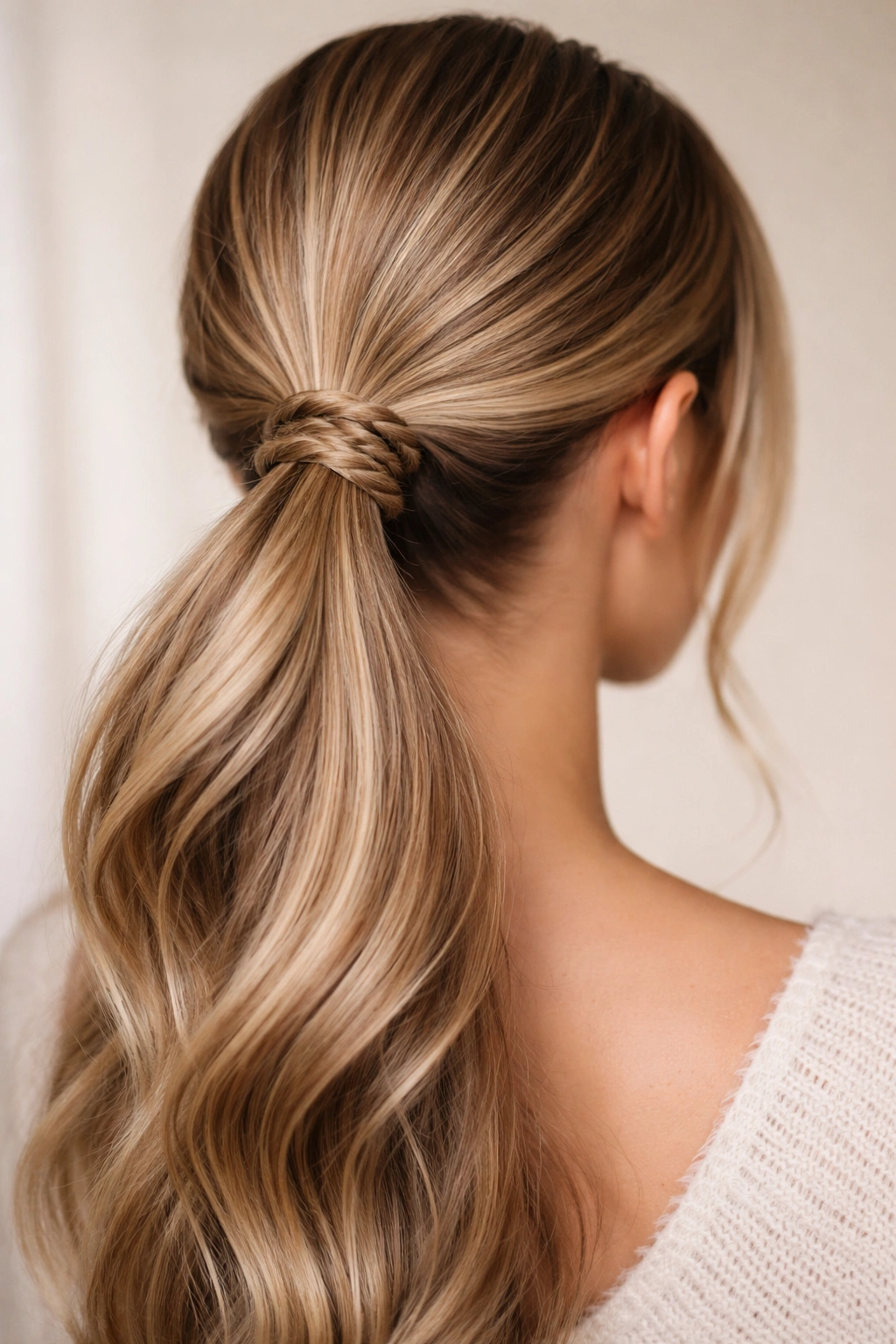
A braid wrapped around the base gives a low ponytail extension some structure and a bit of texture at the exact spot people tend to notice first. That’s smart styling, plain and simple.
Why It Holds Up
The braid acts almost like a built-in cover for the elastic or attachment point. It also makes the base look thicker, which helps if the hair near the nape is finer than the rest of the ponytail. A smooth wrap can sometimes feel too flat. A braid has more grip and more shape.
Useful Details
- Keep the braid slim so it doesn’t swallow the base.
- Secure it with a small clear elastic before wrapping.
- Pin the end underneath the ponytail where it won’t show.
- Finish with a touch of shine spray on the braid only.
This one feels polished but not plain. If you want your ponytail to look like it took effort, this is a good place to spend that effort.
20. Oversized Clip Low Ponytail
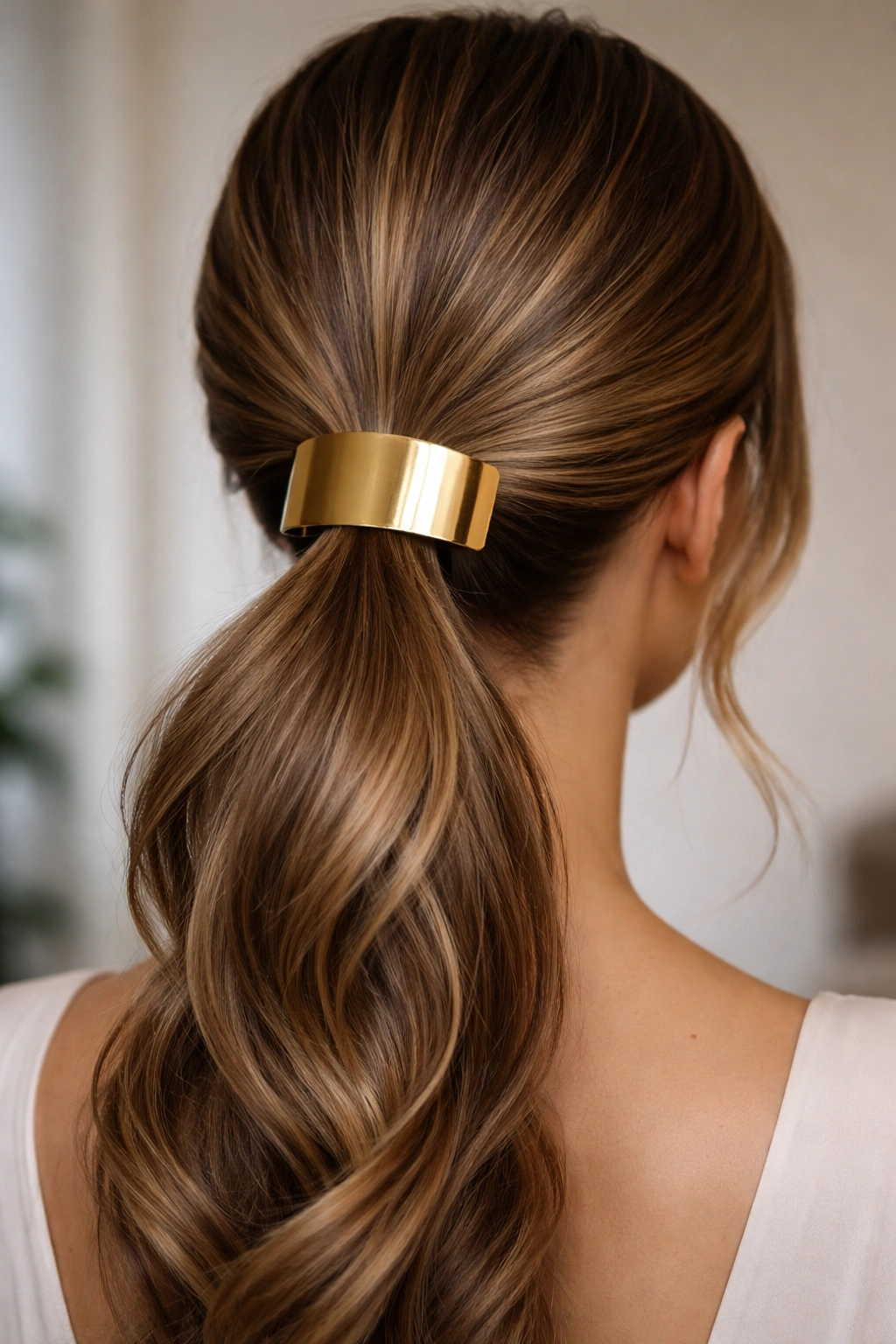
A big clip can do more for a low ponytail extension than another round of hairspray. That sounds dramatic, but it’s true. The right accessory hides the join and gives the whole style a clear focal point.
This look works because the clip sits where the ponytail starts, which makes the extension look like part of the design instead of an add-on. Large metal clips, chunky acetate pieces, or even a wide decorative barrette can all work. The important bit is scale. Tiny clips vanish against a full ponytail.
Use this style when you want something easy to wear but not boring. It takes the edge off a slick base and gives a little visual weight to the back of the head. If the extension is long, the oversized clip keeps the top from feeling empty.
I’d avoid delicate clips here. They get swallowed by the volume and don’t hold the shape long.
21. Rolled-Under Ends
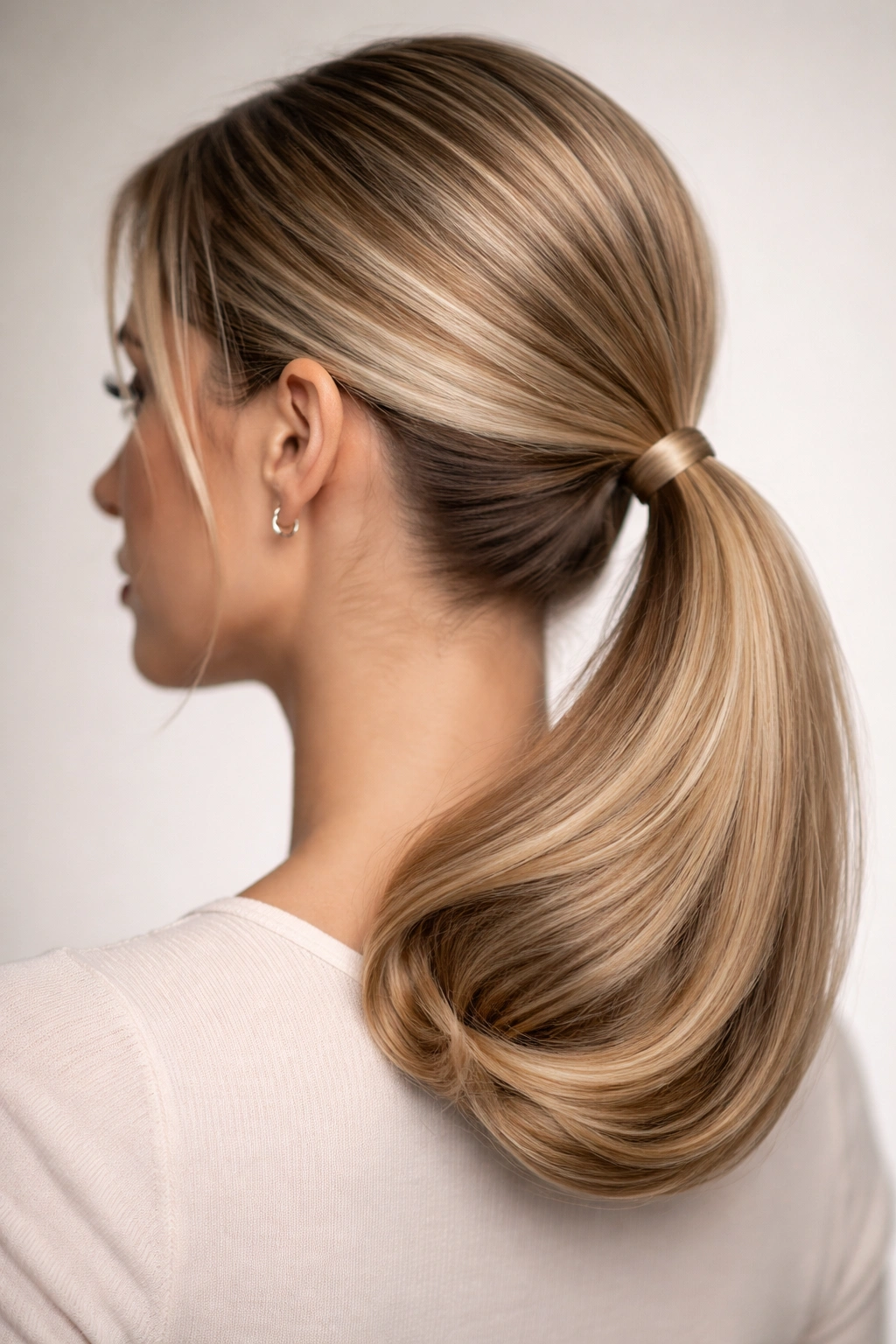
Can a low ponytail look thicker just because the ends tuck under? Yes. The curve changes the shape of the tail, and that curve makes the ponytail seem denser and more finished.
This style is especially useful for straight extensions that feel a little too thin at the last few inches. Instead of letting the ends hang flat, turn them under with a round brush or a flat iron. The tail looks shorter in a good way—fuller, cleaner, and less stringy.
How to Keep It Neat
Let the ponytail dry or cool fully before you touch the ends again. Warm hair drops fast. If you roll the ends while they’re still hot, they can collapse into a weird bend. The shape should hold on its own.
This is a calm, tidy look. Nothing flashy. That’s the appeal. It works for office days, dinners, and any moment where you want the ponytail to look cared for without looking overdone.
22. Micro-Braid Accent Ponytail
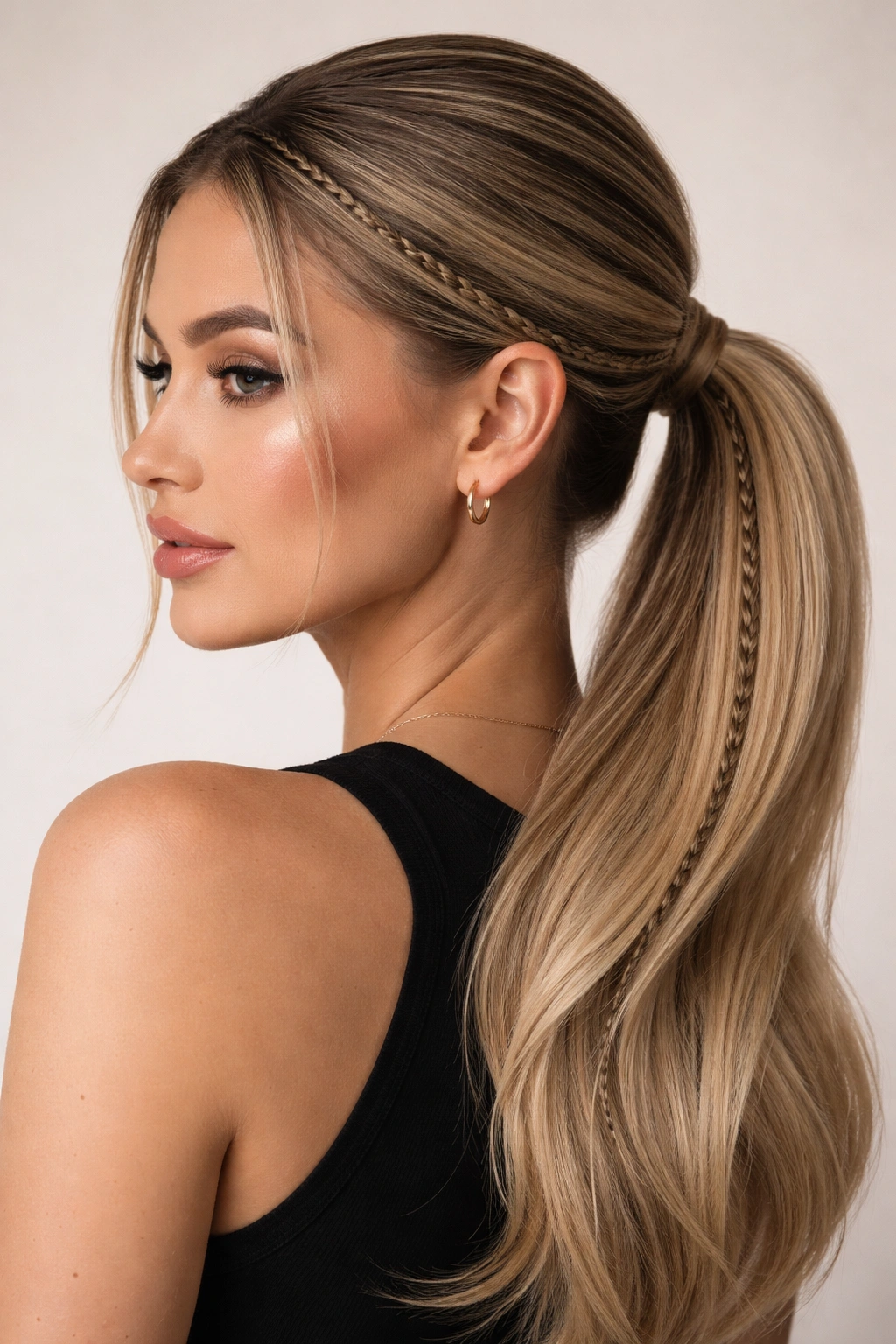
A few tiny braids near the temple or woven through the tail can make a low ponytail extension feel much more layered. They add texture without changing the whole style.
The nice thing about micro-braids is that they break up a very smooth ponytail. If the extension is extra sleek, the braids keep it from looking flat. If the extension is wavy, they add a little contrast. Either way, the finish feels less plain.
- Place one or two narrow braids near the face.
- Keep them slim so they don’t take over the style.
- Blend a braid into the ponytail length if you want more texture.
- Use a tiny dab of wax on the braid ends so they stay neat.
This version suits people who like a bit of detail but not a full braid style. It’s subtle enough for daily wear, which matters. Not every ponytail needs to announce itself.
23. Extra-Long Full-Volume Low Ponytail
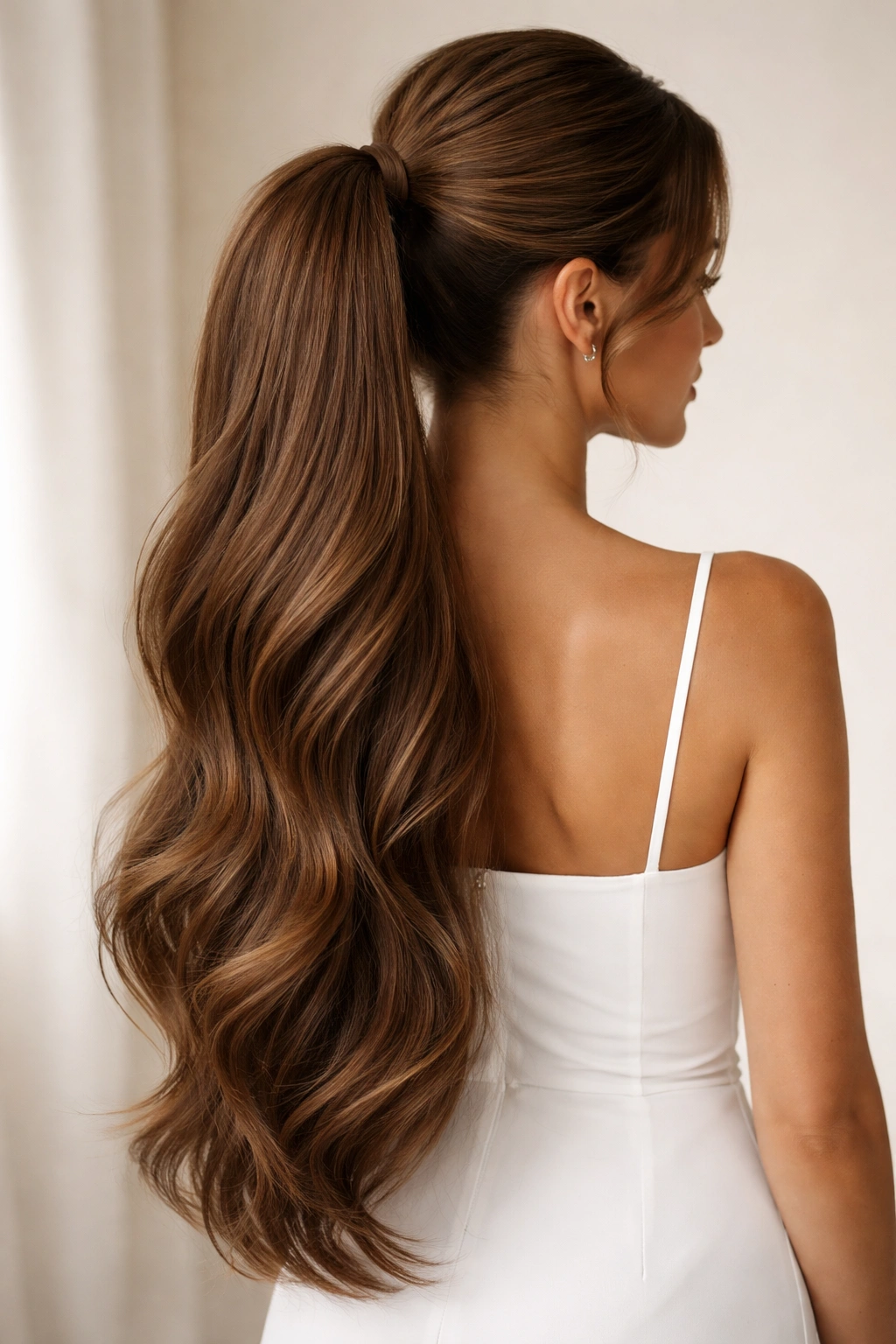
A very long low ponytail extension only works if the volume holds up from root to tip. If the crown is flat and the tail is huge, the style looks disconnected. When the shape is balanced, though, it’s hard to beat.
This is the boldest version in the bunch. The extension should feel dense, not wispy, and the base should be smooth enough to keep the whole thing grounded. I like this look with a light wave or a soft bend because pin-straight extra-long lengths can drag the style down visually. A little movement helps the hair read expensive rather than heavy.
The best part is the swing. Long hair moving at a low point near the back has a different feel than a high ponytail. It looks calmer. Stronger, too. If you want drama without the bounce of a high style, this is the one.
A good low ponytail extension here should not fight your natural hair; it should finish it. That is the point. Add the volume where the eye needs it, keep the crown controlled, and let the length do what long hair does best.
Final Thoughts
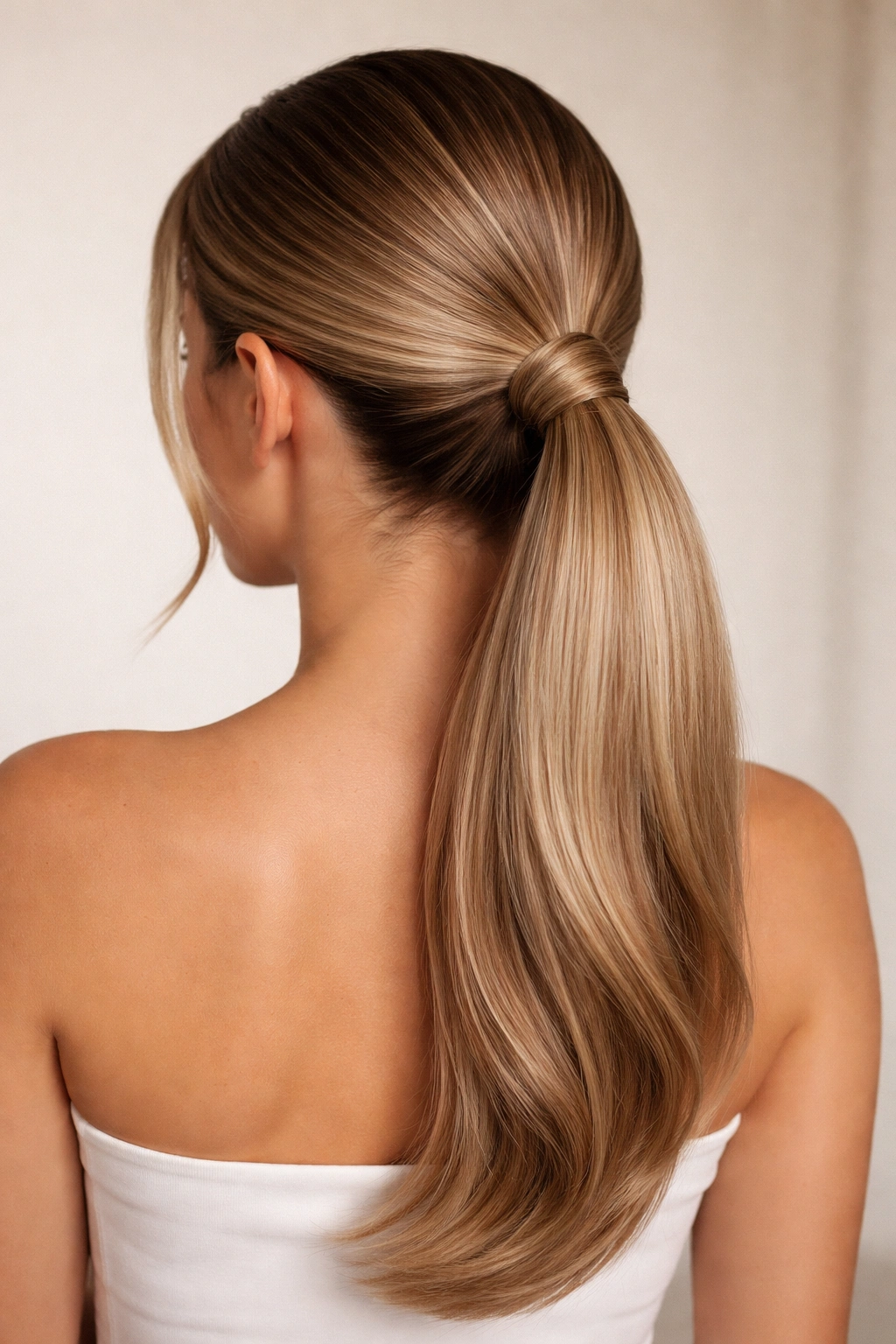
Low ponytail extensions work best when the base is clean and the tail has enough body to hold the shape. That sounds obvious, but so many people focus on length first and forget that fullness at the nape is what makes the style believable.
The smartest versions here are the ones that hide the join and give the ponytail some structure before the length starts. A wrapped base, a braid, a ribbon, or a tiny lift at the crown can change the whole read of the style. Small details. Big payoff.
If your own hair is fine, start with the neatest styles and build from there. If it’s thick, lean into curls, braids, and extra-long tails. Either way, the best ponytail is the one that looks full where it should and easy where it matters.