



Ombré and rainbow box braids have a way of making a protective style feel personal. Dark roots can melt into blonde, burgundy, lilac, or full-on spectrum color, and the whole look changes depending on where the fade starts and how thick the braids are.
That part gets missed a lot. A tiny color shift near the ends reads calm; the same palette on waist-length jumbo braids can look loud and graphic. Synthetic hair matters too. Pre-stretched Kanekalon, pre-colored bundles, and mixed-shade packs let the color carry the style without asking your natural hair to do the work.
I like box braids most when the color story feels deliberate. Not matchy. Deliberate. A warm caramel fade can soften the face; an oil-slick rainbow can make a plain outfit look sharper than any accessory.
The 15 looks below cover the whole range, from barely-there ombré box braids to rainbow sets that announce themselves from across the room. Some are easygoing, some are bold, and a few sit in that sweet spot where people keep asking who did your hair.
1. Black-to-Honey Blonde Ombré Box Braids
This is the fade that never has to shout. Black or deep brown at the root gives the braids a clean base, and honey blonde at the ends adds warmth without turning the whole style into a costume.
The reason it works so well is simple: the eye reads the dark root as natural, then follows the lighter ends as movement. That gives the braid set depth, especially when the braids fall below the shoulders. Short braids can still wear this look, but the shift is calmer and less dramatic. Long braids let the blonde do what it does best.
Why the fade reads cleanly
- Use 1B/27, 1B/30, or 1B/33 synthetic braiding hair if you want a soft transition instead of a sharp stripe.
- Medium box braids show the gradient best; tiny braids can make the color look busier than it needs to be.
- Start the blonde below the cheekbone if you want the face framed in dark color first.
- Keep the ends neat and sealed so the light shade does not fray into a fuzzy halo.
I think this is the safest bet for someone trying color for the first time. Not boring. Safe. There is a difference.
2. Espresso-to-Caramel Braids
If blonde feels too bright, this is the move. Espresso roots sliding into caramel ends keep the look warm and glossy, and the whole thing reads expensive in the most low-key way. No glitter. No drama. Just a very good color fade.
The nice part is how forgiving this palette is around the face. Caramel has enough gold in it to soften strong contrast, but it does not jump out the way platinum can. On longer braids, the lighter ends pick up sun in a way that looks almost like natural hair lightening from wear, which is a flattering trick when you want the style to feel lived-in.
A side part suits this one especially well. So does a half-up style, because the caramel shows in layers instead of all at once. If you wear a lot of black, cream, olive, or denim, the contrast stays rich instead of flat.
Ask for a deep brown base with a slow shift into caramel, not a sudden jump. That one detail changes everything.
3. Auburn-to-Burgundy Braids
Want red that feels rich instead of loud? Auburn fading into burgundy gives you that wine-dark depth, and it looks especially good when the braids move. The color has a glow that shows in daylight and settles down indoors, which means you get two moods from one install.
How to brief your braider
- Ask for auburn near the crown and burgundy through the mid-lengths if you want the color to darken as it falls.
- Add a touch of plum at the very ends when you want more depth and less shine.
- Keep the parts crisp; red tones look messier when the braid rows wander.
- Use gold cuffs sparingly if you want warmth without stealing attention from the color.
This palette likes length. Shoulder-length braids can wear it, but waist-length braids let the burgundy breathe. And yes, it looks expensive next to a plain white tee. That sounds shallow, but it matters. Hair that can carry a simple outfit is doing good work.
4. Midnight Blue-to-Cobalt Box Braids
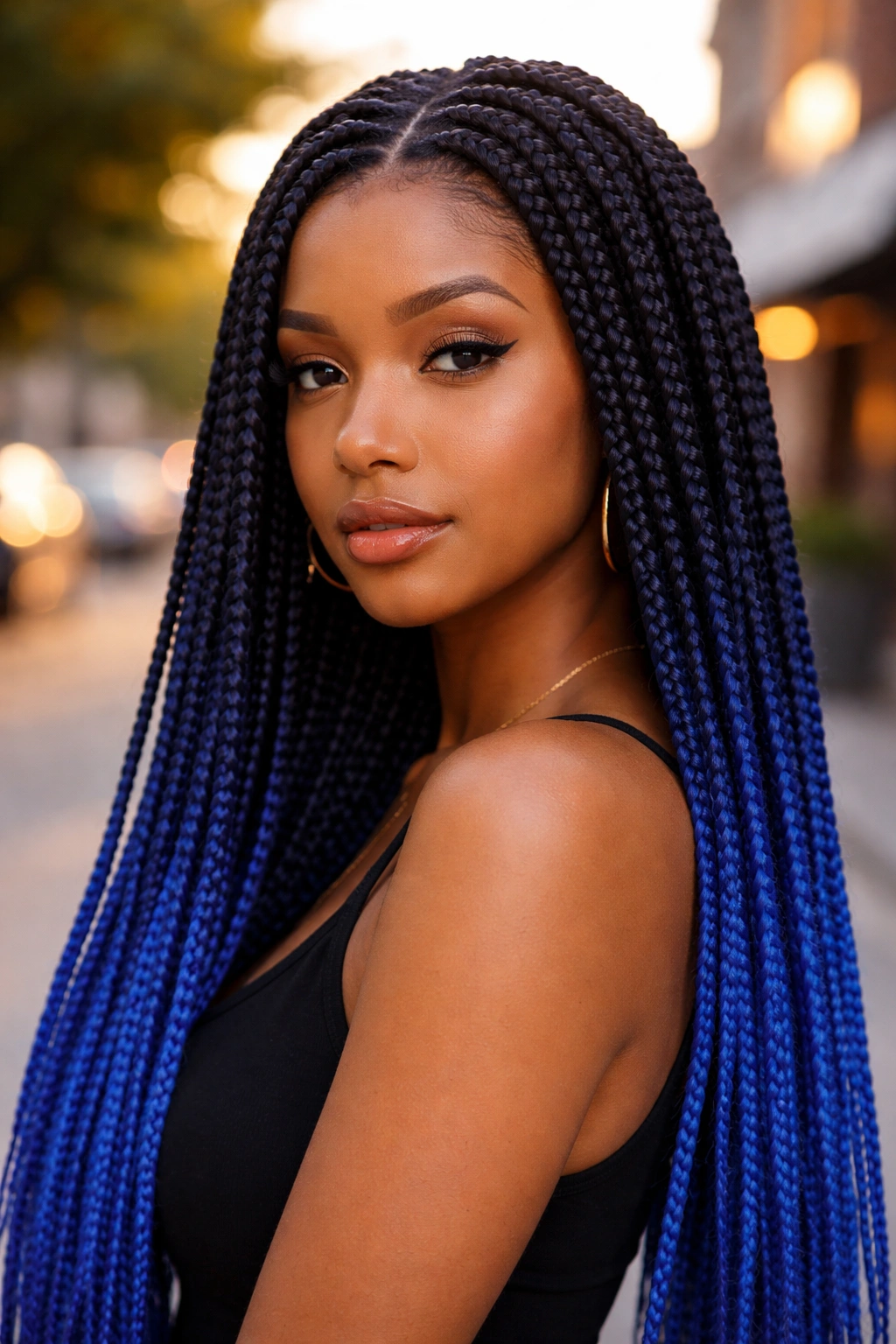
A black coat and cobalt braids do a lot of work together. The dark blue root keeps the style grounded, then the brighter blue comes alive when light hits it at an angle. It is one of those looks that looks calmer in the chair than it does outside, which is exactly why people underestimate it.
Blue braiding hair tends to read strongest when the parting is neat and the braid size is medium. Too tiny, and the shade change disappears into texture. Too huge, and the cobalt can feel blocky unless the install is long enough to show some flow. Long box braids make this palette sing because the transition has room to open up.
A cool-toned makeup look can echo the color, but it is not required. The braids carry enough personality on their own. Keep the root color deep, though. That contrast is the whole point.
If you want something vivid that still feels sleek, this is hard to beat.
5. Sunset Orange-to-Pink Ombré
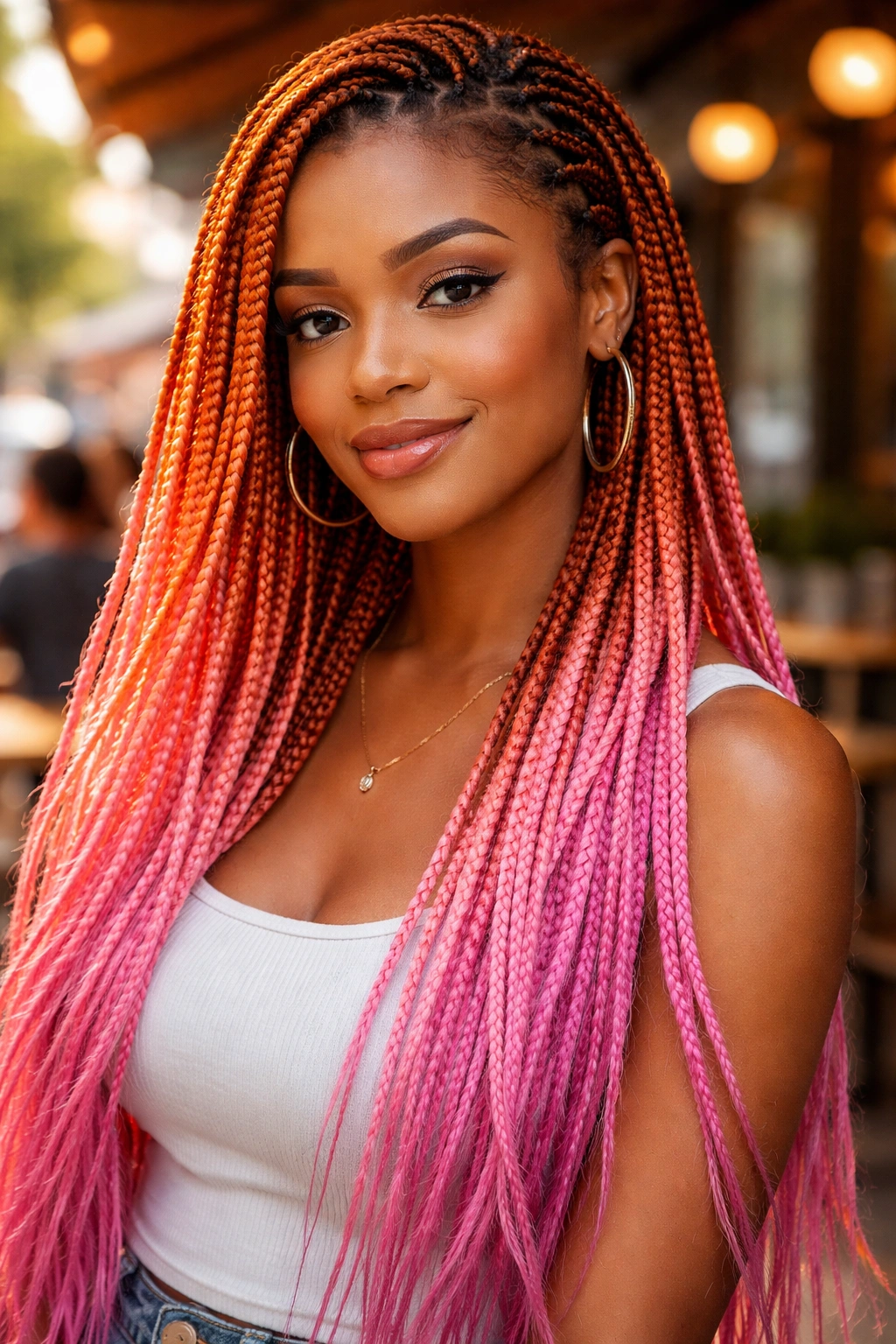
Think mango flesh, coral chalk, and a little watermelon at the ends. That is the mood here. Sunset orange-to-pink box braids are warm, playful, and a little cheeky, but they work because the colors sit in the same family. Nothing fights. Everything shifts.
The smoothest versions start with copper or orange near the root, then drift into coral, then land in pink. A hard orange-to-neon-pink jump can look loud in a way that gets old fast. The softer gradient feels more intentional and much easier to wear with everyday clothes. Black, denim, khaki, and white all give the color room to stand out.
This style loves movement. Half-up buns, side-swept ponytails, and loose braids with a few face-framing pieces make the gradient easy to see. If you keep the braids long, the pink ends pick up light in a way that almost looks glossy.
I would call this a good pick for someone who wants color that feels warm rather than edgy. There is a difference. Warm color smiles at you.
6. Lavender-to-Silver Pastel Rainbow Braids
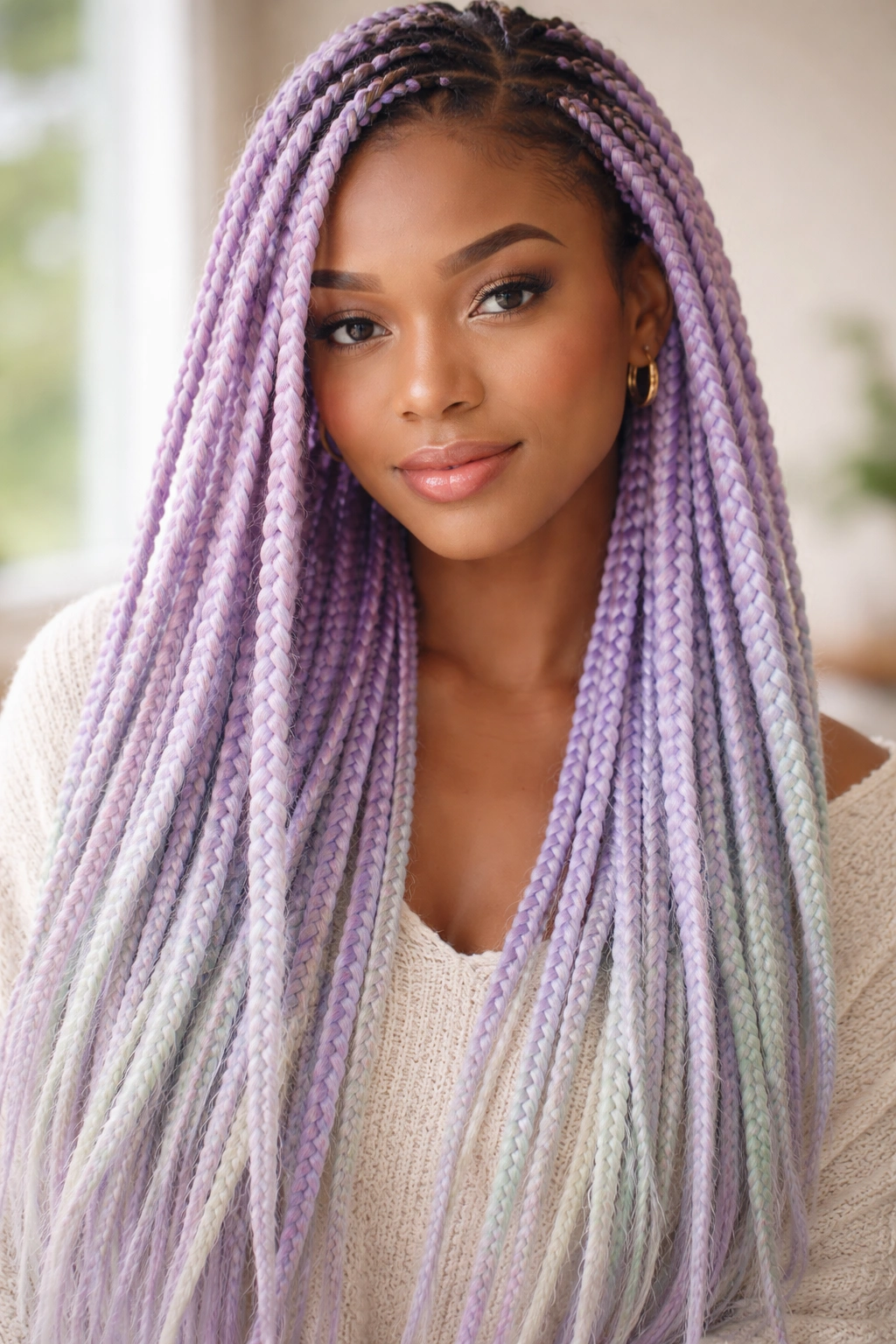
Why do pastel rainbow box braids look softer than neon even when there are more colors? Because the colors sit closer together on the brightness scale. Lavender, lilac, mint, baby blue, and silver can all live in the same braid without turning the whole head into noise.
What to ask for
- Lavender or lilac as the main shade keeps the style from looking washed out.
- Silver works best as the bridge color between the cooler and warmer pastels.
- Limit the palette to three or four shades so the fade stays readable.
- Use longer braids or waist-length installs if you want the subtle color blend to show from a distance.
This version is prettier when it is a little airy. Heavy, dark accents can crush the softness, so keep the roots light and the transitions gentle. The best pastel sets look almost misty when the braids move.
I also like this one for people who want rainbow energy without the neon. It still feels playful, but it does not demand a loud outfit to match it. You can wear a plain sweatshirt and still look like you thought about your hair.
7. Full Spectrum Rainbow Box Braids
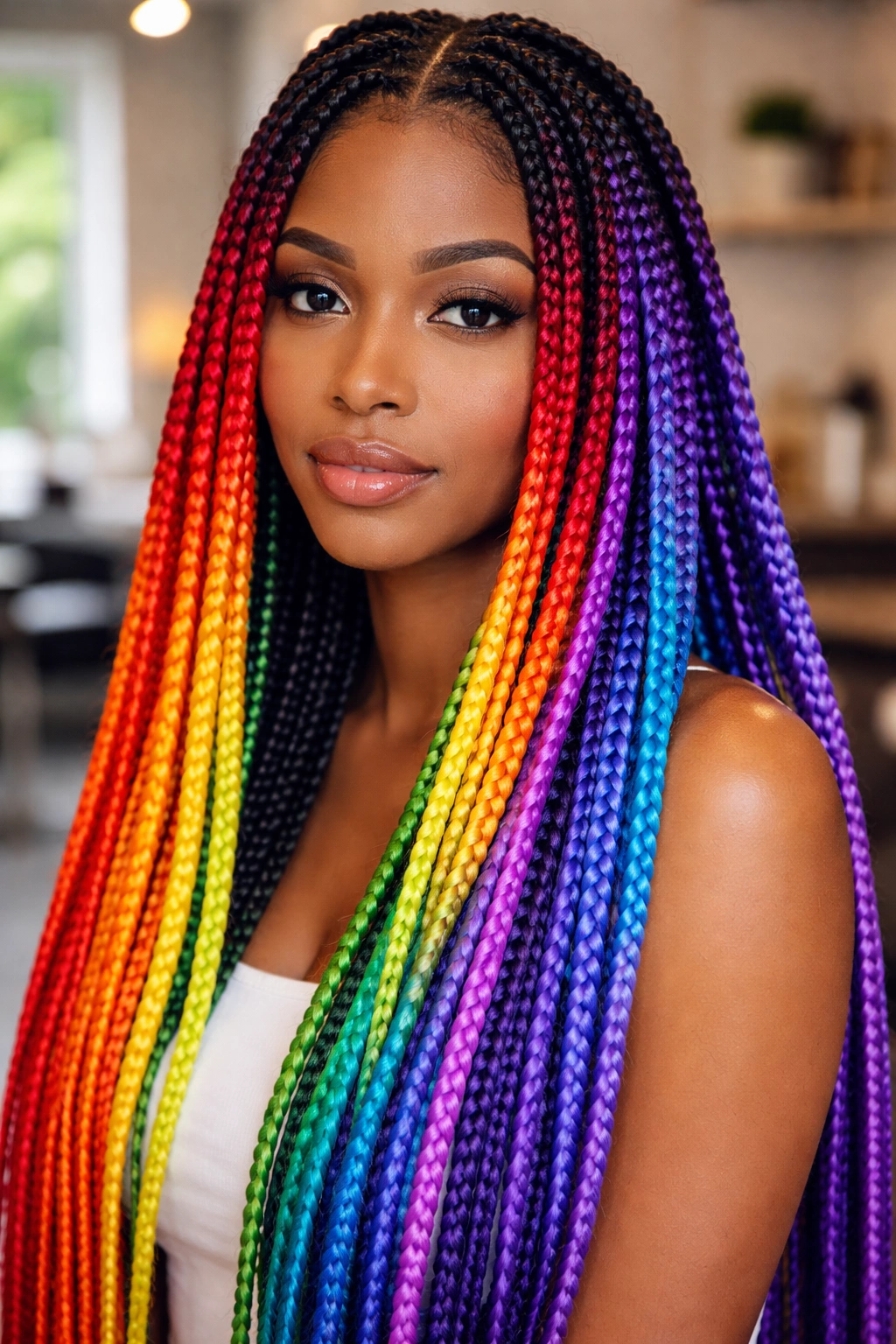
Unlike a fade, full spectrum braids put the color change on display braid by braid. One braid can be red, the next orange, then yellow, green, blue, purple, and back again. It is the clearest way to wear rainbow box braids, and it works best when the install has enough length for each color to register on its own.
The trick is keeping the arrangement from looking random. Medium or jumbo braids help because each shade has a little breathing room. Tiny braids with seven colors can start to blur together, and then the whole point gets muddy. A stronger pattern helps: repeat the same color order across each row, or alternate warm and cool shades from one side to the other.
This look can go loud fast, so I like it best when the braids themselves stay simple. Clean parts. Smooth roots. No extra clutter. The color is already doing the talking.
If you want your braids to look like a moving block of color, this is the one. It is not subtle. That is the charm.
8. Peekaboo Rainbow Underlayer Braids
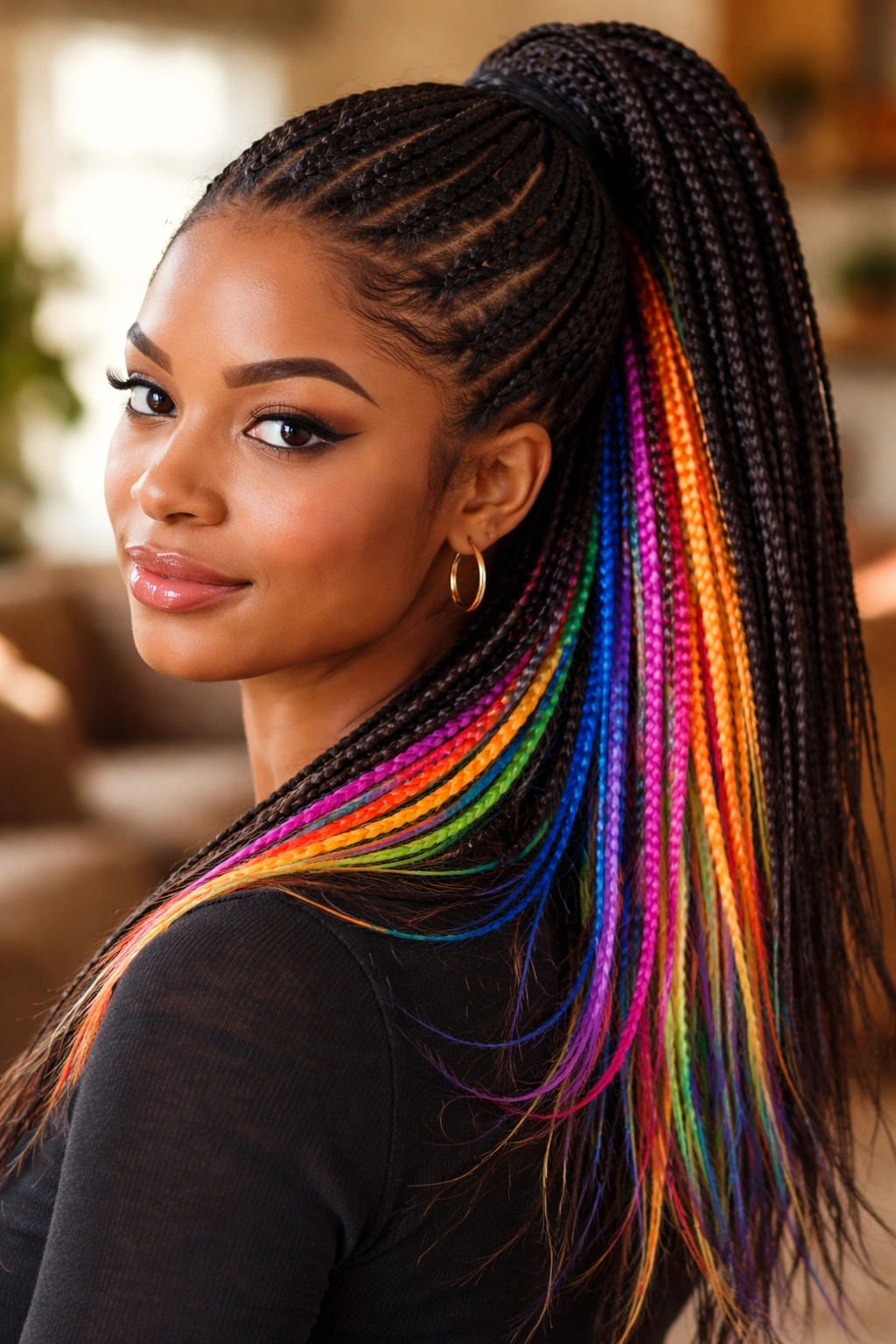
Your braids stay neutral until you tie them up. That is the whole appeal. A peekaboo rainbow underlayer keeps the top visible layer in black, brown, or dark blonde, while the lower layer hides bright color that only shows when you move, flip, or pull the hair back.
When hidden color makes sense
- If you want a calmer front view and a playful back view.
- If you wear half-up styles often, because the reveal happens naturally.
- If you like changing the look without redoing the install, since a bun can show a lot more color than loose braids.
- If you need the braids to read neat from a distance, this approach keeps the surface clean.
The best version has a clear panel of color underneath, not a few random streaks. Random streaks look accidental. A hidden block looks intentional. A braider can do that with sectioning, and the difference shows the minute you twist the hair up.
I think this is one of the smartest rainbow options. You get the fun without giving up the part that makes box braids easy to live with.
9. Split-Dye Half-and-Half Rainbow Braids
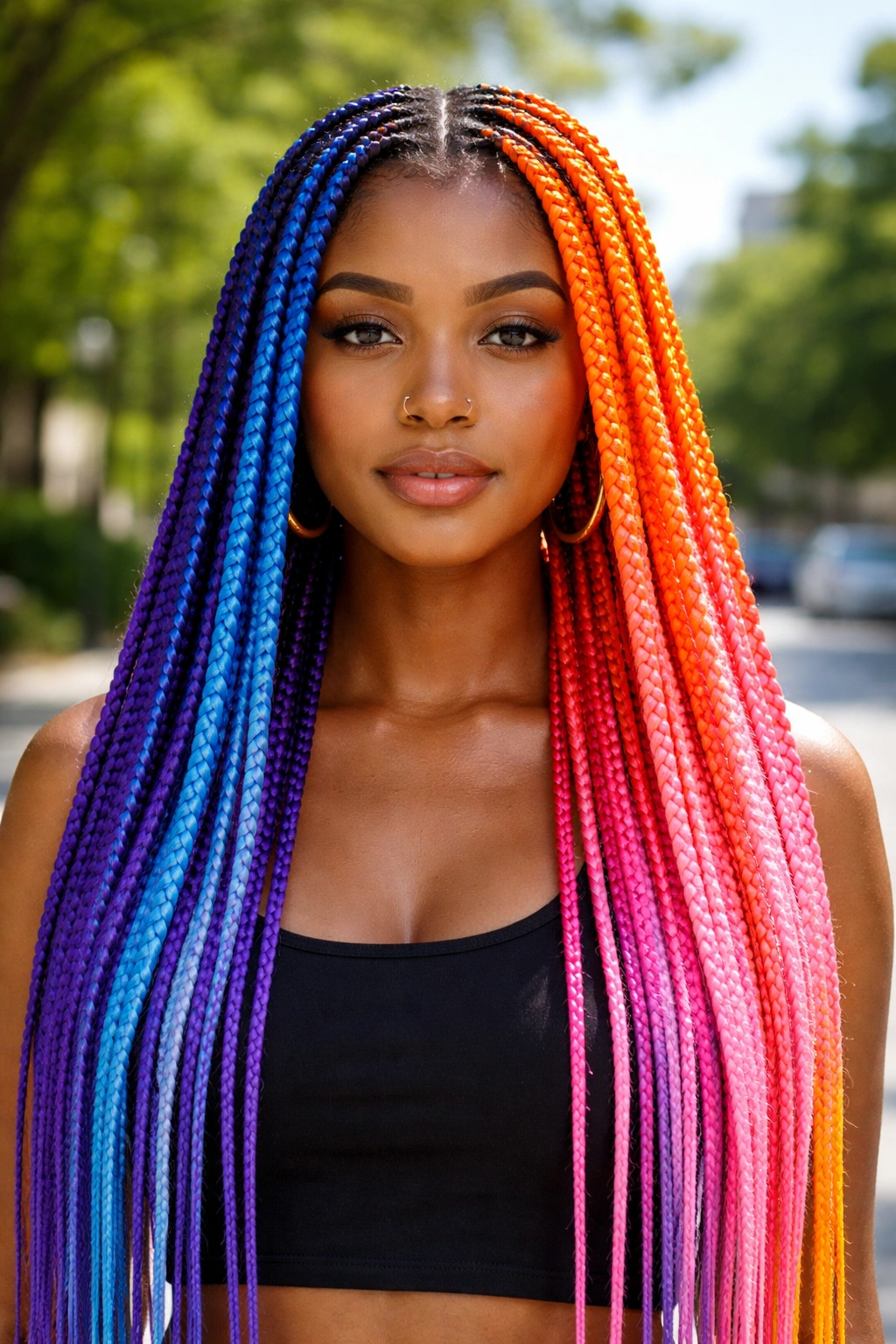
If symmetry makes you happy, this one is addictive. One side of the head can run blue to purple while the other side goes orange to pink, or one half can stay dark while the other half carries a full rainbow. The center part becomes part of the design, which is why the sectioning has to be clean.
A split-dye braid set looks strongest when both sides have the same braid size and length. Uneven parts make the division feel accidental, and this style should never feel accidental. Keep the brightness level similar on both sides too. A neon half next to a dusty pastel half can look like two different heads fighting each other.
I like this style on shoulder-length and longer braids because the color split needs room. On shorter cuts, the effect can feel chopped up. With more length, the divide becomes elegant in a bold, graphic way.
A lot of people think split color is only for dramatic personalities. Not true. It is for people who know what they want.
10. Emerald-to-Teal Jewel Tone Braids
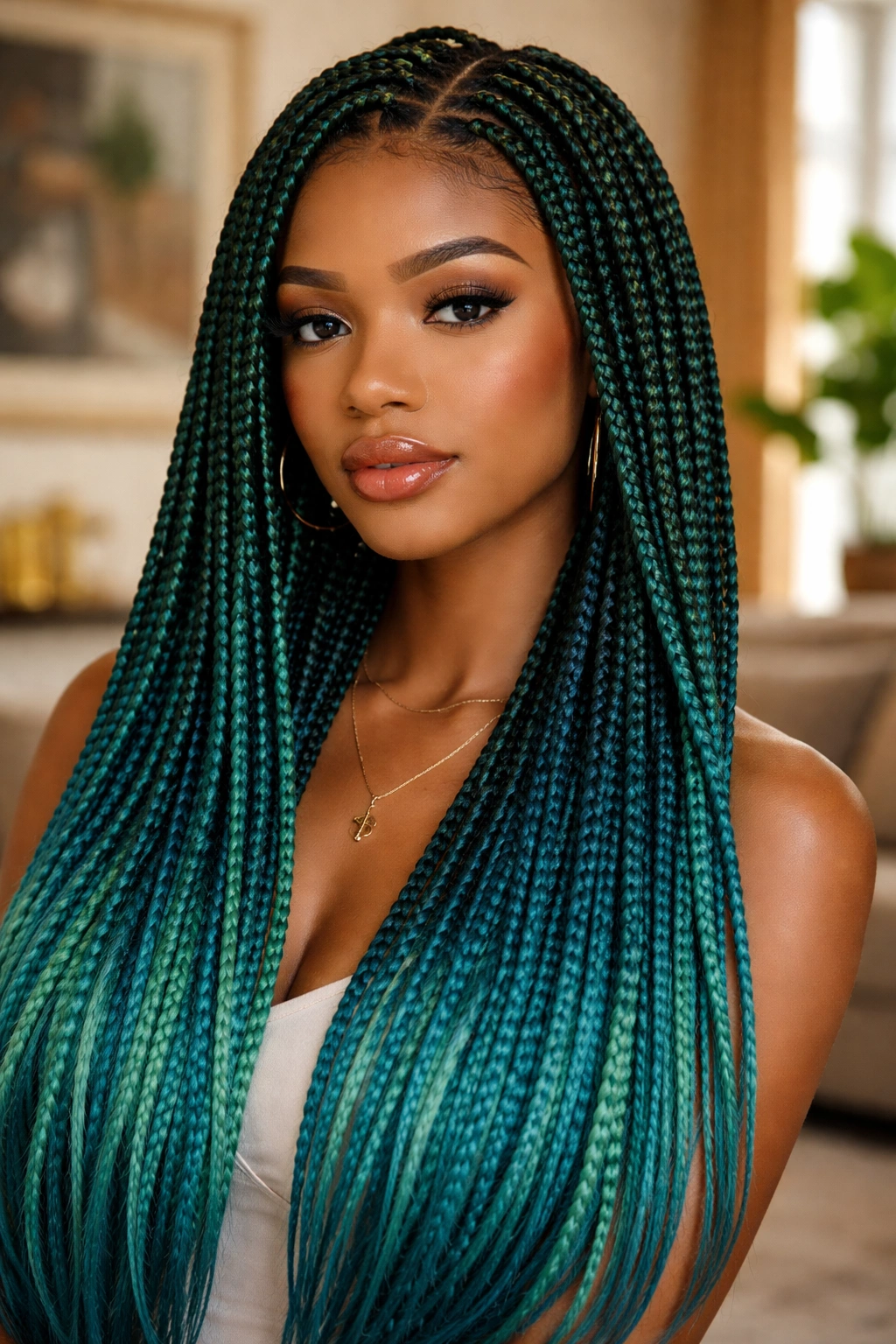
Jewel tones usually stay interesting longer than candy colors, and emerald-to-teal braids prove the point. Deep green near the roots moving into blue-green ends gives the hair a rich, cool finish that feels polished without getting stiff.
The palette works especially well with gold accessories. A few cuffs, a few rings, maybe one or two shells if you like that look — that is enough. Too much metal starts competing with the color. The braids themselves should stay the main event.
Quick notes that help this color set work
- Choose a darker emerald if you want depth; the teal at the ends will still read clearly.
- Keep the base rows tight and even so the green does not break into patchy strips.
- Medium-to-long braids show the shift best, especially when the ends brush the shoulders.
- A few black braids mixed in can make the green look richer without dulling it.
This is a good option when you want color that feels cool and grown-up without slipping into plain brown. That balance is harder to get than people think.
11. Cotton Candy Ombré Box Braids

Want the rainbow without the hard edge? Cotton candy ombré box braids give you pink, mint, lilac, and pale peach in a way that stays airy instead of loud. The colors are soft, but they are not weak. There is a difference there too.
What to ask for at the chair
- Pick one dominant shade, usually lilac or pink, so the set has a lead color.
- Blend in mint or pale blue in smaller sections to keep the hair from turning monochrome.
- Keep the braid size medium or small-medium; jumbo braids can make pastels look blocky.
- Use shoulder-length or longer braids if you want the color blend to show instead of disappear.
Pastels can get muddy if too many dark pieces slip into the mix, so the root color should stay clean and light. I like this style best when the install is neat and the finish is smooth. Rough parts make soft colors look accidental, and nobody wants that.
This is one of those looks that feels sweet without being childish. Done well, it looks more like spun sugar than costume hair.
12. Rainbow-Tipped Jumbo Box Braids
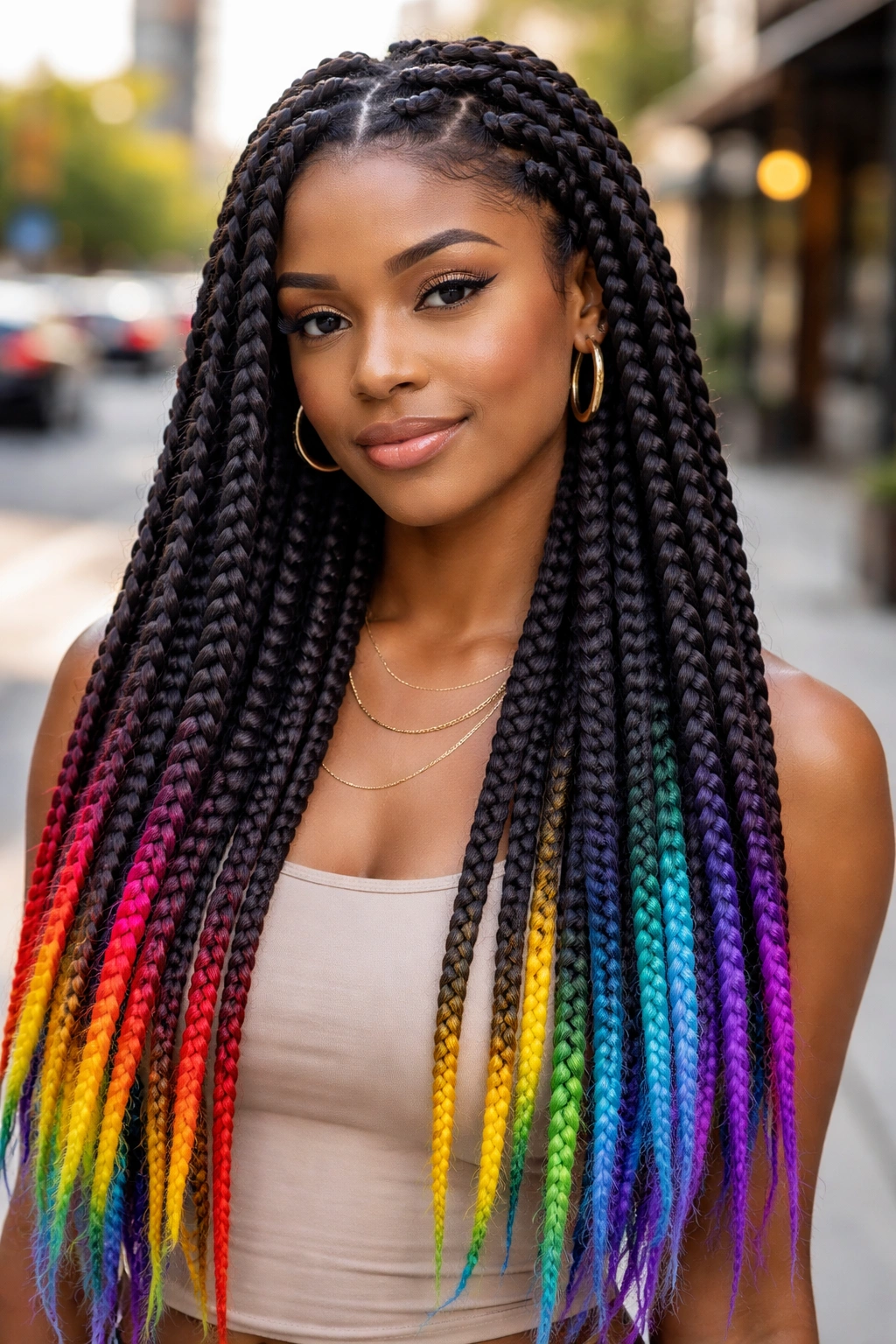
You do not need rainbow all the way up the braid. A lot of people stop too soon with this idea, but rainbow tips on jumbo box braids can be sharper than a full head of color because the contrast stays concentrated where it matters.
The style is simple: keep the root and most of the braid in a neutral shade, then switch to bright color in the last 3 to 6 inches. The bigger the braid, the better this works, because jumbo braids leave enough room for the eye to catch the change without hunting for it. It is a strong choice if you want less colored hair overall, which also means less weight on the head.
I like rainbow tips when the colors are assigned by zone. Red on a few braids, blue on others, yellow on one side, green on the back. A little structure keeps it from feeling random.
This is also a friendlier grow-out style. The visible color sits at the ends, so the roots do not date the install as fast. That matters more than people admit.
13. Smoke Gray-to-Icy Lilac Braids
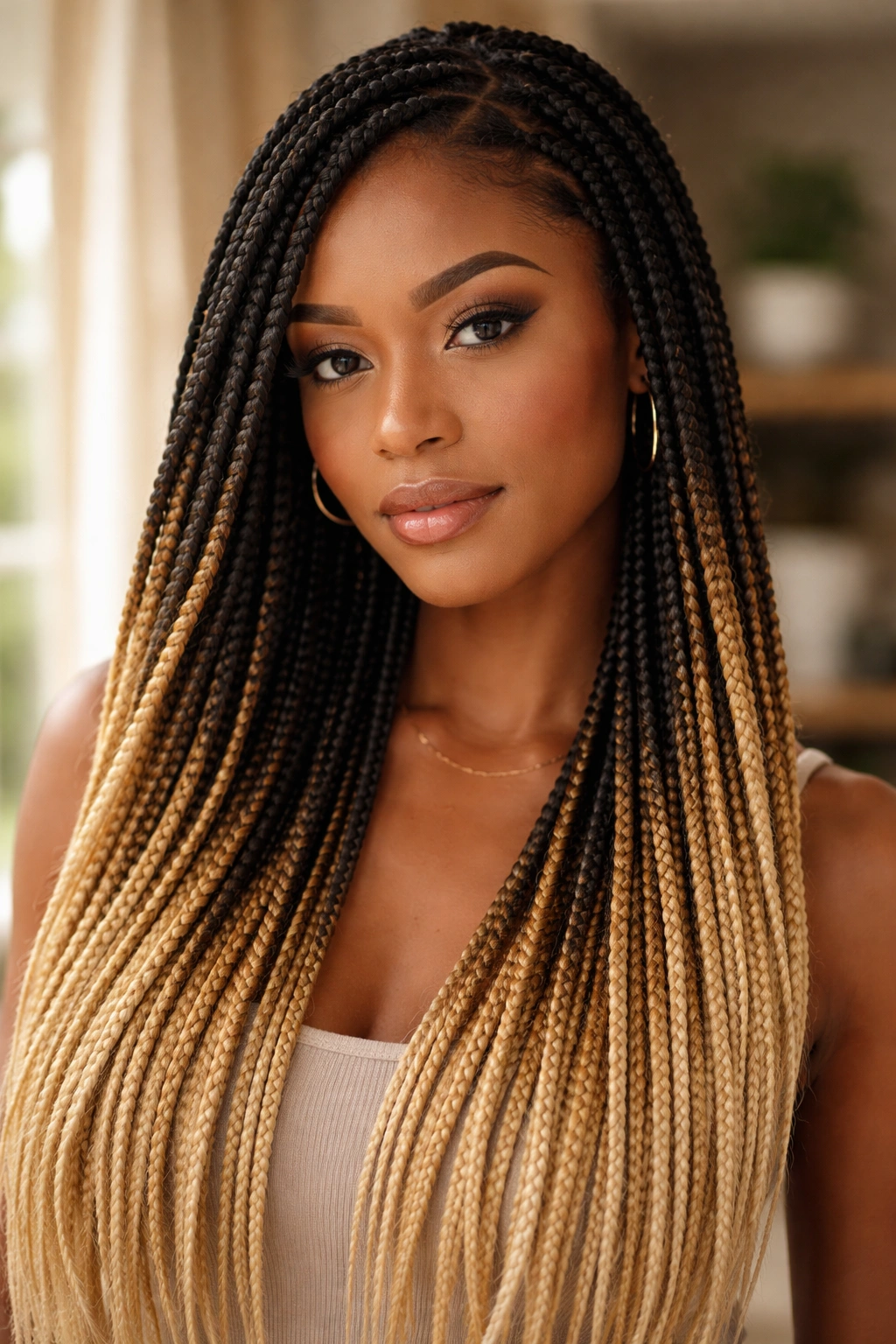
Gray roots and lilac ends sound cool, and they are. Smoke gray gives the braid set a shadowy base, while icy lilac adds color without the punch of neon. It is rainbow-adjacent, not full rainbow, and that restraint is part of the appeal.
This palette works especially well in straight-down styles because the fade is easy to read. A side part adds a little depth, but the color does enough work on its own. If you wear matte clothing — charcoal, black, cream, washed denim — the lilac feels crisp instead of sugary.
The main caution is contrast. If the gray is too light and the lilac too pale, the whole look can flatten out. You want a real shift, even if it is a soft one. Ask for a gray that still has smoke in it, not silver that has gone chalky.
I keep coming back to this color set because it feels calm but not dull. That is a hard line to walk, and this one walks it well.
14. Red, Gold, and Copper Braids
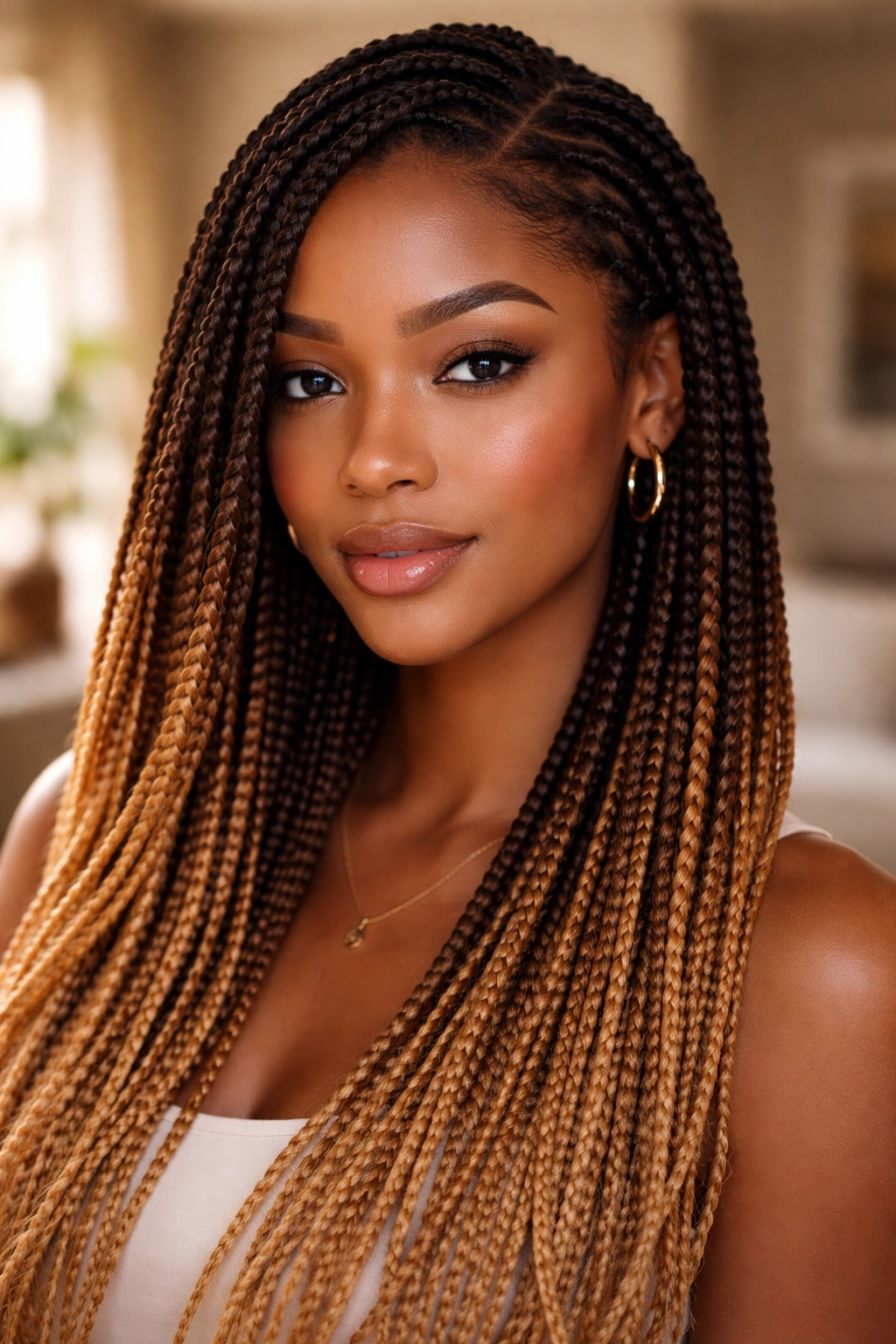
Warm, bright, and a little fiery. Red, gold, and copper braids sit between ombré and rainbow territory, which makes them easier to wear than a full spectrum set but more alive than a plain two-tone fade. The tones share enough warmth to blend, yet each one still reads on its own.
How to keep it from looking flat
- Let copper sit near the face if you want the color to feel softer.
- Use gold in narrower sections so it flashes instead of taking over.
- Keep red deeper through the middle lengths for the richest contrast.
- Add cuffs or rings only after the braid pattern is set; too much metal can crowd the color.
This palette loves sunlight. It also looks good under warm indoor lighting, which is handy because not every color does. On darker skin, the reds and golds can look almost molten. On lighter bases, the copper can stop the style from feeling harsh.
I think of this one as the braids version of a fire-lit room. Not smoky. Not sweet. Just warm with a little edge.
15. Oil-Slick Rainbow Box Braids With Dark Roots
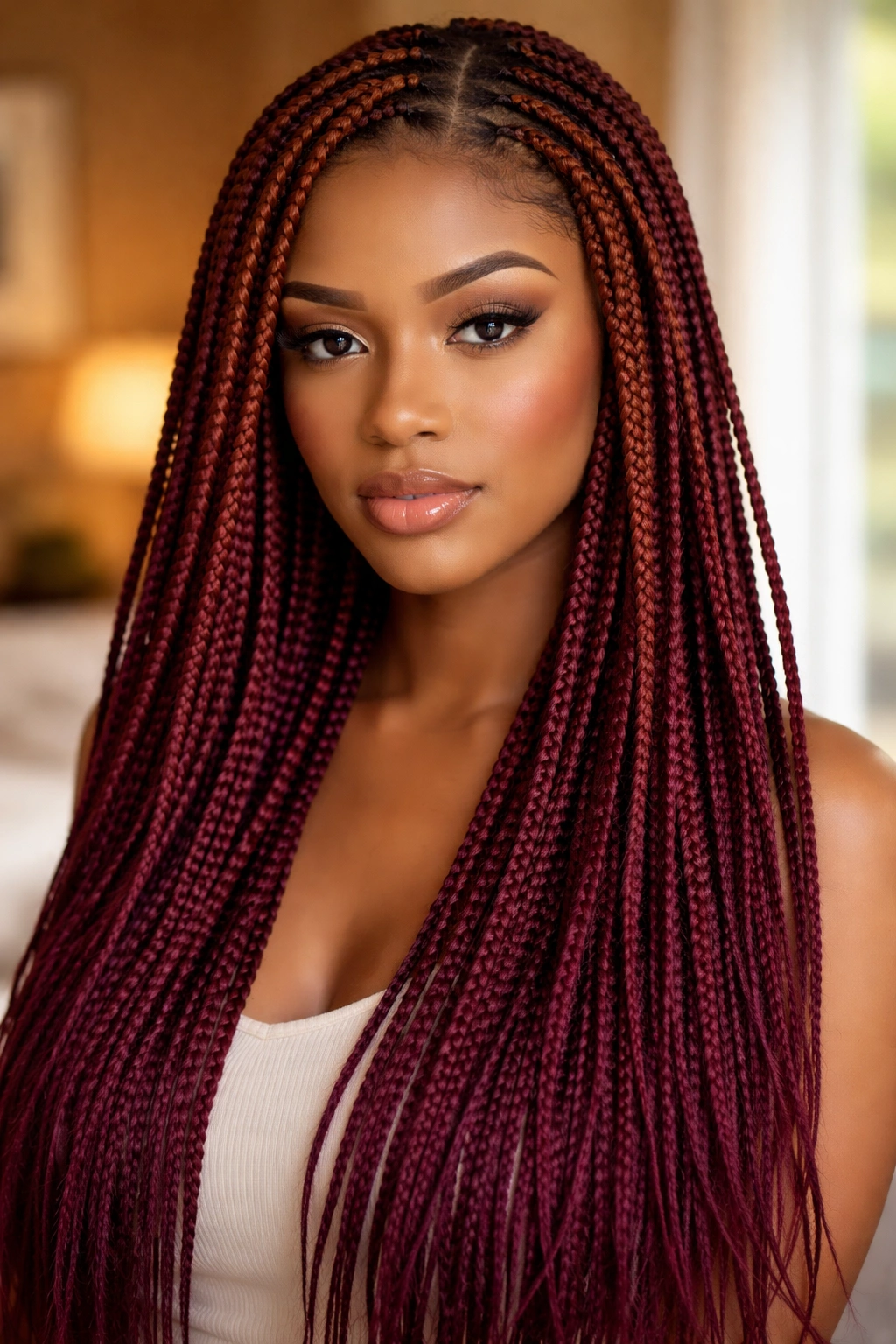
Want rainbow color that still feels grounded? Oil-slick braids keep the roots dark and layer flashes of green, blue, violet, and magenta through the lengths so the color shifts when the hair moves. In low light, the set almost reads black. Then you turn your head and the whole thing changes.
That shift is the real magic. It makes the style feel wearable, even on days when you do not want every braid screaming for attention. The dark base calms the look down, and the cool rainbow tones keep it interesting. This is one of the few rainbow box braid styles that can sit next to a leather jacket, a plain tee, or a dressy coat without looking out of place.
The best version uses a measured hand. Too many bright shades and the oil-slick effect disappears. Too few, and it turns into plain dark braids with a hint of color. Three or four shades is usually enough. Keep the roots dense and the color shifts deeper in the braid, where light can catch them in motion.
If I wanted one rainbow look that felt playful and still held onto a little polish, this would be the one.
