



Short hair does not rule out braided ponytails. Braided ponytails for Black women with short hair work because the braid, not the length, carries the shape. A tapered cut, a grown-out TWA, even hair that barely grazes the nape can be pulled into something neat if the base is built with feed-ins, flat twists, or tiny anchor braids.
The biggest mistake is treating short hair like it has to be forced into a long ponytail before it can look polished. It doesn’t. A cleaner part, a flatter braid base, and the right amount of added hair usually matter more than another inch of length. Too much tension, though, can make the whole style look stiff and sore by day two.
What works on short hair is balance. You want enough grip at the roots, enough length in the tail, and enough softness around the edges so the style still feels like yours. If you like sharp lines, this is a fun category. If you prefer something softer, there are plenty of low ponytail versions that sit close to the neck and move well.
The good styles do not fight the cut. They use it.
1. Feed-In Cornrow Ponytail on Short Natural Hair
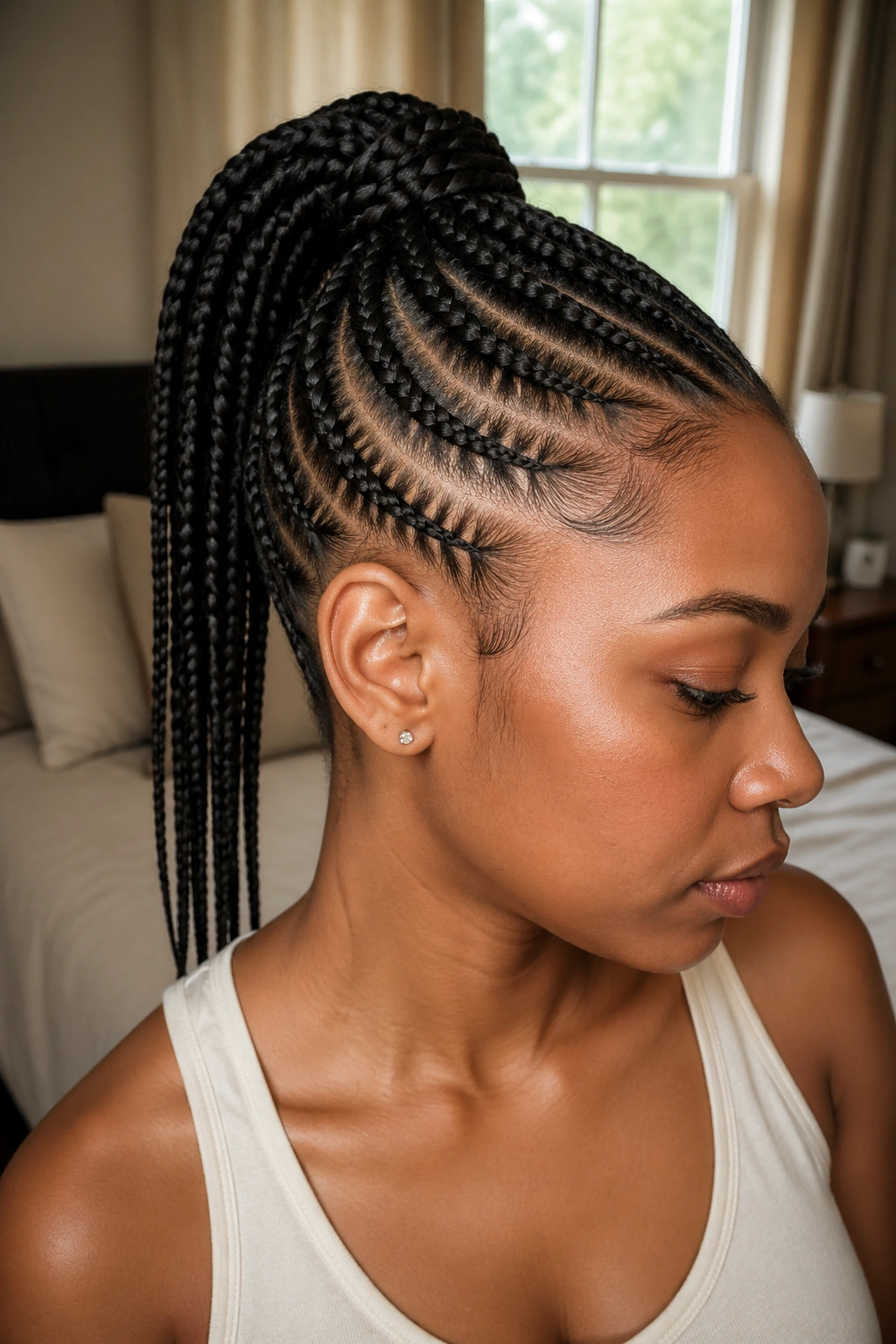
A feed-in cornrow ponytail is one of those styles that makes short hair look intentional in the best way. The braid base sits flat, the ponytail starts with a clean lift at the crown, and the added hair gives you length without making the scalp look crowded.
Why the feed-in base matters
Feed-ins work so well on short hair because the braid starts small and gets thicker as the extension hair is added. That gradual build helps the front of the style stay neat, even if your own hair only gives you a few inches to work with. It also keeps the ponytail from looking bulky right at the root.
What to tell your braider
- Ask for small to medium feed-in cornrows so the parts stay crisp.
- Keep the braids directed toward one ponytail point instead of fanning them out.
- Use braiding hair that matches your texture and sheen level.
- Wrap the ponytail base with a small piece of hair so the elastic disappears.
- If your edges are delicate, ask for lighter tension around the hairline.
Tip: This style looks sharp with a center part, but a slight off-center part can soften the whole face without changing the structure.
2. Sleek Low Braided Ponytail at the Nape
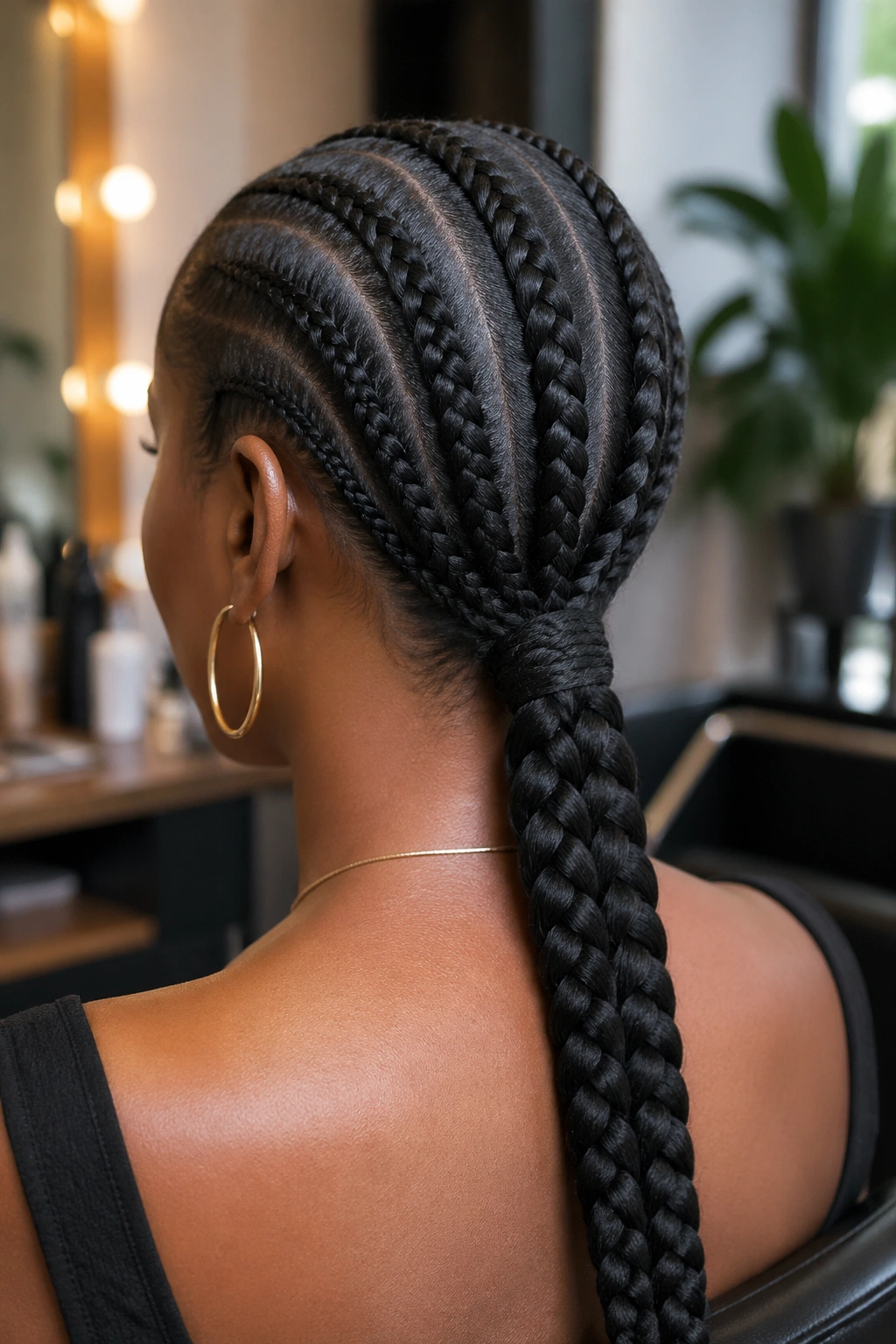
Why does a low braided ponytail work so well on short hair? Because it uses the nape as an anchor. The hair doesn’t have to stretch upward to reach a high ponytail point, which means less strain on the front and less fighting with shrinkage.
The low version also has a calmer feel than a high ponytail. It lies close to the neck, so the braid tail can hang neatly without pulling the whole style upward. That makes it a good pick if your hair is cut close on the sides or if your crown is shorter than the back.
How to wear it
A low ponytail looks clean when the braids travel straight back in 2 to 4 parallel rows. If you want a softer finish, ask for one thick braid down the middle with two smaller braids feeding into it. That gives the base shape without making the back look too stiff.
I like this style with small gold cuffs or a satin ribbon tied around the base. Not because it needs decoration. It doesn’t. The accessory just gives the low placement a little more presence, which helps when the hair is short and the silhouette needs help carrying itself.
3. High Braided Ponytail with a Flat Base
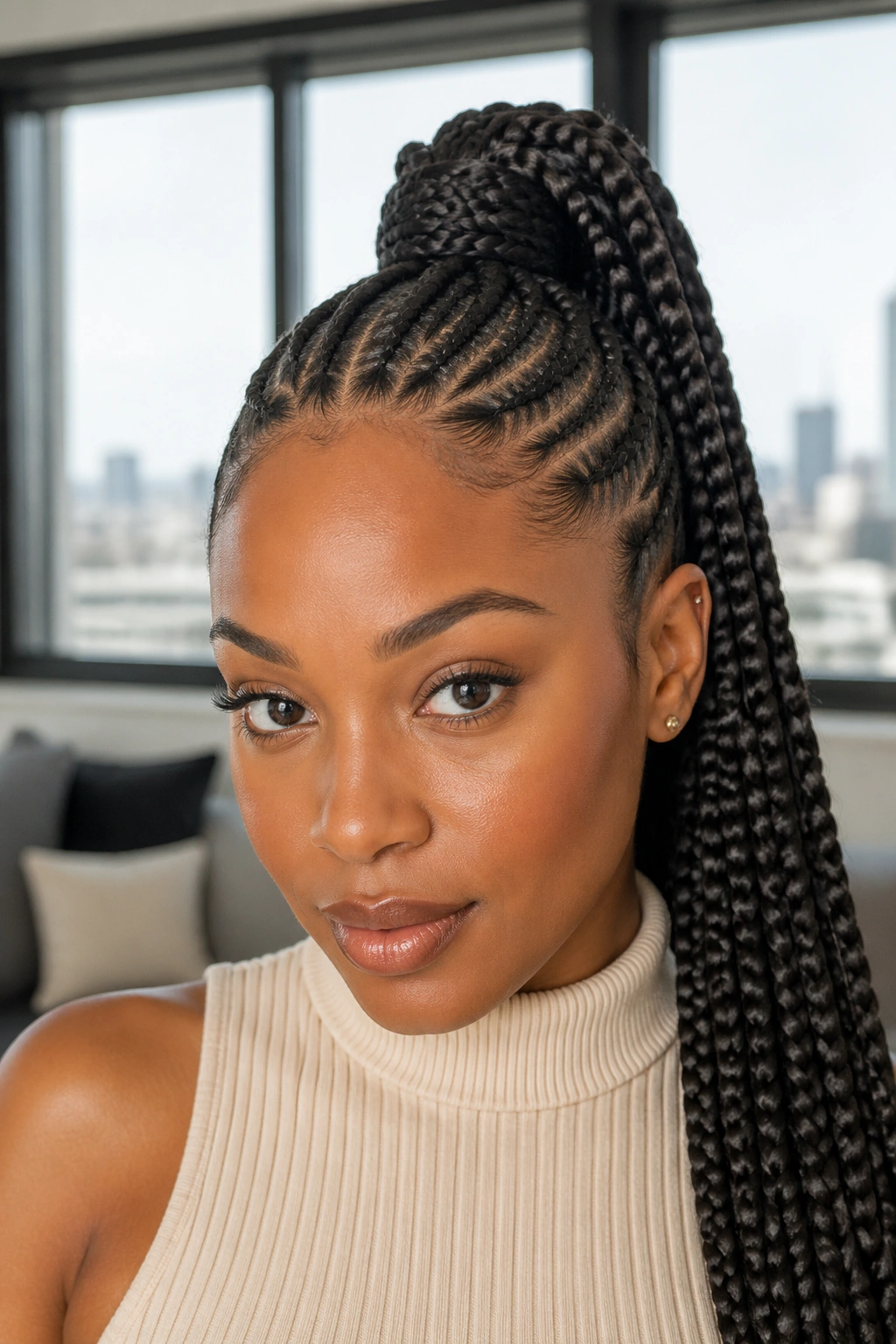
If your hair barely clears the ears, a high braided ponytail can still work. The trick is to keep the base flat and let the height come from the ponytail itself, not from trying to gather too much short hair into one tight knot.
A high version has a different attitude. It lifts the face, shows off the cheekbones, and gives the braid tail more swing. On short hair, that extra lift also helps the style look deliberate instead of like a quick tie-up. The crown should feel smooth, not puffy.
Start with a tight but not painful base. Then build the ponytail using added braiding hair or a pre-braided extension, depending on how much length you want. The base should sit like a clean cap. If you see little bumps all over the crown, the parts were too large or the hair wasn’t smoothed enough before braiding.
This is the one I’d choose for hoop earrings, a sharp lip, and a simple outfit. It does the talking for you.
4. Side-Swept Braided Ponytail
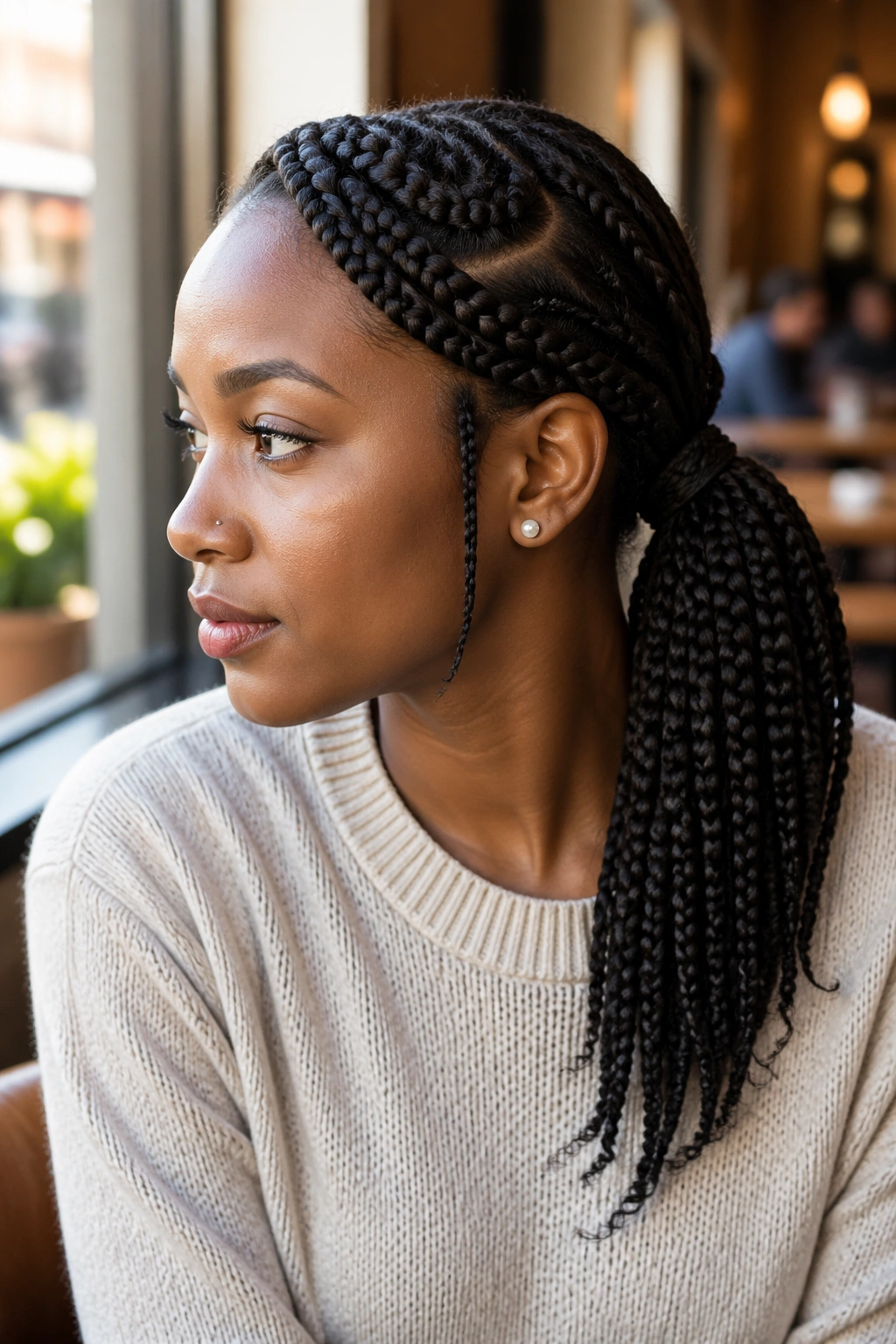
Picture a braid that doesn’t sit politely in the center. It starts from one side, sweeps across the head, and drops into a ponytail with a little attitude. That’s the side-swept version, and it’s especially nice on short hair because it gives the eye a clear direction to follow.
What makes it different
The side sweep softens the face and makes short hair look fuller at the front. Instead of asking the hairline to do all the work, the braid pattern creates movement. That matters when your cut is tight around the edges or when one side grows faster than the other.
A few details that help
- A deep side part looks strongest on short, tapered cuts.
- The braid line should curve gently, not cut the head in a hard diagonal.
- One longer braid feeding into the ponytail is enough.
- Keep the opposite side smooth with mousse or a light styling gel.
- Large earrings work well here because the style opens up one side of the face.
The side-swept ponytail is a good reminder that balance does not have to mean symmetry. Sometimes the most flattering shape is the one that leans a little.
5. Jumbo Single Braid Ponytail
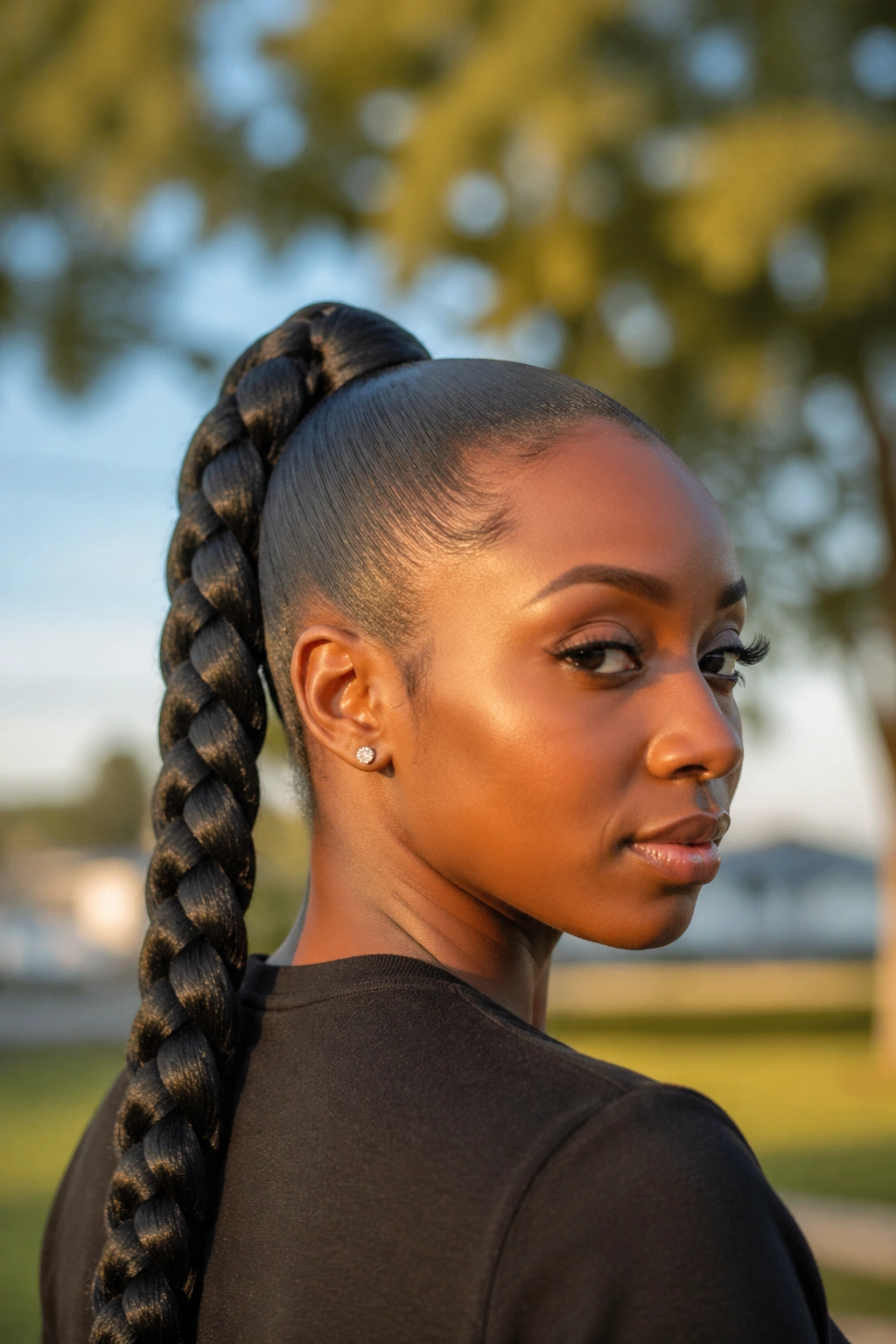
A jumbo braided ponytail is bold by nature, and short hair actually helps it. Fewer braids mean less parting, less time under tension, and a cleaner finish at the root. If you want a style that looks full without requiring dozens of tiny sections, this is the one.
The braid itself becomes the whole point. It’s thick enough to read from across the room, but it still sits neatly if the base is smooth. On short hair, that matters. Tiny flyaways around the front can ruin the effect, so the prep has to be clean and simple.
I like jumbo braids when the rest of the look is pared back. A black tank, a button-down, a simple dress — the braid carries enough shape that you don’t need to pile on extras. And because there’s only one main braid, the style usually feels lighter on the scalp than smaller, tighter styles.
One note: if your hair is very short at the temples, ask for a slightly lower start point so the braid can stay secure without yanking the front too hard.
6. Stitch-Braid Ponytail
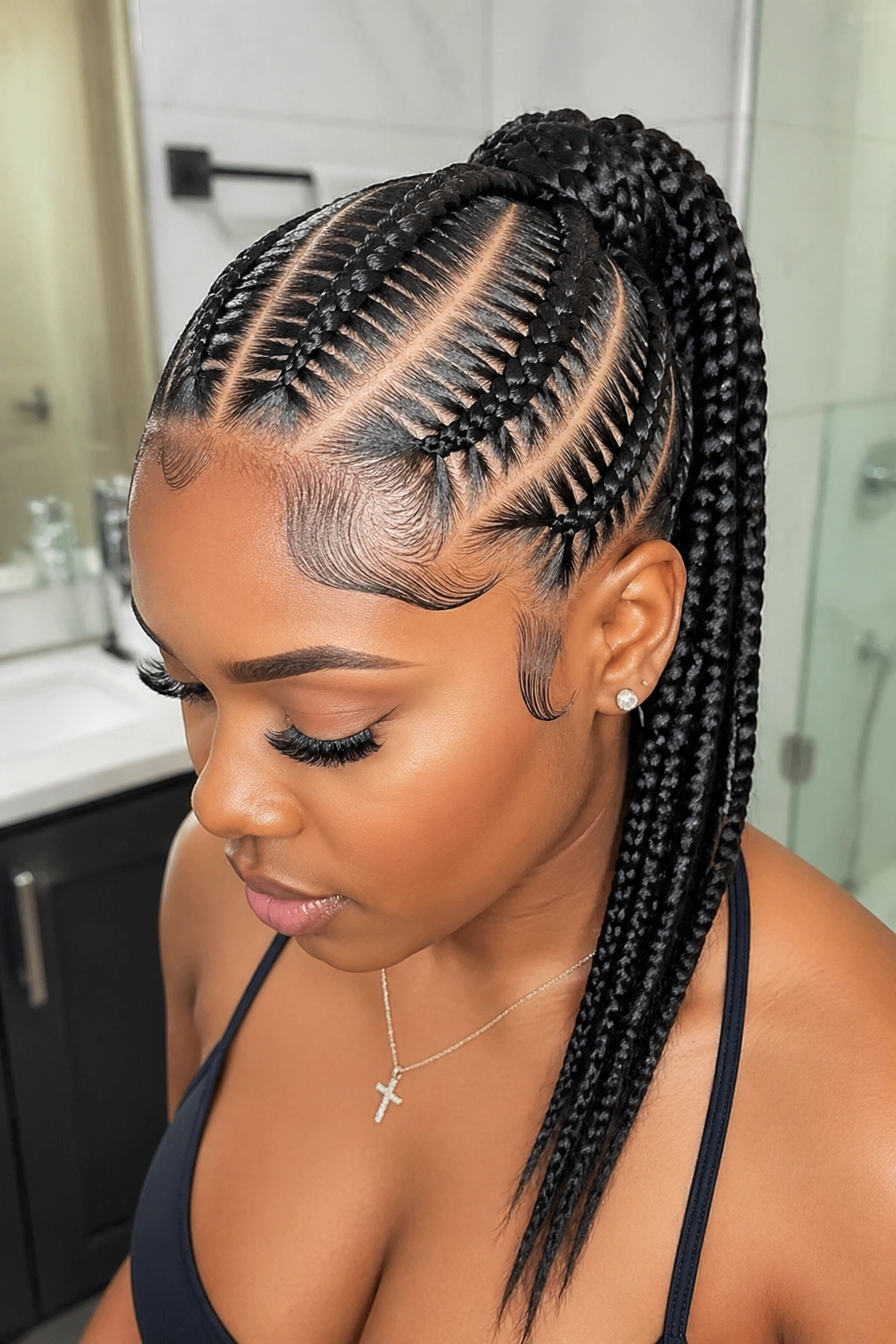
A stitch-braid ponytail has a crisp, almost drawn-on look. The parting between each braid looks like tiny stitched lines, which gives the style a sharper finish than a basic cornrow ponytail. On short hair, that precision makes a big difference.
Unlike softer feed-ins, stitch braids show off the parting pattern on purpose. They are a strong choice when you want the braid base to be part of the design, not just a hidden support system. Short hair works here because the scalp is visible enough for the clean lines to show.
This style suits people who like structure. If your hair is tapered or cut close at the sides, stitch braids can make the crown look more organized and intentional. They also hold accessories well — a braid cuff, a small wrap of hair around the ponytail, or a single metal ring near the base all work here.
The one caution is tension. A sharp look should not come with a sore scalp. Ask for narrow sections, especially around the front hairline.
7. Two Feed-In Braids That Gather Into One Ponytail
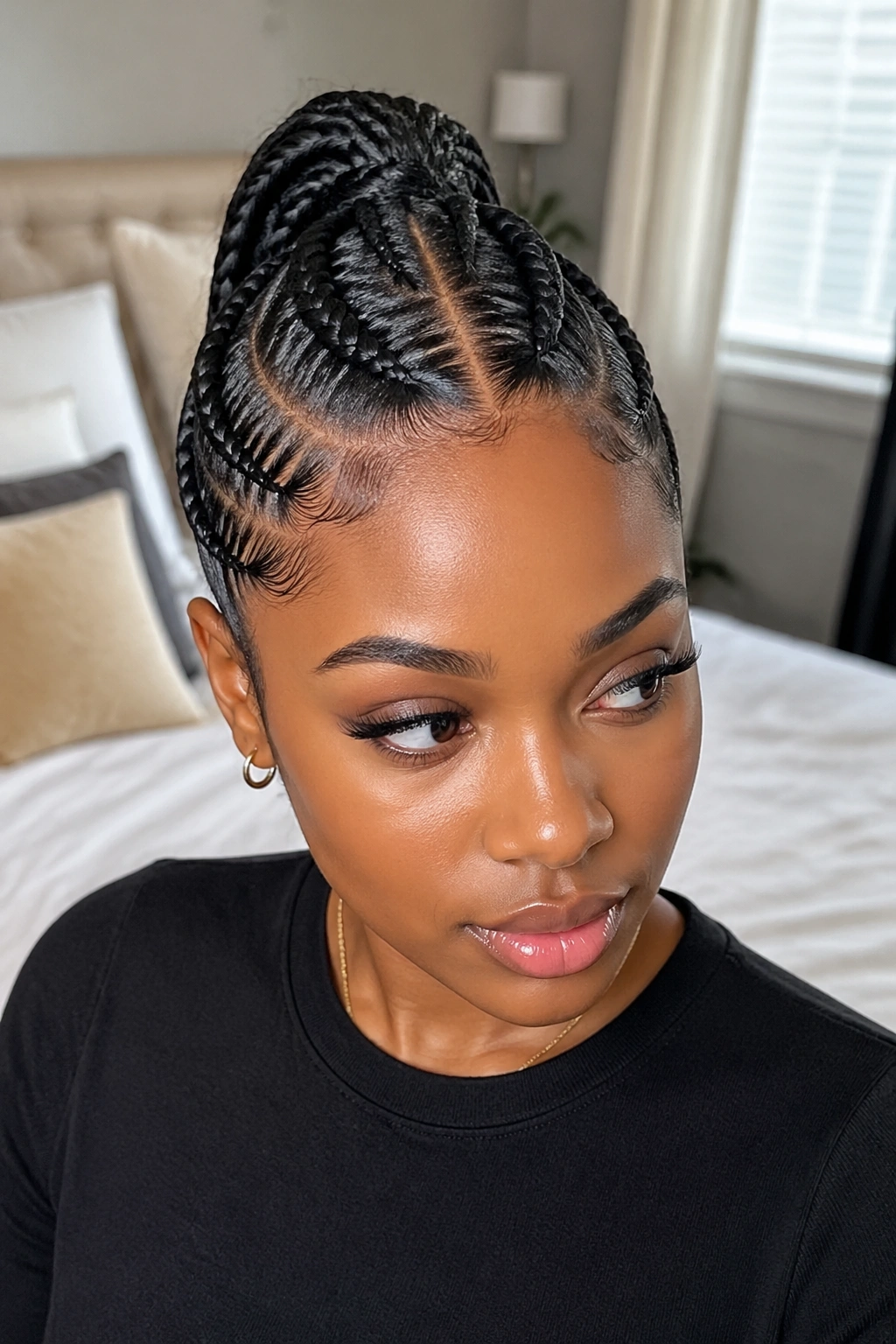
Two braids feeding into one ponytail sounds simple, and that’s part of the appeal. The shape is clean, the styling time is manageable, and short hair gets the support of two anchor braids instead of one larger one.
Why it works on short hair
When the hair is short, spreading the tension across two braids can feel easier than forcing everything into a single center braid. It also gives the ponytail a stronger base, which helps if your hair is soft, fine, or still growing out from a tapered cut.
What to ask for
- A center or near-center part.
- Two feed-in braids that start near the hairline.
- A ponytail tie point right at the crown or just below it.
- Braiding hair added only after the first inch or so of your natural hair is secured.
- A wrapped base so the join looks clean.
The look lands somewhere between sporty and polished. That mix is why I keep coming back to it. It is one of the easiest styles to wear with short hair because it does not demand perfect symmetry, only clean lines.
8. Braided Mohawk Ponytail
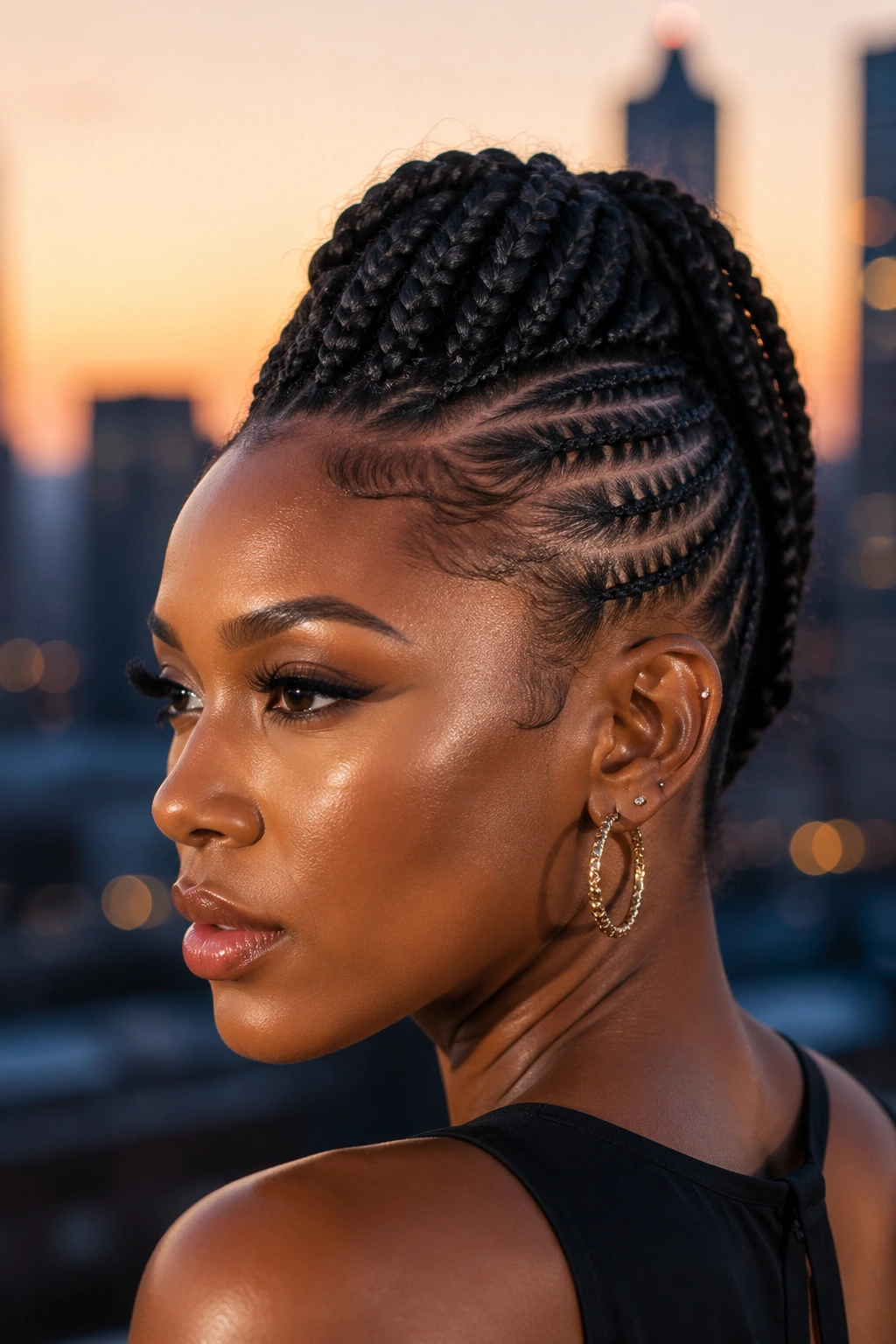
If you want height, this is the one. A braided mohawk ponytail gives you lift down the middle of the head while keeping the sides sleek, and that contrast is what makes short hair look dramatic instead of limited.
The center ridge does most of the visual work. The sides can be braided straight back, slicked flat, or shaped into narrow rows that point toward the middle. Then the ponytail rises from the crown or back-center and falls down the spine of the head. Short hair helps the mohawk shape stay visible, because the sides don’t blur into the top the way longer hair sometimes does.
This style is strongest when the middle section is slightly fuller than the sides. You want the eye to travel upward. If the top is too flat, the mohawk effect disappears and the style starts looking like an ordinary ponytail with extra parts.
It’s a good choice for nights out, but it also works on days when you want your hair to feel a little louder than usual. Not loud for the sake of it. Just enough to make the shape matter.
9. Curved Cornrow Ponytail
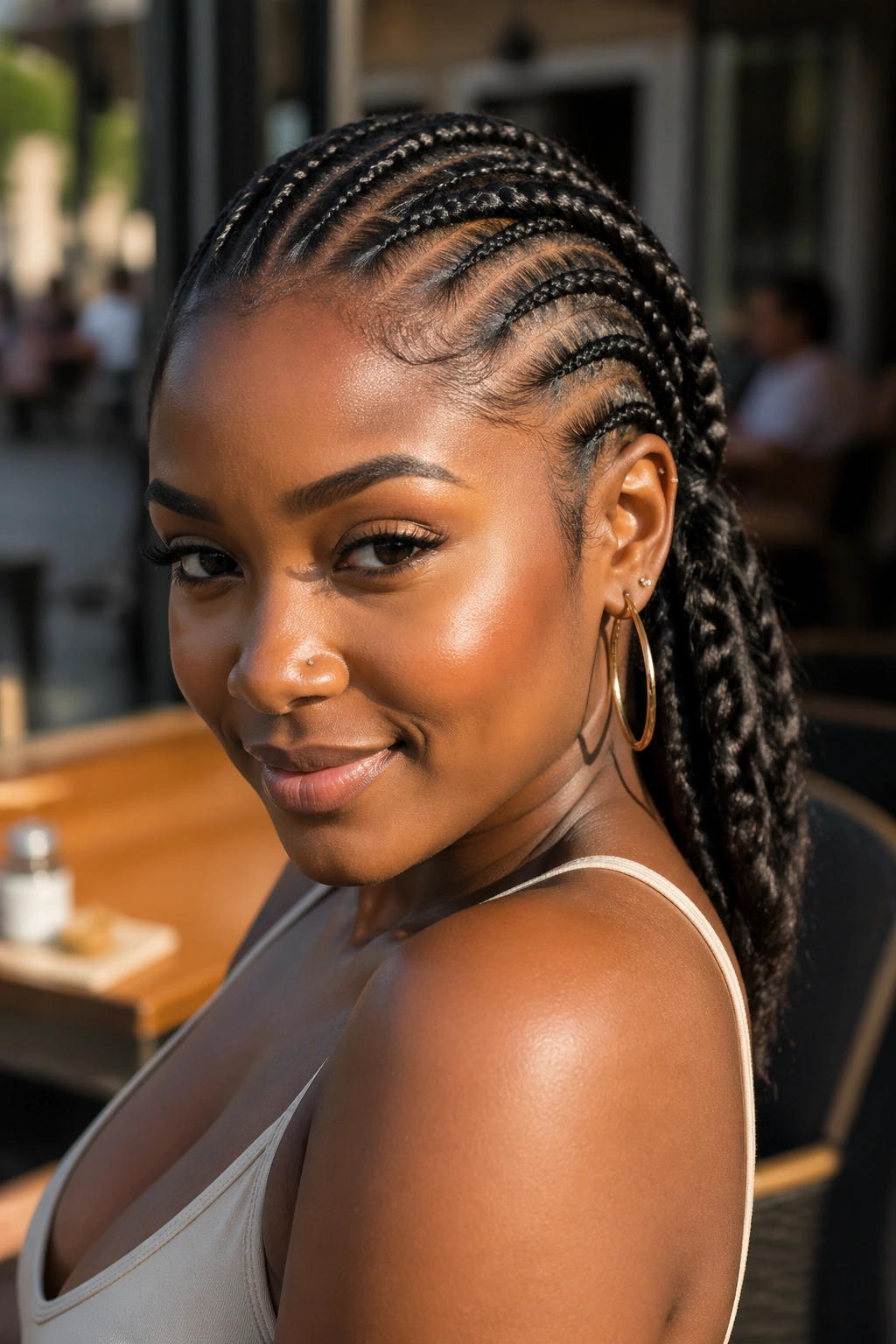
Why settle for straight-back rows when curved ones can follow the shape of your head so nicely? Curved cornrows make a short-hair ponytail look more sculpted, almost like the braid pattern was drawn around the head with a pencil.
The curves soften the style. Straight lines can feel severe on a very short cut, especially if the sides are tight. Curved parts give the braid base some movement before the ponytail even starts. That helps a tapered or closely cropped cut look fuller without stuffing in too much hair.
What the curves do
They also create a cleaner transition into the ponytail point. Instead of everything pulling in one hard direction, the braids arc into the back or side with a little flow. That matters when your hair is short because the line of the braid has to do some of the visual lifting.
If you wear glasses, this style is especially friendly. The curved lines frame the temples without crowding them, which is a small thing until you try on a braider with a heavy straight-back front and realize it feels too busy.
10. Half-Up Braided Ponytail
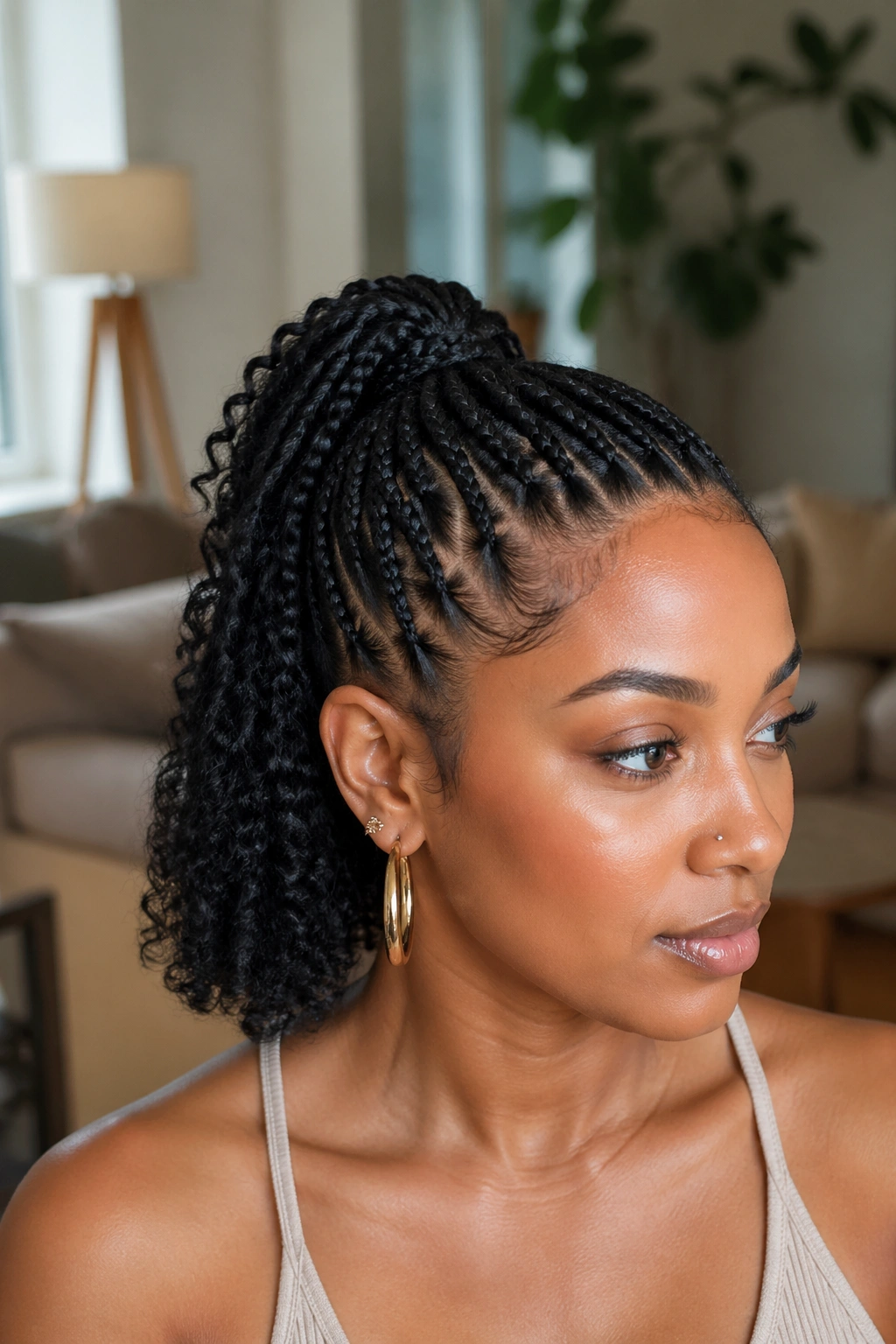
A half-up braided ponytail is a smart move when the top has enough length for a tie-up but the back is still too short to cooperate. You keep the lower hair loose or lightly braided, and the top section gets gathered into a ponytail that adds structure without asking too much.
That makes this style a good middle ground. It works for grown-out short hair, awkward stages between cuts, and natural hair with a lot of shrinkage. The top ponytail gives the look shape near the crown, while the lower section keeps it grounded and soft.
Why I like it
It doesn’t force the whole head into one style. That’s the part people miss. Some short cuts look better with a partial lift than with a fully pulled-back finish, and this is one of those cases. If the nape is too short for a full ponytail, leave it alone and let the top carry the look.
A few small braids in the lifted section help the style stay put. A satin scarf overnight keeps the lifted part from puffing up and turning fuzzy by morning.
11. Triangle-Part Braided Ponytail
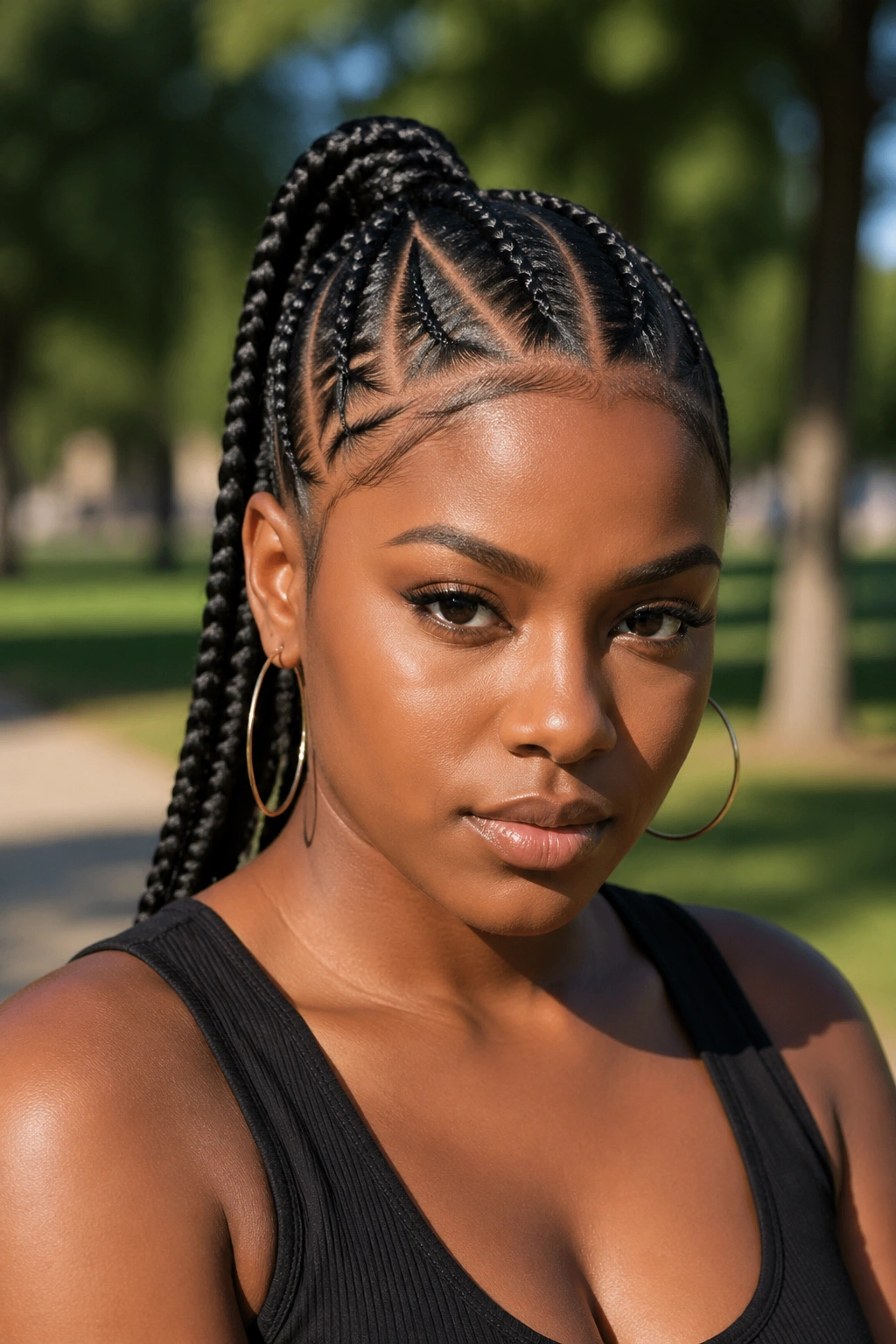
Triangle parts give a braided ponytail a sharper look right away. The shape of the parting changes the whole mood, and on short hair that extra detail matters because the scalp pattern is part of the style, not just a hidden step.
I prefer triangle parts when the ponytail itself is simple. One clean braid or one gathered ponytail is enough if the sections leading into it are interesting. That keeps the style from looking busy while still giving it texture and shape. Short hair benefits from that kind of visual rhythm because too many tiny braids can start to crowd the head.
The best part is that triangle parts catch light differently than square parts. They break up the crown in a softer way, especially if the hair is glossy and tightly smoothed before braiding. If you like a style that looks neat from every angle, this is a strong option.
It’s also a nice choice for people who want something a little different without jumping into an elaborate pattern. The geometry does the work.
12. Braided Ponytail with Curly Ends
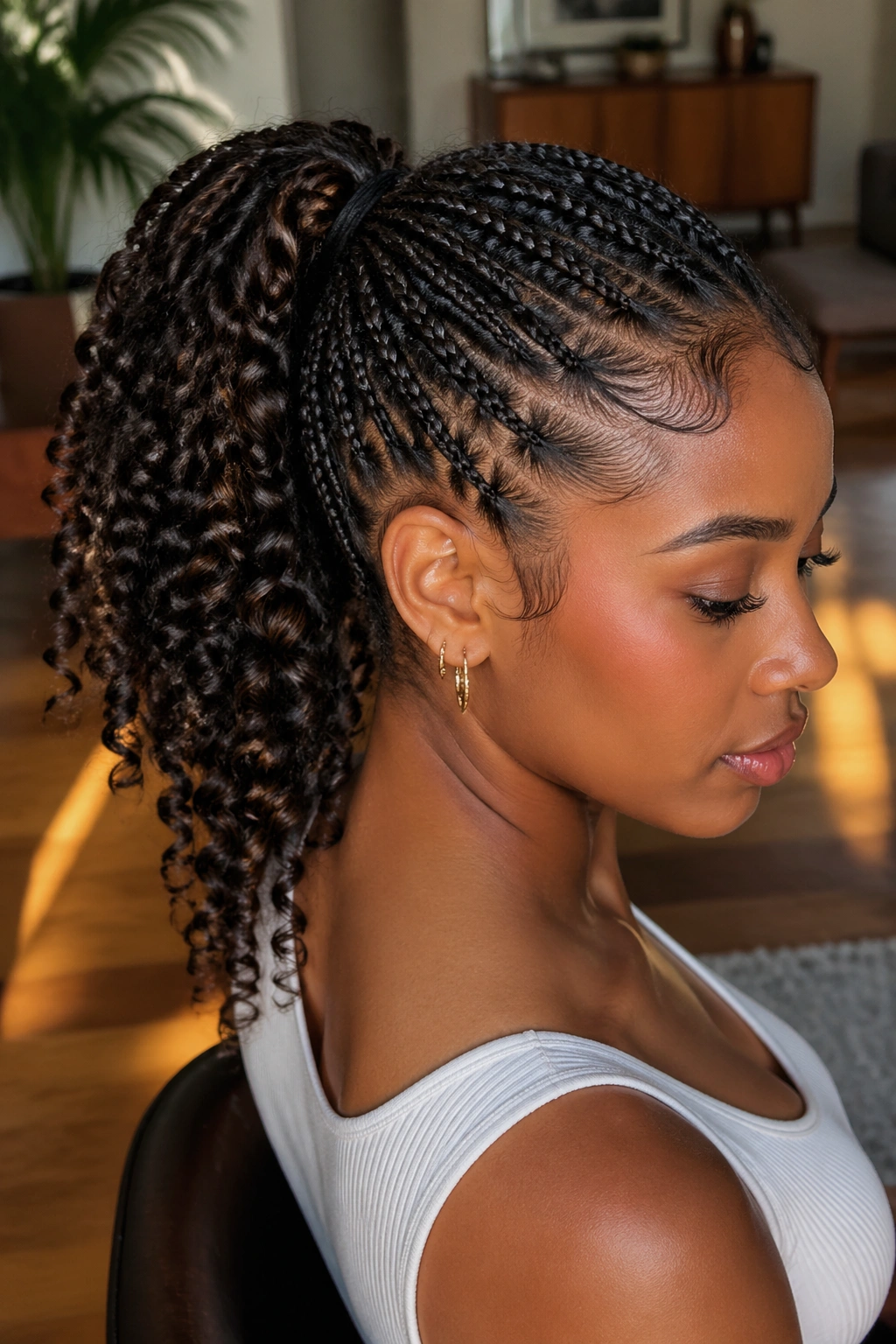
Straight ends aren’t the only way to finish a braid, and on short hair, curly ends can be the detail that makes the whole style feel fuller. A braided ponytail with curled ends gives you movement at the bottom, which helps balance a tighter top section.
The contrast is the point. The braid base keeps the style neat and secure, while the curly finish loosens it up. That mix is useful when the hair above the ponytail is short and close to the head, because the curls keep the eye moving past the crown instead of stopping there.
This style also photographs nicely from the side, though that’s not why I like it. I like it because it hides the fact that the braid may be shorter than a long straight tail would be. A few curled pieces can do more for the silhouette than another foot of extension hair.
If you wear heatless curl rods or dip the ends in hot water, make sure the curl pattern stays soft. Tight ringlets can look stiff against a sleek base.
13. Bubble Braided Ponytail
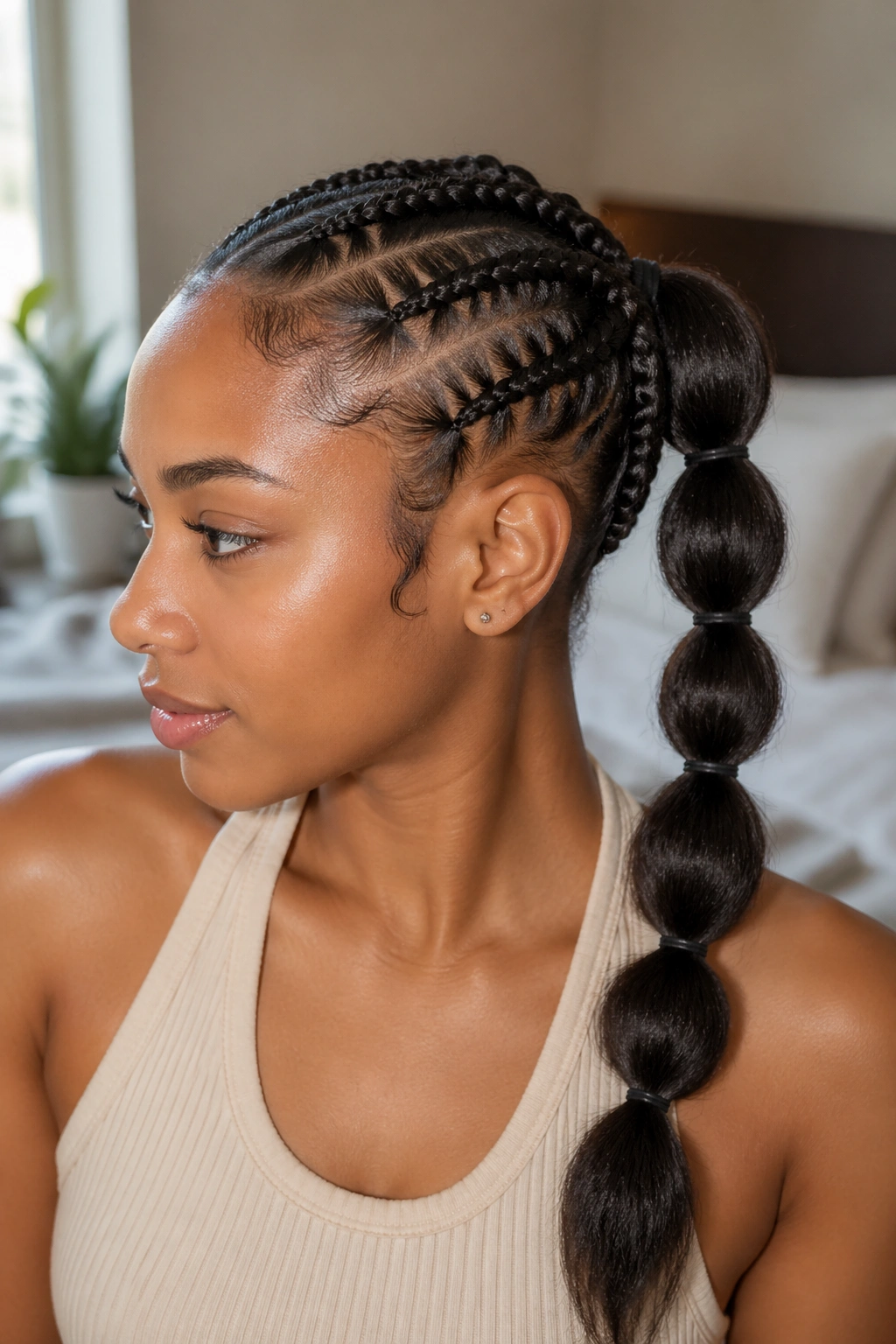
A bubble braided ponytail gives short hair a playful shape without asking for a super-long braid. The bubbles are made with small elastics spaced down the tail, so even a medium-length ponytail can look fuller and more styled than it really is.
What makes the bubbles work
The elastics create sections that puff out between each tie. That means the braid or ponytail underneath doesn’t have to be incredibly long to make an impact. On short hair, that’s a win. You get shape, movement, and a little drama without needing inches you don’t have.
Keep these details in mind
- Use clear elastics or hair-colored bands if you want the focus on the bubble shape.
- Space the ties about 1.5 to 2 inches apart for a fuller effect.
- Tug each section gently after tying to build the bubble.
- Keep the crown smooth, because a messy base makes the bubbles look accidental.
- A few face-framing braids work well with this style.
I like bubble ponytails for days when you want something more fun than a standard braid but still easy to wear. They have energy without asking for precision in every inch of the tail.
14. Rope-Twist Ponytail
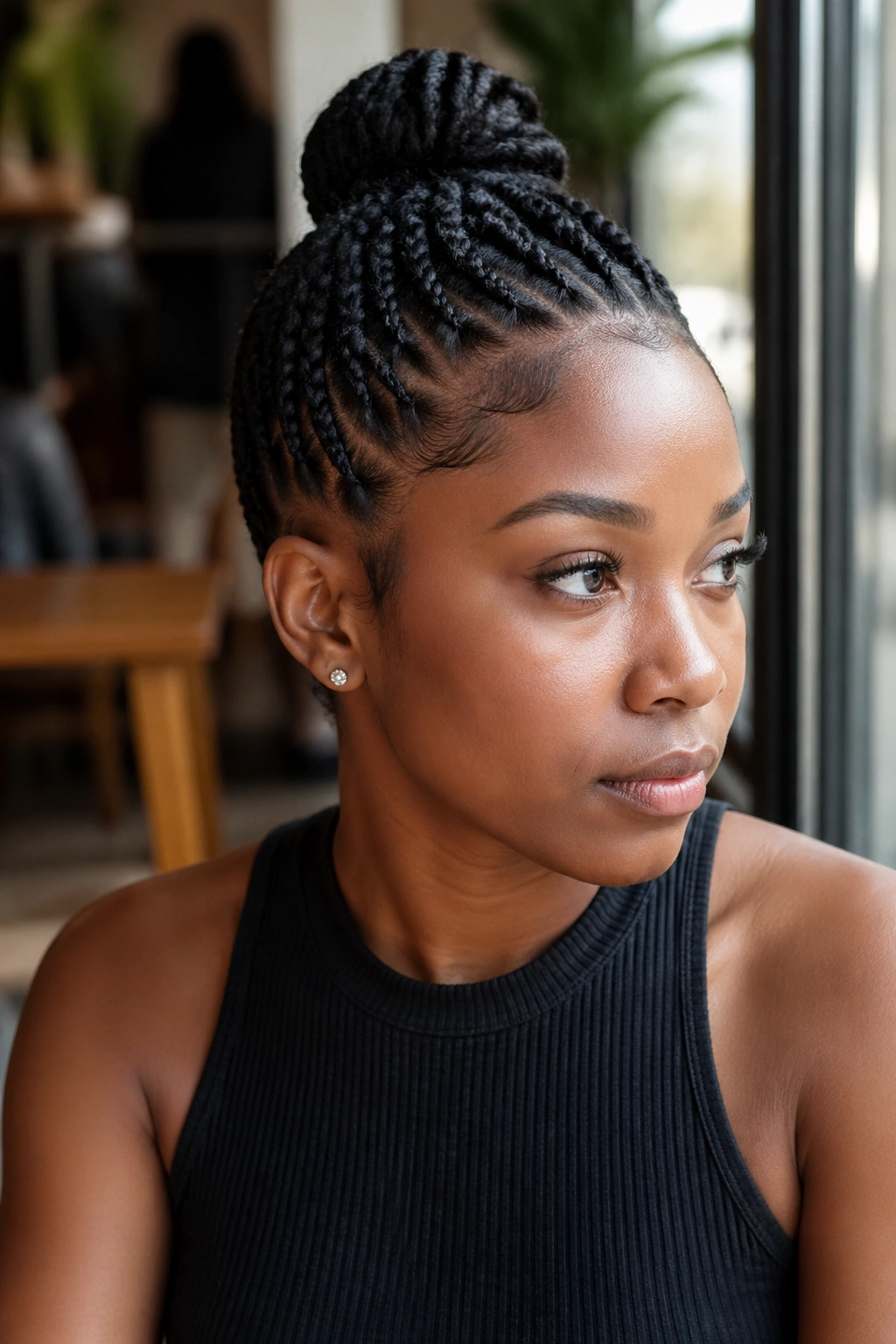
A rope-twist ponytail is a good answer when you want the look of a braid but less hand time. Two strands twist around each other, which can feel easier on short hair than building a full three-strand braid all the way down the tail.
The style has a cleaner, smoother finish than many braids. That makes it useful if your natural hair is dense and the base already has enough texture. The rope twist can sit neatly on top without competing with the hair underneath, and the twist pattern still reads clearly from a distance.
This is one of those styles that works well when you’re tired of overcomplicating things. Short hair does not always need extra design. Sometimes a tidy twist, a polished base, and a simple wrap at the root are enough. The result feels lighter, and that matters if you wear protective styles often.
If you want more shape, twist the ponytail loosely and then secure the end with a small elastic. Too tight, and it starts to look stiff.
15. Faux Loc Ponytail
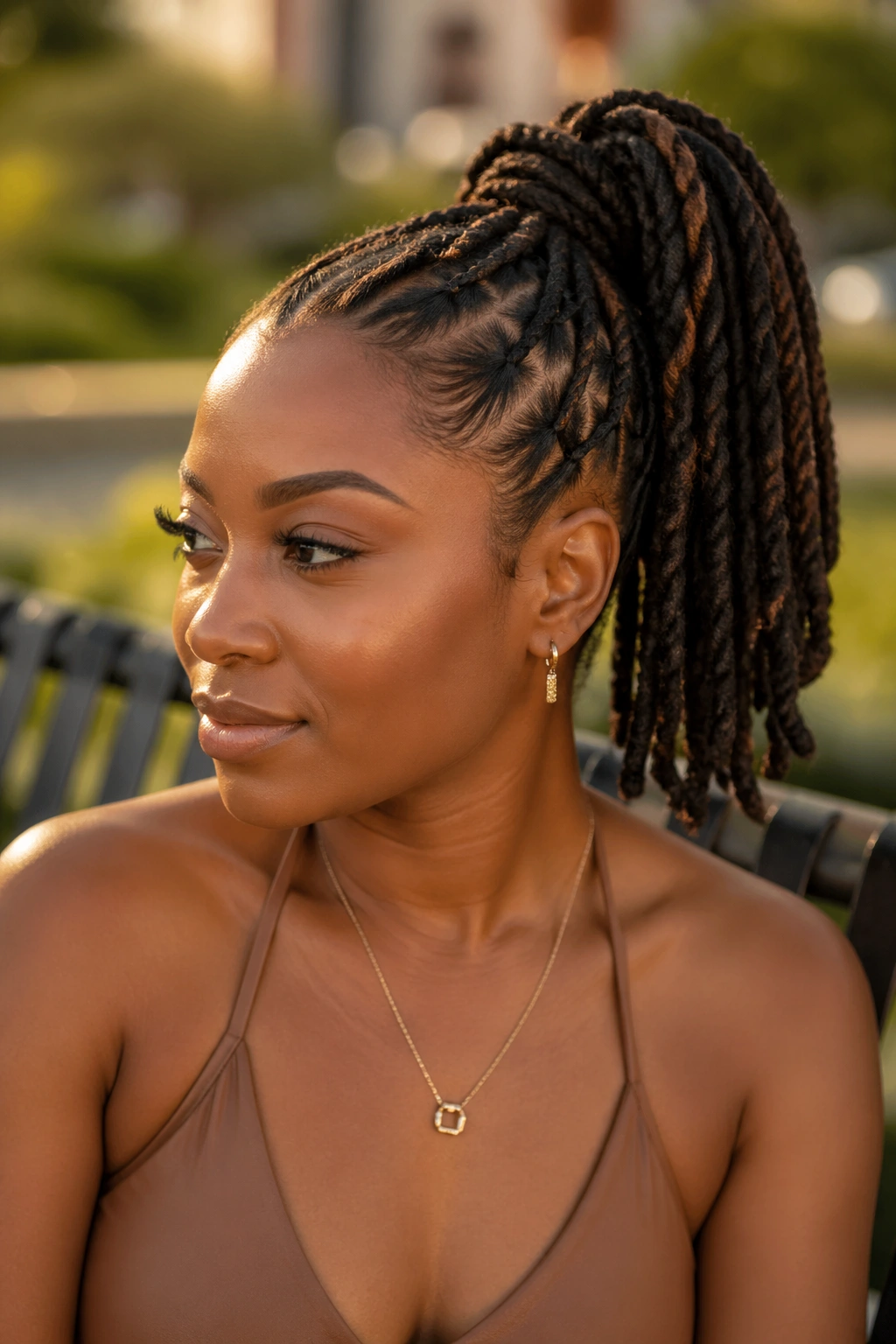
Could a faux loc ponytail be a good fit for short hair? Absolutely, as long as the base is secure and the locs are not too heavy for your scalp. The style adds length fast, and it gives short hair a fuller, thicker shape than a thin braid sometimes can.
Why it suits short cuts
Faux locs work well because they hide the fact that the natural hair is short. The wrapped texture creates body from root to end, and that body helps balance smaller faces or sharp jawlines. If your cut is close at the sides, a loc ponytail can make the whole head look more intentional.
What to watch for
The weight matters. Thick faux locs can tug at the front if the braid base is too small, so don’t pile on too much hair at once. A medium-sized loc set usually sits better on short hair than oversized pieces. If you want the ponytail to swing, keep the locs a little shorter and let the density do the work.
This is also a style that looks better when it isn’t over-accessorized. A wrap at the base or one metal cuff is enough. Too much decoration can fight the texture.
16. Braided Ponytail with Braided Bangs
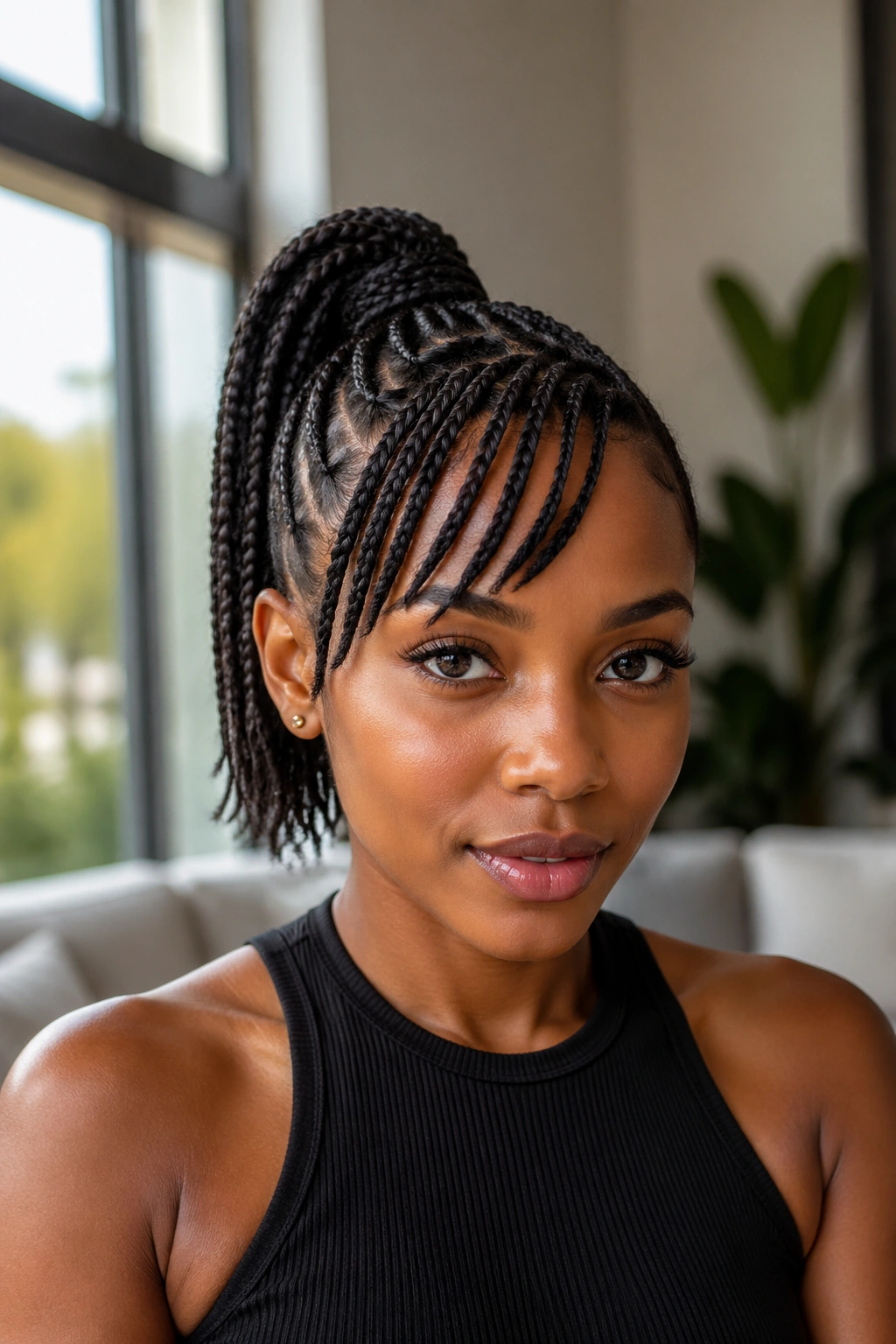
Braided bangs change the whole mood of a ponytail. Instead of pulling every front piece straight back, you leave a small braid or two to sweep across the forehead before they join the ponytail or sit beside it.
That little front detail is useful on short hair because it gives the style a face-framing piece without needing long side lengths. If your hair is short around the temples, braided bangs can cover the transition in a flattering way. They also soften a strong ponytail base, which can sometimes look a little severe on very short cuts.
The look works especially well if the rest of the ponytail is sleek. A single braid across the front gives just enough movement to break up the line of the hairline. If you wear makeup, this style plays nicely with a bold brow or glossy lip, but it doesn’t need either.
One small thing: keep the bangs braid slightly looser than the ponytail base. Tight front braids can pull in the most sensitive spot on the scalp.
17. Wrapped Ponytail with Hair Cuff
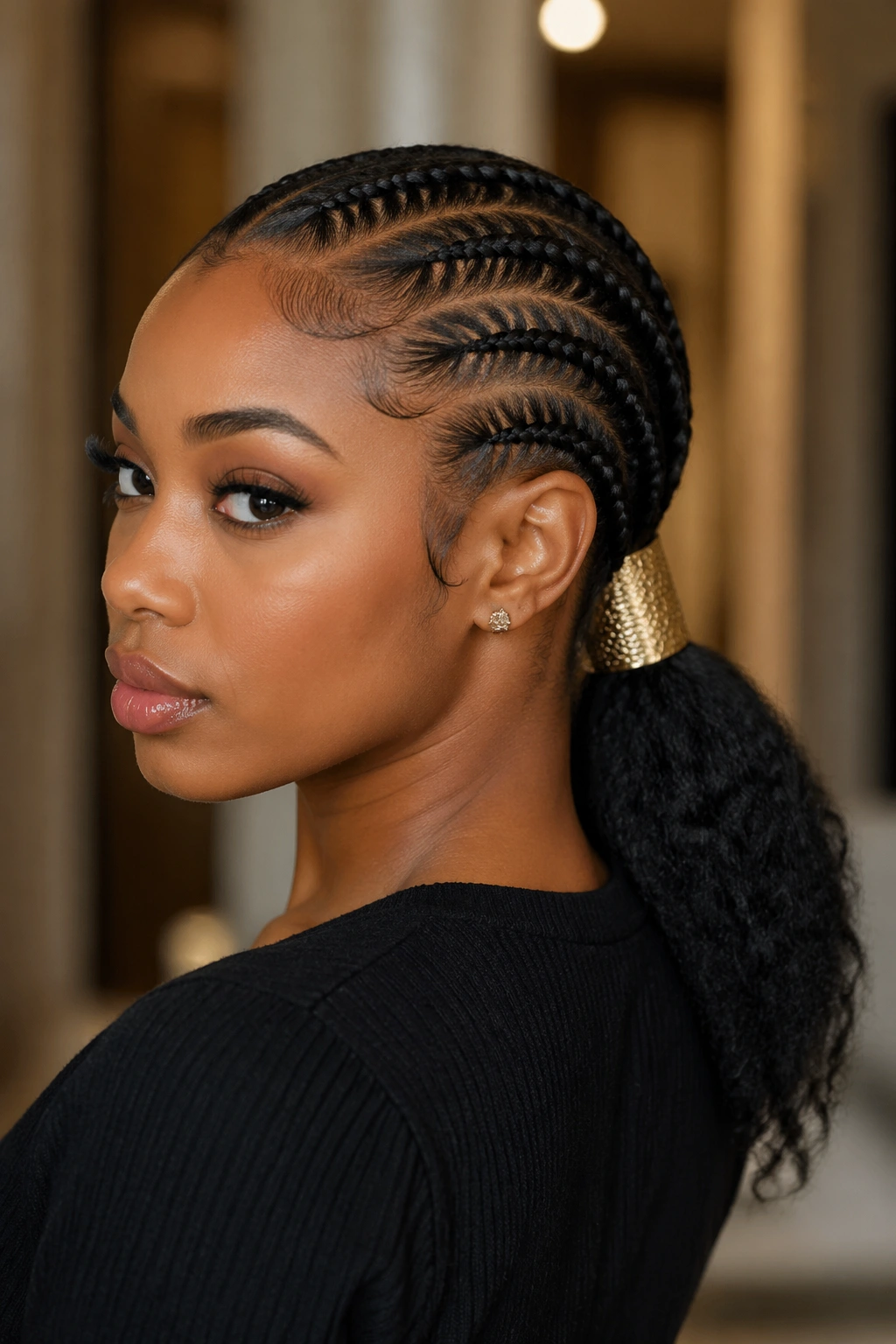
A wrapped ponytail with a hair cuff is the easiest way to make a short braided ponytail look finished. The wrap hides the elastic, the cuff gives the base shape, and the whole style reads cleaner without adding more braids.
Unlike styles that depend on parting patterns, this one leans on detail at the anchor point. That makes it useful when your hair is short and you do not want the crown overloaded with sections. You can keep the base simple, then let a gold or silver cuff do the visual work.
This style is especially nice with a low ponytail. The cuff sits near the nape, where it catches light without shouting. If you choose a high ponytail, the cuff reads more sharply and can look a little edgier. Either way, the accessory turns a plain braid into something with more finish.
I’d reach for this when the outfit is already doing a lot. The ponytail should support the look, not compete with it.
18. Beaded Braided Ponytail
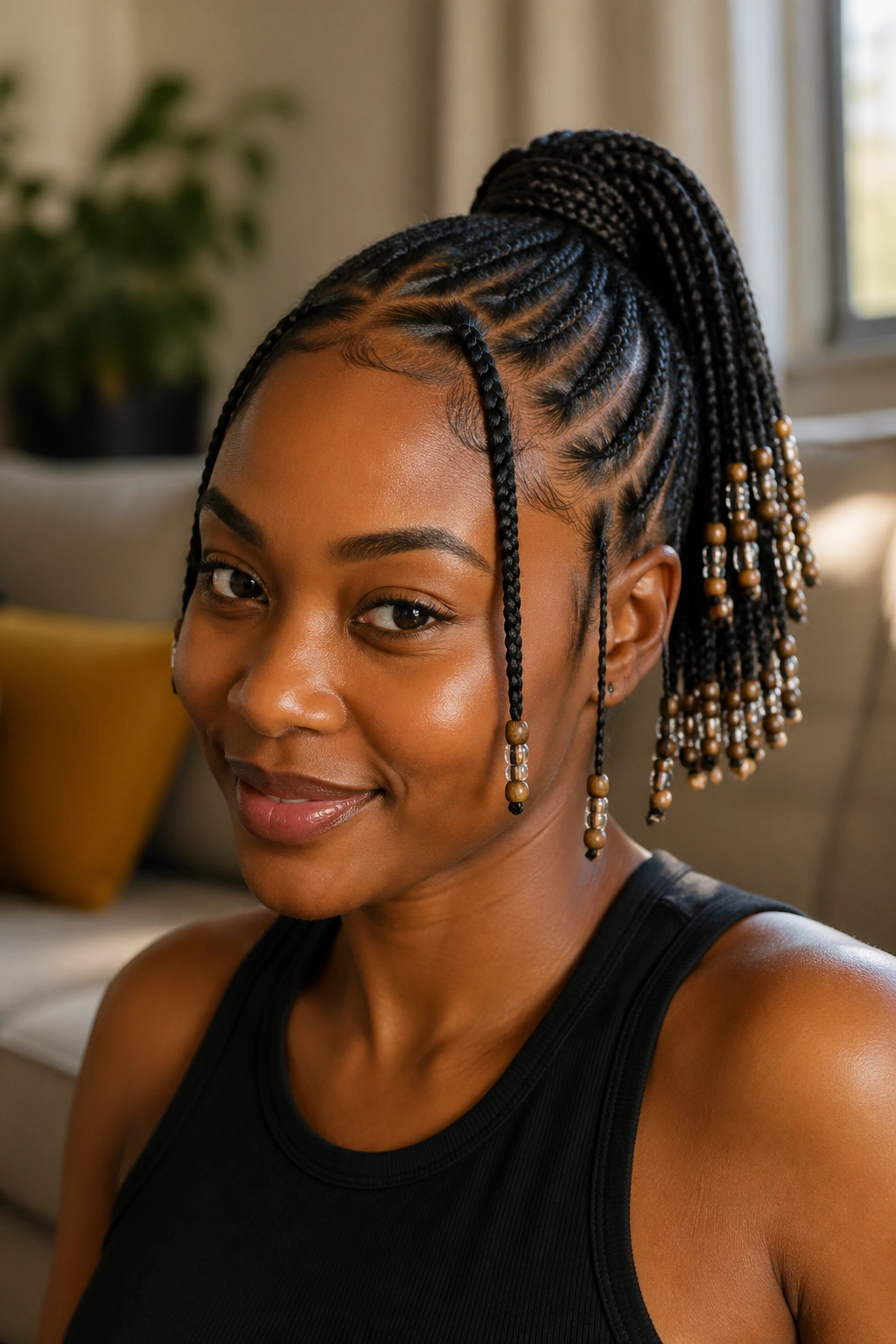
Beads bring movement back into short hair. A braided ponytail with beads can feel playful, rhythmic, and a little nostalgic, and that sound of beads tapping together has a charm that flat styles don’t have.
The important thing is restraint. Short hair does not need beads everywhere. A few on the ends, or spaced through two front braids feeding into the ponytail, usually looks better than loading every section. Too many beads can drag the braid down and make the scalp feel crowded.
Where beads work best
- On the ends of a single braid ponytail.
- At the bottom of two slim side braids.
- Mixed with one or two metal cuffs for contrast.
- On styles with clean, narrow parts, where the beads stand out.
- On ponytails that sit low enough to move freely.
If you like a style with personality, beads are a small change that does a lot. Just keep the weight in check. That part matters more than people think.
19. Crisscross Braided Ponytail
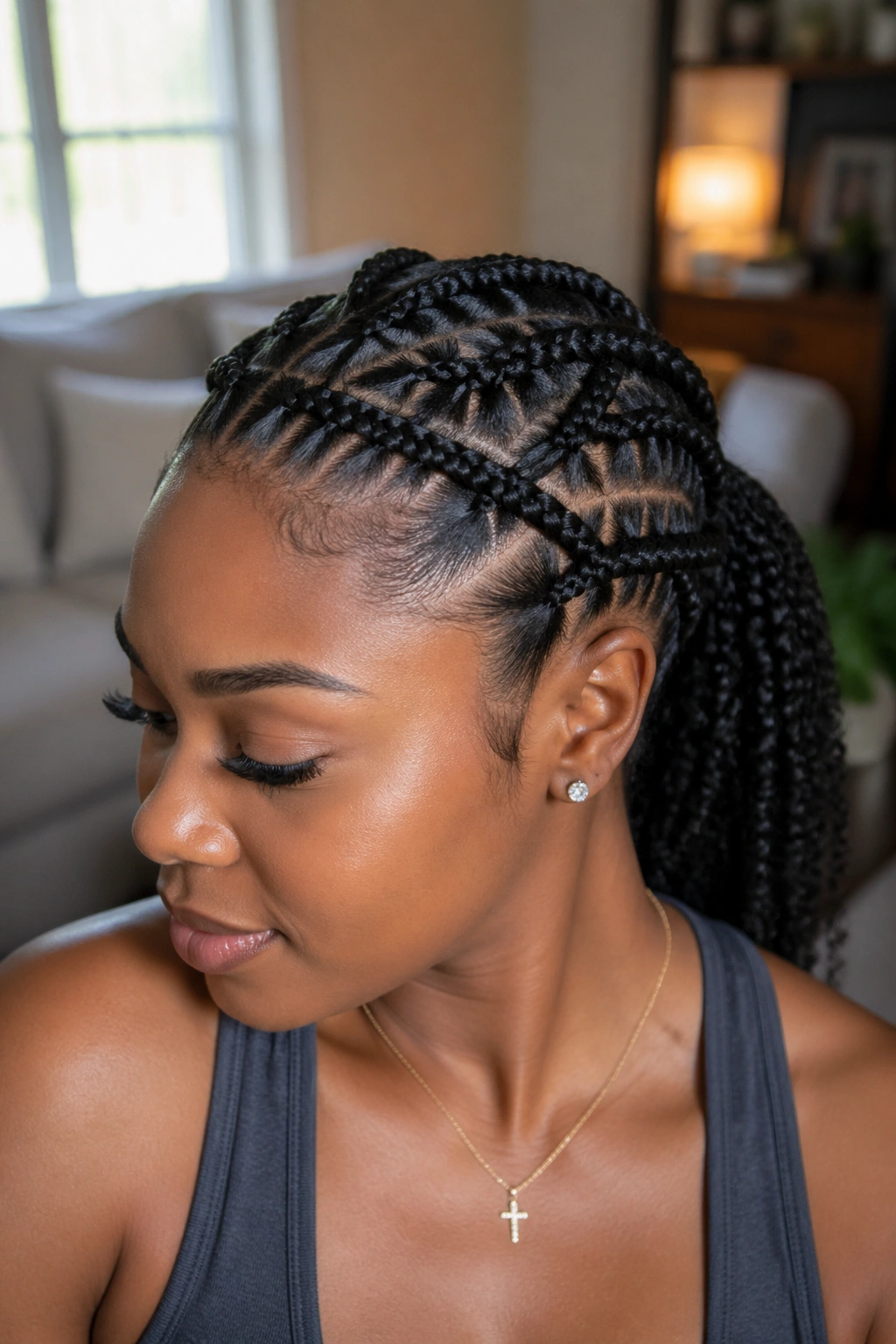
Why does a crisscross braid pattern catch the eye so fast? Because the sections move in different directions before they meet at the ponytail. The crossing lines make the scalp design feel more layered, which is a nice trick when your hair is short and the base needs visual help.
The style can be done with cornrows, feed-ins, or small flat twists that cross over each other before gathering into one ponytail. That flexibility is what makes it useful. You can keep it subtle with narrow sections or make it bold with larger crossings that are easy to see from the front.
How to keep it clean
The crossing sections should stay tight enough to hold their shape, but not so tight that they start puckering. A neat crisscross needs clean parting and careful pinning at the meeting point. If the center knot looks bulky, the whole design loses its edge.
This is a good style when you want the front of your hair to matter just as much as the ponytail itself. A plain base would work, sure. But the crisscross gives the style more story.
20. Tapered Low Ponytail
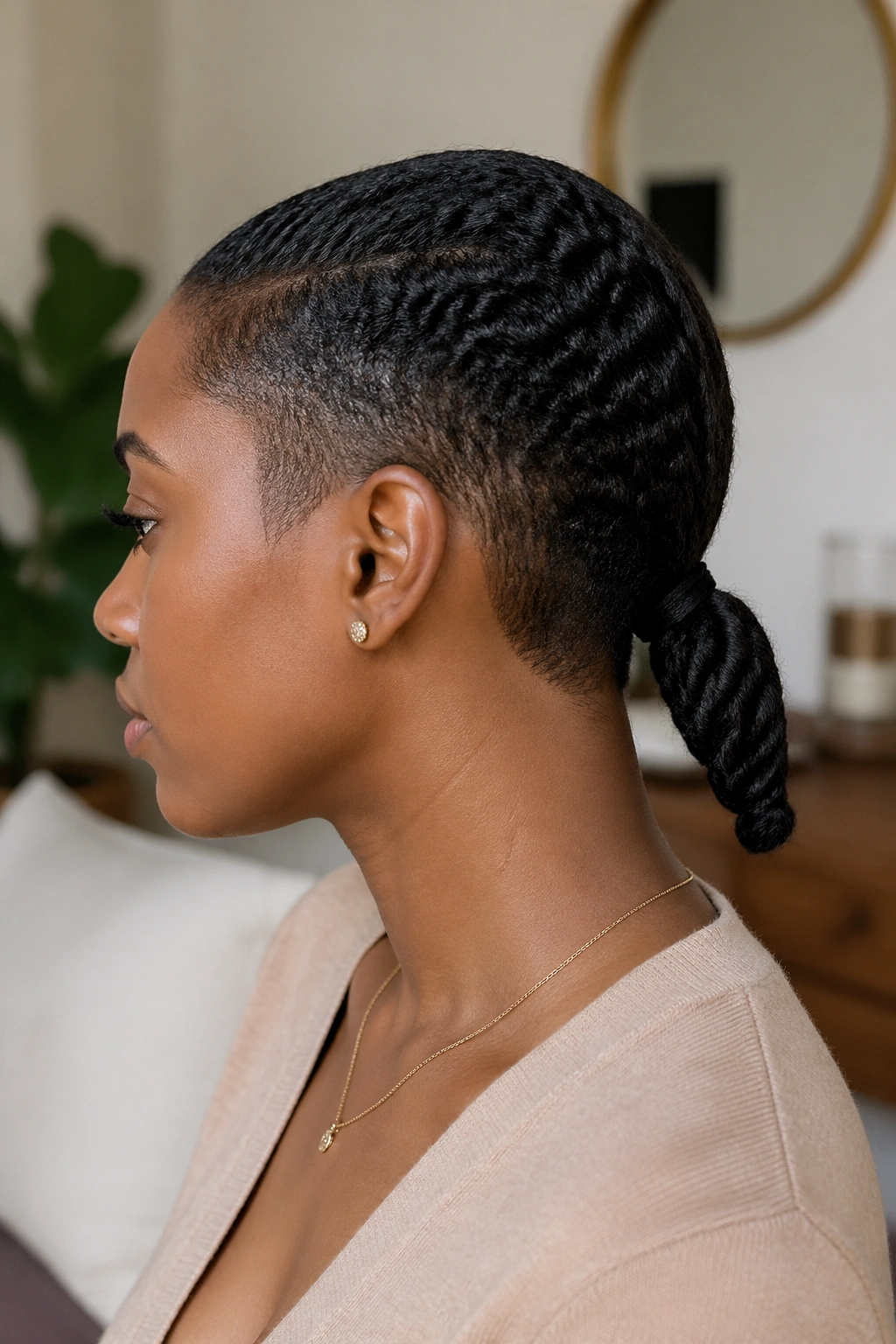
A tapered low ponytail feels made for short hair. The shape of the cut already gives you a natural line at the neck and sides, so the style doesn’t have to fight the haircut to look balanced. It just follows the silhouette you already have.
That is why I think this style gets overlooked. People often chase height or length and ignore how strong a low shape can be on a tapered cut. The short sides stay neat, the nape gathers into a small anchor, and the braid tail drops from there with clean movement. There’s no need to force extra volume into the crown.
It also tends to age well over a few days. High ponytails can start to feel too tight if the front puffs a little, but a tapered low style can loosen and still look intentional. That matters if you want a braided ponytail that can survive a busy week without turning into a mess.
A light edge control around the hairline and a satin wrap at night are enough to keep it looking sharp.
21. Crown Braid Ponytail
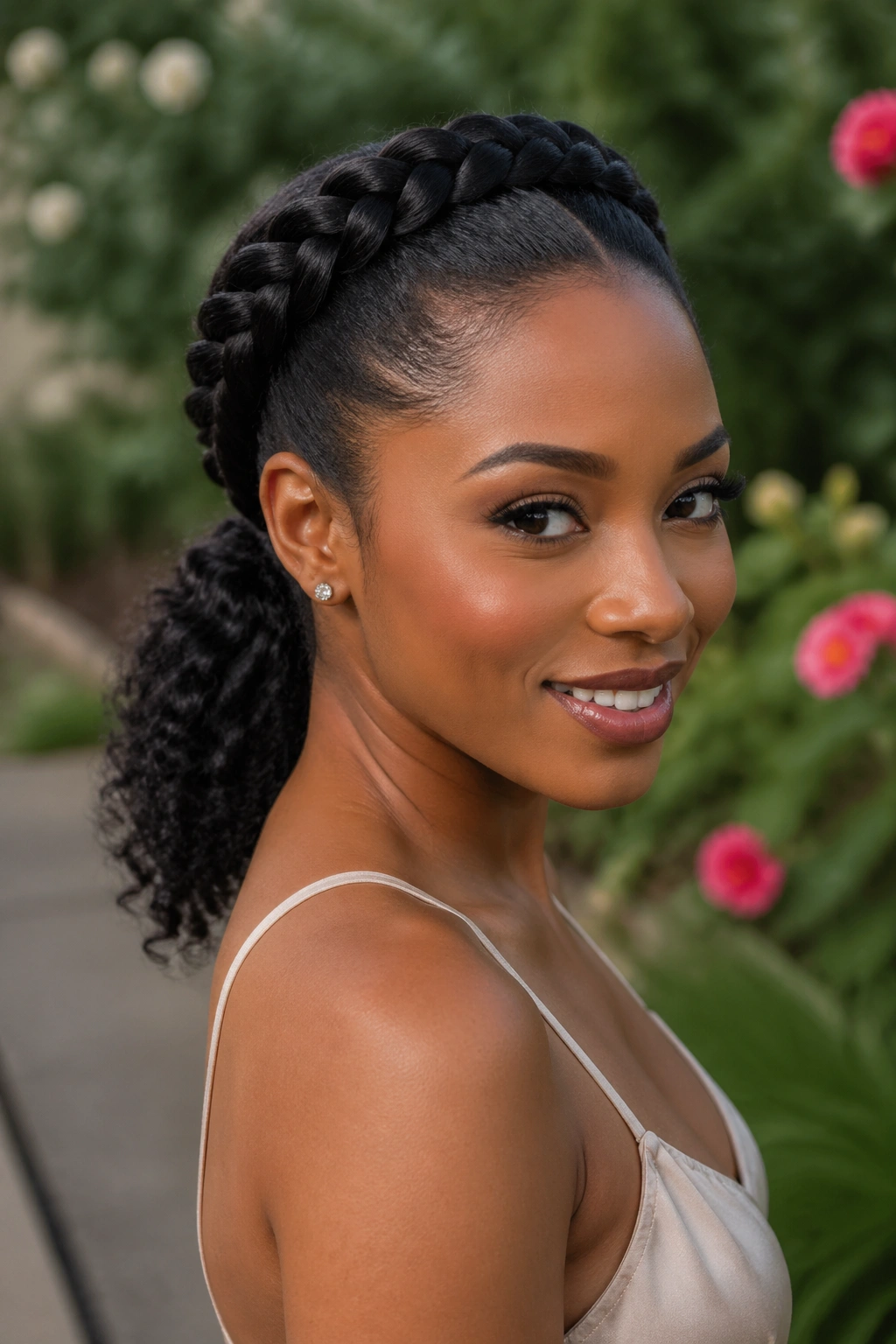
A crown braid feeding into a ponytail has a softer, more wrapped feel than a straight-back style. The braid travels around the head first, almost like a halo, and then collects at the back into a ponytail that keeps the look grounded.
Why it flatters short hair
The crown shape uses the outline of the head, which means it doesn’t depend on length in the same way a long loose braid does. Short hair can handle the front and side sections easily, and the ponytail can be built with extension hair if you want more drop in the tail.
What makes the shape work
- The braid should sit close to the hairline without covering it.
- The ponytail point usually looks best at the back-center or slightly off to one side.
- A few thin face-framing pieces can soften the front.
- Small flowers, cuffs, or pins fit here if you want extra detail.
- The style looks strongest on hair that has been smoothed well before braiding.
This one feels a little dressier than some of the others. Not fussy. Just polished in a way that suits special dinners, photos, or any day when you want the braid pattern to be the main event.
22. Twin Braided Ponytails
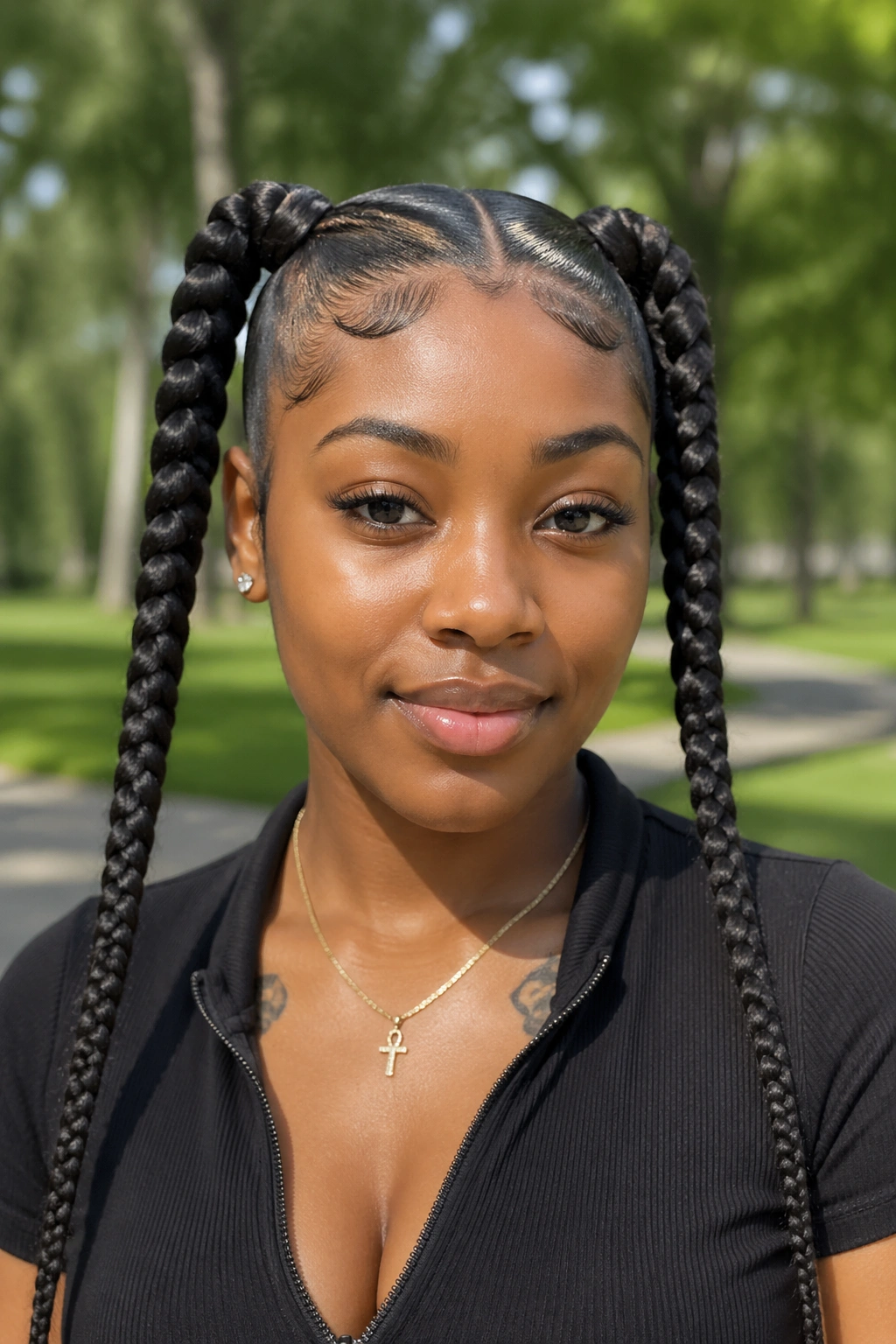
Two ponytails instead of one can be a smart move on short hair, especially if the hair is dense at the front but shorter at the crown. Twin braided ponytails split the weight, so the style feels balanced without asking one single point to carry everything.
The look can read sporty, youthful, or sharp depending on how neat the braids are. Tight, sleek twin ponytails feel clean. Slightly fuller ones feel more playful. Short hair works well because the twin shape gives the head symmetry even when the length is limited.
I like this style when one ponytail would feel too heavy or too plain. Two tails create movement on both sides of the head, and that movement helps smaller braids show up better. You also get a little more room for accessories — one cuff per tail, or beads on the ends, if that’s your thing.
It’s not a style that tries to be subtle. That’s fine. Sometimes the cleanest answer is two tails and good parting.
23. Zigzag-Part Braided Ponytail
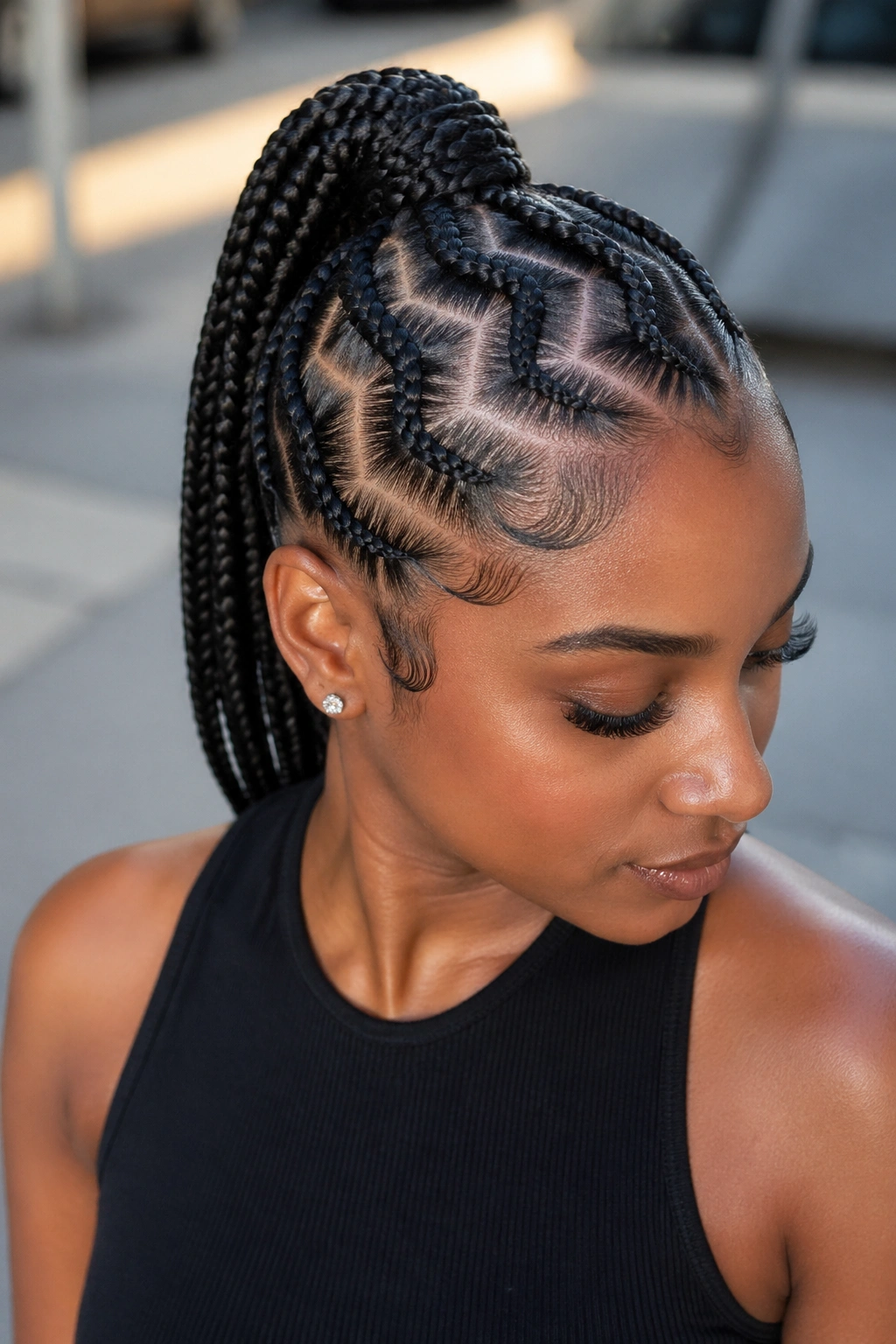
A zigzag part gives a braided ponytail a sharp, graphic edge. The part itself becomes the design, which is useful when short hair doesn’t give you much length to play with but still gives you plenty of scalp to shape.
The style works especially well with feed-in braids or narrow cornrows heading into one ponytail. The zigzag line breaks up the crown and keeps the look from feeling too straight or too plain. On short hair, that little shift in direction can make a plain ponytail base look custom instead of standard.
The key is neatness. Zigzags need clean corners, not wobbly lines that drift from side to side. A rat-tail comb and a little patience go a long way here. If the parts are precise, the whole style feels sharper, even before the ponytail is finished.
I’d choose this when I want pattern first and length second. The braid tail matters, but the parting is what gives the style its character.
24. Knotless Braided Ponytail
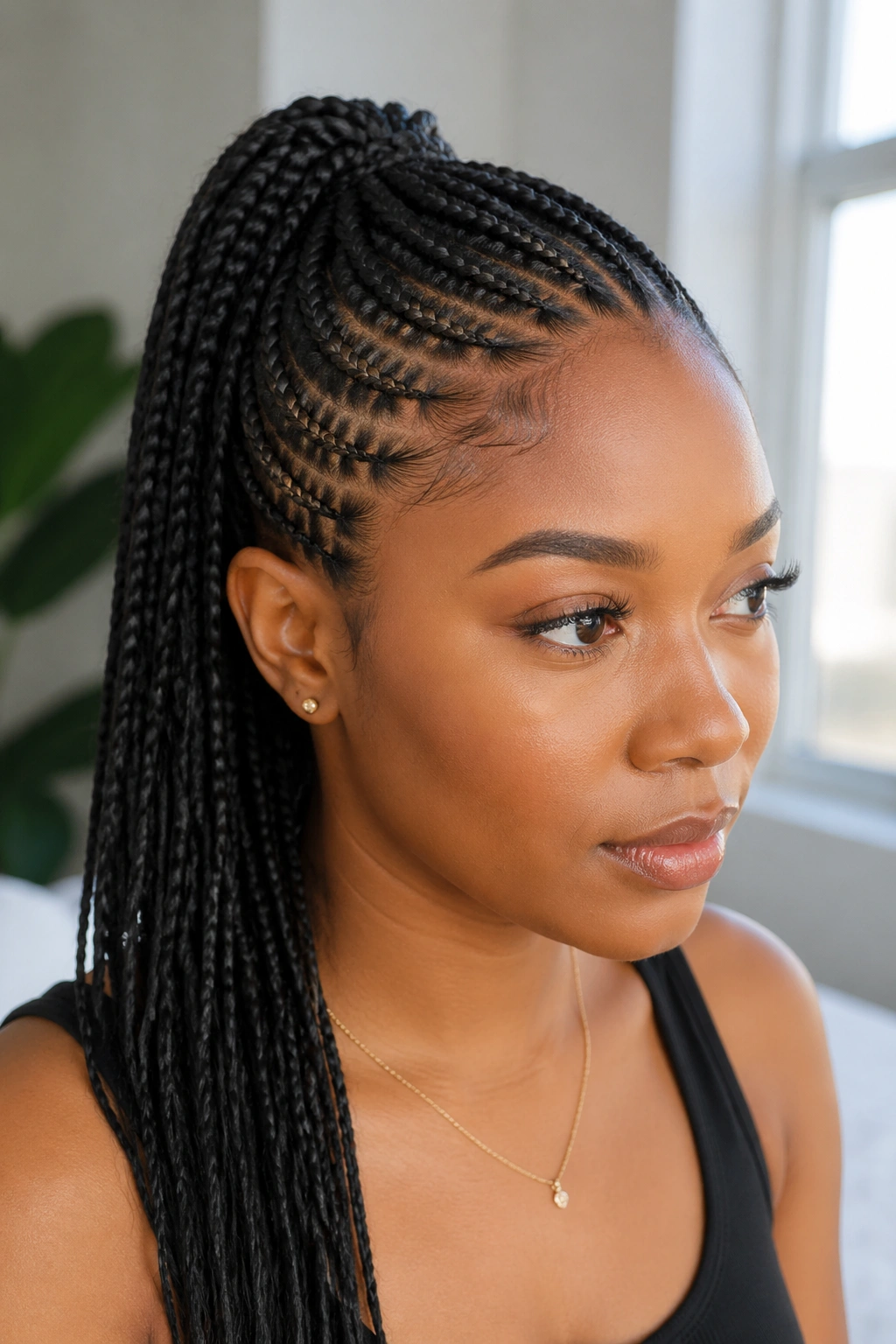
Does a knotless braided ponytail make sense for short hair? More than you’d think. The knotless method starts with your own hair and feeds in extension hair gradually, which keeps the base flatter and gentler than a classic knot at the root.
Why people like it on short hair
The biggest advantage is comfort. If your hairline is sensitive or your edges are prone to stress, knotless braids usually feel easier to wear. The style also moves a little more naturally because the braid grows thicker in a smoother line, instead of starting with a big lump at the base.
A few useful notes
- Start with small sections so the braid can grip short hair better.
- Use light to medium extension hair rather than heavy bundles.
- Keep the ponytail point secure, since knotless braids can slip if the base is too loose.
- A wrapped elastic or braid wrap hides the tie cleanly.
- Mousse helps the braid settle without making it crunchy.
This is one of the more wearable options if you want a style you can leave alone for a while. It’s not the flashiest choice, but it feels good on the scalp, and that counts.
25. Micro-Braid Ponytail for Short Hair
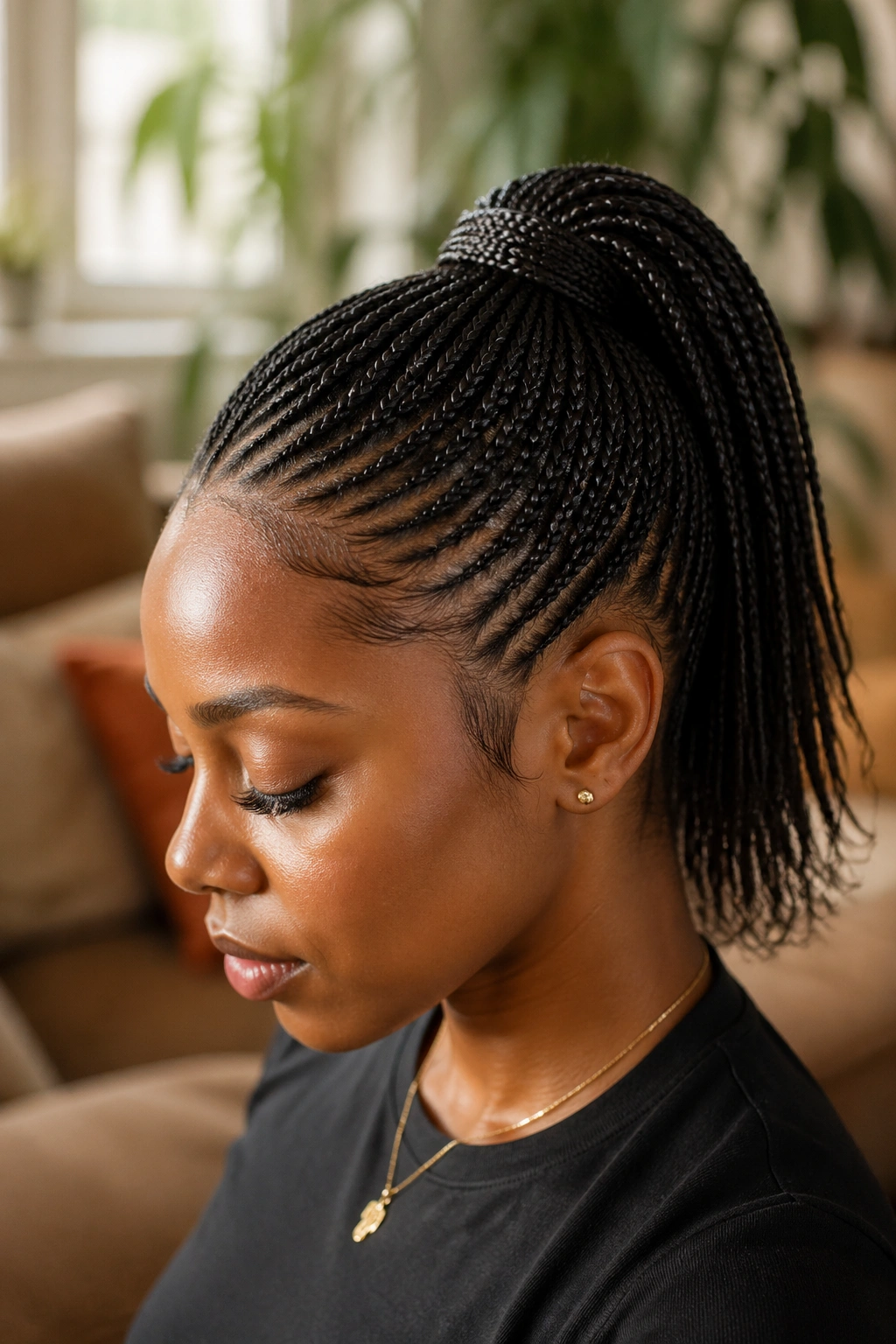
A micro-braid ponytail takes patience, but it gives short hair an almost airy fullness that larger braids can’t always match. The tiny sections let the ponytail look denser and longer, even when the hair underneath is still short.
This style is not for someone who wants to finish in an hour. It takes time, and the parting has to stay consistent from the front to the back. But the payoff is strong: a slim, detailed braid base with a ponytail tail that moves well and holds its shape. If you like hair that looks woven rather than bulky, this is the one.
Short hair benefits here because micro braids can tuck and grip small lengths more easily than thick braids sometimes can. They also let the ponytail sit flatter at the root, which keeps the style from looking top-heavy. That is a common problem with short hair, and micro braids solve it better than most people expect.
I’d call this a commitment style. Not hard, just patient. If you want something that feels detailed and lasts, it’s worth the time.
Final Thoughts
The strongest braided ponytails on short hair have one thing in common: they respect the haircut. They do not pretend the hair is longer than it is. They use parting, direction, and a smart base to build shape where length alone can’t do the job.
If your edges are fragile, choose the lower-tension looks first. If you want drama, go for height, curves, or a strong part design. And if your short hair sits somewhere in the middle, that’s fine too. A clean ponytail, a good braid base, and a shape that fits your cut will always beat a style that’s trying too hard.
