



Faux ponytails for Black women with natural hair are one of those styles that can save an entire week. The right one looks polished in a short install, keeps your ends tucked away, and still feels like you instead of some stiff, borrowed version of “done.”
That matters more than people admit. Natural hair has its own rhythm, its own shrinkage, its own volume, and its own mood on a given day. A ponytail that works on blown-out 4c hair will sit differently on a twist-out, and a drawstring piece that blends on dense coils can look bulky on finer strands if the base is built too flat or too tight.
The sweet spot is balance. You want enough stretch at the roots to keep the style neat, enough softness at the crown so it does not look helmet-like, and enough shape in the ponytail itself to flatter the texture instead of flattening it out. Small details matter here—part width, wrap length, the density of the ponytail piece, even whether your edges were brushed up or just lightly smoothed.
Some of these styles are all about speed. Some are better when you want drama. A few feel like old faithfuls, the sort of thing you can wear to work, church, brunch, or a wedding without changing the whole outfit around them.
1. Sleek Low Ponytail With a Wrapped Base
A sleek low faux ponytail is the one I reach for when I want the cleanest finish with the least fuss. It sits at the nape, keeps the shape controlled, and gives natural hair a polished line without pretending the texture has disappeared. The best version uses a smooth base and a ponytail piece that matches your curl pattern or straightened finish.
Why the wrapped base matters
The wrap is doing more work than people think. It hides the elastic, gives the ponytail a finished look, and keeps the eye on the length instead of the attachment point. If your hair is dense, use a bungee or a strong snag-free band first, then wrap a thin 1-inch section of hair around the base and pin it underneath.
What to watch for
- Keep the ponytail low enough that the nape stays comfortable.
- Use a rat-tail comb to make the part crisp before smoothing.
- A small amount of styling gel goes farther than a thick layer.
- If the base feels tight after 10 minutes, loosen it. No style is worth that headache.
My favorite part: this is the style that makes earrings and a sharp collarbone line do half the work.
2. High Puff Ponytail
A high puff ponytail is the easiest way to lean into natural texture and still look dressed up. There is no need to fight shrinkage here; the puff becomes the point. When the hair is gathered high and the front is gently smoothed, the whole style reads confident and open.
The best high puff has some stretch at the roots so the band can hold without pulling the crown flat. I like this on hair that has been banded, blow-dried lightly, or stretched in twists overnight because it gives more height and less frizz around the base. If you add a curly pony piece, keep it fluffy rather than perfectly uniform. A little unevenness is what keeps it from looking costume-y.
This one works for days when you want your face fully visible and your hair out of the way. It is also kinder to delicate edges than a super-tight sleek ponytail, which is why a lot of people end up wearing this style far more than they expected.
3. Curly Drawstring Ponytail
Why do drawstring ponytails work so well on natural hair? Because they give you instant length without asking your own hair to carry the whole visual load. A curly drawstring ponytail is one of the fastest ways to get a full, bouncy style, especially if your natural curls can blend with a kinky-curly or coily piece.
Texture match matters
The blend is what sells it. If your hair is stretched and your pony piece is springy, leave a little softness at the base so the transition does not look harsh. If your hair is already coily, a dense curly ponytail with a closer curl pattern usually sits better than a silky one.
How to wear it well
- Smooth your own hair into a small puff or low base first.
- Use the combs or clips if the ponytail piece has them.
- Pull the drawstring snug, then tuck the extra cord under the base.
- Shake the length out with your fingers, not a brush.
Tip: choose a ponytail piece with a base width that matches your own density. Too tiny looks skimpy. Too much hair turns heavy fast.
4. Feed-In Braided Ponytail
A feed-in braided ponytail has that clean, sculpted look that never gets old. The braids start small and build gradually, so the scalp looks neat instead of bulky. By the time the plait reaches the ponytail, the style already has shape, and the finished tail can be braided, curled, or left long and straight.
This is one of the strongest options if you like a ponytail that doubles as a protective style. Your hair stays tucked away, the parting stays intentional, and the whole thing can last nicely if the base is not overhandled. I always think this style looks best when the braids are sized to the head, not oversized just because extra size seems dramatic in theory. Clean lines beat clutter.
A feed-in ponytail also photographs well from the side because you can actually see the braid pattern. That detail gives the style more depth than a simple tie-back ponytail, and it is one of the reasons people keep coming back to it.
5. Bubble Ponytail
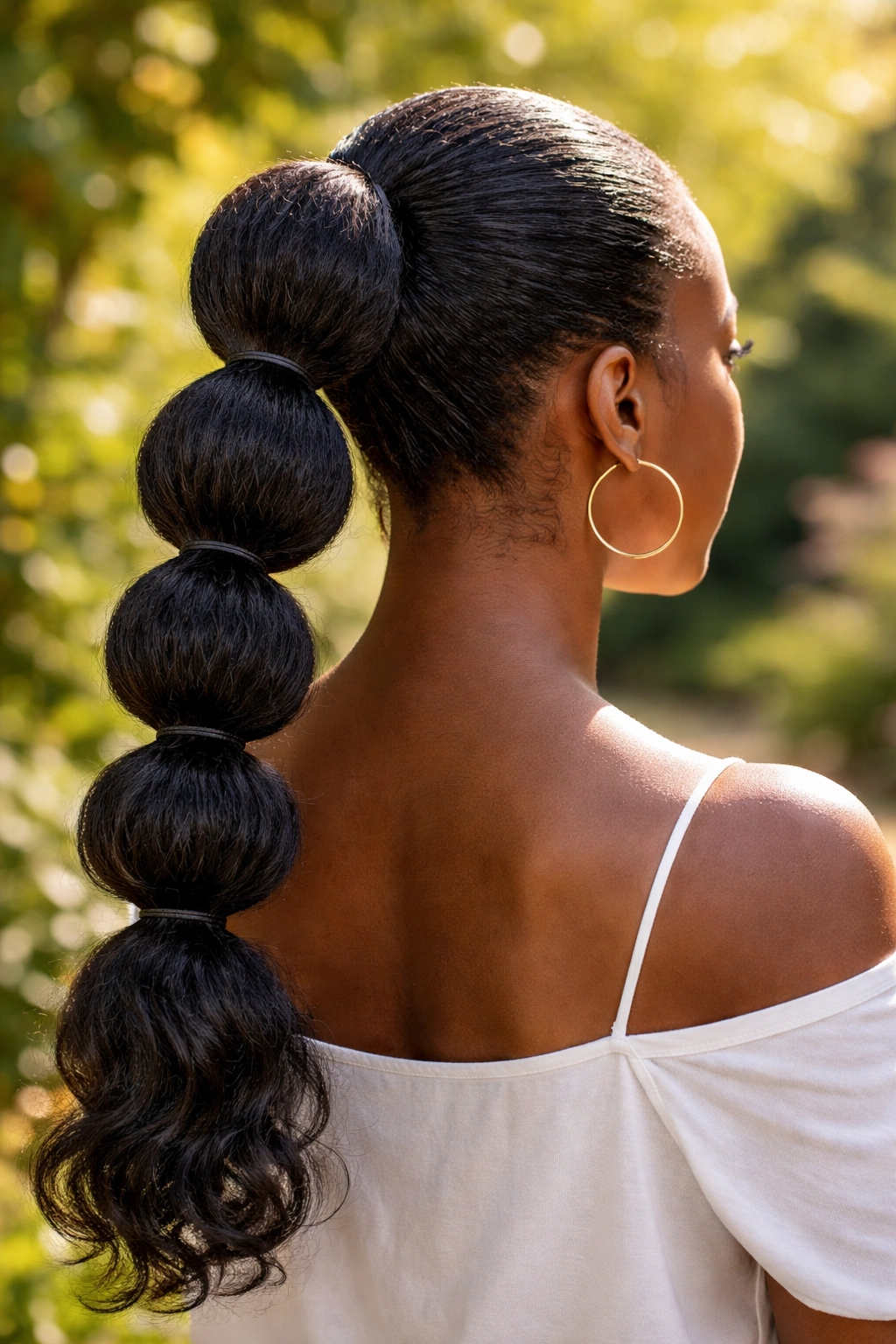
The bubble ponytail has a playful edge that works far better on natural hair than most people expect. The sections create shape, the bands carve out little round “bubbles,” and the style turns a simple ponytail into something with movement. On coily hair, the look feels especially nice because the texture keeps the sections from looking stiff.
You can do this with your own stretched hair or with a long faux ponytail added at the base. Start with a low or mid-height pony, then place small clear elastics every 2 to 3 inches down the length. Gently tug each section outward until it puffs. That part matters. Too much tugging and the bubble starts to look messy; too little and it just looks like a series of bands on a rope.
I like this style for weekends, concerts, and casual events where you want something fun but still tidy. It is a little less common than a sleek ponytail, which is exactly why it feels fresh.
6. Deep Side-Part Sleek Ponytail
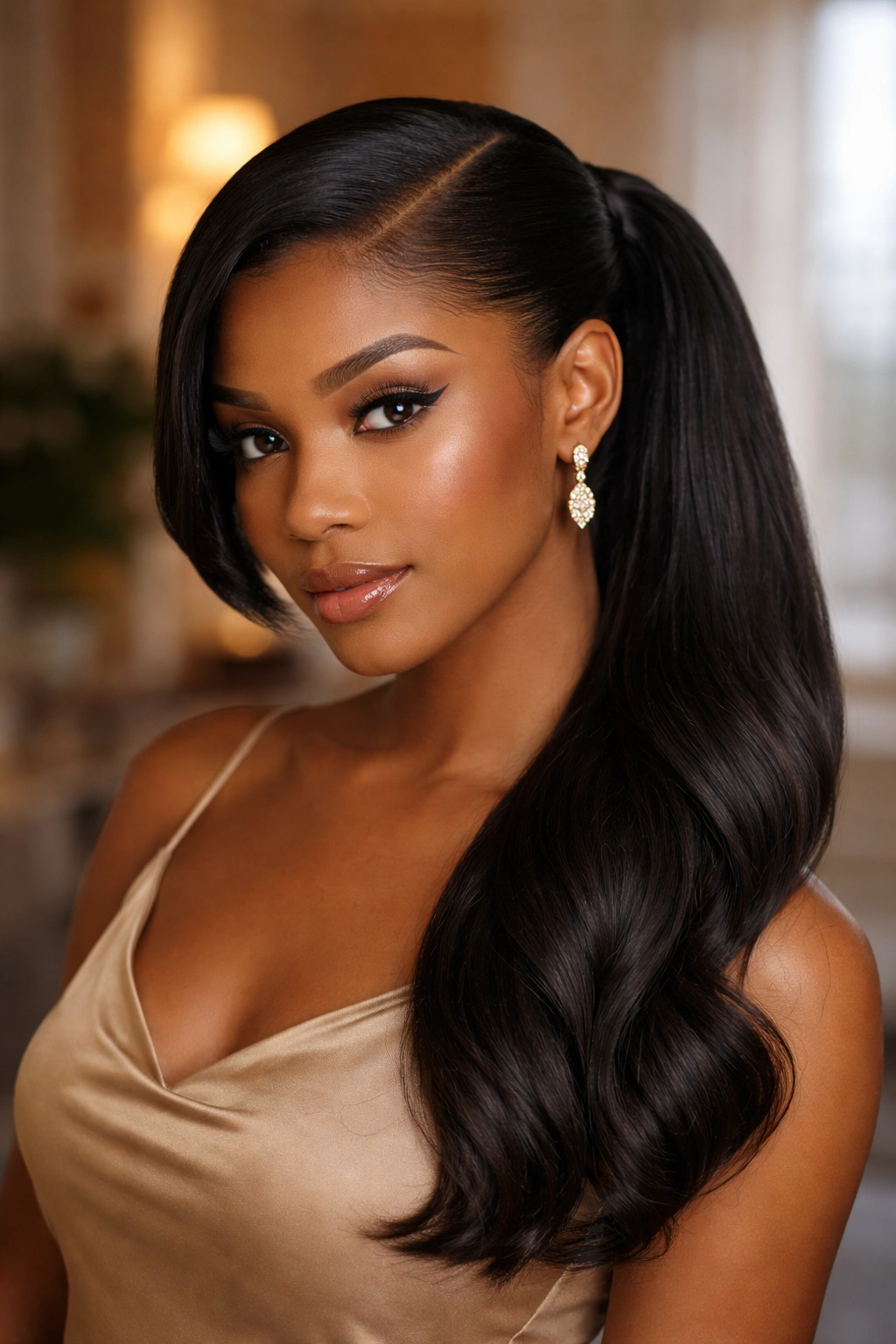
A deep side-part sleek ponytail has a bit of attitude without going over the top. The side part shifts the whole look, softens the forehead line, and gives the ponytail a more elegant drop on one side of the head. On natural hair, the part also helps if one side lays better than the other, which happens all the time.
The key is getting the part deep enough to matter—usually several inches over from the center—while still keeping the front smooth. I prefer this with a low or mid ponytail because a very high side part can start to feel lopsided if the base is too heavy. The length can be straight, wavy, or curly, but the face framing should stay neat.
This style shines when you want a little drama but do not want the whole head doing the most. It is a strong choice for formal events, and it still works with simple clothes, which is one of the reasons it hangs around in rotation.
7. Cornrow Mohawk Ponytail
A cornrow mohawk ponytail gives you height, structure, and a little edge all in one go. The sides are braided close to the scalp, and the center section stays fuller before being gathered into a ponytail at the crown or back. The result is sharp, but not fussy.
I like this style because it pulls the eye upward without depending on tons of teasing. You get a lot of visual shape from the braids alone. If the center ponytail is synthetic, you can choose a straight, curly, or kinky texture depending on how bold you want it to feel. Straight length makes the silhouette cleaner. Curly length makes it softer.
This style also keeps the sides neat for longer than a loose ponytail does, which is handy if your hairline gets frizzy early. The only real caution is tension. The braids should be snug, not biting into the scalp. If you feel a constant pull behind the ears, that is the style telling you to ease up.
8. Afro-Textured Ponytail Extension
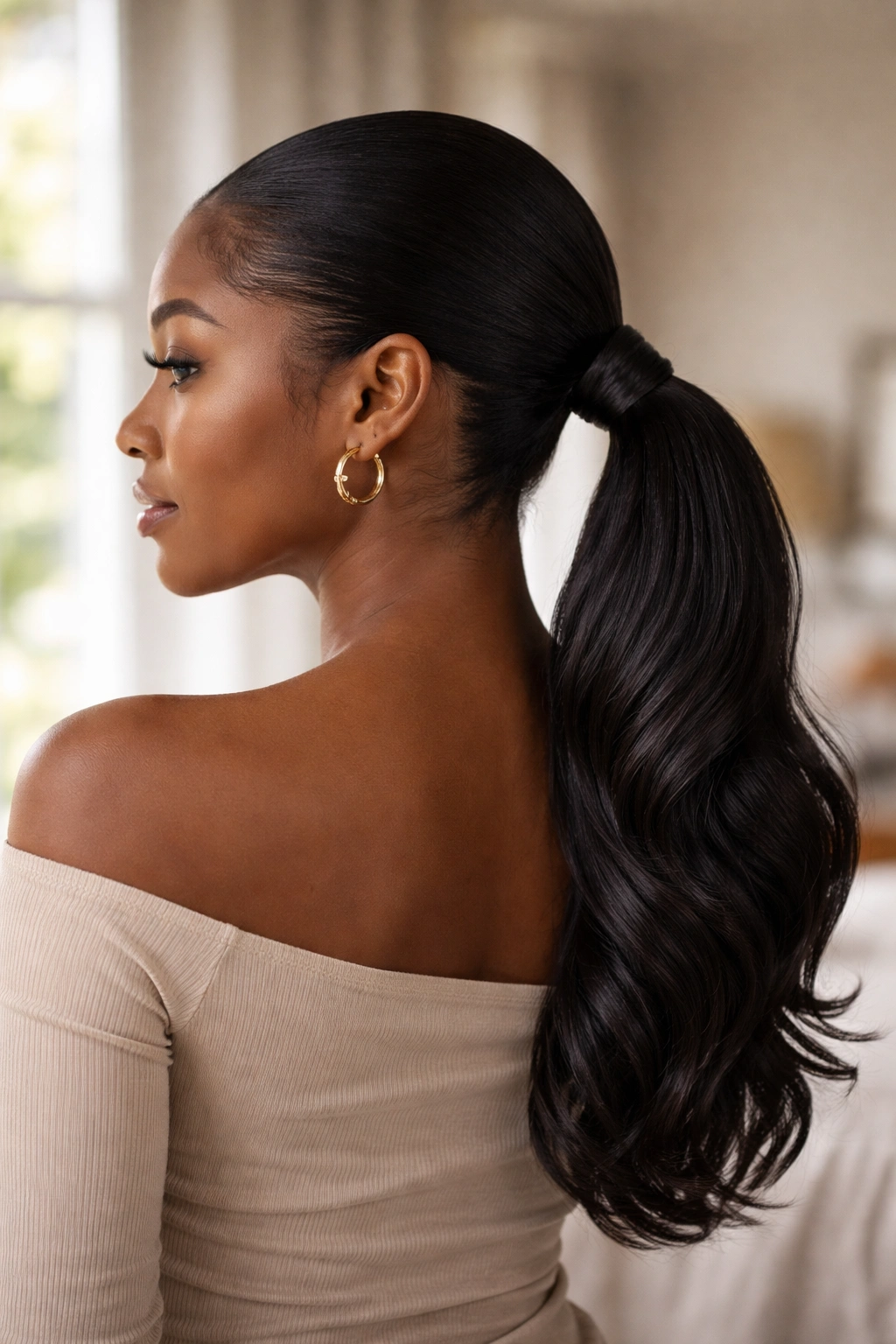
A fluffy afro-textured ponytail extension can look richer than a silky one because it matches the volume natural hair already has. That is the whole secret. Instead of smoothing your texture into something it is not, you let the ponytail piece echo the density and softness of coils.
What makes it work
The best afro ponytail pieces have a root that is full but not dense enough to feel heavy. Look for a piece that has a believable shrink pattern and a little movement at the ends. If the hair is too uniform, it tends to look like a wig tail attached to a bun. If it is too light, it can disappear against thick natural hair.
Where it fits best
- Big events when you want shape and volume.
- Everyday wear if your own hair is dense and layered.
- Protective styling when you want minimal heat and minimal manipulation.
- Photos, because the silhouette reads clean from every angle.
My opinion: this is one of the easiest ways to get glamour without fighting your texture.
9. Two-Strand Twist Ponytail
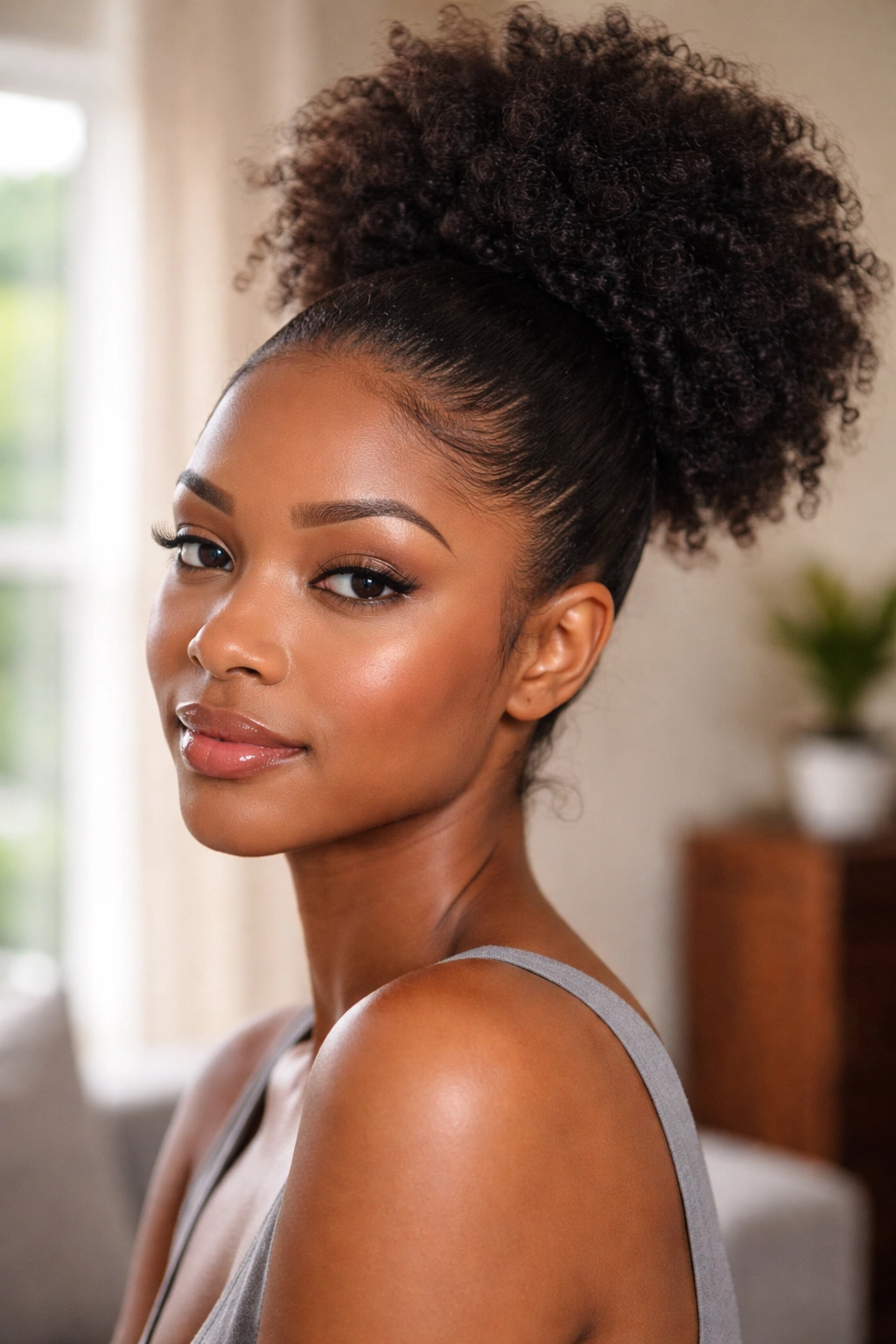
Two-strand twist ponytails have a softer look than braids, and that softness is the appeal. The twists create rope-like texture that feels a little romantic, a little relaxed, and very natural-hair friendly. If you wear twist-outs often, this style slides into your routine without much drama.
The ponytail can start as individual twists gathered at the back, or the base can be smoothed and the length installed as a twist pony piece. Either way, the style works best when the twists are neat enough to show pattern but not so tight that the scalp looks tense. I think this is one of the most forgiving faux ponytails out there because a bit of frizz at the roots only makes it look more lived-in.
A good twist ponytail has movement when you turn your head. That matters. Too much product at the base can freeze the shape and make the style feel stiff, so use just enough cream or gel to hold the roots down, then let the length do the talking.
10. Braided Base With Loose Curly Length
A braided base with loose curly length gives you the best of both textures in one style. The top stays sleek, tight, and controlled, while the ponytail itself hangs soft and loose. I like this look because it has contrast built into it, and contrast is what keeps ponytails interesting after the first glance.
You can create the base with cornrows, feed-ins, or flat twists depending on how much scalp detail you want. The curly tail then attaches at the ponytail point and falls over the braid base, hiding the join. That visual trick is simple, but it works every time. A 12- to 18-inch curl length usually feels balanced on most faces; anything much longer can take over the whole look if the base is small.
The style is good when you want something that reads both tidy and soft. It also does a nice job of showing off earrings, shoulders, or a high neckline without looking too severe.
11. Stretched Blowout Ponytail
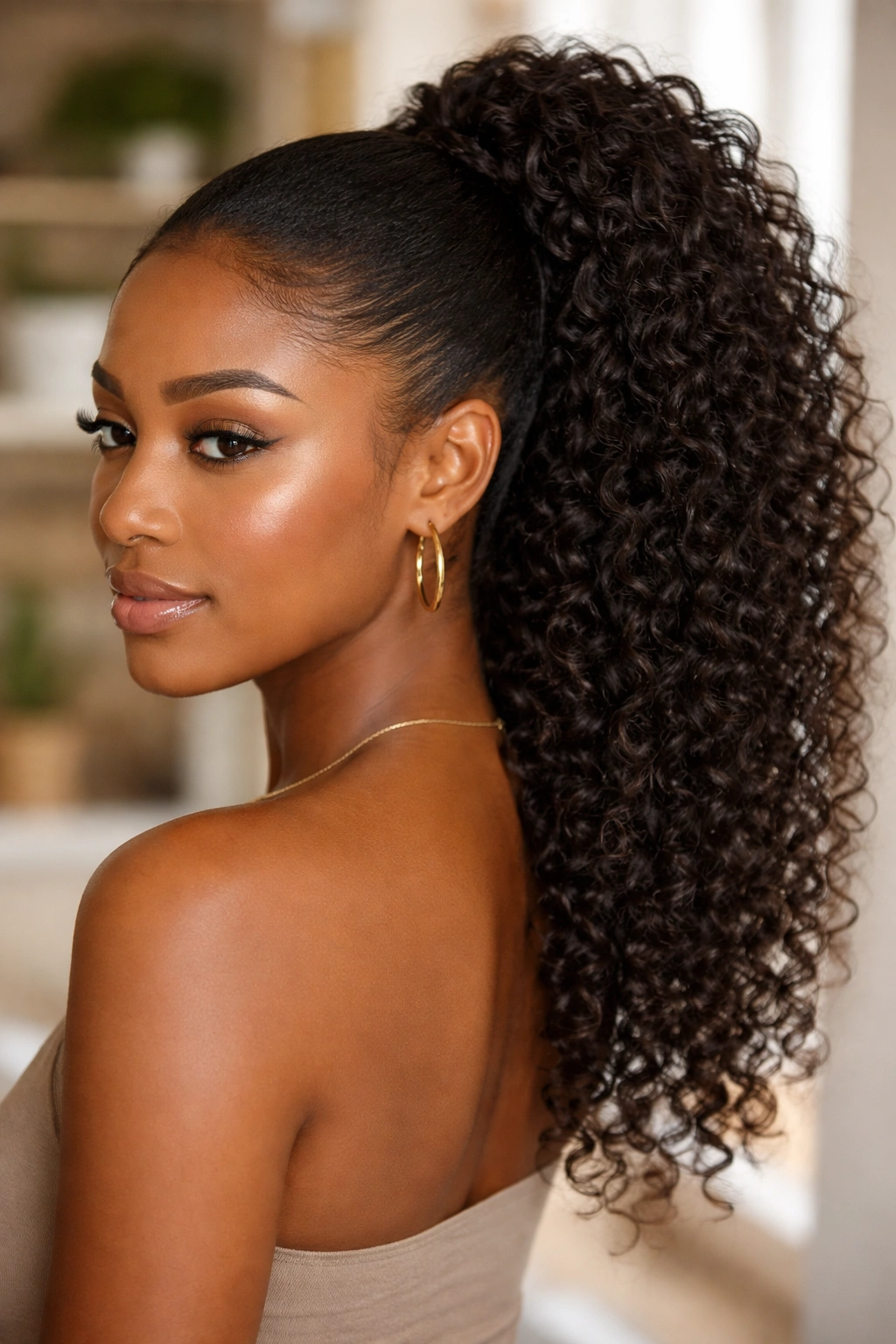
A stretched blowout ponytail sits in that sweet middle space between natural and sleek. The hair has more length than it does in its shrunken state, but it still keeps some texture and body. That makes the final ponytail look full without becoming too flat.
I prefer this style when someone wants a ponytail that blends with natural hair instead of hiding it. A light blowout, banding, or a stretched twist set can give enough length to make the ponytail base smoother and the overall shape more controlled. You do not need bone-straight hair here. In fact, a little puff at the roots gives the style character.
This one also plays well with humidity better than a super-sleek version, because the whole point is softness, not glassy precision. If your hair tends to shrink the second it meets damp air, this style can be a relief. It already expects a little texture. Smart, honestly.
12. Half-Up Faux Ponytail
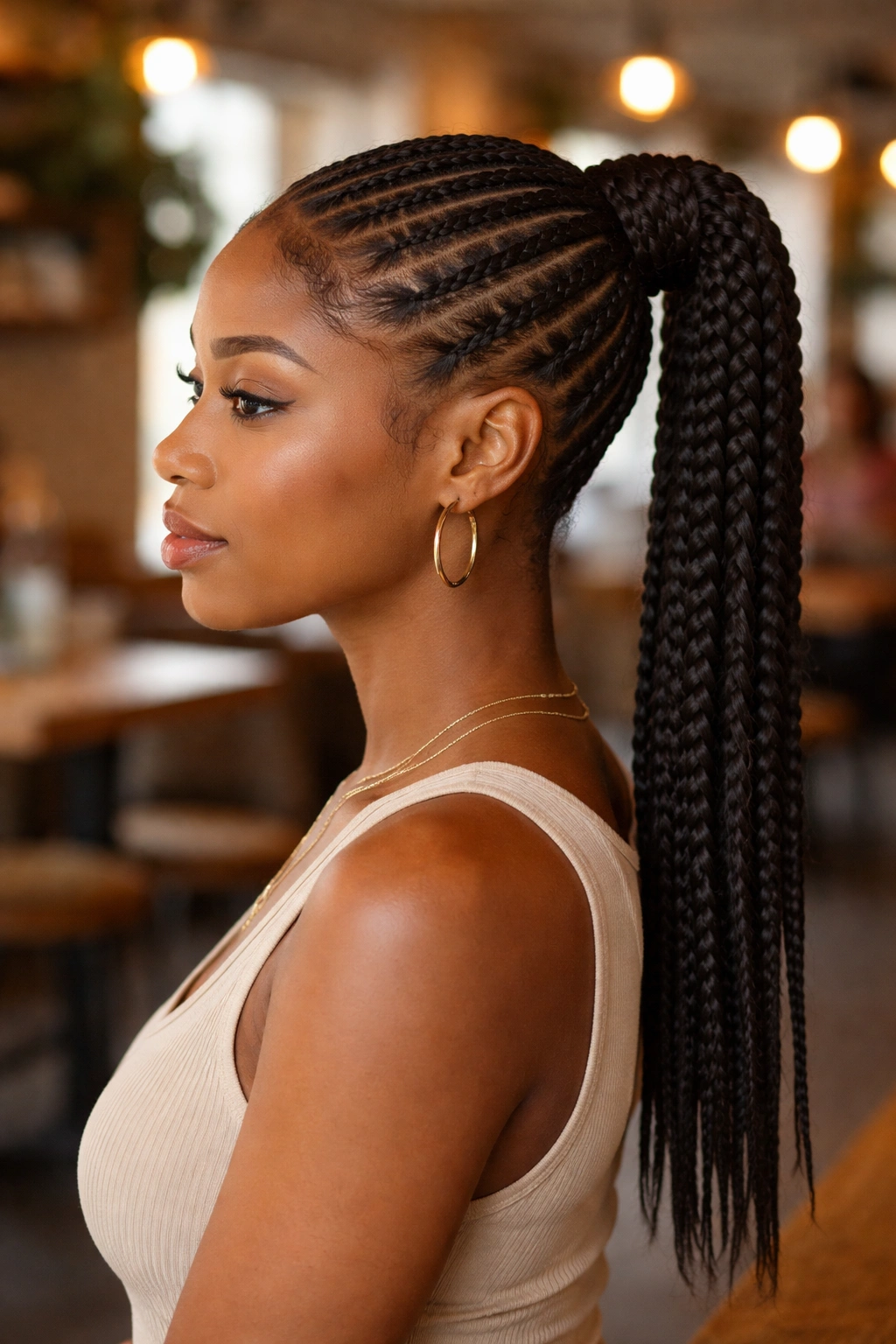
A half-up faux ponytail is a good answer when you want some lift without pulling every strand back. The top section gets gathered into a ponytail, while the rest of the hair hangs loose or lightly shaped underneath. On natural hair, that makes the style feel relaxed and flirty, not severe.
This is especially useful if your hair is layered or if the front sections are shorter than the back. A half-up pony lets you work with what you have instead of trying to force a full gathered style. You can smooth the top into a small pony piece, leave the ends curly, or use a fuller faux tail for more drama.
The shape also does a nice job of framing the face. The upper pony lifts the eye line, and the lower hair softens everything. If you like styles that are polished but not formal, this one earns its keep quickly.
13. Low Ponytail With Braid Cuffs
A low ponytail with braid cuffs feels special without asking for a full glam setup. The base stays simple, usually tucked at the nape or just above it, and the cuffs bring in a little shine and structure. Gold, silver, or antique brass all work, depending on what you wear.
The trick is not to overdo the hardware. Three to five cuffs along a few thin braids or the ponytail base is usually enough. More than that can start to look busy, especially if the ponytail itself already has a lot of texture. I like this style when the hair is sleek at the top and the tail is curly or braided, because the metal catches the light against the darker texture and gives the whole look a cleaner finish.
This is a strong choice for parties, graduations, and dressed-up dinners. It says you paid attention, but not that you spent all afternoon with a mirror.
14. Pineapple Ponytail
A pineapple ponytail is what happens when the classic bedtime pineapple gets promoted to daytime wear. The hair gathers high and loose, so the curls keep their shape instead of being flattened into a tight ball. On natural hair, that makes it one of the easiest ways to show off curl pattern while keeping the crown off your face.
The best pineapple ponytail is not over-pulled. Let the curls sit up and out, and use a soft band or scrunchie that will not dent the root too hard. If you want more length, add a curly ponytail piece with a similar spring factor. If you already have full hair, you may not need any added length at all.
This style is a favorite for me because it feels lived-in but still deliberate. It works on twist-outs, wash-and-gos, and lightly stretched hair, which makes it one of the least fussy ponytail shapes in the whole group.
15. Criss-Cross Base Ponytail
A criss-cross base ponytail has that extra bit of design right where most ponytails stop paying attention. Two small sections of hair cross over one another at the base, hiding the elastic and giving the style a more finished, layered look. The pattern is subtle from far away and much prettier up close.
Why this small detail matters
The criss-cross makes the ponytail feel styled instead of simply gathered. It also gives the base a firmer hold, which helps when the ponytail is heavy. I like this with straight or lightly wavy lengths because the base is decorative, so the tail does not need much extra decoration.
Best setup
- Smooth the crown first so the crossed sections sit flat.
- Use two thin strands, not thick ropes of hair.
- Pin the ends underneath the base.
- Finish with a light mist of shine spray, not a soak.
Tip: if your hair is very dense, keep the crossed sections slim. Too much hair in the wrap starts to bulk up fast.
16. Jumbo Braid Ponytail
A jumbo braid ponytail is a statement, no question about it. One thick braid falling from a sleek base creates a strong line and a lot of visual weight, which is exactly why people love it. The braid can be long, waist-skimming, or shorter and thicker, depending on how dramatic you want the shape.
This style is especially good when you want the ponytail to feel controlled rather than loose. Unlike a curly tail, a braid stays together in wind, heat, and crowded spaces. That practical side is part of the appeal. If the braid is made with added hair, look for enough texture in the synthetic piece to keep it from looking too shiny against natural hair.
I like a jumbo braid with a clean part and a wrapped base because the braid itself already carries the style. There is no need to pile on extra accessories unless you want them. The braid is the accessory.
17. Wavy Ponytail With a Wrapped Base
A wavy ponytail brings movement in a way that straight lengths do not. The bends in the hair soften the whole style, and the wrapped base keeps the top neat so the waves can take center stage. It is a strong pick when you want something in between sleek and curly.
The best wavy ponytail has body wave or loose wave hair that does not collapse the moment you brush it. You want the waves to fall apart a little when you run your fingers through them. Too much curl and the look gets busy; too little and it turns flat. A medium-density pony piece usually works best here because heavy wavy hair can drag the base down.
This style looks especially good with a middle or slight off-center part. That gives the waves a clean starting point and keeps the silhouette balanced. It is a nice “meet me halfway” ponytail—polished enough for dressy settings, relaxed enough for everyday wear.
18. Swooped-Front Glam Ponytail
A swooped-front glam ponytail is all about the front shape. The ponytail can be high or mid-height, but the swooped section across the forehead is what gives the style its personality. Done well, it softens the face and adds that unmistakable dressed-up feel without needing a complicated base.
The swoop should look intentional, not pasted on. A little mousse, a soft brush, and a few well-placed pins usually do more than a heavy layer of gel. I prefer this style with curled ends because the contrast between the smooth front and the textured tail keeps it from looking flat. Straight tails can work too, though they feel sharper and more formal.
This is the ponytail I think of for birthday dinners, pictures, and nights when you want your hair to look like it has plans of its own. It does not whisper. Fine by me.
19. Scarf-Wrapped Ponytail
A scarf-wrapped ponytail turns a simple style into something much more personal. The scarf can replace the usual wrap around the base, sit over a low ponytail like a band, or trail down the length if you want color and texture in one place. Silk, satin, and light cotton all work, but the fabric should be soft enough not to pull the hairline.
The nice thing about this style is how much it changes the mood. A plain black scarf feels sleek. A printed scarf adds energy. A neutral scarf keeps things clean. You can make the ponytail itself curly, braided, or straight and let the scarf do the visual lifting.
I like this when the actual ponytail is simple and the outfit needs a little more life. It is also a smart choice on days when your edges are not doing what you asked them to do. Covering the base with a scarf solves more problems than people admit.
20. Clip-In Kinky Curly Ponytail
A clip-in kinky curly ponytail is one of the quickest ways to get big hair with almost no styling drama. The texture usually sits close to 4a through 4c curls, which makes it blend especially well with natural hair that has been stretched or puffed. The piece clips in, tightens at the base, and gives you fullness in minutes.
Where it shines
This style works when your own hair is medium length and you want the ponytail to look longer, not necessarily sleeker. It is also a strong choice if you do not want to straighten your hair just to get a dramatic ponytail. The texture match does a lot of the work.
Quick fit check
- Pick a ponytail piece that matches your own curl density.
- Keep your base small and neat.
- Hide the attachment point with a coil of hair or a wrapped strand.
- Finger-separate the curls instead of brushing them out.
My take: this is the style for busy mornings that still need hair with personality.
21. Asymmetrical Side Ponytail
An asymmetrical side ponytail shifts the whole look off-center, which changes the energy immediately. Instead of sitting squarely at the back, the ponytail drops to one side, usually just behind the ear or along the jawline. That angled placement can flatter the neck and make the face look longer.
I like this style because it feels a little more fashion-forward than a standard side ponytail. The asymmetry makes it intentional. The base can be sleek and low, while the tail stays soft, braided, or curly. If you have layers or shorter front pieces, this is a forgiving shape because the side placement makes the style feel designed rather than forced.
It is a good option when you want something different but not difficult. A side ponytail can look casual; an asymmetrical one looks like you meant to style it that way. Small difference. Big payoff.
22. Short Fluffy Ponytail
A short fluffy ponytail deserves more credit than it gets. Not every faux ponytail needs waist-length drama. A shorter tail can look cleaner, lighter, and more wearable for everyday life, especially if your natural hair is dense and you do not want extra weight pulling on the base.
The best version has a fluffy, cloud-like texture that stops around shoulder length or just above. That length keeps the style from swinging around too much and makes it easier to wear all day. A short faux ponytail also looks good with a puffed crown, a low base, or a twisted front because the proportions stay balanced.
I think this one is underrated for work and errands. Long ponytails are beautiful, sure, but short fluffy ones are easier on the neck, easier to maintain, and often look more expensive because nothing is fighting for attention.
23. Beaded-End Ponytail
A beaded-end ponytail brings a little rhythm to the finish. The beads can sit at the end of a braid, a twisted tail, or several small sections pulled into one ponytail, and they add a sound and movement you can hear as well as see. That tiny detail changes the whole mood of the style.
This works especially well when the ponytail itself is simple. A sleek base with a braided tail and a few carefully placed beads feels polished, not crowded. I would keep the bead count moderate—enough to show intention, not so many that the ends become heavy. Wooden beads feel earthy. Clear or metallic beads feel sharper. Matte beads keep things understated.
There is a quiet charm to this style. It feels rooted in tradition, but it still fits easily with a blazer, a dress, or a simple tee and hoops. Not every ponytail has to be loud to stand out.
A good faux ponytail starts with the base, not the length. If the roots are secure and the tension is kind, the rest of the style gets to shine without fighting your scalp for attention.
The best part is how flexible natural hair makes this whole category. One week you can wear a puff, the next a braid, and the week after that a curly piece that lands somewhere between soft and dramatic. That range is the real luxury here.
