
Curly hair after 60 is rarely the problem people think it is. The cut usually is.
A good shape can make curls look lively, soft, and intentional without turning them into a helmet or a cloud that swallows your face. The wrong shape does the opposite. It drags curls down, widens the sides in the wrong place, or leaves the top flat while the ends puff out like they have a mind of their own. Been there. It is not a fun mirror moment.
The best curly hairstyles for women over 60 work with curl pattern, not against it. They leave room for movement, they keep weight where it helps, and they do not demand a twenty-step morning routine just to look decent. That matters even more when texture changes, gray hair gets coarser or silkier, and the old haircut tricks stop behaving the way they used to.
Some of the styles below are classic, some are a little bolder, and a few are the kind that quietly solve a lot of problems at once. Shape, lift, softness, ease. That’s the sweet spot.
1. Soft Layered Curly Bob for Women Over 60
A soft layered curly bob is one of those cuts that earns its keep fast. It sits neatly around the jaw or just below it, so the shape feels polished, but the layers keep the curls from stacking into a heavy triangle. That balance is the whole point.
Why It Works So Well
The bob gives the face a frame. The layers keep the curl pattern moving. When the cut is done well, the ends don’t look blunt or bulky, and the crown doesn’t collapse the second you walk out into damp air.
This style is a strong pick for women with fine curls, medium curls, or a mix of wave and spiral. It also plays nicely with gray hair, which can sometimes feel a little wiry on top and softer underneath. A layered bob lets the texture show instead of fighting it.
A few things to ask for at the salon:
- Layers that start around the cheekbone or lower
- Weight removed from the sides, not only the ends
- A shape that follows your natural curl spring
- Dry cutting if your curls shrink a lot
Best move: bring a photo of your hair when it has dried naturally, not when it has been blown smooth.
2. Chin-Length Curly Shag
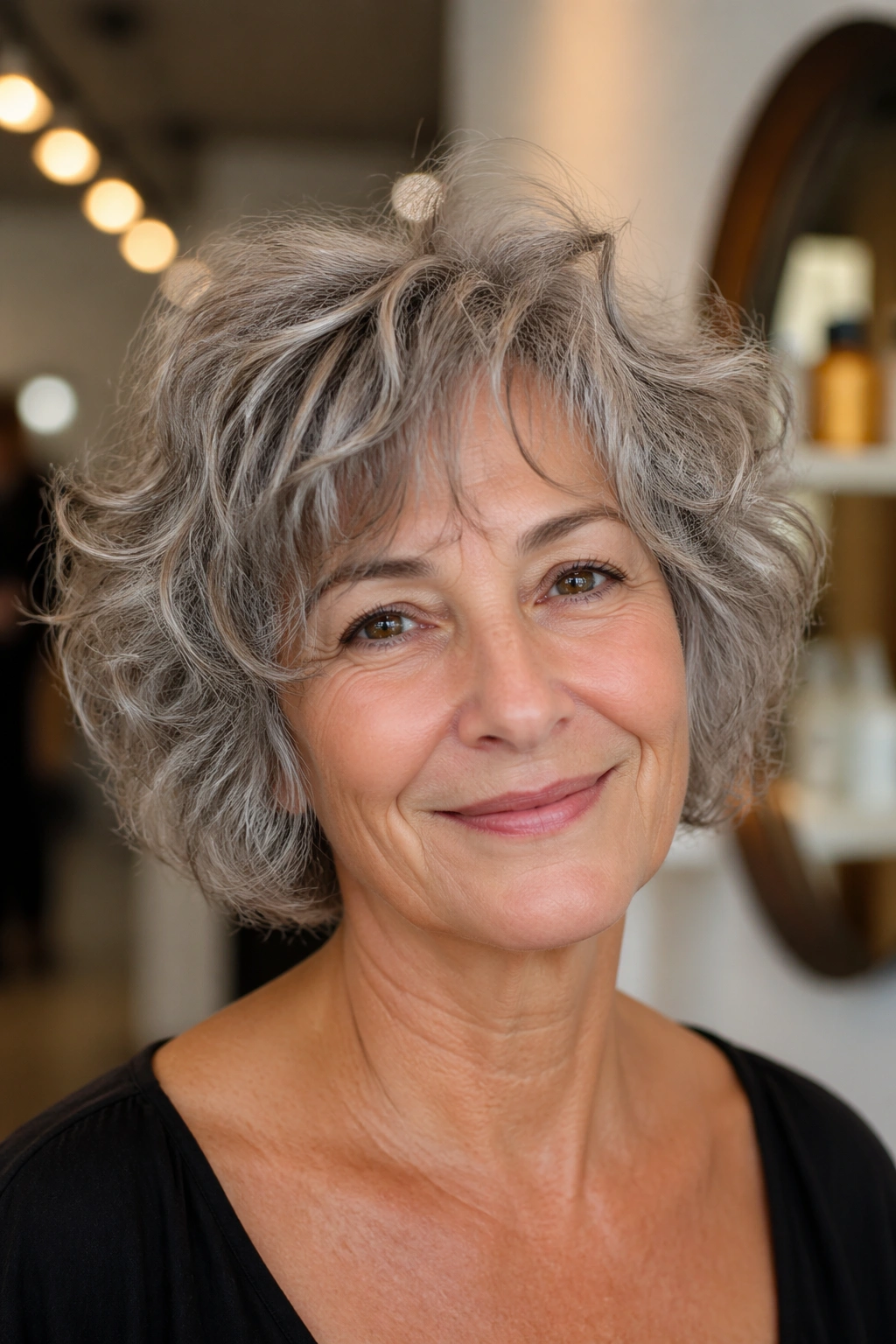
A chin-length curly shag has attitude, but not the annoying kind. It gives lift at the crown, space through the sides, and just enough edge to keep the cut from looking like a dated “mature woman” haircut from a department store salon board.
The shag works because the layers do the heavy lifting. Shorter pieces around the top and face create movement, while the lower curls stay long enough to soften the shape. That mix keeps the cut from feeling too tidy. Curly hair usually looks better with a little air in it anyway.
This is a smart option if your curls go flat on top and puff out at the bottom. It also helps if you want a shape that looks good with a side part or a slightly messy finish. Messy, but on purpose. There’s a difference.
How to Style It
Use a light curl cream or mousse on damp hair, then scrunch gently and diffuse on low heat. If you rake through it too much, the layers can separate in a bad way and make the top look stringy. That’s the one trap with a shag: it wants shape, not fuss.
3. Shoulder-Grazing Curly Lob
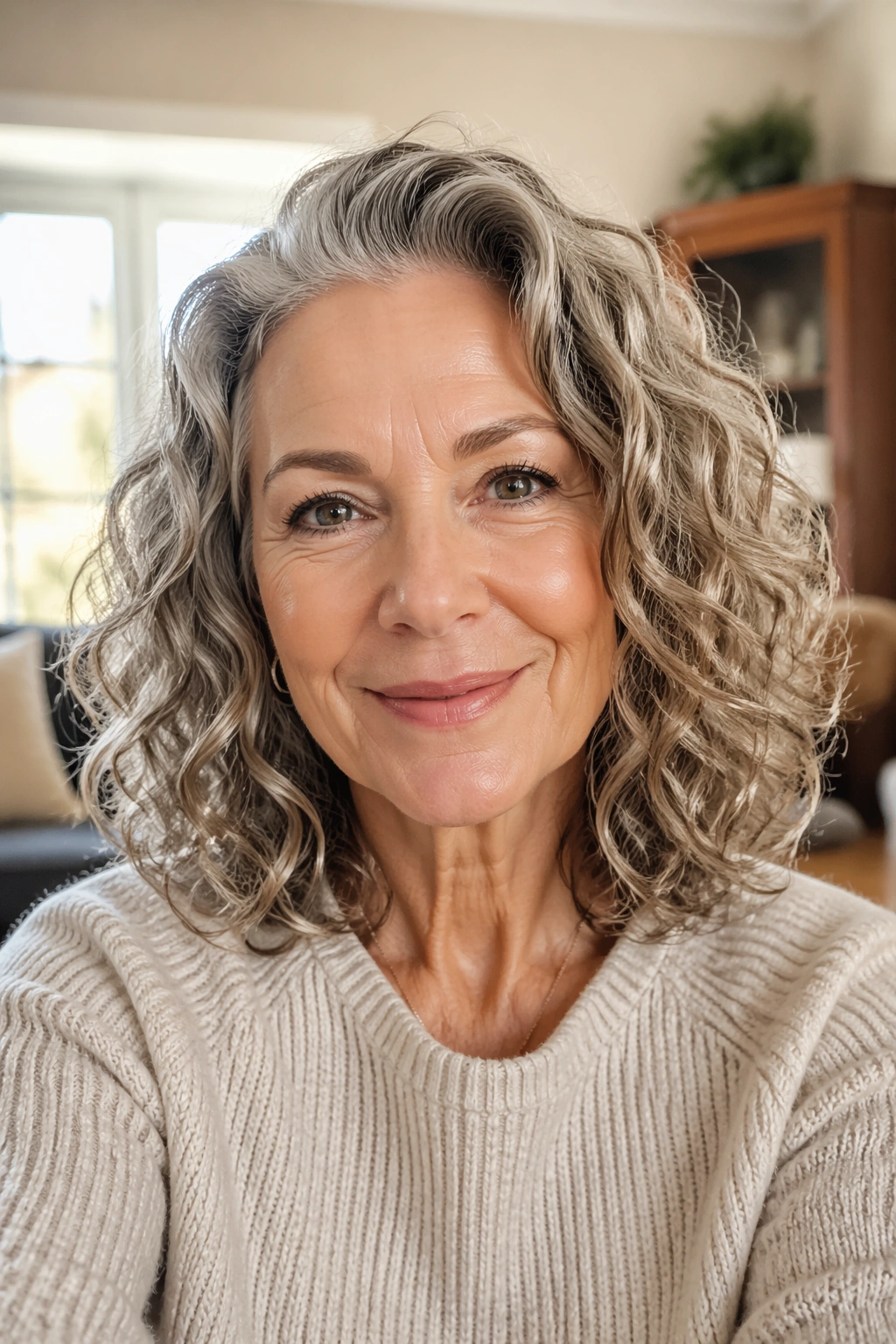
Why do so many women keep coming back to the curly lob? Because shoulder length is forgiving. It gives curls room to bounce, but it still feels long enough to pull back, clip up, or tuck behind one ear when you need to.
The shoulder-grazing length is especially useful for women with medium to thick curls. There’s enough length to keep the curl pattern from springing upward too high, and enough mobility to avoid a blocky outline. That’s a small thing, but it changes everything in the mirror.
It also works well when you want softness around the neck without the full commitment of a short cut. Some women love the way a lob brushes the collarbone and swings when they move. Some just want less bulk than a mid-back cut. Either way, this length earns its place.
If you have grays coming in, this style can be lovely because the color variation shows up across the length. The lighter pieces catch the eye, especially when the layers are subtle and the finish looks airy rather than overstyled.
Practical Styling Note
Ask for long layers that start below the chin. Too many short layers can make a lob look scattered. Too few layers can make it hang like a curtain. Neither is ideal.
4. Tapered Curly Pixie
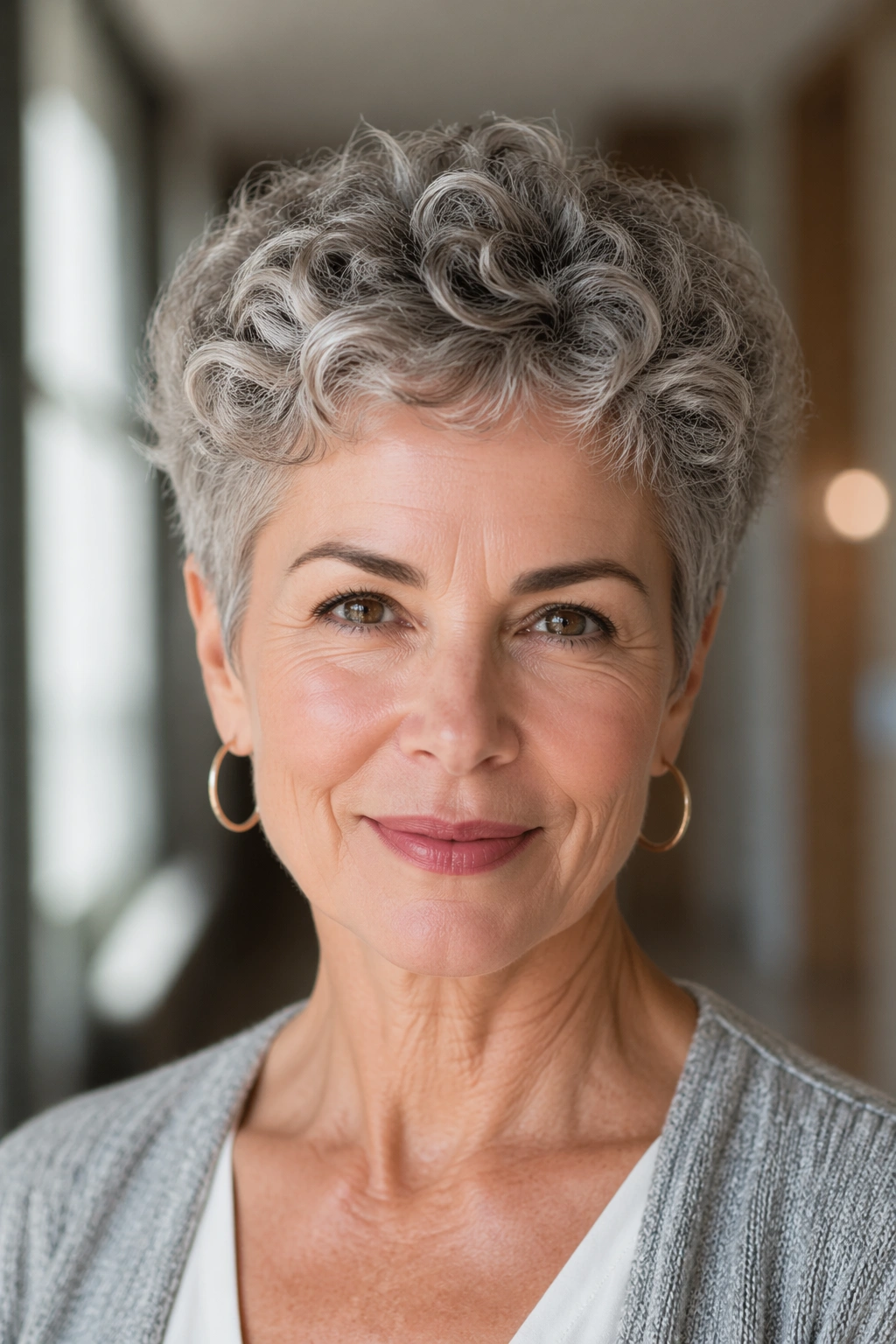
A tapered curly pixie is for women who are done pretending long hair is easier just because it has more of it. Short curls can be fast, flattering, and a lot more stylish than people expect, especially when the sides and nape are tapered close and the top is left with enough length to show off the curl pattern.
This cut shines on faces that need lift near the eyes and cheekbones. The taper keeps the outline neat, which matters when curls are springy or dense. On the right hair, it can make earrings, glasses, and necklines look sharper too.
It is also a relief for women with thick hair that feels heavy by noon. Shorter sides remove a chunk of that weight. The top stays lively instead of flattening into a sad little cap.
A Few Things to Know
- Ask for enough length on top to form visible curls
- Keep the nape soft, not shaved unless you really want that edge
- Use a tiny amount of styling cream; too much product weighs this cut down fast
- Plan for regular trims, because short curls grow out oddly when ignored
My honest take: a tapered pixie looks best when it is cut with curl shrinkage in mind. If the stylist cuts it too short wet, it can end up much shorter than you wanted.
5. Side-Parted Medium Curls with Long Layers
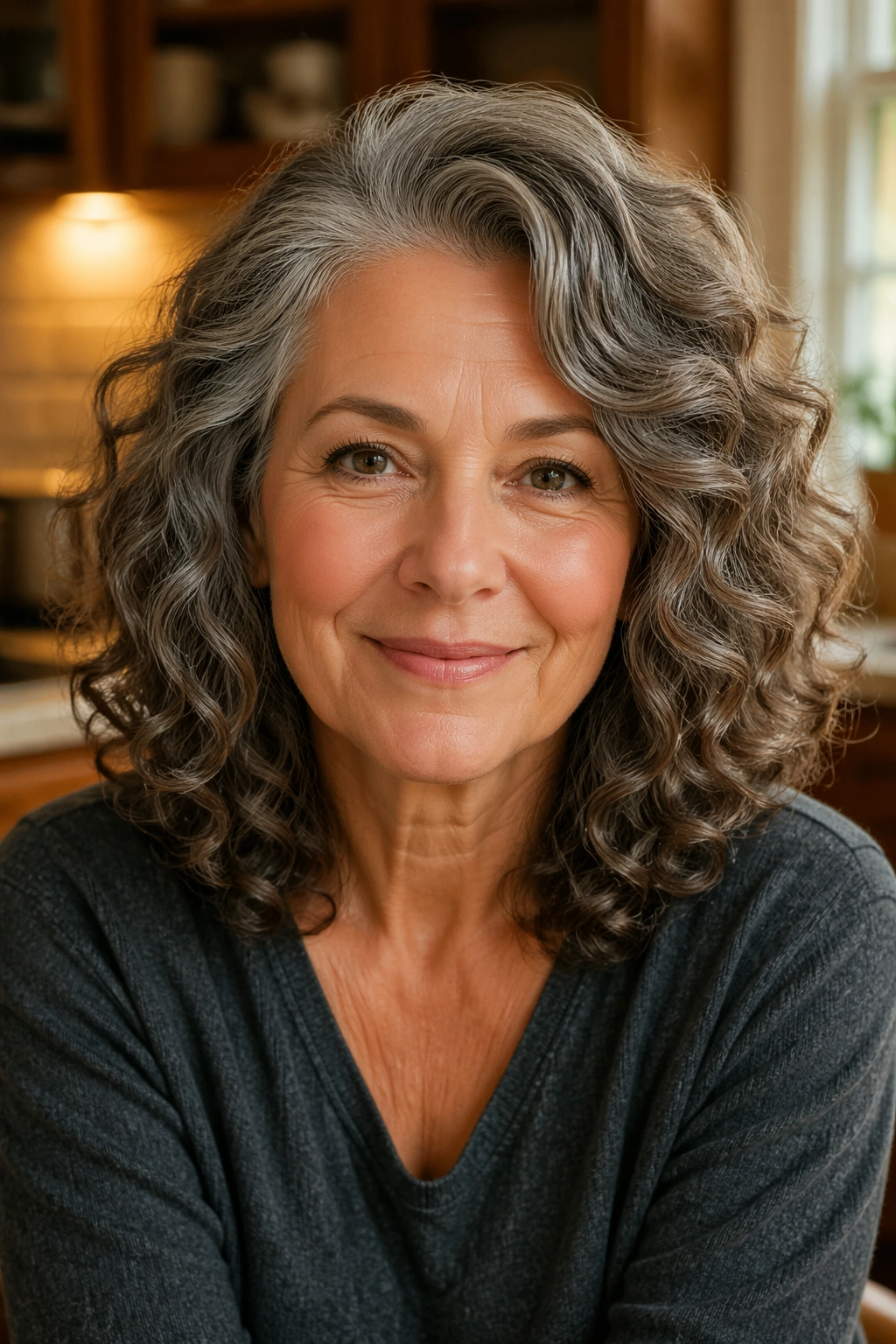
A side-parted medium cut is quietly excellent. It does not shout, and that is part of the appeal. The side part gives instant lift at the root, while long layers keep the curls loose enough to move instead of clumping together in one heavy block.
This shape is especially kind to women who want softness around the face without bangs. The part can shift the eye line a little, which helps if one side of the face feels fuller or if you want to soften a high forehead. It sounds small. It is not small.
Medium length is also practical. You can wear it down, clip the front back, or sweep it into a low twist on days when you want less hair touching your neck. That flexibility matters more than people admit.
Gray curls look beautiful in this shape because the part and layers create contrast. Not stark contrast. Just enough variation for the texture to show. When the cut is right, the hair looks alive from every angle.
One quiet trick: ask your stylist to check how the curl falls on both sides after it dries. That sounds obvious, yet many cuts are judged before the curl pattern settles.
6. Rounded Natural Afro
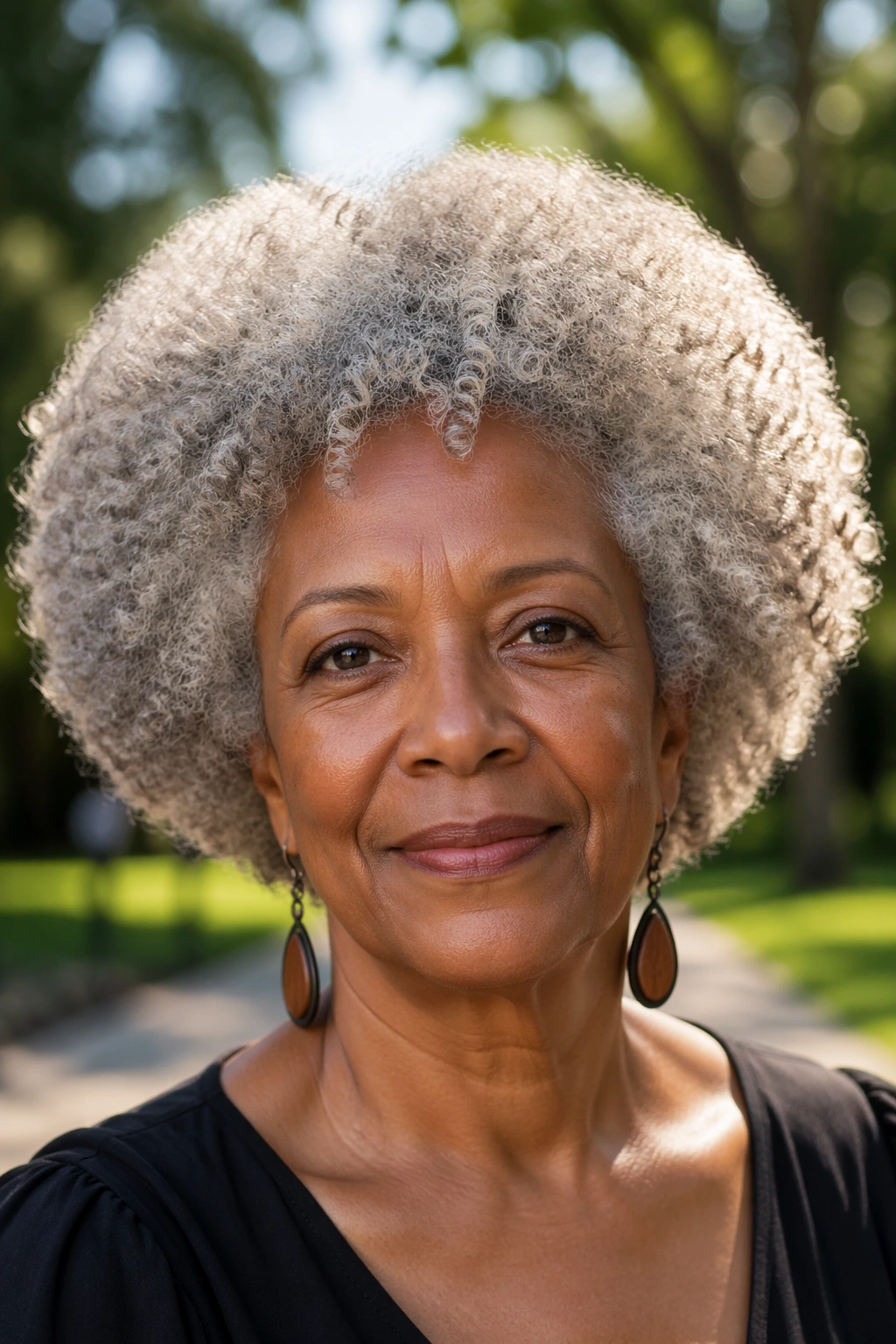
A rounded natural afro is not just a hairstyle. It is a shape decision. And shape matters a lot more than length when you are working with tight curls or coils.
Unlike straighter styles that try to collapse the hair close to the head, the rounded afro celebrates width and lift on purpose. That makes it one of the strongest options for women over 60 who want their natural texture to be the main event. Not hidden. Not subdued. Just properly shaped.
The beauty of this cut is that it can be modest or dramatic depending on the length and density. A shorter round shape feels neat and elegant. A fuller one feels bold and expressive. Either way, the silhouette stays soft around the edges and focused near the face.
Who does it suit best? Women with tight coils, dense texture, or hair that expands a lot when dry. It also pairs well with natural gray and white hair, which can look almost luminous when the shape is clean and the ends are well kept.
Recommendation: keep the sides and top balanced. If one area gets too much length, the round shape starts to drift into a pyramid, and nobody wants that.
7. Curly Crop with Soft Fringe
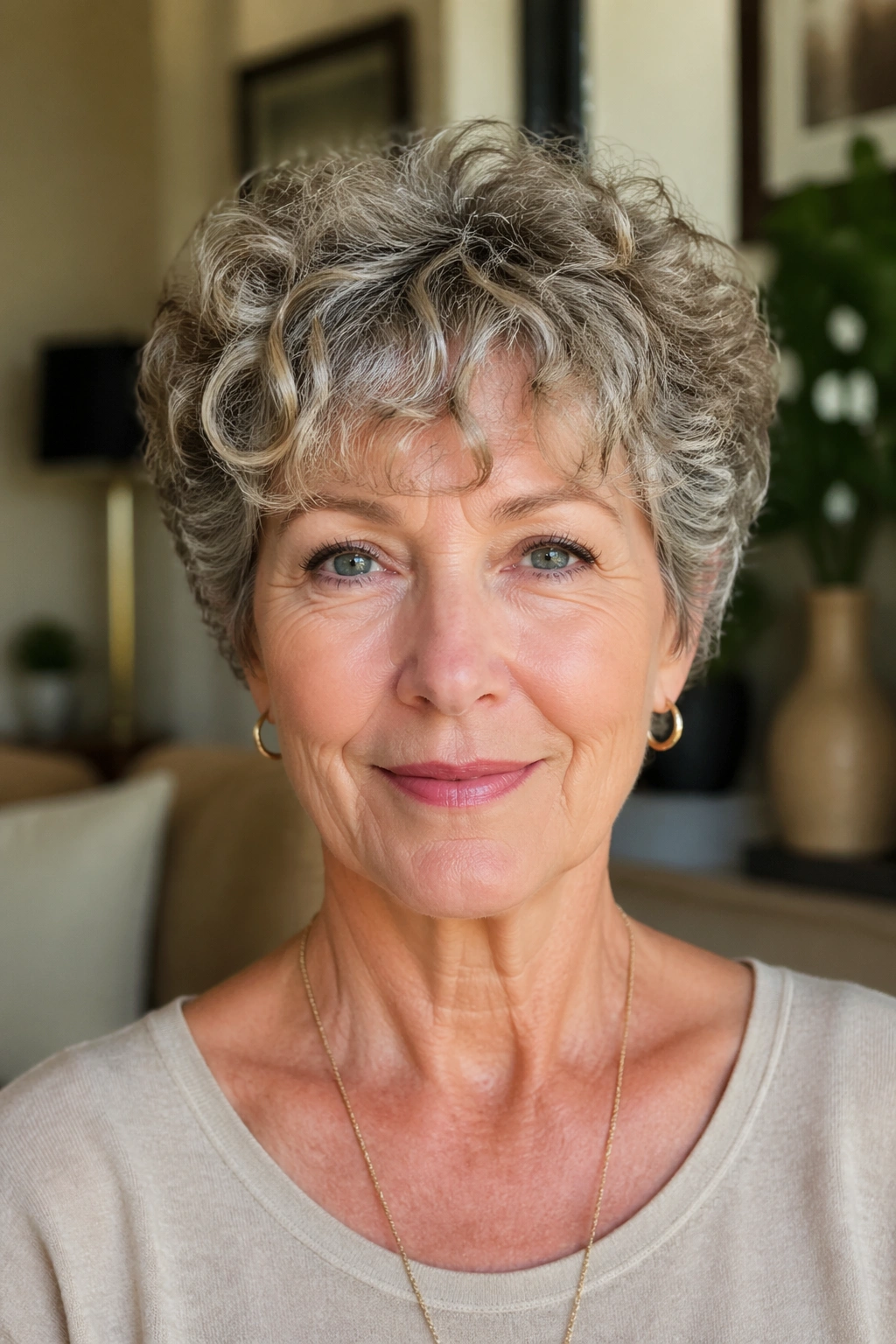
A curly crop with a soft fringe can take years off the face without trying to act youthful. There’s a difference. The fringe softens the forehead, the crop keeps the cut light, and the curls add texture that stops the whole thing from looking too severe.
Why the Fringe Matters
A soft fringe is useful when you want something gentler than a full blunt bang. It breaks up a strong hairline, gives the eyes a little frame, and blends well with both loose curls and tighter spirals. The best version usually lands somewhere between eyebrow level and just above the lashes when dry.
This style works especially well for women who wear glasses. A heavy bang can fight with the frames. A soft fringe usually plays nicer. It can also help balance a long face or a narrow chin, since the hair sits more forward around the top half of the face.
What to Ask For
- A fringe cut dry, curl by curl
- Shorter pieces at the crown for lift
- A cropped shape that leaves the sides soft
- Light shaping around the temples
The one thing to avoid is a fringe that gets cut too straight and too dense. Curly bangs need movement, or they turn into a wall.
8. Long Curly Layers with Face-Framing Pieces
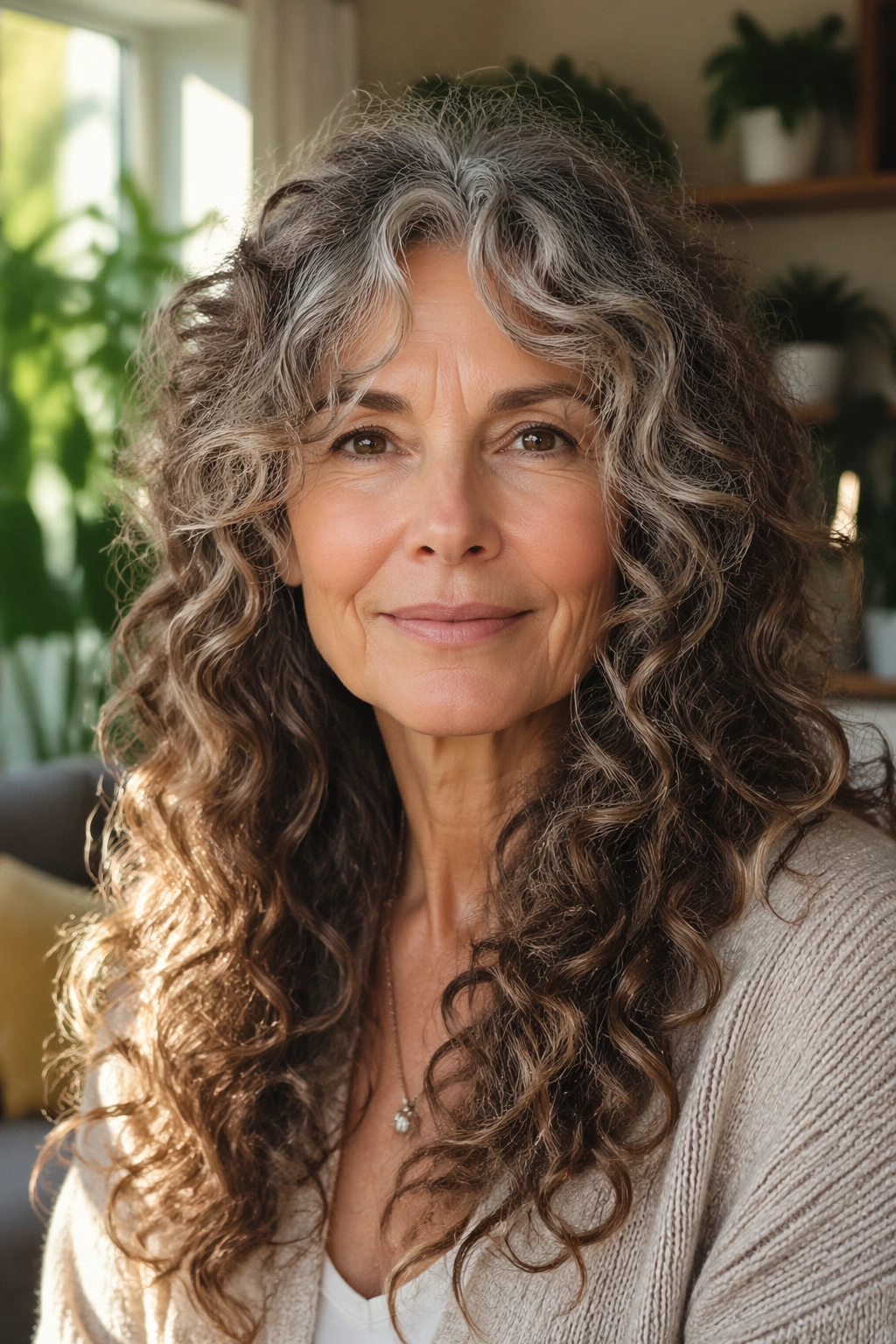
Long curls after 60 can look gorgeous when they are cut with actual shape. That “actual shape” part is not optional. Without layers, long curly hair can drag the face down and create a heavy outline that feels older than the person wearing it.
Face-framing pieces fix a lot of that. They open the front, lighten the line around the jaw, and keep the curls from feeling like one long curtain. The longest pieces can still brush the chest or collarbone, but the front needs some purpose. Otherwise the cut just hangs there.
This style is a strong choice for women who love length and do not want to chop it off just because a certain age bracket seems to expect that. Fine. Keep the length. Just give it structure. Long curls can be elegant, soft, and relaxed all at once when the layers are placed with care.
It also gives you room to wear the hair half-up, clipped back, or pinned off the face on hot days. That matters. Hair that never leaves your face gets old fast, no matter how nice it looks in the morning.
9. Stacked Curly Bob
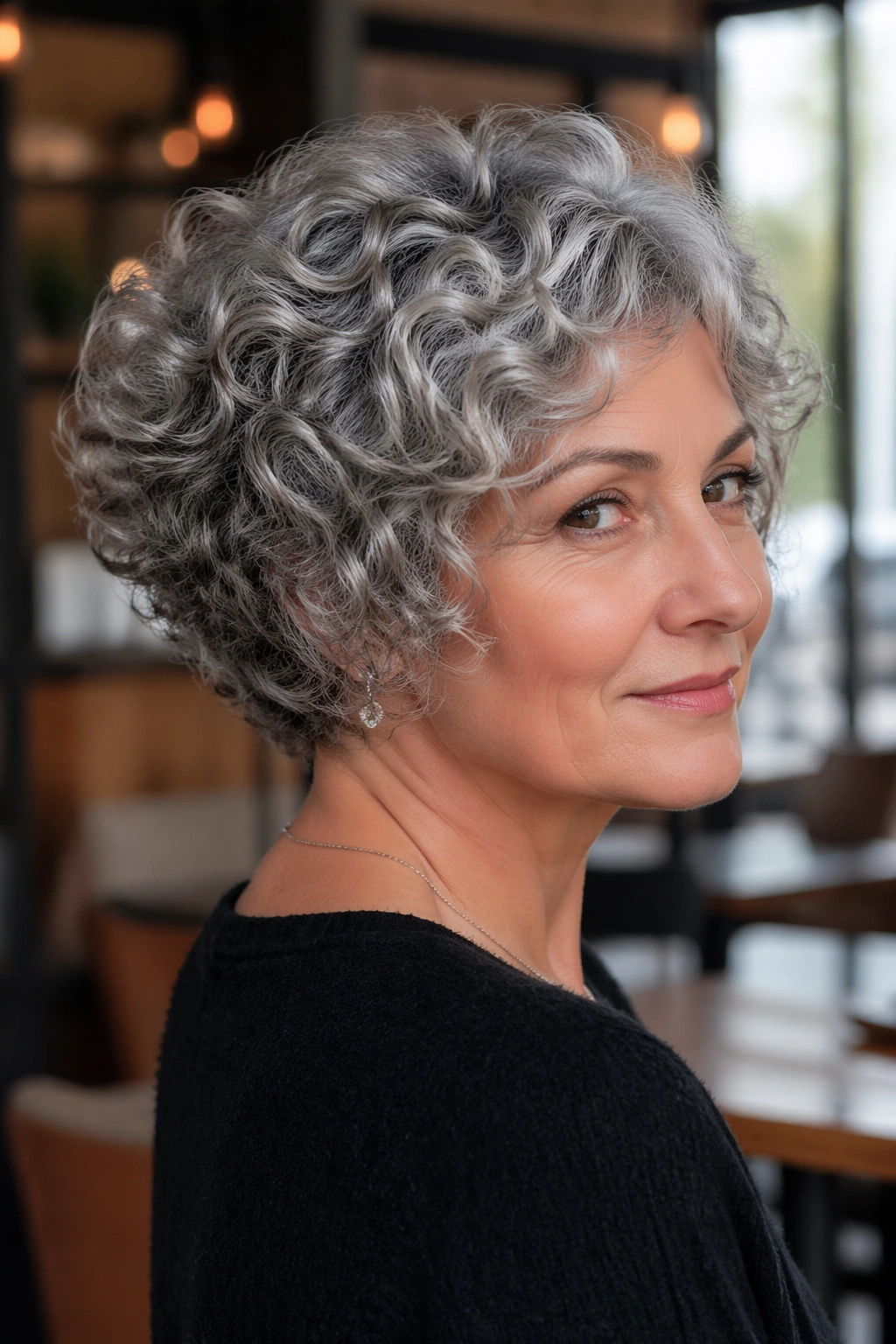
A stacked curly bob is all about the back. Shorter layers are built into the nape so the hair lifts and curves inward, while the front stays a bit longer for softness. Done right, it gives you shape without making the haircut feel stiff.
Would this work on thick curls? Yes, and often beautifully. The stacking removes bulk where it tends to collect, especially at the back of the head. On fine curls, though, it needs a lighter hand. Too much stacking can make the back disappear and leave the front looking too heavy.
The charm of this cut is that it creates a little architecture. The hair sits up, then falls into a rounded line that follows the head instead of floating away from it. That is why it looks neat even when the curls are doing their own thing.
How to Wear It
- Blow-dry only the roots if you need lift
- Diffuse the ends to keep the curl pattern intact
- Keep the back trimmed often, because growth changes the shape fast
- Ask for soft graduation rather than sharp stacking if your hair is fine
A stacked bob is not boring. It is disciplined. That’s different.
10. Curly Cut with Side Bangs
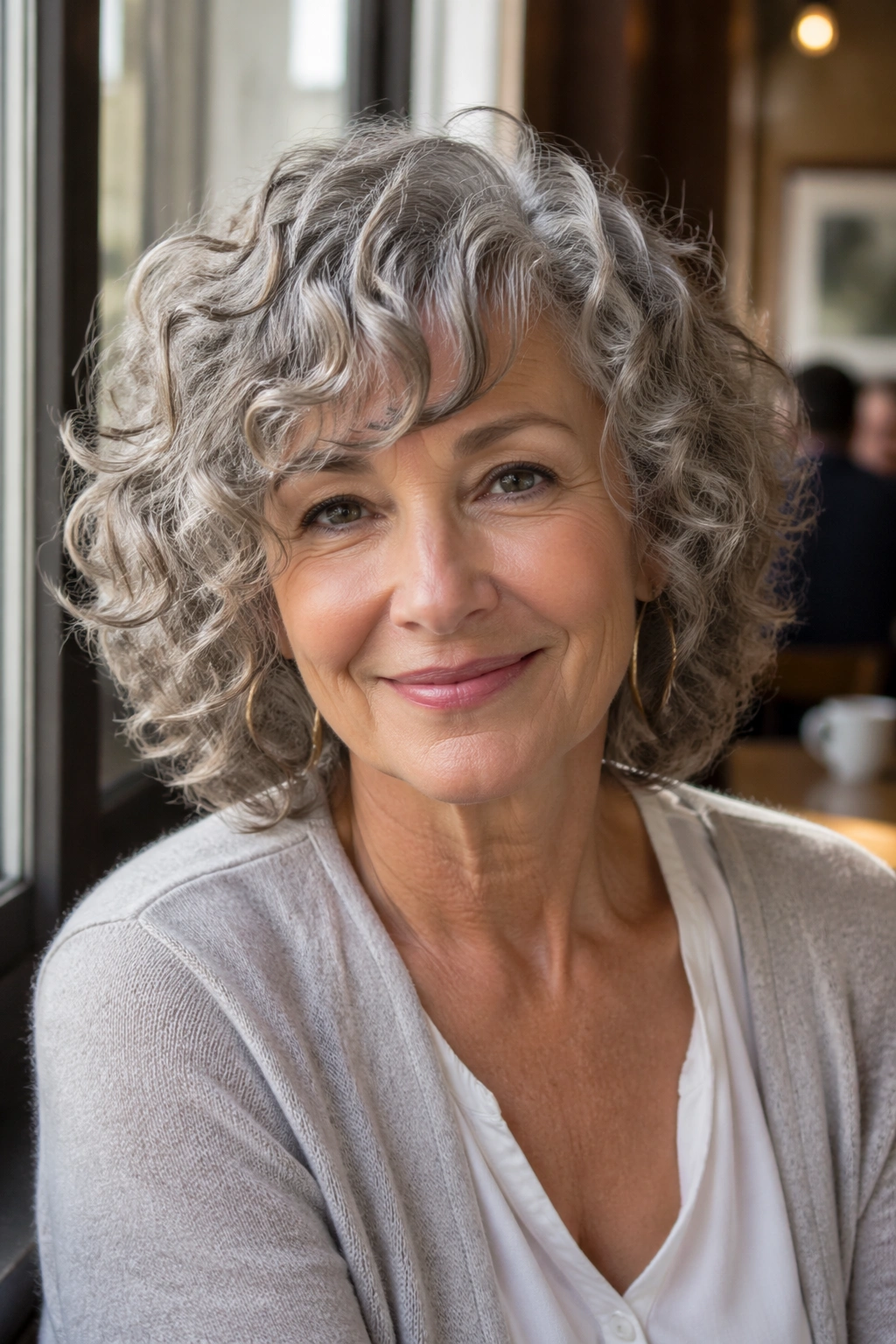
There’s a reason side bangs keep coming back. They soften a face without blocking it. They hide a little forehead, blend with cheek-length curls, and give the whole cut a relaxed, friendly look that suits a lot of women over 60.
This style works especially well if you want some face coverage but do not want a full fringe sitting straight across your forehead. Side bangs can drift into the rest of the cut instead of demanding daily obedience. That freedom is worth a lot on busy mornings.
It also gives the haircut movement near the front, which is where people tend to notice shape first. If the front sits well, the rest of the style usually feels better too. Funny how that works.
A woman I once saw in a salon had short silver curls with one long side bang that skimmed her eyebrow. Nothing fussy. Nothing stiff. The whole cut looked soft, modern, and easy to live in. That’s the goal. Not “young.” Easy.
Watch for: a side bang that gets too heavy. If it keeps falling into your eye, it probably needs a little more shaping or a shorter starting point near the temple.
11. The Deva Cut for Natural Curls
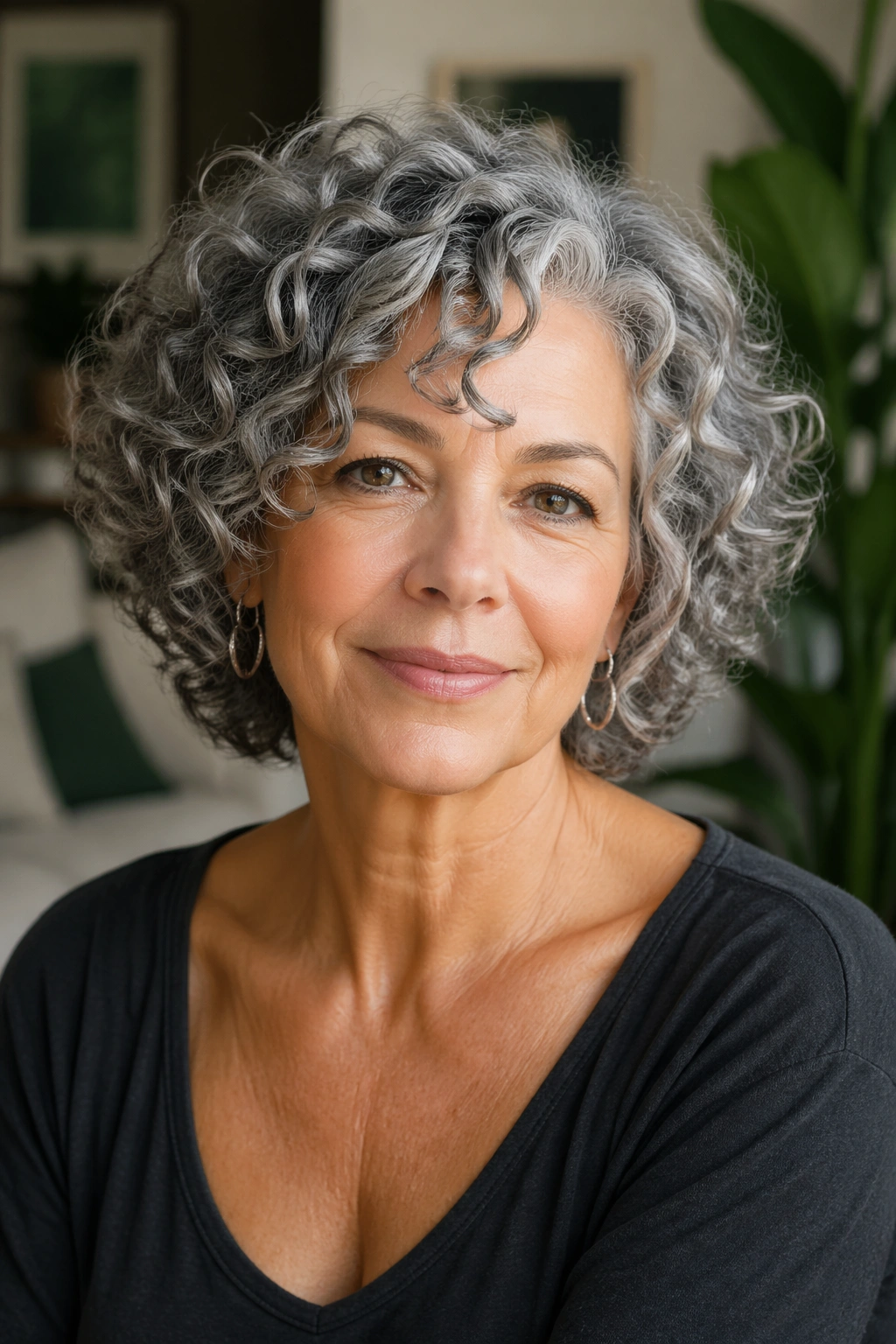
The Deva Cut gets talked about a lot, and for good reason. It is cut curl by curl, often on dry hair, so the stylist can see how each section lives on your head instead of guessing. That matters when curls change direction, shrink unevenly, or cling in one spot and bounce in another.
For women over 60, this method can be a relief. Hair often changes texture over time. Some areas get looser. Some get frizzier. Some go flatter at the crown. A dry, curl-aware cut lets the stylist shape around those realities instead of pretending all the hair behaves the same way.
The catch is simple: not every salon does this well. A Deva Cut is only as good as the person holding the scissors. If the stylist cuts curly hair all day, great. If not, the technique can turn into expensive guesswork. Ask direct questions. Ask what they do when a curl shrinks more than expected. Ask how they handle uneven patterns.
The payoff, when it works, is good shape with less daily fighting. Curls fall where they should. The outline feels intentional. You spend less time wetting and rewetting pieces that refuse to cooperate.
12. Asymmetrical Curly Bob
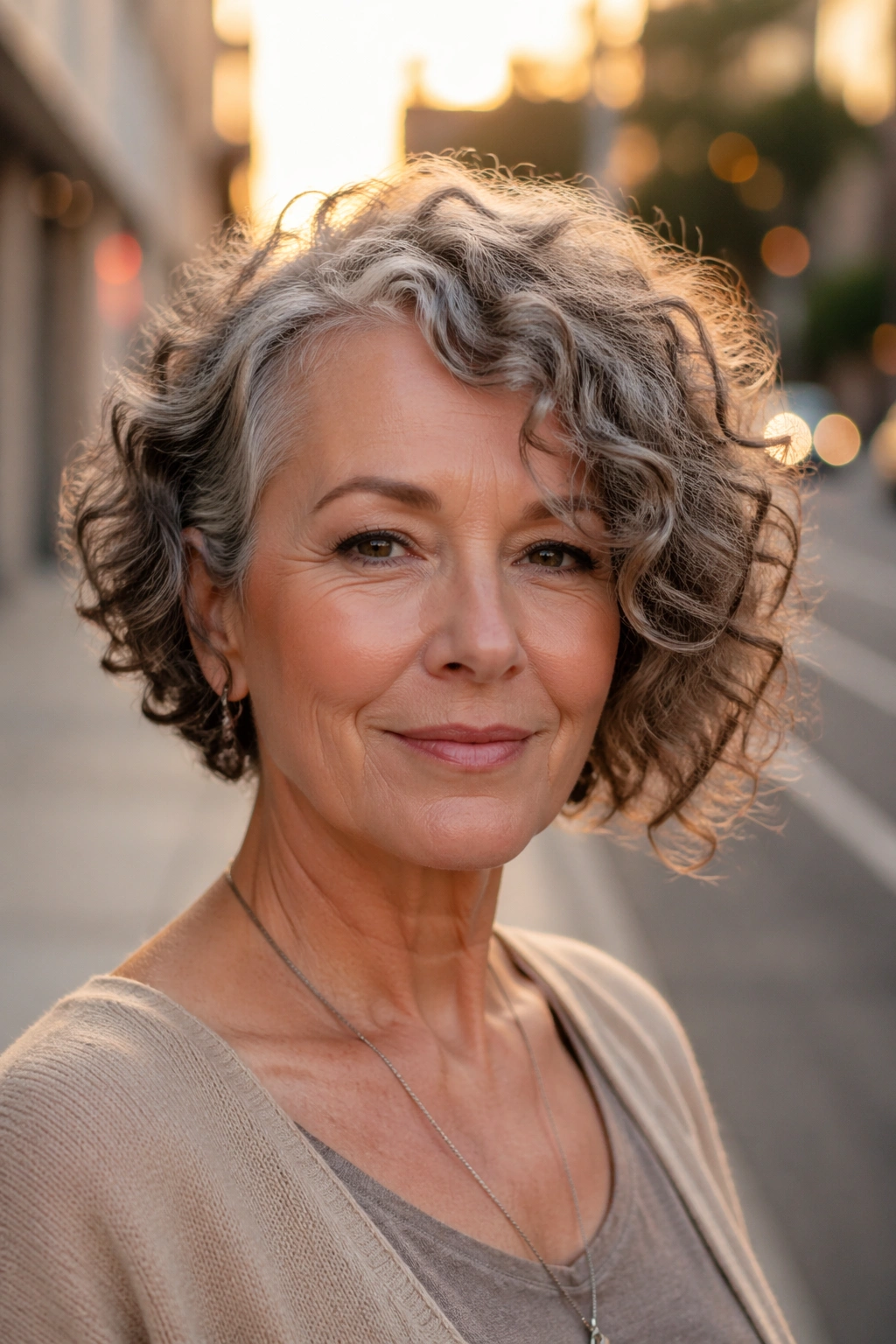
An asymmetrical curly bob brings a little edge without needing anything dramatic. One side sits slightly longer than the other, and that small change creates movement before you even style it. Curly hair makes the asymmetry look softer than it would on straight hair, which is why this cut can feel bold but still wearable.
This is a nice option if you want a bob and worry it might feel too safe. It won’t. The longer side draws the eye downward, which can slim the face a bit, and the shorter side opens the neckline. That shift gives the cut personality.
Unlike a standard bob, this shape does not rely on perfect symmetry to look finished. In fact, a little imperfection helps. Curls already move in their own direction, so a slightly uneven line can look more natural than a textbook straight edge.
Best For
- Women who want a modern look without shaving the sides
- Medium-density curls that need shape but not a ton of bulk removal
- Oval, round, or heart-shaped faces
- Anyone who likes a cut that looks styled even on a plain day
Specific tip: keep the length difference moderate. A dramatic swing can be fun, but subtle asymmetry usually ages better and grows out more gracefully.
13. Collarbone-Length Curls with Invisible Layers
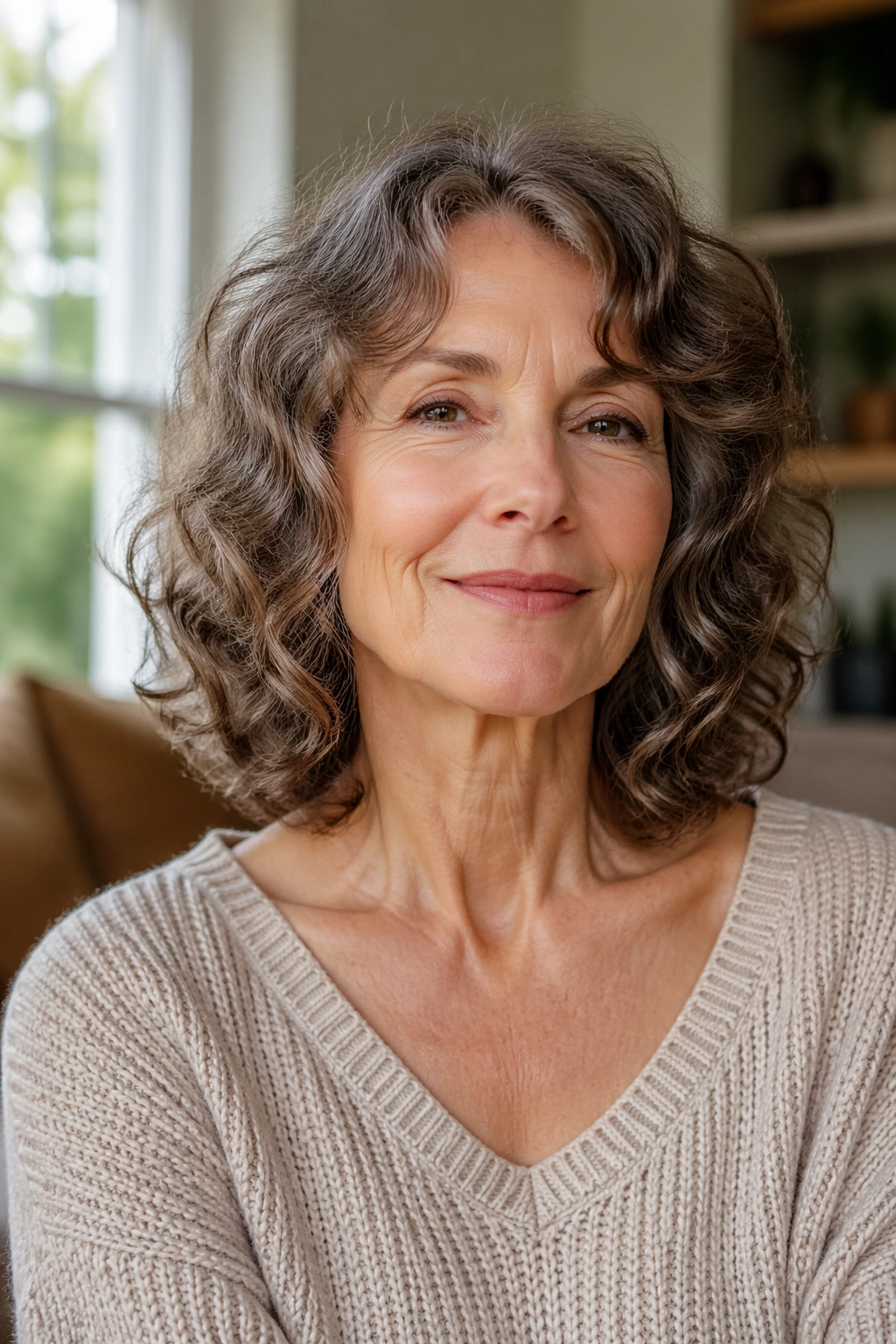
Collarbone length sits in a sweet spot. It is long enough to feel soft, short enough to stay manageable, and low enough to brush against sweaters without getting trapped in them all day. With curly hair, that length becomes much easier to wear when the layers are hidden inside the shape instead of cut all over the outside.
Invisible layers are the quiet workhorse here. They remove weight from the middle and lower sections without making the surface look choppy. The curl pattern stays full, but the hair moves better. That matters if your hair has a lot of density or if the ends tend to splay out.
This style is especially nice for women who want to keep some length but do not want a heavy, uniform block. It gives a softer line around the shoulders and can make the neck look longer. No drama. Just smart shaping.
How to Get the Most From It
- Ask for internal layering, not big visible steps
- Keep the ends trimmed before they get too wispy
- Use a diffuser to encourage the curl shape at the collarbone
- Pin one side back when you want a cleaner look
A collarbone cut often looks best on day two. The curls settle, the layers relax, and the whole shape feels a little more lived-in.
14. Soft Curly Wolf Cut
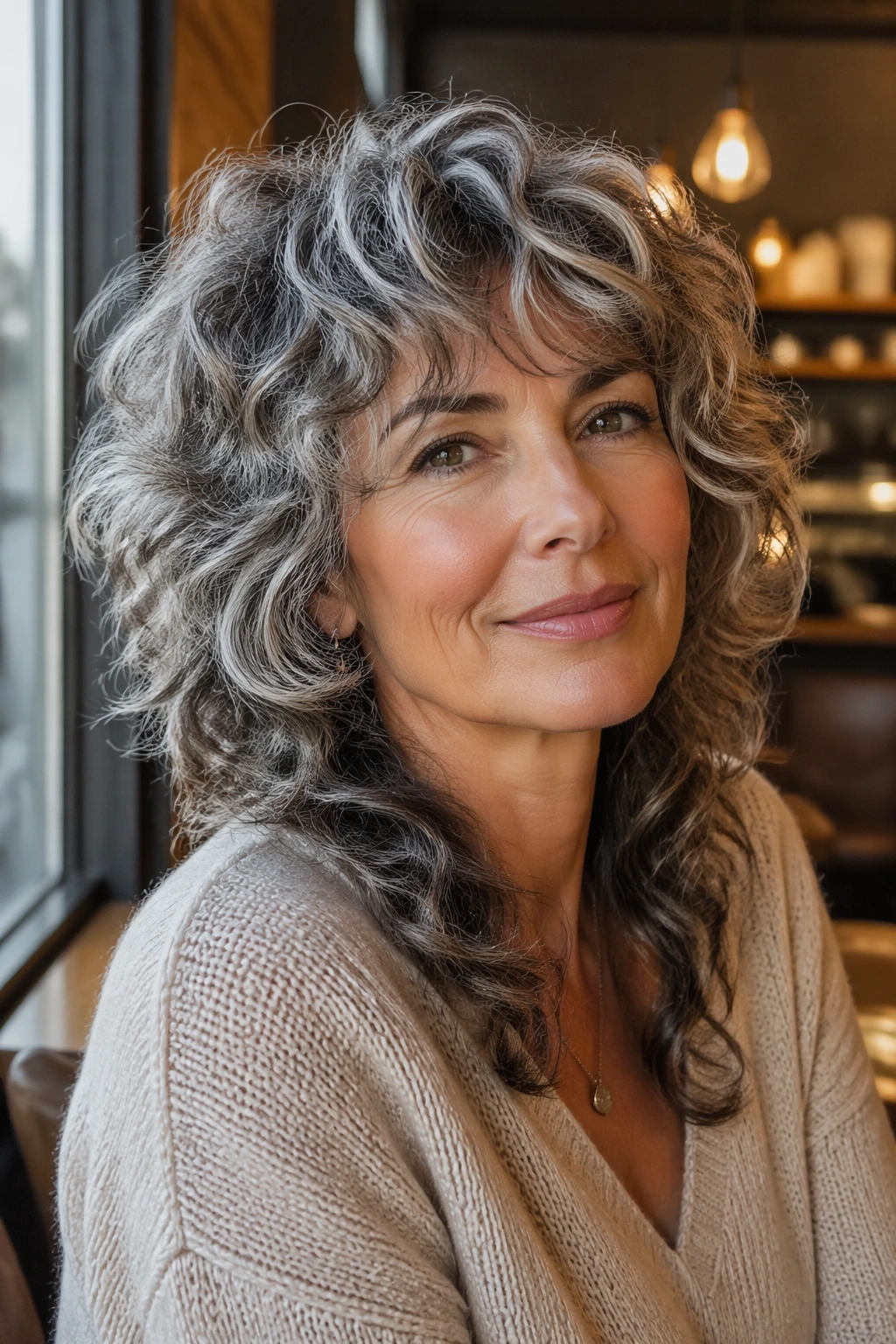
The curly wolf cut sounds wild, but the soft version is surprisingly wearable. Think shag energy with more length through the back and a looser outline around the face. It gives movement, height, and a bit of edge without making the head look like it’s wearing a stack of disconnected layers.
This cut is a strong match for thick curls that need release. If your hair tends to balloon out when it gets too long, the wolf cut can remove enough weight to make the curls spring instead of sag. The trick is restraint. Too many short layers and the whole thing turns frizzy. A softer hand keeps it wearable.
It also suits women who like a slightly undone finish. Not messy. Just not polished in a stiff way. The style feels more relaxed than a formal bob and less predictable than a classic shag.
What to Tell Your Stylist
- Keep the layers blended, not chopped
- Leave enough length around the front to soften the cheekbones
- Avoid cutting the top too short if your curls are tight
- Ask for movement, not a mullet-shaped surprise
My opinion: this is a good cut if you want your curls to look energetic. It is not the right choice if you want absolute neatness.
15. Low Curly Updo with Loose Tendrils
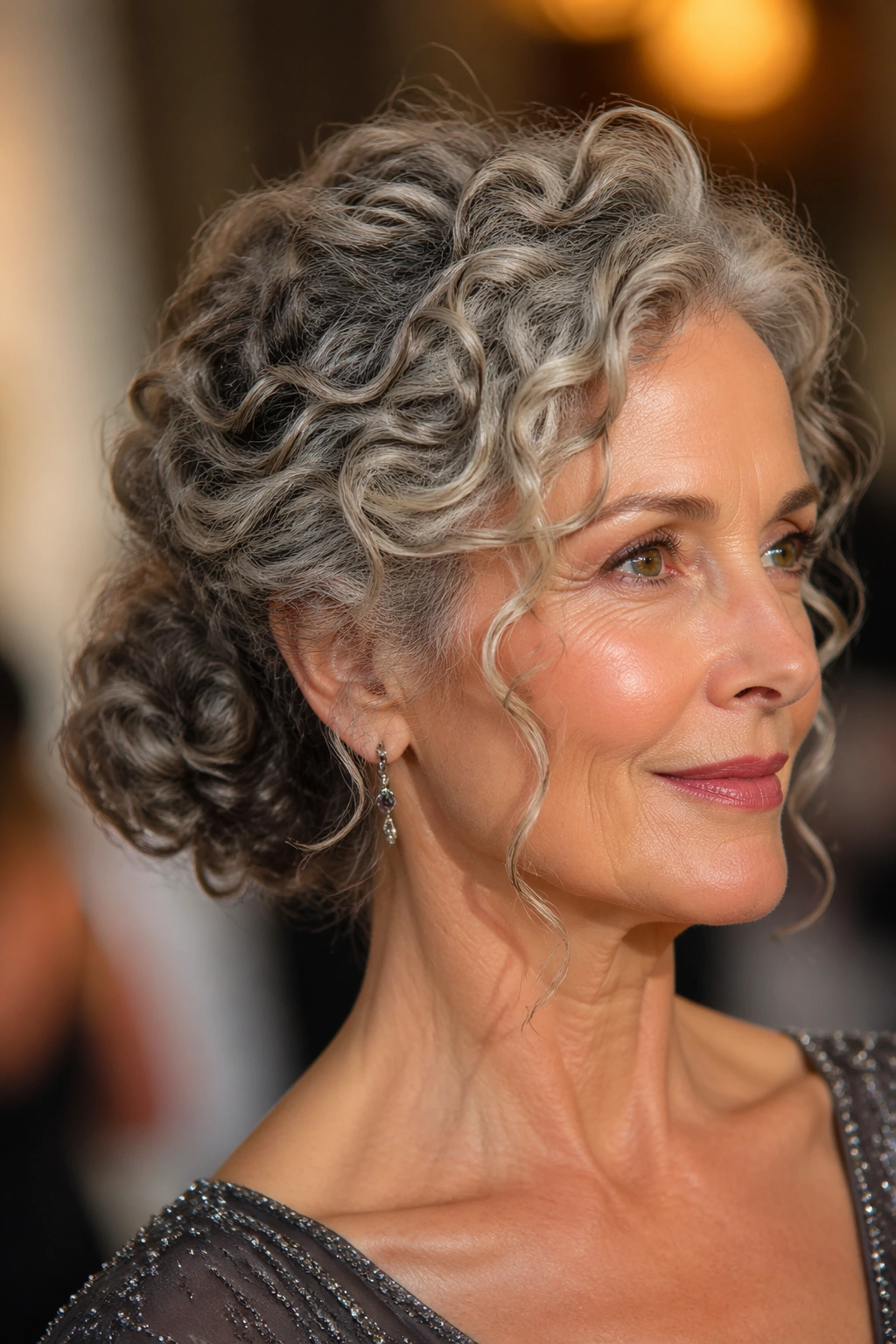
Some days call for a haircut. Other days call for a style that keeps the curl pattern intact and gets the hair off your neck. A low curly updo does exactly that. It can look relaxed, polished, or a little romantic depending on how tightly you pin it.
This is one of the nicest options for events, dinners, or any day when you want the face open and the neckline clean. The loose tendrils matter. They soften the finished look and keep the style from becoming too severe or too tight. A few curls around the ears or temple are often enough.
For women over 60, this style is especially useful because it works with shorter layers and mixed lengths. You do not need every piece to reach the same place. In fact, the slightly uneven curls are what make it feel human.
How to Build It
- Gather the hair loosely at the nape
- Twist or pin it into a low bun or roll
- Leave 2 to 4 face-framing curls out on purpose
- Use pins that match your hair color if you want the style to disappear into the curls
The best part? It does not need to be perfect. A low curly updo looks better when it has a little softness and movement around the edges.
Final Thoughts
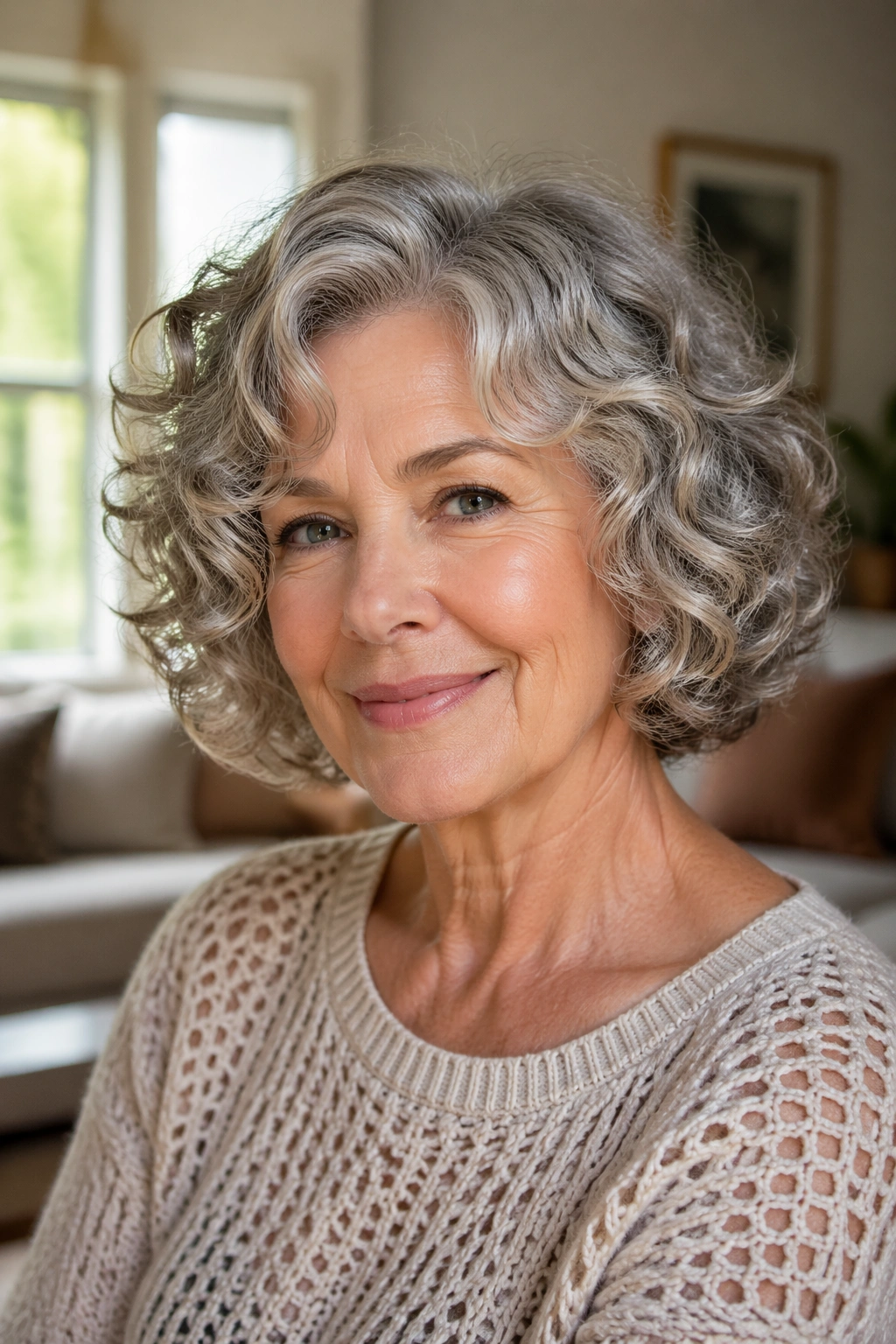
The best curly hairstyle after 60 is the one that respects the curl pattern you actually have. Not the one from a magazine. Not the one that looked cute on someone with a completely different texture. Yours.
Shape matters more than age. So does weight control, especially around the sides and crown. If a cut lets your curls move, keeps the outline soft, and saves you from daily wrestling, that is a good cut.
Bring photos to the salon, sure. Bring your curl habits too. Tell the stylist whether you air-dry, diffuse, clip the front back, or reach for a low bun most mornings. That tiny bit of honesty helps more than a vague “something flattering” request ever will.