

Curly hair and ponytails can be best friends, but only if you stop treating curls like straight hair with volume. A ponytail for a child with curls should keep the shape, protect the ends, and leave room for bounce. When it’s done well, it looks neat without flattening the hair into a tight, sad line at the scalp.
Ponytails for kids with curly hair work best when comfort comes first. Tight elastics, heavy gel, and aggressive brushing tend to cause the same problems over and over: headaches, puffed-up roots, frizz at the crown, and a child who refuses to sit still for the whole process. Nobody wins there. A soft brush, a spray bottle, a little leave-in conditioner, and hair ties that don’t snag can do more than a bottle full of styling products.
The nice thing about curly ponytails is that they can be practical without looking plain. A high puff can feel sporty, a low ponytail can look polished for school, and a few twists or braids can turn a basic style into something a kid actually wants to keep on all day. You do not need a salon chair to get there, either. You just need the right style for the curl pattern, the child’s tolerance for pulling, and the amount of time you have before the bus shows up.
1. High Puff Ponytail
A high puff ponytail is the workhorse of curly hair styling. It lifts the curls up and away from the face, keeps the shape full, and takes advantage of the natural volume instead of trying to flatten it.
Why it works so well
This style is a favorite because it looks clean fast. Gather the hair at the crown, smooth the edges lightly with water or a tiny bit of gel if needed, then secure it with a soft elastic or satin scrunchie. The curls can sit high and proud, which means less tugging at the neck and less friction on the ends. If your child has tighter coils, leave the puff loose enough that the curls keep their spring.
A high puff also stays cute when it gets a little messy. That matters. Kids move, play, nap, and run around in every direction, so a style that still looks good after school is worth more than one that starts out perfect and falls apart by lunch.
Best way to wear it
- Mist the roots with water first so the hair bends without fighting back.
- Use your fingers or a wide-tooth comb to gather the hair at the crown.
- Secure with a snag-free elastic, then fluff the puff outward.
- If the hair is very thick, use two elastics stacked together for extra hold.
Tip: Keep the base firm and the puff soft. That balance is what makes it look intentional instead of squeezed.
2. Low Nape Ponytail
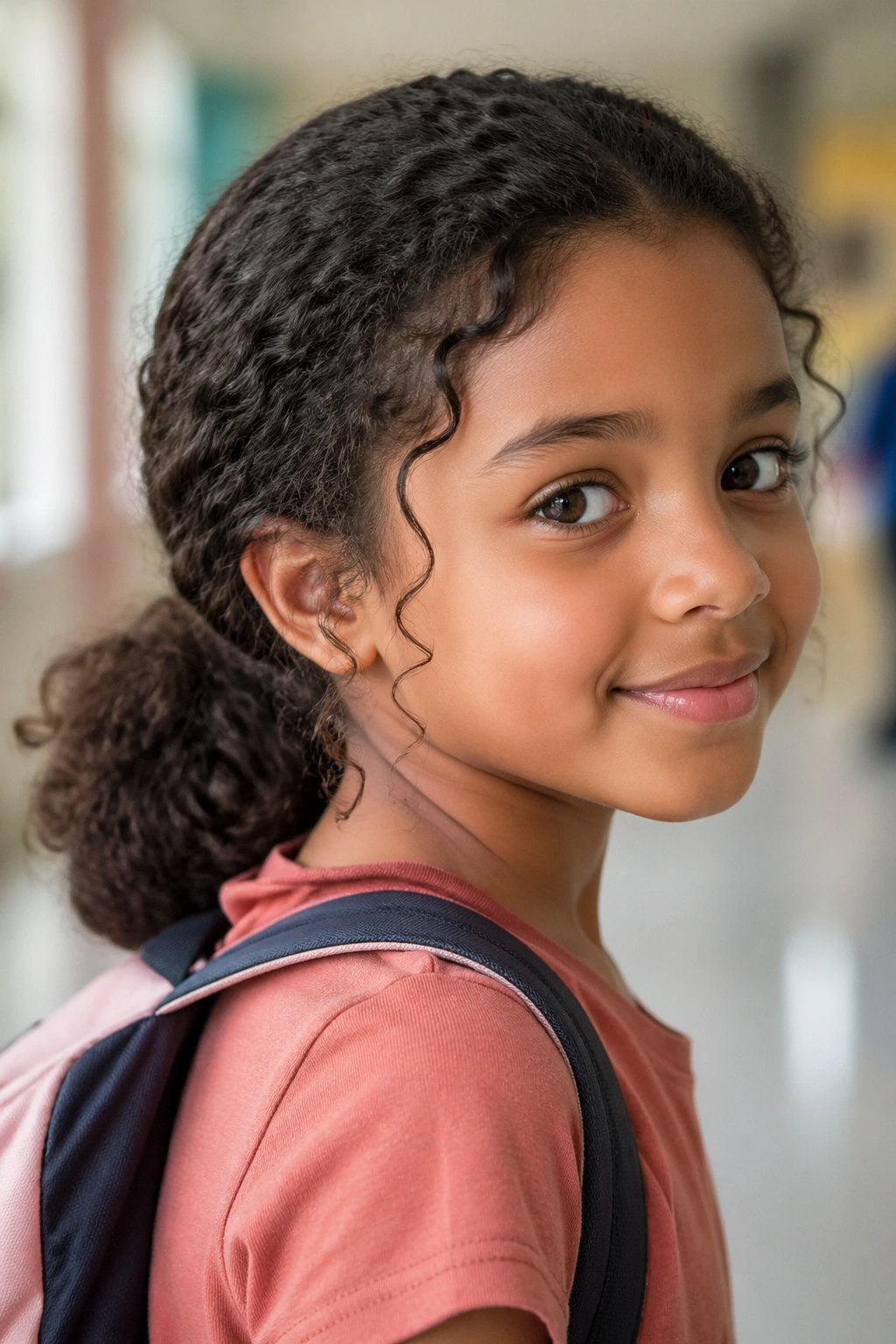
A low nape ponytail is quieter, softer, and often easier on sensitive scalps. It sits at the back of the neck, which makes it a nice choice for school days, picture days, and kids who do not like hair sitting on top of their head.
The charm here is restraint. You can smooth the front just enough to keep it tidy, then let the curls collect into a gentle tail at the nape. If the hair is long, the ponytail hangs nicely. If it’s shorter, the curls puff out into a round shape that still feels neat.
This one also plays nicely with accessories. A small bow, a satin tie, or even a tiny clip at the base can make it feel finished without turning it into a fussy style. For children who hate a lot of pulling, this is often the first ponytail they’ll keep on without complaining halfway through the day.
3. Side Ponytail
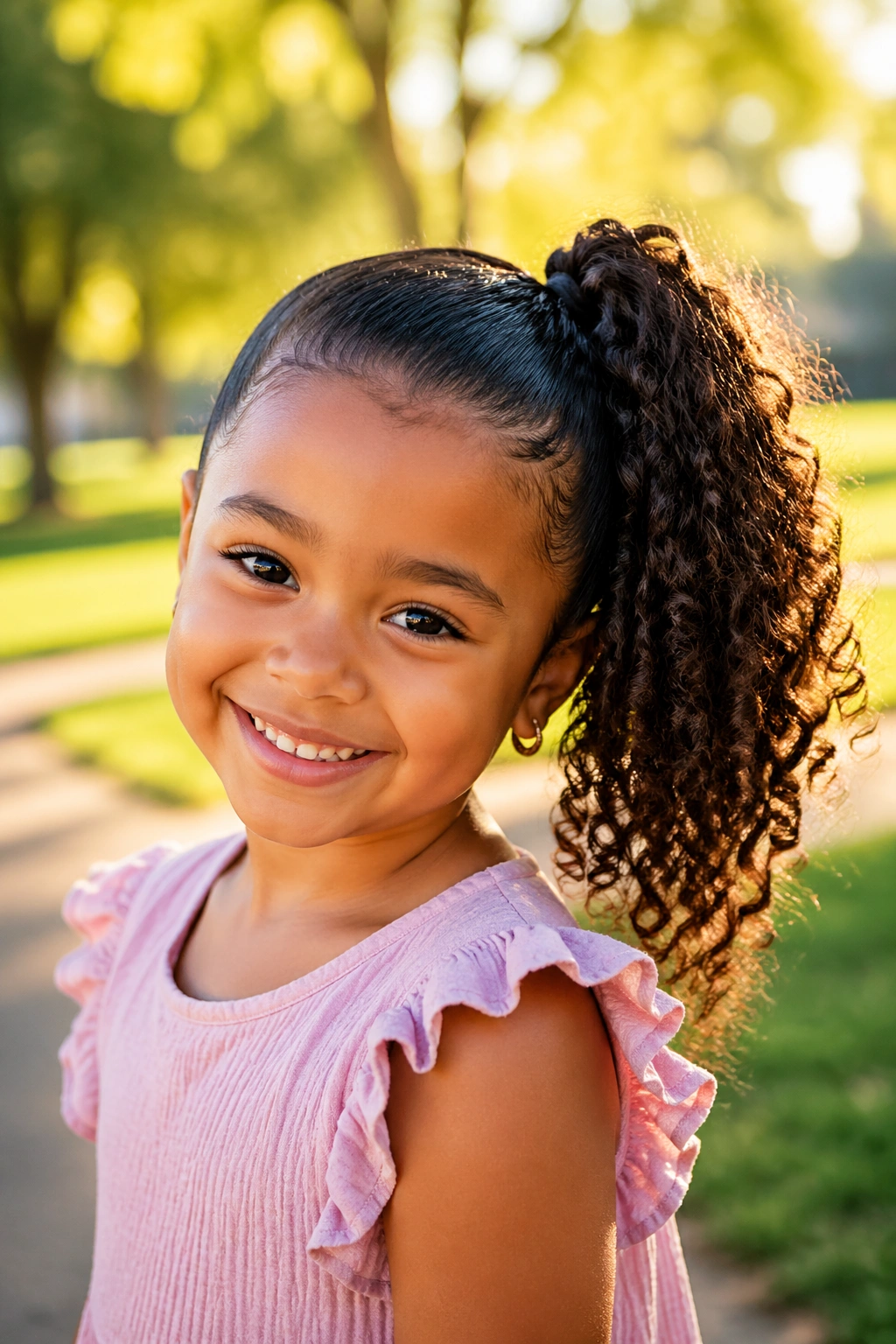
Why do side ponytails keep showing up in curly-hair styling? Because they’re playful without being chaotic. Pulling the hair to one side changes the whole mood, and curls usually look fuller when they’re swept across the shoulder.
How to keep it comfortable
The trick is not to drag the hair too tightly across the scalp. Start with a side part or a soft off-center part, then gather the curls low behind one ear or a little higher toward the cheek. Use a scrunchie or soft elastic so the base doesn’t pinch. If the child has a lot of hair, twist the front section once before securing it. That keeps the style from slipping.
A side ponytail works especially well when a kid wants something a little special but still practical. It’s neat enough for school, but it also has a little movement. And movement matters with curls. A style that swings when they run feels more alive than one that just sits there.
4. Pineapple Ponytail
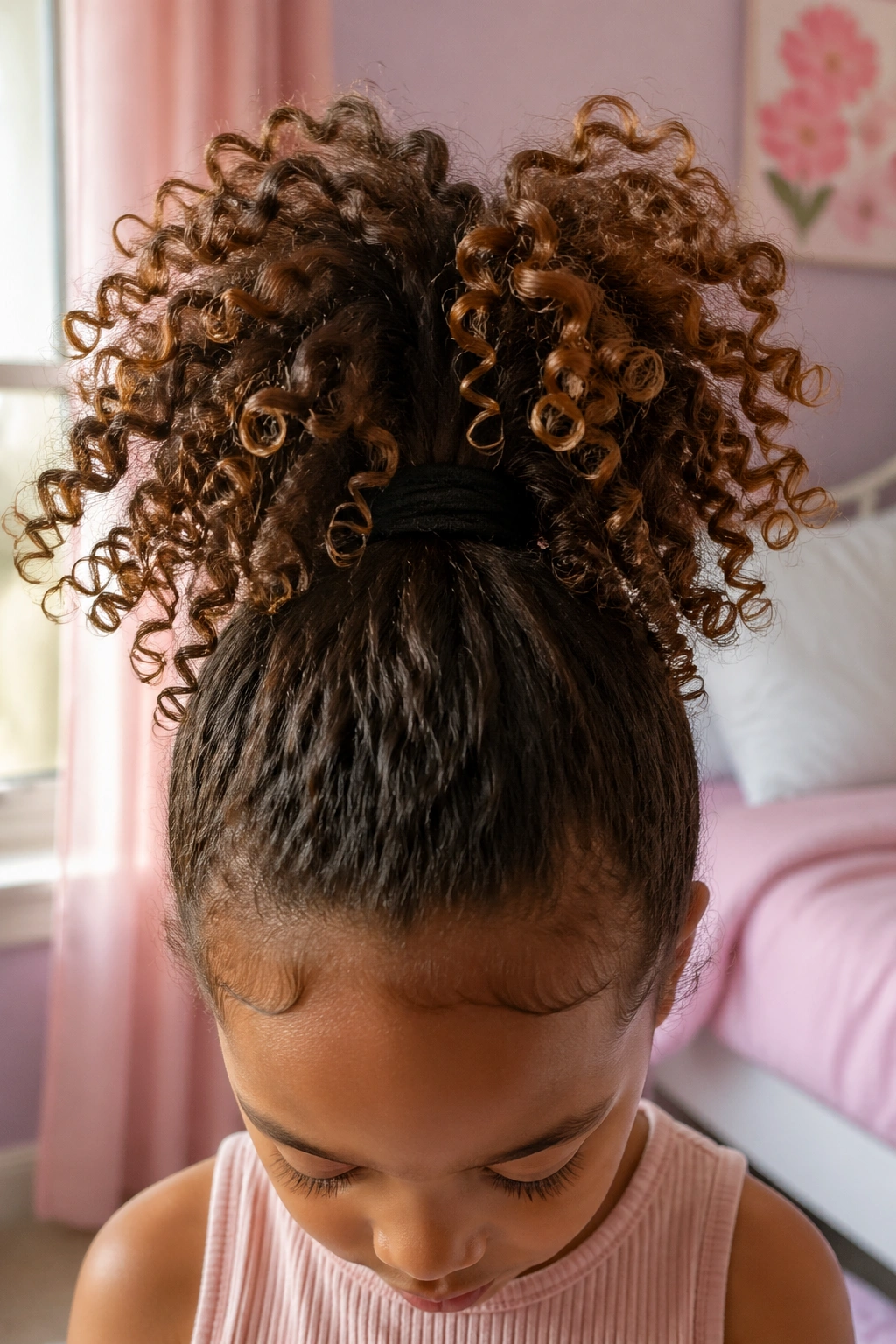
The pineapple ponytail is one of the easiest ways to celebrate curls instead of flattening them. It sits high on the head, usually loose enough to preserve curl pattern, and it gives that rounded, fluffy shape that curly hair does so well.
This style is especially useful on days when the curls already have good definition. You’re not trying to force them into a perfect line. You’re just lifting them up, protecting the ends, and letting the texture do the work. If the child has shoulder-length curls, the pineapple can make the hair look fuller without needing extra teasing or product.
A little caution, though: don’t yank the base so high that it hurts. The pineapple should feel secure, not tight. If the child says the top of the head feels sore, lower the placement an inch or two. That small adjustment can make a huge difference.
5. Half-Up Curly Ponytail
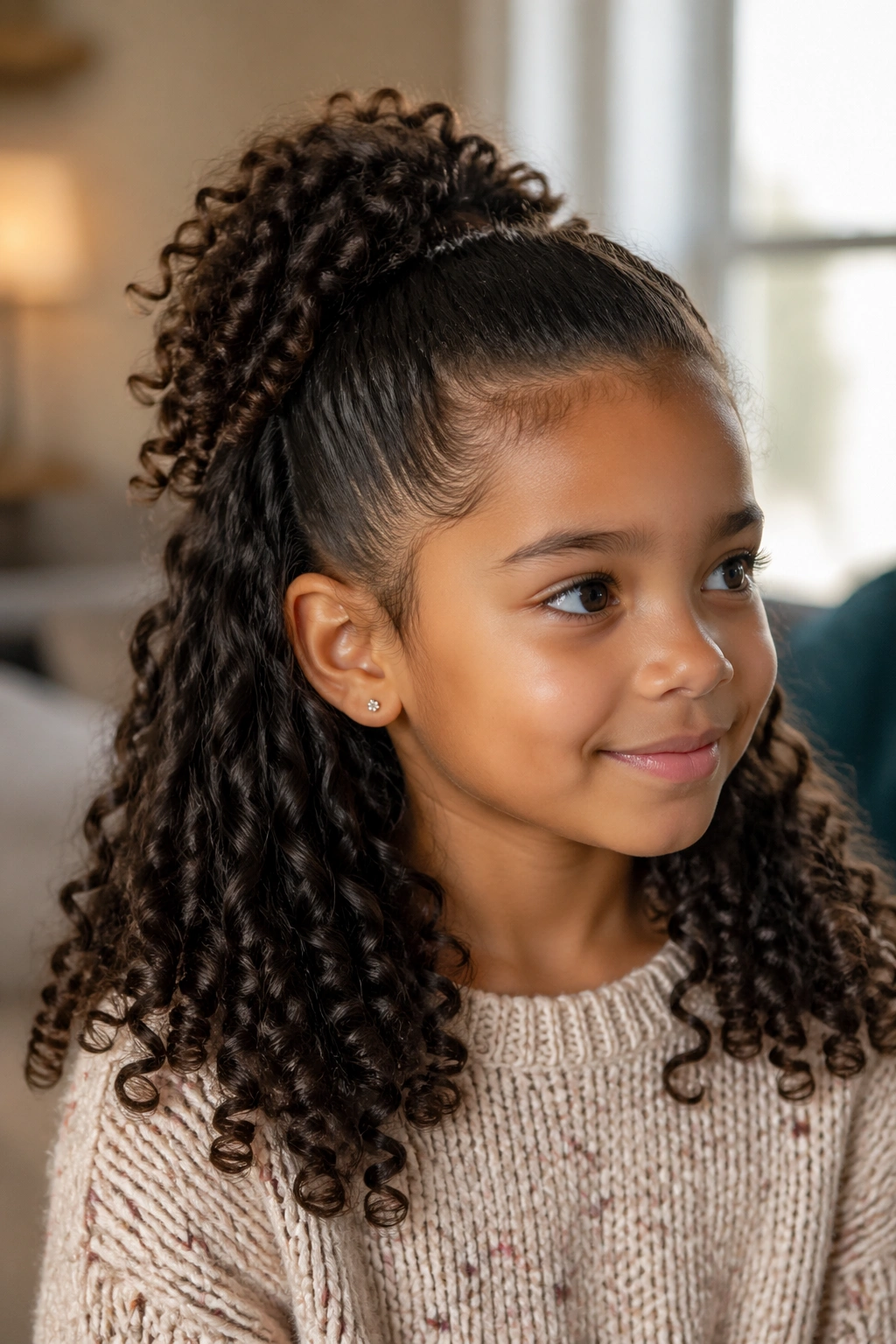
A half-up curly ponytail gives you the best of both worlds. Some hair stays down, which keeps the curls free and soft, and the top section gets pulled back so the face stays clear.
Why parents keep coming back to it
It’s easy. That’s a huge part of the appeal. You can section off the crown, gather just the top layer, and secure it with a small elastic or a bow. The result looks more styled than it really is, which is useful on rushed mornings. It also works for kids who like seeing their curls but want the front out of the way.
The half-up version is also kinder to curl patterns than pulling everything back. The lower curls stay loose, which helps them keep shape and prevents the “all-day ponytail dent” that some children hate. If the hair is mixed texture, this style tends to look especially good because the different curl types can each do their own thing.
6. Bubble Ponytail
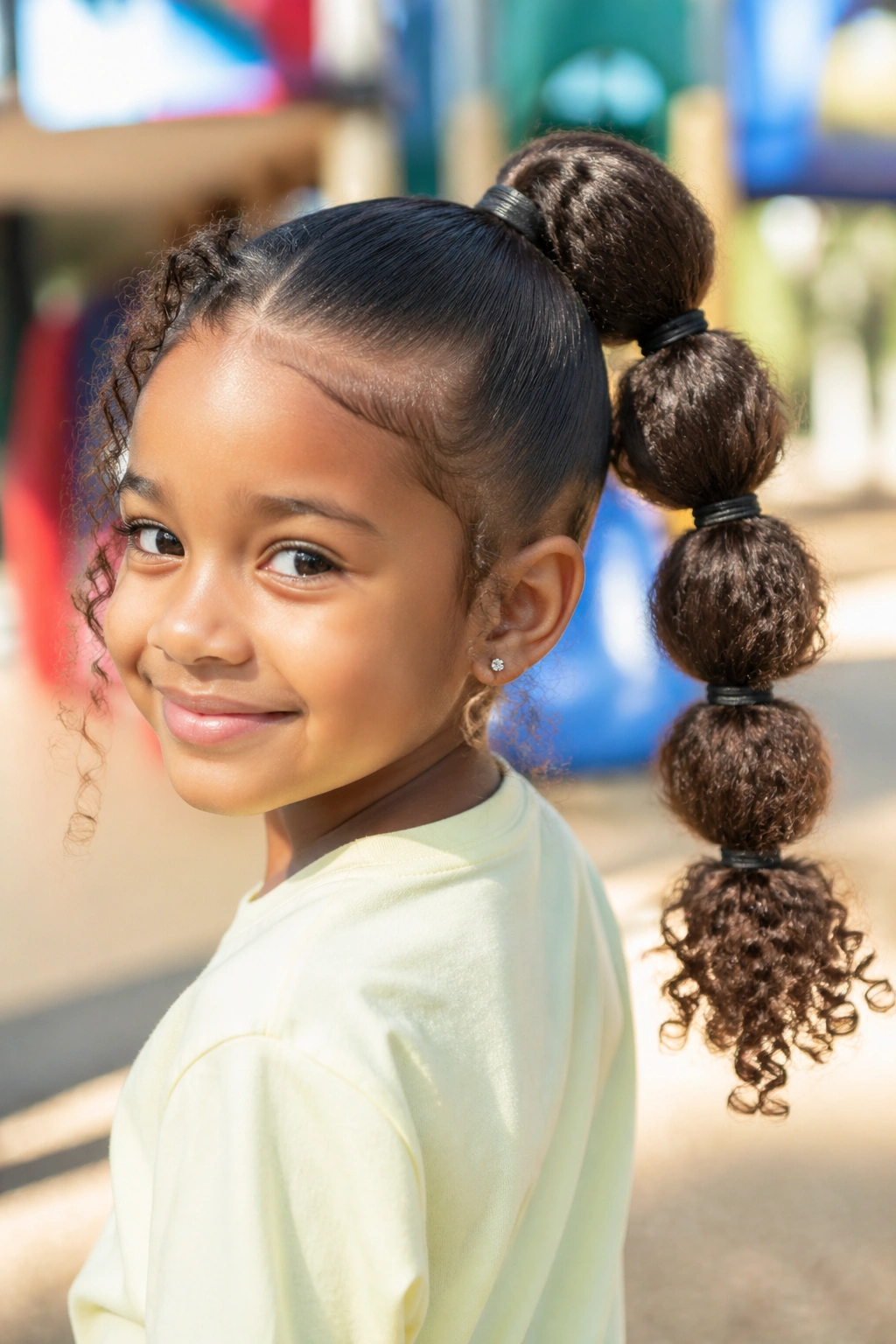
A bubble ponytail looks playful, and kids usually love it because it feels a little like wearing a row of little puffed sections. It’s made by adding several elastics down the length of the ponytail, then gently puffing each section between them.
Start with a regular ponytail, high or low. Then add elastics every 2 to 3 inches, depending on the length of the hair. Gently pull each section outward with your fingers so it forms a rounded “bubble.” On curly hair, the natural texture gives the bubbles extra fullness, which means you don’t need much effort to make the style stand out.
It’s a smart choice for children who like something fun but not overly decorative. You can keep it plain for school or add colorful elastics if the day calls for more personality. And unlike some styles that need constant reshaping, bubbles tend to stay recognizable even when they loosen a bit.
7. Braided-Front Ponytail
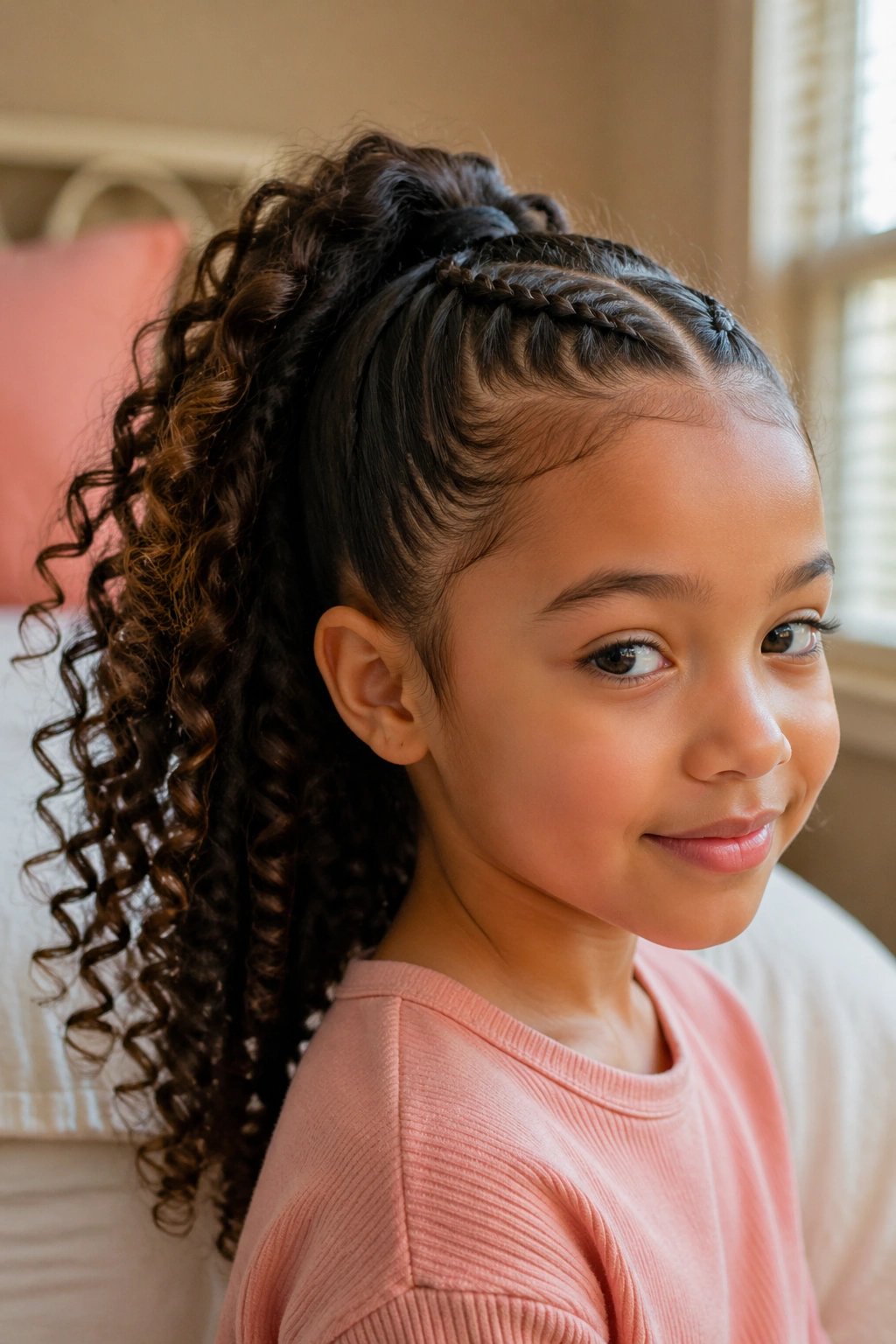
Ever had a child who wants hair off the face but hates a fully slicked-back look? This is the answer. Braiding the front section before gathering the rest into a ponytail gives the style structure without making it feel too stiff.
How to wear it
Braid a small or medium section from the hairline on one or both sides, then bring those braids back into the ponytail base. The curls in the back stay loose and full, while the front has a more finished look. If the child’s hair is very thick, a simple three-strand braid is enough. No need to overcomplicate it.
This style works especially well for active kids because the braid helps keep flyaways under control. It also keeps the crown from puffing up too quickly if the hair is humid or freshly washed. That’s one of those tiny practical wins that parents notice right away.
8. Twisted Crown Ponytail
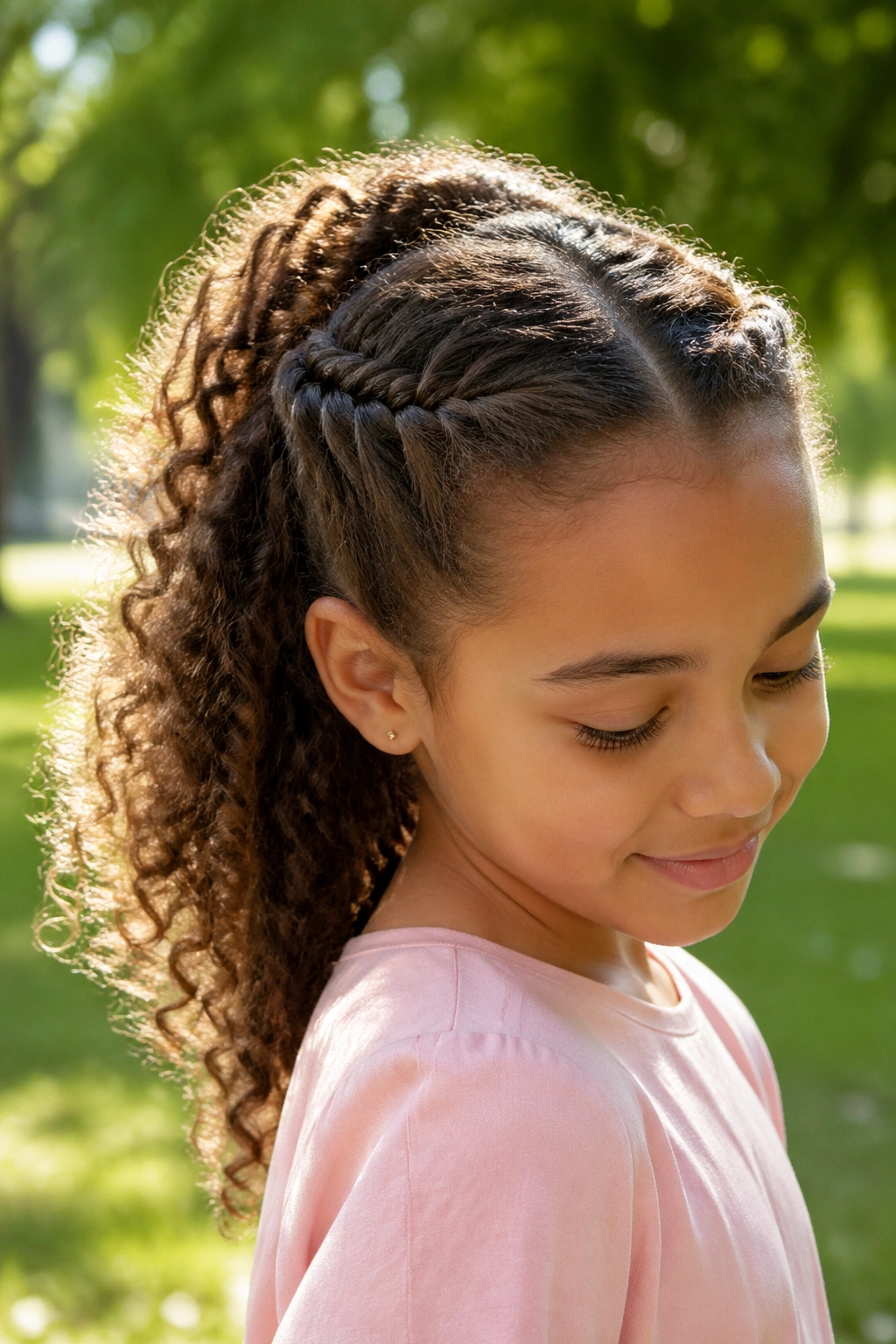
A twisted crown ponytail gives a pretty, tidy shape without requiring a full braid. You take two front sections, twist them back along the hairline, and connect them into a ponytail at the back.
The look is gentle, and that’s what makes it useful. Twists are faster than braids, and on a child’s head that can matter a lot. Less time in the chair usually means better cooperation. The twists also help direct curly hair backward in a way that feels soft, not severe.
If you want it to hold better, pinch the twists flat before they meet at the back and secure them with a small elastic before adding the rest of the hair. That little anchor keeps the crown from splitting open. It’s a small thing, but it saves the style.
9. Double Ponytail
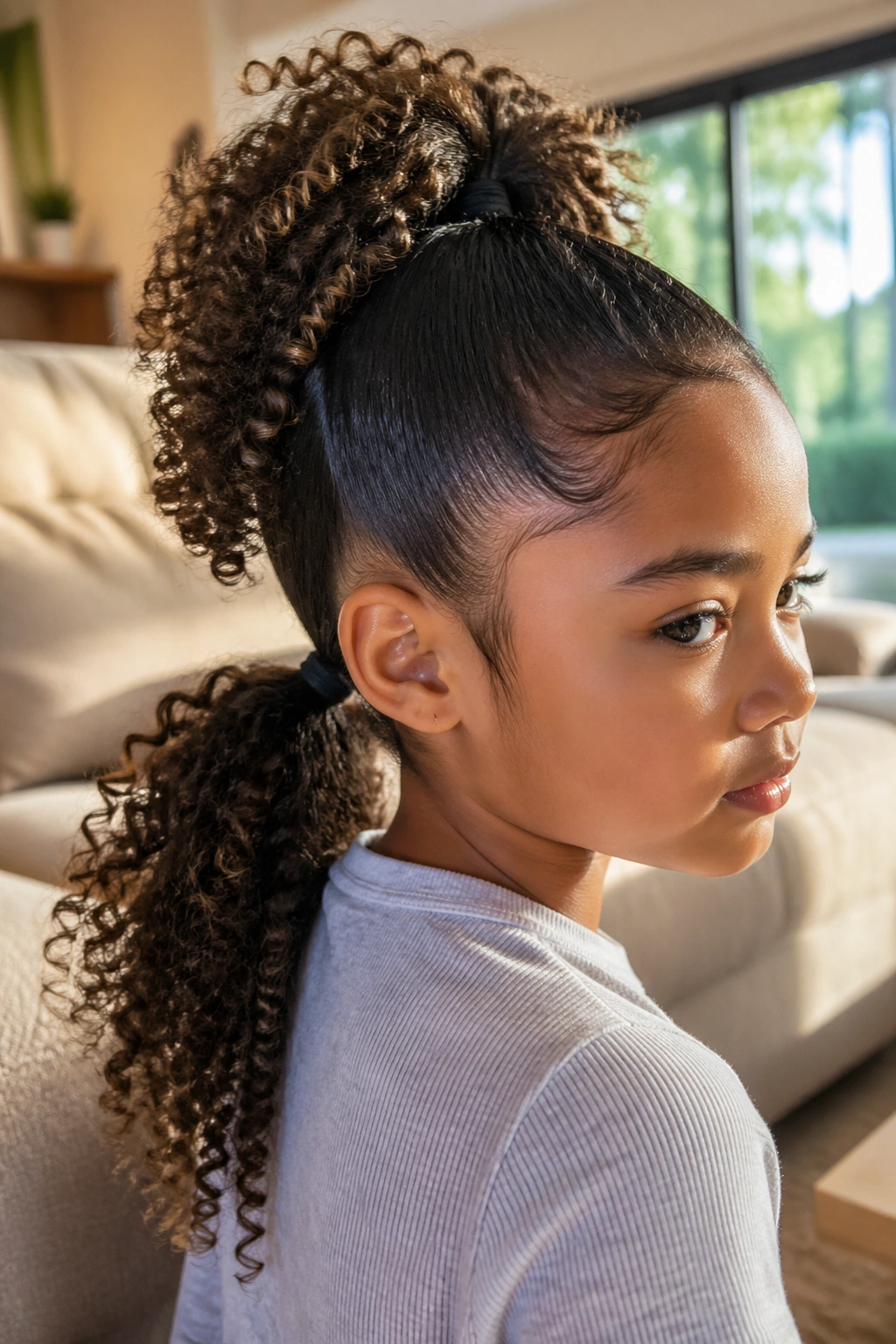
Double ponytail styles are a sneaky trick for curly hair because they make the hair look fuller and longer than a single ponytail often does. You create one ponytail higher up, then another just below it, and blend them together so the final shape looks stacked and thick.
Why it helps curly hair
Curly hair can shrink, and sometimes a single ponytail makes the length disappear. A double ponytail gives the illusion of more length by spreading the hair across two anchor points. It also helps distribute weight, which can make the style more comfortable for kids with dense curls.
The finished look is especially nice if the child has medium-length hair that doesn’t quite reach the back in one smooth line. Two elastic points fill in the gap. That’s the whole trick. Simple. Smart. Very useful.
10. Middle-Part Curly Ponytail
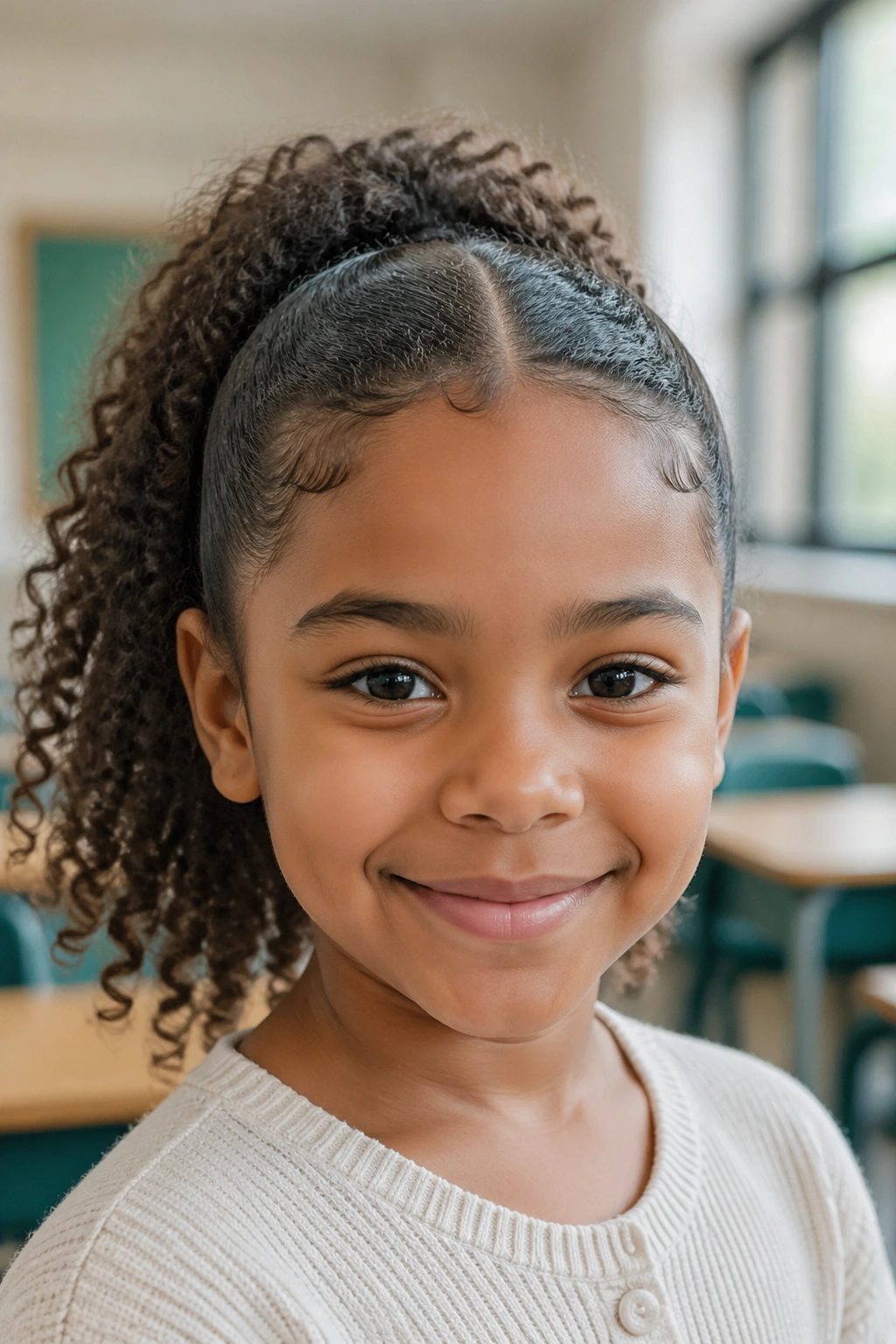
A middle-part ponytail is neat, balanced, and easy to keep symmetrical. It gives the face an open frame on both sides, which works well for children with round, oval, or heart-shaped faces.
The style starts with a clean part down the center, then the curls are gathered low, mid-height, or high depending on preference. Because the part is doing some of the visual work, you do not need much extra styling. A little smoothing at the front and a soft tie at the base is enough.
This is one of those ponytails that looks more polished than the effort suggests. That’s why it’s useful for school pictures, family events, or any day when a child wants to look put-together without spending forever in the bathroom. Keep the part straight, but don’t chase perfection. A tiny wobble in the line is fine.
11. Zigzag-Part Ponytail
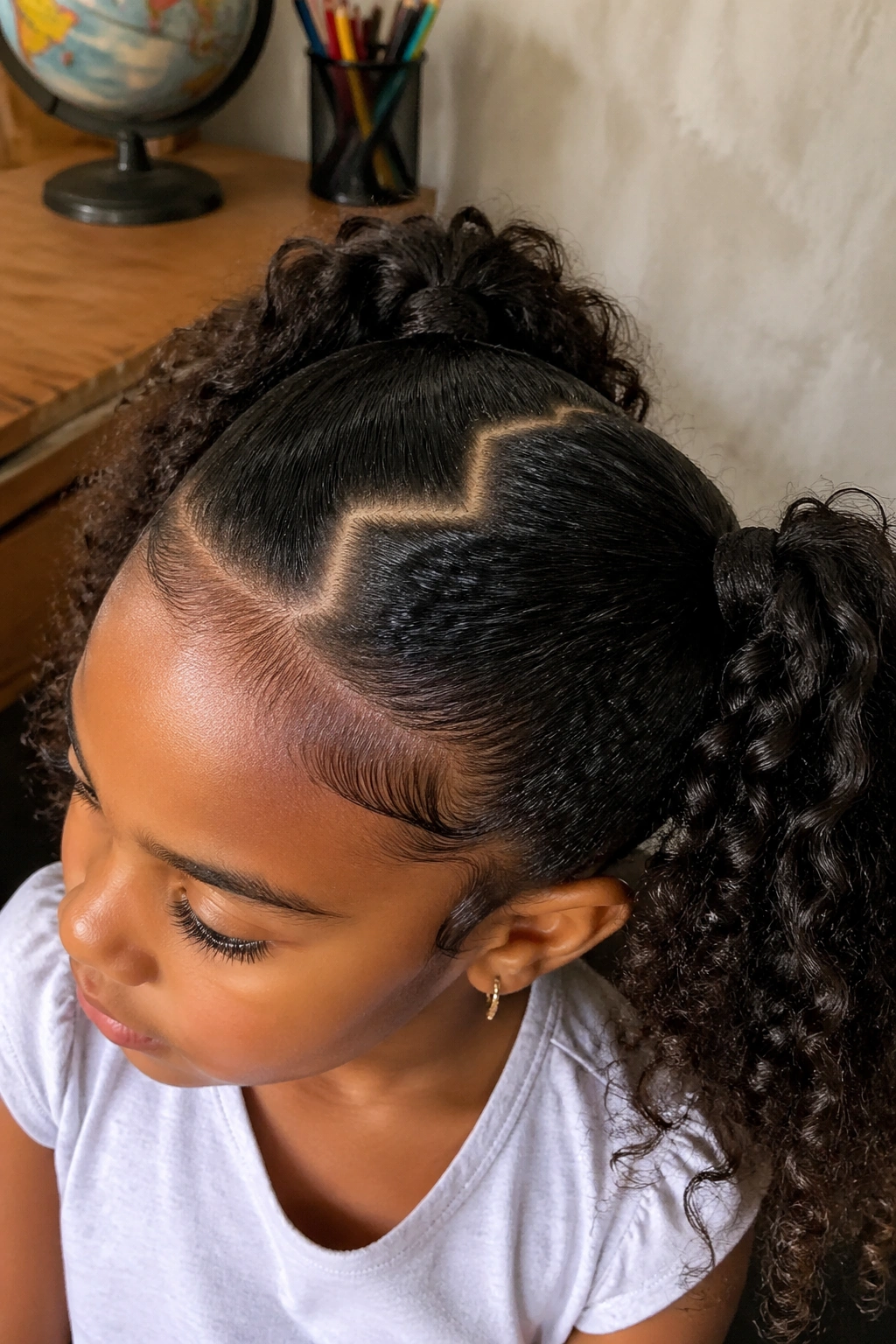
A zigzag part ponytail gives curly hair a little edge without making it hard to wear. The part itself becomes part of the design, which is handy when you want the hair to look special before the ponytail even starts.
How to keep it neat
Use the tip of a rat-tail comb to draw the zigzag in small angles, then gently separate the hair into two sections and gather them back into one ponytail. The style can sit high, low, or off to one side. It works best when the scalp is lightly misted first, because dry curls can snag while you’re tracing the part.
Kids tend to like this one because it looks fun and different without needing beads, clips, or a ton of accessories. It’s a good option for school spirit days, parties, or just breaking up the routine. And yes, the zigzag part takes a minute longer. It’s worth it.
12. Ribbon-Wrapped Ponytail
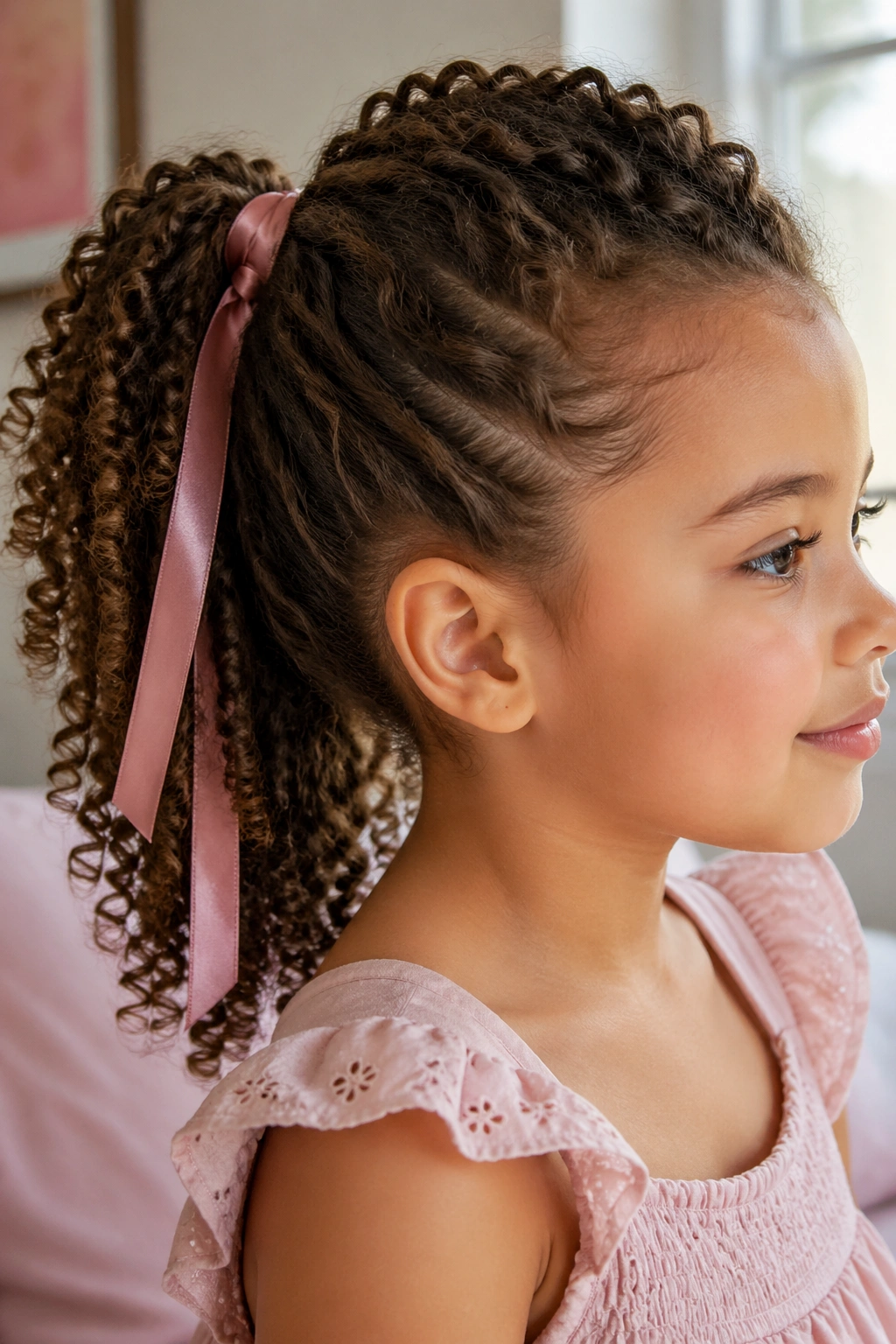
A ribbon-wrapped ponytail turns a plain base into something a little more finished. You still start with the same ponytail shape, but the ribbon hides the elastic and adds a softer look around the base.
Choose a ribbon that isn’t too slippery. Satin looks pretty, but if the hair is fine or very soft, it can slide around. Grosgrain or a slightly textured ribbon usually stays put better. Wrap it once or twice around the base, then tie it in a small bow or knot depending on how much movement you want.
This style is especially nice when the clothing is simple and you want one small detail to carry the whole look. It doesn’t need much else. In fact, too many extras can make it feel busy. Let the ribbon do the talking.
13. Scarf-Tied Ponytail
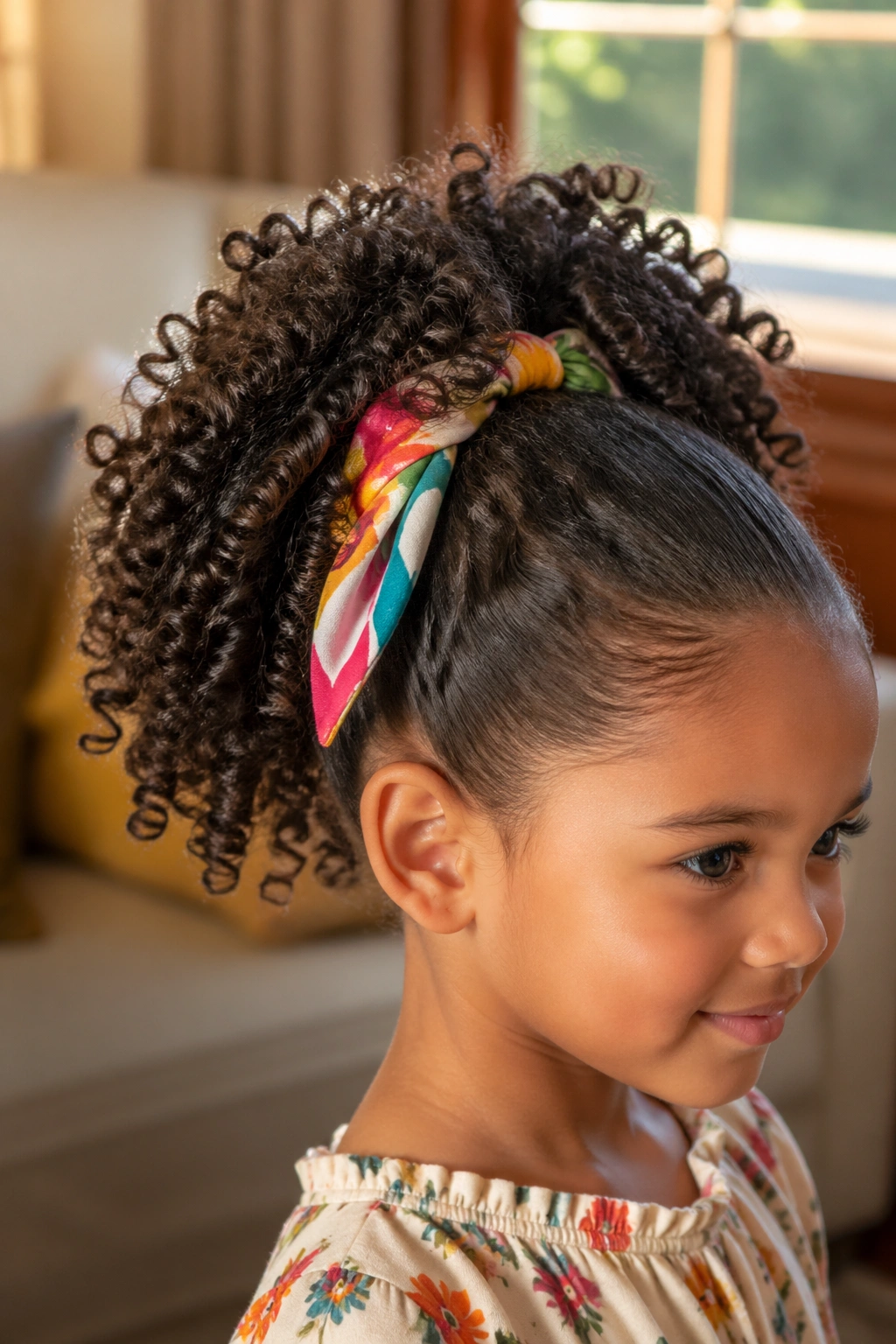
A scarf-tied ponytail has a little more personality than a ribbon style and usually feels more secure on thicker curly hair. The scarf can be tied around the base, folded into a band, or tucked under the elastic so only the knot shows.
Good scarf choices
- Cotton or cotton-blend scarves grip better than silky ones.
- Lightweight scarves sit more comfortably on younger kids.
- Short tails are easier to manage than long, swinging ends.
- Neutral prints work for school, while bright patterns are fun for weekends.
This style is practical because it adds grip without extra pulling. The scarf can also protect the hairline a bit by spreading out pressure from the elastic. If you’ve got a child who likes to fiddle with hair ties, this one holds attention better than a plain band. Kids notice it. That’s half the battle.
14. Braided-Base Ponytail
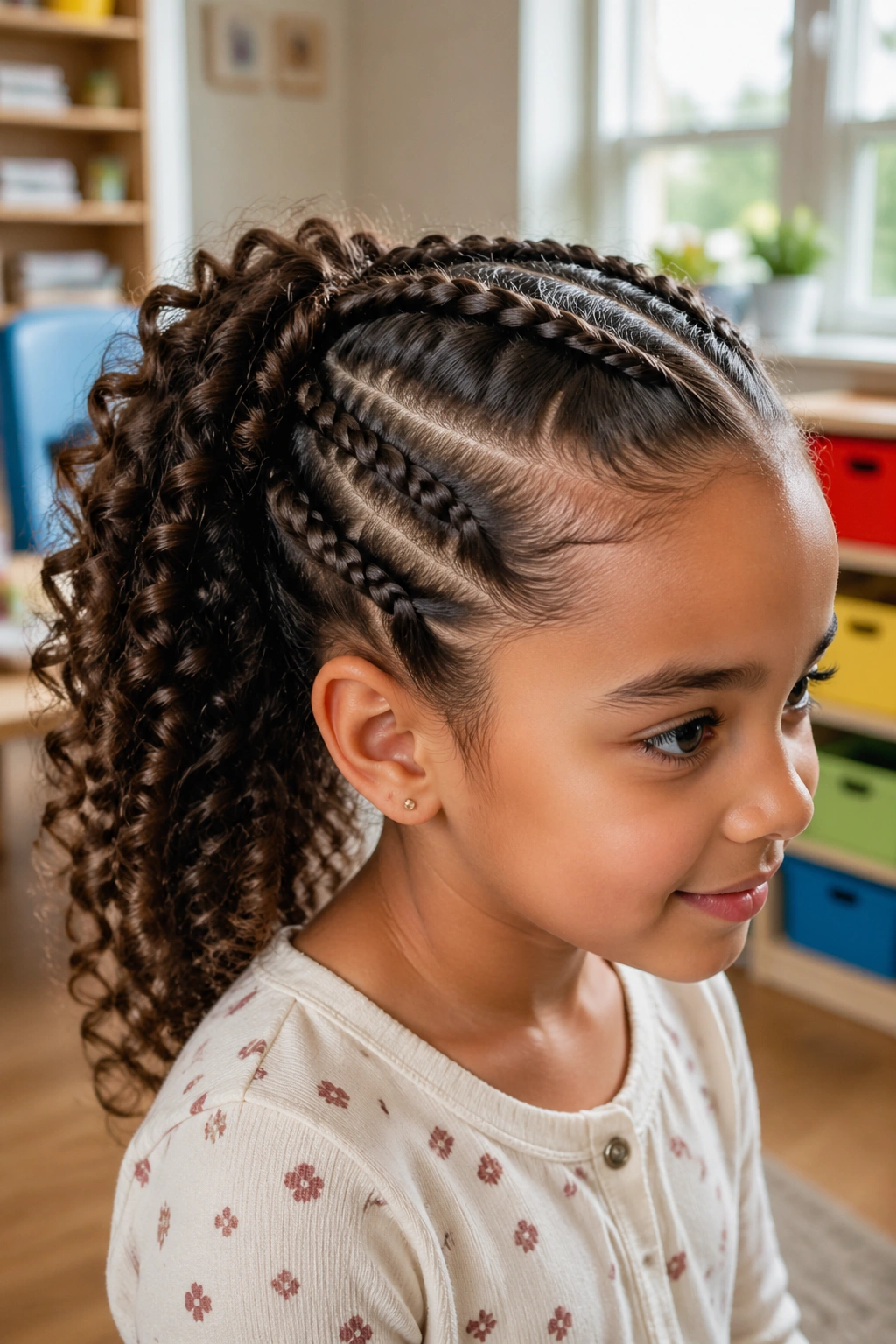
A braided-base ponytail is one of my favorite ways to make a curly ponytail last longer. The braid acts like an anchor at the scalp, which helps hold the base in place and keeps the style from loosening as the day goes on.
Start by braiding a small section at the crown or along the top before gathering the rest of the curls into a ponytail. You can use one braid down the center or two smaller braids that feed into the base. Either way, the look stays tidy and gives the style a bit more structure.
It’s especially useful when the child has a mix of curl patterns. The braid controls the front, while the rest of the curls stay free. That contrast can look lovely. And it saves you from needing half a can of styling gel, which is always a win in my book.
15. Curly Mohawk Ponytail
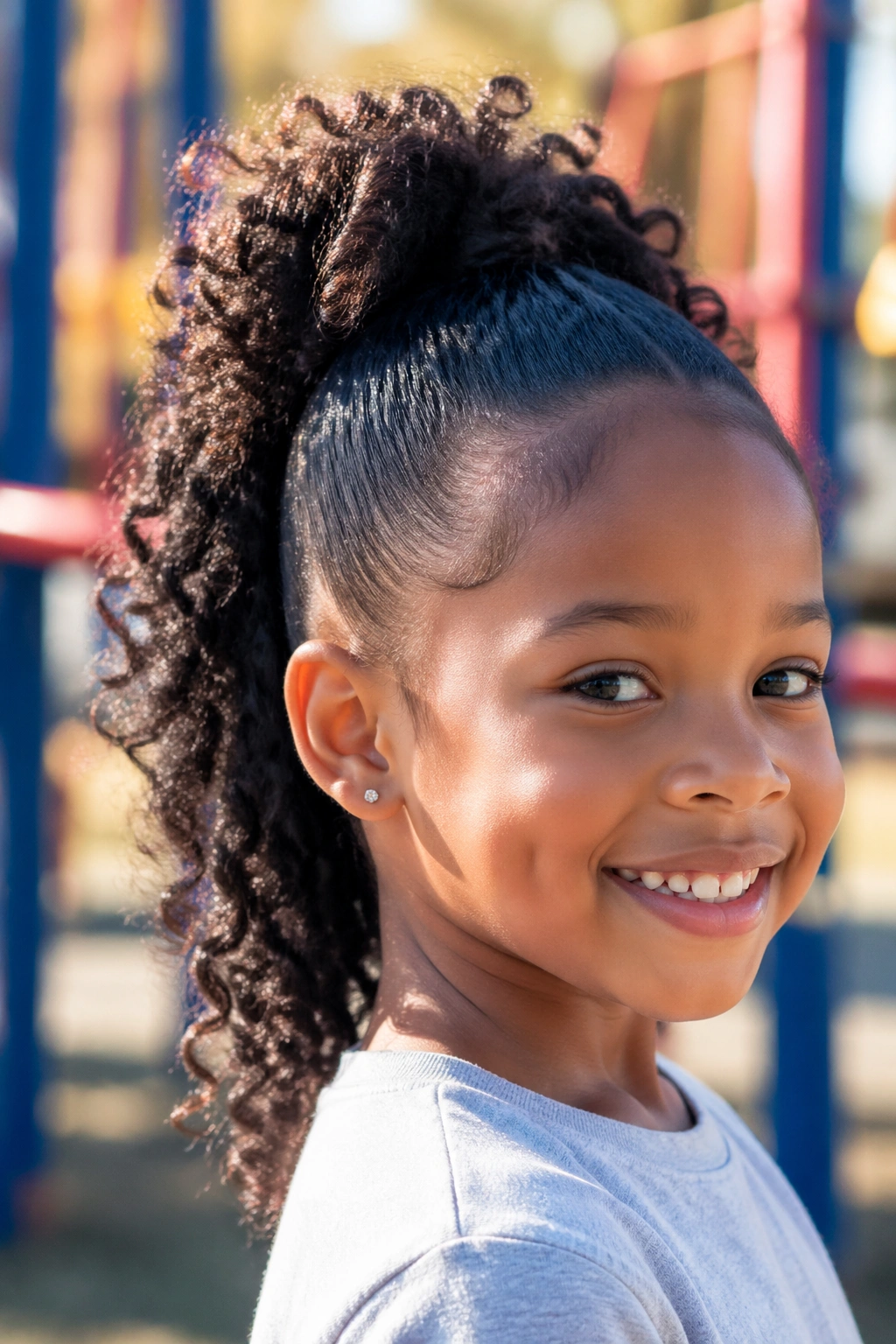
A curly mohawk ponytail has attitude without being difficult. It keeps the sides tighter and lets the center section stay high and full, which makes the curls look bold and playful.
How do you keep it from feeling too severe? Leave a little softness around the temples. You do not want the sides scraped back so tightly that the child looks like they’ve been dragged through a formal event. A better version is looser at the edges and fuller through the middle, with the ponytail or puff sitting from the front crown toward the back.
This is a great pick for kids who love styles with shape. It feels energetic. It also works well on thicker hair, because the center section has enough volume to carry the whole look without looking thin.
16. Low Ponytail with Face-Framing Coils
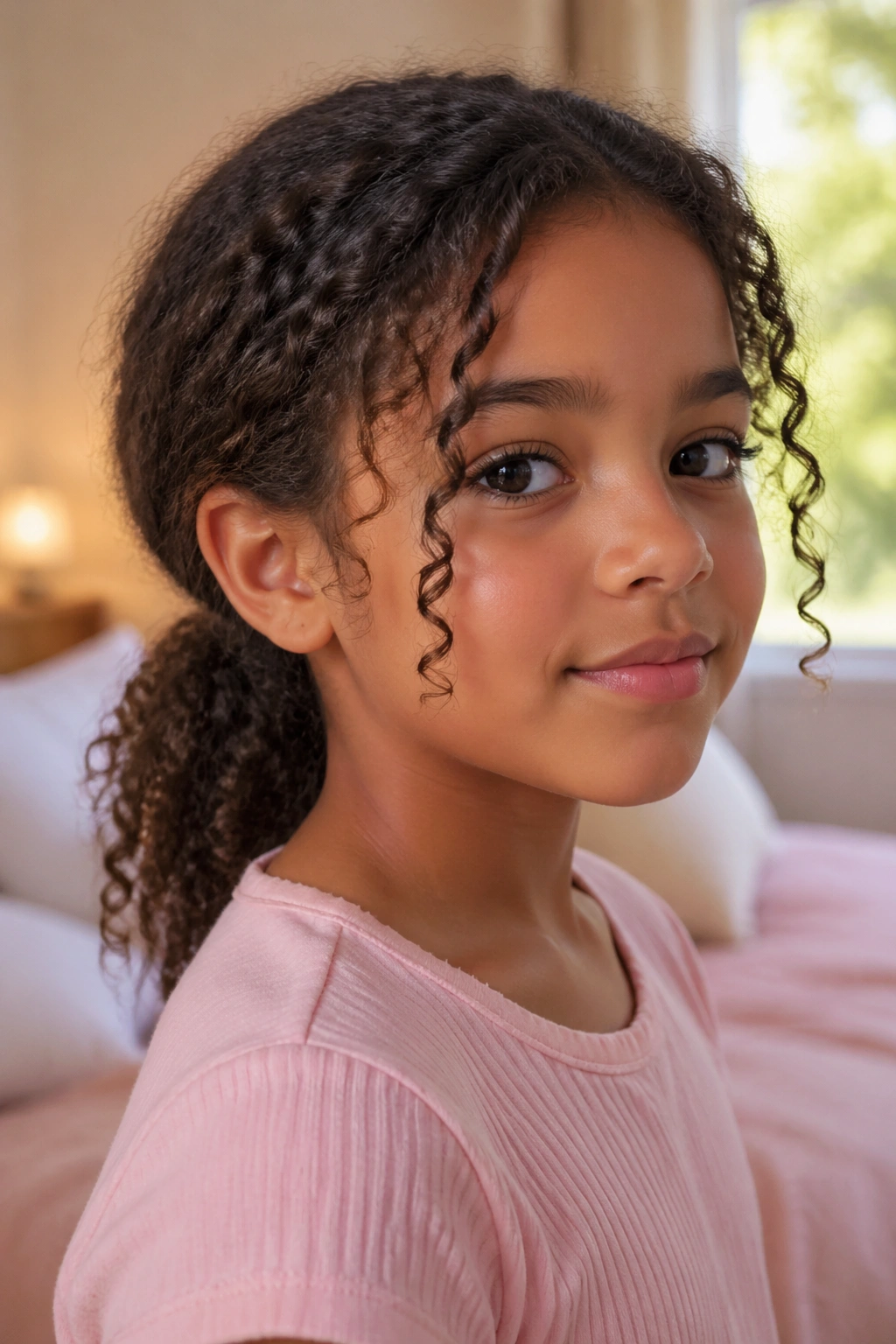
A low ponytail with face-framing coils is soft around the edges and polished at the base. It’s the kind of style that looks simple, but only because the details are doing quiet work.
Leave out two small curl sections near the cheeks, then gather the rest low at the nape. Those front pieces can stay in their natural spring or be shaped lightly with damp fingers. The ponytail itself should rest gently against the neck, not pulled tight. That balance keeps the style from looking flat.
This one is good for kids who like some hair on the face but not a lot. It gives a bit of softness around the eyes and cheeks, which can be very pretty on curly hair. Also, it’s kind to shorter layers that refuse to stay tucked away.
17. Rope-Twist Ponytail
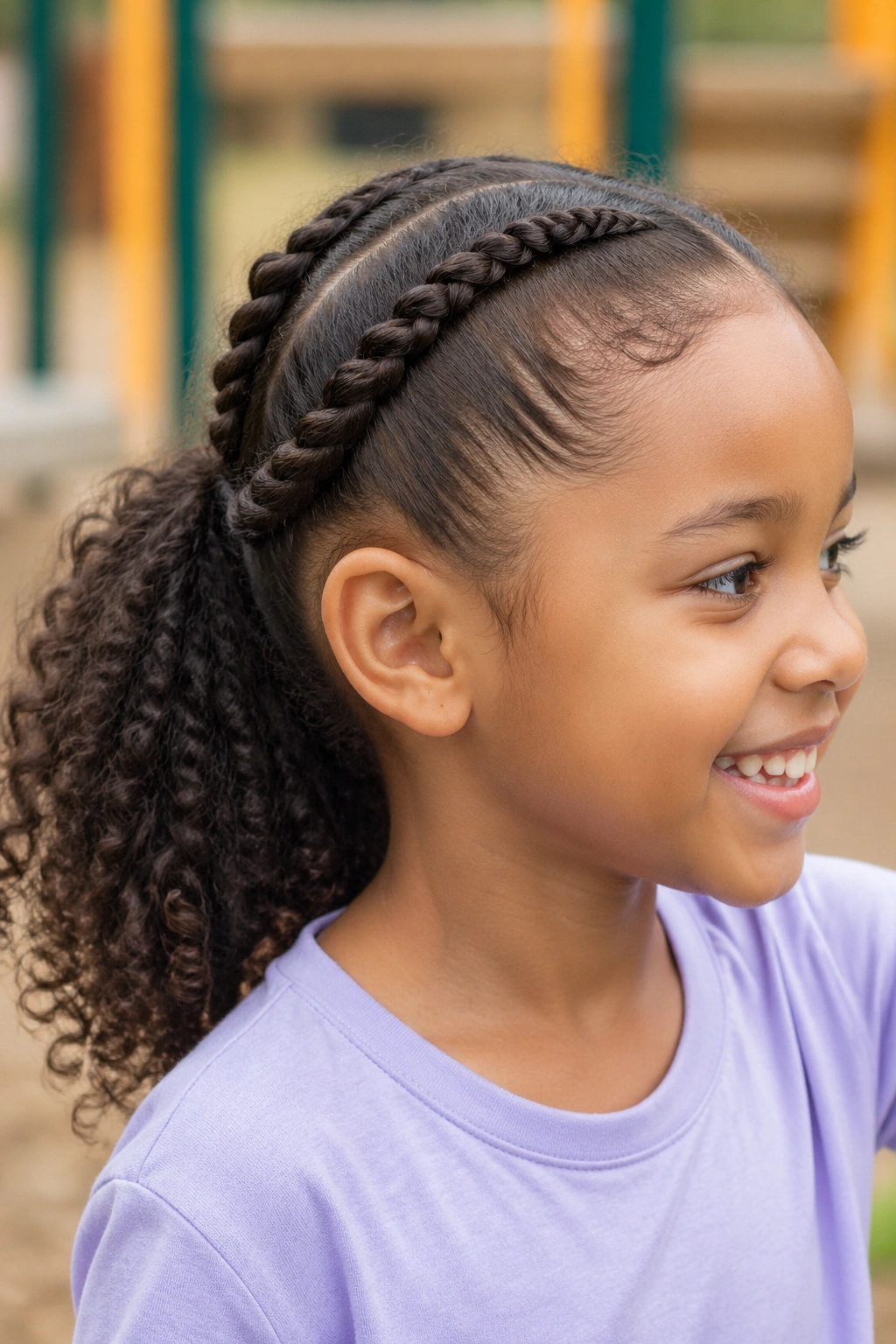
Rope twists are underrated. They’re fast, secure, and a little more interesting than a regular braid, especially on curly hair where texture does some of the visual work for you.
How to use them
Split a front section into two strands, twist each strand in the same direction, then wrap them around each other in the opposite direction. That creates a rope twist that holds well and looks clean. Feed the twist into the ponytail base, or use two twists from either side and join them at the back.
A rope-twist ponytail is a good middle ground when you want styling detail but not a lot of time spent braiding. It also helps keep the front controlled without flattening the curl pattern too much. If the hair is slippery, a tiny bit of leave-in conditioner on the fingers helps the strands stay together.
18. Cornrow-Front Ponytail
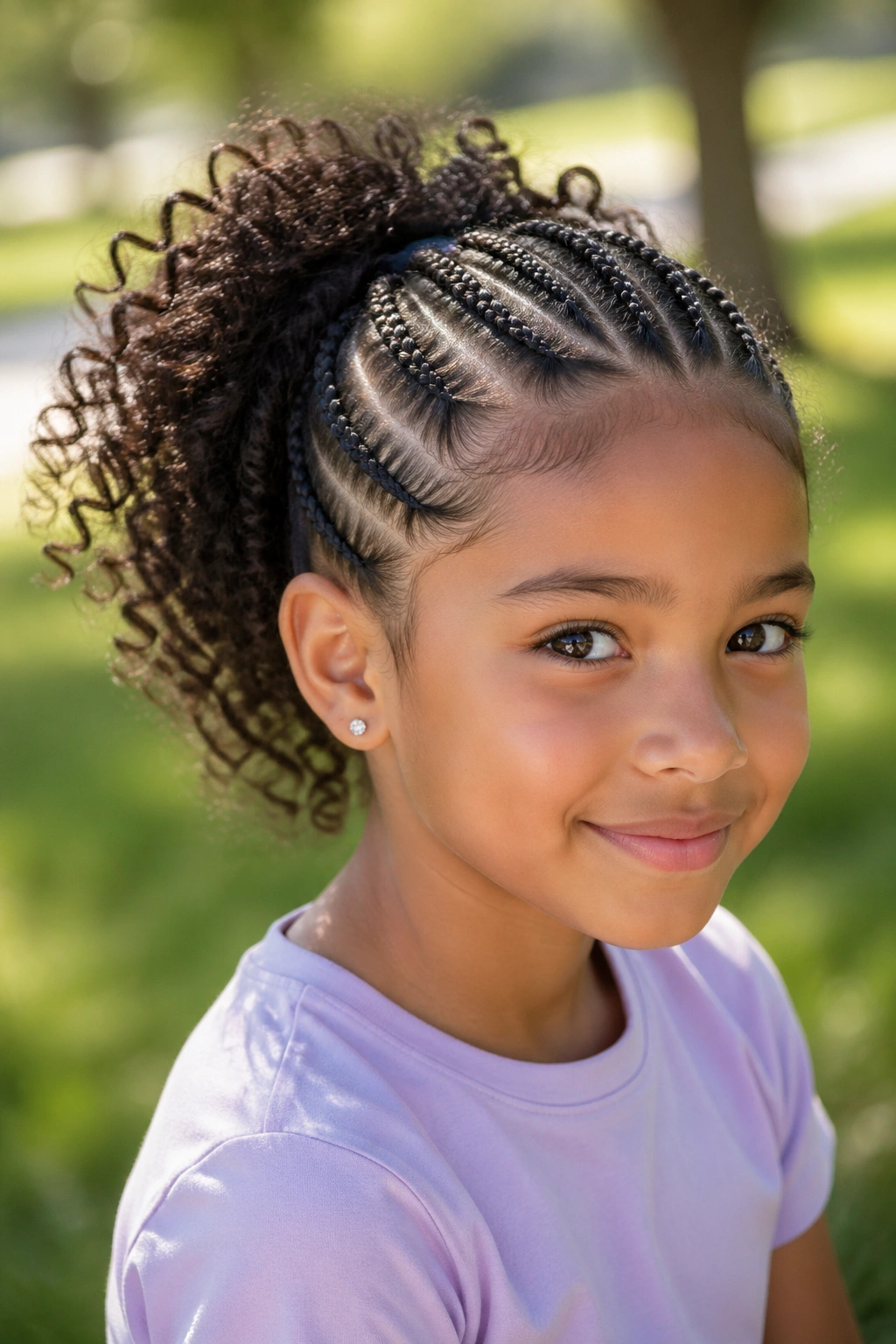
Cornrow-front ponytails are one of the most practical curly styles when you need the front locked down for a while. The front braids give real hold, and the ponytail at the back can stay fluffy and full.
This style is especially helpful for kids who are active, sweat easily, or spend a lot of time outside playing. The cornrows keep the hairline neat and reduce the amount of daily restyling. You can do two cornrows, four smaller ones, or just a narrow braided panel, depending on how much hair you want to feed back.
The back part should not be overly tight. Let the ponytail keep some softness so the whole style still feels like curly hair, not a helmet. That’s the line you’re trying to walk. Firm at the front, loose in the tail.
19. Waterfall Braid Ponytail
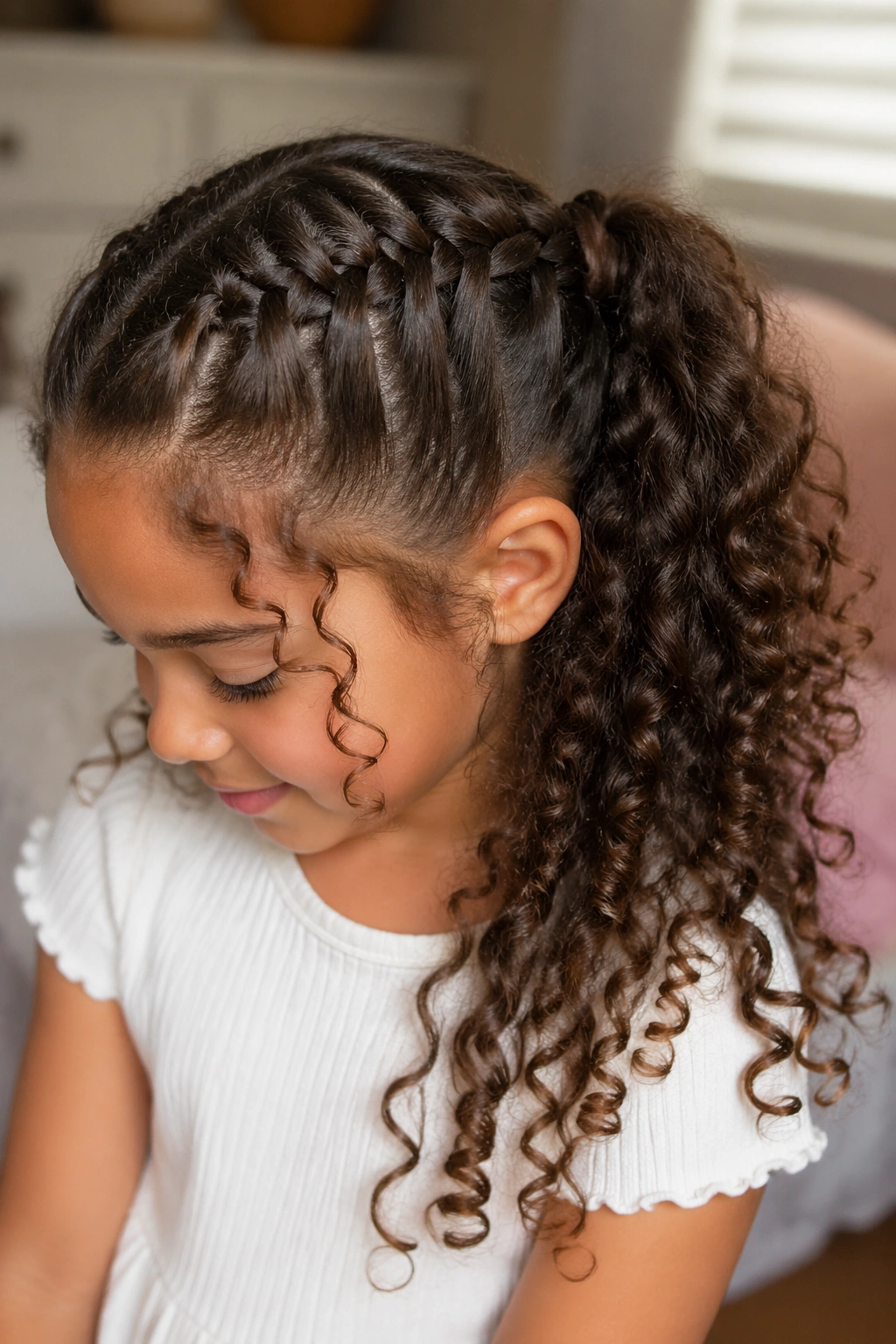
Could a braid and a ponytail share the same space? Absolutely. A waterfall braid ponytail does exactly that, and it’s one of the prettiest ways to dress up curly hair without hiding the texture.
How it looks in practice
The braid runs along the top or side, dropping small sections as it goes, then the rest of the hair gets gathered into a ponytail. The freed strands from the braid can blend into the curls below, which gives the style a soft, layered look. It’s not the fastest option on this list, but it does have a polished finish that reads well on thicker curls.
This style is best when you want something a little dressier. It works for birthdays, school events, or any day when a child wants to feel special. If the hair is very curly, you may not need to perfect every braid loop. The texture will do a lot of that work for you.
20. Stacked Ponytail
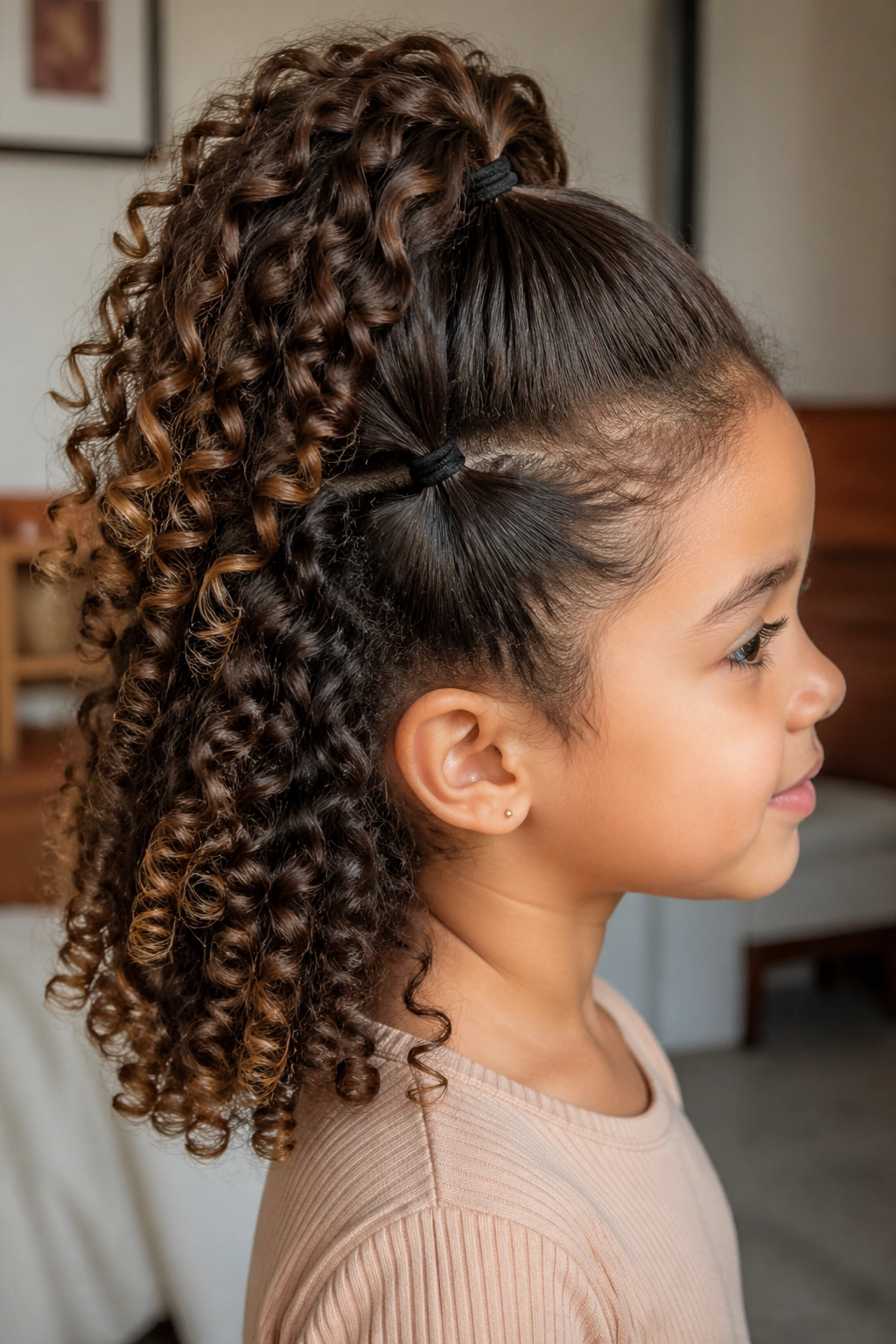
A stacked ponytail uses two or more ponytail bases placed one above the other to create extra volume and length. It’s a clever trick, and on curly hair it works because the curls hide the joints between the sections.
Start by making a top ponytail, then gather another section just below it and blend the hair together so the lower tie disappears into the upper volume. The result looks like one long, full ponytail instead of a short one trying to stretch itself out. That’s why it’s so useful for kids with shoulder-length curls who want more drama.
It also helps the hair sit more evenly if one section is much denser than another. The stacked shape distributes the bulk. That can mean less pulling at the scalp and fewer arguments in the mirror.
21. Beaded Ponytail
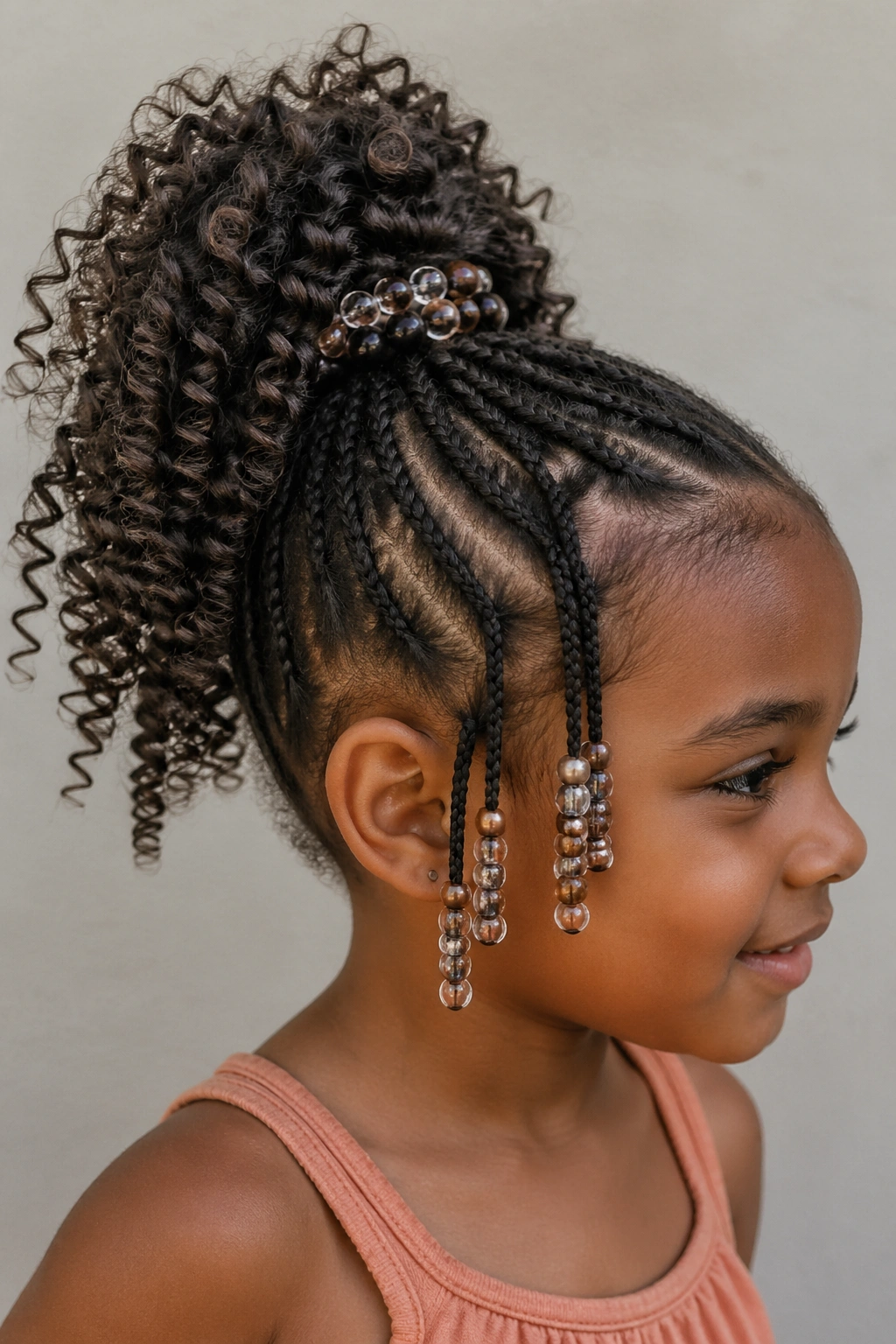
A beaded ponytail brings a little celebration to the day. A few beads at the ends of small braids or around the base can make a simple style feel special without changing the whole shape.
What to watch for
- Keep bead weight light so the child does not feel tugging.
- Use smooth beads with wide openings that won’t catch on curls.
- Place beads on small sections, not the whole ponytail.
- Skip heavy decoration if the child is sensitive to weight at the scalp.
The important part is restraint. One or two bead accents are usually enough. Too many can tangle in the curls or make the style noisy and fussy, which younger kids often hate after the first hour. A clean bead placement, though, can look lovely and fun at the same time.
22. Sporty High Ponytail
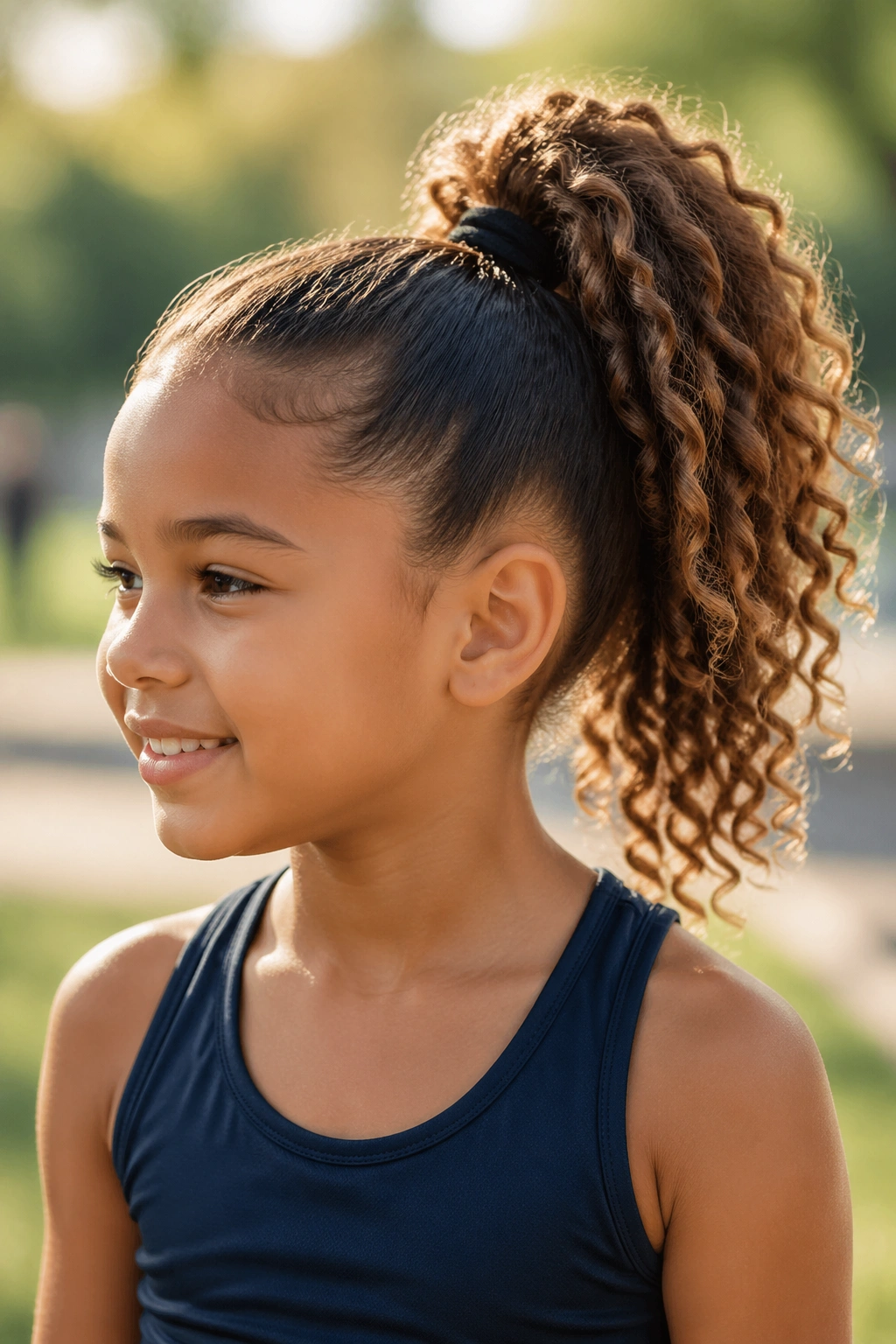
A sporty high ponytail is built for movement. It sits higher, stays secure, and keeps the curls off the shoulders when a child is running, jumping, or playing tag in the yard.
This is one of the styles that benefits from a firm base and a soft tail. The anchor should hold, but the ponytail itself can stay loose enough to keep curl spring. If the child has shorter layers around the face, tuck them behind the ears or secure them with tiny clips that match the hair color.
I like this style because it’s honest. It does the job. No fuss, no pretending, just a good hold and enough bounce to still look like curly hair. If the hairline is sensitive, place the elastic just a touch lower than the highest point of the crown.
23. Party Ponytail with Tendrils
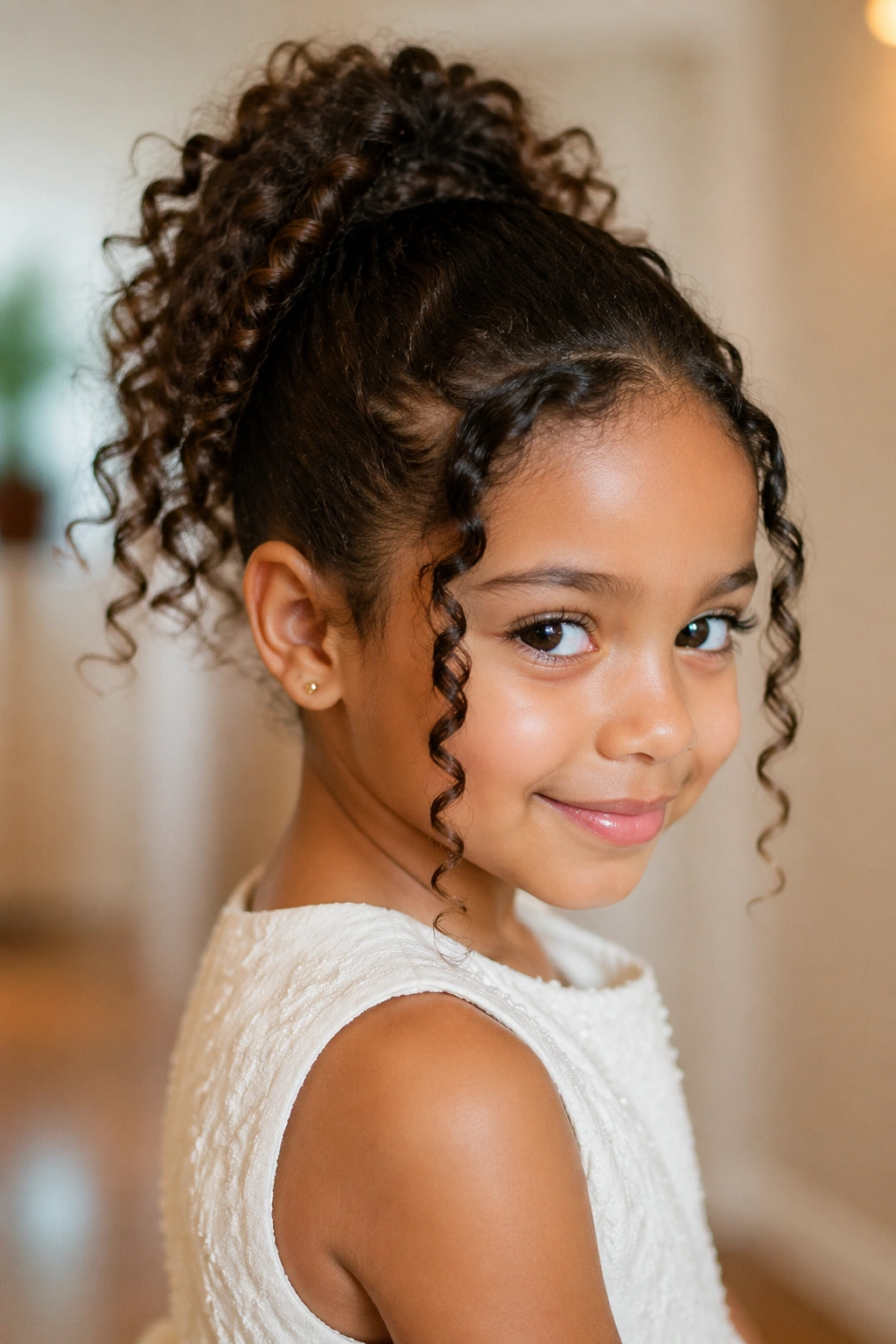
A party ponytail with tendrils leans into softness. The curls stay gathered, but a few front pieces are left loose around the face to frame it gently.
Do you need a lot of product for this? Not really. A mist of water and a touch of leave-in on the tendrils is usually enough. The rest of the hair can be swept back into a high or mid ponytail, then fluffed so it doesn’t look overworked. The loose pieces should move when the child turns their head. That movement is half the appeal.
This style is a strong pick for birthdays, family photos, or dressier outfits. It feels a little more grown-up without pushing the hair into something stiff. And because the curls stay visible, it still feels like the child, not a polished version of somebody else.
24. Diagonal Side Ponytail
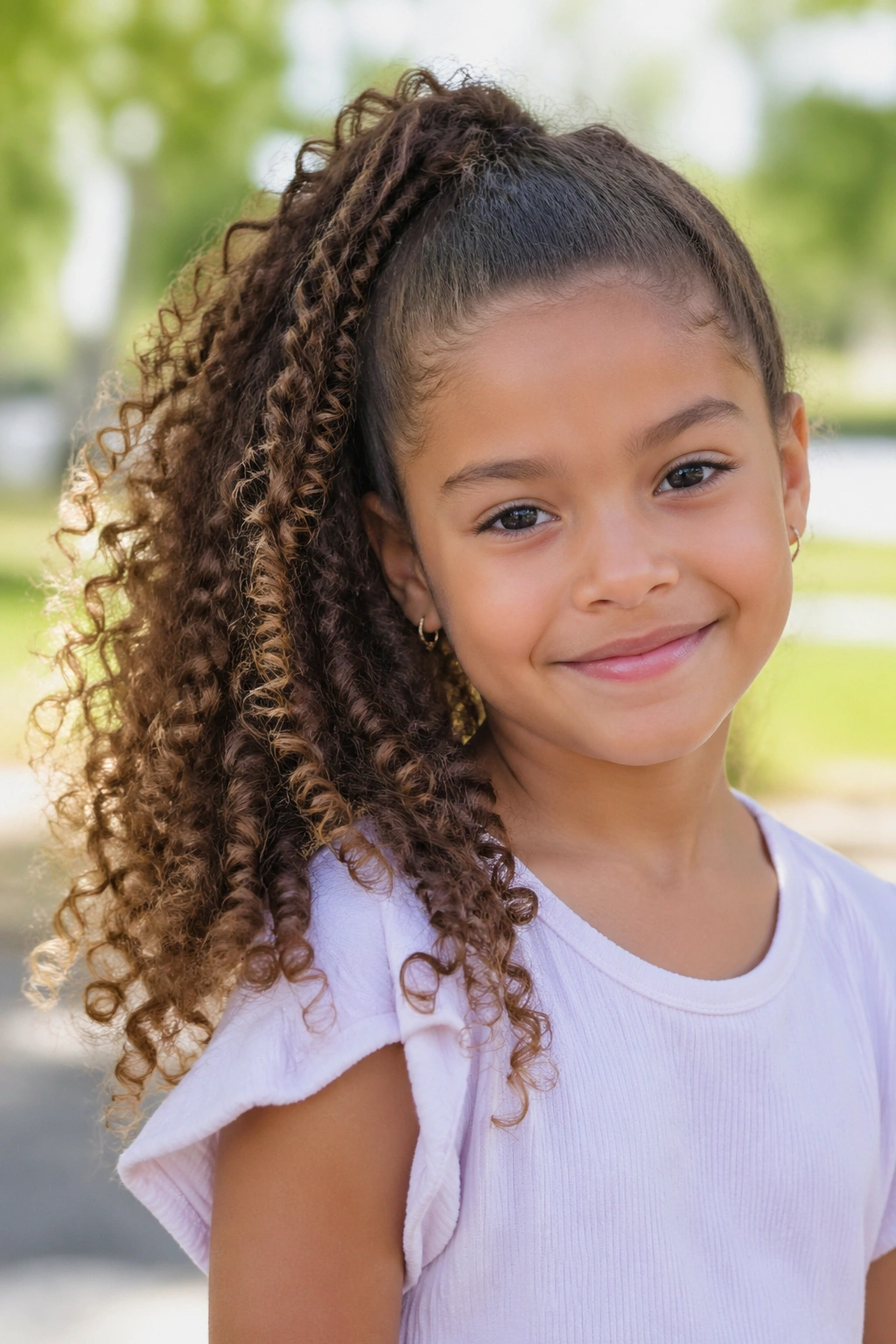
A diagonal side ponytail starts higher on one side and drops toward the opposite shoulder, which gives it a slanted shape that looks fun and a little unexpected. It’s not as obvious as a straight side ponytail, and that makes it feel fresh.
The diagonal line also helps with length. If the child’s curls shrink a lot, this shape can create the feeling of more movement because the hair falls across the body instead of straight down the back. That small shift changes the whole silhouette.
It works best when the front is lightly smoothed and the tail is kept full. Do not overbrush the curls out of shape just to make the line neat. The whole point is to let the texture be visible while the direction of the ponytail does the styling work.
25. Crowned Low Ponytail
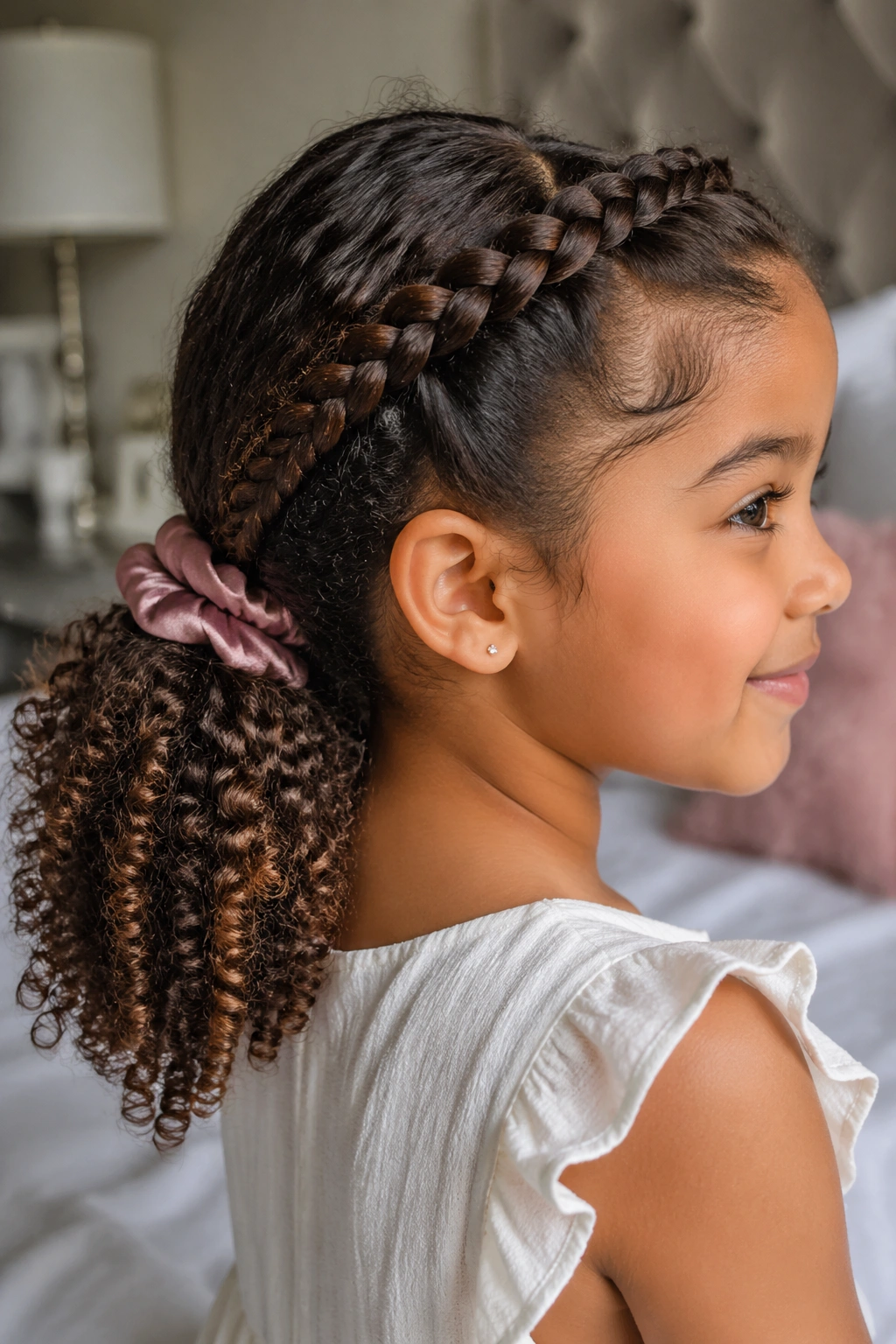
A crowned low ponytail finishes the list for a reason: it’s graceful, secure, and surprisingly wearable for everyday life. A braid or twist travels across the crown, then the rest of the curls gather low at the back.
Why it’s worth remembering
This style gives you the cleanest front shape of the group without forcing the whole head into a tight pull. The crown detail keeps it from feeling plain, and the low ponytail keeps the look gentle. It’s a nice balance for kids who need a style that lasts through school, dinner, and whatever happens after that.
- Works well on medium to long curls.
- Holds up nicely with a satin scrunchie.
- Keeps the front flatter than a plain low ponytail.
- Looks polished even when the curls loosen later.
Best move: If the curls are extra soft or fine, braid only one side at the crown and leave the other side loose. That keeps the look lighter and easier for the child to wear all day.
A curly ponytail does not have to fight the texture to look good. The best versions usually do the opposite. They use the volume, respect the curl pattern, and keep the base comfortable enough that the child forgets about it after a few minutes.
If you pay attention to tension, section size, and the kind of elastic you use, these ponytails become easy to rotate through the week. And that matters more than making one style look perfect for ten minutes. Kids live in their hair. The style should be able to live with them.
Final Thoughts
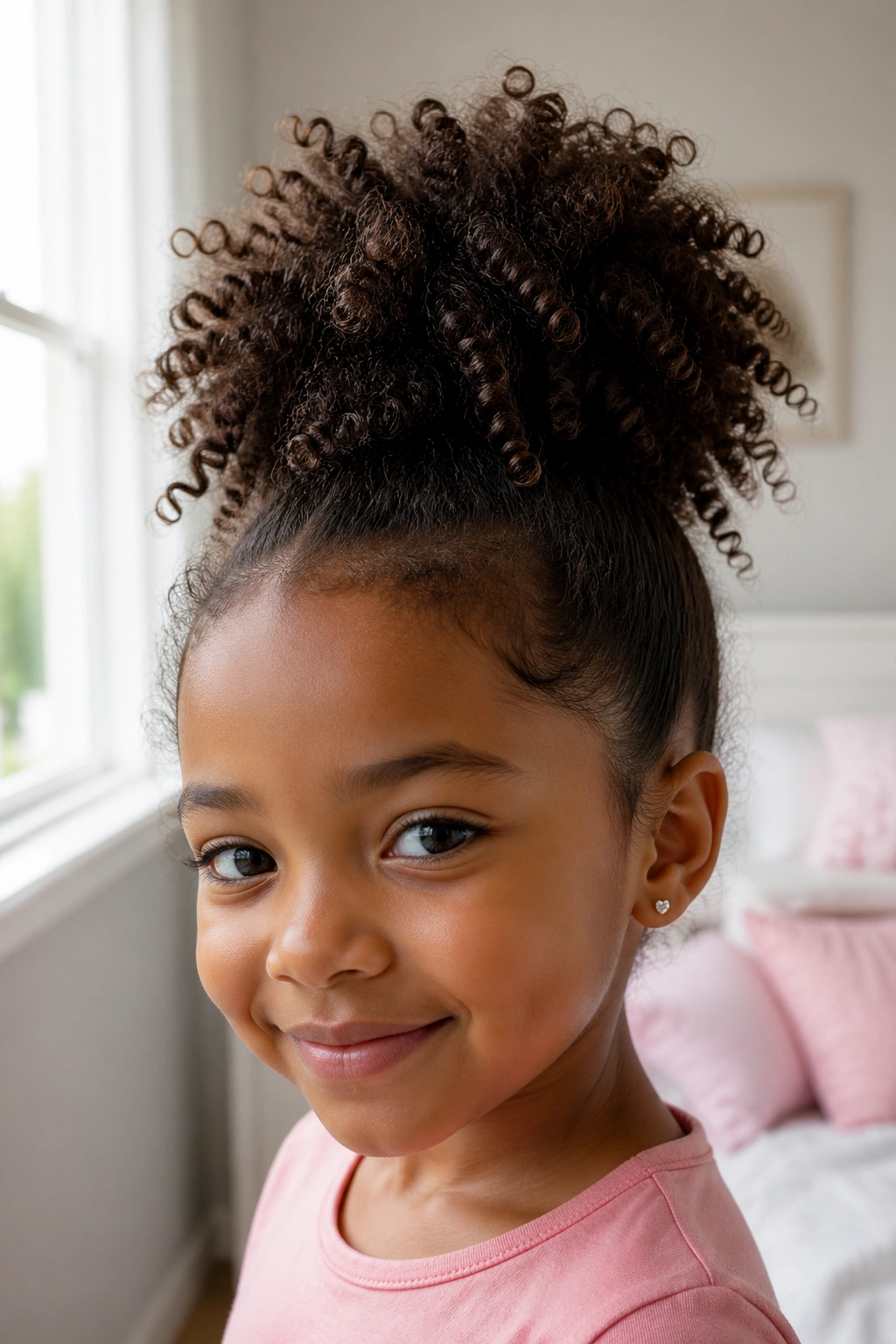
The strongest ponytails for curly-haired kids are the ones that hold without shouting. A good base, a soft tie, and a shape that works with the curls will beat a tight, glossy style every time. That’s true for school mornings, weekend outings, and the “I need this done in five minutes” kind of day.
If you’re deciding where to start, pick one style that fits the child’s patience level, then keep the rest for later. A high puff, a low nape ponytail, or a half-up curly ponytail usually gives you an easy entry point. Once that feels normal, the braids, twists, ribbons, and bubbles get a lot easier.