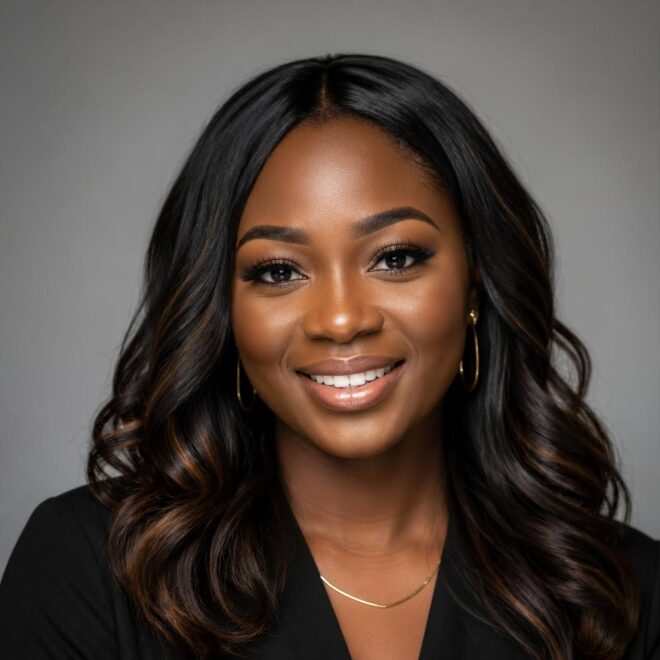


Nothing kills a great hairstyle faster than a thin, limp ponytail that refuses to match your natural curl pattern. We have all been there—trying to stretch, fluff, and pin our own hair into a high puff, only to end up with a shape that feels flat or feels like it is sliding down the back of your head within an hour. Clip-in ponytails for curly hair were created to solve exactly this, but there is a major gap between buying a cheap synthetic piece from the drugstore and finding a hair extension that actually looks like it grew out of your own scalp. The real secret isn’t just the hair quality; it is understanding how to secure the base, match the texture, and distribute the weight so you don’t end up with a headache or a damaged hairline by the end of the day. Whether you have 3C coils or 4C kinks, the right extension can turn a bad hair day into a polished look in about five minutes.
1. The Kinky-Coily Drawstring Ponytail
For those with 4C or tight 4B textures, the kinky-coily drawstring ponytail is the industry standard for a reason. You are looking for a unit that mimics that tight, zig-zag pattern without the sheen of cheap plastic. These pieces often come with a small internal comb and a drawstring cord that allows you to cinch the extension tight around your own natural bun.
Why This Style Reigns Supreme
When you have highly textured hair, a smooth, silky extension will look glaringly obvious against your natural roots. These kinky-coily units are designed to blend seamlessly with your natural shrinkage, meaning you don’t have to spend an hour flat-ironing your perimeter just to make the two textures “match.” You can leave your natural hair in a simple puff, cinch the drawstring, and the extension does the rest of the heavy lifting.
- Pro tip: Do not pull the drawstring too tight, or you will create a gap between the extension and your natural bun.
- Fix: Use an extra bobby pin to anchor the base of the extension into your natural hair bun for added security.
2. Deep Wave High-Volume Ponytail
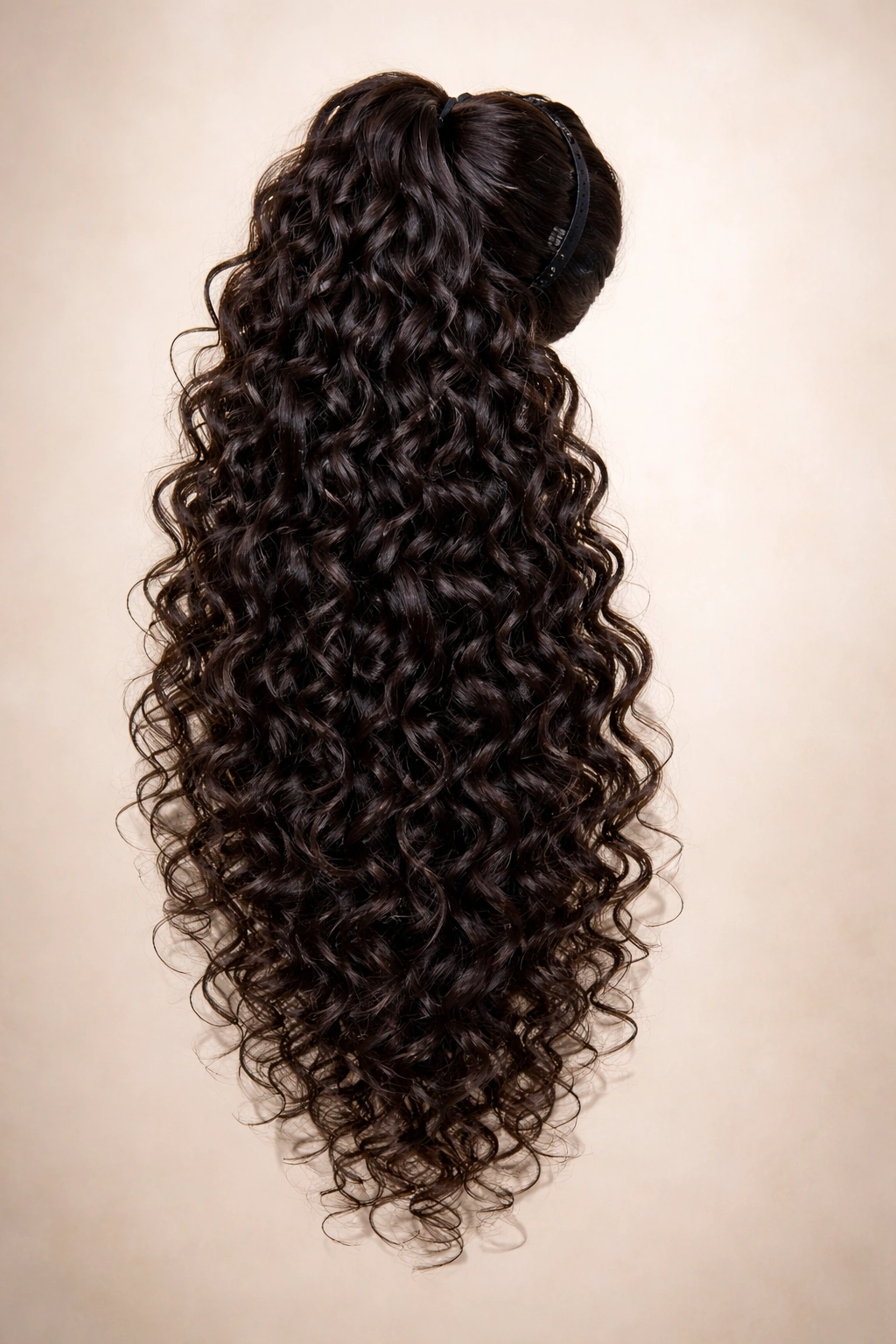
Deep wave textures are distinct because they offer an S-pattern that isn’t quite a coil but isn’t a loose beach wave either. These extensions are ideal for anyone rocking a 3B or 3C curl pattern who wants that wet-and-wavy look without actually having to drench their own hair in product.
The Visual Impact
These pieces are almost always high-volume, meaning they are packed with hair on the weft. If you have fine curls, a deep wave ponytail can add the bulk you might be missing naturally. They catch the light beautifully because the curls are defined rather than frizzy, which adds a level of polish that is hard to achieve with natural hair on a humid day.
- Maintenance Note: Use a light curl custard or a water-based mousse on these extensions to keep the wave pattern defined. Avoid heavy oils that can make the synthetic or natural fibers clump together in an unflattering way.
3. The Classic Afro Puff Clip-In
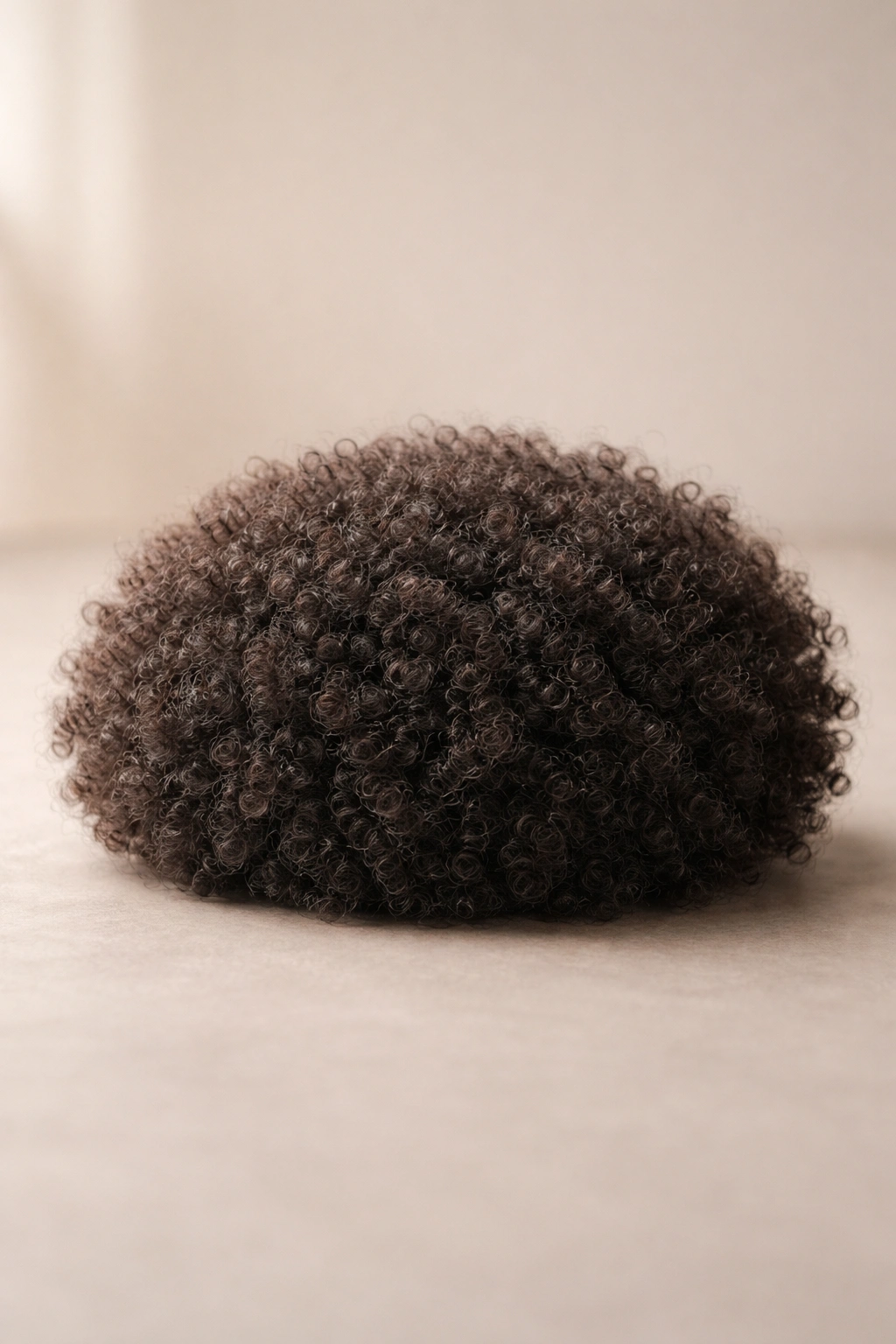
Sometimes you just want the shape, not necessarily the long, dangling length. The afro puff clip-in is a lifesaver for people who want to rock a high, rounded look without the manual labor of fluffing out their own hair with a pick.
Anatomy of a Good Puff
A great puff extension should have a dome-shaped base that fits over your natural bun like a cap. If the base is too small, it will pop off your head the moment you walk outside. Look for units that feature a wider, more flexible base. This allows you to tuck your natural hair entirely inside the extension, essentially turning your own messy bun into a perfectly round, professional-looking puff.
What to watch for: Many of these come with a claw clip. If you have very thick natural hair, the claw clip might struggle to grip. I always recommend removing the claw clip and sewing on a hair tie or using heavy-duty bobby pins to secure the base instead.
4. Long Kinky Curly Wrap-Around Ponytail
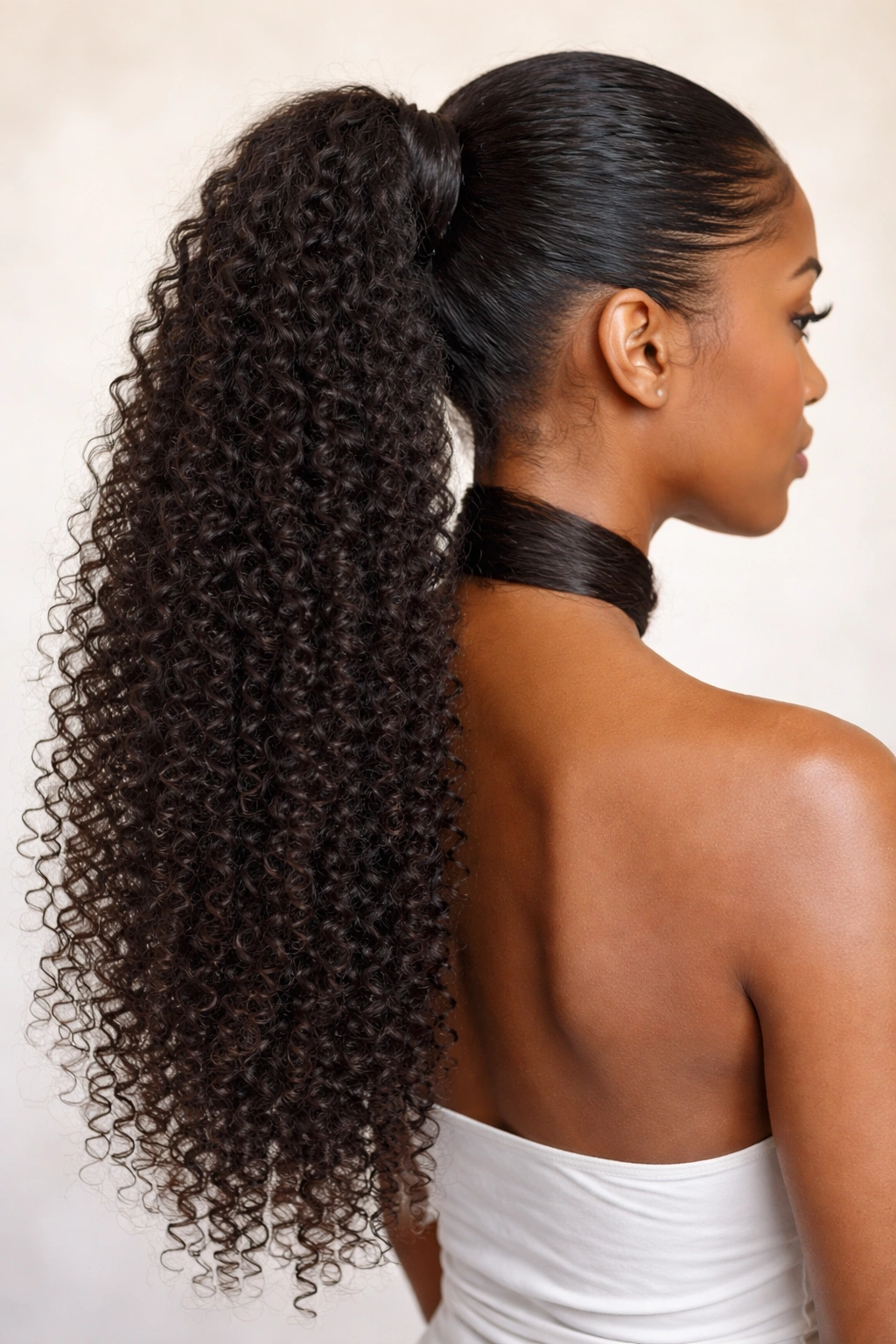
If you are going for drama, the long kinky curly wrap-around is your best friend. This style usually features a piece of hair meant to be wrapped around the base of the ponytail to hide the elastic or the drawstring mechanism.
The Wrap-Around Advantage
The main benefit here is the clean finish. By using a strand of the extension to cover the connection point, you eliminate the “wiggy” look that often happens with cheaper clip-ins. It looks like you spent time perfectly styling your own hair.
- Execution: Wrap the hair strand firmly but not so tightly that it pulls at the base. Secure the end of the wrap with a small bobby pin that matches your hair color, pushing it upward into the ponytail base so it stays hidden.
5. The Sleek-to-Curly Hybrid Ponytail
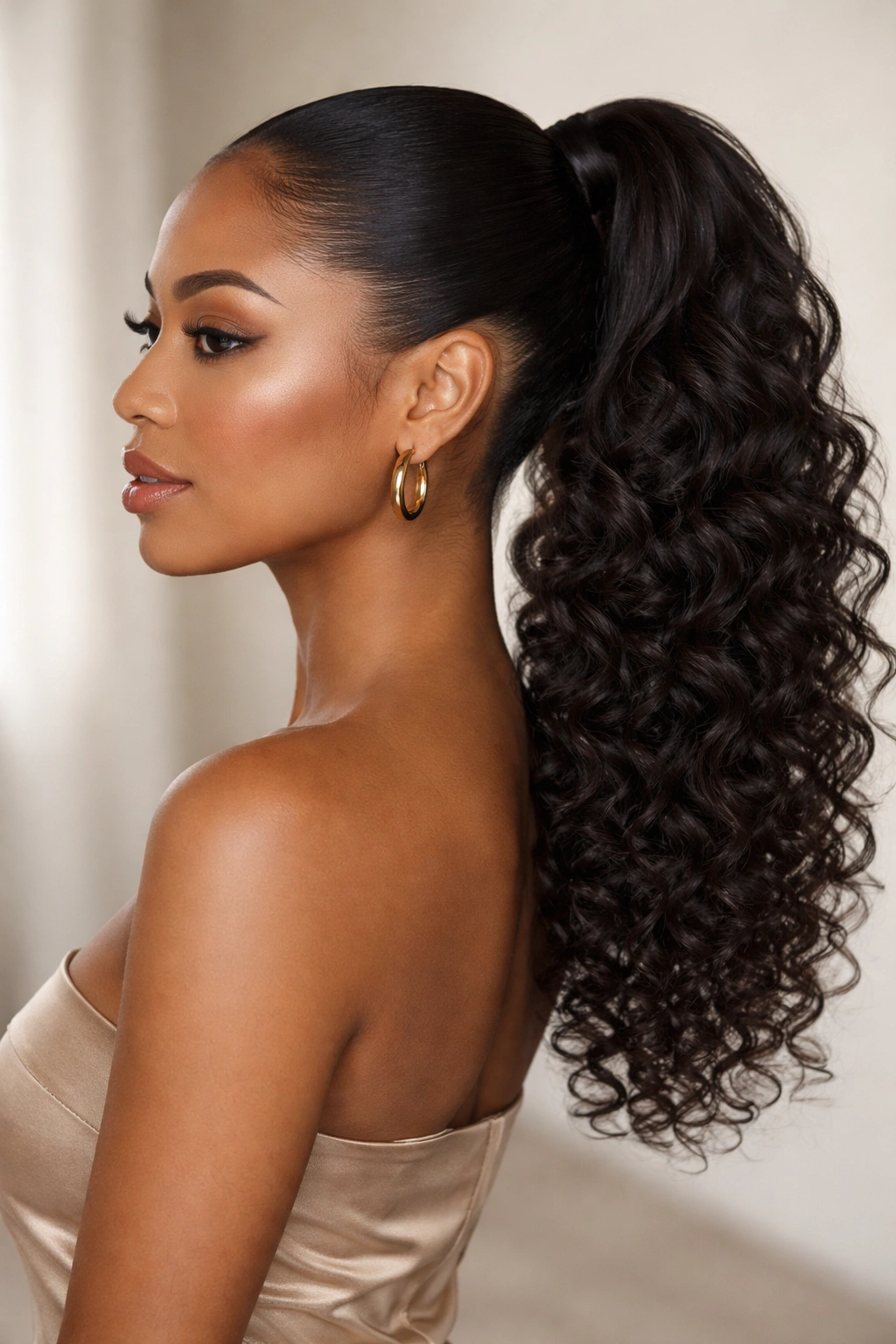
This is a specific aesthetic choice where your natural hair at the crown is slicked down perfectly, and the ponytail extension is the only part that is curly. This creates a high-fashion, clean contrast that is very popular for formal events or professional settings.
Making It Look Natural
The key to this style is the transition point. If your natural hair is curly, you have to use a strong-hold gel and perhaps a silk scarf to lay your edges and the crown of your head flat. Once the natural hair is bone-straight and slicked back, attaching a curly ponytail extension creates a striking visual.
Why this works: It removes the need for your natural hair to be in a perfect, fluffy state, saving you from “the puff” fatigue on days when your natural curls just aren’t cooperating.
6. Synthetic Heat-Resistant Fiber
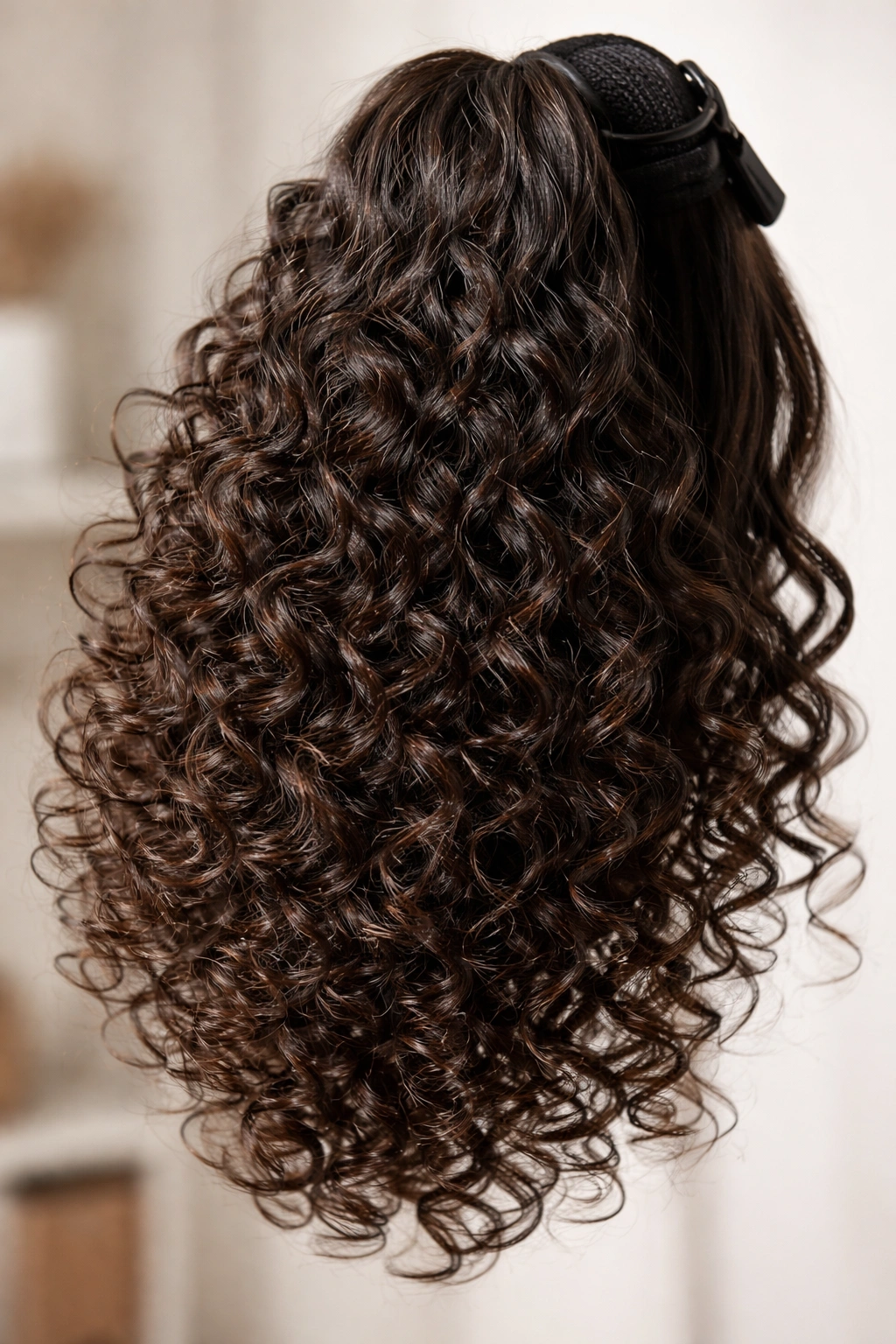
Synthetic hair has come a long way. Specifically, high-quality, heat-resistant synthetic fibers (often labeled as “kanekalon” or “premium fiber”) allow you to refresh the curl pattern with a steamer or a very low-heat curling iron.
Is Synthetic Right for You?
If you are on a budget or if you want a ponytail that holds its shape even in a downpour, synthetic is the way to go. These fibers have “memory,” meaning they are often styled in a specific curl pattern at the factory and will return to that state even after being washed.
- The Downside: They don’t move exactly like human hair. They have a bit more “spring” and can sometimes feel slightly stiff.
- The Verdict: Keep them for days when you need a quick, no-fuss style that will look exactly the same at 5:00 PM as it did at 8:00 AM.
7. Human Hair Extensions for Custom Coloring
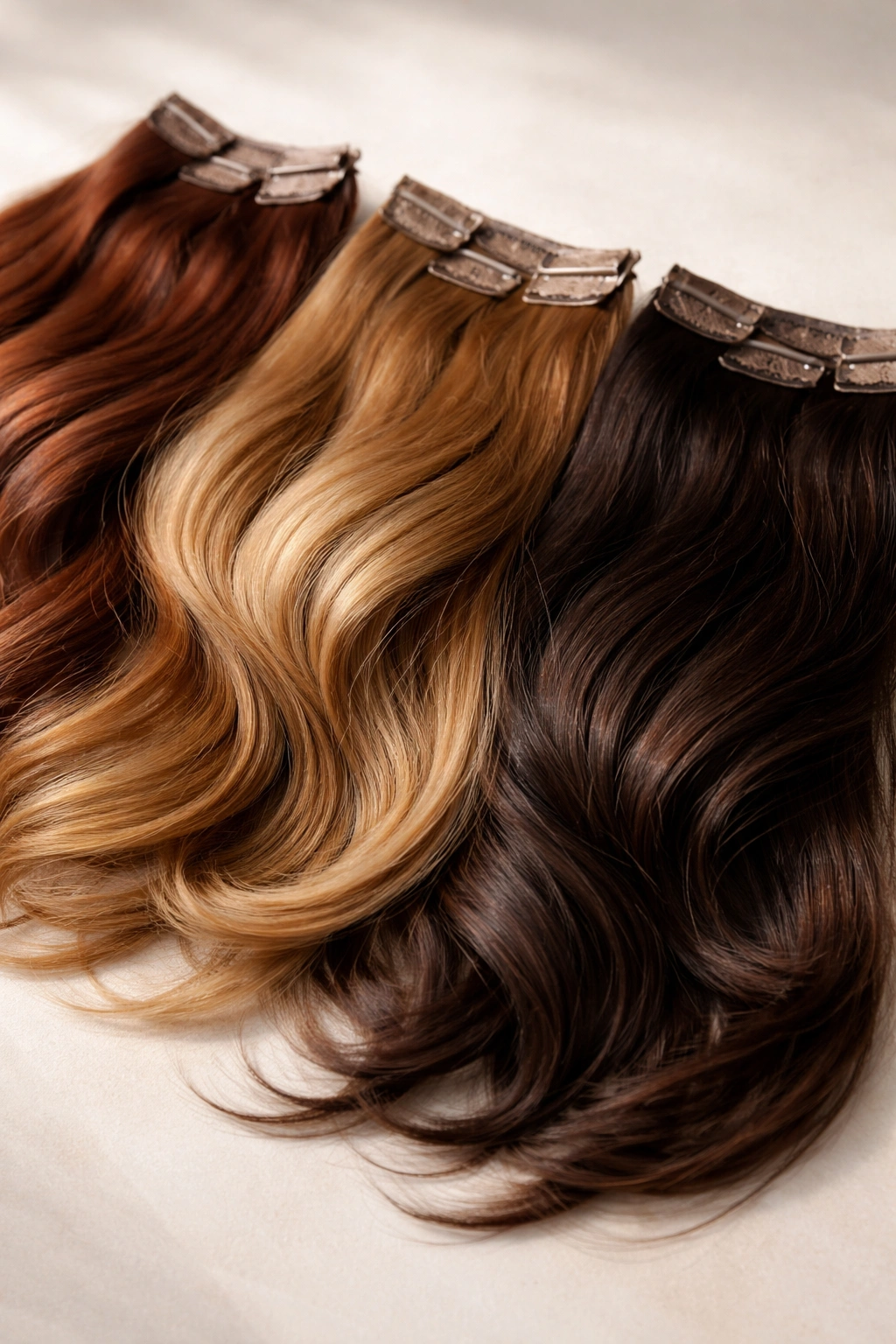
Sometimes, you cannot find a ponytail that perfectly matches your shade of auburn, honey-blonde, or deep espresso. In those cases, human hair clip-ins are the only real option.
The Customization Factor
Human hair can be dyed, toned, and heat-styled just like your natural hair. If you have highlights or a complex dye job, buying a human hair ponytail and taking it to your stylist to have it colored to match your roots is the smartest investment you can make. It creates a seamless blend that is physically impossible to achieve with a generic synthetic piece from an online catalog.
Investment: These are more expensive, but they last for years if you treat them with the same care as your own hair.
8. The Claw Clip Attachment Mechanism
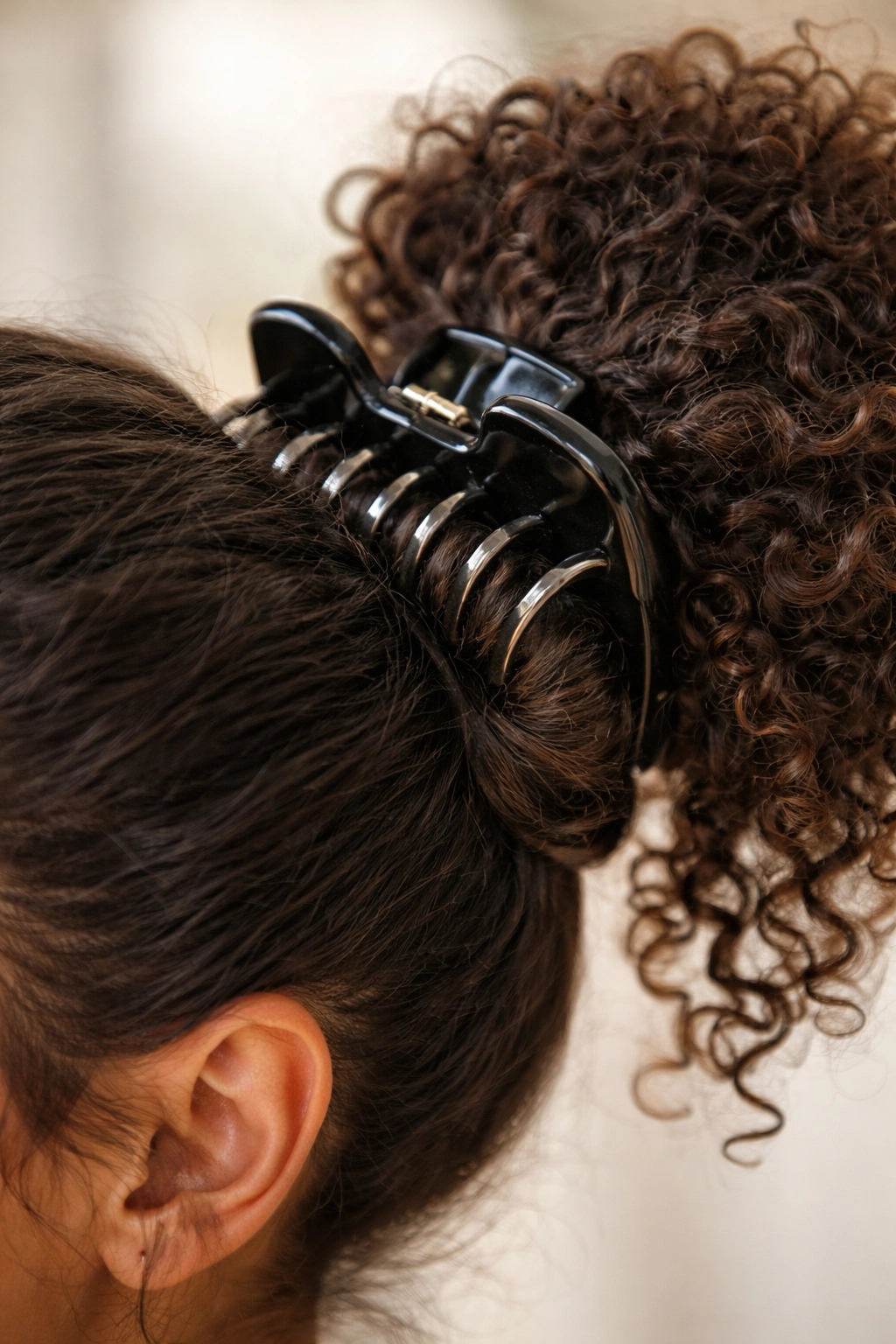
There is a specific category of curly ponytails that utilize a large claw clip to attach. This is perhaps the fastest way to add length and volume.
Speed Meets Security
You put your hair in a small bun, open the claw, and clamp it right over the top. It is incredibly user-friendly. However, the weight of the claw clip can cause the ponytail to sag if your natural bun isn’t anchored tightly enough.
- Pro Tip: If the claw clip feels heavy, do not rely on it alone. Use two or three bobby pins to pin the actual weft of the hair to your natural hair near the bun. This prevents the “droop” that heavy claw-clip ponytails are prone to.
9. Drawstring vs. Wrap-Around Security
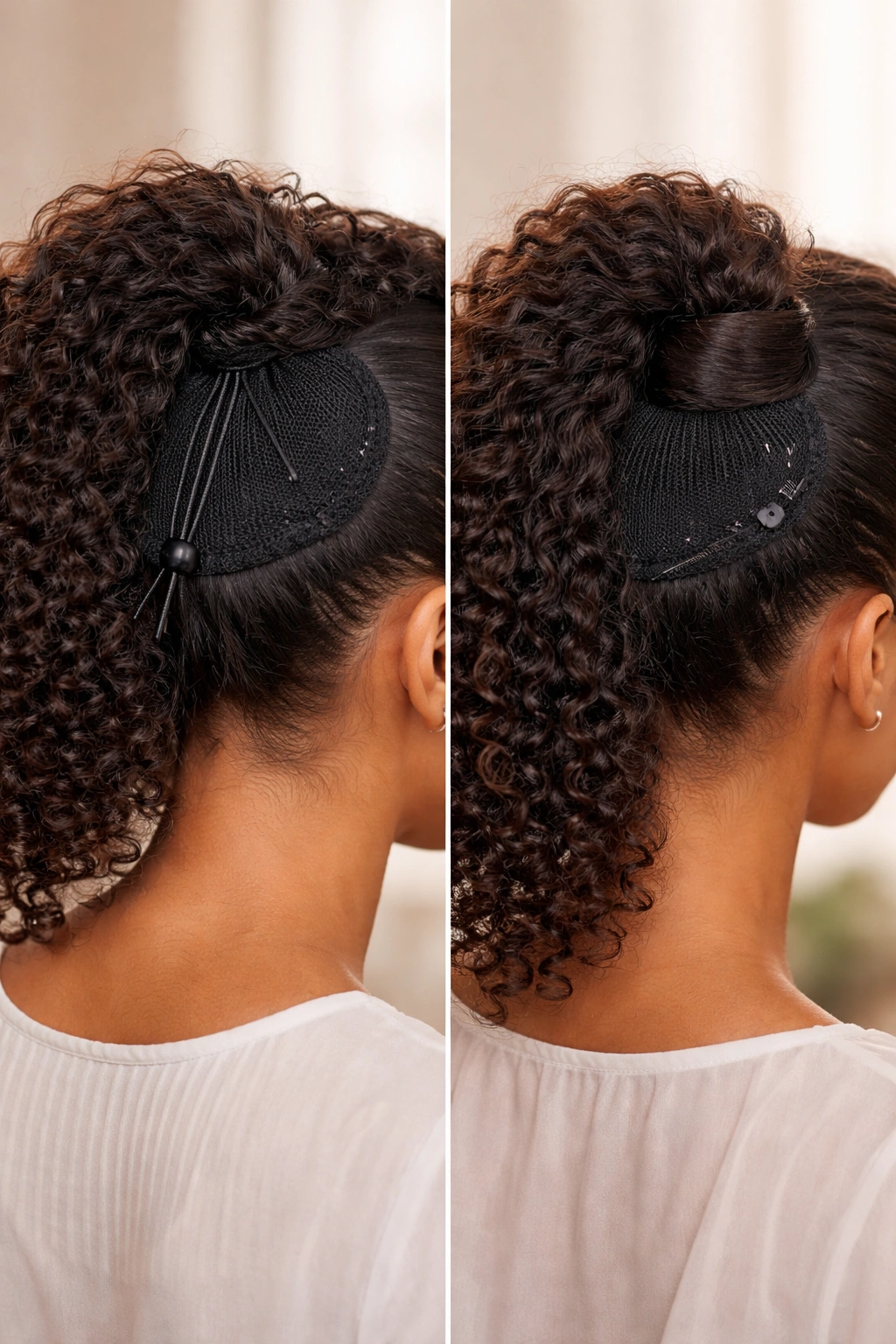
The debate between drawstring and wrap-around mechanisms is central to how comfortable you will be throughout the day. Drawstrings provide a “snug” fit that feels secure, whereas wrap-around units rely on bobby pins and Velcro to stay attached.
Choosing Your Fit
If you are active and moving around, the drawstring is usually more reliable. It cinches the extension tight against your head, reducing the movement of the unit. Wrap-around styles are generally better for sitting or light movement; they look more “finished” but can slide if you are sweating or running around.
My recommendation: If you have thick hair, go for the drawstring. It handles the volume of your own hair better than a flat wrap-around piece, which can start to gap if your natural bun is large.
10. Color Matching to Natural Hair
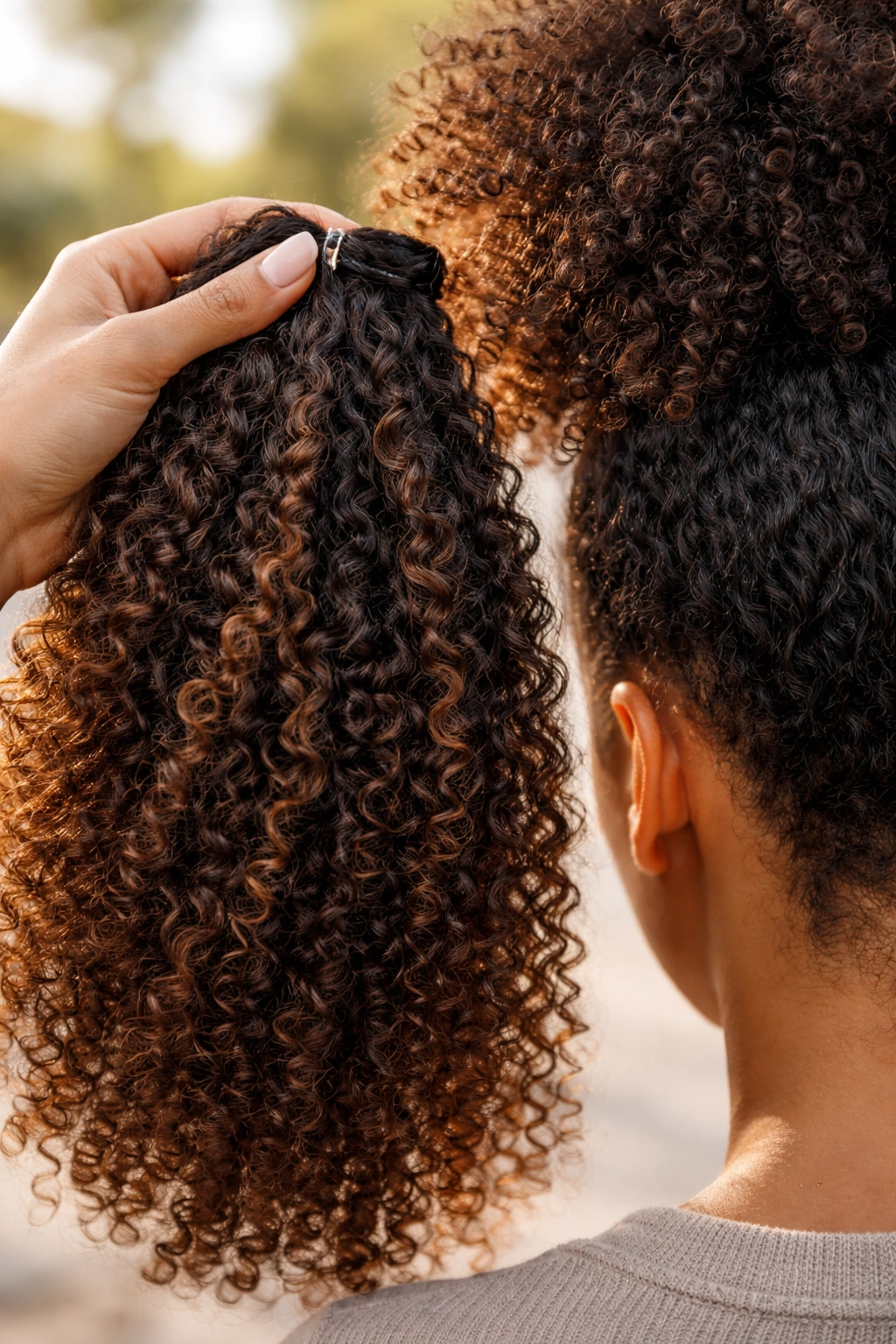
Matching curly extensions is harder than matching straight ones because the light hits curly hair differently. When you are looking at color charts, always look at the hair in natural, indirect daylight.
Avoid the “Ashy” Trap
Many curly extensions look slightly different in the package than they do on your head. If your hair is warm-toned, a cool-toned extension will look “off” immediately. If you have to choose between two shades that are close, go for the one that has slightly more golden or red undertones, as curly hair naturally reflects less light than straight hair and can handle the warmth.
- Secret: If you cannot find a perfect match, buy a slightly lighter shade. It is much easier to use a temporary root spray to darken the extension than it is to try to lighten a synthetic unit.
11. The Half-Up, Half-Down Curly Ponytail
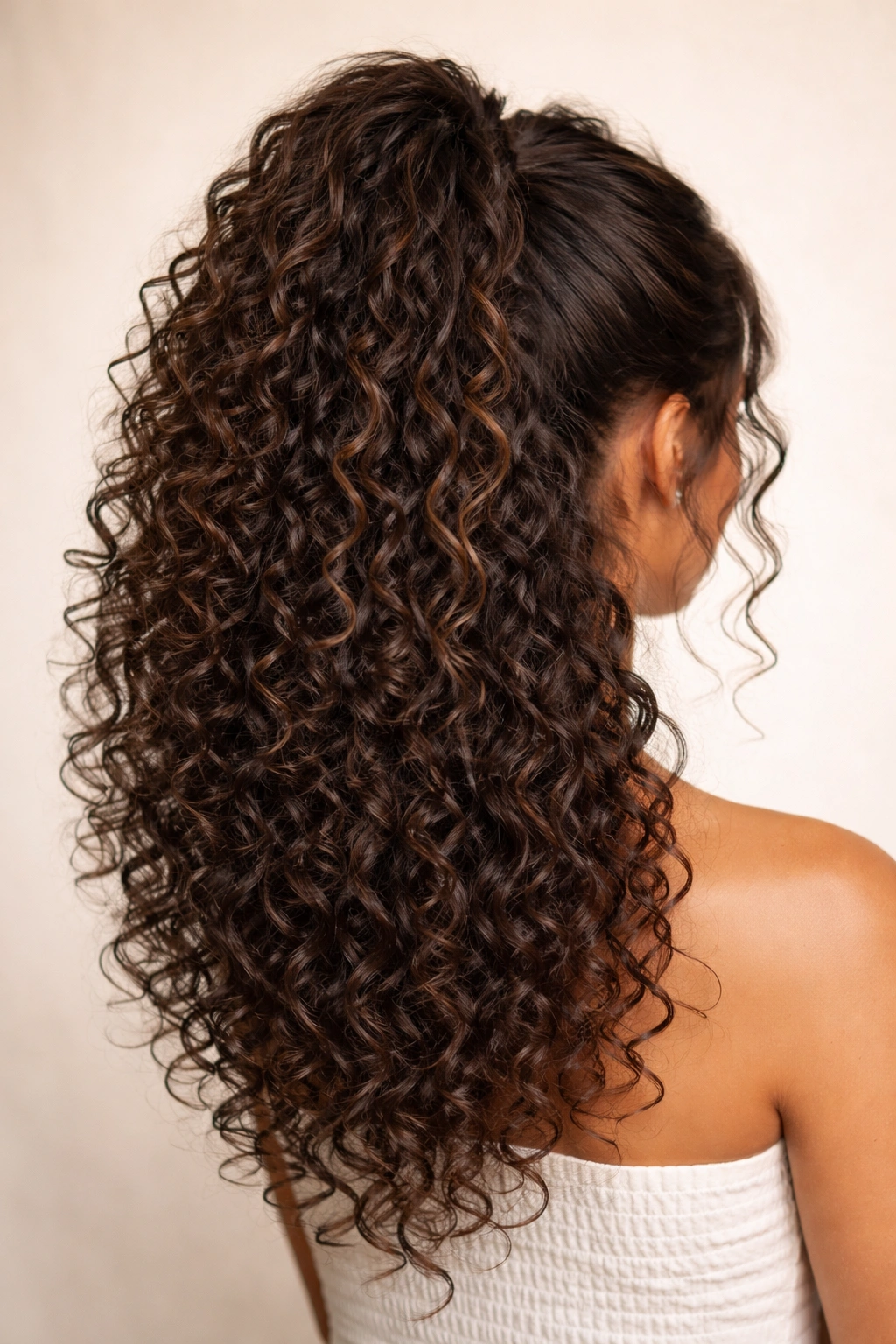
This style is for people who want to show off their natural texture while getting the length and volume that extensions provide. You use the clip-in to create the “top” portion of the style.
Achieving the Blend
You need to leave the bottom half of your hair out, which means your natural hair at the nape of the neck needs to be smoothed down. Since you aren’t pulling all your hair into the ponytail, you have less weight to deal with, making this a very comfortable style for all-day wear.
The trick: Ensure the clip-in is installed firmly at the crown of your head so it doesn’t shift backward, which would expose the weft where your hair parts.
12. Managing Frizz and Humidity
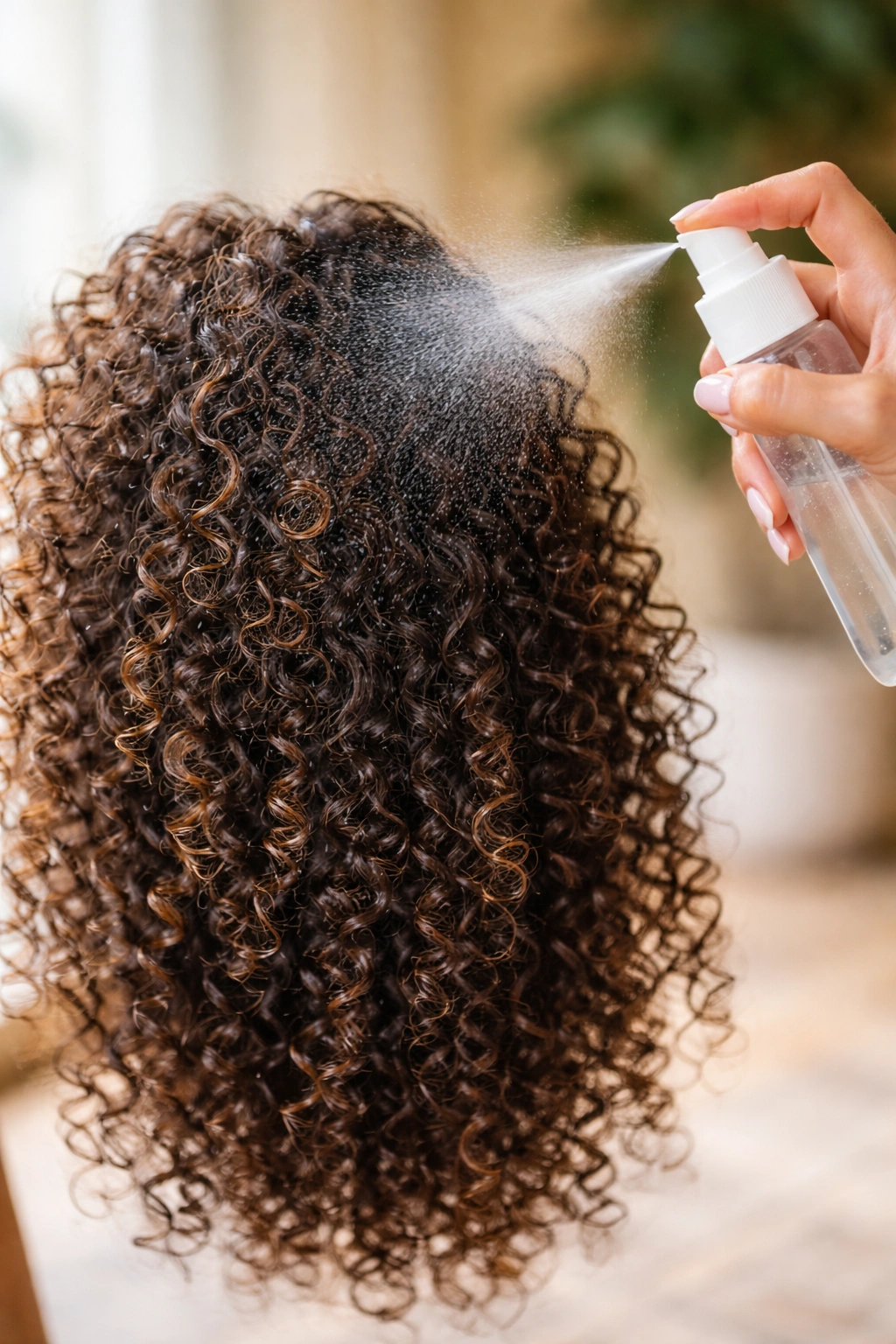
Curly extensions, whether synthetic or human hair, are prone to frizz just like your own hair. However, because you aren’t producing natural oils to coat the extension, it can dry out faster.
The Moisture Routine
Keep a small spray bottle filled with a mix of water and a silicone-free conditioner in your bag. If the ponytail starts looking dry or frizzy during the day, a very light misting will bring the curl pattern back to life. Do not soak the unit; just dampen it enough to redefine the curls.
Warning: Do not use heavy products like pure shea butter or heavy grease. They will attract dust and create a matted, tangled mess by the end of the day.
13. Maintaining the Pattern of Deep Curly Extensions
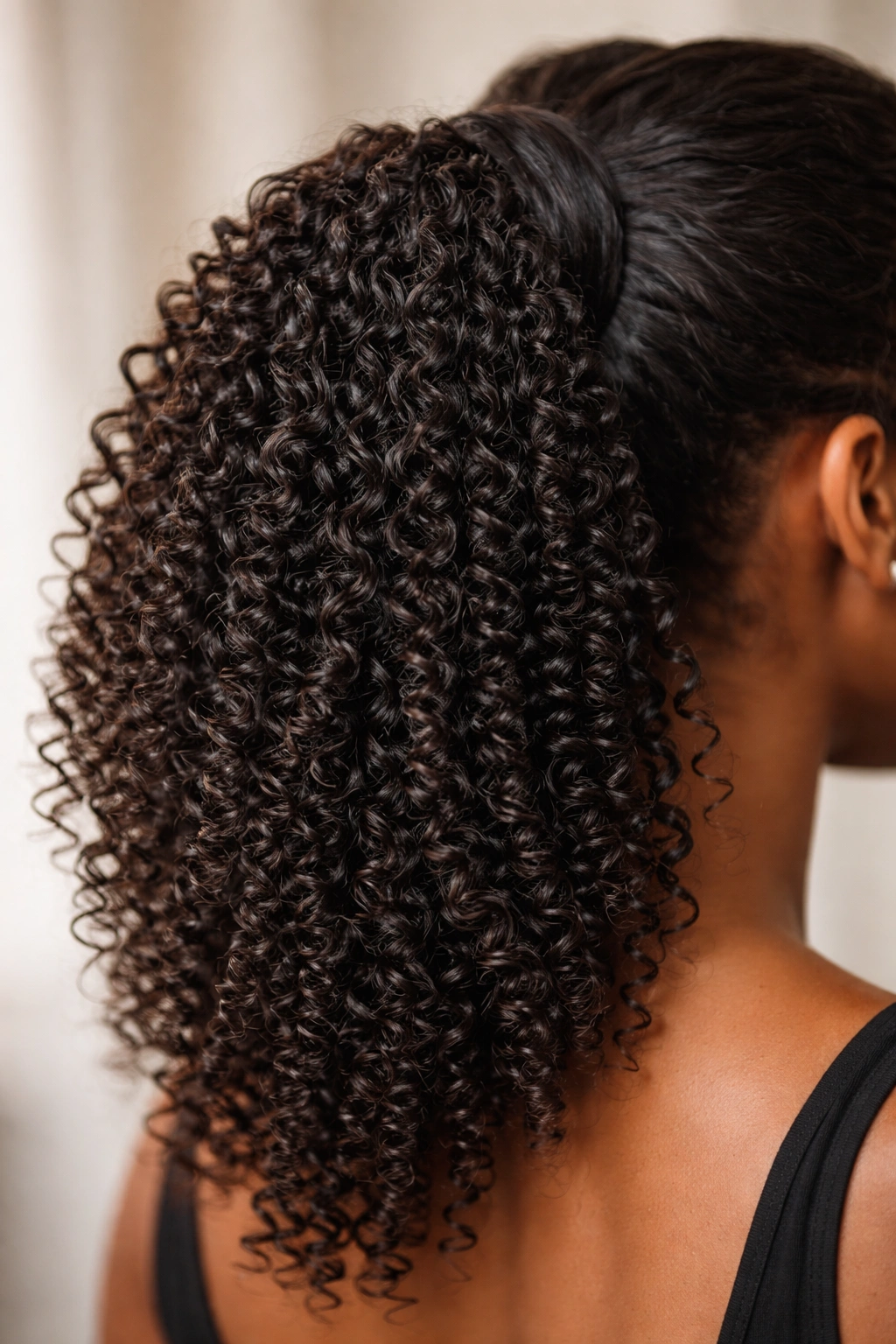
If you have bought a unit with a very tight, springy curl, the biggest enemy is gravity. Over time, these curls can stretch out and lose their definition, making the ponytail look “tired.”
The Steam Method
If your extension is heat-resistant, use a hand-held steamer to revive the curls. Hang the ponytail upside down—this is crucial—and steam the hair from bottom to top. The heat helps the synthetic fibers shrink back into their original curl shape. If it is human hair, use a curling wand on the lowest heat setting to re-coil the hair, then let it cool completely before touching it.
14. Properly Securing the Base
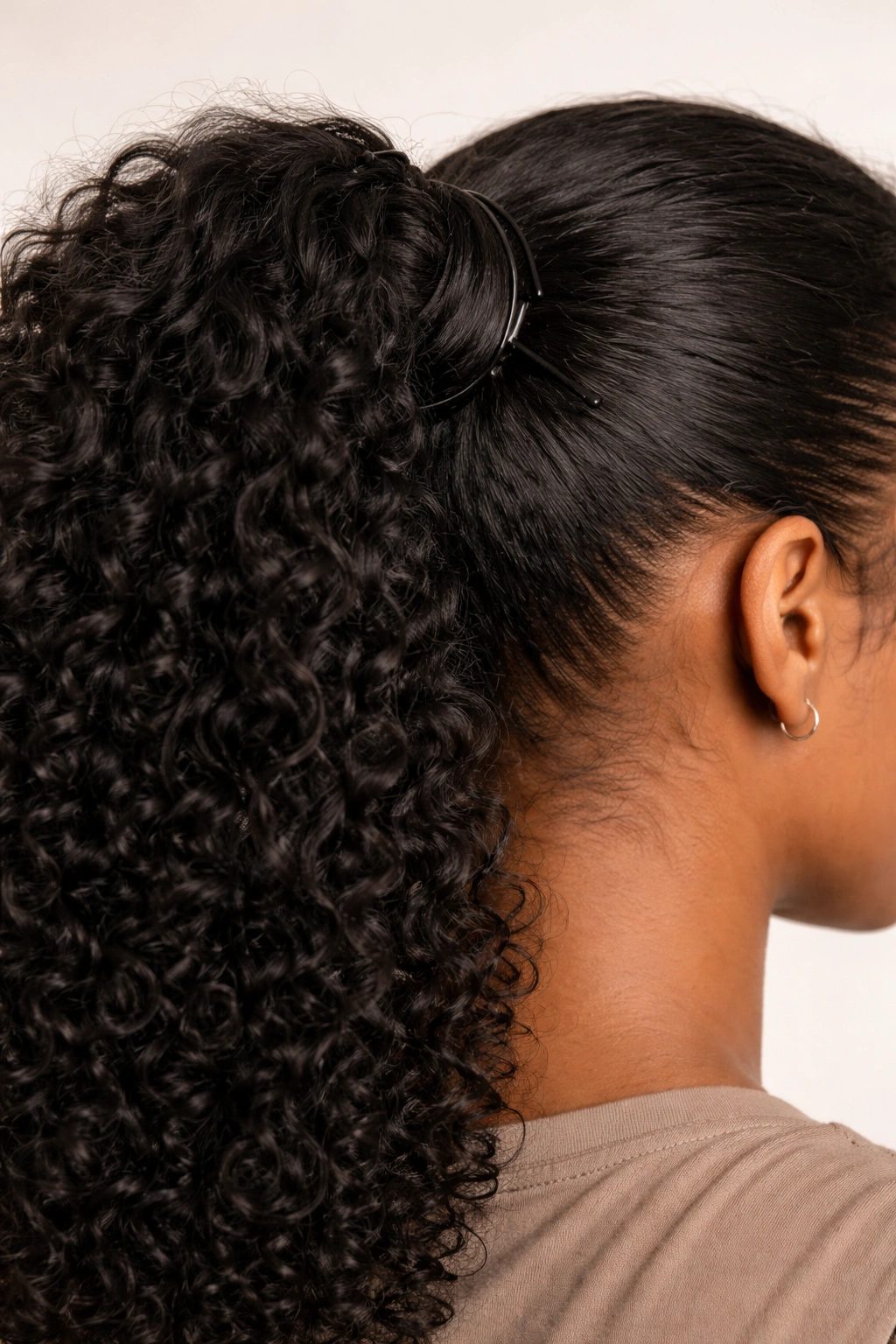
The base of your ponytail is the foundation. If you try to attach a ponytail extension to a loose, messy bun, the entire look will fail.
The “Taut” Technique
Gather your natural hair into a tight ponytail using a thick, non-snag hair tie. Then, twist that hair into a bun. The smaller and flatter you make this bun, the better the extension will sit against your head. If your bun is bulky, the extension will sit at an awkward angle, which is a dead giveaway that you are wearing a piece.
- Actionable step: Use a second hair tie to secure the bun tightly. If you have very long hair, pin the excess hair around the base of the tie to keep it flat.
15. Blending Your Natural Edges with Clip-Ins
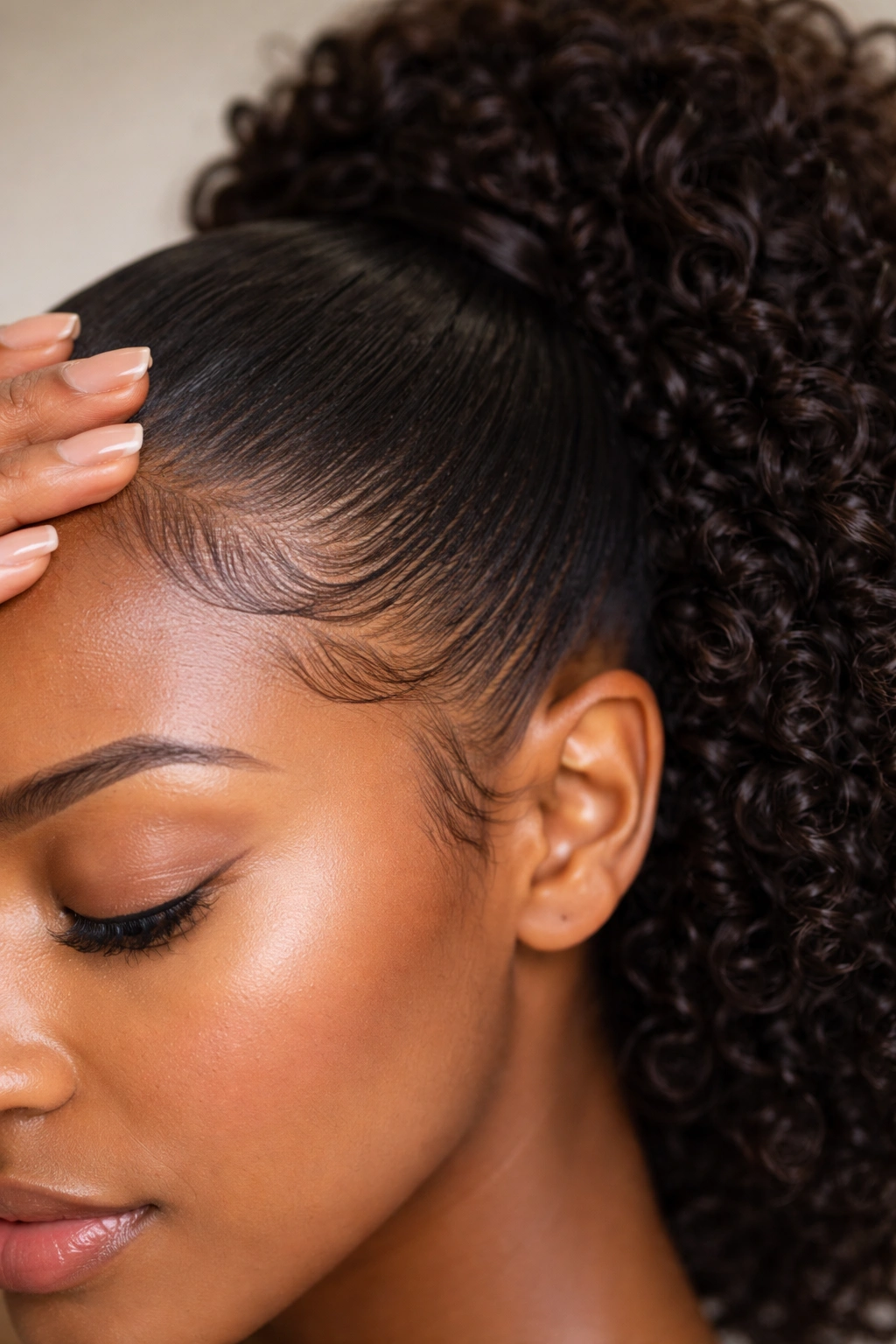
The number one way people tell someone is wearing a ponytail extension is when the texture of the edges doesn’t match the texture of the extension.
The Smoothing Act
Use a high-quality edge control or styling gel to lay your baby hairs. The goal is to create a soft, clean line at the perimeter of your head that transitions into the extension. If you have “type 4” hair and the extension is a “type 3” wave, the edges are your primary way of hiding the difference. Keep your edges tidy, and the eye will be drawn to the sleekness rather than the texture clash.
16. Protecting Your Natural Hair Under the Extension
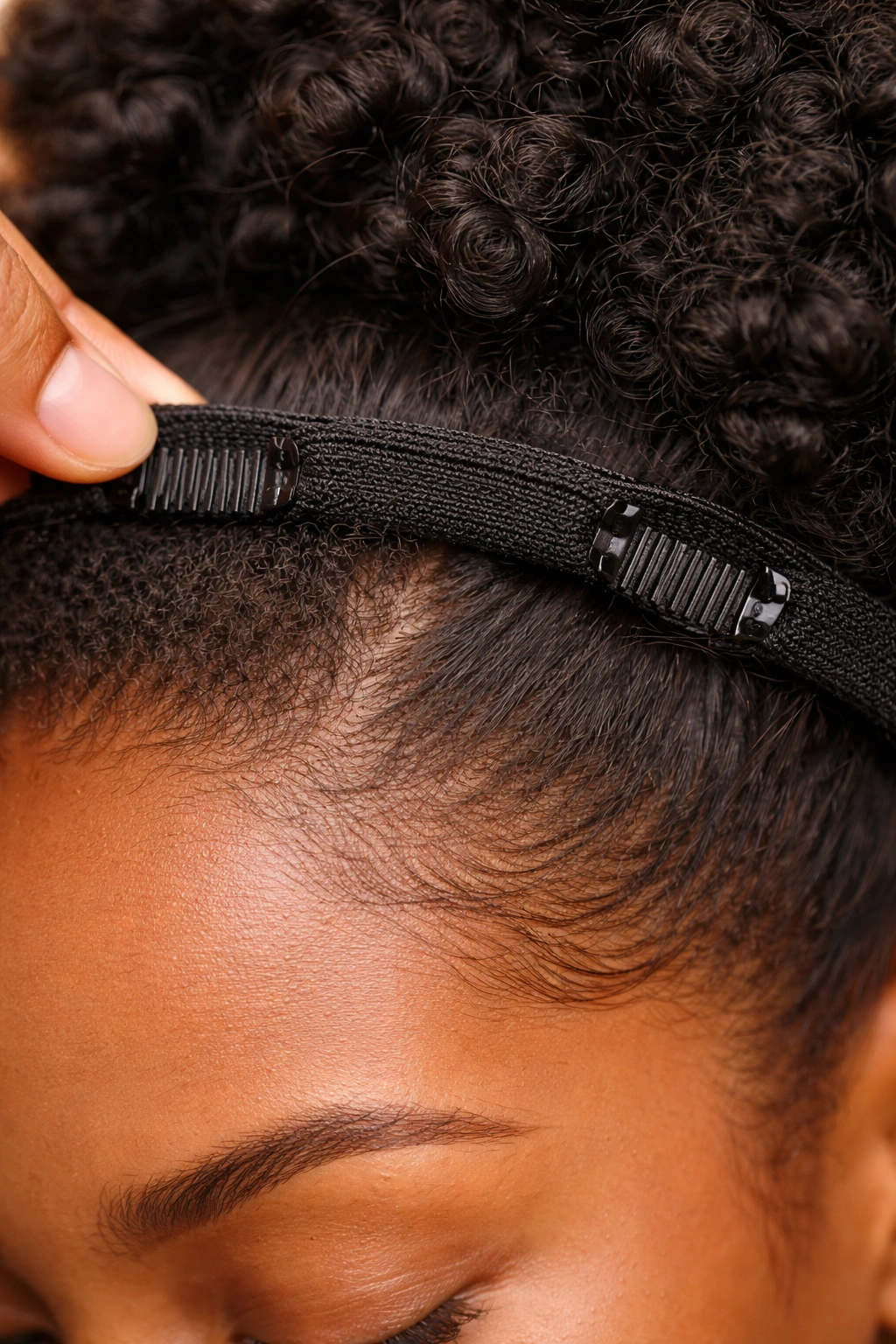
Clip-ins are protective, but they can also be destructive if you are not careful. The weight of a long, heavy curly ponytail can pull at your natural hairline, leading to thinning over time.
Tapering the Tension
Never pull the ponytail extension as tight as you possibly can. The weight of the synthetic or human hair is enough to create tension on its own. Give your edges a break. If you notice your hairline feels sore, the ponytail is too tight. Take it out, re-situate it, and ensure the weight is distributed more across the nape of your neck than the front of your hairline.
17. Adding Volume with Multiple Clip-Ins
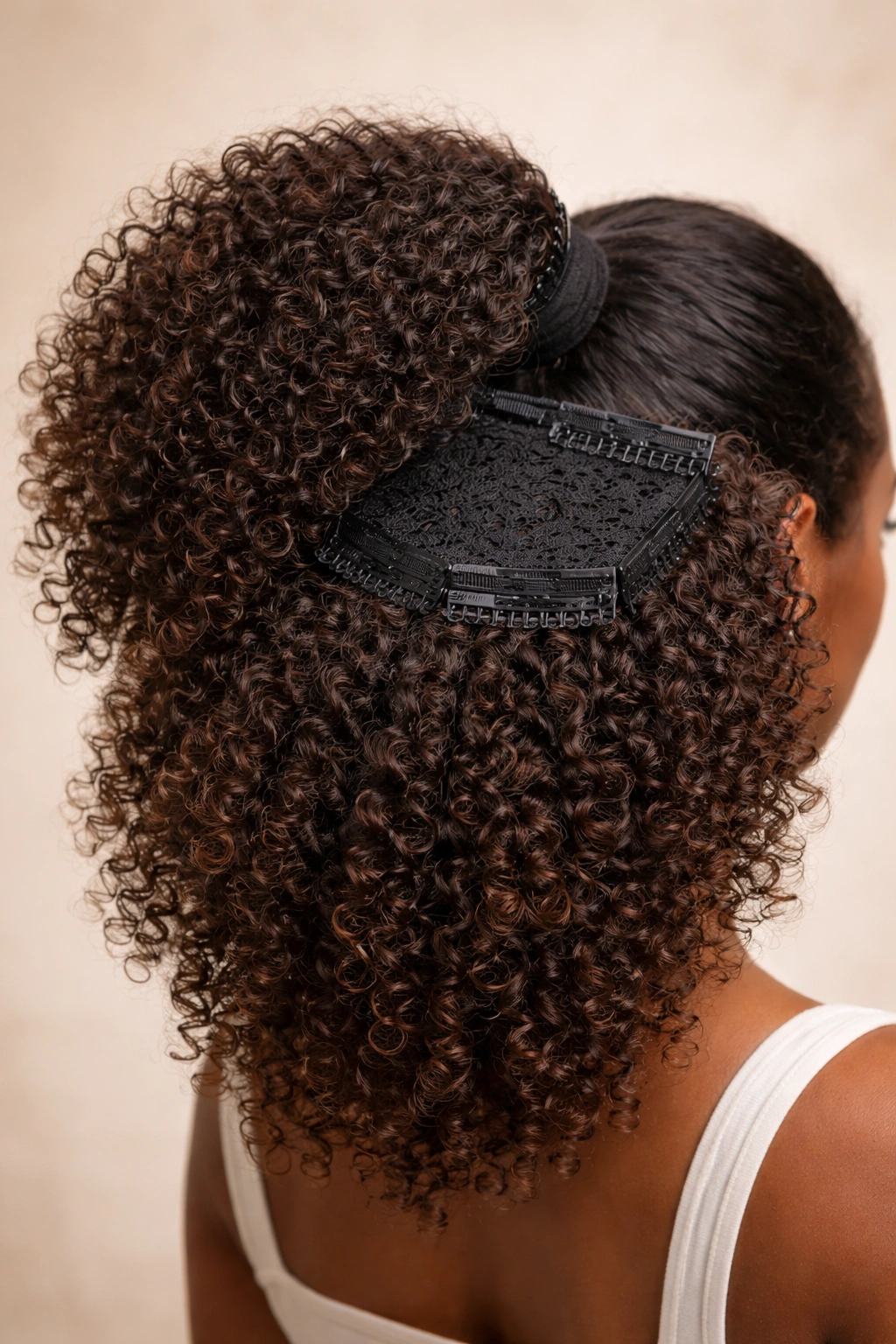
Sometimes, one ponytail isn’t enough. If you are going for a dramatic, big-hair look, you can “stack” extensions.
The Stacking Method
Start by putting your natural hair in a high bun. Attach your main ponytail extension as you normally would. Then, take a smaller, separate curly weft (or a smaller clip-in ponytail piece) and clip it directly into the base of the first one, or wrap it around the base to add extra width and volume. This gives you that “Instagram influencer” level of fullness that single-piece extensions often lack.
18. Selecting the Right Length for Your Face Shape
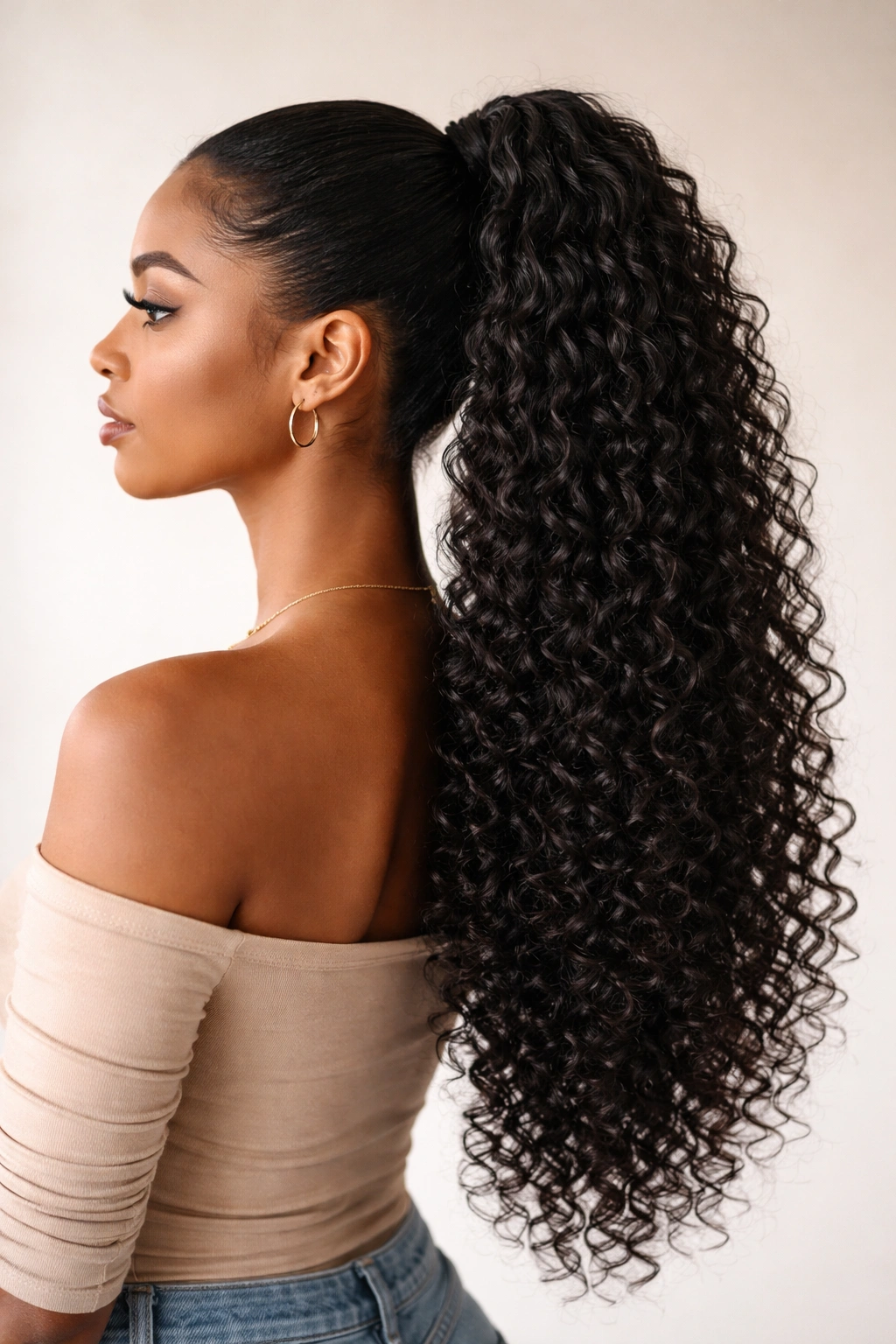
Length changes everything. If you have a round face, a very long ponytail can sometimes emphasize that roundness. If you have an oval or heart-shaped face, you can get away with longer lengths.
Proportion Matters
A 12-inch or 14-inch ponytail is classic and manageable for daily wear. It adds volume without pulling on your head. 20-plus inches is for specific looks, but be aware that the longer the ponytail, the heavier it is, and the more likely it is to tangling if you are walking around a lot.
Guideline: Choose a length that you can realistically maintain. If you are constantly brushing it, you are breaking down the curl pattern.
19. Proper Storage to Prevent Tangling
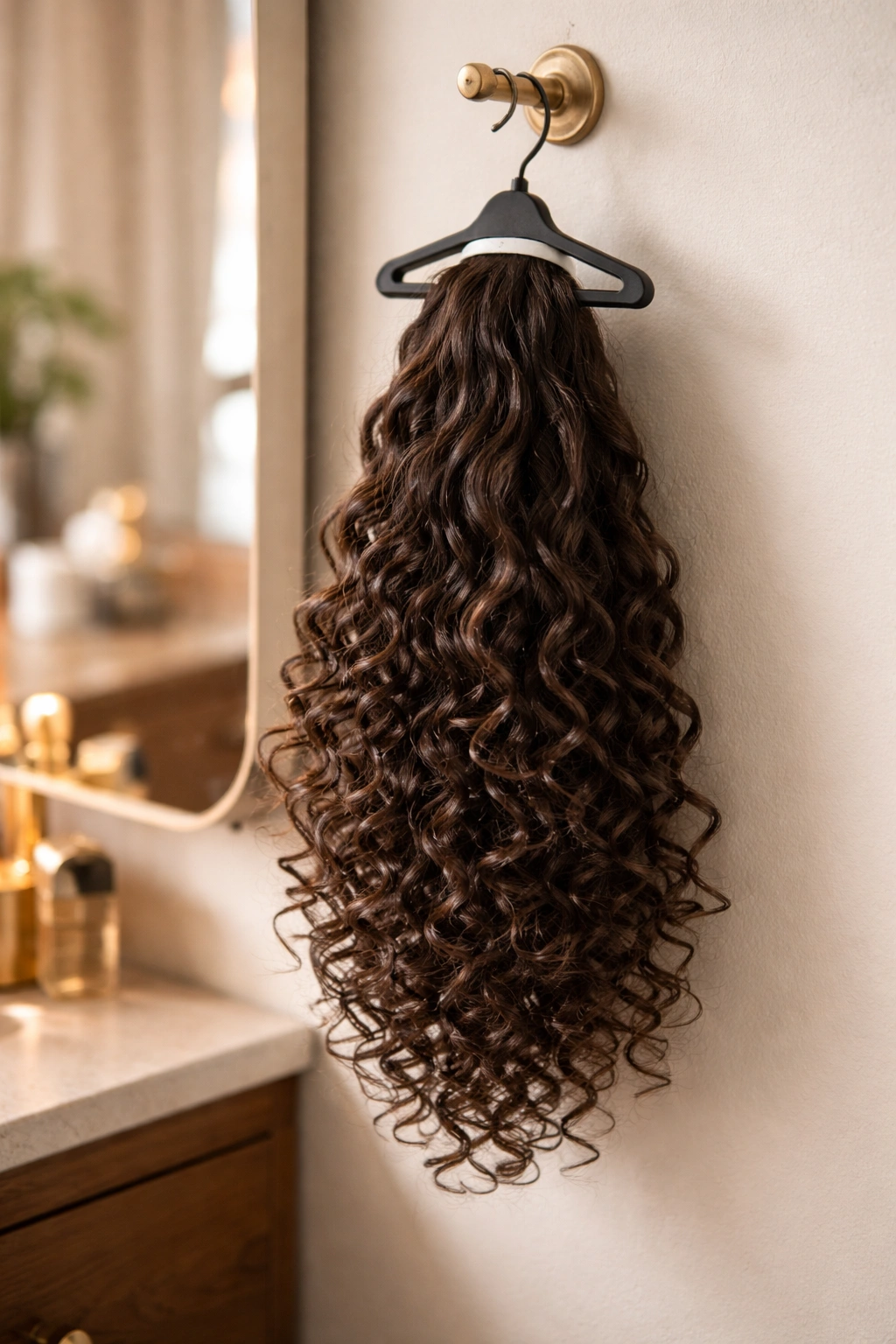
Curly hair tangles. It is just a fact of life. When you take your ponytail off at the end of the day, do not just toss it on your vanity.
The Hanger Trick
Store your curly ponytail on a small hook or a dedicated wig hanger. This keeps the hair from bunching up, which is what causes the most severe matting. Before storing, give the curls a gentle shake, and if they look particularly dry, a very light spritz of water can help maintain the shape until the next time you wear it.
20. Daily Detangling Techniques
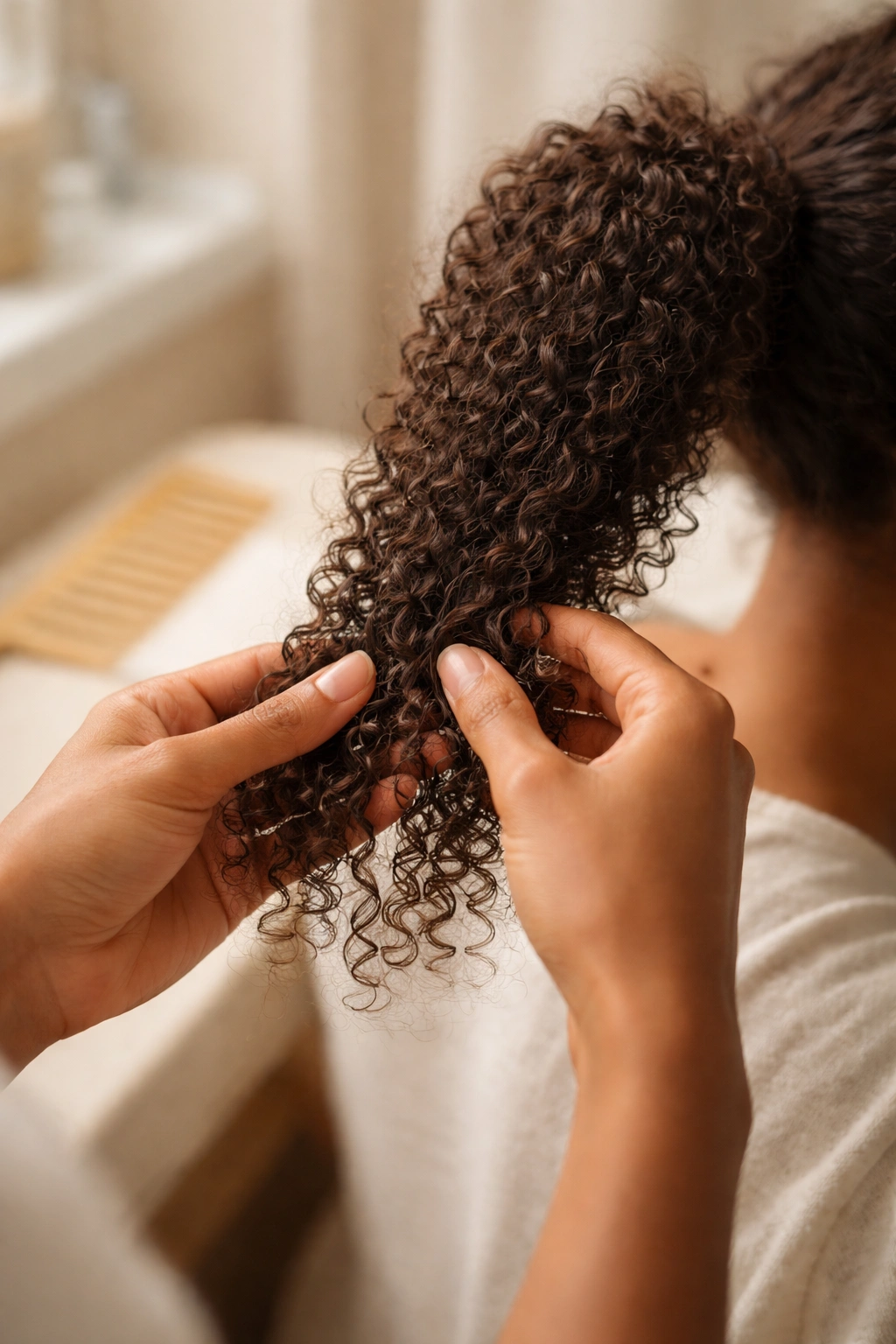
Never use a fine-tooth comb on curly extensions. You will rip the curls apart, turn them into a frizzy mess, and effectively ruin the unit.
The Gentle Approach
Use your fingers or a very wide-tooth comb. Start at the very bottom of the ponytail, detangling the ends first. Once the ends are smooth, move up a few inches. Never force the comb through a knot. If you hit a snag, stop, gently untangle it with your fingers, and then try the comb again. Patience is the only way to make a curly unit last for more than a few weeks.
21. Refreshing Curls with Product
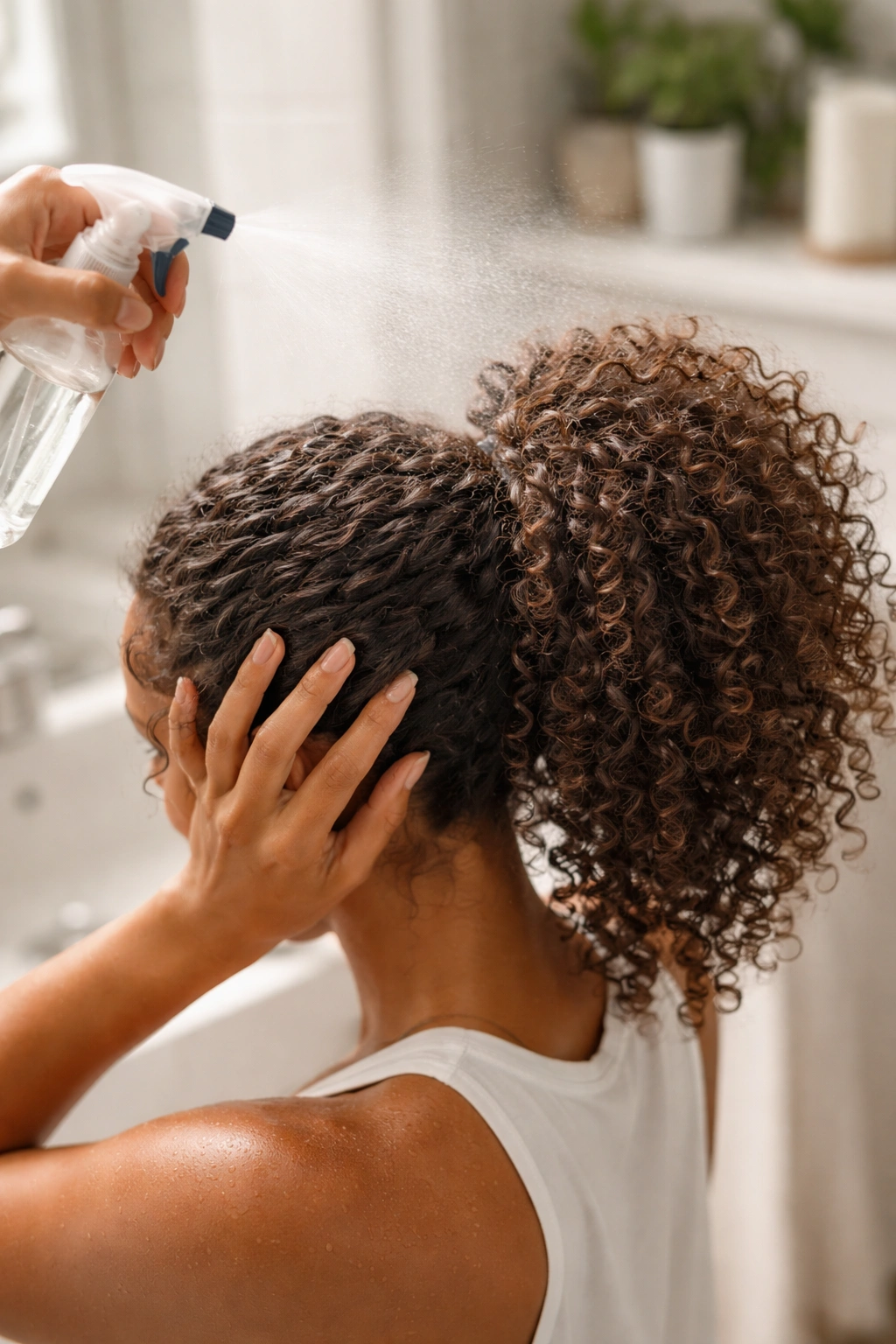
When the extensions start looking a bit dull, you can bring them back to life. You do not need to wash the ponytail every single time you wear it.
The Leave-In Reviver
Make a simple mixture: 90% water and 10% lightweight leave-in conditioner. Spray this lightly over the ponytail. Use your fingers to scrunch the curls upward. This encourages the hair to clump back into its natural pattern. Let it air dry completely before wearing it again. This process keeps the extension looking fresh without the product buildup that comes from using heavy creams.
22. The Importance of Weight Distribution
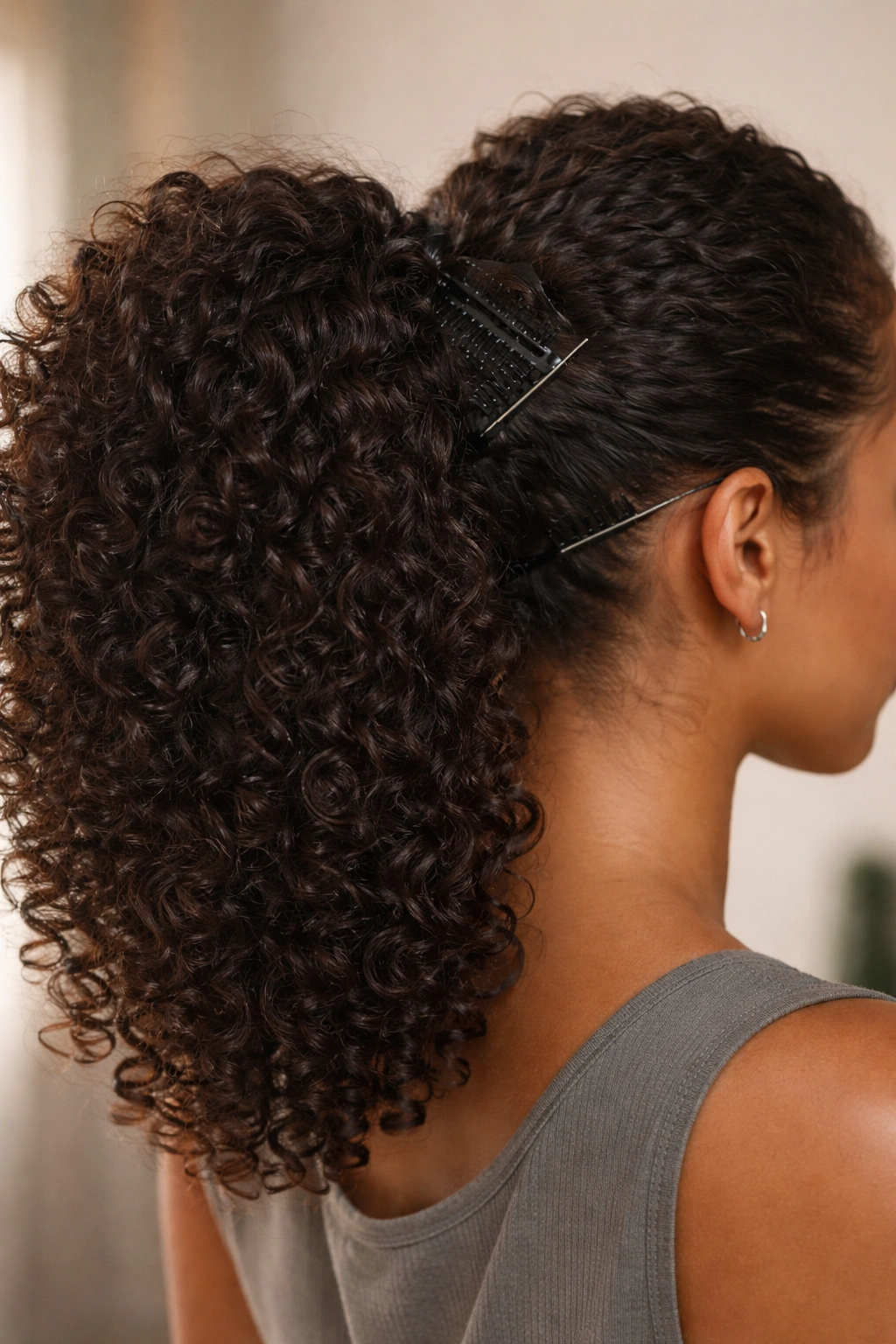
If you have ever worn a heavy ponytail and felt like your head was being pulled back, you have a weight distribution problem.
Balancing the Load
When you attach the clip-in, do not pull it straight back. Try to distribute the clip or drawstring weight evenly around your natural bun. If it is a wrap-around, ensure the bobby pins are placed at the top, sides, and bottom of the base. This anchors the weight around your entire head rather than putting all the pressure on your scalp at the front or the back.
23. How to Remove Without Causing Breakage
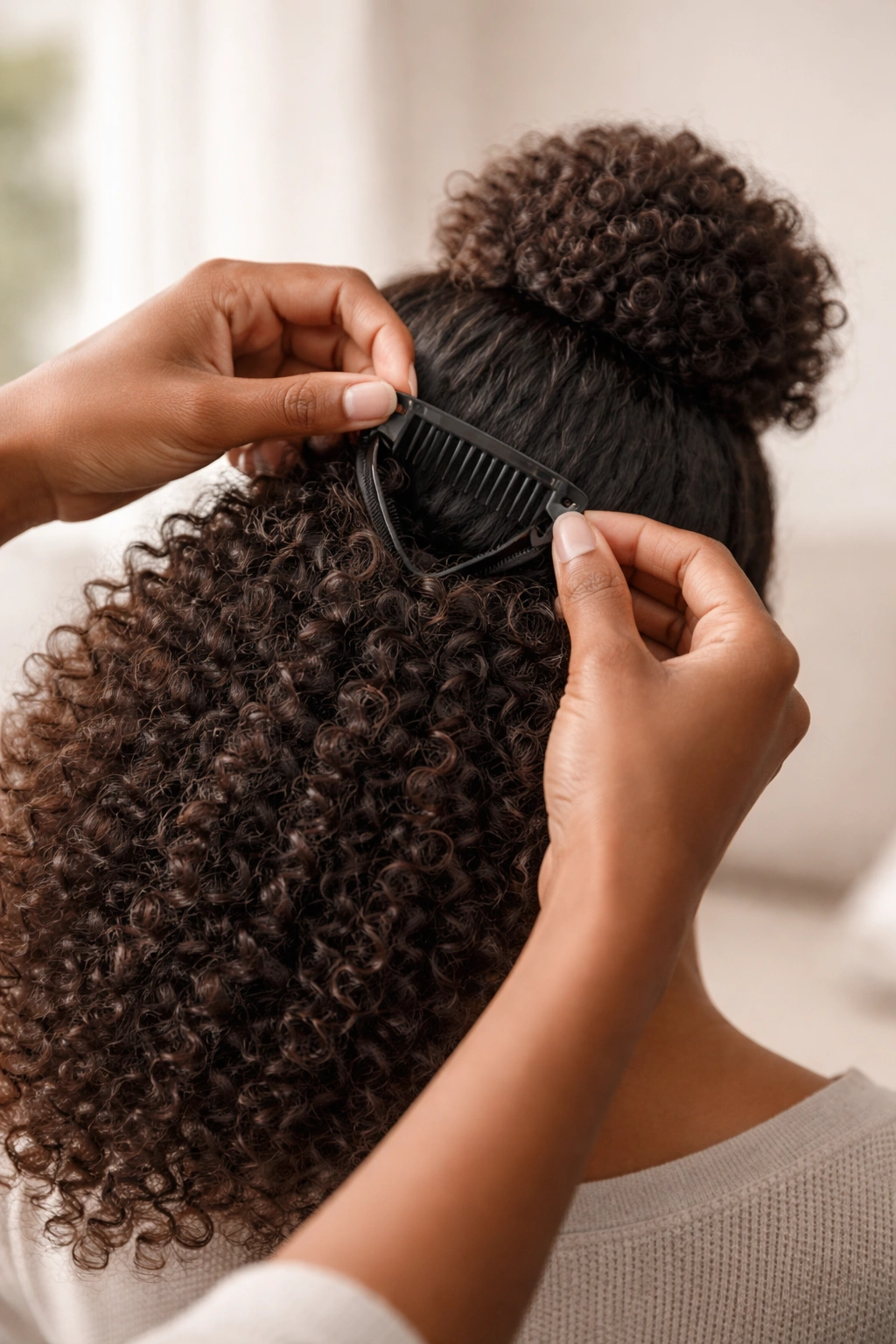
Taking the ponytail off is just as important as putting it on. If you are aggressive, you will pull out your own hair along with the extension.
The Gentle Take-Down
Always undo the drawstring or remove the clips before trying to take the ponytail off your head. Do not yank the ponytail down. If you have used bobby pins to secure it, remove every single one first. Once the extension is loose, gently slide it off your natural bun. If you are rushing, this is where you will snag your natural hair and cause breakage, so take the extra thirty seconds to be methodical.
Final Thoughts
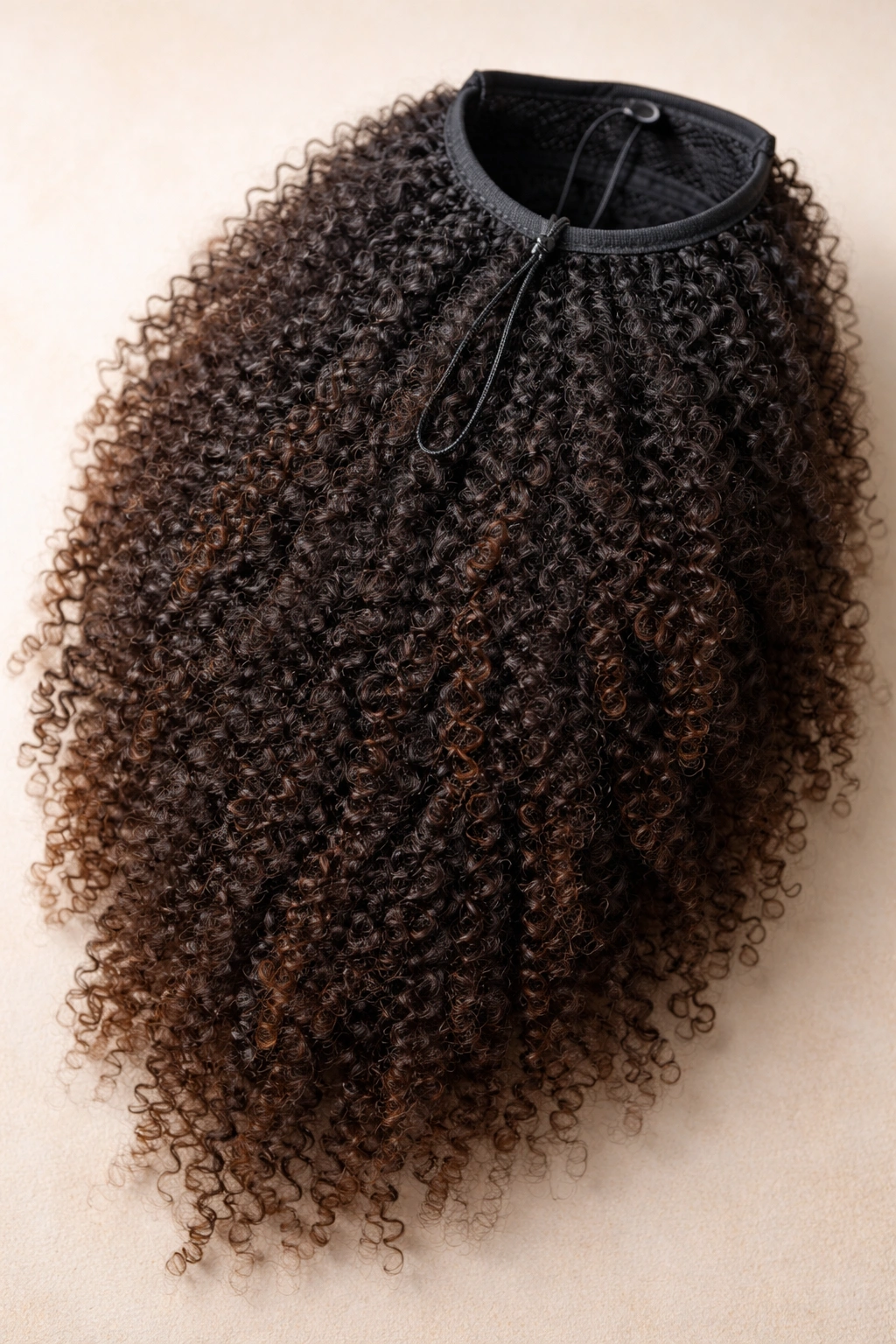
Wearing a curly clip-in ponytail is a skill, not just a product purchase. It requires matching the texture, managing the weight, and taking the time to secure the base so you can actually move without the extension sliding down. When you treat the ponytail like a part of your style rather than a quick fix, it stops looking like an extension and starts looking like your own hair.
Don’t be afraid to experiment with different patterns. What works for a formal occasion might be too heavy for a Tuesday at the office. Keep your base small, your edges neat, and your detangling technique gentle. You will find that these pieces are the most reliable tool in your kit for those days when you need to look put together without spending an hour on your natural curls.