



Double ponytails for short hair have a way of making a cut look intentional in the best possible sense. A chin-length bob with two tiny pigtails can feel sharper, cleaner, and more playful than hair that’s been left to hover around the face with no plan at all. The trick is that short hair doesn’t need more length. It needs better shape, firmer parting, and a few smart pins.
That’s where most people go wrong. They try to build pigtails the same way they would on shoulder-length hair, then wonder why the ends slip out, the crown goes flat, or the whole style looks a little sad by lunchtime. Short hair asks for a different rhythm. You work with small sections, tiny elastics, texture at the roots, and a little imperfection where it helps the style sit better.
And yes, there’s room for polish here too. Sleek looks can be gorgeous. Messy ones can be better. Braids, ribbons, side parts, bubble sections, twisted bases, and low nape ties all behave differently on a bob or lob, which is exactly why this style family is more interesting than it gets credit for.
1. Tiny High Double Ponytails for Short Hair
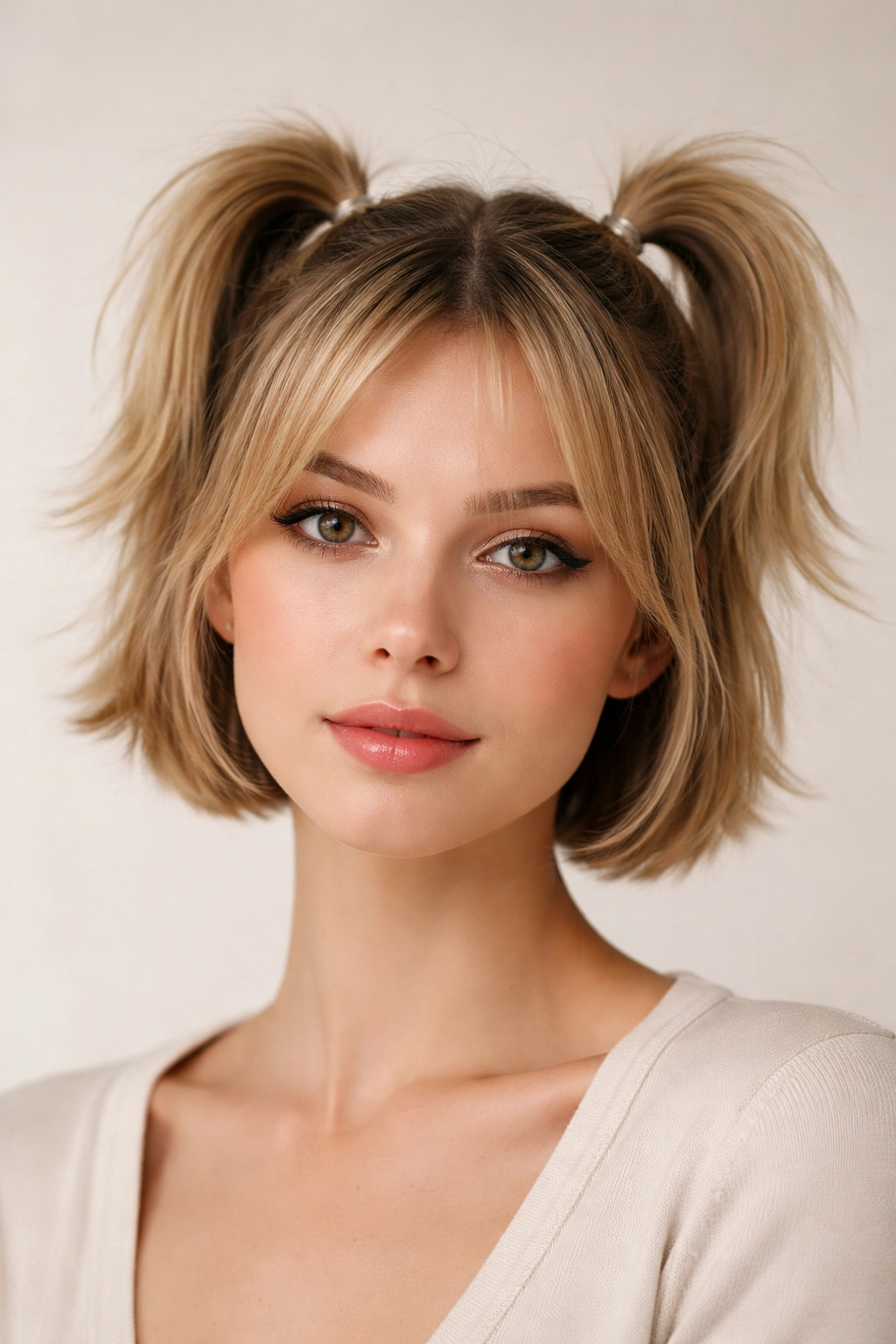
Tiny high double ponytails are the style I reach for when short hair needs attitude fast. They sit near the crown, give the illusion of lift, and keep the face open without requiring much length. On a bob, they can look sharp and youthful. On a layered lob, they look slightly cheeky in a good way.
Why the High Placement Works
The higher the ponytails sit, the easier they are to anchor. That matters on short hair because the sections are smaller and the elastic has less to grip. A crown placement also pulls the eye upward, which makes the style feel more balanced when the ends only reach a few inches.
Use a tail comb to carve a clean center part, then gather each side just above the temples. Keep the elastics close to the scalp. If you place them too low, the style starts to sag and the shorter layers sneak free almost immediately.
A little texture spray at the roots helps, especially if your hair is silky. Clean, freshly washed hair can be slippery. Day-two hair usually behaves better.
2. Sleek Center-Part Pigtails That Sit Low
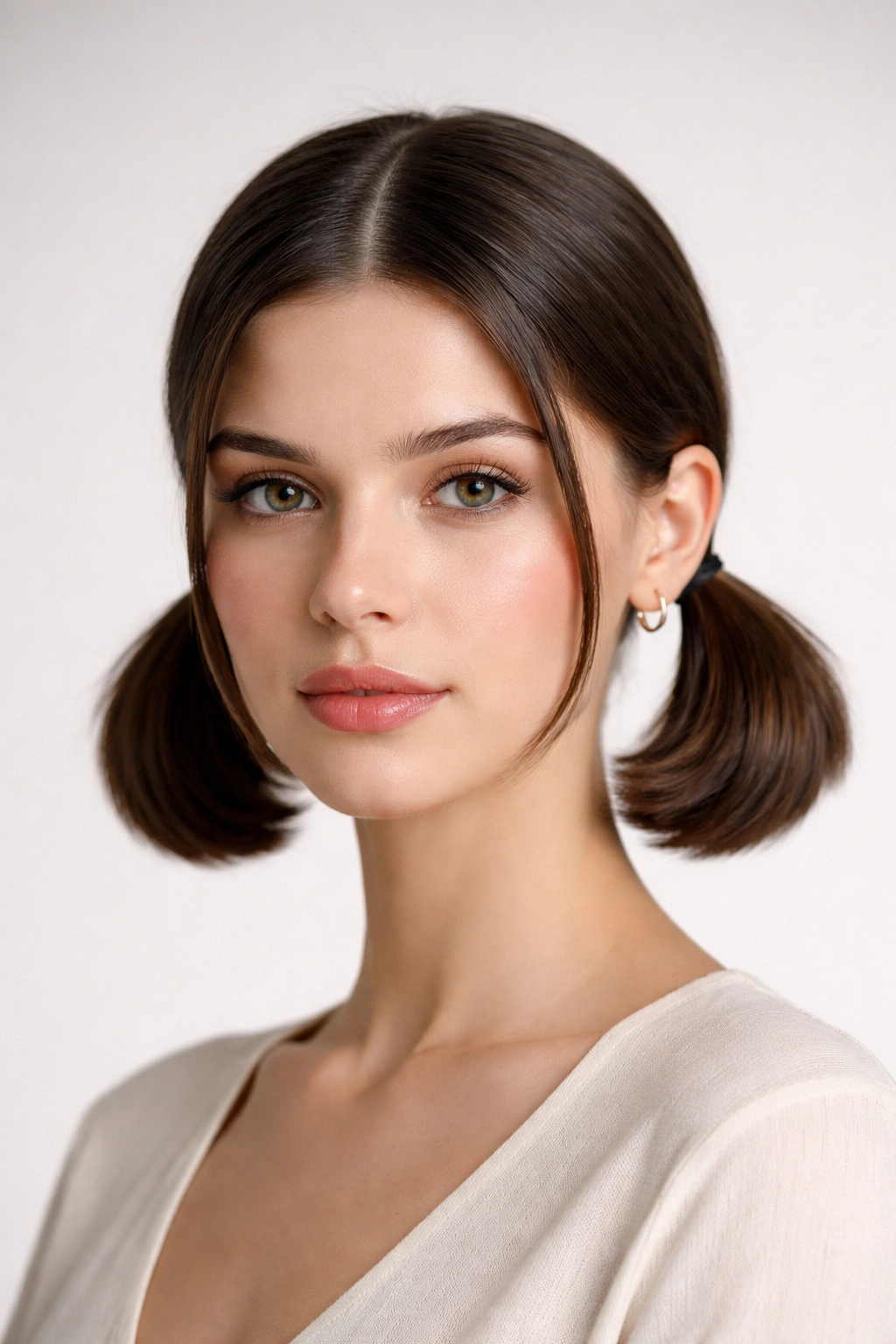
Can low pigtails look polished on short hair? Absolutely — if you keep the lines clean and the tension even. A low center-part style is one of the easiest ways to make a short cut look tidy without trying to fake extra length.
How to Get the Smooth Finish
Start with a crisp center part from hairline to crown. Brush each side down toward the nape, then secure both sections just behind the ears or slightly below them. A dab of lightweight styling cream on the top layer helps flatten flyaways without making the roots greasy.
This style is especially good for blunt bobs, where the ends already have a neat line. The blunt edge gives the pigtails shape, and the low placement keeps everything grounded. If the cut is layered, leave a few front pieces out on purpose so the style doesn’t feel too severe.
What to Watch For
- Use small clear elastics or black mini elastics if your hair is dark.
- Keep the part straight, but not obsessively perfect.
- Mist the crown lightly with water before brushing if the hair is puffy.
- Finish with a touch of shine spray, then stop there.
The danger with sleek short styles is overworking them. Too much brushing, too much product, too much fixing. It starts to look stiff. Better to leave one or two tiny irregularities than to chase perfection for ten minutes.
3. Bubble Double Ponytails with Mini Elastics
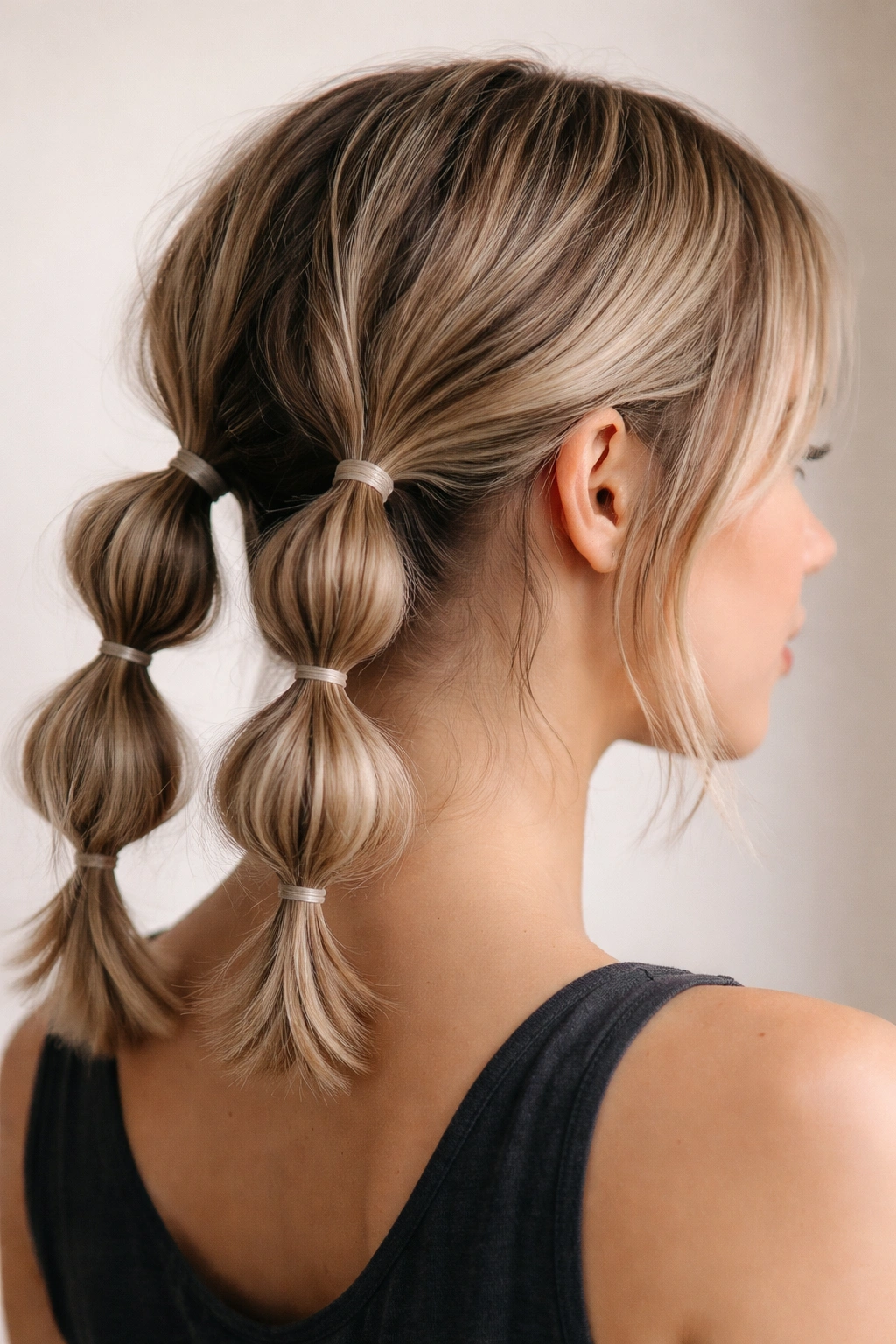
Bubble pigtails are one of those styles that look complicated and are not. On short hair, they’re a gift, because the bubbles create the illusion of length and volume without relying on actual length to do the heavy lifting.
The Shape Does Most of the Work
Tie each ponytail with one elastic, then add more elastics every 1 to 1.5 inches down the length. Gently tug each section outward until it rounds into a bubble. On short hair, you may only get two or three bubbles per side. That’s fine. Three good bubbles beat six sad ones.
The style looks especially good when the hair is slightly roughened up first. A quick pass with texturizing spray or dry shampoo gives the sections something to hold onto. If the hair is too soft, the bubbles collapse and the style loses its shape.
A neat part helps here, but the finish should stay a little playful. Bubble pigtails always look a bit bouncy. That’s the point.
A Few Practical Details
- Use mini elastics with a soft grip so they don’t slide.
- Leave the bubble sections a little uneven on purpose.
- Push the elastics down gently before pulling the hair outward.
- Don’t stretch the ends too hard; short hair can snap out of the last section.
If your hair barely reaches the shoulders, keep the bubbles tighter and closer together. That gives the style more structure and keeps the ends from looking lost.
4. Braided Bases Before the Ponytails
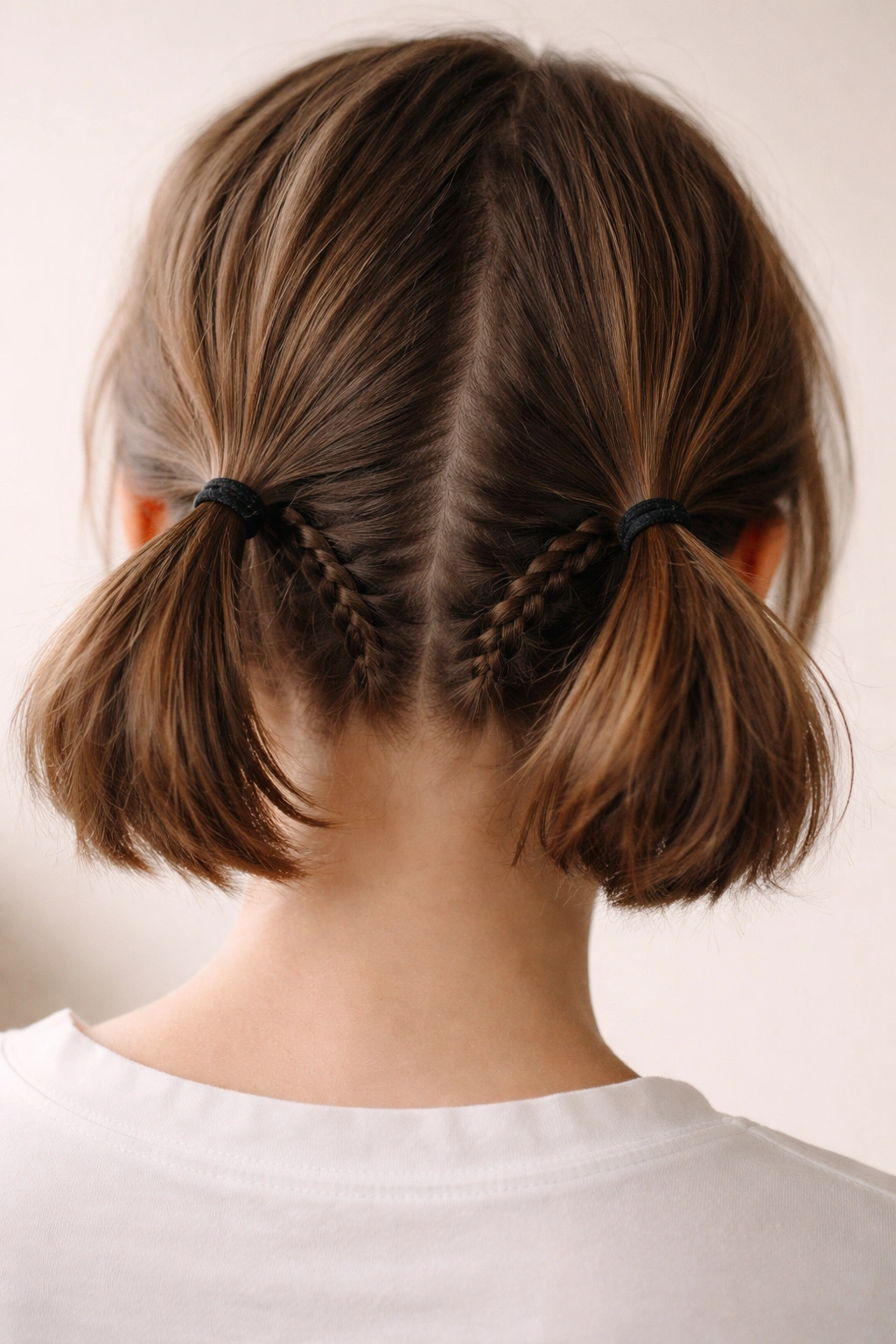
Braids at the base change everything. They give short hair more hold, make the pigtails feel anchored, and hide the fact that the sections are smaller than you might want. This is the version I like for hair that slips out of ponytails every twenty minutes.
Why Braids Help Shorter Lengths
A tiny braid before the elastic creates friction. That friction matters. Hair with layered ends or silky texture can slide out of a plain tie fast, but a braid gives the elastic something to grab. You can braid just the first inch or two, then tie the rest into a mini ponytail.
If your hair is extra short at the nape, braid only the top part and let the ends stay loose. That looks more deliberate than trying to force a full braid that keeps unraveling. Also, it’s kinder to your arms. Small braids on short hair take patience.
Best When You Want
- A little more grip at the root
- Less slipping at the crown
- A sporty finish that still feels neat
- A style that survives a long day
A side note: braids show scalp parting more clearly, so if your roots are uneven or your color is grown out in a patchy way, work with that instead of fighting it. A slightly messy braid often looks better than a too-tight one.
5. Half-Up Double Ponytails for Layered Bobs
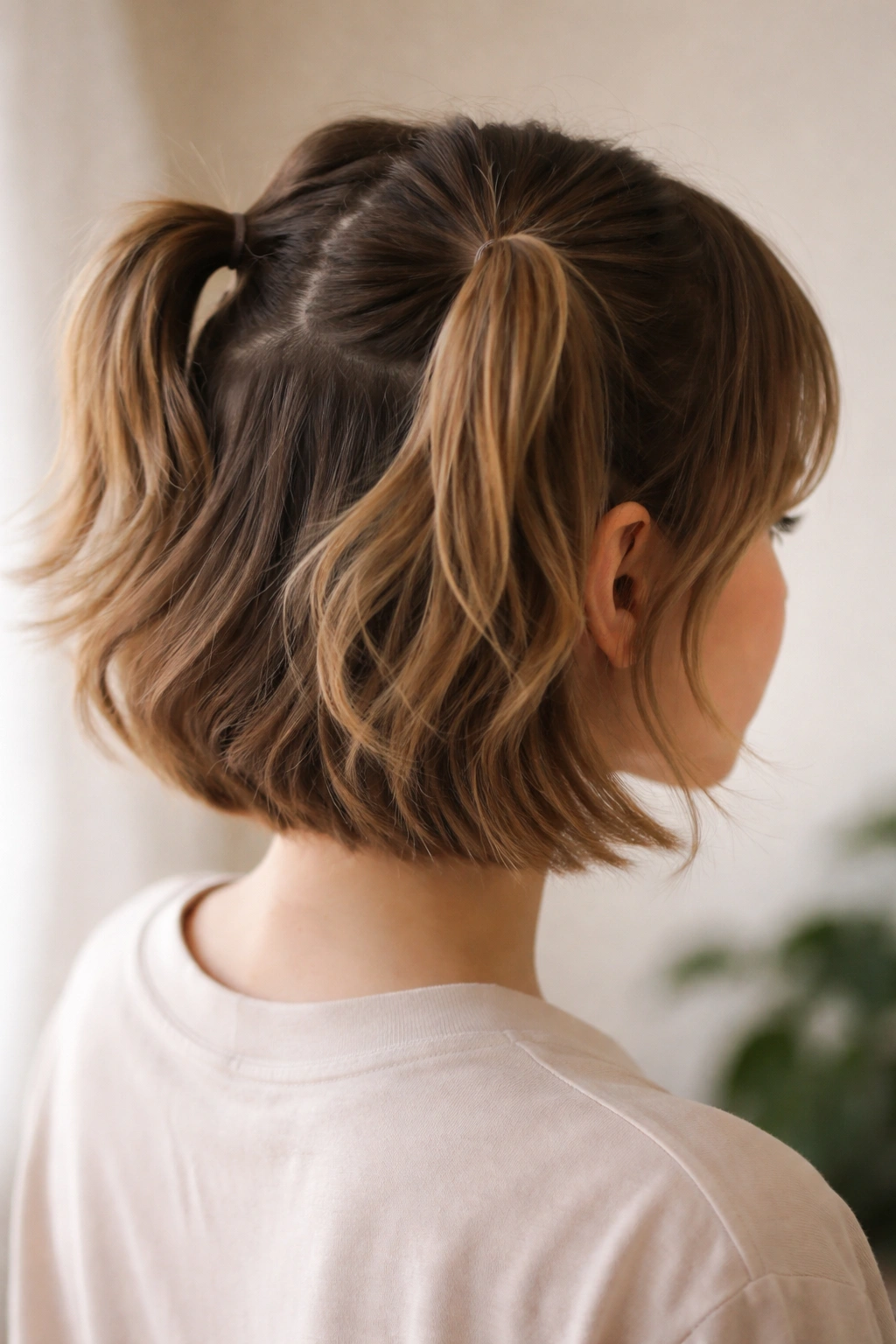
Layered bobs can be tricky, because the shortest pieces near the crown often pop loose before the rest of the hair even makes it into the tie. Half-up double ponytails solve that problem without asking for every strand to behave.
The half-up version keeps the top sections secure and lets the bottom layers move freely. That movement is part of the charm. You get the look of pigtails, but with enough softness that the cut still feels like a bob instead of a costume.
Where to Section It
Take the top half of the hair from temple to temple, then split that section in two. Secure each side high enough to show the part, low enough that the elastic won’t sit on a weird bump. If the layers are especially short, pinch the section together first and tie it before brushing it smooth.
This style works well when you want a casual result. The loose lower hair softens the face, and the upper pigtails keep the style from collapsing into plain loose hair. It’s also one of the easiest ways to grow out a shorter cut without feeling stuck in one shape.
Leave the ends slightly bent or natural. Half-up pigtails look better when they move.
6. Low Nape Pigtails with Soft Ends
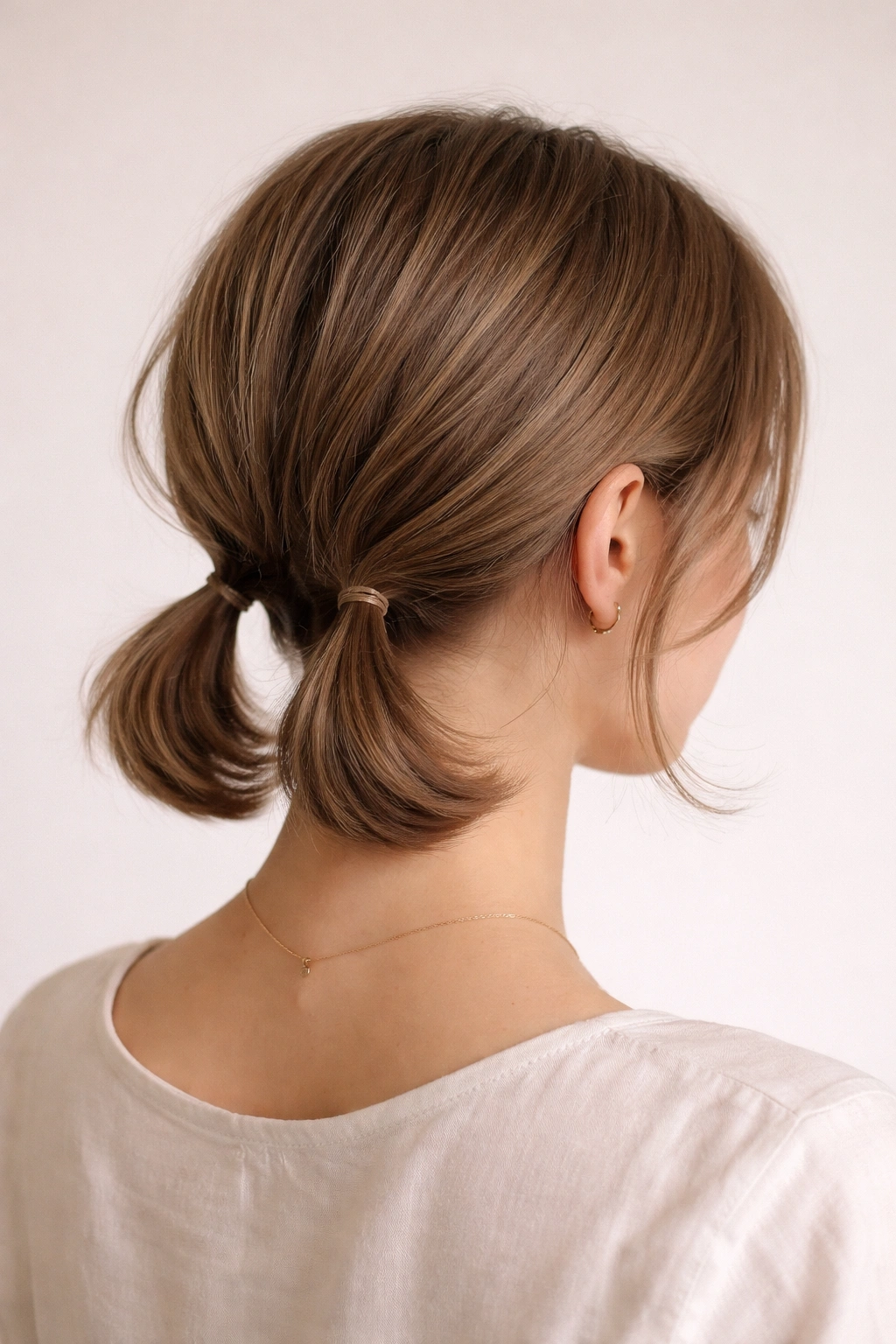
Low nape pigtails have a quieter energy. They sit close to the neck, which makes them feel softer and more grown-up than high double ponytails. On short hair, that low placement can be a lifesaver, because it gives you room to gather even the shortest layers without fighting the hairline.
Softness Is the Point
Brush the hair back loosely, part it in the middle, and secure each side near the nape with a small elastic. Don’t yank the sections tight. A bit of looseness keeps the style from looking pinched, and it prevents that little pull around the temples that gets annoying after an hour.
This version is especially nice with slightly wavy hair. The ends can flick out a bit, and the style still holds its shape. If the hair is straight, bend the ends slightly with a flat iron or a curling wand so the bottom line doesn’t feel too blunt.
Good Pairings
- Small hoop earrings
- A ribbed sweater or collared shirt
- Matte or satin hair ties
- Soft front pieces near the cheekbones
The low nape version isn’t loud. It doesn’t need to be. It works because it feels tidy, calm, and a little retro without getting fussy.
7. Asymmetrical Side-Part Double Ponytails
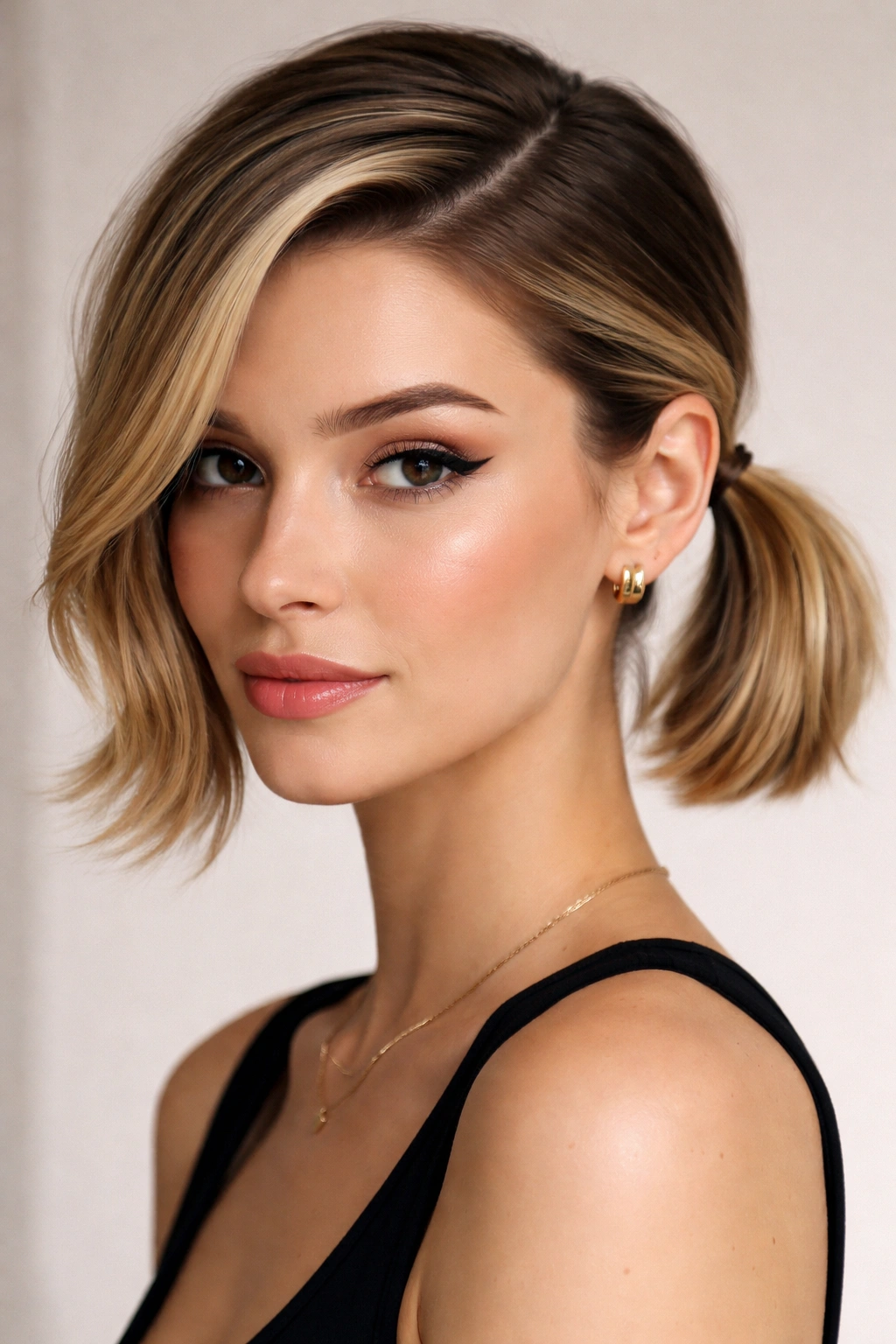
A side part changes the whole mood. Instead of the familiar center line, you get a little tilt, which makes the pigtails feel less childish and more styled. On short hair, that tilt also helps with volume, because the heavier side creates a better shape near the crown.
What Makes It Different
A deep side part gives one section more lift than the other. That asymmetry keeps the look from feeling stiff. It also helps if one side of your haircut is slightly shorter, which happens a lot with layered bobs and grown-out pixies.
Gather the sections slightly behind the ears rather than right at the sides of the head. That small shift keeps the part visible and gives the pigtails a better angle. If the shorter side slips, pin it first with one or two bobby pins before adding the elastic.
A good side-part version looks polished in a way that doesn’t announce itself. It’s the kind of style people notice after a second glance.
Small Adjustments That Help
- Use a rat-tail comb to map the part cleanly.
- Add root lift spray only near the part line.
- Keep the lower side a touch looser.
- Finish with a fingertip pat, not a brush.
A deep side part can be your friend when the center part feels too severe. It also gives short hair a little drama without asking for much effort.
8. Rope-Twist Double Ponytails for Short Hair
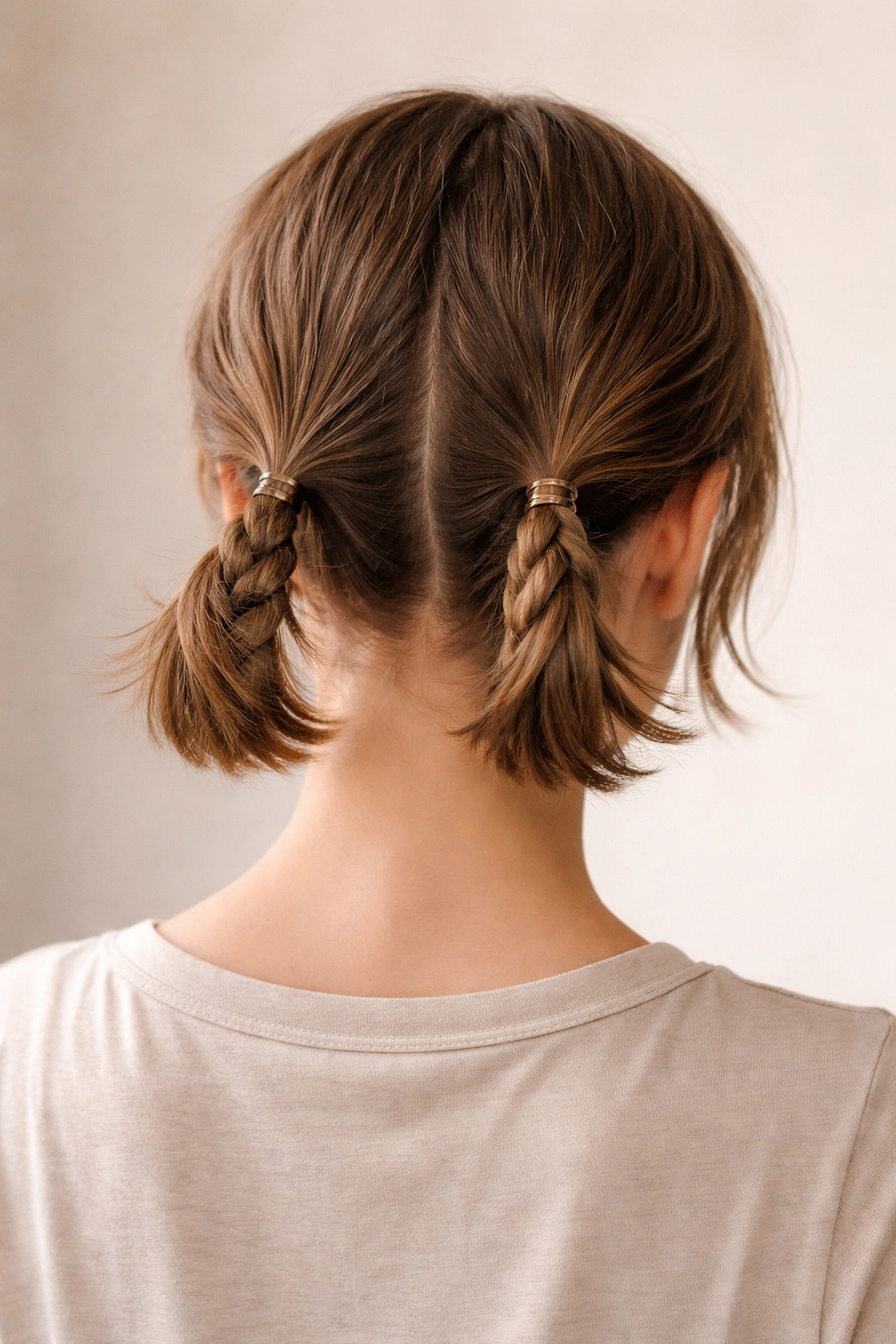
Rope twists are underrated. They’re faster than braids, hold well on short hair, and look neat even when the sections are only a few inches long. If you’ve got layered ends that refuse to stay put, this is a strong workaround.
Why Rope Twists Behave So Well
Twists pack the hair tightly together, which gives the elastic something solid to hold. On short hair, that compact shape matters. You’re not trying to build a long tail; you’re trying to create the feeling of a finished shape.
Split each side into two smaller pieces, twist them around each other in the same direction, then secure the ends with a tiny elastic. If the twist starts to loosen, smooth a touch of styling balm over your palms before twisting again. The extra grip helps without making the hair crunchy.
This style works on straight, wavy, and coily textures. It also photographs cleanly, if that’s your thing, because the twist pattern is visible even in small sections. And no, it doesn’t need to be perfect. Slight irregularity gives rope twists character.
Best Use Case
Use this when you want something between sporty and neat. It’s also a solid option for second- or third-day hair, because the twist holds better when the hair has a little grit.
9. Curly or Wavy Double Ponytails with Lift
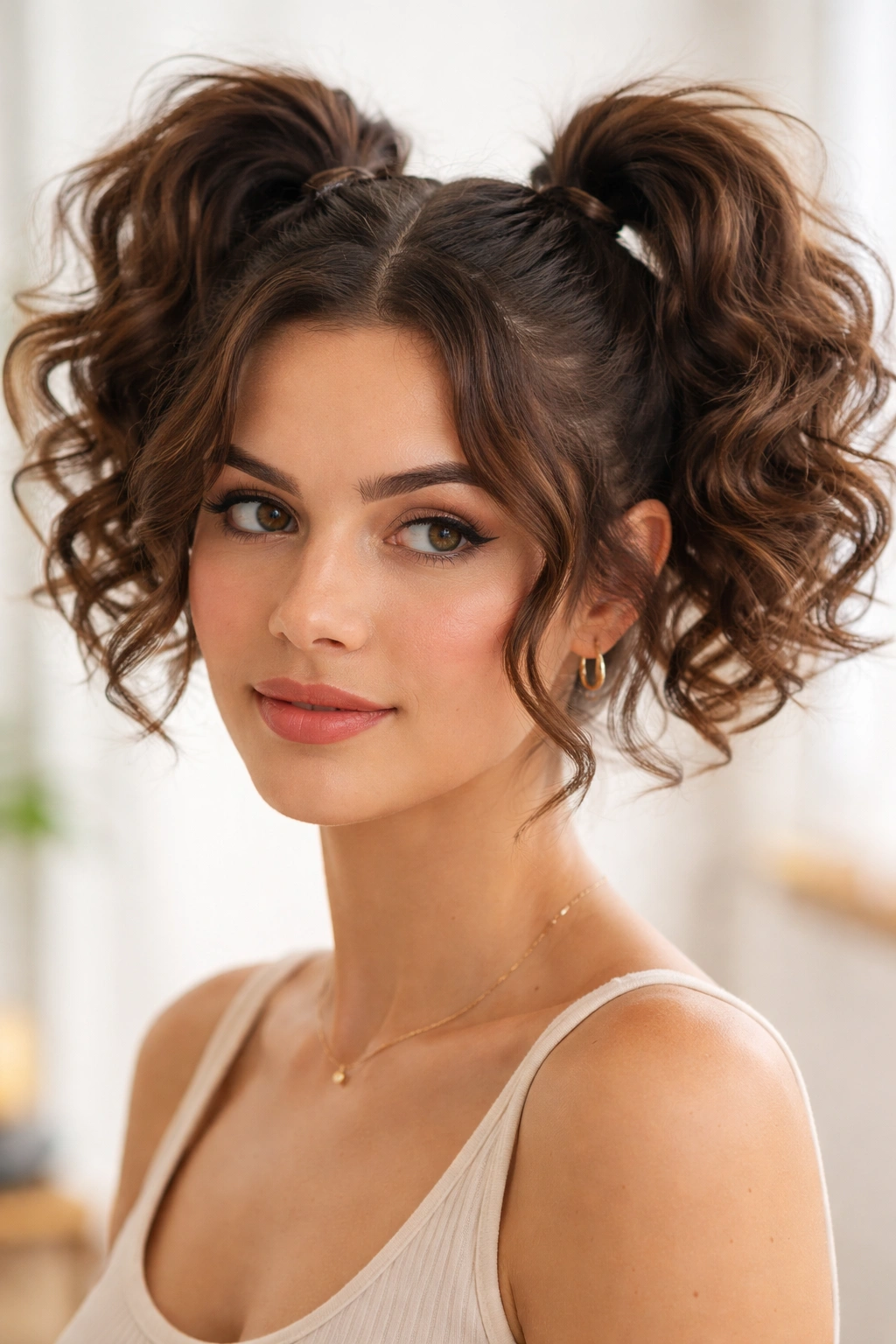
Curly short hair has its own rules, and forcing it into a flat, sleek pigtail usually backfires. Better to let the shape breathe. Curly double ponytails look strongest when the crown has some lift and the ends stay springy instead of flattened.
Short curls often shrink more than expected, which is annoying if you’re trying to predict length. But that shrinkage is useful here. It lets the pigtails sit higher without looking strained, and it gives the style a rounded shape that straight hair has to work harder to fake.
Keep the Curl Pattern Intact
Use a wide-tooth comb or fingers, not a stiff brush. Pull the sections back loosely, secure each side with a snag-free elastic, and avoid smoothing the curls too hard at the roots. A little frizz near the hairline is fine. Actually, it can make the style look fuller and less helmet-like.
If the curls are uneven, let them be uneven. One side of a curly pigtail often has a different shape than the other, and that is normal. Trying to flatten every piece just makes the hair lose its bounce.
A lightweight curl cream or gel can help define the ends. Use a small amount. Too much product weighs down the shorter sections fast.
10. Face-Framing Mini Pigtails with Tendrils
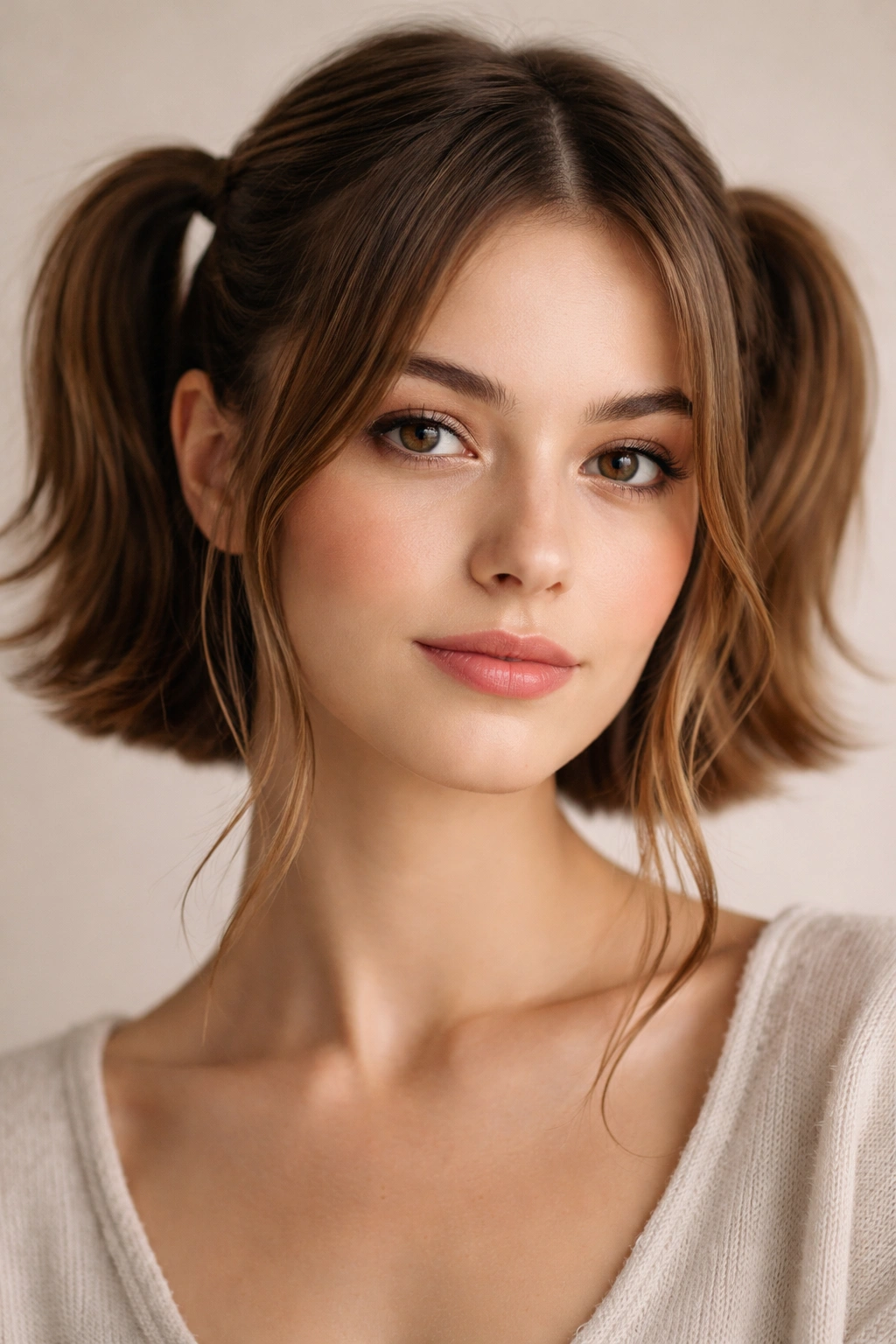
Sometimes the smartest move is to leave a few pieces out. Face-framing tendrils soften double ponytails on short hair and keep the look from feeling too boxed in. They’re especially useful if your haircut has choppy front layers or curtain pieces that naturally fall forward anyway.
The Loose Pieces Matter
Pull the main sections into tiny ponytails, then leave out two pieces near the front on each side. You can curl them slightly, bend them under with a flat iron, or leave them straight if that fits the rest of your cut. The point is to create a frame, not a perfect sculpture.
This style is friendly to shorter bobs because it doesn’t rely on length at the front. A few soft pieces around the face make the pigtails feel intentional, even when the back sections are quite small. It also works well when you’re in a hurry and don’t want to fight every flyaway.
A Useful Rule
If the tendrils are too thick, they compete with the pigtails. If they’re too skinny, they look accidental. Aim for pieces about the width of a pencil on each side, maybe a little more if your hair is dense.
That tiny detail changes the whole balance.
11. Crisscross Section Double Ponytails
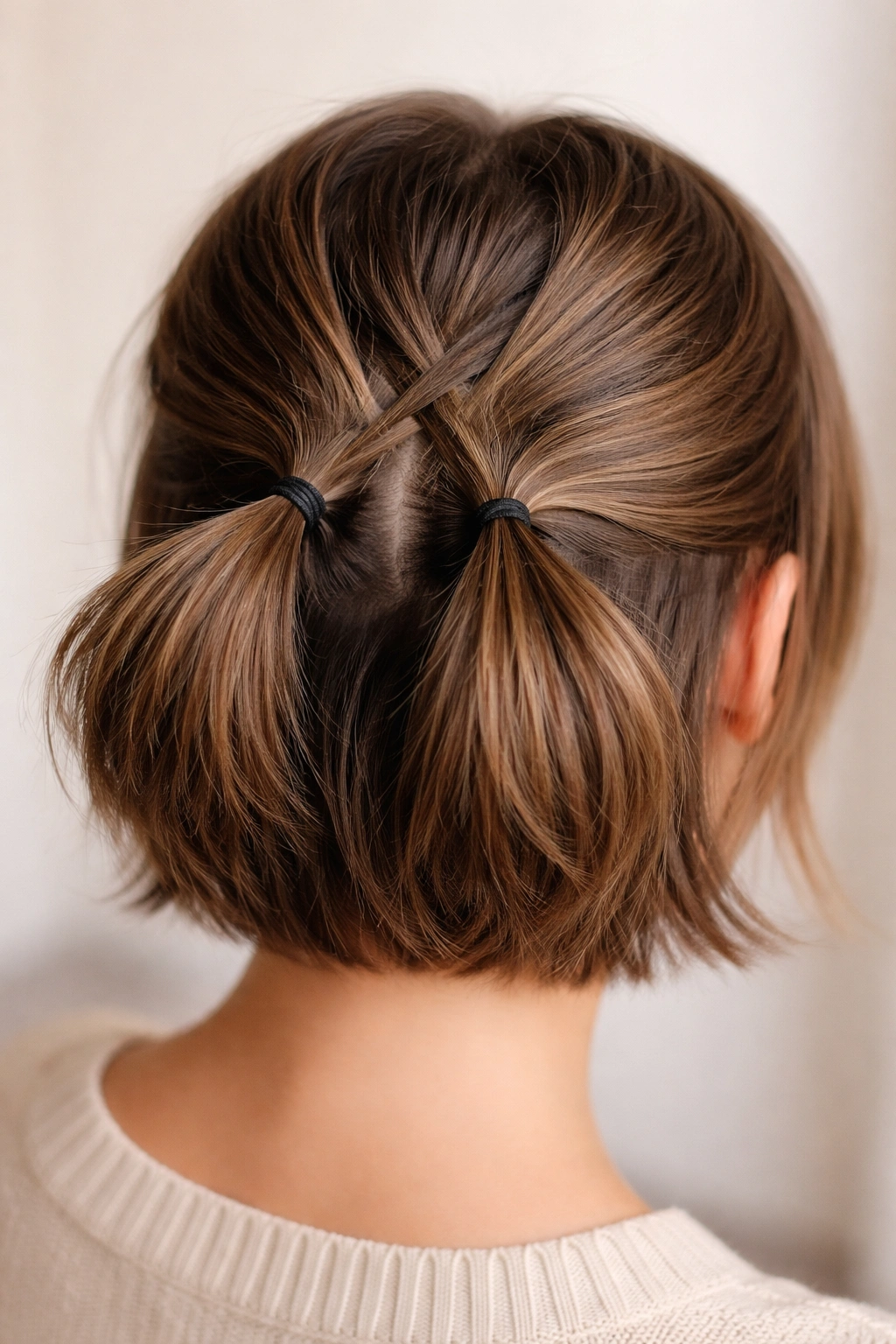
Crisscrossed parting adds shape where short hair can sometimes fall flat. Instead of one simple center part, the sections meet in a crossed pattern at the back or crown, which gives the style a little built-in interest before the elastics even go in.
Why the Pattern Helps
A crisscross section distributes hair in a way that can make short layers sit more securely. It also makes the style feel more textured, which is useful if your haircut has odd pieces that don’t want to join the main ponytail cleanly.
Use the tail end of a comb to separate a small top section from each side, then cross those sections over before tying them into the pigtails. The effect is subtle, but it changes the visual line enough to matter. It feels a little more crafted than a plain split.
This one is good for people who like detail but don’t want full braids. It’s also friendly to shorter lengths because the crossed sections don’t need long ends to read clearly.
What to Keep in Mind
- Keep the crisscross sections narrow.
- Pin the crossing point if the hair is slippery.
- Use matching elastics so the parting stays the focus.
- Leave the rest of the hair a touch loose.
The style looks best when the pattern is visible but not fussy. Think of it as a small design choice, not a complicated updo.
12. Ribbon-Tied Double Ponytails
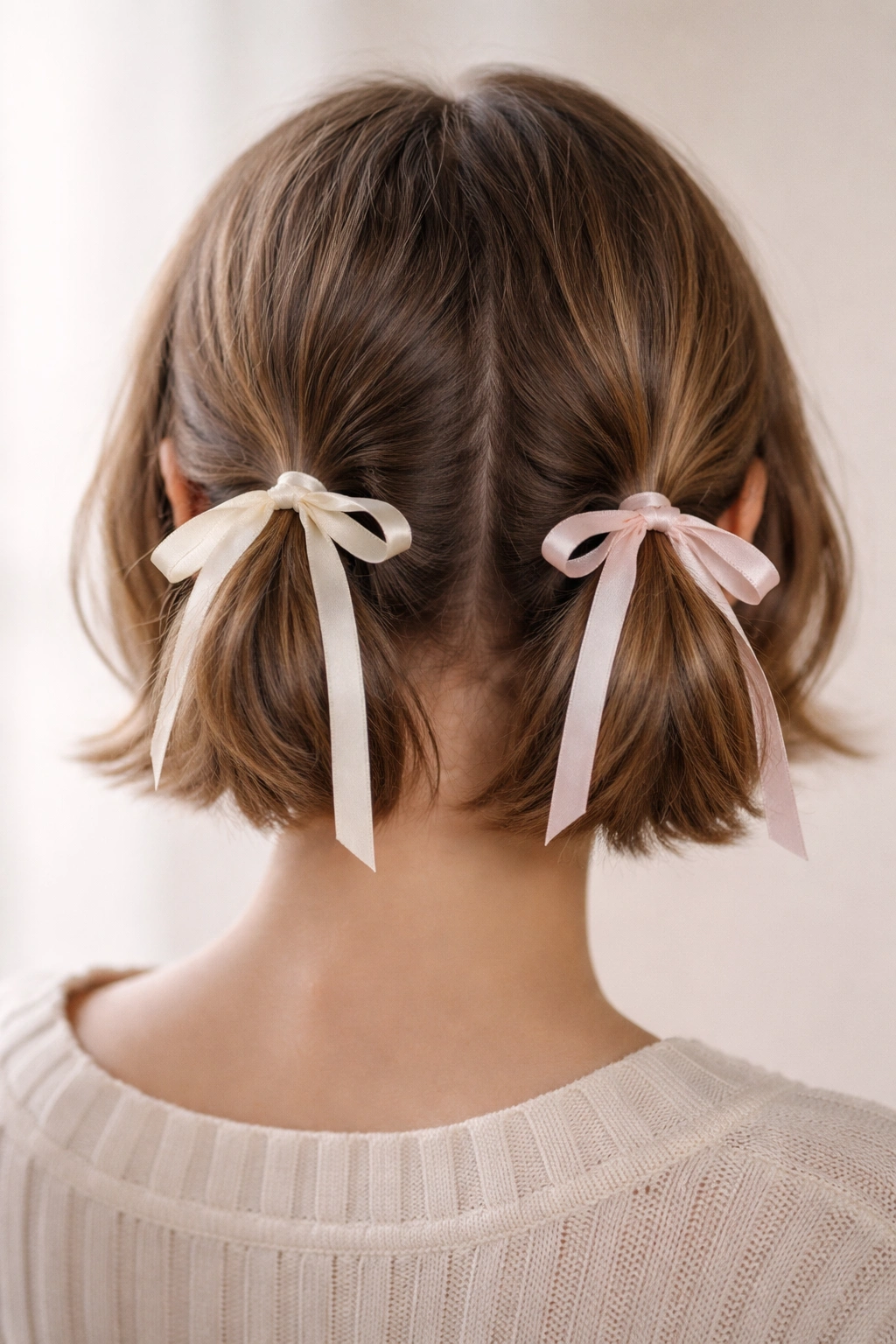
Ribbons make short pigtails feel deliberate in a way that elastics alone sometimes don’t. They hide tiny ends, soften the overall shape, and add a bit of personality without needing extra length. On a bob, that small accent can do a lot.
The Practical Side of Ribbons
Tie the ponytails first with a small elastic, then wrap ribbon around the base and knot it securely. Satin ribbon slides less than you’d think if the elastic underneath is snug. Grosgrain ribbon gives a little more grip and keeps a cleaner shape.
The ribbon should be narrow enough for short hair — about 1/4 to 1/2 inch wide works well. Thick ribbon can overwhelm a bob fast, especially if the rest of the style is minimal. You want the detail to feel like a finish, not like a costume prop.
Ribbon pigtails are a nice move for days when you want the style to look a bit softer. They also work when the hair is layered, because the ribbon hides some of the uneven ends that might otherwise poke out.
Easy Color Ideas
- Black ribbon for a sharp, graphic look
- Cream or ivory for softer hair colors
- Red or green if you want a clear accent
- Narrow velvet if you want more texture
A ribbon at each side can make even the simplest short-hair pigtails feel edited.
13. Double Ponytails with Flipped-Out Ends
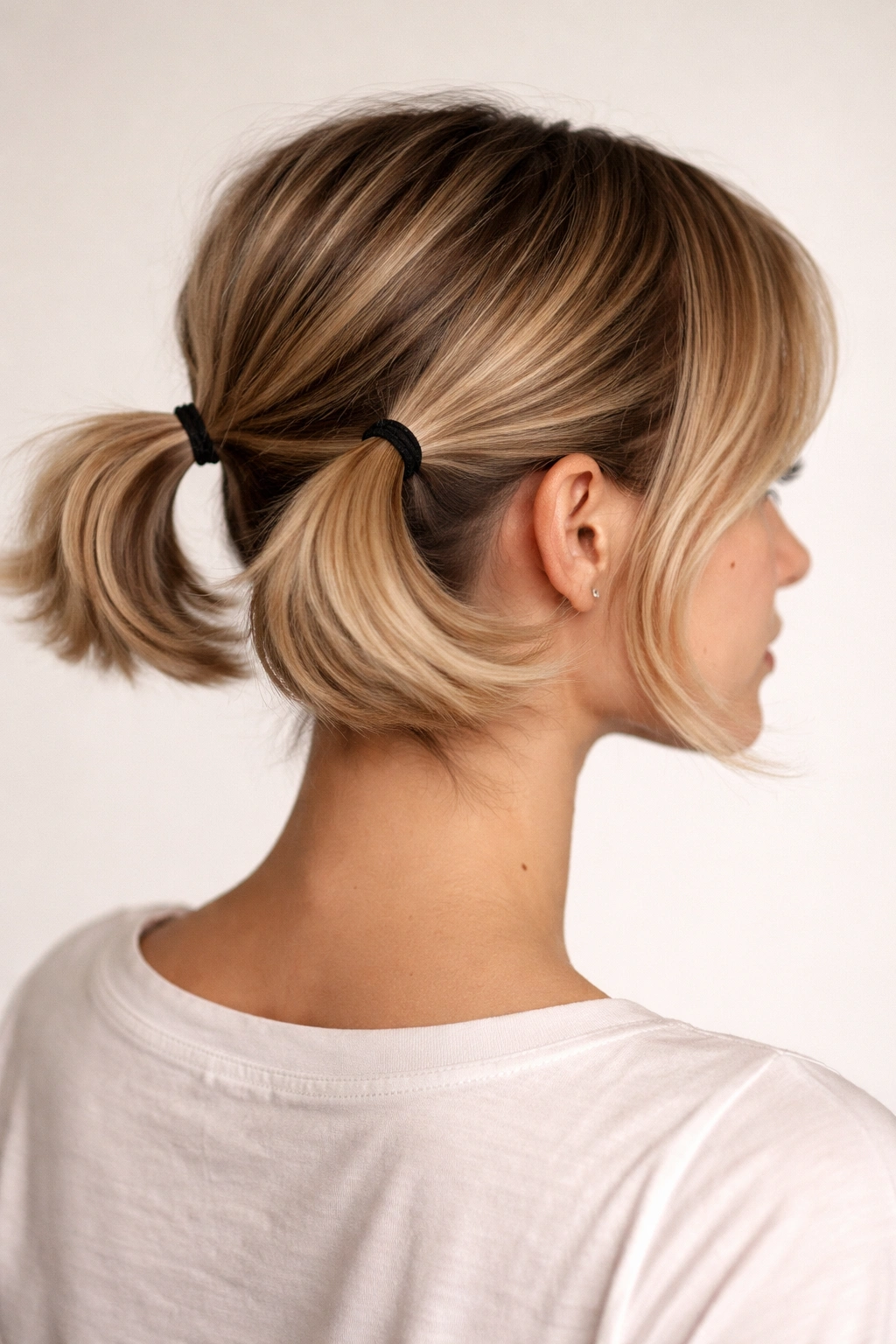
Flipped-out ends bring movement to short pigtails. They keep the style from hanging too flat and give the haircut a little retro lift. If your bob naturally curves under, flipping the ends out turns that into a feature instead of a problem.
The Flip Changes the Silhouette
Use a flat iron or a round brush to bend the ends outward just slightly. You do not need a dramatic flip. A one-inch turn at the bottom is enough to catch the eye and make the pigtails feel less plain. On a lob, the flip can be a little deeper; on a chin-length cut, keep it subtle.
This is one of those styles that looks best with a bit of internal texture. If the hair is too clean and flat, the flipped ends can seem disconnected from the rest of the shape. A light mist of texturizing spray gives the style a softer finish.
When It Works Best
- With blunt cuts
- With soft layers at the ends
- With side-swept bangs
- With small gold clips near the part
I like this one because it doesn’t pretend short hair is long. It leans into the actual length and makes the finish interesting on purpose.
14. Sporty Elastic-Stack Pigtails
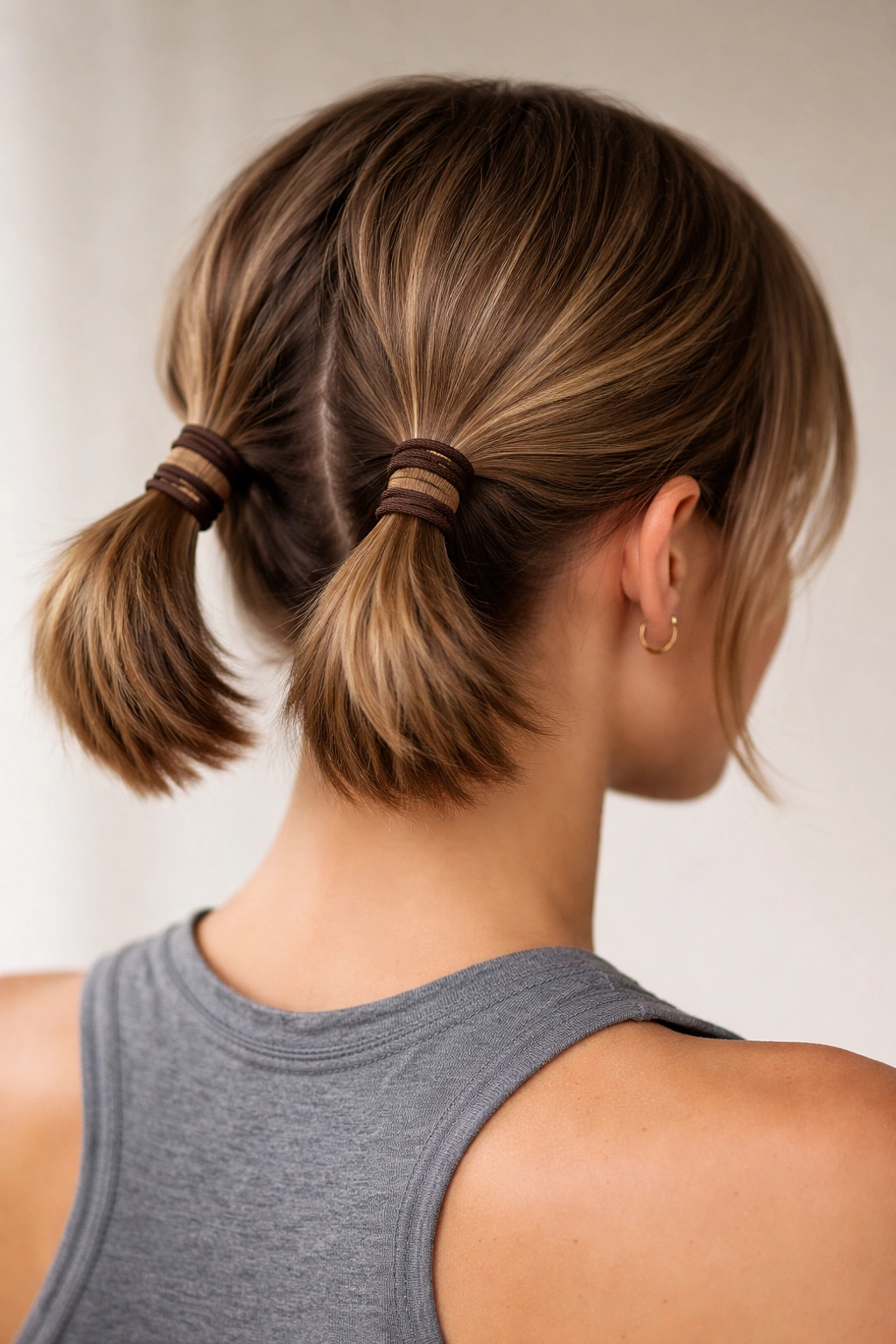
Stacking elastics is useful when one tie alone won’t hold the section securely. It also gives the pigtails a sporty, almost utility look that fits short hair really well. Clean, practical, and a little tough around the edges. No apology needed.
Why Two Elastics Beat One
One elastic can slide on fine or silky hair, especially if the section is small. Two elastics placed about half an inch apart create more hold and keep the ponytail from sagging. They also give the base a thicker look, which is helpful when the hair itself is short and fine.
Tie the first elastic snugly, then add a second one just below it. If you want to hide the lower elastic, wrap a tiny strand of hair around the base and pin it underneath. That makes the style look more finished without adding much time.
This version works especially well for active days. It stays put, it handles movement, and it doesn’t mind a bit of humidity. If your hair is layered, the extra support matters even more.
A Few Details That Save Time
- Use elastics that match your hair color.
- Don’t pull the first tie too tight or the base gets lumpy.
- Keep the sections small and even.
- Refresh the crown with dry shampoo if it goes flat.
15. Middle-Braid Double Ponytails
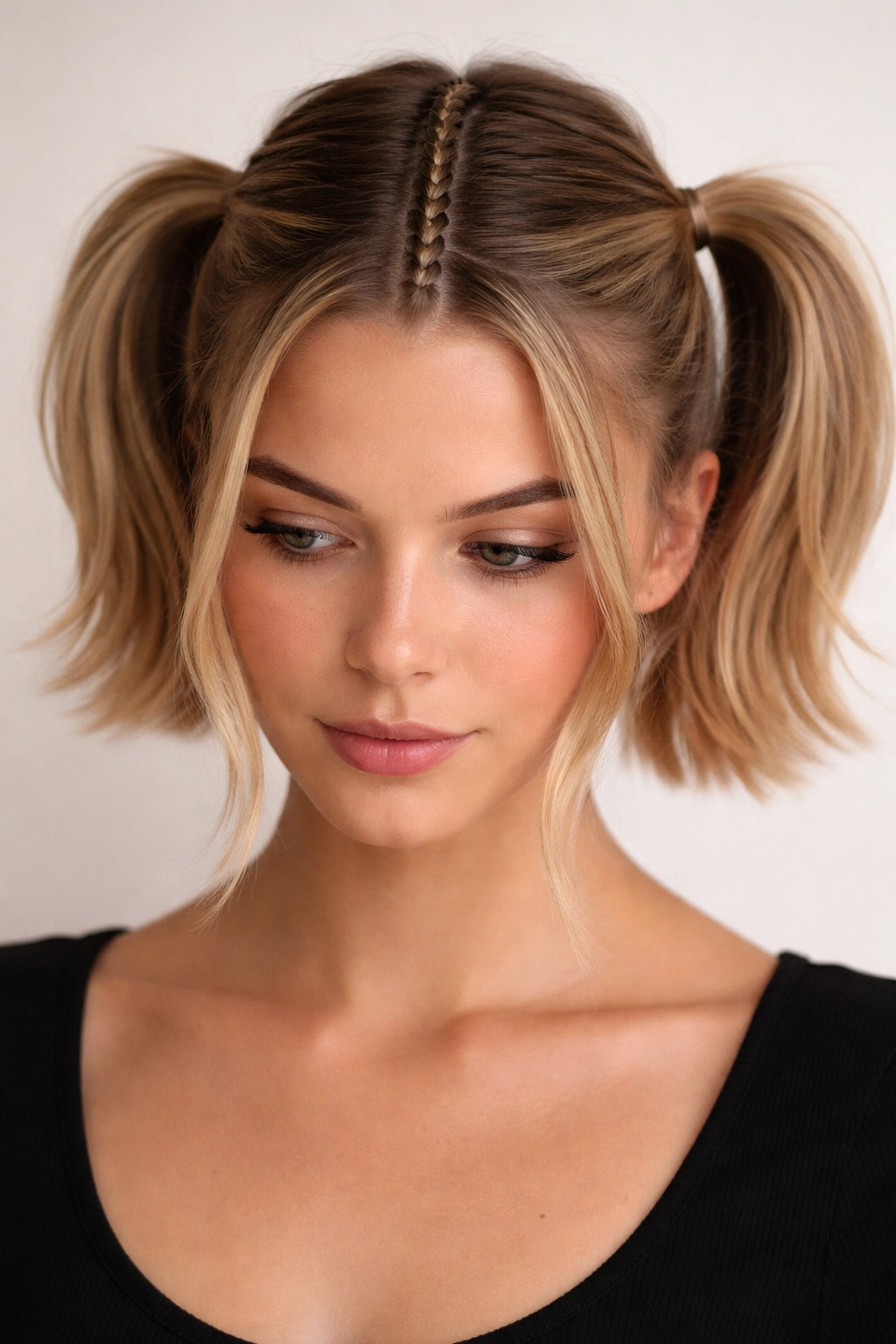
A single braid running down the center before the split can change the whole feel of short pigtails. It creates a clean focal point and gives the style a little more structure, which is useful when the hair around the ears tends to puff out.
The Middle Braid Gives the Style a Spine
Braid a narrow strip from the front hairline to the crown, then split the remaining hair into two sections and tie the pigtails just behind that braid. The braid acts like a seam. It holds the style together visually, even when the ponytails themselves stay small.
This is a smart choice for short cuts that need help looking organized. It also works when the hair has different lengths at the front, because the braid controls the mess before it becomes part of the pigtails.
If the braid is too wide, it can dominate the look. Keep it slim. Roughly 1 to 1.5 inches across is enough for most short hair.
A Good Fit For
- Straight bobs
- Layered lobs
- Hair that grows out unevenly at the front
- Days when you want one detail that feels special but not fussy
The braid doesn’t need to be perfect. A slightly loose center braid often looks better than a tight one anyway.
16. Wet-Look Sleek Double Ponytails
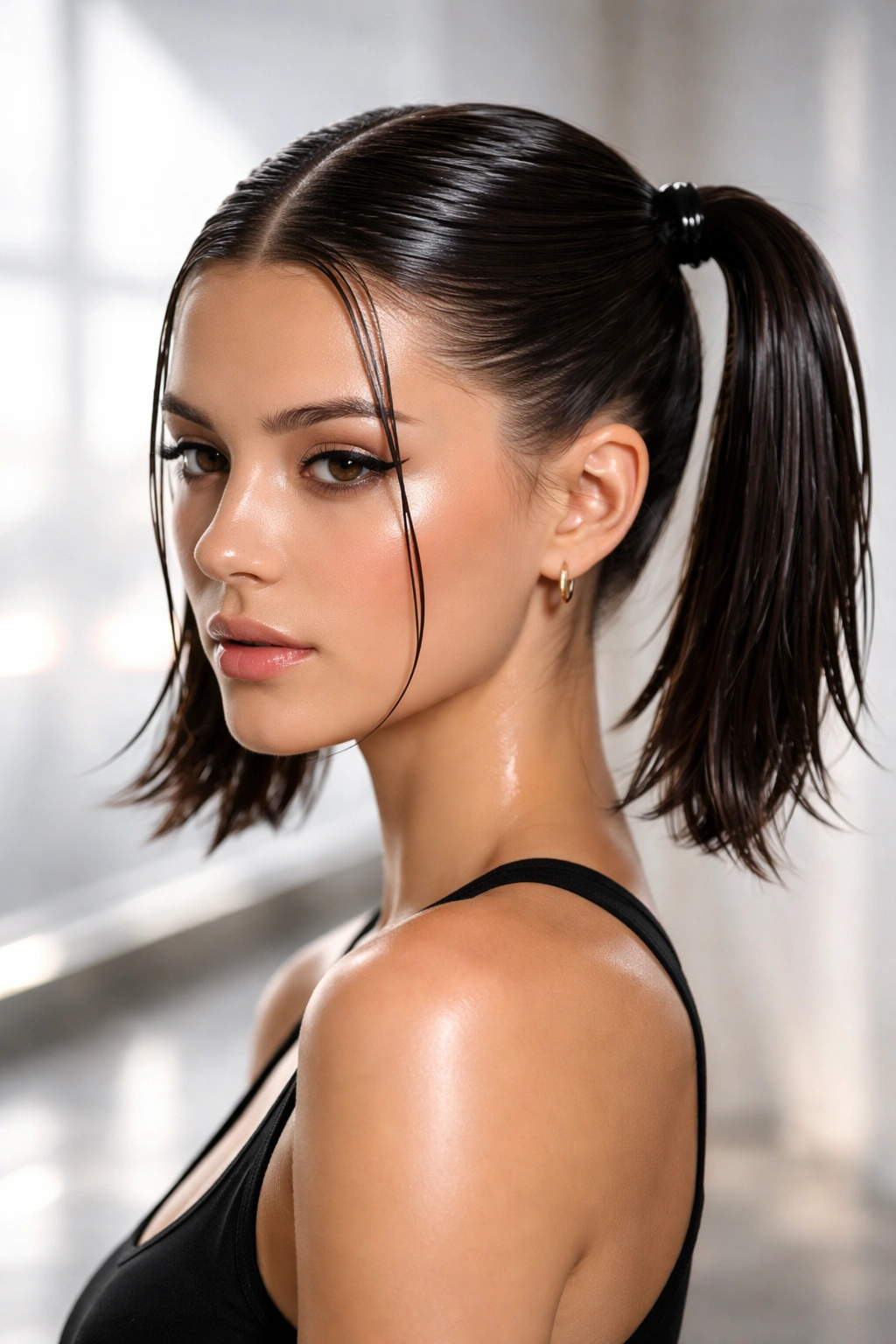
Wet-look pigtails can be gorgeous on short hair because the style already wants a sharp shape. The glossy finish makes the cut look deliberate, and the lack of volume at the crown is part of the point. This is a cleaner, bolder version of the style family.
Gloss Needs Control
Start with damp or freshly misted hair, then work in a small amount of gel or styling cream from roots to mid-lengths. Brush everything back with a fine-bristle brush until the surface lies smooth and compact. Secure each side near the back of the head or slightly lower, depending on your cut.
On short hair, less product is usually better than more. Too much gel can make the ends clump in a way that looks heavy instead of sleek. You want the finish to have shine, not grease.
This style looks especially strong on blunt cuts and sharp bobs. The clean line at the ends contrasts with the slick crown, which gives the whole look more shape. It’s also good when the hair is refusing to cooperate and you’d rather make that a design choice than fight it.
Keep These Things in Mind
- Use a fine-tooth comb for the surface
- Keep the part clean and straight
- Smooth down flyaways with your fingertips, not a big glob of product
- Stop once the hair looks glossy, not soaked
17. Tousled Crown-Lift Double Ponytails for Short Hair
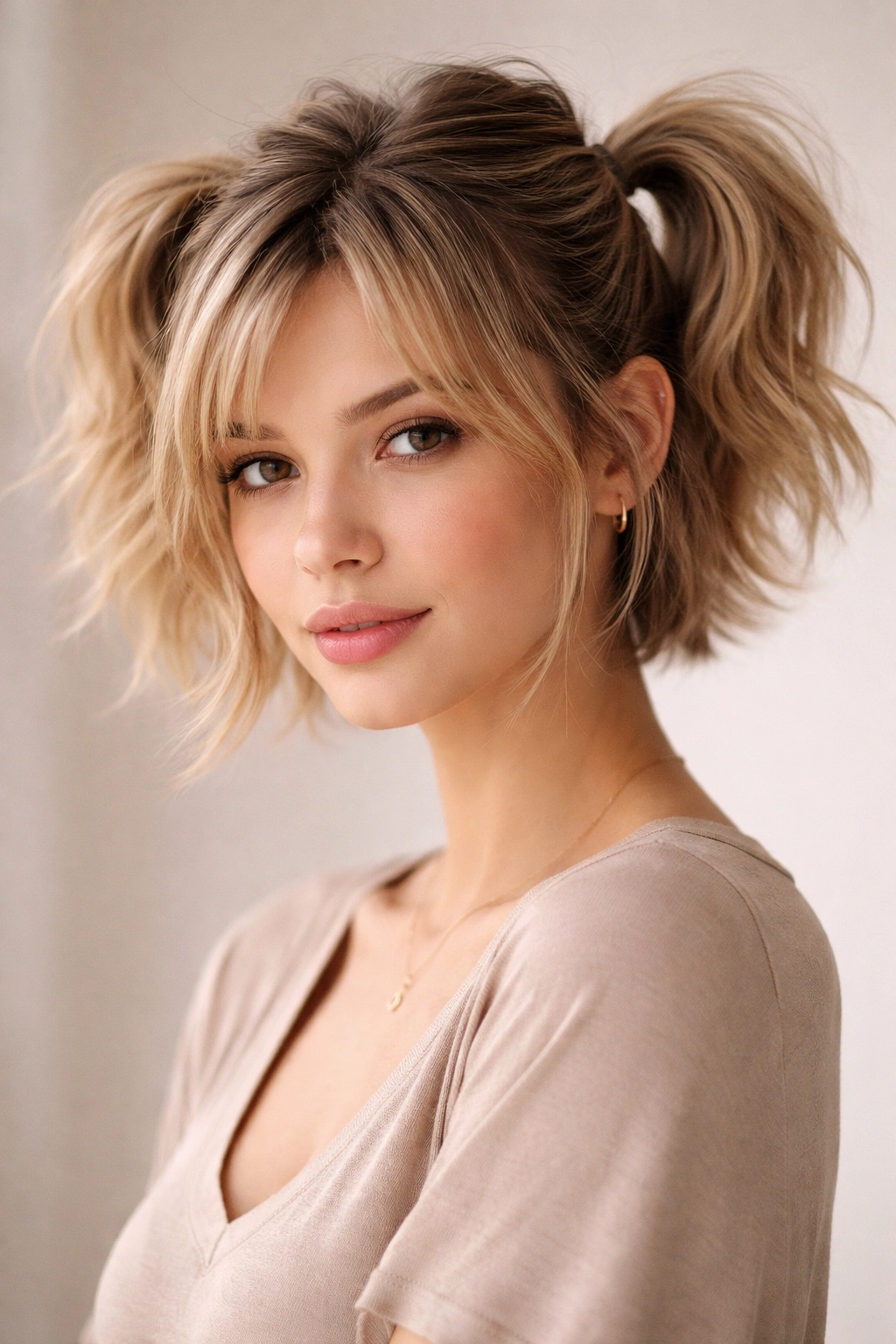
Tousled pigtails with crown lift are what I’d call the relaxed version of the look. They keep the short hair airy, a little messy, and more dimensional than a tight style ever could. If your hair is layered or naturally puffy at the roots, this version can look better than the sleek one.
Lift First, Shape Second
Tease the crown lightly or use a root-lift spray before you part the hair. Then split the sections and tie the pigtails without flattening the top too much. The lift should stay visible. That’s what keeps the style from collapsing into the scalp.
This is one of the few styles where a few wisps around the temples are welcome. They make the pigtails feel soft and lived-in. If you’re using heat, bend the front pieces just a little so they don’t hang like straight strings.
A tousled finish usually looks best on second-day hair. Freshly washed hair can be too soft and too clean for this shape unless you rough it up first with dry shampoo.
Easy Fixes If It Falls Flat
- Flip the head upside down for a few seconds before tying
- Spritz texturizing spray at the roots
- Tug the crown gently after securing the elastics
- Leave the ends a little uneven
That tiny bit of lift makes a huge difference.
18. Curved Part Double Ponytails
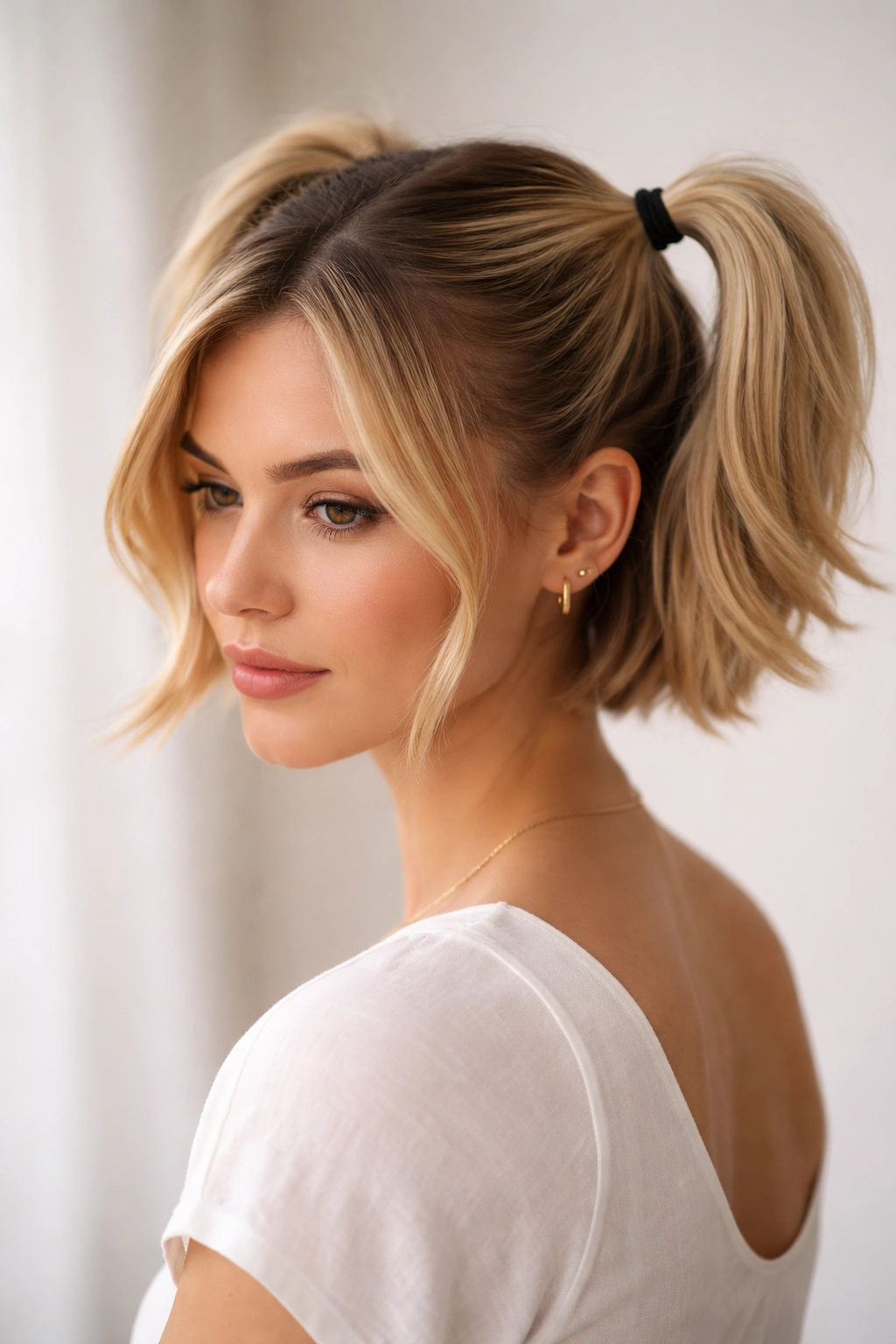
A curved part sounds subtle, and it is, but subtle can be exactly what short hair needs. Instead of a straight line down the middle, the part arcs slightly as it moves back, which softens the whole look and gives the pigtails a more custom shape.
Why a Curved Part Helps
Straight center parts can feel severe on short cuts, especially if your face shape already has strong lines. A curved part eases that tension. It also lets you feed more hair into one side if the shorter side needs a little help.
Use the tail end of a comb to trace the curve before tying either ponytail. Once the part is set, brush each side back and secure the pigtails at matching heights. The curve should be visible only near the front and crown; it doesn’t need to dominate the style.
This is a smart choice for anyone who wants double ponytails but doesn’t want the style to look sporty or childlike. It has a softer read. More tailored, less obvious.
Best Pairings
- Loose waves
- Side-swept fringe
- Soft makeup or a clean face
- Smaller elastics in a matching shade
The shape is quiet, but it does a lot of work.
19. Micro-Braided Feed-In Ponytails
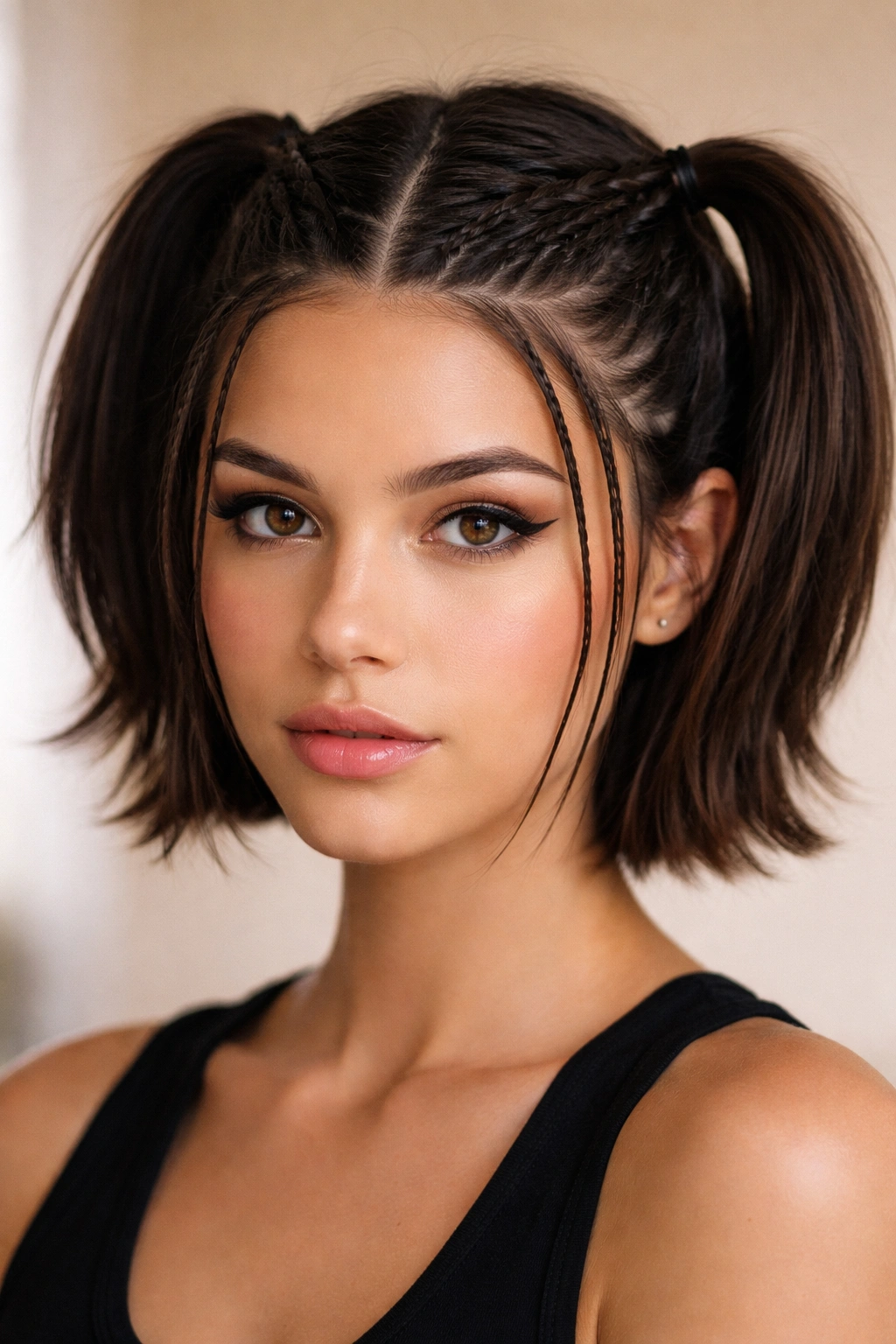
Micro braids feeding into the pigtails give short hair texture right where it needs it most. They also stretch the style a little, which helps if the cut is too short for a dramatic ponytail but still long enough to gather at the sides.
Build the Texture Near the Root
Take tiny front or temple sections and braid them back into each side before securing the pigtails. The braids don’t need to be long. Even a few inches can change the shape. They create a neat lead-in to the ponytails and keep the front pieces from slipping out.
This style has a built-in sense of detail, which I like for short hair. It turns a basic pigtail into something with texture and direction. If the rest of the hair is smooth, the micro braids give the style just enough contrast.
A couple of small braids can also hide awkward growth patterns or shorter pieces near the hairline. That’s practical, not decorative, and I’m always in favor of that.
Useful Note
Keep the braids narrow enough that they don’t steal the whole show. Their job is to feed the ponytails, not replace them.
20. Low Braided Pigtails at the Neck
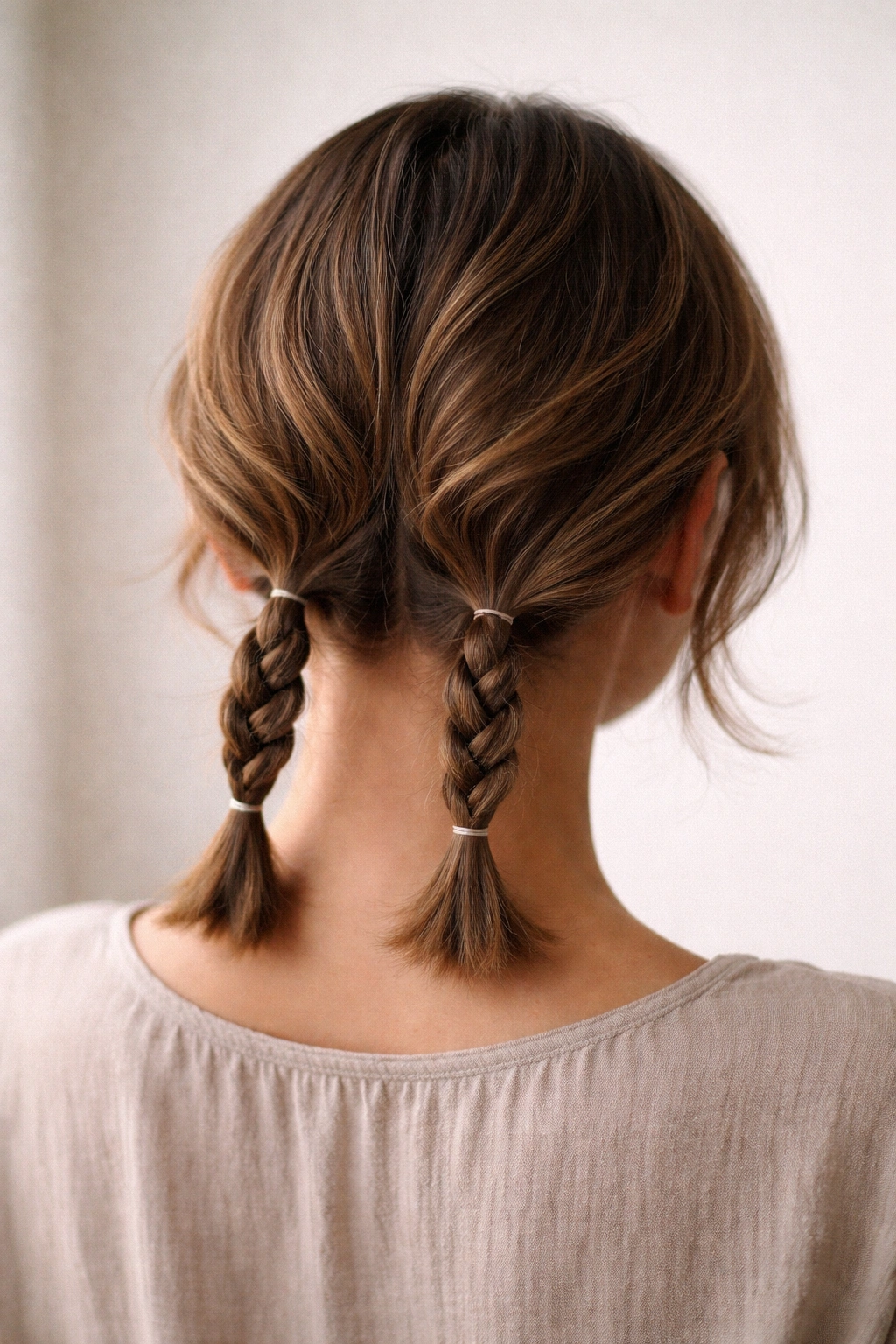
Low braided pigtails are one of the most reliable ways to make short hair look neat when it’s not cooperating. The braid holds the end together, and the low placement keeps the whole style calm and controlled. It’s one of the easiest versions to wear all day.
A Style That Stays Put
Start the braid just below the ears or even closer to the nape, depending on your length. Once the hair is gathered, braid each section down as far as it will comfortably go, then secure the ends with tiny elastics. If the braid stops early because the hair is short, that’s fine. Let it be a short braid.
This version is especially good for layered cuts. The braid traps the shorter pieces instead of letting them poke out everywhere. It also works well with hair that has a bit of natural wave, since the braid will look fuller and less thin.
If you want a softer finish, gently pull apart the outer edges of the braid once it’s tied. Do that slowly. Short braids can fall apart fast if you get rough.
21. Claw-Clip Assisted Faux-Length Pigtails
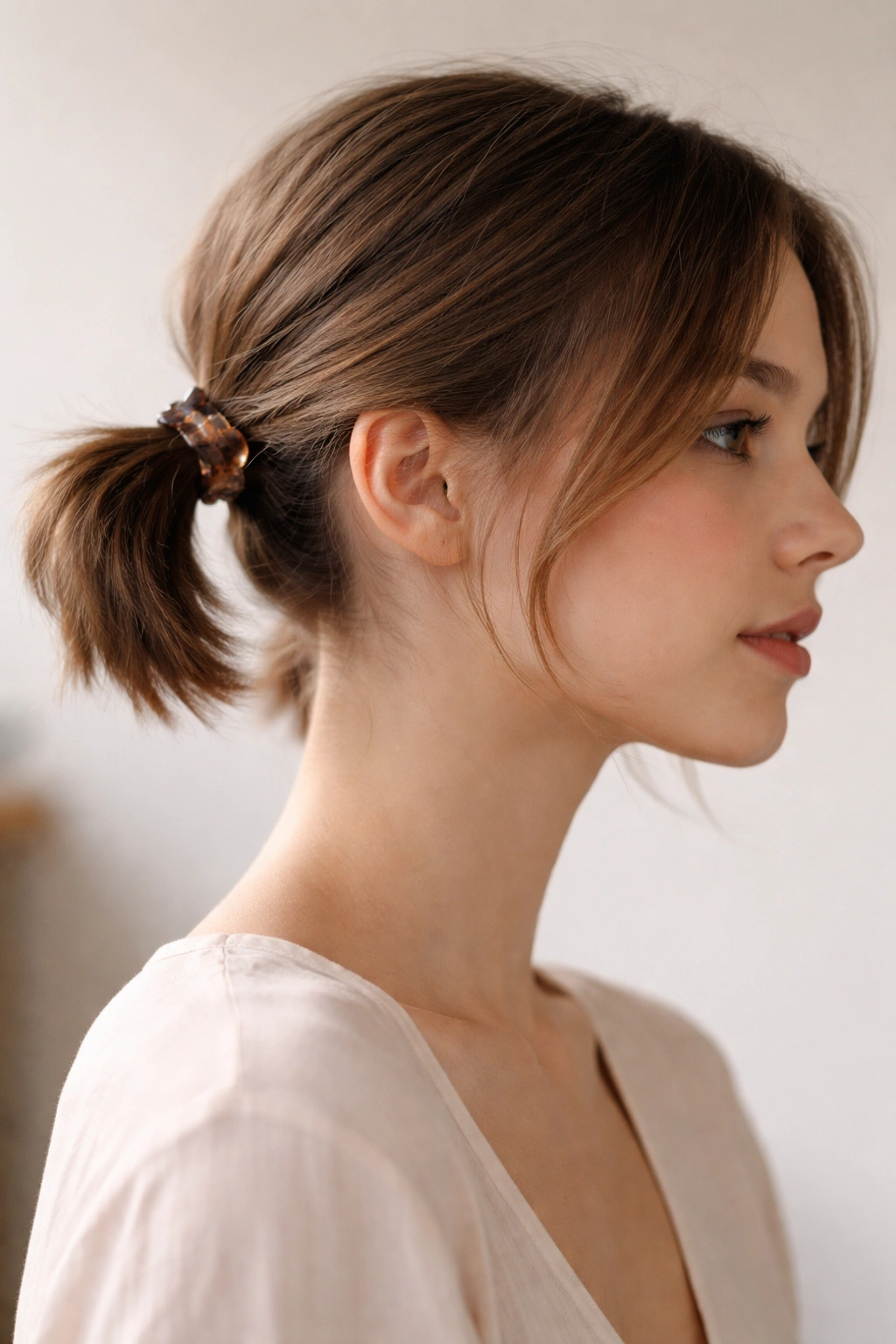
Clips can help where elastics alone cannot. If your hair is too short to build a full pigtail, a small claw clip can prop up the base and make the style look longer and fuller than it really is. It’s a practical trick, and I use that word on purpose.
The Clip Gives You Shape
Gather each side into a small section, twist it once or twice, then secure it with a mini claw clip before adding a tiny elastic if needed. The clip holds the mass of the hair at the base, while the elastic cleans up the ends. Together, they create a better silhouette than a single tie usually can.
This is good for fine hair that tends to collapse. It’s also useful if your haircut is too short for a standard pigtail but long enough for a twist-and-clip hybrid. The result reads as a ponytail from a distance without pretending the hair is longer than it is.
Tips That Help
- Choose clips with teeth that grip, not smooth decorative ones
- Keep the clip hidden under the top layer
- Use matte clips if you want a softer look
- Add a second pin if the section feels loose
Claw-clip pigtails can look surprisingly chic when the clip becomes part of the shape instead of an afterthought.
22. Uneven High-Low Double Ponytails
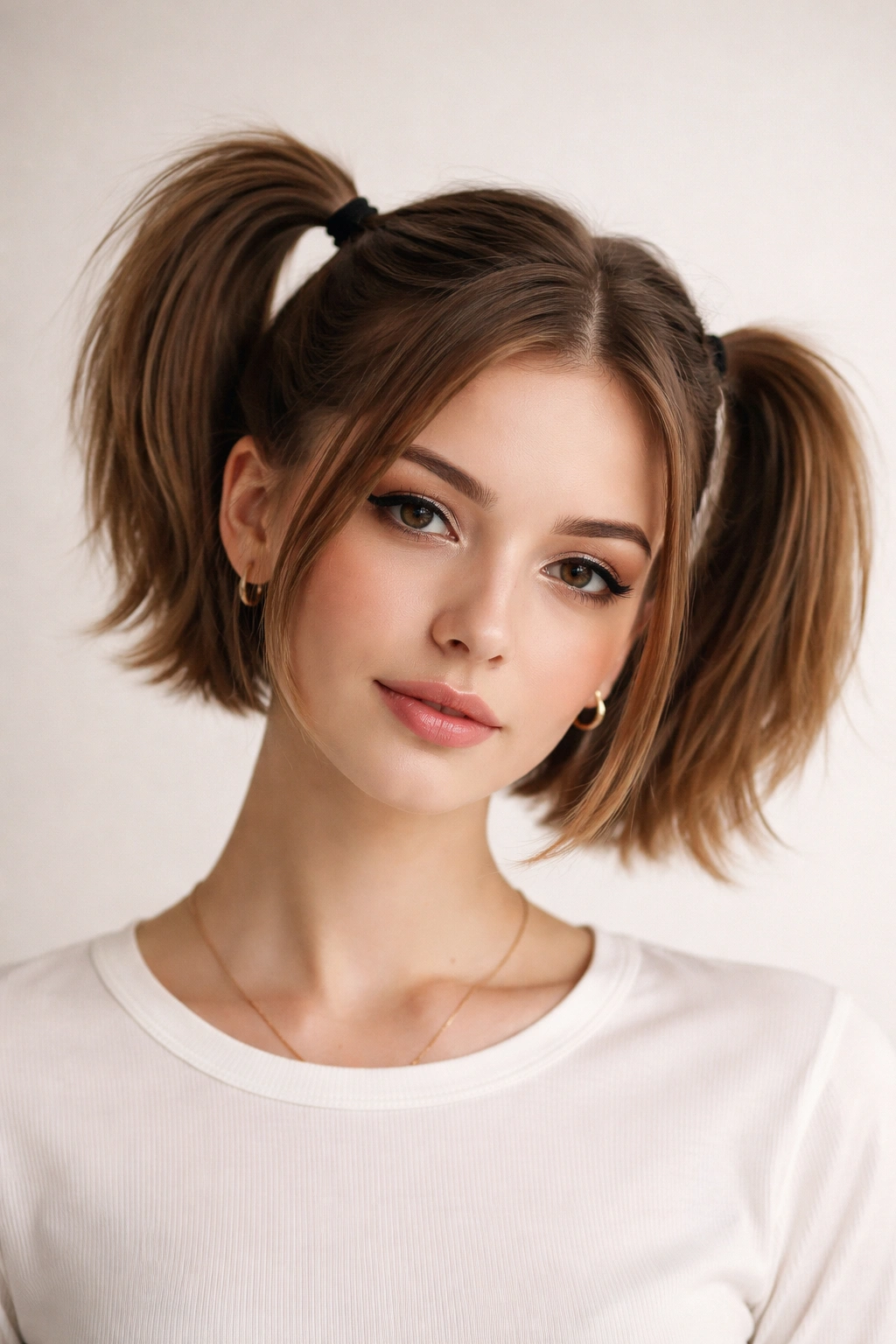
Uneven pigtails are for people who want the style to feel a little less expected. One side sits higher, the other lower. That imbalance sounds odd on paper, but on short hair it can look intentional and energetic, especially if the haircut already has some asymmetry.
Why the Imbalance Works
Not every short cut sits evenly on both sides. One ear may have more hair. One temple may be shorter. One side may have more layers. Instead of fighting that, this style uses it. The higher side adds lift; the lower side keeps the look grounded.
Keep the difference small unless you want the style to read very playful. An inch or two of height change is usually enough. Too much difference and the pigtails start to feel accidental rather than designed.
This style is best when the rest of the hair is smooth enough to show the line. If the texture is too fluffy, the height difference gets lost.
23. Knotted-Section Double Ponytails
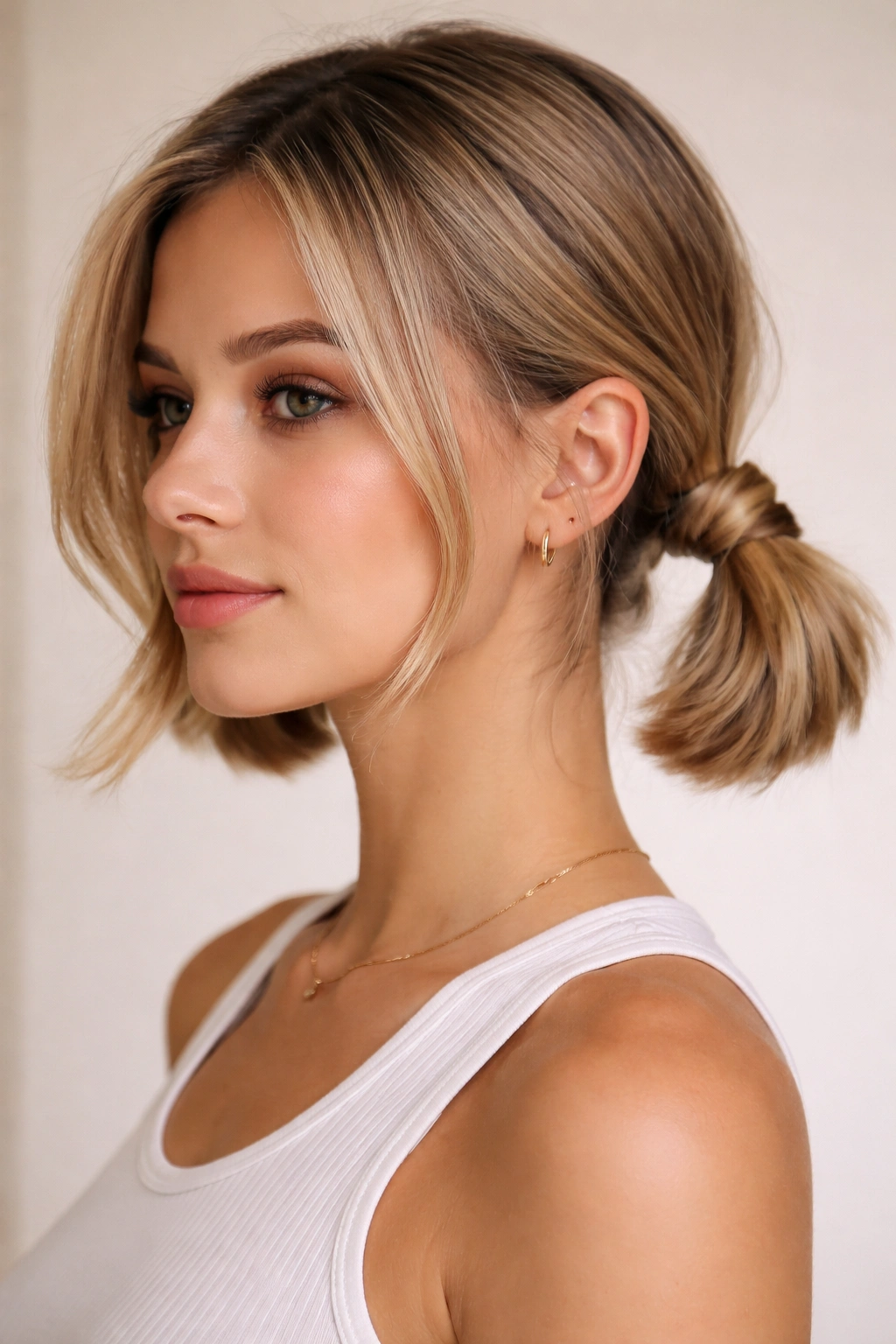
Knotted pigtails are a clever option when the hair is too short to do much else. You split each section, knot the strands once near the base, then secure the remaining length underneath or behind with a small elastic. It gives a short cut a little twist, literally.
The Knot Is the Feature
A knot creates shape fast. It looks more involved than a plain ponytail, but it doesn’t need much length to work. On short hair, that’s valuable. You can use the knot as the visible element and keep the ends small and tidy.
Use a smoothing cream if the hair is frizzy, because knots can look messy in a bad way if the strands are rough and fuzzy. But don’t overdo it. A touch of texture keeps the knot from slipping.
I like this style for short layered hair that refuses to hold a standard pigtail. The knot gives it a bit of body and a point of interest near the base.
Watch the Tension
Pull the knot snug, not hard. If you crank it down too much, the style can look pinched and the scalp starts to hurt. That’s not a trade I ever like.
24. Textured Pigtails with Barrettes
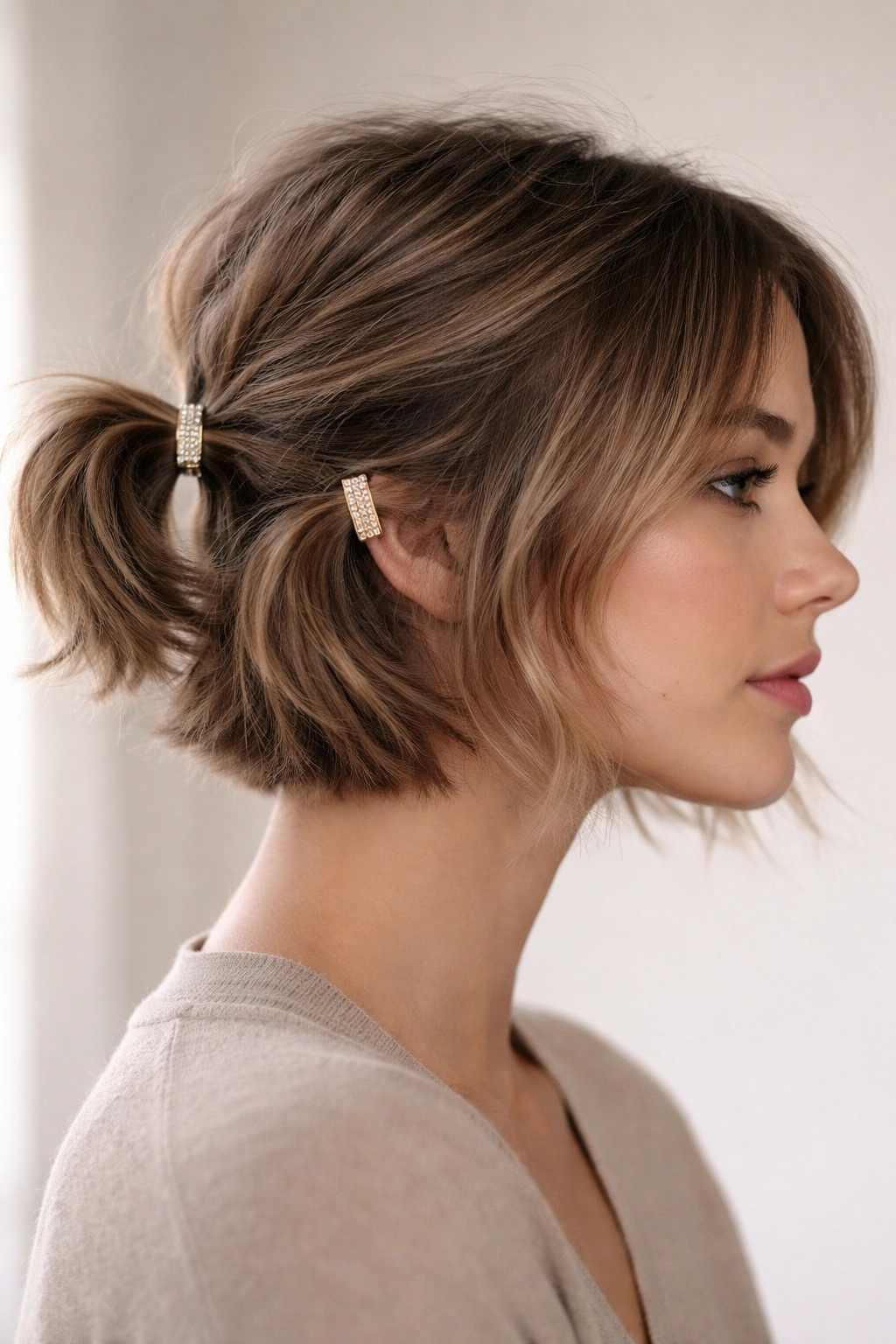
Barrettes are a nice way to finish short double ponytails because they add structure where the ends can be soft and irregular. A small barrette near each base gives the style a little visual anchor, especially if the ponytails are only a few inches long.
Texture Makes the Accessories Make Sense
Start with dry shampoo, texturizing spray, or naturally lived-in hair. The barrette needs something to sit against. If the hair is too slick, the accessory can slide or look like it’s floating.
Pick barrettes that suit the size of the pigtails. Small metal clips, resin clips, or simple snap barrettes usually work better than oversized decorative pieces on short hair. The goal is to complement the ponytails, not bury them.
This style is one of the easier ways to dress short hair up without extra heat. You can keep the pigtails loose and a little rough, then let the barrettes do the finishing work.
Small Detail, Big Difference
Place the clips just above or just below the elastic, not randomly somewhere in the length. That keeps the eye moving through the style instead of breaking it apart.
25. Short-Hair Double Ponytails That Work Every Day
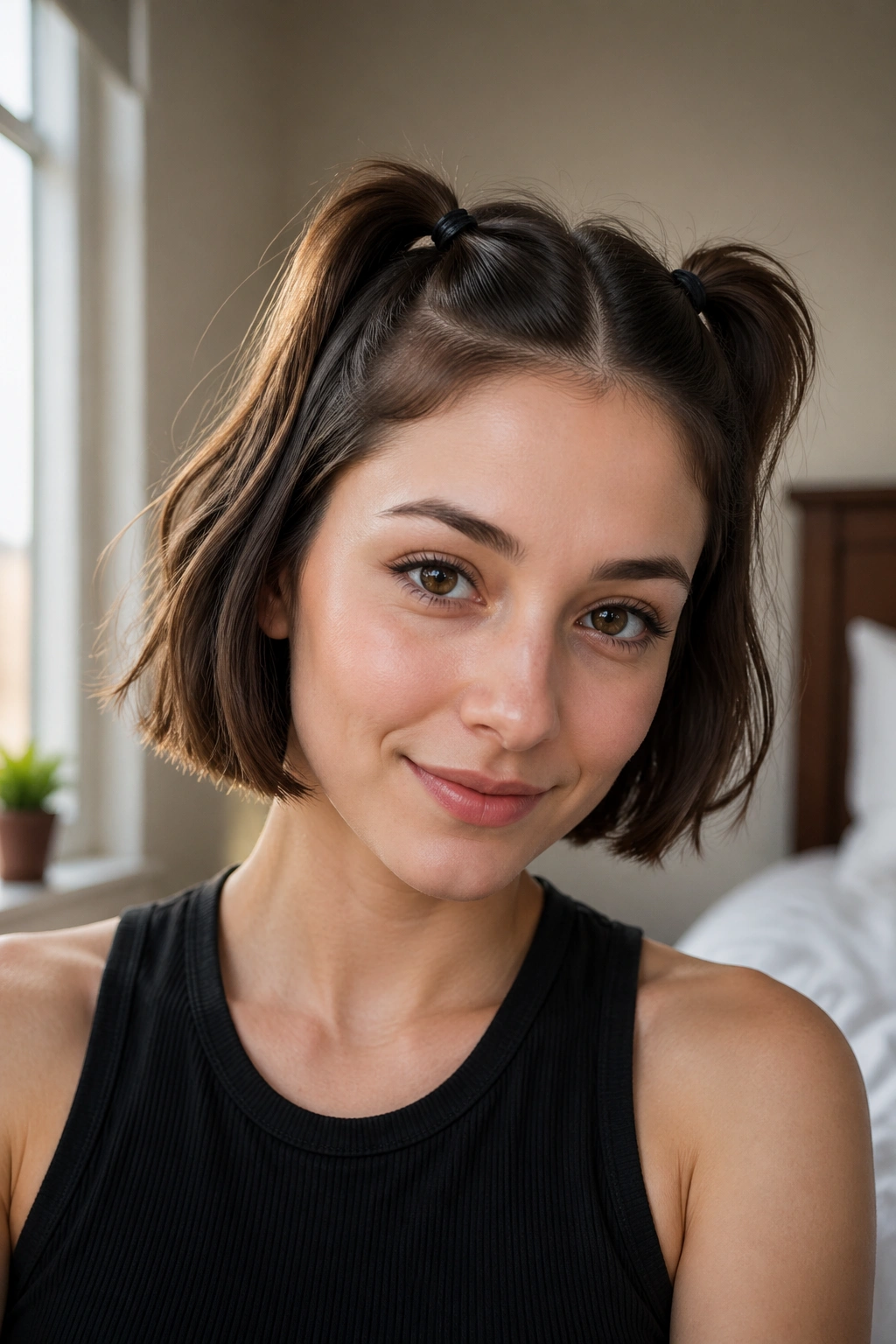
The most useful version is often the least dramatic one. Everyday double ponytails for short hair should hold, flatter your cut, and take under five minutes once you’ve done them a few times. That’s the bar I care about.
What Makes the Everyday Version Good
Use whatever your hair already does well. If it bends under, keep the bends. If it puffs at the crown, let a little of that volume stay. If the front layers are short, leave a few pieces out instead of pinning them into submission. Short hair always looks better when the style works with the cut instead of trying to rewrite it.
This is the version that survives errands, desk work, school drop-offs, and the long middle stretch of a normal day. Not because it’s fancy. Because it’s honest. A pair of mini elastics, a comb, and one product that gives either grip or shine are usually enough.
The smartest everyday pigtails are the ones you can redo without a mirror. If you can’t fix them with your fingers in a bathroom stall, they’re probably too fussy for real life.
A good short-hair double ponytail doesn’t need to prove anything. It just needs to sit right, stay put, and make the haircut look like a choice.
