

Feed-in braid ponytails for Black women can look sharp, soft, sporty, or full-on dramatic, and that range is exactly why I keep coming back to them. The braid starts small at the hairline and gradually takes in more hair, so the front stays smooth instead of bulky. That little detail changes everything.
I care about tension a lot. A ponytail can be beautiful and still be too tight, and the line between neat and painful is thinner than people like to admit. If your scalp is sore the same day, or your edges feel hot and pulled, the style needs to be adjusted.
What makes feed-in braid ponytails so useful is the mix of structure and movement. You can keep the roots close and clean, then let the tail swing long, curly, beaded, wrapped, or stacked into bubbles. The parting, braid size, and ponytail placement do most of the heavy lifting. Not the extras.
Pick the look that fits the life you actually live. Some styles need to survive a work week, a scarf at night, and a morning rush; others are built for weddings, brunch, photos, or a night out when you want the hair to do some talking. The styles below move from simple to sculpted, because there really is no single right answer here—just a lot of good ones.
1. Sleek Center-Part Feed-In Braid Ponytail
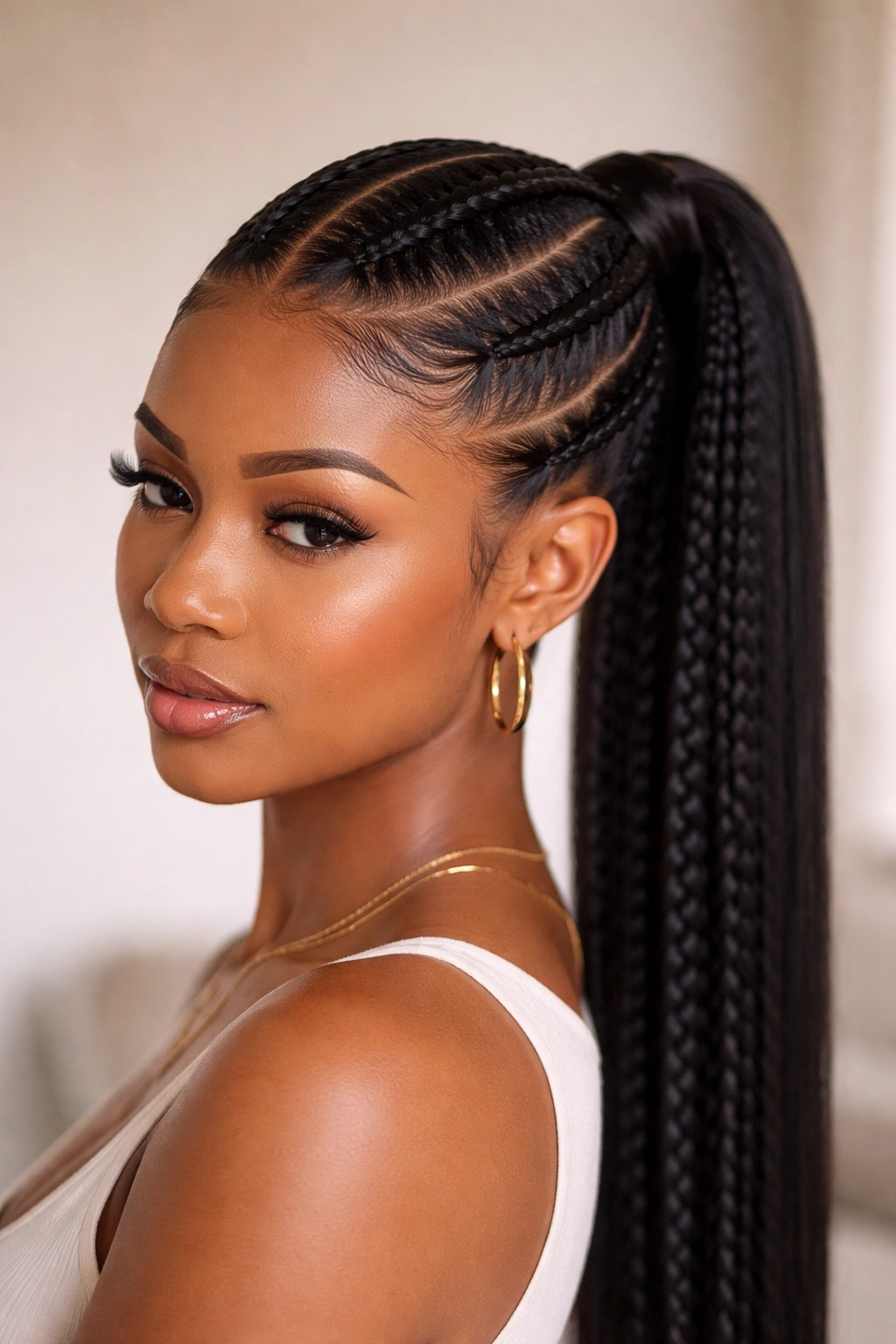
If you want the cleanest version of the look, start here. A center-part feed-in braid ponytail has a calm, balanced feel that reads polished without trying hard, and that middle line gives the whole style a clear shape from the start.
Why It Works
The center part does more than split the hair. It balances the face, keeps the braids even on both sides, and makes the ponytail feel deliberate instead of random. On stretched hair, the part lays flatter and the braids sit tighter against the scalp.
Ask for 6 to 10 medium feed-ins on each side if you want a classic result. A single wrapped braid around the base keeps the elastic hidden, which matters more than people think. Messy bases make a sleek style look unfinished.
- Best for oval, heart, and round faces
- Works well with straight lengths or lightly curled ends
- Pairs easily with large hoops or a clean neckline
- Holds up well if you wrap it with a silk scarf at night
Pro tip: keep the part razor-sharp and the braid widths even; that’s what gives the style its quiet precision.
2. High Feed-In Ponytail With Face-Lifting Height
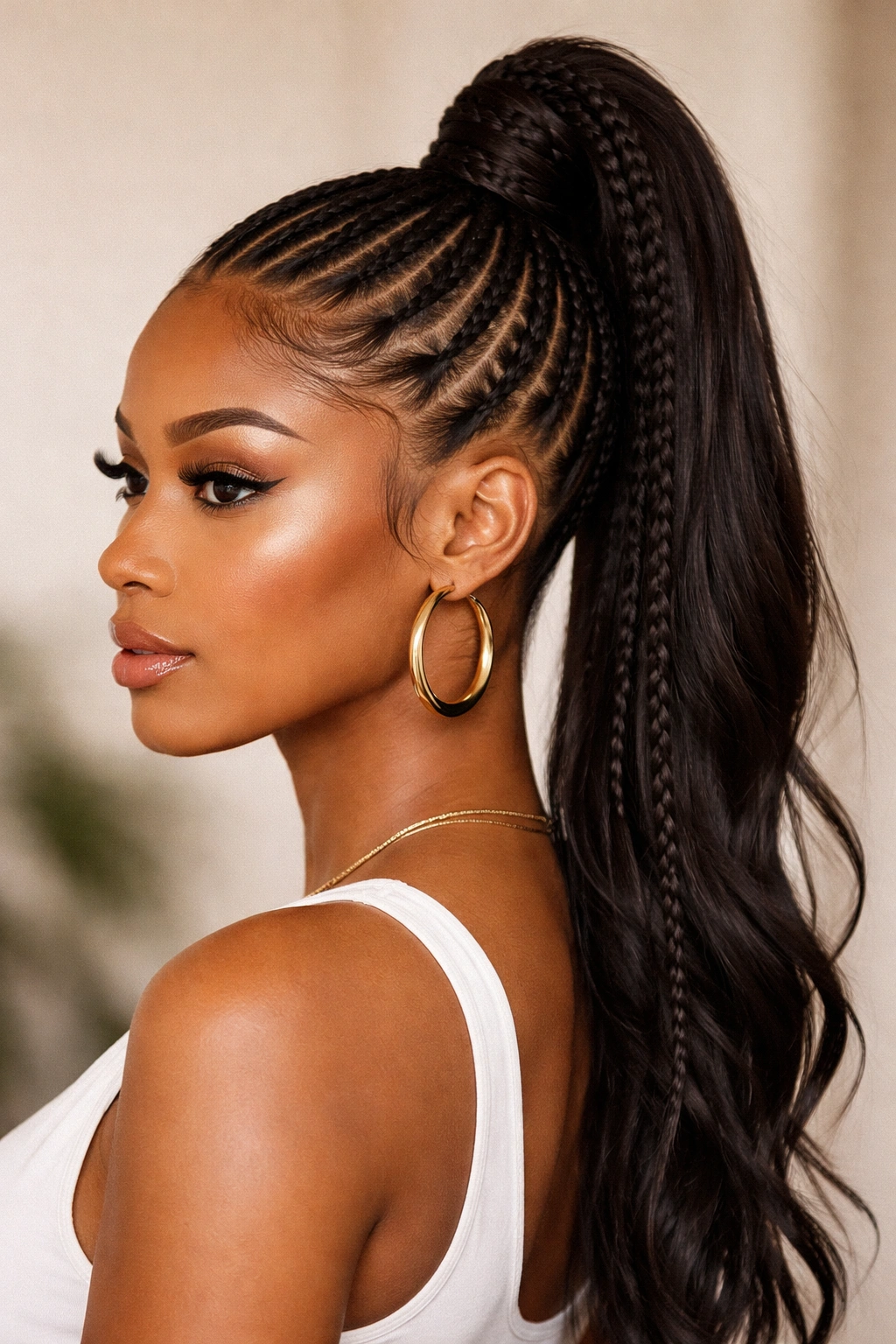
Want height without making the hairline the star of the show? A high feed-in ponytail lifts the face, shows off the cheekbones, and gives the whole style a little swagger.
The trick is placement. The ponytail should sit at the crown or just above it, not so far forward that the front feels strained. A good braider will feed the hair in gradually, then gather the tail at a point that lifts the profile instead of flattening it.
This style works especially well when you want your makeup, earrings, or collar to stay visible. It also gives the tail room to move. That swing matters. A high ponytail that hangs stiffly looks heavy; one that moves when you turn your head feels alive.
If you wear it often, ask for small, even cornrow feed-ins near the front so the base stays neat. Big front braids can make the style feel clunky. Nobody wants that.
3. Side-Swept Feed-In Braid Ponytail
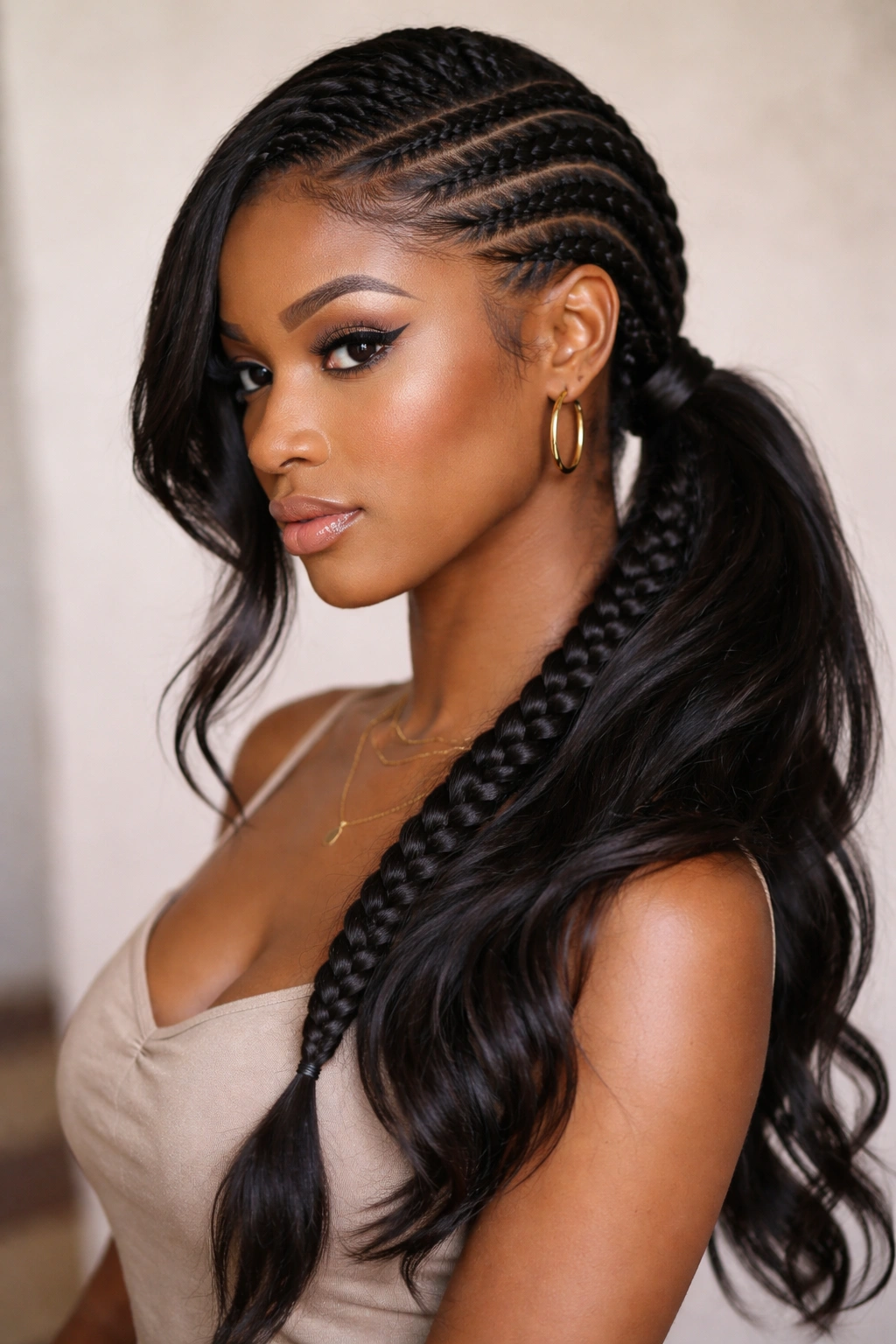
A side-swept feed-in braid ponytail has a little attitude built in. It is what I reach for when a straight-down center part feels too tidy and I want the style to lean into the face instead of splitting it cleanly in half.
Picture one side with slightly more braids than the other, then the ponytail gathered low or mid-height and swept toward the heavier side. That unevenness is the point. It gives the style motion before the tail even starts.
Quick Details That Help
- Ask for a deeper side part, not a shallow one
- Keep the smaller side tight and smooth
- Let the longer side curve across the forehead or temple
- Use a lightweight edge product only if your hairline tolerates it
This one works best when the braids follow the shape of the head instead of fighting it. And yes, it can be elegant. Side parts get dismissed as fussy, but on Black hair they can soften strong features in a way a center part never does.
4. Curved Feed-In Ponytail With Flowing Parts
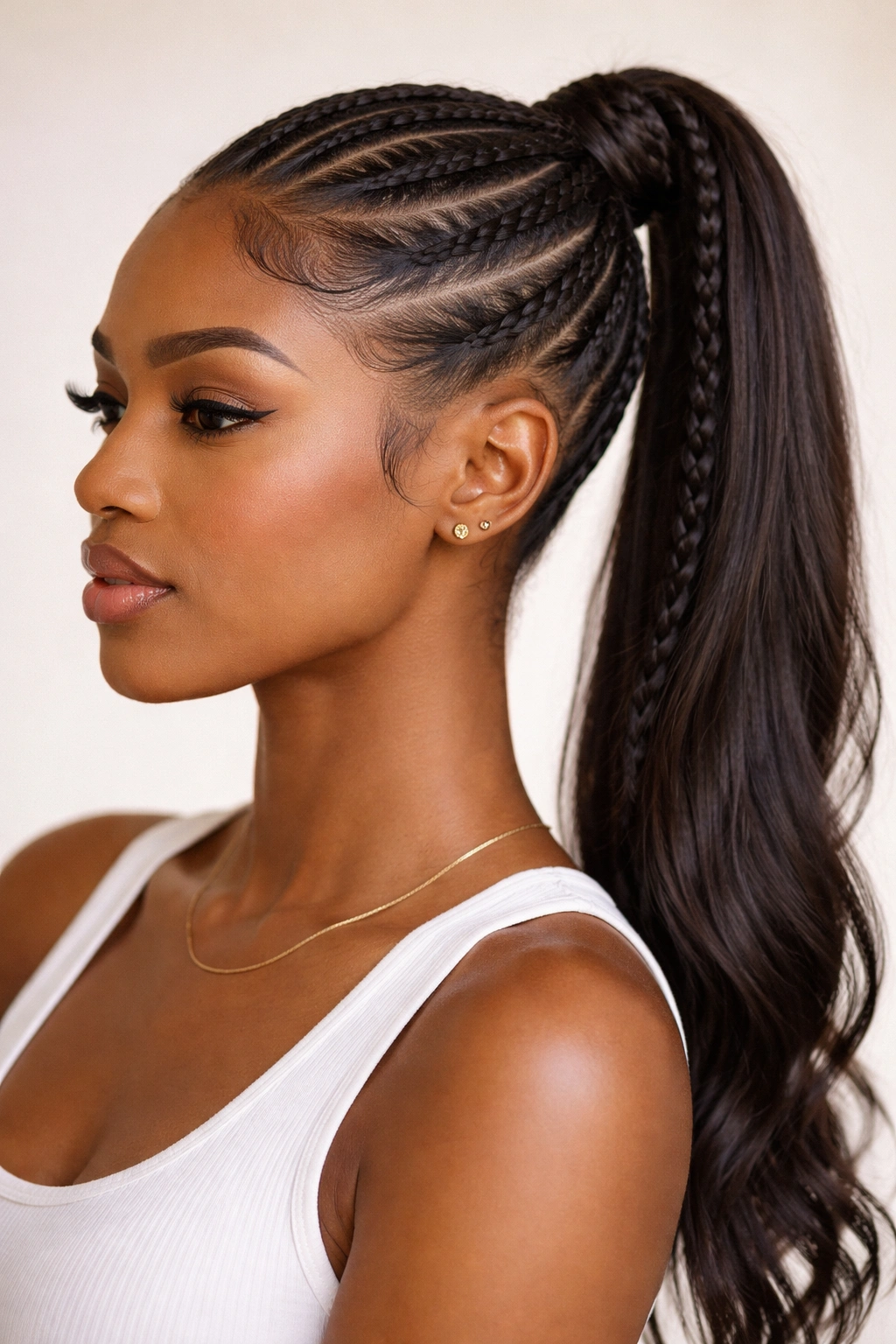
Curved parts change the whole mood. Instead of straight-back cornrows, the braids bend gently into the ponytail, which makes the style feel more sculpted and a little more artistic.
The best part about curved feed-ins is that they soften hard angles. A straight part can look severe if the rest of your look is soft, while a curved line moves with the head. That matters on days when you want the hair to look intentional but not stiff.
You will notice this style most when the braids are done cleanly. The curves should look smooth, not squiggly. If the sections are uneven, the whole design starts to wobble. That is why this style is worth paying attention to—good curved parts look expensive in the old-fashioned sense, the kind that comes from patience.
Keep the ponytail itself simple. Too many add-ons can crowd the parting work. Let the braids be the point.
5. Bubble Feed-In Ponytail With Braided Base
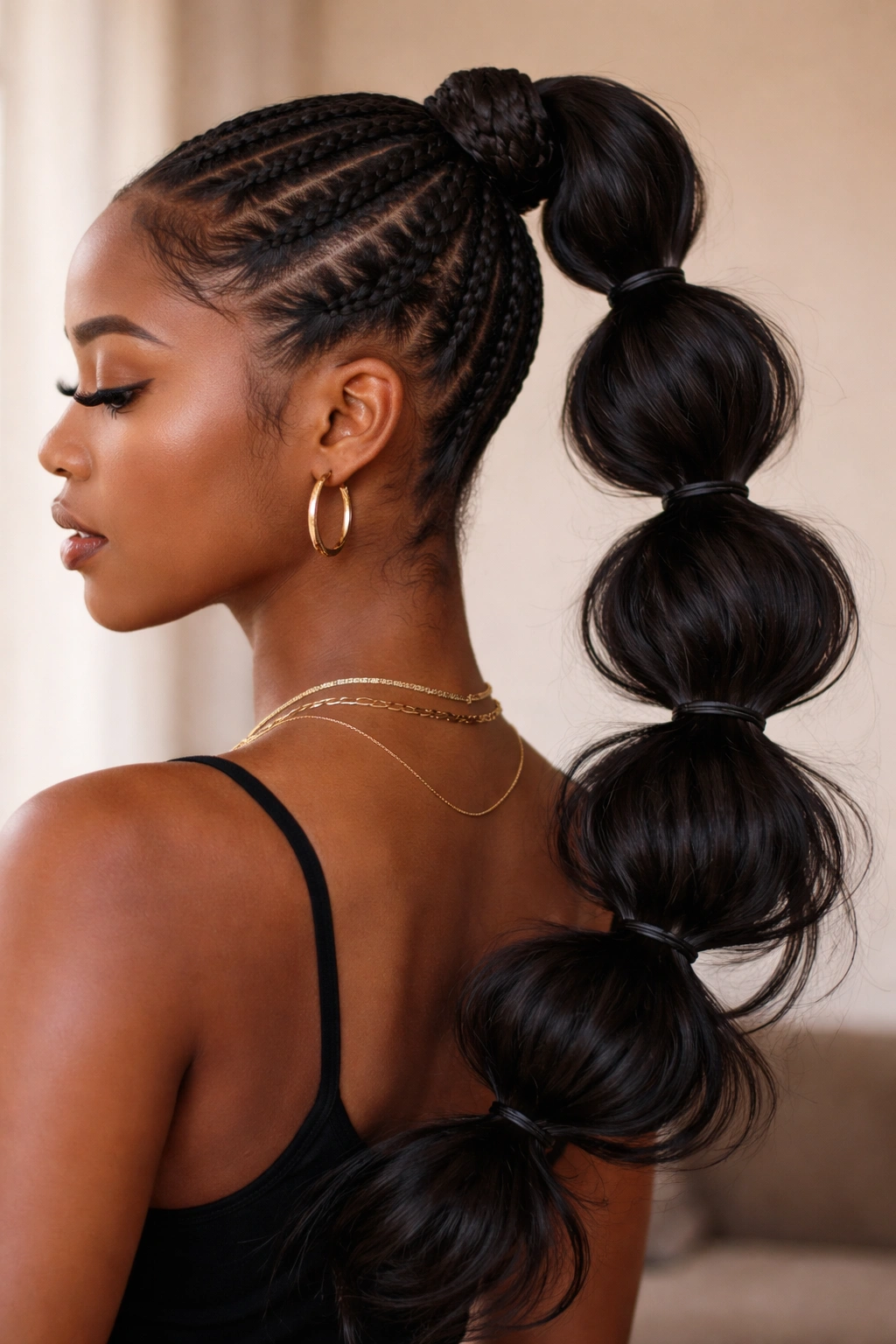
A bubble ponytail changes the energy fast. It takes the structure of a feed-in braid base and adds sections down the tail that puff out between elastics, so the end result feels playful without looking childish.
This style is a good choice if you like volume but do not want one long heavy tail dragging on your shoulders. The bubbles break up the length and give the ponytail more shape. They also make synthetic braiding hair feel lighter, which is a nice bonus when you are wearing the style for more than a day or two.
What to Ask For
- A smooth feed-in base that sits at the crown or mid-height
- Small clear elastics spaced evenly down the tail
- Slightly teased or wrapped sections between each band
- Mousse on the tail before setting the bubbles
I like this look because it gives you movement even when the hair is pinned back. And if you want a style that photographs from the side without looking flat, this one earns its keep.
6. Jumbo Feed-In Braid Ponytail
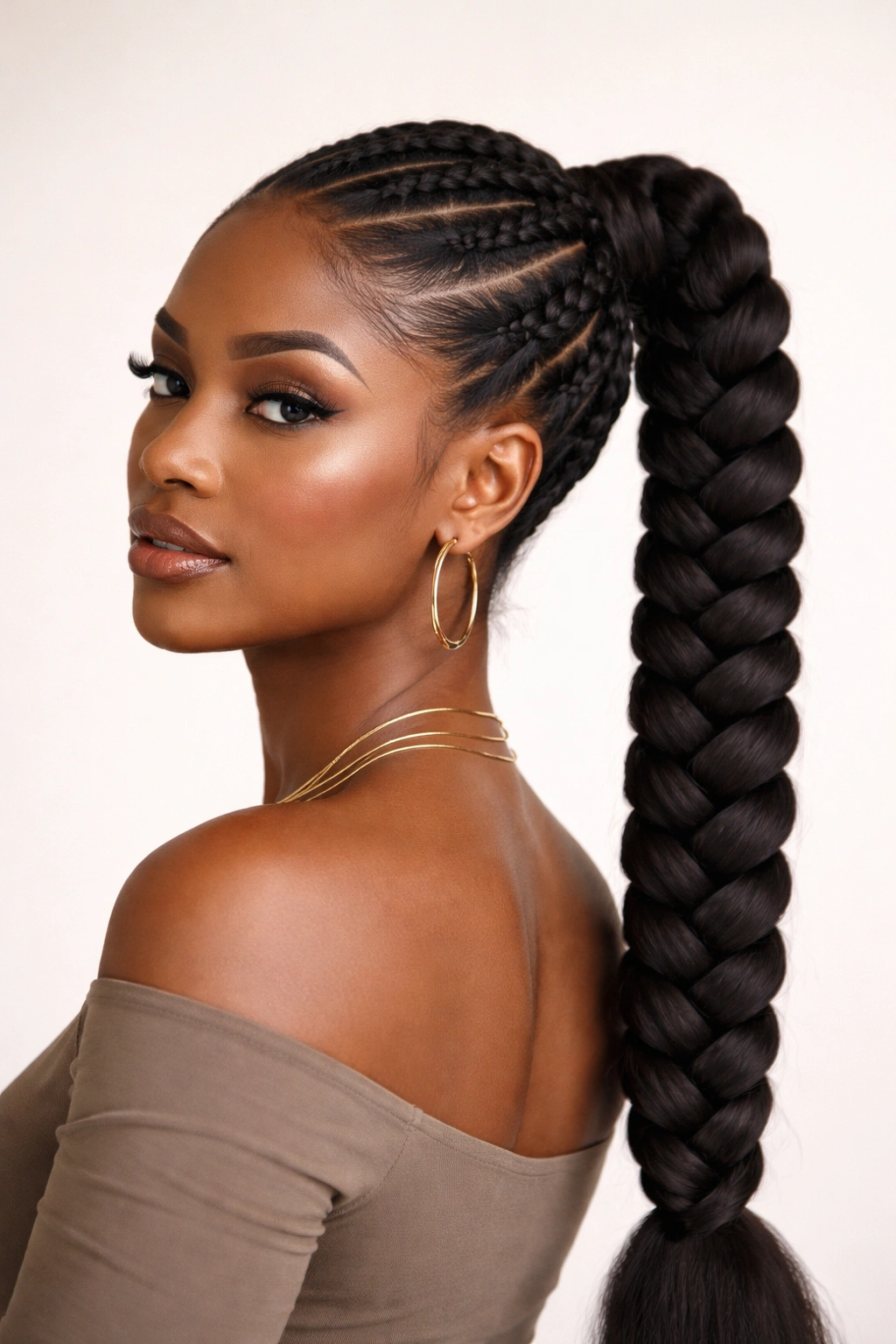
Jumbo feed-in braids are not subtle. That is the whole point. With fewer, thicker braids feeding into a single ponytail, the style makes a strong shape fast and usually takes less time to install than a tighter, more detailed design.
The downside is weight. Bigger braids can feel heavy if the hair is too long or the ponytail sits too high. If your scalp is sensitive or your edges need a break, ask for a few more braids with slightly smaller sections instead of one massive braid line across the front.
Where Jumbo Braids Make Sense
- When you want a bold look with less parting work
- When the event calls for something dramatic and simple
- When you want the style to hold its shape with little daily fuss
Jumbo feed-ins look especially good with a long tail or a wrapped base. The thick braid pattern gives the ponytail an almost sculptural feel. I would not wear this if I wanted something delicate. I would wear it when I want people to notice the hair from across the room.
7. Medium Stitch Feed-In Ponytail
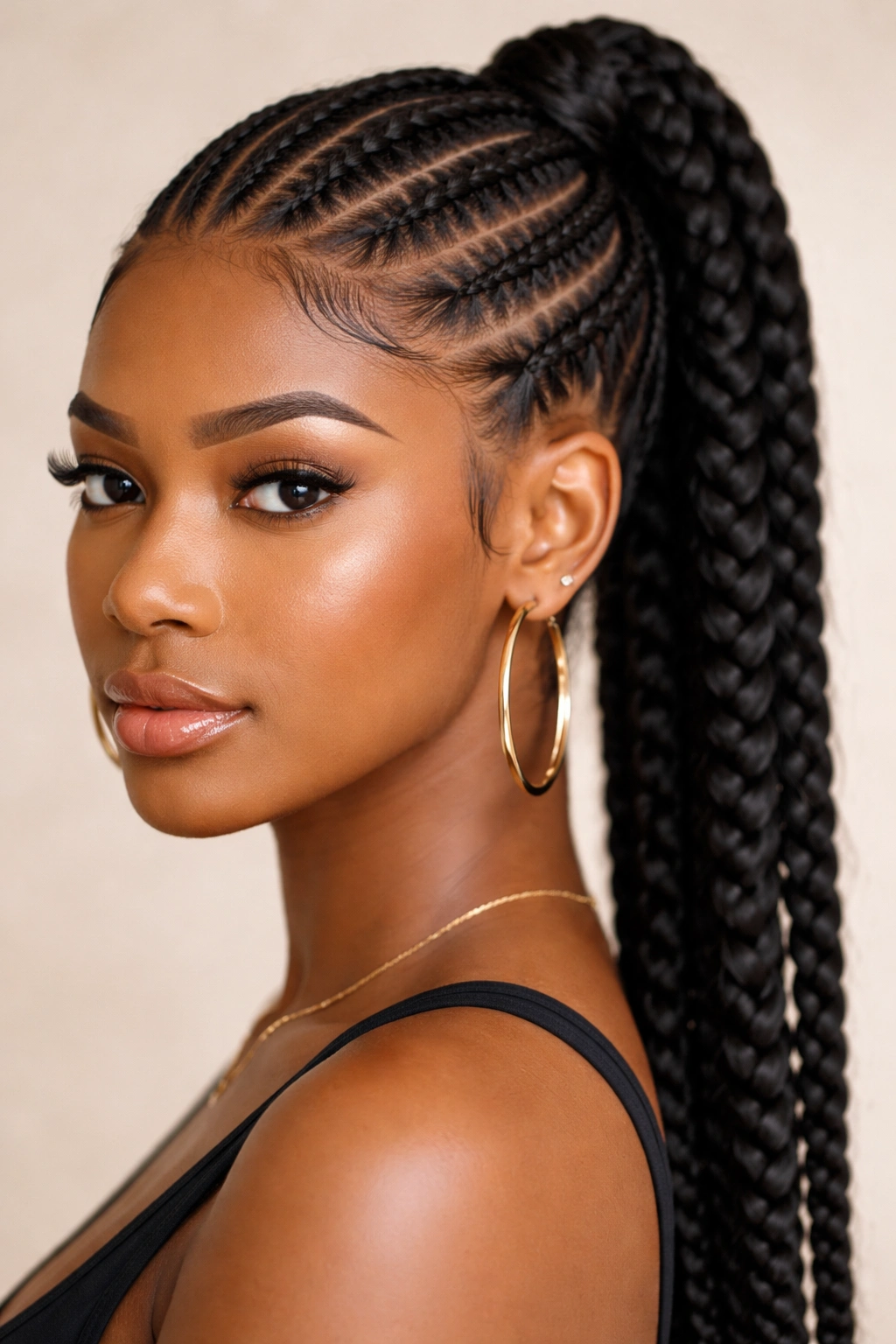
What makes a stitch feed-in ponytail different is the parting. Those little straight lines between the braids create a crisp, segmented look that feels neat even before the hair is gathered into the ponytail.
If you like a clean finish but do not want the fullness of jumbo braids, medium stitch braids sit in a sweet spot. They give enough detail to look styled, but not so much that the head starts to feel crowded. On tighter curls and coily textures, this can be one of the nicest ways to keep the scalp looking tidy without overloading it.
What Makes the Stitch Work
The sections need to be even. Really even. If one braid is wider than the next, the stitch pattern starts to show the problem fast. The ponytail should sit where the stitch lines naturally point, not where the elastic happens to land.
A medium stitch feed-in ponytail is a good everyday style for someone who wants structure and discipline in the front, then movement in the tail. It is one of those looks that can handle a blazer or a sweatshirt without looking out of place.
8. Low Nape Feed-In Ponytail With a Wrapped Base
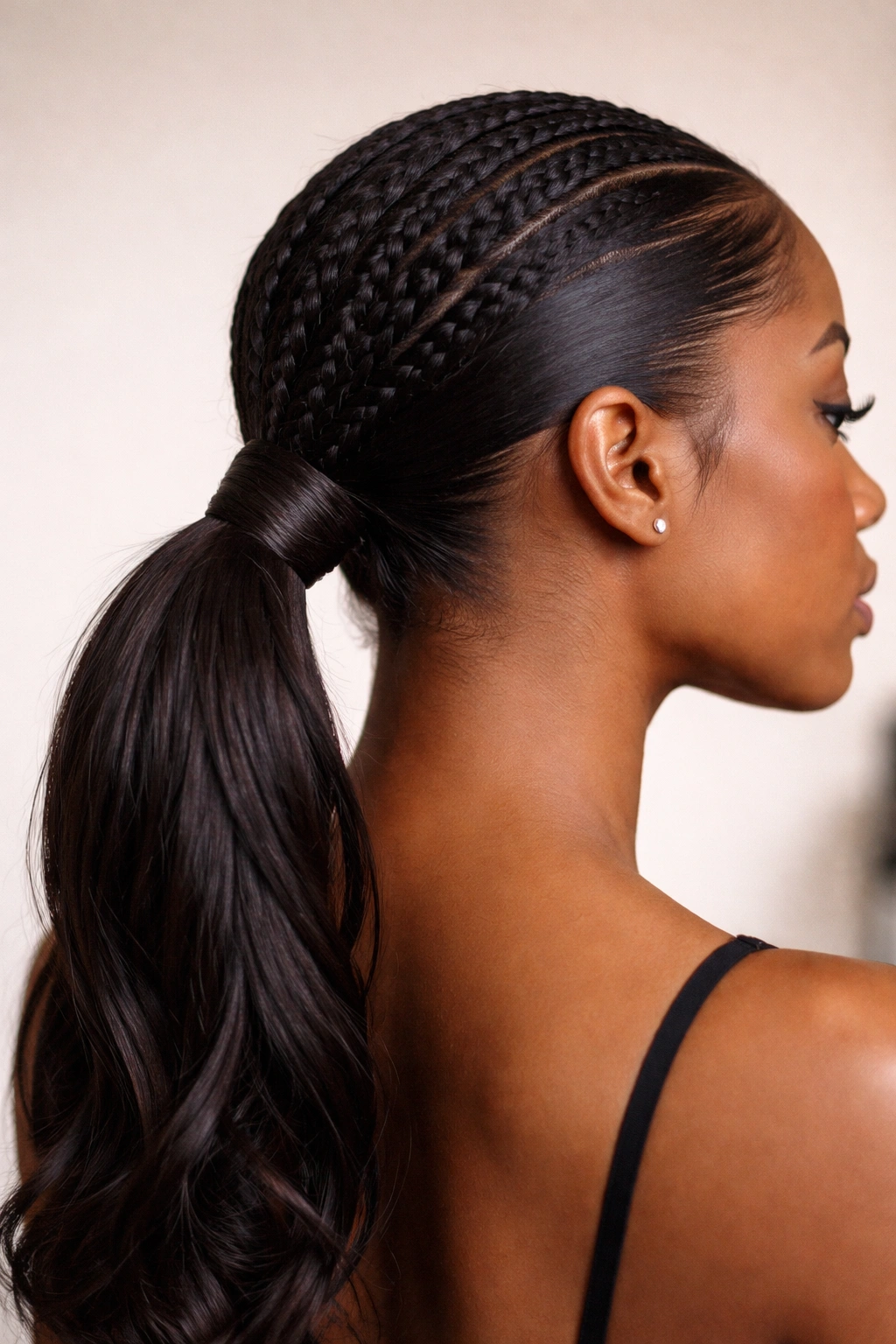
A low nape ponytail has a quiet kind of confidence. The braids tuck down toward the neck, the base feels secure, and the whole style sits close enough to the head that it rarely looks overdone.
This is the one I think of for long days, office wear, or any time you want the hair to stay out of the way without looking plain. The wrapped base matters here. A clean wrap around the elastic hides the rough edge and gives the ponytail a finished look that a plain tie just cannot match.
The nape placement also keeps tension from pulling upward as much. That can feel kinder around the hairline, especially if you are sensitive to tight high styles. It is still not an excuse for a rough install, though. Neat does not have to mean tight.
If you want one style that works with glasses, high collars, and low earrings, this is a smart one to keep in rotation.
9. Feed-In Ponytail With Curled Ends
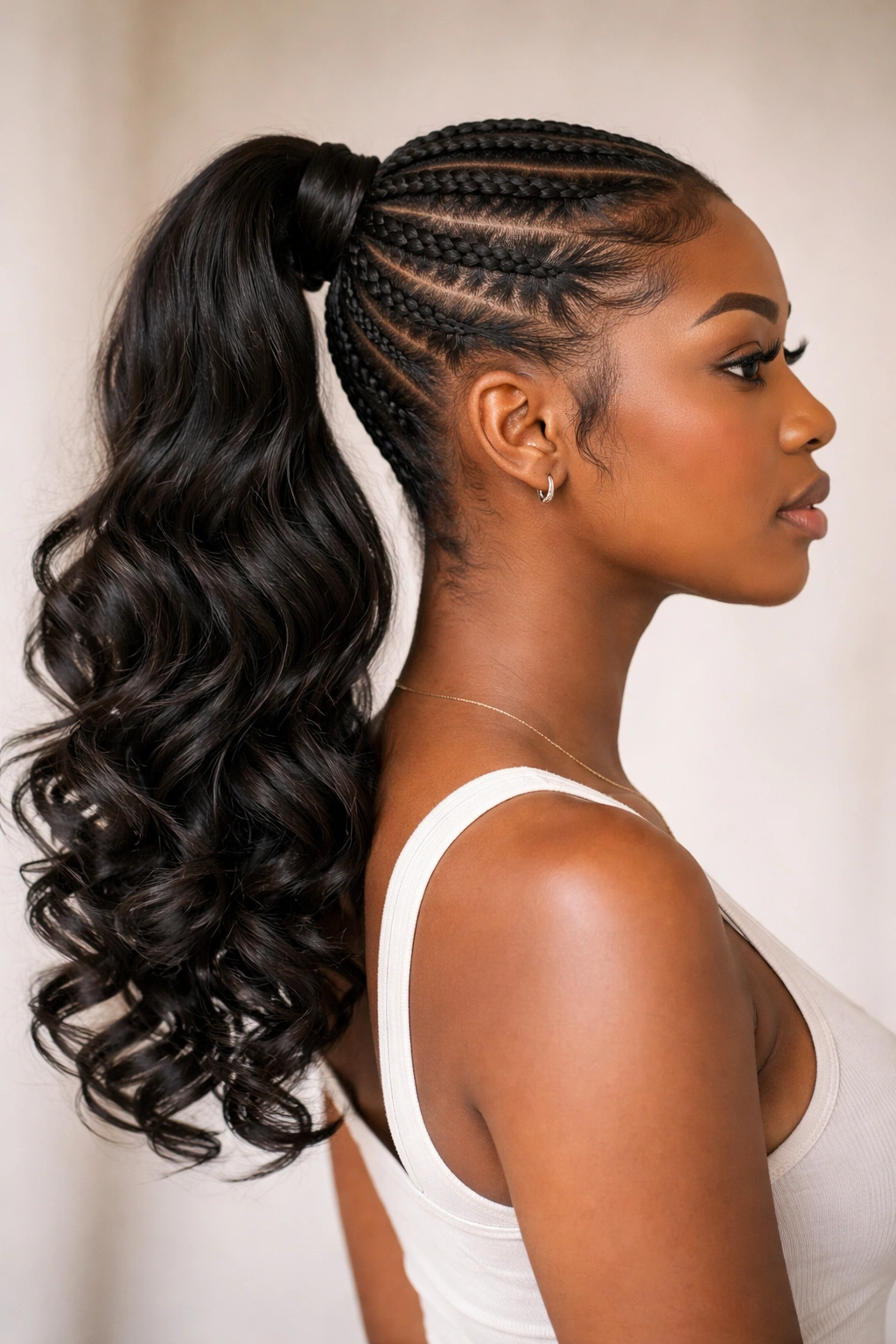
Straight braiding hair has its place, but curled ends soften the whole look in a way that feels easy to wear. A feed-in ponytail with curled ends gives you the structure of braids and the movement of loose texture, which is a good combination when you want the hair to feel less severe.
The curl can come from rods, set ends, or hair that is already textured at the tail. What matters is that the curls look intentional, not frayed. The ends should bounce a little when you move, not hang limp or puff out in a weird triangle.
Things Worth Asking About
- Whether the extension hair can be set with heat or hot water
- How tight the ends should be curled for your face shape
- Whether you want uniform curls or a softer, mixed finish
This style is better than straight ends when you want the ponytail to look more finished in photos. It also makes a long braid ponytail feel a little less heavy. Small change. Big effect.
10. Triangle-Part Feed-In Ponytail
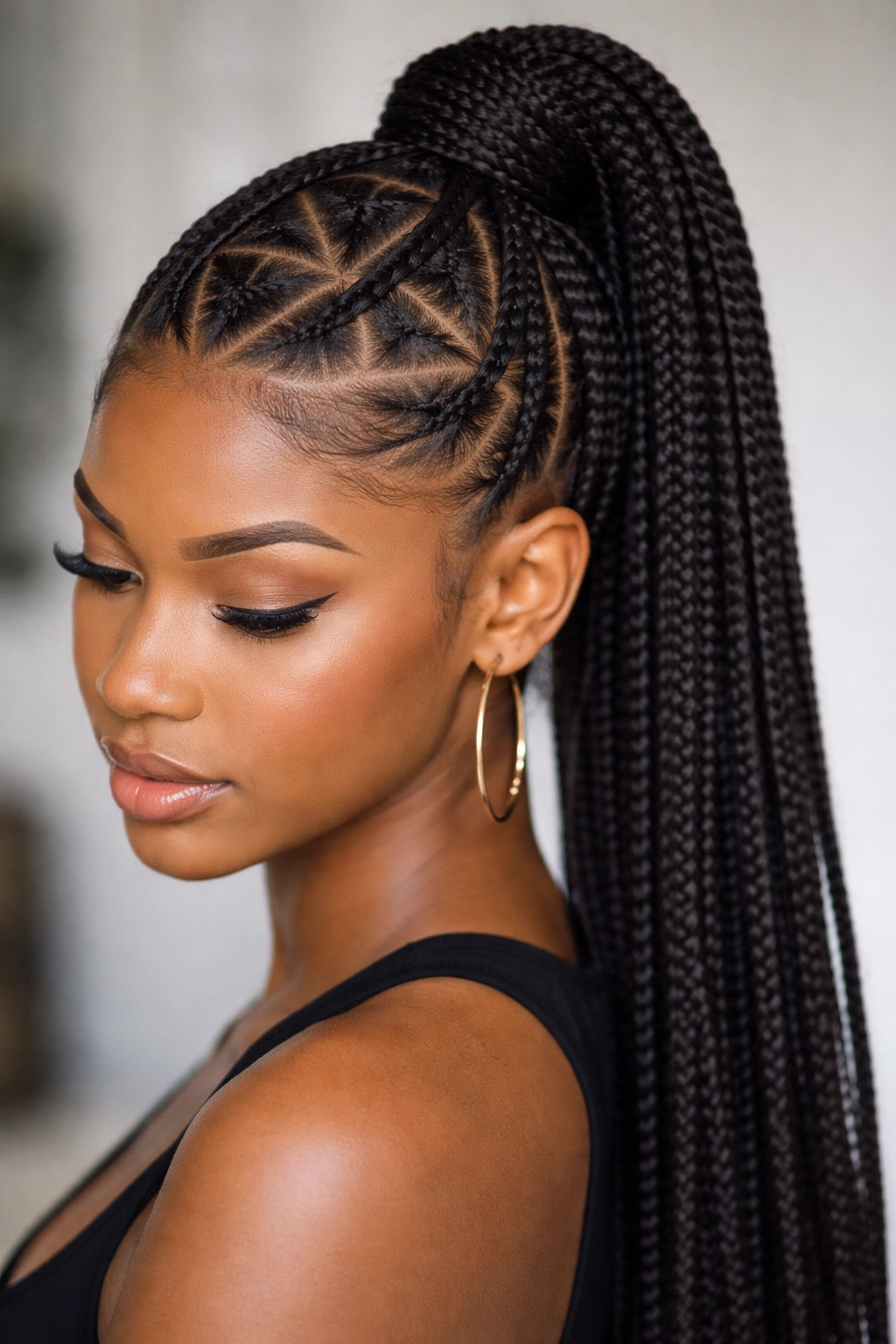
Triangle parts are one of those details people notice even if they cannot name them. The parting gives the scalp pattern more movement than straight rows, and that alone makes the ponytail feel less expected.
I like triangle-part feed-ins because they bring a bit of texture to the top without changing the whole shape of the style. The sections catch the light differently, and the pattern looks especially nice when the ponytail itself is simple. That contrast is what makes it work.
The best version of this style uses clean, even triangles that gradually narrow as they move toward the ponytail base. If the sections are rushed, the pattern loses its rhythm and starts looking uneven from the back. That is the part people forget about. The back matters.
A triangle-part ponytail is a good pick when you want something that stands apart from standard straight-back braids but still feels wearable every day.
11. Crisscross Feed-In Ponytail
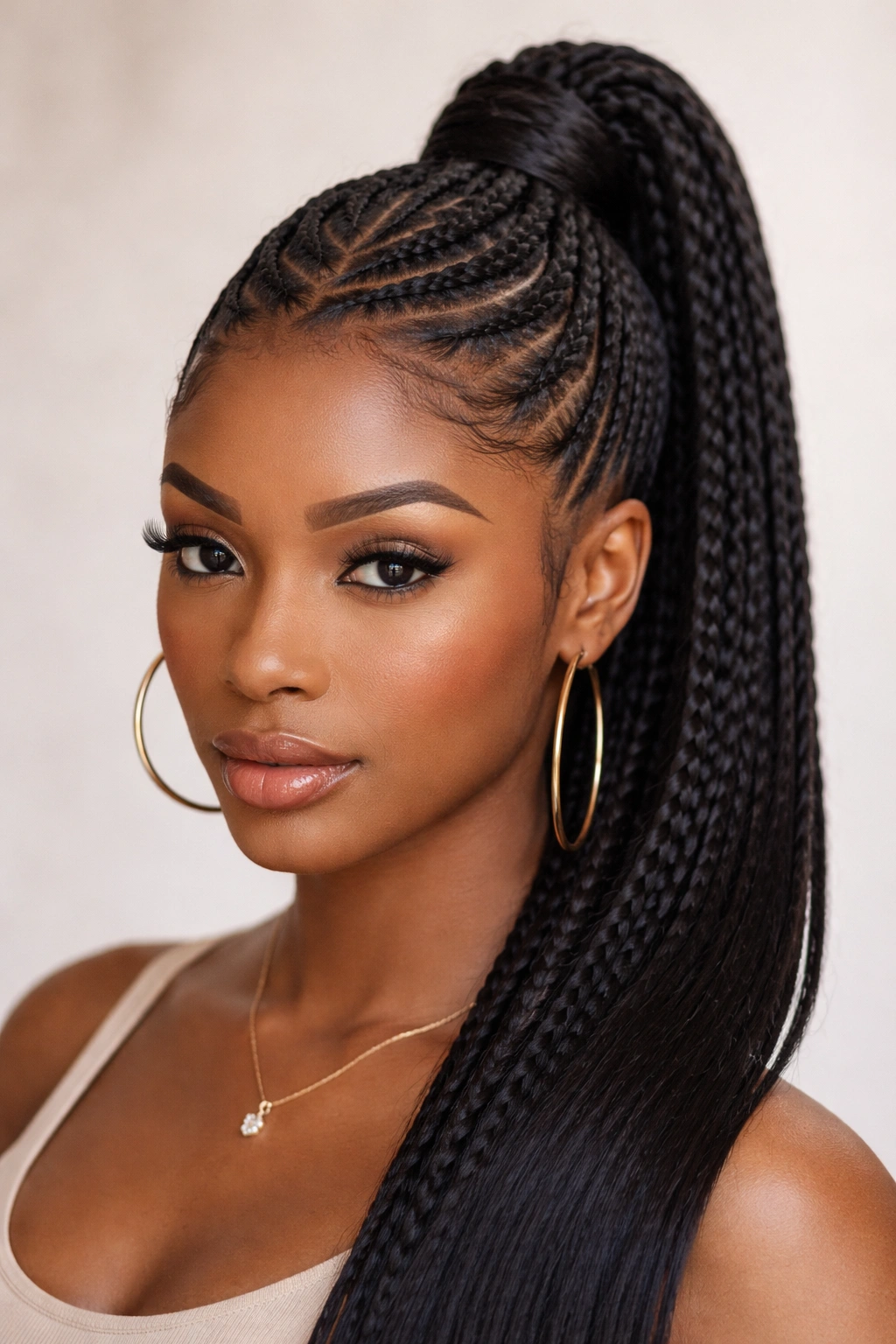
Crisscross braiding adds a little drama without adding a mountain of hair. The sections overlap in a way that creates pattern and depth, and the result feels more detailed than a straight row of feed-ins.
This style works best when the crisscross is limited to the front or crown and the rest of the ponytail stays clean. If you crisscross every inch of the head, the style can get busy fast. A little goes a long way here.
What to Watch For
- Keep the crisscross lines even and not too thick
- Let the ponytail base stay smooth so the pattern can breathe
- Avoid piling on heavy accessories, because the parting already does enough
The reason I like this style is that it gives you design without weight. You get the look of a more complicated braid map, but the finished ponytail still moves like a ponytail. That sounds obvious until you wear one that feels like a helmet.
12. Mohawk-Inspired Feed-In Ponytail
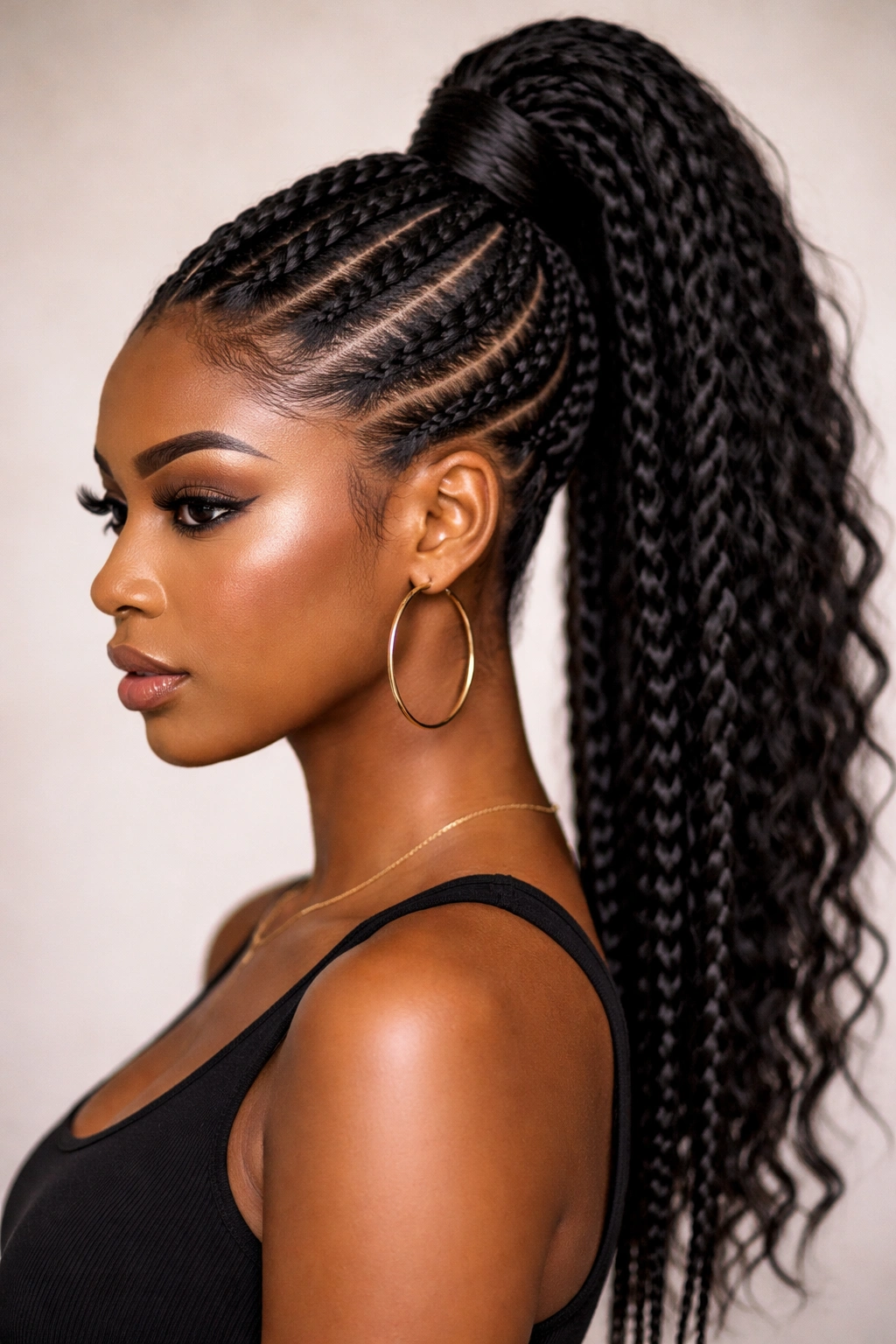
A mohawk-inspired feed-in ponytail has edge, but not in a messy way. The sides are braided or slicked close, then the center section rises into a ponytail that can sit high, medium, or a little forward depending on how much drama you want.
This is one of the strongest shapes in the whole category. It opens the face, sharpens the profile, and gives the top of the head a strong line that works well with bold makeup or a bare face. No fuss. No softness for softness’ sake.
The parting on the sides needs to be careful, though. If the braids tug too hard near the temples, the style loses its appeal fast. A mohawk shape should look fierce, not painful. That is a line worth defending.
If you like styles that feel strong when you walk into a room, this one earns the spot.
13. Feed-In Ponytail With Beaded Ends
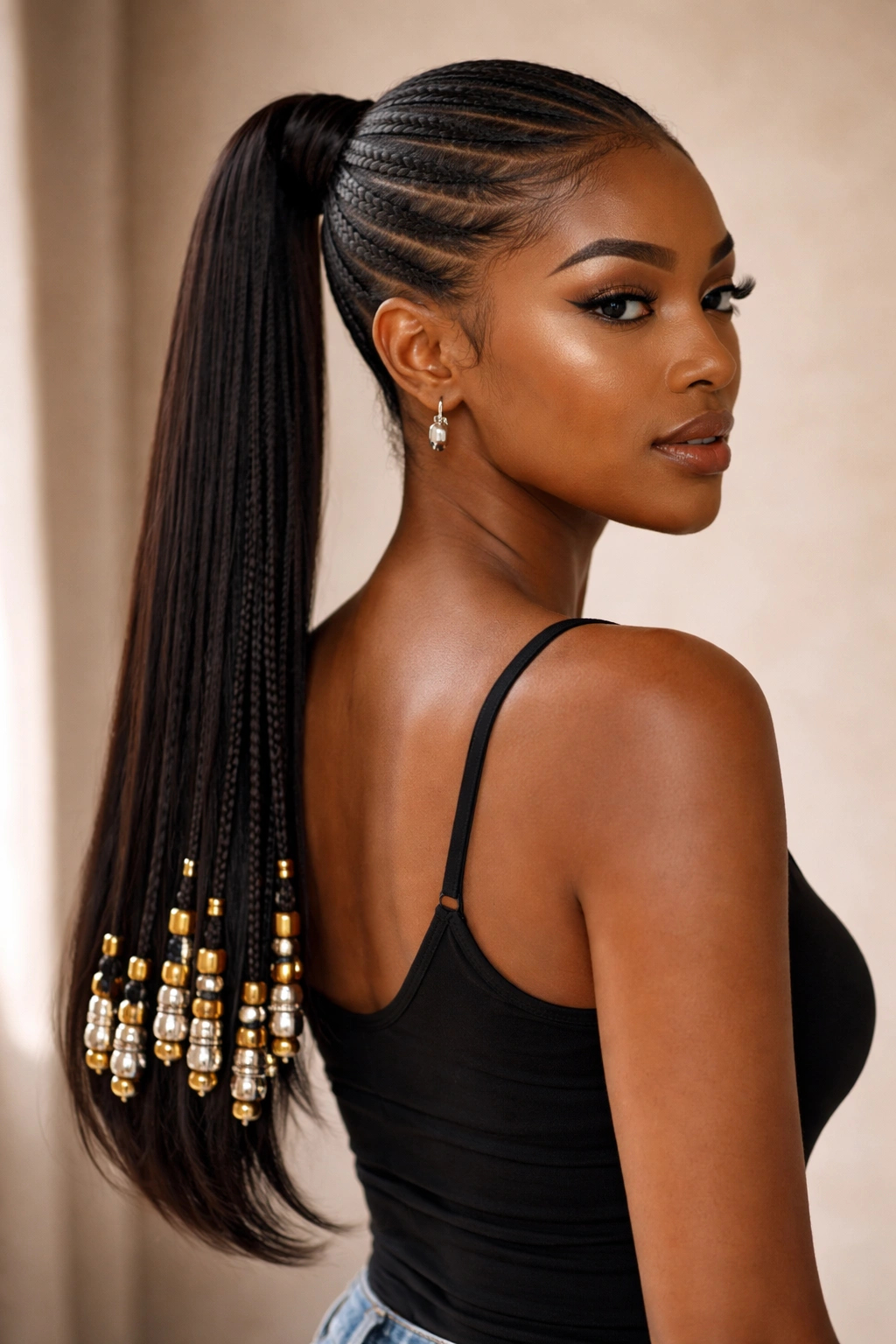
Beads change the sound of a hairstyle as much as the look. A feed-in ponytail with beaded ends has movement, weight, and a little rhythm when you walk, and that can be a fun thing when the rest of the style is kept neat.
The trick is restraint. A few beads at the ends can look sharp; too many can pull the ponytail down and make the tail clatter in a way that gets annoying by the second hour. I prefer beads on the lower half of the tail rather than packed near the scalp.
Best Use Cases
- Long weekend wear
- Festivals, birthdays, and family events
- Styles where you want the hair to move and make a sound
Beads look best when the base is still clean and controlled. Let the ponytail do the talking first, then let the beads finish the sentence. That balance keeps the style from tipping into costume territory.
14. Colored Feed-In Ponytail With Soft Highlights
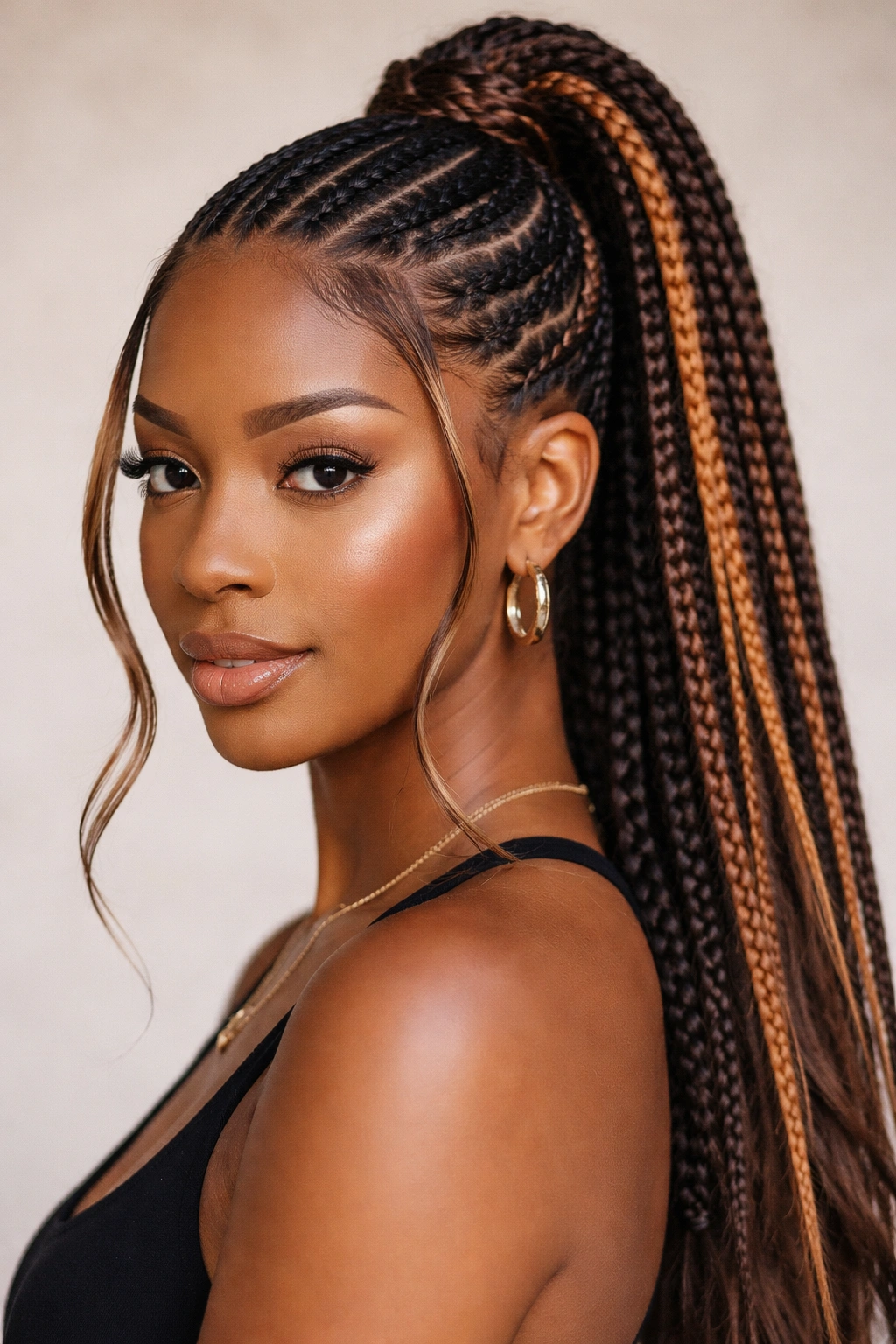
Color can shift a feed-in ponytail from neat to memorable without changing the braid pattern at all. A few highlighted extensions—caramel, burgundy, copper, honey blonde, or even muted jewel tones—can wake up the braid line and make the tail feel warmer.
I prefer color when it is placed with care. Put the brighter strands where they can show around the face or along the outer braids, not buried where nobody sees them. That small placement choice matters more than people think. Color should frame the style, not drown it.
A colored feed-in ponytail is especially good when your own hair is dark and you want contrast without dyeing anything permanent. It also helps the braid texture read clearly in photos, since the light catches the different strands in a more obvious way.
If you want the style to feel custom rather than standard, this is one of the easiest ways to get there.
15. High Feed-In Ponytail With a Braided Swoop Bang
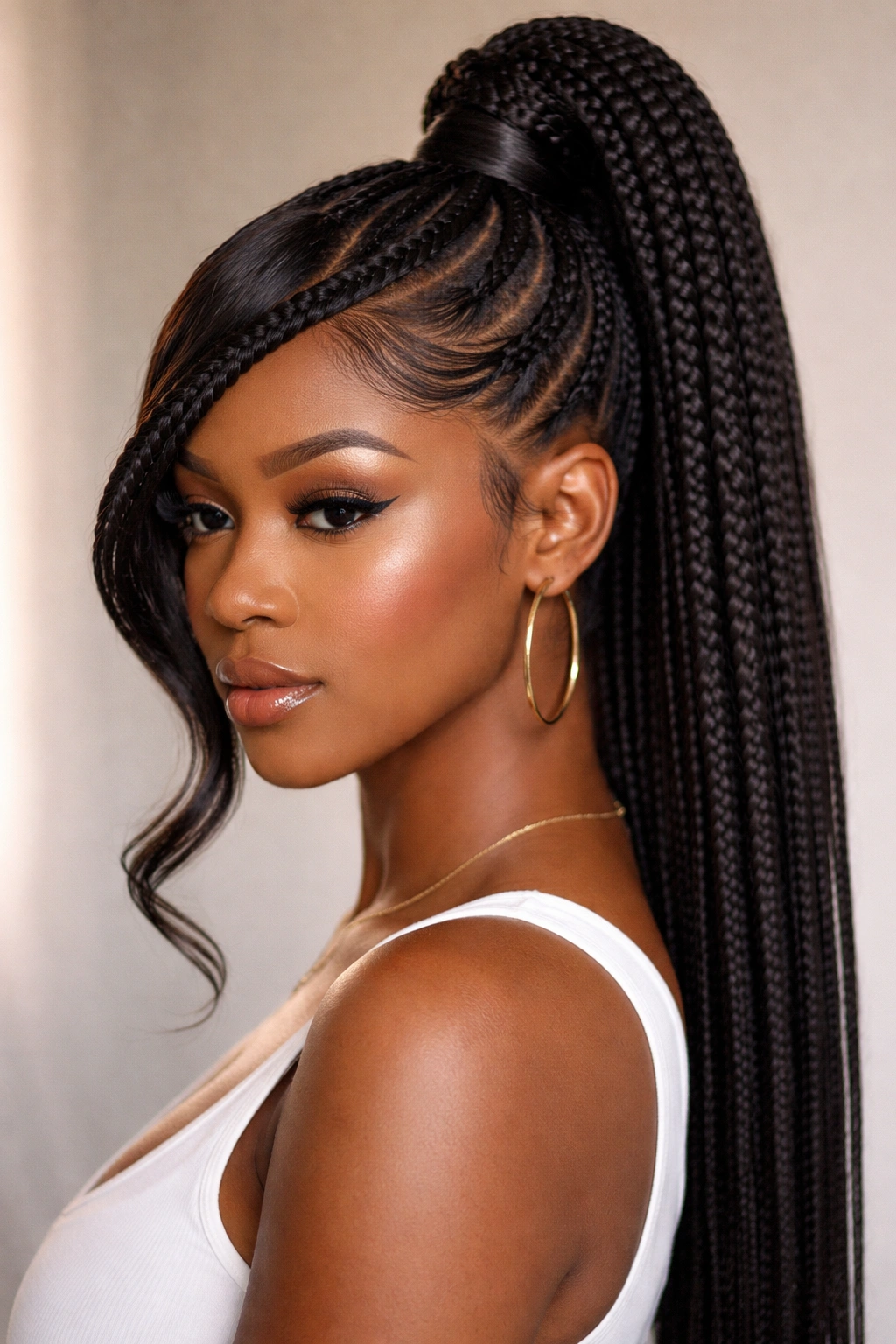
A braided swoop bang gives the ponytail a built-in frame. Instead of pulling every braid straight back, one section curves across the forehead and softens the front of the style, which can make a high ponytail feel a little more finished and less severe.
This is a nice fix when a high ponytail feels too exposed. The swoop adds shape around the face and makes the hairline look intentional, especially if you like a side angle. It also gives you a place to put a statement earring or a strong brow without the braid base competing for attention.
A good swoop should hug the head, not sit like a shelf. If it is too thick, it can make the face look boxed in. Too thin, and it disappears. That middle ground is where the style works best.
It is one of my favorite options for nights out because it gives you height, structure, and a little softness in the same look.
16. Twin Feed-In Ponytails
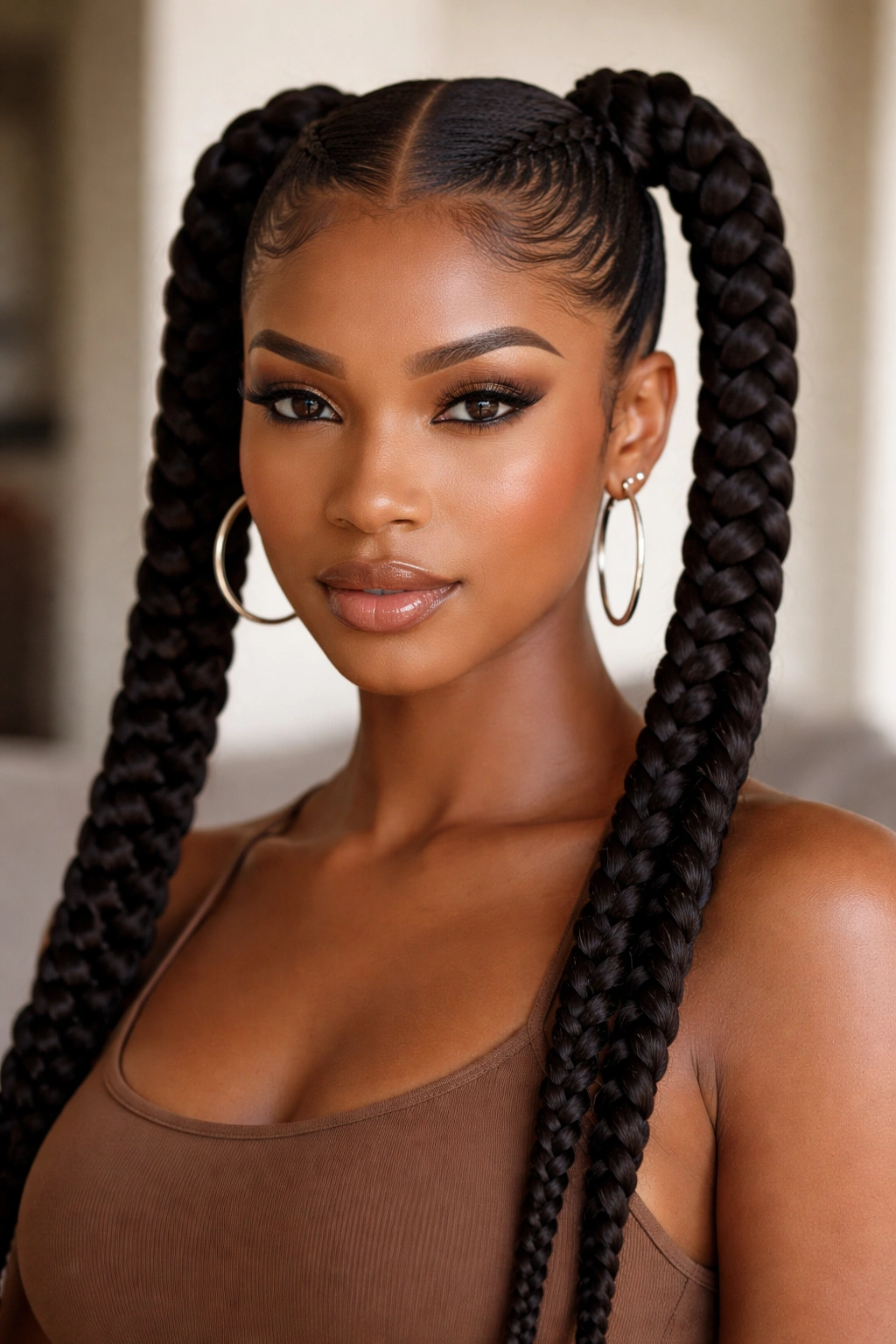
Twin ponytails are not only for teenagers. On Black women, they can look playful, sleek, and confident when the parting is clean and the braids are laid with care.
The key is proportion. Two ponytails should be balanced so they sit at the same height and carry similar weight. If one side is heavier, the whole style starts to feel lopsided, and that is hard to ignore. A center part or a neat middle section usually helps keep the symmetry honest.
This style works well when you want movement without a single heavy tail dragging down the back. It also gives you more styling freedom at the end: straight ends, curled ends, beads, cuffs, or a simple wrap. Pick one. Do not pile on everything.
Twin feed-in ponytails look especially fresh with a sharp hairline and clean parts. They are youthful, yes, but they can also be polished if the braids are tidy and the finish is controlled.
17. Layered Feed-In Ponytail With Mixed Braid Sizes
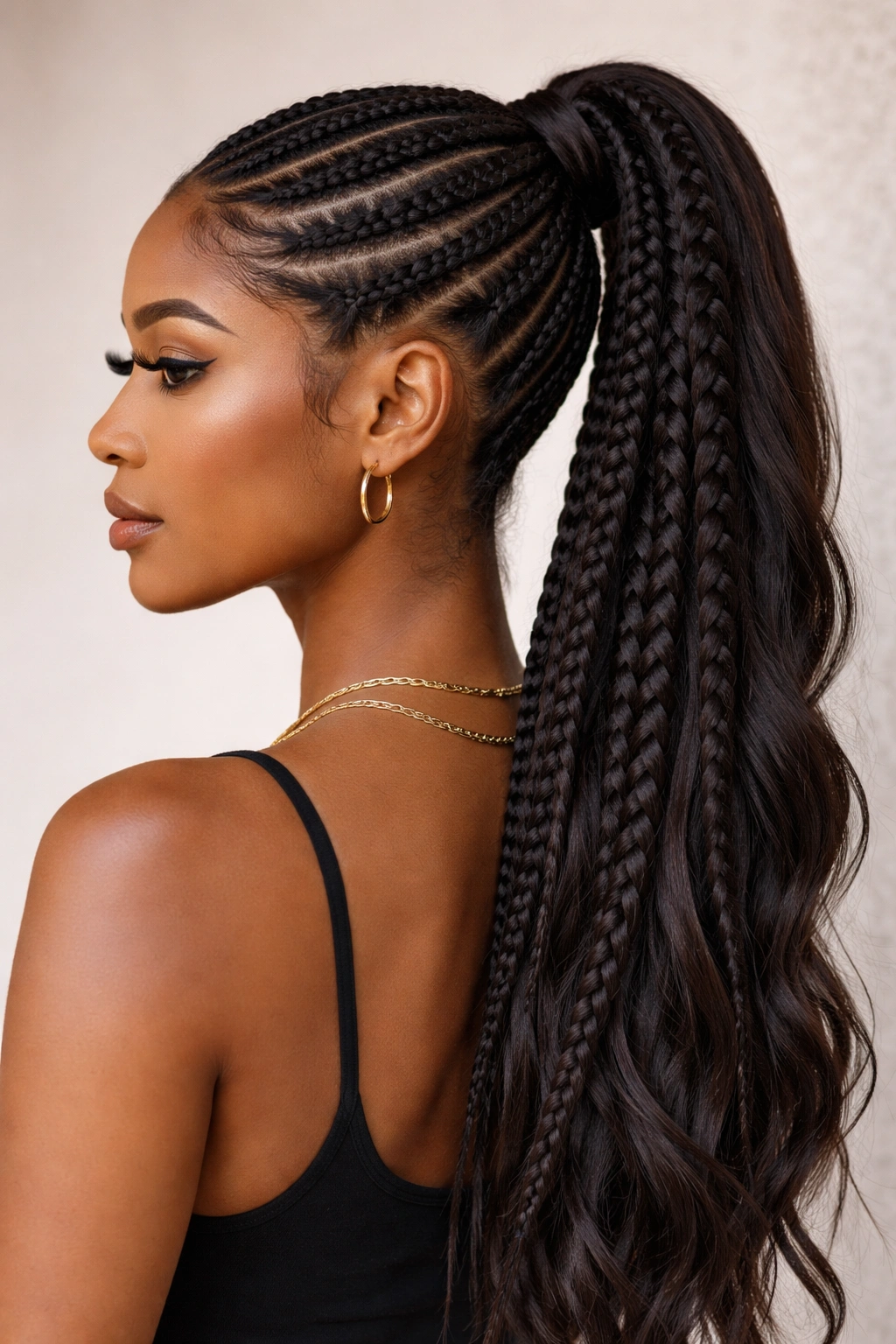
Mixing braid sizes creates depth that a uniform pattern does not always give you. A layered feed-in ponytail might use smaller braids near the part and slightly thicker ones underneath, so the style feels textured without getting chaotic.
This is a good choice when you want the ponytail to have dimension from every angle. Smaller braids bring detail to the top, while bigger sections keep the base from looking sparse. It is a practical way to make the style fuller without forcing every braid to do the same job.
Why It Looks Better in Motion
The different widths move differently. That sounds small, but it matters. When you turn your head, the braid pattern catches light in layers instead of forming one flat surface. You notice it most when the ponytail is long.
Ask your braider to keep the transitions smooth, not abrupt. The whole point is to make the size changes feel natural. When that works, the style looks custom rather than copied from a shelf.
18. Wraparound Feed-In Ponytail
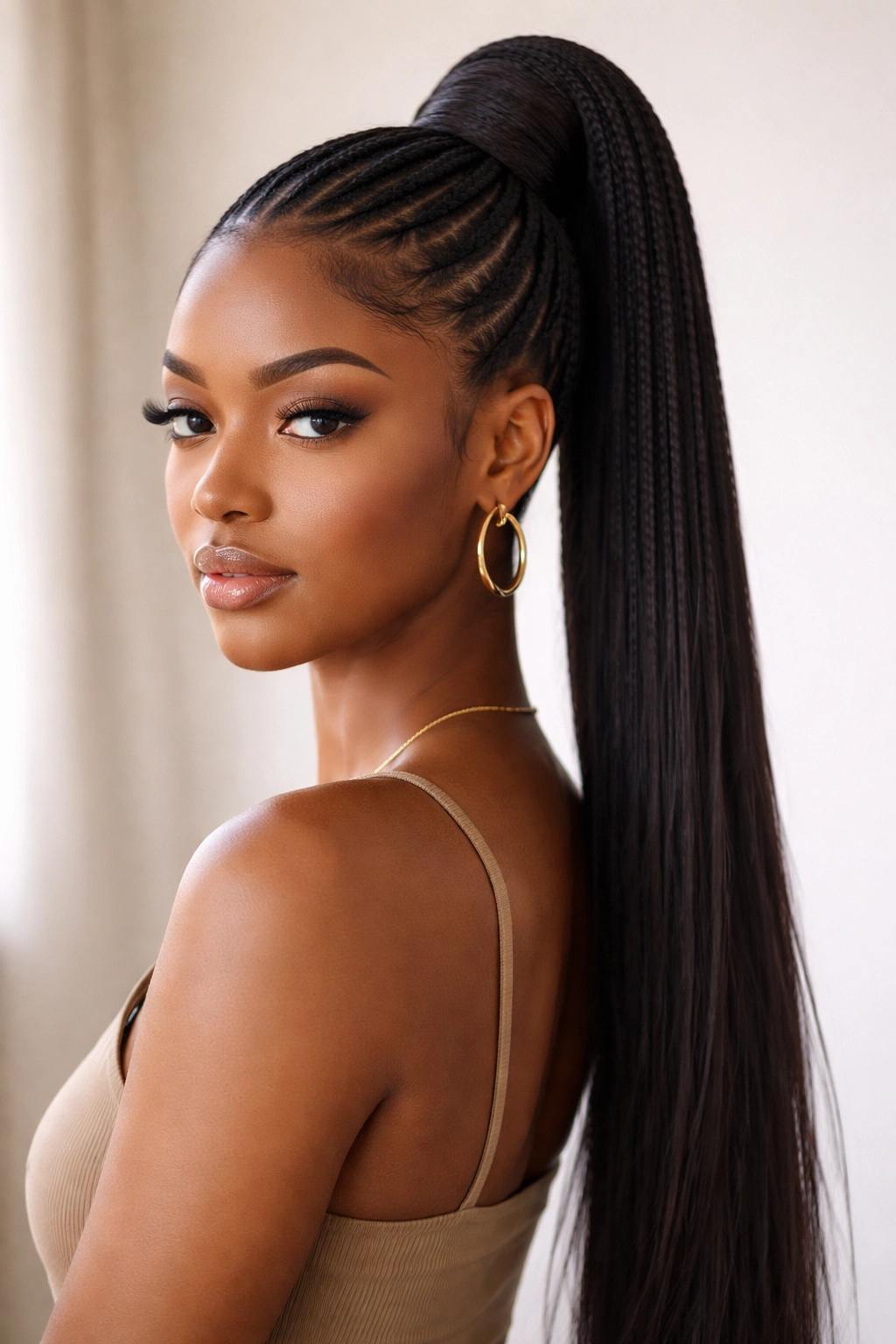
A wraparound ponytail uses one braid or a long strand of extension hair to hide the base and sometimes spiral around the length of the ponytail. It gives the style a clean finish and a little extra structure at the same time.
This is one of those details that changes how expensive a style looks. A visible elastic can cheapen a braid ponytail fast. A wrapped base, though, pulls the eye upward and makes the rest of the style feel more deliberate. That matters even when nobody says it out loud.
You can keep the wrap tight and tidy for a formal look, or let it be slightly looser if you want the ponytail to feel softer. Either way, the wrap should look purposeful. Sloppy wrapping is worse than none at all.
I like this on styles where the ponytail tail is long and smooth. The wrap acts like a frame around a painting. Simple job. Big payoff.
19. Feed-In Ponytail With Hair Cuffs and Threads
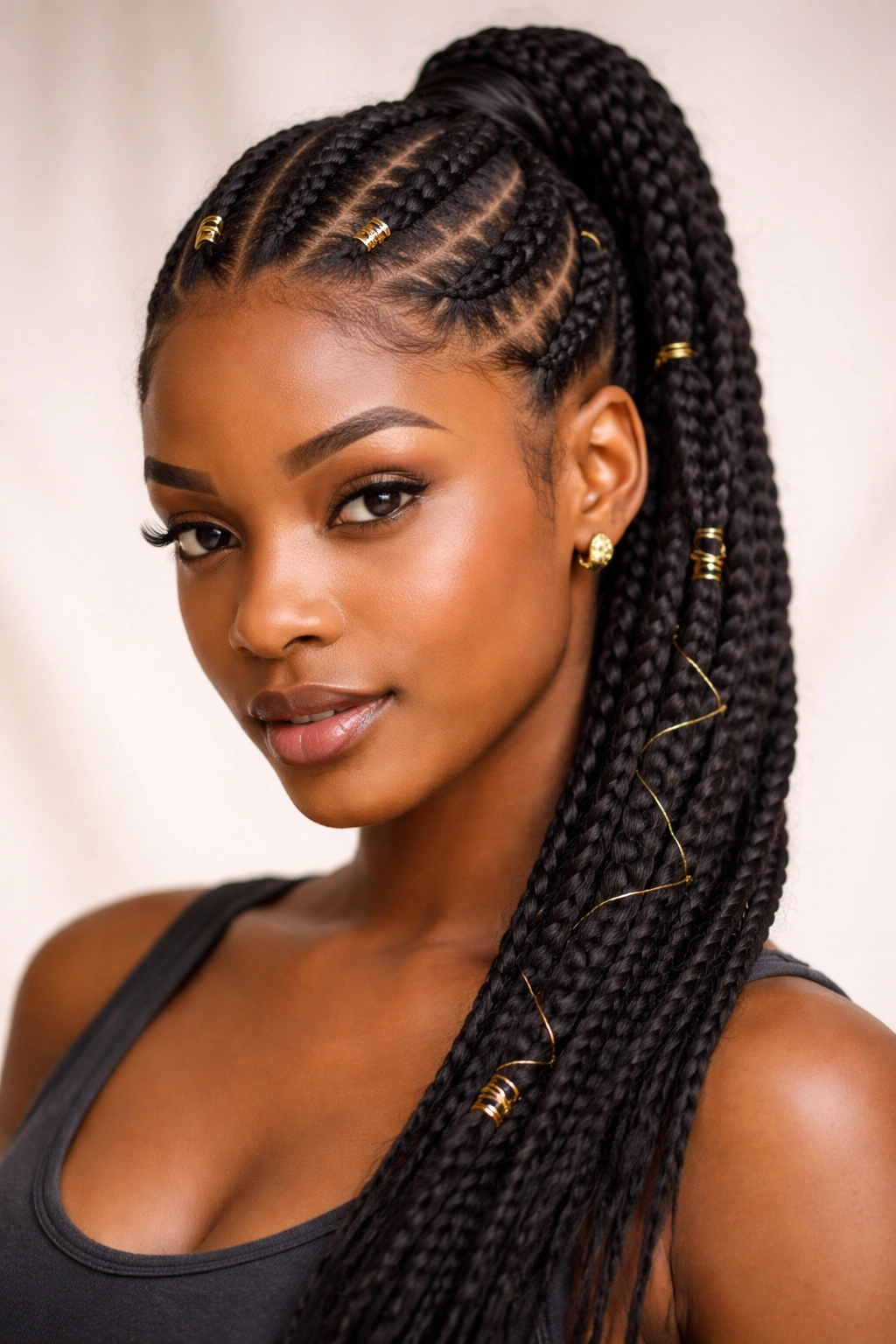
Accessories can either sharpen a style or make it look overworked. Hair cuffs and thread accents usually sharpen it, especially when they’re used with a little restraint.
The best accessory looks are the ones that echo the braid pattern. A few gold cuffs on the front braids, a strip of thread woven into one side, or a single metallic accent near the tail can be enough. You do not need ten different textures fighting for the same space.
Small Rules That Help
- Put cuffs where they can be seen from the front or side
- Keep thread colors close to the outfit or makeup palette
- Avoid crowding the ponytail base with too many pieces
- Choose lightweight pieces so they do not tug on the braids
This style is useful when the braid itself is simple and you want just a little sparkle. The accessories should feel like punctuation, not the whole paragraph.
20. Knotless-Style Feed-In Ponytail Hybrid
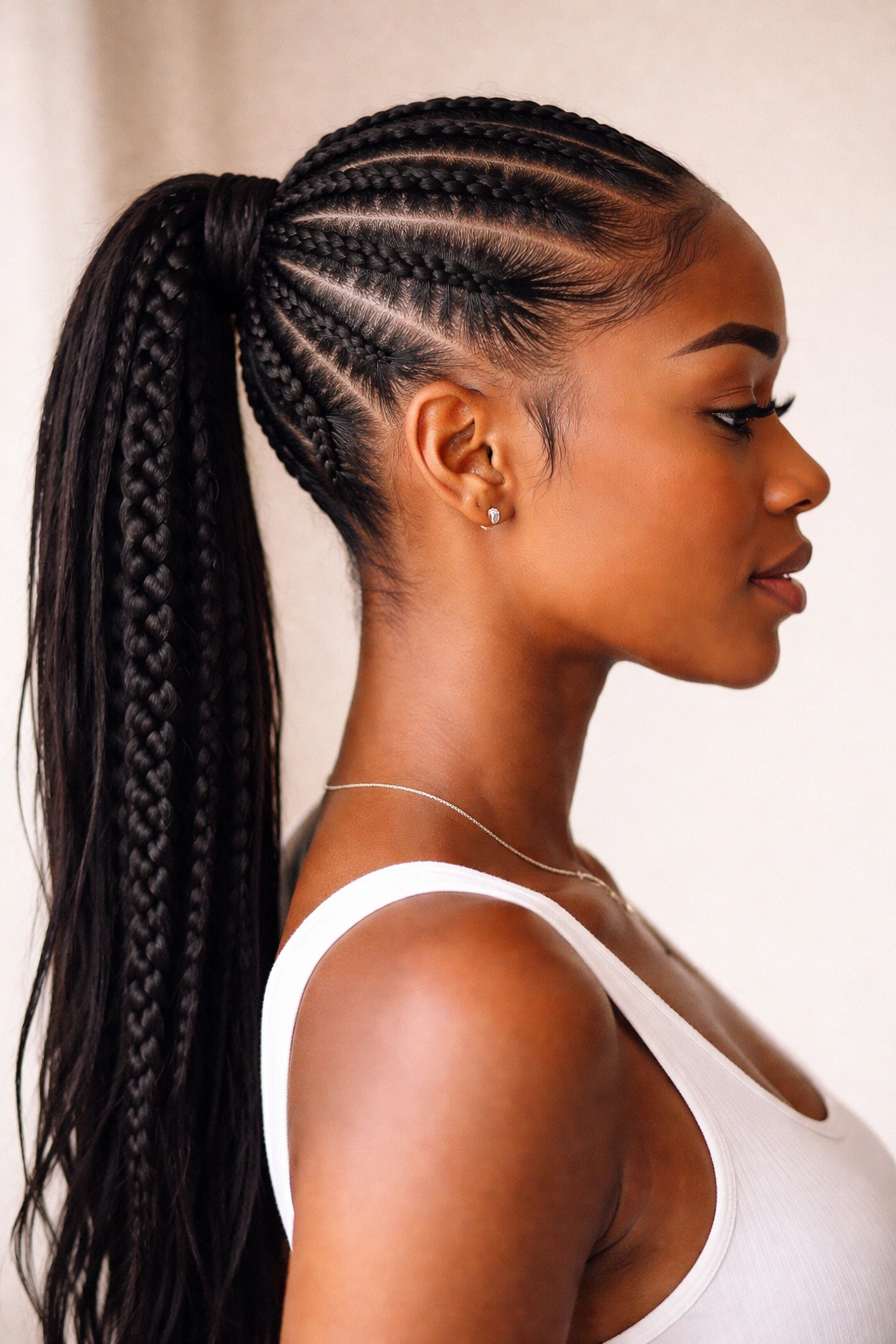
A knotless-style feed-in ponytail hybrid is a smart choice if you want a softer start at the scalp. The braids begin with less bulk at the root, then feed in gradually, which can help the front sit flatter and feel less bulky.
I like this option for people who have had enough of heavy installs. It can feel kinder around the edges, especially when the ponytail is not overloaded with extra length. The style still looks full, but the root area has a lighter touch.
The hybrid approach is useful because it borrows the smooth finish of knotless braids and the sharp shape of feed-ins. You get a braid ponytail that looks neat without feeling dense right at the hairline. That is a real difference when you wear braids often.
If you know your scalp is sensitive, ask the braider to keep the tension even from front to back. Soft at the start does not matter much if the rest of the head is pulled too hard.
21. Extra-Long Feed-In Ponytail With a Full Braided Tail
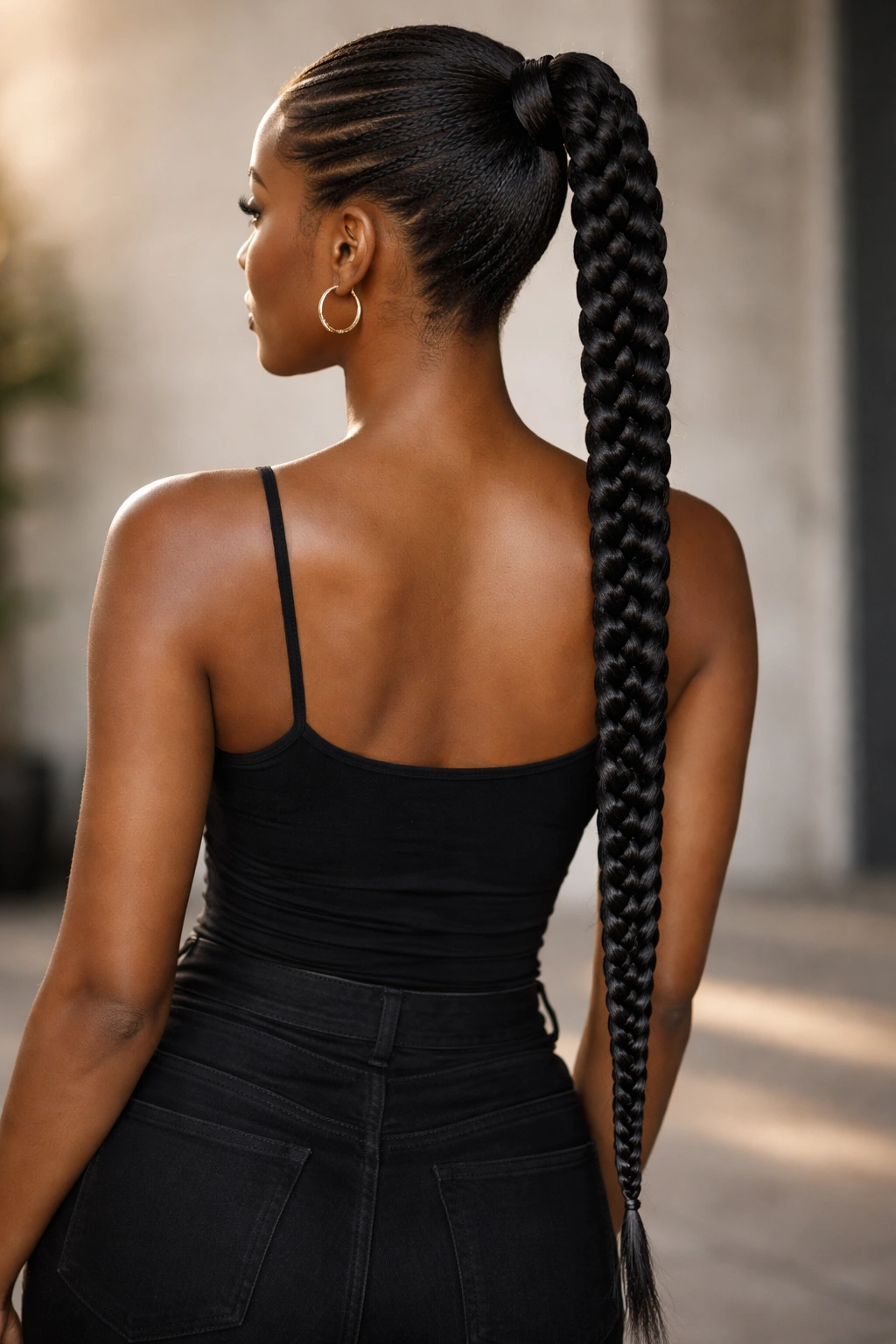
There is no subtle way to say this: long feed-in ponytails make a statement. The extra length turns the style into a shape you can feel on your back, and the tail can hang straight, curl at the ends, or stay braided all the way down.
The important thing is balance. A very long ponytail needs a strong base, or it starts feeling heavy halfway through the day. I prefer this look when the base is kept tight enough to support the length, but not so tight that it makes the scalp miserable. That part matters more than the photos.
If the tail stays braided all the way through, the style reads cleaner and tends to stay neat longer. If the ends are left loose or curled, you get more movement. Both are good. They just serve different moods.
This is the version people choose when they want the hair to become part of the outfit. It works, but it asks for maintenance. No free lunch.
22. Deep Side-Part Low Feed-In Ponytail
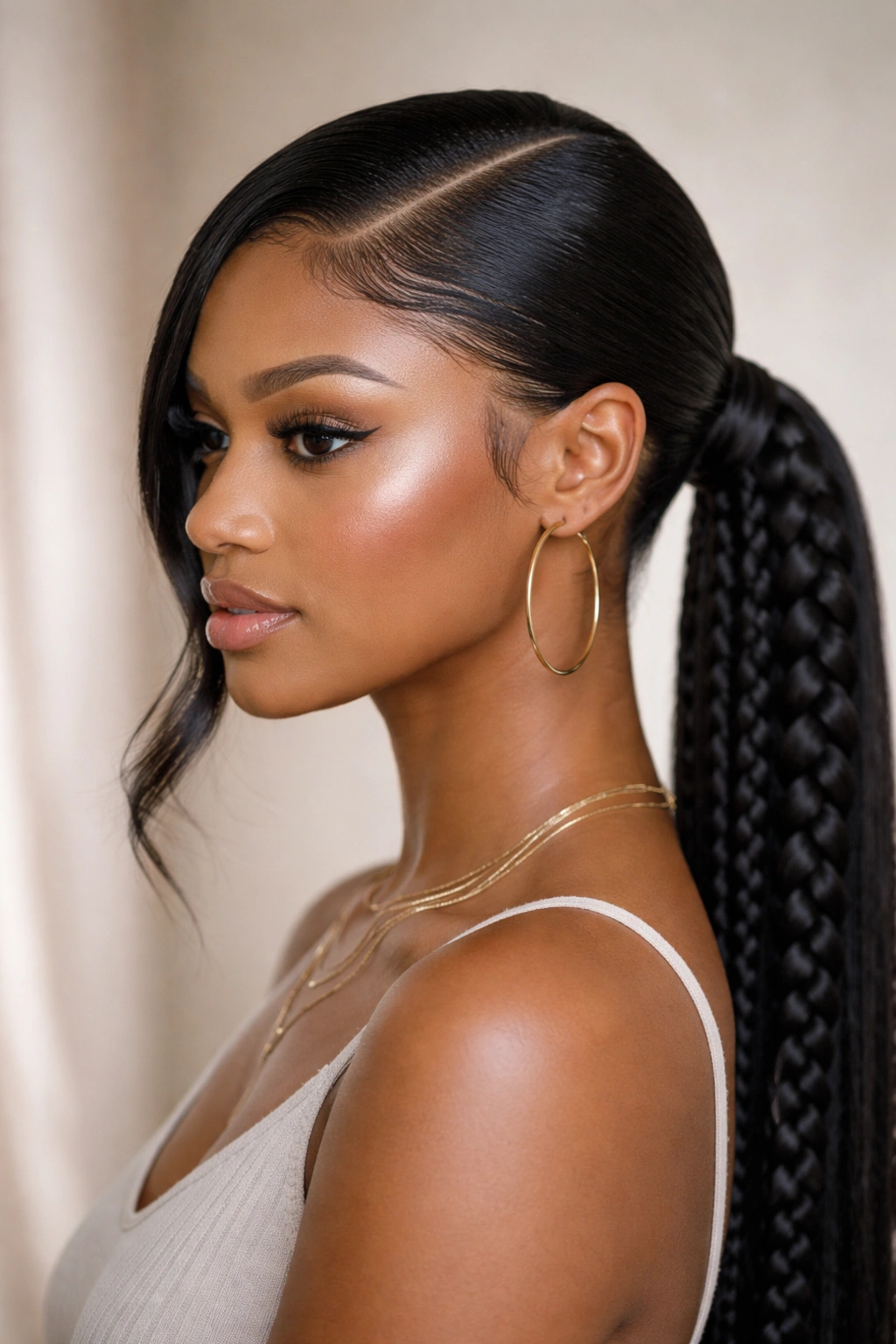
A deep side part changes the mood of a low ponytail fast. Instead of sitting square and formal, the style tilts a little, which gives the face a softer edge and makes the whole look feel more relaxed.
This version is one of my favorites for women who like low-maintenance hair that still has personality. The ponytail sits low enough to stay comfortable, but the side part stops it from fading into the background. It is the braid equivalent of a simple black dress with one sharp accessory.
The part should be deep enough to matter. A tiny off-center line barely changes anything. A real deep side part gives the front some drama and lets one side frame the cheek or jaw a little more.
If you wear glasses or strong earrings, this style plays well with both. It does not crowd the face. It gives it room.
23. Sculpted Feed-In Ponytail for Weddings and Photos
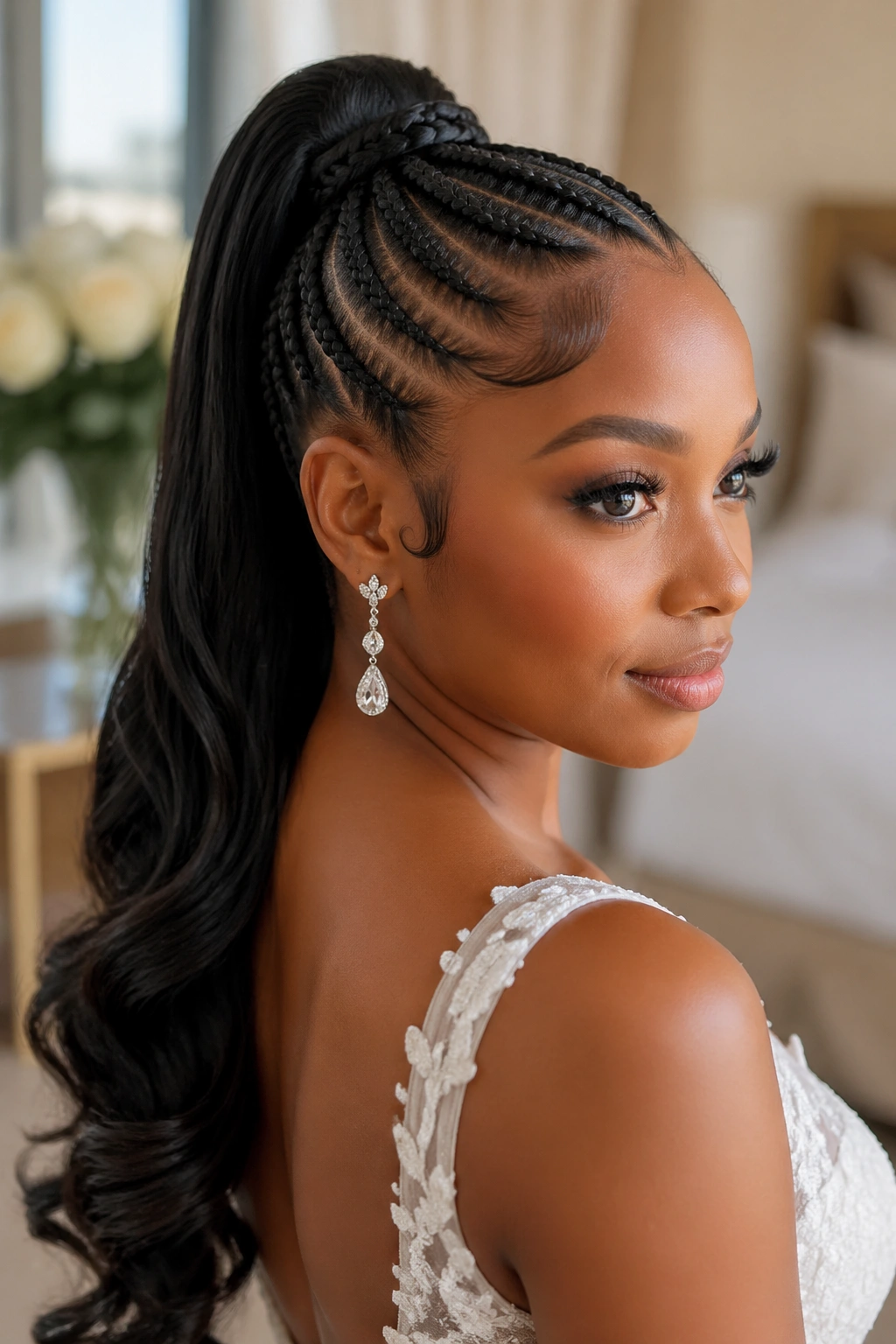
When the occasion is formal, I want the braid work to look deliberate from every angle. A sculpted feed-in ponytail does that well because the parts can curve, cross, and taper in a way that looks planned instead of casual.
This is the style for a wedding, an important dinner, graduation photos, or any day when you want the hair to hold its shape in person and in pictures. The best version usually combines a clean front, a strong ponytail base, and one or two details—maybe a wrapped base, maybe a swoop, maybe a bit of color—but not so many that the design starts crowding itself.
A good sculpted ponytail should feel balanced when you look at it from the side. The front, crown, and tail need to work together. If one part is too busy, the whole style loses its line. That is the real difference between “done” and well done.
For Black women who want a braid ponytail that can carry makeup, jewelry, and a formal outfit without getting lost in the noise, this is the one I’d trust first.