



A ponytail can be the plainest hairstyle in the room, or the one people remember when they’re halfway home. The difference usually comes down to shape, tension, shine, and where the hair sits on the head. A bold statement doesn’t need three different accessories fighting for attention; often, it needs one clean idea executed well.
That’s why edgy ponytails keep showing up in salons, backstage chairs, and real-life mirror selfies. They work because they change the mood fast. A high ponytail can read sharp and lifted, while a low ponytail with a hard part and glossy finish feels sleek in a colder, more deliberate way. Add a braid, a wrapped base, a crimp, or a bit of exposed texture, and the whole thing shifts.
What I like about ponytail hairstyles like these is that they’re not fussy for the sake of it. They still need good prep, and yes, a smooth brush hand helps, but they don’t demand a full architectural masterpiece every time. They’re the sort of styles that can look expensive with a few smart moves — and look flat if you skip those moves. That’s the real game here.
1. Sleek High Ponytail with a Sharp Center Part
A high ponytail with a dead-straight center part is one of those styles that looks simple until you actually do it well. Then it looks razor clean. The hair sits tight at the crown, the part runs straight through the middle, and the whole effect gives strong cheekbone energy without needing much else.
The trick is control. Use a fine-tooth comb, a light gel or styling cream, and a brush that can smooth the hair without puffing it up at the roots. If you have flyaways, press them down before you tie the tail. After that, wrap a small strand of hair around the elastic so the base looks finished instead of practical.
This style suits straight, wavy, and relaxed hair especially well because the clean part has room to show. If your hair is very layered, a little serum on the ends helps stop the tail from looking frayed by noon. Tight, tall, and polished. That’s the whole point.
2. Bubble Ponytail with Tight, Clean Sections
Why does a bubble ponytail look edgy instead of cute? Because the spacing does the heavy lifting. The sections need to be puffed evenly, the elastics need to sit straight, and the top of the style needs enough shine to keep it from drifting into school-run territory.
How to Place the Elastics
Start with one sleek base ponytail, then add clear elastics every 2 to 3 inches down the length. Gently tug each section outward until it forms a rounded “bubble.” Don’t make them all the same size if you want a stronger shape; slightly uneven bubbles look more alive and less copied from a tutorial screenshot.
This works best on medium to long hair, though extensions make it easier if your natural length stops short of the mid-back mark. A little texture spray on the tail helps the bubbles hold their shape. The clean root and the segmented length give the look its edge.
3. Braided Base Ponytail with One Thick Plait
Picture this: the front is pulled tight, the crown has a little lift, and one thick braid runs down into a ponytail like it belongs there. That’s a strong look. It has structure on top and movement through the tail, which keeps it from feeling too neat.
What makes it work
- A Dutch braid or cornrow along the hairline adds grip.
- The ponytail sits at mid-height so the braid can stay visible.
- A matte paste on the braid keeps the pattern crisp.
- A small wrapped section at the base hides the elastic cleanly.
I like this style for anyone who wants edge without the “I tried too hard” feeling. It’s especially good with layered hair because the braid holds the shorter pieces in place. If you want a little roughness, pull a few tiny pieces loose near the temples and leave them there. Not every edgy ponytail needs mirror shine.
4. Wet-Look Low Ponytail
The wet-look low ponytail is blunt in the best way. It sits close to the head, shines under light, and looks a little cooler than a standard sleek ponytail because it refuses to be soft. The finish should look damp and sculpted, not greasy or heavy.
Use a strong-hold gel at the roots, then smooth a shine cream through the top section before brushing everything back. A rat-tail comb helps create a neat part, but you can skip one if you want a more face-lifted shape. The tail itself can stay straight or be softly waved at the ends; both work.
This style is perfect when you want the outfit to do some of the talking. It pairs especially well with sharp necklines and earrings that move. Keep the crown tight, keep the sides flat, and don’t overload the hair with product. Less is more here, which sounds boring until you see how clean it looks.
5. Faux Hawk Ponytail
A faux hawk ponytail changes the whole silhouette of the head. The sides get slicked down or braided close, the center section gets pushed up for height, and the tail drops from the back like an exclamation point. It’s a little dramatic. Good.
What Gives It That Fierce Shape
The height at the crown matters more than the tail length. Tease the middle section lightly, then smooth only the outer layer so the lift stays hidden under a cleaner surface. If you’re working with thick or curly hair, a strong gel and a firm brush help keep the side panels under control without flattening the whole style.
This is one of the best edgy ponytails for concerts, photo nights, and anyone who likes hair with a bit of attitude. It also plays well with undercuts because the contrast is built in. The style should look deliberate from every angle, not just the front.
6. Side-Swept Ponytail with a Deep Part
Unlike a standard side ponytail, this one leans into asymmetry. The part is deep, the weight shifts over one shoulder, and the ponytail sits low enough to look intentional instead of rushed. That tilt gives the style its bite.
A side-swept ponytail is best when you want movement around the face but still want the back to feel polished. Use a flat iron on the front pieces if your hair tends to collapse, then pin the heavier side low so it stays where you place it. A little volume at the crown keeps the style from dragging your features down.
Best for soft waves, longer layers, and anyone who likes their edgy ponytail a little less severe. I’d choose this over a blunt center-part look when the outfit already has strong lines. Let the hair lean. It does enough.
7. Cornrow-to-Ponytail Hybrid
A cornrow base feeding into a ponytail has a very specific kind of confidence. It looks precise at the scalp, then opens up into length and movement at the tail. That contrast is what makes it feel sharp instead of decorative.
Use 2 to 6 cornrows depending on the amount of detail you want. Smaller braids create a tighter, more graphic look, while bigger rows are faster and easier on the scalp. The tail can be straight, curly, or even braided again. I’ve always thought the style works best when the braid pattern is visible for at least a few inches before the ponytail begins.
If your scalp is sensitive, keep the tension even and don’t yank the braids too tight at the edges. You want clean lines, not a headache. That part matters more than people admit.
8. Teased High Ponytail with Loose Ends
Some ponytails need polish. This one needs height and a little mess. The crown is teased enough to lift the profile, the hair is gathered high, and the ends stay loose, soft, and slightly undone. It reads edgy because it refuses to be neat all the way through.
Backcomb the top section in small layers, then smooth only the visible surface so the volume holds. A dry texture spray gives the tail grip without turning it stiff. If your ends are blunt, they’ll fall in a stronger line; if they’re layered, the movement looks more casual.
This style is good for thinner hair that wants a bigger silhouette, though it works on thick hair too. Just don’t tease the life out of it. The goal is lifted crown, not a helmet.
9. Rope-Braided Ponytail
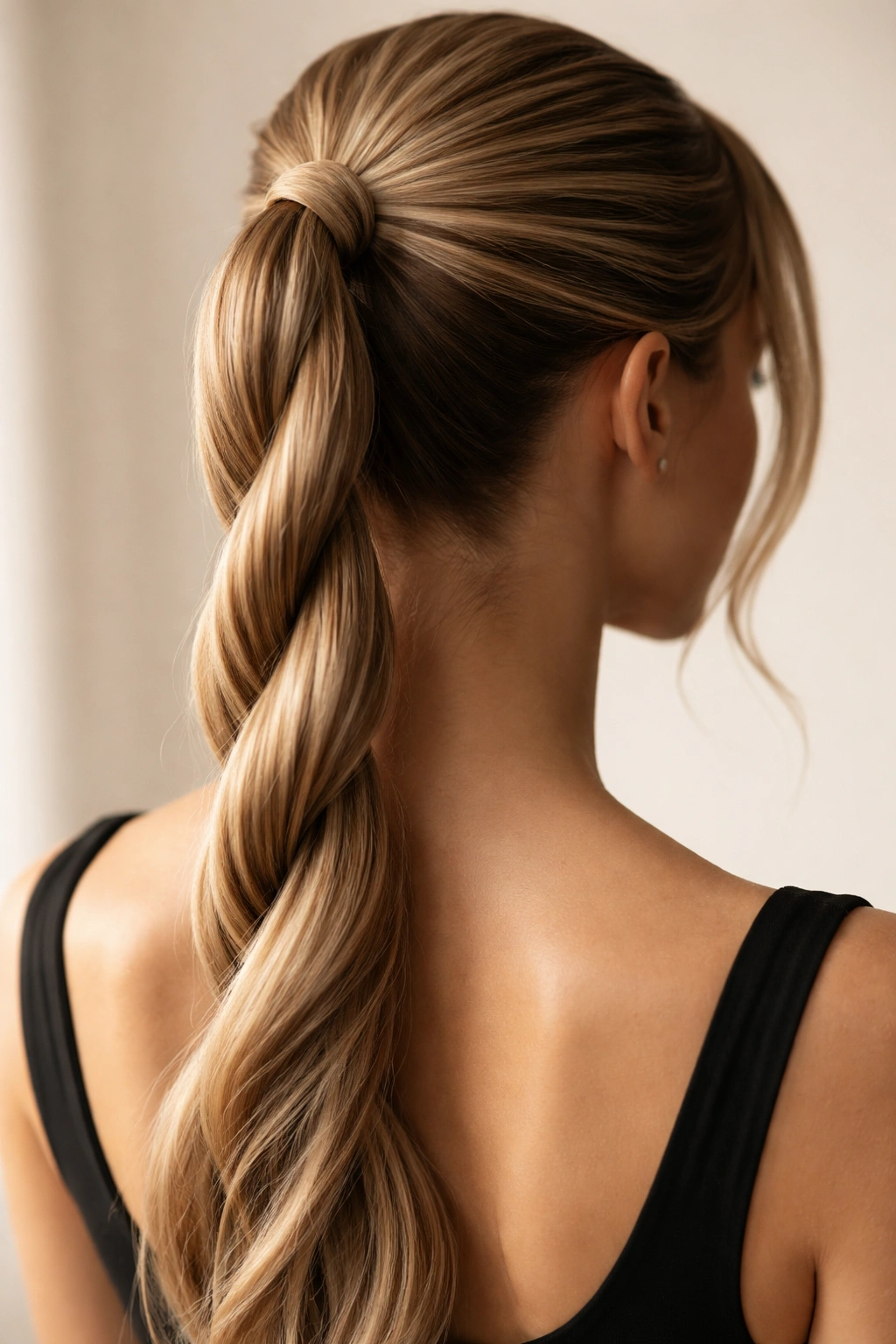
Want texture without committing to a full braid? A rope-braided ponytail gives you that twisty, almost sculpted look with less fuss. The tail is divided into two sections, twisted in the same direction, then wrapped around each other in the opposite direction so it holds together.
How to Keep It Clean
Start with a ponytail that’s already secured tightly at the base. If the root area is loose, the whole style starts to look messy in a bad way. Work a little cream through the length before twisting so the pieces don’t fray apart, especially if your hair is layered.
The rope braid is a nice option for medium-length hair because it gives the illusion of more shape than there actually is. If you like a glossy finish, pull the twists snug and smooth the surface with your palms. If you want grit, keep the texture rougher and let a few ends stick out.
10. Face-Framing Ponytail with Long Tendrils
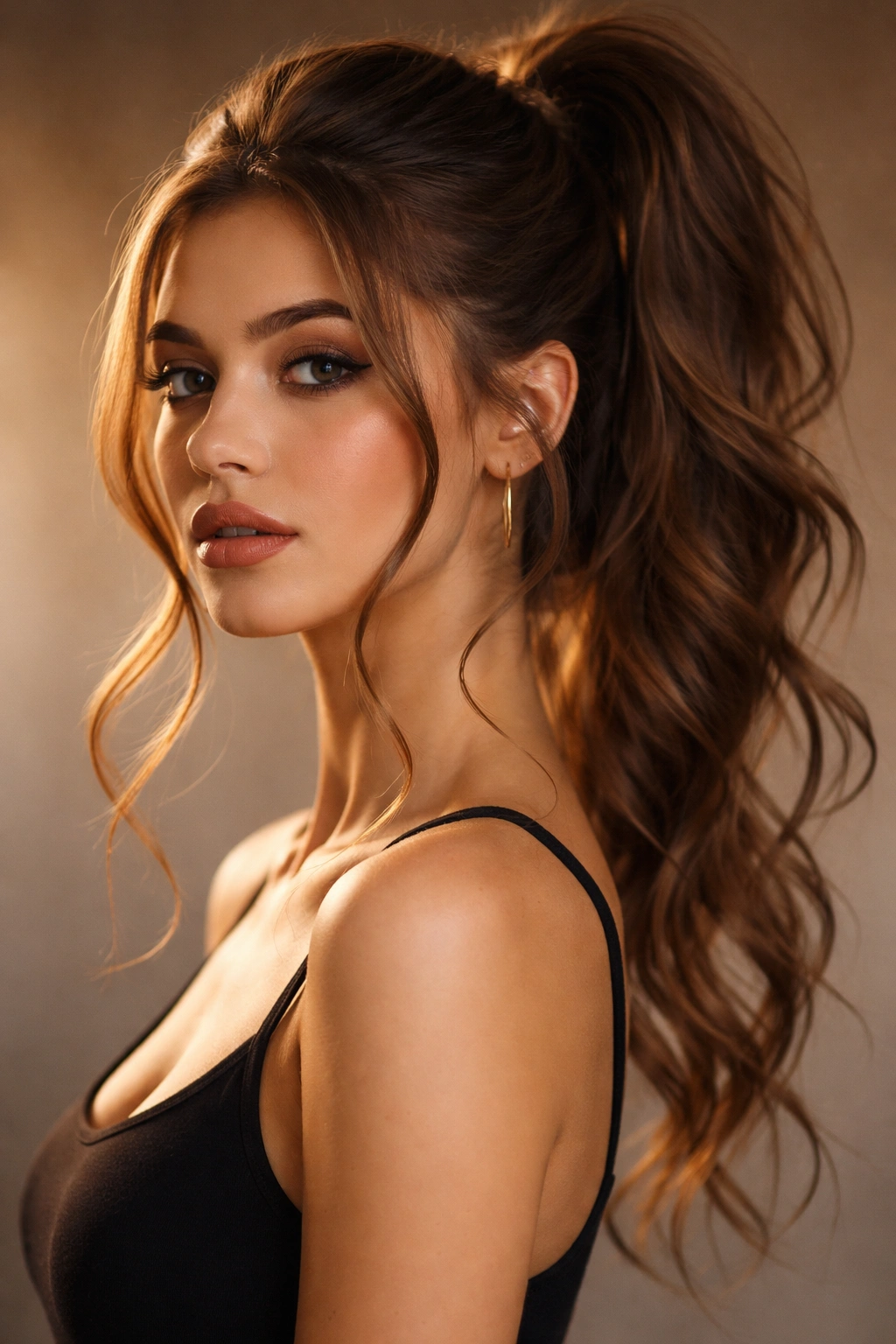
A ponytail with long tendrils around the face changes the mood fast. Suddenly the style feels less strict, a little more cinematic, and much better for a night when you want your hair to move. The ponytail itself can be sleek or textured; the front pieces do the softening.
Keep the tendrils intentional. That means choosing the right width — usually about half an inch to an inch on each side — and curling or flat-ironing them so they fall where you want, not wherever gravity decides. Too many loose pieces and the whole thing turns messy. Too few and you lose the effect.
This is one of the easiest ways to make a bold ponytail feel wearable. It gives you shape around the jawline, which matters more than most people think. Small detail. Big payoff.
11. Undercut-Showcase Ponytail
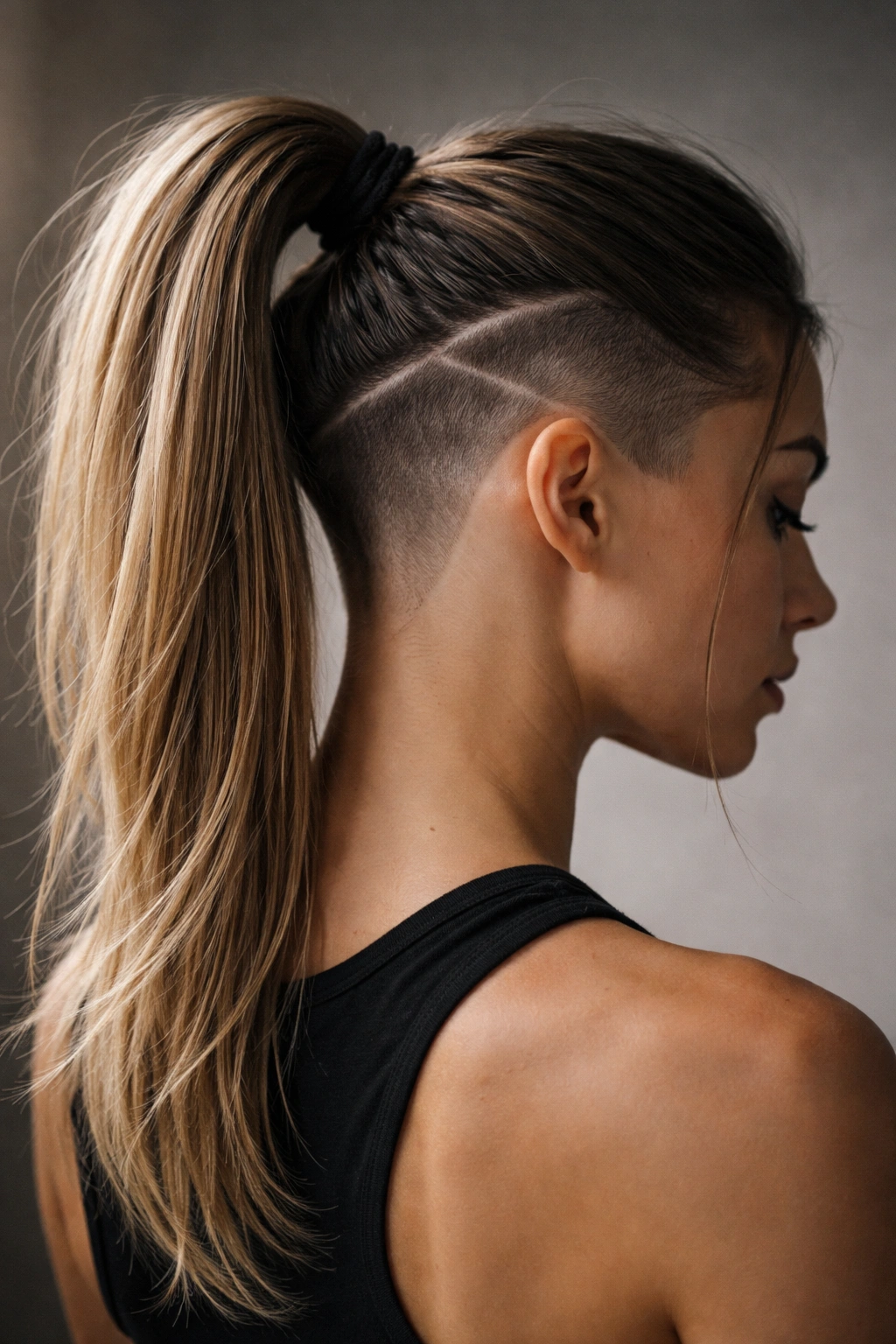
An undercut and a ponytail are a strong pair because one removes bulk while the other keeps the drama. The hair pulled back exposes the shaved or closely cropped section, which makes the style feel sharper the second you turn your head.
Why It Stands Out
The ponytail can sit high, low, or somewhere in the middle, but the undercut changes the whole read. If you want the design to show, keep the hair lifted away from that section rather than letting it drape over it. If the undercut has line work or a faded edge, a clean part will frame it better than a messy one.
This style is best for people who like contrast and don’t mind a little maintenance between trims. The exposed section needs upkeep or the shape loses its punch. Not a problem. Just part of the deal.
12. Crimped Ponytail
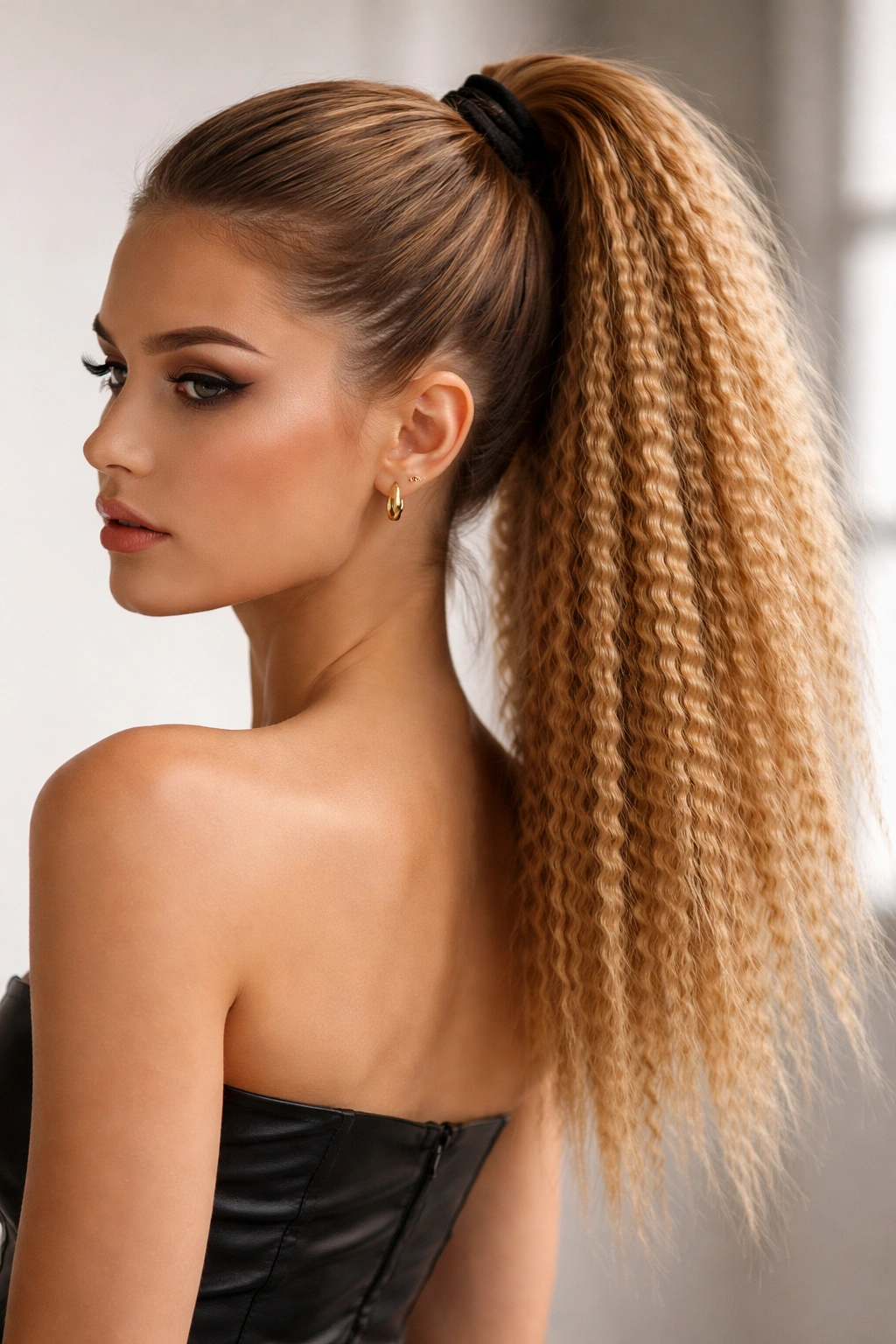
Crimping is one of those texture tricks that never really disappears. In a ponytail, it turns the tail itself into the main event. Instead of smooth movement, you get ridged volume and a kind of built-in edge that feels a little retro, a little punk, and not at all boring.
Work with heat protection first, always. Then crimp the tail in small sections, letting the texture stay visible from root to end. If the hair is too soft, the crimp can fall flat fast, so a light mousse at the roots helps the shape last longer. Don’t iron the life out of it afterward; that ruins the point.
I like crimped ponytails for people who want texture without curls. They photograph with more interest, and they feel fuller than a straight tail. The look is loud enough on its own.
13. Half-Up Ponytail with a Lifted Crown
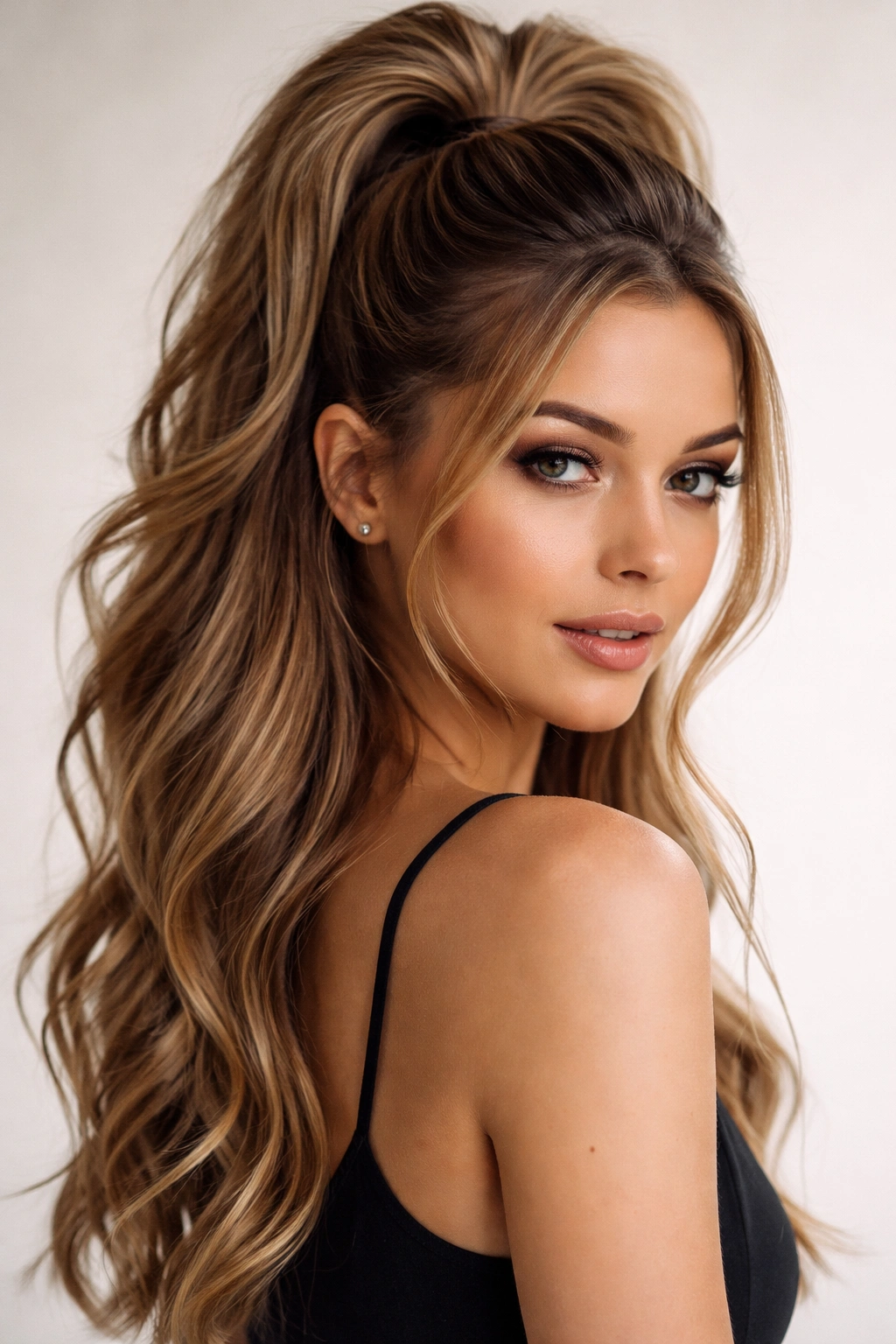
A half-up ponytail carries a different kind of edge. It leaves length down, which keeps the style from feeling severe, but the lifted crown gives it enough attitude to stand apart from a simple half-up look. It’s a good middle ground when you want shape without full commitment.
The crown matters most here. Tease it lightly or rough up the roots with texture spray before gathering the top half back. If the top section sits too flat, the style looks polite. If it rises a little and the ends stay airy, the whole thing feels more alive.
This works especially well on layered cuts and wavy hair because the lower section keeps moving. For straight hair, a few loose bends through the bottom layer help. Clean top, loose bottom. Easy formula.
14. Wrapped Scarf Ponytail
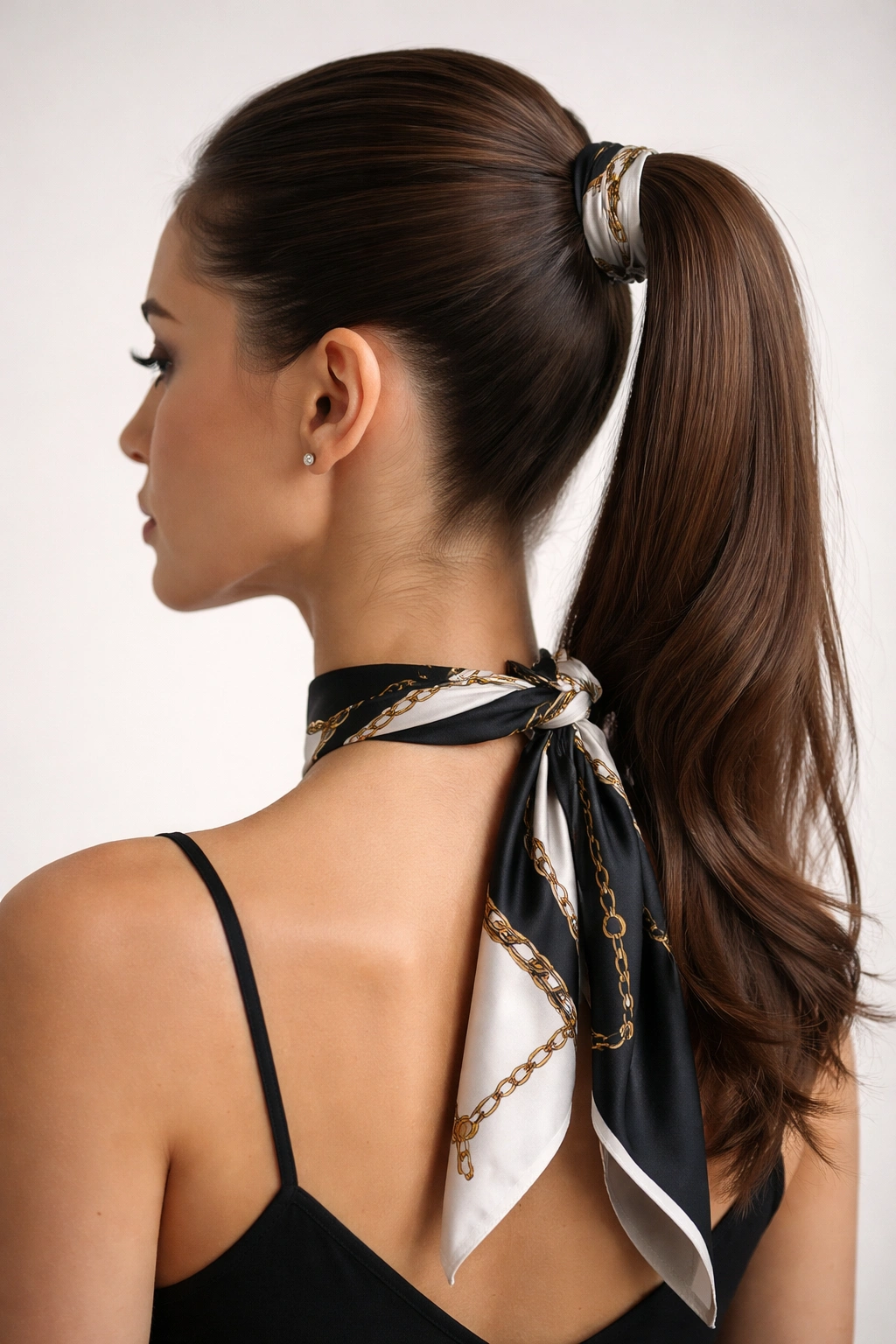
A scarf tied into a ponytail can go from sweet to sharp depending on the fabric and how you place it. A silk scarf feels softer; a black or leather-look scarf makes the whole style land harder. The ponytail should still be secure underneath so the accessory looks like a choice, not a rescue.
A few details make the difference:
- Tie the ponytail first, then attach the scarf so it sits flat.
- Keep the knot off-center for a more modern shape.
- Choose a scarf that’s narrow enough to wrap once or twice without bunching.
- Let the ends fall unevenly if you want more movement.
I’d use this look when the outfit needs one extra visual line. It works with jackets, boots, and strong makeup because the scarf adds a little motion around the neck and shoulder line. Small thing. Big attitude.
15. Double Ponytail Stacked for Extra Height
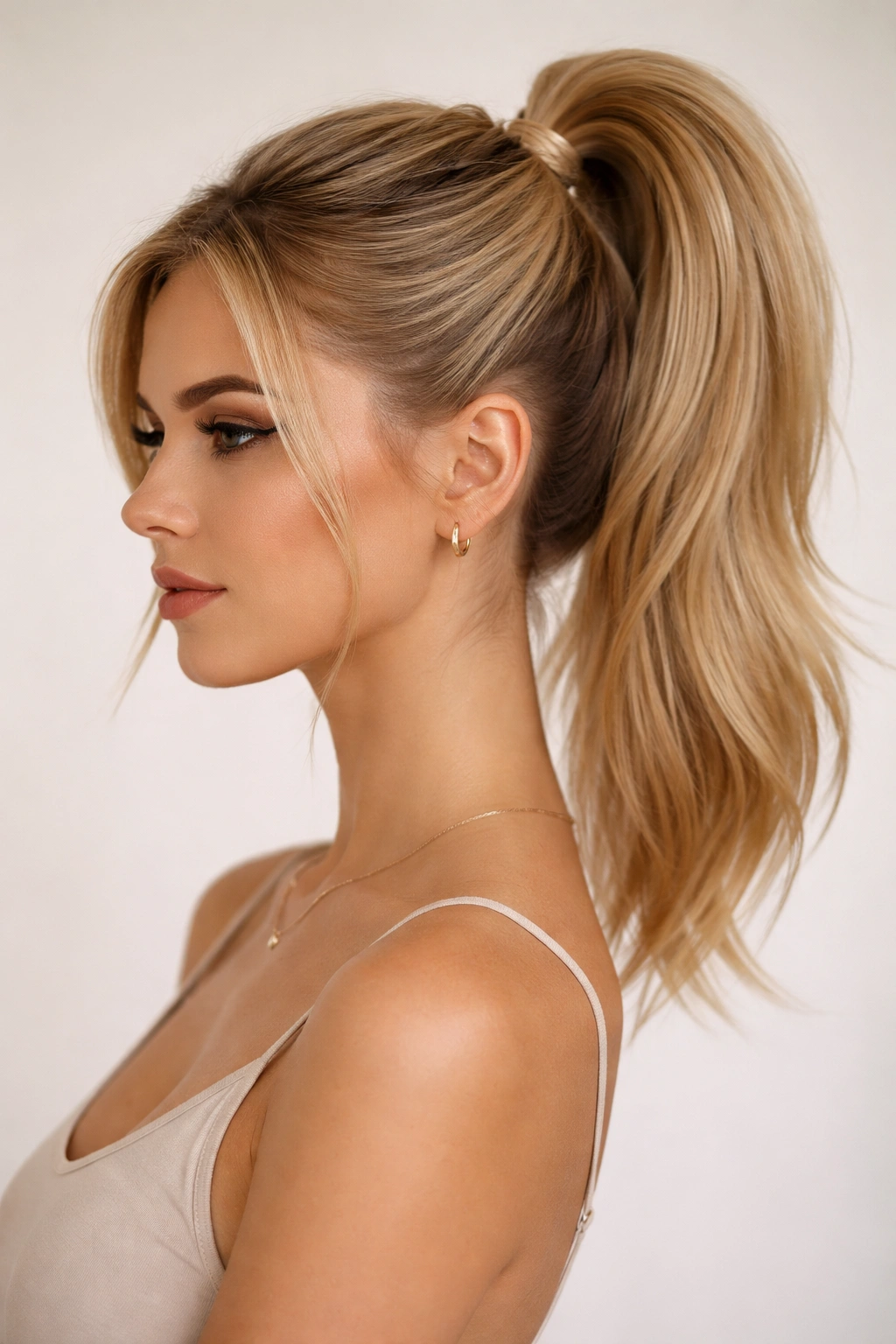
Can two ponytails look edgy? Absolutely, if you hide the trick. The lower ponytail gives support, the upper ponytail gives height, and the combined shape reads fuller than a single tail ever could. It’s especially handy when you want long, lifted hair without frying the roots with too much teasing.
Start with a top section at the crown and secure it first. Then gather the remaining hair just below it and tie the second ponytail so it blends into the first. Brush the top layer down over the lower elastic. From the front, it just looks tall and dramatic. From the side, it looks even better.
This is one of those old salon tricks that still works because it solves a real problem: flat ponytails. If your hair is fine or shoulder-length, it gives you more shape without depending on extensions. That alone makes it worth knowing.
16. Twisted Side Ponytail with a Low Anchor
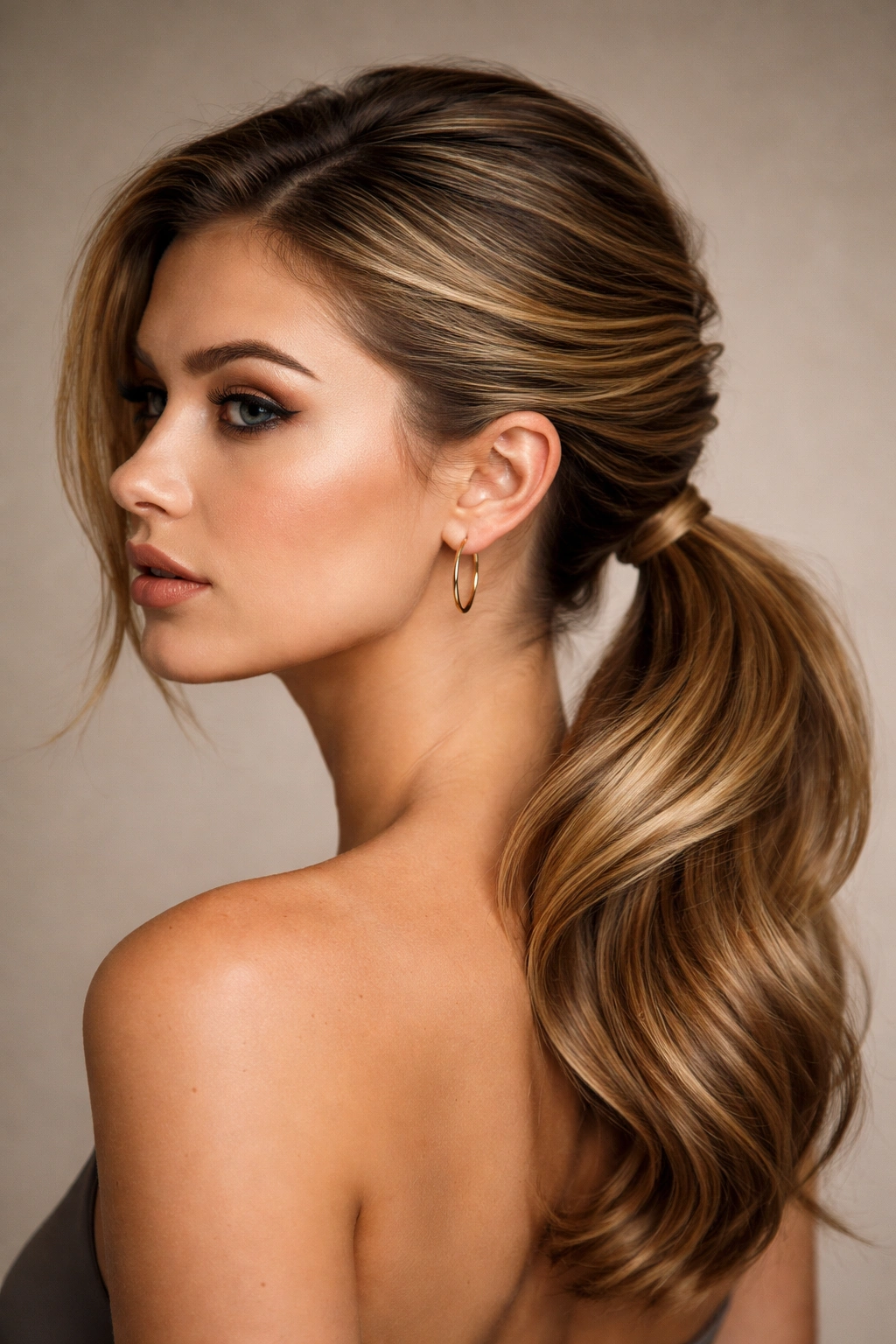
A side ponytail doesn’t have to look soft. Twist the front sections back tightly, anchor the ponytail low behind one ear, and the style takes on a cleaner, more sculpted feel. The asymmetry keeps it interesting, while the twists give the front some grip.
The pieces near the temples should be smoothed enough to hold their line but not so slick that they lose shape. A little wax on the fingertips helps tame the surface before you twist. After the ponytail is secured, you can lightly tug at the crown for a small bit of lift. Not much. Just enough to keep the style from flattening.
This one is good for medium-length hair and anyone who likes hair that follows the shape of the face. It’s quiet at first glance, then sharper the longer you look.
17. Braided Mohawk Ponytail
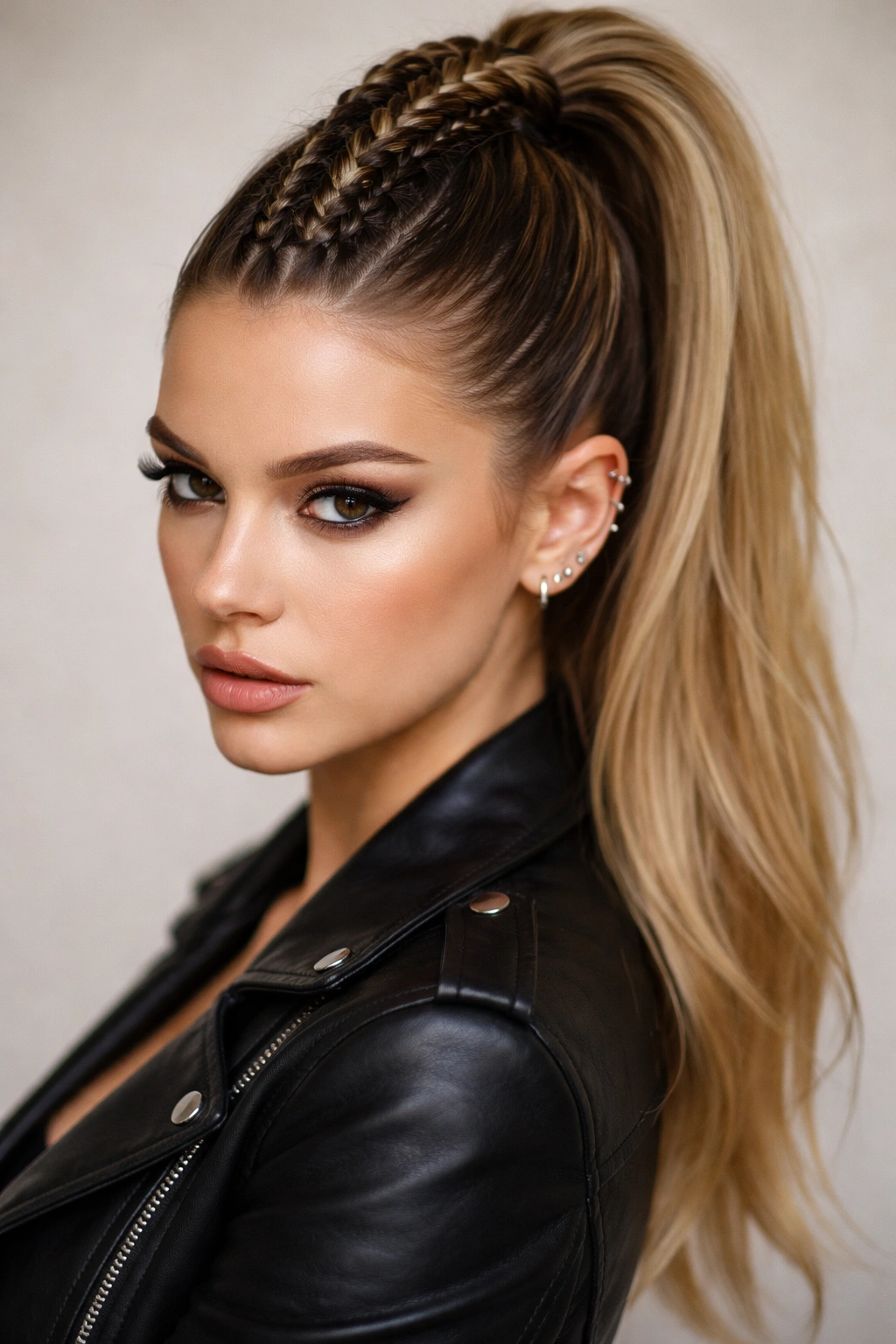
If a faux hawk is the intro, this is the louder follow-up. A braided mohawk ponytail runs the center of the head in a raised braid or a series of braids, then gathers the remaining hair into a ponytail at the back. The whole look is built on contrast: tight sides, raised middle, loose length.
How to Keep the Braid Raised
Use a braid pattern that sits on top of the hair rather than sinking into it. Dutch braids and tight reverse braids do this well. If the braid collapses, the style loses its mohawk feel and starts looking ordinary. A bit of backcombing underneath can help the ridge stay up.
This works beautifully for thick hair, but finer hair can handle it with a little texture spray and strong pins. You do need patience. Braided mohawks take more time than a basic ponytail, and that’s fine. Some styles should feel earned.
18. Sleek Ponytail with Blunt Ends
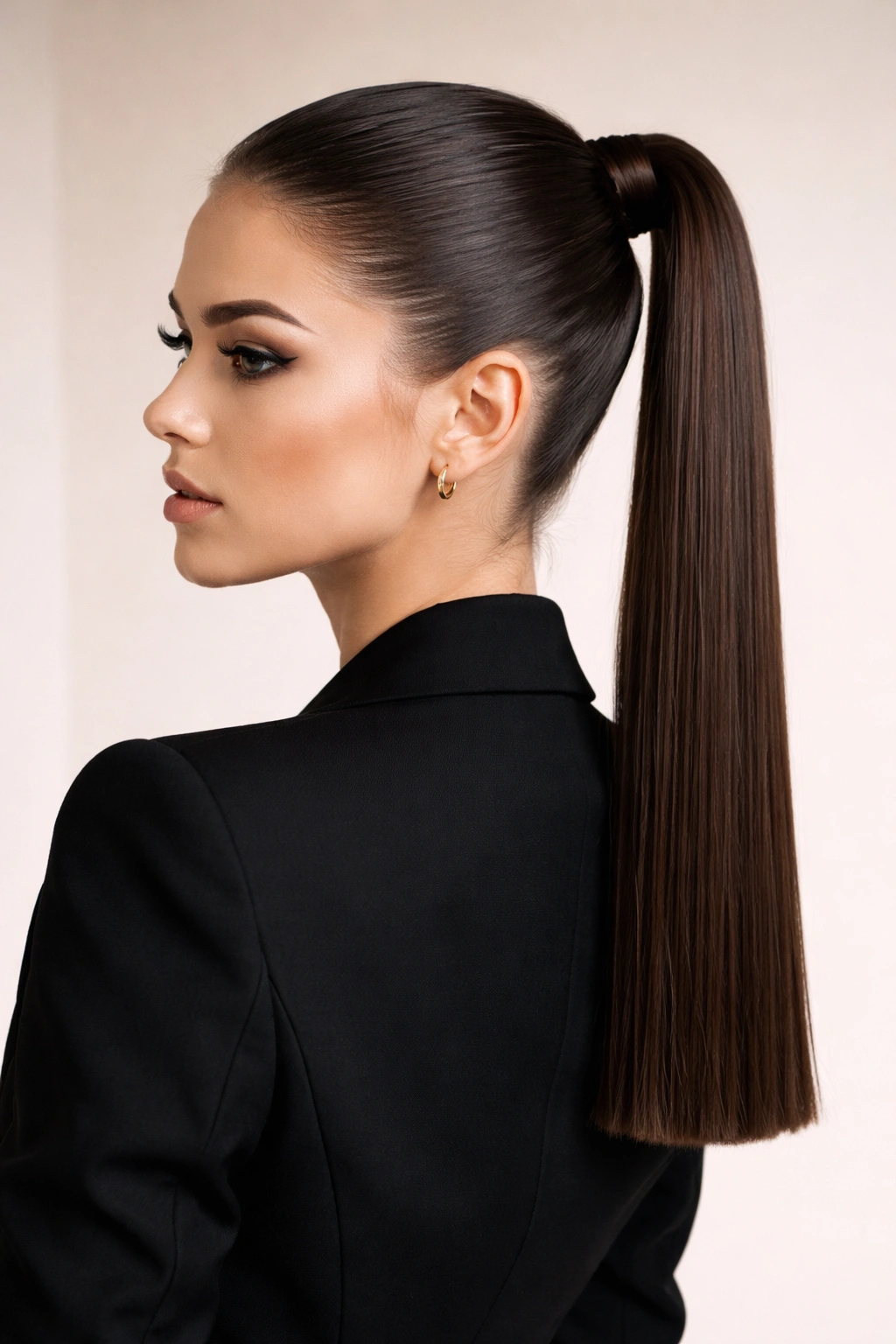
Nothing sharpens a ponytail like ends that fall in a blunt line. The root area stays smooth and close, while the tail finishes with a straight edge that looks deliberate and slightly severe. It’s a very clean kind of edge.
If your natural ends are uneven, clip-in extensions can help here because they give you that straight finish without fighting your haircut. If you’re keeping your own length, a quick trim makes a huge difference. Even half an inch can change how the ponytail hangs. The eye notices.
I like this look when the outfit has structure — shoulder pads, a crisp collar, a square neckline. The blunt tail mirrors those shapes. It’s one of the simplest edgy ponytails, which is probably why it works so well.
19. Chain-Wrapped Ponytail
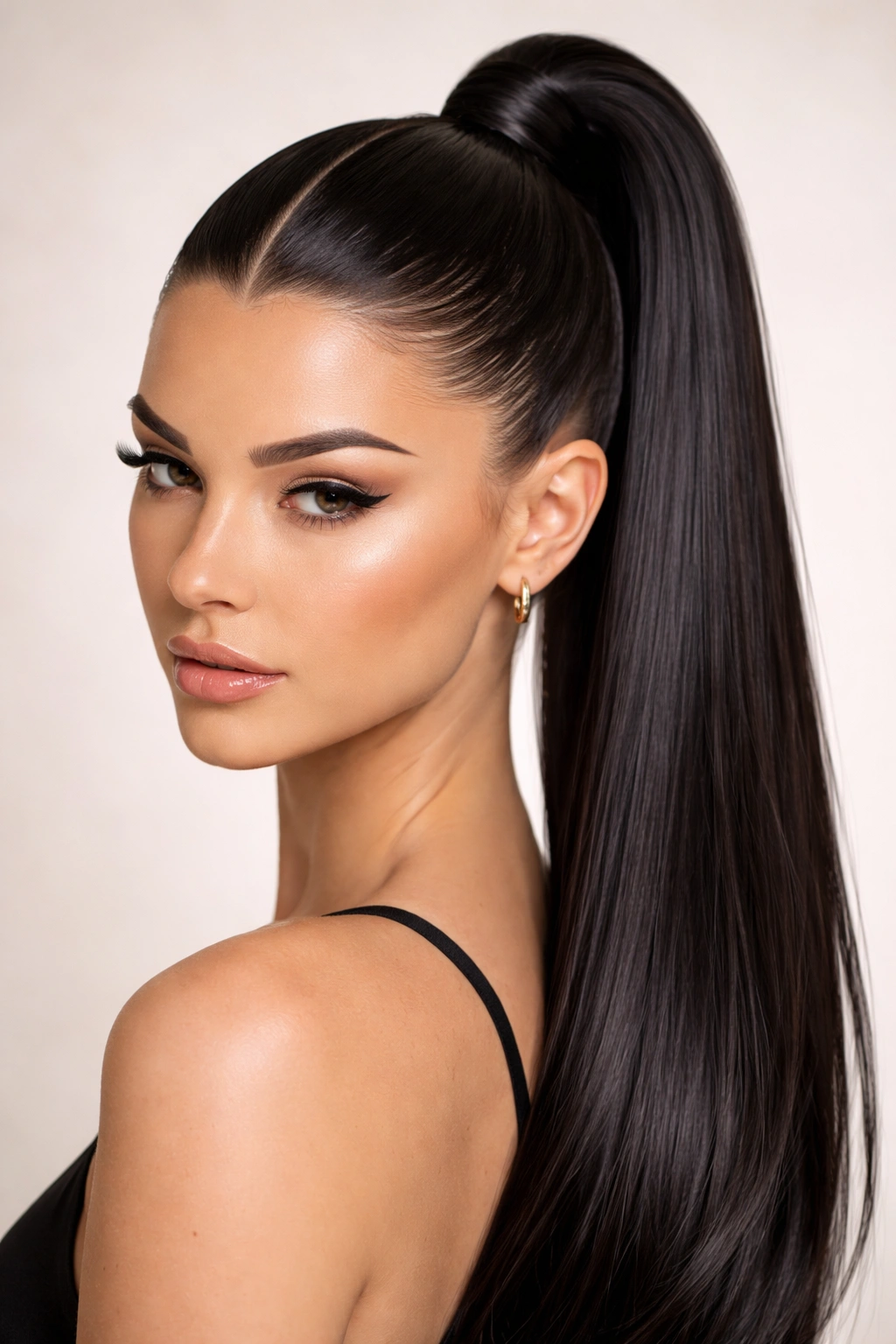
A thin chain threaded around the base of a ponytail changes the whole mood. It’s not loud in a costume-y way if you keep the chain small and the ponytail clean. Think detail, not decoration overload.
Keep the Metal Small
A heavy chain can tug at the hair and flatten the base. A lighter one sits better and feels less fussy. Wrap it once around the elastic, let a short length trail if you want movement, and pin the loose end underneath so it doesn’t slip around all night. If the hair is very silky, a hidden bobby pin helps anchor the metal in place.
This style works especially well with low or mid-height ponytails because the chain can be seen without fighting the rest of the hair. It’s a good choice for nights when you want one sharp detail and no more. Clean, controlled, slightly dangerous. That’s the mood.
20. Low Knotted Ponytail
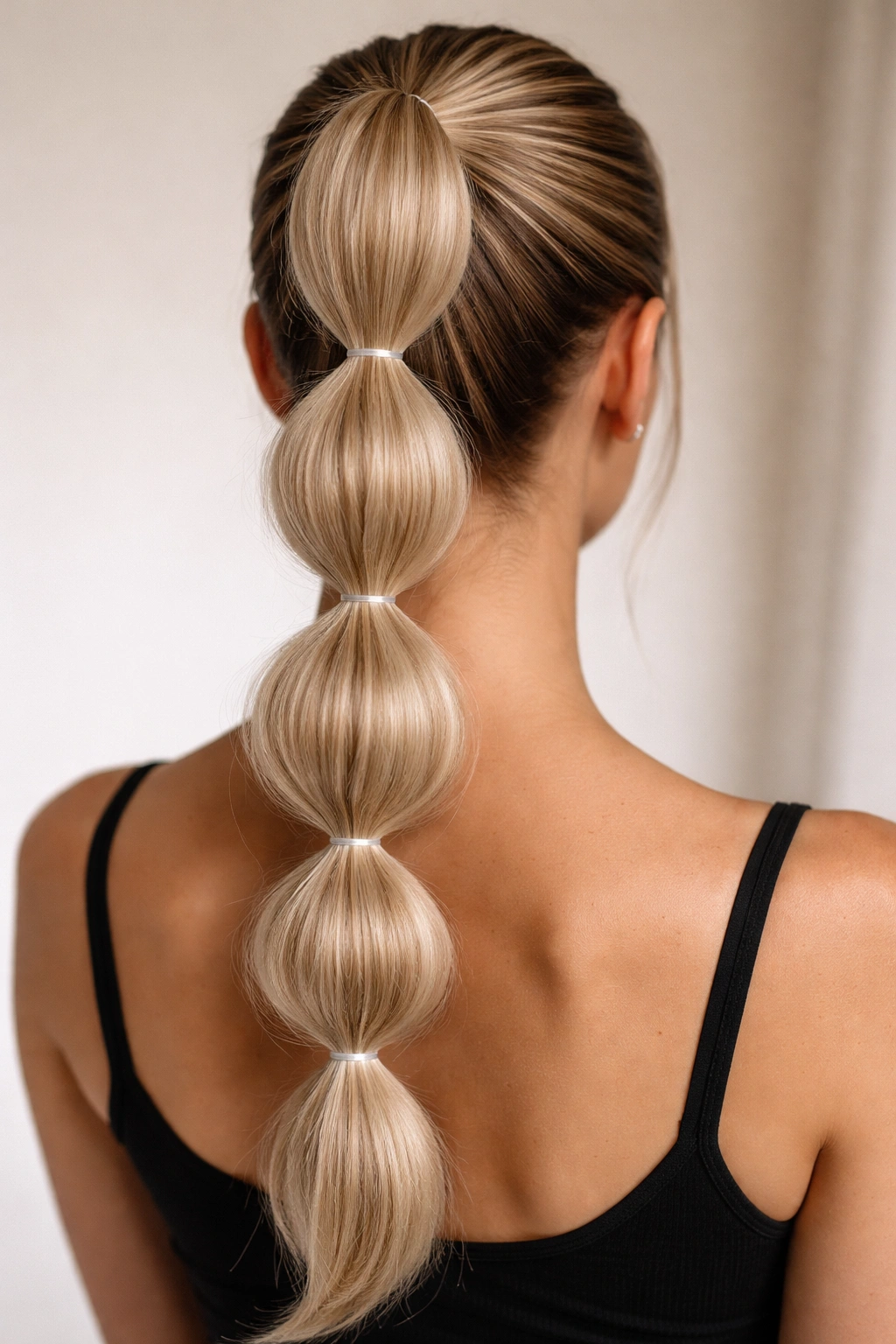
A low knotted ponytail is the kind of style that makes plain hair look edited. The hair is tied low, looped or tied again into a knot shape, and left with just enough tension to show off the structure. It feels sleek without being stiff.
The key is making the knot look intentional. Smooth the hair first, then tie it in a way that keeps the loop compact. If the hair slips apart, secure the knot with small pins tucked underneath. A touch of serum on the tail helps the surface stay glossy while the shape holds.
This one sits nicely on straight and relaxed textures, though wavy hair can make it look a little softer. If you want edge, keep the sides flat and the knot tight. No fluff. No extra movement needed.
21. High Curly Ponytail with Defined Coil
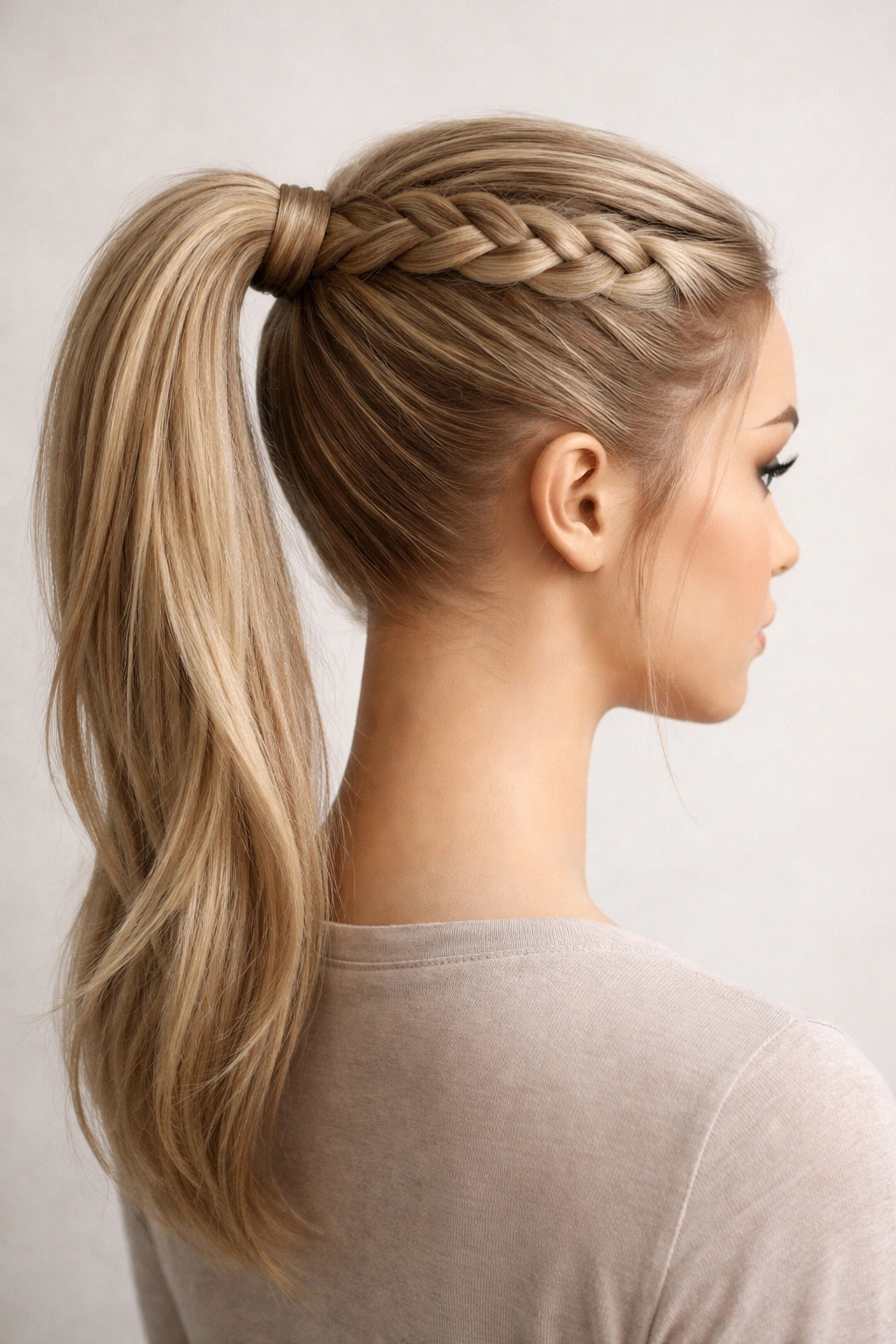
Curly hair brings its own kind of edge, and a high ponytail lets that shape speak without getting buried. The height lifts the face, the curls stack upward, and the silhouette feels bold before you even add anything else. A defined coil reads confident in a way that flat hair sometimes doesn’t.
Use curl cream or mousse before gathering the ponytail so the curls keep their pattern. A satin scrunchie or a gentle elastic helps avoid crushing the base. If the front needs refinement, smooth only the roots and leave the curl pattern alone through the tail. That balance matters.
This is one of my favorite ponytail hairstyles because it doesn’t try to fight texture. It uses it. The result is lively, strong, and much more interesting than a stretched-out tail pretending to be sleek.
22. Messy Ponytail with Frayed Texture
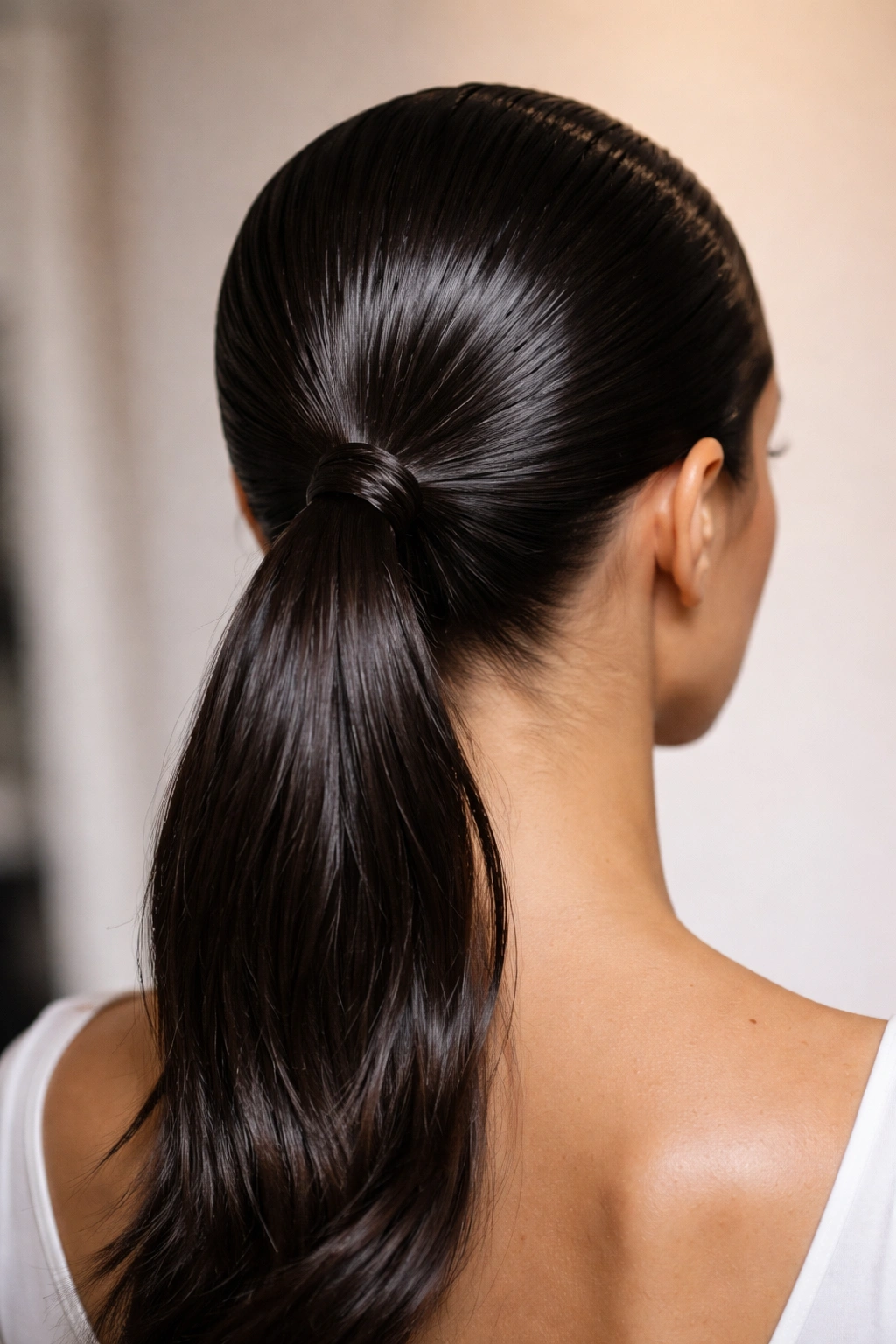
A messy ponytail can go wrong fast, which is exactly why this version needs a point of view. The texture should look broken-in, not forgotten. The crown gets a little lift, the tail stays loose, and the ends have that dry, piecey feel that says edge instead of chaos.
Dry shampoo and a small amount of salt spray are useful here, especially on hair that slips out of everything. Pull the ponytail out slightly after securing it, then pinch a few strands near the face to soften the line. Don’t overdo the looseness. If the elastic disappears completely, so does the shape.
This style works on second-day hair better than fresh-washed hair, which is a practical blessing. It also suits layered cuts because the shorter pieces create natural roughness. Sometimes the least polished ponytail is the one with the most attitude.
23. Asymmetrical Side Ponytail with Pinned Volume
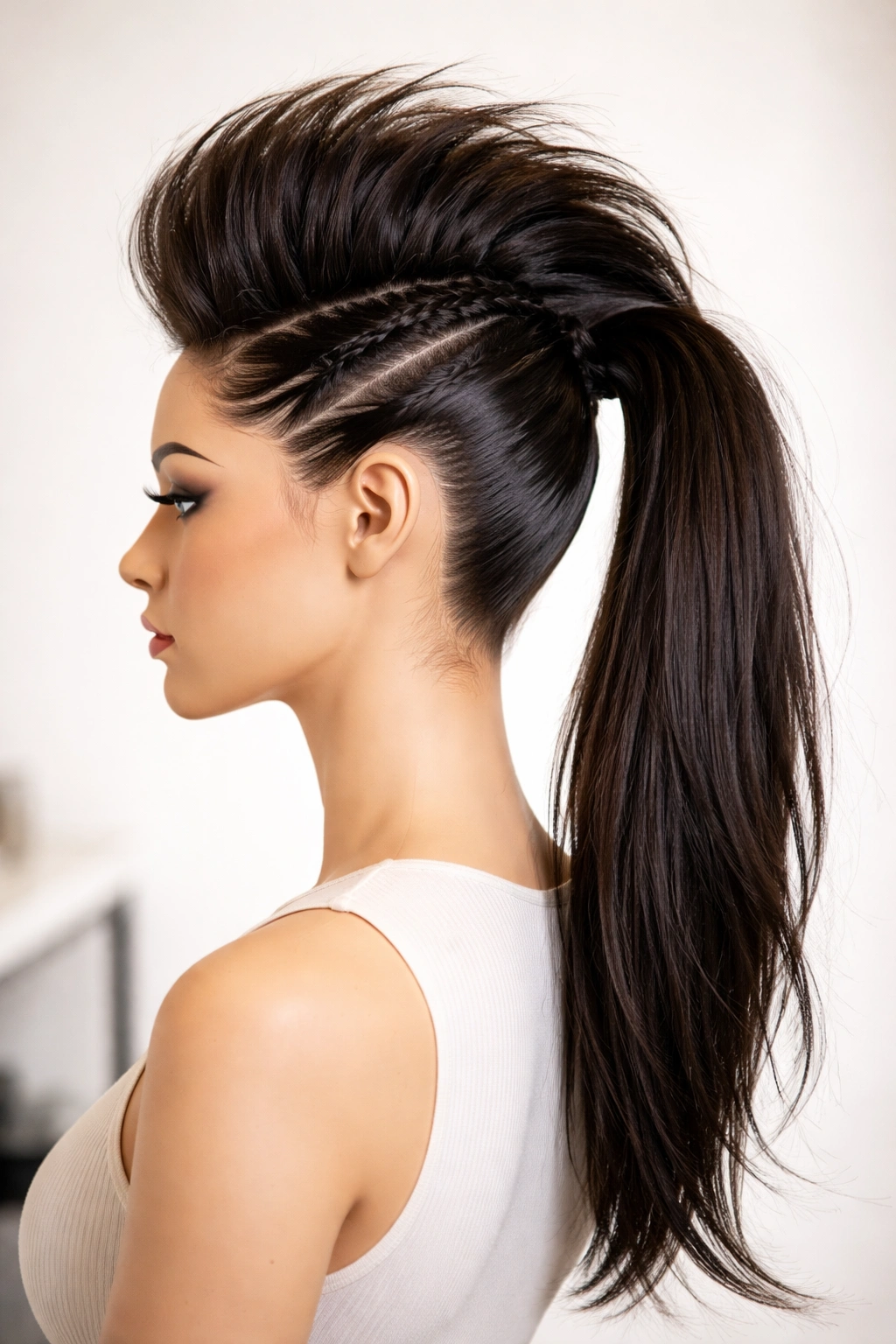
Why keep everything centered when you can tilt the whole shape? An asymmetrical side ponytail sits lower on one side, with volume pinned or brushed toward the opposite side so the silhouette feels off-kilter on purpose. That imbalance is the edge.
Start by creating a part that leans heavily to one side, then gather the hair low behind the ear on the heavier side. Pin the root area just enough to keep the crown lifted. The trick is making the front look soft while the back stays controlled. If you’ve got bangs or long fringe, they can blend nicely into the sweep.
This works well for formal outfits that need a little less symmetry. It also flatters people who like side volume but don’t want a full updo. A small tilt. That’s all it takes.
24. Sculpted Edges and a Tight Base
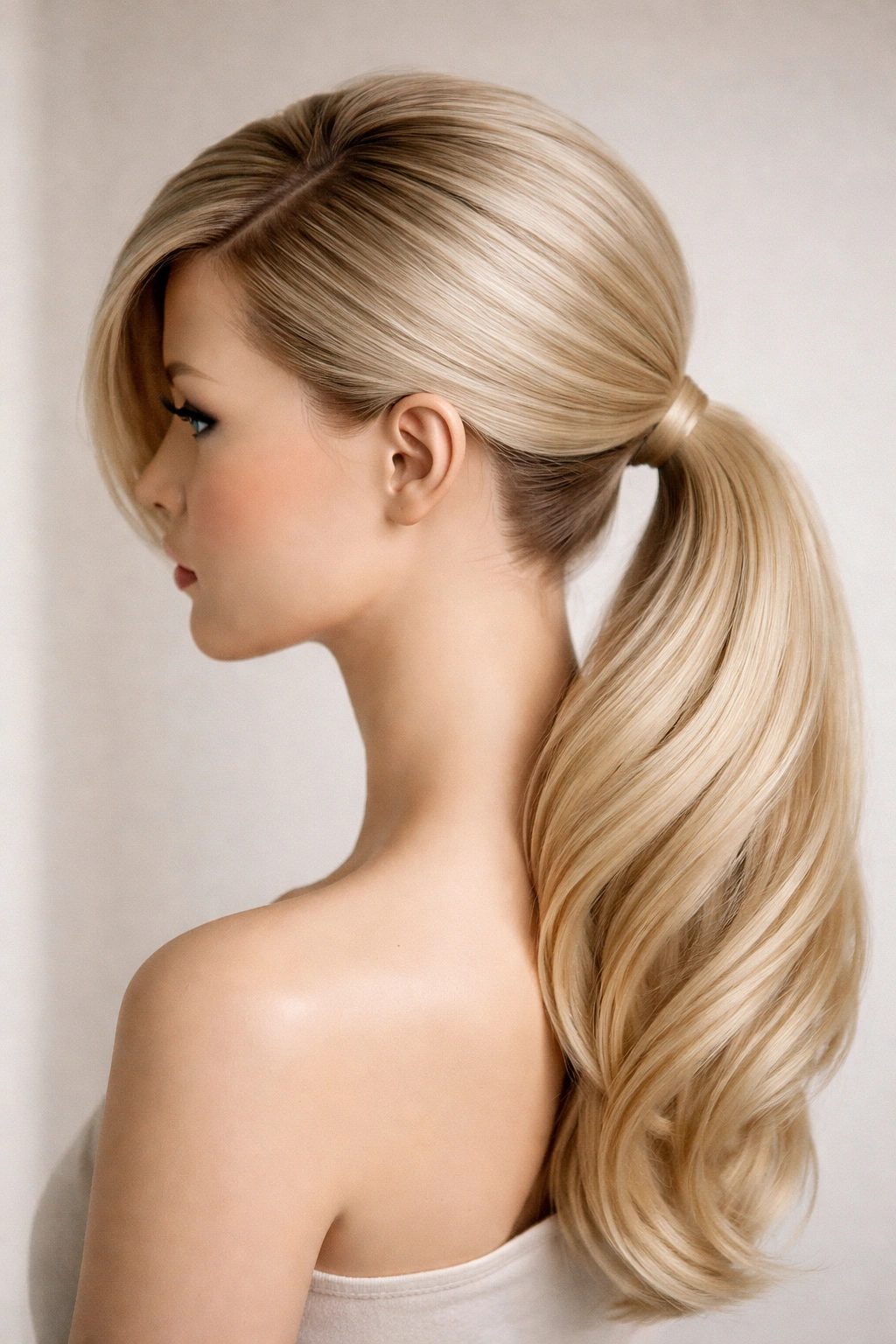
A tight ponytail with sculpted edges is one of the cleanest ways to wear textured hair with sharpness. The base stays firm, the hairline is laid with gel or edge control, and the finish looks precise from root to neckline. If you like a hairstyle that stays put, this is your friend.
The edges should frame the face, not swallow it. Use a small brush and work the product in thin layers, pressing the baby hairs or natural edges into a shape that follows the hairline. A satin scarf for a few minutes helps set everything without leaving white residue. Skip the thick product pileup; it cracks later and looks flaky.
This style has a polished edge, but it still feels strong. It’s especially good when you want the ponytail itself to stay clean while the hairline carries the detail. Sharp roots. Controlled shine. No drift.
25. Braided Wrap Ponytail with Soft Crown Lift
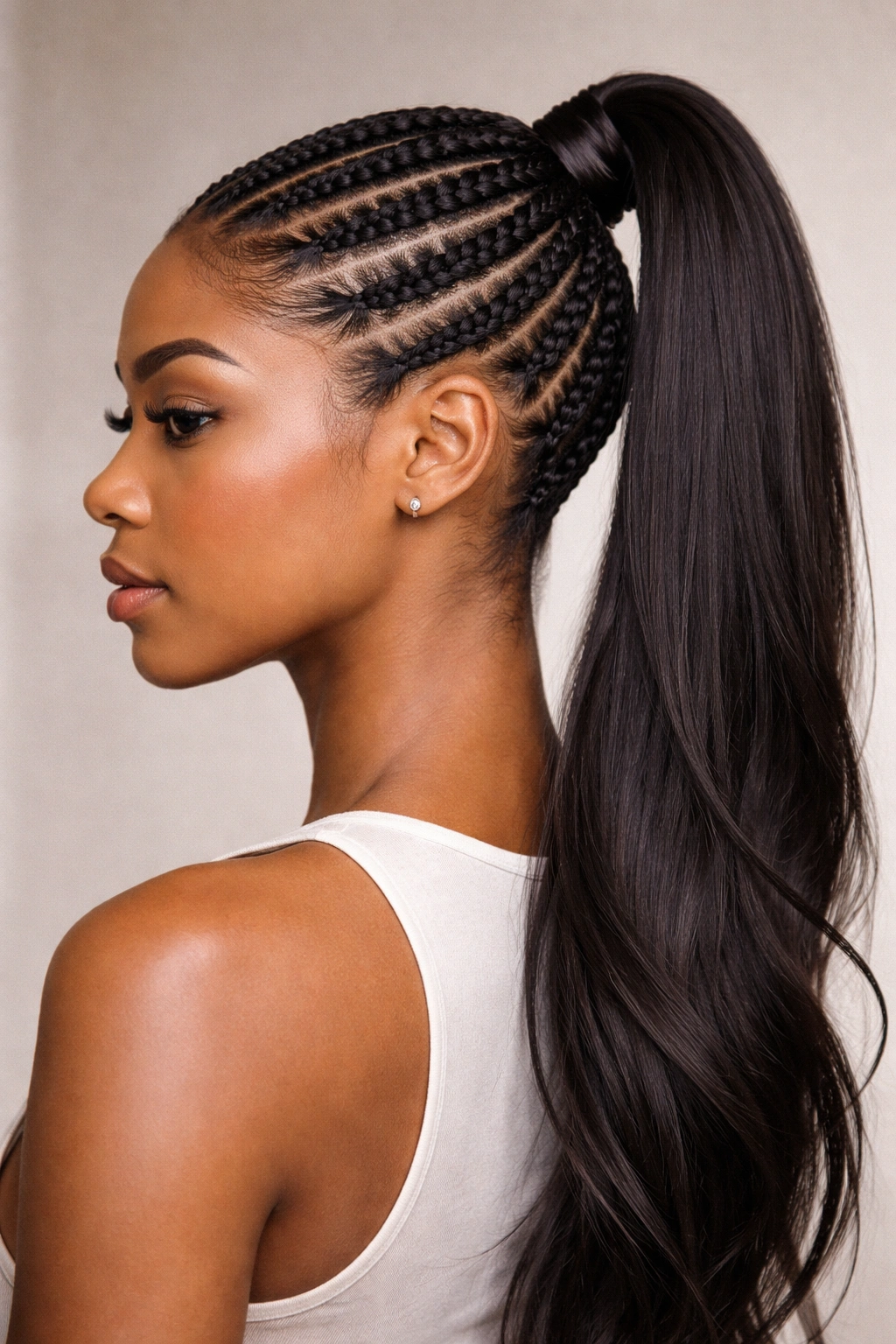
The braided wrap ponytail takes the classic wrap-around base and gives it more texture, which is a nice way to finish a bold ponytail list. The crown gets a little lift, the base is hidden with a braid instead of a plain strand, and the tail hangs with enough structure to look finished.
You can braid a small section from the front or from under the ponytail and wind it around the elastic until the base disappears. Leave the crown slightly raised so the style doesn’t collapse into the head. If the hair is very smooth, a touch of dry texture spray helps the braid grip and stay visible.
This is the one I’d choose when I want something polished but not dull. It has enough detail to look styled, yet it still feels easy to wear for hours. That balance is rare. And useful.
Final Thoughts
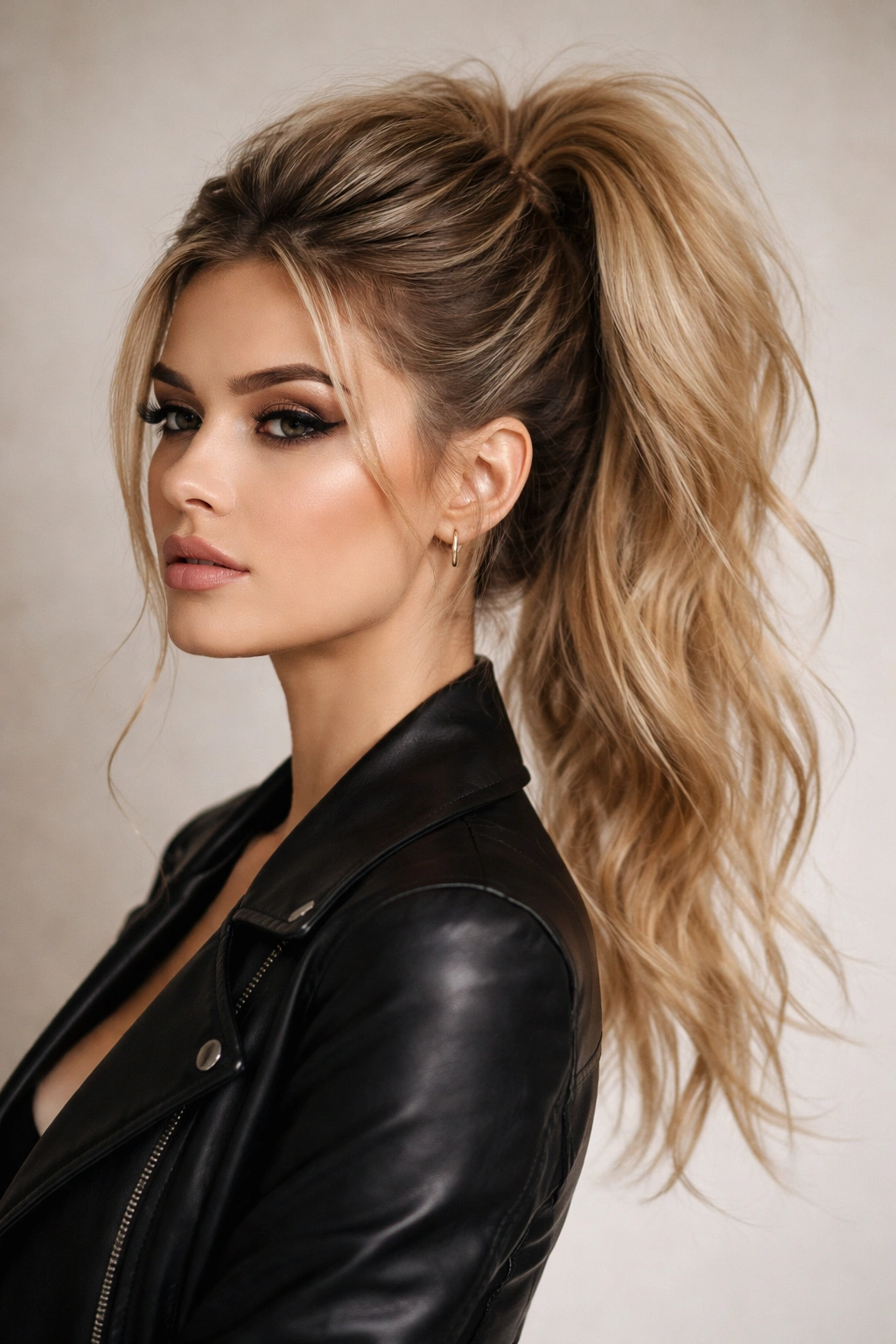
A ponytail gets interesting the moment you stop treating it like a default. Change the part, lift the crown, tighten the base, rough up the tail, or add one hard detail like a braid or chain, and the whole style shifts.
What makes these edgy ponytails work is not novelty. It’s shape. A strong ponytail looks like somebody made a choice on purpose, and that’s usually the thing people notice first.
If you’re trying one for the first time, start with one detail only — a sharper part, a wrapped base, or a little more height. That alone can change the tone of the style more than piling on five extras ever will.
