



Short hair does not get in the way of a pretty wedding style. It changes the rules, that’s all. A good half up half down hairstyle for wedding short hair leans into clean sections, soft movement, and one or two well-placed pins instead of trying to fake length that isn’t there.
The mistake I see most often is people asking short hair to behave like long hair. It won’t. A chin-length bob, a cropped lob, or a shoulder-skimming cut needs a different kind of planning: a little texture at the roots, a bend through the ends, and enough grip so the style survives hugs, photos, and a few hours of dancing.
A 1-inch curling iron, a light texture spray, and a pack of strong bobby pins solve more problems than expensive accessories do. Add pearl pins, a bow, or a veil comb only after the shape is set. That order matters. The pretty part sits on top of a base that can actually hold.
Some of these styles are polished and neat. Some are softer and a little undone. A few work especially well for fine hair, while others give curly or wavy hair more control at the crown. The point is not to make short hair look long. The point is to make it look intentional, flattering, and wedding-ready from every angle.
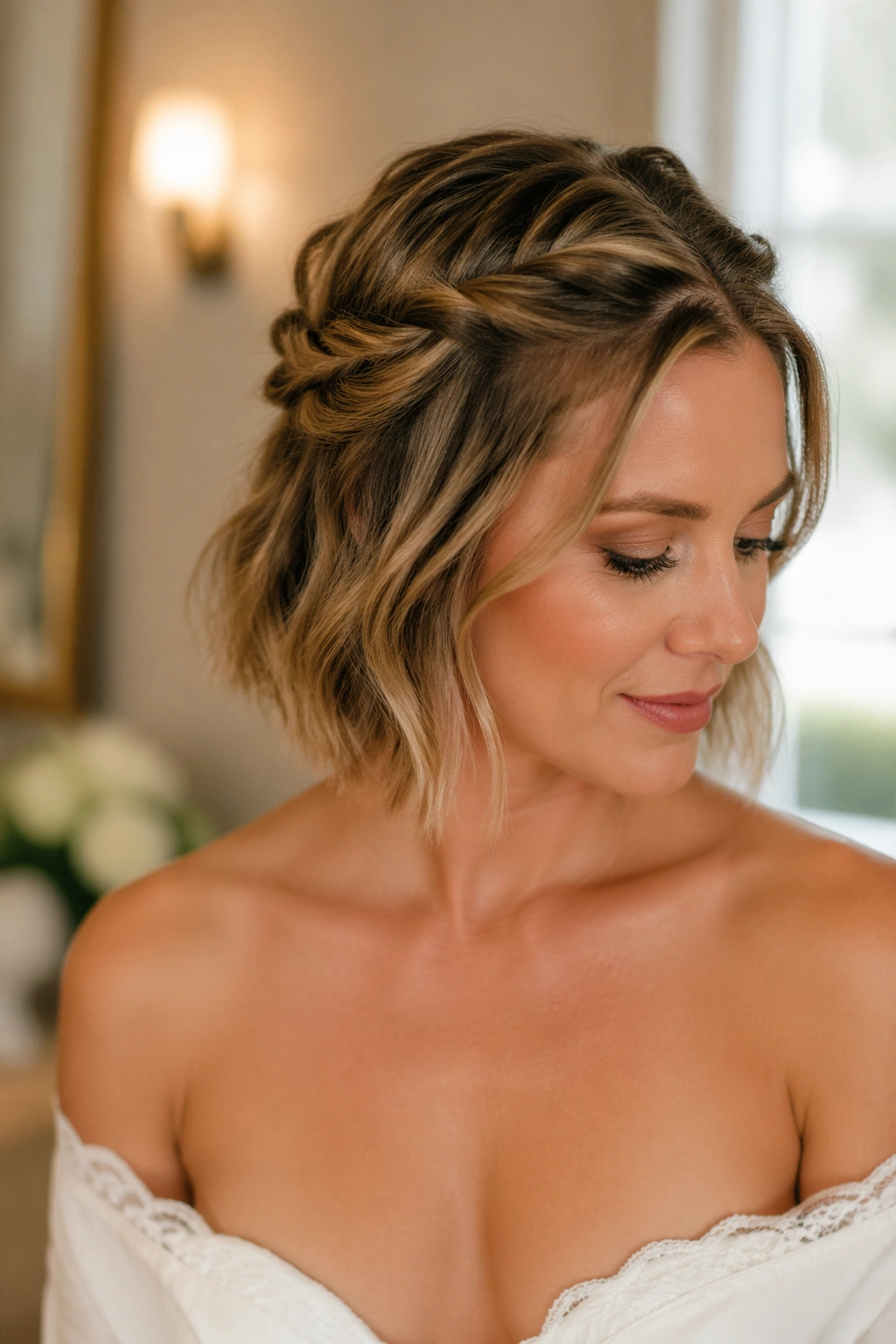
1. Soft Twisted Crown for a Textured Bob
A soft twisted crown is one of those styles that makes a short bob look more expensive than it should have any right to. The top section gets a gentle twist on each side, then both sections meet at the back and disappear under a few hidden pins. The rest of the hair stays loose, with a bend through the ends instead of a stiff curl.
Why it works on short hair
The twist gives the illusion of structure without eating up too much length. That matters. With short hair, every inch you pin away changes the balance, so keeping the twist loose and close to the head helps the style stay airy.
If your hair slips easily, mist the roots with texture spray before you start. A little grit makes the pins behave. I’d also curl the last 2 inches of the bob away from the face, just enough to keep the ends from looking blunt in photos.
Best for: chin-length bobs, fine hair, and brides who want the hair to look soft rather than heavily styled.
2. Mini Braided Halo with Loose Face-Framing Pieces
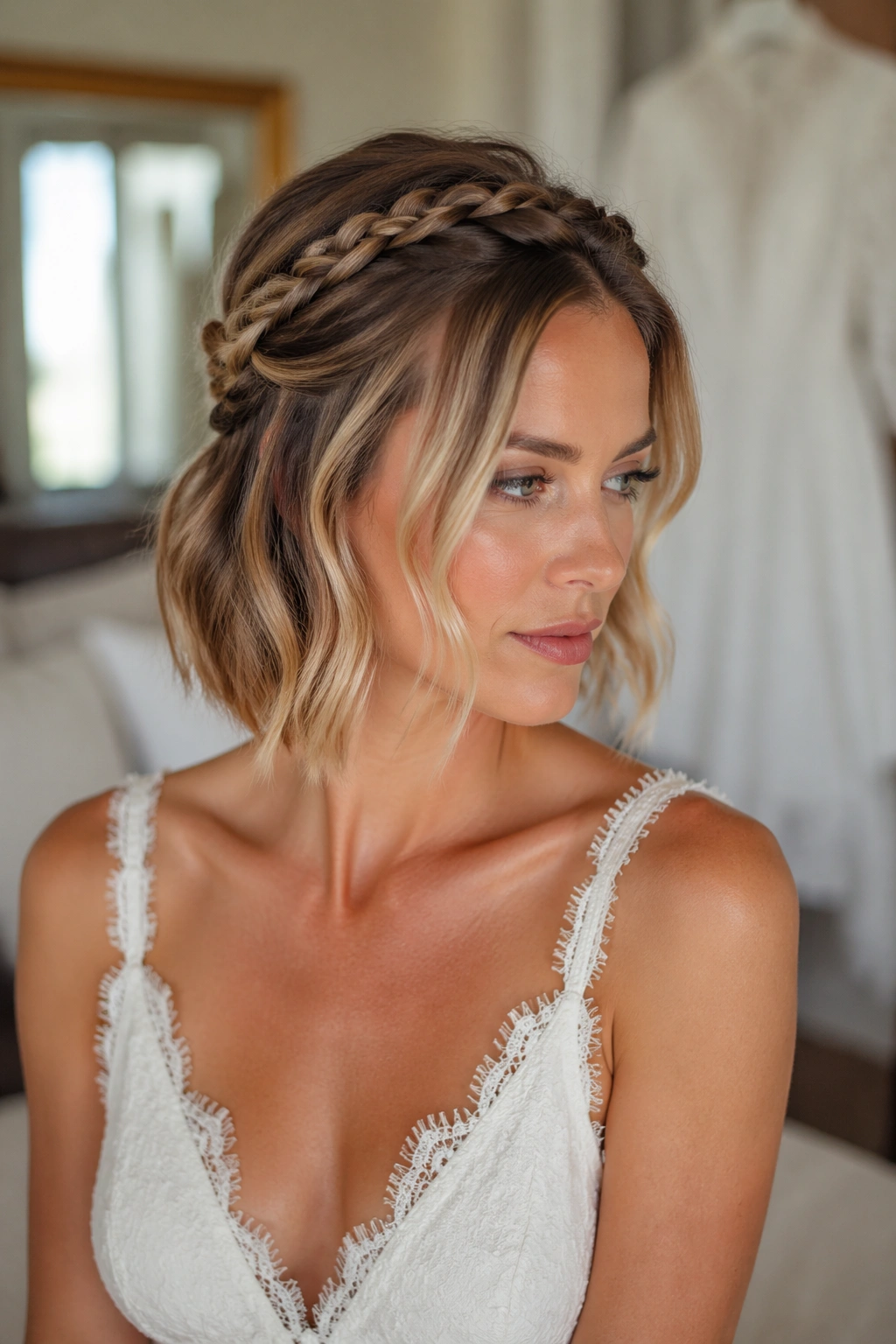
Can a braid work on short hair? Yes, if you stop trying to make it dramatic. A mini braided halo uses small braids taken from each temple, then tucked toward the back so they create a narrow crown line across the top of the head. The rest stays loose, with two face-framing pieces left out near the cheekbones.
How to keep it soft
Pancake the braid lightly with your fingers once it’s secured. Don’t pull it apart until it looks flat and messy; that’s too much. You want a braid that still shows its shape but doesn’t feel tight or childish.
What to ask for
- Keep the braid section to about 1 to 1.5 inches wide on each side.
- Stop braiding before the hair gets too short to grip cleanly.
- Leave the front pieces slightly curled, not pinned tight behind the ear.
- Use clear elastics or pins hidden under the braid so the finish looks clean.
This one looks especially nice with simple earrings. The braid does enough on its own.
3. Pearl Clip Pin-Back with a Soft Bend
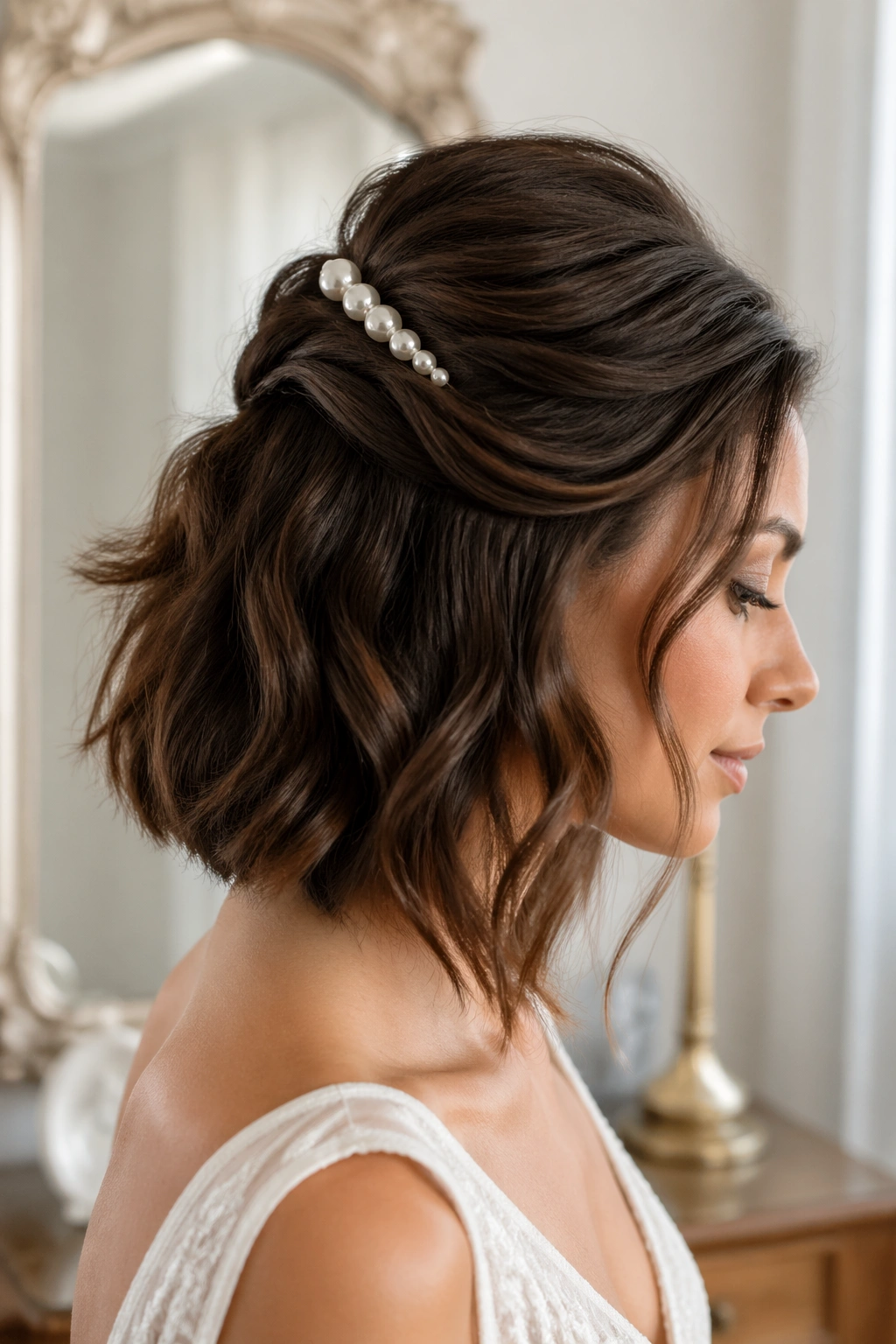
Pearl clips do the heavy lifting here. The style itself is simple: smooth the top half back on one side, secure it with a pearl barrette or a cluster of small pins, and let the rest of the hair fall in loose waves. That’s it. No elaborate weaving. No pretending a bob is a waterfall of hair.
What makes it feel wedding-ready is placement. Put the clip a little higher than you think, about level with the outer corner of the eye, so it reads on camera and doesn’t disappear into the hair. If the clip is too low, the whole thing looks like an afterthought.
A few useful details:
- Works best on straight or softly waved short hair.
- A side part usually gives it a more polished line.
- Pearl or mother-of-pearl finishes look better than oversized shiny plastic.
- If the hair is fine, crimp the underside lightly or rough it up with texture spray first.
I like this style for brides who want elegance without a lot of fuss.
4. Rope Twist Half-Up with Bouncy Ends
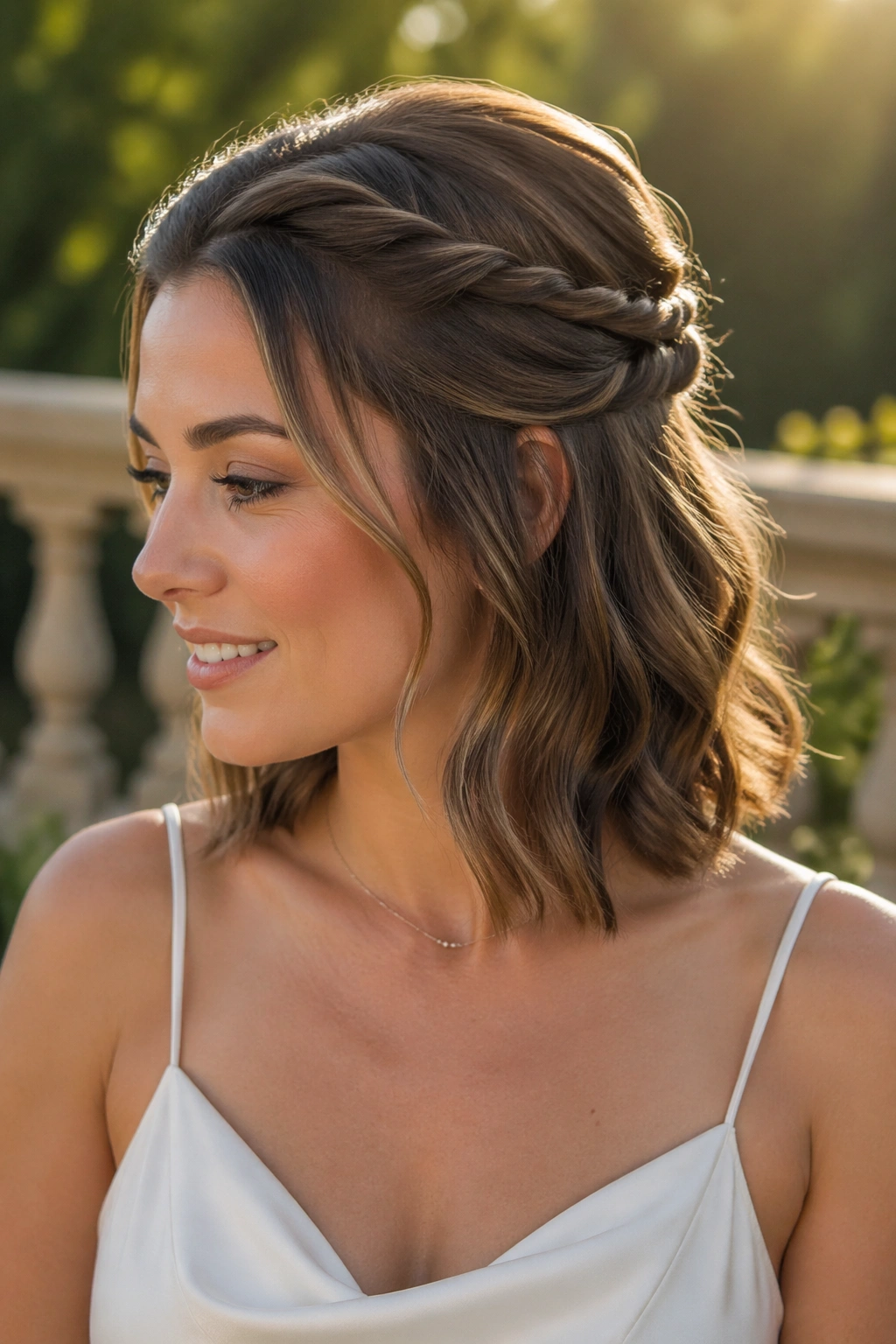
A rope twist should feel slightly loose in your hands, never pulled tight. Take a section from each side, twist each one in the same direction, then wrap them around each other in the opposite direction so they lock. Pin the twist at the back and leave the rest of the hair down with a soft curve through the ends.
The result looks polished from the front and a little romantic from the side. That’s the sweet spot for short wedding hair. If the hair is just grazing the jawline, curl the ends under. If it reaches the neck, curl them outward for a gentler shape.
This is one of the styles that ages well in photos. No hard lines. No stiff ridge at the crown. Just movement and a little control where you need it.
5. Low Crown Knot with Side Volume
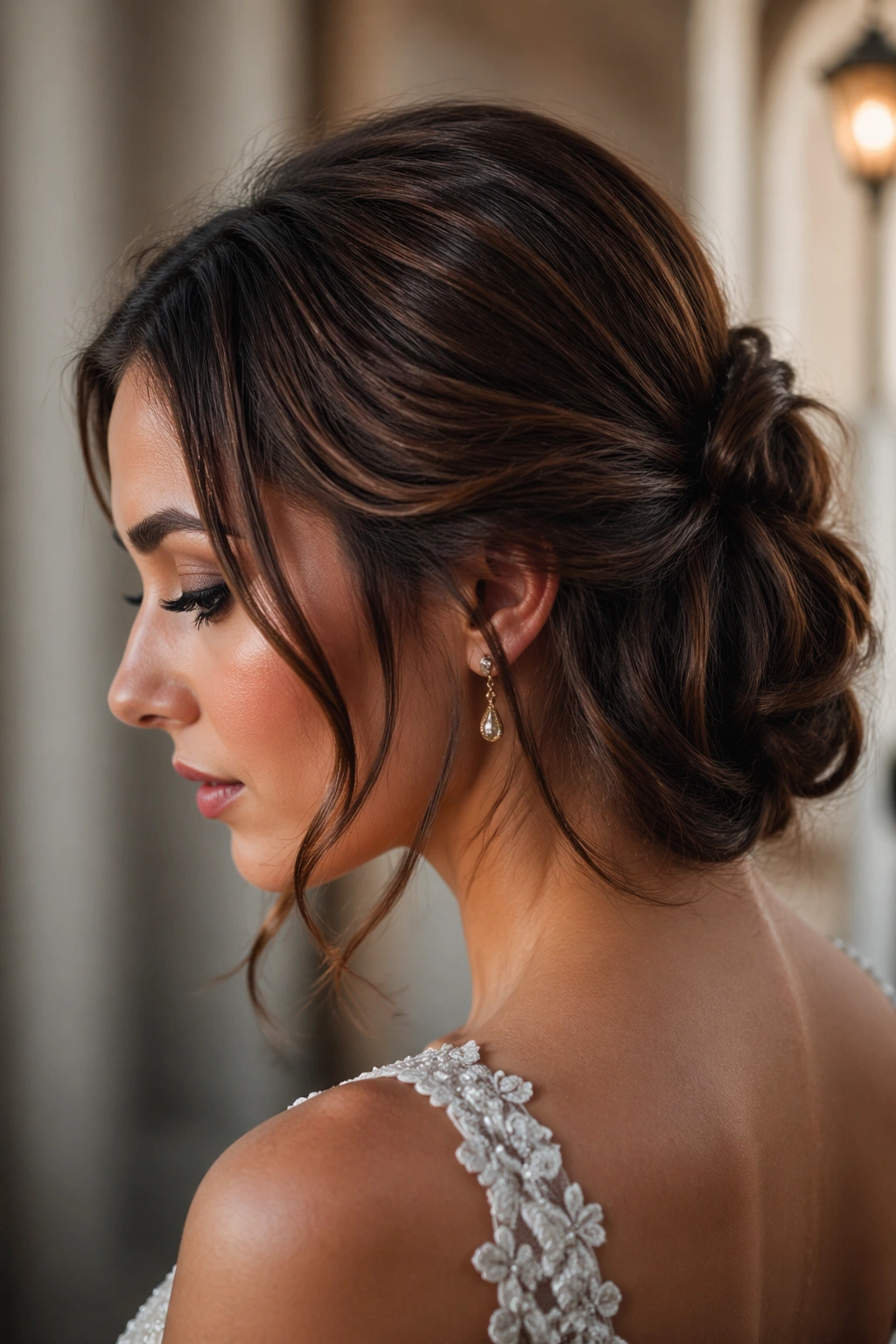
Unlike a high half-bun, a low crown knot keeps the whole look softer. The pinned section sits just above the occipital bone, not up near the top of the head, so the style still leaves a decent amount of hair down. That makes it a smart pick for short cuts that don’t have much length to spare.
Where the knot should sit
The knot should sit low enough that it doesn’t fight your veil or your earrings. If you can see the knot immediately from the front, it’s probably too high. The prettiest version hides a little in profile and opens up when you turn your head.
When this looks best
- With wavy bobs and lobs
- On hair that holds a slight bend
- When the dress neckline is detailed and the hair should stay tidy
Tease the crown only lightly. A quarter-inch of lift is enough. Too much and the whole thing starts looking lumpy, which is not the effect anyone wants at a wedding.
6. Loose Dutch Braid into Soft Waves
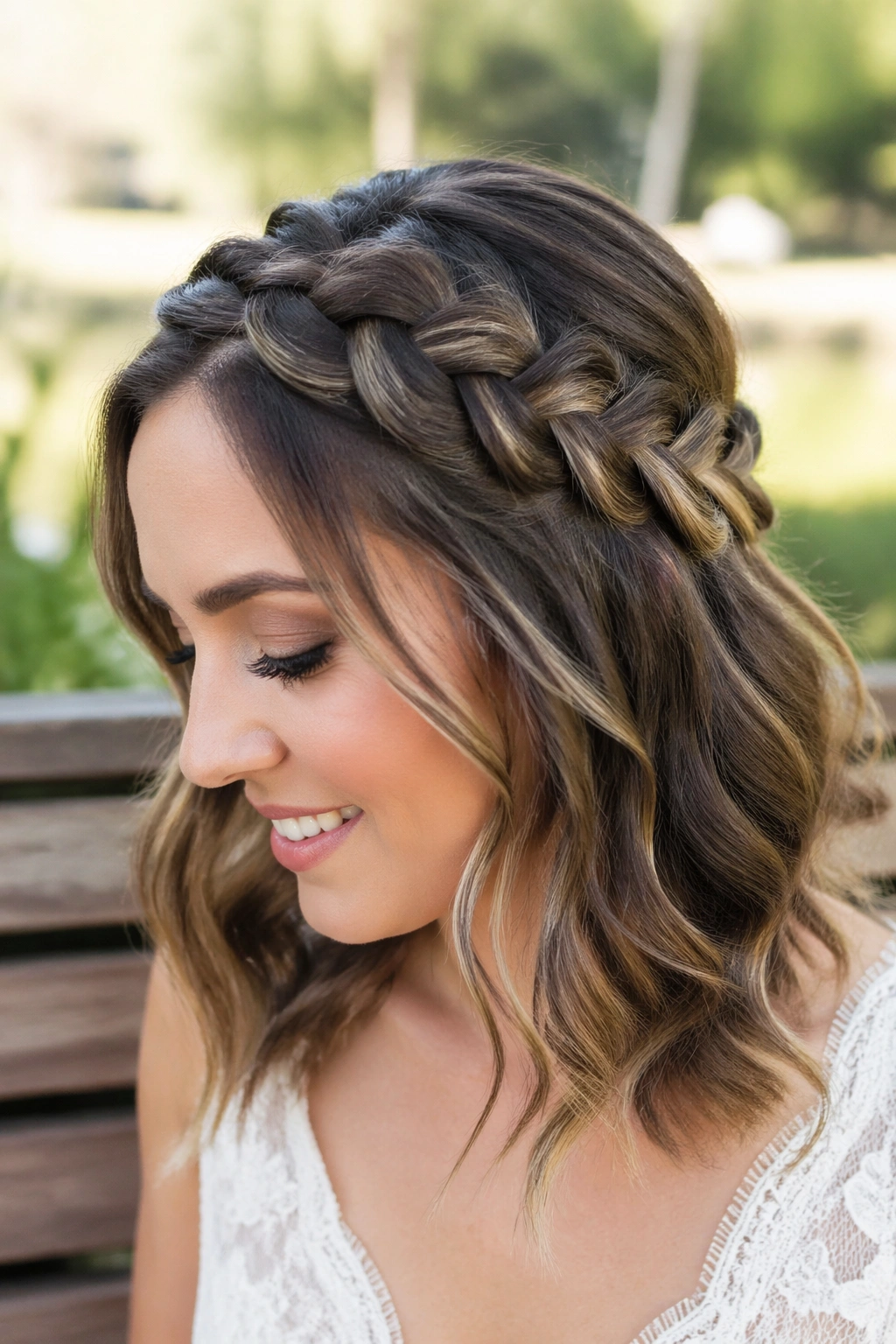
Dutch braids on short hair look best when you stop pretending they need to be big. A single Dutch braid across the crown, or two small Dutch sections that meet at the back, gives enough detail without swallowing the cut. The loose hair below it should stay soft, with a wave that bends rather than curls tightly.
This style is especially good for a lob because there’s enough length for the braid to stay visible. On a shorter bob, you can still use the same idea, but the braid should stop sooner and the rest should be pinned in a subtle half-up shape instead of a full braid trail.
If you want the braid to look fuller, gently tug the edges once it’s pinned. Just a little. If you overdo it, the braid gets wide and fuzzy fast. That’s fine for a festival. Less fine for a wedding.
7. Veil-Friendly Twist at the Back
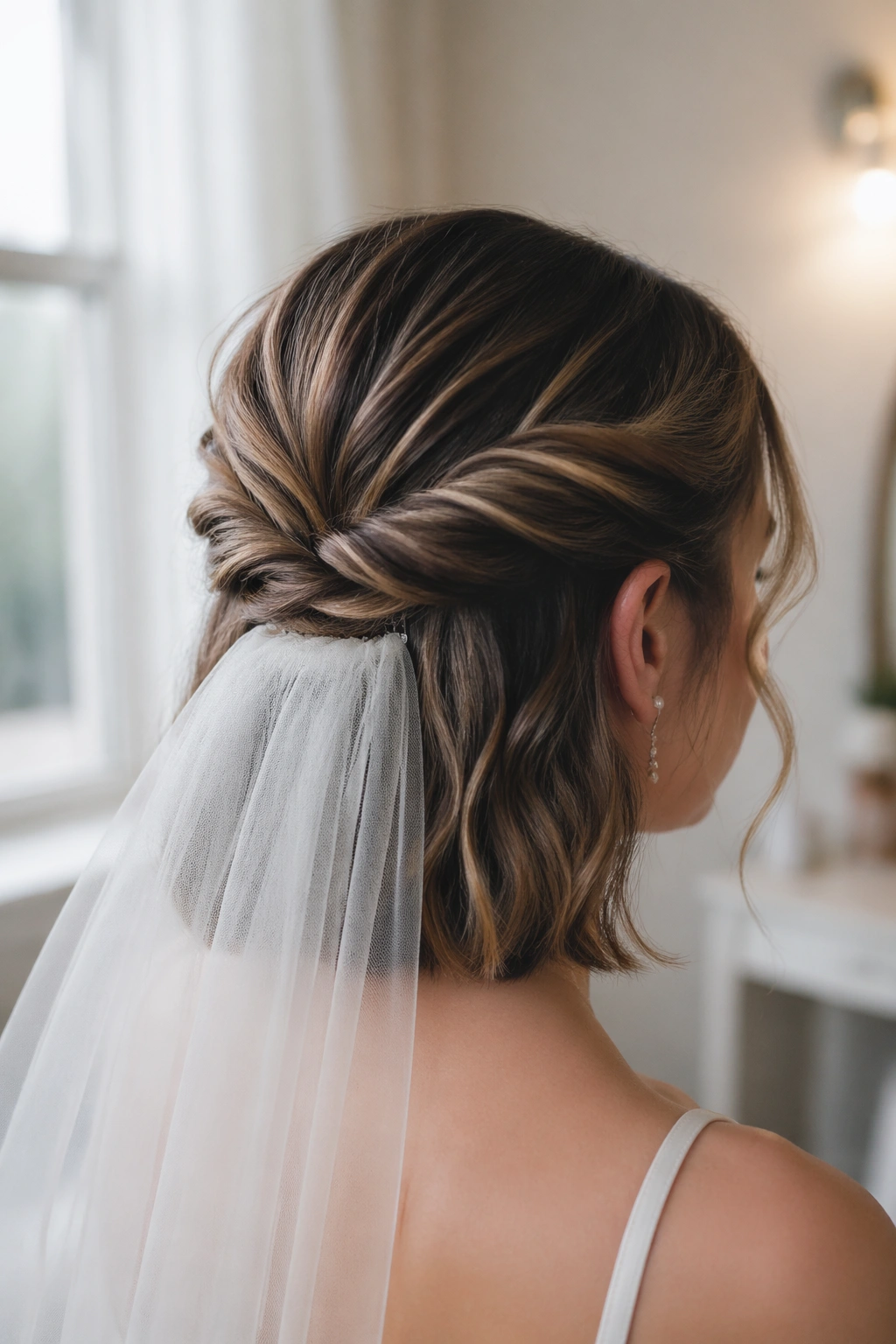
Will a half-up style work with a veil? Absolutely, if the anchor point is in the right spot. The trick is to build the twist or pin-back first, then slide the veil comb underneath it so the veil has something firm to sit against.
Where the comb goes
Place the veil comb just below the twisted section, not on top of it. That keeps the top from looking bulky and stops the veil from dragging the style down by the end of the ceremony.
What the stylist should pin first
- Set the twist or half-up section and pin it tight to the head.
- Check the shape from the side.
- Slide the veil comb in under the secured area.
- Mist the top lightly so the pins don’t slip.
This works best with short hair that has a bit of texture. Slick hair and veil combs can become enemies very quickly.
8. Half-Up Bubble Accent for a Lob
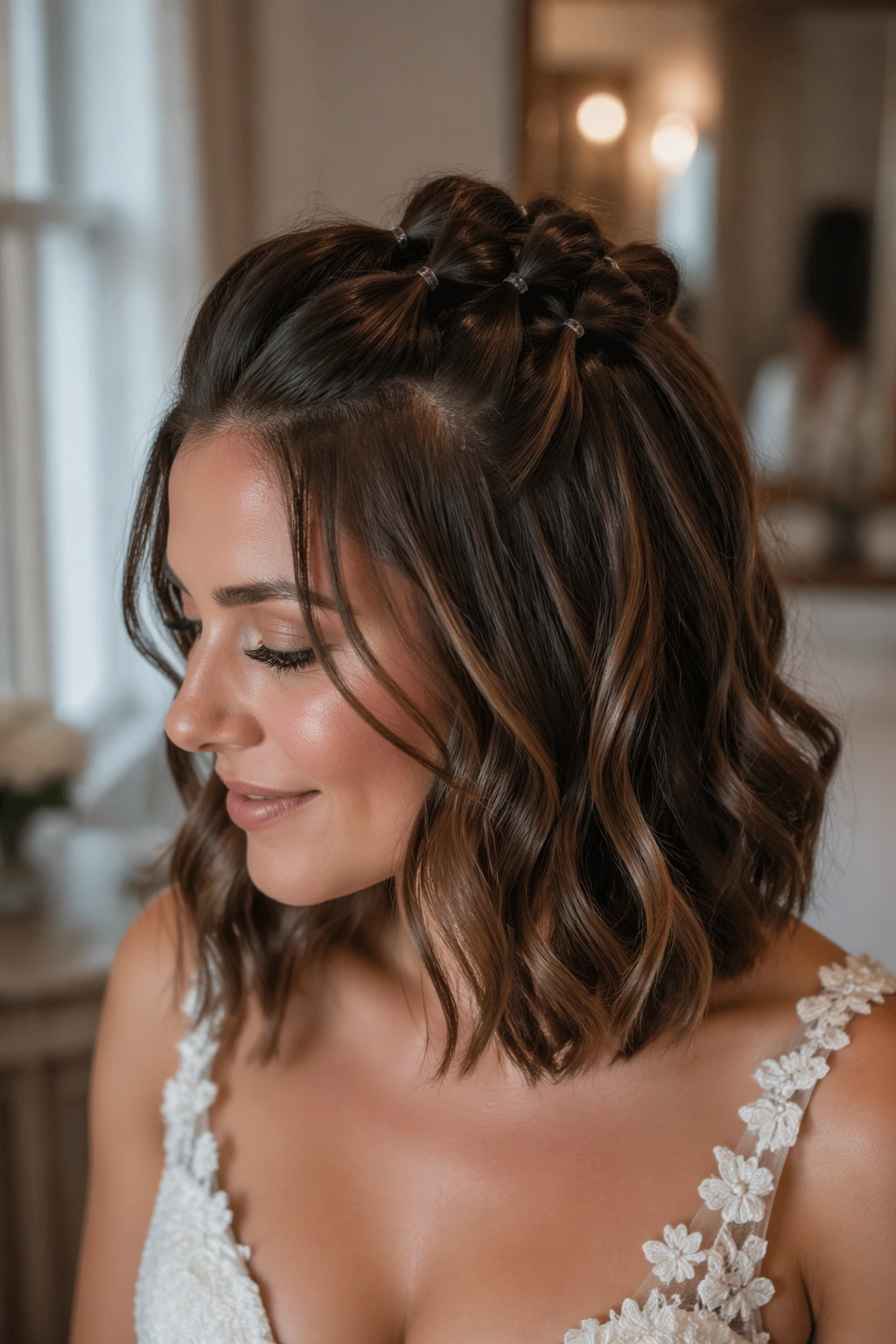
Bubble sections make short hair look deliberate, not improvised. That’s why I like this look. You take a small half-ponytail at the crown, then add tiny elastics every 1 to 1.5 inches down the pinned section to create little rounded bubbles. The rest of the hair stays down and soft.
It sounds playful, and it is, but the shape can still look refined if you keep the bubbles small. Tug each section gently after tying it off so the shape puffs out a little. Don’t stretch them so hard that they collapse or look uneven.
This style works especially well on a lob that falls between the collarbone and jaw. If the hair is too short, the bubbles get cramped. If it’s too long, the style loses its charm and starts reading more casual than bridal.
9. Crisscross Bobby Pins with Airy Curls
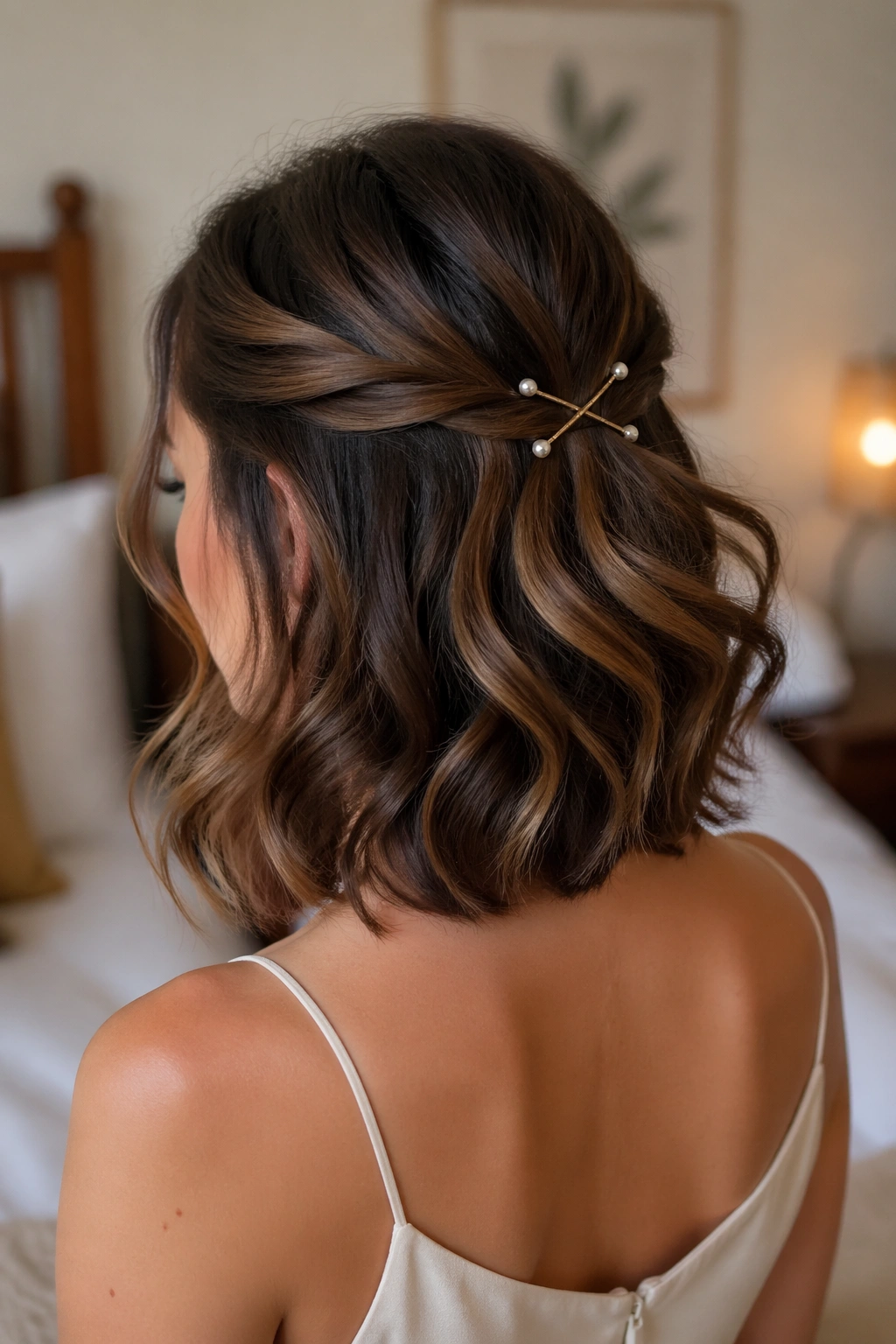
Picture a bob with one clean X of pins near the back. That’s the whole idea, and it’s better than people expect. Crisscross bobby pins hold the half-up sections in place while also giving the style a decorative finish, especially if you choose gold, pearl-tipped, or matte pins.
The beauty of this look is that it doesn’t need a lot of hair. Two small side sections are enough. Pull them back, cross the pins, and let the lower half stay loose with a bit of movement through the ends. If the hair is very fine, pin the sections over each other first, then lock the pins in a shallow X so they grab more hair.
This one is especially good for brides who like minimal accessories but still want something visible in photos.
10. Twisted Temple Sections with a Ribbon Bow
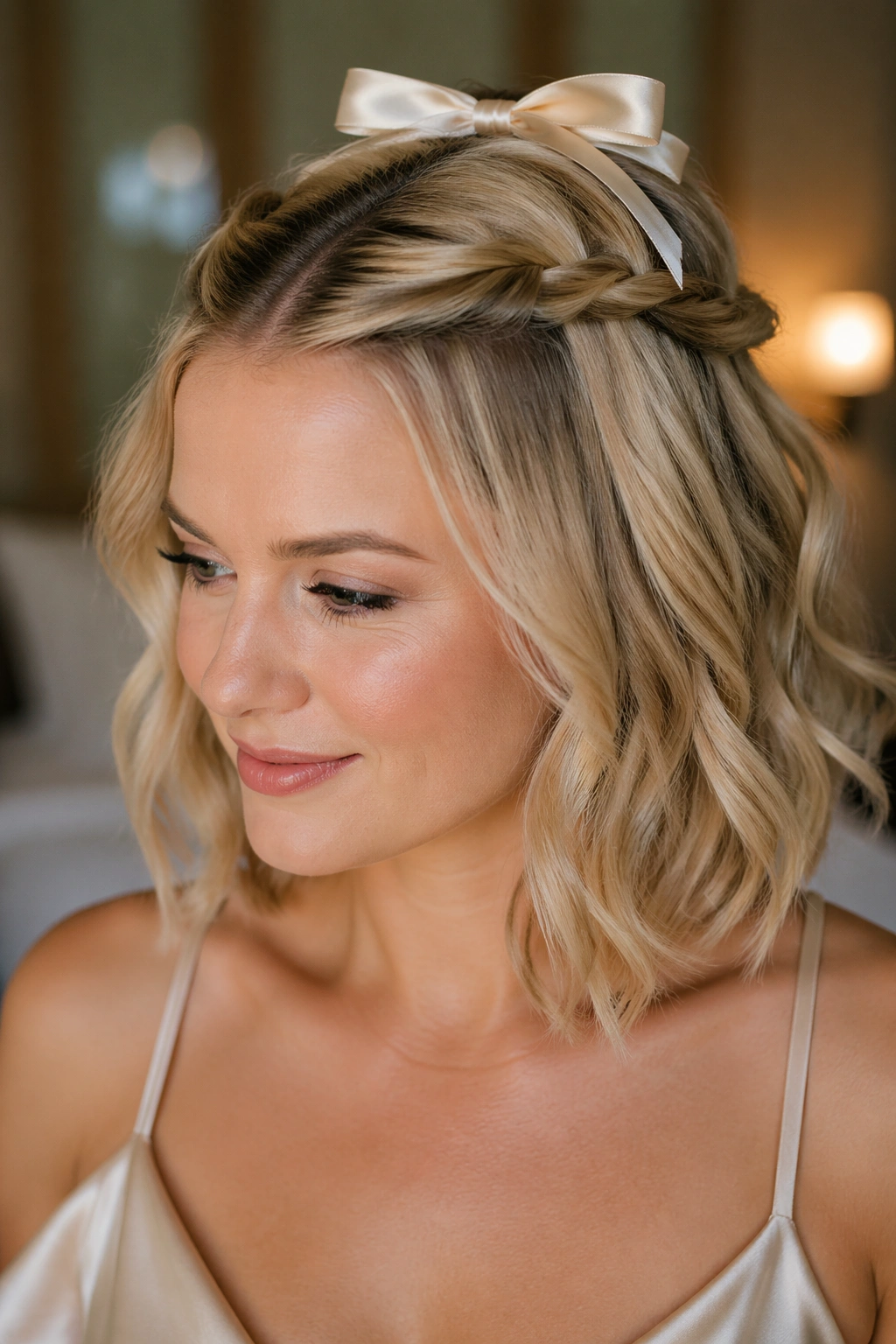
Twisting the hair back from the temples gives short hair a softer frame, and a ribbon bow makes the whole thing feel finished. Use two narrow sections from the front, twist them back, and secure them under a small bow at the back of the crown or just above the nape. A 1/2-inch silk ribbon looks cleaner than a thick craft ribbon.
The ribbon should feel like part of the hairstyle, not a decoration pasted on at the end. Choose a shade that either matches the dress trim or echoes the bouquet. That little bit of coordination goes a long way in wedding photos.
This style is one of my favorites for a simple dress. It has enough detail to feel special, but it doesn’t fight the rest of the look.
11. Low Puff Half-Up with a Satin Tie
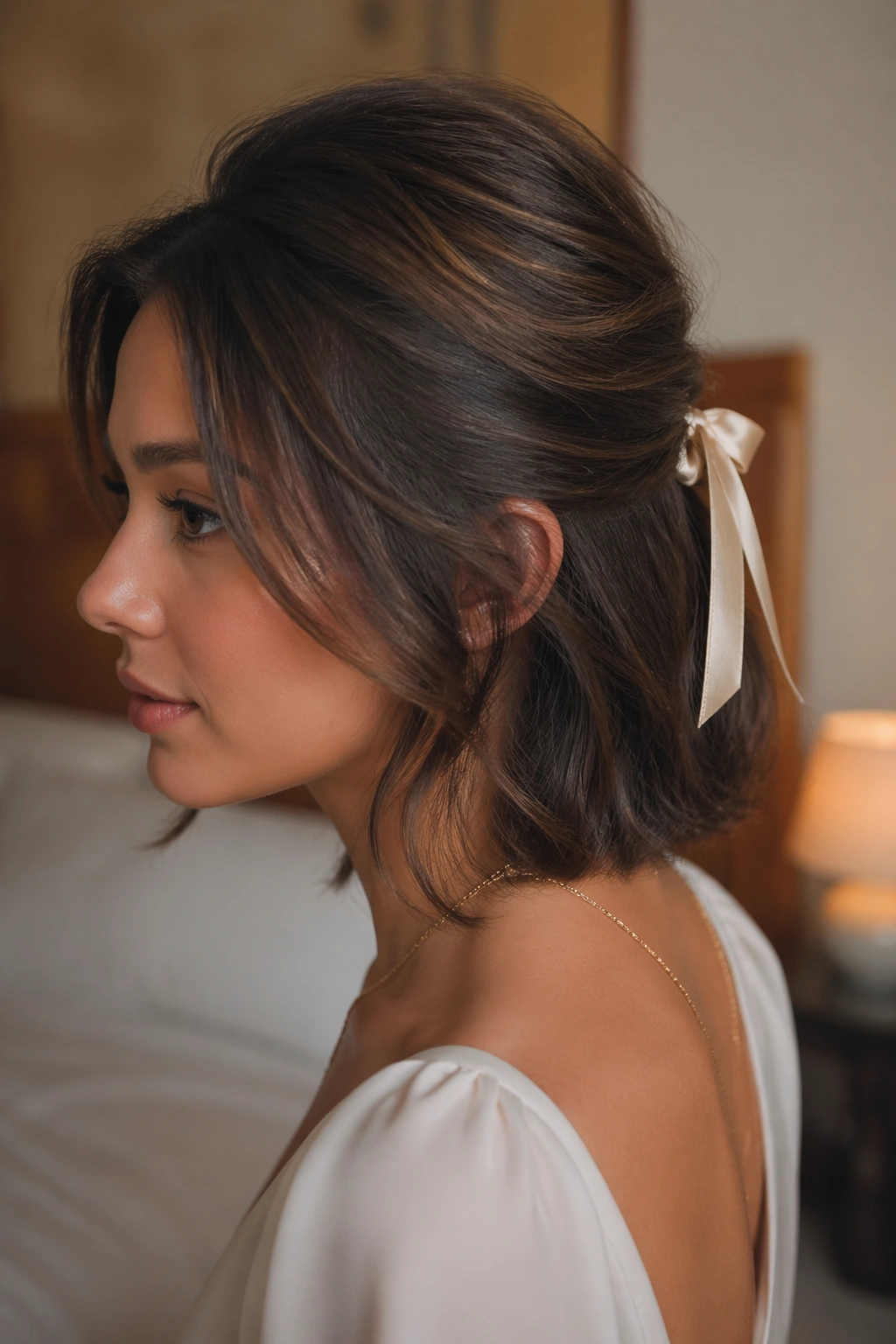
A low puff keeps the top of the hair from lying flat, which matters more on short cuts than people think. Instead of pushing the hair straight back, you lift the crown slightly, secure the top half into a soft half-ponytail, and tie it with satin or wrapped ribbon.
Why this beats a high half-up
A high half-up can eat too much length on a bob. A low puff leaves the sides visible and keeps the silhouette elegant instead of top-heavy.
What to watch for
- Backcomb only the top inch at the crown.
- Smooth the outer layer so the teasing doesn’t show.
- Keep the tie narrow and soft, not bulky.
- Let the ends below the tie stay bendy, not flat.
This is the style I’d choose for someone who wants subtle volume and doesn’t want their hair to look overworked.
12. Tiny Fishtail Crown Detail
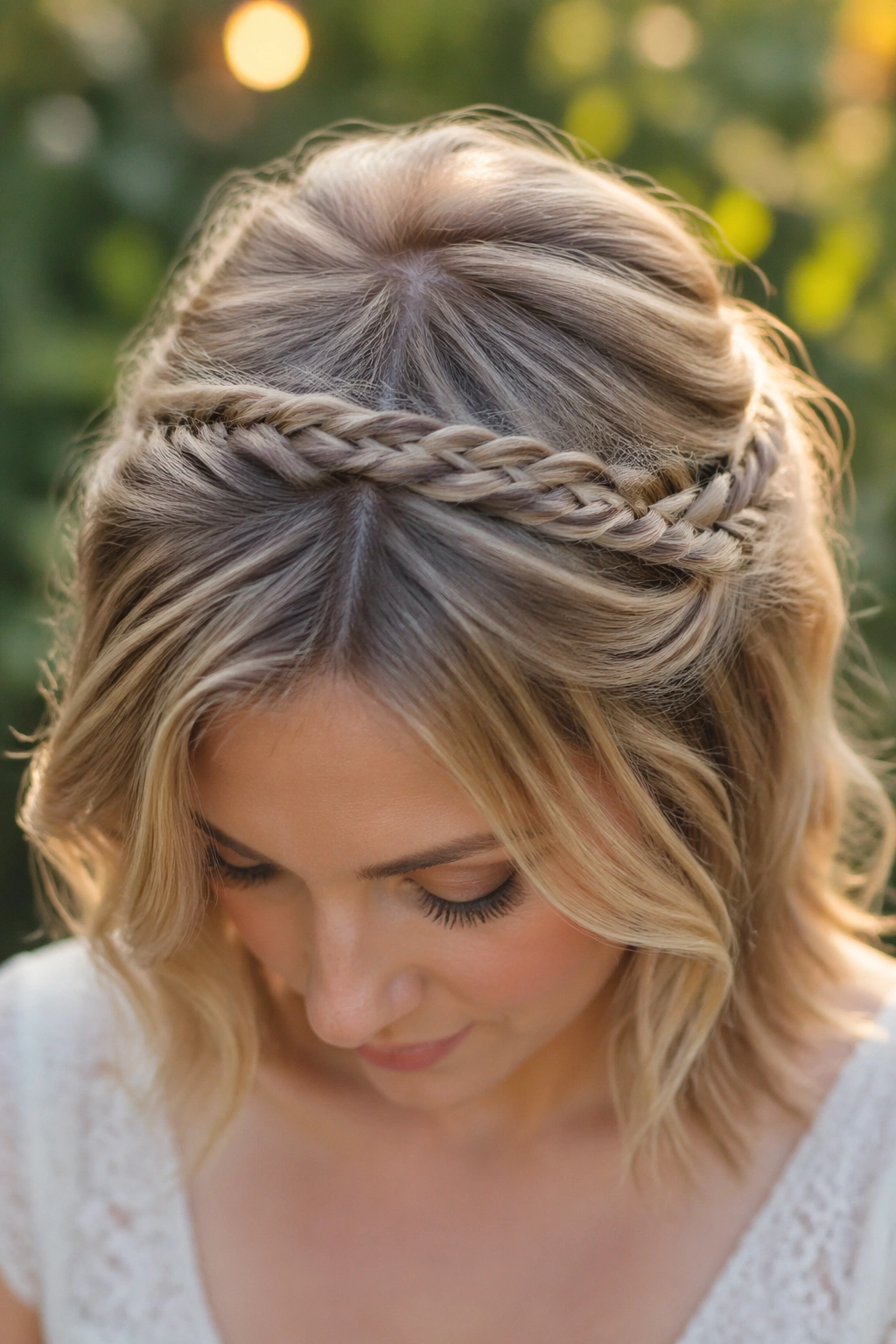
Can a fishtail braid work on short hair? Yes, if you keep it tiny and treat it like a detail, not the whole hairstyle. A slim fishtail across the crown or from one side into the back adds just enough texture to make the style look intentional without demanding a lot of length.
The trick
Use very small sections. If you grab too much hair, the braid gets chunky and starts falling apart before it reaches the back. A fishtail with fewer, smaller passes usually holds better on short hair because the weave sits tighter.
Best finish
- Leave the bottom half in soft, brushed-out waves
- Add a little shine spray to the braid only
- Pin the tail under the half-up section so it disappears cleanly
This style suits brides who like detail when you look closely, but not a lot of visual noise from across the room.
13. Side-Swept Half-Up for an Asymmetrical Bob
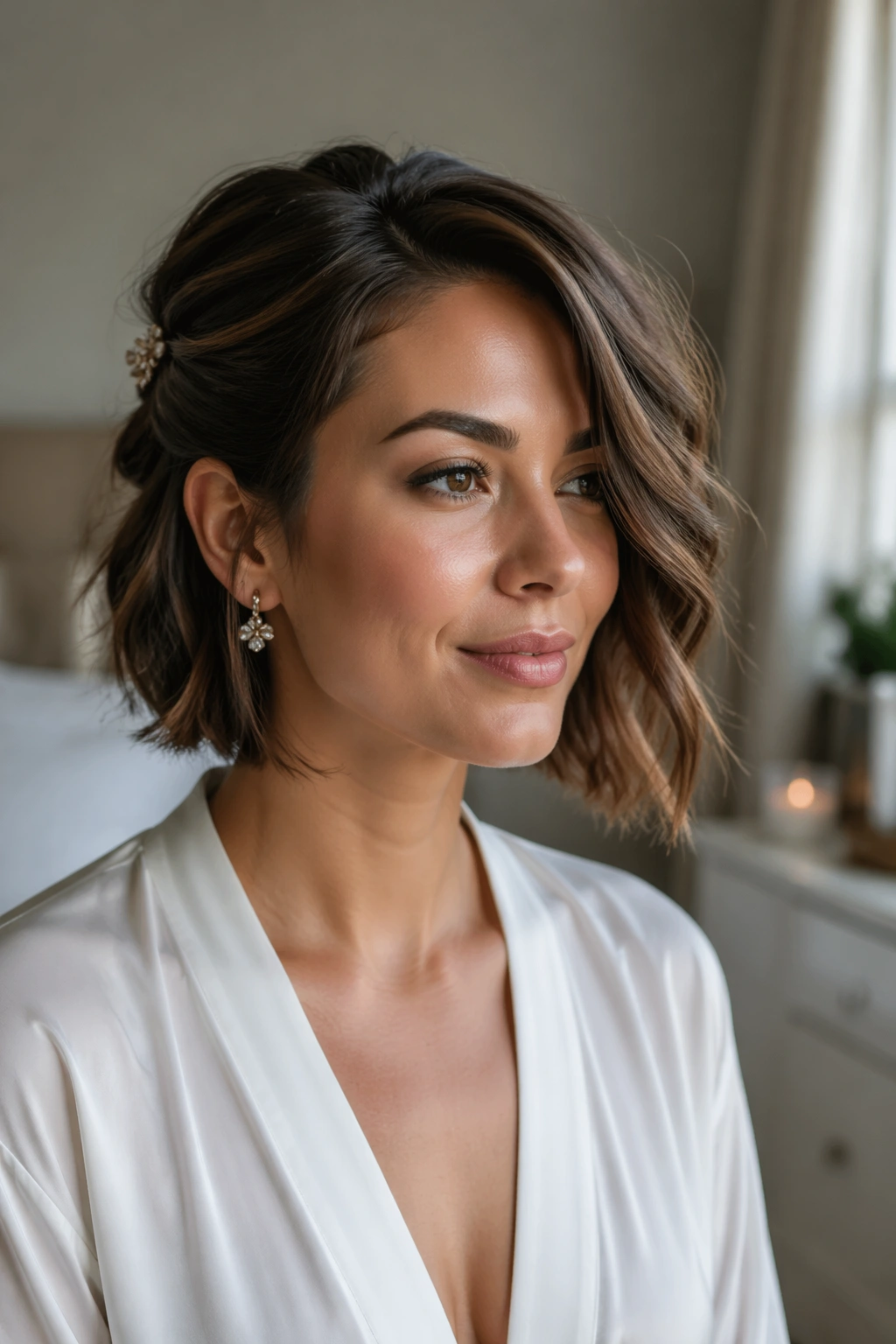
A side-swept half-up is one of the easiest ways to work with an asymmetrical cut instead of fighting it. Pull the fuller side back a bit more, let the shorter side sit loose, and pin the gathered section low enough that the haircut’s shape still shows off.
The asymmetry actually helps. It creates a built-in angle, so the hairstyle looks like it was designed around the cut rather than layered on top of it. If your earrings are statement pieces, this style is especially useful because it opens one side of the face without stripping the hair of its softness.
I’d keep the wave loose here. Tight curls can make the asymmetry feel harsher than it needs to be.
14. Velvet Headband with Soft Waves
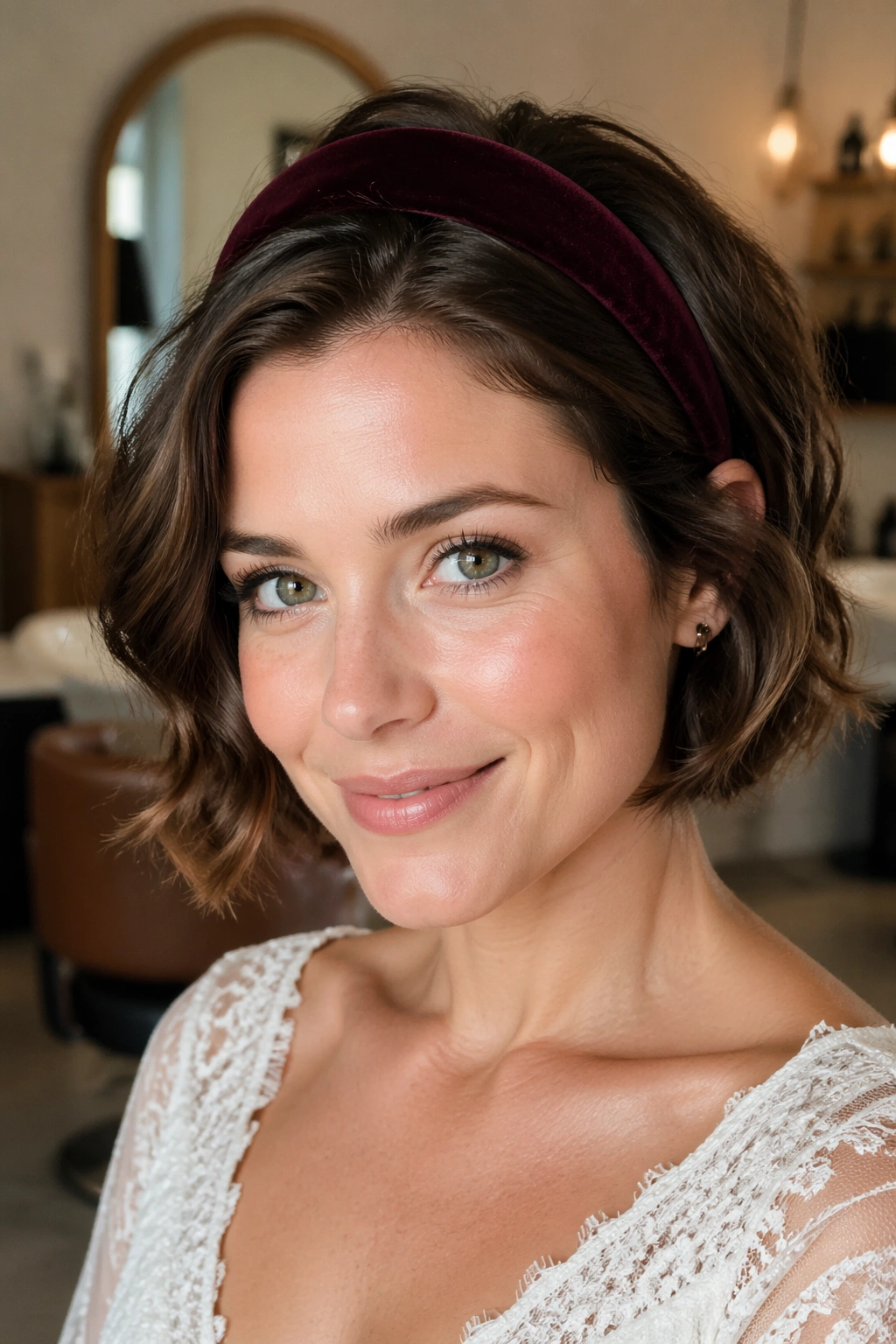
A velvet headband is one of the fastest fixes for short wedding hair. It pushes the top layer back, gives the illusion of a half-up shape, and adds a dressed-up finish without needing a dozen pins. On a bob, it can be the difference between “pretty hair” and “bride hair.”
The band should sit just behind the hairline, not in the middle of the crown. If it’s too far back, the front starts sagging. If it sits too far forward, the whole look can feel school-uniform-ish, which is not what we’re after.
A 1- to 1.5-inch band works best. Wider bands can overpower a short cut. Narrower ones can disappear, especially if the hair is dark and the fabric blends in too much.
15. Waterfall-Inspired Side Pieces
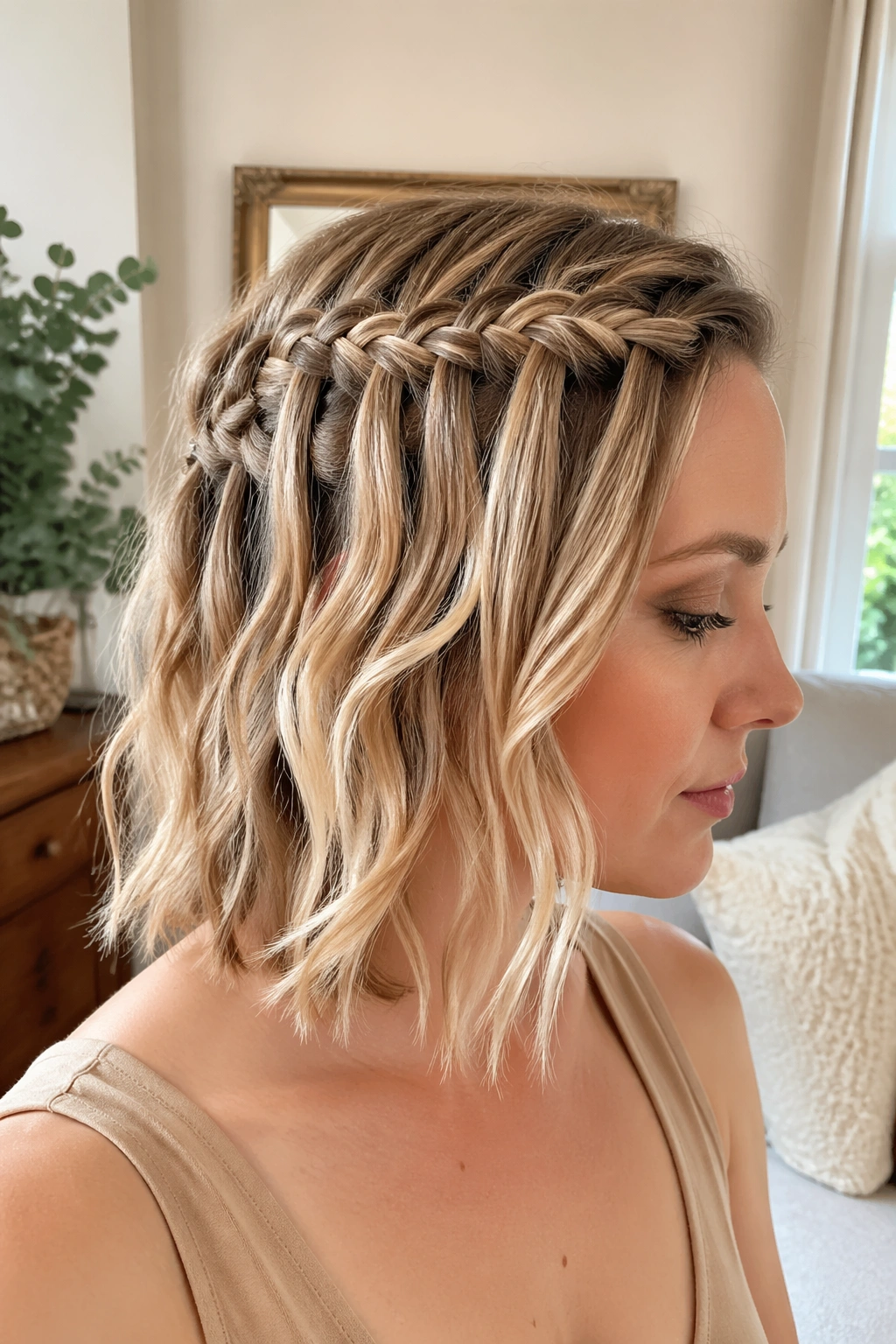
Waterfall braids look delicate on short hair because they don’t ask for full braid length. You braid across the side, letting one strand drop through each pass so the style creates little curved openings. On a bob or lob, those openings show off the texture underneath and keep the hair from feeling boxed in.
The thing to remember is that this is more of a visual accent than a heavy structure. You don’t need to finish a perfect long waterfall. A few passes across one side are enough. Then pin the ends back and leave the rest of the hair loose and lightly waved.
If your hair is super fine, mist the strands first. Waterfall pieces can slip faster than a regular braid because they leave sections hanging free, and that’s a pain when the ceremony runs long.
16. Gilded Clip Cluster on a Curly Bob
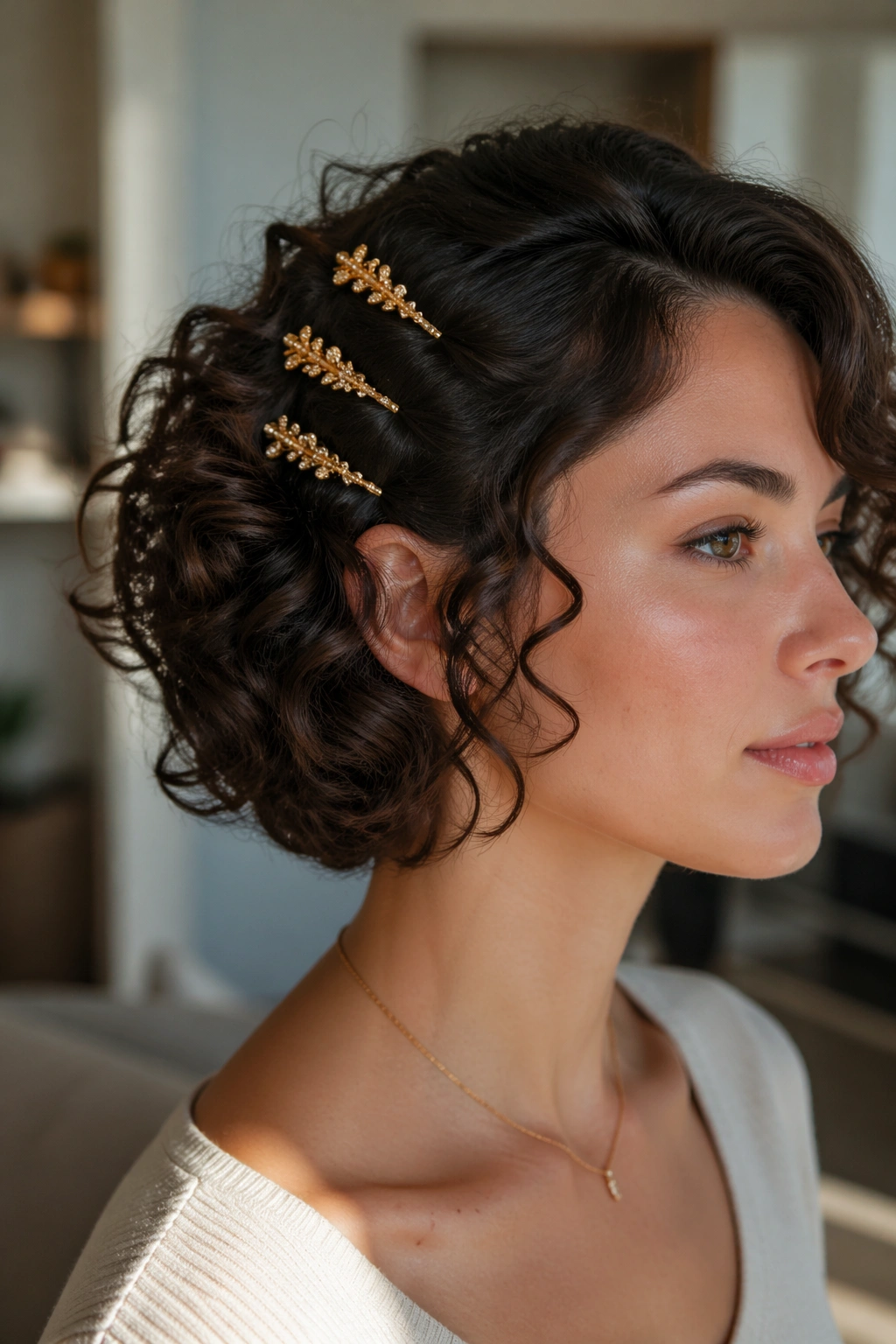
Three small clips beat one oversized one on a curly bob almost every time. A gilded clip cluster lets you pin back one side or the crown in a way that works with the natural shape of curls instead of flattening them. The result feels lighter, and the curls keep their bounce.
How to place the clips
Put the first clip closest to the part, the second just behind it, and the third slightly lower so they form a staggered line. That gives the eye a path to follow and keeps the look from reading random.
What to choose
- Small gold or brass clips for warm-toned hair
- Pearl-lined clips if the dress is simple
- Matte metal if the rest of the jewelry is already busy
This style is good when you want the curls to stay the main event. The clips should support the hair, not compete with it.
17. Rolled-Back Sides with a Soft Pouf
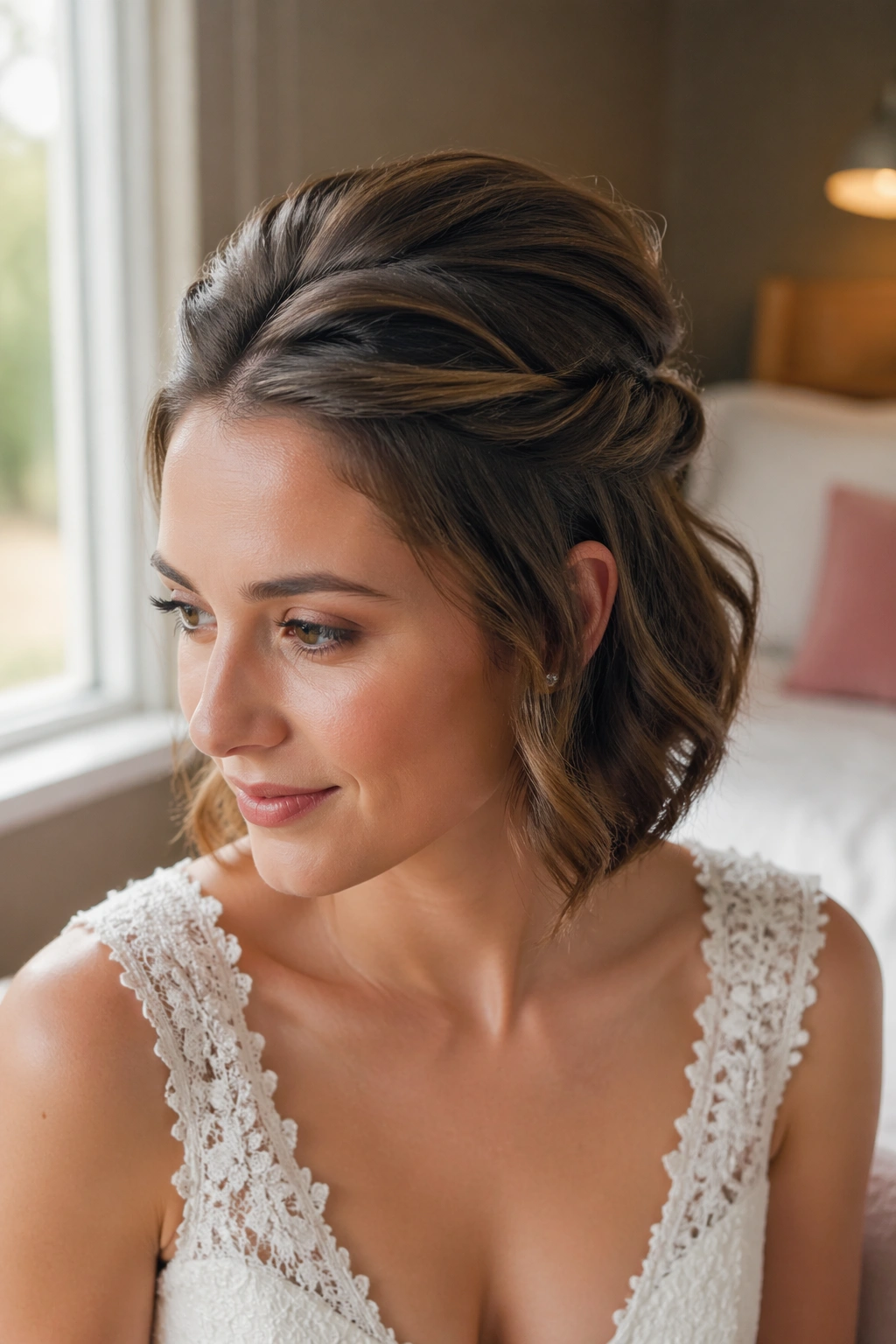
Rolled-back sides give short hair a little old-school polish, but only if the rolls stay soft. Think of them as tiny inward turns at the temple rather than full vintage rolls. The gathered hair meets in a loose half-up pouf at the back, which keeps the shape bridal without making it formal in a stiff way.
Why the rolls feel softer
A French twist pulls hair inward sharply. Rolled-back sides do not. They keep some curve and leave room for movement, which suits shorter lengths far better.
Best for thicker short hair
If your hair has some density, this style holds nicely because the rolls have enough body to stay visible. Thin hair can still do it, but the rolls should be narrower and pinned with smaller sections so they don’t look empty.
I’d choose this for a dress with lace, buttons, or a neckline that already feels romantic.
18. Braided Bangs into a Half Knot
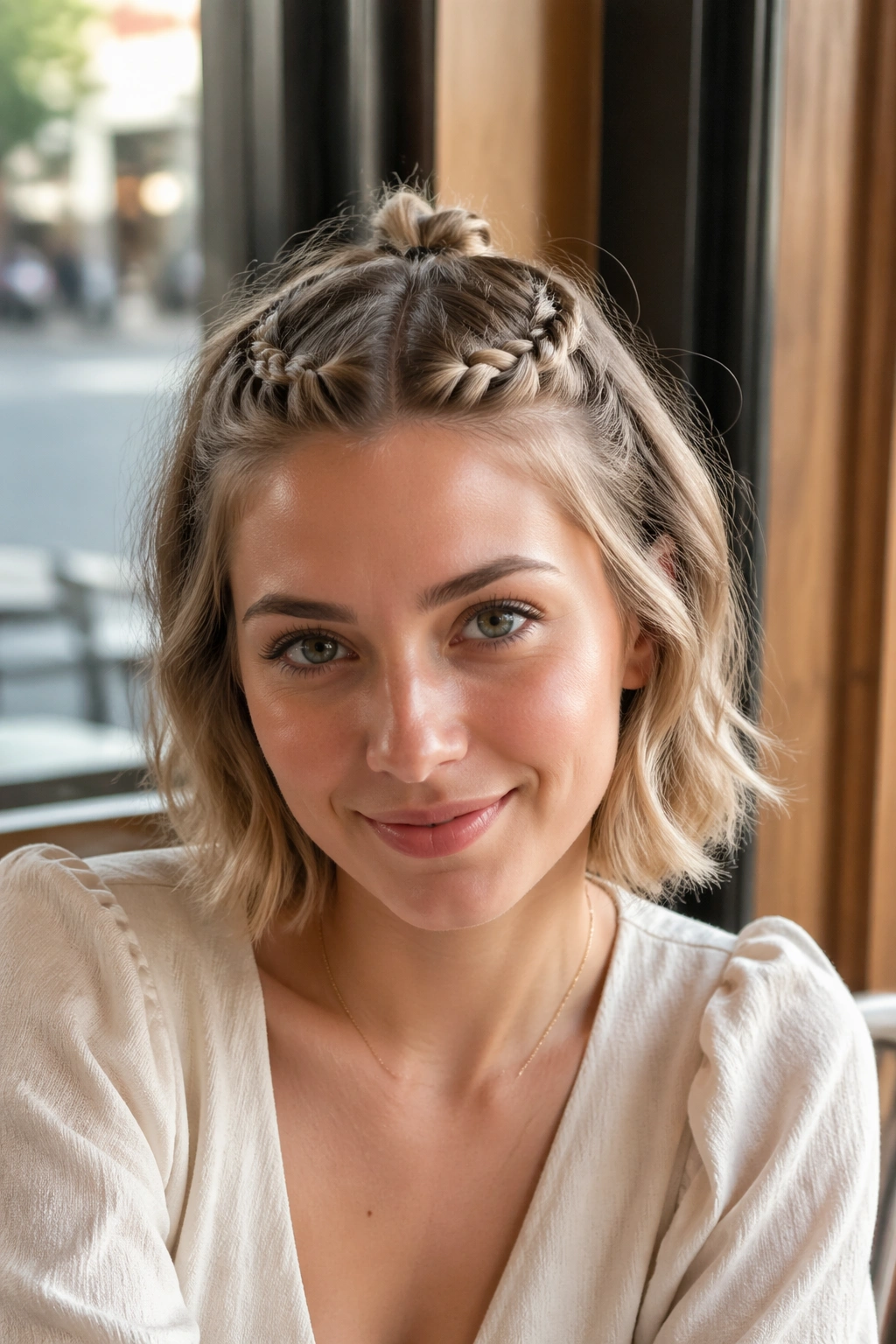
Growing-out bangs can be a problem on a wedding day. Or they can be the whole style. Braid the fringe or front pieces back from each side, then gather them into a tiny half knot at the crown. The lower hair stays down, and the braid keeps the front from falling into the eyes every time you smile.
The part that matters
Do not braid the fringe too tightly. A soft braid sits better against the forehead and doesn’t make the face look rigid. Once the little knot is pinned, loosen the braid edges with your fingers until they look natural.
Useful details
- Great for long bangs or curtain bangs
- Works on fine hair that needs extra control at the front
- Pair it with loose waves through the rest of the hair
- Use pins that match your hair color so the braid looks cleaner
This is one of those practical styles that also happens to photograph well from the front.
19. One-Clip Side Sweep with Statement Jewelry
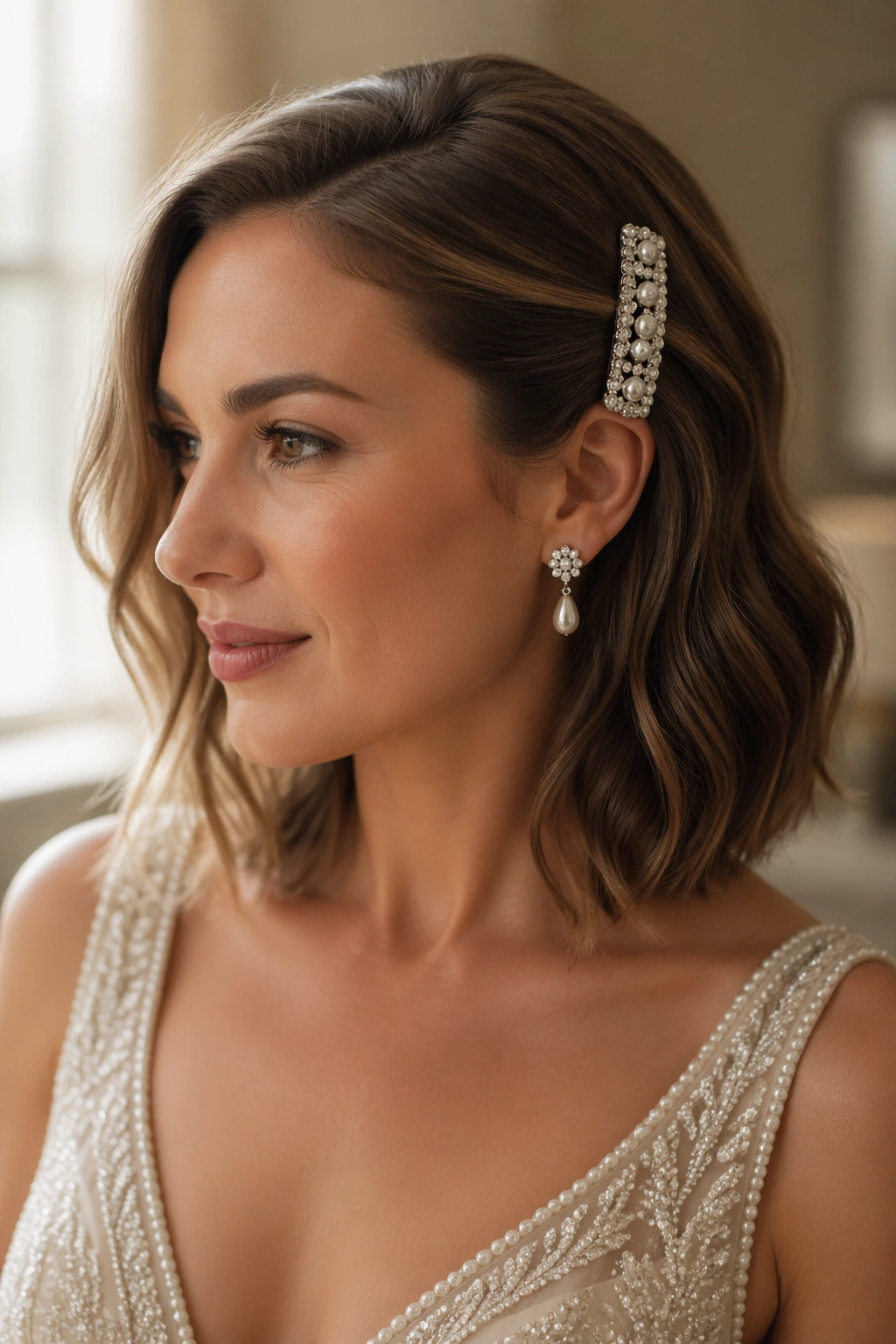
A single strong clip can be enough. If the wedding dress already has a lot going on — beading, embroidery, a dramatic neckline — a one-clip side sweep keeps the hair from competing with it. Pull one side back, secure it with a statement clip, and let the rest fall softly around the shoulders.
The asymmetry gives the face a nice line. It also keeps the style from getting too precious, which is a problem a lot of wedding hair runs into. The clip should be wide enough to stay visible, but not so large that it looks like it belongs at a banquet hall from another decade.
This works best when the hair is smooth at the front and gently bent through the ends. If the waves are too tight, the clip loses its clean shape.
20. Soft Knot with Tucked Ends
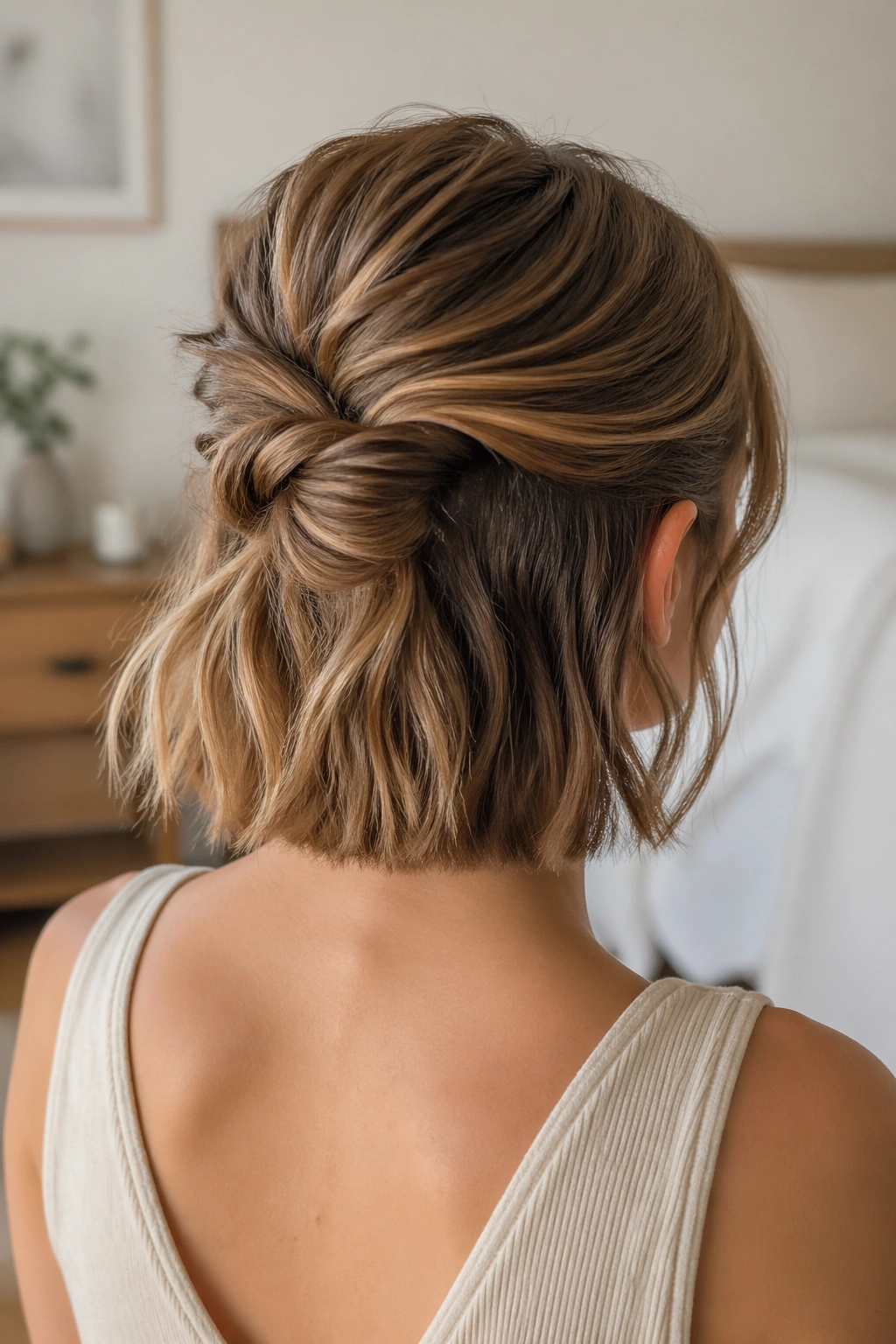
A soft knot is what happens when a half-up ponytail gets a little more thoughtful. Instead of tying the top section and leaving the ends hanging, you twist the section once or twice, fold it over itself, and tuck the ends underneath with U-pins. The lower half stays loose.
The beauty of this style is the finish. From the back, it looks neat but not severe. From the side, you still get movement. That balance is what makes it work so well for short wedding hair, where too much structure can start looking boxy.
If the hair is slippery, rough it up with dry shampoo or a texture mist first. A knot that slides apart halfway through the reception is not charming. It is annoying.
21. Twisted Half-Up with Short Fringe
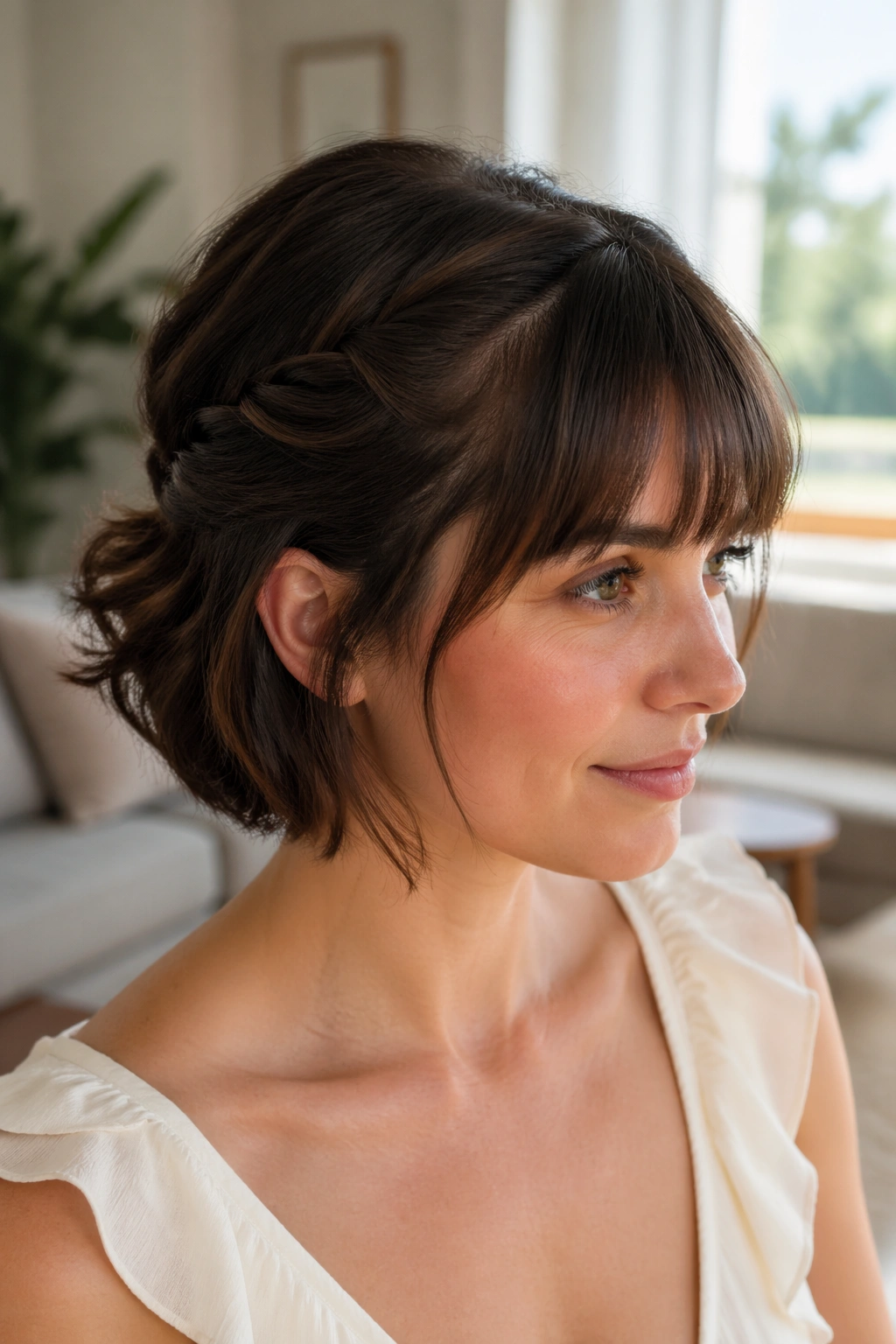
Does a short fringe get in the way of a half-up style? Sometimes. It also gives the style character. Leave the fringe out and twist only the sections that sit behind it, then pin them at the back so the bangs keep their soft frame around the face.
Where to place the twist
The twist should begin behind the widest part of the fringe, not directly at the hairline. That keeps the front from looking crowded and lets the fringe do its job.
Best styling product
- Light-hold mousse for soft control
- A little shine spray on the twists
- Dry shampoo at the roots if the fringe gets oily fast
I like this style for people who hate hair stuck to their forehead. It feels easy, but it still looks deliberate.
22. Diamond Pin Pattern Across the Back
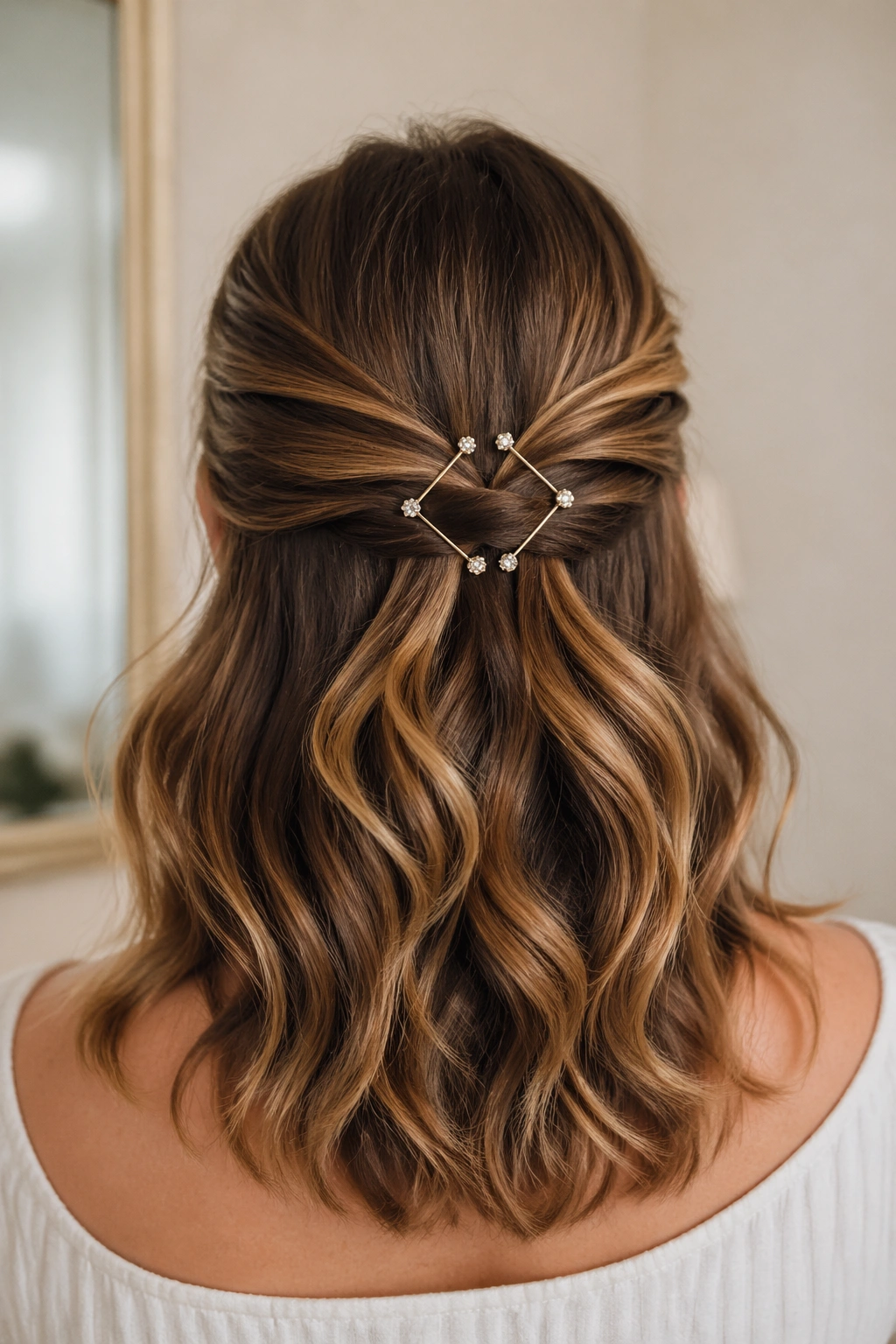
A diamond pin pattern turns a plain half-up into something geometric and sharp. Take two small sections from each side, meet them in the middle, then cross four pins so they form a diamond or lozenge shape. The remaining hair hangs below in waves or a polished bend.
The shape looks best when the pins are matched closely in color. Black hair with dark pins, blonde hair with gold or pearl pins, red hair with bronze. If the pins contrast too much, the pattern can become the only thing people notice, and that’s not always the goal.
This is one of the more modern-looking options on the list. It suits brides who like clean lines and a little edge.
23. Curly Half-Pony with Crown Height
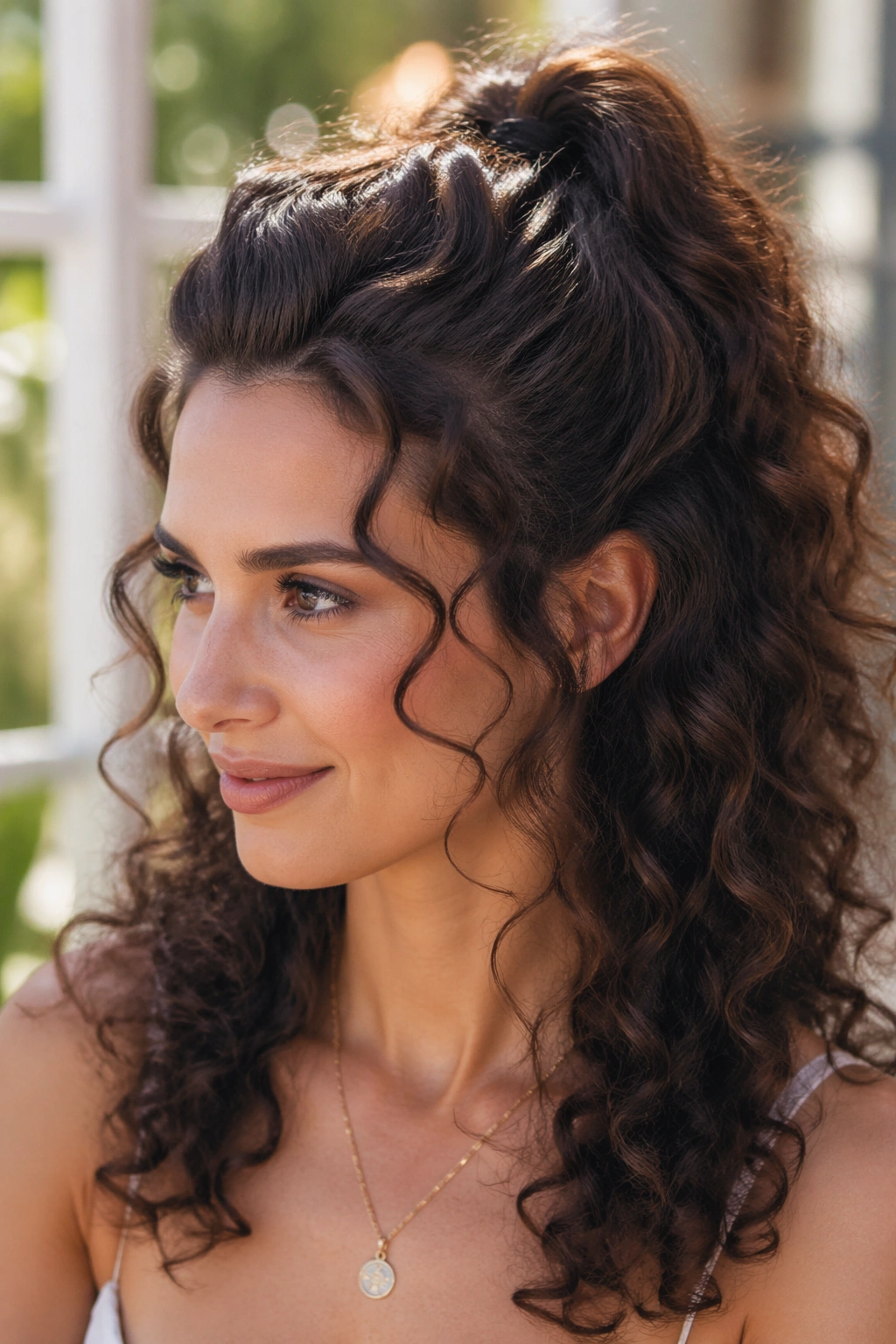
Curly hair does not need to be tamed into submission for a wedding. A half-pony with some lift at the crown lets the curls stay themselves while still giving the face a cleaner shape. Gather the top section loosely, secure it where the head starts to curve, and let the lower curls fall.
What to ask your stylist
Ask for curl definition at the ends and softness at the roots. That usually means diffusing the hair, then lifting the crown with fingers or a pick instead of brushing it flat.
How to keep the volume
- Use a 1.25-inch iron only on a few outer curls if needed
- Clip the crown while cooling to hold shape
- Avoid heavy oils near the roots
- Let the curls settle before adding pins or accessories
This style is lovely when you want the hair to look full and alive, not sprayed into a shell.
24. Double Twist Crown with Side Volume
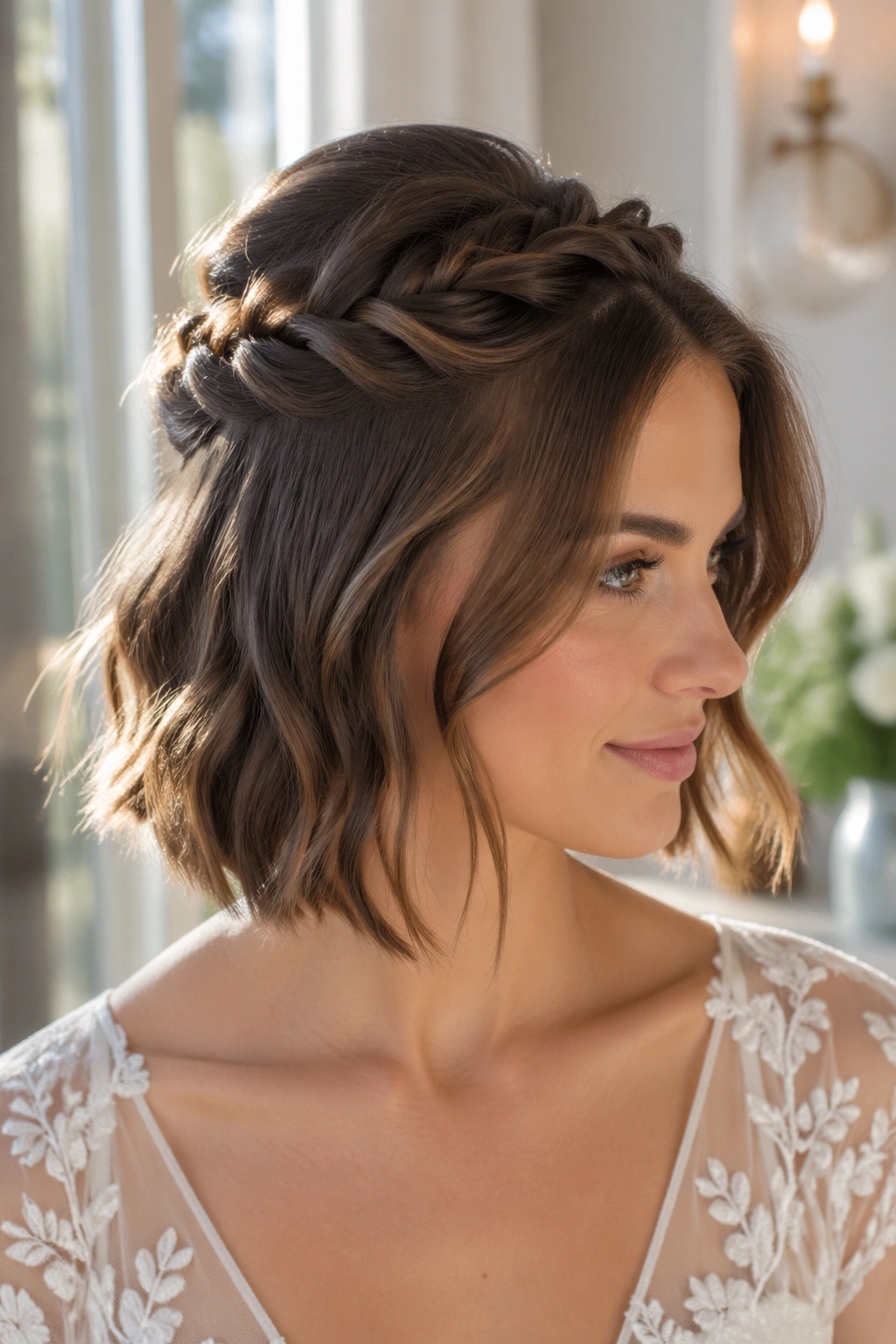
Two side twists can do a surprising amount of work on short hair. Start one twist from each temple, bring them back toward the center, and pin them so they meet just below the crown. Keep a little lift at the roots and leave the lower hair loose with side volume instead of flattening it under the twist.
The style is especially kind to rounder face shapes because the side volume stretches the silhouette a bit. It also works well if your hair has layers, since the shorter pieces help the twist look fuller without needing extra length.
A tiny puff at the crown helps, but don’t go overboard. Once the hair starts standing away from the head, the whole look gets fussy. Soft height. That’s the sweet spot.
25. Satin Bow and Loose Tendrils
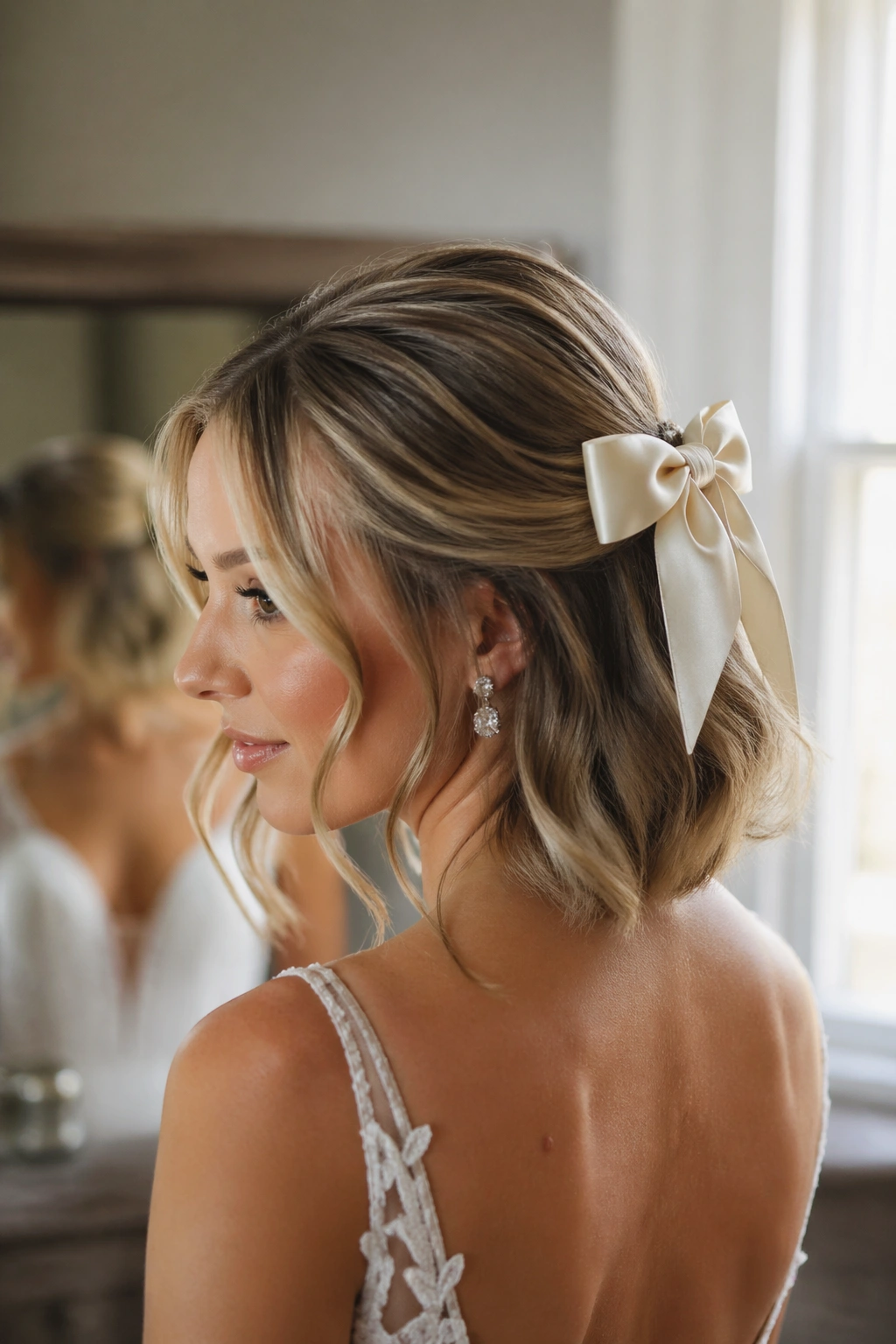
A satin bow can make short wedding hair feel finished in one move. Pull the top half back into a low, soft section, tie or pin it with a satin bow, and leave a few tendrils loose around the cheeks and neck. The lower hair can stay straight, waved, or curled, as long as the ends look deliberate.
Bow placement matters more than bow size. Keep it just below the crown or slightly off-center if you want a quieter look. A bow that sits too high starts reading playful, and that can be a good thing, but it changes the whole mood.
I like this style for brides who want romance without too much structure. It feels gentle. It also gives short hair a focal point, which is useful when the cut itself is simple.
Final Thoughts
Short hair gives you a cleaner canvas than most people expect. That’s the advantage. A good half-up style on a bob or lob needs one strong anchor, a little movement in the lower half, and an accessory that feels like it belongs there.
If you’re choosing between two ideas, pick the one that looks best from the side, not just the front. Wedding photos catch everything. A twist that sits too high or a clip that tilts backward can change the whole read of the style.
And yes, simple can be beautiful here. Sometimes the best wedding hair is the one that looks calm, holds its shape, and still lets your face do the talking.
