



A high cornrow ponytail can do something most styles cannot: it pulls the face up, keeps the neck clear, and still leaves room for personality. On Black hair, that mix matters. You get structure, shine, and a style that can look crisp enough for a suit or soft enough for a satin dress, depending on how the braids are parted and finished.
The catch is tension. A ponytail that looks sleek on the outside can still be miserable if the base is too tight, the braids are too heavy, or the hairline is being yanked for the sake of a sharp silhouette. The best versions feel secure but not sore. If your scalp throbs when you blink, the style is already doing too much.
What makes high cornrow ponytails so useful is the range. One version leans polished and minimal. Another brings in curls, beads, color, or dramatic parting. A good braid pattern also changes how your face reads: center parts sharpen, side parts soften, and curved rows add movement without needing extra length.
Some of these looks are neat and restrained. Others are loud in the best way. All of them can work beautifully when the braids are placed with intention and the finish fits your hair, your face, and your day.
1. Sleek Center-Part High Cornrow Ponytail
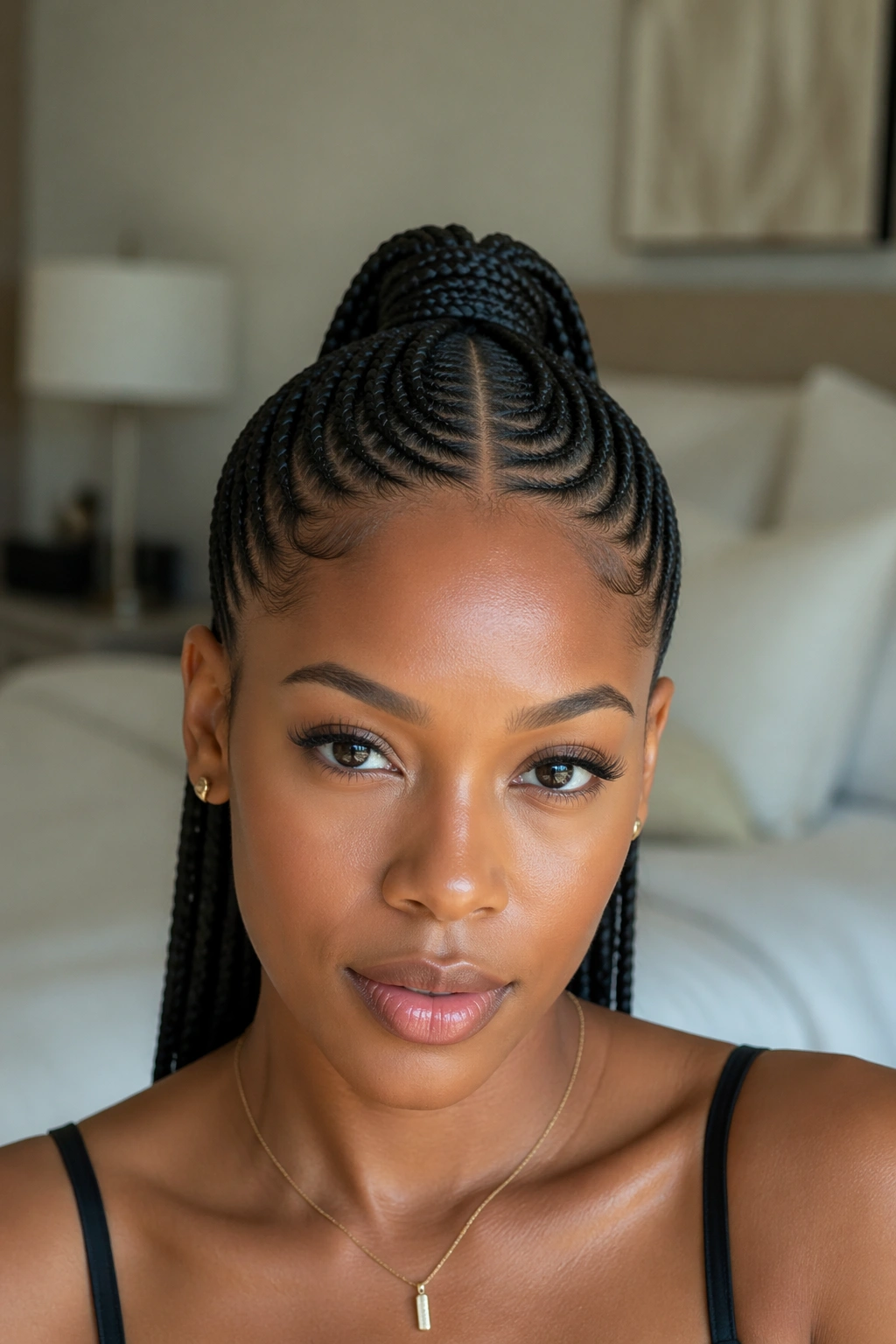
A center-part high cornrow ponytail is the cleanest place to start. The middle part gives the style symmetry, and that symmetry does a lot of quiet work. It makes the face look longer, keeps the braids tidy, and gives the ponytail a strong, almost tailored feel.
Why It Looks So Sharp
This style works best when the braids run straight back from a crisp center part and meet at the crown in a smooth base. The ponytail itself can be long and straight, or braided all the way down if you want more weight and less frizz. I like this one when the outfit is simple and you want the hair to carry the shape.
- Ask for 6 to 10 medium cornrows if you want balance without too much bulk.
- Keep the front braids snug, not painful.
- Wrap the ponytail base with a small braid or extension for a cleaner finish.
- Use a lightweight edge gel, not a thick paste that flakes.
If your forehead is wide or your face is round, this version gives a nice lifting effect without looking severe. And if you want the parts to stay sharp, the rat-tail comb matters more than any fancy product.
2. Deep Side-Part Cornrow Ponytail
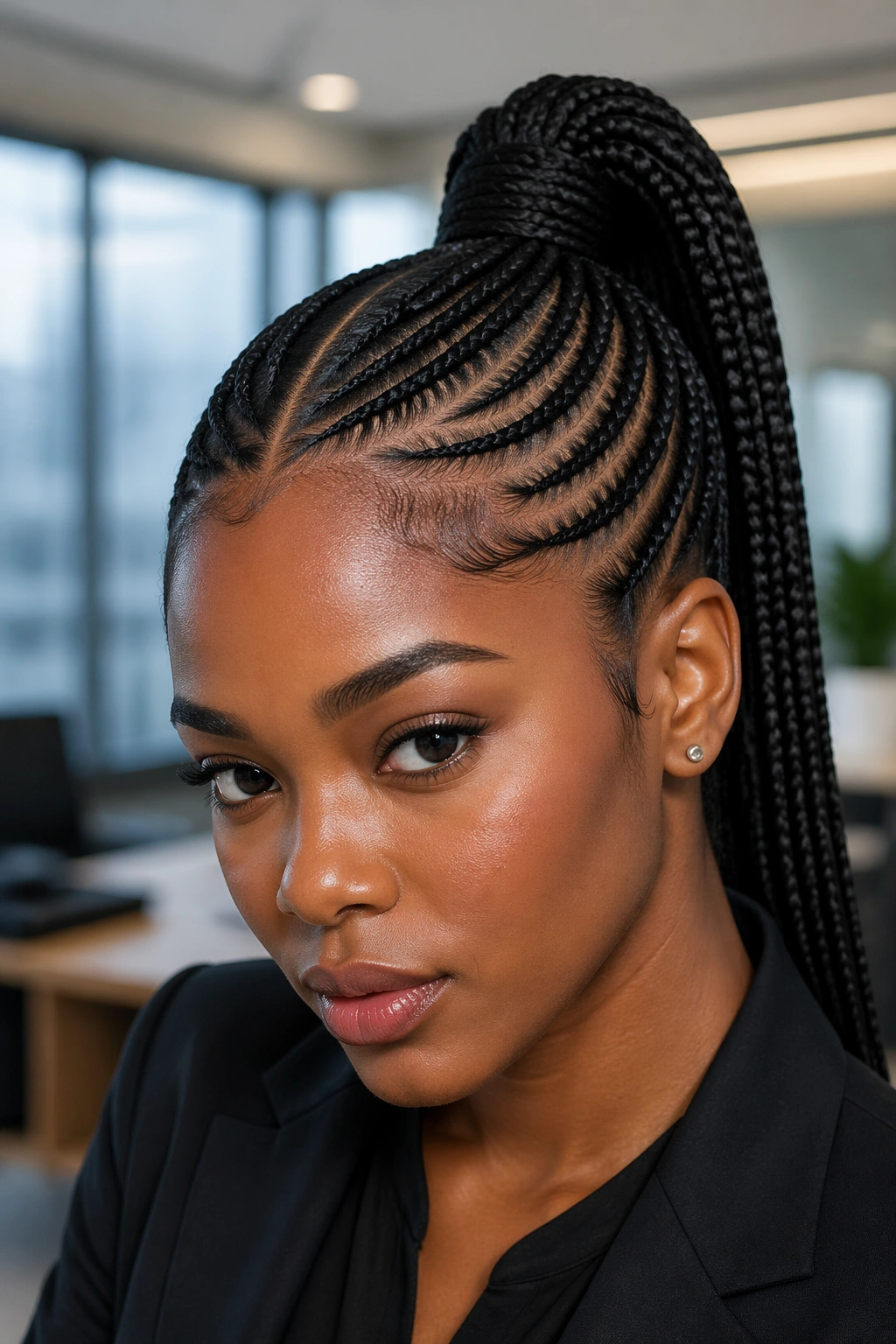
Want something a little softer? A deep side-part cornrow ponytail is the move. The part shifts the eye off center, and that small change gives the whole style more curve and less stiffness. It’s one of those looks that feels polished without trying too hard.
The side part also plays well with fuller cheeks, square jawlines, and anyone who doesn’t love a strict middle line. A single braid or two can frame the heavier side, while the rest sweep back into a high ponytail that still sits close to the crown.
A good version usually uses 5 to 7 braids, with one side carrying more visual weight. Keep the part clean and the rows even, or the shape can look accidental instead of deliberate. That’s the difference between “soft” and “messy,” and the line is thinner than people think.
This is a smart choice if you wear hoops, bold brows, or a blazer with a sharp collar. The hair gets to be part of the outfit, not just something sitting on top of it.
3. Feed-In Braids Pulled into a High Ponytail
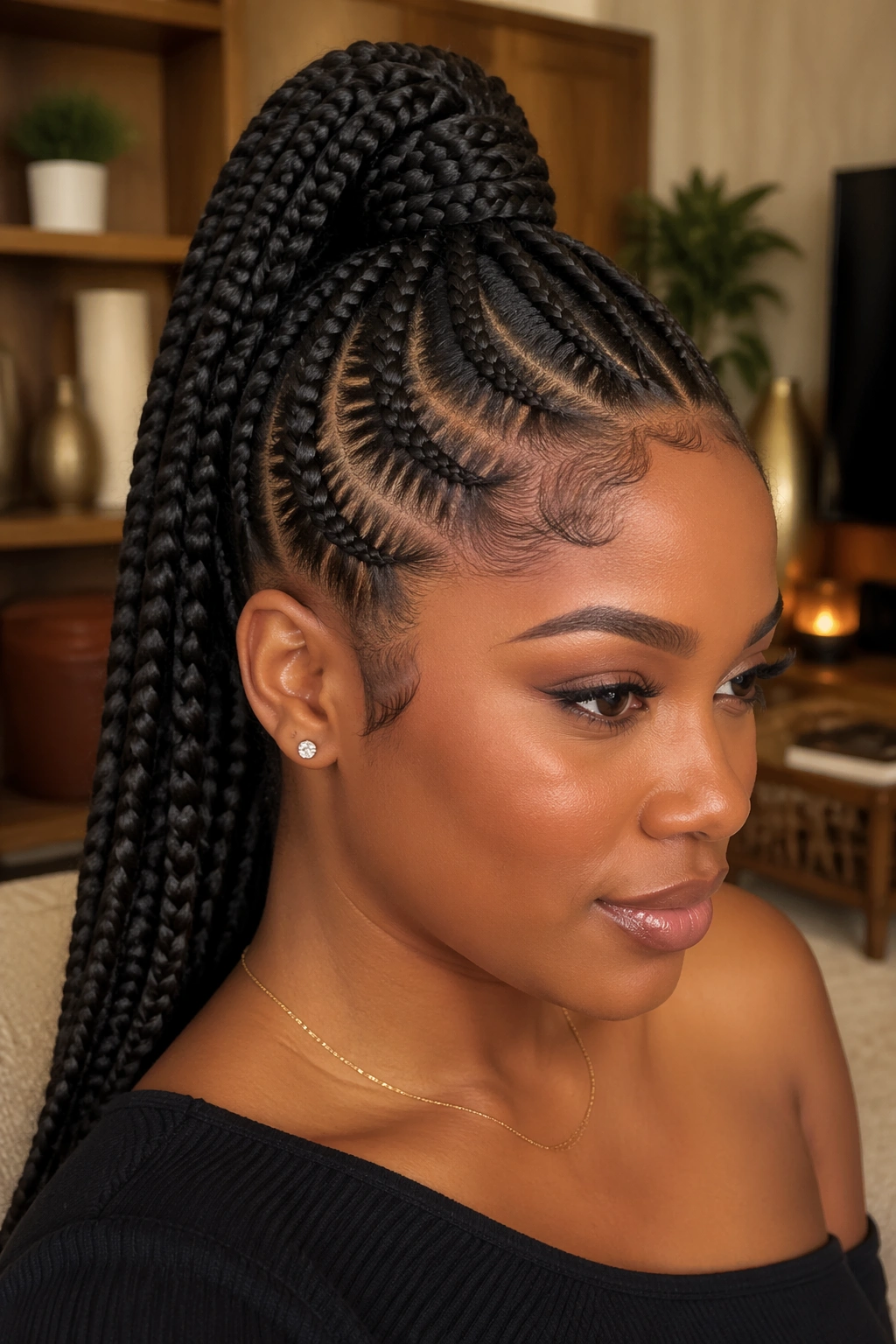
Feed-in braids are a favorite for a reason: they build thickness slowly, so the braid sits flatter at the scalp and feels lighter across the head. That matters a lot in a high ponytail, where extra bulk can make the base feel heavy by lunchtime.
The nice thing about this style is the finish. The braids can start slim near the hairline and grow fuller as they move back, which gives the ponytail a smooth, even shape without the harsh bump that some styles get at the crown. It’s especially helpful if you want length but not a huge amount of tension.
I’d choose this when the goal is movement. Feed-in braids flow well, and they hold a ponytail shape without looking stiff. If you want to keep the style neat for longer, use a satin scarf at night and avoid loading the base with too much gel. Heavy product near the roots can make the scalp feel coated and itchy fast.
This is one of the most wearable high cornrow ponytails for Black women who want long hair without wearing their actual hair out.
4. Stitch-Braid High Ponytail
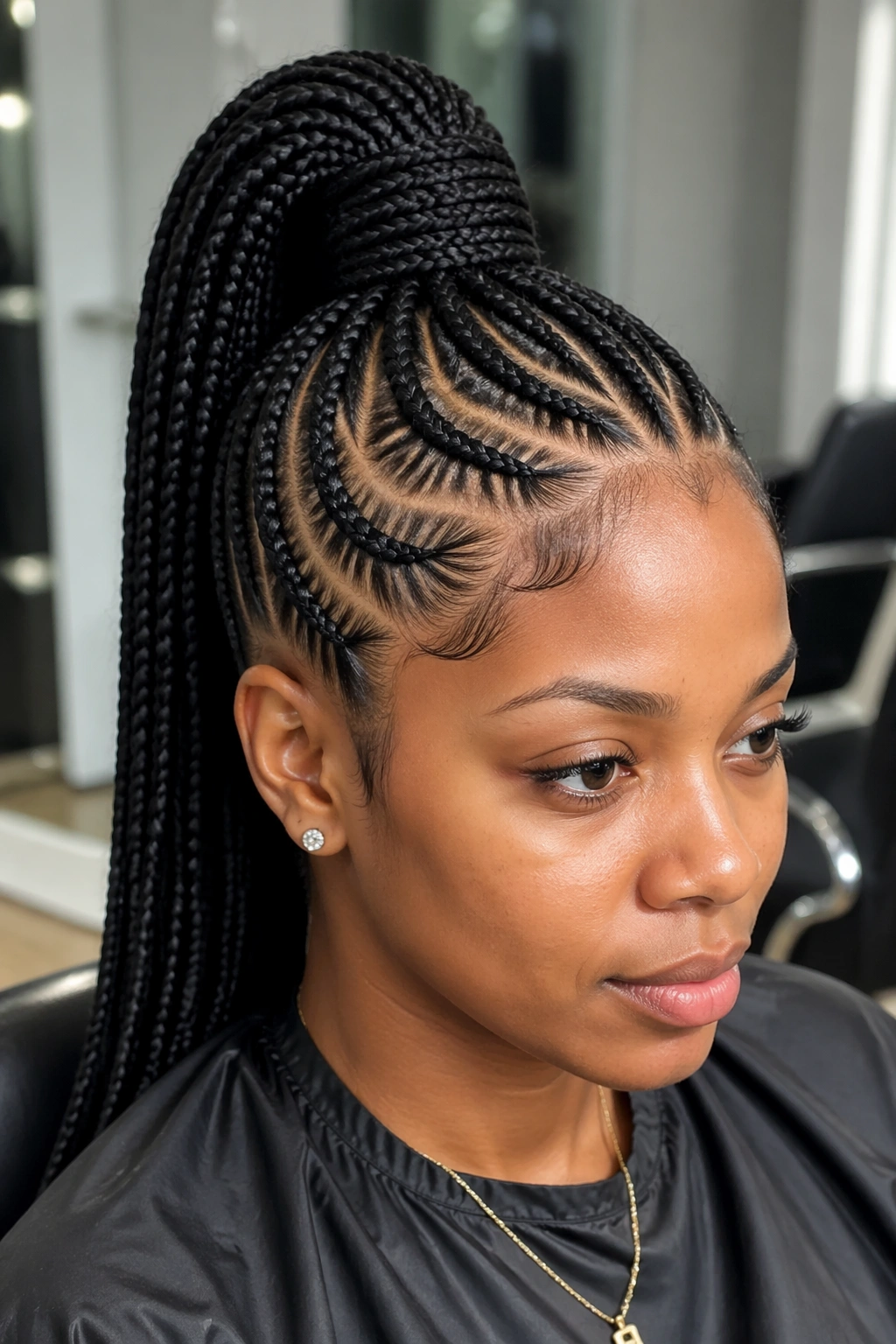
Stitch braids make a ponytail look carved. The sections are so clean and straight that the style gets this sharp, graphic edge before the ponytail even starts. If you like strong lines and precise parting, this one has a lot of attitude.
What to Ask For at the Chair
The braider should create clear horizontal or curved “stitch” sections with a rat-tail comb and keep each braid even from start to finish. The ponytail can sit high and tight, or a little looser if you want less pull around the temple area.
- Best with medium-to-large braids if you want the parts to show.
- Works well with long extension hair for a dramatic drop.
- Needs a very clean base so the stitch pattern stays visible.
- Looks best when edges are laid lightly, not pasted flat.
I’m fond of this style for formal events and photos because the braid pattern holds its own from every angle. If you’re going to wear it for several days, though, check the nape and the front hairline. That’s where tension shows up first.
5. Curly-End Cornrow Ponytail
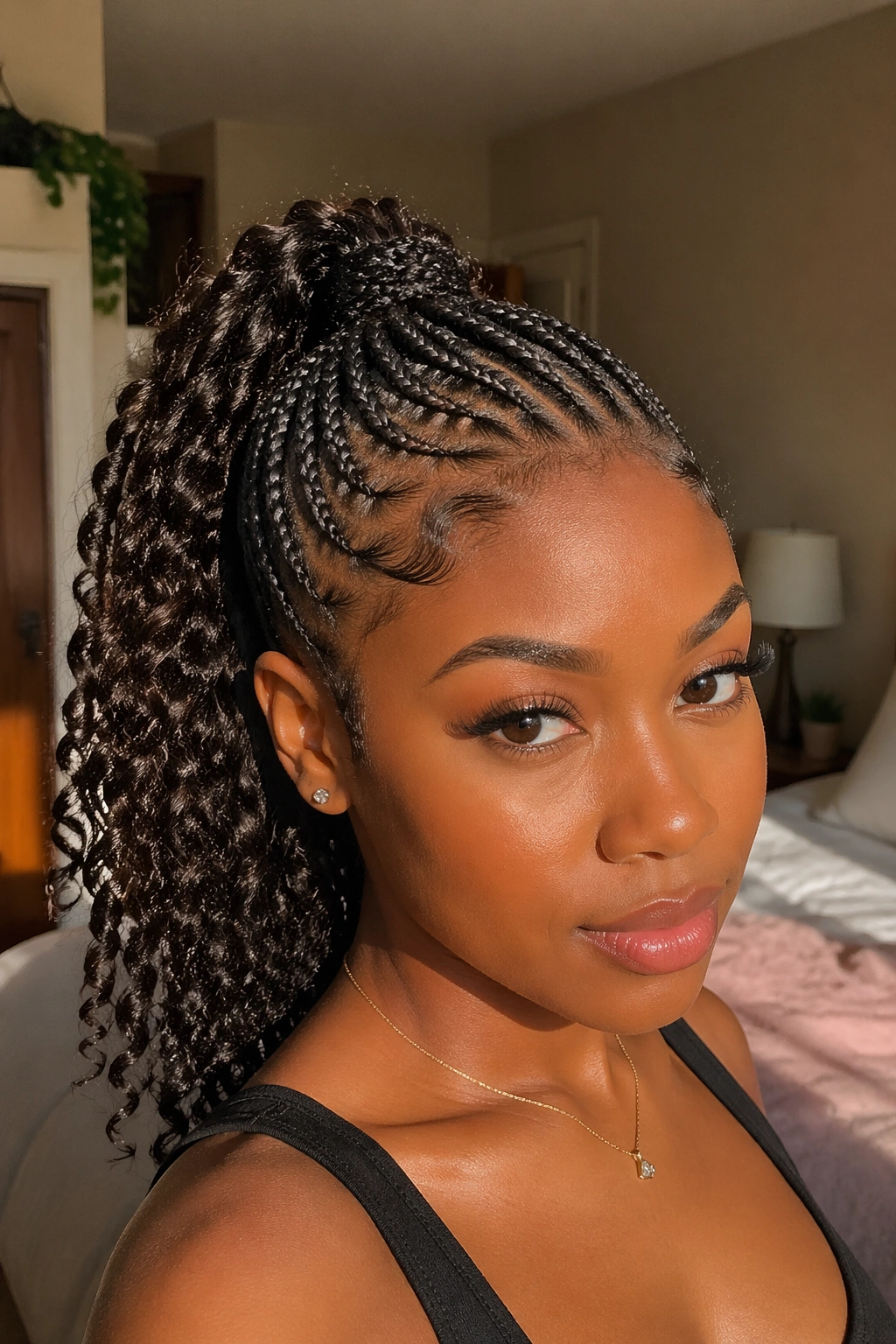
Straight braid length is not the only finish that works. Curly ends soften a cornrow ponytail right away, and that tiny switch changes the mood from strict to playful. The scalp stays neat, but the ends bring bounce and texture.
The easiest way to do it is with braiding hair that’s set into curls at the bottom, often with rods or pre-curled synthetic hair. A bit of mousse on the ends helps keep the curl pattern from puffing out into frizz too early. If you like hair that moves when you walk, this is a good pick.
I also like this style because it hides the line between “braided” and “styled.” The top stays clean, but the ponytail doesn’t feel rigid. That makes it easier to wear with dresses, denim, or anything that needs a softer touch. One small caution: curly ends need more care at night. A loose satin bonnet works better than stuffing the whole ponytail under a tight scarf.
6. Goddess Cornrow Ponytail with Loose Curls
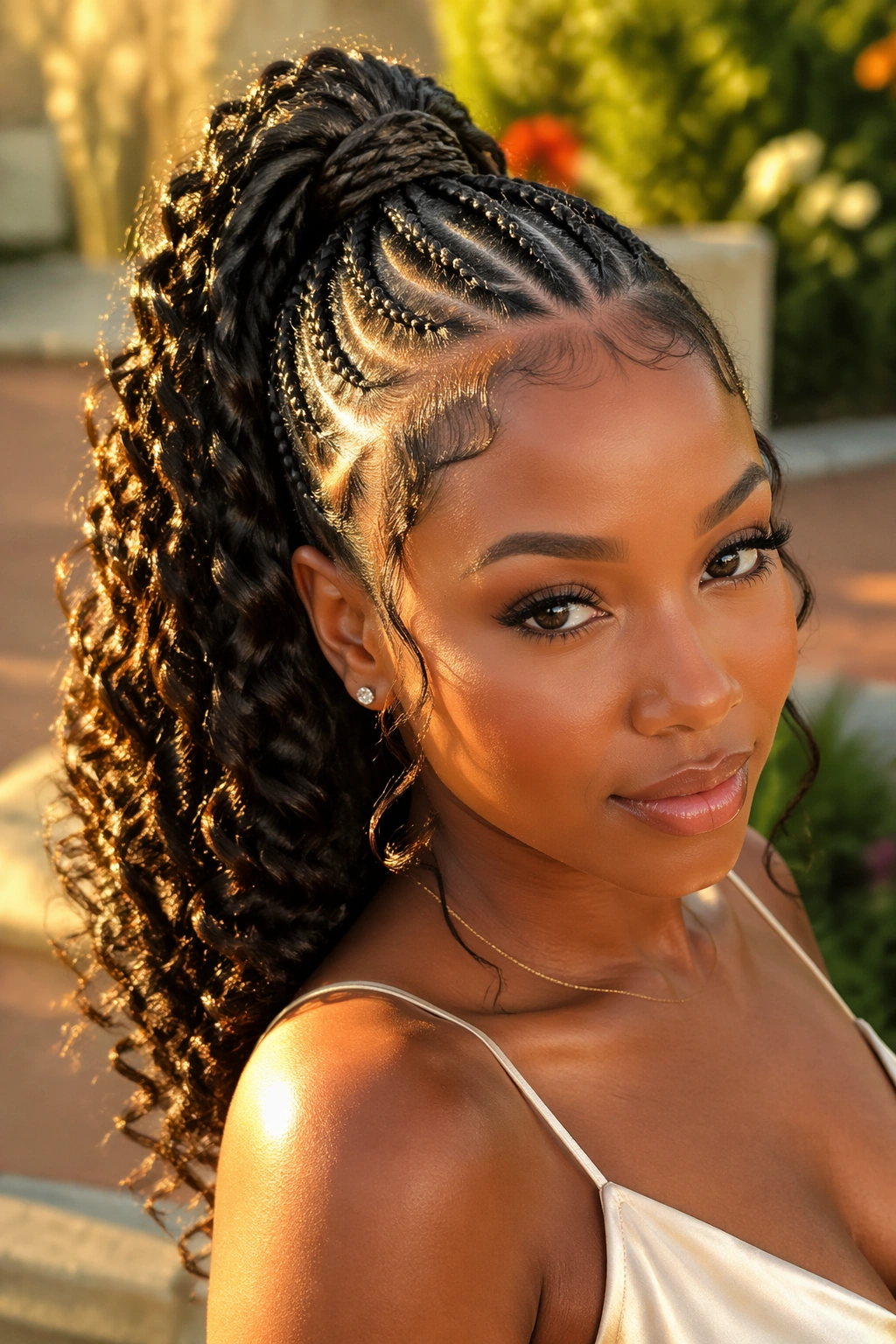
A goddess cornrow ponytail has a little more softness than the curly-end version. Instead of saving all the texture for the tip, the style lets loose curls spill through the ponytail or hang between the braids. It looks fuller, more romantic, and a touch less structured.
The difference is subtle in photos and obvious in person. Goddess curls break up the hard lines of the cornrows, so the style feels gentler around the face. That makes it a strong choice if you want the lift of a high ponytail without the severe edge some braided styles can bring.
This one works especially well with longer lengths and medium-to-large curls. Too many tiny curls can look busy, and too few can feel sparse. A balance of both gives the ponytail shape and air. If you like a style that can move from brunch to a wedding without changing a thing, this is a solid option. It has polish, but it does not feel stiff.
7. Zigzag-Part High Cornrow Ponytail
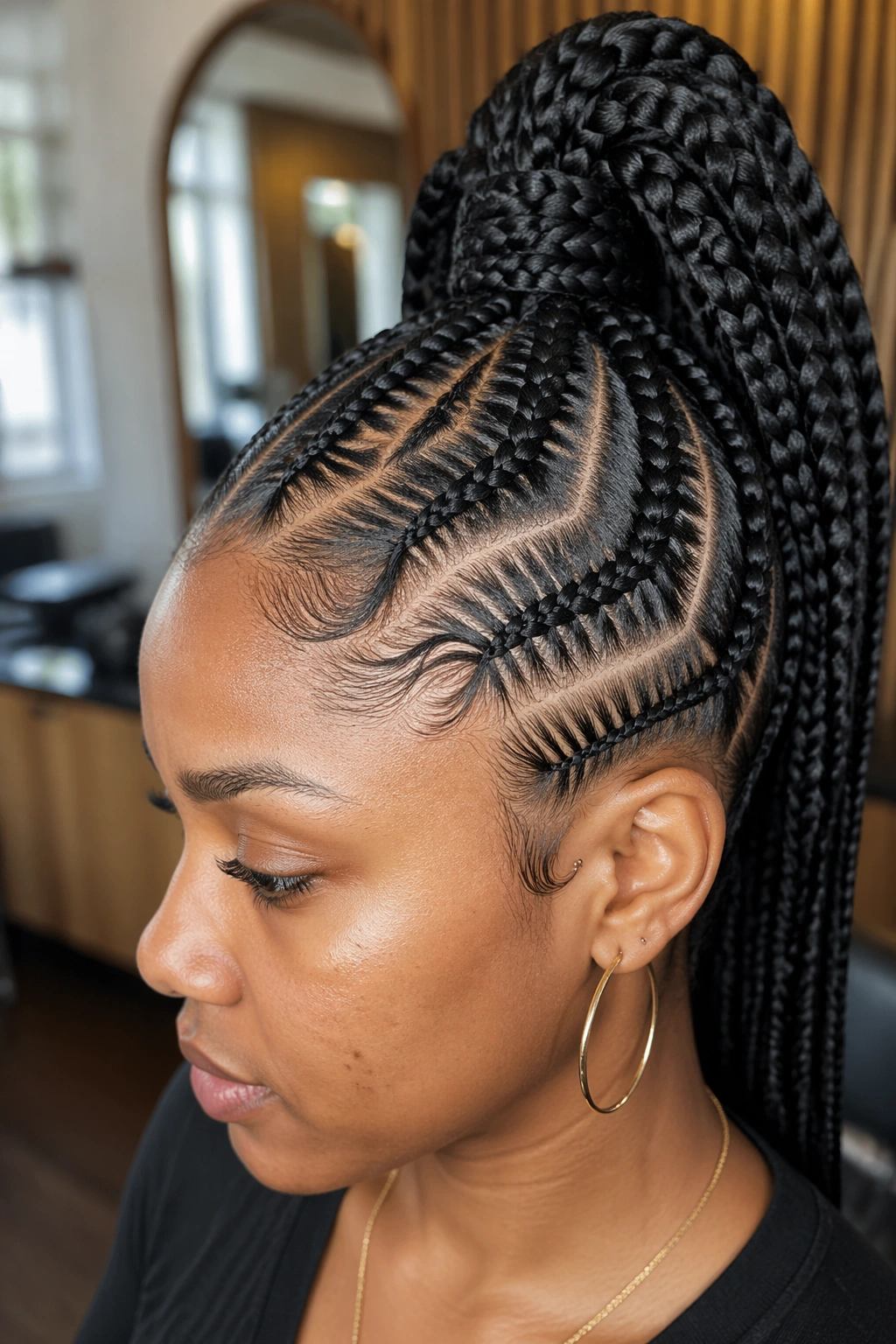
Zigzag parts are for people who want pattern without extra accessories. The parting itself becomes the decoration, and that’s enough. It gives the scalp a little motion before the braids even reach the ponytail, which is why this style feels lively even when the rest is clean.
The key is consistency. The zigzag should look intentional, not wobbly. A good braider will keep the points even and repeat the pattern with enough precision that the eye reads it as design, not error. That matters more than the actual number of braids.
This look is a nice middle ground if you want something more playful than a center part but less ornate than beads or cuffs. It also photographs well from the top, which sounds like a small thing until you realize how many high ponytails are seen from exactly that angle. A little product goes a long way here. Use just enough gel to hold the parting; too much and the scalp starts to look shiny in a heavy, unnatural way.
8. Heart-Part Cornrow Ponytail
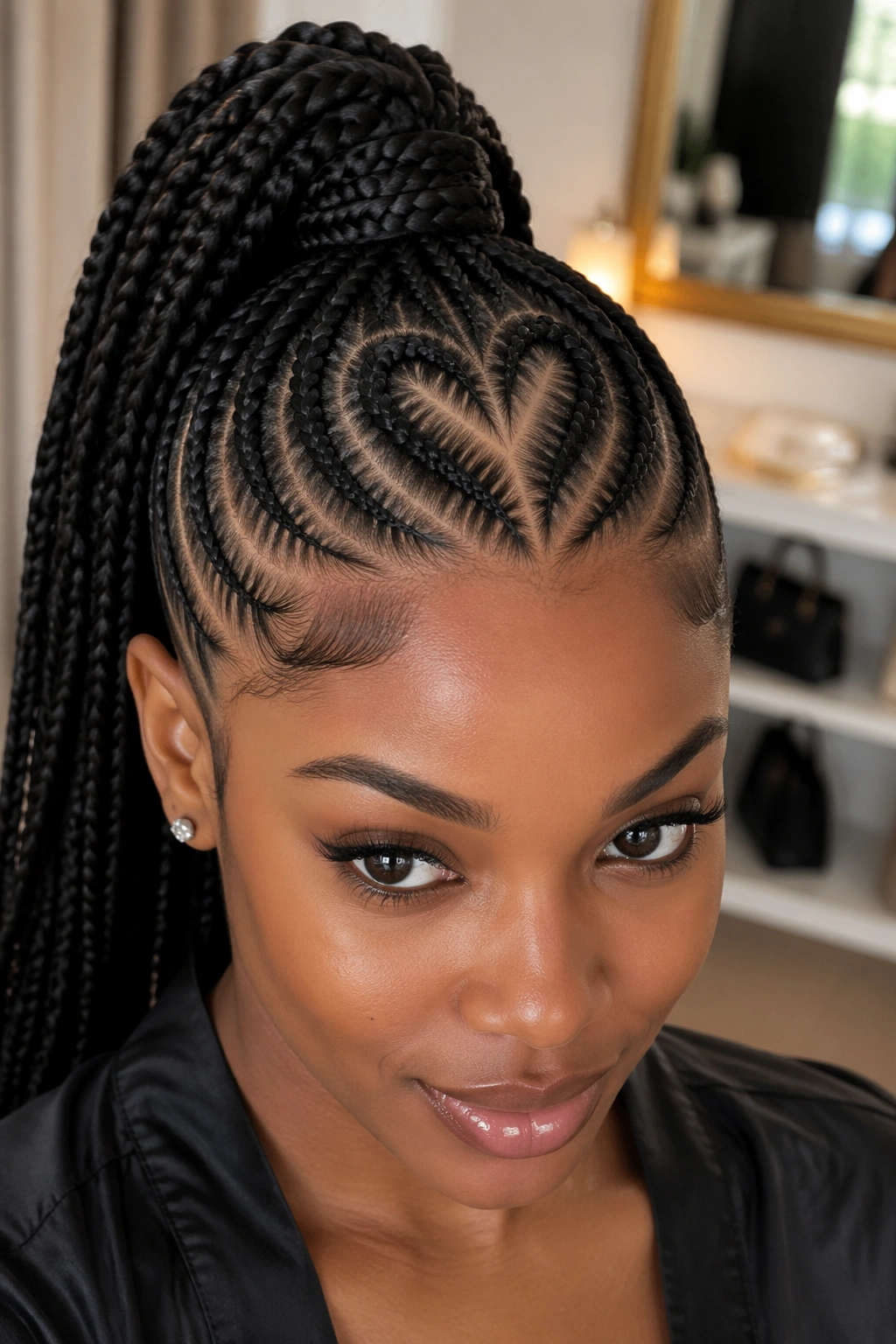
Why not let the parting do the flirting? A heart-part cornrow ponytail turns the scalp into the design piece, and it has a playful, almost unexpected charm. It works best when the heart sits at the crown or front center, where people can actually see it.
This style needs a steady hand and a patient braider. The heart has to be balanced on both sides, or it can drift into looking lopsided. Once it’s right, though, the effect is memorable without being childish. That makes it a good choice for birthdays, celebrations, or any day when you want the hair to feel special.
I like this style on medium to long braids because the shape of the heart stands out before the ponytail takes over. Keep the rest of the rows simple so the heart remains the star. If you add too many competing patterns, the whole look gets noisy. One bold detail is enough.
9. Jumbo Cornrow High Ponytail
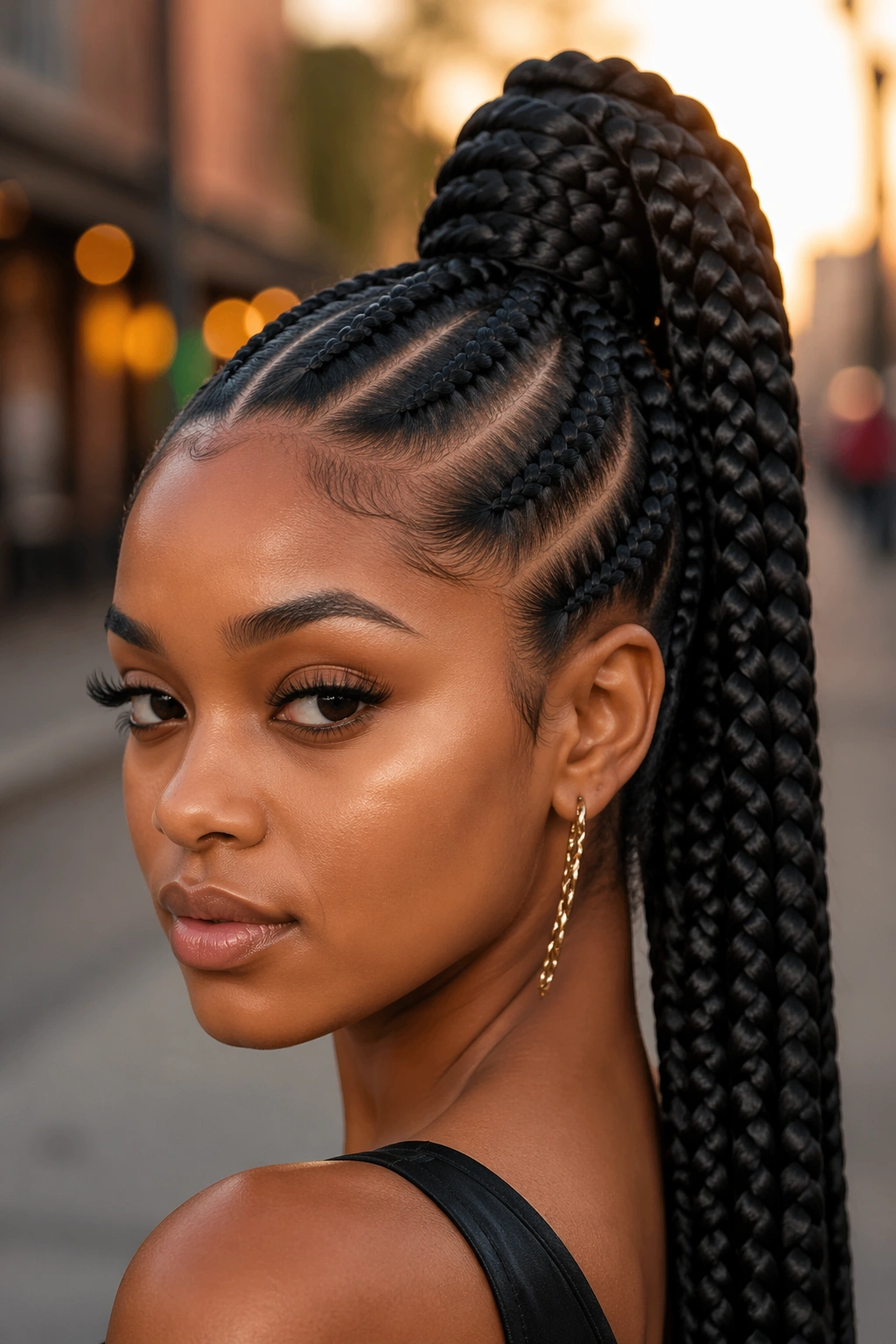
Jumbo braids bring drama fast. Fewer rows mean a quicker install, a thicker finish, and a ponytail that looks bold without needing a ton of length. Some people love that extra mass at the crown; others need to be careful with it because big braids can add weight.
That weight is the main tradeoff. A jumbo cornrow ponytail gives strong visual impact, but it should still feel balanced. If the front feels too tight, the style is too tight. Simple as that. The best versions have a wide, smooth base and braids that lie flat before collecting into the ponytail.
This is a smart pick if you want the style to read from across the room. It works well with gold hoops, structured jackets, and heavier makeup, but it can also carry a plain T-shirt better than people expect. The braids do the talking. No need to pile on extras.
10. Micro-Cornrow High Ponytail
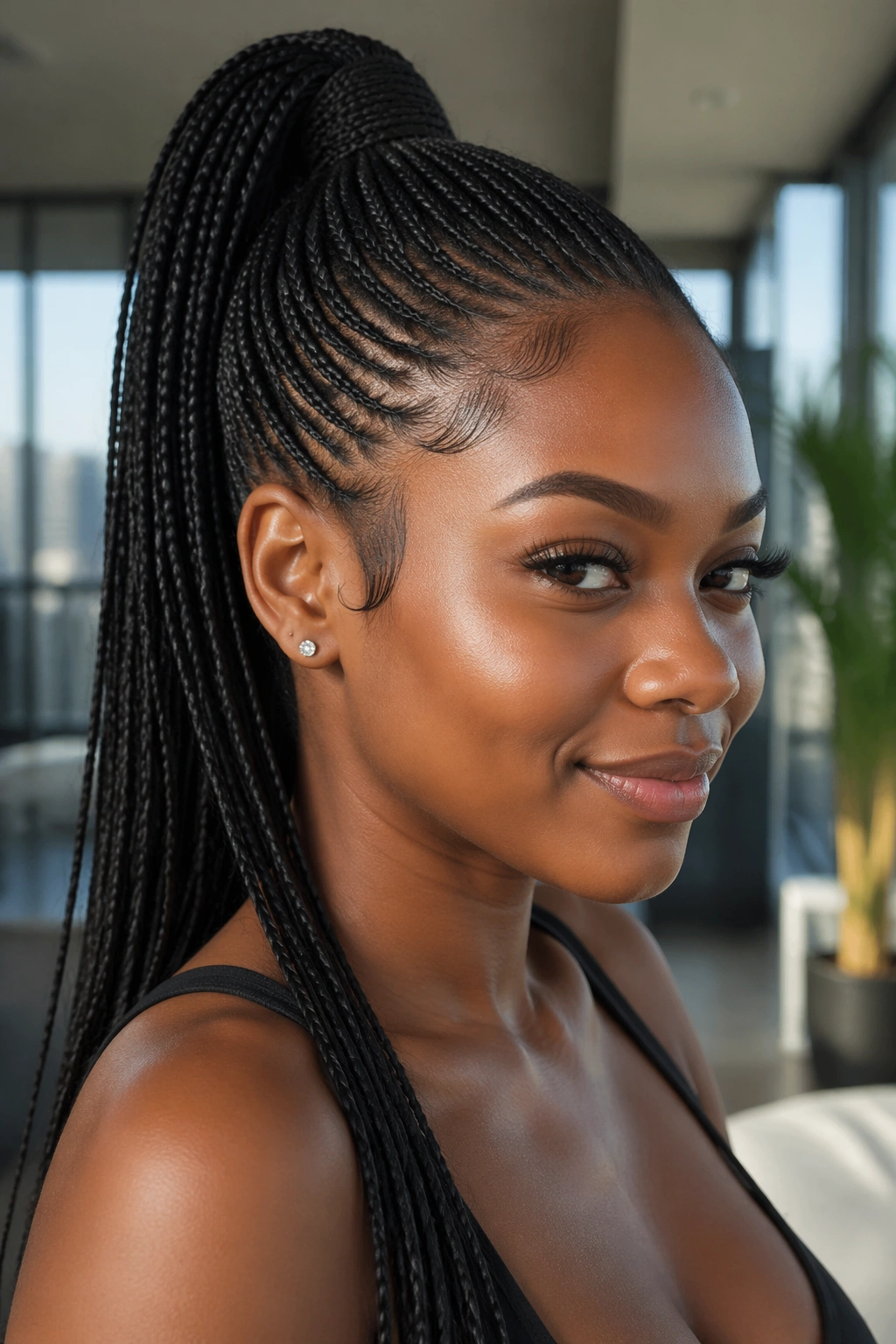
Micro cornrows are the opposite of jumbo braids: tiny, detailed, and a little more time-consuming than most people think they’ll be. The payoff is worth it if you want a sleek, intricate look with a lot of movement in the ponytail.
When It Makes Sense
This style is especially good when you want long wear and a neat finish around the hairline. The smaller braids sit close together, so the base looks smooth and refined. That can be useful if your hair is fine around the edges or you want the ponytail to look light instead of chunky.
- Best for longer appointments and a braider who likes detail.
- Can be worn with straight extensions, curled ends, or a single braid tail.
- Needs a gentle take-down to avoid snagging.
- Works well when you want a very clean silhouette from front to back.
Micro braids can look elegant, but they also ask for patience. Removal takes time. Don’t rush it. A little conditioner on the braid ends and a careful finger-untwist can save you from breakage later.
11. Cornrow Ponytail with Braided Bang
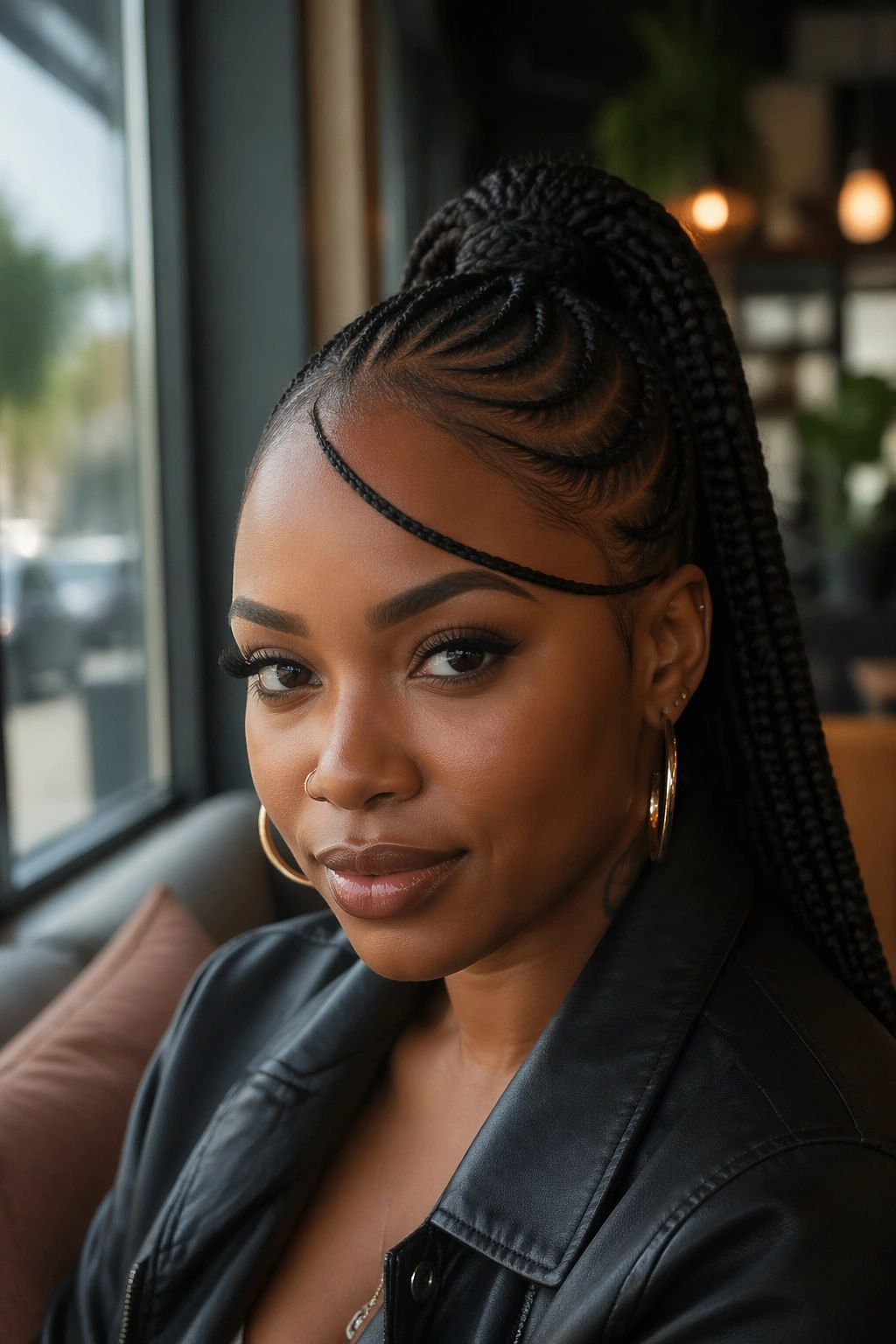
A braided bang changes the mood fast. Instead of pulling every strand away from the face, you leave one braid or a small braid cluster to angle across the forehead. That soft line makes a high ponytail feel less severe and a bit more wearable for everyday life.
This style is useful if you like the height of a ponytail but not the full exposure of a slicked-back look. The bang can be thin and delicate, or thicker and more noticeable, depending on how much face framing you want. Either way, it adds a little softness around the temples, which is where a lot of braided styles feel harsh.
I’d keep the rest of the cornrows simple so the bang stays the focal point. If too many parts compete with it, the style starts to look busy. A small curl at the end of the bang can also help. It breaks up the line in a way that feels less stiff, and that tiny detail can make a big difference in photos.
12. Wrapped-Base High Cornrow Ponytail
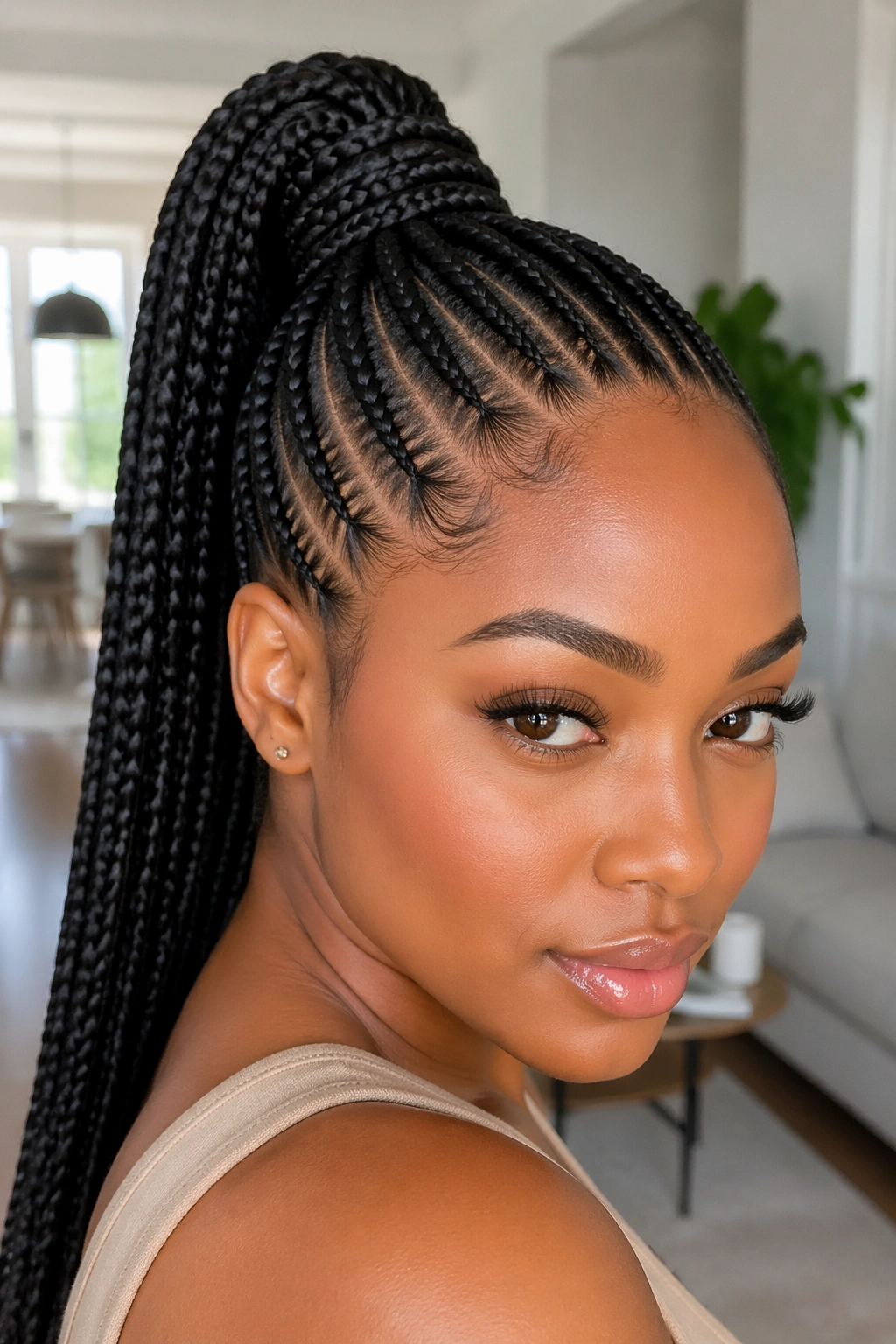
A wrapped base is one of those details that separates “nice” from finished. Instead of leaving the ponytail holder visible, you take one braid or a piece of extension hair and wrap it around the base until the tie disappears. Clean. Easy. Better looking.
The reason I like this look so much is that it hides the practical part of the style. You still get the security of an elastic, but the eye sees a polished knotless finish instead of a band sitting in the middle of the head. That matters when the ponytail is high, because the base is right at eye level.
This version works especially well for events or work settings where you want the style to read neat from every angle. Keep the wrap snug and tuck the end firmly underneath the band or pin it out of sight. If the wrap is bulky, it starts looking clumsy, so smaller sections are better here. Tiny details, big payoff.
13. Beaded Tribal Cornrow Ponytail
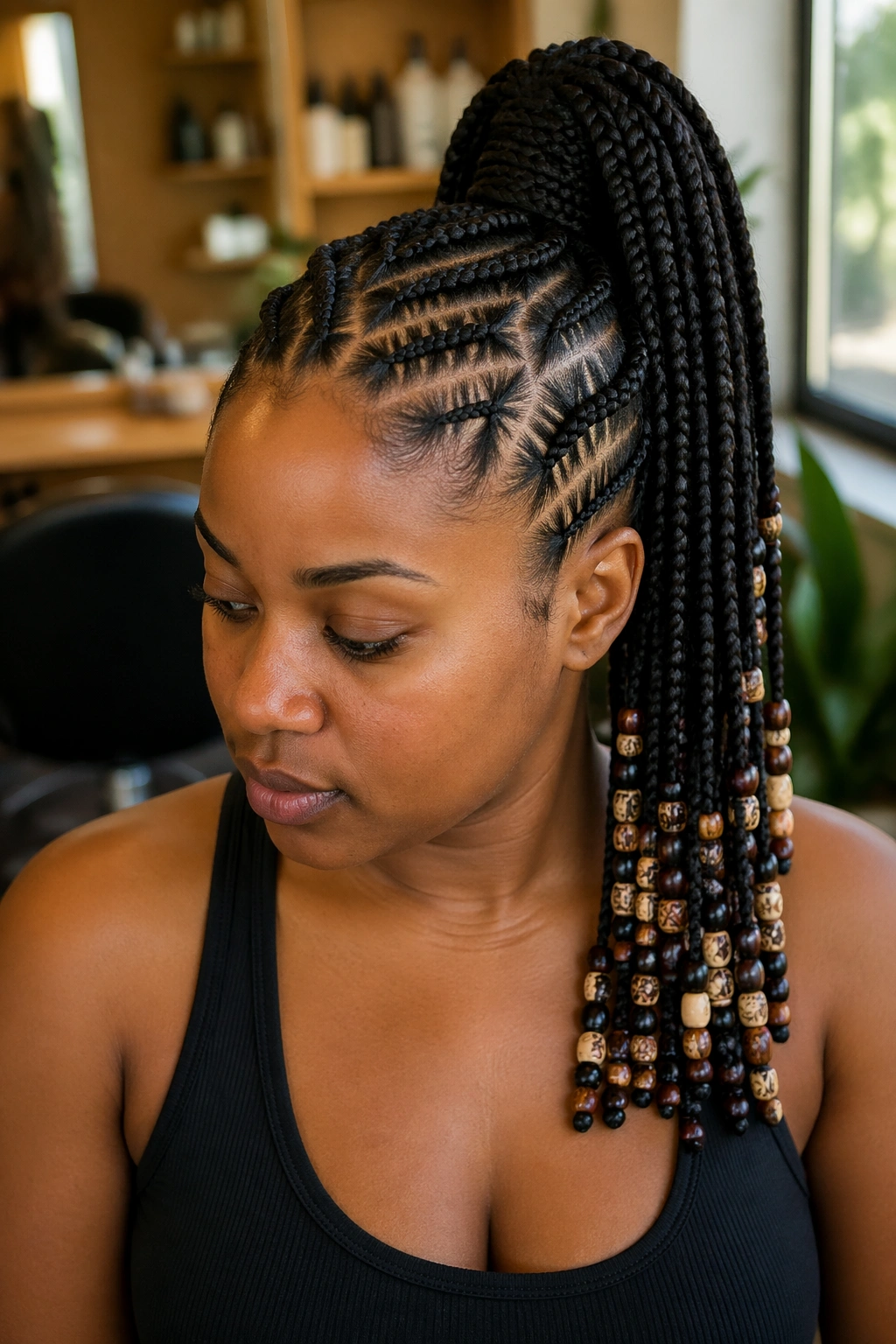
Beads change the sound of a ponytail. They also change the mood. Add them to a high cornrow ponytail and the whole look gets more presence, more texture, and a little movement every time you turn your head.
Tribal-inspired parting patterns pair well with beads because the design already carries some visual weight. A few medium beads at the ends can be enough. You do not need to cover every braid from root to tip. That’s how the style starts feeling overloaded. Choose one bead color family and stick to it—wood, clear, gold, or black all work well.
This style asks for balance. Heavy beads near the front can tug on delicate edges, so it’s smarter to keep the weight farther back when possible. I also like using smaller beads on the side braids and larger ones only on the longer hanging pieces. It gives you rhythm without making the ponytail feel like it’s dragging. And yes, the sound is part of the charm.
14. Crisscross-Back High Cornrow Ponytail
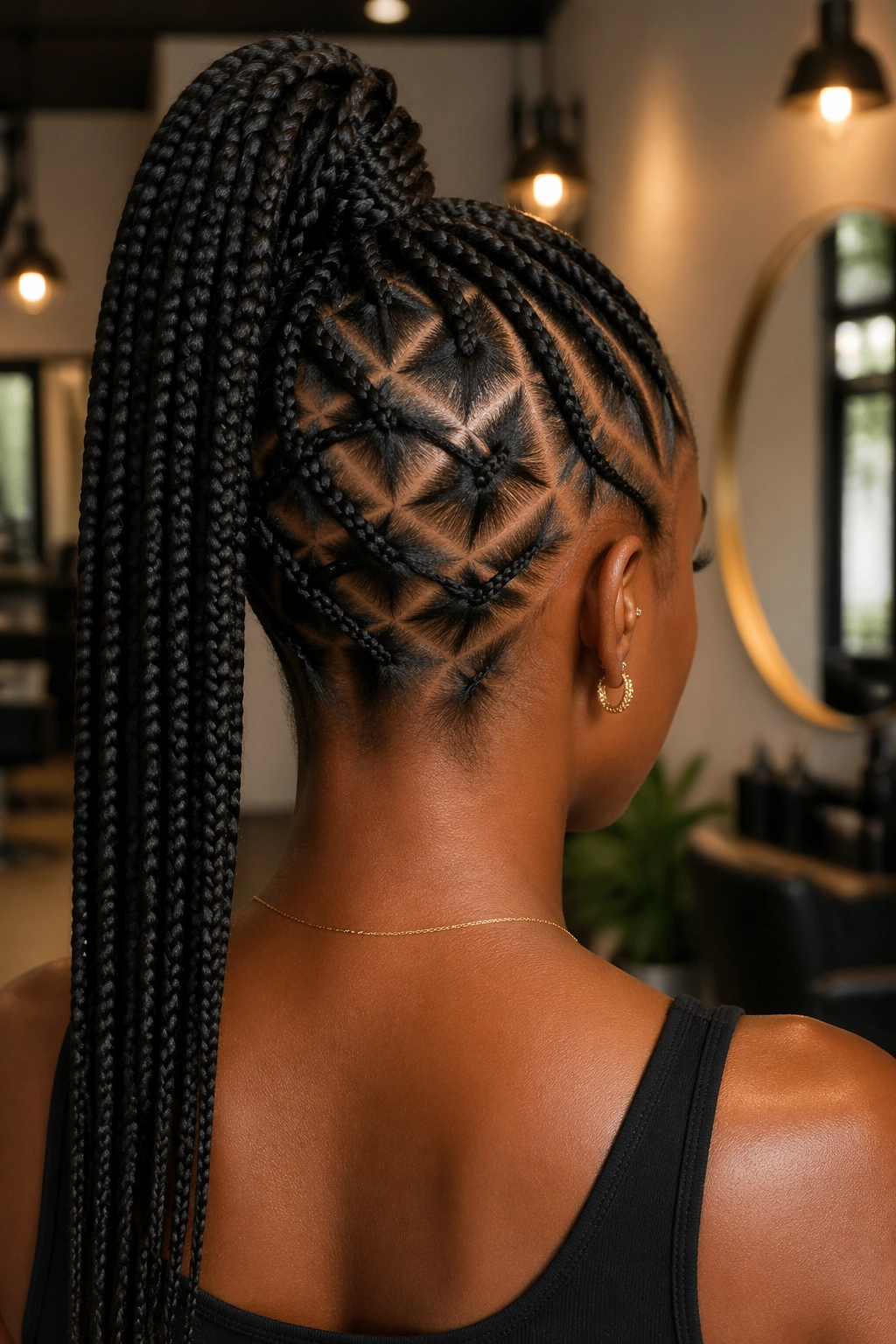
Crisscross parting gives the back of the head as much style as the front. Instead of straight rows, the braids angle over and under each other before gathering at the crown, which creates a lattice effect that feels sharp without needing color or accessories.
Why It Stands Out
This style is a good choice when you want the ponytail base to look interesting even from behind. That’s useful in real life, since people see the back of your head more than you think. The crisscross lines also help break up a large section of scalp, which can make the style look fuller.
The parting needs patience, though. If the braider rushes, the pattern gets muddy fast. Ask for clean sectioning and keep the tension even across the head. A smooth crisscross base can support straight lengths, curls, or even a braided tail.
I reach for this look when I want structure, but not sameness. It feels deliberate, and that’s a good thing.
15. Mohawk-Inspired Cornrow Ponytail
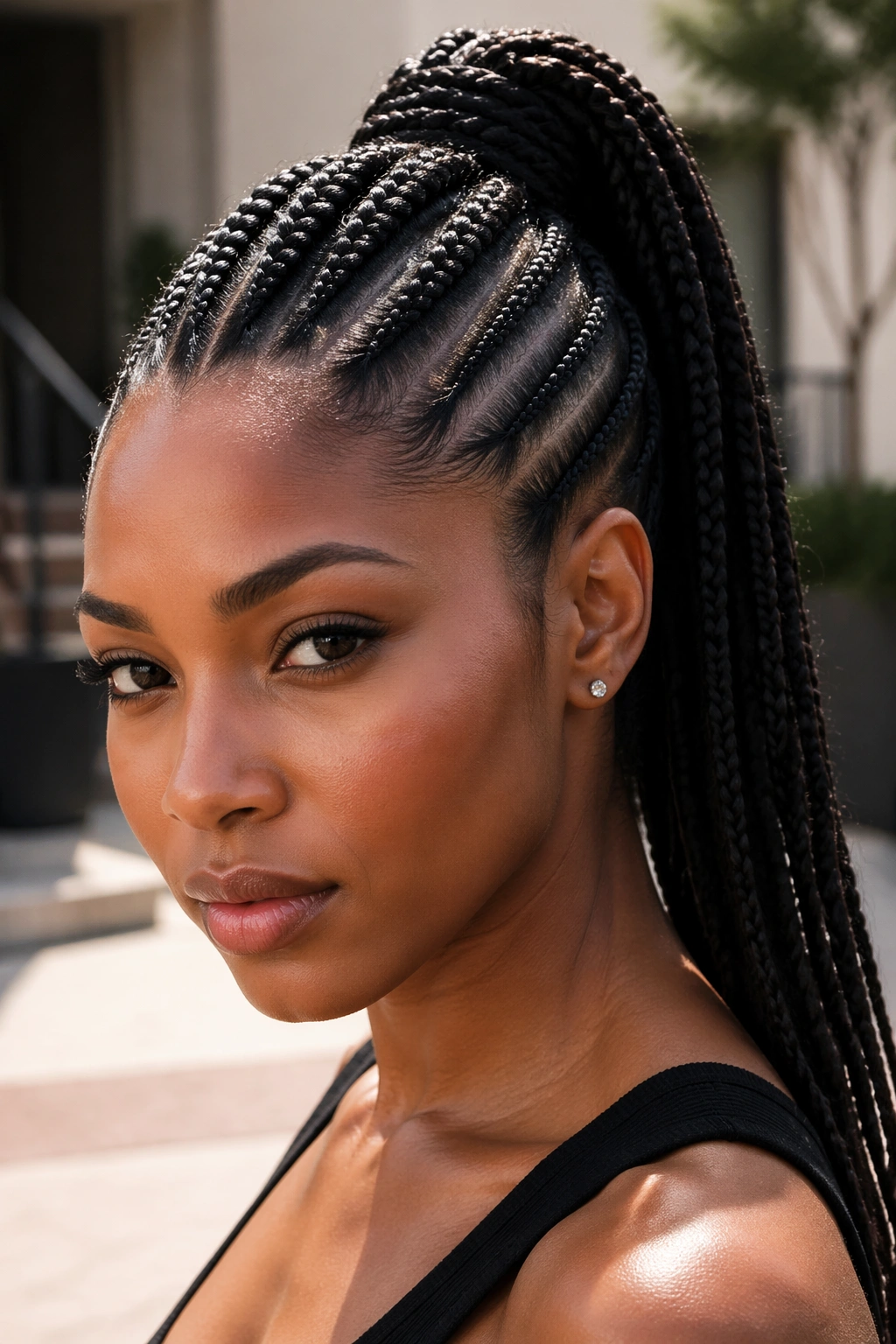
A mohawk-inspired cornrow ponytail has edge without needing a cut. The sides are braided close, while the center track stays more pronounced, which makes the ponytail sit like a ridge through the middle of the head. It’s strong, direct, and a little rebellious.
That shape does something nice for the face too. It draws the eye upward and can make cheekbones look sharper. If you want your style to feel a little louder, this is one of the easiest ways to get there without adding color or heavy accessories. You’re working with silhouette, not clutter.
The trick is making the center section clean enough to look intentional. The sides should support the ponytail, not fight it. A few people like to soften this style with curled ends or a braid cuff near the base. That works. Just don’t overdecorate it. The whole point is the shape. Let it stay bold.
16. Braided Crown into High Ponytail
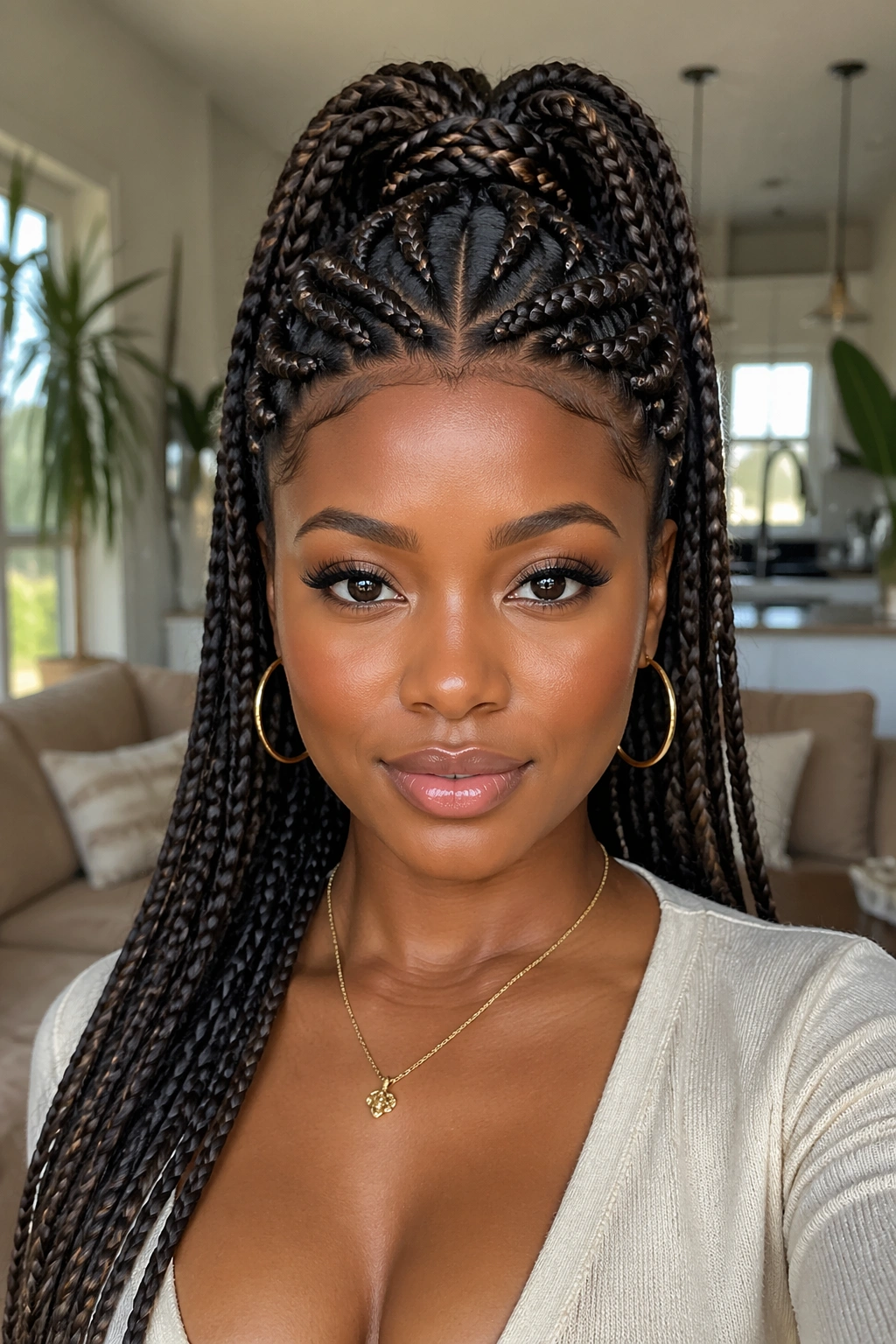
A braided crown into a high ponytail feels almost regal, but not in a stiff, costume way. The braids sweep around the hairline like a halo before rising into the ponytail, which gives the whole look a lifted, graceful curve.
What Gives It That Soft Lift
This style is especially good when you want the forehead and temples to feel framed rather than exposed. The crown braid does the framing, and the ponytail gives the height. That combination can be flattering on a lot of face shapes because it keeps the look open while still pulling everything upward.
- Best with medium braids so the crown line stays visible.
- Works well with straight lengths or loose curls at the end.
- Keep the crown braid close to the hairline but not tight.
- Pair with small hoops or a simple stud if you want the braids to stay central.
This is one of those styles that looks more complex than it is once installed. That’s a nice bonus. It gives you a dressed-up finish without needing a full updo.
17. Thread-Wrapped Cornrow Ponytail
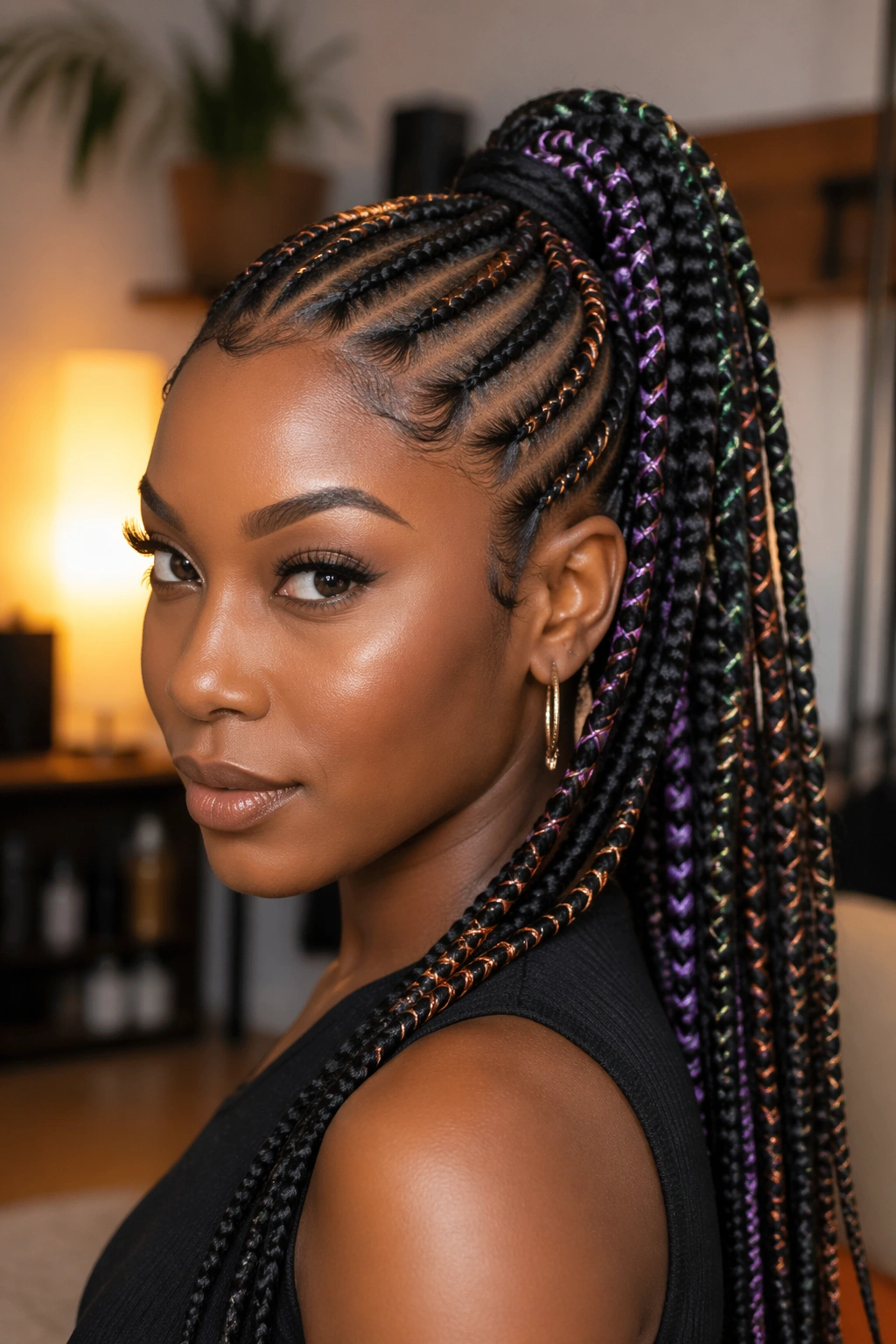
Thread wrapping does something beads can’t: it adds color without adding weight. A few strands of thread wrapped around selected braids can give the ponytail a striped, graphic feel that works especially well if you want the style to stay light.
The best part is control. You can wrap one braid in red thread, another in gold, and leave the rest plain. Or keep it monochrome and use thread as a tiny accent near the ends. Either way, the finish looks intentional and a little artsy without becoming fussy.
I prefer thread on styles that already have clean parting, because the thread detail stands out more against a neat base. If the braids are messy, the thread won’t save it. Keep each wrap even and secure the ends tightly so they don’t unravel in the middle of the week. That part is boring, yes. Still necessary.
18. Ombre Cornrow Ponytail
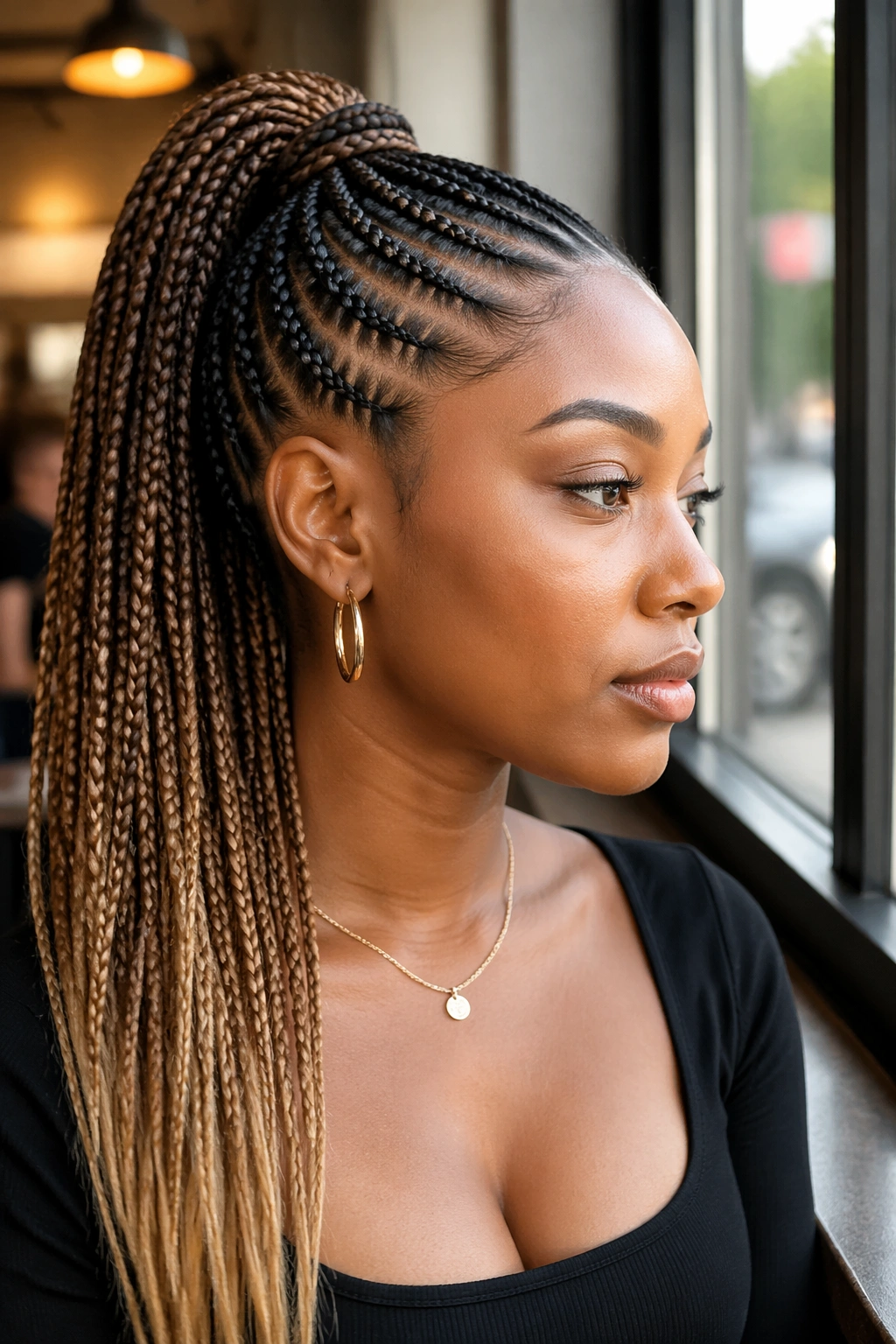
Color gradient can make a braided ponytail feel much longer than it really is. An ombre cornrow ponytail moves from darker roots to lighter ends, and that shift gives the ponytail depth from top to bottom.
The best ombre effect usually starts with a base that matches or closely echoes your natural hair color. That way the color change doesn’t look abrupt. The transition should feel smooth when the braids fall over your shoulder. Too sharp a break can look stripy instead of blended.
This style is especially nice when you want movement to show up in the length. Light ends catch the eye when you turn, and the darker base keeps the top grounded. It’s a strong choice for anyone who wants a little drama without having to style daily. If you choose warm brown, honey, burgundy, or blonde tones, make sure they flatter your skin tone and the clothes you wear most often. Color should support the style, not fight it.
19. Swoop-Bang High Cornrow Ponytail
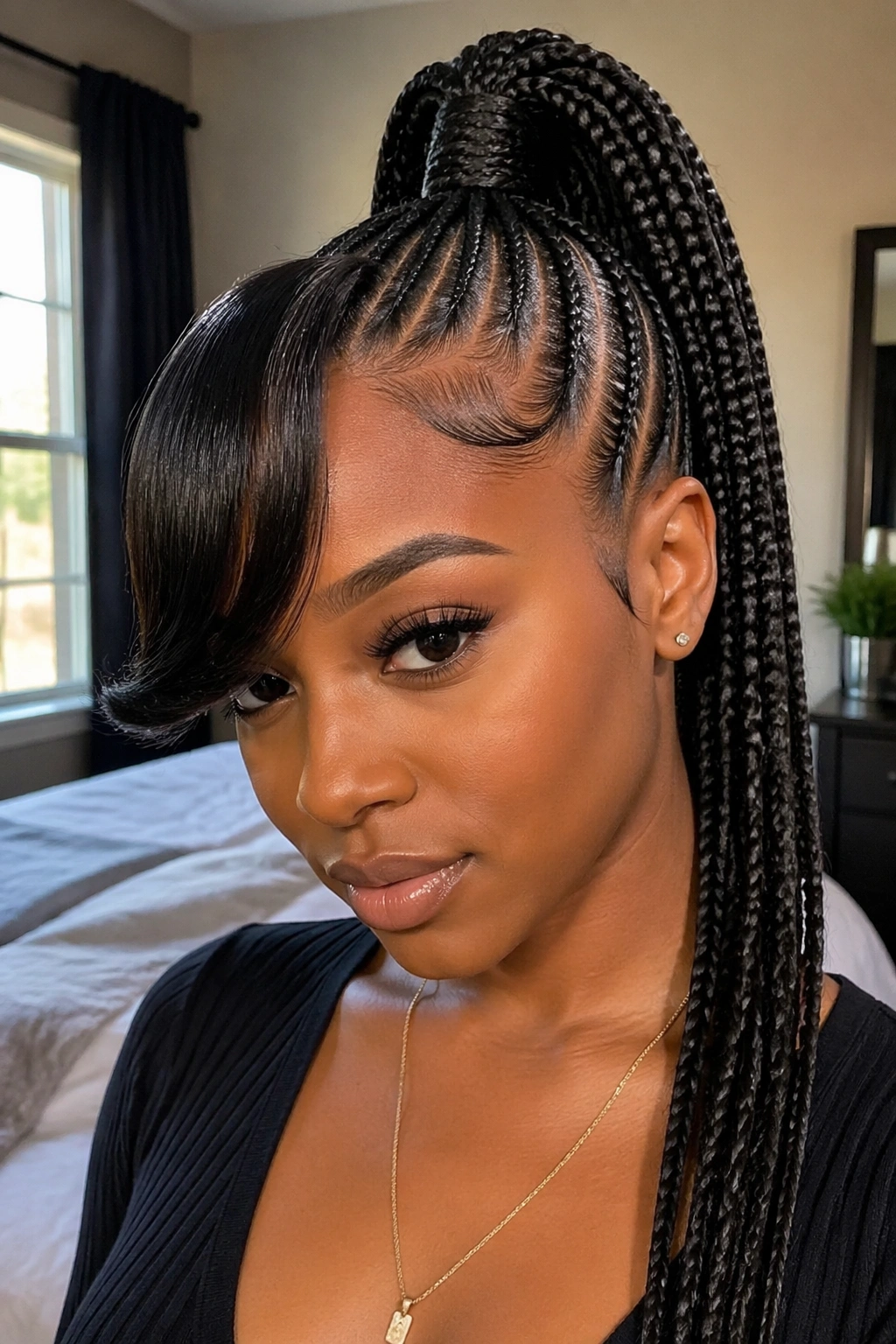
A swoop bang changes a high cornrow ponytail from strict to soft in one move. The front braid or flat-twist sweeps across the forehead in a curve, then blends into the ponytail base, which makes the whole style feel more face-framing.
How the Swoop Changes the Face
The curve breaks up the vertical lift of the ponytail. That matters if you love the height but want a little movement around the eyes and temples. It can also help balance a long forehead or a strong center part.
- Works best when the swoop is smooth and low to the scalp.
- Use light gel only at the front so the braid does not look crusty.
- Keep the ponytail high enough that the swoop feels intentional, not like a leftover strand.
- A curled end on the swoop can soften the final look.
This is one of my favorite ways to make a high cornrow ponytail feel less rigid. It’s small, but it changes everything. The line across the forehead draws attention in the right place, and the rest of the braids can stay simple.
20. Bubble Braided High Ponytail
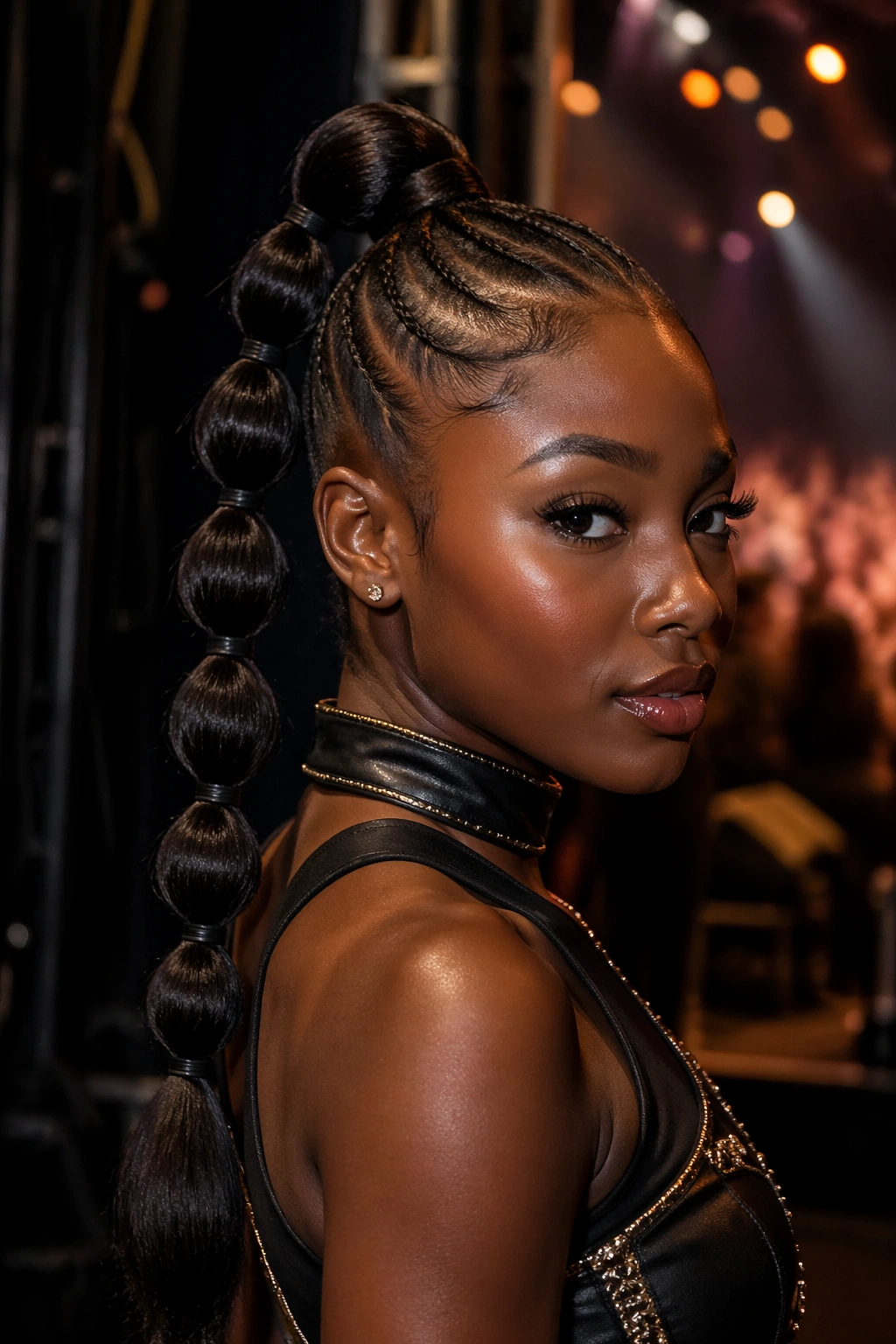
A bubble braided ponytail turns length into a series of shaped sections. With cornrows at the scalp and elastic ties down the ponytail, each section puffs out into a bubble. It’s playful, structured, and a little unexpected in the best way.
The spacing matters. Most bubbles look balanced when the ties sit roughly 2 to 3 inches apart, though longer hair can take wider gaps. After tying each section, gently pull the hair between the elastics to build the bubble shape. Not too much. You want volume, not frizz.
This style is a fun choice for concerts, birthdays, or any day that needs a little personality. It also works well if you like styles that hold shape without needing perfect curl definition. A bubble ponytail can be neat or dramatic depending on how big you make the sections. Just make sure the cornrow base is smooth, because the bubbles will spotlight any rough parting at the crown.
21. Long Straight-Braid High Ponytail
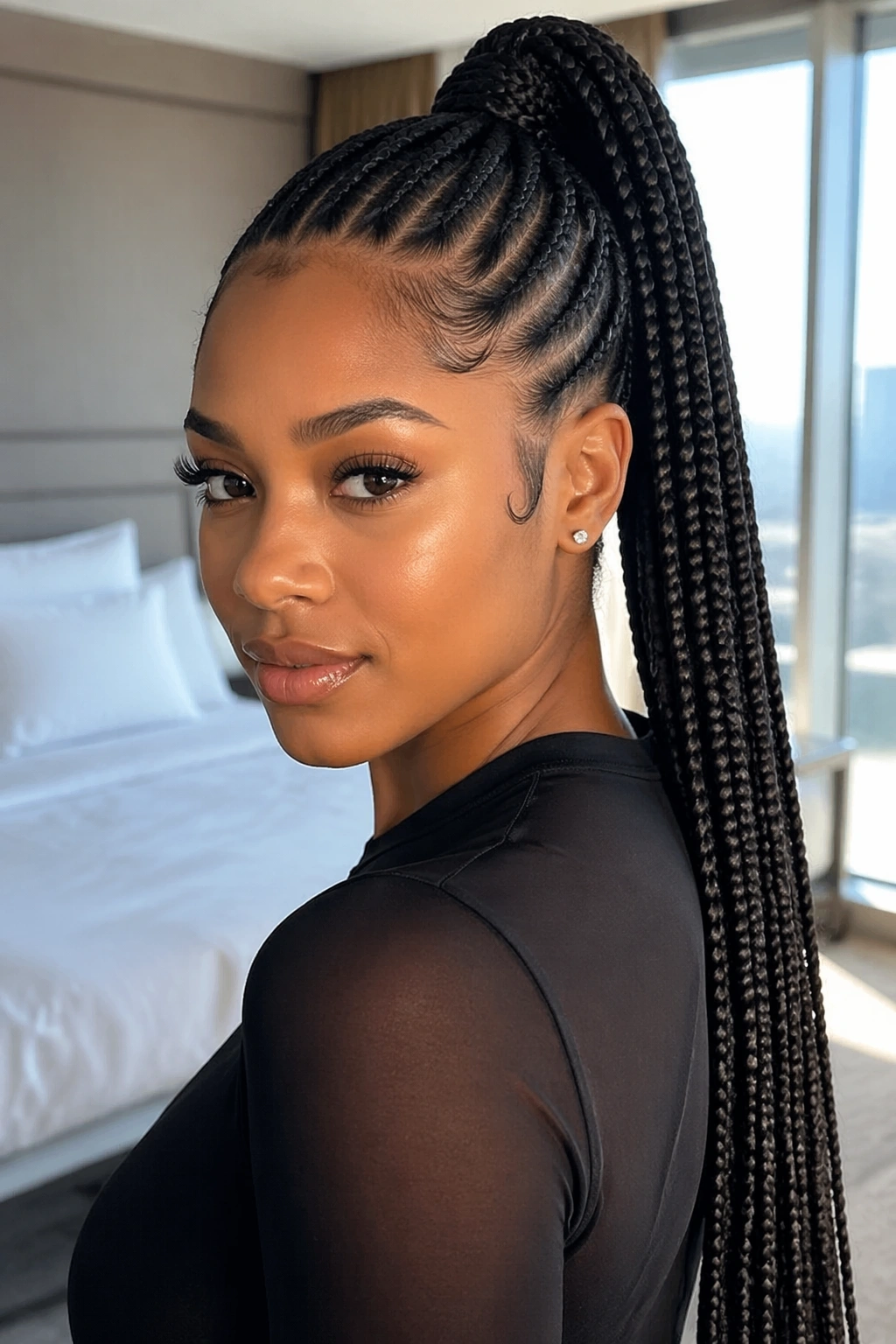
Sometimes the cleanest choice is the best one. A long straight-braid high ponytail gives you one sleek, uninterrupted fall from the crown to the back, and that simplicity is part of the appeal. No curls. No beads. No extra shape to manage.
Unlike a curled or bubbled finish, this version leans into line and length. It works well when you want the face to stay open and the hair to behave. That makes it a favorite for long workdays, travel, and any time you don’t feel like fussing with the ends.
The braid should feel heavy enough to swing but not so heavy that it pulls at the base. If it does, the extension choice is probably too thick. A thinner braid can look sharper and be easier on the scalp. I also like this style with a wrapped base because the line from scalp to braid stays clean. Nothing fancy. Just good shape.
22. Curved Feed-In Cornrow Ponytail
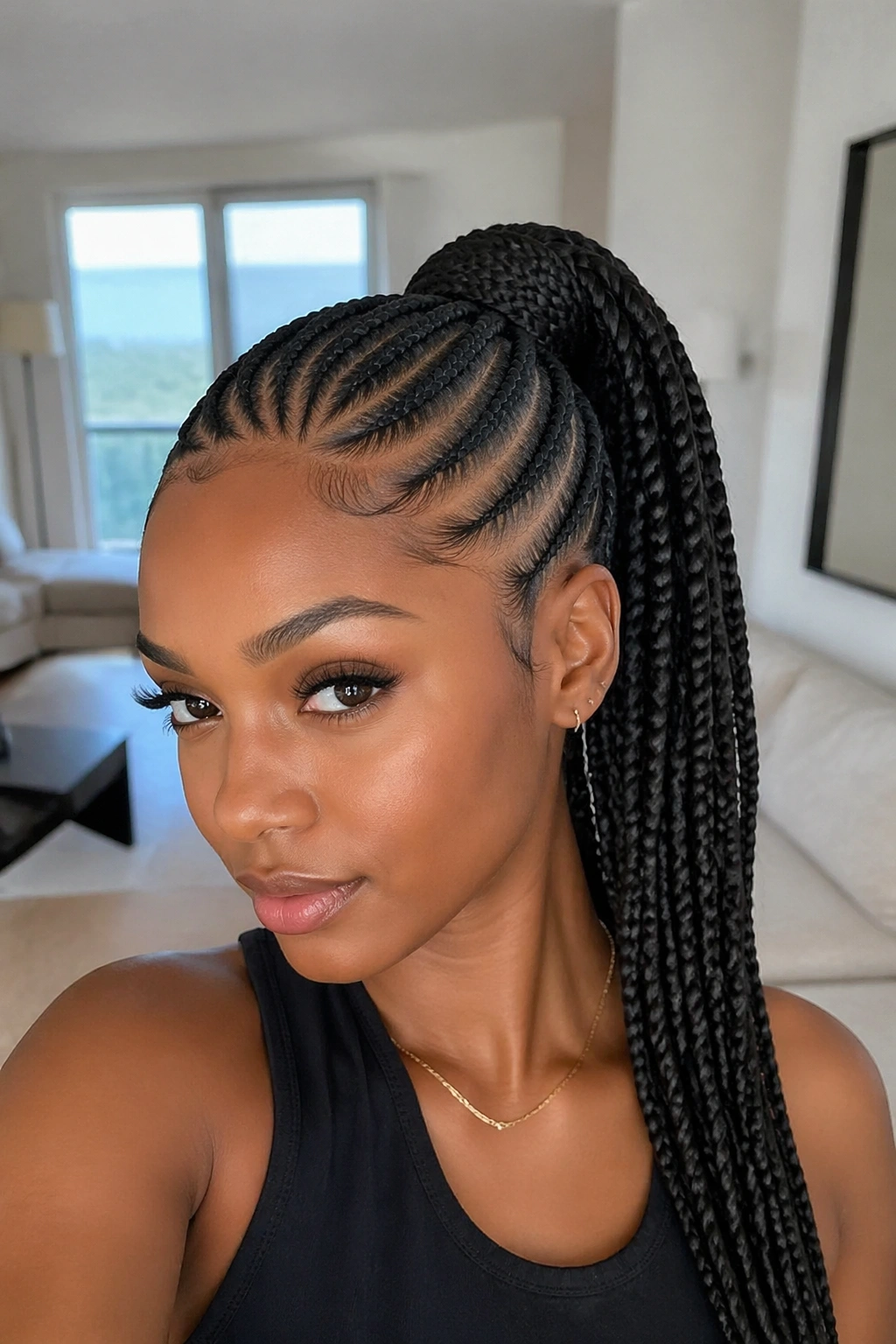
Curved feed-in braids add motion before the ponytail even starts. Instead of running straight back, the braids arc around the scalp in gentle lines that meet at the crown. It gives the style a softer, more tailored shape than straight-back rows.
The curve is the whole point here. It changes how light hits the head and creates a sense of flow that straight parts cannot match. If you like styles that look more designed than default, this is a smart pick. It also works well if your face shape benefits from movement around the temples.
Ask for curves that are even and not too tight near the front. Sharp bends can look forced, while a smooth arc feels cleaner. A curved feed-in ponytail also gives you a nice base for a long braid or a puffier curly finish. Both work. The parting does the heavy lifting, so keep the rest of the style simple enough to show it off.
23. Accessory-Heavy Cornrow Ponytail
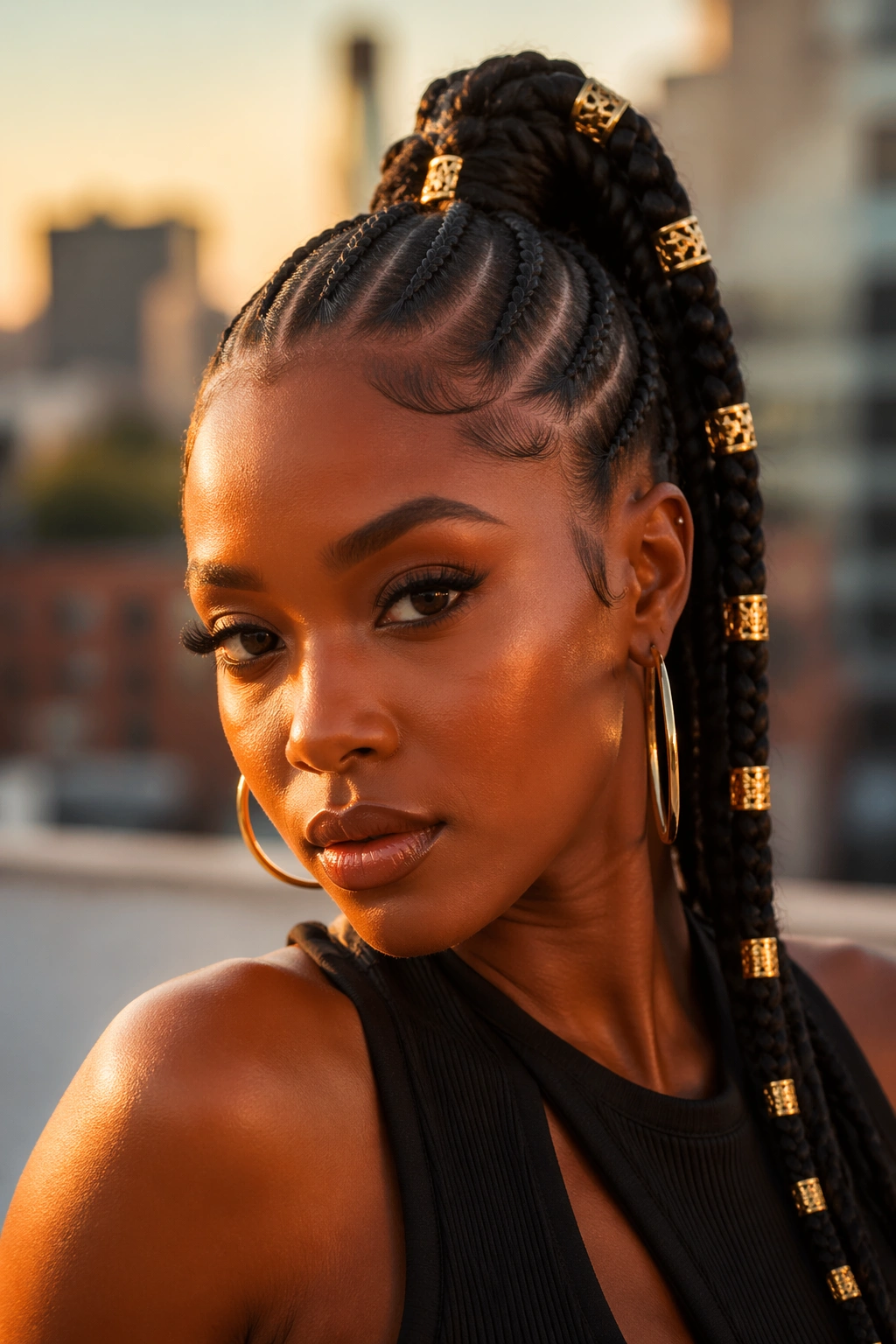
Sometimes the ponytail is the canvas, and the accessories do the talking. Cuffs, rings, shells, wire wraps, and tiny charms can turn a high cornrow ponytail into something more personal without changing the braid pattern at all.
The trick is editing. Pick one main accessory family and repeat it. Gold cuffs with gold rings. Shells with clear beads. Thread with a few metal accents. If you mix everything, the style can look cluttered fast. A little order keeps the look strong.
This style works especially well when the braids are neat and the ponytail length is long enough to hold the decoration. I like placing accessories near the lower third of the ponytail so they move with the hair instead of crowding the scalp. A couple near the front can also frame the face, but too many at the hairline can tug. Keep the weight where the ponytail can carry it.
24. Gym-Ready Sleek Cornrow Ponytail
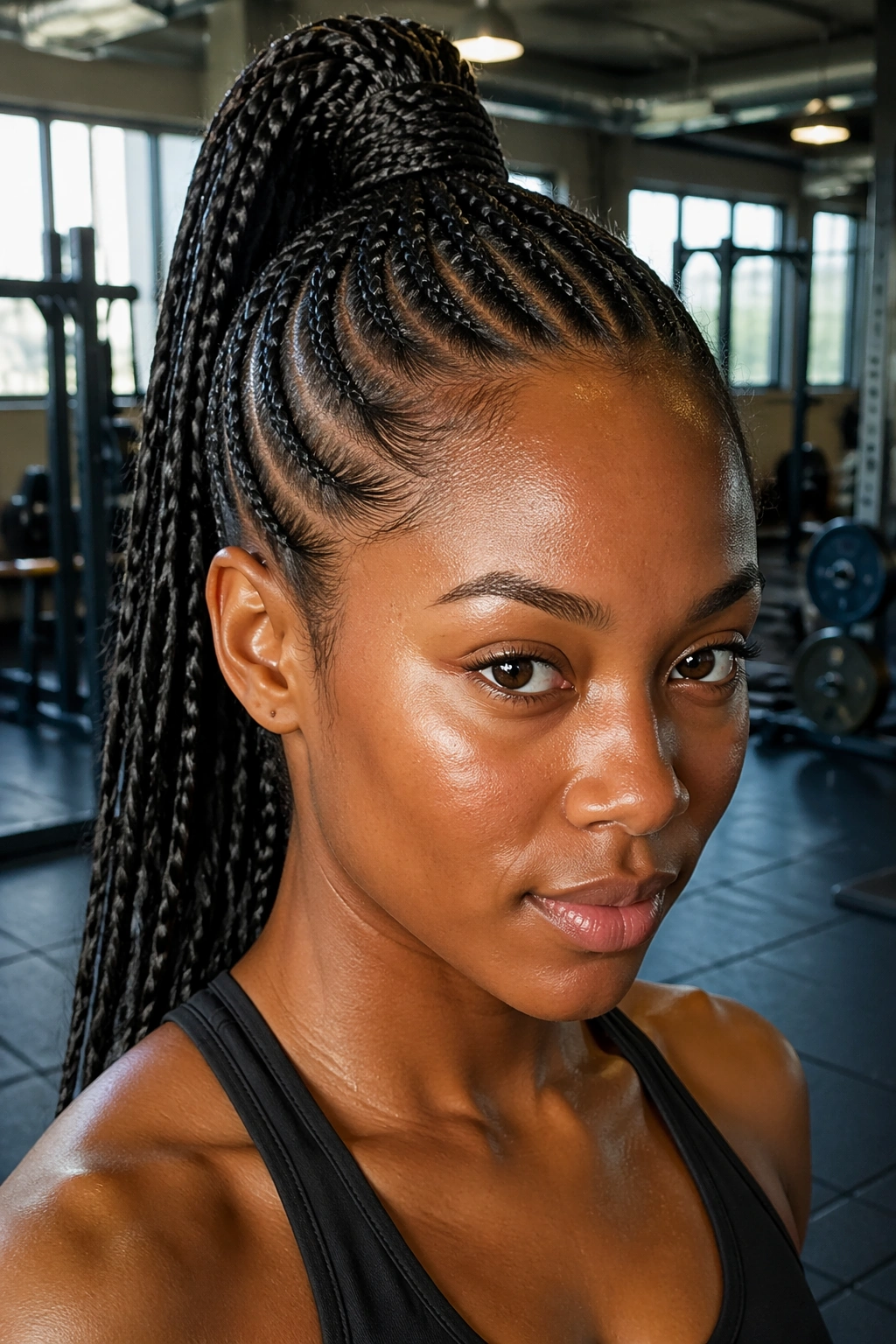
Not every high cornrow ponytail needs to be dressed up. Some of the best ones are built to stay put through sweat, errands, and a long day that refuses to quit. The gym-ready version is all about security and neatness.
This means fewer frills and more function. The braids should lie flat, the base should be wrapped cleanly, and the ponytail should sit high enough to stay off the neck. A small amount of edge gel is enough. Too much product tends to slide once you start sweating, and then the front turns gummy while the back stays tight.
The style should feel solid, but not like a helmet. That balance is what makes it wearable after the workout too. Throw on a satin scarf while cooling down if you can, because sweat and friction are not kind to clean parts. A quick scalp wipe and a touch of light oil after washing can help, but don’t overload the roots. They need to breathe.
25. Soft Romantic Cornrow Ponytail with Laid Edges
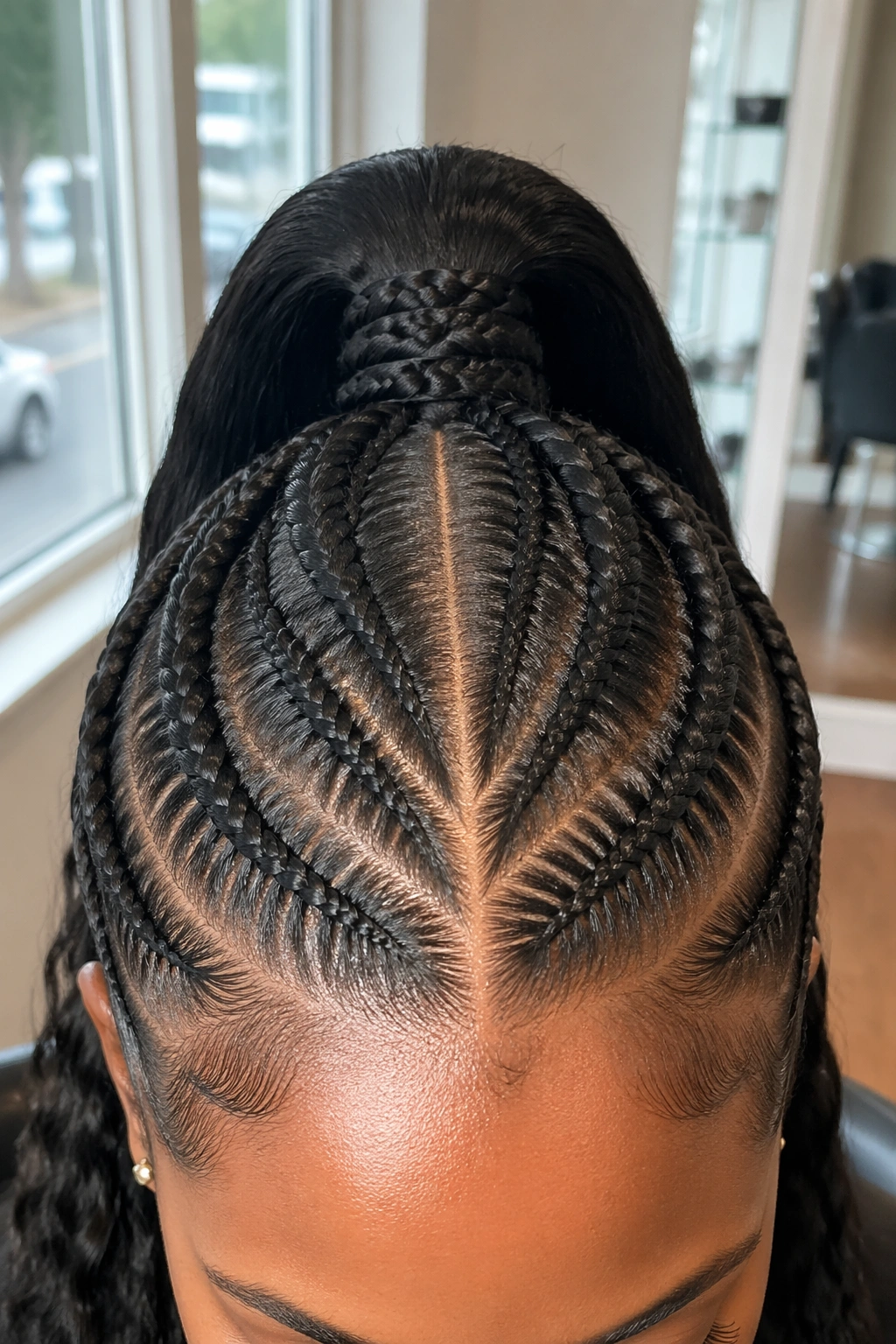
A high cornrow ponytail does not have to look severe to look polished. The soft romantic version keeps the braids neat, then softens the frame with gentle edges, curved parting, or curled ends. It’s a good choice when you want a braided style that still feels feminine and a little dreamy.
The romantic part comes from restraint. The edges should be shaped, not painted on. The ponytail can be straight, wavy, or curly, but the overall effect should stay light around the face. That makes this style work for weddings, dinners, date nights, or days when you want the hair to feel lifted without looking hard.
What I like most is that it bridges two moods. The cornrows bring order. The loose finish brings softness. If your hairline is delicate, skip aggressive edge swoops and let a few baby hairs stay natural. That small choice keeps the style looking fresh instead of overworked.
A good high cornrow ponytail leaves room for both strength and softness. That is the whole appeal, honestly. You do not have to pick one or the other.
