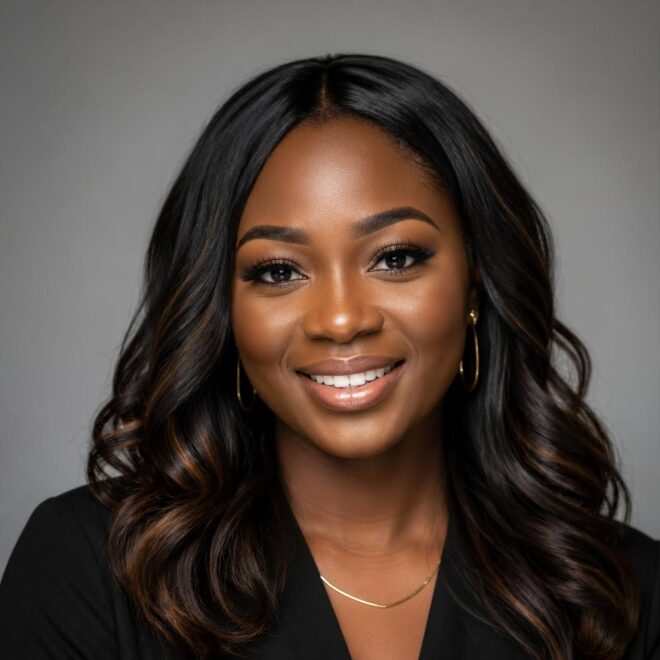


A half up updo ponytail is the kind of style that rescues a messy blowout, a sleepy braid, or a second-day wash in one move. It gives you lift at the crown, keeps hair off your face, and still leaves enough length down below to feel soft.
That mix is why half up updo ponytails work on short layers, collarbone cuts, and long hair that needs a little order. The trick is not trying to force every head of hair into the same shape. A bob needs pins and texture. Waist-length hair needs balance so the top section does not collapse under its own weight.
The styles below lean practical first. Some are polished enough for a wedding, some are fast enough for a school run, and some work because they lean into texture instead of fighting it.
Start with the one that matches your hair’s mood, not the one that looks hardest.
1. Crown Twist Half Up Updo Ponytail
The crown twist is the style I reach for when hair looks flat at the roots but the ends still have life. You twist two sections back from the temples, pin them at the back of the head, and let the rest drop into a ponytail that still feels relaxed. It has enough structure to look deliberate, but not so much that it turns stiff.
How to Build the Shape
- Take 2-inch sections from each temple.
- Twist each side back once or twice.
- Meet them at the back of the crown and secure with two bobby pins in an X.
- Gather the remaining top hair into a ponytail just below the pinned twist.
On chin-length layers, keep the twist tight to the head. On longer hair, pull the twist a little wider so the crown gets more lift. A light mist of texturizing spray before you start makes the twist hold better than silky, freshly washed hair.
2. Bubble Half Up Ponytail
A bubble ponytail is playful, a little graphic, and much easier than it looks. The top half is pulled into one ponytail, then you add clear elastics every 2 to 3 inches down the tail and tug the sections outward to form soft bubbles. It reads polished on straight hair and fuller on medium waves.
Tiny detail, big payoff.
Keep the bubbles even if you want a neat finish, or stagger them slightly for a looser look. The style works especially well on medium and long hair because the length gives each bubble room to show. If your hair is fine, pull each section out only a little. Too much tugging and the shape collapses.
3. Braided Crown Half Up Ponytail
Why does this one hold so well? Because the braid acts like a built-in anchor. A small Dutch or regular braid on each side feeds into a half ponytail at the back, so the style stays put far better than a plain tie.
What Makes It Different
The braid adds texture where the head tends to slip and flatten. On straight hair, it gives grip. On curly hair, it keeps the top section from puffing out in the wrong place. The result is tidy without looking hard-edged.
Use it on shoulder-length hair if you want something that stays secure through the day. On longer hair, keep the braid a little loose so the final ponytail does not feel too tight at the roots. A dab of cream on the ends keeps flyaways from frizzing out.
4. Sleek Wrapped Half Up Ponytail
This style is all about clean lines. Brush the top section smooth, secure it into a half ponytail, then wrap a small strand around the elastic so the tie disappears. It gives you that neat, pulled-back finish without going full severe.
The wrapped strand matters more than people think. It turns a basic tie into something that looks finished. Use a tiny clear elastic under the wrap if your hair is slippery; otherwise the ponytail can slide lower than you want.
Best on straight or blow-dried hair. If your texture is wavy, smooth the crown only and leave the tail soft. That contrast keeps the style from looking helmet-like, which is the trap with too much serum and too much brushing.
5. Claw Clip Half Up Ponytail
A claw clip half up ponytail is for the days when you want lift without a lot of fuss. Twist the top half, clip it in place, and let the rest fall into a loose tail or a soft bend down the back. It is quick, yes, but it can still look deliberate if the clip is placed high enough.
What to Watch For
- Use a medium clip for shoulder-length hair.
- Use a larger, curved clip for thick or long hair.
- Place the clip at the crown, not near the nape.
- Leave a few face-framing pieces out if the top feels too tight.
If your hair is very silky, tease the root section lightly before clipping. That one step prevents the clip from sliding. A matte clip tends to hold better than a glossy one because it grabs the hair instead of skimming over it.
6. Double Twist Half Up Ponytail
Two twists beat one when you want something with a little movement. Instead of pulling both sides straight back, twist each side separately and fasten them together in the center. The shape feels softer than a braid and more interesting than a plain ponytail.
This version is especially useful on layered cuts. Shorter front layers blend into the twist instead of sticking out awkwardly, which is a common problem with half-up styles. On longer hair, you can loosen the twists after pinning so the crown gets a little puff.
No need to overthink it. Keep the twists low and relaxed for daytime, or make them tighter and neater if you want the style to sit closer to the head. Either way, the shape looks more intentional than it is.
7. Teased Crown Half Up Ponytail
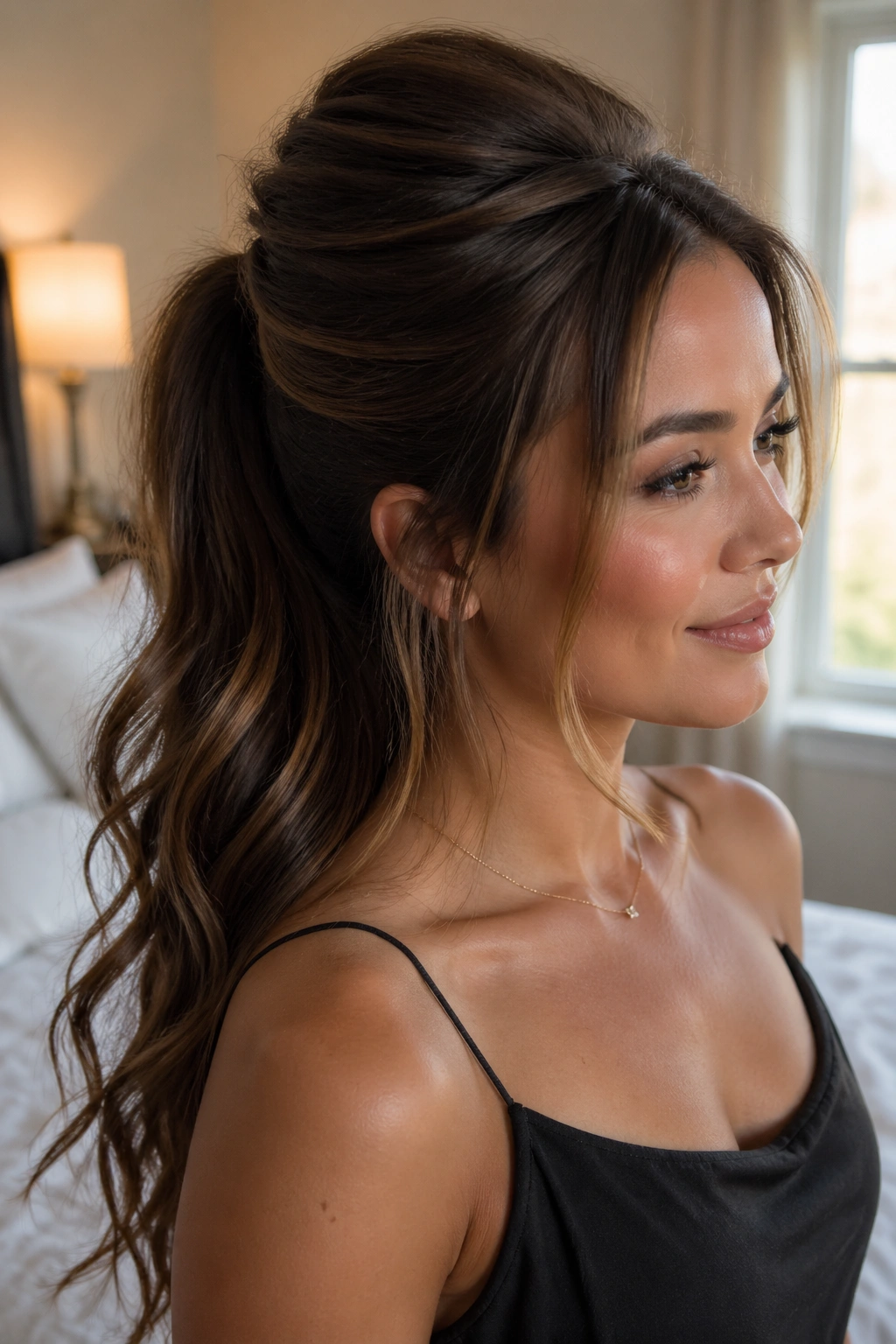
If the top of your hair falls flat the second you look at it, teasing is your friend. Light backcombing at the crown gives the ponytail a lift point, so the half-up section sits higher and the whole style feels less droopy. You do not need a nest of hair. Just enough height to change the profile.
Work in thin sections, tease under the top layer only, and smooth the surface with a brush. That keeps the lift hidden. Then secure the half ponytail and pin the base if needed.
A little hairspray at the roots helps, but don’t drown it. Too much product turns the crown stiff and shiny in a bad way. For fine hair, this style can add an extra inch of visual volume right where it counts.
8. Rope Braid Half Up Ponytail
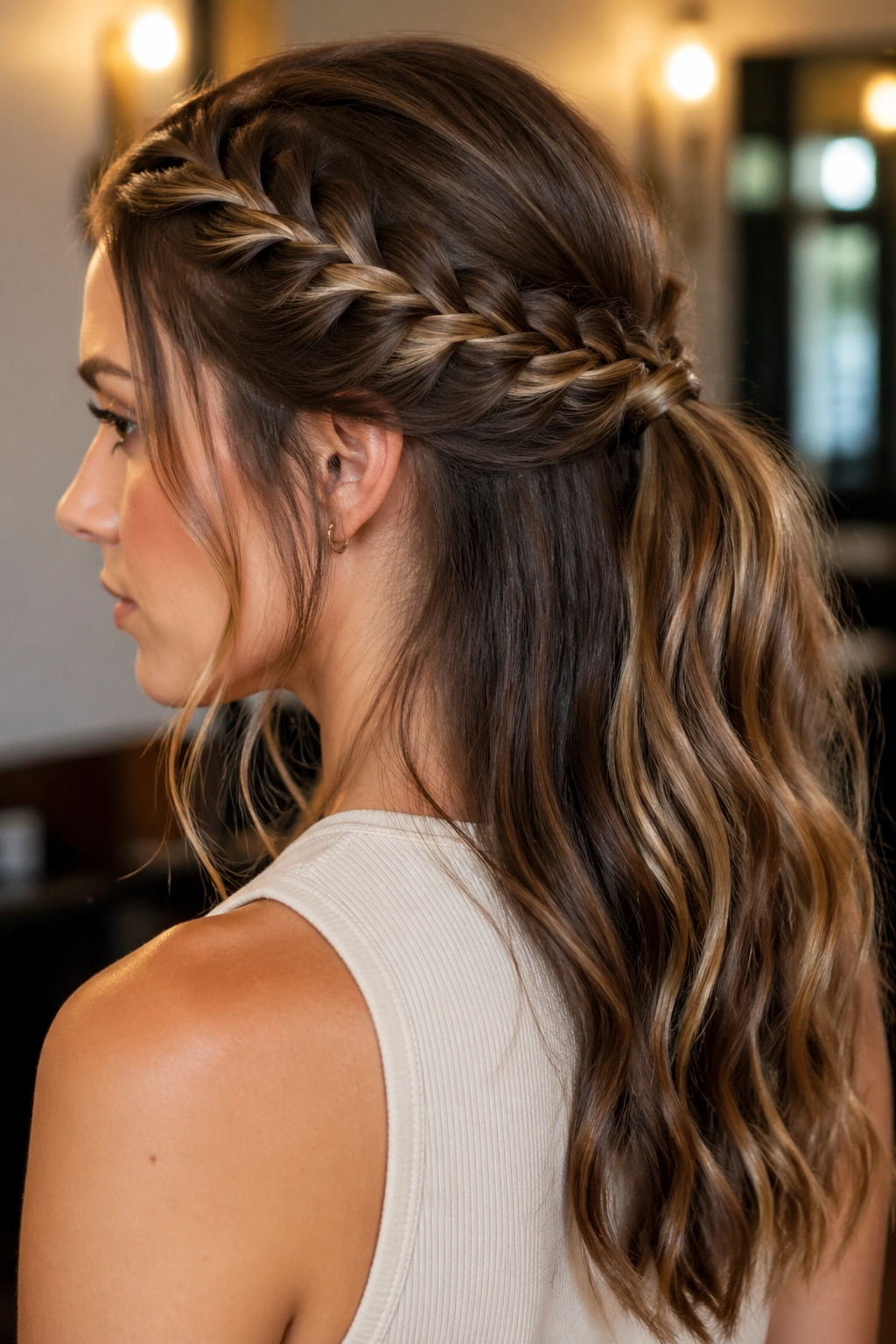
A rope braid gives the half-up ponytail a cleaner, shinier look than a regular three-strand braid. Split each side section into two strands, twist them in the same direction, then wrap them around each other in the opposite direction. That reverse motion is what holds the rope braid together.
It is one of my favorites for medium hair because it feels neat without looking too formal. The rope braid also shows off highlights nicely, since the twist creates little bands of light and shadow.
Need a simple way to make it hold longer? Mist the strands lightly before you start, and use small clear elastics at the ends before joining them into the ponytail. That keeps the rope from loosening halfway through the day.
9. Fishtail Accent Half Up Ponytail
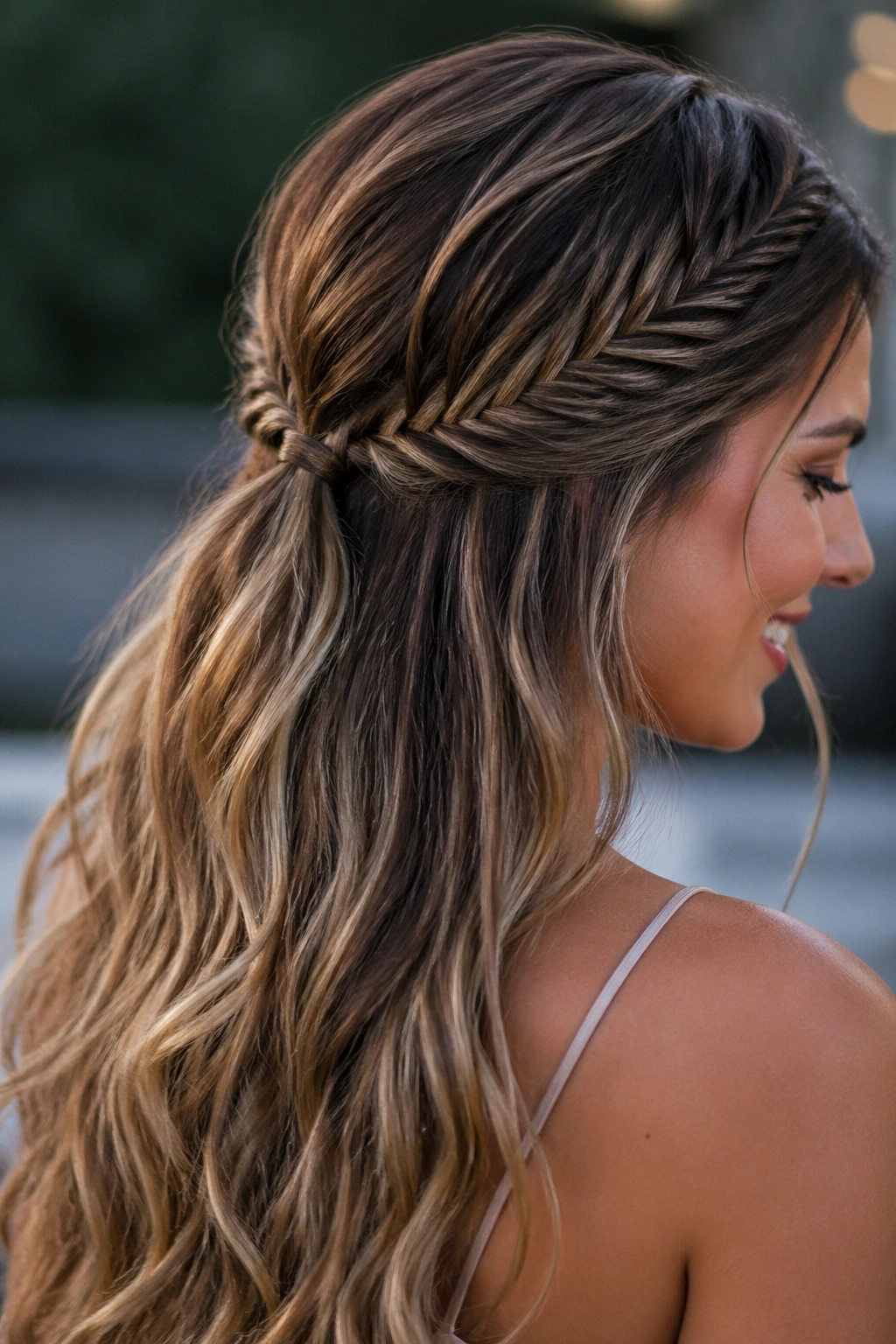
A fishtail accent is for the person who likes one detail to do most of the talking. You only need a small section from each side, fishtail braid them, and pull them into the back half ponytail. The rest of the hair stays loose, so the braid becomes the focus.
Why It Works
The fishtail looks more intricate than it is. Because the braid sits only in the top half, you get the effect without spending forever on the finish. It also works on layered hair better than a full fishtail braid, which can fall apart when the ends are too thin.
Keep the braid tight if you want it to read polished. Pull it apart a little if you want a softer, fuller look. A fine-tooth comb and a bit of grip spray make this much easier on freshly washed hair.
10. Side-Swept Half Up Ponytail
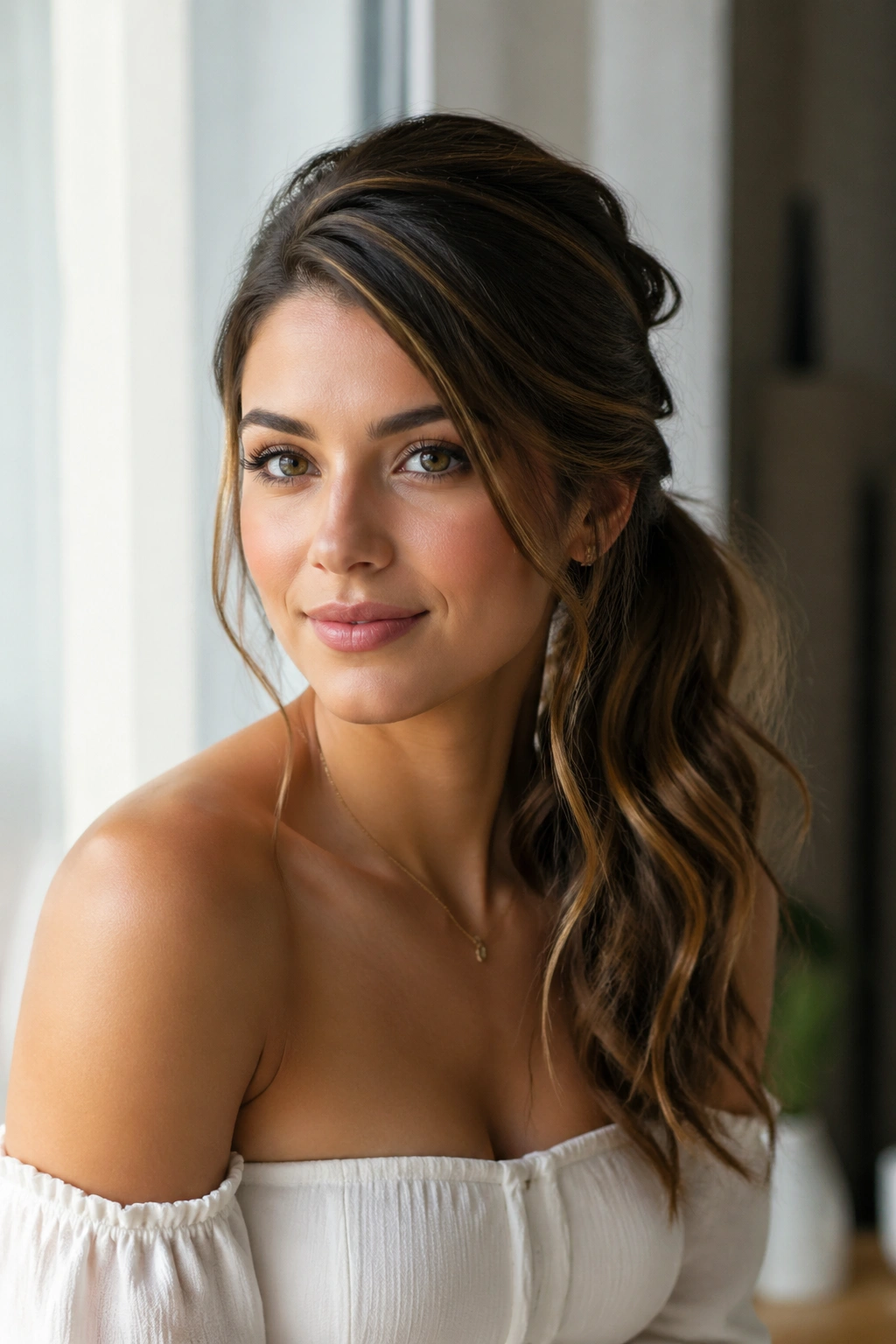
A side-swept half up ponytail gives you asymmetry, which is a nice change from the usual centered look. Pull more hair from one side than the other, secure it just behind one ear, and let the tail fall over one shoulder or down the back. The result feels casual but not lazy.
It suits wavy hair especially well because the side sweep follows the natural bend. On straight hair, curl just the loose tail ends a little so the shape doesn’t fall flat.
This is one of those styles that can look dressy or simple depending on the finish. A glossy brush-out makes it neat. Finger-combed texture makes it weekend-friendly.
11. Mini Space Buns Half Up Ponytail
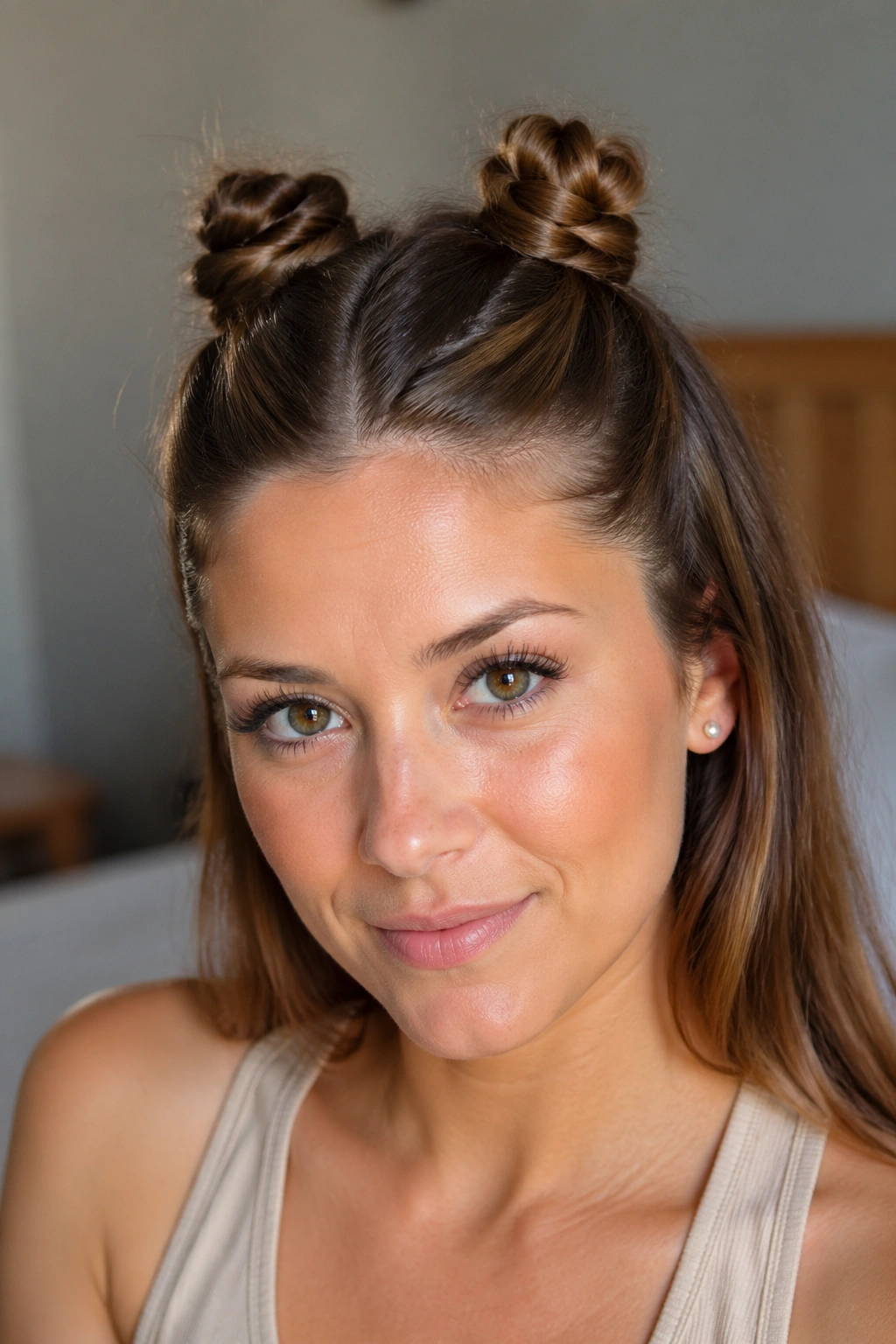
Two tiny buns at the crown change the mood fast. Instead of one half ponytail, split the top section into two, twist each side into a small bun, and leave the rest hanging loose. The style has a playful shape, but it can still look tidy if the buns are placed evenly.
Great for medium to long hair. Short hair can do it too if the top layer has enough length to wrap once around. The buns should sit close to the crown, not drift toward the ears, or the whole thing starts looking unbalanced.
A few loose front pieces help keep the style from feeling too young. So does a smooth base. If the top is frizzy, the buns will look accidental. If the top is neat, they look designed on purpose.
12. Scarf-Tied Half Up Ponytail
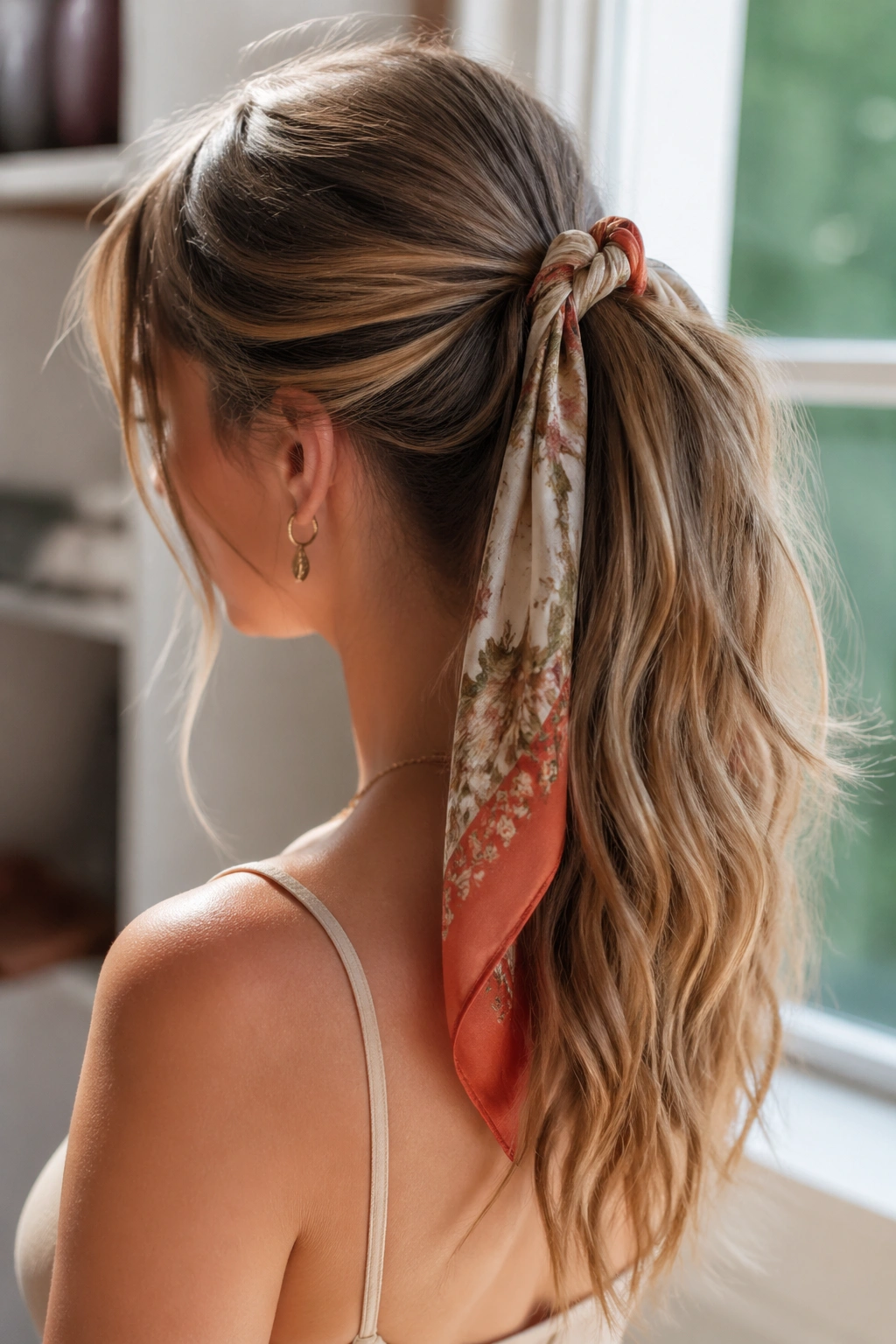
A scarf changes everything. Fold a silk or cotton scarf into a narrow band, secure the half ponytail first, then knot the scarf around the base or thread it through the elastic. The fabric adds color and movement without needing extra braid work.
This works particularly well on second-day hair, when the roots need help and the lengths already have texture. A scarf can hide an uneven tie point, which is handy if you are rushing. It also makes a basic style look much more finished.
Keep the scarf thin if your hair is fine. Wide scarves can overpower small sections. On thick hair, a broader scarf balances the volume better and feels less fussy.
13. Bow-Accent Half Up Ponytail
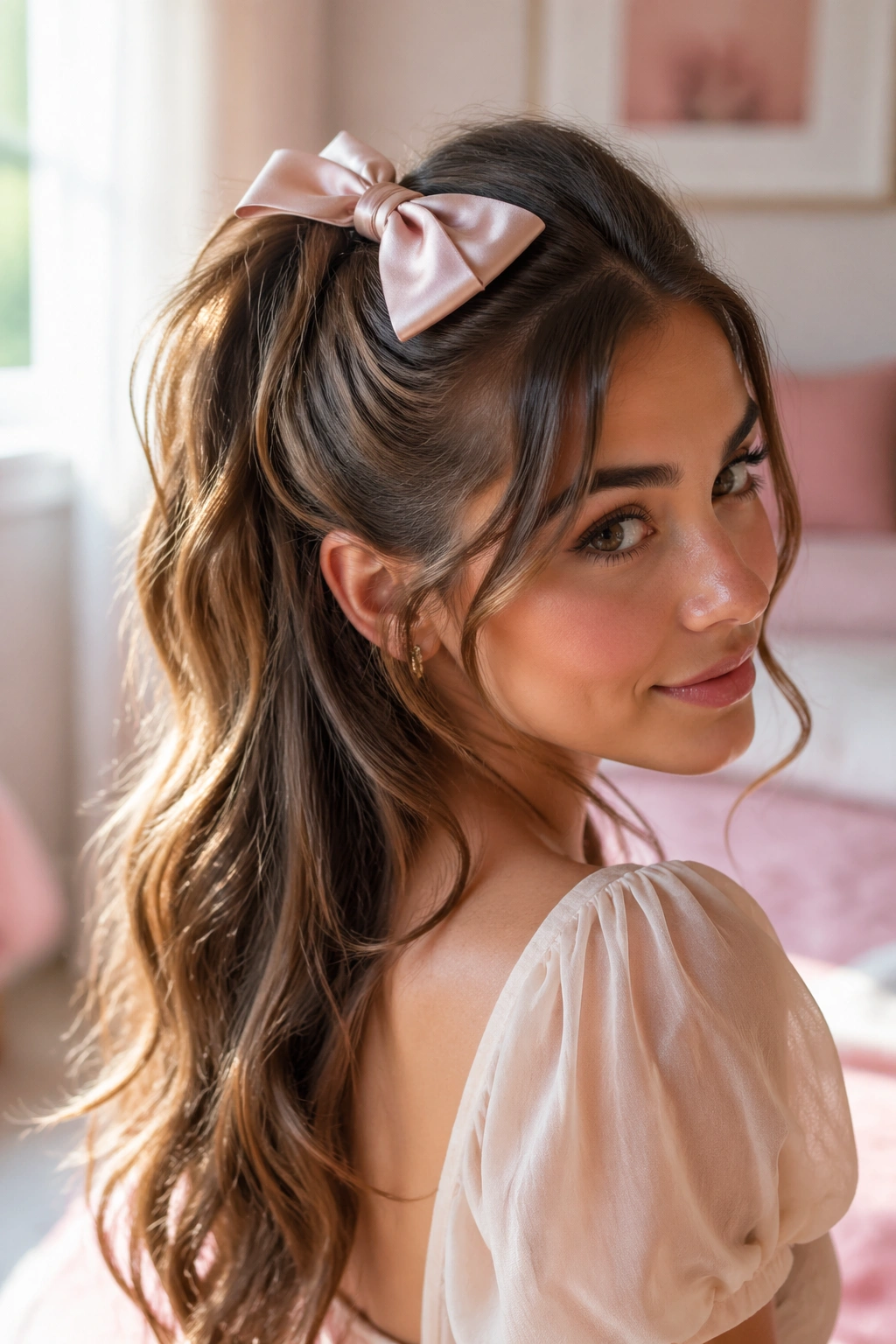
A bow sounds simple, and that’s exactly why it works. Tie the half ponytail with a ribbon, then shape the ends into a bow or use a pre-made bow tie if you want it crisp. The look leans sweet, but it does not have to feel childish.
Use satin for a dressier finish, grosgrain for a firmer shape, or velvet if you want the knot to look richer and slightly heavier. The texture of the ribbon changes the whole mood. Thin hair usually benefits from smaller bows; thick hair can carry a fuller one without looking crowded.
Keep the crown smooth and the bow neat. If the base is messy, the ribbon ends up looking like an afterthought.
14. Half Up Ponytail for Short Hair
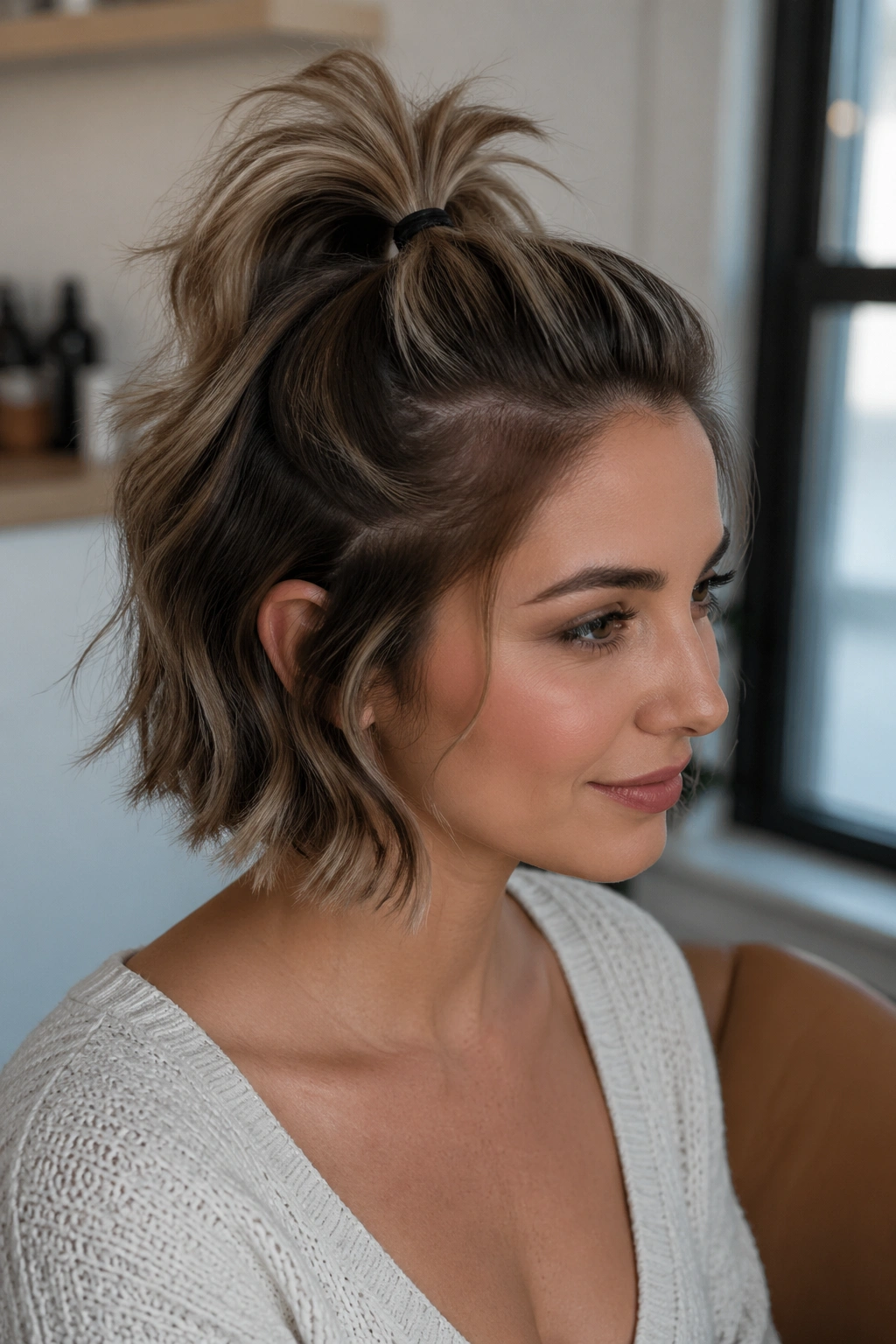
Short hair can absolutely do a half up updo ponytail, but the trick is choosing the right section size. If your hair reaches the jaw or collarbone, take the top half from temple to temple and keep the ponytail small and high. The goal is lift, not volume that fights the cut.
A little teasing at the crown helps a lot. So does curl at the ends, even if it is only a soft bend with a 1-inch iron. The extra shape keeps the lower layers from hanging too bluntly.
Short-Hair Notes
- Use small elastics that won’t slide.
- Pin the sides if the top layer is too short to gather cleanly.
- Leave wispy pieces out if the hairline is very layered.
15. Half Up Ponytail for Shoulder-Length Hair
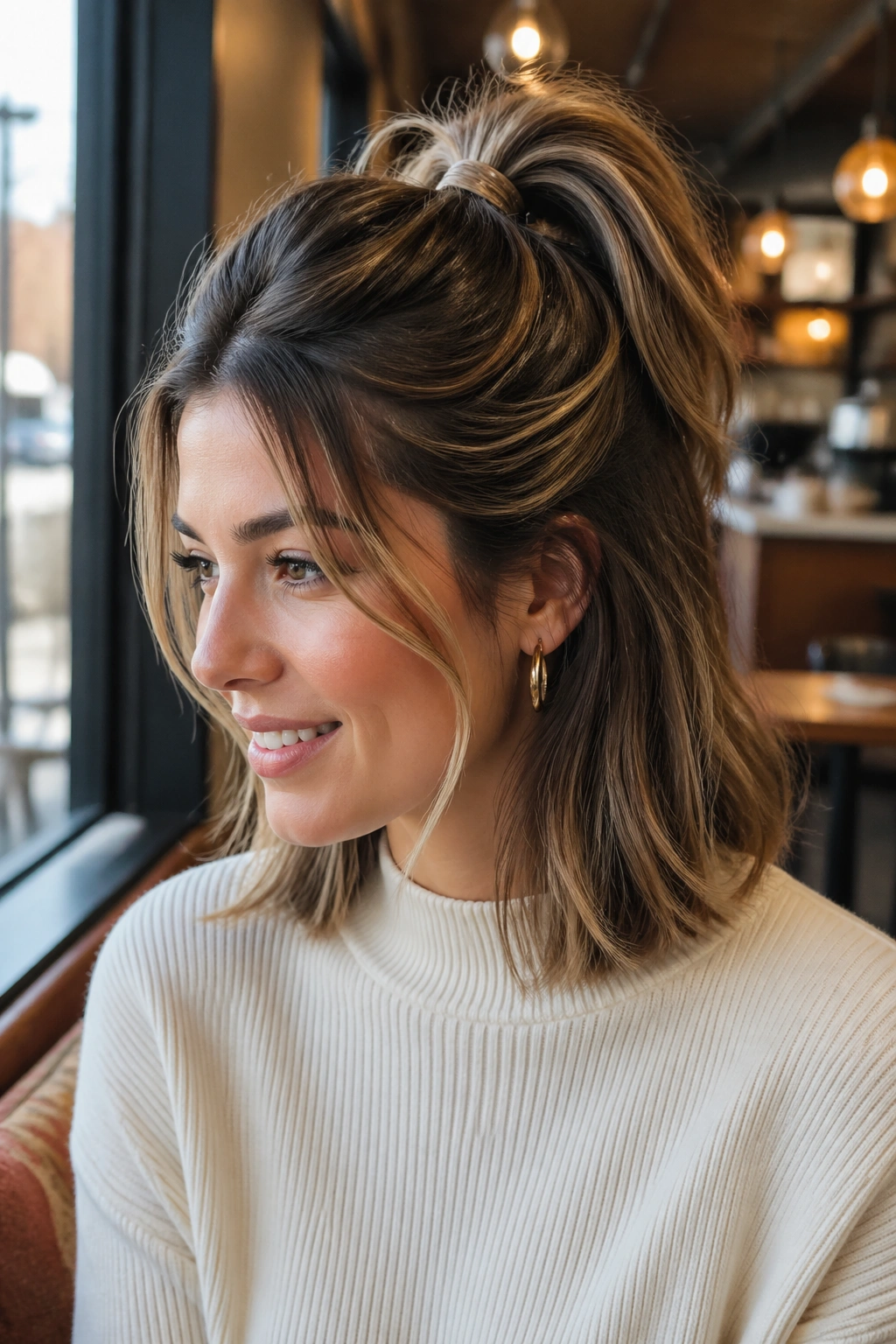
Shoulder-length hair is probably the easiest place to live with this style. There is enough length for a small ponytail, enough weight to keep the bottom from puffing out, and enough room for twists or braids without things getting cramped. It is the sweet spot.
A shoulder-length cut usually benefits from a slightly higher crown section. If you gather too low, the style can look flat and end up sitting awkwardly on the shoulders. A midpoint between the ears and crown tends to be the most flattering.
How to Keep It Balanced
Try a soft twist on each side, then secure the ponytail with a wrapped elastic. If your ends flip out, embrace that bend instead of fighting it. The style looks better when the lengths move a little.
16. Half Up Ponytail for Long Hair
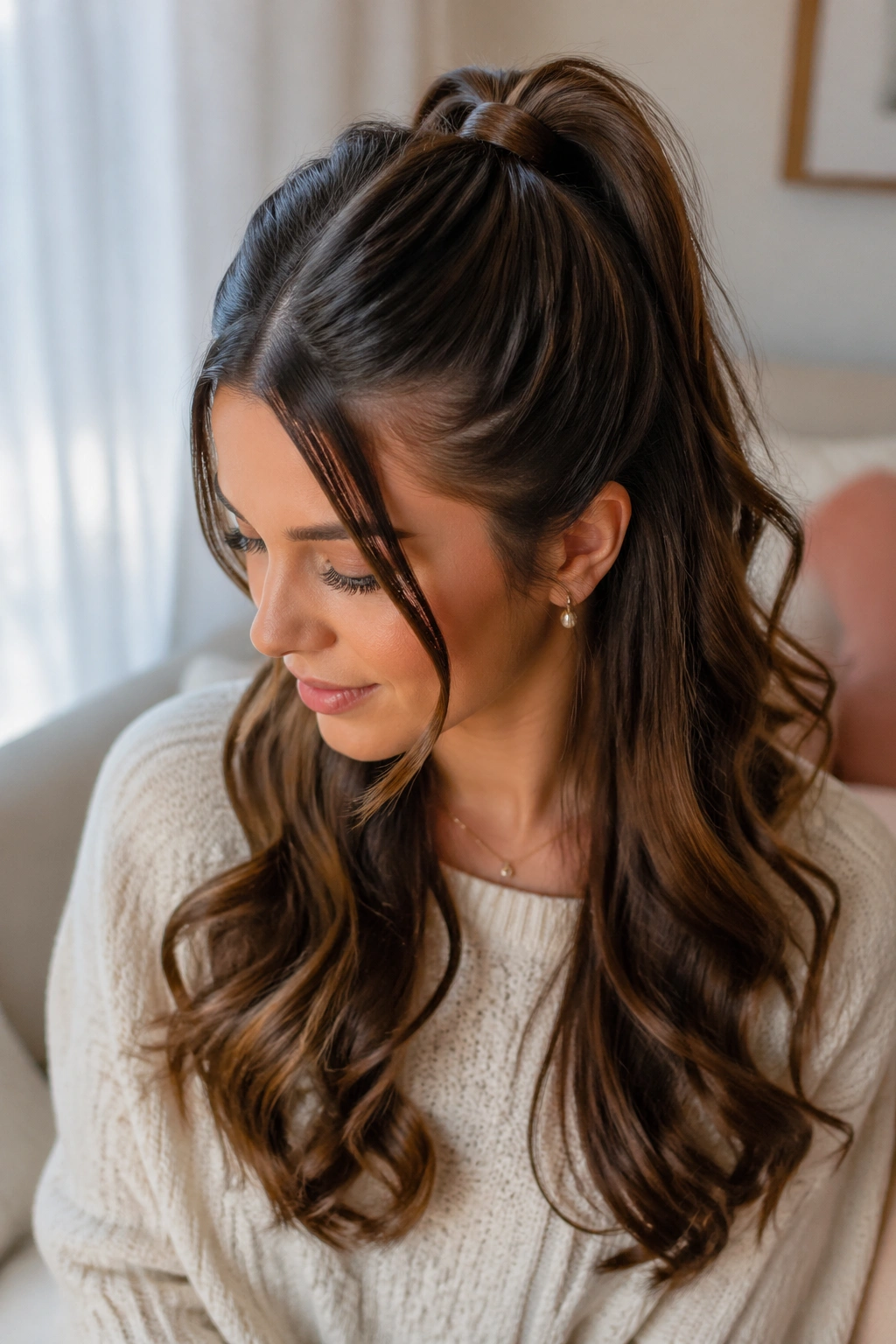
Long hair brings a different problem: weight. A half ponytail can drag the top section down if you don’t anchor it well, so the base needs to be secure. Use a strong elastic, then add two hidden bobby pins under the tie if the hair feels heavy.
The easiest fix is to keep the upper section smaller than you think. Too much hair in the top half makes the style bulky and causes the crown to sag. A cleaner section from temple to temple usually gives a better lift.
Long hair looks good with waves in the bottom half. Straight tails can feel a little severe. If you want softness, curl just the bottom 3 to 4 inches and leave the root area smooth.
17. Half Up Ponytail for Fine Hair
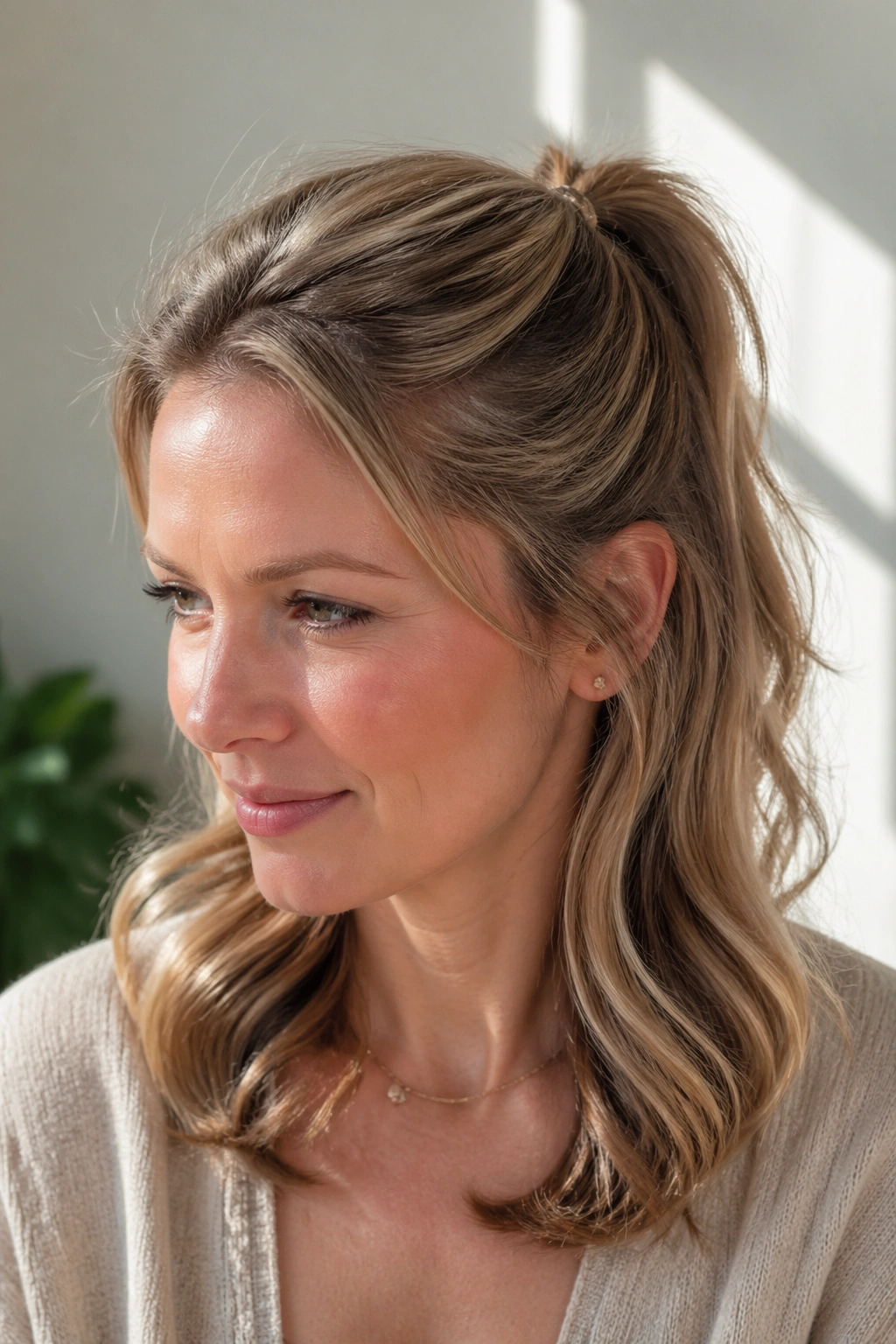
Fine hair needs help with grip, not just style. Dry shampoo at the roots, a touch of texturizing spray through the top layer, and a light tease under the crown all make the ponytail sit better. Without that base, the hair can slide and flatten within an hour.
Keep the section small and the elastic snug. Fine hair tends to look thinner when too much is pulled up, so a narrower half-up section often looks fuller than a big one. That’s the part people miss.
A tiny claw clip or a wrapped elastic can help the style feel thicker. If the ends are limp, curl them away from the face for a little body. It changes the whole silhouette.
18. Half Up Ponytail for Thick Hair
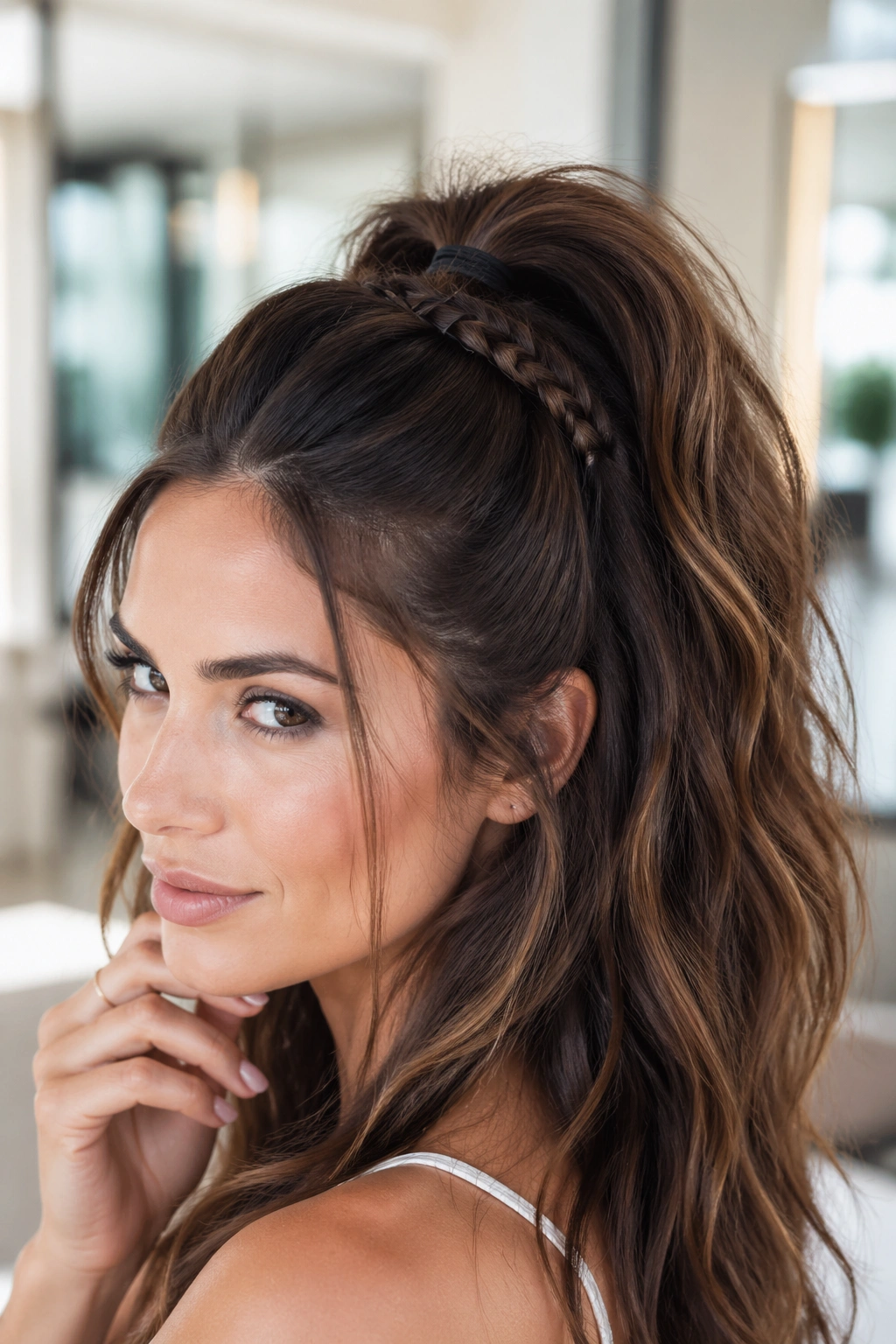
Thick hair looks gorgeous in a half-up ponytail, but it needs control. The top section can be heavy, so divide it cleanly and secure it with an elastic that actually grips. If the base is weak, the style slides, and that gets annoying fast.
A braid or twist helps because it compresses the hair a bit before it meets the ponytail. Thick hair also benefits from sectioning with your fingers instead of a brush if you want to keep some natural volume. Brushing everything smooth can make the crown look too wide.
Use two bobby pins crossed under the tie for extra support. That little trick keeps the weight from pulling the ponytail down by midafternoon. It’s worth the extra ten seconds.
19. Half Up Ponytail for Curly Hair
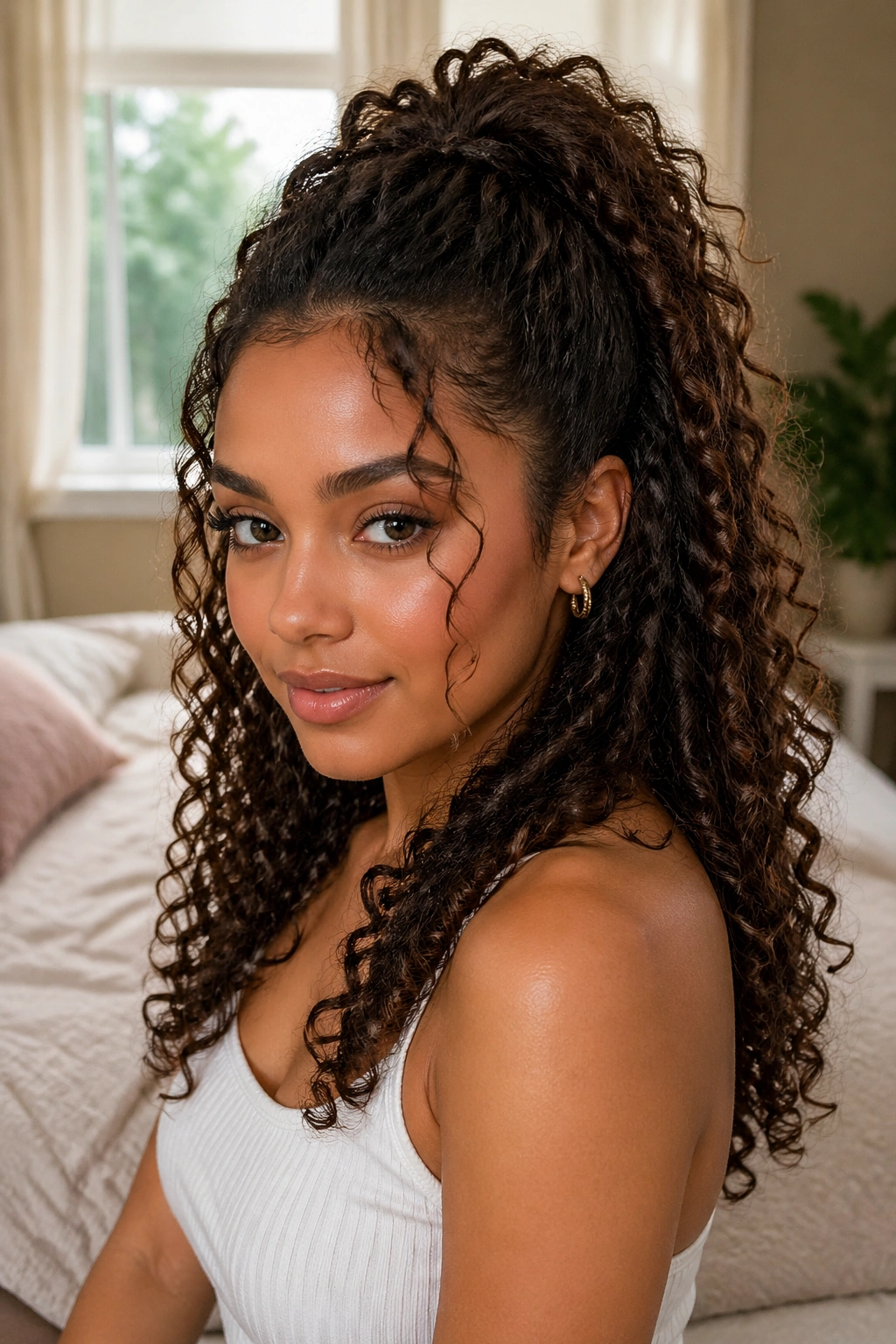
Curly hair should not be brushed into submission for this style. Gather the top section gently with fingers or a wide-tooth comb, then secure it so the curl pattern stays intact. If you flatten the curls at the crown, the style loses its best feature.
A curly half up ponytail works because it keeps volume where it belongs. The top lifts, the bottom spills out, and the shape feels full without much effort. A little curl cream on the loose lengths keeps frizz down and helps the ponytail shape stay defined.
If your curls are tighter, place the ponytail a little higher so the coils do not bunch against the neck. If they are looser, a lower placement looks softer and less rigid.
20. Half Up Ponytail for Wavy Hair
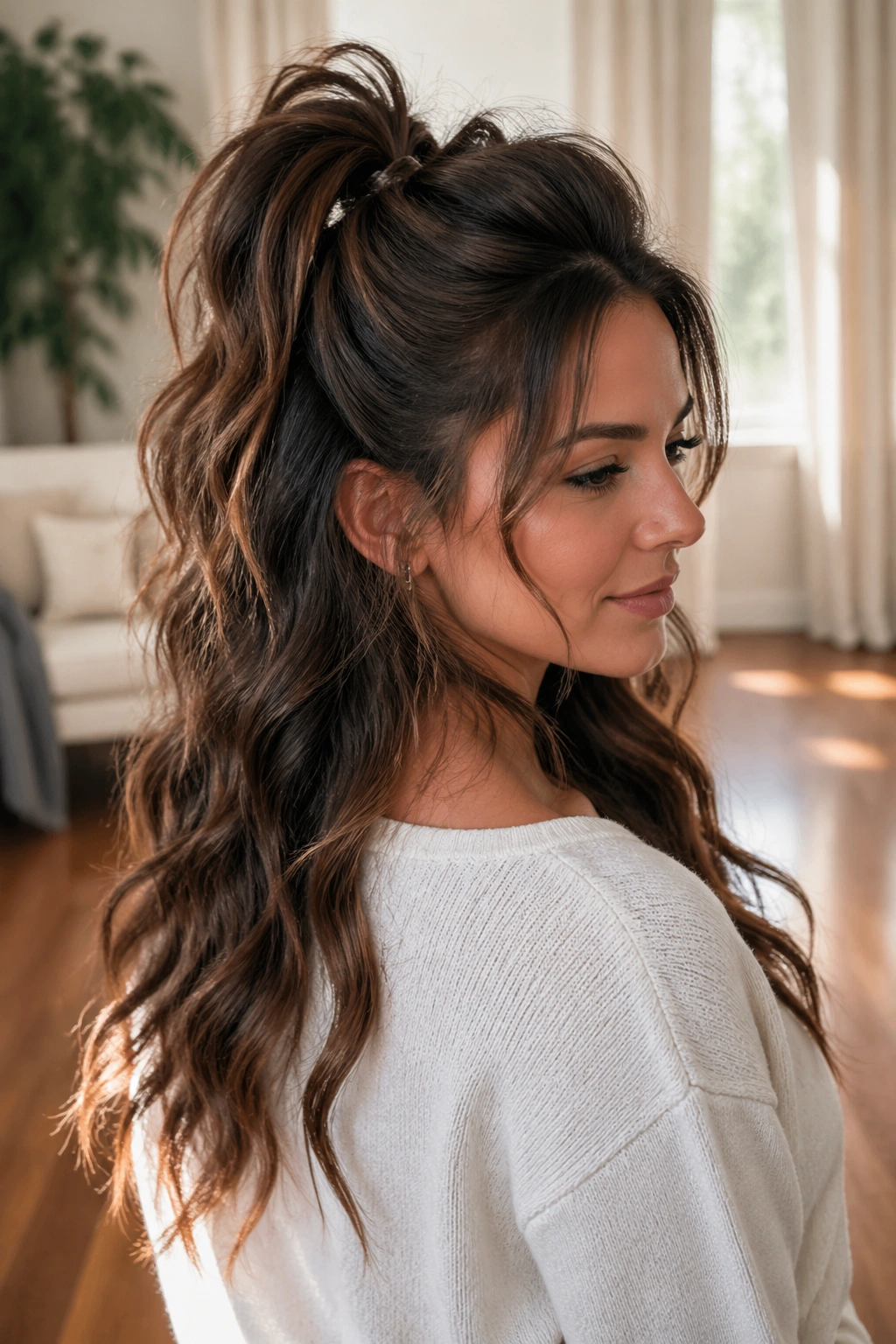
Wavy hair lives in the middle ground, which makes it easy to shape and easy to ruin. The trick is to enhance the wave, not smooth it away. Pull the top half into a loose tie, then scrunch the bottom sections with a drop of cream or sea-salt spray.
This texture is ideal for a half up updo ponytail because it gives the style movement from top to bottom. A perfectly straight finish can make waves look limp. A little bend through the lengths makes the whole style feel more alive.
What to Avoid
- Don’t over-brush once the waves are set.
- Don’t use too much oil at the roots.
- Don’t pull the elastic so tight that the crown goes flat.
21. Wedding-Ready Half Up Updo Ponytail
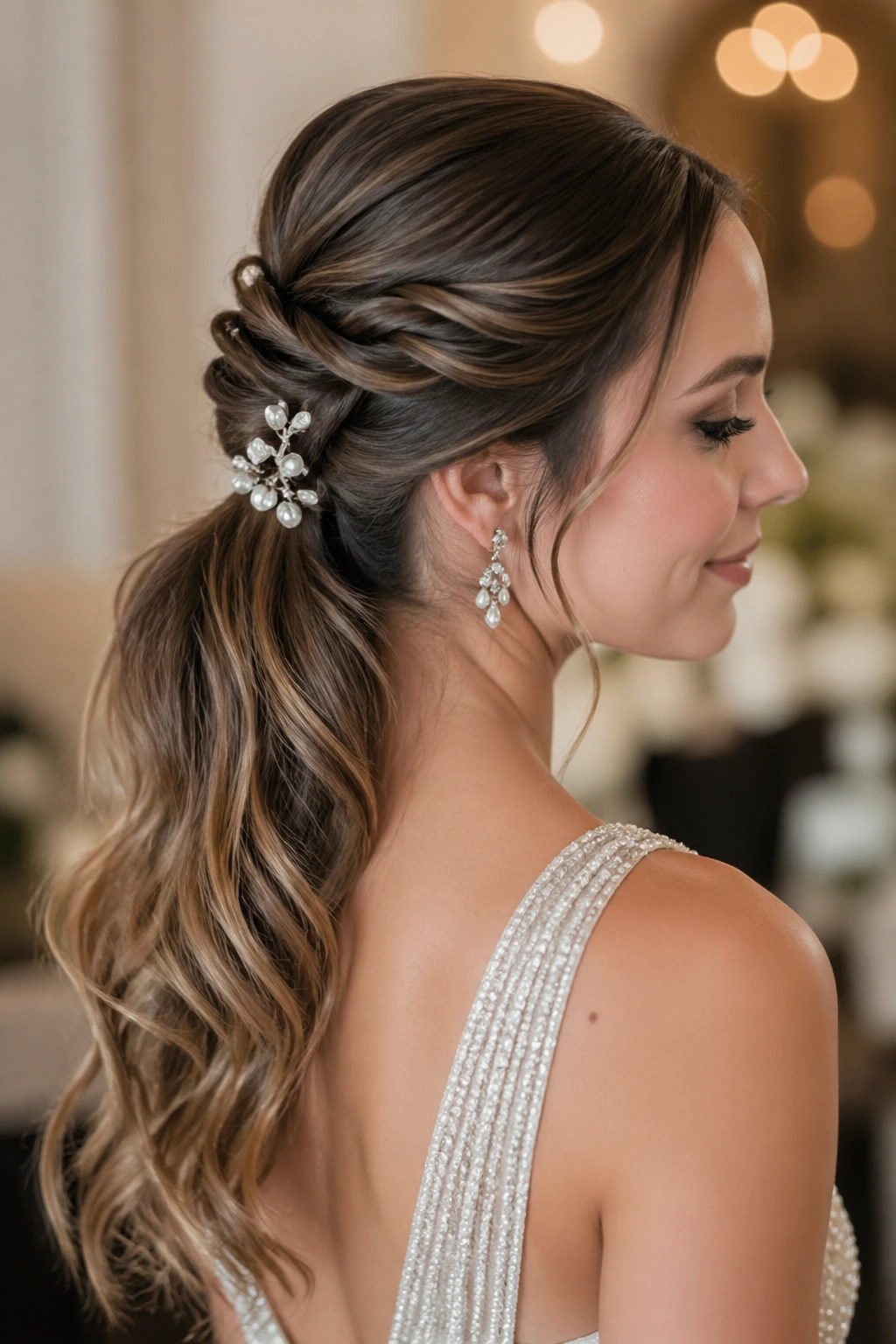
A wedding version of this style should look soft, secure, and a little bit expensive, even if it uses simple tools. Start with a smooth crown, add a twist or braid on both sides, and finish with a low ponytail that sits neatly between the shoulder blades. Then hide the elastic with hair or a small piece of ribbon.
Pearl pins, tiny flowers, or a slim crystal comb work best when they stay close to the base. Too much ornament makes the style feel crowded. The hairstyle should still move when you turn your head.
If you are styling for a long event, pin the twists twice and use hairspray at the roots only. That keeps the look neat without making the ends stiff.
22. Office-Polished Half Up Ponytail

This is the version for mornings when you need your hair to look calm, not dramatic. A center part, a smooth top section, and a wrapped elastic are usually enough. The ponytail sits neatly, the face stays open, and the look says you paid attention without trying too hard.
Keep the finish clean. Flyaways are fine, but frizz around the crown can make the style feel unfinished. A toothbrush-sized edge brush or a clean spoolie with a tiny bit of cream can smooth the hairline in seconds.
A mid-height placement works best here. Too high and it feels youthful. Too low and it starts to look like you gave up halfway through.
23. Gym-Secure Half Up Ponytail
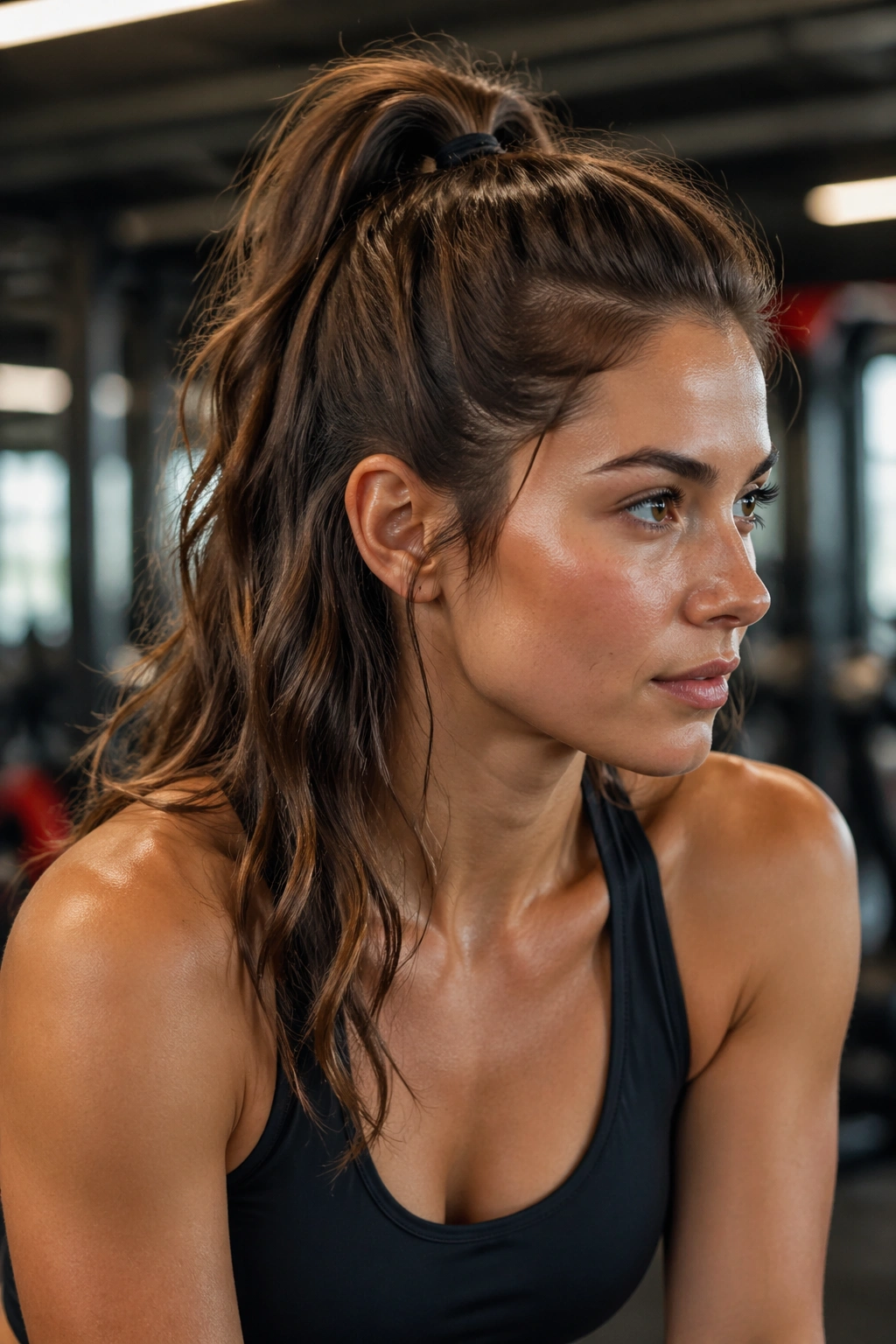
A gym version needs different priorities. Hold matters more than softness. Use a strong elastic, keep the top section tight enough to stay put, and skip loose accessories that will slide when you move. You want the style to survive burpees, not just a mirror check.
This is one case where a plain half ponytail is smarter than a fancy braid. The more moves you add, the more places the style can loosen. A simple base with a braided top section is enough for most workouts.
A sweat-friendly headband can help with baby hairs at the temples. If your hair is very slippery, clip the crown up first, mist lightly, and let it set for a minute before you start moving around.
24. Party-Ready High-Shine Half Up Ponytail
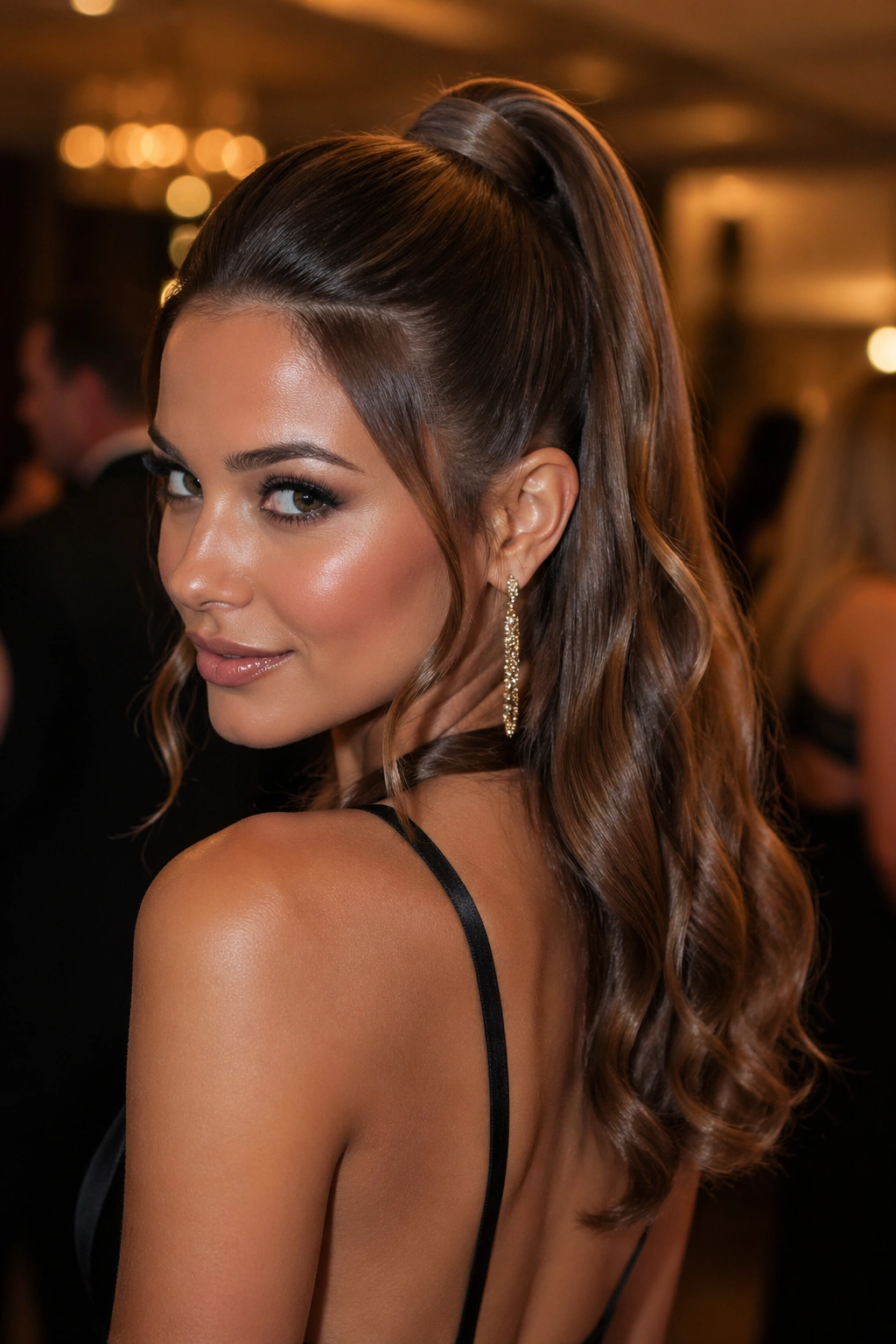
Shine changes the mood fast. Smooth the top with a serum, curl the lower lengths in one direction, and wrap the elastic so the tie disappears. The finish feels cleaner, sharper, and a little more dressed up than a loose texture version.
The key is not overloading the hair with product. A pea-sized amount of serum on the outer layer is enough for most hair lengths. If you use too much, the crown goes greasy and the ends go stringy.
Pair this with a deep side part or a little height at the crown if you want more drama. It photographs well because the top stays neat while the lower half still moves.
25. Soft Romantic Half Up Ponytail
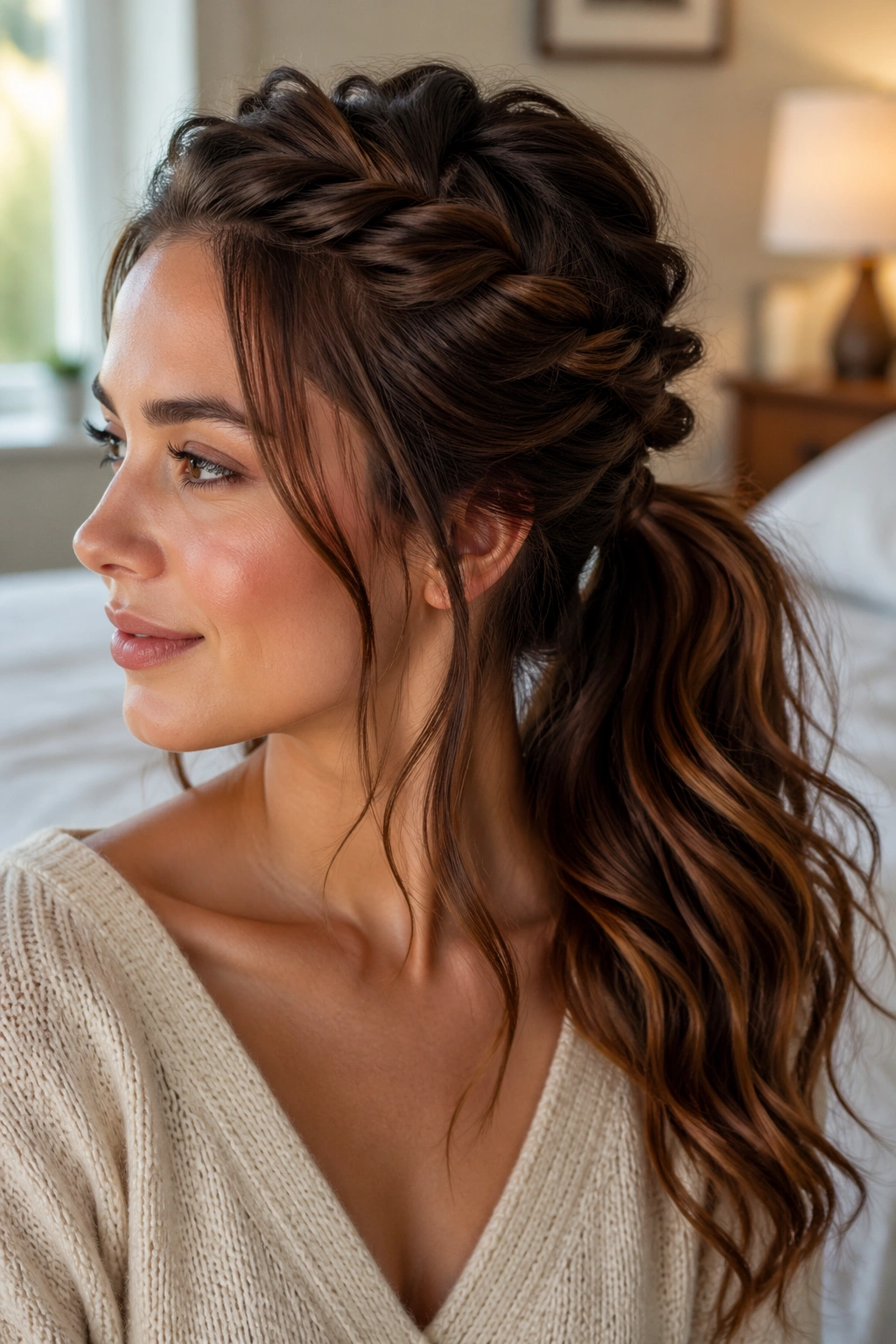
This version is all about looseness, but not mess. Pull the top section back gently, leave two thin pieces around the face, and curl the rest into soft bends. The style should feel touchable, almost like it drifted into place rather than being forced there.
A loose twist or small braid on each side makes it more interesting without stealing the softness. If you want extra charm, tuck a few pins under the elastic so the ponytail base sits slightly higher than the rest of the hair.
The shape works best when the front pieces aren’t identical. One side can fall a little farther than the other. That small imbalance keeps the style from looking too staged.
26. Center-Part Sleek Half Up Ponytail
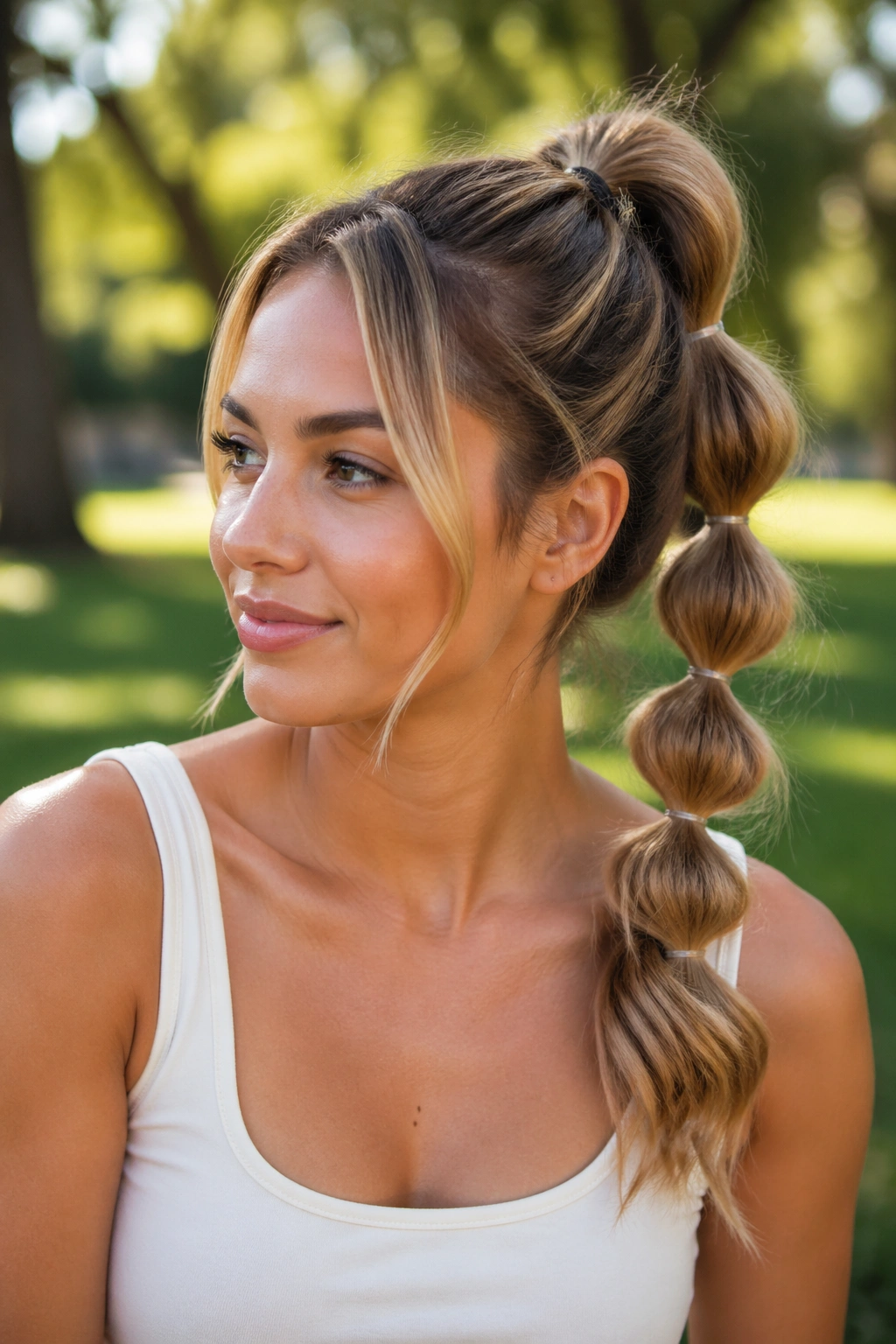
A center part gives this style a cleaner, sharper outline. It is a little severe in the best way. Brush both sides flat, gather the top section evenly, and secure it right at the back of the crown so the part stays visible.
This look suits straight hair and relaxed waves more than very tight curls, though curly textures can wear it too if the crown is smoothed carefully. The part line does most of the visual work, so keep it crisp.
If you want the tail to feel less harsh, curl the ends under or out just slightly. That breaks up the straightness without losing the tidy shape.
27. Criss-Cross Half Up Ponytail
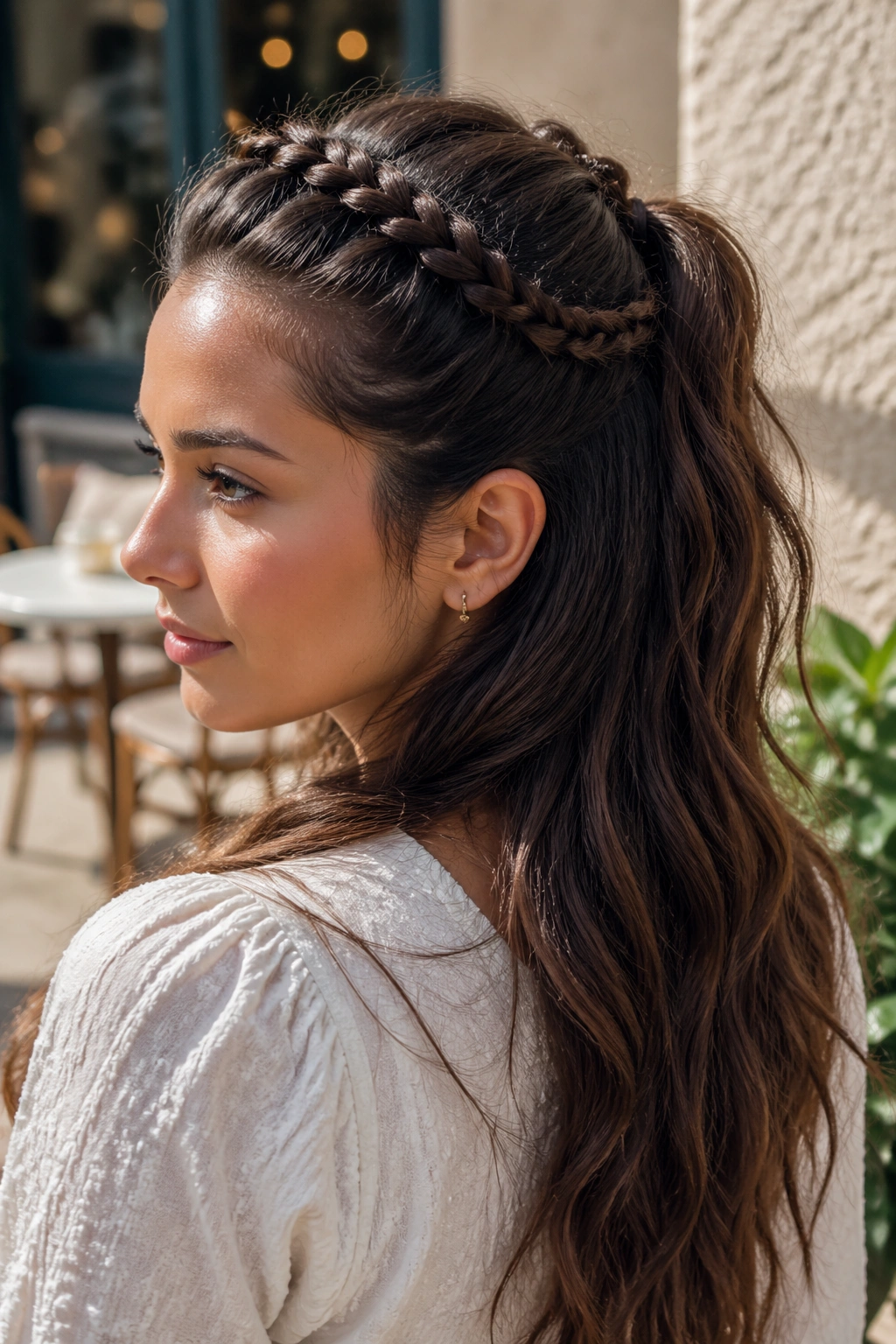
Criss-cross sections look more complicated than they are. Take a small piece from the right, cross it to the left, then do the same from the other side before pinning everything at the center. The pattern gives the top a woven look without needing a full braid.
It’s a smart option for medium-length hair because the crossing creates width across the back of the head. That can make the style feel fuller even if the ponytail itself is modest. On thick hair, keep the sections thin so the shape doesn’t get bulky.
Quick Styling Notes
- Use 4 to 6 small pins to hold the crossing in place.
- Keep the sections even in width.
- Smooth the outer layer after pinning so the criss-cross stays visible.
28. Vintage Flip-End Half Up Ponytail
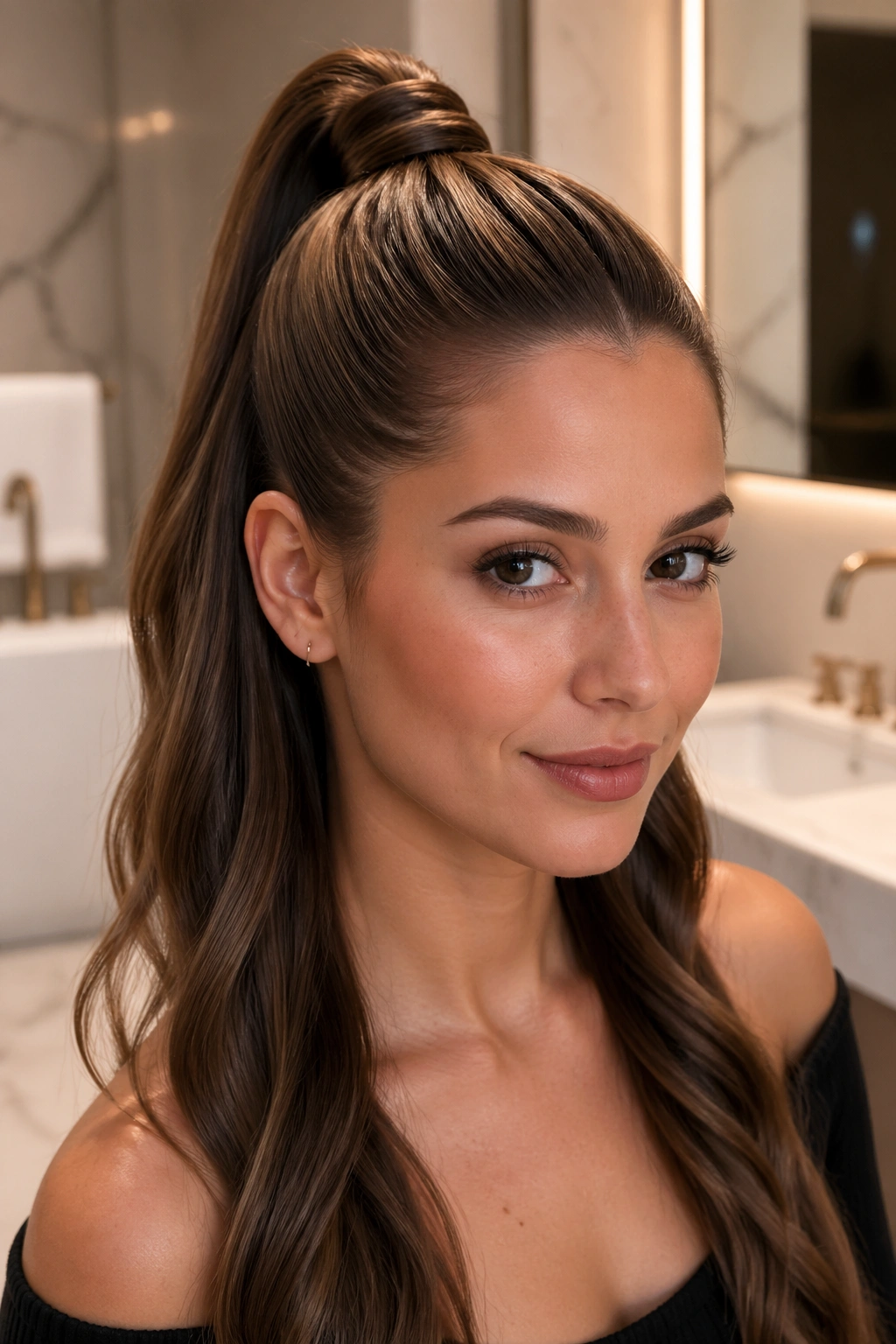
If you like a little old-school shape, flip the loose ends outward with a round brush or a 1-inch iron. The top section stays sleek while the bottom flips out in a soft arc. It gives the half-up ponytail a retro edge without going costume-y.
This works especially well on shoulder-length and longer hair because the flip needs room to show. On shorter cuts, the bend can disappear into the ends. A touch of mousse at the roots helps hold the lift.
The crown should stay smooth. The flip is the feature here. If everything is curled, the style loses its contrast and starts to look too busy.
29. Messy Knot Half Up Ponytail
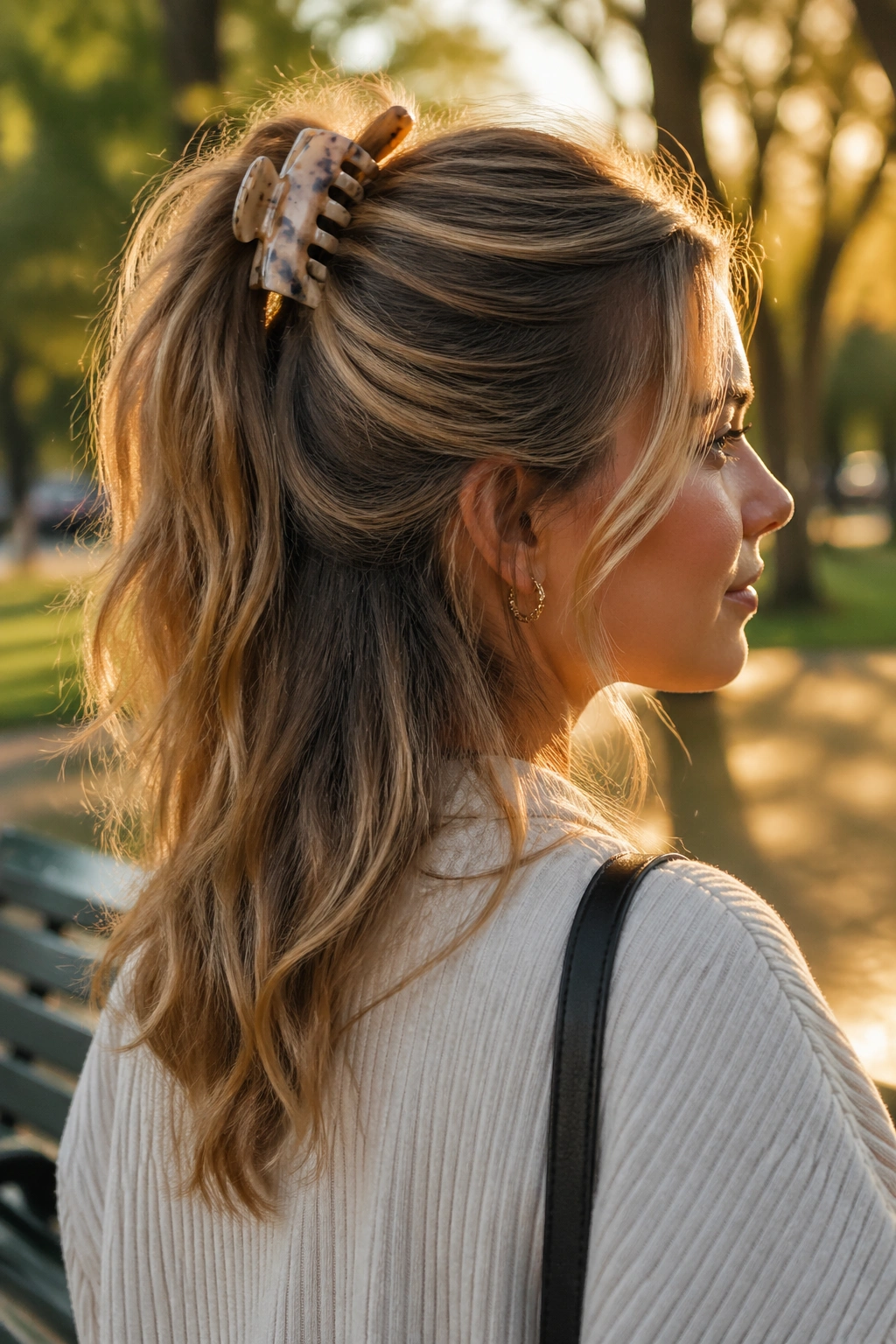
A messy knot is useful when you want the shape of an updo without the fuss. Twist the top section loosely, wrap it into a knot, pin it, and leave the tail ends peeking out a little. The result feels casual, but not sloppy if the knot sits high enough.
This is a good one for layered hair because shorter pieces can fall naturally out of the knot without looking like a mistake. Let a few strands escape near the ears. That softens the top half and keeps the style from looking too tight.
A messy knot also pairs well with texture spray. Fine hair gets lift. Thicker hair gets more separation. Either way, the shape is easy to wear and fast to fix.
30. Two-Minute Half Up Updo Ponytail
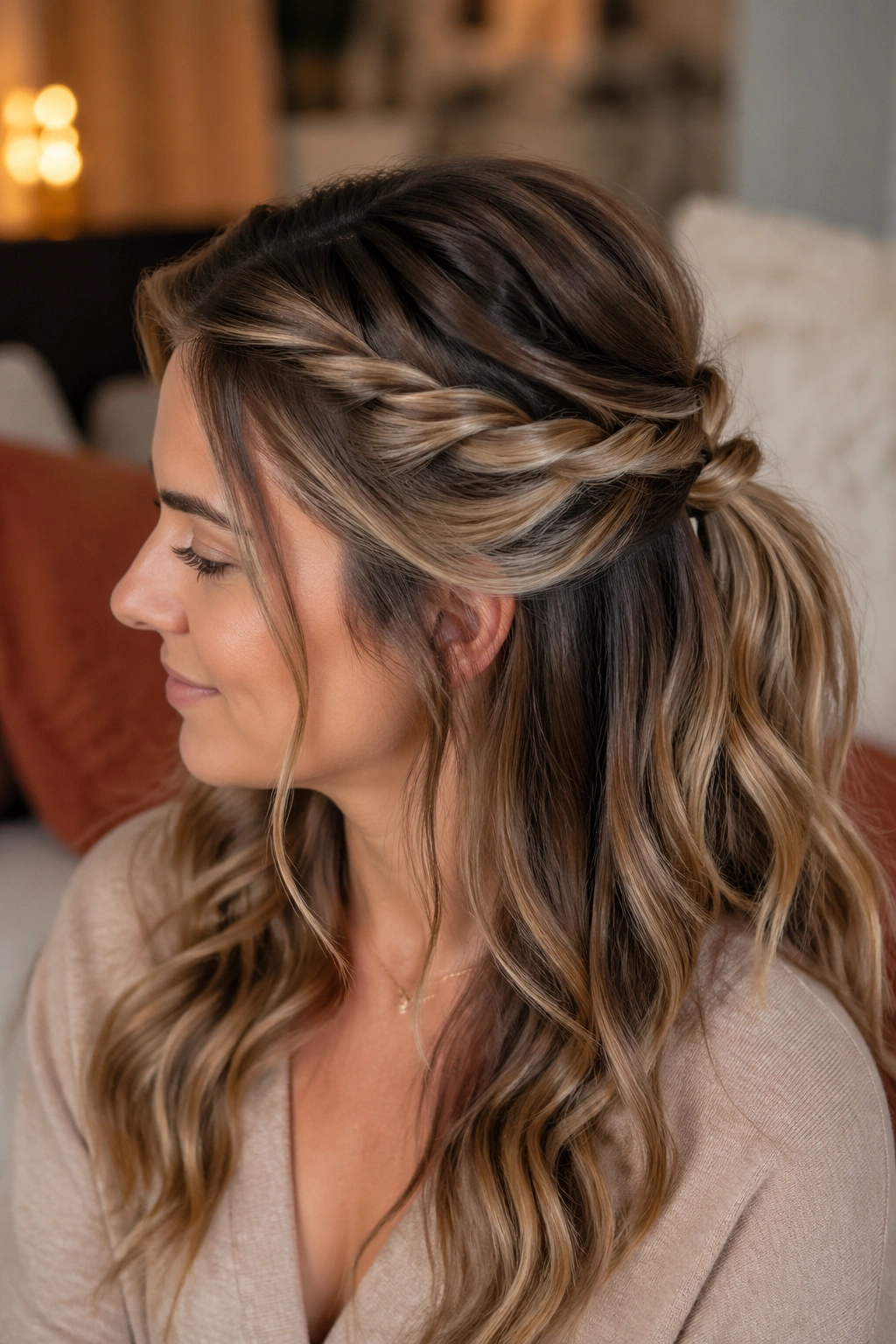
When you need something fast, go back to the basics and do them well. Grab the top section from temple to temple, smooth it with your fingers, tie it at the crown, and hide the elastic with one wrapped strand if you have the time. That’s enough.
The style works because it respects the hair you already have. Short hair gets a tiny lifted section. Long hair gets a neat anchor. Curly hair keeps its texture. Straight hair gets order. No extra drama required.
If you remember one thing, make it this: good sectioning beats fancy technique. A clean top half, a secure elastic, and a quick check in the mirror are usually enough to turn a rushed ponytail into something you can actually leave the house in.