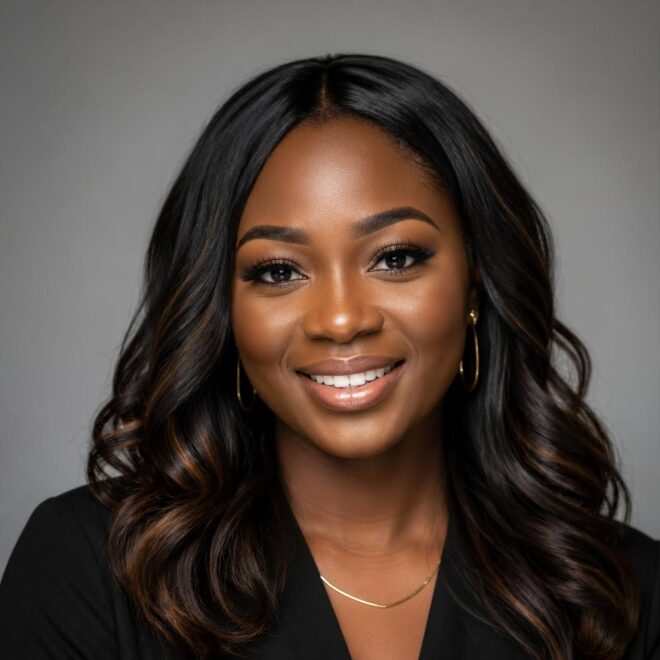


Long curly haircuts with layers are, without question, the most transformative thing you can do for natural curls that have length. Layers change the entire behavior of long curly hair — they take hair that was weighed down, triangle-shaped, or struggling to hold curl definition and turn it into something that moves, bounces, and genuinely looks alive. The right layered cut on long natural curls doesn’t just change how your hair looks. It changes how your hair acts every single day.
What Layers Actually Do for Long Natural Curls
Understanding the mechanics helps you make better decisions at the salon. Long curly hair without layers carries its full weight in a single mass — every strand is essentially pulling itself down from the root. At long lengths, this means the bottom sections of curls are permanently elongated and stretched, losing their natural coil definition because the weight has pulled the spiral out of shape.
Layers change the weight distribution. When your stylist removes interior bulk and creates layers at different lengths within the hair, each layer section becomes shorter and lighter. Shorter and lighter means less weight pulling each coil down, which means more spring, more definition, and a more voluminous, dynamic silhouette. The exterior length stays intact — you keep your length — but the interior structure changes in ways that make the hair look and behave completely differently.
Why Long Curly Hair Needs Layers More Than Straight Hair
Straight hair has the luxury of looking intentional and polished without layers. The weight of straight hair falls predictably and creates clean lines even at very long lengths without layering. Curly hair, by contrast, doesn’t fall — it stacks. And stacking without layering creates that classic triangle problem: small at the top, wide at the bottom, with a shape that isn’t flattering and isn’t what your curl pattern actually wants to do.
Layers on long curly hair are not optional in the way they’re optional on straight hair. They’re the tool that makes the length wearable, beautiful, and manageable rather than a heavy, shapeless mass that fights against your styling efforts every day.
Finding the Right Kind of Layering for Your Curl Type
Not all layers work the same way on all curl types. For looser curl types (3A–3C), long layers with a more gradual transition between lengths tend to work best — they add movement and reduce triangle silhouette without removing so much bulk that the hair looks too thin at the bottom. For tighter coil types (4A–4C), more aggressive interior layering is often necessary because the hair is denser and requires more bulk removal to achieve the same visual effect.
The bottom line: your layer pattern should be designed for your specific curl type, density, and the silhouette goal you’re working toward. A good curl stylist will start by assessing your curl map and density before picking up the scissors, not after.
Dry Cutting for Long Layered Natural Curls — Why It Matters
Dry cutting is especially critical for long layered natural cuts because the length magnifies any cutting errors. When a stylist cuts long curly hair wet, they’re working with stretched, elongated strands that don’t reflect where the hair will actually fall once it dries. A cut that looks beautifully layered wet can look dramatically different dry — often in unflattering ways.
Dry cutting for long natural curls lets the stylist see exactly how your curl pattern behaves at every length, where the natural curl clusters form, and where the transitions between layers will sit in the dry, finished state. It’s a longer process than wet cutting, but the results are consistently better.
When to Trim vs. When to Cut for Long Curly Hair
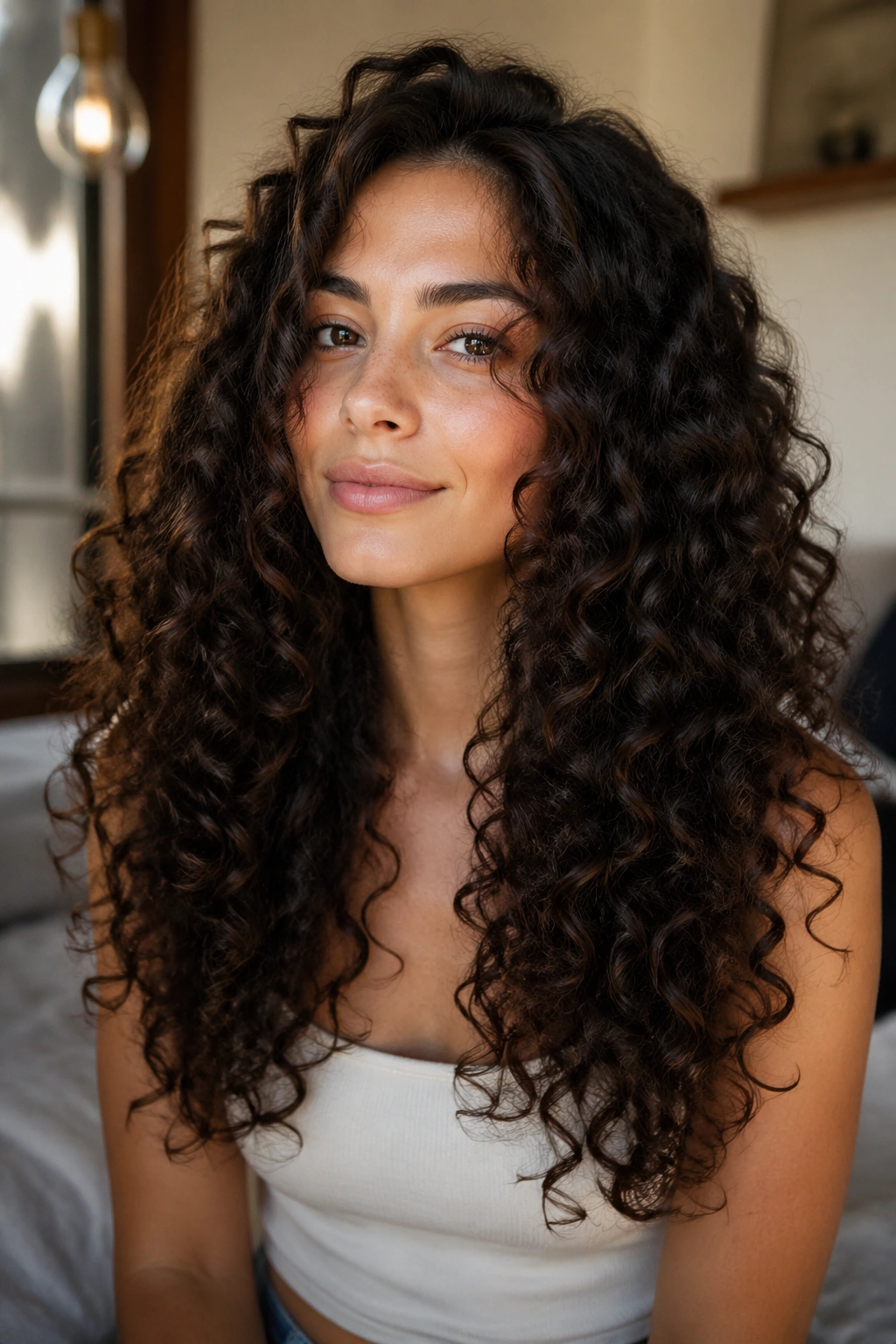
Long curly natural hair benefits from a clear-eyed assessment of the difference between a maintenance trim and a real cut. A maintenance trim every three to four months removes split ends and keeps the perimeter of your layered cut looking clean and intentional. A real cut — when you’re reshaping or relayering — is something you might do once or twice a year for maintaining a layered style.
If your layers have grown out and your hair is starting to look heavy and undefined again, that’s the signal for a real layered cut rather than just a trim. Don’t wait until the hair has fully lost its shape — go back for the full relayering appointment before you hit that point.
25 Long Curly Haircuts With Layers
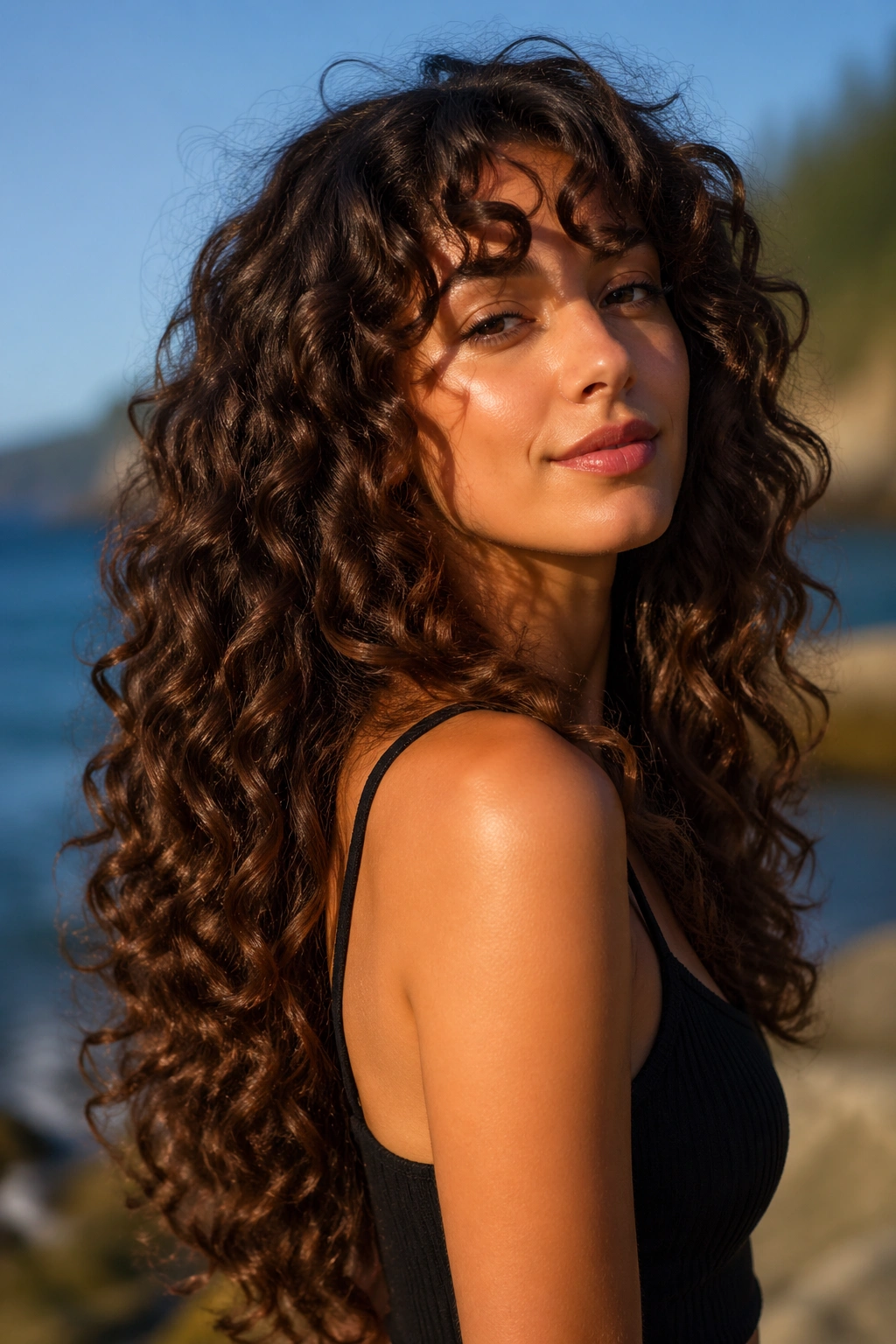
1. The Classic Long Layer Cut
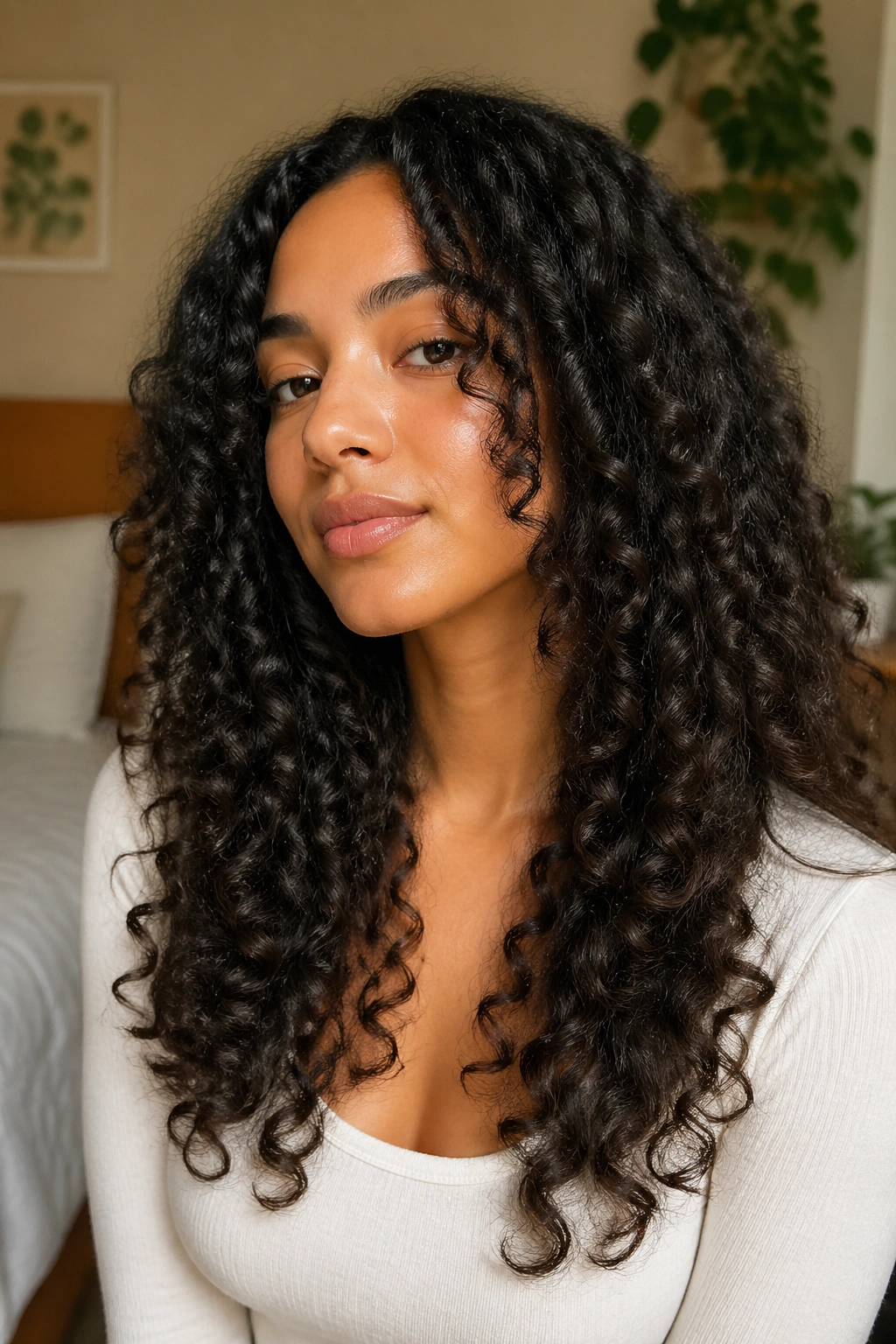
Long layers on natural curls done cleanly and precisely — longer at the perimeter, with graduation through the interior — is the foundation from which every other style on this list is built. Done correctly, it transforms long natural curls from a heavy mass into a flowing, dimensional cascade with visible movement and dramatically improved definition. The classic long layer cut is the entry point for anyone who hasn’t had their long natural curls properly layered before.
What the Consultation Should Cover
Before your stylist picks up the scissors, you should discuss: your curl type and density, how much length you want to keep at the perimeter, the silhouette you’re aiming for (rounder, more elongated, more tapered at the bottom), and how much interior bulk removal is appropriate for your hair. All of these decisions should be made explicitly, not assumed.
- Best for: all curl types at long lengths
- Maintenance: relayer every 6–12 months, trim every 3–4 months
- Tip: Request that your layers be cut at a point where they’ll still be visible when your hair is pulled into a bun or half-up style — layers that are too long to be visible in an updo aren’t adding much value.
2. The Long Curly V-Cut With Layers
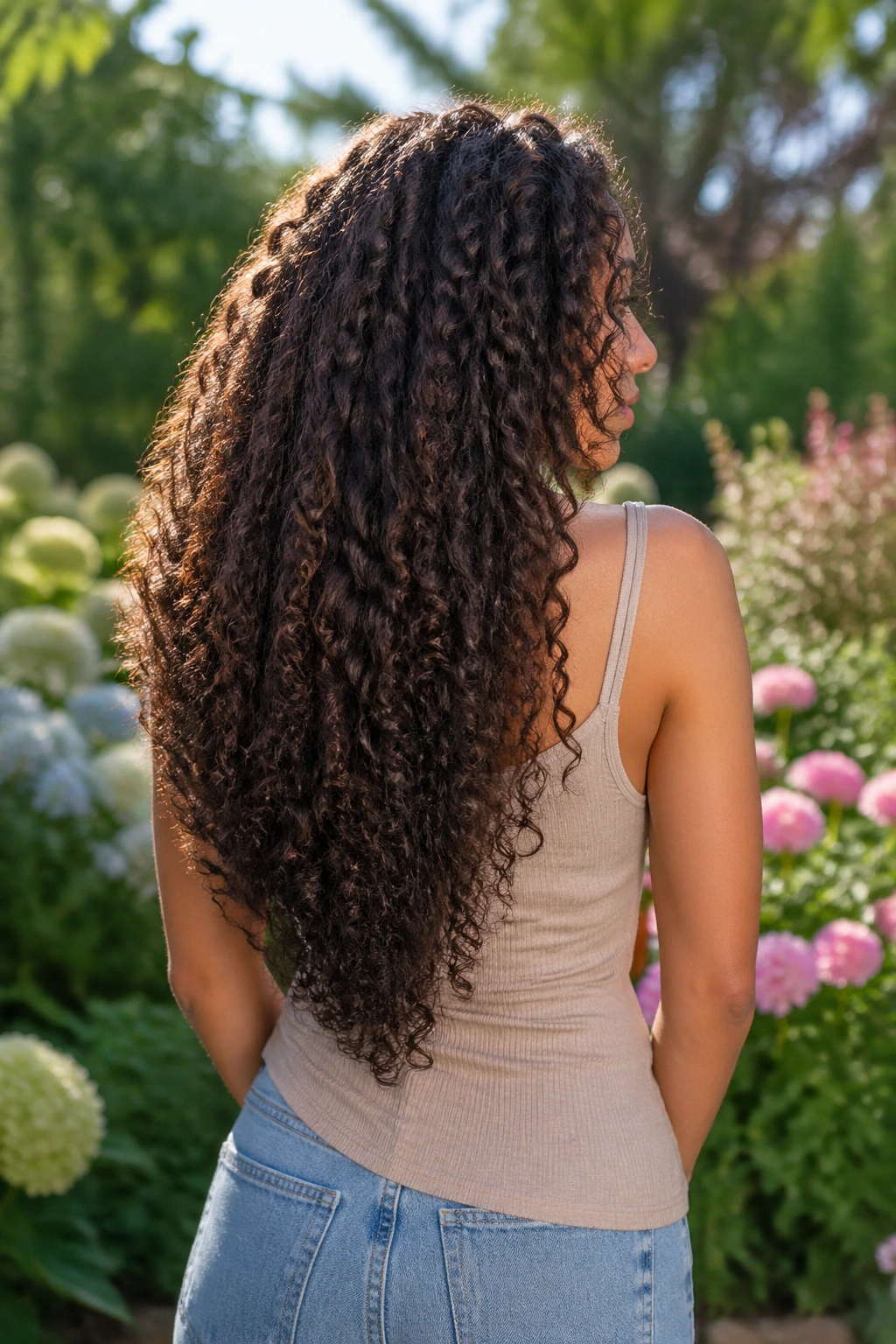
V-cut layering creates a dramatic point at the center back of the hair — longer in the middle, shorter at the sides — with layers built in throughout the length. On long natural curls, the V-cut is particularly striking because the curl pattern adds texture and movement to every length transition. The result is a hairstyle that looks extraordinary from behind — a cascade of defined curls converging toward a deliberate, beautiful point.
3. The Long Curly U-Shape With Interior Layers
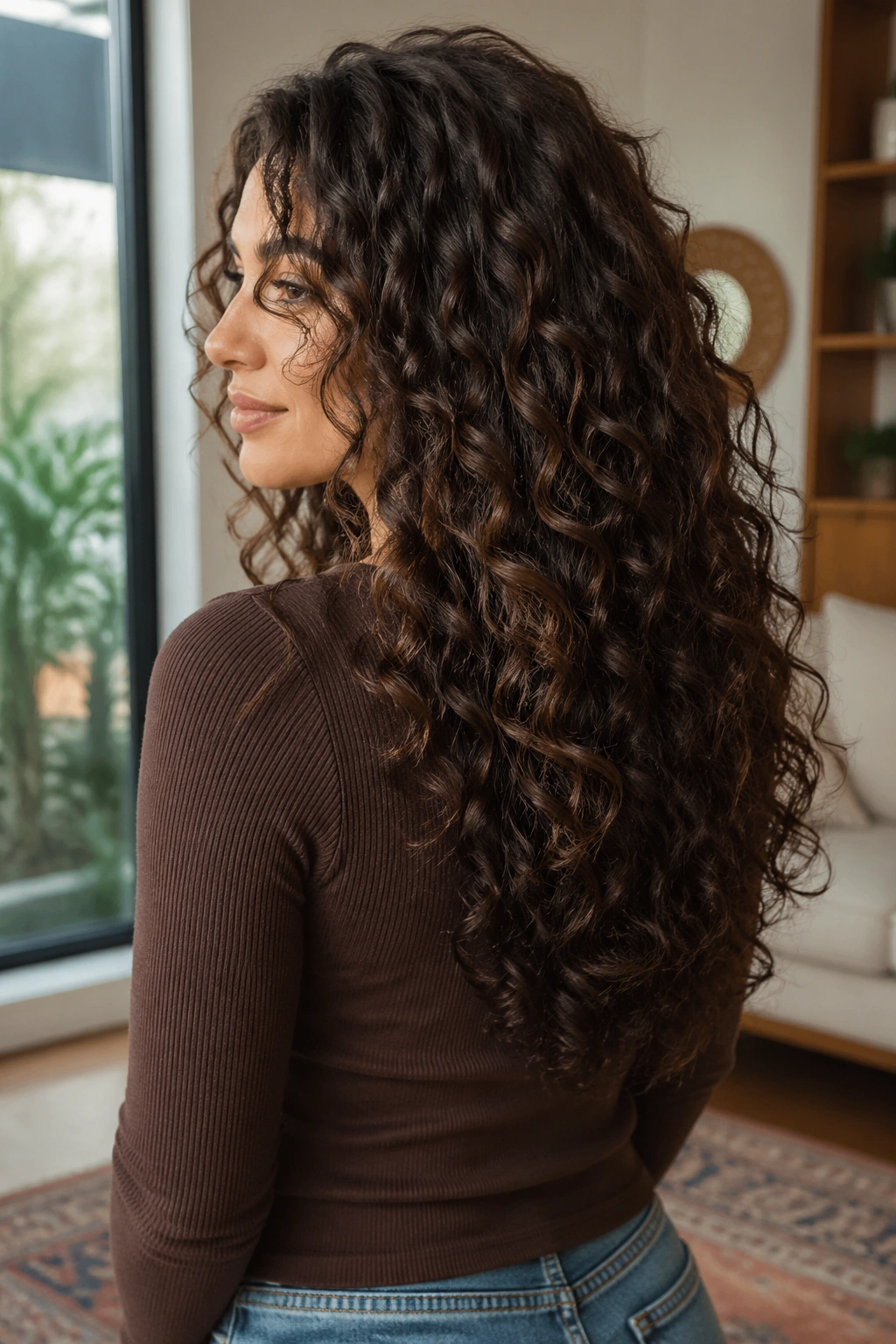
The U-shape — a soft, rounded curve at the back with the center slightly longer than the sides — is the gentler alternative to the V-cut. Combined with internal layering, the U-shape creates a romantic, flowing silhouette that suits people who want a softer, less angular look. It’s the cut that photographs beautifully from every angle, front and back, because the shape works in every direction.
4. The Cascading Layer Cut
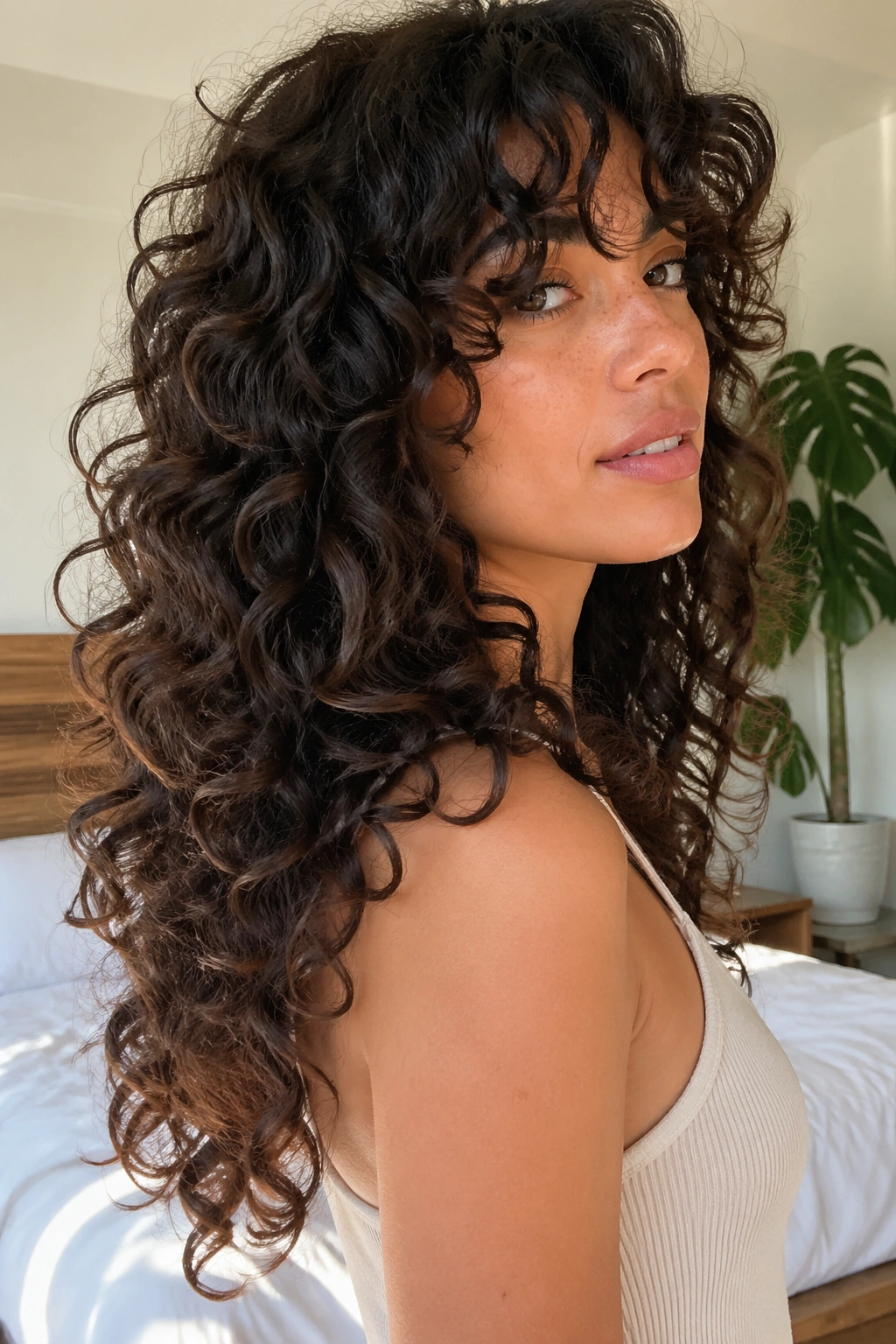
Cascading layers are cut so each layer flows into the next without a visible stepped appearance — the transition between lengths is gradual and seamless. On long natural curls, cascading layers create movement that’s almost liquid — the hair ripples and flows as you move, with curl clusters catching light differently at each layer. It’s genuinely one of the most beautiful things you can achieve with long natural curly hair.
5. The Long Shag With Heavy Layering
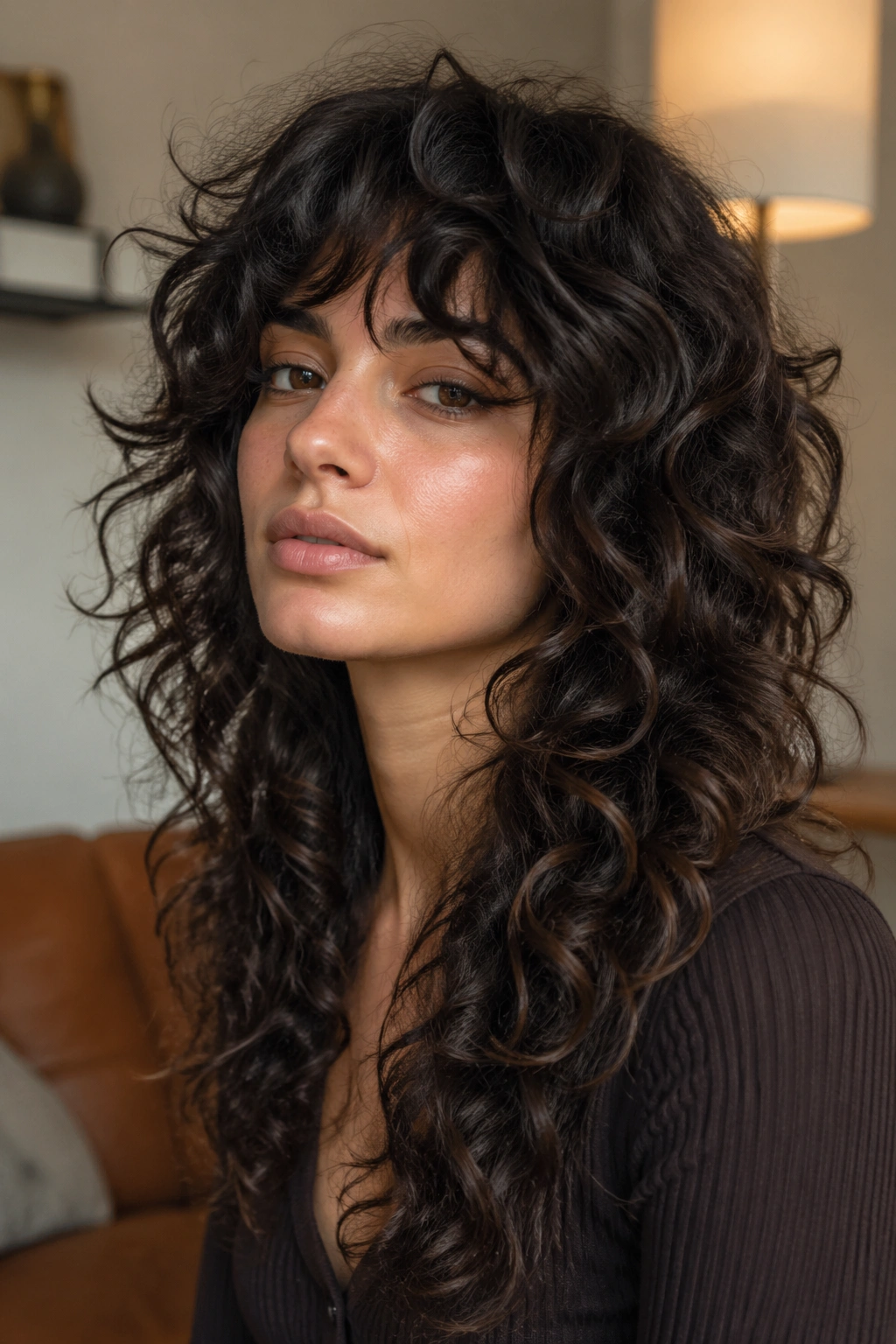
The shag at long lengths is dramatic and intentionally undone. Heavy layering creates significant variation between the shortest and longest sections, with the shortest layers often sitting around chin or collarbone length while the perimeter length continues to the back. On long natural curls, this creates an extraordinary textural effect — the shorter layers spring fully while the longer layers hang and flow, and the visual contrast between the two is what makes the shag so visually interesting.
Styling the Long Curly Shag
Apply curl cream to fully wet hair in sections, scrunch upward, and diffuse or air dry. The shag’s natural disorder works with your curl pattern — you don’t need to fight the hair into a specific shape. The cut builds the shape for you.
- Best for: 3A–4B curl types
- Works especially well for: high-density hair that needs significant bulk removal
- Tip: The long curly shag benefits from a styling cream over gel — it allows the natural movement of the layered sections to show without a stiff cast.
6. The Long Layered Cut With Face-Framing Layers
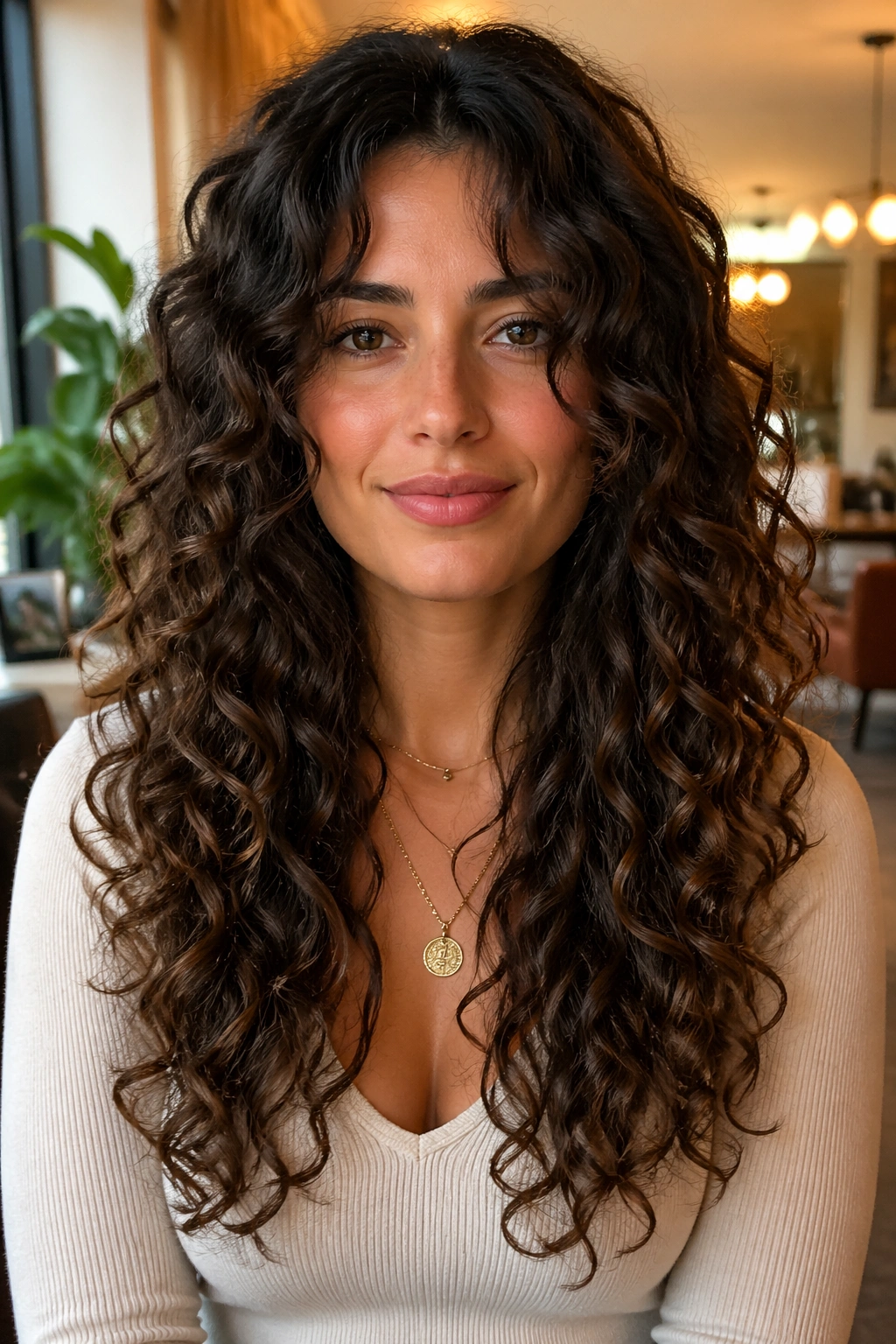
Face-framing layers are the shortest layers in the cut, positioned around the face to create definition and frame the features. At long hair lengths, face-framing layers don’t reduce the overall length but they add immediate visual interest at the front that changes how the entire style reads. Two or three shorter layers placed strategically around the face can make a long layered cut look significantly more intentional and styled without adding any styling time.
7. The Defined Curl Layer Cut for 4C Hair
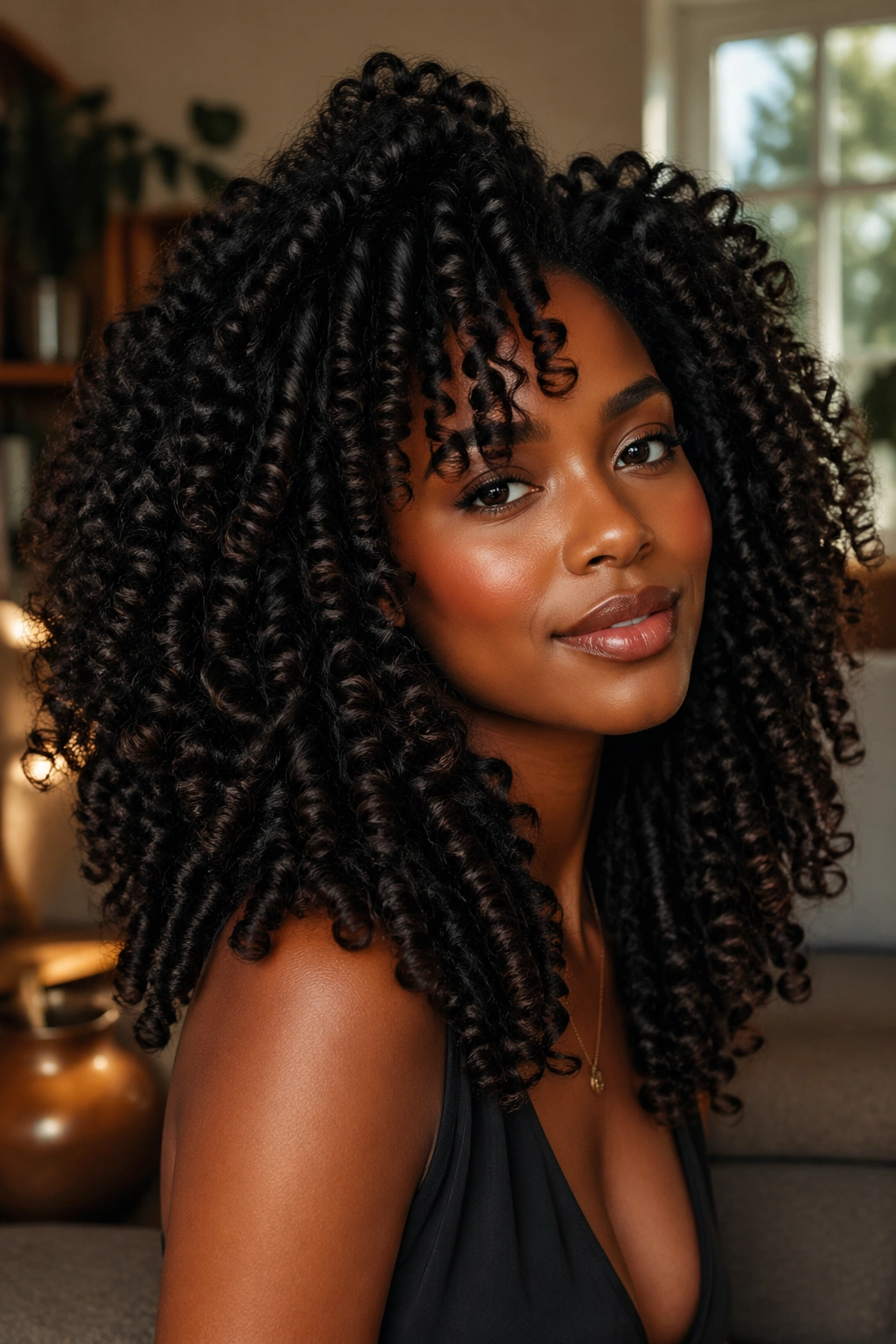
Layering 4C hair at long lengths requires specific expertise because the coil pattern is so tight that layers at conventional lengths may not look like layers at all — the shrinkage can cause different length sections to look similar when curled. A skilled stylist working with 4C hair will create larger length differentials between layers to ensure the layered structure is visible in the finished style.
When done correctly, layered 4C hair at long lengths is absolutely stunning. The shrinkage works in your favor — the shorter layers spring up into a cloud of volume while the longer layers have a different quality and hang, creating a multi-dimensional effect.
8. The Long Curly Cut With Curtain Bangs and Layers
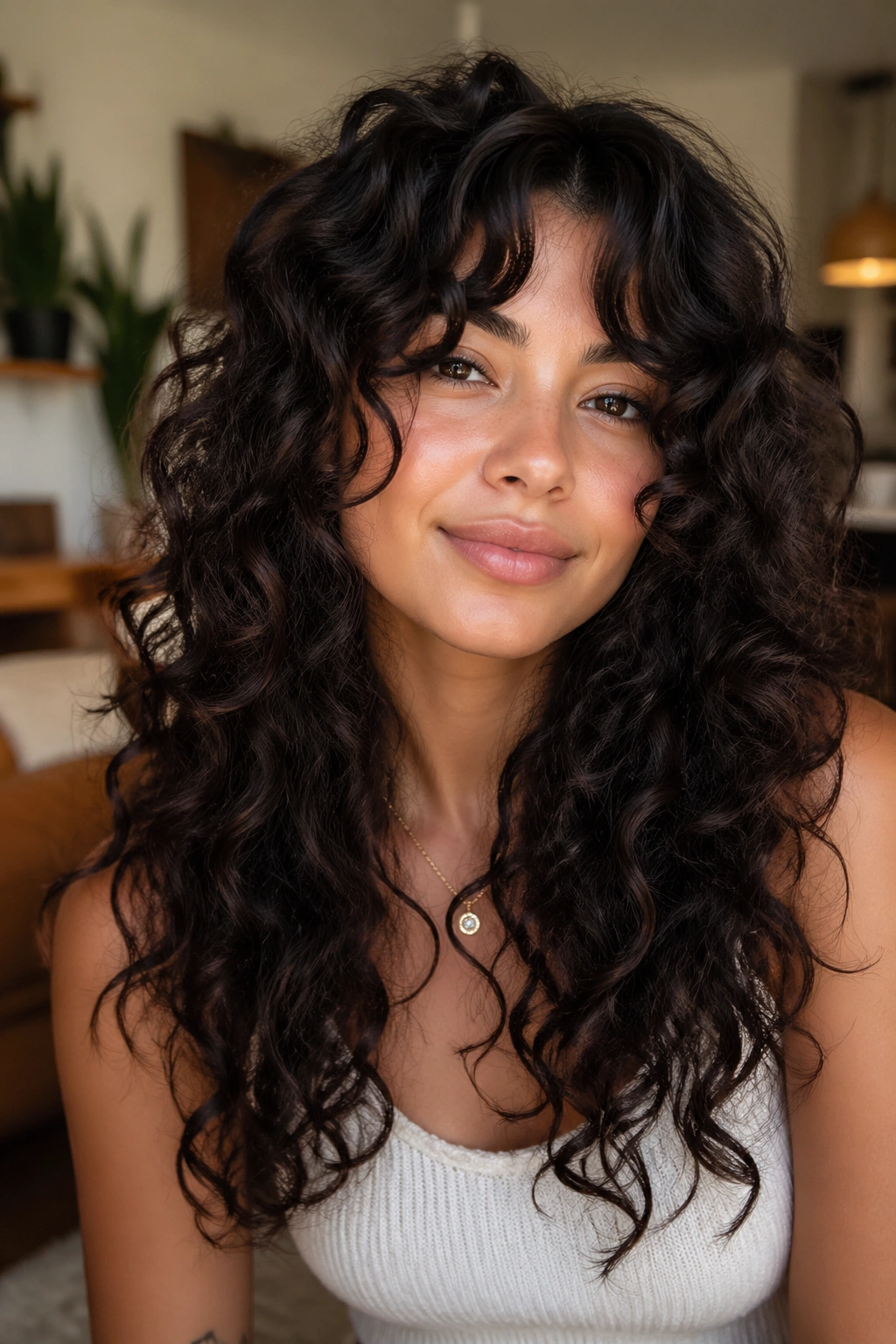
Curtain bangs — parted in the center and falling on either side of the face — paired with long layered curls is one of the most popular and flattering combinations in natural curl styling. The bangs should be cut specifically to follow the curl direction at the forehead, falling naturally rather than being forced in a particular direction. The curtain bang adds a soft, romantic element to long layered curls that frames the face beautifully and photographs incredibly well.
9. The Textured Long Layer Cut
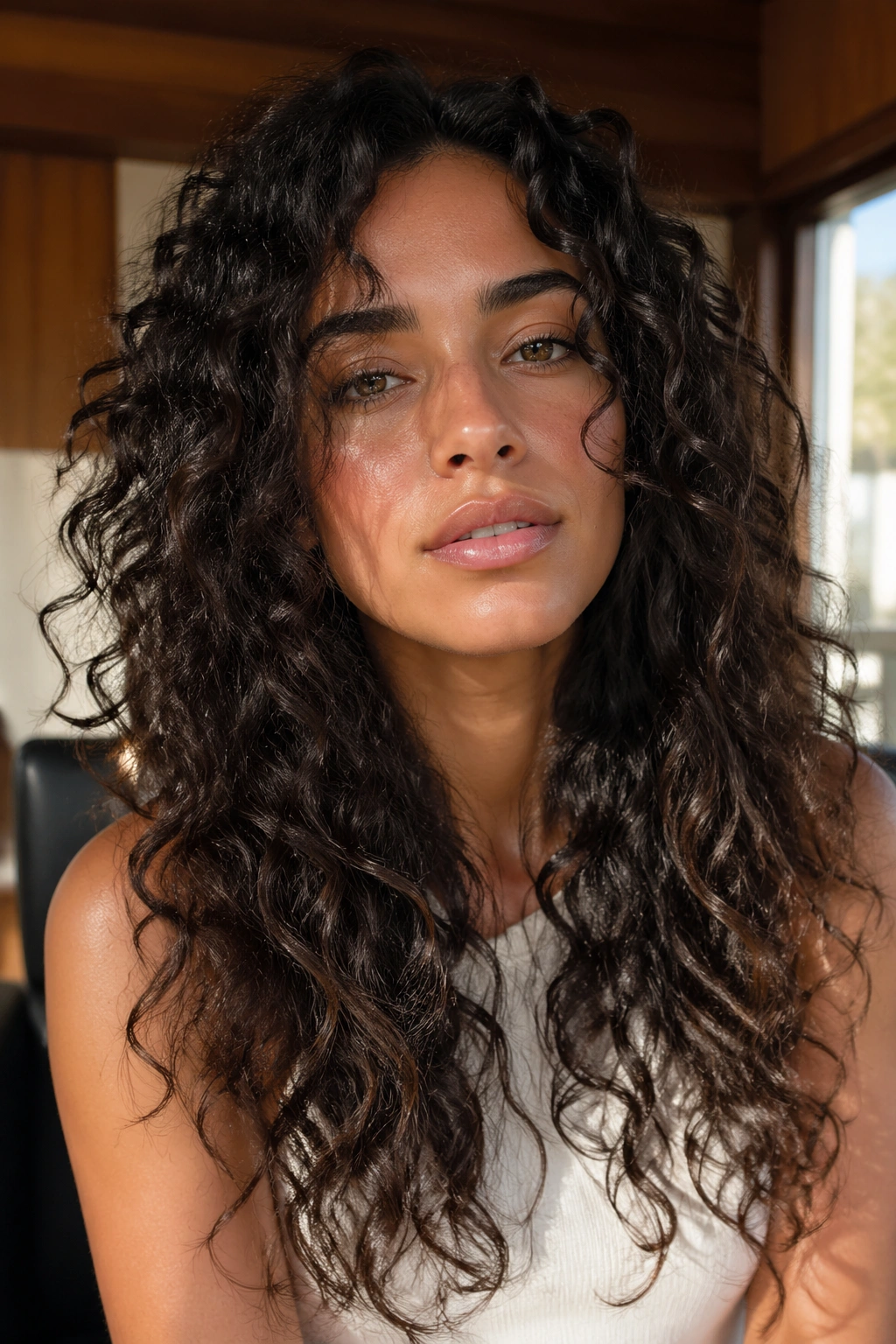
Where a classic long layer cut focuses on creating a clean shape, the textured layer cut deliberately adds variation, imperfection, and dimension to the ends of each layer. The stylist uses a point-cutting technique or texturizing shears to create ends that are slightly irregular, mimicking the natural variation in curl patterns. On long natural curls, this makes the hair look like it has more texture and body than it actually has.
10. The Invisible Layer Cut
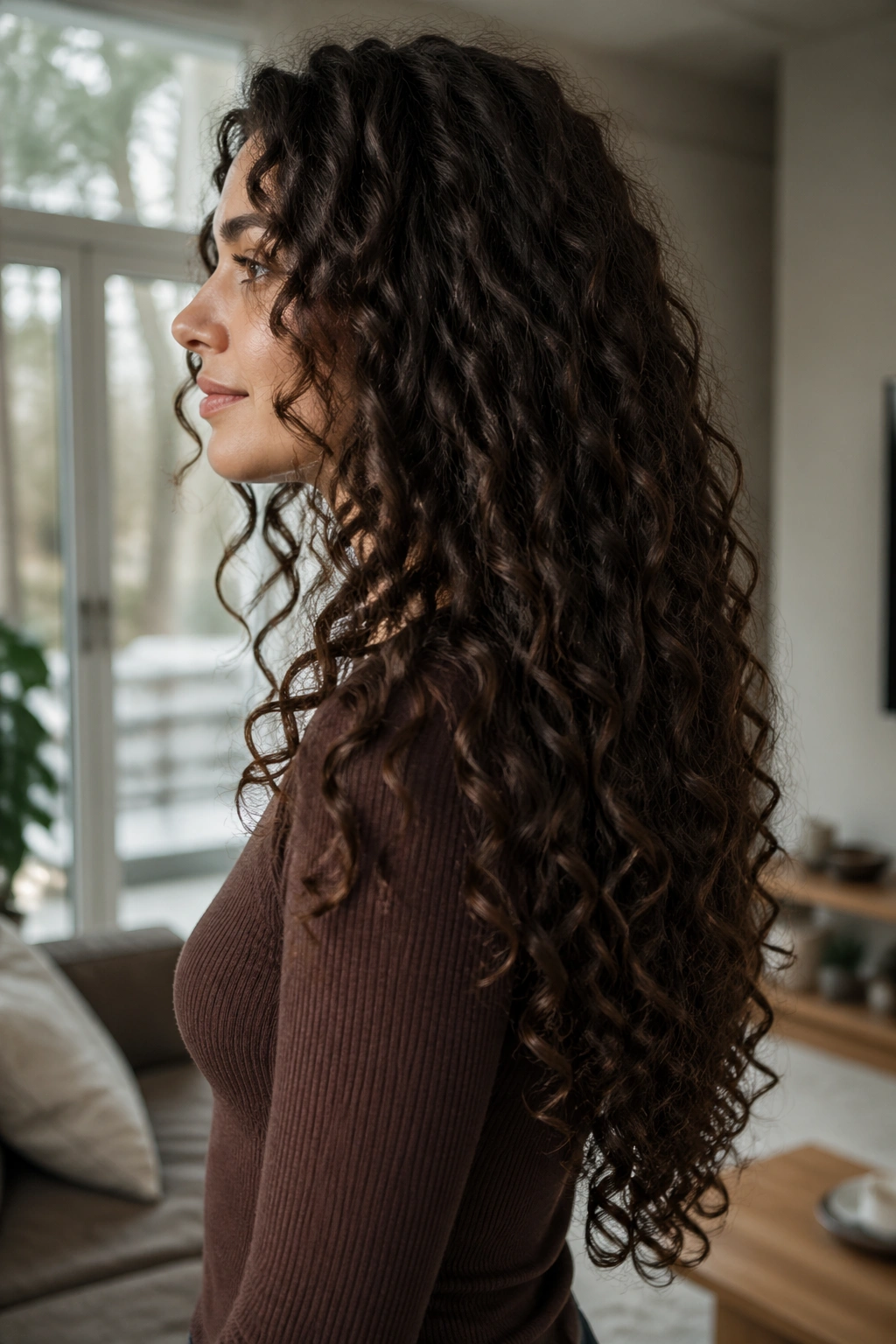
Invisible layering — also called interior layering or undercutting — removes bulk from the underneath sections of the hair without changing the exterior perimeter length at all. From the outside, your hair still appears to be one length. But the interior is significantly lighter, which means your curls spring more freely and your wash-and-go looks dramatically more defined. It’s the layering technique for people who want all the benefits of layers with none of the visible length variation.
11. The Long Natural Cut With Undercut Layers
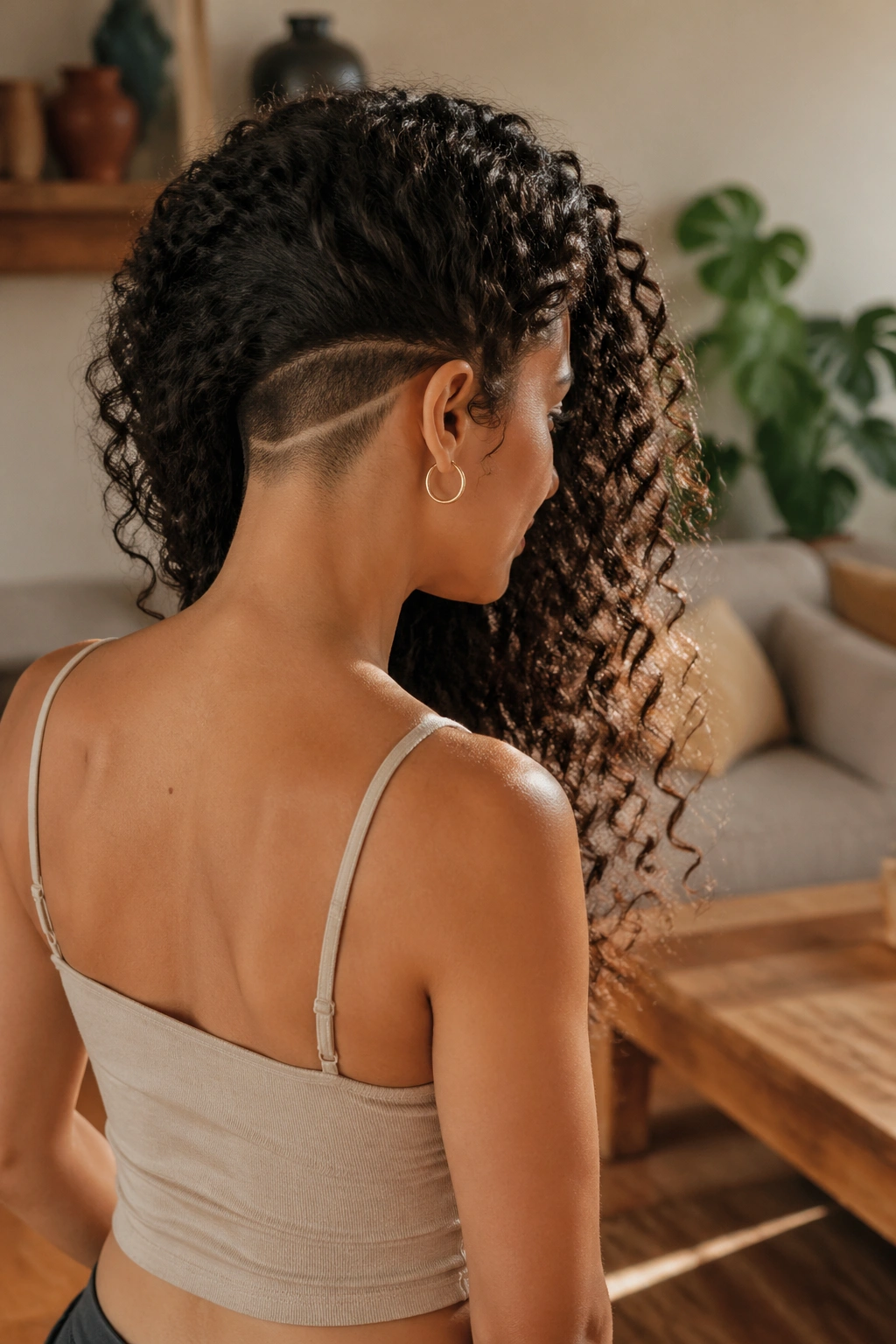
Taking invisible layering a step further, undercut layers involve actually shaving or cutting the underneath sections of the hair very short — creating a dramatic hidden undercut. When the hair is worn down, no one can see it. When it’s pulled up, the undercut is revealed as an intentional, striking detail. On long natural curls, the undercut also dramatically reduces the weight at the back, making the hair easier to manage and more defined when worn loose.
12. The Long Defined Curl Cut for 3C Hair
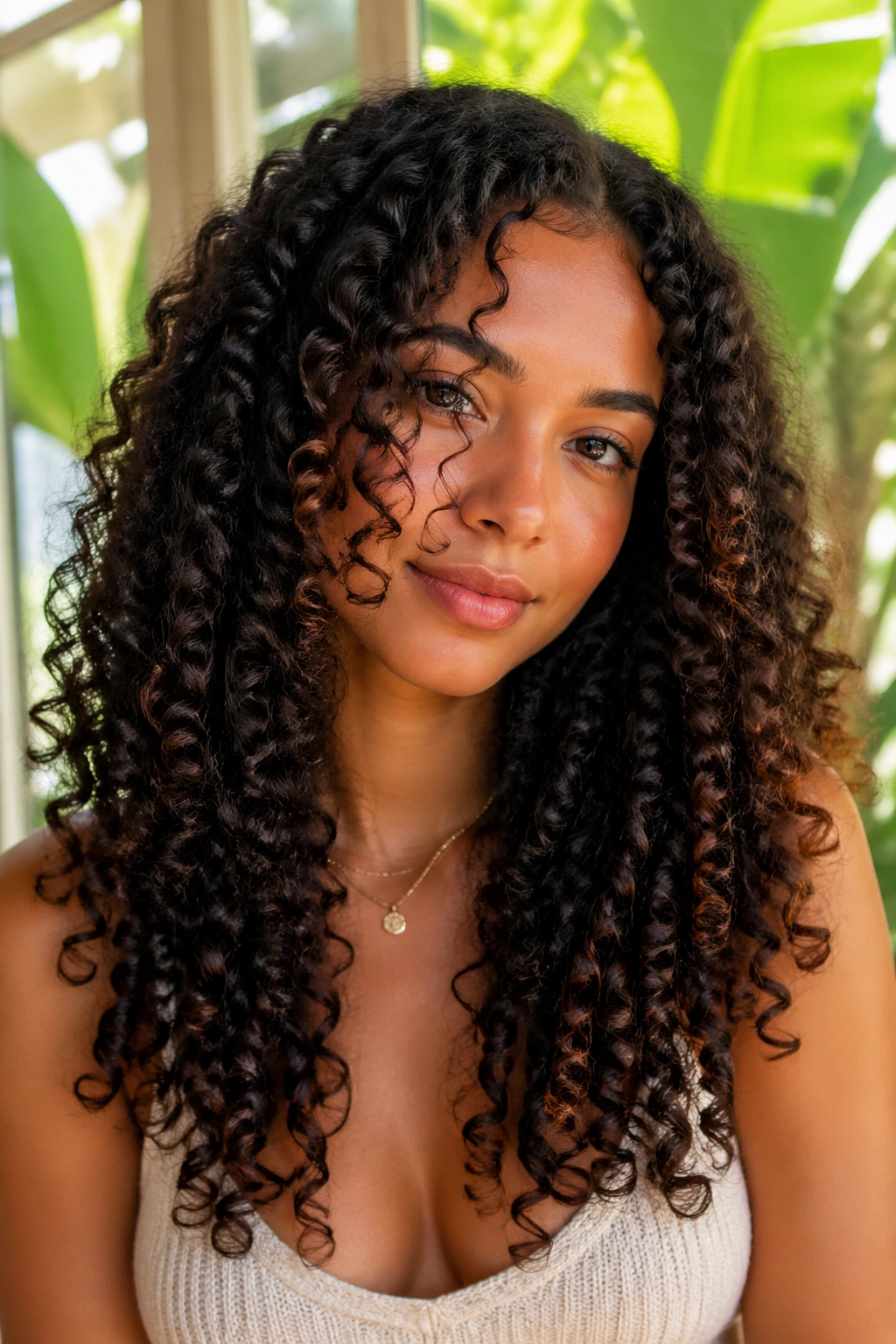
3C hair has a tight ringlet pattern that sits in a beautiful middle ground between coily and curly — it has significant volume and definition without the extreme shrinkage of 4C hair. At long lengths with proper layering, 3C hair can achieve a wash-and-go that genuinely resembles a styled blowout without any heat. The long layered cut for 3C hair should emphasize definition over volume — layers that encourage clumping and ringlet formation.
Styling Tips for Long Layered 3C Hair
Shingling — applying gel to individual curl sections and smoothing it along the full length — works particularly well for long layered 3C hair because it encourages the ringlet clusters to maintain their shape through each layer transition. Apply on fully saturated hair, scrunch upward section by section, and diffuse from underneath to preserve the curl structure.
13. The Long Wavy Layered Cut
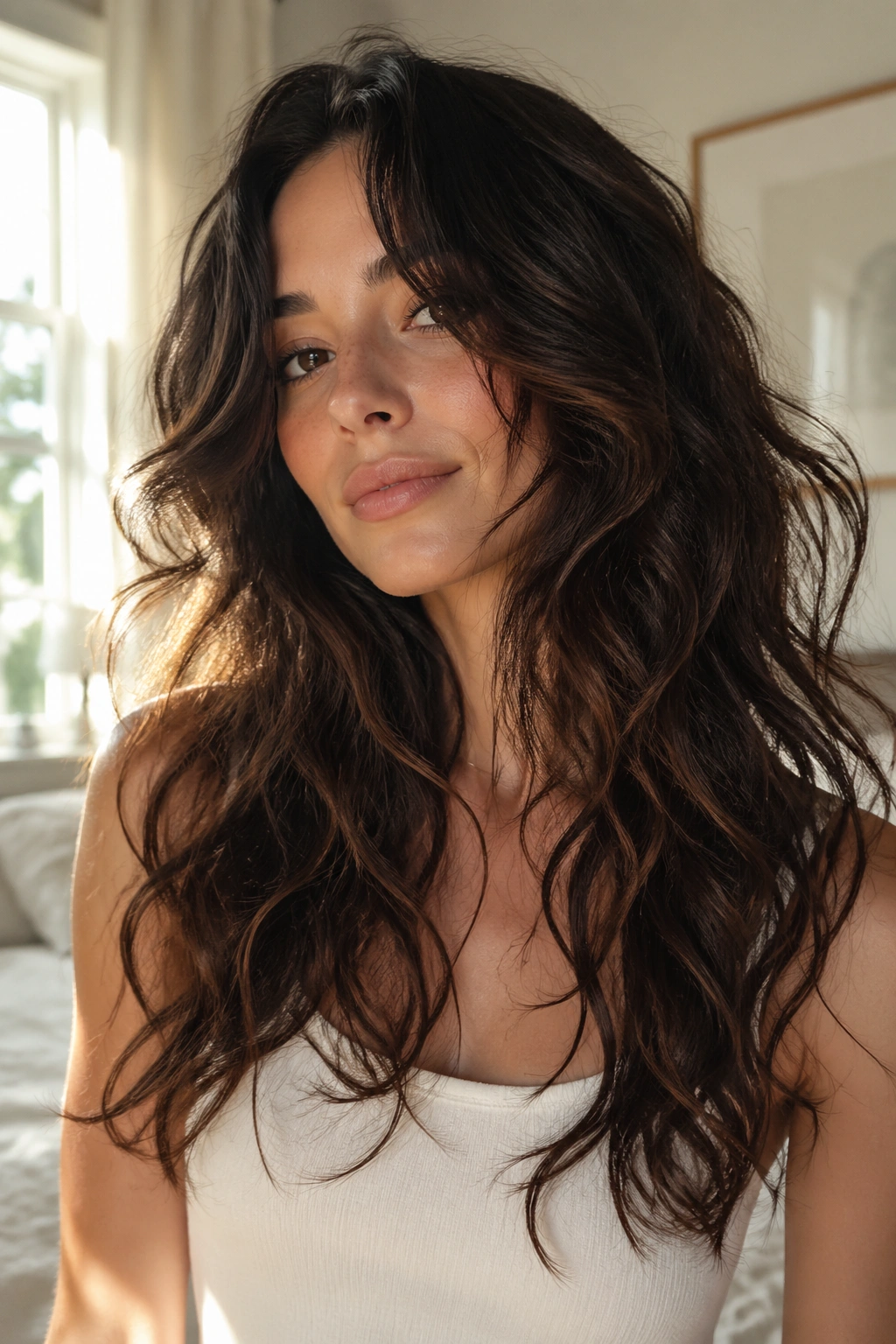
For curl types on the looser end — 2B, 2C, or 3A — long layered cuts create a beautiful beachy wave effect rather than a defined curl look. The layers add movement and prevent the flatter, straighter sections from dominating the look. On long wavy natural hair, a well-executed layered cut is all that stands between “flat and dull” and “effortlessly beautiful and dimensional.”
14. The Layered Natural Cut for Length Retention
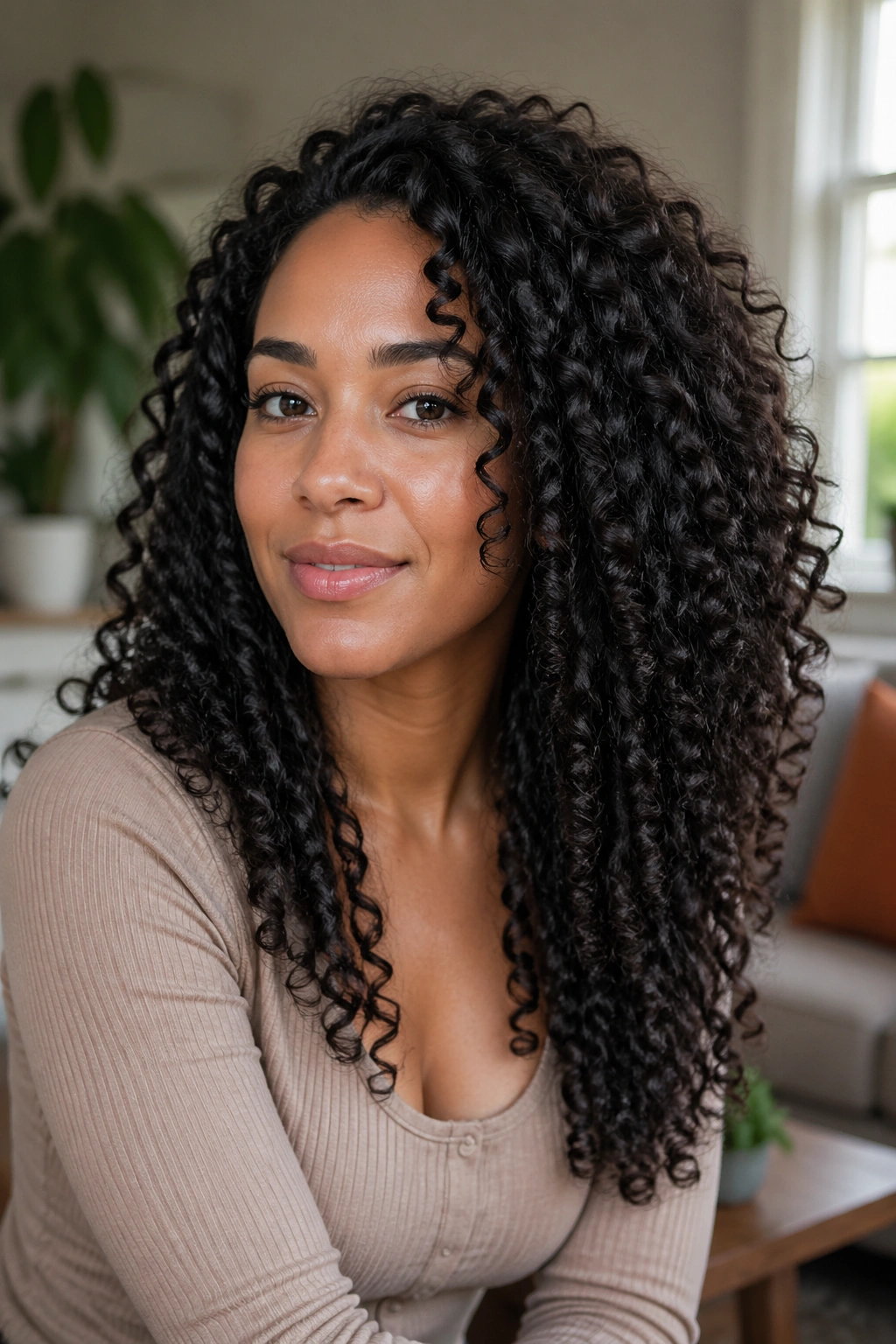
This cut prioritizes keeping as much length as possible while still getting the benefits of layering. The stylist uses the lightest possible layering touch — removing just enough interior bulk to improve curl behavior without making significant length differences between layers. It’s the cut for people who have worked hard to retain length and aren’t willing to sacrifice much but still want the improvement that layers provide.
15. The Long Braid-Out Layer Cut
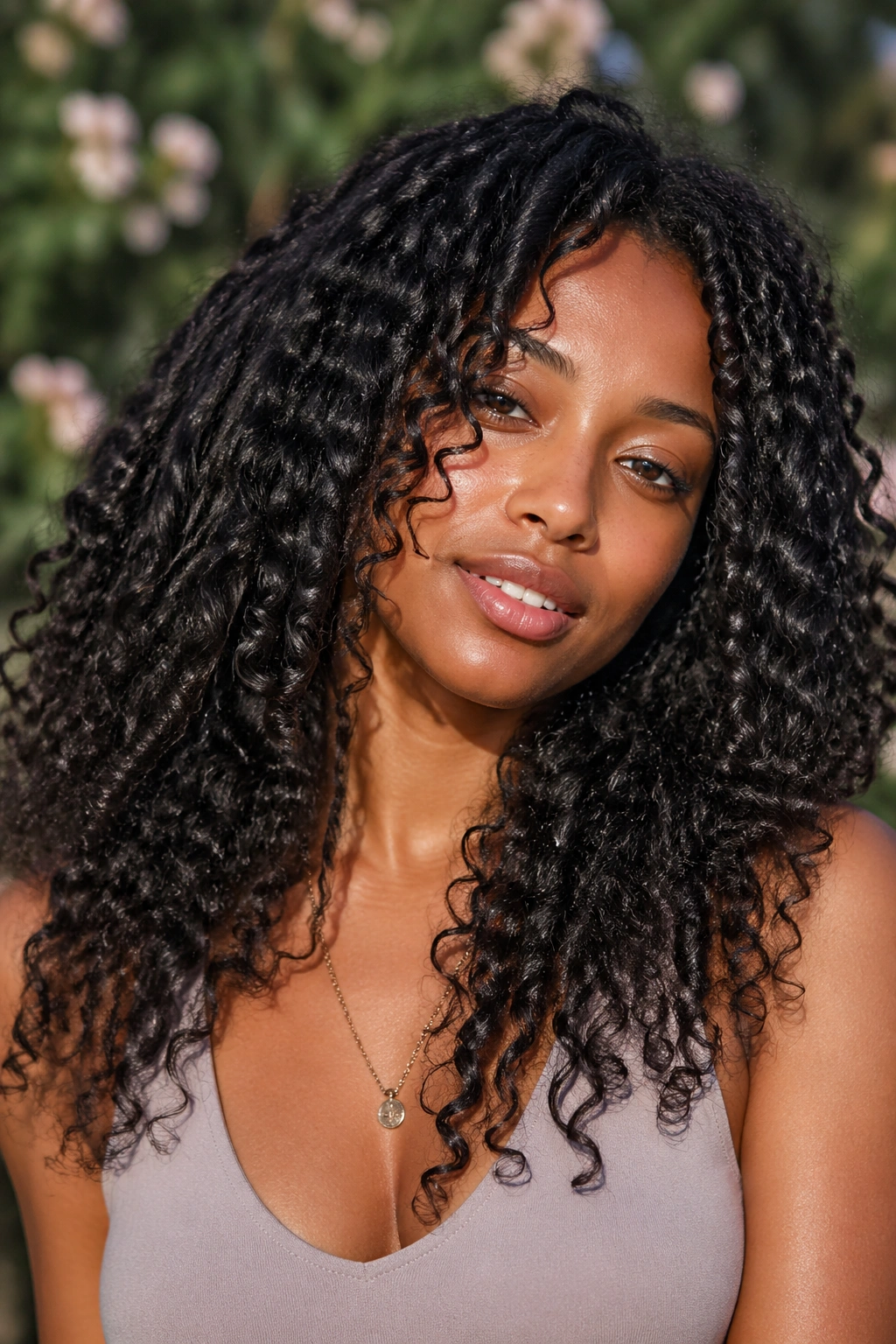
Designed to look its best in braid-out form. The layers are cut to complement the S-wave pattern created by unraveling braids, with the curl definition of a braid-out amplified by the way the layers add dimension. When you wear your hair in a braid-out, each layer catches the light and the wave pattern differently, creating a visual depth that a one-length cut can’t achieve.
16. The Side-Part Long Layered Cut
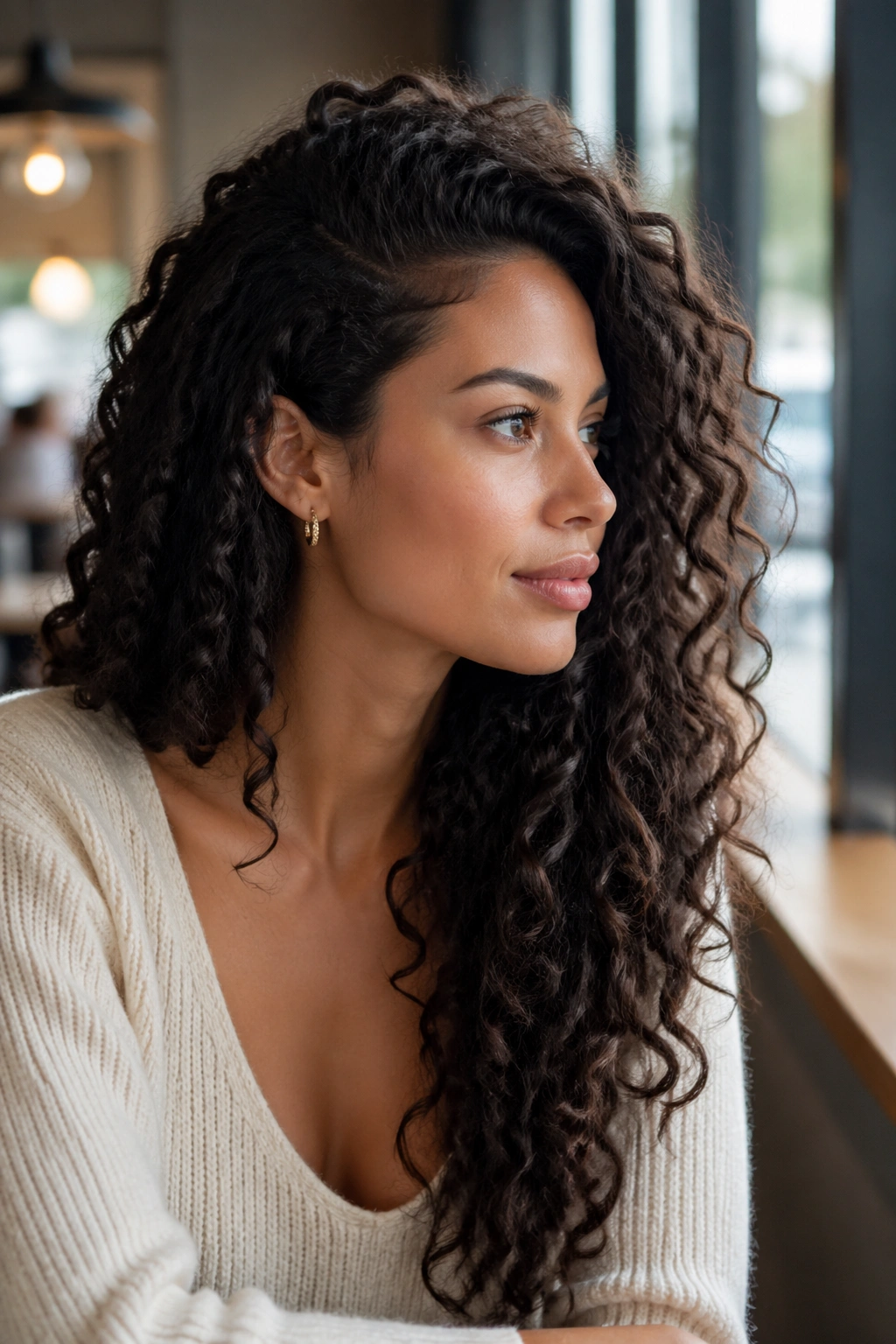
Part your hair dramatically to one side and the layers tell a completely different story than they do on a center part. One side has more hair falling across it, one side is shorter and closer to the face, and the overall silhouette becomes asymmetrical and fashion-forward. A long layered cut styled with a dramatic side part is one of the most editorial looks available for long natural curls.
17. The High-Volume Long Layer Cut
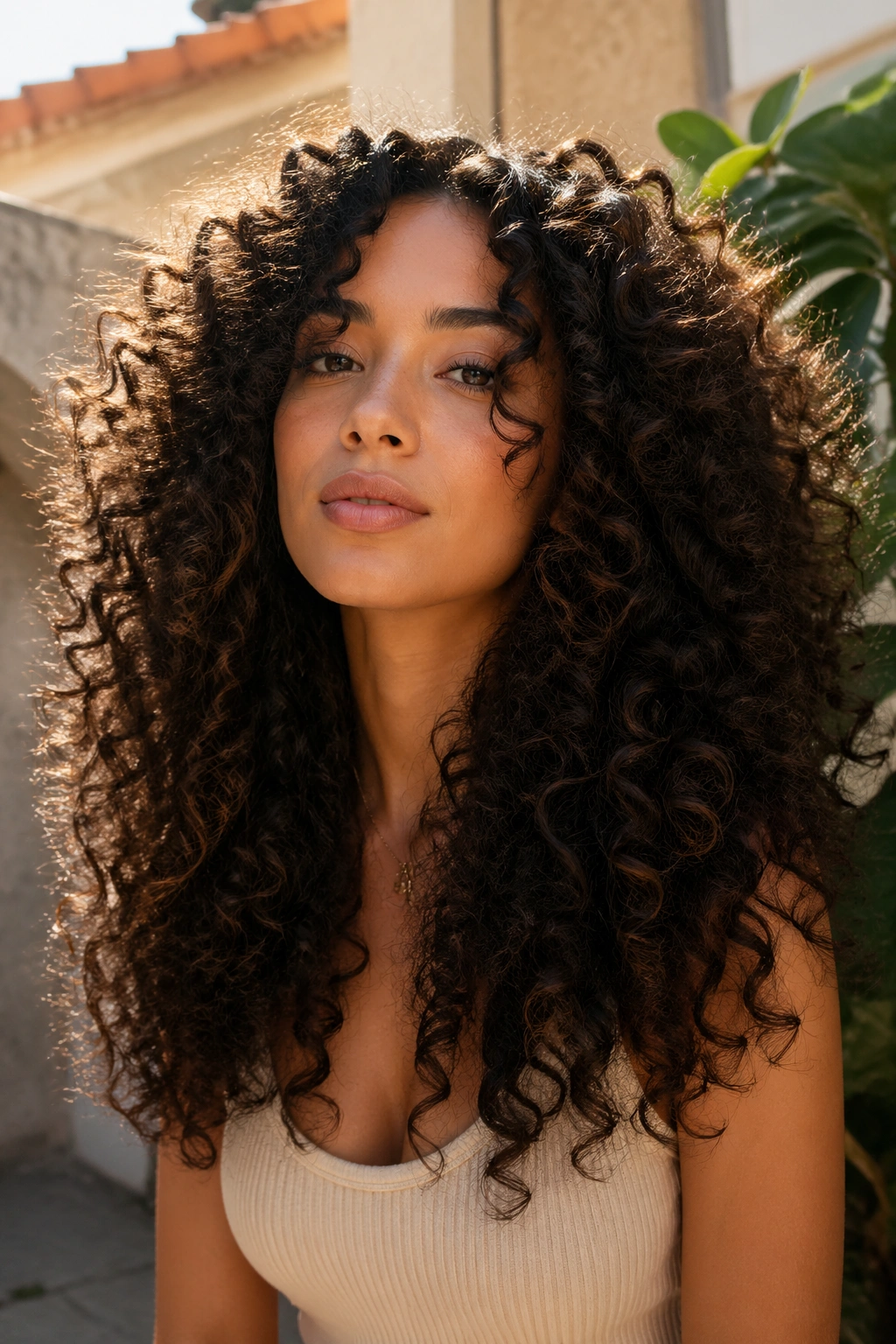
When the goal is maximum volume, the layering strategy shifts to creating as much outward expansion as possible. Layers are placed specifically to encourage your curls to spring outward rather than fall downward. The result is long curly hair with a significant, full, almost afro-like volume profile even at long lengths — a silhouette that’s wide, full, and unmistakably present.
18. The Long Natural Cut With Heavy Crown Layers
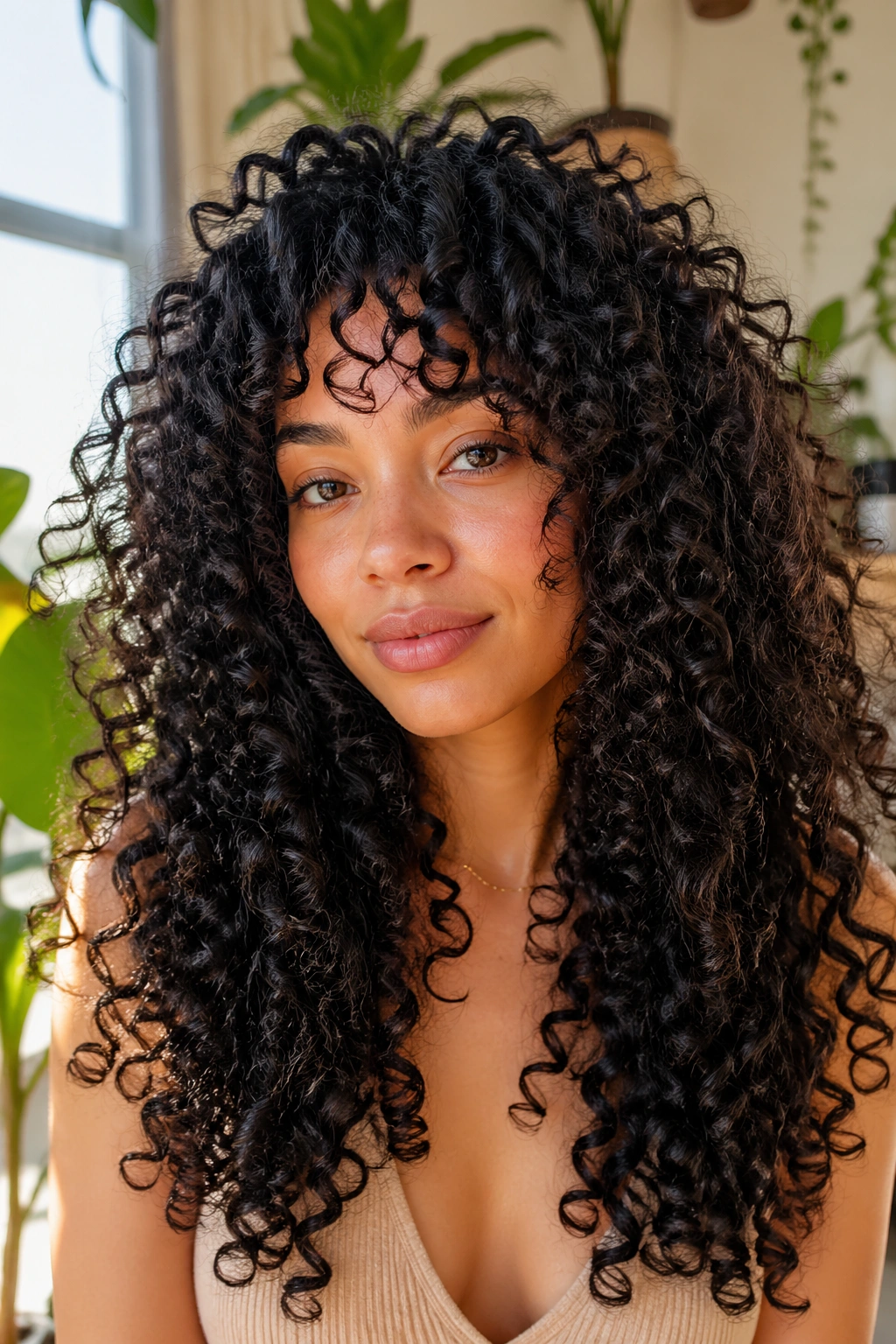
The crown is the section that determines the height and volume of the top of your style. Crown-heavy layering — more aggressively layered at the crown than at the back and sides — creates a cut where the top section is visually the fullest, most defined, and most voluminous. It’s a cut that prioritizes crown height, making long curly hair look even longer by maximizing the height at the top.
19. The Long Curly Razor-Cut
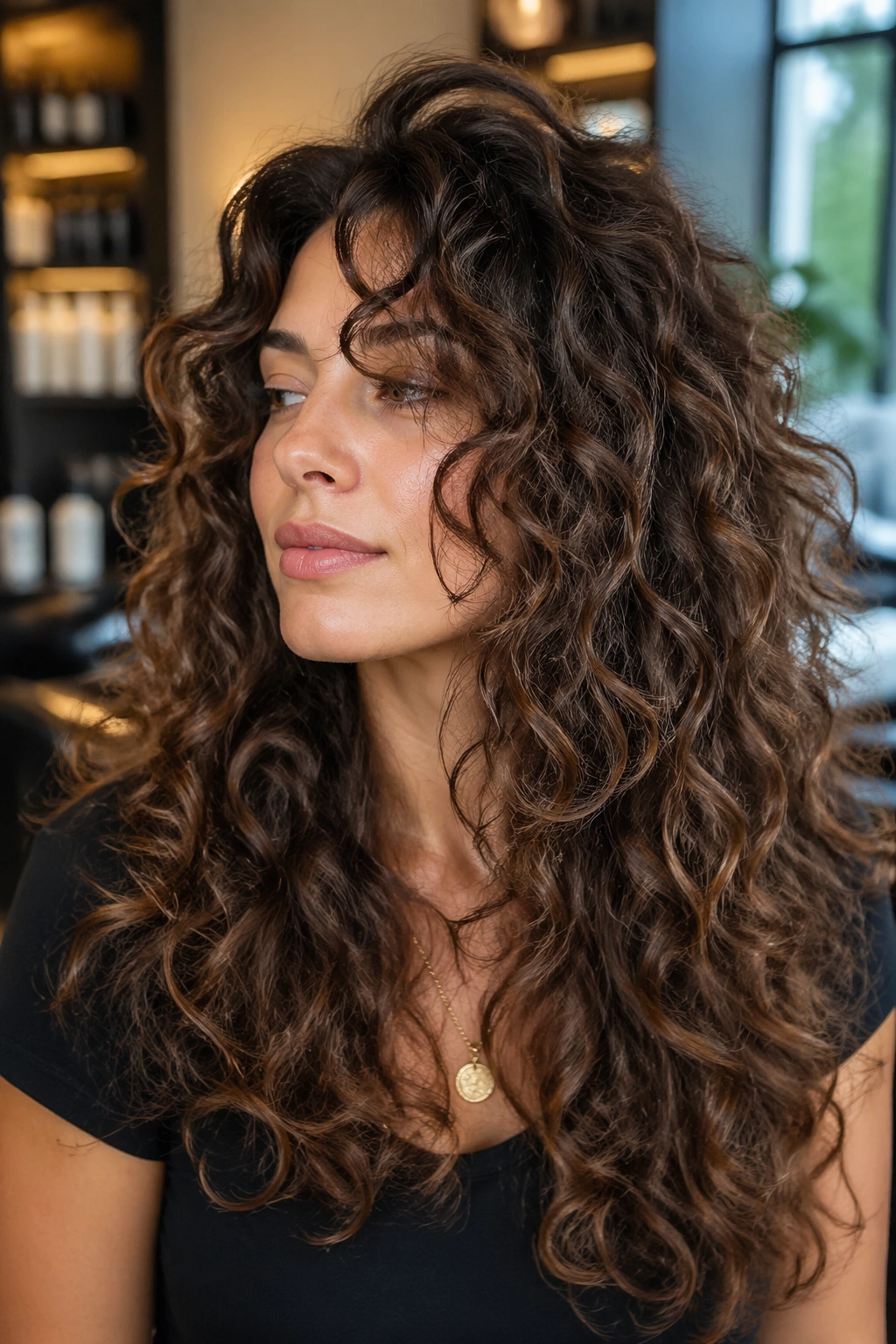
Some stylists use a razor to create layered texture in long curly hair — the razor removes weight and creates a slightly more textured, feathered edge at each layer than scissor cutting does. On curly natural hair, razor cuts can be divisive — they work beautifully on some curl types, creating incredible dimension and movement, but can cause frizz and split ends on drier or more fragile curl types. Only use a razor-cut technique with a stylist who has specific experience with your curl type.
20. The Long Twist-Out Layer Cut
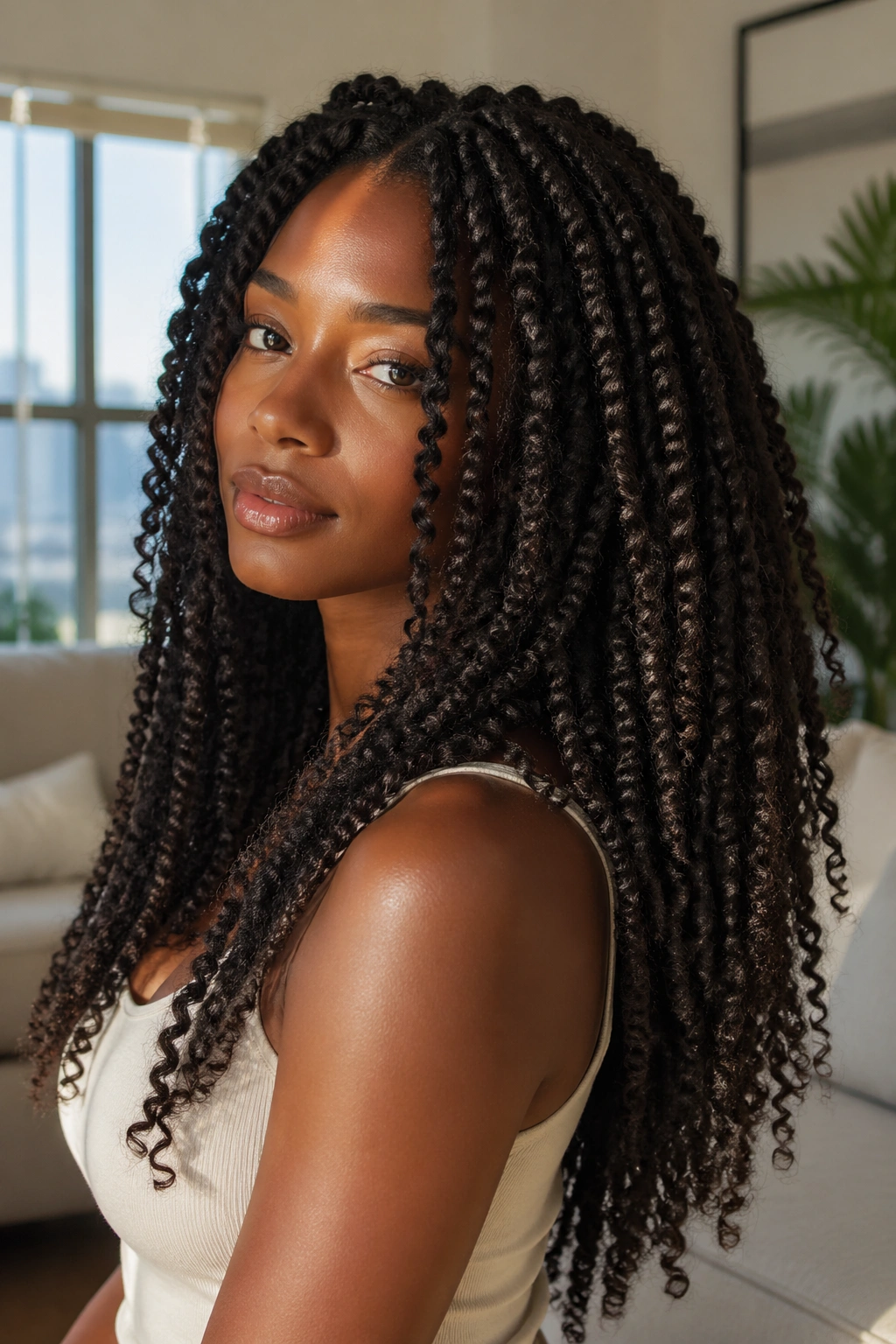
Like the braid-out layer cut but designed for the tighter, more coiled pattern of a twist-out. The layers in this cut are calculated based on where each section of hair will sit once the twists are unraveled, with the layer transitions designed to be visible and flattering in the final twist-out pattern. For 4A and 4B hair worn primarily in twist-outs, this is the ideal long layer cut.
21. The Long Curly Cut With Stacked Back Layers
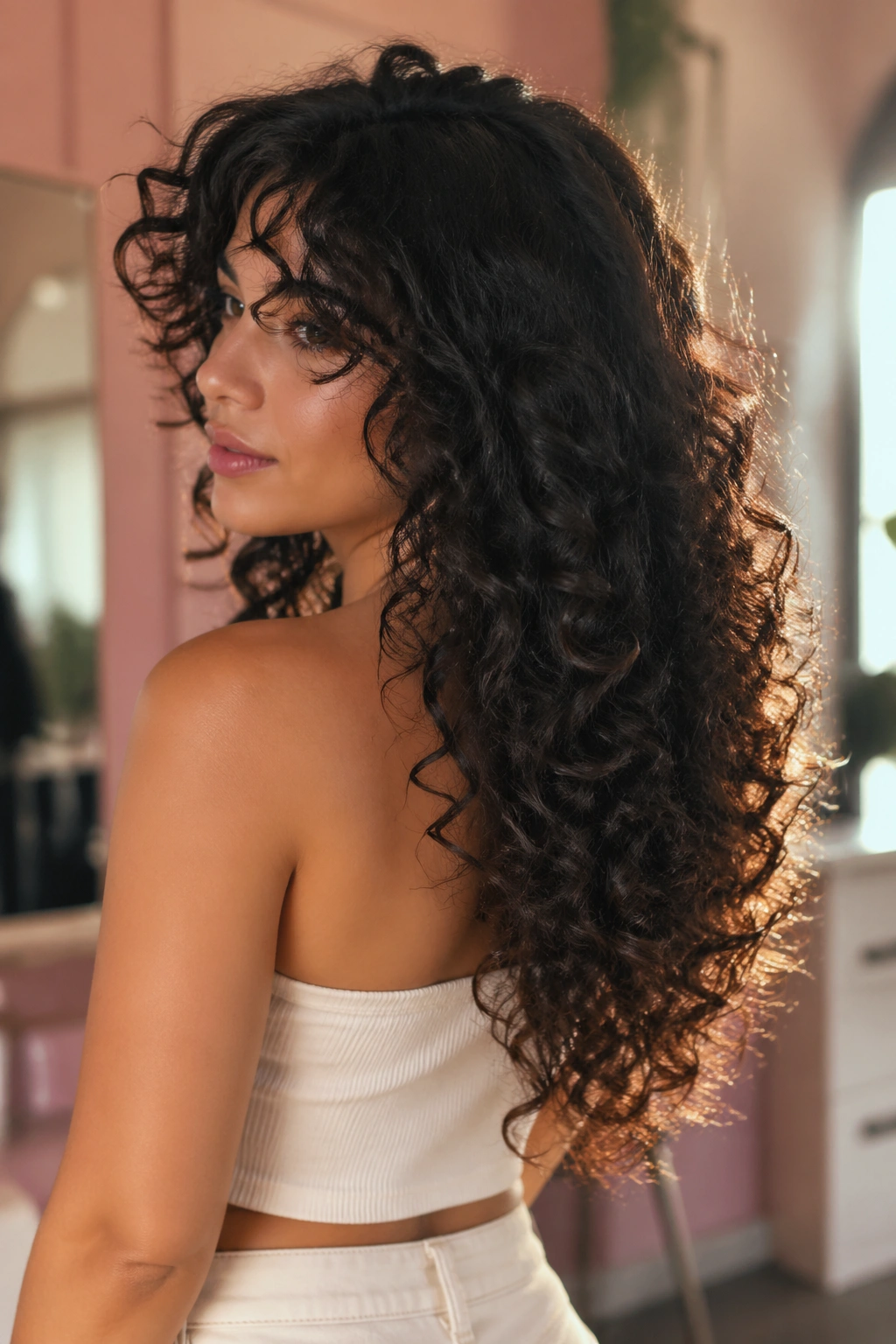
Stacked layers at the back — shorter layers underneath, longer layers on top — create significant volume and lift at the back of the head. From the front, the hair looks long and flowing. From the back, the stacked layers create a dramatic, full silhouette that’s striking. It’s a cut with built-in drama that doesn’t require any additional styling to achieve its full visual impact.
22. The Long Natural Loc With Trim Layers
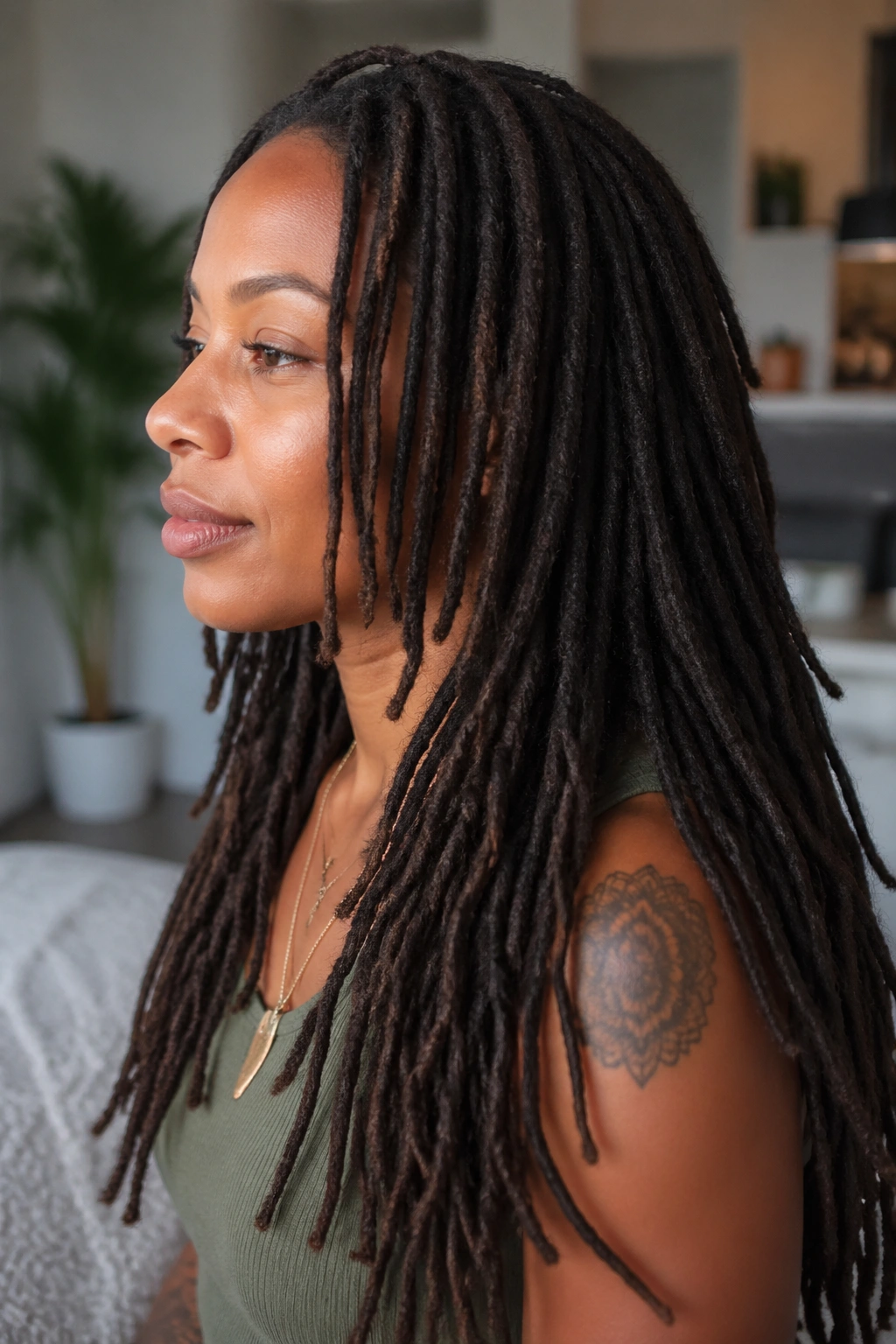
For natural locs at long length, a careful shaping and trimming of the individual locs at different lengths — shorter toward the face, longer toward the back and center — creates a layered effect that adds dimension and movement to loc styles. Long locs worn with intentional length variation frame the face beautifully and create a silhouette that’s significantly more flattering than uniform-length locs.
23. The Long Curly Cut With Bangs and Full Layers
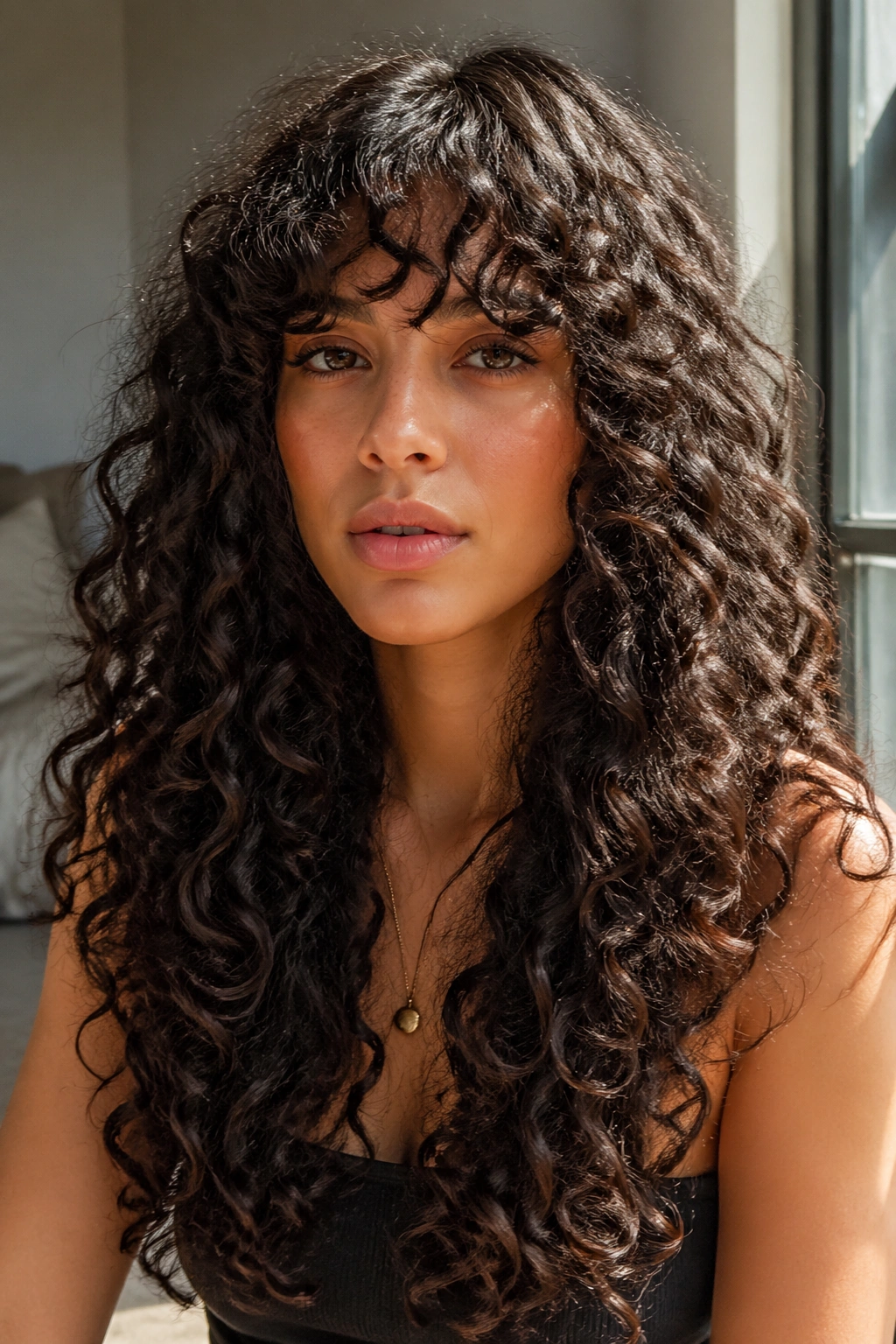
Full bangs — cut straight across the forehead — on long heavily layered natural curls is a bold, striking combination. The bangs give the style an immediate, strong frame that makes the length and the layers behind it look even more dramatic by contrast. Full bangs on natural curls must be cut to follow the natural curl direction at the forehead — pointing the scissors in the same direction the curl grows, not cutting perpendicular to it.
24. The Long Natural Cut for Color-Treated Curls
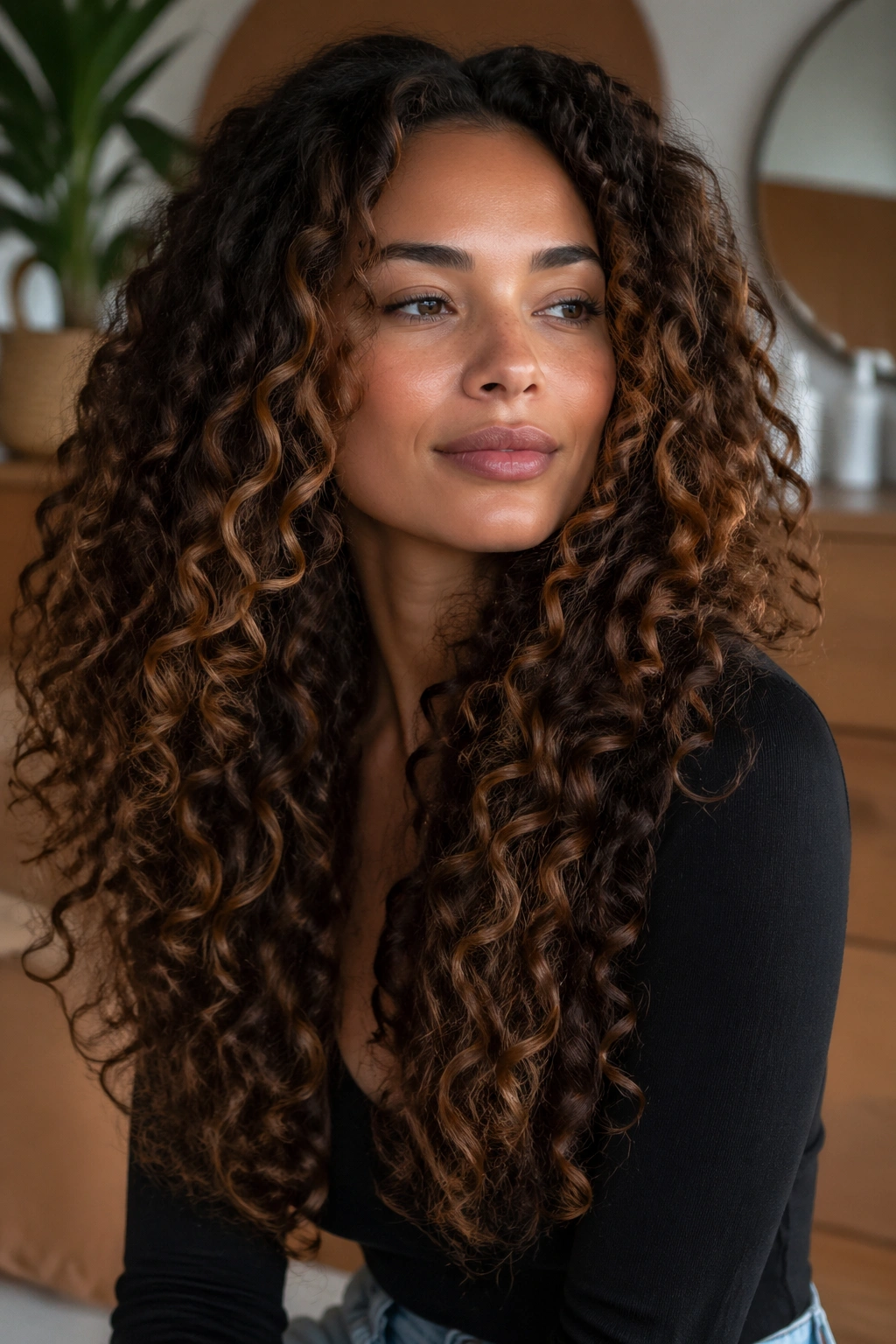
Color-treated natural curls are often more fragile and more prone to dryness than untreated hair, which means the layering strategy needs to account for that fragility. Less aggressive layering, more frequent trims, and careful removal of any chemically compromised ends is the approach. The cut should prioritize the health of the strands as much as the silhouette.
25. The Bespoke Long Layer Cut
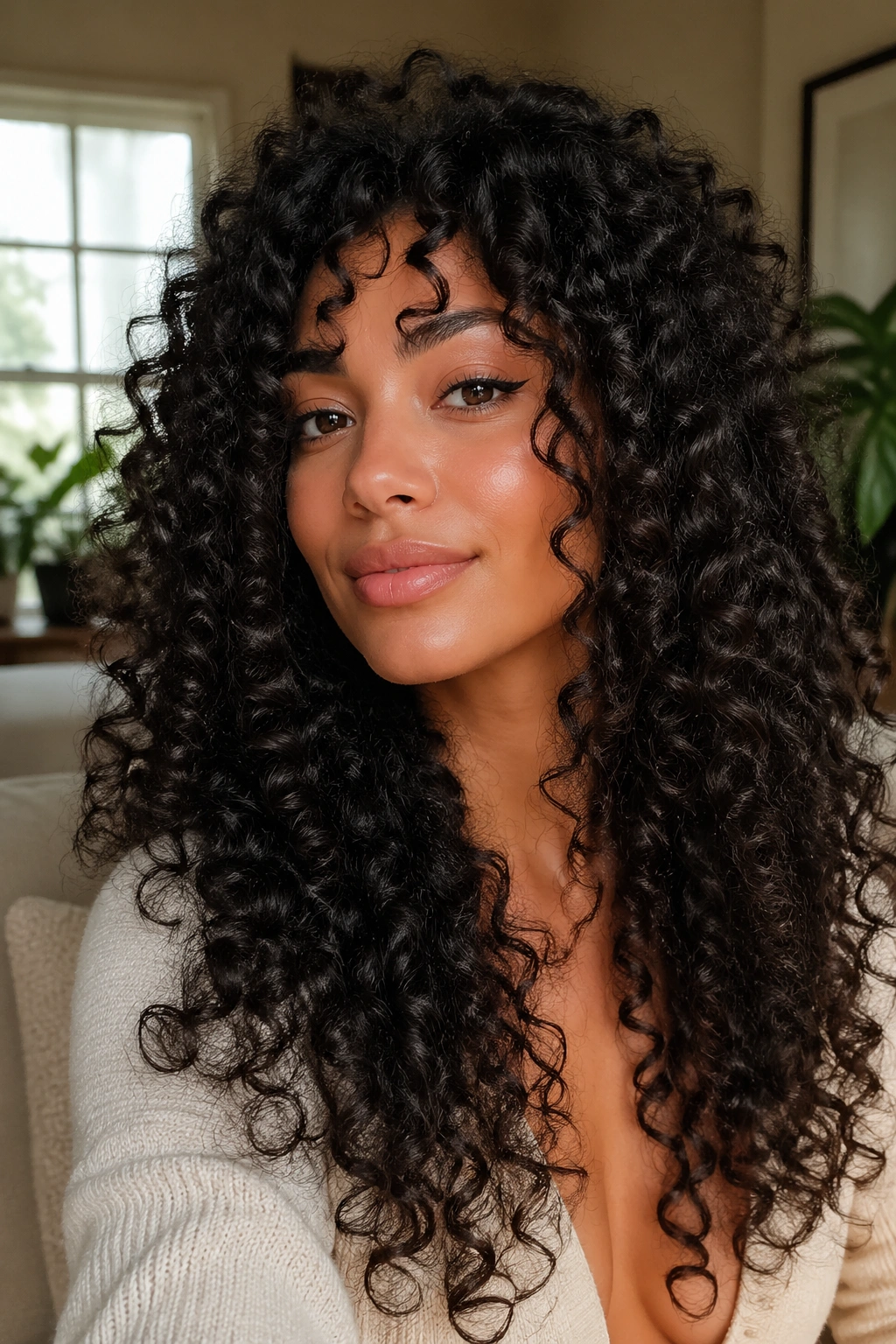
As with every category of natural hair cutting, the ultimate layered cut is one designed from scratch for your specific hair. Your curl map, your density, your face shape, your porosity, your lifestyle — all of these factors should inform every decision your stylist makes about where the layers go, how much length differential to create, and what silhouette to build. There is no generic layered cut that works best for everyone. The best layered cut is the one that works best for you specifically.
Caring for Long Layered Natural Curls
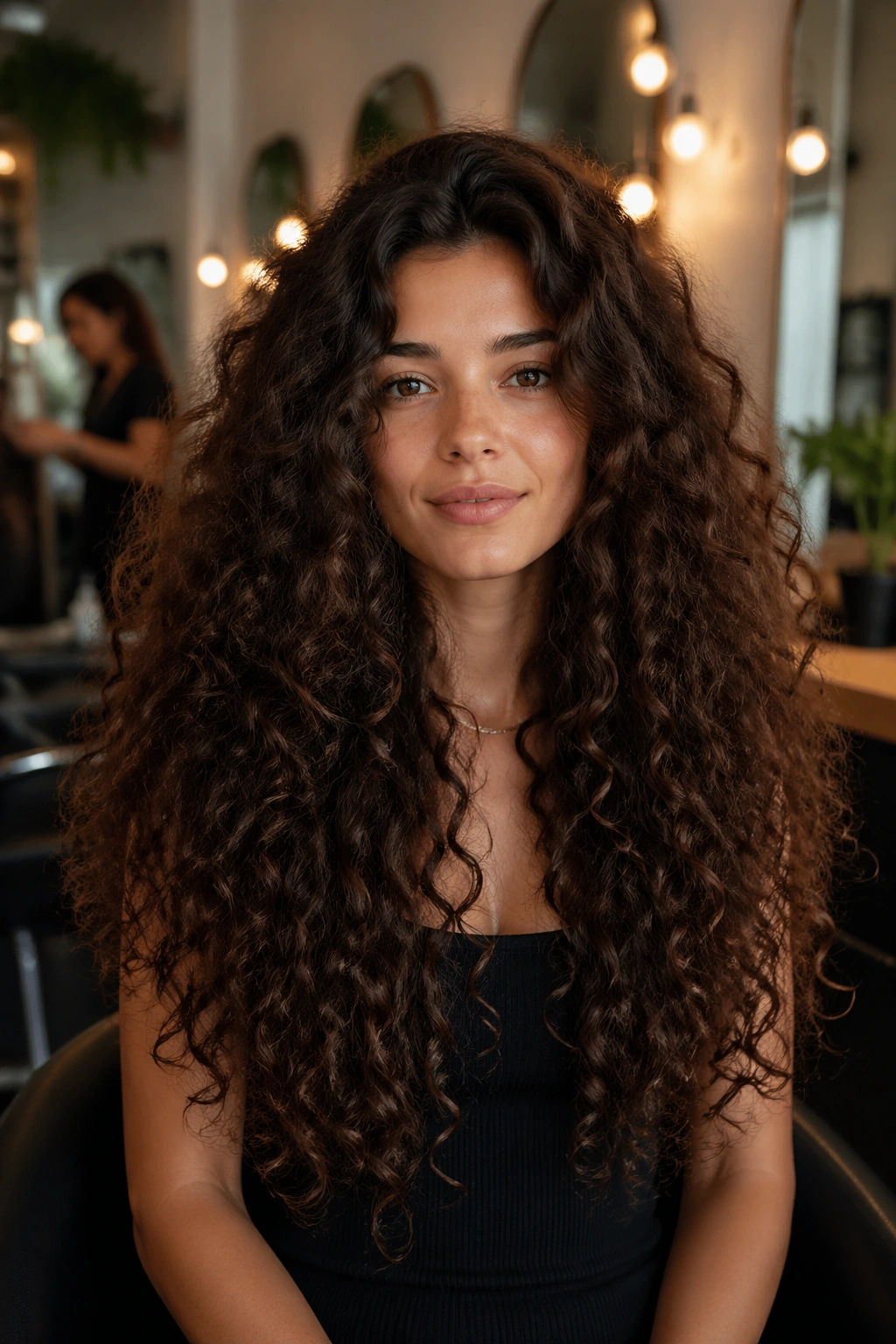
Long layered natural hair needs more care than shorter styles in terms of moisture and detangling. The layered structure means your hair has different strand lengths in close proximity to each other, and aggressive detangling can disrupt the layered pattern over time by pulling shorter layers out of their position.
Always detangle long layered natural curls in sections, with conditioner still in the hair, starting from the ends and working upward. Use your fingers first, then a wide-tooth comb if needed. This preserves the layered structure and prevents the long layers from tangling into the shorter ones.
Deep condition every one to two weeks for long natural curls — length equals more surface area exposed to dryness and damage. Choose a protein-moisture balanced deep conditioner and allow it to sit under a shower cap for at least 20–30 minutes for maximum penetration.
Protective Styling for Long Layered Natural Curls
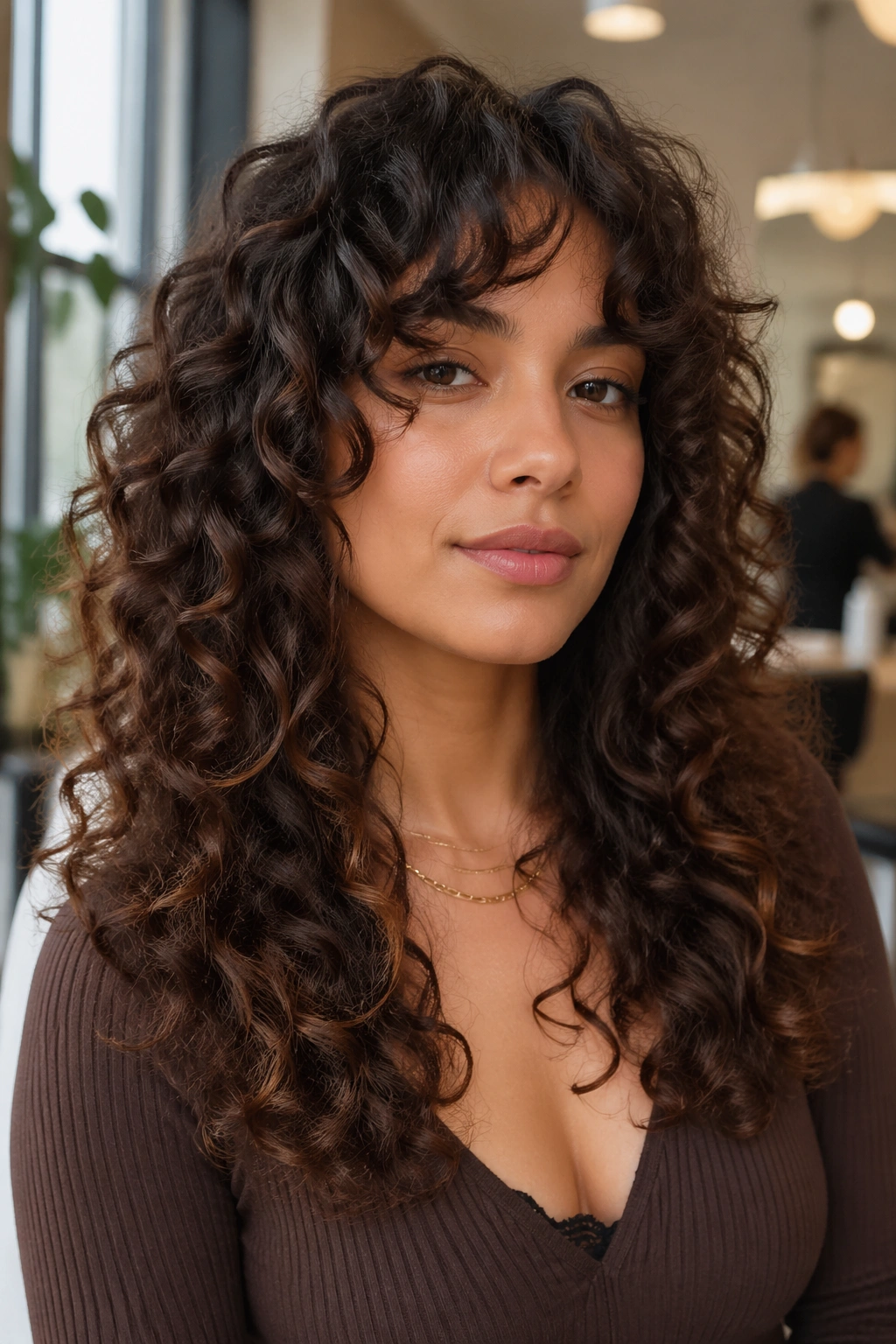
Long layered natural curls benefit significantly from regular protective styling — not as a permanent way of life, but as a rotation. Protective styles like twists, braids, and buns give your long layers a break from daily manipulation and environmental exposure. The longer your natural curls, the more they benefit from having their ends tucked away periodically.
Aim for a balance: two to three weeks in a protective style, then a week of wearing your hair loose. This rhythm keeps your long natural curls healthy without making you feel like you’re never actually wearing your hair.
The Long-Term Investment of a Great Layered Cut
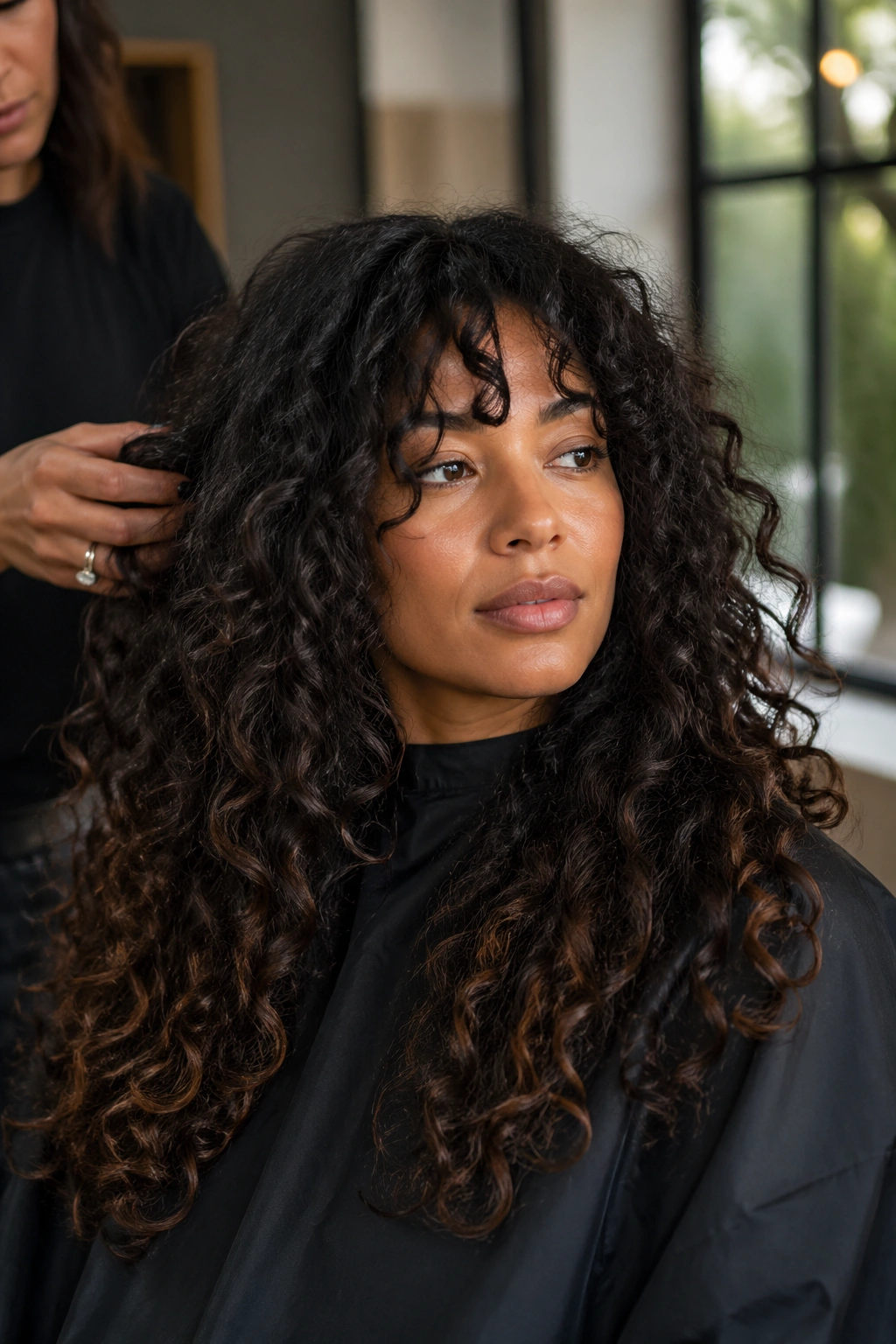
One good layered cut on long natural curls will pay dividends for months. Your wash days will be easier. Your styles will look more defined with less effort. Your hair will behave in ways that feel collaborative rather than adversarial. And every time you look in the mirror after wash day, you’ll see what your long natural curls actually look like when they have the right structure supporting them.
That’s the real return on investment of a great long curly haircut with layers. Not just a single good day — a better hair life.