



Getting the right haircut for curly hair natural curls changes everything — and I mean that completely. A well-executed cut on curly natural hair removes the bulk that drags curls down, creates shape that works with the curl pattern instead of against it, and reduces shrinkage in all the ways that matter visually. A bad cut, on the other hand, creates a triangle silhouette, uneven curl behavior, and a shape that no amount of product can fix. The difference is real and it starts at the salon chair.
Why Haircuts Matter More for Curly Natural Hair
Curly hair is structurally different from straight hair. Each curl strand bends and coils, which means the weight of the hair doesn’t distribute the way it does on straight strands. Too much weight in certain areas pulls curls out of their natural shape and creates a heavy, elongated look that lacks definition. Remove the right amount of length and weight, and suddenly your curls spring up, separate, and define in ways they couldn’t before.
The cut also determines your silhouette — the overall shape your hair makes when it’s fully dry and styled. For natural curls, the most flattering silhouettes are rounded, oval, or tapered depending on your face shape and curl density. A haircut that takes your curl pattern into account builds that silhouette intentionally rather than leaving it to chance.
The Most Important Thing to Look for in a Curl Stylist
Experience with your curl type isn’t optional. It’s the first thing you need to confirm before booking an appointment. Ask specifically whether the stylist cuts curly natural hair regularly, whether they cut it dry or wet (dry cutting is almost always better for curl pattern accuracy), and look at their portfolio. Real before-and-after photos of natural curly clients tell you more than any credential listed on a website.
A good curl stylist will also do a thorough consultation — asking about your curl type, your length goals, how much time you want to spend styling, and what your hair does at different lengths. If a stylist skips the consultation and goes straight for the scissors, that’s a red flag.
Dry Cutting vs. Wet Cutting for Natural Curls
This debate comes up constantly in the curly hair community, and the answer is almost always in favor of dry cutting. Here’s why: when curly hair is wet, it’s elongated and stretched. The curl pattern is temporarily altered. If a stylist cuts to a certain length on wet hair, they often have no real sense of where that length will fall once the hair dries and the curls spring back. Dry cutting lets the stylist see exactly how your curl pattern behaves and cut accordingly.
Some stylists use a combination approach — a rough shape cut wet, then refined dry. That can work too, especially for blowout-and-cut techniques. But if you’re choosing between one or the other, prioritize a stylist who cuts dry.
How Often Should You Trim Natural Curly Hair
Curly natural hair doesn’t need trimming as frequently as straight hair, but it does need it. The standard recommendation is every three to four months for maintaining a style, or every six months for length retention with protective styling. If you have low porosity hair that tends to retain moisture well, you might stretch trims a bit longer. If your hair is on the drier, more fragile end, more frequent trims prevent split ends from traveling up the shaft and causing real damage.
Don’t skip trims to retain length — it’s counterproductive. Damaged ends break off unevenly, creating a ragged, uneven look that ultimately sets you back further than a clean trim would have.
Finding Your Curl Category Before You Book
Before you book a cut, you should have a sense of your curl type and your curl goals. Are you 3A, 3C, 4A, 4C? Do you want to wear your hair in wash-and-go styles or primarily in protective styles? Do you want to add volume or reduce it? Is shrinkage a concern for you? All of these factors influence which cut will actually work best for your hair, and a knowledgeable stylist will use your answers to guide their approach.
30 Haircuts for Curly Hair Natural Curls
1. The Curly Bob
The curly bob is one of the most versatile and consistently stunning cuts for natural curls. Cut to jaw length or slightly below, the bob shows off curl definition beautifully while keeping the weight low enough that curls spring and bounce rather than hang flat. The key to a great curly bob is cutting it dry and allowing for shrinkage — what looks shoulder-length dry might look chin-length once it dries after wash day.
Getting Your Curly Bob Right
Ask your stylist for a graduated bob if your curls are denser at the top, or a one-length bob if you want a clean, blunt line. Have it cut in your natural curl state without any stretching or blowout. The result should be a shape that looks intentional and polished when air-dried with no manipulation beyond scrunching in your products.
- Best for: 3A–4C curl types
- Face shapes: suits oval, round, and heart-shaped faces particularly well
- Maintenance: low — trims every 3–4 months
- Tip: A curly bob with a center part adds symmetry. A side part adds drama. Choose based on your face shape.
2. The Tapered Cut
The tapered cut is an absolute staple of natural hair culture. It keeps the hair tight and close at the sides and nape while gradually building length and volume at the crown. The result is a silhouette that emphasizes the beauty of the crown’s curl pattern while eliminating the bulk that can make all-over length look shapeless. Tapered cuts are particularly stunning on 4A and 4B curl types where the coil pattern at the crown is tight and defined.
3. The Wash-and-Go Friendly Layer Cut
This cut is designed entirely around your wash-and-go routine. The stylist removes weight from the interior of the hair — taking out bulk without removing length — and shapes the exterior into a rounded silhouette. The result is a wash-and-go that virtually styles itself: shampoo, apply products, scrunch, and go. No extended styling sessions, no fighting with your hair. The cut does the work.
4. The Big Chop
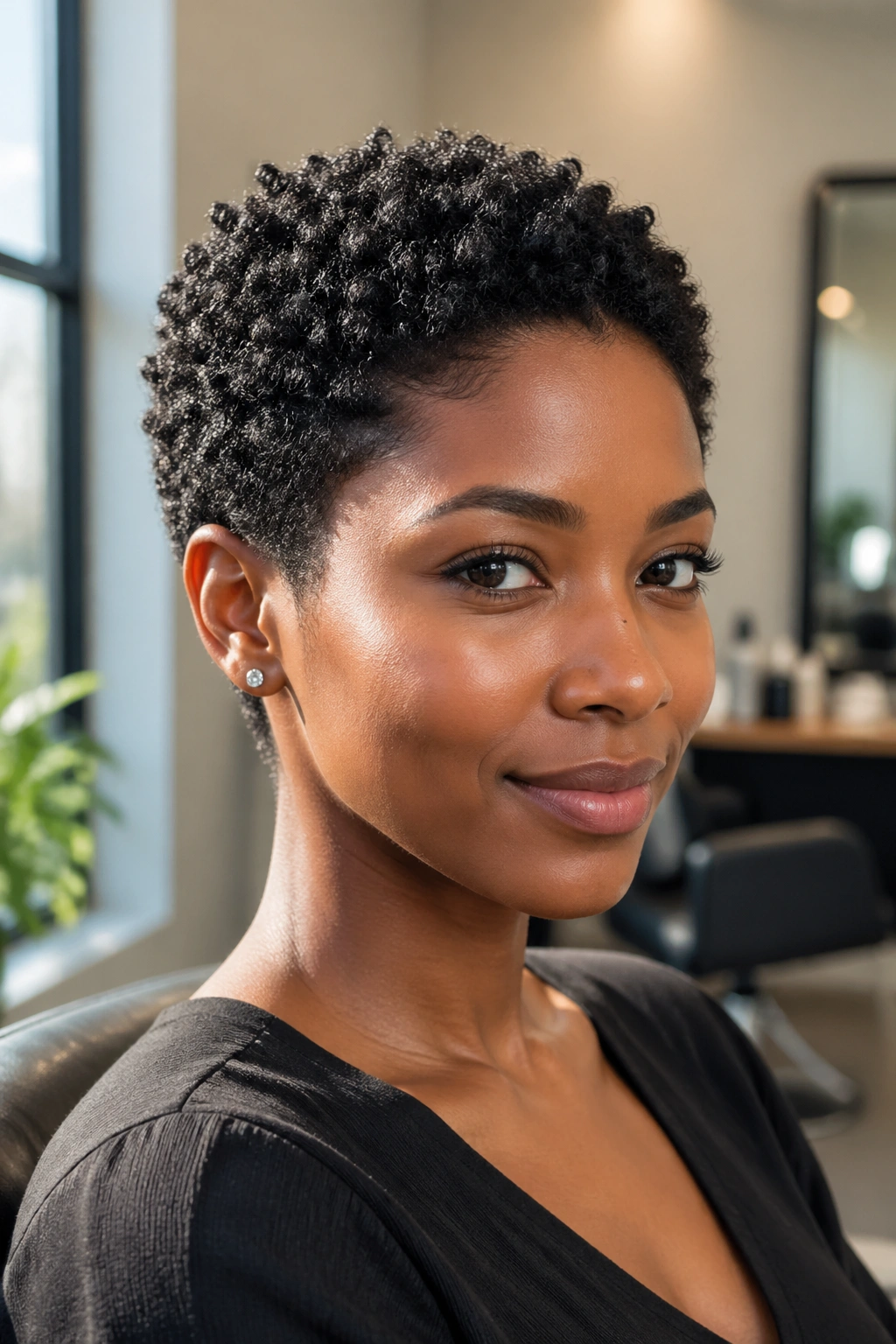
Starting over with a close cut after transitioning or damage is one of the most liberating things you can do for your natural hair. The big chop removes all chemically processed ends and gives your natural curl pattern a completely clean start. Some people do a very short all-over cut; others ask for a shaped, tapered big chop that has structure from day one. Either way, it’s not just a haircut — it’s a restart.
What to Expect
Your natural curl pattern will be fully visible and fully active with no processed hair weighing it down. Expect tight, springy curls with significant shrinkage. Embrace it — this is your hair at its most honest.
- Best for: transitioning natural hair
- Curl types: works for every type
- Styling time: drops dramatically after the big chop
- Tip: Have your big chop done by a natural hair specialist who can shape your new growth rather than just cutting it all off.
5. The Frohawk
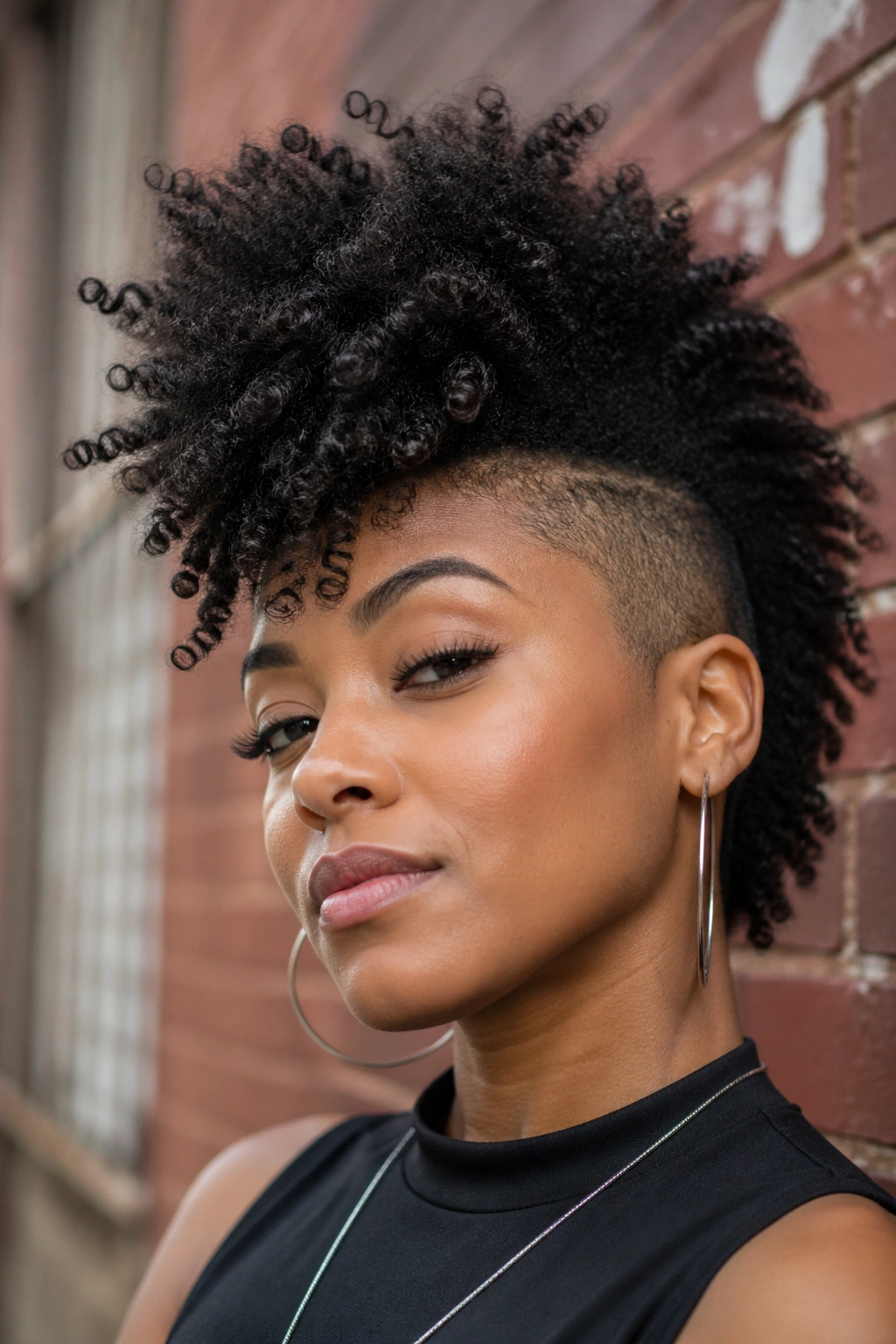
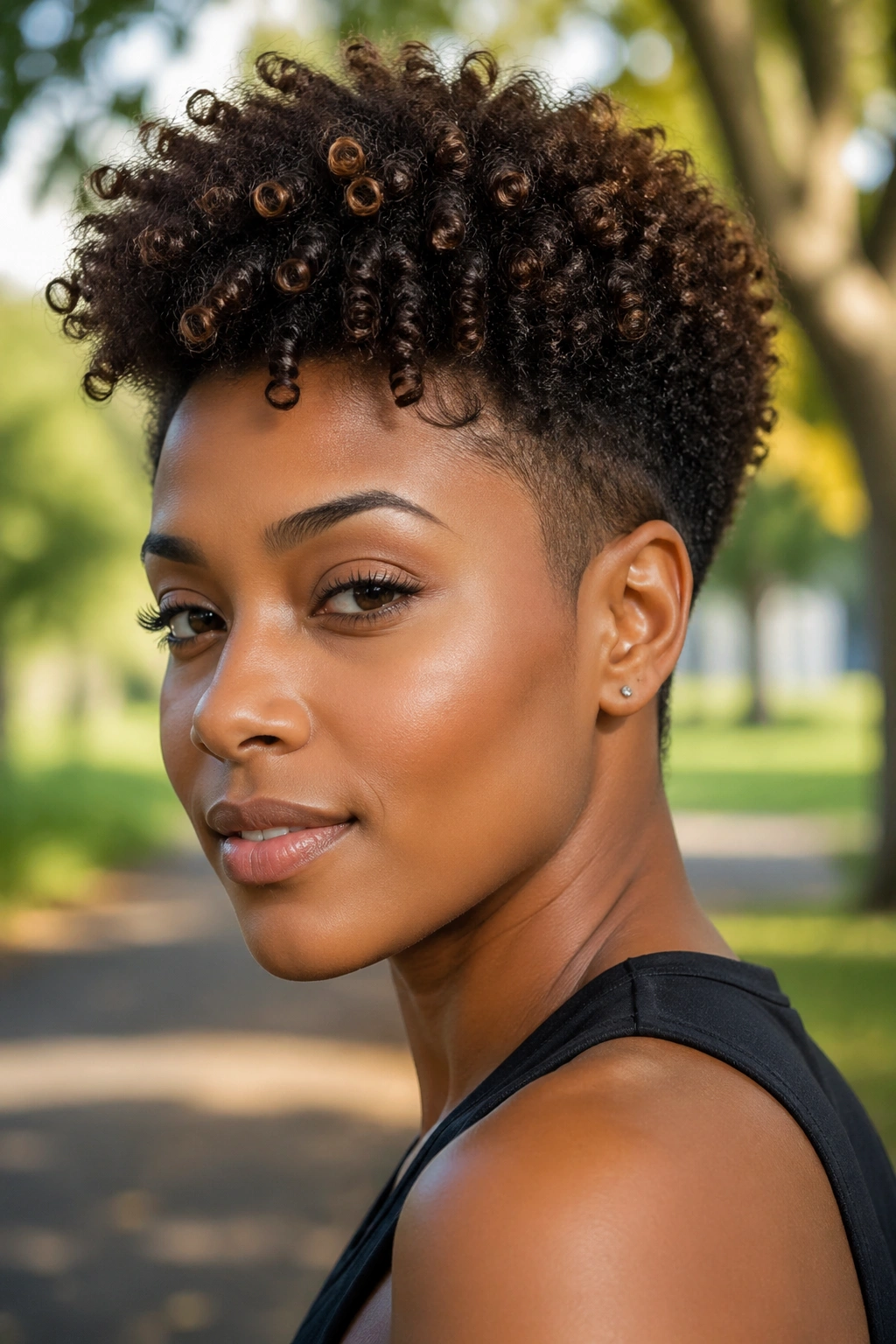
The frohawk is the natural hair version of the mohawk — the sides are cut shorter or tapered while the top is left longer, creating a strip of height down the center of the head. On natural curls, this shape is genuinely striking. The curl volume at the top creates a dramatic, free-form fro shape that looks bold and confident in every setting.
6. The Curly Pixie
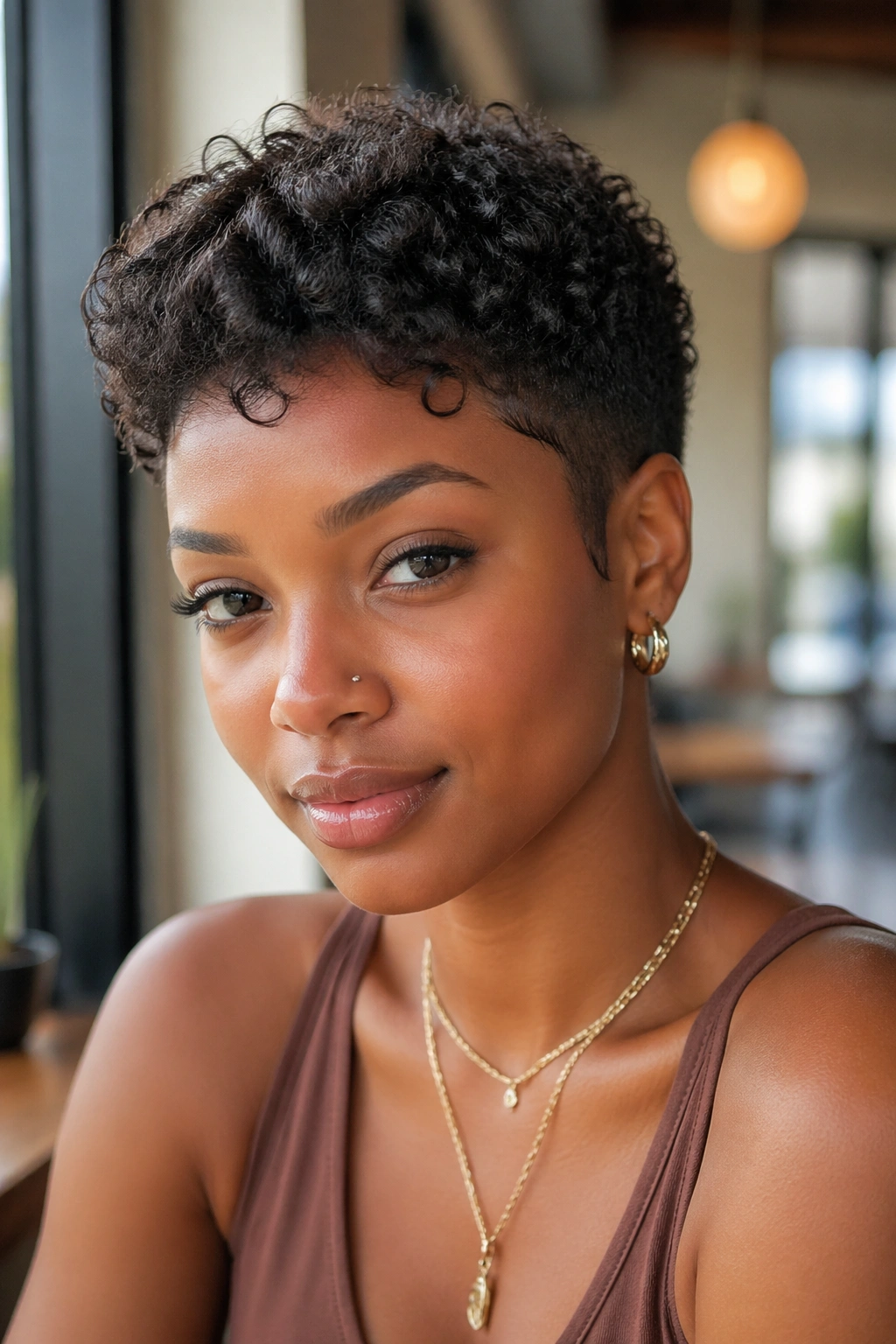
Short, chic, and endlessly versatile. The curly pixie cut keeps hair very close on the sides and back while leaving a bit more length and texture at the crown for your curls to do their thing. It requires minimal product, dries in minutes, and — honestly — it’s one of the most flattering cuts for showing off your face and jawline. On 4C hair, the curly pixie takes on a completely unique character that looks stunning with nothing but moisture and a pick.
7. The Rounded Afro Shape
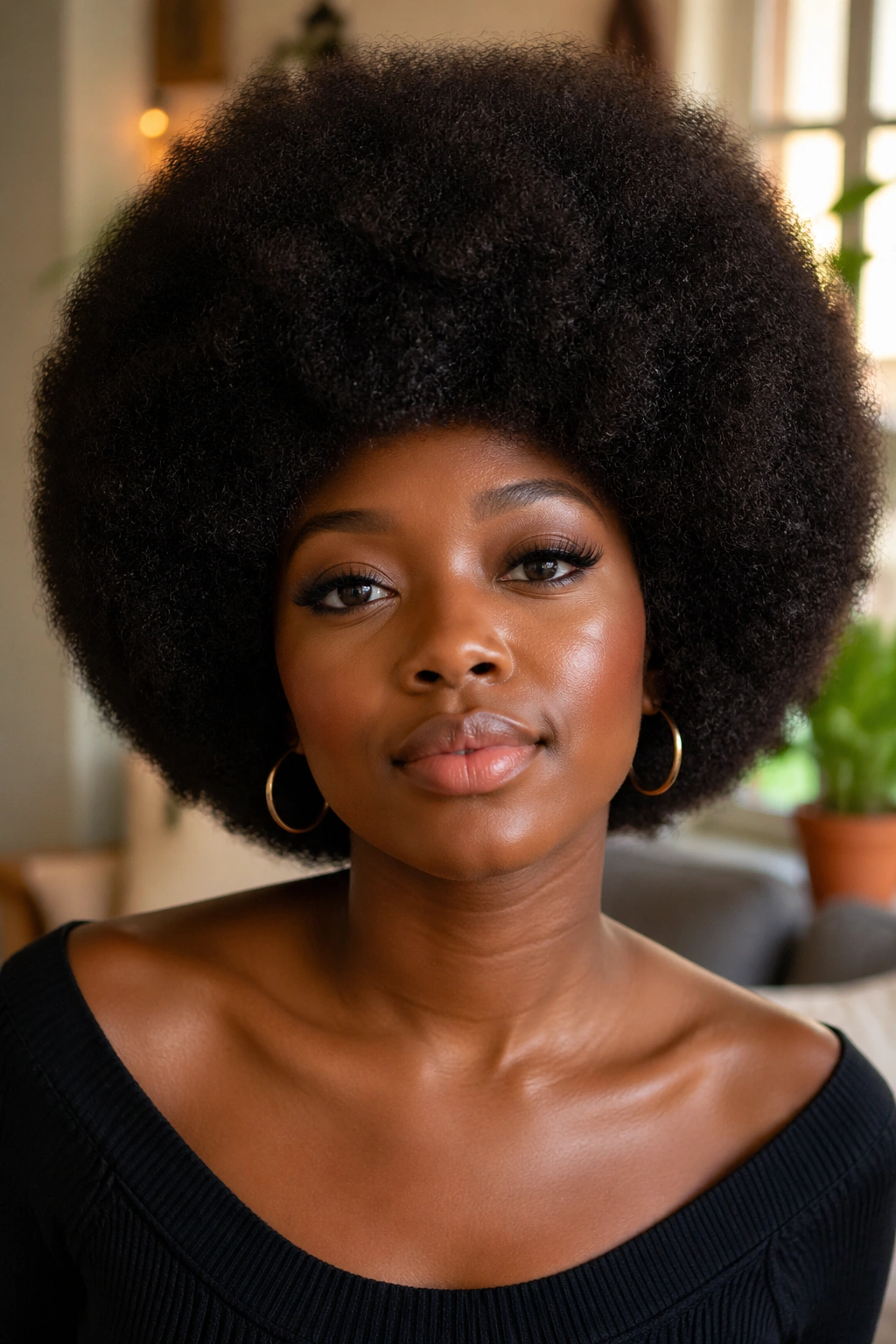
This isn’t so much a cut as a shaping — the stylist trims the ends of your afro to create a perfectly symmetrical, rounded silhouette. No layering, no tapering, just a clean geometric shape that turns your afro into a statement. It’s the cut that makes your hair look intentional rather than just uncut. A properly shaped afro is one of the most visually powerful silhouettes in natural hair.
8. The Long Curly Cut With Layers
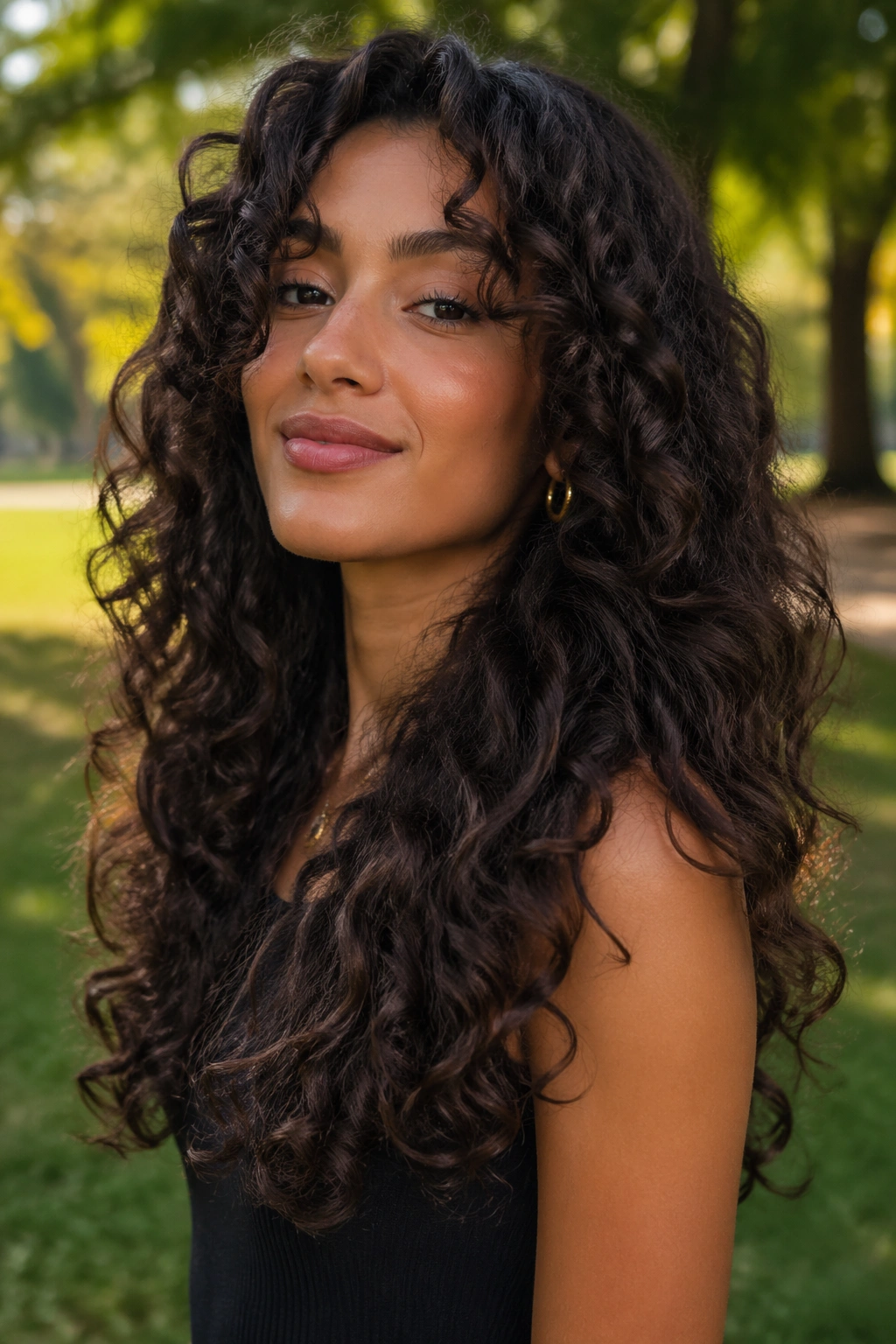
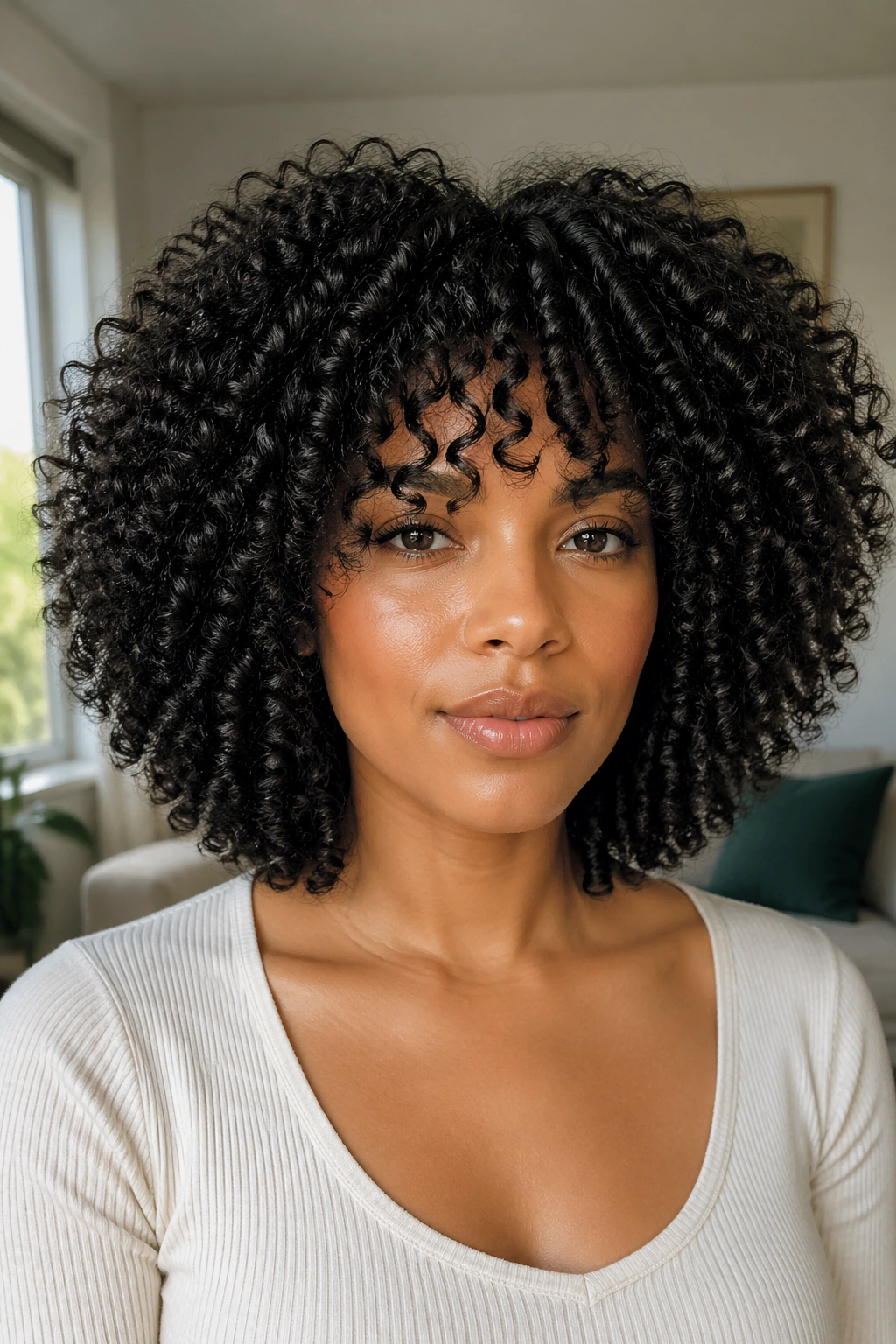
Keeping length while adding movement — that’s what layers accomplish on curly natural hair. The stylist removes interior bulk through layering while preserving the overall length. Your curls have room to breathe and spring without the weight of the full strand pulling them down. The result is a full, flowing, multi-dimensional curl texture that moves beautifully and photographs like a dream.
9. The V-Cut
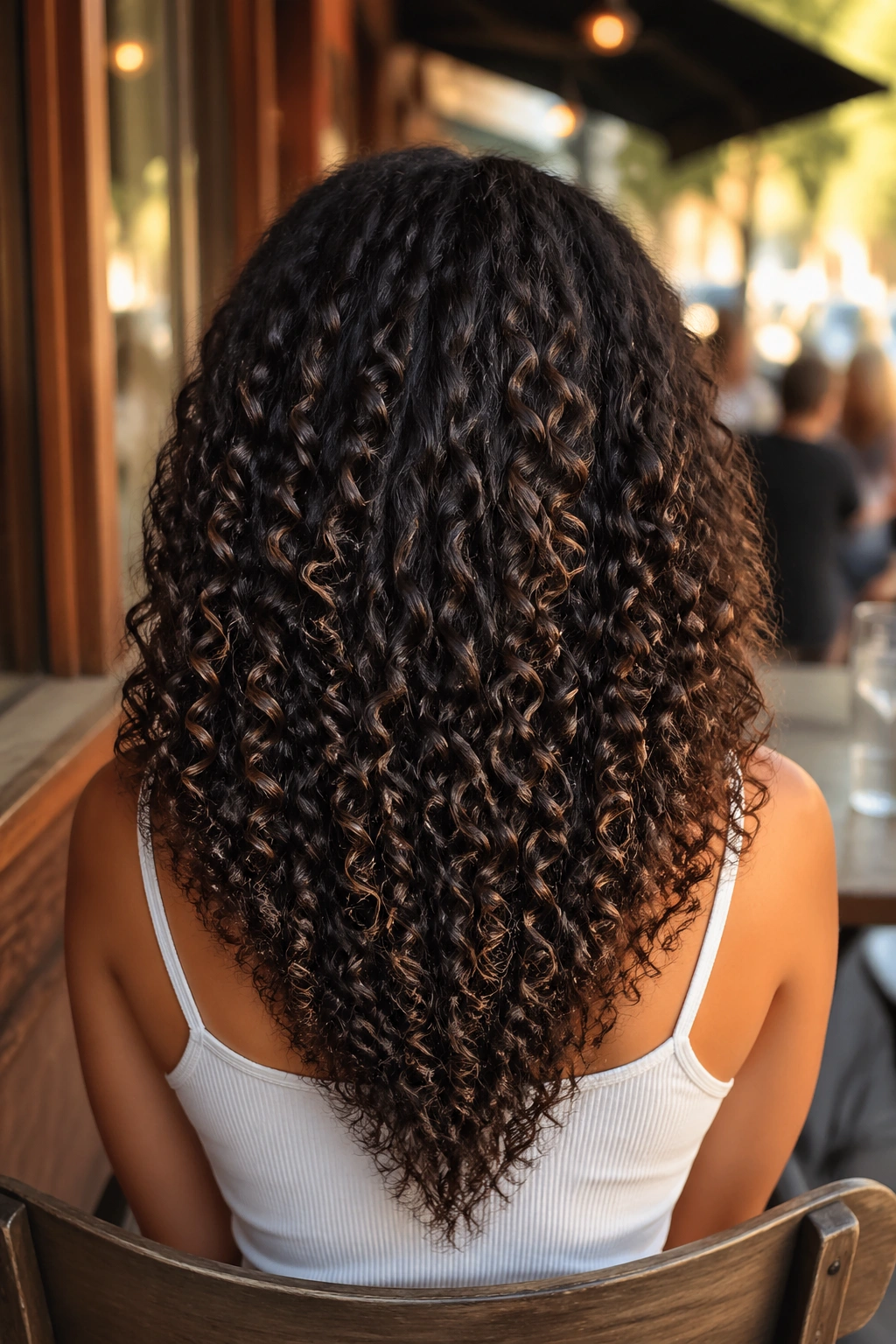
The V-cut on curly natural hair creates a tapered point at the back — longer in the center, shorter at the sides — that adds a sophisticated, intentional shape to long or medium-length curls. It’s particularly striking on hair that falls past the shoulders when stretched. The V-shape shows up beautifully when your curls are loose and hanging free.
Who the V-Cut Works Best For
The V-cut suits people with relatively uniform curl patterns from root to tip. If your ends have a different texture than your roots — which happens with color-treated or heat-damaged ends — the cut can reveal that contrast in a way that might not be flattering. Have an honest conversation with your stylist about your hair history before committing to this shape.
10. The Deva Cut
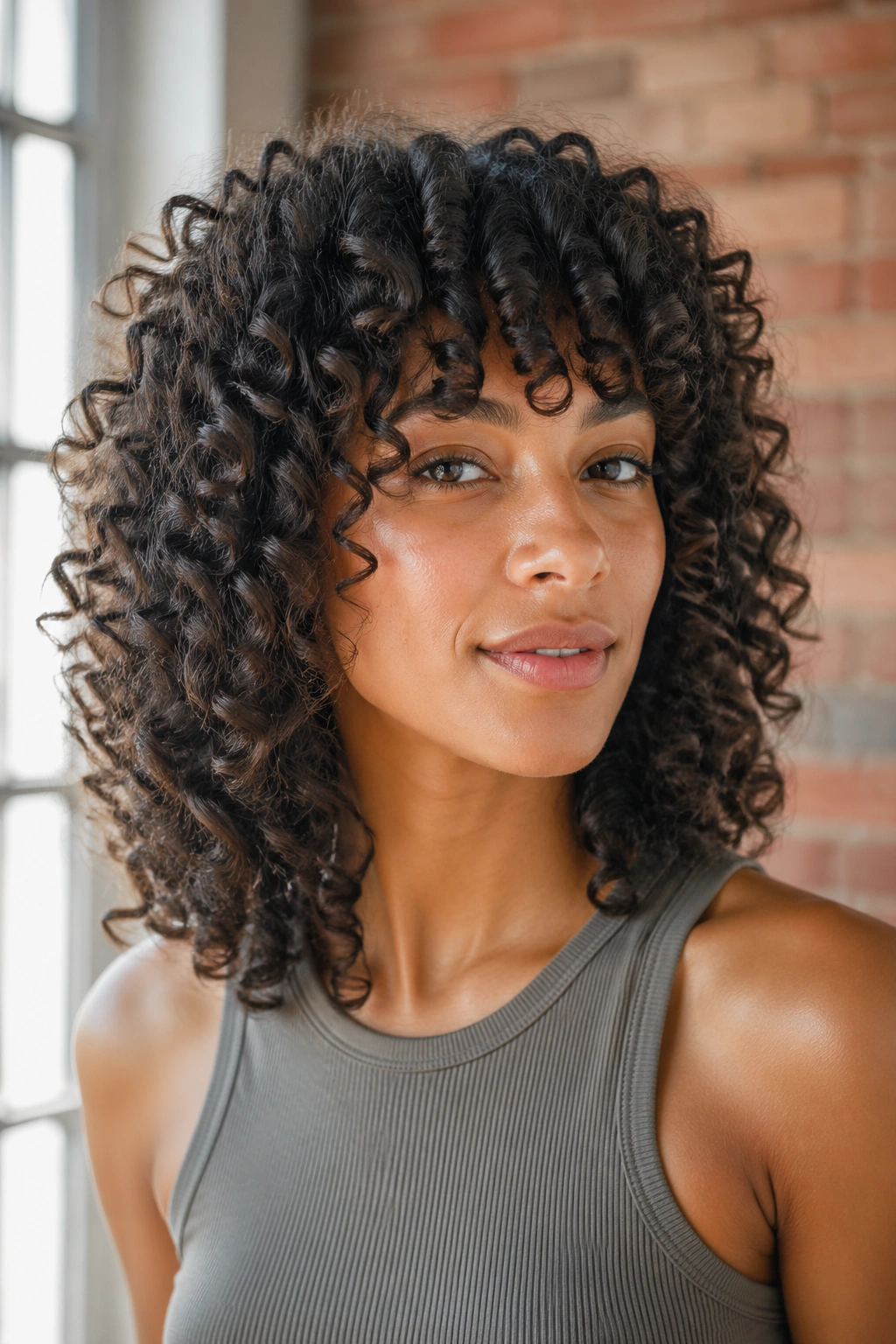
The Deva Cut is a specific technique — not just a style — developed by the Devacurl brand and now widely practiced by curl specialists. Hair is cut curl by curl in its dry, natural state, with each individual curl taken into account. The result is a cut that works with your specific curl map rather than imposing an external shape on it. It’s the most technically precise way to cut curly hair, and the results tend to be transformative.
11. The U-Shape Cut
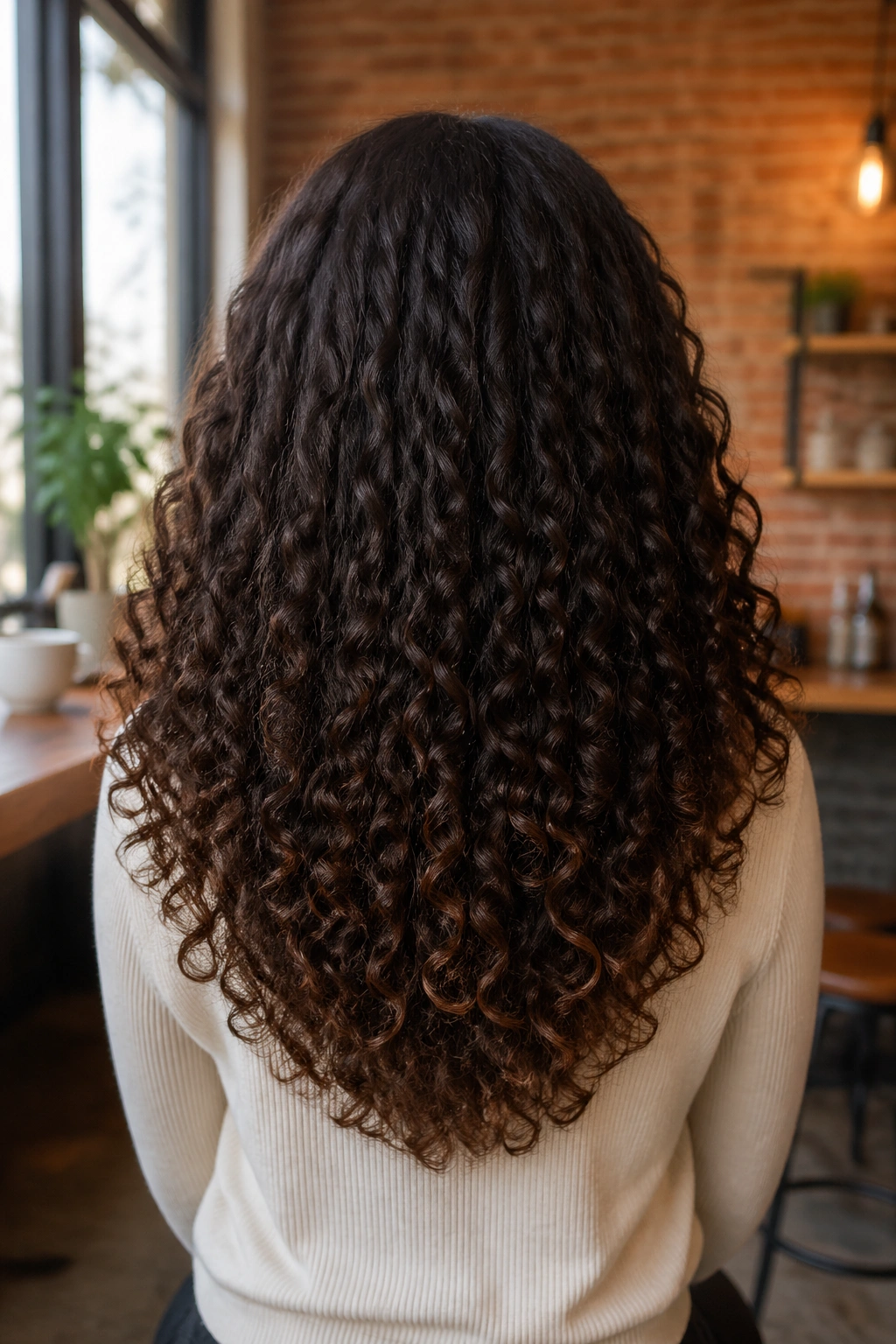
The U-shape is similar to the V but softer — the back has a gentle rounded curve that creates a U-shape when you look at the hair from behind. It’s a classic, timeless shape that adds movement and eliminates the boxy, blunt appearance of an all-one-length cut. On longer natural curls, the U-shape creates a romantic, flowing silhouette.
12. The Curly Shag
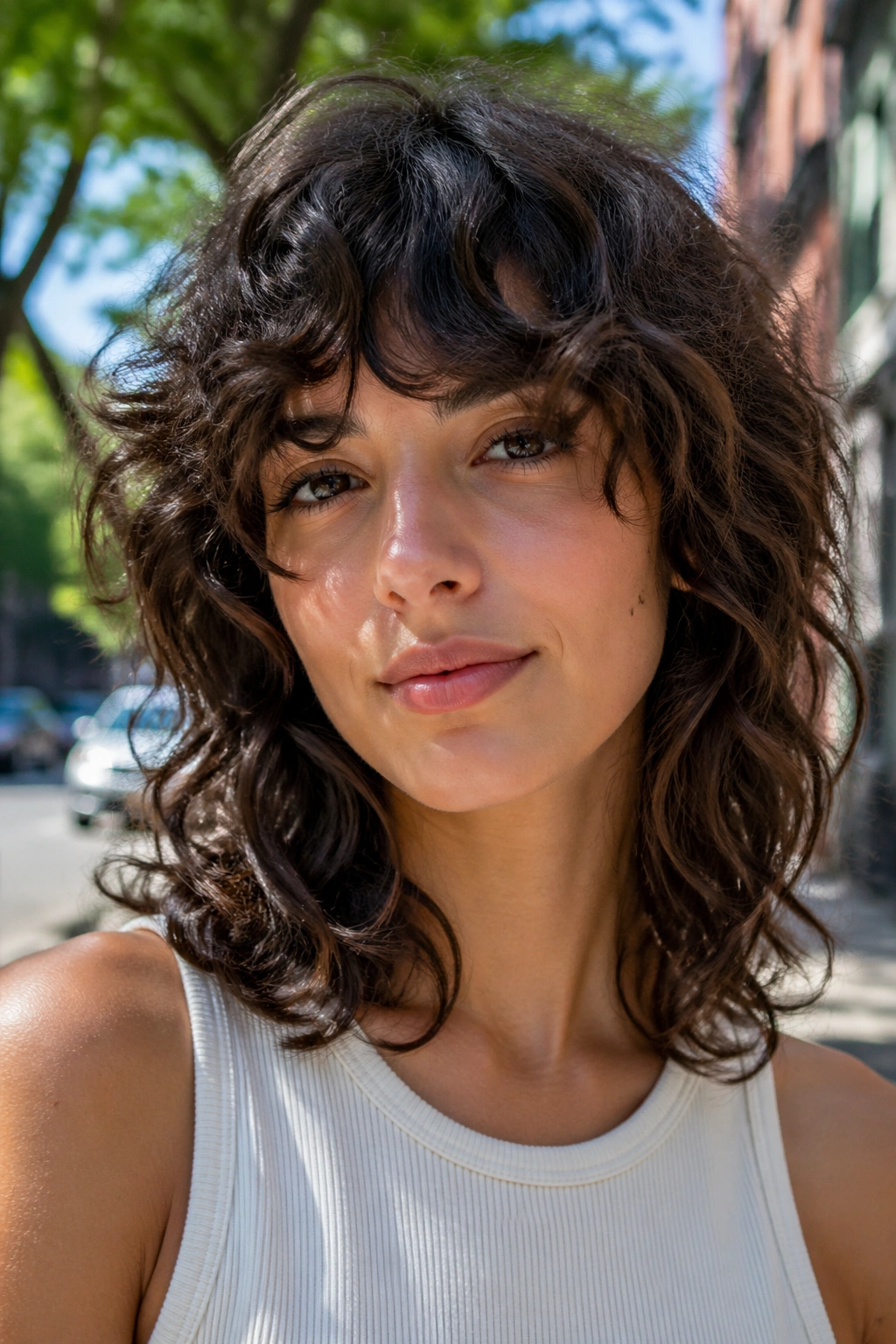
The shag is a cut with heavy layering and sometimes curtain bangs, giving the hair a tousled, lived-in look with built-in texture. On curly natural hair, the shag becomes something spectacular — each layer ends at a different point, creating visual depth and movement that’s hard to achieve with any other cut. It’s low-maintenance because the layers are intentionally designed to look imperfect, which is exactly what curly hair needs.
13. The Tapered Natural With Hard Part
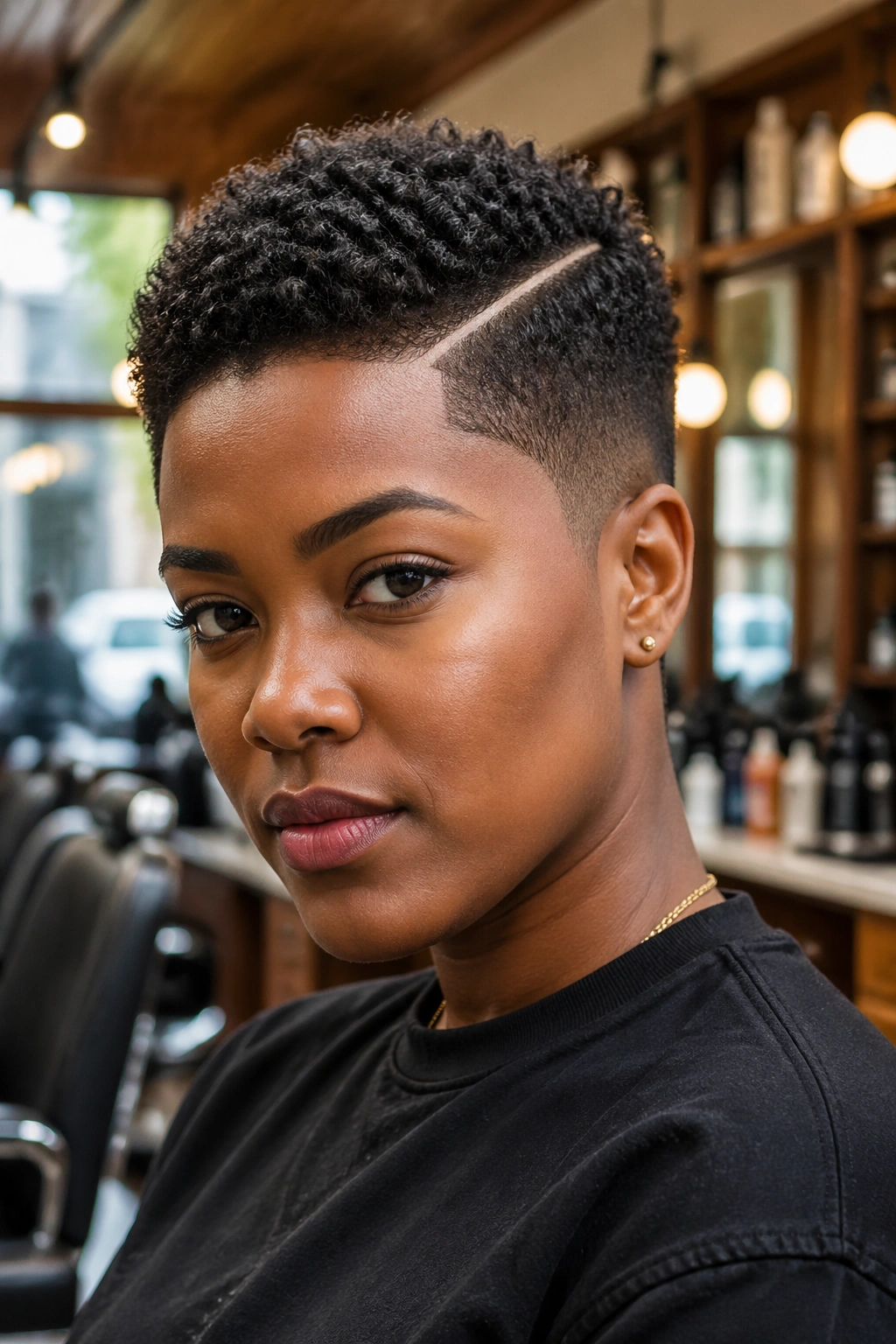
Add a clean, razor-sharp hard part to a tapered natural and you instantly get a barbershop-fresh, fashion-forward look that’s uniquely stylish. The hard part is shaved into the scalp on one side and the tapered sides frame the crown beautifully. This is a look that crosses over seamlessly between masculine and feminine aesthetics.
14. The Medium-Length Curly Cut
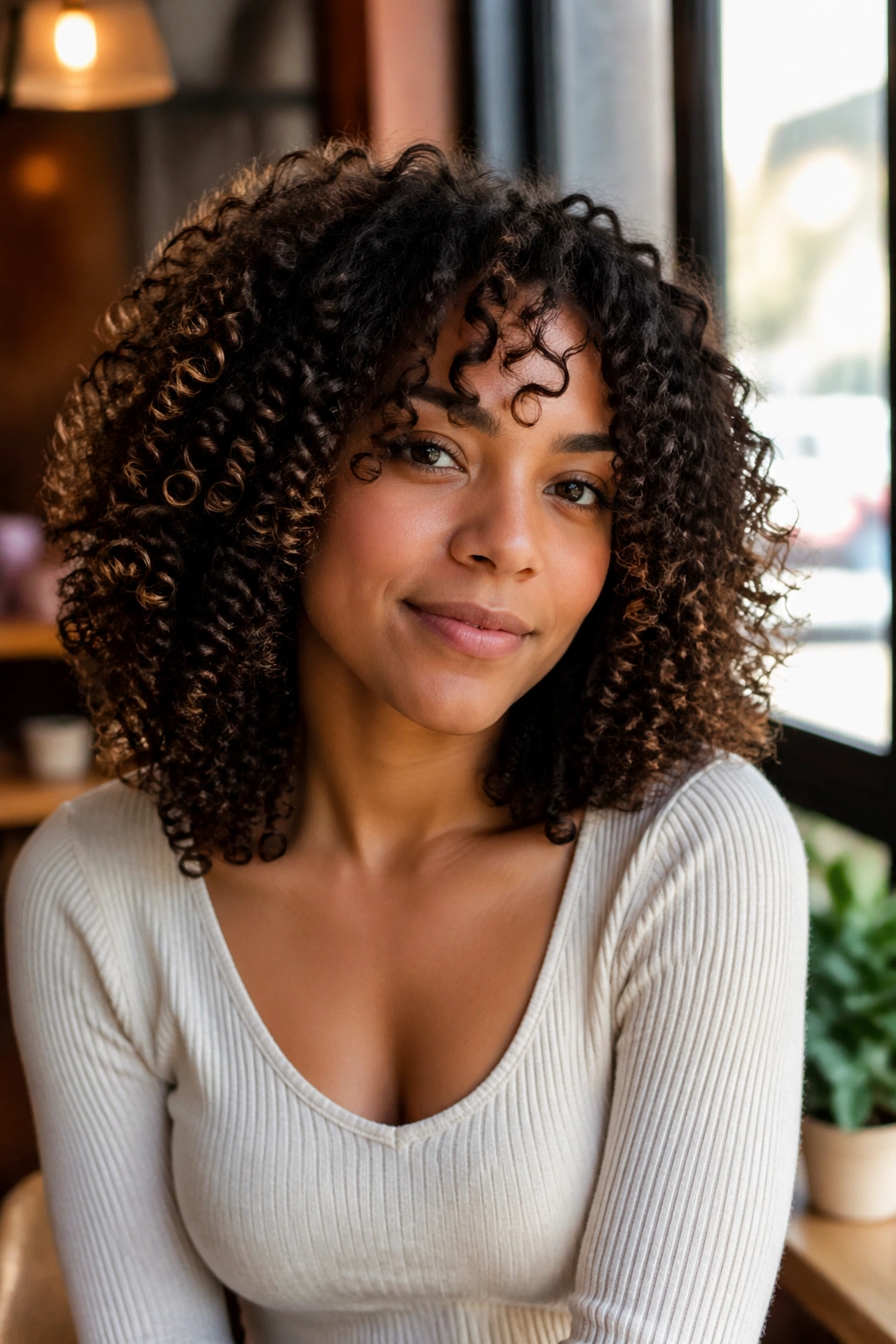
Not a bob, not long — just medium length. This is the sweet spot for a lot of curly natural hair types: long enough to show versatility (braids, twists, puffs, twist-outs), short enough that wash day isn’t an all-day affair. A medium cut shaped with the curl pattern in mind is one of the most practical, beautiful choices for everyday natural hair wearers.
15. The Asymmetrical Curly Cut
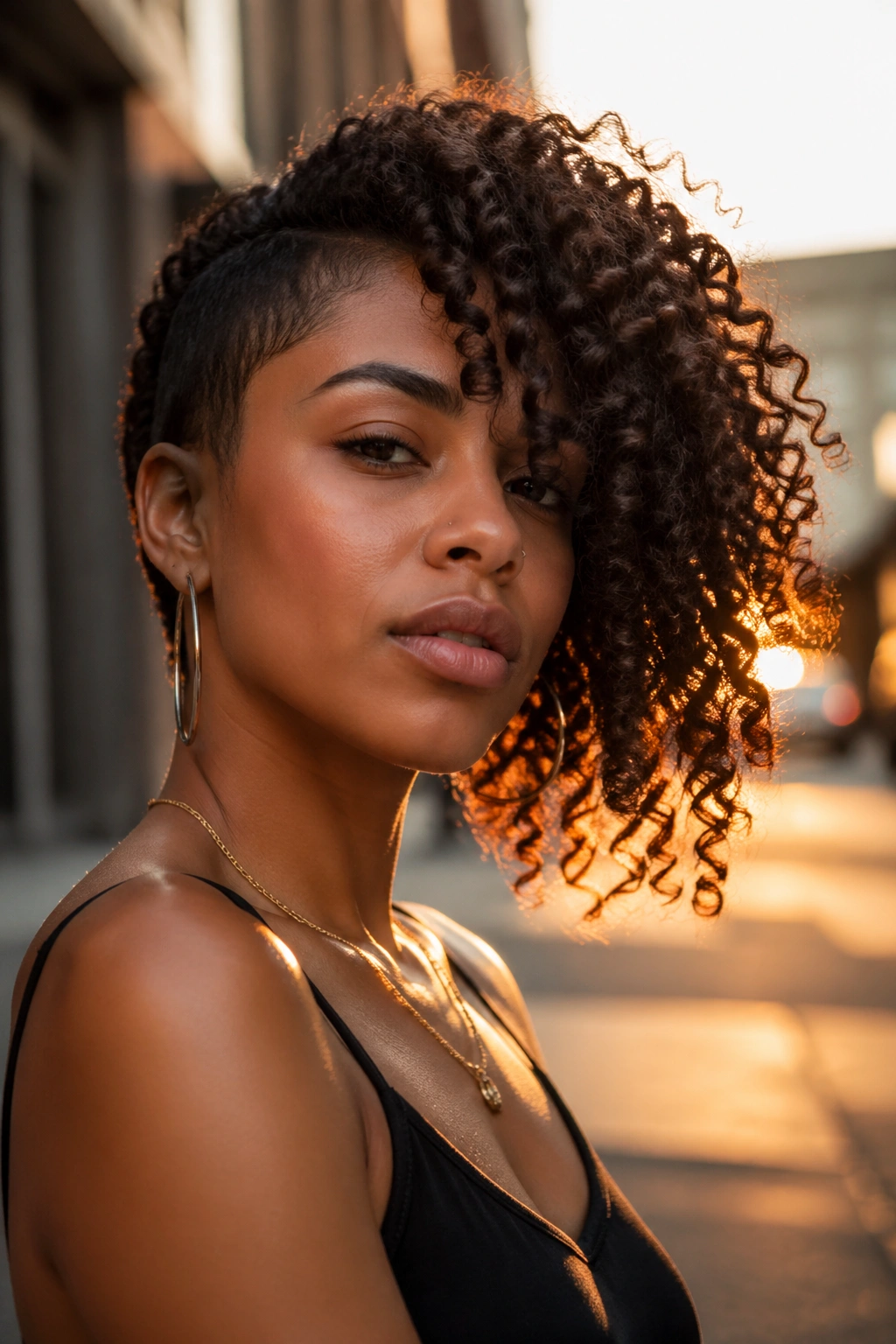
One side longer, one side shorter — deliberately. Asymmetry adds instant editorial quality to natural curls. It’s unexpected, it frames the face in an unusual and flattering way, and it makes a simple wash-and-go look like a deliberate styling choice. This cut suits bold personalities and people who want their hair to be a statement.
16. The Low Fade With Natural Top
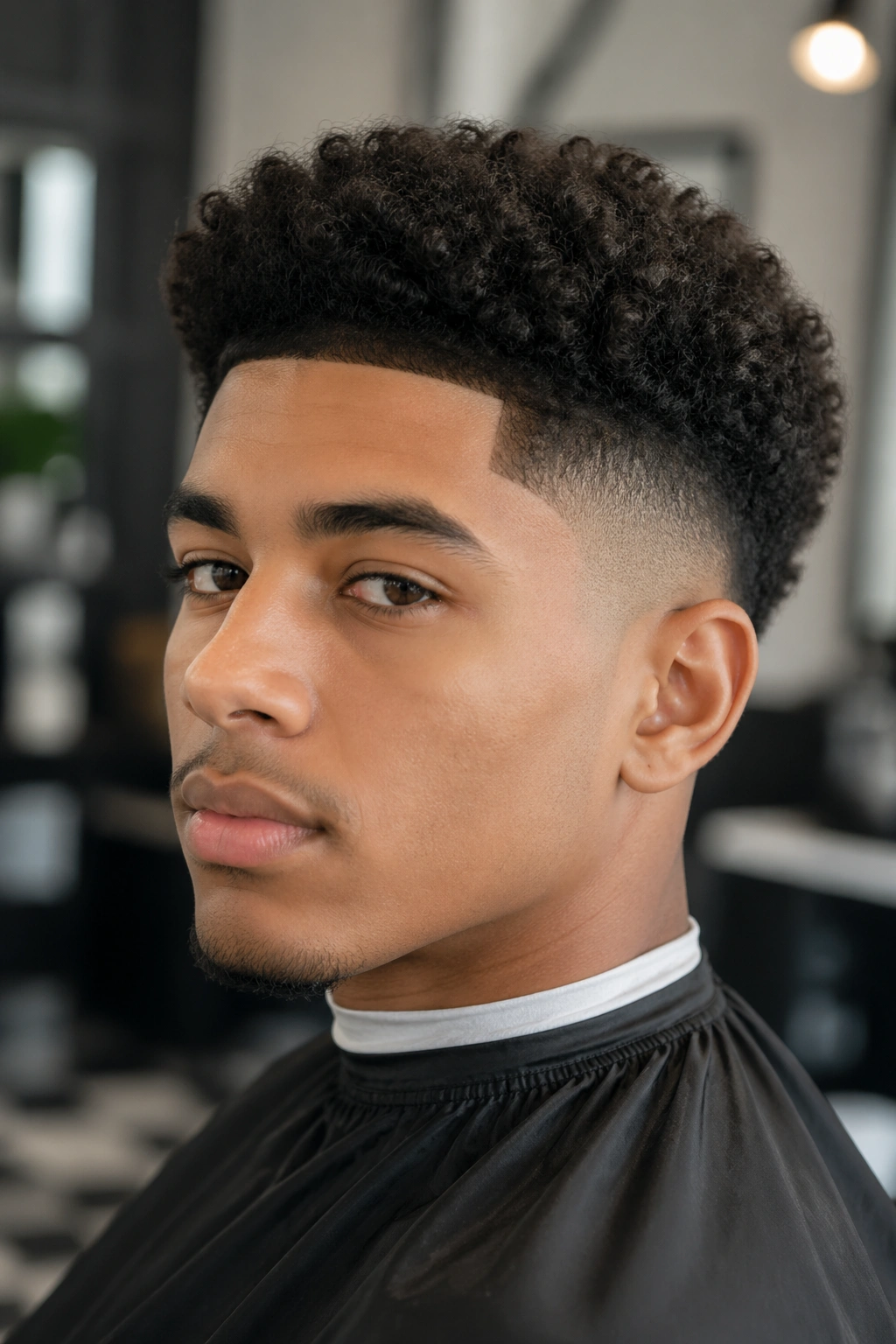
The low fade cuts the hair very close at the temples and nape, gradually blending into the natural curl pattern above. The contrast between the clean, tight fade and the free-form natural curls on top is visually dynamic and incredibly polished. The low fade requires regular upkeep — every two to three weeks at the barbershop to keep the fade crisp — but the visual impact is worth it.
17. The Curly Bob With Undercut
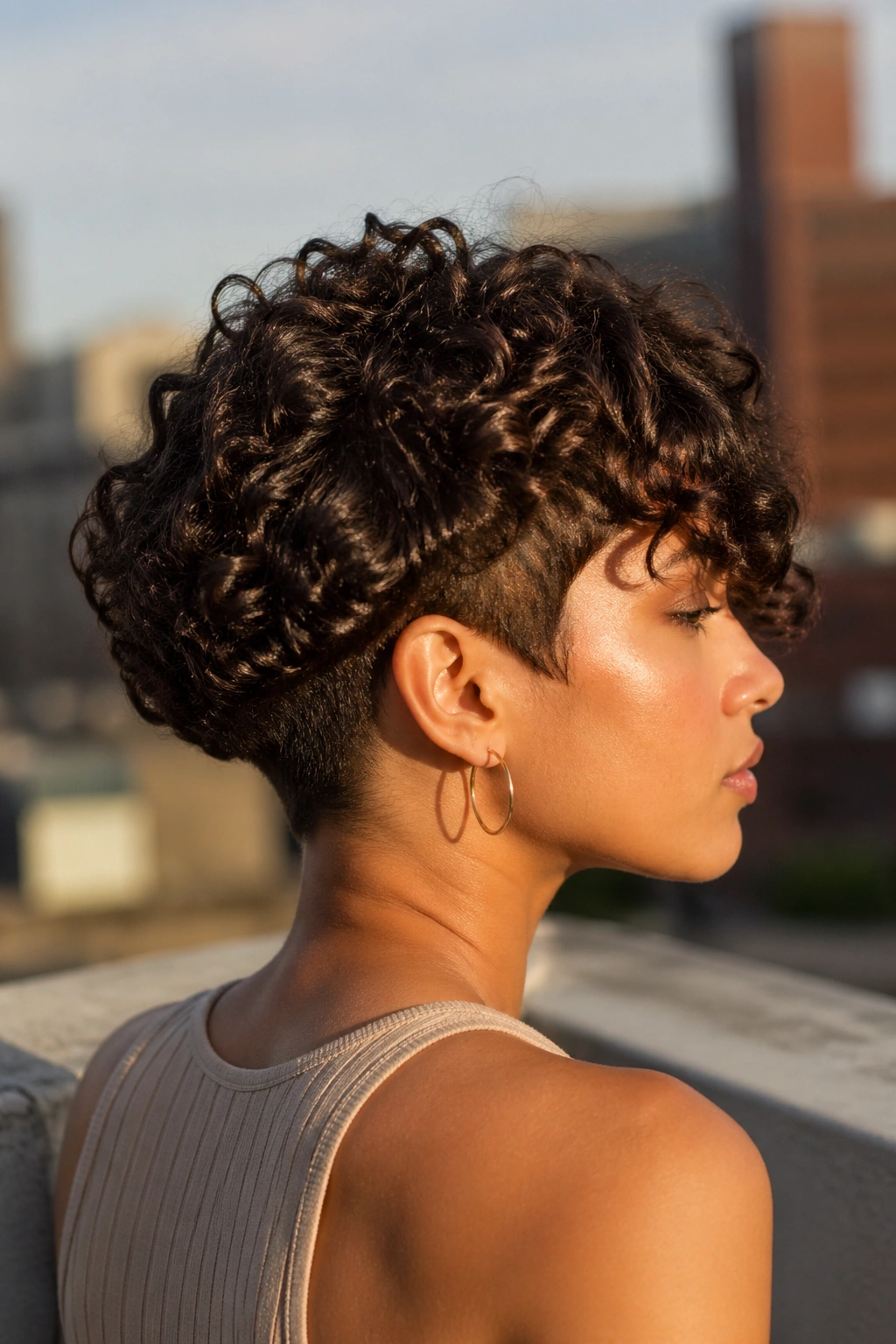
Take a curly bob and add an undercut at the nape — shaved close underneath while the top and sides remain full length. The undercut is hidden when your hair is down, revealed when you pull it up. It adds a punk-inspired detail to an otherwise classic style. It’s the kind of haircut that surprises people and makes them look twice.
18. The Transitioning Cut
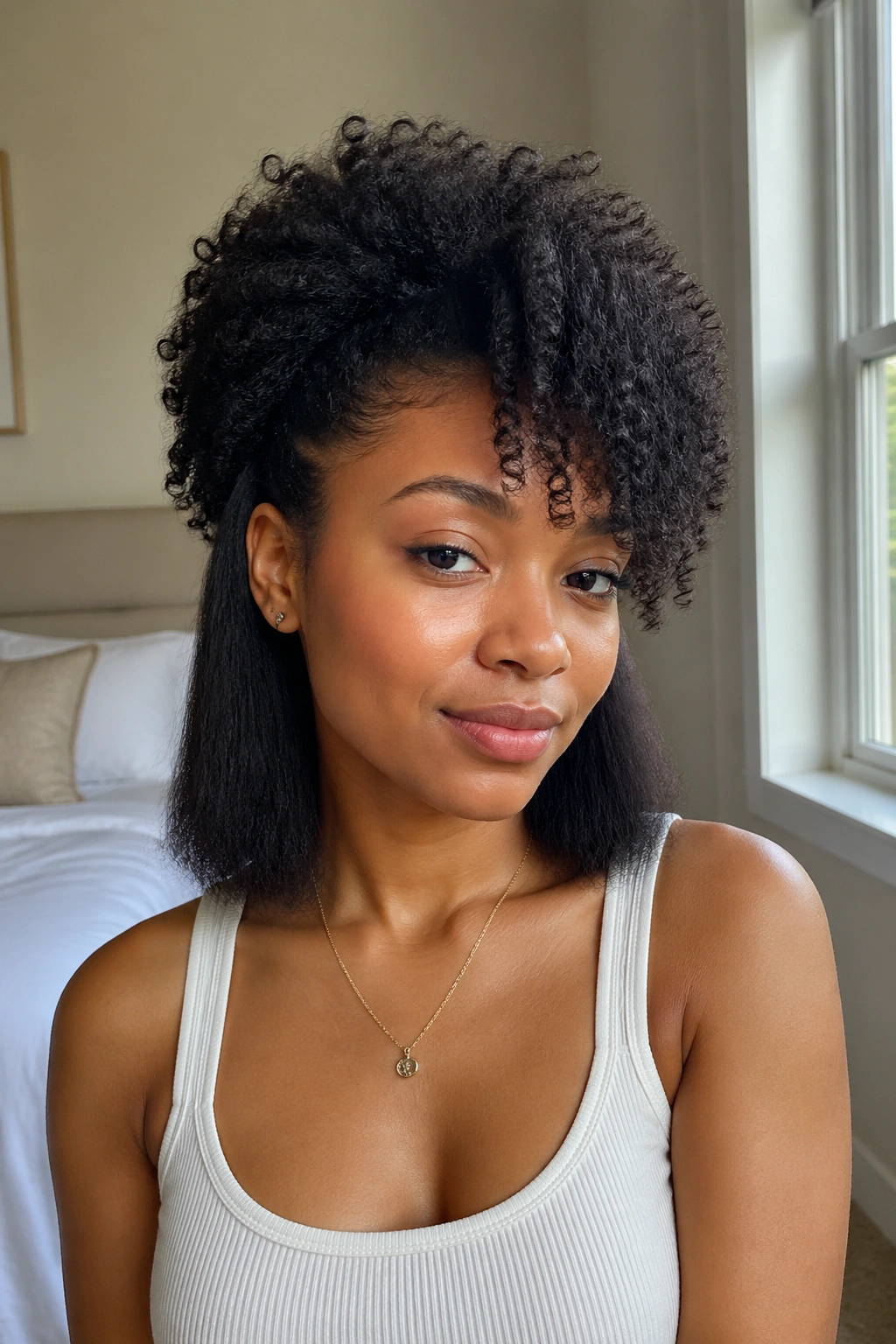
If you’re growing out chemically relaxed hair, the transitioning cut removes some of the relaxed ends while keeping enough length that you’re not starting over completely. A good transitioning cut is strategic — it finds the line of demarcation between your natural hair and your relaxed ends and works with it rather than fighting it. A skilled stylist can create a shape that looks intentional throughout the whole transitioning process, not just at the end.
19. The High-Top Fade
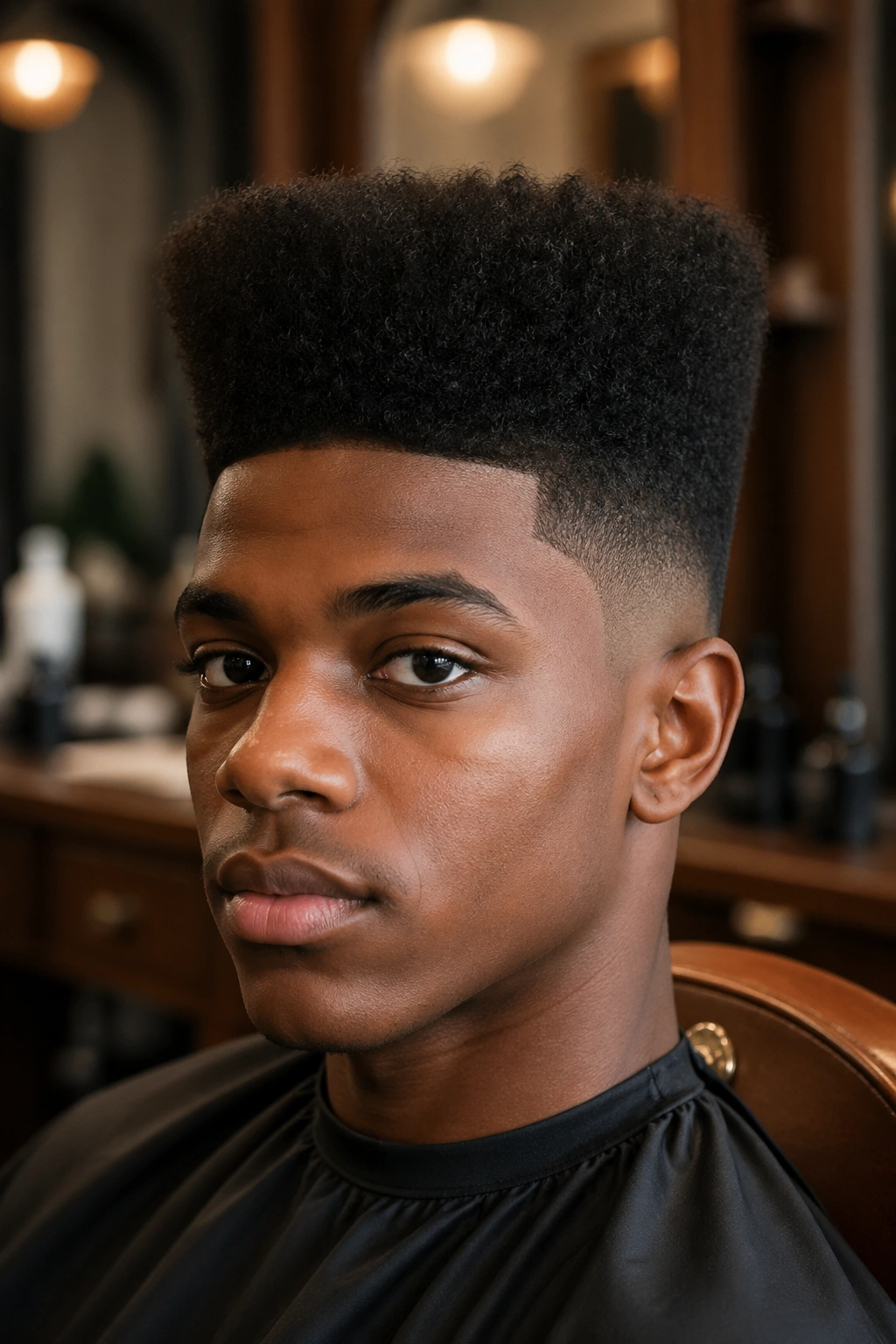
The high-top fade is a cultural icon. The sides and back are faded close while the top is left long and shaped into a flat, rectangular block of natural curls. On 4C hair especially, the high-top fade delivers a graphic, architectural silhouette that’s unlike anything else in the natural hair repertoire. It’s bold, it’s statement-making, and it’s undeniably powerful.
Styling the High-Top
Apply a firm-hold gel or styling cream to the top while your hair is damp. Pick it out gently as it dries to build height. The goal is a flat top with clean lines on the sides — your fade does the sculptural work at the bottom, and your curls do it at the top.
20. The Curly Mullet
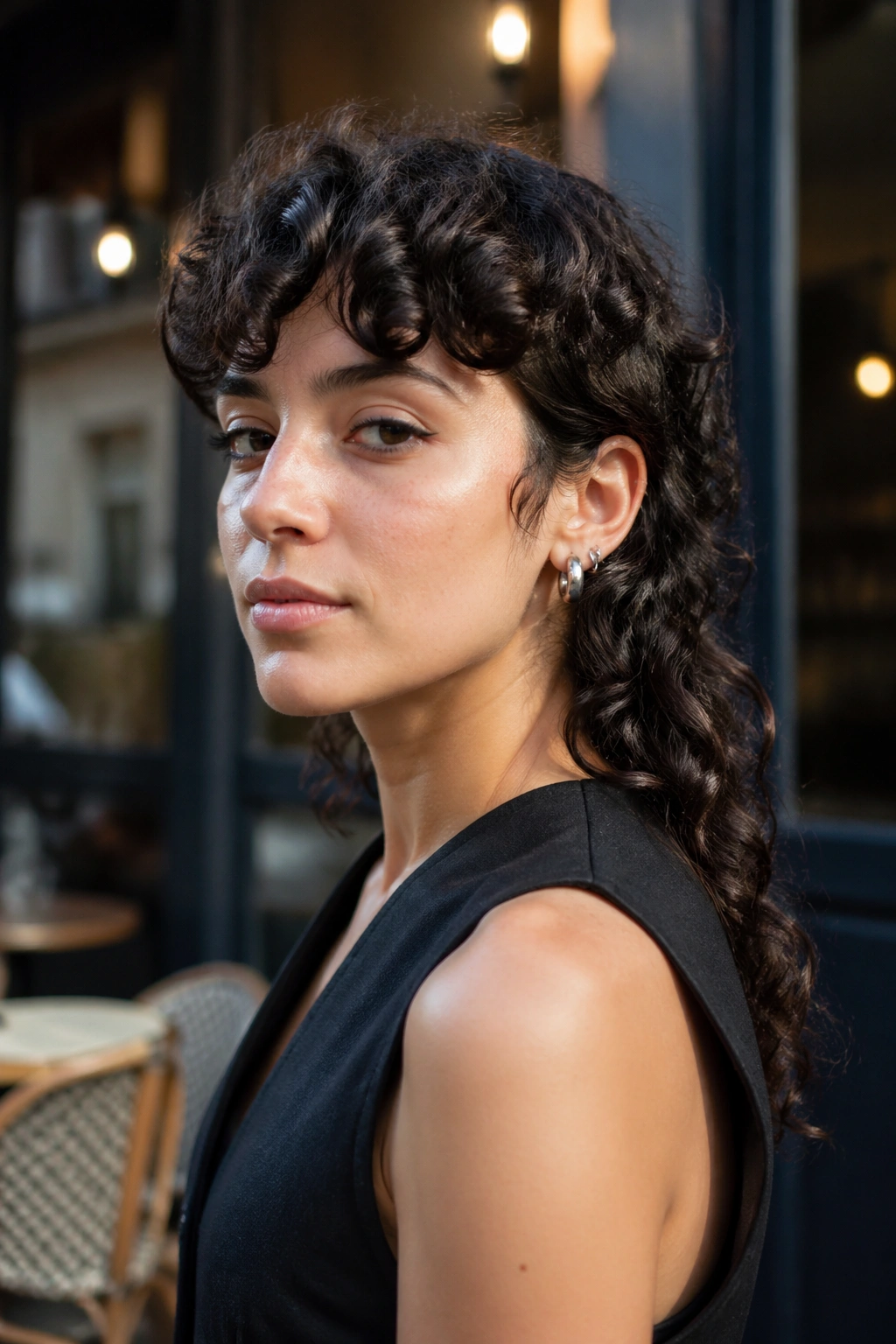
The curly mullet — shorter at the front and sides, longer at the back — has had a significant comeback as a creative, fashion-forward cut. On curly natural hair, it creates an interesting textural contrast: the front frames the face with shorter, more defined curls while the back flows with length and volume. It’s unconventional, which is exactly why it works so well as a style statement.
21. The Teeny Weeny Afro (TWA)
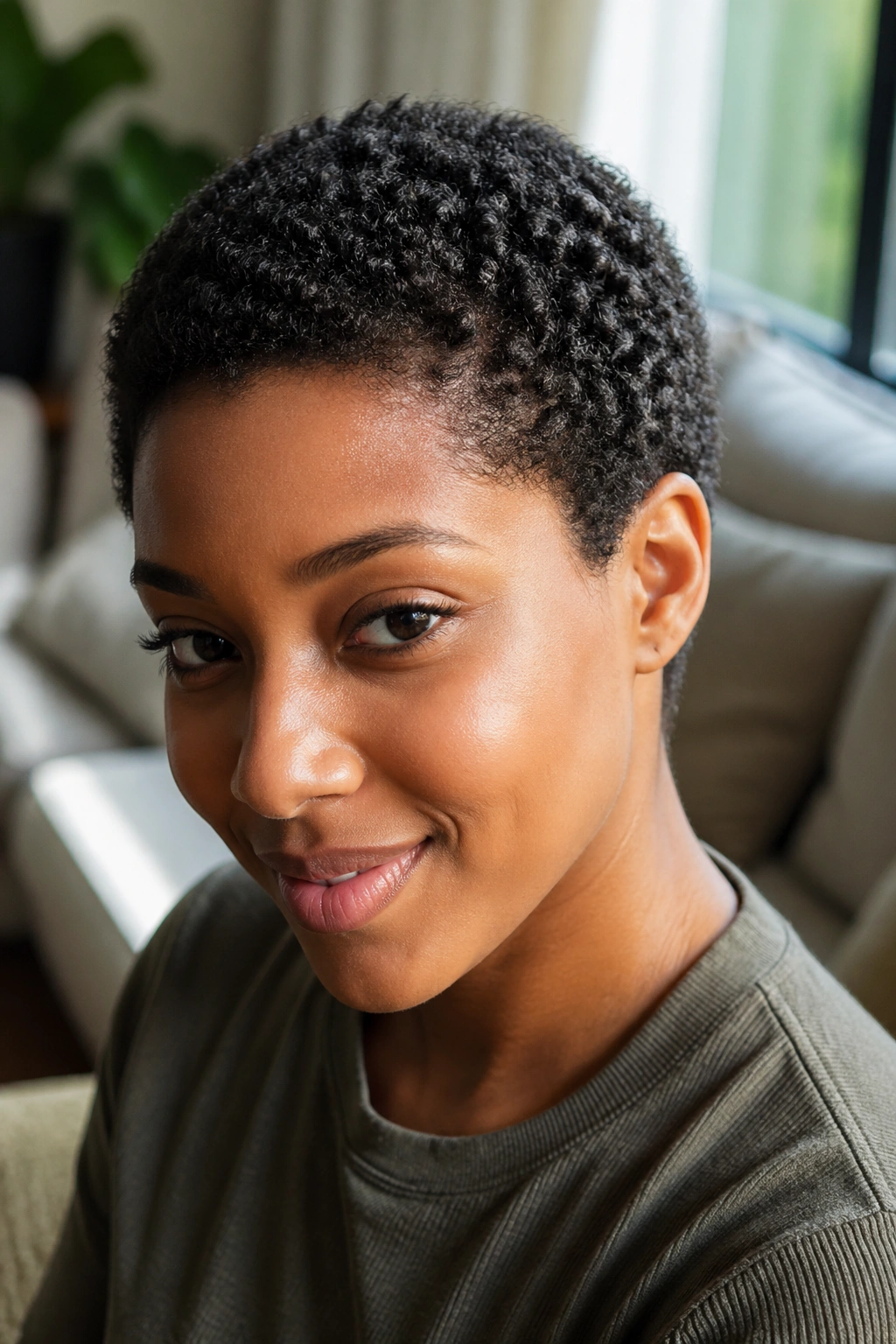
The TWA is the closest-cut natural style that still maintains visible curl pattern. It’s cut very close to the scalp — maybe one to three inches of natural hair. The style requires almost no product and no styling time, it grows out evenly, and it shows off the shape of your head and features like nothing else. For people who like a minimal, effortless routine, the TWA is genuinely liberating.
22. The Layered Mid-Length Cut for Fine Curly Hair
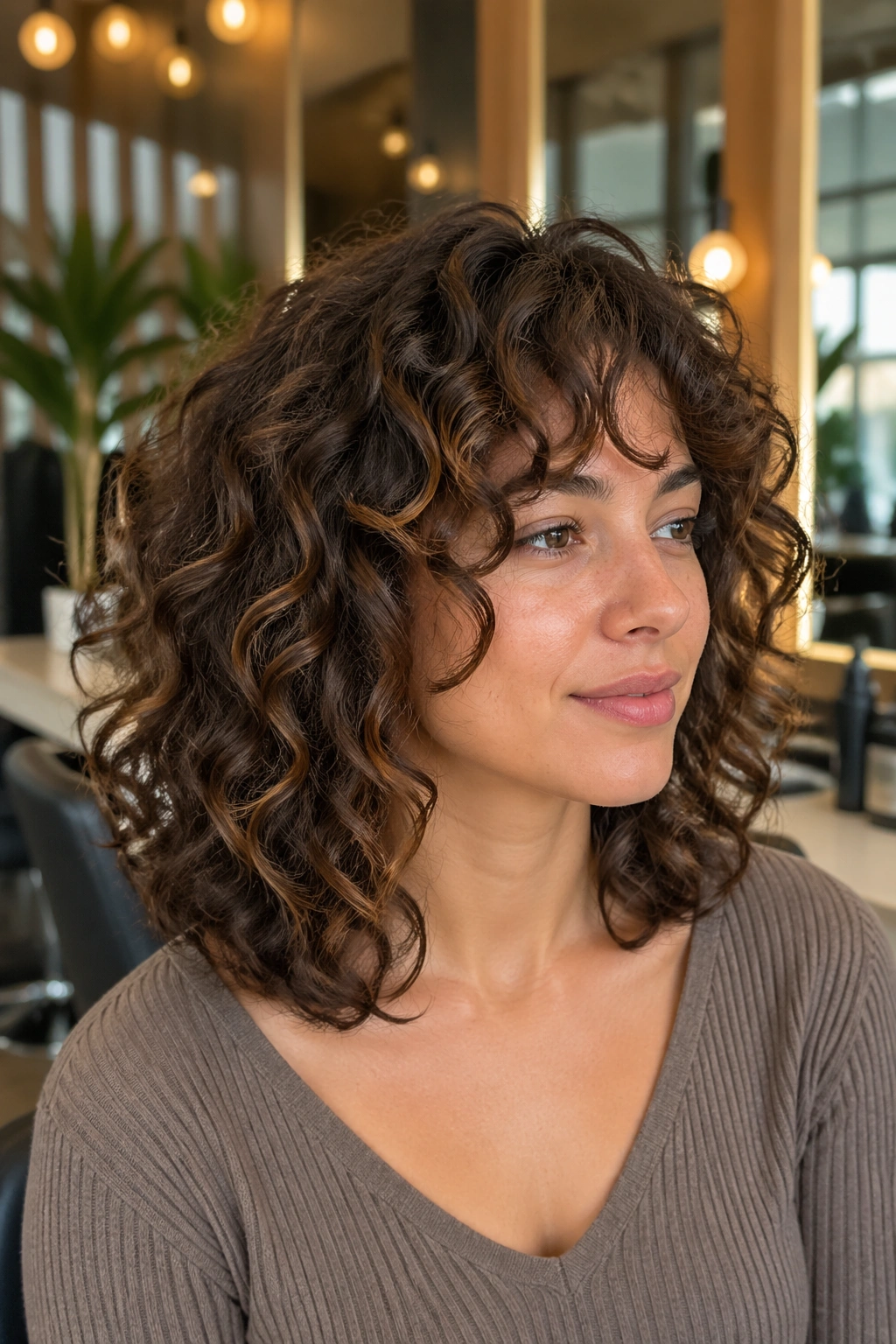
Fine curly hair needs layers to create the appearance of density. Without them, fine curly strands lie flat and lose their spring. Layers add internal structure that makes hair look fuller, bouncier, and more voluminous than the actual density of the strands would suggest. If your curly hair feels limp or lacks definition, chances are a layered cut is the answer rather than more product.
23. The Elongated Bob
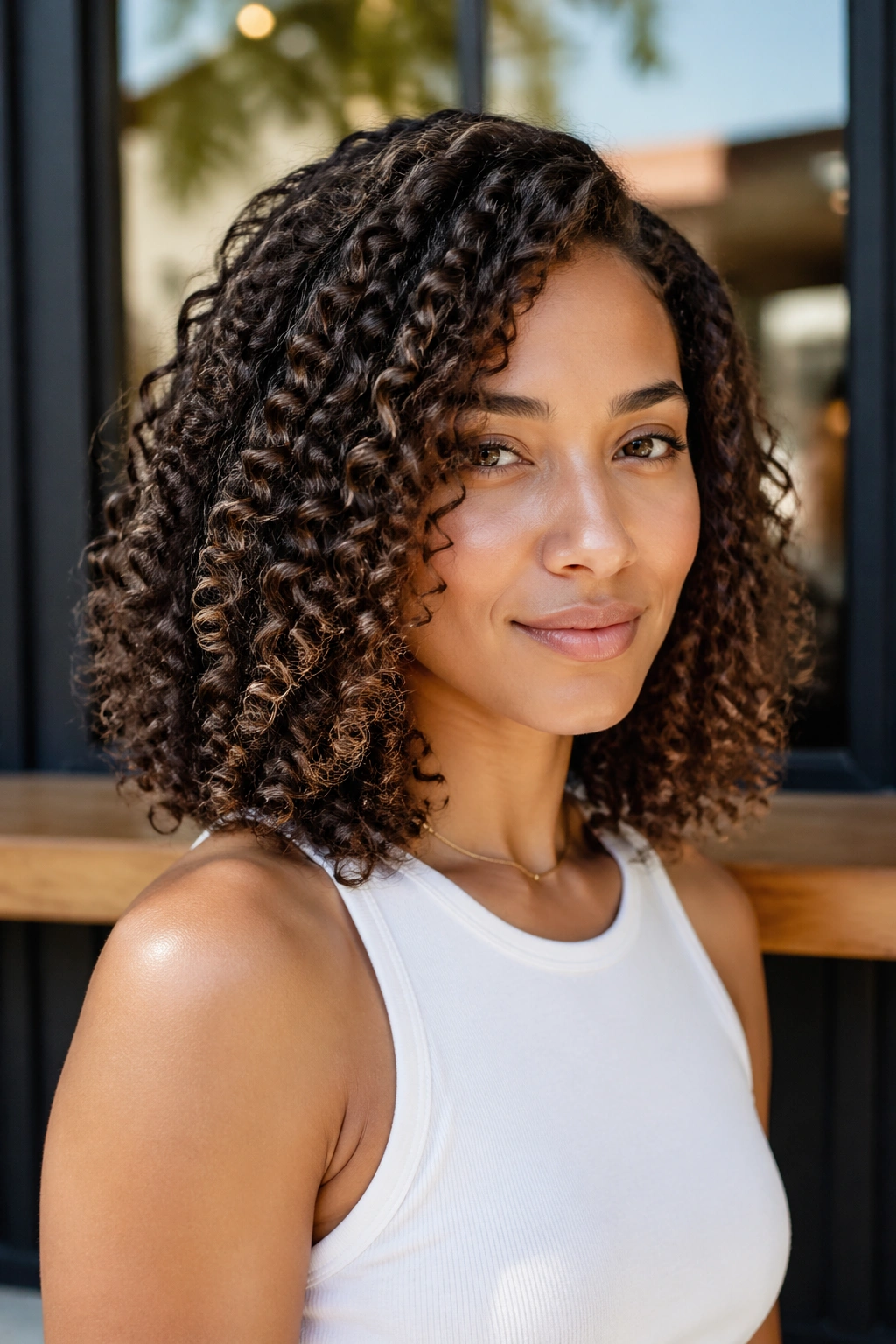
The elongated bob — sometimes called a “lob” — hits below the collarbone rather than at the jaw. On curly natural hair, this length is generous enough to show off versatility: you can wear it in a puff, pull it into a bun, or let it hang loose as a wash-and-go. It’s also long enough that shrinkage doesn’t feel like a major issue — the length stays present even with tight curl types.
24. The Defined Curl Cut for 4C Hair
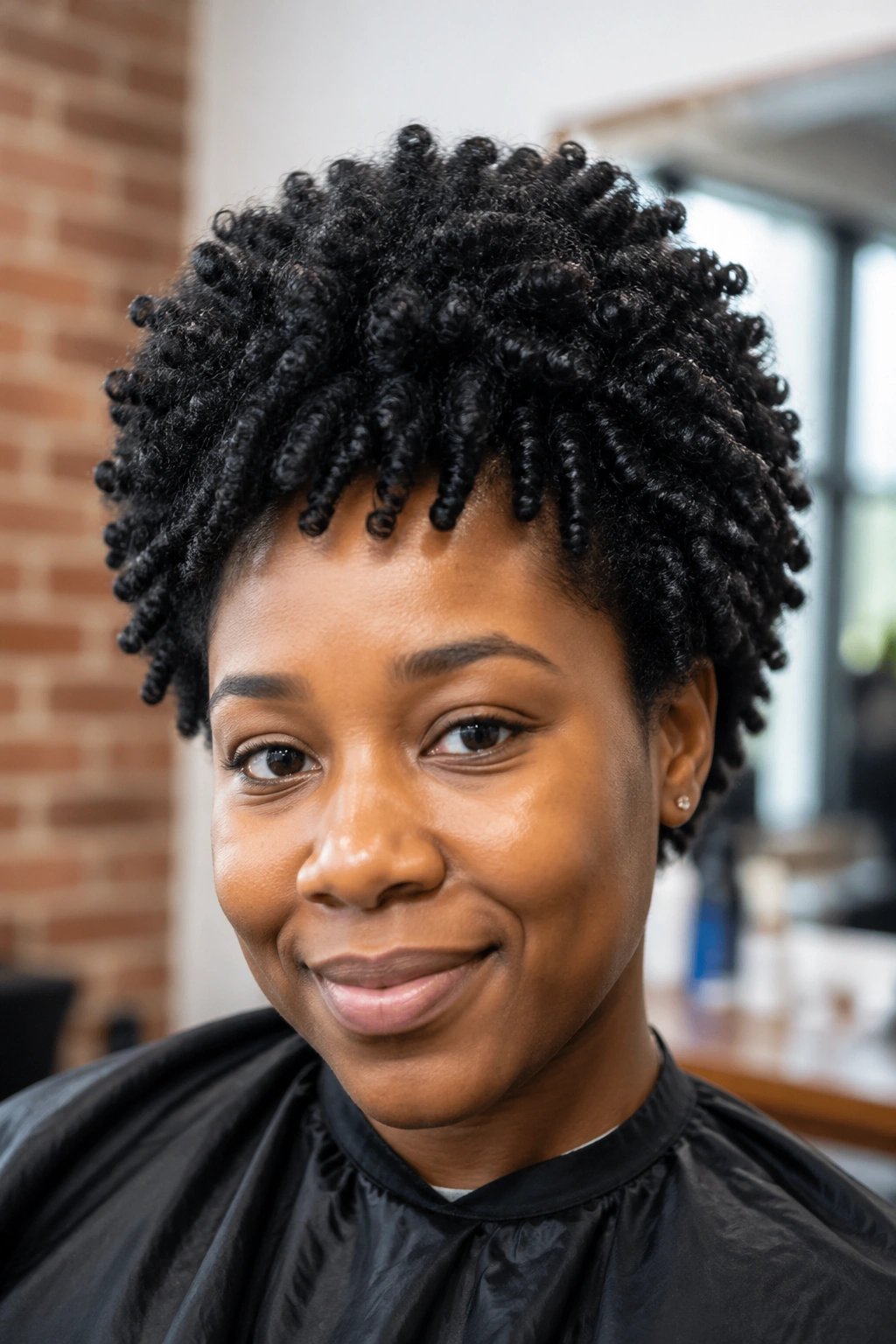
Cutting 4C hair requires specific knowledge of how the tight coil pattern behaves at different lengths. A skilled stylist working with 4C hair will cut in a way that defines the coil clusters rather than disrupting them. The goal isn’t to fight 4C shrinkage but to work with it — creating a shape that looks intentional at its natural shrunken length, not just when stretched.
25. The Blunt Cut Bob for Natural Curls
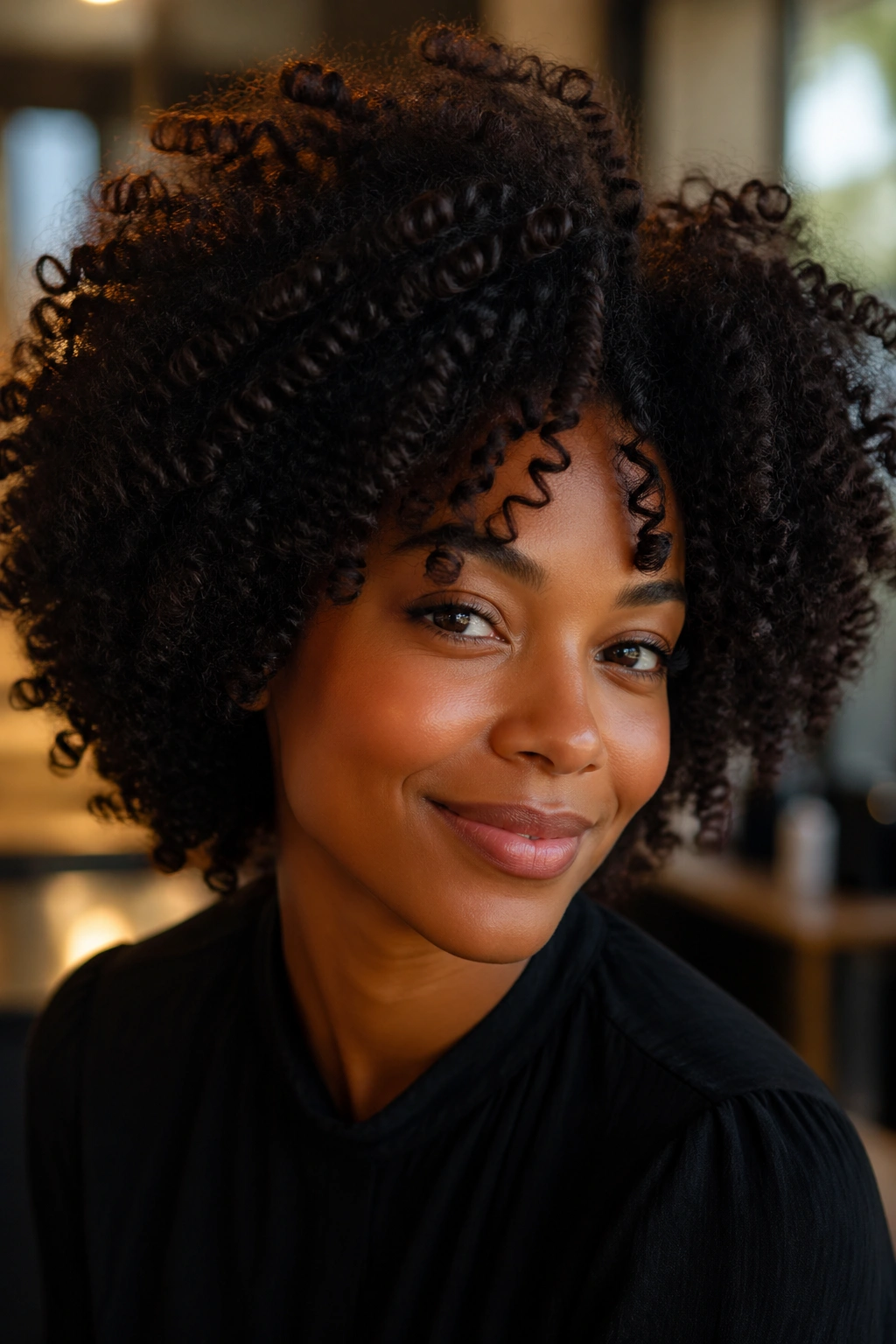
A blunt cut bob — all one length, no layers — on natural curls creates a dense, voluminous shape with a strong silhouette. It’s especially striking on 3C and 4A curl types where the curl pattern is tight enough to create significant volume at this length. The bluntness of the cut gives the style a deliberate, architectural look.
26. The Natural Shag With Curtain Bangs
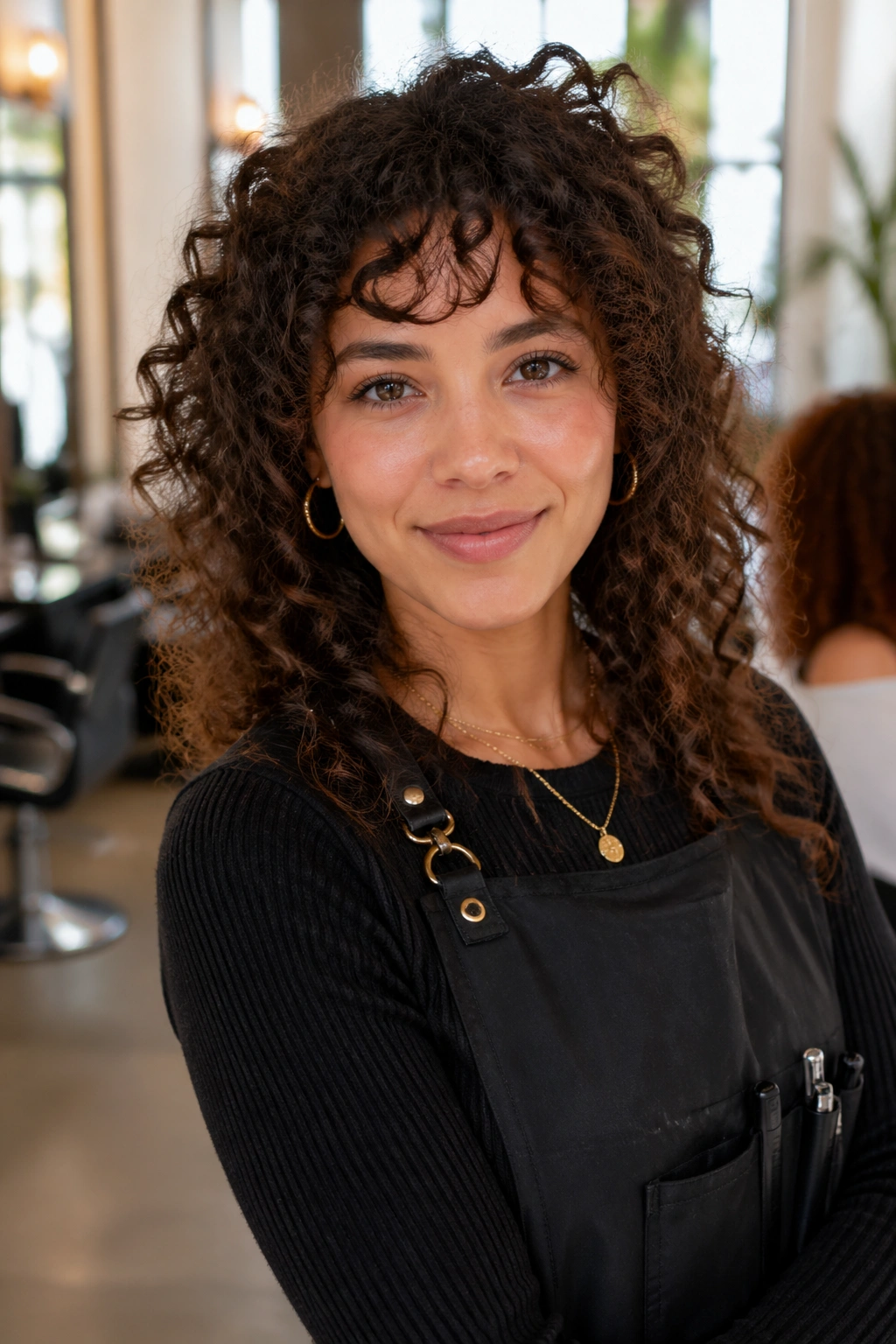
Curtain bangs — parted in the center and falling on each side of the face — are beautiful on curly natural hair when cut correctly. They need to be cut to follow the curl pattern, not against it, so they frame the face rather than frizzing out. Paired with a shag cut body, the curtain bangs add a soft, romantic quality that feels very intentional and stylish.
27. The Coily Pixie
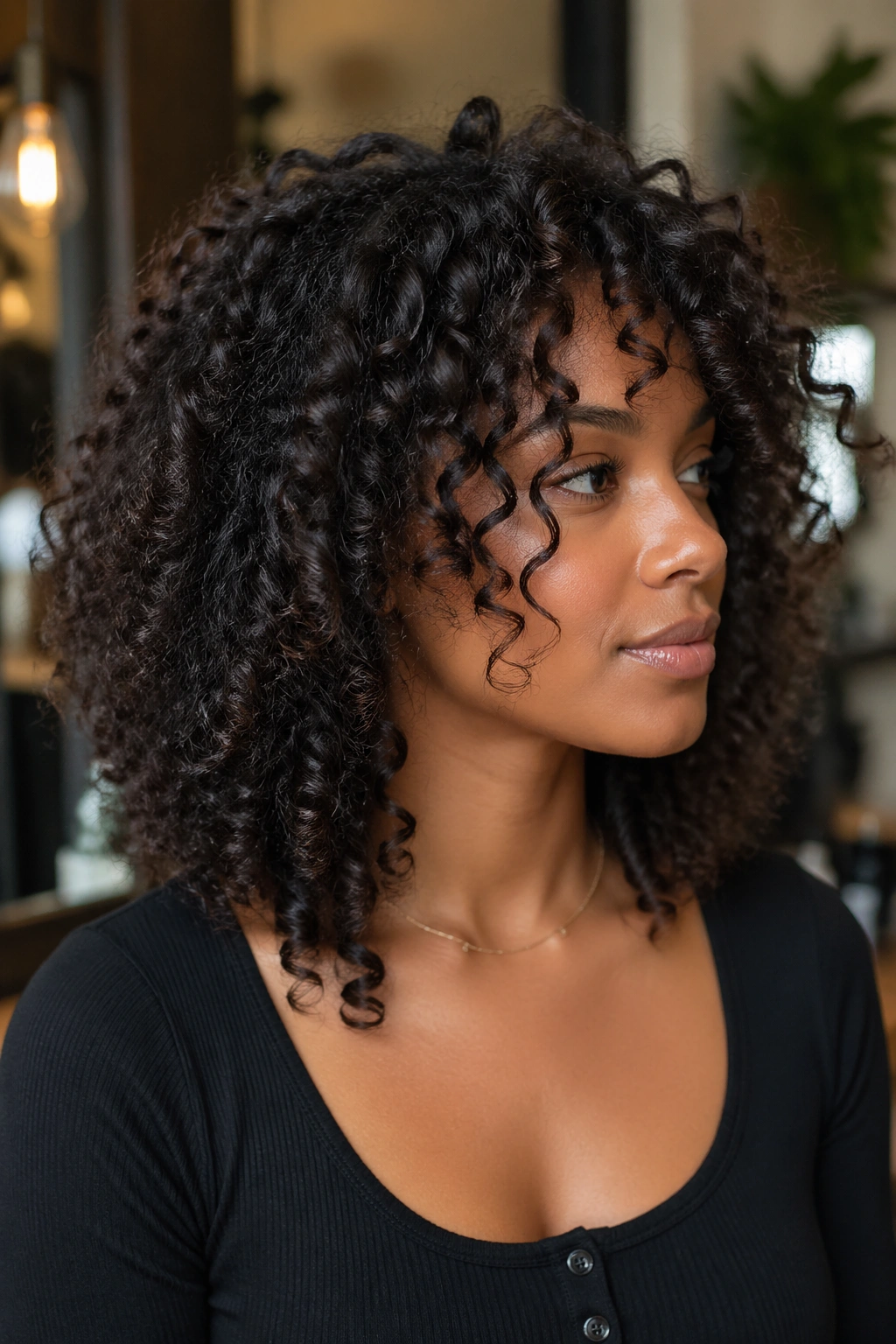
Different from the curly pixie — the coily pixie is specifically for 4B and 4C hair types. Very close on the sides, with a bit more length at the crown to show off the coil pattern. The coily pixie is one of the boldest, most stunning cuts for tightly coiled hair because it puts the coil texture front and center with nowhere to hide — and the texture is so beautiful that it doesn’t need to.
28. The Wash-and-Go Bob
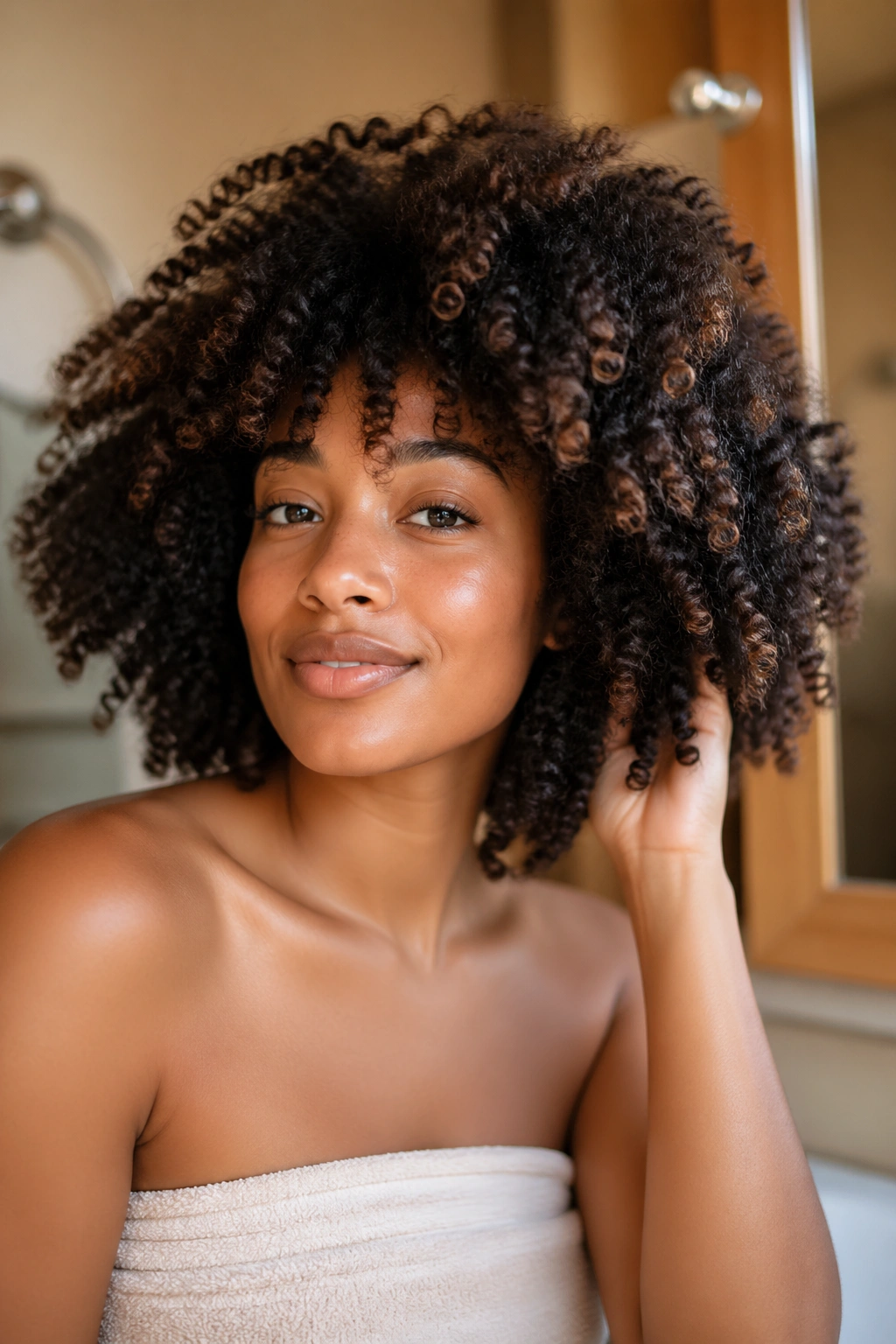
This cut is engineered specifically for people who want to wash their hair, apply products, and walk out the door without extended styling. The stylist creates a shape that is fully formed once your hair dries from a wash-and-go — no diffusing, no additional shaping required. It requires a highly skilled curl specialist who understands how your specific curl pattern will behave.
29. The Volume Bob
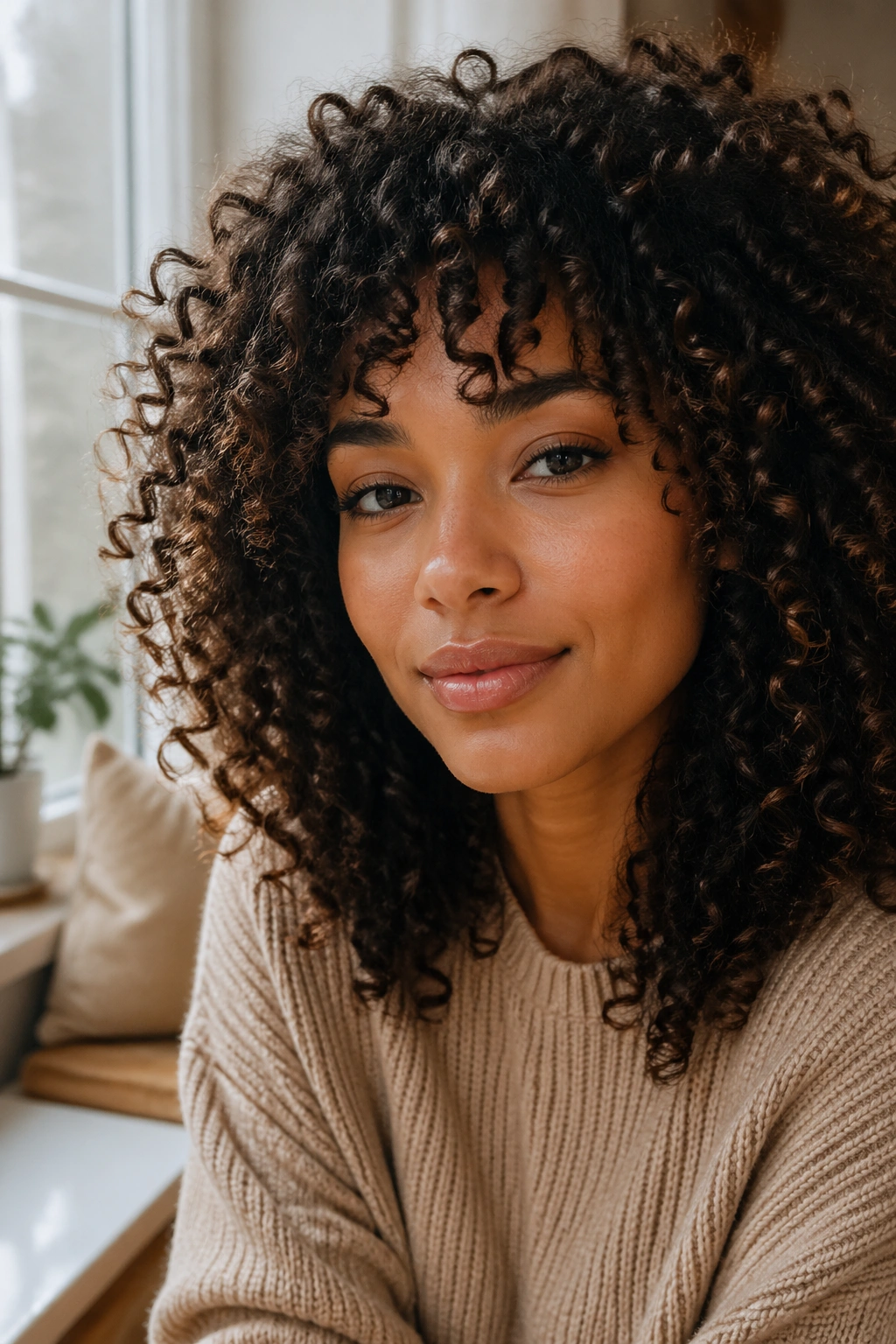
The volume bob is cut shorter underneath and longer at the top and sides, which works against the usual graduated bob shape. On curly natural hair, this creates a triangular volume from the roots outward that maximizes the silhouette. It’s dramatic and full of presence, and it works especially well on hair types where the crown section is the densest.
30. The Bespoke Curl Cut
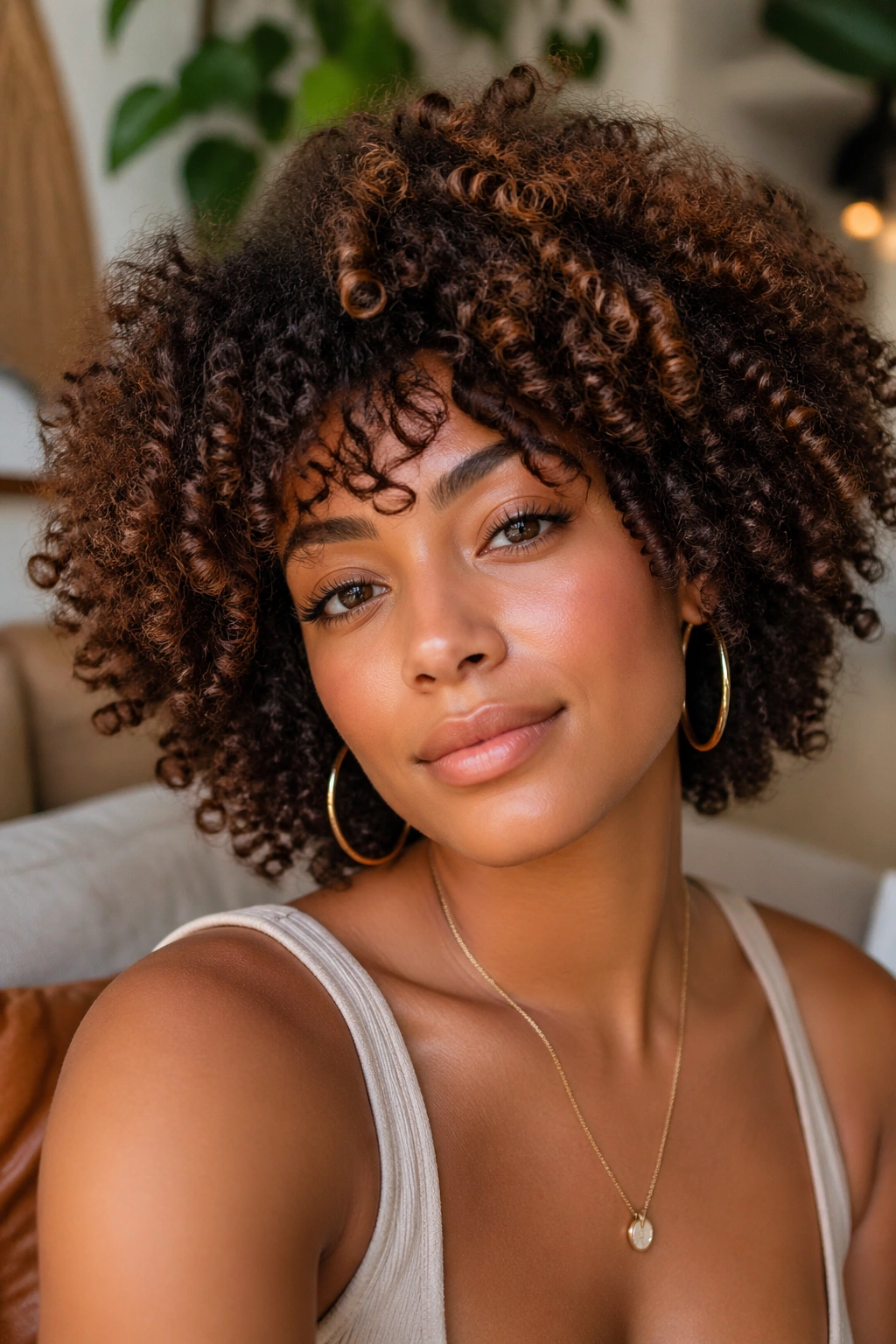
No two heads of curly natural hair are the same. A bespoke curl cut is the term for a fully customized cut — not based on a style template or trend, but designed from scratch based on your specific curl map, your density, your face shape, and your lifestyle. This is what the best curl stylists do, and it’s what every curly natural hair client should ultimately be seeking. When you find a stylist who cuts your hair this way, hold onto them.
After the Cut: How to Maintain Your New Style
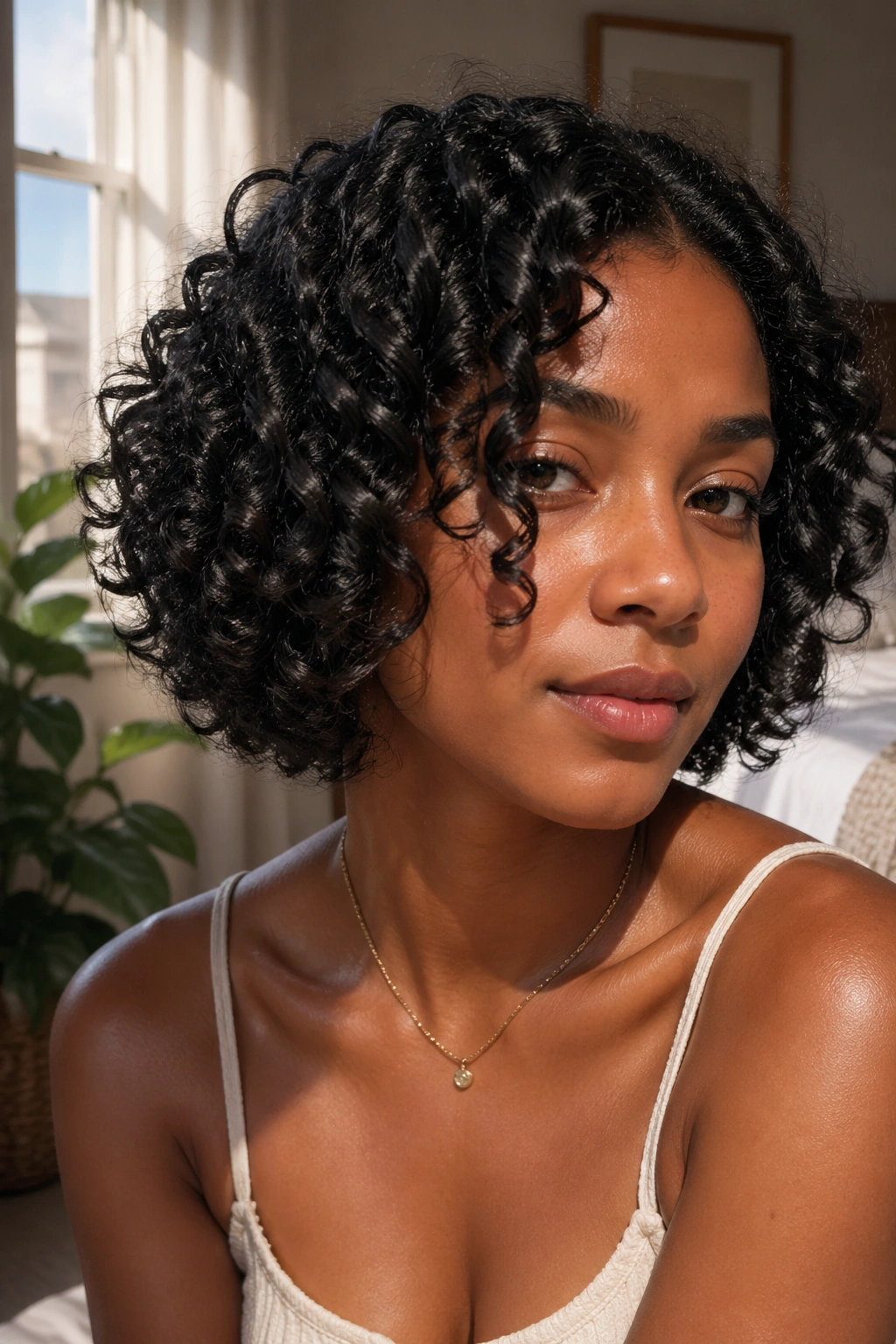
The best haircut in the world won’t stay beautiful without the right aftercare. Once you have your cut, establish a wash day routine that keeps your curls moisturized and defined. Trim every three to four months to maintain the shape. Sleep on a satin pillowcase or with a satin bonnet to protect your curl pattern overnight and reduce friction that causes breakage at the hairline and crown.
If your cut has a lot of layers, your detangling routine matters more than ever. Detangle in small sections, always with conditioner in your hair, always from ends to roots. Layers mean your strands are at different lengths, and aggressive detangling can disrupt the layered shape over time.
What to Tell Your Stylist at Your Next Appointment
Walk in prepared. Tell your stylist your curl type, your porosity (if you know it), how much time you spend styling on a typical day, whether you want to add volume or reduce it, and any areas that are problematic for you — maybe your crown is much denser than your sides, or your nape curls are looser than the rest. The more information your stylist has, the better the cut will be.
And don’t be afraid to bring reference photos — just make sure they’re photos of people with your curl type, not images of a different texture on someone else’s head. A good stylist will look at reference photos as a starting point for conversation, not a blueprint to copy exactly.
Your Curls, Your Cut
There’s a perfect haircut for every curl type, every density, and every lifestyle. It might take a little trial and error to find yours, and it definitely requires finding the right stylist. But once you hit that combination — the right cut for your specific natural curls, maintained by someone who understands curly hair — everything else becomes easier. Your wash day takes less time, your styles come out better, and your hair just works the way it should.
That’s the real power of a great cut.
