



A loose high ponytail is the rare hairstyle that can look done without looking stiff. Pull it too tight and it turns severe; leave it too slack and it starts sliding down by lunch.
That middle ground is where the good versions live.
Soft lift at the crown, a few pieces that move around the face, and ends that still have shape — that is the whole mood. I like these ponytails because they work on clean hair, day-old hair, straight hair, waves, curls, thick strands, fine strands, and they do not demand a perfect blowout first.
Some need a little teasing. Some need a ribbon, a twist, or a scrunchie that won’t leave a hard bend. Start with the simplest shape and move toward the version that fits your hair instead of fighting it.
1. Softly Brushed High Ponytail
A softly brushed high ponytail is the easiest way to get that laid-back look without making the style feel unfinished. The crown sits smooth, but not glued flat, and the tail keeps a little movement instead of hanging like rope.
Why it works
The nice thing here is balance. You get height at the crown, which lifts the face, but the brushed surface keeps the ponytail from looking messy in a random way.
A soft-bristle brush or a boar-bristle brush helps a lot. Smooth the top sections back with your hands first, then do one light brush over the surface so the hair still has a little air in it.
- Place the ponytail at the top third of your head, not right on the crown bone.
- Leave the front hairline slightly loose so it doesn’t look pulled.
- Use a thin elastic, then wrap one small strand around it if you want a cleaner finish.
- Tug the crown up by a few millimeters only. That tiny lift matters.
Best move: keep the sides smooth and let the tail stay a little soft. That’s what keeps it from looking too polished.
2. Face-Framing High Ponytail
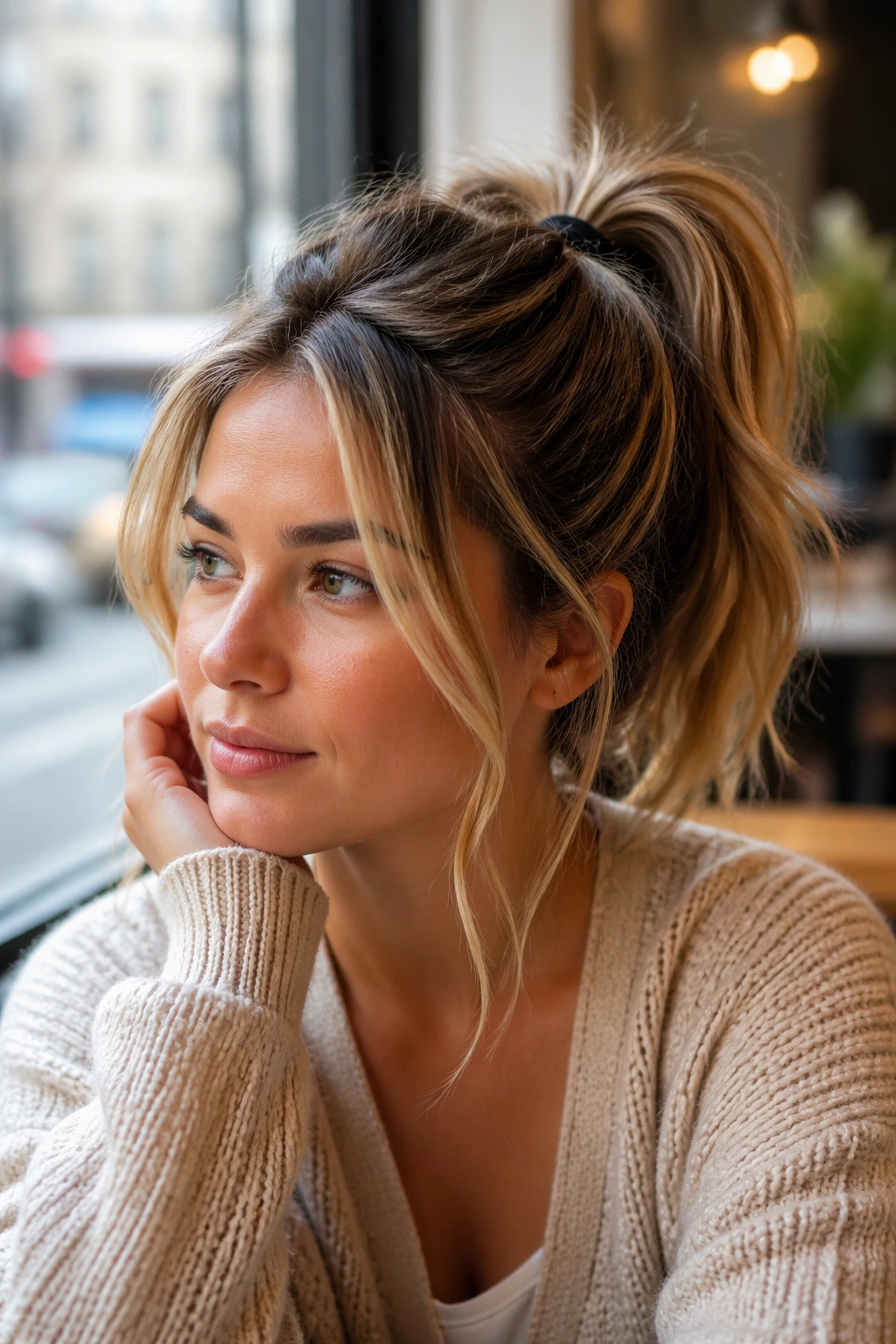
Why do face-framing pieces change a ponytail so much? Because they stop the style from reading like a gym tie-back and make it feel lived-in instead.
A couple of loose strands around the cheekbones or jaw soften the whole shape. If your hair is straight, bend those pieces with a 1-inch curling iron for about 5 seconds each. If your hair already waves, don’t force them into perfect curls. Let them fall with their own bend.
Where to leave the pieces
Keep the front pieces a little longer than you think you need. Short face-framing strands can pop up awkwardly, while longer ones settle into place.
- Leave 1 strand on each side if you want a clean look.
- Leave 2 strands on each side if you want the ponytail to feel more relaxed.
- Keep the pieces narrow, not chunky.
- Set them with a touch of flexible spray, not a stiff shell.
This version works especially well if you wear your hair tucked behind your ears a lot. The loose pieces give you movement without making the whole style fussy.
3. Wrapped-Base High Ponytail
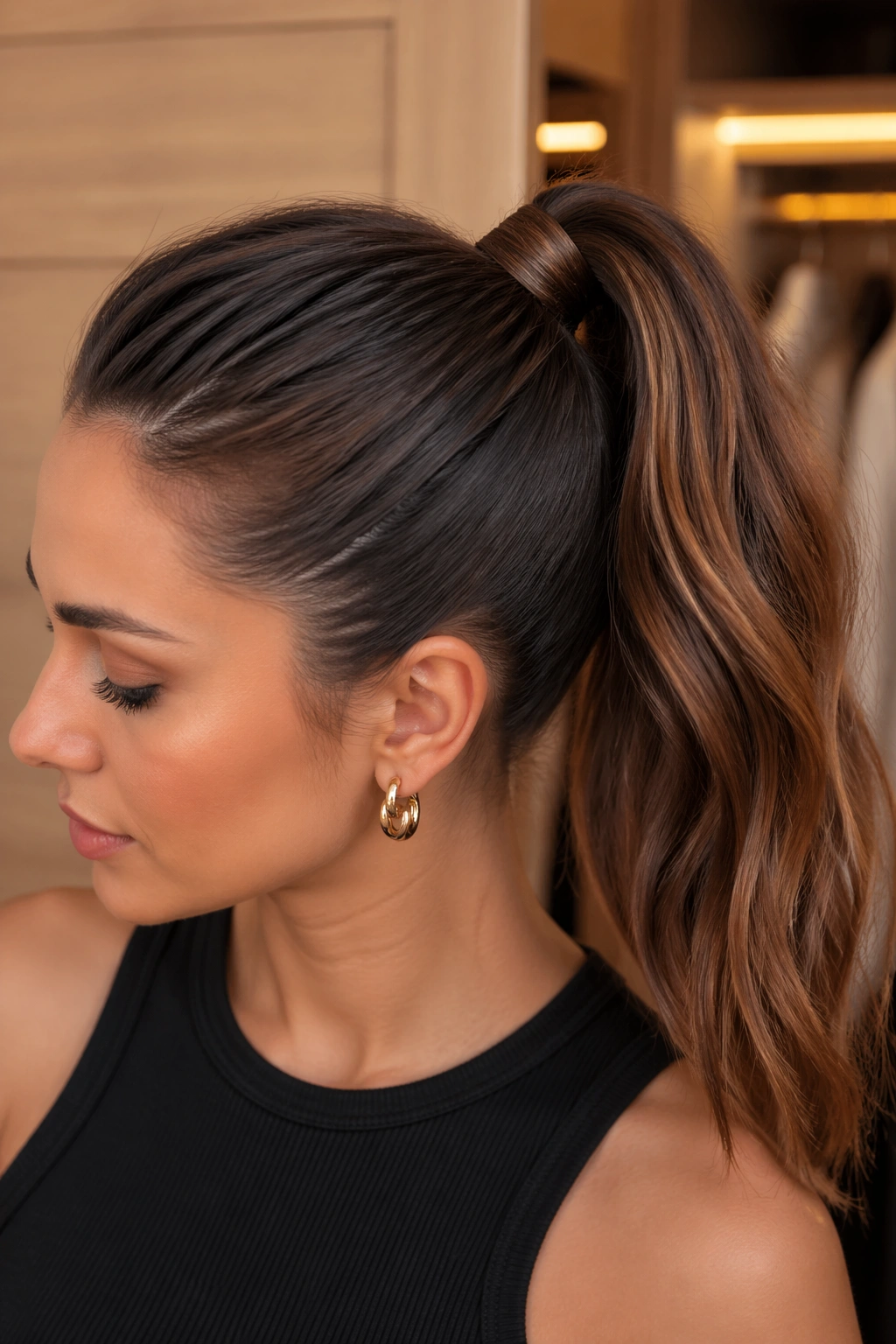
A wrapped base makes a high ponytail look finished in about ten seconds. It is one of those small details that does more than a big styling routine.
The wrapped strand hides the elastic and gives the ponytail a little polish, but the rest of the style can stay loose. That mix is why it still feels casual. It’s neat, not formal.
How to use the wrap
Take a slim strand from underneath the ponytail, about the width of a pencil. Wrap it around the base twice, then pin the end underneath with one bobby pin pointed upward.
If your hair slips easily, mist that strand with a tiny bit of hairspray before wrapping. It grips better and stays flat.
This style is nice for layered hair because it hides the scruffiest part of the ponytail. It also works when you’re growing out color and the ends look a little uneven. The wrap hides all of that noise.
4. High Ponytail With Crown Lift
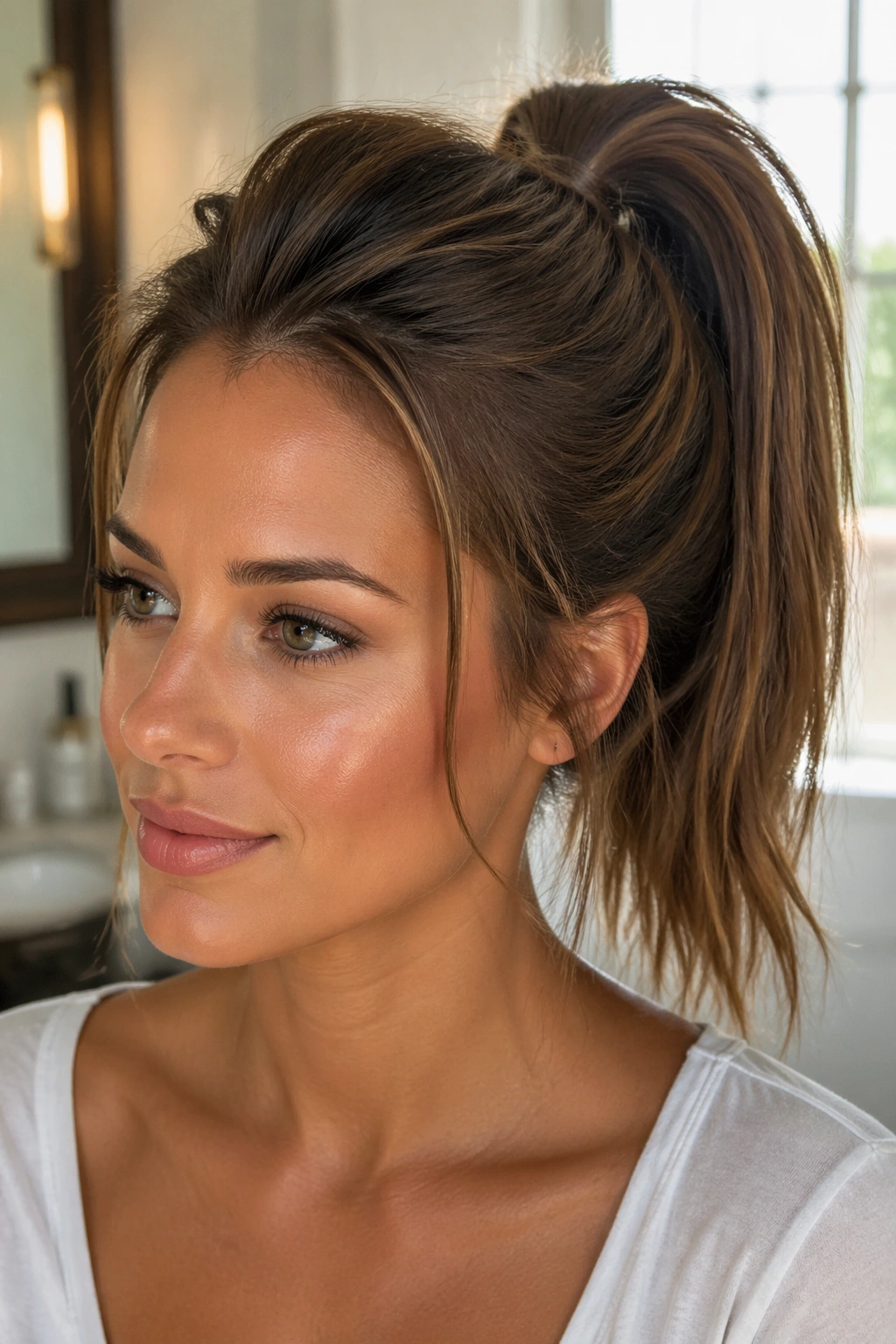
A little crown lift beats a lot of hairspray. Every time.
The goal is not a huge bump. It’s just enough height to keep the top from collapsing into your head. Take two small sections at the top, backcomb the underside with a fine-tooth comb, then smooth only the outer layer so the lift stays hidden.
Teasing without the crunch
Too much backcombing gives you that dry, tangled look that falls apart when you touch it. Two or three gentle swipes under each section is usually enough.
For fine hair, a texture spray at the roots helps more than trying to create drama with a comb. The hair gets a bit of grit, and the ponytail stays put.
If you want the lift to last, pin the base of the ponytail upward with one small bobby pin under the elastic. It gives the style a little shelf to sit on. Simple. Effective.
5. Loose Waves in a High Ponytail
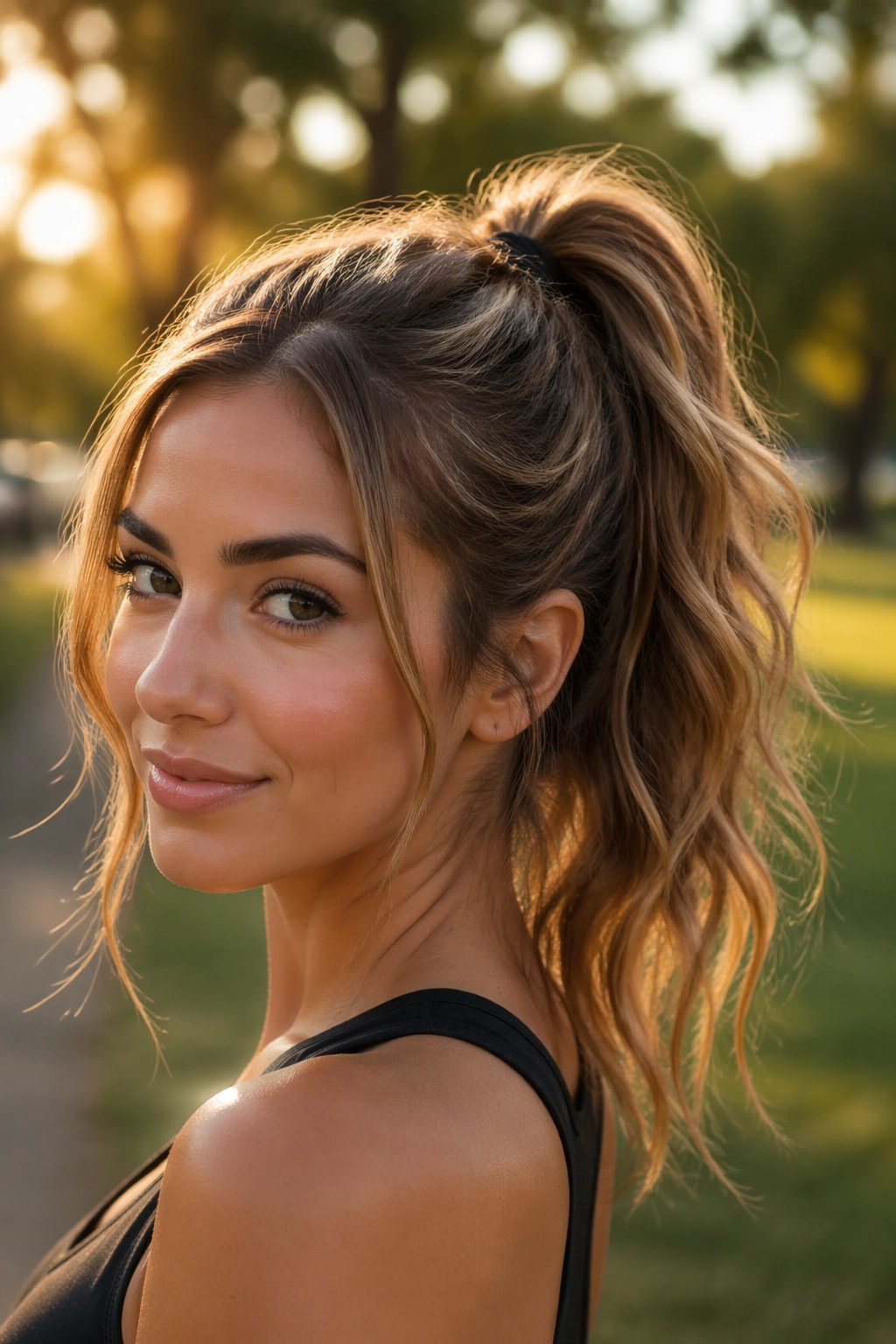
Soft waves in a high ponytail give you the easiest kind of movement. The hair sways when you turn your head, and the whole style looks a little sun-tossed even when you did it in a bathroom mirror ten minutes before leaving.
I like this version best when the waves are uneven on purpose. Perfect curls can make a ponytail feel dressy. Loose bends feel calmer.
Best way to set the wave
Use a 1.25-inch curling wand and curl away from the face, but leave the last inch or so out of the iron. That keeps the ends from looking too done. If your hair is already wavy, twist the ponytail around itself once before tying it off. It gives the tail a softer bend without adding another hot tool.
A light spray of texture mist helps the ends separate a little. Don’t soak them. You want movement, not stiffness.
This is the style I reach for when I want the ponytail to look casual but not flat. It has texture, and texture does most of the work.
6. Straight and Loose High Ponytail
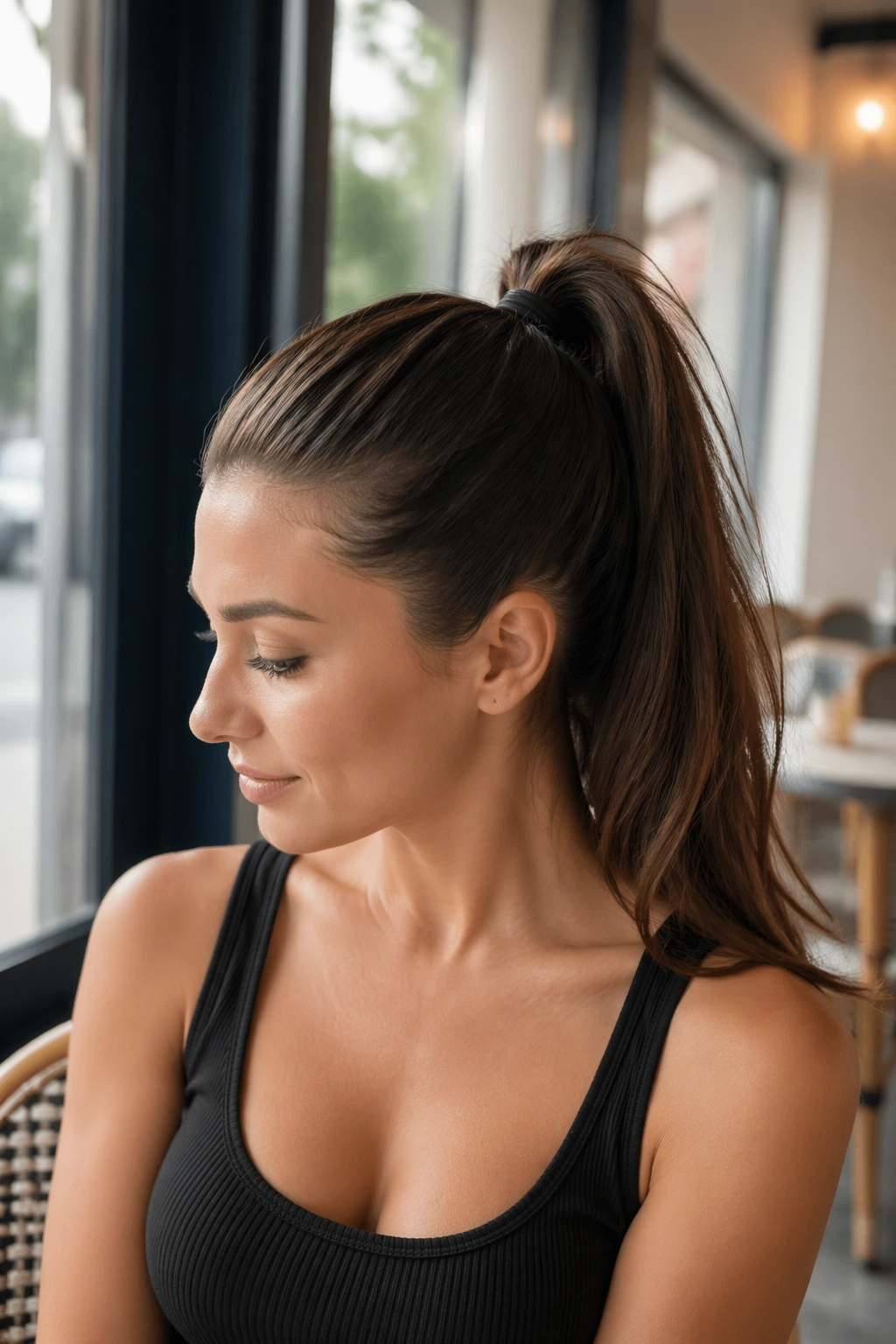
Clean lines. Soft ends. That’s the whole idea here.
A straight loose high ponytail works best when you want the top to feel tidy but the tail to stay relaxed. It’s a nice match for fine hair because the smoother surface can make the ponytail look fuller than a heavily teased version.
Use a flat iron only on the sections that need it. If the tail is already straight enough, leave it alone and bend just the last 2 inches under or out with the iron. A tiny curve keeps the style from feeling severe.
This version also likes shine. A pea-sized amount of serum rubbed between your palms is enough for the lengths. Put it on the ponytail only, not the roots.
If your hair gets frizzy in humidity, this is a safer shape than a fully textured ponytail. The straight top holds its line, and the loose tail still feels soft.
7. Side-Part High Ponytail
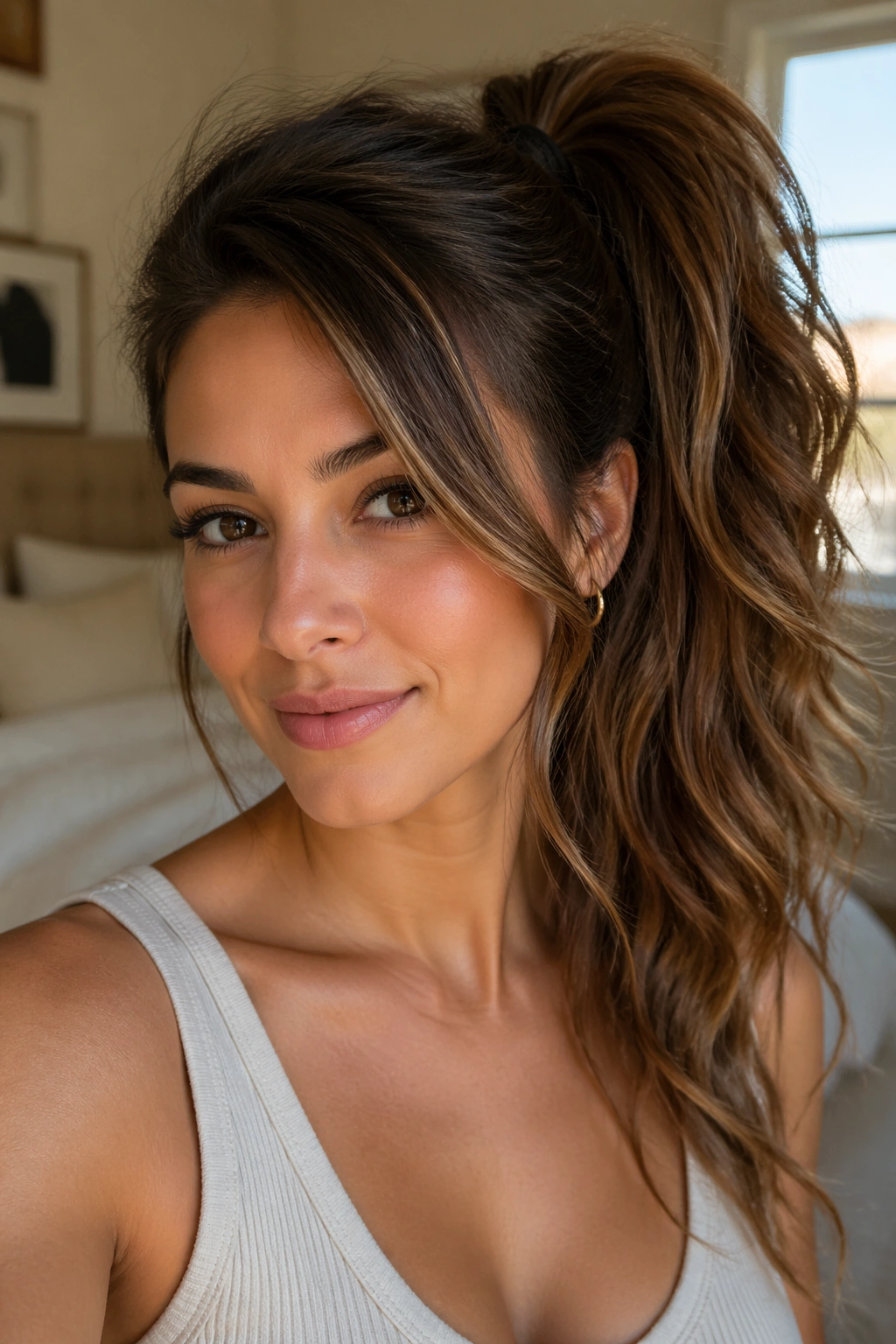
A side part shifts the whole mood of a high ponytail in a quiet way. It adds softness near the forehead and gives the style a little asymmetry, which helps when you don’t want the center of your face exposed.
That tiny shift can make a big difference on round faces, square faces, and anyone with a strong cowlick at the front. The part gives the hair a place to fall naturally instead of fighting gravity.
Who it flatters most
- People who want a softer hairline.
- Anyone with one side that tends to collapse flat.
- Hair with medium to long layers.
- Thick hair that needs a little side-to-side balance.
Keep the heavier side of the part slightly fuller and tuck the lighter side back loosely. Don’t force both sides to behave the same way. The charm is in the unevenness.
A high ponytail with a side part feels casual without slipping into sloppy. That’s a good place to be.
8. Center-Part High Ponytail
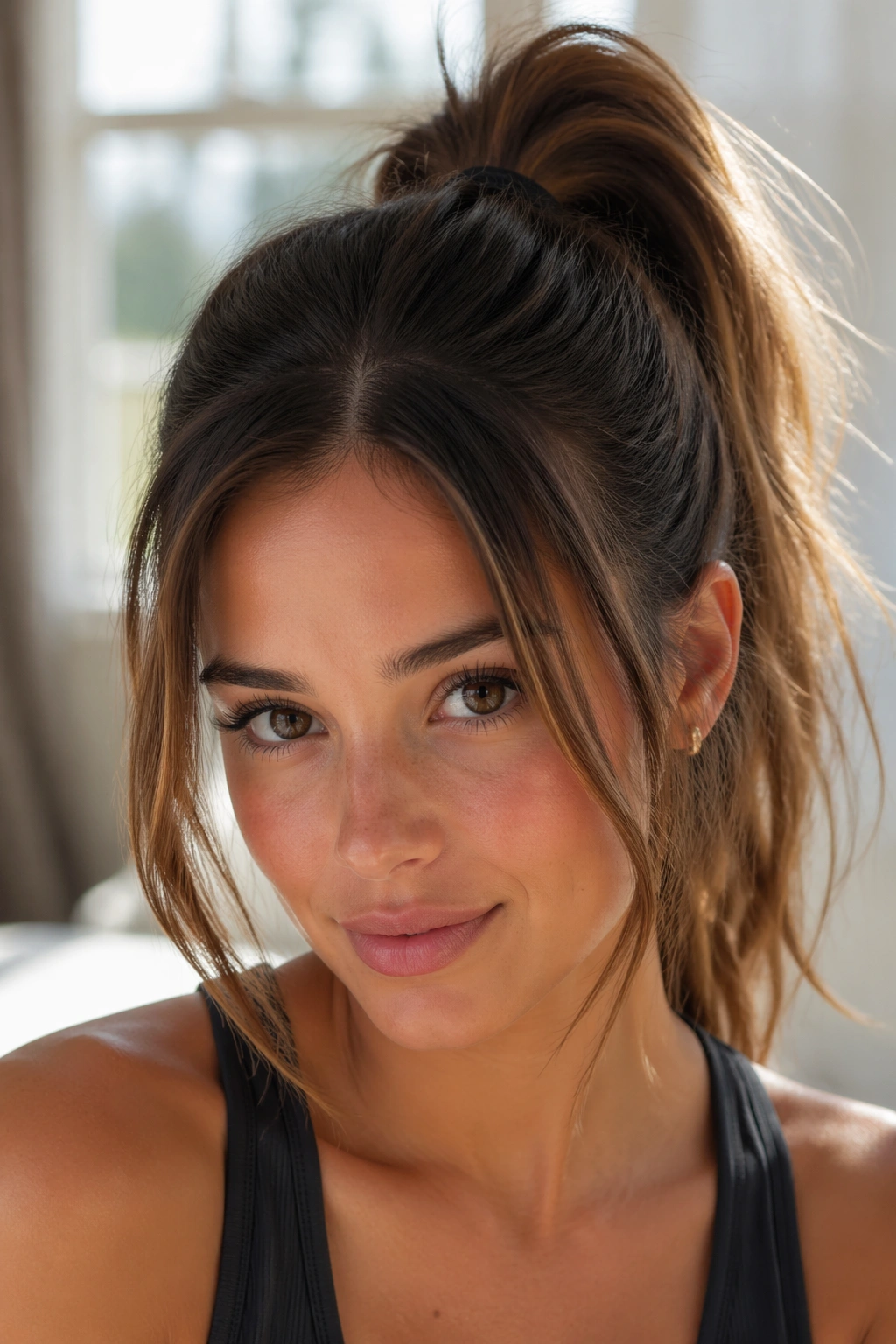
I keep coming back to this one for days when I want the ponytail to look a little cleaner but still low-key.
A center part gives the style structure right away. It makes the face open and a bit longer, and it pairs nicely with a loose ponytail that sits high but not tight. Curtain bangs work especially well here, though you don’t need them.
Keep the part crisp, then loosen the crown slightly with your fingertips after the ponytail is tied. That little break in the top layer takes away the helmet feel.
The front pieces should fall in a way that looks accidental, even if you nudged them into place. That is the real trick. A center part can look strict fast, so the ponytail itself needs to stay soft. Let one temple section sit a little lower than the other if that helps.
9. Bubble High Ponytail
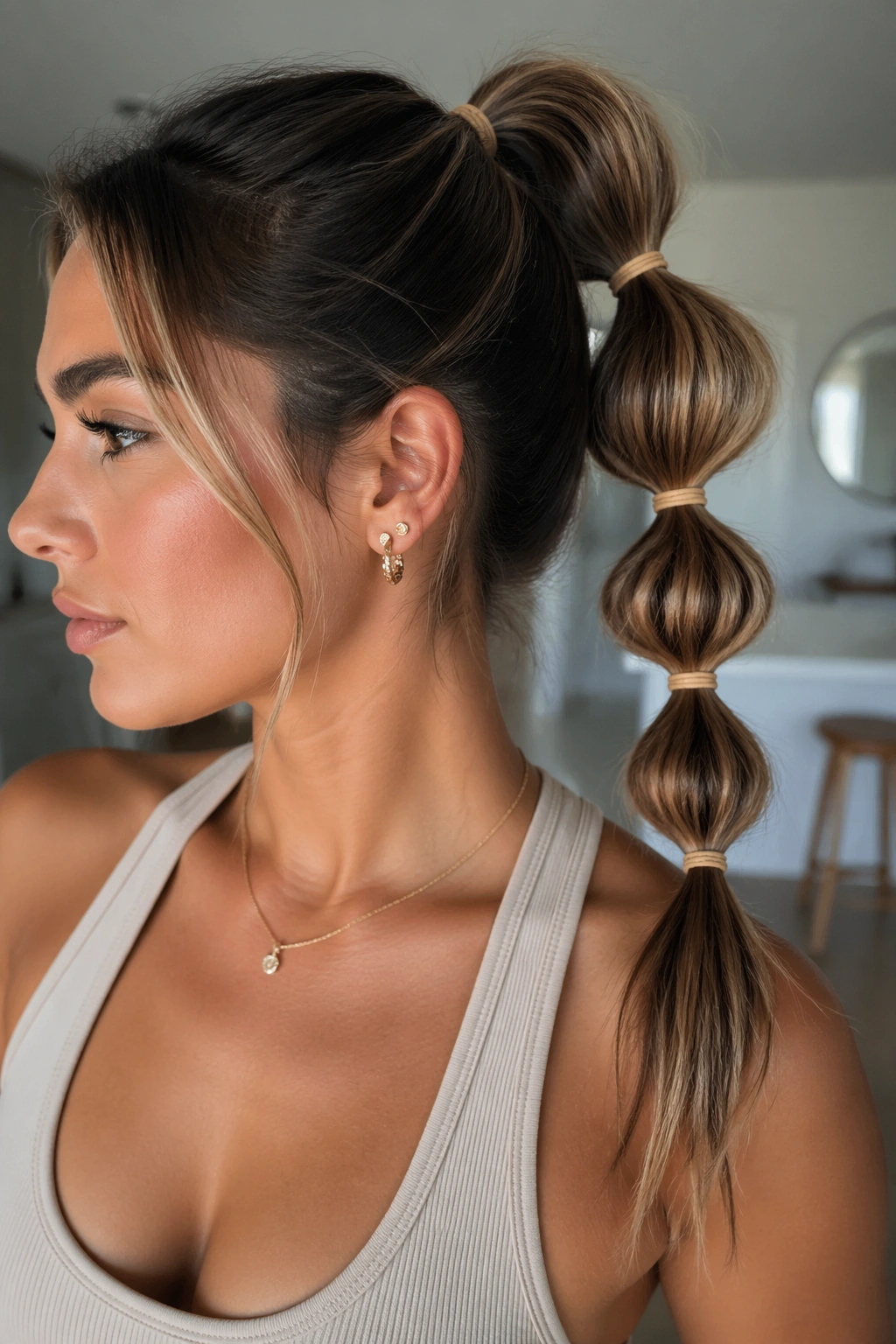
A bubble high ponytail looks more styled than it is. That’s the appeal.
You make one ponytail, then add small elastics every 2 to 3 inches down the tail. Gently pull each section between the ties so it rounds out into a soft bubble. The sections don’t have to be perfect. Slightly uneven bubbles often look better.
Spacing the bubbles
- Use clear elastics if you want them to disappear.
- Use small matte bands if you want the bubbles to read as part of the style.
- Leave about 2 fingers of space between each tie.
- Pull each bubble out evenly, not just in the middle.
This look works best on medium to long hair because there’s enough length for the bubbles to show. It can feel playful, but it still has that laid-back shape if you don’t over-tighten the sections.
A bubble ponytail also hides second-day texture nicely. The little gaps and puffs make the style feel intentional, even when your hair is being a little stubborn.
10. Braided Detail High Ponytail
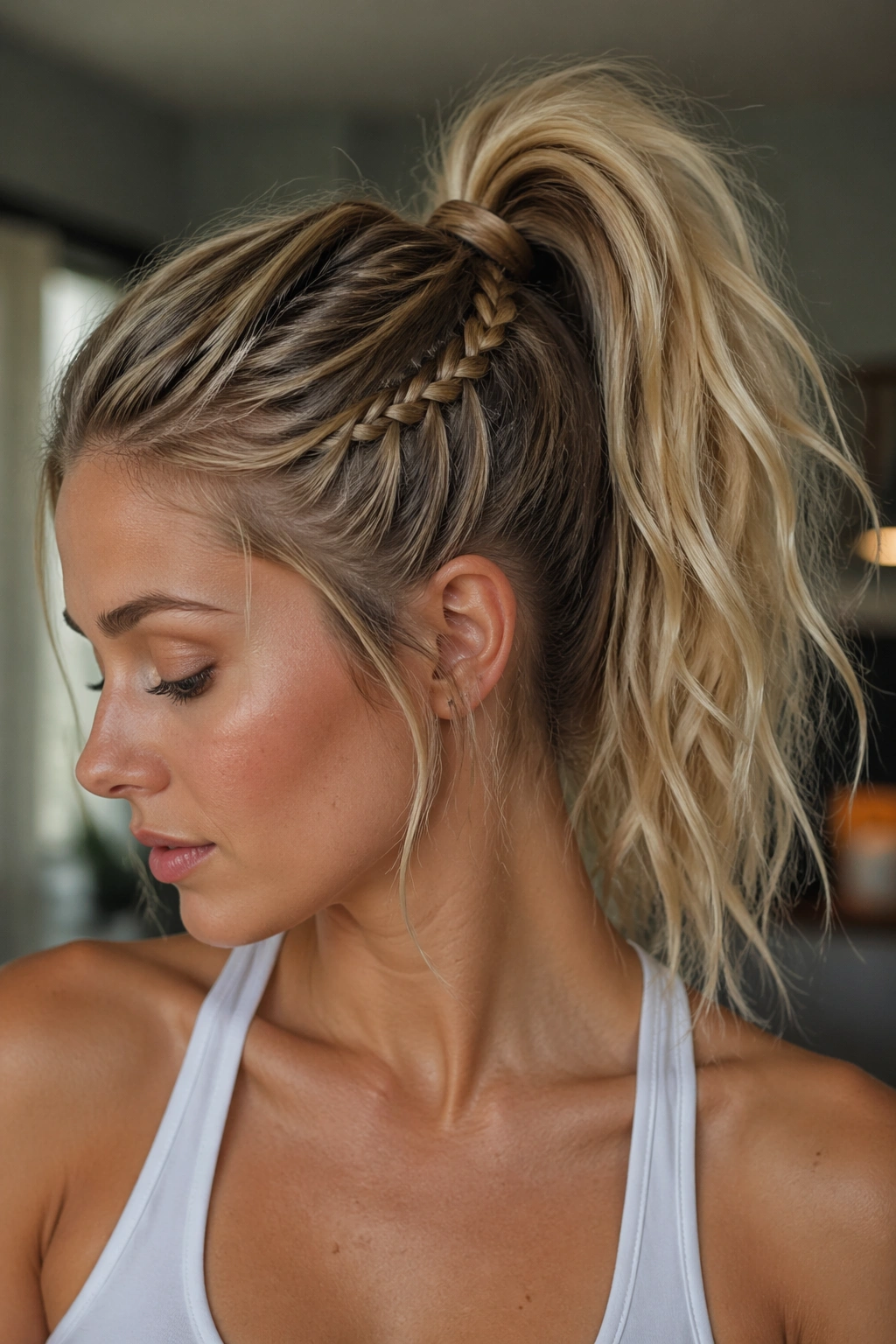
Unlike a full braid, a small braided detail keeps the ponytail casual. You get structure near the front, but the rest of the hair stays loose and easy.
A thin braid along one temple or a small braid feeding into the base works well when you want something extra without making the style feel formal. It also helps layered hair stay in place.
The braid placement
Braid a section about the width of your index finger, starting near the hairline and stopping once it reaches the ponytail base. Secure it with the ponytail itself so the braid disappears into the style.
If your hair is slippery, braid the strand before you smooth the rest back. The braid gives you a grip point, which keeps the front from sliding forward later.
This is the version I like for weekends, concerts, and casual dinners. It has enough detail to look considered, but it still feels relaxed. A single braid is usually enough. More than that and the ponytail starts losing its easy mood.
11. Twisted Sides High Ponytail
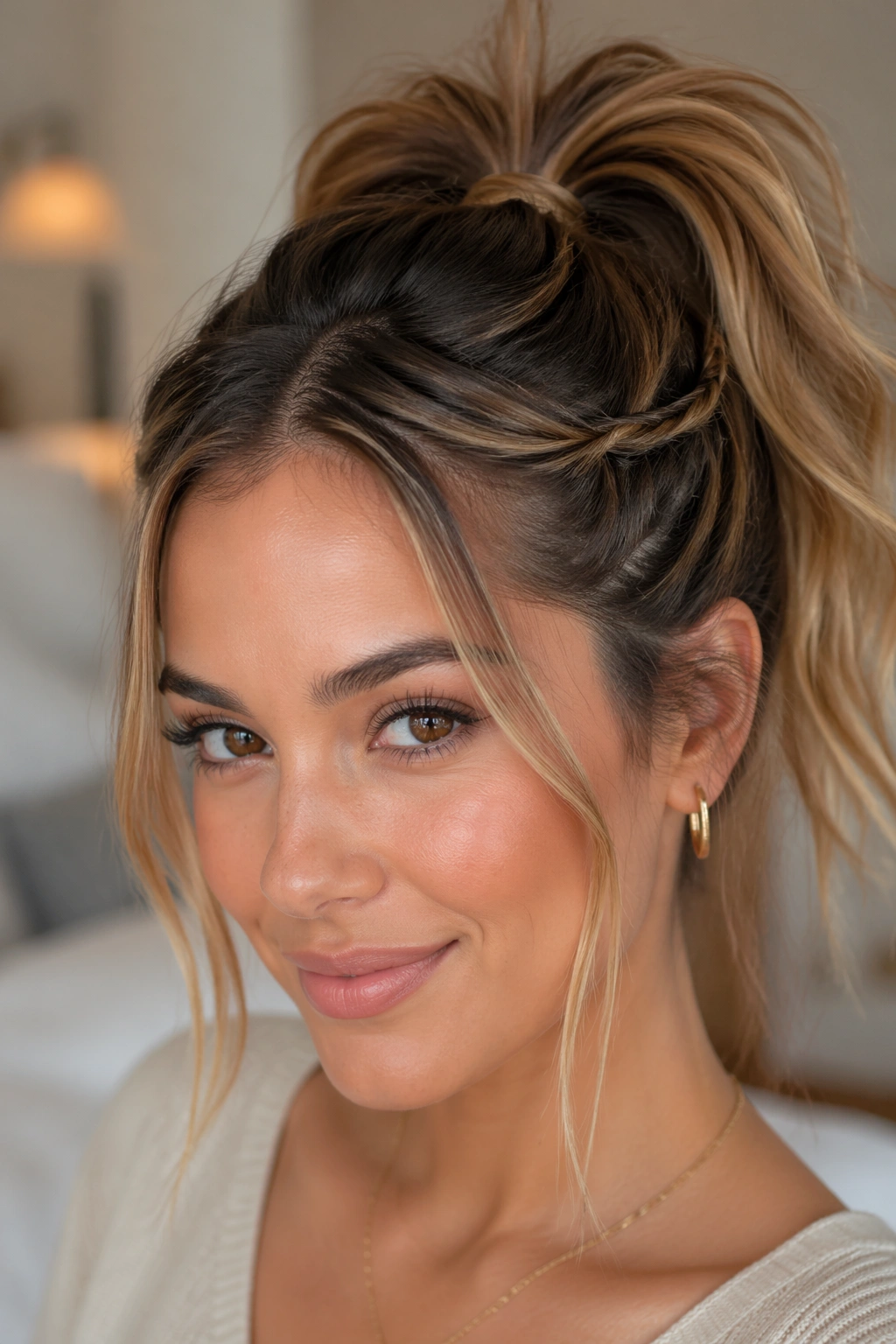
When front layers refuse to stay put, twists solve the problem without turning the whole style into a pin job.
Take a small section from each temple, twist it back toward the ponytail, and secure it into the base. The twist keeps the hair away from your face, but it still looks softer than a tight pull-back.
A quick way to keep the twist neat
- Start with dry, lightly textured hair.
- Twist each side loosely, not like a rope.
- Pin the ends underneath the ponytail base.
- Leave a few shorter pieces free near the ears if they keep escaping.
This works especially well on hair that is growing out around the front. Instead of fighting the shorter layers, you fold them into the style. The ponytail gets a relaxed shape, and you don’t spend all morning tucking pieces back in.
It’s one of the most forgiving loose high ponytails on the list. Which is probably why I like it so much.
12. Curly High Ponytail
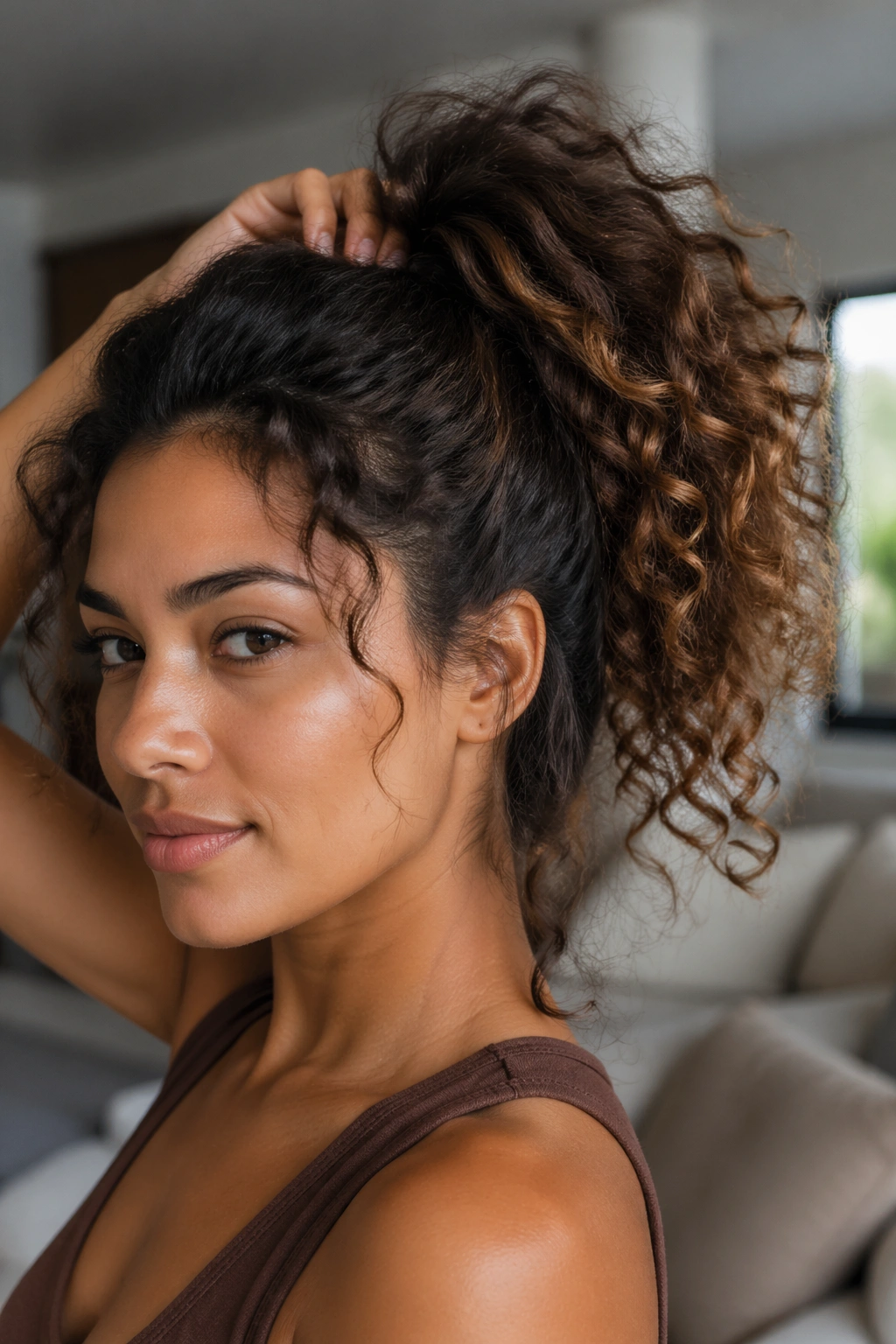
Curly hair does not need to be flattened to look good in a high ponytail. That’s the whole point here.
Gather the hair with your fingers instead of dragging a brush through it. You want the curls to keep their shape, not get stretched into a puff of frizz. A little gel at the hairline can help if you like a neater edge, but the tail itself should stay springy.
If your curls are tight, place the ponytail higher than you think. The lift keeps the curls visible and stops the style from sinking. If your curls are looser, let a few pieces fall around the face so the shape doesn’t look too crisp.
The nice thing about this version is movement. Every curl has a little bounce, and that makes the ponytail feel alive. It’s casual without looking unfinished, which is a tricky balance for curly hair and one worth getting right.
13. Coily Puff High Ponytail
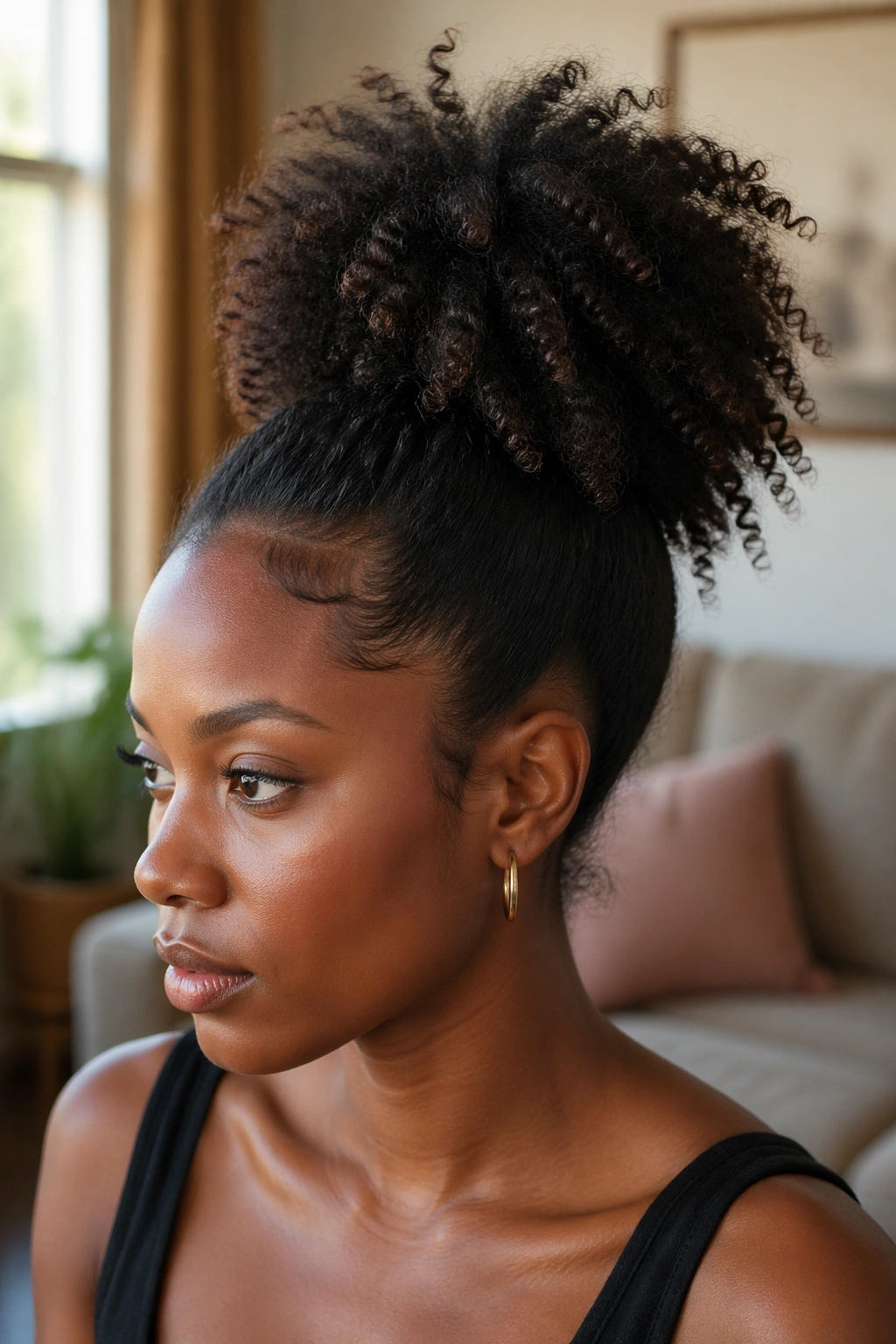
A coily puff at the top of the head has a kind of easy confidence that a brushed style never quite reaches. It is full, soft, and completely unafraid of texture.
The base should sit high enough to let the coils fan out. Use a wide elastic or a snag-free band so the root area isn’t getting crushed. If the edges need smoothing, do it lightly. The puff should still look like hair, not a sculpture.
Keeping the puff round
- Stretch the ponytail upward before tying it off.
- Place the elastic at the highest comfortable point.
- Fluff the puff with your hands after securing it.
- Skip heavy oils near the roots; they weigh the shape down.
This style works beautifully on hair that wants volume. It also handles humidity better than styles that rely on a lot of sleekness. A puff has room to breathe, which makes it feel laid back in the best way.
14. Pinned-Back Sides High Ponytail
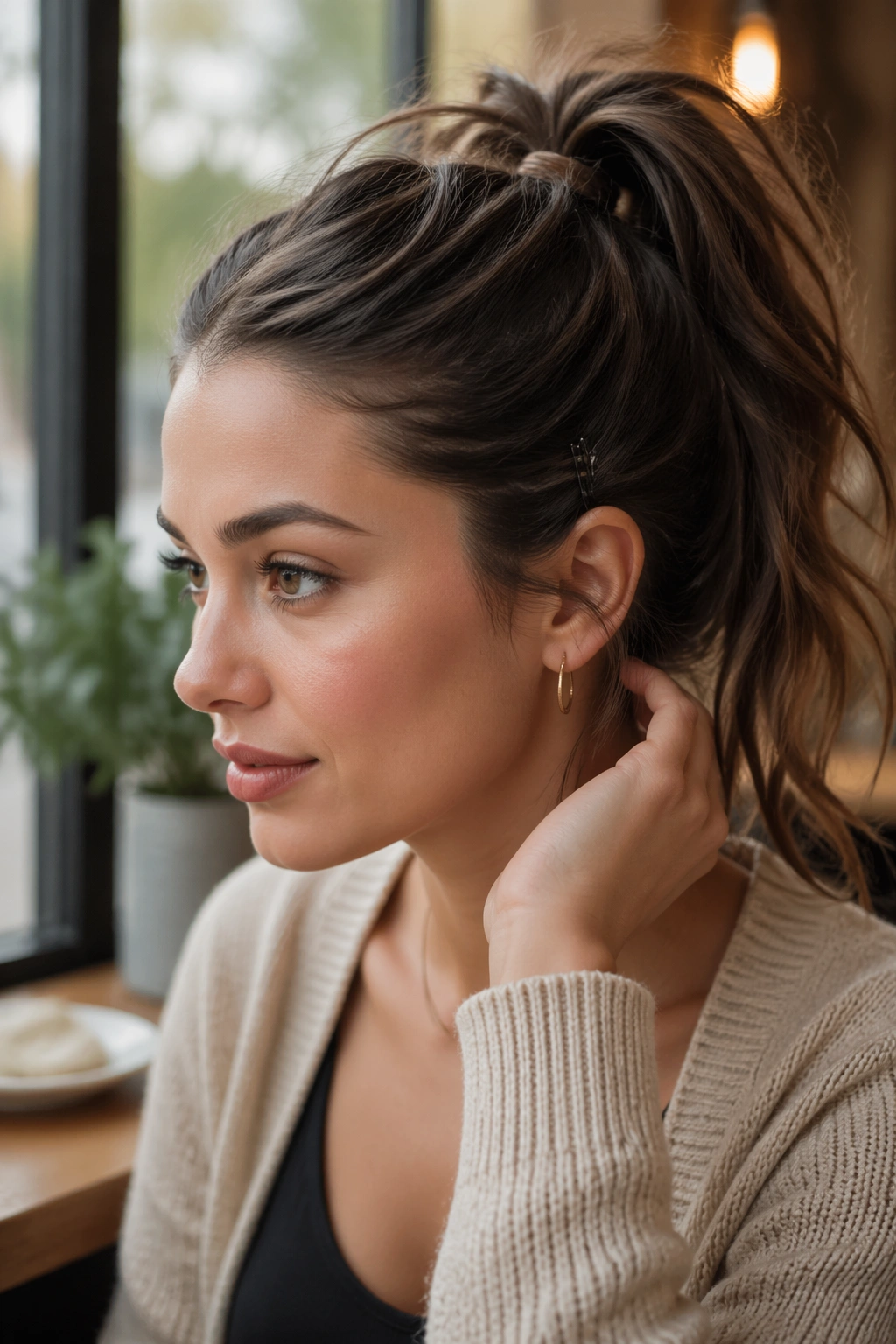
A few bobby pins can do more than another pass of hairspray. That’s the whole reason this version earns a place here.
Instead of slicking the sides back hard, tuck them behind the ears or fold them slightly toward the ponytail base, then pin them in place. The result is softer than a fully smooth style and far easier to wear all day.
This is a good fix for grow-out bangs, awkward cheek-length layers, and those little flyaways that refuse to listen. Cross the pins in an X if the sections are heavy; it holds better than a single pin.
The ponytail itself can stay loose and high, which keeps the mood casual. The pinned sides just tidy the edges. It feels almost like you meant for the style to fall this way, which is half the battle with loose hair.
15. Ribbon-Tied High Ponytail
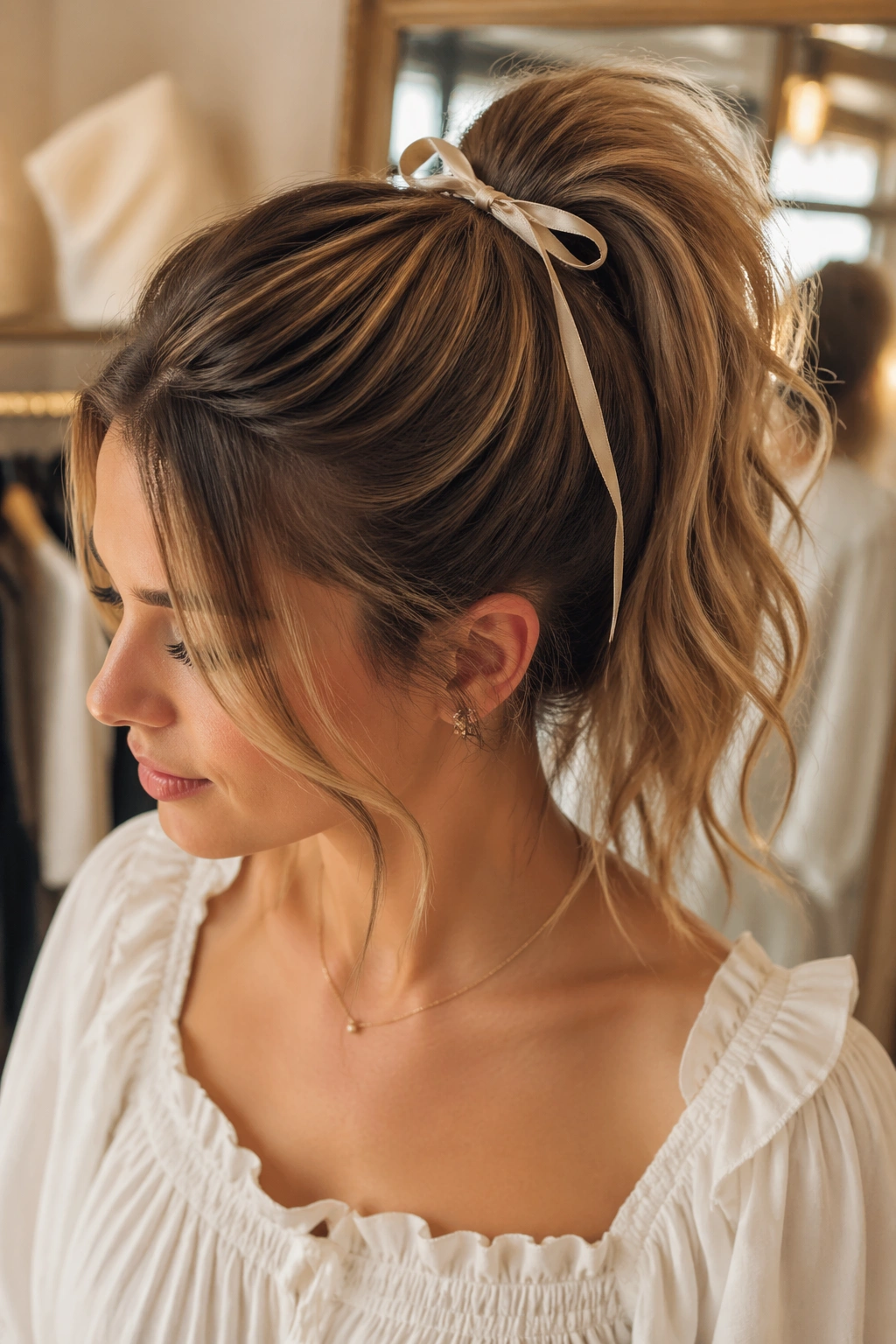
Why swap the elastic for ribbon? Because ribbon takes the sharpness out of the ponytail right away.
A narrow ribbon, tied over a soft elastic, adds a gentle finish and keeps the style from reading too sporty. Satin feels smoother, grosgrain holds a bow shape better, and velvet gives the whole thing a softer, colder-weather feel.
What ribbon to pick
- Use 1/2-inch ribbon for a minimal look.
- Use 1-inch ribbon if you want the bow to show.
- Pick a fabric that won’t fray too fast at the edges.
- Keep the bow small if the ponytail is already full.
This style pairs especially well with wavy or curled hair because the ribbon echoes the movement in the tail. If the hair is straight, the ribbon adds the softness the texture doesn’t give you on its own.
It’s a small change, but it alters the mood fast. The ponytail still feels easy; it just stops looking plain.
16. Scrunchie High Ponytail
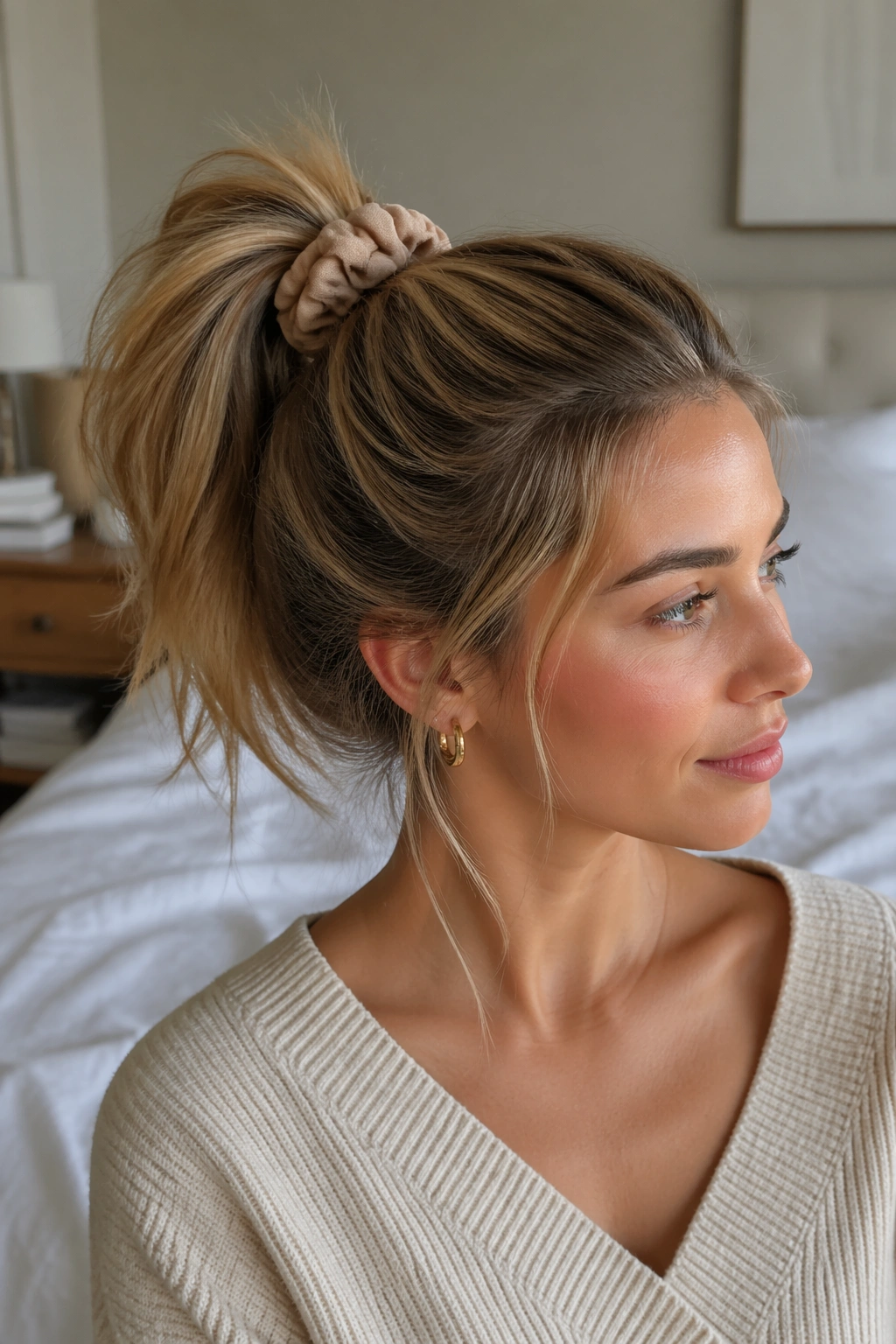
A scrunchie can save a tired ponytail faster than most people admit.
If you’re working with second-day hair, a scrunchie gives you grip without the hard line of a thin elastic. It also leaves a softer bend at the base, which helps the ponytail feel relaxed instead of tightly cinched.
I like medium-size scrunchies for this, not the giant ones that swallow the whole style. One or two wraps is usually enough. Too many and the base starts looking bulky.
Velvet, silk, and matte cotton all work, but the best choice depends on the hair itself. Slippery hair needs more grip. Thick hair needs a stronger band hidden under the scrunchie. Fine hair benefits from something light that does not pull.
This is the ponytail version of a good shirt you can throw on and still look like you meant it.
17. Flipped-End High Ponytail
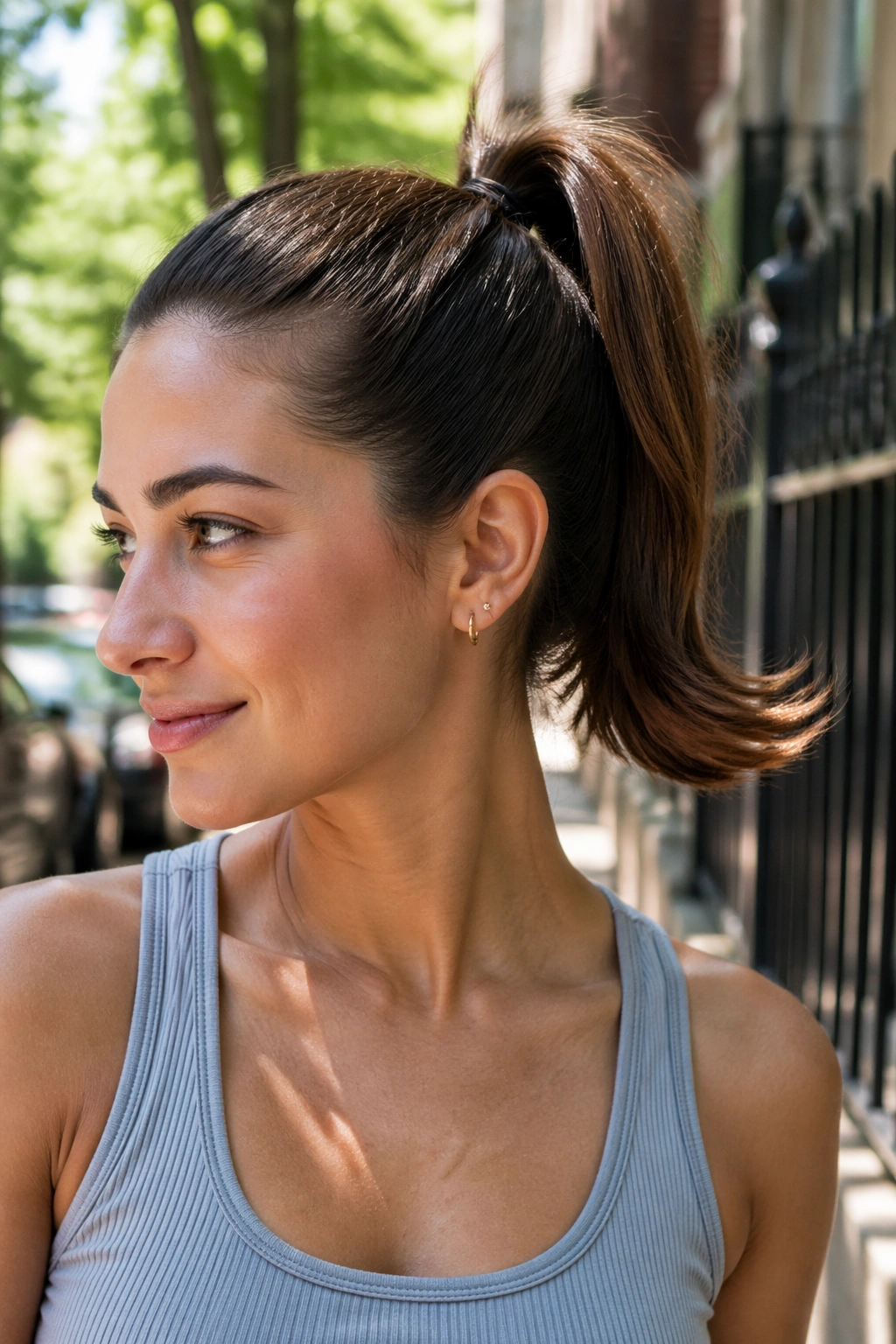
The small flip at the ends changes everything.
Instead of leaving the tail to hang straight, bend the last 2 inches outward with a flat iron or a round brush. That tiny turn keeps the ponytail from feeling too serious, and it adds movement even when the rest of the style is plain.
Unlike a curled ponytail, this one stays clean. The flip is subtle. You notice it when the hair moves, which is exactly why it works.
This style suits shoulder-length hair through longer lengths, especially when the tail is smooth enough to hold a bend. If your hair won’t keep the flip, set the ends with a bit of heat and let them cool in the curved shape before touching them.
A flipped tail can feel playful, but it still reads neat. That balance makes it one of the easiest laid-back ponytail options to wear anywhere.
18. Slightly Teased High Ponytail
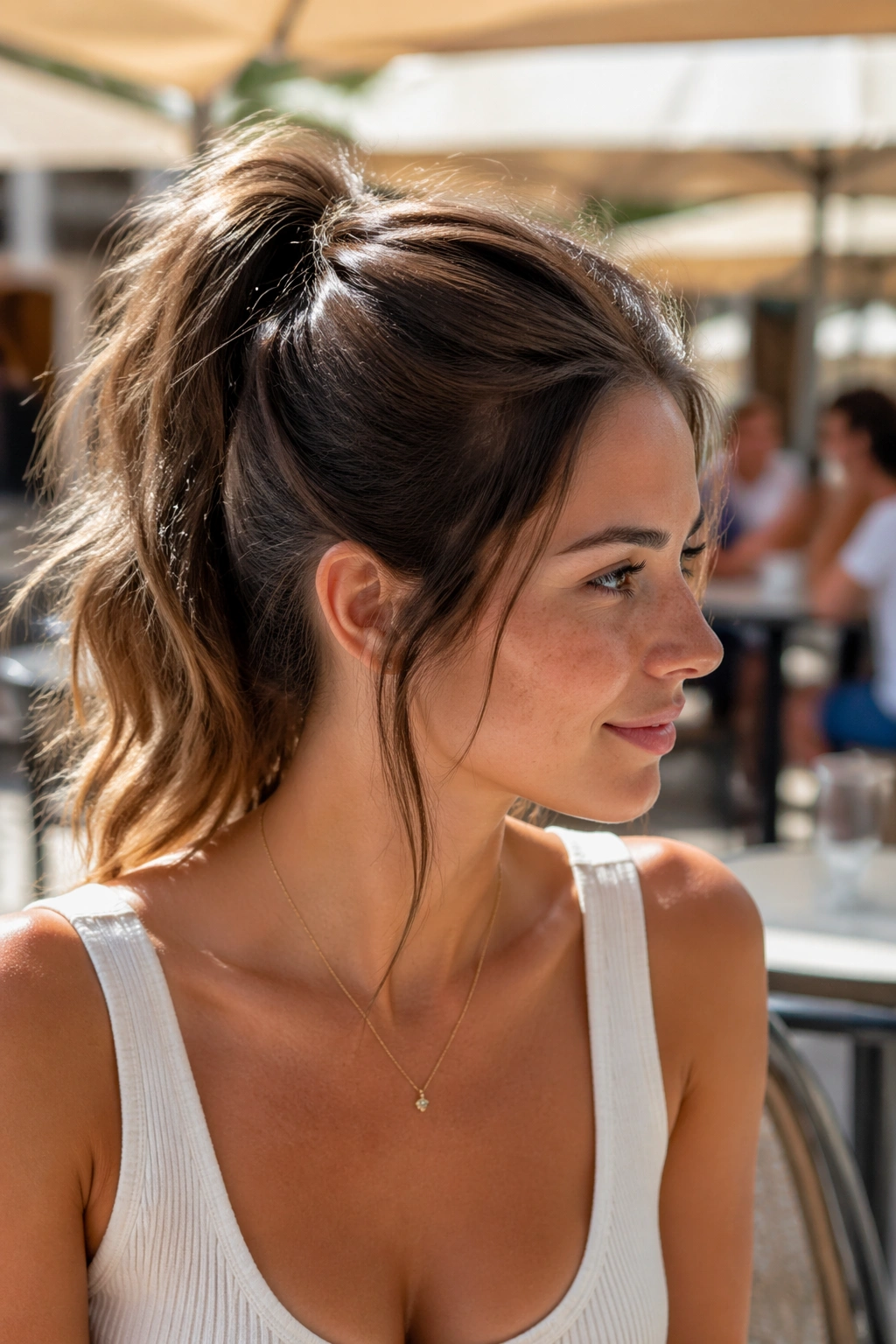
Do you need a lot of teasing for volume? No. Not here.
A slightly teased high ponytail uses just enough lift to keep fine or flat hair from collapsing, and that’s all it needs. Lift the top section, tease underneath with 2 or 3 gentle strokes, then smooth the surface so the teasing stays hidden.
How much teasing is enough
- Stop once the crown has a small cushion.
- Don’t tease the very front hairline.
- Use texture spray before you backcomb if your hair is silky.
- Smooth the top layer with the flat side of a brush, not a hard stroke.
This style is for people who want volume without a big bouffant. It gives the ponytail shape, and shape matters more than size. A little lift reads as effortless. Too much reads as a costume.
I’ve always liked this one on fine hair because it makes the ponytail look fuller without asking you to change the rest of your routine.
19. Second-Day Hair High Ponytail
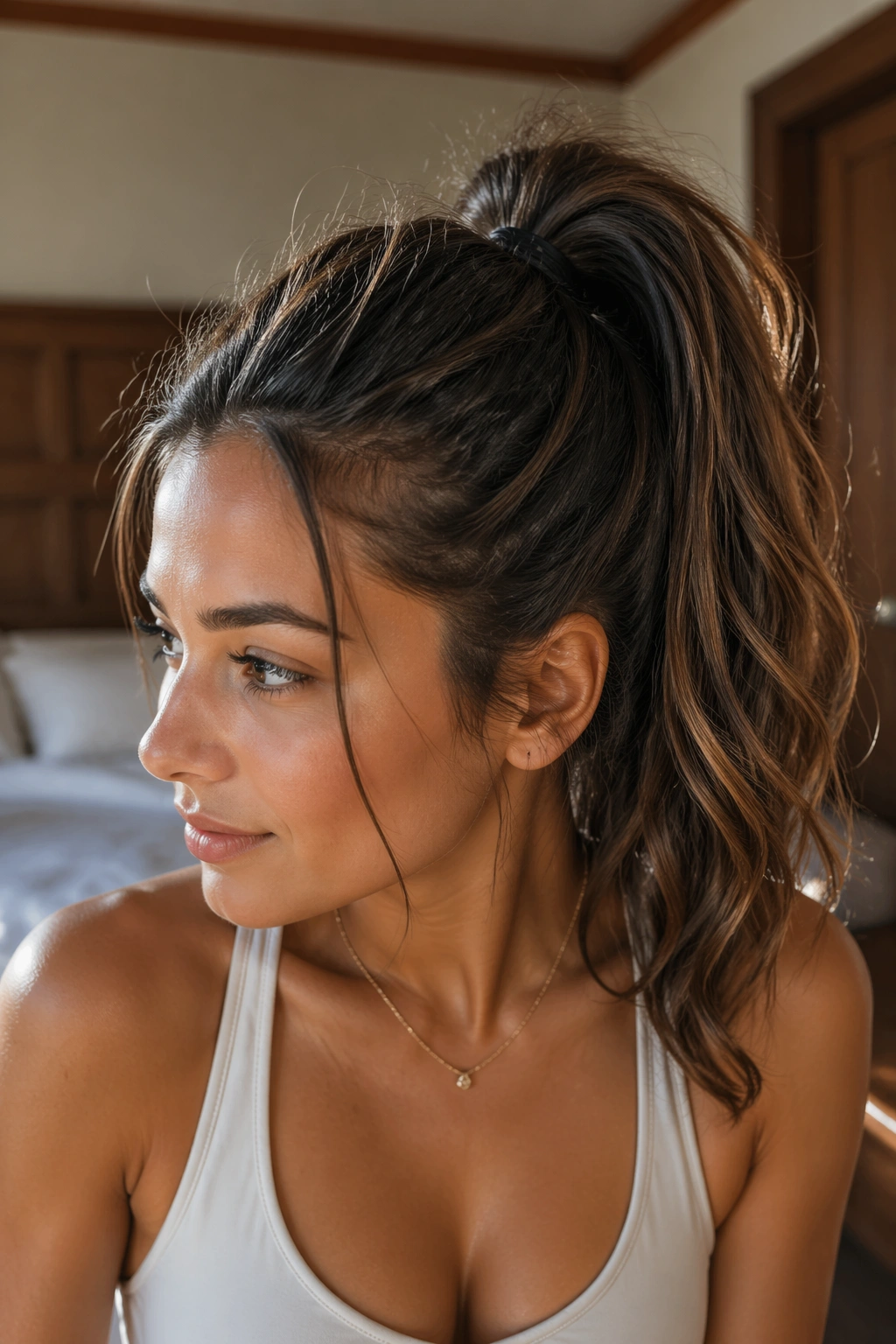
Day-old hair usually gives you a better ponytail than squeaky-clean hair. That’s not a myth; it’s just how grip works.
Freshly washed hair can slide around, especially if it’s fine or very soft. Second-day hair has a little bend, a little grit, and a little memory, which makes the ponytail easier to shape. A puff of dry shampoo at the roots helps if the hair looks flat near the scalp.
Use your fingers first, then a brush only where you need it. If you brush every section into submission, you lose the texture that makes the style work. Sometimes a small amount of imperfection is the point.
This version is made for busy mornings, post-gym plans, and those days when your hair is not in the mood to be polite. It still looks intentional, which is the nice surprise.
20. Air-Dried High Ponytail
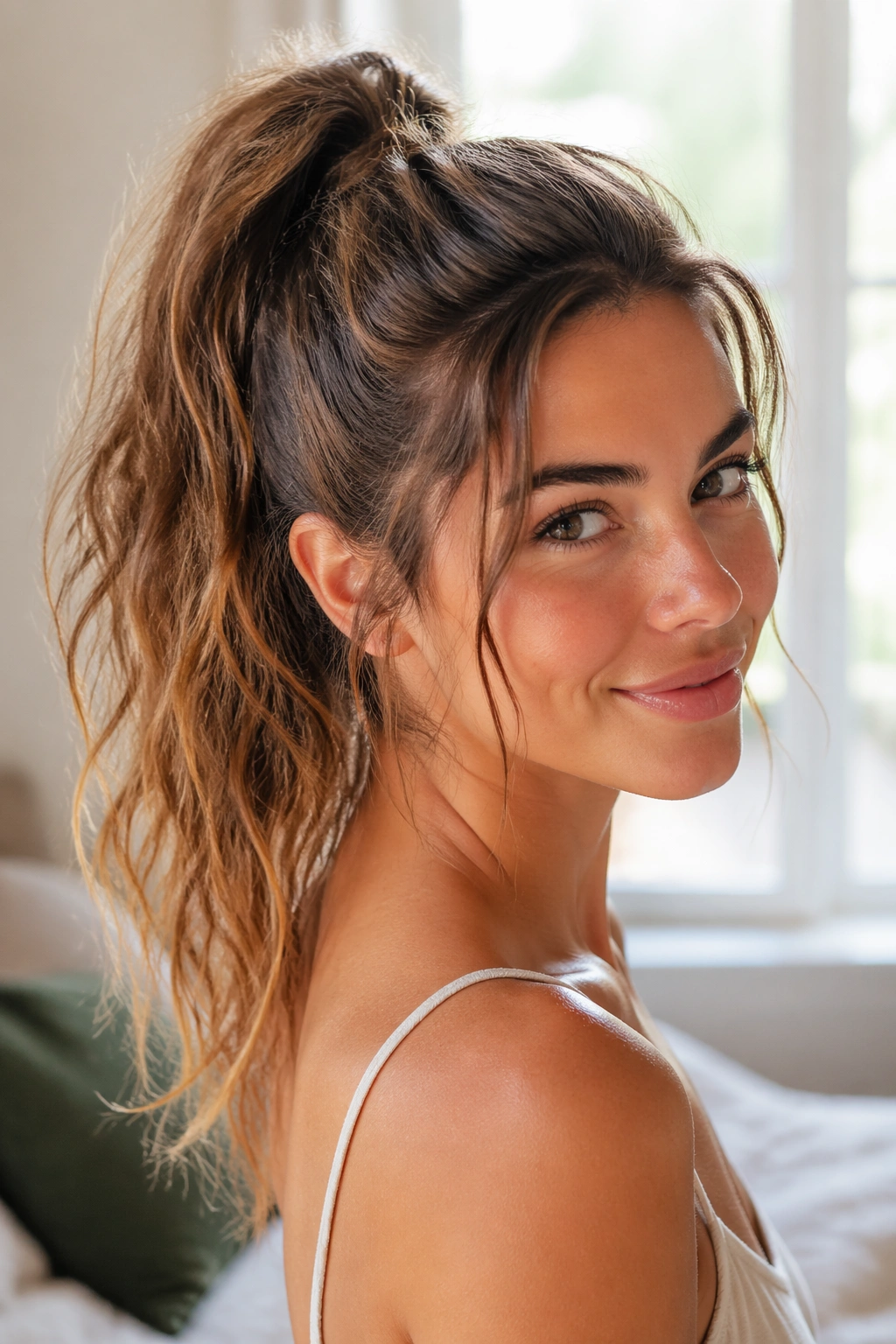
Can air-dried hair look neat in a high ponytail? Absolutely, if you let the texture stay part of the style.
Air-dried waves and bends give the ponytail a natural softness that heat-styled hair sometimes has to fake. Smooth only the top inch or two with your palms, then pull the rest back and let the lengths keep their shape.
Best products for it
- A light mousse if your hair needs root support.
- A cream if your waves need a little control.
- A drop of serum on the tail if the ends puff out too much.
- A flexible spray if you want the style to hold without getting hard.
The key is not overworking the hair once it dries. If you keep brushing and re-brushing, you flatten the very texture that makes the ponytail interesting. Air-dried hair likes a gentle hand.
This one feels easy in a real way, not a fake-minimalist way. There’s a difference.
21. Sleek Root, Loose Tail High Ponytail
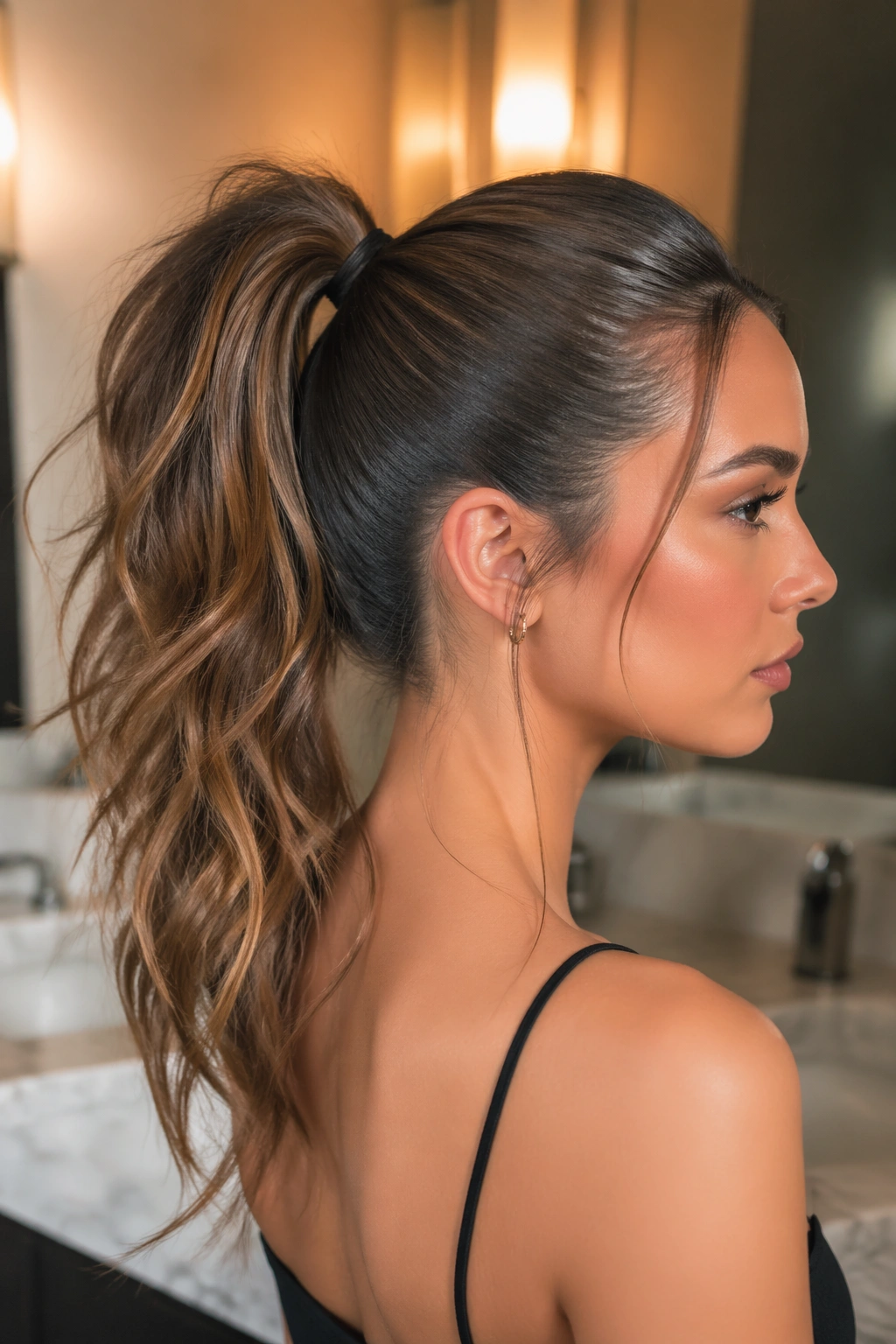
The contrast is what makes this style work. The root area stays smooth, and the tail stays soft.
Use a small amount of gel, cream, or styling balm on the first 1 to 2 inches near the scalp. Keep it off the lengths. Then pull the ponytail high and leave the tail alone so it can move. That split in texture keeps the style from looking too stiff.
If your hair is frizzy at the crown, use a toothbrush or small edge brush to press down the flyaways around the hairline. Don’t chase perfection. You only need the top to look controlled.
This version works on straight hair, wavy hair, and even curls if you want a cleaner root with a softer tail. It’s one of the few ponytail looks that can move from casual to a little more dressed up without changing the basic shape.
22. Double-Tied High Ponytail
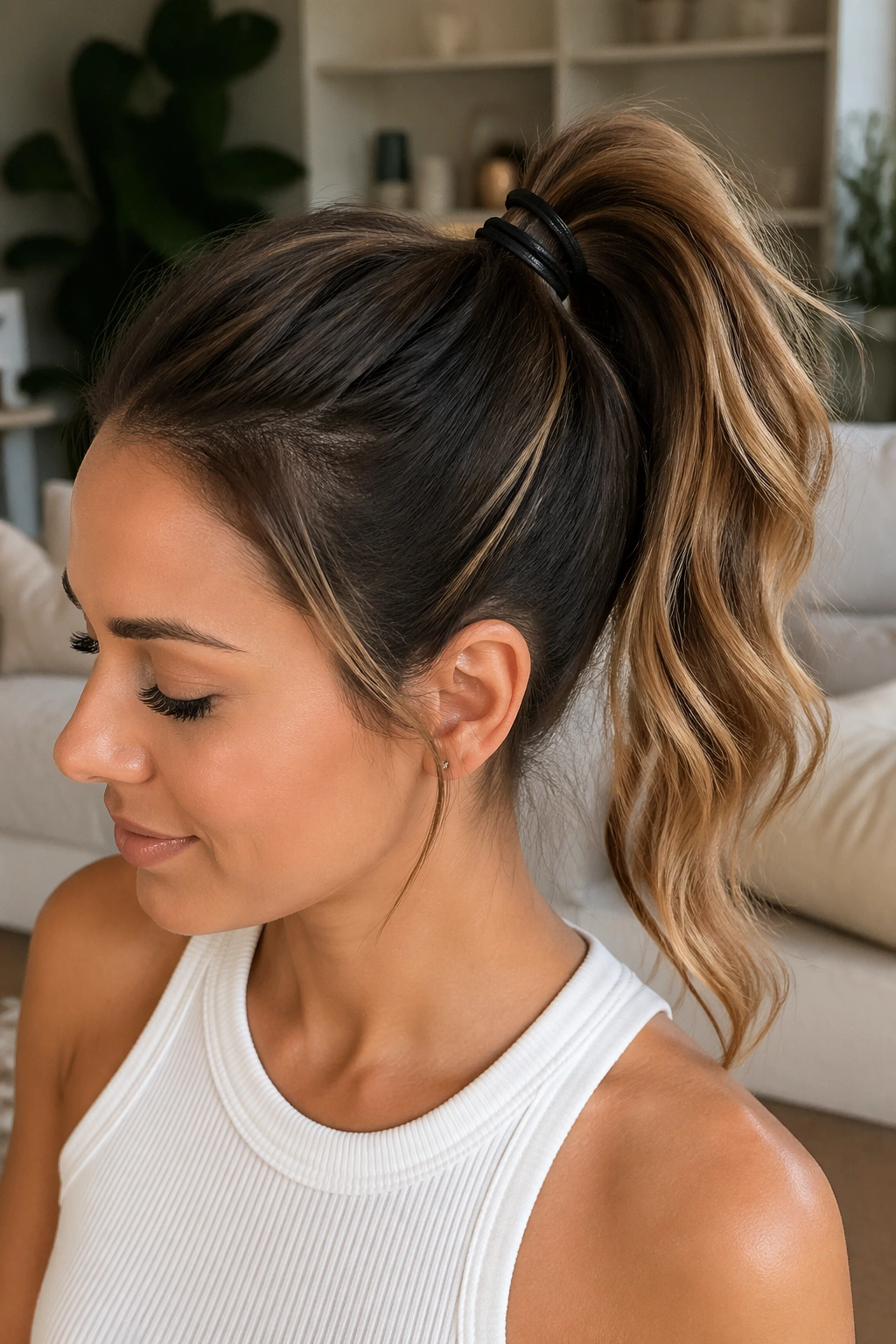
If your hair feels heavy and the elastic keeps sliding, stack two ties. It sounds tiny, but it changes the hold.
The first tie grabs the bulk. The second tie sits right on top and stops the base from loosening too fast. That makes the ponytail feel more secure without you having to yank it tighter, which is good news for your scalp.
When to use two ties
- Thick hair that weighs down one elastic.
- Long hair that keeps splitting at the base.
- Styles that need to last through a long day.
- Ponytails with added waves or curls, which increase weight.
Use the first elastic to make the ponytail, then add the second one over it. If the base still feels loose, pin one side under the elastic rather than pulling harder.
This is not the prettiest trick in the box, but it is one of the most useful. I trust it more than a lot of pretty ideas.
23. High Ponytail With Bangs
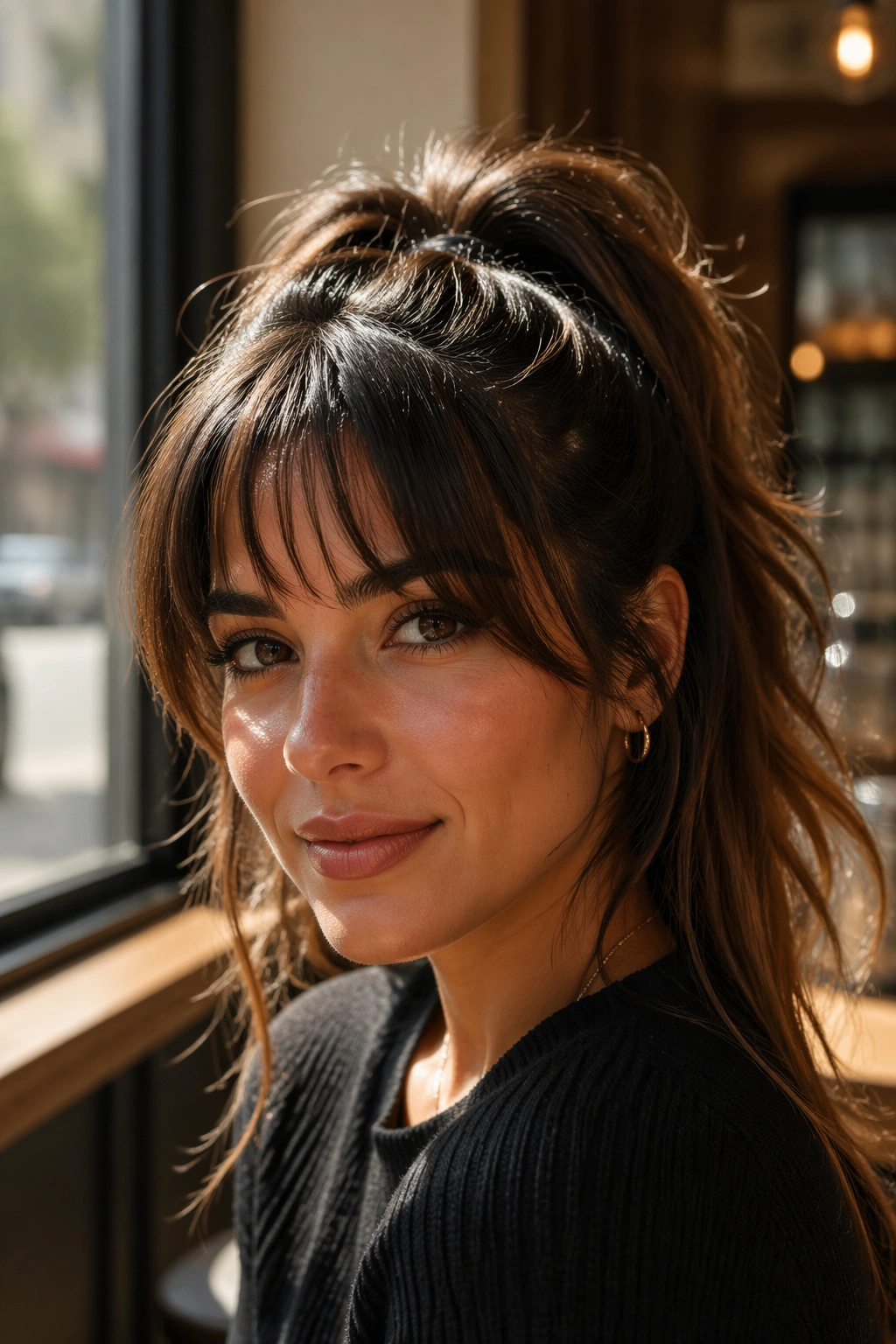
Unlike face-framing pieces, bangs already do the softening for you.
That means the ponytail can stay a little simpler. Curtain bangs, wispy bangs, or a full fringe give the face shape up front, while the high ponytail keeps the rest of the hair lifted and relaxed. The whole style ends up feeling balanced with very little extra work.
If you have curtain bangs, blow-dry them forward first, then pull the rest of the hair into the ponytail. If you have blunt bangs, keep them smooth and let the tail stay loose so the front doesn’t feel too styled compared with the back.
This combination is nice because it gives you two moods at once: structure near the eyes and softness everywhere else. That mix is what keeps a ponytail from looking too plain. The bangs carry some of the visual weight, so the tail can stay easy.
24. High Ponytail for Thick Hair
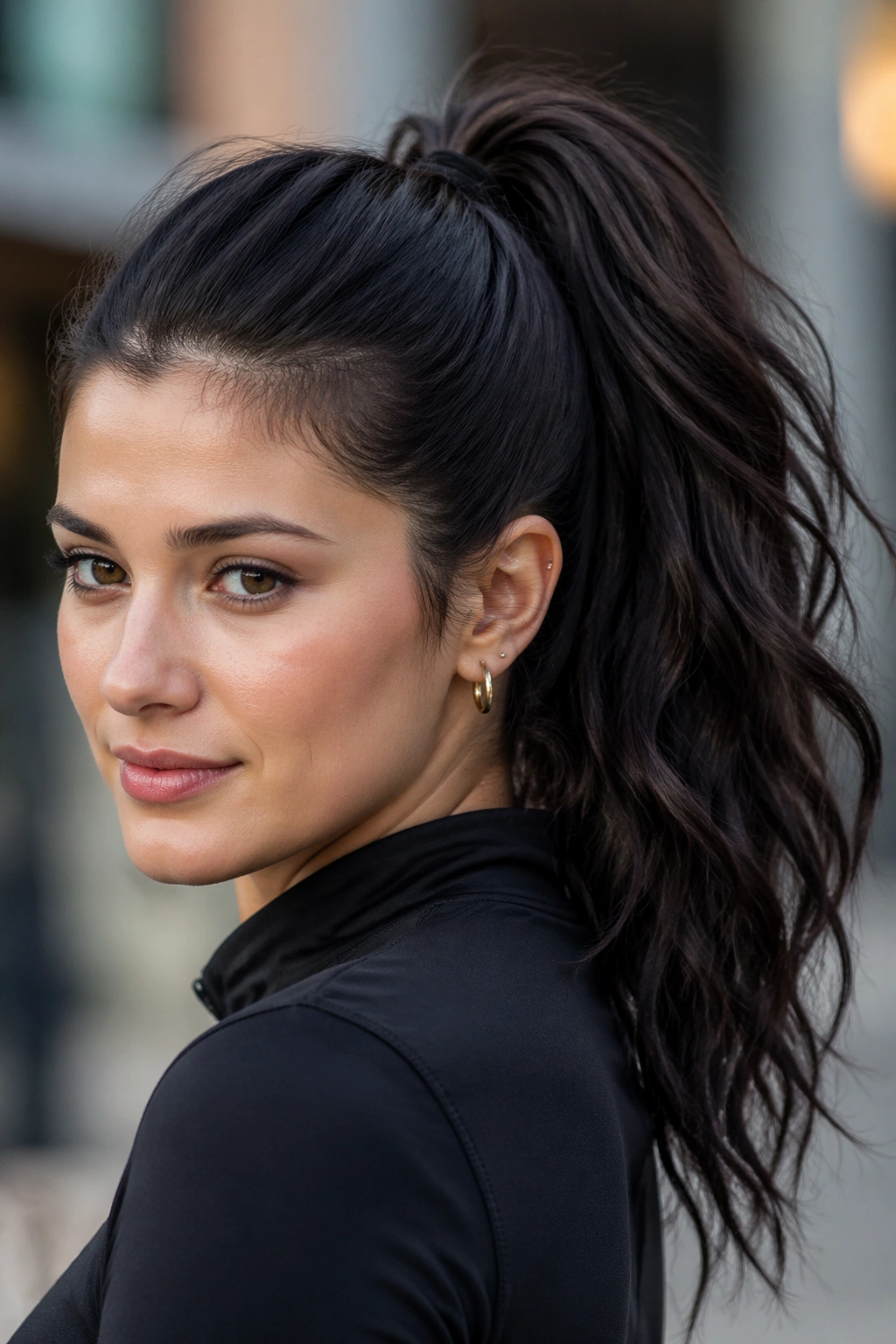
Thick hair can make a high ponytail feel like a lot of hair. That is not a flaw. It just needs a different kind of handling.
The main goal is to keep the base secure without flattening the body of the ponytail. A strong elastic helps, but so does a little strategic looseness at the crown. If you pull every strand back hard, the style can get boxy. Leave the tail with some bend and movement instead.
Keeping bulk under control
- Divide the hair into top and bottom halves before tying if the ponytail is very heavy.
- Smooth the top section first, then gather the rest.
- Use two bobby pins under the elastic if the base slips.
- Leave the ends loose or softly waved so the tail doesn’t look bulky at the bottom.
This version works because it respects the thickness instead of trying to hide it. Thick hair looks best when it has room to move. Cranking it flat usually makes it puff in weird places later.
25. Softly Undone High Ponytail
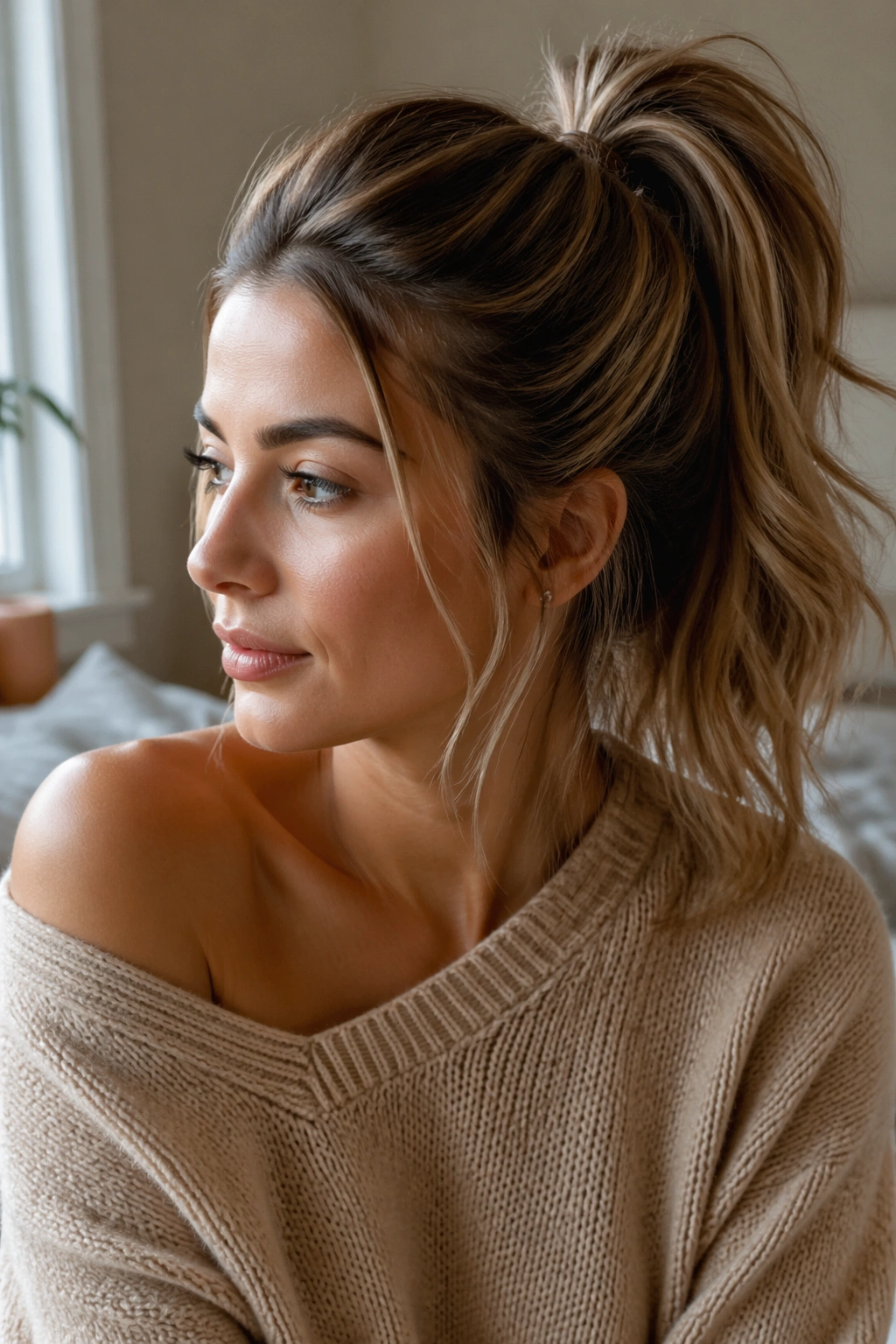
This is the version I’d hand to someone who wants one ponytail that can do a lot of jobs.
The crown is smooth enough to look neat. The tail has enough looseness to feel easy. A few face pieces soften the front, and the base can be wrapped or left plain depending on how much time you have. Nothing about it feels overplanned.
That balance is what makes the style so useful. It works with a blazer, a T-shirt, a soft knit, a dress, a messy weekend errand run — all of it. The ponytail looks like you made a choice, but not like you spent half the morning negotiating with your hair.
Keep a small elastic and one bobby pin nearby, because that is usually all this style needs. A loose high ponytail done well does not need a lot of decoration. It just needs a little shape, a little movement, and the nerve to leave the prettiest pieces slightly undone.
