



A good weave ponytail for straight hair does one thing better than most styles: it turns clean, flat hair into something with shape, swing, and a little drama. Straight strands can look polished on their own, but they also collapse fast if the base is weak or the tail is too thin. Add a weave, and the whole look changes. The ponytail gets heavier in the right way, the finish looks fuller, and the style reads sharper from the side instead of only from the front.
The detail that matters most is the texture. A silky straight bundle gives you that glossy, almost mirror-like finish, while a yaki straight bundle looks a touch more natural because it has a bit of grip and texture. I reach for yaki when I want the ponytail to hold its shape all day. Silky straight has its place, too. It just behaves differently, and straight hair usually tells on you fast if the attachment is too loose or the hairline is pulled too hard.
Placement changes everything as well. High ponytails lift the face and make the neck look longer. Low ponytails feel calmer and cleaner. Side ponies, wrapped bases, bubble sections, braided starts, and long swinging tails all give straight hair a different mood without fighting its texture. The best ones look intentional from every angle, not just from the front view in a bathroom mirror.
1. Sleek High Weave Ponytail
A sleek high weave ponytail is the easiest way to make straight hair look sharper in a hurry. It sits up near the crown, pulls the eyes upward, and gives the tail enough height to move when you walk. When the base is laid flat and the wrap is tight, the whole style looks clean from the front and dramatic from the side.
Why It Works on Straight Hair
Straight hair already lies smooth, so this style doesn’t have to fight texture. It only has to control it. A fine-tooth comb, a firm gel at the hairline, and a strong elastic are doing most of the work here, while the weave adds the length and fullness that your natural ponytail may not have on its own.
A 22- to 26-inch extension usually hits a sweet spot. Longer than that can look heavy if the base is small. Shorter than that still gives you the lift without dragging the style down.
Best for: round faces, sharp brows, big earrings, and days when you want the ponytail to be the main event.
Watch for: too much product at the roots. That can make the crown look oily instead of sleek.
Tip: wrap a thin 1-inch strand around the elastic and pin the end underneath. It hides the tie and makes the style look finished fast.
2. Low Wrapped Ponytail
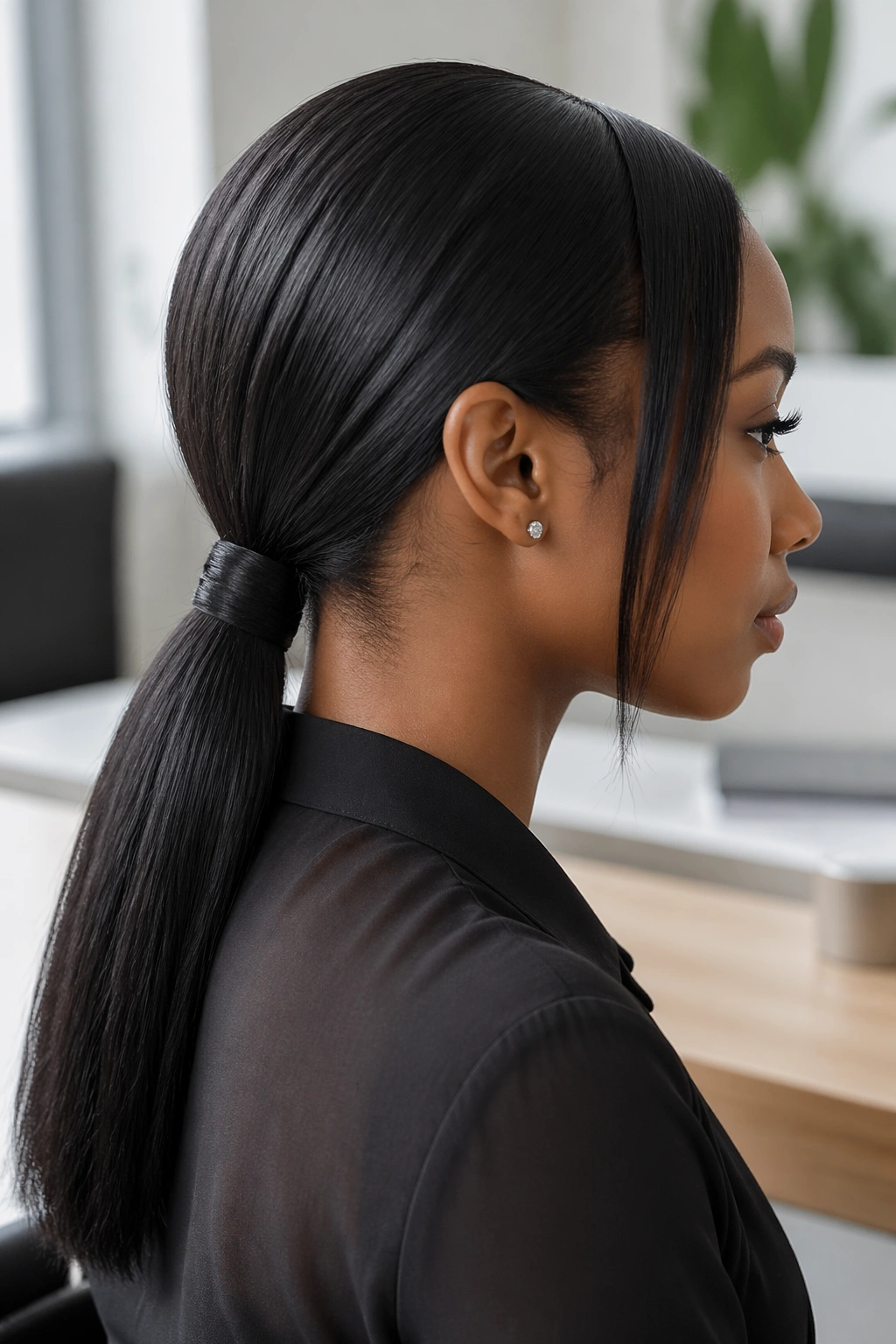
Why does the low wrapped ponytail keep showing up in so many polished looks? Because it is one of the cleanest styles you can do on straight hair without making the whole head look severe. The ponytail sits at the nape, the base gets wrapped with a section of hair or a piece from the weave, and the result feels neat without trying too hard.
How to Wear It
This is the style I’d choose for a workday, a dinner, or any event where you want your hair to behave. Straight hair loves this shape because the smooth strands fall straight down instead of puffing out around the band. Use a small amount of smoothing cream on the mids and ends, then brush the top section flat before you tie it.
A low wrapped ponytail also gives you room to play with the tail. You can wear it bone-straight, add a soft bend at the end, or let the weave swing long and blunt. If your natural hair is fine, a medium-density ponytail usually looks better than one that is too thick.
3. Bubble Weave Ponytail
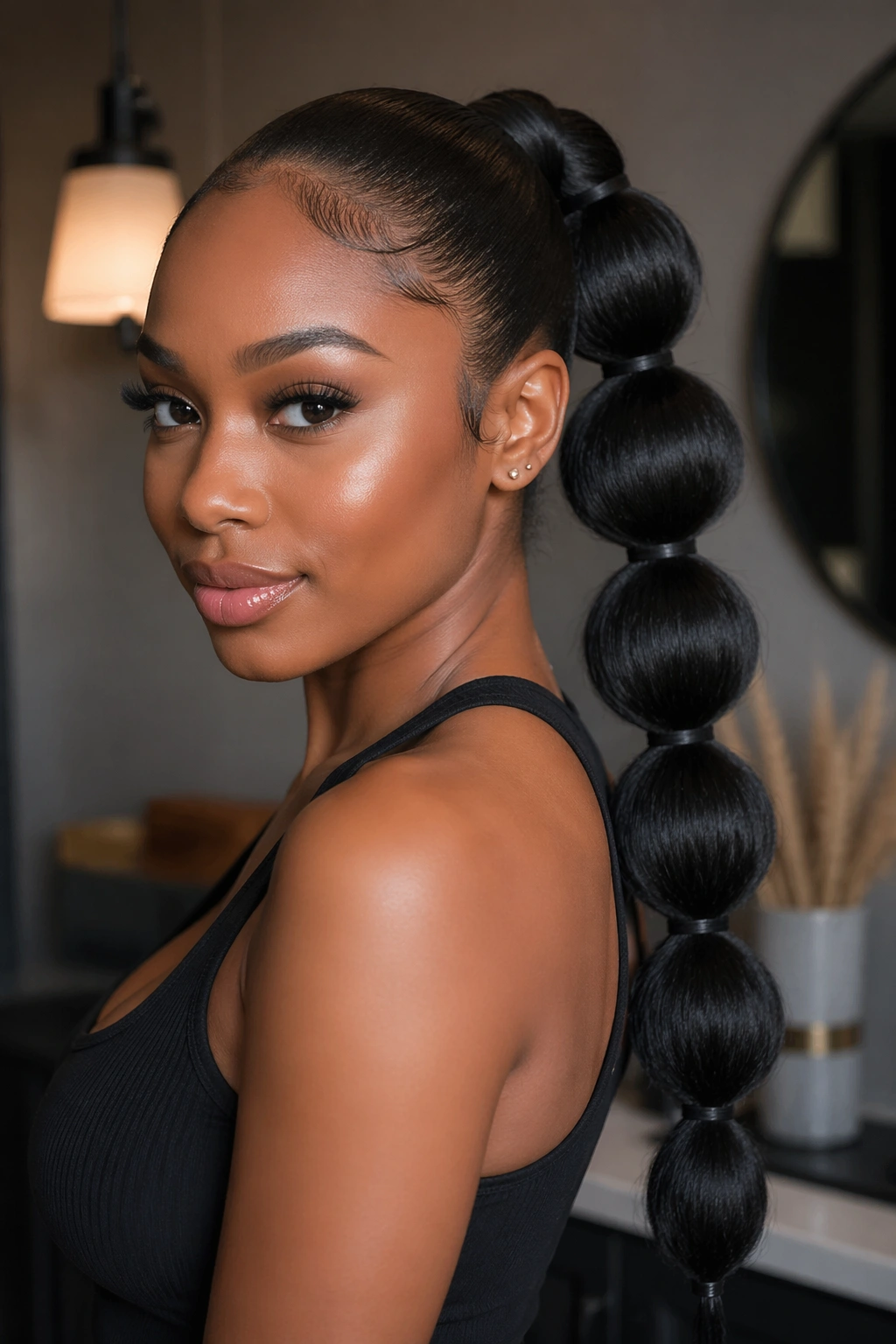
Bubble ponytails are the easiest way to make straight hair stop looking like one long line. The style breaks the tail into rounded sections with elastics placed a few inches apart, so the ponytail gets shape and rhythm instead of just hanging there. It looks playful, but it still feels neat if the base is smoothed down well.
What to Ask For
- A ponytail extension long enough to show at least 3 or 4 bubble sections.
- Small clear elastics or slim snag-free ties placed about 2 to 3 inches apart.
- A little teasing inside each section if you want fuller bubbles.
- A light mist of holding spray, not a stiff helmet of product.
The trick is to pull each section outward gently after tying it off. Don’t overdo it. You want rounded bubbles, not puffy knots. Straight hair is especially good for this style because the clean strands make each section read clearly, and the shine on the tail gives the bubbles a glossy edge.
Pro tip: keep the first bubble a little tighter than the rest. That helps the whole shape hold.
4. Side-Swept Weave Ponytail
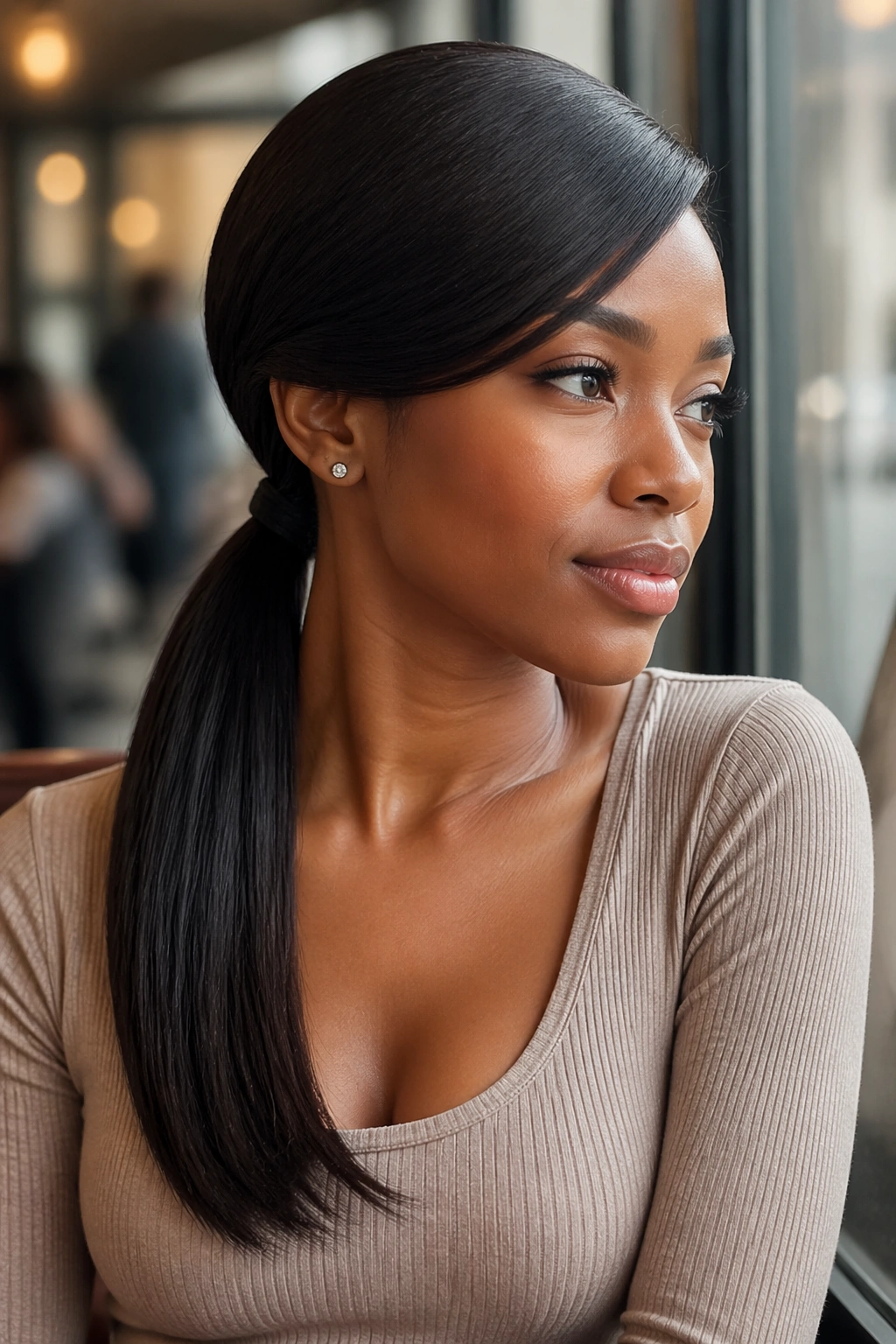
A side-swept weave ponytail is what I suggest when straight hair needs a little softness. The ponytail sits off to one side, which changes the balance of the whole face and keeps the style from feeling too rigid. It has a little old-school glamour to it, but it can still look modern if the part is neat and the tail is blunt.
Picture a side part that sweeps across the forehead, then a ponytail resting just behind one ear. That small shift makes a big visual difference. It also gives you a natural place to tuck a curl, a wave, or a wrapped base if you want a little more detail.
- Best for long necks and narrow jawlines.
- Works well with 20- to 24-inch straight bundles.
- Looks especially good with statement earrings.
- Feels softer than a center-part ponytail.
If your straight hair tends to fall flat on one side, this style solves that problem for you. The asymmetry does the work.
5. Bone-Straight Mid-Height Ponytail
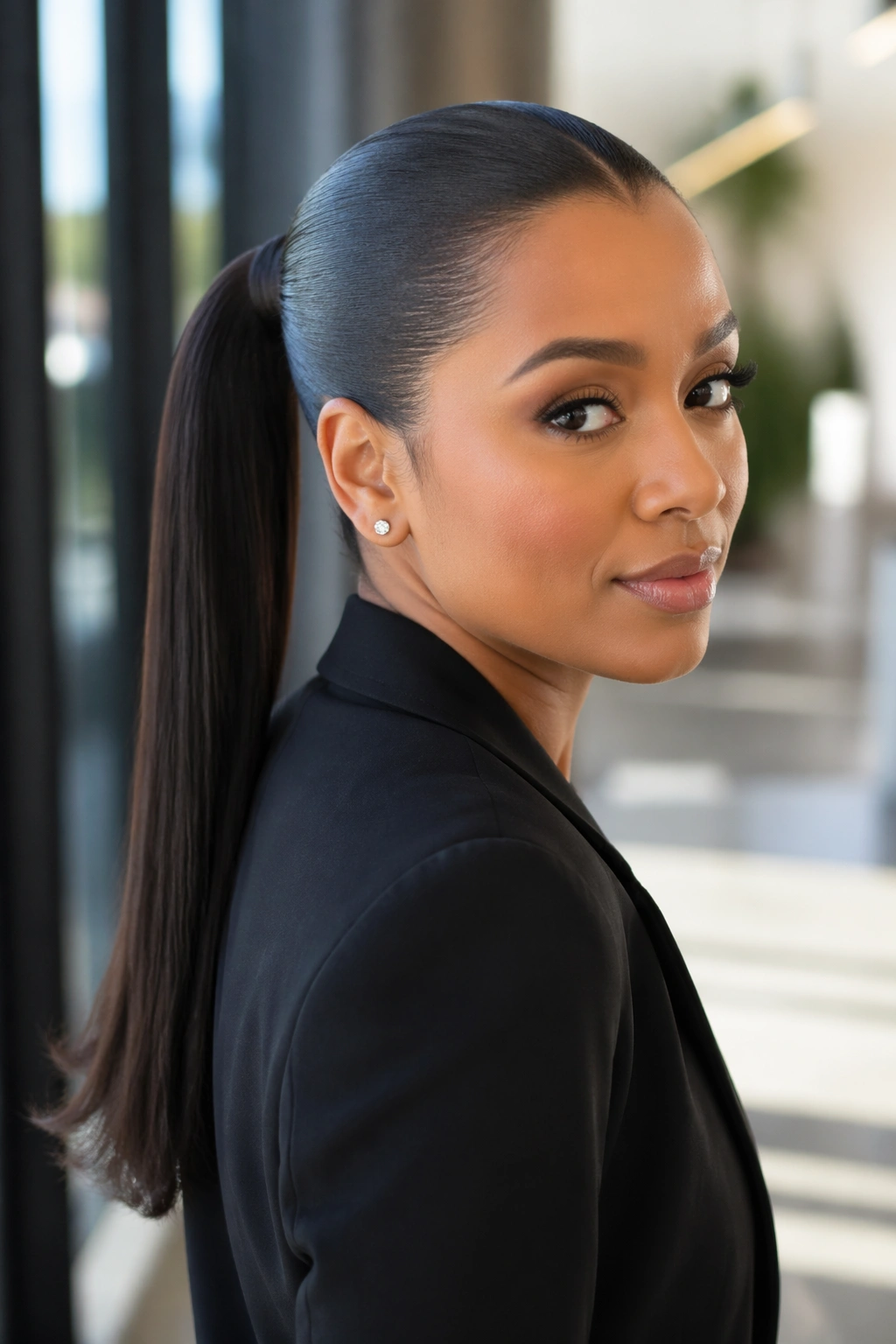
The bone-straight mid-height ponytail is the one I reach for when I want something plain in the best possible way. Not boring. Plain. There’s a difference. It sits between the crown and the nape, which keeps it balanced, and the straight weave gives it that crisp line people notice when they see you from behind.
This style is less about drama and more about finish. If the base is smooth and the tail hangs evenly, it reads expensive without being loud. Straight hair suits it because the texture matches the clean geometry of the style. Nothing is fighting anything else.
A 20-inch tail is enough for a polished version, though 24 inches gives you more movement. Keep the ends blunt if you want a sharper look, or add a very slight bend with a flat iron if you want the tail to feel softer.
There’s a reason this ponytail keeps getting worn. It sits in that easy middle ground where you can wear it with a blazer, a tank top, or a satin dress and it never looks out of place.
6. High Ponytail with a Side Swoop
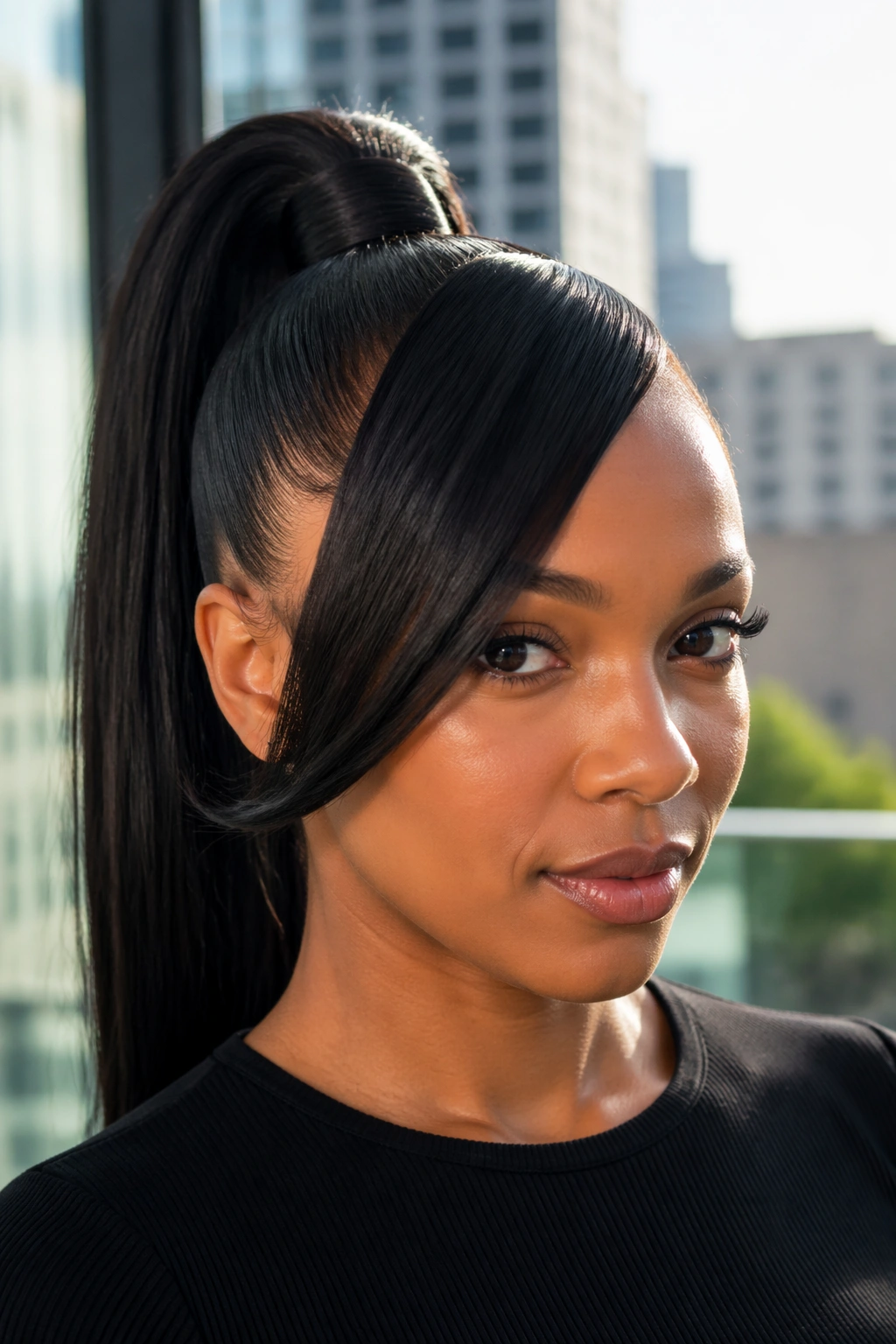
Unlike a plain high ponytail, this one leans on the front section to make the whole style feel softer. A side swoop across the forehead breaks up the hard line of a high base and gives straight hair a little movement near the face. That matters more than people think. A high ponytail can sometimes pull everything back so tightly that the face loses shape.
With a swoop, you get lift and softness at the same time. The rest of the hair stays sleek, and the side front section gives the eye something to land on before it reaches the tail. I like this style when the outfit is simple and the hair needs to carry a bit more of the look.
Who it suits: square faces, high cheekbones, and anyone who wants the ponytail to feel a little less severe.
How to wear it: keep the swoop smooth, not fluffy. A flat iron pass on a low heat setting and a tiny dab of serum are enough. The goal is a controlled curve, not a curled bang.
7. Braided Base Ponytail
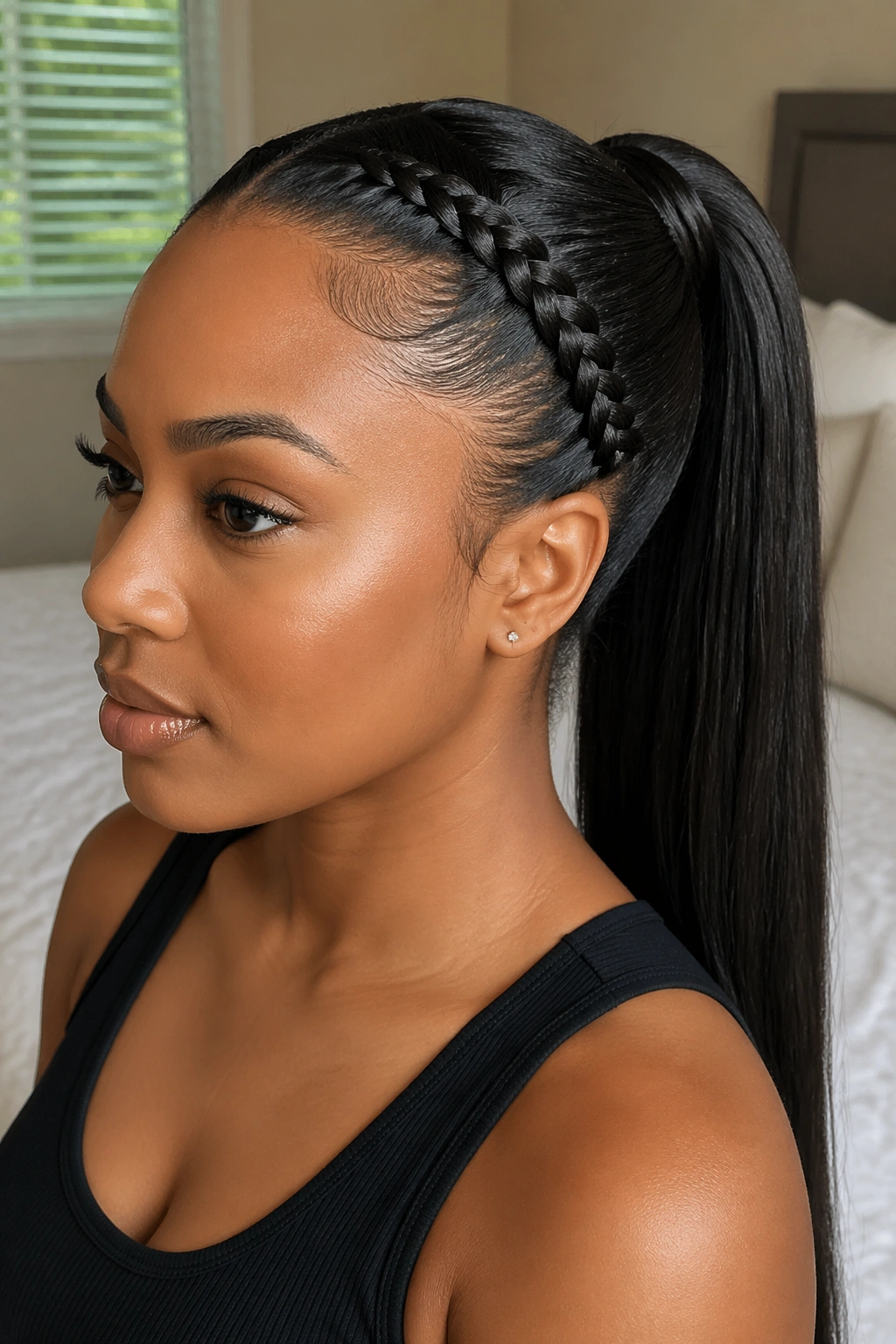
Can a braid make a ponytail look stronger? Yes, and on straight hair it often does. A braided base ponytail starts with a single braid or several tight braids feeding into the ponytail attachment, which gives the style structure before the extension even comes in. That structure matters if your hair slips easily.
The braid does two jobs at once. It gives the style a visual detail people can actually see, and it helps the ponytail sit more securely. Straight hair tends to slide if you don’t rough up the base a little, so the braid works almost like built-in grip. The look is cleaner than a puffed-up wrap, but less plain than a simple tie.
Small Details That Make It Better
- Keep the braid close to the scalp.
- Use 2 or 3 slim elastics if your hair is fine.
- Hide the end under the ponytail attachment.
- Leave the tail sleek so the braid stays the focal point.
This style is a favorite when you want polish and hold in the same look. No guessing.
8. Crisscross Ponytail
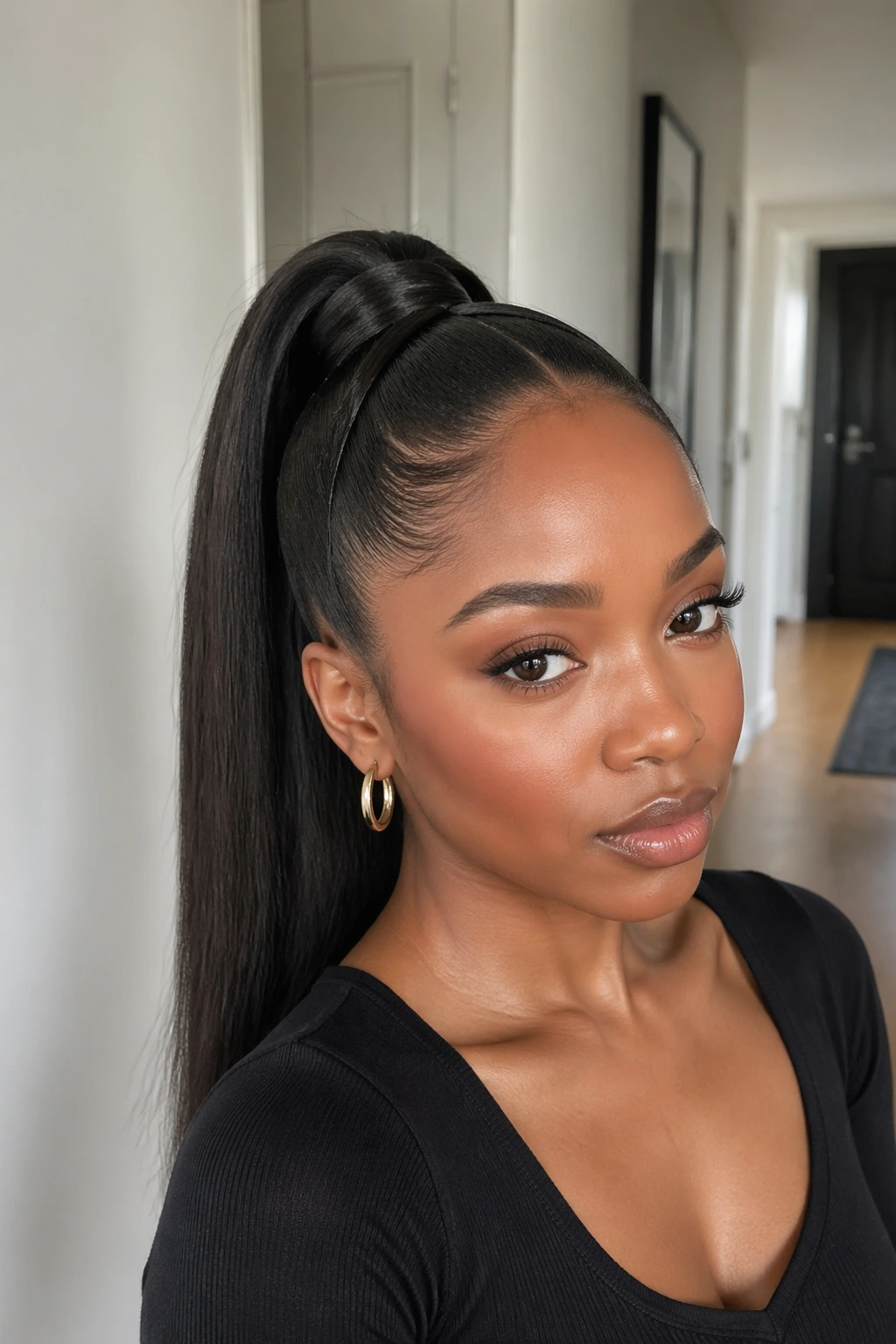
A crisscross ponytail gives straight hair a little architecture, which is a nice change from the usual smooth-and-flat finish. Instead of letting the base sit bare, you cross two small sections over each other above the elastic. It’s a small move, but it changes the whole read of the style.
The best part is that it looks more detailed than it is. You don’t need a pile of accessories or a complicated braid pattern. You just need two neat sections, a strong elastic, and enough tension to keep the crossing snug. The rest of the hair can stay sleek.
What Makes It Different
The crossing sections create a frame around the ponytail base, so the style looks more custom and less like a quick tie-back. On straight hair, that frame shows up clearly because the strands lie flat and reflect light.
Use this when you want something between casual and dressed up. It’s one of those styles that works for errands and then still looks fine at dinner.
9. Half-Up Weave Ponytail
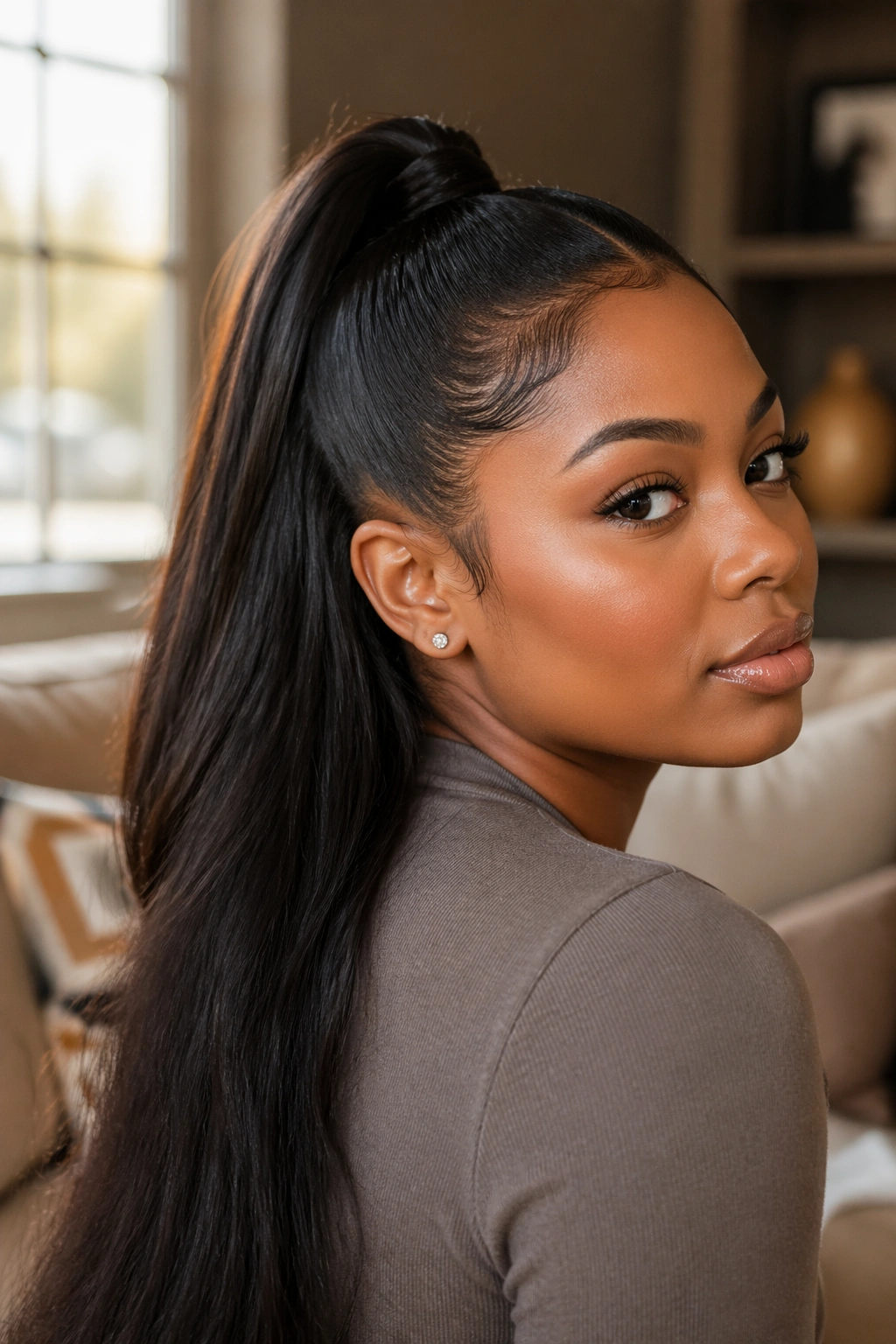
A half-up weave ponytail is the answer when you want length but don’t want all the hair pulled back. The top half is tied into a ponytail, while the rest falls loose underneath. On straight hair, this gives you a nice mix of structure and movement. The crown gets lift, and the lower section keeps the style from feeling too tight.
I like this one because it’s forgiving. If the bottom hair is a little flatter than you planned, it still looks intentional. If the top is a little fuller, even better. The weave tail can be long and sleek, or it can have a soft bend at the end so the upper and lower sections don’t look too stiff together.
This style works well when your own hair is shoulder length or longer, because the loose bottom layer helps blend everything. If the hair is very short, the contrast can look abrupt. A little texture spray at the roots of the top section helps it stay put without turning crunchy.
10. Flipped-End Ponytail
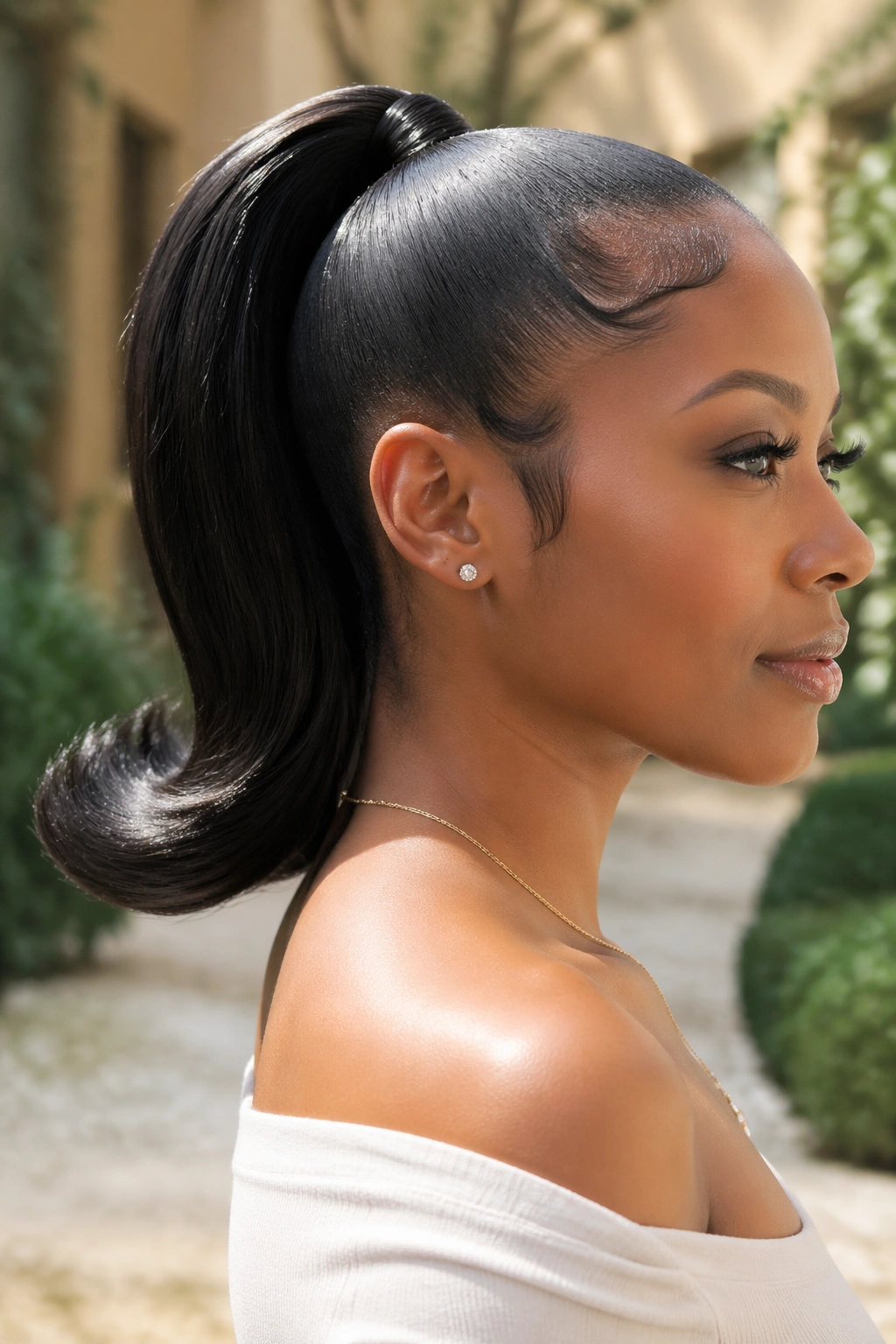
The flipped-end ponytail has a small retro feel that I genuinely like on straight hair. The top stays smooth, but the ends turn outward instead of hanging dead straight. That little flip keeps the style from feeling flat, and it gives the tail a bit of bounce when you walk.
It’s a good choice if bone-straight ends feel too severe on you. A flat iron can create the turn, or you can wrap the ends around a medium curling iron for a softer bend. Either way, the shape at the bottom matters more than people think. Straight hair already gives you a clean canvas. The flip adds motion.
This look works best when the ponytail is medium to long, around 18 to 24 inches. Too short, and the flip can look stubby. Too long, and the end may need a stronger hold so it doesn’t drop by the hour.
Tiny note: keep the flip smooth, not jagged. One clean curve beats three messy bends.
11. Deep Side-Part Ponytail
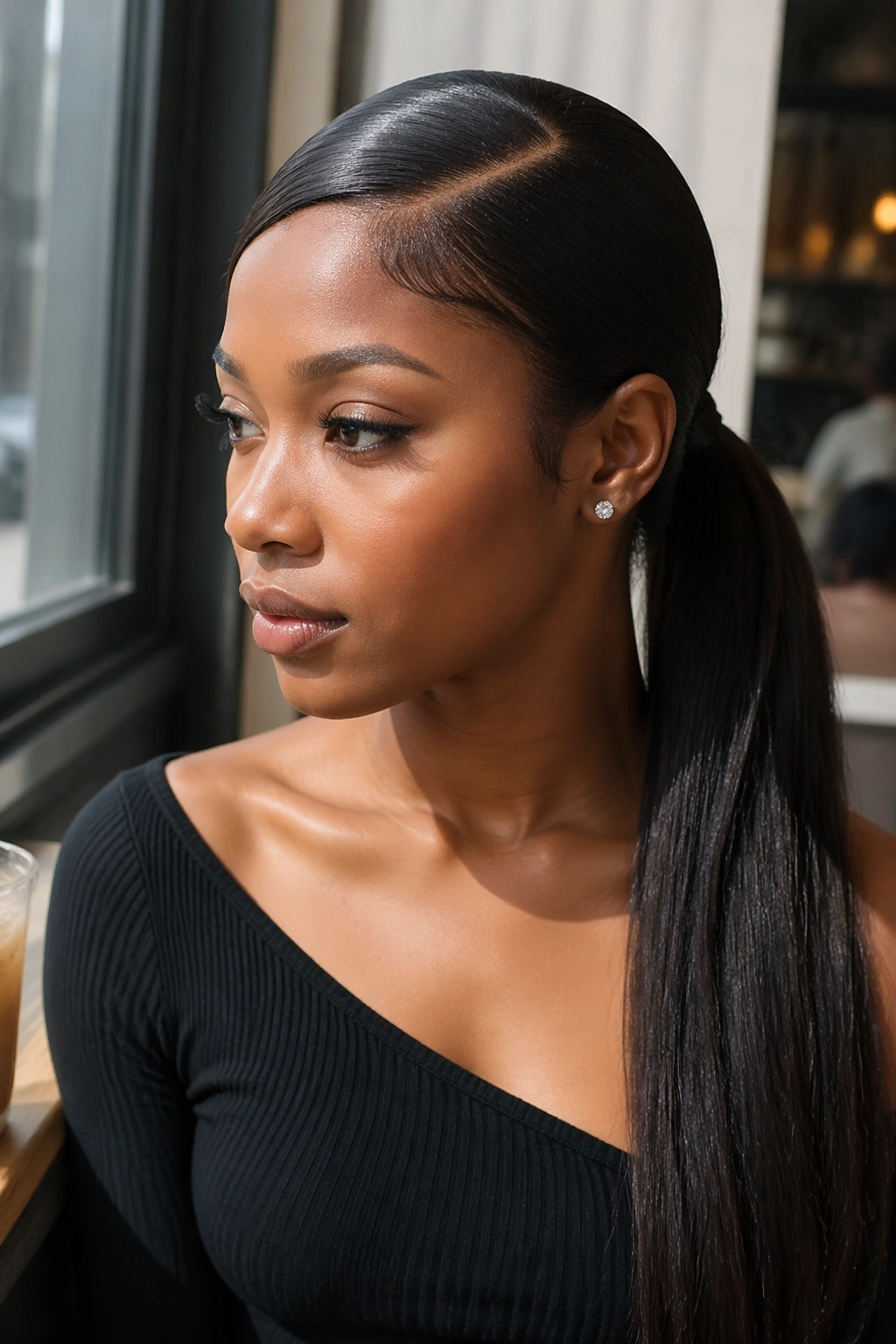
A deep side-part ponytail changes the mood before the tail even comes into view. The part itself becomes a feature, and that is the point. Straight hair takes to this style well because a clean part line looks sharp against a smooth base, especially when the rest of the hair is brushed low and tight.
The ponytail can sit low, mid, or high, but I think it looks best when the part has room to breathe and the tail stays simple. You don’t need a dozen extra details. The part is the detail. If the front section is laid properly, the ponytail feels polished without looking stiff.
This style gives a nice bit of asymmetry to round faces and soft jawlines. It also works when you want the front to frame one eye a little more. A touch of shine spray on the top layer helps the part stay visible and keeps flyaways from breaking the line.
12. Twisted Crown Ponytail
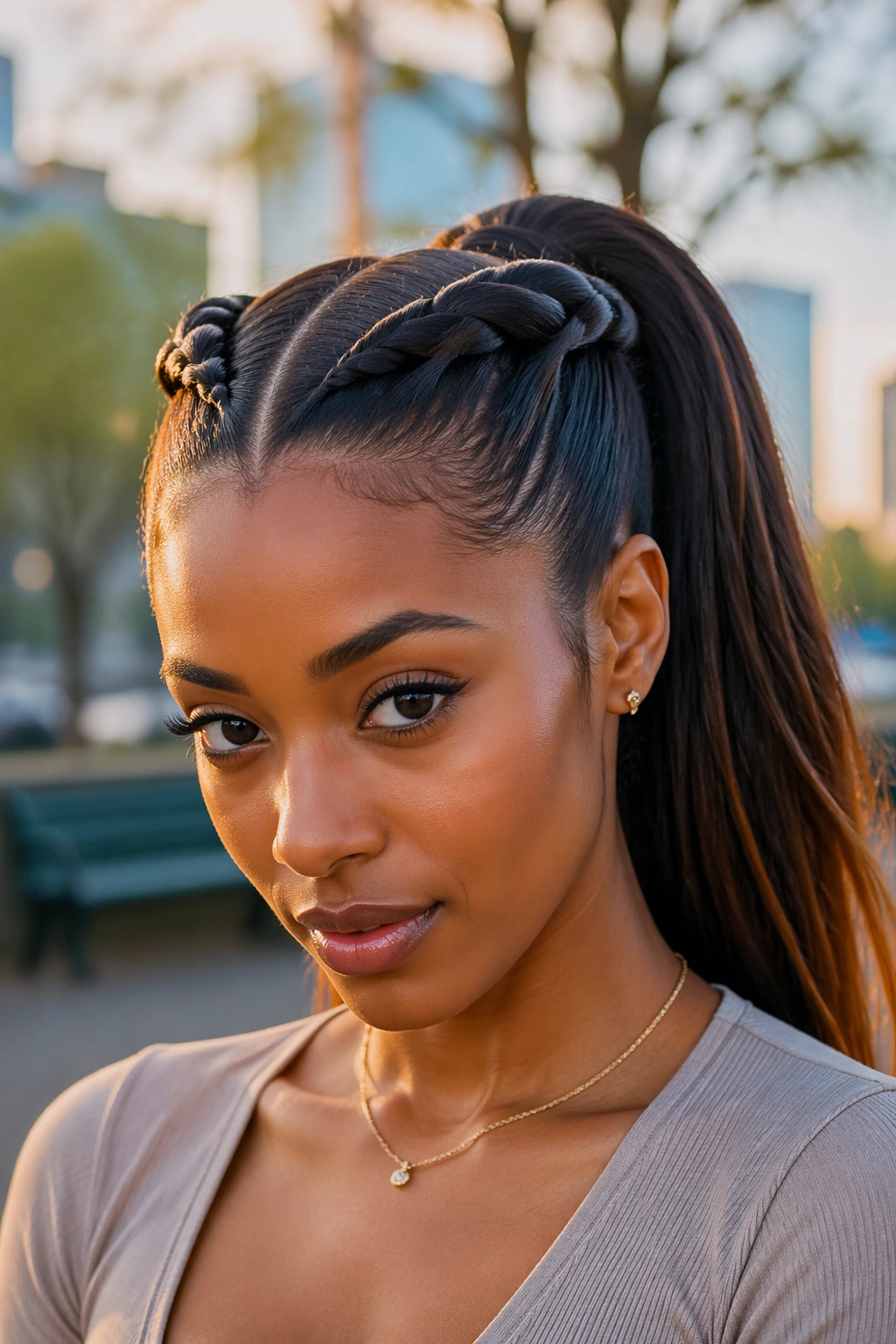
A twisted crown ponytail is one of those styles that looks fussy in photos and turns out easier than expected. Two side sections are twisted back toward the ponytail, which makes the front look shaped instead of flat. Straight hair benefits from that twist because it breaks up the broad smooth surface around the face.
The twist also acts like a small built-in accessory. You don’t need clips, pins everywhere, or a huge amount of product. You just need the hair smoothed, divided, and twisted neatly toward the center. The ponytail can be high for energy or low for a softer finish.
A small warning: keep the twists close to the scalp. If they sit too loose, the style can puff up and lose the clean line that straight hair handles so well.
This is a good choice for days when you want structure at the front and length at the back. It’s neat. It stays that way.
13. Double-Wrap Ponytail
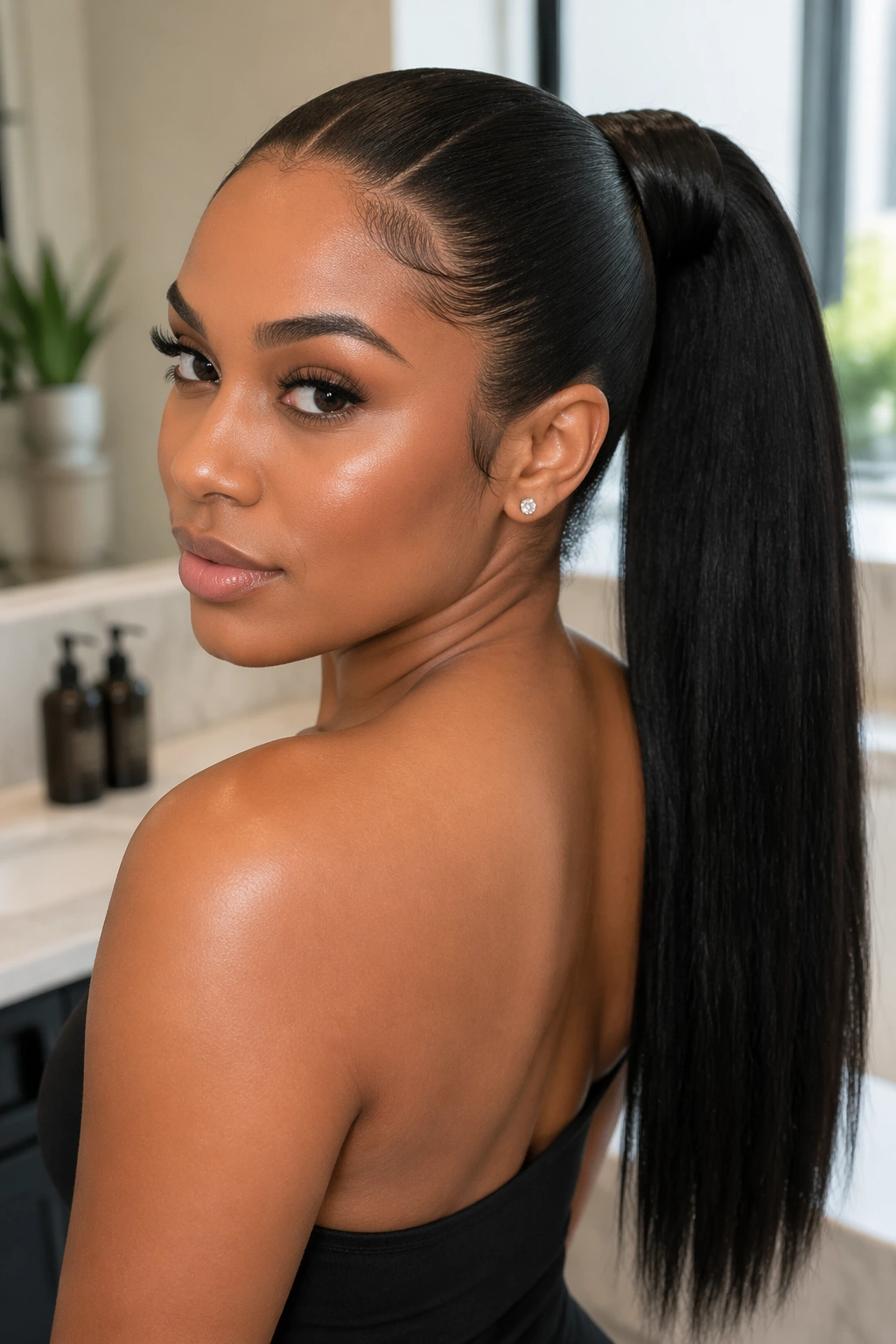
The double-wrap ponytail is all about the base. Instead of wrapping the elastic once, you wrap it twice or use two long strands to create a fuller, more tucked finish. On straight hair, that gives the ponytail a cleaner anchor and makes the base feel more deliberate.
I like this style when the elastic itself would otherwise be too obvious. Two wraps give you more coverage, which is helpful if the ponytail is thick or the base is a little wider than you wanted. The look stays sleek, but it also has enough bulk at the crown to make the ponytail seem built-in instead of just tied on.
What to Tell Your Stylist
- Ask for a base that sits snug but not tight.
- Keep the wrap smooth and flat against the head.
- Use pins that match the hair color.
- Finish with a light mist of shine spray on the top layer.
This is a good middle ground between simple and styled. Not flashy. Just clean.
14. Cornrow Base Ponytail
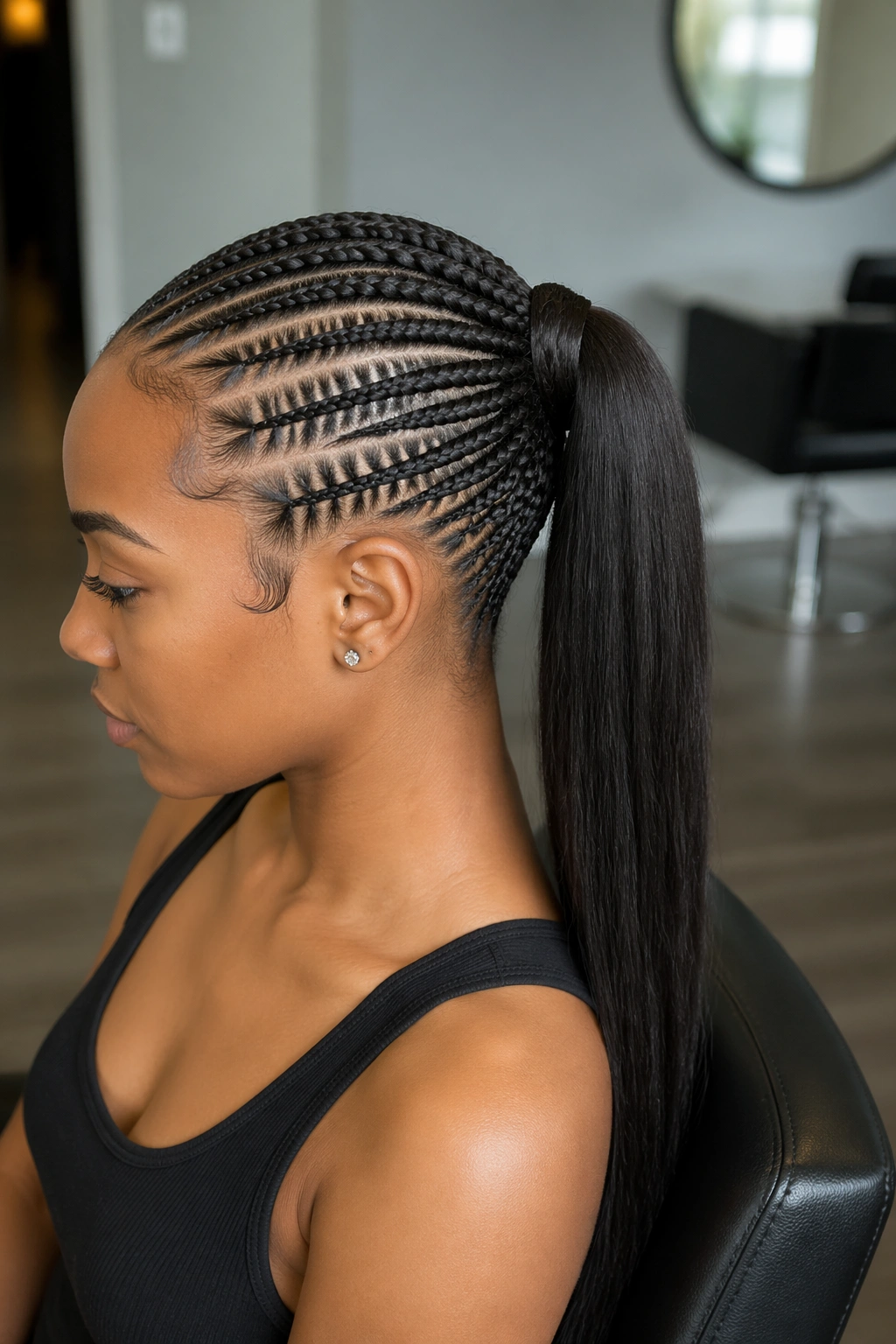
A cornrow base ponytail brings grip where straight hair usually needs it most. If your strands are slippery, this style solves the sliding problem by building the base out of tight, neat braids before the ponytail is attached. That foundation matters. It helps the style last longer and keeps the ponytail from sinking.
The look has more texture at the scalp, which gives it a stronger outline than a smooth tied base. Some people like that contrast because the top reads sculpted, while the tail stays sleek and long. It’s a strong shape, and it can handle heavier weave lengths better than a loose wrap.
A style like this is smart when you want the ponytail to stay put through a long day. It’s also a good option if your natural hair is fine and tends to slide out of elastics. The braids do the holding so the tail can just hang and move.
My honest take: this is one of the most practical options in the whole list.
15. Extra-Long Floor-Grazing Ponytail
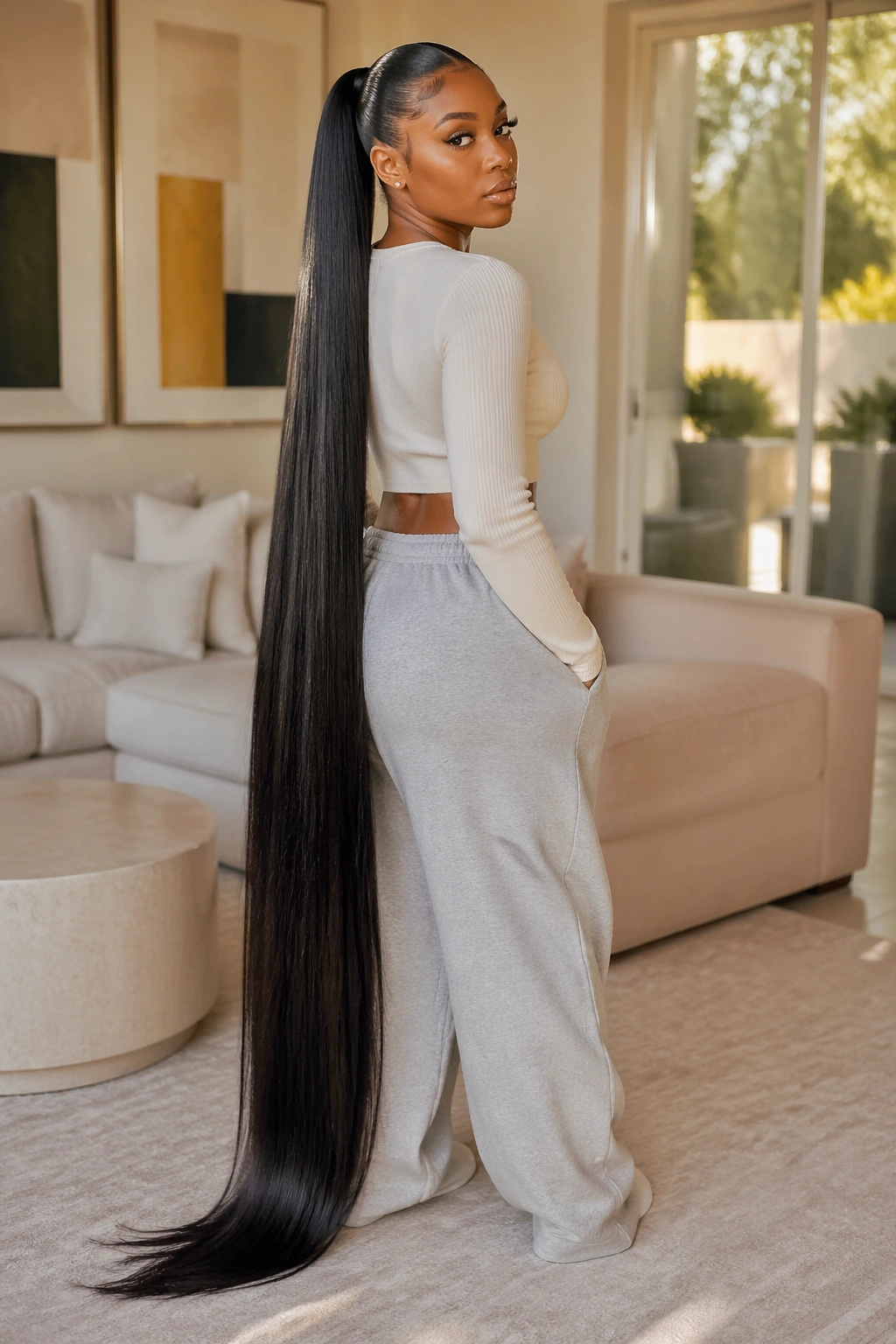
Long hair is one thing. A floor-grazing ponytail is another. This style is not subtle, and that’s the appeal. The tail falls past the waist, often far past it, and straight hair gives the length a sharp, uninterrupted line. It looks dramatic because there’s so much vertical movement in one clean piece.
You do have to balance the weight. A very long weave needs a secure base, and if the ponytail is too dense, it can pull on the scalp after a few hours. A good stylist will make the attachment strong but not bulky. That part matters more than the length itself.
Small Choices That Matter
- Keep the base close to the crown or mid-head so the length doesn’t drag the face down.
- Choose a texture that matches the rest of your hair’s shine level.
- Skip heavy accessories. They compete with the length.
- Brush the tail out with a paddle brush before you leave the house.
This is the style for days when you want the hair to enter the room first.
16. Mini Weave Ponytail
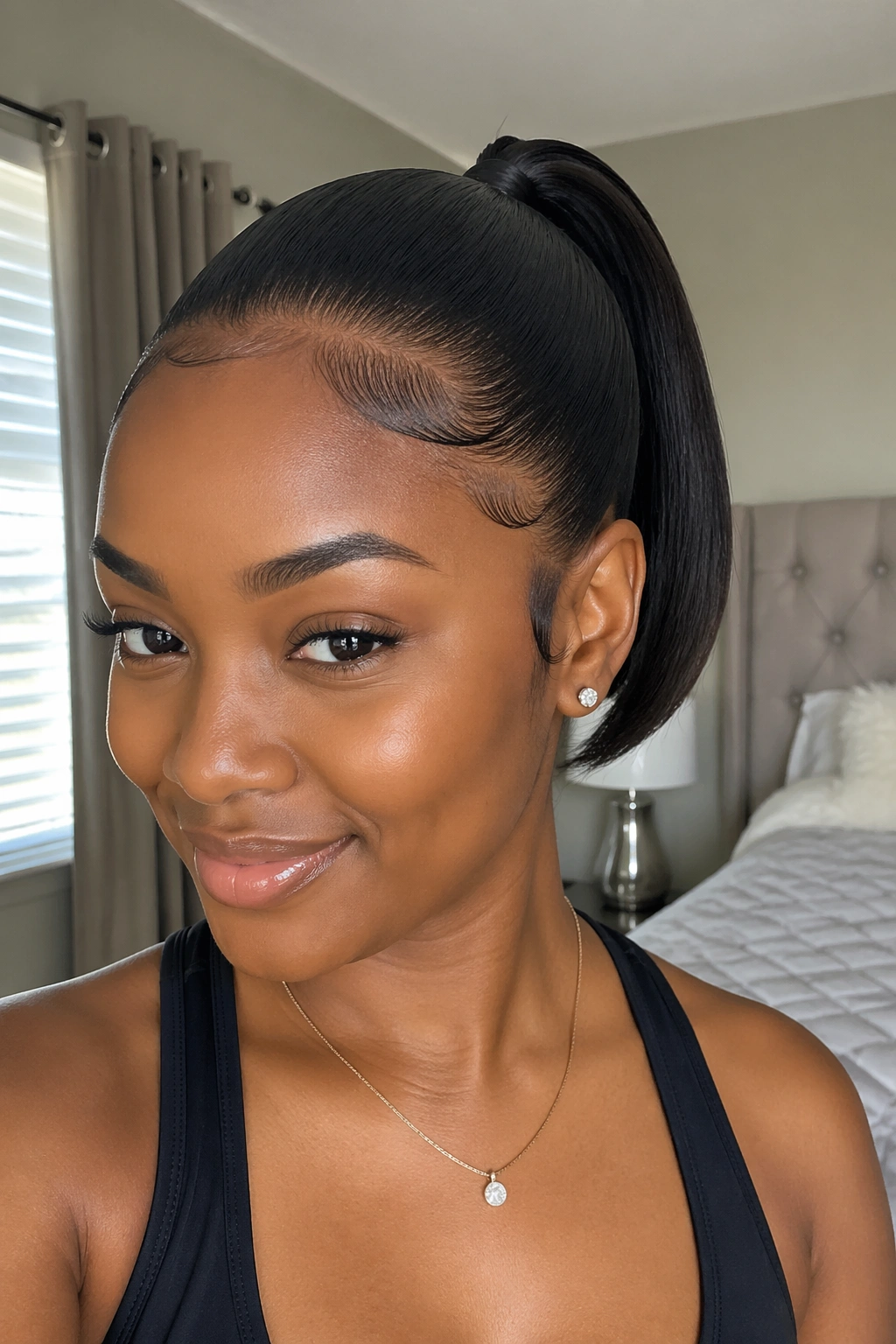
A mini weave ponytail proves that small can still look finished. Instead of going huge, you keep the tail shorter, usually around 10 to 14 inches, and let the shape do the talking. Straight hair likes this because the shorter length stays neat and light, which makes it easier to wear every day.
This is the ponytail I’d suggest if long extensions feel like too much work. It moves less, tangles less, and puts less pull on the scalp. That makes it a smart choice for a busy week or a quick style change when you want your hair up but not heavy.
It can be sleek and tight, or a little looser at the crown for a softer feel. A short weave ponytail also pairs well with clean parts and strong edges, since there’s less hair competing for attention. Sometimes that’s the point. You get the polish without the extra weight.
Good fit: fine hair, shorter hair, and anyone who likes a tidy profile.
17. Low Ponytail with Barrel-Curled Ends
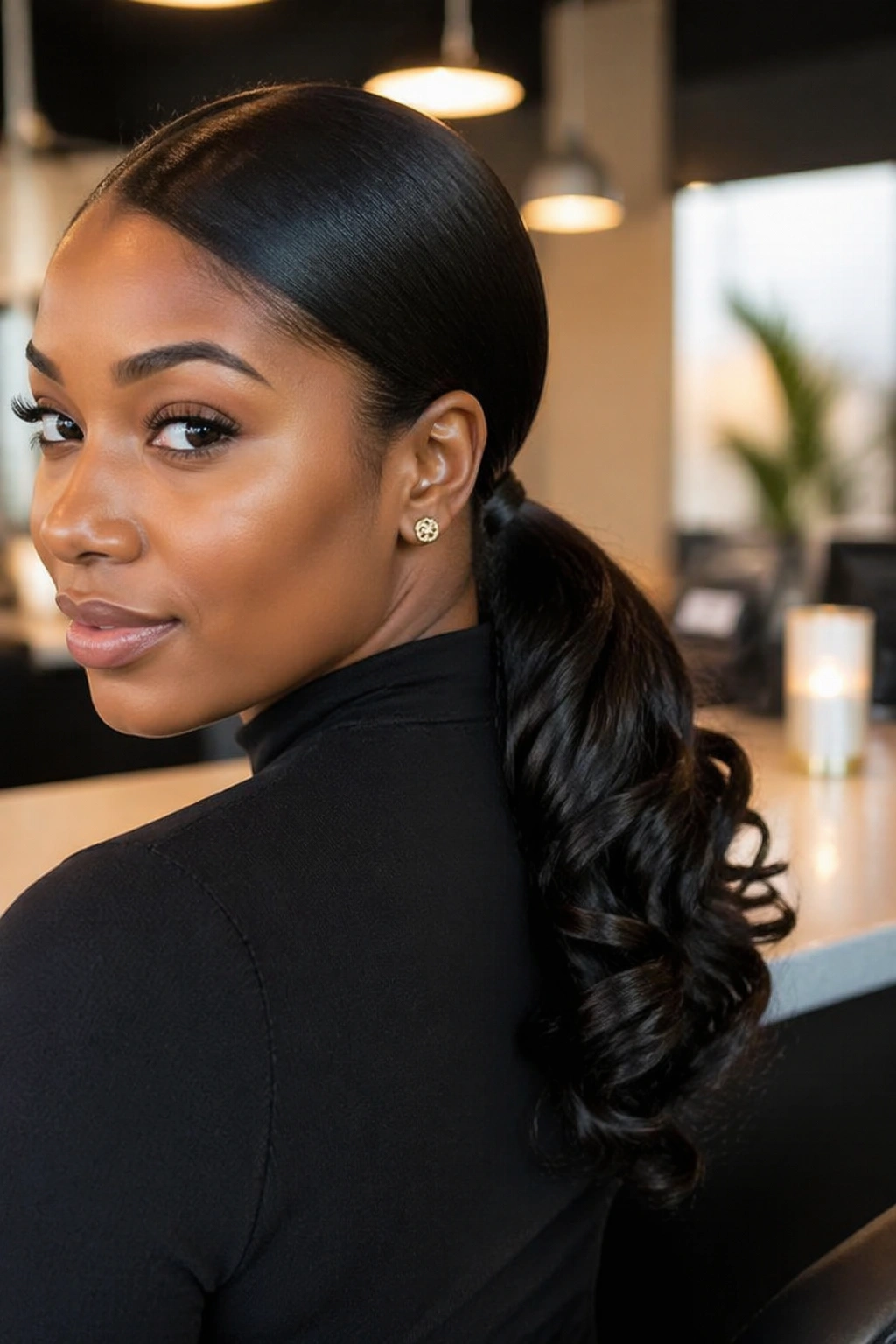
Can straight hair still look soft in a low ponytail? Yes, if the ends are curled in a smooth barrel shape. The top stays sleek and controlled, but the bottom opens up a little, which keeps the style from feeling severe. It’s a simple change, and it works.
The trick is to curl the ends with a large barrel iron or a set of flexi rods, then let them cool before touching them. Don’t brush the curl out too much. You want a gentle bend, not a fluffy wave. Straight hair makes the contrast obvious, which is why the shape at the bottom matters so much.
This style looks especially good with a middle part and a wrapped base. The top line stays sharp, and the curled ends add movement. If you wear a lot of monochrome clothes or sharp collars, this ponytail softens the look just enough.
A little shine serum on the ends is enough. Too much, and the curl drops fast.
18. High Ponytail with Face-Framing Tendrils
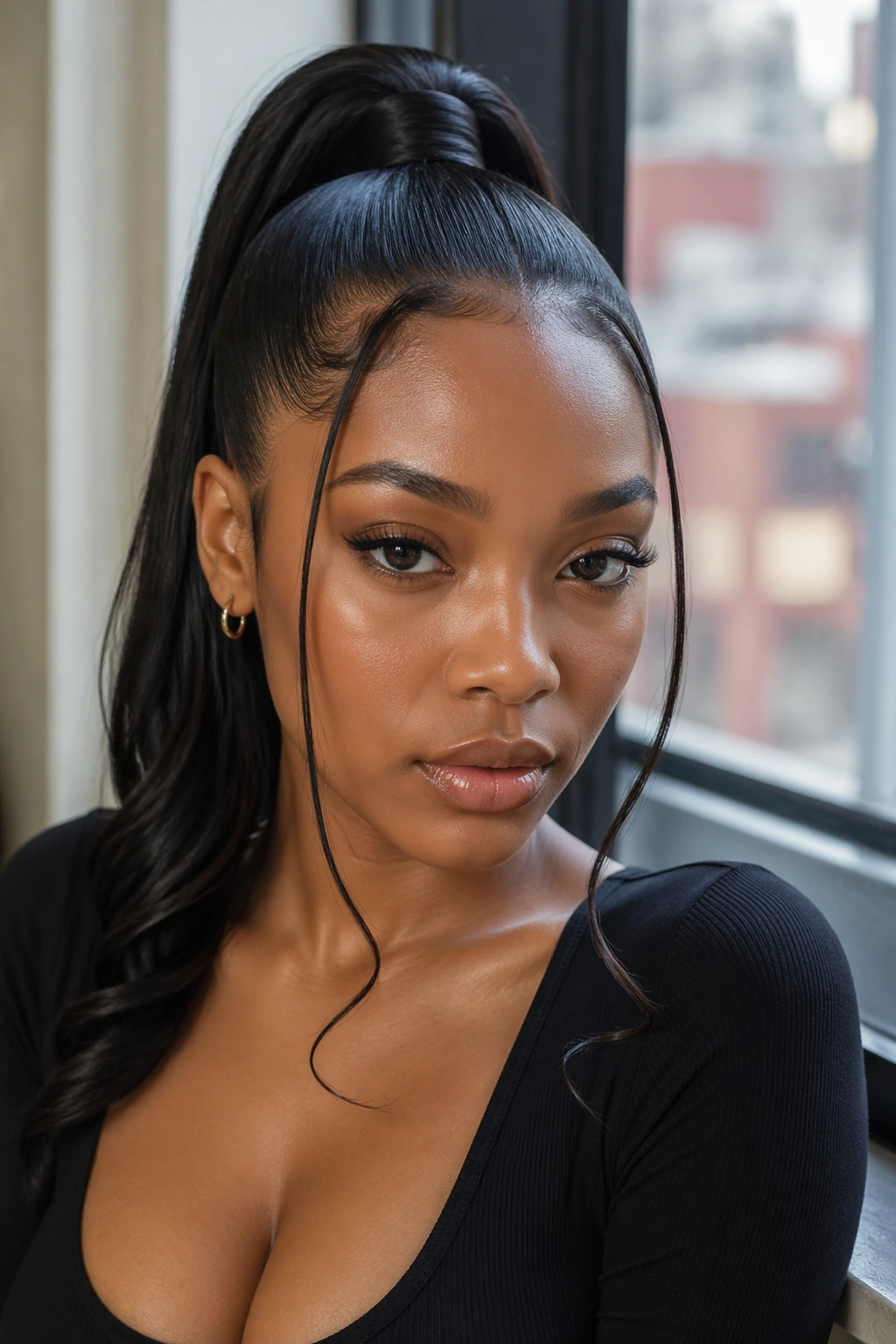
A high ponytail with face-framing tendrils is the easiest way to soften a tight style without losing the lift. The ponytail itself sits high, but two thin front pieces stay out around the cheeks. That little break in the front keeps straight hair from looking too drawn back.
The tendrils should be thin. Really thin. Thick side pieces can make the face look crowded, while narrow strands give you shape and movement. I like this version when the ponytail is sleek and the outfit is simple, because the loose pieces add just enough softness to balance the clean crown.
How to Keep It Soft
- Take out the face pieces before you tie the ponytail fully.
- Smooth them with a low-heat pass, not a hard curl.
- Let them fall near the cheekbones or jawline.
- Use a tiny amount of serum so they don’t puff.
This is a strong pick if you want your ponytail to feel a little less formal. It looks polished, but not stern.
19. Wavy-Ends Ponytail on a Straight Base
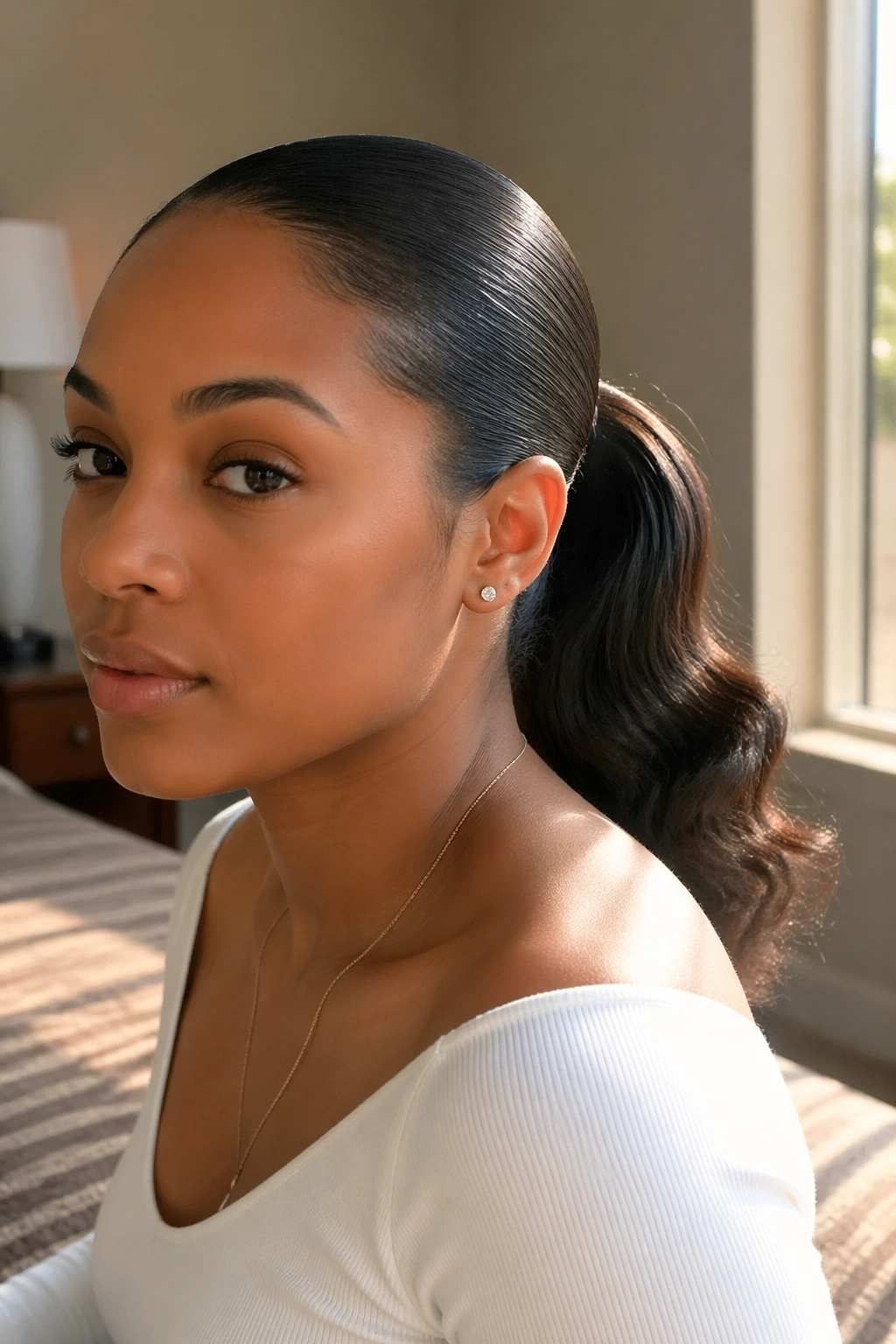
A straight base with wavy ends gives you the best of both textures. The top stays sleek and lined up, while the last few inches bend into soft waves. That contrast looks good on straight hair because it keeps the style from reading too stiff from top to bottom.
The easiest way to do it is to keep the ponytail smooth through the mid-lengths, then add waves only to the bottom third with a large iron. You can also set the ends in loose braids overnight and release them before styling. Either way, the wave should feel relaxed, not crimped.
This is a nice choice when you want something more relaxed than bone-straight but not full-on curly. It works for daytime events, dinners, and any moment when you want the ponytail to move a little more.
- Best with 18- to 24-inch hair.
- Looks cleaner when the wave starts low.
- Pairs well with a middle or soft side part.
- Needs a light mist of flexible-hold spray.
No crunch. Please.
20. Thick Yaki Weave Ponytail
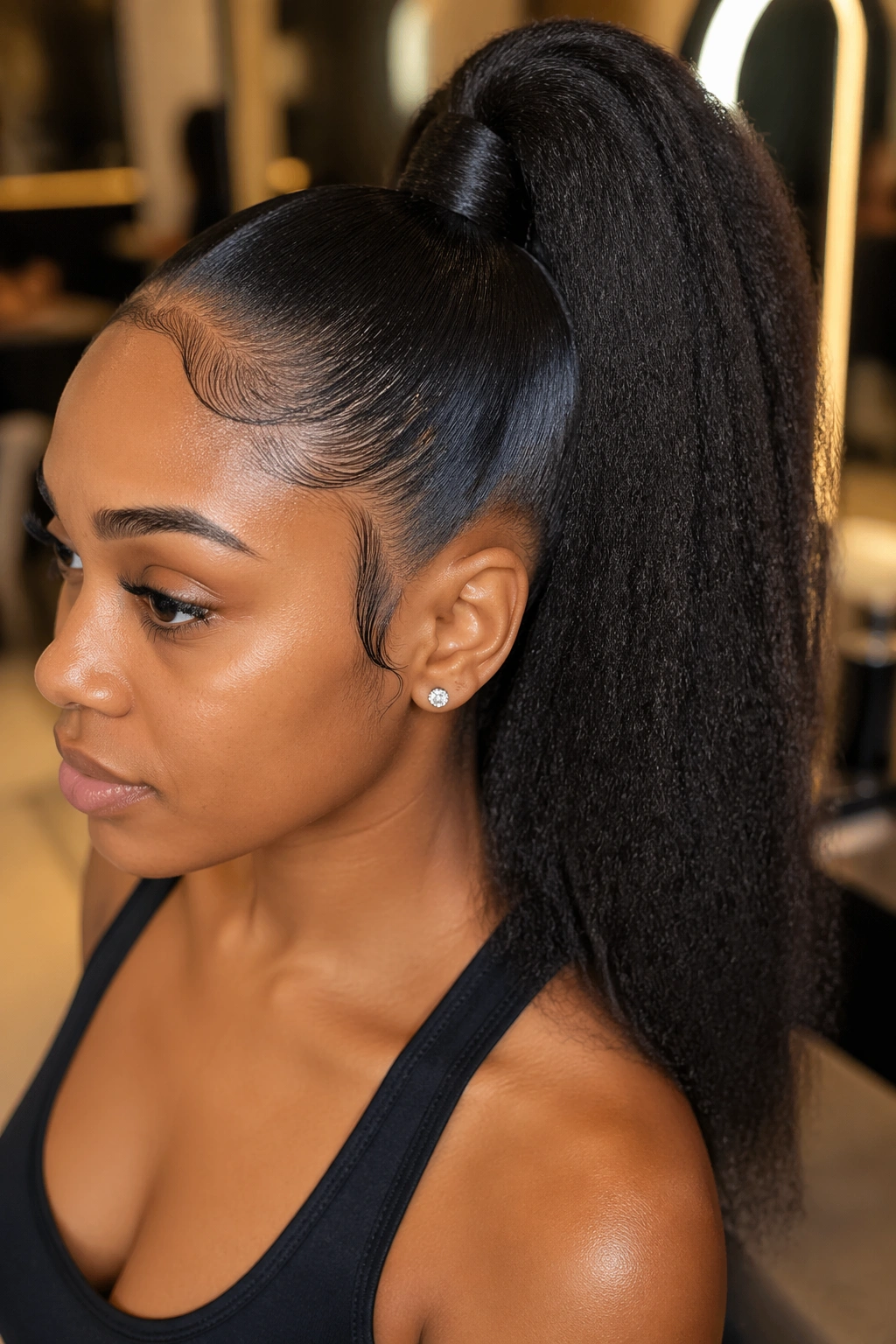
The thick yaki weave ponytail is the one I pick when I want the ponytail to look fuller without looking shiny in a fake way. Yaki texture has a bit of grip and a more natural finish than silky straight hair, so it blends well with straight hair that isn’t pin-glossy. The result feels fuller at the base and denser through the tail.
That texture matters if your natural hair is fine or if you don’t want the ponytail to look slippery. A yaki ponytail usually holds its shape better and gives the style a more lived-in feel. Not messy. Just less polished to the point of looking stiff.
It also works well for people who like a blowout look more than a glass-hair look. The ponytail still sits straight, but the finish has body. If you’ve ever thought a silky ponytail looked a little too fake on you, this is the version to try first.
I prefer it for daytime wear because it feels sturdy. It does not wobble around much, and that is a good thing.
21. Ribbon-Tied Ponytail
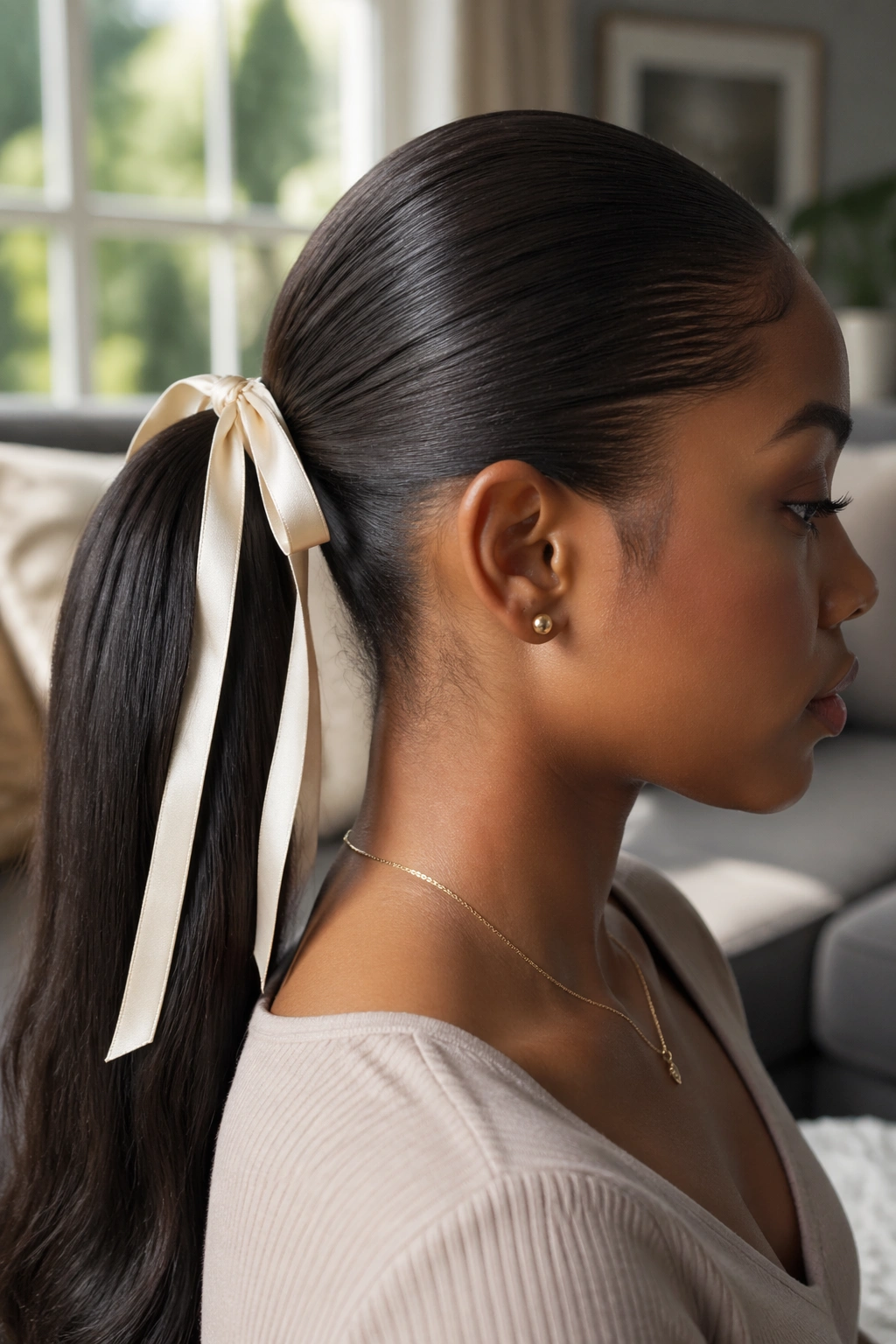
A ribbon-tied ponytail changes the whole mood with one simple detail. Tie a ribbon around the base, let the ends hang, and the style goes from plain to finished in about ten seconds. Straight hair makes the ribbon stand out more because the smooth surface behind it doesn’t compete.
The best ribbons are not stiff. Satin, silk, or a soft matte ribbon all work. Pick a width between ½ inch and 1 inch if you want the bow or knot to read clearly without taking over the style. A narrow ribbon looks delicate; a wider one feels more styled.
How to Keep It Soft
The ponytail itself should stay clean and smooth so the ribbon looks intentional, not like a fix for a bad base. A low or mid-height ponytail usually shows the ribbon best, though a high one can look fun if the ends are long enough to drape.
This is an easy way to make a straight weave ponytail feel less severe and a little more personal.
22. Scarf-Wrapped Ponytail
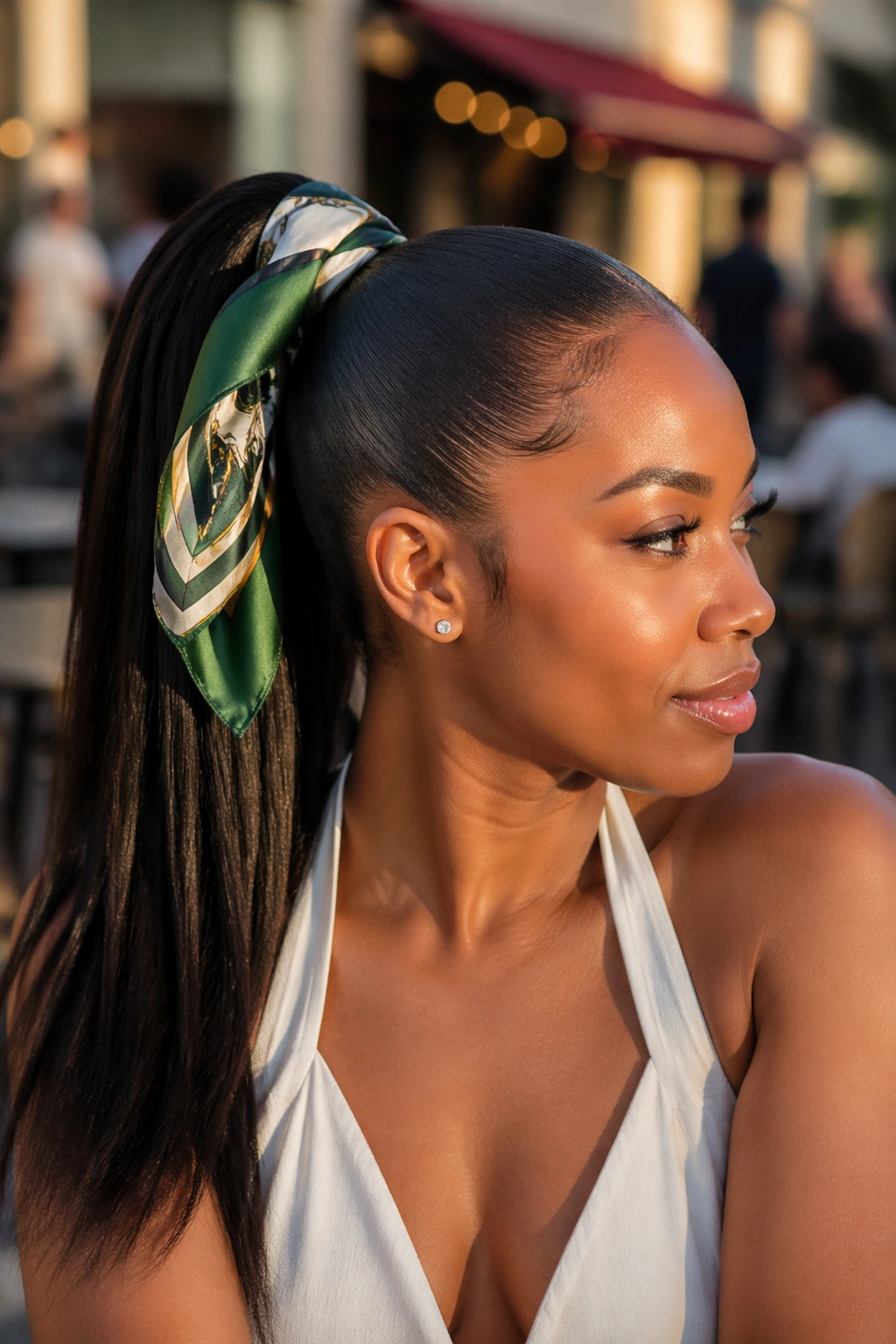
A scarf-wrapped ponytail gives straight hair a polished finish and hides a lot of the boring parts. The scarf wraps around the base, covers the elastic, and adds a bit of color or pattern without needing extra clips. It’s one of my favorite tricks when the hair is sleek but the outfit needs a small detail.
A satin scarf works best because it slides smoothly and doesn’t catch on the weave. Keep the wrap snug enough to stay put, but not so tight that it dents the base. If you tie a knot, place it under the ponytail or slightly off to one side so it doesn’t fight with the part line.
This style is especially useful when the hairline needs a break from a heavy look. The scarf softens the base and draws attention downward instead of keeping everything focused on the edges. That can feel easier on the scalp, too.
Best with: low ponytails, mid-height ponytails, and straight weave tails that need a little visual lift.
23. Glassy Center-Part Low Ponytail
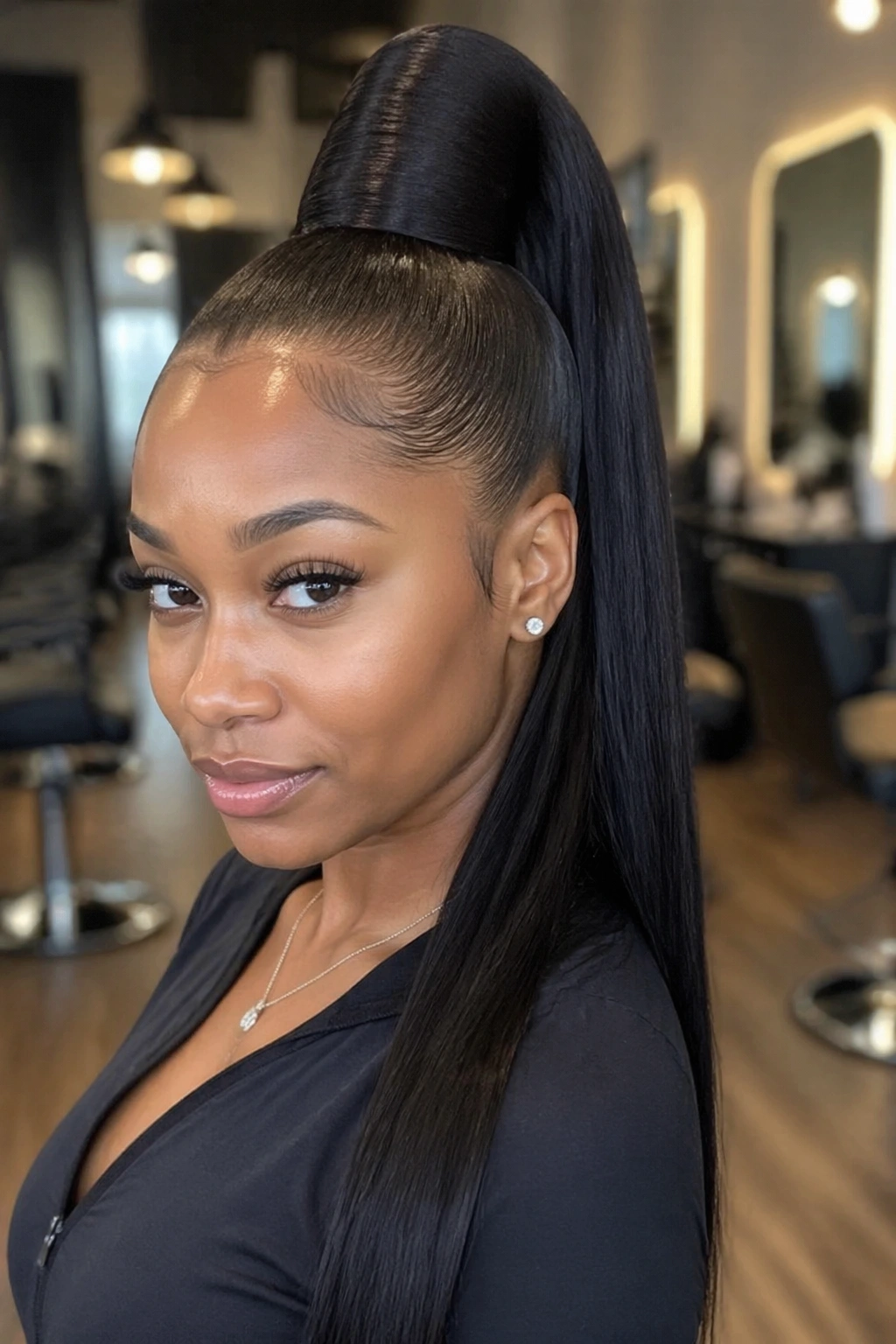
A glassy center-part low ponytail is the cleanest finish in the whole bunch. The part is sharp, the crown is flat, and the ponytail sits low enough to look calm but not dull. On straight hair, the style reads smooth from every angle because there’s nowhere for texture to hide. That’s exactly why it works.
The key is restraint. Keep the part straight, smooth the top with a light product, and stop before the hair starts looking greasy. A tiny amount of serum on the mids and ends is enough. The weave should hang in one long, clean line, whether you choose silky straight or a slightly fuller yaki finish.
This is the style I’d reach for when I want the most polished version of a straight weave ponytail without extra decoration. No curls, no tendrils, no wrap, no extras. Just a clean center part and a low tail that sits where it should.
It’s simple, but it lands well. And sometimes that is the whole point.
