



A low side part ponytail can save a whole hair day before it even starts.
On Black hair, it does more than pull strands back. It gives coils, curls, braids, relaxed lengths, and stretched natural hair a shape that feels finished without fighting the texture underneath. That part placement matters too. Slide it closer to the temple and the whole style softens; place it too low or too straight, and the look can feel flat fast.
That’s why this style keeps showing up in so many forms. Sleek. Braided. Curly. Wrapped. Beaded. Twisted. The base can be clean and simple, or it can carry enough detail to do the talking for you. And because the ponytail sits low, it usually feels a little gentler on the scalp than a high pull, which is no small thing when edges are tender or your hair has already been through a lot.
Some versions belong in an office. Some belong at a wedding. Some are built for a long weekend, a gym bag, or a day when you want your hair off your neck but still want movement. The good ones know the difference between polished and tight — and that difference matters more than people admit.
1. Sleek Low Side Part Ponytail With Laid Edges
The sleek version is the cleanest read of the style, and that’s exactly why it keeps winning. A sharp side part, smooth roots, and a ponytail secured low at the nape create a shape that looks deliberate from every angle.
Why It Works So Well
A clean side part gives the style its whole personality. If the part sits near the arch of the brow and the roots are brushed flat in the direction of the ponytail, the finished look feels crisp instead of stiff.
Keep the product layer thin. A little edge control, a light gel, and a soft brush are enough for most textures; piling on too much leaves the hair flaky and dull by mid-day.
Best on: blown-out hair, silk-pressed hair, or stretched natural hair.
Watch for: tight tension at the front. If your scalp feels sore, the ponytail is too pulled.
2. Braided Low Side Part Ponytail
Why does a braided low side part ponytail feel so easy to wear for days? Because the braid does half the work for you. Once the side part is clean and the braid is anchored low, the style stays neat with far less daily fuss than loose hair.
This one is especially good if you like a style that can handle errands, heat, humidity, and sleep with a satin scarf. Feed the braid into the ponytail base, or braid the ponytail itself if you want a longer rope-like finish.
- A feed-in braid base keeps the front smooth.
- Jumbo braids give a bolder look.
- Smaller braids feel lighter on the scalp.
- A thin wrap of braid hair around the tie hides the elastic.
Pro tip: Keep the braid snug, not yanked tight. Your hairline should not pay for the style.
3. Curly Low Side Part Ponytail With Soft Face-Framing Pieces
A few loose curls around the cheekbone change everything. The style goes from “pulled back” to “soft and lived-in” almost instantly, and that’s why this version is such a favorite for Black women who want movement without losing the low, clean base.
The trick is to keep the roots smooth and let the ponytail ends do the expressive work. If your own hair is curly, leave out a little around the front and curl it lightly with flexi rods or a wand. If you’re using extensions, pick a pattern that matches your natural texture instead of chasing a fake-perfect curl.
Humidity can make this style bigger by the hour. That is not a flaw. It’s part of the charm.
4. Bubble Low Side Part Ponytail
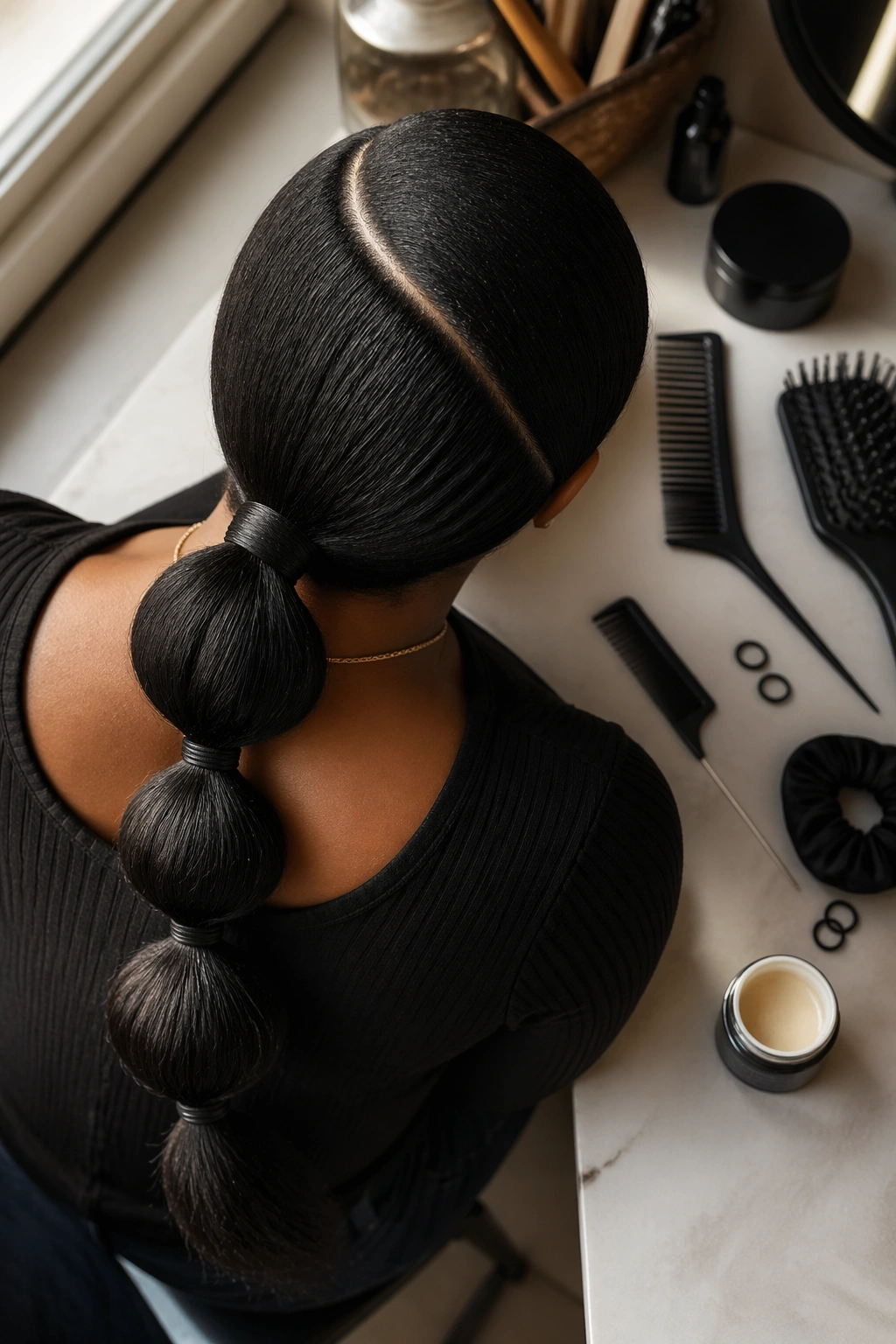
A bubble ponytail at the nape looks playful, but it still reads polished when the side part is neat and the bubbles are evenly spaced. I like this style for days when plain ponytails feel too expected.
The base should be secured first, then the ponytail sectioned off with small elastics every 2 to 3 inches. Tug each section gently until the bubbles round out. You do not want them puffed so much that the shape collapses at the ends.
This style works especially well with added hair because the bubbles keep their form better. Use matte or satin-coated elastics if your hair tangles easily; those tiny details make removal much less annoying.
5. Wrapped-Base Low Side Part Ponytail
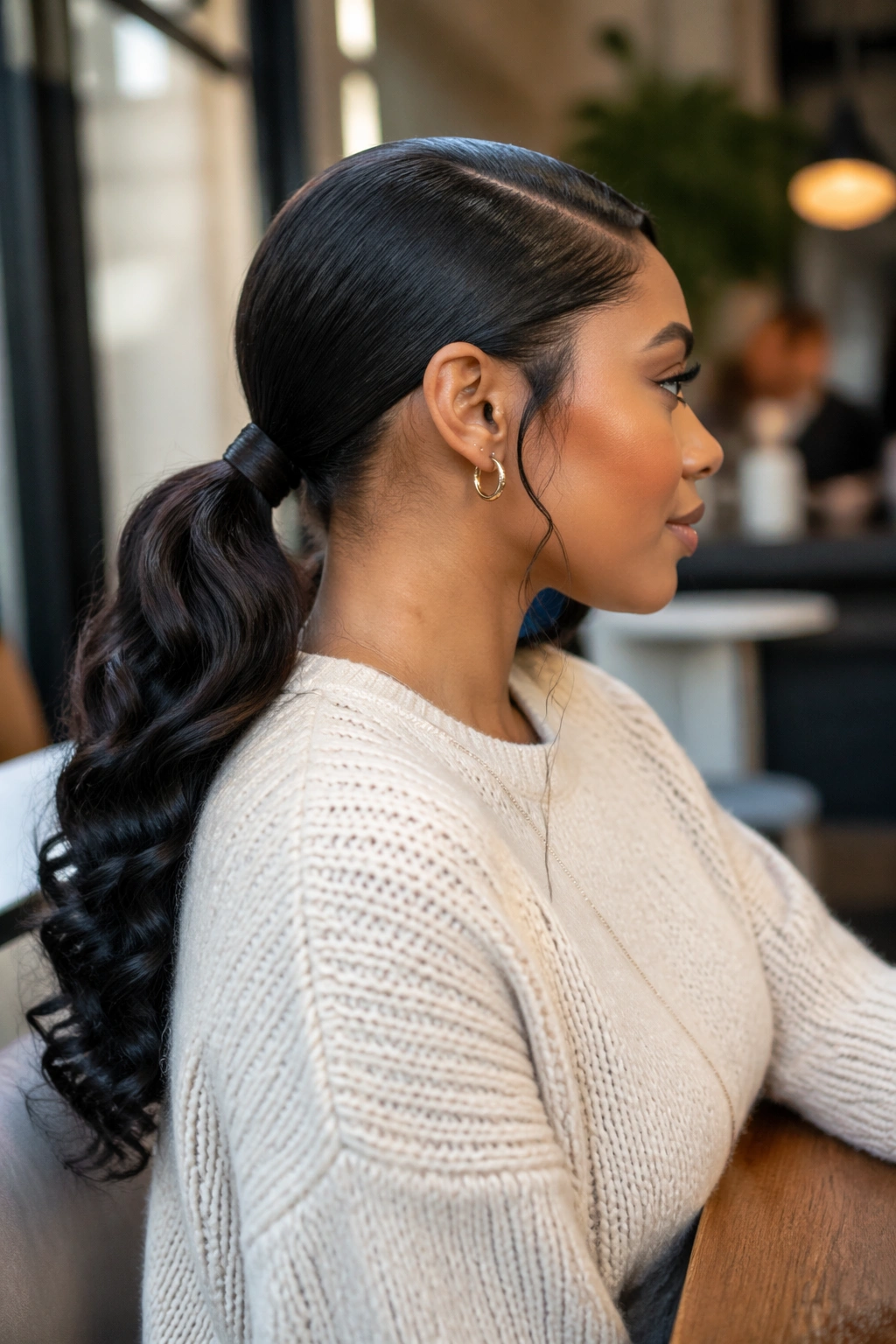
A wrapped base makes even the simplest low side part ponytail look finished. It hides the elastic, cleans up the silhouette, and gives the style that neat little visual anchor that many plain ponytails miss.
What Makes the Base Matter
The base is the first thing people notice when the rest of the hair is smooth. If it looks bulky or uneven, the whole ponytail feels off.
Wrap a small strand of hair around the ponytail holder, pin it underneath with a bobby pin, and keep the wrap flat. That one move changes the shape more than most people expect.
- Use a satin scrunchie under the wrap if your hair is fragile.
- Pick a strand from underneath, not the front, so the side part stays clean.
- Pin the wrap under the ponytail, never at the top where it shows.
6. Feed-In Cornrow Low Side Part Ponytail
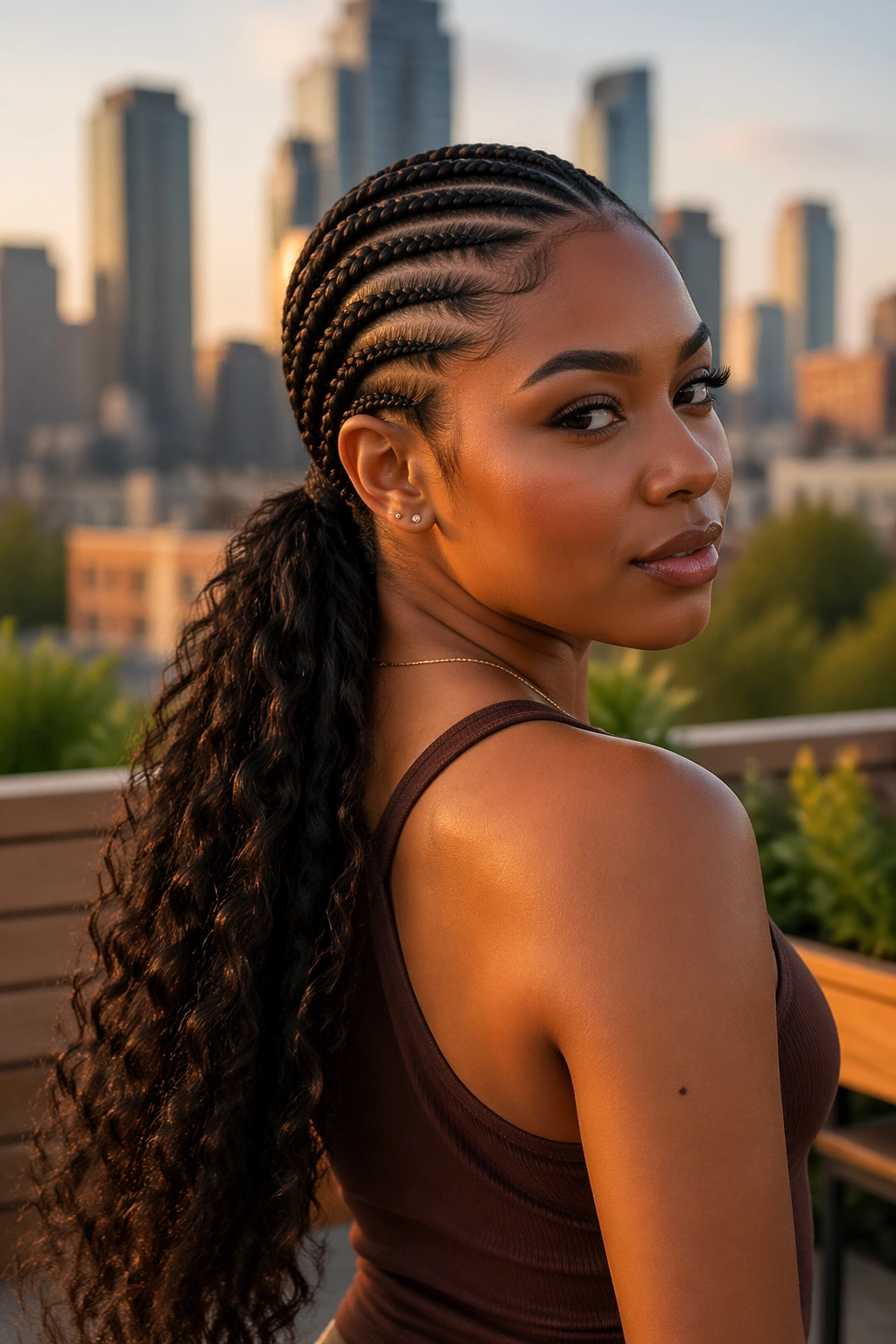
A feed-in cornrow style has a different energy from a loose ponytail. It feels more structured, more secure, and a little more architectural, which is exactly why it works so well on thicker textures and longer wear.
The cornrows can start at the hairline and sweep into a low side ponytail, or they can run diagonally toward one side for a stronger visual line. Either way, the braid pattern matters as much as the ponytail itself.
This is a smart choice when you want your hair tucked away and out of your face without giving up style. It also plays nicely with added length because the braid base stays neat while the ponytail can be curly, straight, or braided.
7. Deep Wave Low Side Part Ponytail
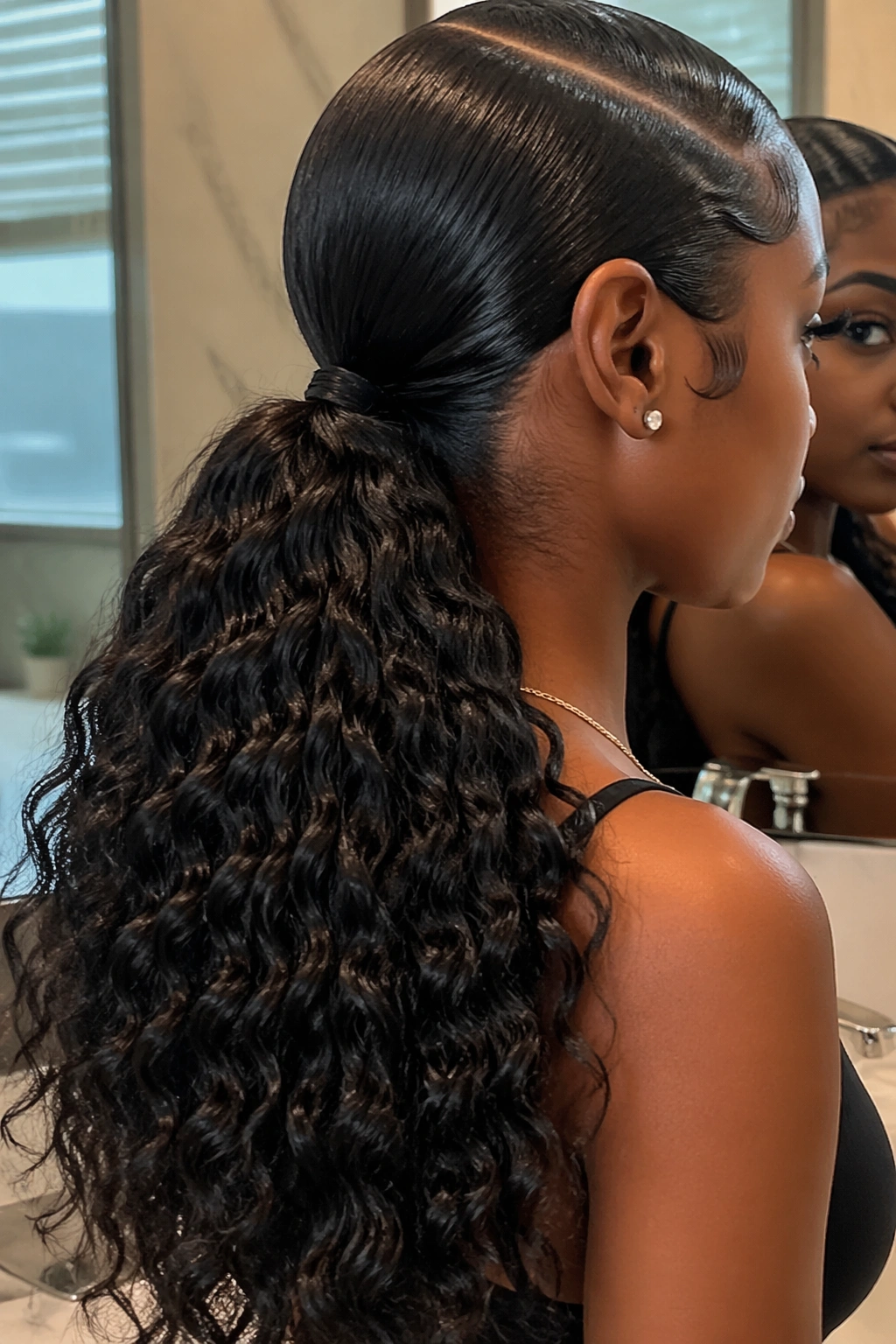
Deep wave hair gives the low side part ponytail a bit of drama without making it loud. The wave pattern brings body near the ends, so the style moves when you move, which is half the appeal.
The roots should still be smooth. That contrast — sleek at the scalp, full through the ponytail — is what makes deep wave versions look expensive without trying too hard. Use a light mousse to tame flyaways, and avoid heavy oils near the crown because they weigh the waves down.
A deep wave ponytail is one of those styles that looks best after the first hour of wear. The pieces settle. The shape relaxes. It stops looking staged.
8. Natural Afro Puff Low Side Part Ponytail
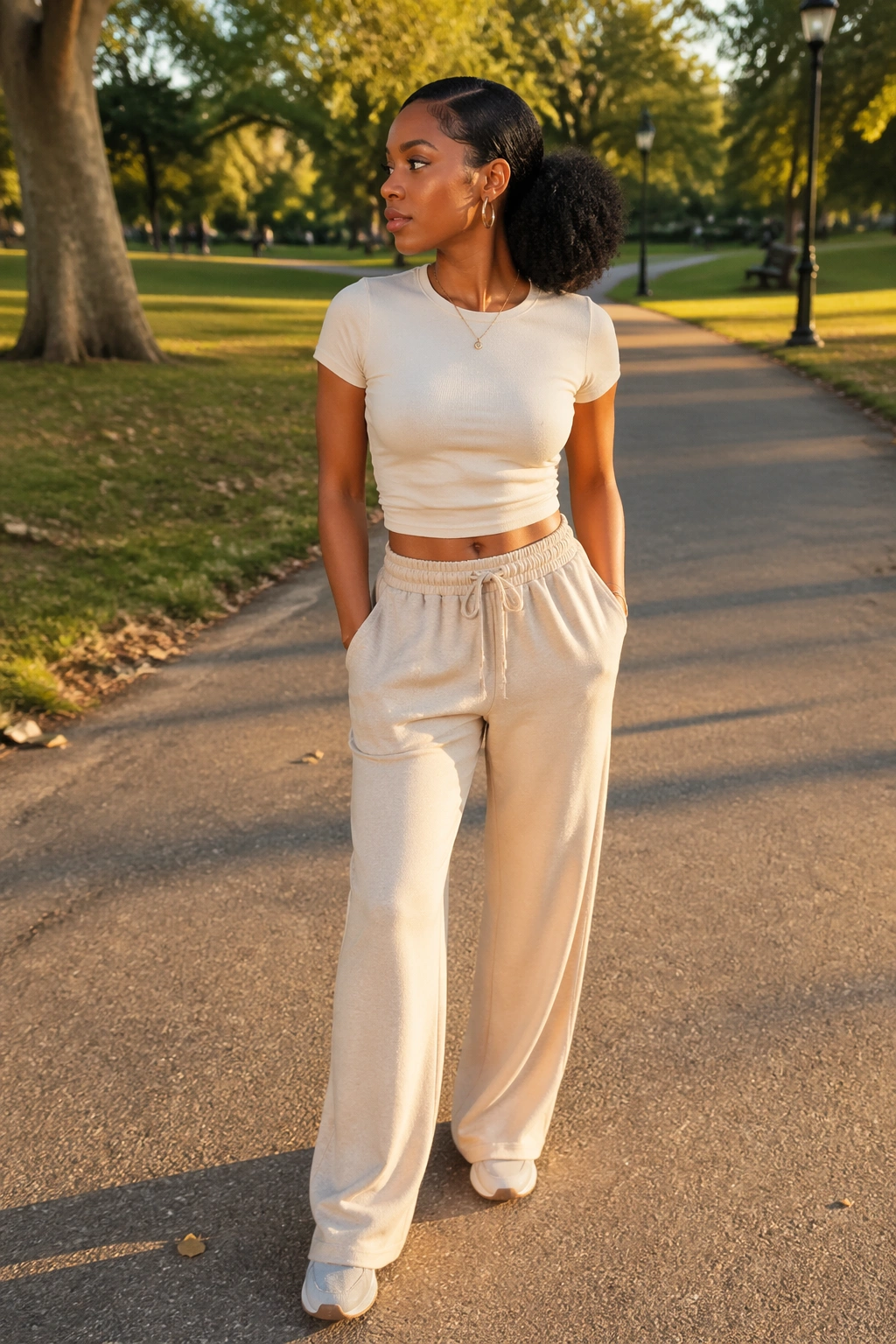
Can a puff count as a ponytail? Absolutely. Once the base is anchored low and shifted to the side, the style gives you all the ponytail energy with none of the pressure to stretch or slick every last strand.
This is a good option for short to medium natural hair, especially if your coils like volume. The side part helps direct the puff so it feels intentional, not accidental. A soft pick at the roots can give the puff a better shape, but stop before you tease it into frizz city.
Small Details That Help
- Use a stretchy snag-free band.
- Keep the front smooth if you want contrast.
- Let the puff stay full. That’s the point.
9. Two-Strand Twist Low Side Part Ponytail
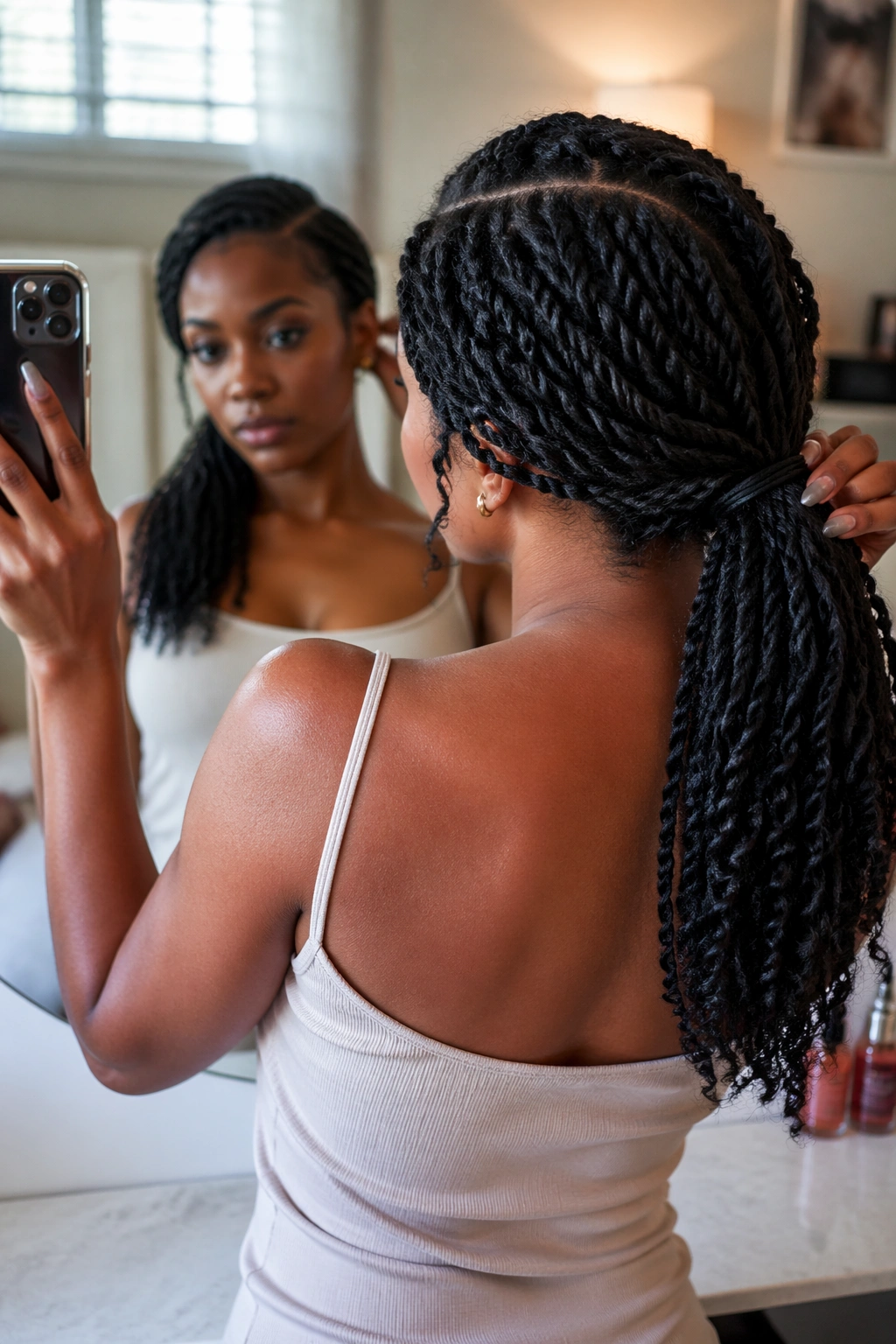
Two-strand twists make a low side ponytail look tidy without needing a full braid pattern. The style has a softer texture than a cornrowed version, and that softness can be really flattering around the face.
I like this for medium to long natural hair because the twists give the ponytail shape even when the hair is thick or layered. If you want extra length, twist in added hair before gathering the ponytail. If you want something lighter, keep it all your own hair and let the ends hang free.
The twist pattern also makes the style easier to refresh. A little mist of water, a touch of leave-in, and you’re back in shape.
10. Low Side Part Ponytail With a Side Swoop Bang
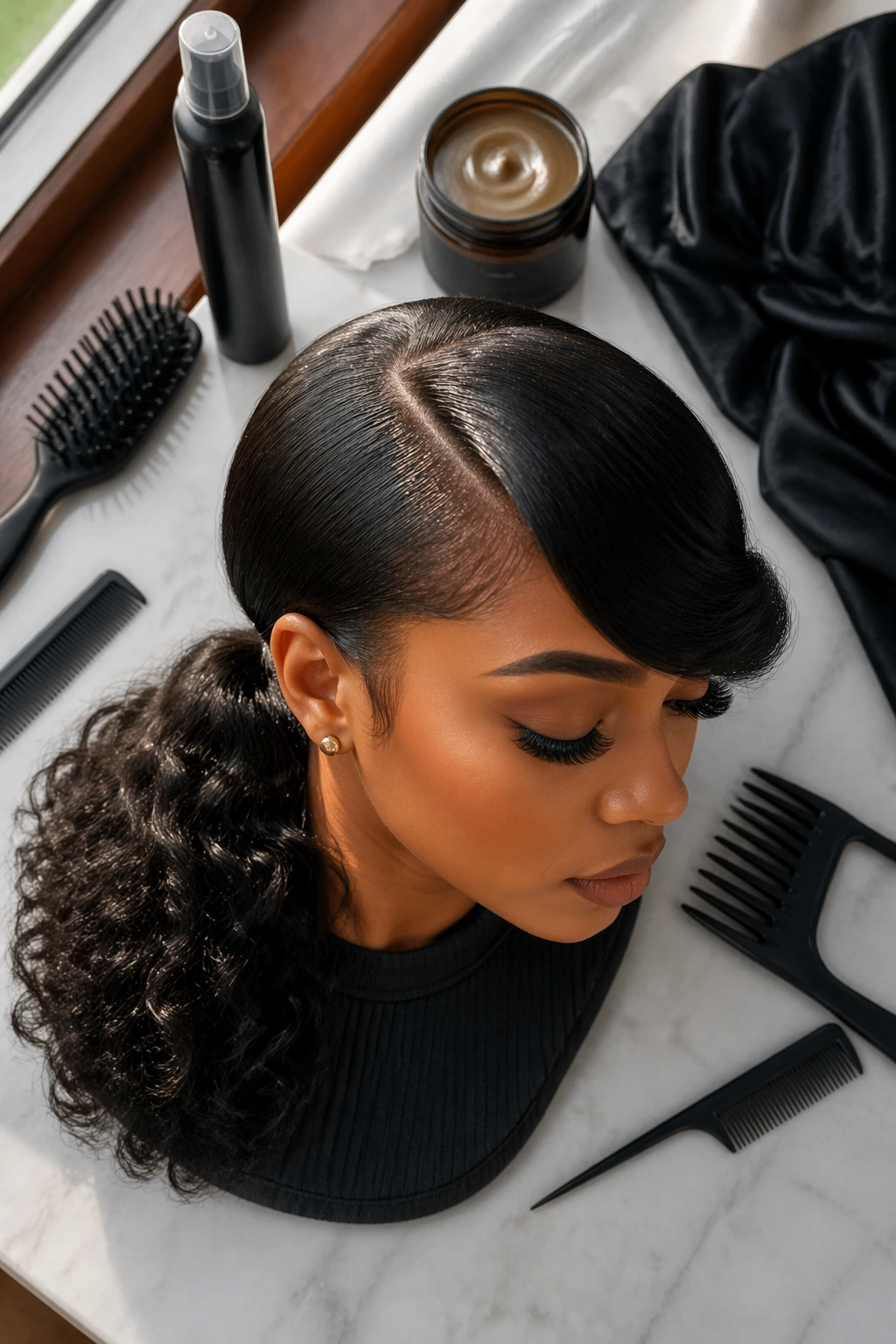
A side swoop bang changes the whole mood. Suddenly the ponytail feels softer, more face-framing, and a little more romantic without drifting into overdone territory.
This style works especially well if you like a front section that has movement. The bang can be curled, flat-ironed, or finger-styled into a bend that sweeps across the forehead and blends into the side part. Keep the ponytail itself low and tidy so the front piece does the visual work.
Too much volume near the bang can make the style look busy. One smooth swoop is enough. More usually turns into fuss.
11. Low Side Part Ponytail With an Accent Braid
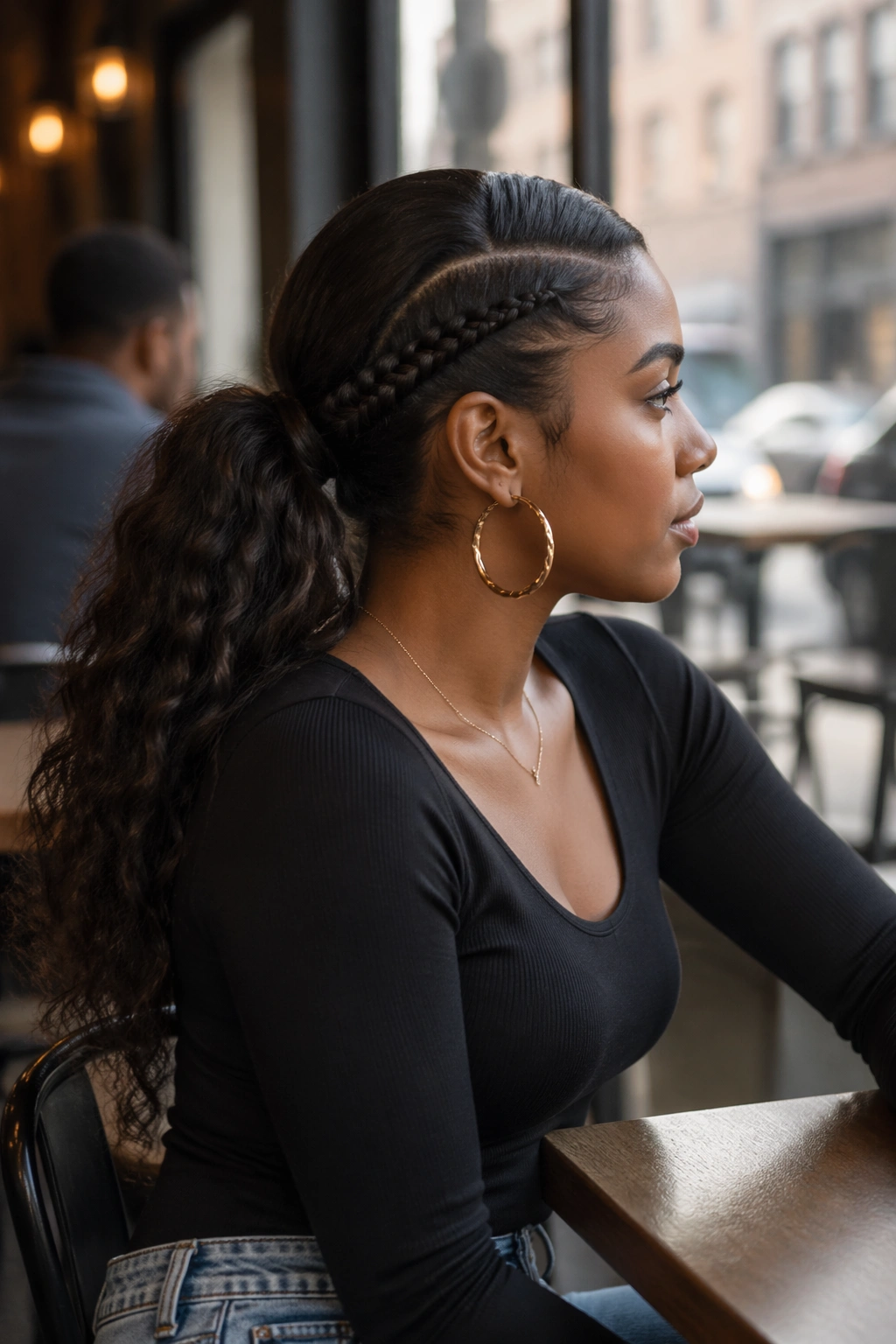
A single accent braid gives you just enough detail to make the ponytail feel customized. It can run along the part, hug the hairline, or curve into the base before disappearing into the tail.
Unlike a full braided ponytail, this version keeps most of the hair loose, which is nice if you want movement and a little texture. The braid acts like a frame. Small thing, big effect.
If you’re wearing this with pressed hair or stretched curls, braid the accent section tightly enough to stay neat but not so tight that it dents the rest of the style. A tiny clear elastic can help keep the end in place before you tuck it into the ponytail.
12. Low Side Part Ponytail With Gold Cuffs and Beads
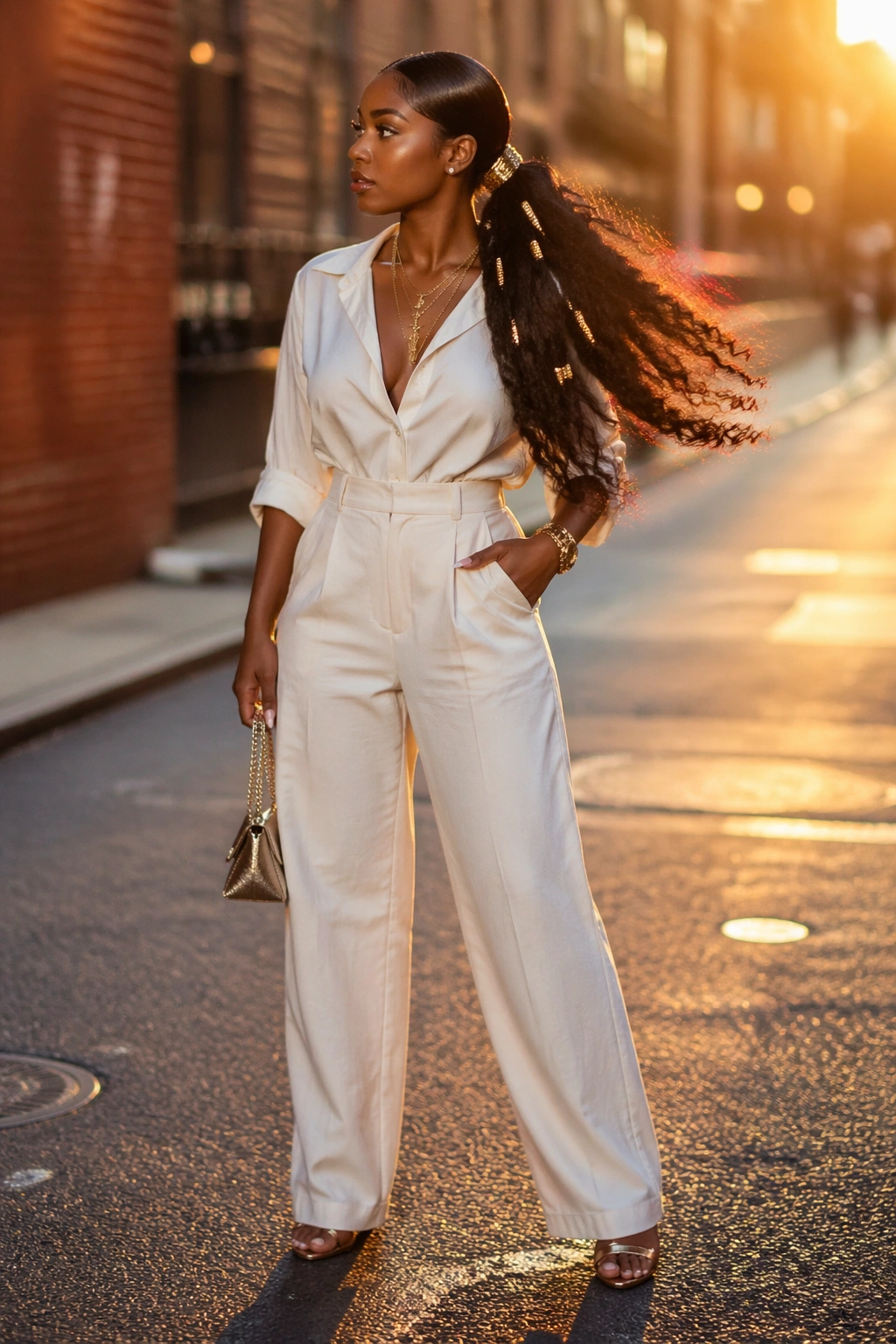
Accessories can carry a whole style when the base is simple. Gold cuffs on a braid, a few beads at the ends, or one slim hair ring near the ponytail holder can shift the look from plain to styled without piling on extra work.
This version is lovely on braided or twisted ponytails because the decorations have something to grip. On loose hair, they work better if the ponytail is secured in a braid or a wrapped section first. Otherwise, they slide around and drive you a little crazy.
Keep the accessories in one metal tone if you want the look to feel clean. Too many mixed finishes can get messy fast.
13. Curly-Ends Low Side Part Ponytail
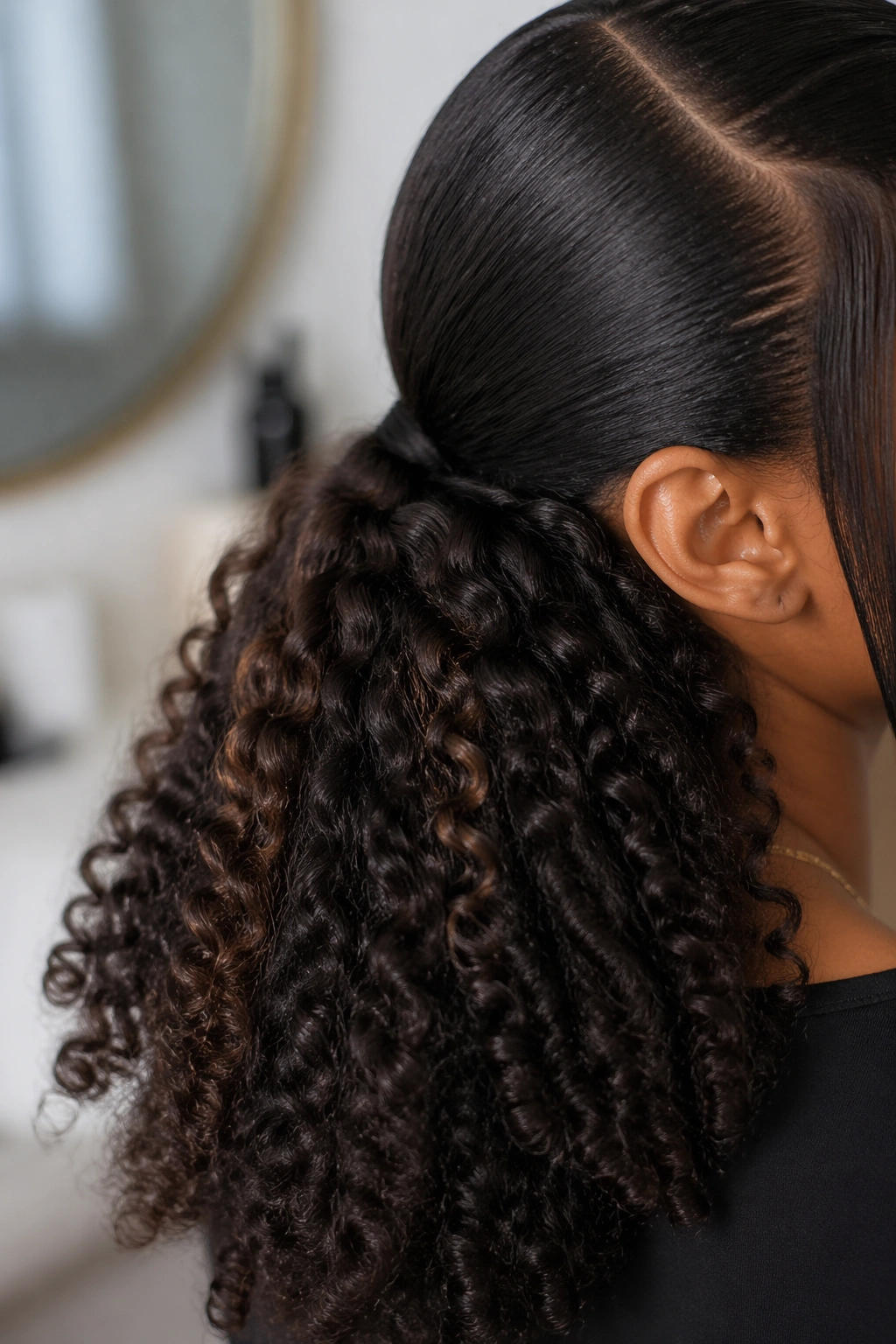
Straight roots and curly ends make a handsome contrast. The top stays sleek enough to show off the part, while the ends add bounce and shape where it counts.
Best Way to Wear It
Use a light styling foam or setting mousse to smooth the top without hardening it. Then curl the ends with a wand, flexi rods, or hot rollers depending on the texture you want.
This style is a good fit if you like a ponytail that still feels soft in motion. The curls keep the ponytail from hanging too flat, especially on longer lengths. If the ends are too tight or too uniform, though, the whole look can start to feel stiff.
- Curly ends work well with human hair extensions or blended textures.
- A little shine spray goes a long way.
- Pin the base flat before curling the ends.
14. Jumbo Braid-Base Low Side Part Ponytail
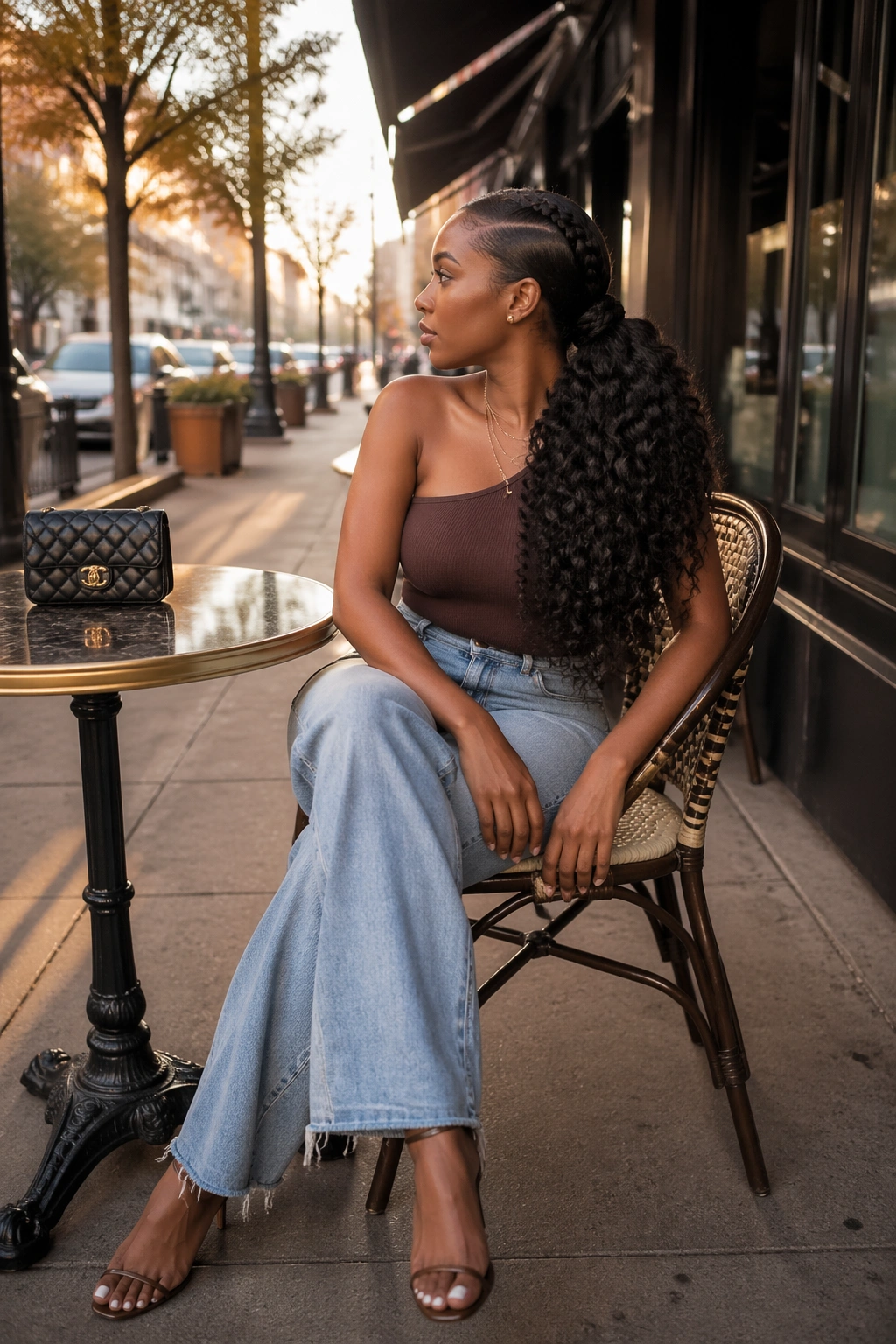
A jumbo braid at the base gives the ponytail a strong spine. It’s one of the easiest ways to make a low side part ponytail look bigger and more defined without dressing the rest of the hair in extra detail.
This style is especially good when you want the ponytail to look substantial from the side. The braid anchors the eye first, then the tail falls behind it. Simple, but effective.
If you have dense hair, a jumbo braid can also help distribute the bulk instead of letting it pile up at one point. That matters. A heavy knot in the wrong place can make a style feel off by lunch.
15. Silk-Pressed Low Side Part Ponytail
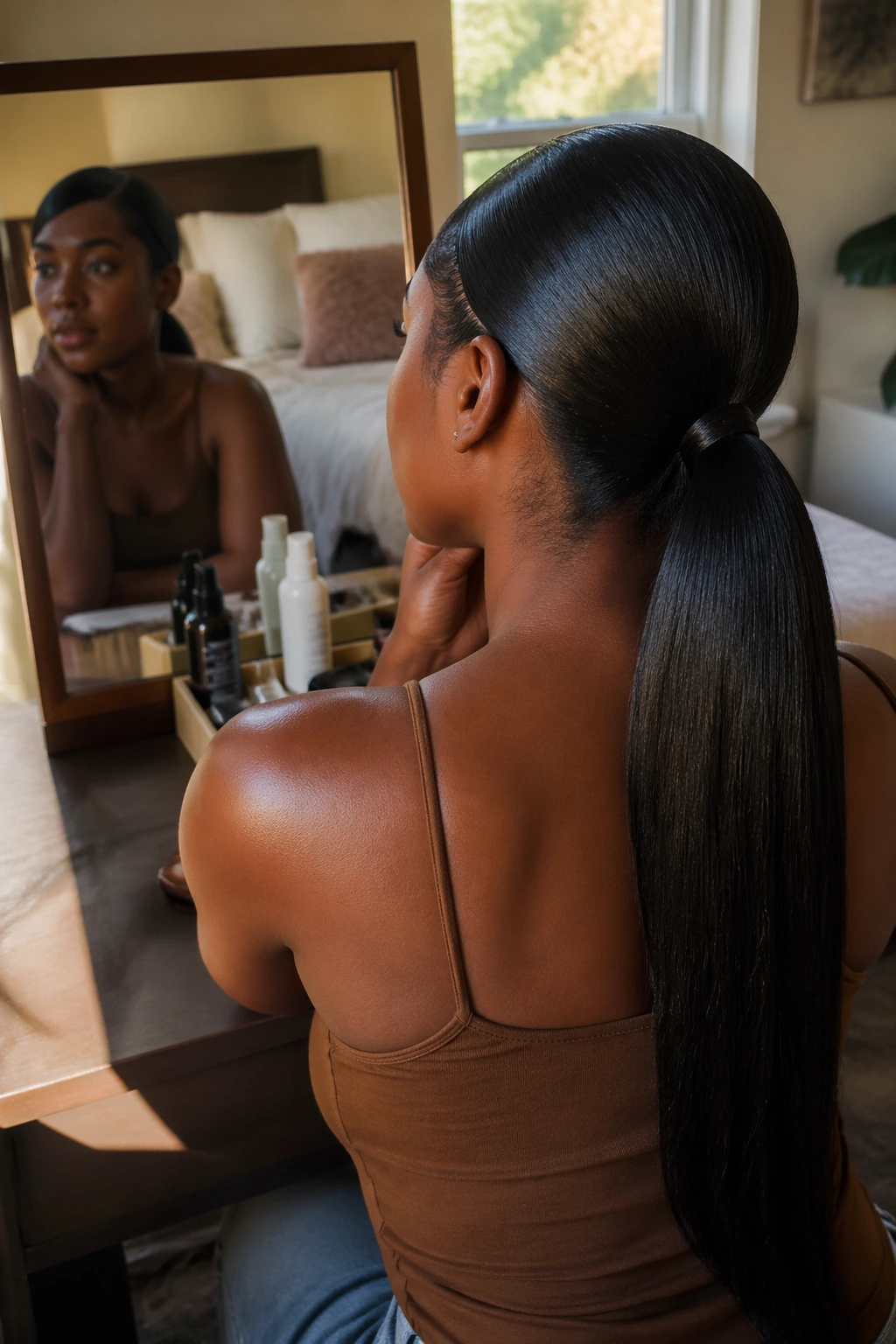
A silk-pressed ponytail has a very different feel from a natural-texture version. The hair swings more, reflects more light, and lays flatter along the side part, which gives the style a smooth, controlled finish.
The catch is heat. Too much, too often, and the hair loses the softness that makes this style feel good in the first place. Use a heat protectant, keep the pass count low, and stop once the strands are smooth enough to gather without snagging.
This style shines when the part is precise and the edges are relaxed, not carved into a stiff shape. A little movement at the hairline makes the whole look more natural.
16. Stretched-Coil Low Side Part Ponytail
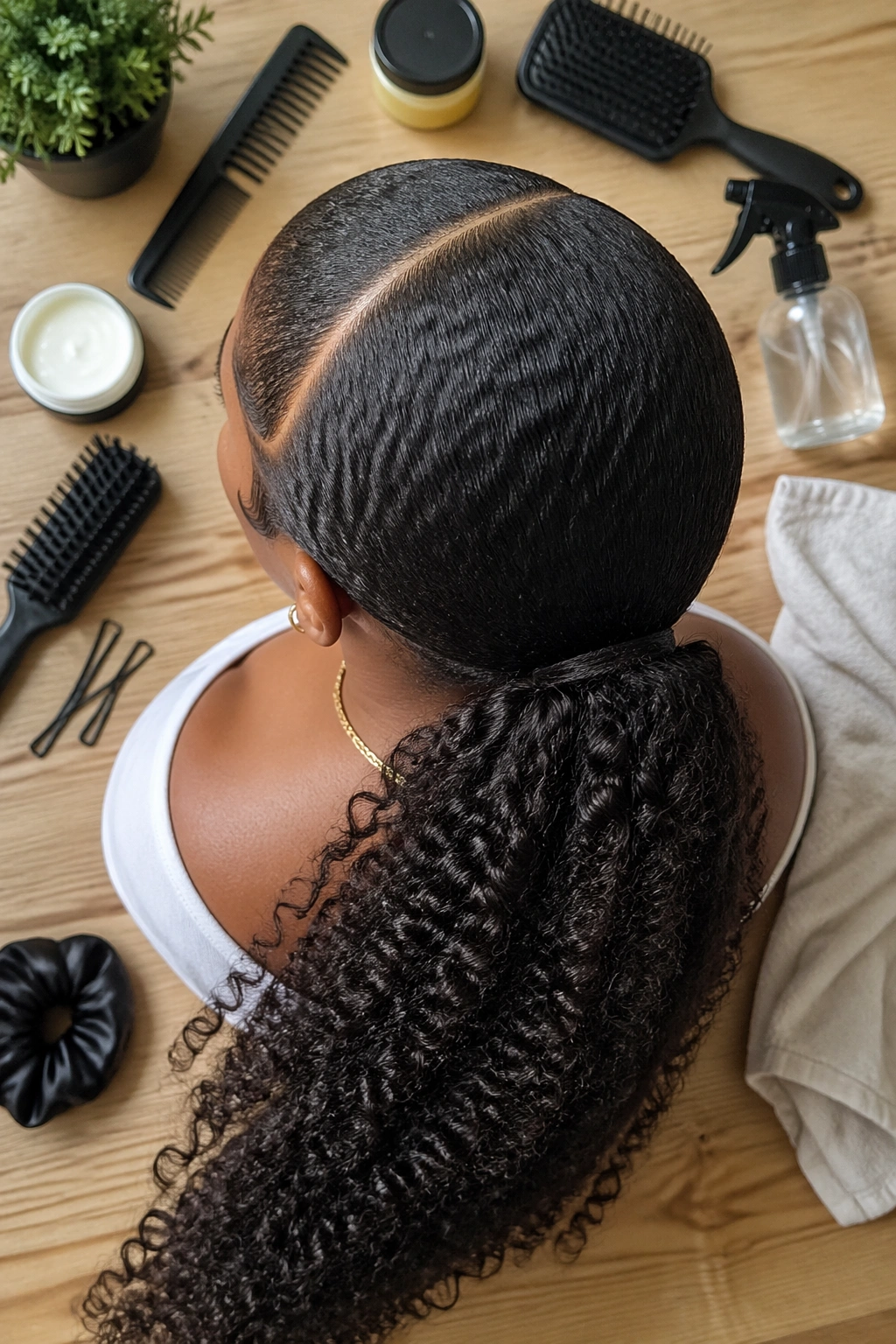
Why stretch the hair before a ponytail? Because stretched coils give you more length, less shrinkage, and a smoother base to work with. That matters if you want the ponytail to hang low instead of puffing up at the root.
Banding, African threading, a blow-dryer with a comb attachment, or a gentle twist-out can all help, depending on how much texture you want left in the final style. The part should still be clean, but the rest of the hair can stay soft and textured.
What to Aim For
- Stretched hair should feel flexible, not bone-dry.
- The ponytail holder should sit low enough to avoid crown puff.
- A light cream can keep the coils from frizzing into the air.
17. Sculpted Baby-Hair Low Side Part Ponytail
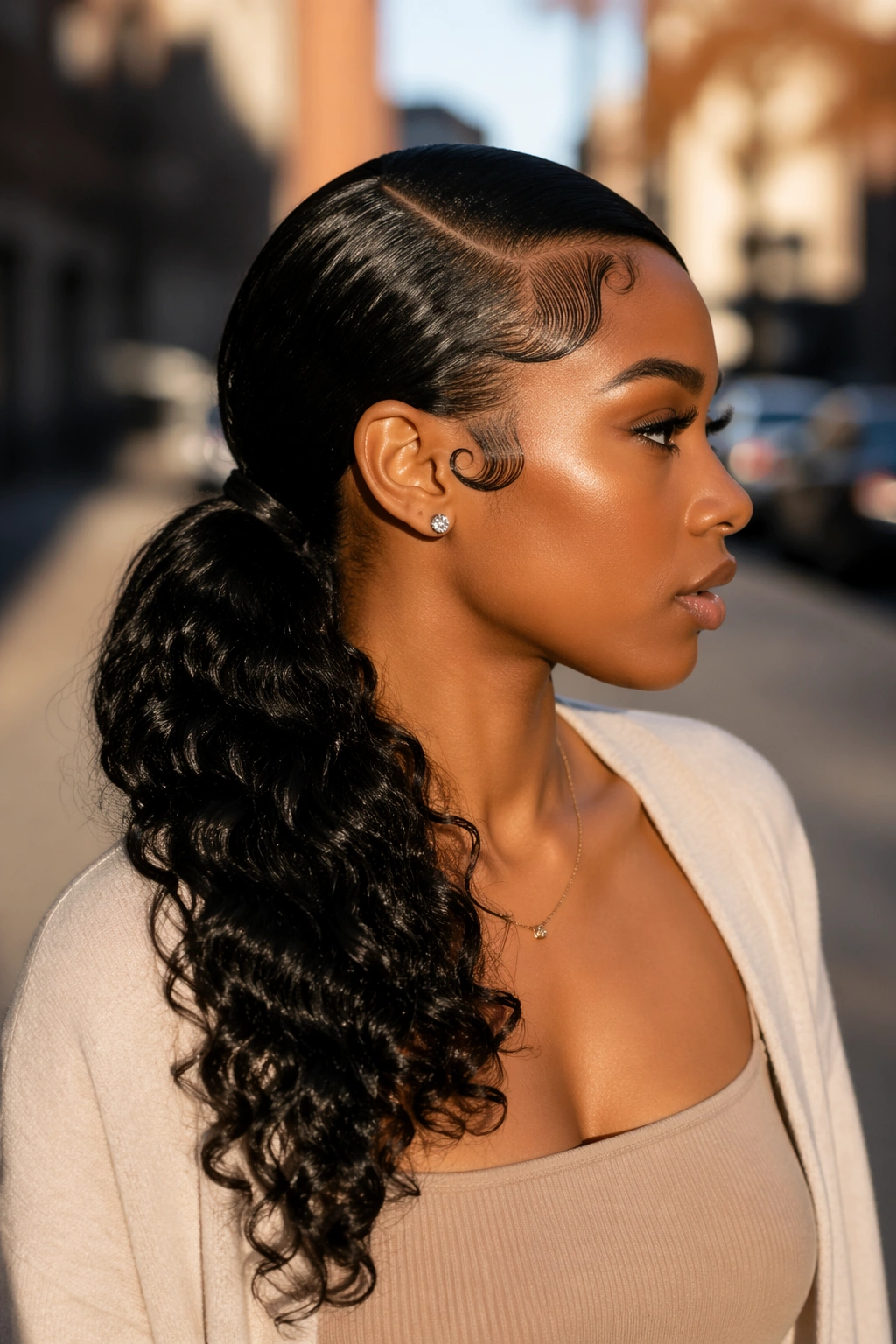
A little baby-hair styling can sharpen the whole face. A lot of it can make the style look busy. That’s the line, and it’s worth respecting.
The best sculpted versions use small, controlled swoops near the temples and along the front hairline, then leave the rest of the style clean. Think of the edges as punctuation, not decoration for the whole page.
A small toothbrush or fine edge brush gives more control than a big brush. Use it with a tiny amount of edge control, then stop once the shape is set. If you keep brushing, you’ll only create crumbs and frustration.
18. Scarf-Wrapped Low Side Part Ponytail
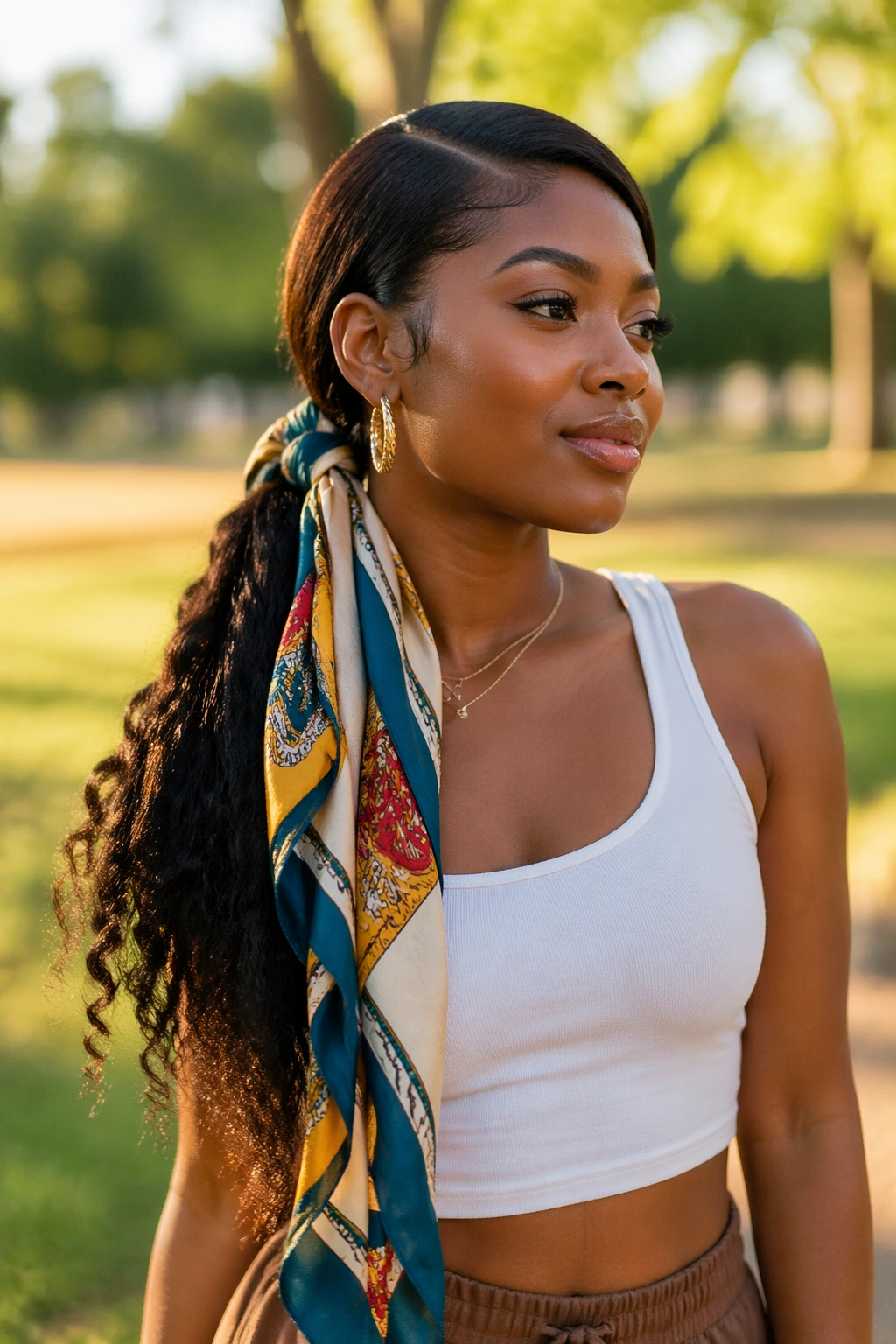
A scarf changes the style without changing the structure. Wrapped near the base, tied under the ponytail, or folded into a band along the part, it gives you color and texture with almost no extra effort.
This is one of my favorite ways to soften a low side ponytail when the hair itself is plain. A printed silk scarf can make a basic braid feel dressed up. A solid satin one can make curly hair look more intentional.
Choose fabric carefully. Cotton can snag and soak up moisture. Silk or satin slides better and is kinder to the hairline.
19. Short Natural Hair Low Side Part Ponytail
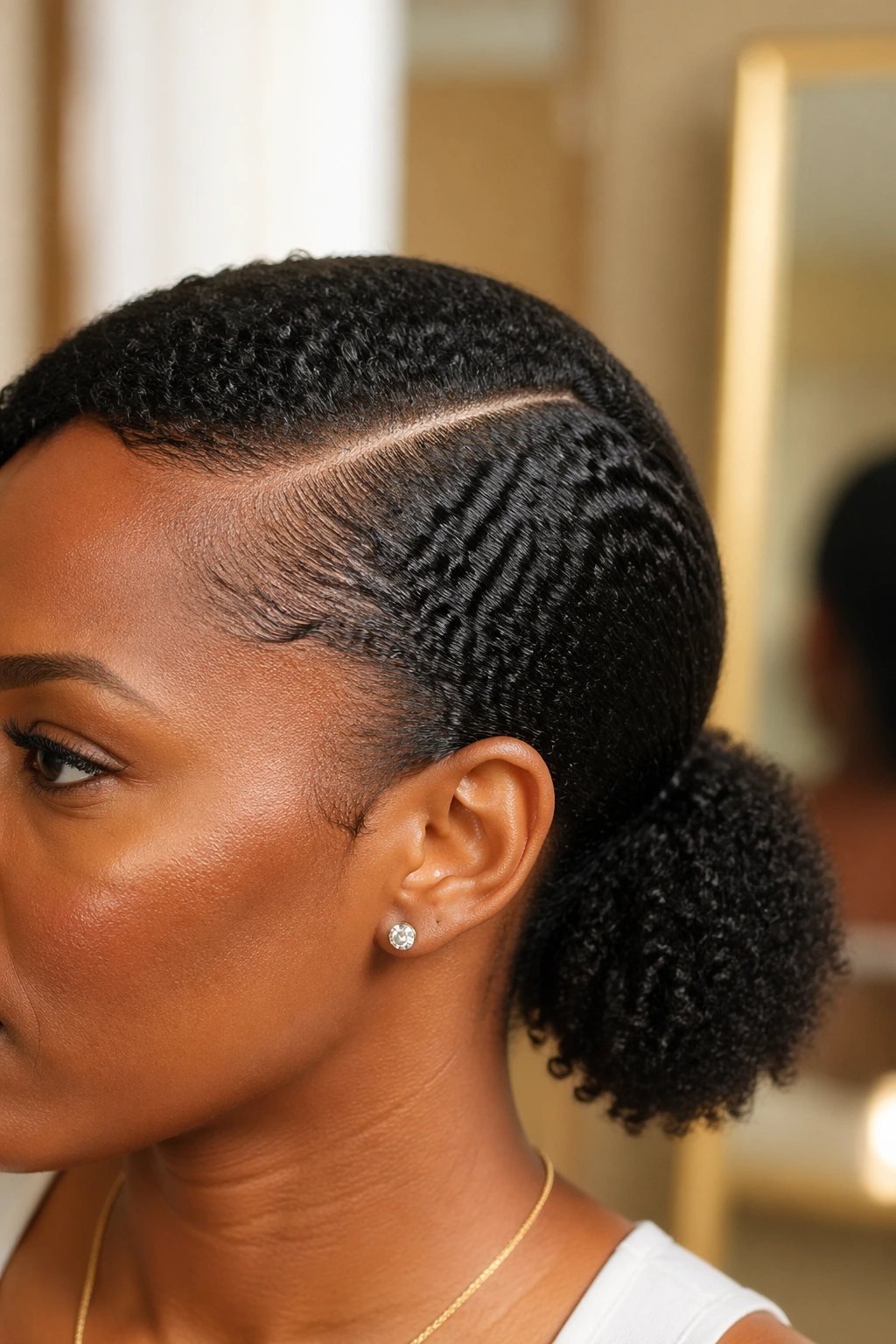
Short hair can do this style too, and it often looks sharper than people expect. The trick is to work with the length you have instead of pretending it’s longer.
If your hair is tapered or sits above the nape, the ponytail may become more of a puffed section or a tucked mini-tail. That is fine. Really. A neat side part and a low anchor point still give the same visual idea even when the length is modest.
Use a light gel or cream and keep the front smooth. Don’t chase a stretched-out look that your hair doesn’t want to hold. Short natural hair looks best when it looks cared for, not forced.
20. Medium-Length Natural Hair Low Side Part Ponytail
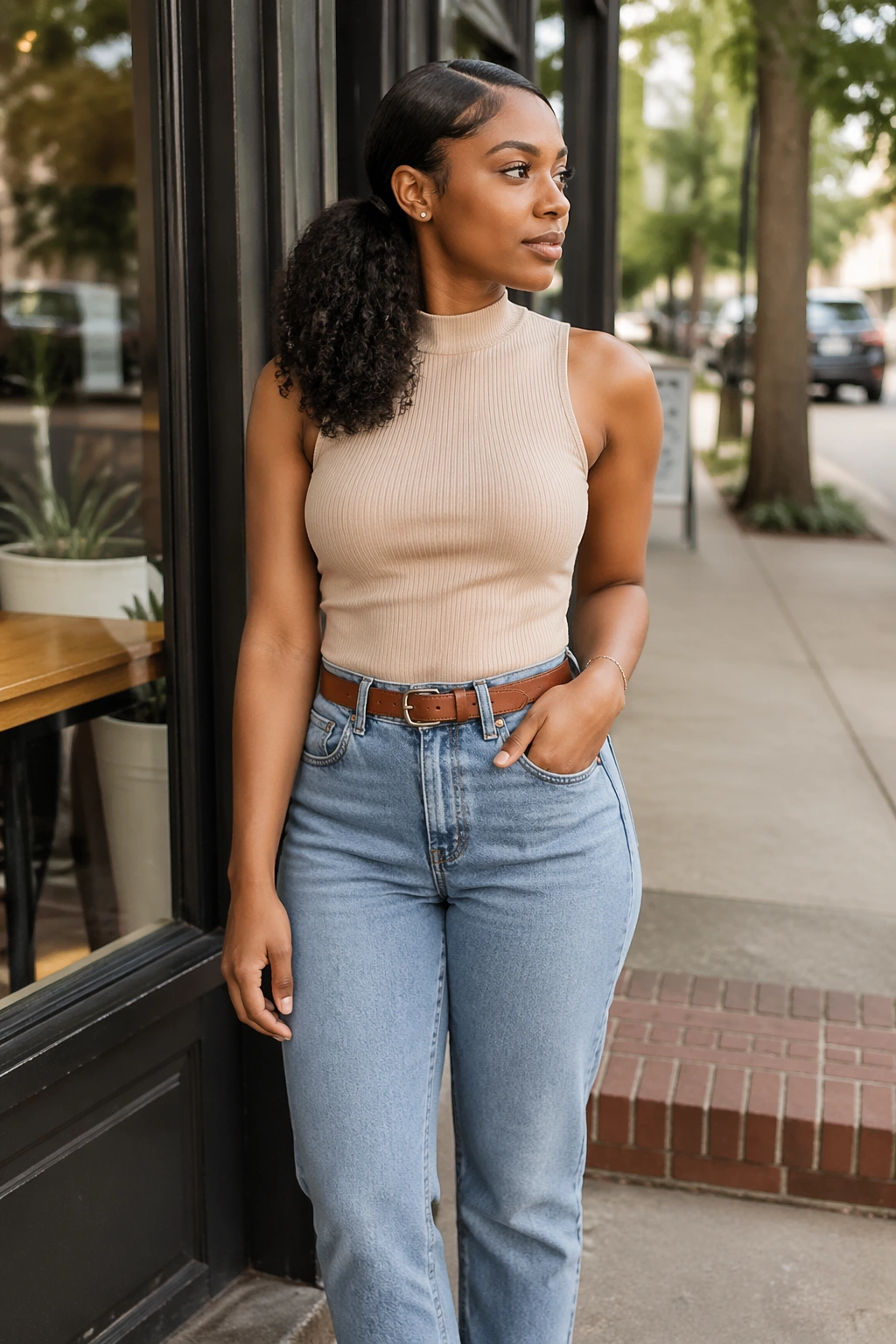
Medium-length natural hair sits in a sweet spot for this style. There’s enough length to gather, but not so much that the ponytail becomes heavy before lunchtime.
How to Keep It Balanced
You want the crown smooth and the ends slightly textured. That balance keeps the ponytail from looking flat at the top and puffy at the bottom.
If the hair shrinks hard, stretch it first with twists, bands, or a quick blow-dry on low heat. Then gather it at the nape, off to one side, and secure it with a gentle elastic. A small amount of cream on the ends can help the tail stay soft.
- Best for 4A, 4B, and 4C textures that like a little stretching.
- Good for school, office days, and dinners out.
- Easy to dress up with a clip or ribbon.
21. Color-Streak Low Side Part Ponytail
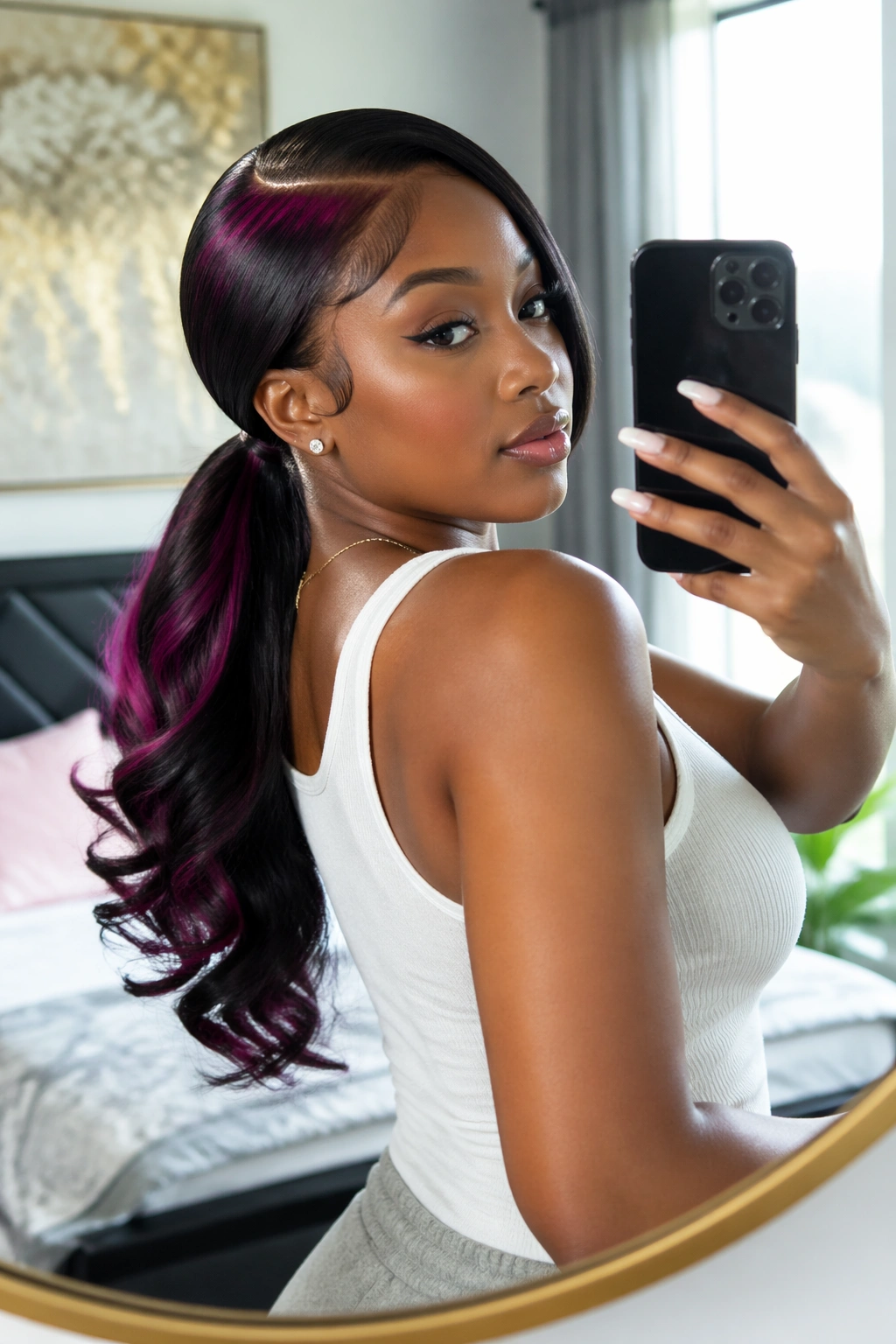
A pop of color changes the whole read of a side ponytail. Honey brown streaks, auburn ends, copper ribbons, even a single face-framing highlight can make the shape look sharper and more dimensional.
The key is restraint. One or two color touches usually look better than a full riot of shades, especially if the base style is already sleek or braided. Let the color sit where the eye naturally lands: near the part, through the ponytail ends, or in a thin accent braid.
What Color Does Best
- It breaks up dense dark hair.
- It shows off the braid pattern.
- It makes curls and waves look fuller.
22. Side Braid Into Low Side Part Ponytail
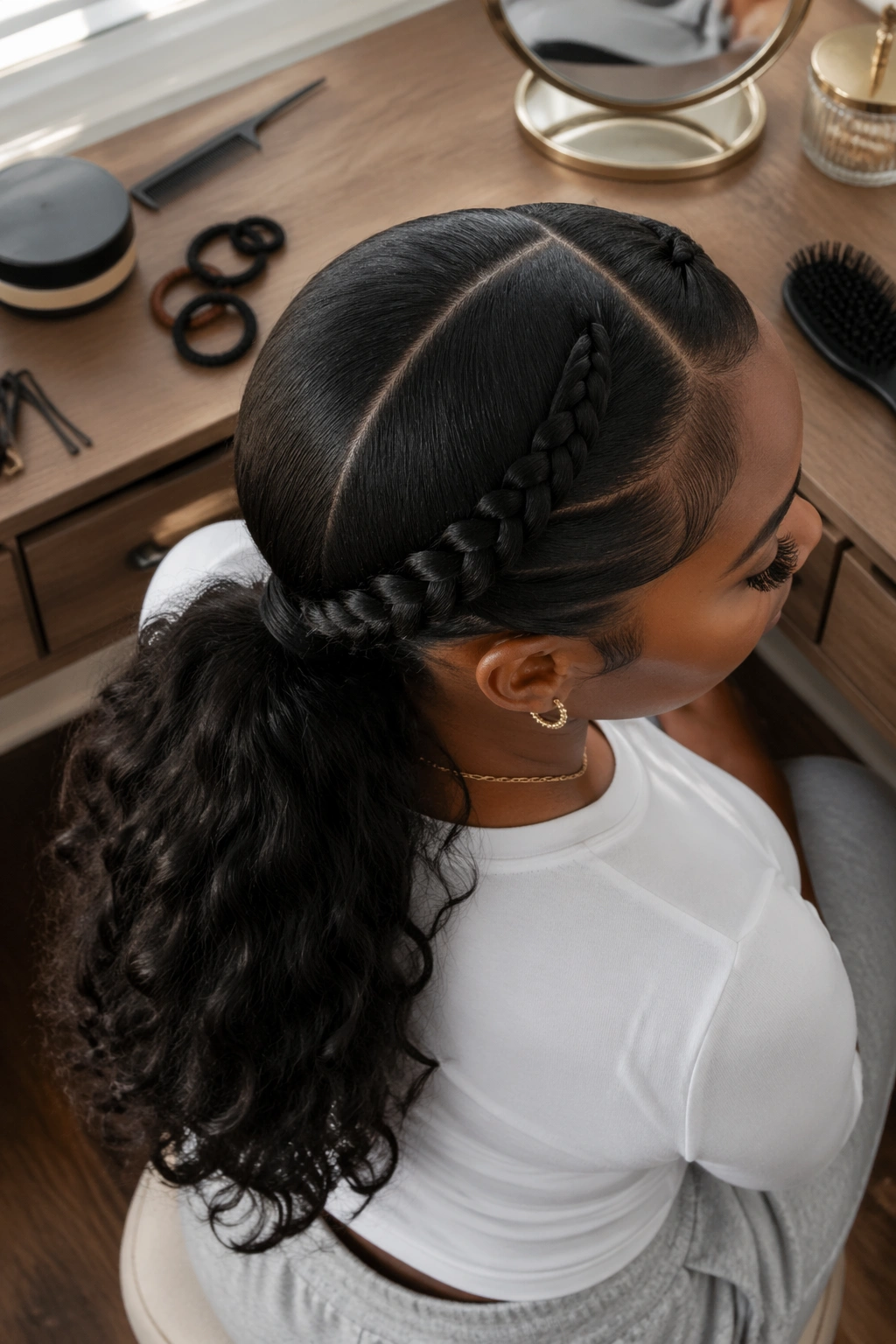
A side braid feeding into the ponytail gives the style movement before the ponytail even starts. The braid acts like a lead-in, and that shape makes the whole look feel more deliberate.
I prefer this when the front needs a little control but I still want the ponytail to stay loose. The braid can sit along the side part, cross the temple, or tuck behind the ear before it joins the low tail. It works on natural hair, pressed hair, and extension styles too.
Unlike a full braided ponytail, this one leaves more of the tail free. That means more swing. More softness. Less weight.
23. Chunky Twist Low Side Part Ponytail
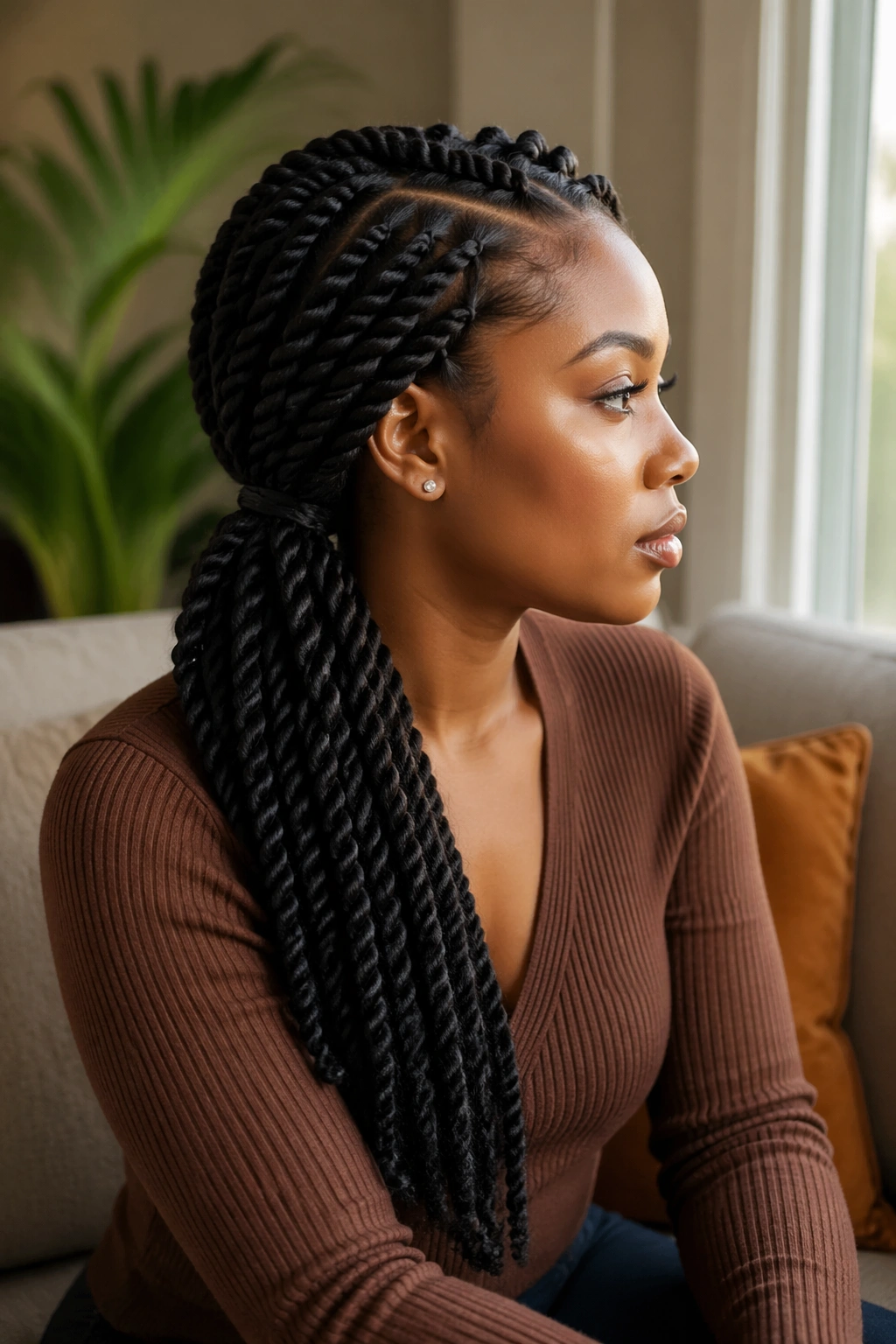
Chunky twists have a calm, grounded look that I always think suits low side ponytails. The twists create strong lines, and the low placement keeps them from feeling too heavy around the face.
This style is nice when you want something that holds its shape with minimal touch-up. The twists can be thick and chunky for a bold profile, or a bit smaller if you want a lighter finish. Either way, the low side part keeps the style from reading too rigid.
A little oil on the ends helps the twists stay soft. Too much, though, and the base can go slick in a way that makes the style collapse. Use a light hand.
24. Formal Low Side Part Ponytail
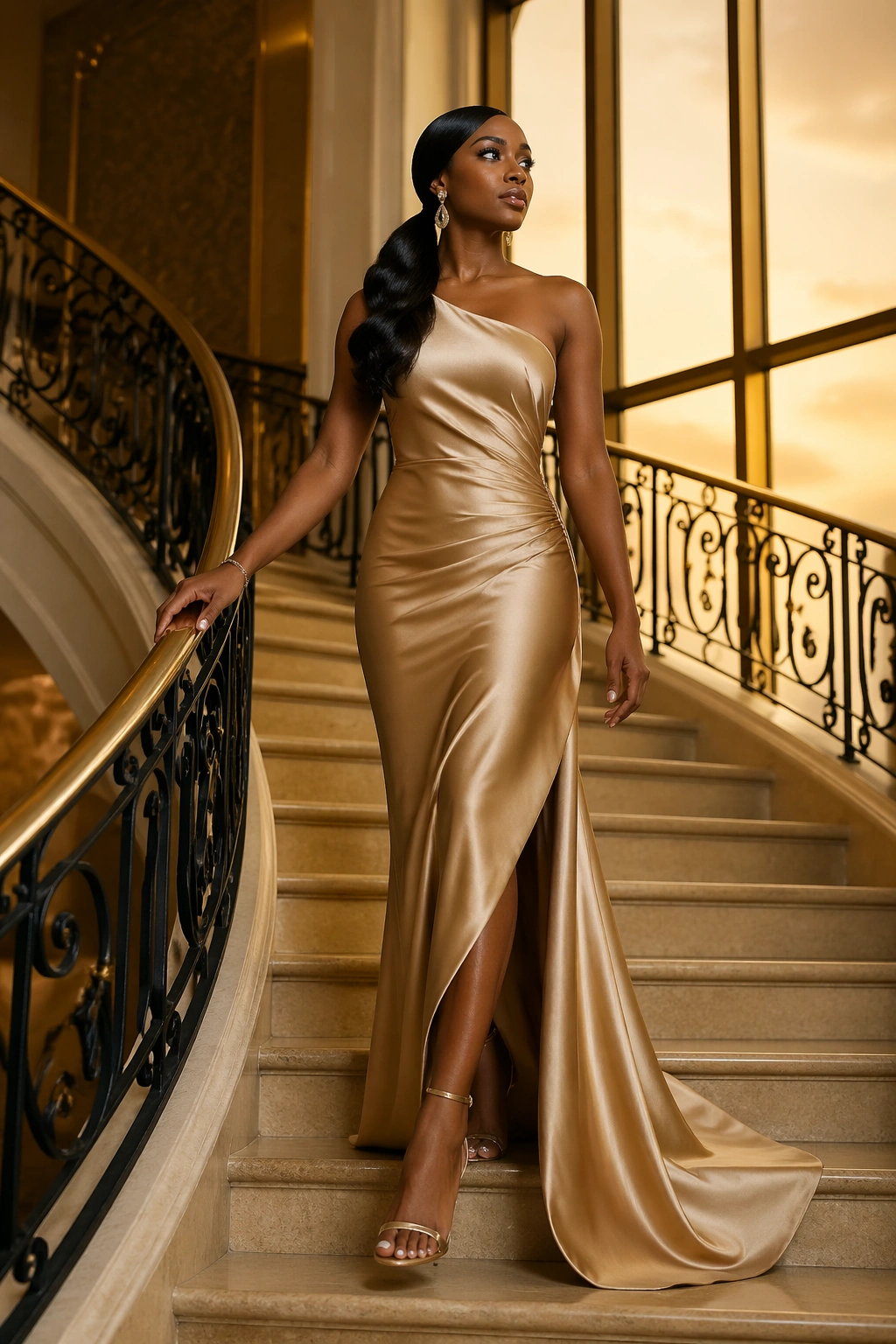
Some ponytails belong in a fancy dress and some belong with sneakers. This one leans formal because it keeps the shape low, smooth, and controlled.
For a dressy look, pair the side part with a polished base, a wrapped elastic, and either curls or a straight tail with body at the ends. If the outfit has clean lines, let the ponytail stay simple. If the outfit is plain, add one accessory and stop there.
This is one of those styles that photographs well in person because it has an obvious shape from the front and side. That matters at events where you’ll be turned in every direction.
25. Everyday Work Low Side Part Ponytail
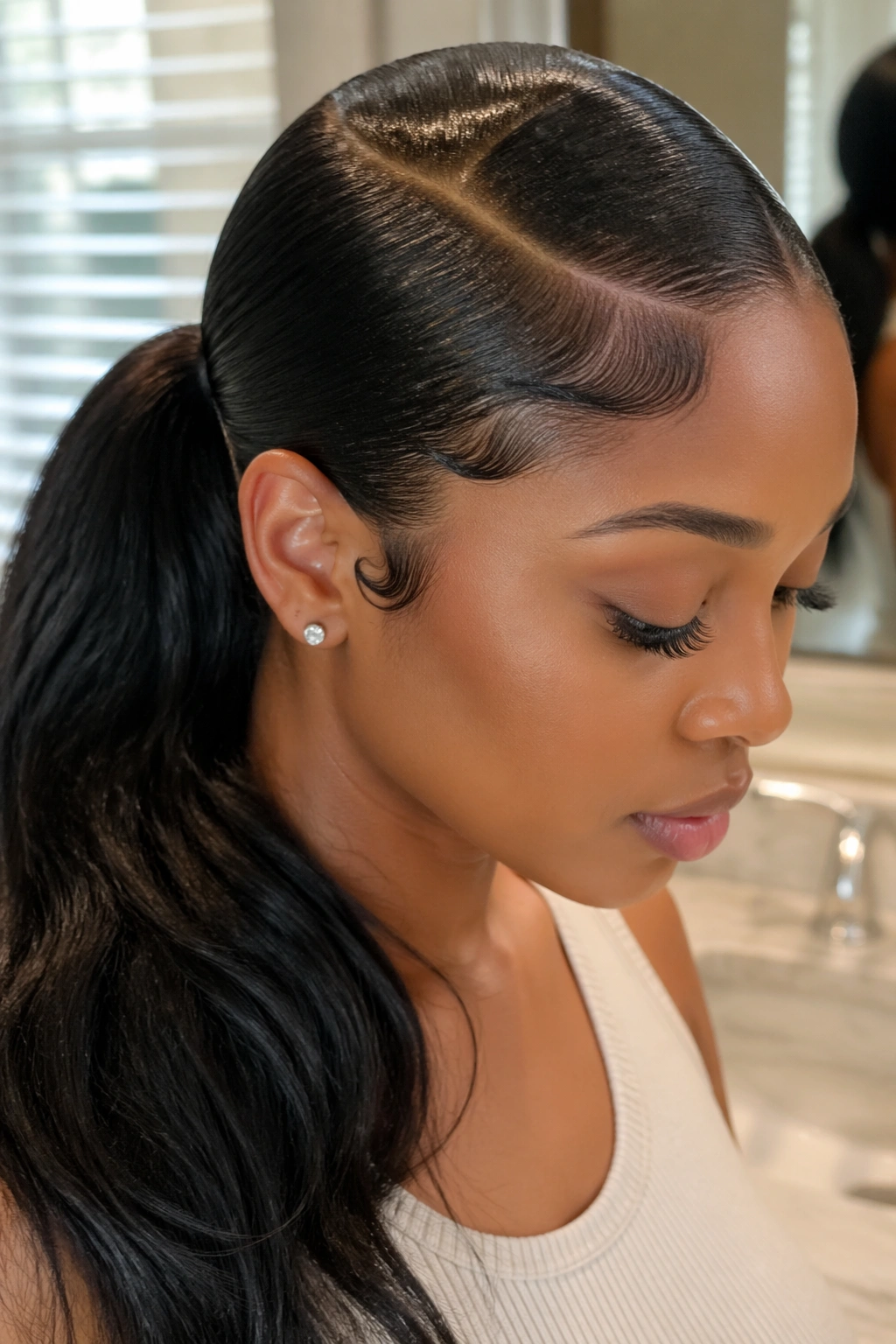
A work ponytail should stay in place, not fight you by 2 p.m. This version does that job well. It keeps the face open, the neck clear, and the style neat enough for long hours without looking like you spent an entire morning on it.
A low side part is softer than a center part on many faces, and it can be a little more forgiving when the hair is on day two or day three. Keep the part simple, smooth the roots, and choose a secure but gentle tie. That’s enough.
The Workday Checklist
- Use a small amount of gel, not a heavy crust.
- Keep one or two bobby pins in your bag.
- Protect it at night with a satin scarf or bonnet.
26. Gym-Ready Low Side Part Ponytail
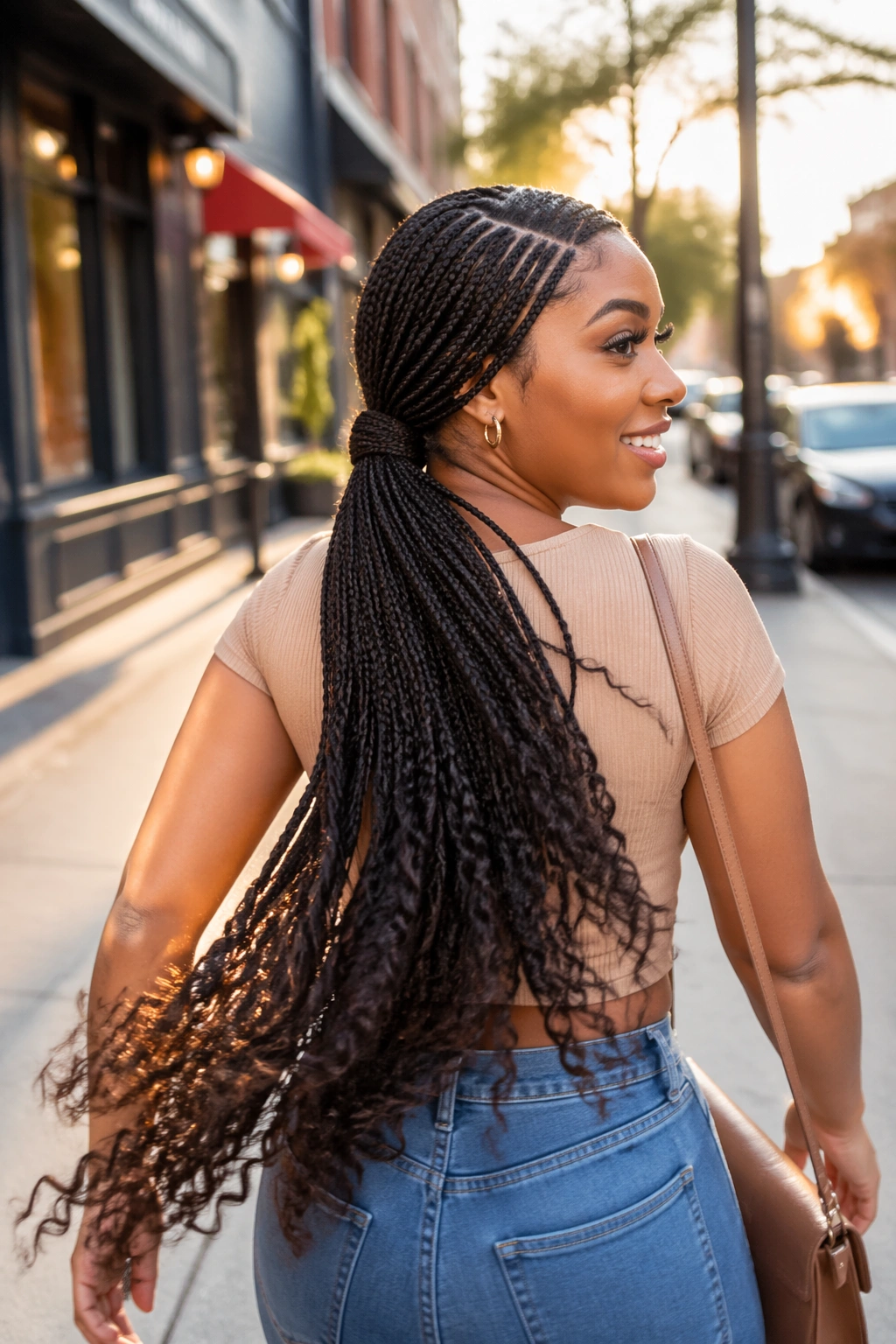
Can a side part ponytail survive a workout? Yes, if the base is secure and the hair is tied in a way that doesn’t put all the pressure on one thin section. Low placement helps here because it sits out of the way when you’re on a mat or bench.
A sleek version works fine for light movement, but a braided or twist base usually holds better when sweat enters the picture. If you’re using natural hair, a puff ponytail can also work as long as the band is soft and the front is controlled.
After the workout, don’t rip the tie out and call it a day. Ease it out, let the scalp breathe, and refresh the roots with a damp cloth if needed.
27. Glossy Low Side Part Ponytail With a Soft Finish
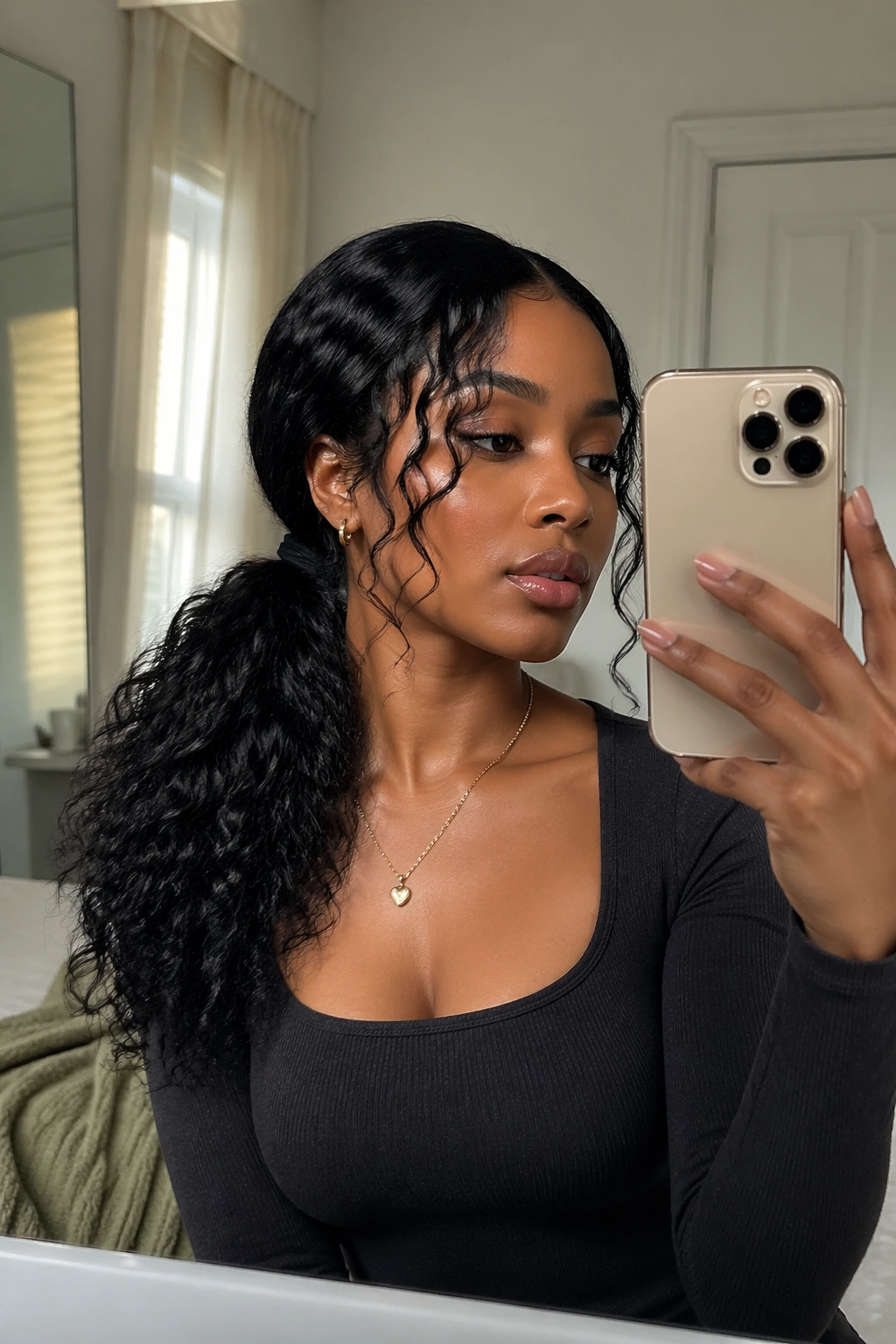
The style I keep coming back to is the one that looks polished without looking stiff. A clean side part, a low anchor point, and a glossy finish at the roots give the ponytail shape, while the length stays soft enough to move.
That softness matters more than people think. A ponytail that feels too hard or too tight can look neat for a photo and miserable five minutes later. A better version lets the hair breathe a little, keeps the edges calm, and still holds its line.
If you want one low side part ponytail that can move from errands to dinner without a full restart, make it this one. Keep the part clean, keep the base gentle, and let the finish stay smooth rather than frozen. That balance is what makes the style worth reaching for again.
