



Short shag haircuts for wavy hair have a way of making a haircut look like it belongs to the texture instead of fighting it. That matters more than people admit. If your waves puff at the sides, flatten at the roots, or bend into random little flips that never land the same way twice, the right shag can make the whole shape feel deliberate.
A good short shag is not just “layers.” It’s a cut that uses shorter crown pieces, broken-up ends, and face-framing sections to keep the silhouette light. On wavy hair, that usually means movement without mushiness. Too many salons still over-thin the ends and leave the top flat, which is how you end up with a cut that looks cute for one hour and weird by dinner.
The sweet spot is balance. You want enough shape to keep the hair from ballooning out, but not so much slicing that the ends go scraggly. A soft razor cut can help coarse waves fall in cleaner bends. A scissor-cut shag can keep finer waves from looking see-through. Small difference. Big result.
If you’ve been looking for something that air-dries well, grows out without panic, and still feels current without trying too hard, the cuts below cover a lot of ground. Chin-length and cropped. Soft and choppy. A little retro, a little messy, and a lot easier to wear than people expect.
1. Chin-Length Shag for Wavy Hair
Chin-length is where wavy hair starts to show off. At that length, the hair has enough weight to keep the waves from exploding outward, but it’s short enough for the layers to lift and move.
I like this cut for people who want shape without committing to a pixie or a long bob. Ask for soft internal layers through the crown and a little more length around the jaw. The goal is lift at the top, not a pyramid at the sides.
A small styling trick makes a huge difference here. Scrunch in a light mousse while the hair is damp, then let it dry with a diffuser for a few minutes or just air-dry if your wave pattern behaves. If the ends look too blunt, a tiny bit of point-cutting will fix that fast.
2. Curtain-Bang Bob with Loose Ends
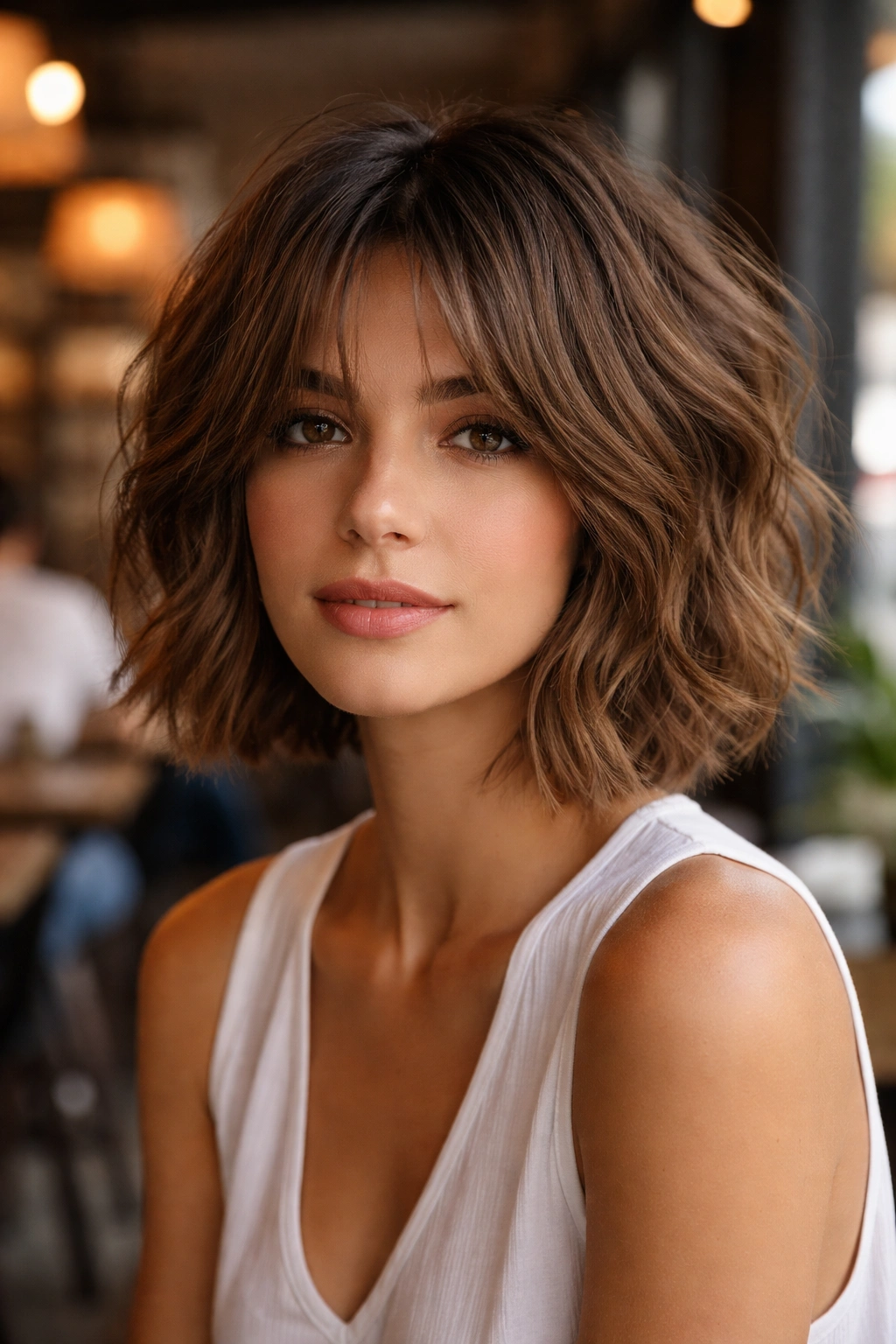
Why do curtain bangs work so well on wavy hair? Because they let the front of the haircut breathe. Instead of forcing the waves into a stiff line, the fringe falls apart in a flattering way and softens the whole face.
This version looks especially good when the longest front pieces hit around the cheekbone and the rest of the bob sits near the jaw. The curtain fringe can be worn split, brushed forward, or tucked back on day two when it decides to do its own thing.
What to ask for
- Bangs that start near the eyebrow and open at the cheekbone
- Soft layers through the crown, not heavy stacking
- Ends that are slightly razored so the shape doesn’t feel boxy
Do not over-style the fringe. A little bend is better than a perfect curl. Perfect usually looks too formal on this cut.
3. Micro Shag with Piecey Ends
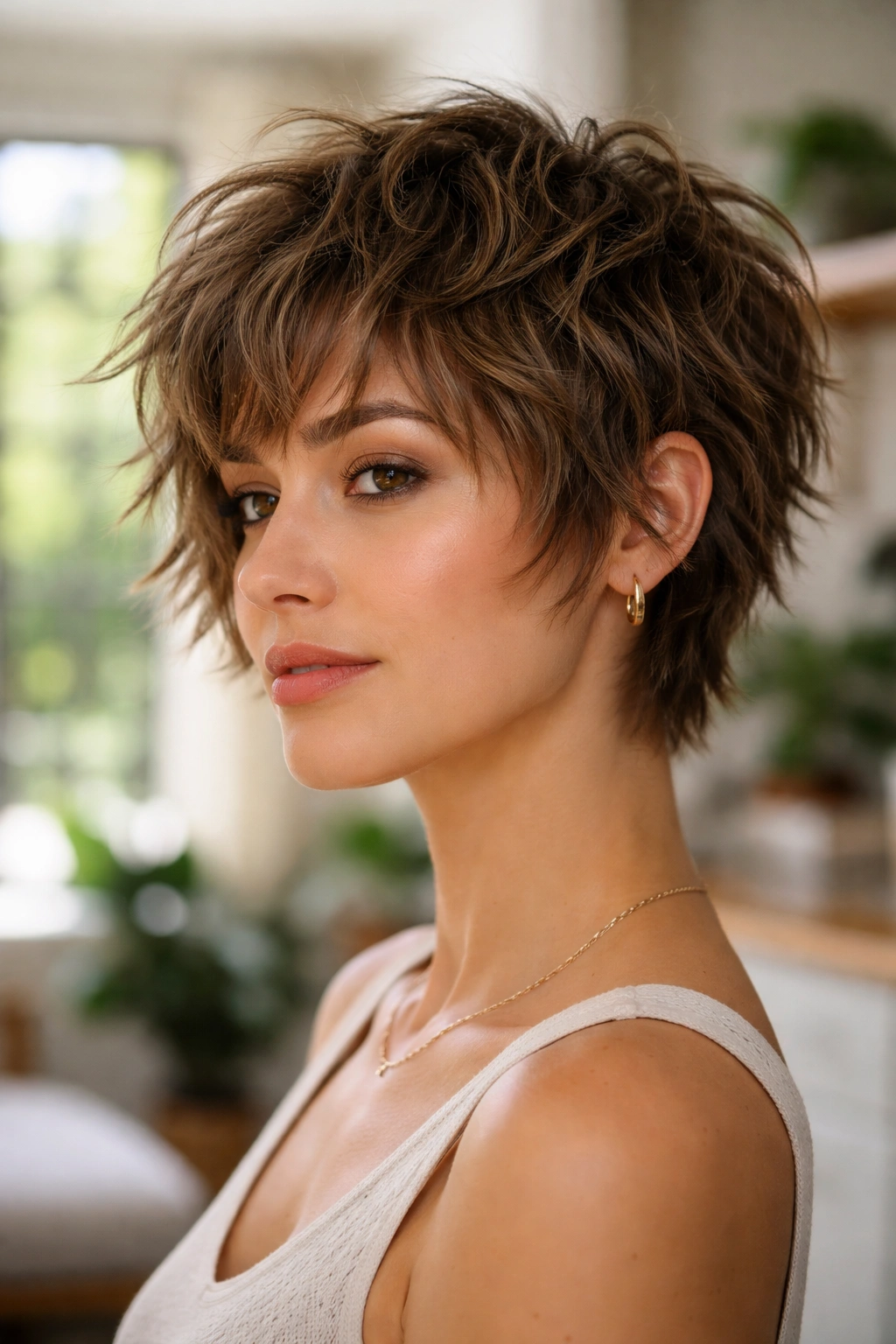
A micro shag is short, sharp, and a little cheeky. It sits closer to the head than a classic shag, which makes it a good choice if your waves are dense and tend to puff when they’re cut too long.
The cut works because the crown stays light and the ends are broken up just enough to keep the shape from turning into a helmet. On a strong wave pattern, the result is almost sculptural. On softer waves, it reads as airy and a bit undone.
This one needs a stylist who understands restraint. Too much thinning and the haircut starts to look frayed. Too little and you lose the whole point. Ask for visible texture, not shredded ends, and keep the product light so the movement stays crisp.
4. French-Inspired Soft Shag
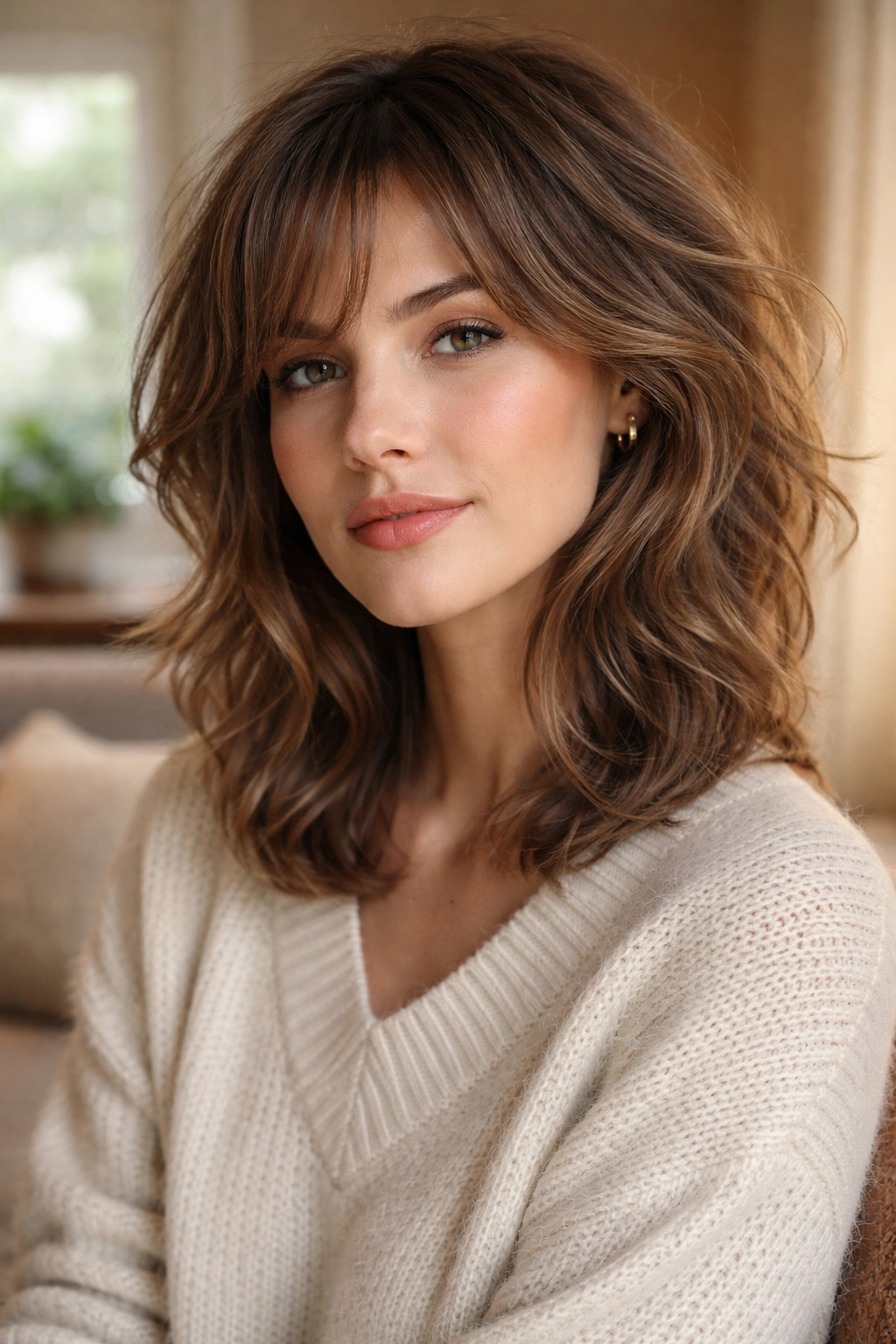
A soft shag with a French feel is less about drama and more about ease. It usually sits around the cheekbone or just below the jaw, with relaxed layers that fall in a loose frame instead of a choppy cloud.
This is the cut for someone who wants polish without stiffness. The shape can look elegant with very little effort, especially if your waves naturally form a bend around the mouth and chin. A side part helps. So does a quick pass with a round brush on the front pieces only.
Why it works
The layers are subtle enough to keep the hair from feeling stringy, but short enough to give the wave pattern a little bounce. You end up with movement that looks thoughtful, not overdone.
If you want to wear it in a hurry, mist in a lightweight curl cream and leave the roots alone. That little bit of mess around the face is what keeps the haircut alive.
5. Wolf-Shag Bob with Tapered Nape
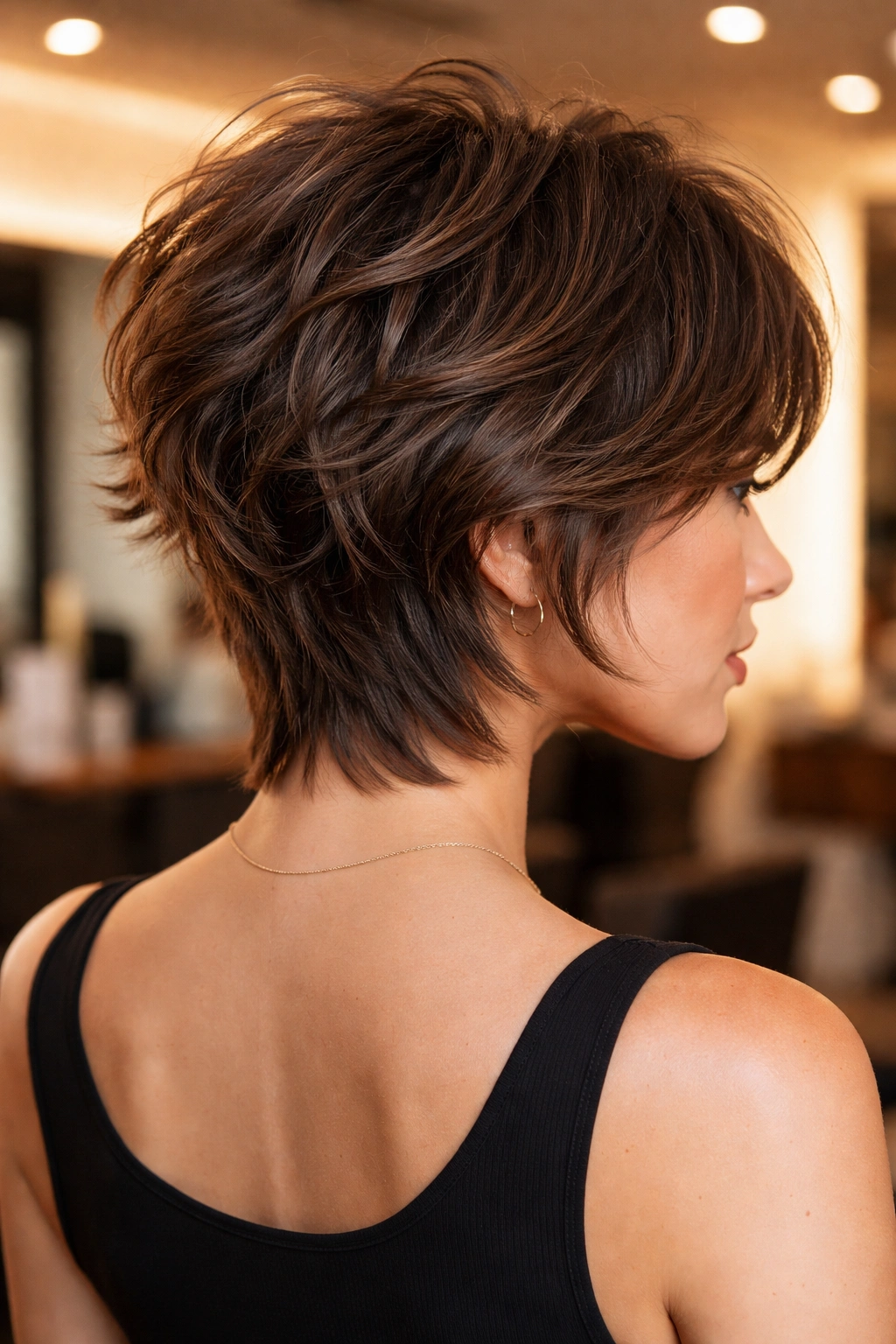
The wolf-shag bob gives you the most shape per haircut. It has that slightly longer top, shorter crown, tapered nape feel that makes waves look fuller without making the length drag.
I like this one on people who want texture and edge but don’t want hair swinging into the neck all day. The nape stays neat, the sides stay soft, and the layers around the crown keep the lift where it belongs. It has a little bite to it.
A good version needs a clean back and visible layers through the interior. If the cut is too blended, the wolf shape disappears. If it’s too disconnected, it starts looking messy in a bad way. Somewhere in between is the sweet spot.
6. Pixie Shag with Soft Sides
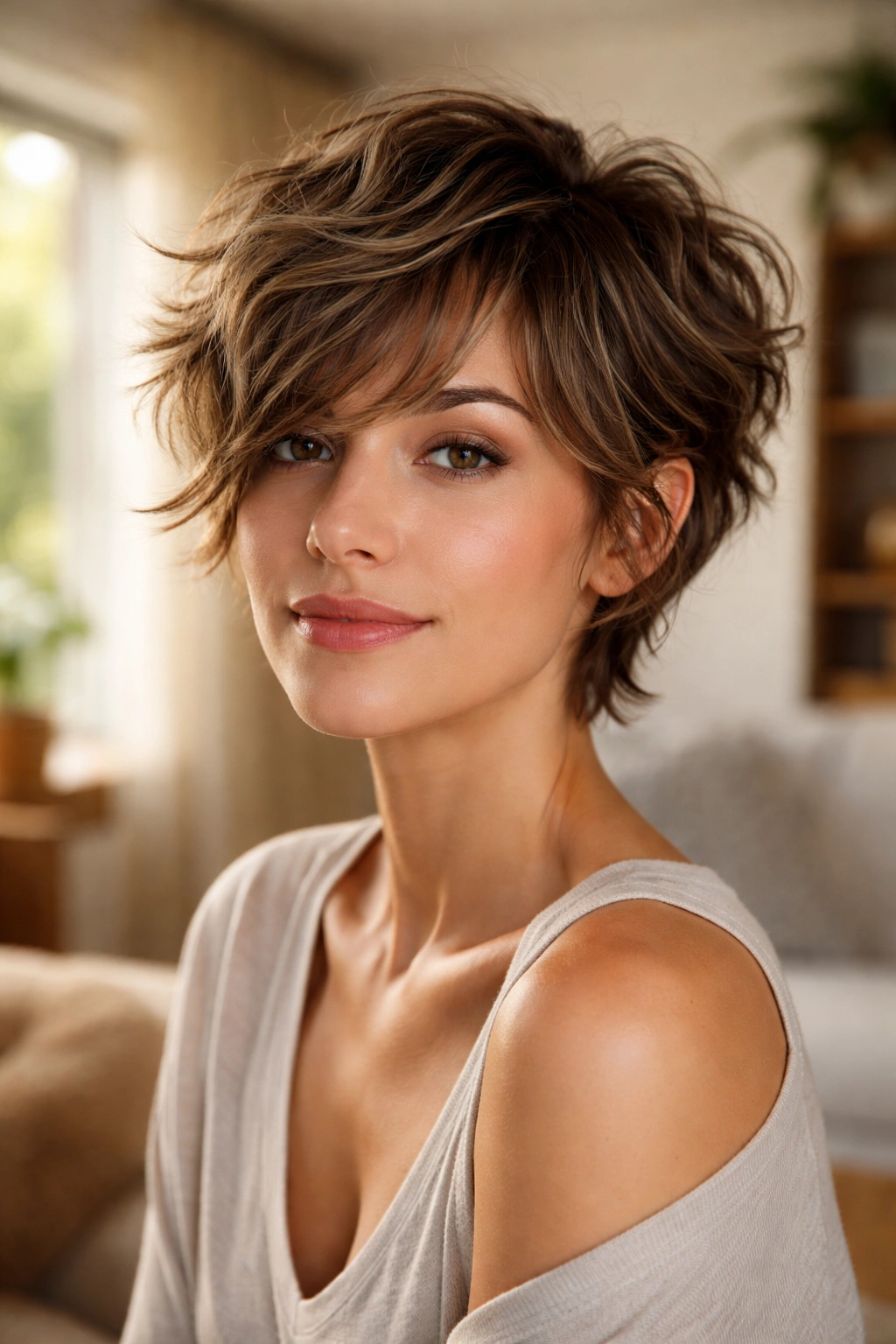
Can a pixie still read as shaggy? Absolutely. The trick is keeping enough length on top and in the fringe so the wave pattern can move instead of sitting flat against the scalp.
This cut works best when the sides are soft and the top has a choppy, feathered finish. On wavy hair, it can look surprisingly full, especially if the front pieces are left long enough to sweep across the forehead or tuck to one side.
Styling it well
- Use a pea-sized amount of matte cream or lightweight paste
- Work it through damp hair with your fingers, not a brush
- Let the front dry slightly forward if you want more fringe
Skip heavy oils here. They collapse the texture fast and make the short layers cling together.
7. Rounded Crop with Layered Crown
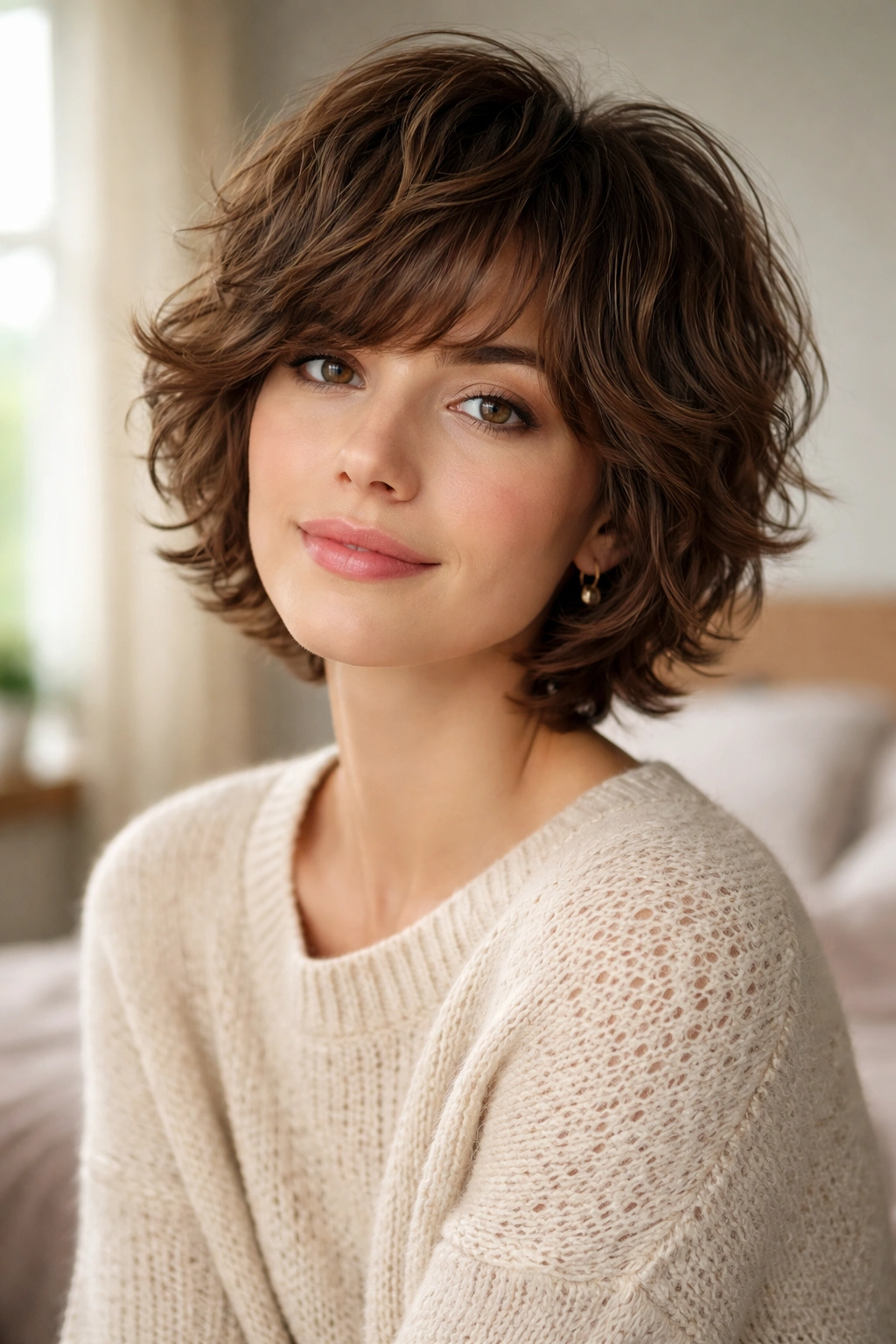
If your hair tends to puff out at the sides, a rounded crop can be a relief. The outline stays soft and close, while the crown layers build just enough height to keep the head shape balanced.
This cut is especially useful for waves that don’t need much encouragement. A rounded silhouette keeps the whole thing looking intentional, even on humid days when the texture gets louder than you planned. It also grows out politely, which is rare and welcome.
The key is not to over-stack the back. You want a gentle curve, not a bowl. The crown should feel buoyant, and the edges should stay broken up so the hair doesn’t look sealed to the head.
8. Deep Side-Part Shag
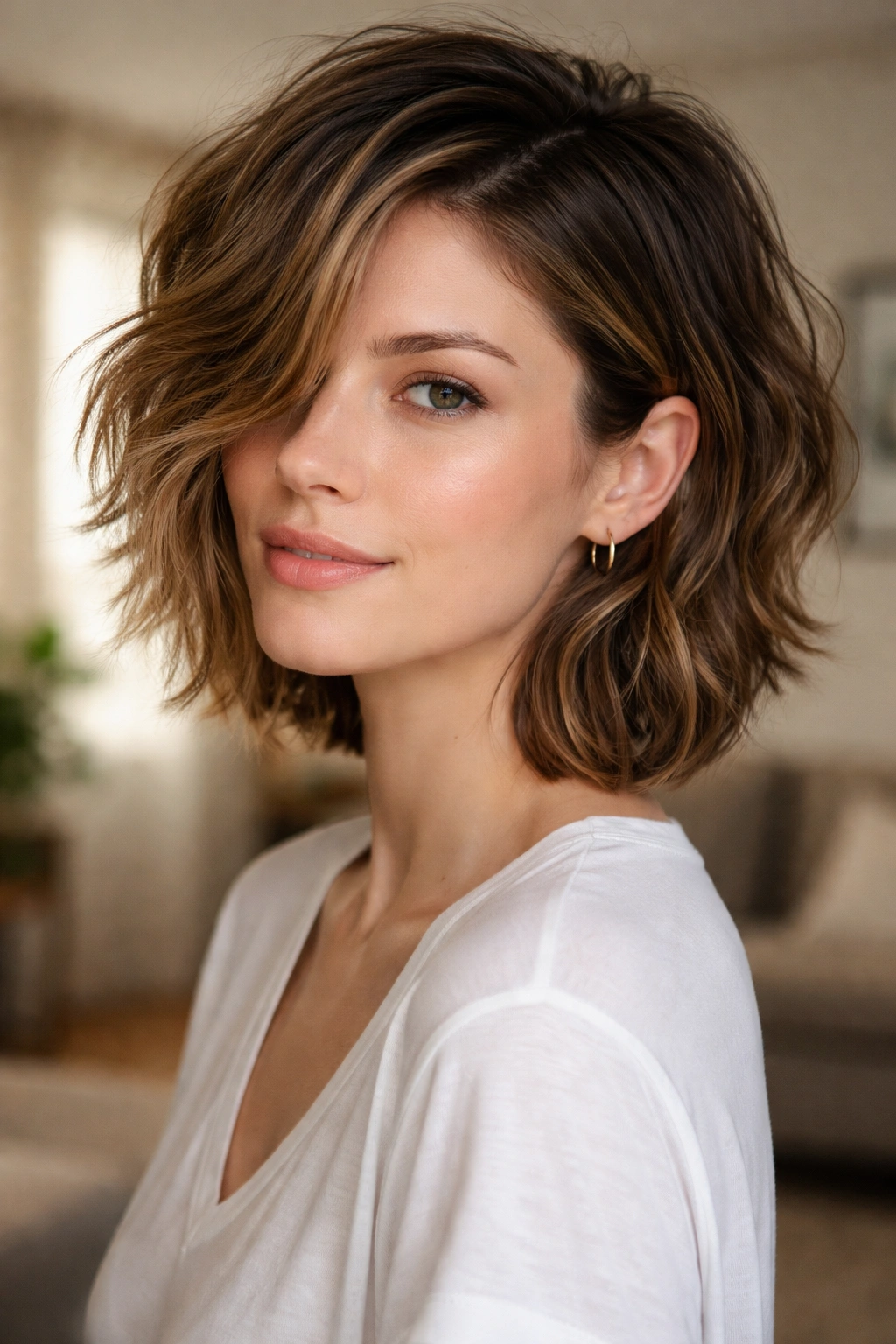
A deep side part can do more than a middle part ever will. It shifts the weight, gives the waves a natural lift, and makes short layers fall in a way that feels less symmetrical and more alive.
This cut is a good move if one side of your hair grows flatter than the other. The heavier side gets the sweep, the lighter side gets the lift, and the whole style gains a little drama without needing extra length. I’m fond of that kind of low-effort asymmetry.
Wear it with a diffuser if you want more volume, or air-dry and tuck one side behind the ear for a cleaner outline. Either way, the part itself does a lot of work.
9. Short Collarbone Shag
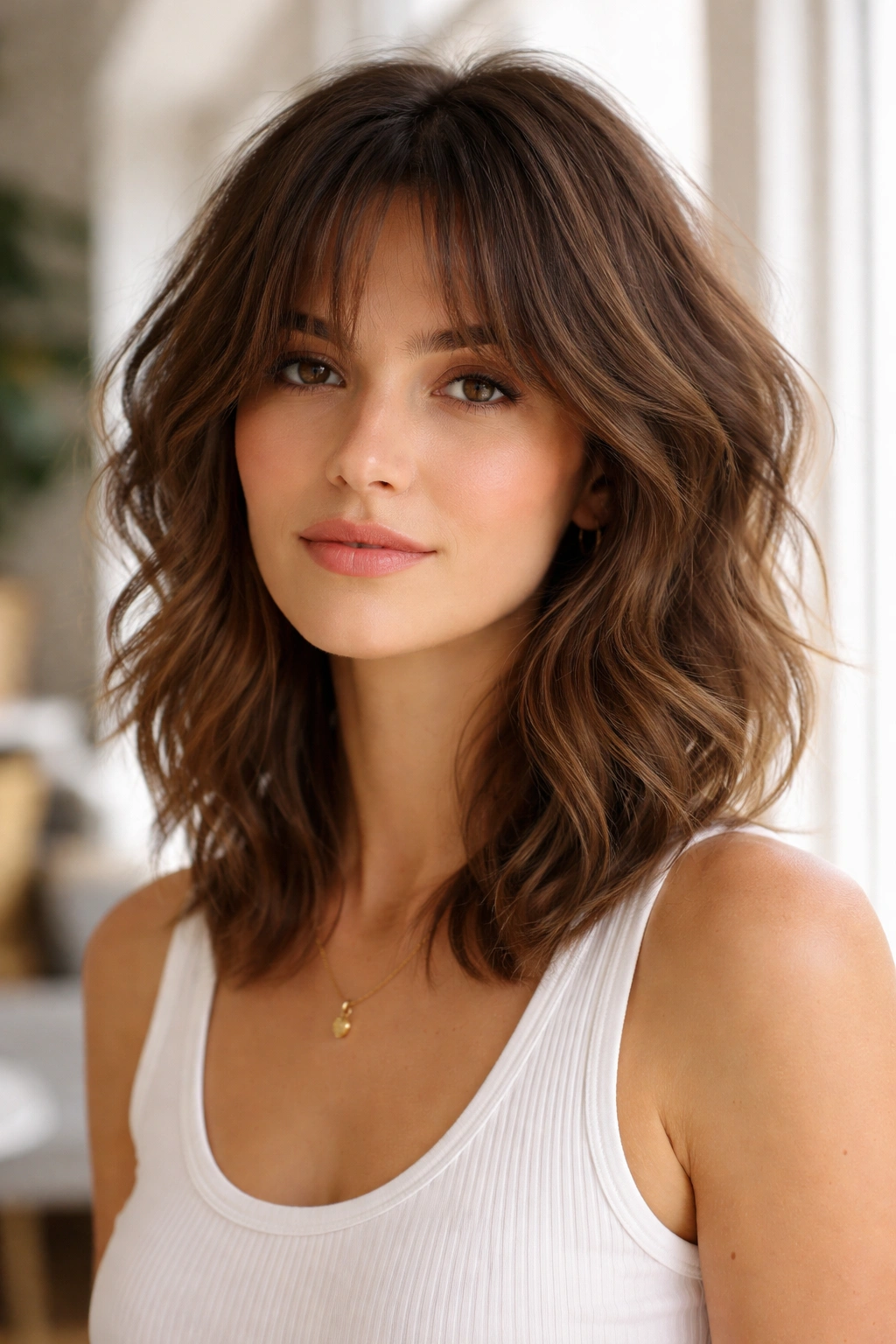
Short collarbone length is a good middle ground when you want shag shape without going fully cropped. The waves have room to bend, but the shorter layers still keep the ends from hanging too straight.
This length works well if your hair is medium to thick and you want movement that survives a full day. The front pieces can skim the cheekbone or jaw, while the back stays just long enough to keep the style from feeling too fragmented.
The big advantage here is flexibility. You can scrunch it, bend it with a diffuser, or wear it tucked behind the ears. It’s one of those cuts that changes personality depending on how much product you use, which is useful if you like options.
10. Razor-Cut Bob Shag for Wavy Hair
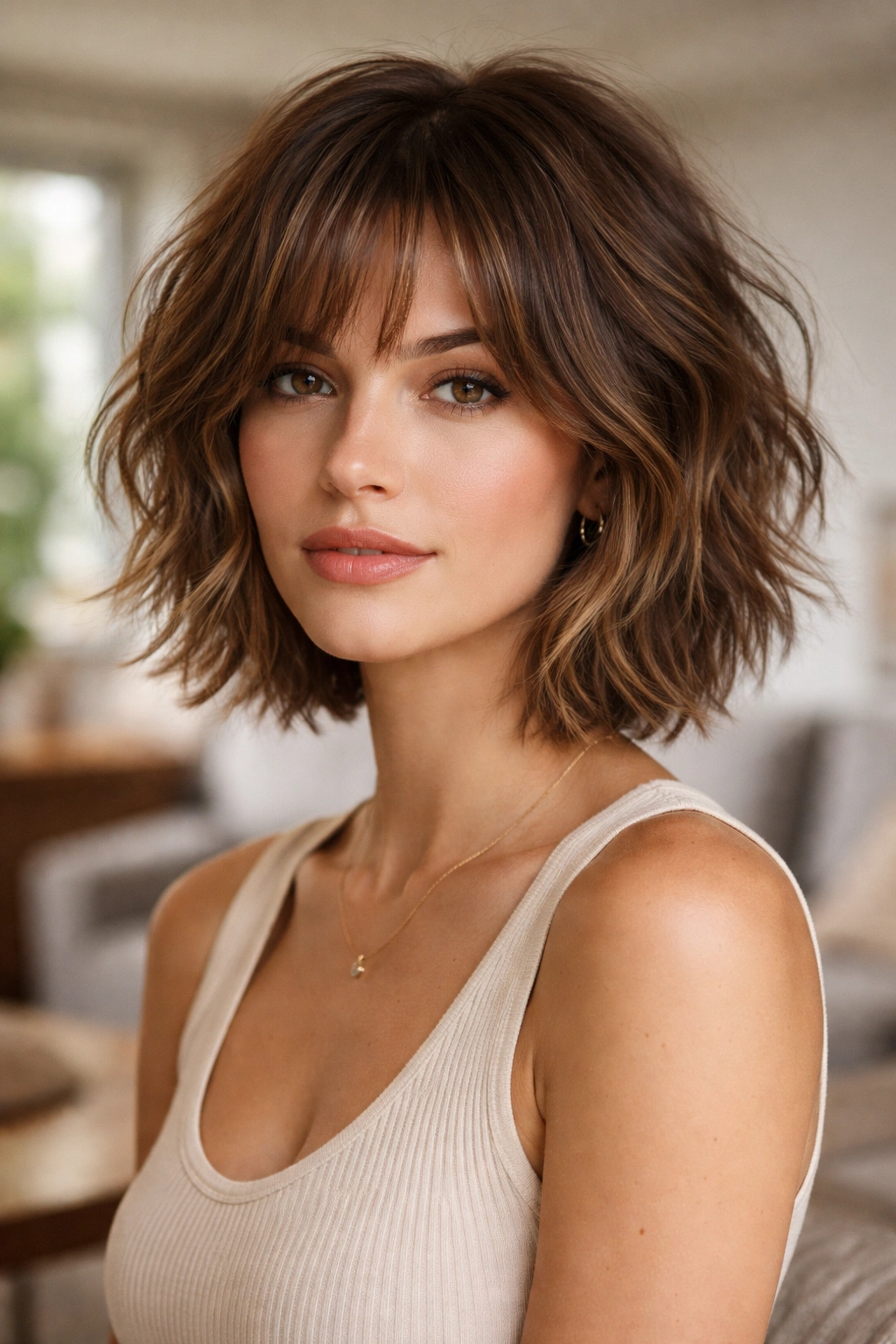
A razor-cut bob shag gives wavy hair a soft edge that scissors sometimes miss. The ends feather out a little, which makes the whole shape feel lighter and less blocky.
This is a strong choice for waves that are thick enough to hold body but not so coarse that they need blunt weight. The razor work lets the movement show, especially around the front. On a dry finish, the layers separate into easy pieces instead of sitting in one heavy mass.
The catch? A heavy hand with the razor can wreck the shape. You want clean texture, not stringy ends. Ask for movement through the bottom third of the haircut and keep the crown from getting overly thinned.
11. Soft Mullet Shag
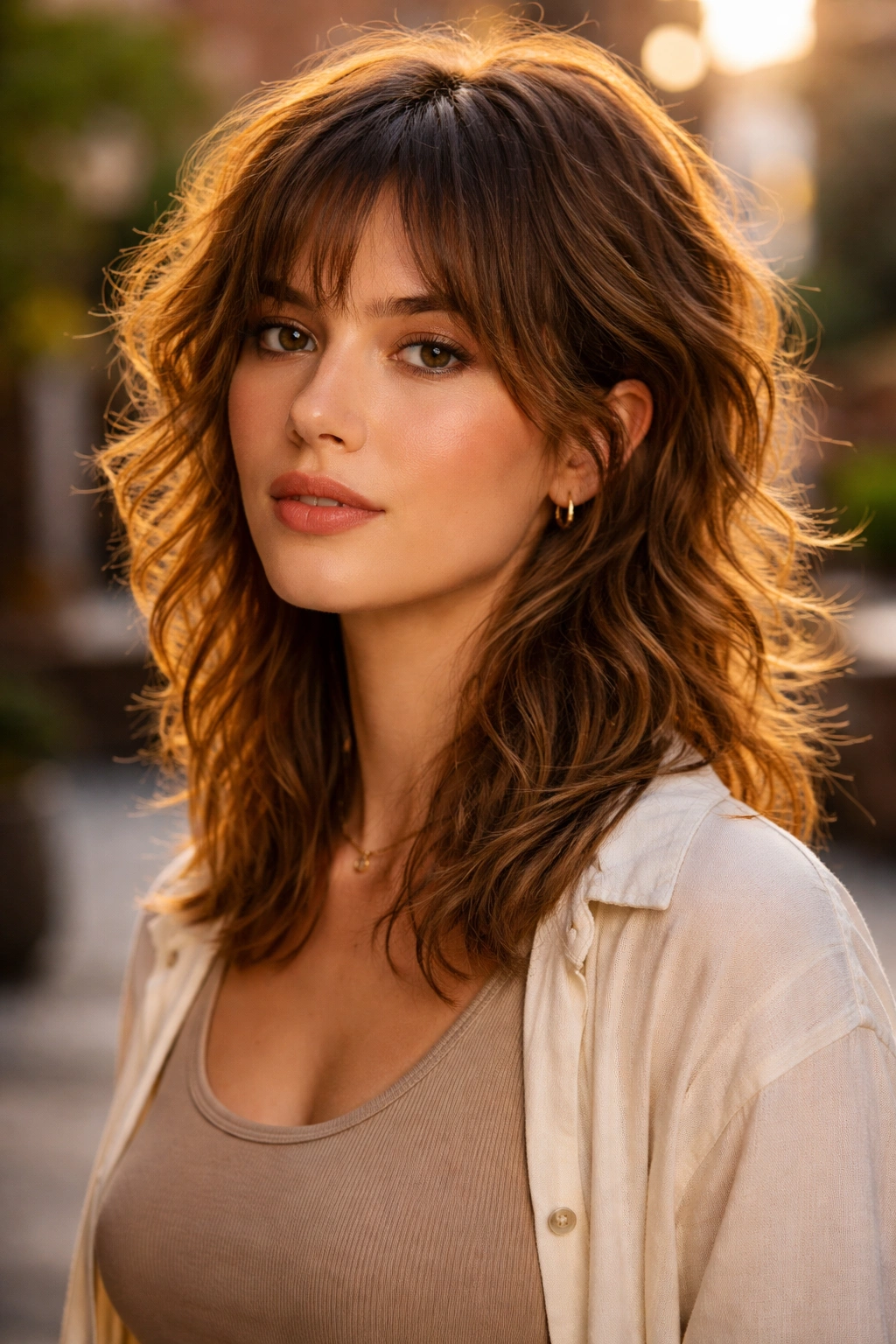
The soft mullet shag is for people who want a little attitude but do not want the haircut to take over the room. The front stays short and face-framing, while the back keeps just enough length to create that subtle mullet line.
On wavy hair, this shape can look especially good because the texture blurs the transition. The waves soften the disconnect between top and back, which makes the whole thing feel more wearable than the name suggests.
It’s not a shy cut. That’s fine. If you like definition around the cheekbones and a little lift through the crown, this one has a lot to say without needing much styling. A little mousse at the roots helps keep the top from collapsing.
12. Heavy Fringe Shag
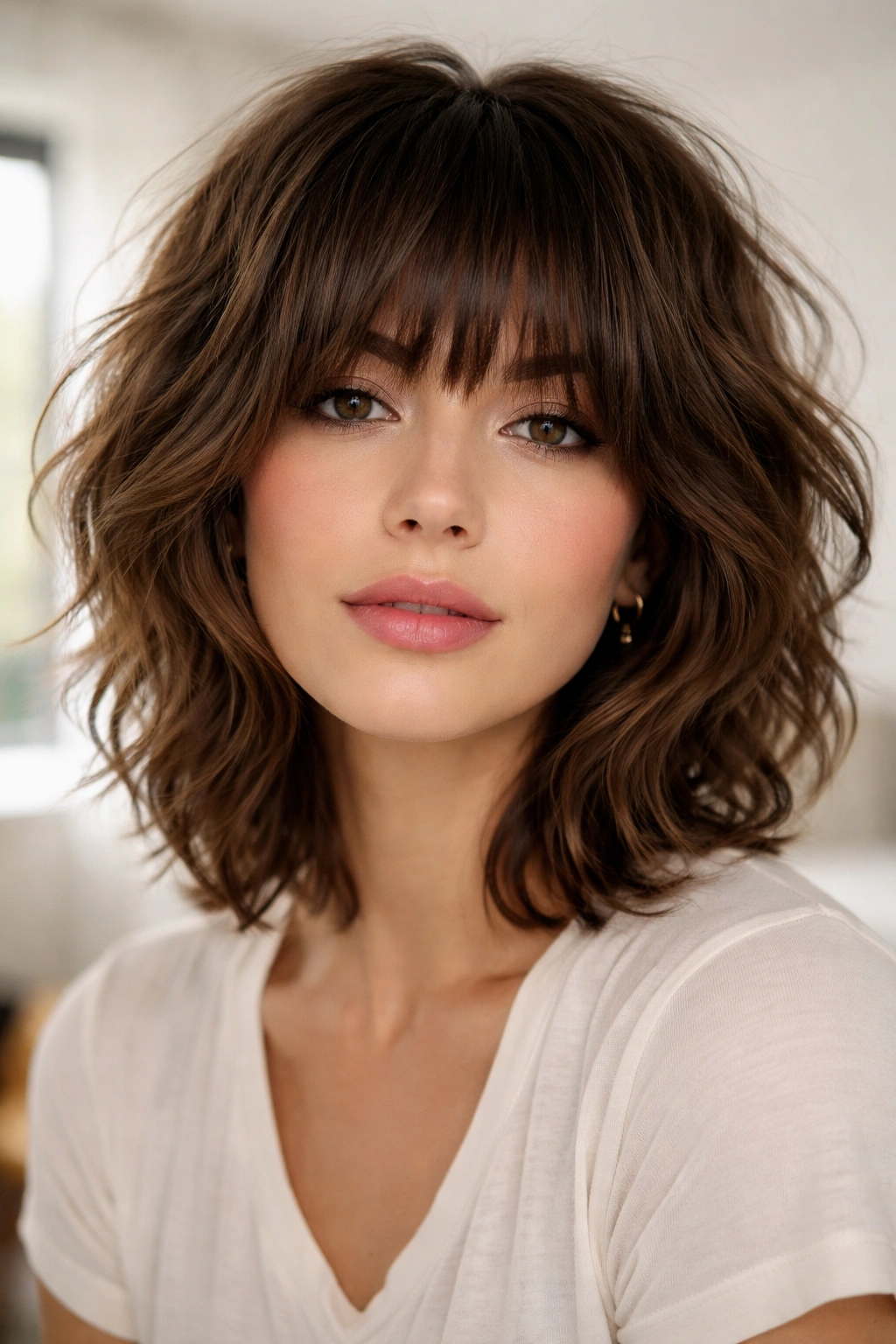
A heavy fringe changes the whole mood of a shag. Instead of a light, airy front, you get a fuller band that sits straight across the forehead or slightly curved at the sides.
What makes it work
The fringe gives the haircut weight up front, which balances out waves that flare out too much at the sides. It also makes the eyes stand out, which is a nice bonus if your cheekbones already do a lot of the talking.
The rest of the cut should stay layered and broken up, or the heavy fringe will make the whole thing feel dense. Keep the fringe a touch longer if your wave pattern shrinks when it dries. That tiny bit of extra length saves you from surprise bangs that land halfway up the forehead.
13. Grown-Out Pixie Shag
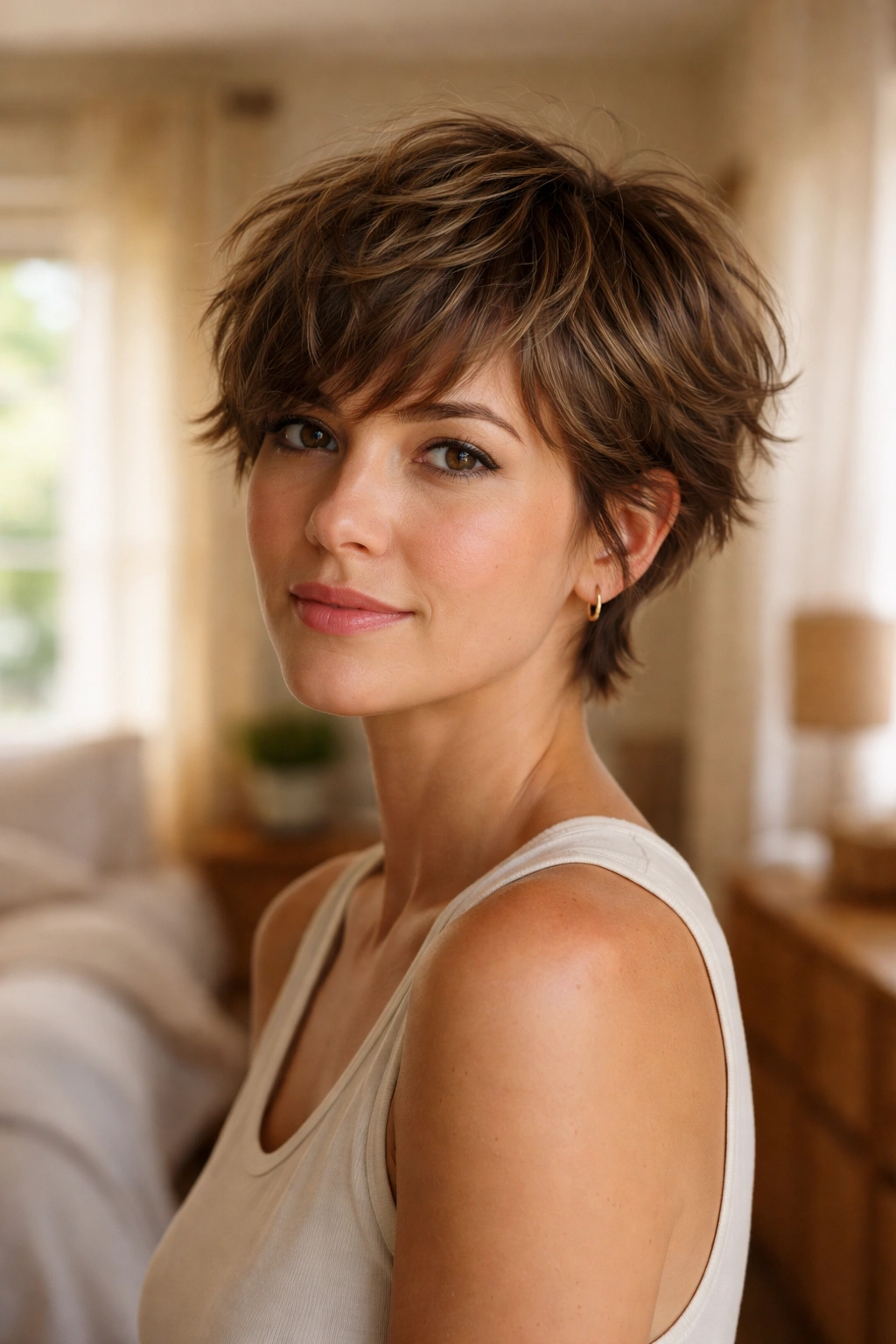
There’s a sweet spot between a pixie and a bob, and this cut lives right there. It keeps the sides short, the top layered, and the neckline soft enough to grow out without turning awkward in a week.
This is a good haircut if you like short hair but hate the sudden drop-off that some pixies have. The shag layers make the grow-out phase look intentional, which is half the battle. Waves help even more, because they blur the edges and keep the shape loose.
I’d ask for texture on the top and a gentle taper at the nape. Nothing harsh. The whole point is to keep the shape open and easy as it gets a little longer.
14. Jaw-Length Layered Shag
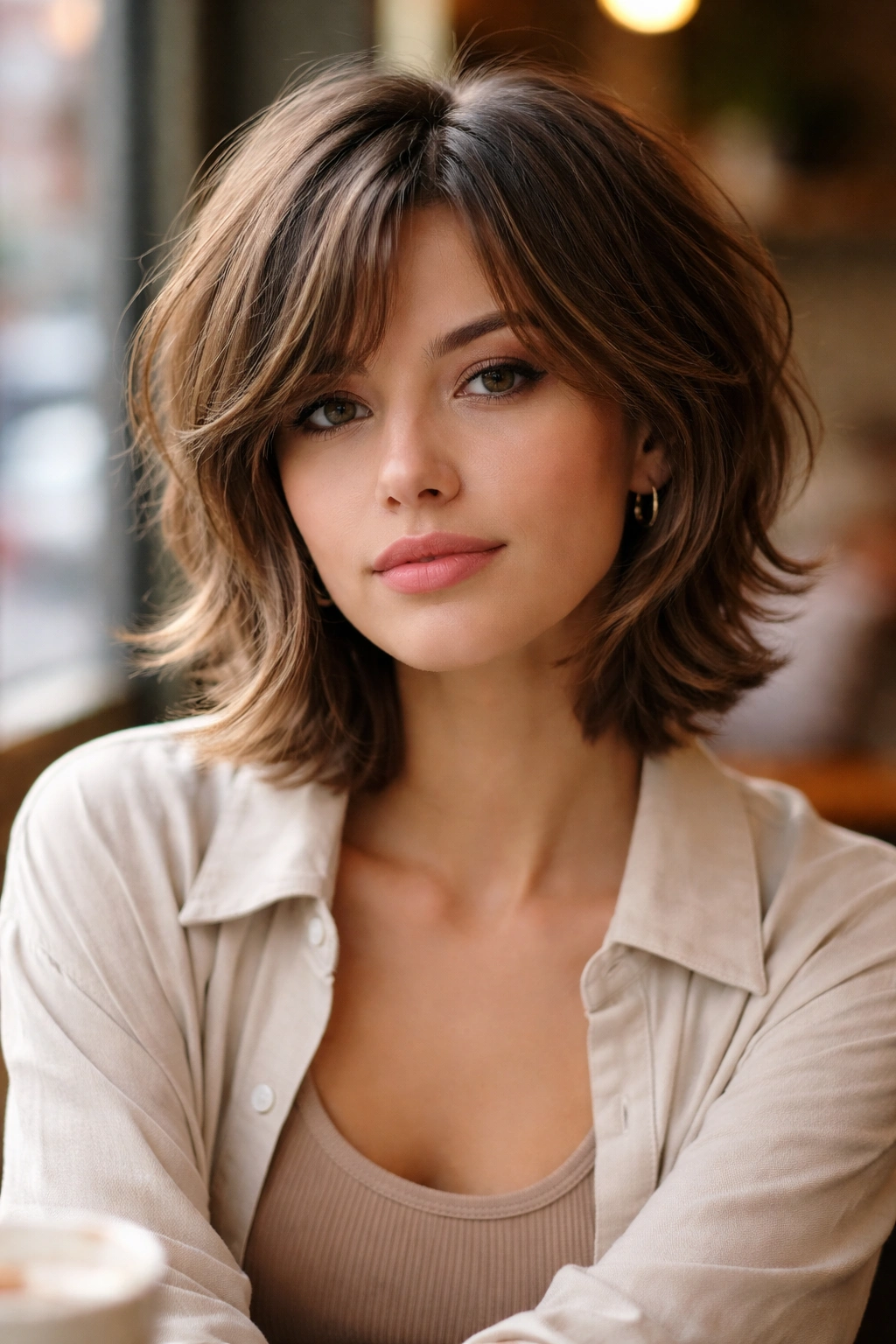
Jaw-length is one of the most flattering places for a short shag to land. It gives the waves a frame right where the face starts to narrow, so the whole haircut feels balanced rather than floaty.
This length suits people who want the ends to flip a little. That flip can happen naturally with waves, especially if the layers are cut to curve in around the jaw. It’s a nice place for texture because it keeps the style from feeling too severe.
Keep the front pieces slightly longer if you want the face to stay soft. If you prefer more edge, have the stylist cut the ends with a bit more bite. Either way, the jawline gets the spotlight.
15. Wispy Bangs with Flip-Out Ends
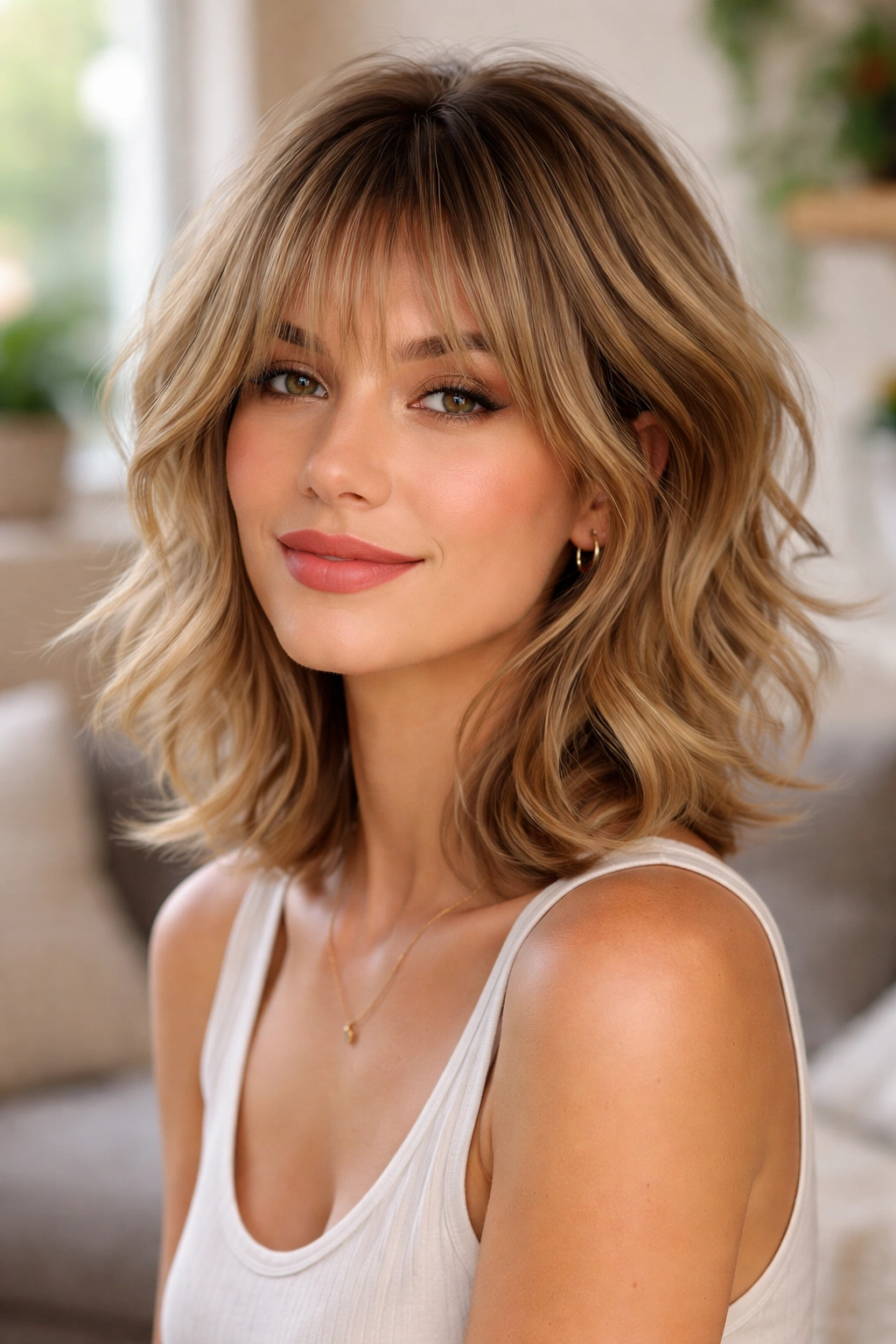
Wispy bangs are a good choice when you want fringe without the commitment of a full curtain bang or a heavy straight line. They sit lightly on the forehead and let the rest of the shag carry the shape.
The flip-out ends make this cut feel playful. On wavy hair, the ends often turn outward on their own, which gives the haircut a little retro movement. That’s not a flaw. It’s the charm.
How to wear it
- Let the bangs dry first so they don’t separate too much
- Bend the ends with a small round brush if they go too flat
- Keep a texture spray on hand for second-day lift
A little lift at the root keeps the fringe from sticking to the forehead. That’s the difference between airy and limp.
16. Undercut Shag for Thick Waves
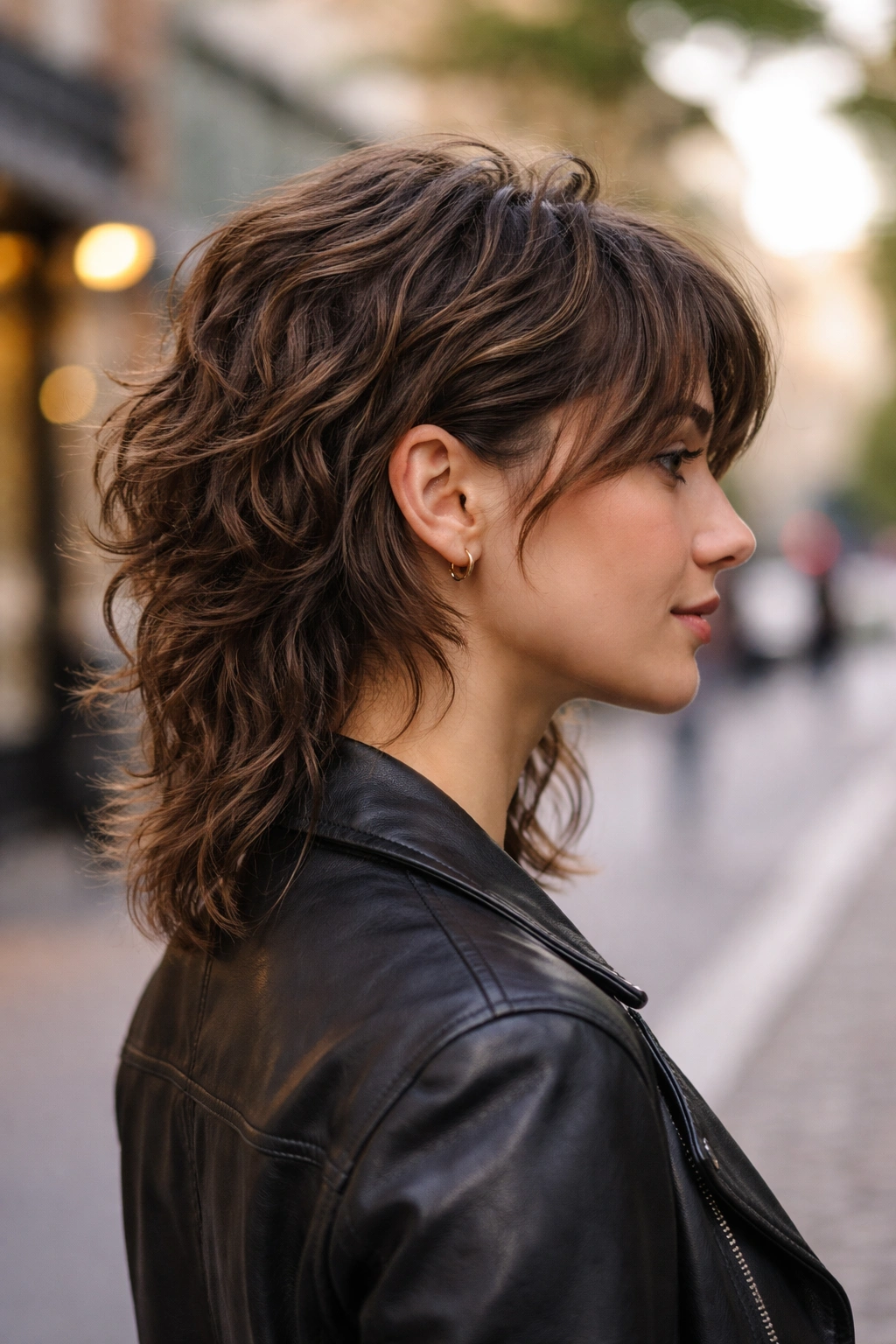
If your waves are thick enough to eat a regular cut alive, an undercut shag can feel like a release. The shorter underneath sections remove bulk, while the outer layers keep the style looking soft from the outside.
This is a useful cut for people who spend half their life fighting triangle shape. The undercut reduces weight where it’s not needed, especially at the nape or under the crown. What’s left on top can move without fighting the density below.
It does need upkeep. Not every few days, but enough that the undercut doesn’t grow into the rest of the haircut and blur the shape. If you like clean edges hidden under messy texture, this is a very good compromise.
17. Curved-Bob Shag
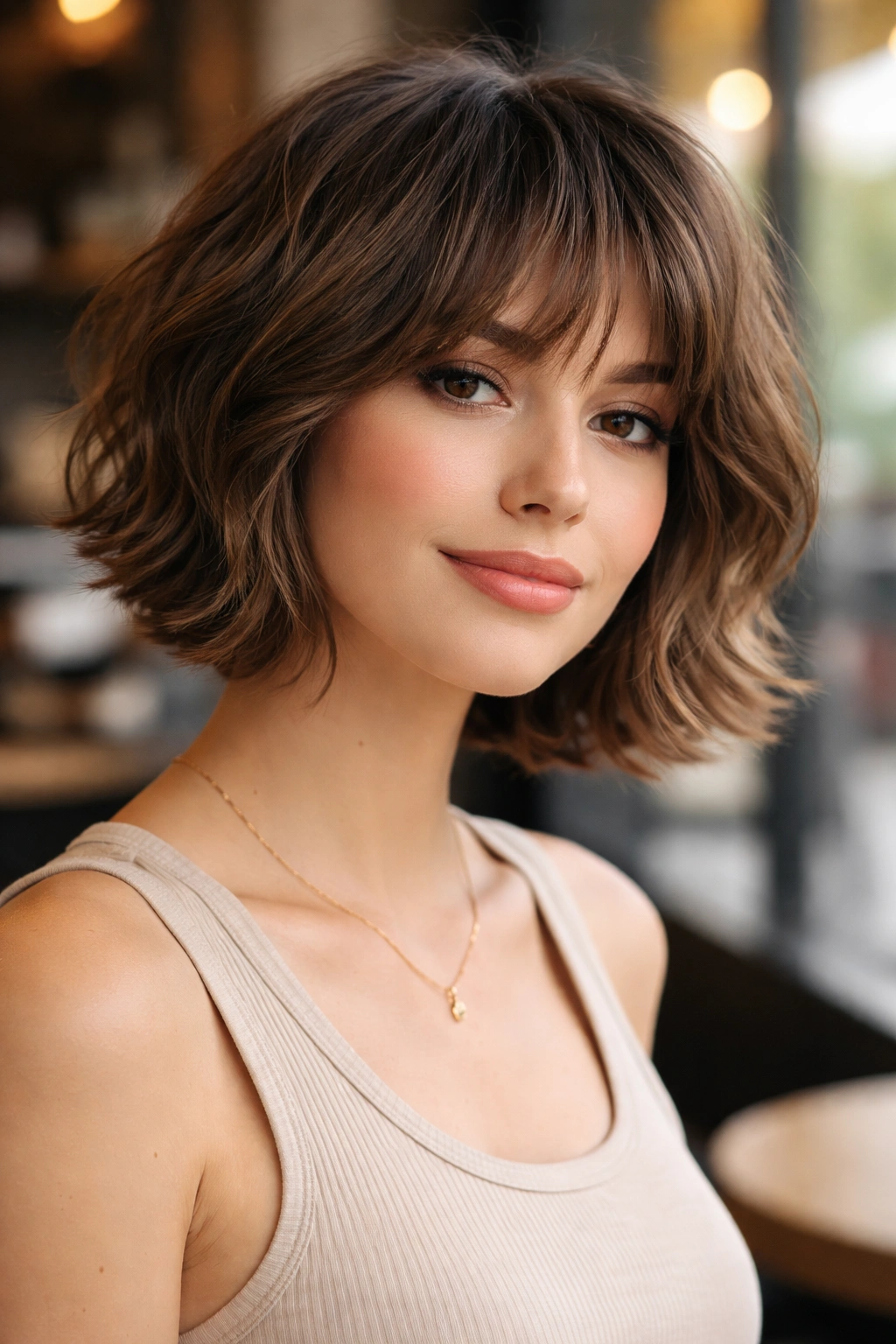
A curved bob shag has a smoother outline than some of the rougher cuts here, and that’s exactly why it works. The bend of the shape follows the head and the waves, so the haircut feels neat without looking stiff.
This one is especially good if you like a tidy finish around the chin and neck. The layers are there, but they’re softened into the overall curve instead of sticking out in obvious slices. That makes it easier to wear with minimal product.
If your wave pattern is loose, a little scrunching cream can keep the curve from dropping. If your waves are tighter, just let the ends live a little. The curve will show up on its own.
18. Feathered Layer Crop
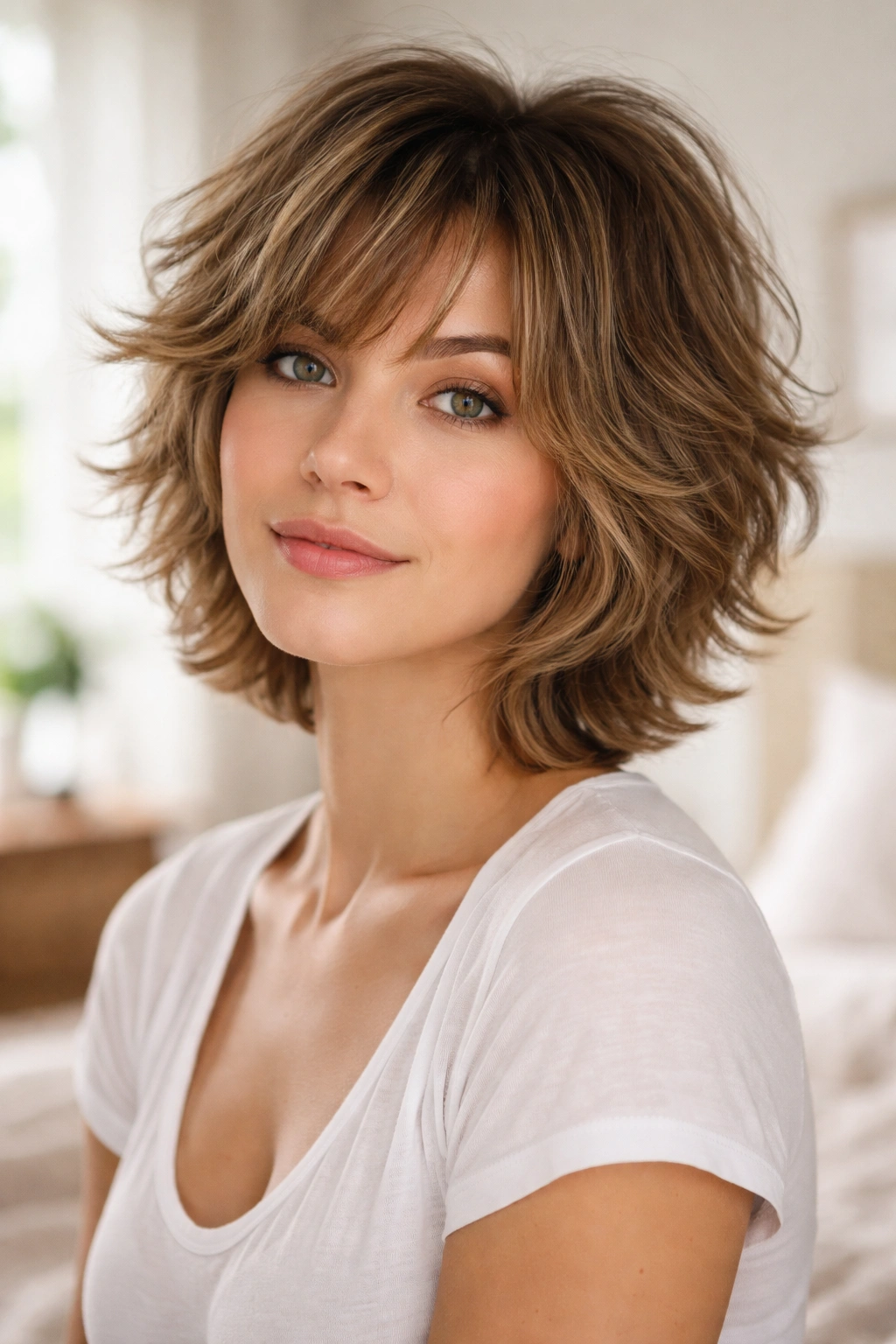
A feathered crop is a quiet haircut in the best way. It doesn’t shout. It lifts, softens, and breaks up bulk so the waves can sit without fighting each other.
This is a smart option for finer wavy hair that needs air more than weight removal. Feathering keeps the ends from looking blunt, while the crown layers create enough body that the haircut doesn’t collapse at noon. It’s gentle, but not boring.
The style works best when the product stays light. A foam or a small amount of cream is enough. If you pile on too much, the feathering disappears and you’re back to square one.
19. Cheekbone-Bang Shag
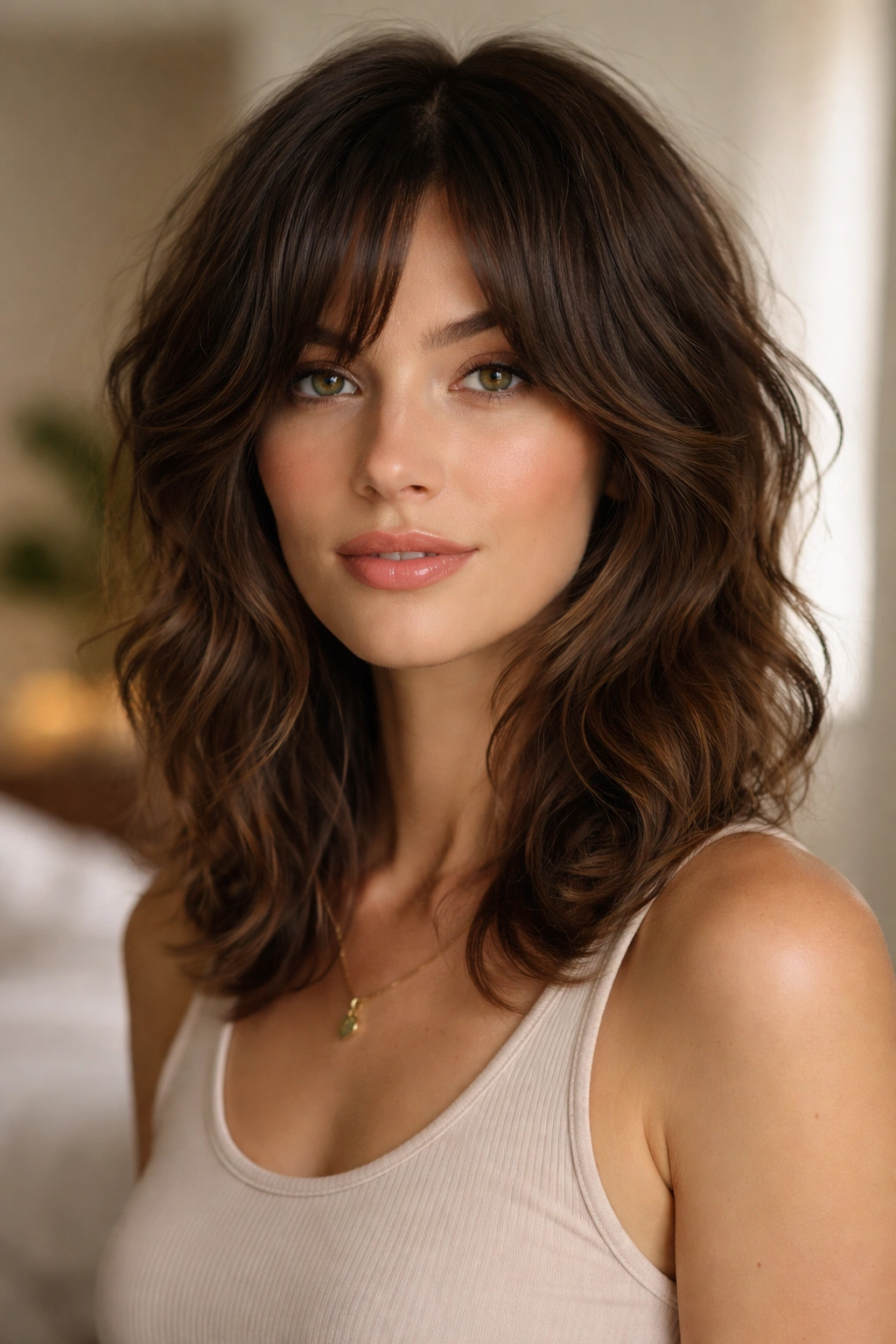
Cheekbone-length bangs are one of my favorite ways to make a short shag look expensive without trying for that effect. They draw the eye upward and give the face a clean frame right where it needs one.
On wavy hair, these bangs often bend into a soft S-shape or tuck into the rest of the layers. That movement keeps the cut from feeling severe. The rest of the haircut can stay short and easy, while the front carries the style.
Ask for the bangs to skim the high point of the cheekbone and blend into the side layers. If they’re cut too short, they lose the whole softening effect. Too long, and they stop doing their job.
20. Wash-and-Go Shag for Wavy Hair
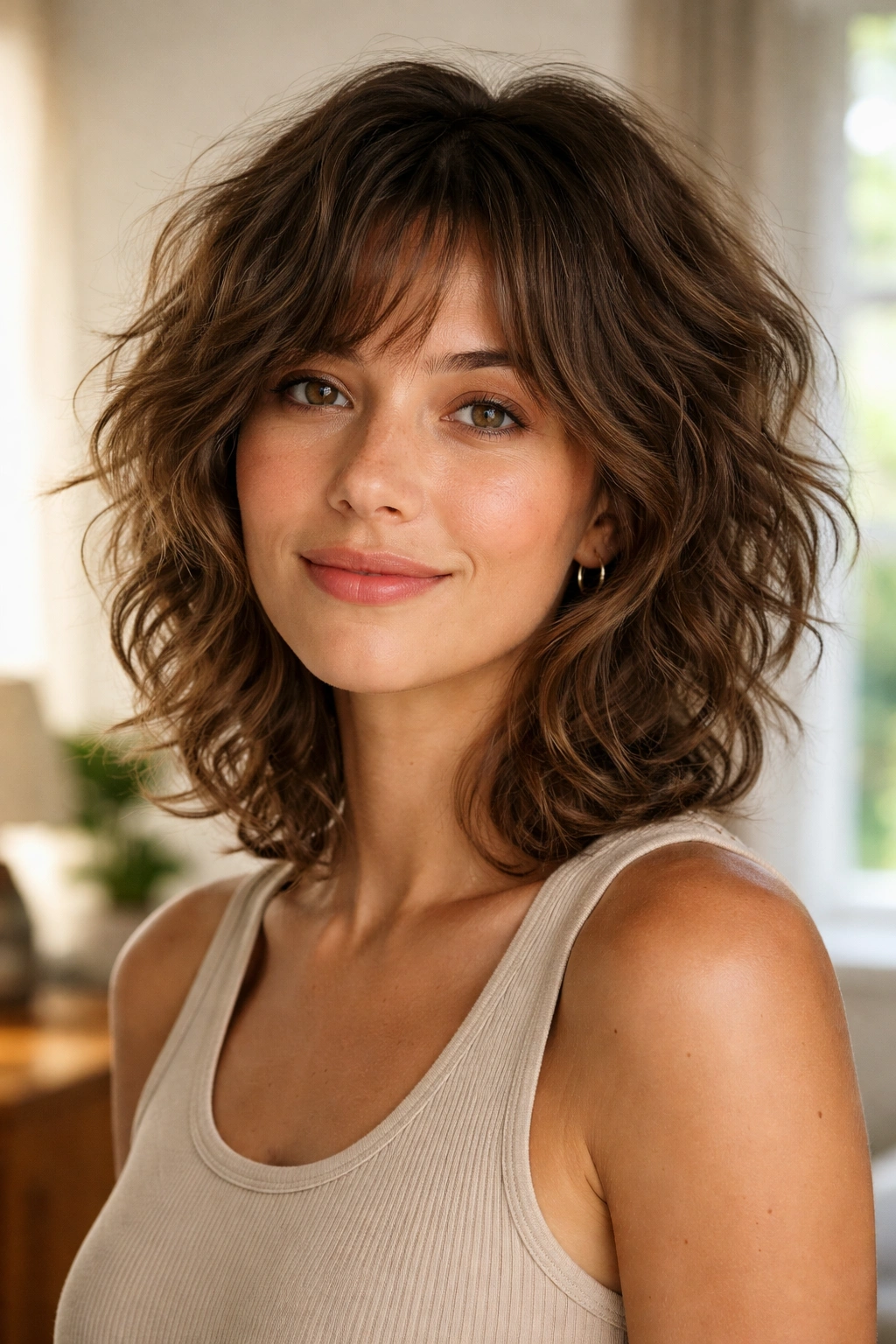
A true wash-and-go shag is built around your natural bend, not around a blowout. That sounds simple, but a lot of haircuts miss it and end up relying on styling to look finished.
This version should have enough internal layering to keep the waves from clumping into one heavy shape. The front pieces can be a touch shorter, the crown should sit lightly, and the ends need enough texture to dry with movement. If the cut is right, a little leave-in conditioner and a scrunch is enough.
This is the cut for people who are tired of fighting their own texture. It may still need a quick refresh on day two, but it won’t demand a full rebuild every morning.
21. Flipped Shag with Tapered Nape
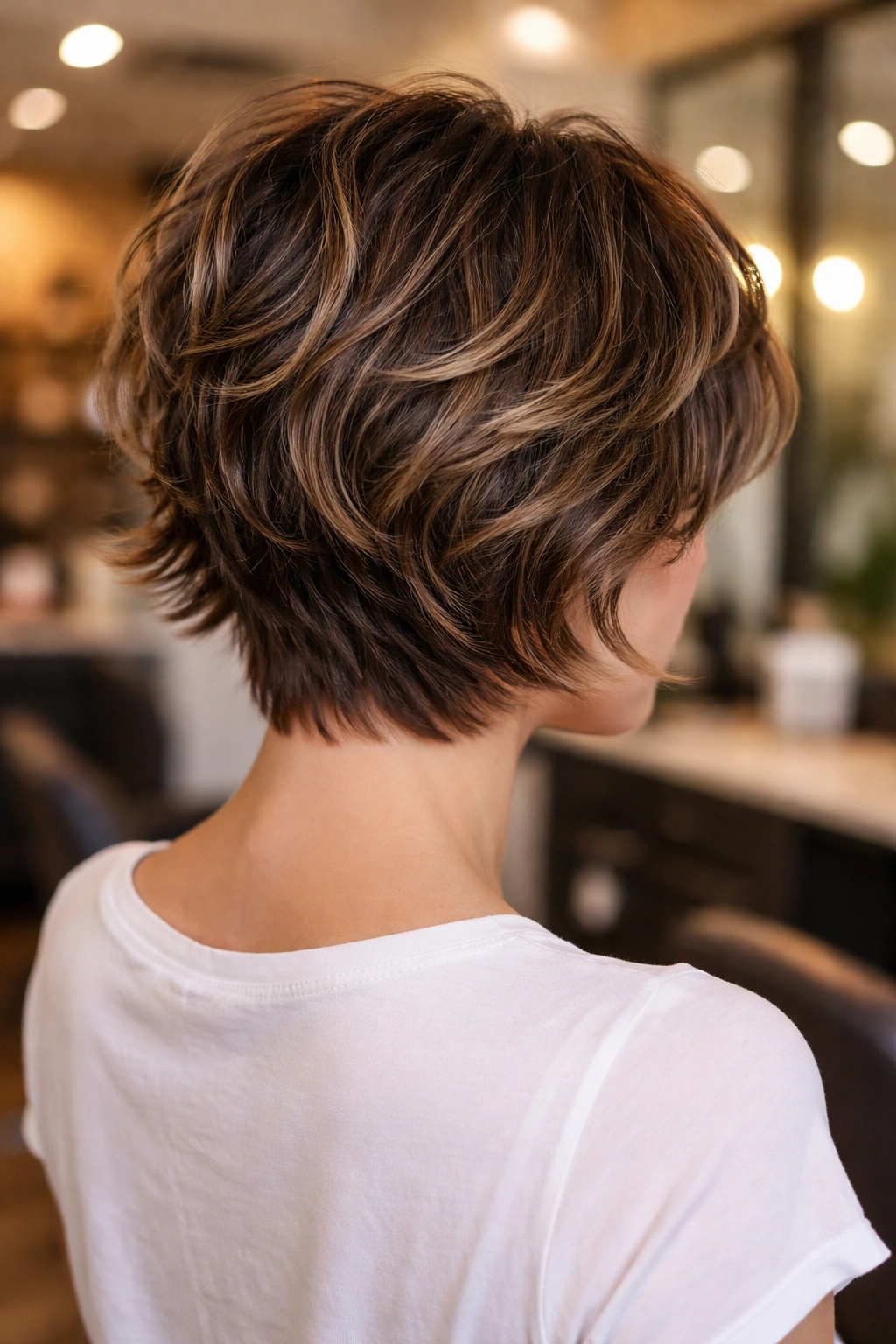
The flipped shag has a bit of vintage energy, and I mean that in a good way. The ends kick outward, the layers around the face stay loose, and the nape is tapered so the back doesn’t feel bulky.
This cut is a nice match for waves that naturally bend away from the neck. It gives the hair a little swagger. If you’ve ever had a cut that looked too flat in profile, this one fixes that by giving the ends somewhere to go.
Why the shape matters
A tapered nape keeps the haircut clean from behind, while the flipped ends keep the front lively. That combination is useful if you want something playful but still tidy enough for everyday wear.
It does take a little care when drying. Encourage the flip with your fingers or a small brush, then stop messing with it. Overworking the ends is how the shape loses its charm.
22. Face-Framing Lob Shag
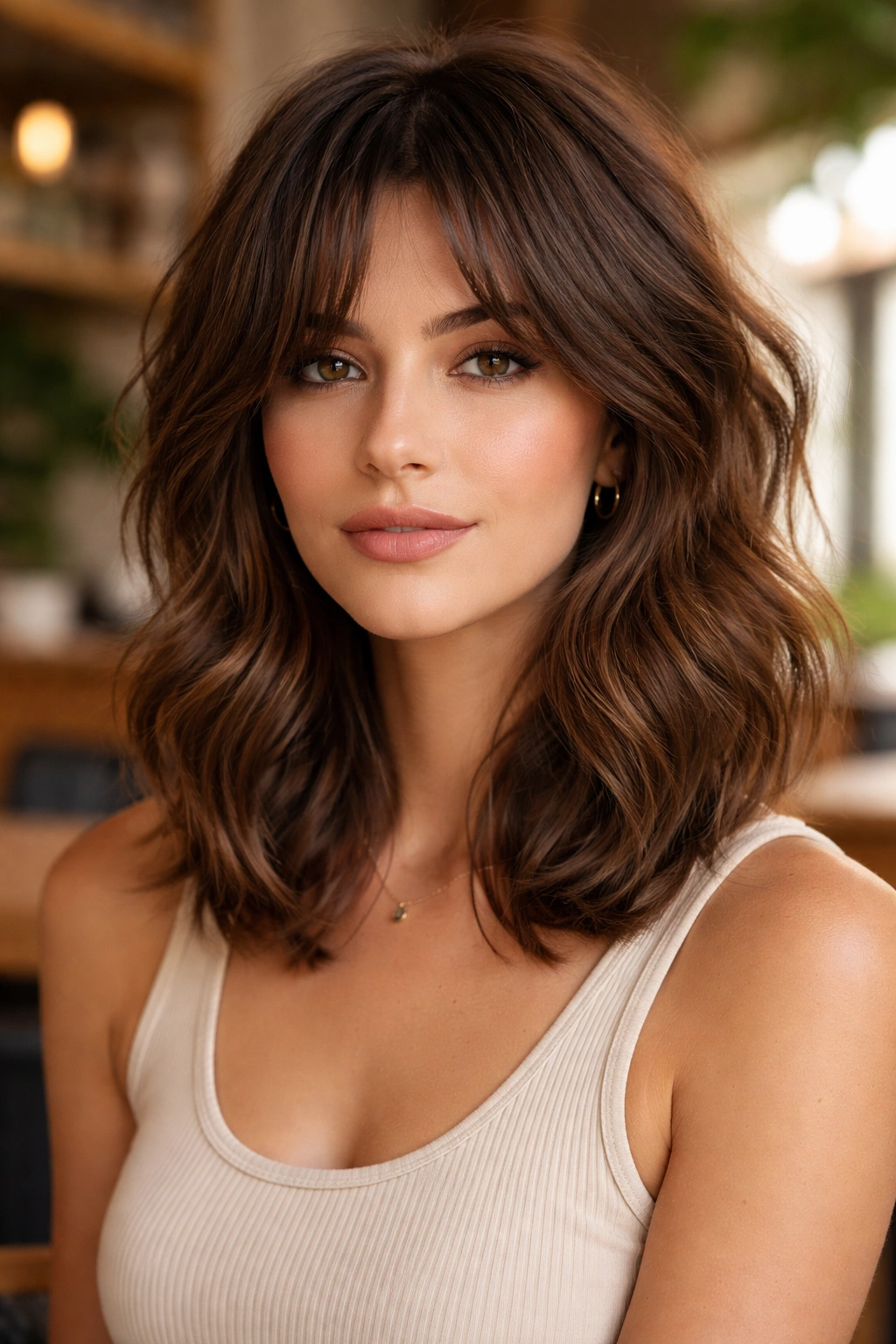
A lob shag sits in a nice middle zone. It’s long enough to feel secure, short enough to keep the layers visible, and face-framing enough to make waves look intentional instead of random.
This cut is useful if you’re easing into shorter hair. The front pieces can hit below the cheekbone, the back can stay a little tighter, and the layers around the face do most of the visual work. It’s a forgiving shape, which is why it wears so well.
If your hair has a loose wave, this cut benefits from a slight bend at the ends. If your wave pattern is stronger, you can let it dry on its own and trust the layers. Either route works, which is part of the appeal.
23. Feathered Crown Shag
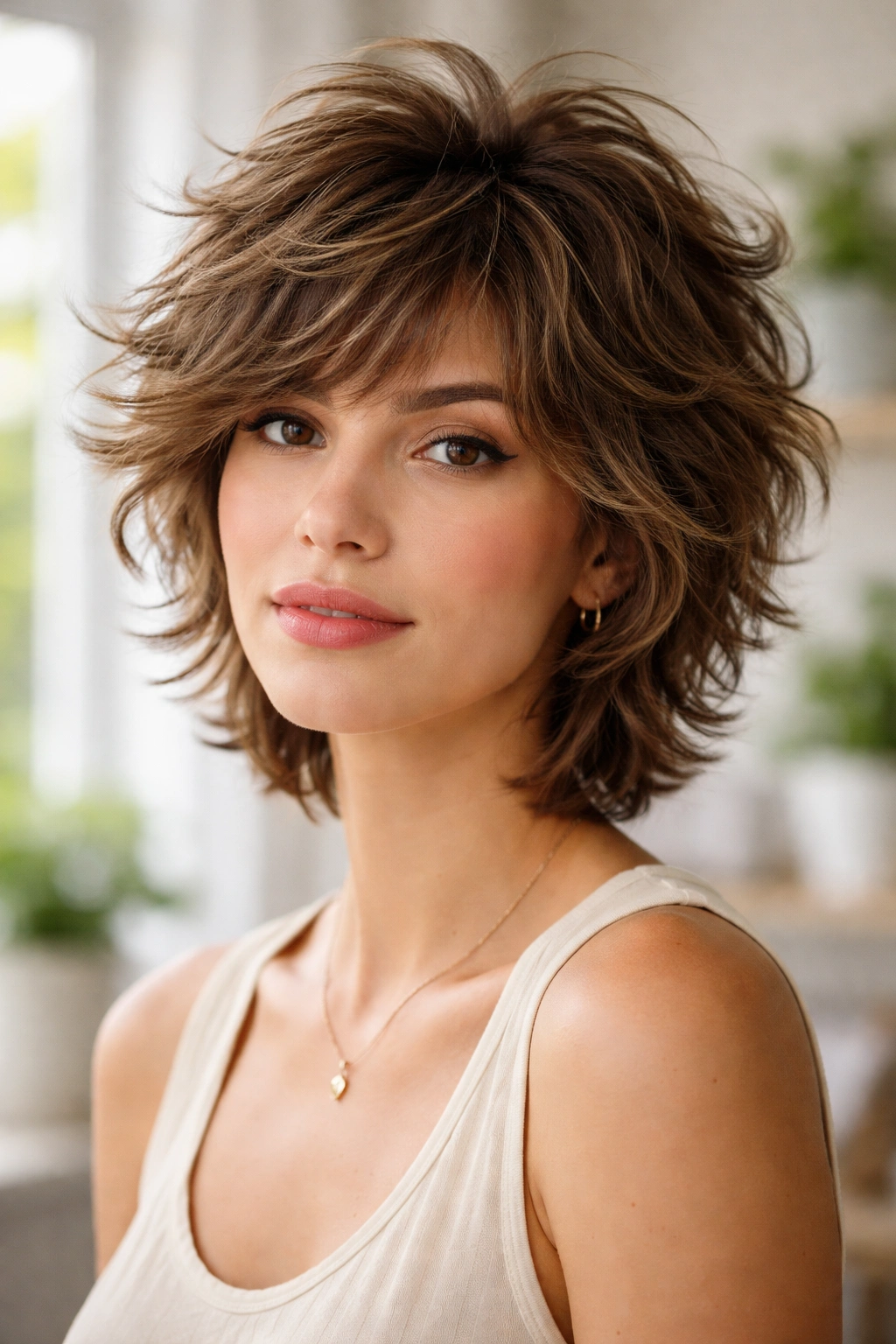
A feathered crown changes the whole feel of a short shag. It gives lift where short wavy hair often wants to lie down, and it keeps the top from looking heavy when the ends are layered.
This is the cut I’d point to for someone who wants volume without obvious teasing or excessive product. The crown stays light, the sides soften, and the neckline can remain neat. The effect is airy, not fluffy.
The most useful part is how it grows out. As the crown lengthens, the feathering keeps the shape from going square. That means fewer awkward weeks between cuts, which is a small mercy worth having.
24. Messy Crop with Baby Bangs
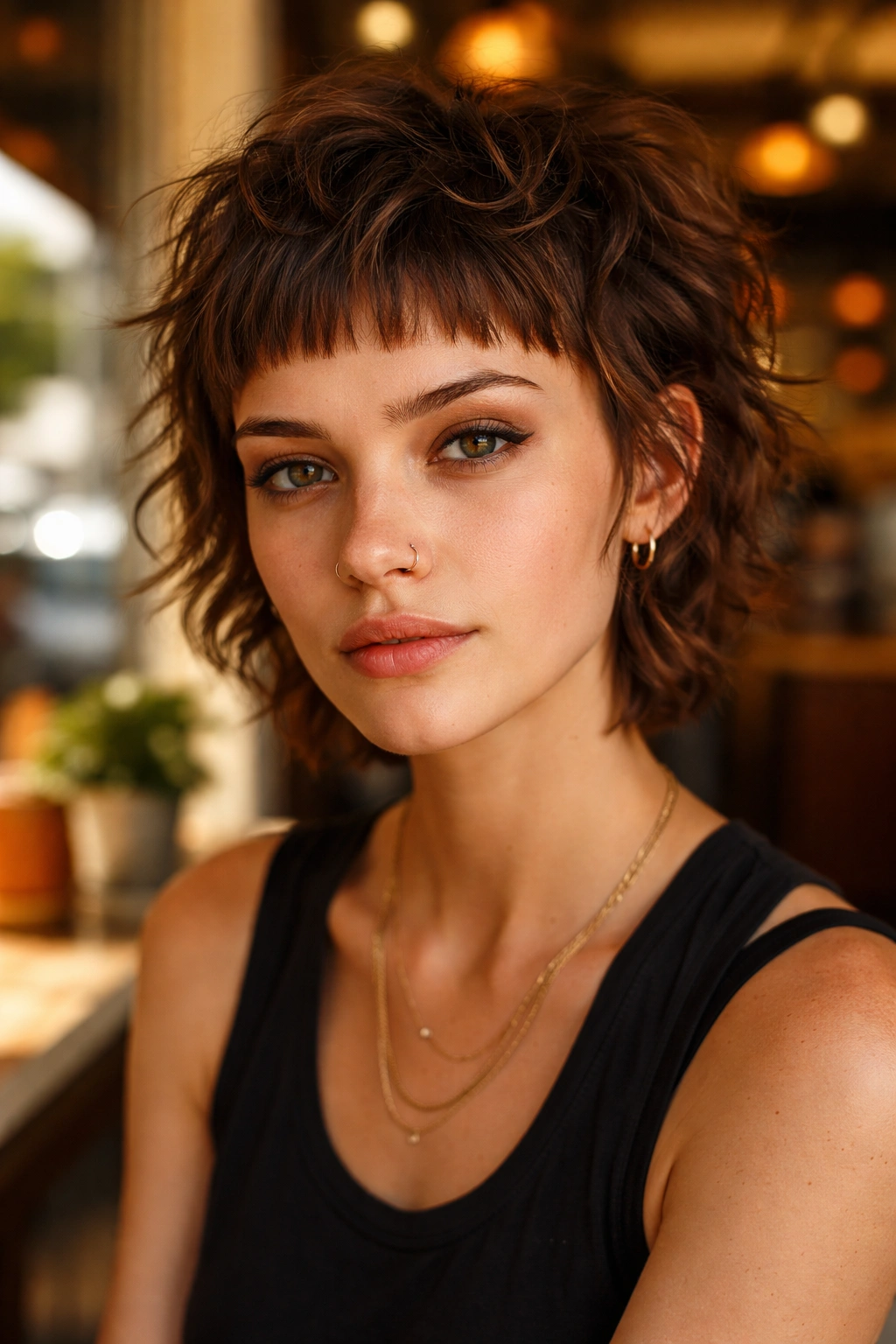
Baby bangs are bold. No way around it. Paired with a messy crop, though, they can make wavy hair look sharp in a way that feels playful rather than severe.
This cut works best when the waves are allowed to stay a little rough. The crop keeps the body close to the head, while the short fringe creates contrast. That contrast is what makes the whole shape stand out.
I’d only recommend it if you like a haircut with personality. It’s not the quiet option. It thrives on texture, a bit of separation, and a little imperfection around the edges. That’s the point.
25. Side-Swept Fringe Shag
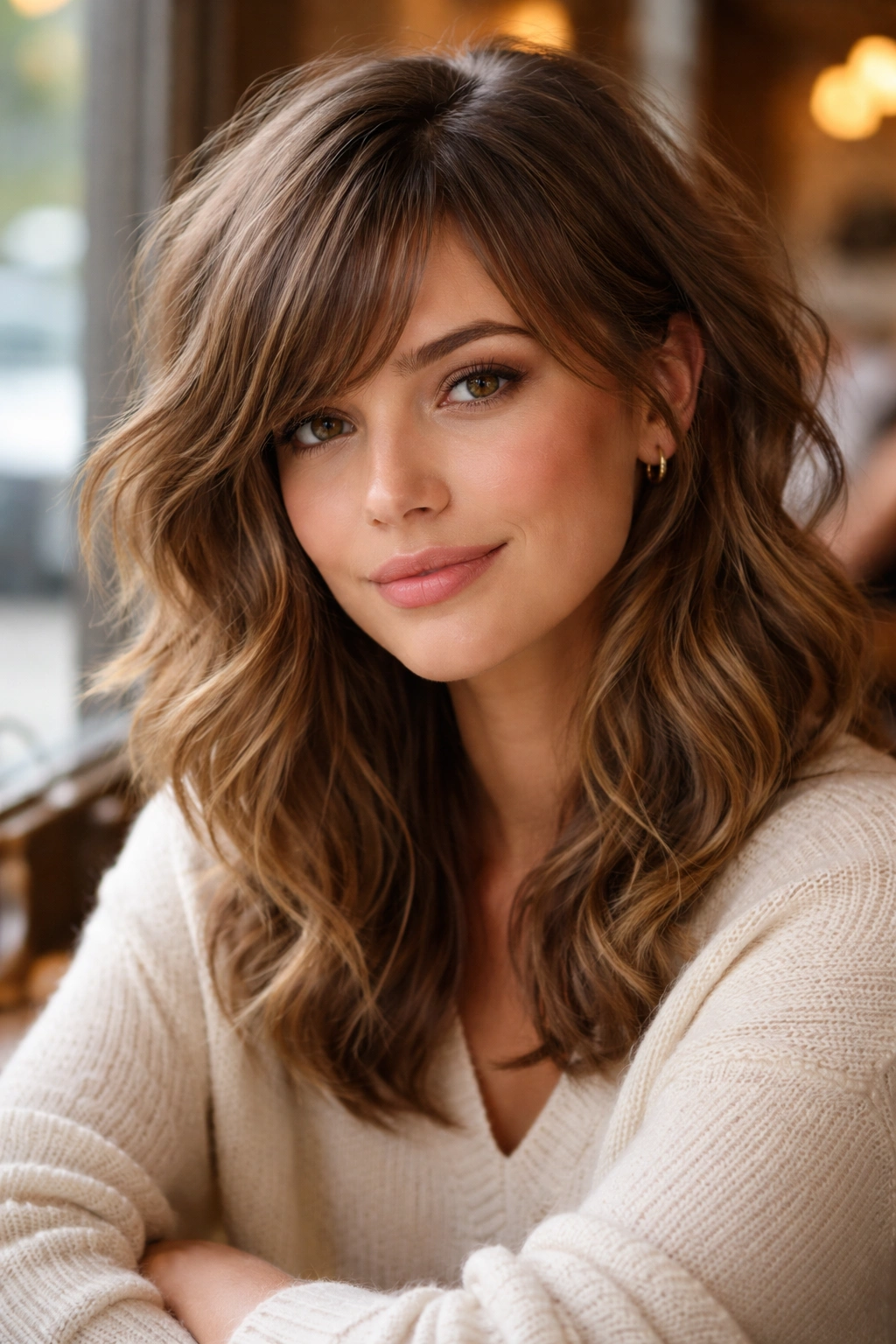
Side-swept fringe is the easygoing cousin of a full bang. It gives you face framing without requiring perfect forehead coverage, which makes it a smart choice for wavy hair that changes shape from day to day.
The fringe can blend into the rest of the shag with very little fuss. It’s especially good if one side of your hair naturally wants to fall forward. That natural bend helps the style settle into place faster.
A quick blow-dry at the root of the fringe can help if it tends to separate too much. After that, let the waves do what they do. The softness is what makes this one work.
26. Blunt-Textured Hybrid
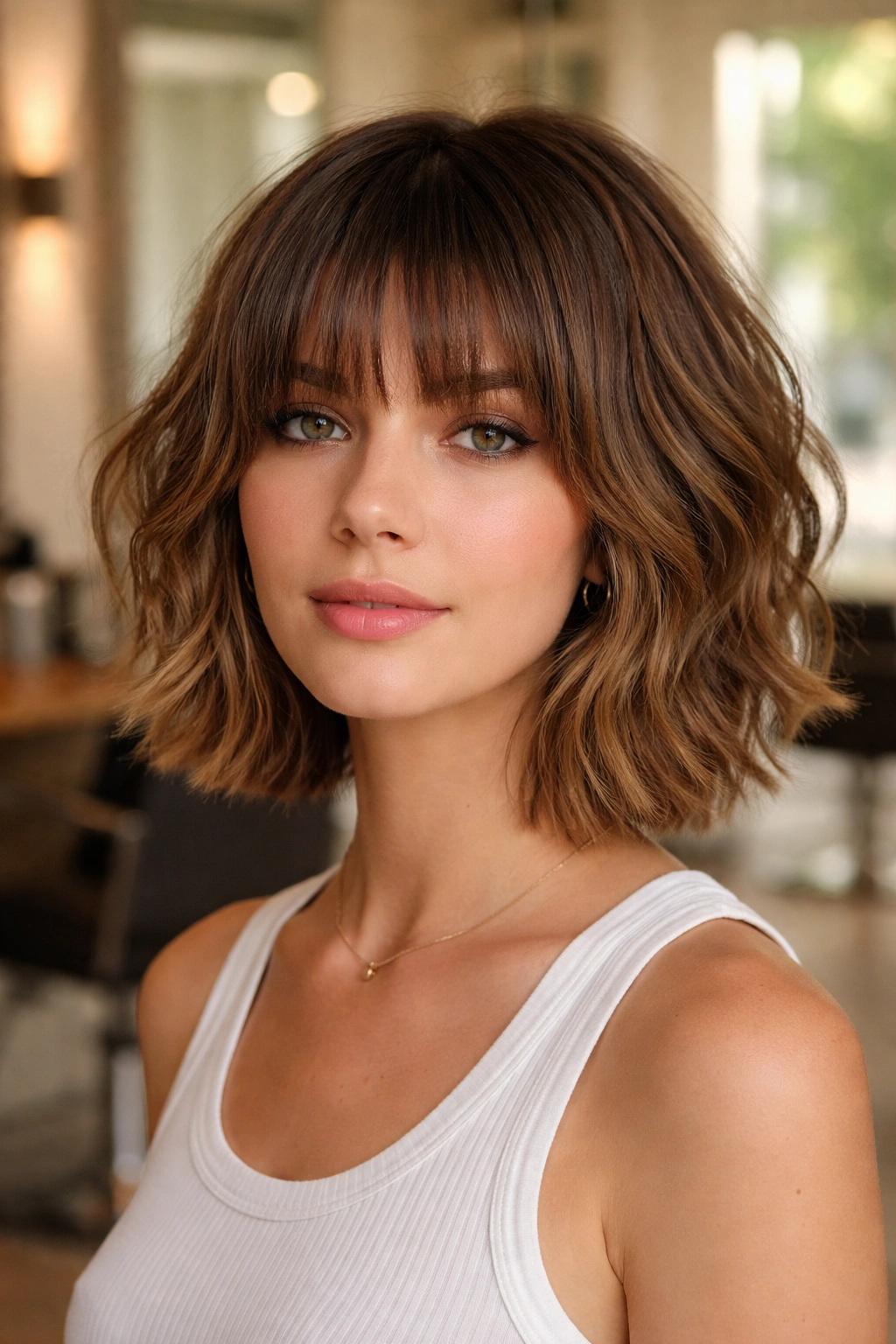
A blunt-textured hybrid sounds contradictory, and that’s why it’s interesting. The outline stays fairly solid, while the inside gets enough movement to keep the cut from feeling heavy.
This shape is good for wavy hair that needs some discipline. The blunt edge gives a clear line, which can make the haircut look thicker. The interior texture stops it from reading as a plain bob. That balance is useful if you want structure and softness in the same haircut.
If your stylist cuts this too thin, the whole point disappears. You want the line to remain visible. The texture lives underneath, not all over the ends.
27. Soft Layered Shag for Thick Waves
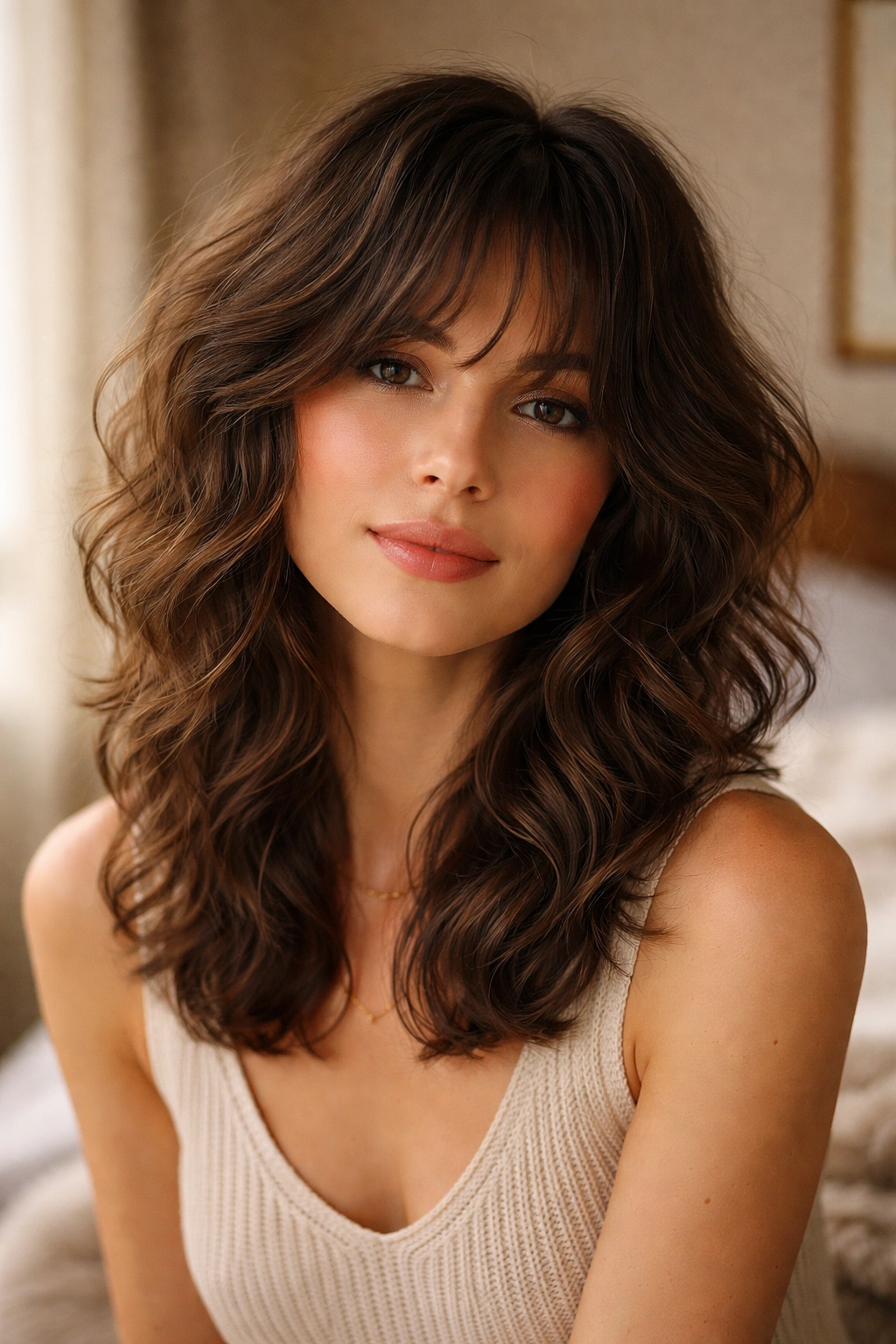
Thick waves can eat a haircut if the layering is wrong. This soft layered shag keeps enough weight in the perimeter to stop the hair from frizzing out, while still removing bulk through the interior.
The shape should feel plush, not chopped up. You want the waves to fall in loose sections around the face and through the crown, with enough length left in the bottom layers to keep the haircut grounded. That kind of balance is rare, and worth asking for directly.
A light cream or foam is usually enough here. Heavy products can weigh the layers down and erase the movement you just paid for. The haircut should do most of the work.
28. Airy Razor Shag for Fine Waves
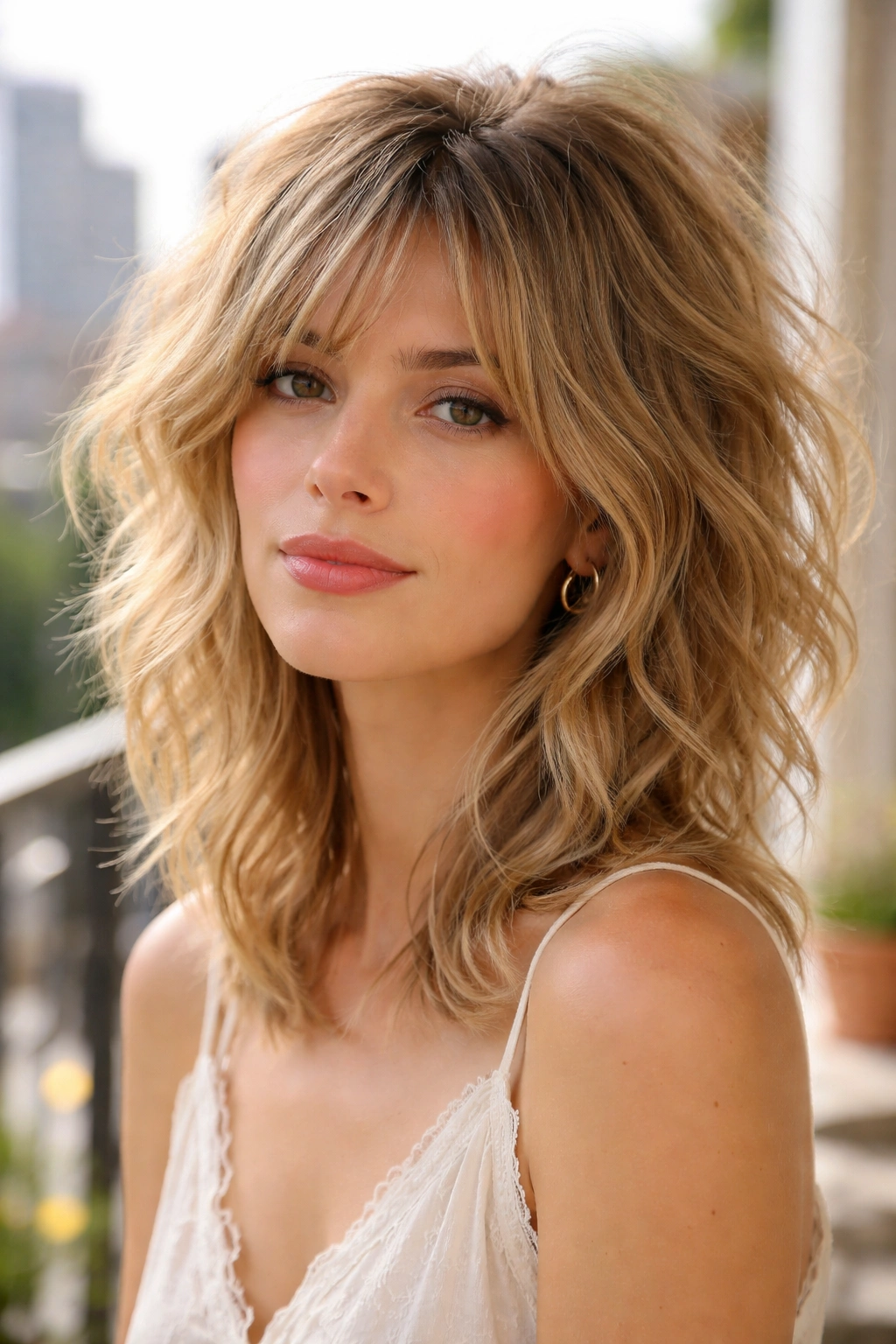
Fine waves need a gentler hand than thick ones. An airy razor shag can help, but only if the razor work is controlled and the layers stay soft.
This cut creates movement without stripping away the body that fine hair already struggles to keep. The crown gets lift, the ends get a little separation, and the whole style looks lighter. If the cut is too aggressive, though, the hair can go wispy fast.
What to ask for
- Soft, gradual layers through the top
- Minimal thinning at the ends
- A finish that keeps the perimeter from disappearing
The good version of this cut feels light and alive. The bad version looks underfed. The difference is a stylist who knows when to stop.
29. Sculpted Wave Shag
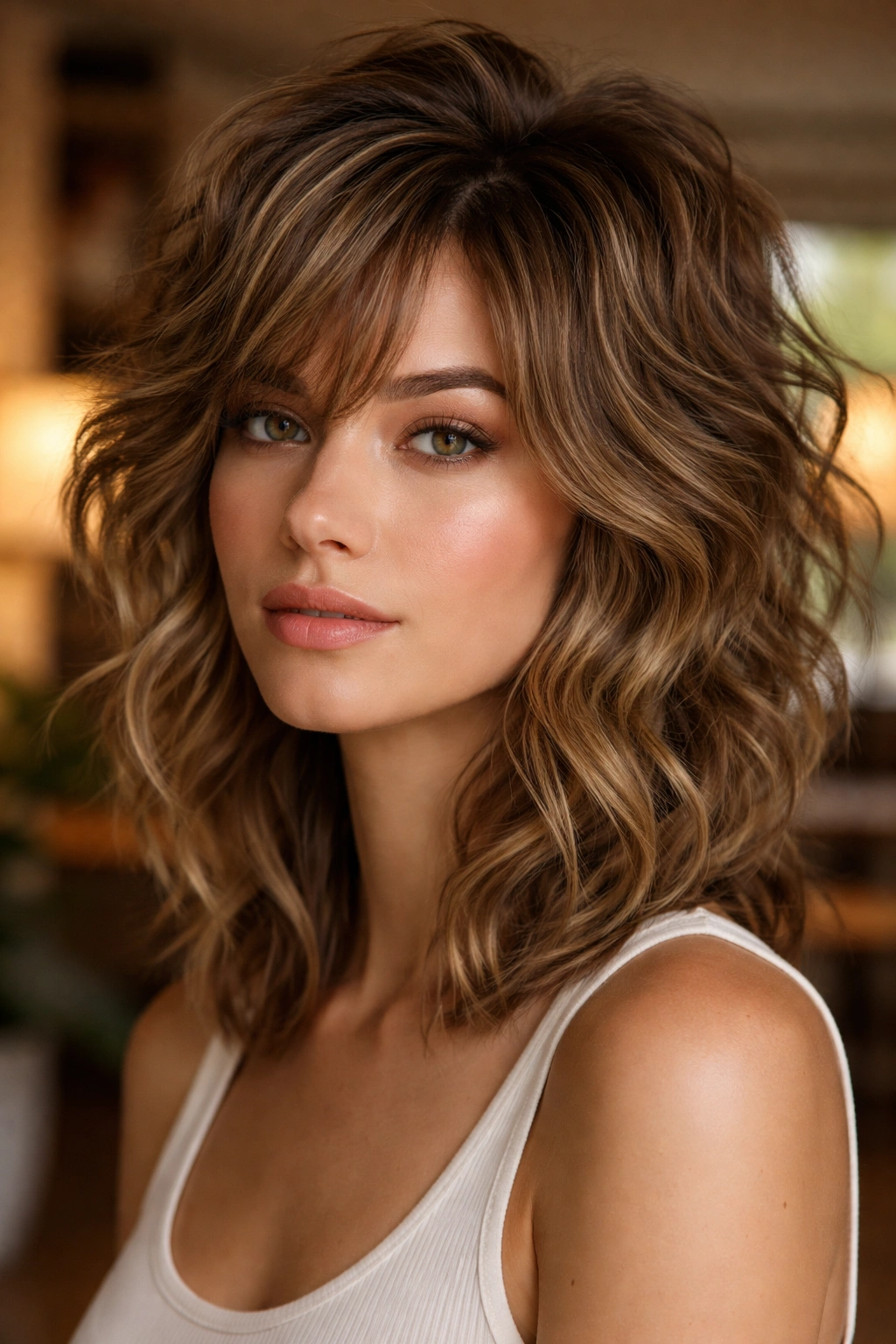
A sculpted wave shag is for someone who wants the hair to look like it was shaped, not stumbled into. It still feels relaxed, but the bends are cleaner and the outline is more controlled.
This cut can be beautiful on wavy hair that has a strong pattern but needs direction. The front pieces can curve inward toward the cheekbones, the crown can stay a little higher, and the back can taper just enough to keep the silhouette tidy.
It’s a nice choice when you want texture that reads polished. A diffuser helps, but so does a careful hand with a round brush on the front sections only. Keep the rest loose. If every strand is polished, the cut loses its charm.
30. Soft Wolf-Bob for Wavy Hair
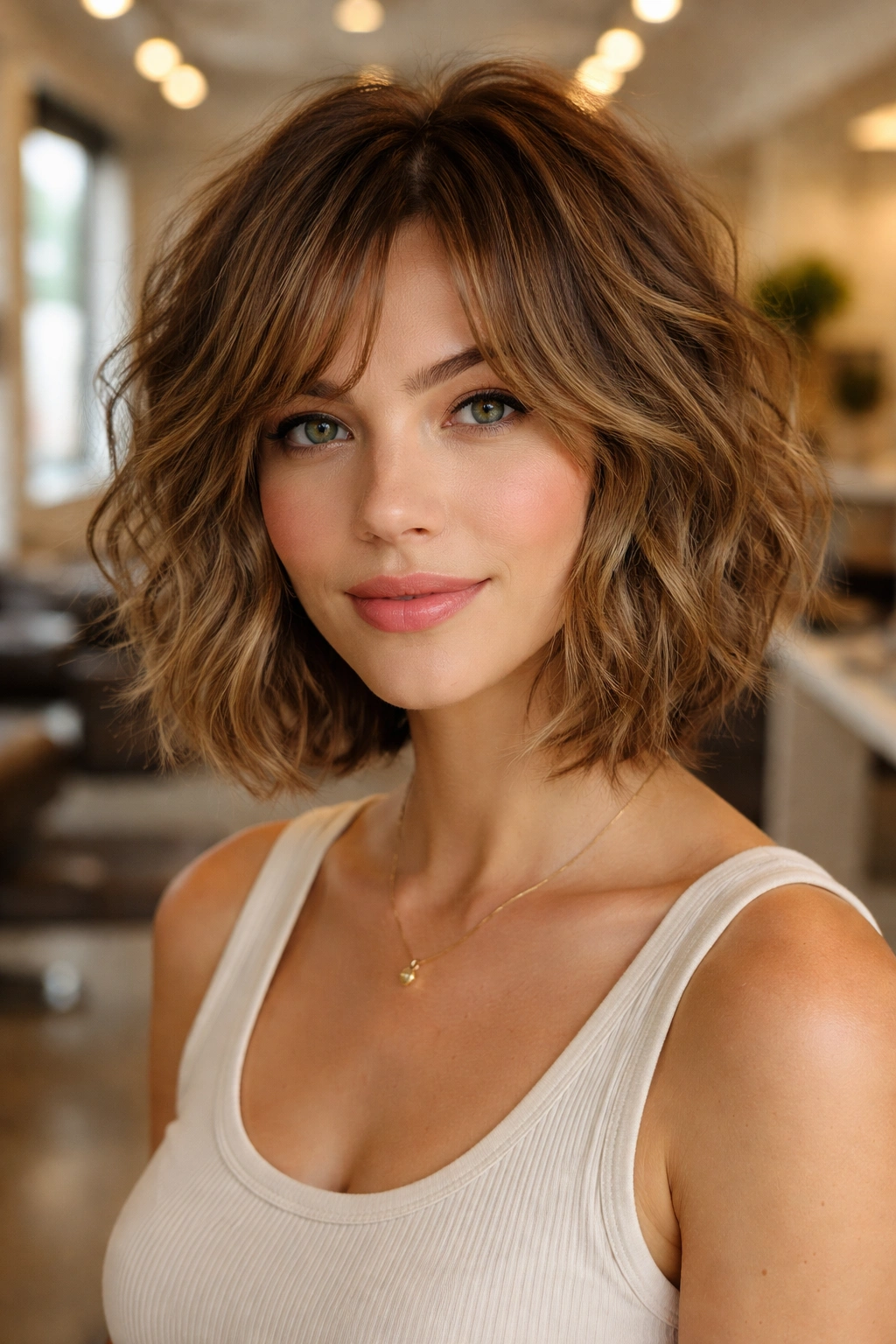
The soft wolf-bob brings together the looseness of a bob and the shape of a wolf cut without going too extreme. The top stays layered, the back stays shorter, and the edges stay soft enough to keep the whole thing easy to wear.
This is probably the most flexible cut in the bunch. It can feel edgy with a rough dry finish, or calmer if you smooth the front pieces down a little. That makes it a smart pick if you like your hair to change mood with very little effort.
Ask for a shorter crown, a tapered neck, and face-framing pieces that land around the cheekbone or jaw. Keep the finish soft. That softness is what stops the wolf shape from turning costume-y.
