



Curtain bangs on wavy hair have a little built-in advantage that straight hair doesn’t always get. The bend is already there. The shape wants to fall around the face, split in the middle, and soften everything from the forehead to the jawline — as long as the cut respects the wave instead of fighting it.
The mistake I see most often is simple: the bangs are cut too short, too blunt, or too thinned out at the wrong spot. Wavy hair has memory. It springs. It pushes. It changes its mind depending on humidity, drying method, and how much weight is left in the ends. A good curtain bang style works with that movement, not against it.
That’s why the best curtain bangs for wavy hair aren’t one single look. Some are cheekbone-skimming and airy. Some are thick and full. Some lean shaggy and broken-up. Some look best with a round brush, while others practically style themselves if you use a bit of mousse and leave them alone. The sweet spot is finding the cut that matches your wave pattern, your density, and how much time you want to spend in front of a mirror.
1. Soft Cheekbone Curtain Bangs
This is the easiest place to start if you want curtain bangs for wavy hair without making a huge leap. The shortest point sits around the top of the cheekbone, then the sides drift longer toward the mouth. That length gives waves room to bend instead of poofing straight up.
Why This Shape Works So Well
Soft cheekbone bangs let the wave make the shape for you. They frame the face without sitting so high that every bend turns into a frizz halo. Ask for a dry cut or a cut that checks movement after the hair is dry. Wet curls and waves lie.
- Shortest point: cheekbone level.
- Longest point: around the lip line.
- Best with: loose to medium waves.
- Styling note: a light mousse is usually enough.
Tip: Twist each side forward while drying, then let it fall back on its own. That keeps the shape soft.
2. Lip-Grazing Curtain Bangs
Lip-grazing curtain bangs give you a little more length to play with, which matters if your waves shrink once they dry. They sit low enough to sweep away from the eyes, but not so low that they disappear into the rest of the hair.
The look is quiet in the best way. It doesn’t shout “bangs.” It just frames the mouth and cheekbones in a way that feels easy. I like this style for anyone who wears their hair air-dried most days, because it still looks intentional when the ends move around a bit.
3. Bottleneck Curtain Bangs
Why do bottleneck bangs flatter wavy hair so often? Because the shape is built for movement. The center is shorter, the sides are longer, and the whole thing narrows then opens again — like the neck of a bottle, which is where the name comes from.
That contour gives the wave room to bend without turning heavy at the ends. It also works well if your hair is thick, because the style can hold some density in the center while still feathering out along the sides.
How to Style It
Use a small round brush only on the front pieces. Keep the outer sections more relaxed. A little bend at the center is enough; if you over-style the sides, the look gets stiff fast.
4. Shaggy Curtain Bangs With Broken Ends
If your hair already has a shag or you like that undone texture, this is the one I’d point you toward first. The ends are deliberately broken up, so the fringe doesn’t sit as one solid curtain. It moves in little pieces.
That matters with wavy hair because waves like to separate anyway. Instead of fighting that, the cut leans into it. Ask your stylist for point cutting or light razor work through the ends, but not so much that the fringe turns wispy and thin.
A shaggy curtain bang looks best when it is allowed to feel a little imperfect. Clean lines are not the goal here. Movement is.
5. Chin-Skimming Curtain Bangs
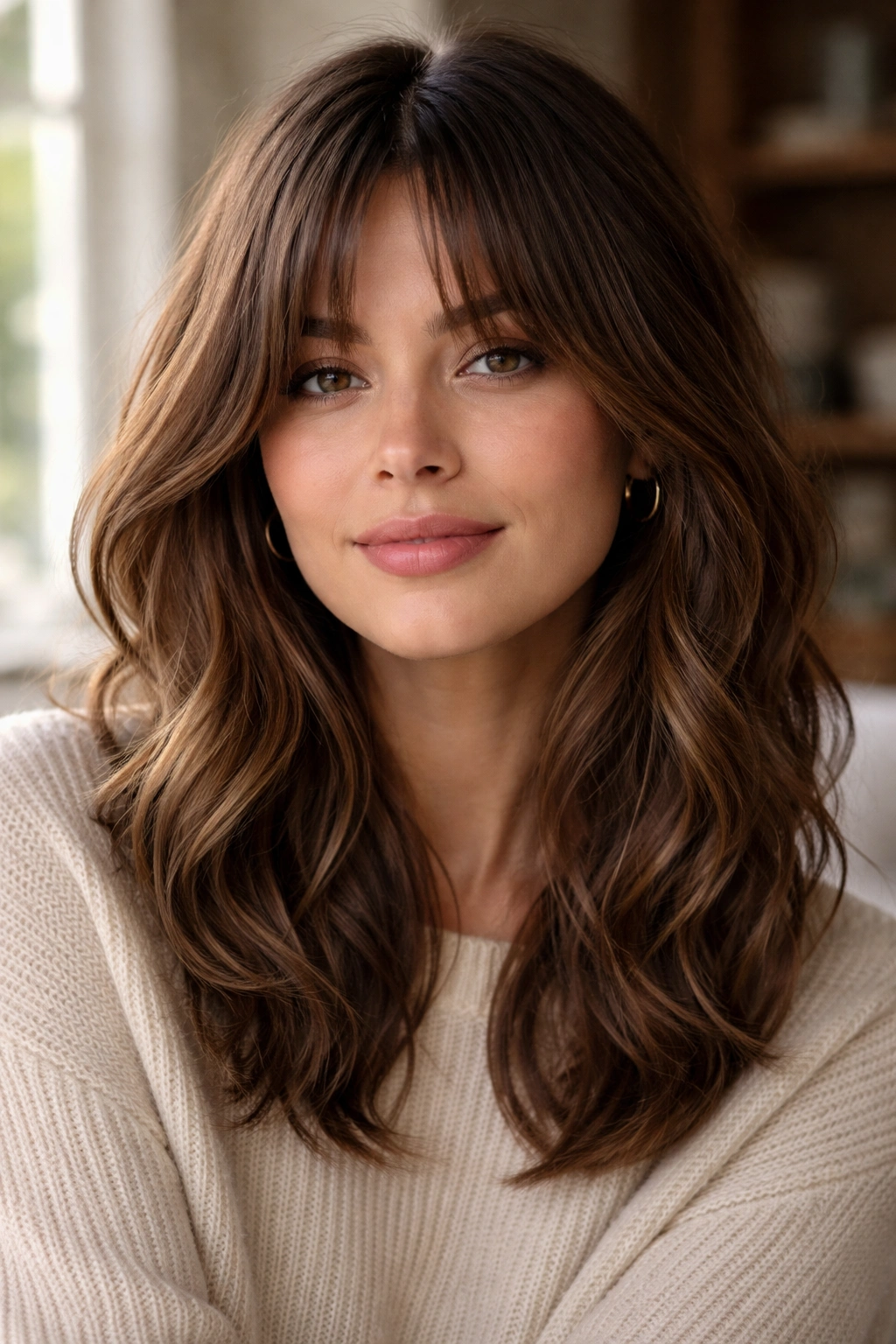
Chin-skimming curtain bangs are the long, dramatic version that still feels wearable. They’re especially good if you want to soften a square jaw or bring some shape to a longer face. The length lands low enough to blend into the rest of the hair, which means fewer awkward grow-out stages.
This is one of those cuts that looks better after you’ve worn it for a few hours. The waves settle. The front pieces separate. The whole thing gets a little more relaxed, which is exactly the point.
6. Feathered Curtain Bangs With a Round Brush Finish
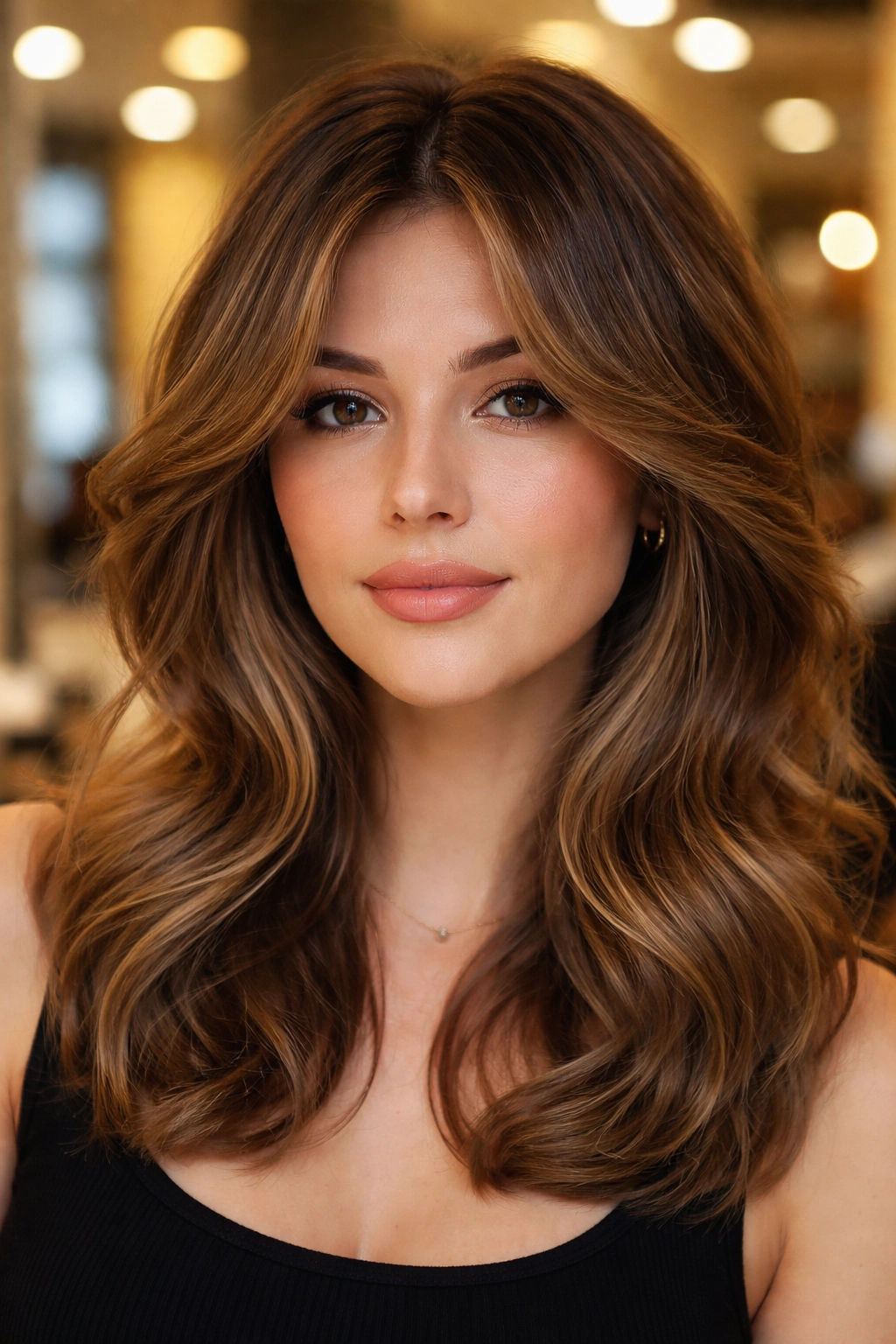
Feathered curtain bangs are the polished cousin in the group. They’re cut with enough softness at the ends that a round brush can sweep them away from the face in one clean pass. If you like that salon-blowout look, this is your lane.
The trick is not making the bangs too fluffy at the root. A 1- to 1.5-inch round brush is enough for most wavy hair. Bigger than that, and the bang can lose shape before noon. Smaller than that, and it may turn too curled.
I’d call this the style for people who don’t mind a little styling time. It pays you back with a cleaner frame around the eyes and cheekbones.
7. Piecey Curtain Bangs for Loose Waves
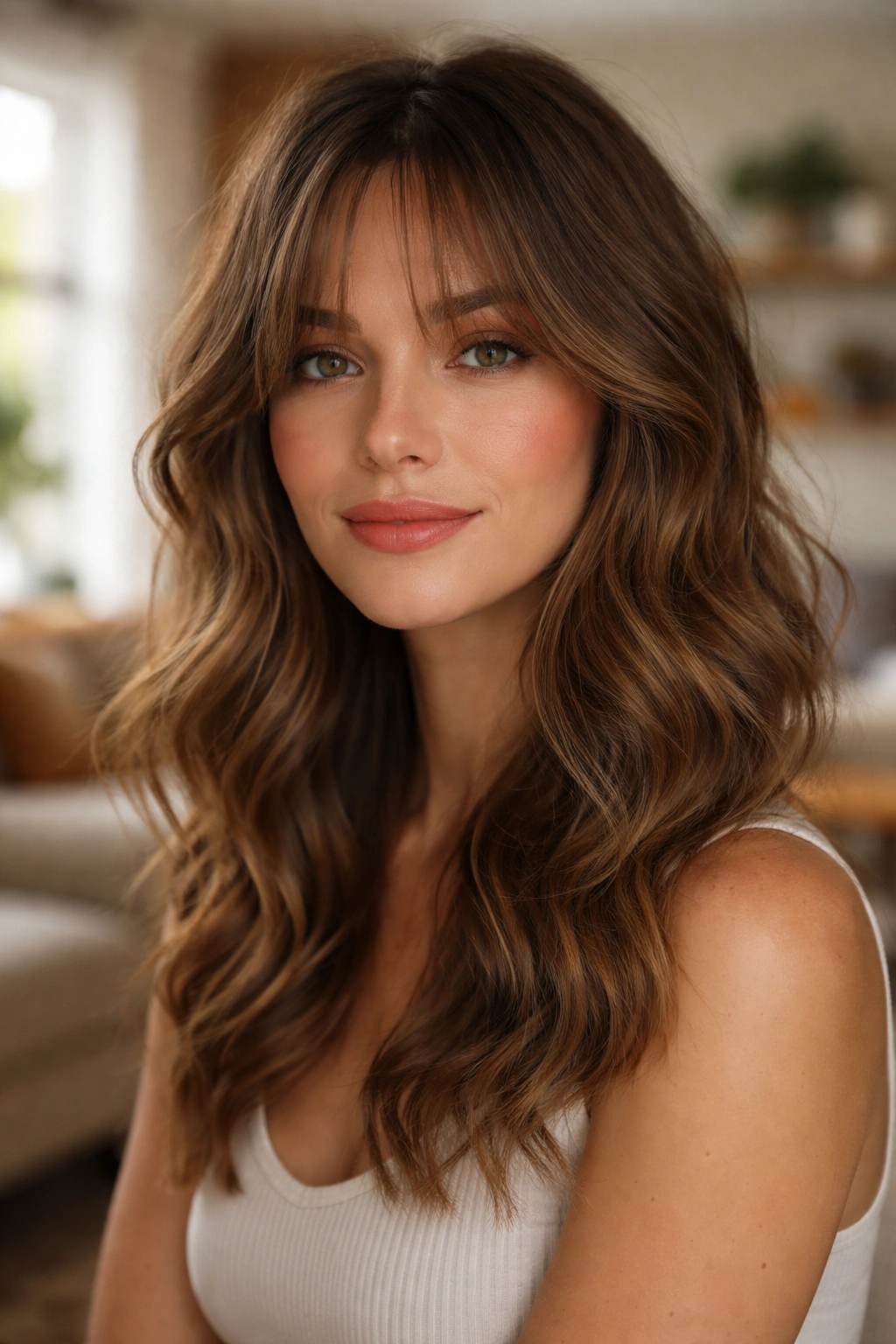
Piecey curtain bangs work when you want your fringe to look separated rather than blended. The look is airy, a little edgy, and especially good on loose waves that already break into visible sections.
What Keeps the Pieces From Clumping
A light mousse or styling cream used sparingly at the roots makes a big difference. Too much product and the bangs collapse into one ropey section. Too little and they frizz apart.
- Use a pea-sized amount of mousse.
- Dry with fingers first, then a round brush if needed.
- Stop brushing once the shape is set.
- Finish with a tiny bit of texture spray, not a heavy hairspray.
Small detail, big payoff: Don’t touch the bangs while they cool. That’s when the shape settles.
8. Heavy Curtain Bangs With a Center Part
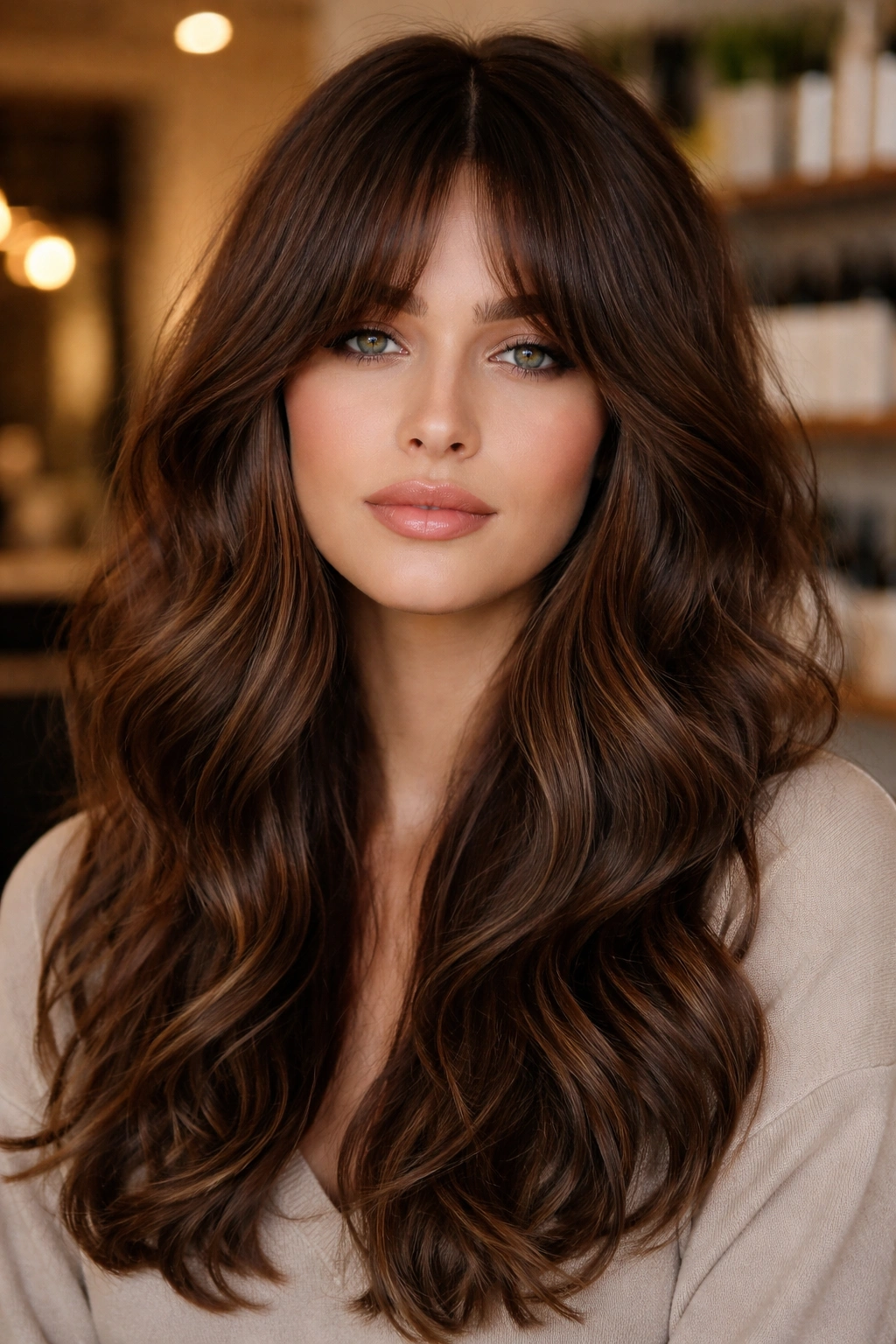
Heavy curtain bangs can look fantastic on dense wavy hair because they give the fringe enough weight to stay in place. Thin bangs on thick waves can go stringy fast. This solves that problem by leaving more hair in the front.
The center part matters here. It keeps the fringe open and stops the look from turning into a full front curtain. You still get movement at the cheeks, but the center feels present and grounded.
If your hair is thick and tends to frizz at the edges, this is a smart cut. It gives the wave structure instead of scattering it.
9. Wispy Curtain Bangs for Fine Wavy Hair
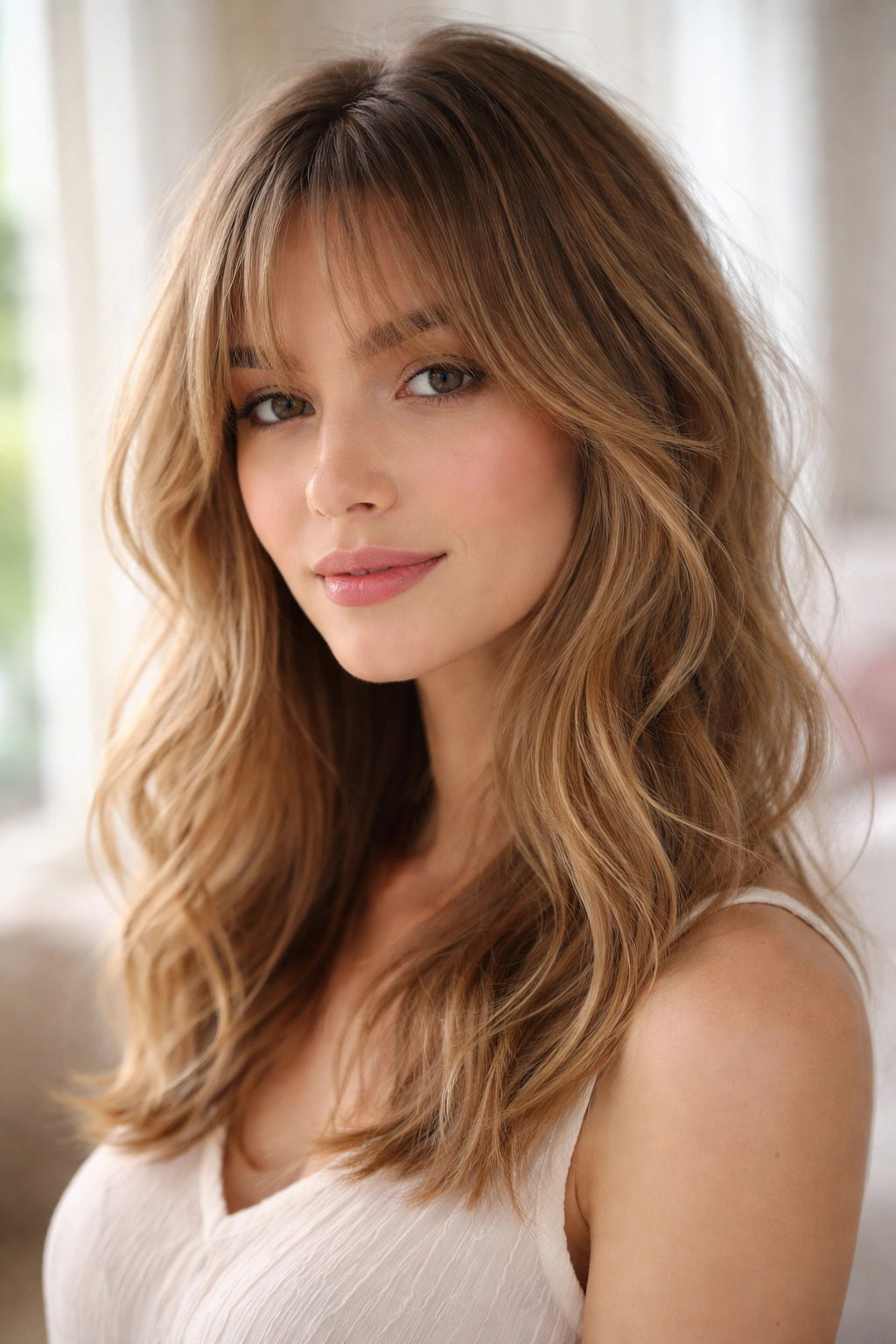
Wispy curtain bangs are a better match for fine waves than a bulky fringe. They’re lighter, softer, and less likely to overwhelm the face. The ends should look airy, not chopped to bits.
A lot of people with fine hair go wrong by asking for too much thinning. That’s risky. Take too much weight out and the bangs separate into see-through strands that never quite settle. Keep the shape soft, but preserve enough body that the fringe can actually hold its line.
This one works best when the longest pieces graze the cheekbones and the shortest point stays just below the brow.
10. Thick Curtain Bangs for Dense Waves
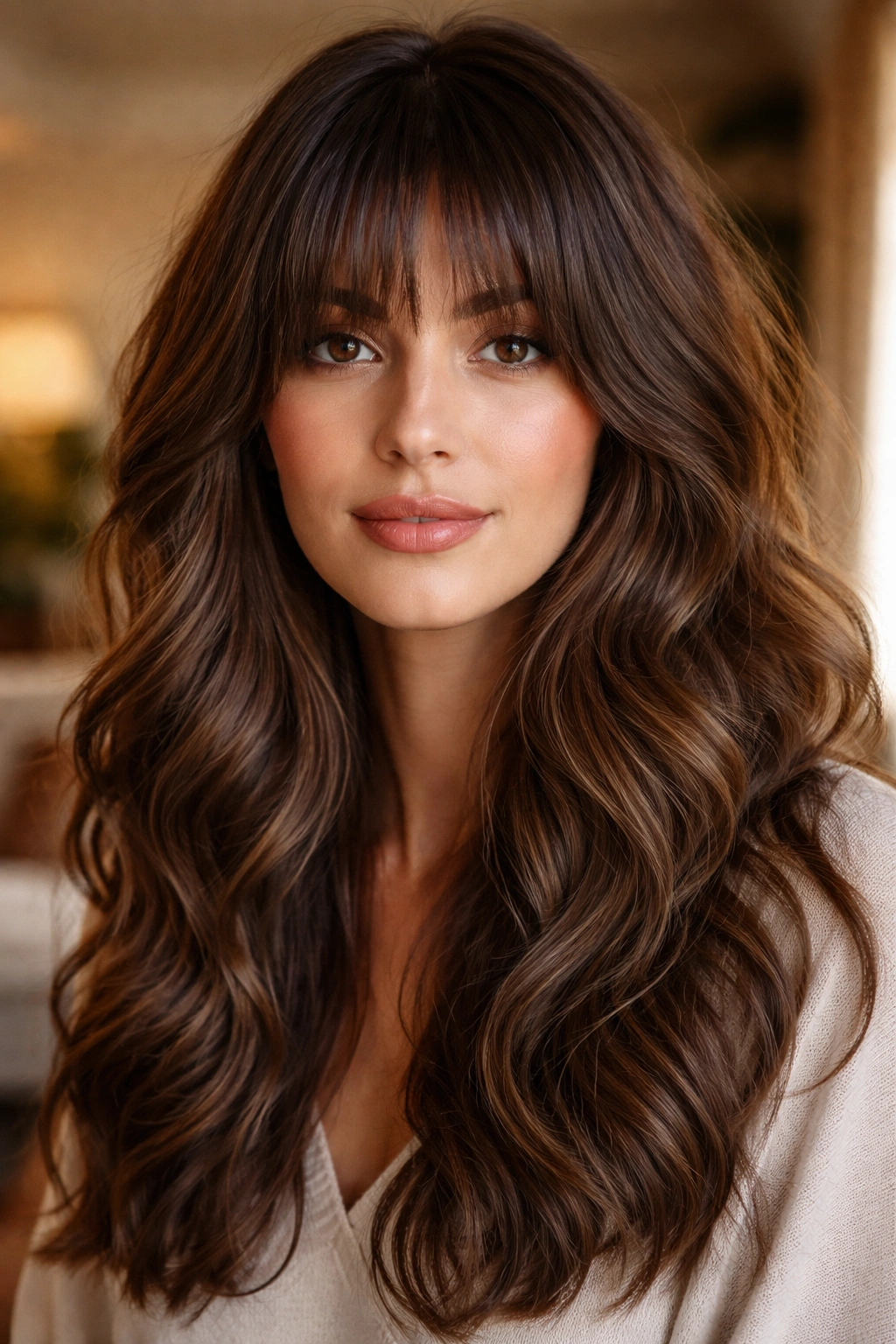
Dense waves can handle a fuller curtain bang, and honestly, they usually look better with one. The front pieces need enough weight to sit smoothly instead of floating away from the face.
What to Ask For at the Salon
Ask for internal removal of bulk, not a blunt shelf. Those are not the same thing. A stylist can take out weight from the middle while leaving the perimeter soft and full.
- Keep the center dense enough to frame the forehead.
- Remove bulk from underneath, not from the top layer.
- Use a diffuser or low-heat blow-dry to keep the bend smooth.
- Trim every 6 to 8 weeks if the fringe starts to split.
The payoff is a bang that looks plush, not puffy.
11. Razor-Cut Curtain Bangs
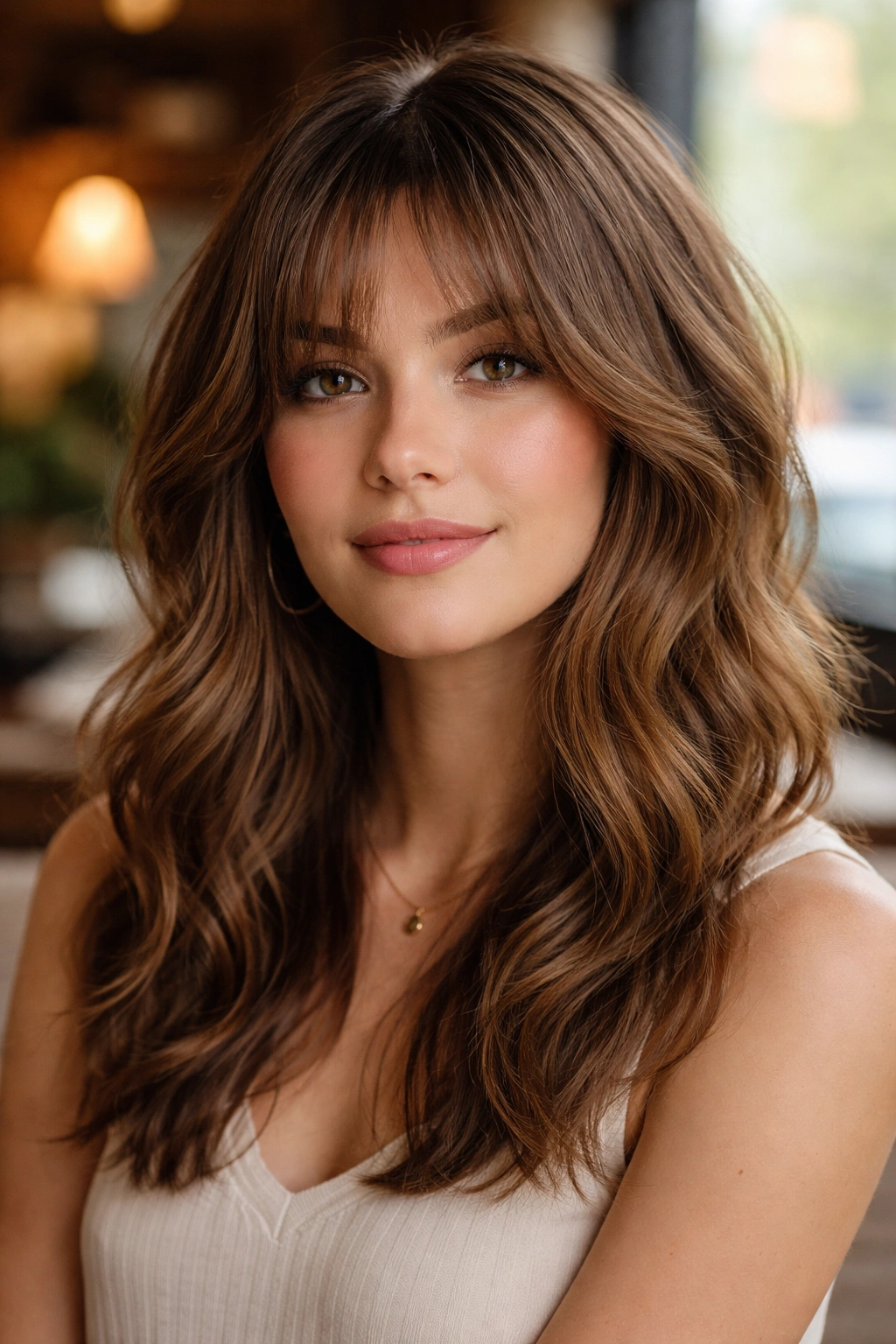
Razor-cut curtain bangs give the ends a softer edge, which can be lovely on healthy, medium-textured waves. The fringe falls with a little more movement and less obvious line, so it feels relaxed right away.
There is a catch. If your hair is already coarse, porous, or frizz-prone, a razor can expose the weak spots at the ends. In that case, scissors and point cutting may be kinder. I’m a fan of the razor look on hair that behaves, not on hair that already needs extra help.
The result should look feathered, not shredded. That difference matters.
12. Long Curtain Bangs That Blend Into Layers
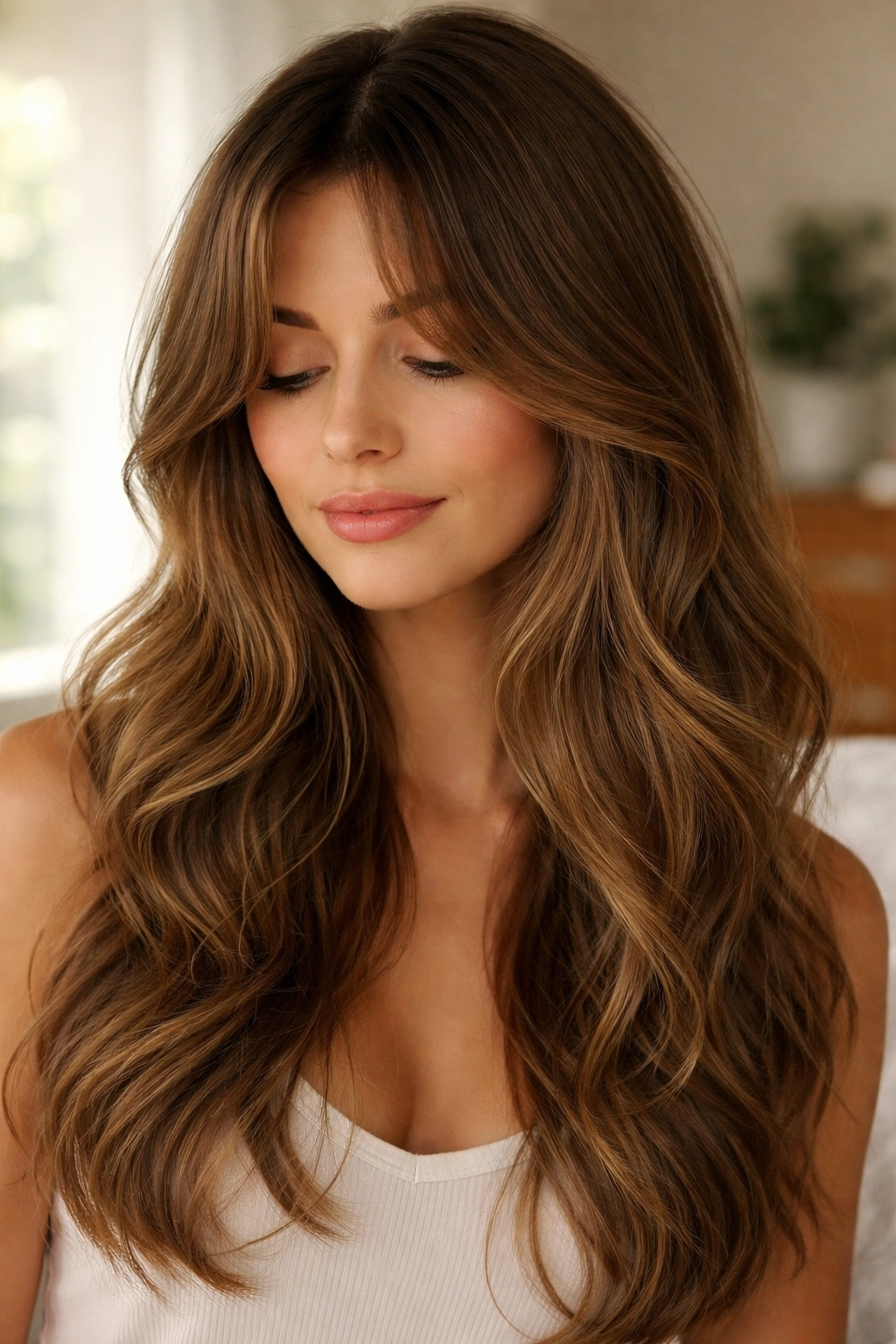
This is the least committed version of the bunch, and that’s why so many people end up liking it. The front pieces are long enough to blend into face-framing layers, so the line between “bangs” and “layers” gets soft fast.
If you’re nervous about curtain bangs for wavy hair, start here. You can tuck them behind the ears, part them wider, or let them fall forward on a humid day without the cut looking off. That flexibility is the real draw.
It’s also one of the easiest styles to grow out cleanly. No awkward shelf. No hard line.
13. Off-Center Curtain Bangs
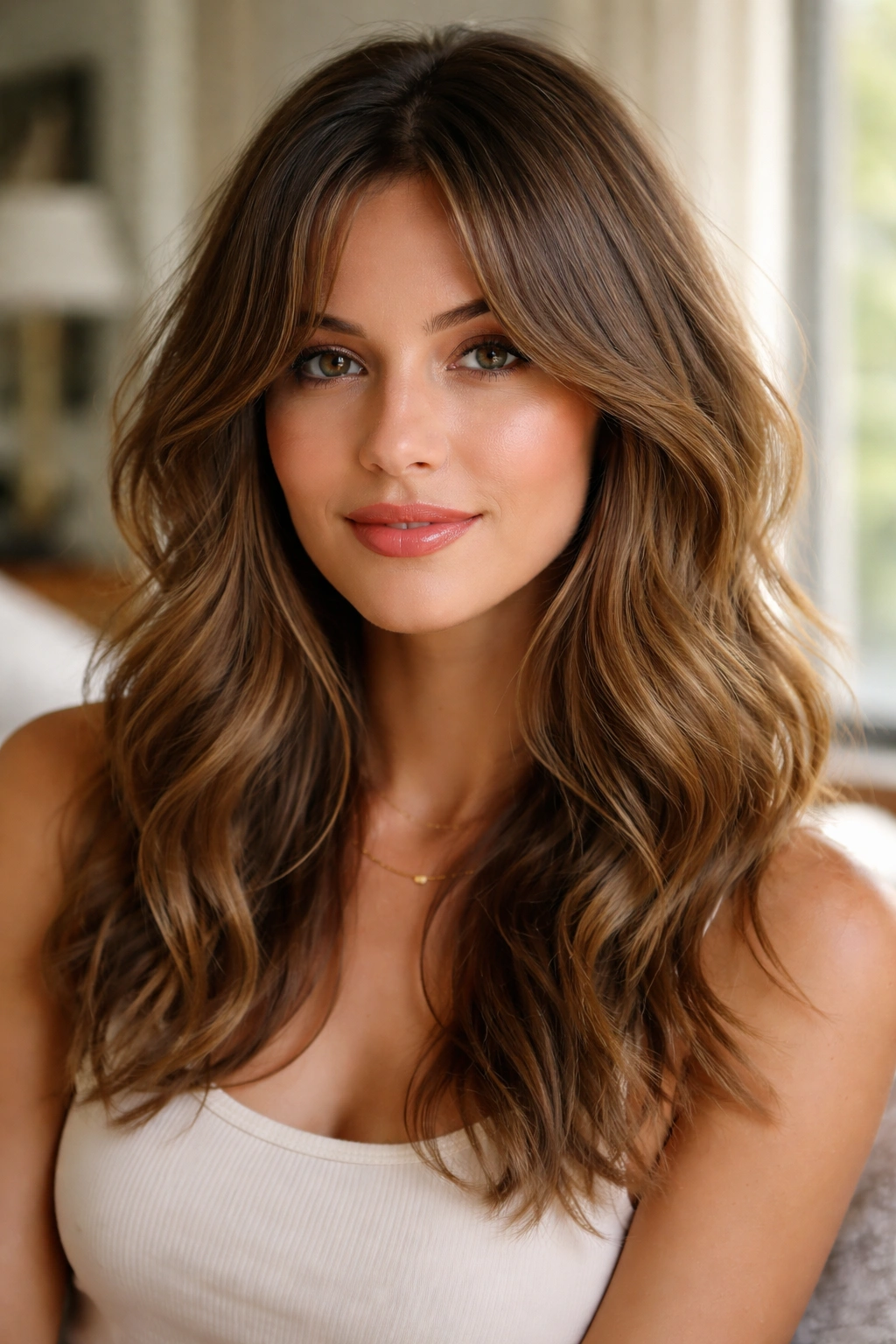
A dead-center part is not mandatory. In fact, a slight off-center split can help if one side of your hair has a stronger wave, a cowlick, or just more density than the other.
The look is still curtain bangs, just softer and less exact. I like this on people whose hair refuses to separate evenly down the middle. Fighting a cowlick every morning gets old fast. Shifting the part by half an inch can calm the whole front section down.
The styling is simple. Blow the heavier side a little flatter, then let the lighter side move more freely.
14. Air-Dried Curtain Bangs
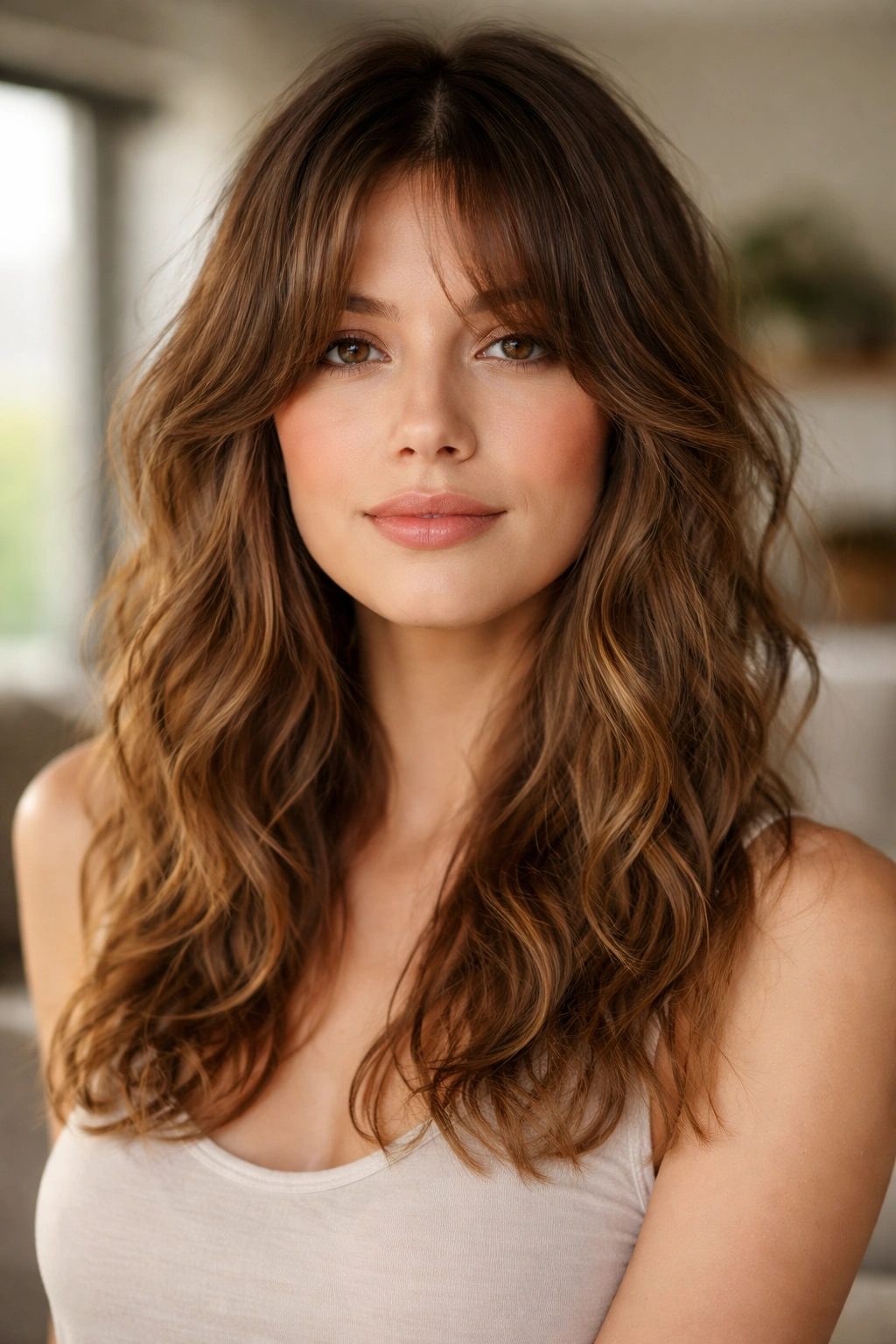
Air-dried curtain bangs are for the person who does not want a blow dryer to become a personality trait. You work with the wave pattern that’s already there, then refine it with a small amount of product and your fingers.
A touch of mousse or curl cream is enough. Scrunch the bangs upward once, then leave them alone. If you keep combing while they dry, the shape gets loose and fuzzy. That’s the trade-off.
This version can look especially good on 2B and 2C waves. The fringe lands with a natural bend that feels lived-in rather than styled to death.
15. Blowout Curtain Bangs
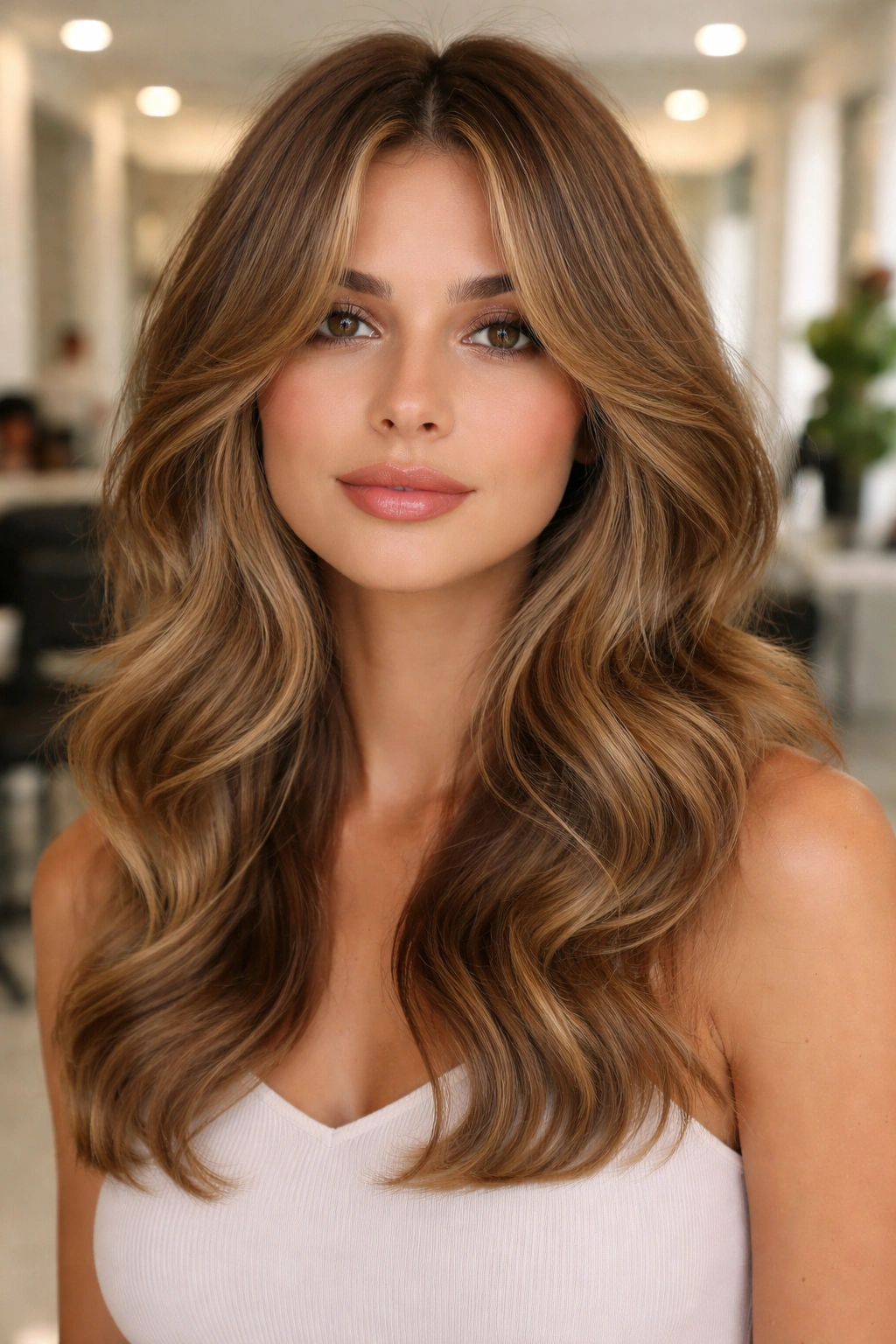
Blowout curtain bangs are the polished sibling. They use heat to shape the fringe away from the face, then cool air to lock it down. A round brush, a nozzle, and a little patience go a long way.
The center part should stay clean while you dry. Pull each side forward first, then roll it away from the face at the ends. That small motion creates the soft curve people usually want from curtain bangs. Finish with the cool shot. Do not skip that part.
If you like a smoother finish on the rest of your waves too, this style pulls the whole haircut together.
16. Beachy Curtain Bangs
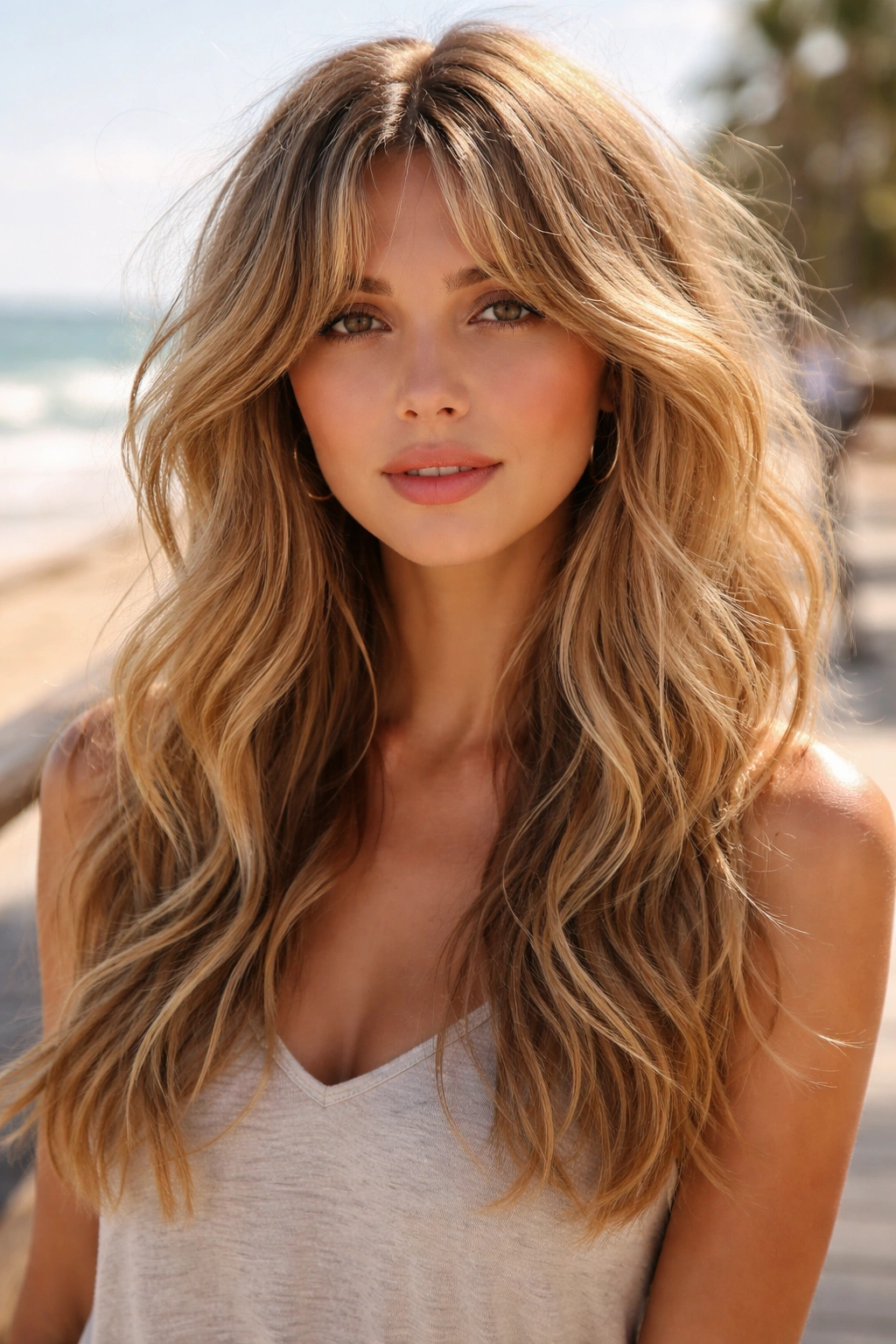
Beachy curtain bangs are messy on purpose, but there’s still a line between textured and crunchy. The best version feels light, bendy, and touchable. Salt spray helps, though I’d keep it light if your hair already runs dry.
This cut works especially well with long layers because the front pieces can blend into the lengths instead of sitting on top of them. The bangs should move with the rest of the hair, not sit in a separate category.
A diffuser helps here, but you can air-dry too. Just scrunch once and stop.
17. Retro 70s Curtain Bangs
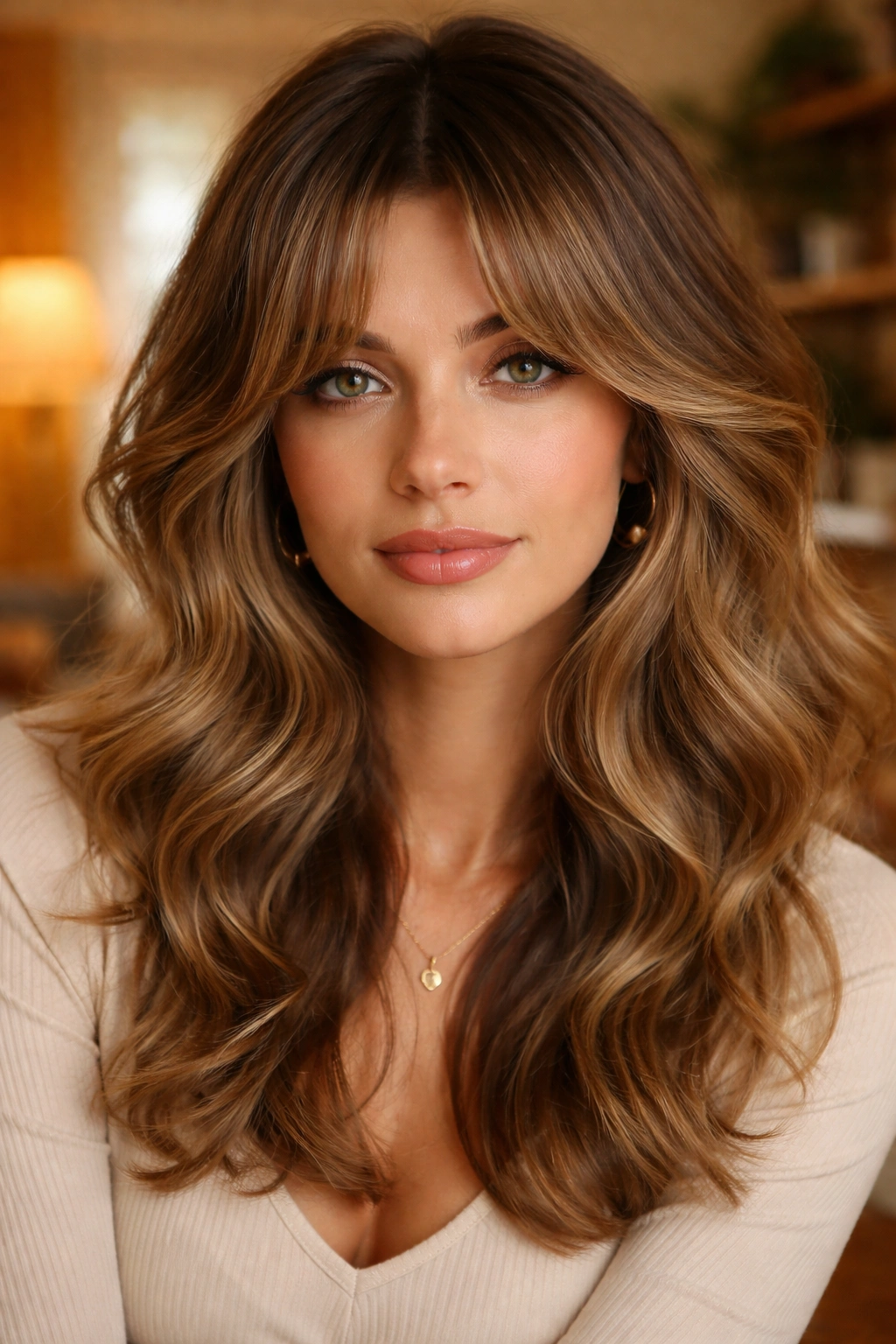
Retro 70s curtain bangs bring back a fuller crown, a wider part, and a bigger swing through the front. On wavy hair, that shape can look rich and a little dramatic without feeling stiff.
The key is volume at the root and softness through the ends. You want a bend that curves away from the face, not a tight curl. A large round brush or a wide velcro roller can help if you like more lift near the forehead.
This style has personality. Plenty of curtain bangs fade into the background; these ones do not.
18. Collarbone-Layer Curtain Bangs
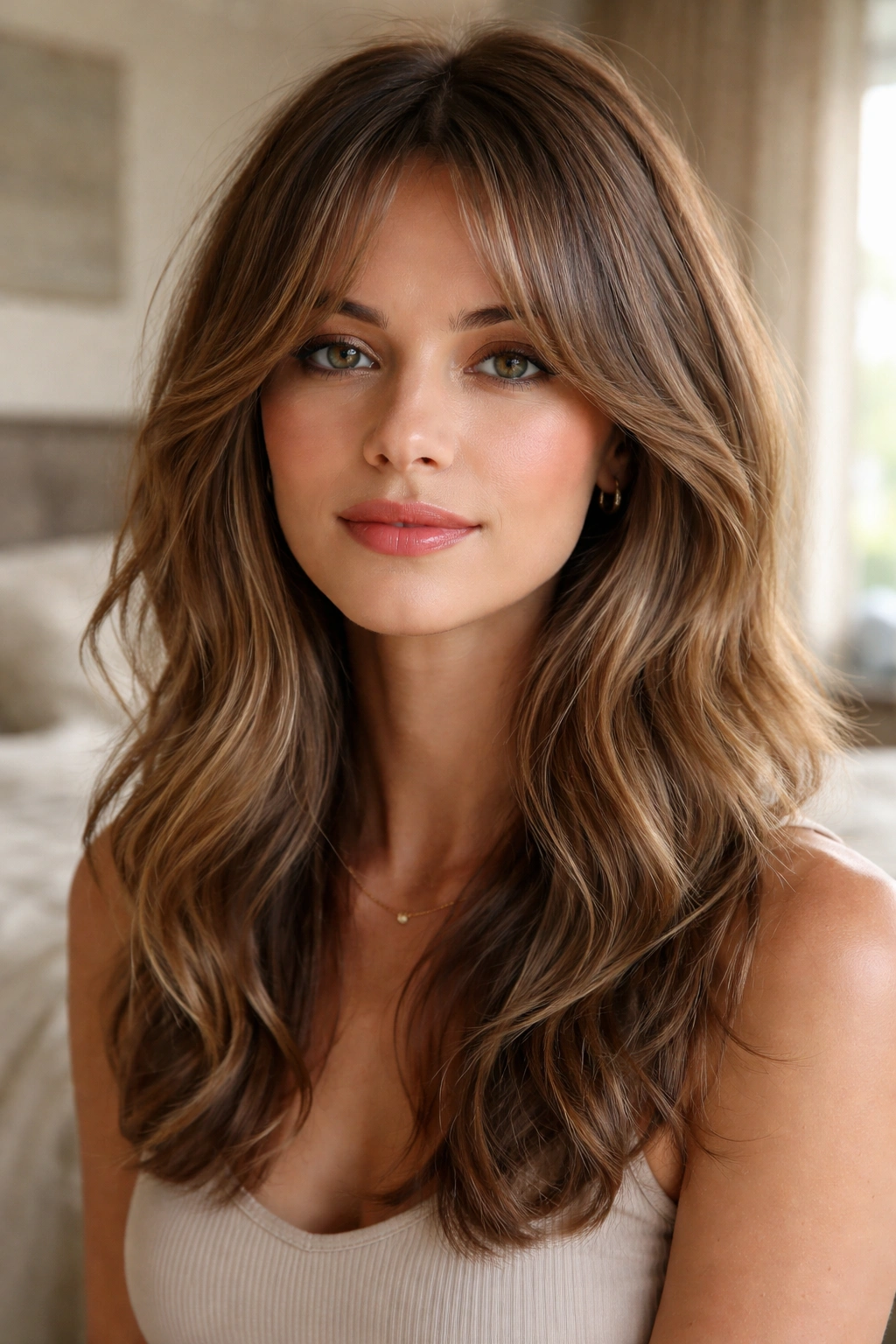
Collarbone-layer curtain bangs are for long hair that needs front movement without sacrificing length. The bangs blend into collarbone-skimming layers, which keeps the shape fluid from root to tip.
That long connection matters on wavy hair because short bangs can sometimes look disconnected from the rest of the cut. Here, the front section feels like part of the whole haircut. Everything falls together in one line, then breaks into waves at the ends.
It’s a smart choice if you wear your hair half-up often. The front pieces still frame the face when the rest is pinned back.
19. Rounded Curtain Bangs
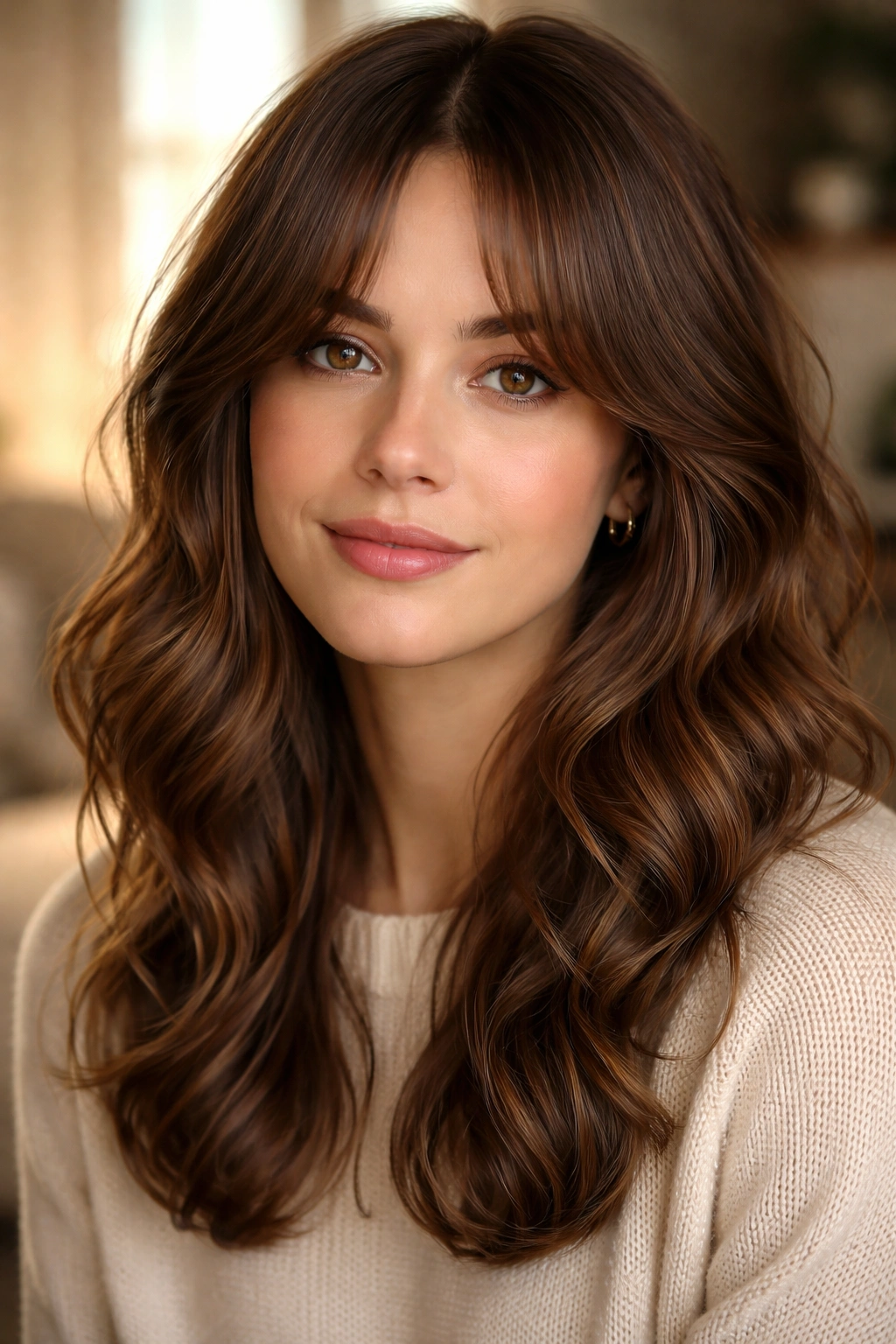
Rounded curtain bangs curve around the face in a soft arc, almost like a halo of shorter face-framing pieces. They’re especially nice if you want to soften a broad forehead or balance stronger angles around the jaw.
Why the Curve Matters
A rounded shape helps the wave land where you want it instead of letting it kick out randomly. It gives structure to hair that tends to swell in the wrong spot.
- Shorter center pieces.
- Fuller bend at the cheek.
- Longer edges that skim the mouth or chin.
- Best styled with a medium round brush.
The outline looks calm, even if the texture underneath is doing its own thing.
20. Soft S-Curve Curtain Bangs
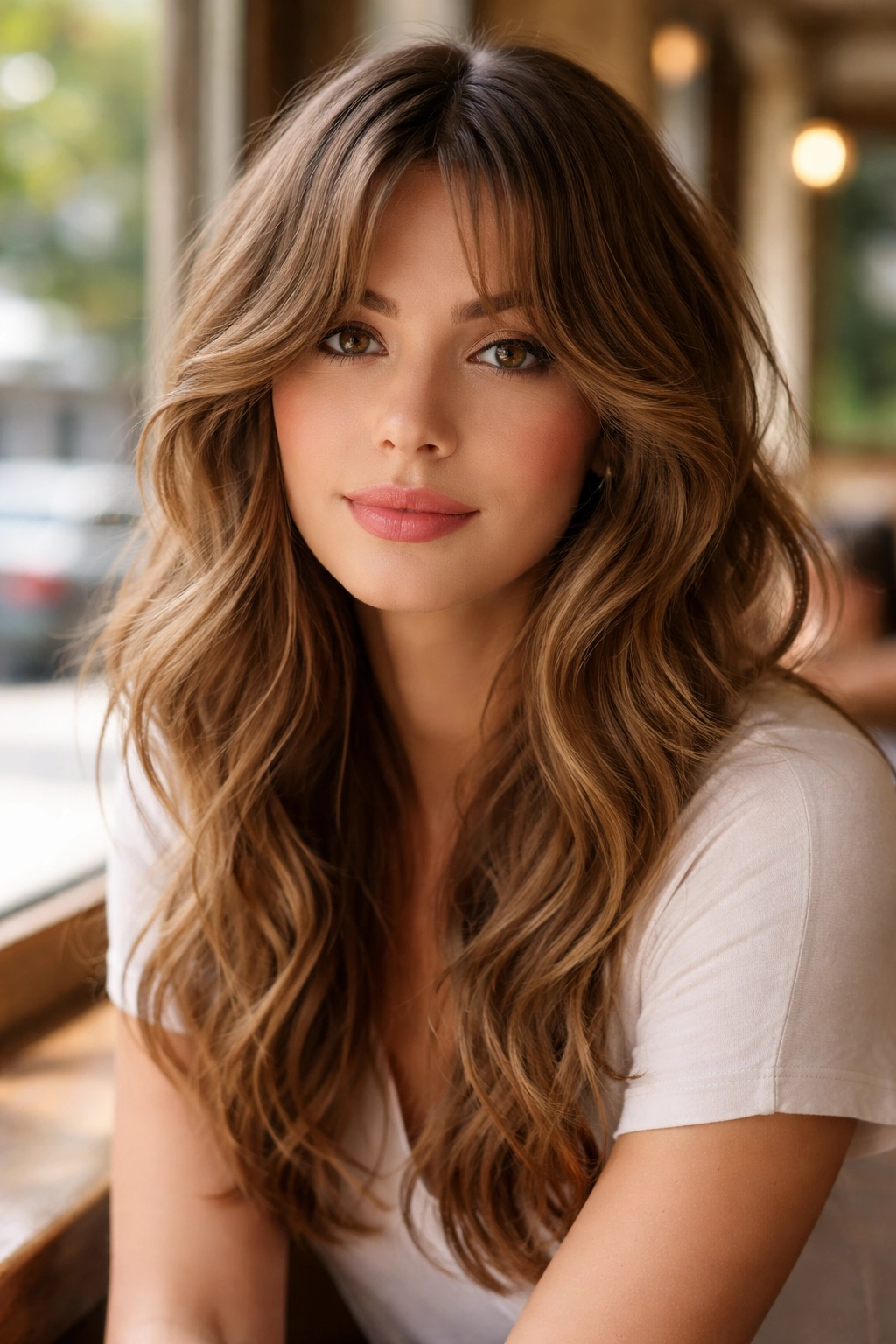
Soft S-curve curtain bangs are for people who like a little movement in the front without obvious styling marks. The wave bends one way near the center, then sweeps back out near the sides. It looks natural, but it still has shape.
I like this on medium-density wavy hair because it gives the fringe some rhythm. Straight-across bangs can feel boxed in. This shape does not. It lets the front move in two directions, which is closer to how wavy hair behaves anyway.
A quick bend with a round brush or even a flat iron held at an angle can help, but don’t overwork it.
21. Tapered Curtain Bangs
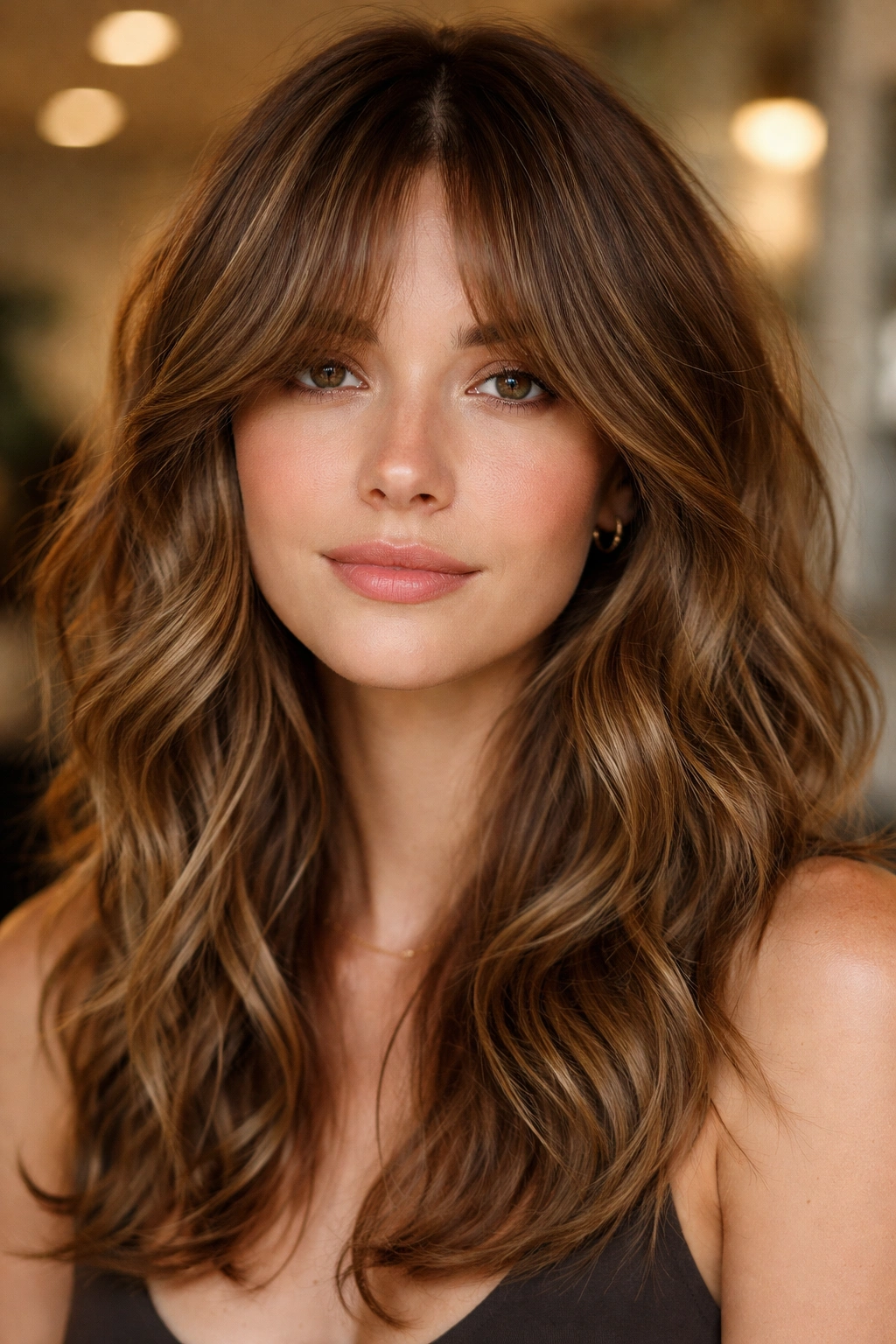
Tapered curtain bangs narrow gradually from the center to the sides. No hard shelf. No thick blunt edge. Just a soft descent into the rest of the haircut.
Best For
They’re a strong option if you want curtain bangs that won’t feel heavy on the forehead. They also work well with finer waves, because the taper keeps the shape from swallowing the face.
- Keep the center the shortest point.
- Let the sides lengthen smoothly.
- Ask for soft internal layering, not aggressive thinning.
- Style with fingers if you want a looser finish.
The cut does a lot of the work, which is exactly what I want from bangs.
22. Curled-Under Curtain Bangs
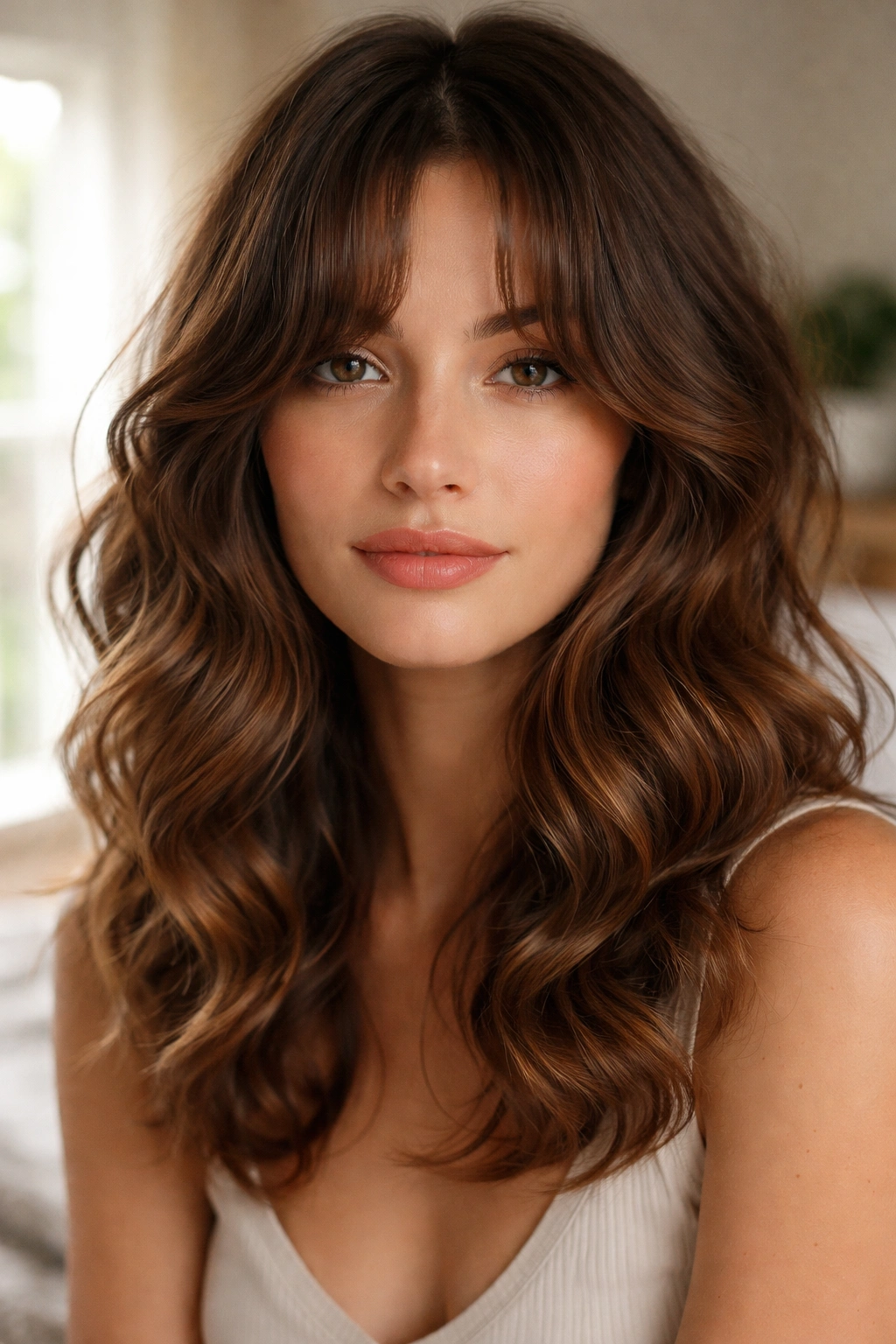
Curled-under curtain bangs have a gentle inward bend at the ends, which gives the face a neater frame. They’re useful if your waves tend to kick out instead of laying down.
A 1-inch or 1.25-inch round brush is enough for most people. Pull the bangs forward first, then tuck the ends under just enough to curve them toward the cheekbones. You’re shaping, not curling into a ringlet. Too much tension makes the fringe look dated fast.
This style feels a little more dressed up than air-dried bangs, but it still lives in the same family. Soft. Face-framing. Easy to wear.
23. Flipped-Away Curtain Bangs
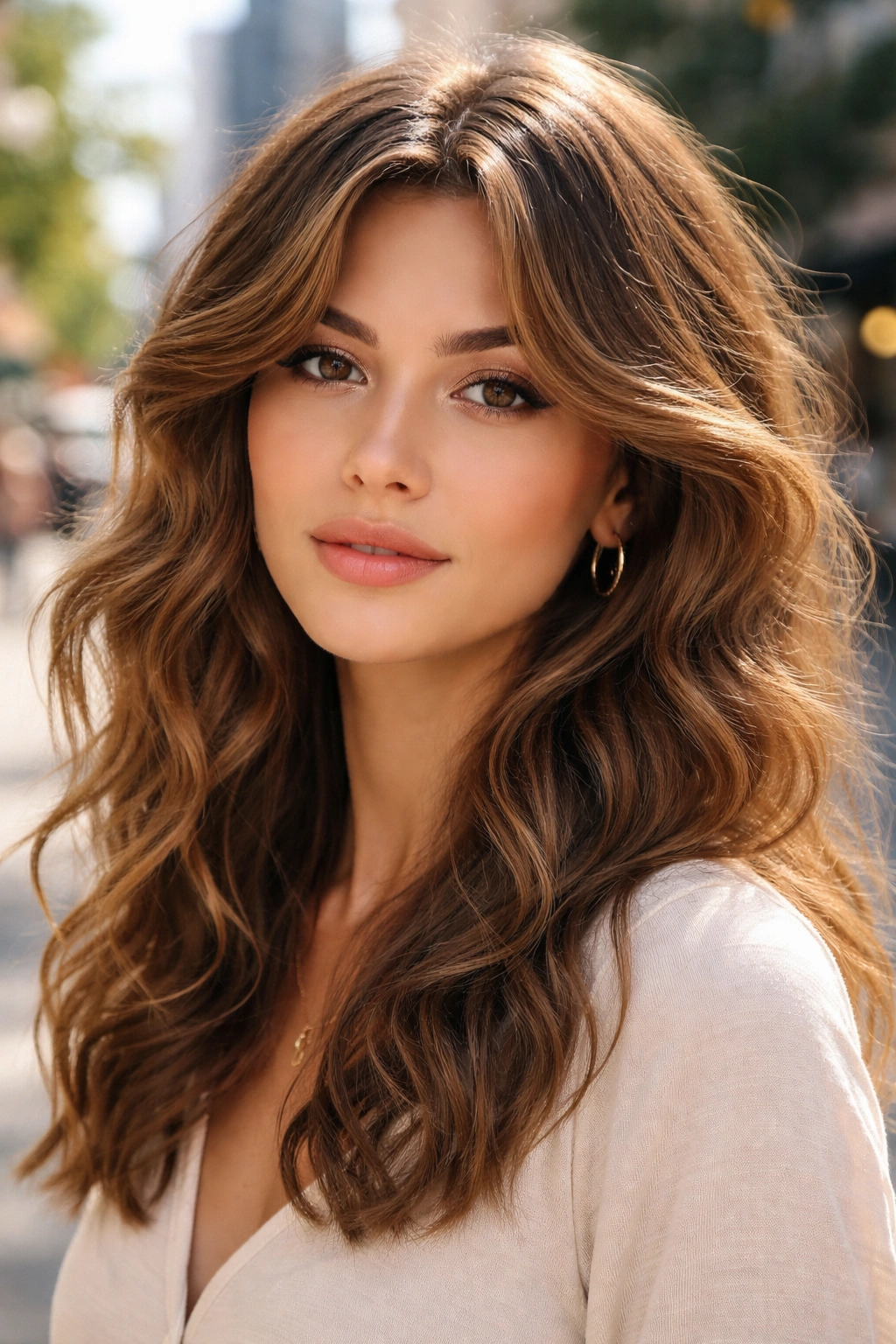
Flipped-away curtain bangs are the opposite of the inward bend, and that contrast gives them a crisp, open look. The ends sweep away from the face, which exposes the cheekbones and makes the whole haircut feel lighter.
This works especially well if your waves have a bit of bounce. Instead of fighting the outward turn, you use it. A blow-dry brush or a quick pass with a round brush can set the flip without making the fringe too sculpted.
I’d choose this shape when I want the face to feel open, not framed tightly.
24. Invisible Curtain Bangs
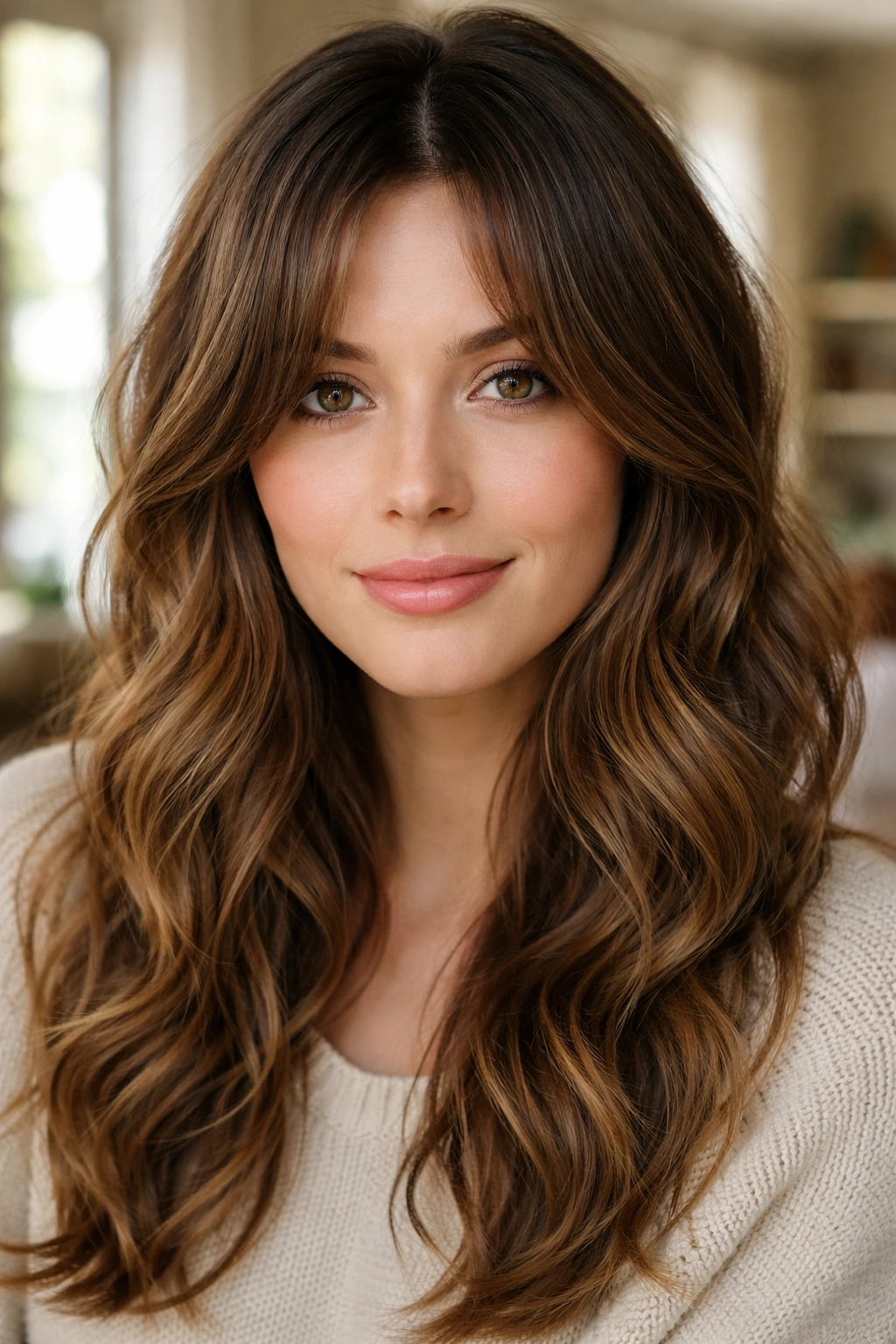
Invisible curtain bangs are the sleeper hit of the bunch. They look like face-framing layers at first glance, but there is still a soft split in the middle. The bang line is there; it just doesn’t announce itself.
This is a good option if you want curtain bangs but don’t want the obvious “I got bangs” moment. The pieces should start short enough to move away from the forehead, then melt into the rest of the hair by the time they reach the cheek.
It’s also forgiving during grow-out. The more they lengthen, the more they just become layers.
25. Full Fringe-to-Curtain Hybrid
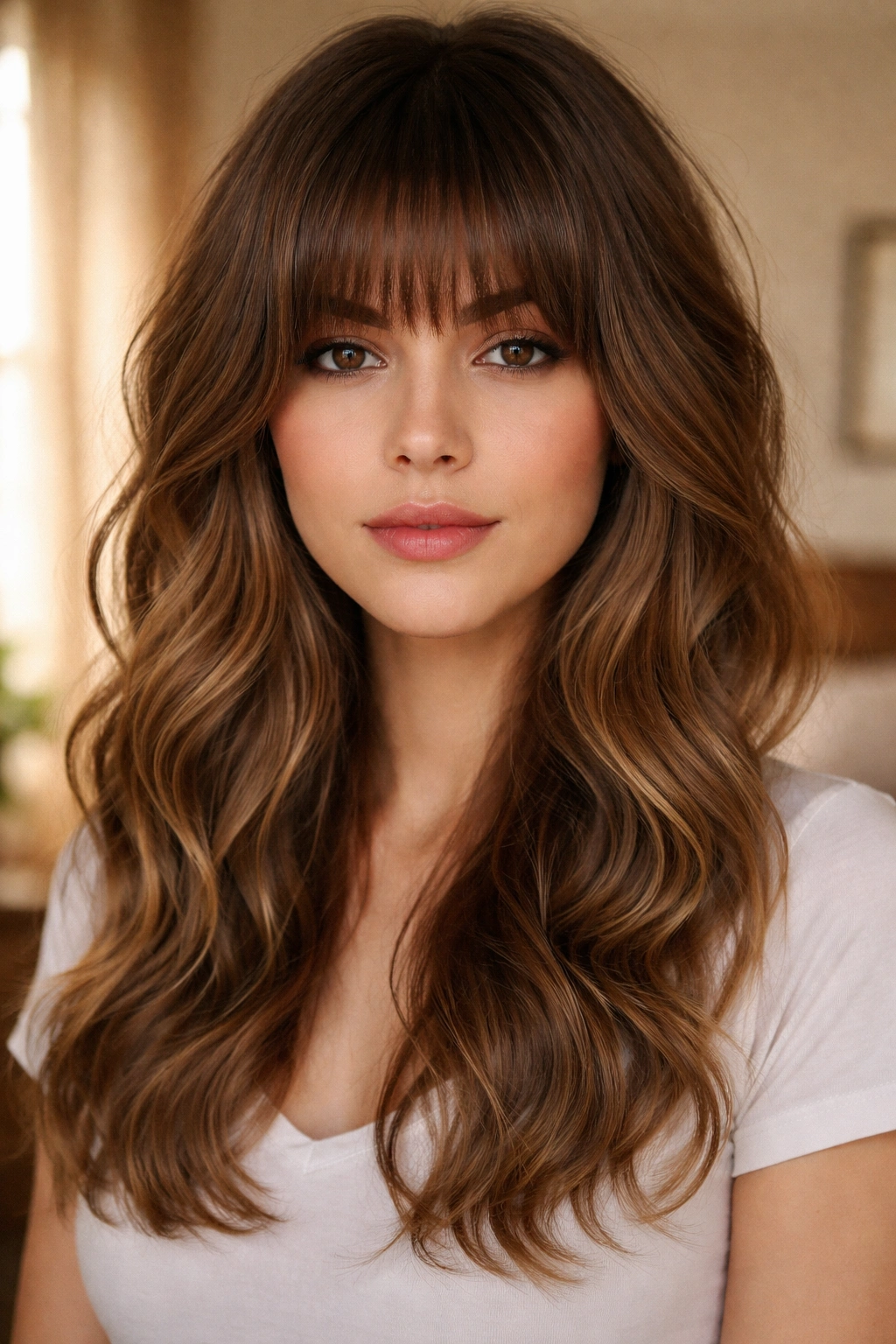
A fringe-to-curtain hybrid starts with more density through the center, then opens into a curtain shape near the temples. It gives you more forehead coverage than a classic curtain bang, but still keeps the split and the face frame.
That makes it useful for wavy hair that needs weight to stay in place. Thin front pieces can get flimsy fast. A fuller center can sit better through the day, especially if your hair puffs up in humidity.
This style sits between bangs and layers. If you like one foot in each camp, it’s a good place to land.
26. Shattered Curtain Bangs
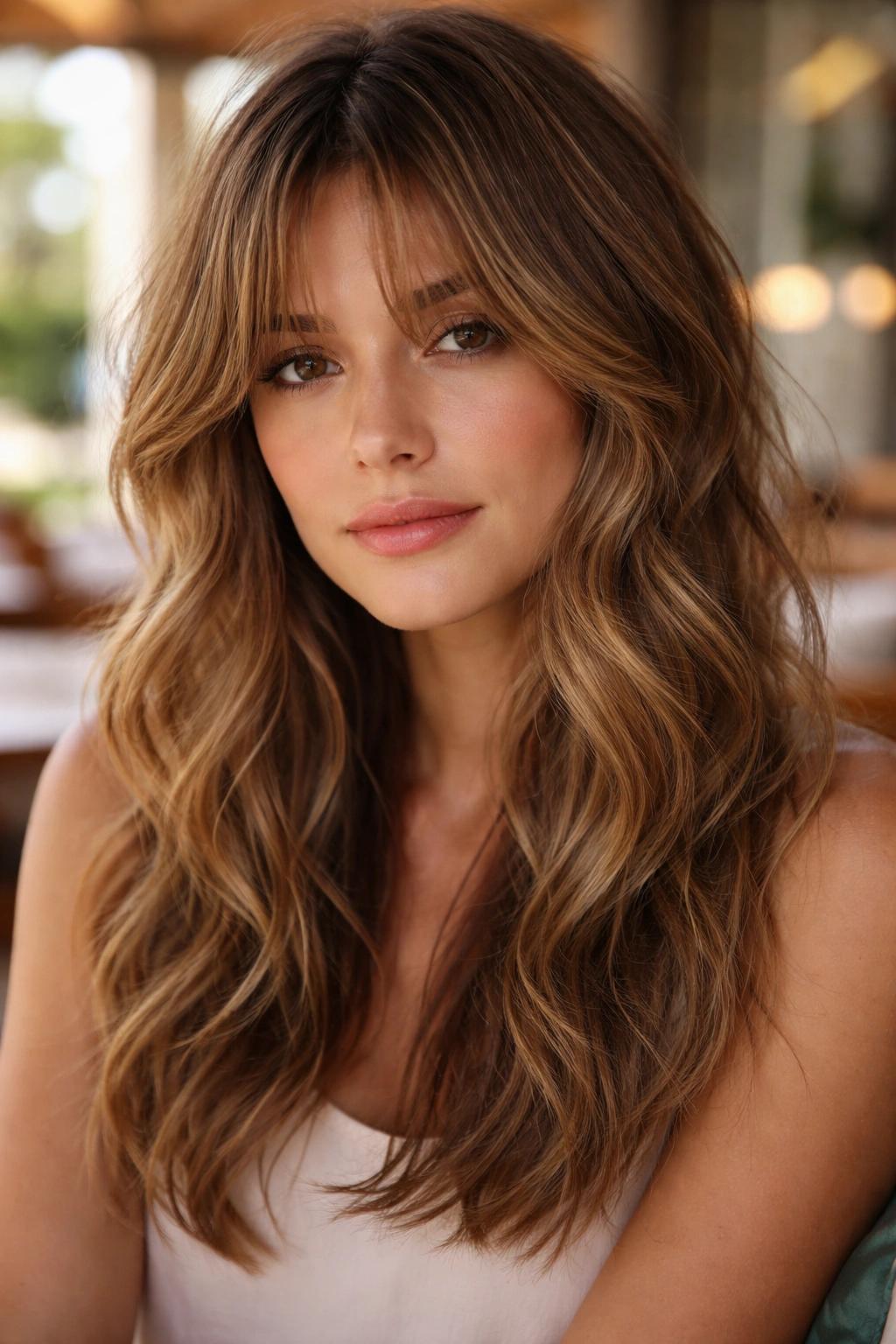
Shattered curtain bangs are cut with a lot of piece separation. The ends look broken up in a deliberate way, which keeps the fringe from feeling too polished. On wavy hair, that broken texture can look especially natural.
The danger is overdoing it. Too much texturizing and the bangs turn thin and ragged. You want separation, not holes. Point cutting through the ends is usually safer than taking a razor to the whole section.
Use a light styling cream and stop brushing once the waves set. The cut should move, not fray.
27. Sleek Wave Curtain Bangs
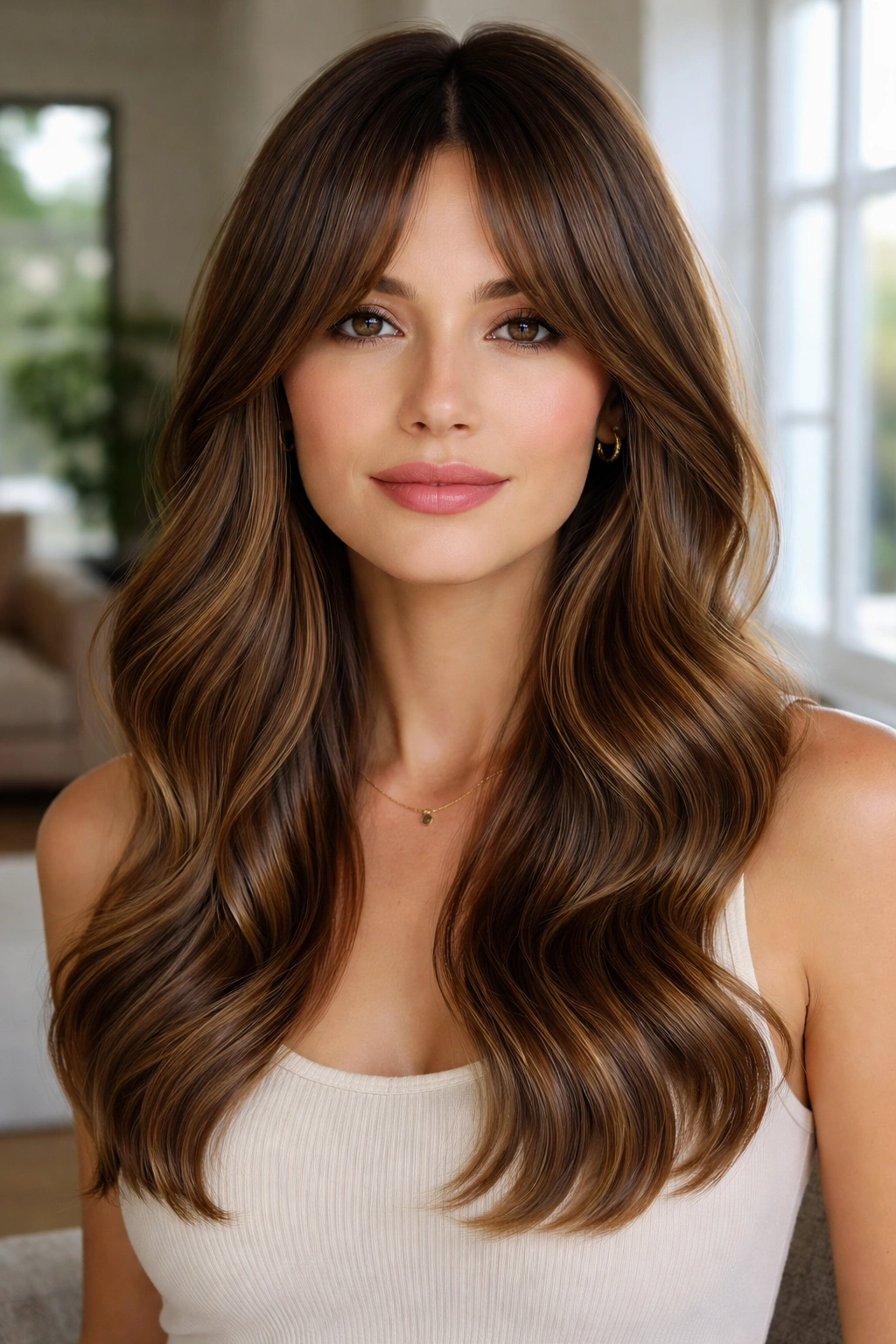
Sleek wave curtain bangs are for people who like a cleaner root and a more controlled bend through the front. The wave still shows, but it’s smoothed into a neater line.
This look is stronger when the rest of the hair is also tidy. Think soft shine spray, a good blow-dry, and a wave pattern that reads as organized rather than messy. It’s not stiff. It’s controlled.
If your hair is wavy but not very frizzy, this shape can be a nice middle ground between natural texture and a polished finish.
28. Tousled Curtain Bangs With Root Lift
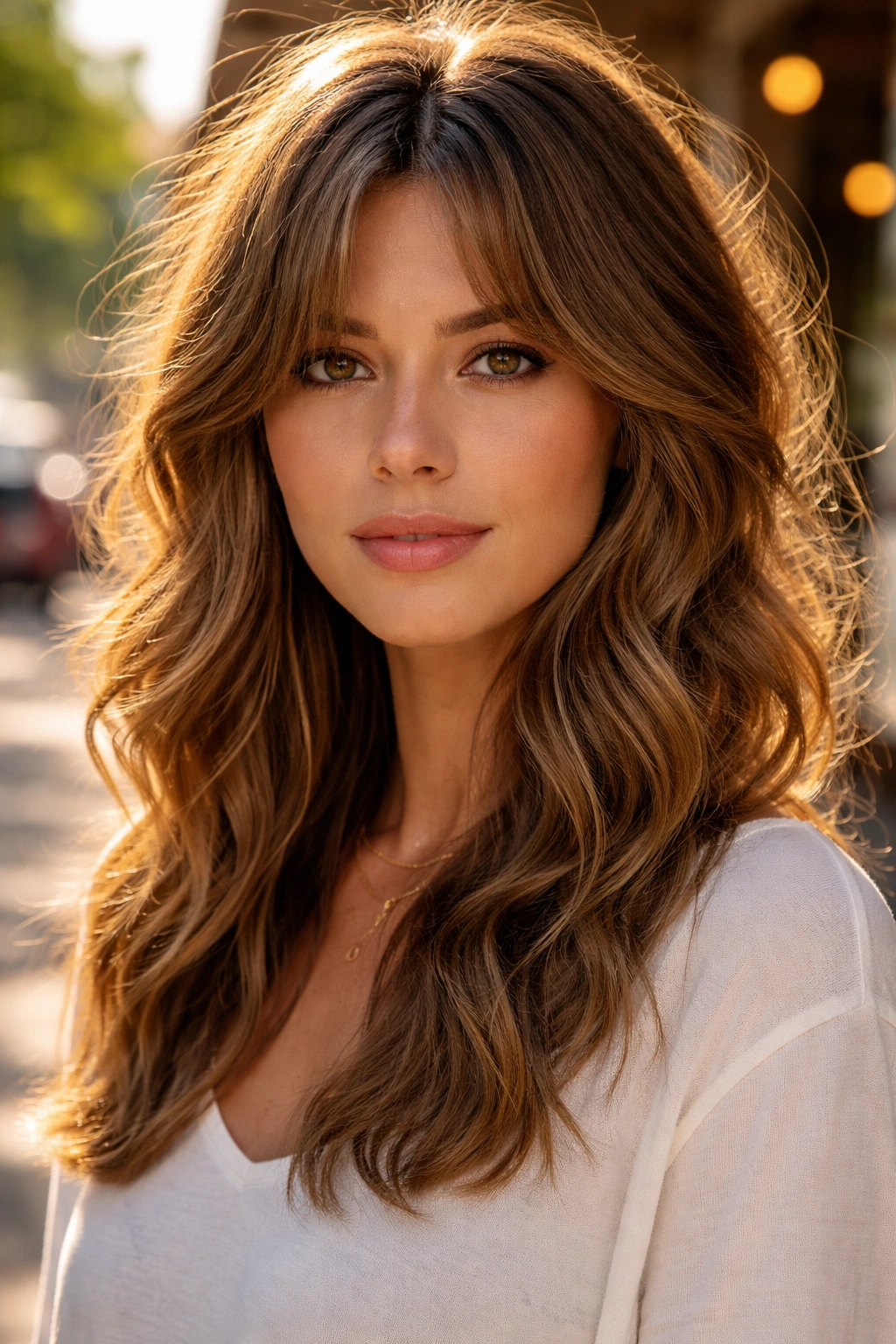
Tousled curtain bangs with root lift give the front a little height without making it look blown out. The root stands up just enough to keep the bangs from flattening into the forehead.
A mousse at the base helps, and a quick lift with a round brush or your fingers can set the shape. I’d avoid heavy oils here. They drag the fringe down fast.
This is the version I reach for when the hair around the face needs life. Not volume everywhere. Just enough lift to keep the shape open.
29. Jawbone Curtain Bangs
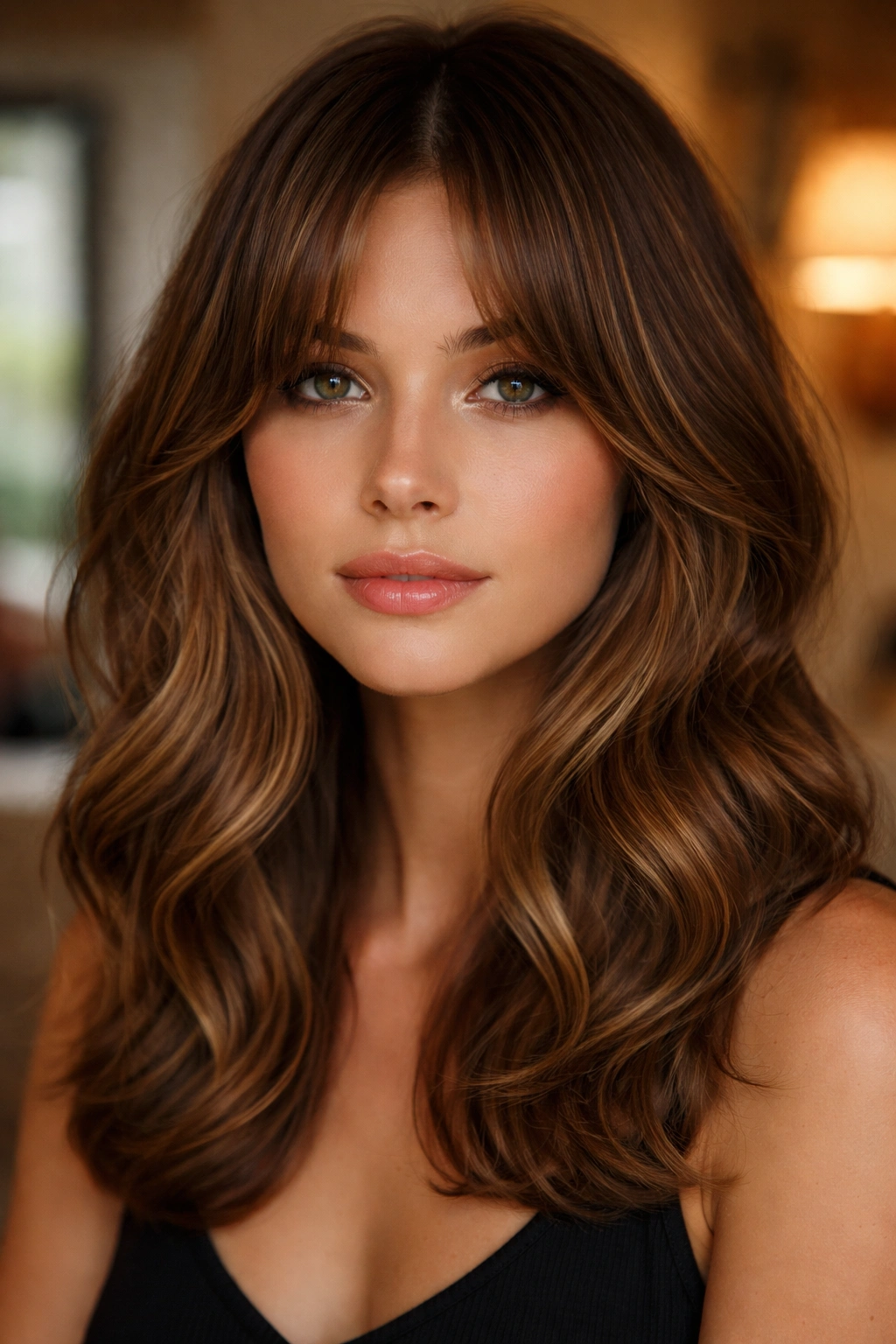
Jawbone curtain bangs hit right around the jaw, which makes them a stronger framing choice. They draw attention to the lower half of the face and can make a wavy cut feel more defined.
What Makes Them Stand Out
The length is long enough to blend, but short enough to matter. That balance gives the face more shape than longer curtain bangs do.
- Best for people who want a little drama.
- Works well on medium to thick waves.
- Needs a clear center part.
- Looks best when the ends are softly beveled.
Good to know: If your jawline is already very sharp, keep the bend soft so the cut doesn’t look severe.
30. Long Face-Framing Curtain Bangs
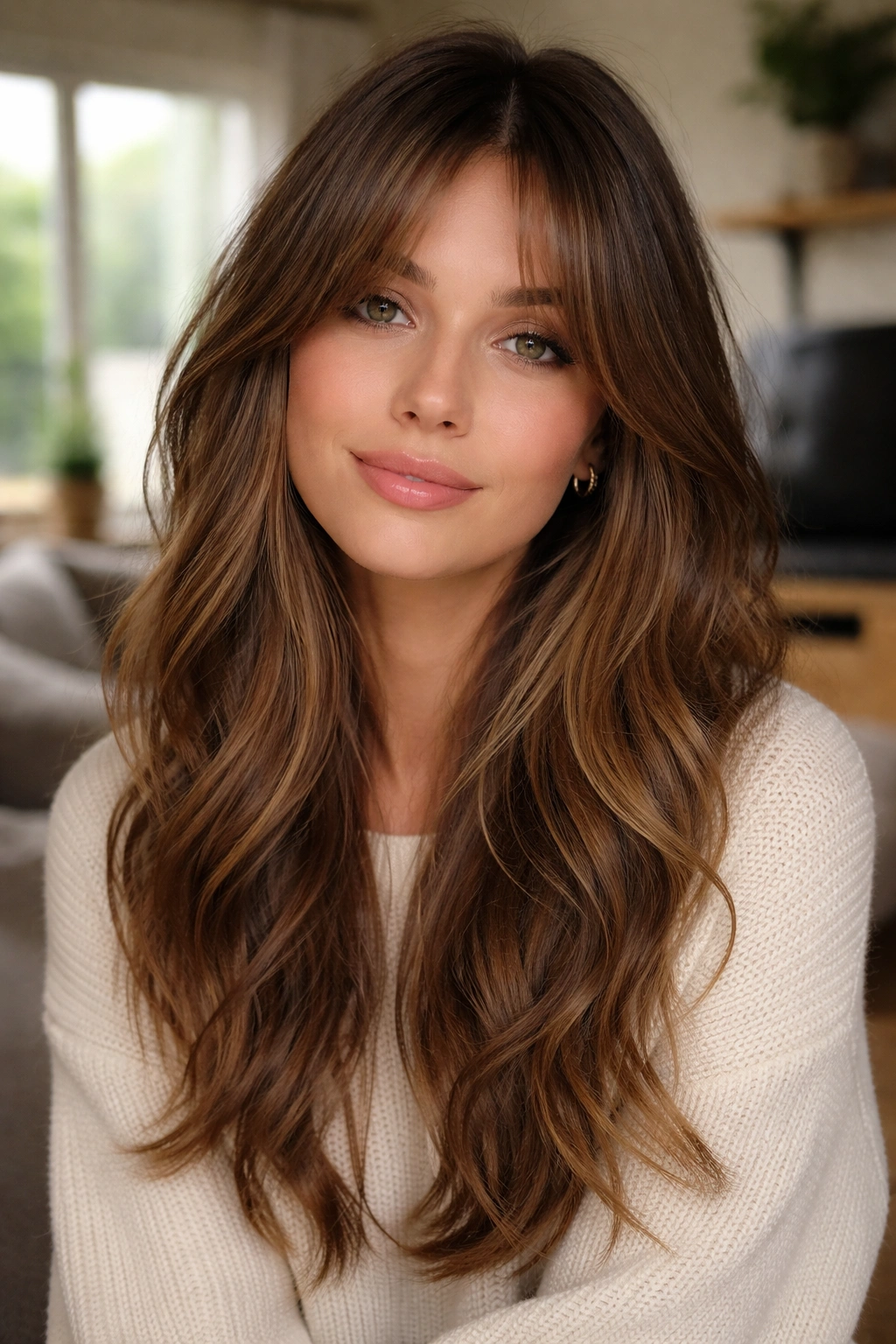
Long face-framing curtain bangs are the low-commitment version most people end up liking after a few months. They start at the front, then drift into the rest of the cut before they ever feel like a true fringe.
That makes them friendly to wavy hair that changes a lot from day to day. Some mornings they behave like bangs. Other days they read as layers. Either way, they still frame the face.
If you want a style that can survive a missed wash day and still look planned, this is one of the safer bets.
31. Deep-Length Curtain Bangs
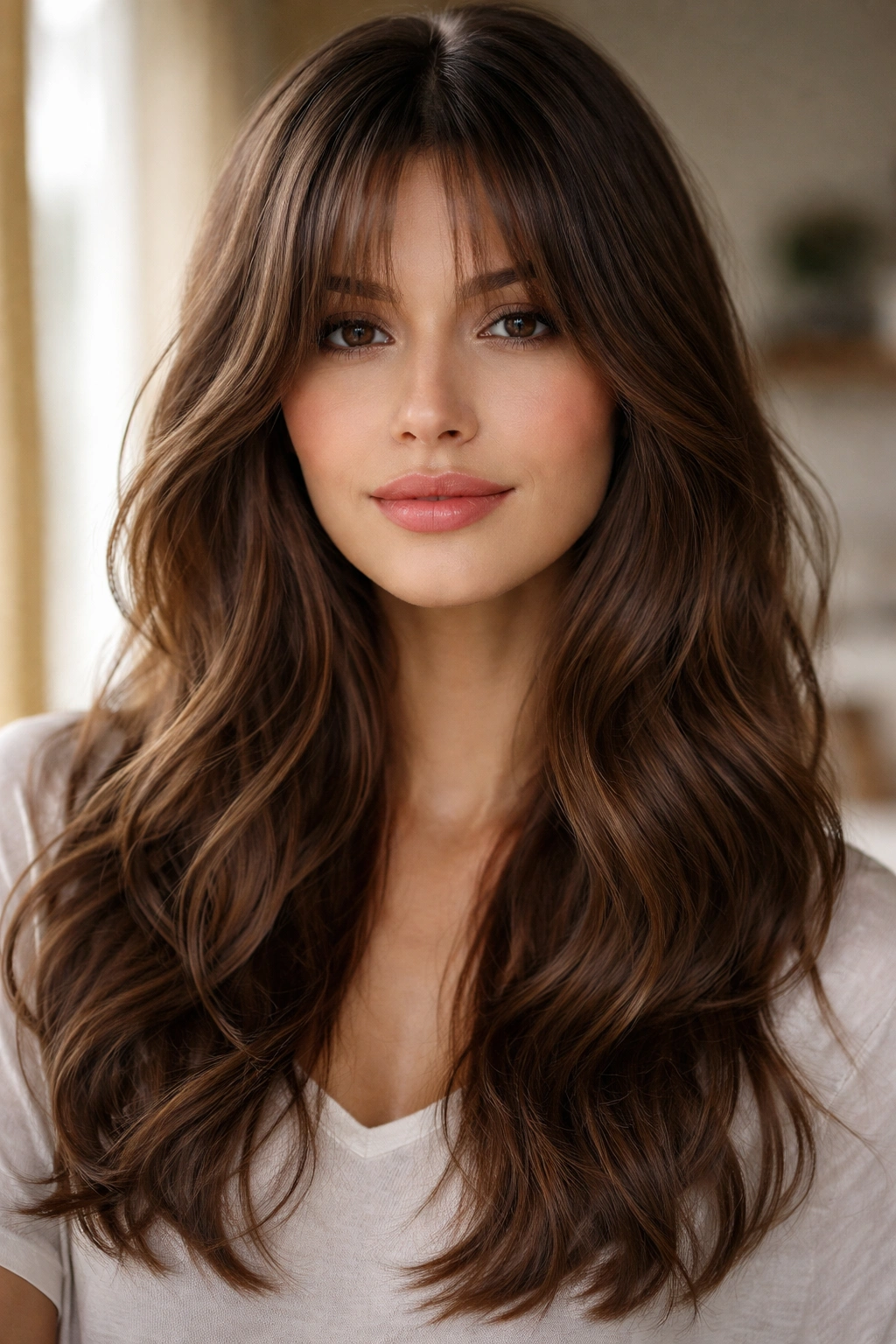
Deep-length curtain bangs are longer than the classic version, often landing near the mouth or just below it. They’re especially good if you want face framing without shortening the front too much.
The length gives waves room to settle. It also makes the haircut feel softer around the cheeks and chin. That can be useful if your hair is dense and tends to balloon when cut short.
This is not the fastest bang to style. But it is one of the easiest to live with once it’s cut right.
32. Soft Split Fringe
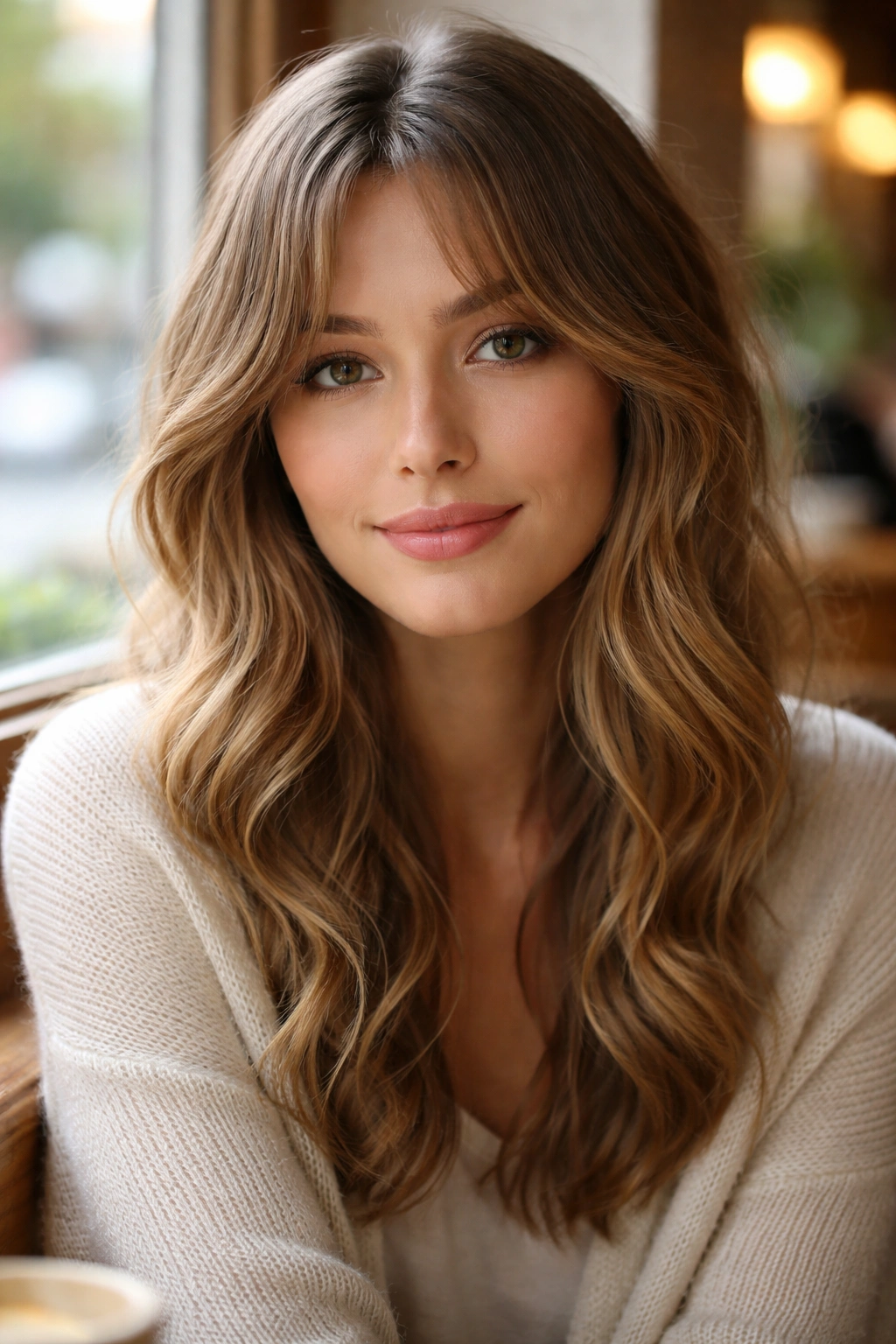
A soft split fringe is barely there in the best way. The part opens at the center, but the sections stay narrow and delicate. It’s a curtain bang if you want the idea of bangs more than the statement of them.
This style works well when you’re testing the waters. You get movement around the forehead and cheekbones, yet the cut stays subtle. Wavy hair helps here because the natural bend stops the fringe from looking flat or severe.
It’s a quiet haircut. I mean that as praise.
33. Voluminous Curtain Bangs
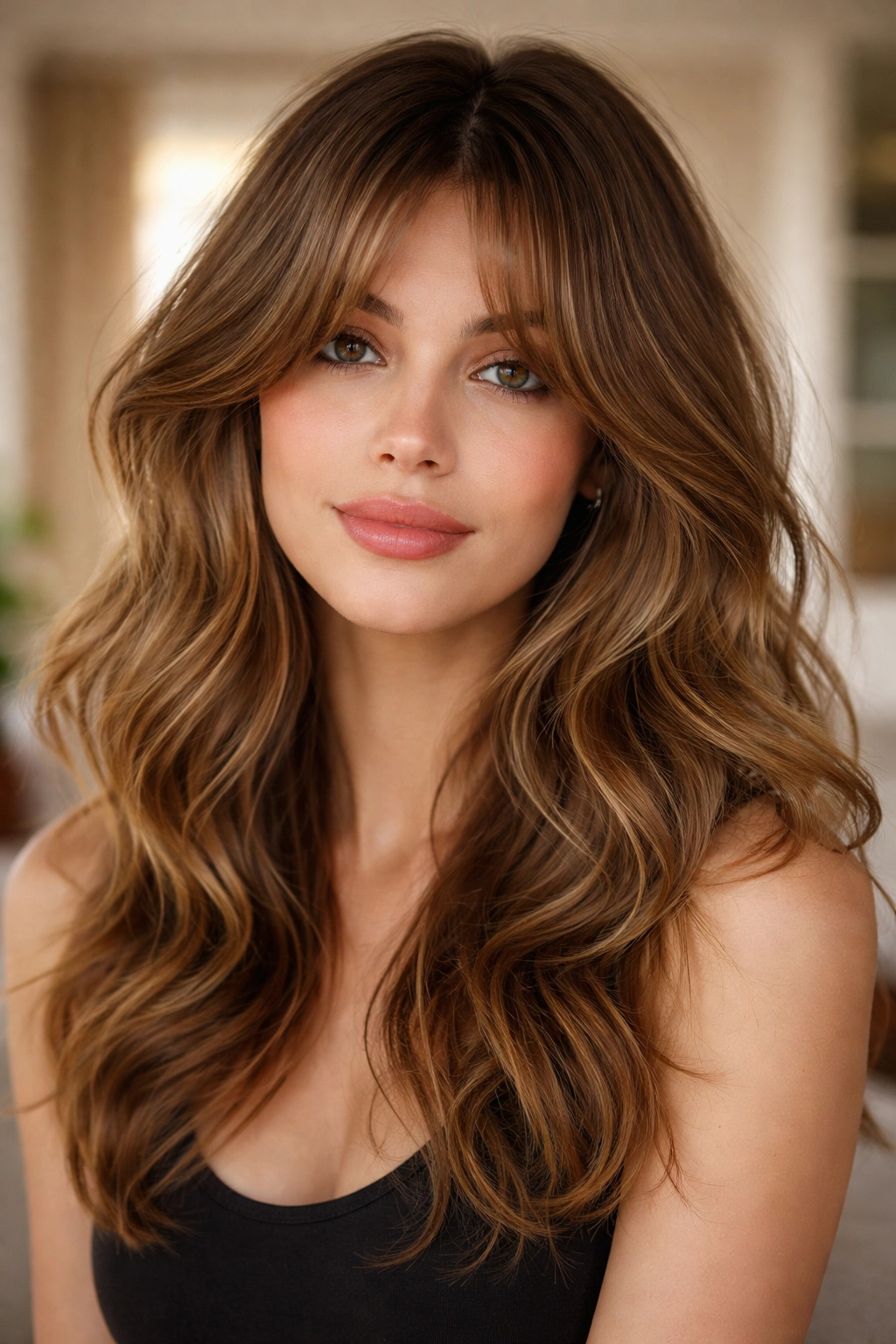
Voluminous curtain bangs are for people who want the front to have presence. The shape is airy, lifted, and a little fuller through the top. If your wave pattern supports volume, this can look rich rather than puffy.
Styling Notes That Matter
Use a larger round brush — around 2 inches — if your hair is long enough to handle it. Smaller brushes can over-curl the ends and make the front feel too tight.
- Dry the root first for lift.
- Keep the middle part clean.
- Finish with a flexible spray, not a stiff shell.
- Don’t flatten the crown with too much product.
The whole thing should feel full, not frozen.
34. Minimal-Maintenance Curtain Bangs
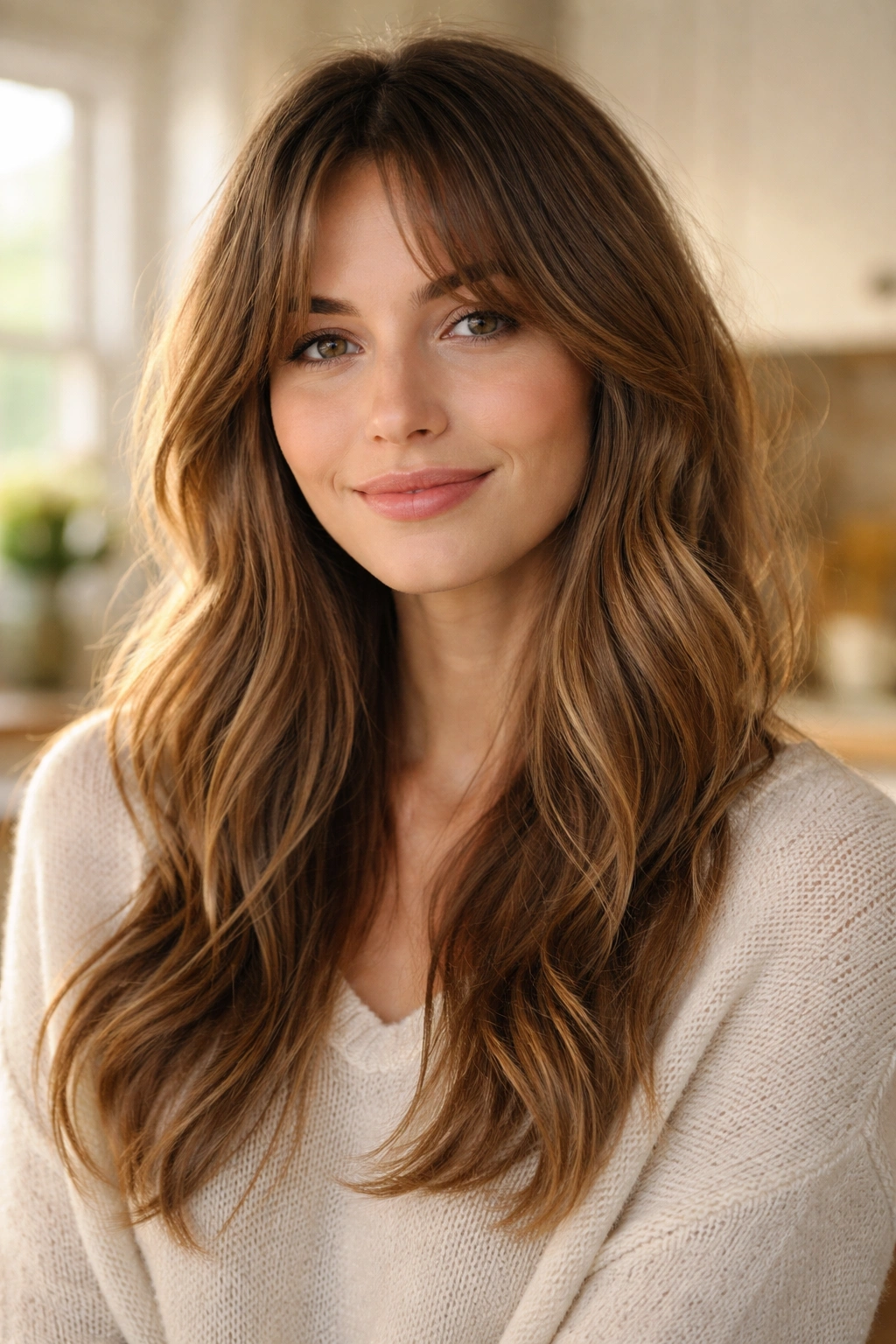
Minimal-maintenance curtain bangs are cut to fall into place with very little help. That usually means longer front pieces, soft layering, and a shape that already cooperates with the wave pattern.
These are the bangs for people who do not want to spend ten minutes on the front alone. A quick finger-dry, maybe a little cream, and they’re done. Not perfect. Just good enough to look like the haircut understood the assignment.
If you’re busy, lazy, or simply over styling rituals, start here.
35. Glamorous Curtain Bangs
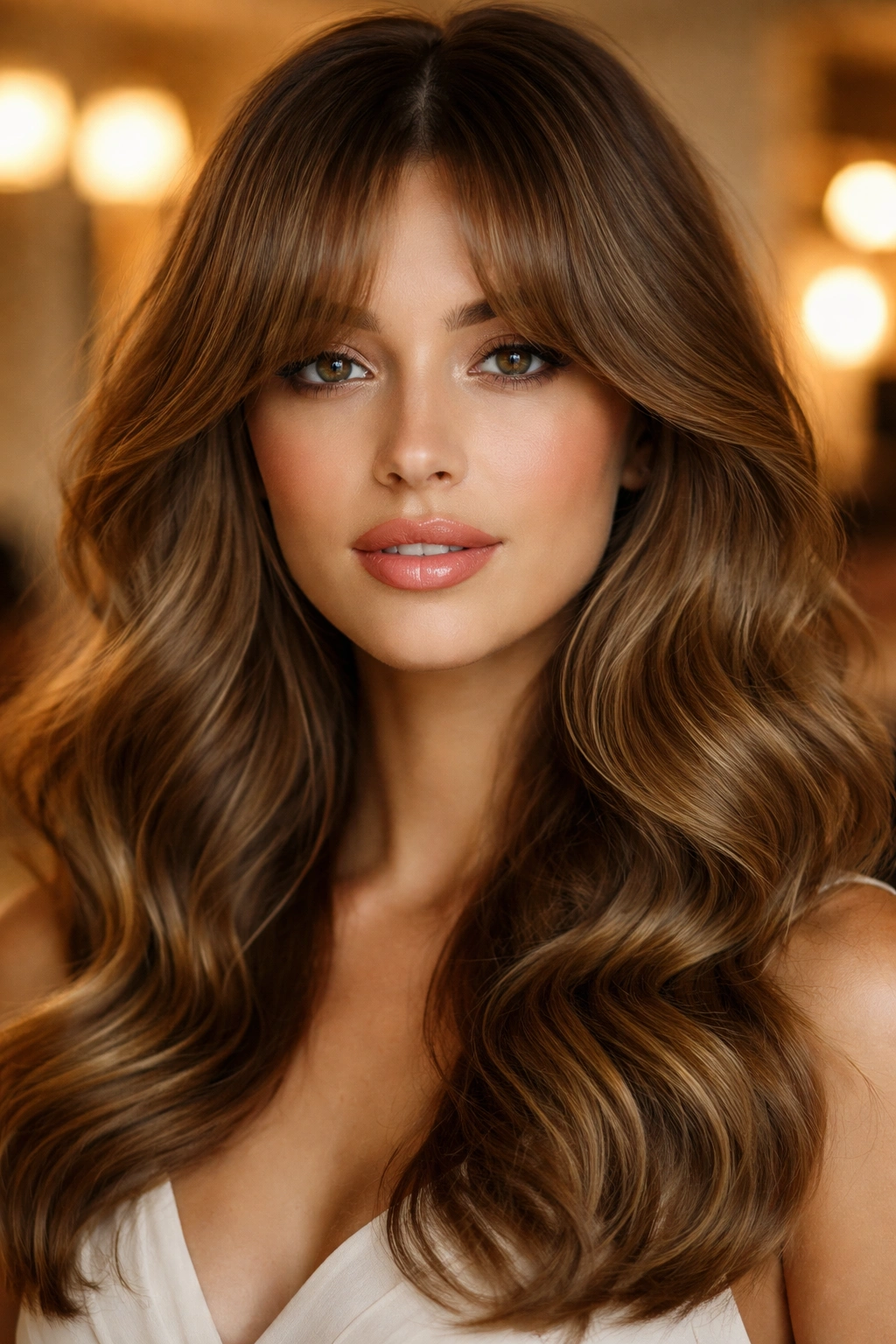
Glamorous curtain bangs bring back the old-school blowout feeling. Think volume at the root, a smooth bend through the front, and enough polish that the fringe feels dressy even when the rest of the hair is loose.
This style suits wavy hair that can hold shape after heat. The trick is getting the bend away from the face while keeping the ends soft. A round brush, a good blow-dryer nozzle, and a cool shot help more than fancy product ever will.
It’s a little extra. Sometimes that’s the point.
36. Tousled Lob Curtain Bangs
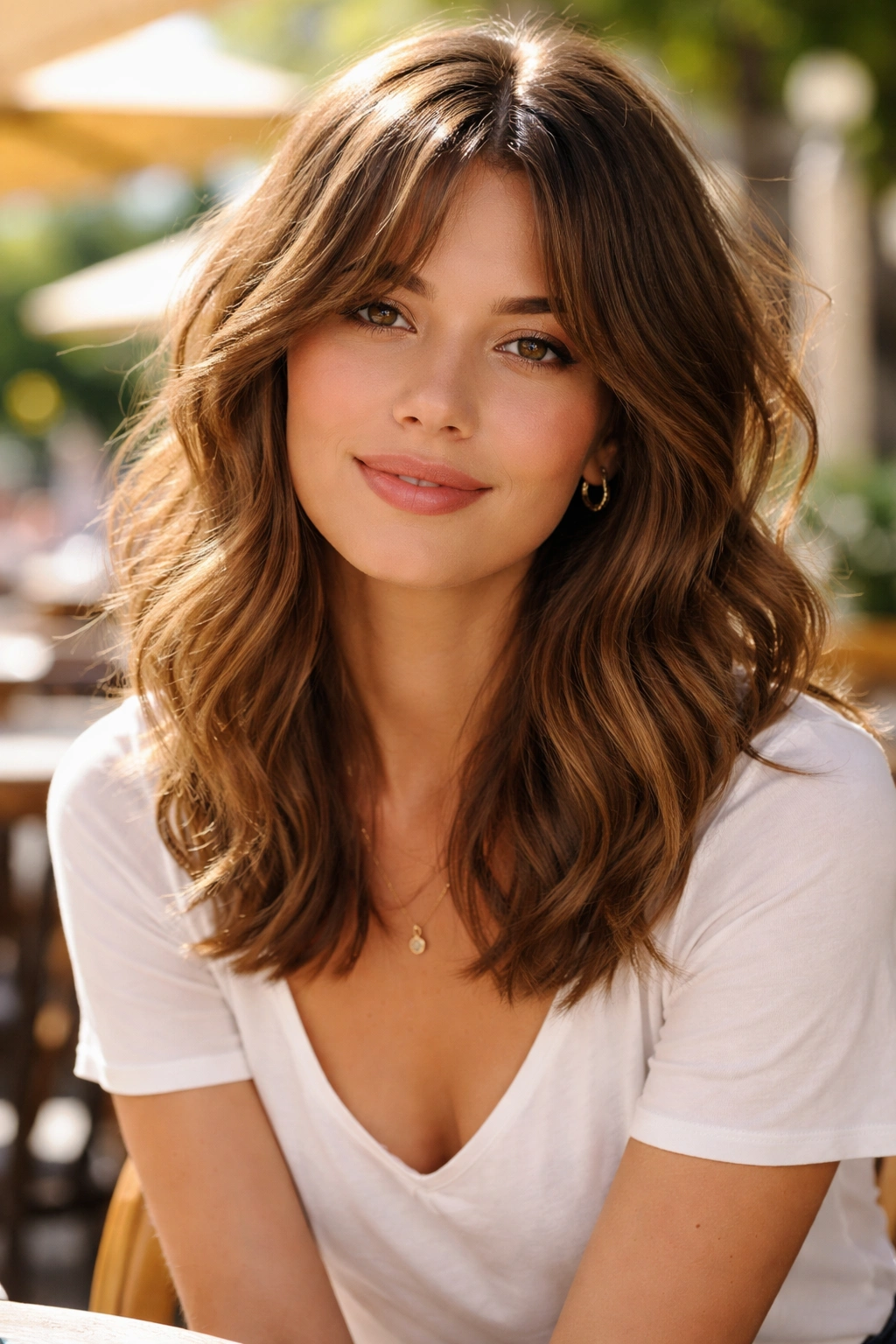
A tousled lob and curtain bangs are a strong pairing because both cuts like movement. The lob gives the hair a shoulder-skimming base, and the bangs keep the front from feeling too heavy.
This combination is easy to wear with waves because the texture has room to breathe. You can let the front pieces fall loose, tuck one side behind the ear, or rough-dry the whole thing and still have a shape.
If you want a haircut that looks deliberate without needing much precision, this is a solid match.
37. Curly-Wavy Curtain Bangs
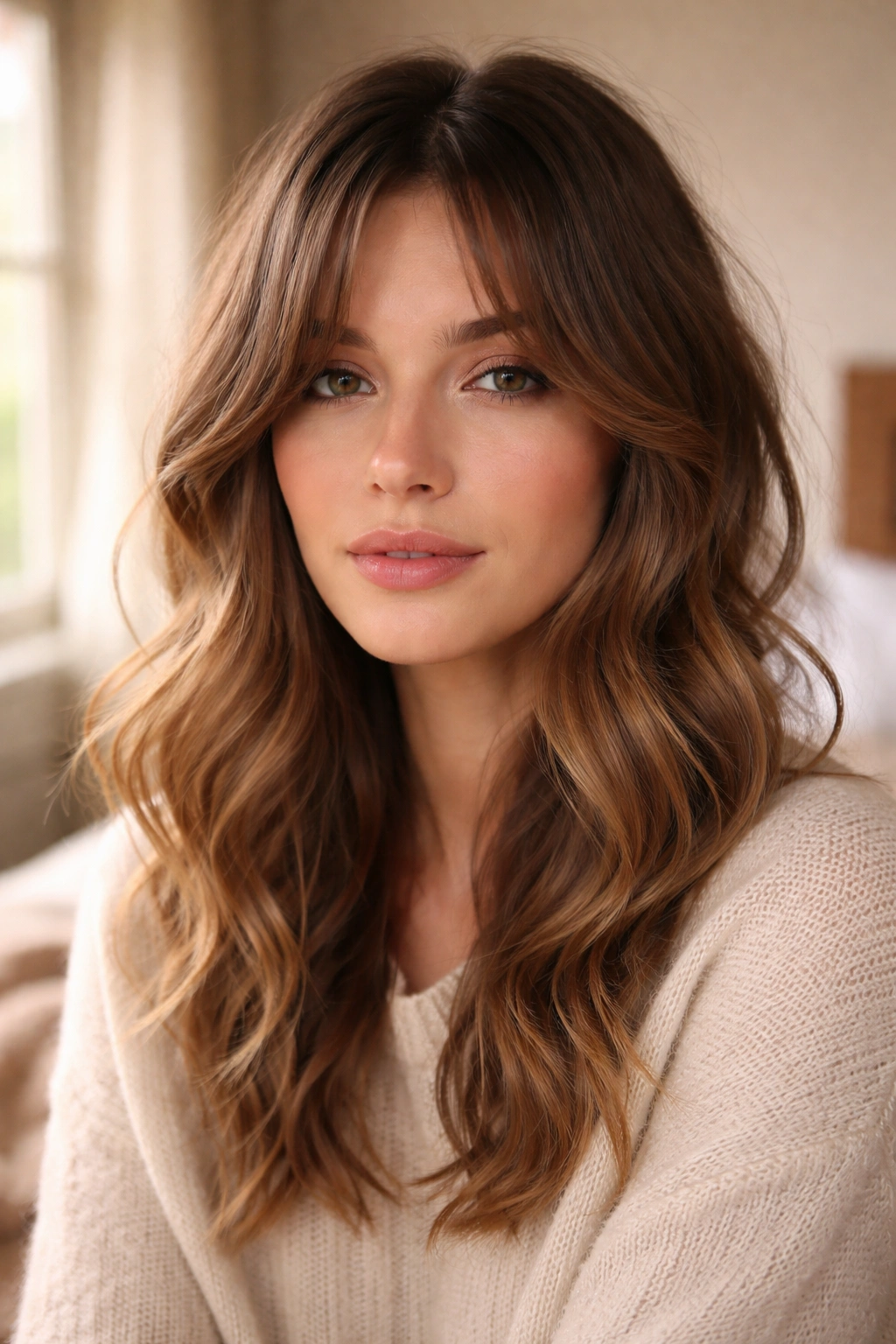
Curly-wavy curtain bangs are for hair that lands somewhere between a wave and a loose curl. The cut needs enough length to shrink without turning too short, and enough softness to let the front pieces separate cleanly.
Cut it with shrinkage in mind
Dry cutting is usually the safer move here, because the curl pattern can pull the bangs up more than you expect. Keep the shortest point longer than you think you need.
- Check length when the hair is fully dry.
- Leave room for spring at the root.
- Use curl cream only on the ends if frizz is an issue.
- Diffuse on low heat if you want more definition.
The result should move freely, not sit like a helmet.
38. Airy Curtain Bangs With Micro Layers
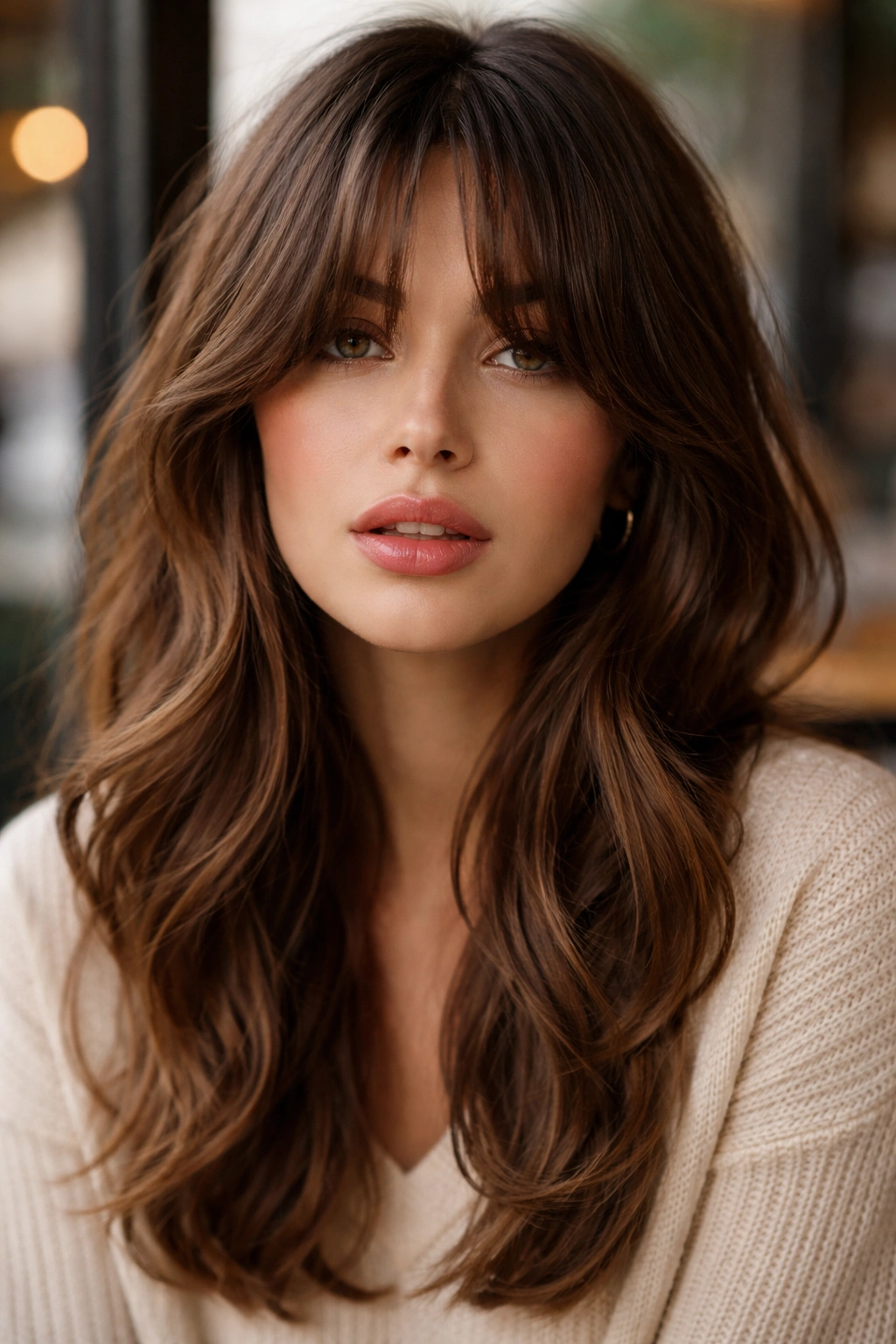
Airy curtain bangs with micro layers are a smart fix for thick or heavy wavy hair that wants movement without losing shape. The micro layers live inside the fringe, so the outside still looks soft.
That internal removal of weight helps the bangs fall better around the face. You don’t see the layers unless the hair moves, which is exactly why the cut works. It keeps the front from becoming a heavy curtain that hangs over the eyes.
This is the style I’d recommend if your bangs tend to feel hot, dense, or stuck together.
39. Short Curtain Bangs for Big Waves
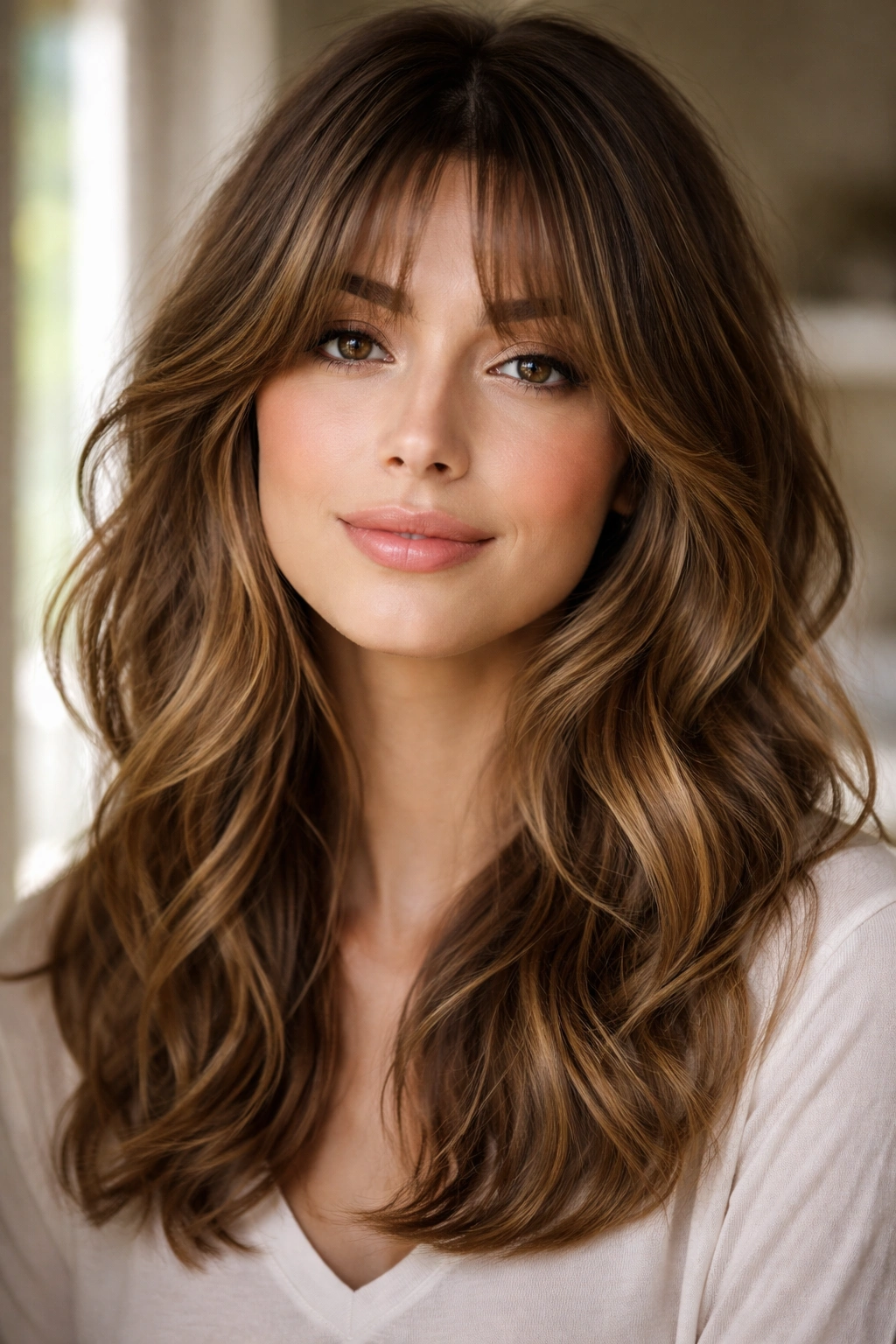
Short curtain bangs for big waves are not the same as baby bangs. They’re still split and face-framing, but the center sits a little higher and the waves do the rest. The result is bolder, especially on hair with strong bend.
You need confidence for this one. And a stylist who knows how much your waves shrink when dry. Cut too short, and the fringe jumps up in a way that looks accidental. Cut with the movement in mind, and it can look sharp.
If your waves are large and springy, this style gives them room to show off.
40. Grow-Out Curtain Bangs
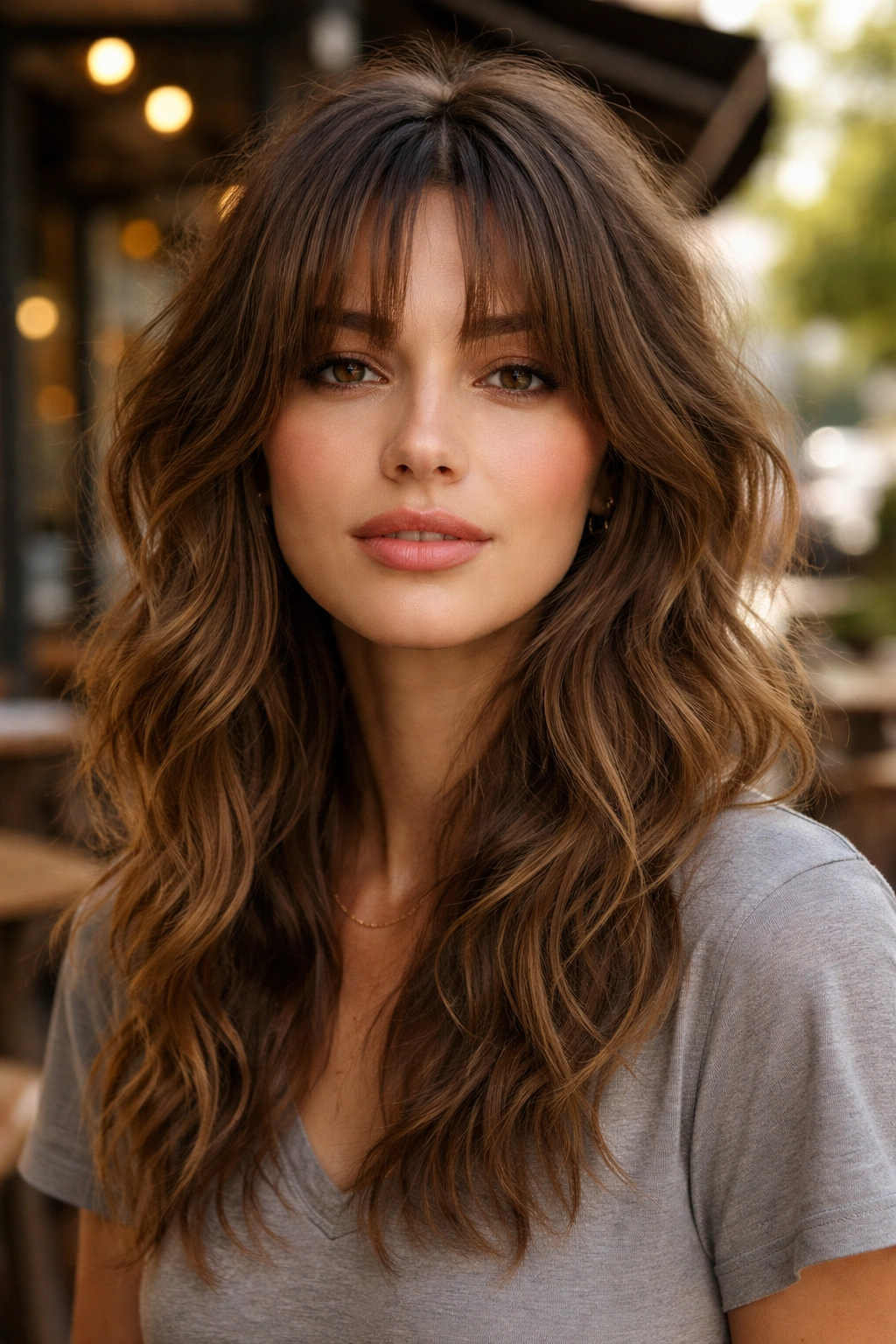
Grow-out curtain bangs are the one I’d choose if you want a fringe that can change shape without turning awkward. The shortest pieces stay long enough to blend, and the outer pieces are cut to become face-framing layers as they grow.
That makes them useful for people who like curtain bangs but hate the constant maintenance of a strict fringe. You can trim them into shape, then let them lengthen into the rest of the haircut over time. No dramatic in-between stage. No hard line to fix.
If you want the safest long-term option for wavy hair, start with this. It gives you movement now and a softer grow-out later, which is a pretty rare thing in haircuts.
