



A mid braided ponytail is one of those styles that earns its keep fast. It sits in that sweet spot between severe and overdone: high enough to lift the face, low enough to stay comfortable, and structured enough to look intentional the second you step out the door. On Black women, that middle placement can be especially useful because it gives the braids room to move without putting all the pull at the crown.
The smartest versions are not the same style with a different braid count. A good mid braided ponytail changes the whole mood depending on the parting, braid size, base tension, and what happens at the ends. Sleek feed-in rows feel polished. Chunky plaits feel bold. Curly ends soften the whole shape. Beads, cuffs, wrapped bases, and side-swept patterns all shift the energy in small but noticeable ways.
That is the part people sometimes miss. The ponytail itself is only half the story. The hairline, the parting, and the shape at the back matter just as much, sometimes more. If the braid pattern is clean, the style can carry a plain outfit; if the braid pattern is sloppy, even expensive accessories will not save it.
1. Sleek Feed-In Cornrow Mid Ponytail
Clean parting does a lot of the heavy lifting here. A sleek feed-in cornrow mid ponytail gives you that neat, sculpted look without forcing the ponytail too high on the head, which means less tension at the root and a softer profile from the side. It is one of the easiest styles to dress up or down, and that is exactly why people come back to it.
The braid pattern starts small at the hairline and grows gradually, so the front looks smooth instead of bulky. That detail matters. It keeps the style close to the scalp, makes the rows look tidy, and gives the tail room to sit at the middle of the back without feeling top-heavy. If you like a style that reads crisp from the front and still feels easy to wear for days, this is a strong choice.
A wrapped base makes it look finished. A little shine on the braids helps too, but do not flood the scalp with product. That is where a lot of styles start looking heavy before they even leave the chair.
2. Stitch Braided Mid Ponytail
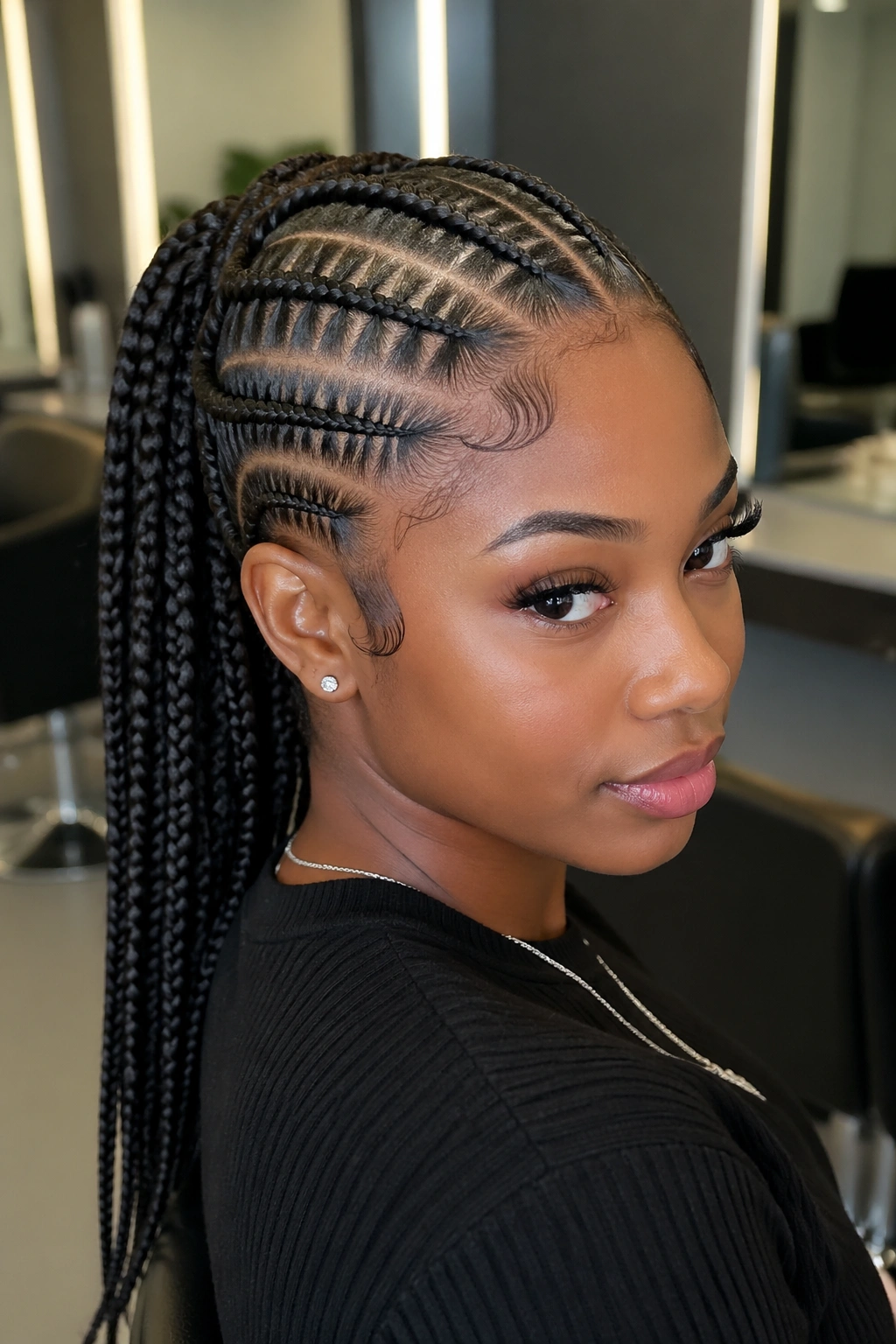
Sharp lines. That is the whole appeal. A stitch braided mid ponytail has a cleaner, more graphic look than a loose cornrow pattern because each braid is sectioned with clear, visible ridges. The result is neat and a little bold, almost like your hair is wearing tailoring.
This style works especially well when you want the ponytail to feel structured. The rows at the top create strong direction, and the mid placement keeps the shape balanced instead of towering above your head. If your features are softer, the straight lines add definition. If your features are already angular, the style echoes that shape without looking fussy.
Why It Works
The stitch pattern keeps the braid definition visible even when the ponytail moves. That is a small detail, but it changes the whole effect. Some braided ponytails flatten out once the tail starts swinging around; this one still looks deliberate from the front, side, and back.
- Best with medium to long braid lengths
- Looks especially clean with a center part or two mirrored side parts
- Works well with a simple braid wrap at the base
- Keep the scalp lines fresh; that is the real polish
Pro tip: Ask for the stitch spacing to stay even from front to crown. Uneven sections show fast.
3. Goddess Braid Mid Ponytail with Curly Ends
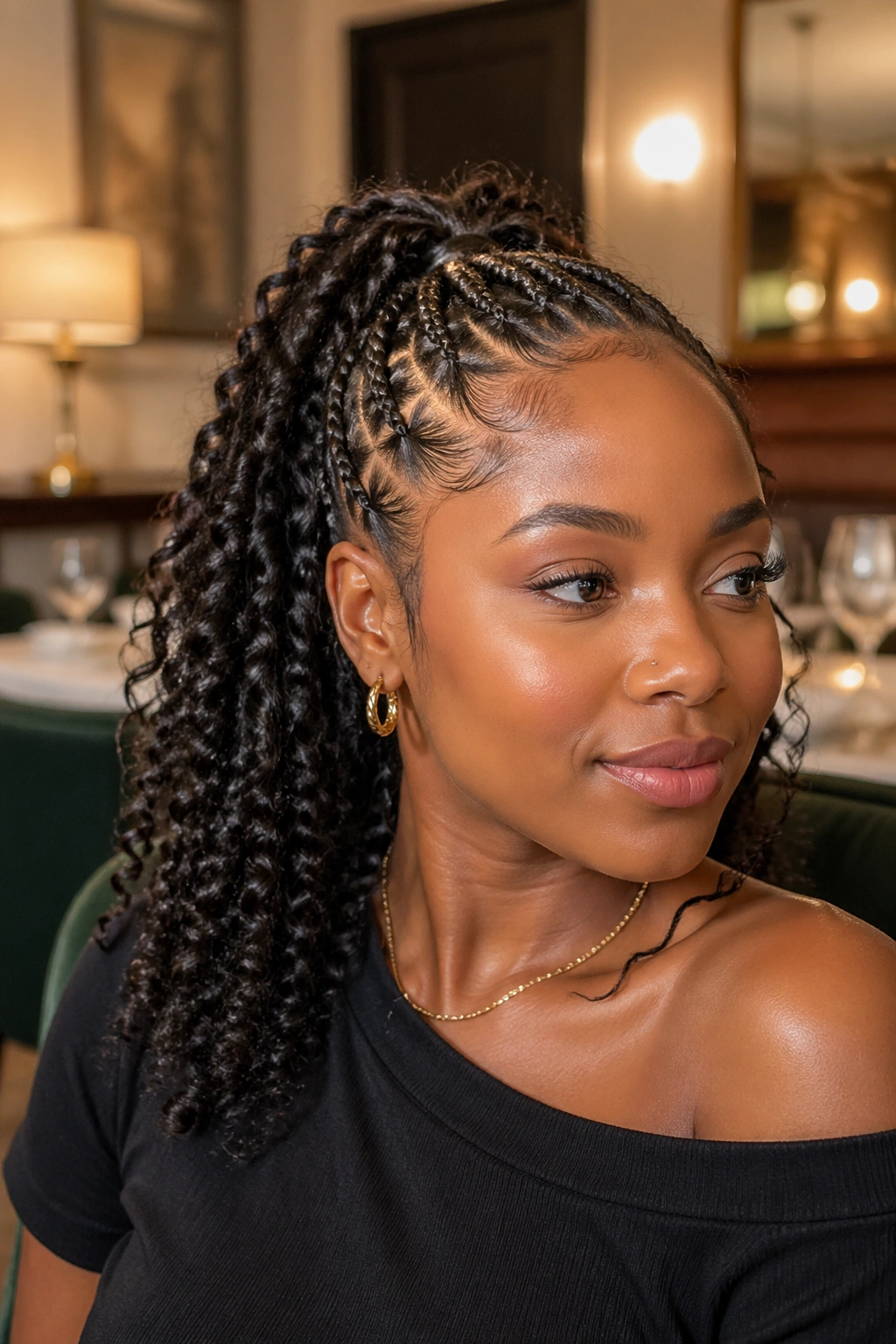
Why do curly ends change the whole mood? Because they soften all the hard lines that braids naturally create. A goddess braid mid ponytail keeps the braided base neat and controlled, then lets the ends bloom into curls that feel lighter, looser, and less rigid. It is a smart way to get shape without losing movement.
The contrast is the point. Tight braids near the scalp give you structure; the curly ends keep the style from feeling too serious. That makes this one good for dinners, parties, and any day when you want your hair to look done without looking stiff. It also flatters a lot of face shapes because the curls pull the eye downward and outward instead of stopping at a blunt braid tip.
How to Keep the Curls Fresh
Use flexi rods, perm rods, or pre-curled hair for the ends, then let them set before you touch them much. If you keep playing with the curls, they frizz faster than you expect.
- Use a light mousse on the ends, not the whole braid
- Sleep with the tail loosely wrapped or tucked
- Separate the curls with fingers only after they are fully dry
- Skip heavy oils at the tips; they weigh the curls down
4. Knotless Box Braids Pulled Into a Mid Ponytail
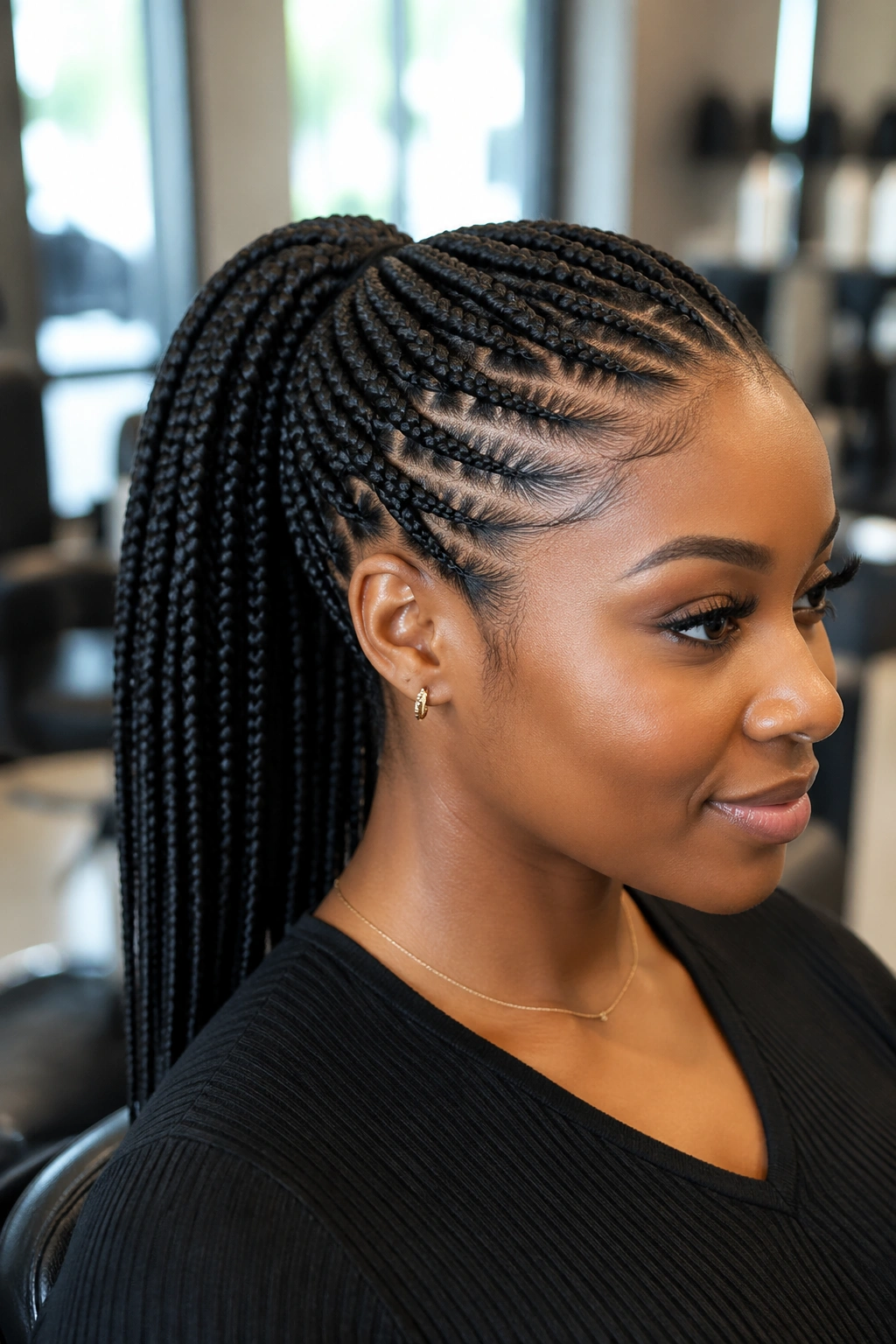
If you have ever sat through a style that felt heavy by the second day, knotless braids are a relief. A knotless box braid mid ponytail spreads the tension more evenly at the root, which makes the style easier to wear once the ponytail is gathered. The mid height helps too, because you are not stacking all that length directly on top of the scalp.
This version is one of the best choices when you want length and a full tail without the hard bump that some braid installs leave behind. The finish is softer at the hairline, and the ponytail itself hangs with a more relaxed shape. It is the kind of style that looks put together on day one and still behaves well after a few nights of sleep, assuming you keep it wrapped.
A small elastic under the braid wrap helps hold the tail in place. I also like this style for anyone who needs to move around a lot during the day, because it stays calmer than a high ponytail and does not bounce as aggressively.
5. Side-Swept Lemonade Braided Mid Ponytail
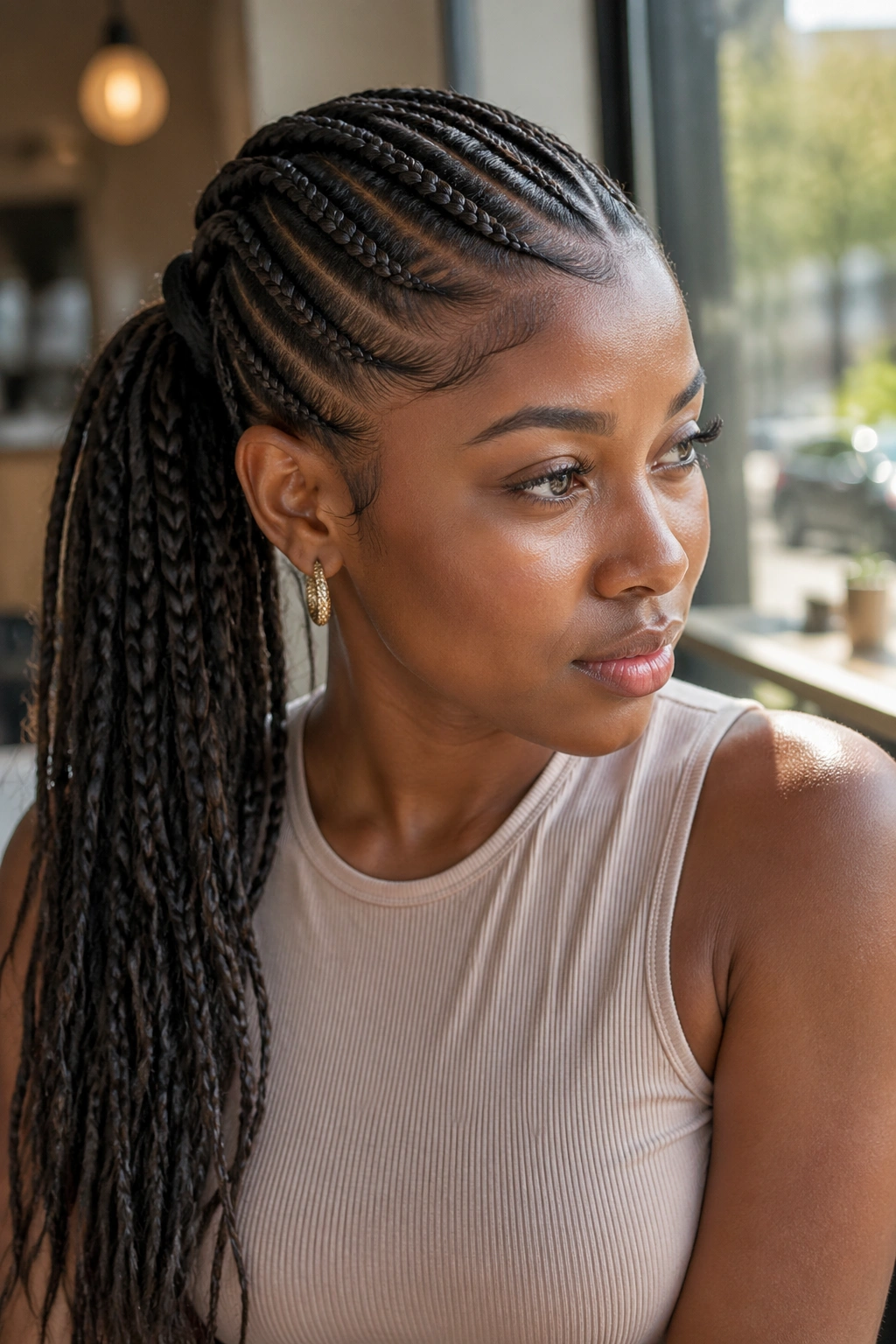
Unlike a straight-back ponytail, this one gives you motion before the braids even start swinging. A side-swept lemonade braided mid ponytail leans the parting and the braid direction to one side, then collects the length at mid height so the whole style feels angled rather than symmetrical. That asymmetry is doing real work.
The side sweep helps draw attention across the face in a softer line. If you want something that opens the cheek area and does not sit too rigidly around the forehead, this is a smart pick. It also lets the braid tail fall over one shoulder, which is useful if you like wearing earrings or if you want the front details of your outfit to stay visible.
Keep the side part clean. That matters more than the braid size here. A wobbly part makes the style lose its shape fast, and the whole point is that deliberate diagonal line.
6. Triangle-Part Braided Mid Ponytail
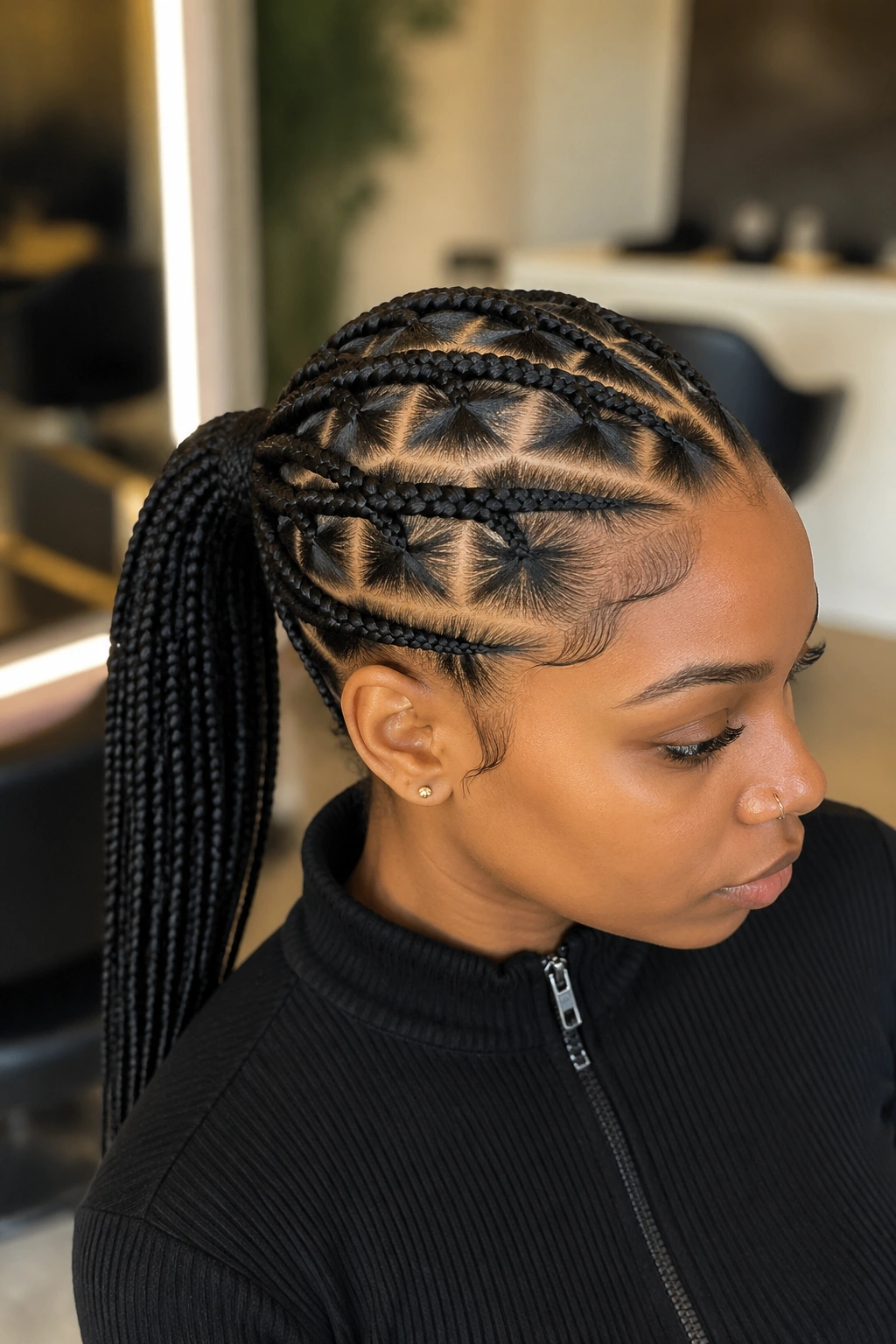
Triangle parts can change a braid style from basic to striking without adding more hair or more length. A triangle-part braided mid ponytail uses geometric sections at the scalp, so the design is visible even when the ponytail is pulled back. It is a subtle trick, but it gives the style more personality than plain square parts ever will.
The best thing about triangle parting is that it makes the scalp pattern look intentional from every angle. In the front, the parts look sharp. In the middle, they give the ponytail a little visual rhythm. And when the tail moves, the base still has enough detail to keep the style interesting. That is handy if you want something that feels polished without being too plain.
This style does not need heavy accessories. A few gold cuffs or one good braid charm can be enough. Too many extras start to fight with the parting, and the parting is the real star here.
7. Curved Cornrow Ponytail with Baby Hairs
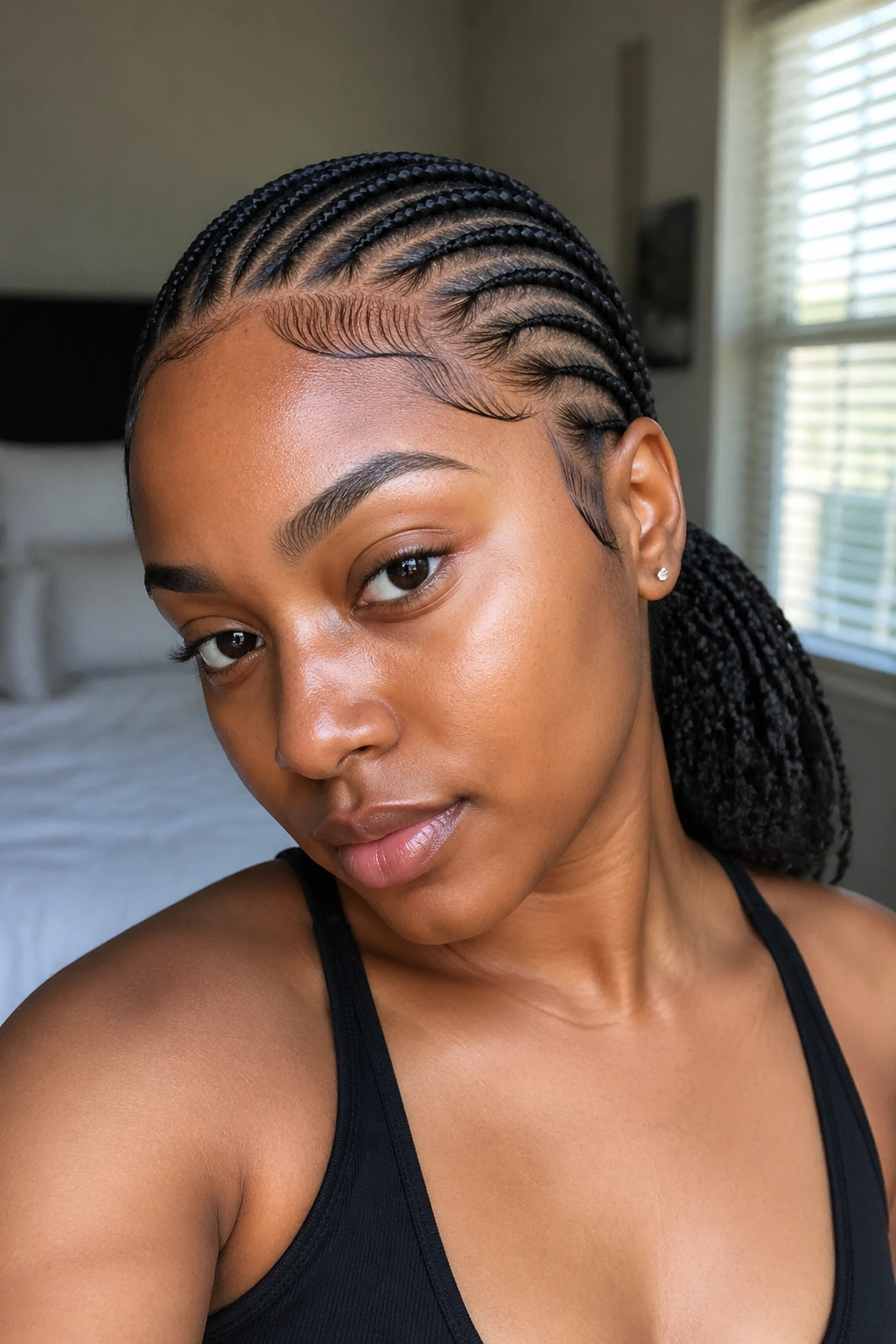
Curved rows soften the whole face. A curved cornrow mid ponytail uses arcs instead of straight-back lines, which gives the scalp pattern a gentler flow and makes the ponytail feel less severe. It is a very good option if you like structured braids but do not want the hard, almost boxy look that straight rows can create.
Baby hairs can help, but they should stay small and tidy. The style already has enough movement in the parting, so there is no need to paint on heavy swoops around the temple. A little shaping near the hairline is enough. Heavy edges can make the style look crowded.
Less is more here.
The ponytail itself can stay simple. Medium braids or slightly thicker plaits keep the curved design visible, and the mid placement stops the style from climbing too high on the head. If you want a look that feels graceful rather than sharp, this one does the job without asking for much fuss.
8. Boho Braided Mid Ponytail with Loose Curls
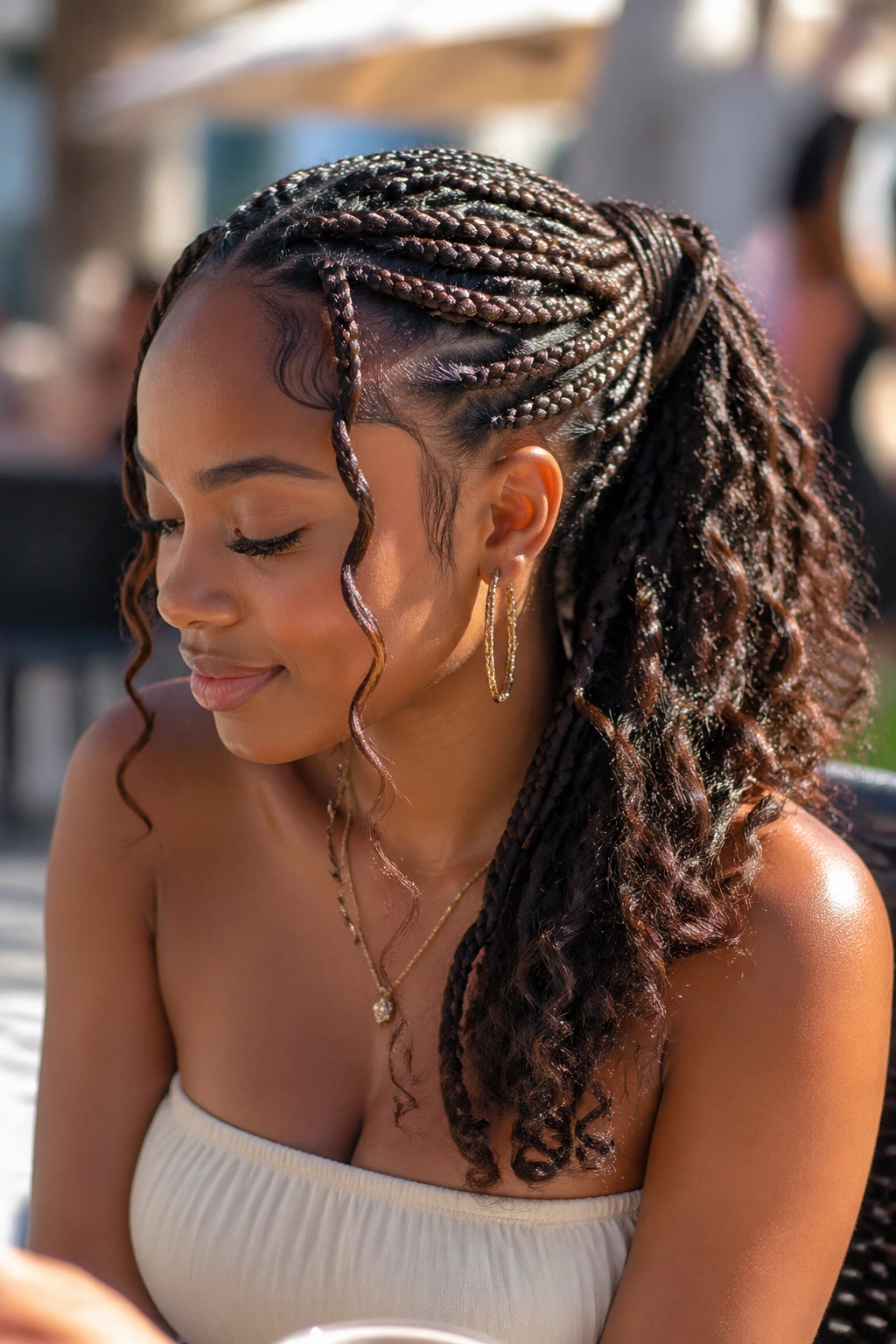
What makes boho braids feel less stiff? The answer is the loose curls threaded through the braid lengths. A boho braided mid ponytail mixes the neatness of braids with little bits of softness, so the whole style feels lived-in instead of locked down. That balance is why people keep coming back to it.
The loose pieces should look intentional, not accidental. A few curly strands here and there are enough to break up the braid pattern and make the ponytail move in a softer way. If you add too many, the style starts to frizz faster and can look busy instead of relaxed. Keep the curl pattern consistent so it reads as part of the design.
What to Watch For
The loose hair will need a little extra care, especially at the ends. A satin bonnet helps a lot, and so does a light mousse refresh if the curls start to dry out.
- Use medium-density braids so the curls do not disappear
- Keep the curly strands moisturized, not soaked
- Avoid rough towels after washing or refreshing
- Refresh the front pieces separately if they start to frizz first
9. Jumbo Feed-In Mid Ponytail
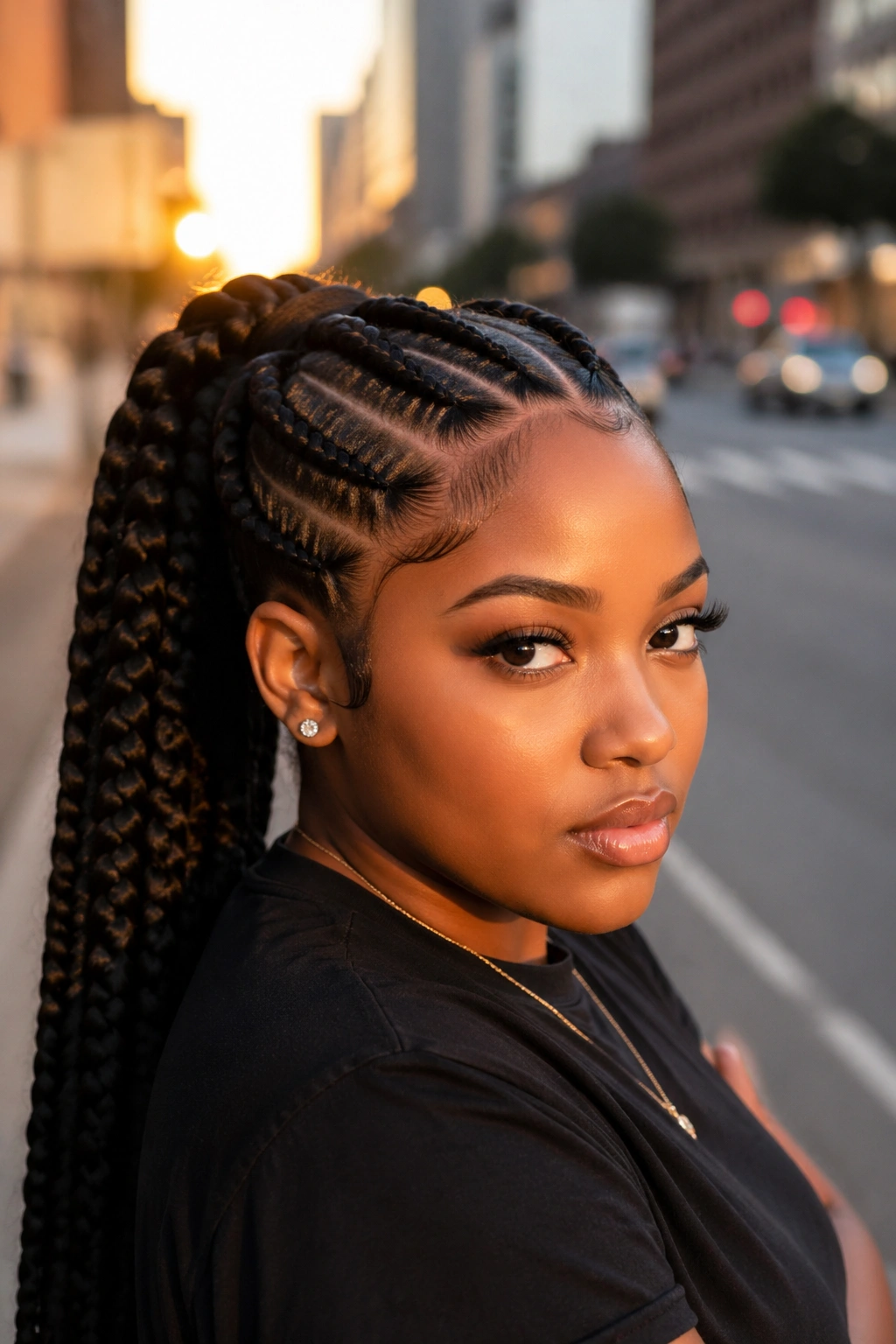
A jumbo feed-in mid ponytail makes a statement fast. There is no hiding behind tiny details here; the size itself is the design. Bigger braids mean fewer sections, which can make the install feel faster and the overall look less fussy, especially if you like clean shapes and bold lines.
This style works well when you want volume without a mountain of small plaits. The braid base can be sleek and close to the scalp, then the thicker tail takes over once it reaches the middle of the back. Because the braids are larger, each one reads clearly from a distance, which is useful if you want a style that holds its own with simple clothes and minimal accessories.
Here is the trade-off: jumbo braids need good balance. If the braids are too thick for the hairline or too heavy at the crown, the style can pull. A mid ponytail helps reduce that risk because the weight is carried lower than it would be in a high style.
10. Tribal Braids Into a Mid Ponytail
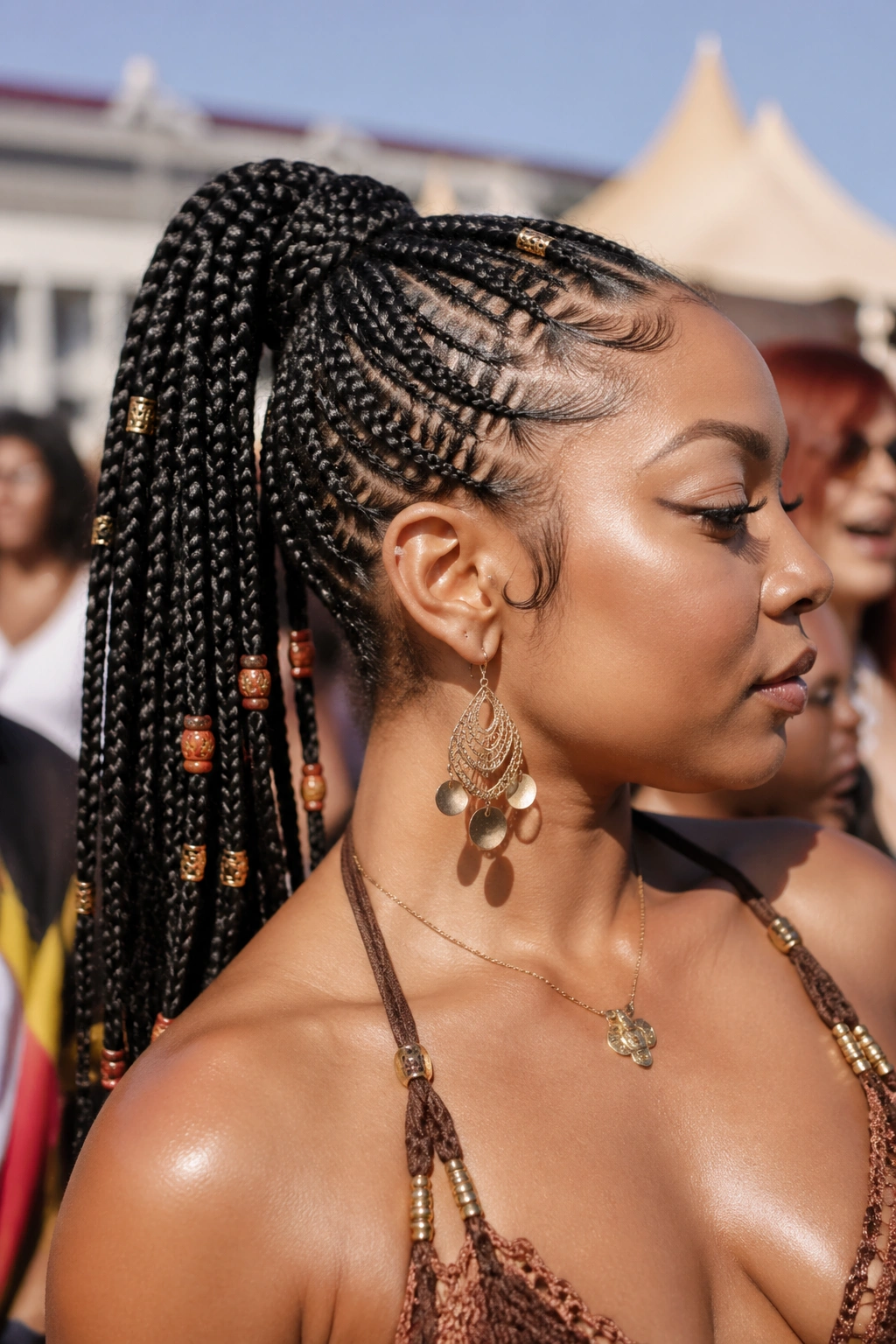
Tribal braids bring more than pattern; they bring reference, history, and a little drama in the best way. A tribal braided mid ponytail usually combines distinct sectioning, sometimes beads or cuffs, and braids that follow a more decorative path before they are gathered back. The style has presence. No question about it.
Unlike plain straight-back braids, this look lets the parting tell a story before the ponytail even starts. You might see feed-ins, curved sections, alternating braid widths, or a few accent details that make the crown feel layered. That means the style benefits from intention. Every piece has to earn its place, or the look starts to feel cluttered.
It suits occasions where you want the hair to be part of the outfit rather than a quiet background piece. Festivals, family events, photo days, and dressy nights all make sense here. Keep the accessories limited if the parting is already busy. One strong detail is enough.
11. Middle-Part Braided Ponytail with a Sleek Base
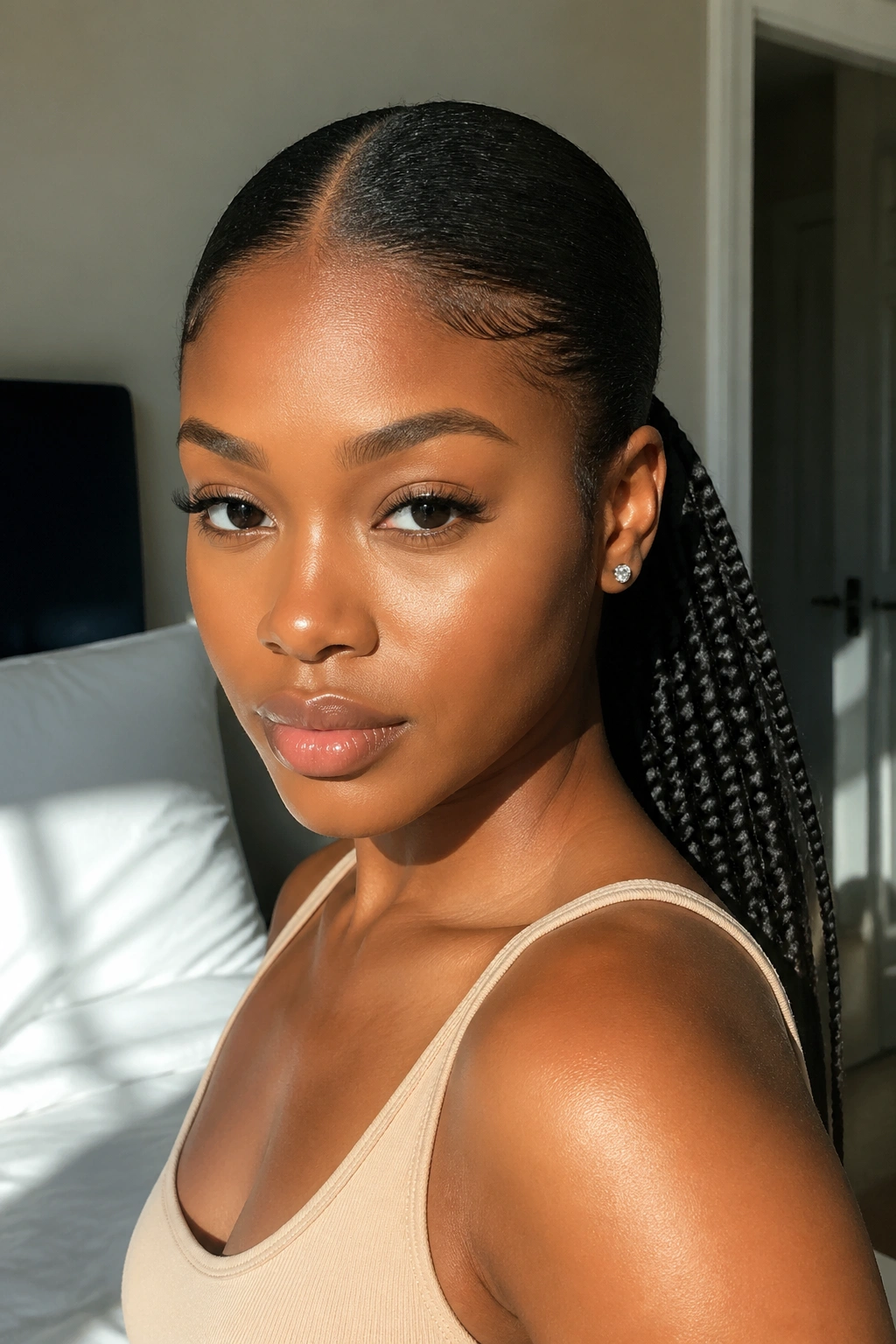
A middle part changes the entire mood of a braided ponytail. It gives the style symmetry, and symmetry is a powerful thing when the rest of the hair is pulled tight and controlled. A middle-part braided mid ponytail usually feels clean, deliberate, and a little formal without becoming stiff.
The sleek base matters just as much as the part. If the top is neat, the ponytail can be fuller and longer without looking messy. I like this version when the front needs to stay tidy for a long stretch of time, because the part acts like a built-in anchor. The eye has a place to rest before it moves down to the tail.
A little edge control can help, but use it sparingly. Too much product along the center part builds up fast and can make the scalp look dull. Clean lines and a light touch usually win here. The style works especially well with medium braid sizes and a tail that falls just below the shoulder blades.
12. Criss-Cross Braided Mid Ponytail
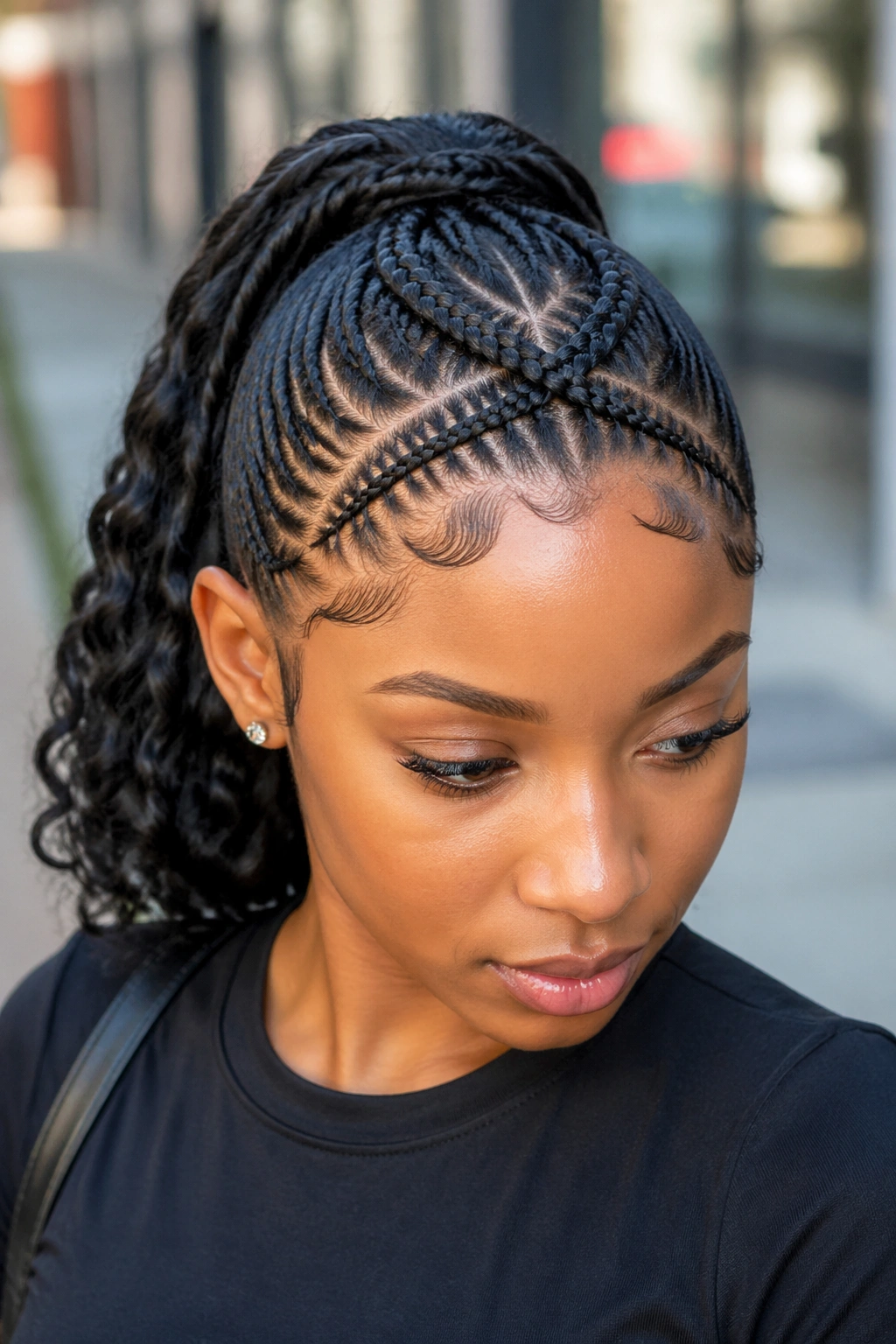
This is one of those styles that looks more complex than it feels. A criss-cross braided mid ponytail uses overlapping sections at the crown, so the top layer creates an X-pattern or woven effect before everything gathers into the ponytail. The payoff is visual texture right where people are most likely to notice it.
The braid pattern does not need heavy accessories because the crossing itself creates enough detail. That said, the lines need to be precise. If the sections drift off course, the criss-cross effect turns muddy fast, and the style loses its edge. It is not a style to rush.
I like this one for evenings, special events, and any setting where the top of the hairstyle will be seen up close. It gives the front of the head more dimension without depending on curls or beads. The ponytail can stay simple, which is a relief. The base is already doing enough.
13. Four-Large-Braid Mid Ponytail
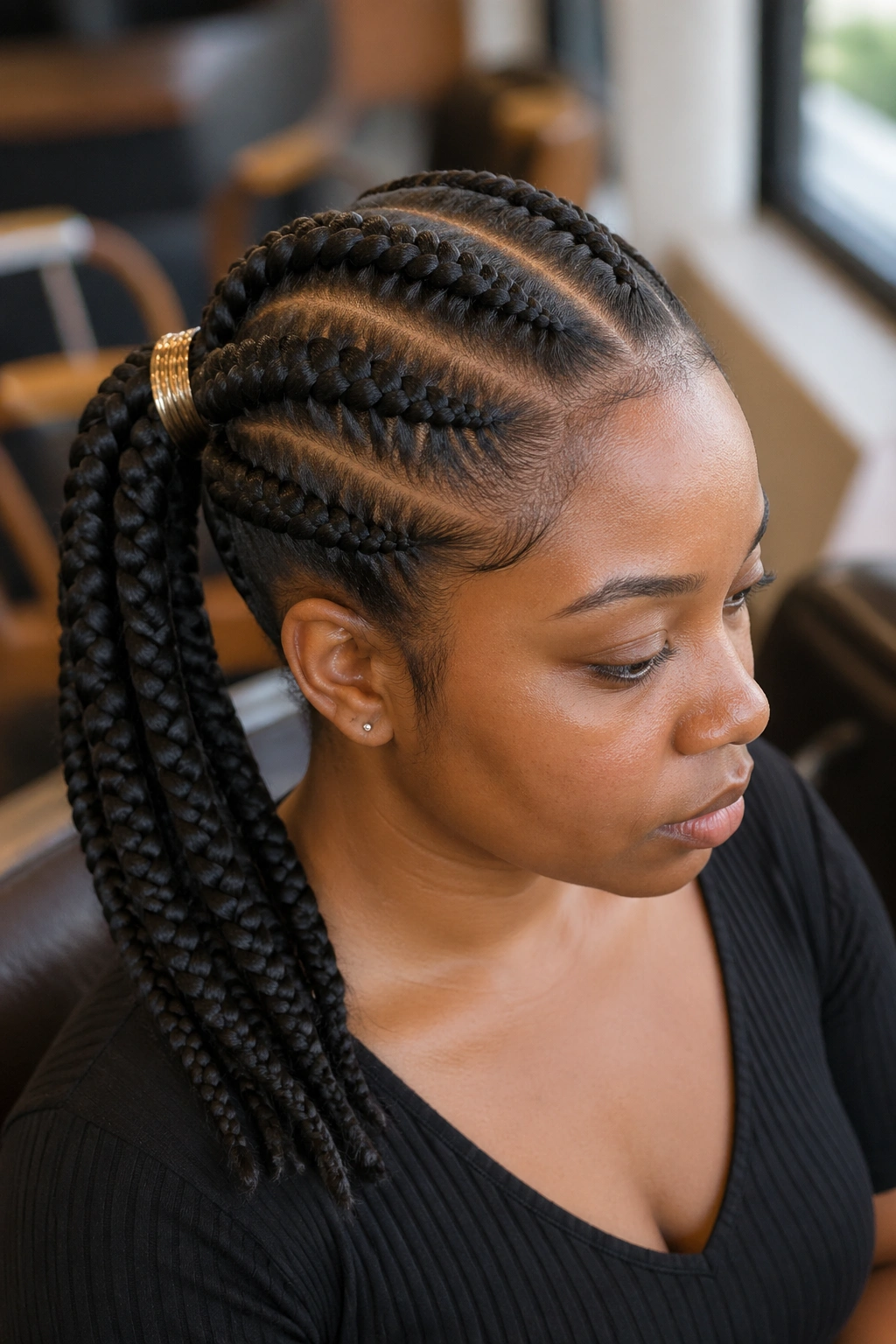
Can fewer braids still look full? Absolutely. A four-large-braid mid ponytail uses thickness instead of quantity, which keeps the style bold and easy to read. It is a good choice if you want something that feels strong without looking crowded.
The four sections create a nice balance. They are large enough to feel substantial, but not so many that the scalp gets busy. That makes the style useful for anyone who likes simple structure and wants the braid pattern to be the main event. It also means less time spent on tiny parting, which matters if you prefer a quicker chair session.
Best If You Hate a Busy Look
This version has a calmer finish than a style with ten or twelve small braids feeding into the ponytail. The shape is still dramatic, just cleaner.
- Good for medium to thick hair
- Easy to decorate with cuffs on just one braid
- Works well with a wrapped base and no extra color
- The tail stays readable even when it gets longer
14. Zigzag-Part Braided Mid Ponytail
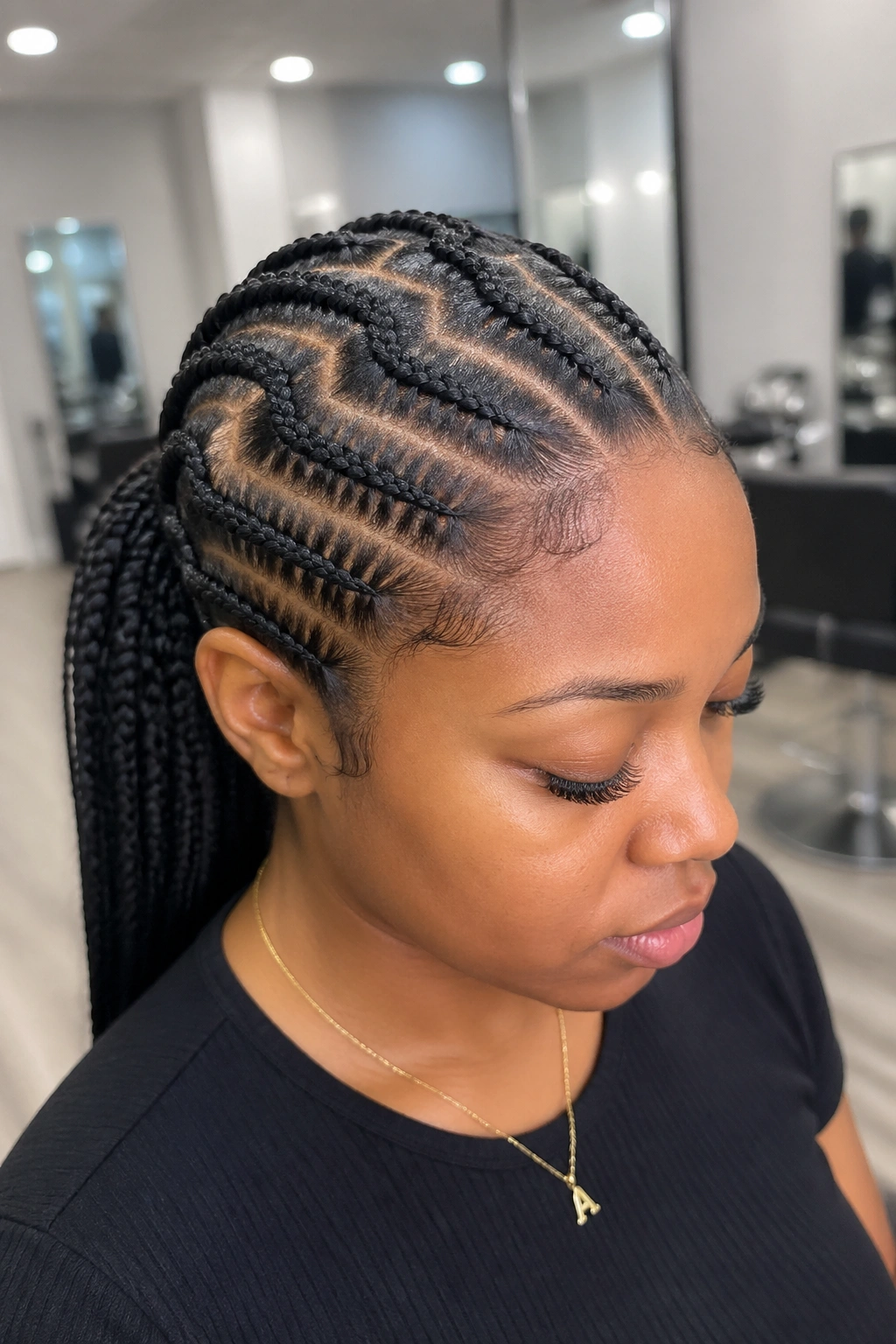
Zigzag parts do something plain center parts never can: they make the scalp pattern interesting before you even see the ponytail. A zigzag-part braided mid ponytail feels playful and sharp at the same time, which is a hard balance to get right.
This look depends on precision. The zigzags need to stay even enough to be recognizably patterned, but not so stiff that they feel drawn on. It is the kind of parting that rewards a steady hand, and once it is in place, the rest of the style can stay fairly simple. That is useful. The braid tail does not need to shout when the parting is already carrying the design.
A medium braid size works best here because the parting detail can get lost under heavy plaits. A lighter tail keeps the eye moving through the pattern instead of stopping at one big braid. If you like styles with a little surprise in the base, this is a fun one.
15. Face-Framing Tendril Braided Ponytail
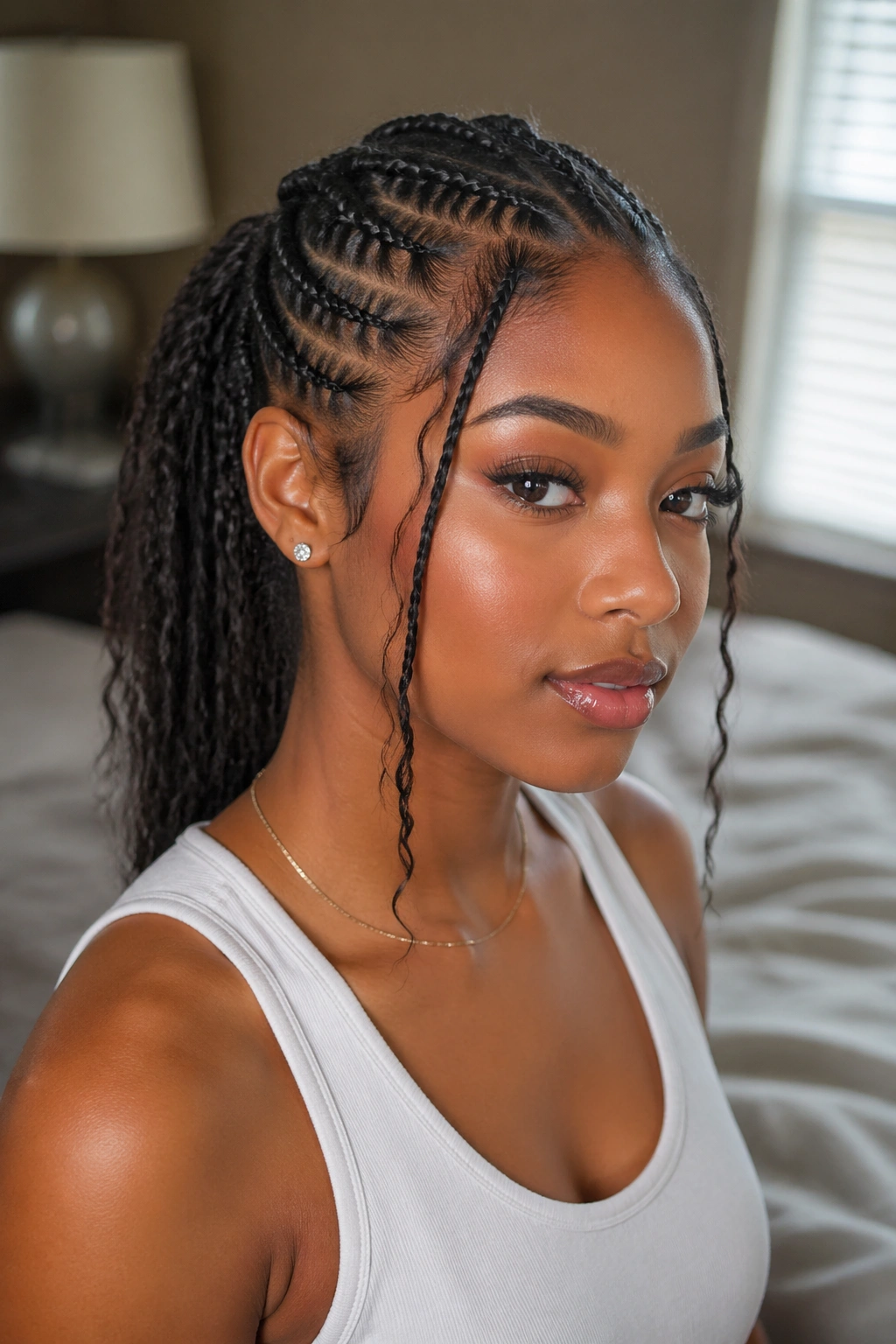
A fully pulled-back style is not the only way to show structure. A face-framing tendril braided ponytail leaves a few small pieces near the cheeks or temples, which softens the front without undoing the clean ponytail shape. The difference is subtle, but subtle is often where the good stuff lives.
Those tendrils can be braided, curled, or lightly waved. Keep them narrow. Two pieces are usually enough. Any more than that and the style starts to look unfinished rather than intentional. What you want is contrast: a neat mid ponytail in the back and a little softness around the face.
This style suits people who like a gentler outline or who feel a completely slick look makes the face look too bare. It also works well when the braid tail is long, because the front softness balances the length in back. If you want polished with a softer edge, this is the lane.
16. Two-Layer Braided Mid Ponytail
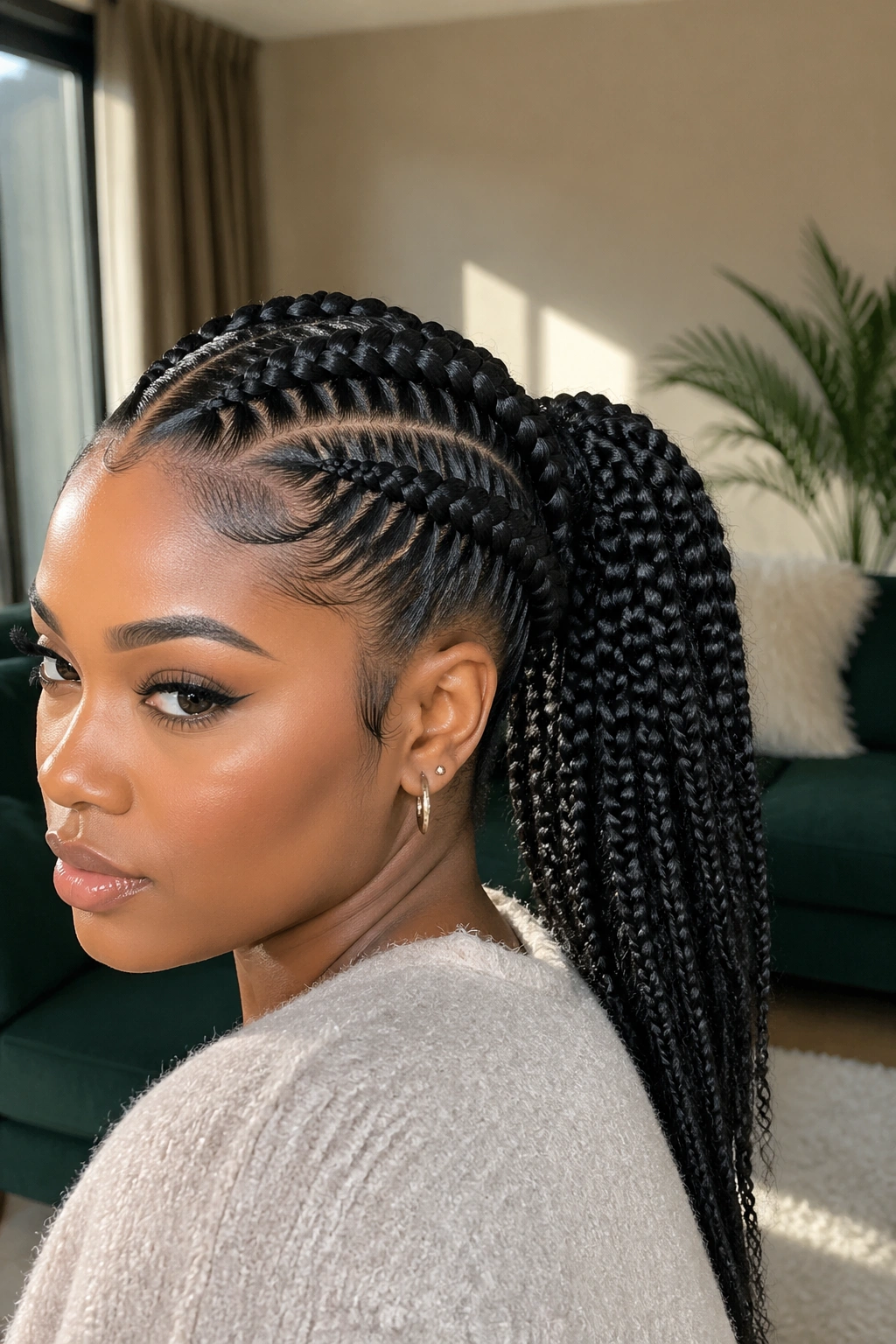
A two-layer braided mid ponytail gives you depth without needing a huge amount of extra length. The top layer of braids feeds into or sits over a lower layer, so the base looks stacked instead of flat. That little bit of layering makes the style feel richer.
The effect is easy to miss in photos and much easier to appreciate in person. When the hair moves, the layers shift at slightly different speeds, which makes the ponytail look fuller and less like a single block of braids. If you like dimension but do not want curls or beads, this is a smart middle ground.
This style works best when the sections are kept distinct from the start. If the layers blur together at the scalp, the point disappears. Keep the top rows a touch smaller or lighter so the lower layer still has room to show. A simple braid wrap at the base helps keep the stacked shape tidy.
17. Wrapped-Base Mid Ponytail with Satin Scarf Detail
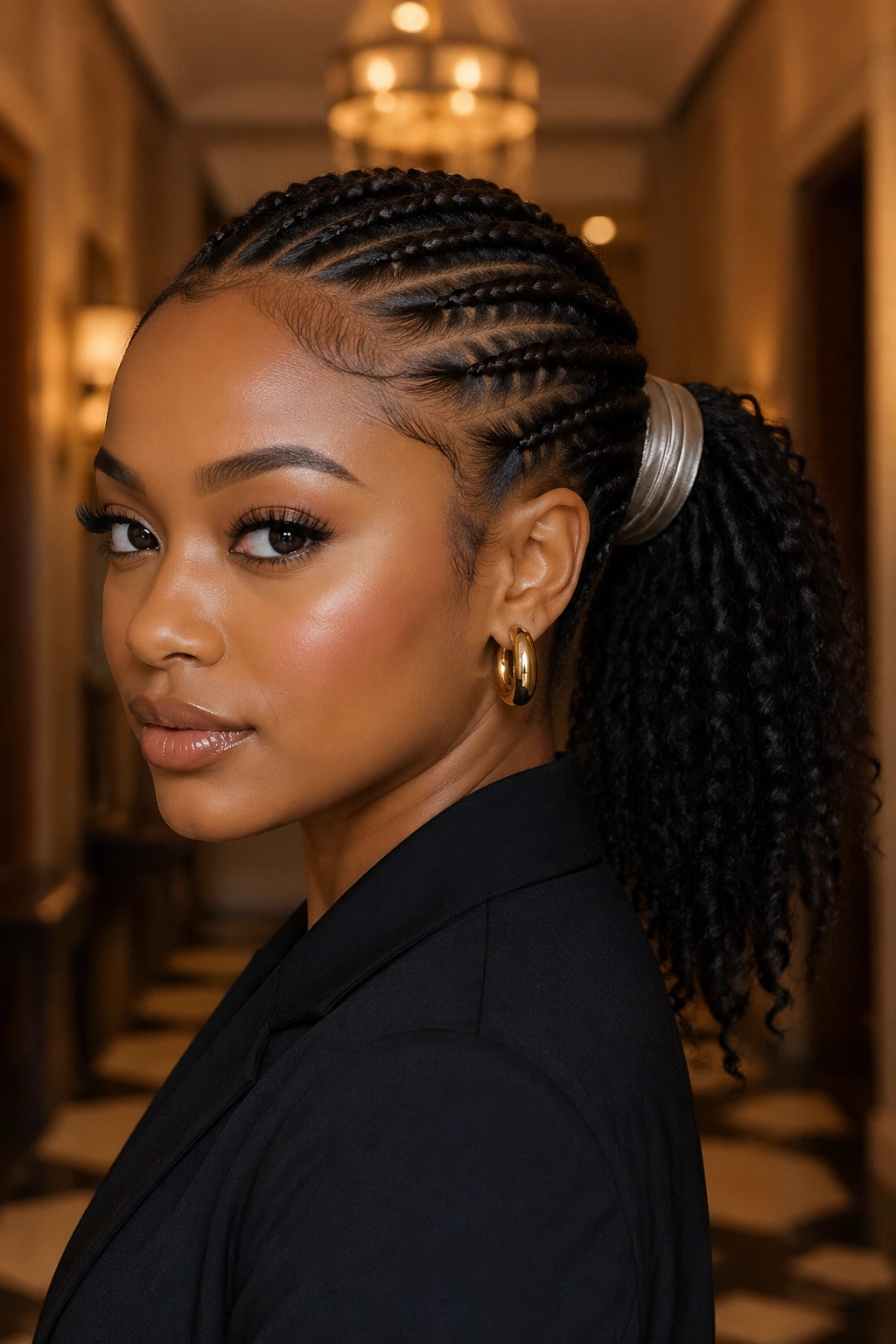
The wrap is not decoration. It changes the whole finish. A wrapped-base mid ponytail uses a braid, a strip of hair, or a satin scarf to cover the elastic and tighten the visual line where the ponytail begins. That small move makes the style feel more finished almost immediately.
A satin scarf detail works especially well when you want the style to feel dressy without adding a lot of extra braid work. Tie it cleanly, tuck the knot where it will not bother you, and keep the tails short enough that they do not compete with the braid length. If the scarf is patterned, let the rest of the style stay simple. If the braids are already busy, choose a plain scarf and let the texture do the work.
This version is useful on days when you want the style to look intentional from the back. That is a detail people underestimate. The back of the head gets seen more than you think.
18. Micro Braid Mid Ponytail
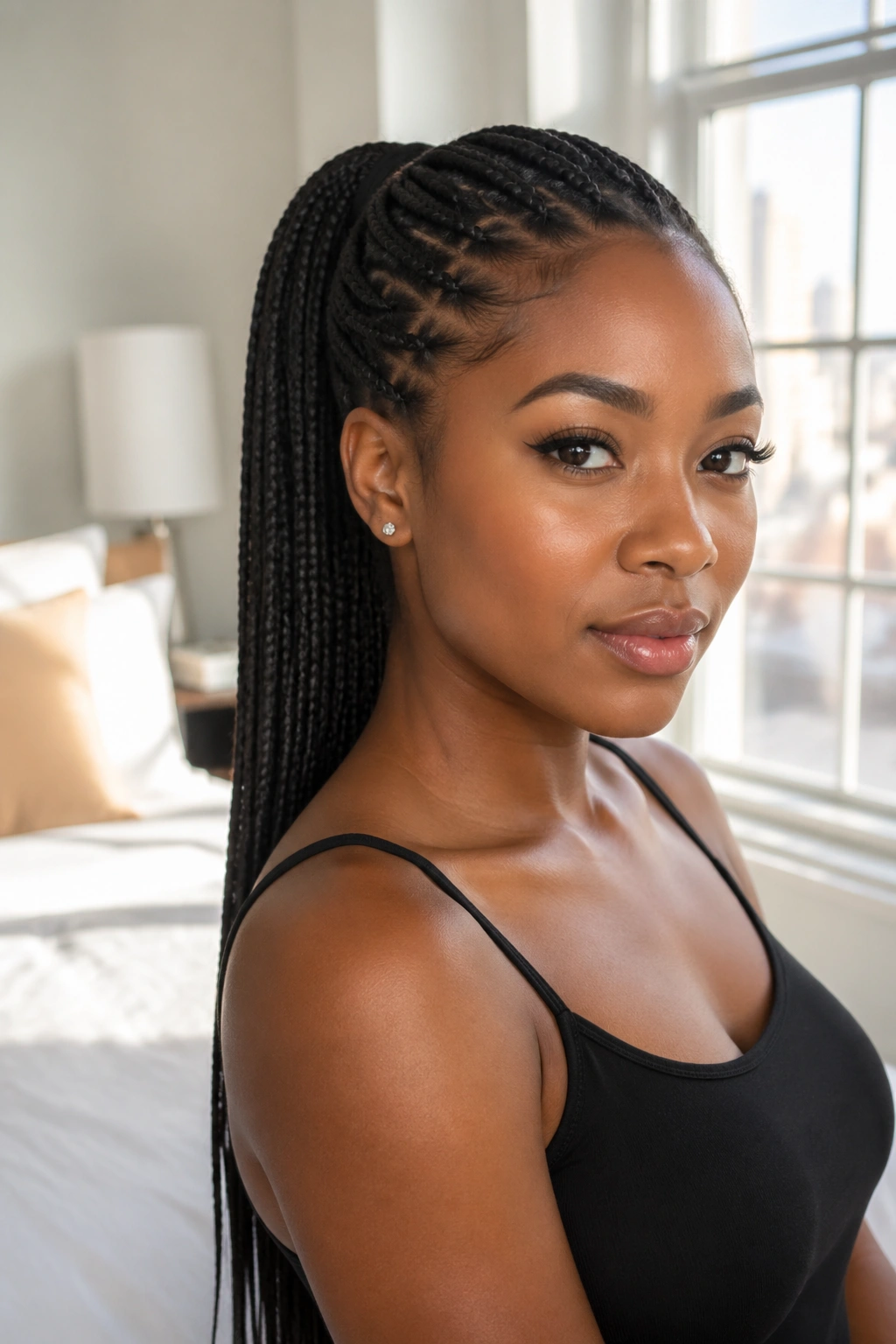
Is tiny braid density worth the time? If you like movement, yes. A micro braid mid ponytail gives you a soft drape because the smaller braids fall with more fluidity than chunky ones. The trade-off is the chair time. This is not the fastest style on the list, and it should not be treated like it is.
The payoff comes later. Micro braids pull into a ponytail with a lot of visual texture, and the tail tends to swing in a smoother way because there are so many fine strands working together. It feels delicate, but not fragile. That is a nice balance.
How to Wear It Long-Term
Keep the roots fresh and the ends from drying out. Small braids show buildup faster than people expect, especially around the hairline, so a light scalp cleanse or careful rinse matters.
- Use a light oil on the scalp, not the lengths
- Sleep in a bonnet that does not crush the ponytail
- Refresh the tail with mousse only when needed
- Avoid over-accessorizing; the braid count already gives you detail
19. Curled-Ends Knotless Braided Mid Ponytail
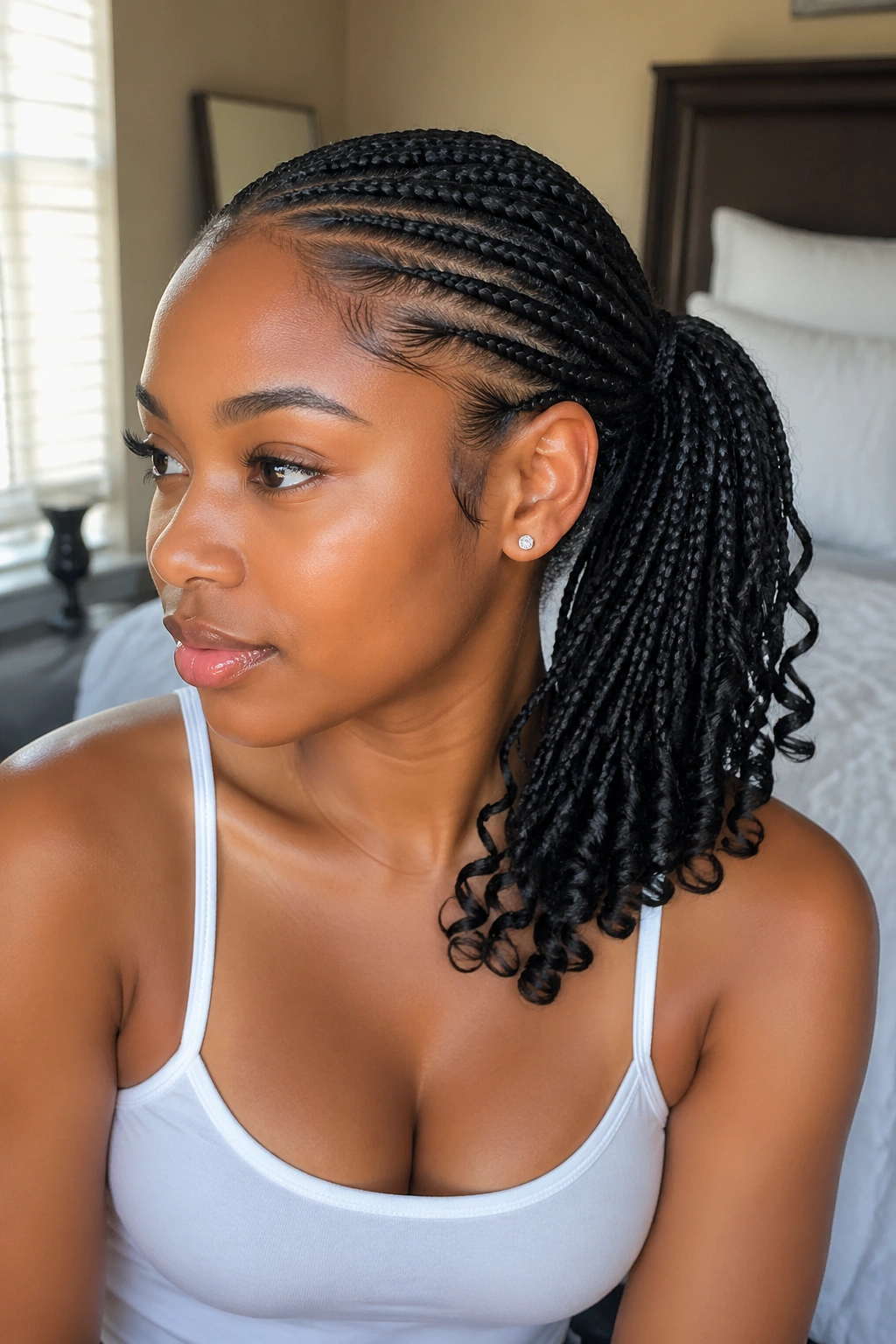
This version looks softer than a blunt braid finish, but it stays neater than a full boho style. A curled-ends knotless braided mid ponytail uses knotless braids for comfort and then finishes with curls at the ends, usually set so the tail has a clean shape rather than random frizz.
That difference matters. Boho curls can feel airy and loose. Curled ends on a knotless ponytail feel more controlled, almost like the style was designed from the start to end in a soft curve. The braid base stays smooth, and the curl pattern gives the tail a little bounce.
I like this one when the outfit is simple and the hair needs to carry the polish. It works especially well with medium braid sizes, because the curl finish can get lost under very thick plaits. Set the ends with rods or flexi rods and let them cool fully before taking them down. Rushing that step is how the curls go flat.
20. Mohawk-Inspired Braided Mid Ponytail
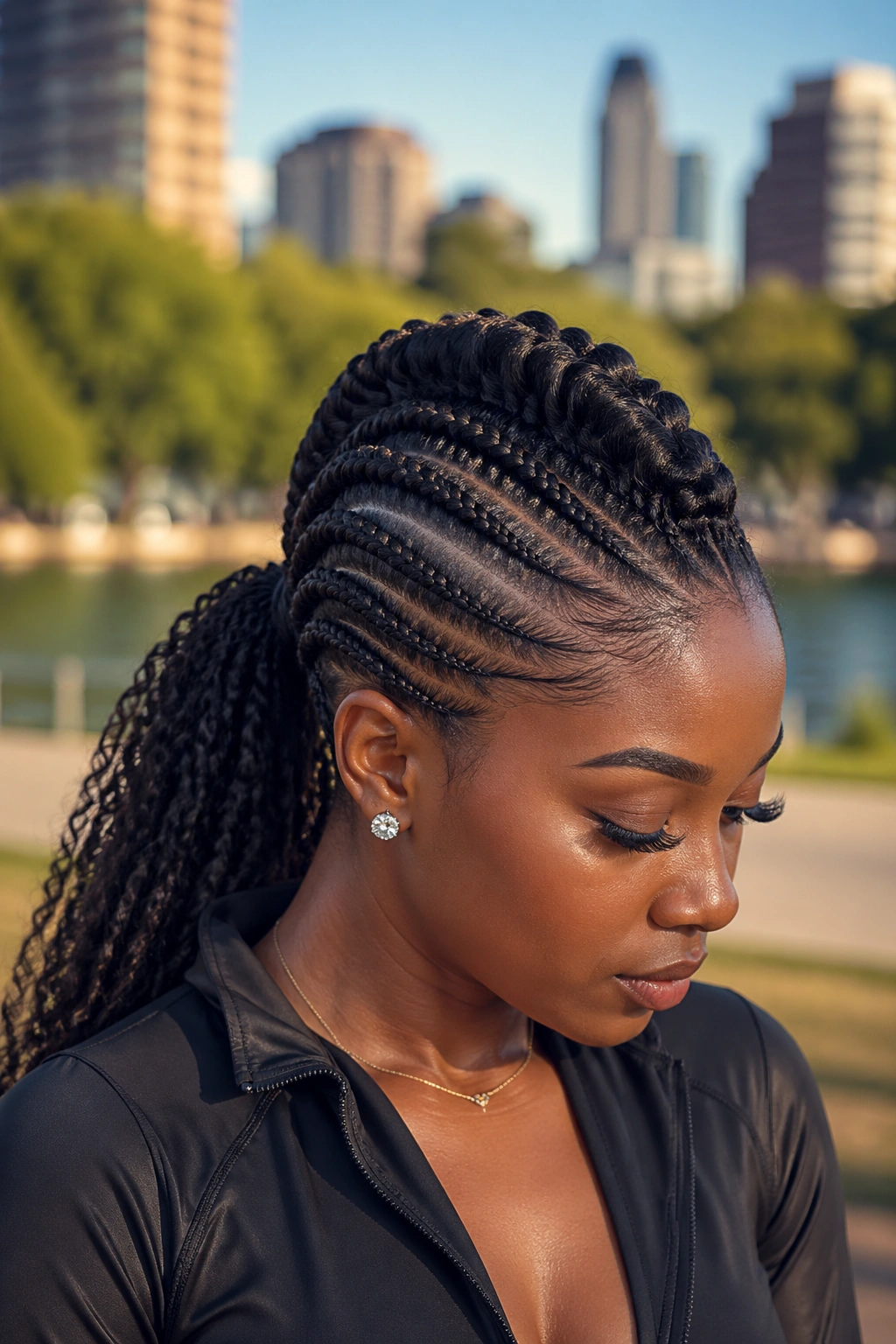
A mohawk-inspired braided mid ponytail has attitude without going full costume. The sides are braided tight and neat, the center ridge gets more height or fullness, and the ponytail gathers in the middle to create a lifted profile. It is sharp, but still wearable.
Unlike a centered, symmetrical ponytail, this style wants contrast. The sides should look controlled, almost slick, while the middle section carries the shape. That separation gives the hairstyle a bit of edge. It suits anyone who likes a strong silhouette and does not mind the top of the head having some drama.
The trick is balance. Too much height at the center can make the style feel bulky; too little and the mohawk idea disappears. Keep the braids close to the scalp on the sides and let the middle section rise just enough to create a ridge. That is usually plenty.
21. Beaded Mid Braided Ponytail
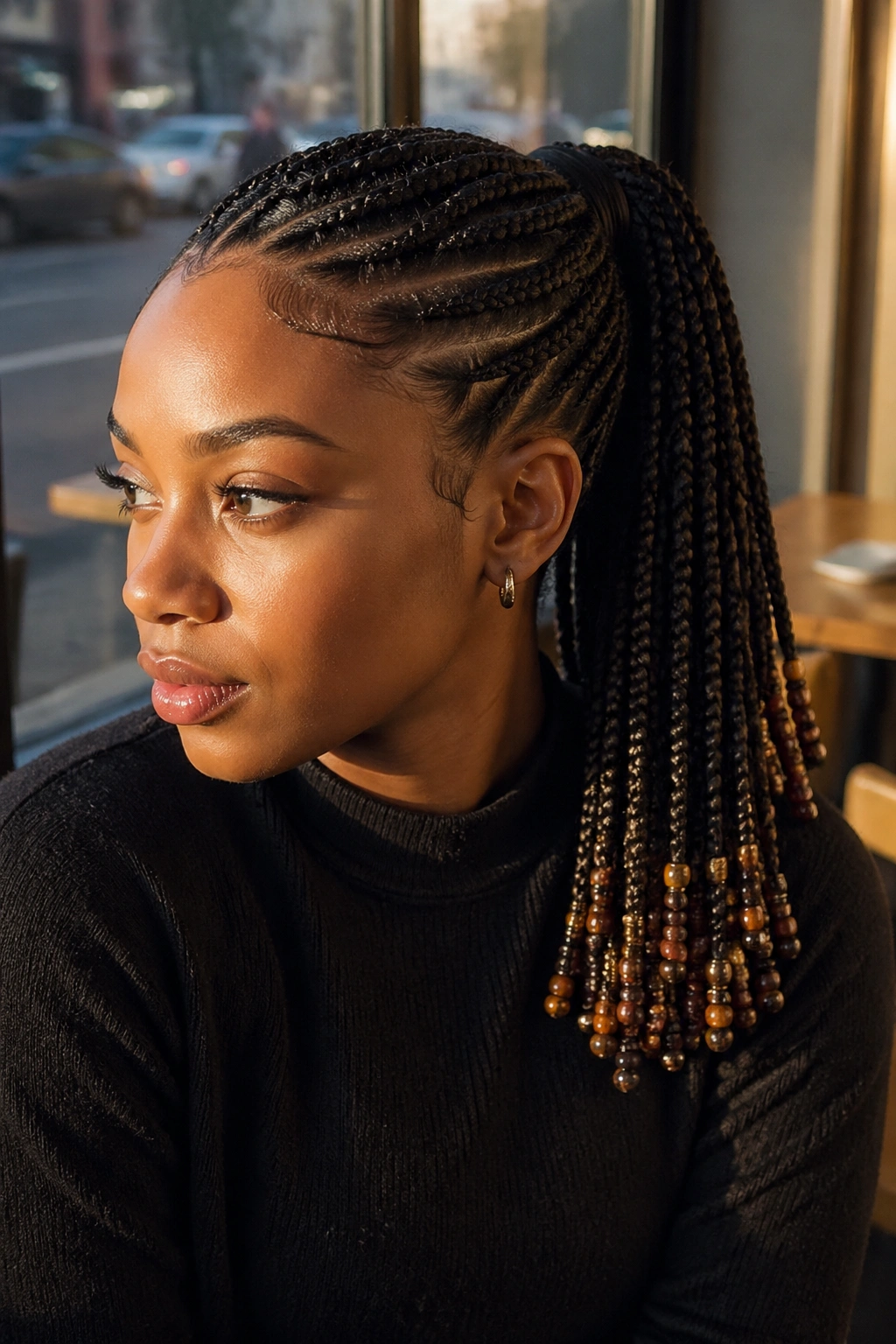
Beads change the mood instantly. A beaded mid braided ponytail brings sound, movement, and weight to the ends, which means the style feels a little more alive as you walk. It is a good way to add personality without changing the braid pattern itself.
The key is balance. A few well-placed beads can look elegant and deliberate; too many can make the ponytail feel heavy and noisy. Wood beads, clear beads, gold accents, and small cuffs all create different effects. If you want the style to feel grounded, choose earthy tones. If you want it to feel brighter, use clear or metallic details.
Keep the bead placement even so the ponytail does not lean oddly to one side. That is the part that gets overlooked. One heavy section can tug the whole tail off center. A mid ponytail gives the beads a stable place to hang, which helps the style hold its shape.
22. Side-Swept Feed-In Ponytail with a Diagonal Crown
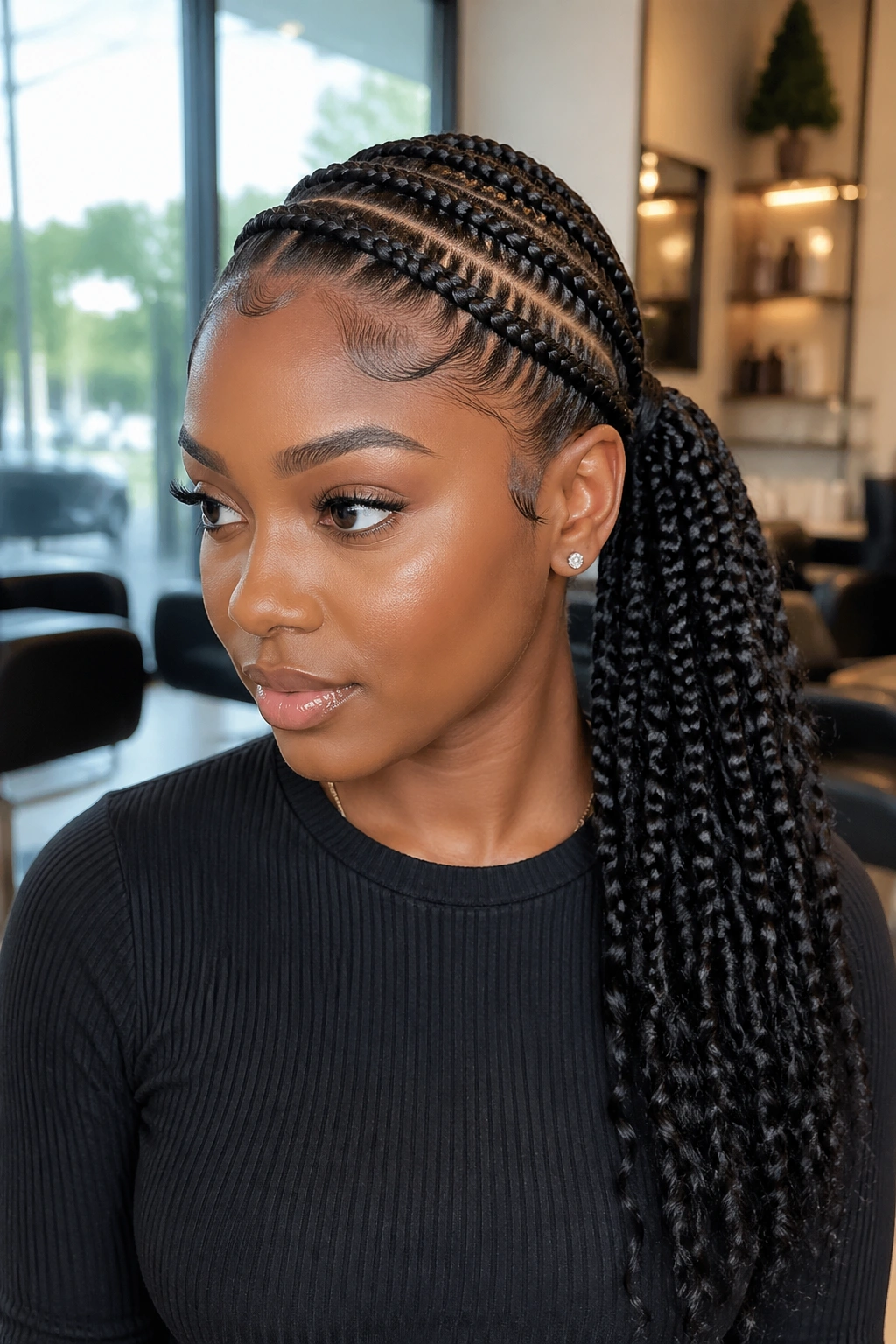
What does a diagonal braid line do? It makes the top feel less static. A side-swept feed-in mid ponytail uses angled braid paths across the crown before everything gathers into the back, so the eye follows the line instead of stopping at the hairline.
That angle is useful if you want the style to frame the face in a softer way. It also creates a little movement even when the ponytail itself is still. The braid path can be subtle or dramatic depending on how far the side part shifts, but the diagonal flow should stay clear. If the sectioning is too timid, the style loses its point.
This one works well when you want something different from a straight-back ponytail but do not want the full asymmetry of a lemonade style. It is a little more balanced, a little less obvious, and a good option for people who like clean shape with a quiet twist.
23. Mixed-Size Braided Mid Ponytail
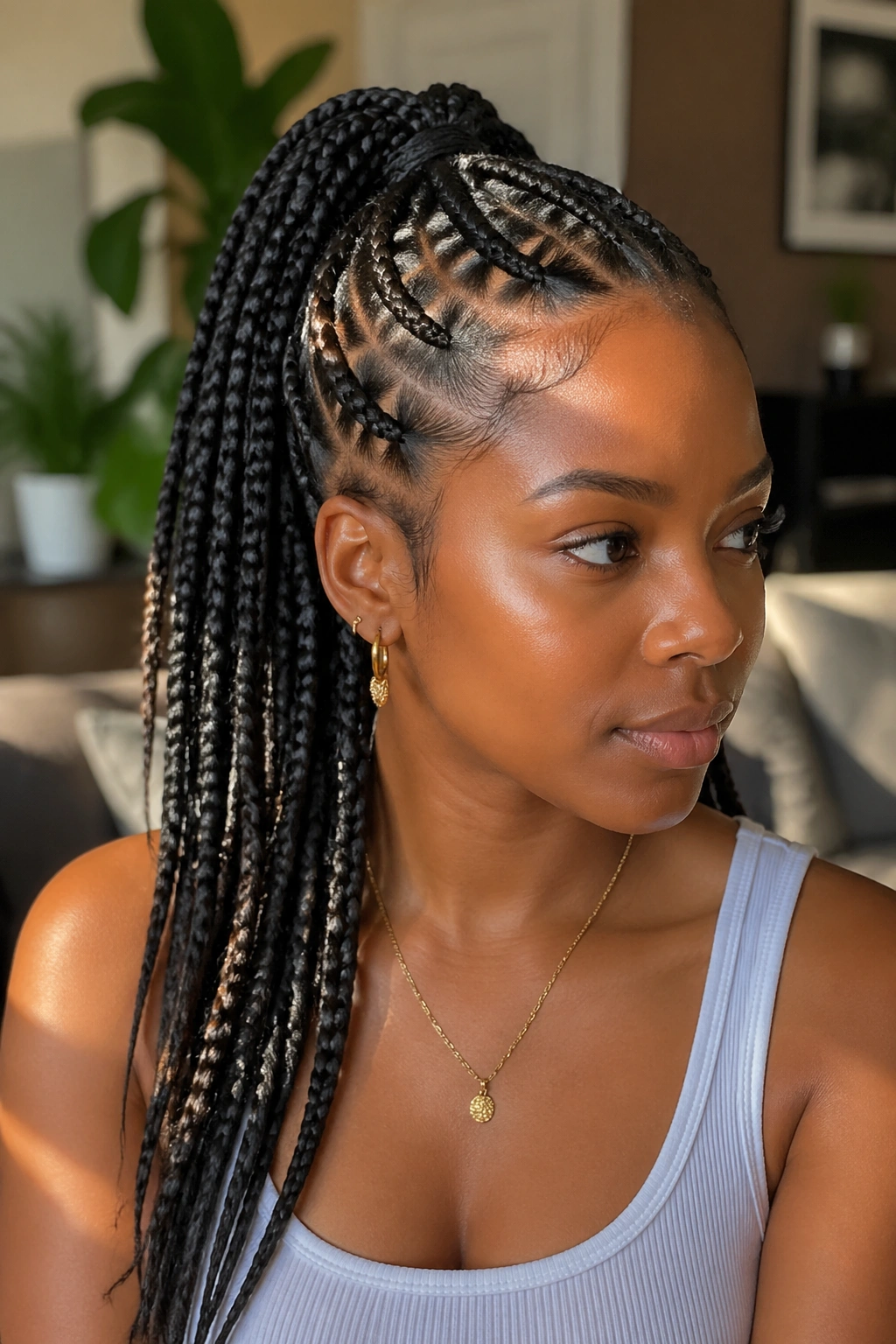
A mixed-size braided mid ponytail is for the person who likes variety but does not want chaos. Some braids are thin, some are medium, and maybe one or two are a bit thicker to anchor the look. That contrast gives the ponytail texture from the scalp all the way to the ends.
The trick is keeping the sizes intentional. Random braid widths can make the style feel uneven. Deliberate variation, though, makes the ponytail feel custom. You can use smaller braids near the face, slightly larger ones through the center, and one thicker braid near the base to give the ponytail a strong shape. That arrangement looks balanced without being stiff.
What to Keep in Mind
The mixed sizes should still share one braid direction and one finish. If the sections fight each other, the style turns messy fast.
- Use consistent parting depth, even if the braid widths change
- Keep the base sleek so the size variation feels designed
- Add cuffs only where the eye needs a pause
- Let one braid size dominate; do not split the difference everywhere
24. Low-Mid Braided Ponytail with a Long Tail
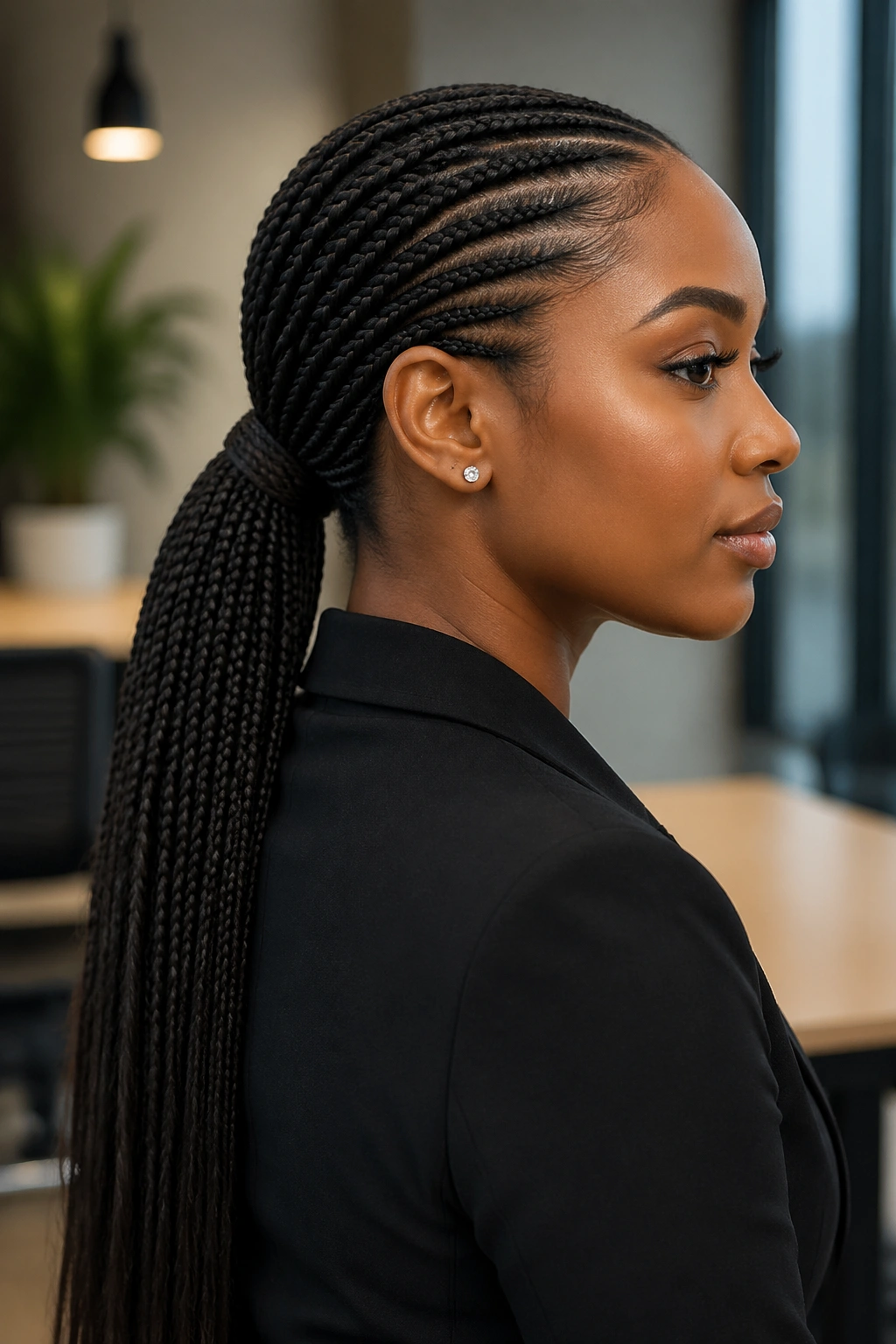
A low-mid braided ponytail sits just above the nape, which gives you a calmer shape than a higher ponytail but still keeps enough lift to avoid looking flat. That placement is kinder on the neck and usually feels easier to live in if you wear braids for long stretches.
The long tail is the selling point here. Because the ponytail starts lower, the length drops with more weight and less bounce, which gives the style a grown, steady look. It works especially well in work settings or formal settings where you want the hair to feel neat without looking severe. The base can be sleek or lightly patterned, depending on how much detail you want on top.
This is one of those styles that does not need much decoration. A clean part, a polished base, and a long braid tail are enough. If you want the finish to feel expensive without being loud, keep the extras minimal and let the shape speak for itself.
25. Halo-Detail Braided Mid Ponytail
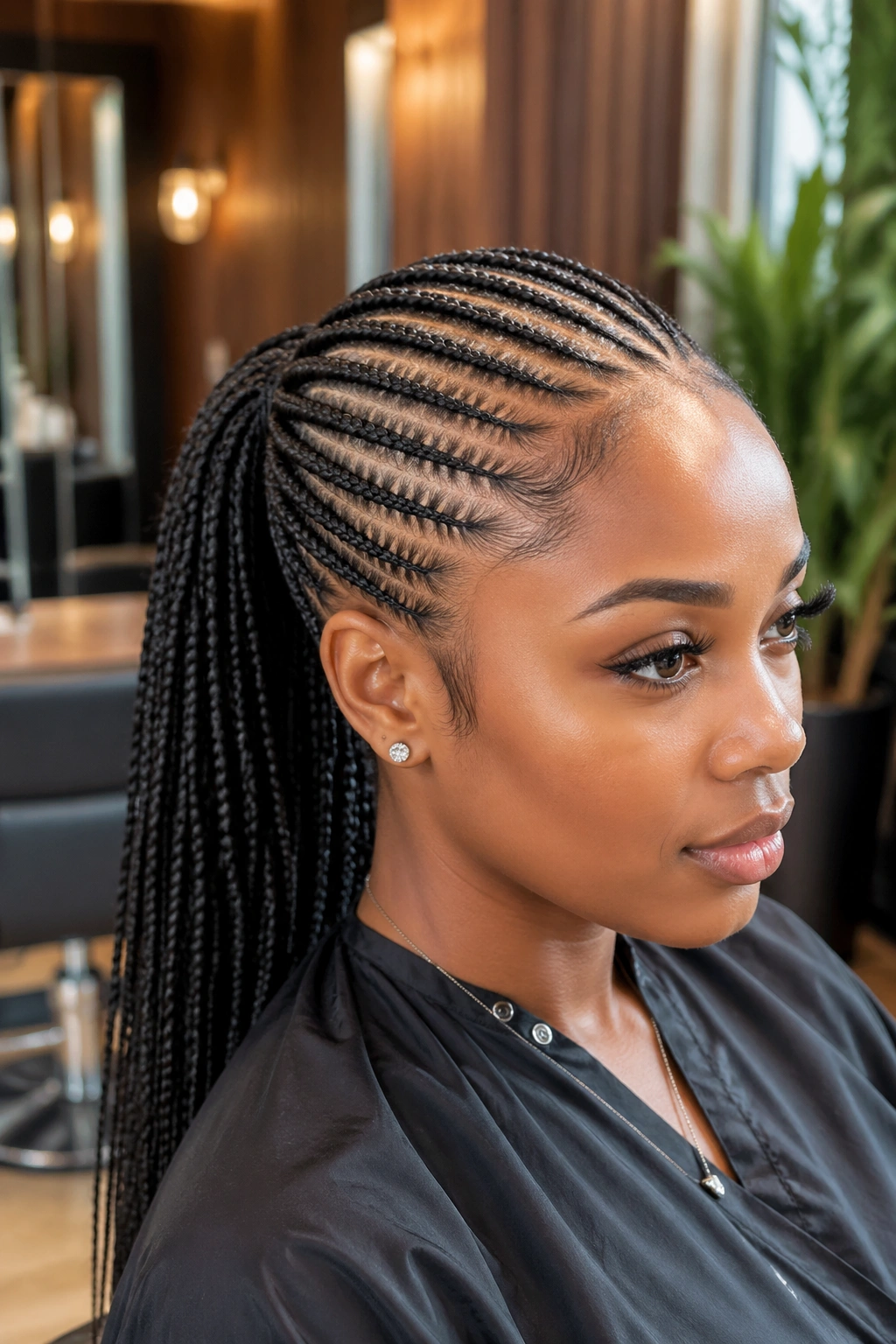
A halo detail changes the whole front of the style. In a halo-detail braided mid ponytail, a braid or braided band arcs around the hairline before feeding into the ponytail, which gives the crown a framed, finished look. It is one of the prettiest ways to make a mid ponytail feel special without piling on extra length.
The halo can be thin and subtle or fuller and more decorative. Either way, it helps the top of the style feel complete. That matters more than people admit. A ponytail can be long and full, but if the front feels empty, the style never quite settles. The halo fixes that problem neatly.
This is the version I would pick when I wanted the hairstyle to do a little bit of everything: keep the hair back, show off good parting, and still look polished from a distance. It has enough structure for a dressy day and enough softness to keep it from feeling stiff. That balance is rare, and worth having.
