

A sleek low weave ponytail looks simple right up until the crown starts puffing up, the nape develops a hump, or the wrap around the base slips loose halfway through the day. That is the part most people miss. The style only looks easy when the front is controlled first.
Flatness starts at the crown.
A good low weave ponytail is really a lesson in restraint. The part has to be clean, the roots have to lie down, and the added hair needs enough weight to hang without dragging the base into a lump. That is why some ponytails look sharp and expensive in person, while others look like they were assembled in a hurry.
The nice part is that a flat base does not have to mean a boring finish. You can go with bone-straight lengths, curled ends, a braided anchor, a scarf wrap, a flipped tail, or a blunt cut that reads modern instead of fussy. Once you know which shape does what, choosing the right one gets easier fast.
These 25 sleek low weave ponytails stay flat for different reasons. Some hide the elastic with a tight wrap. Some use braids to compress the crown. Some lean on a side part or a tucked-under finish to keep the silhouette low and clean. The detail is what makes the difference, and the detail is where this gets fun.
1. Center-Part Low Weave Ponytail with a Wrapped Base
A center part is the cleanest place to begin. It divides the head evenly, so the eye reads balance before it reads length, and that matters when you want the crown to sit close to the scalp. A narrow part also keeps the top from looking bulky, which is half the battle with a low weave ponytail.
Why It Works
The center line gives the style a straight, honest shape. Nothing is fighting for attention, so the ponytail can do the talking. It works especially well when the weave hair is long and pin-straight, because the symmetry makes the length feel even denser.
- Best on pressed, stretched, or straightened hair.
- A thin strand of extension hair can hide the elastic at the base.
- The tail looks sharp when the ends are trimmed blunt or lightly beveled.
- A tail comb and a firm brush are doing the real work here.
Keep the part narrow. If you make the center section too wide, the ponytail starts to swell at the front instead of lying flat.
2. Deep Side-Part Sleek Ponytail
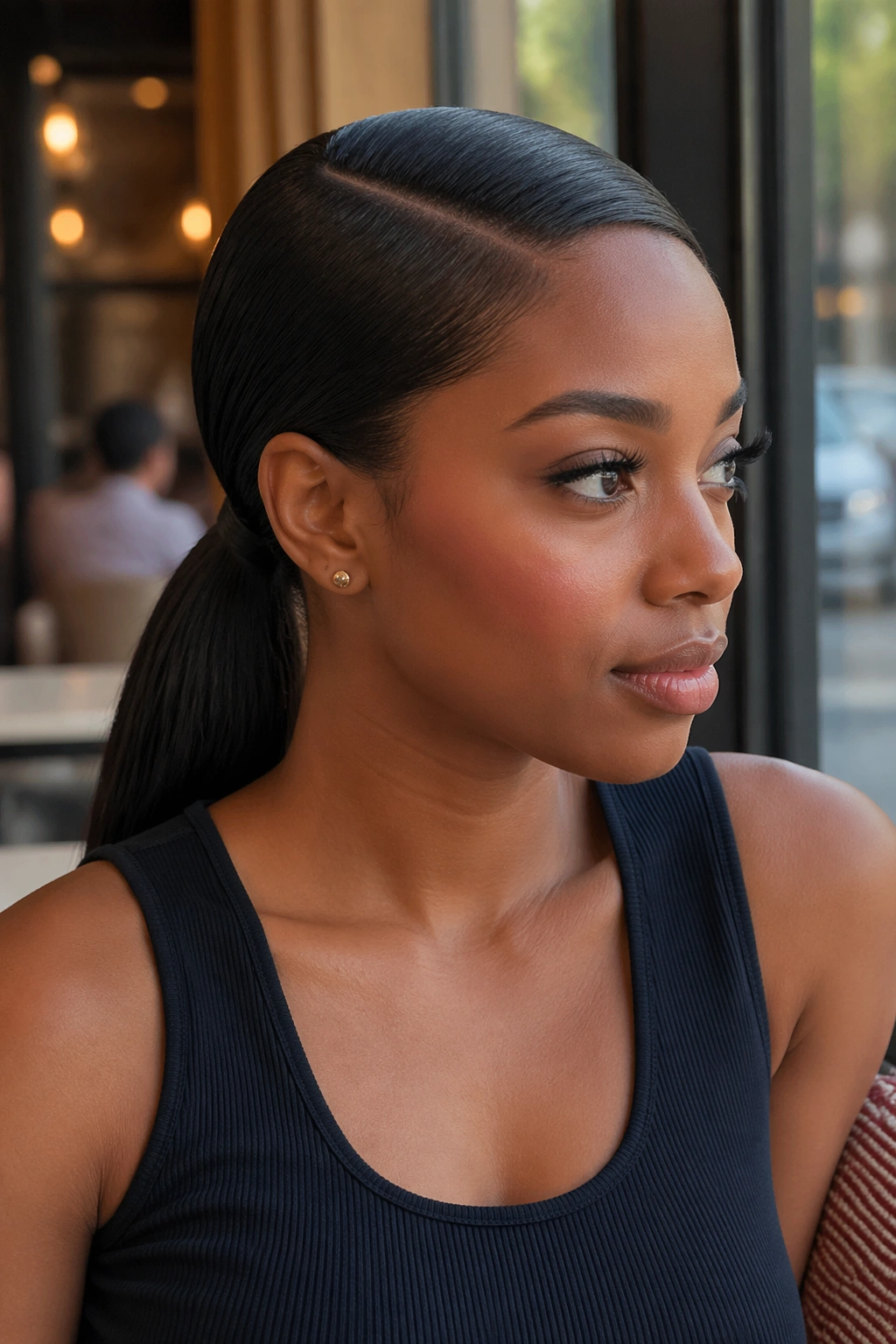
A deep side part changes the whole mood of a low ponytail. It shifts the weight to one side, so the crown does not need to look perfectly symmetrical to feel polished. That little imbalance is useful, especially when one side of the hairline is denser than the other.
It also gives you more room to hide bumps. A side part lets the front hair sweep across the head in a soft curve before it meets the base, and that curve makes the style look deliberate rather than overly tight. I like this one for long days, because it still looks neat after a few hours of real movement.
The best version keeps the tail low and straight, with the parting doing the visual work. If you want a ponytail that feels a little softer than a center-part style but still stays close to the head, this is the one I reach for first.
3. Wet-Look Glassy Ponytail
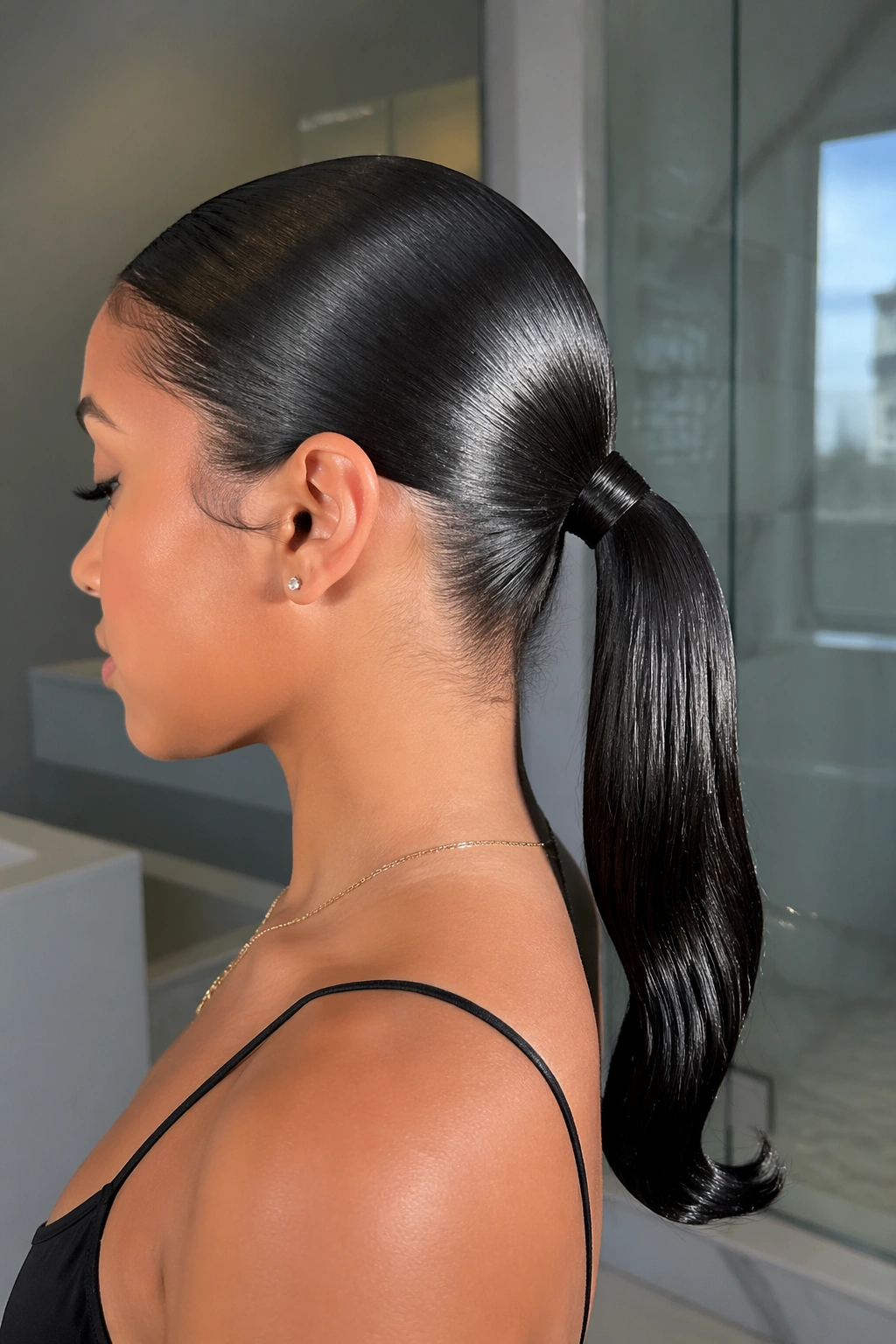
The wet-look version is all about surface. The hair should look cool, smooth, and slightly damp, not sticky or overloaded. That glossy finish makes the crown read flatter because the eye sees shine before it sees texture.
This style works best when the roots are brushed in one direction and locked in with a light coat of gel, not a heavy helmet of product. Too much gel and the base starts to crack or flake; too little and you lose the shine that makes the look feel clean. There is a sweet spot, and it is smaller than people think.
At the tail, leave the weave hair straight or give it a tiny bend at the ends. The base should feel neat under your palm, almost cool, while the length moves freely. That contrast is the whole appeal.
4. Braided-Base Low Weave Ponytail
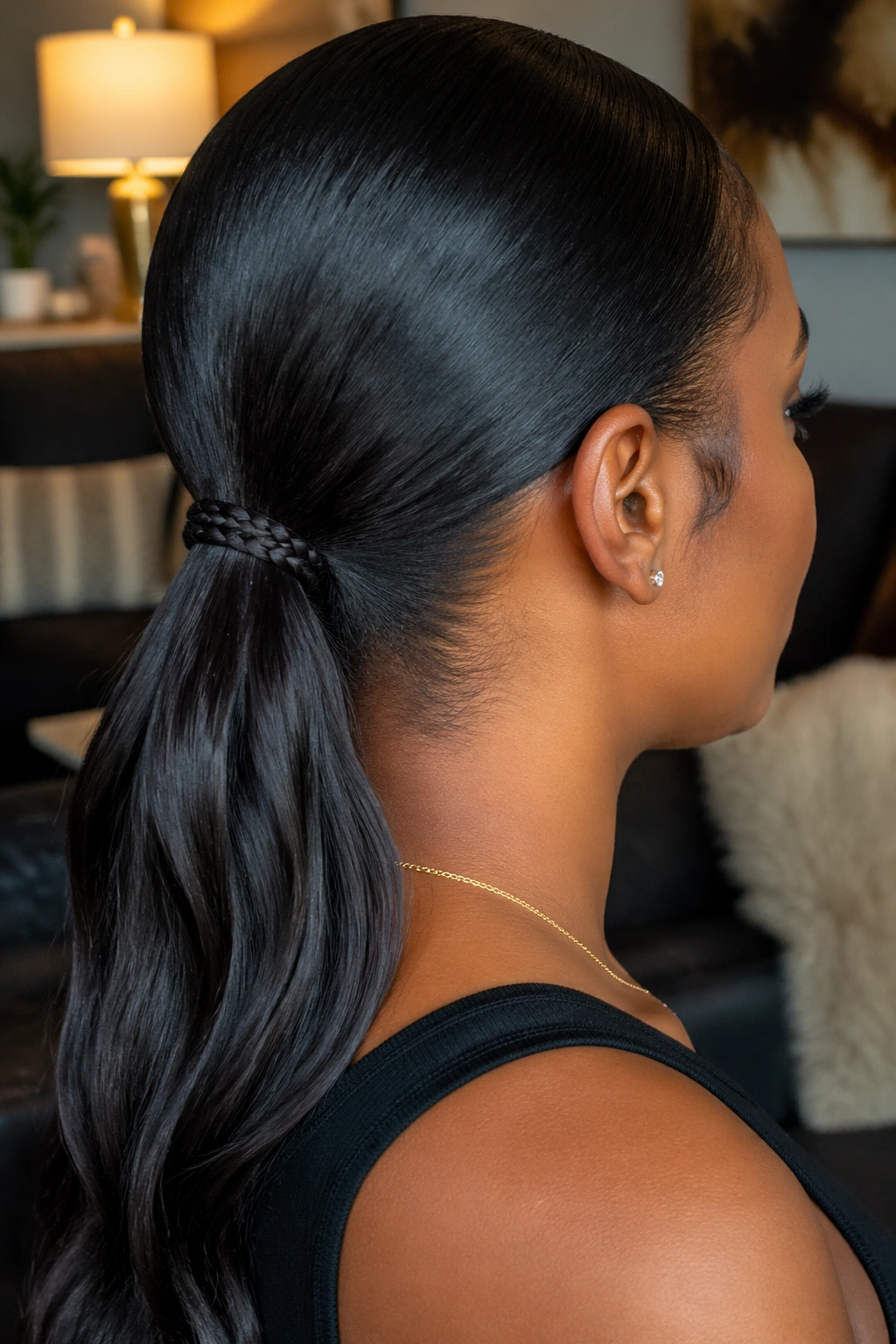
A small braid at the base is one of the easiest ways to keep a ponytail flat all day. The braid acts like a little scaffold, so the added hair has something stable to sit on instead of puffing up around loose roots. It is a smart move if your hair is thick or if the nape tends to swell when you pull it back.
What Makes the Braid Useful
The braid does not need to be loud. A single three-strand braid or a tight cornrow tucked into the base can do the job. Once the weave hair is attached, the base feels compact, and the ponytail hangs lower without wobbling.
- Good for medium to thick hair.
- Helps hide extension attachment points.
- Gives the style a firmer hold without piling on product.
- Works nicely when you want the tail to feel secure, not stiff.
Tiny braid, big payoff. You do not need a heavy braid pattern to get the flatness.
5. Crisscross Low Ponytail
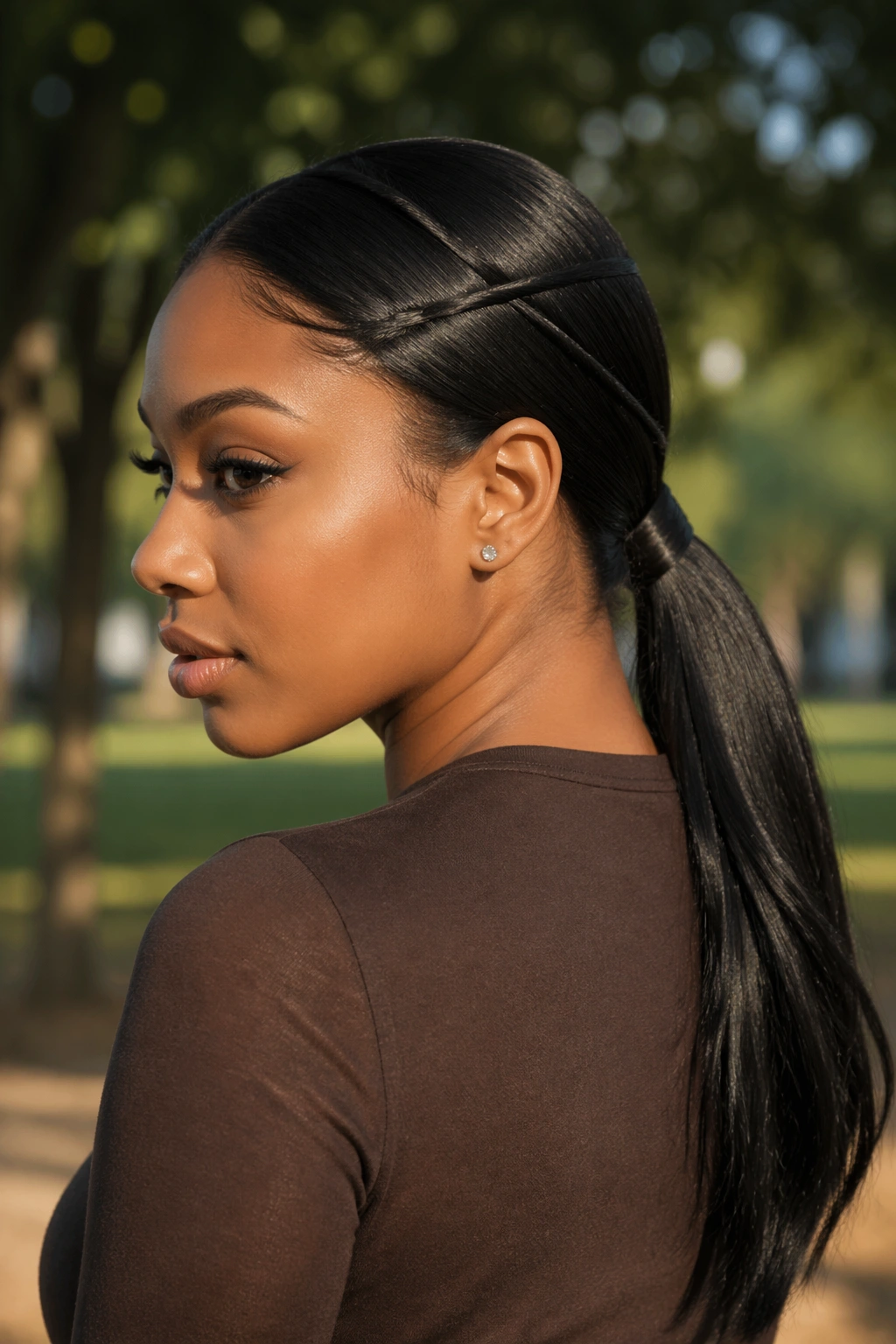
What keeps a crisscross base from looking busy? The answer is tension and restraint. Two narrow sections cross over each other near the crown, then disappear into the ponytail, so the style gets texture without losing its clean shape.
This is a good choice when you want a little design detail but do not want a full braid or a lot of added height. The crisscross pattern lies close to the head when the sections are smoothed well, and that keeps the whole silhouette low. If the sections are too thick, though, the style starts to feel bulky fast.
How to Wear It
Ask for the crossing pieces to be neat and narrow. Keep the ponytail itself smooth and straight so the pattern at the top stays the main feature. It is a sharper look than a plain wrap, and it tends to photograph with more structure from the side.
6. Single-Wrap Elastic Ponytail
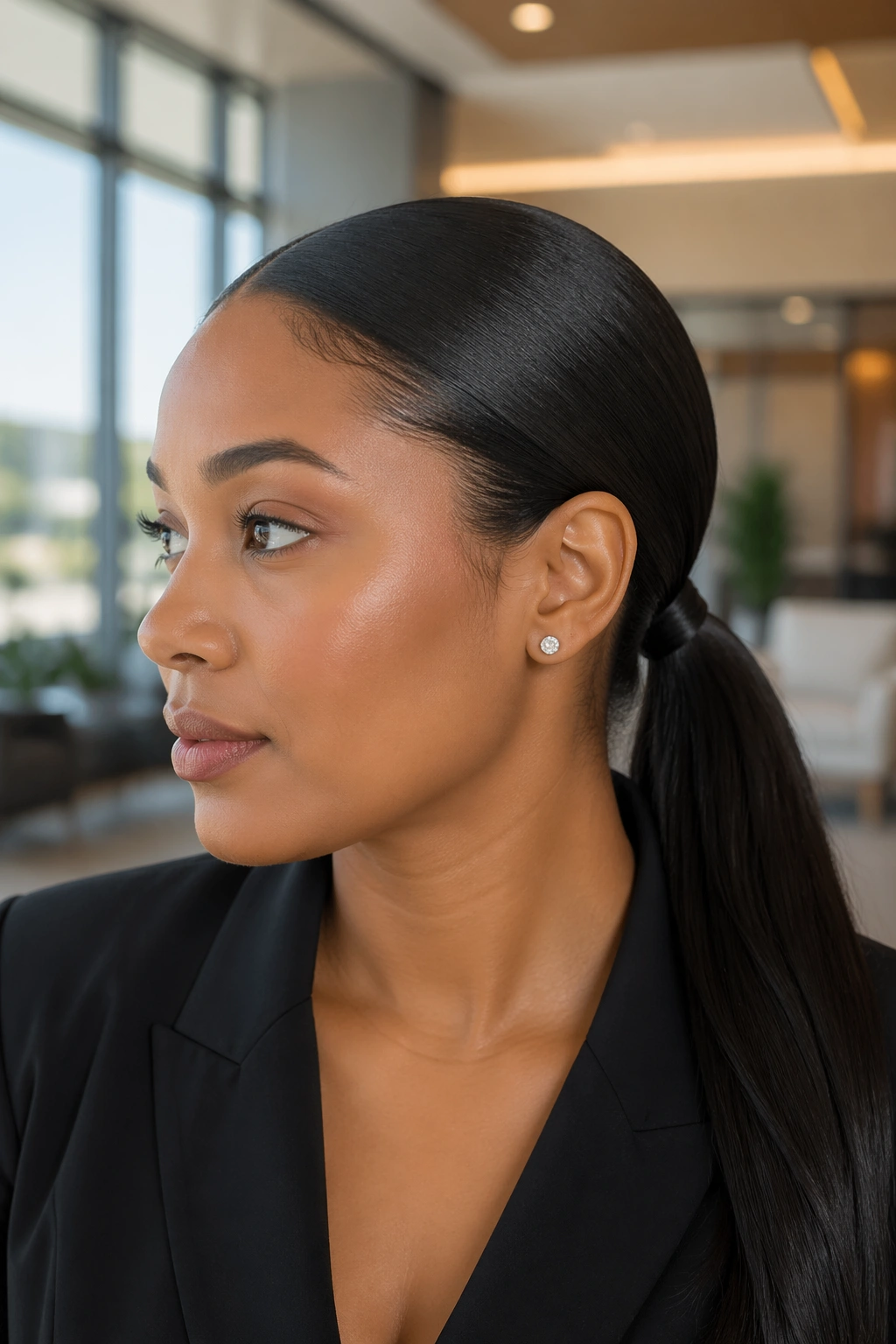
Unlike a braided base, a single-wrap elastic ponytail keeps everything spare. One smooth strand of weave hair wraps around the elastic, hides the band, and leaves the rest to length and shine. That is the appeal. No extra texture at the base. No visual clutter.
This style is best when you want the flat crown to feel almost invisible. The cleaner the wrap, the more polished the ponytail looks, especially if the hair is pressed bone straight. It also works well for finer textures because the base does not need a lot of volume to look finished.
If you like minimal hair that still feels intentional, this is probably the one. The trick is to make the wrap tight enough to cover the elastic but thin enough not to create a bump of its own.
7. Side-Swept Fringe Low Weave Ponytail
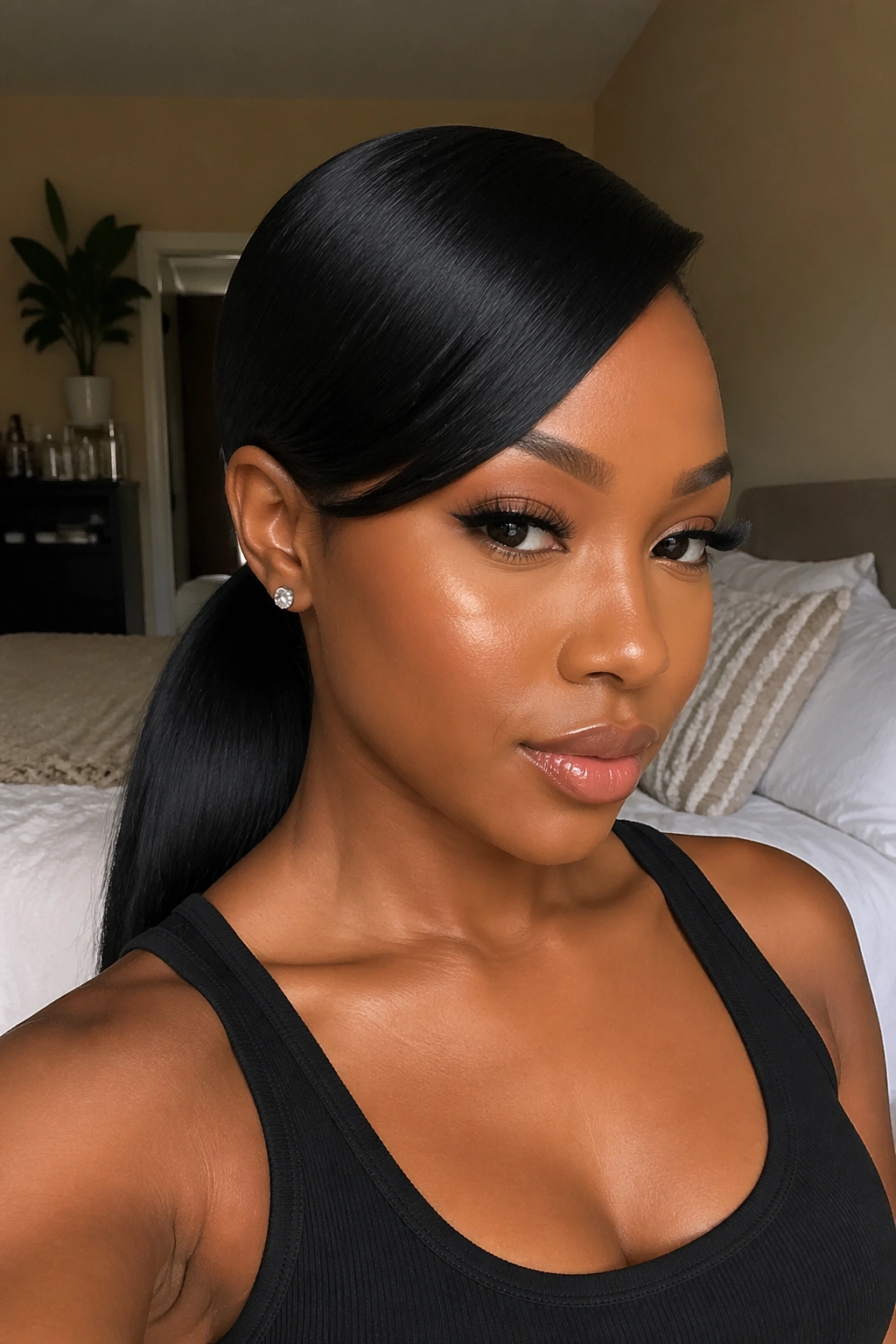
A side-swept fringe can hide more than a rough hairline. It can soften the entire top half of the style. When one front section sweeps across the forehead and blends into a low ponytail, the look feels less severe and a little more forgiving.
This version is helpful if you have a taller forehead, a grown-out part, or a spot near the temples that does not lay as neatly as you want. The fringe gives the eye somewhere to land, then the low ponytail keeps the rest of the head close and tidy. That balance is the point.
Keep the fringe narrow and smooth, not chunky. A wide front section adds bulk, and bulk is exactly what a sleek low weave ponytail is trying to avoid.
- Use a light wax stick or edge-friendly gel on the fringe.
- Guide it in one direction with a soft brush.
- Let the tail stay straight or slightly bent at the ends.
- Keep the ponytail anchor low enough that the fringe feels connected, not separate.
8. Tucked-Under Low Ponytail
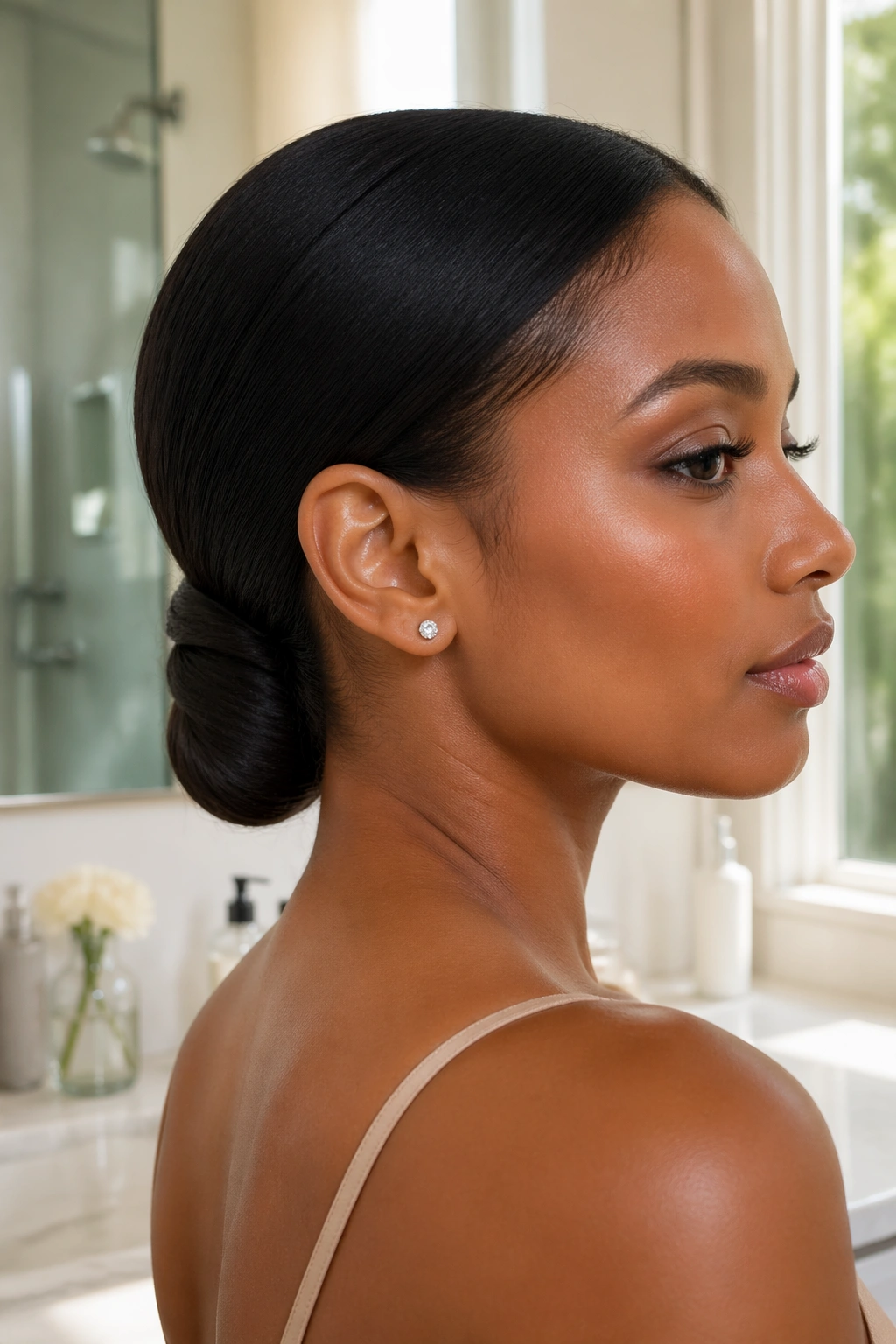
A tucked-under tail is the quiet one in the room. The ends fold under the ponytail rather than hanging straight down, and that simple shift makes the style feel more controlled. It is sleek in a very specific way: the crown stays flat, the neck looks clean, and the shape ends with intention instead of length for length’s sake.
This one is especially good when you want a low weave ponytail that feels tidy from every angle. A straight tail can sometimes look a little heavy at the ends. Tucking the finish softens that weight and makes the silhouette shorter, which helps the base stay close to the head.
You can keep the tuck subtle or pin it under more firmly. Either way, the shape reads as neat, and neat is underrated.
9. Curled-Ends Low Weave Ponytail
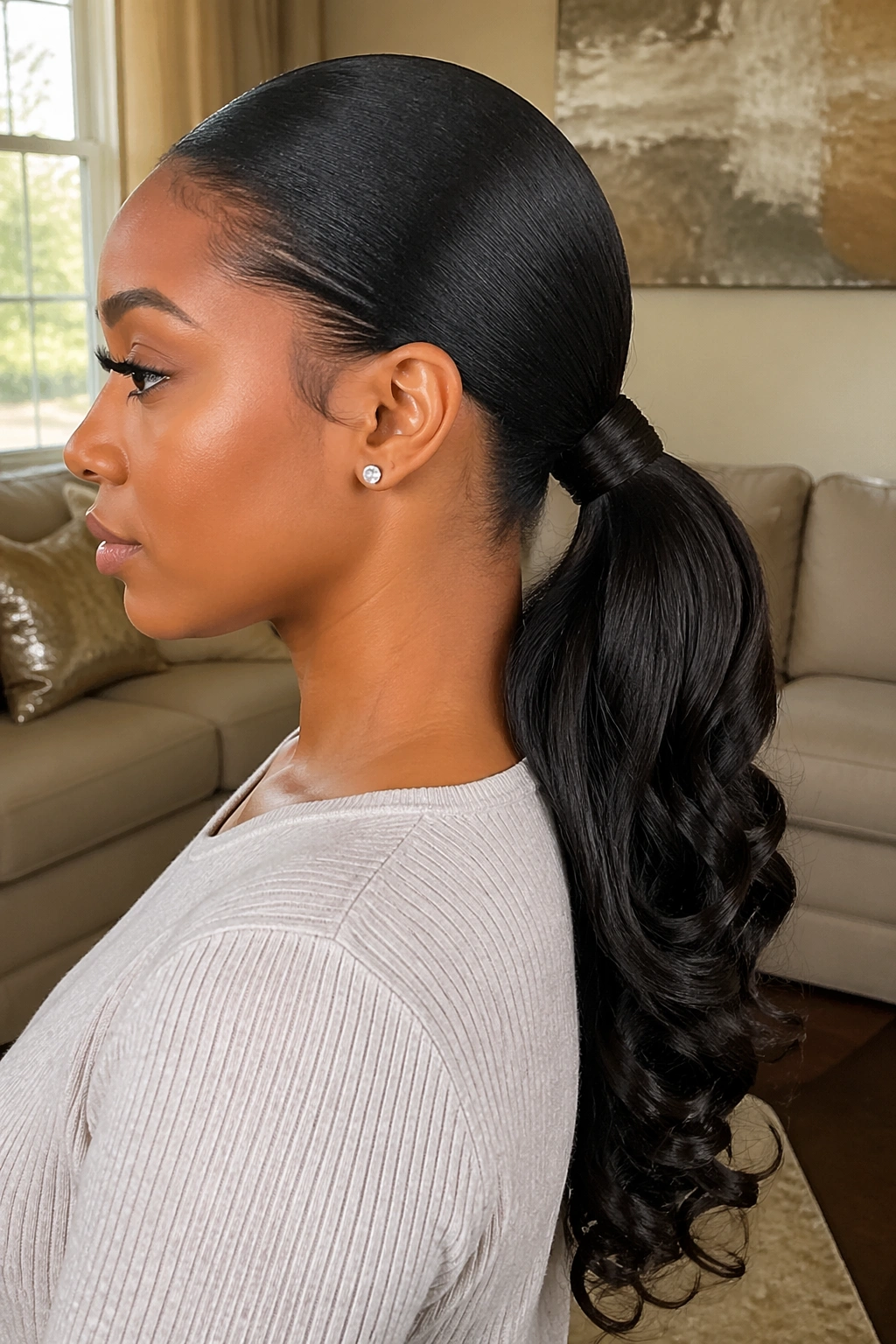
Can curls still read sleek? Absolutely. The base does the sleek part, and the curls live only in the last section of the ponytail. That separation is what keeps the crown flat while giving the length some movement.
This style works best with soft curls, not tight ringlets. A 1-inch or 1¼-inch iron gives the ends enough bend to look full without turning the whole ponytail into a cloud. You want the root and middle lengths to stay smooth, then let the curl start lower down where it can do some visual work without fighting the shape.
How to Style It
Curl the last third of the weave hair, let each section cool, then separate it lightly with your fingers. Do not brush the curls out too much or the style starts to frizz. The flat top plus the curved ends is what gives this version its clean contrast.
10. Bubble Low Weave Ponytail
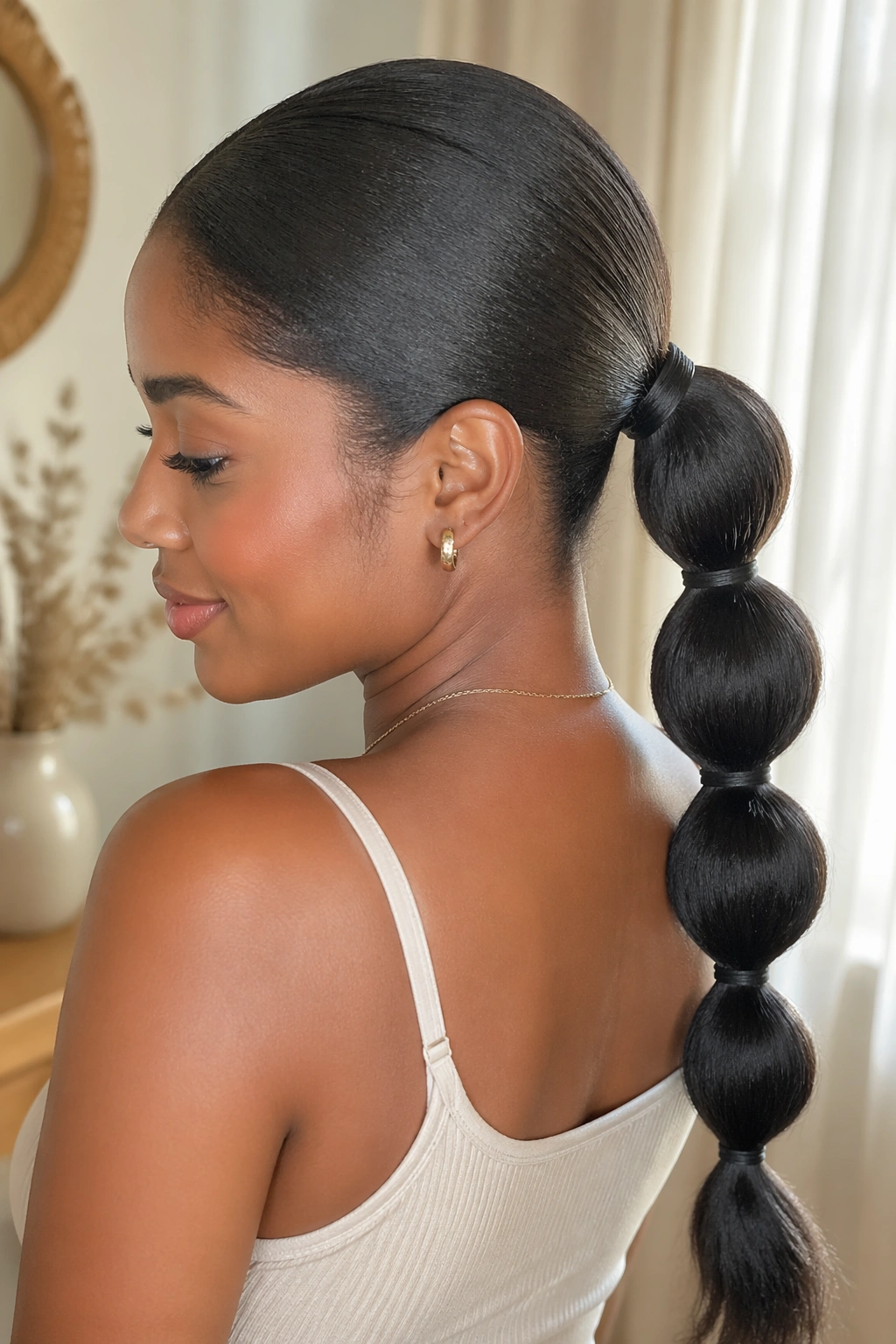
A bubble ponytail can still stay flat if the bubbles begin well below the base. That is the part people get wrong. If you create the first tie too close to the scalp, the crown starts to puff, and the whole point of a low weave ponytail disappears.
When the spacing is done right, the base stays smooth and the tail gets a series of rounded sections that feel playful without looking messy. It is a strong option for long weave hair because the length gives each bubble room to breathe. Shorter tails can work too, but the shape is quieter.
Quick Details
- Use small clear elastics or slim bands.
- Keep each bubble similar in size.
- Gently pull each section outward after securing it.
- Stop adding bands before the tail starts to look overworked.
The best bubble ponytails look rounded, not stuffed.
11. Razor-Straight Low Ponytail
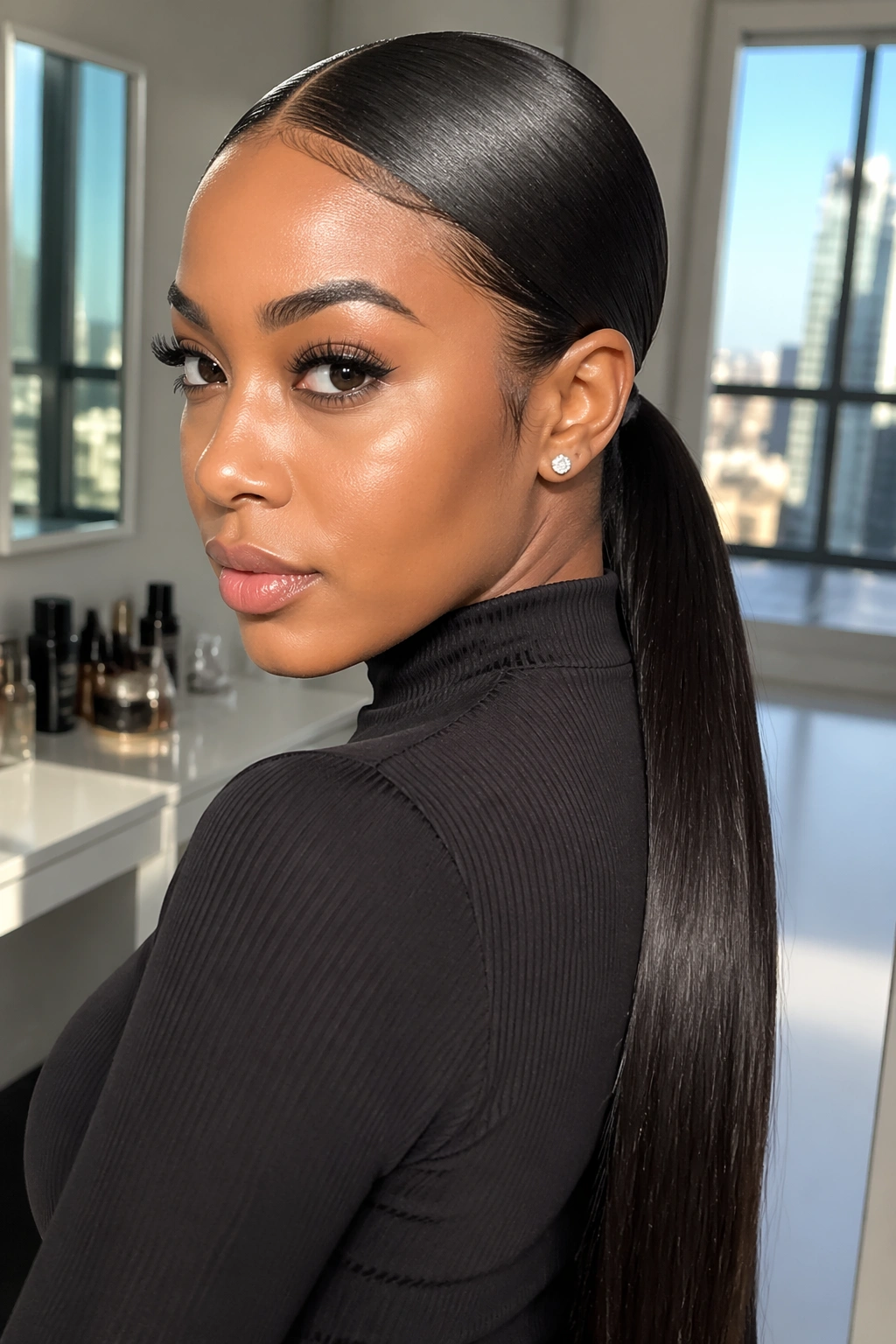
No curl. No bend. No fuss.
This is the version for people who like a hard, clean line down the back. The tail falls straight and steady, and the whole style depends on the weave hair being smooth enough to hold that line without fraying at the ends. It is a very direct look, which is part of why I like it. There is no distraction at the base and no softening trick to hide behind.
A razor-straight low ponytail also makes the nape look longer and neater. If the hair is dense, the length will hang with a nice weight. If the hair is fine, a blunt trim at the bottom helps it look fuller than wispy ends ever will.
The trick is to keep the shine controlled. A tiny bit of serum on the ends is enough. Too much and the tail gets slippery, which looks cheap fast.
12. Face-Framing Pieces Low Ponytail
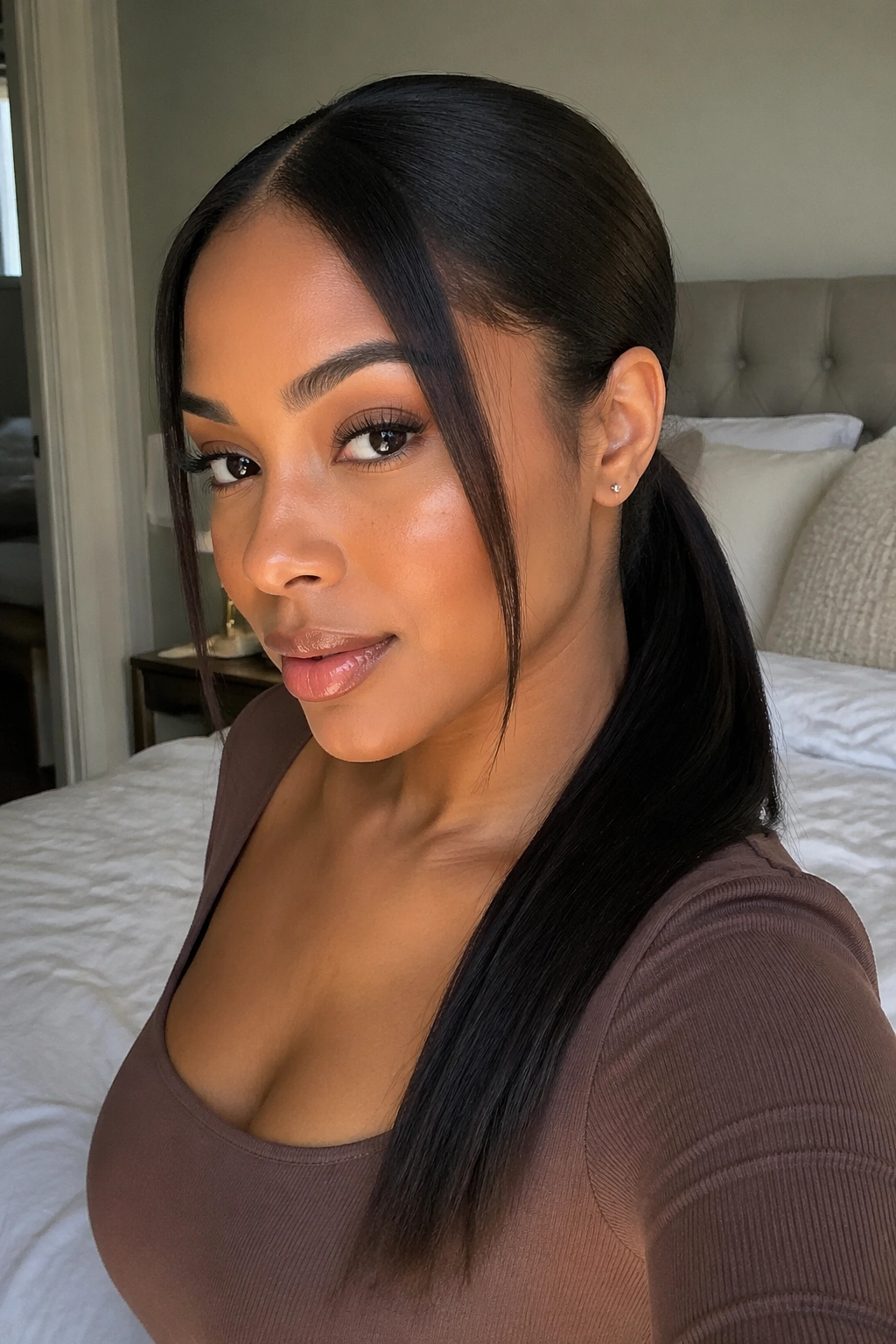
Unlike a fully slicked-back ponytail, this version leaves two narrow pieces around the face. That small change softens the style and gives it a little movement without disturbing the flat crown. The pieces should be smooth, not fluffy, so they feel like part of the look rather than an afterthought.
This is a good pick when you want a low weave ponytail that feels a little less strict. The face-framing pieces can balance sharper makeup, a strong jawline, or a very straight tail. They also give you a bit of freedom if your hairline is not perfectly even, because the front pieces cover tiny things people usually stare at too long.
Keep the front sections narrow enough that they lie down. A chunky face piece starts to look like a shortcut. Small pieces look deliberate.
13. Stitch-Braid Low Weave Ponytail
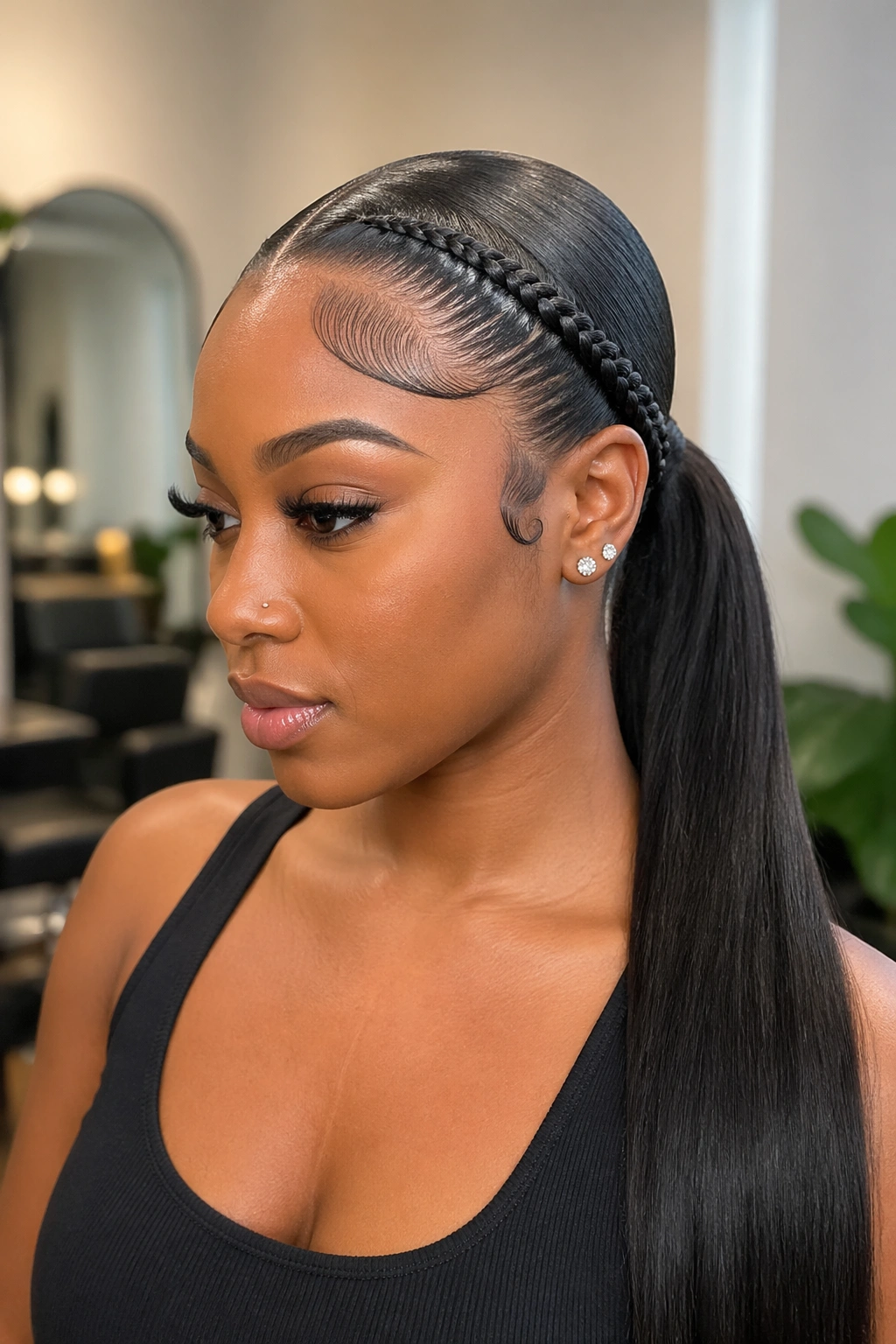
A stitch braid along the hairline gives the cleanest front of the bunch. It lays close to the scalp, moves the hair into the ponytail in a tidy line, and helps the base stay flat without depending on a ton of product. That is why this one holds up so well on thick hair or on styles that need to last for more than a few hours.
What to Watch For
The stitches need to be even. If the braid jumps around or gets wider in one section, the eye goes straight to that unevenness. Keep the partings tight, the braid narrow, and the transition into the ponytail smooth.
- Best for longer wear.
- Hides growth at the front better than a simple slick-back.
- Works with added hair when you want the braid to disappear into the tail.
- Looks sharp from the side, which is where this style really earns its keep.
A neat stitch braid is not flashy. It is just clean, and clean wins here.
14. Scarf-Wrapped Low Ponytail
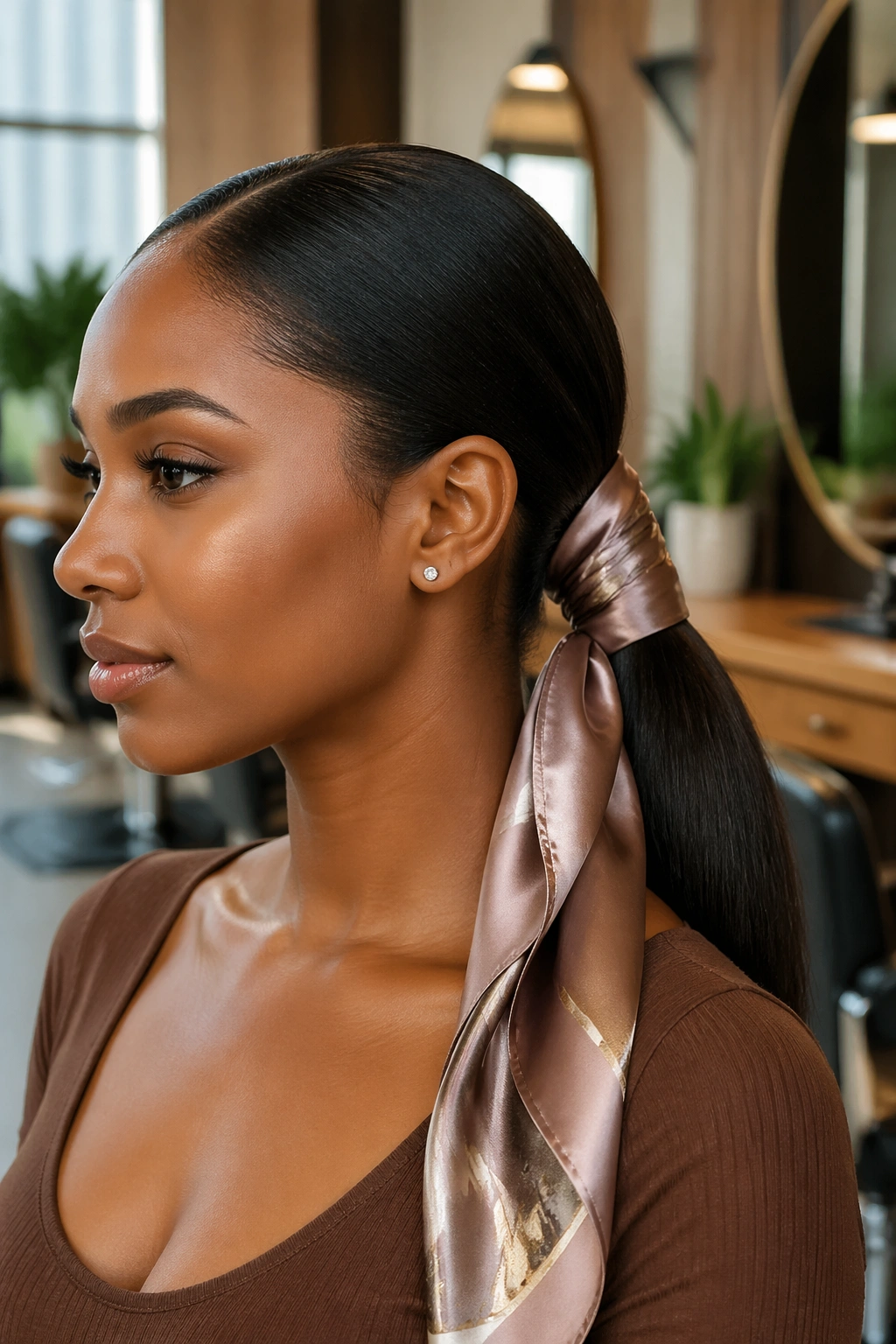
A scarf can rescue a ponytail that feels too bare. Wrap one around the base, tie it low, and the whole style suddenly looks more finished without adding any height to the crown. The scarf also gives you another way to control the visual weight of the ponytail, which helps the top stay flat.
This version works especially well with satin or silk fabric because the finish mirrors the gloss of the weave hair. A cotton scarf can look casual, which is fine if that is what you want, but it does not glide as neatly against the hair. The wrap should sit snugly, not dig in.
If the ponytail itself is straight and long, a scarf adds a little contrast around the base. If the tail is curled, the scarf helps ground the style so it does not feel floaty.
15. Ribbon-Tied Low Ponytail
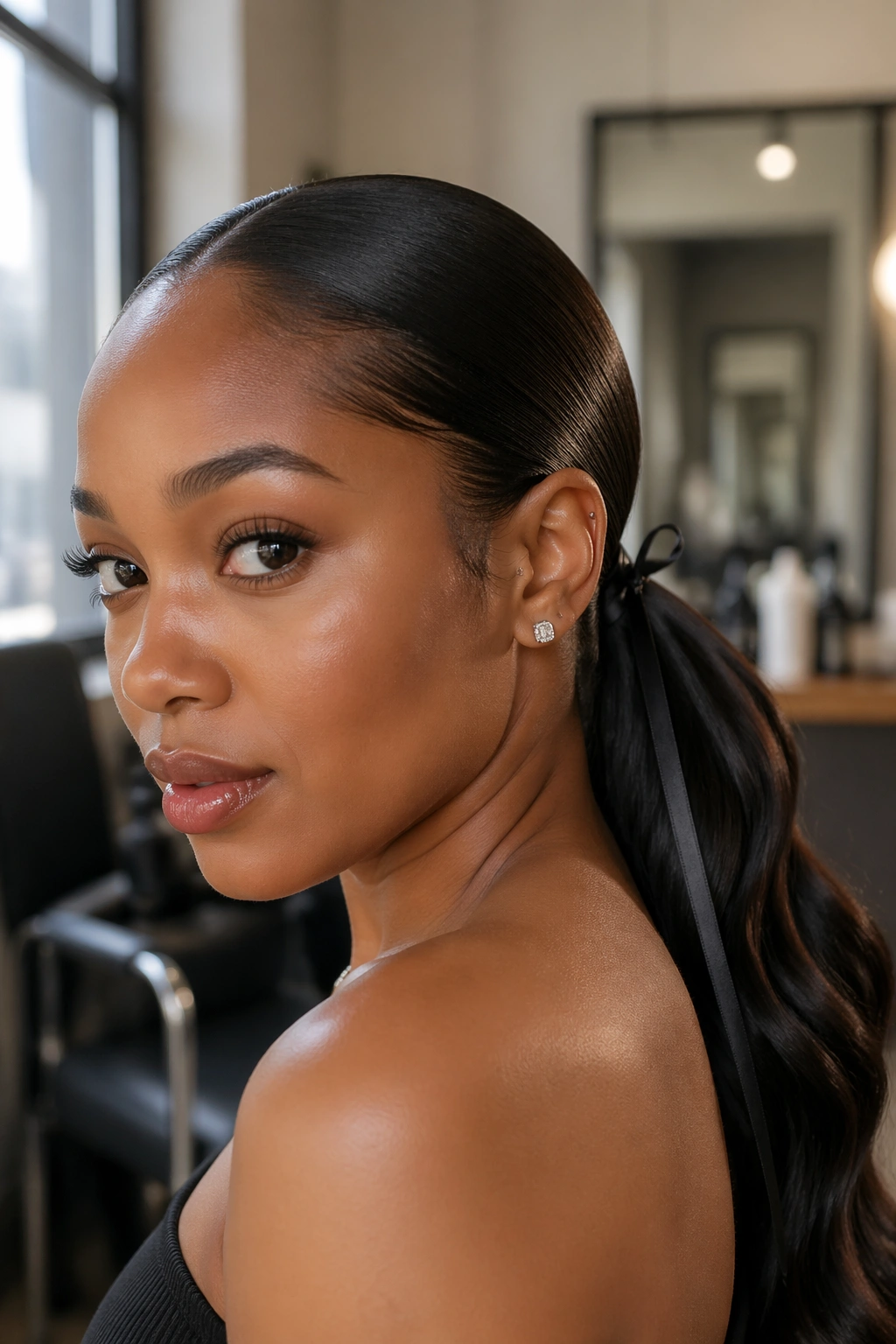
A ribbon tie feels lighter than a scarf, and that small difference changes the whole look. Ribbon sits like a thin line around the base instead of a broad band of fabric, so the ponytail still reads sleek and low. It is a cleaner choice when you want something dressy but not heavy.
This style works well with long weave hair that is either pin-straight or softly curled at the ends. A wide satin ribbon gives a bit of sheen. A matte ribbon feels quieter and more tailored. Either way, the base stays close to the head because the tie adds decoration without adding bulk.
I like this one for simple outfits. It gives you one point of interest, then gets out of the way.
16. Asymmetrical Side-Part Low Ponytail
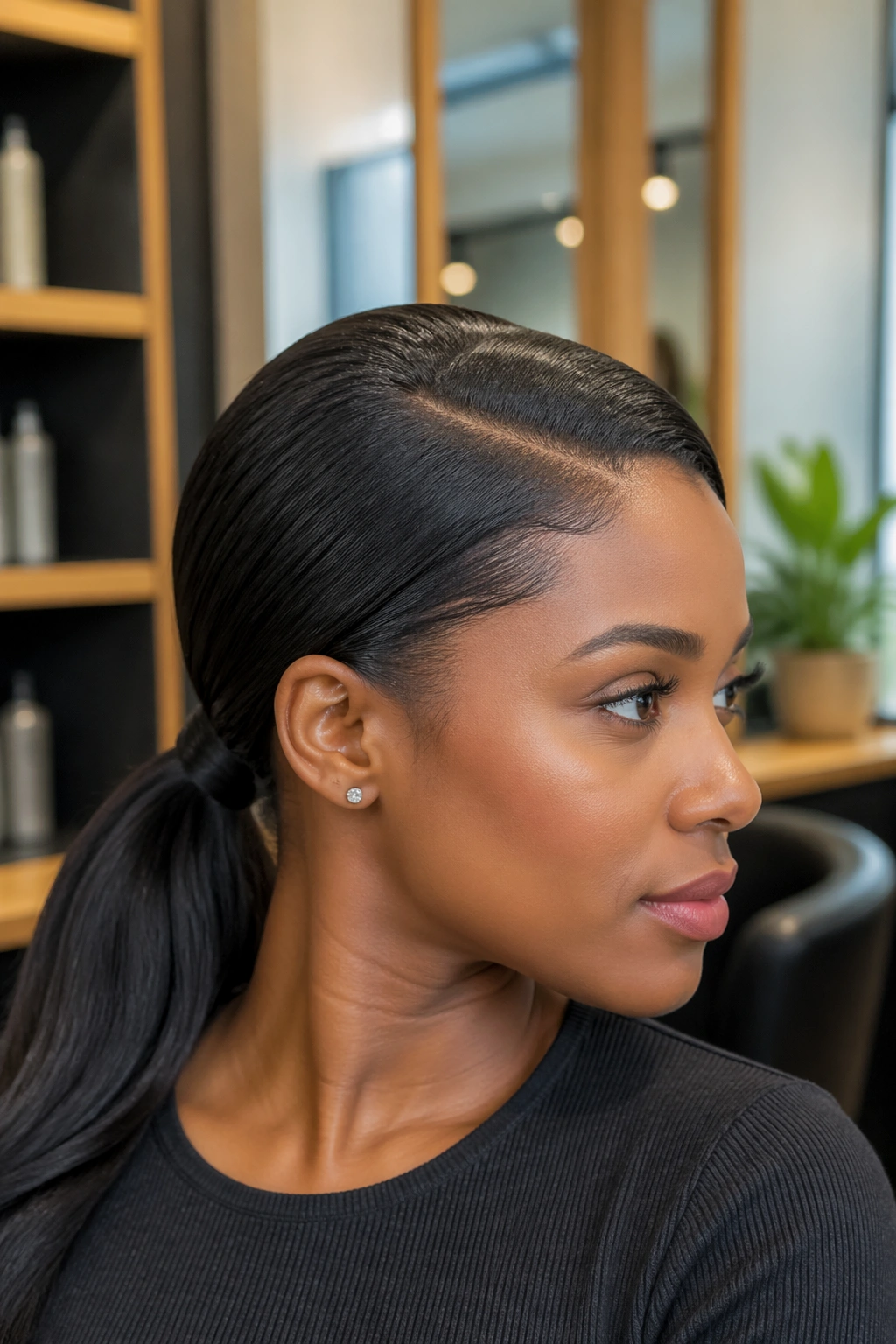
Why does a slightly off-center part feel sharper than a dead center? Because it shifts the eye. The hair falls a little heavier on one side, and that extra weight gives the ponytail shape before the tail even starts.
This style is a strong pick when you want a low weave ponytail that looks deliberate but not severe. The asymmetry softens the hairline and can make the crown feel less exposed. It also works well with long tails, because the side part gives the length a place to start from instead of just dropping straight down.
Who It Suits
- People who like a little movement at the front.
- Faces that benefit from a softer diagonal line.
- Tails that are blunt, curled, or lightly bent.
A small shift in the part can do more than a pile of accessories ever will.
17. Minimal No-Part Low Ponytail
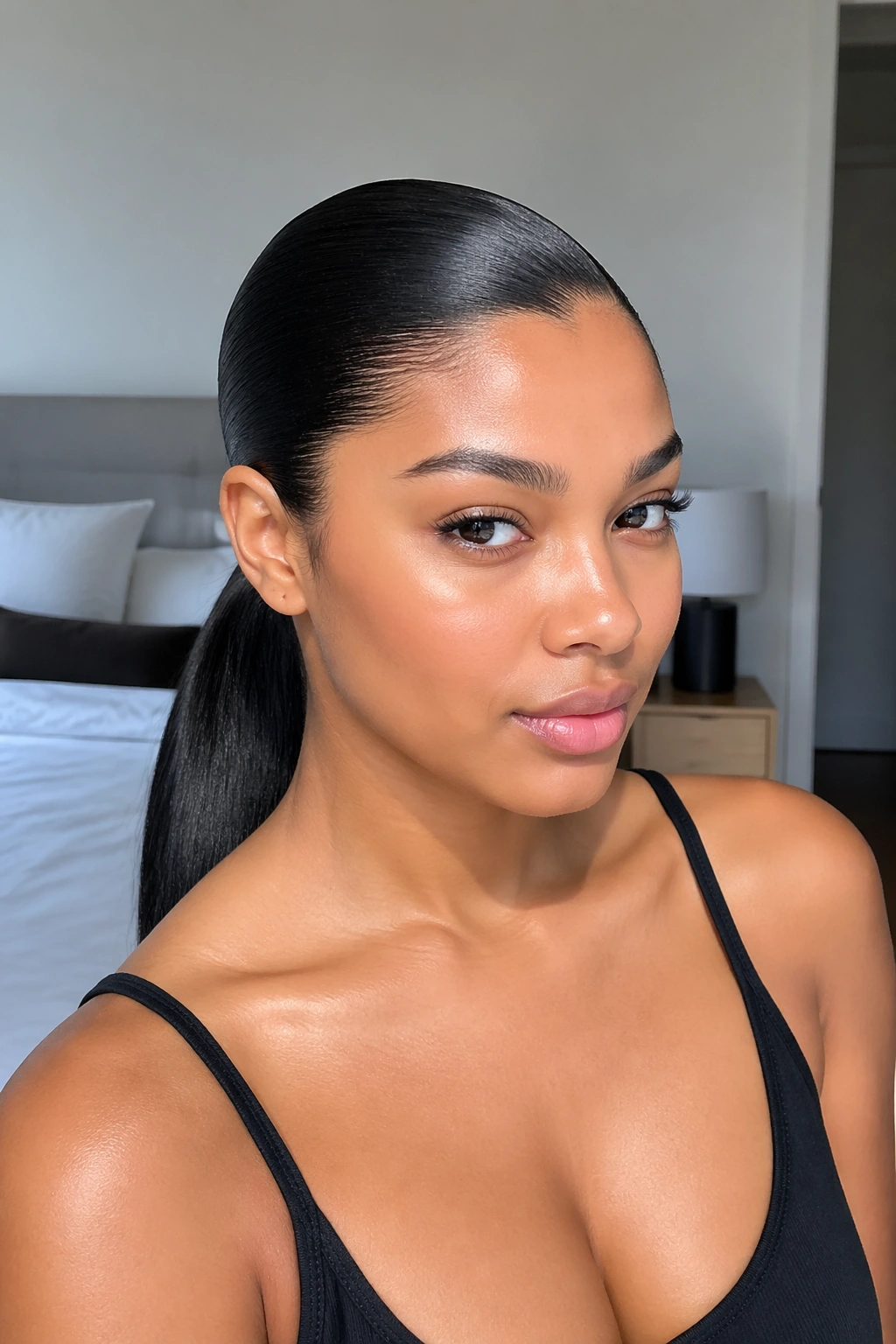
No part can look sharp. Or messy. The difference is all in the brushwork.
A no-part low ponytail brushes the hair straight back from the hairline, so the crown becomes one smooth field instead of two separate sides. That makes the head shape look clean and modern when it is done well. It also means there is nowhere for a bad part to hide, which is why the smoothing has to be precise.
The style works best when the hairline is even and the roots have already been stretched or pressed. A little gel goes a long way here. Too much product turns the front stiff, and that makes the whole look feel hard instead of sleek.
This is the style I would pick if the outfit is busy and the hair needs to disappear into the background without looking lazy.
18. Flipped-Ends Low Ponytail
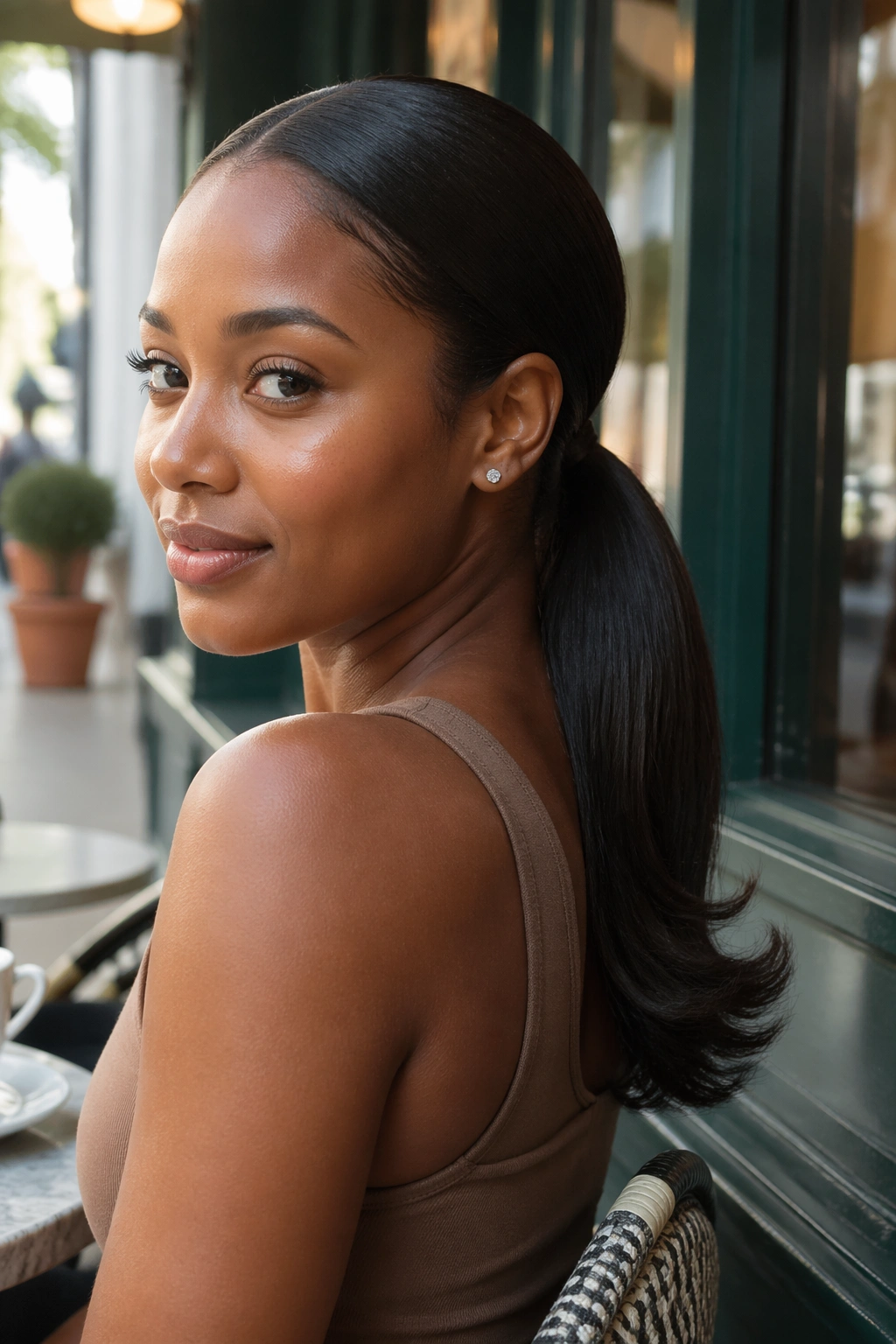
Flipped ends can still be sleek. That tiny outward bend at the bottom gives the tail some shape while the crown stays flat and quiet. It is a smart way to keep the style from feeling too severe, especially when the weave hair is very straight from root to mid-length.
The flip should be small, not retro in a loud way. Think of it as a subtle change in direction, almost like the tail changes its mind at the last inch or two. A flat iron or a curling tool can make that bend, but the move should be gentle enough that the tail still hangs clean.
This version is useful when the ponytail is long and blunt, because the flip keeps the bottom from looking heavy. One small twist at the end. That is all it needs.
19. S-Curve Part Low Ponytail
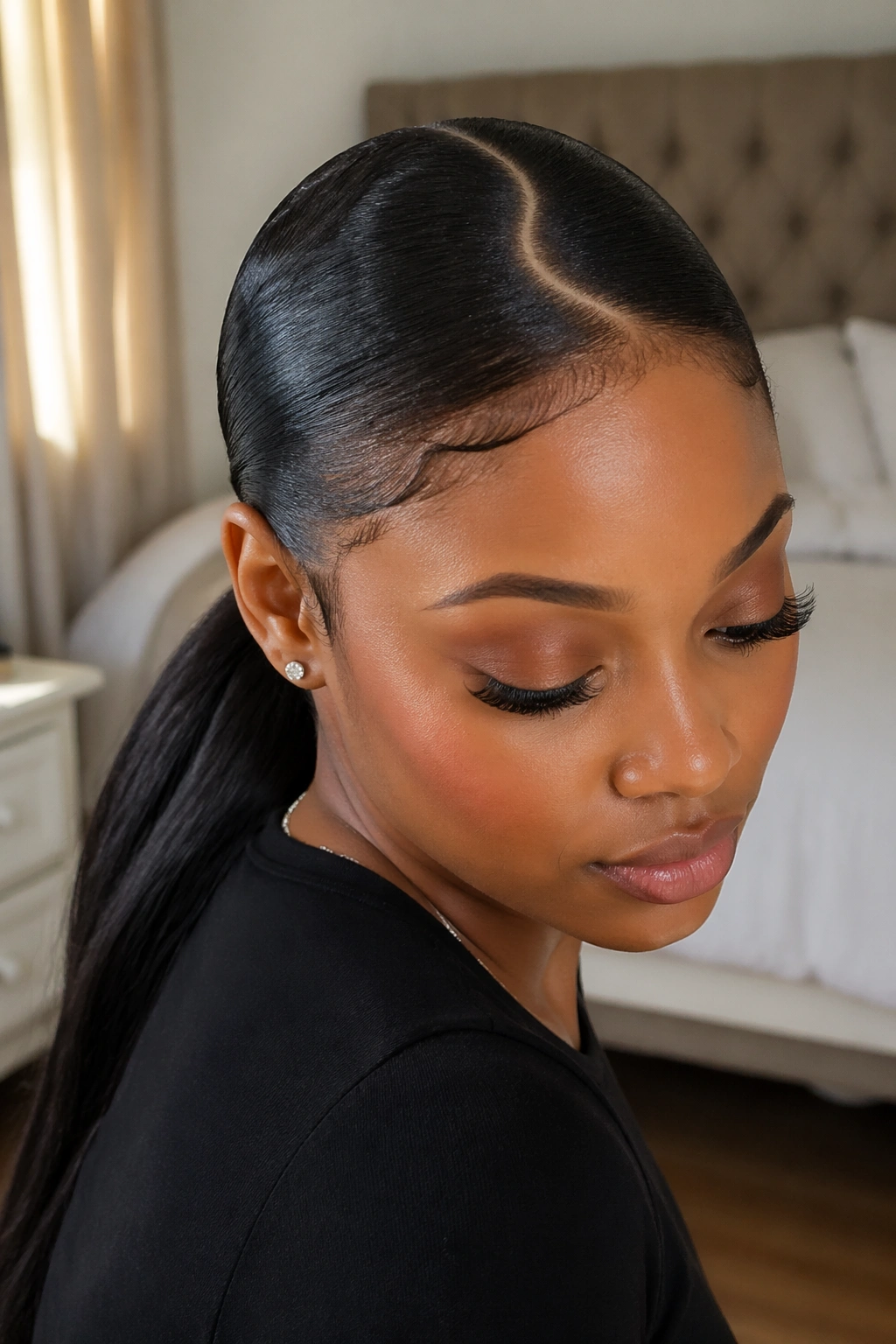
An S-curve part is for the person who wants a part that does not announce itself. The line bends lightly as it crosses the crown, so the style feels softer than a hard side part and less formal than a center line. It is a quiet little detail, which is exactly why it works.
The curve helps disguise a small bump or an uneven growth pattern near the front. It also gives the low weave ponytail a bit of motion before the tail even begins. That motion matters more than people think. A flat style does not have to be stiff.
What to Watch For
Keep the S curve shallow. If it gets too wavy, the part starts to look decorative instead of clean. The best version is still neat enough to lie close to the scalp, with just enough bend to soften the top.
20. Double-Wrapped Base Low Ponytail
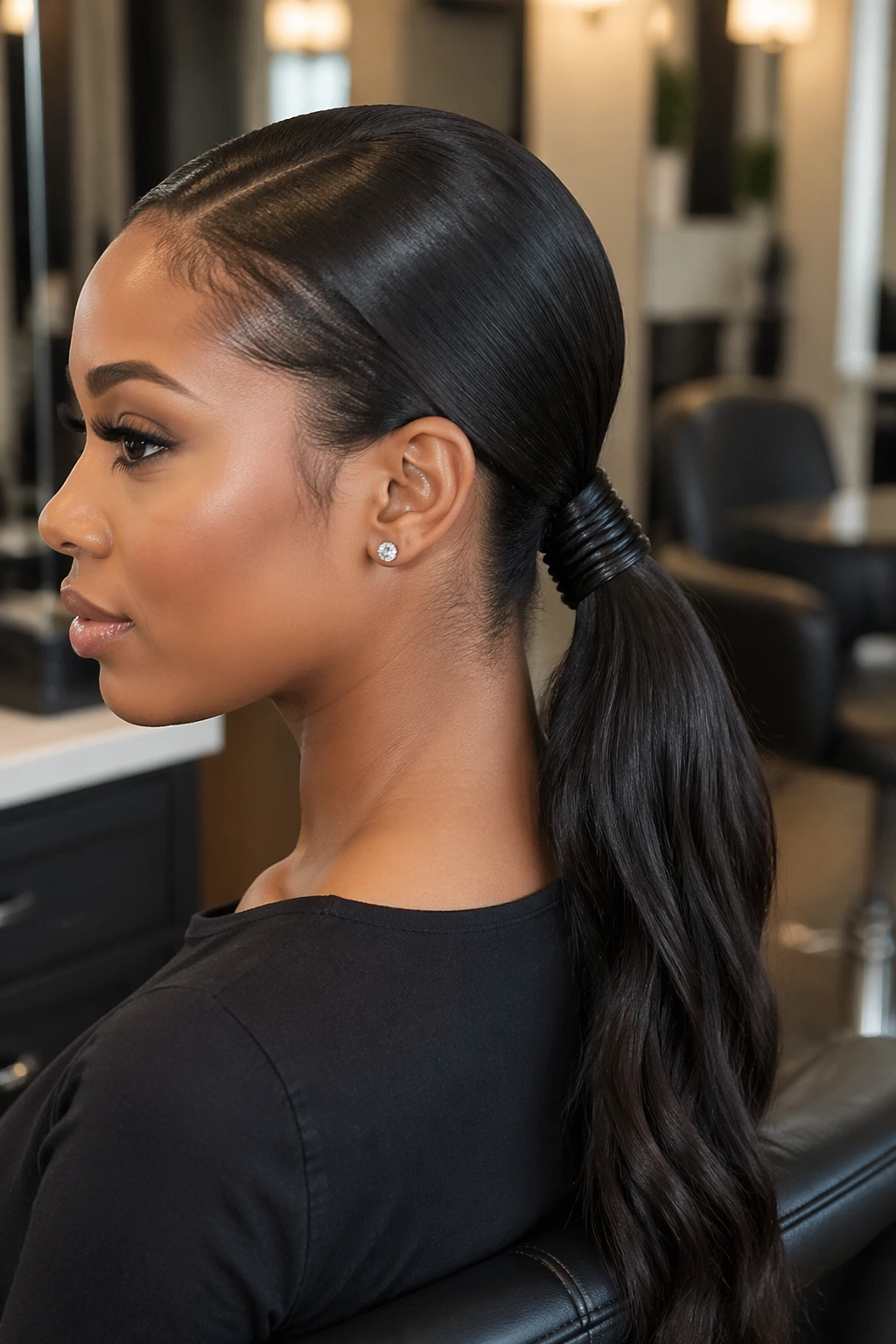
A double-wrapped base looks more finished than a single wrap when the thickness is right. One wrap covers the elastic. The second adds polish, almost like a narrow border around the ponytail. Done well, it gives the base a tailored feel without making it puff up.
This is a good match for formal events or any time you want the low weave ponytail to feel a little more dressed up. The wraps should be thin and smooth, never bulky. If both sections are too wide, the base starts to sit higher than you want, and the flatness disappears.
I prefer this version with a straight tail or with very soft curls at the ends. The extra work lives at the base, so the rest of the hair can stay calm.
21. Sculpted Baby-Hair Low Ponytail
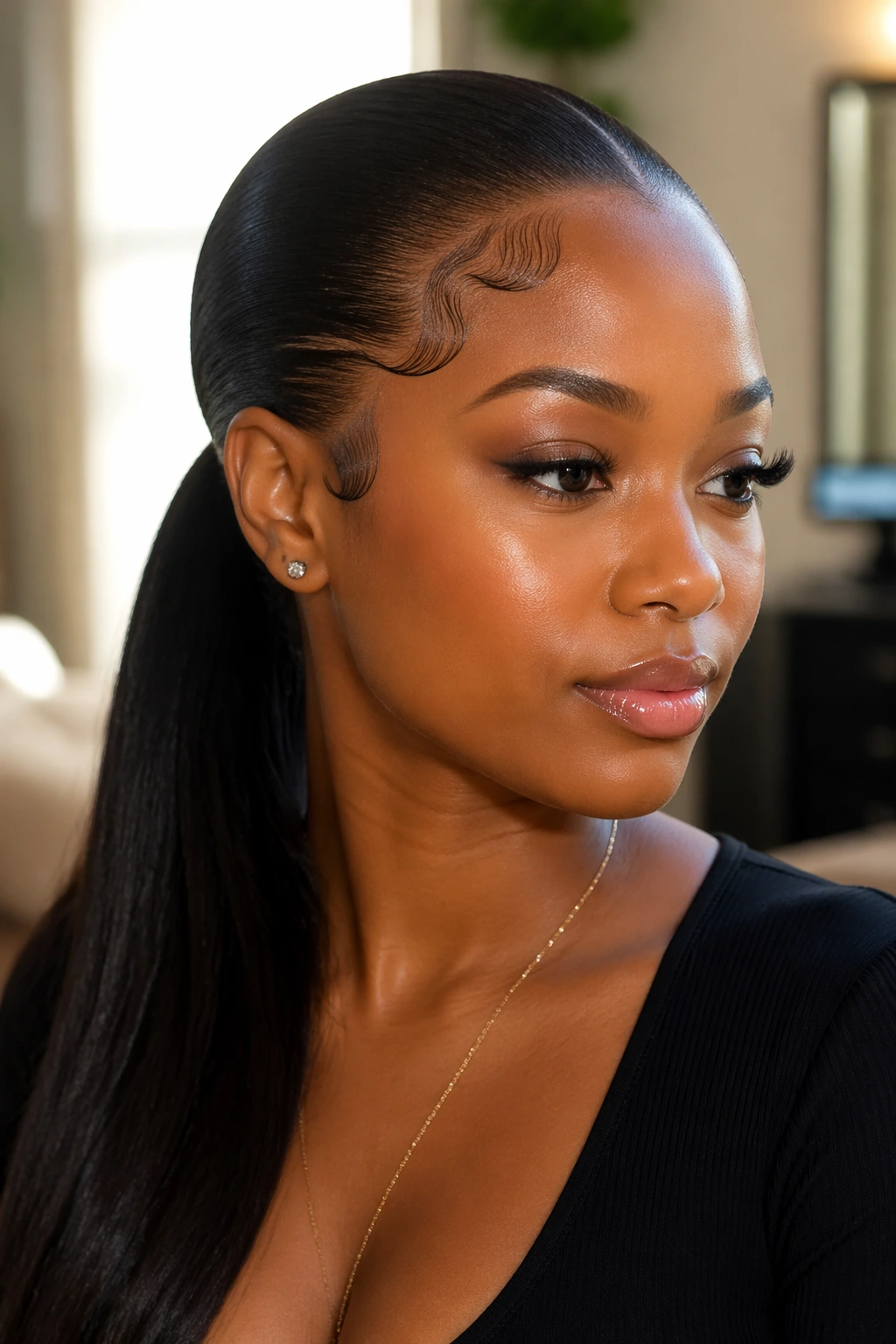
Do baby hairs make or break the style? Only if they are handled with some restraint. A few sculpted curves at the temples can make a low weave ponytail look polished and finished, but too many swoops turn the whole look busy fast.
The best baby-hair work stays close to the hairline and follows the direction of the ponytail. You want small shapes, not a web of loops. A soft edge brush and a little gel are enough. Heavy product tends to leave the front shiny in the wrong way, and that takes the focus off the actual ponytail.
How Much Is Enough
- One or two curves per side is plenty.
- Keep the design narrow near the temples.
- Stop before the ears if you want a cleaner line.
- Let the rest of the crown stay smooth and quiet.
The point is polish, not decoration overload.
22. Barrel-Curl Tail Low Ponytail
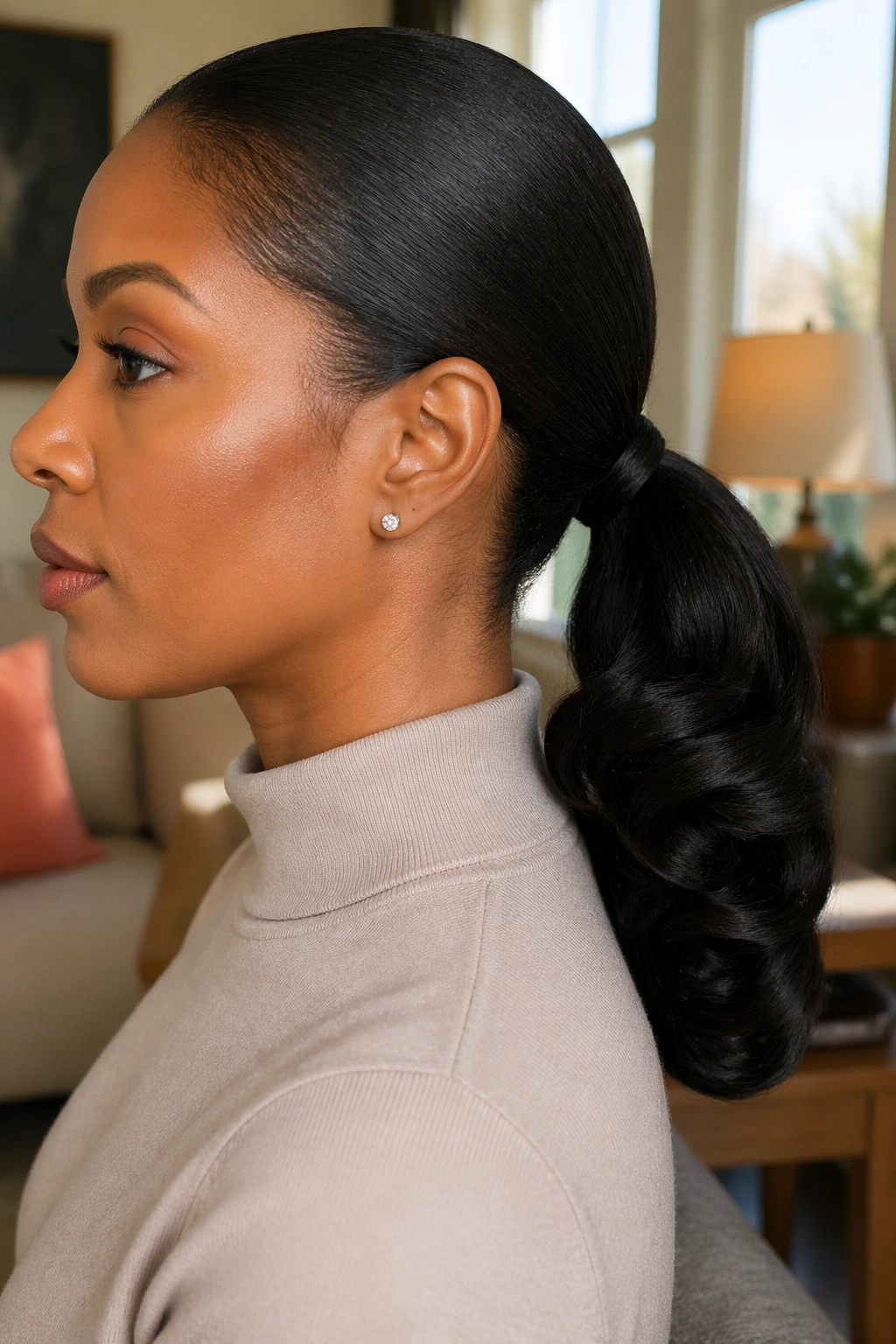
A barrel-curled tail gives the ponytail body where it matters most: away from the crown. That means the top can stay flat while the length picks up enough curve to look full and soft. It is a useful fix for weave hair that feels a little too straight or a little too heavy at the ends.
The curl size changes the mood. A 1-inch barrel gives tighter movement. A 1¼-inch barrel gives a looser bend and a softer finish. Either way, the base should stay smooth so the style keeps its low profile. If the curls begin too high, the ponytail starts to fight its own shape.
This is one of those styles that looks better after the curls settle for a few minutes. The lines relax, the shape loosens, and the tail starts to move the way it should.
23. Feed-In Braid Into Low Ponytail
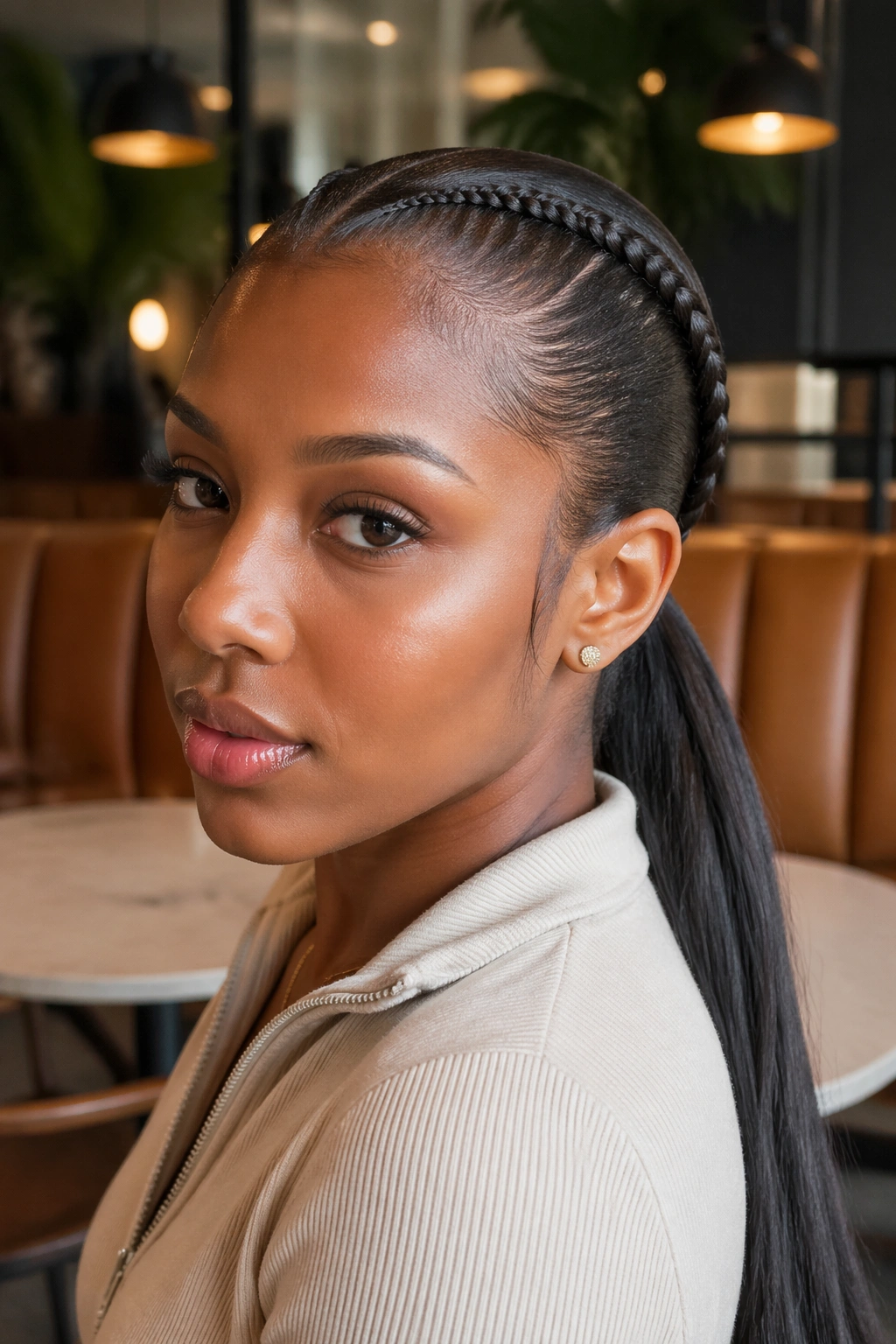
A braid that feeds directly into the ponytail gives the whole style a neat, continuous line. Hair is added little by little at the top, then the braid disappears into the tail, so the transition feels smooth rather than abrupt. That is what makes it flatter than a bulky base with a lot of loose hair piled underneath.
This style is especially good when you want the front to stay locked down for a long stretch of time. The braid helps control tension across the crown, and the ponytail itself can be long, straight, or curled at the ends. It is one of the cleanest ways to move from detail to length without losing the low shape.
The braid should not shout. It should guide the eye into the tail and keep the top close to the scalp.
24. Accessory-Stack Low Ponytail
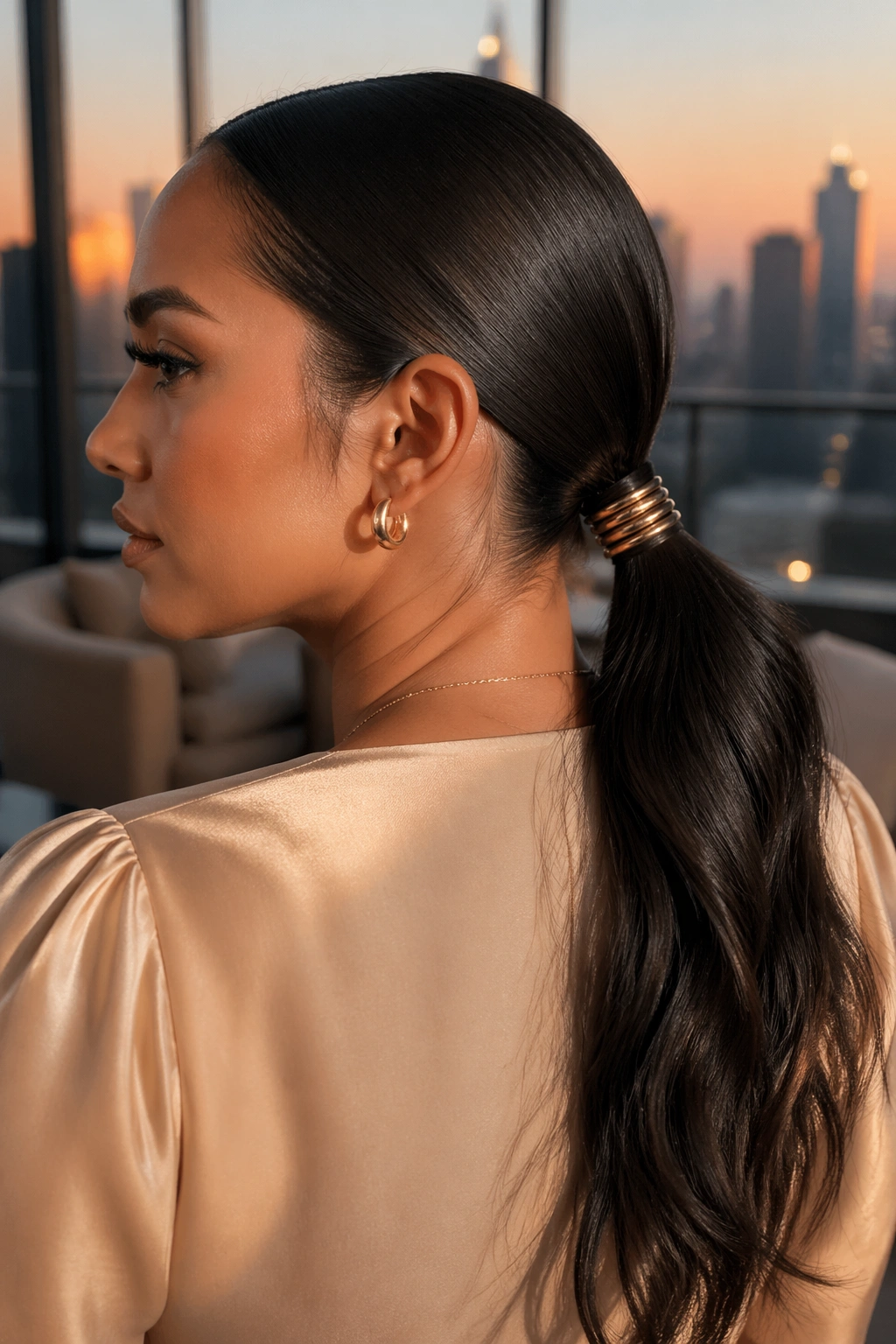
Unlike a single cuff or one pin, a small stack of accessories can turn a low ponytail into a finished look without touching the crown. The trick is to keep the extras on the tail or just at the base, not scattered across the head. Too many pieces near the part make the style feel crowded.
Gold cuffs, tiny rings, slim pearls, or a couple of neat pins can all work here. I would keep the total to two or three pieces unless the outfit is very simple. The base stays flat because the visual interest moves lower, toward the length. That is the part of the ponytail that can take it.
This one is best when you want the hairstyle to carry some of the outfit without becoming the whole outfit.
25. Blunt-End Low Weave Ponytail
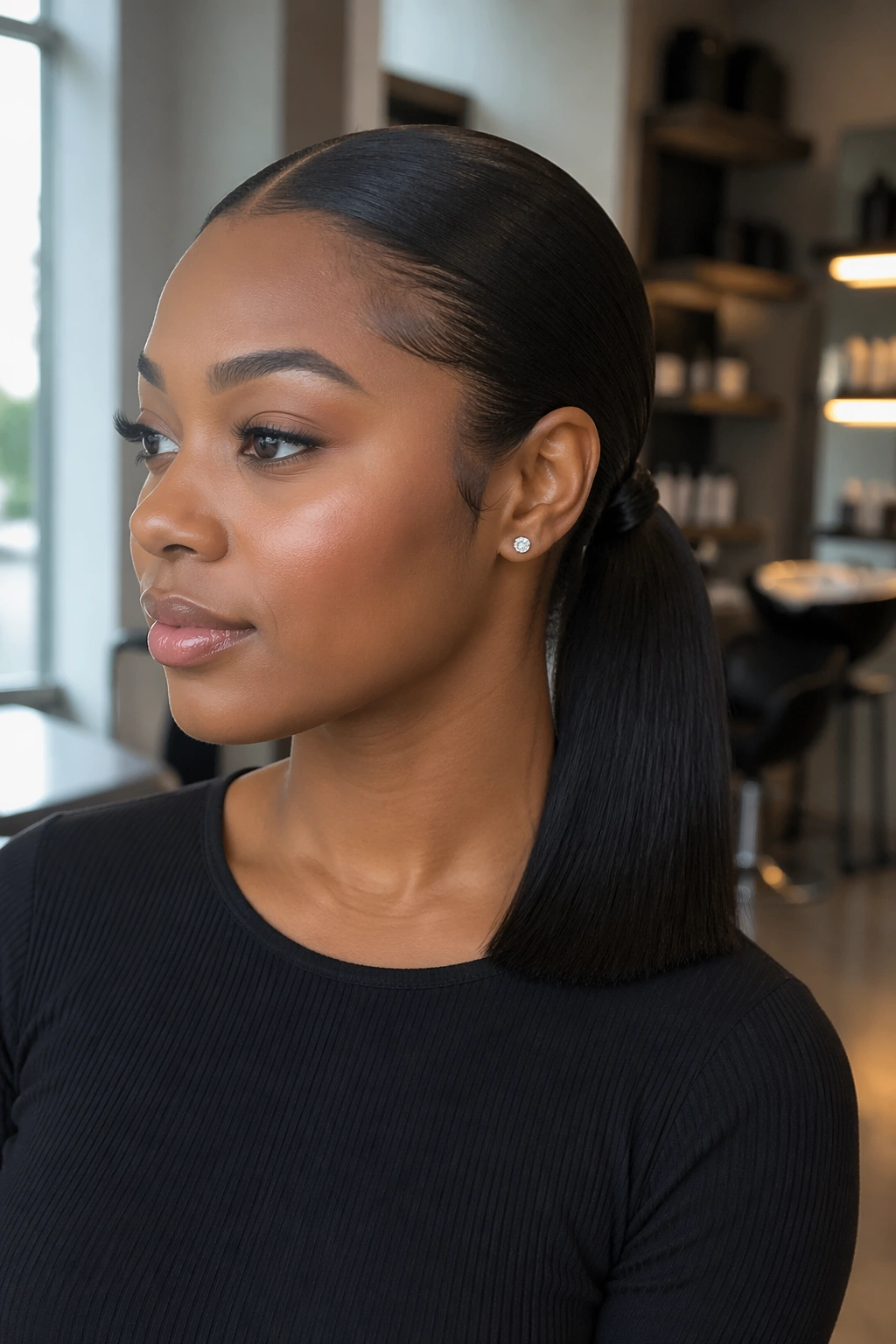
A blunt end is the cleanest finish if you want the weave to look dense and sharp. The straight edge makes the tail read fuller, and that fullness balances the flat crown nicely. It also gives the whole style a more expensive feel, mainly because the line at the bottom looks deliberate.
This is a strong pick for long weave hair that is already smooth enough to hold a straight shape. Ask for the ends to be trimmed after the ponytail is installed if you want the line to look even. A narrow wrap at the base keeps the top flat, while the blunt finish keeps the tail from feeling thin or wispy.
Why It Hits
- The base stays quiet.
- The tail looks thick without extra bulk at the crown.
- It works with center parts, side parts, or a no-part finish.
- It pairs well with very little accessory work.
If you like clean lines, this is probably the one you will keep coming back to.
Final Thoughts
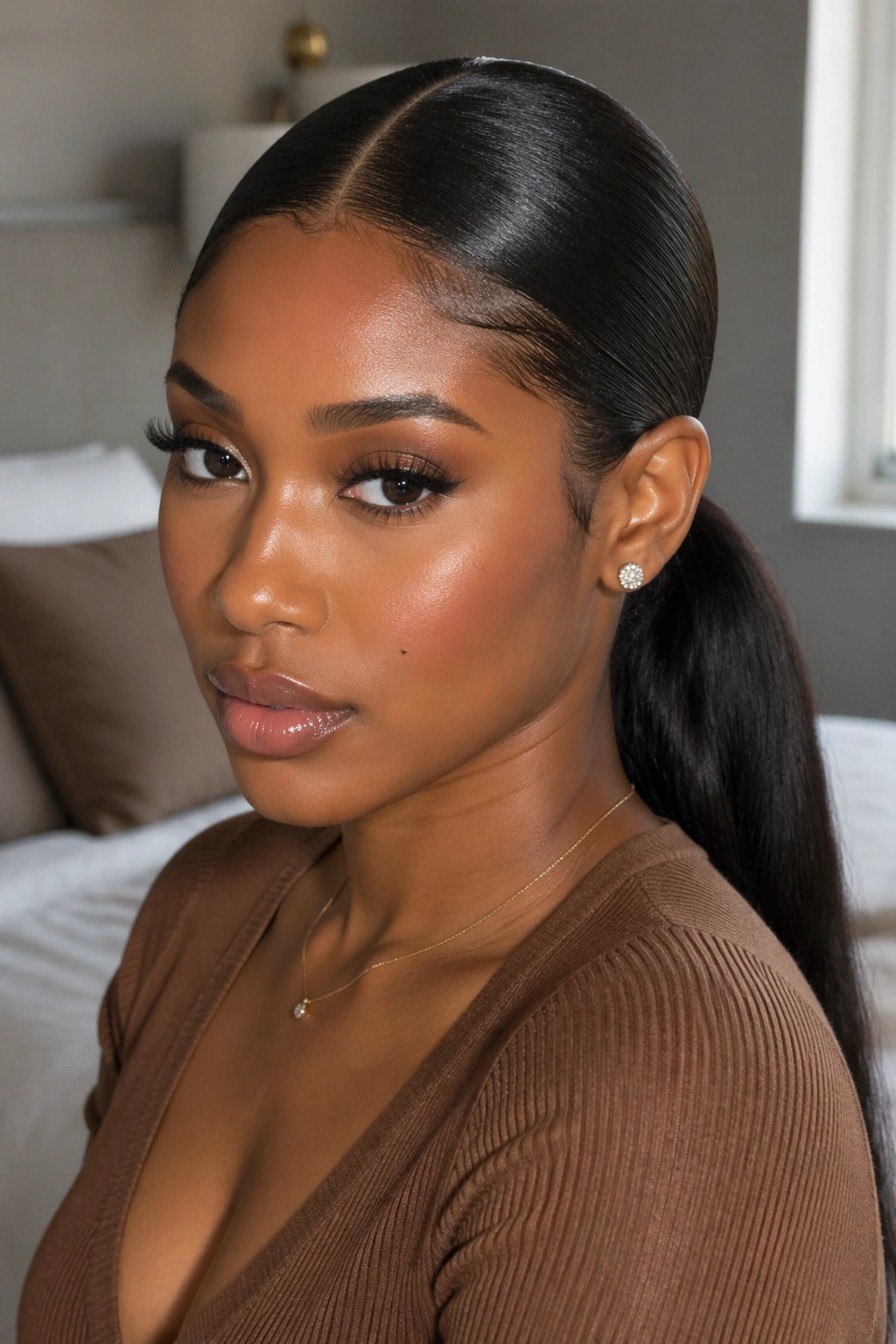
A low weave ponytail looks simple only when the shape is doing its job. Once the crown lies flat and the base is under control, you can get away with almost any finish — braided, wrapped, curled, blunt, or decorated with a small accessory or two. The front is the architecture. The tail is the payoff.
The styles that last longest are the ones that respect that order. Keep the top quiet, keep the wrap tight, and let the length do what it was brought in to do. The difference shows fast, and it usually shows from the side before it shows straight on. That is the angle most people forget to check.