



Curly hair and sleek braided ponytails get along better than most people think. The trick is not flattening every bend and coil until the style looks stiff. The trick is giving the roots enough control so the braid sits clean, while the tail keeps enough shape to still look like curly hair and not a helmet.
That balance matters more than people admit. Tight curls swell at the hairline, shrink after drying, and can loosen a ponytail that looked polished ten minutes earlier. A good braid works with that behavior instead of fighting it — a little stretch here, a firm part there, and just enough product to keep the front from puffing up later.
I keep coming back to the same point because it saves so much frustration: the sharpest styles are not always the hardest ones. A clean part, a wrapped elastic, and a braid that matches your density can look better than a pile of extra twists that never settle down. Some versions feel sporty, some feel dressy, and some land in that useful middle space where you look finished without looking overworked.
That is exactly why these 30 sleek braided ponytails for curly hair work so well. They give you room to choose your mood, your length, your curl pattern, and how much time you want to spend with a rat-tail comb and edge control.
1. Feed-In Cornrow High Ponytail
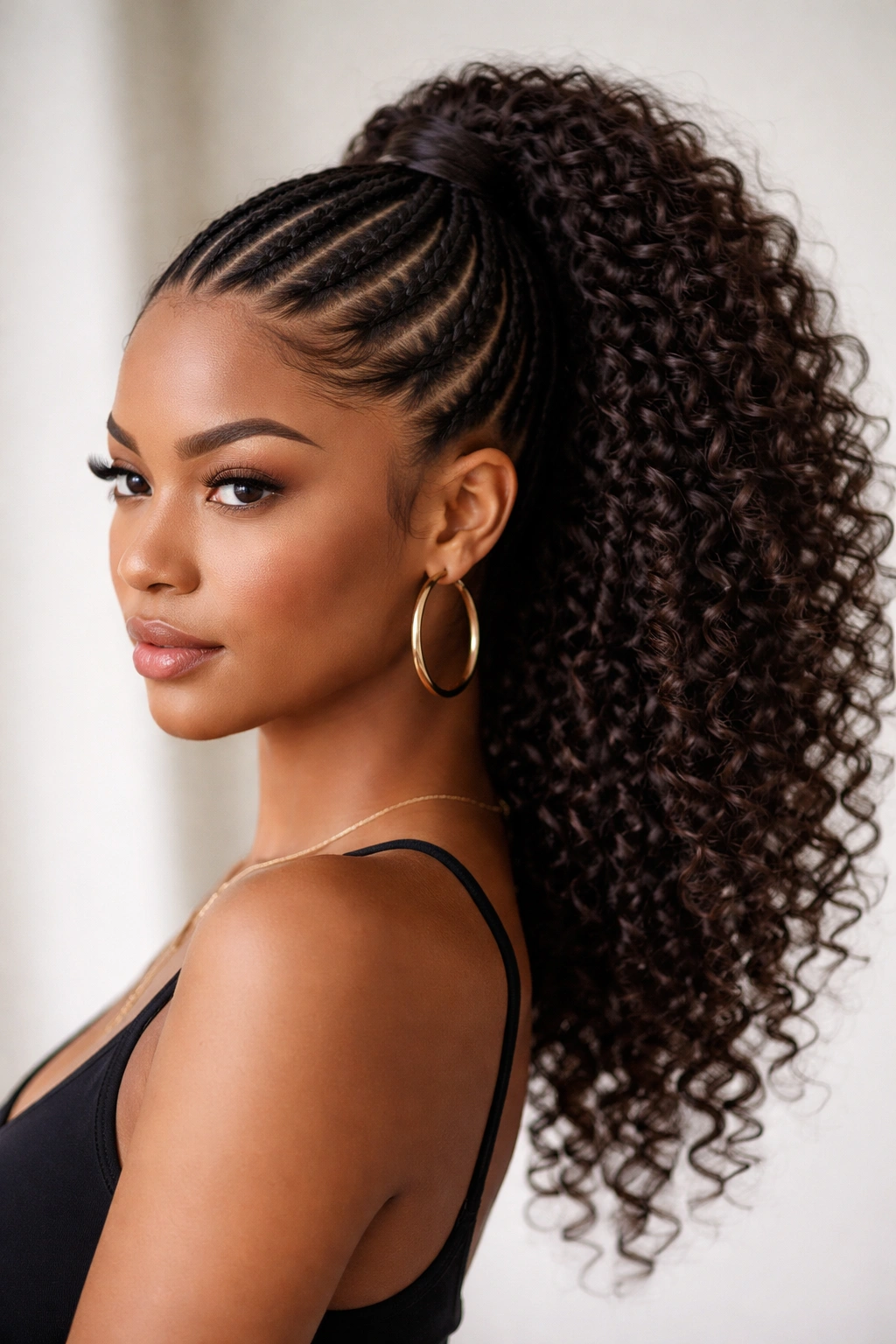
This is the style people picture when they want a braid that looks sharp from every angle. A feed-in cornrow high ponytail keeps the front clean, lifts the face, and gives curly hair a smooth path into the braid instead of a bulky lump at the crown.
Why It Looks So Clean
The feed-in method adds hair in small amounts, so the braid starts slim and grows naturally. That matters on curly hair, because a harsh transition from loose texture to braid can look puffed or lumpy. If your curls are thick, this shape keeps the top from feeling overloaded.
A high placement also helps the ponytail swing better. You get length, movement, and a little drama without needing a ton of extra styling. Use a firm gel at the roots, brush the crown flat in sections, and secure the base with a tight elastic before you braid down the tail.
Best for: long curly hair, dense roots, and a style that needs to hold through a full day.
Watch out for: too much tension at the temples. If the braid hurts before you leave the mirror, it is too tight.
2. Side Part Stitch-Braid Ponytail
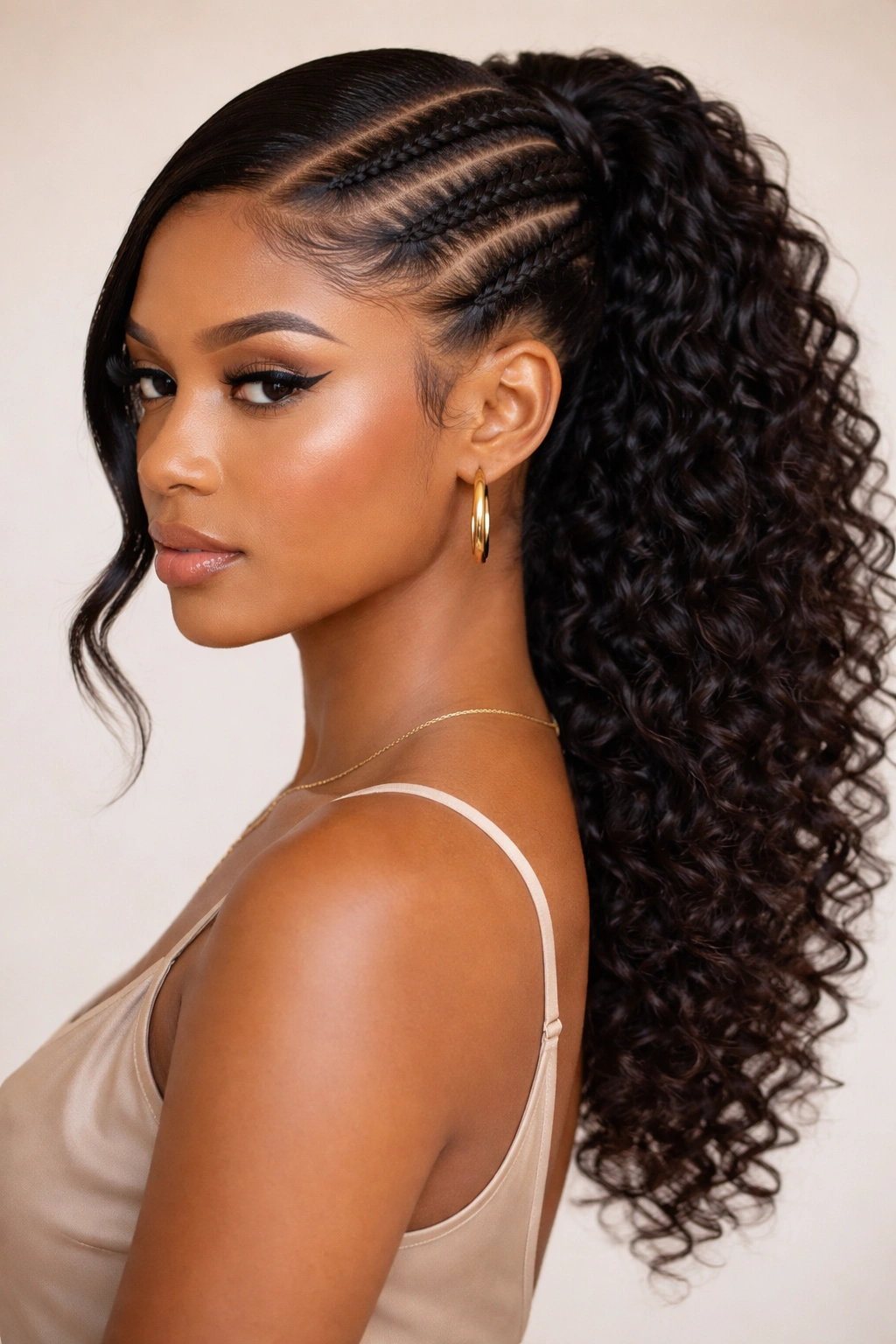
Why do side parts look so good on curly hair? Because they give the style an instant direction. A side part stitch-braid ponytail pulls the eye across the head, and that little shift makes the whole look feel more polished.
The stitch-braid detail keeps the part crisp and the braid lanes neat. I like this one when the crown is thick and the front tends to puff up, because the side part gives the hair somewhere to go instead of forcing everything straight back. Use a fine-tooth comb, a strong-hold gel, and work in small rows so the braid stays tight and even.
How to Wear It
- Keep the part deep enough to show shape, but not so deep that one side goes flat.
- Braid close to the scalp, then gather into a ponytail at the back.
- Finish with a curly tail if your length allows it, or braid all the way down for a cleaner line.
A side part like this reads elegant fast. It also grows out more softly than a center part, which is useful if you wear styles for several days.
3. Sleek Low Ponytail with Wrapped Base
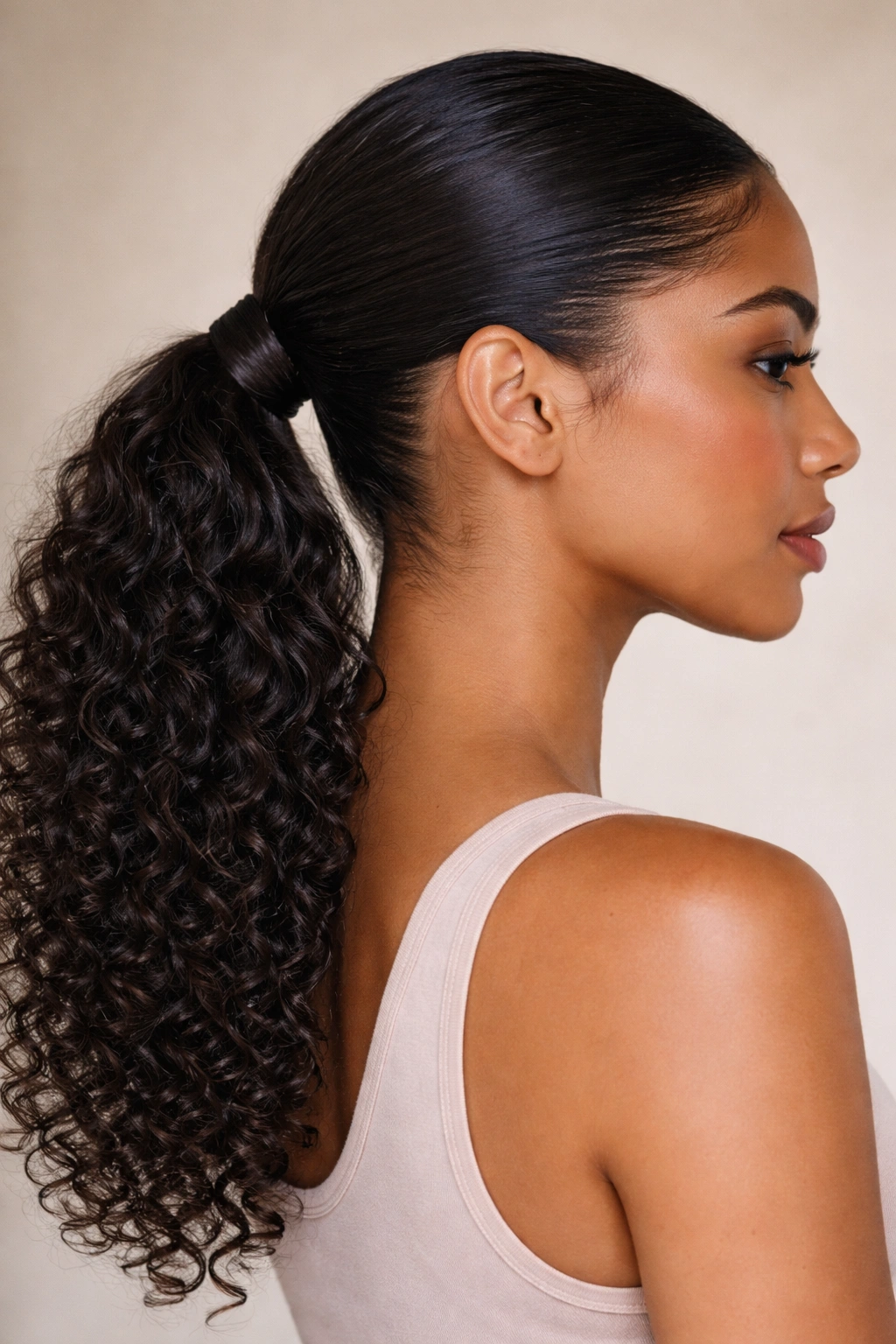
A sleek low ponytail with a wrapped base is one of those styles that looks expensive even when it took twenty minutes. The low placement keeps the silhouette calm, and the wrapped section hides the elastic, which always helps.
On curly hair, this works best when the roots are smoothed in layers rather than drowned in product. Brush the hair down with gel, secure it low at the nape, then wrap a small braid or a strip of hair around the band. That last part matters. A visible elastic can ruin the whole mood.
The style is quiet, not boring. That is the difference. It suits work, dinner, weddings, and any day when you want your curls to behave without losing all personality.
4. Bubble Braid Ponytail
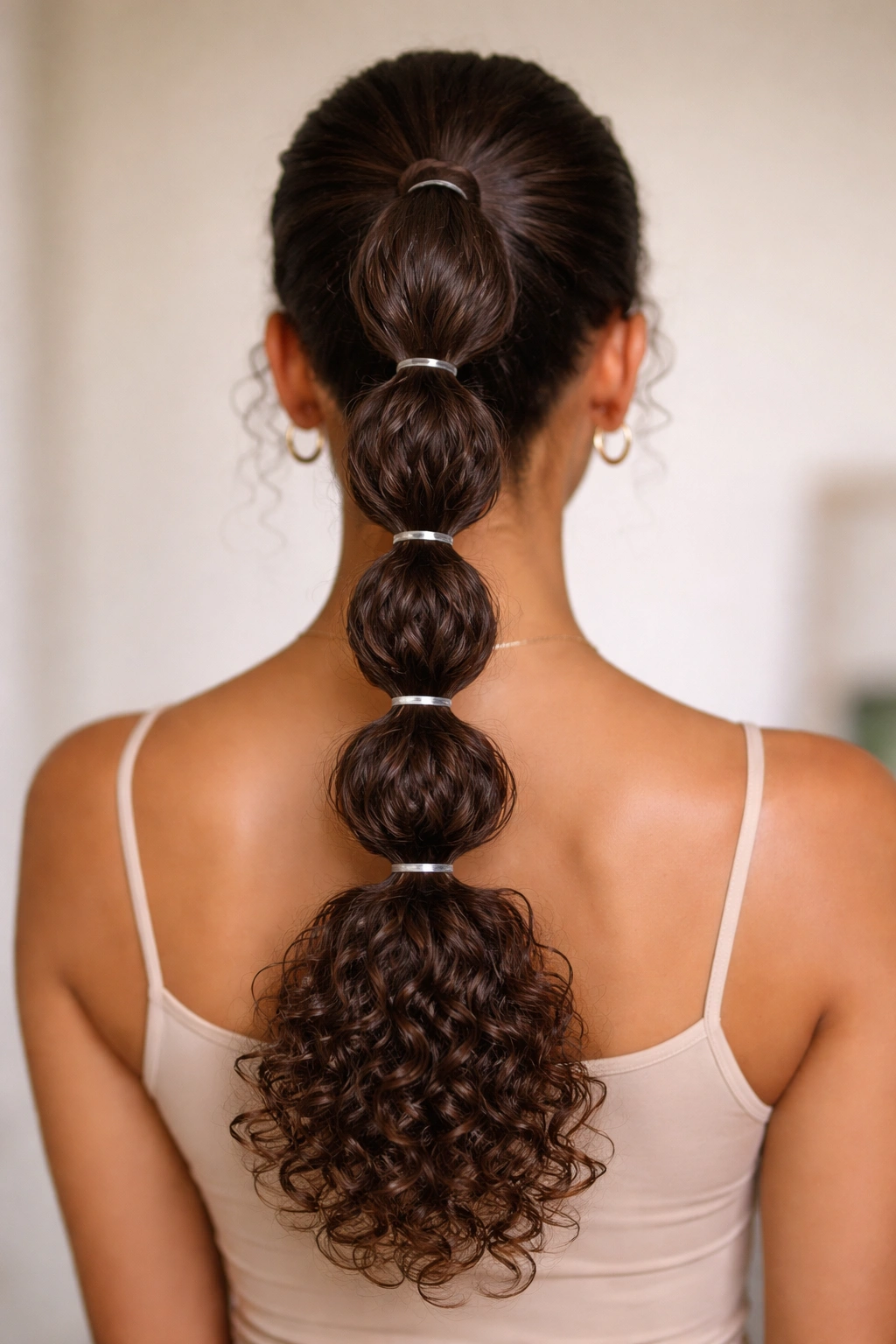
A bubble braid can look playful, but on curly hair it can also look controlled in a way that plain ponytails never quite manage. The bubble braid ponytail is built from sections, so each bubble gives the hair a pause and keeps the overall shape from going flat.
I like this one for medium to long curly hair because the texture helps the bubbles stay full. Start with a smooth ponytail, add clear elastics every few inches, then tug each section gently until it rounds out. Don’t yank. You want fullness, not frizz.
What Makes It Different
- It shows off length without needing a complex plait.
- It works with thick curls that want to puff.
- It gives you more shape if the ends are uneven.
The best part is that it still looks sleek at the roots, so you get polish up top and movement through the tail. That mix is hard to beat.
5. Fishtail Braided Ponytail
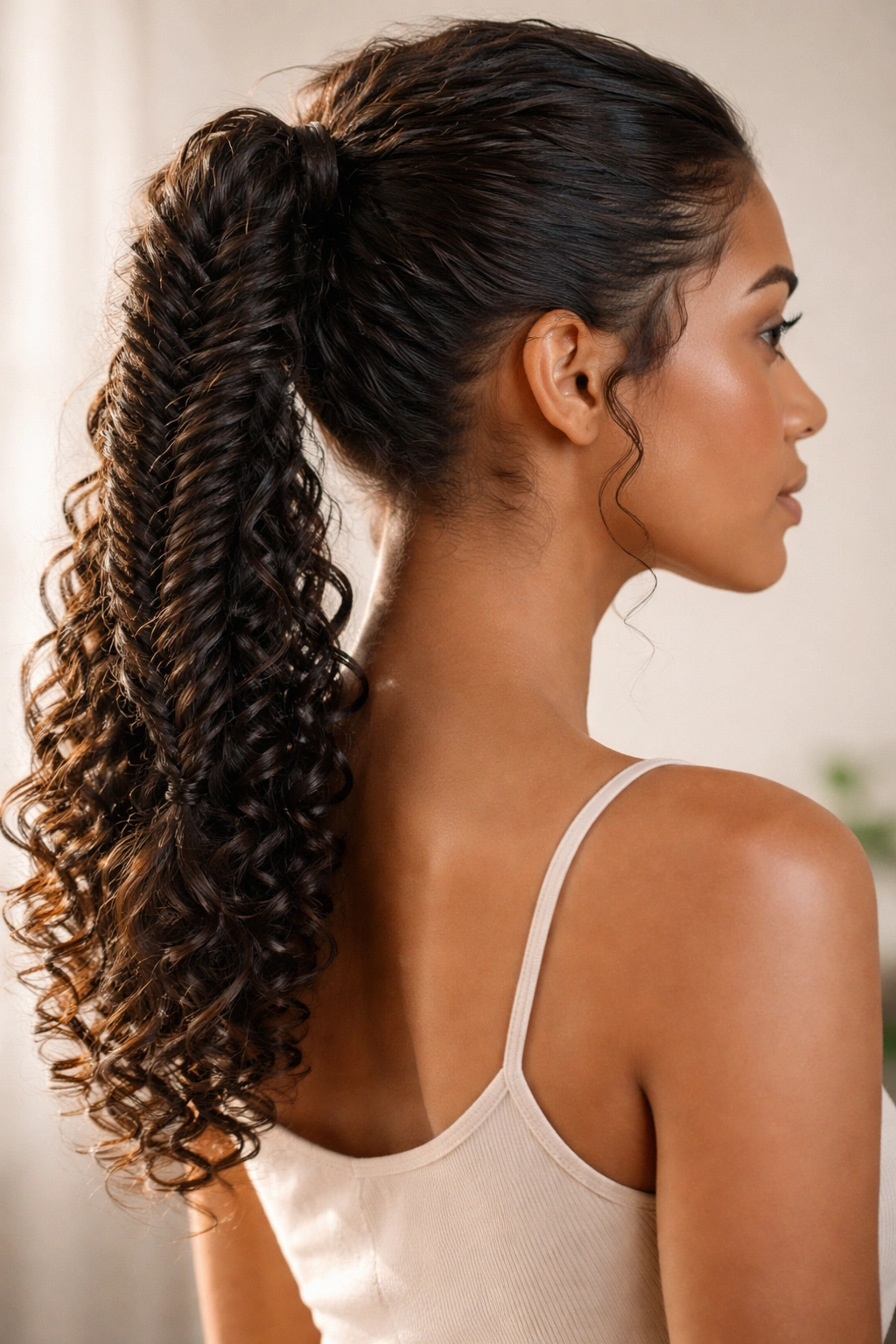
A fishtail braided ponytail has a finer, more detailed finish than a standard three-strand braid. On curly hair, that detail reads especially well because the texture adds softness around the braid instead of making it look harsh.
This style looks best when the hair is stretched a little first. A wash-and-go can work, but a lightly blown-out or banded stretch gives the braid cleaner lines. Divide the ponytail into two sections, pull tiny pieces from the outer edge, and cross them to the opposite side. Keep the hands close to the braid. Loose pulling makes it fuzzy fast.
What I like here is the contrast. The roots can be smooth and almost glossy, while the braid itself feels intricate and tactile. It’s a good choice when you want something more detailed than a basic ponytail but not as heavy as full box braids.
6. Double Dutch Braids into One Ponytail
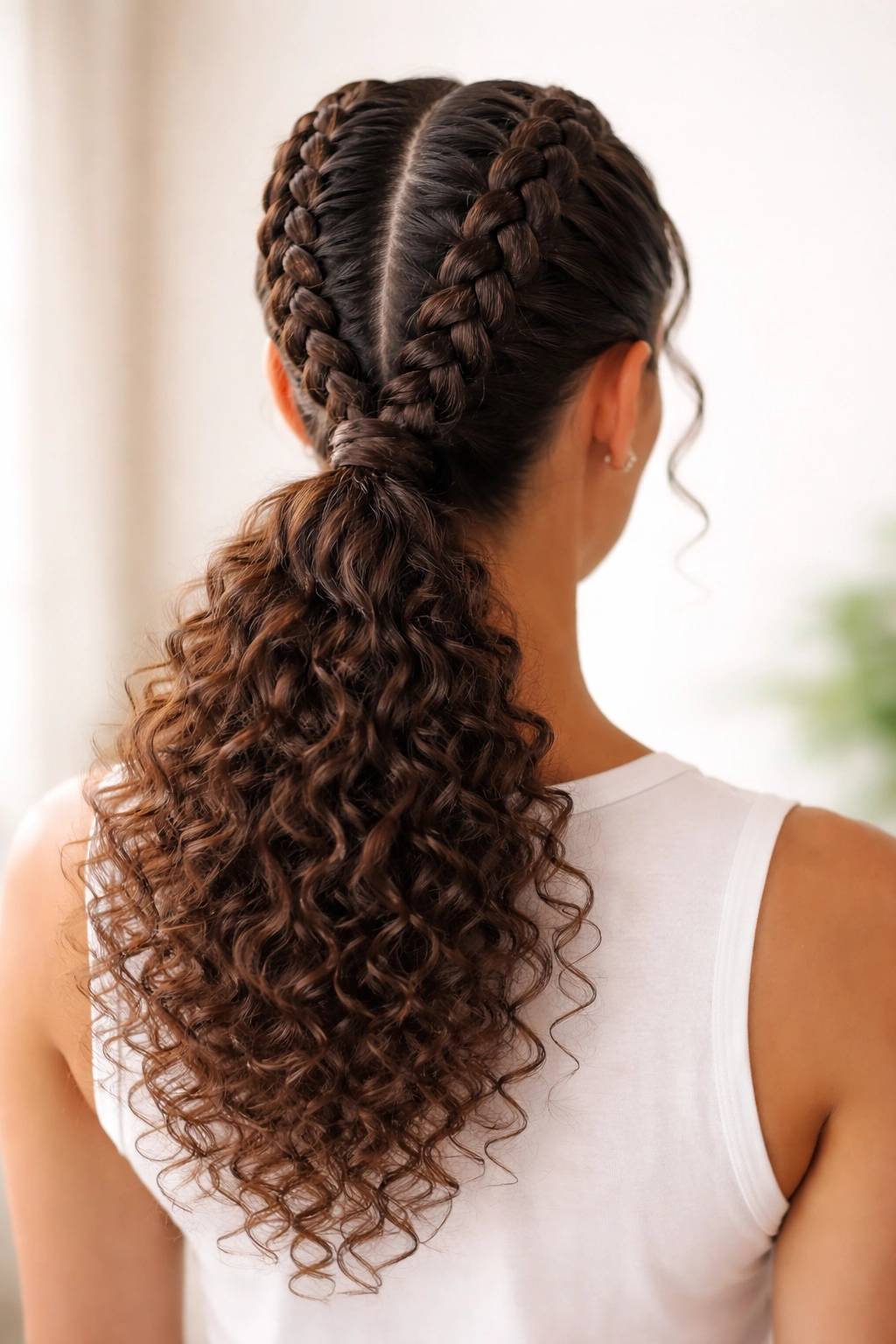
If you want a style that stays put, this one earns its keep. Double Dutch braids into one ponytail give curly hair strong structure up front, then gather everything together at the back so the style still moves.
This is a good option for active days because the braid pattern pins the sides down in a neat way. Start with a center part, braid each side in Dutch style, and stop where you want the ponytail to sit. Then tie both braids together or feed them into one shared base. Keep the scalp tension even on both sides or the style will feel crooked by the end of the day.
How to Keep It Balanced
- Mirror the part sizes on both sides.
- Smooth the front with gel before braiding.
- Braid downward at the same angle on each side.
It’s practical. It also has enough structure to look deliberate instead of hurried.
7. Knotless Braided Ponytail
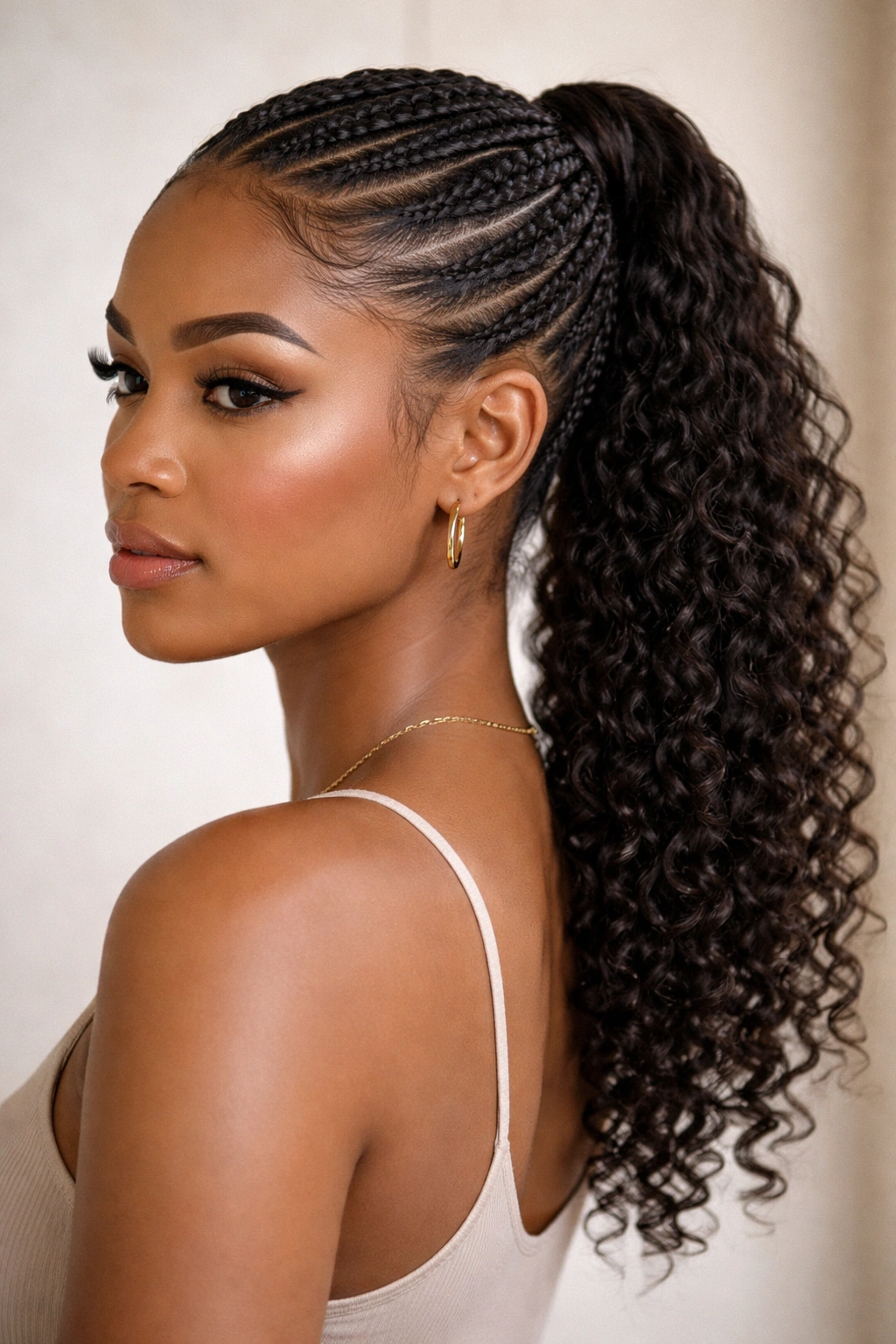
A knotless braided ponytail is one of the gentlest-looking ways to wear a braid on curly hair. The braid starts without that hard knot at the base, so the finish feels softer and less bulky right away.
That lighter root is a big deal if your hairline is sensitive or if you wear braided styles often. Feed in small pieces at the top, keep the braid tension even, and let the ponytail drop naturally once it’s secured. The style has a smoother transition from scalp to braid than a traditional install, which is why it looks so clean on curls.
I also like the way knotless braids move. They swing more freely and sit flatter when you sleep on them. If you want a style that looks neat but not stiff, this is a strong place to start.
8. Braided Mohawk Ponytail
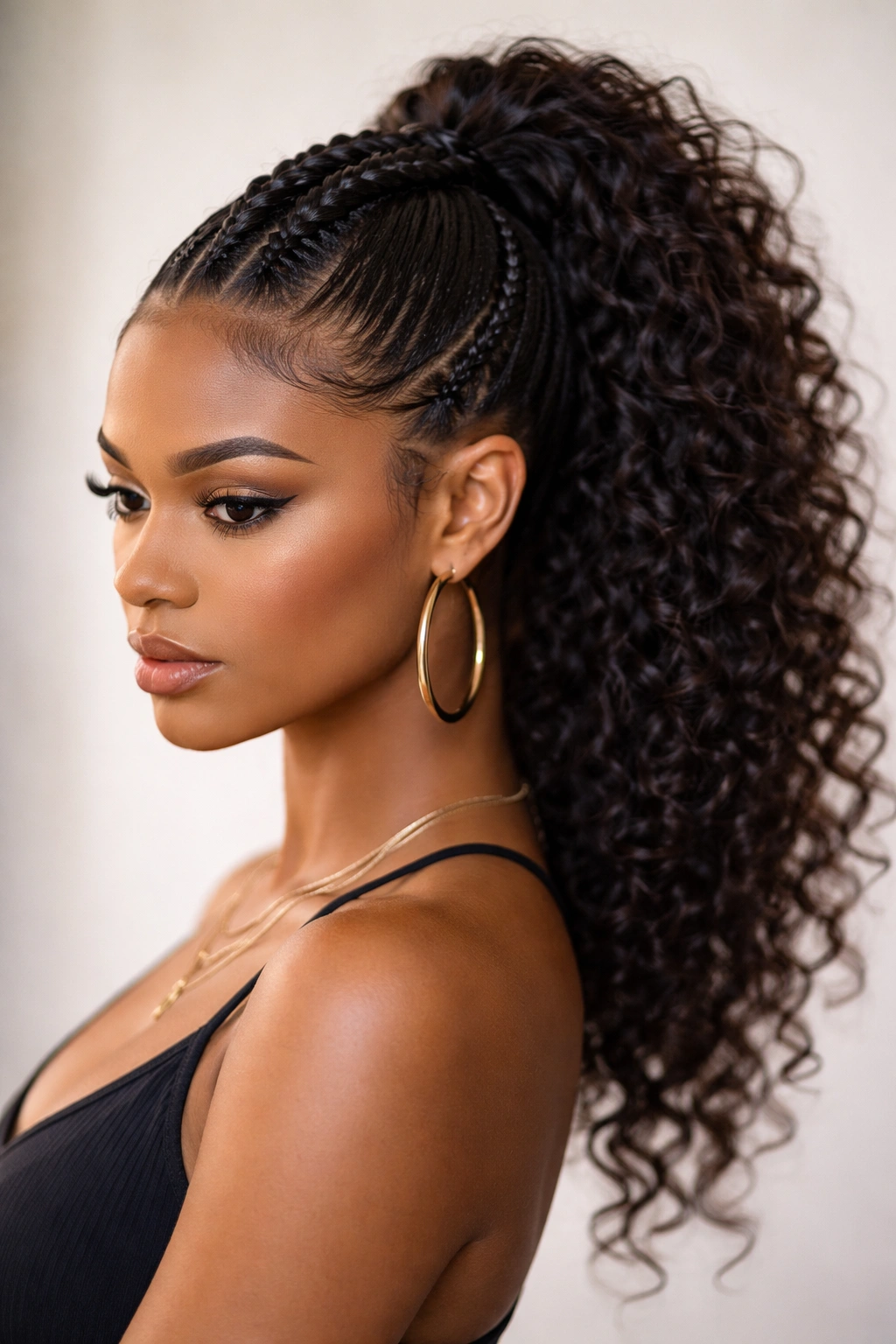
A braided mohawk ponytail has attitude, no apologies required. The center braid builds height through the middle of the head, while the sides stay sleek or closely braided, and that shape looks especially sharp on dense curls.
The thing to watch is balance. Too much volume on the sides makes the look widen. Too little, and the center braid can look like it is floating on top of the head. I usually like this style when the crown has plenty of hair to work with, because the mohawk line needs real density to hold the shape.
Why It Works on Curly Hair
Curly hair gives the top braid extra grip, which helps the style last. It also makes the finish feel fuller even when the sides are kept flat. That gives you height without having to tease the roots into a mess.
A mohawk ponytail is bold, yes. It is also one of the easiest ways to make natural texture feel intentional instead of unruly.
9. Rope-Twist Ponytail
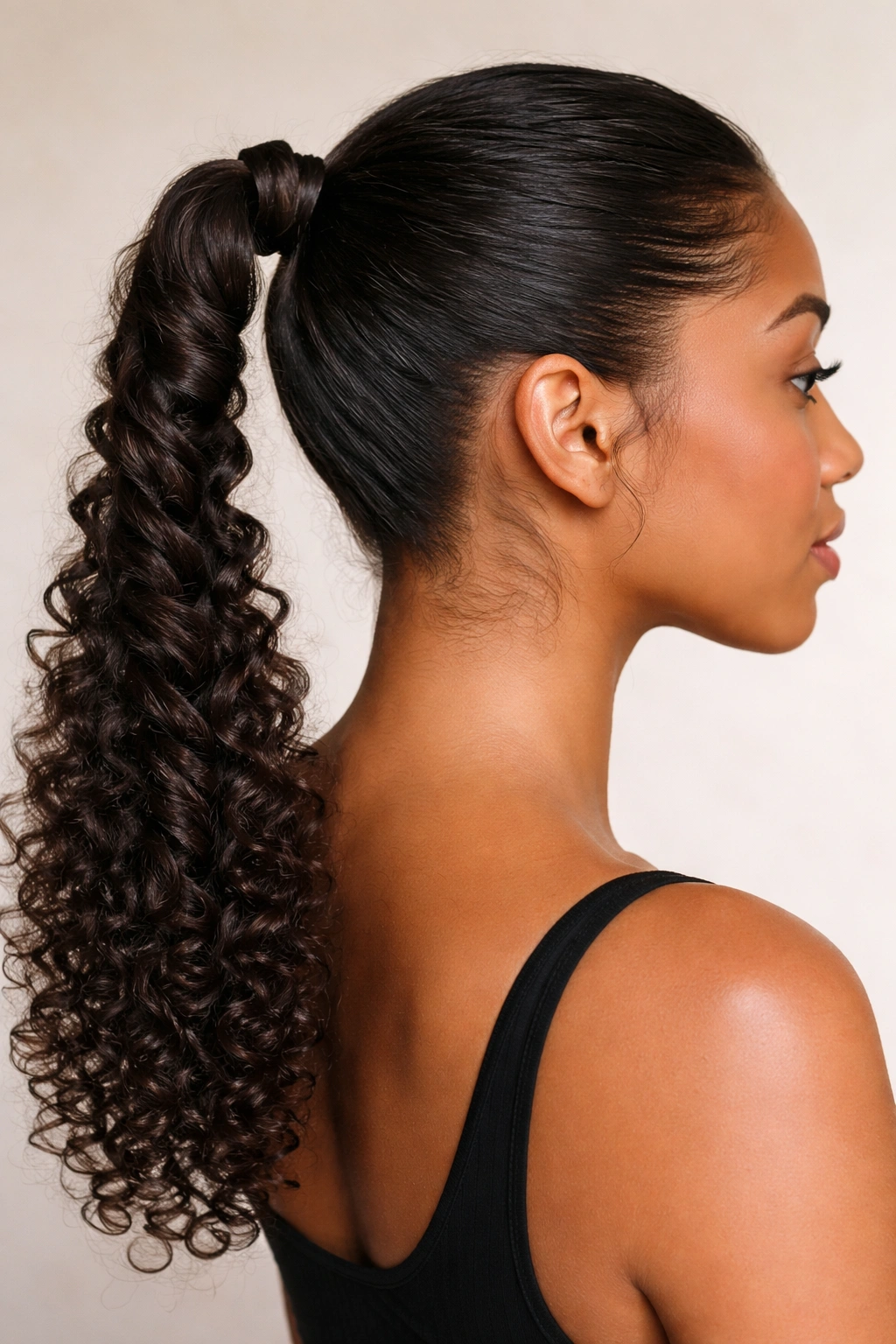
A rope-twist ponytail is a nice change when you are tired of three-strand braids. The finish is tighter, smoother, and a little more modern-looking, especially on curls that already have a lot of body.
Twisting two sections around each other creates a neat spiral effect. It works best when the hair is lightly stretched, because very tight curls can shrink back and distort the twist. Secure the base well, then twist both sections in the same direction before wrapping them around each other in the opposite direction. That sounds fussy. It isn’t, once you do it twice.
The style shines on medium to long curly hair because the tail looks rope-like without losing softness. It is a good everyday braid when you want something different but not loud.
10. Jumbo Braid Ponytail
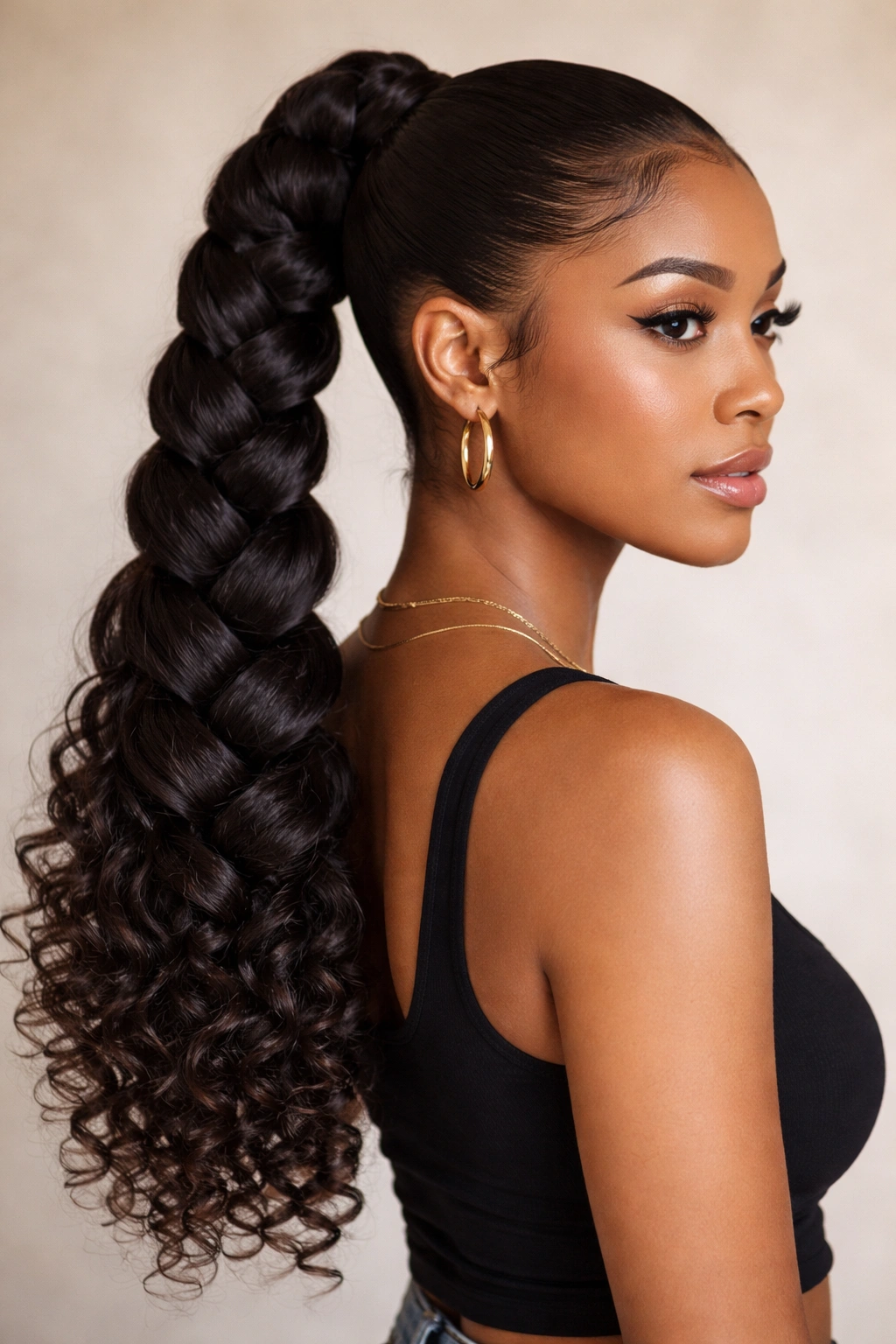
A jumbo braid ponytail is the fast option that still looks deliberate. Big sections mean less time at the mirror, and curly hair usually gives the braid enough thickness to make that size look full instead of thin.
I like jumbo braids on thick hair because they respect volume instead of fighting it. The braid stays visible from a distance, and the ponytail base feels strong. Use larger partings, smooth the scalp with gel, and braid firmly enough to hold shape without pressing too hard on the edges.
This style is also forgiving. If one section is slightly uneven, the size of the braid hides it better than a tiny plait would. That is not laziness. That is practical styling.
11. Micro Braid Ponytail
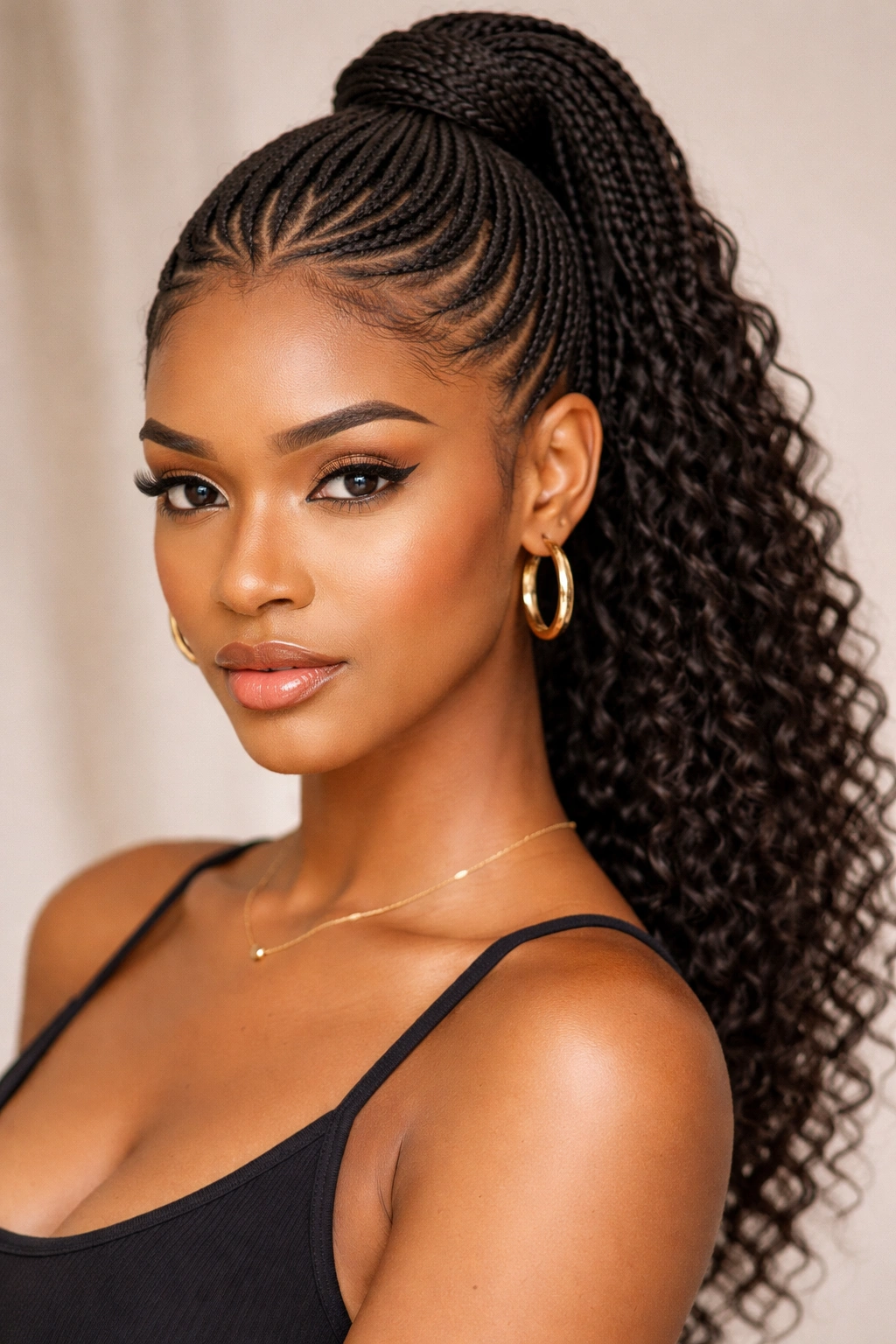
Micro braids are the opposite of jumbo braids, and that is the whole point. A micro braid ponytail gives curly hair a tiny, detailed finish that can look almost woven when the sections are clean.
The style takes time. No way around it. Small parts, a light touch, and careful tension are the name of the game here, because the braid count is high and any sloppiness shows. Still, if you like intricate hair and want the ponytail to read as elegant rather than chunky, micro braids deliver.
What to Expect
- More flexibility in the tail.
- A lighter visual finish on the crown.
- Longer styling time, but a very neat result.
They also work well with accessories like cuffs or small rings. Just keep the add-ons modest so the braid does not start to feel crowded.
12. Crown Braid into Ponytail
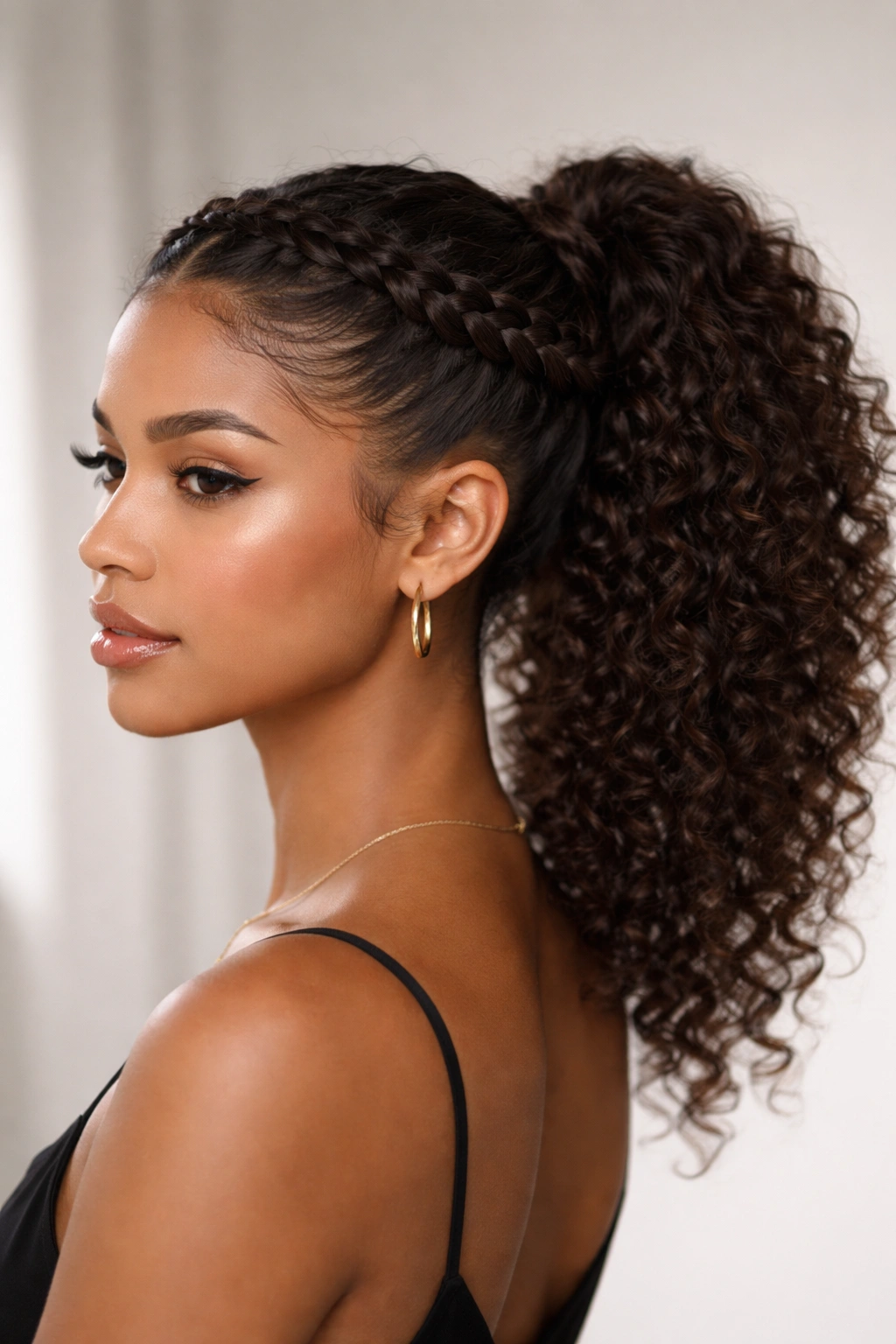
A crown braid into ponytail style gives curly hair that wrapped, almost halo-like front before everything gathers at the back. It softens the hairline in a way that a straight-back braid cannot.
This is one of my favorite options when the face needs framing but the roots still need to stay polished. The braid moves around the head, usually from one temple to the other, then drops into the ponytail base. Because the braid sits higher, it can make the whole style feel more finished without looking severe.
The look has a romantic edge, but it is not fragile. If you secure the crown tightly and smooth the front properly, it can last through a long day without turning fuzzy around the temples.
13. Curly Cascade Ponytail with Braided Base
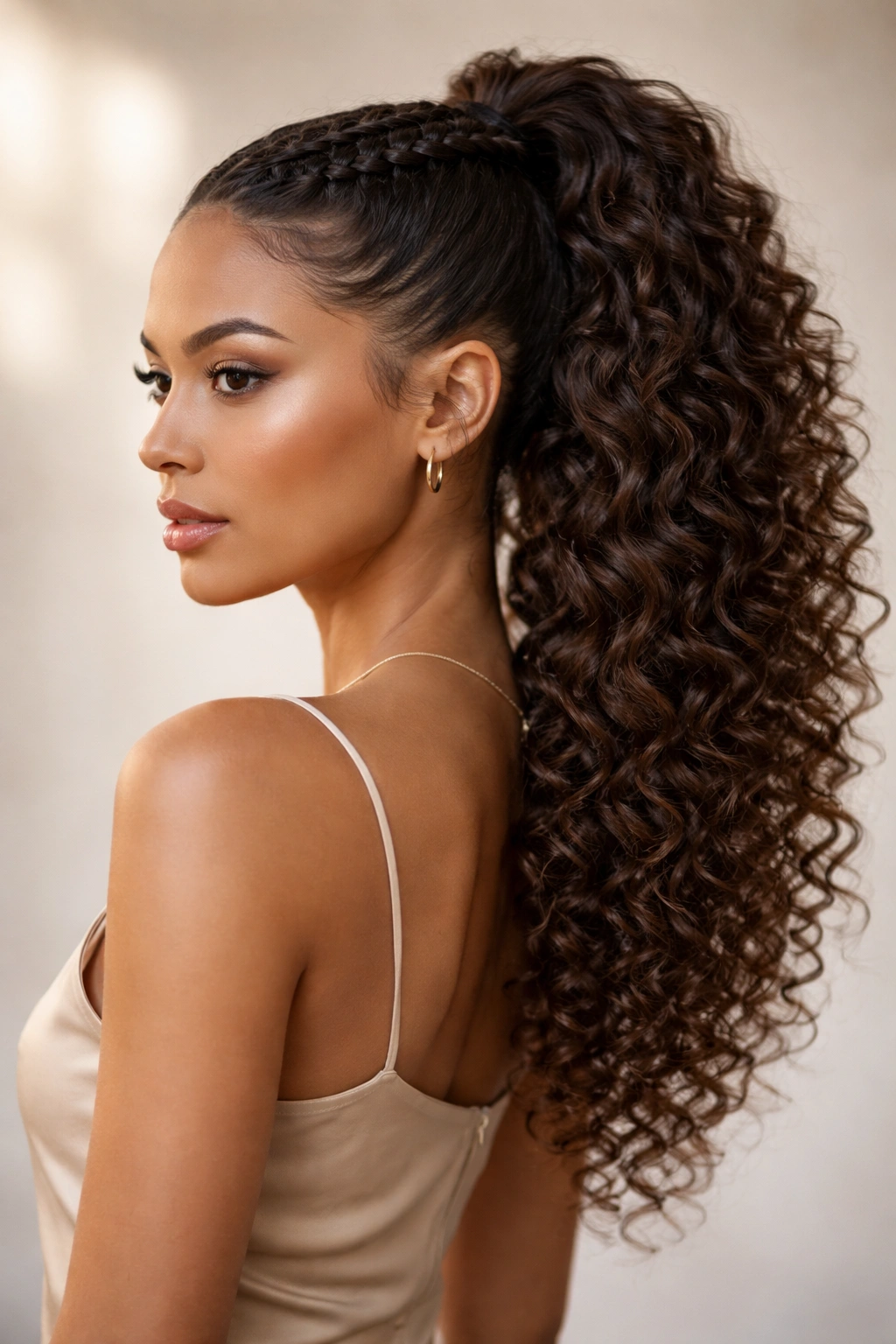
The braided base on this style does the quiet work, and the curls do the talking. A curly cascade ponytail keeps the top smooth, then lets the tail fall in defined coils or stretched ringlets for a softer finish.
That contrast is what makes it pretty. The braid can be small, maybe just enough to pin the front flat, while the tail stays loose and full. If your curl pattern is springy, this style is a smart way to show it off without letting the roots balloon.
Best Way to Wear It
- Smooth only the crown and sides.
- Leave the tail lightly defined with cream or gel.
- Scrunch once the hair is dry so the curl pattern stays visible.
It’s a nice middle ground if you want sleekness without giving up texture. Some people want one or the other. I prefer both.
14. Feed-In Braid Ponytail with Beads
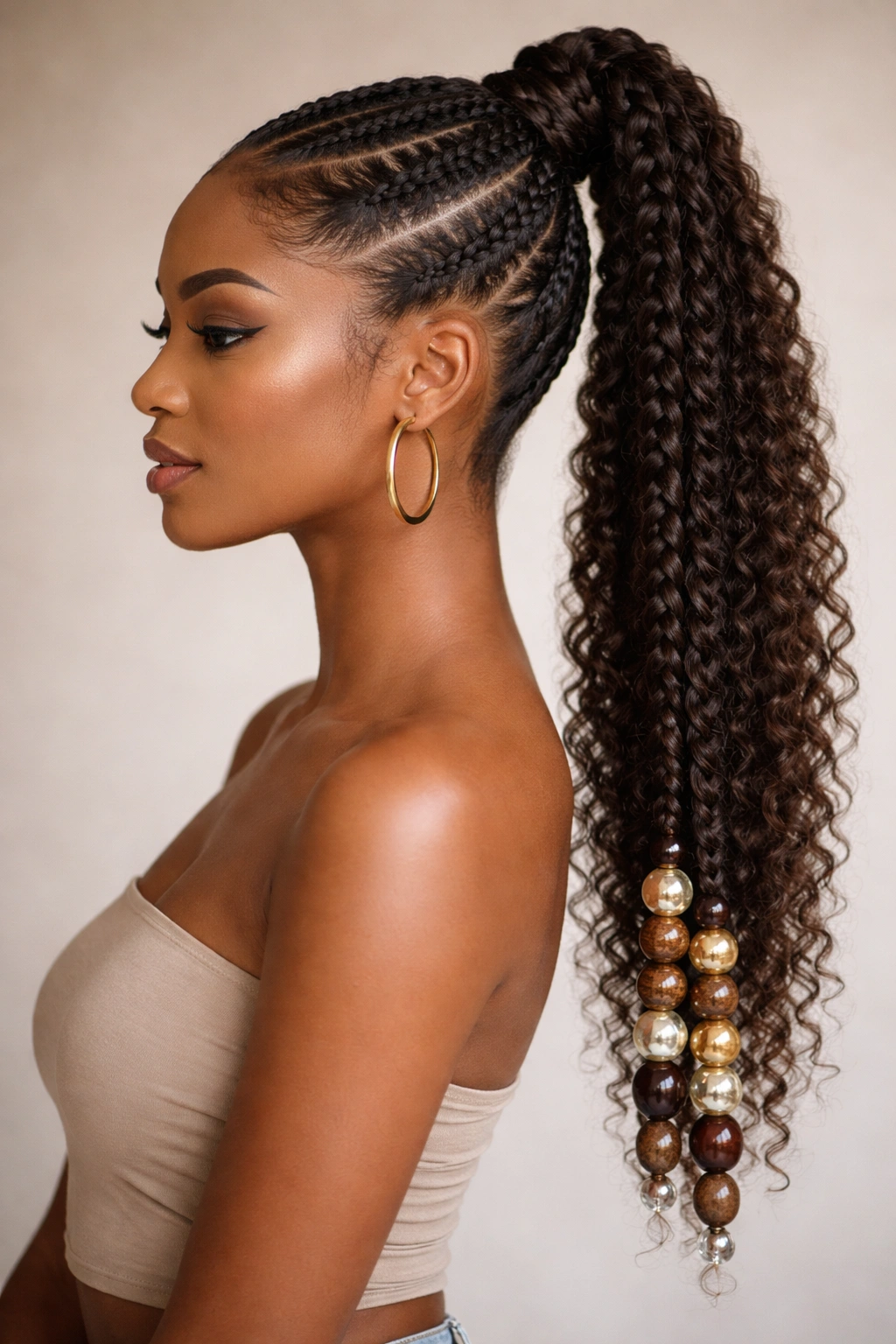
Beads change the whole feel of a braid. A feed-in braid ponytail with beads adds weight, sound, and movement, which can make curly hair look richer and more personal.
The practical part matters here. Beads should match the thickness of the braid, or they’ll slide around and feel awkward. Add them toward the end of the braid, not all at once near the base, so the ponytail stays balanced. If the braid is very long, a few beads can pull more than you expect, so test the weight before committing to a full set.
This style has roots in tradition and also just looks good in motion. The beads click softly, the braid stays tidy, and the ponytail feels like a finished piece instead of a default style.
15. Braided Ponytail for Short Curly Hair
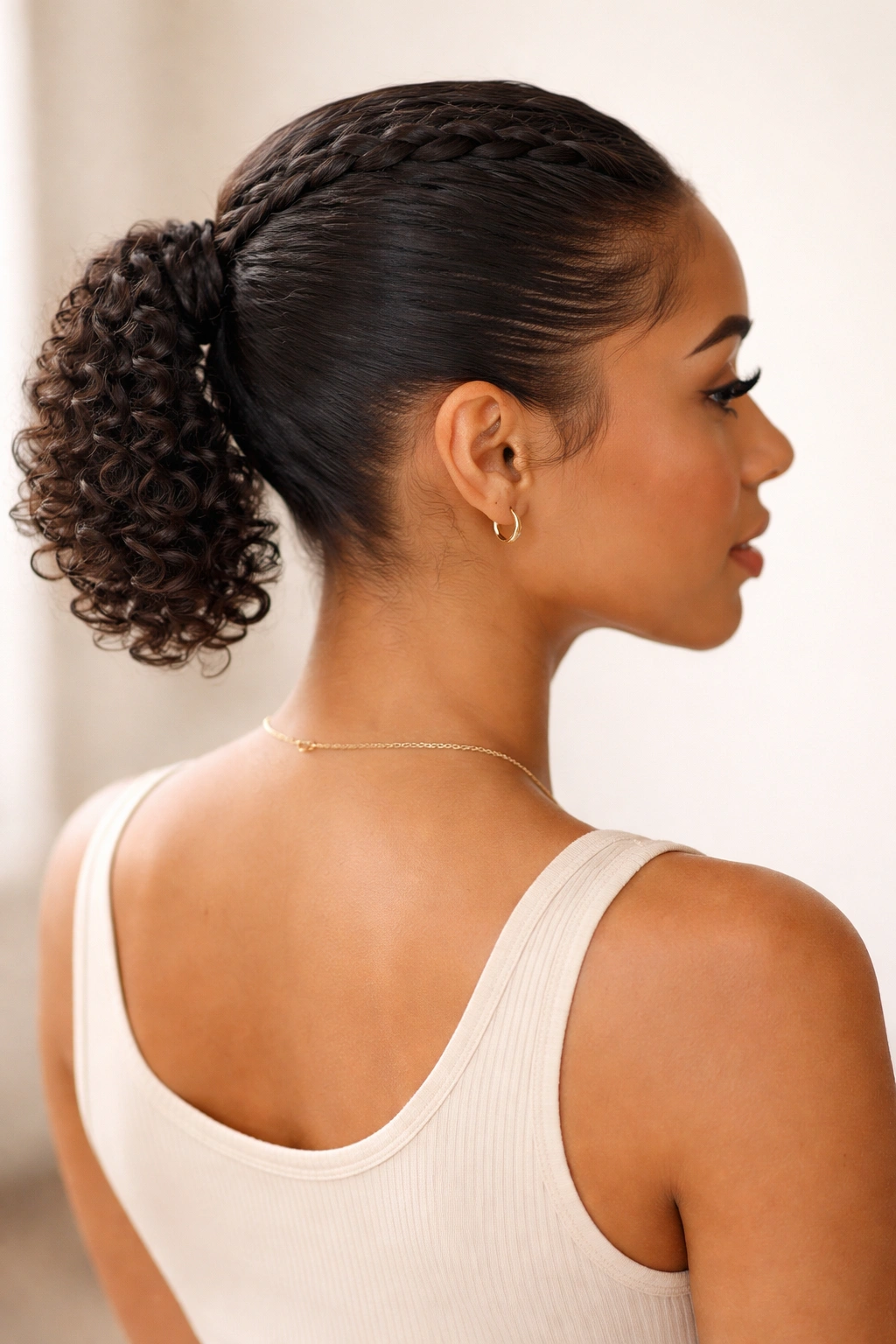
Short curly hair does not rule this look out. It just changes the shape. A braided ponytail for short curly hair usually needs tighter sectioning, a smaller braid, and sometimes a bit of added hair if you want more length through the tail.
The trick is to stop thinking about height and start thinking about proportion. On shorter curls, a low or mid ponytail often looks more natural than a towering style that fights the length you have. Smooth the front, braid from the top or one side, and let the tail stay compact. A tiny braid can still look polished if the part is clean.
What I like most is how clever these styles can feel. They make short hair look intentional, not limited.
16. Sleek Ponytail with Scarf-Wrapped Braid
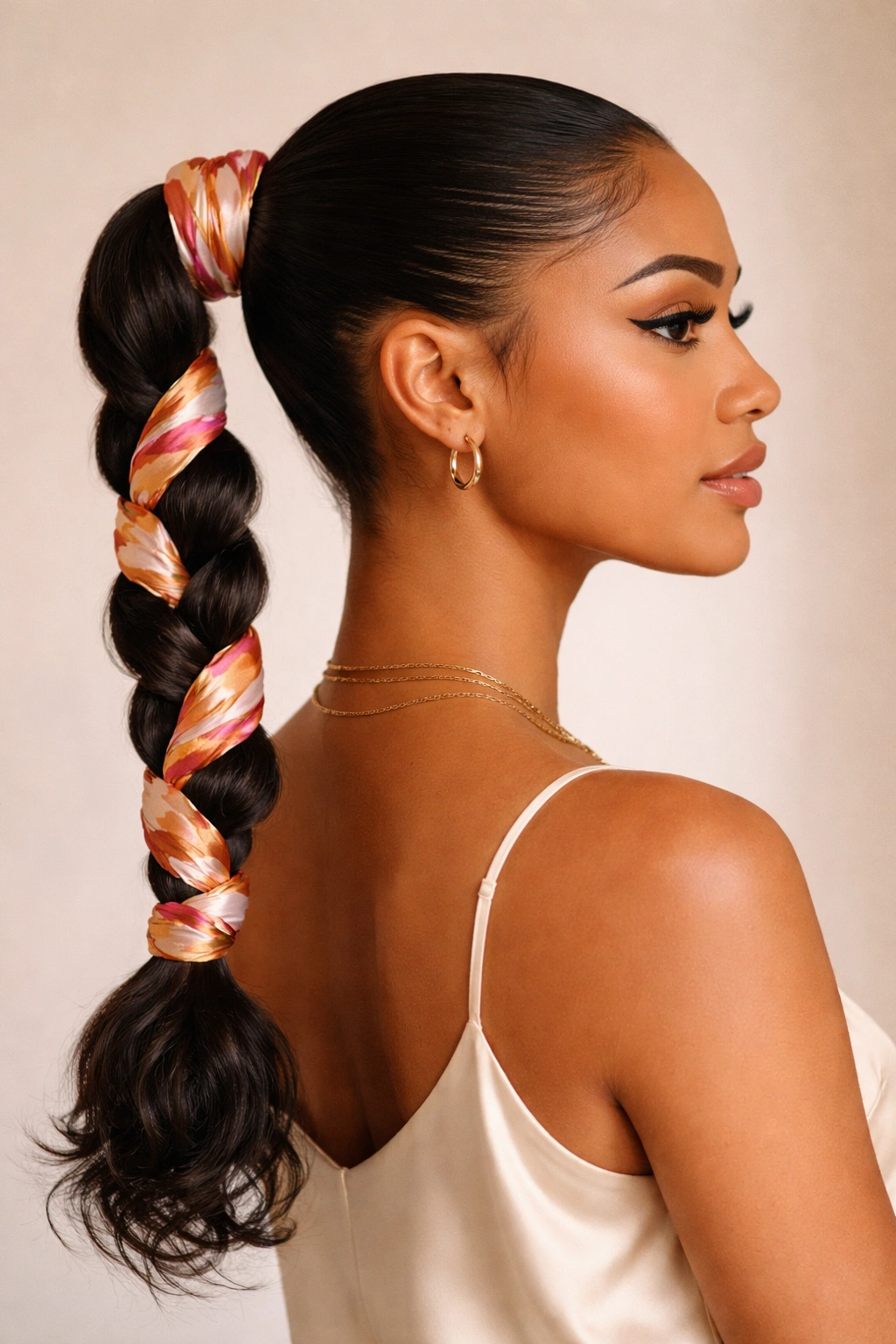
A scarf changes everything. A sleek ponytail with a scarf-wrapped braid gives curly hair color and softness while hiding the hair tie, which is a nice bonus when you want the base to look neat.
Use the scarf after the braid is secured. Wrap it once or twice around the base, then tie it off under the braid so the knot does not compete with the style. Choose a fabric that is smooth, not scratchy, because coarse material can frizz the roots fast. Satin and silk blends work better than stiff cotton if you want the front to stay calm.
Why It’s Worth Trying
The scarf makes the style look finished even when the braid itself is simple. It also gives you an easy way to match a shirt, jacket, or lipstick without doing anything dramatic to the hair. Small detail. Big payoff.
17. Swoop Bang Braided Ponytail
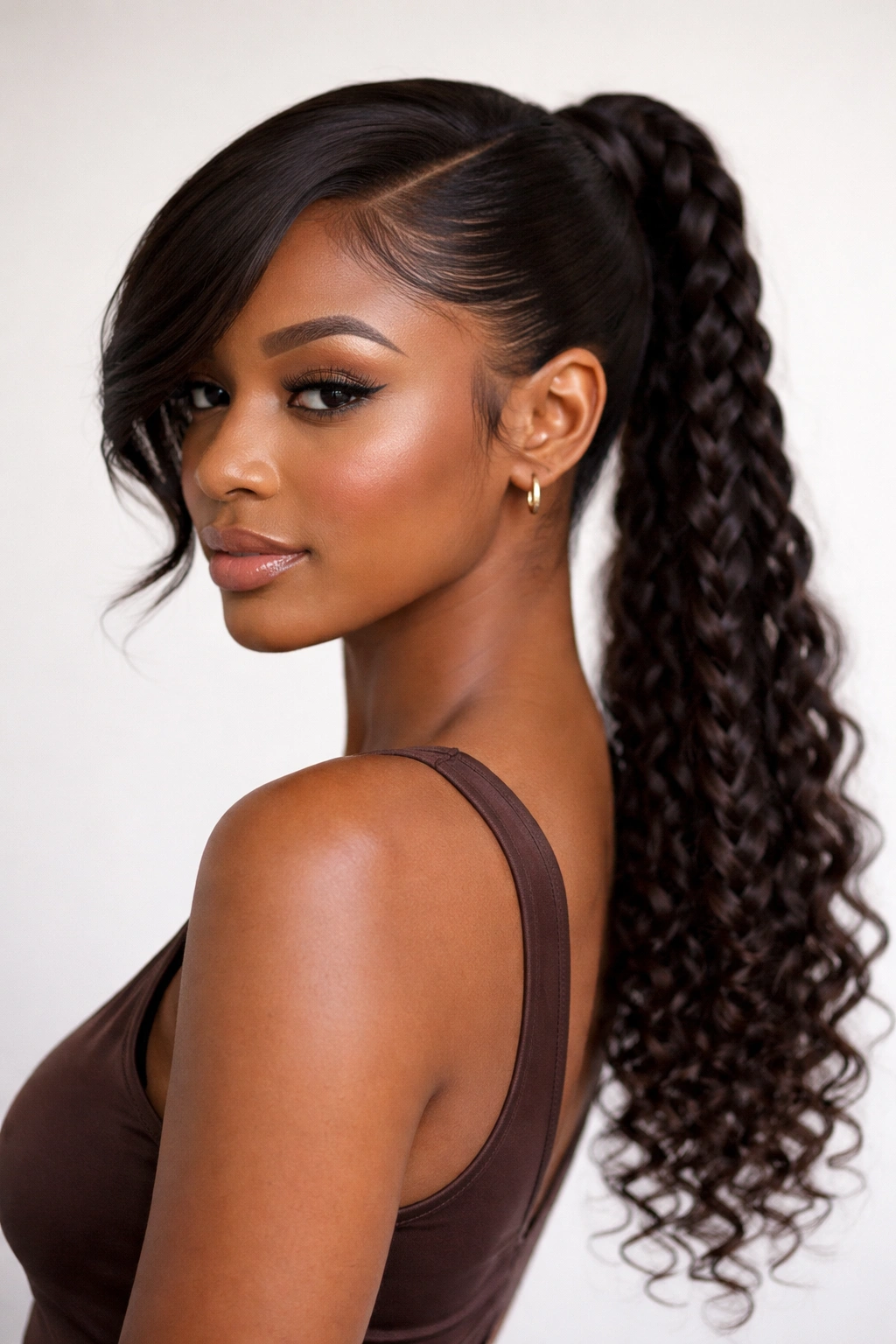
A swoop bang brings softness to a style that might otherwise look too sharp. In a swoop bang braided ponytail, the front section is brushed into a curved side sweep, while the rest of the hair stays sleek and braided.
That curved bang is useful on curly hair because it breaks up the strong lines around the face. It also hides a little bit of root texture if your hairline frizzes faster than the rest of your head. Keep the bang section smooth with a light gel, not a heavy paste. Heavy product makes the hair look shiny in a flat, plastic way.
This one feels especially good when you want the ponytail itself to stay neat but the front to read a touch softer. It’s a small change, but it changes the whole mood.
18. Half-Braided High Ponytail
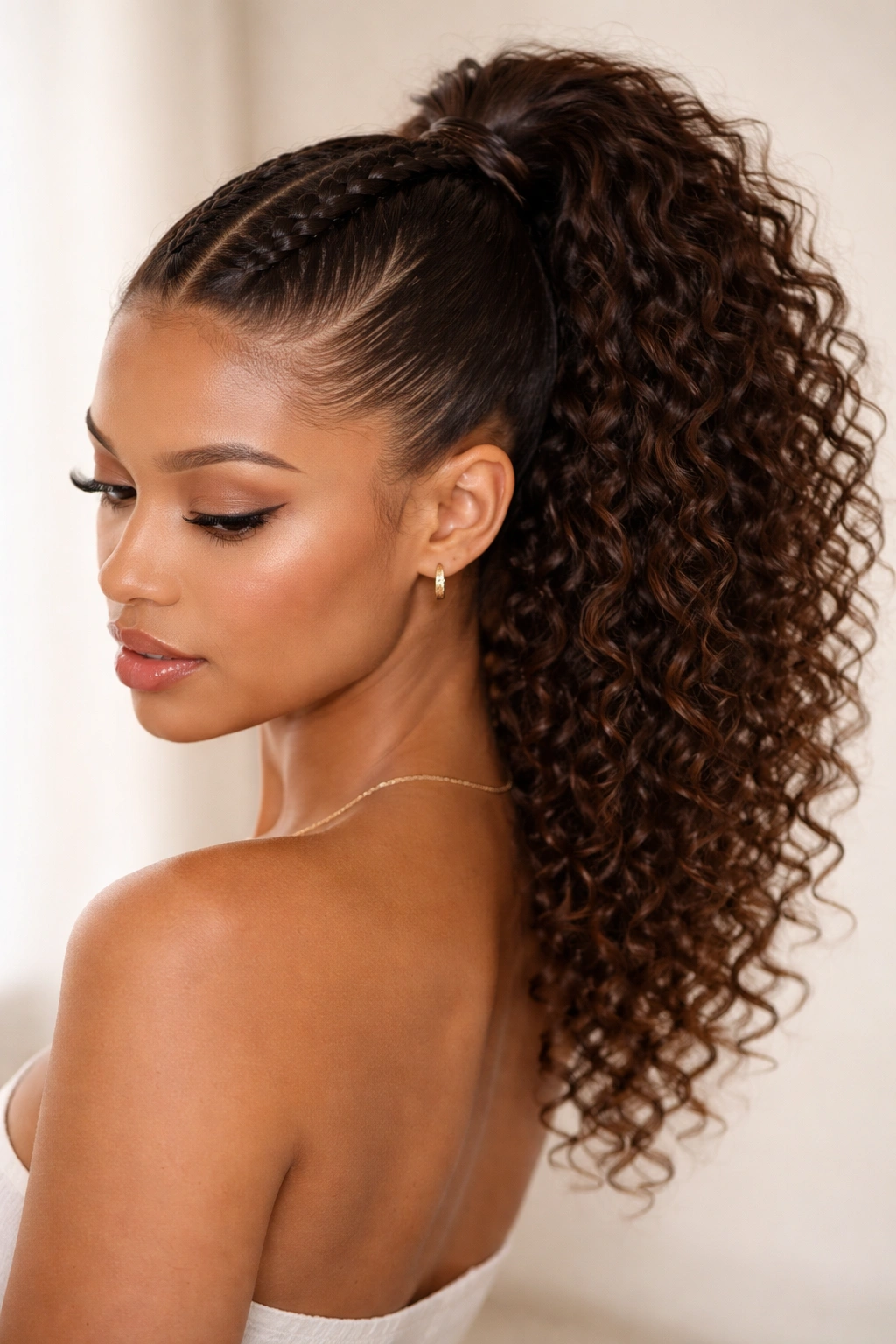
A half-braided high ponytail gives you the best part of both worlds: sleek control on top and texture in the tail. The front or upper half is braided tight, while the rest of the curls stay free.
That split works well when you do not want the entire head pinned down. It keeps the crown neat, which helps with puff and shrinkage, but leaves enough hair loose to show curl pattern and length. I like this style on hair that has strong definition through the mid-lengths, because the free section looks intentional instead of unfinished.
How to Make It Look Balanced
- Braid only the top zone cleanly.
- Keep the ponytail high enough that the loose curls bounce.
- Use a curl cream on the free section so it doesn’t frizz out by the afternoon.
It feels modern without being fussy. That’s rare enough to matter.
19. Zigzag Part Braided Ponytail
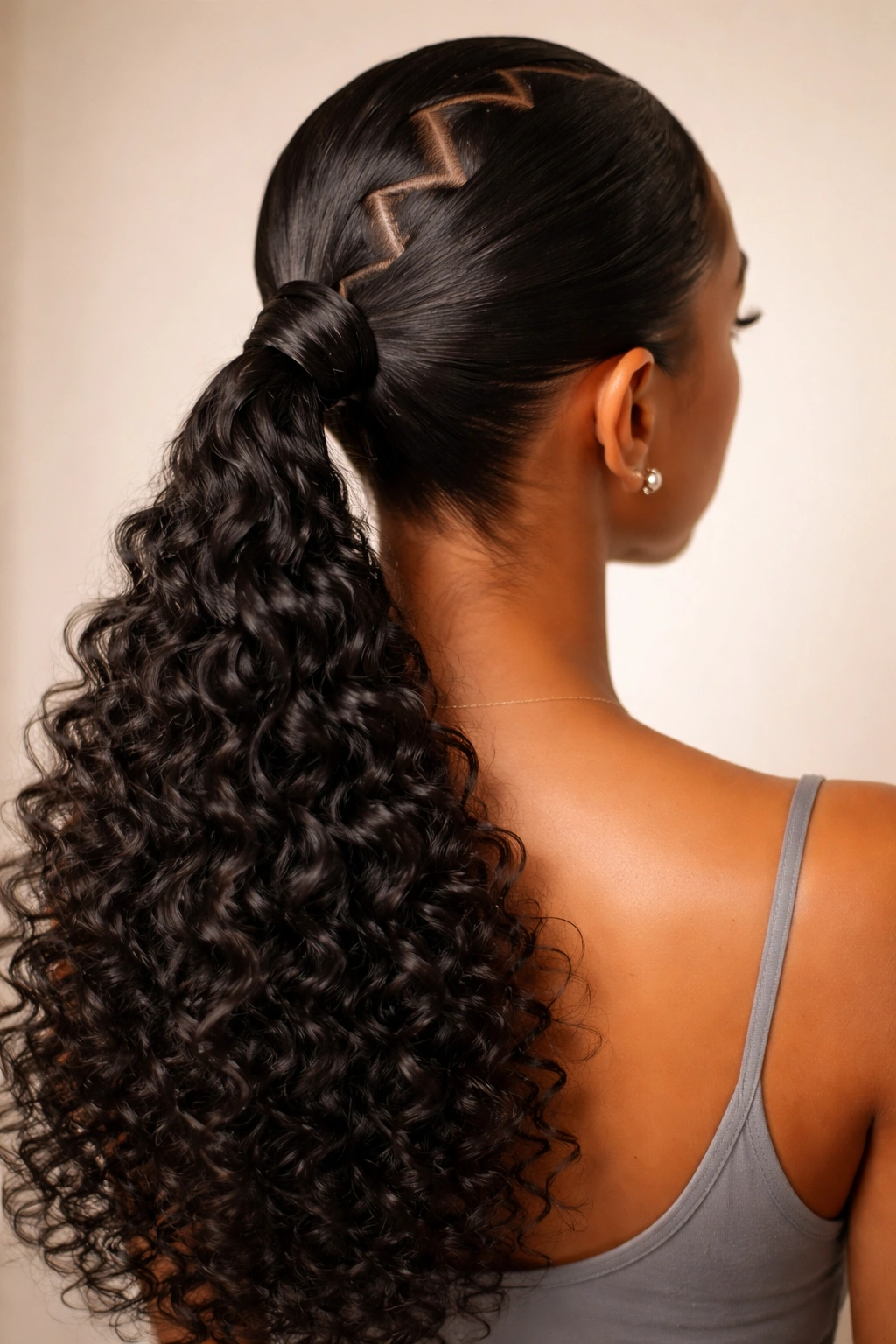
A zigzag part gives the style a graphic edge before the braid even starts. A zigzag part braided ponytail is one of those details people notice from across the room, because the parting itself does the work.
This look demands patience. The comb has to stay steady, and the lines need to be fairly even, or the zigzag turns muddy fast. On curly hair, a good gel helps keep the scalp clean while you draw the pattern. Once the part is set, the braid can be simple. It does not need extra decoration because the base already has a strong visual hook.
I like this style when the usual center part feels too plain. It still reads sleek. It just has a little more personality baked in.
20. Colored-Extension Braided Ponytail
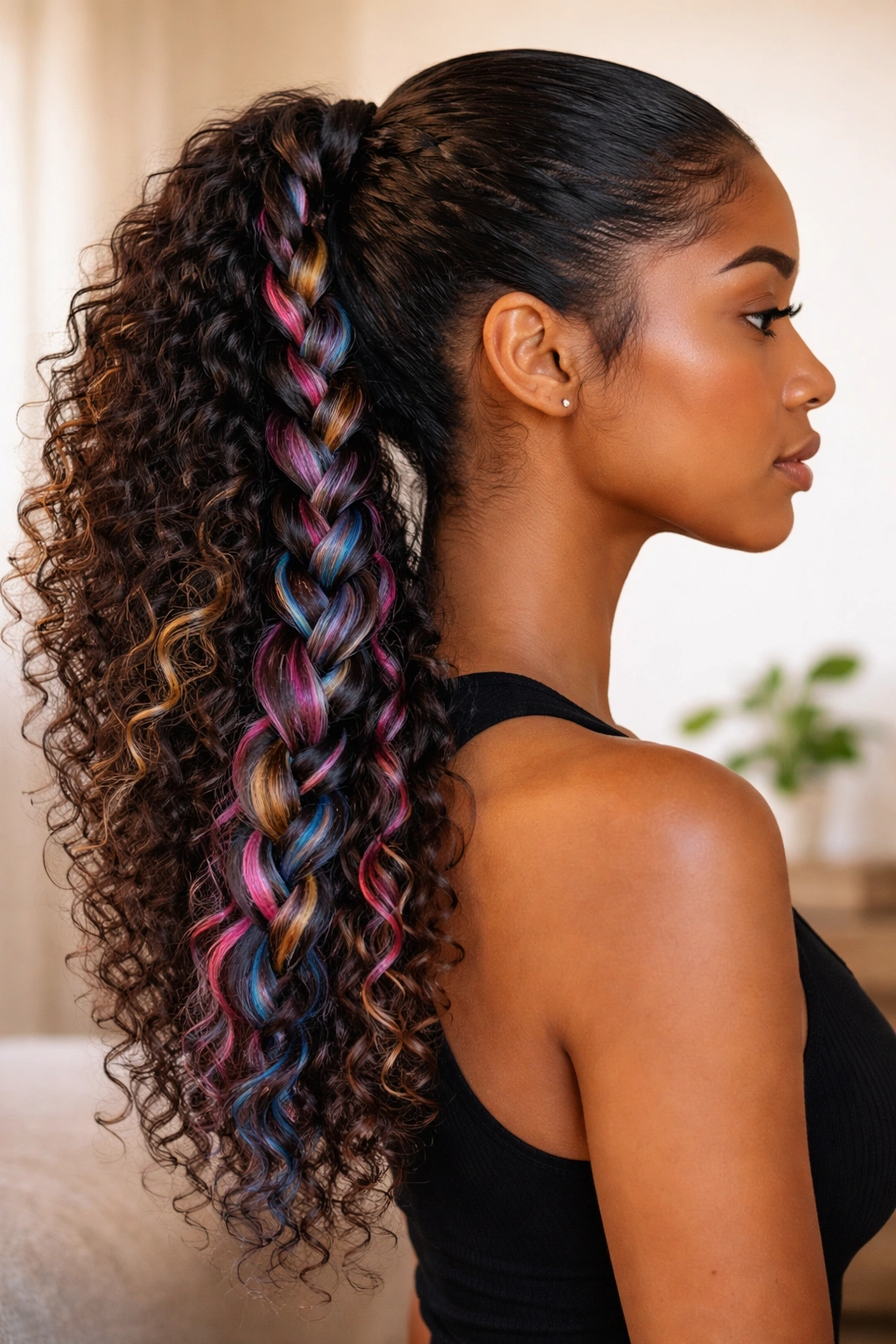
Color changes the mood fast. A colored-extension braided ponytail can bring warm brown, copper, honey, burgundy, or blond into curly hair without changing your natural shade at all.
The important part is matching the extension texture to the braid. If the hair is too silky, the braid can slip and look fake. If it’s too coarse, the blend can feel rough. Pick an extension that holds the braid shape and sits close to your own texture. Then let the color do the rest.
Where This Style Wins
- It adds contrast to dark curls.
- It makes long braids look fuller.
- It lets you test a color without dyeing your hair.
The effect can be subtle or loud, depending on the shade. Either way, the ponytail ends up looking more dimensional than a plain single-tone braid.
21. Protective Side Braided Ponytail
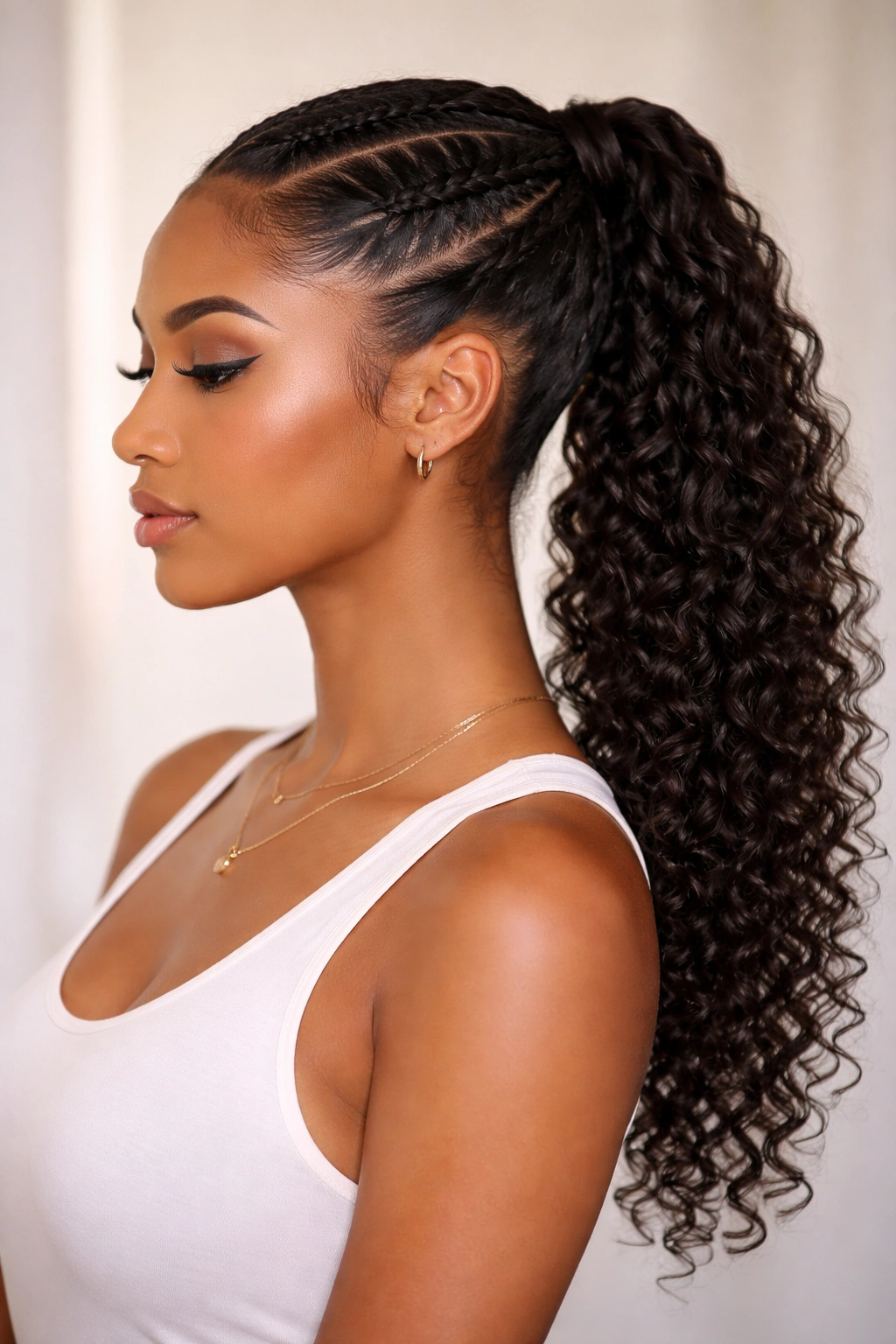
A side braided ponytail is one of the quieter protective styles, and that is part of its charm. The braid sits off to one side, which reduces friction at the nape and keeps the style from rubbing against collars as much.
Curly hair often benefits from that side placement because it avoids flattening the whole crown. You can still smooth the top, but the braid does not have to be centered and severe. Start the braid near the temple or just behind the ear, then gather it into a side ponytail that hangs naturally over the shoulder.
It feels easier to wear than a strict center style. And if you like sleeping in your styles, a side braid often survives the pillow a little better than a braid pressed straight down the back.
22. Low Nape Braided Ponytail
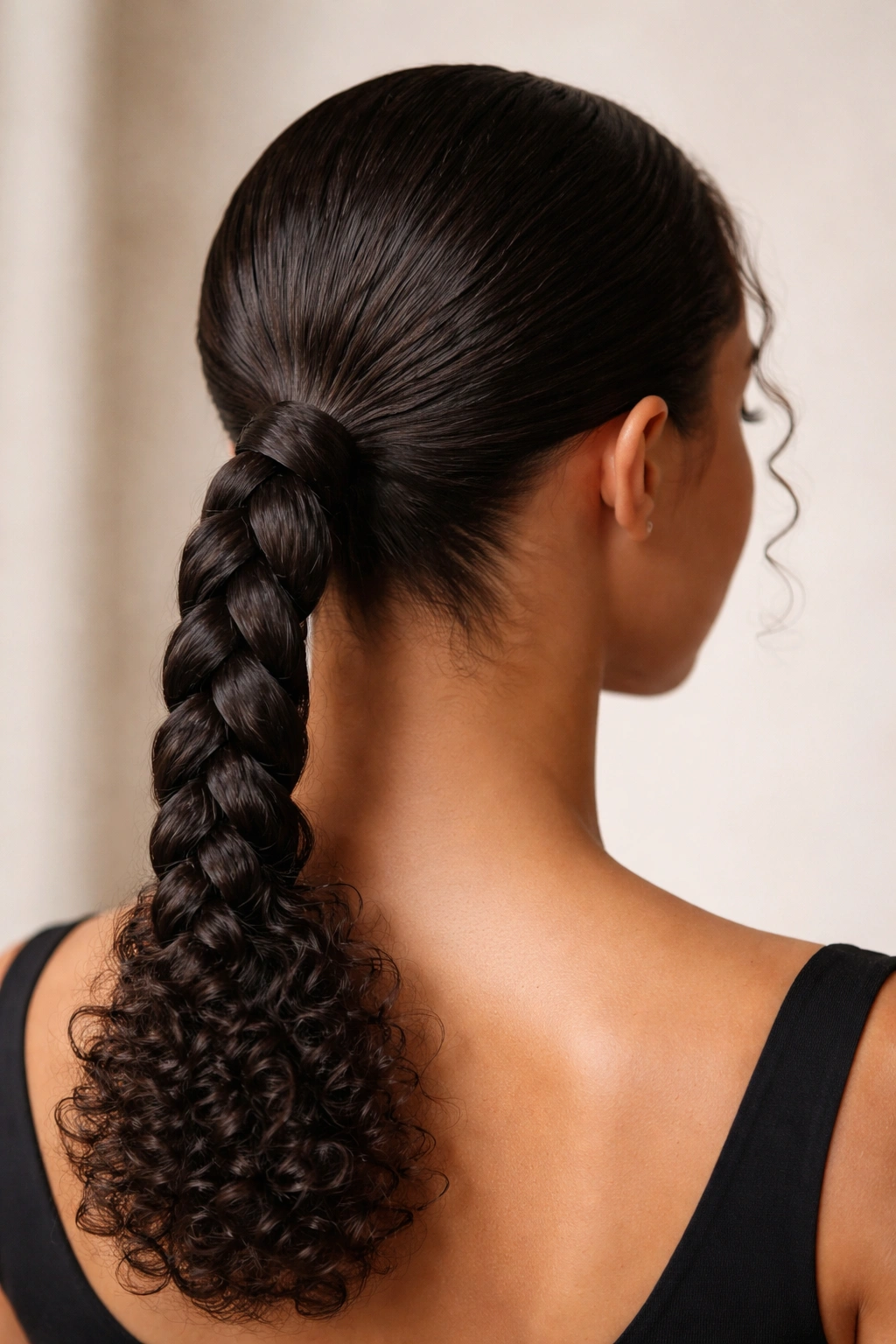
A low nape braided ponytail has a calm, polished feel that works in places where a high ponytail would feel too energetic. It sits close to the neck, keeps the lines tidy, and lets the braid become part of the silhouette instead of floating above it.
On curly hair, low placement helps with control. The hairline is under less strain, and the style tends to stay neater if the weather is humid or if you spend time under a collar or jacket. Keep the base smooth, tie it low, then braid the tail with even pressure. If the braid starts to flare out halfway down, tighten the sections a little more evenly.
This is a good one for minimalists. No drama. No fuss. Just a clean braid with decent staying power.
23. Braided Base with Loose Curly Ends
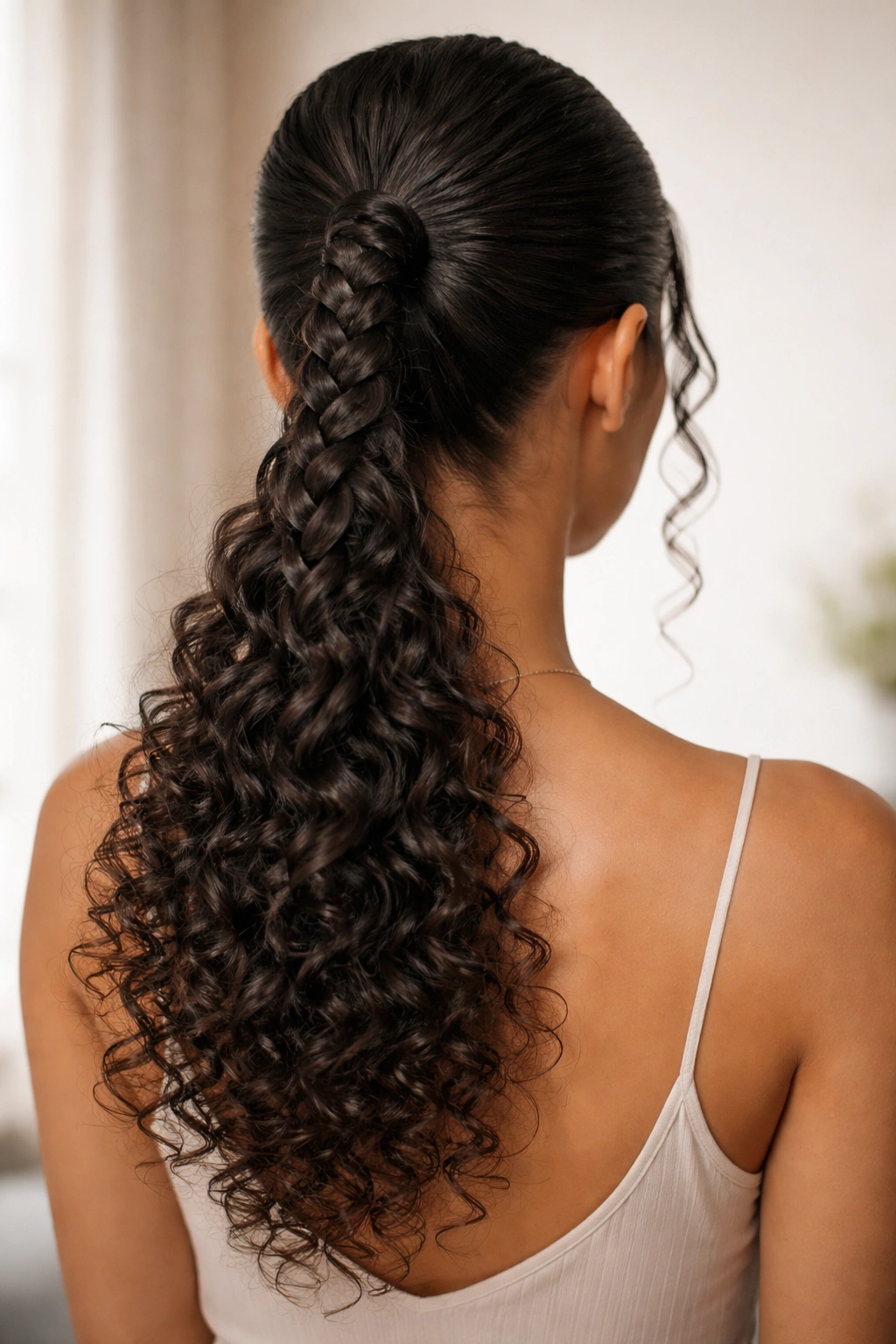
This style keeps the front sleek and lets the ends do what curly hair does best. A braided base with loose curly ends gives you structure near the scalp and movement through the tail, which is a smart mix if you hate when braided styles feel too rigid.
The braid usually stops partway down, then the remaining hair stays loose and defined. That transition works best when the curls are already moisturized and clumped nicely, because the loose ends become the feature, not an afterthought. Use a curl cream or light gel at the tail so the ends keep shape instead of turning frizzy by noon.
Why People Keep Reaching for It
It’s softer than a full braid. It’s easier to refresh. And it lets the natural curl pattern stay visible, which matters more than people admit. A braid without curl movement can feel a little flat on curly hair. This version avoids that.
24. Event-Ready Braided Ponytail
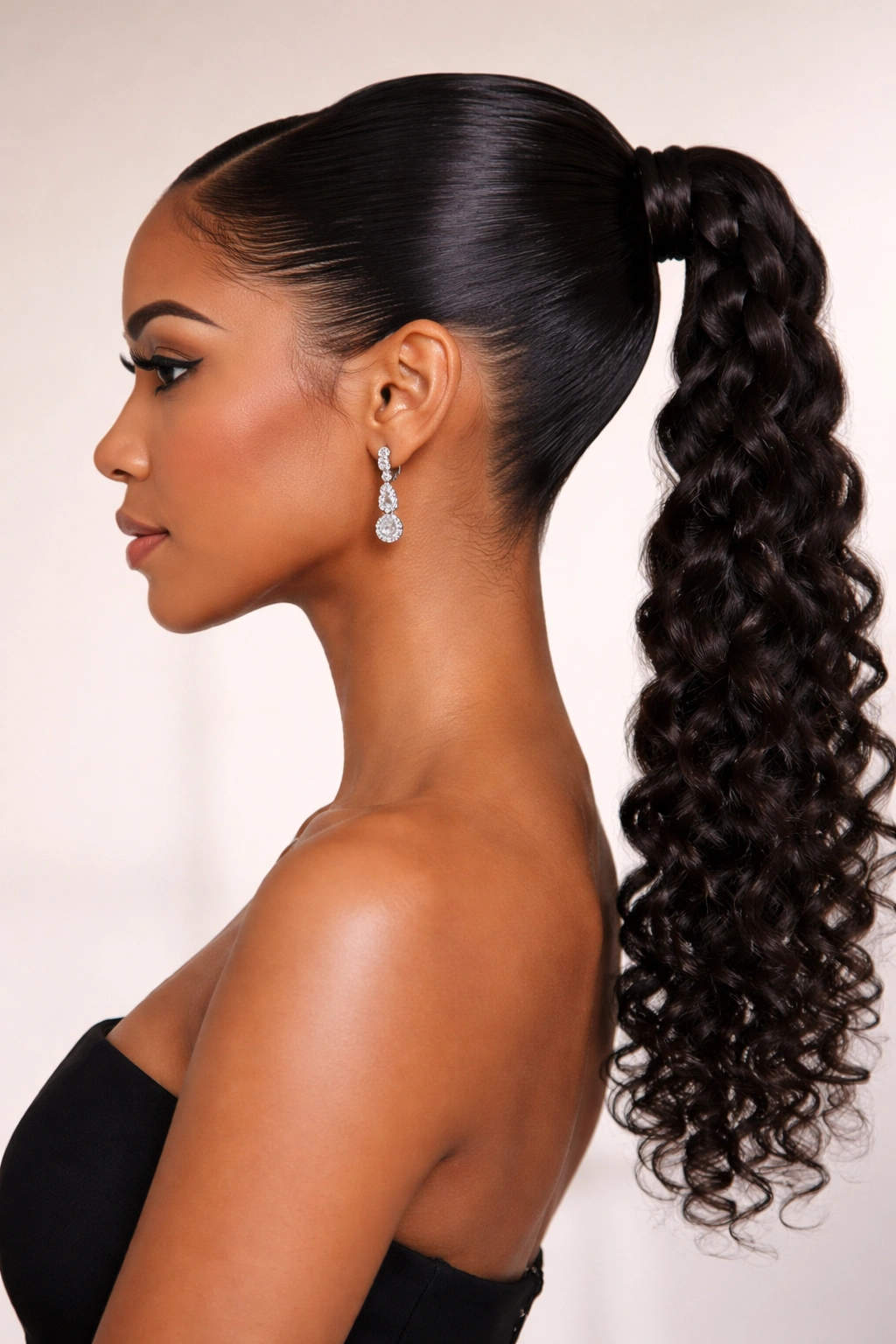
Some styles are built for errands. Others are built for photographs, candlelight, and people asking who did your hair. An event-ready braided ponytail usually combines a sleek base, a precise braid, and a polished finish that can handle an evening without collapsing.
The difference is in the details. The part needs to be crisp, the edges need to be smooth but not stiff, and the ponytail should sit where the head shape looks best from the side. Add shine sparingly. Too much gloss can make curly hair look greasy under lights. A light serum on the braid itself is usually enough.
I would use this style when you want the hair to look intentional from every angle. It is the version that pairs best with earrings, bare shoulders, or a structured neckline.
25. Accessory-Wrapped Braided Ponytail
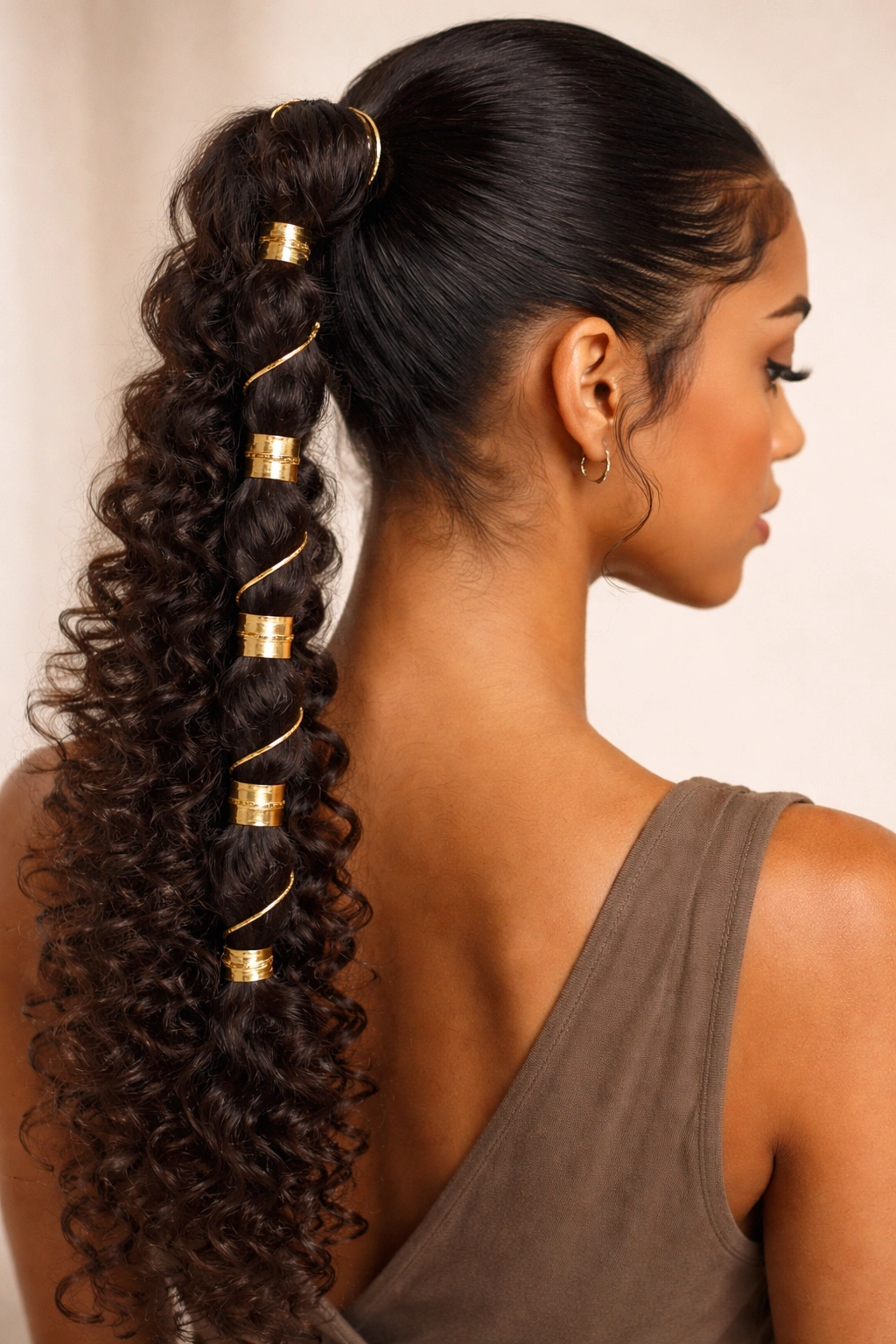
Hair accessories are not an afterthought here. They are the point. A accessory-wrapped braided ponytail uses cuffs, rings, thread, or slim clips to break up the braid and make it feel finished without changing the braid pattern itself.
This is a good move on curly hair when the braid is already clean but needs a little extra personality. Choose one type of accessory and repeat it. Too many mixed metals or too many clip shapes can make the braid look cluttered. Thread works well if you want color. Rings work well if you want shine. Cuffs are the simplest choice when the braid is thick.
Keep the Look Clean
- Place accessories where the braid is straightest.
- Avoid overloading the top third of the braid.
- Match the finish to your outfit, not every piece of jewelry.
The braid stays the same. The mood changes fast.
26. Soft-Edged Everyday Braided Ponytail
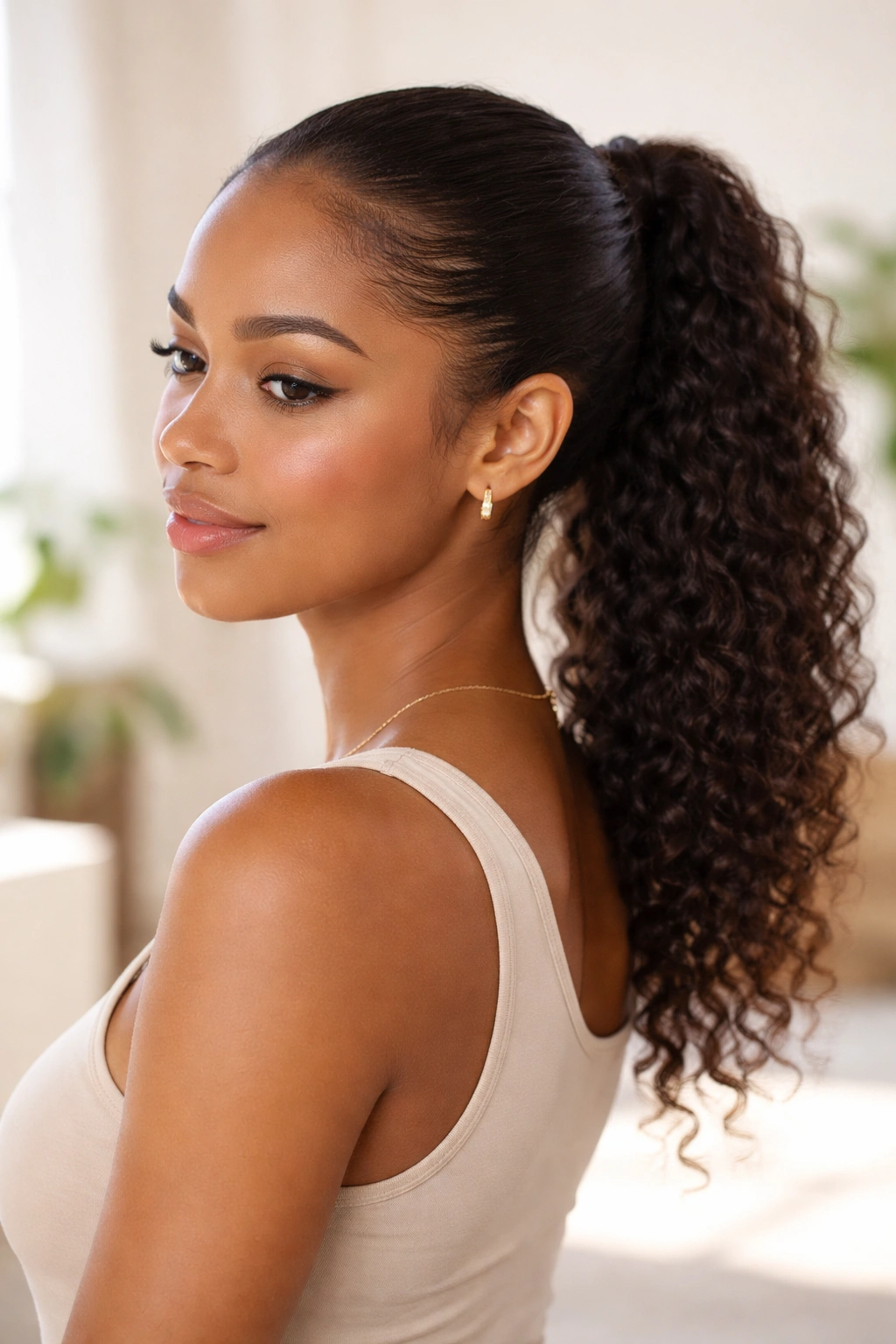
Not every sleek braid needs ultra-hard edges. A soft-edged everyday braided ponytail keeps the roots neat but leaves the hairline a little less carved, which often looks more natural on curly hair.
That softer finish matters when you wear your hair a lot. Strong gel and heavy brushing can make the front look sharp for a while, then flaky later. A lighter hold gives you a smoother transition from scalp to braid and is usually easier to refresh the next morning. It also makes the style less formal, which is useful when you just want to look put together without feeling overdone.
This is the style I’d pick for school runs, grocery store stops, coffee dates, and the kind of day where hair should behave without stealing your time.
27. Braided Ponytail with Slicked Center Part
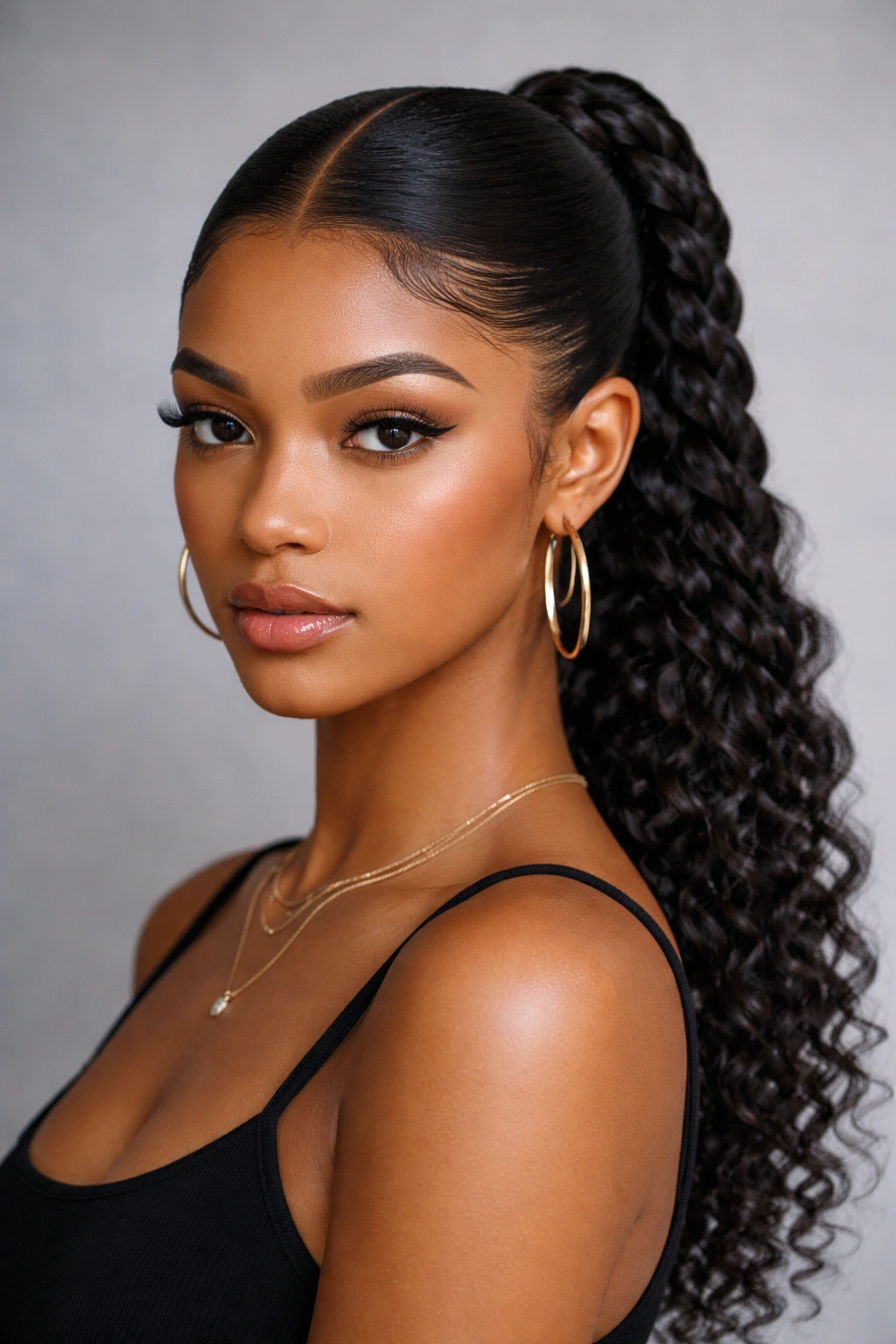
A center part can look severe if it is not done cleanly, but when it is right, it gives curly hair a strong, even frame. A braided ponytail with a slicked center part is all about symmetry and control.
The part should be straight from front hairline to crown. Use the tip of a fine comb, not the full width, so the line stays narrow and sharp. Then smooth both sides down evenly before you braid or gather the ponytail. If one side gets more gel than the other, the finish will show it.
This style suits people who like clean lines and don’t mind a little structure around the face. It’s a crisp look. Not soft. That is the appeal.
28. Braided Ponytail with Crisscross Base
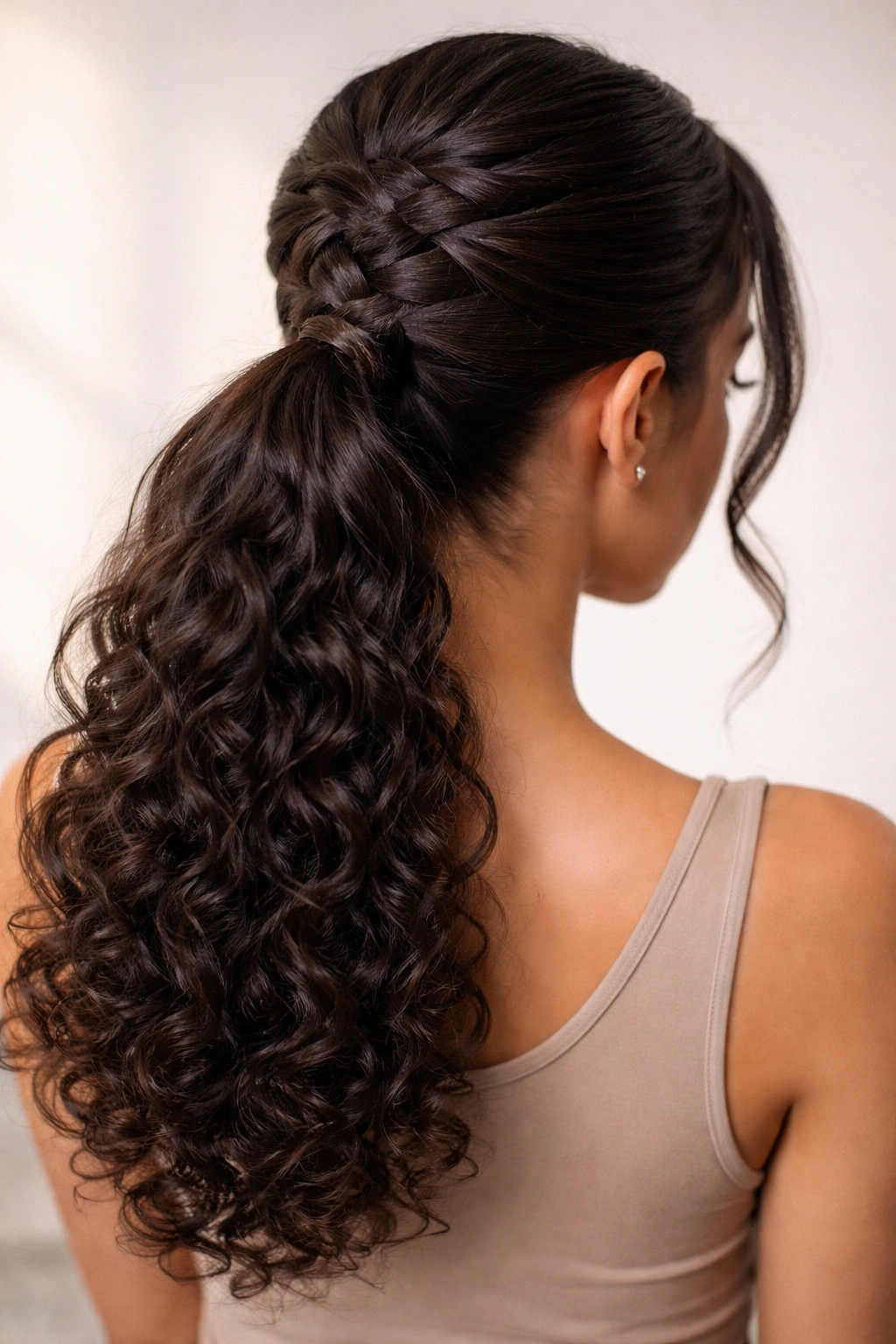
A crisscross base gives the style more texture before the ponytail even begins. In a braided ponytail with crisscross base, sections are crossed over one another at the crown or nape, then gathered into the main braid.
The visual effect is subtle but strong. It makes the base look layered, almost woven, and that works nicely on curly hair because the added texture keeps the style from reading flat. Keep the crossovers even and secure each one before moving on, or the pattern can loosen in weird places. Small pins help when the hair is slippery.
This is a good pick when a plain ponytail feels too plain but you do not want a full head of braids. It gives you detail without crowding the style.
29. Braided Ponytail for Thick Dense Curls
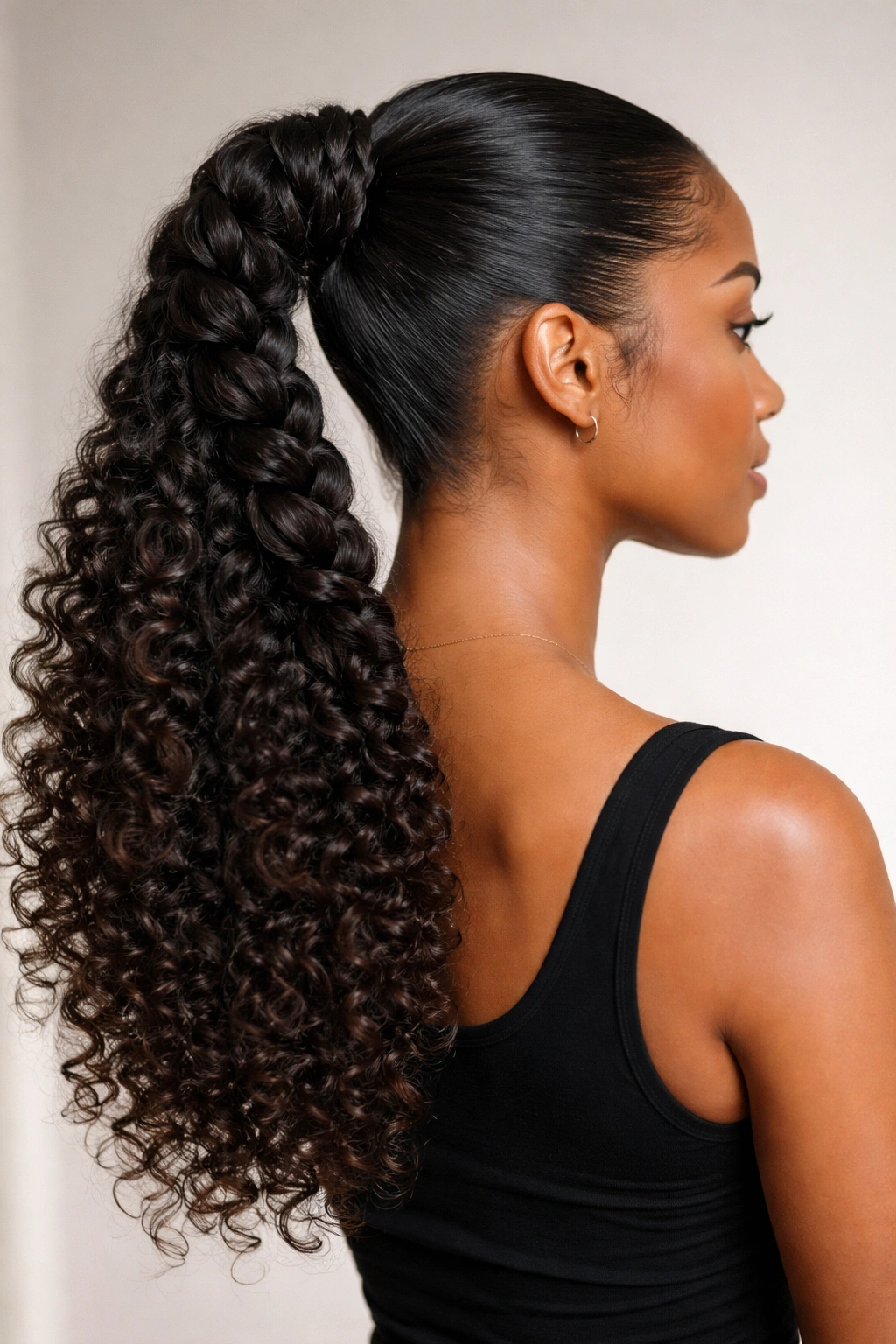
Thick curls need a different approach. A braided ponytail for thick dense curls has to respect weight, because heavy hair can pull the base down and make a style sag faster than expected.
Start with larger sections and a stronger anchor point at the base. If the ponytail sits too high and too tight, the scalp will complain before the day is over. If it sits too low and too loose, the braid loses shape. Somewhere in the middle usually works best. Smooth the roots in stages, not all at once, so the curls cooperate instead of resisting the brush.
What Helps Most
- Use a sturdy elastic.
- Keep section sizes even.
- Don’t pile on too many accessories.
Dense curls look gorgeous in braided ponytails when the weight is managed well. That’s the whole game.
30. Braided Ponytail for Defined Ringlets
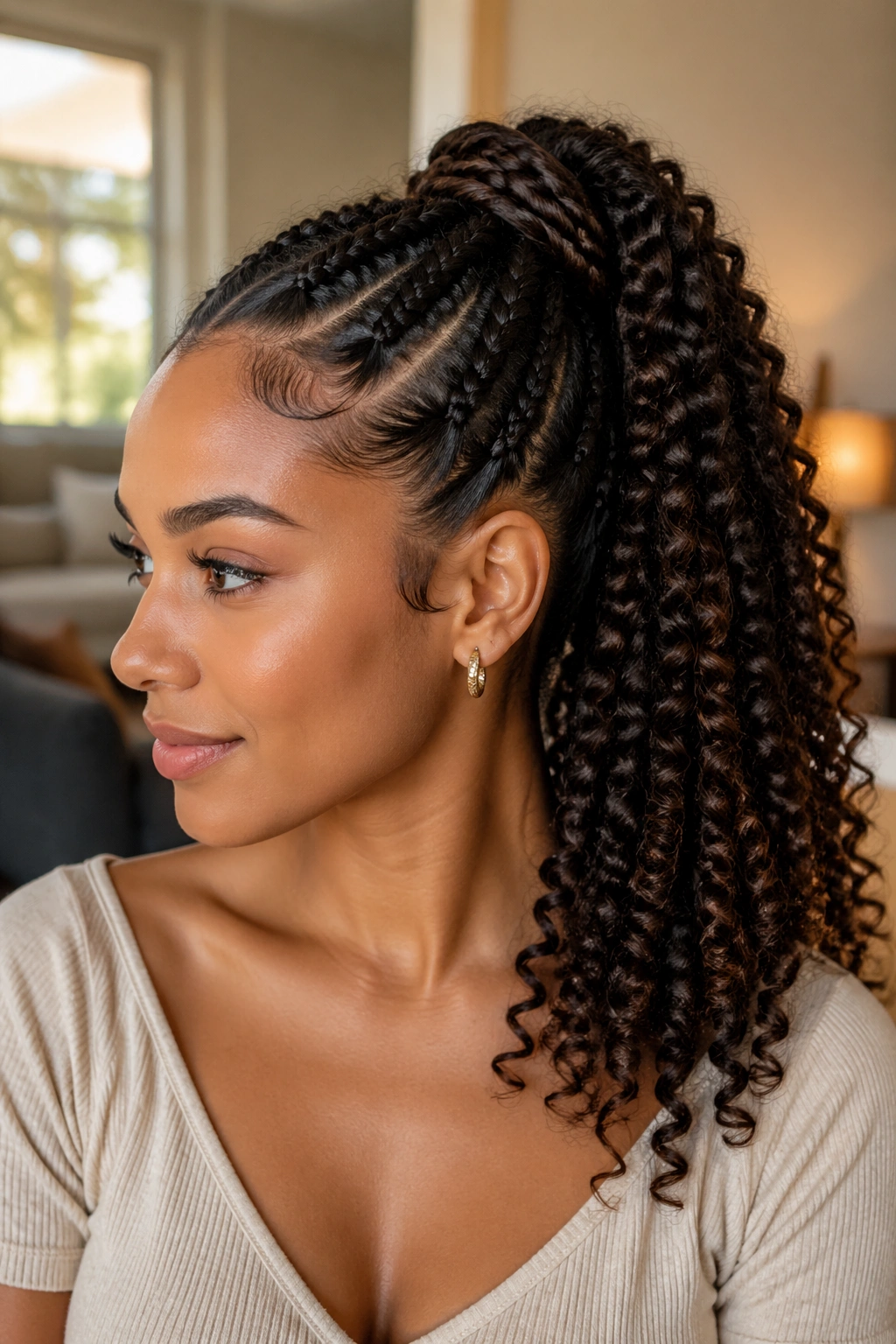
Defined ringlets change the finish of the whole style, and that is a good thing. A braided ponytail for defined ringlets lets the braid do the smoothing at the top while the tail keeps its spring and shape.
This works best when you don’t fight the curl pattern. Smooth the crown, secure the base, and let the ringlets stay visible in the ponytail or at the ends of the braid. If the curls are clipped, stretched, or brushed too much, they lose the bounce that makes this look special. A little frizz at the tail is fine. A dead-flat finish is not the point here.
The best braided ponytails for curly hair are the ones that respect the hair’s own pattern. Some days call for a hard, glossy braid. Some days want a softer nape, a few loose ringlets, and enough control to keep the style in place until you’re done with it. Either way, the shape should fit the hair you have, not the hair you wish you had.
