



A low updo ponytail is one of those styles that makes hair look deliberate even when the rest of the day feels messy. It sits low enough to stay calm and elegant, but the right twist, wrap, braid, or tucked finish keeps it from reading like a rushed gym ponytail. That little difference matters. A lot.
The base does most of the work. A clean part, a smooth crown, and an elastic that disappears under a strip of hair will change the whole mood of the style. So will the finish: a soft shine for straight hair, a little grip for slippery strands, and a few face-framing pieces when you want the look to feel less severe.
These styles work because they’re flexible. You can wear a polished low updo ponytail to the office, to a dinner, to a wedding, or just on a day when you want your hair out of your way but still intentional. Some of the looks below are sleek and exact. Others are softer, with braid work, texture, or accessories that do the heavy lifting for you.
1. Sleek Wrapped Low Ponytail
This is the cleanest version of the look. If you want polished hair with almost no fuss, start here. The whole point is a flat crown, a low placement at the nape, and a wrap that hides the elastic completely.
Why It Works
The style looks sharp because there’s nowhere for the eye to wander. Every line is tidy. Every piece sits where it should.
A fine-tooth comb and a small amount of smoothing cream are enough for most hair types. If your hair slips, a light dusting of dry shampoo at the roots gives it more grip without making it chalky.
- Part the hair cleanly before tying it back.
- Use a 1-inch section of hair to wrap the elastic.
- Pin the wrap underneath with two crossed bobby pins so it stays put.
- Mist the top lightly with flexible-hold spray from about 10 inches away.
Best tip: keep the wrap narrow. A thick wrap looks bulky fast.
2. Center-Part Low Ponytail With a Glassy Finish
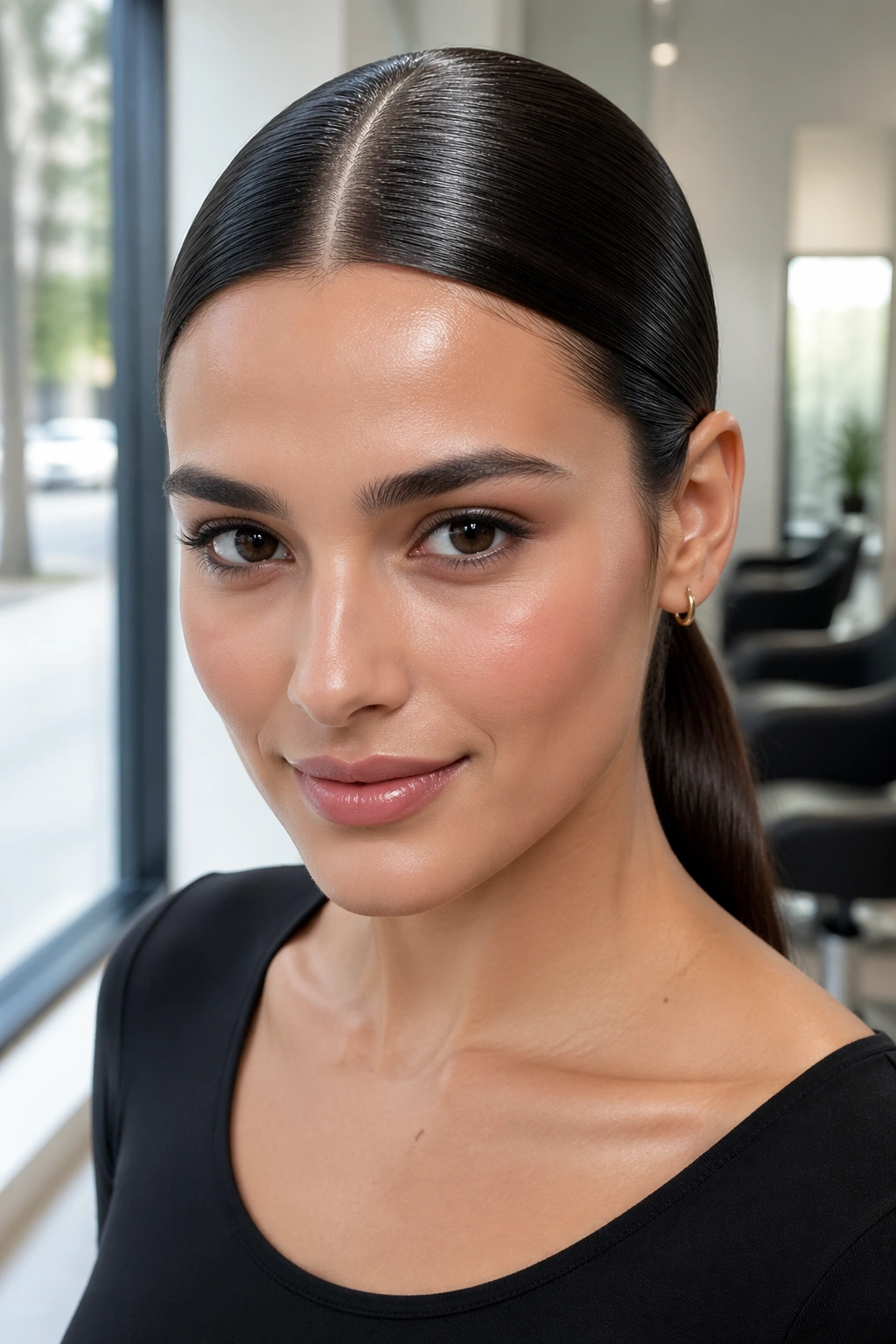
Why does a center part look so polished here? Because it gives the face symmetry and makes the ponytail feel intentional instead of accidental. The trick is to keep the part straight all the way back to the crown, then smooth the hair with a brush that has firm bristles.
A touch of shine serum on the mids and ends helps, but don’t coat the roots. That’s how the style goes flat in the wrong way. I like this one for straight hair, though wavy hair can wear it too if you press the top smooth and leave just a little bend in the tail.
How to Style It
Keep the elastic low and snug. Then take a tiny section from under the ponytail and wrap it around the base. No loose fluff. No stray ends. If you want extra gloss, warm a pea-size amount of serum between your palms and glide it over the surface only.
3. Deep Side-Part Low Ponytail
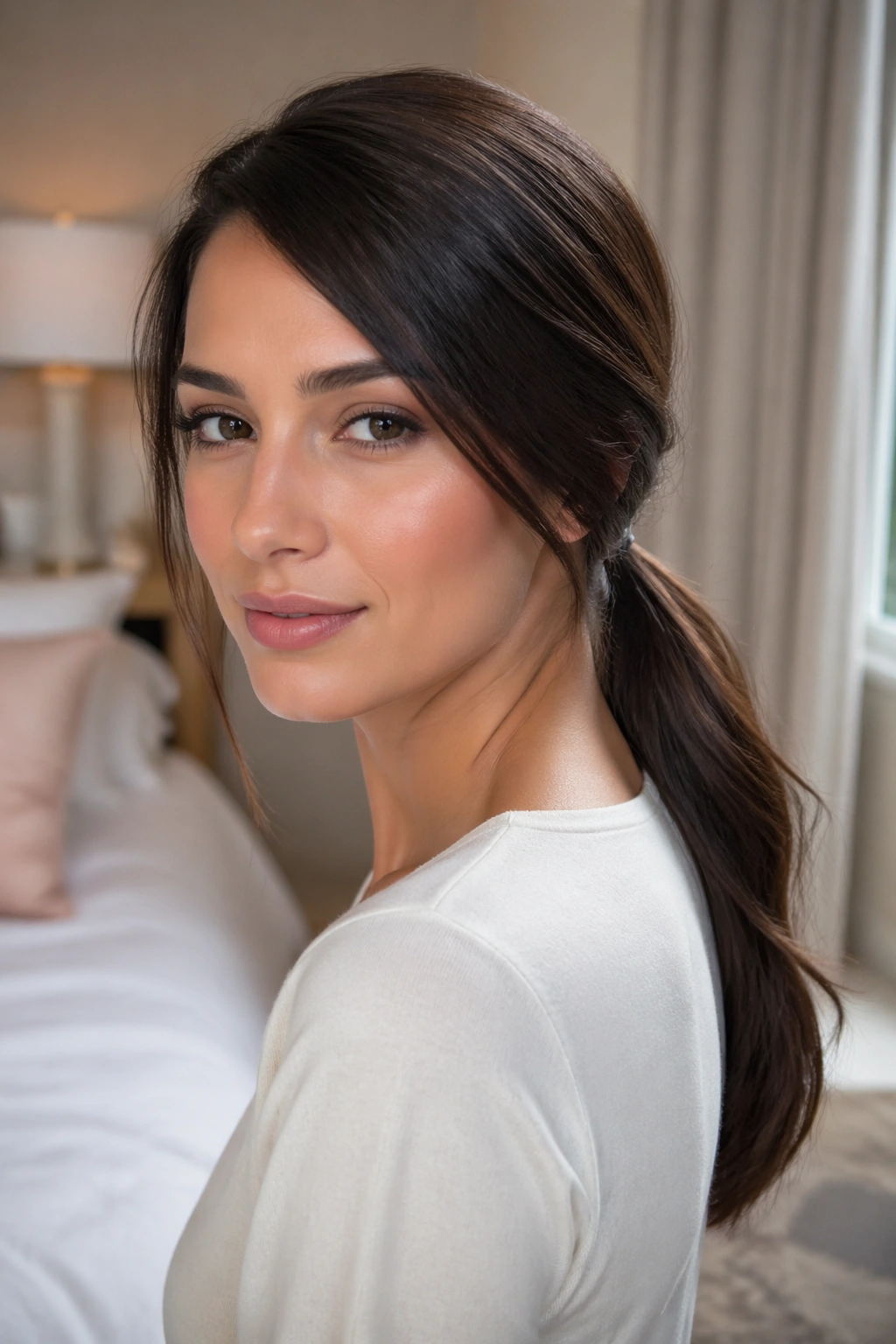
A deep side part shifts the whole mood. It makes a low ponytail feel a little softer, a little more dressed up, and less severe than the center-part version. That single change matters more than people think.
The style looks best when the heavier side is brushed smoothly across the forehead and tucked behind the ear or held with a discreet pin. The ponytail itself can stay simple. That contrast is what keeps it elegant. I also like this one on medium-length hair, because the side sweep gives the face a longer line without needing extra volume.
The ends can stay straight or get a slight bend with a 1-inch iron. Either works. Just keep the crown neat and the part crisp.
4. Soft Twisted Low Ponytail
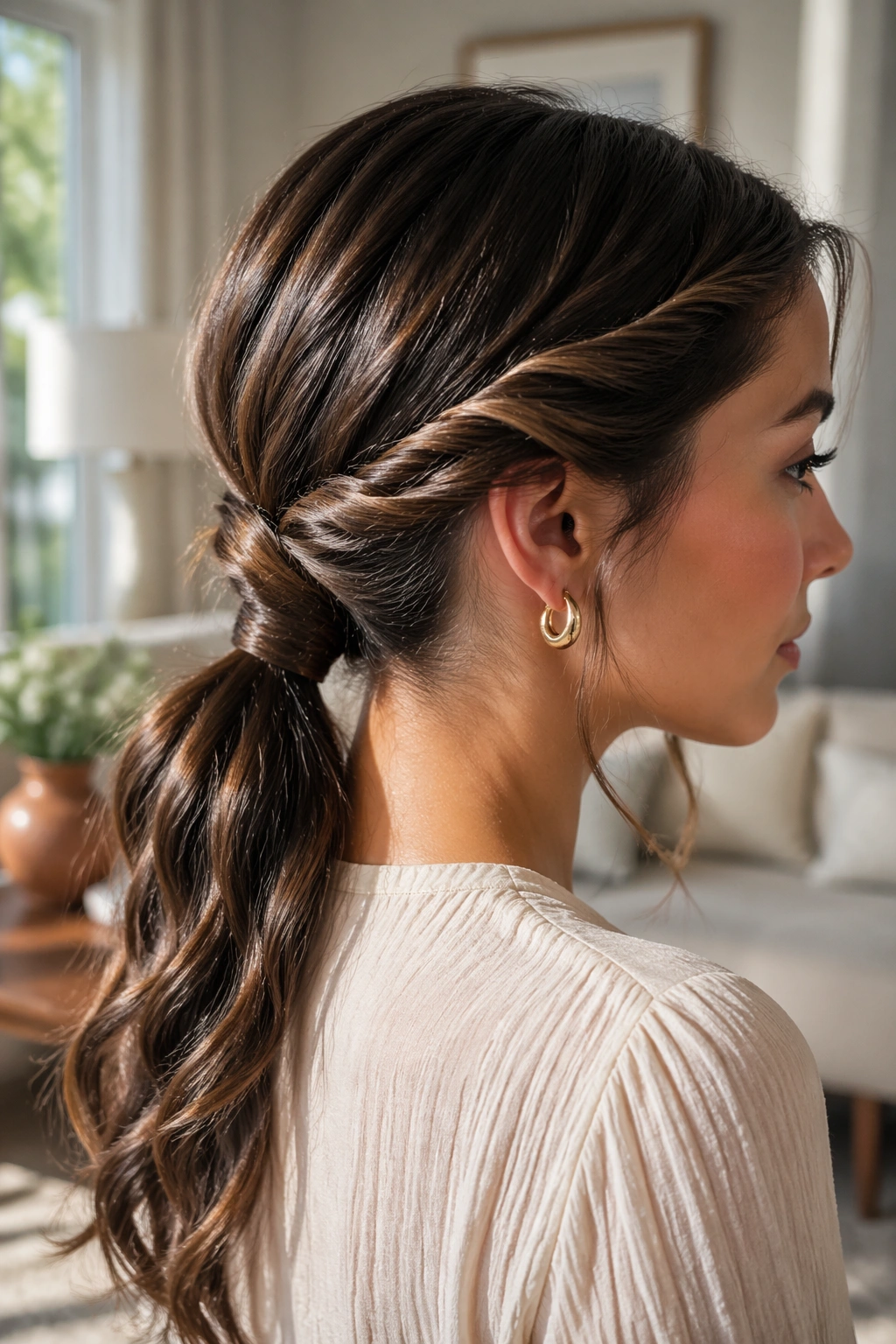
I reach for this one when a plain ponytail feels too bare. It takes about the same time, but the twist at each temple gives the style a more finished shape.
What Makes It Different
Instead of pulling all the hair straight back, twist a section from each side toward the nape. That small bit of movement keeps the style from looking flat. It also hides the line where the hair is gathered, which is useful if your roots are a little messy or your hair has some texture.
- Twist each side back for 2 to 3 turns before securing.
- Cross the twists just above the elastic for a cleaner finish.
- Pin them underneath, not on top.
- Leave the tail smooth, or curl the last 3 inches if you want a softer end.
A good twist should look relaxed, not ropey. If it starts to look tight, loosen it with your fingertips before pinning.
5. Braided Base Low Ponytail
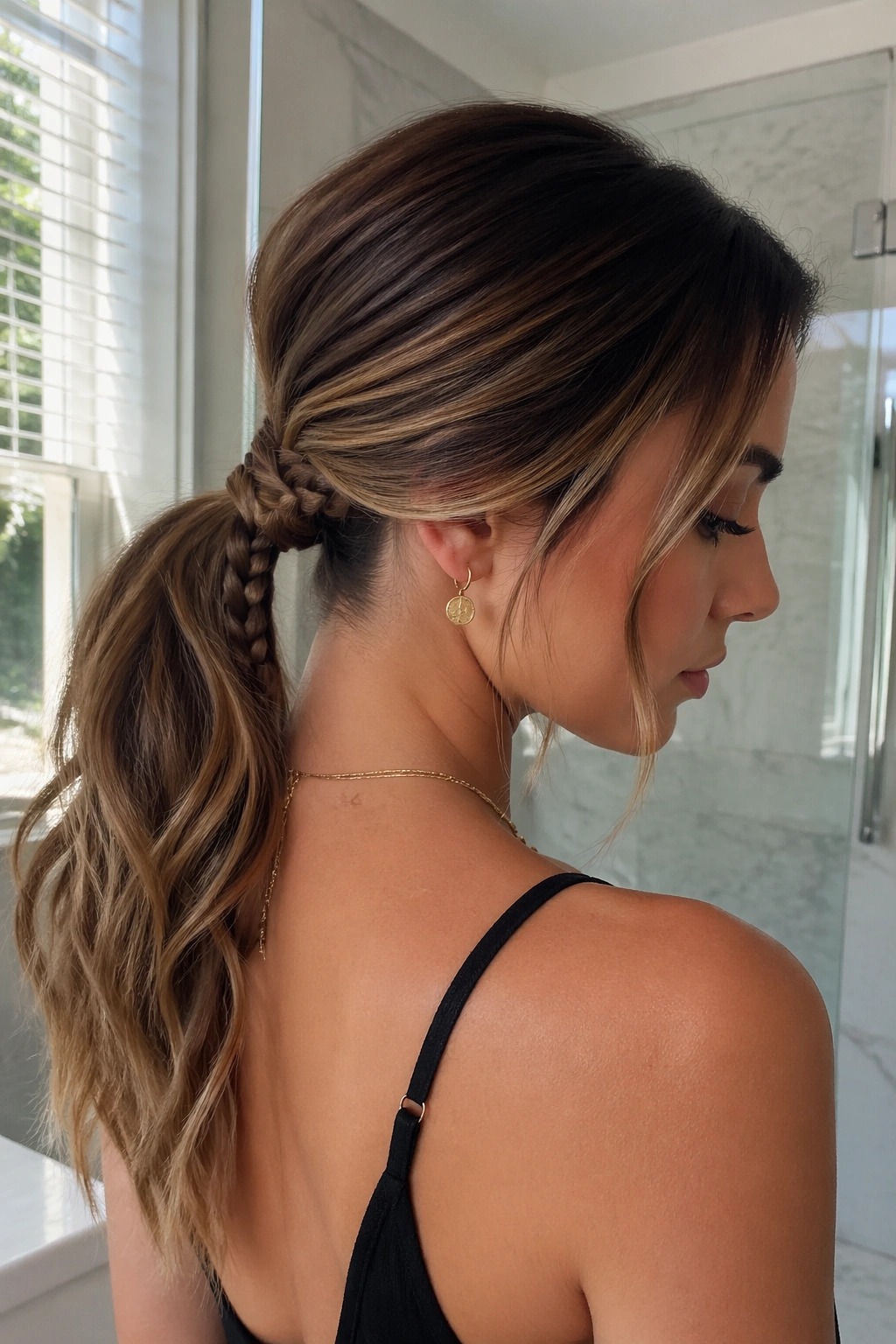
Braids make a low ponytail look expensive without much effort. Not the loud kind. Just enough braid detail at the base to make people notice that you did more than tie your hair back and hope for the best.
A small three-strand braid starting at one temple and running into the nape is enough. Another option is to braid a section from each side and meet them in the middle before adding the ponytail. Either way, the braid acts like trim on a jacket: subtle, but it changes the whole line of the look.
This is a nice choice for second-day hair because the braid gives the style something to hold onto. If your hair is very clean and silky, a bit of texturizing spray helps keep the braid from slipping apart.
6. Bubble Low Ponytail
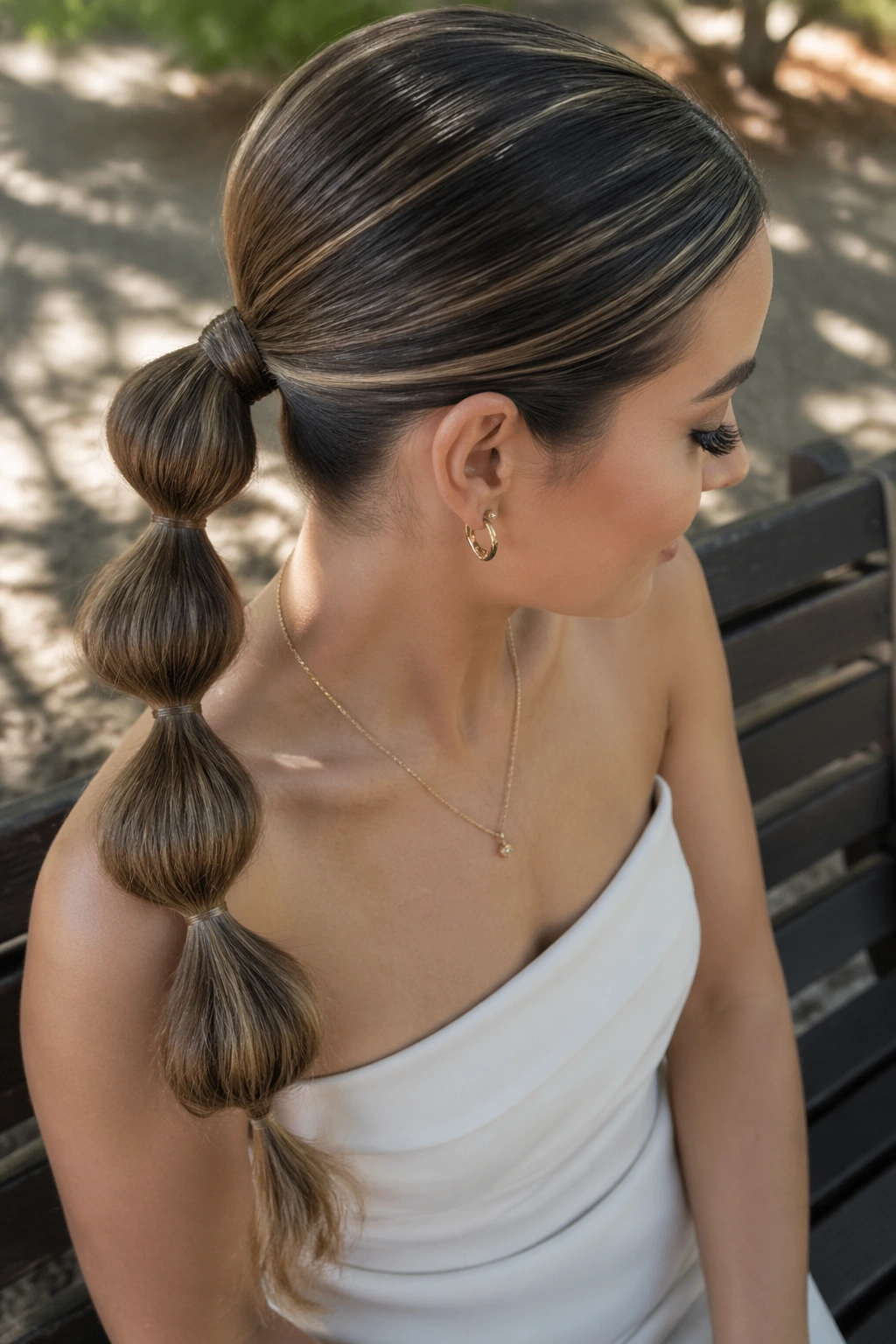
Bubble ponytails can look playful, but the low version has a surprisingly neat edge when the sections are even. The key is spacing. If the bubbles are all different sizes, the style gets messy fast.
How to Keep It Polished
Tie the first elastic at the nape, then add small clear elastics every 2 to 3 inches down the tail. Gently pull each section outward so it rounds into a bubble, but stop before it turns puffy and uneven. A light smoothing balm on the outer layer keeps flyaways under control.
This style works especially well on longer hair, since the bubble shape needs length to read clearly. Shorter tails can still do it, but the effect is more compact. I like it when the hair is thick and naturally full, because the bubbles hold their shape without much help.
7. Low Ponytail Chignon
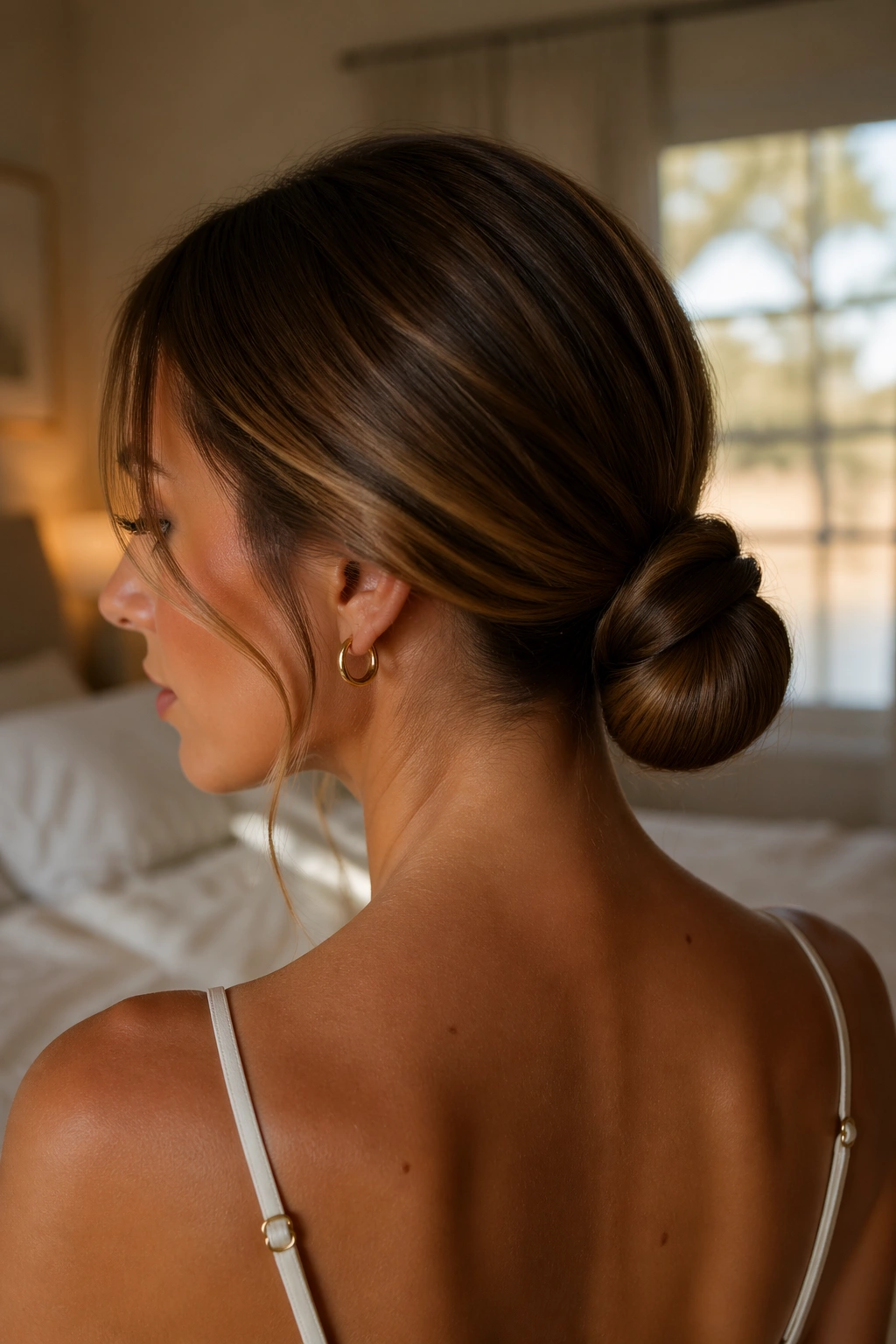
This one sits right between a ponytail and a bun. The tail is looped or rolled upward at the nape, which gives you the ease of a ponytail with the finished shape of an updo.
The best part is the line at the back of the head. It looks tidy and tailored, almost like you meant to wear something structured. Keep the base smooth and the rolled section compact. If the loop gets too wide, the look stops feeling polished and starts feeling casual in a way you probably do not want.
Use 4 to 6 bobby pins, tucked from different angles, to lock the roll in place. A little shine spray on the surface gives the chignon a clean finish.
8. Knotted Low Ponytail
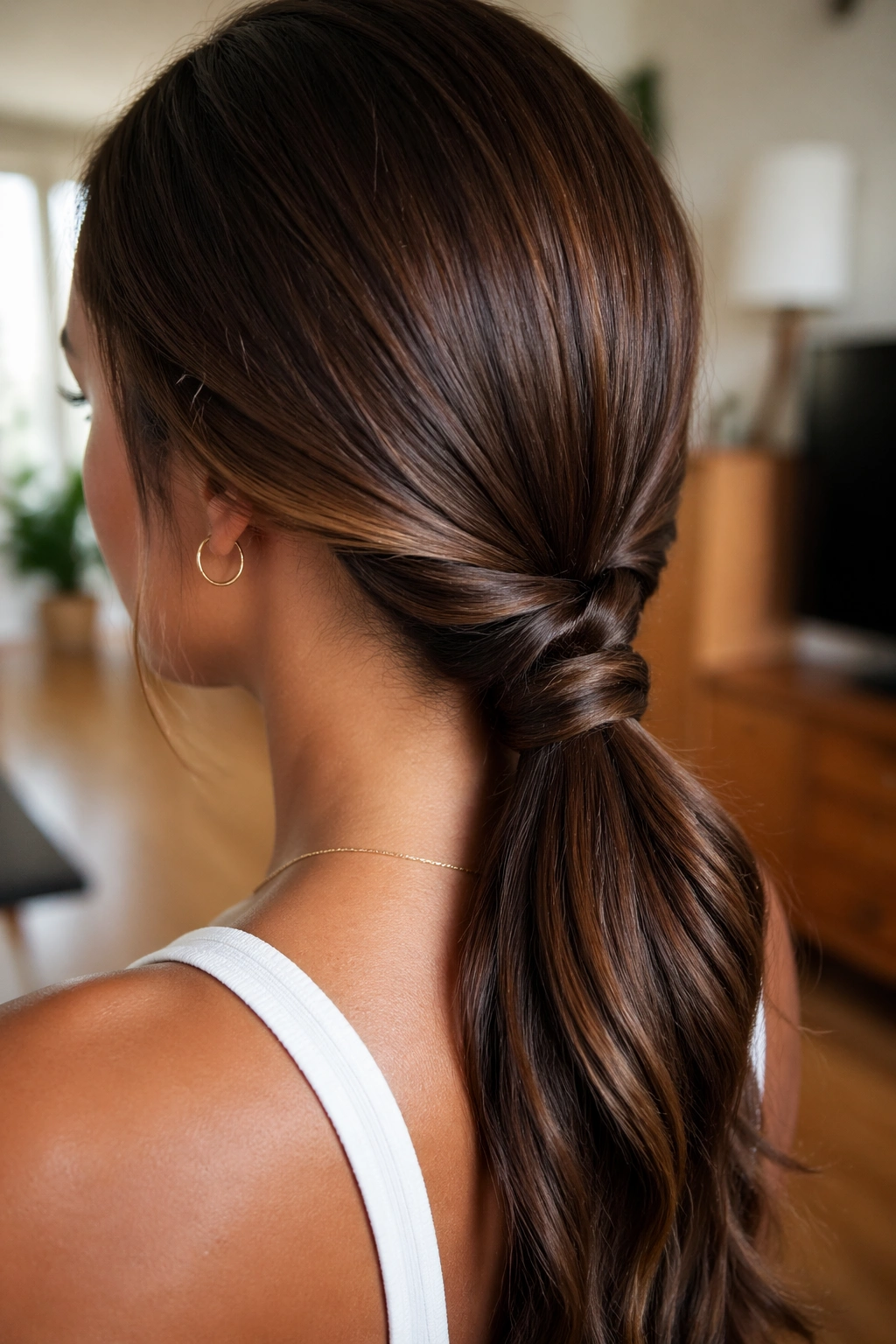
A knotted ponytail is one of those styles that looks more complicated than it is. Two sections cross over each other at the nape, then the ends disappear into the rest of the ponytail or are pinned under the knot.
The knot should be snug but not squashed. That’s the difference between chic and fussy. When I see this style done well, what stands out is the shape near the base: a small, intentional bend that breaks up the line of the hair in a nice way. It’s especially good on medium-length hair, where you have enough length to make the knot visible without dragging it down.
A satin finish or a soft matte finish both work. Just keep the crown smooth.
9. Ribbon-Tied Low Ponytail
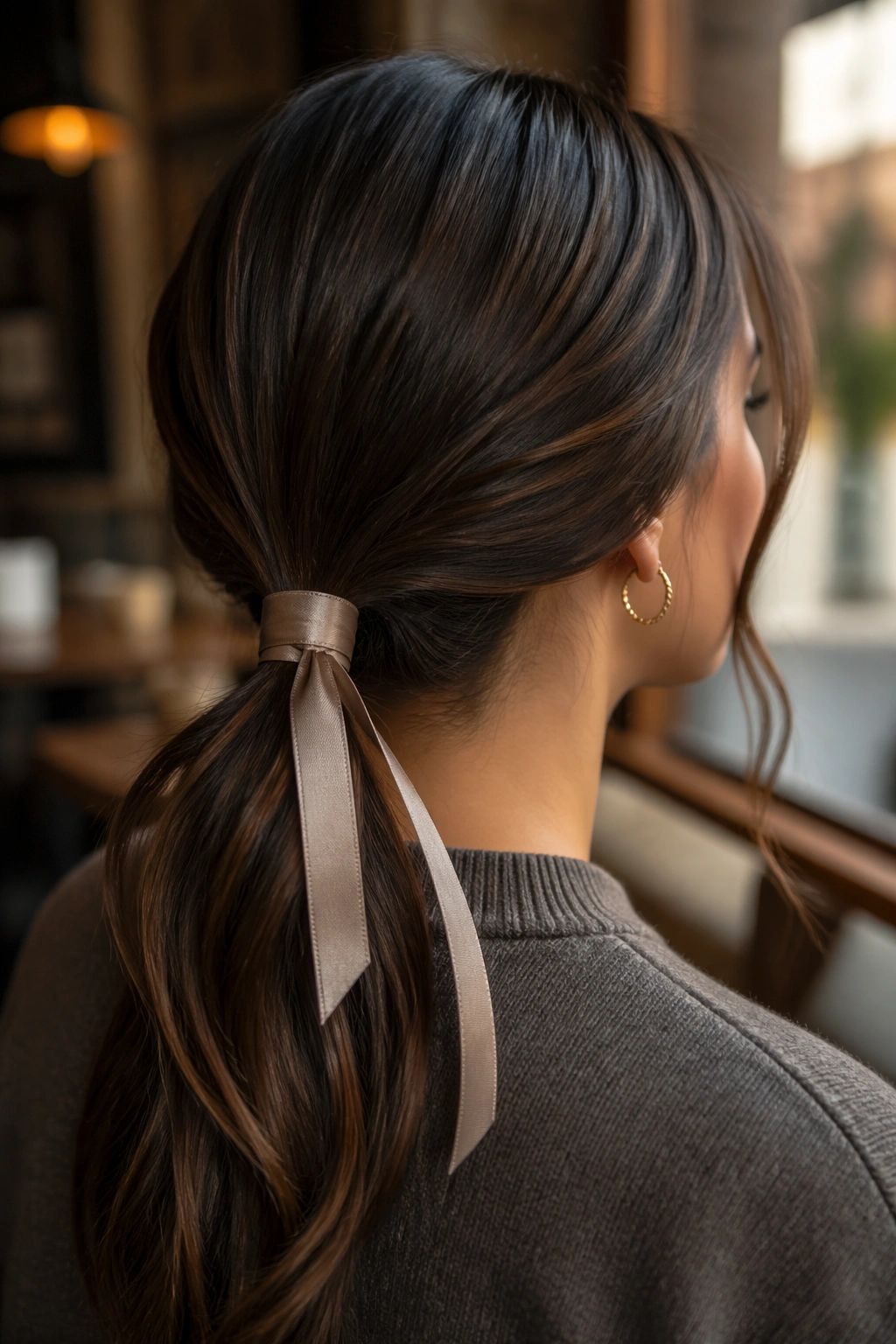
A ribbon changes the tone fast. The style goes from plain to deliberate with one small detail, and you do not need a huge bow to get the effect. Thin velvet, satin, or grosgrain all work, depending on how formal you want the result to feel.
Best Way to Wear It
Tie the ponytail first, then cover the elastic with a narrow strip of hair. After that, knot the ribbon around the base and let the tails fall over the ponytail. If the ribbon is too long, trim it so it ends around the same length as the hair tail or slightly shorter. That keeps the look tidy.
This style suits straight, wavy, and lightly curled hair. It is especially nice when the rest of the outfit is simple and the hair needs one clear point of interest.
10. Face-Framing Low Ponytail
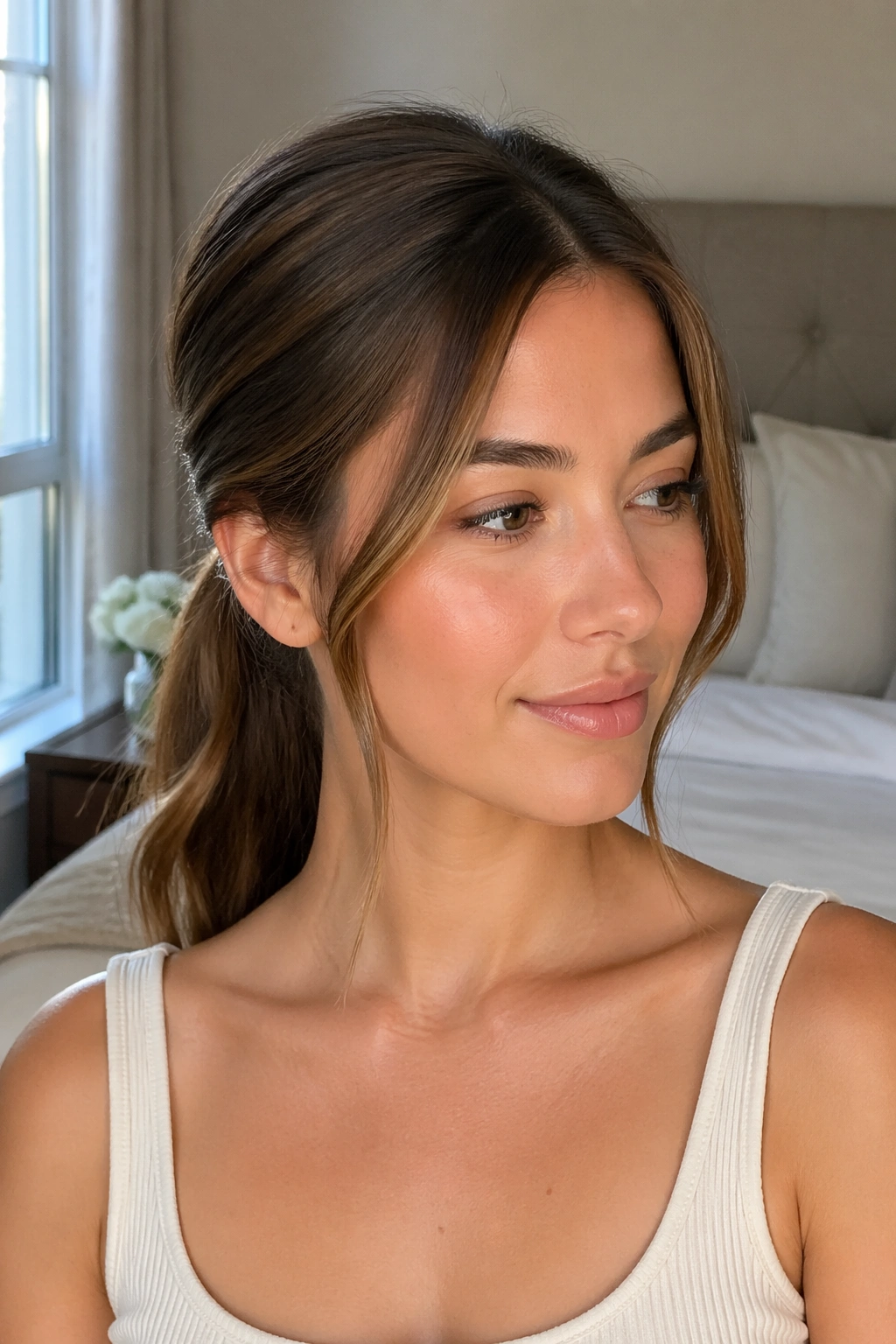
This is the version I recommend when you want softness more than sharpness. Leave out two slim sections at the front, then smooth the rest back into a low ponytail. The pieces near the face should be narrow enough to feel intentional, not like you forgot to finish the style.
What Makes It Work
The face-framing strands need shape. They should skim the cheekbones or jaw, not hang straight like curtain rope. A quick bend with a curling iron helps, but so does tucking the very ends under slightly before they cool. That tiny curve keeps the pieces from looking stiff.
- Keep the front pieces about half an inch to 1 inch wide.
- Curl them away from the face for a softer line.
- Smooth the ponytail base so the style still reads polished.
- Use only a light hold spray; too much can make the front pieces crunchy.
11. Low Ponytail With Curled Ends
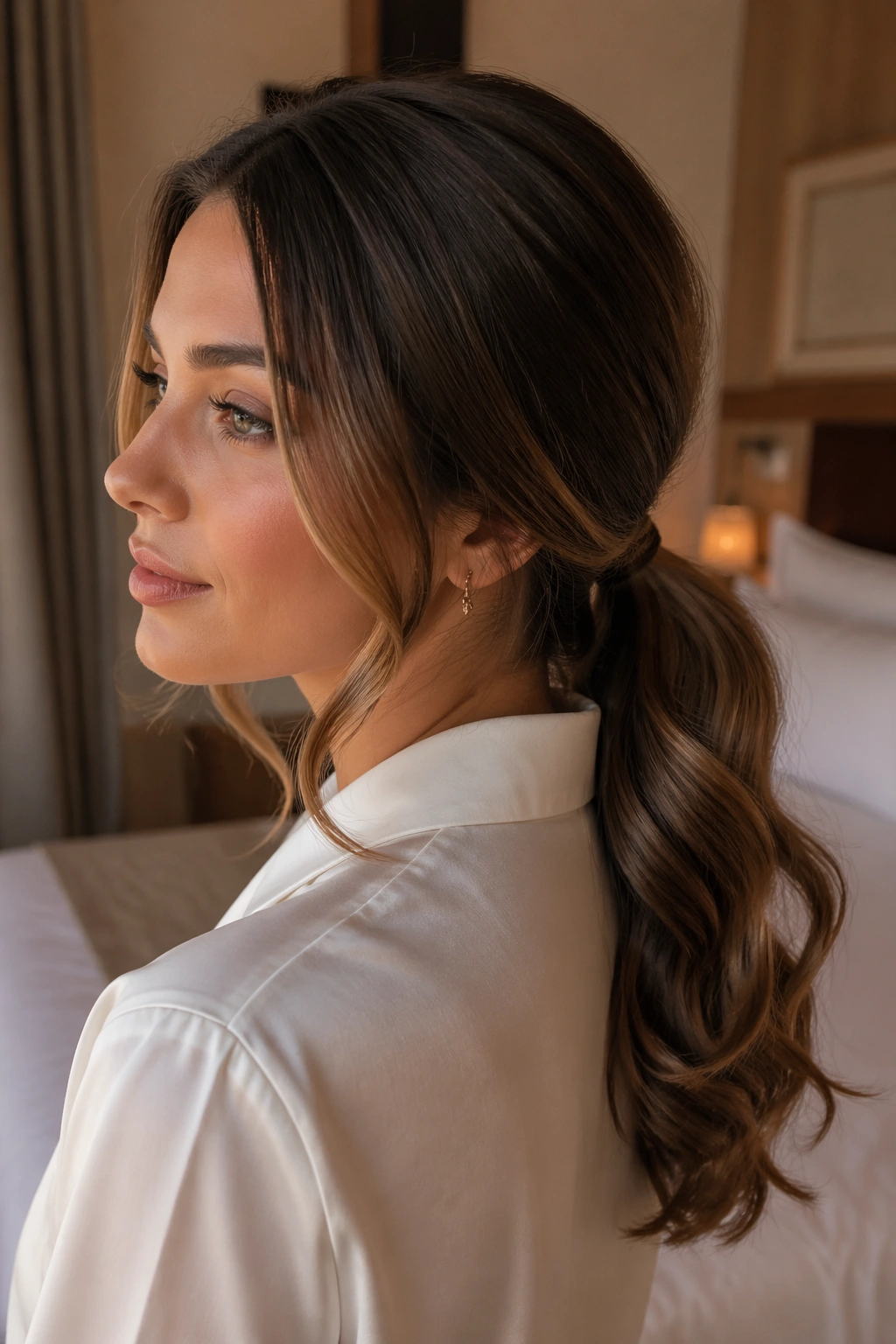
This is such an easy upgrade. The base can stay almost plain, but curled ends make the ponytail feel finished and a little dressed up.
The trick is to curl the last third of the tail, not the whole thing. That keeps the style from looking old-fashioned or overworked. Loose bends are better than tight curls here. If the hair is shoulder length, a soft inward curl near the ends gives the style a neat, tucked shape. Longer hair can handle more movement, but I still like the bend to stay relaxed.
A touch of smoothing serum on the top and a light mist of spray on the ends is enough. If the curls fall quickly, pin them in place while they cool for a few minutes.
12. Crisscross-Pinned Low Ponytail
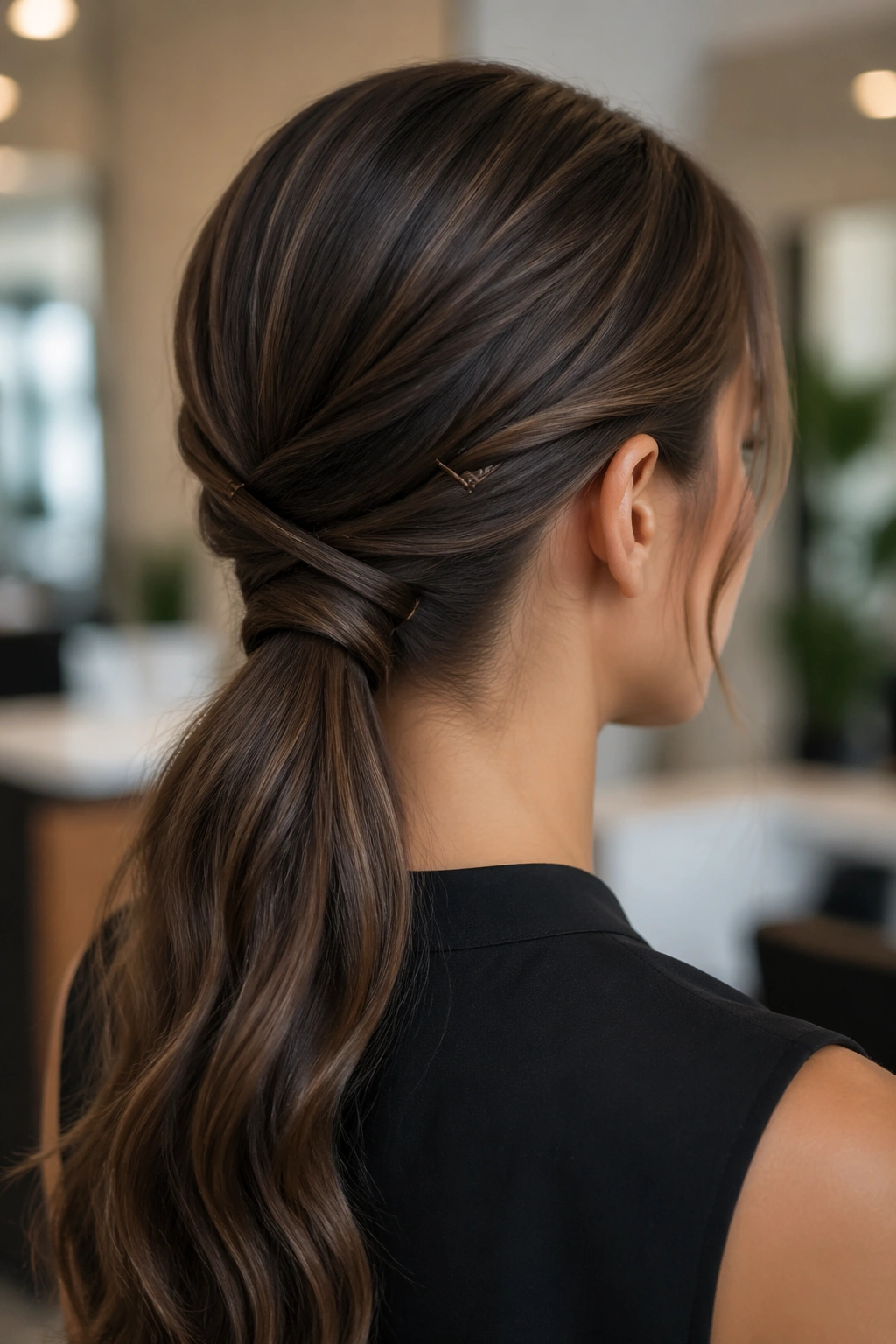
A crisscross detail gives the back of the head a little architecture. It sounds fussy. It isn’t. You’re just crossing two narrow sections over the base before securing them under the ponytail.
The look works because the pins become part of the design. You see the shape, not the hardware. That matters in a polished hairstyle. Use pins that match the hair color as closely as you can, and keep the crisscross lines close to the head so they don’t stick out.
This style is a smart choice when the front is very smooth but you want something interesting at the back. It is quietly dressy, which is honestly where low updo ponytails shine.
13. Rope-Braid Low Ponytail
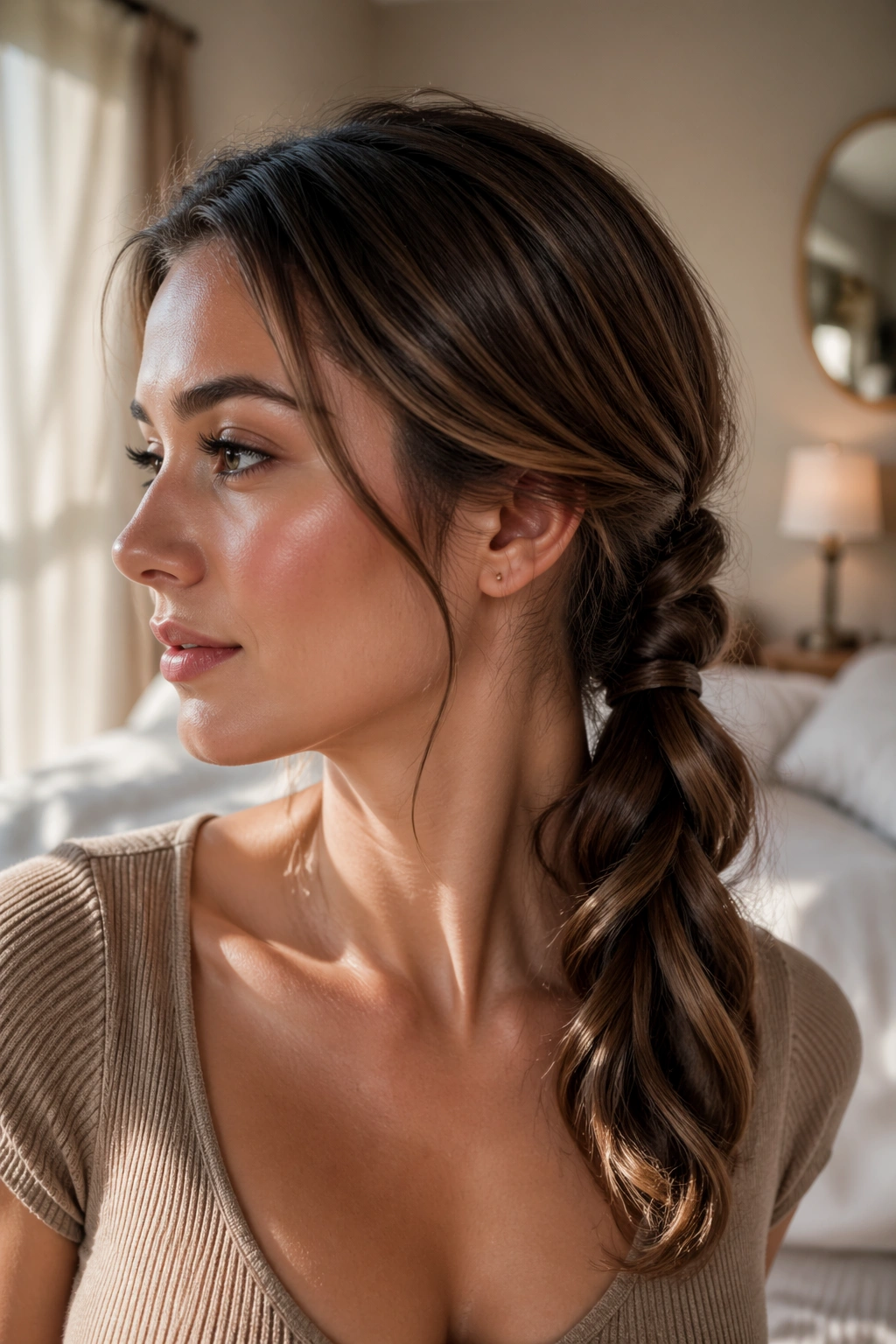
A rope braid gives the tail a twisty texture that feels neat and modern. It also holds better than a loose three-strand braid once the ponytail is secured low.
Split the tail into two sections, twist each section in the same direction, then twist them around each other in the opposite direction. That’s the part people skip and then wonder why the braid falls apart. The opposite-direction twist is what locks the shape.
If your hair is layered, finish with a small clear elastic at the end so the braid does not unravel. Rope braids work well for long hair, but they can also make medium-length hair look fuller. A little shine spray on the finished braid makes the twists stand out.
14. Crown-Volume Low Ponytail
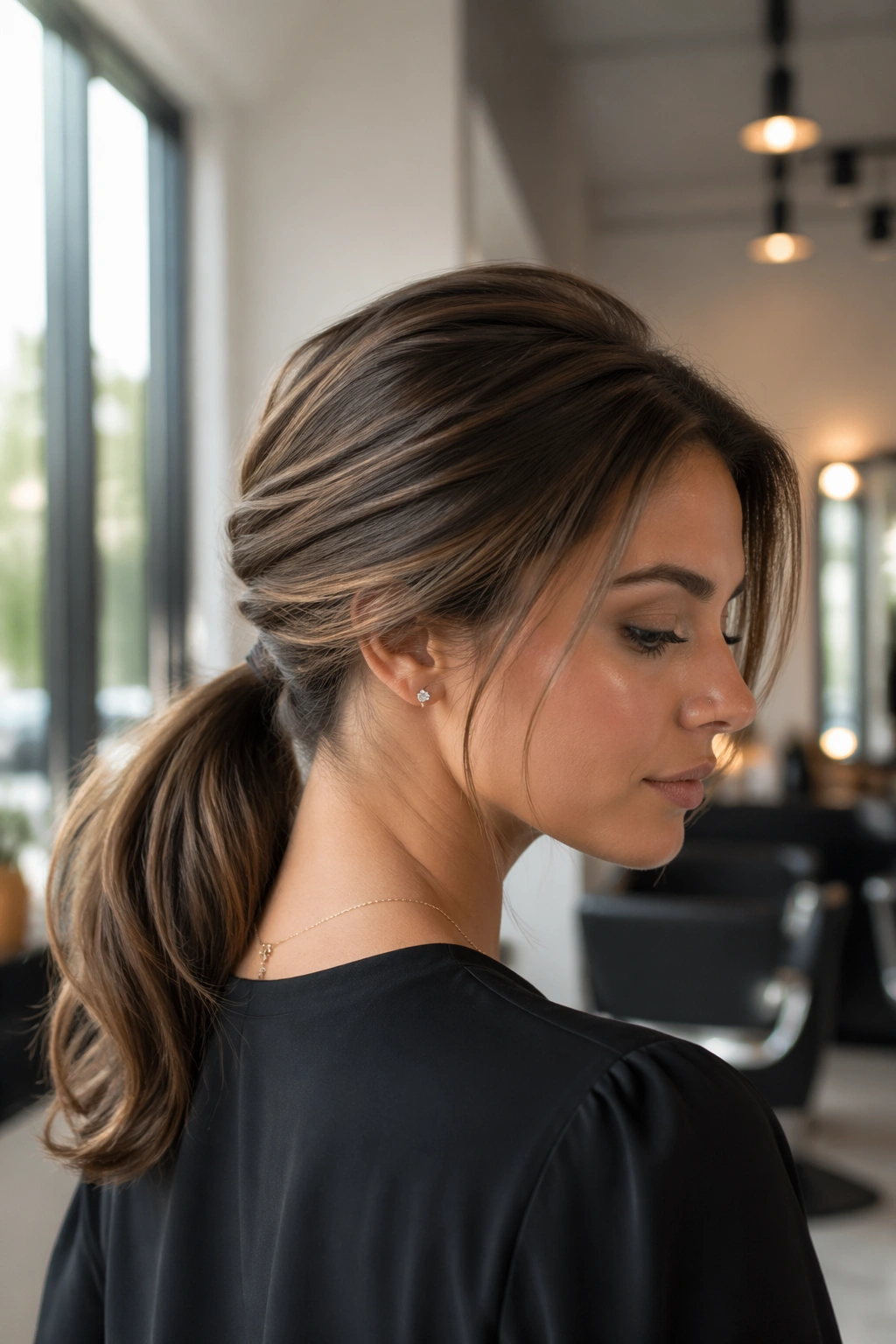
A little lift at the crown changes everything. Not a teased nest. Just enough height to keep the profile from going flat.
This style is good when the rest of the hair is sleek but you need a touch of softness around the top of the head. Gently lift the roots with the tail of a comb, then smooth the surface over the top so the height stays controlled. The ponytail can be simple. The crown does the talking.
I like this look for round faces and heart-shaped faces because the lift lengthens the silhouette a bit. Still, it works on almost everyone if the volume stays restrained. A soft backcomb at the crown and a thin layer of smoothing cream are usually enough.
15. Pearl-Pin Low Ponytail
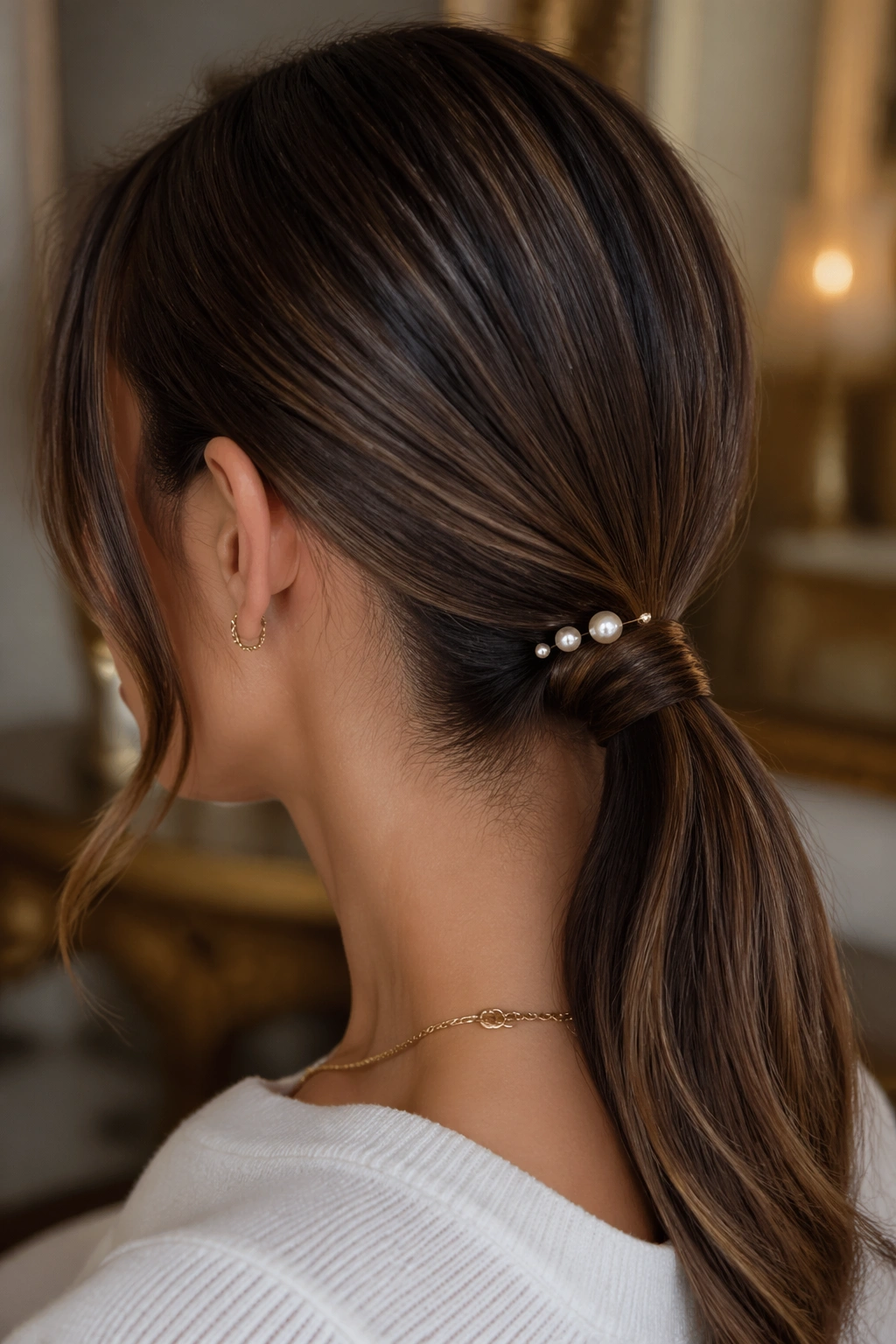
Pearl pins can make even the simplest ponytail feel dressed up. The trick is not to overdo it. Two to four pins placed in a loose line near the base are usually enough.
Where to Place the Pins
The best spot is just above the elastic or slightly off to one side. That keeps the pearls visible without crowding the ponytail. If the pins are scattered too far apart, the style starts to feel random instead of polished.
- Use pins with small pearls, not oversized ones.
- Place them in a gentle curve or cluster.
- Keep the rest of the hair smooth so the accessory stays the focus.
- Match the pearl tone to your jewelry if you can.
This is a strong option for weddings, dinners, or any moment when the outfit is simple and the hair needs one refined detail.
16. Satin-Scarf Wrapped Low Ponytail
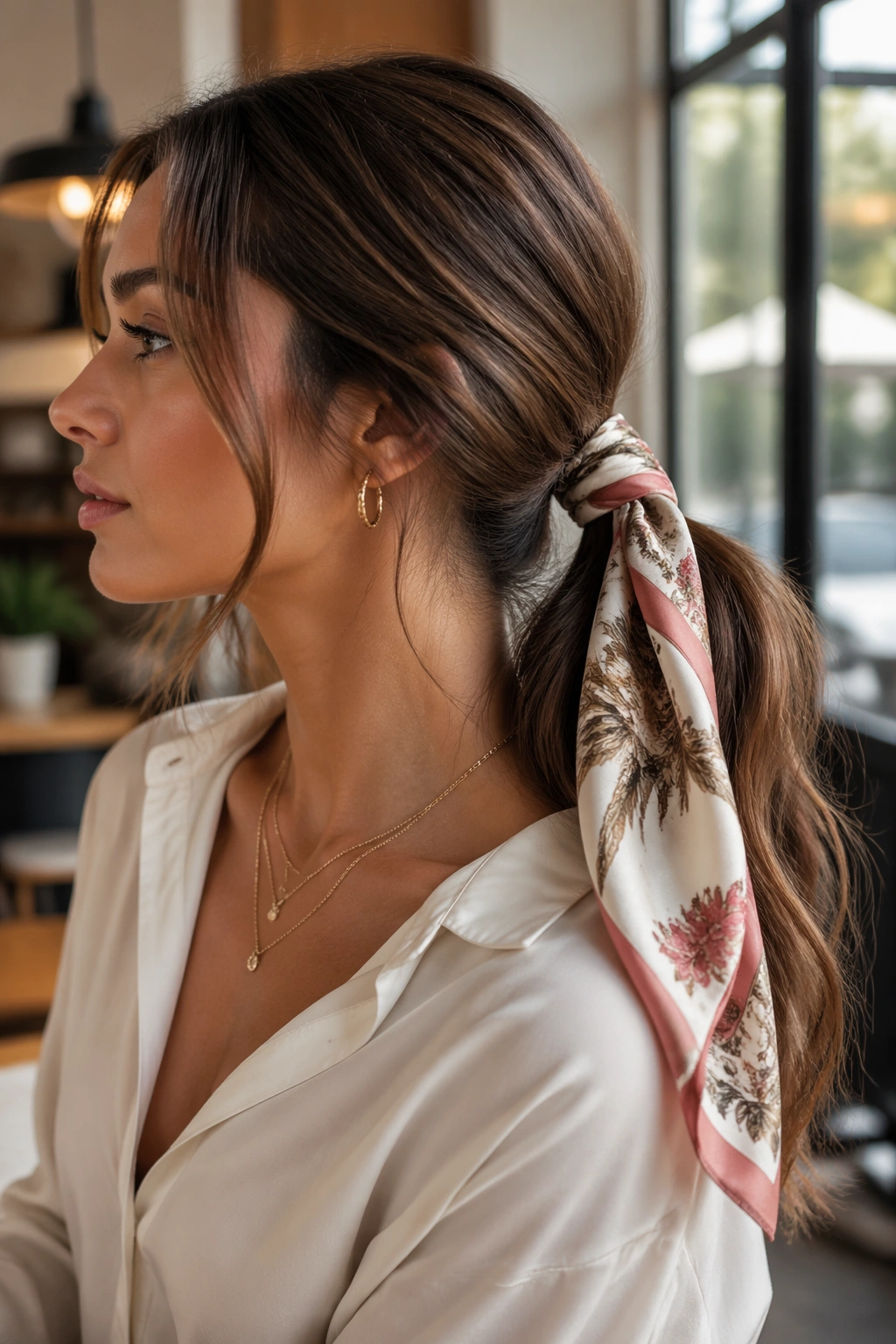
A satin scarf changes the mood in a second. It can make a ponytail feel softer, a bit more romantic, and still clean enough for a polished finish.
Wrap the scarf around the elastic after you’ve tied the ponytail, then knot it once or twice depending on the thickness of the fabric. Keep the tails even, or let one side hang longer if you want a little movement. A thin scarf is easier to manage than a bulky one, especially if your hair is fine.
This style works best when the rest of the hair is smooth. If there’s too much texture at the crown, the scarf becomes a distraction. I’m picky about that part. The scarf should feel like the last detail, not the whole story.
17. Tucked-Under Low Ponytail
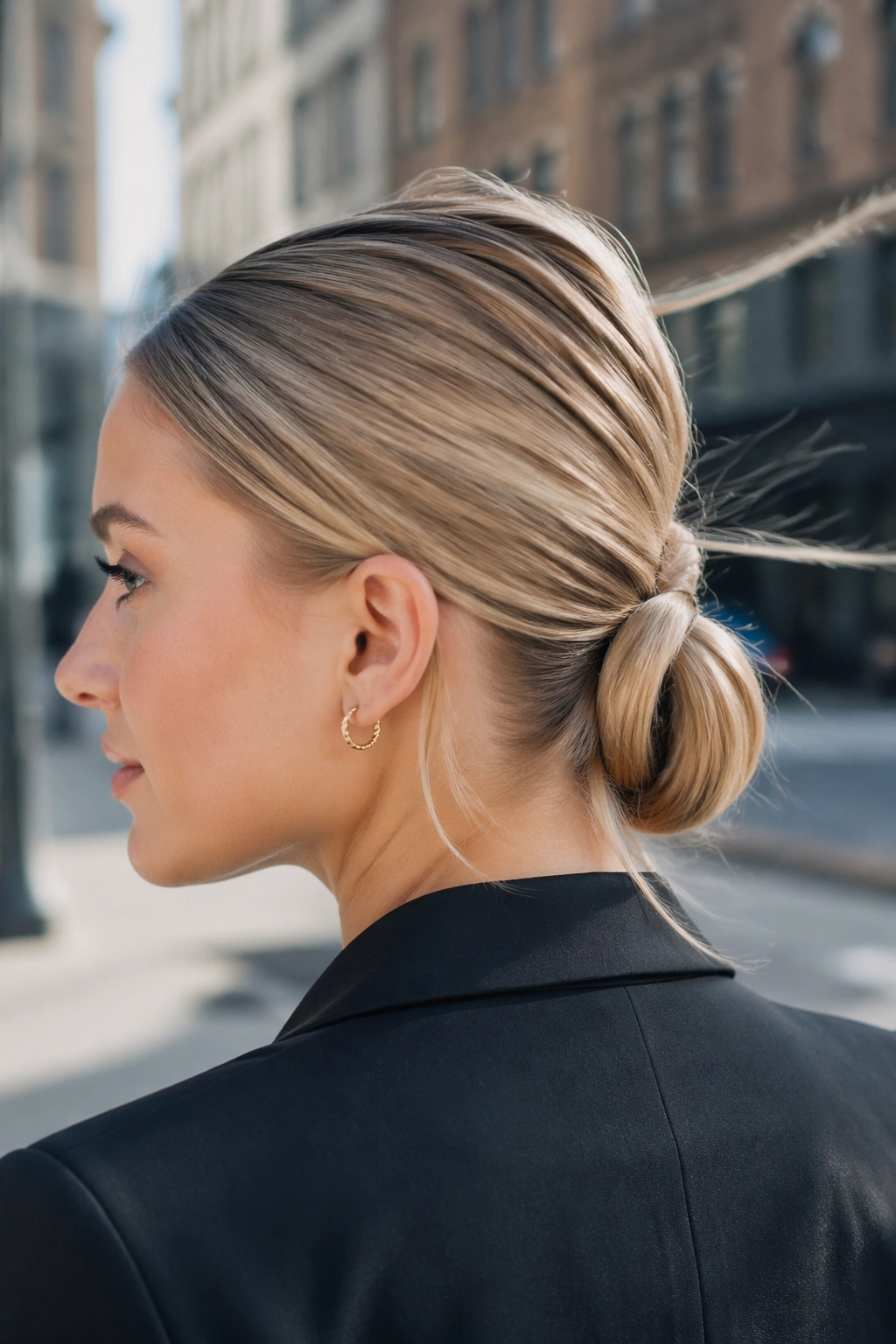
Tucking the ends under is a small move with a big payoff. It turns a regular ponytail into something closer to an updo without needing a bun or a dozen pins.
After securing the low ponytail, fold the tail upward and tuck the ends under the base, then pin them flat against the head. The result is compact, neat, and much easier to keep tidy on windy days than a loose tail. It also works well when the hair is medium length and the ends would otherwise look stringy.
This one is especially handy when you want a clean profile from the side. No loose swing. No extra bulk. Just a simple folded shape that looks planned.
18. Textured Wave Low Ponytail
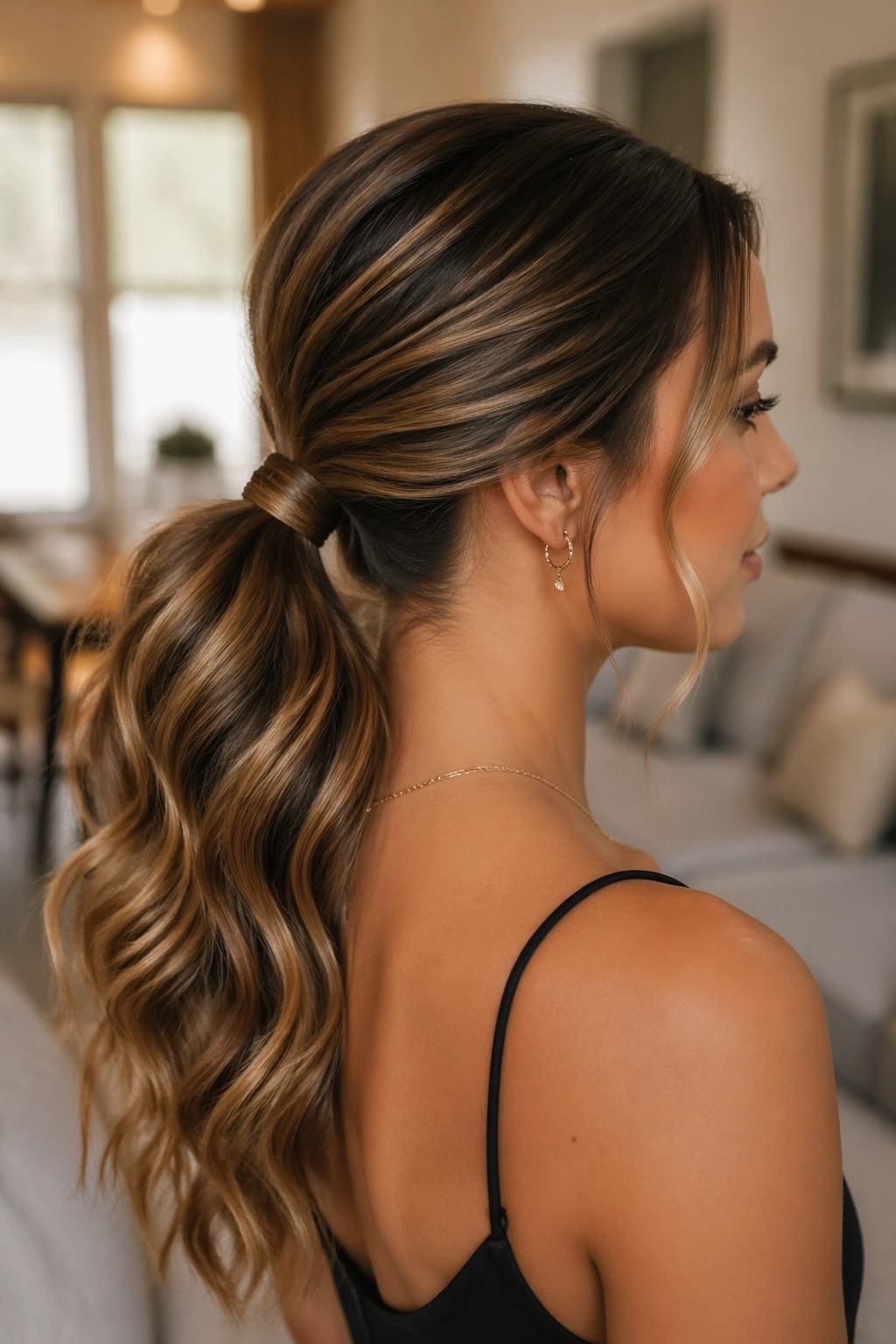
Not every polished ponytail needs to be glassy. A controlled wave can feel just as finished, and sometimes more flattering, especially on hair that naturally wants to bend.
The trick is to keep the crown smooth and let the tail carry the texture. Soft waves through the lengths give the style movement without chaos. If the waves are too tight, the look turns heavy. If they’re too loose, the pattern disappears. Aim for wide bends made with a 1-inch or 1.25-inch iron, then brush them out once they cool.
I like this style when the outfit is structured and the hair needs a little softness to balance it. It looks especially good on layered cuts, which can fall in an elegant, broken line.
19. Braided Crown Low Ponytail
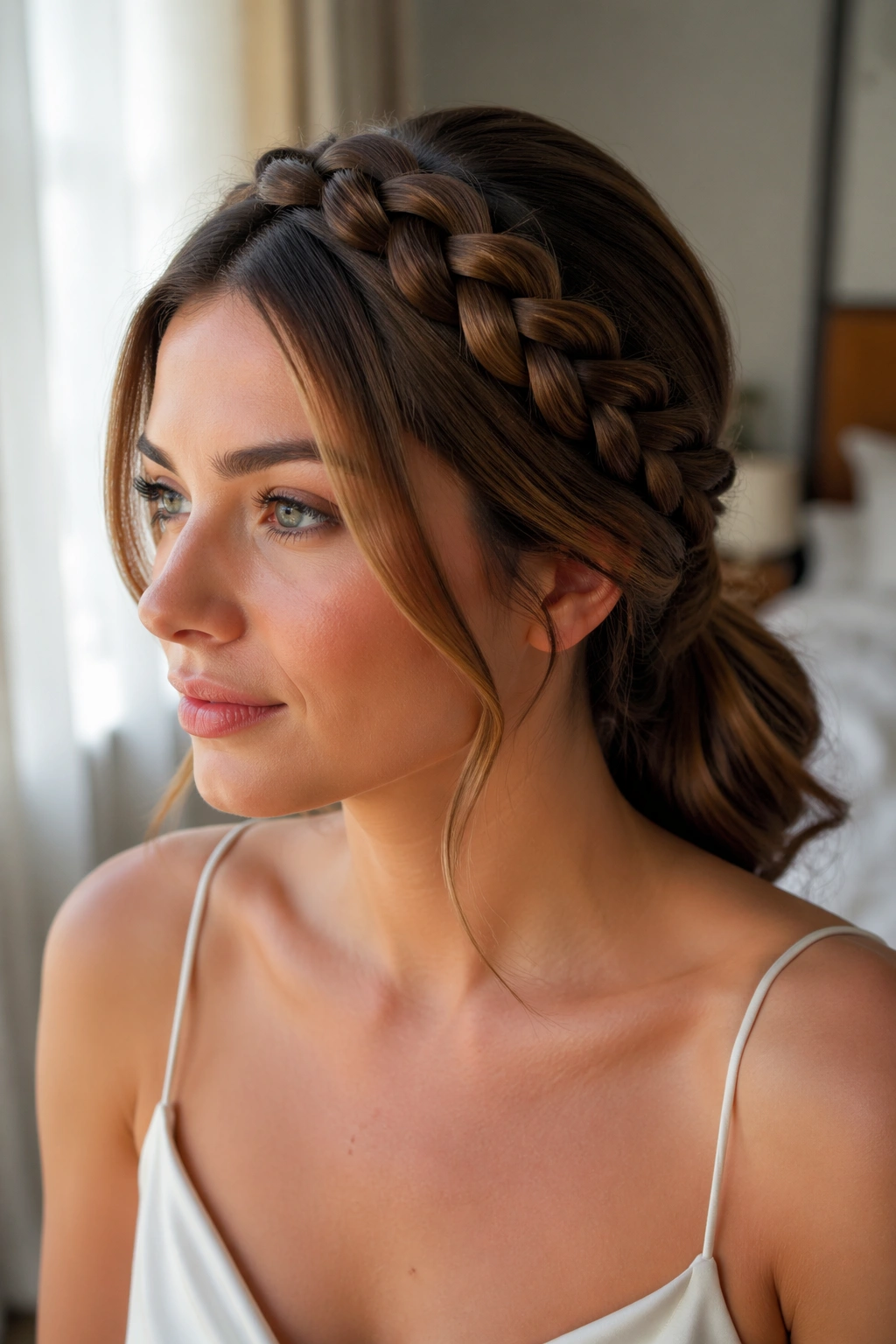
A braided crown at the front or along the hairline gives the ponytail a formal feel without making it stiff. The braid acts like a frame, pulling the eye toward the face and keeping the base neat.
If you only braid one side, keep it slim and smooth. If you braid both sides and meet them at the nape, the result feels more symmetrical and ceremonial. Either way, the ponytail itself should stay simple so the braid has room to stand out.
This style takes a bit more time than the others, but the payoff is real. It works well for events, portraits, or days when you want a low updo ponytail that reads dressed up before anyone notices the details.
20. Cuff-Accented Low Ponytail
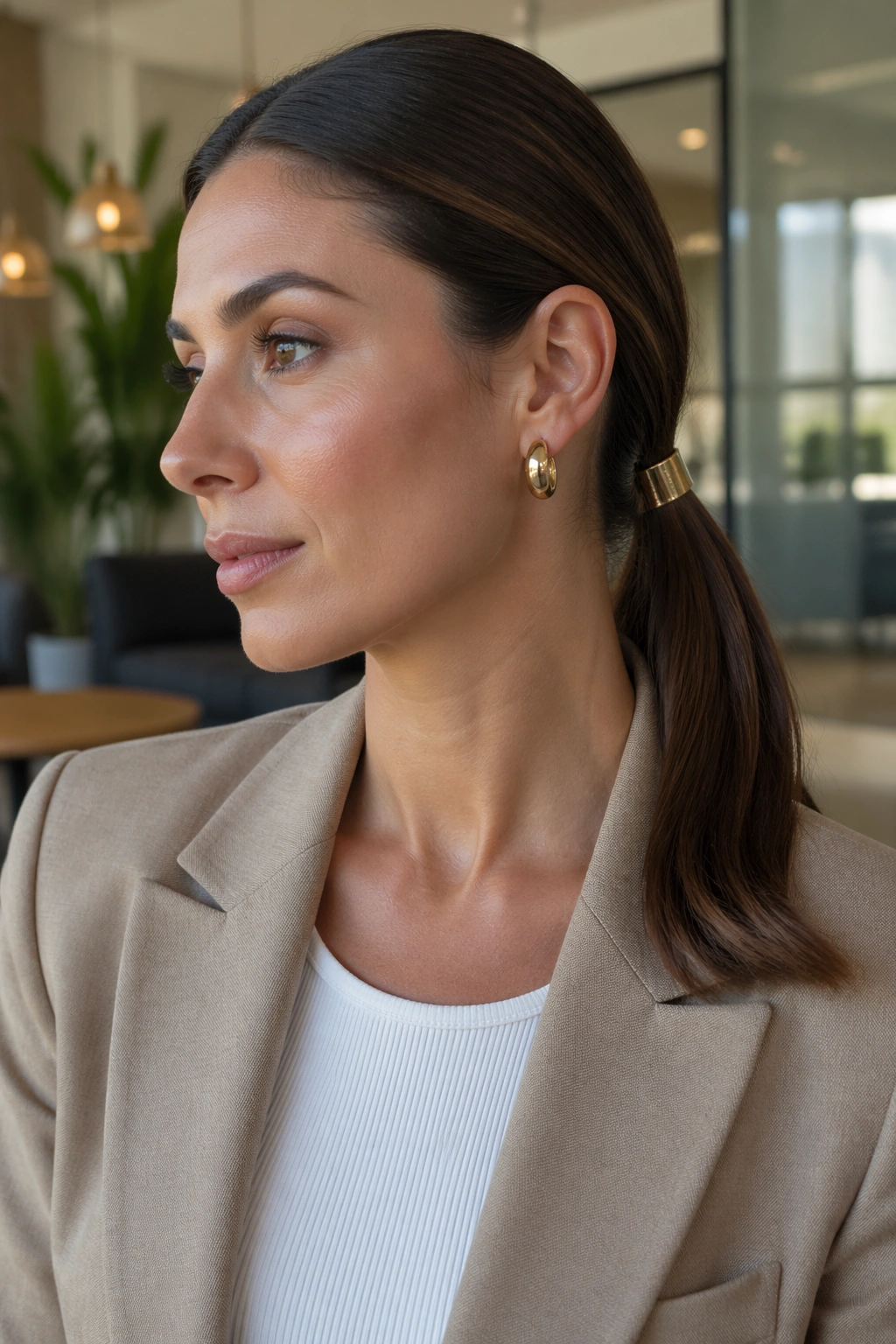
A hair cuff gives the base a finished edge. It’s a cleaner choice than a ribbon when you want something metallic or minimal.
The ponytail should be sleek and the cuff should sit right over the elastic. If the cuff is too large for the amount of hair you have, the whole thing slides around and looks awkward. Measure the thickness of your ponytail before choosing the accessory. A slim cuff is usually safer for fine hair, while thicker hair can hold a wider one without trouble.
This look leans modern and a little sharp. Good for blazers. Good for simple dresses. Good for anyone who likes a low ponytail but doesn’t want the result to feel soft or girly.
21. Side-Swept Low Ponytail
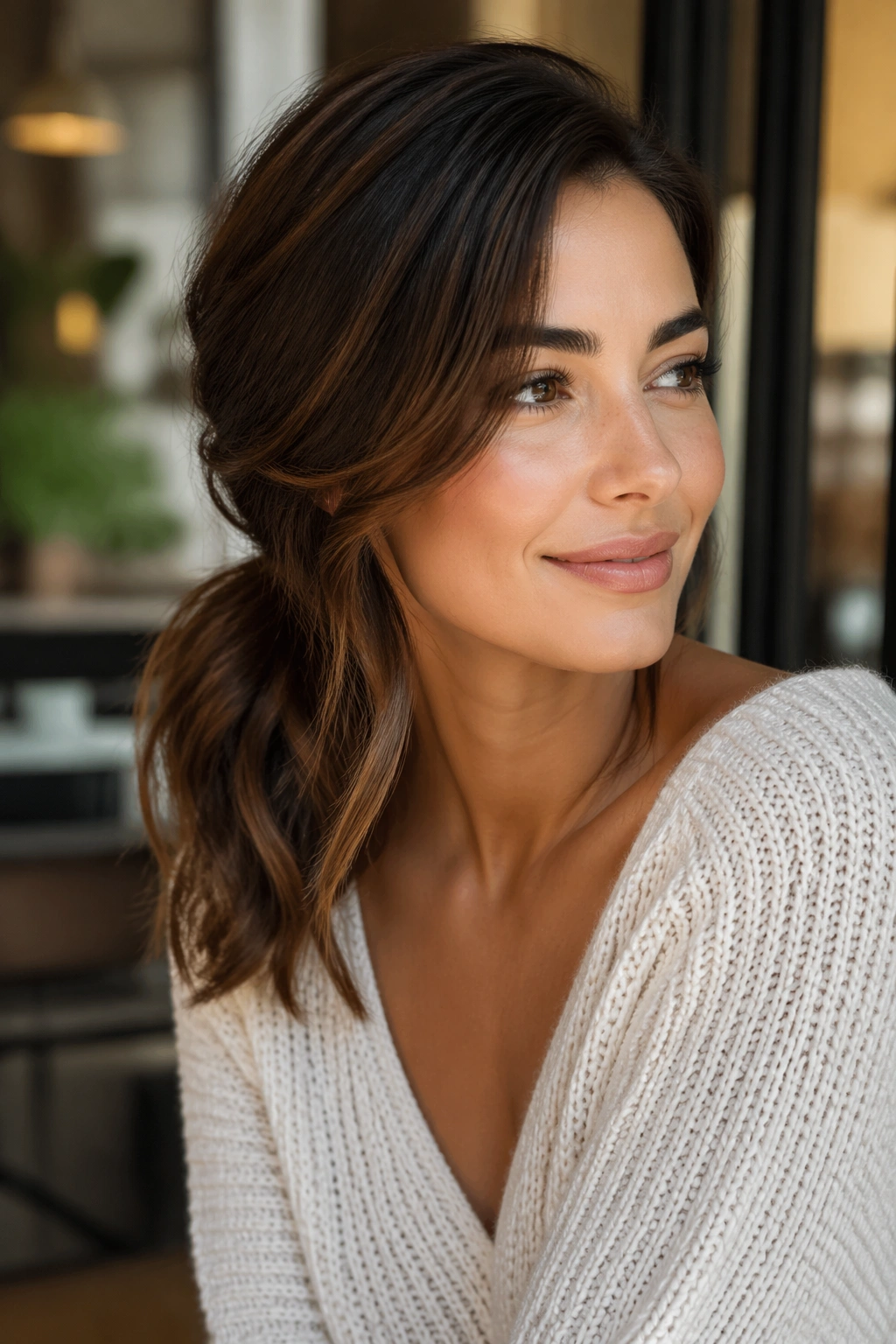
A side-swept low ponytail has a gentler line than the centered version. The weight sits just off to one side, which gives the style movement even when the hair is otherwise smooth.
Why It Flatters So Easily
The asymmetry softens the face and can make the whole hairstyle feel less formal without losing polish. It’s a nice fix when a standard low ponytail feels too plain. Pull the hair back loosely first, then shift the base a couple of inches left or right before tightening.
This one works best when the front is smooth and the tail has a little bend. If you want the look to stay refined, keep the side section close to the head. A loose side sweep can turn into a messy sweep fast, and that’s not the same thing.
22. Low Ponytail With a Soft Flip
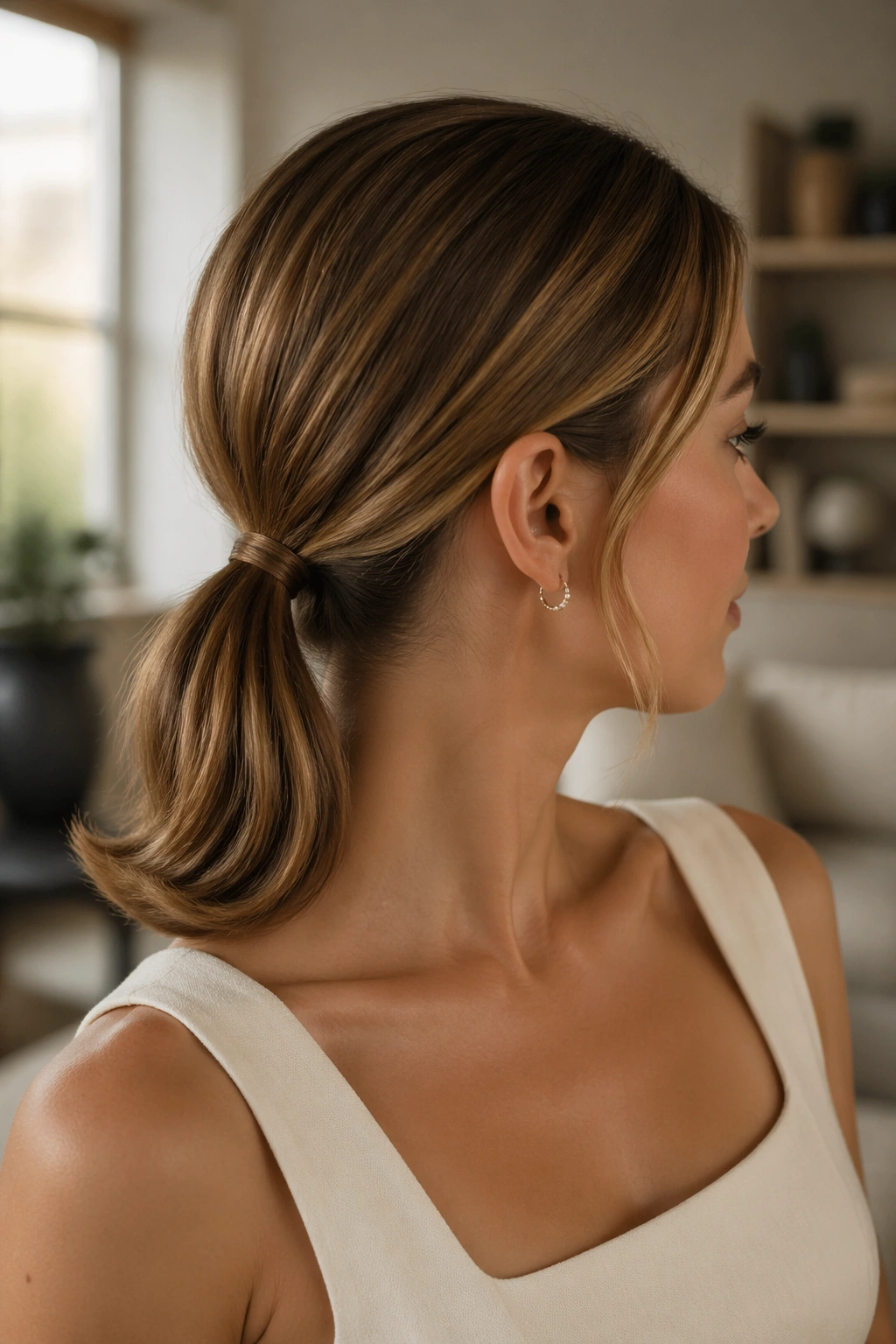
A flipped end gives the ponytail a little personality. Think of it as a nod to retro styling, but quieter and cleaner.
The flip should start in the bottom third of the tail. Use a medium iron or a round brush to turn the ends outward just enough to show shape. If the flip is too strong, the style can look costume-y. Keep it light. The goal is a controlled curve, not a dramatic bend.
I like this look on straight hair because the flip stands out more clearly, but it also works on smooth waves. The base should stay simple and neat so the movement at the end feels intentional. A small detail. That’s all it needs.
23. Double-Twist Low Ponytail
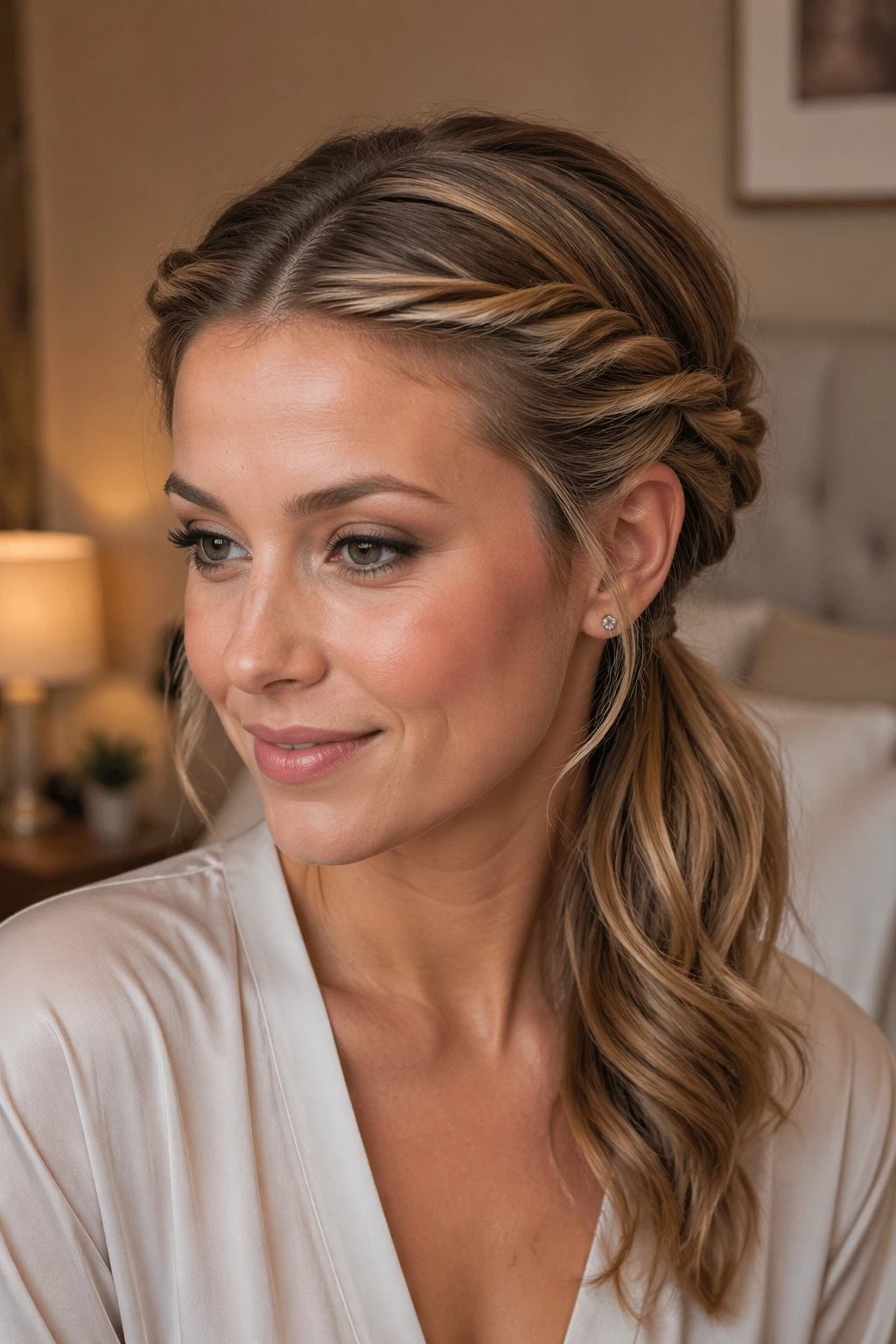
Two twists are more interesting than one, and they make the style feel balanced from both sides of the head. Take a section from each temple, twist them back, and secure them into the ponytail.
The result is tidy without looking severe. If you have layers around the face, this style helps keep them under control while still leaving some softness. Pin the twists low and flat so they blend into the ponytail rather than sitting on top of it.
A double-twist style works on straight, wavy, and mildly curly hair. It’s one of those looks that feels more finished than effortful, which is why I keep coming back to it. The finish matters more than the technique, honestly.
24. Curly Low Ponytail With a Sleek Base
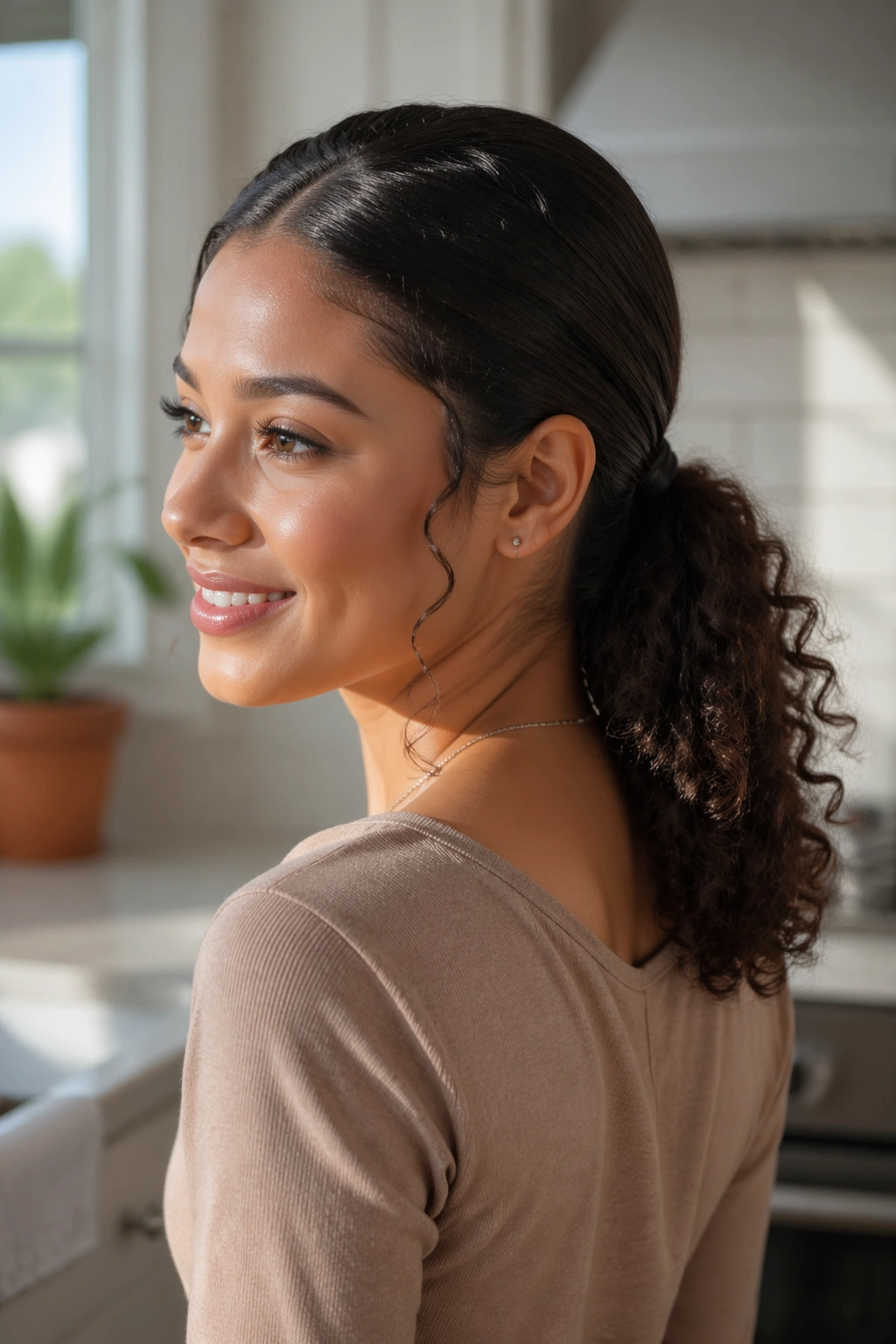
Curly hair and polished low ponytails get along beautifully when the base is smoothed down first. That contrast is the whole appeal. Sleek at the crown, full through the tail.
Use a leave-in cream or gel on the top section, then smooth it back with a brush and secure it low. Leave the curls in the tail untouched, or finger-shape them so they sit in one soft mass. If you brush curly ends too much, the shape falls apart and gets fuzzy fast. Better to keep the curl pattern intact.
This style looks best when the curls are hydrated and defined. Dry curls can still wear it, but the surface needs a little extra care so the top doesn’t puff up.
25. Fine-Hair Low Ponytail With Lift at the Crown
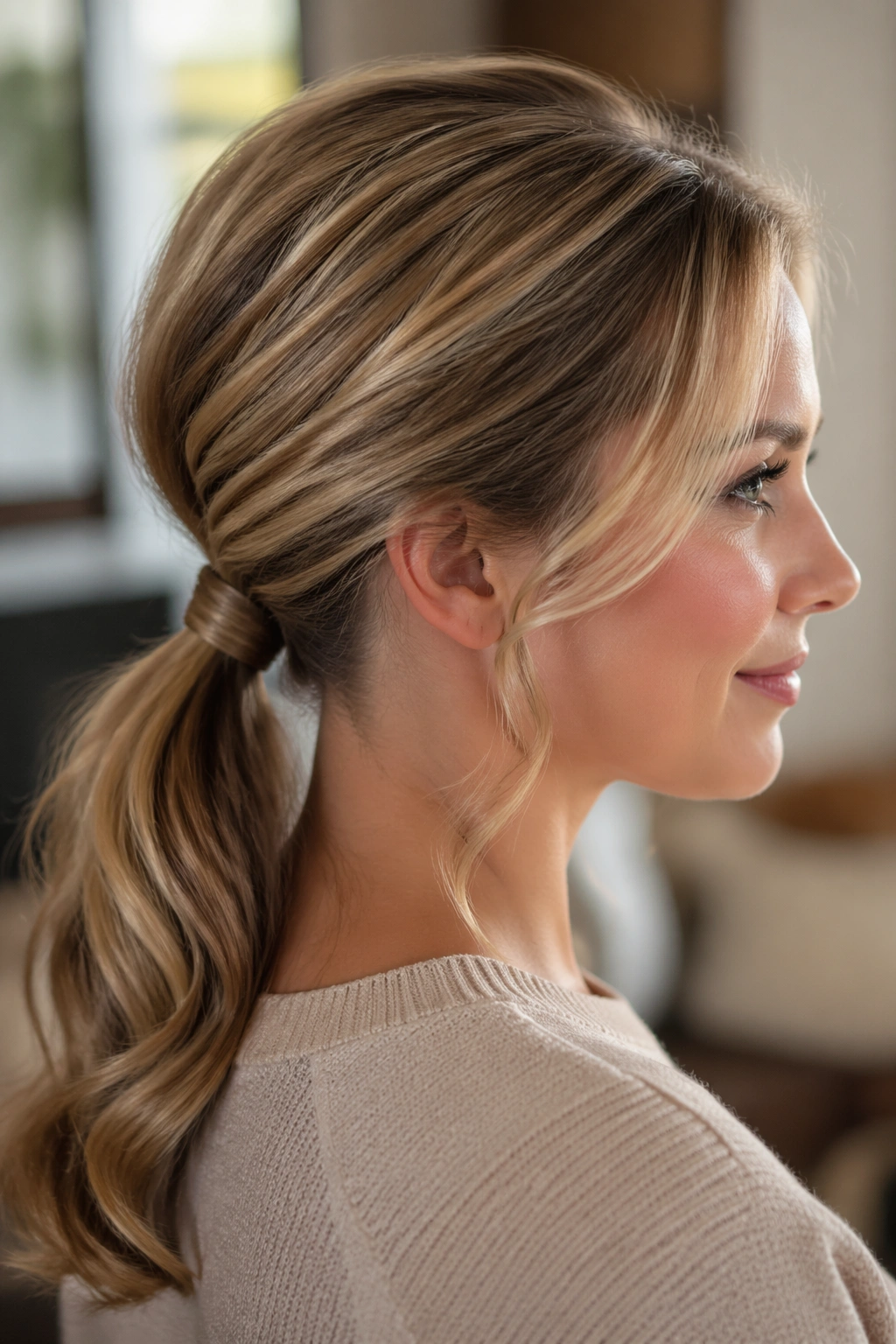
Fine hair can do a polished low ponytail just fine. It only needs a smarter setup. A little lift at the crown and a modestly wrapped base make the style look fuller without asking for more hair than you have.
Small Changes That Matter
Backcomb only the root area at the crown, and keep the teasing soft. Then smooth the outer layer over it so the volume doesn’t show through. A texture spray at the roots helps the style hold, especially if the hair tends to collapse by midday.
- Keep the ponytail lower rather than mid-height.
- Wrap the elastic with a thin strand of hair.
- Curl the tail lightly for body, not tight spirals.
- Skip heavy creams that weigh the roots down.
This look is neat, slim, and quietly flattering.
26. Thick-Hair Low Ponytail With a Clean Wrap
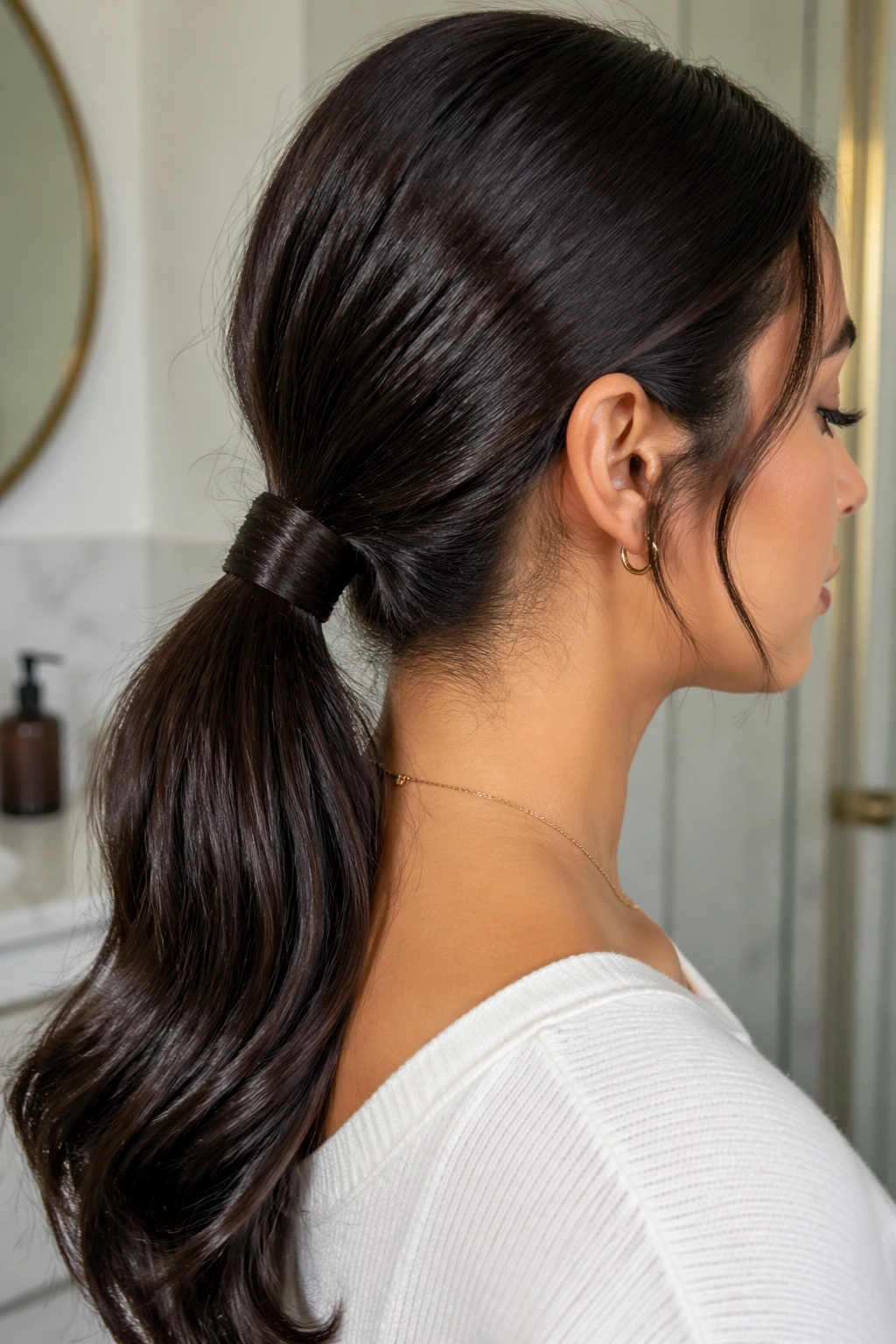
Thick hair can look gorgeous in a low ponytail, but it needs control. Otherwise, the base gets bulky and the style loses that polished edge fast.
Start by smoothing the hair in sections instead of trying to brush all of it back at once. That keeps the surface flatter and reduces the puff at the sides. Use a strong elastic, then wrap a narrow section around the base and pin it firmly underneath. I’d keep the wrap tight and narrow here, because thick hair already gives you enough visual weight.
A clean wrap and a firm hold are the real workhorses in this style. Everything else is decoration.
27. Formal Low Ponytail With a Hidden Knot
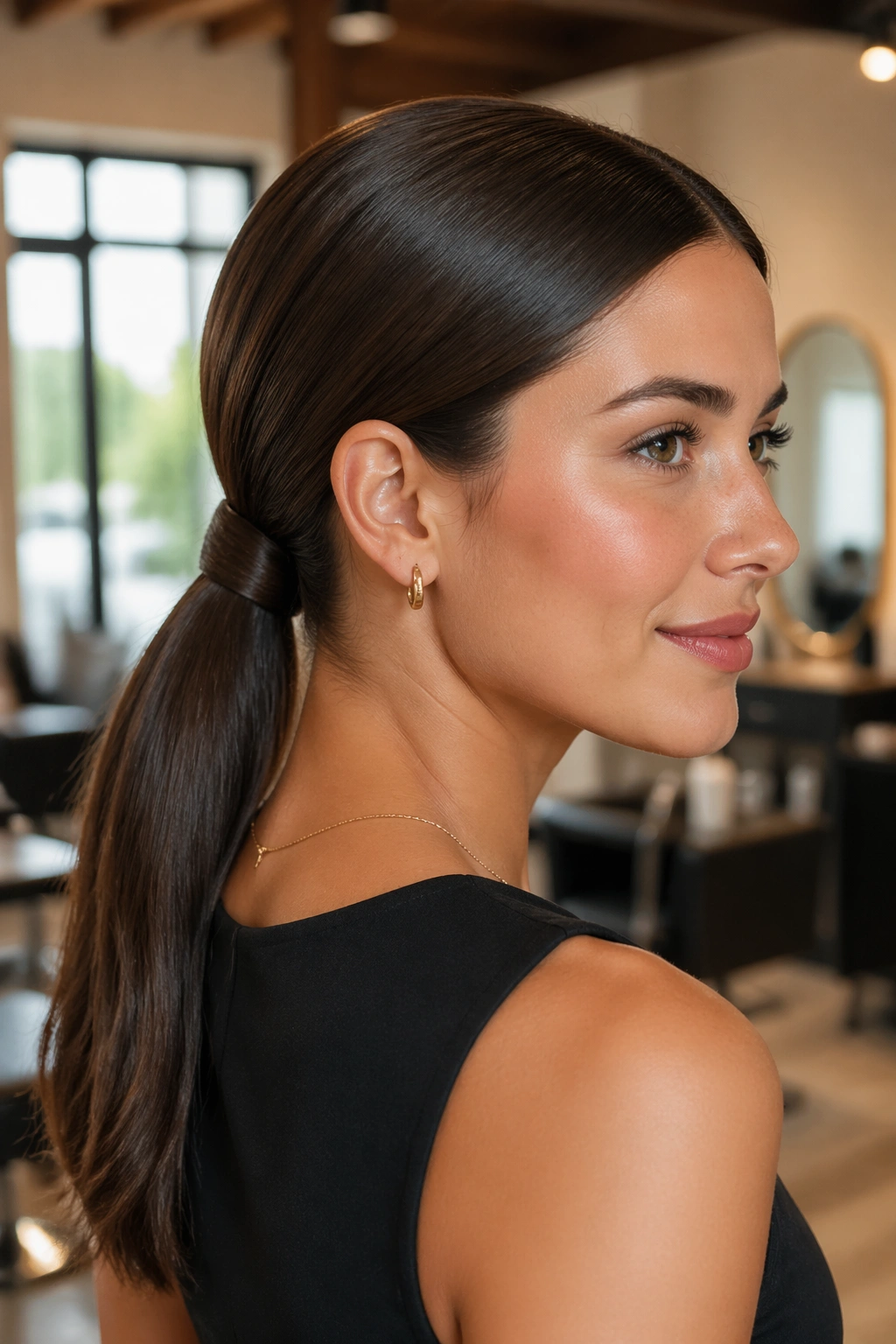
This is the one I’d choose for a wedding guest look, a formal dinner, or any event where you want your hair to behave. The knot is tucked low and the surface is smooth, so the whole style reads elegant without being too precious.
Build the base with a centered or softly off-center part, then gather the hair low and twist the tail into a compact knot. Pin the knot under itself so the ends vanish. If you want a little extra finish, add a narrow wrap of hair around the base or one small jewel pin near the knot. Keep the ornament restrained. That restraint is what makes the style look polished.
A final mist of flexible-hold spray is enough to keep flyaways quiet. No helmet effect. No crunchy surface. Just clean lines and a low silhouette that stays flattering from every angle.
A polished low updo ponytail does not need a long routine to look finished. It just needs a clean base, one clear detail, and a shape that feels chosen instead of accidental.
Pick the version that matches your hair texture and the tone you want. Sleek for sharp. Twisted for soft. Braided or accessorized when the outfit calls for a little more detail. That’s the beauty of this style family — it can go quiet or dressy without losing its edge.
