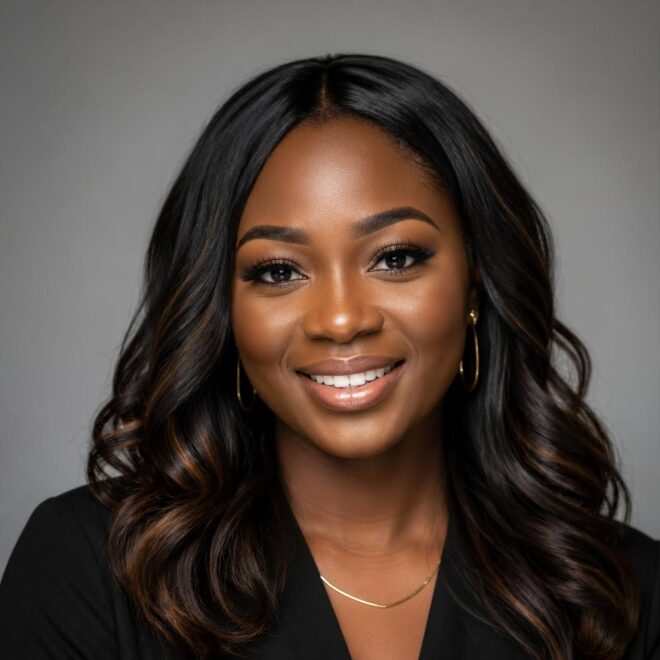


Quick weave ponytails for curly hair can look expensive without asking for an all-day appointment. That’s the part people underestimate. Curly hair already gives you body and movement, so once the base is done right, the ponytail does most of the visual heavy lifting for you.
The catch is the base. A good quick weave ponytail is less about piling on hair and more about shape: where the crown sits, how flat the install is, how the curls fall, and whether the extension texture feels close enough to your own hair to blend without effort. If the foundation is bulky, the whole style looks off. If the curl pattern fights the extension, you see the seam before you see the style.
I’ve always liked ponytails on curly hair because they can go in so many directions. Glossy and sharp. Soft and romantic. Long, side-swept, braided, wrapped, stacked, or high and loud. A few inches of placement can change the whole mood.
The styles below stay in easy territory, but they do not look alike. Some hide the install point. Some lean hard into volume. Some keep the hairline smooth and let the tail do the talking. That mix matters, because the best ponytail is the one that fits the day you’re actually having.
1. Sleek High Curly-Ends Ponytail
A high pony with curly ends is the one people notice first. The crown sits smooth, the base lands near the top of the head, and the curls drop enough to keep the style from feeling stiff or fussy.
Why It Works
Curly hair gives this look a natural lift, which means you do not have to force the height. A stylist can mold the front with foam, brush it up with a firm bristle brush, and set the base with an elastic that stays put without digging in.
- Best when you want obvious height at the crown.
- Looks sharp with 18- to 24-inch curly bundles.
- Needs a thin wrap piece around the elastic so the base looks clean.
- Works well with a center part or no part at all.
Pro tip: keep the pony high enough to clear the ears, but not so high that the back starts pulling.
2. Low Wrapped Ponytail with Soft Curls
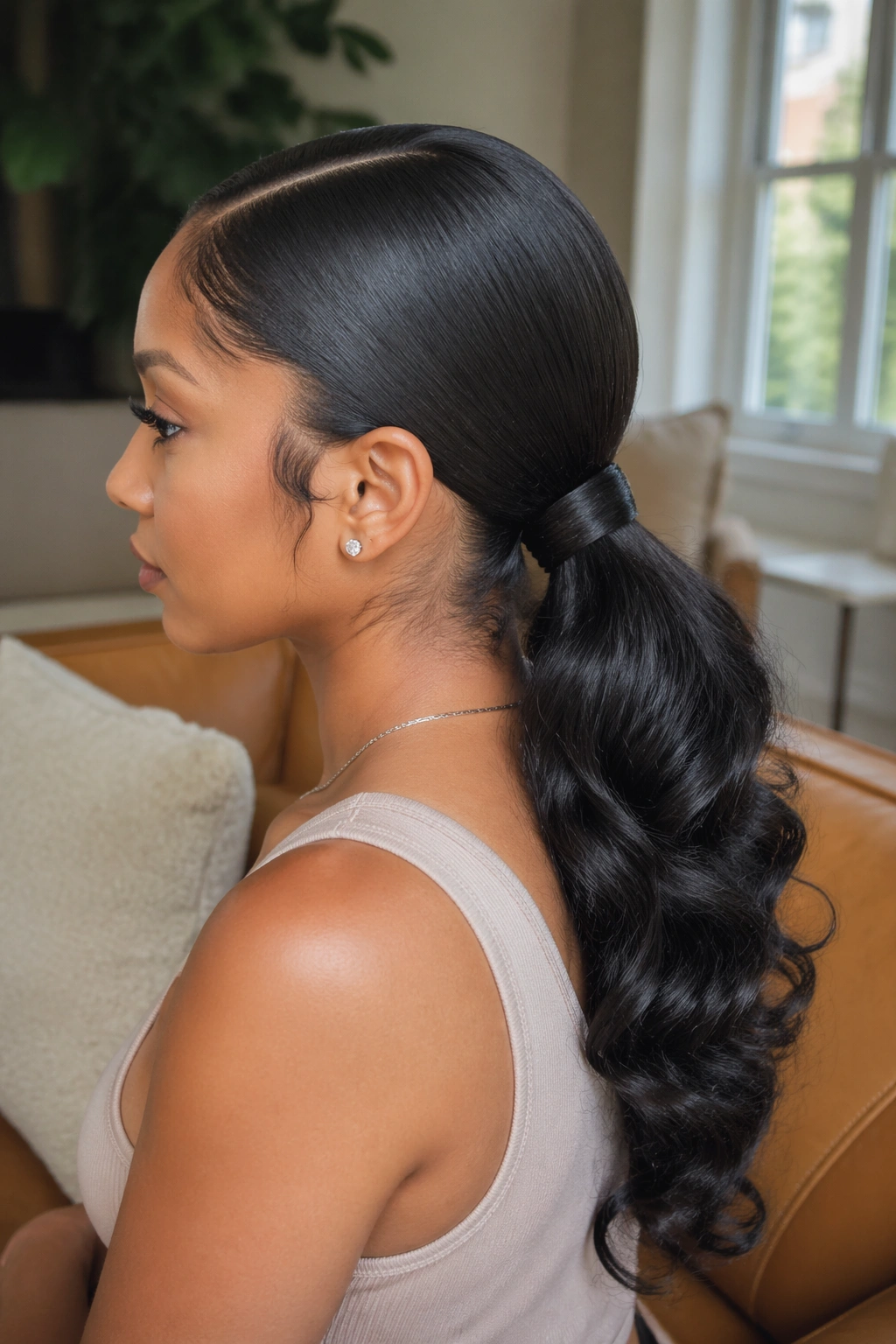
Why do low ponytails keep showing up in curly hair? Because they’re easy on the head and easy on the eye. This version sits at the nape, then gets wrapped with a small strip of hair so the anchor point disappears.
The look is calm, but not plain. Soft curls at the end keep it from feeling too serious, and that matters if you want a quick weave ponytail that can go from errands to dinner without a change.
Styling Note
Ask for a smooth crown, a low placement, and a tail that keeps some bounce instead of being brushed flat. A light mist of sheen spray on the wrap piece helps the base look neat, but don’t drench it. Too much product makes the hairline look greasy fast.
This one is also kind to edges. Not glamorous in a loud way. Just smart.
3. Bubble Ponytail with a Curly Finish
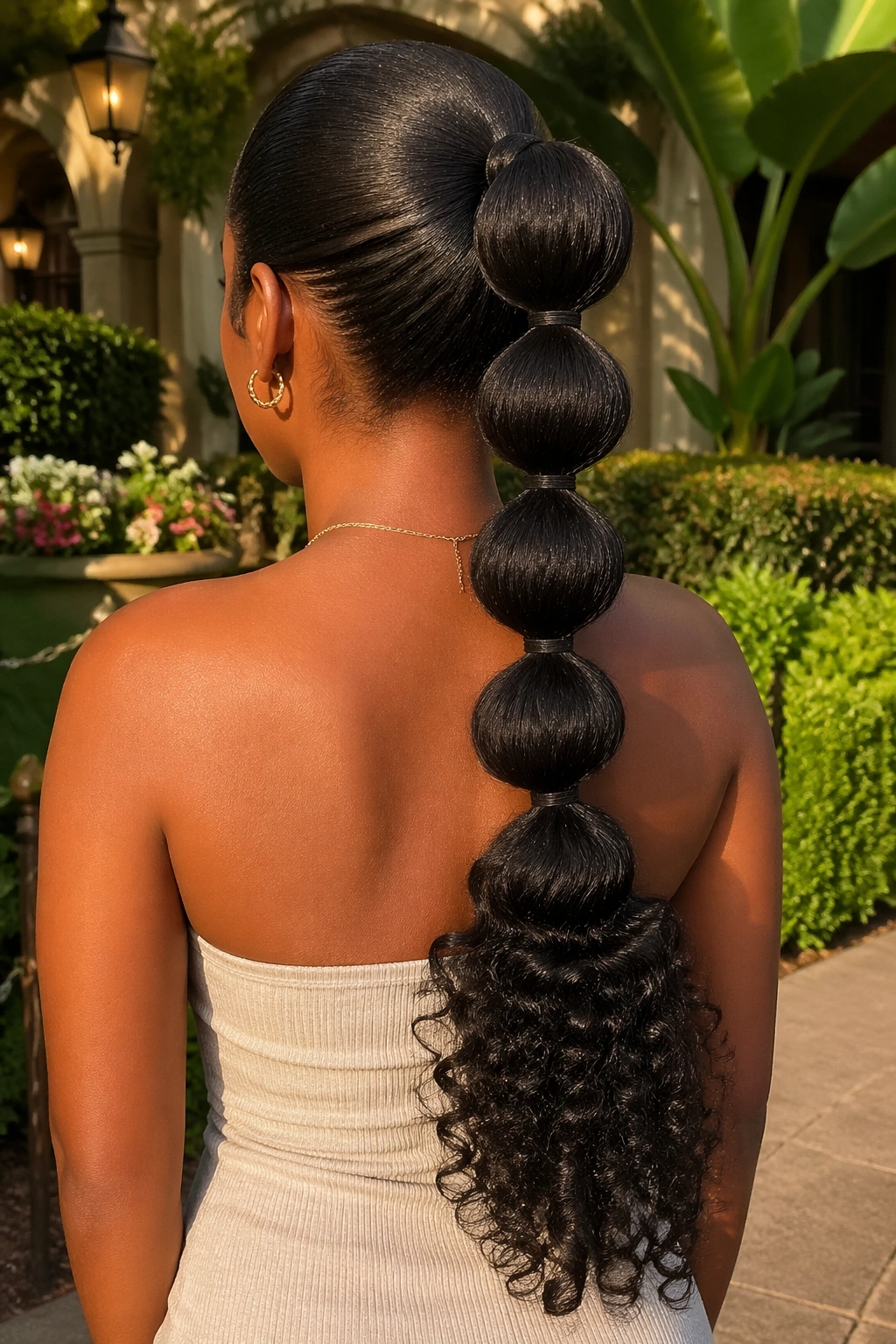
A bubble ponytail on curly hair has a playful energy that straight hair often has to fake. The bubbles give structure, and the curls at the ends soften the whole thing so it doesn’t look like a gym style.
The trick is spacing. Use clear elastics every 2 to 3 inches down the tail, then gently pull each section outward until it forms a rounded puff. Leave the last few inches curly and loose so the style finishes with movement.
What to watch for:
- Too much pulling makes the bubbles lopsided.
- Too little product leaves flyaways sticking straight up.
- Heavy extensions can drag the bubbles flat.
I like this style when the hair needs a little personality. It feels fresh without trying hard, which is rarer than it should be.
4. Side-Swept Ponytail with a Deep Part
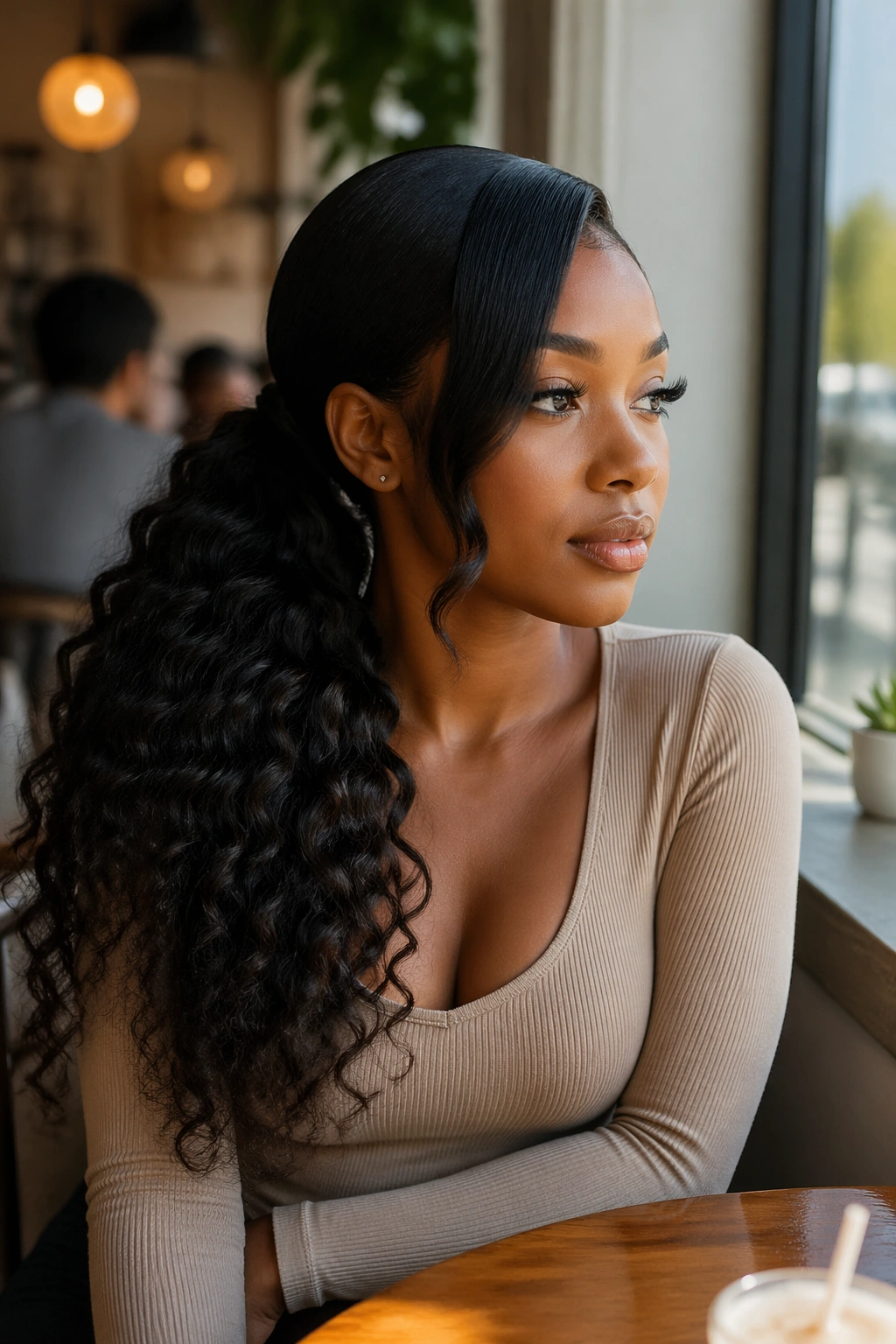
A side-swept ponytail is one of those styles that flatters almost everybody. The deep part creates shape near the face, and the ponytail falls off to one side instead of sitting dead center, which gives the whole look more motion.
It’s especially good if you want the install to feel softer. The side placement helps hide where the hair is attached, and the curls land in a way that looks full even when the base is kept tight.
You can keep the front polished or leave a little curve at the hairline. I prefer the second option. It feels more lived-in and less helmet-like, and that’s the difference between a cute ponytail and one that looks overworked.
5. Half-Up Quick Weave Ponytail
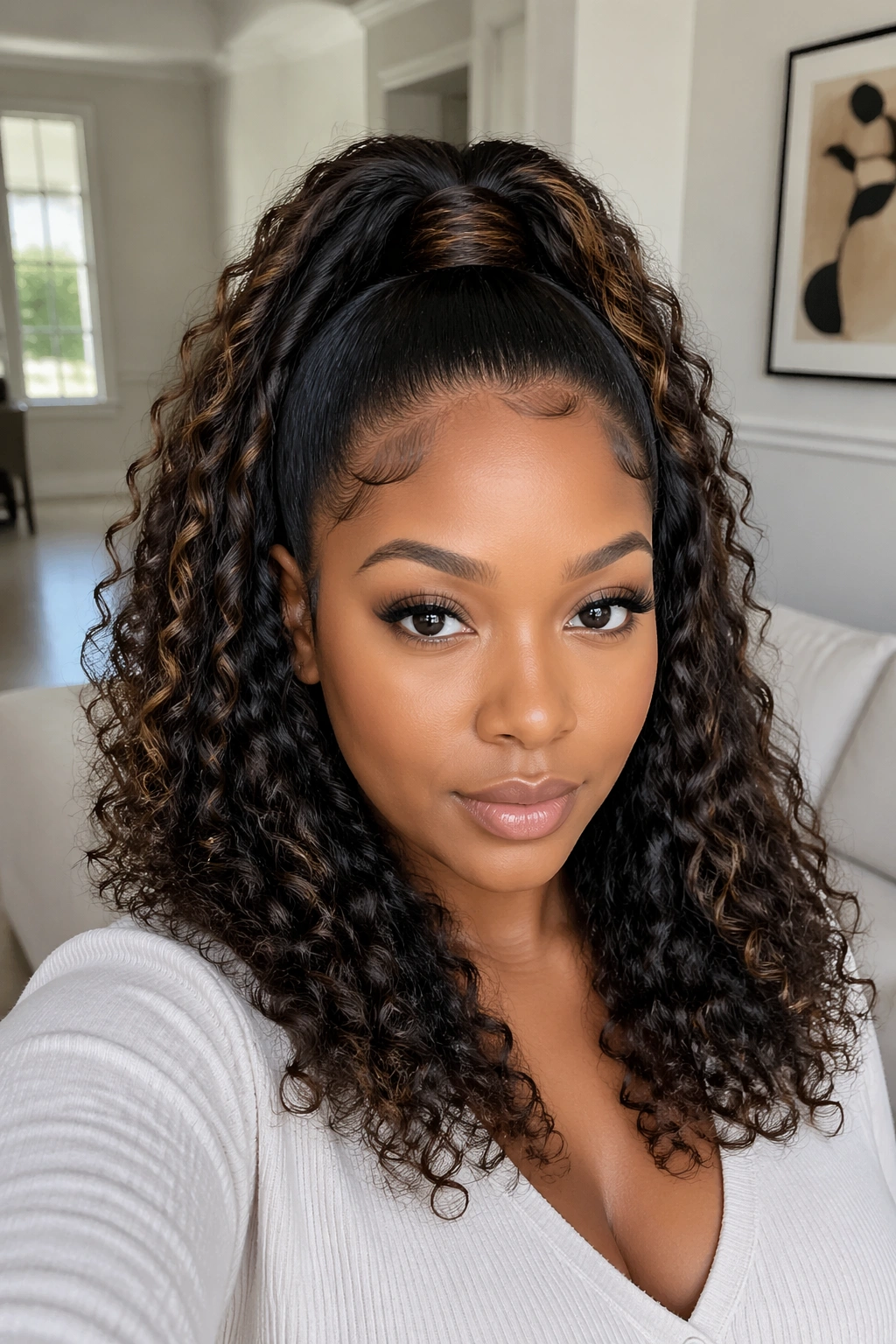
Why choose half-up instead of a full pony? Because it lets you keep some of the natural curl drama down while lifting the face shape up top. That balance is the whole appeal.
The top section is molded into a ponytail, while the lower hair stays loose and curly. If the install has layers, the result feels fuller than it sounds. It also gives you a clean place to show off highlights, ombré, or a really nice curl pattern.
How to Wear It
Use this style when you want something soft but not flat. It works well with medium-density hair and extensions that match your curl family closely. If the ponytail is too long or too heavy, the top starts sagging, so keep the length controlled unless you want a very dramatic drop.
A little edge control around the part goes a long way here. A lot.
6. Braided Base Ponytail
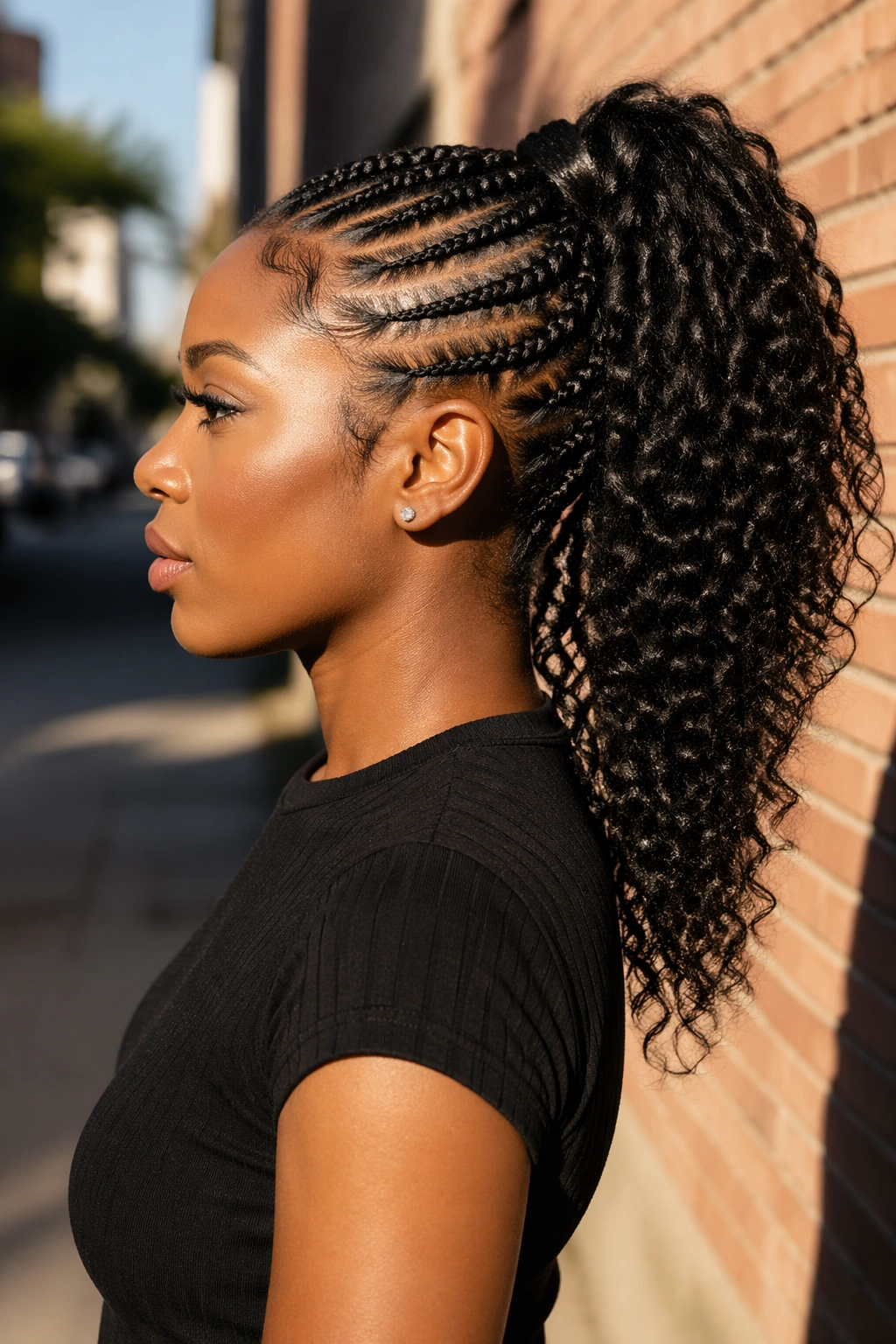
A braided base ponytail is the style I’d pick when I want the pony to stay put and still look interesting from every angle. The braids build a secure foundation under the weave, and the ponytail itself can be curly, wavy, or mixed-texture.
The best part is the texture contrast. The braid detail gives the style a hand-built feel, while the curls keep it soft. That mix keeps it from looking too polished or too sporty.
Key Details
- Cornrows or feed-in braids can form the base.
- A wrapped elastic hides the attachment point.
- Curly ends balance the tighter braid texture.
- Thin braids along the sides can make the pony look longer.
This is one of those styles that photographs well from the side, especially when the braids are clean and the tail has a little swing.
7. Scarf-Wrapped Ponytail
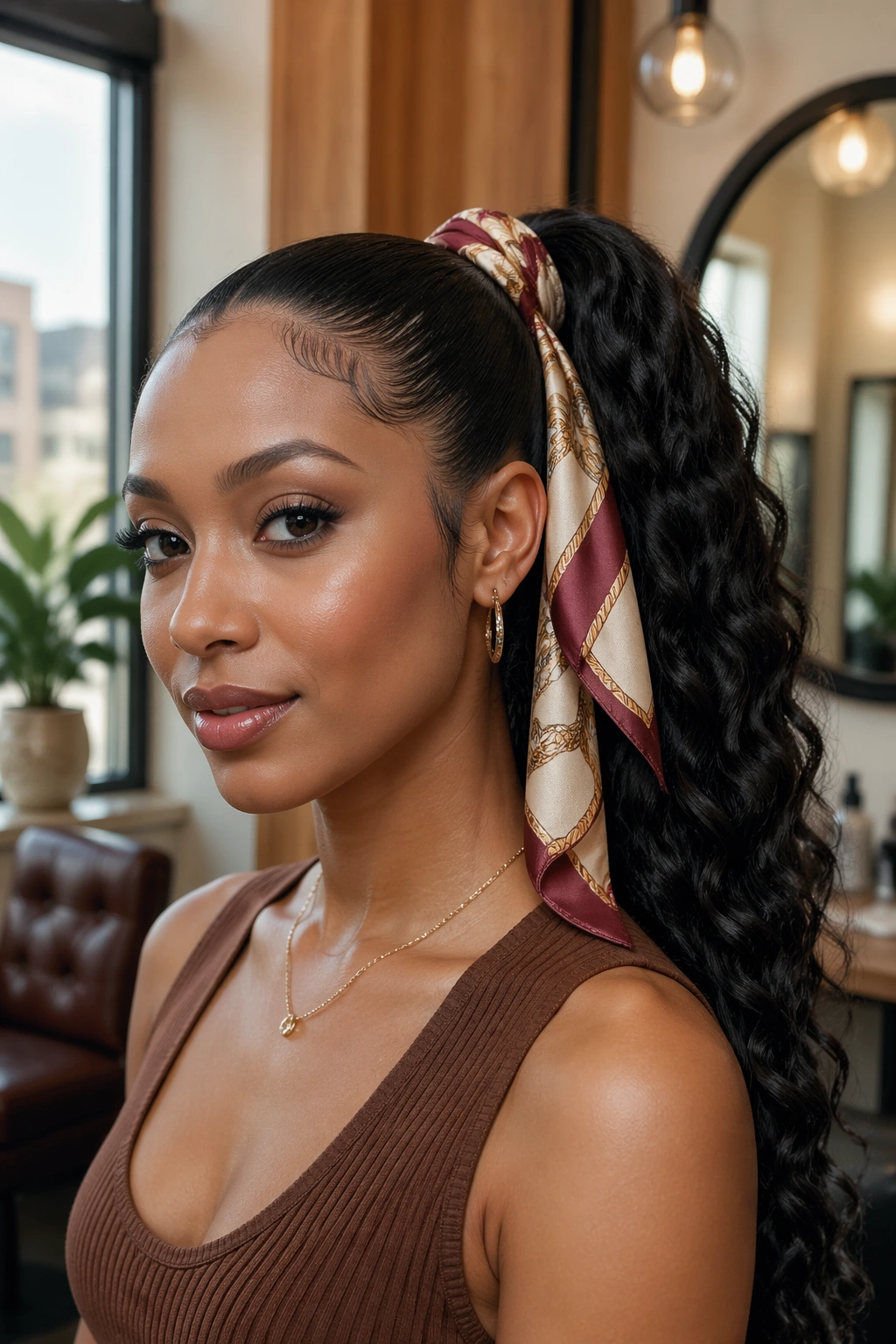
Compared with a plain wrap, a scarf-wrapped ponytail feels more deliberate. The scarf hides the anchor point, protects the edges, and adds color without making the hair itself too busy.
I like a narrow silk or satin scarf for this. Wide scarves can overwhelm the ponytail if the curls are already full. Wrap it once or twice around the base, knot it to one side, and let the tails hang a little. Clean. Easy. Done.
This style works especially well when the quick weave is installed for more than one wear, because the scarf buys you a bit of visual reset between days. Same ponytail, different mood.
8. Curly Ponytail with Curtain Bangs
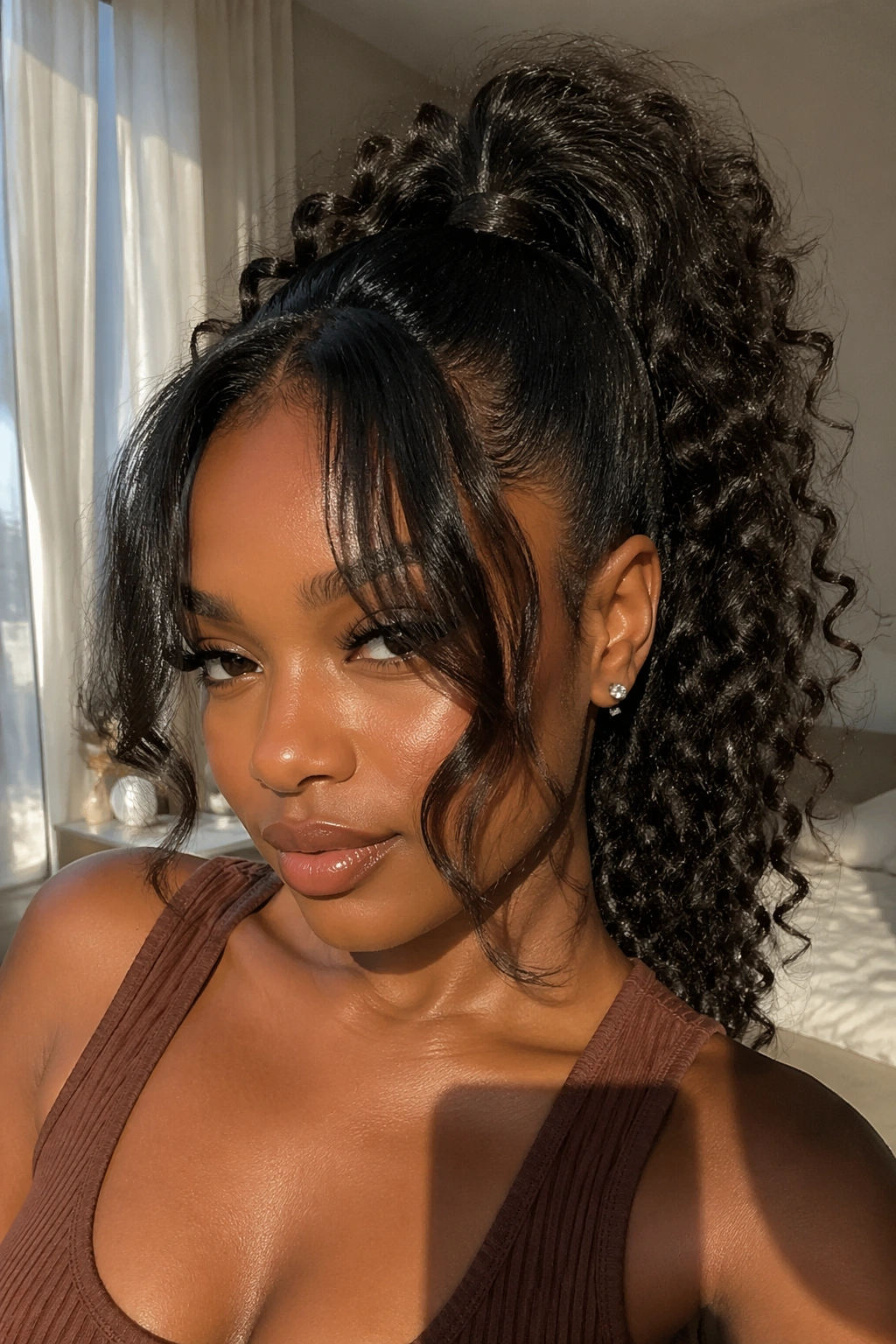
Curtain bangs change the whole read of a ponytail. They soften the forehead, frame the eyes, and make the style feel less severe, which matters if you’re not into the pulled-back look that some ponytails can give.
The bangs do not have to be blunt. In fact, I prefer them a little airy. Let them split slightly at the center and graze the cheekbones instead of sitting like a hard curtain. That small difference keeps the style from feeling dated.
If the quick weave includes layers around the face, this look gets even better. The tail stays the star, but the front pieces do the flattering work.
9. Faux-Hawk Ponytail
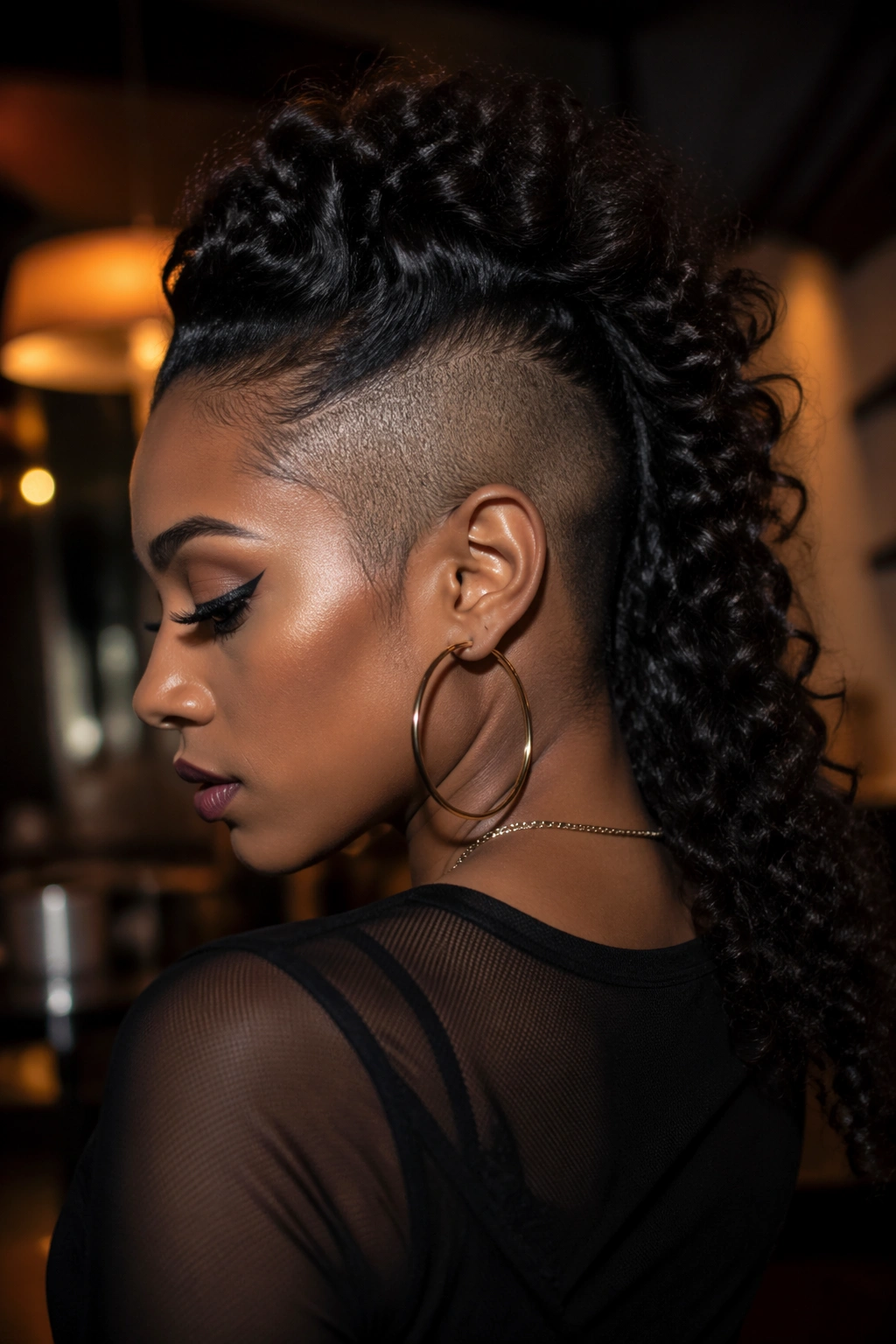
A faux-hawk ponytail is the answer when sleek and sweet feels boring. The sides get brushed tight, the center line stays raised, and the ponytail sits along the middle of the head with enough lift to make the shape obvious.
This is not a shy style. Good. It should have some attitude. Curly hair makes it better because the tail can explode a little at the ends without ruining the silhouette.
Styling Notes
Use firm hold at the sides and keep the center section a touch higher than you think you need. If the ponytail droops, the whole look loses its edge. A few crossed pins at the base help lock the shape in place.
I’d choose this for a concert, a night out, or any day when you want the hair to carry the outfit.
10. Center-Part Polished Ponytail
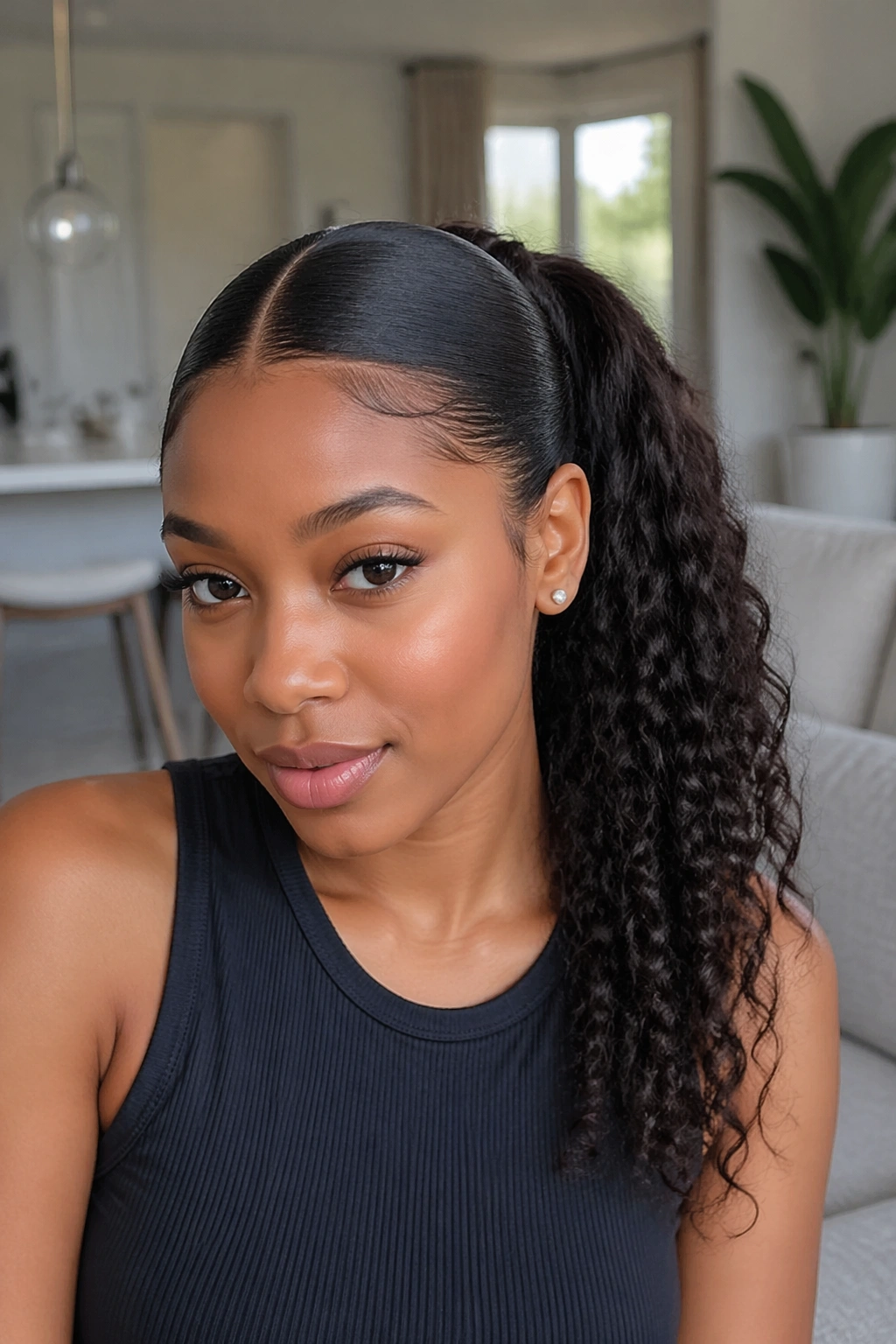
Why does a center part work so well with a ponytail? Because it creates balance before the hair even reaches the base. Everything looks cleaner when the line is crisp and the sides mirror each other.
This style usually sits low or mid-height, which gives it a calmer shape than a high pony. The polish comes from the part and the smooth crown, not from making the hair stiff. That’s a nice distinction, because too many ponytails try to look sleek by crushing the texture out of them.
How to Keep the Part Clean
Use a rattail comb, set the part before applying product, and clip each side separately so the line doesn’t drift. If the hair is curly at the roots, a little foam and a soft brush help flatten the base without making it hard.
This one feels grown, neat, and steady. No drama needed.
11. Side-Stacked Ponytail
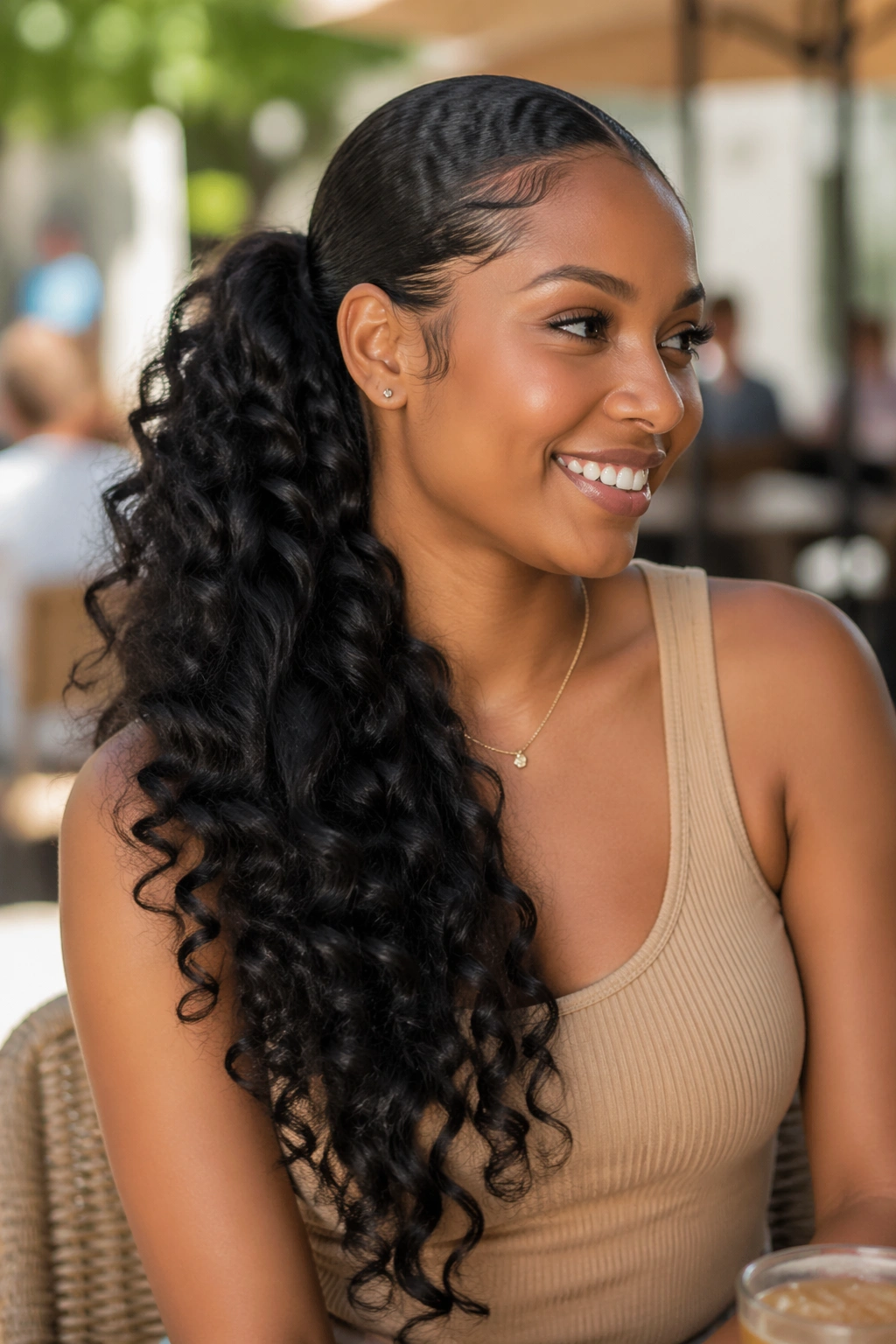
A side-stacked ponytail sits off to one side, but not in a sloppy way. The hair gathers low and then drops in a layered stack, so the curls land over one shoulder with a kind of built-in drama.
It’s different from a side-swept pony because the volume feels stacked, almost tiered. That gives the style more shape in profile, which is useful if you like hair that shows up from the side instead of only from the front.
This works well with thicker curly extensions because the stack needs enough bulk to hold its shape. Thin hair can do it too, but the final result is softer and less dramatic.
12. Double Ponytail Stack
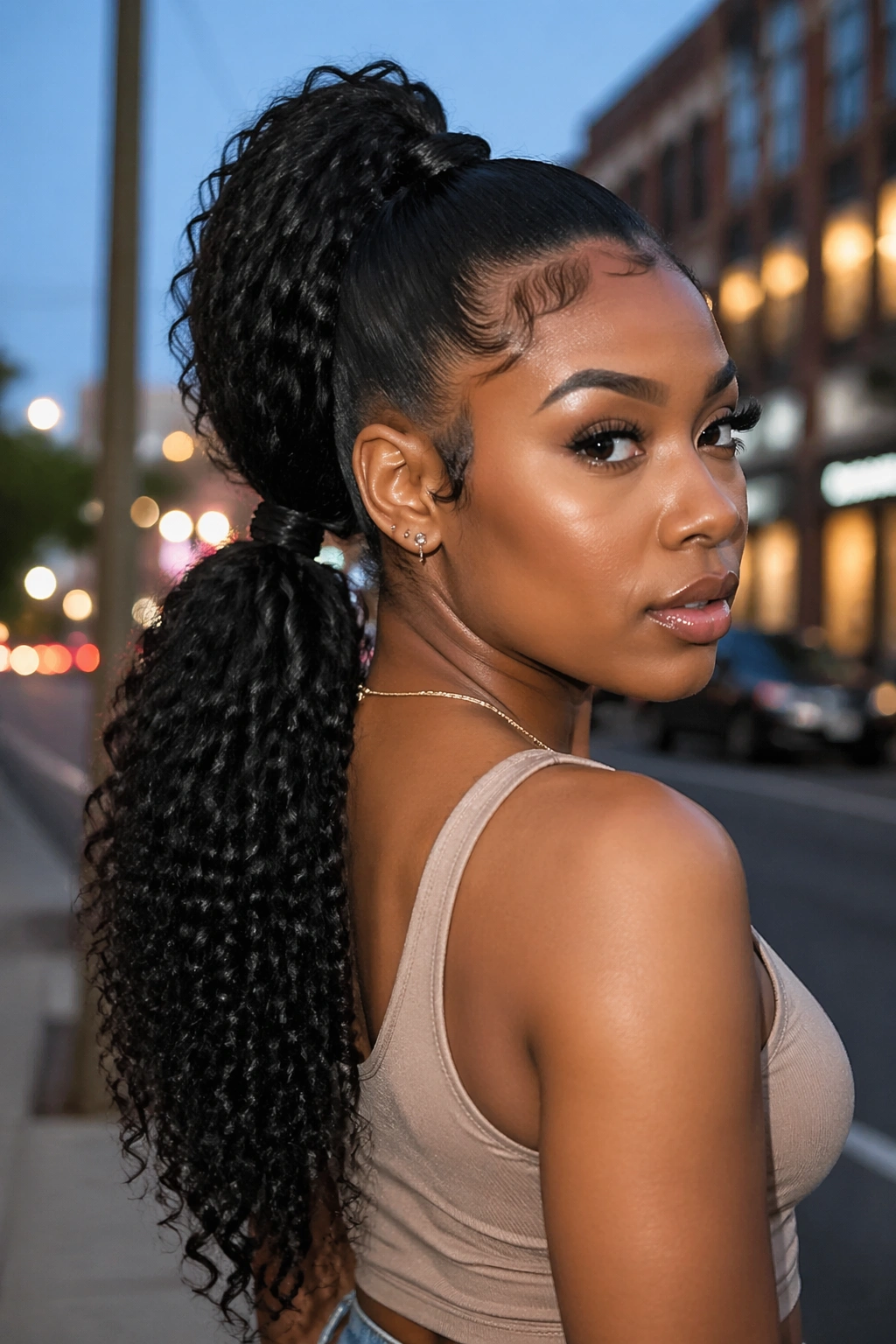
A double ponytail stack gives you the illusion of extra length without making the base huge. One ponytail sits above the other, and together they create a longer, fuller line down the back.
It’s a smart move if your curls are dense but the ponytail starts to look short once everything is gathered. Two anchors spread the weight out, which helps the tail sit better and move more naturally.
The style reads playful at first glance, but it’s also practical. The lower pony helps support the upper one, and that means less sagging by the end of the day.
If you want a ponytail that looks longer than your actual bundles, this is the trick.
13. Rope-Twist Ponytail
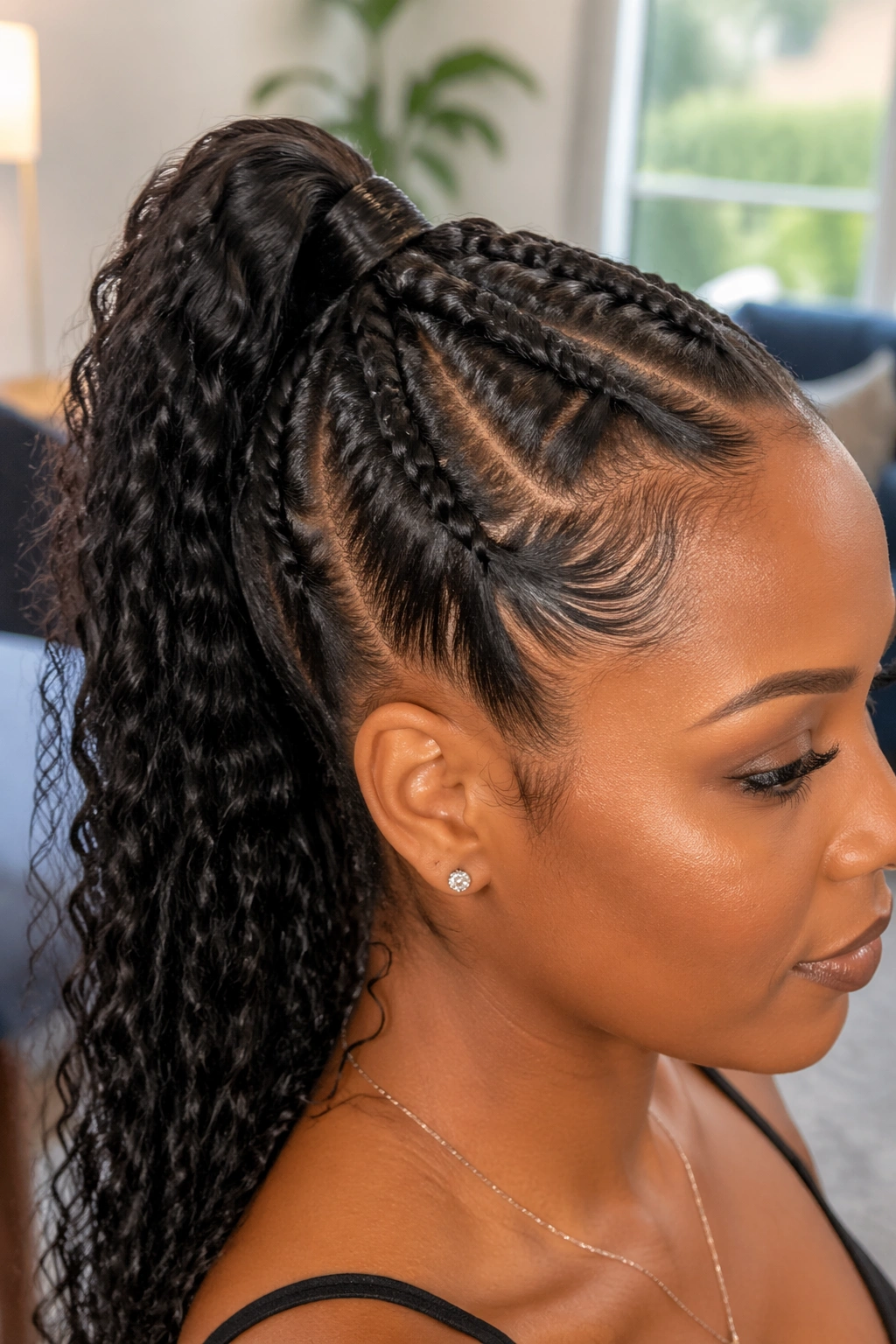
If you have ever watched a ponytail split at the ends and frizz out faster than you wanted, a rope-twist base makes sense. The twist keeps the anchor neat and gives the style a spiral look that feels a little more finished than a plain wrap.
The hair is divided into two sections, twisted around each other, and secured before the ponytail length drops. On curly hair, that spiral texture blends well with the tail instead of fighting it.
How to Style It
Use a medium-hold cream or setting foam before twisting. Too much gel makes the twist look hard and shiny in a bad way. Too little product, though, and the strands separate before the style sets.
I like this one for people who want detail without extra braids. It’s clean, but not basic.
14. Wet-Look Curly Ponytail
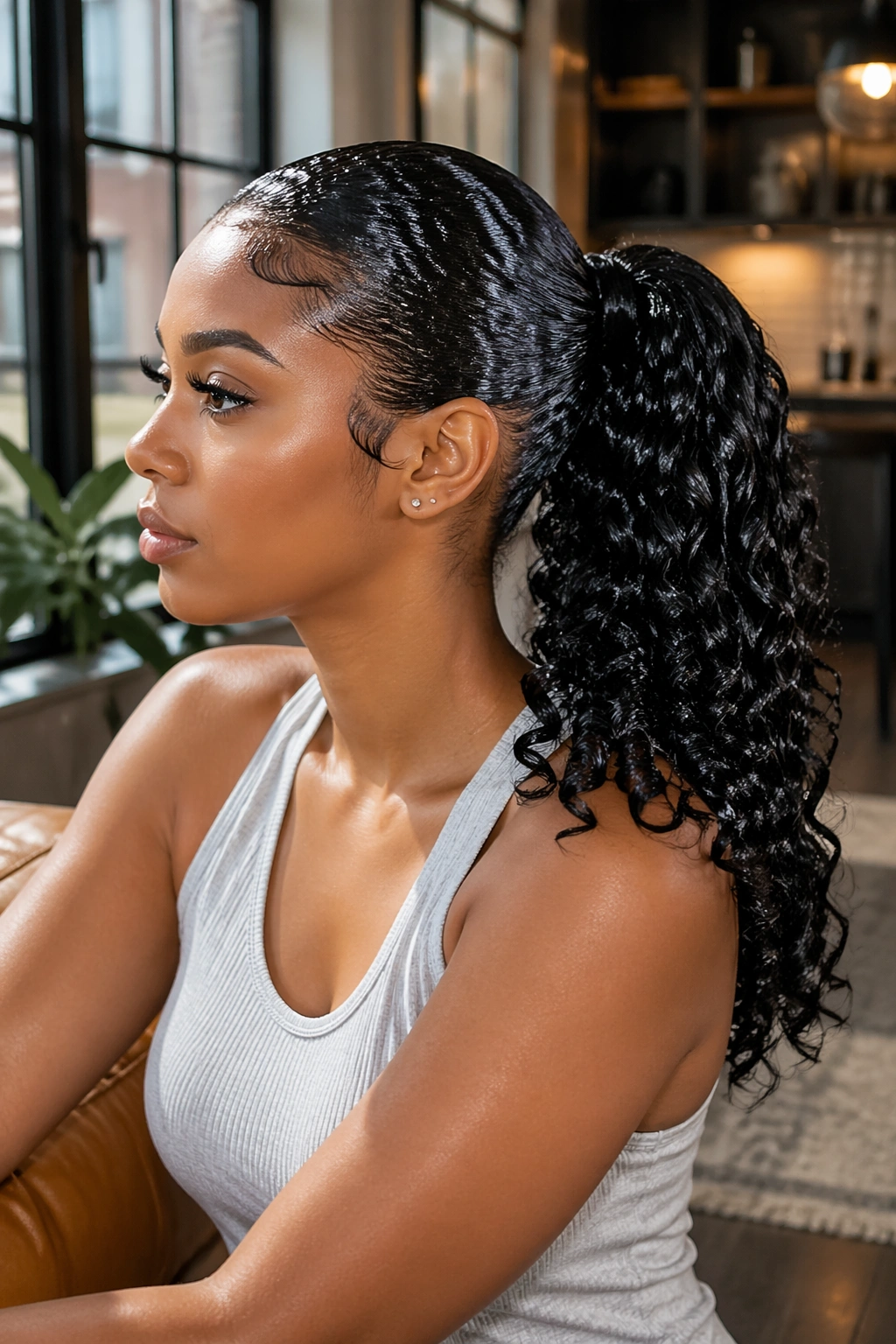
A wet-look curly ponytail walks a fine line. It should look glossy and sculpted, not wet in the “I just got caught in the rain” sense.
The base is the star here. Smooth the roots with gel or styling foam, brush everything back, and keep the ponytail itself defined with a little shine product worked through the curls. The ends should still move. If they stay glued together, the style loses its shape.
What to Watch For
- Use less gel than you think.
- Let the curls stay separated enough to show texture.
- Avoid heavy oils near the scalp.
- Keep the hairline neat, not crunchy.
This style looks especially good on nights out because the shine catches the light and makes the curls look richer.
15. Crown-Braid Ponytail
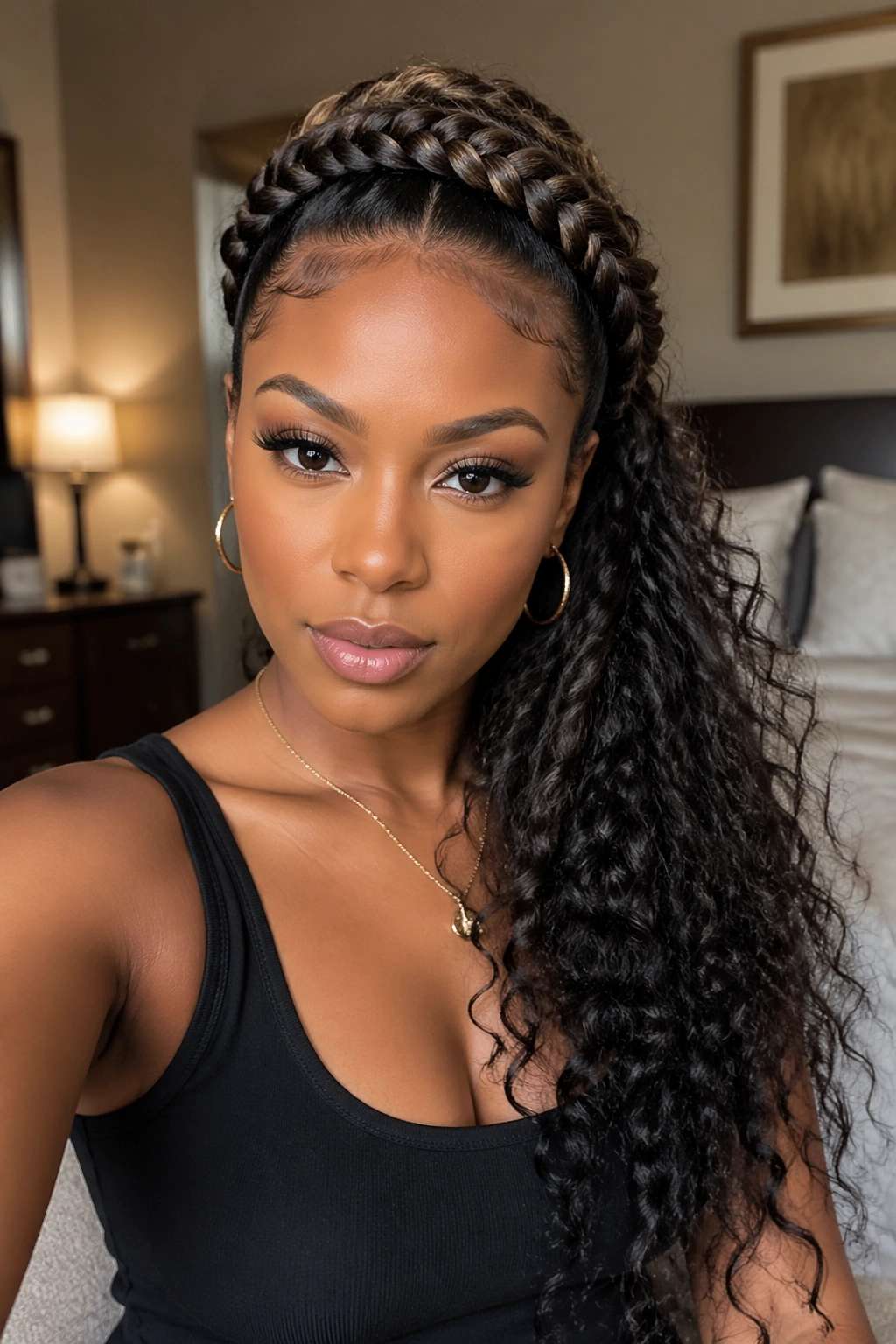
Unlike a simple wrap, a crown-braid ponytail gives the hairline its own texture story. The braid moves around the crown before the ponytail begins, so the style feels fuller and more finished from the front.
It’s a nice choice when you want the face framed but not crowded. The braid acts like built-in detail, which saves you from adding too many accessories later. That’s useful. Too many accents on curly hair can make the top half feel busy.
How to Get the Most From It
Keep the braid snug enough to stay clean, but not so tight that it flattens the curl pattern around it. A medium-to-thick braid usually looks best because tiny braids can disappear against full curly bundles.
This is one of the better choices for weddings, graduations, or any dress-up day that still needs a ponytail.
16. Waist-Length Drama Ponytail
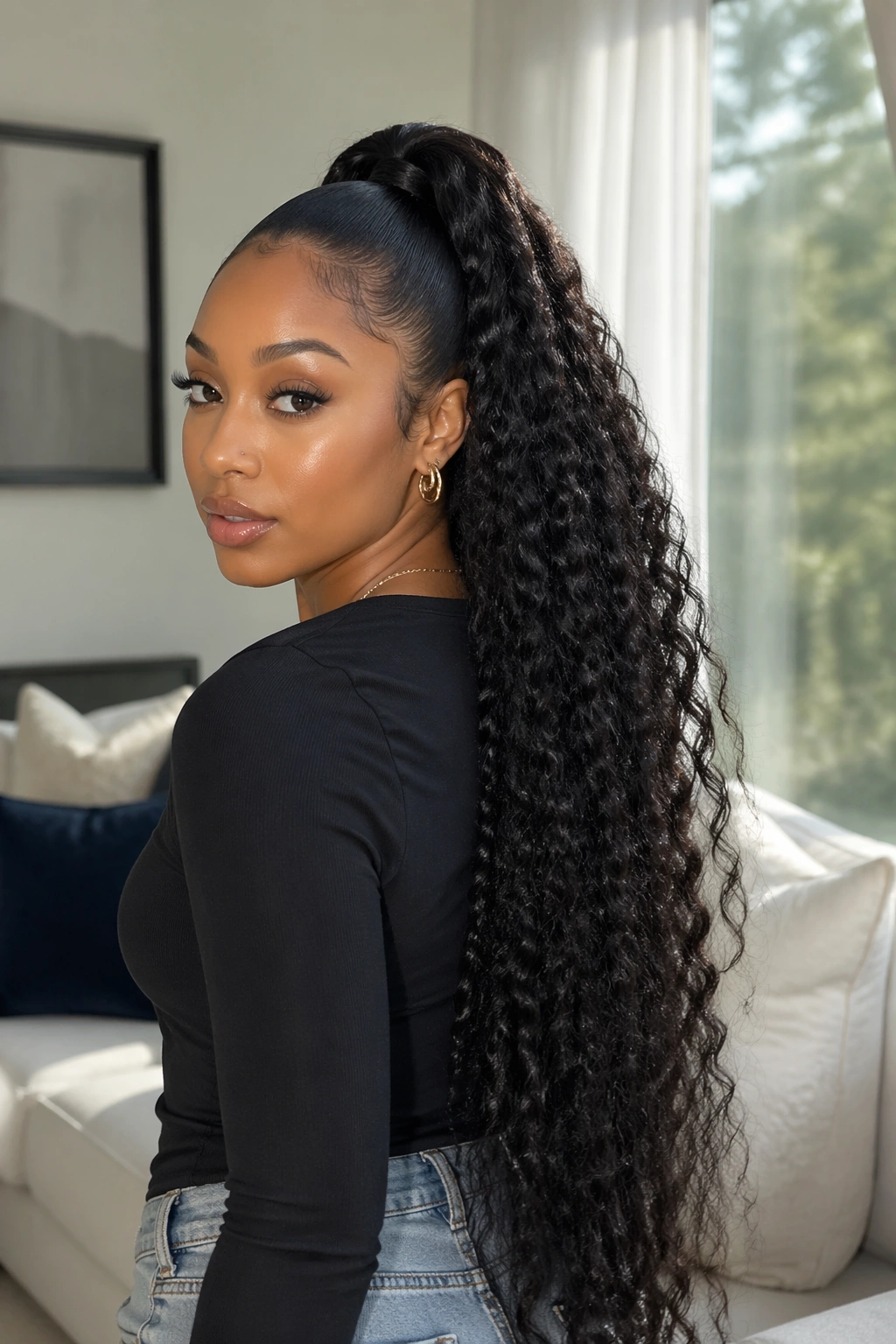
A waist-length ponytail makes a point the second it moves. The curls swing lower, the silhouette gets heavier, and the whole style turns into a statement whether you wanted that or not.
This is the ponytail for people who like length with their volume. It does ask for balance, though. If the base is too small, the tail can feel top-heavy. If the bundles are too dense, the head starts looking crowded near the crown.
I usually like this style when the curl pattern is soft and springy rather than super tight. You want motion. You want the ends to move when you turn your head. Without that, the length feels more like weight than glamour.
17. High Puff Ponytail with Weave Length
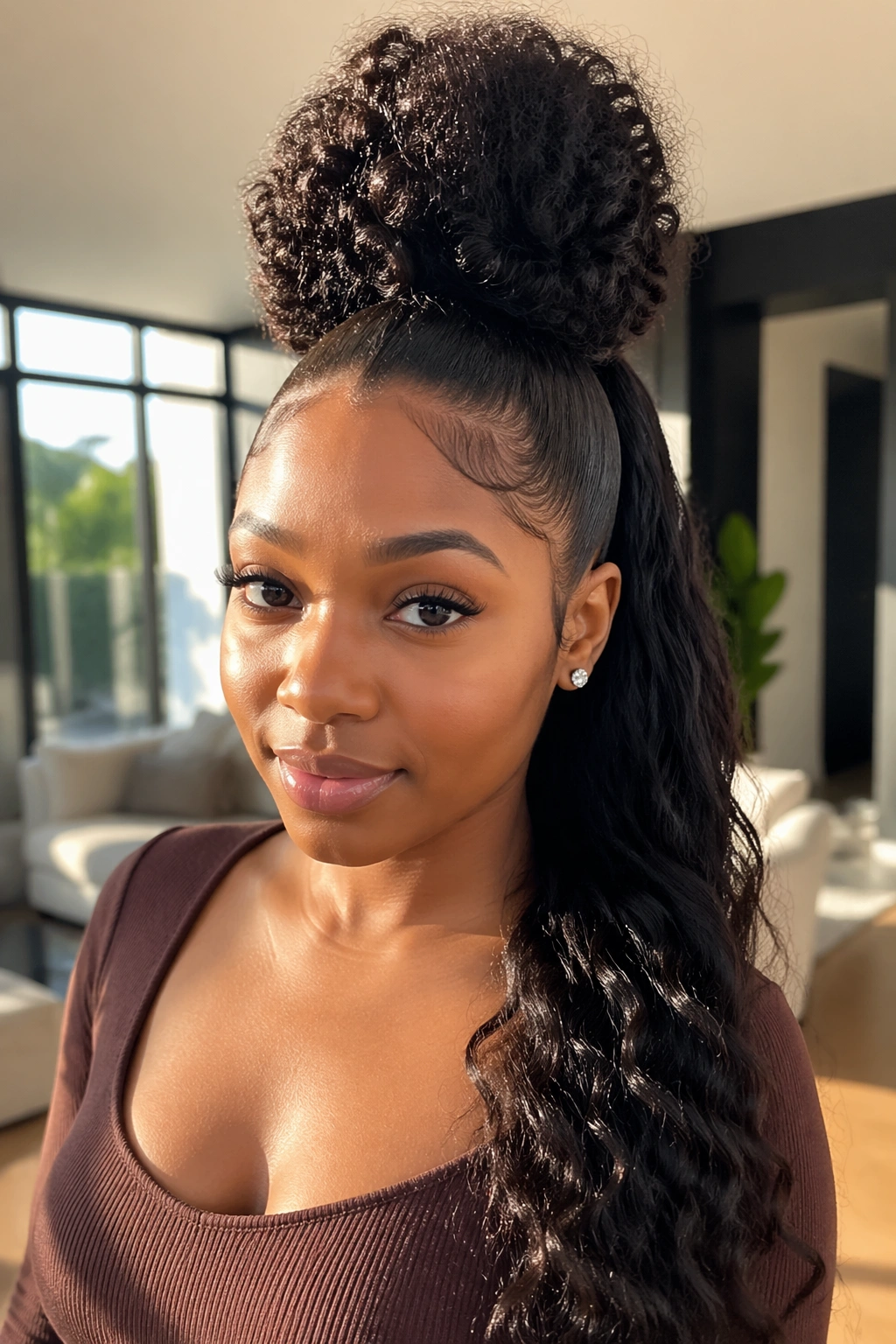
Why does a high puff still work with a quick weave? Because curly hair already wants to expand upward. If you let it, that texture gives the style a lifted, airy look that straight ponytails have to fake.
The top can stay a little fluffy while the tail drops longer and more controlled. That contrast is what makes the style interesting. It feels natural without being casual.
Best Textures for the Top
A curl pattern with enough spring to puff at the roots works best here. If the top is too straight, the contrast looks forced. If it’s too dense, the puff turns bulky in a hurry.
This one is great for people who like volume but do not want a flat crown. It has personality. A lot of it.
18. Low Pony with Flipped, Curled Ends
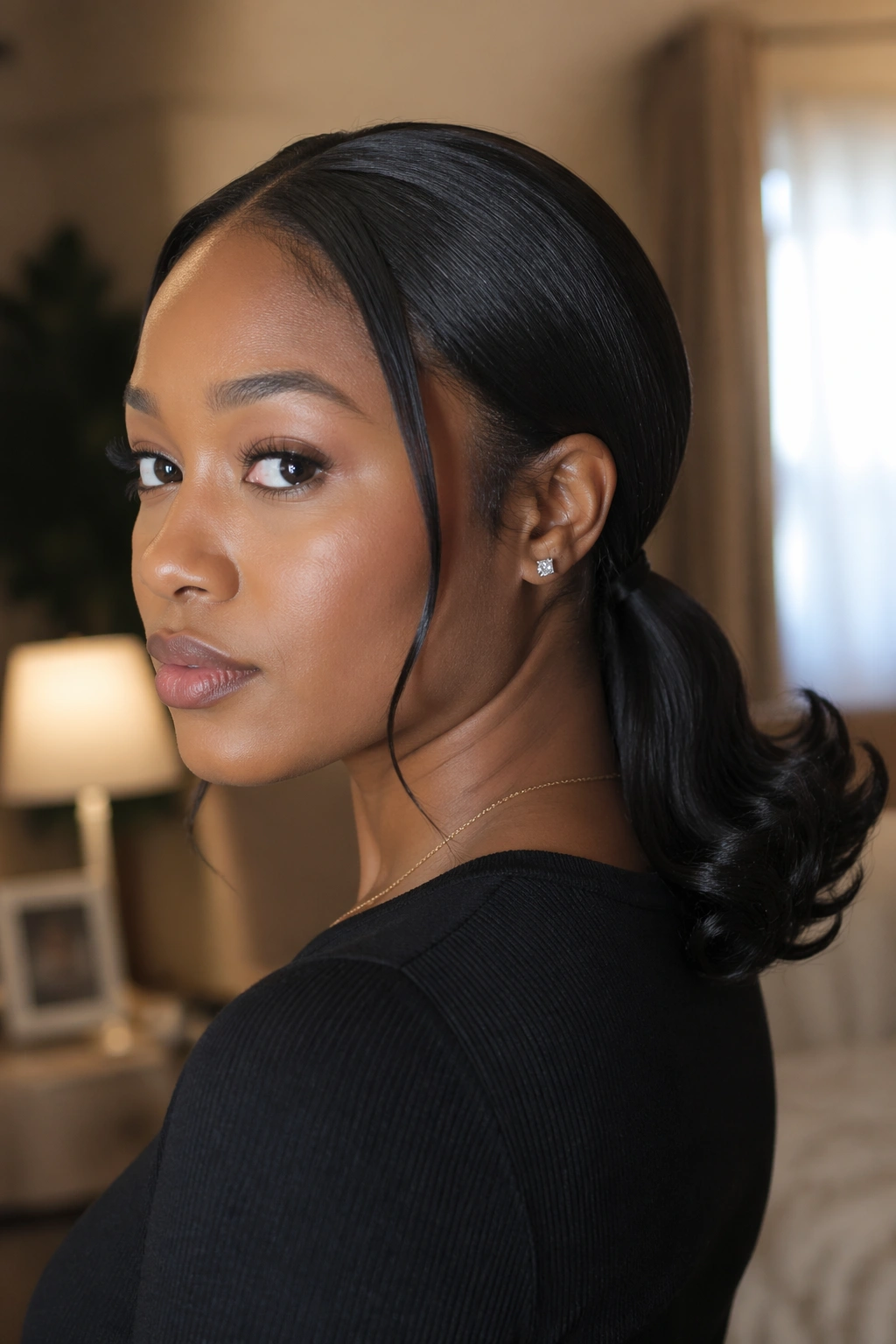
A low ponytail with flipped ends has a retro feel without turning into costume hair. The base stays neat at the nape, then the ends turn outward instead of hanging straight down.
Use large rollers or a 1-inch curling wand on the tail if the extensions need shaping. The curls should bend away from the neck in a soft flip, not a tight spiral. That gives the style a polished finish that still looks relaxed.
The best part is the movement. When the curls lift at the bottom, the ponytail looks lighter, even if the hair is long. That little visual trick matters more than people think.
19. Ponytail with Beaded Accent Braids
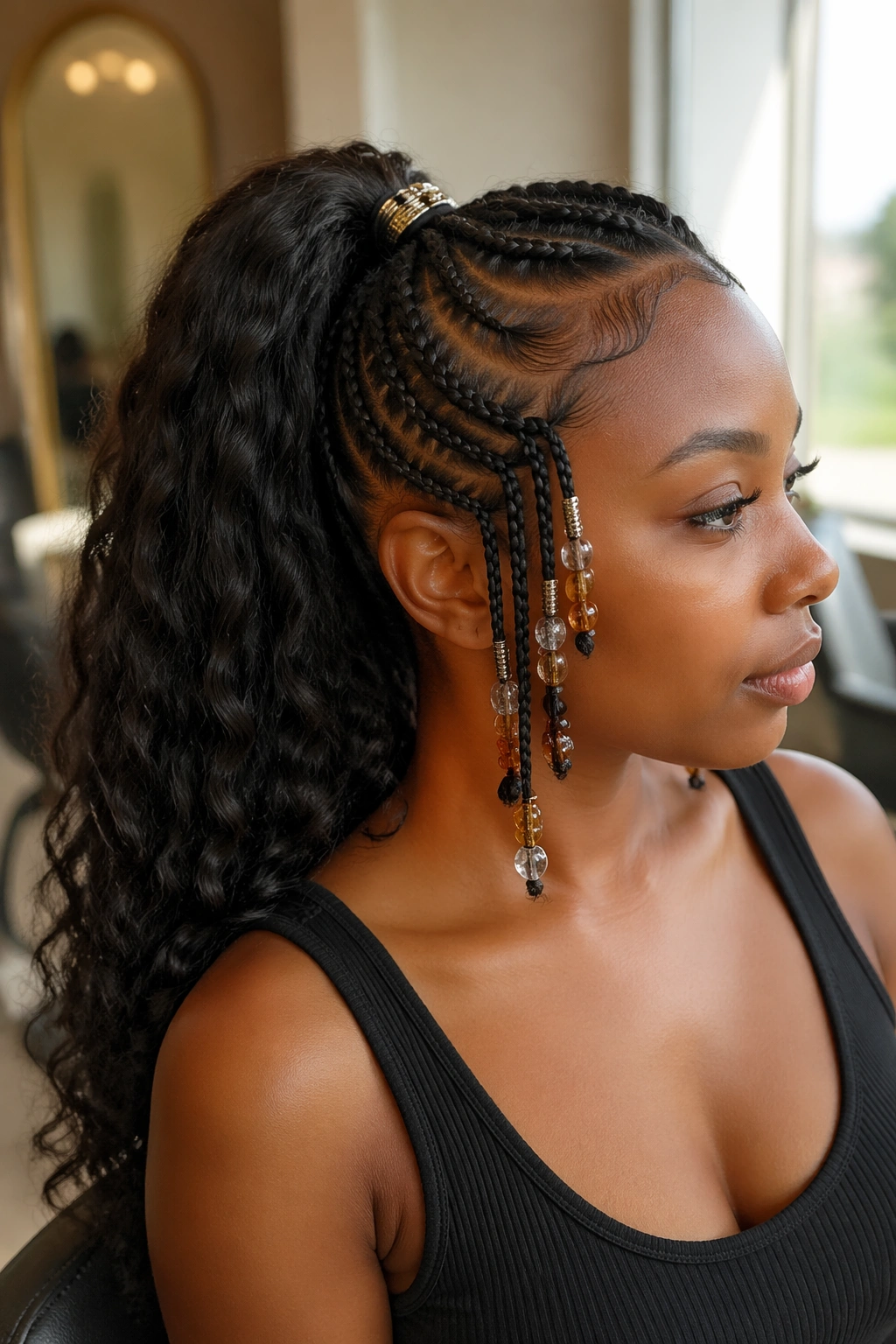
A few tiny braids with beads can change a ponytail from plain to playful in about five seconds. The beads add sound, motion, and a little shine around the face or at the base of the tail.
Keep the bead count light. Six to ten small beads is usually enough. Any more and the front can start to feel busy, especially if the curls are already full.
Key Details
- Use lightweight beads so the braids do not sag.
- Place them near one temple or along the ponytail base.
- Match the bead color to your outfit or keep it clear and simple.
- Secure the ends well so they do not slide.
This style has personality without needing a huge install. That’s probably why it works so well.
20. Asymmetrical Ponytail
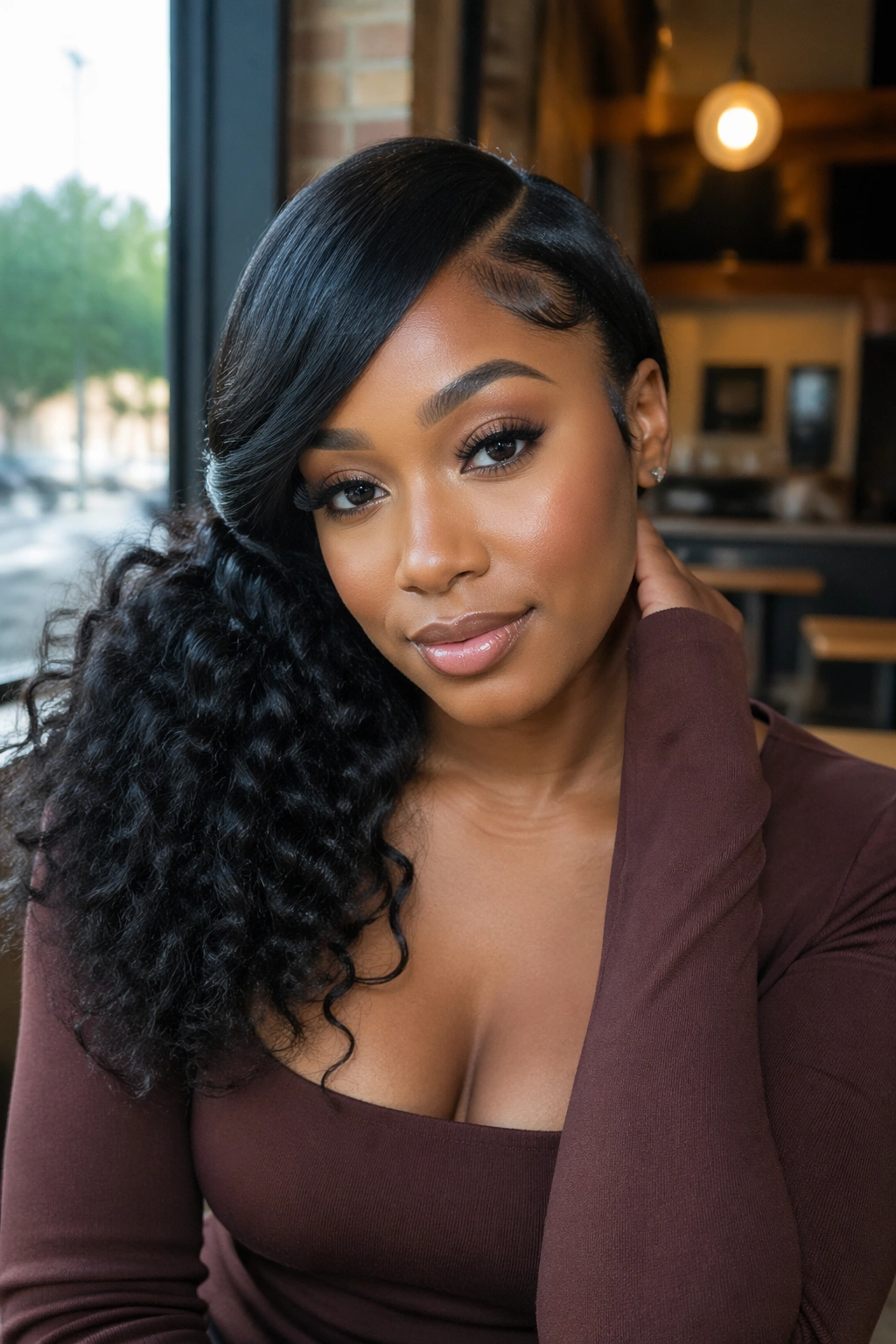
An asymmetrical ponytail sits off-center on purpose, which makes it feel more styled than a normal side pony. One side stays tighter, the other side opens up, and the whole shape leans just enough to look intentional.
The beauty of this look is the imbalance. It keeps the eye moving. A centered pony can feel predictable; this one has a little edge to it.
This style is best when you want the hair to frame one side of the face more than the other. A diagonal part can help, especially if the front curls fall across one cheekbone. It’s a simple trick, but it changes the line of the whole style.
21. Romantic Face-Framing Ponytail
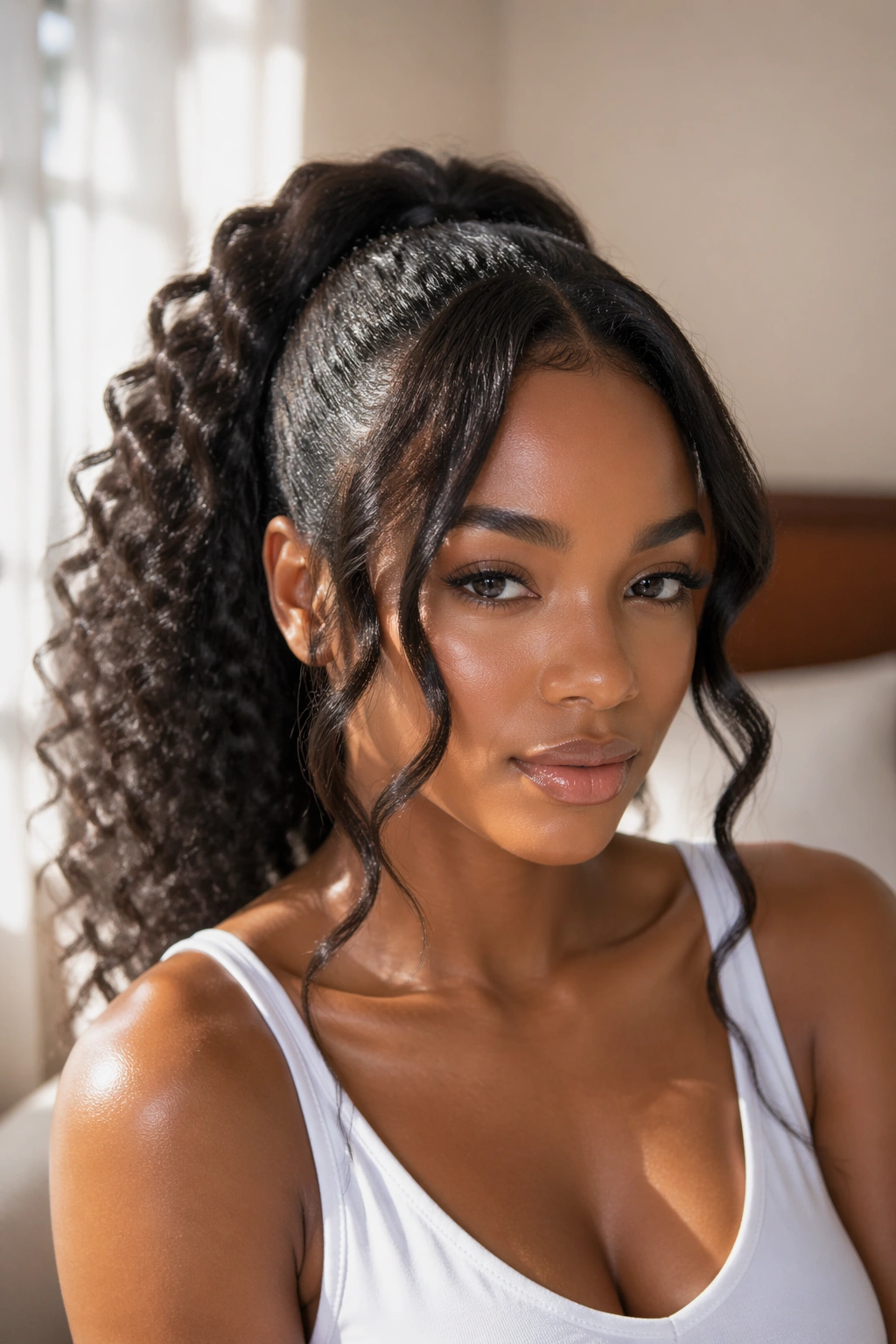
A romantic face-framing ponytail relies on softness near the front. Leave out two slim sections around the temples, curl them gently, and let them fall against the cheeks while the rest of the hair pulls back.
Those front pieces do a lot of work. They soften the jawline, ease the transition from the hairline to the ponytail, and keep the style from feeling too formal. If the curls are too tight, though, the look gets fussy fast.
I’d keep the face-framing pieces about half an inch to an inch wide each. Enough to show, not enough to take over. That’s the sweet spot.
22. Gym-Safe Secure Ponytail
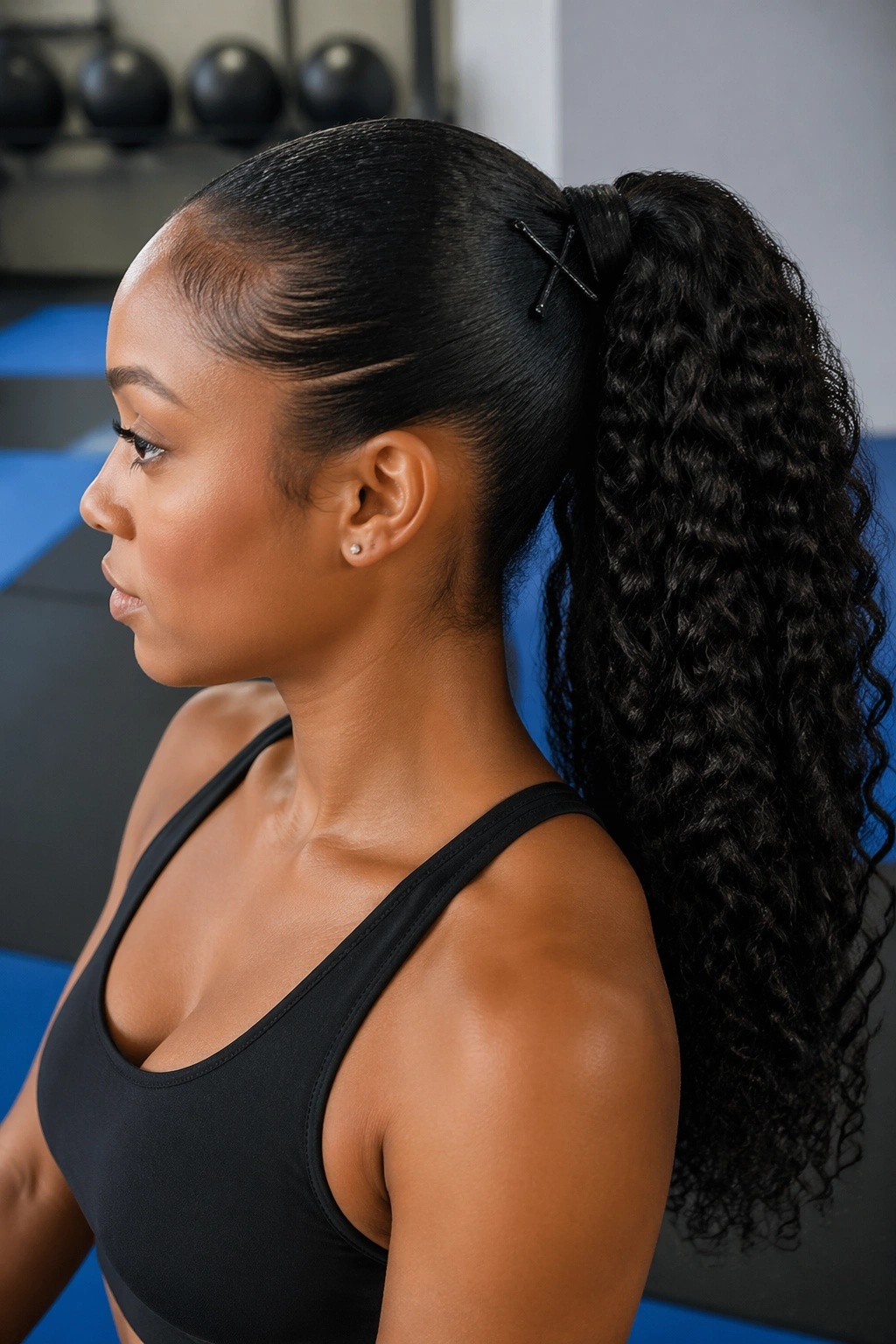
Not every ponytail needs to flirt with the room. Some need to stay put. A gym-safe secure ponytail is built for movement, sweat, and the kind of day where you do not want to think about your hair at all.
The base should be snug, the elastic should be strong, and the wrap or braid around the anchor needs to be tight enough to hold but not so tight that it gives you a headache by lunch. Comfort matters more here than drama.
What Makes It Hold
- Two crossed bobby pins at the base help lock the pony.
- A non-slip elastic keeps the base from sliding.
- A light setting foam helps the crown stay flat.
- Shorter curly bundles move less and tangle less.
This is the style I’d trust when I need hair that behaves. Nothing glamorous. Just dependable.
23. Big-Curl Glam Ponytail
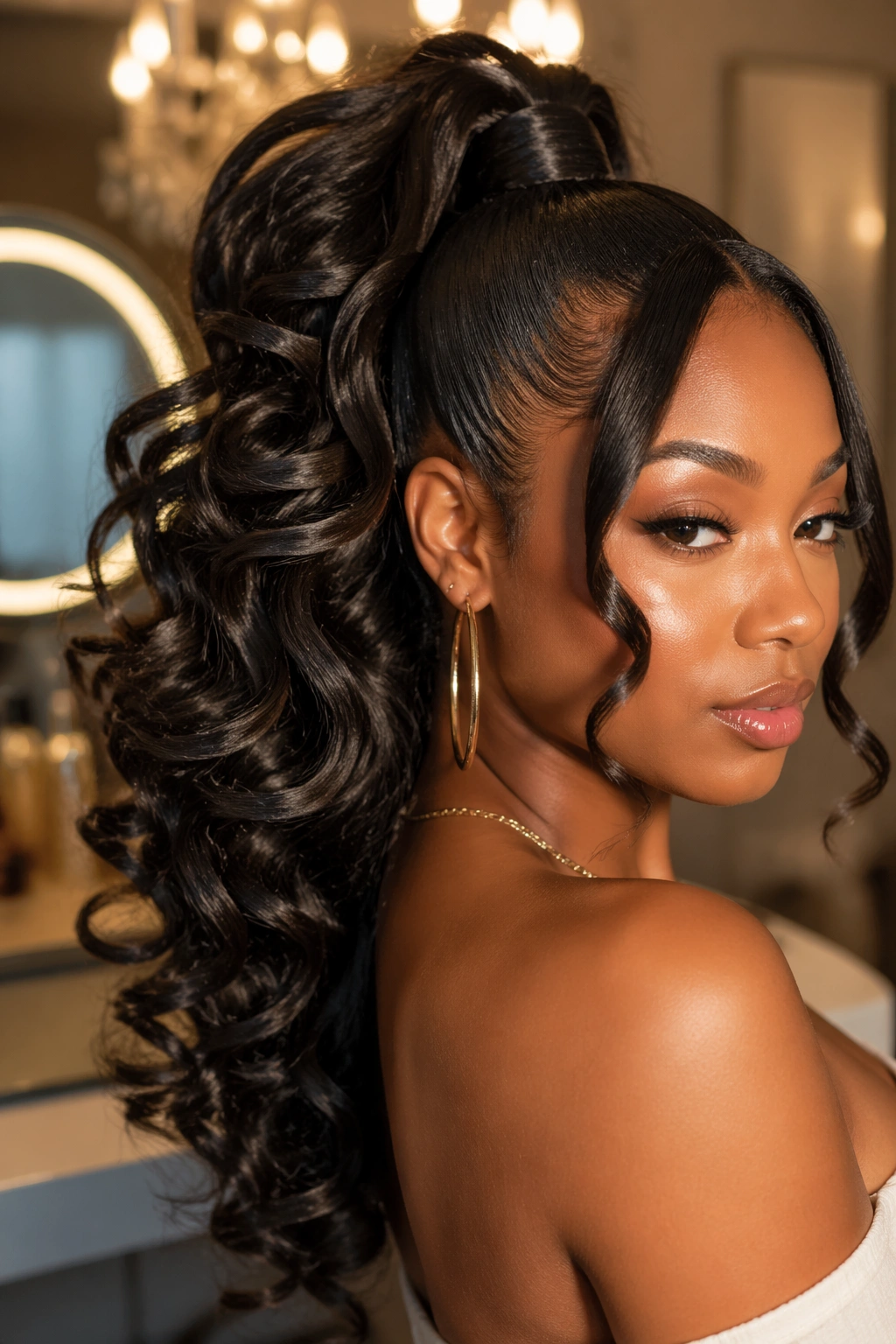
Big curls change the whole tone of a ponytail. Instead of tight definition, you get soft rings with enough size to read from across the room.
The trick is not brushing the curl pattern too much after it’s set. That’s where a lot of styles go wrong. Once the curls are loosened, they can look lovely, but if you over-separate them, the ponytail turns fuzzy fast. Use your fingers more than a comb.
A 1.25-inch curling wand works well on human-hair extensions if you want that loose glam shape, and letting each curl cool before touching it helps the pattern last longer. The finish should feel plush, not puffy.
24. Twisted Mohawk Ponytail
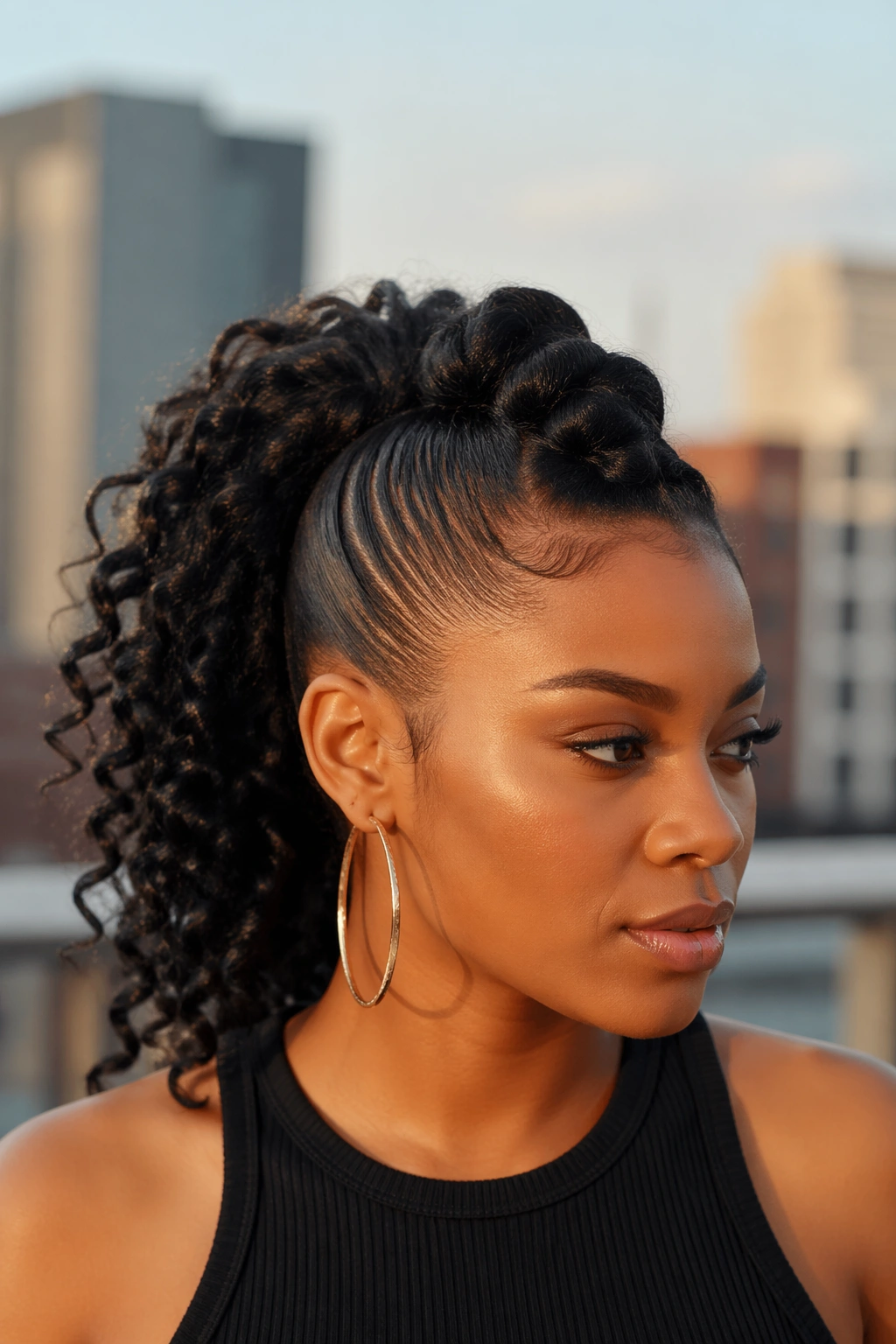
A twisted mohawk ponytail takes the faux-hawk idea and makes it a little softer. Instead of just slicking the sides down, you twist sections inward along the head so the centerline rises with texture.
That twist detail gives the style more depth than a plain center pony. It also makes the sides look cleaner, which helps if your hairline is uneven or you want to hide a grow-out line from the install.
How It Differs
The faux-hawk is sharper. This one is more sculpted. The twist pattern creates a visible ridge, and that ridge makes curly ends feel more dramatic when they drop behind it.
If you want edge without a hard finish, this is the better choice.
25. Heart-Part Ponytail
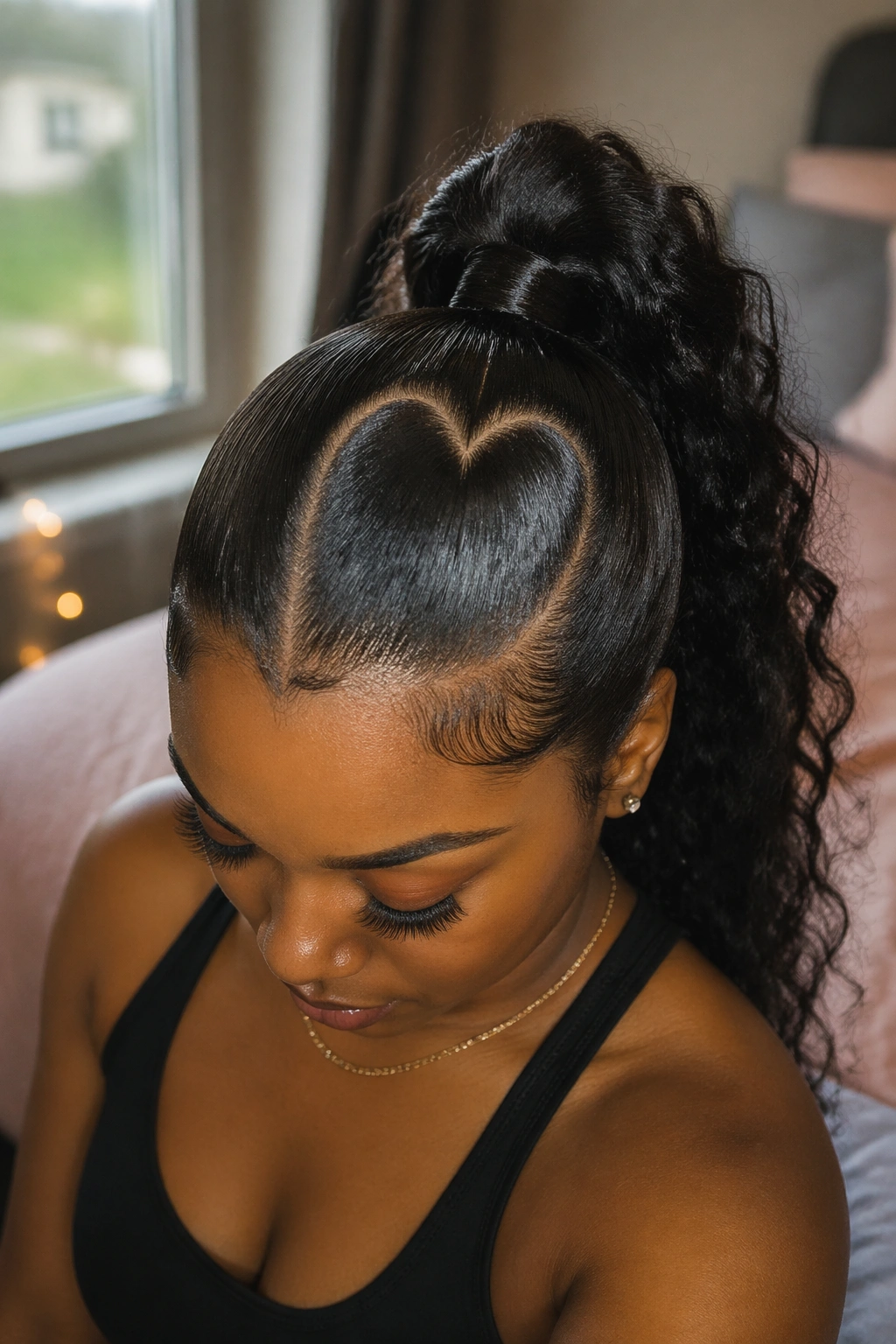
A heart-part ponytail is all about the parting. The heart shape does the talking before the ponytail even starts, which makes the style feel playful and a little bit sweet without turning childish.
This takes a steady hand and a rattail comb. The lines need to be crisp, and the curves should be symmetrical enough to read as a heart from above. A tiny bit of edge control helps the shape stay clear around the front.
It works best on medium to long installs, because the part needs room to show. If the ponytail is full and curly, the heart part becomes a nice surprise rather than the only thing people notice.
26. Two-Tone Ponytail
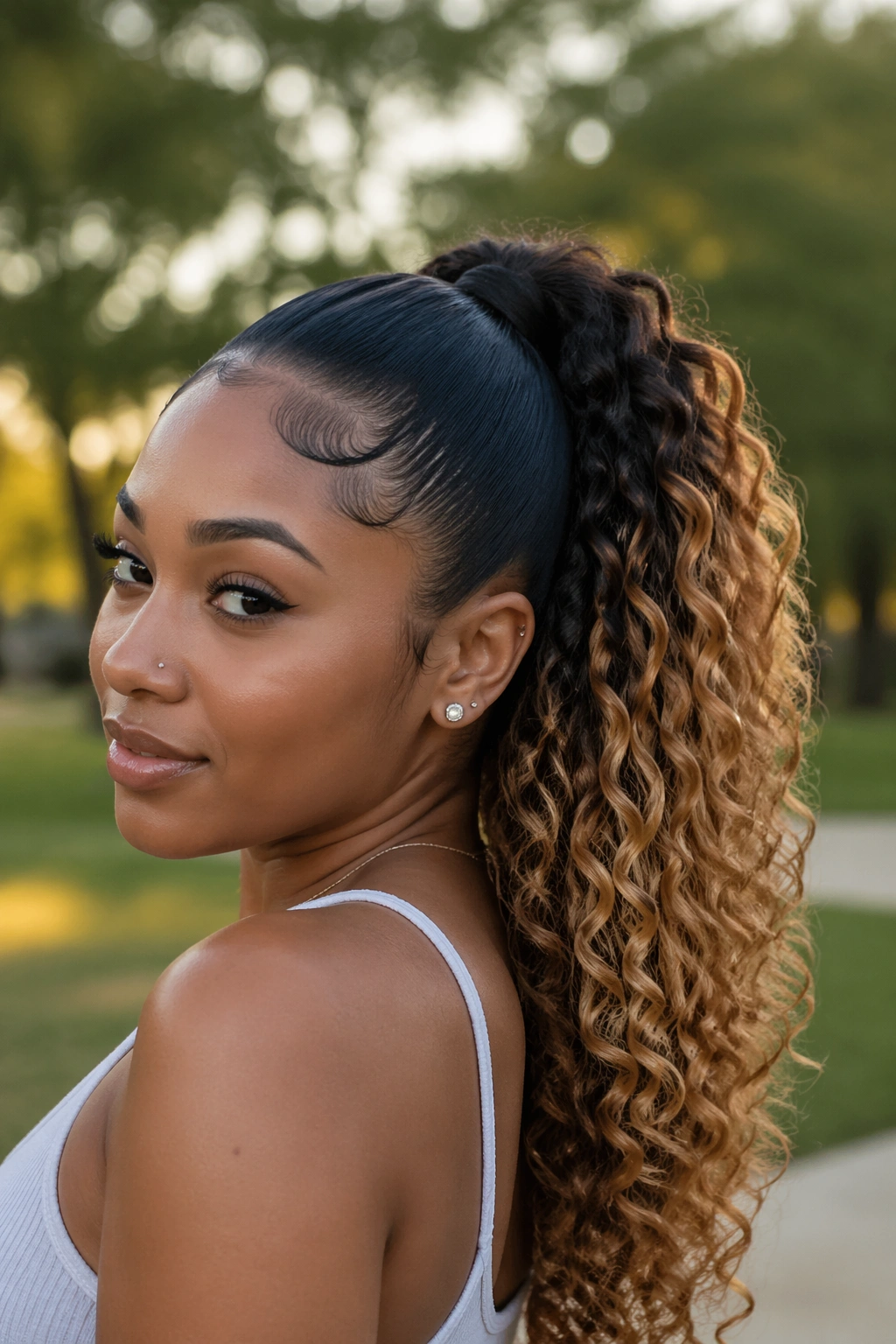
A two-tone ponytail looks different because the color contrast does some of the styling work for you. Dark roots and lighter ends, or a black base with caramel bundles, make the shape read instantly.
Unlike a monochrome ponytail, this one shows off the curl pattern more clearly. The light catches the bends in the hair, and the darker base anchors the install so it doesn’t look washed out.
This is a smart pick if you want dimension without adding extra braids, wraps, or clips. A strong color shift can be enough. Keep the tones in the same family if you want a softer look, or push the contrast harder if you want the ponytail to pop.
27. Soft Everyday Ponytail
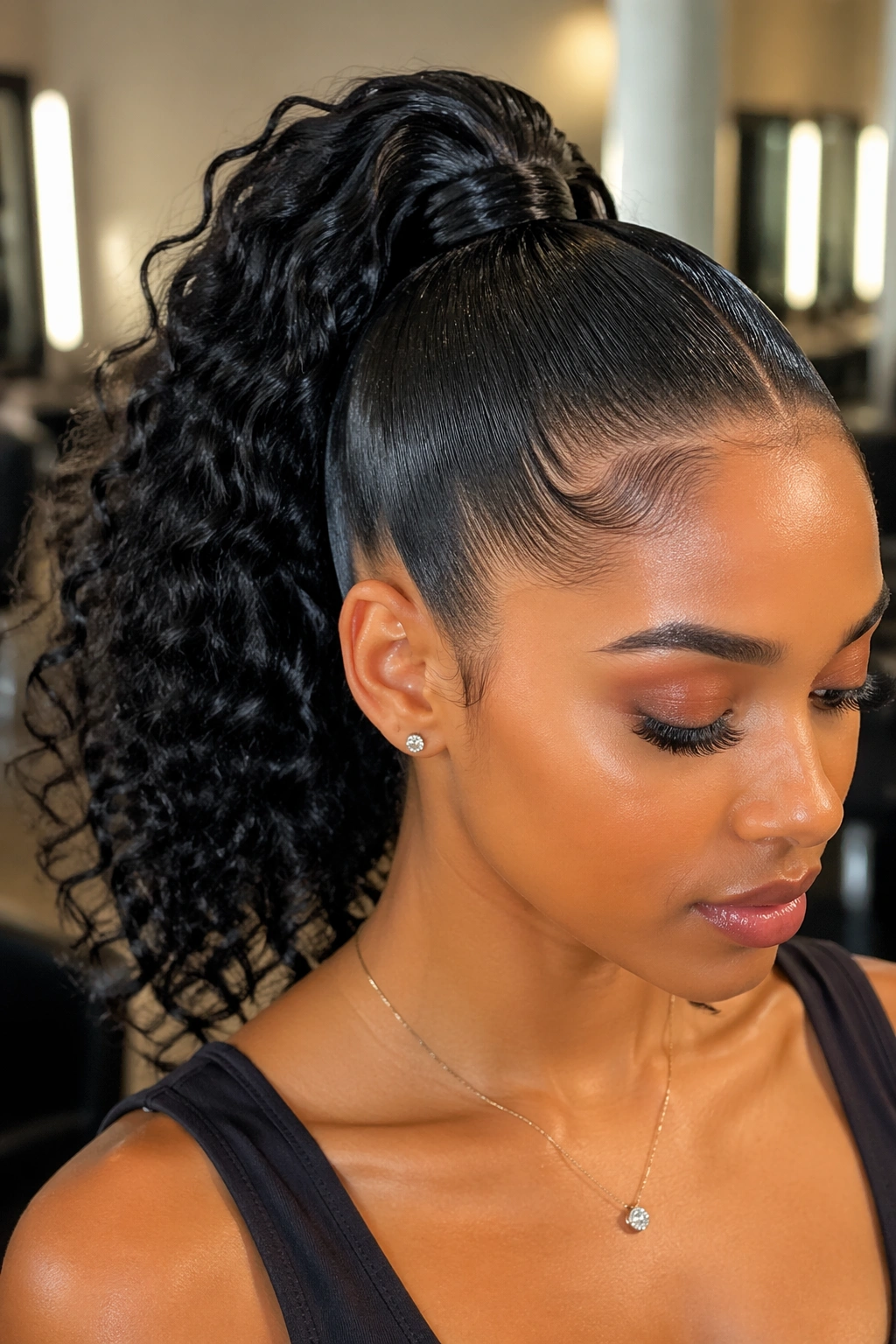
Some days call for a ponytail that stays out of the way and still looks finished. A soft everyday ponytail is low tension, lightly polished, and built to survive a normal day without needing constant touch-ups.
The base sits close to the head, the curls stay relaxed, and the edges are neat without being overworked. That balance matters because everyday styles can get ruined fast when people use too much gel or make the pony too tight. You want control, not stiffness.
This is the style I’d reach for when I want my hair to behave, but I still want it to look like I cared. Simple. Reliable. Still cute enough to get compliments at the grocery store, which is honestly the best kind of compliment.