



A high box braid ponytail can save a whole week of mornings, but only if the base is built with a little care. Pull it too tight and the style starts talking back to your hairline. Set it too loose and the braids slide, swing, and tangle against your shoulders.
That’s why the best versions of this style do more than look cute in a mirror. They keep the hair tucked, the ends protected, and the weight balanced so you are not fighting your own ponytail by midday. Pretty should not cost you a sore crown.
Some box braid ponytails are sleek and sharp. Some are chunky, wrapped, beaded, or split with a part that changes the whole mood. The trick is choosing the version that fits your braid size, your face shape, and how much movement you want when you turn your head.
These 23 high box braid ponytails lean into both style and wearability. Keep an eye on weight, parting, and where the elastic sits; those three details change everything. Start with the classic, then move into the versions that fit your routine, your braid length, and your tolerance for fuss.
1. The Classic High Box Braid Ponytail
The classic high box braid ponytail is the one that never feels overworked. It pulls the braids up to the crown, keeps the ends moving, and gives you that clean, lifted shape without turning the style into a project.
Why It Works
- It keeps the braids off the neck, which helps reduce friction from collars, scarves, and jackets.
- A high anchor point gives the face a lifted shape without needing a lot of extra styling.
- Medium-sized box braids tend to sit better here than very heavy jumbo ones.
The base matters more than people think. If you gather the hair too low, the ponytail drops. If you yank it too high, the hairline gets mad fast. Aim for the widest part of the crown and smooth the sides with a light hand, not a hard scrape.
Best tip: wrap one braid around the elastic so the base looks finished, but do not make the ponytail so tight that the scalp feels pinched. A good classic should feel secure, not stubborn.
2. The Sleek Wrap-Around Base
The wrapped-base version is the cleanest way to make a box braid ponytail look intentional. It hides the elastic, smooths the transition from scalp to length, and gives the whole style a sharper edge without adding much time.
What I like about this version is that it works with almost any braid size. A neat wrap around the base makes simple braids look more polished, while larger braids suddenly feel more sculpted. It’s the sort of detail people notice even if they cannot quite say why the style looks better.
Keep the hairline soft. That means a light touch with edge control, not a helmet of product. One thin layer along the front is enough for most people; piling gel everywhere just makes the roots hard and flaky later.
This is the one I’d pick for work, dinner, or anywhere you want the style to read a little more finished. It’s a small change. Big payoff.
3. The Sky-High Snatched Ponytail
Why do some high ponytails look lifted while others just look pulled back? Usually it comes down to where the weight sits and how much support the base gets before the braids drop.
A sky-high box braid ponytail is built right at the crown, sometimes a touch forward, so the braids rise before they fall. That little shift changes the whole silhouette. The face looks more open, the top of the head looks taller, and the ponytail has a bouncy, confident shape that a lower version just cannot copy.
How to Wear It
- Use a firm but not brutal elastic.
- Keep the front sections smooth, but do not flatten the whole crown.
- Works best with medium or light braid packs that do not drag the base down.
This style is not the one I’d choose for the heaviest extensions in the room. Long, dense braids can pull the shape down fast. If you want height, you need a little restraint.
4. The Jumbo Braid Ponytail
If your braids are thick and long, a jumbo braid ponytail solves a real problem. A tiny ponytail on heavy plaits can look busy, almost overloaded, while jumbo braids settle into a chunky shape that feels balanced and bold.
The key is proportion. Big braids already bring a lot of volume, so the ponytail does not need extra tricks. Keep the base smooth, gather the braids in one direction, and let the thickness do the work. A pair of soft elastics can help hold the weight better than one stretched-out band.
What to Watch For
- The base should be sturdy enough to hold weight without biting into the scalp.
- A wrapped elastic helps prevent slippage.
- Too many accessories can make the ponytail feel heavy and cluttered.
This is a strong choice if you like the look of statement braids and want the ponytail to feel grounded, not airy. Big braid energy. That’s the whole point.
5. The Side-Part High Ponytail
A side-part high ponytail softens the whole face without losing the lift of a high style. The part shifts the focus just enough to make the look feel less severe, which is useful if a straight-back ponytail tends to feel too tight or too sharp on you.
The best thing about this version is the angle. A deep side part gives the front more shape, and the ponytail sits like it has motion even when you are standing still. It’s especially good for round or square face shapes, because the side sweep breaks up the symmetry in a flattering way.
I also like it for everyday wear because it looks done without looking overworked. You do not need extra braids hanging everywhere. You do not need a heavy amount of jewelry. The parting does most of the talking.
If your stylist knows how to keep the part clean and the base smooth, this one can go from office to evening without a change. Easy. Stylish. No drama.
6. The Curved-Crown Ponytail
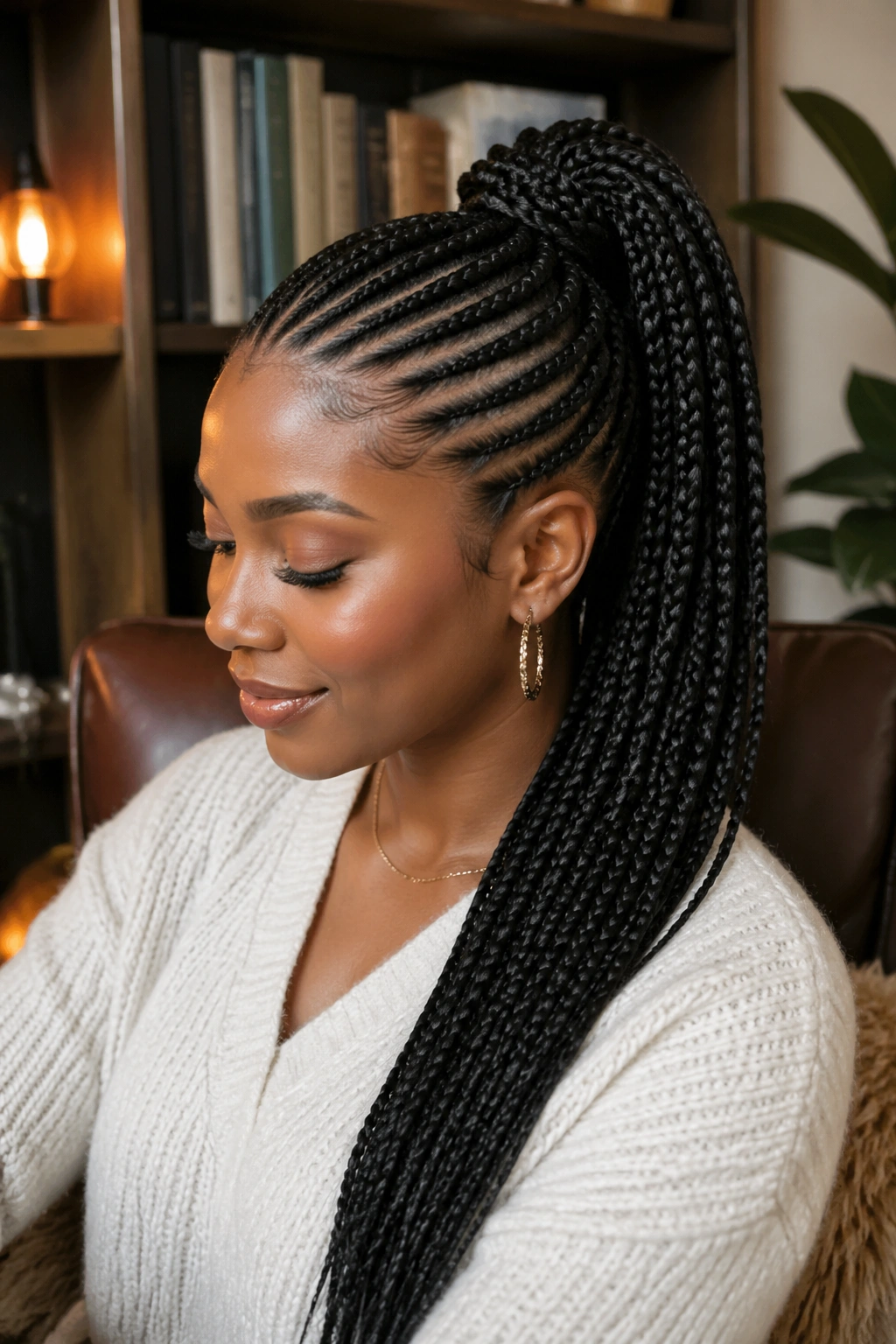
Unlike a straight-back ponytail, the curved-crown version follows the shape of the head instead of fighting it. That curve distributes tension better, and it gives the style a more sculpted look from the front.
This is the ponytail I’d choose when I want the top of the head to look intentional, not just pulled up. The braids sweep in a soft arc before they collect at the crown, which makes the whole style feel more designed. It also helps if you like a little height but do not want a severe lift right at the hairline.
The best version uses a clean, curved parting and a smooth path from side to back. If the curve is too sharp, it starts looking fussy. If it is too soft, the whole shape disappears. There’s a sweet spot in the middle.
This one works beautifully on medium-length braids because the curve adds structure without asking the length to do too much.
7. The Bubble-Length Ponytail
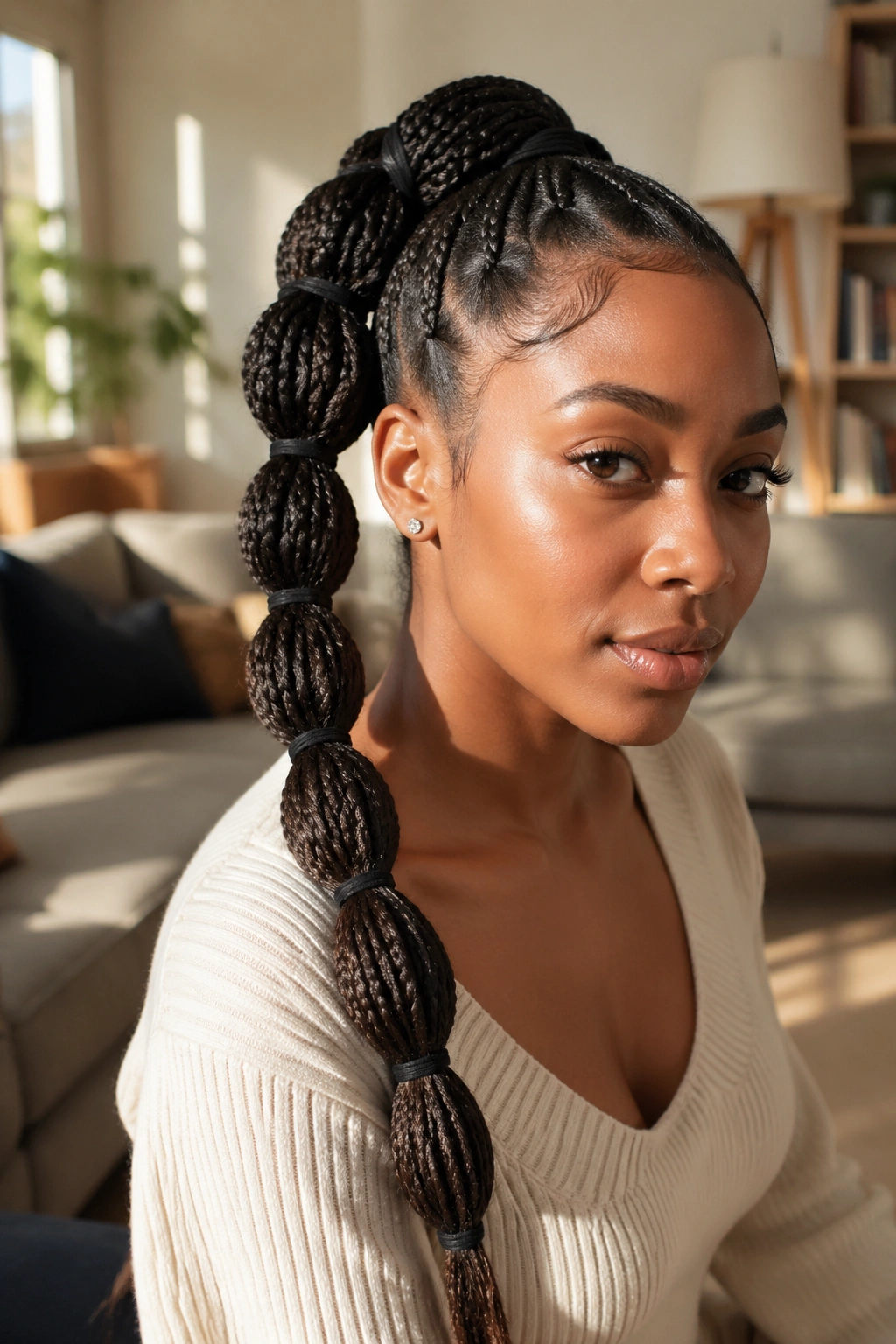
A bubble ponytail on box braids has a bit of attitude, but it is practical too. By cinching the length into sections every few inches, you reduce how much the braids swing around, which can make long extensions easier to wear.
Why the Shape Helps
The bubbles break up the weight, so the ponytail feels less like one heavy curtain. They also keep the style from tangling as much when you are moving around, especially if the braids are longer than shoulder length. That matters more than people admit.
How to Get the Look
- Use small, soft elastics every 3 to 4 inches.
- Puff each section gently so the bubbles look rounded, not crushed.
- Keep the spaces between elastics even for a cleaner finish.
I like this style best on medium-to-long braids because the sections have room to show. Short braids can work, but the effect is stronger when the length has somewhere to go. It feels playful without losing the protective part of the style.
8. The Beaded End Ponytail
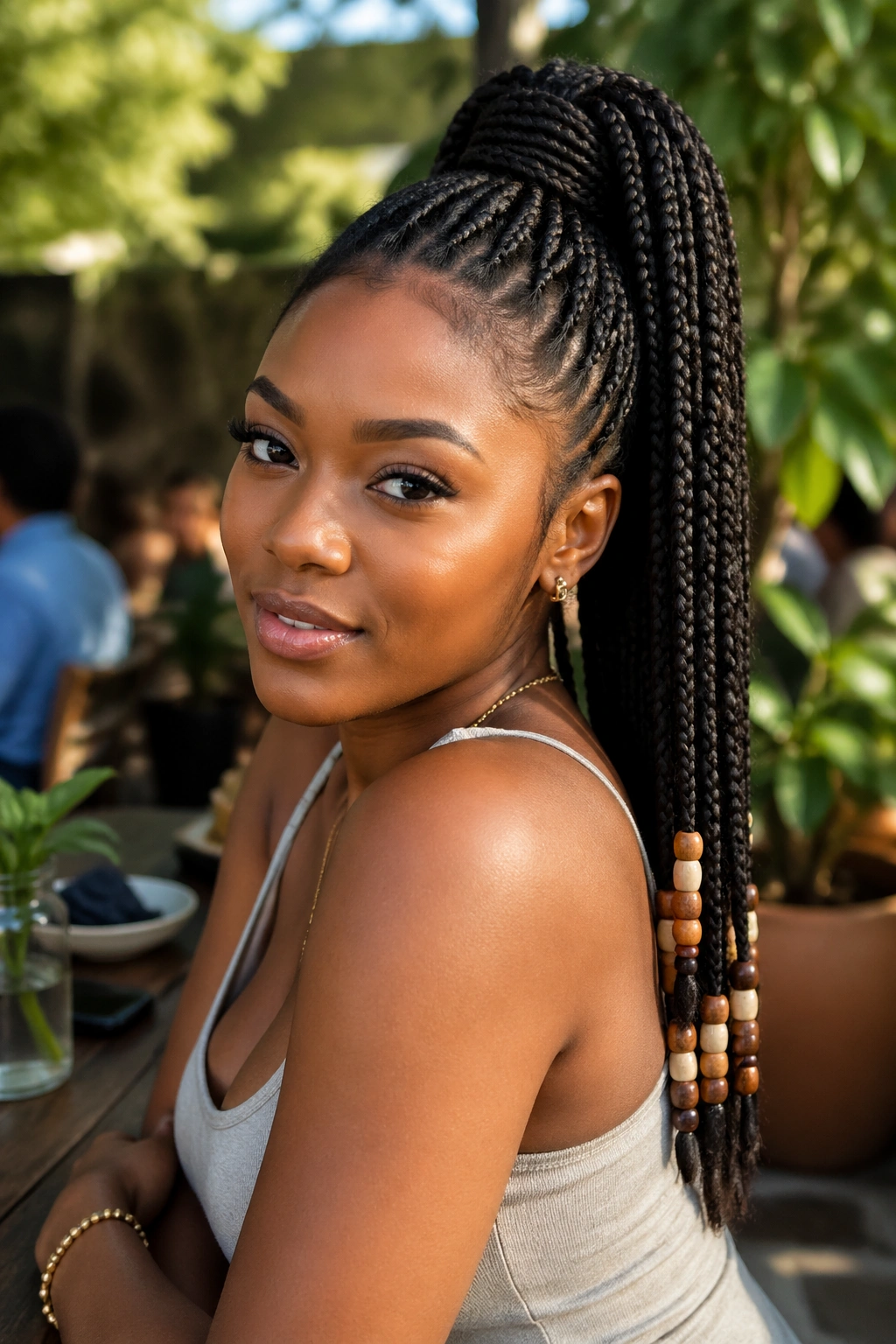
Beads at the end of a high ponytail do more than decorate the style. They change the sound, the swing, and the way the length moves when you turn your head. That little bit of weight can be nice when the braids are fine and need a bit more presence.
The trick is restraint. A few beads on the lower third of the ponytail look deliberate. Covering every braid with hardware just makes the style noisy and heavy. Lightweight wooden or acrylic beads are easier to wear than dense metal ones, especially if the ponytail already has a lot of length.
I also like beads here because they draw the eye down the ponytail. That keeps the style from looking top-heavy, which can happen when all the volume sits at the crown. The finish feels balanced.
This is one of those styles that can look festive without trying too hard. It also photographs well, if that matters to you, because the beads give the braid ends a clean line instead of a blurry edge.
9. The Metallic Cuff Ponytail
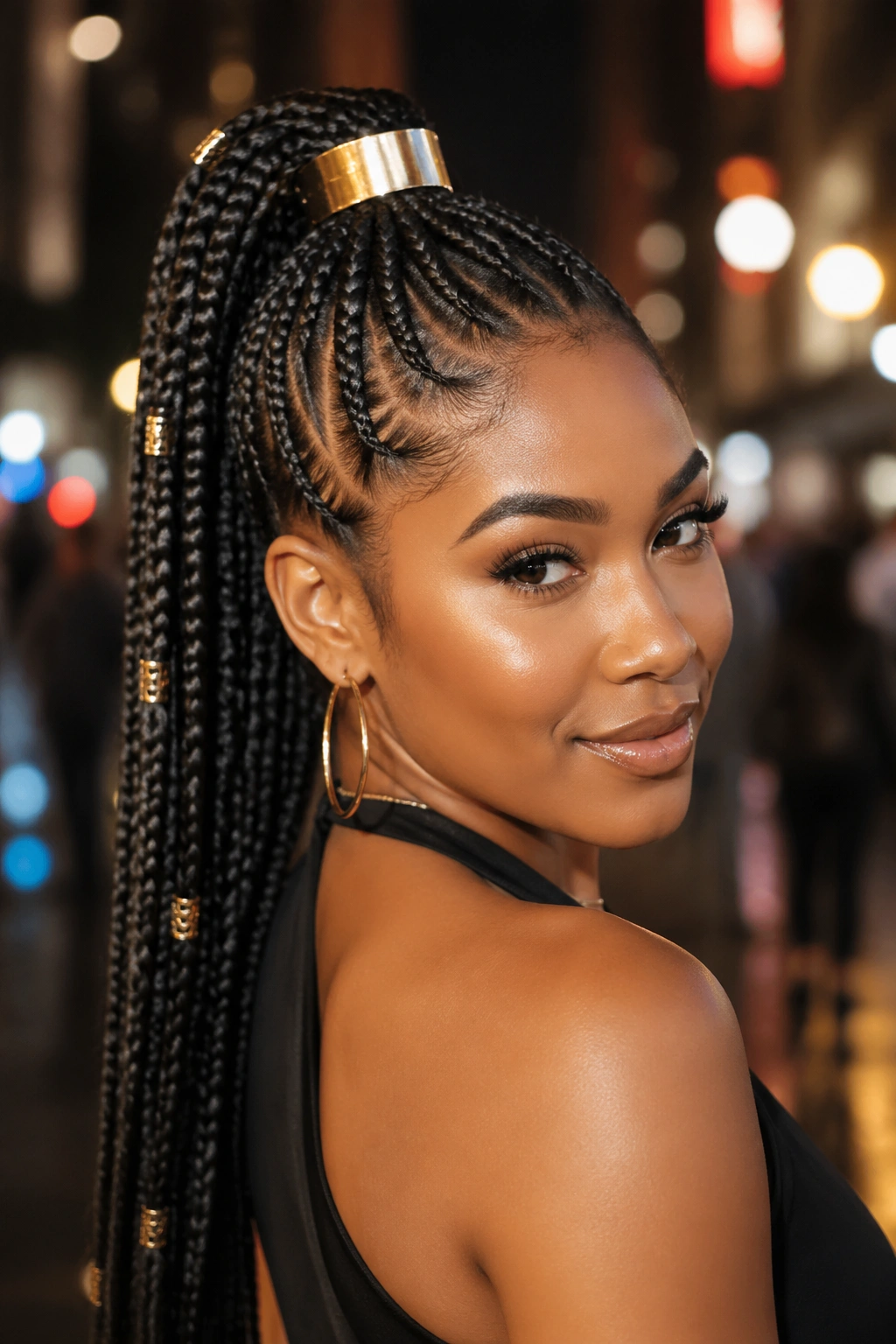
Why do cuffs work so well on a high ponytail? Because they give you detail without loading the hair with extra bulk. One or two cuffs at the base, then a few spaced down the length, is enough to make the style feel finished.
Where They Belong
- One cuff near the base creates a neat focal point.
- Two or three smaller cuffs down the ponytail add rhythm.
- Avoid clumping too many cuffs together, or the style starts looking crowded.
A metallic cuff ponytail is a good choice when you want a little shine but still want the braids to be the main event. Gold, silver, or antique brass all work, but the finish should match the mood of the outfit. Bright metal reads sharp. Duller metal reads softer.
I’d use this version for a night out, a family event, or any day when the braids need a small upgrade. It is simple. That is the point. Simple done well beats busy done badly.
10. The Braided-Bang Ponytail
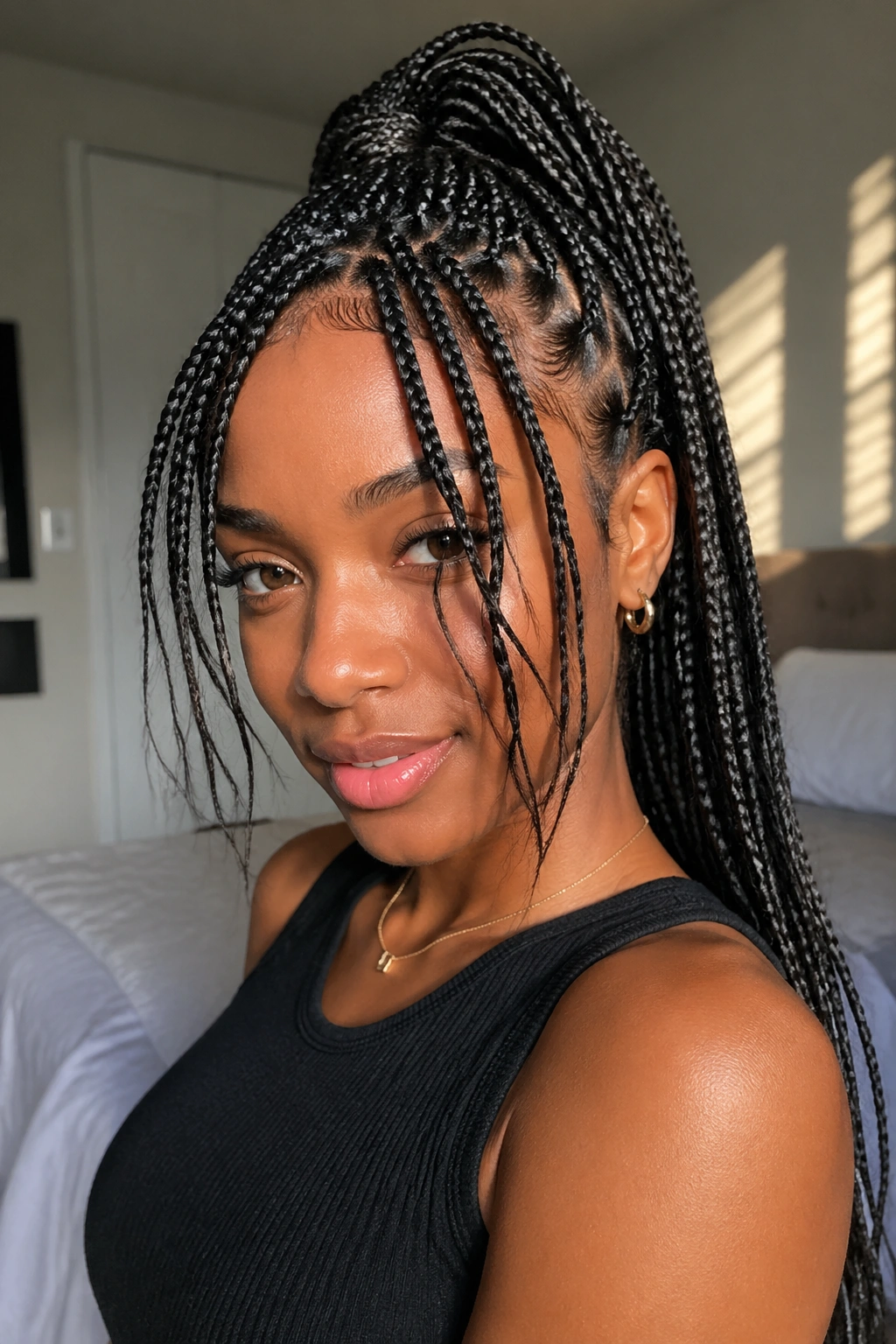
A braided-bang ponytail gives you a bit of softness at the front while keeping the rest of the hair lifted. That balance is useful if you like a high style but do not want your face fully exposed.
You can leave a few thinner braids at the front to fall like bangs, or sweep them sideways across the forehead. Either way, the ponytail still reads as high and protective, but the front has a gentler feel. It’s a good move if your features look sharper with a little framing.
The main thing is to keep those front braids loose enough to move. If they are pinned flat and tight, the whole effect gets stiff. Let them rest lightly; they do not need to be glued into place to do their job.
This style often looks best with longer braids, because the front pieces can soften the crown without stealing attention from the ponytail itself. It’s a small detail, but it changes the mood fast.
11. The Knotless Box Braid Ponytail
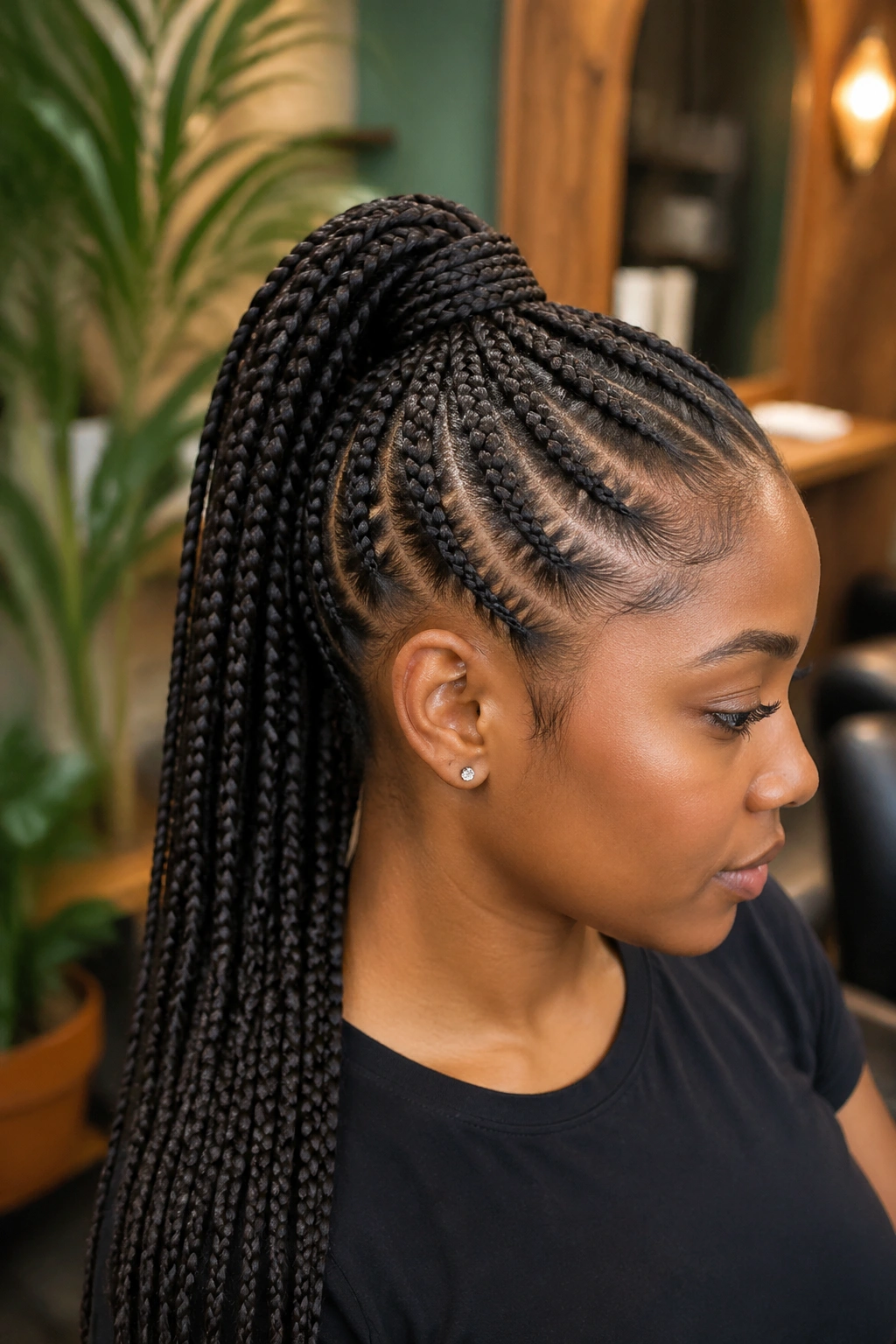
A knotless box braid ponytail is the better choice when you want height and your scalp is not interested in extra stress. Because knotless braids start lighter at the root, the ponytail base tends to feel less bulky and less tuggy.
That matters more than most people think. A high ponytail puts weight in a different place than a loose style, so any extra heaviness at the root gets noticed fast. Knotless braids spread the tension a bit more evenly, which makes the whole look easier to wear for longer stretches.
I also like the visual line. Knotless braids fall cleaner into the ponytail because the root is smoother. The style looks less boxy at the crown and a little more fluid overall.
If you already know you like high ponytails, this is the version I’d point you toward first. It is kinder to the scalp, and that alone is worth something.
12. The Layered-Length Ponytail
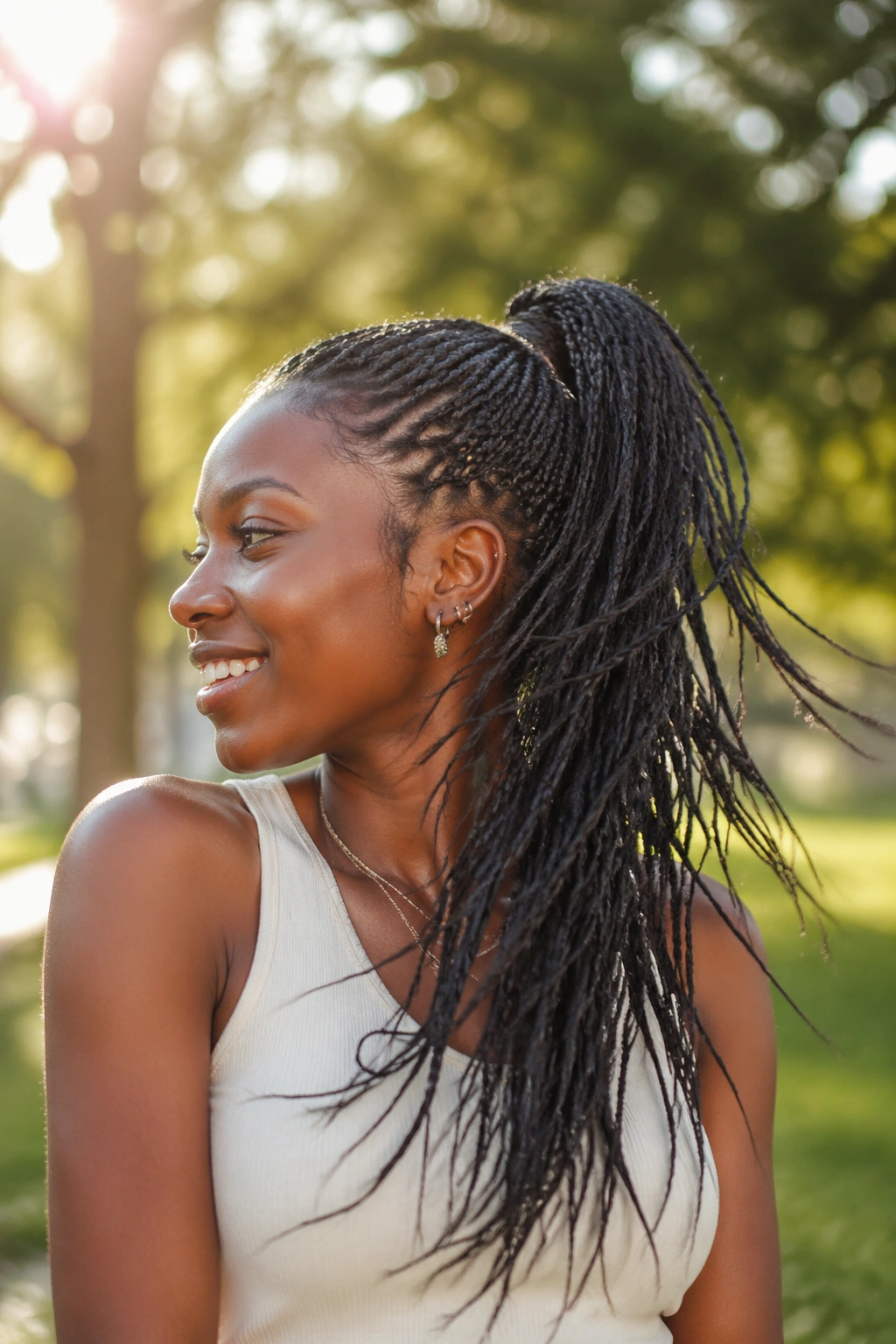
A layered-length ponytail gives the braids movement without making the style look messy. Instead of one blunt wall of length, the ponytail falls in steps, which makes the silhouette feel lighter and more alive.
This works especially well if your braids vary a little in length or thickness. The difference is subtle from the front, but in motion it changes a lot. The layers break up the weight, so the tail sways instead of dragging.
I like this version because it keeps the protective part intact while making the style feel less rigid. It is a smart fix when long braids start to feel visually heavy. You do not need to cut dramatic layers either. Even a small stagger in the ends can help.
A layered ponytail also shows off braid texture better than a flat, even tail. If your braids have clean parting and good tension, the layers let that work show.
13. The Twisted-Base Ponytail
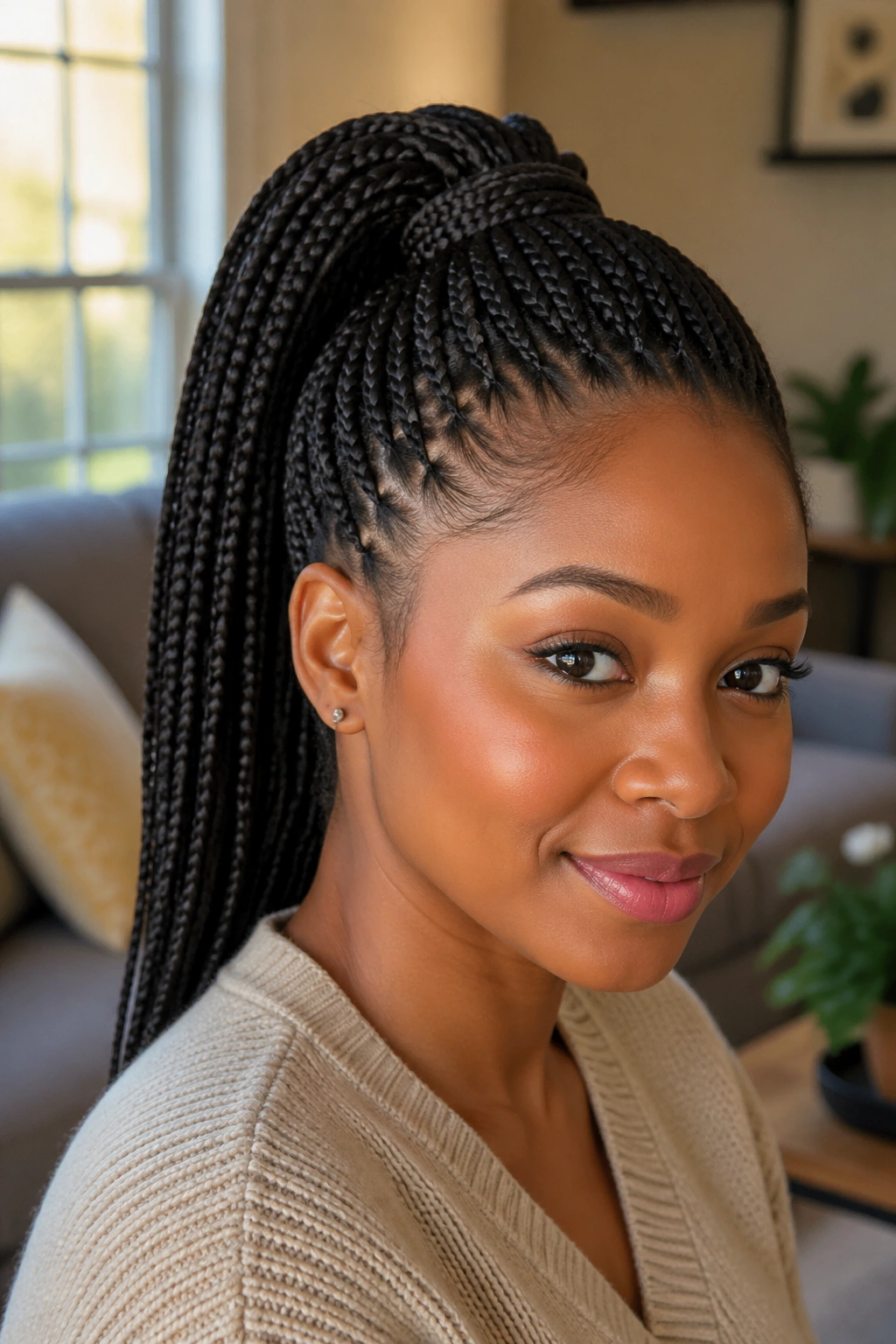
The twisted-base ponytail is what I reach for when a plain elastic feels too plain. A simple twist at the base gives the ponytail a more finished shape and helps hide any short pieces that want to poke out.
Why It’s Useful
- The twist locks the base in place without depending only on one elastic.
- It hides the join between scalp and ponytail more cleanly.
- It works well on braids that have a few shorter sections near the front.
The look is built by taking a few braids from each side, twisting them around the base, and pinning or tucking them before the rest of the ponytail falls. Nothing complicated. The effect is neat, and the hairline still looks soft.
I like this one because it solves a real problem: plain ponytails can sometimes look unfinished from the side. A twist fixes that without adding weight. Clean. Practical. Better than piling on accessories you do not need.
14. The Mohawk-Style High Ponytail
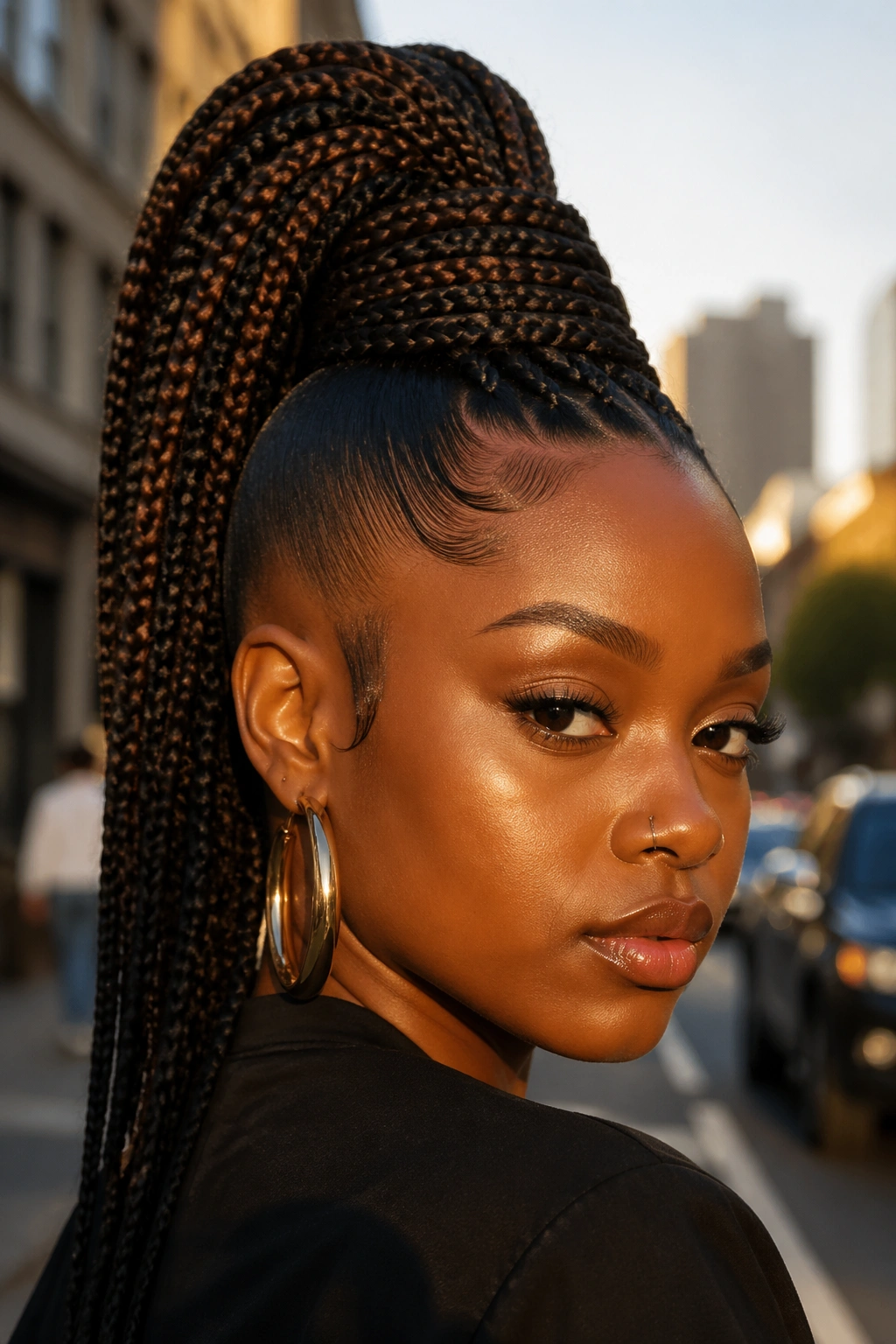
A mohawk-style high ponytail is the boldest version in the bunch, and I mean that in the best way. Instead of letting the braids spread evenly across the head, the sides are smoothed in while the center stays lifted, which creates a narrow, strong shape.
That shape does a lot of work. It makes the ponytail look taller, sharper, and more dramatic without needing extra length. The profile is the whole point. From the side, it has more edge than a standard high ponytail, and from the front it gives the face a stronger frame.
This is not the style I would suggest if you want something quiet. It has presence. It also needs decent braids and a steady hand, because the side smoothing has to be clean or the whole effect falls apart.
If you like a style that looks a little fearless, this one is worth keeping in your back pocket. It is especially good when the rest of the outfit is simple and you want the hair to carry the moment.
15. The Scarf-Wrapped Ponytail
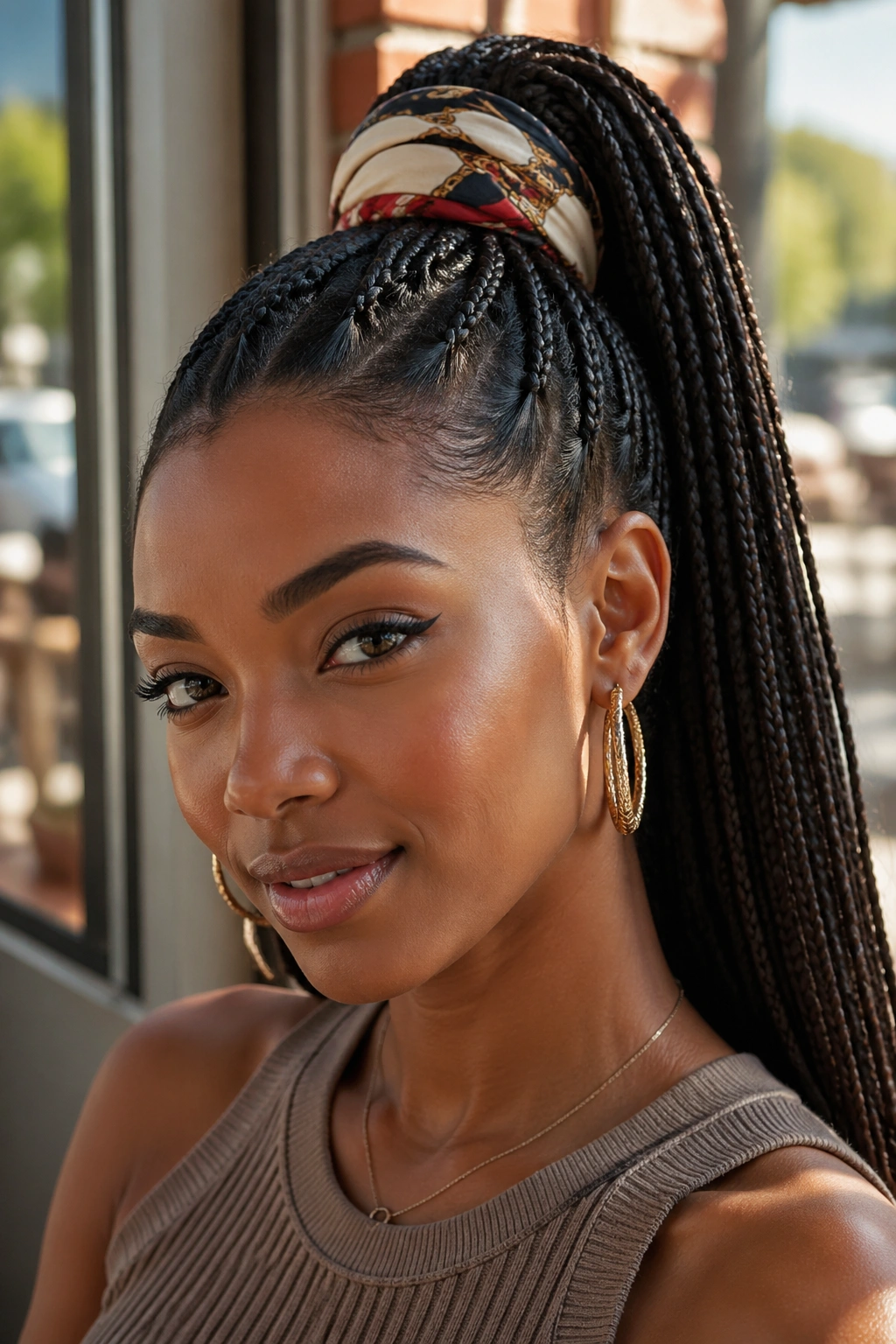
A scarf-wrapped high ponytail is one of the easiest ways to change the mood of box braids without changing the structure. A silk or satin scarf tied around the base softens the style, protects the roots, and brings in color or pattern without much effort.
I like this version for days when the hairline needs a break. The scarf can cover the base where friction tends to build, especially if you have been wearing the ponytail for a while. It also helps the style feel a little more relaxed, which is useful when the braids themselves are already doing a lot.
Keep the scarf tied snugly, but not so tight that it digs in. A wide scarf usually sits better than a skinny one because it spreads the pressure across more of the base.
This style works with casual clothes, dressier outfits, and lazy-day basics. That range is why people keep coming back to it. It solves more than one problem at once.
16. The Triangle-Part Ponytail
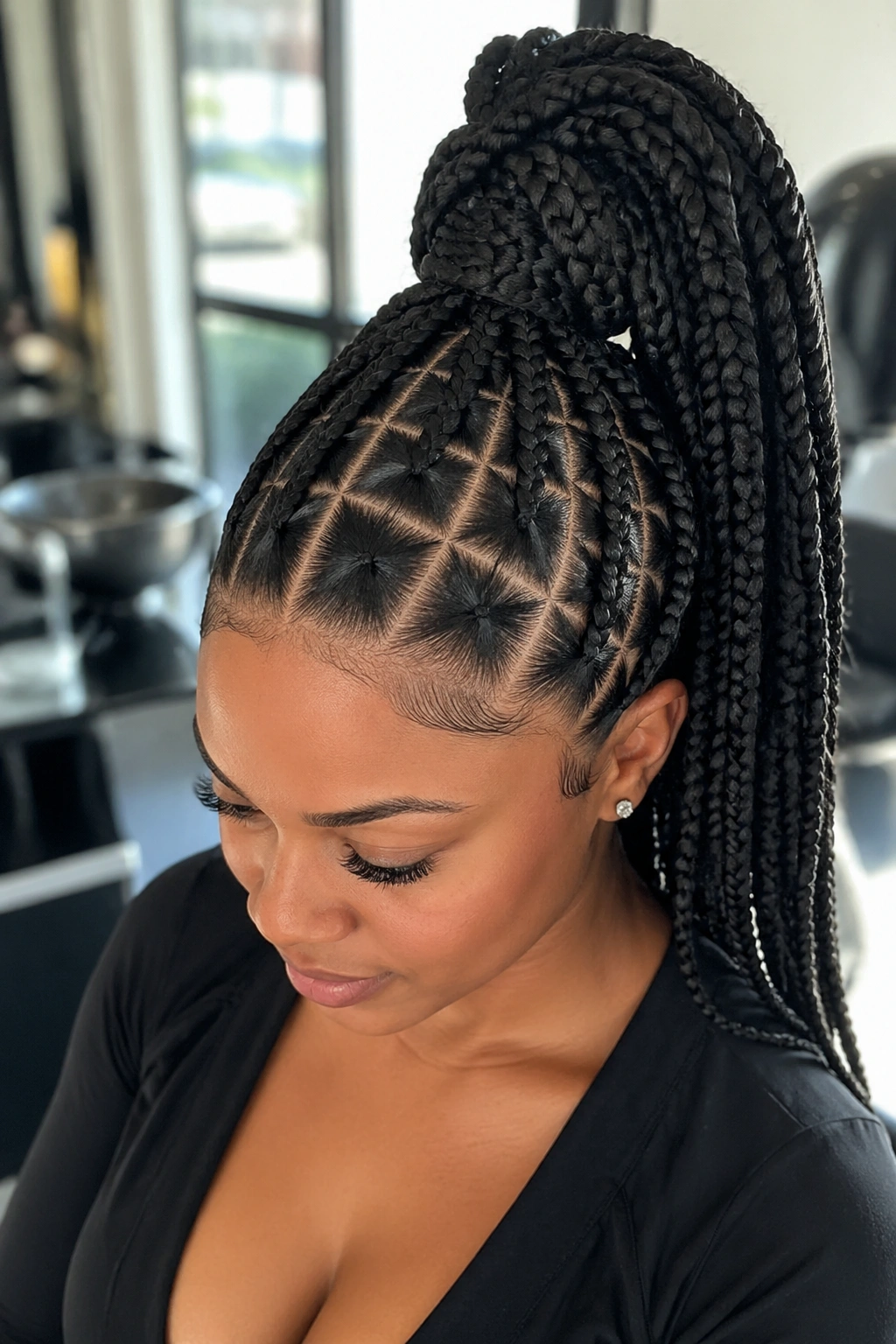
Triangle parts give a high box braid ponytail a sharper, more graphic look. The shape at the scalp changes the whole mood, even when the ponytail itself is simple, because the parting becomes part of the design.
What Makes It Stand Out
- Triangle parts break up the grid pattern of standard box braids.
- They show more clearly when the hair is pulled up high.
- The style looks more custom, even if the braid size stays the same.
I think this is one of the smartest choices if you want the ponytail to look interesting from every angle. The ponytail can be straightforward, but the scalp detail keeps it from feeling basic. That matters when the braids are worn for a while and you want the style to keep rewarding a closer look.
Triangle parts pair well with cuffs, beads, or a wrap-around base. They do not need much else. The geometry is already doing enough.
17. The Colored-Extension Ponytail
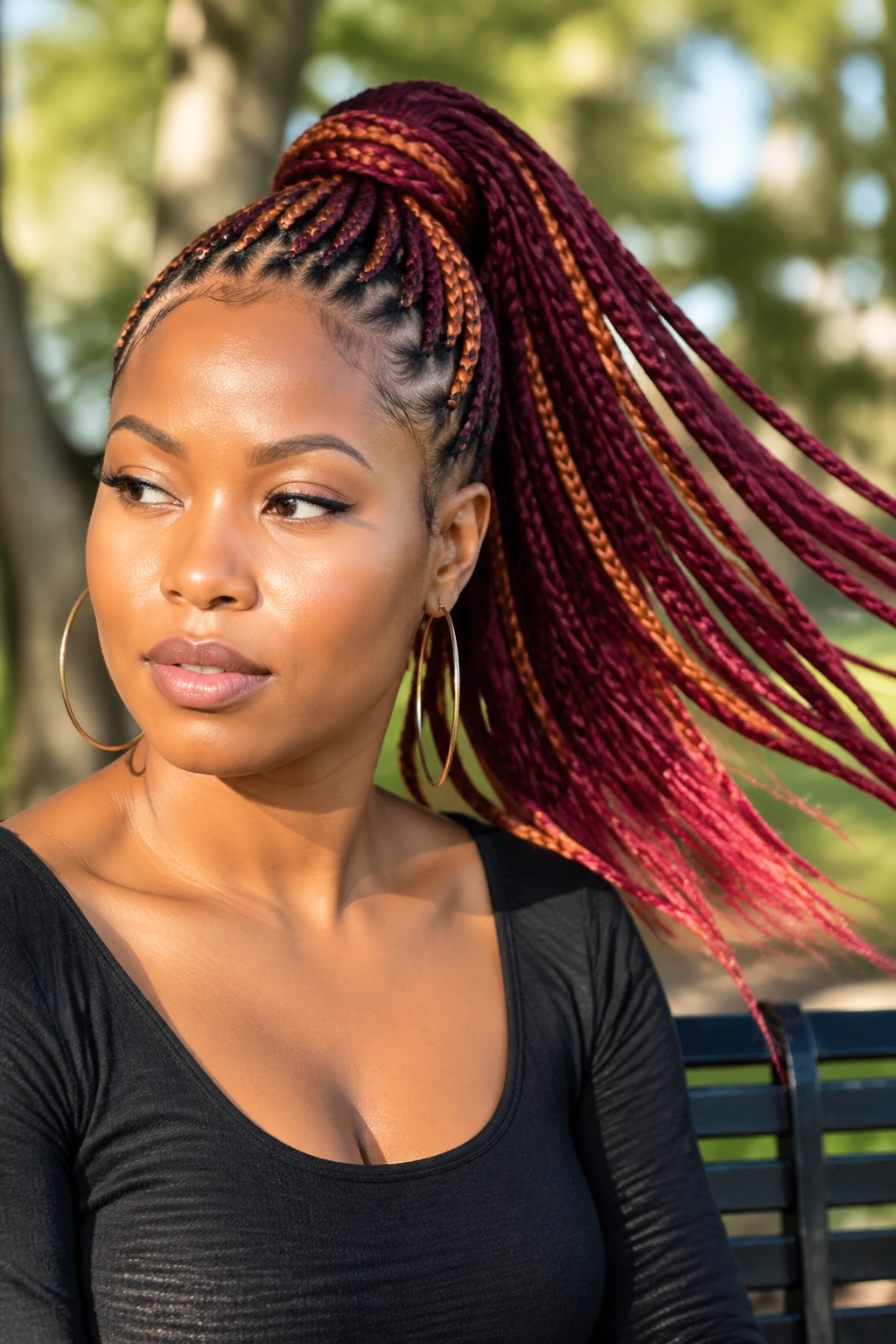
Color is one of the easiest ways to make a high box braid ponytail feel fresh without changing the structure at all. A deep burgundy tail, honey-blonde ends, copper braids, or a two-tone blend can shift the whole look in a single move.
The best part is how the color moves. A high ponytail shows every swing of the braids, so the shade gets more life than it would in a looser style. The ponytail becomes the canvas. The parting stays neat, the hair stays protected, and the color does the visual work.
If you want a lower-maintenance option, keep the root shade close to your natural color and let the brightness sit lower in the length. That makes grow-out easier and keeps the base from looking too stark. If you want more drama, place the boldest color at the top so it reads right away.
This is one of those styles that looks good in daylight and even better when the braids move. Simple idea. Strong result.
18. The Double-Tie Ponytail
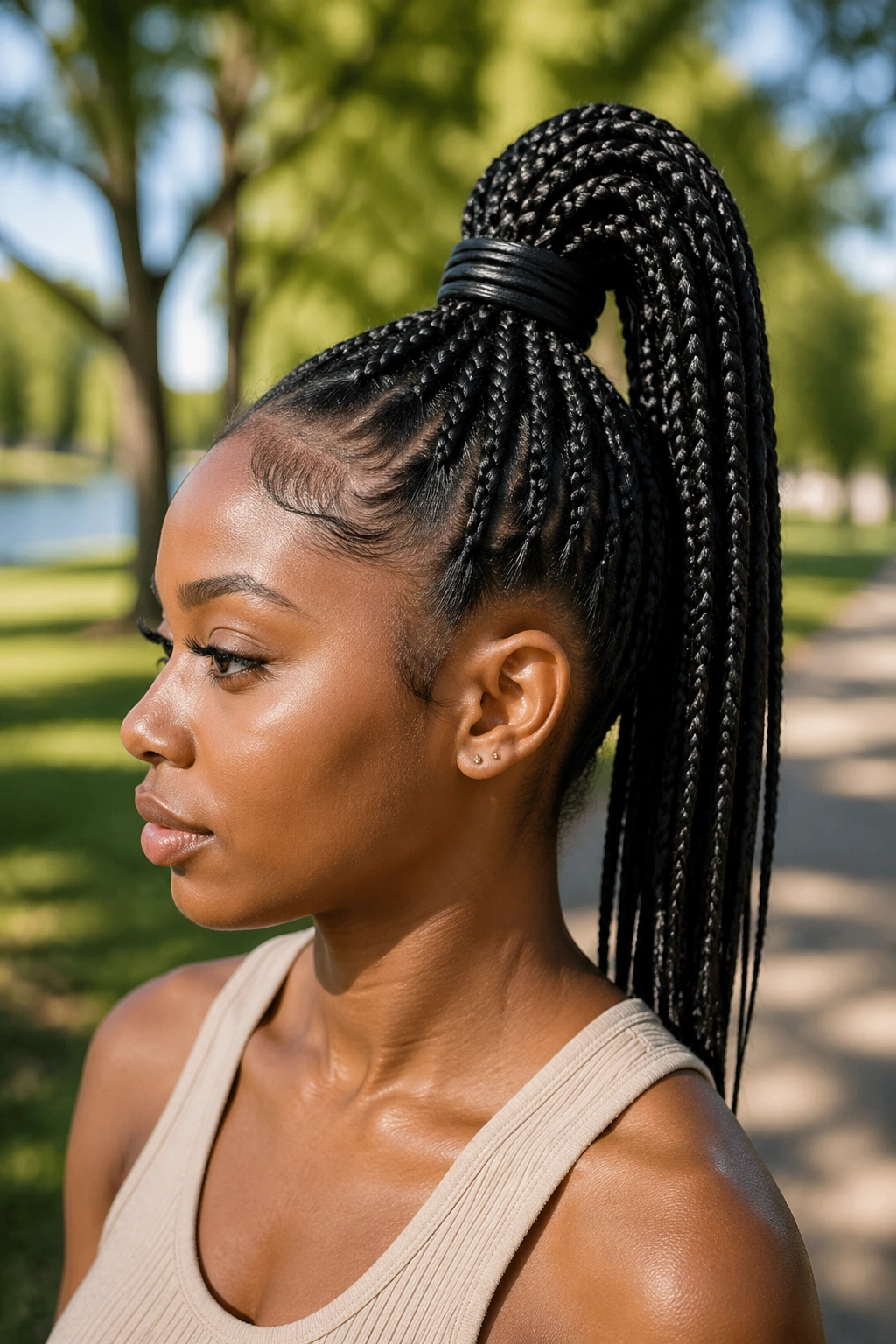
A double-tie ponytail is a smart fix for heavy braids that keep slipping. Instead of trusting one elastic to hold all the weight, you use two points of support: one at the base and one a little lower down to help carry the length.
That extra support changes the feel a lot. The ponytail stays lifted longer, the base keeps its shape, and the style is less likely to sag by the afternoon. It is especially useful if the braids are long or thick enough to drag the crown down.
Best Setup
- Use soft, snag-free elastics.
- Place the first tie at the crown.
- Add the second tie 1 to 2 inches below the first for balance.
The style still looks like a single ponytail, which is why I like it. You get the practical side without making the hair look overdone. If your braids are the kind that need real support, this is the version that behaves.
19. The Face-Framing Braids Ponytail
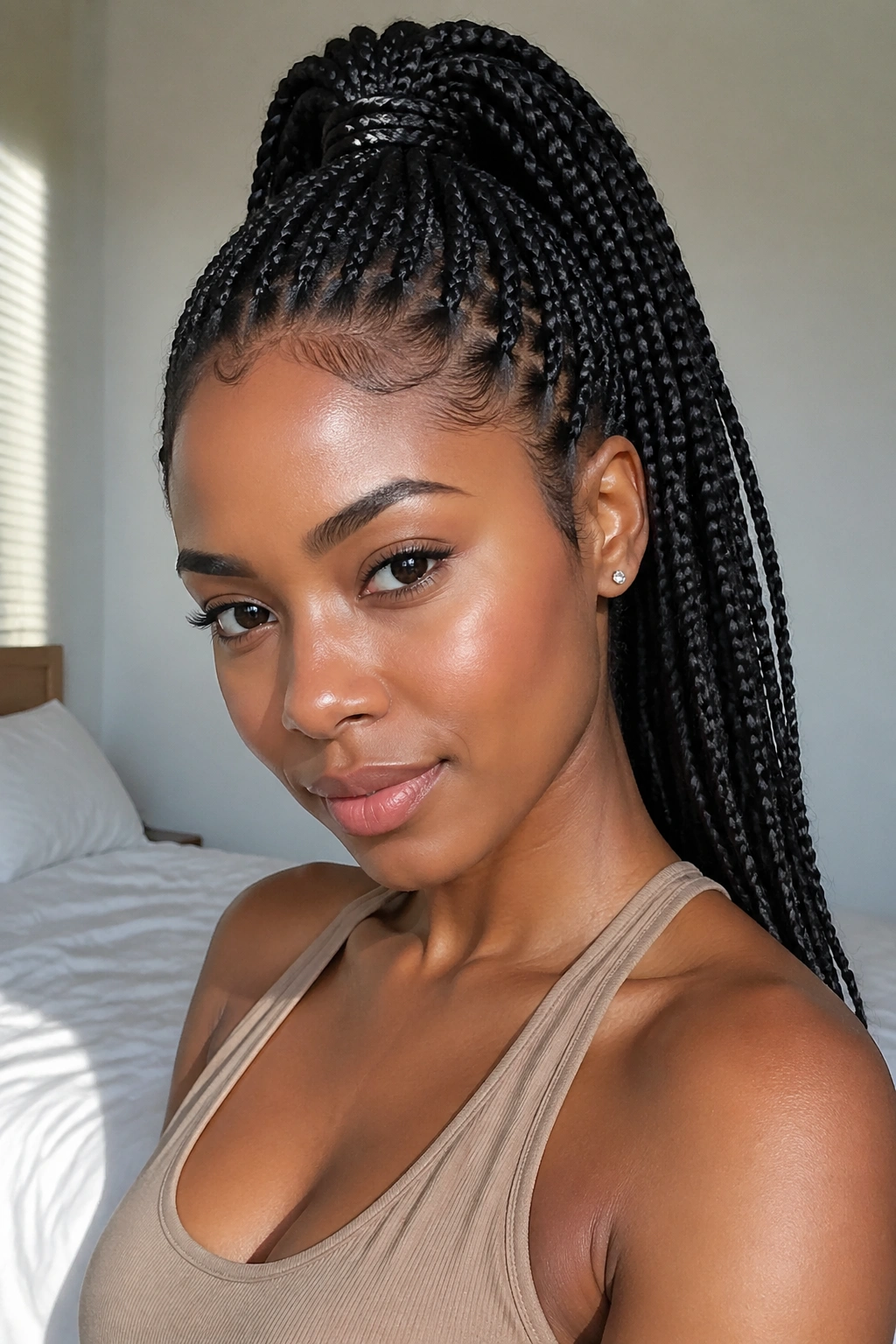
Do you want a high ponytail that still feels soft around the face? Leave a couple of braids loose at the temples, or let a few front pieces fall naturally instead of pulling every single braid straight back.
That small choice changes the mood fast. The face-framing braids break up the height, soften the forehead, and make the style feel a little less severe. It is a good move if you like high hair but do not love the fully lifted look.
The loose pieces should stay light. They do not need much product, and they do not need to be pinned into a dramatic shape. Let them hang with a little movement. That’s what makes the style work.
This is a strong option for anyone who wants the ponytail to feel wearable for more than one type of outfit. It has enough structure for polished looks and enough softness for everyday life. That balance matters.
20. The Workout-Ready Box Braid Ponytail
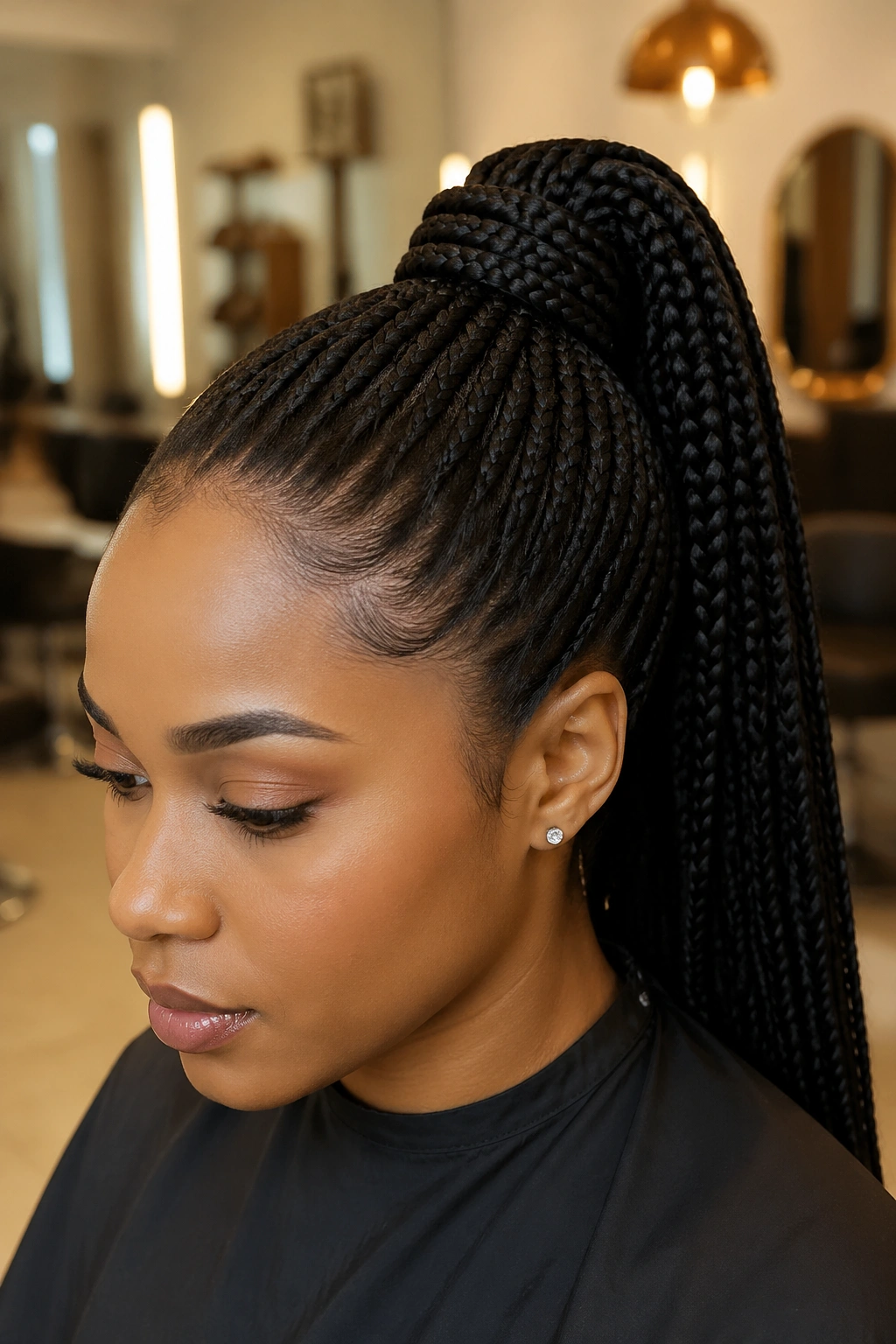
This is the practical one. A workout-ready box braid ponytail keeps the braids high, secure, and out of the way without asking for a fancy finish that will fall apart the moment you sweat.
The point here is control. The base needs to be stable, but not mean. A soft yet firm elastic, a neat wrap if you want it, and a ponytail that sits high enough to clear the neck all help. If the style is going to move a lot, the braids should not be pulled so tight that every bounce feels sharp.
What to Skip
- Heavy accessories that swing around.
- Thick product at the hairline.
- Overly high tension that feels fine for five minutes and awful later.
I would choose this version for busy days, errands, exercise, or travel. It keeps the hair tucked and cuts down on the constant adjusting that ruins a good braid day. That alone makes it worth knowing.
21. The Crown-Braid Lift Ponytail
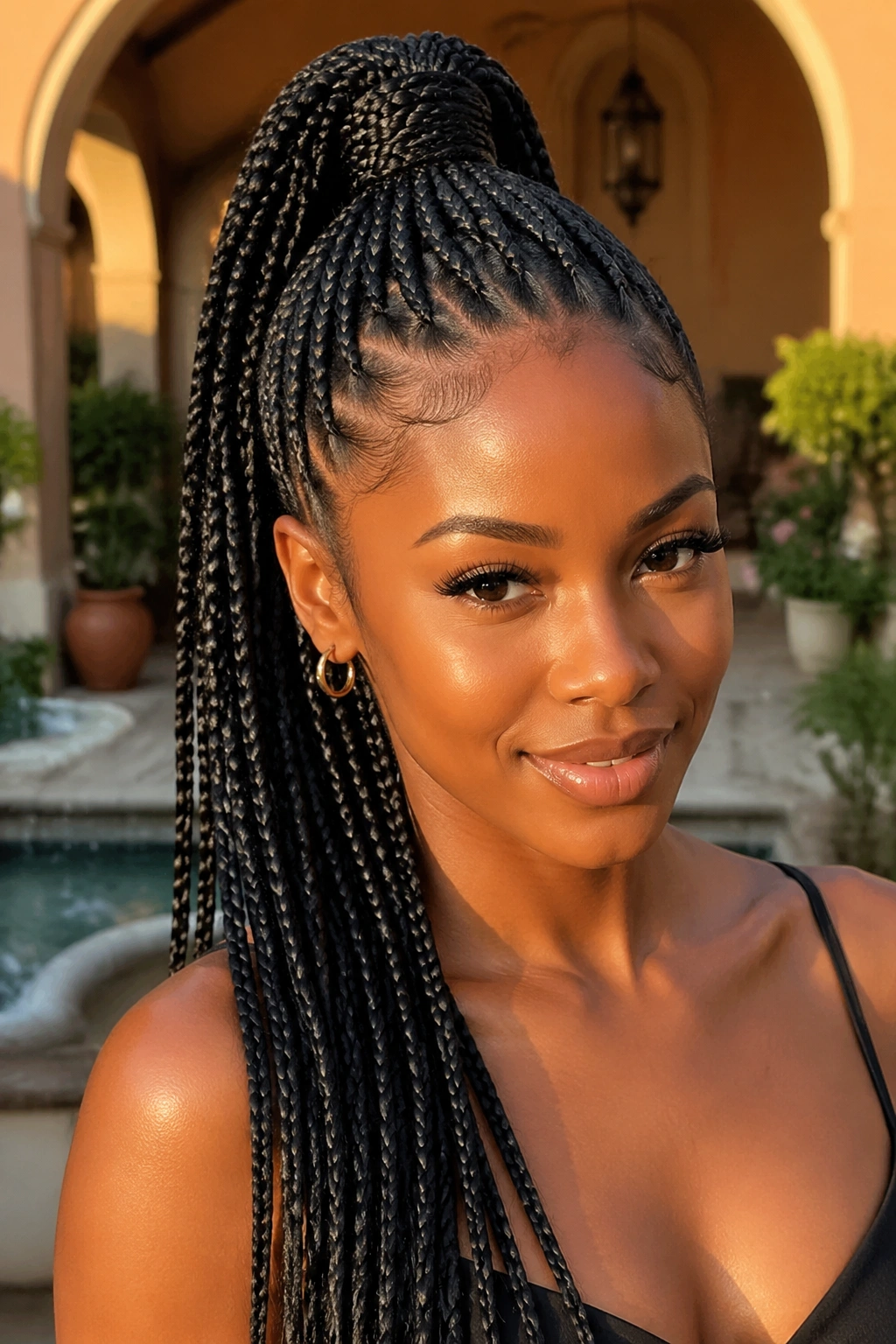
A crown-braid lift ponytail gives the front of the style more shape before the length drops. A braid or two travels along the hairline like a small crown, then feeds into the high ponytail at the back.
The visual effect is tidy and a little regal without being stiff. It is a good choice when you want the top of the head to look styled, not merely gathered. The braid around the crown also helps hide the join where the ponytail starts, which makes the finish look cleaner from the side.
Where It Shines
- Formal events where you want the style to hold its shape.
- Medium-length braids that can handle a little extra structure.
- Days when you want less fuss around the edges.
This one takes a bit more effort than the plain high ponytail, but the result is worth it. It feels finished from every angle, and that is hard to beat.
22. The Curled-End High Ponytail
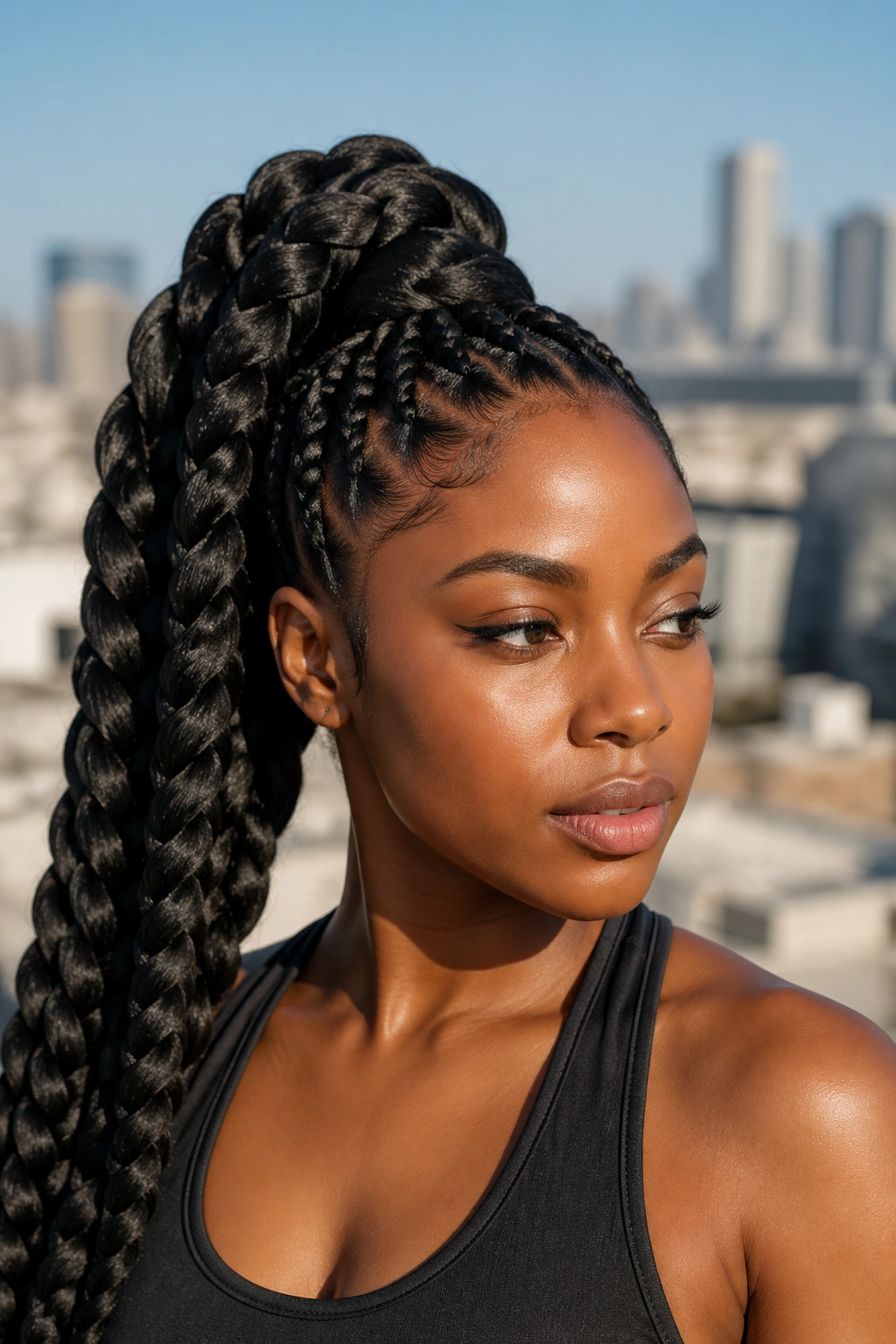
Straight braid ends are classic, but curled ends soften the entire look. When the tips are set on rods or bent into shape, the ponytail stops reading as a hard line and starts moving with a little bounce.
That change matters more with long box braids. A curled end keeps the tail from feeling too severe and adds a touch of shape near the bottom, where the eye naturally lands. It is a small detail, but it gives the style more life.
Be careful with how the ends are set. If your extensions are not meant for heat, use methods that work with the fiber rather than against it. Test one braid first. A loose curl at the end is enough; you do not need tight ringlets everywhere.
I like this version when the rest of the braid pattern is clean and structured. The curls keep it from feeling stiff. That little softness does a lot of work.
23. The Low-Tension Evening Ponytail
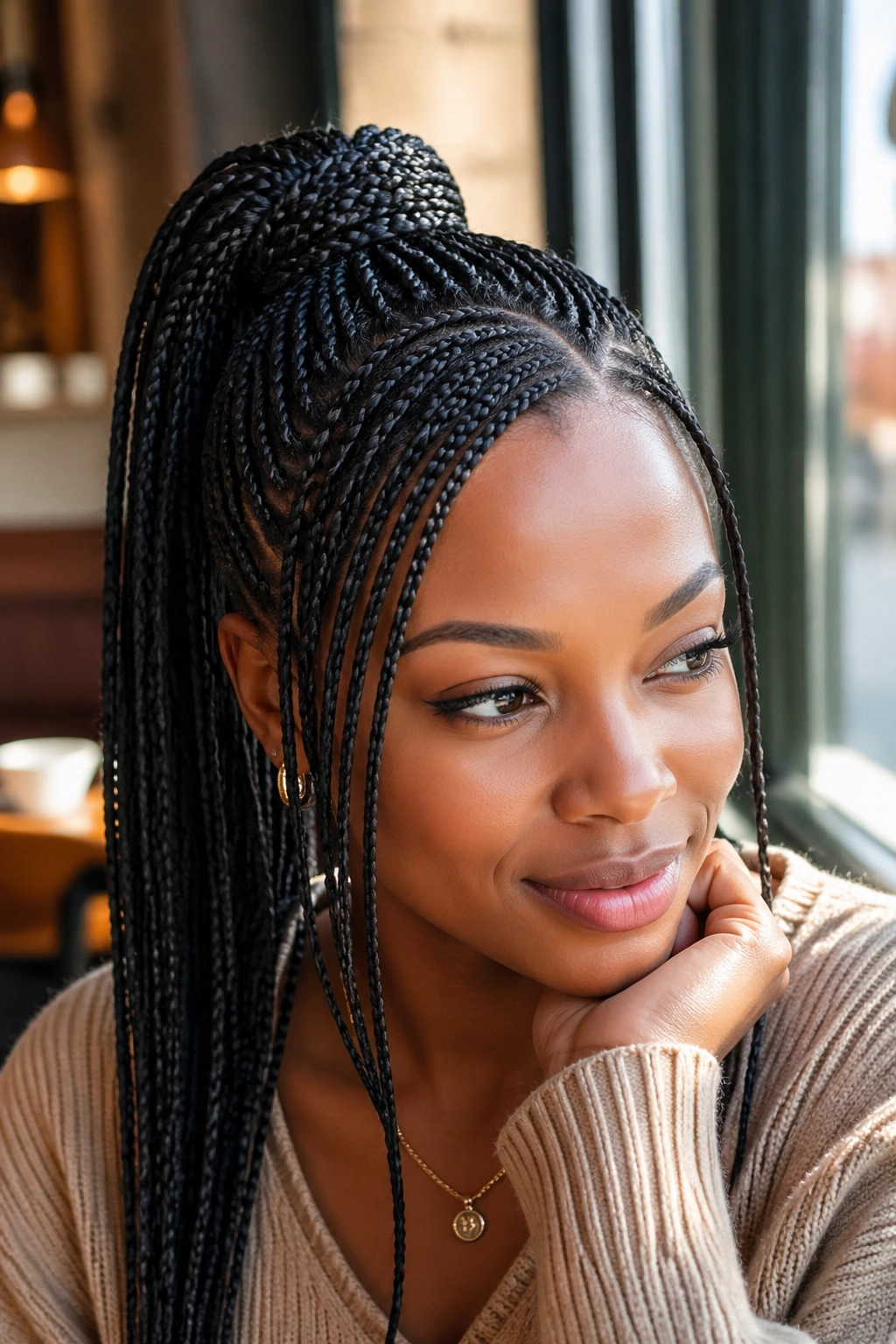
A low-tension evening ponytail is the version I’d choose when the scalp is tired but you still want the lifted look of a high style. It sits high enough to shape the face, yet soft enough that the base does not feel like a clamp.
This is where restraint starts to look smarter than drama. The braids are gathered neatly, the front is smooth, and the ponytail stays elegant without being pulled to the edge of comfort. If your hair has been up all day, this is the version that lets the style breathe a little.
The best finish is simple: a clean base, one subtle wrap if you want it, and braids that fall with room to move. No extra pressure. No overbuilt base. Just a neat, lifted look that can carry you through dinner, a night out, or a long event without making you count the minutes until it comes down.
Pretty should not hurt. A good high box braid ponytail keeps the protective part intact, keeps the hairline calm, and still gives you enough shape to feel put together. That’s the sweet spot, and once you find it, you tend to stick with it.
