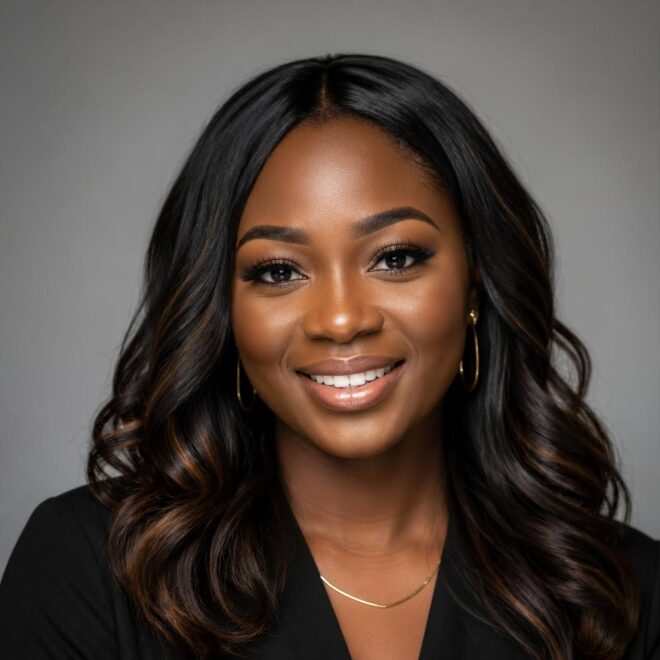


Long wavy hair can make a ponytail look rich, or it can make the whole thing collapse into one heavy rope. The difference usually comes down to placement, tension, and whether you let the wave pattern do some of the work instead of fighting it.
Ponytails for wavy hair with long hair have a sweet spot that straight hair doesn’t always get. The bend gives movement. The length gives drama. The catch is that both can turn on you fast if the crown gets pulled too tight or the ends are left too dry and frizzy.
I’ve always liked ponytails on textured hair because they look better with a little imperfection. A few loose pieces around the face. A soft lift at the crown. Ends that keep a bit of bend instead of looking ironed flat. That’s the good stuff, and it’s what separates a ponytail that feels flat from one that actually looks styled.
The styles below lean into that. Some are polished, some are loose, some are the kind you throw together when you’re short on time and still want your hair to look intentional. Start with the one that matches your mood, then keep the rest nearby for the days when your waves want something different.
1. Sleek Low Ponytail for Long Wavy Hair
A low ponytail is the easiest place to start because it lets long waves stay visible without making the whole style feel bulky. Keep the elastic at the nape, not halfway up the head, and smooth only the top layer so the length still has movement. That contrast is what makes it work.
Why it works
Long wavy hair can look almost too full when it’s pulled high, but low sits in a calmer place. The weight rests on the neck instead of dragging at the crown, and the wave pattern stays readable from the side. If you want a clean finish, use a light styling cream on the top section only.
- Place the elastic just above the nape for a softer line.
- Leave a few face-framing pieces loose if your waves are fine and easy to flatten.
- Wrap a small strand of hair around the base for a cleaner look.
- Smooth flyaways with a tiny dab of serum, not a heavy oil.
My favorite move: tug the top edge of the ponytail up by half an inch after it’s secured. It makes the whole style look a little fuller without trying too hard.
2. High Wavy Ponytail With Crown Lift
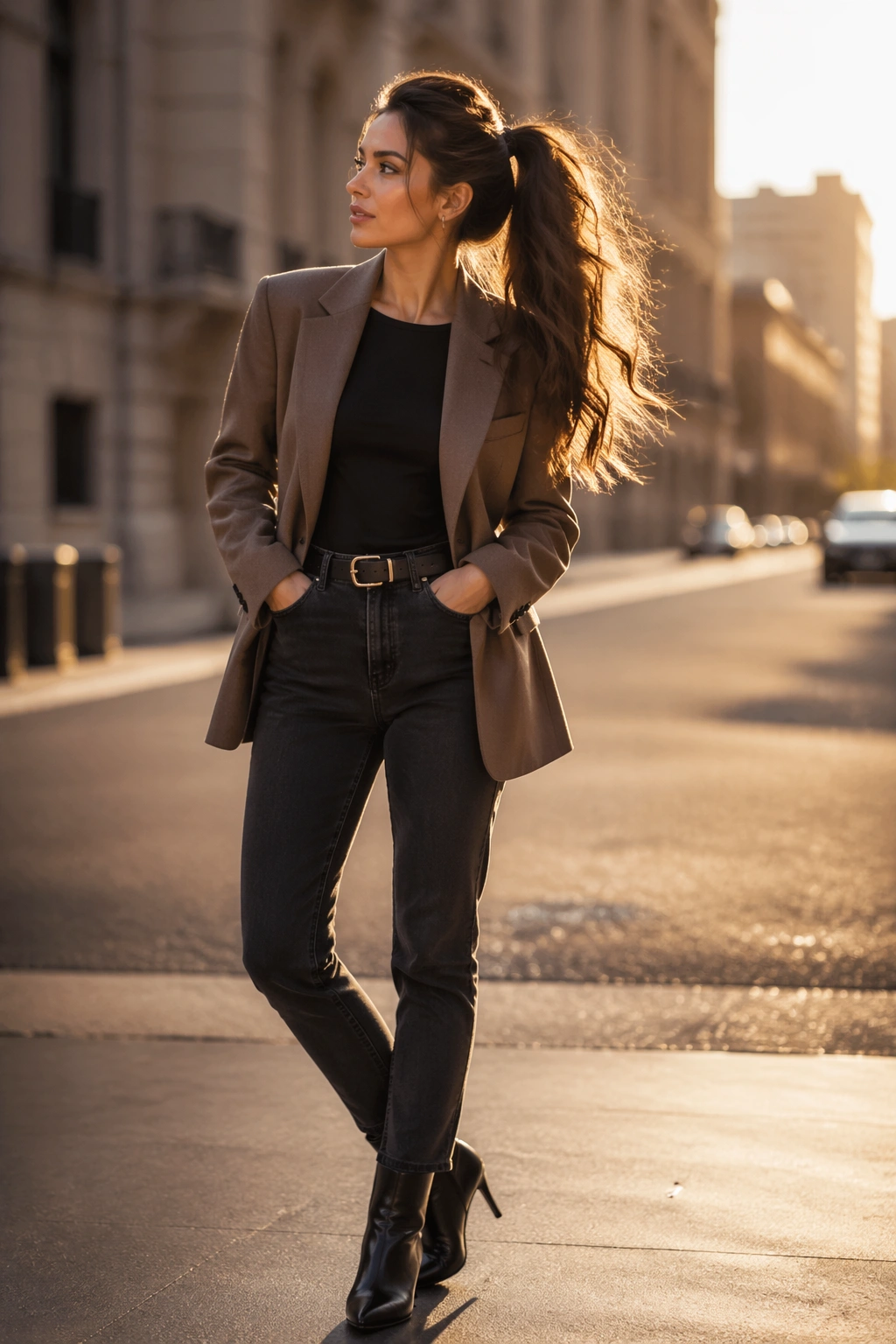
A high ponytail is the blunt instrument of the group. It gives instant lift, and on long wavy hair that lift can be gorgeous if you don’t over-smooth the tail. Let the roots be sleek, yes, but keep the ponytail itself soft and bendy.
You get the best version of this style when the elastic sits at the highest point of the head, not too far back. That placement gives the ponytail swing instead of drag. If your hair is extra long, a second tiny elastic a few inches below the first one helps stop the tail from sagging.
This one is sharp enough for a blazer and loose enough for denim. It doesn’t need much else. A quick pass with a 1-inch curling iron on the ends can tidy up the shape, but skip the full curl unless you want a more dressed-up finish.
3. Bubble Ponytail With Loose Texture
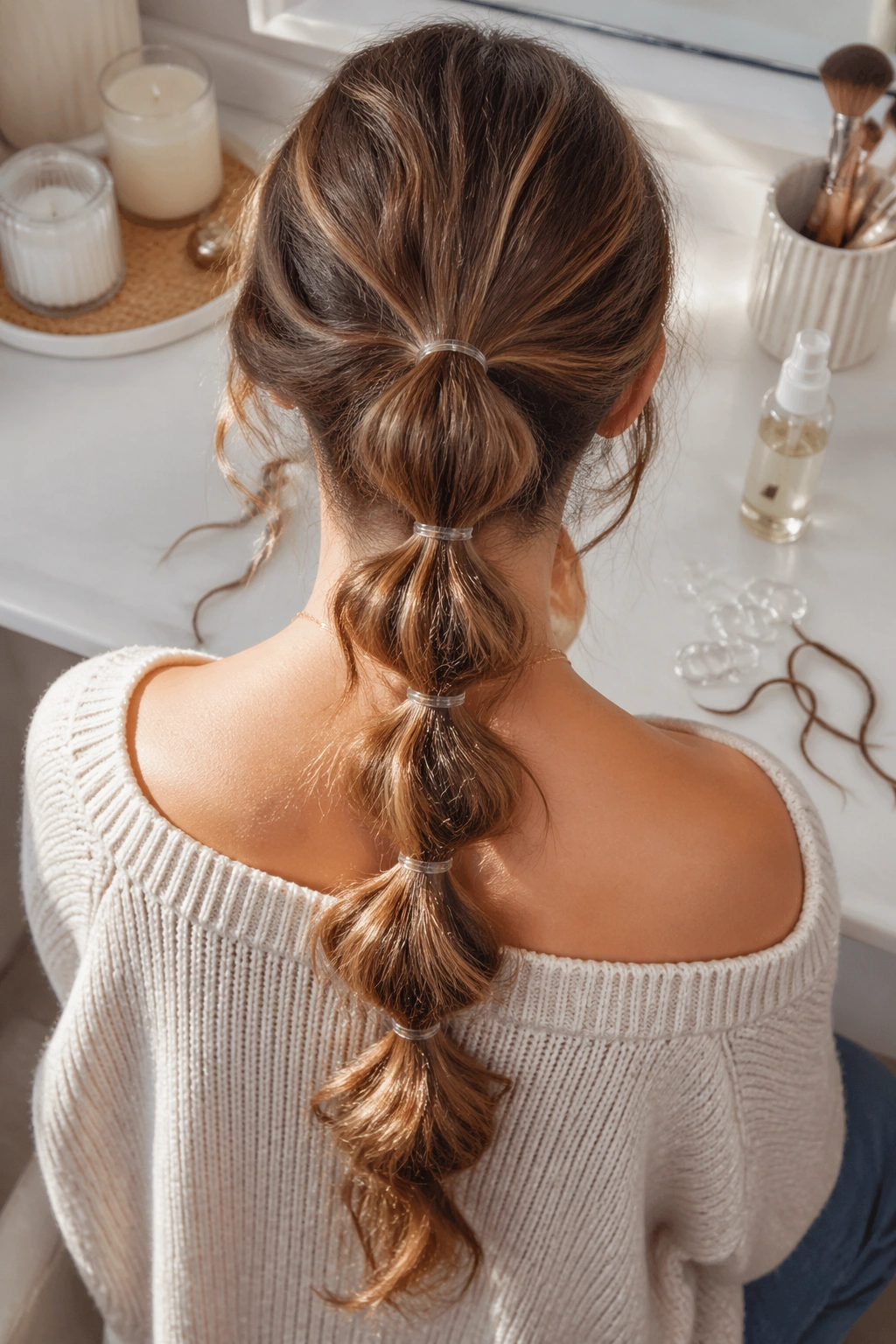
Picture a ponytail that looks playful without looking childish. That’s the bubble ponytail when it’s done on long waves. The sections between elastics create shape, and the natural bend in wavy hair keeps the bubbles from looking stiff.
What makes it different
A bubble ponytail gives you structure without asking for perfect hair. If the waves are a little uneven, the bubbles hide that. If your hair is very thick, the style spreads the weight out, which is a relief.
- Use small clear elastics or thin snag-free ties every 2 to 3 inches.
- Gently pull each section outward until it looks rounded, not flat.
- Keep the bubbles slightly uneven for a softer finish.
- Mist the tail with a flexible-hold spray so the shape stays put.
This is one of those styles that looks better once it loosens slightly. Too tight at the start and it feels boxed in. A little slack is the whole point.
4. Side Ponytail With a Deep Part
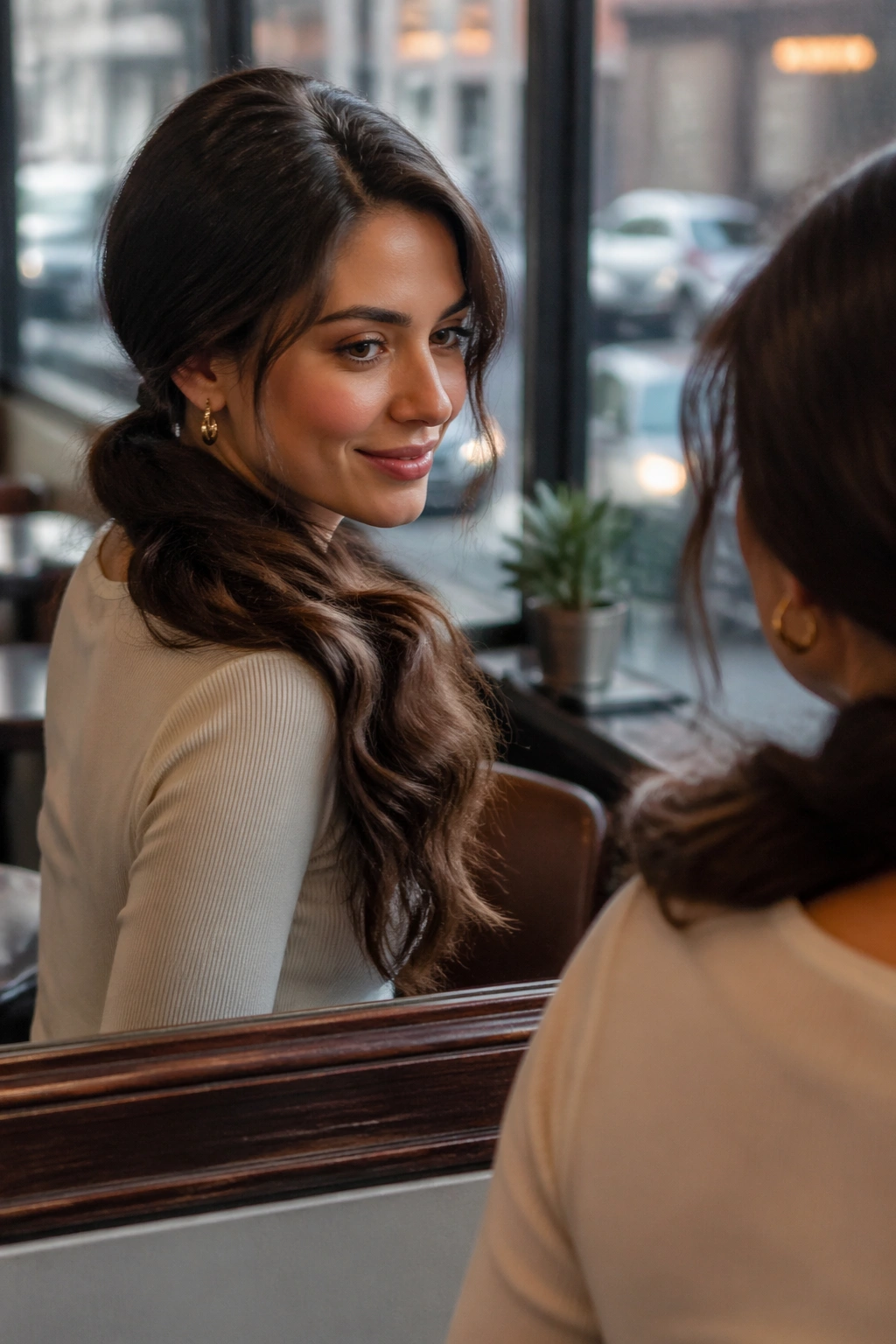
Want something that feels polished without turning severe? The side ponytail is the answer. A deep side part softens strong features, and long waves drape beautifully over one shoulder, which gives the style a bit of old-school charm.
How to wear it
Start by parting the hair well off center. That part does most of the work. Sweep the hair to the lower side of the head and secure it behind the ear or just below it, depending on how formal you want the finish. The ponytail should sit low enough that the wave pattern still shows.
A side ponytail can tip into prom-hair territory fast if you pile on too much curl or too much shine. Keep the texture soft. A middle-sized wave, a few loose pieces, and a clean elastic are enough. If you wear earrings, this style is especially nice because it leaves one side of the face open.
5. Half-Up Ponytail With Full-Length Waves
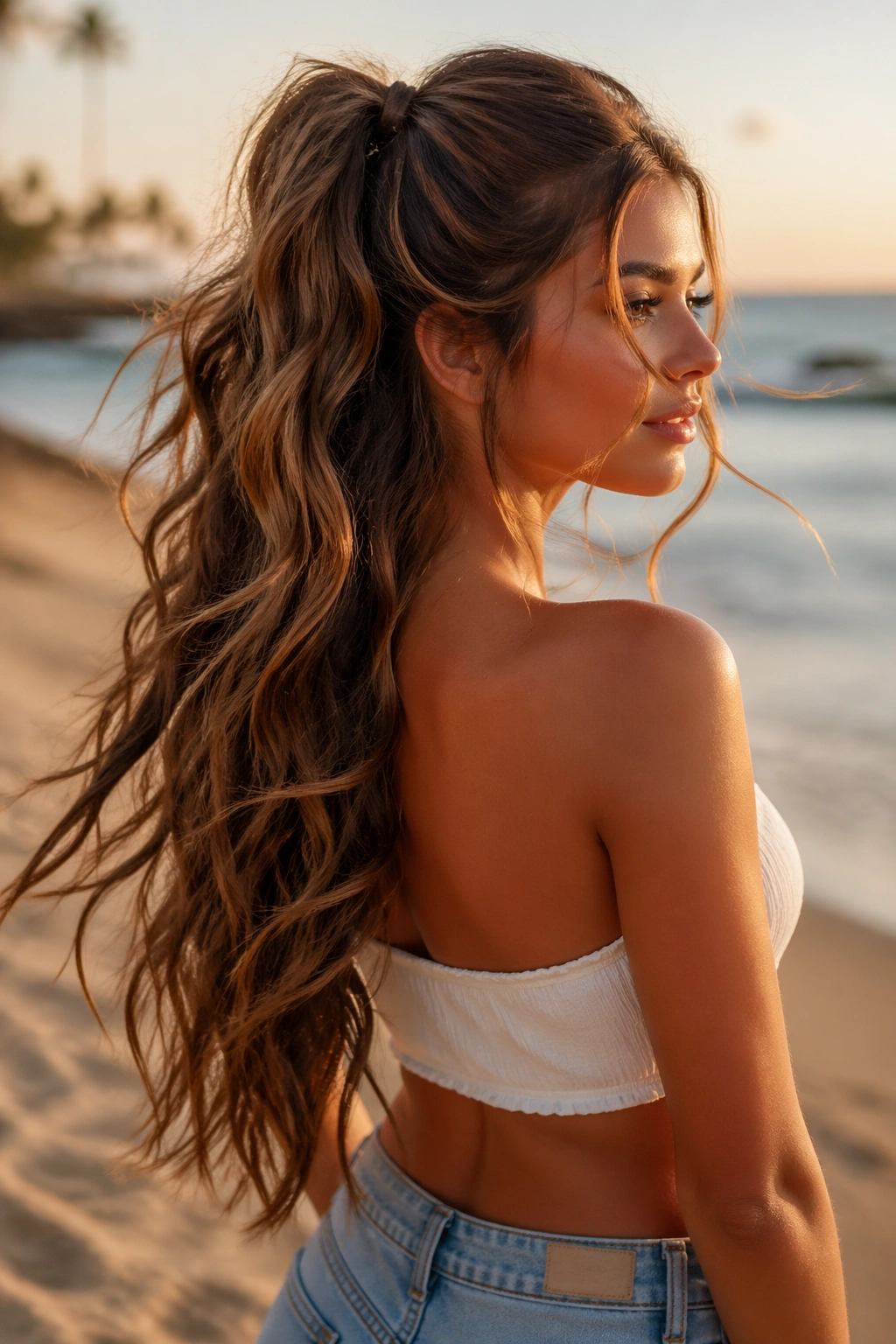
This is the one I reach for when I want my hair off my face but I still want to see the length. The half-up ponytail keeps the top section controlled and lets the rest of the wave pattern move freely down the back.
It works best when the crown section is lifted just a little before tying. Not teased into a helmet. Just lifted enough that the top doesn’t lie flat against the skull. Keep the elastic small and hidden, and don’t overwork the lower half. That part should still feel like your hair, not like it’s been forced into a different shape.
If your waves are a little frizzy, smooth only the top layer with a brush and leave the underside alone. That mix of polished and loose is what keeps the style from feeling overdone.
6. Braided Base Ponytail
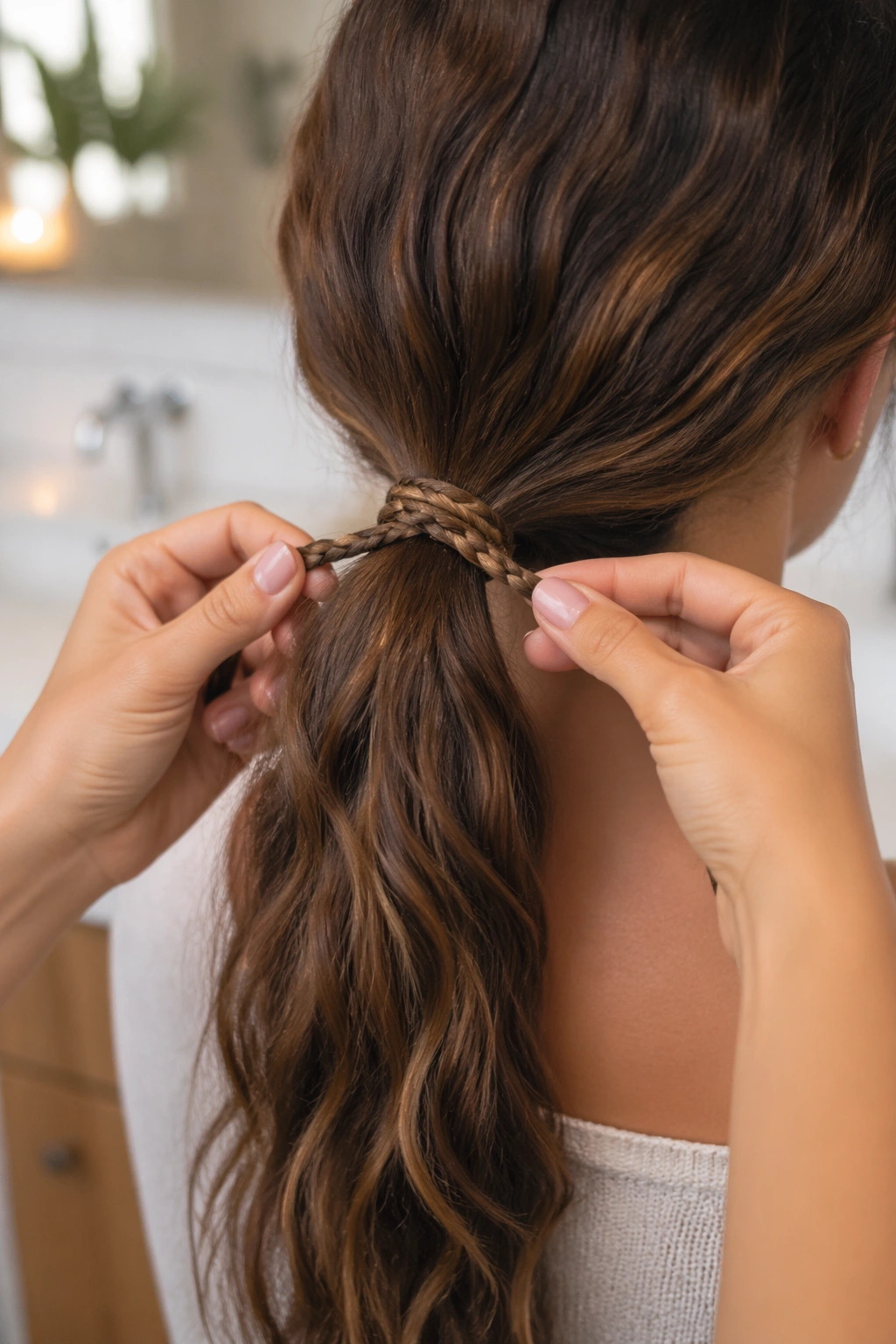
A braided base sounds fussy. It isn’t. It’s one of the easiest ways to make a plain ponytail look more deliberate, especially if your hair slips out of elastics or loses shape fast.
Unlike a simple wrapped elastic, the braid gives the base some texture and grip. You can braid a small section from one side, wrap it around the elastic, and pin it under the ponytail. Or braid both sides and join them at the back. Either way, the result looks finished without asking for a lot of extra time.
This style is best for days when you want a ponytail that can handle wind, errands, or a long afternoon without turning flat. It also helps if your hair is silky and refuses to stay put. A bit of braid friction changes everything.
7. Mid-Height Ponytail With Soft Volume
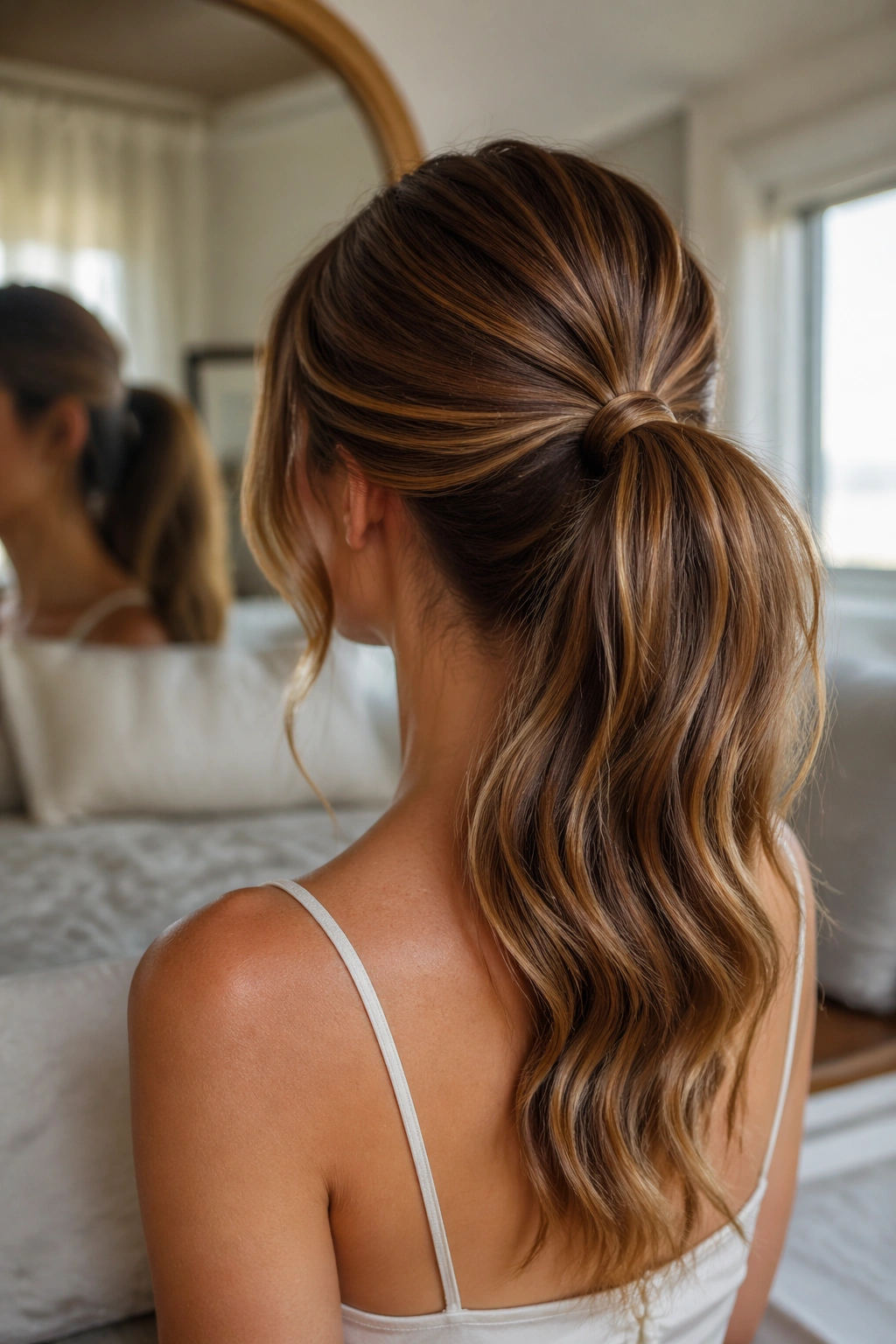
Mid-height is the sweet spot for hair that gets heavy fast. High can pull too much. Low can feel sleepy. A ponytail that sits between the cheekbones and the nape gives long waves enough lift to look styled while still letting them hang with a little movement.
Why it works on wavy hair
The middle position keeps the root area from stretching too much, which matters when the hair is long and dense. It also lets the tail fall in a clean line down the back without sitting so low that it loses shape. If you want a small lift, pinch the crown up after tying and gently loosen the section above the ears.
A mid-height ponytail can be glossy or casual, depending on the finish. Keep the crown smooth for a more refined look. Leave a few bends in the tail if you want it relaxed. That flexibility is what makes this style useful instead of just pretty.
8. Scarf-Tied Ponytail With Loose Ends

A scarf changes the whole mood in about ten seconds. On long wavy hair, it can turn an ordinary ponytail into something that looks intentional and a little bit playful.
Silk and satin scarves work best because they sit flat and don’t fight the texture. Tie the ponytail first, then knot the scarf over the elastic or weave it through the base. Don’t choose a scarf that’s so thick it bulks up the ponytail. The hair should still be the main event.
- A 20 to 27 inch square scarf is easy to manage.
- Solid colors look cleaner with heavy texture.
- Small prints work when the hair is very long and the ponytail needs visual interest.
- Tie the knot slightly off center if you want a softer look.
This is a good one for days when your waves are behaving but not perfectly. The scarf gives you cover without hiding the whole style.
9. Messy Textured Ponytail With Airy Lift
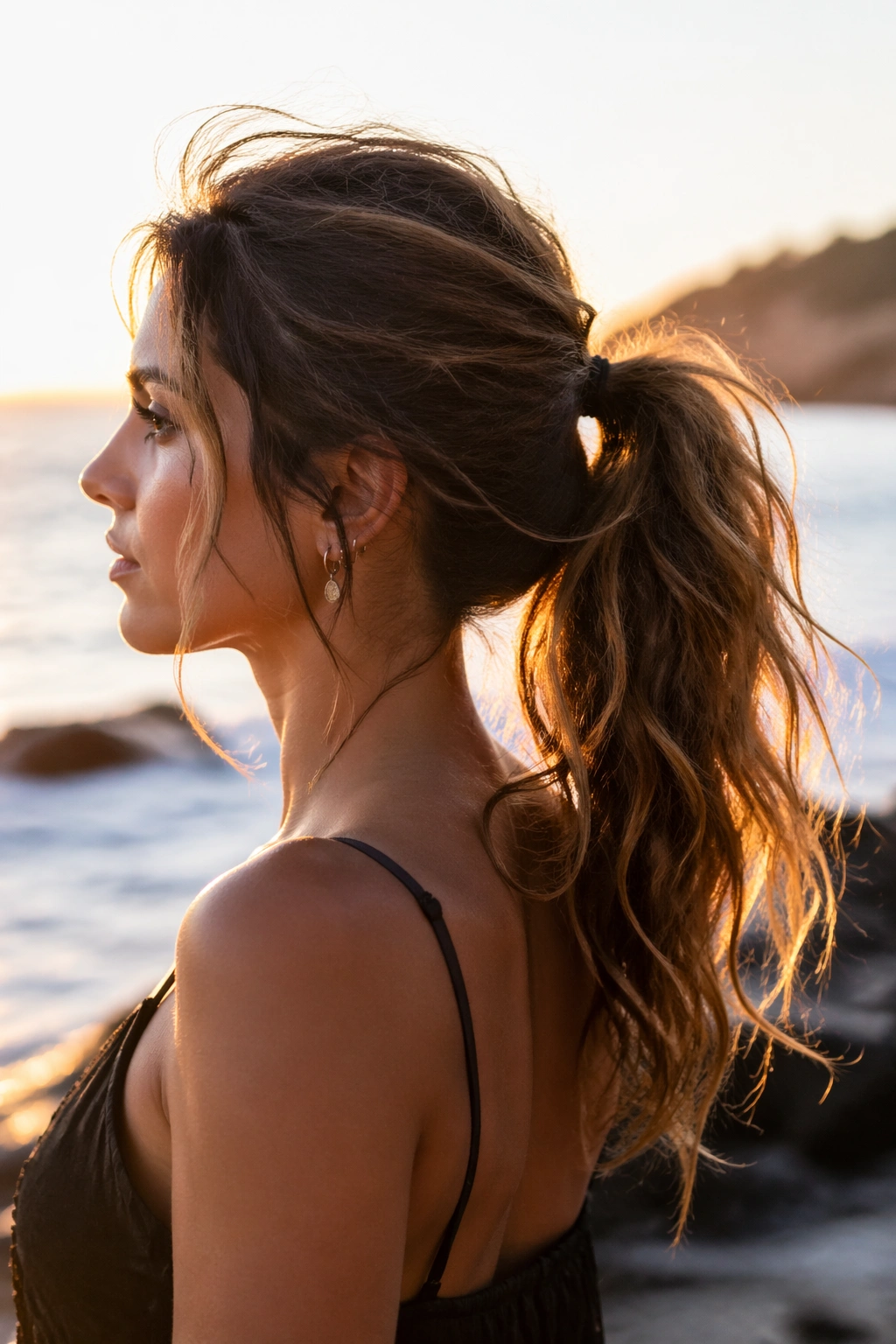
Messy can turn sloppy fast. The trick is to keep the crown airy and the tail shaped, not crunchy or random. On long wavy hair, the texture does half the styling already, so you only need a little help.
Start with dry shampoo at the roots if the hair feels too slippery. Then rake a small amount of matte paste through the top section, using your fingers instead of a brush. Gather the hair loosely and secure it low or mid-height, depending on where the waves naturally fall. Pull out two face pieces and let the tail keep some bend.
The style should look like you meant to wear it all day, not like you wrestled with it for twenty minutes. A soft, textured ponytail is one of the easiest ways to make long wavy hair feel current without doing very much at all.
10. Twisted Low Ponytail
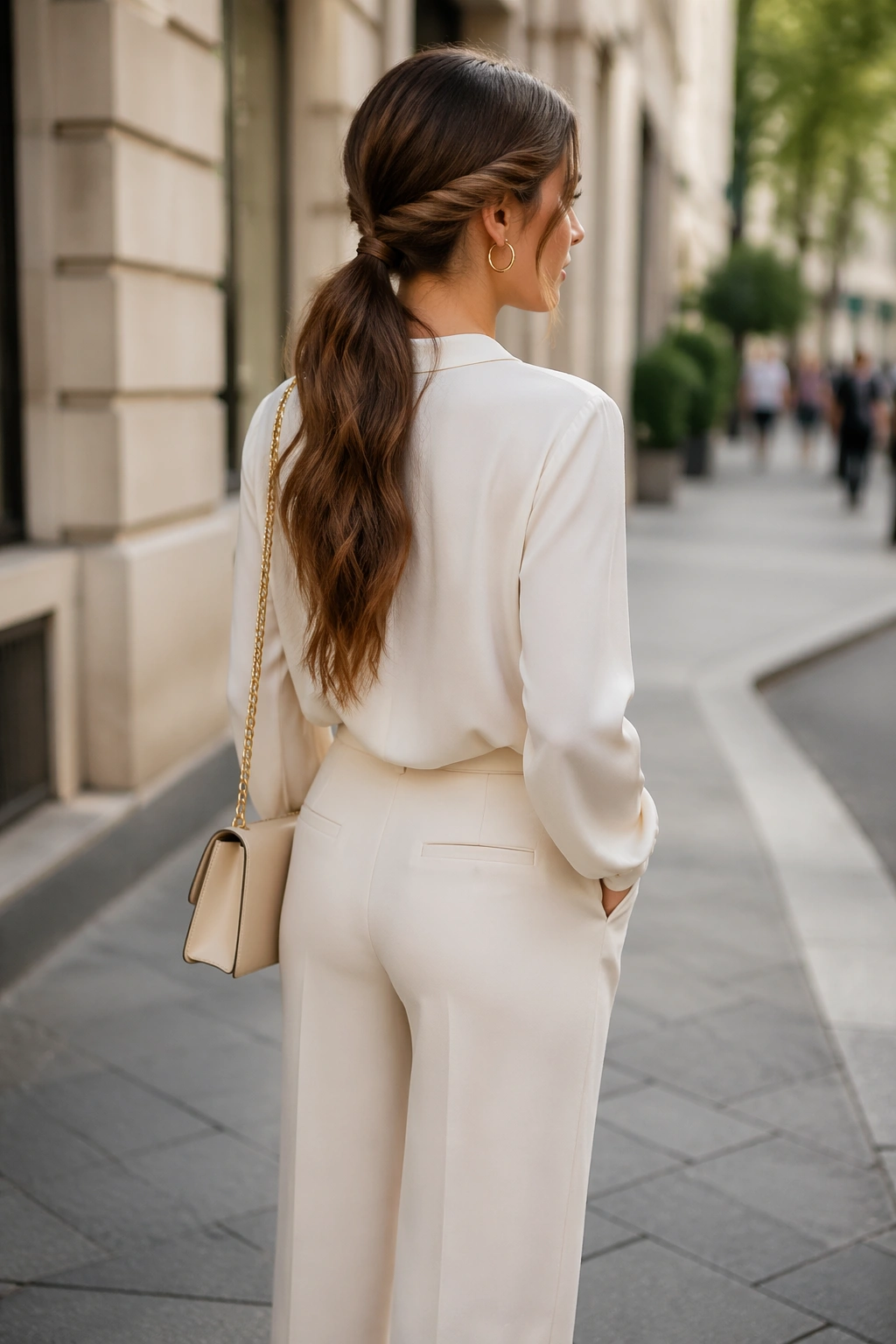
Twists beat braids when you want less bulk. That’s especially true with long hair, where a braid can start to feel heavy near the base. A twisted low ponytail keeps the silhouette lean while still adding detail.
Take one-inch sections from each side of the head, twist them back toward the nape, and secure them together with the rest of the hair. If your waves are thick, keep the twists loose so they don’t create ridges along the side of the head. The point is subtle structure, not a ropey pattern that takes over.
This style is good for workdays, dinner, and anything where you want a little polish without looking formal. It also photographs well from the side because the twist line gives the eye something to follow.
11. Sporty Ponytail With Defined Waves
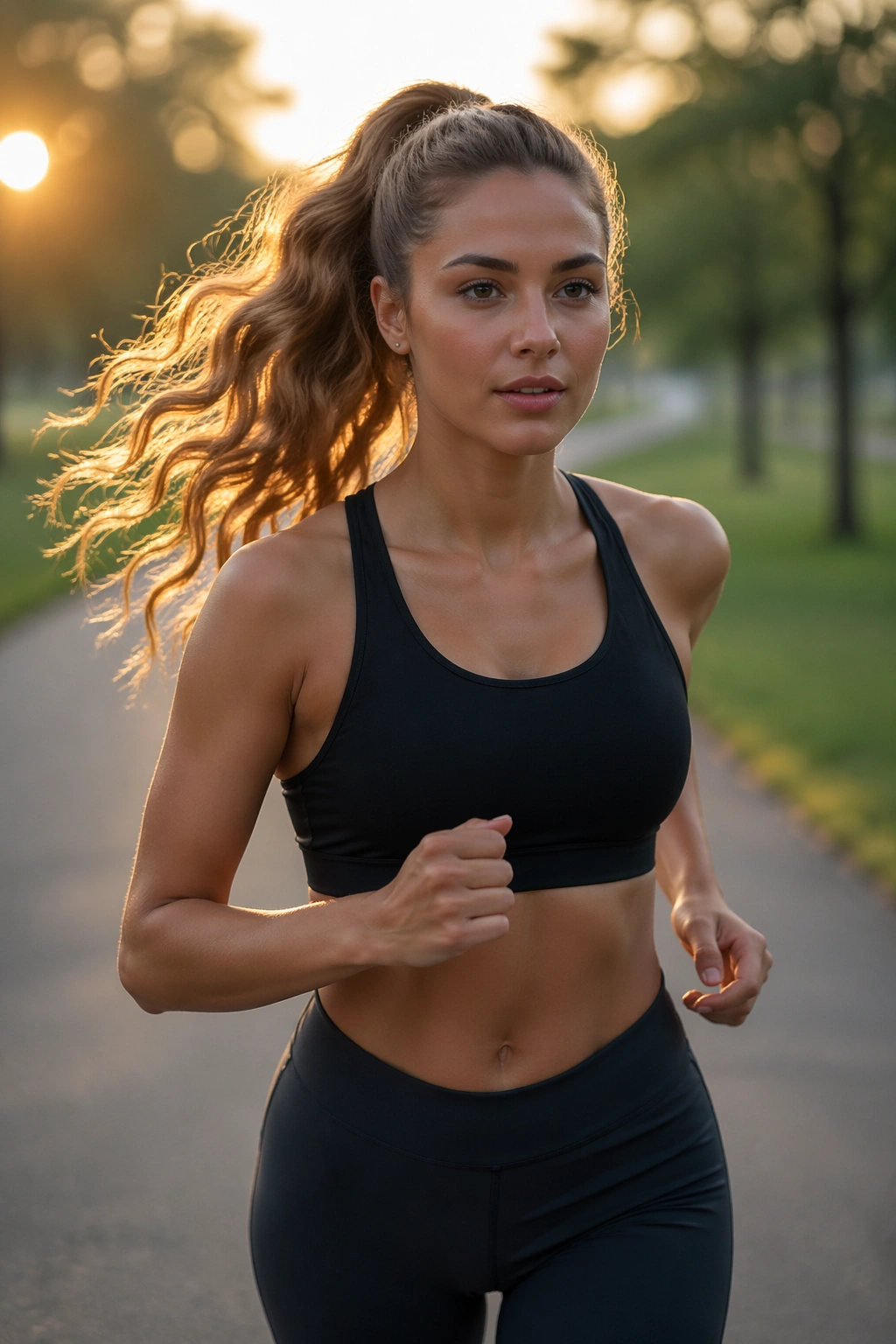
If you need a ponytail that behaves in humidity, start here. The sporty version keeps the roots controlled and lets the wave pattern show through the length, which makes it feel cleaner than a full scrub-back style.
A light mousse on damp hair helps, but don’t drown the roots in product. Too much and the hair gets heavy before it dries. Once the ponytail is tied, scrunch the tail lightly with your hands so the waves keep their bend instead of settling into one flat shape. A satin scrunchie can help if the elastic tends to leave a hard crease.
This style works for workouts, errands, and travel days. It’s practical first, pretty second, and that’s part of its appeal. No fuss. No pretending.
12. Crown Braid Into a Ponytail
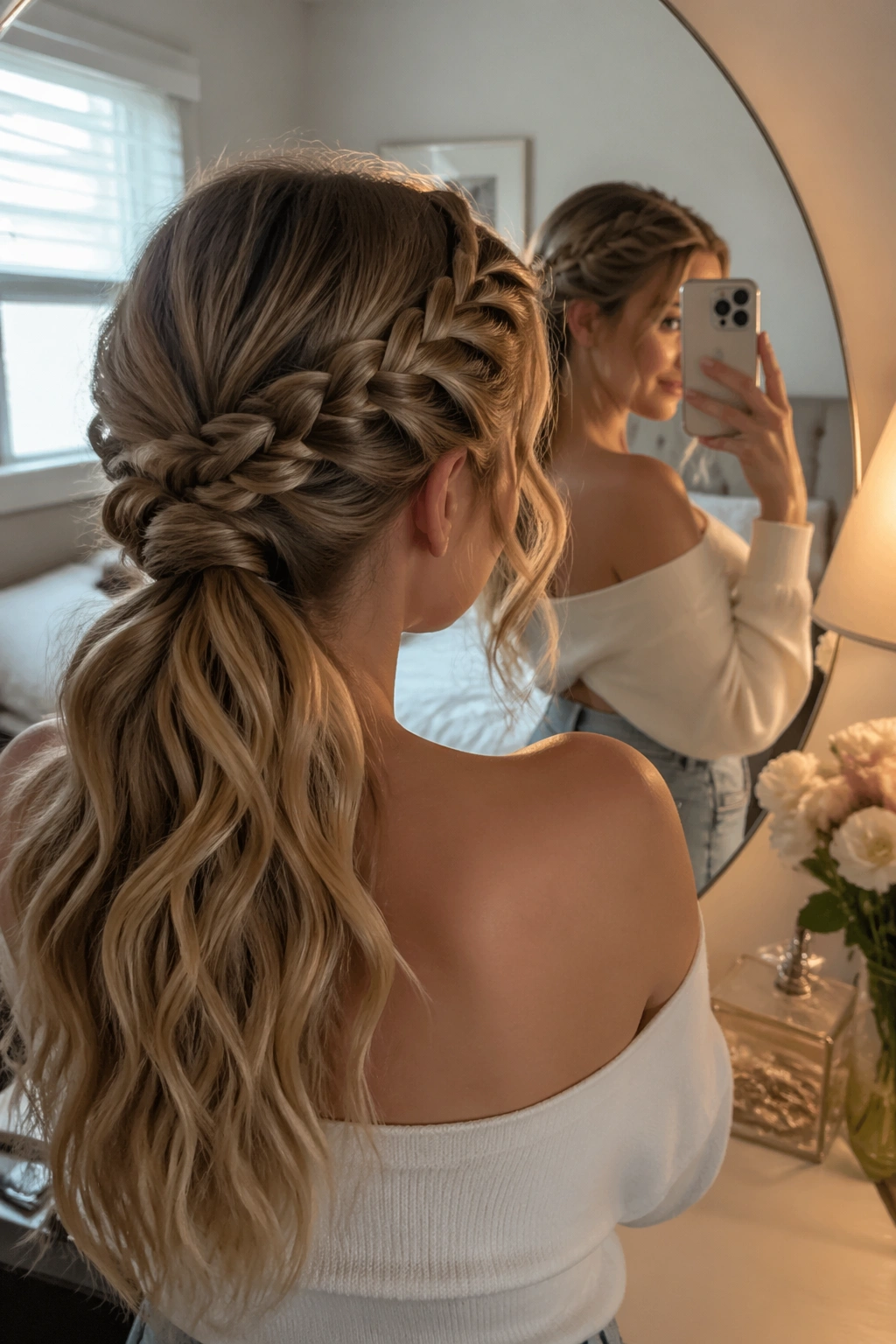
The braid at the crown does the boring work. It keeps hair off the face, adds grip, and gives the ponytail a more finished front line without swallowing the length. For long wavy hair, that balance matters.
Best for
This is the style I’d reach for when I want the ponytail to feel secure but not severe. The braid can start at one temple and run across the crown, then feed into a low or mid ponytail. The tail stays loose and wavy, so the braid becomes the frame rather than the whole look.
It’s a smart choice for long days because the braid helps keep the front sections from slipping. If your waves are thick, pin the braid flat with two small bobby pins before tying the ponytail. That tiny bit of support keeps everything from puffing out at the root.
13. Fishtail Ponytail With Long Waves
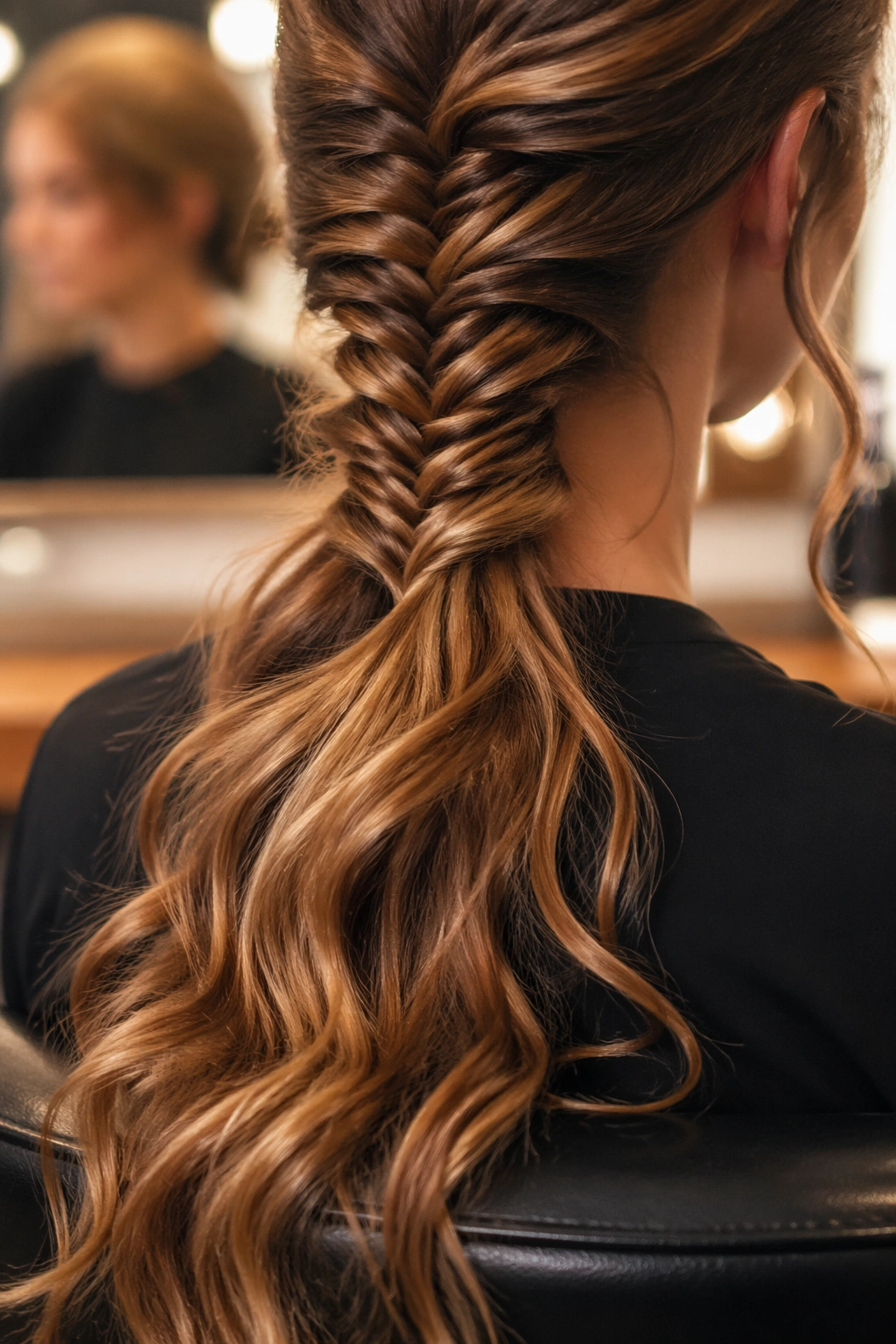
Fishtail looks intricate, but the real payoff is texture. On long hair, the style tapers beautifully, and the wave pattern gives the braid some extra depth so it doesn’t read as flat.
You do need patience here. A fishtail takes two sections and lots of small passes, which can feel slow the first few times. But once it’s done, it stays neat longer than a loose three-strand braid, especially if your hair is layered. A little texture spray before you start can make the sections easier to hold.
This is a good style for events, long lunches, or any day when you want the ponytail to look more detailed than casual. It’s not the fastest option. It does hold up.
14. Curled-Ends Ponytail
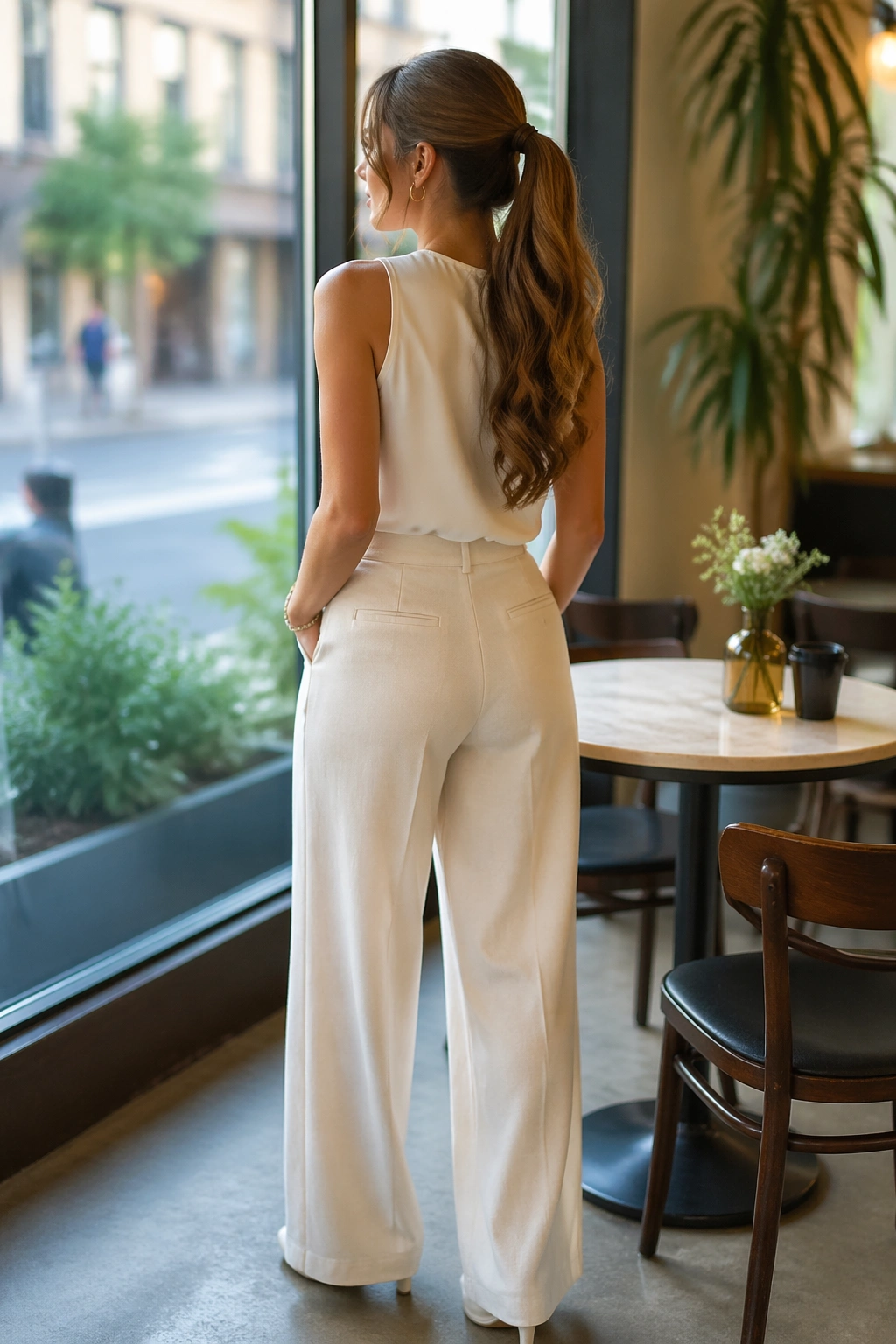
Why do curled ends change a ponytail so much? Because they give the eye a cleaner finish. Long wavy hair already has movement, but when the ends are deliberately shaped, the whole ponytail looks more dressed up.
Keep the crown smooth and focus the curling iron only on the last 3 to 4 inches of hair. A 1-inch iron usually gives a soft bend rather than a tight spiral, which suits waves better. If the hair is extremely long, curl the ends in two sections so the underneath layer doesn’t droop.
This version is useful when you want a ponytail for a dinner, a meeting, or anything where you need to look put together without losing softness. The ends do the talking.
How to get the shape right
The curl should sit at the edge of the tail, not halfway up it. If you bring the iron too far up, the ponytail starts to look busy. Keep it calm near the base and polished at the bottom.
15. Double-Elastic Long Ponytail
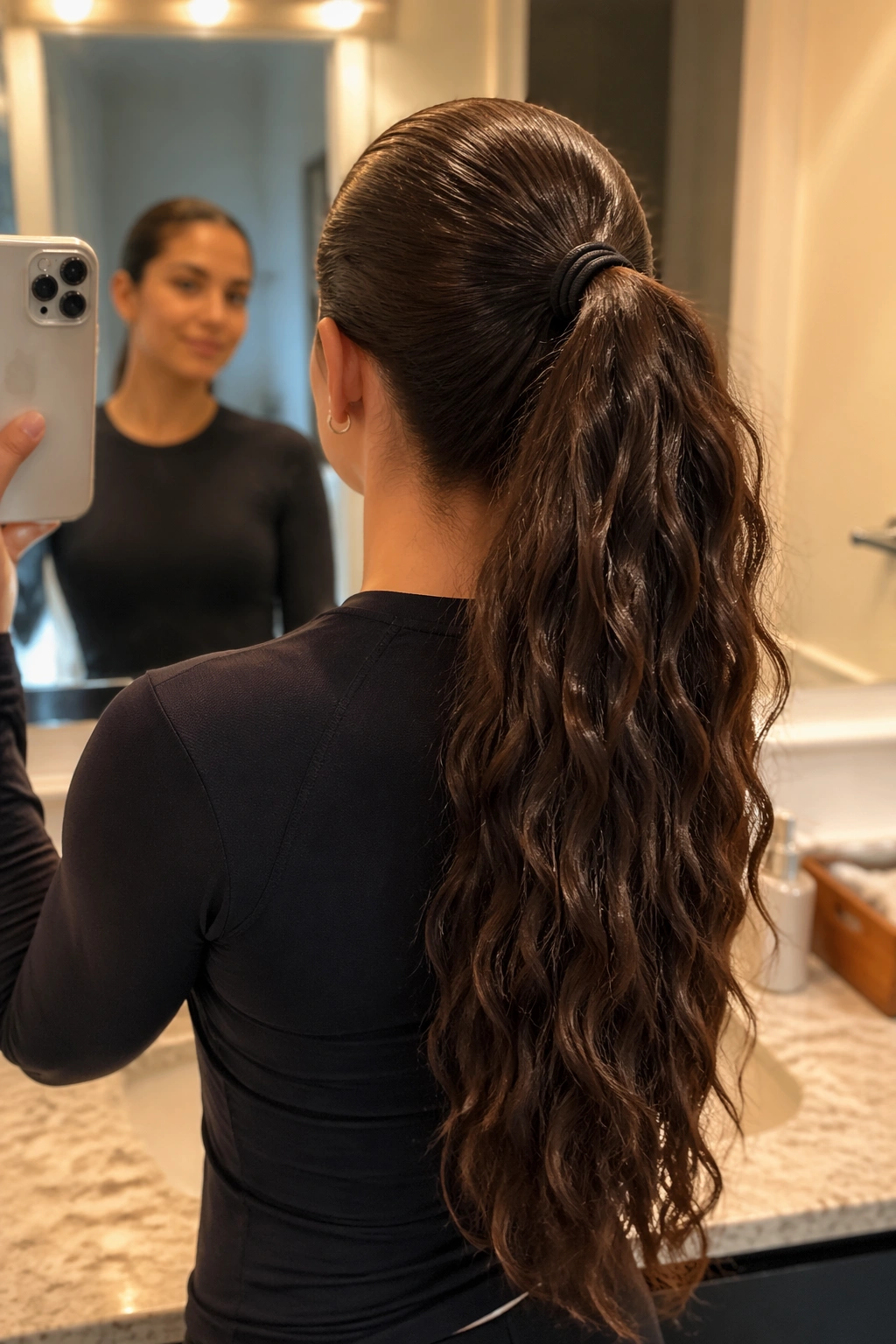
Long hair can get floppy at the base. It’s a weight problem, not a styling problem. A double-elastic ponytail fixes that by spreading the tension across two anchors instead of one.
Tie the first elastic where you want the ponytail to sit, then add a second one about 2 to 3 inches below it. That second tie takes some of the drag off the roots and helps the tail sit straighter. If the hair is thick, you can even hide the lower elastic inside the top section a little so it doesn’t show.
This is one of the most practical styles on the list. It looks ordinary from a distance, which is fine. Up close, it has better shape and stays in place longer than a single tie. Sometimes the smartest styles are the least dramatic.
16. Center-Part Sleek Ponytail
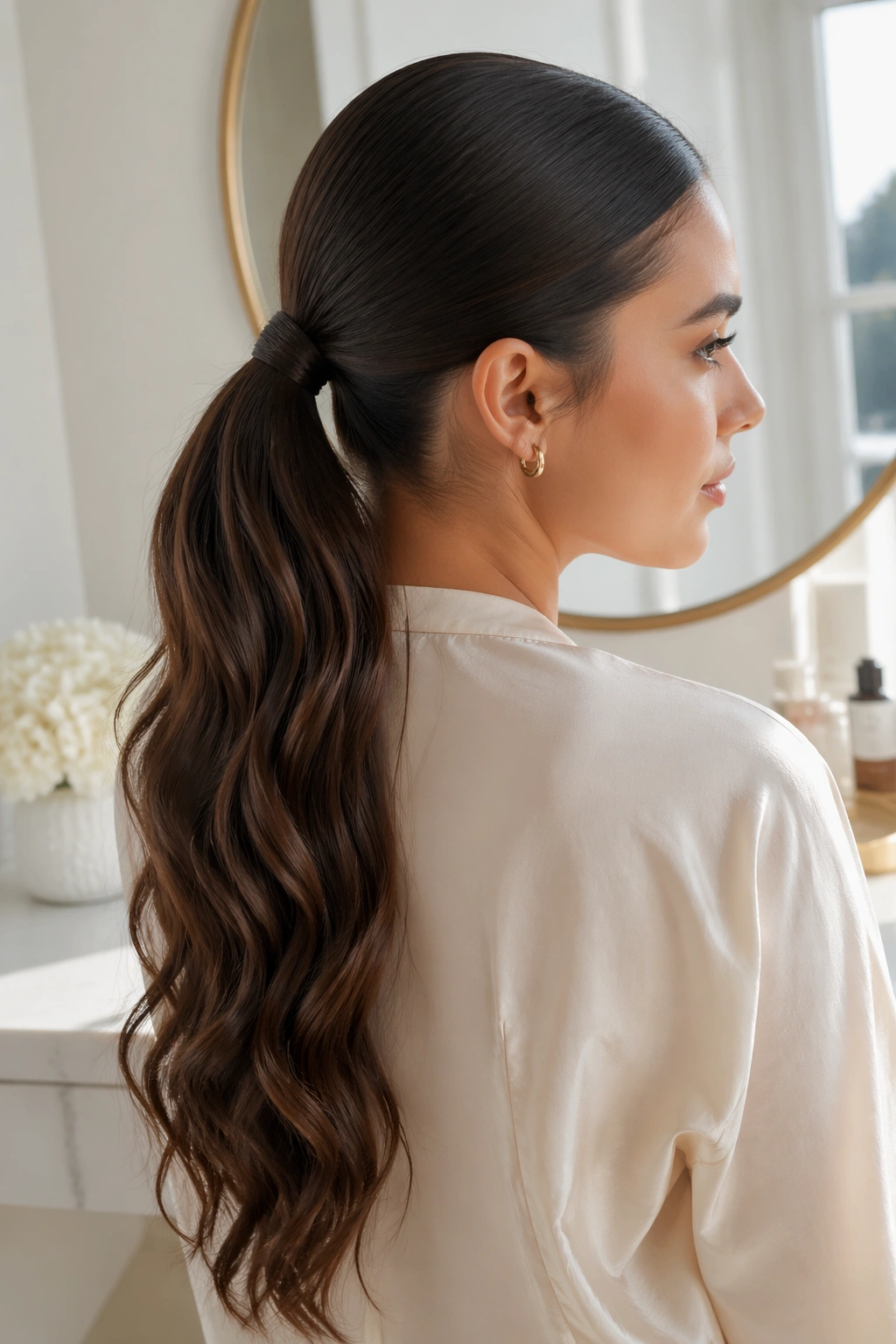
A center part makes waves read cleaner. It gives the style a sharper line at the front and creates a balanced frame for long hair, which can otherwise feel heavy on one side.
Smooth the first inch or so of hair near the hairline with a fine-tooth comb and a touch of gel or cream. Keep the product close to the scalp and stop before it reaches the lengths. You want the roots sleek, not the tail stiff. The ponytail itself can stay wavy and loose, which keeps the style from feeling too strict.
This one works especially well with straight brows, sharp collars, and earrings that need a clean backdrop. It’s tidy, but not boring.
17. Rope-Braid Ponytail for Wavy Hair
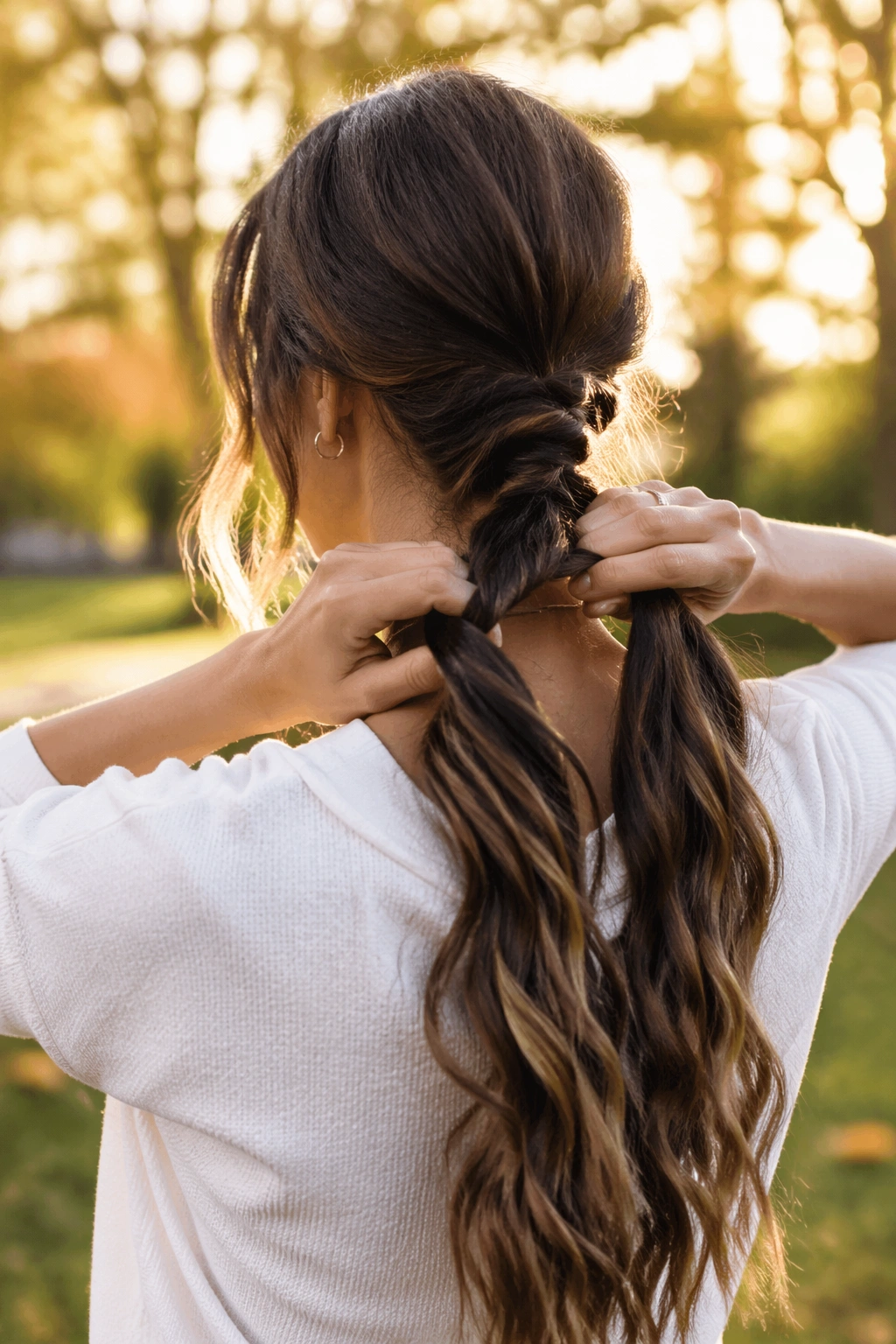
Rope braids are underrated. They’re quicker than a fishtail, less bulky than a three-strand braid, and they hold a wave pattern nicely because the twist echoes the bend in the hair.
Divide the ponytail into two sections, twist each section in the same direction, then wrap them around each other in the opposite direction. That second move is what locks the braid in place. If the hair is very long, secure the end with a tiny elastic and tug the rope gently to open it up.
This is a good style for people who want detail without a long styling session. It looks more considered than a plain ponytail, but it still feels easy to wear. A neat middle ground.
18. Ladder Braid Ponytail
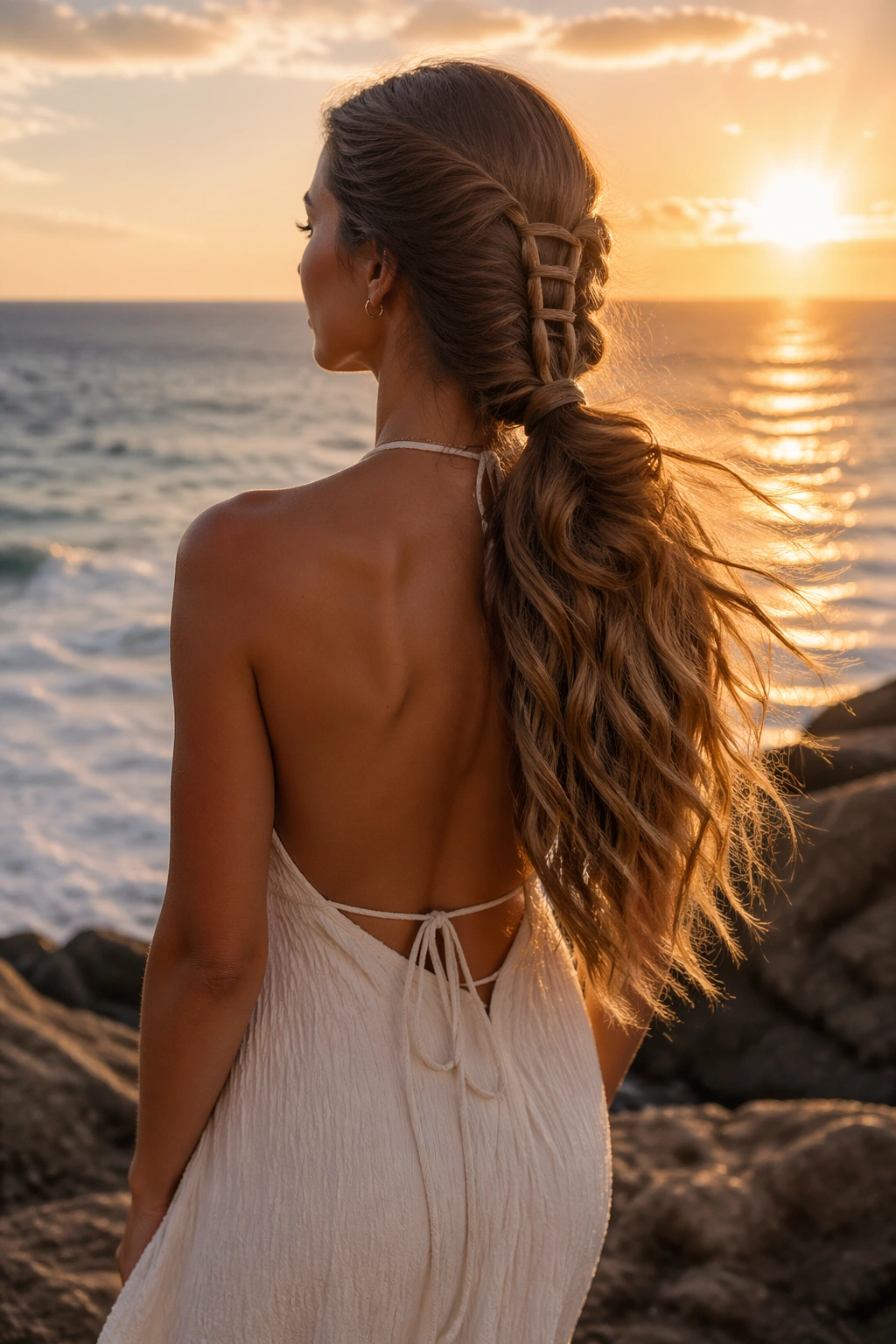
A ladder braid gives a little structure without swallowing the wave pattern. That’s why it’s a nice fit for long hair that already has volume. The braid acts like a frame, and the ponytail stays soft underneath it.
Start with a small braid on one side of the head, then feed strands in at intervals so it runs horizontally toward the ponytail. It sounds more complicated than it is. The spacing is what matters. Keep the rungs even, and the whole thing looks tidy rather than fussy.
This style is best for people who like a ponytail that feels a bit special. It’s not a daily basic. It is the one you wear when you want someone to notice the work without being able to point at exactly why it looks different.
19. Retro High Ponytail With Flip
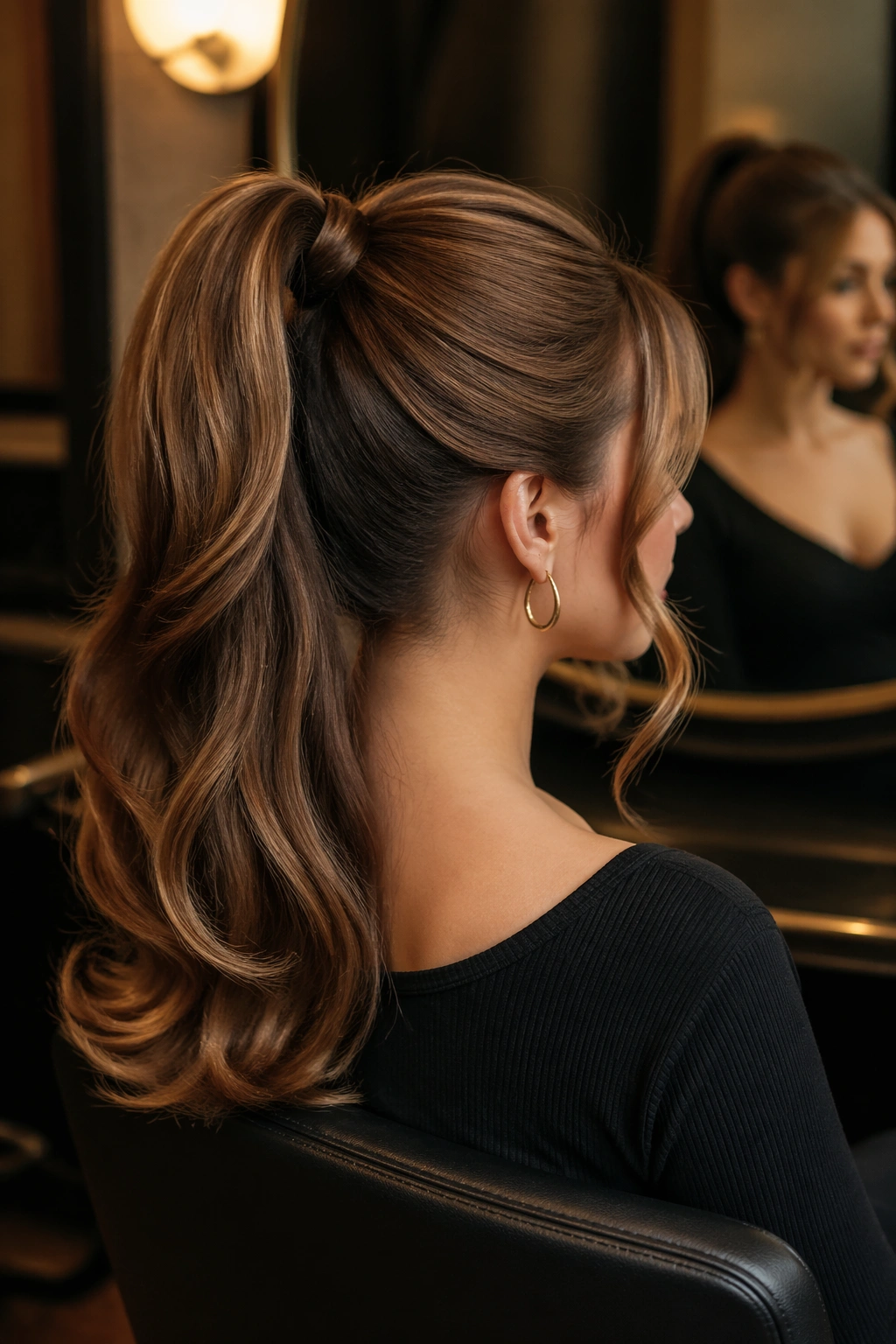
Retro high ponytails live or die by the crown. If the top sits too flat, the whole style loses its shape. If the base is too loose, it slips. The sweet spot is a firm lift with ends that still keep their natural bend.
What to watch for
Use a brush to smooth the top, then lift the ponytail slightly before tying so the crown doesn’t collapse. A small amount of teasing underneath the top layer can help, but keep it hidden. The tail should sit high and swingy, not hard and puffy.
A retro finish can lean glossy or matte. Glossy makes it feel more dressed up. Matte keeps it modern. Either way, a flipped end or two at the bottom gives the silhouette a little bounce, which suits wavy hair better than a pin-straight finish.
20. Low Knot Ponytail

A low knot at the base feels casual in a good way. It’s one of those styles that looks like you didn’t think about it much, even when you absolutely did. On long wavy hair, the knot adds a small architectural detail without interrupting the texture.
Tie a low ponytail first. Then split the tail into two sections, knot them once or twice, and secure the ends underneath with a clear elastic or pin. Keep the knot loose enough that it doesn’t cinch the hair too hard. Too tight, and the whole thing looks strained.
This style suits soft knits, collared shirts, and days when you want something a little quieter than a braid. It’s restrained. Nice change, honestly.
21. Ponytail With Curtain Bangs
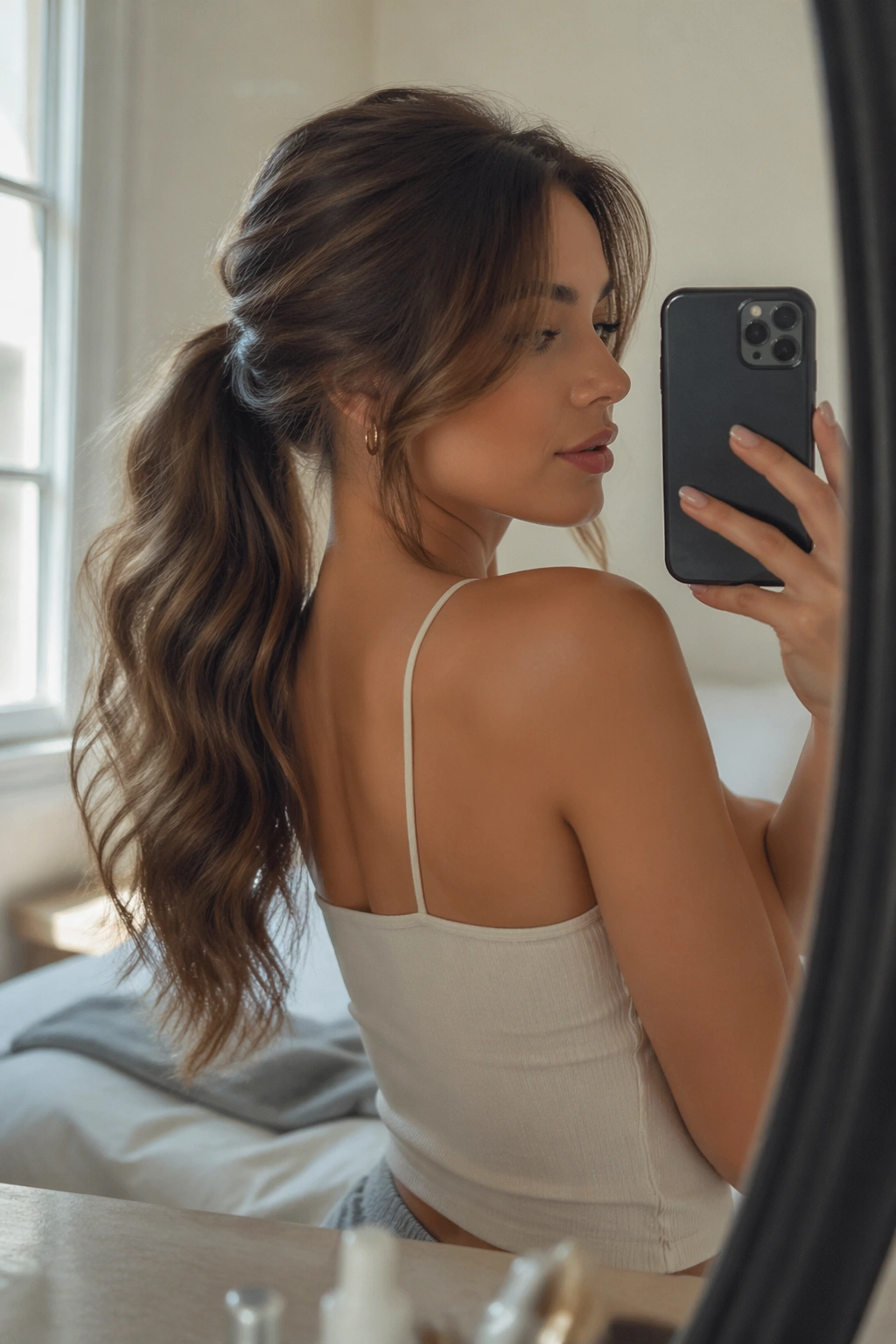
Curtain bangs and a ponytail can fight each other if the ponytail is too tight. The answer is to let the bangs stay loose and let the tail do the simple part.
Brush the bangs forward and shape them with a round brush or a quick bend from a blow-dryer. Then pull the rest of the hair back into a low or mid ponytail, keeping the top smooth but not pulled back to the point of strain. The contrast between the face-framing fringe and the long tail gives the style some softness right away.
This is a strong option if you’re growing bangs out or just want a ponytail that doesn’t expose the whole forehead. The fringe does the flattering work. The ponytail stays uncomplicated.
22. Loop-Through Ponytail
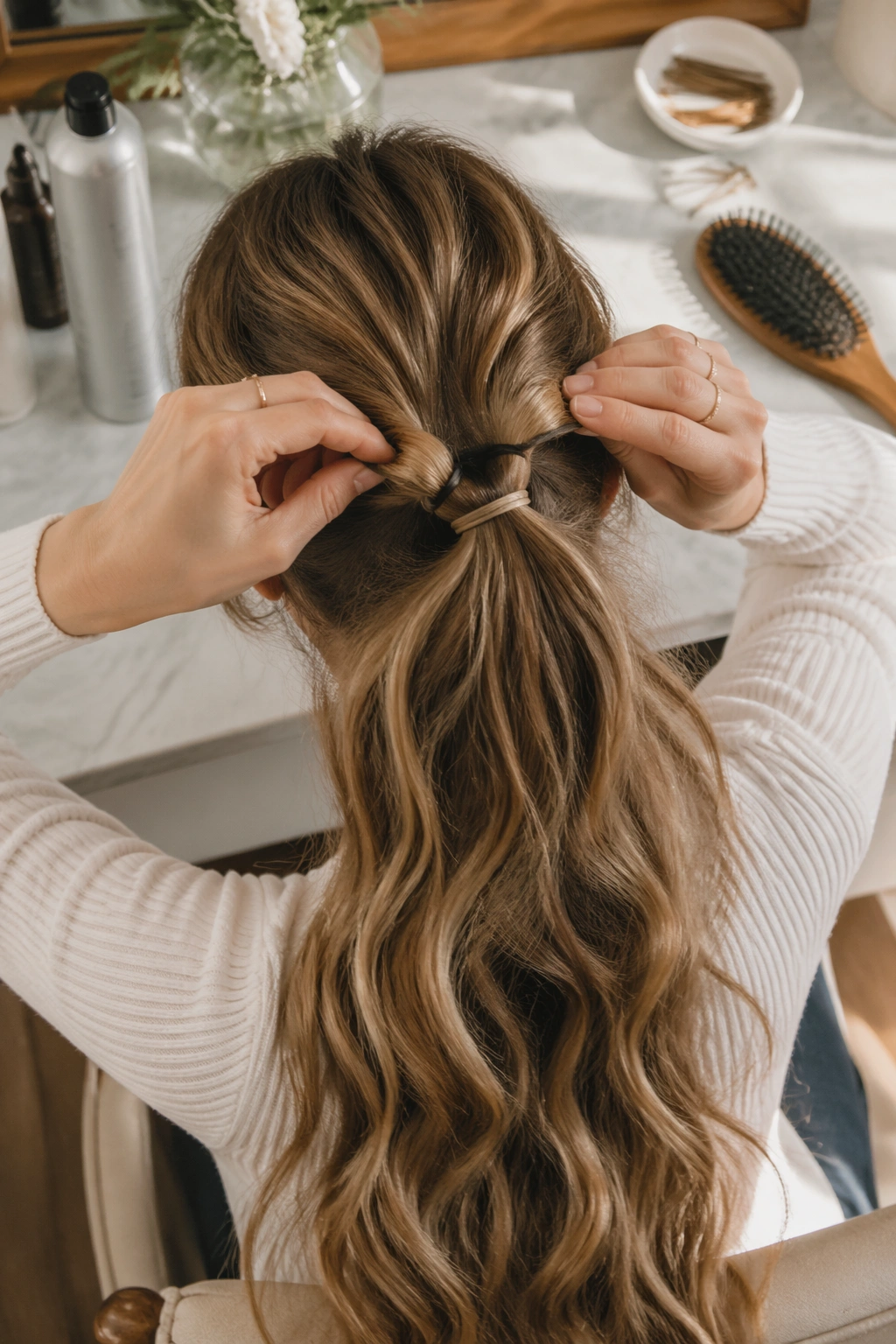
Loop-through styles are a shortcut when you want height without a full updo. They also make long hair look a little more sculpted, which is handy when the waves are behaving but need a shape to sit in.
Create a low or mid ponytail, loosen the elastic a little, and split the hair above it to form a small opening. Flip the tail through once or twice, depending on how full you want it. The movement creates a soft twist effect near the base that works especially well with long lengths.
This style is useful when you need something fast but not plain. The little loop gives the ponytail a bit of lift, and the wavy ends keep it from looking too polished.
23. Side-Swept Ponytail With Volume
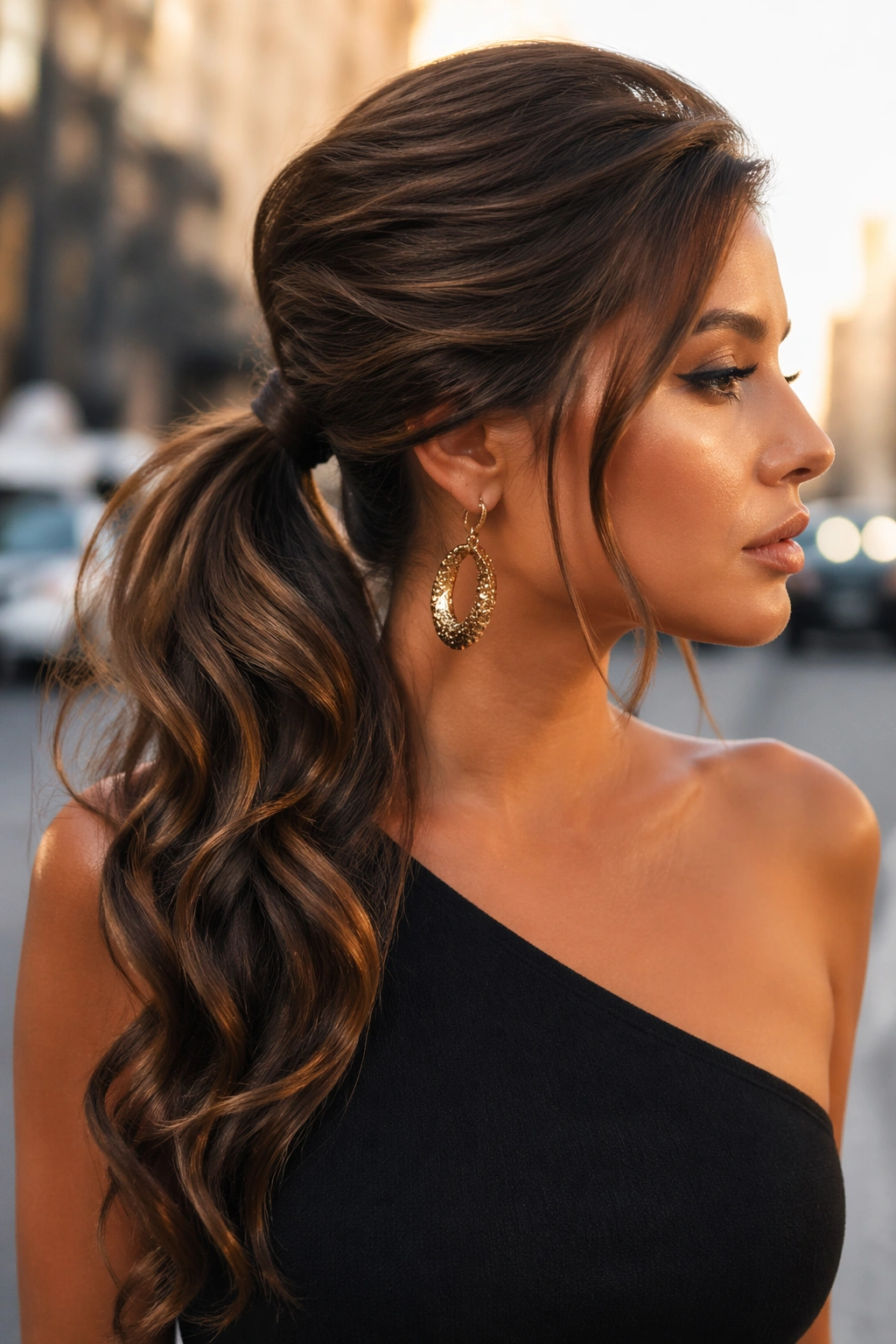
Side-swept versions lean romantic, but they can also be sharp when the hair is brushed cleanly across the head. The trick is to keep the sweep smooth and the ponytail full enough that it doesn’t disappear into one shoulder.
Anchor the ponytail just behind one ear or slightly lower. Then pull the top section across with a brush, keeping the front line clean. If the waves are large, leave the ponytail loose. If they’re tight, gently stretch the sections so the side shape reads from a distance.
This is a smart choice for one-shoulder tops, statement earrings, or any outfit that needs asymmetry. It feels a little old Hollywood, a little modern, and that mix is hard to beat.
24. Soft Romantic Ponytail With Loose Tendrils
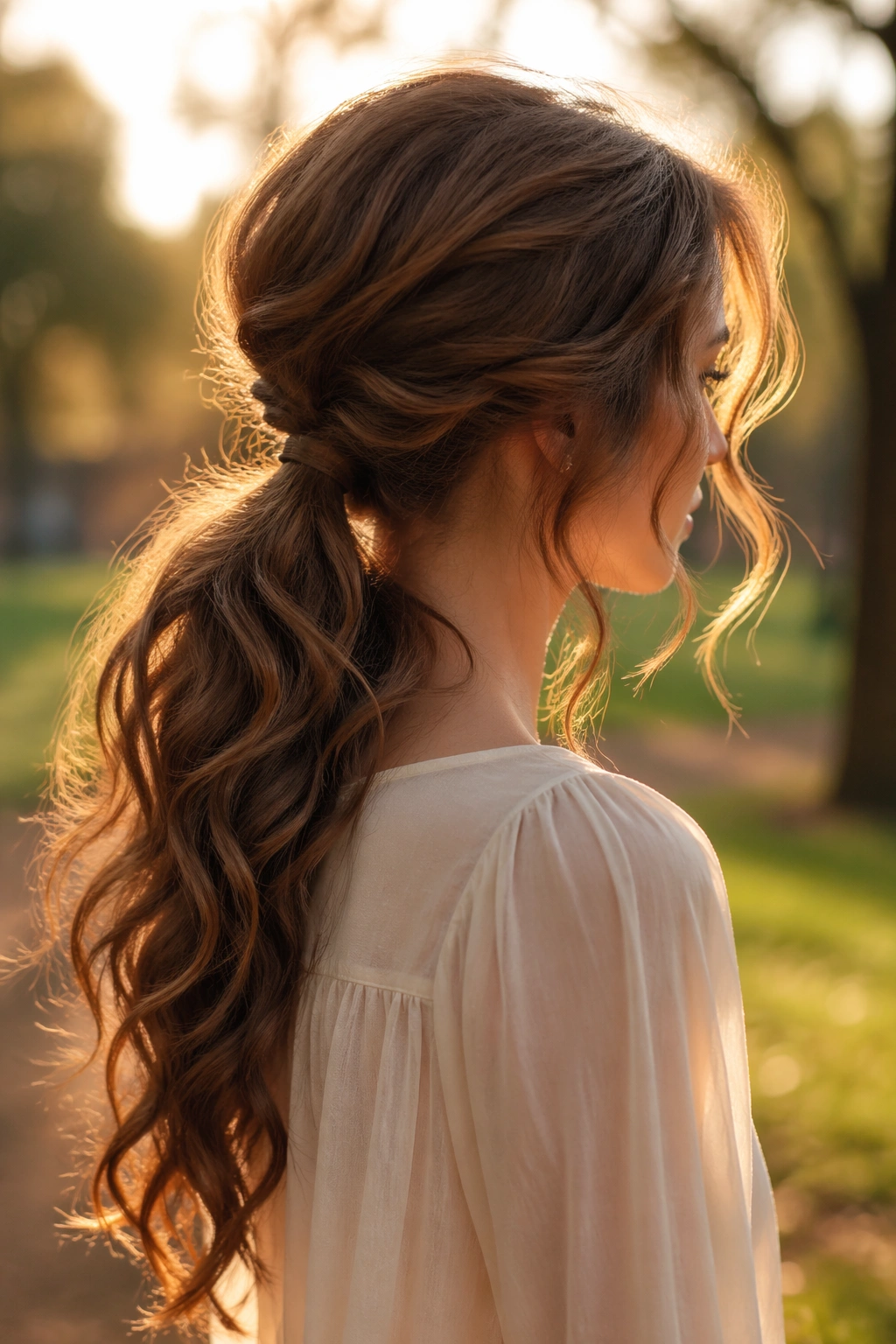
If you like a softer finish, keep the ends loose and the front pieces light. That’s the whole idea here. The ponytail sits low or mid-height, the wave pattern stays touchable, and a few tendrils around the face stop the style from feeling severe.
How to keep it soft
Don’t clamp the base too hard. A silk tie or covered elastic helps. If your hair is very long, let the tail stay slightly uneven at the ends rather than trimming it into one hard line with heat. That unevenness reads romantic, not messy.
A romantic ponytail works for date nights, family events, and any day you want the hair to look gentle instead of sharp. It’s the least demanding style on the list, which is part of why people keep coming back to it.
25. Dutch-Braid Ponytail
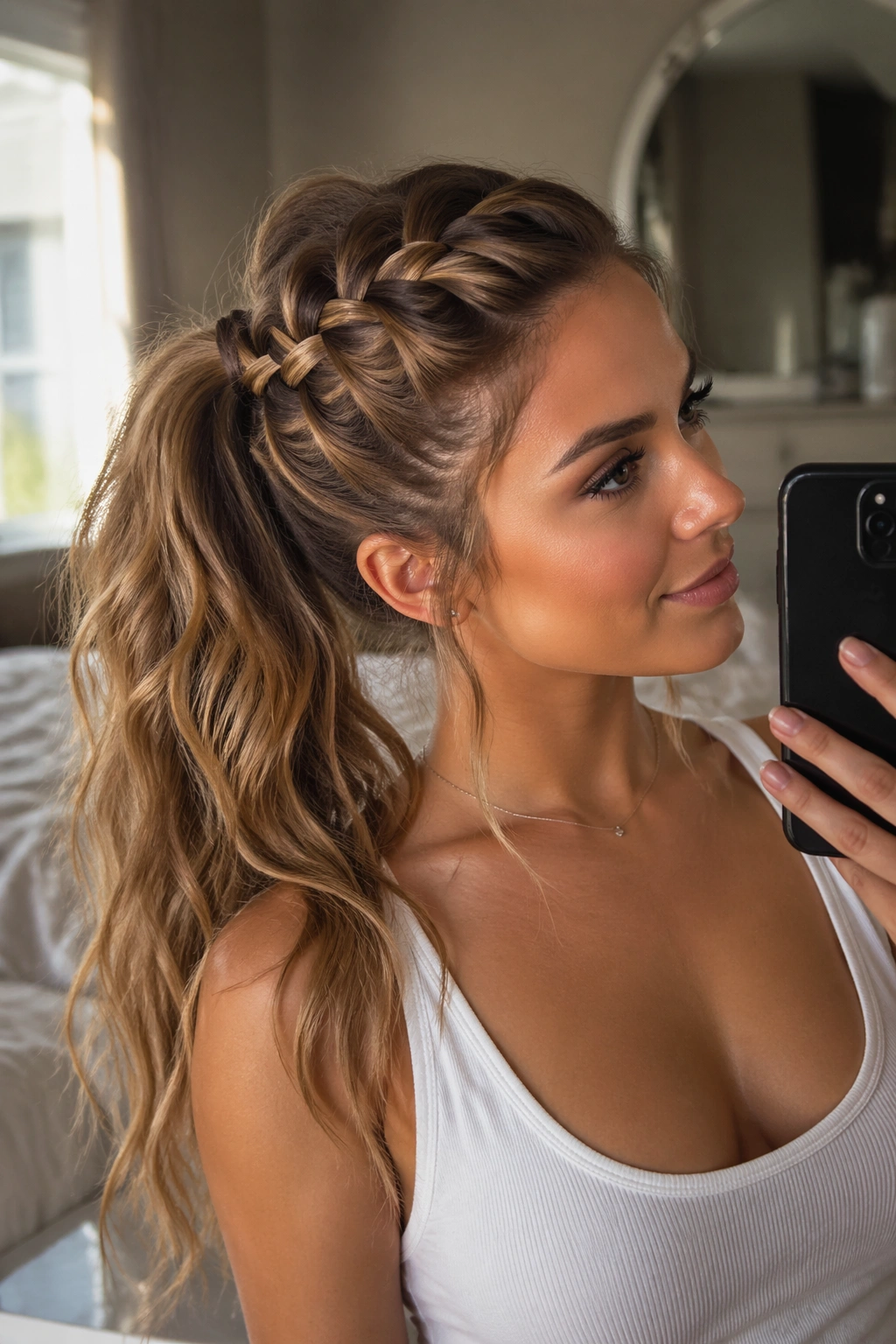
A Dutch braid into a ponytail gives long wavy hair a stronger front line than a simple braid. The braid sits raised on the scalp, which creates a bit of contrast before the tail falls loose behind it.
Start the braid at the hairline and work down the center or slightly off center, pulling strands under rather than over. Stop at the crown or nape, depending on how much braid you want to show, then secure the rest into a ponytail. The waves in the tail soften the braid so the style doesn’t feel too rigid.
This one is useful when you want a ponytail that can hold up through a long day and still look good at the end of it. It has enough structure for thick hair and enough movement for long waves, which is a better combination than people give it credit for.
Final Thoughts
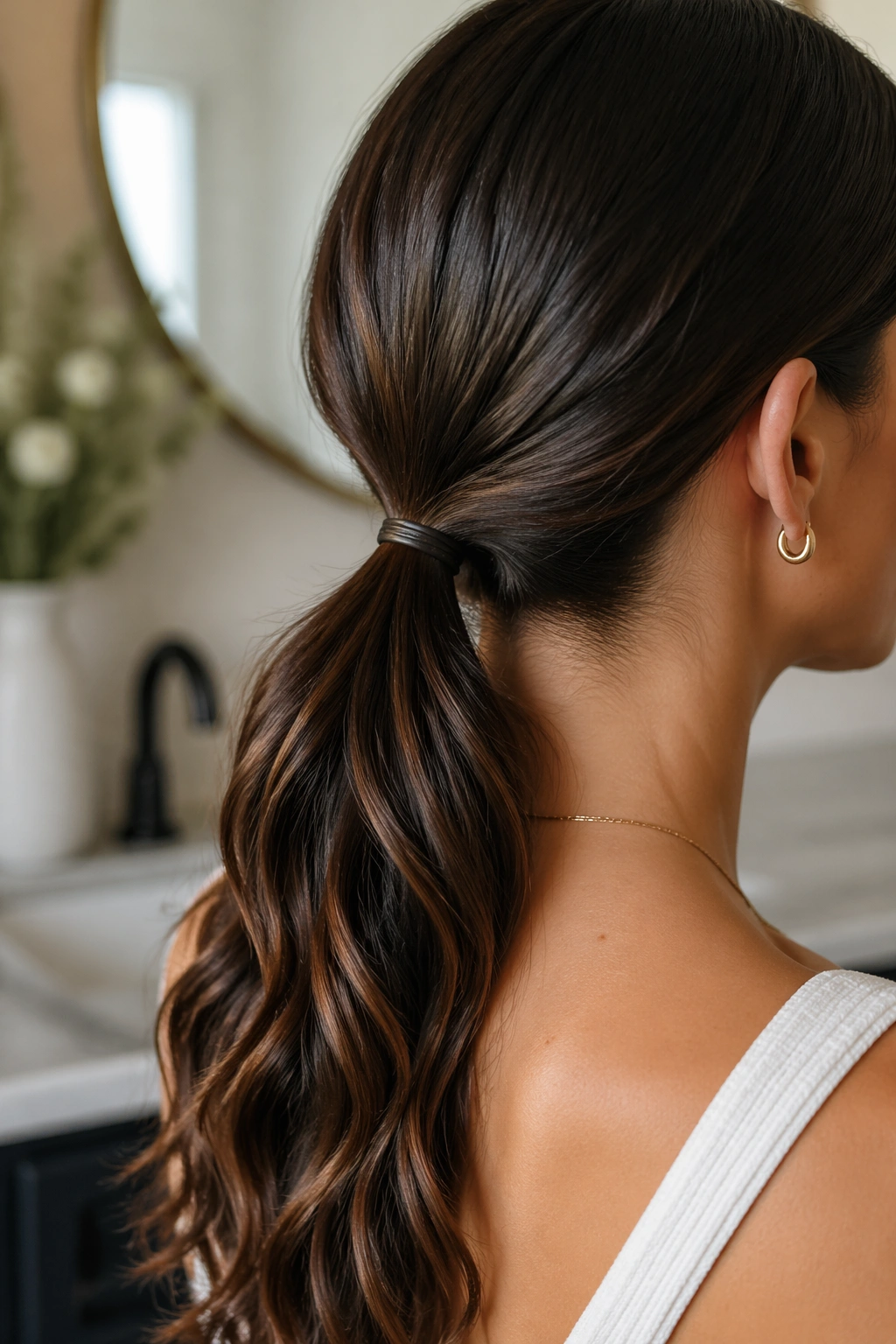
Long wavy hair doesn’t need to be tamed into something flat to look good in a ponytail. The styles that work best are the ones that respect the bend in the hair and place the elastic where the weight won’t drag everything down.
The other thing worth paying attention to is the front section. A clean crown, a loose tendril, a deep part, a braid at the base — those little choices change the whole mood faster than an extra layer of hairspray ever will.
If you’re choosing between styles, start with the one that matches the weight of your hair. Heavy hair usually wants lower or mid-height placement. Softer waves can handle more lift. That one decision saves a lot of frustration, and it keeps the ponytail looking like a style instead of a workaround.