



Bubble ponytails on natural hair work because they make texture look intentional instead of accidental. A smooth base, a few evenly spaced elastics, and the right amount of stretch can turn coils, curls, and blown-out hair into something crisp without erasing what makes the hair interesting.
The style changes a lot depending on length and shrinkage. On stretched hair, the bubbles look long and sculpted; on shrunken curls, they look rounder and fuller. Either way, the tension has to stay friendly—if the ponytail feels like it is yanking at your edges, the style is too tight.
A satin scrunchie, a little mousse, and a rat-tail comb go a long way. The rest is placement, spacing, and restraint. That last part matters more than people think. Overworked bubbles lose shape fast, and on natural hair, a heavy hand can flatten the base before you even get out the door.
These 30 bubble ponytails move from polished to playful and back again. Some lean sleek, some lean fluffy, and a few are the kind of styles you can throw together in ten minutes without losing the point.
1. Sleek High Bubble Ponytail
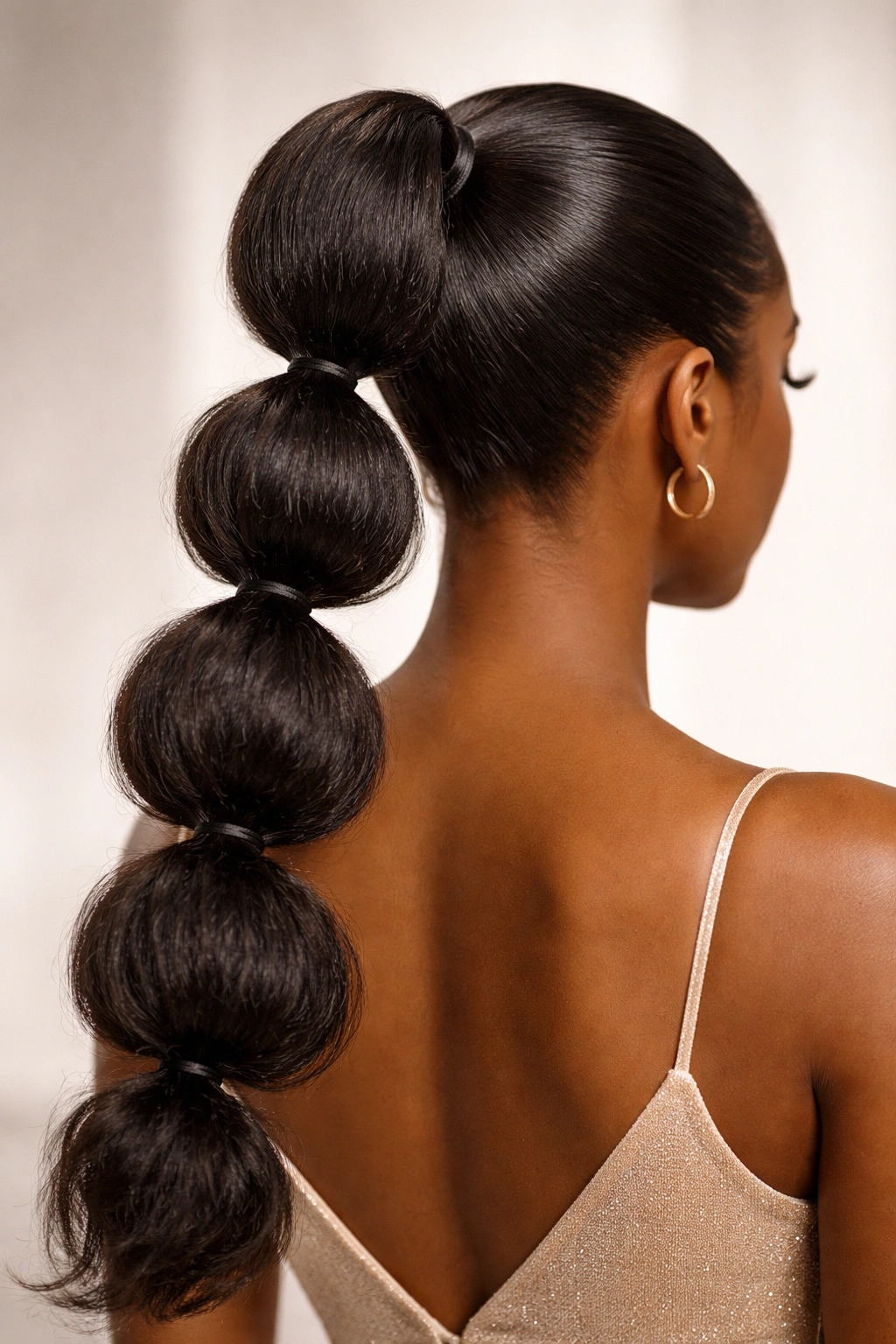
A sleek high bubble ponytail is the classic version for natural hair, and it earns that status because it gives you height without forcing the hair to lie dead flat. The crown stays smooth, the bubbles stay full, and the whole style has enough lift to read dressy without trying too hard.
How to keep the base neat
Brush the hair up with a firm-bristle brush, smooth the front with gel, and secure the ponytail at the crown with a snag-free elastic. After that, add more elastics every 2 to 3 inches, then tug each section outward with your fingers until it looks rounded. Stop pulling once the bubble feels full; over-stretching makes the shape look thin and tired.
This one works best on blown-out or band-stretched natural hair. If your roots are very shrunken, the first bubble can look bulky in a good way, but the later sections may bunch up more than you expect. That is fine if you like a puffier finish. A thin strand of hair wrapped around the first elastic cleans up the whole look fast.
2. Low Bubble Ponytail with Soft Edges
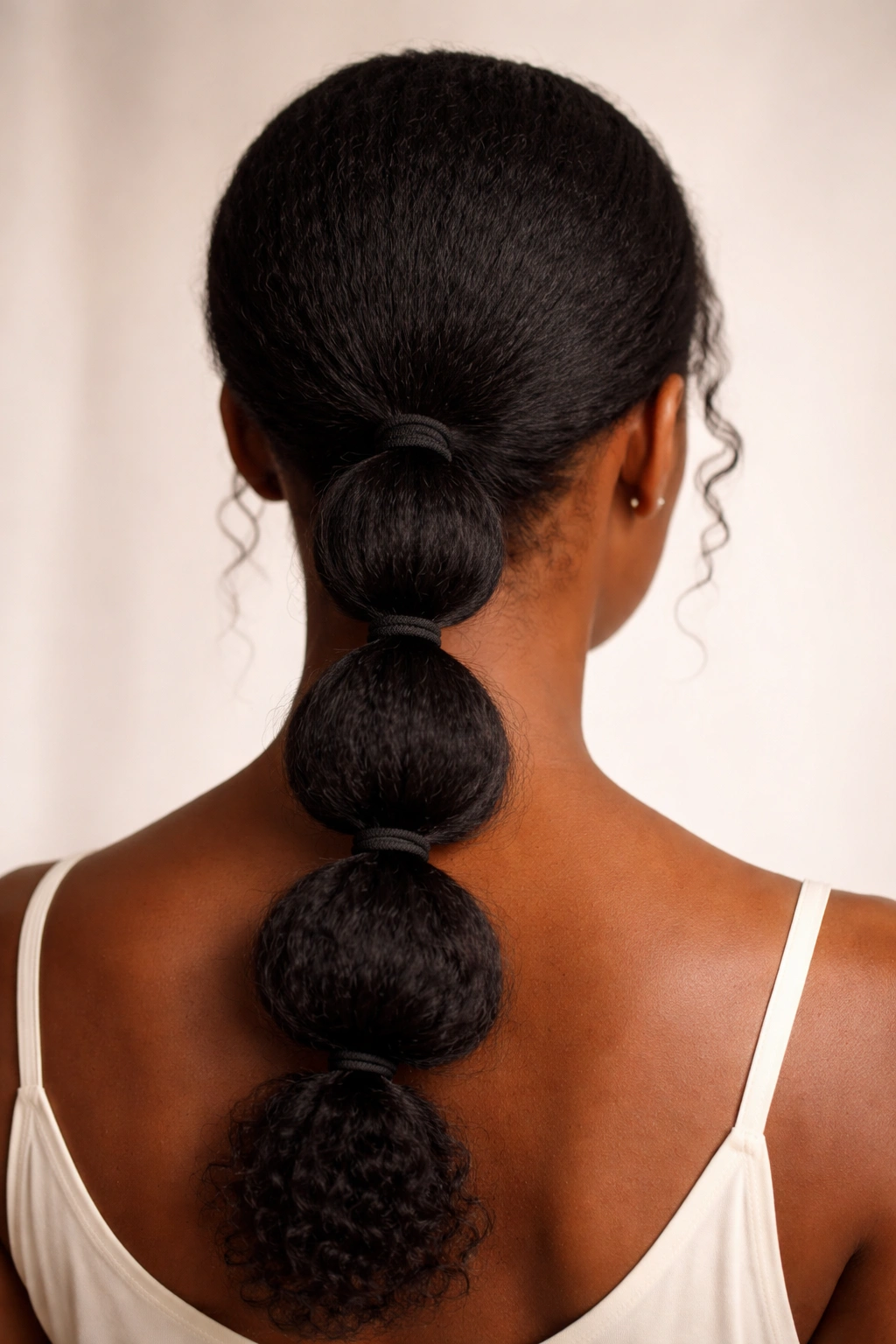
Want a bubble ponytail that feels calmer and softer? Put it low. A low version sits at the nape, which makes it easier on the scalp and a little less dramatic than a high ponytail, but it still gives natural hair that neat, segmented shape people love.
Why this placement works
A low base leaves room for the bubbles to hang instead of spring upward. That changes the mood completely. You can keep the part center, slightly off-center, or skip the part and smooth everything straight back. The style also pairs well with soft edges rather than fully laid baby hairs, which keeps it from looking too stiff.
- Use a low, snug ponytail holder that does not snag.
- Keep the first bubble about 2 inches from the base.
- Choose satin-covered elastics if your hair breaks easily.
- Let a few fine hairs stay loose around the hairline if you want a softer finish.
This is the bubble ponytail I’d reach for on days when I want tidy hair without a lot of fuss.
3. Side-Swept Bubble Ponytail
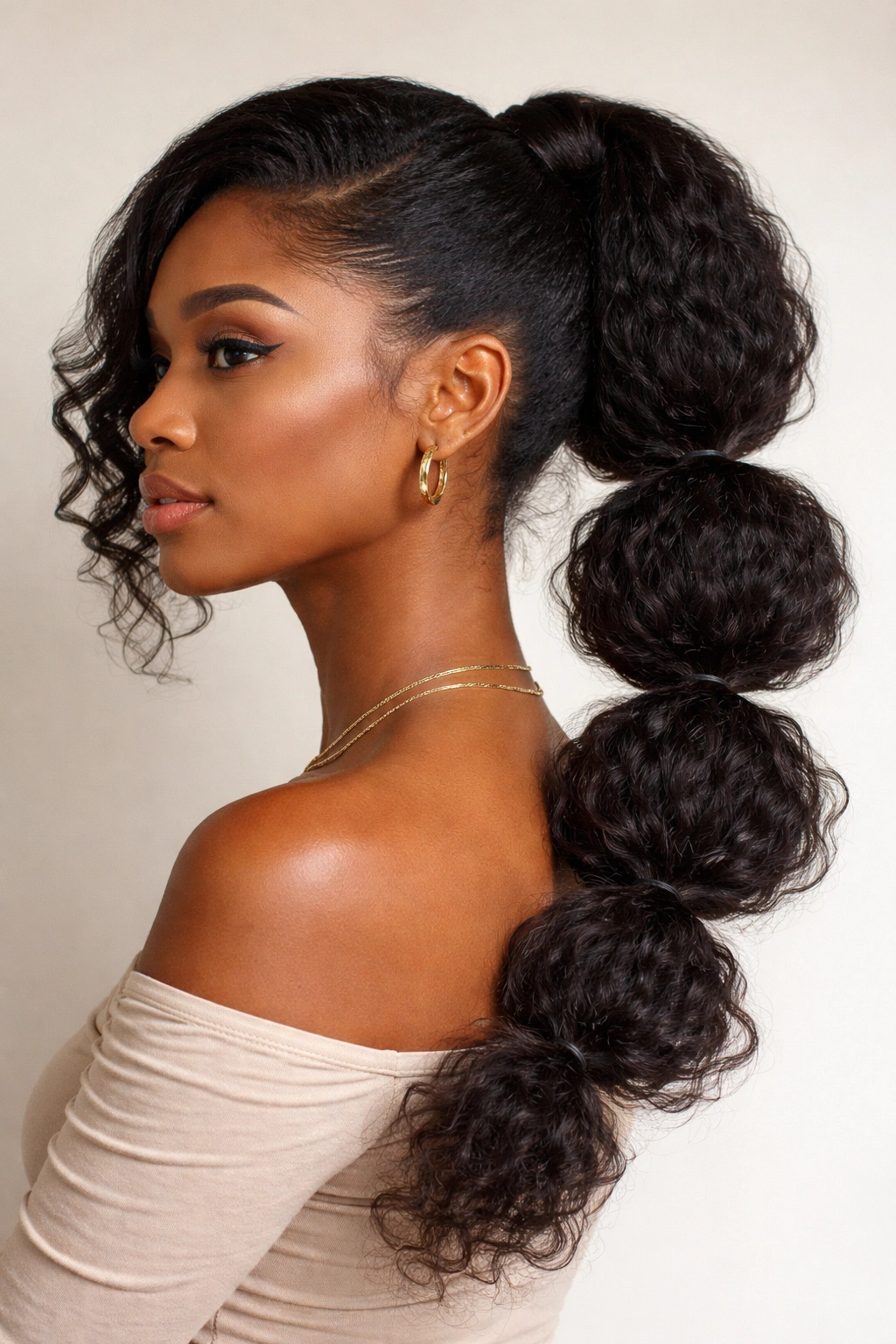
A side-swept bubble ponytail gives natural hair a little drama without asking for much extra work. The whole shape leans over one shoulder, so even simple sections look styled on purpose. It is especially nice when your hair has layers or a mix of curl patterns, because the side angle keeps everything from feeling too symmetrical.
The trick is to build the ponytail slightly above the ear instead of dead center at the back. That gives the bubbles a soft diagonal line, and that line does a lot of work. If the ends of your hair are frizzier than the roots, leave them alone. A little texture at the end of the chain makes the style feel lived in, not overhandled.
I like this one for evening plans, but it also works on an ordinary day when your hair needs to look done in under fifteen minutes. The side placement does the styling for you.
4. Half-Up Bubble Ponytail
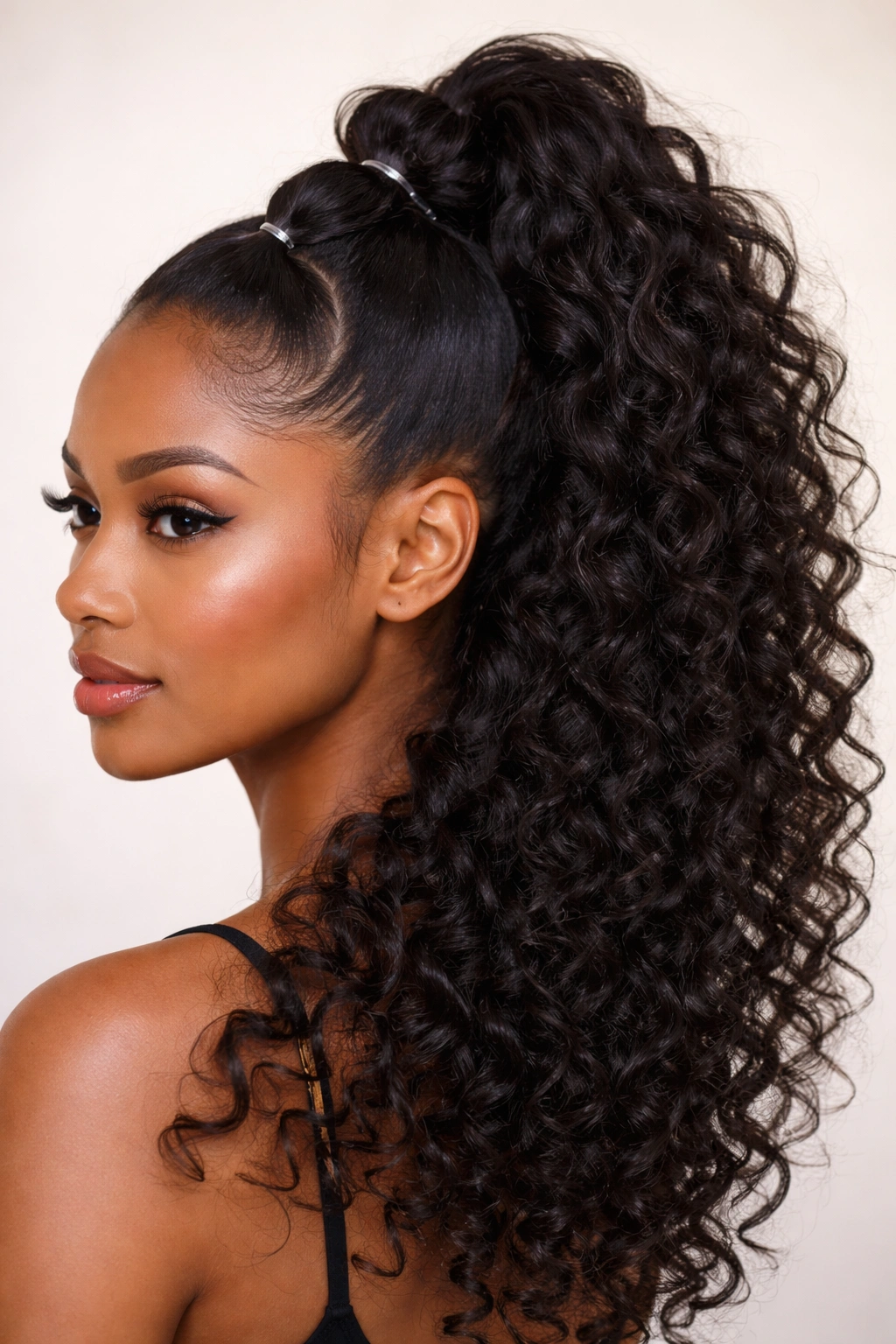
A half-up bubble ponytail is a nice middle ground when you want your natural hair up, but not all the way up. The top section gets the bubble treatment, and the rest of the hair stays loose, which keeps curls and coils visible instead of tucked away.
This style is especially good on wash-and-go hair or soft twist-outs. The loose bottom section balances the more structured top, so the whole look feels less formal. If your hair is thick, keep the top section smaller than you think. Too much hair up top can make the bubble chain sit heavy and flatten the loose curls underneath.
Use a clear elastic or a covered band for the first tie, then separate the top ponytail into two or three bubbles. After that, leave the rest alone. That easy contrast—smooth above, free below—is what makes the style work.
5. Two Bubble Ponytails
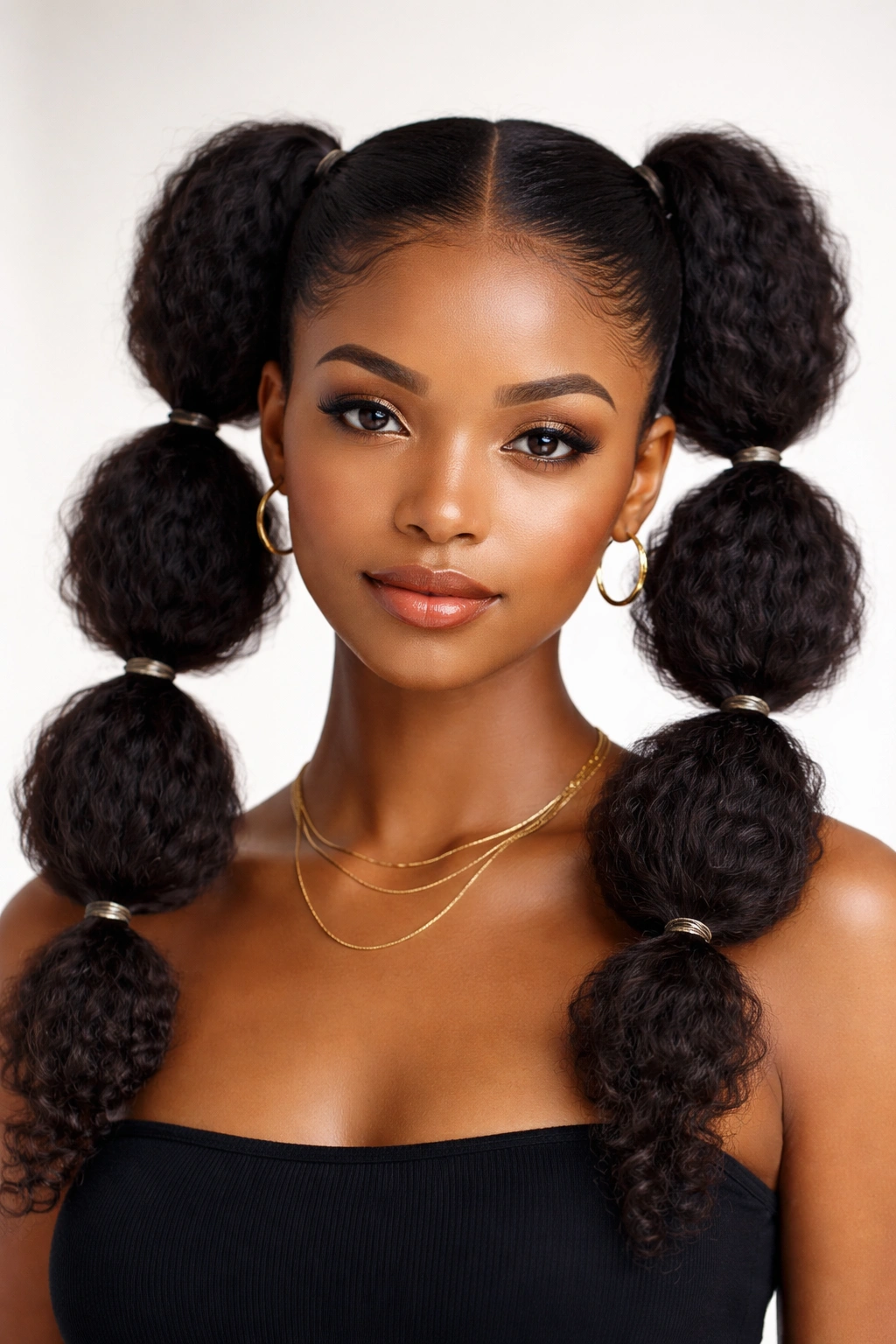
Two bubble ponytails give natural hair a playful, sporty feel that is hard to fake. Part the hair cleanly down the middle, create two low or mid-height ponytails, and build a few bubbles on each side. The result is youthful without looking childish, which is a nice line to walk.
The best part is how flexible this style is. Keep the bubbles small and neat for a sharper finish, or make them fuller and softer if you want more volume around the face. On dense hair, two ponytails also spread the weight out, so your scalp does not have to carry everything in one spot.
Best details to keep in mind
- A center part keeps the look balanced.
- Four to five elastics per side are usually enough.
- Wider spacing makes the bubbles rounder.
- A little edge control near the front helps the part stay clean.
If you want a style that moves easily but still has shape, this one is a solid choice.
6. Jumbo Bubble Ponytail
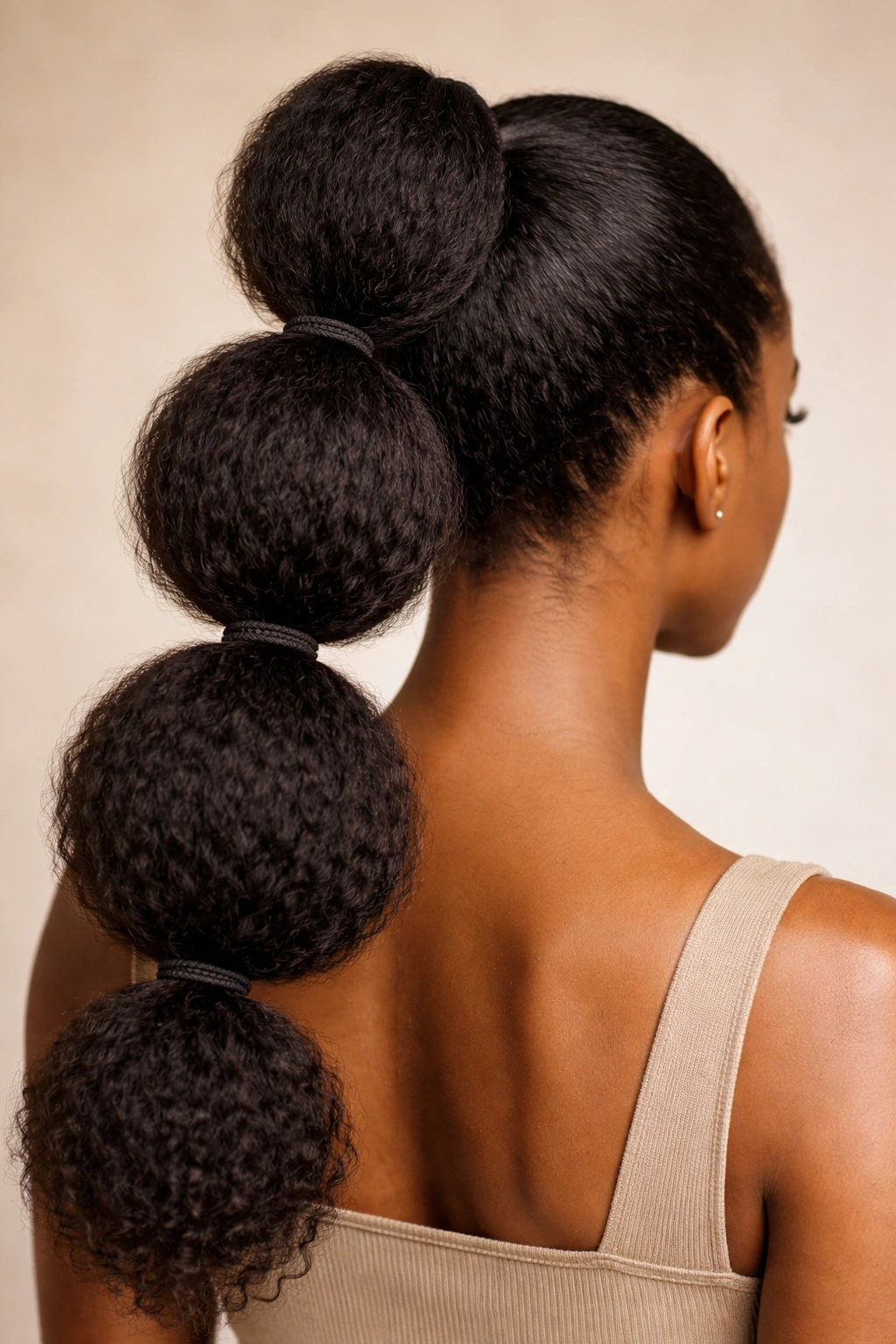
A jumbo bubble ponytail is bold in the best way. Instead of lots of small sections, you build three or four large bubbles and let each one look full and almost sculptural. On natural hair, that size works because the texture already has body, so the bubbles don’t need to be tiny to look interesting.
The style looks strongest when the ponytail starts high or mid-high and the gaps between elastics are generous—about 4 to 5 inches if your length allows it. That spacing gives each section room to puff out. If your hair is shorter, add a little braiding hair to the tail so the bubbles have enough length to read clearly. Without that extra length, the shape can collapse into one bulky knot.
I like jumbo bubbles for photos, dressy events, or any day you want the hair to be the loudest thing in the room. It has presence. No apology needed.
7. Petite Bubble Ponytail
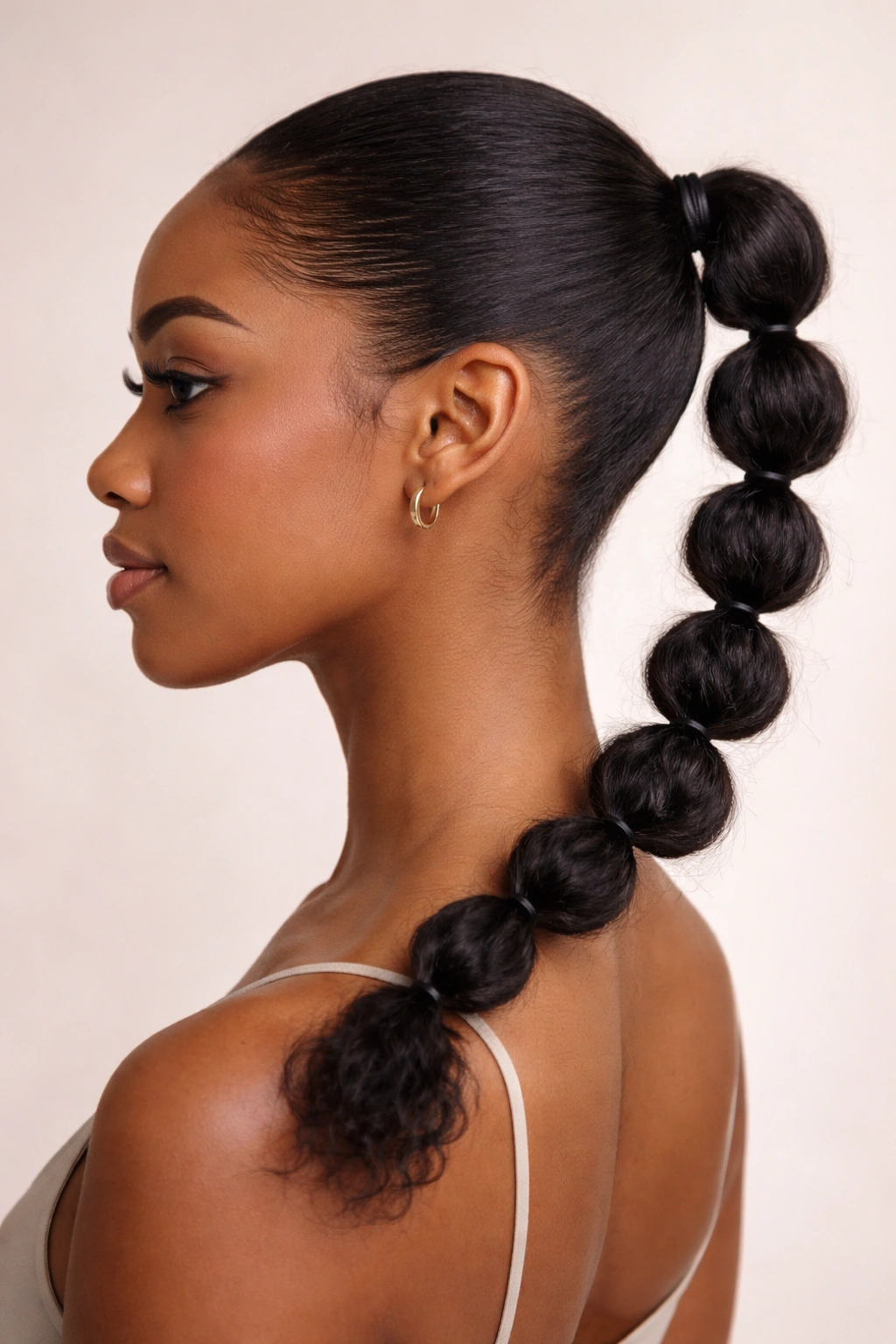
Petite bubble ponytails are the opposite of the jumbo look, and that is exactly why they work. Small, closely spaced bubbles bring out detail in natural hair, especially when the strands are soft, fine, or not very long. The style feels neat and almost architectural.
Use smaller gaps—about 1 to 1.5 inches between elastics—and keep the ponytail base smooth so the tiny bubbles stand out. A tiny puff can disappear if the base is too busy. That is the main thing people miss. With small bubbles, the line of the ponytail matters more than the volume.
This style also pairs well with shorter natural hair because you do not need a long tail to make it read as a bubble ponytail. A few crisp sections can carry the whole look. If you want something polished but not oversized, petite bubbles are a smart move.
8. Braided Base Bubble Ponytail
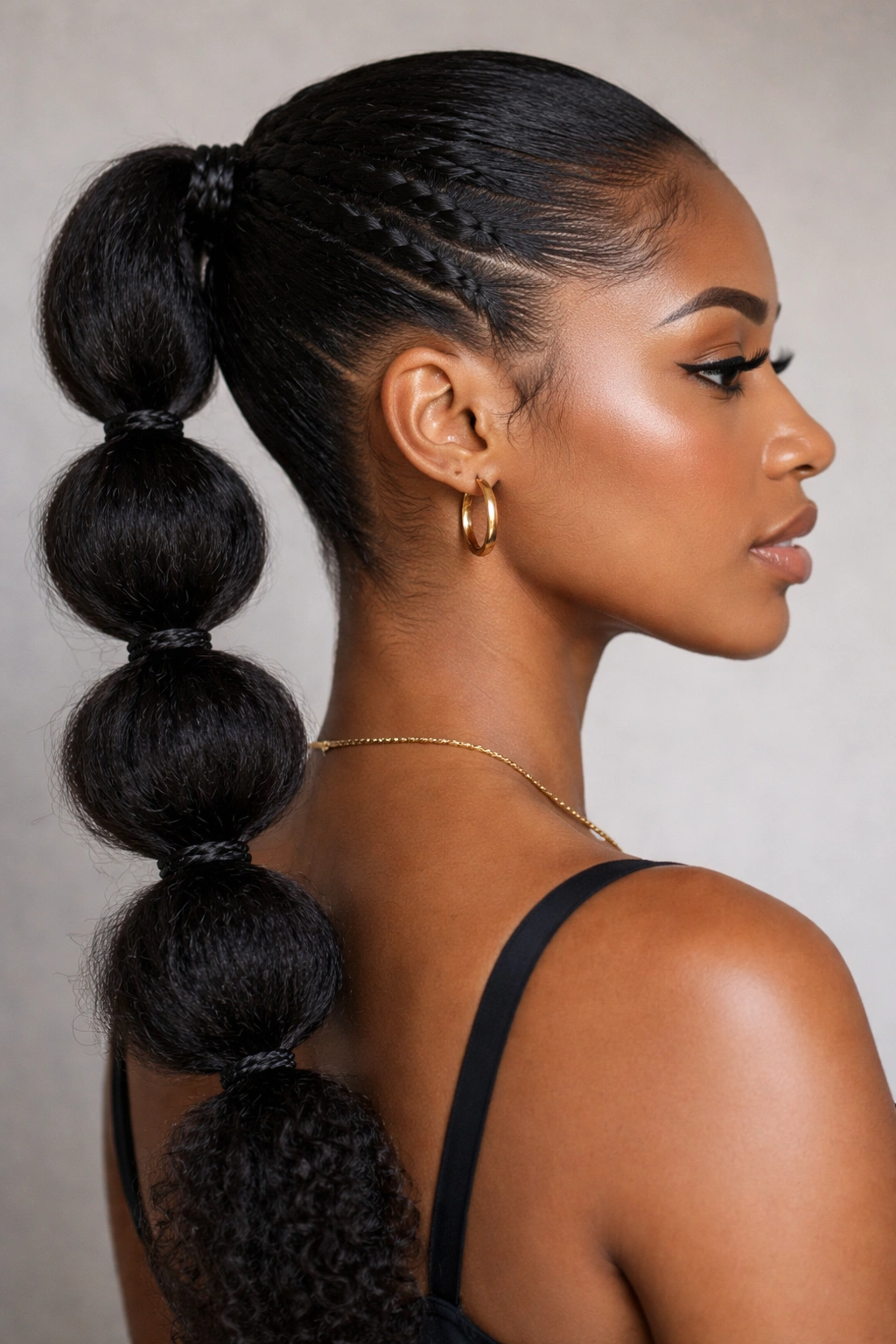
A braided base gives a bubble ponytail a stronger start. Instead of tying the ponytail right away, braid the first few inches of hair before adding the elastics. That small change adds grip, and on natural hair, grip is everything when the roots are soft or freshly moisturized.
Why the braid helps
The braid keeps the base from slipping while also creating a cleaner line between the scalp and the first bubble. It works well if your hair is layered, very soft, or prone to puffing up at the crown. Once the braid is in place, the rest of the ponytail can be bolder because the beginning already looks controlled.
- Braid only 2 to 4 inches before switching to bubbles.
- Keep the braid snug, not tiny and tight.
- Use a lightweight gel on the roots if flyaways are stubborn.
- Leave the bubbles loose enough to show the braid underneath.
I reach for this when I want a ponytail that can last through a full day without losing its shape by lunchtime.
9. Cornrow-Feed-In Bubble Ponytail
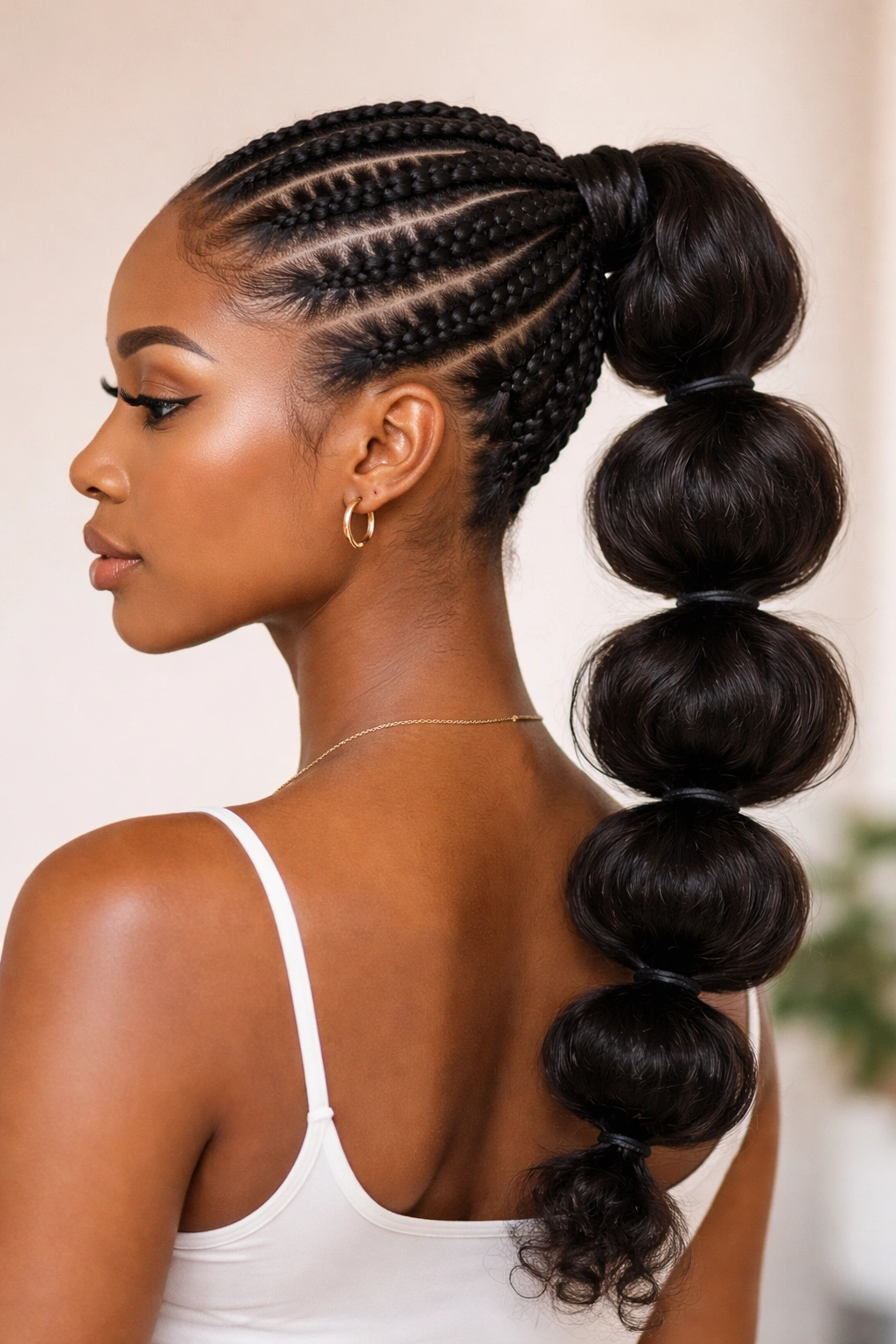
A cornrow-feed-in bubble ponytail is one of those styles that looks polished before the bubbles even start. The cornrows feed back into a ponytail, so the scalp section looks clean, and the tail carries all the playful volume. That contrast is the whole point.
This works especially well for thicker natural hair because the cornrows help control density near the front and sides. If your hair is long enough, the feed-in sections can be simple straight backs. If not, curved cornrows can still make the shape look intentional. Once the ponytail is secured, add bubbles down the length as usual. The braids give the base a tighter hold, which matters if you’re wearing the style for several hours.
It is a slightly more involved set, sure. But the payoff is a ponytail that looks finished from every angle, not just the front.
10. Bubble Ponytail with Curly Ends
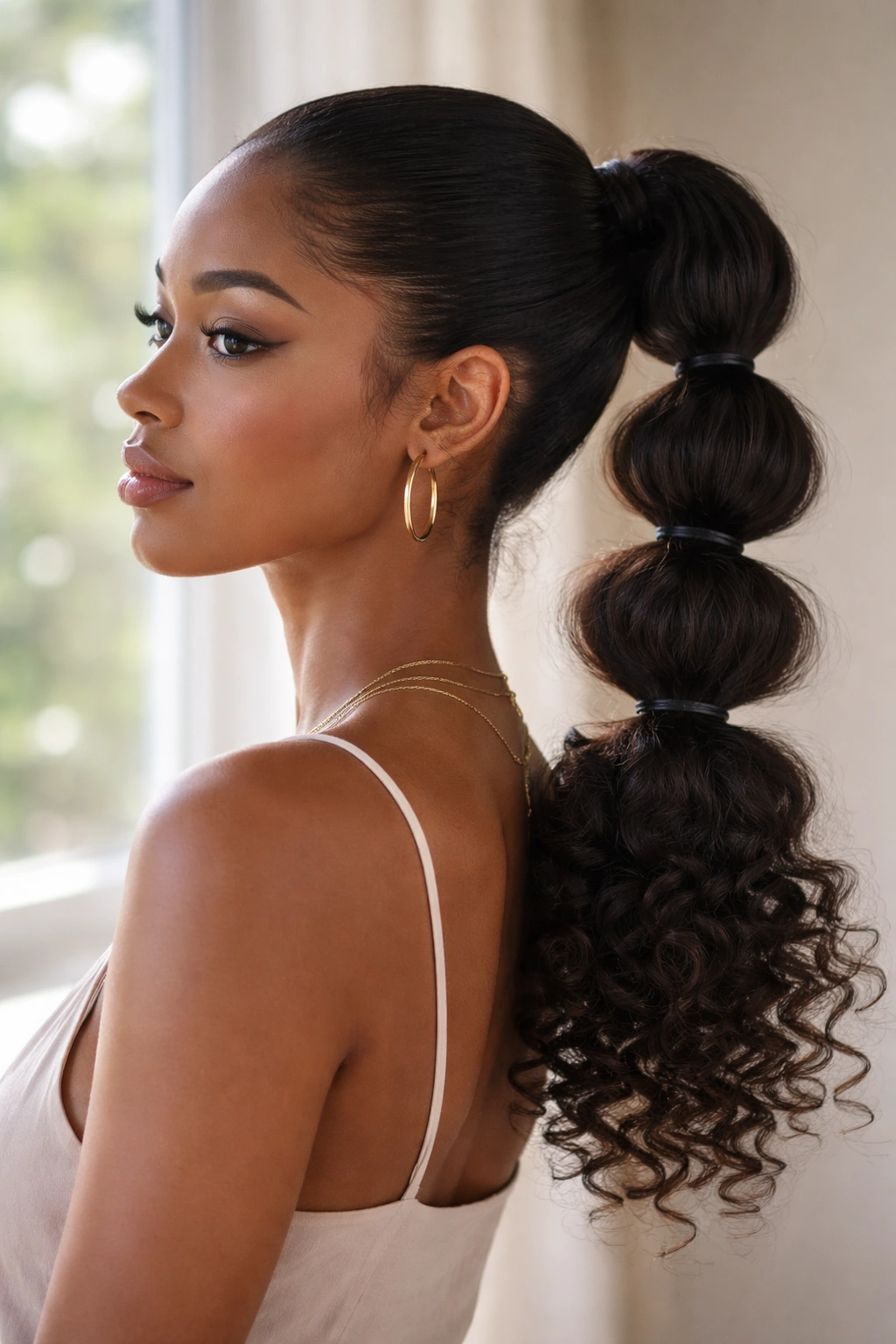
Leaving curly ends out of a bubble ponytail changes the whole mood. The bubbles do the structured work through the length, then the natural texture at the end softens everything. It feels a little romantic, a little free, and not nearly as rigid as a fully tucked tail.
The shape shift
The last section should be left loose enough to curl on its own, or lightly twisted so the ends spring up with definition. If the ends are dry, a pea-sized bit of cream or leave-in helps them clump instead of frizzing apart. Don’t overload them. Heavy product steals bounce.
This version is good when you want the ponytail to show off both control and texture. The bubbles say “styled,” and the ends say “natural hair, still doing its thing.” That balance is what makes it feel fresh.
11. Twisted Bubble Ponytail
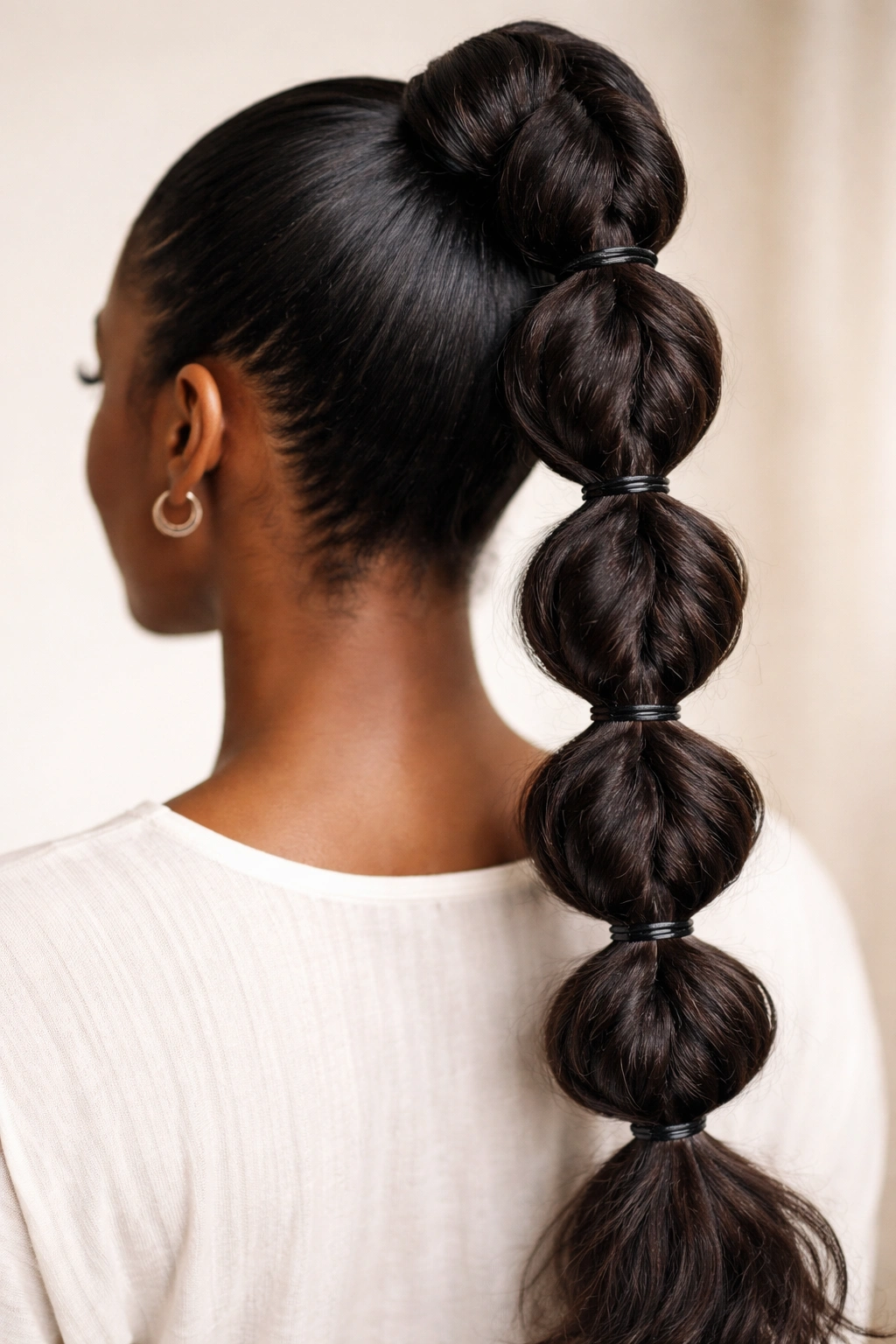
Twists between the elastics give bubble ponytails a softer, rope-like texture. Instead of just puffing each section, twist the hair in each interval before securing the next tie. The result is part twist-out, part bubble chain, and it looks especially nice on hair with a little stretch already in it.
This style is useful when you want movement without a lot of looseness. The twists create a bit of structure, so the ponytail holds its shape even if the bubbles themselves are not huge. On natural hair, that can be a relief. Thick coils sometimes swallow a regular bubble chain, but twists keep the sections defined.
If your hair is layered, the twisted sections also hide uneven ends better than a plain ponytail would. That little bit of camouflage goes a long way when you want the style to look neat from the back.
12. Ribbon-Wrapped Bubble Ponytail
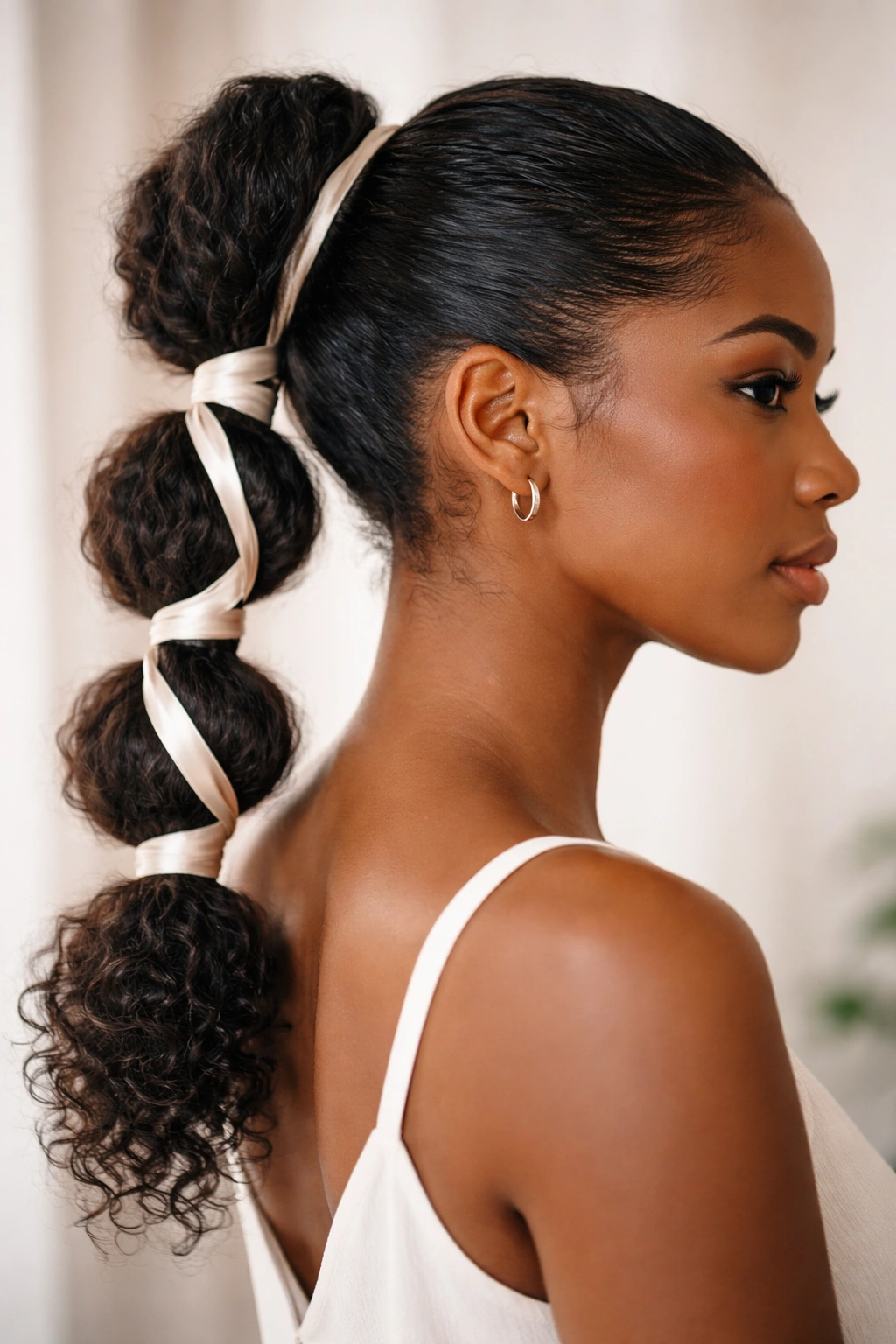
A ribbon-wrapped bubble ponytail leans soft and pretty without becoming fussy. Thread a satin or grosgrain ribbon around the first elastic, then wrap it lightly around a few of the section ties as you go. The ribbon breaks up the hair in a way that feels deliberate, almost like the ponytail has its own outfit.
The best part is that this works on all kinds of natural hair lengths. Shorter hair gets a little visual lift from the ribbon, and longer hair gets a more finished look. Use a ribbon that is wide enough to show, but not so wide that it swallows the bubbles. About 1/2 to 1 inch is plenty for most styles.
Keep the color choice simple if the hair already has a lot going on. A black ribbon looks sharp. A cream one feels softer. A bold color can be fun, but let the hair texture stay the star.
13. Bubble Ponytail with Gold Cuffs
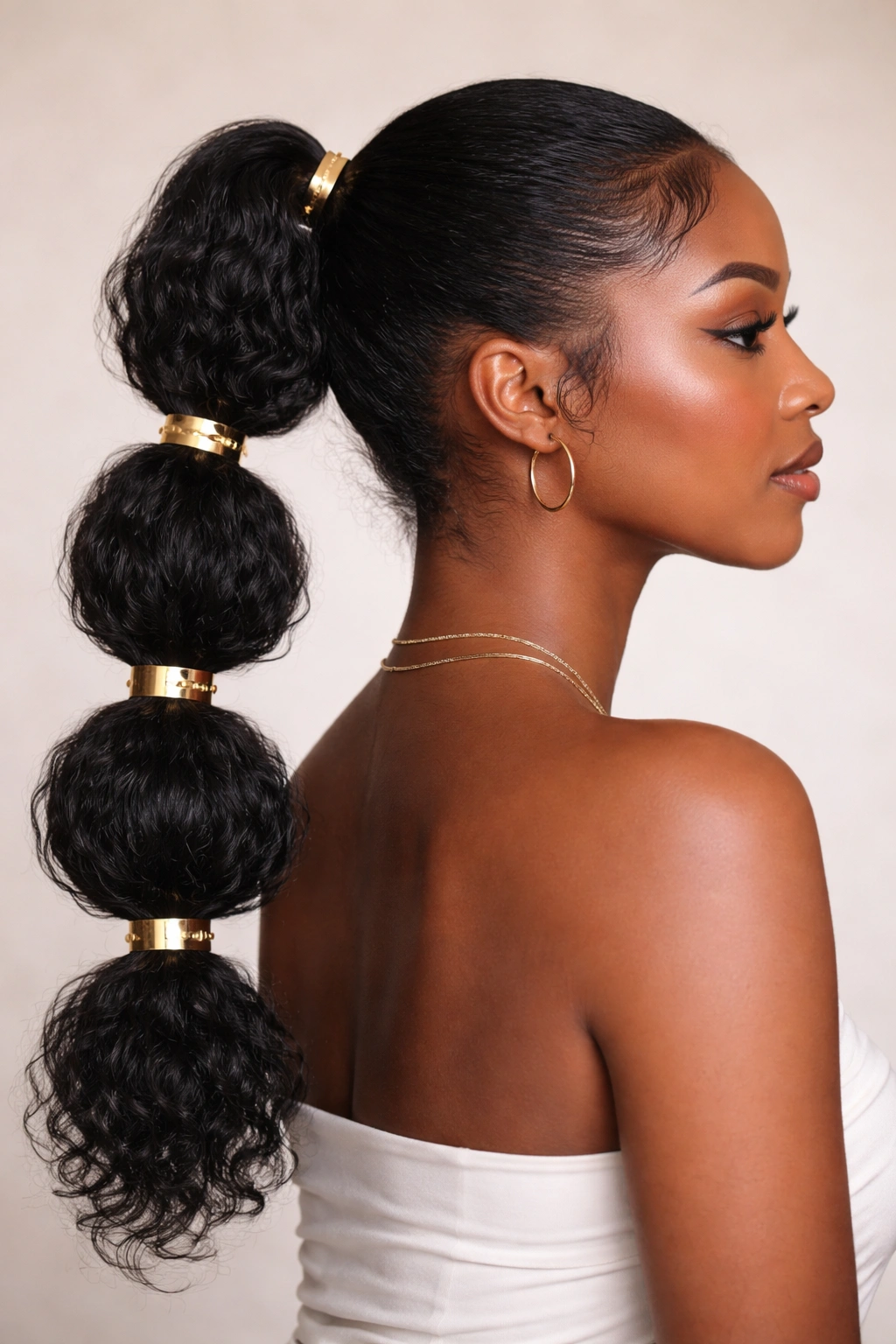
Gold cuffs change a bubble ponytail from casual to dressed up in seconds. Place one cuff at the base of each bubble, or just at a few key points if you want the style to stay cleaner. The metal catches the eye, and on natural hair, that shine looks especially good against a textured ponytail.
Use this style when you want accessories to do some of the talking. You don’t need oversized earrings or a lot of extra decoration if the cuffs are already doing their job. A mid-height ponytail with three or four gold cuffs can look finished all by itself.
- Space the cuffs evenly so the ponytail doesn’t feel cluttered.
- Keep the bubbles full enough that the cuffs have something to frame.
- Match the metal tone to your jewelry if you like a coordinated look.
- Skip cuffs near the scalp if your hairline is sensitive.
This one has a little more attitude, and that is the fun of it.
14. Bubble Ponytail on Blown-Out Natural Hair
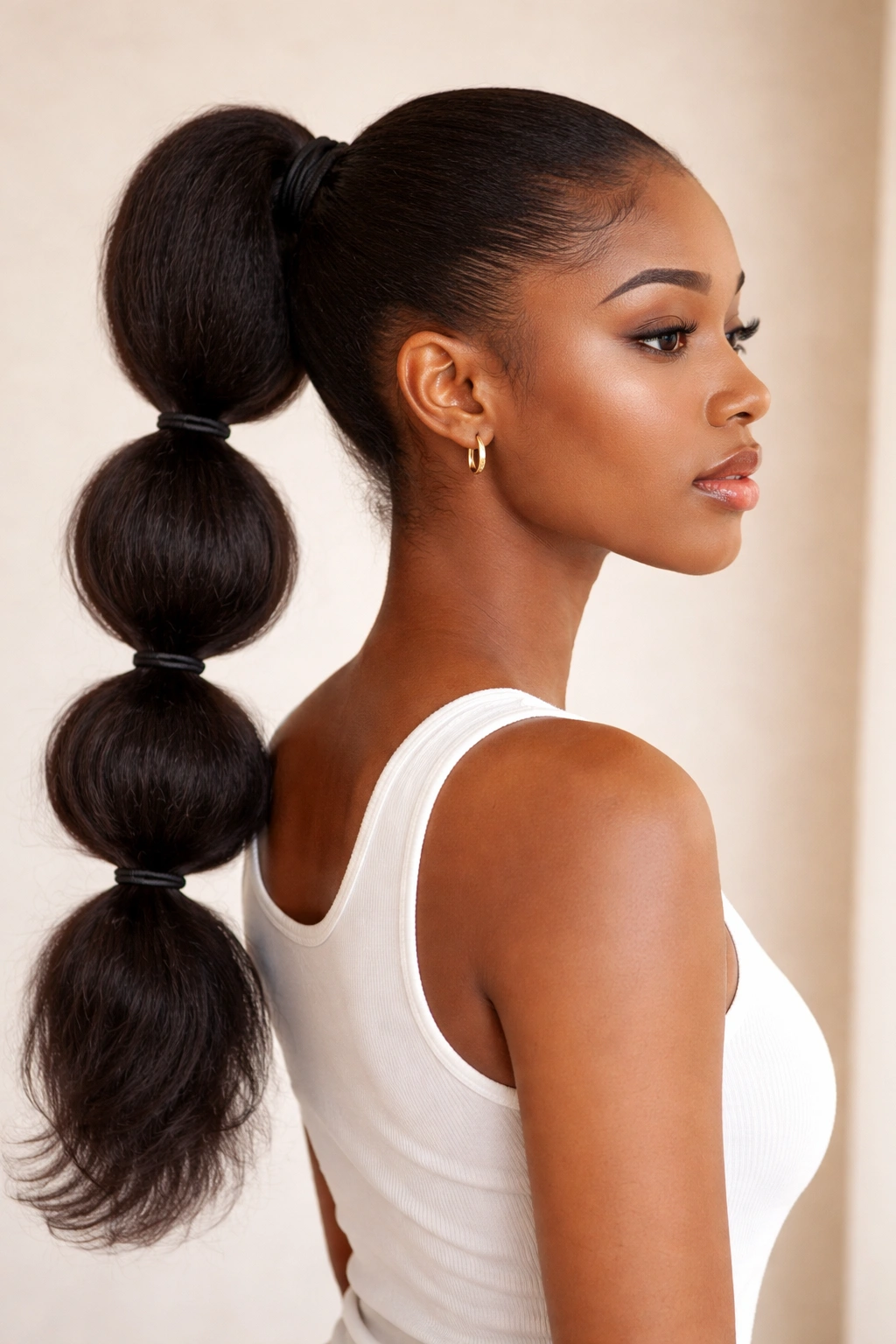
Blown-out natural hair gives bubble ponytails a long, smooth canvas. The bubbles look more uniform because the hair has already been stretched, so each section can sit neatly without fighting shrinkage. If you like a clean shape, this is the easiest starting point.
A light heatless blowout or a careful heat blowout can both work, as long as the hair is soft enough to move but not so limp that the bubbles lose their body. Secure the ponytail, then build the bubbles with medium spacing. You want enough room for each section to puff out, but not so much room that the tail becomes flat in between.
This is one of my favorite versions for natural hair because it lets the style look precise. You still see texture, but the shape gets a little more polish. That combination is hard to beat.
15. Bubble Ponytail on a Twist-Out
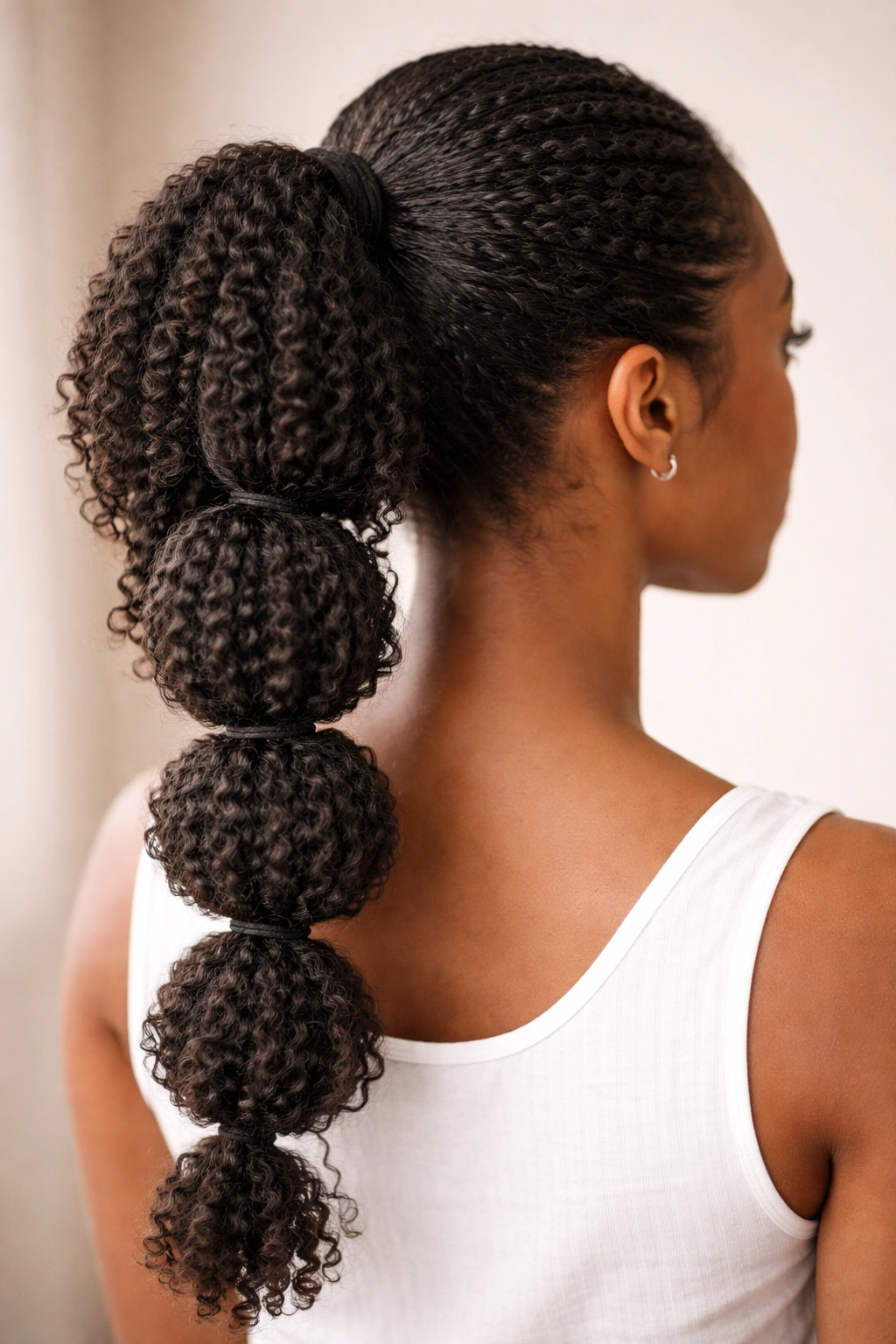
A twist-out bubble ponytail keeps the definition from the twist-out while giving the hair a cleaner shape at the back. The texture in the tail looks soft and airy, so the bubbles end up more plush than sharp. That is not a flaw. It is the whole reason to wear it.
The roots can stay slightly stretched or a little fluffy, depending on how much volume you want. If the twist-out is fresh, use a light touch with your fingers so you don’t separate the curls too much. If it is older and a bit stretched already, the bubbles may look fuller and less defined. Either way, the style reads relaxed and pretty.
I like this version for in-between days, when a full wash-and-go feels like too much work but the hair still has enough definition to show off. It takes the twist-out one step further without smothering it.
16. Bubble Ponytail on a Braid-Out
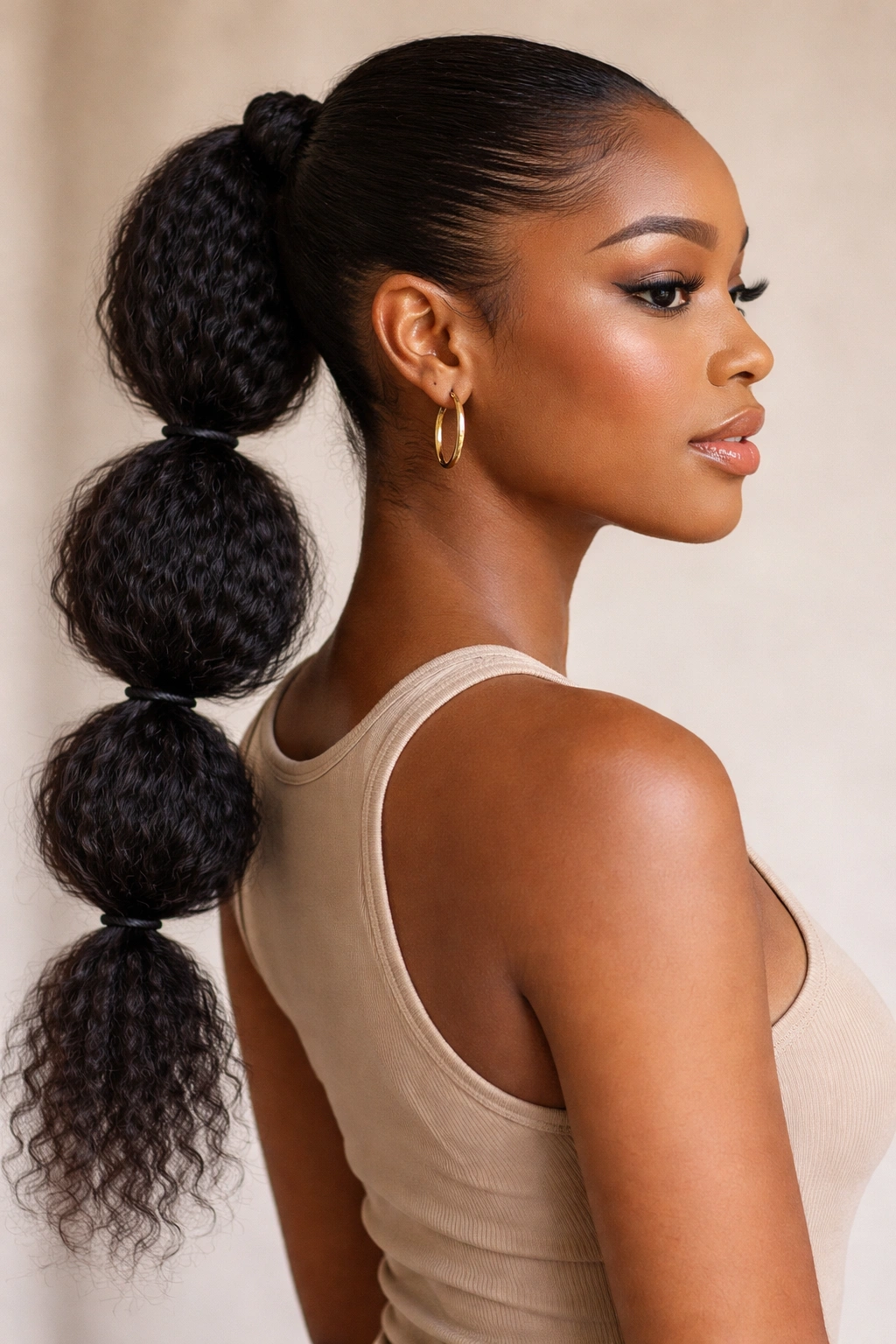
A braid-out bubble ponytail has a slightly different texture from a twist-out. The hair tends to look a touch more elongated, with straighter length between the bends, and that gives the bubbles a longer, leaner feel. If you want the chain to look elegant without going sleek, this is a strong option.
Because braid-outs often have more hang, the ponytail sections can be spaced a little farther apart. The bubbles will still hold shape, but they won’t look too puffy unless you tease them gently with your fingers. That gives you room to choose the mood. Keep them soft for a relaxed finish or fluff them up for more drama.
This style is good when you want to show off the braid-out pattern and still keep hair off your neck. The texture stays visible. The shape stays controlled. Nice balance.
17. Center-Part Bubble Ponytail
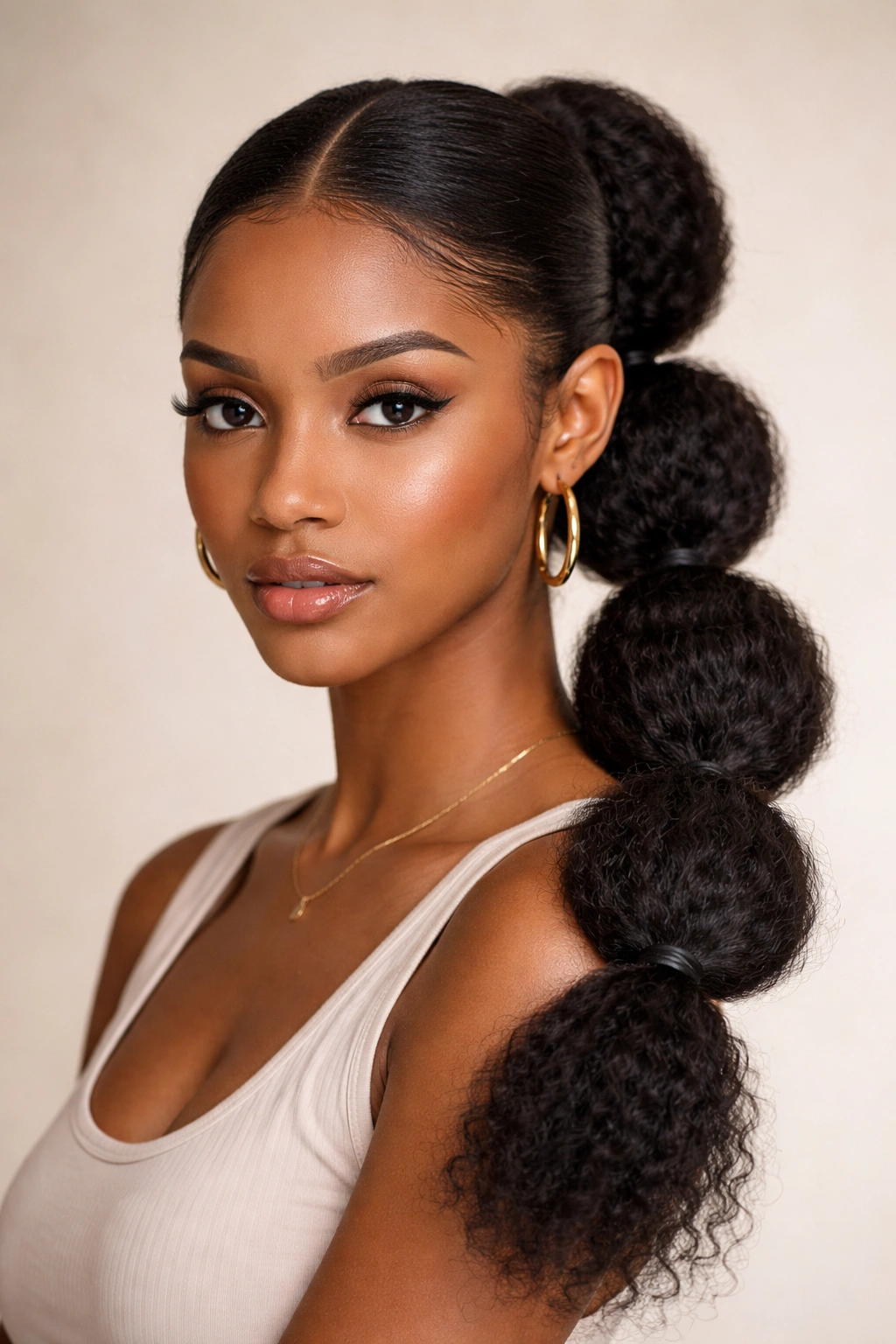
A center-part bubble ponytail looks clean without feeling stiff. The line down the middle gives the style symmetry, and symmetry has a way of making bubbles look more deliberate. On natural hair, a center part can also help distribute volume evenly so one side doesn’t dominate the other.
The part works best when it is straight and not overly carved. Use the tail of a comb and keep the line visible all the way back to the ponytail base. After that, smooth each side back with your hands or a brush, depending on how sleek you want the finish. The bubbles can be large or small here; the part does most of the visual work.
This is a good choice if you like a neat, centered look that still leaves room for texture. It is simple, but not boring. That is a rare thing.
18. Deep Side-Part Bubble Ponytail
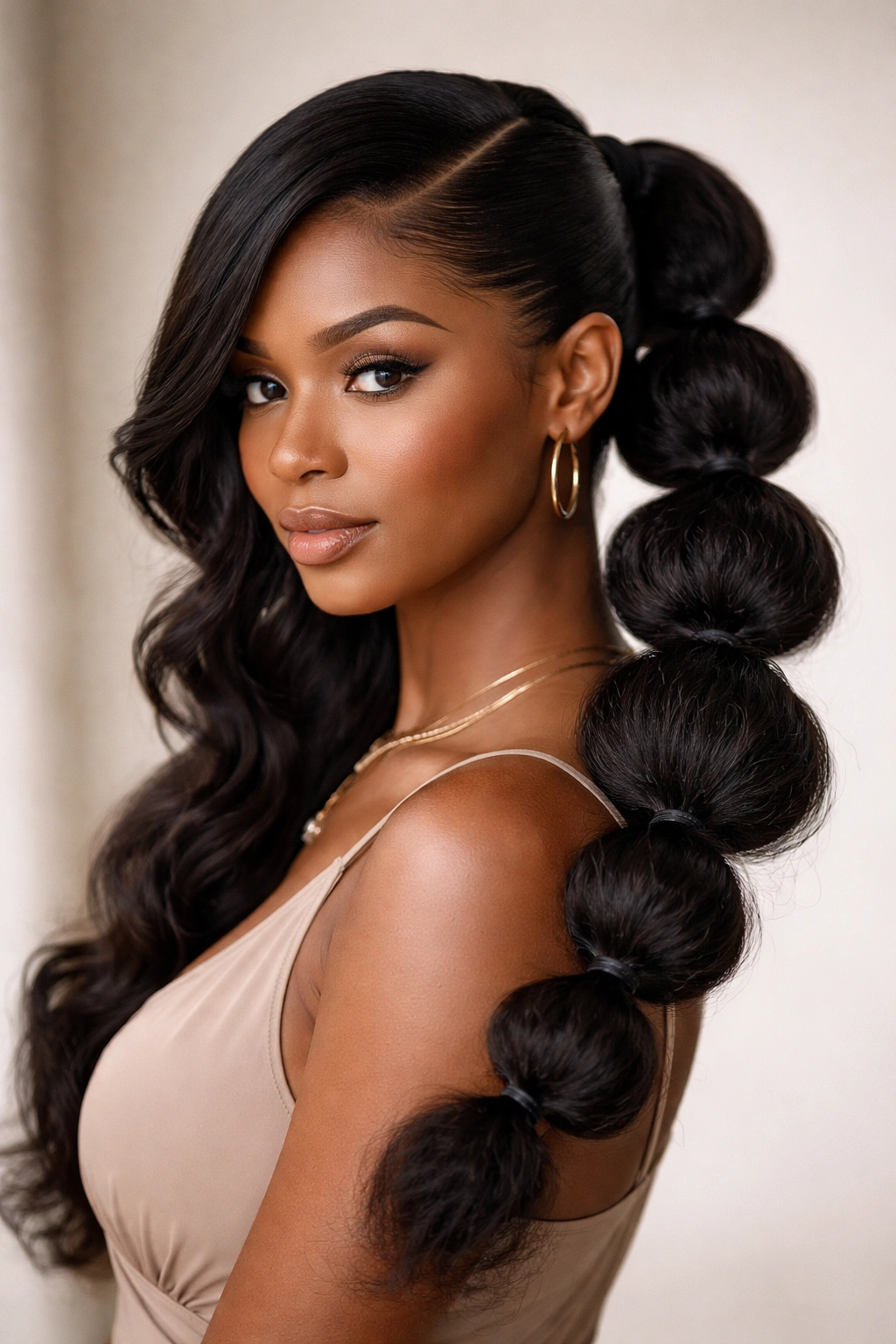
A deep side part changes the whole shape of a bubble ponytail. Instead of splitting the face evenly, it lets one side fall with a little more weight, which can be flattering if you like a soft sweep around the forehead. The ponytail itself can sit low or mid-height, but the part is what gives the style its edge.
Where the drama comes from
The part should be deep enough that you can actually see the asymmetry. A shallow side part barely registers. Once the hair is brushed over, keep the bubbles slightly angled so they follow the line of the part instead of fighting it. That small detail makes the style look cleaner.
This one looks especially good on thick natural hair because the extra volume helps the side sweep feel intentional rather than accidental. If your roots are a little fuzzy, leave them. The part can handle a bit of softness.
19. Mohawk Bubble Ponytail
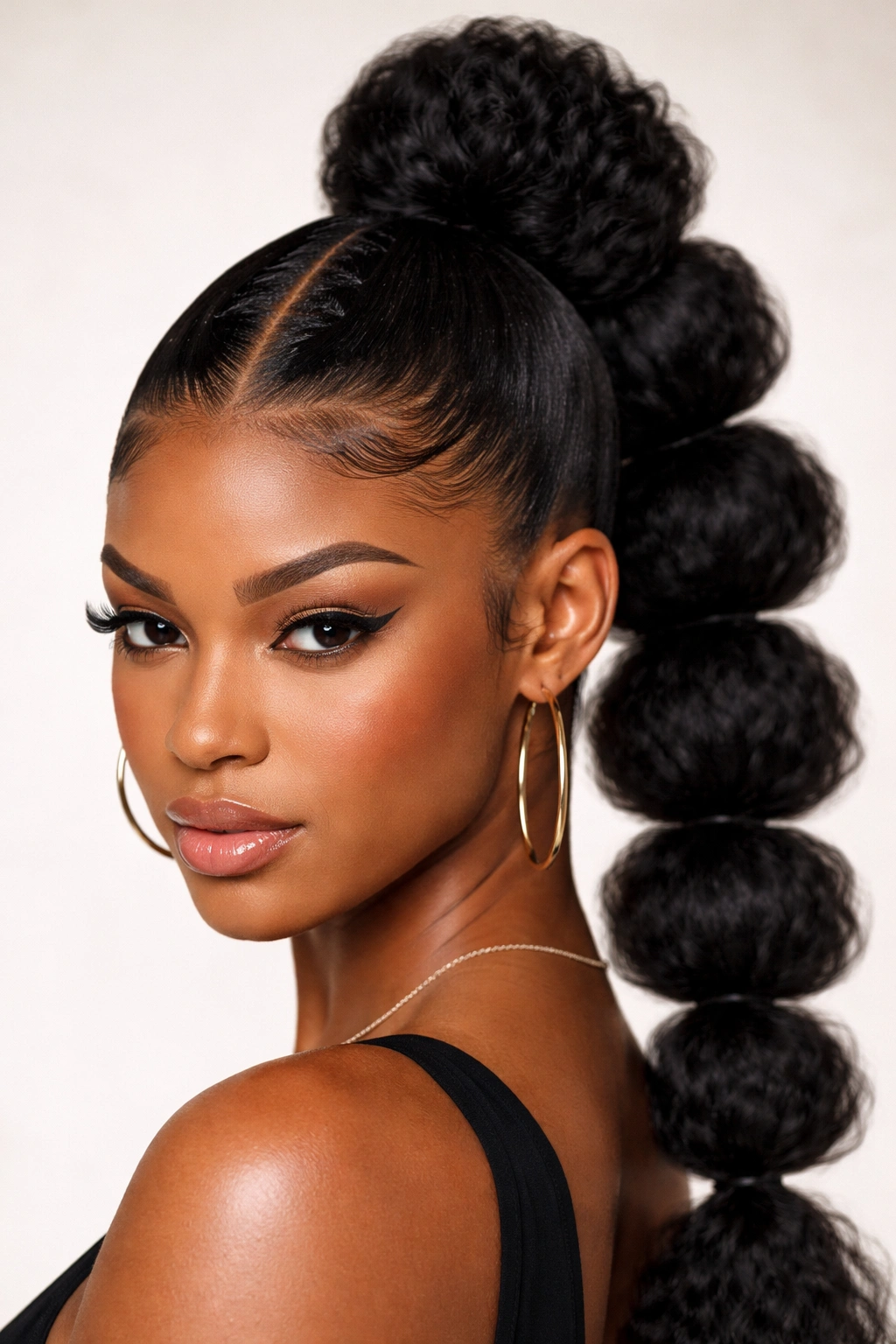
A mohawk bubble ponytail gives natural hair a sharp center line and a lot of attitude. The sides are smoothed down, the center section is lifted, and the bubbles run straight down the middle like a runway. It sounds bold because it is.
The style depends on clean sectioning. You can braid or slick the sides back, then gather the middle strip into the ponytail. From there, build the bubbles with equal spacing and keep the sections rounded. If the center strip is too narrow, the whole style can look thin. If it is too wide, the mohawk effect disappears. That middle balance matters.
I like this when I want the hair to feel structured and a little dramatic. It has shape from every angle, and the silhouette is strong even in a simple outfit.
20. High Bubble Pigtails
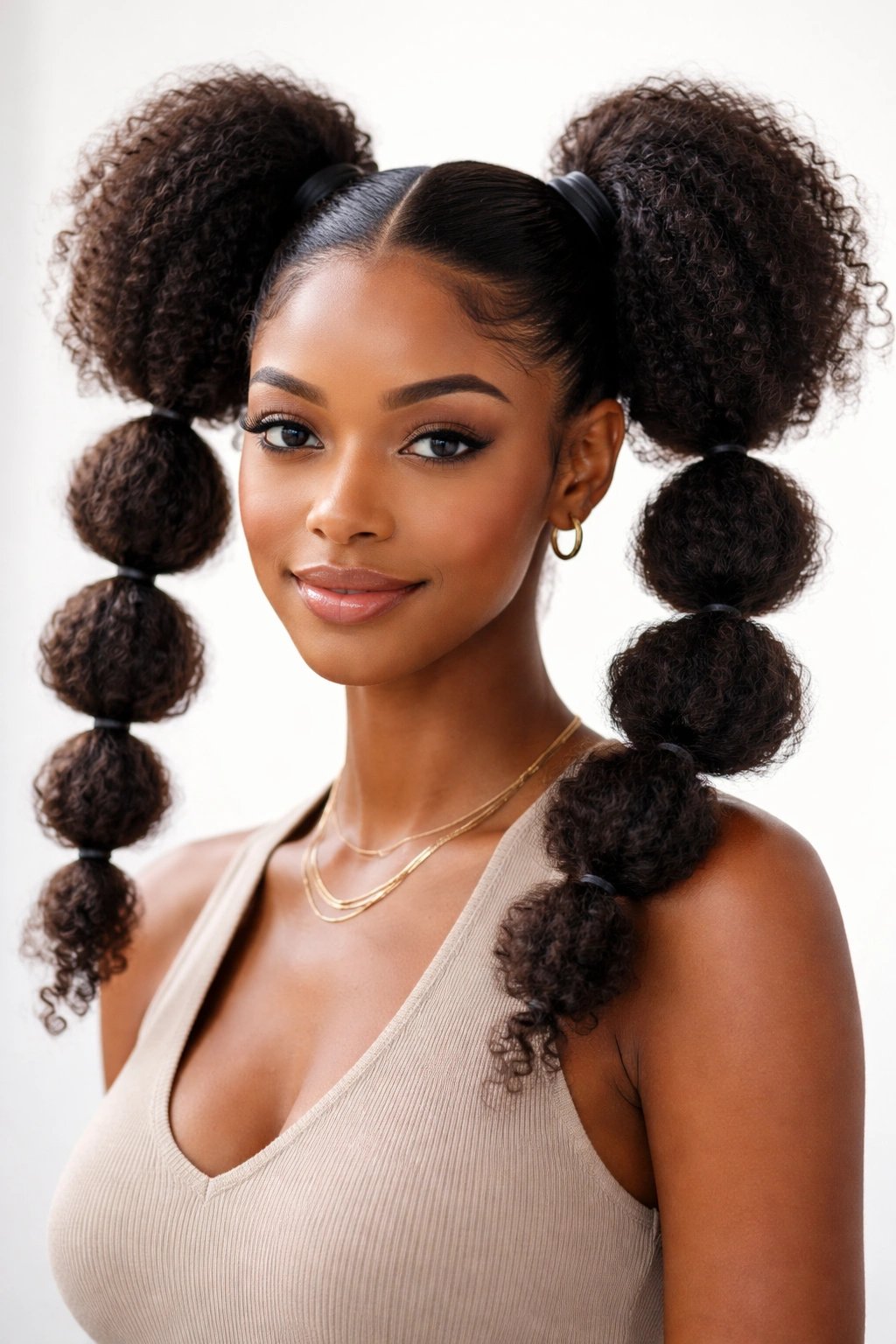
High bubble pigtails are playful in a way low pigtails are not. The height lifts the face, the bubbles add movement, and the whole style feels a little more energetic. On natural hair, this version is a good way to keep the look fun while still giving the hair some control.
Because the pigtails sit higher, the sections can fan out more easily. That makes the bubbles look round and buoyant instead of flat. If your hair is thick, keep the two ponytails slightly smaller so the weight stays manageable. If it is medium density, a few larger bubbles per side can be enough.
This is a style that can lean sporty or cute depending on how polished the base is. Clean part, smooth roots, soft bubbles. Simple formula.
21. Bubble Ponytail with Braided Front Pieces
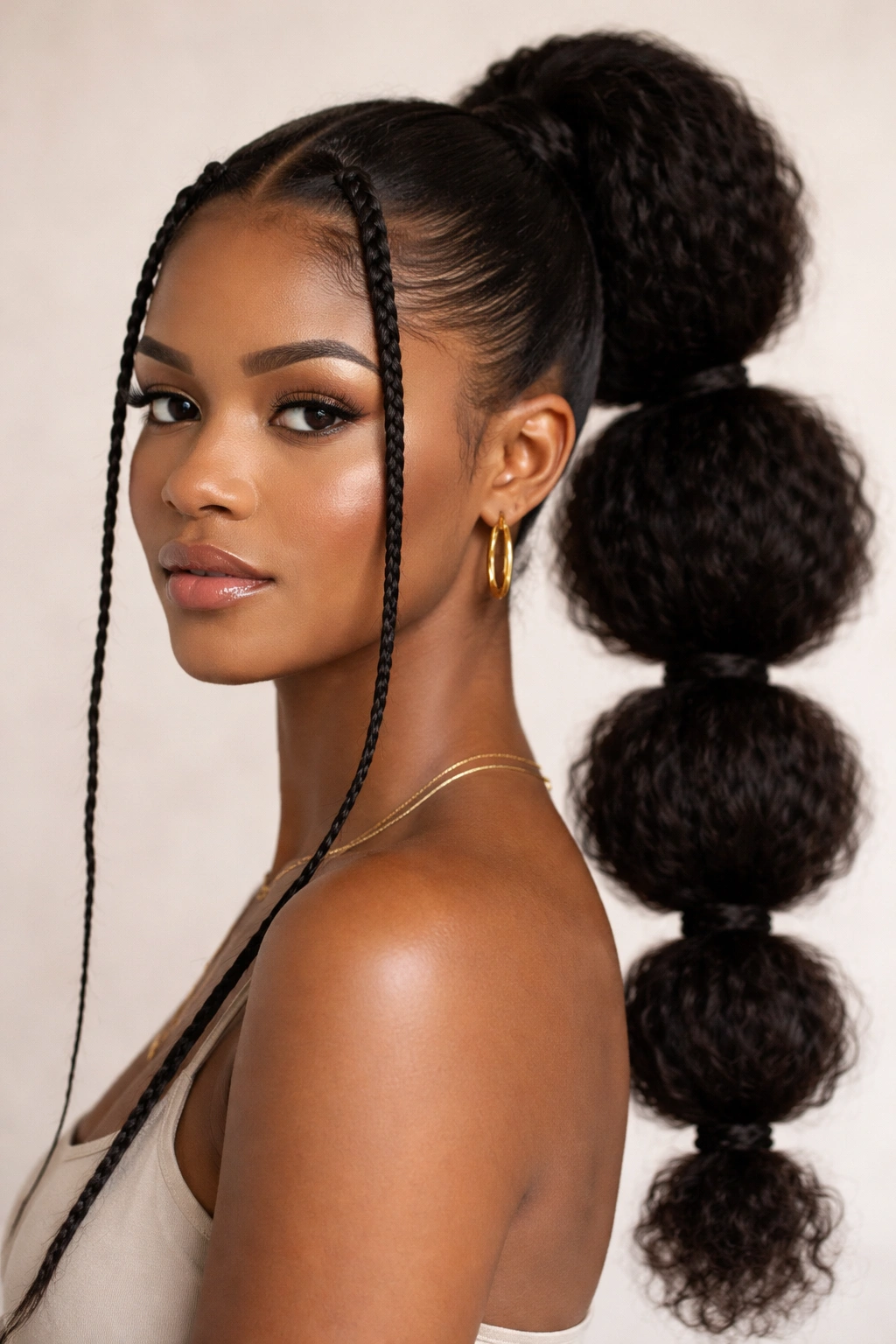
Braided front pieces frame the face and make a bubble ponytail feel more finished. Leave out two slim braids at the front, then pull the rest of the hair into a ponytail and build your bubbles behind them. The braids soften the hairline and give the style more depth without needing extra accessories.
Small detail, big payoff
The braids should be slim enough to sit beside the face without stealing the whole look. Thick front braids can crowd the style. Once they are in place, the ponytail can stay sleek or textured—both work. This is one of those touches that makes the hairstyle feel styled from the front and back.
- Use the braids to hide a part that is not perfectly straight.
- Finish the braid ends with small clear elastics.
- Keep the bubbles slightly fuller so they balance the slim front pieces.
- A touch of oil on the braids keeps them from drying out too fast.
It is a small change, but it changes the whole mood.
22. Bubble Ponytail for Short Natural Hair
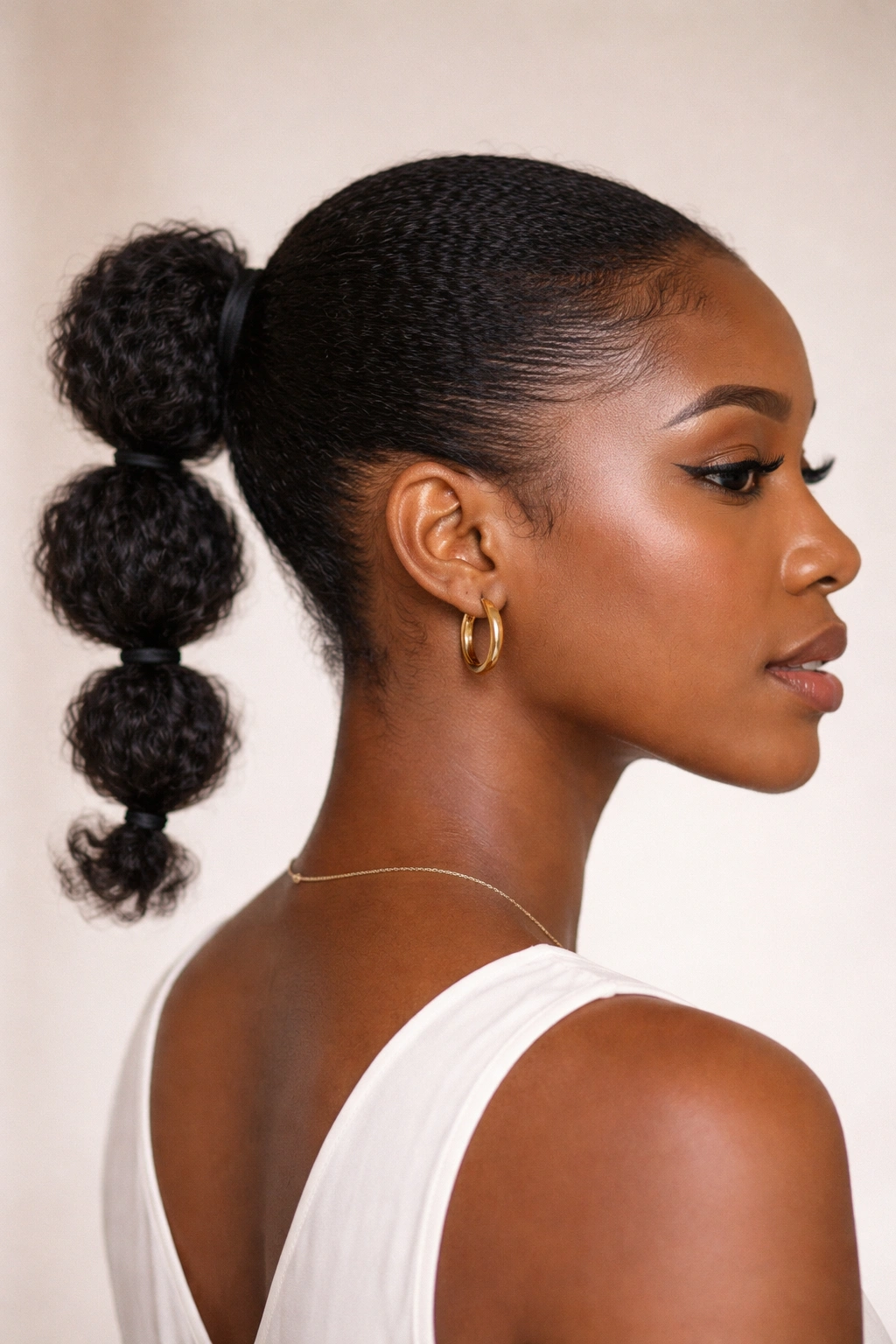
Short natural hair can absolutely wear bubble ponytails, and the trick is to stop expecting one long chain. On shorter lengths, you may only get two or three clean bubbles, and that is enough. The style becomes compact and cute instead of long and dramatic.
If the hair barely reaches the shoulders, build the ponytail low and keep the elastic gaps tight. You can also add a small amount of braiding hair at the base if you want a longer tail, but that should feel like a helper, not a disguise. The hair still needs to look like your hair. That is the point.
This version is nice because it uses shape, not length, to do the work. Short hair often looks best when the styling stays simple and intentional. A neat base, a few bubbles, and you are done.
23. Bubble Ponytail for Long Natural Hair
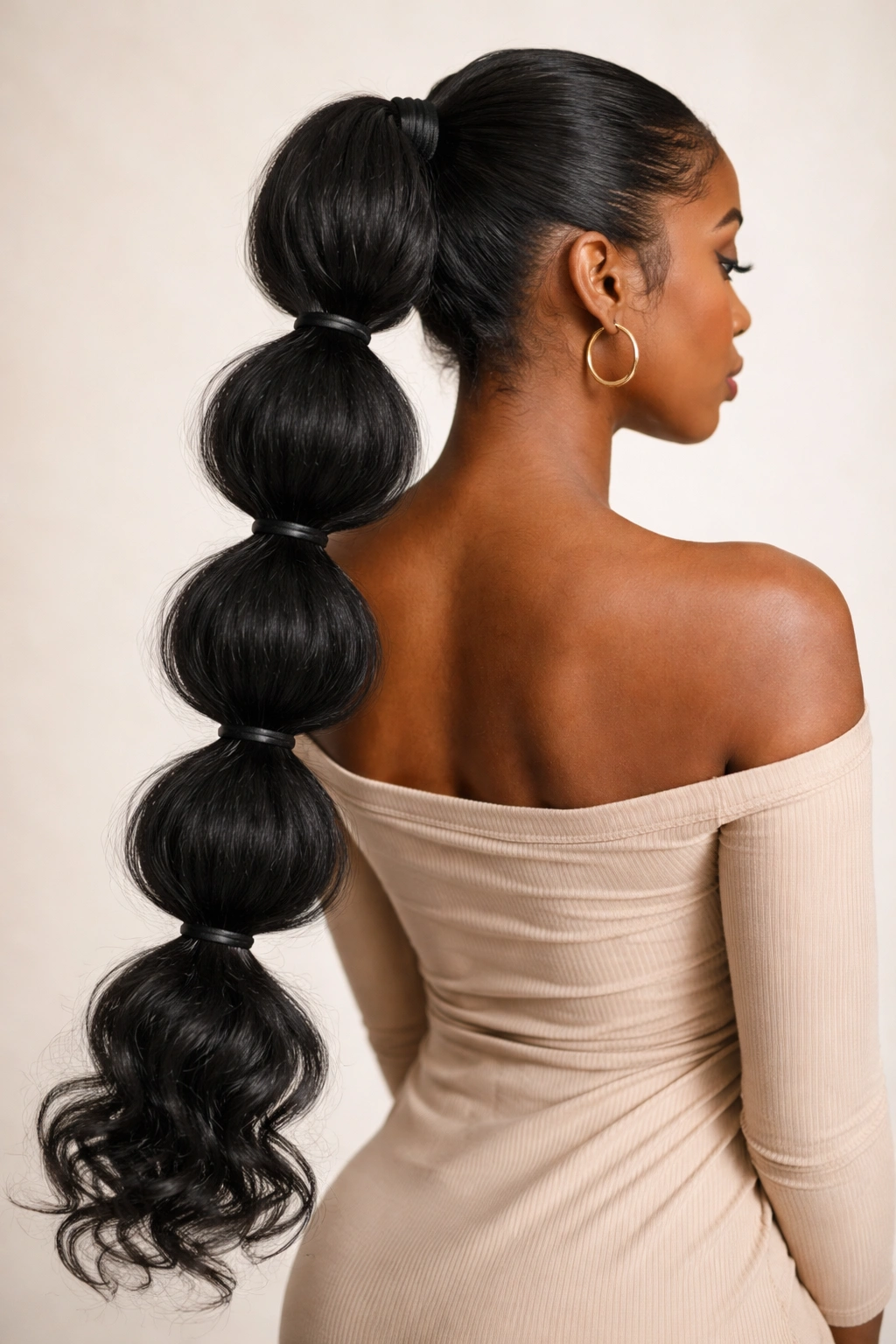
Long natural hair gives bubble ponytails a lot more room to move, and that means the style can look dramatic without extra effort. The bubbles can be spaced farther apart, the tail can hang lower, and the sections can be wider, which makes the whole thing feel lush.
The main challenge is weight. Long hair pulls more, so the first tie has to be secure but not too tight. After that, each bubble should be fluffed with care. If you tug too hard, the tail starts looking stretched out instead of full. Better to shape each section slowly and stop once it looks balanced.
This is one of those styles that does not need much help from accessories. The length already gives you a lot. Keep the base neat and let the hair do the talking.
24. Bubble Ponytail for 4C Coils
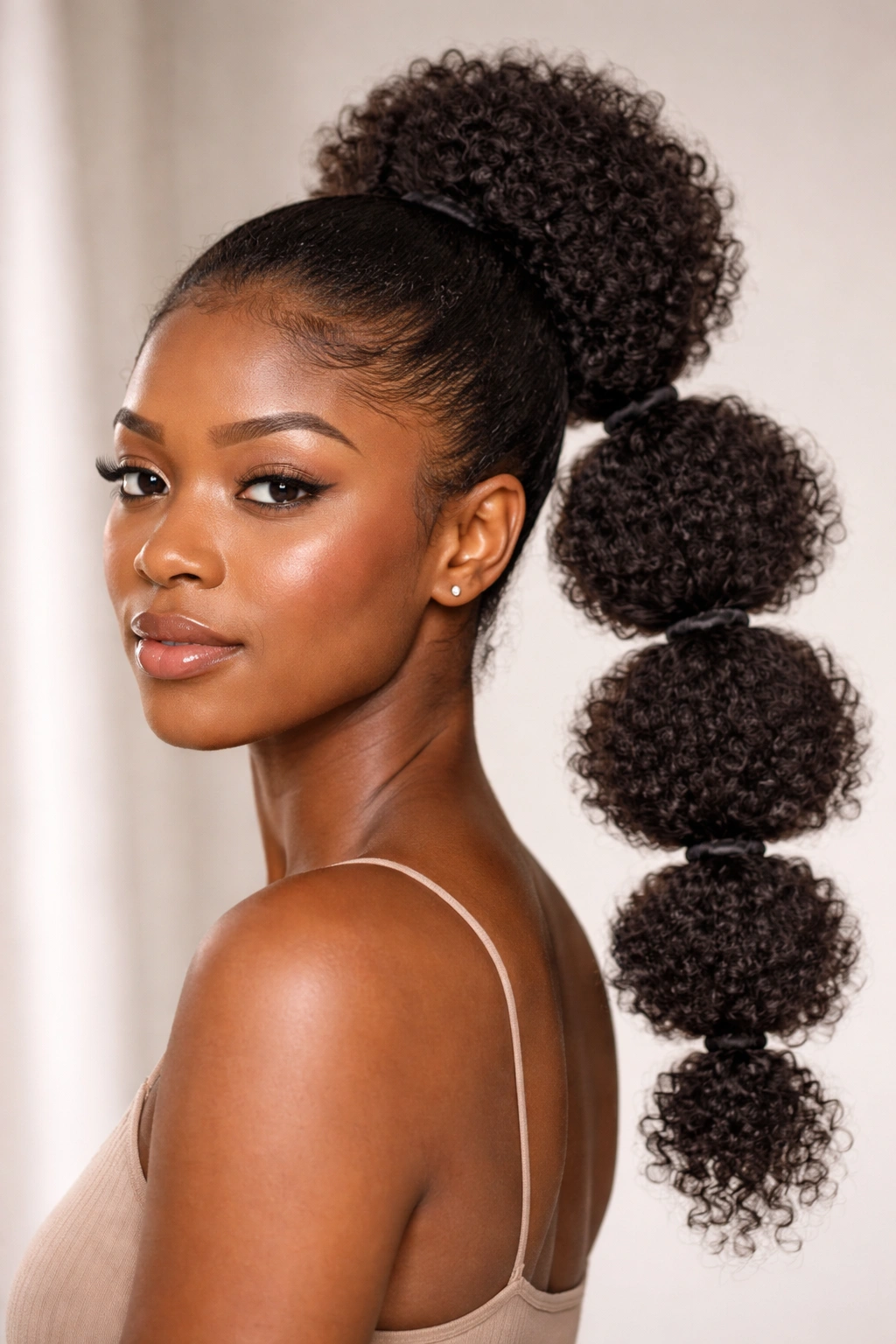
A bubble ponytail on 4C coils looks best when the hair is stretched enough to show the sections clearly, but not so stretched that it loses its personality. The texture gives the bubbles a dense, plush look that other curl patterns simply do not have. That fullness is the selling point.
How to keep the shape visible
Band-stretching, twist-stretching, or a gentle blowout can help the ponytail hold its structure. Once the base is set, avoid tiny elastics that dig in. Wider bands are kinder and usually sit better on thicker coils. If the hair is very dense, the bubbles may need more spacing than you expect so each section can breathe.
This style looks especially good when you leave a little volume at the crown rather than flattening everything down. A perfectly slick top can make 4C texture look overcontrolled. A little softness keeps the ponytail from feeling boxed in.
25. Bubble Ponytail for 3C and 4A Curls
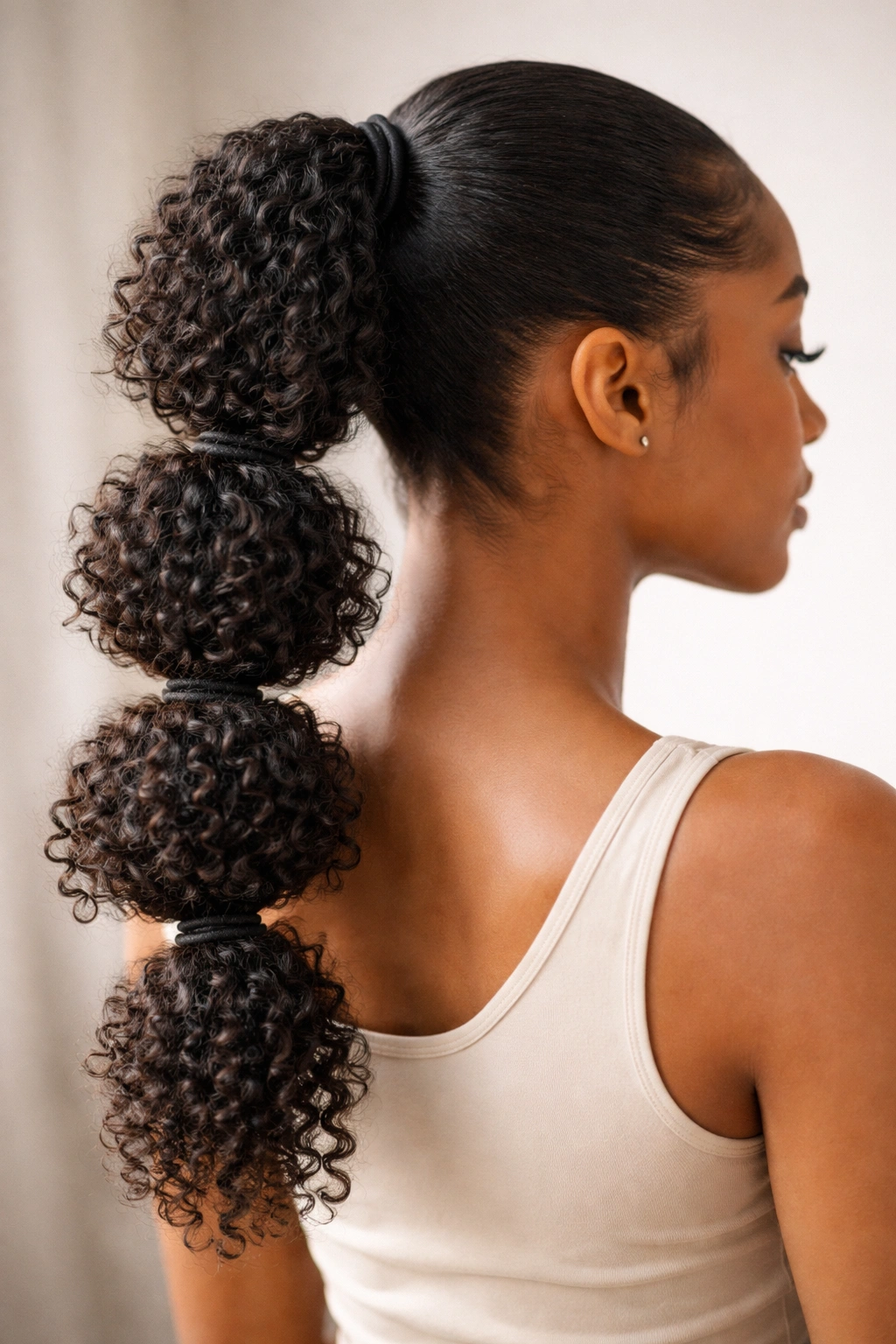
3C and 4A curls bring a different kind of bounce to bubble ponytails. The curl pattern often gives the bubbles a softer, rounder outline, so the style reads airy instead of heavy. You do not need as much product or stretching to make the shape work, which is refreshing.
The key is not to smooth the hair too much. Curl patterns in this range can look gorgeous when the ponytail still shows some definition at the base and through the tail. Use enough hold to control frizz, but not so much that the curls freeze in place. The bubbles should still feel touchable.
This version is especially nice when you want a ponytail that looks polished but not severe. The texture stays visible, and that is what gives the style its charm.
26. Bubble Ponytail for a Formal Event
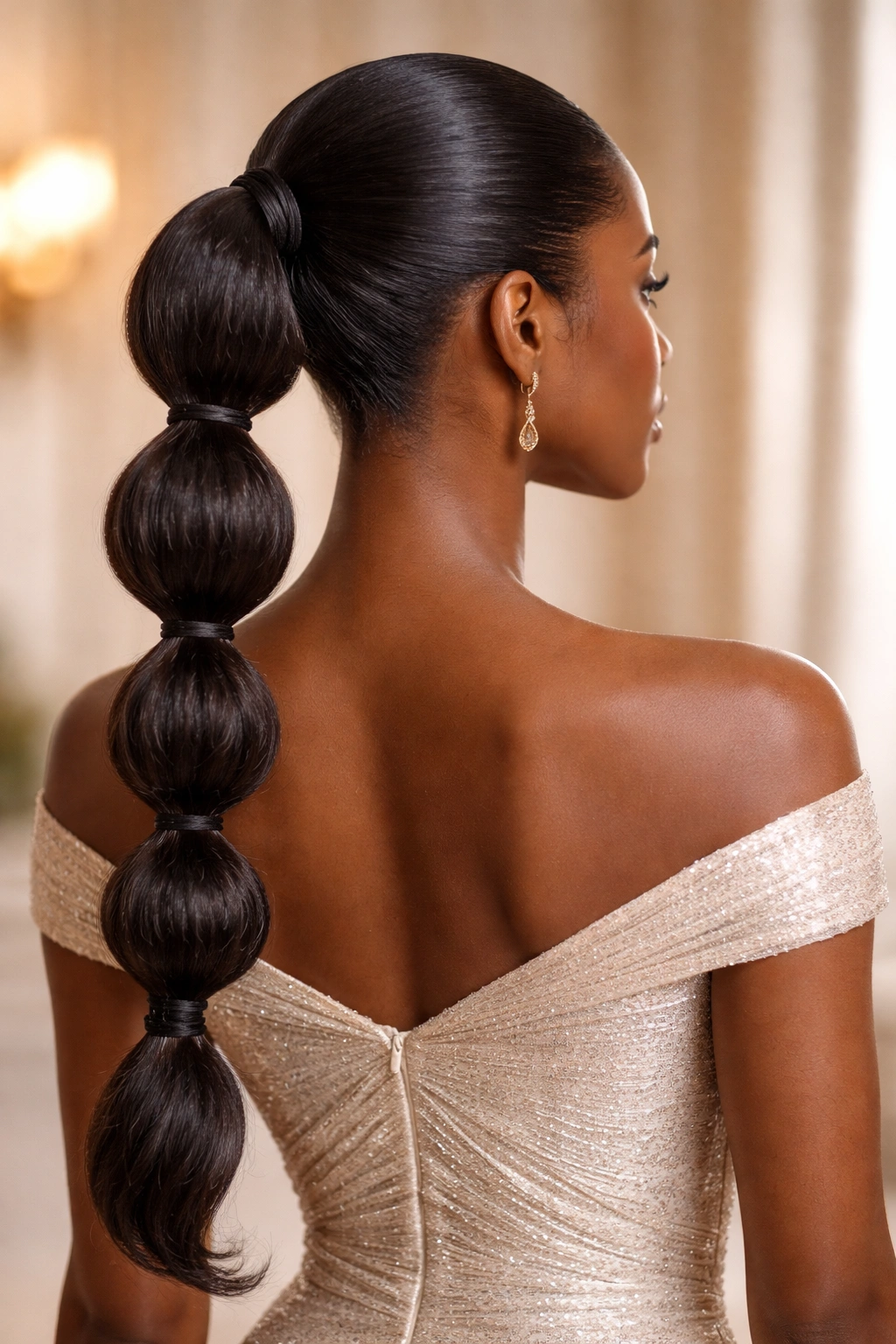
A formal bubble ponytail should look intentional from the first glance. That means a clean part, a tidy base, and accessories that feel chosen, not random. On natural hair, the style can be very elegant when the bubbles are smooth and evenly spaced, especially if the base is wrapped with a piece of hair or finished with a decorative band.
Dress it up without overloading it
Use one statement detail instead of five. A metallic cuff, a satin ribbon, or a wrapped base is enough. If everything shines at once, the ponytail loses its line. The bubbles should stay visible. That shape is what makes the style feel modern.
This is the version I’d trust for a wedding guest look, a dinner, or any event where you want the hair to hold up for hours and still look neat in photos. Keep the crown controlled, then let the tail move.
27. Bubble Ponytail for School or Work
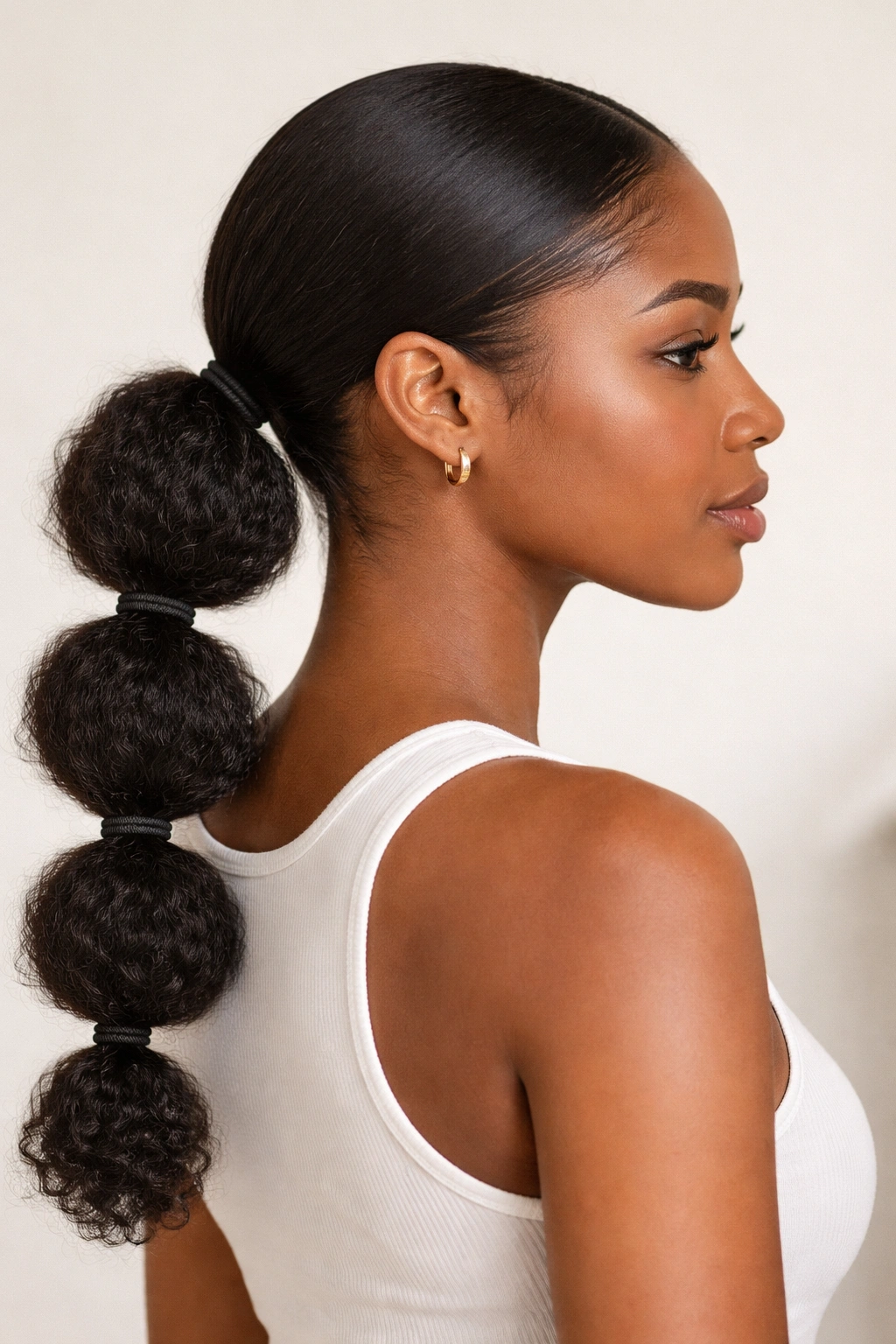
A school-or-work bubble ponytail should be easy to wear, quick to refresh, and not so tight that you think about it all day. Low or mid-height usually works best here. The style sits out of the way, stays tidy, and still gives natural hair some shape instead of just pulling it back.
The best version is usually simple: clean part, smooth base, three to five bubbles, and no extra clutter. You can skip the accessories if you want, or keep them small and plain. A black elastic and a little mousse are enough. This is not the place for overstyling.
I like this style because it solves the daily hair problem without asking for too much attention. That matters on busy mornings. Hair should cooperate sometimes.
28. Bubble Ponytail for the Gym or Busy Days
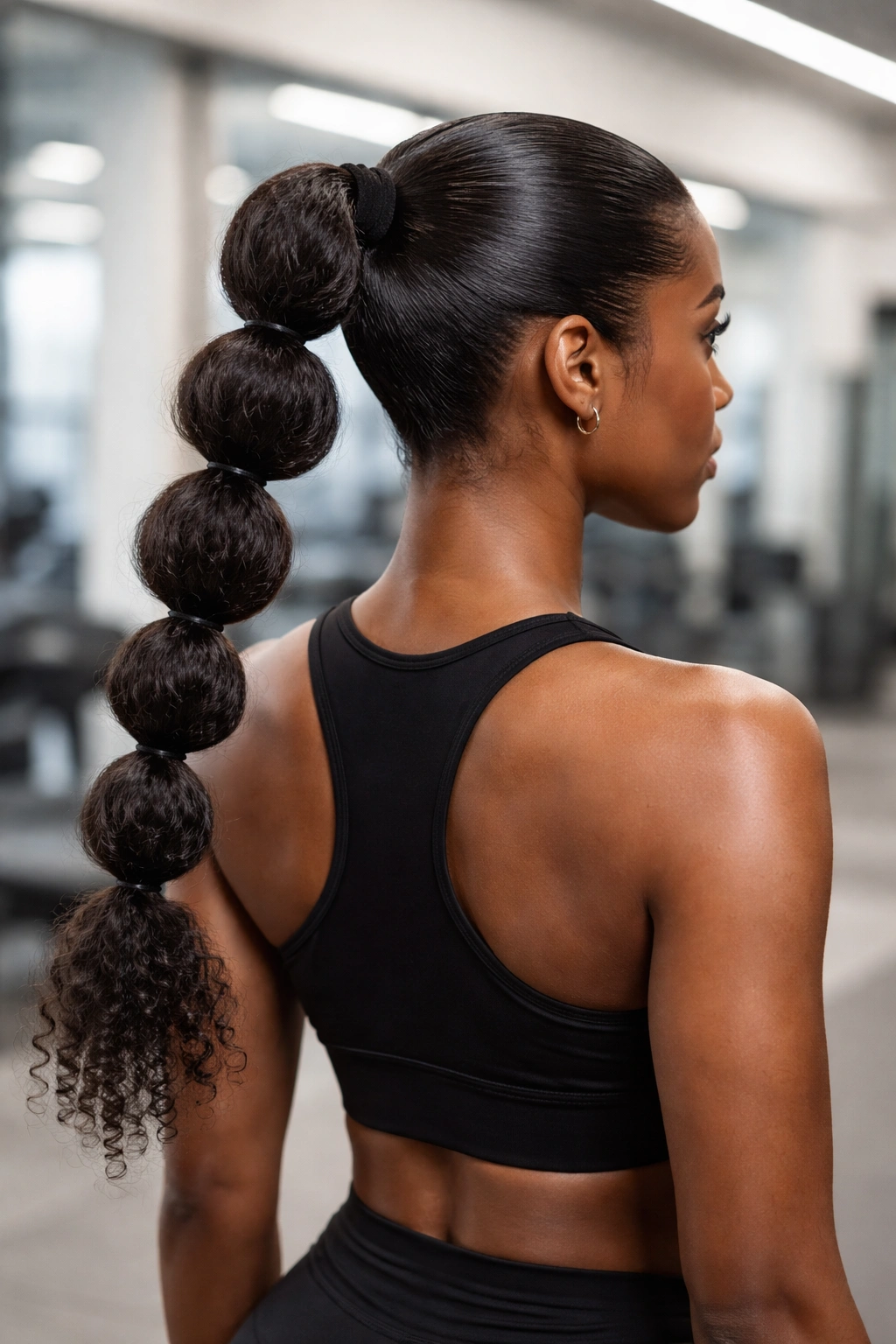
A gym-friendly bubble ponytail has to stay put first and look cute second. That means a firm base, secure elastics, and sections that are not too loose. The style should survive movement, sweat, and the general chaos of a full day without collapsing halfway through.
A high ponytail can work if your scalp is okay with it, but a mid-high base is often more comfortable. Keep the bubbles tight enough that they do not slide, and avoid heavy oils near the roots because they can make the elastic creep. If you need a quick refresh later, a spritz of water and a little mousse on the tail usually brings the shape back.
No fancy work here. Just a style that behaves.
29. Bubble Ponytail with Added Hair
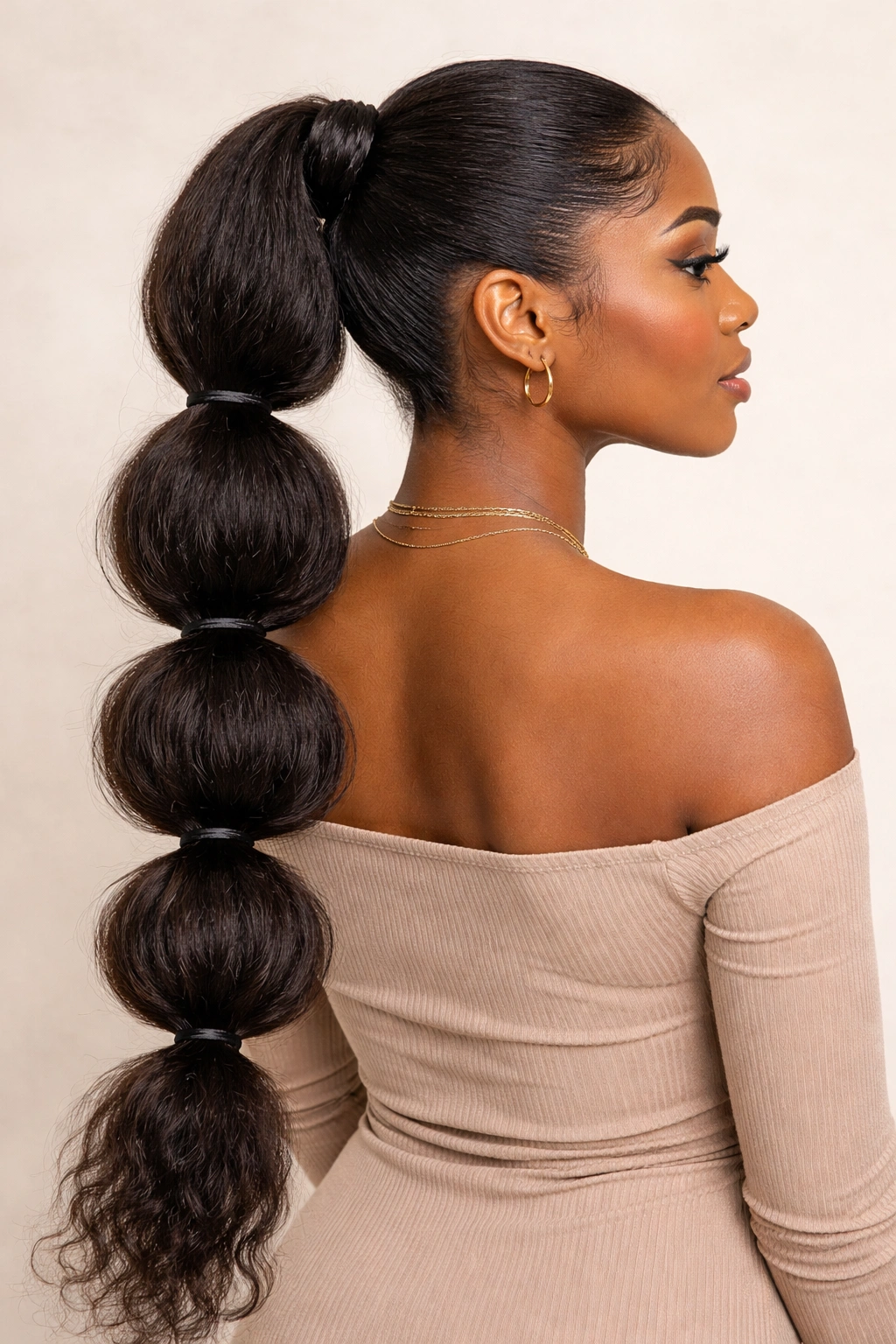
Added hair gives bubble ponytails extra length, weight, and shape. Braiding hair or a ponytail extension can help if your natural length is short, uneven, or too dense to show big bubbles clearly. The trick is choosing hair that blends well with your texture instead of fighting it.
Blending matters more than shine
Kinky straight, coily, or textured braiding hair usually looks more natural on natural hair than ultra-smooth synthetic hair. Once the extension is attached, blend the base with your own hair, then build the bubbles in normal sections. If the added hair is too silky, the contrast can look obvious. Texture makes the whole style read better.
- Match the extension texture to your own hair as closely as you can.
- Keep the attachment point secure but not bulky.
- Fluff the bubbles after each section is tied.
- Trim any uneven ends if the tail starts looking ragged.
This version is useful when you want length without waiting for it.
30. The Bubble Ponytail You’ll Keep Reaching For
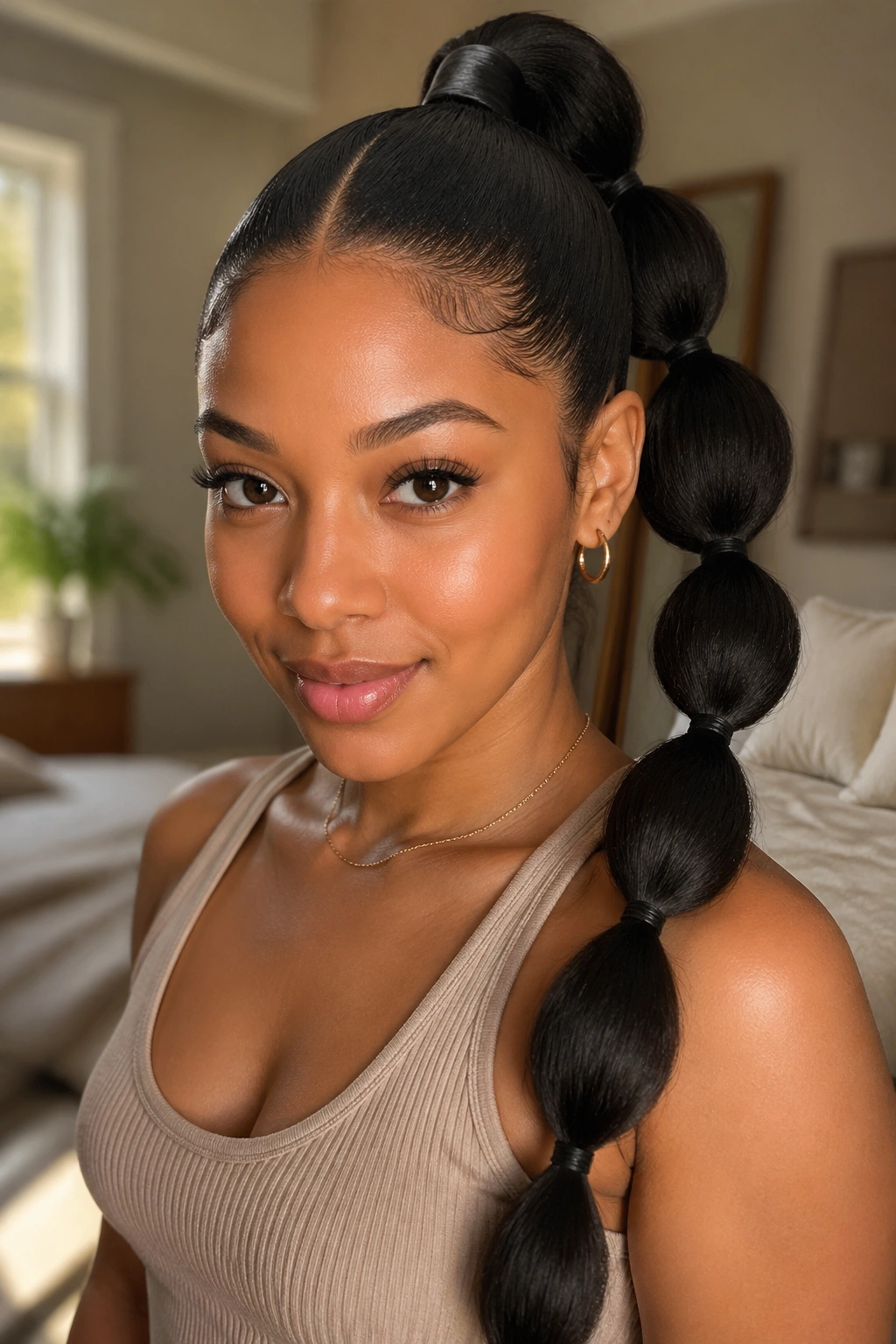
The best bubble ponytail for natural hair is usually the one that fits your routine, not the one that looks most complicated in a mirror. A center part, a clean base, five evenly spaced bubbles, and one small accessory can do more than a style that takes twice as long and fights your texture the whole time.
A signature version should be easy to repeat. That might mean a wrapped base and soft edges. It might mean a low ponytail with fuller bubbles. It might mean a high style with no accessories at all. What matters is that the hair feels like yours when you move, not like you borrowed somebody else’s idea and forced it to work.
If one thing deserves extra attention, it is tension. Keep the roots comfortable, keep the elastics snag-free, and stop adjusting once the bubbles hold their shape. Hair that feels good usually looks better. Funny how that works.
