
Bridesmaid ponytails for curly hair work because they let the texture do some of the decorating. That matters more than people admit. When curls stay visible, the style feels alive instead of shellacked into place.
The usual mistake is trying to force curly hair into a flat, straight-root ponytail and hoping hairspray will save it. It rarely does. The better move is to shape the crown, control the edges, and let the curls keep their spring.
That approach gives you room to match almost any dress code. A high ponytail can sharpen a strapless neckline, a low one can sit neatly under a veil, and a side-swept version can soften a one-shoulder gown without fighting it. Add pearls, ribbon, braids, or nothing at all. The curl pattern still does the heavy lifting.
And that’s the fun part. There are a lot more ways to wear a curly bridesmaid ponytail than most people think.
1. High bridesmaid ponytail for curly hair with face-framing tendrils
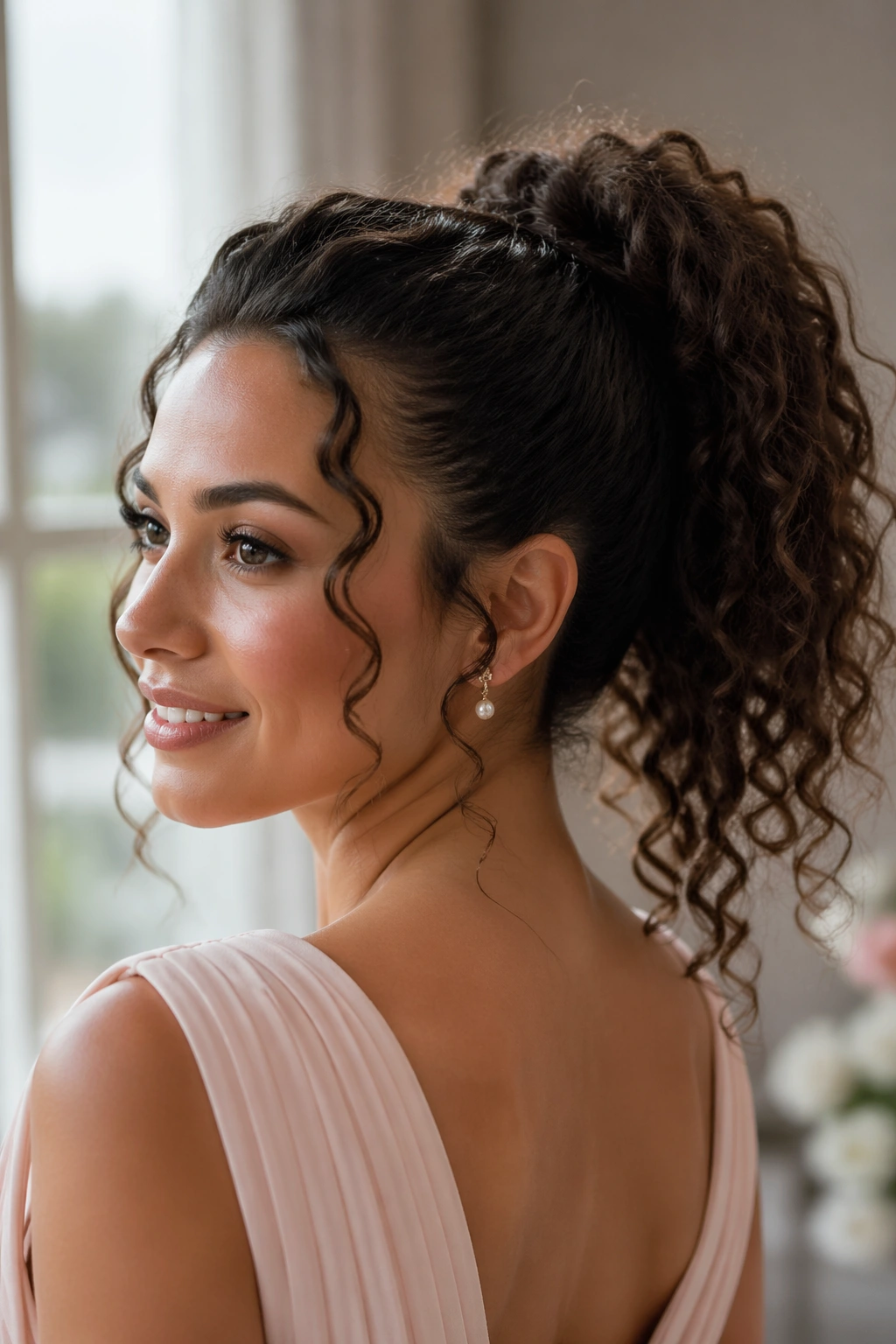
A high ponytail gives curly hair instant lift, and bridesmaids usually like the way it opens up the face. The crown sits higher, the neck looks longer, and the curls get to move when you walk. It feels polished without going stiff.
Why it works
The best version keeps the base tidy and the tail full. Leave two narrow tendrils near the cheekbones, then define them with a 3/4-inch iron if the natural curl pattern needs a little help at the front. That tiny bit of framing keeps the style soft.
- Best for medium to long curls
- Works well with strapless or sweetheart necklines
- Ask for a wrapped elastic so the base looks finished
Pro tip: keep the crown loose by about half an inch. Too tight, and the whole style starts to look pulled.
2. Low sleek crown with a full curly tail
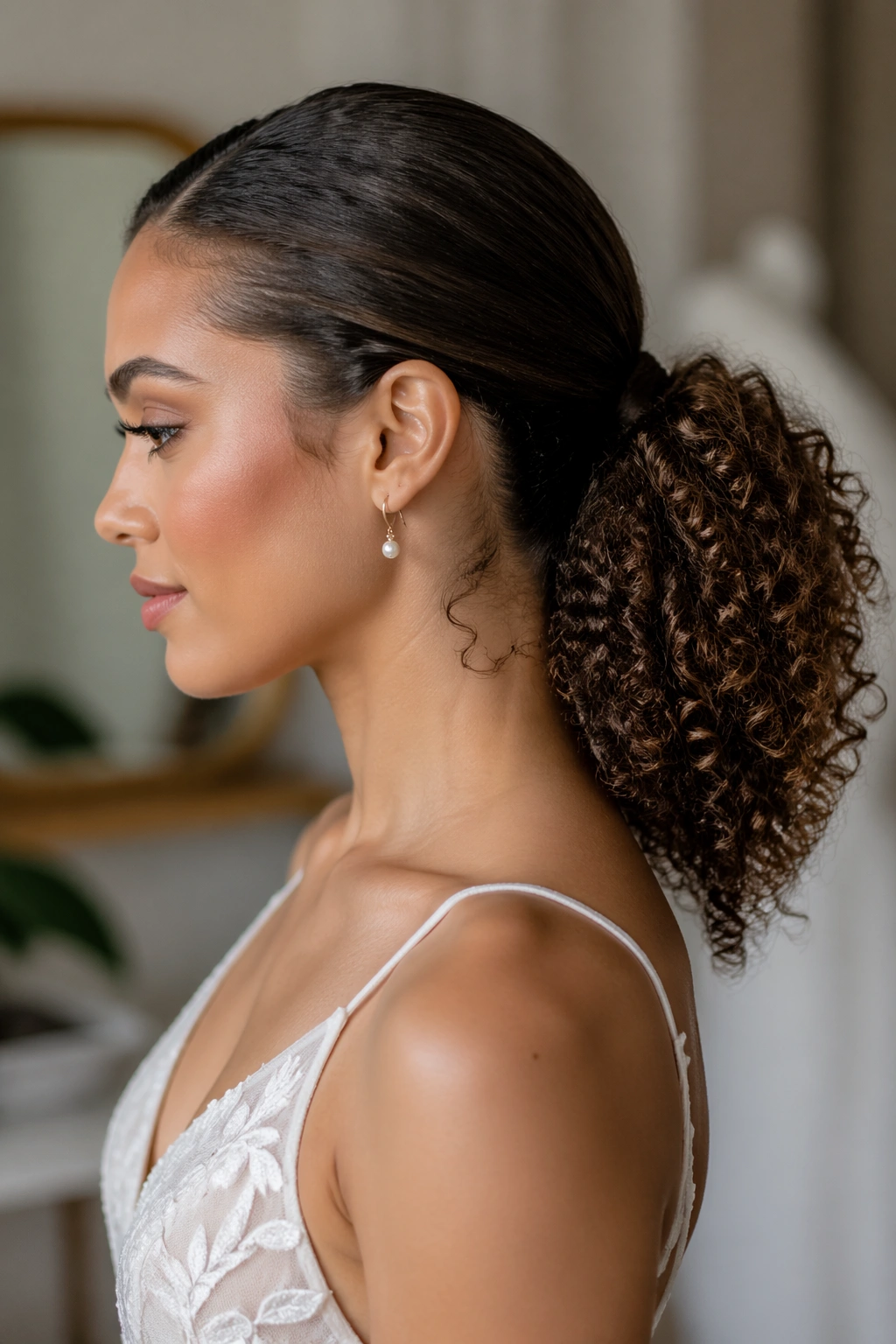
The low sleek crown is the quiet workhorse of bridesmaid hair. The top sits close to the head, which keeps flyaways under control, then the ponytail drops low and full, with the curls showing off at the back. It’s neat. It’s calm. It also sits nicely under a veil or a heavier earring.
A soft bristle brush and a little mousse at the roots go a long way here. The goal is not wet-looking shine. It’s smoothness with movement, so the head shape looks clean and the tail still feels like curly hair, not a rope.
This version works especially well with satin dresses, square necklines, and gowns that already have a lot going on at the bodice. The ponytail should be the counterpoint, not the loudest thing in the room.
3. Side-swept bridesmaid ponytail for curly hair over one shoulder
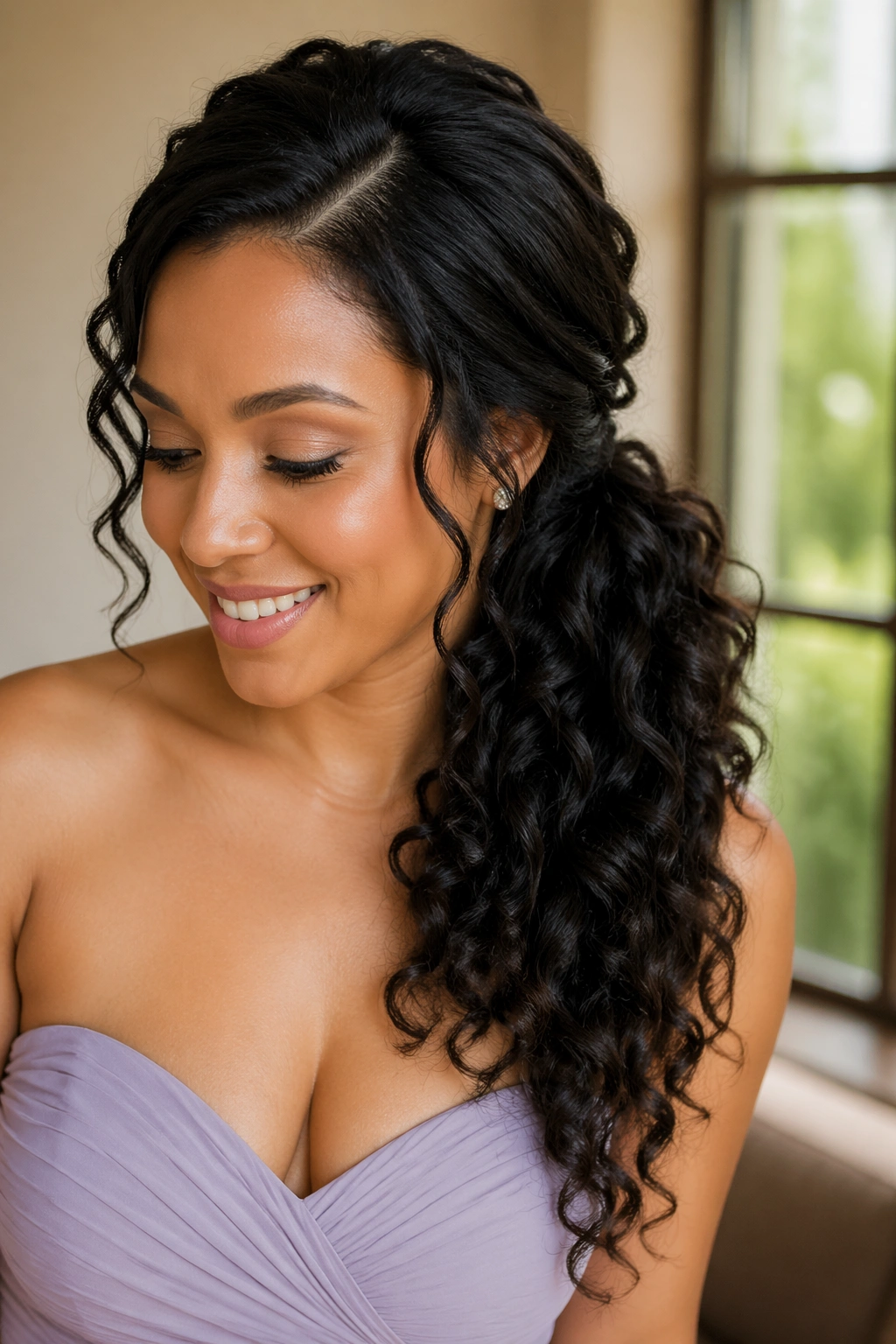
A deep side part changes the whole mood fast. Instead of sitting straight down the back, the ponytail sweeps to one side and rests over the shoulder, which gives curly hair a softer line and a little more drama. It’s a smart choice for one-shoulder dresses or asymmetrical necklines.
The trick is balance. Keep the part clean, but don’t over-flatten the curls at the crown. A few hidden pins at the base stop the ponytail from slipping, and a light mist of flexible spray keeps the side sweep from puffing out halfway through dinner.
This style also flatters mismatched bridesmaid lengths, which is handy when the group has different curl patterns and cut lengths. One shoulder, one focal point, no fuss.
4. Bubble ponytail with defined curls
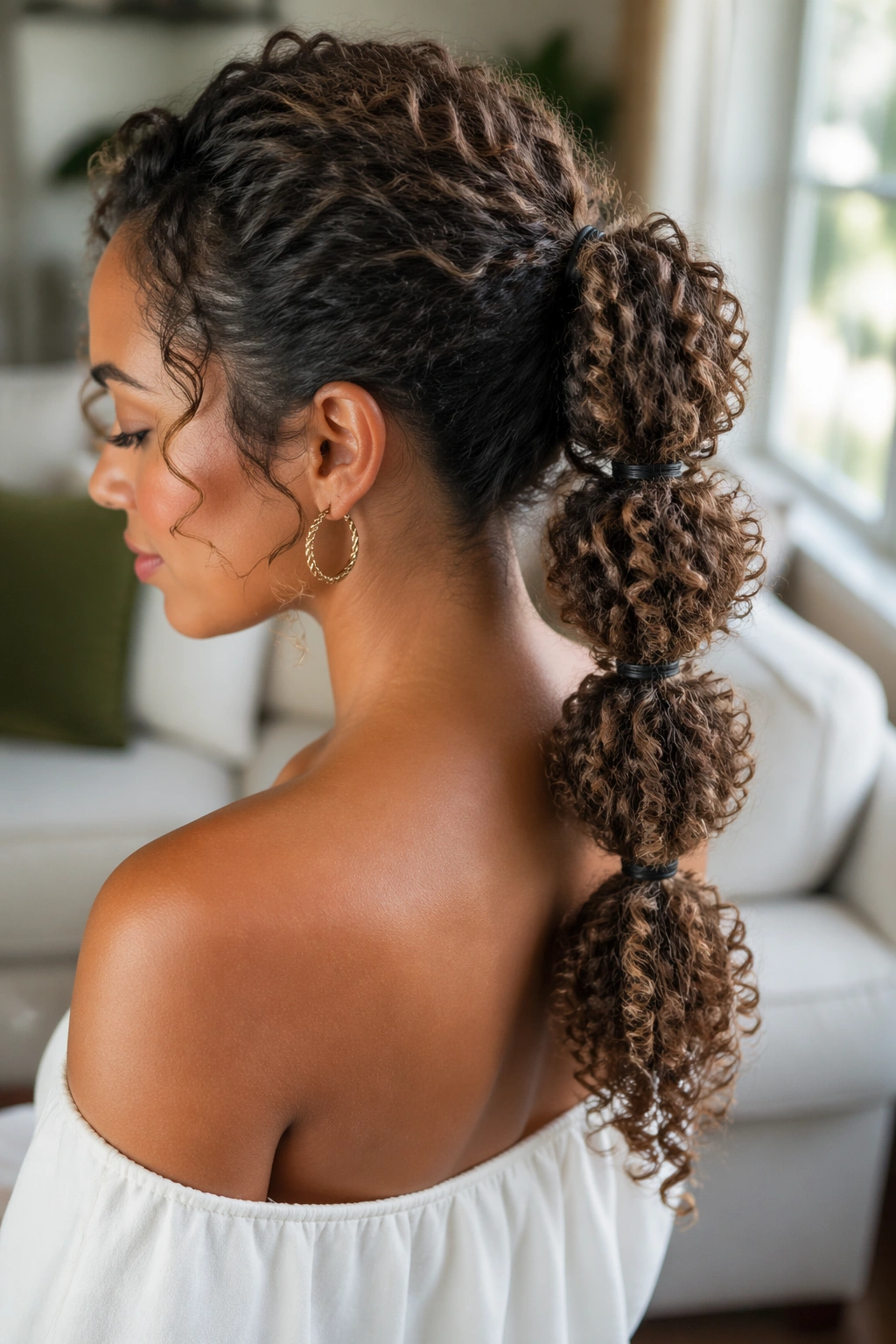
Bubble ponytails sound playful, and they are, but on curly hair they can read surprisingly elegant. The idea is simple: secure the ponytail with small elastics every few inches, then gently puff out each section so the curls create round, soft bubbles. The texture does most of the work for you.
What to ask for
- Use clear mini elastics or ones that match the hair color
- Keep each section about 2 to 3 inches apart
- Pull only the outer layer of each bubble, not the whole section
A bubble ponytail looks best when the curls are well defined first. If the ends are frizzy, the sections lose their shape fast. Defined curls make the bubbles look intentional instead of accidental.
5. Braided base ponytail
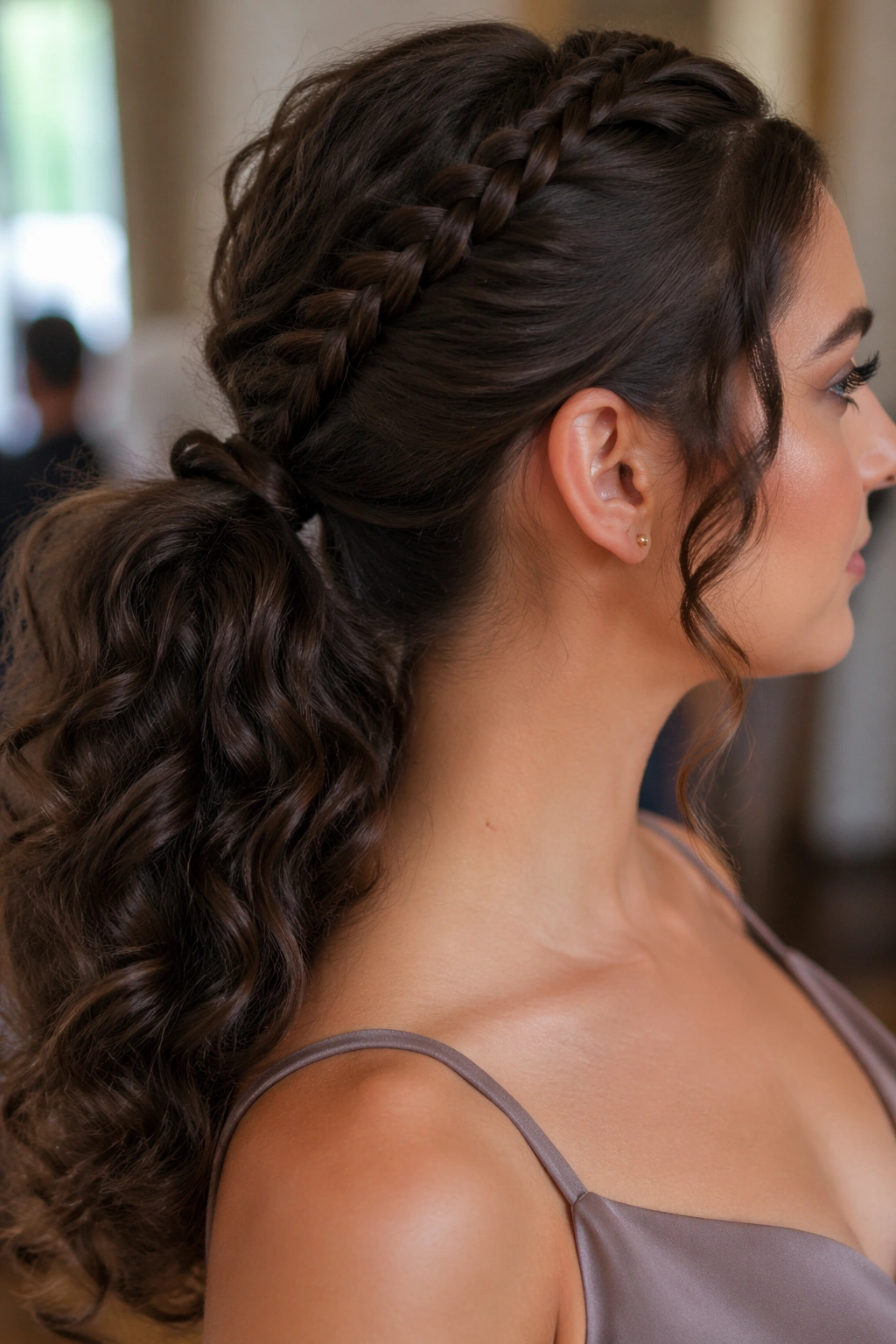
If the bridesmaids want something that feels a little more structured, start with a braid at the base. A small French braid or Dutch braid along the crown feeds into the ponytail and keeps the front neat, while the curly tail stays loose and soft. It’s a good compromise between control and texture.
The braid adds grip. That matters. Curly hair can be slippery at the roots, especially if the hair has been hydrated well, and a braided path gives the ponytail something to hold onto. It also gives the stylist a place to hide pins, which is always useful.
This is the version I’d pick for a more formal dress line, especially if the neckline is clean and the jewelry is minimal. The braid becomes the detail, not the whole story.
6. Silk-ribbon wrapped ponytail
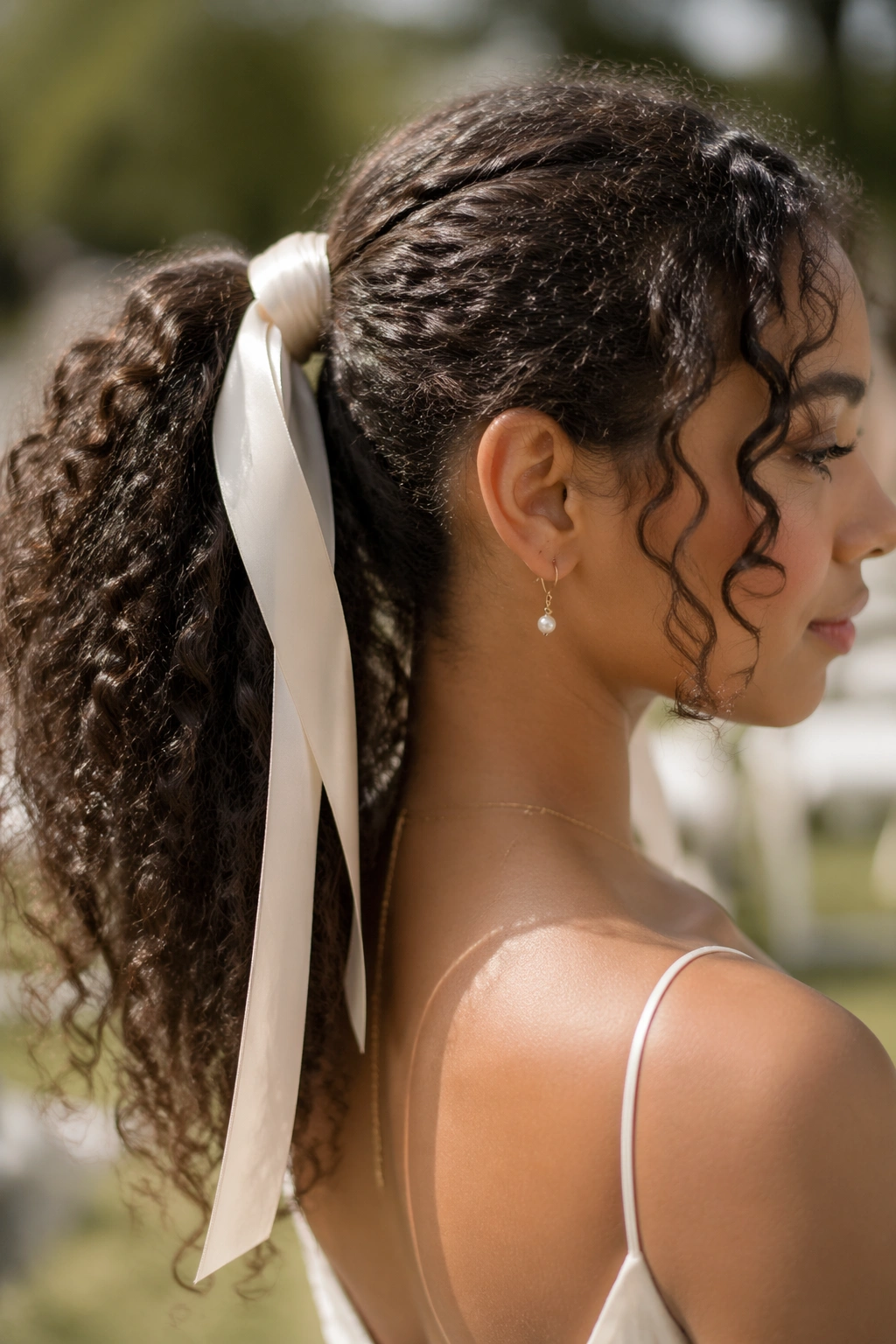
A silk ribbon changes the mood instantly. Tie it around the elastic, let the ends trail a little, and the ponytail stops reading as purely practical. On curly hair, the ribbon sits well because the texture gives the style body, while the ribbon adds a soft finish at the base.
The best ribbon width is usually about 1 inch. Much wider than that and it can swallow the ponytail. Narrower works too, but the tail ends can look a bit threadlike unless the dress is very simple. Soft ivory, blush, champagne, and muted sage all work without stealing attention.
This style likes movement. It’s especially nice for outdoor ceremonies or dresses with light fabric. If the ribbon feels like an afterthought, choose a better one. The whole point is that it should look tied on with care.
7. Pearl-pin curly ponytail
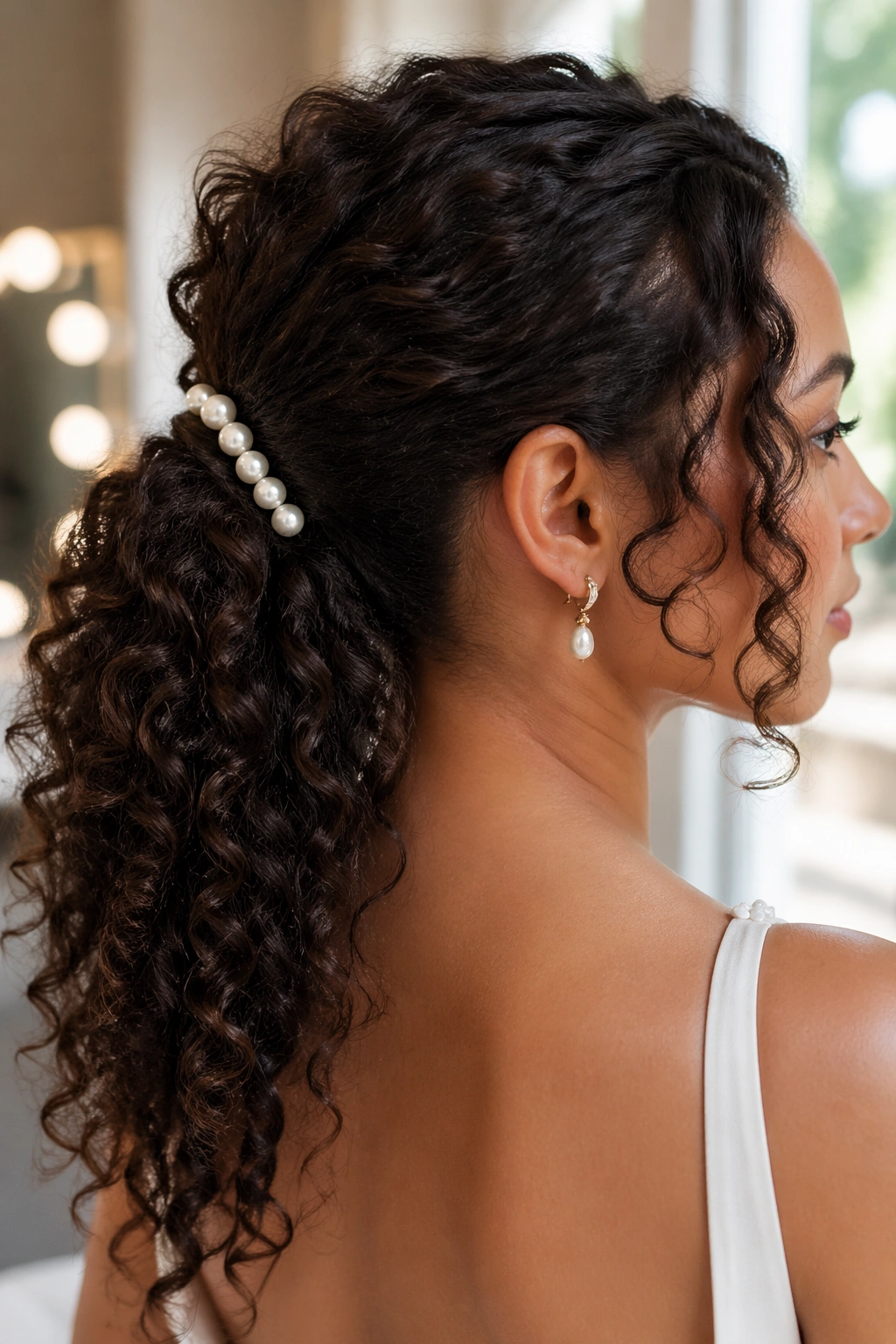
Pearl pins are one of those little details that can save a style from looking plain. Scatter three to five pins near the base, or arc them along one side of the ponytail for a subtle line of shine. On curly hair, pearls work because the texture gives them something to sit against.
The base should stay clean. If there are too many pins, the style starts to look crowded and the curls lose their shape. A few pins are enough, especially when the bridesmaid dress is already doing a lot visually.
This one is easy to tailor to the wedding palette. Smaller pearls feel delicate, while slightly larger ones read more formal. Keep the rest of the ponytail soft so the pins have room to matter.
8. Twisted temple ponytail
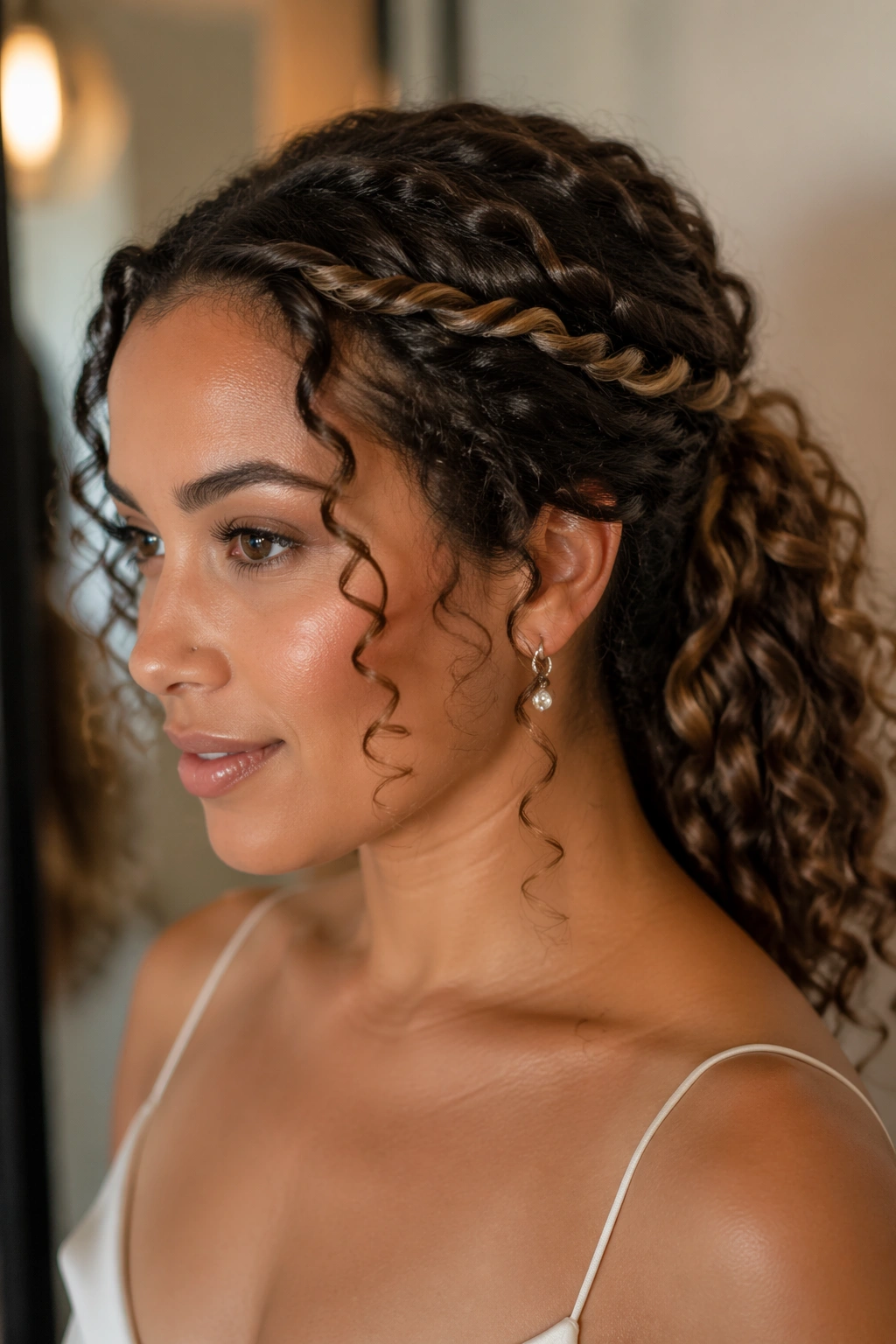
Two rope twists from the temples can turn a plain ponytail into something far more finished. The twists draw the hair back from the face, which is useful if the bridal party wants a controlled front without losing all the curl at the back. It also helps if some front layers are shorter than the rest.
The right move is to twist loosely, then pin each side just above the ear before gathering the ponytail. Tight twists can look severe. Loose twists keep the style airy and work better with curly texture, which naturally has a little lift anyway.
This version plays nicely with delicate earrings and soft makeup. It frames the face without taking over the face. That sounds obvious, but plenty of styles miss it.
9. Half-up curly ponytail with loose lengths
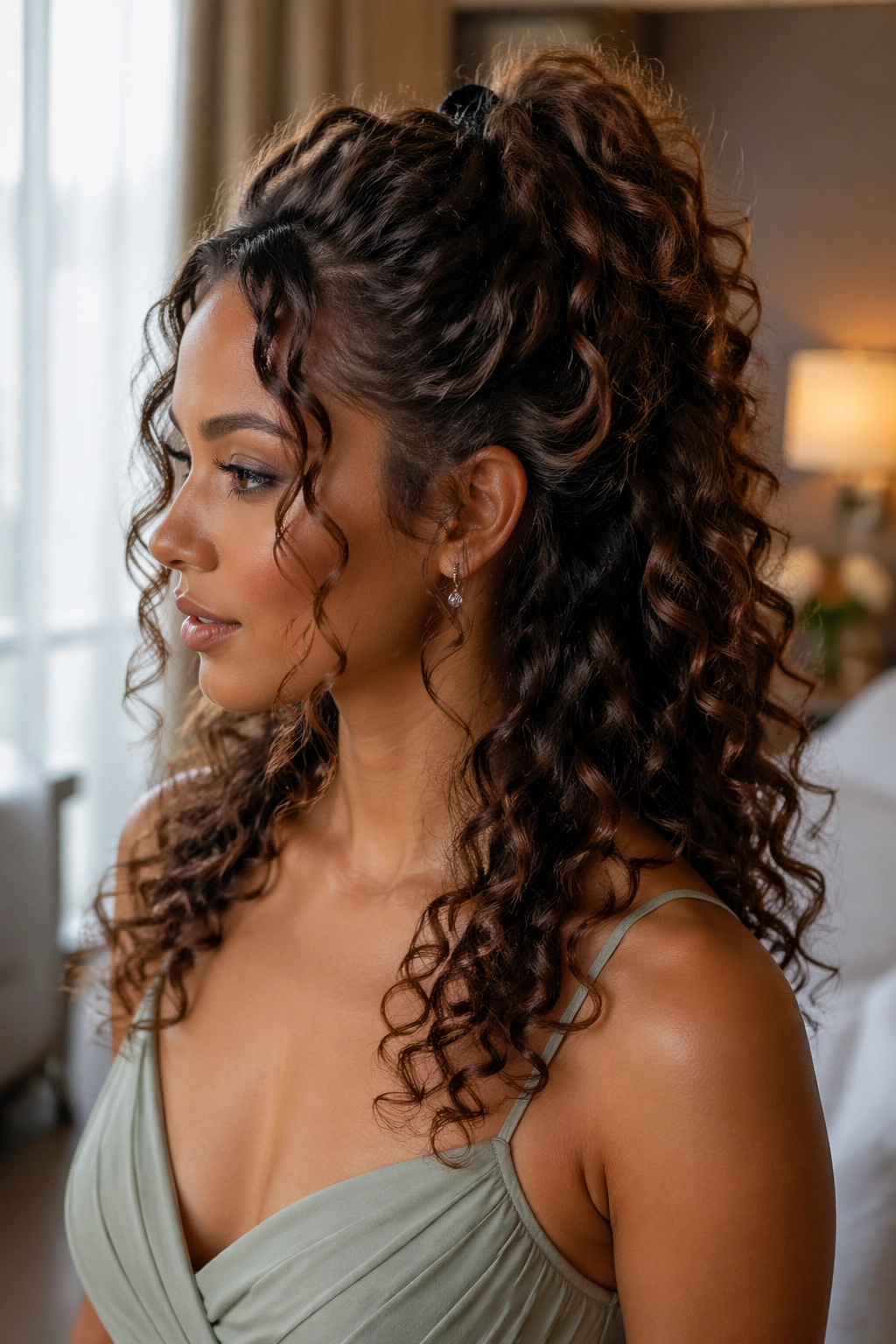
Half-up ponytails are underrated for bridesmaids. They give you the neatness of a tied-back style while leaving the length free, which is useful when the curls are long, dense, or especially springy. The top section sits at the crown or just below it, then the rest spills down in a full cascade.
The best thing about this shape is that it keeps volume where you want it. The top stays controlled for photos, while the lower curls still bounce when the person moves. It can look sweet, but it does not have to feel young or casual. Done well, it reads polished.
This is a strong choice if the group has different curl patterns and wants a style that feels forgiving. It’s friendly to texture. That’s the whole appeal.
10. High puff ponytail for coily hair
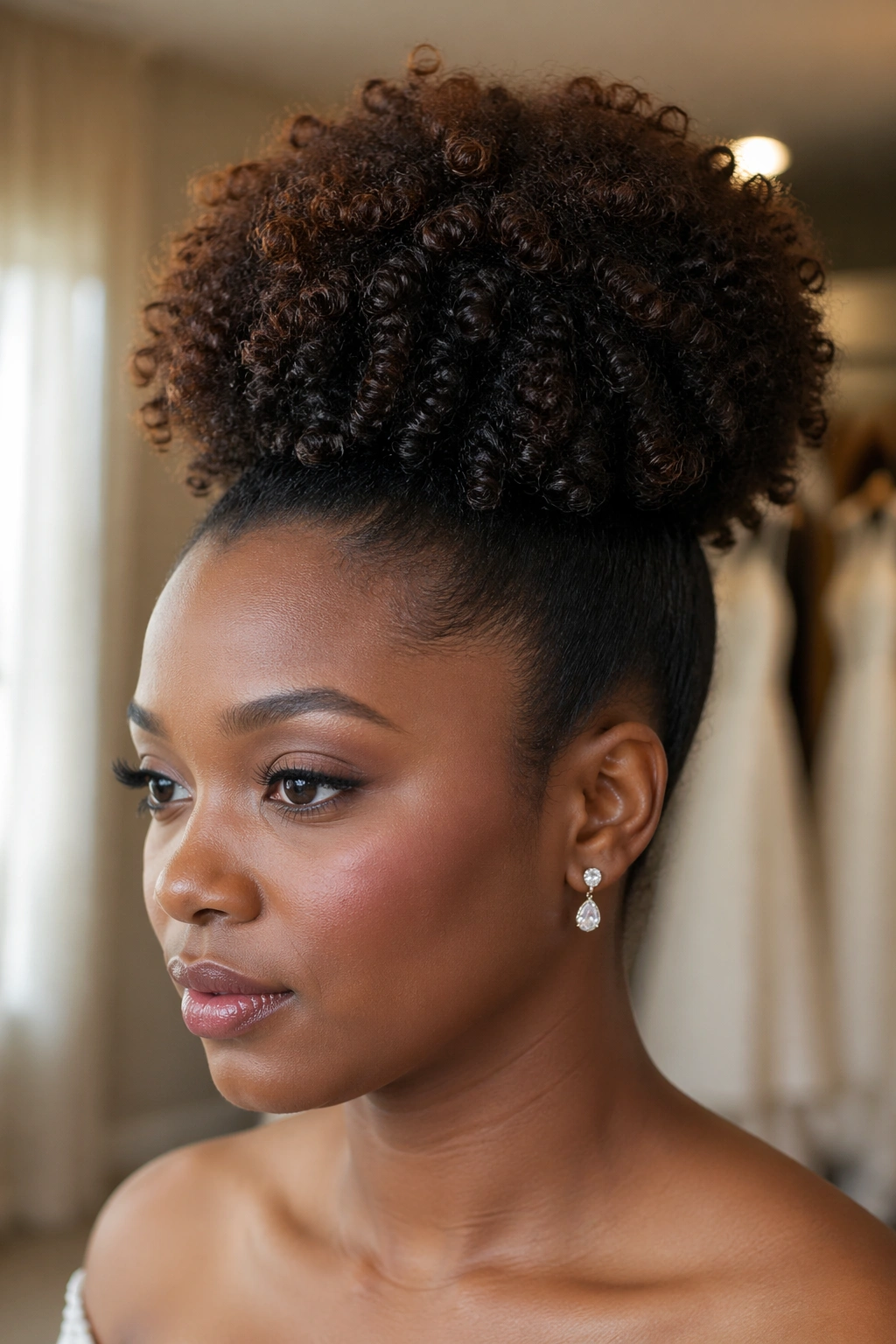
A high puff ponytail belongs in the bridesmaid lineup. Coily hair looks incredible when it’s lifted up and shaped into a rounded puff, and the style gives real presence without demanding a lot of extra decoration. Smooth the sides, shape the puff high on the crown, and let the texture speak for itself.
How to get the shape right
Use a soft gel at the hairline, then secure the puff with a strong elastic or a puff cuff. The crown should look smooth, but not scraped tight. If the hair is stretched a little before styling, the puff gets more height and a cleaner outline.
This version works best with dresses that have clean shoulders or a simple neckline. The silhouette is the point. Once that’s right, you do not need much else.
11. Center-part polished ponytail with curled ends
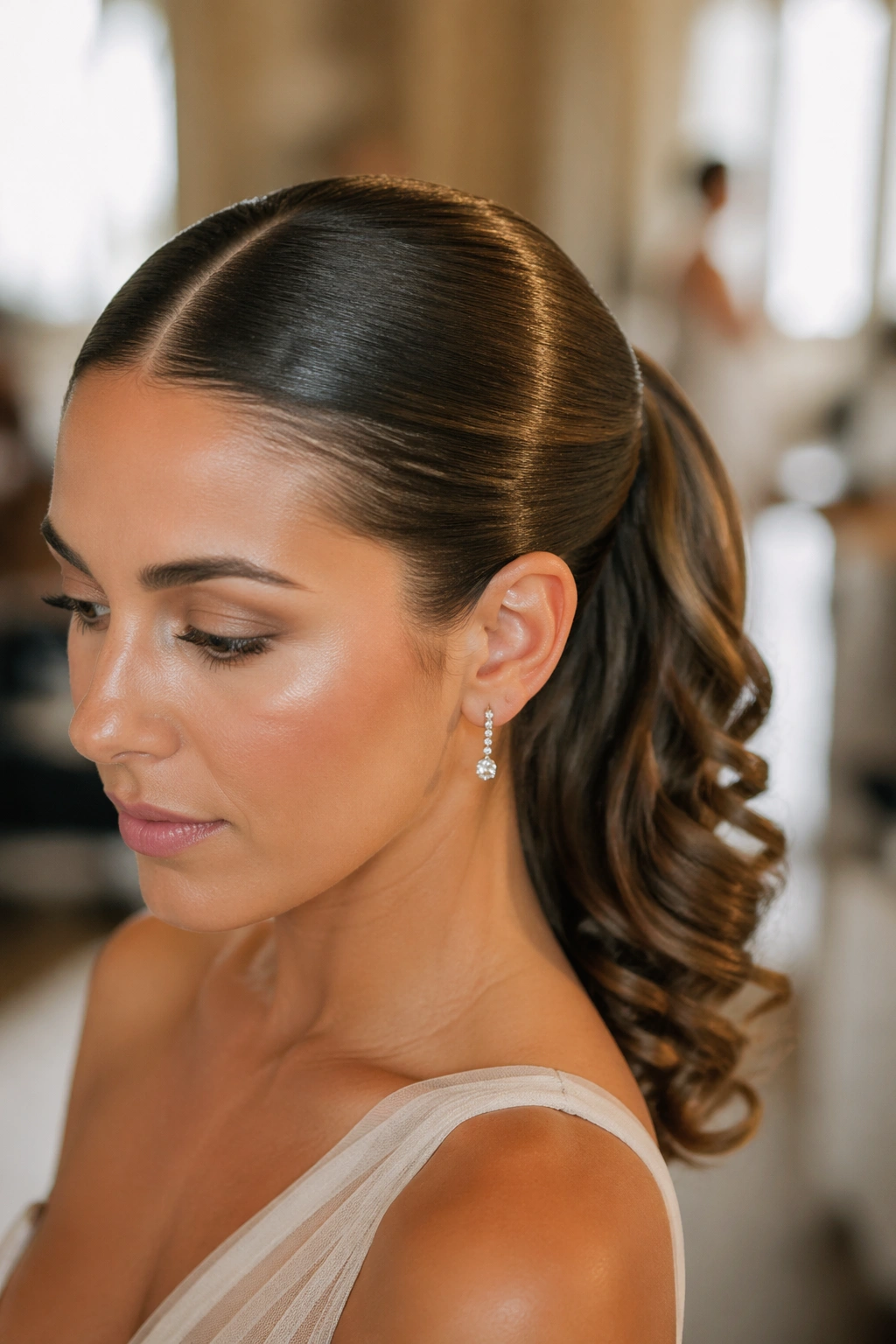
A center part can make curly hair look very deliberate. It gives the style symmetry, which is useful for formal dresses, and it keeps the face open in a calm, balanced way. The ponytail itself can sit low or mid-height, but the part should stay sharp and clean.
The ends matter more than people think. If the curls at the tail are separated and glossy, the whole style feels finished. If they are flattened, the ponytail loses its shape fast. A light curl cream on the lengths and a bit of shine spray on the last few inches can help.
I like this one for bridal parties that want something understated but not plain. It feels grown-up in the best way. No extra trickery needed.
12. Deep side-part old-Hollywood ponytail
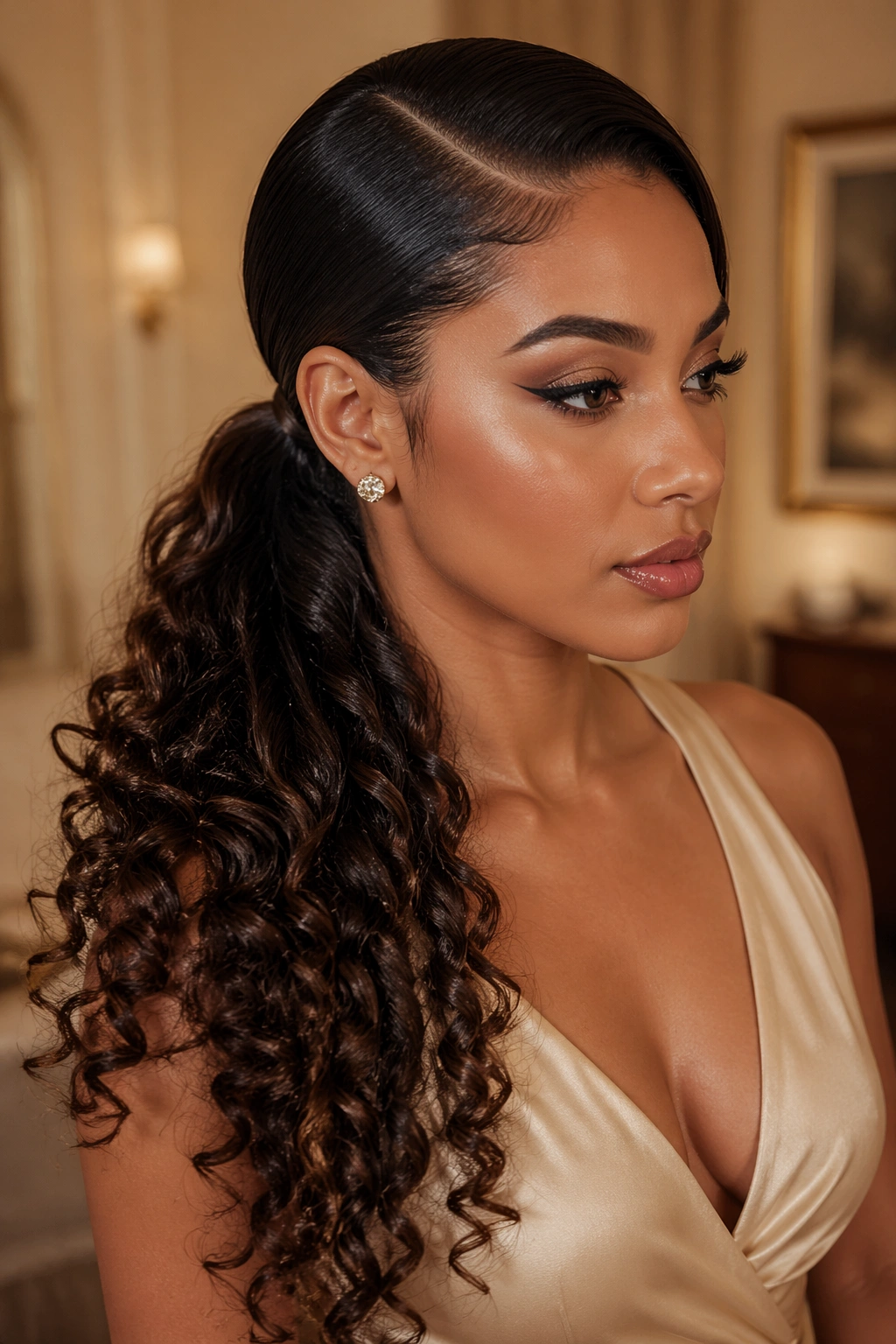
This is the polished cousin of the side-swept ponytail. The side part is deeper, the crown is smoother, and the ponytail usually sits low enough to hang over one shoulder like a soft curtain. The shape nods to old-Hollywood hair without turning into a full wave set.
What makes it work is the contrast. The front stays sleek and sculpted, while the tail keeps the curly texture. That contrast looks expensive in photos, and it pairs well with statement earrings or a dress that already has plenty of drama.
Use a tail comb to keep the part crisp, then pin the front flat before the ponytail is secured. If the front gets frizzy, the whole style loses its nerve.
13. Low ponytail with a braided accent
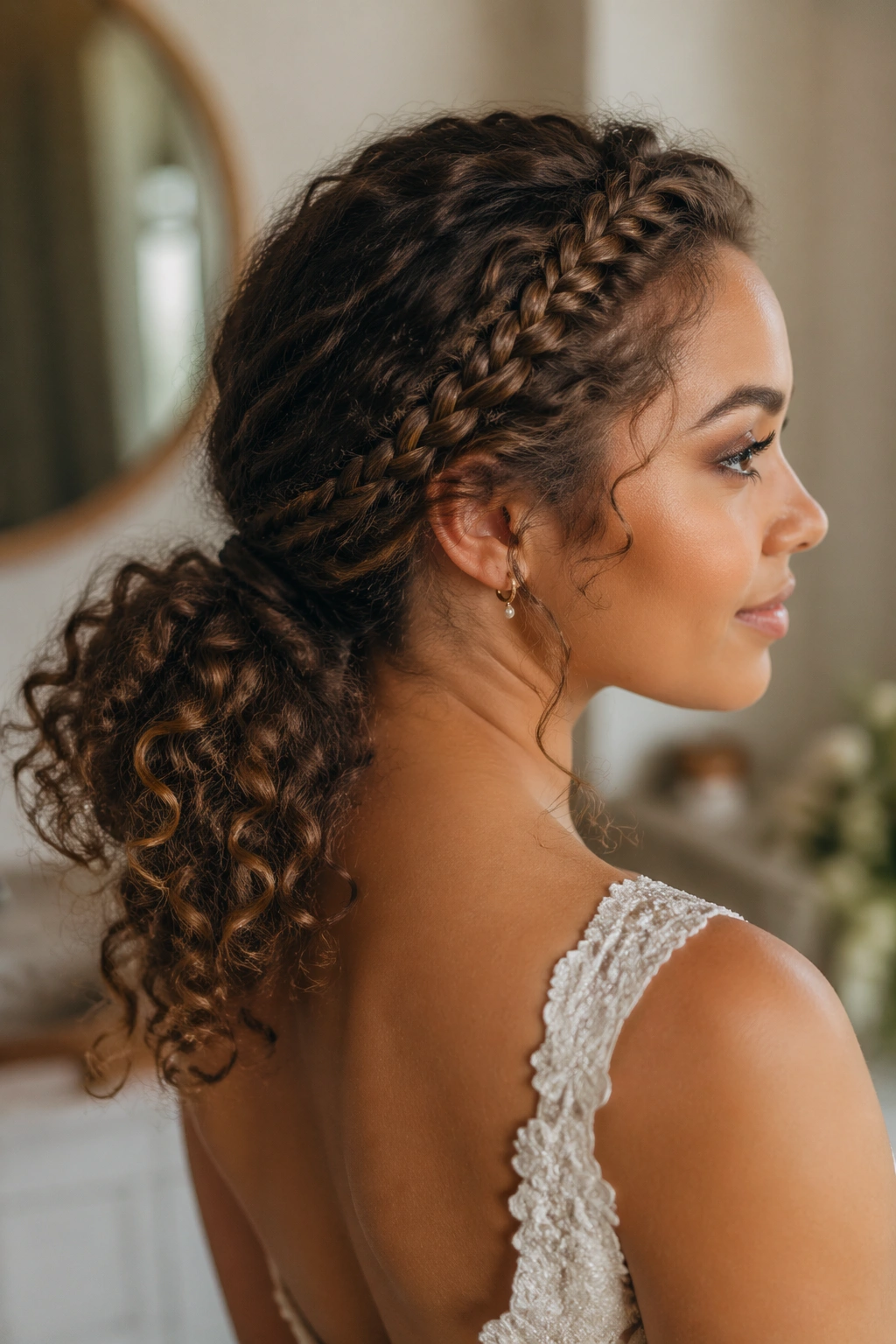
A small braid along one side of a low ponytail can make the style look custom without adding a lot of weight. Think of it as a detail line, not a headline. The braid can run from the temple to the ear, then disappear into the ponytail base, leaving the curly lengths free.
This works especially well when the dress has texture already — lace, beading, or a soft matte fabric. The braid adds another layer, but it does not fight the outfit. Curly hair also helps here because the contrast between smooth braid and textured tail is easy to see.
Keep the braid narrow if the hair is fine, wider if the hair is thick. Size should match the hair, not the fantasy. That rule saves a lot of awkward styling.
14. High ponytail with a fishtail wrap
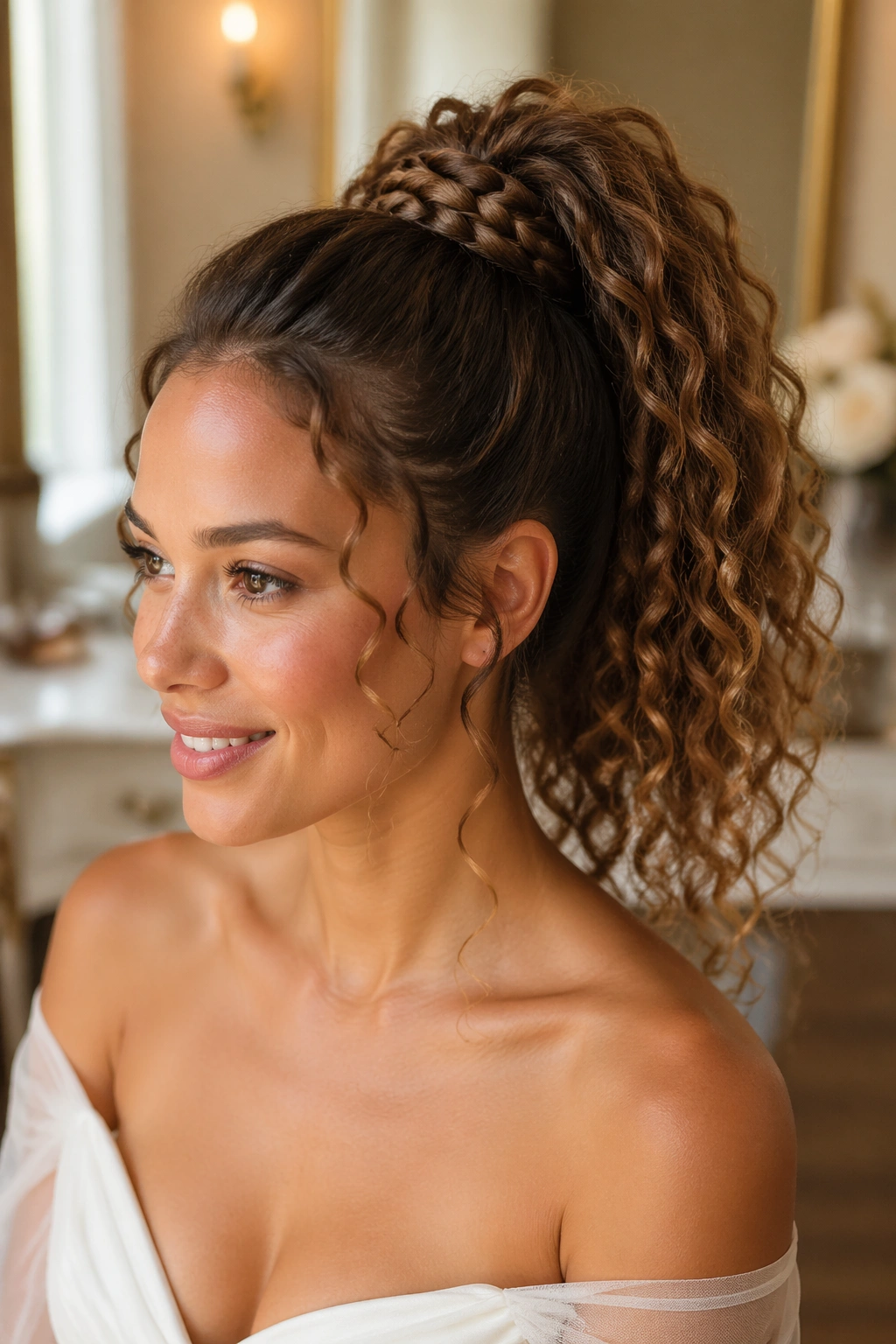
The fishtail wrap gives the ponytail base a detailed finish that feels a little more special than a simple wrapped elastic. Use a thin fishtail braid from a small section of hair, wind it around the base, and pin it underneath. The rest of the ponytail can stay high and full.
This version works well for bridesmaids who want a crisp look at the crown and plenty of movement through the tail. It also photographs nicely from the side, because the braid gives the base a visible edge. No awkward lump. No visible tie.
If the curls are dense, keep the wrap slim. Too much braid can crowd the pony. A little detail at the base goes a long way.
15. Satin-bow ponytail
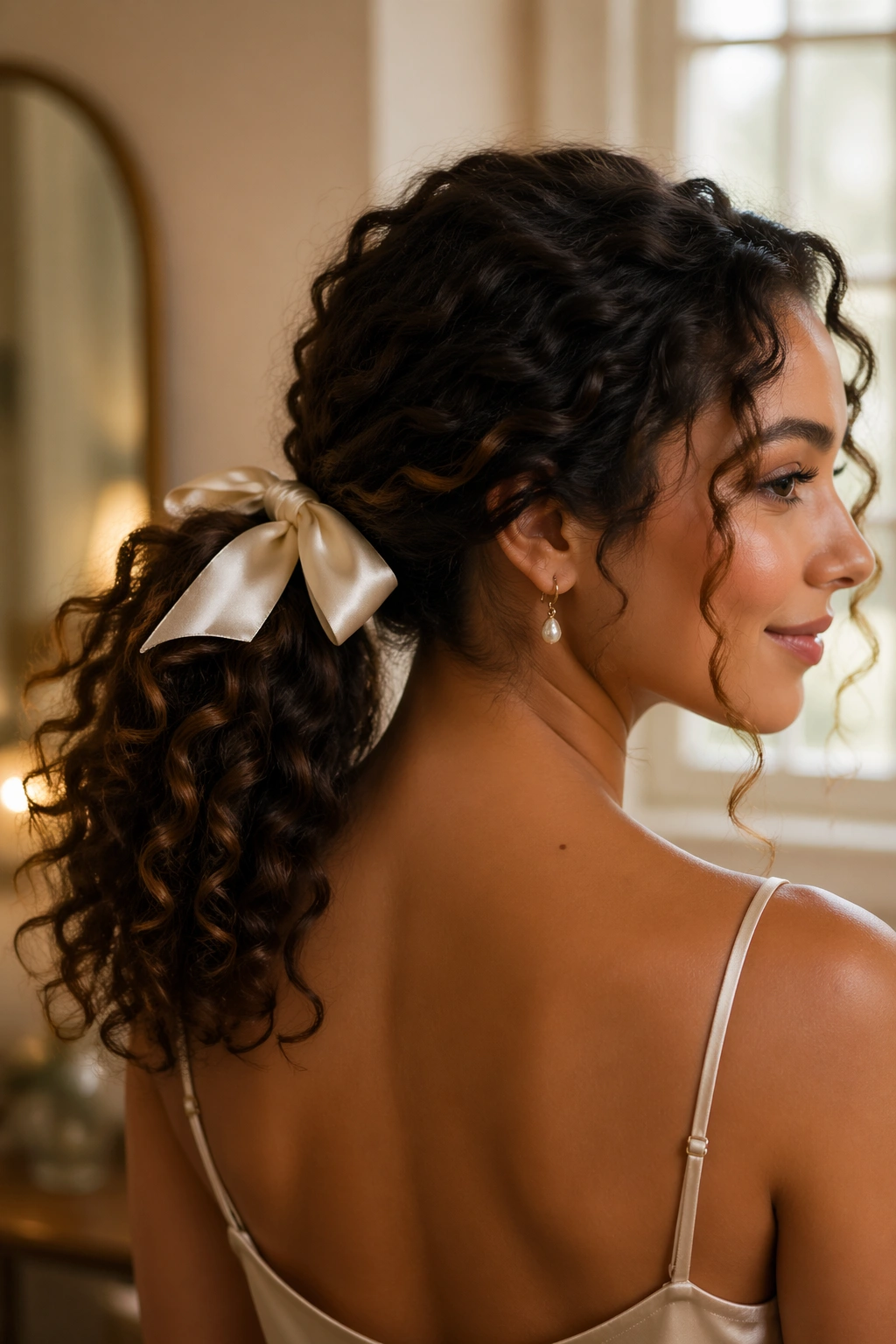
A satin bow is the easiest way to make a ponytail feel ceremony-ready. Tie it under the base so the loops sit just below the ponytail, then let the ends hang a little longer than expected. On curly hair, the bow softens the shape and keeps the style from feeling too hard or too sporty.
The fabric matters. Satin gives a clean finish, while matte ribbon can look less dressy. Black bows can be chic, but most bridal parties lean toward ivory, soft blue, dusty rose, or a shade that matches the bouquet accents.
This style is best when the hair itself is the main texture and the bow is the accent. Do not over-accessorize it. The bow should feel like punctuation, not a paragraph.
16. Crown-braided ponytail
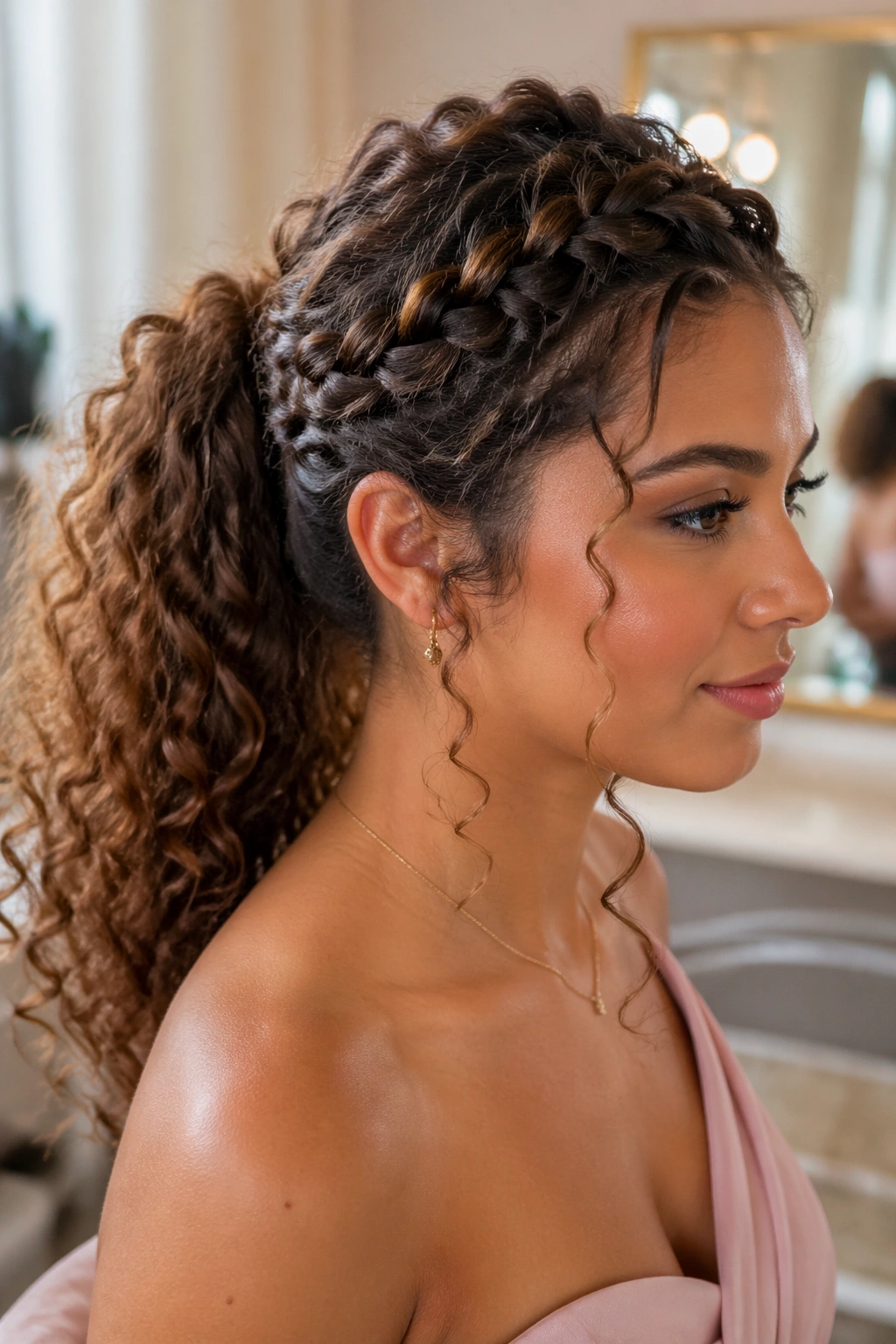
A braid along the crown can keep curly layers from slipping out while still leaving the ponytail soft and full. It also creates a nice line across the head, which can help balance heavier curls in the back. This is a smart choice when the bridesmaids have a lot of thickness at the top and want a style that stays put.
The braid can be very small — almost like a hidden headband — or fuller if the look needs more shape. Either way, it should curve cleanly into the ponytail base. Once that connection looks smooth, the rest of the style is easy.
This version works across a lot of dress shapes, which makes it practical for a bridal party. The braid gives the front structure. The curls give everything else life.
17. Waterfall twist ponytail
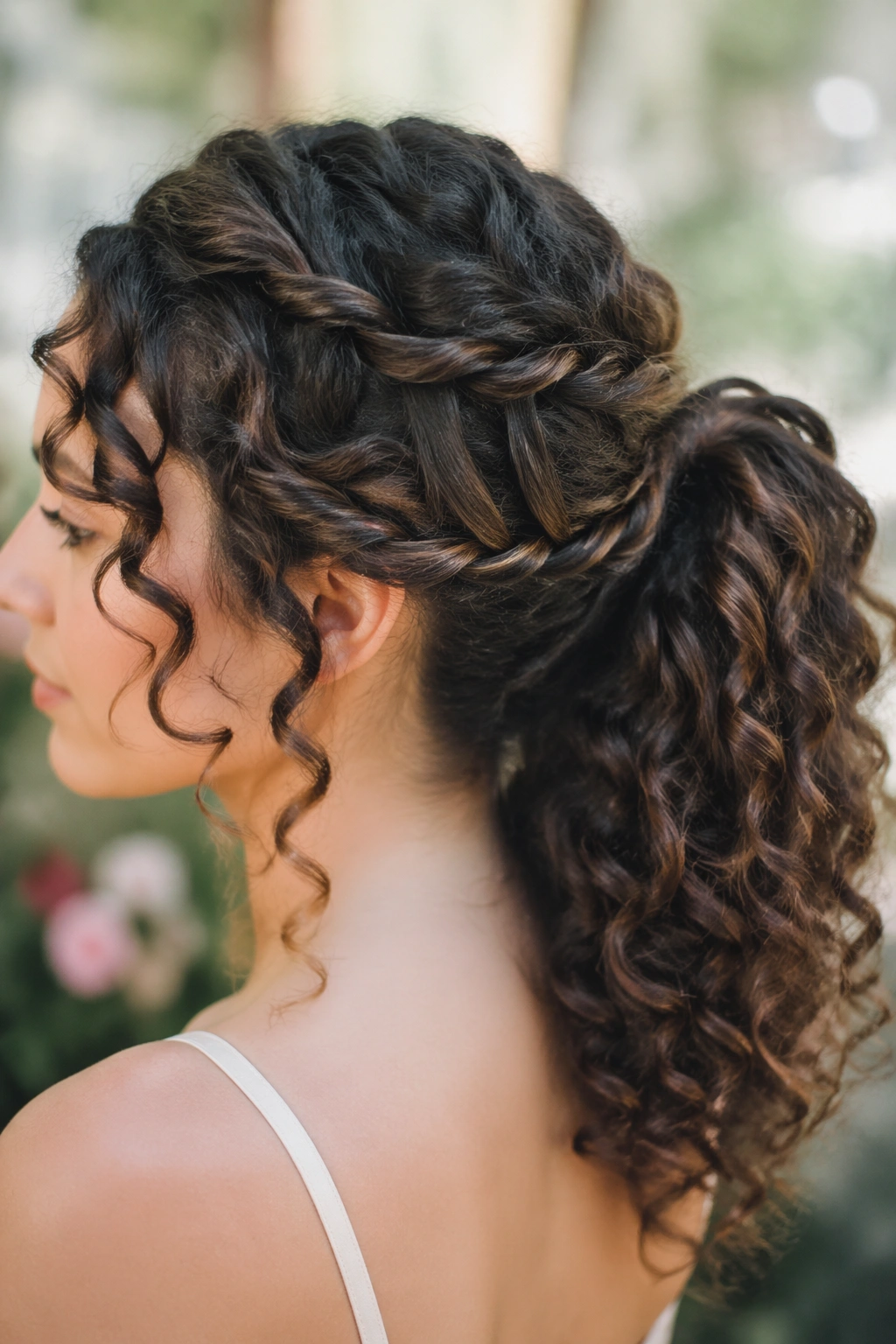
A waterfall twist keeps the front of the hair moving instead of locked down. Sections from the hairline are twisted back and dropped into the ponytail, creating a soft, woven effect that looks complicated but doesn’t need to be. On curly hair, those loose strands blend naturally into the tail.
This style is good for people who want texture around the face without a true half-up shape. It’s also useful when the curls vary a little from one side to the other, because the twist makes the front look intentional. That kind of balance matters in photos.
Let the twists stay loose. Tight twisting can make the style look overworked. The charm here is in the softness. If it starts feeling rigid, stop.
18. Low knotted ponytail
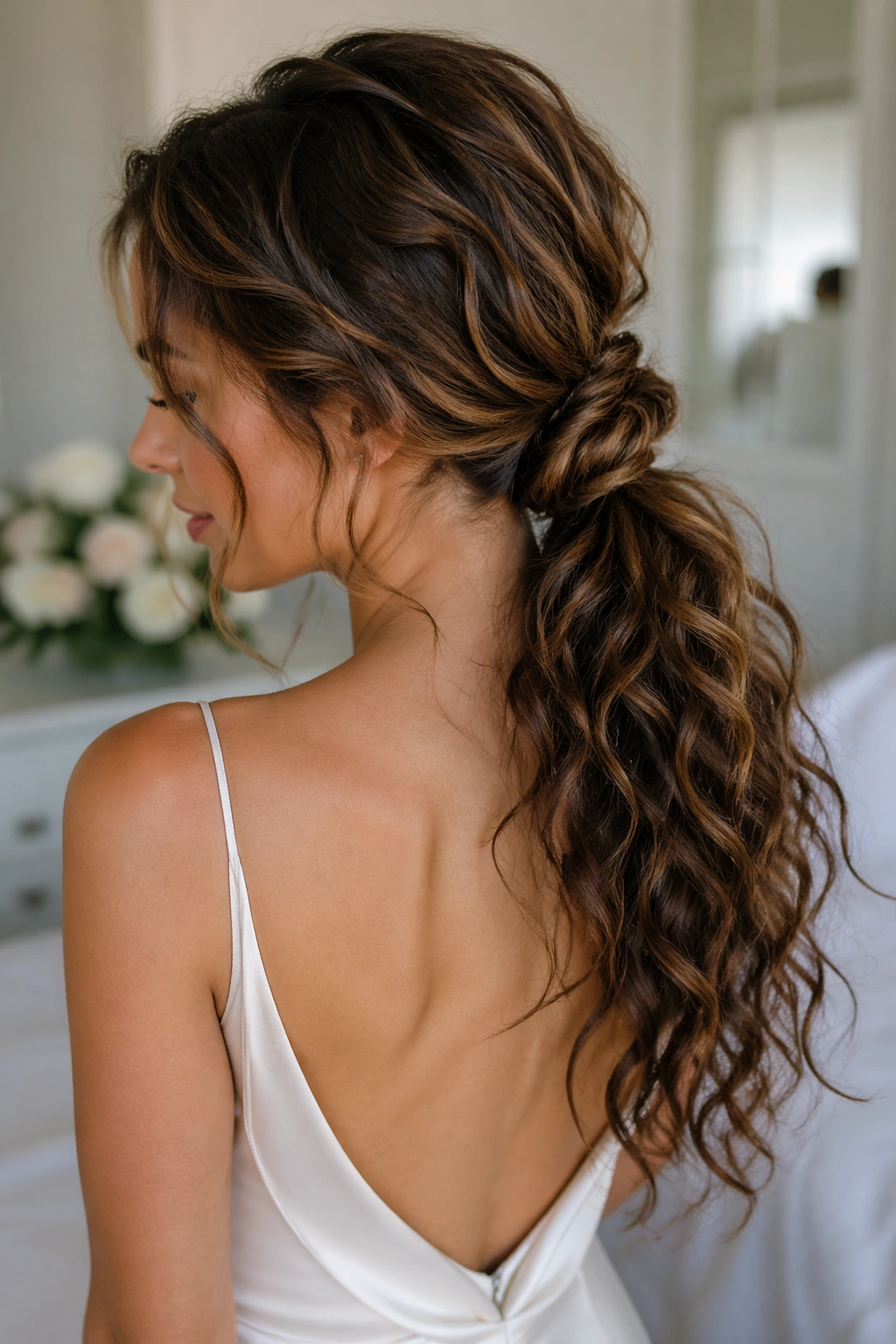
A low knotted ponytail has a nice, modern edge without losing the warmth curly hair brings. The top section is tied into a soft knot or loop before the rest is secured, which creates shape at the nape and a little interest before the ponytail even starts. Then the curls fall down naturally.
This works well for bridesmaid dresses with open backs. The knot sits neatly against the neckline and keeps the focus where the dress leaves room. It’s also a good option if you want to hide a thick elastic or add a small pin underneath.
The knot should look loose enough to stay soft. Think tied, not cinched. That distinction is everything here.
19. Teased crown ponytail with big volume
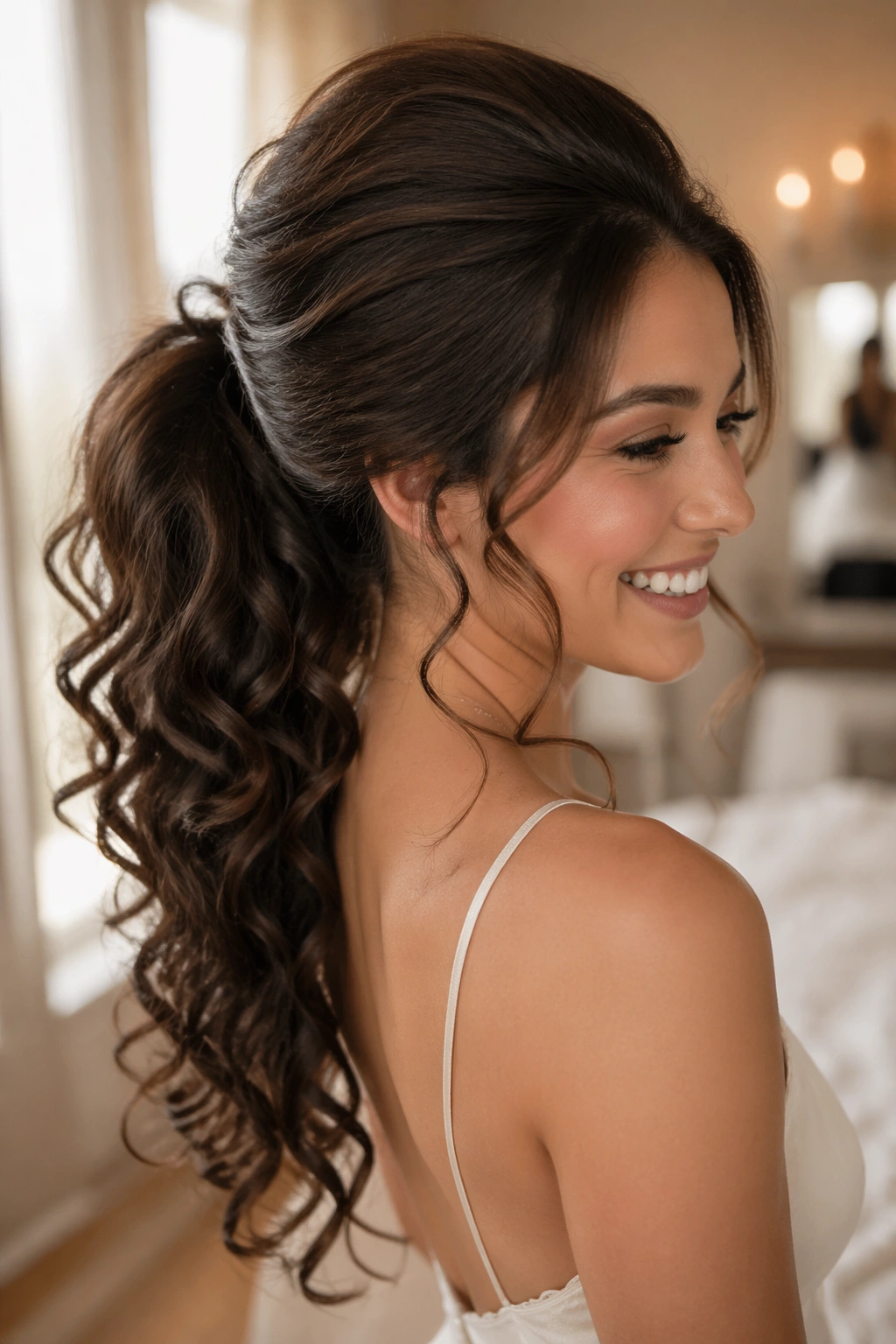
A little teasing at the crown can make curly hair look full in the right way, not puffy in the wrong way. Start with a clean part, lift small sections at the crown, and backcomb only the underside before smoothing the top layer over it. That gives height without obvious roughness.
This is the ponytail for bridesmaids who want their hair to feel present in group photos. It reads well from every angle and keeps the head shape from looking flat under a veil or a decorative comb. The tail itself can stay loose and curly, which softens the volume up top.
Use this only if the hair can handle a bit of lift. Fine curls may need less teasing than you think. Too much, and the style stops feeling airy.
20. Sleek root, big curl ponytail
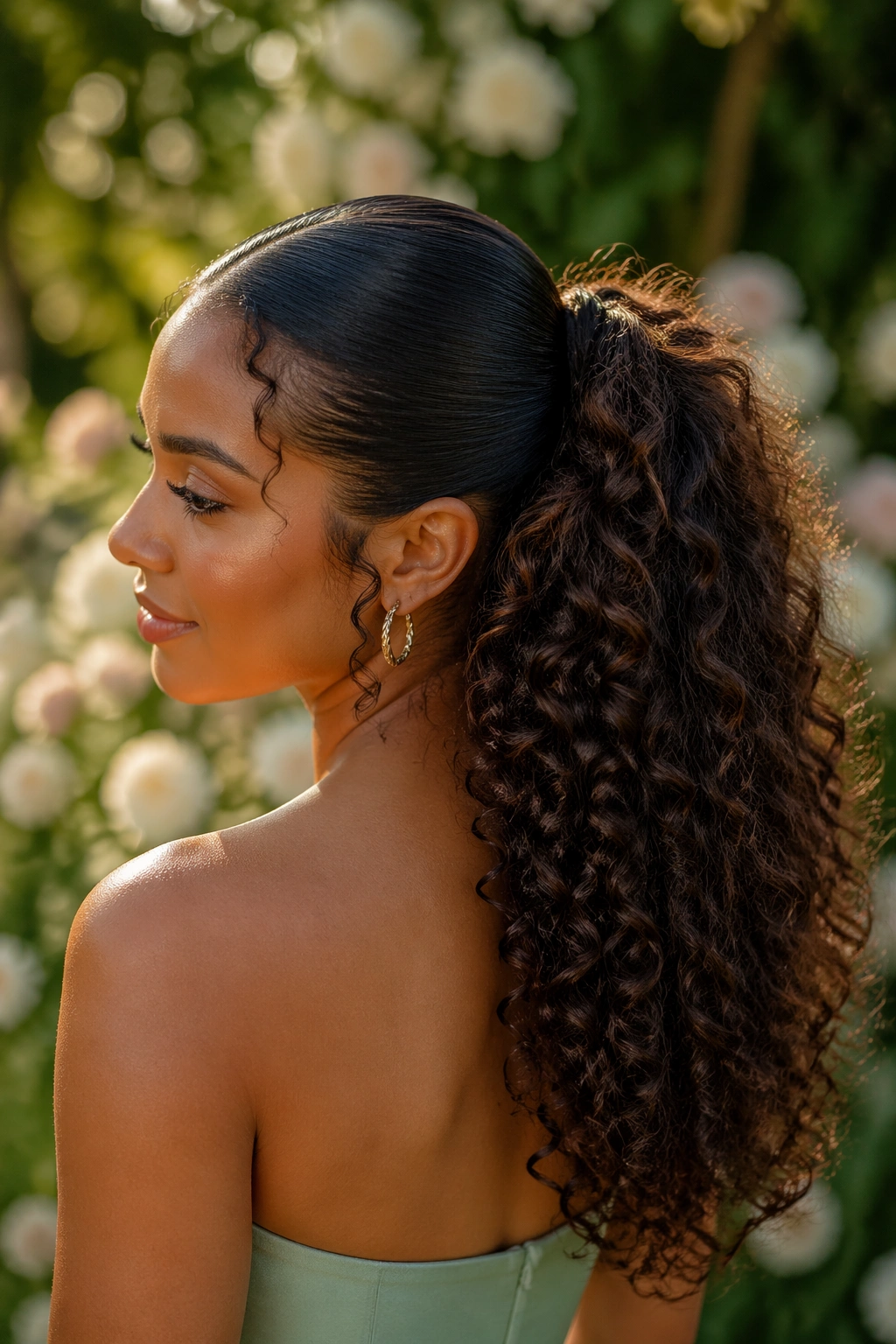
This version depends on contrast. The roots stay smooth and polished, while the ponytail length stays big, glossy, and full of curl. It’s a clean approach that keeps the face controlled and lets the lengths do all the showing off.
The result is especially strong on long curly hair that has a natural mix of tighter and looser sections. By smoothing the root area, you create a tidy base that works with formal dresses. By leaving the tail textured, you avoid the stiff look that straight ponytails sometimes get.
A fine-tooth comb, a little styling cream, and a strong elastic are enough here. The hair should look touched on purpose, not flattened by force. That is the line to hold.
21. Gold-cuff ponytail
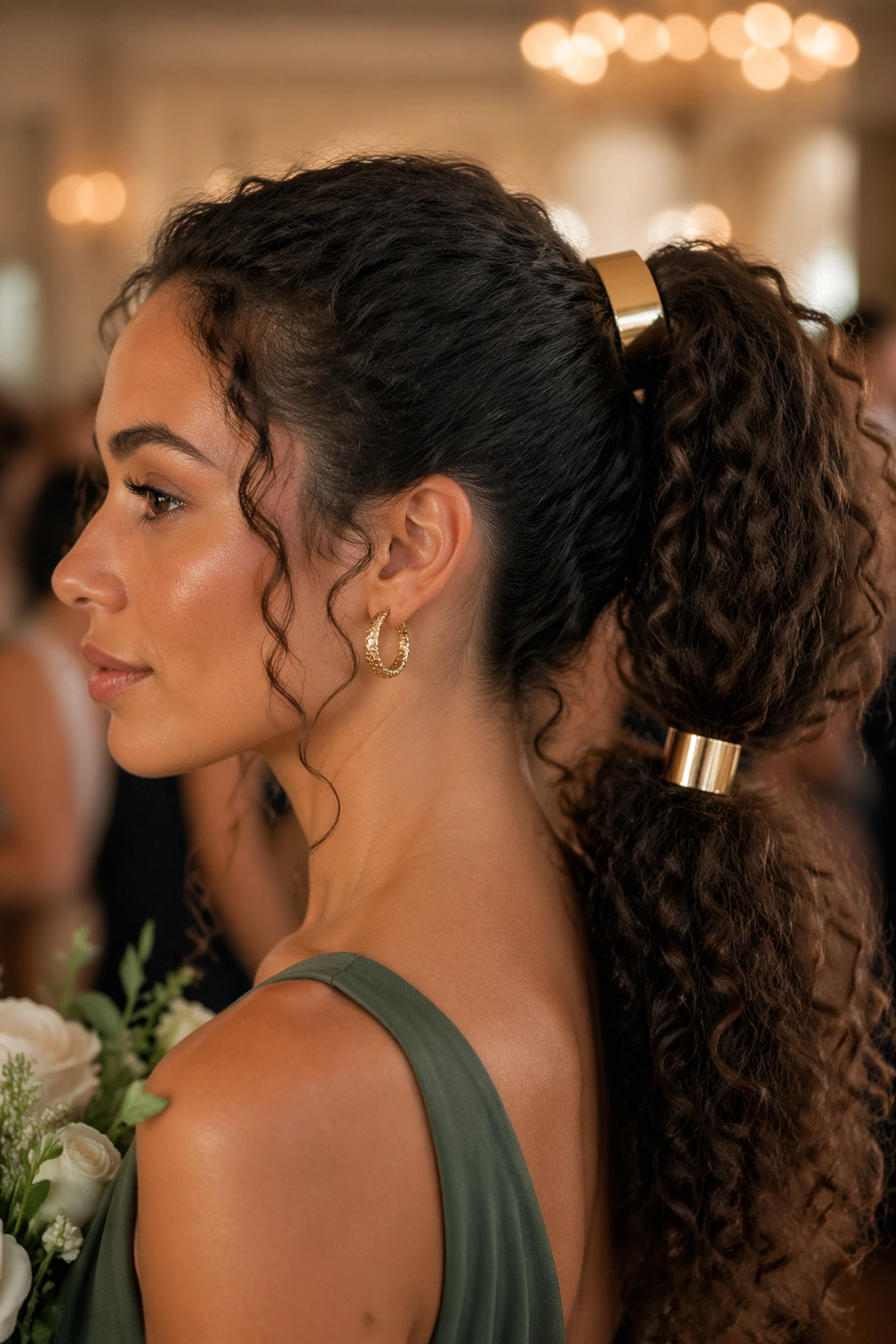
Gold cuffs give a ponytail a sharper finish. Slide one or two cuffs onto a braid, wrap them around the base, or cluster them on one side near the elastic. Curly hair makes the metal stand out because the texture gives the accessory something rich to sit against.
This style works when the rest of the outfit is fairly simple. The cuff becomes the accent instead of a necklace or a heavy hair comb. Keep the metal tone consistent with the rest of the jewelry so nothing feels random.
A single cuff can be enough. Two can work if the ponytail is thick. More than that, and the style starts to look decorated instead of styled. There’s a difference.
22. Edge-detail ponytail for coily curls
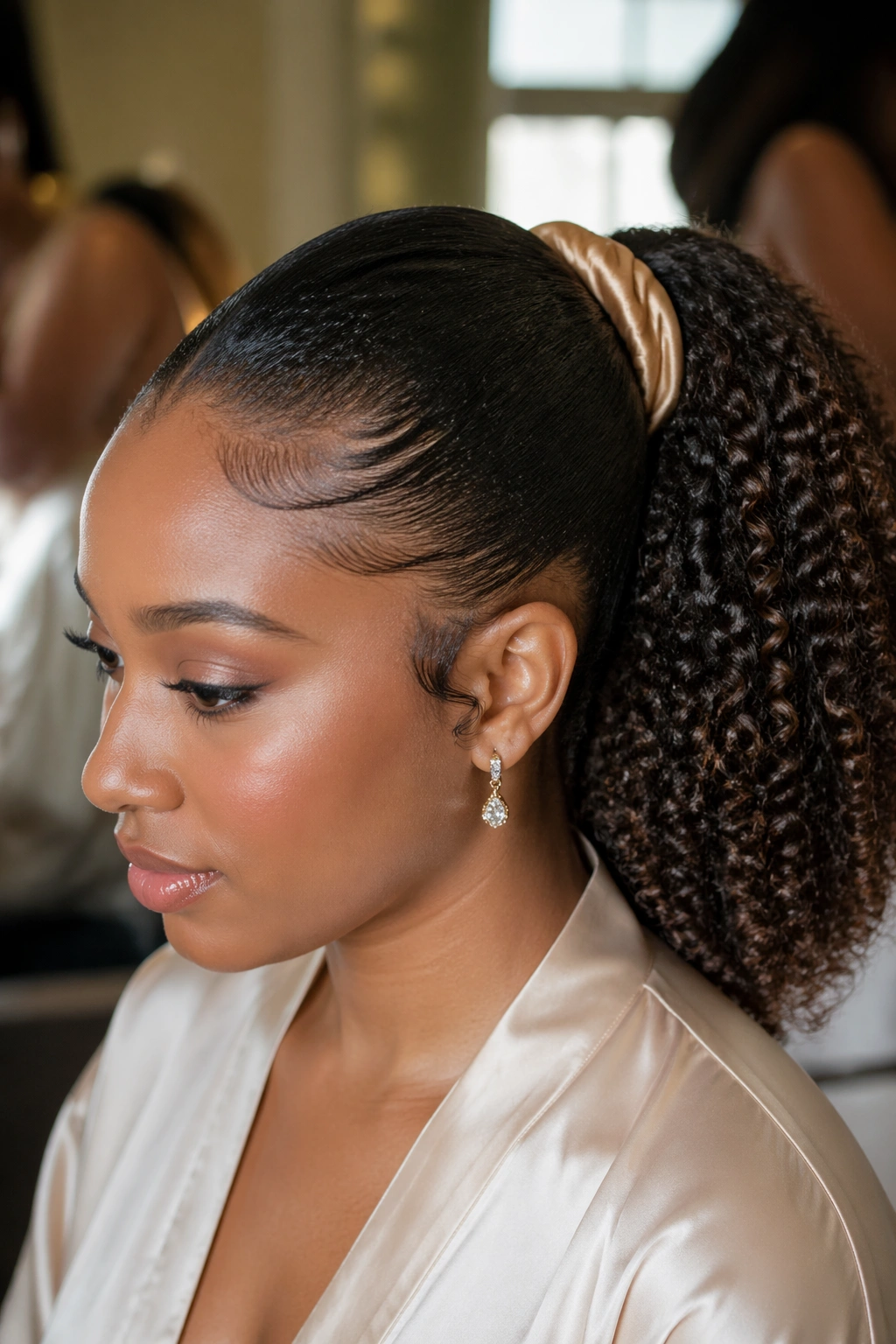
Edges matter here, but not in the overworked sense people sometimes think of. A soft, neat hairline can make a coily ponytail look finished without making it look rigid. Smooth the front with a light gel, brush the sides toward the base, and let the puff or ponytail keep its volume.
This style is especially useful when the dress is formal and the neckline is open. The hairline stays clean, which gives the face a tidy frame, while the length keeps all the movement and texture people actually want. A satin scrunchie or wrapped tie keeps the base from looking plain.
If baby hairs are part of the look, keep them small and controlled. A few swirls are enough. Nobody needs a hard shell around the forehead.
23. Double-twist ponytail
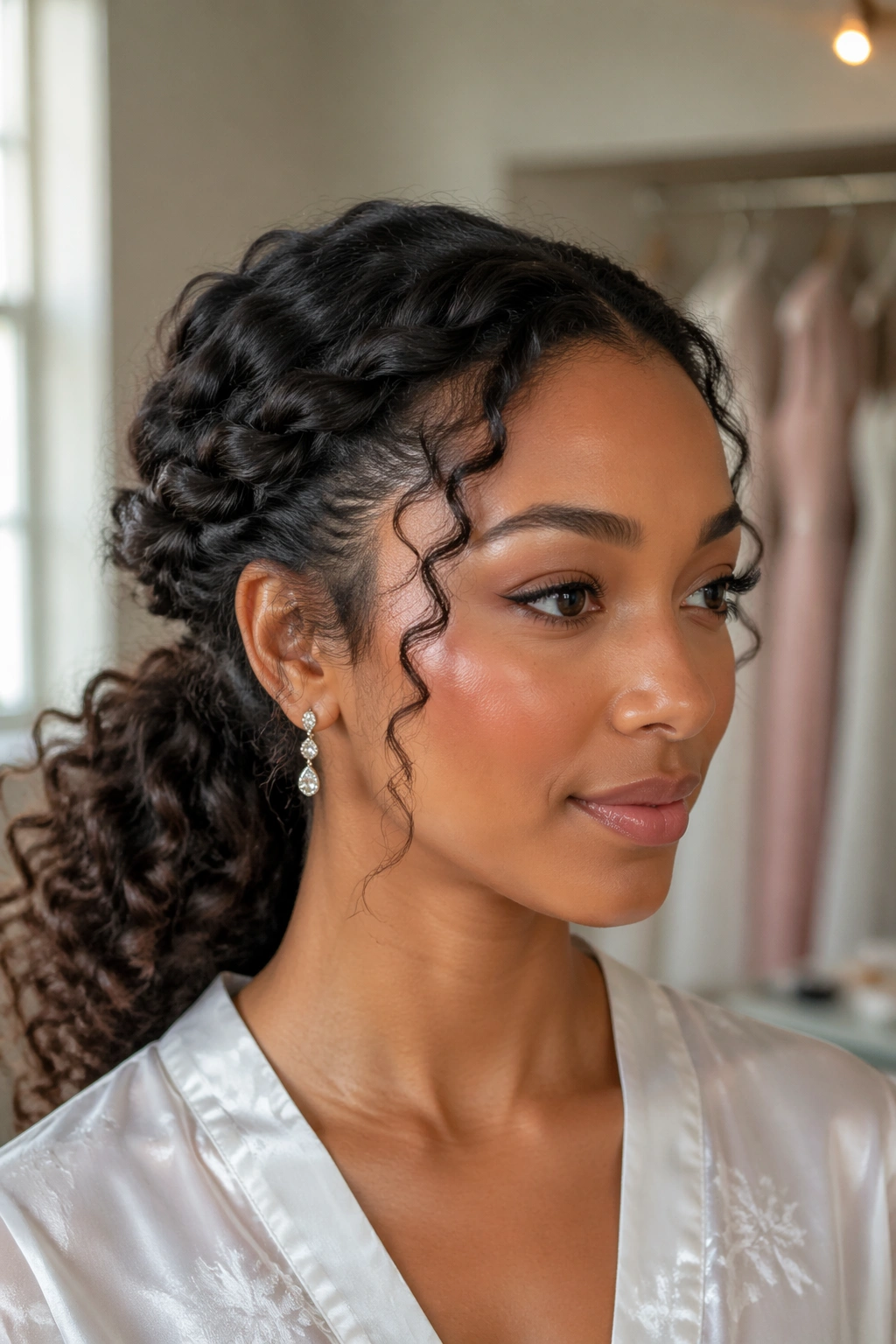
Two twists can give a curly ponytail a beautiful bit of structure. Twist one side from the temple back, then do the same on the other side and join both at the nape or crown. The twists create a soft ridge that guides the eye into the ponytail without making the style feel heavy.
This is a nice answer when you want a little more shape than a basic ponytail but less weight than a full braid. It also works well for mixed curl patterns, because the twists help keep shorter pieces tucked in. That means fewer flyaways and less mid-event fussing.
Keep the twists loose enough to show texture. If they’re too tight, the hair can look flattened. The whole point is to keep some air in it.
24. Asymmetrical ponytail draped over one shoulder
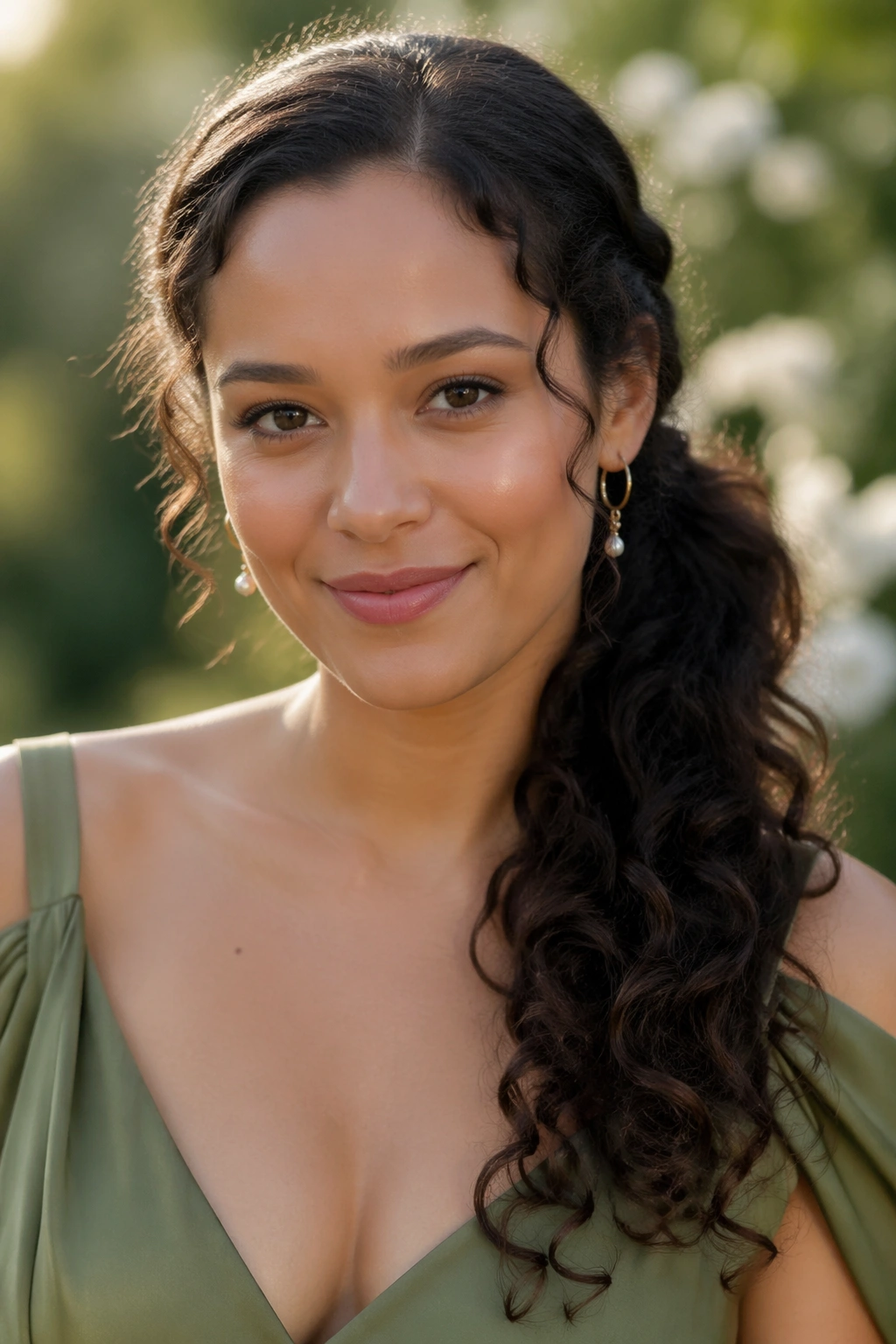
An asymmetrical ponytail is a good choice when a bridesmaid dress already has a strong side detail. One side of the hair is smoothed back more tightly, the part leans off-center, and the ponytail sits low enough to rest over one shoulder. It feels deliberate and a little dressier than a standard side pony.
What I like here is the line it creates. The eye follows the shoulder, then the ponytail, then the curls at the end. It works especially well with earrings because the hair leaves one side of the face more open.
Use a soft finishing spray, not something crunchy. The drape should move when the person turns her head. If it stays frozen, the style has gone too far.
25. Ponytail with baby braids and clips
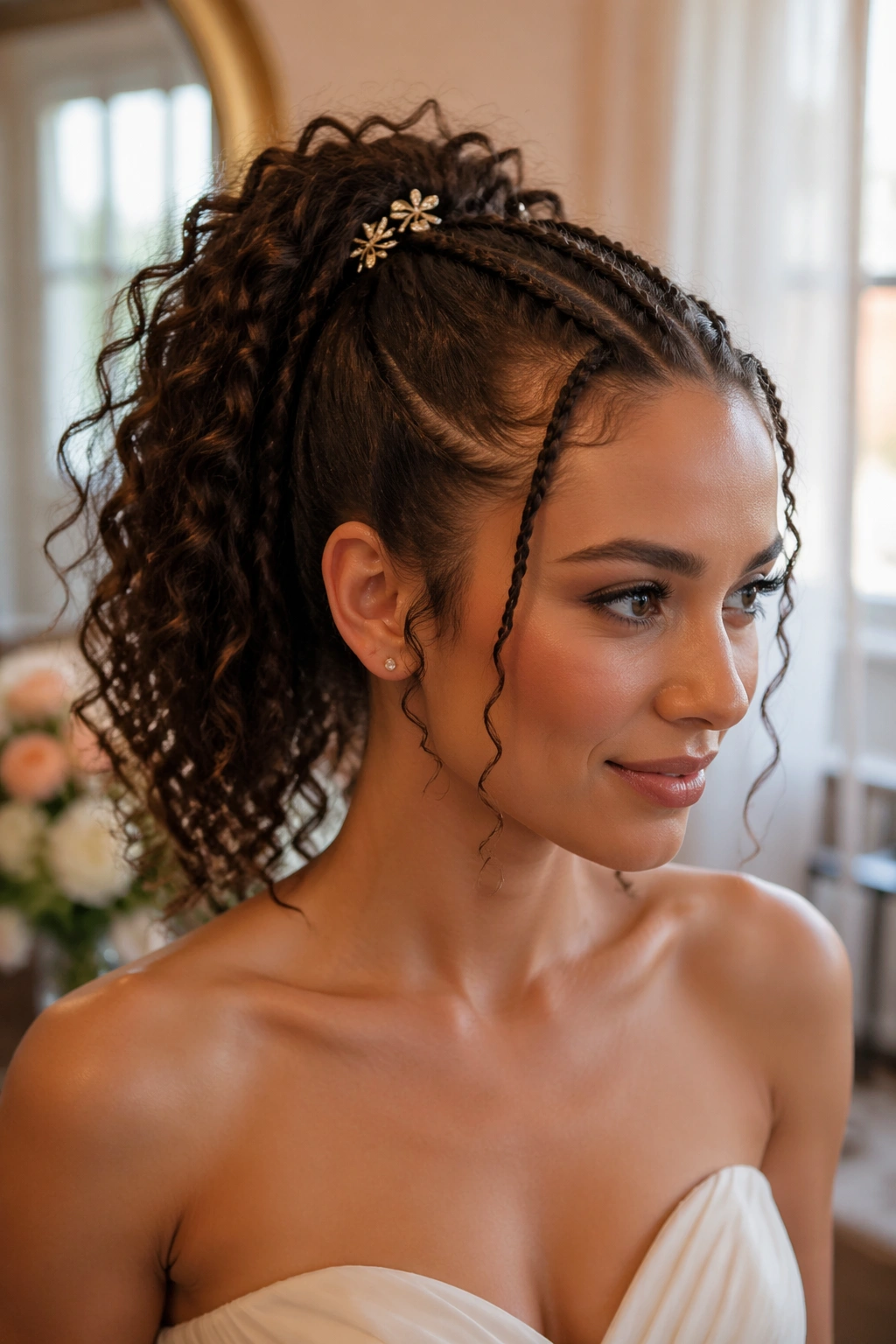
Baby braids can give a curly ponytail a lived-in, pretty edge. Add one or two very thin braids near the temples or around the part, then clip them into the ponytail base with small metallic clips or tiny pins. The look feels detailed without becoming fussy.
This is a good choice for bridal parties that want something a little less formal but still thoughtful. It also works if the group wants a matching detail across different curl types, because the braids can be adjusted to suit each head. The clips do the rest.
Keep the braids narrow. If they start competing with the ponytail, they’re too big. Small is the move.
26. Soft bubble ponytail with loose spacing
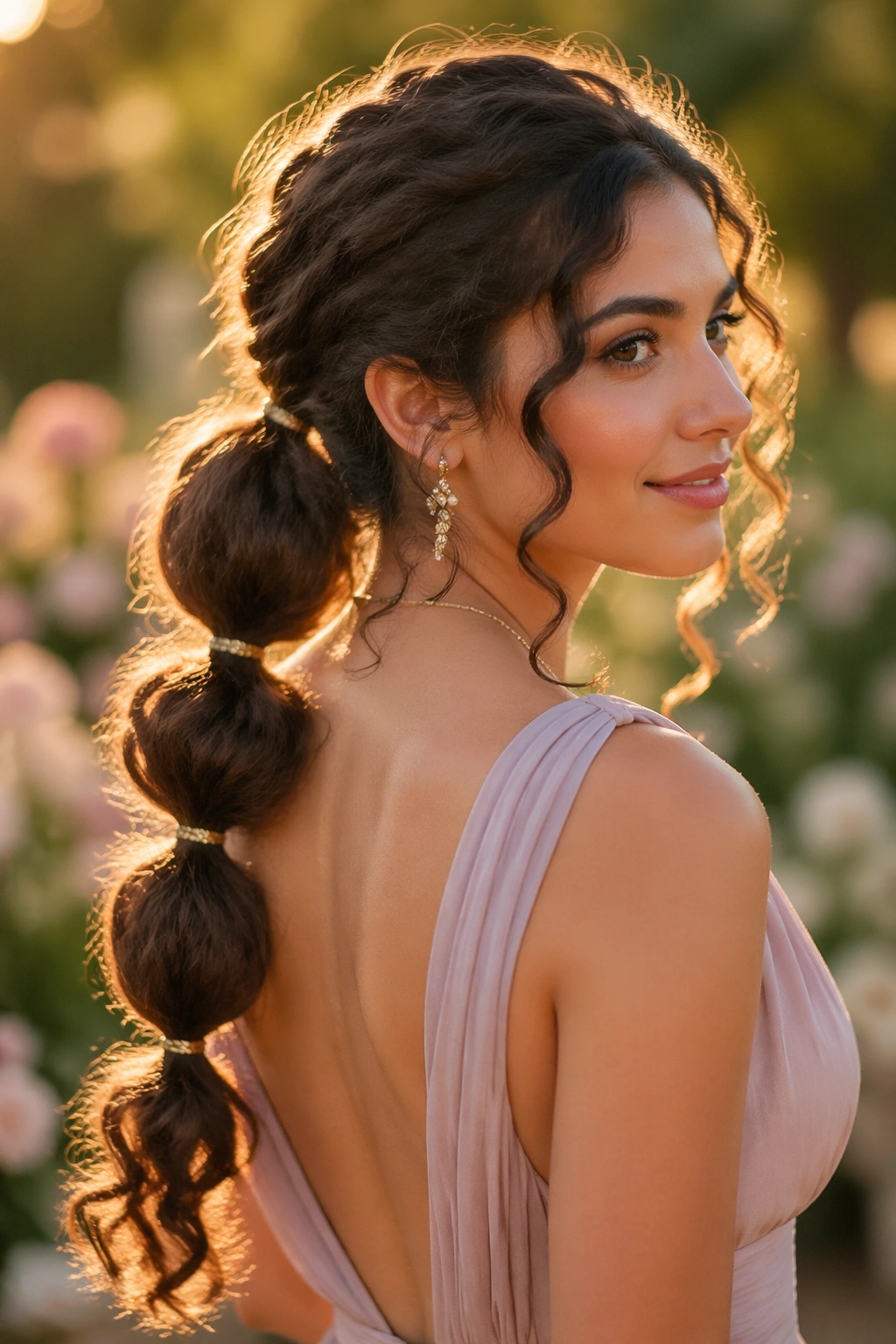
This version takes the bubble ponytail idea and eases it up. The elastics are spaced farther apart, the sections are puffed out less aggressively, and the curls between each bubble stay looser. The result looks romantic instead of playful.
It’s a strong pick for long hair with medium curl pattern, especially if the bride wants the bridesmaids to look coordinated but not identical. The bubbles give rhythm, while the soft spacing keeps the style from looking too engineered. That balance matters.
Use small clear elastics and tug each bubble gently from the sides, not the center. You want rounded sections, not inflated balloons. The difference is noticeable.
27. Floral ponytail
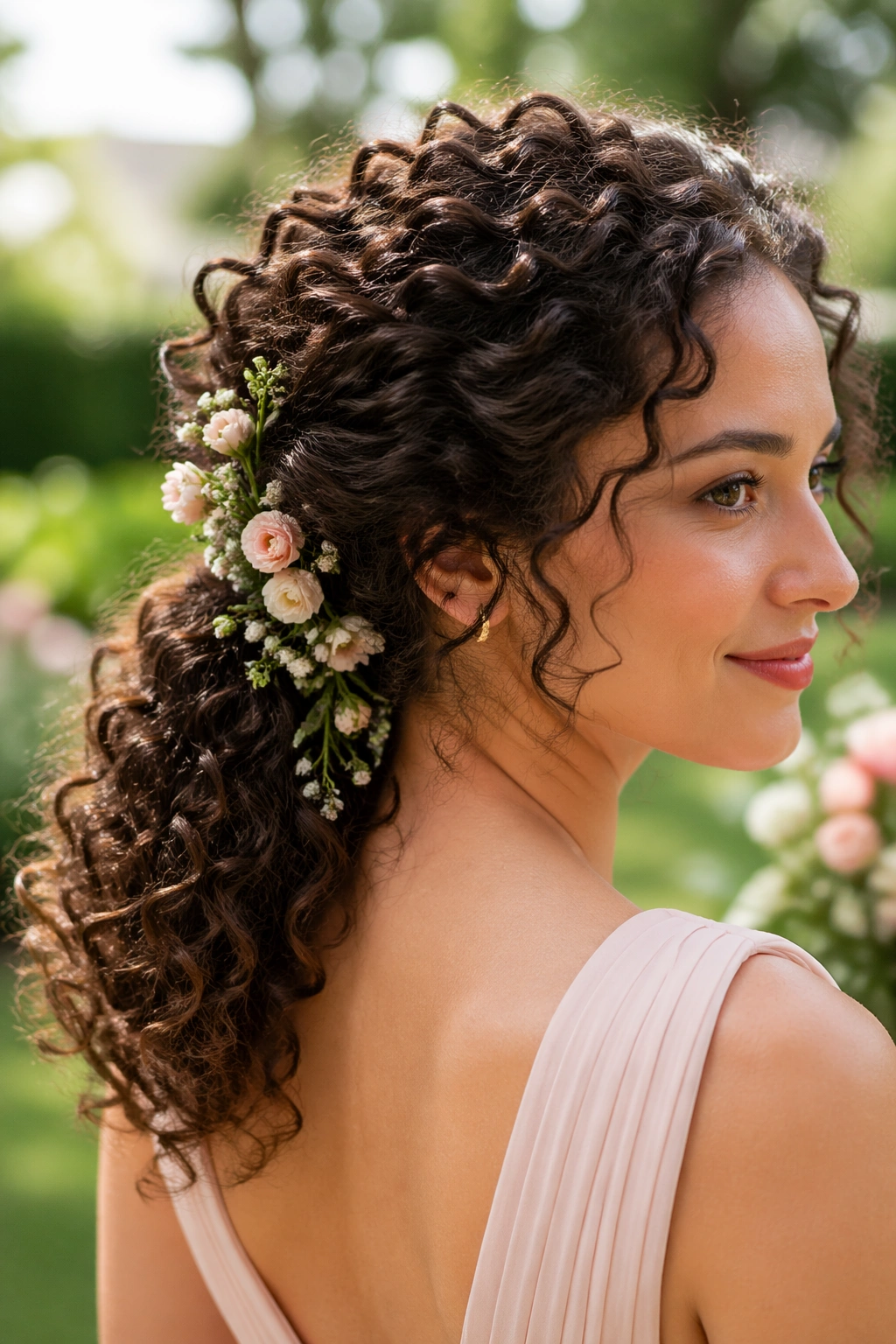
Fresh flowers or realistic faux blooms can sit beautifully in a curly ponytail. Tuck one bloom into the base, or place two small flowers just above the elastic so they peek through the curls. On curly hair, the texture helps hold the flowers in place and makes the arrangement feel woven in.
This style works best when the flowers are small enough not to overpower the hair. Tiny roses, buds, sprigs of greenery, or even one statement blossom can be enough. The ponytail should still read as a ponytail first, not a bouquet pinned to the head.
Choose flowers that echo the bouquet rather than competing with it. Two matching details are better than six random ones. That’s true here and pretty much everywhere else.
28. Veil-friendly low ponytail with braided base
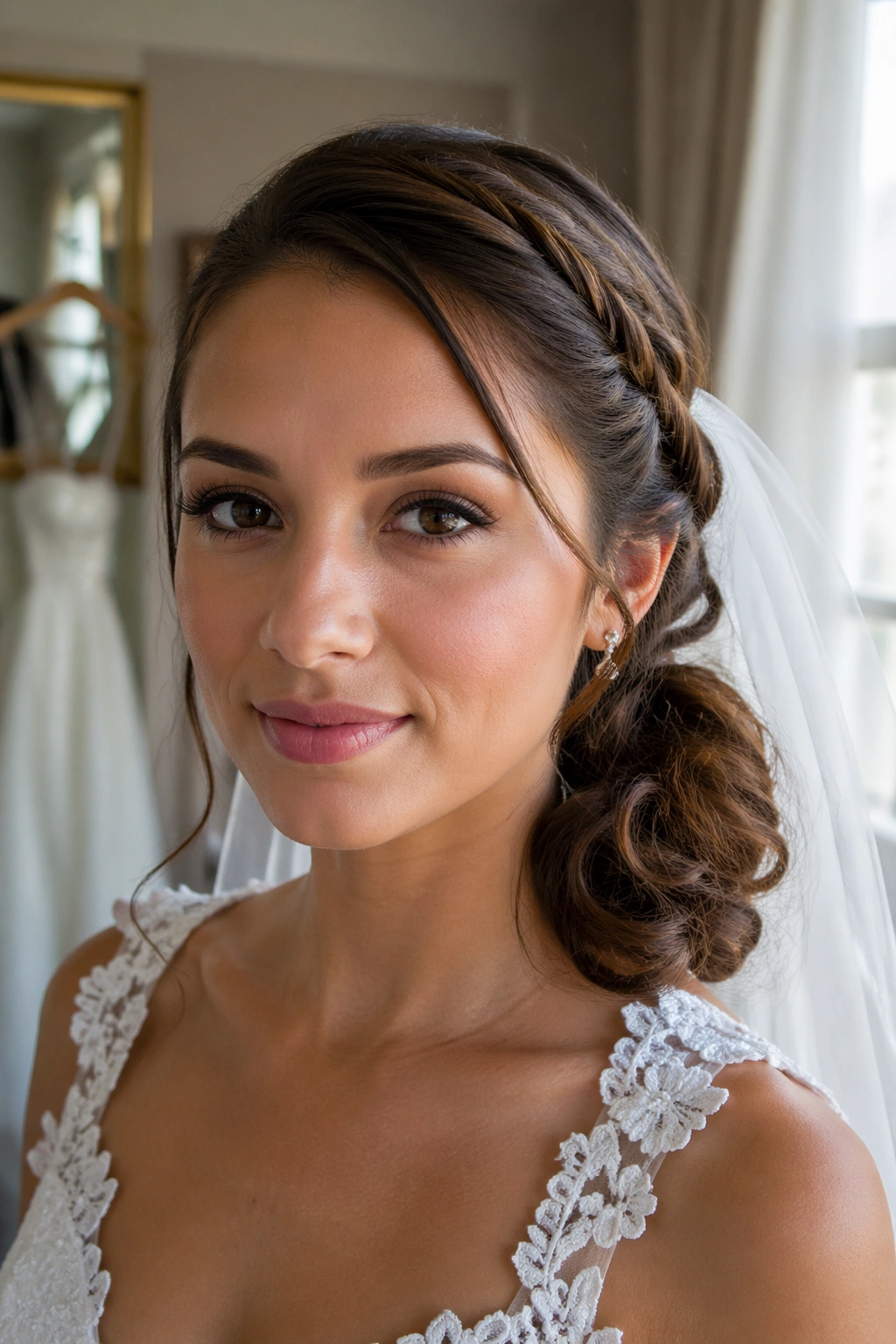
A low ponytail with a braided base is one of the easiest ways to make curly hair veil-friendly. The braid sits low enough that the veil comb can tuck in cleanly above it, while the ponytail itself rests at the nape and stays out of the way. It’s practical, which sounds boring until you see how useful it is in real life.
The braid also gives the style a little grip, which helps keep the veil from sliding. If the curls are thick, the base should be pinned flat before the veil goes in. If they’re finer, a little padding under the braid can give the style a fuller outline.
This is the style I’d send someone toward when they want the veil to behave. No fighting. No shifting. That alone makes it worth a look.
29. High ponytail with dramatic curl cascade
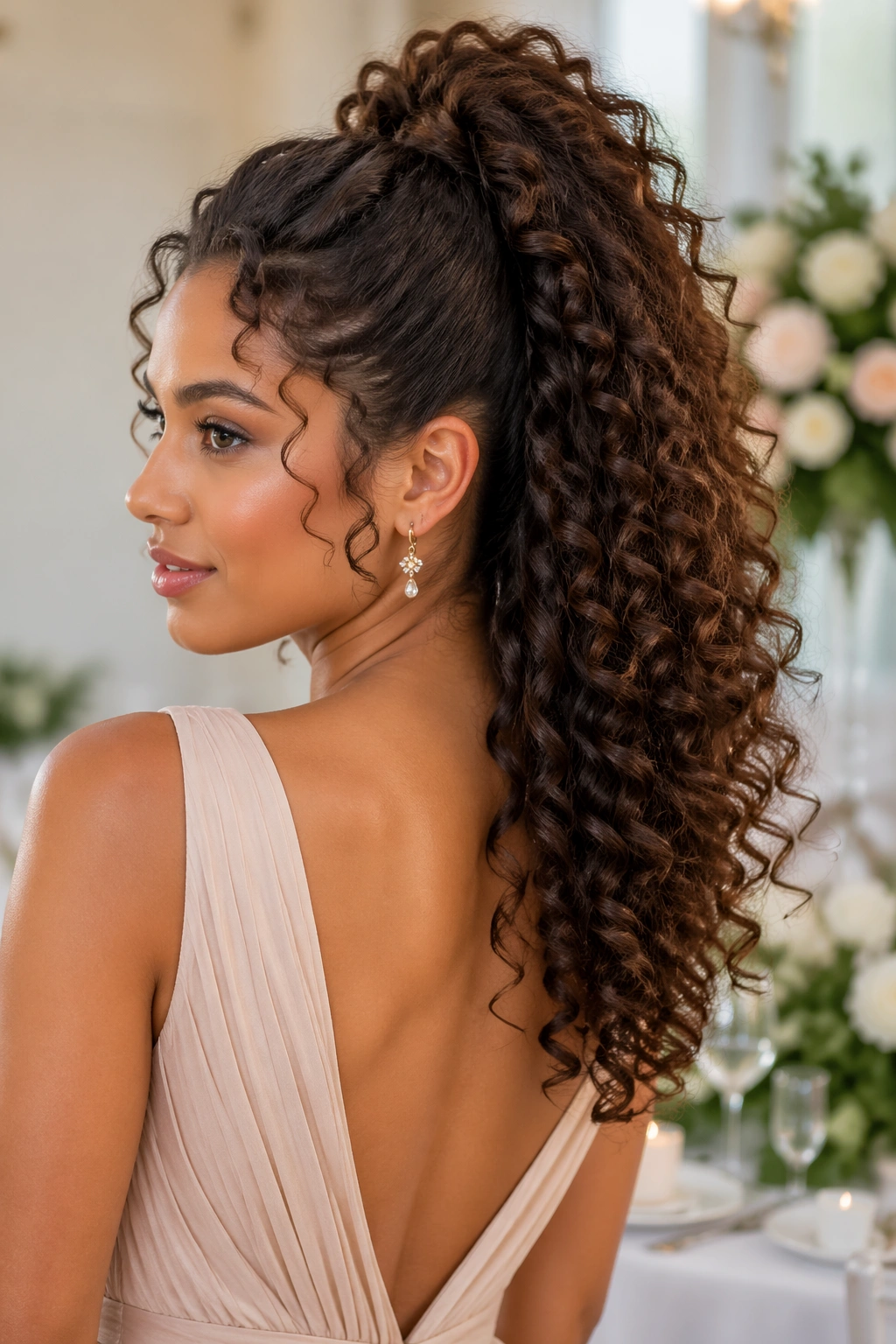
If the bridal party wants a ponytail that actually looks special in photos, this is the dramatic one. The base sits high, the crown gets a clean lift, and the curls fall in a long cascade that shows off length and texture from the back. It has a little theater to it, which is not a bad thing at a wedding.
The key is density. The tail should look full enough to hold its shape, not stringy or thin at the ends. If the curls need help, define the bottom half with a medium barrel iron and separate them by hand once they cool.
This style pairs well with bold earrings and simple necklines. The ponytail is the accessory. Everything else should make room for it.
30. Minimalist polished curly ponytail
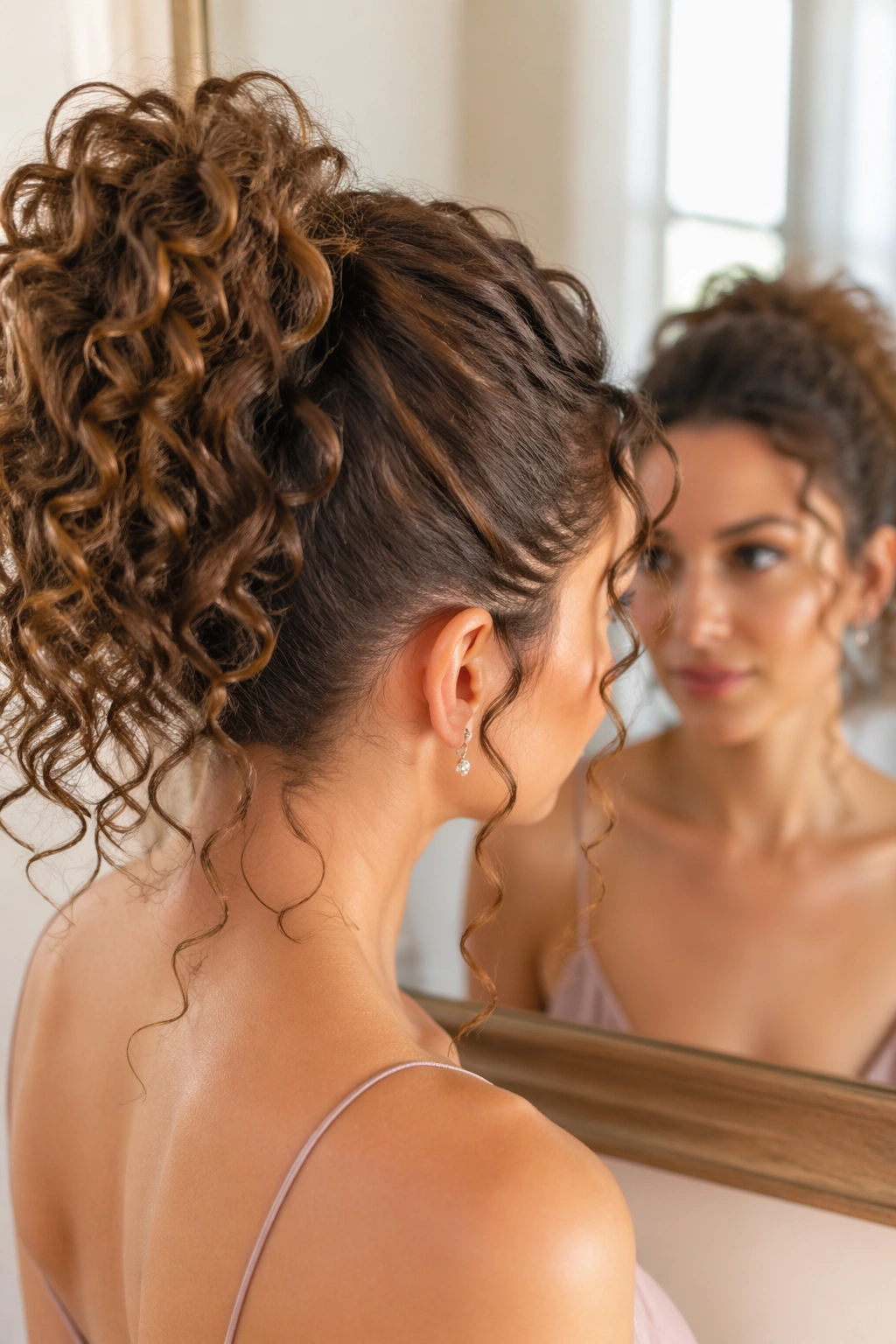
A minimalist curly ponytail is harder to pull off than it looks. The shape has to be clean, the crown smooth, and the curl pattern controlled enough to look tidy without losing personality. There’s nowhere to hide in a style like this.
That’s also why it works so well for a bridesmaid lineup. It lets the dress, makeup, and bouquet stay in charge while the hair does its job quietly. If someone wants to look elegant without a lot of decoration, this is the one to point them toward.
Keep the base wrapped, the ends defined, and the flyaways soft rather than shellacked down. Clean does not have to mean severe. In curly hair, that difference is everything.