



There is a specific kind of satisfaction that comes from sitting in a stylist’s chair and feeling the tension of a fresh set of cornrows. It is a precise, deliberate process. When you combine that structural integrity with the versatility of a ponytail, you get one of the most reliable, clean, and functional hairstyles in existence. A side cornrow ponytail keeps your hair off your neck while providing a graphic, intentional look that works just as well in a corporate office as it does on a casual weekend.
The beauty of this style lies in the tension and the parting. Whether you are working with your natural hair texture or using extensions to add volume and length, the technique determines the longevity of the style. Most people struggle with the side sweep because they do not account for the natural growth pattern of the hairline. If you fight the way your hair wants to lay, the style will not last. You have to work with your edges, not against them.
This is a look that demands patience. It requires clean parts, a steady hand, and the right product to ensure that the braids stay tight without causing unnecessary stress to the scalp. If you are ready to move past a basic ponytail, the following styles offer a range of complexity, from simple protective looks to intricate designs that act as a focal point.
1. Classic Side-Swept Cornrows
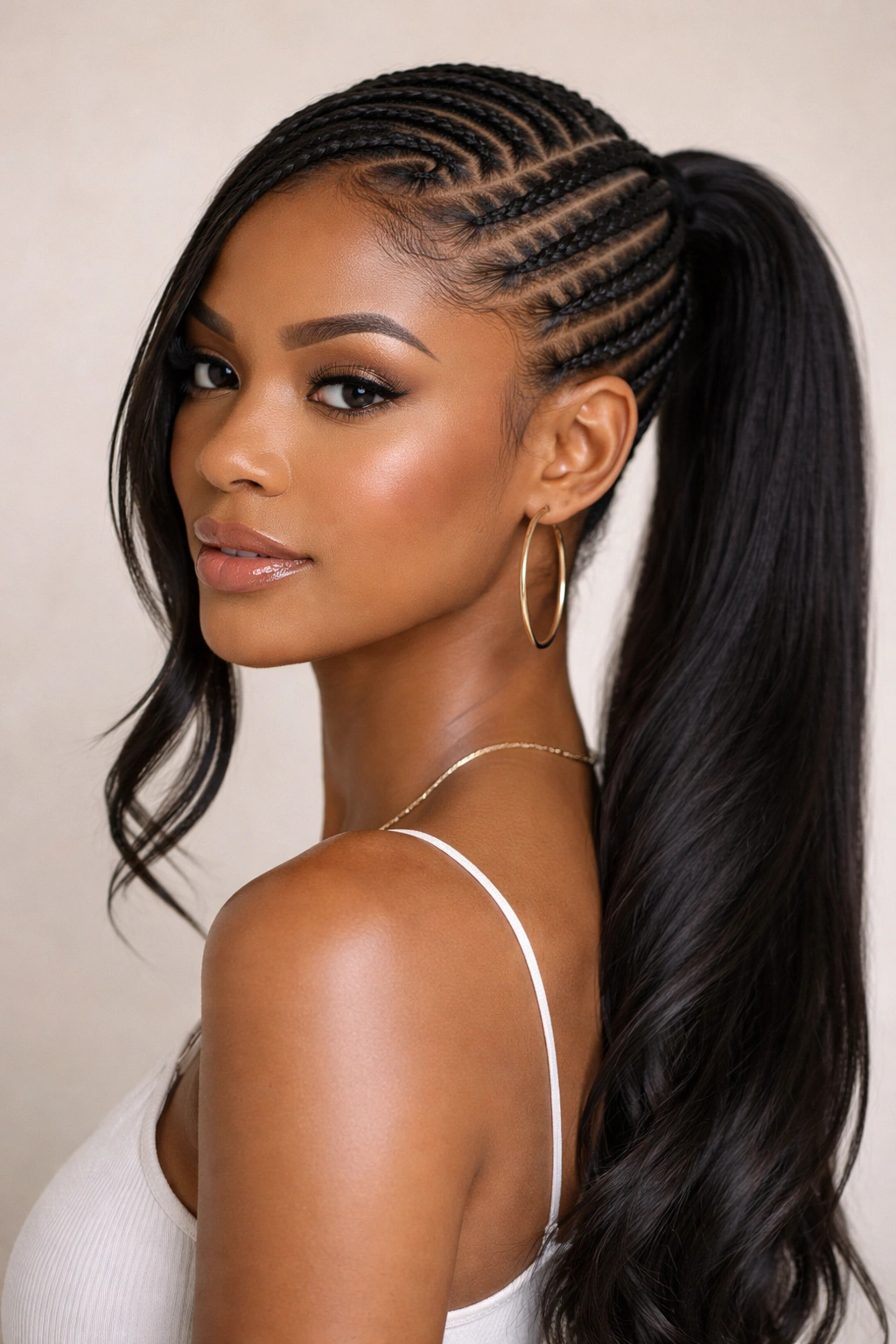
This is the baseline for the side-cornrow ponytail. It relies on horizontal or diagonal parts that sweep all the hair toward one ear, where the remainder of the length is gathered into a ponytail. The key here is the direction of the braids.
Why It Works for Daily Wear
The classic side-sweep is structurally sound because the hair is gathered in the direction it wants to fall naturally. You avoid unnecessary pulling at the roots, which can happen with styles that force hair in the opposite direction. It provides a clean, understated aesthetic that frames the face without overwhelming your features.
Application Tips
- Use a rattail comb to create sharp, crisp parts between each cornrow.
- Apply a light-hold edge control gel to the roots as you braid to ensure the flyaways are laid flat from the very beginning.
- Secure the ponytail with a snag-free hair tie, and wrap a small section of the extensions around the base to conceal the band.
Pro tip: Do not pull the braids too tightly at the hairline. This creates tension that leads to breakage over time. Keep the grip firm but comfortable.
2. Zig-Zag Parting Cornrow Ponytail
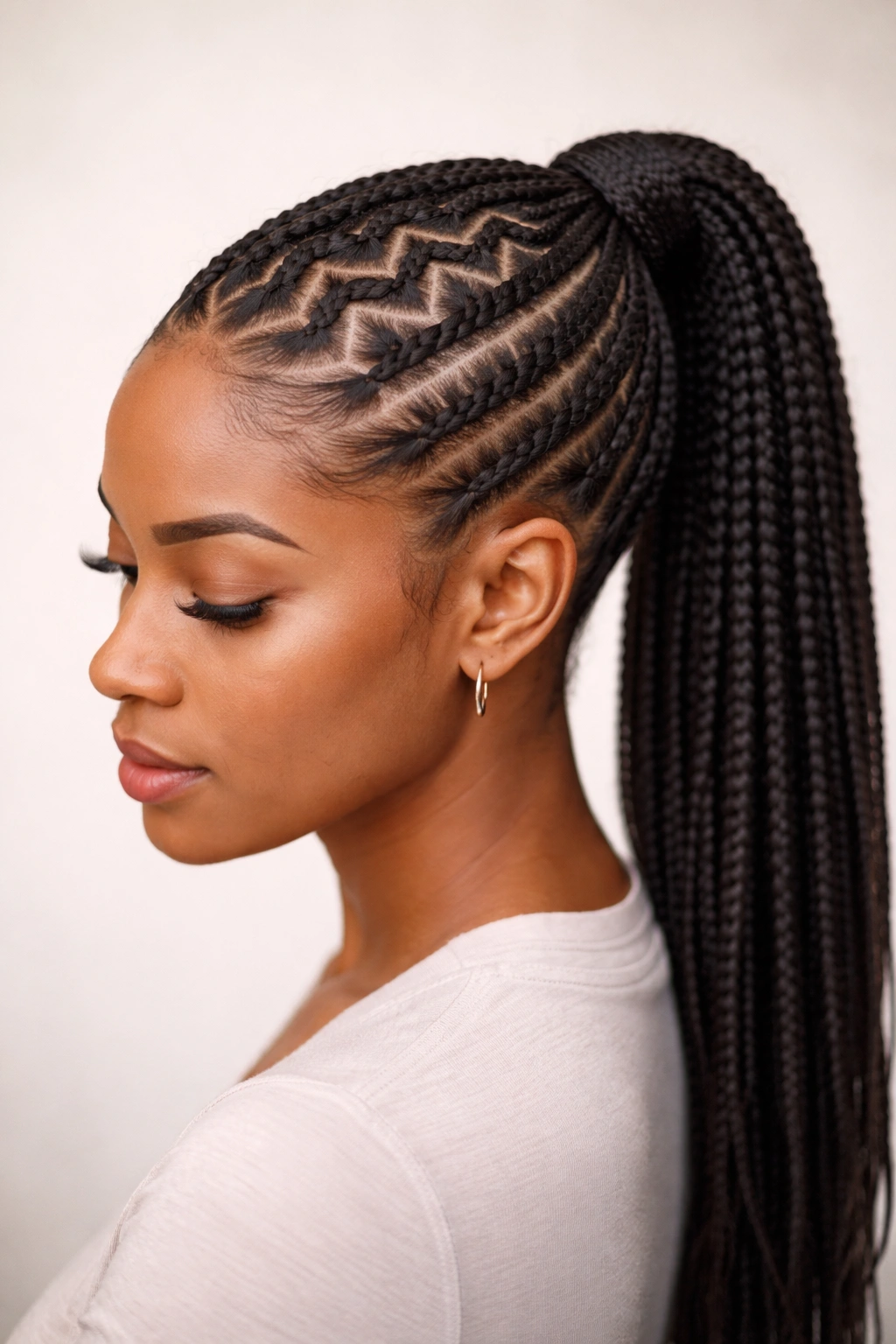
If you want to add visual interest to the scalp without relying on color or beads, the zig-zag part is the go-to technique. It breaks up the monotony of straight lines and makes the hairstyle look much more dynamic and intentional.
This style requires a bit more time in the chair, but the payoff is substantial. Instead of straight horizontal rows, your stylist will create a series of sharp, interconnected angles. The hair is still fed into a side ponytail, but the journey to that point is anything but direct.
When you have a zig-zag pattern, you should avoid using too much heavy product on the braids themselves. The pattern needs to be the star, and heavy oils can cause the braids to look greasy or separate prematurely. Keep the scalp moisturized, but leave the braid shafts relatively clean.
3. Feed-In Braids with Curly Ends
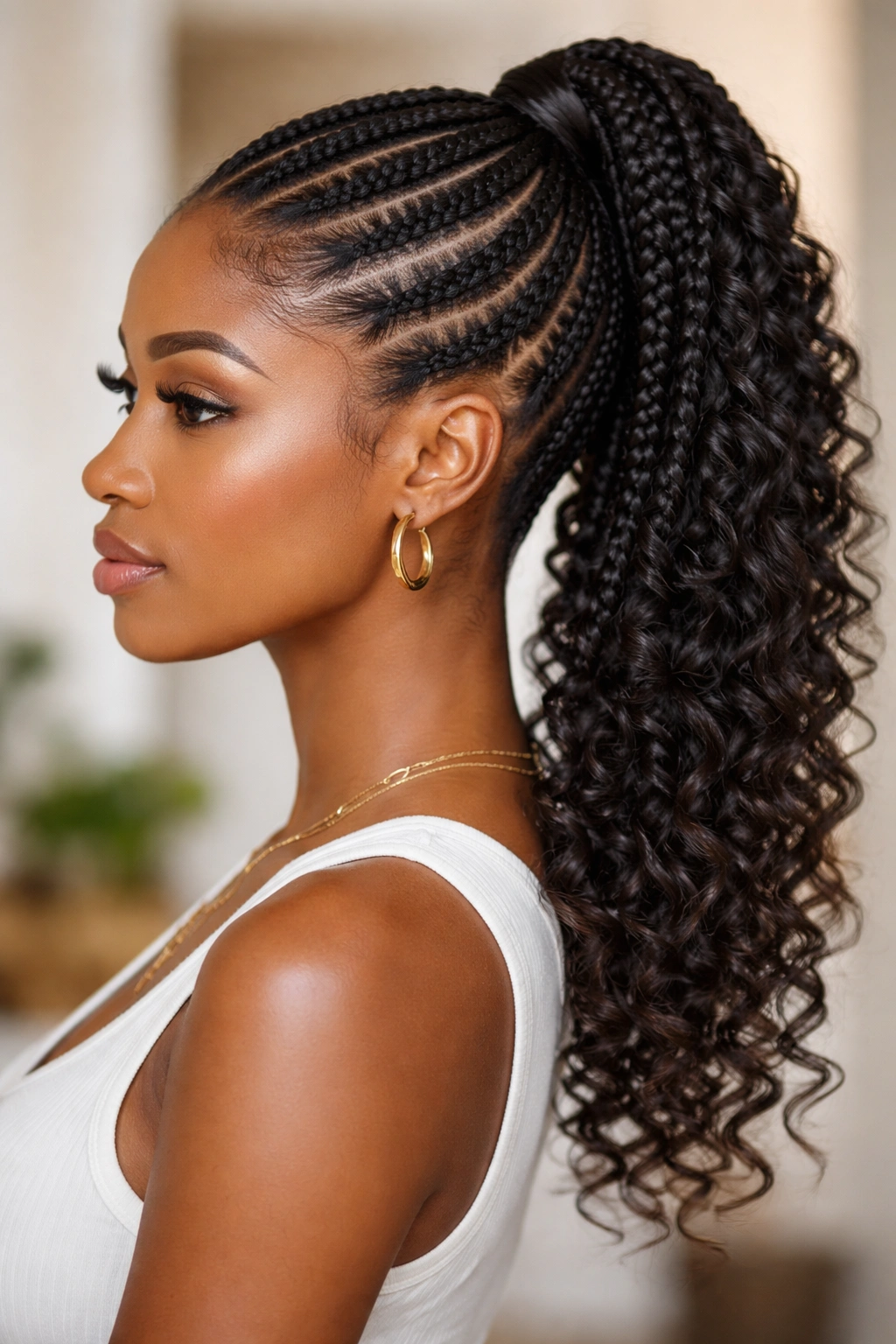
Feed-in braids are the foundation of many modern styles. This method involves starting a braid with your natural hair and “feeding” in synthetic braiding hair as you go. This creates a natural-looking start that is flat and flush against the scalp, rather than bulky.
The Volume Advantage
By feeding in the hair, you can control the thickness of the braid throughout its length. You want it to look tapered near the forehead and thicker as it approaches the ear. The curly ends add a layer of softness that contrasts with the geometric precision of the cornrows.
How to Maintain the Curls
- Dip the ends in boiling water to seal them, but use perm rods or flexi-rods before dipping to set the curl pattern.
- Apply a small amount of mousse to the curls every morning to revive the bounce.
- If the curls become frizzy, trim the ends slightly and re-dip them; this simple maintenance keeps the style looking fresh for weeks.
4. Sleek High Side Ponytail with Cornrows
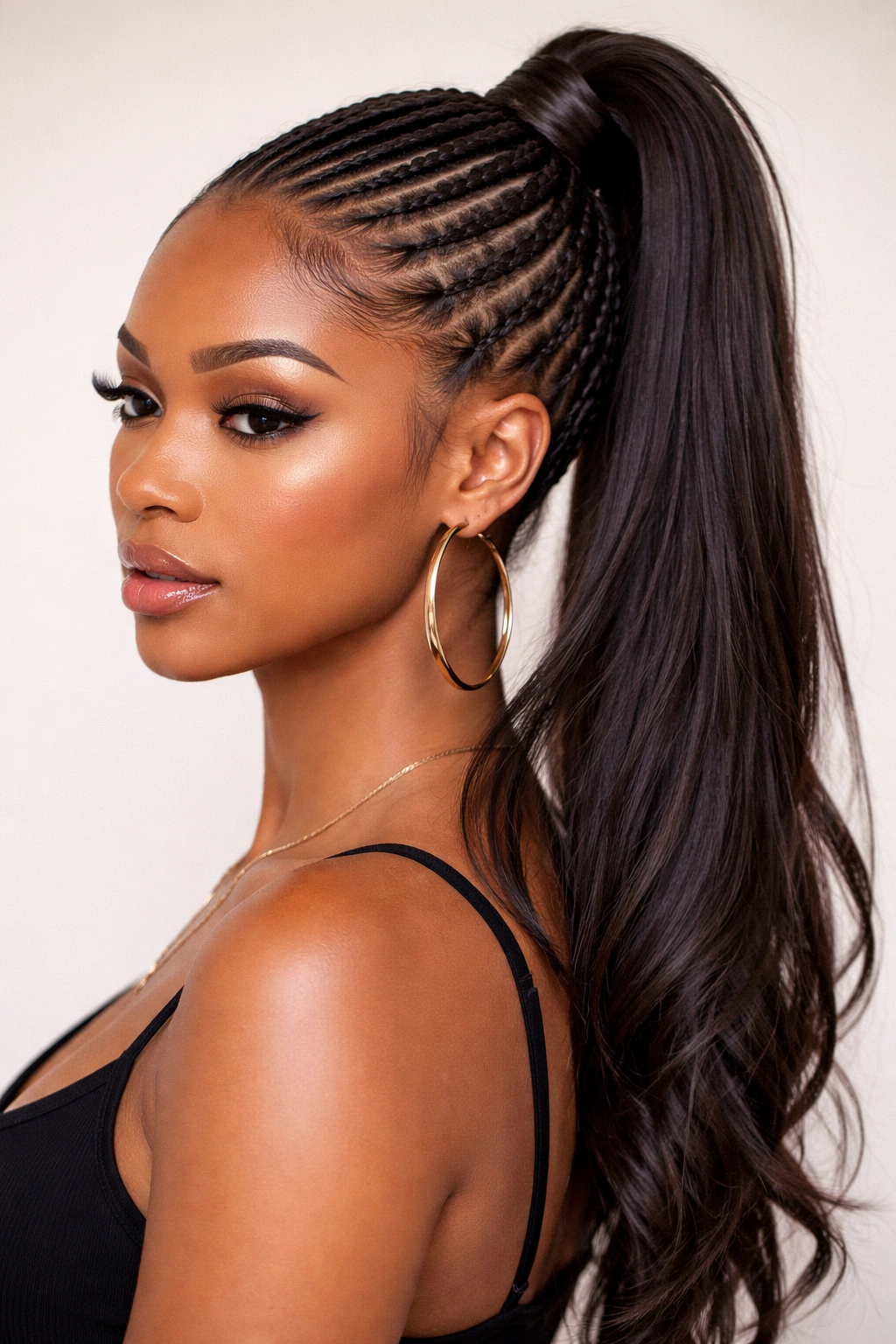
Bringing the ponytail up toward the temple area changes the entire silhouette of the style. While a low side pony is relaxed, a high side pony is bold and dramatic. The cornrows need to be braided in a fan shape to accommodate the higher placement.
Why This Style Stands Out
The upward angle of the braids creates a slight lifting effect on the face. It feels more “done” than a low pony. Because the hair is gathered higher up, you have more freedom with the length—it can drape over one shoulder or be styled in a high bun.
Essential Tools for the Look
- A fine-tooth comb for creating uniform, clean sections.
- A strong-hold edge control that won’t flake or turn white throughout the day.
- A boar bristle brush to smooth out any bumps before securing the base of the ponytail.
5. Double Braid Side Sweep
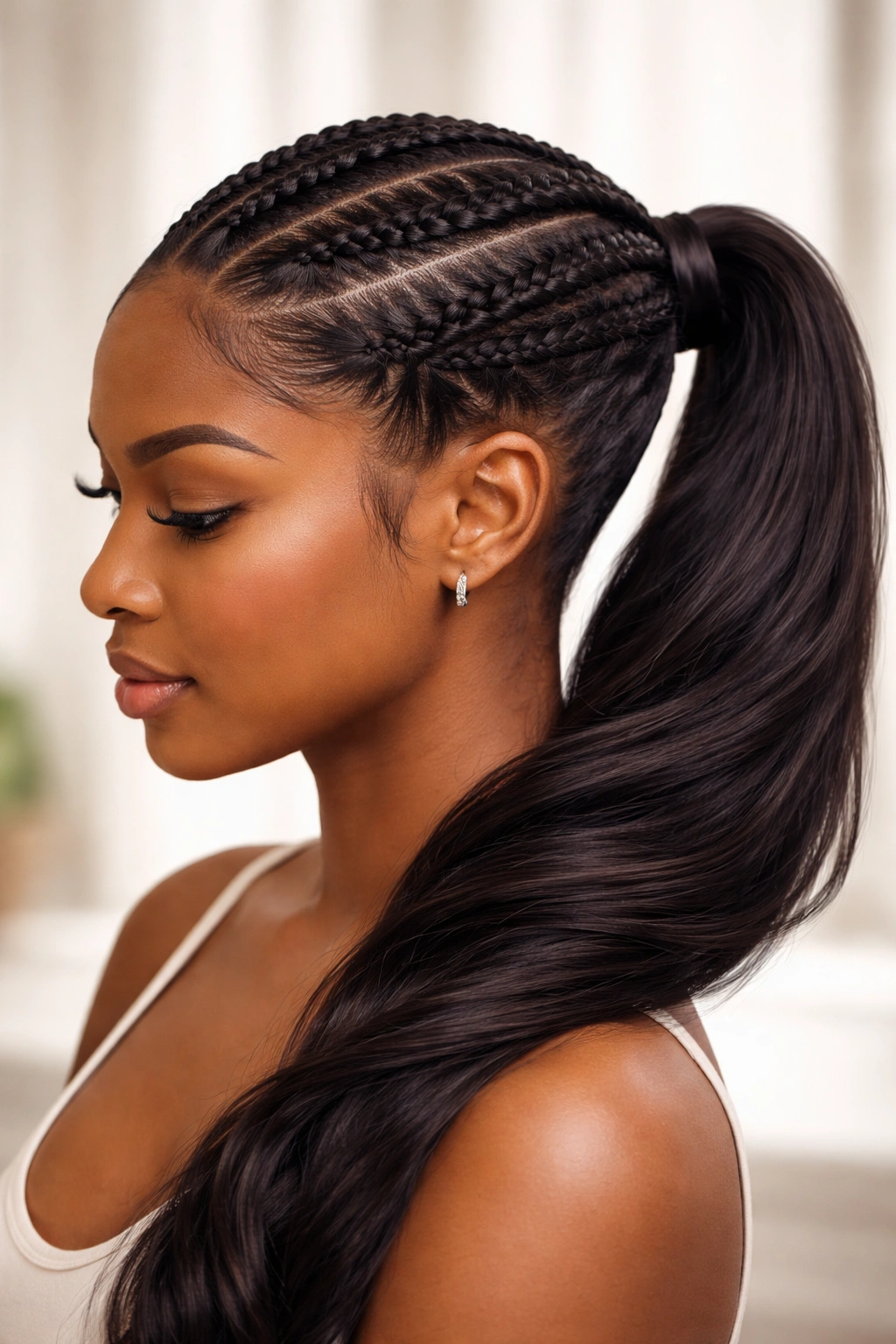
Sometimes the most effective styles are the ones with the fewest parts. A double braid side sweep involves parting the hair into two large, substantial cornrows that travel diagonally across the scalp to the side of the head.
This is a much faster style to install than a full head of small cornrows. It is perfect if you are short on time but still want a polished look. Because the braids are larger, you get more definition in the scalp pattern. It also puts significantly less stress on the hair, making it a great protective style for those who want to minimize scalp manipulation.
6. Crisscross Cornrow Ponytail
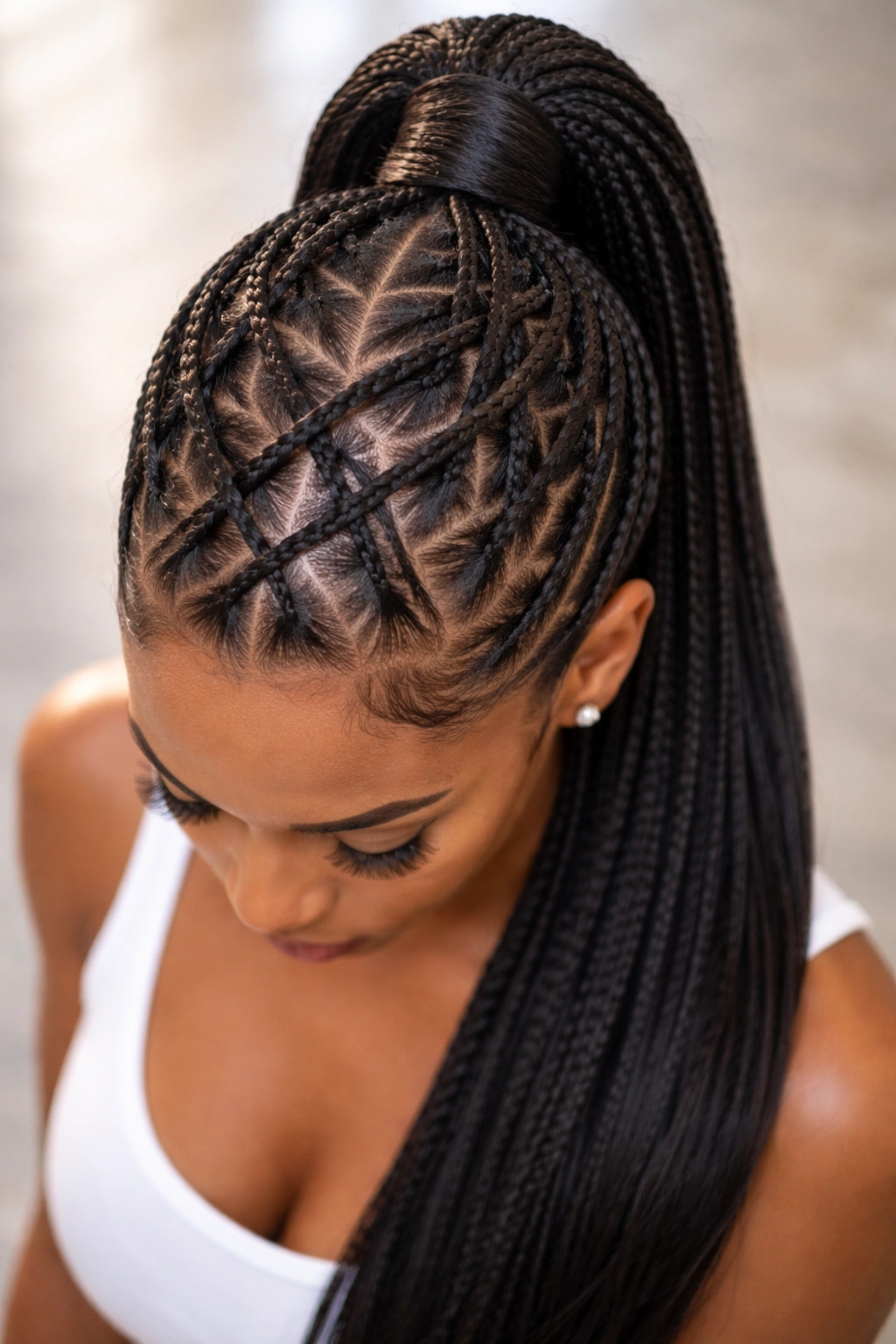
The crisscross pattern is visually complex, but the mechanics are simple once you understand the parting. Instead of running parallel, the braids intersect each other at an angle, creating a lattice-like effect on the scalp.
The Technical Challenge
This style requires extreme precision. If one of the intersecting braids is off-center, the entire pattern looks asymmetrical. It is best to have someone else braid this for you, as the angles can be difficult to see in a mirror.
Visual Impact
Because of the intersections, this style looks incredible from the top and back. It is often used in performance hairstyles or events where you want your hair to look good from every angle. Keep the rest of the ponytail simple to ensure the focus remains on the scalp design.
7. Goddess Braid Side Ponytail
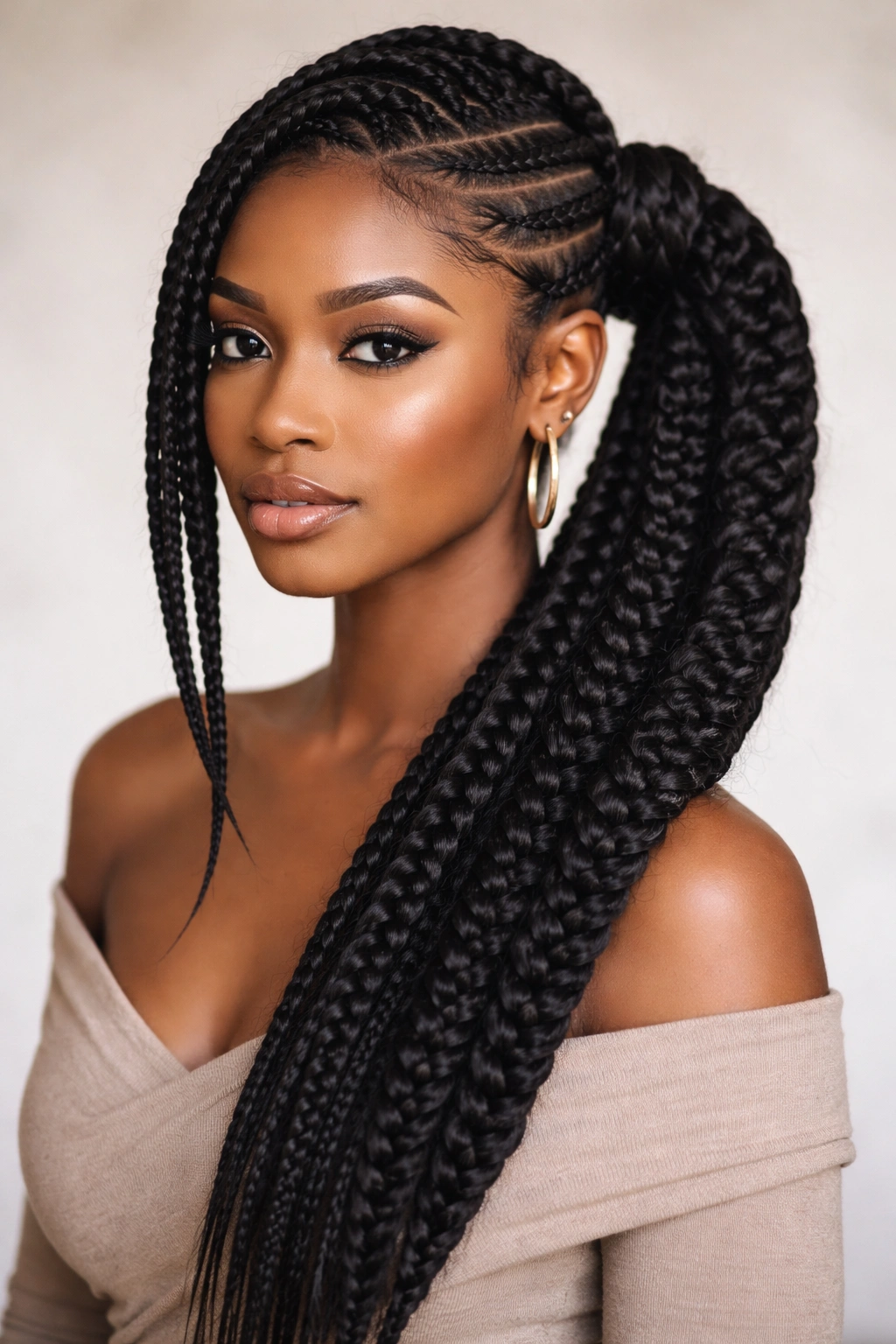
A goddess braid—often referred to as a feed-in braid that has been pulled or “pancaked”—provides a larger, more sculptural look. In a side ponytail context, you can combine one or two large goddess braids with smaller, standard cornrows to create a high-contrast design.
The larger braid serves as the anchor for the ponytail. It provides structure and weight, ensuring that the style stays put throughout the day. If you struggle with braids that lose their shape or get fuzzy quickly, the larger diameter of a goddess braid holds up better against humidity and movement.
8. Half-Up, Half-Down Side Cornrows
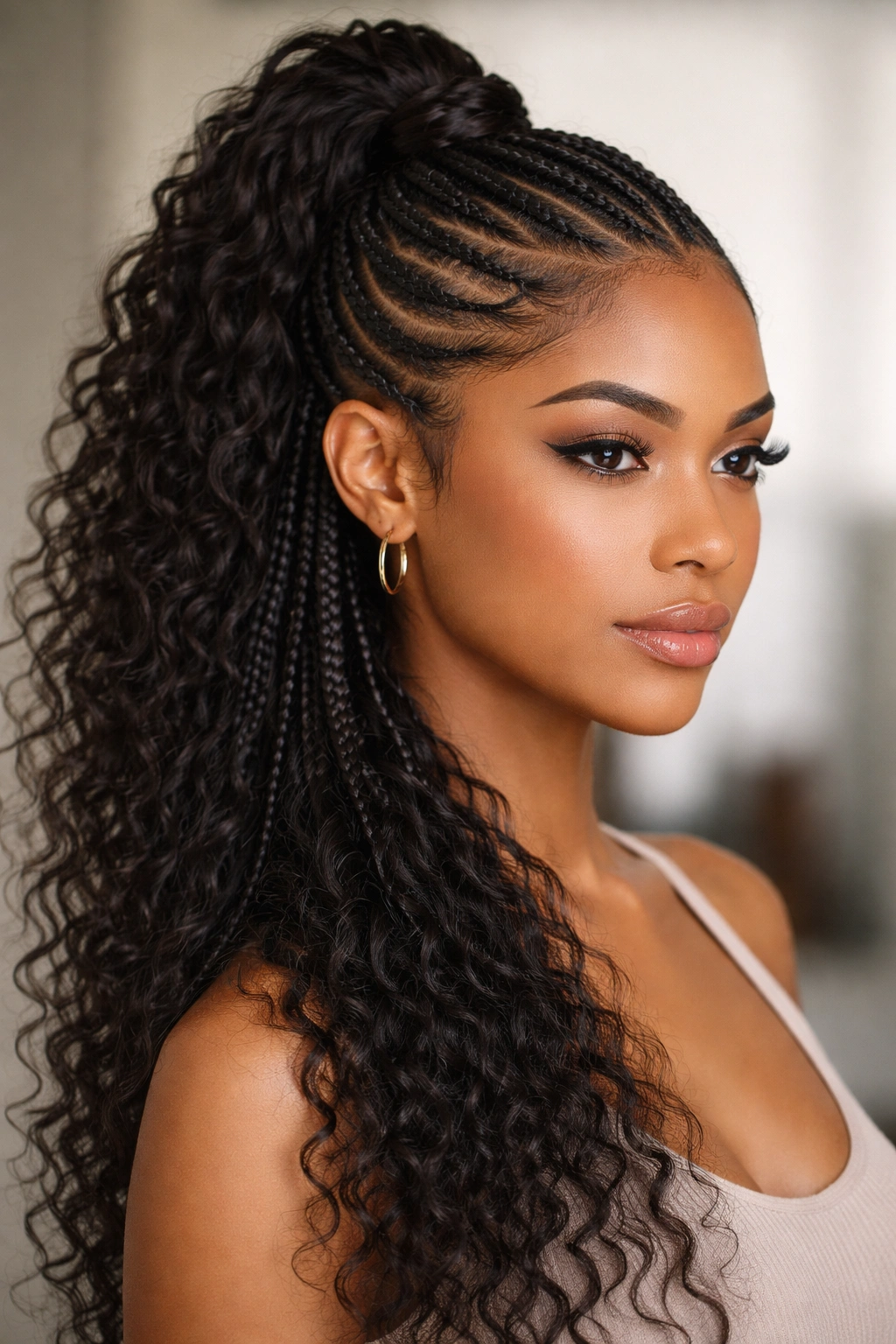
Why choose between a ponytail and wearing your hair down when you can do both? This style features cornrows on the sides and the top, but instead of pulling all the hair into the ponytail, you leave the nape and the lower section loose.
This is a versatile option for those who want the neatness of cornrows but the freedom of flowing hair. You can play with the texture of the loose hair—wear it bone-straight for a sleek look or add wand curls for volume. The contrast between the tight, structured scalp and the loose, flowing length makes this one of the most popular variations.
9. Lemonade-Inspired Side Braids
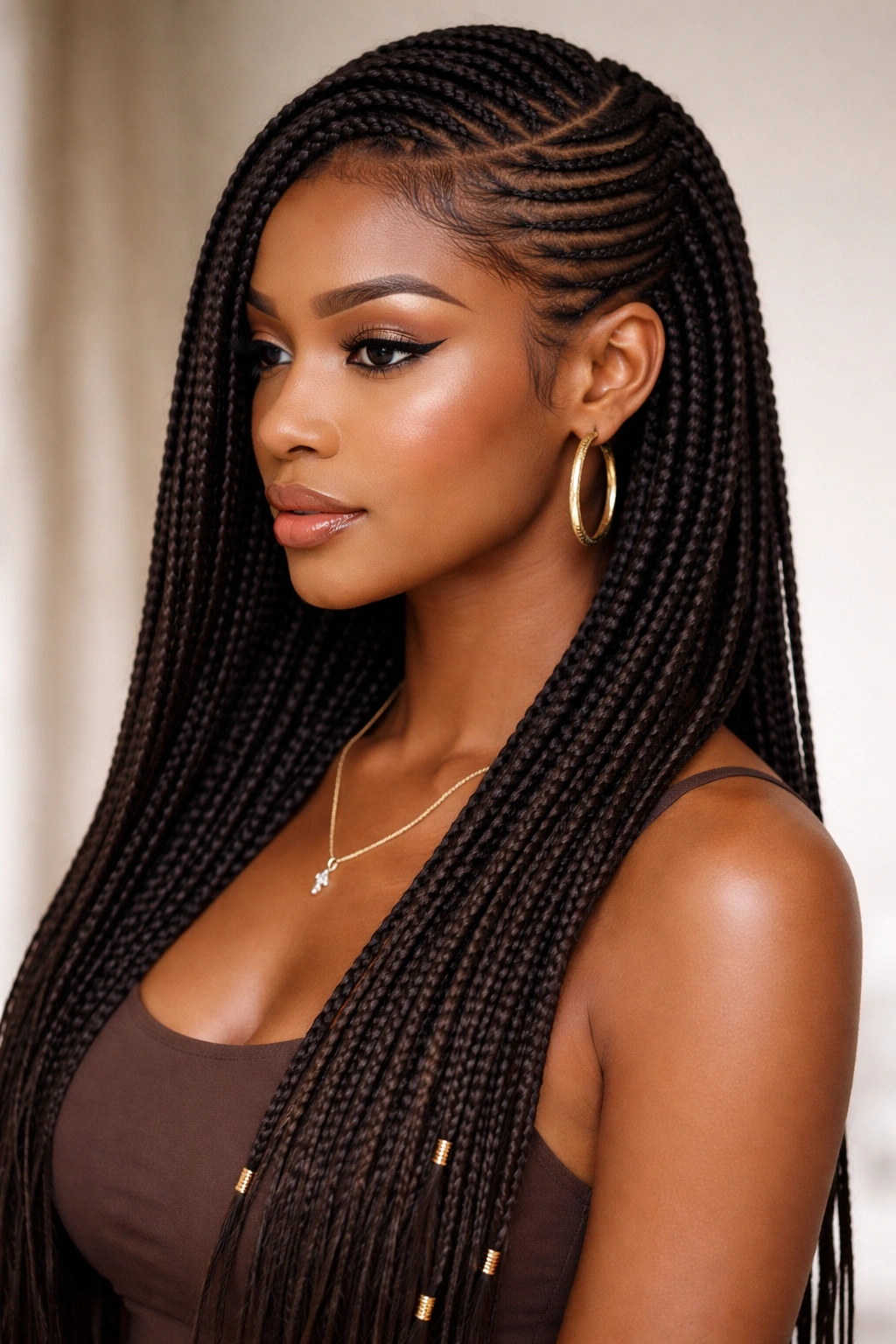
Inspired by the iconic style, these braids are all swept to one side, usually starting from a side part. They are characterized by long, uniform, and thin-to-medium-sized cornrows that drape over the shoulder.
Achieving the Uniform Look
The success of this style is entirely dependent on the parts. The width of every cornrow must be identical. If one braid is thicker than the others, the flow is disrupted. This style is meant to look liquid and smooth.
Why They Are Popular
They have a timeless, classic feel. Because all the braids are swept to the same side, there is no awkwardness about how the hair falls when you turn your head. It is essentially a “set it and forget it” hairstyle that looks good with everything from a t-shirt to a formal gown.
10. Cornrows into a Low Bubble Ponytail
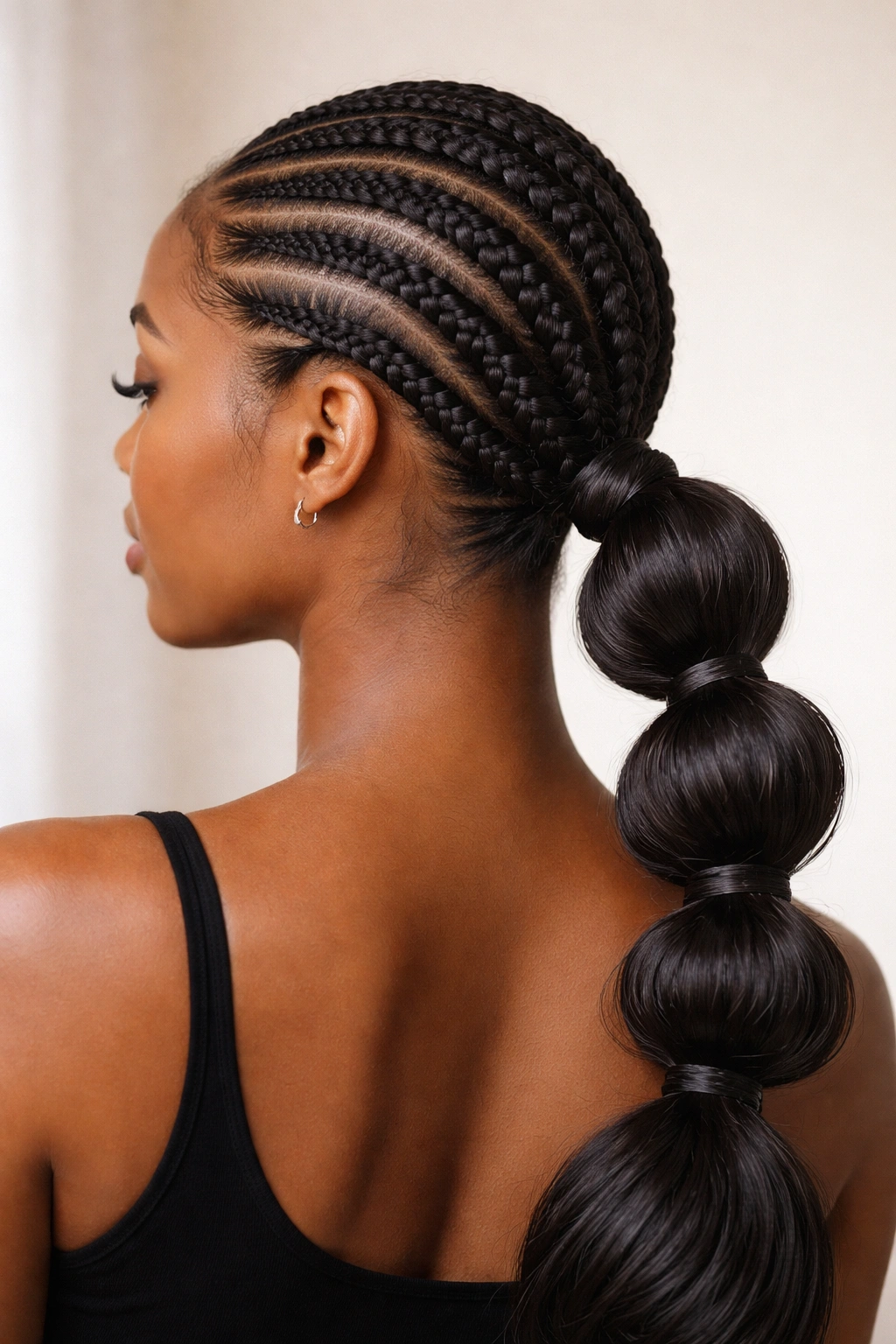
If you are tired of the traditional straight ponytail, consider the bubble ponytail transition. The cornrows cover the scalp, but once the braids reach the nape of the neck and are tied into a ponytail, you add elastic bands every two inches down the length.
Creating the Bubbles
After securing the ponytail, you place a hair tie every few inches. Then, you gently tug on the hair between the ties to create volume or “bubbles.” It turns a standard cornrow base into something architectural and modern.
Styling Tip
Use small, clear elastic bands to avoid drawing attention away from your hair color or the texture of the braids. You can also wrap a thin piece of hair around each elastic to make it look seamless and polished.
11. Intricate Swirl Pattern Side Braids
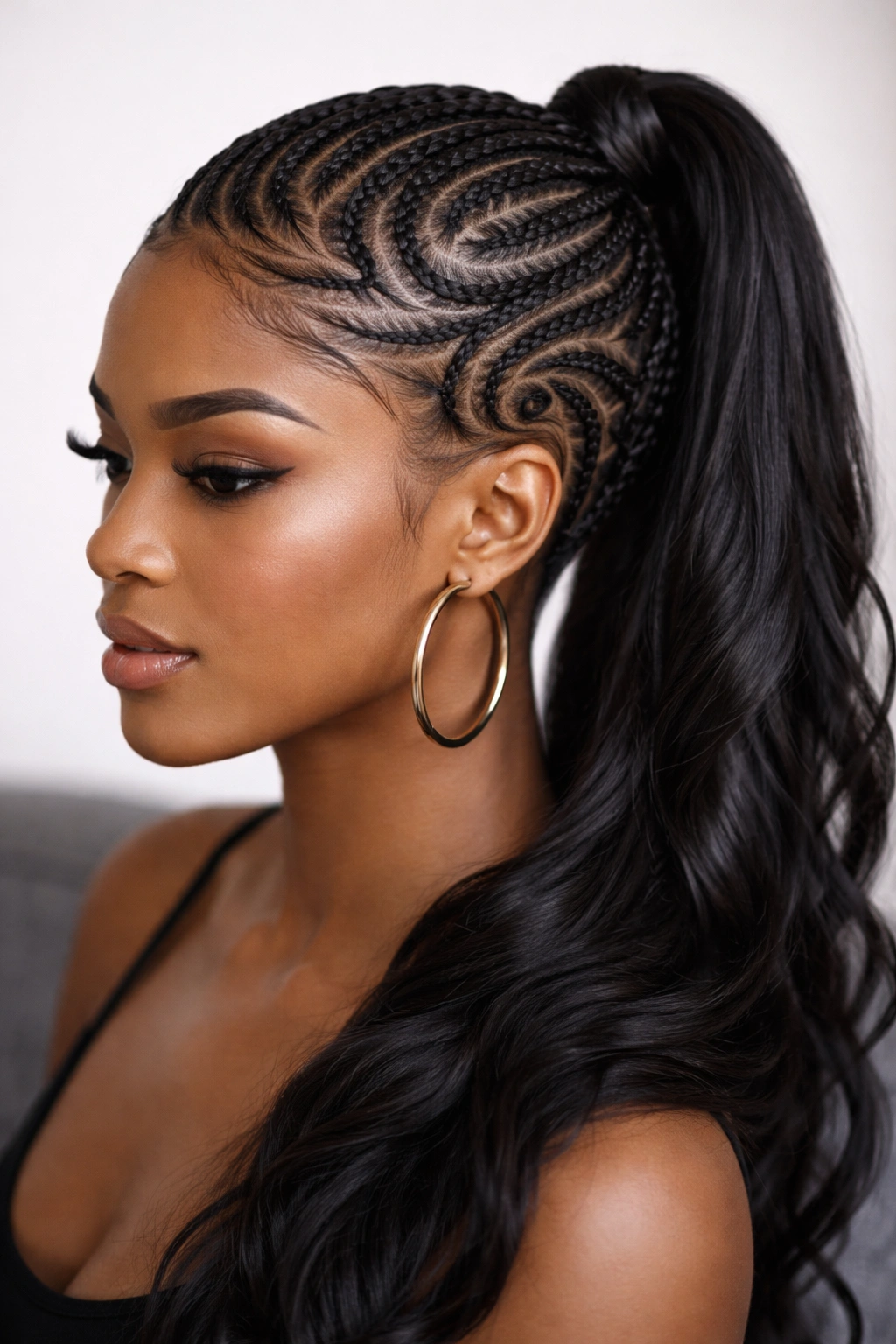
Instead of straight lines or zig-zags, this style utilizes curved, circular, or swirled sections. It requires a stylist with a high level of technical skill, as the braids must curve naturally without bunching up or pulling the scalp.
These patterns are essentially art on your head. Because the lines are fluid, the style feels softer and less aggressive than straight, boxy parts. It is a fantastic way to handle cowlicks or stubborn growth patterns—by working with the swirl, you hide the parts where your hair naturally wants to separate.
12. Natural Hair Cornrow Side Pony
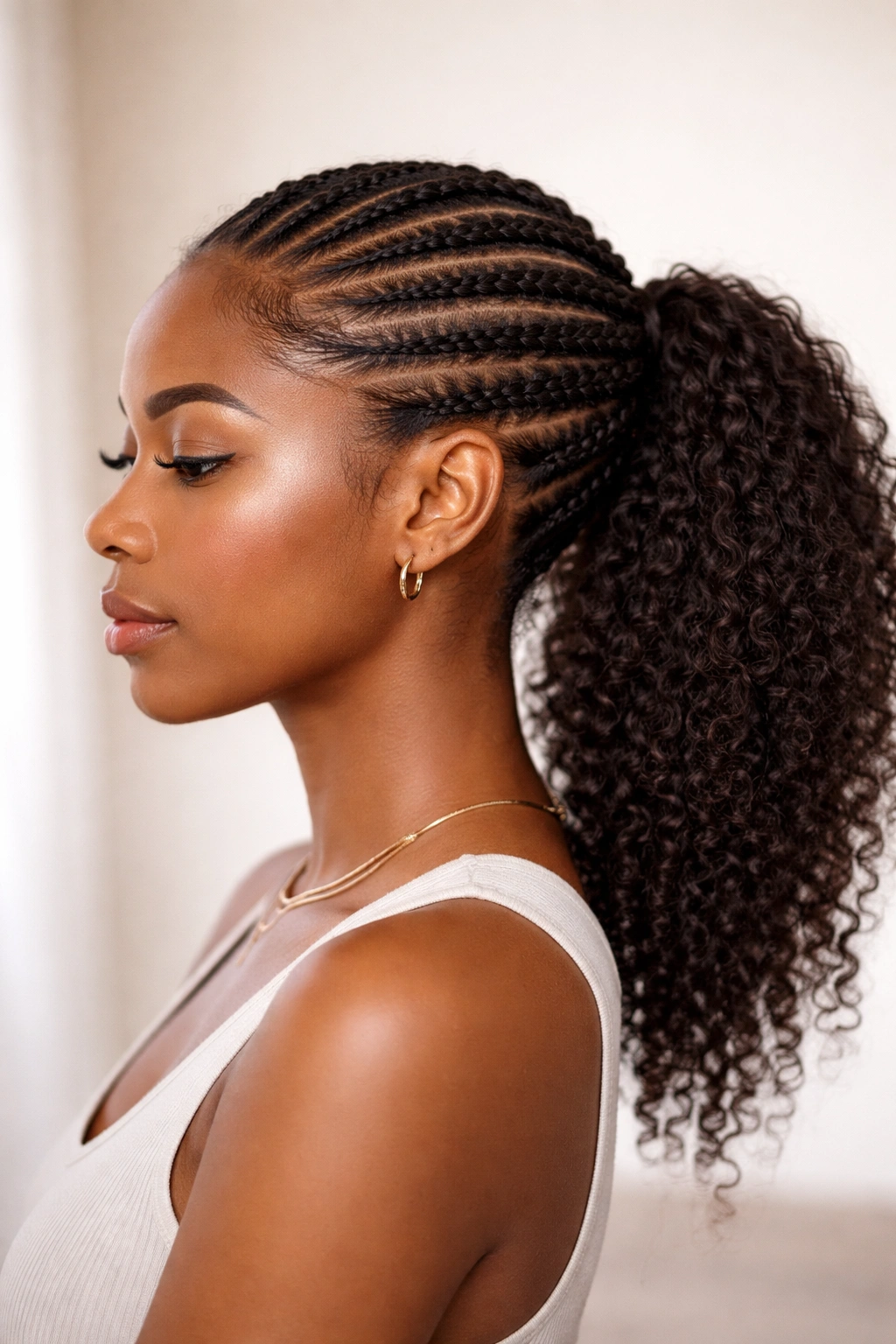
Many styles rely heavily on synthetic extensions, but a natural hair cornrow side pony is an elegant way to celebrate your own hair texture. Without extensions, the braids will be thinner and shorter, but the result is sleek and lightweight.
Preparing the Hair
- Stretch your hair thoroughly before braiding to ensure the braids have a smooth appearance.
- Use a nourishing leave-in conditioner to keep the hair hydrated, as it will be in a braided state for a while.
- Since you are not adding bulk with synthetic hair, use a finer-tooth comb to ensure the parts are perfectly clean.
Note: Because this style uses only your natural hair, it is much easier to take down. It is the perfect choice for a week-long protective style that doesn’t require a long, tedious removal process.
13. Cornrows with Beaded Ends
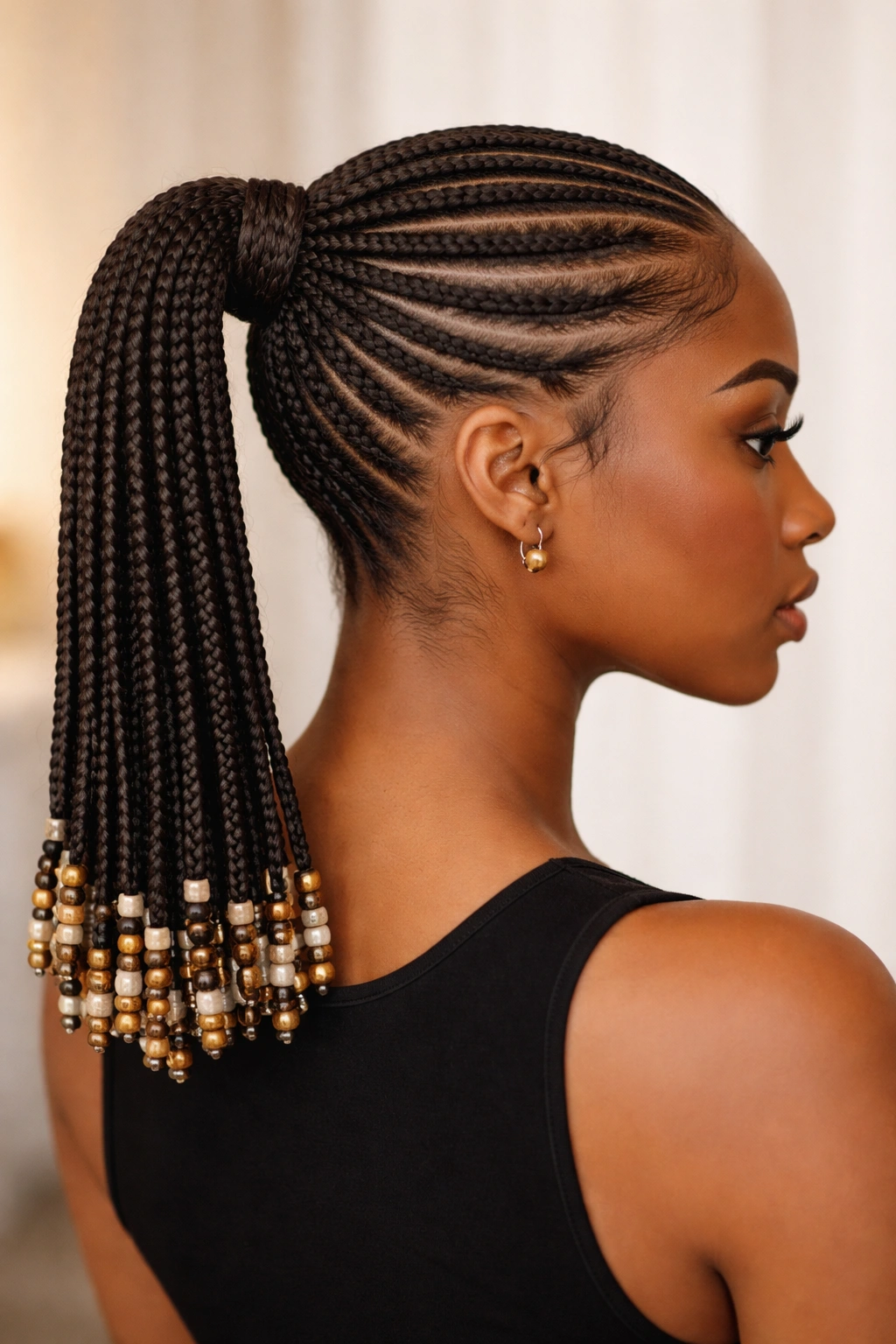
Beads are not just for children; they are a sophisticated styling tool that adds weight and rhythmic movement to your ponytail. When you end your side cornrows with beads, you create a distinct focal point at the base of the ponytail.
Choosing the Right Beads
- Wood beads provide a natural, earthy aesthetic.
- Metallic beads add a touch of glamour and shine.
- Clear or colored acrylic beads can match your outfit or personal style.
Application Technique
Thread the hair through the bead, then fold the end of the braid over the bead and secure it with a small elastic band. This ensures the beads stay in place and don’t slide off during the day.
14. Braided Top-Knot Ponytail Combo
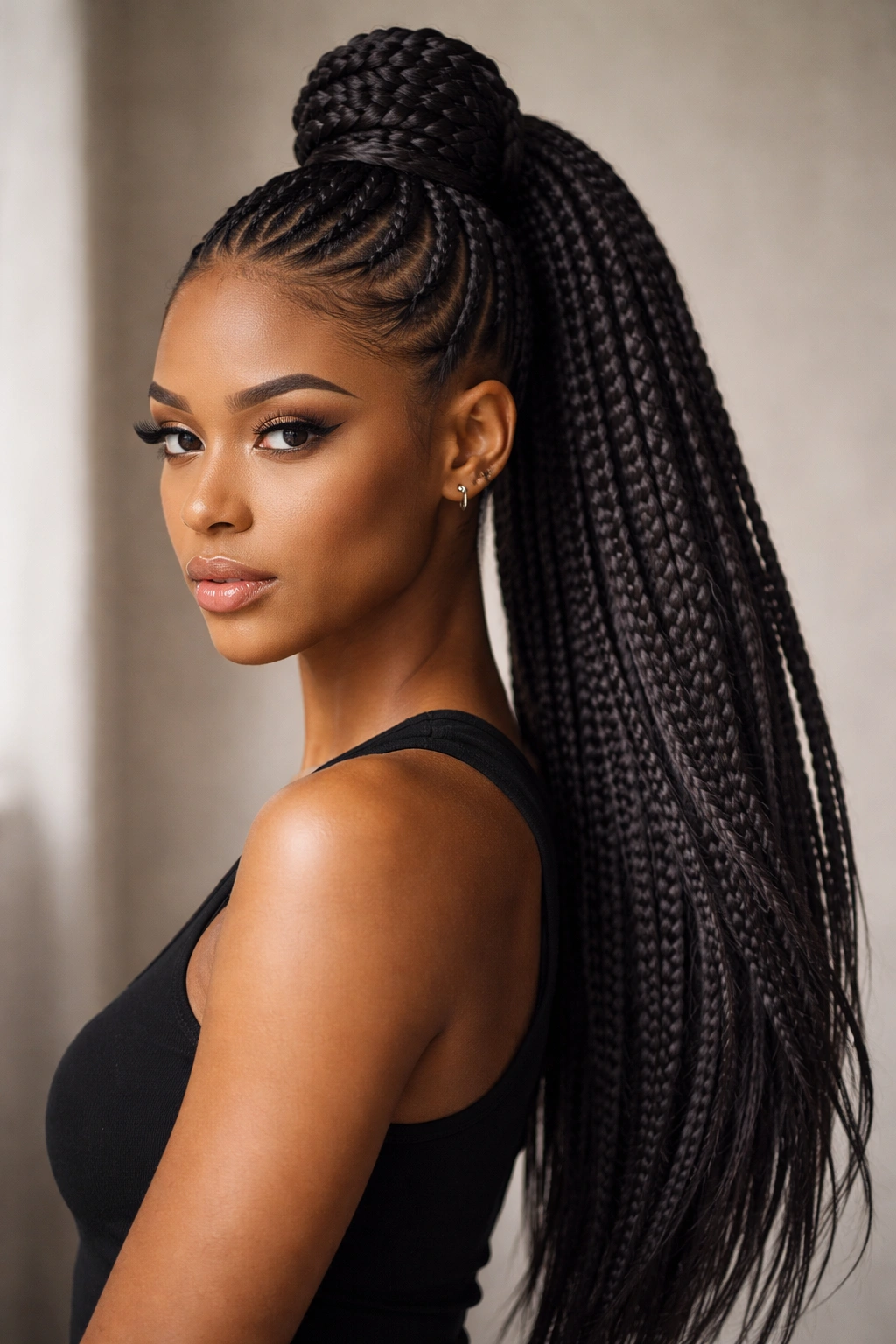
This style mixes a high bun and a side-swept ponytail. A portion of the braids is gathered into a top-knot, while the remaining braids flow into a side-swept pony. It is dramatic, high-fashion, and great for people who have a lot of hair volume to manage.
This style provides a dual-textured look. You get the structured braids on the scalp, the roundness of the knot, and the length of the pony. It is quite heavy, so ensure that the hair ties used for the top-knot are strong, or use a hair-wrapped band to prevent sagging.
15. Side Cornrows with a Sleek Middle Part
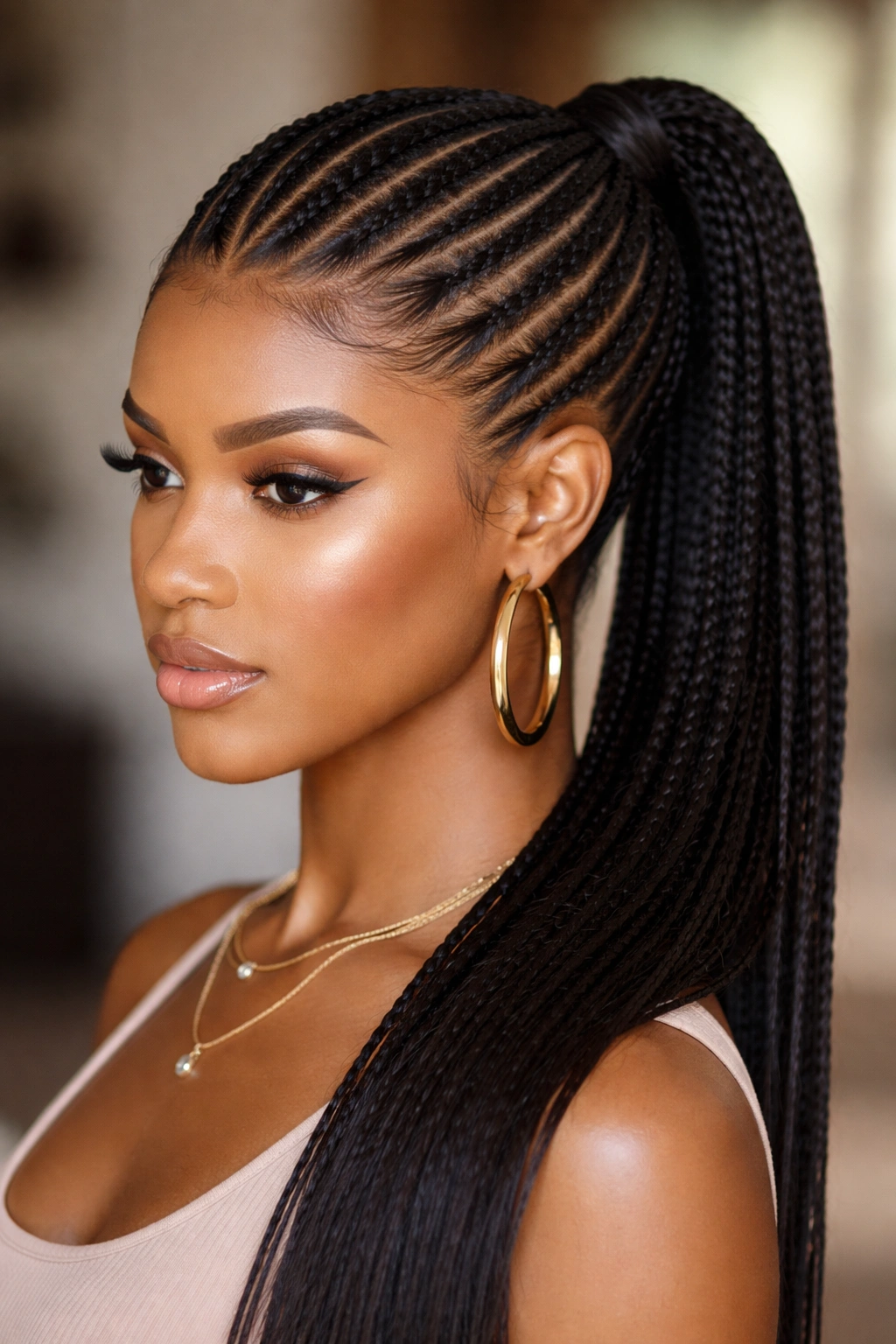
A middle part is usually associated with center-parted hairstyles, but you can incorporate it into a side-swept design. The braids start from the center and are directed toward the side, creating a “fanning out” effect from the middle of your head.
Why It Works
It provides symmetry to the scalp. Even though the hair ends up on the side, the design starts balanced. This is a very flattering style for round or oval face shapes, as the middle part helps elongate the visual appearance of the face.
Precision is Key
Because the parts start in the middle and travel outward, the lines must be extremely sharp. If the center part is crooked, the entire design will look off. Take your time during the parting phase; this is where the style is made or broken.
16. Fishtail Braid Side Ponytail Integration
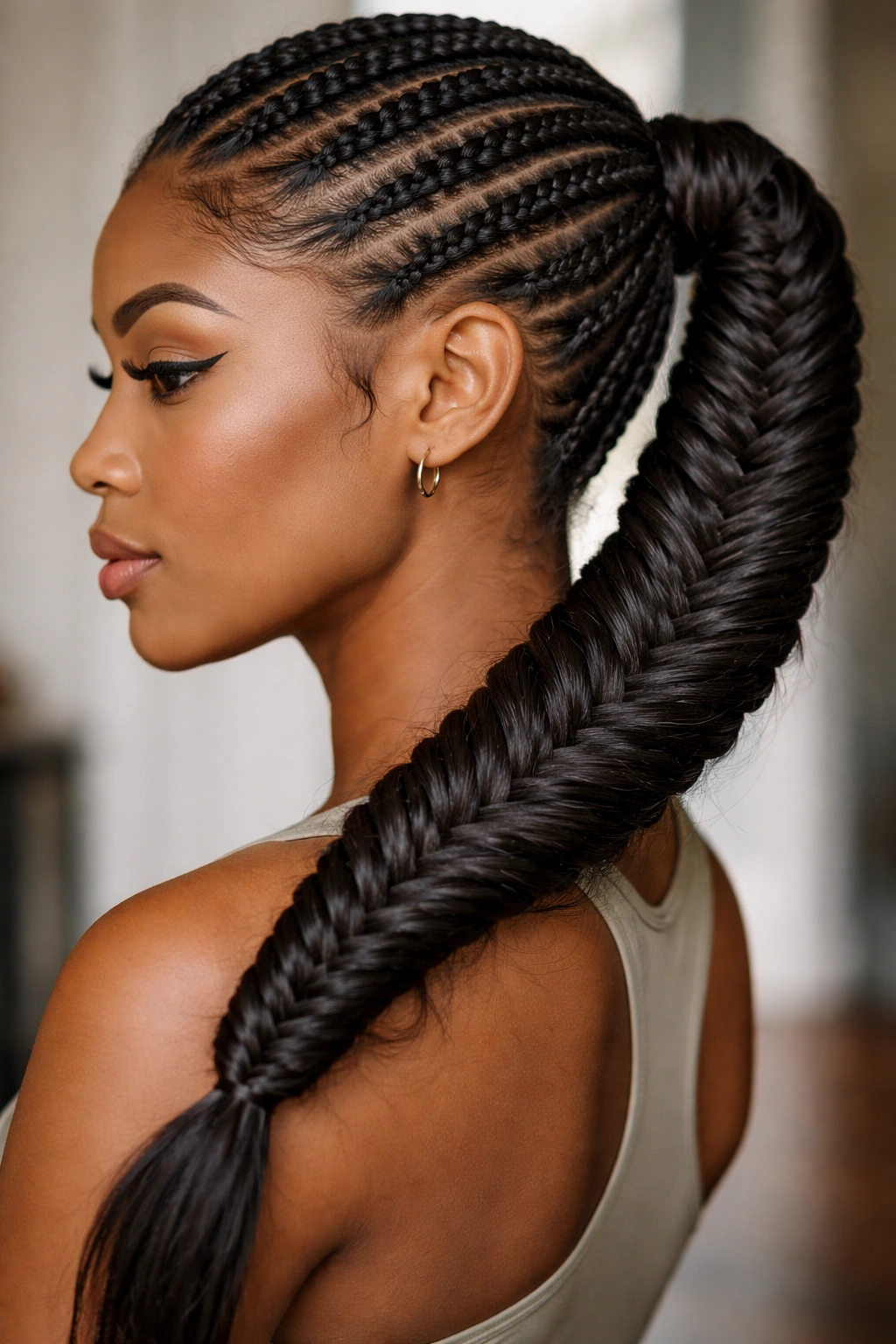
If you have a side ponytail made of several smaller braids, try gathering them and braiding them into one large, single fishtail braid. This adds a level of complexity and texture to the ponytail itself, rather than just letting the braids hang loose.
A fishtail braid works well with synthetic hair because the texture of the braiding hair creates a beautiful, intricate pattern that stays defined. It turns a standard ponytail into a singular, cohesive style. It is also an excellent way to keep your hair contained if you are going to be active, as the fishtail braid won’t tangle as easily as loose braids.
17. Fulani-Inspired Side Cornrows
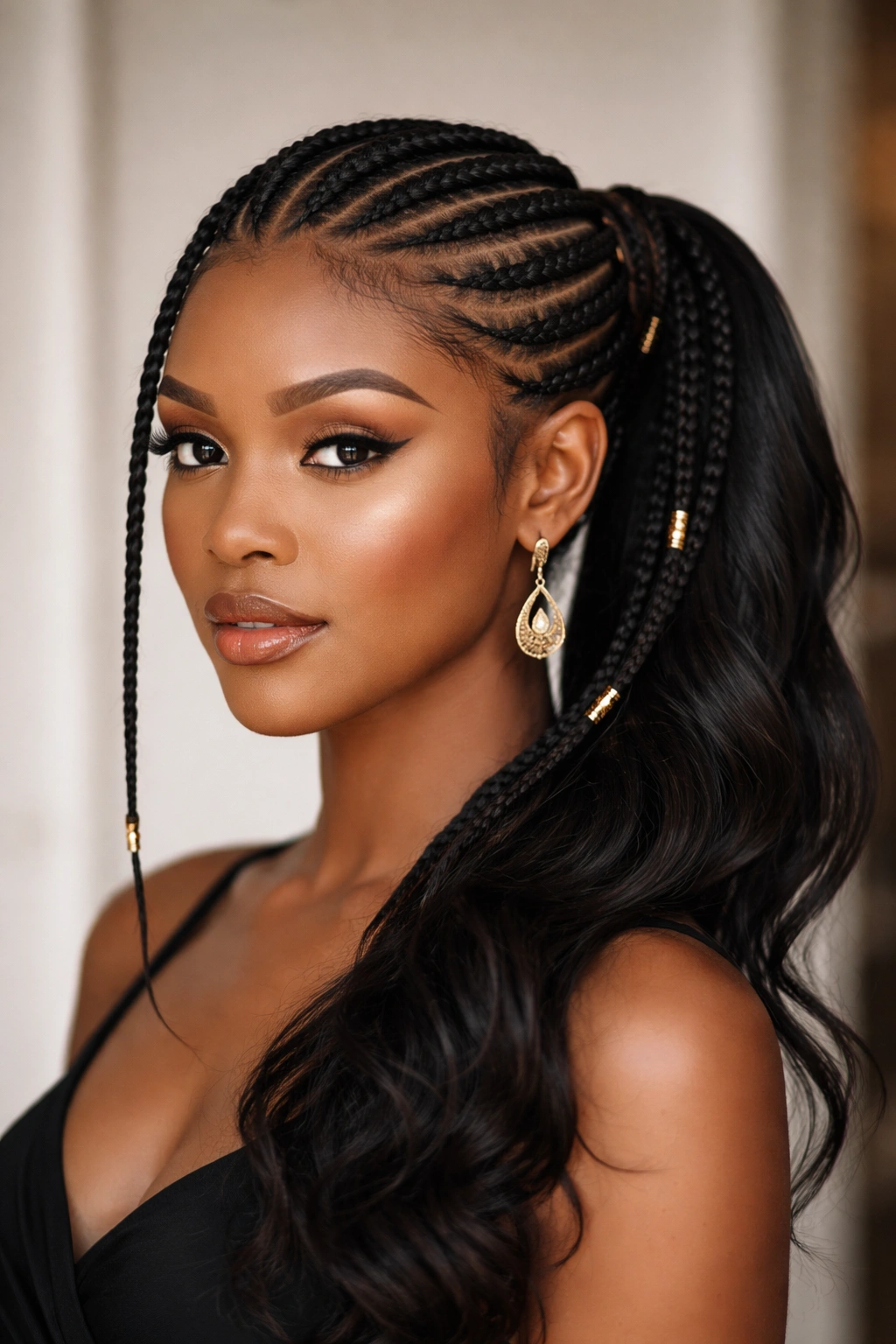
Fulani braids typically feature a center part with cornrows running toward the ears, often accompanied by braids hanging near the face. To adapt this for a side ponytail, you keep the characteristic front braids but sweep the back braids to one side.
Key Elements of the Style
- The center part is non-negotiable.
- The side braids framing the face should be slightly thinner to create a delicate effect.
- The main cornrows should have a curved design that flows seamlessly into the side pony.
Why It Looks Great
It’s a classic cultural style that looks incredibly sophisticated. It frames the face beautifully and works well with hair accessories like gold cuffs or beads. It is a timeless look that never goes out of style.
18. Micro-Cornrow Side Sweep
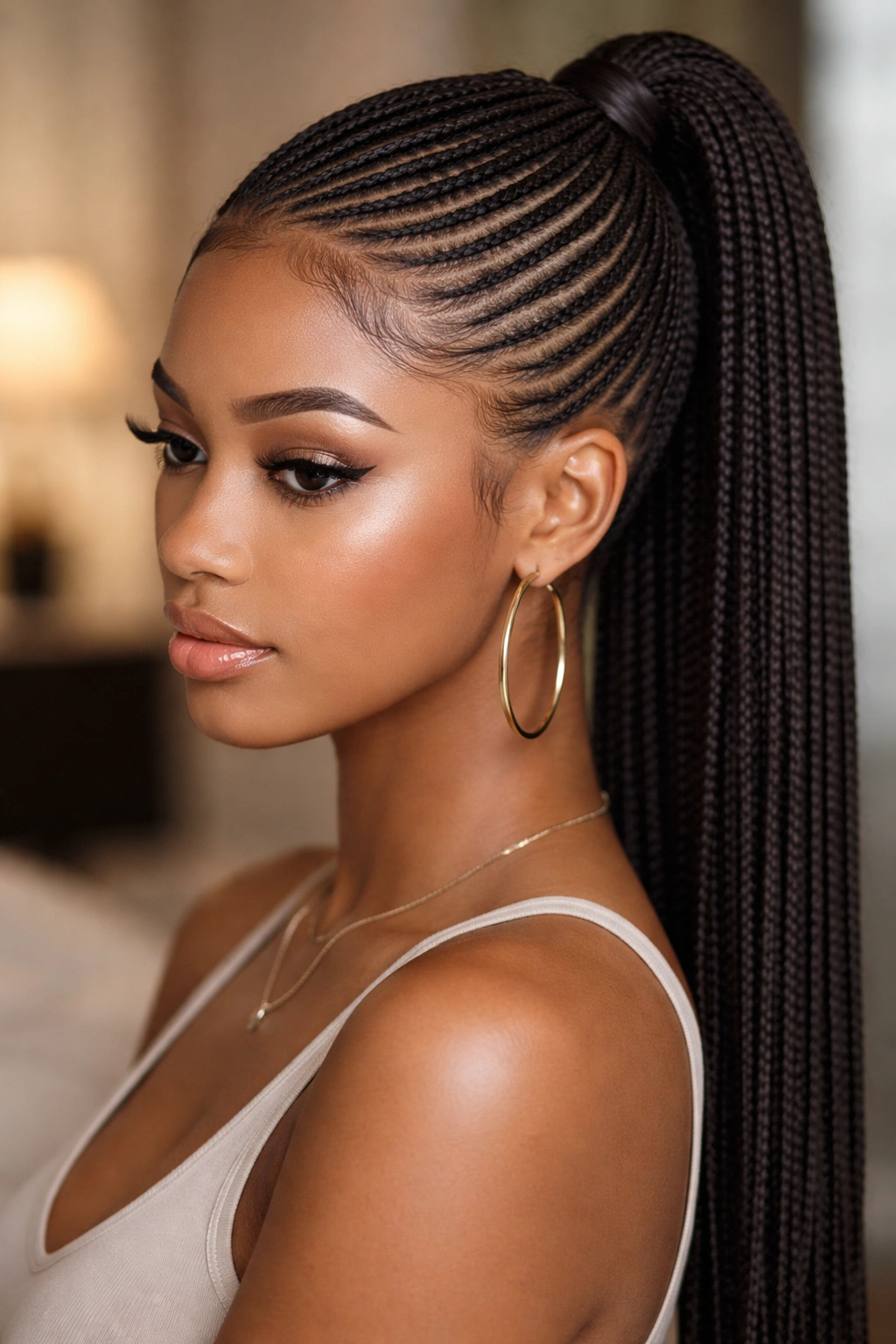
Micro-cornrows are very small, very tight braids. Because they are so small, you can fit dozens of them on the scalp, creating a uniform, almost “painted-on” look. When you sweep these toward one side, the result is incredibly sleek and polished.
This style is a significant time investment. It requires a stylist who is precise and patient. However, the result is a long-lasting style that looks very clean. Because the braids are so small, there is less bulk, so the ponytail is lighter than it would be with large braids.
19. Cornrows with Colored Extension Braids
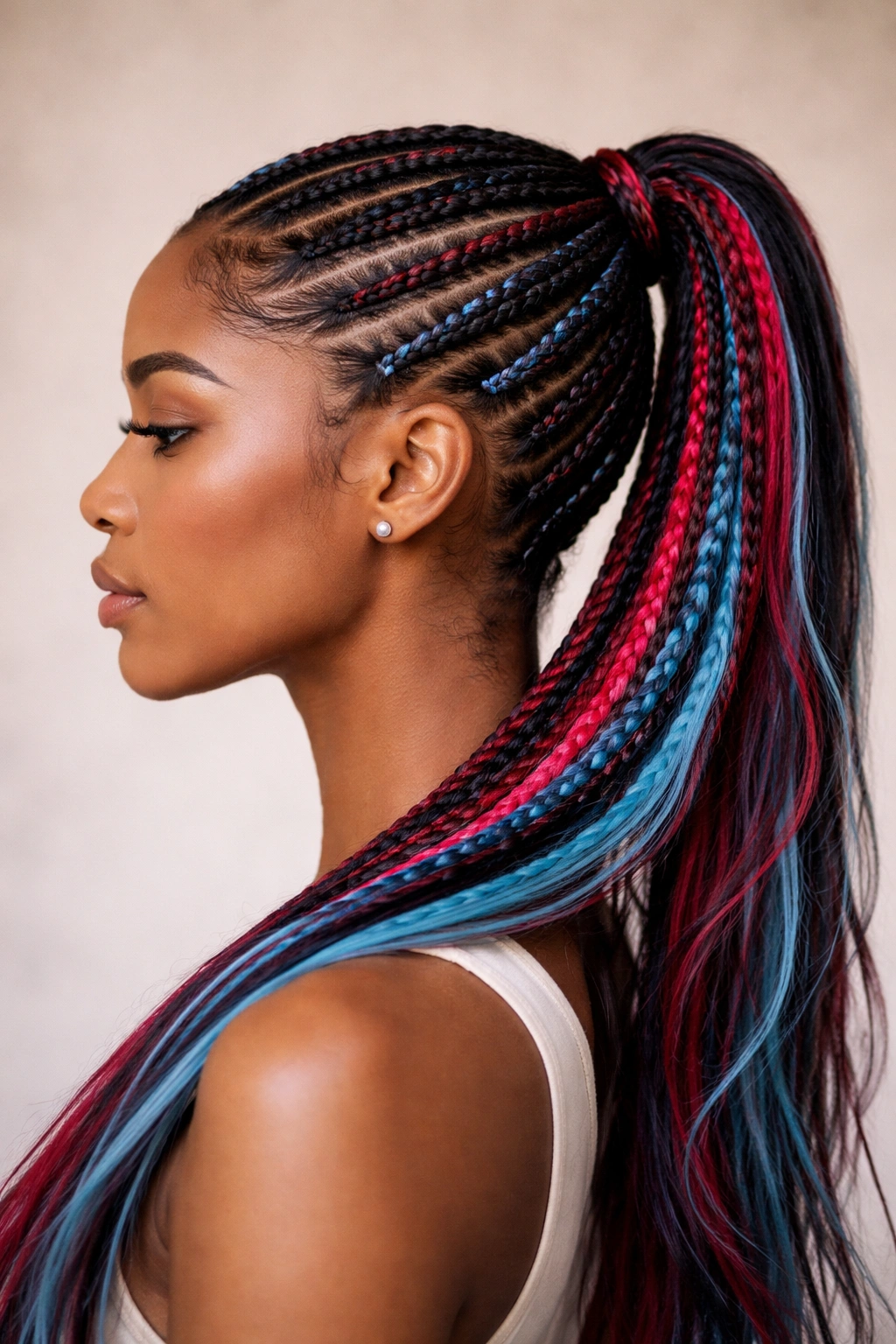
If you want to try a bold color but don’t want to damage your own hair, this is the perfect opportunity. When you feed in synthetic hair, you can choose colors—deep reds, icy blues, honey blondes, or even stark whites—to mix into the braids.
Color Placement
- You can place the color on the outer braids for a bold look.
- You can mix the color into every braid for a blended, multi-dimensional effect.
- Using a color that is two shades lighter than your natural hair adds instant dimension without looking unnatural.
Maintenance Note
Colored synthetic hair can sometimes be drier than natural-toned hair. Use a light, hydrating spray to keep the hair looking shiny and prevent it from appearing dull or dusty over time.
20. Mohawk-Style Side Cornrows
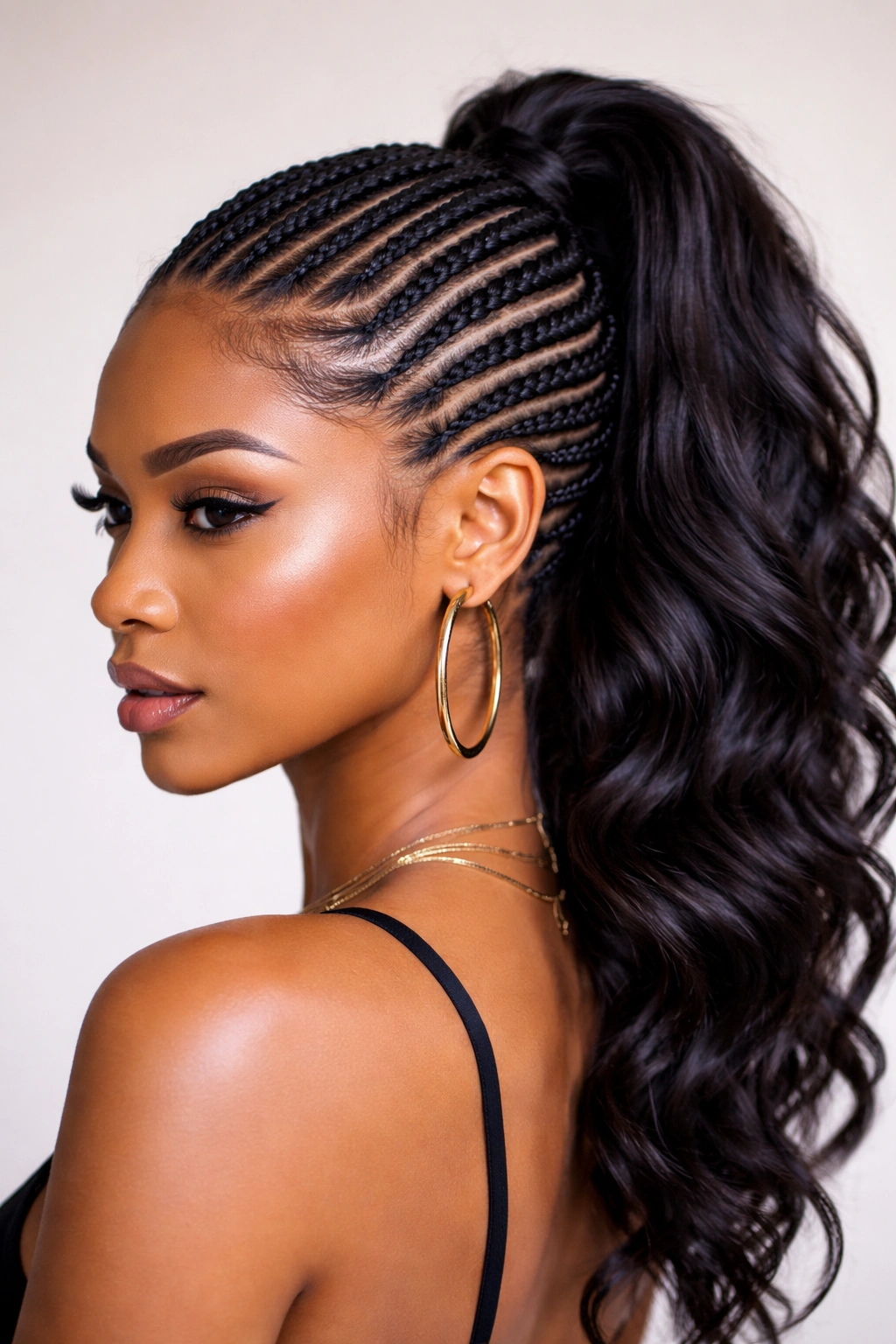
This style features cornrows on both sides of the head that direct the hair toward the center, creating a mohawk effect, but then the gathered hair is directed into a side ponytail instead of a center one. It is edgy, sharp, and very modern.
The key to this style is the tight tension of the side cornrows. They act as the “walls” of the mohawk, providing a strong contrast to the volume of the hair in the center. If you have shaved sides (an undercut), this style is even easier to achieve and looks exceptionally clean.
21. Braided Cuffs Side Cornrow Ponytail
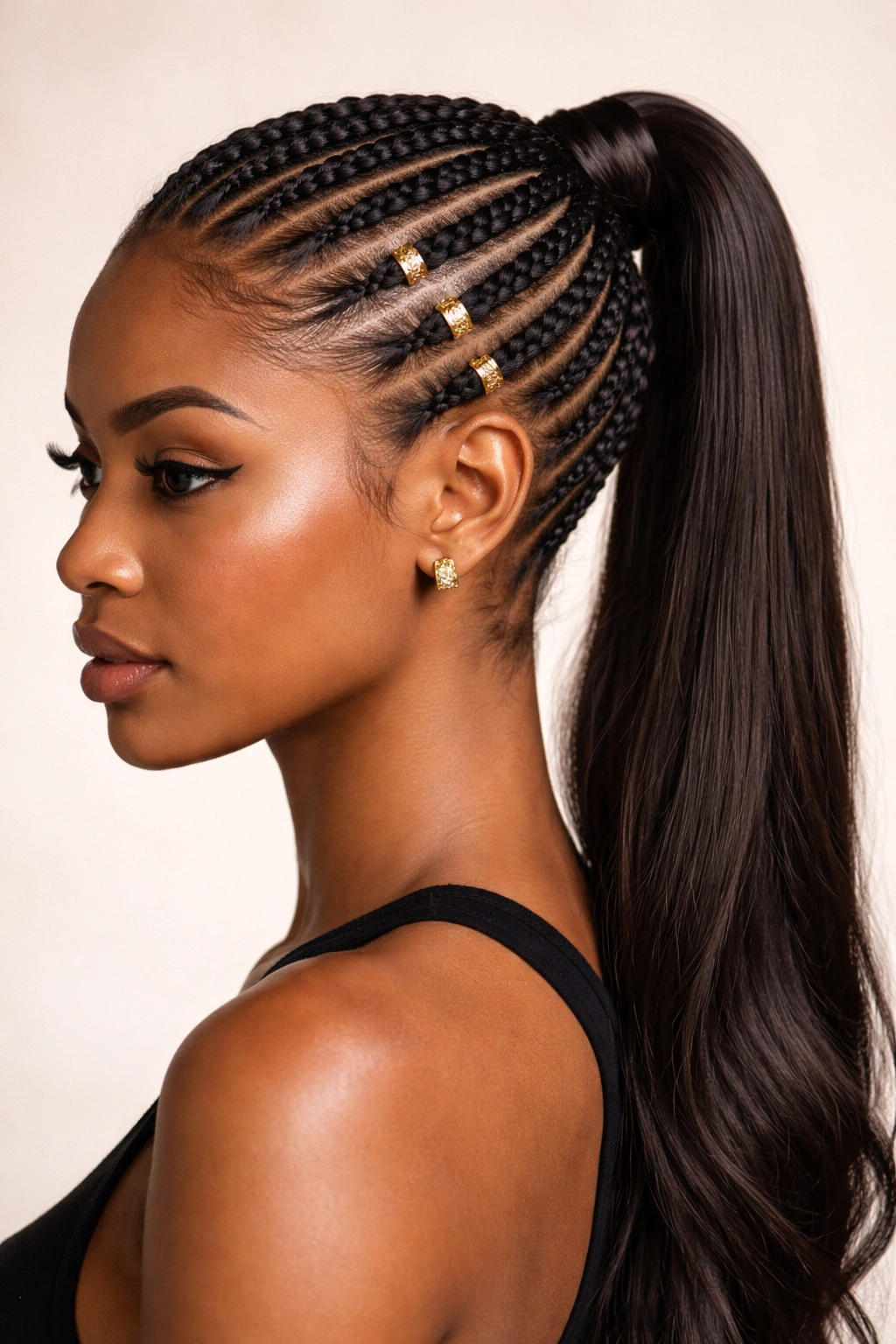
Sometimes the design of the braids is simple, but the accessories take it to another level. Braided cuffs are small metal rings that you slide onto your cornrows. They come in gold, silver, rose gold, and various shapes and patterns.
Strategic Placement
- Place cuffs on the bends of the cornrows to highlight the pattern.
- Add cuffs only to the braids closest to the hairline for a subtle, jewelry-like effect.
- Mix and match metal colors if your style allows for it.
Caution: Make sure the cuffs are smooth on the inside. If they have sharp edges, they can snag your hair or the synthetic braiding hair. Avoid leaving them on for too long if the environment is humid, as some cheaper metals can tarnish or rust.
22. Triple-Parting Side Cornrows
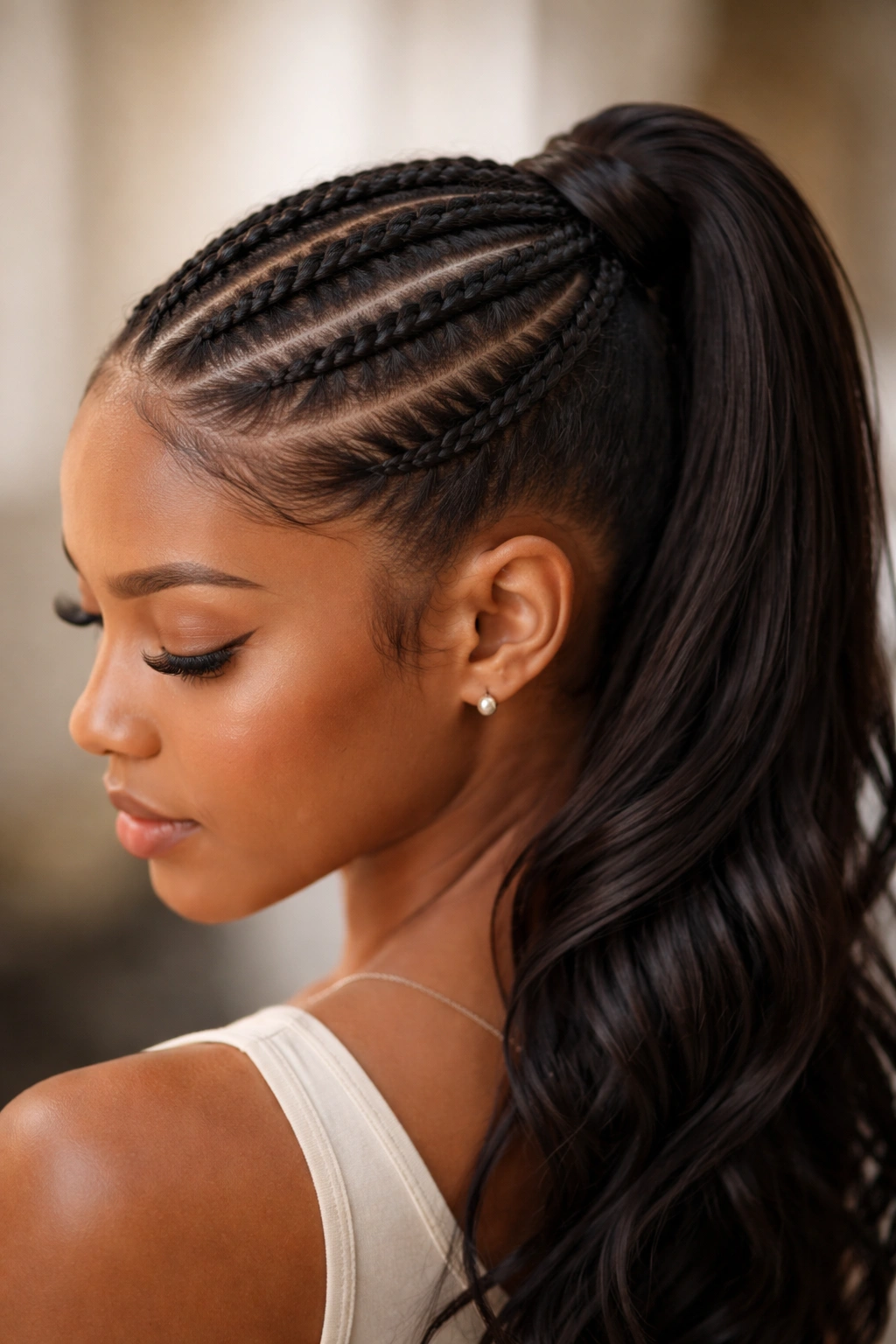
This technique uses three distinct sections of cornrows. You create one section of braids, leave a small gap of parted hair, create a second section, leave another gap, and then the third. It creates a “layered” or “blocked” look on the scalp.
The effect is incredibly clean and graphic. The negative space between the braided sections makes the hairstyle look very modern. This is not a style for hiding a messy scalp; it is a style for showing off the precision of your parts. Ensure your scalp is moisturized and exfoliated, as the exposed parts will be very visible.
23. Minimalist Two-Braid Side Ponytail
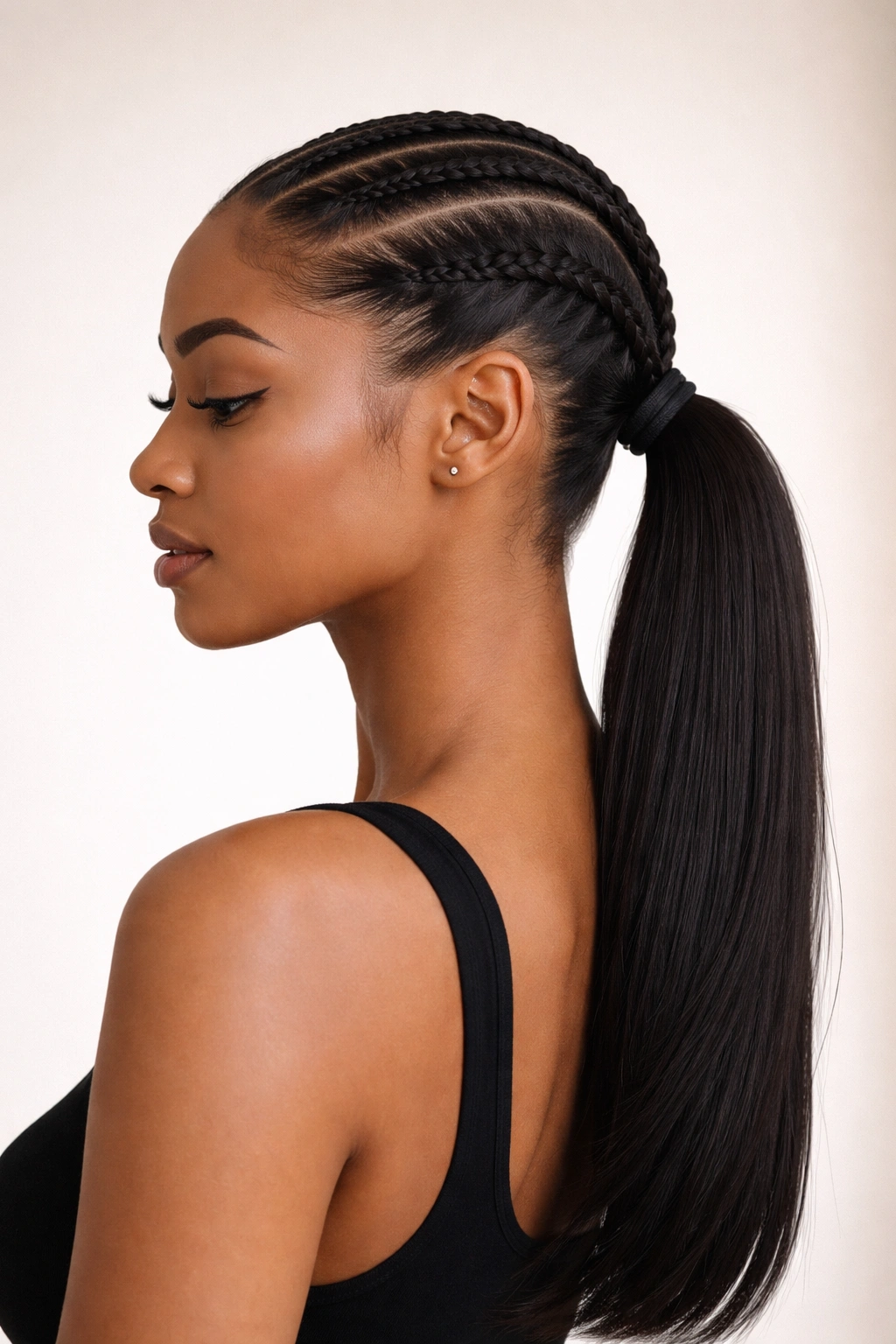
If you are looking for the ultimate “no-fuss” style, the two-braid side pony is it. You create one central cornrow and one lateral cornrow that converge at the side. It is fast, easy, and very protective.
It works exceptionally well for those who have a busy schedule and cannot afford to spend hours in a chair. It is also the least damaging style on this list because it involves the least amount of tension and parting. It is a testament to the fact that you do not need complex designs to have a clean, sleek, and beautiful hairstyle.
Final Thoughts on Maintenance and Care
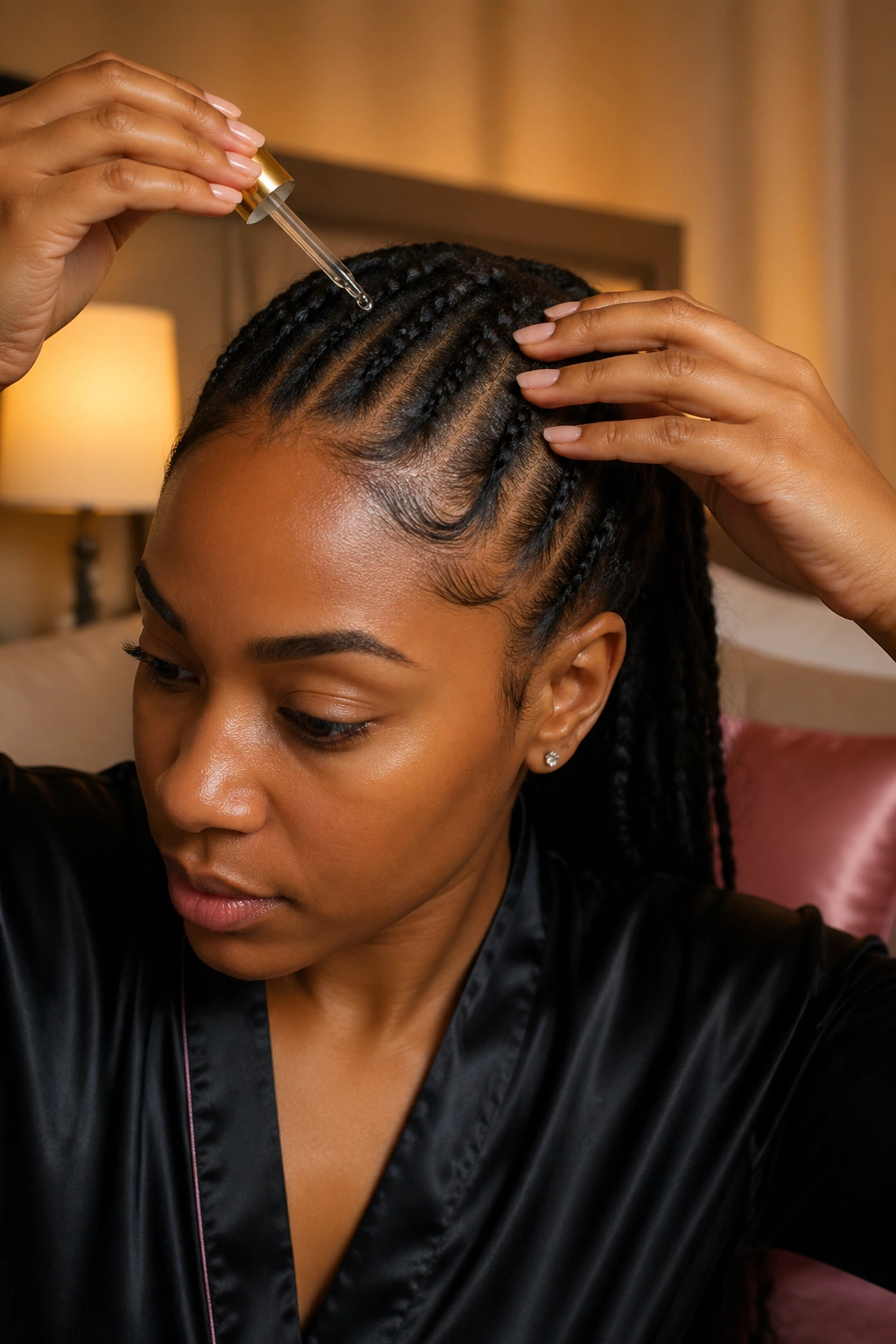
Regardless of which of these styles you choose, the lifespan of your braids depends almost entirely on how you treat them during the first week. The most common mistake people make is ignoring their scalp until it starts to itch or flake. You should be applying a light scalp oil or a braid spray that contains ingredients like peppermint or tea tree oil every two to three days. This keeps the skin underneath the braids healthy and helps prevent the buildup that inevitably leads to irritation.
Sleeping is the next critical factor. No matter how tired you are, you must protect your hair at night. A silk or satin bonnet is not a suggestion—it is a necessity. Cotton pillowcases pull moisture from the hair and cause the friction that leads to frizz. Even with braids, the hair fibers themselves are susceptible to breakage if they are rubbed against a rough fabric for eight hours a night.
Lastly, be mindful of the “take-down.” When it is finally time to remove your style, do not rush. Cut the extensions at the point where your natural hair ends, and use a detangling spray or a light oil to gently work out the braid. Do not rip the hair out. Your hair has been protected for weeks, but it will be fragile after being braided, so treat it with the same gentle care you would use on loose hair. Consistency in your maintenance routine is the real secret to keeping your hair healthy and strong, allowing you to move from one style to the next without damaging your natural texture.
