

Sleek half up weave ponytails have a funny way of making everything else look more put together. A sharp part, a flat crown, a polished tail — that’s enough to change the whole mood of a style, even if the rest of your hair is tucked away and doing the heavy lifting behind the scenes.
The cleanest versions usually have one thing in common: the base is neat before the ponytail ever moves. If the roots are lumpy, the part is crooked, or the wrap is sloppy, the style reads rushed. If the roots are laid, the sectioning is deliberate, and the ponytail sits where it should, it looks expensive in the best way — not loud, not fussy, just done.
That’s why weave ponytails are such a good playground for different shapes. Straight bundles give you a crisp finish. Body wave softens the whole thing. A frontal can erase the hairline drama if you want zero leave-out, while a simple wrapped base keeps things sleek without extra fuss. Tiny details. Big difference.
And if you’ve ever had a half up style that looked good in the mirror but fell apart by lunch, you already know the real lesson: the clean look starts at the scalp, not the ends. Pick the shape first. Then decide how polished or playful you want the tail to feel.
1. Classic High Half Up Weave Ponytail
The classic high version is the one people keep coming back to because it doesn’t need a lot of decoration to look finished. The crown sits high, the front is brushed flat, and the tail drops with enough height to open up the face. It works especially well with straight or yaki bundles, because the texture keeps the base from looking too shiny or stiff.
Why It Stays Clean
A high placement naturally tightens the line of the style. You get lift without having to overdo the front section, and that helps the whole look stay sharp.
- Use a rat-tail comb to carve a straight part before you brush anything up.
- Keep the ponytail anchor about 1 to 2 inches behind the hairline so the style sits balanced.
- Wrap a small section of hair around the elastic for a finished base.
Tip: If the crown starts puffing up, stop adding gel and switch to a boar-bristle brush with a light mist of setting foam.
2. Center-Part Sleek Half Up Weave Ponytail
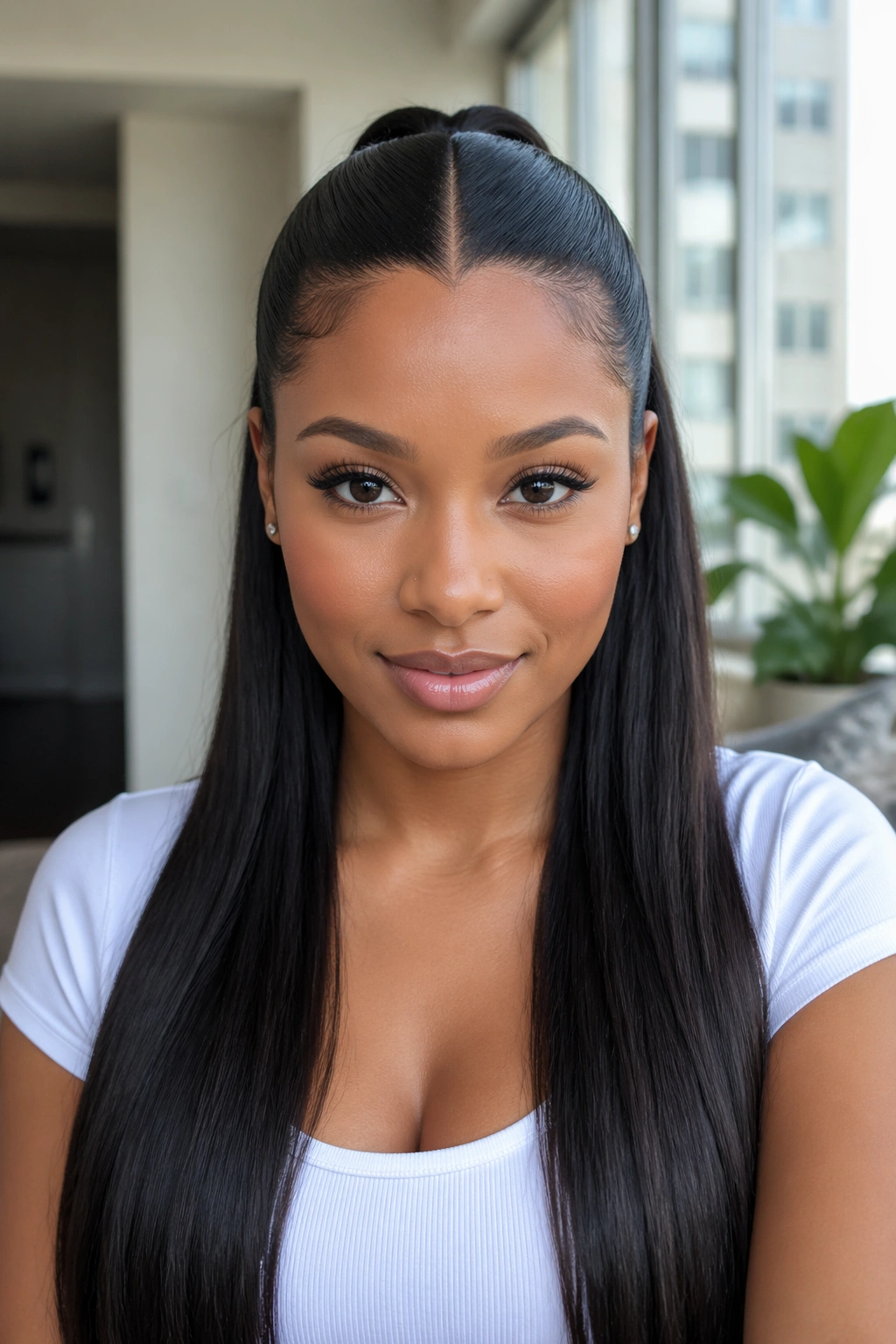
A center part makes this style feel calm and precise. No drama. Just symmetry, which is exactly why it looks so clean. The middle line draws the eye straight down the face, and the half up section sits like it belongs there instead of trying too hard.
Bone-straight bundles give this one the crispest finish, especially when the roots are smoothed with a hot comb before the ponytail goes up. The trick is not flooding the hair with product. A thin layer of edge control at the part and temples is enough. Any more than that starts to look heavy, and heavy does not read clean.
This is also one of the best options if you wear glasses or like a strong lip. The style frames the face without competing with it. Simple. Sharp. Reliable.
3. Deep Side-Part Half Up Weave Ponytail
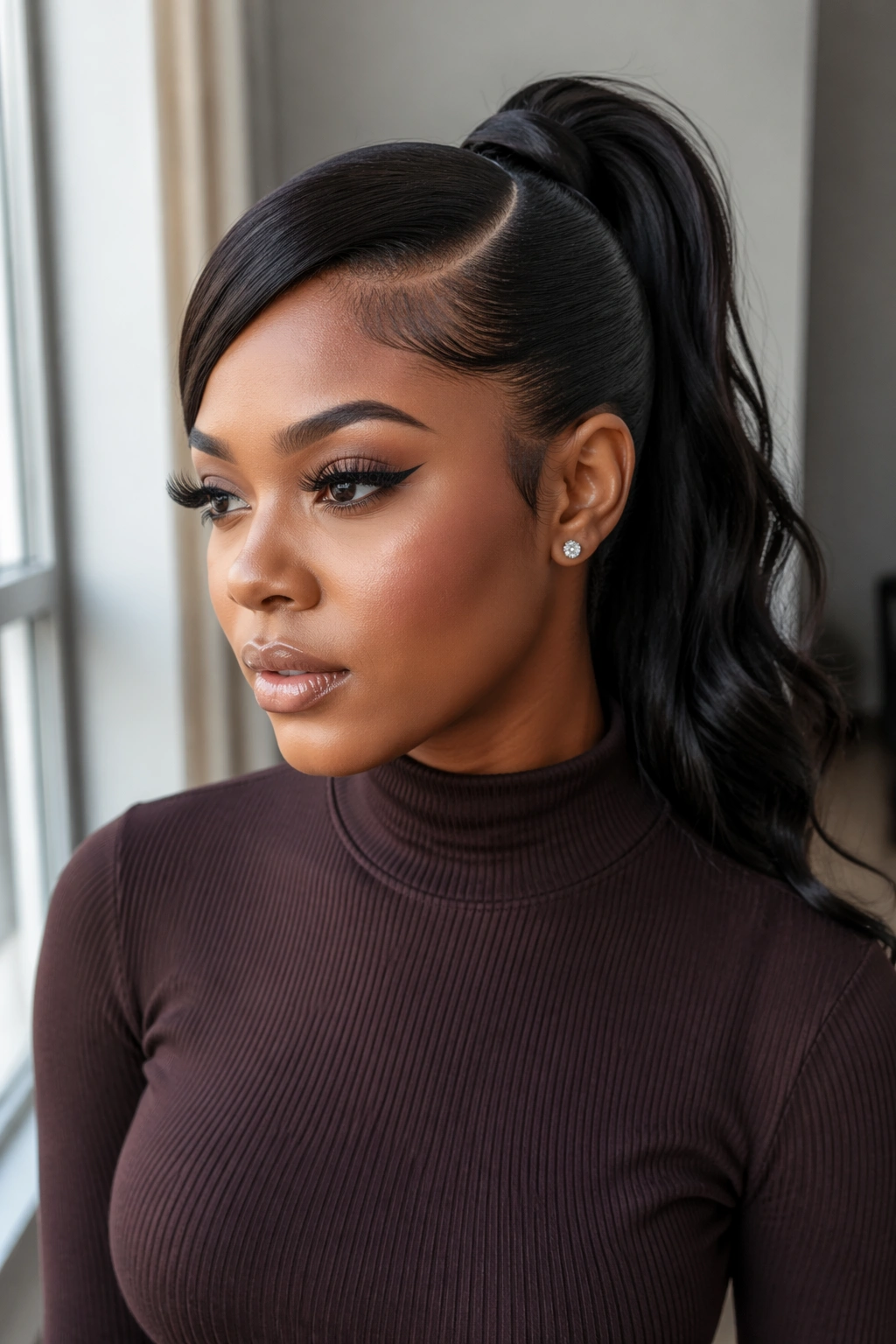
Why does a side part look so expensive when it’s done right? Because it breaks the shape in a way that feels intentional, not random. A deep side part gives you softness around one eye and makes the lifted ponytail feel a little more dramatic without getting messy.
How to Keep the Part Sharp
The part itself needs to be the star. If it wanders, the whole style loses its edge.
- Press the part with a hot comb or flat iron on low tension.
- Brush the larger side smooth across the temple before securing the half up section.
- Keep the ponytail slightly off-center so the shape follows the part instead of fighting it.
A side part also plays nicely with longer face shapes and square jaws. It softens the upper half of the face while keeping the tail sleek. That’s the balance people usually want, even if they don’t say it out loud.
4. Wrapped-Base Half Up Weave Ponytail
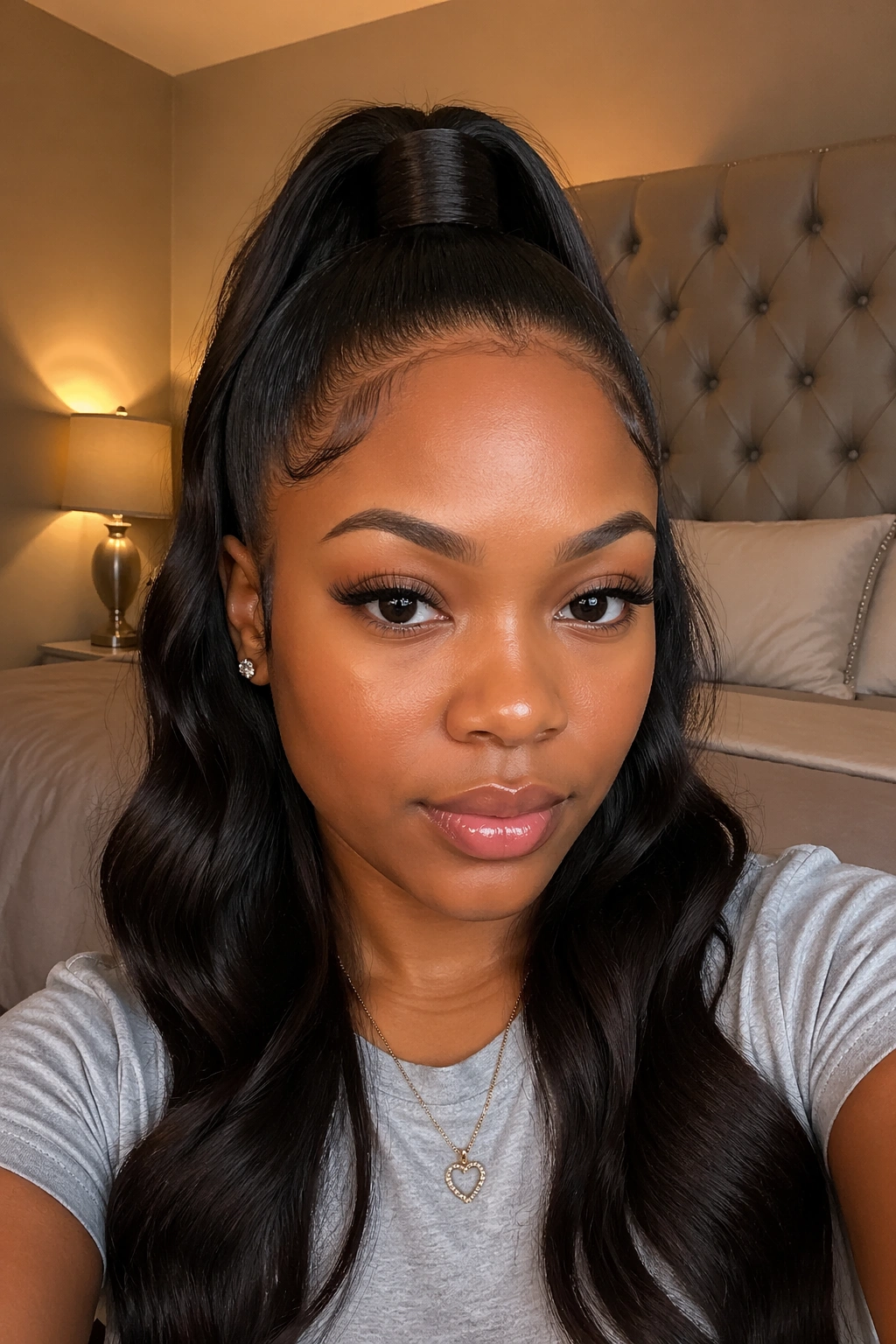
Picture a ponytail where you cannot see the elastic at all. That’s the appeal here. The wrap gives the base a clean, finished look, and it’s one of the easiest ways to make a simple half up weave ponytail feel more polished.
The trick is to leave a narrow strip of hair underneath the ponytail section, wrap it around the base two or three times, and pin the end under the tail with a flat bobby pin. Keep the wrap tight, but not twisted so hard that it looks ropey. A smooth wrap should look like part of the ponytail, not a separate add-on.
This style works when you want a clean finish with almost no visual clutter. It also helps if your elastic is a little bulky or if the ponytail hair is thicker than your natural section. Hide the hardware. Let the shape do the talking.
5. Body Wave Half Up Weave Ponytail
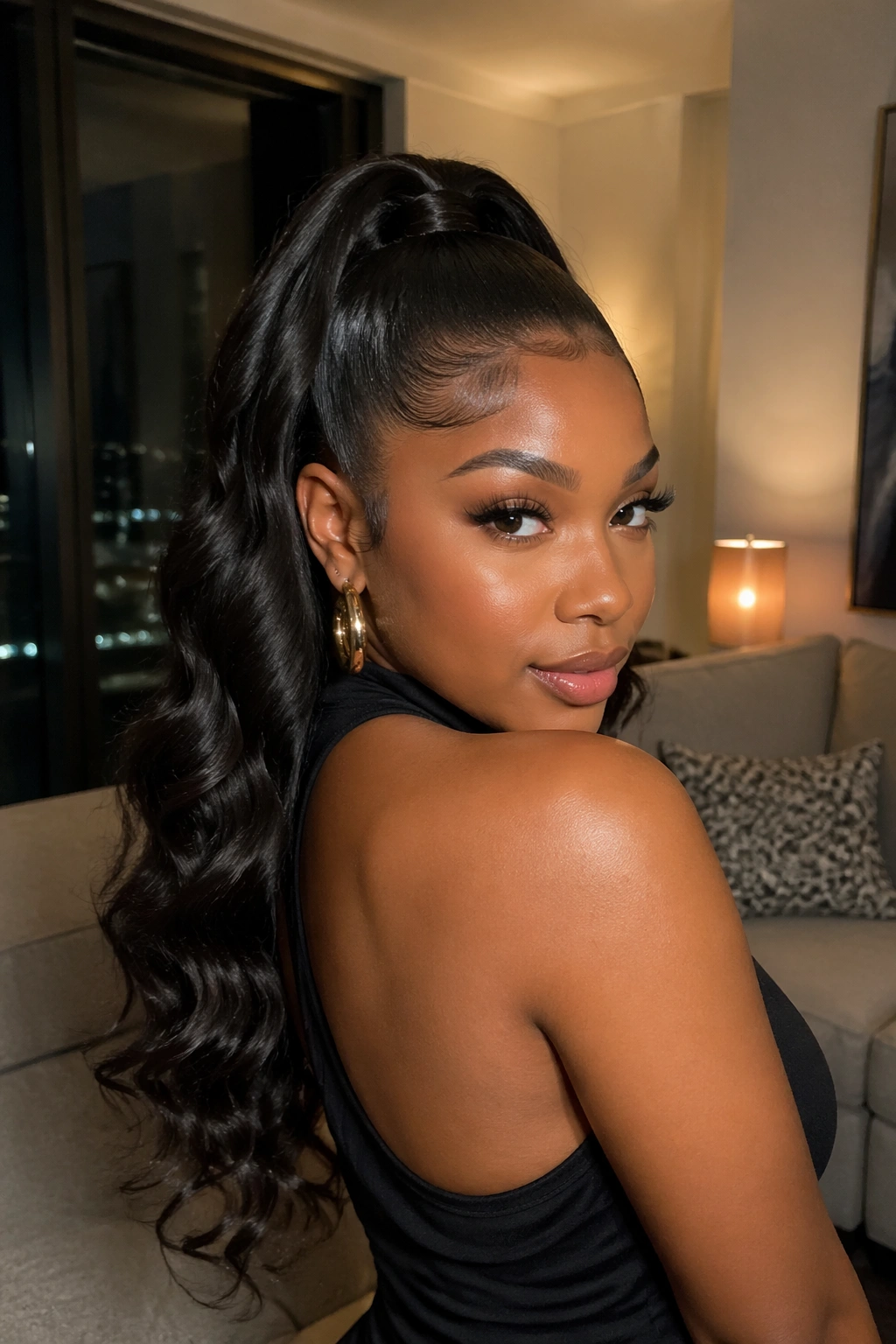
Straight hair has its place, but body wave brings a softer kind of polish. The top stays controlled, and the tail has those loose bends that move a little when you walk. It keeps the style from feeling too hard or too formal.
Unlike bone-straight bundles, body wave hair should not be brushed to death. That’s where people mess it up. A paddle brush at the roots is enough; after that, use your fingers or a wide-tooth comb on the tail so the wave pattern stays intact. If you crush the pattern, you lose the whole point.
This is a good pick for evenings, photos, or days when you want the style to look finished but not stiff. The contrast between a smooth crown and a soft tail is what gives it charm. No extra tricks needed.
6. Face-Framing Half Up Weave Ponytail
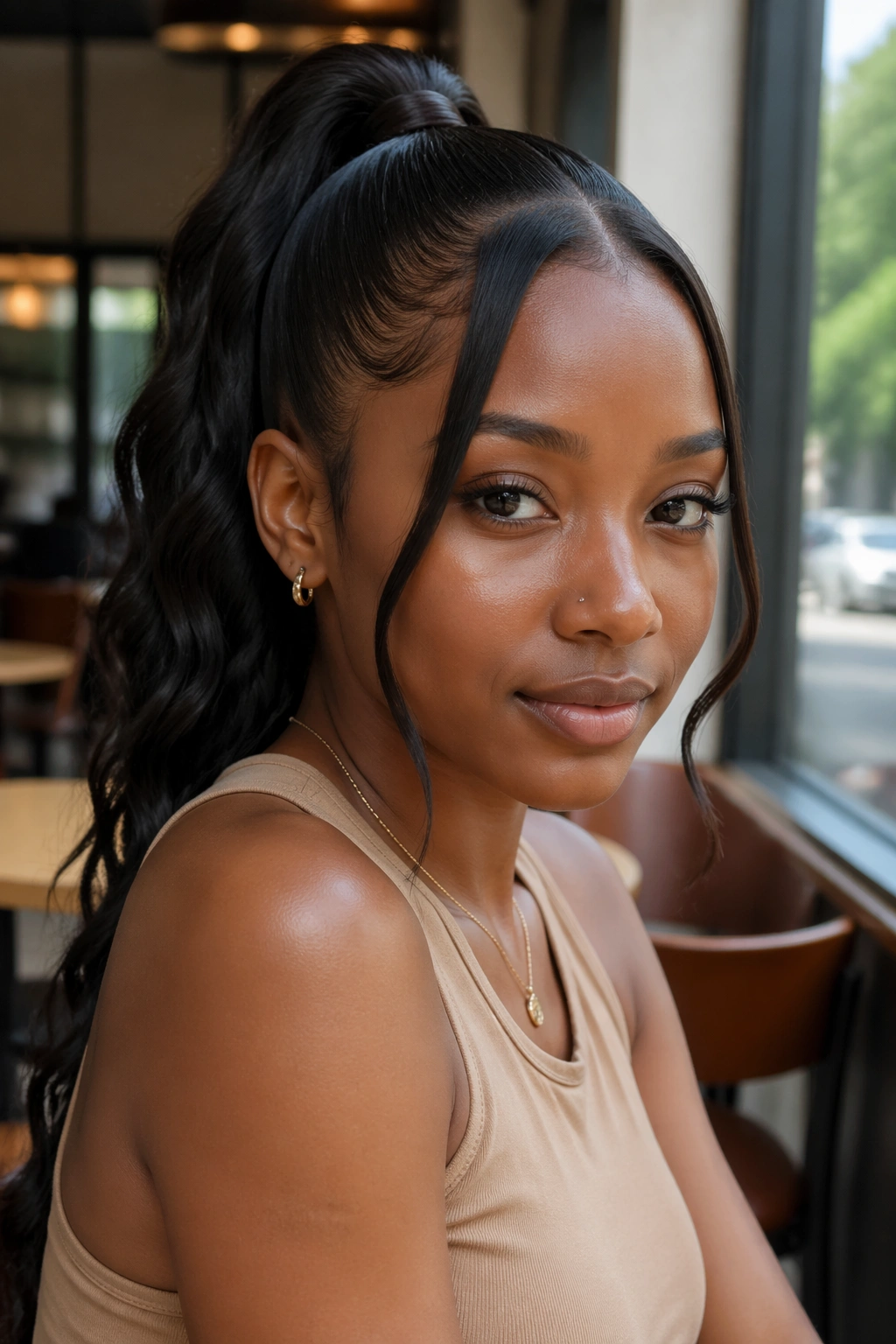
Two slim face-framing pieces can change the whole energy of a half up style. They soften the front just enough to keep the ponytail from feeling too strict, and they also help if you like a little movement near the jawline.
The key is restraint. Thick front pieces can make the style look dated fast, and they often frizz before the rest of the hair does. Keep the sections narrow — about the width of a pinky finger on each side — and curl or press them in one direction so they fall neatly. The rest of the hair should stay sleek and controlled.
This version is especially handy if you want a clean look that still feels a little lived-in. It’s polished, but not severe. And that matters more than people think.
7. Crisscross Half Up Weave Ponytail
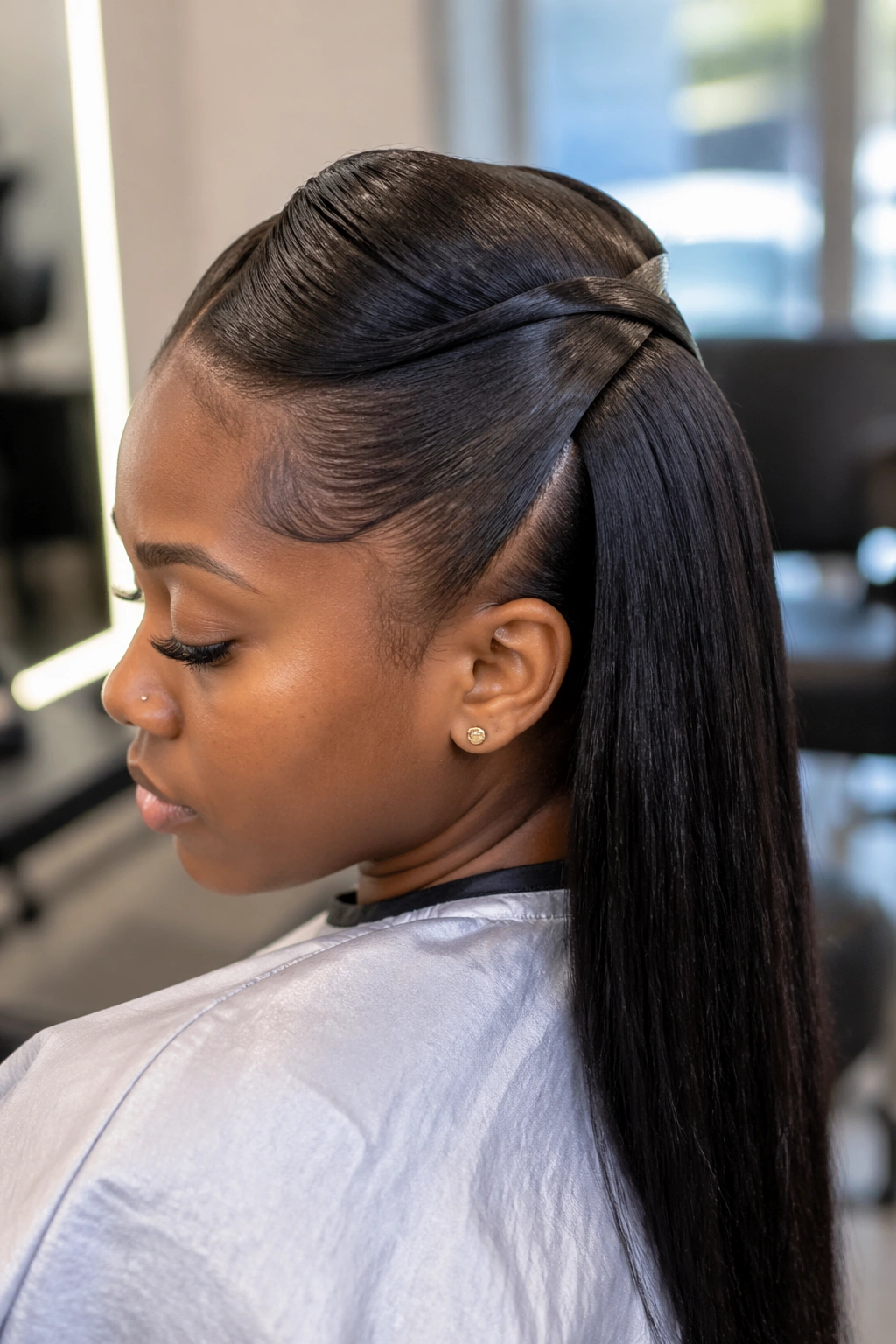
A crisscross base gives you detail without clutter. Two small sections meet over the ponytail anchor, cross over each other, and pin down flat. That tiny bit of structure makes the style look more considered than a plain elastic ever could.
What Makes It Different
The crisscross sits best when the rest of the crown is brushed smooth first. If you try to build it on a puffy base, the pattern gets lost.
Use thin sections. Seriously. Wide pieces turn clumsy fast, and the whole point is to keep the top neat while still adding interest. Once the cross is pinned, tuck the ends under the tail so nothing sticks out at the sides.
This style is good when you want something a little more detailed than standard but still clean enough for a formal setting. It has a bit of design to it, which keeps the ponytail from feeling plain.
8. Swooped Bang Half Up Weave Ponytail
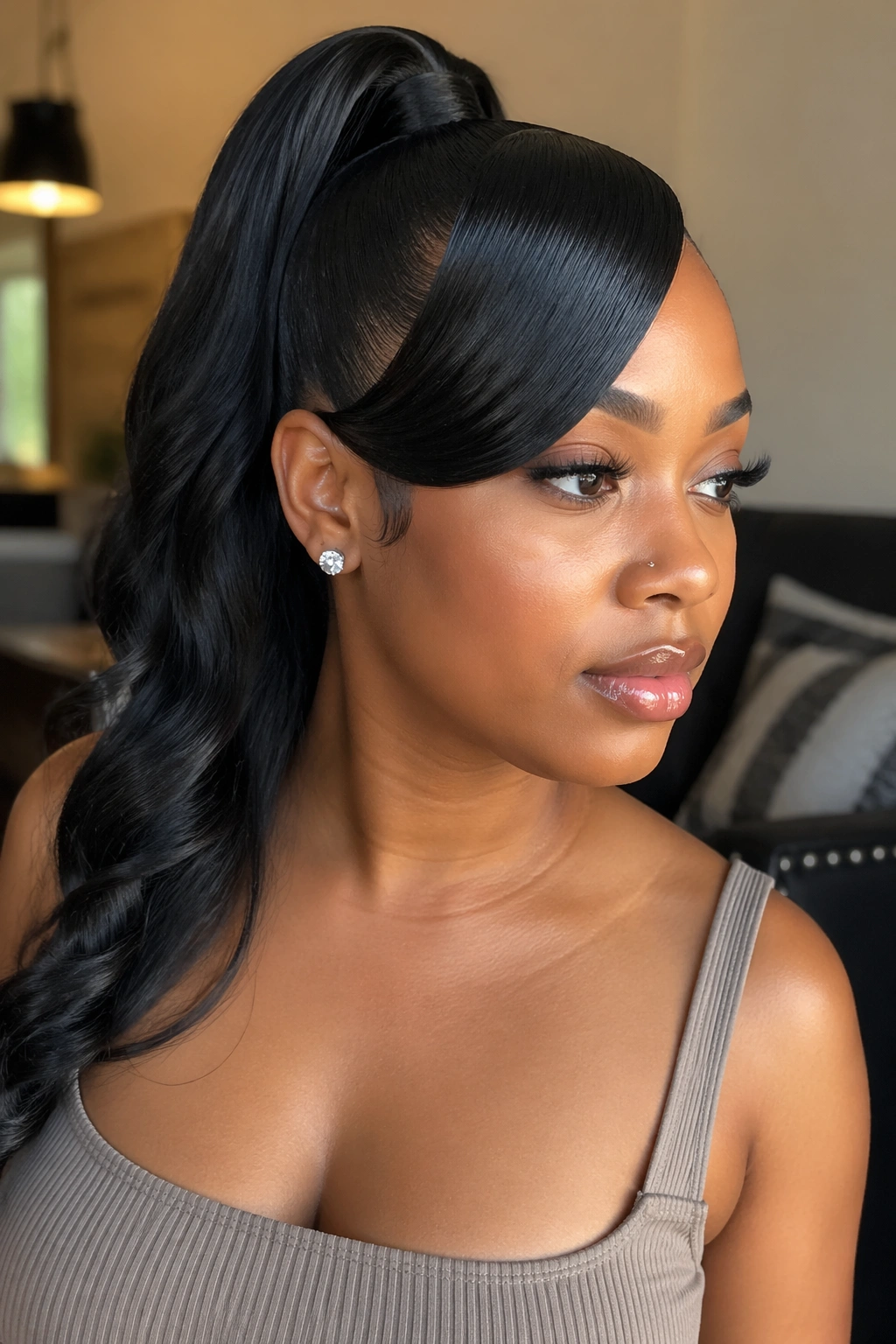
A swooped bang changes the mood immediately. The lifted ponytail stays sleek, but the swoop gives the front a soft bend that frames the forehead and cheek. It’s a strong look, not a lazy one.
I like this style best when the bang is shaped before the ponytail goes up. If you try to smooth everything after the tail is secured, the front can start fighting back. That’s how you get a bump where you wanted a sweep. The bang should curve cleanly toward one side, then settle into the ponytail without a hard break.
This version works beautifully for people who like a little old-school glamour. It has movement at the front and control everywhere else. That contrast is the point.
9. Bubble Half Up Weave Ponytail
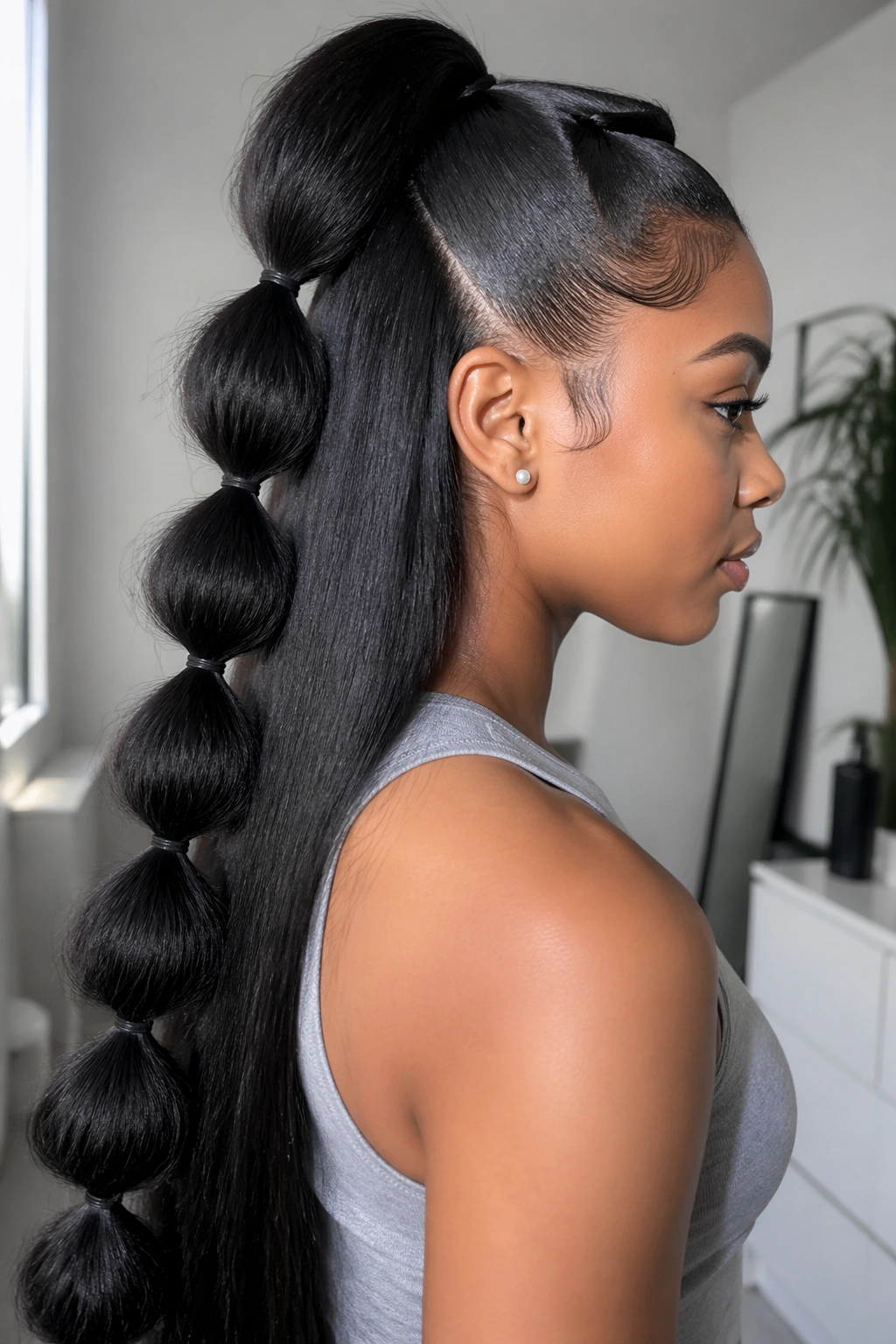
Bubble ponytails can look playful, but on a sleek half up base they also look tidy. The sections are controlled, the ponytail stays defined, and each bubble has a clean round shape instead of a messy puff.
Use clear elastics or slim black bands, spacing them about 2 to 3 inches apart depending on the length of the tail. Then gently pull each section outward until it rounds out evenly. Don’t yank. Pull a little, check the shape, then pull a little more if needed. That keeps the bubbles even.
This style suits people who want something more styled than a plain tail but still neat enough to wear with tailored clothes. It’s a little playful, yes. Still clean. Still sharp.
10. Braided-Base Half Up Weave Ponytail
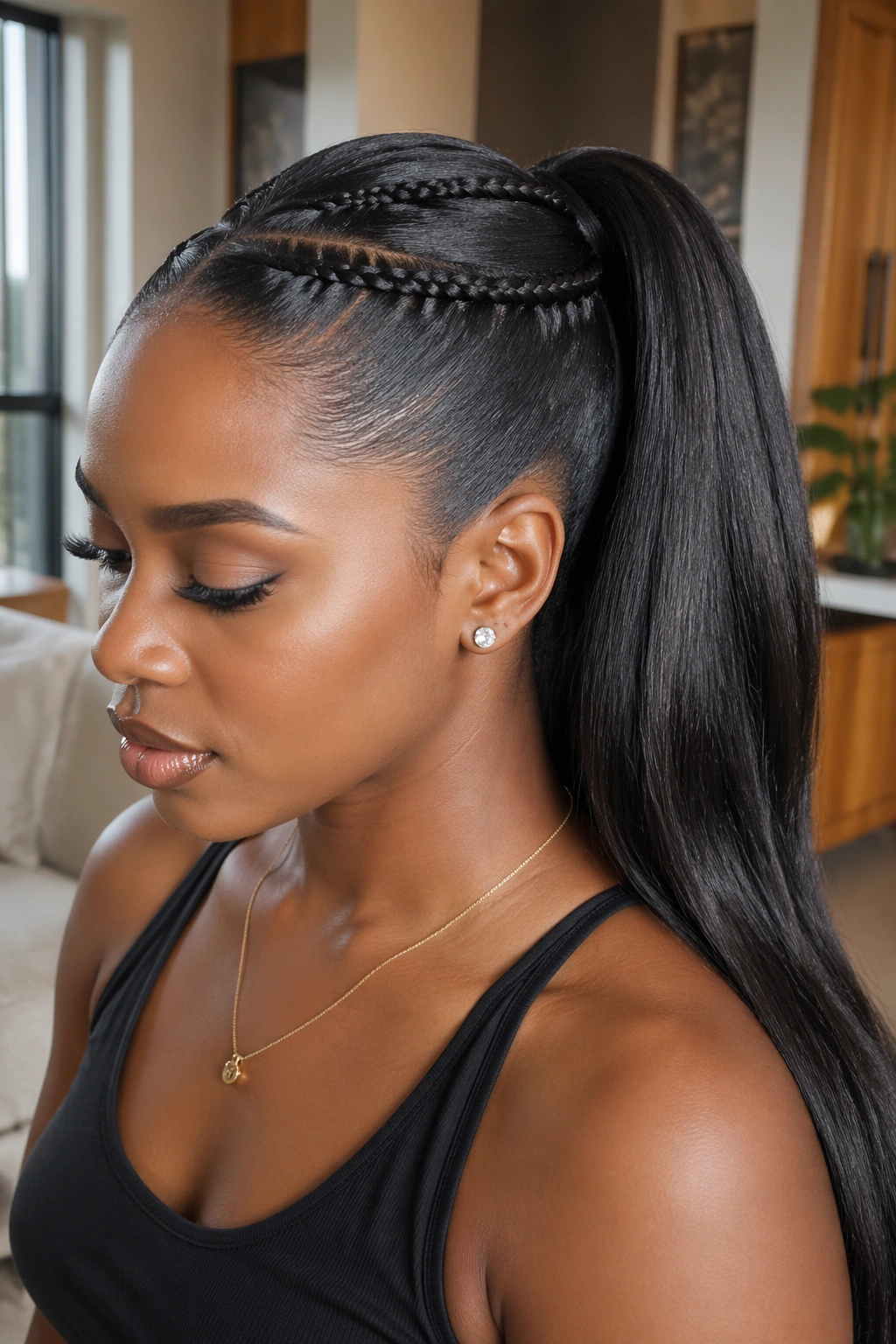
A braided base gives the ponytail a solid anchor, and that anchor is what keeps the style looking tidy for longer. Instead of relying only on an elastic, you braid the half up section first and then secure the tail to the braid. It feels more locked in.
How to Style It
Feed two or three narrow braids into the half up section if you want the top to stay flatter. Then gather the braids together and join them into the ponytail. The pattern stays neat because there are fewer loose strands trying to escape the sides.
This one is especially good when you need your style to hold up through a long day. It also works well with thicker bundles, since the braid gives the weight somewhere stable to sit. Clean, practical, and a little more secure than the average ponytail.
11. Extra-Long Half Up Weave Ponytail
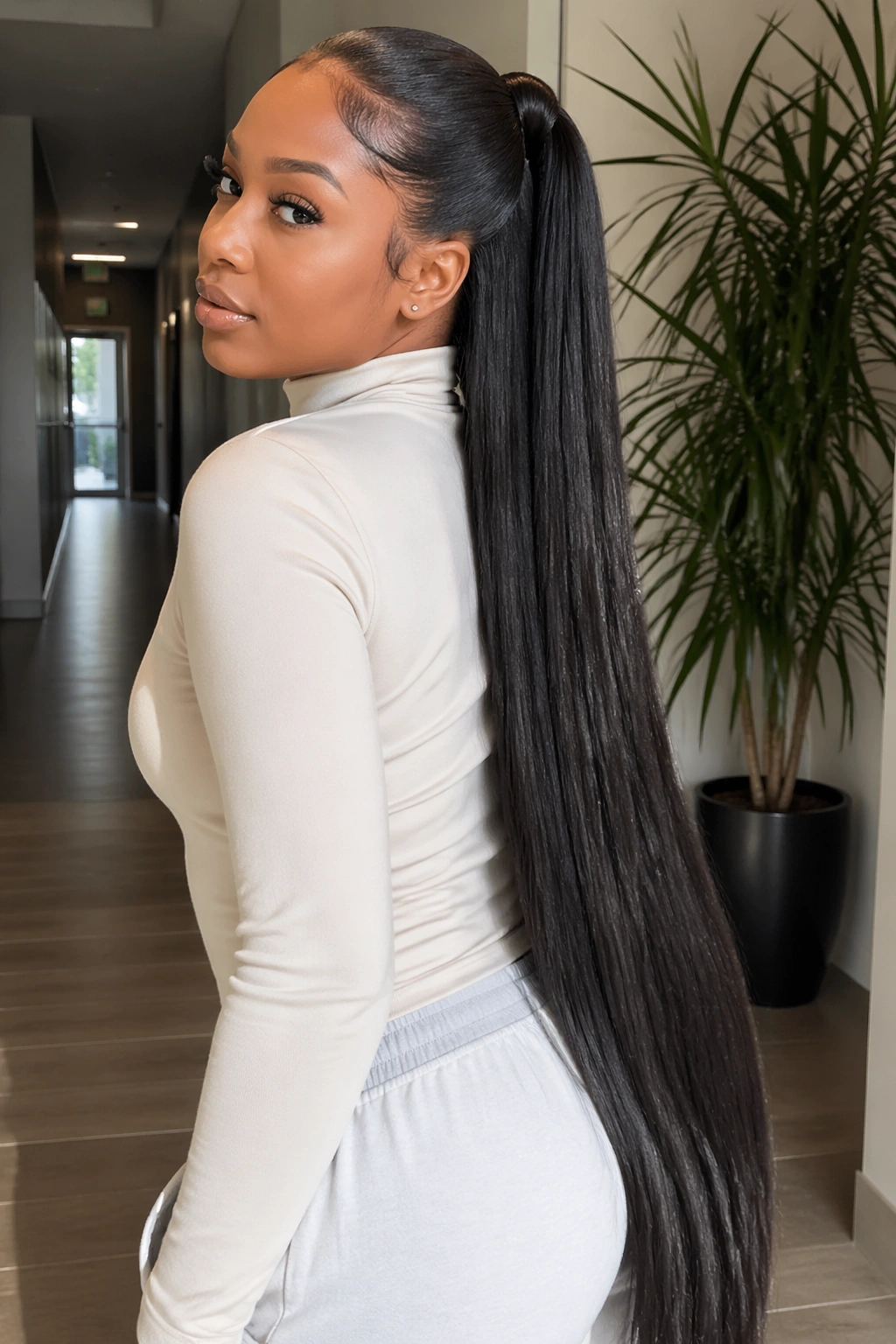
Extra length always changes the mood. A long tail pulls the eye downward, which makes the face look more lifted and the crown feel even more polished. There’s also a bit of drama in it, but the clean base keeps that drama from tipping into chaos.
The thing to watch is weight. A very long tail can drag on the anchor if the base is too narrow or too high, so I prefer giving the section a little more support at the back of the crown. Sometimes a second hidden elastic helps. Sometimes a discreet pin under the base does the job. Little fixes, big payoff.
This is the version for people who want the ponytail to be the whole statement. The base stays sleek, the length does the showing off, and the rest is just maintenance.
12. Curled-Ends Half Up Weave Ponytail
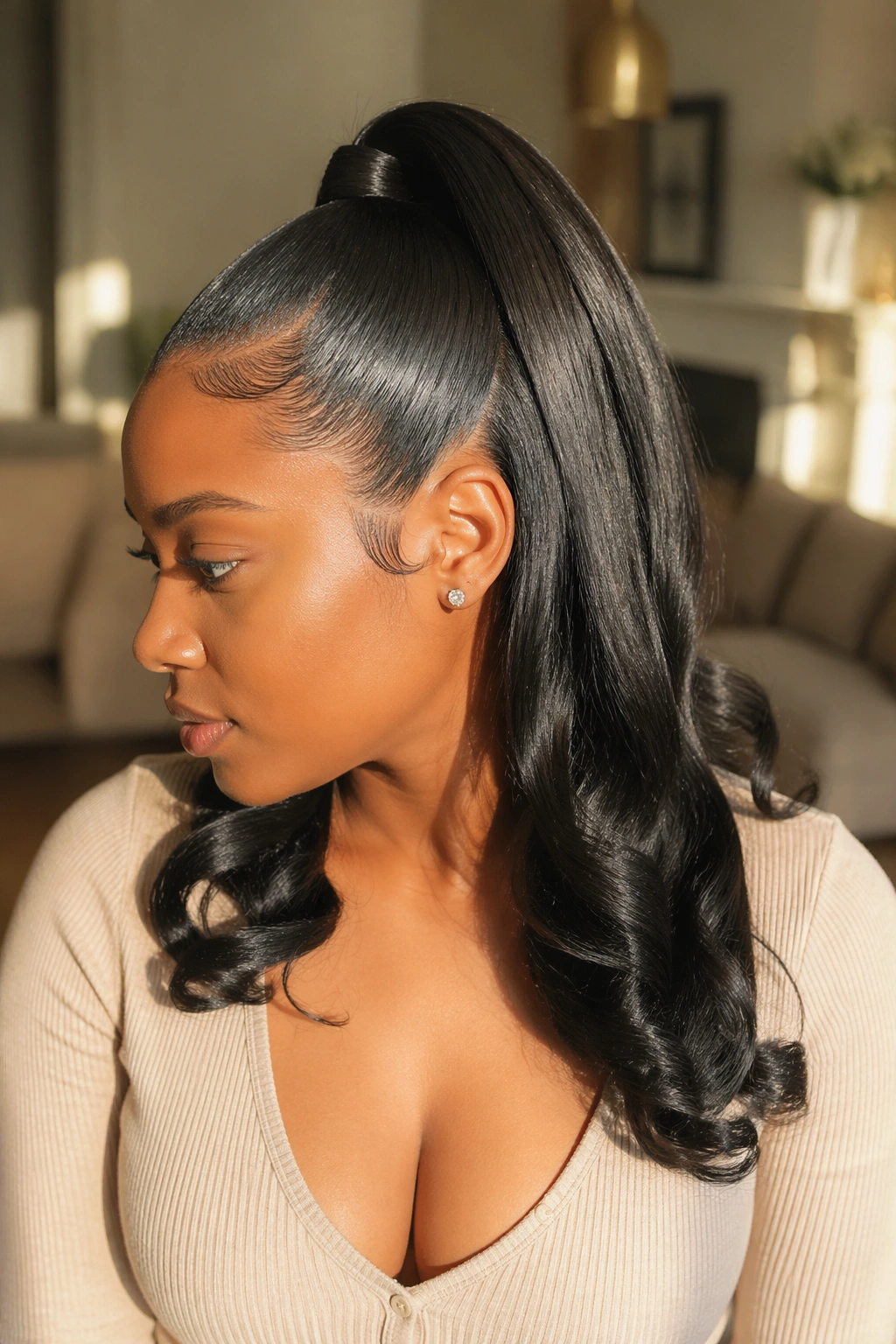
A clean half up style does not have to end in a blunt line. Curled ends soften the finish and make the ponytail feel more deliberate. One good curl at the bottom can change the whole read of the hair.
How to Get the Shape Right
Use a 1 to 1.25-inch curling iron or wand on the lower half of the ponytail. Hold each piece for a few seconds, let it cool in your hand, then release it. That cooling part matters more than people think; it helps the curl keep its shape instead of drooping in ten minutes.
Keep the top of the style straight and smooth so the curled ends stand out. If you curl too much of the tail, you lose the sleekness that makes the ponytail look clean in the first place. The contrast is what sells it.
13. Low Half Up Weave Ponytail
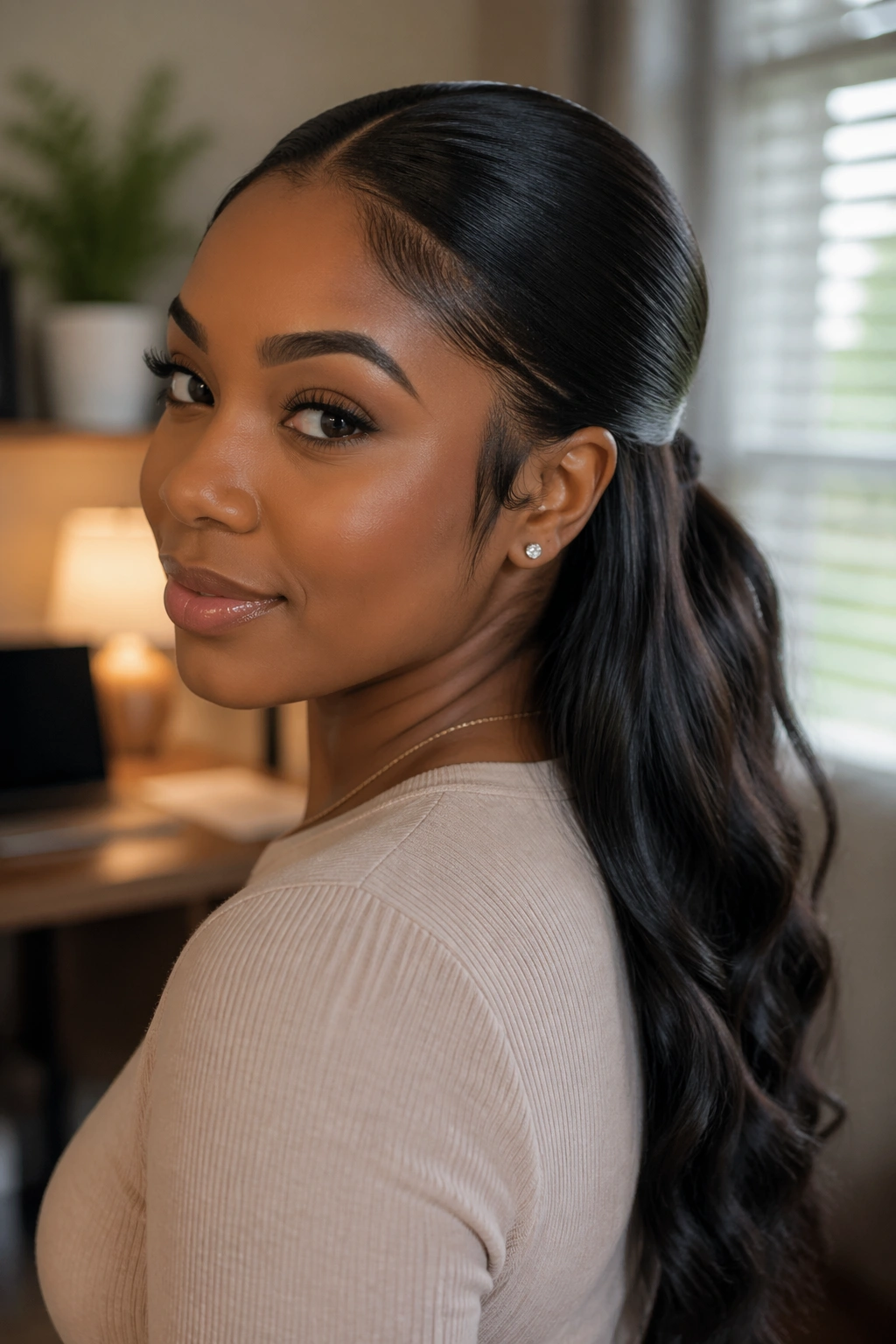
A low half up ponytail sits closer to the middle or lower crown, and that softer placement gives the style a quieter feel. It still reads polished, but it doesn’t pull as hard on the scalp or the face. That alone makes it worth wearing.
It also tends to be kinder if you’re dealing with a sensitive hairline or you just do not want a high, tight anchor. Use a smooth brush to bring the top section back, then secure it low enough that the ponytail drops naturally rather than perching up on top of your head. The shape should feel settled.
This is a good one for long days, office settings, or anywhere you want your hair neat without looking overstyled. It’s the calm version of the half up weave ponytail.
14. Flip-Ends Half Up Weave Ponytail
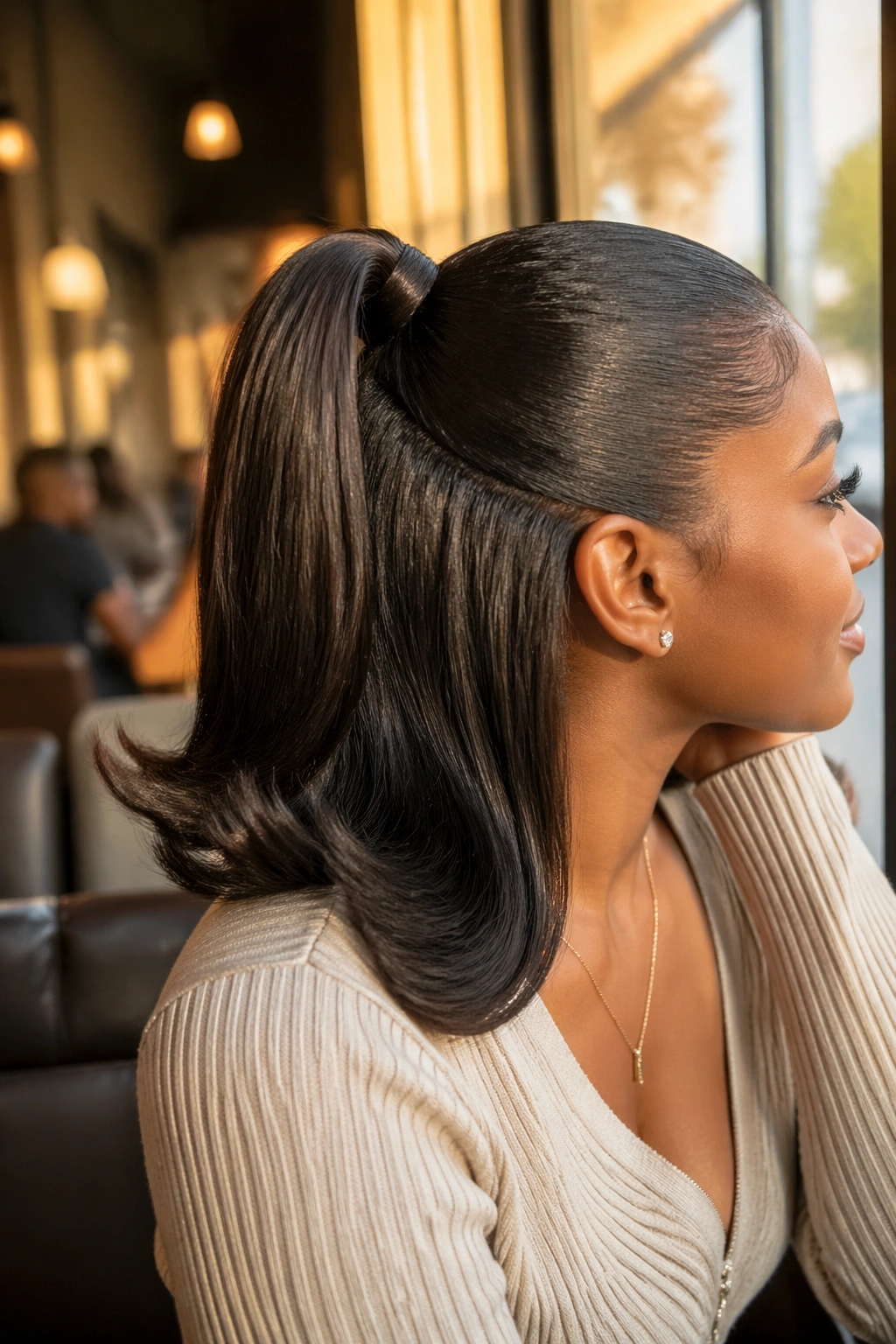
Flipped ends give this look a retro edge, but the base stays sleek enough to keep it modern-looking. The ponytail starts clean and tight, then the ends turn outward or slightly under at the bottom. That bend gives the style personality.
The best flip happens when the hair is smoothed first and the ends are shaped last. If the whole tail is bent too much, the look gets bulky. Aim for a smooth crown, a straight middle, and just enough bend at the end to catch the eye. A flat iron on low heat or a roller set on the tail can both work.
This style is for someone who likes neat hair with a little attitude. Not wild. Not stiff. Just a neat shape with a sharp finish.
15. Frontal Half Up Weave Ponytail
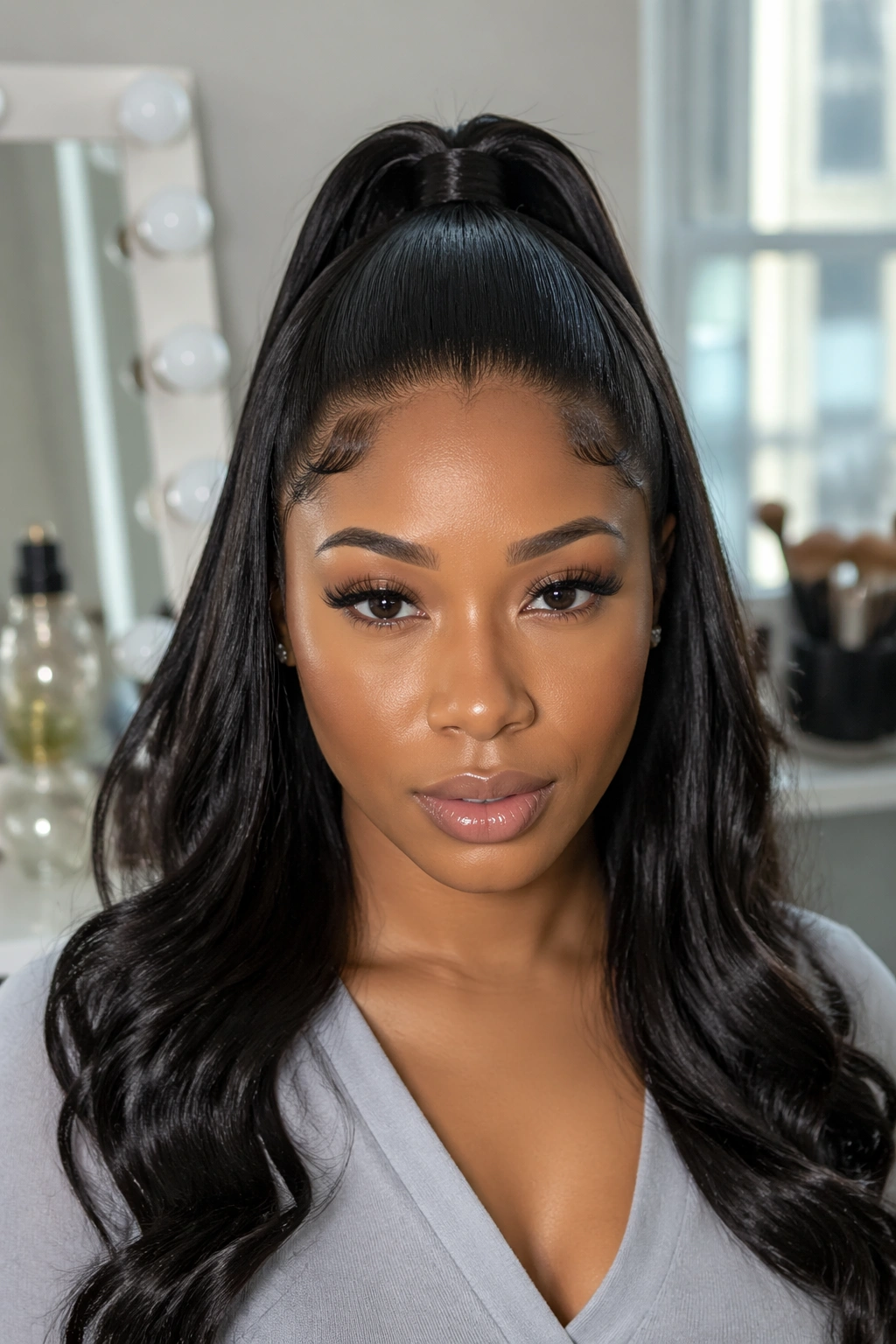
A frontal makes the hairline look seamless, and that matters if you want the cleanest possible finish. No leave-out at the temples. No fight with your edges. Just a smooth transition from forehead to ponytail.
The real advantage here is control. You can shape the hairline, part, and front section more precisely than you can with a simple leave-out style, which makes the whole thing look polished from every angle. Use small amounts of mousse and edge control, not giant blobs of product that dry shiny and flaky.
This is the style I’d reach for when I want the front to look exact. It works well for events, sharp makeup, or any look where the hair should look almost sculpted. A frontal half up weave ponytail is not subtle, but it can be very clean.
16. Feed-In Braid Half Up Weave Ponytail
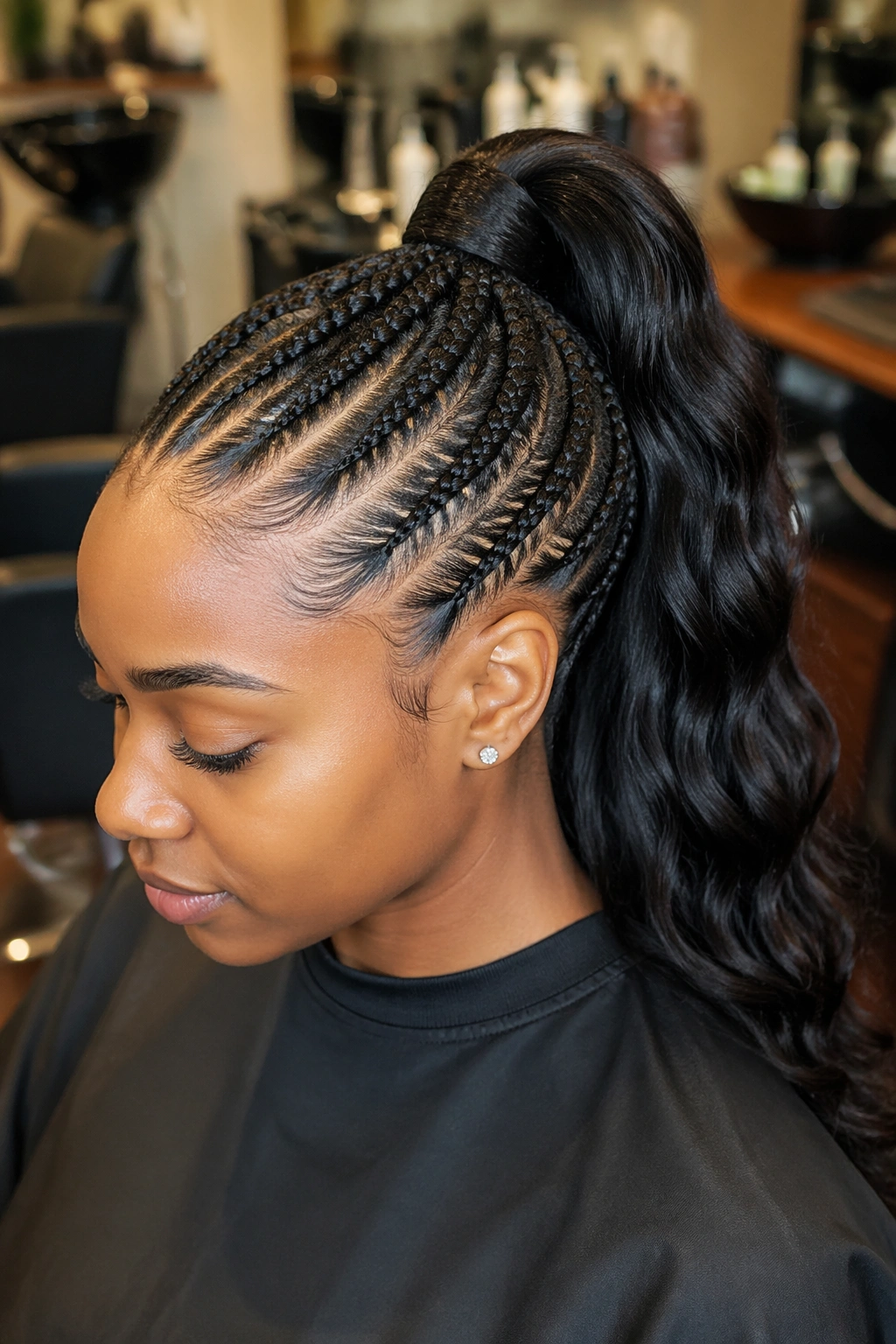
If you like a style that stays tidy at the root, this one is hard to beat. The feed-in braid creates a smooth path into the ponytail, and because the braid gets built gradually, the front stays flat and controlled.
Best for Neatness and Hold
Feed-in braids are especially useful when you want to blend natural hair with weave hair without making the base bulky. Start small at the scalp, add hair little by little, then finish the braid where the ponytail begins. That gradual build keeps the line clean.
- Use medium tension, not a death grip.
- Keep the braid straight before it enters the ponytail.
- Wrap the join point once the ponytail is attached so the transition disappears.
This is a strong option if you want the style to hold its shape for a while and still look intentional from the side and back.
17. Knotted Half Up Weave Ponytail
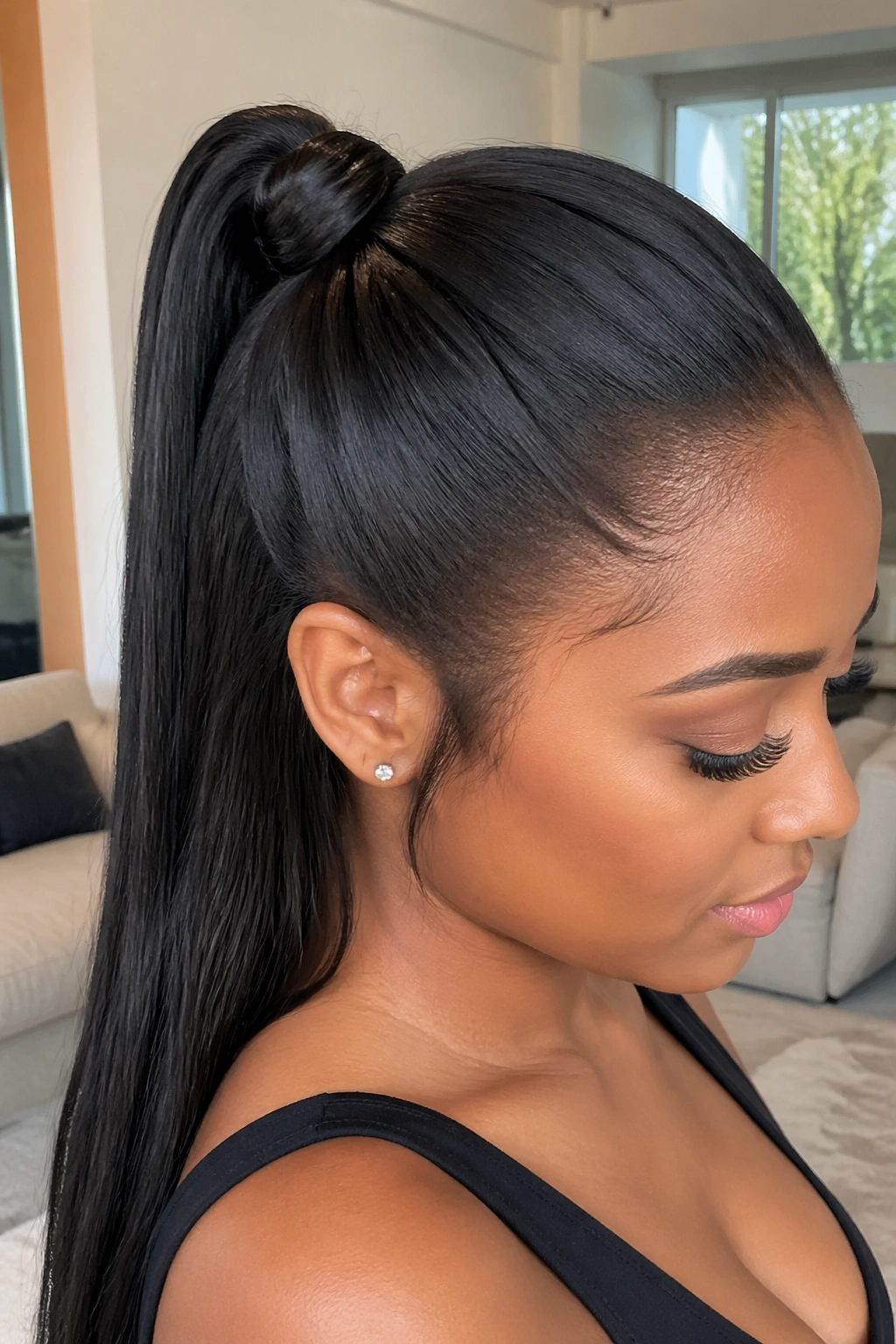
A knotted base feels a little more artistic than a standard wrap. Instead of hiding the section with a strand of hair, you shape it into a knot-like finish that looks built into the ponytail.
The key is keeping the knot compact. A loose knot can look sloppy fast, and that is the opposite of what you want here. Pull the section taut, loop it once, and pin it flat so the shape sits close to the scalp. The rest of the tail should stay smooth and simple so the knot gets room to show off.
I like this style when I want the top to look interesting without adding braids or accessories. It has a handmade feel to it. Clean, but not plain.
18. Boho Wave Half Up Weave Ponytail
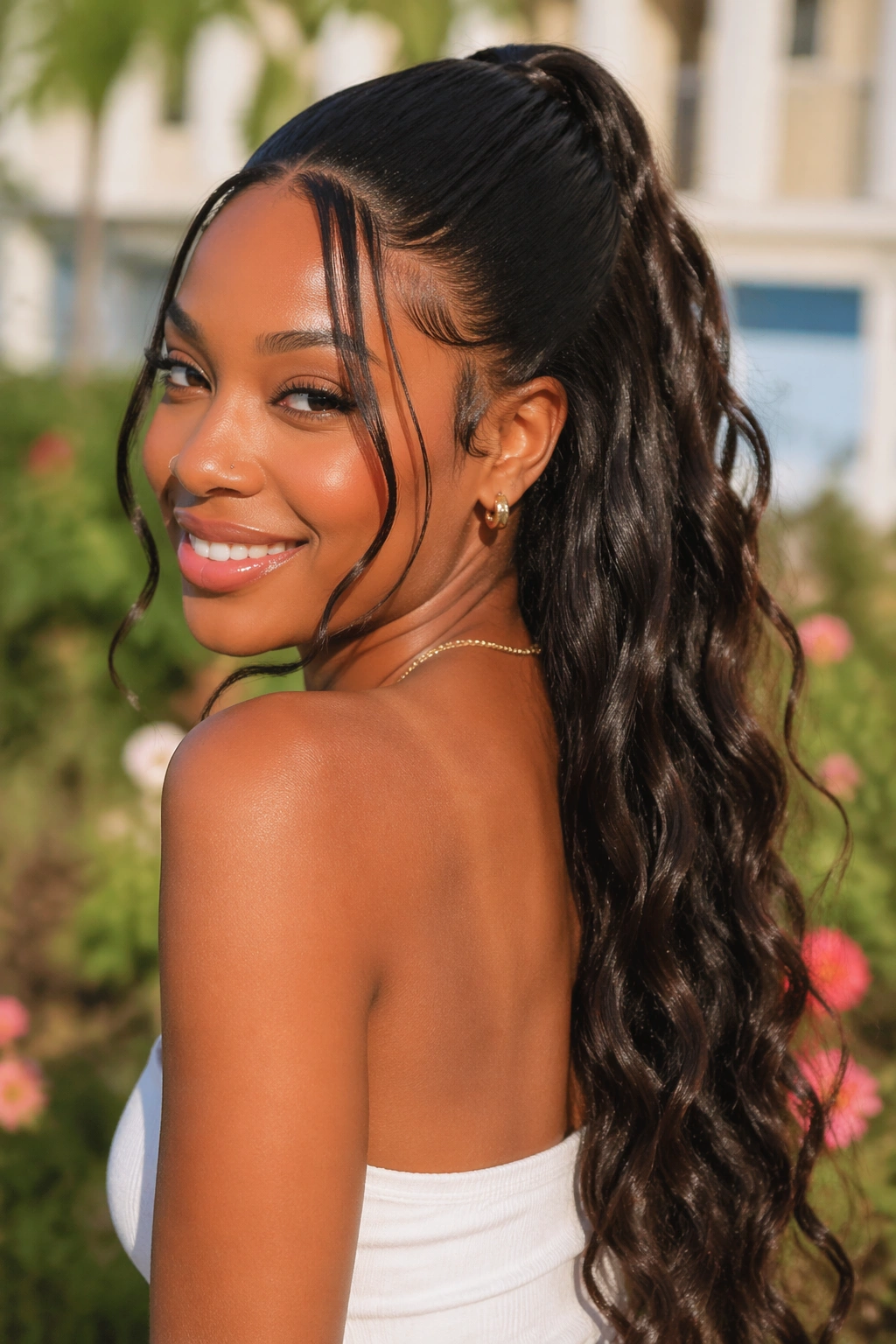
Boho wave can sound casual, but it still reads clean when the top section is sleek and the waves are controlled. The trick is to keep the crown polished and let the tail carry the texture.
Use a 1/2-inch wand for a few loose pieces if the weave is naturally straight, or work with body wave bundles and separate the curls gently by hand. Avoid brushing the tail too hard once it’s shaped. That’s how the frizz starts. A light mist of flexible-hold spray is enough to keep the wave pattern from collapsing.
This is one of the softer options on the list. It works when you want the style to feel touchable instead of rigid. The base still needs to be neat, though. No shortcuts there.
19. Double-Layer Half Up Weave Ponytail
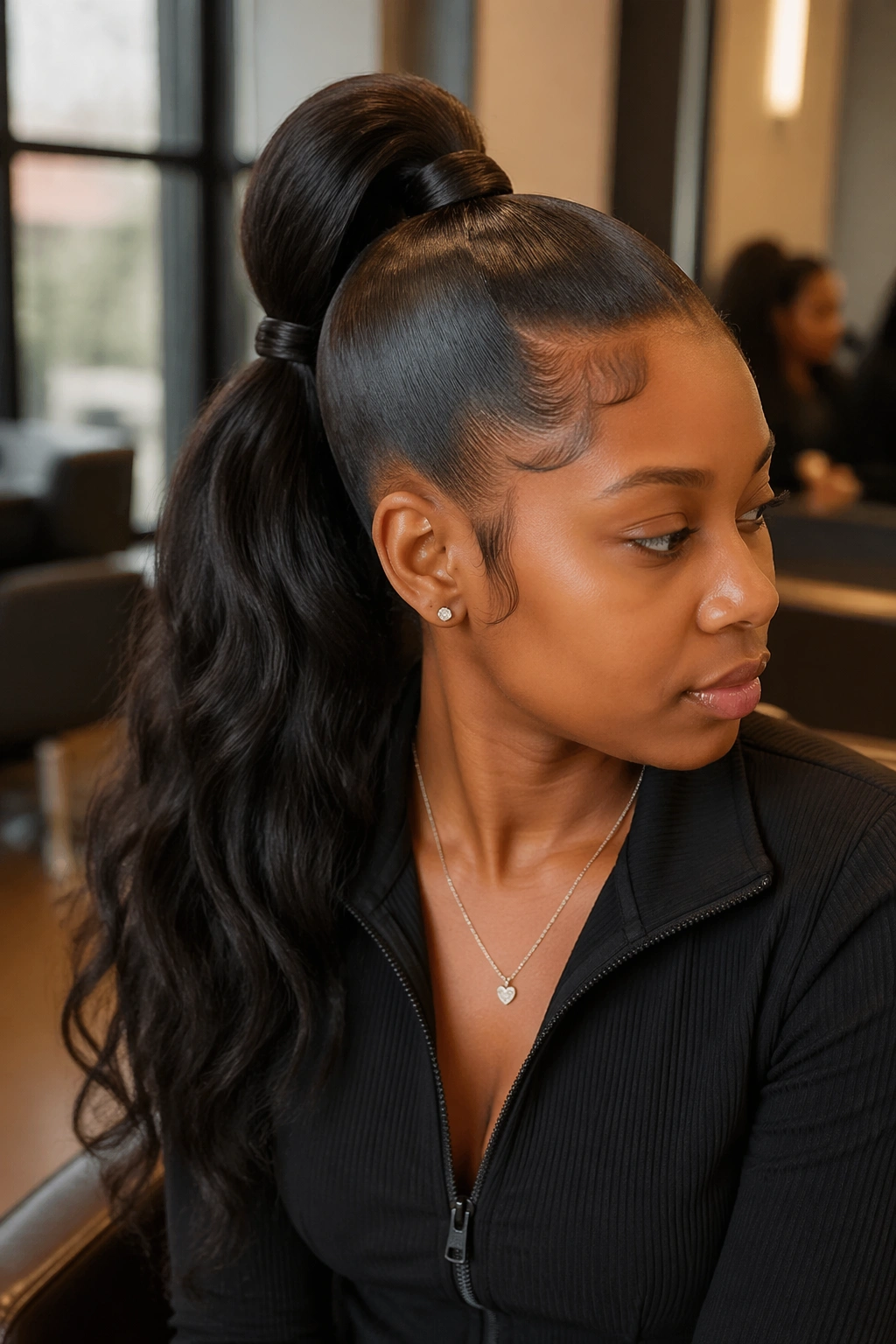
A double-layer ponytail gives you a stacked look: one section sits higher and smaller, while the main tail hangs below it. It’s a tidy way to add volume without relying on a single thick anchor that can feel heavy.
What makes this version work is proportion. The top piece should be neat and compact, almost like a polished support point, while the lower tail carries the drama. That separation keeps the style from looking crowded at the crown. If everything sits in one big lump, the effect disappears.
This is a good choice when you want body and structure at the same time. It is also surprisingly useful if your bundles are thick and you need a way to distribute the weight better.
20. Crown-Braid Half Up Weave Ponytail
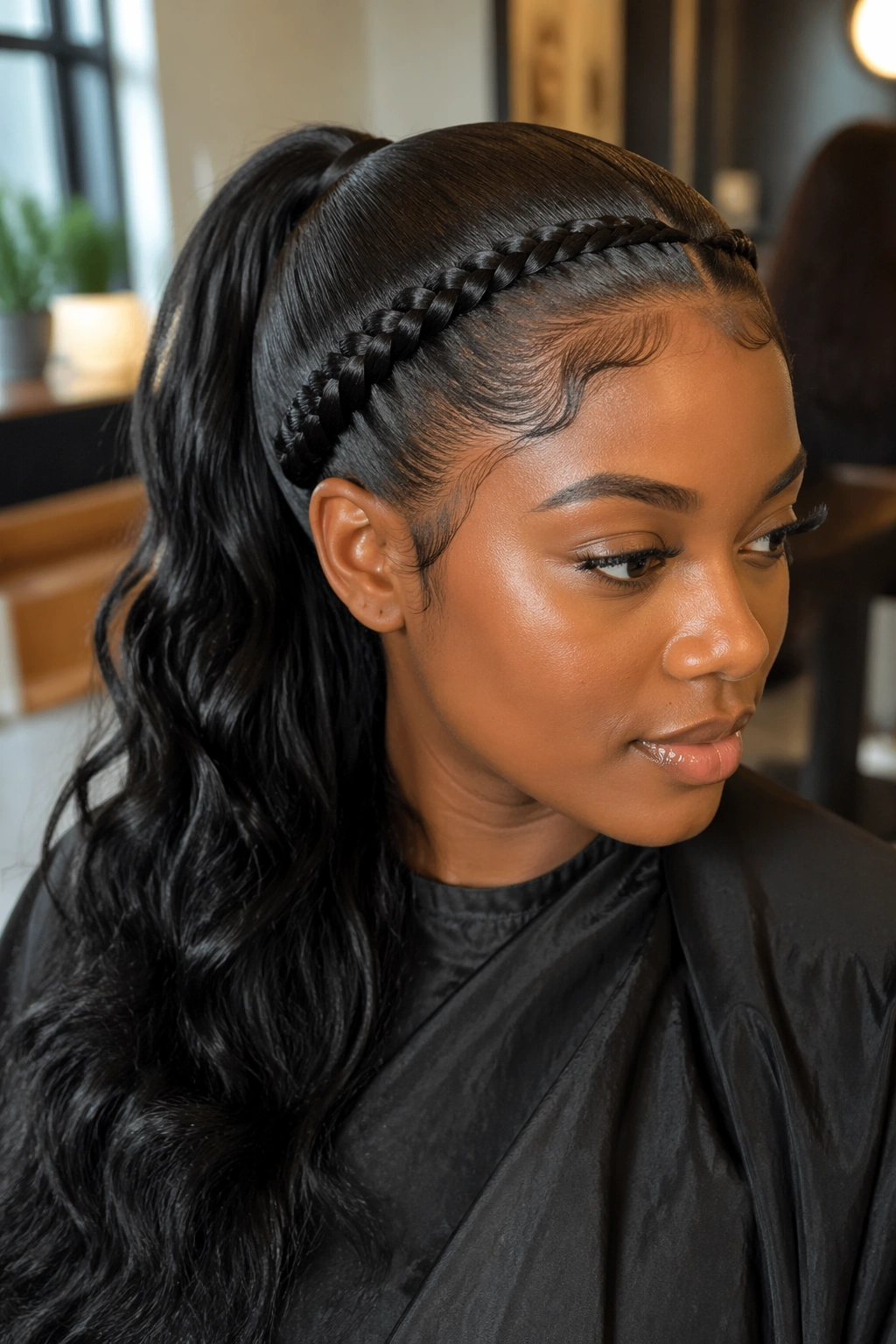
A slim braid running along the crown gives the style a clean edge without stealing focus from the ponytail. It draws the eye around the head and makes the front look finished, even if the rest of the style is kept simple.
What Makes It Work
The braid should sit flush to the scalp and stay narrow. If it gets too wide, it starts competing with the ponytail instead of supporting it.
That said, a crown braid adds structure in a way that plain brushing can’t. It keeps the front from puffing up and gives the style a slightly more dressed-up feel. If you like neat hair with a little detail, this is a strong pick.
The ponytail itself can stay straight, wavy, or curled. The braid is the frame. The tail is the payoff.
21. Curved-Under Half Up Weave Ponytail
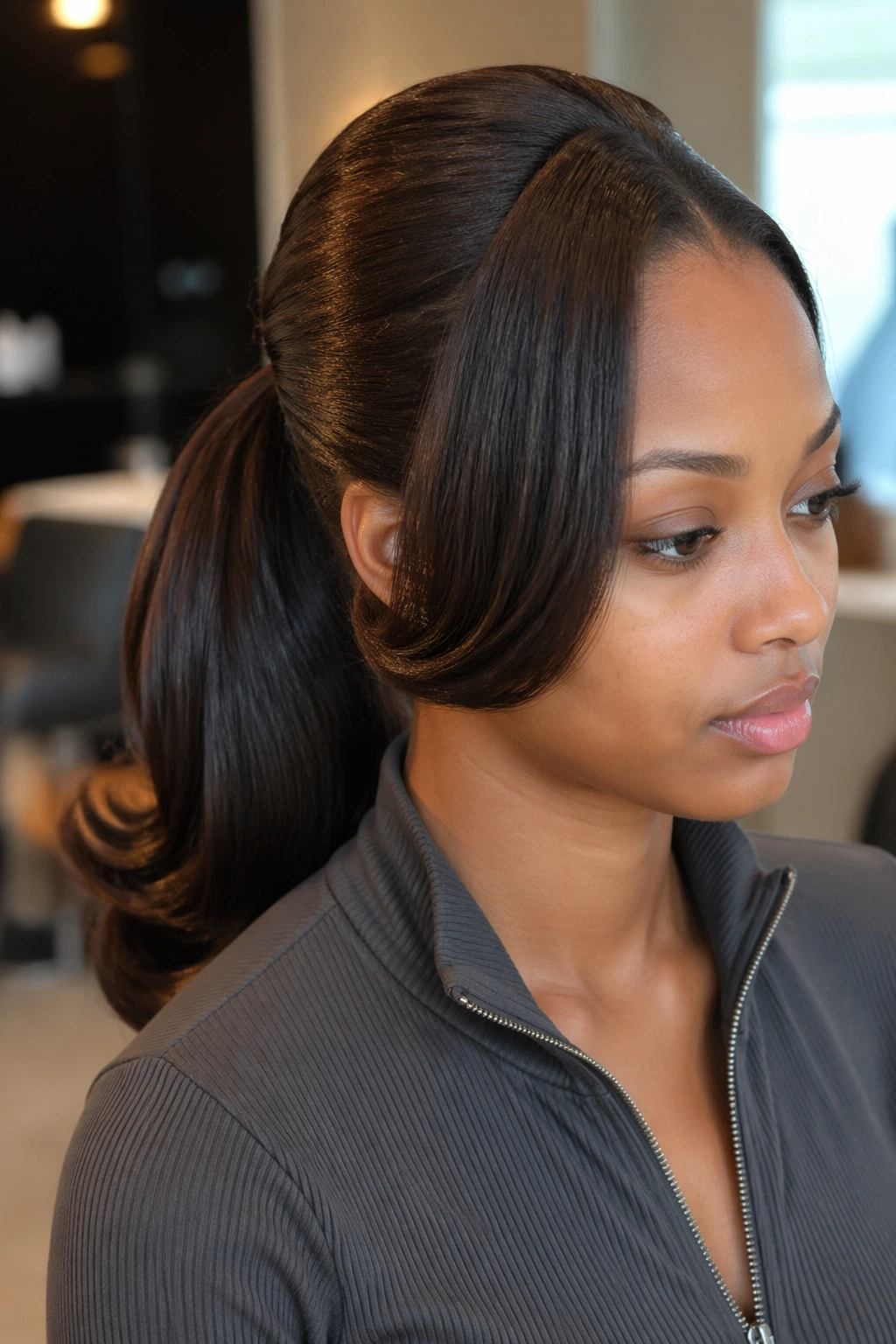
Curved-under ends create a tidy silhouette, almost like the tail was rolled into place on purpose. It’s cleaner than loose ends and softer than a hard flip. That middle ground is why people keep reaching for it.
The style looks best when the ends are shaped with a round brush or a quick wrap around a roller before they cool. Once they settle, the bottom of the ponytail tucks inward just enough to feel intentional. The crown should stay flat and smooth so the curve has room to show.
This is a good one for formal outfits, structured dresses, or anywhere you want your hair to match a neat outfit line. The shape is calm, but it still has personality.
22. Minimal-Accessory Half Up Weave Ponytail
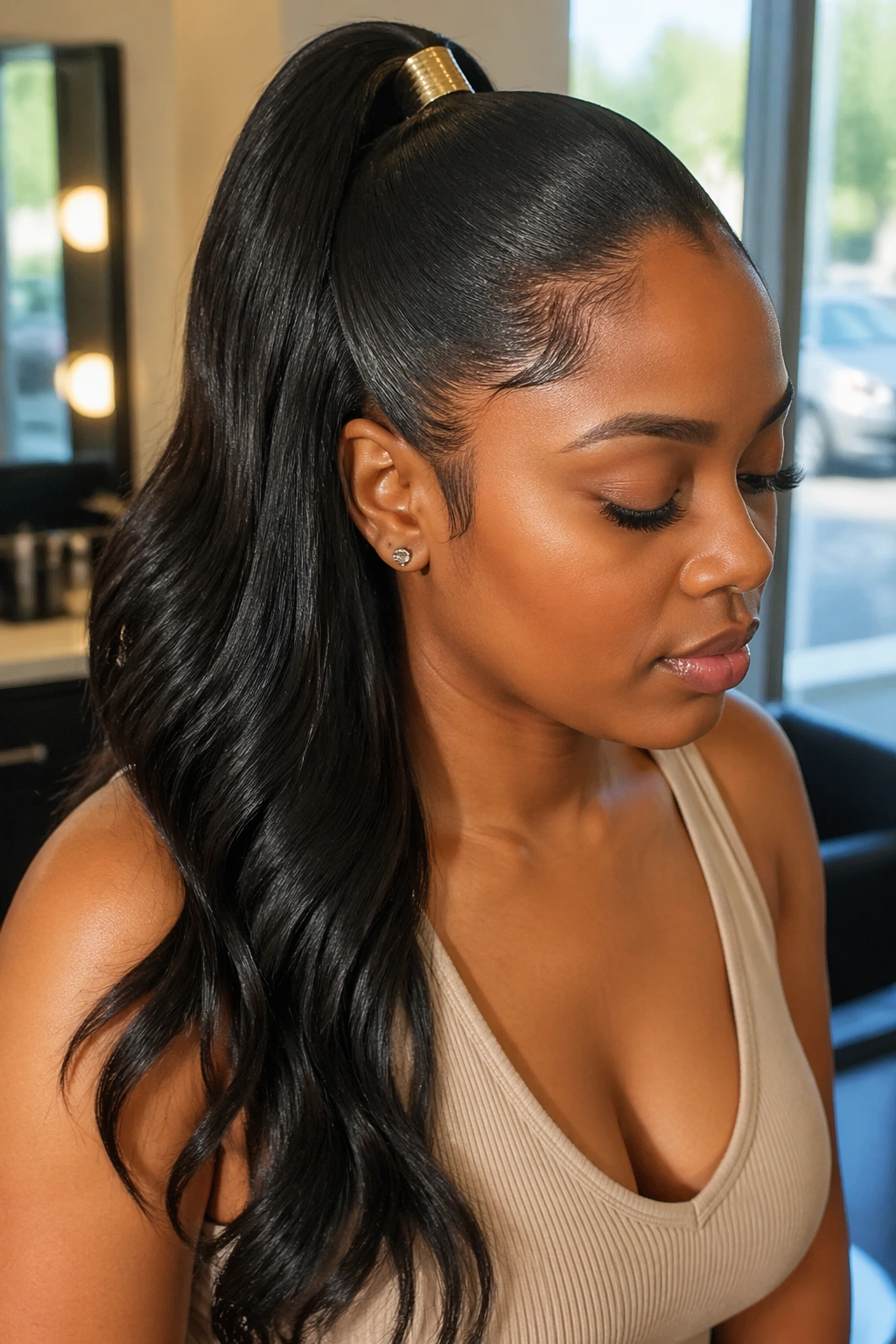
A single cuff, a slim ribbon, or one small metallic tie can clean up a ponytail fast — if you stop there. Too many accessories turn a sleek style into clutter. One accent is enough.
The hair itself should do most of the work. Keep the part neat, brush the base flat, and place the accessory where it can be seen without interrupting the line of the ponytail. A cuff near the base works best when the rest of the tail is smooth and the finish is deliberate. That way the accessory feels like a detail, not a distraction.
This style is a nice pick when you want polish with a tiny bit of personality. Less sparkle. More shape.
23. Yaki-Texture Half Up Weave Ponytail
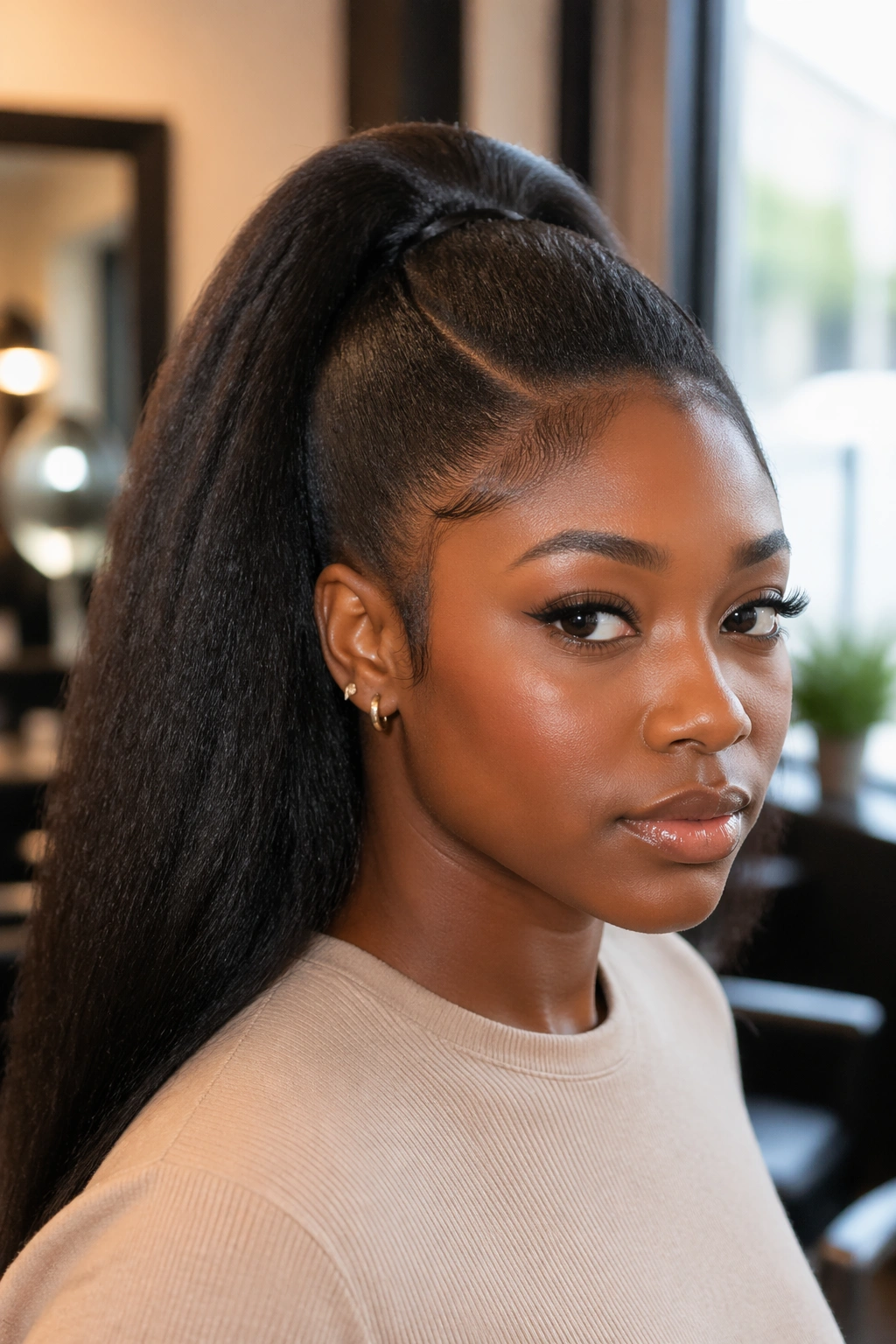
Yaki texture is one of the smartest choices if you want the weave to sit close to natural blown-out hair. It has a softer, more textured finish than silky straight bundles, which helps the ponytail blend better and keeps the whole style from looking too glossy.
That texture also hides tiny flaws better. A slight bump, a little root texture, a piece that doesn’t lay perfectly flat — yaki hair forgives more of that than ultra-smooth hair does. Which is useful, because real styling is rarely perfect. Use a light press at the roots and keep the tail brushed just enough to stay neat.
This is the version I’d point to if you want a clean style that still feels believable and wearable. It looks neat without screaming for attention.
24. Half Up Weave Ponytail With Soft Tendrils
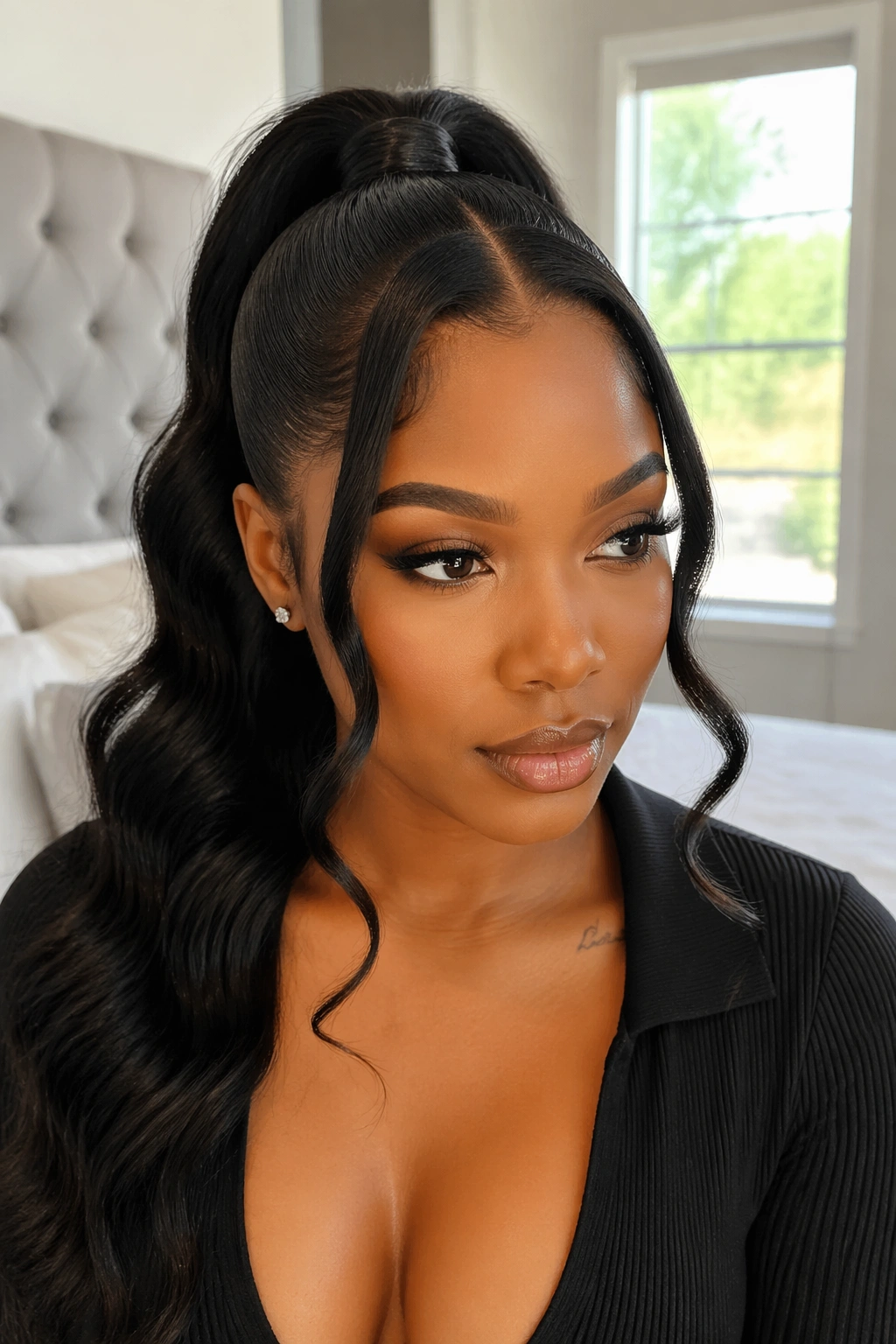
Soft tendrils are thinner and more controlled than full face-framing pieces. They sit close to the temples, curve lightly around the cheeks, and give the style a little movement without stealing the clean shape of the ponytail.
The trick is to keep them narrow and smooth. One curl at the front is enough. If you over-style the tendrils, they start to look separate from the rest of the hair, and that breaks the sleek finish. The ponytail should still feel like the main event.
This style works well when you want something gentle around the face. It softens strong features, but it doesn’t muddy the look. Clean roots, quiet movement, tidy finish.
25. Everyday Sleek Half Up Weave Ponytail
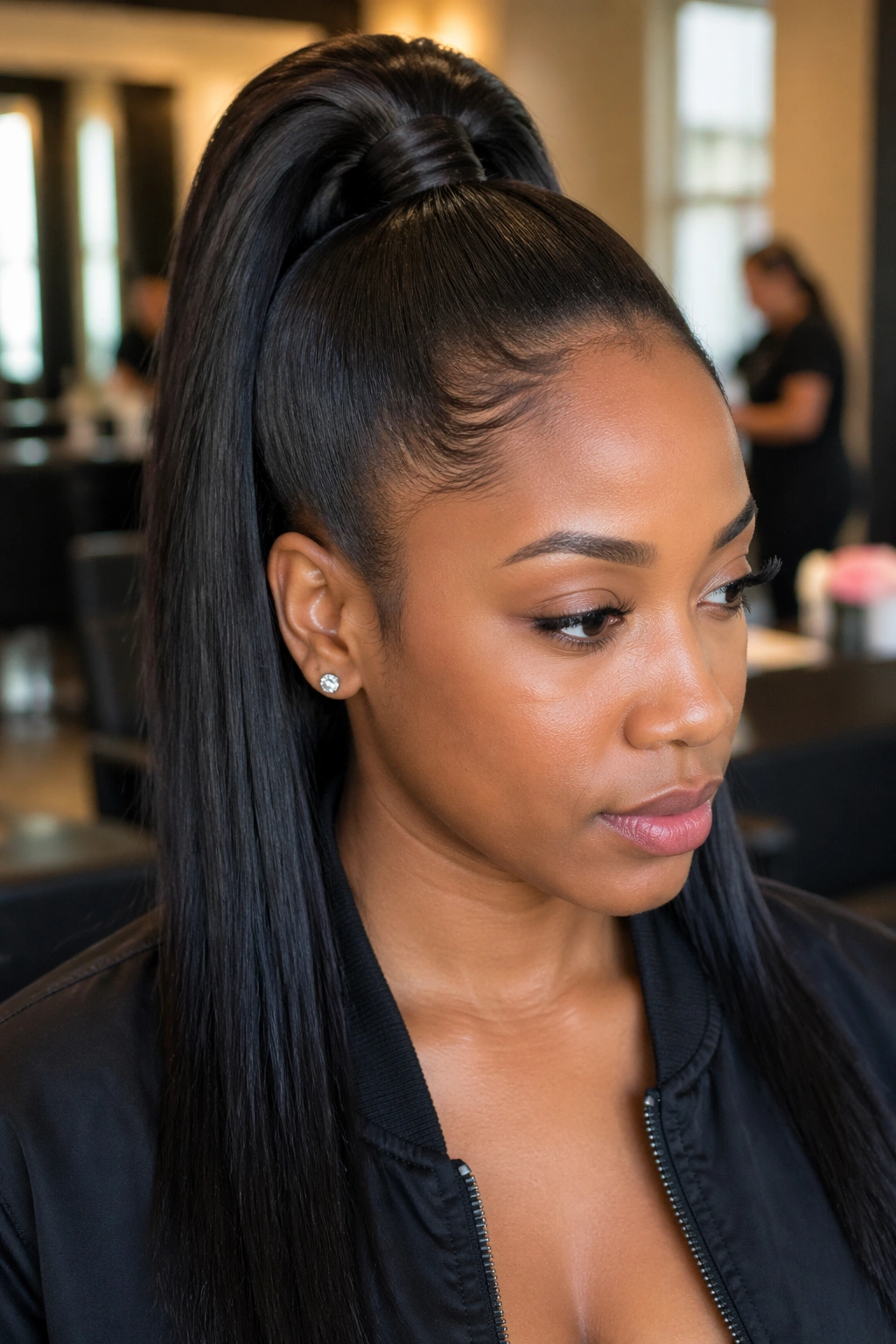
The plainest version is often the best one. A smooth part, a brushed-up crown, a secure elastic, and a straight tail that falls where it should — that’s all a lot of people actually need. No extra braids. No heavy accessory. No dramatic wave pattern trying to do too much.
That simplicity is what makes it dependable. You can wear it with a blazer, hoops, a gym set, or a dress and it won’t look out of place. The details still matter, though. Keep the part straight, use a small amount of product at the roots, and wrap the base so the elastic disappears into the style.
If I had to choose one version for repeat wear, this would be it. Clean, fast, and hard to mess up once you know your sectioning.