



A high ponytail can look far more bridal than people expect. When the base is wrapped, the crown is shaped with intention, and the length is treated like part of the outfit, it stops reading as casual and starts reading as polished.
That matters on a wedding day. Hair has to survive hugs, wind, dancing, photographs from every angle, and that one aunt who insists on leaning in close for a cheek kiss. A bridal high ponytail keeps the face open, shows off earrings and necklines, and still feels fresh at the end of the night.
The best versions are rarely stiff. They have smooth roots, a little lift at the crown, and enough softness through the tail to keep the style from looking severe. Some lean sleek and glossy. Others are full of waves, braids, pearls, or ribbon. A few are made for curly and coily textures that deserve their own spotlight, not a flattened imitation of something else.
I’ve always thought the high ponytail is one of the smartest wedding styles because it can do so much with very little fuss. The only real rule is control. Height alone does not make it elegant. Shape does.
1. Sleek High Ponytail with a Wrapped Base
This is the version that gets me every time. Clean roots, a smooth crown, and a wrapped section hiding the elastic give the style a finished look that feels expensive without being fussy.
It works especially well with satin gowns, square necklines, and statement earrings because the silhouette stays tidy. If you like a sharp part, a center part keeps it modern. If your dress has a dramatic back, this style is one of the few that won’t compete with it.
Styling note
Keep the hair flat at the top, then let the ponytail swing with a little movement. Too much spray can make the roots look chalky, so use enough to hold, not enough to freeze.
2. Voluminous High Ponytail with Soft Crown Lift
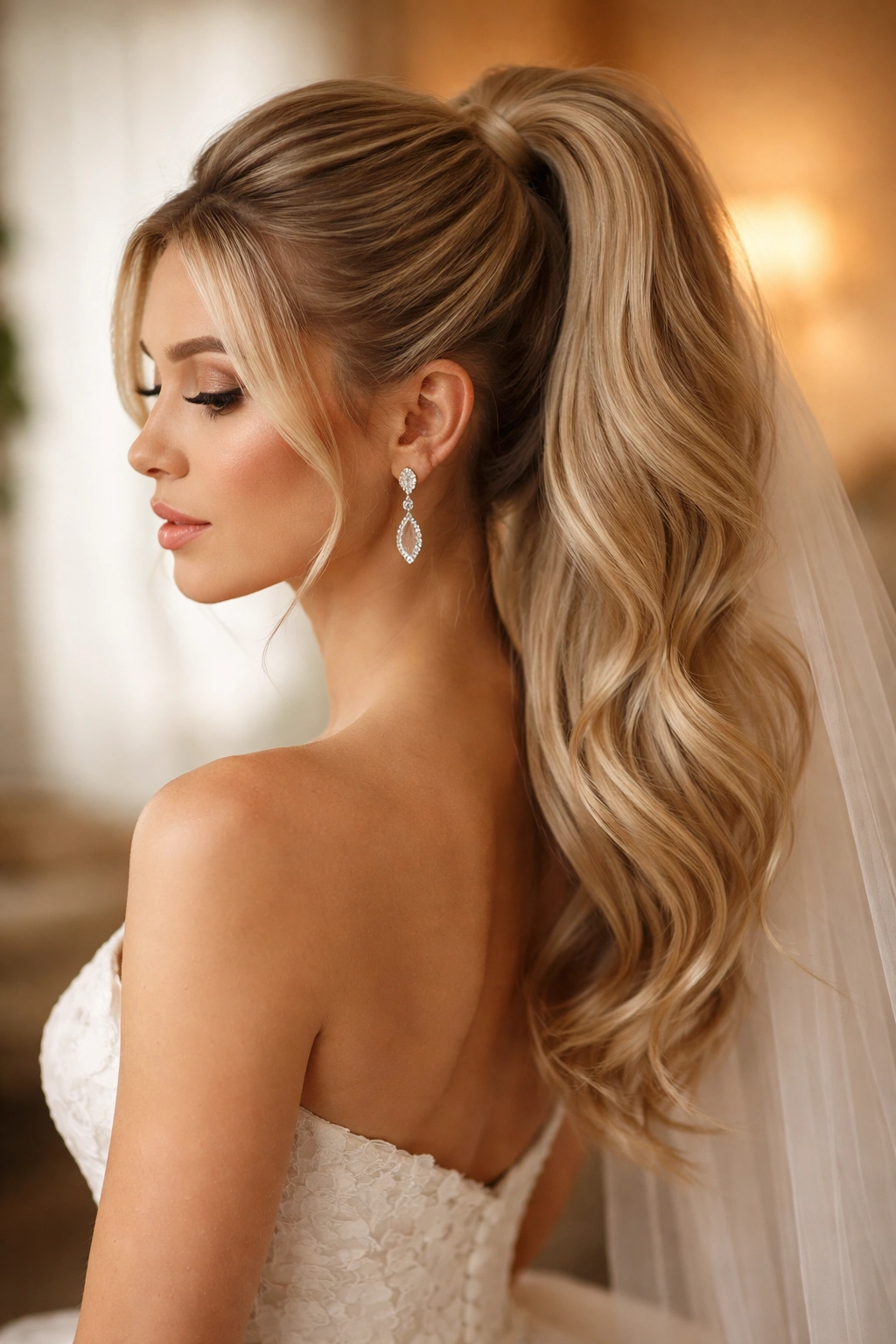
A little crown lift changes everything. Without it, a ponytail can sit too flat against the head and lose that bridal energy fast.
The key is controlled height, not a giant bump. Tease the crown lightly, smooth the top layer over it, and pin from underneath so the lift stays soft. That shape gives the face a longer line and works well on brides who want glam but not a severe finish.
What makes it work
- A rounded crown keeps the style from feeling harsh.
- Soft fullness near the temples balances stronger jawlines.
- The ponytail itself can stay sleek or get brushed into waves.
Best with: strapless dresses, off-the-shoulder sleeves, and veils that sit lower on the head.
3. High Ponytail with Loose Hollywood Waves
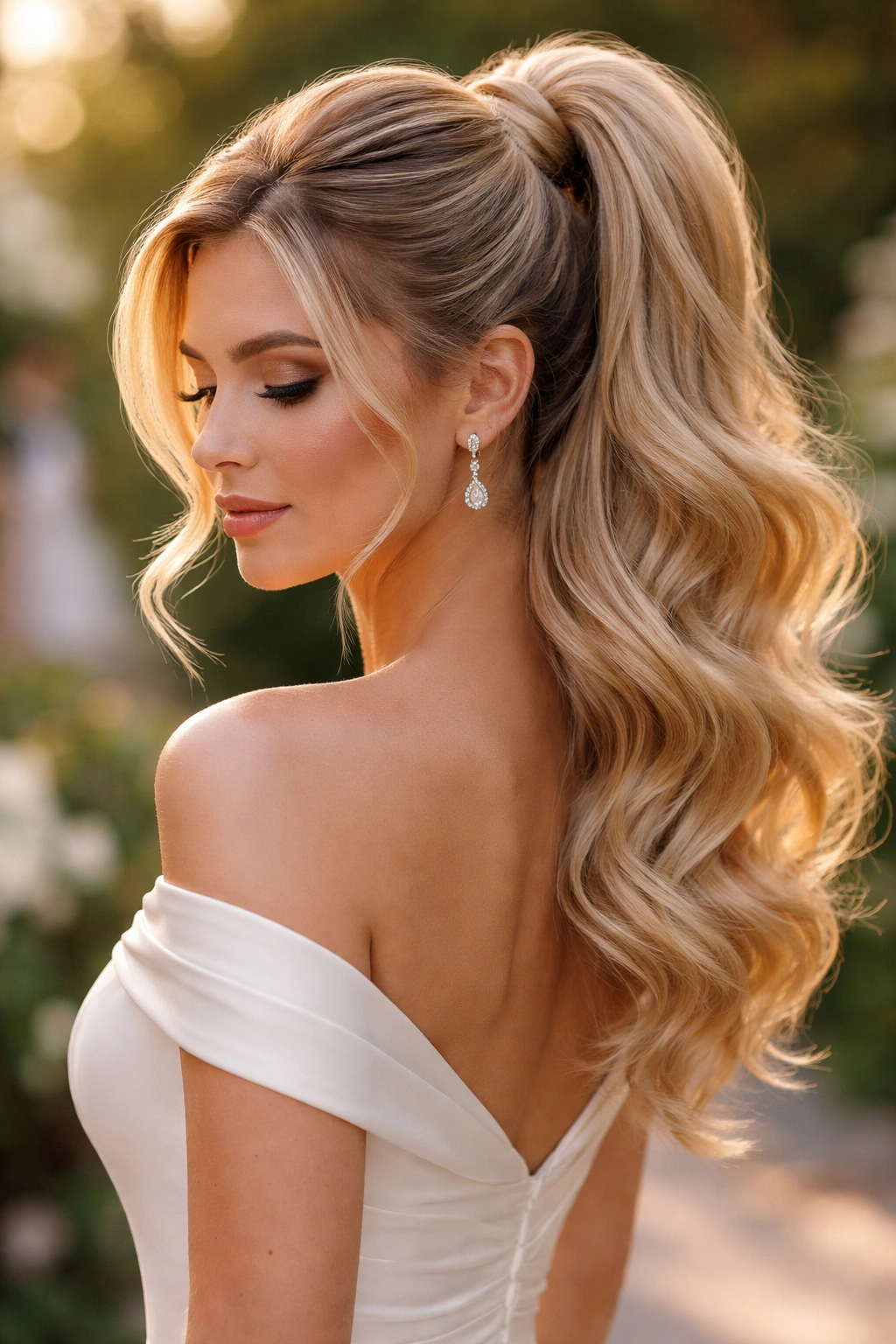
If you want romance without going full down-style, this is the one. The base stays lifted and polished, but the ponytail falls in wide, soft bends that feel airy rather than overdone.
The waves should look brushed, not crunchy. I like a large barrel iron for this because it creates a bend that holds its shape while still moving when you walk. A light mist of flexible spray helps the waves stay soft instead of turning into one stiff tube.
How to wear it
This style loves a side part, drop earrings, and dresses with a bit of drape at the neckline. It also photographs nicely from the back because the wave pattern catches the eye in a gentle way. No need for extra shine serum everywhere. A pea-sized amount through the ends is enough.
4. Braided Base High Ponytail for a Secure Finish
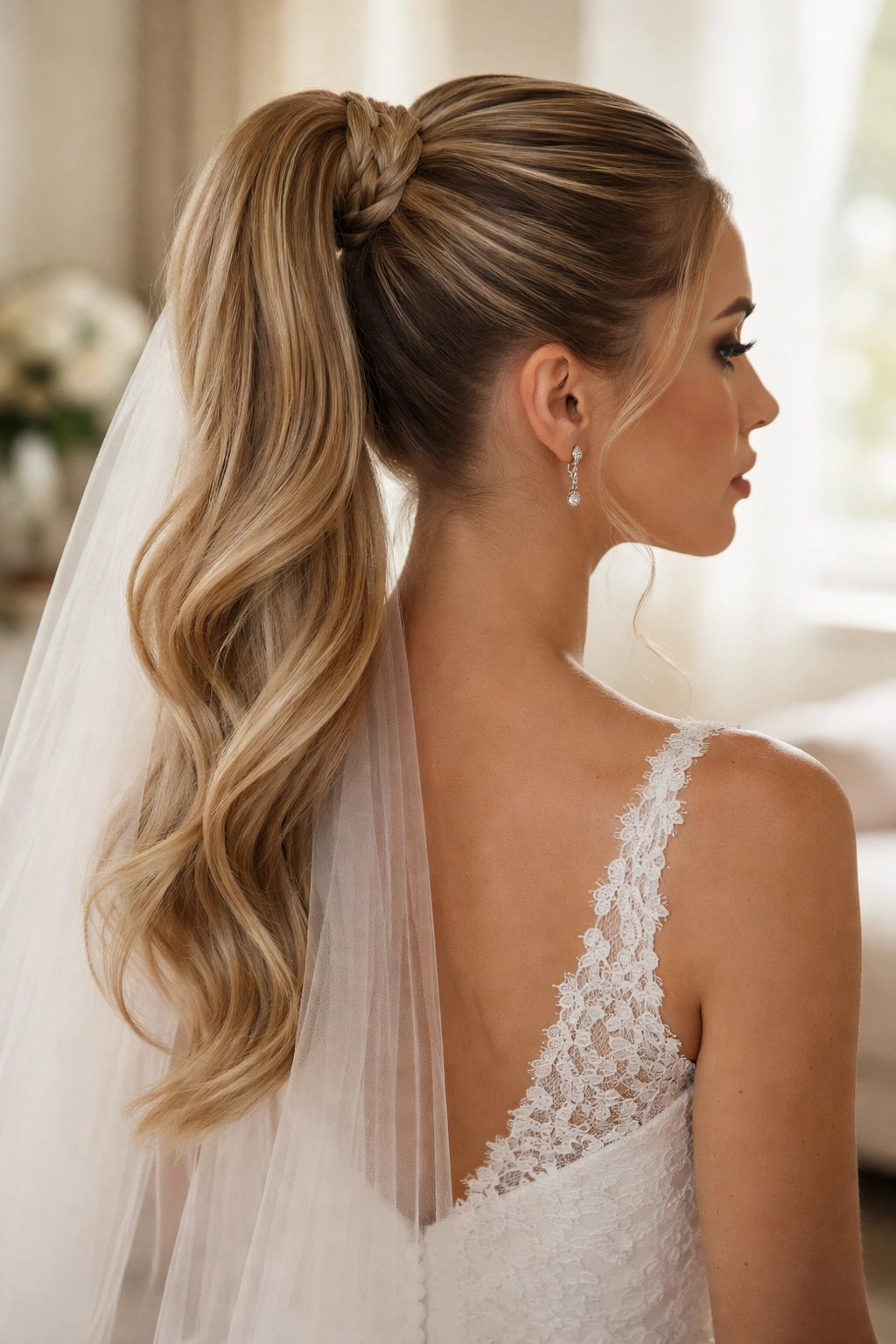
A braid at the base gives the ponytail structure you can feel. It keeps the style from slipping, and it adds just enough detail to make the back interesting when the veil comes off.
You can braid the first few inches of the ponytail, braid the sides into the base, or make the entire tail into a loose plait after the ponytail is secured. I prefer the first option for weddings because it keeps the top clean and the finish refined.
Why brides like it
A braided base helps on hair that tends to slide, especially if the strands are silky or freshly blown out. It also gives the style a little more shape under a veil comb. If you want the braid to stay visible, pancake it gently so it looks fuller. Don’t tug too hard. That’s how it starts to look messy fast.
5. Pearl-Accent High Ponytail with a Satin-Wrapped Tie
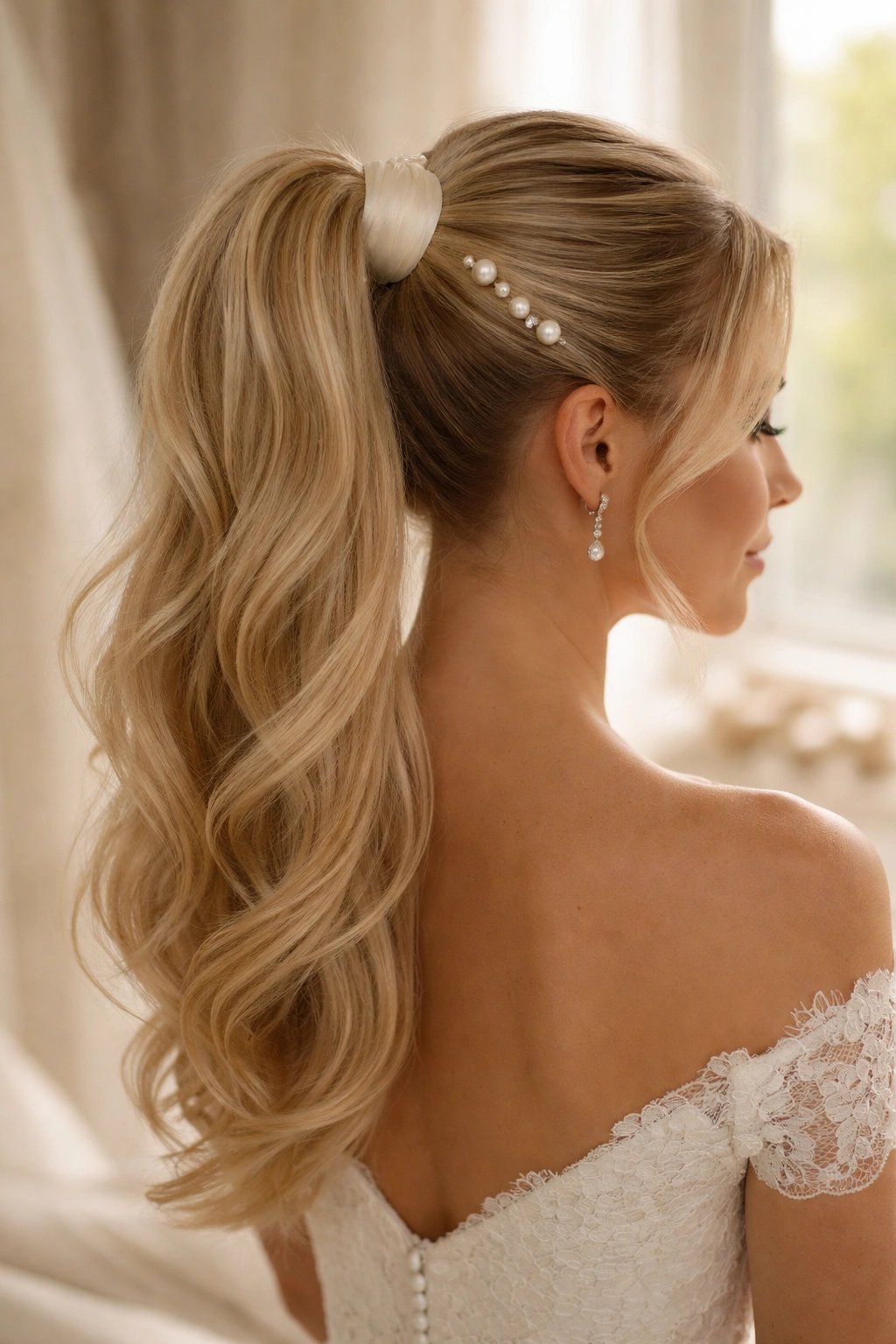
Pearls are one of those wedding details that never feel out of place. On a high ponytail, they add just enough decoration to read bridal without turning the style into a craft project.
A satin wrap around the base gives the ponytail a smooth finish, and then a few pearl pins or a delicate pearl strand tucked along one side finishes the look. Keep the placement intentional. Too many pearls start to look scattered. Three to five well-placed accents usually do the job.
A small detail that matters
Match the pearl tone to the dress hardware and earrings if you can. Cream pearls, bright white pearls, and ivory pearls all read a little differently in person. That tiny shift shows up in photos, especially beside satin or silk.
6. Ribbon-Tied High Ponytail with Soft Face-Framing Pieces
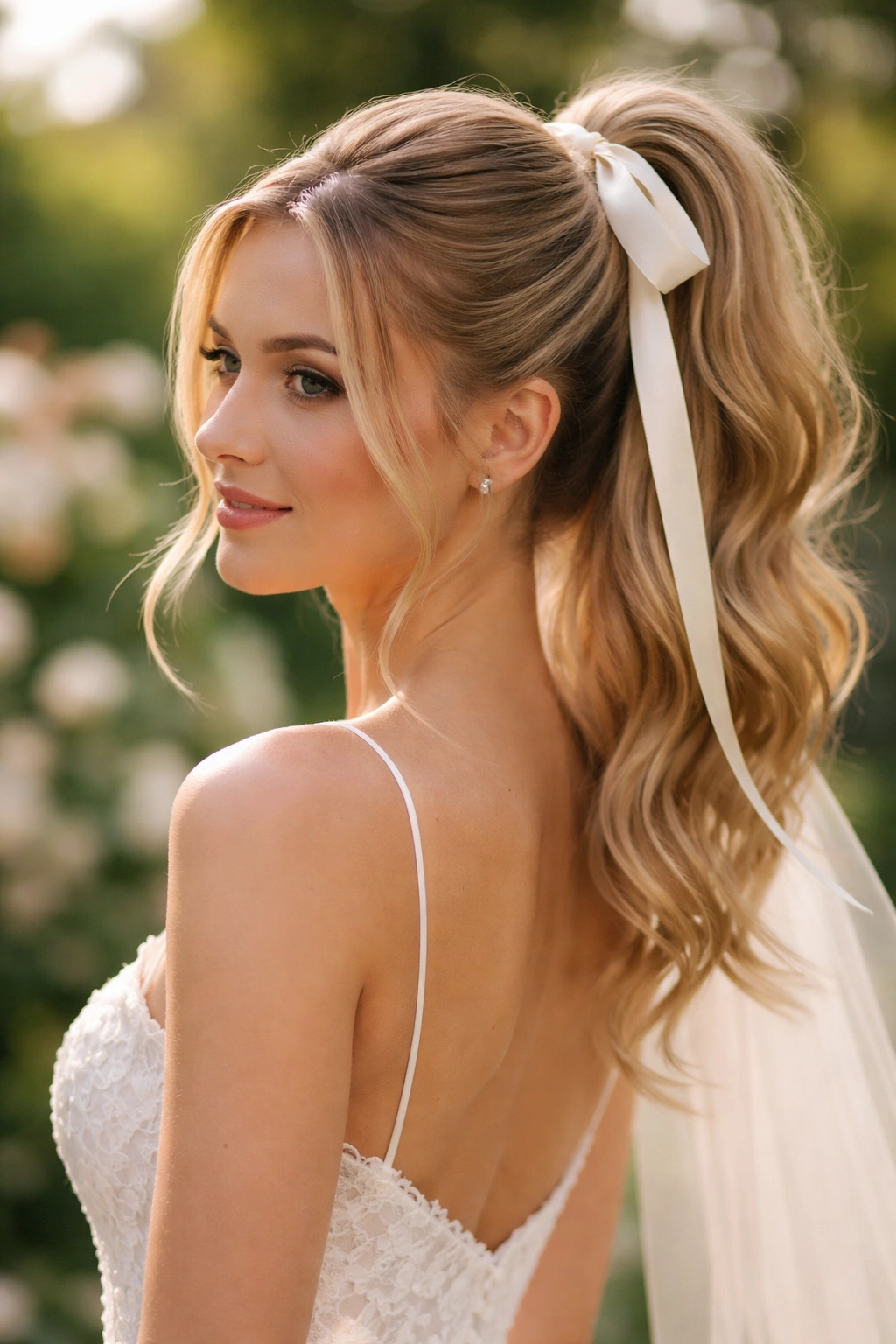
A ribbon can change the whole mood of a ponytail. Satin feels formal. Velvet feels rich. Silk-organza gives a floatier, softer finish.
The face-framing pieces are what stop this look from reading too sweet. Leave two slim sections out around the cheekbones and shape them with a small iron so they curve away from the face. That gives the style movement and keeps it from looking too school-dance neat.
Best use case
This is lovely for brides who want something romantic and a little playful. It suits outdoor ceremonies, garden settings, and dresses with softer lines. If the ribbon is long, let it trail a few inches past the tail. If it’s short, tie it cleanly and keep the ends trimmed so they don’t fray in the middle of the day.
7. Curled High Ponytail with a Sculpted Side Part
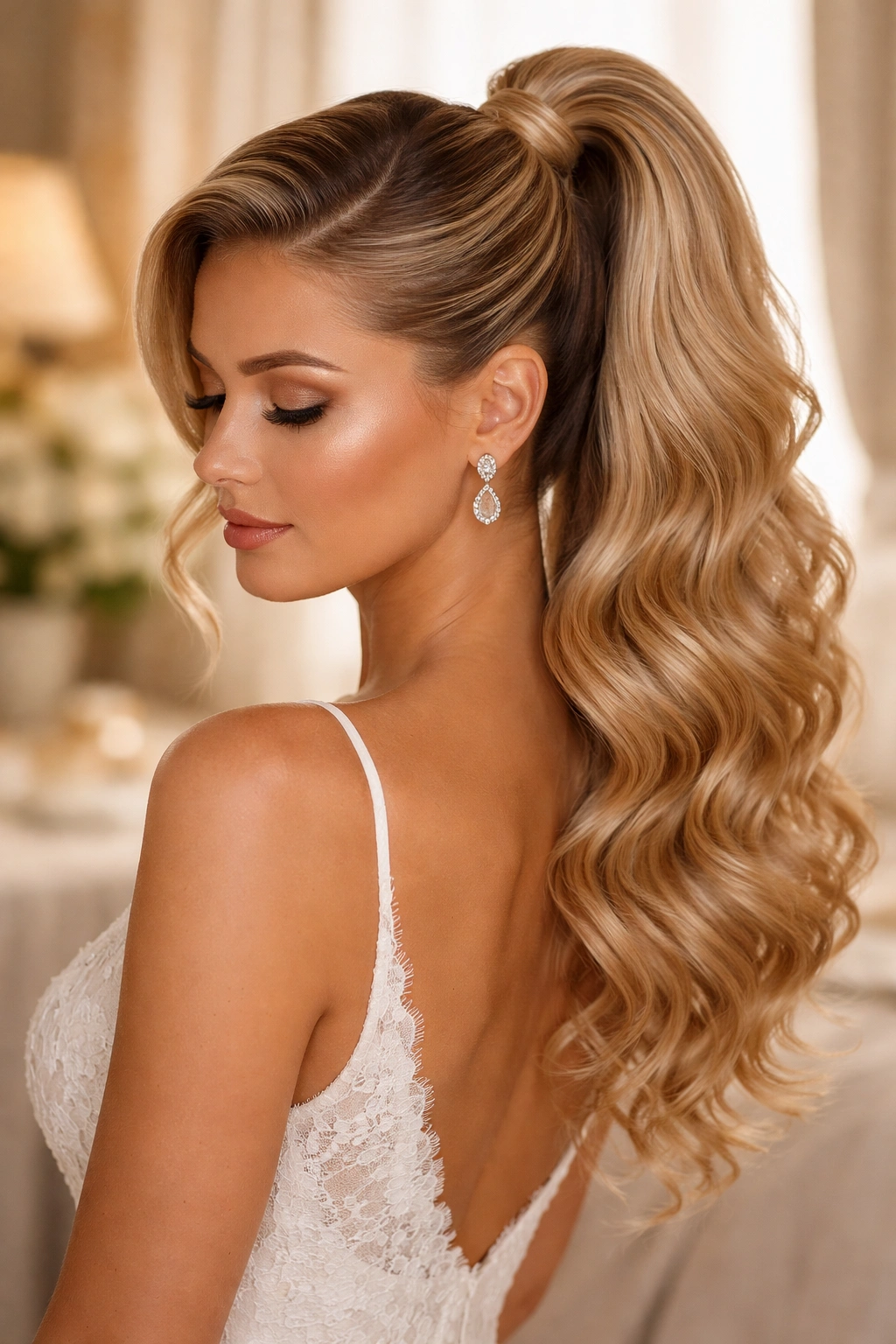
A deep side part can make a high ponytail feel instantly more dressy. It adds asymmetry, which is useful when the gown is very symmetrical or the jewelry is bold.
The ponytail itself should be curled in sections, then lightly brushed through so the shape stays full but not puffy. I like this style on brides who want a little old-school glamour without the weight of a full updo. The side part gives the face a longer line, and the curls soften the whole shape.
What to watch for
The roots near the part need to stay sleek. If they puff up, the contrast disappears. Smooth them with a small brush and a light touch of gel or cream. Don’t drag the part too far back unless you want the whole look to feel more dramatic than romantic.
8. Bubble High Ponytail with Polished Sections
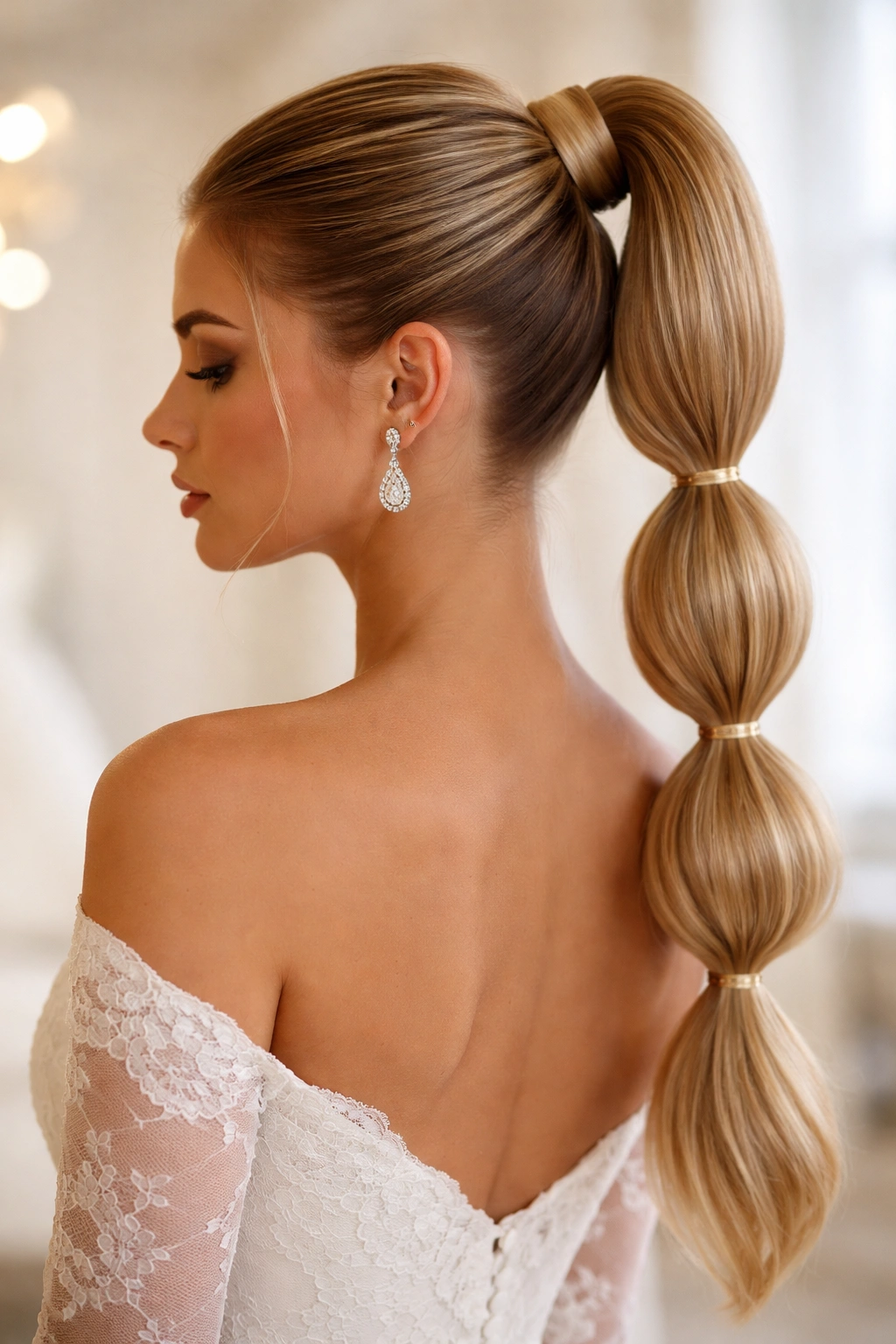
Bubble ponytails can look surprisingly elegant when the sections are tight and evenly spaced. The trick is to keep the bubbles round and controlled, not cartoonish.
Use small clear elastics every few inches down the tail, then gently pull each section outward until it forms a soft bubble. If the base is sleek enough, the whole style reads modern and deliberate. It’s a good choice for brides who want something with personality but still polished.
Quick styling notes
- Keep the top smooth and glossy.
- Use a tail comb to even out the spacing.
- Wrap each elastic with a tiny strand of hair if you want a cleaner finish.
- Add a few pins with crystals only if the dress is simple.
This one works best with structured gowns and minimal necklaces. It already has enough detail on its own.
9. High Ponytail with a Veil-Friendly Low Profile Crown
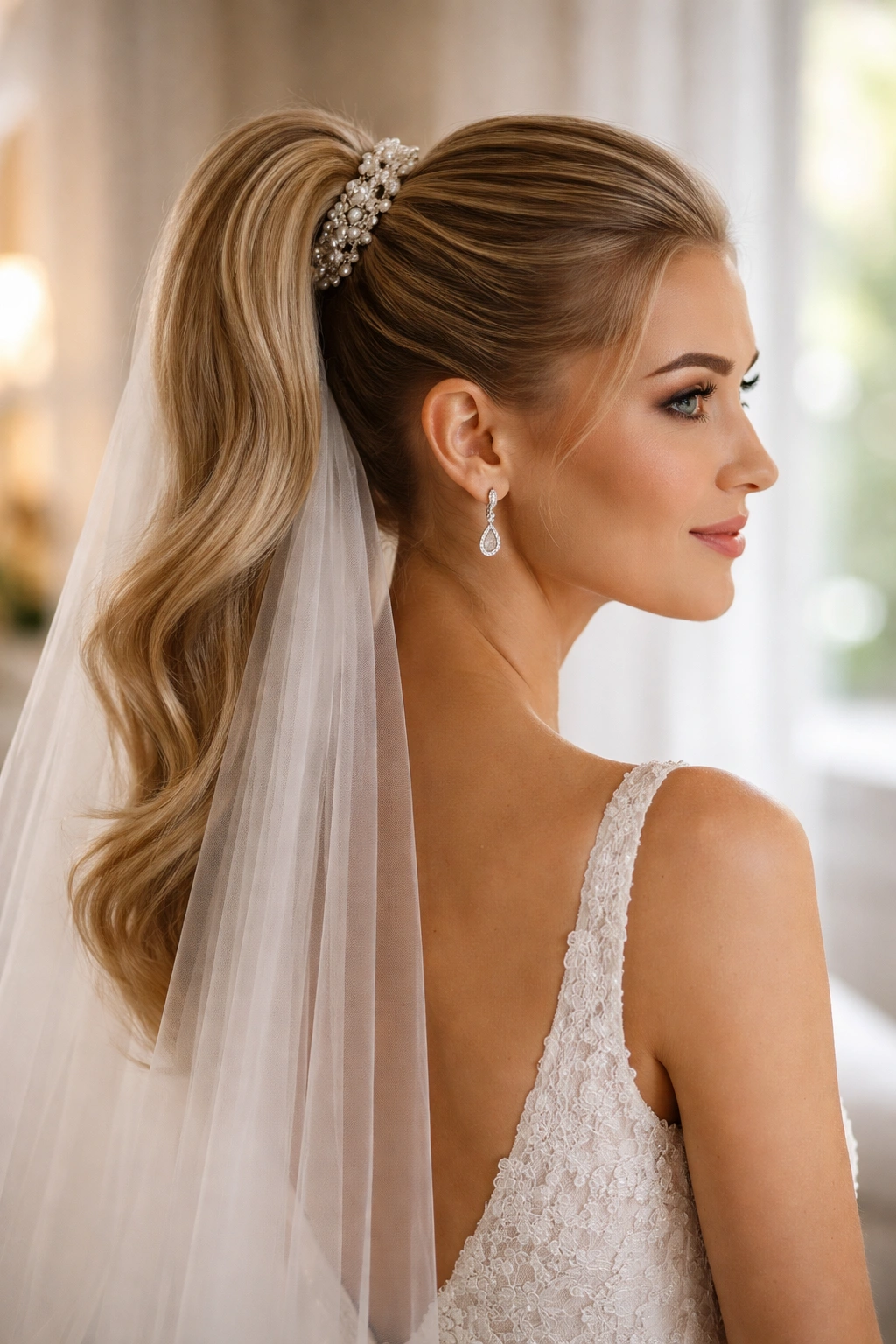
A lot of brides want a ponytail and a veil without the base fighting the comb. That’s where a lower profile crown becomes useful.
Instead of building all the height at the front, keep the crown sleek and push the ponytail itself slightly higher at the back. The result looks lifted, but the area where the veil sits stays smooth and easy to pin. That matters more than people think. A puffy crown can make veil placement awkward and uncomfortable by the end of the ceremony.
Why it’s a smart choice
This style keeps the front quiet and the back elegant. It also gives you more options for taking the veil off later, since the ponytail remains the main feature. If the veil is heavy, this is the version I’d trust first.
10. Twisted High Ponytail with a Smooth Top Layer
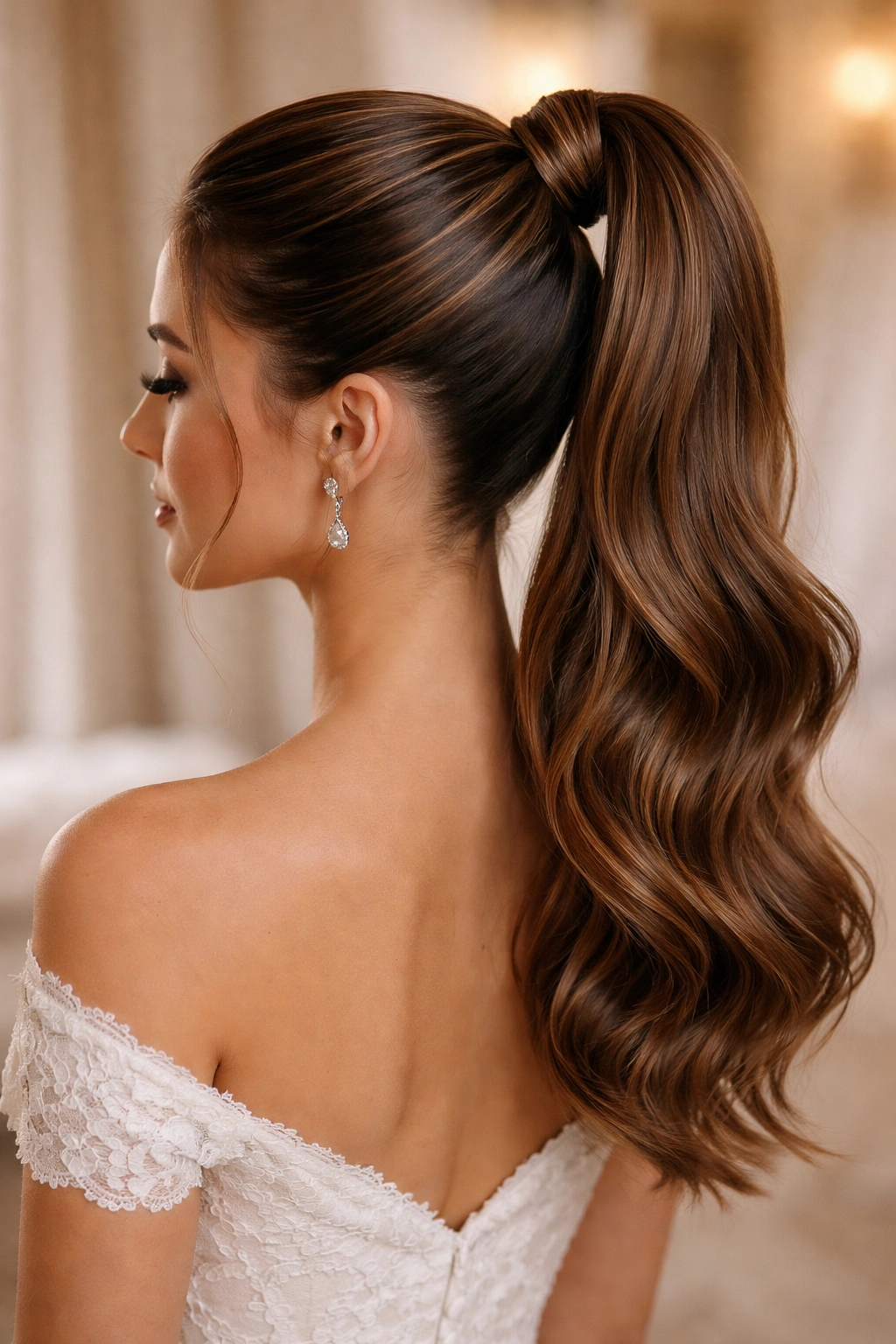
Twists give a ponytail a little architecture. They also break up the surface in a way that feels formal without leaning too hard on curls or braids.
You can twist the side sections toward the center before gathering everything into the ponytail, or twist a small panel from the temple and tuck it into the base. Either way, the finish should stay smooth on top and detailed around the sides. That balance is the whole point.
Best for
Brides with medium to long hair who want a style that holds shape all day. It’s also a good answer for dresses with a high neckline, because the twists add interest without adding bulk. Keep the twists neat. If they loosen too much, the style loses its crisp edge.
11. High Ponytail with Defined Baby Hairs and Clean Edges
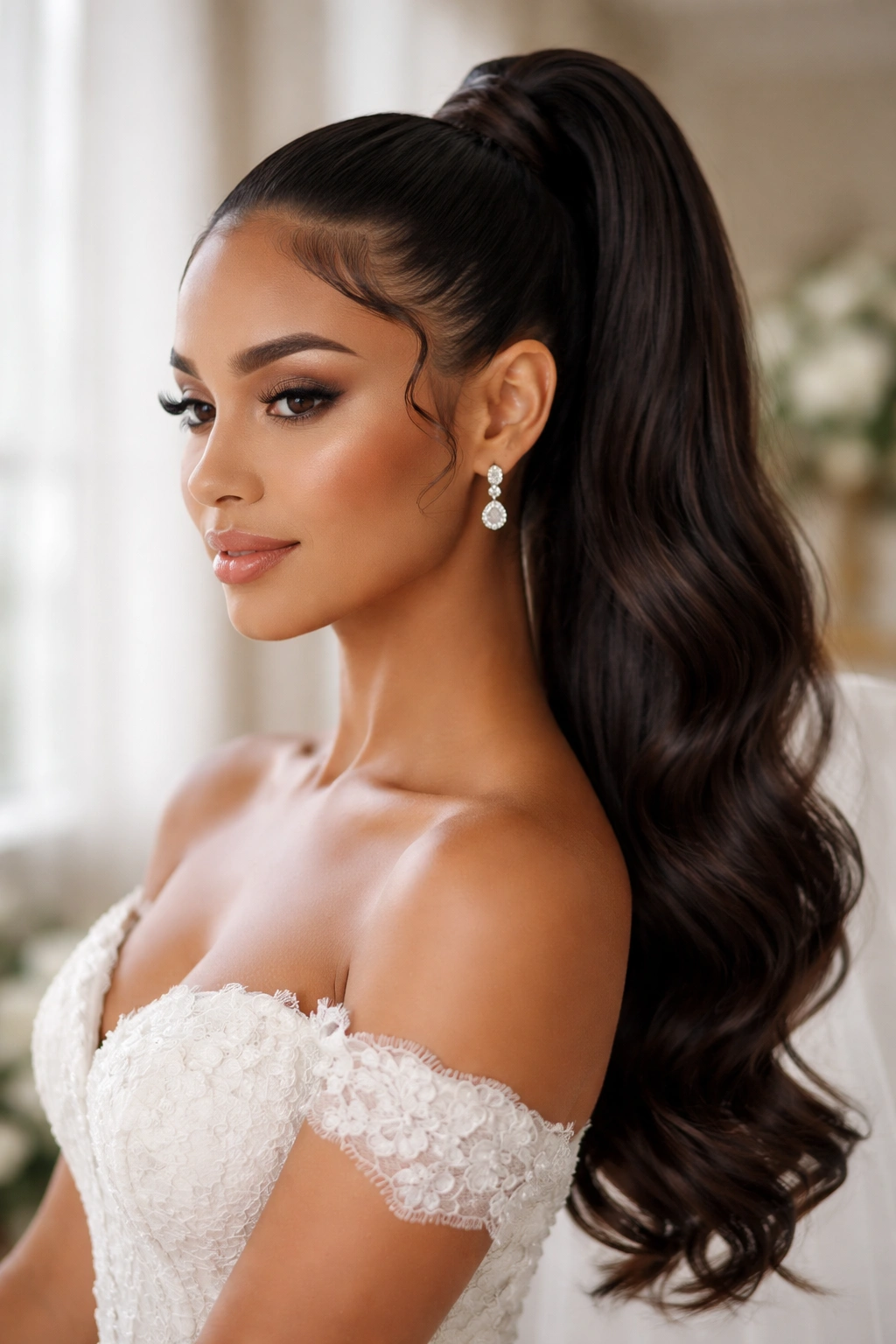
Edges can make or break a high ponytail. Done well, they frame the face and give the style a finished look. Done badly, they can take over.
A tiny bit of gel, a soft brush, and careful shaping around the hairline are enough. The goal is not to draw attention to the baby hairs. The goal is to make the hairline look clean, intentional, and balanced against the rest of the style.
How to get the look right
- Apply gel with a light hand.
- Smooth the hairline in small sections.
- Keep the swoops short and neat.
- Match the edge detail to the rest of the ponytail’s polish.
This style works beautifully on textured hair, especially when the rest of the ponytail is sleek and glossy. Clean edges should support the style, not carry it.
12. Natural-Texture High Puff Ponytail
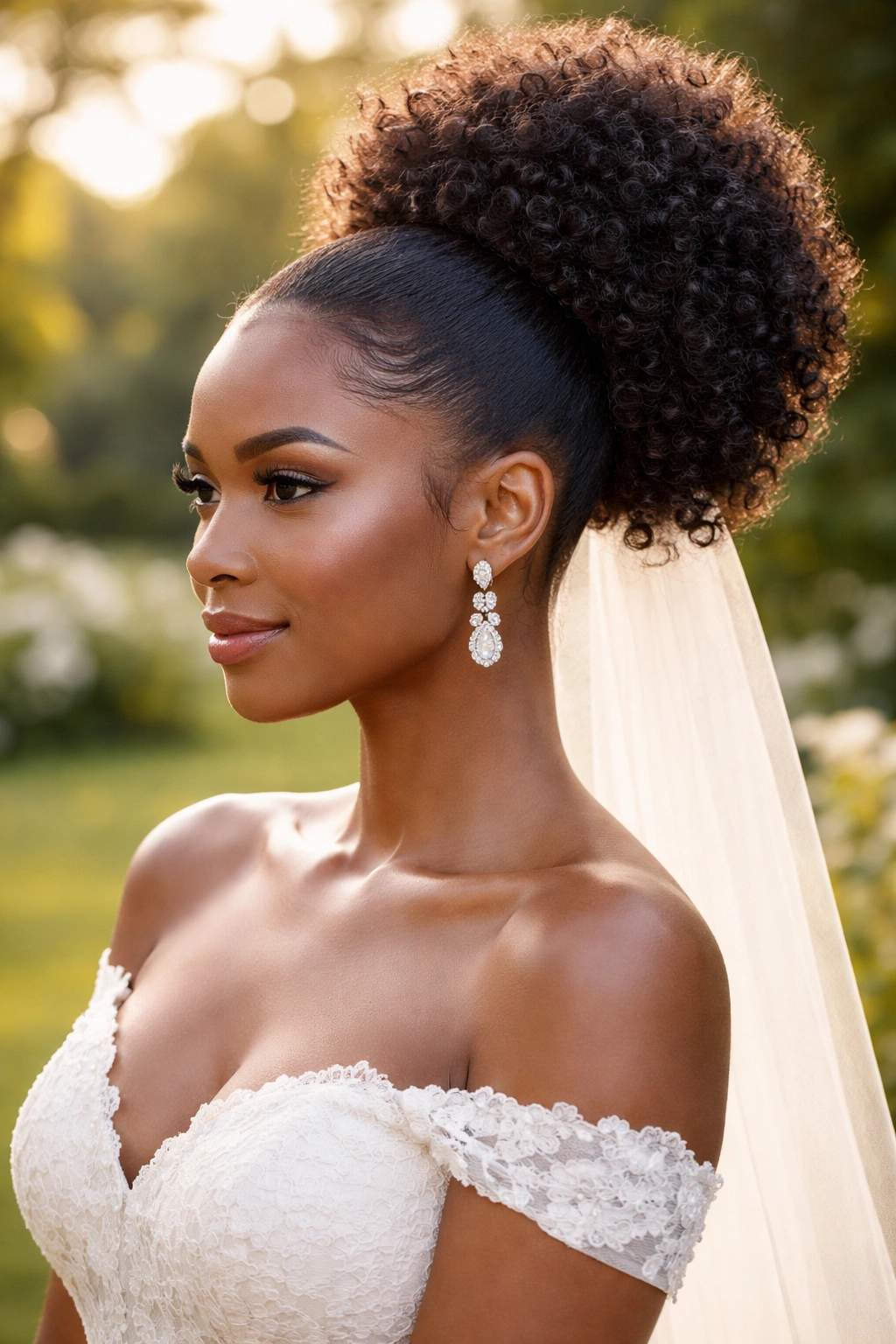
A high puff can be every bit as bridal as a sleek ponytail when the shape is cared for properly. It gives lift, personality, and real presence.
The shape should be rounded at the crown and full through the tail, with the texture left visible instead of pressed flat. A little shine on the surface helps, but don’t overdo it. Texture is the point. If you smooth away every coil or curl, the style loses its character.
Why this feels special
This is one of the most flattering wedding styles for brides who want to wear their natural hair without forcing it into another texture. It pairs well with bold makeup, sculptural earrings, and dresses that need a strong hairstyle to match. Keep the base secure and the puff balanced. Too little height and it can sit low. Too much and it can start to look top-heavy.
13. Extra-Long High Ponytail with Glassy Straight Length
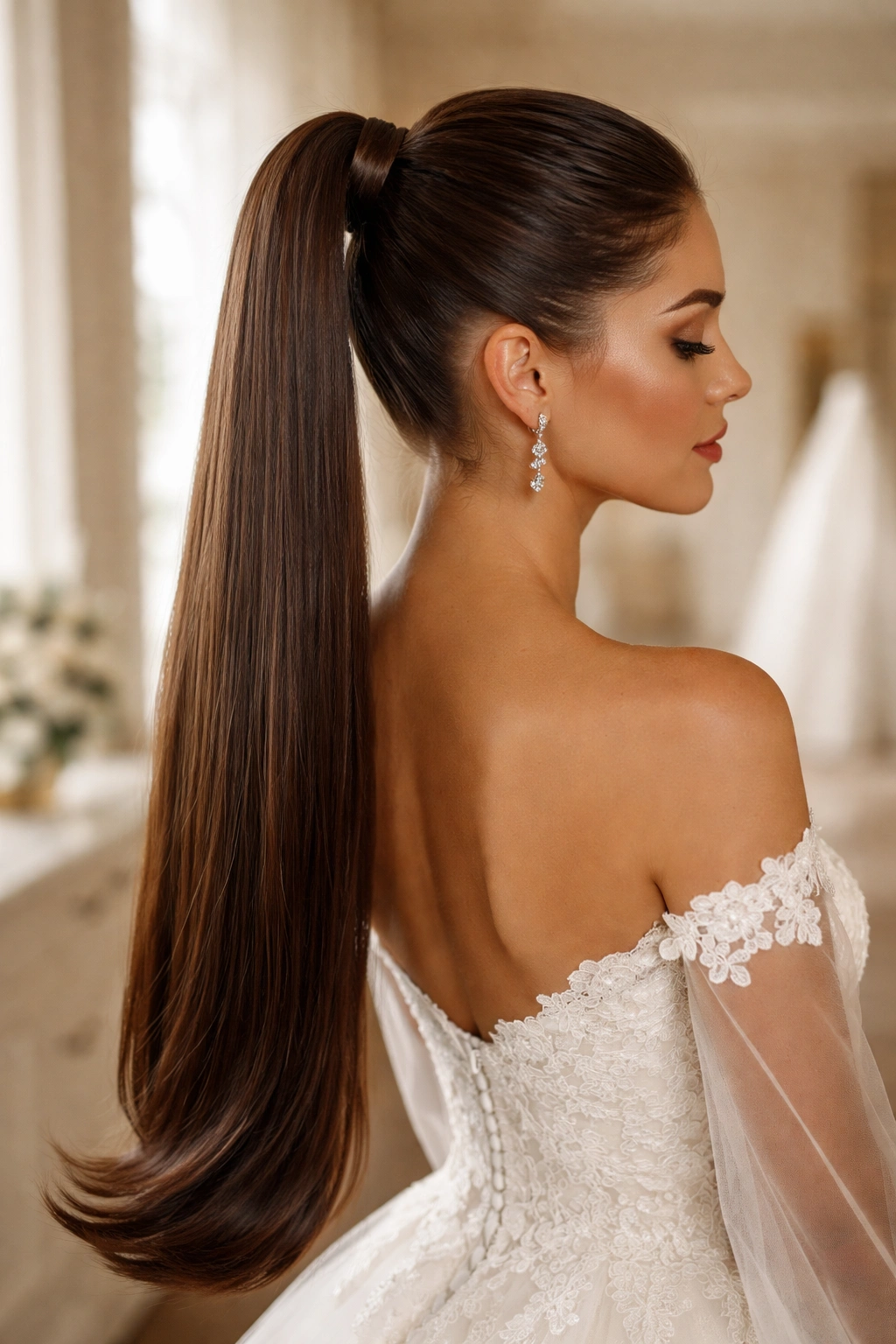
Sometimes the drama is in the length. A very long, straight ponytail can look striking when the roots are sleek and the finish is glossy from top to bottom.
This style works best when the hair or extensions are blended carefully so the thickness stays even. The tail should hang straight, with a slight bend at the ends rather than a blunt, dead finish. That tiny curve at the bottom helps the whole style look softer and more expensive in person.
A practical note
Long ponytails need strong anchoring. If the base is loose, the weight will drag everything down over time. Use pins under the elastic and wrap the base well. The longer the ponytail, the more the foundation matters. It’s not the glamorous part, but it’s the part that keeps you from adjusting it every hour.
14. High Ponytail with Oversized Barrel Curls
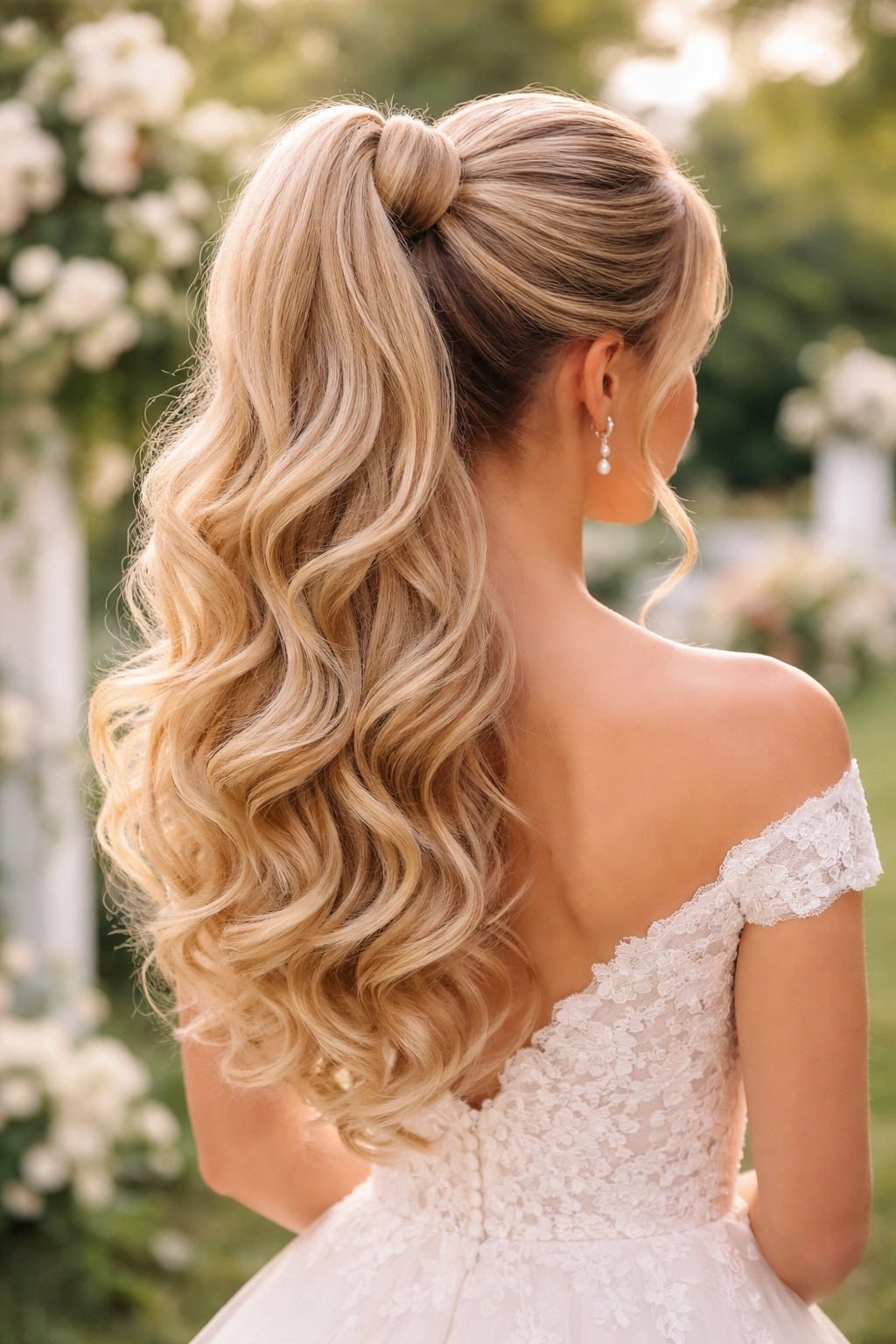
Big curls bring movement. They also stop a high ponytail from looking too tight or too severe.
The curls should be uniform enough to feel deliberate, but not so tight that the tail looks like a row of identical loops. Use a wide-barrel iron, let the curls cool completely, then separate them lightly with your fingers. A small amount of serum on the ends helps them stay glossy without turning greasy.
Where it shines
This style is especially good for brides who want volume from the back view. It gives the ponytail a lush shape that works well with strapless and sweetheart necklines. If the dress is very intricate, keep the curl pattern softer. If the gown is simple, you can afford a little more curl drama.
15. Fishtail-Braided High Ponytail
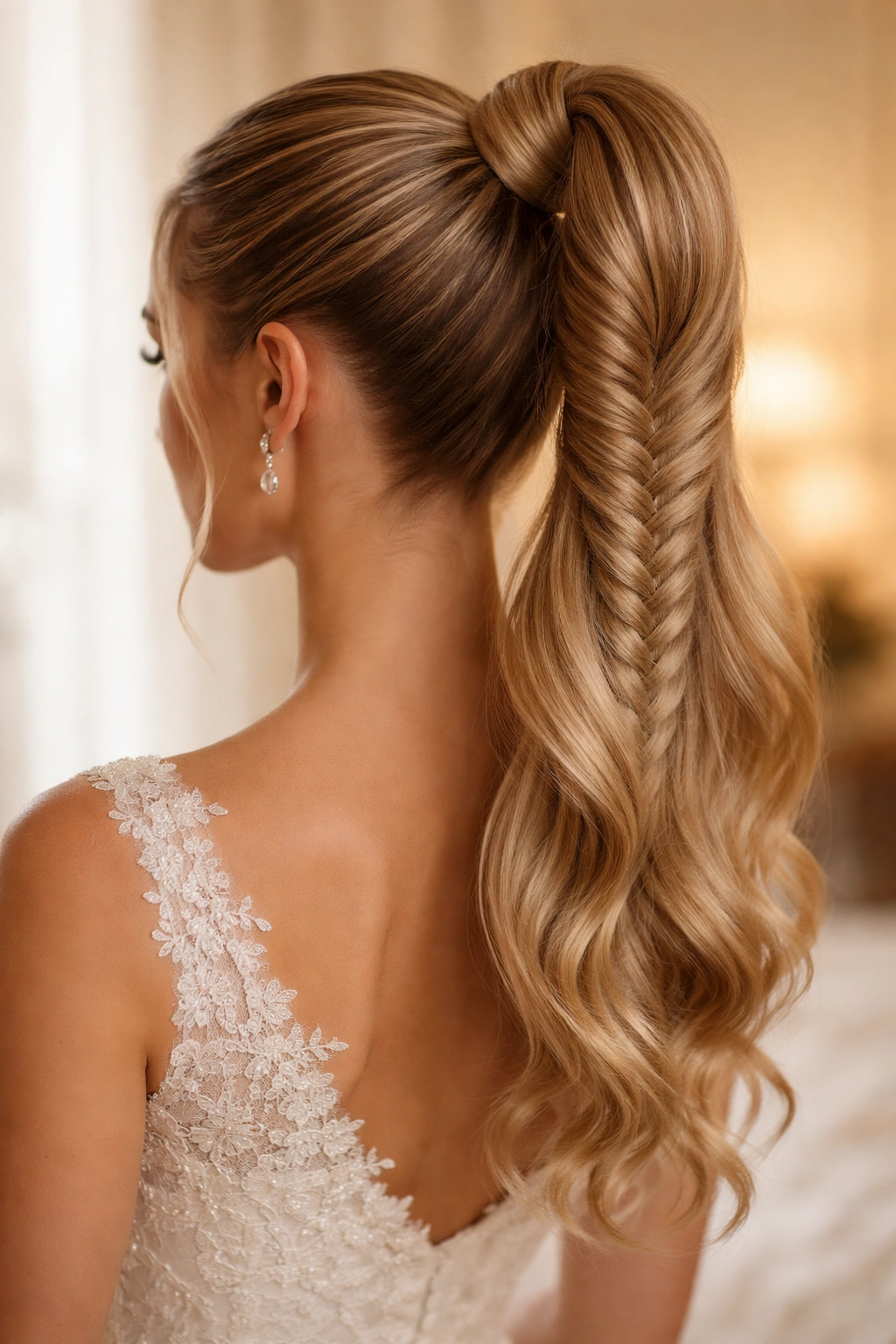
A fishtail braid changes the texture of the ponytail without making it feel heavy. It has that lovely woven look that reads detailed from a distance and even better up close.
The braid should start just below the ponytail base so the crown stays polished. Loosen the braid a little after securing it, but keep the top tight. That contrast keeps the style from falling apart visually. If the braid is too loose all the way through, the shape can flatten by the time the reception starts.
How to use it
This version suits brides who like pattern and movement more than soft waves. It pairs well with lace, long sleeves, and gowns that already have a lot of texture. A small gold pin tucked near the braid’s start can look lovely. Keep it subtle. The braid is already doing enough work.
16. Floral High Ponytail with Fresh or Faux Blooms
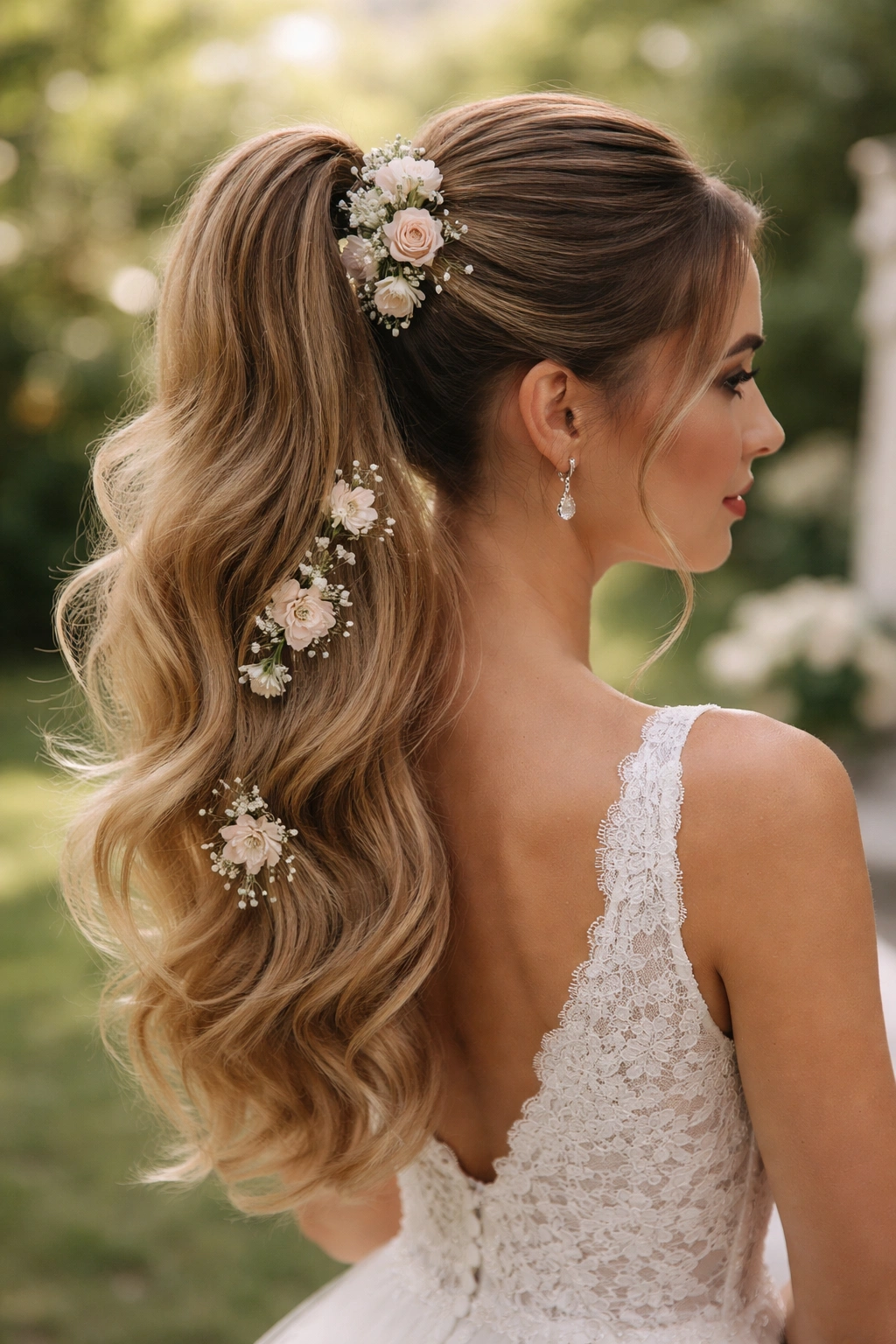
Flowers in the ponytail base can feel dreamy when they’re placed with restraint. A tiny cluster near the wrap, a single bloom tucked into one side, or a trail of small blossoms through the tail can be enough.
Fresh flowers need support, so they should be wired or secured well enough to survive heat and movement. Faux flowers can look just as good if the scale and color are right. The key is not realism alone. It’s proportion. Tiny flowers suit delicate styles. Larger blooms need a stronger ponytail shape to carry them.
Best pairing
This style is a natural fit for garden weddings, outdoor ceremonies, and dresses with soft fabric movement. Too many blooms can make the ponytail look crowded, so leave some breathing room between each accent. One strong floral moment beats five competing ones.
17. Jewel-Pinned High Ponytail for Formal Glamour
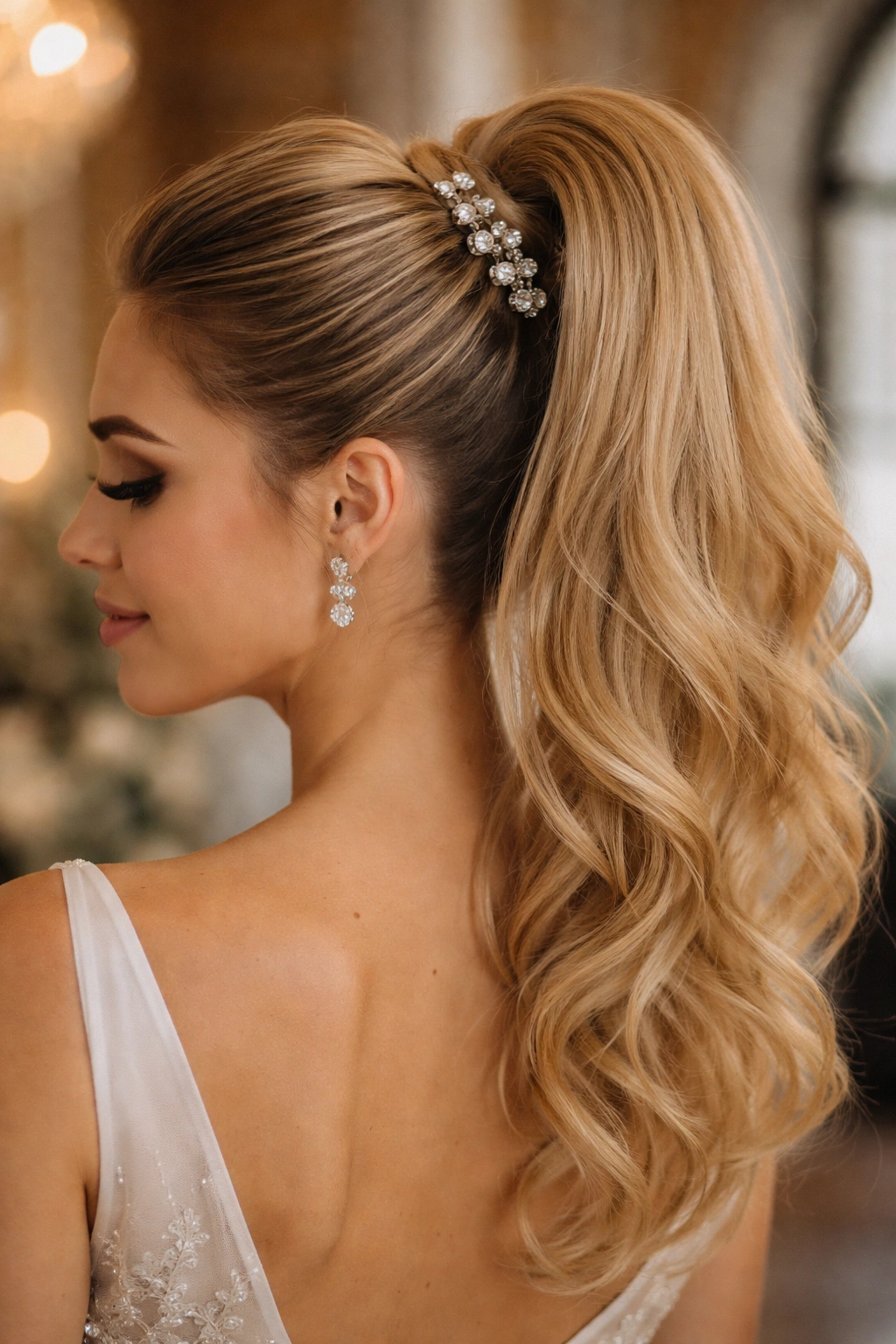
If the dress is simple and the jewelry is doing the talking, jewel pins in the ponytail can pull the whole look together fast.
The nicest version is usually a cluster of small crystal pins along one side of the base or a narrow row tucked into the wrap. Keep the placement asymmetrical unless the rest of the style is very balanced. A centered row can feel stiff. One side lets the ponytail move a little while still looking dressed up.
A useful rule
Match the scale of the pins to the hair’s thickness. Tiny pins disappear in thick hair. Oversized pieces can overwhelm fine hair. That’s why I prefer a few medium-sized accents instead of a big scatter. The goal is sparkle, not clutter.
18. Double-Wrapped High Ponytail with Hidden Elastics
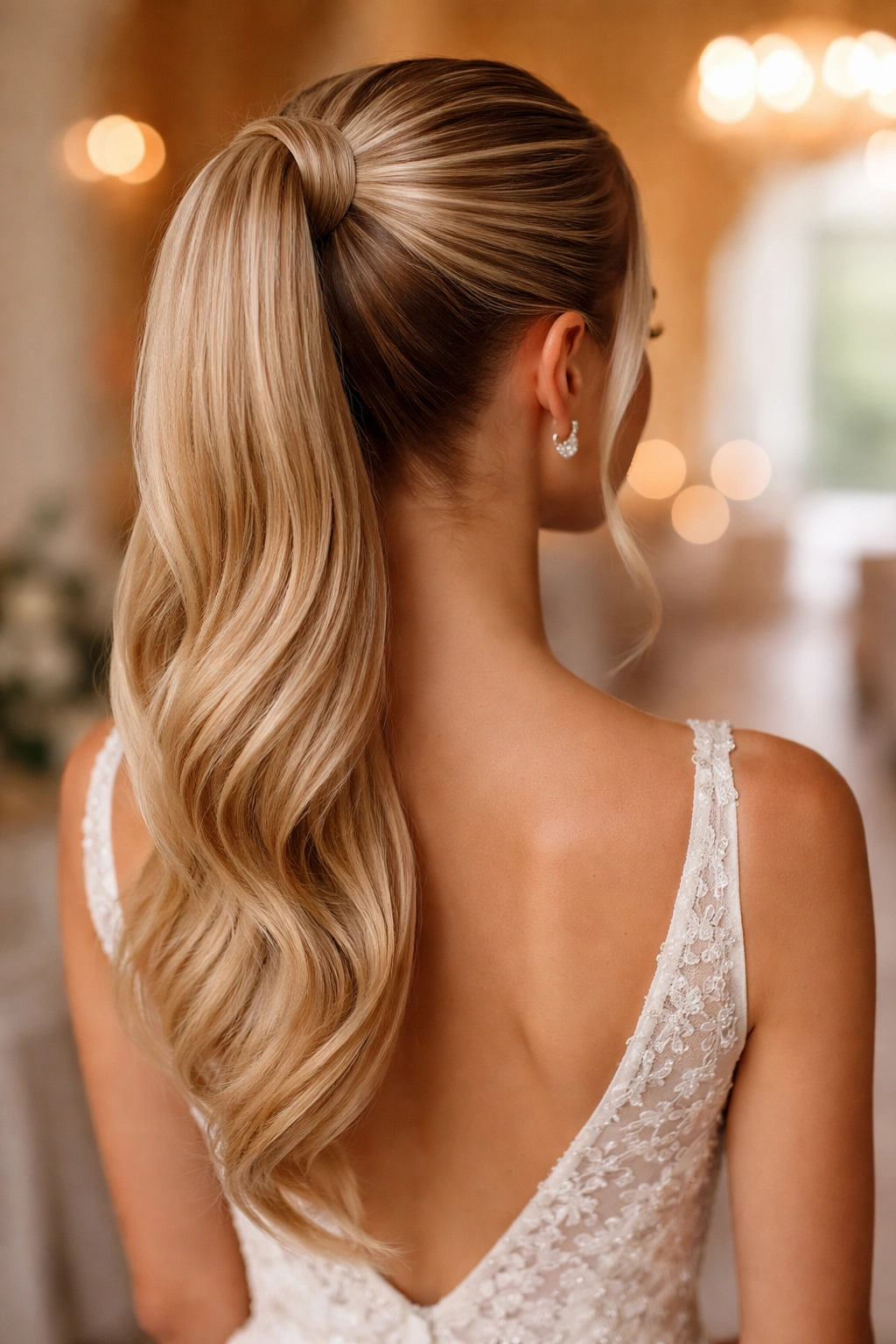
A double wrap gives the ponytail a more tailored finish. It’s one of those tiny details that most guests won’t name, but they’ll notice.
You can wrap the base with two hair sections crossing over each other, or use one wrap and a second narrow band of hair to cover the elastic even more fully. The surface should look smooth from every angle. No bumpy ridge. No visible tie. That clean finish is what makes the style feel formal.
Why it helps
This is a strong choice for brides who hate seeing hair ties in photos. It also keeps the shape neat if the ponytail is thick or heavily curled. A second wrap is boring work, but it pays off on camera. The back of the head gets as much attention as the face on a wedding day, and small flaws stand out fast.
19. High Ponytail with Polished Spiral Curls
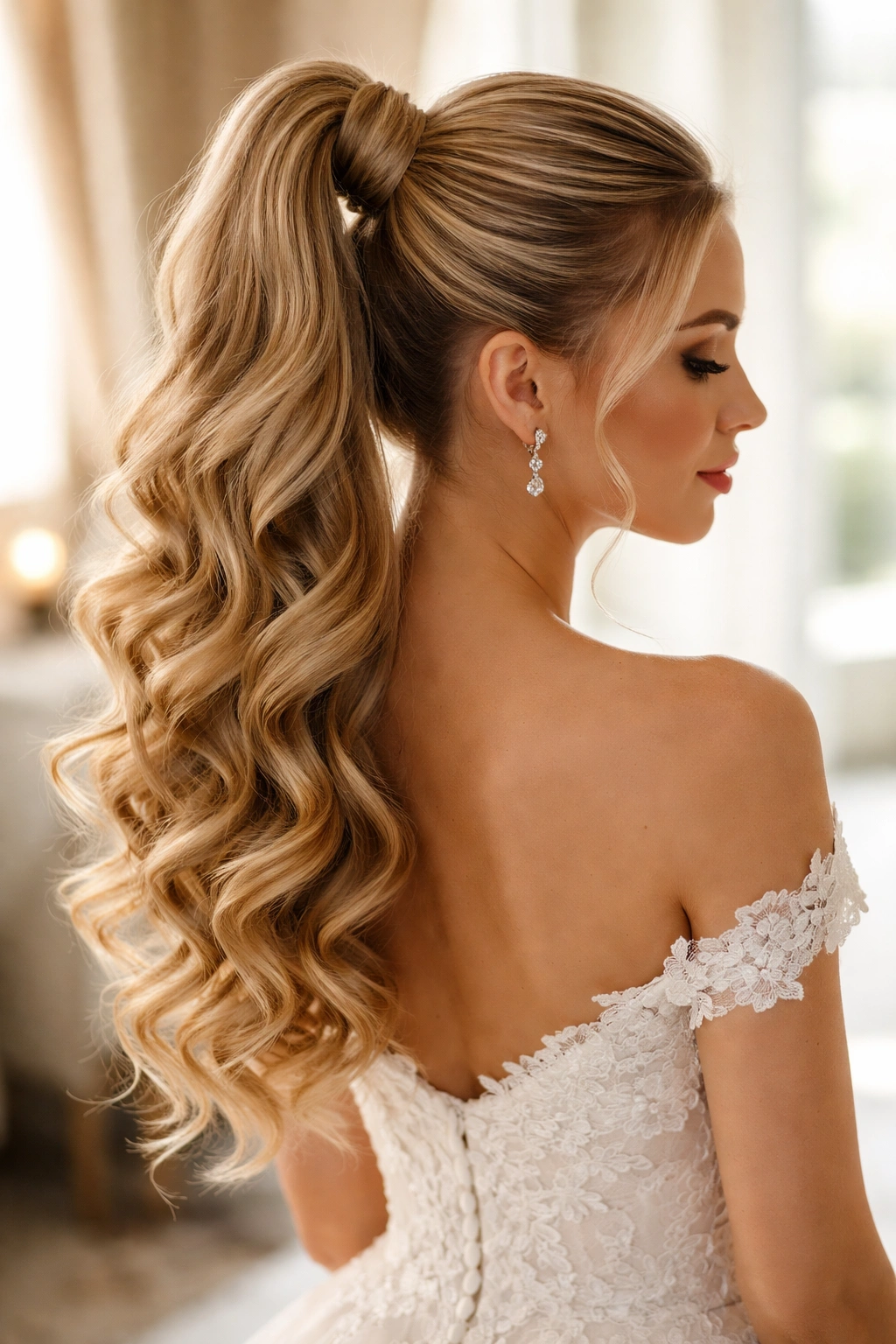
Spiral curls give the ponytail a more sculpted feel than loose waves. Each curl has a clearer shape, which can be useful when the dress or makeup already feels soft.
The secret is not to brush them out too much. Let the curls cool, separate them only a little, and keep the overall tail defined. If you want more shine, mist the curls lightly and smooth the outer layer with your hands. That keeps the texture shiny without flattening the spiral pattern.
Good fit
This style works well for brides who like a touch of retro energy. It also holds its shape nicely in photos because the curl pattern stays visible. Pair it with a structured bodice or a clean neckline if you want the hair to carry more of the visual weight.
20. High Ponytail with Curtain Bangs
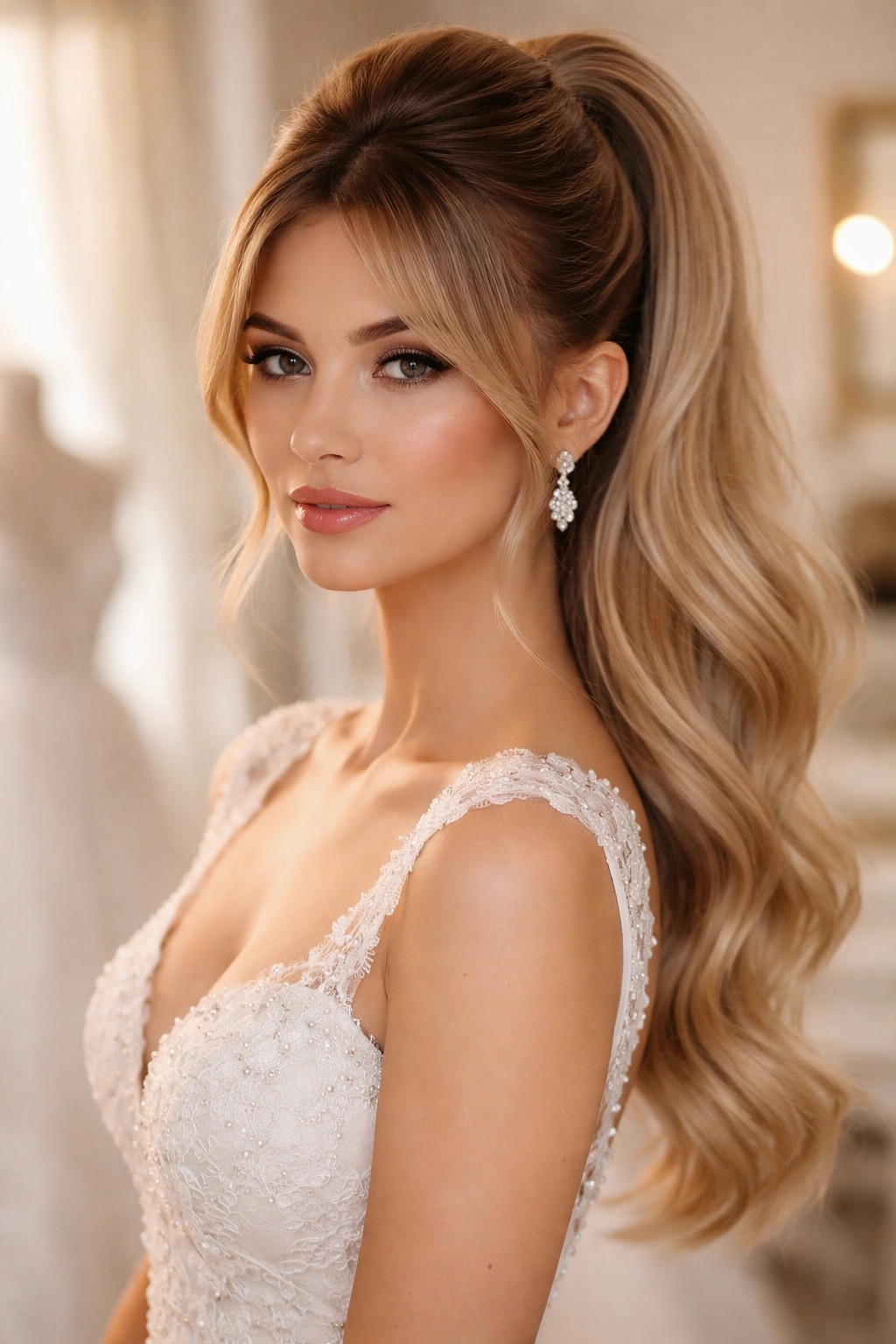
Curtain bangs soften a high ponytail in a way that feels effortless but still put together. They draw attention to the eyes and cheekbones, and they stop the style from looking too pulled-back.
The bangs should be styled with a gentle bend, not a stiff curl. Let them part naturally in the center and sweep them outward. The ponytail can stay sleek or have a little wave, depending on how formal the rest of the look needs to be. If the bangs are too separated, the face can look over-framed. Keep the shape soft.
Best for
Brides who want something current without chasing anything too trendy. Curtain bangs also help when the forehead is a little wider, because they break up the top line in a flattering way. A small amount of dry texture spray at the roots can keep the bangs from collapsing before the vows.
21. Softly Messy High Ponytail with Intentional Volume
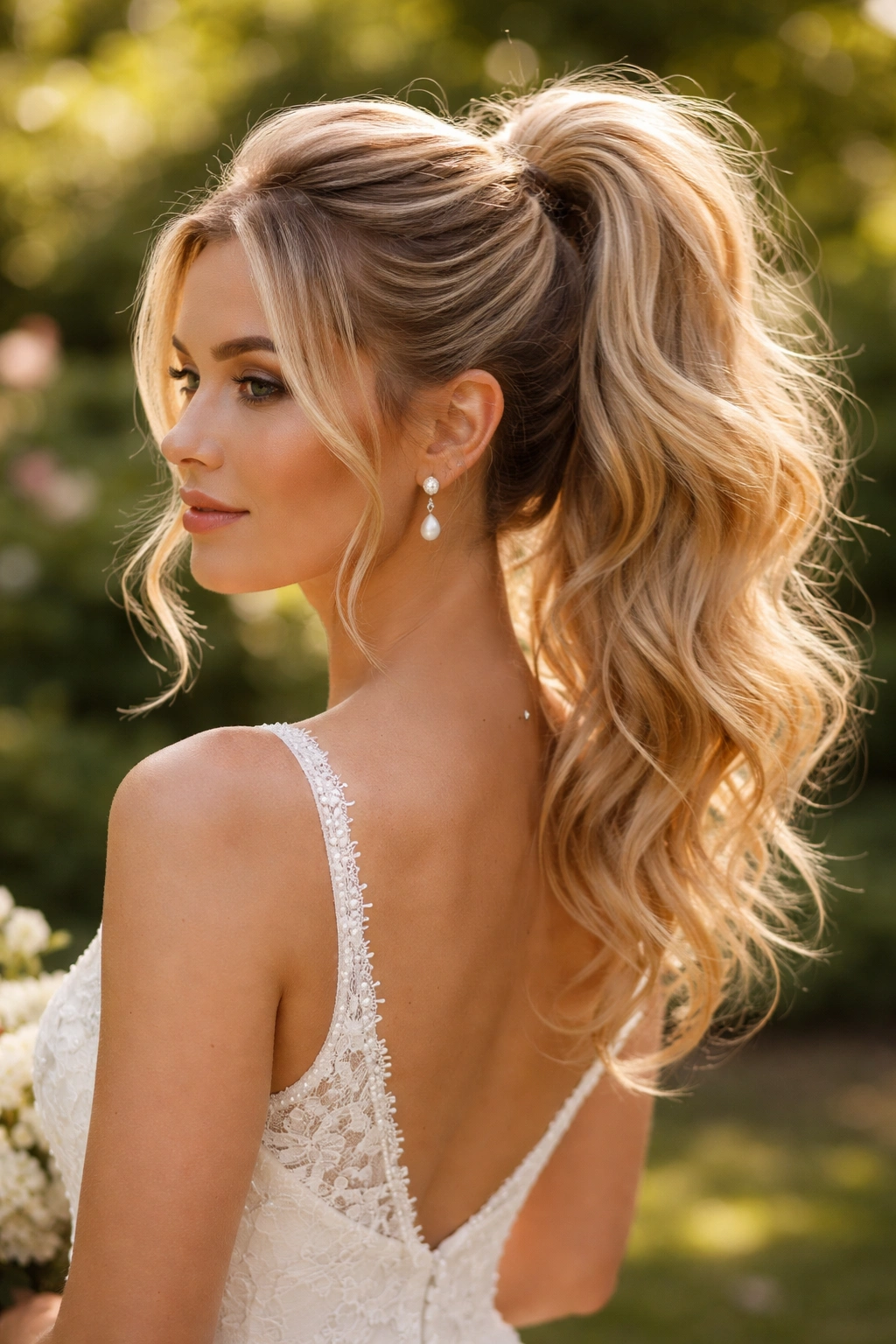
“Messy” can be a dangerous word with wedding hair. Left alone, it turns into unfinished. Done with intent, it becomes soft, full, and relaxed in the best way.
The ponytail should still have a strong base. What looks loose is actually carefully arranged: a little lift at the crown, a few face-framing pieces, and softly separated waves or curls through the tail. The trick is to let some pieces move while the overall shape stays anchored.
When to choose it
This is a good match for brides who dislike rigid hair. It feels natural with relaxed gowns, outdoor settings, and ceremonies that lean less formal. A messy ponytail only works when the shape is disciplined. That sounds contradictory, but it’s true. Without that structure, it just looks like hair that came undone.
22. Braided Crown High Ponytail
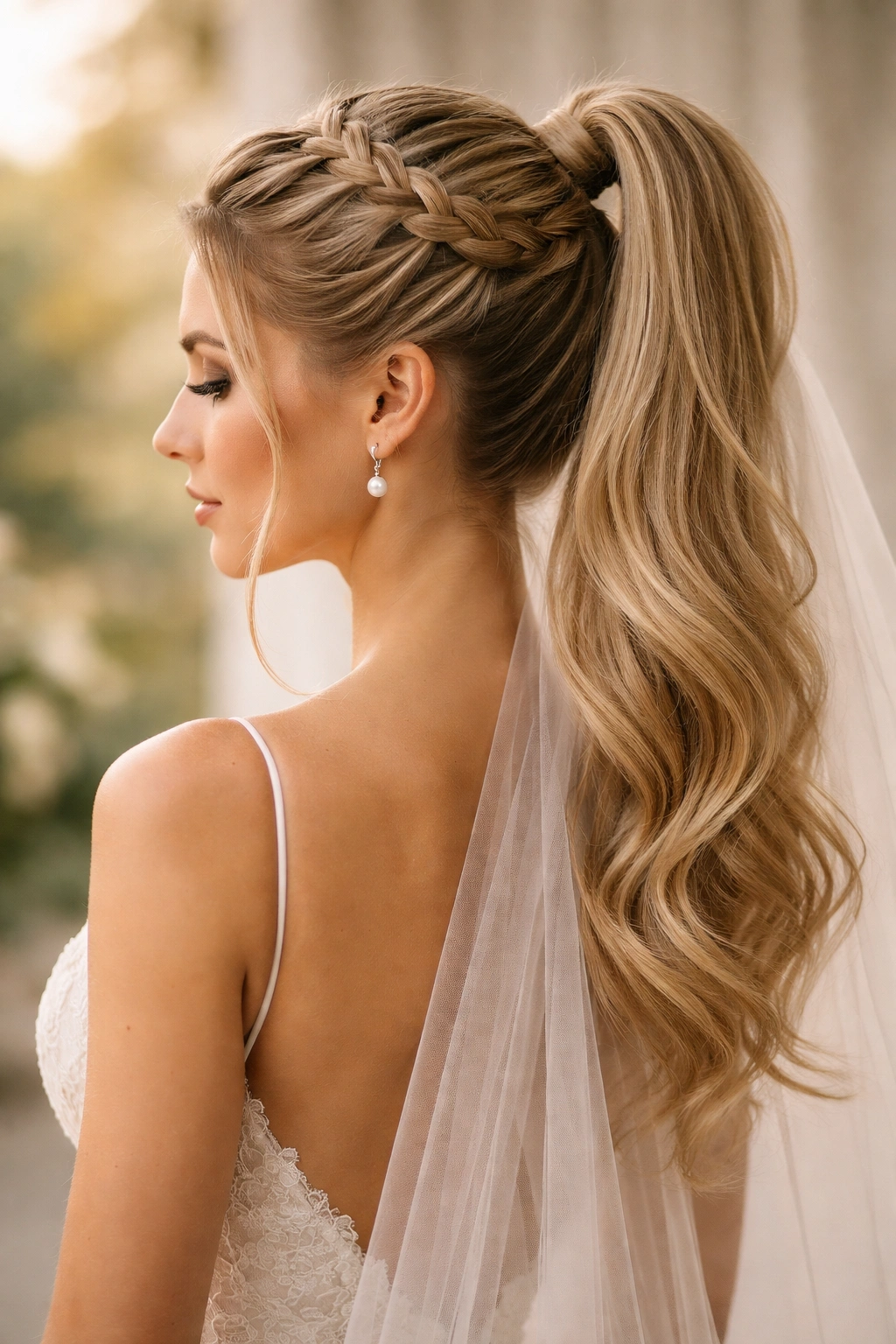
A braided crown gives the high ponytail a built-in frame. It pulls attention upward, adds texture near the scalp, and creates a more dressed-up profile from the front.
You can braid both sides and meet them at the back before gathering the ponytail, or create one side braid that curves into the base. Either way, the braid should feel smooth and intentional, not chunky for the sake of being chunky. If the braid is too tight, it can look severe. If it’s too loose, the structure disappears.
Why it’s useful
This style holds up well with veils and decorative pins. It also works when the dress has a deep neckline and needs something with shape up top. Keep the braid width balanced with the size of your face and shoulders. A tiny braid can get lost. A heavy one can overpower the rest of the hair.
23. High Ponytail for Short Hair with Extensions
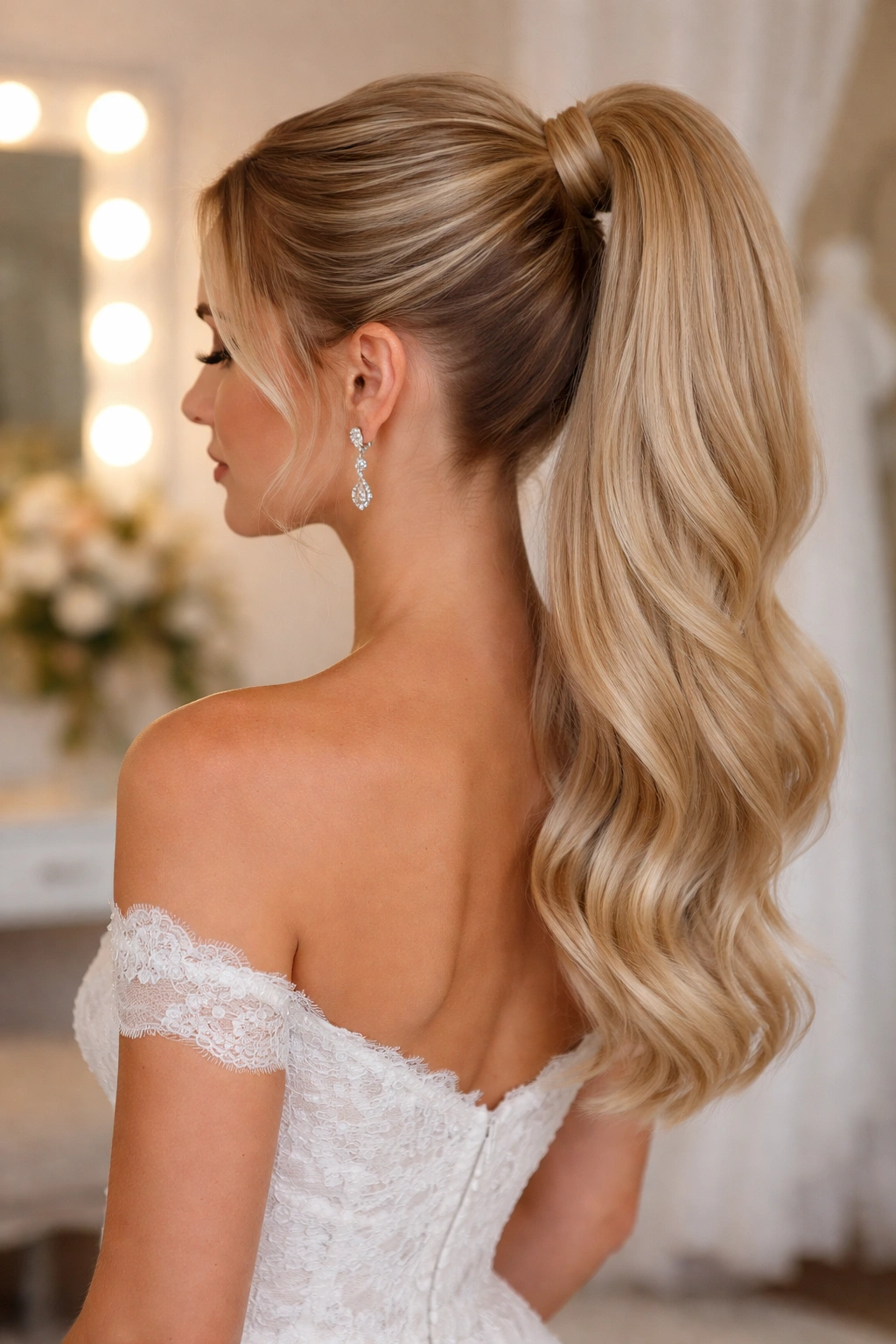
Short hair can still do a high ponytail wedding style, but the base needs planning. Extensions make the length possible, yet the blend has to be clean or the finish will look patchy.
The best approach is to add volume where the ponytail starts and then build the length in a way that matches your own hair density. Clip-ins or wefts should sit flat enough that the top stays smooth. Once the ponytail is secured, curl or straighten the added length so it matches the rest of the style. A mismatch in texture gives the game away.
Small but important
Shorter natural hair often benefits from a firmer foundation braid or anchor. That keeps the ponytail from slipping as the night goes on. The secret is not hiding the extensions perfectly. It’s blending them so well that the whole style reads as one shape, not two separate layers.
24. High Ponytail for Thick Hair with Controlled Lift
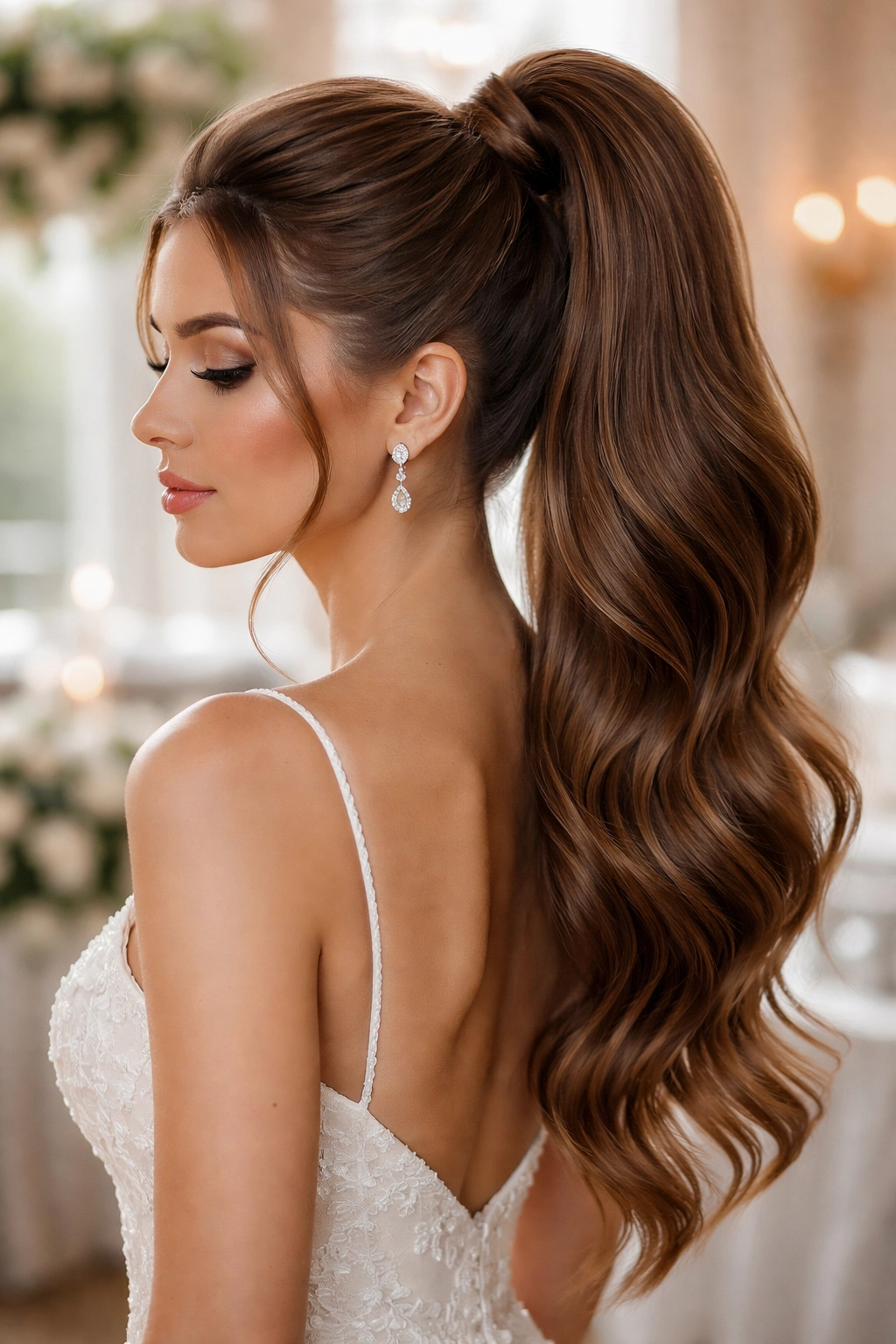
Thick hair can make a ponytail look lush fast, but too much bulk at the crown turns the style heavy. The answer is controlled lift and a base that stays sleek.
Work the top section smooth first, then gather the length without bunching it into one giant knot of hair. If the ponytail feels too wide at the base, split the hair slightly before wrapping so the weight distributes better. That keeps the style lifted rather than helmet-like.
Styling note
A thick ponytail often looks best when the ends are shaped. A blunt finish can feel dense, while soft curls or a slight taper make the whole style move more. Use strong pins, not just one elastic, because the weight will pull. Thick hair is generous, but it demands respect.
25. High Ponytail for Fine Hair with Tucked Volume
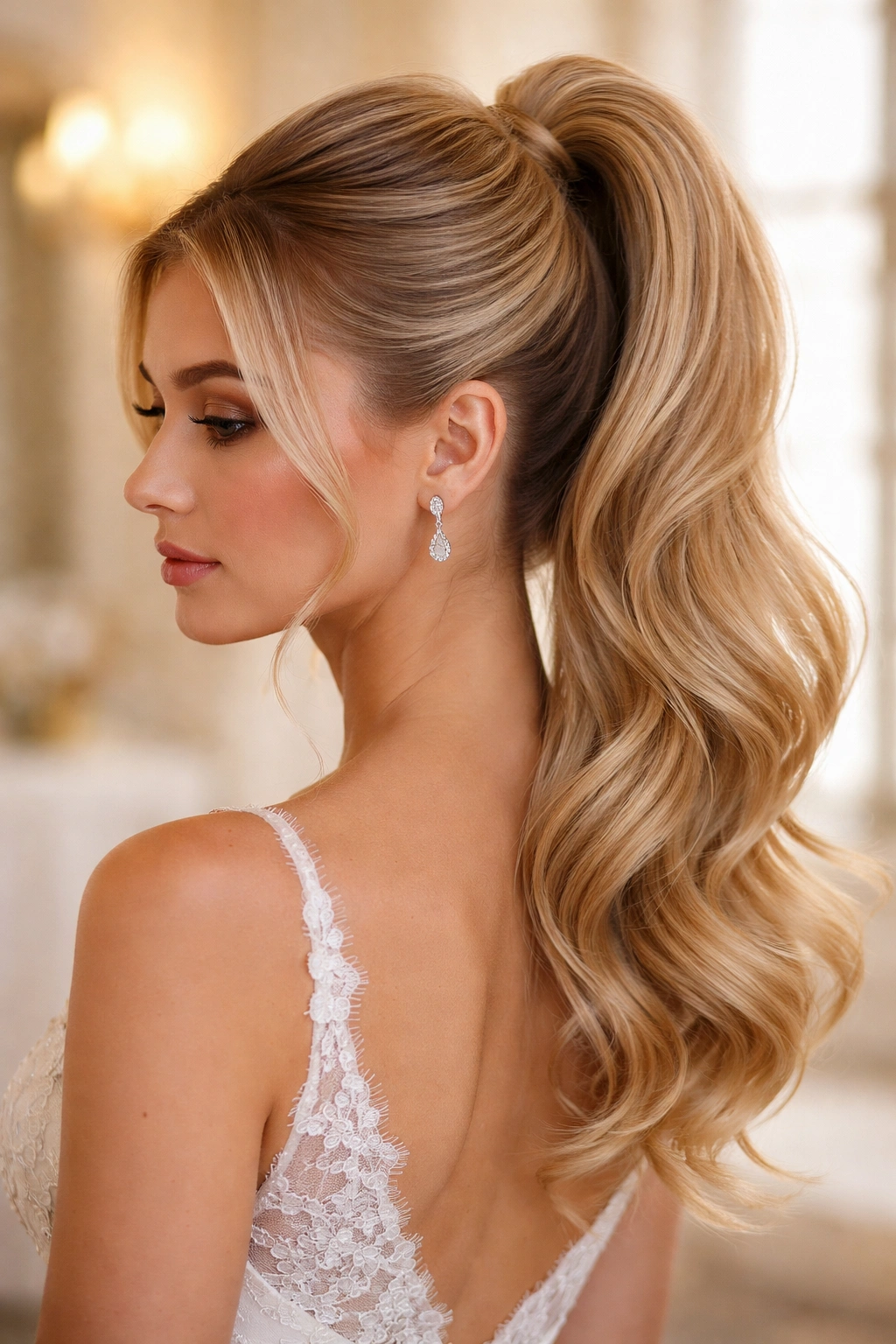
Fine hair needs a different strategy. You want the ponytail to look full without piling on so much product that it collapses halfway through the event.
A little root powder, careful teasing under the top layer, and a ponytail pad or discreet clip-in fill can help. The top should still look smooth, not stiff. Once the tail is secured, curl or wave the length so it has body. Fine hair tends to look best when it has shape rather than just volume sprayed into place.
Watch for this
Heavy oils and too much serum can make fine hair go limp fast. A light mist is enough. If the hair is very soft, pin the wrap tightly and use a smaller elastic to create a more secure base. The style should feel light in the hand and solid at the root.
26. High Ponytail for Curly Hair with Smooth Roots
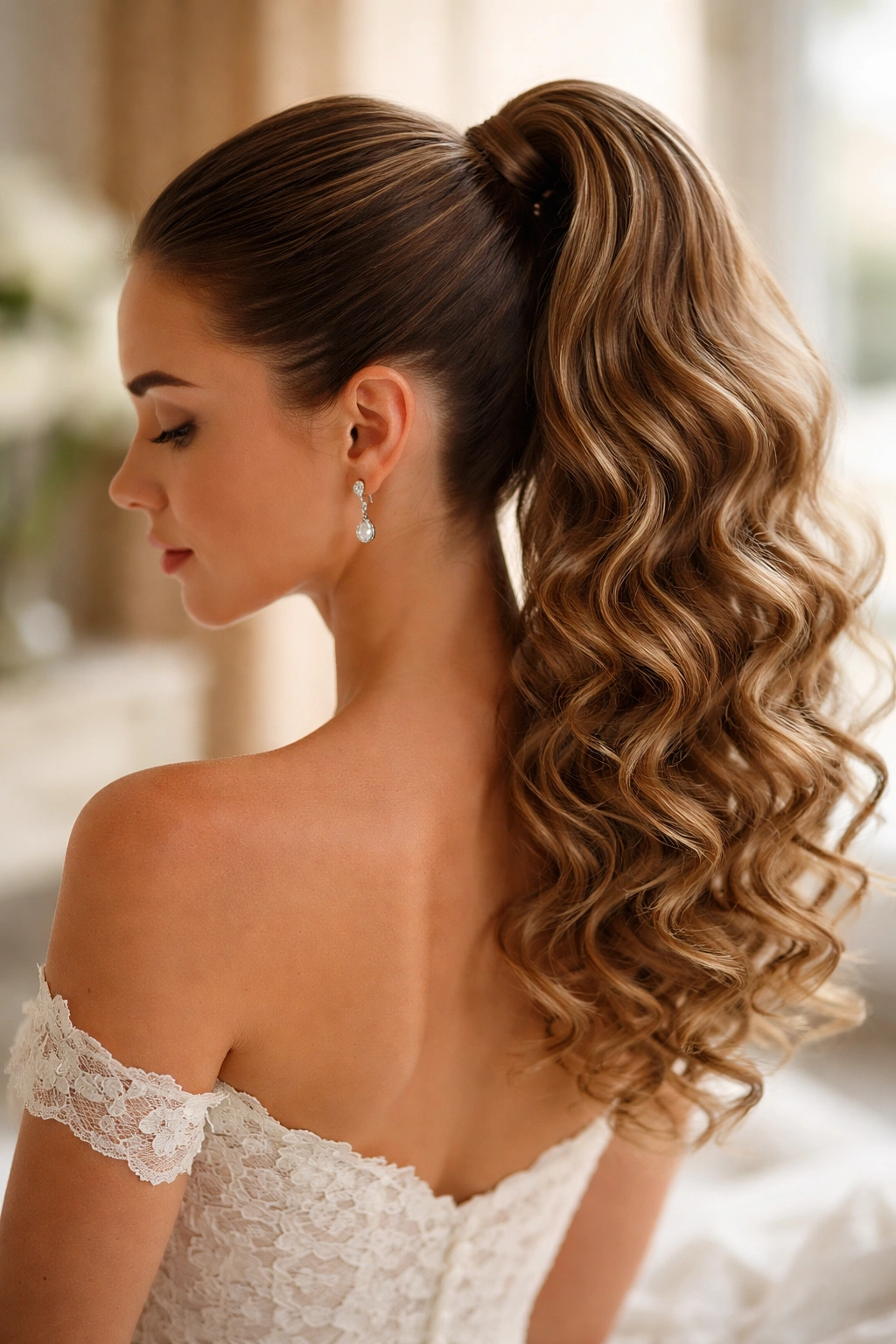
Curly hair looks stunning in a high ponytail when the roots are smoothed carefully and the curls stay rich and defined through the length.
The top section should be brushed and set just enough to lie flat, but not so much that the texture disappears. The ponytail itself can stay fully curly, or it can be stretched slightly for a bigger shape. Either version works. What matters is that the contrast between sleek roots and textured tail feels deliberate.
How to finish it
Use a gel or cream at the hairline, then tie the ponytail securely and shape the curls with your fingers. A silk scarf for a few minutes before the event can help the roots settle. Curly bridal ponytails look best when the curls are allowed to breathe. Flattening them defeats the whole point.
27. High Ponytail for Coily Hair with Sculpted Length
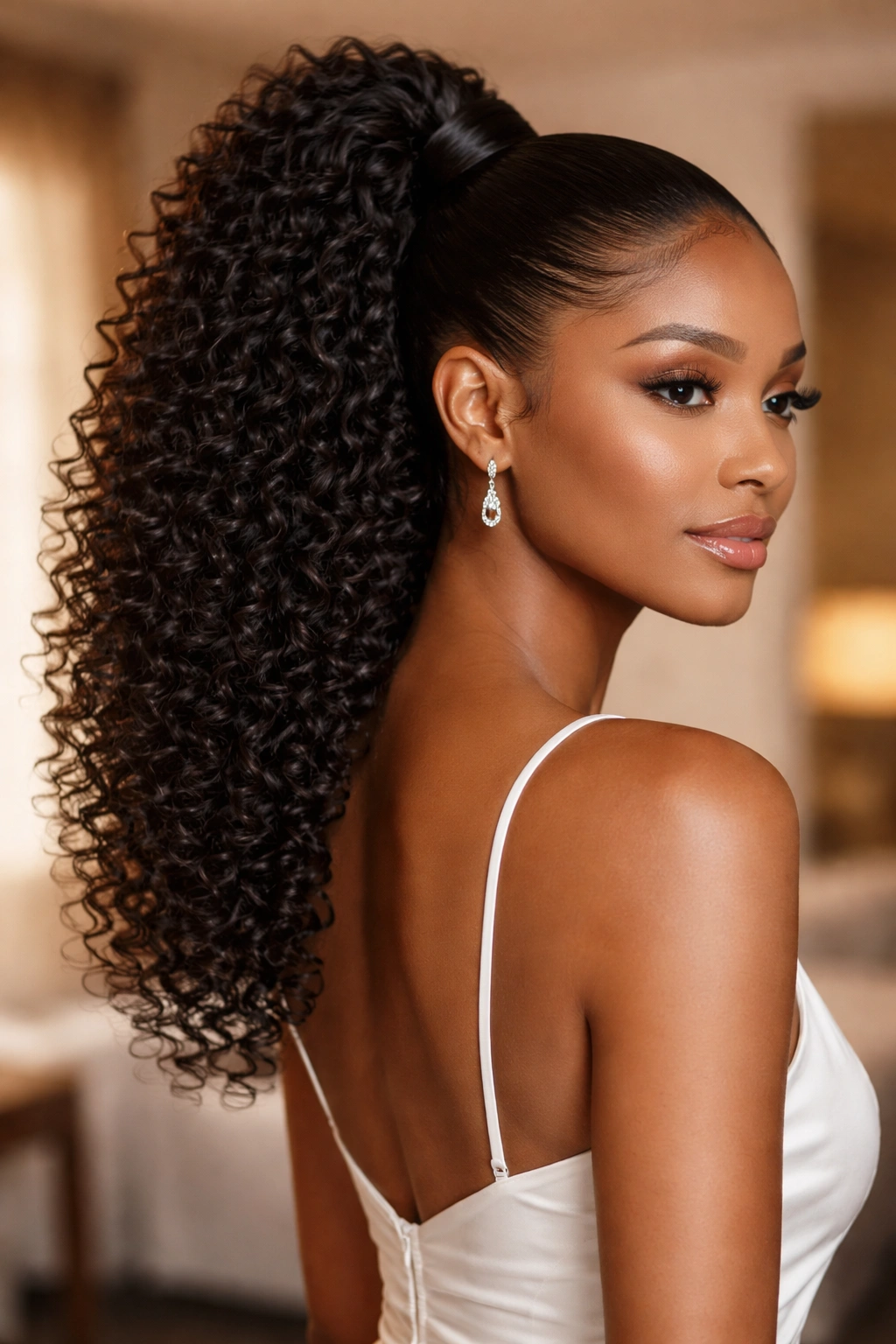
Coily hair gives a high ponytail real presence. The texture already has dimension, so the styling job is mostly about shaping, moisture, and clean placement.
I like a smooth base with a rounded puff or stretched length that keeps the coil pattern visible. If the hair is stretched, make sure it still has enough softness at the ends. If it’s left in its natural coil state, the shape should be balanced so it doesn’t read lopsided from the side. A little gloss at the surface helps, but a coated, greasy finish does not.
Best detail to remember
Use strong, gentle securing methods that won’t fight the texture. Satin ties, layered pins, and careful sectioning all matter here. The style should protect the hair while still giving that lifted bridal shape. The ponytail should feel strong, not squeezed.
28. Side-Swept High Ponytail with Old Hollywood Energy
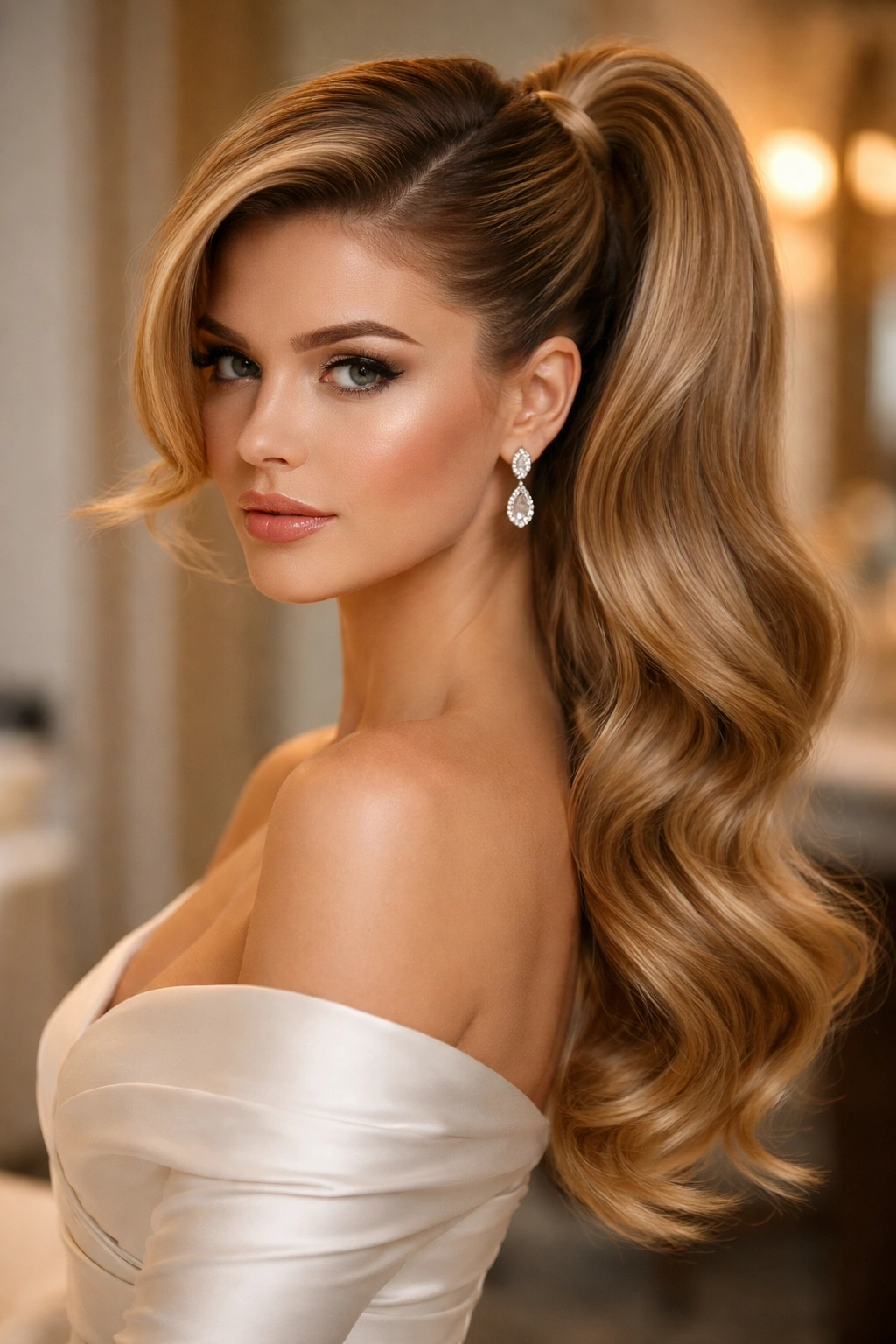
A side-swept high ponytail brings a little drama in the best way. It has the elegance of a classic glamour style, but it keeps the movement of a ponytail.
Sweep the front section across the forehead or side-part it deeply, then gather the ponytail a bit off-center. The tail can fall over one shoulder or curve across the upper back, depending on the neckline. That off-balance placement gives the style a richer shape and looks especially nice with one-shoulder gowns or asymmetric earrings.
Why it stands out
The side sweep gives the face a softer line and lets the dress and hair work together instead of competing. A smooth wave through the front piece helps, but keep it controlled. Too much sweep and the style turns theatrical. Just enough is what makes it handsome, graceful, and wearable.
29. High Ponytail with a Satin Bow and Veil Placement
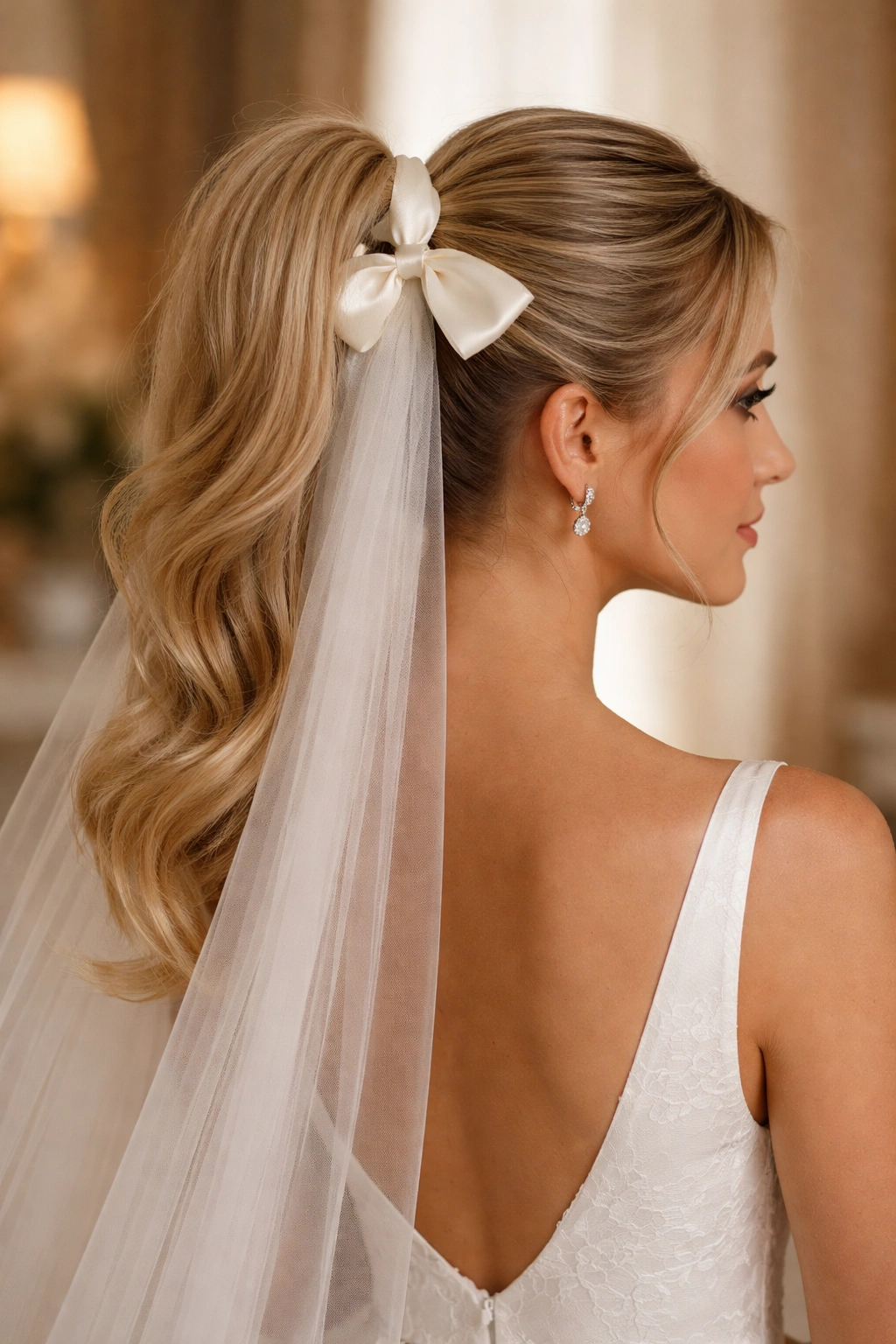
A satin bow can make a high ponytail feel bridal in one move. It adds softness, but it also gives the base a clear focal point.
The bow should match the dress fabric or at least sit in the same color family. Place it at the base, under or beside the wrap, so it doesn’t crowd the ponytail itself. If a veil is part of the look, make sure the bow doesn’t sit where the comb needs to anchor. That tiny placement detail saves a lot of frustration.
A simple way to think about it
The bow should look like a deliberate accessory, not a gift ribbon tied on at the last minute. Keep the tails trimmed to a length that flatters the back of the dress. A huge bow can be fun, but a smaller one usually feels more refined for a formal wedding.
30. Minimalist High Ponytail with a Clean Center Part
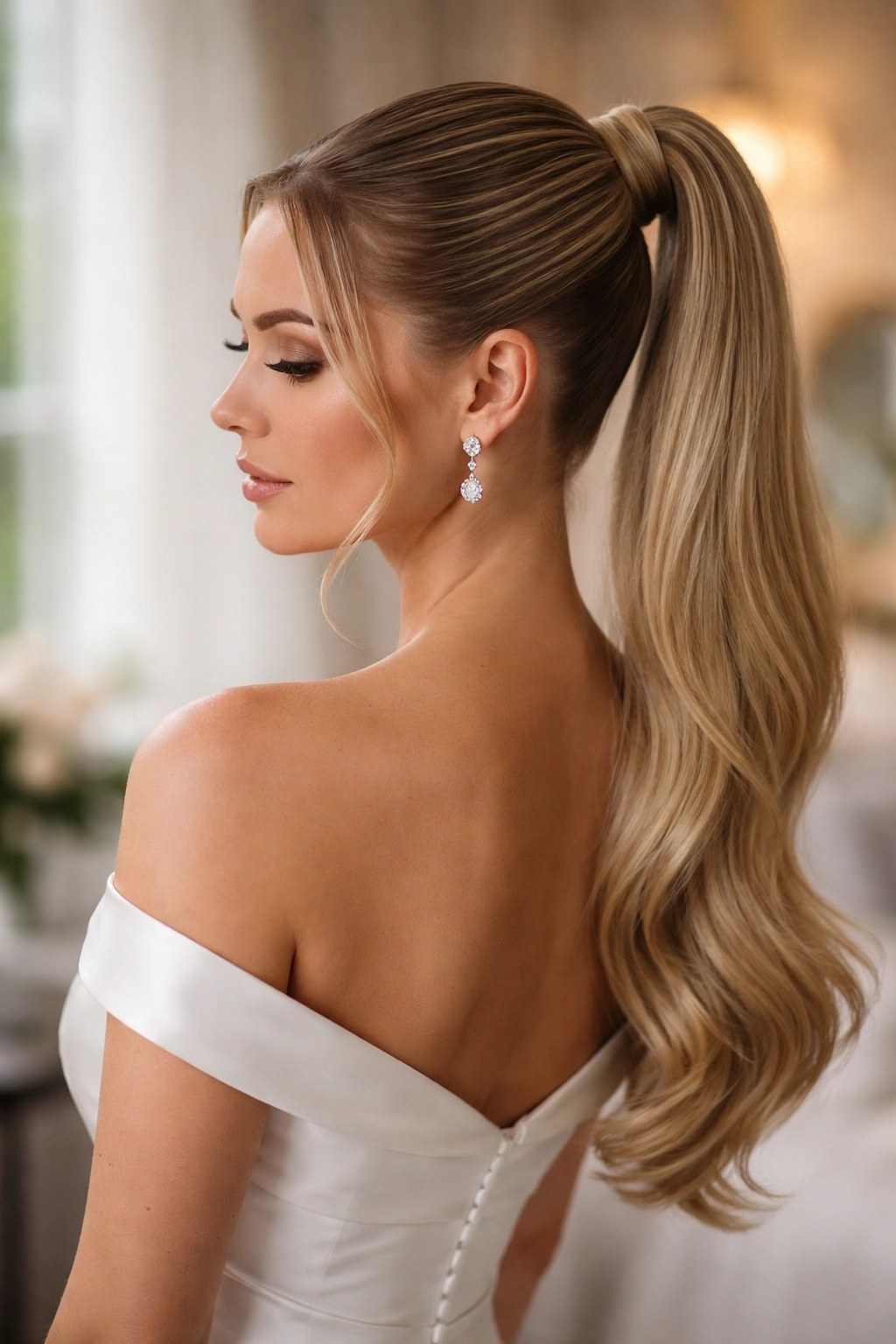
Sometimes the sharpest look is the simplest one. A clean center part, smooth roots, and a well-shaped ponytail can look more elegant than a style packed with extras.
This version depends on precision. The part needs to be straight, the base needs to be tight, and the tail needs to be brushed until every section falls where it should. I like this style with clean tailoring in the dress, simple earrings, or a modern bouquet. There’s nowhere for sloppiness to hide, which is exactly why it works.
Why I keep coming back to it
It suits brides who want their features, not their hair, to be the focus. It also ages well in photos because it doesn’t lean on a specific trend. A minimalist ponytail only looks plain if the execution is lazy. When the lines are clean, it looks calm, expensive, and very sure of itself.
