
Thick curly hair is its own category — not just curly, but dense, heavy, and full of volume that other people pay real money trying to replicate. If your hair has that big, lush quality where you can barely see your scalp even at the part, where a single ponytail is thicker than most people’s whole head of hair, and where products disappear into your strands like they’re being absorbed by a cloud — these thick curly hairstyles are built specifically for you. Not modified-from-a-thin-hair-tutorial styles. Built from the ground up for high-volume, high-density natural texture.
Understanding High-Density Natural Hair
Density refers to how many individual hair strands are on your head. High-density natural hair has more strands per square inch than average, which is why it looks and feels so full. When those dense strands also have a curly or coily pattern, the volume multiplies — each curl spirals away from the scalp, taking up more space than a straight strand would.
This is different from hair thickness, which describes the diameter of each individual strand. You can have thick (wide-diameter) strands that aren’t very dense, or you can have fine strands in extremely high density. Most Black women with voluminous natural hair have some combination of the two — strands that are medium to thick in diameter and high enough in density to create significant overall volume.
Knowing the difference matters for thick curly hairstyles because some styles are designed to manage density (reduce visual volume, add structure) while others are designed to celebrate it (maximize volume, let the natural fullness lead). Neither approach is inherently better — it depends entirely on the occasion and your preference for that day.
Why Product Application Differs for Thick Hair
Product application for thick, high-density natural hair requires a different approach than what works on medium or fine curly hair. With more strands to coat, you need more product — but the specific amount depends on your strand thickness, your current moisture levels, and the products you’re using.
A golf-ball-sized amount of curl cream that’s perfect for a person with medium-density hair might barely cover one section of a high-density head. For most thick curly hairstyles, a good rule is to apply product section by section — smaller sections than you think you need — and use enough product within each section that it feels slightly oversaturated before you move on. The strands will absorb more than thin hair does.
Raking product through thick curls with your fingers works better than trying to use a brush in one pass. Your fingers can navigate the density, separate stubborn strands, and feel when a section is fully coated in a way that a tool can’t. Use the brush or comb afterward for smoothing, not as the primary distribution method.
Water penetration is also more challenging in high-density hair. The outer layers of thick, dense curl textures can become wet while inner layers near the scalp stay relatively dry. Before applying any product for thick curly hairstyles, ensure your hair is genuinely saturated — not just surface-wet — by spending extra time under the shower spray or using a spray bottle to fully saturate each section before styling begins.
Managing Weight Without Losing Volume
The paradox of thick curly hair is that the weight of product and water can pull curls down and reduce the very volume that makes the hair so striking. Heavy products — thick creams, heavy butters, styling waxes — can turn a beautiful cloud of curls into a flattened, greasy-looking mass.
The solution is layering light products rather than using one heavy one. A lightweight leave-in conditioner, a water-based curl cream (not a butter-based one), and a gel for hold give you moisture, definition, and structure without weight. This combination allows the curls to maintain their lift while still being fully moisturized and defined.
Sectioning while drying also prevents thick hair from clumping into one heavy mass. While your style air dries, use butterfly clips or large sectioning clips to hold sections away from each other. This allows air circulation between sections and prevents the weight of wet hair from pressing down on the layers underneath.
Tools Built for Thick Curls
Not every brush or comb handles high-density natural hair well. The wrong tools create unnecessary breakage, tangle in the density, or just fail to distribute product effectively.
A wide-tooth comb with widely spaced, rounded teeth is essential for detangling thick natural hair. Narrow-toothed combs catch in the density and create painful snags. A Tangle Teezer or a Wet Brush — both designed with flexible teeth that move with the hair rather than against it — are widely used and praised in high-density natural hair communities.
For styling, a Denman brush or a brush with flexible, widely spaced bristles helps clump curls in high-density hair without dragging through the density. Brush in the direction of the curl, not against it, and only on thoroughly saturated, product-coated hair.
For volume and fluffing, a wide-prong afro pick is the best tool for thick curly hairstyles. Insert the pick at the root, not the tip, and lift upward in one smooth motion rather than dragging. This lifts the hair from the scalp without disrupting the curl pattern at the ends.
Setting Realistic Style Times
Thick curly hairstyles take longer to set and longer to dry than styles on medium or fine hair. A twist-out that takes forty minutes to set on medium-density hair might take two hours on very thick, dense natural hair. A wash-and-go that air dries in an hour on a thinner texture might still be damp at the roots after three hours on thick hair.
Plan for this. For styles that require full drying before the finished look is visible — twist-outs, braid-outs, flexi-rod sets — start the process the night before or use a hooded dryer to speed the drying time. For same-day styles, a diffuser on the lowest heat setting can cut drying time significantly without disrupting curl pattern.
1. The Massive High Puff
On thick curly hair, a high puff isn’t just a style — it’s a statement. The volume that thick, high-density curls produce when gathered at the crown creates a puff that has its own gravitational presence. It’s big, full, and immediately eye-catching.
Getting Maximum Volume
Gather your hair as high as possible on your crown using a thick, sturdy satin scrunchie or a hair tie wrapped multiple times for security. Pull upward firmly so the base of the puff sits close to the top of the head, not the back. This positioning maximizes height.
Once secured, use an afro pick inserted at the base of the puff and lift outward in all directions. The goal is to separate the gathered curls from the center outward, creating as much lateral volume as the length will allow. Pull a few larger curl sections forward around the face for framing. Lay your edges. The result is one of the most striking thick curly hairstyles there is.
2. Stretched Twist-Out
Thick natural hair shrinks significantly — sometimes 50-70% of its full length — when allowed to dry in its natural curl pattern. A stretched twist-out solves this by drying the hair in an elongated state before releasing the curl.
After setting your two-strand twists on freshly moisturized hair, stretch each twist using one of these methods: African threading (wrapping the twist in thread from root to tip), banding (placing a series of small bands down the length of each twist), or roller sets (large flexi rods hold twists straight while drying).
Once fully dry and stretched, unravel the twists and separate gently with oiled fingers. The result is a full twist-out at much closer to your actual length — more dramatic, more voluminous at the ends, and genuinely impressive on thick curly hair that would otherwise spring up dramatically close to the scalp.
3. Full Afro with Defined Edges
No style makes more of thick curly hair’s natural volume than a fully picked-out afro with clean, defined edges. The contrast between the wide, full afro shape and the precise, flat edge line at the hairline creates a look that’s graphic, intentional, and incredibly powerful.
Pick your hair out from the roots using an afro pick, working from the bottom layers first and moving upward. The goal is even volume in all directions — not tall, not just wide, but round and full. Apply a light oil to your palms and work it through the surface to reduce any dry frizz and add sheen. Then spend two minutes on your edges. That’s the entire style.
4. Chunky Braid-Out
Set large, three-strand braids on thick, freshly moisturized hair — you might have six to ten braids depending on your hair volume. Apply a setting cream or mousse to each braid before braiding. Allow to dry completely overnight.
When you unravel, the wave pattern from thick chunky braids on thick hair is dramatically voluminous — large-wave sections that spread outward into a massive, textured style. The waves are visible but soft, and the overall effect is an enormous, full shape that only thick curly hair can achieve this dramatically.
5. Flexi-Rod Set on Thick Curls
A flexi-rod set on thick curly hair requires patience but delivers incredible results. Use medium to large rods — thin rods will take forever on thick hair and may not create enough definition to be visible in high-density texture. Apply a strong-hold mousse or setting lotion to each section before wrapping.
For thick hair, section carefully and use enough rods to cover the full head without overcrowding. Sit under a hooded dryer for 60-90 minutes. When the rods come out, separate each coil into two or three pieces for maximum volume. Thick curly hair with a full flexi-rod set produces a silhouette that photographs like a professional shoot.
6. Two-Strand Twist Updo
Two-strand twists on thick natural hair are substantial. Each twist has real weight and size, and when gathered into an updo, they create a voluminous, textured arrangement at the back or crown that no other hair type can match.
Twist your entire head into medium-to-large two-strand twists. Gather all the twists toward the crown, arrange them in whatever configuration strikes you — a loose pile, a gathered bun shape, a layered crown — and pin in place. Pull two or three twists loose around the face. The result is a fully structured updo with significant visual impact.
7. Finger Coils with Volume Separation
Finger coils on thick natural hair produce a style that’s dense with defined, individual coils. Set each coil carefully while the hair is soaking wet and coated with gel, winding each small section around your finger from root to tip. Allow to dry completely — this may take several hours on thick hair.
Once dry, very gently separate the coils at the tips only — not all the way up the length. This adds just enough volume to prevent the style from looking too tight while maintaining the definition at the roots. The result is a full, defined style with visible coil structure.
8. Half-Up Half-Down Thick Style
The half-up half-down on thick curly hair is its most dramatic on this hair type because the bottom section — half of a thick head of hair — cascades down in a genuinely massive way. Gather the top half, secure it with a scrunchie or clip, and let the bottom section fall freely.
For extra drama, use your afro pick to separate and lift the loose bottom section before stepping out. The difference between un-picked and picked-out bottom sections on thick hair is immediately visible — it goes from a curtain of curls to a cloud of them.
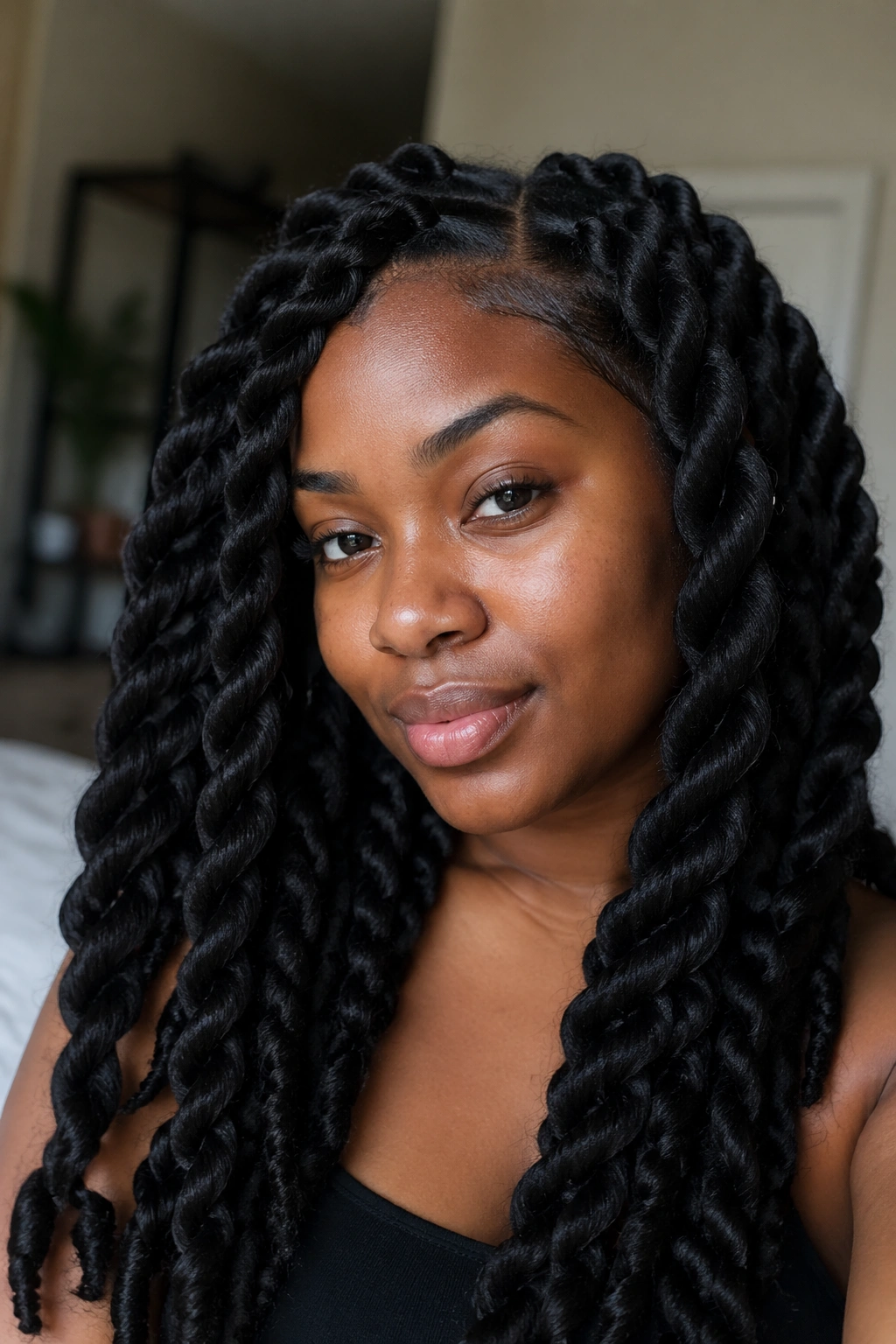
9. Jumbo Senegalese-Style Twists
Large two-strand twists — jumbo in size, done using your own natural hair rather than extensions — on thick natural hair produce twists that are substantial in diameter and dramatic in their visual weight. These are different from salon-installed Senegalese twists; these are done on your own hair and meant to show your natural texture within the twist.
Jumbo twists on thick curly hair can be gathered into updos, worn loose down the back, or pinned into a crown arrangement. The size of the twists on thick hair makes them particularly striking — each one is visible from across the room.
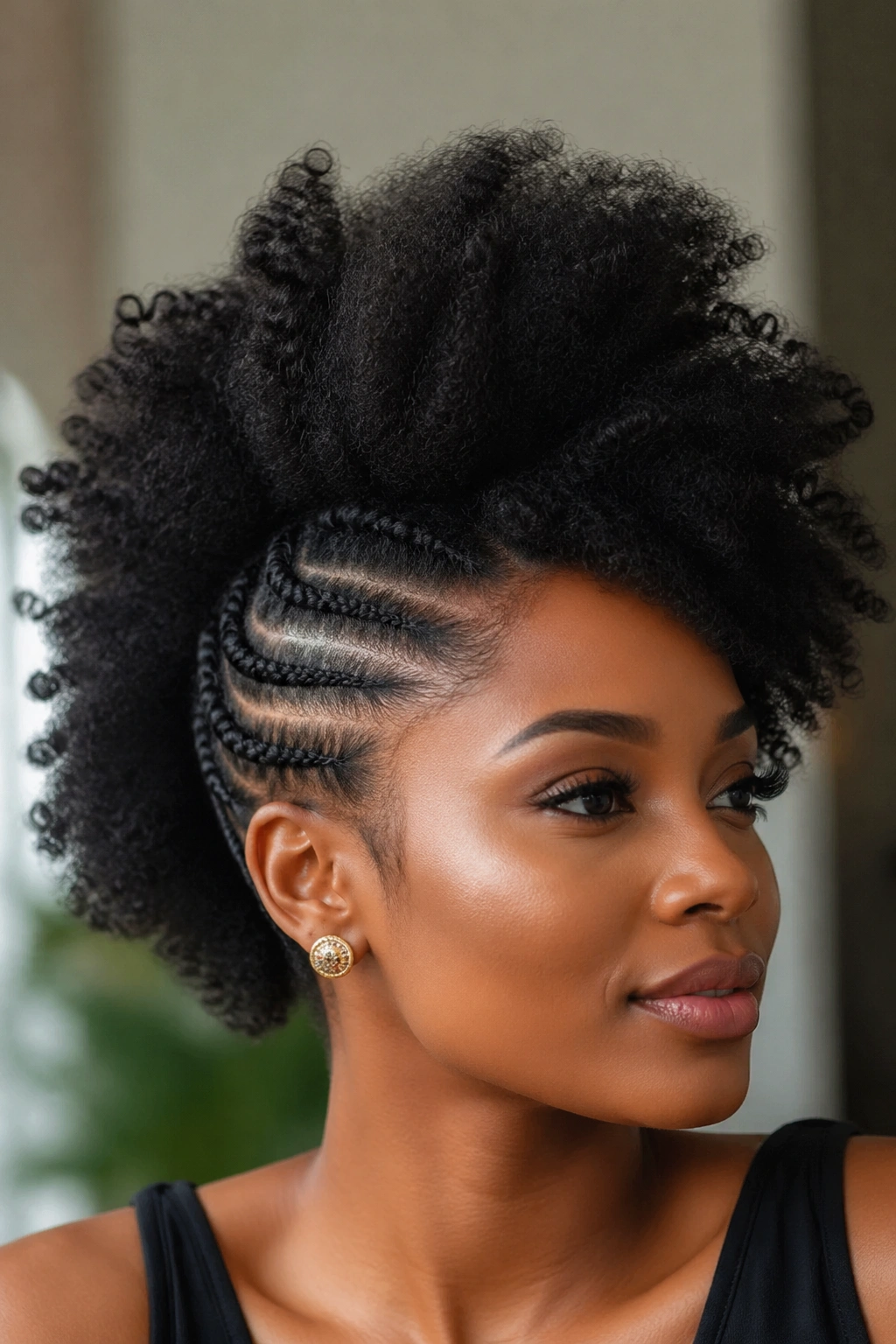
10. Frohawk on Thick Hair
The frohawk — sides twisted, braided, or flat-twisted close to the scalp; center section loose and free — achieves its maximum impact on thick natural hair. The contrast between the flat sides and the thick, voluminous center section is dramatic and bold.
Pick out the center section with an afro pick for maximum height. On thick hair, the frohawk center can stand several inches above the scalp, creating a silhouette that’s genuinely striking. Add a line design at the part using a fine-tooth comb or a detail trimmer if available.
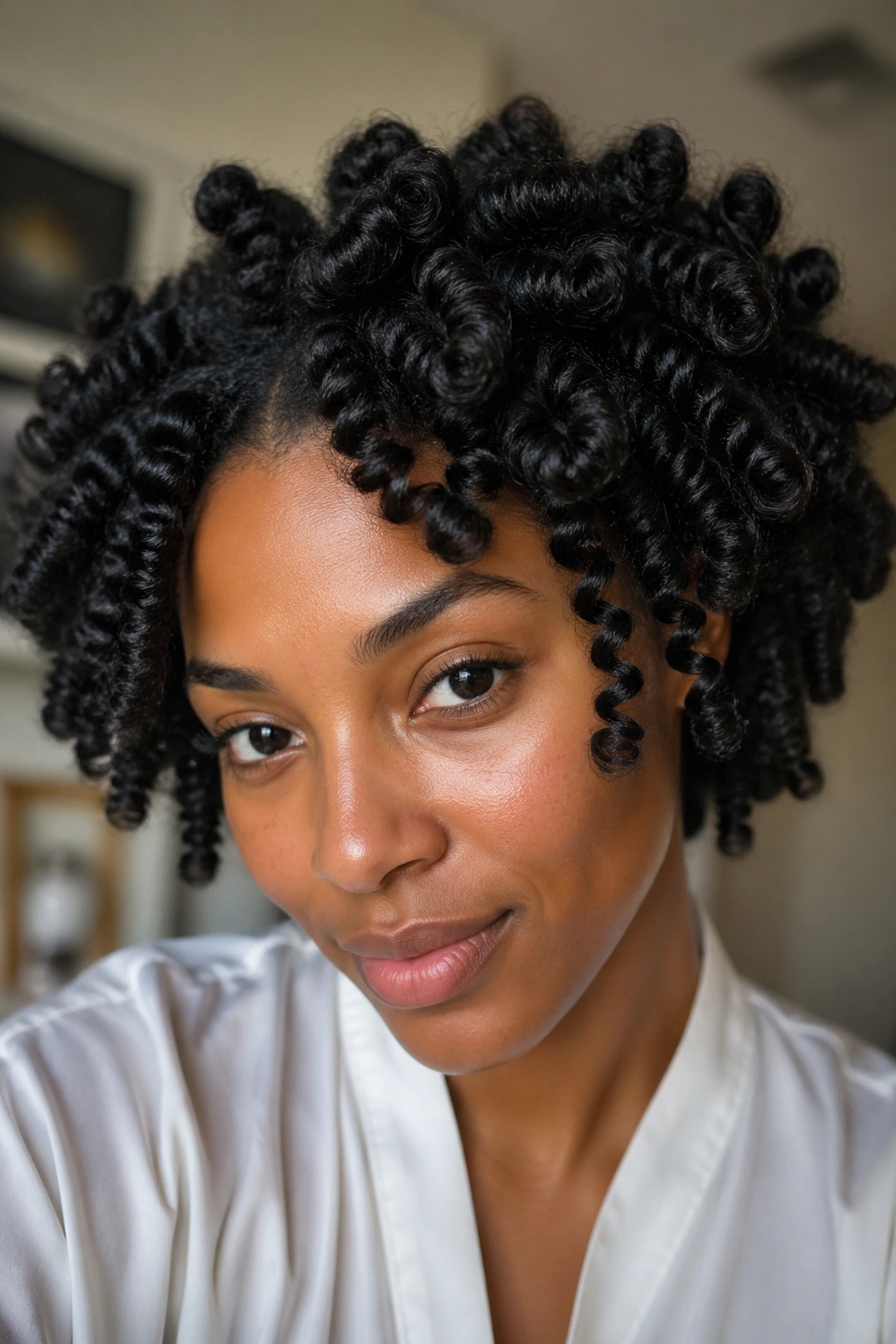
11. Bantu Knot-Out on Dense Hair
Bantu knot-outs on high-density natural hair produce a curl pattern that’s more voluminous than on thinner hair because each resulting coil is backed by more strands. The curls have more body, more bounce, and more presence when they unravel.
Set smaller knots for tighter, more defined ringlets or larger knots for loose, full spirals. The morning after releasing the knots, over-separate deliberately for thick curly hair — pull each resulting curl into three or four pieces and shake everything out. The volume that results is genuinely stunning.
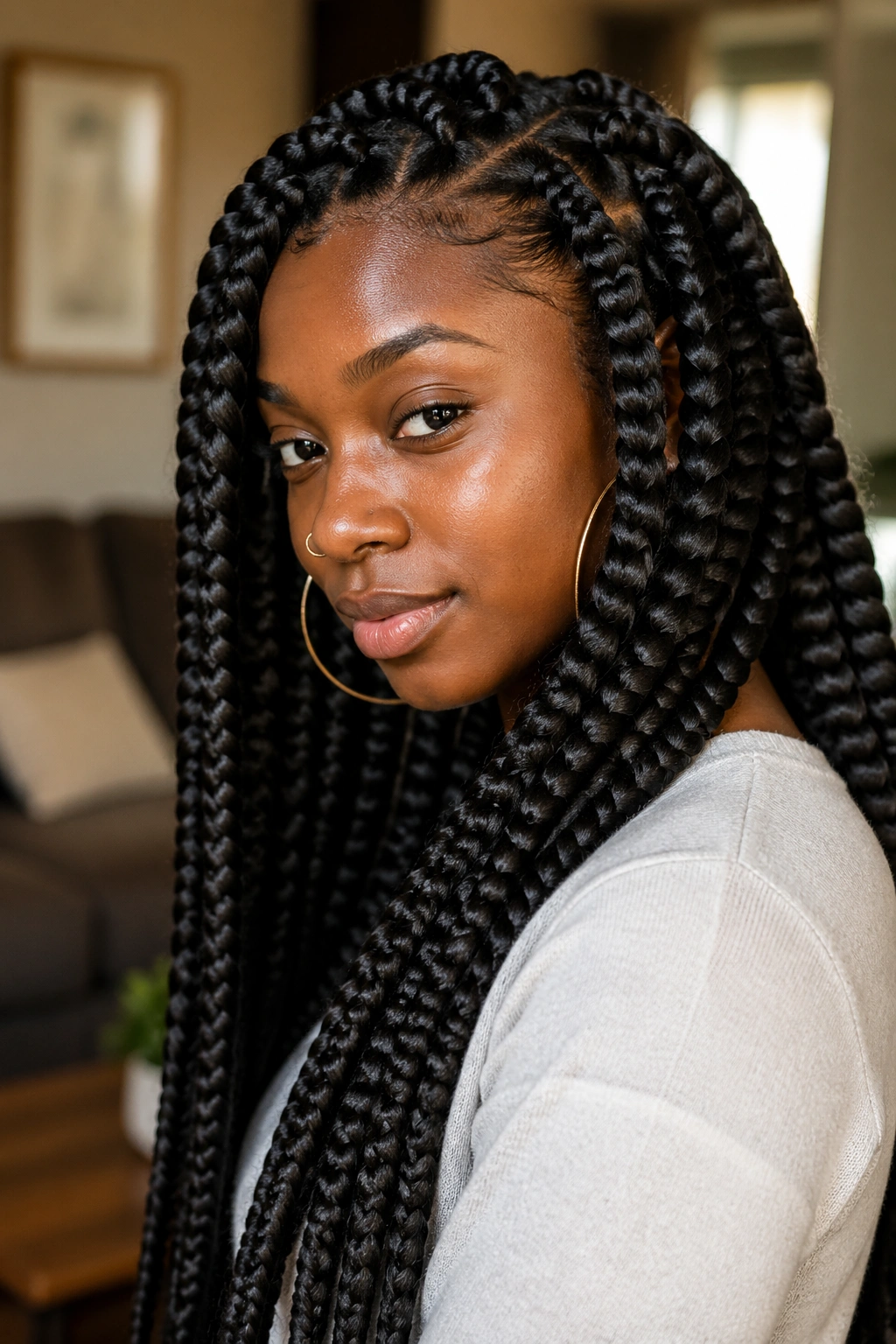
12. Protective Style with Added Bulk
Box braids, goddess braids, or knotless braids installed on thick natural hair come out with a built-in fullness that thinner hair can’t replicate. The braid weight, the natural texture peeking through, and the sheer quantity of braids that thick hair requires all contribute to a style that’s visually substantial.
For thick curly hair, jumbo or large braids are often the most flattering — they match the natural scale of the hair rather than creating dozens of tiny braids that fight visually with the texture.
13. Halo Crown on Thick Curls
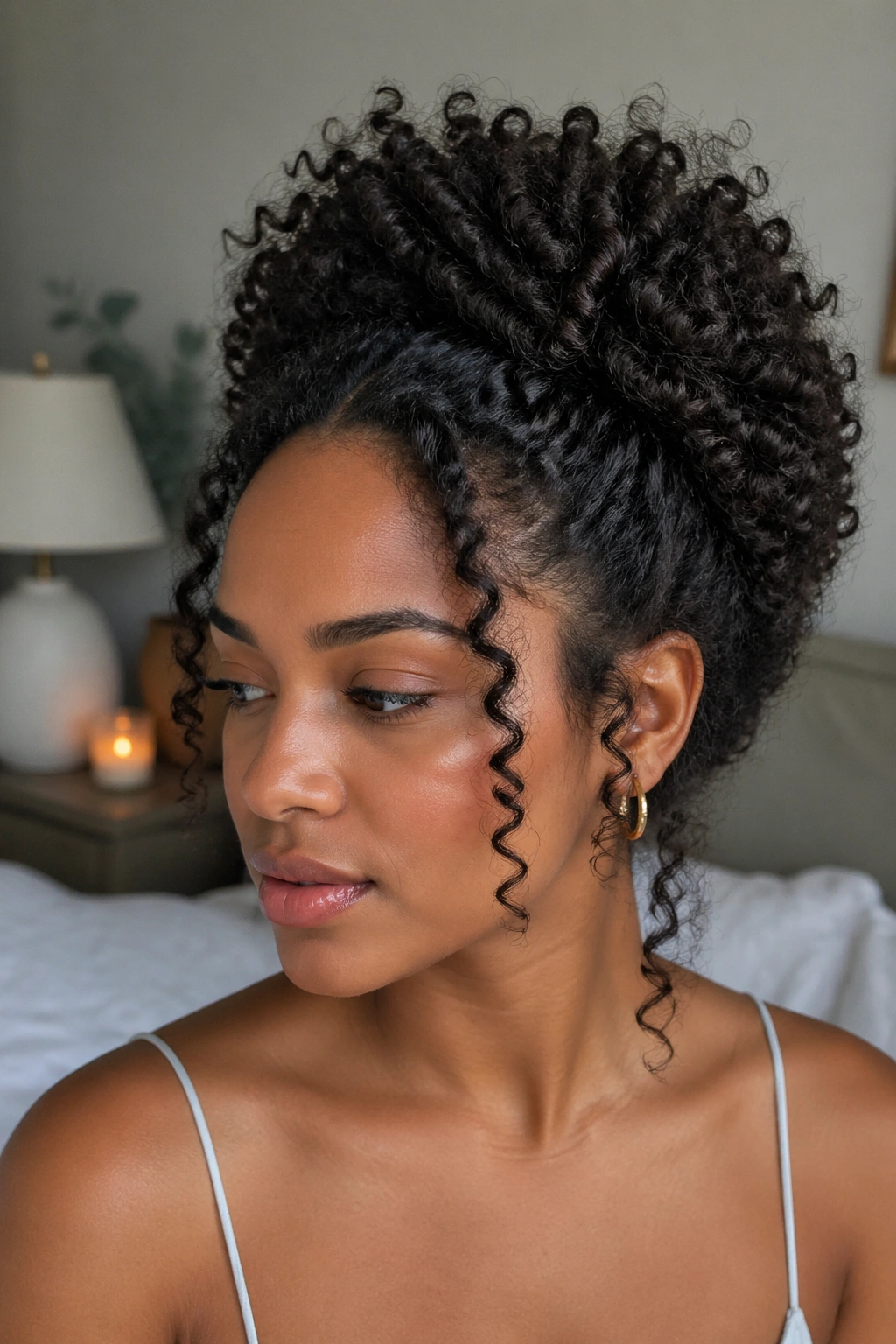
A halo crown on thick natural hair takes on a different scale than on thinner hair. The two sections gathered from each side of the head and pinned at the crown are themselves large and voluminous, creating a crown braid or twist that frames the head dramatically rather than delicately.
Leave the top section inside the crown loose as a puff or coiled set to complete the style. The thick crown sections and the loose top section together create a fully three-dimensional silhouette.
14. Low Bun with Maximum Curls
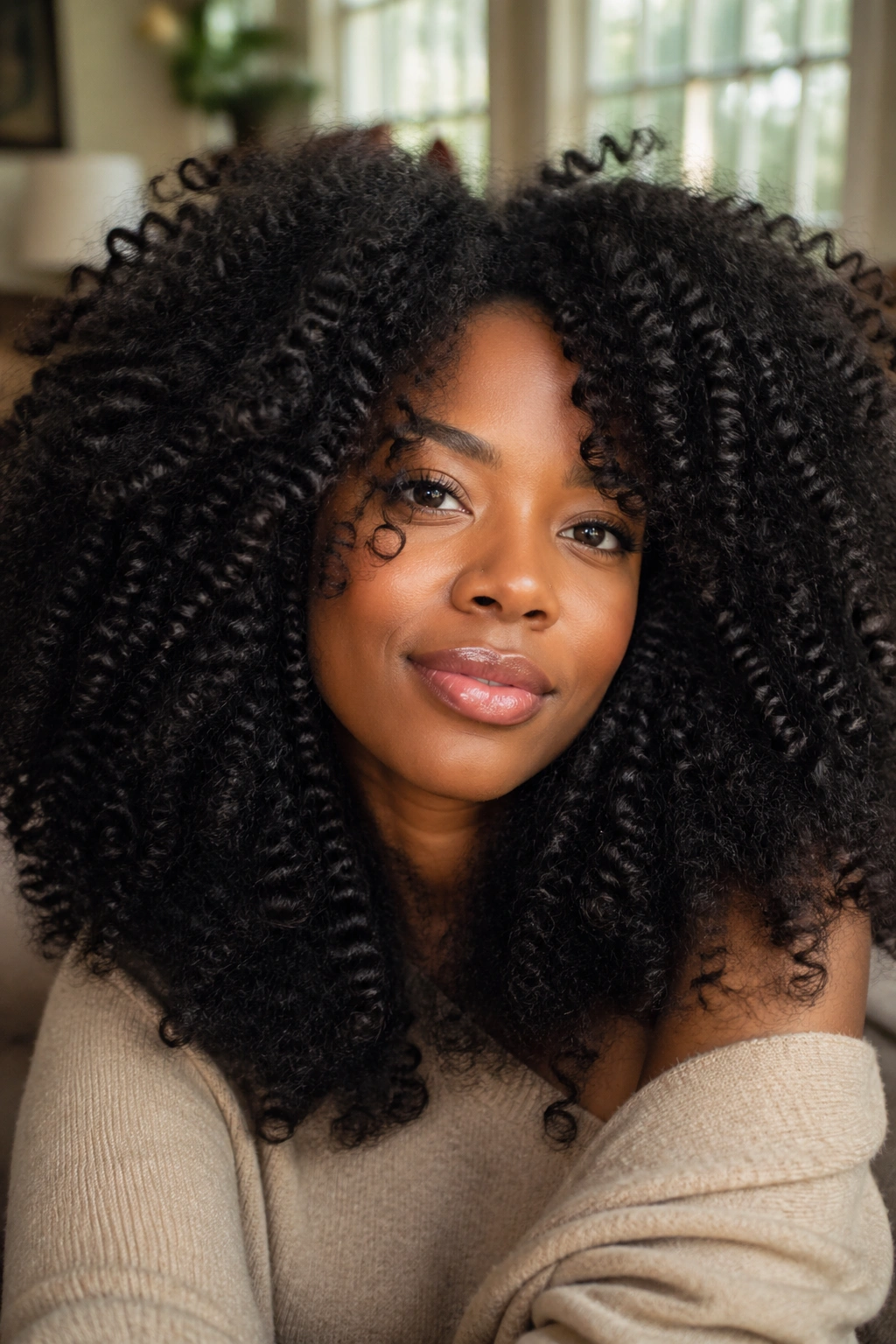
Gather your thick curly hair into a low bun at the nape — not smoothed or slicked, just loosely gathered — and secure it with a thick elastic or hair tie. Allow curls to escape deliberately around the bun’s perimeter. Pull a few large sections loose at the temples and nape.
On thick hair, the low bun itself is substantial — it doesn’t disappear or flatten. The combination of the bun’s mass and the escaping curls all around it creates a style that’s genuinely elegant and effortlessly textured.
15. Curly Fringe with Big Body
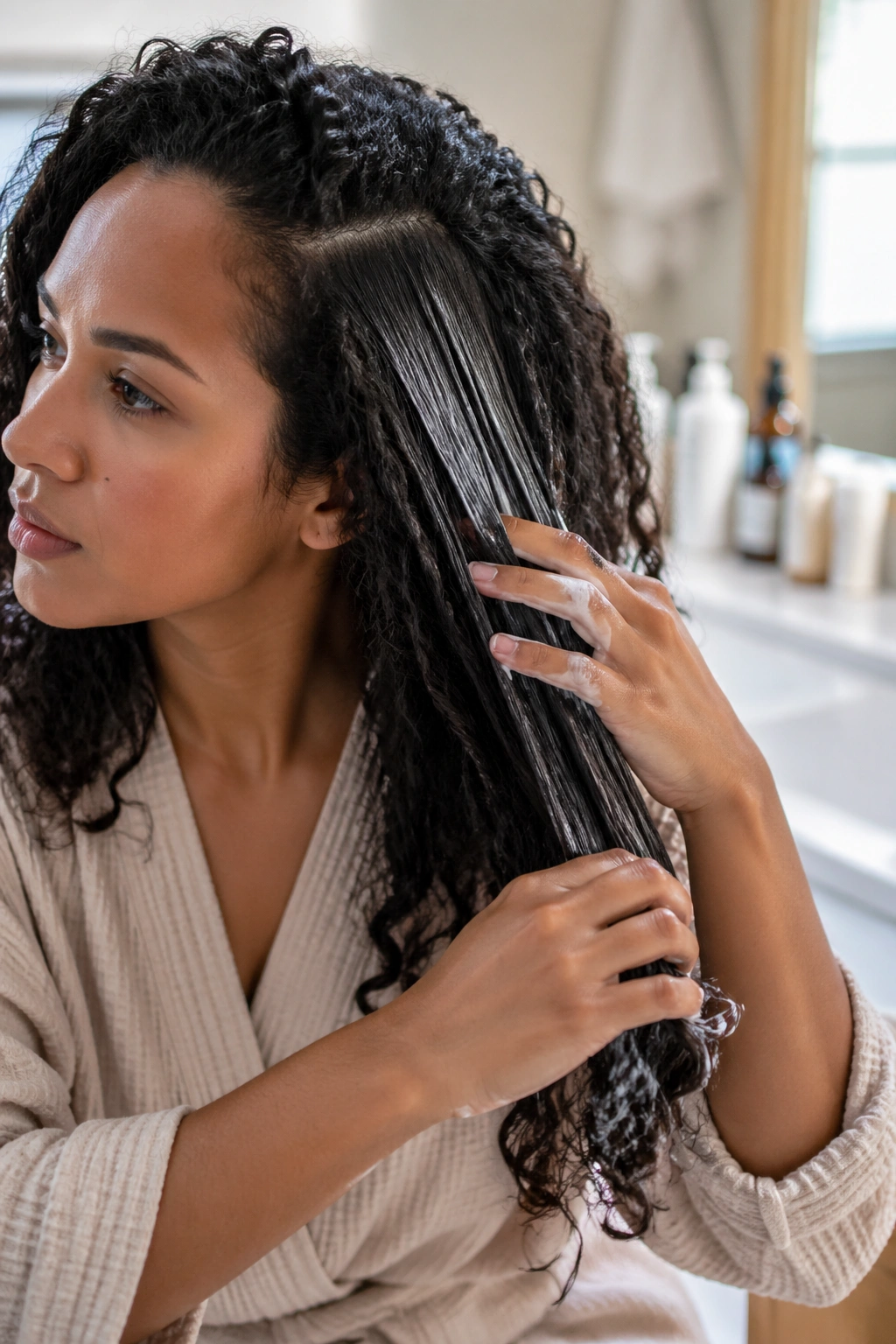
If you have natural bangs or a section of hair at the front that you wear forward, thick curly hair makes the most of this. The fringe on thick curly hair is full enough to frame the face in a distinctly dramatic way — not wispy, not thin, but genuinely substantial.
Style the fringe section with a curl cream, scrunch for definition, and allow to dry forward while the rest of your hair is set in its style behind it. The fringe + voluminous body combination is a thick curly hairstyle that stands on its own with minimal additional effort.
16. Afro with Headband
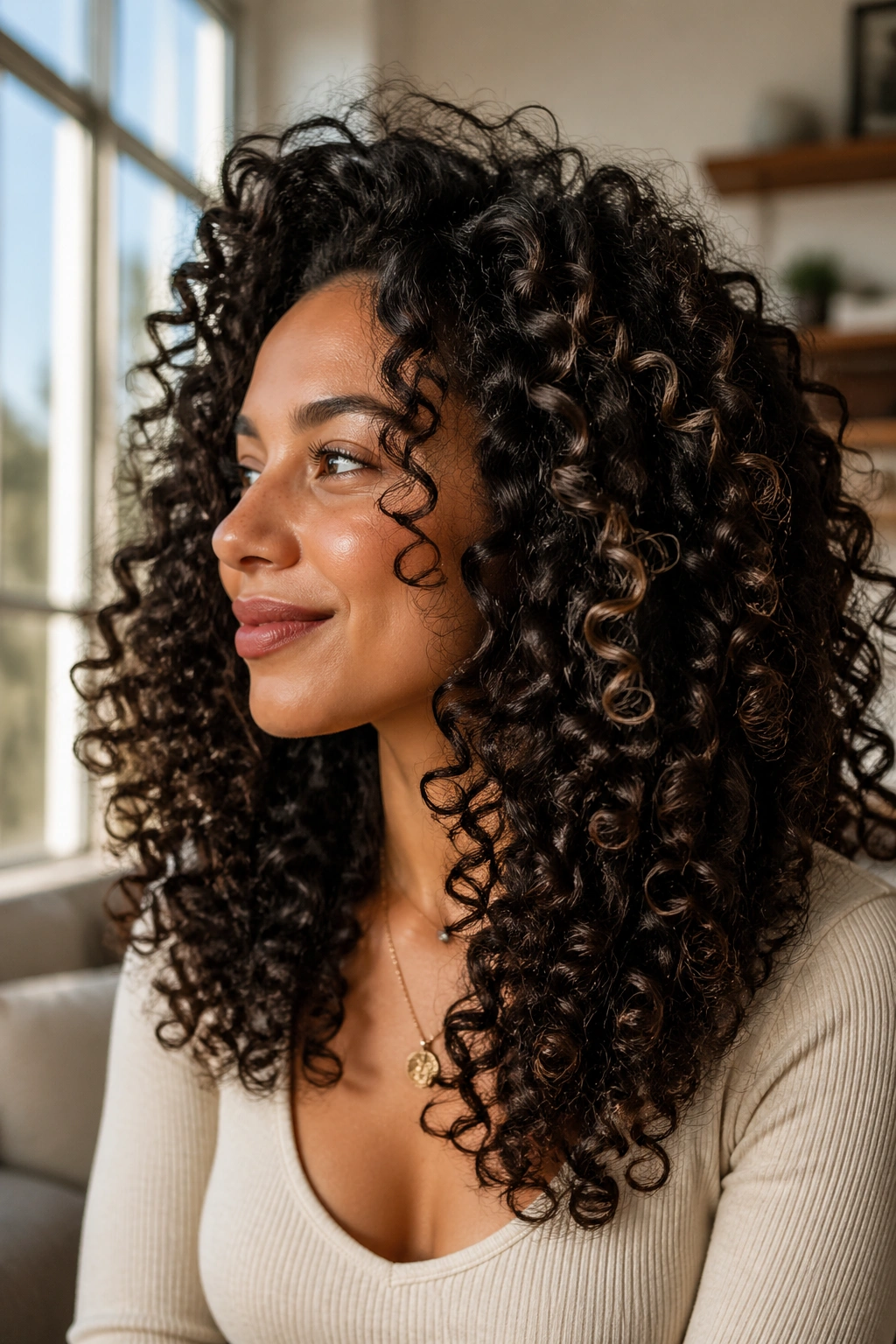
Add a wide headband to a fully picked-out afro and the style shifts from everyday to clearly intentional. The headband provides a visual anchor — separating the face from the big, free afro — and gives the style a modern, editorial quality.
Velvet headbands, embellished headbands, and wide leather-look headbands all work well with thick afros. The wider the headband, the more dramatic the contrast with the volume of the afro above and around it.
17. Side-Swept Volume
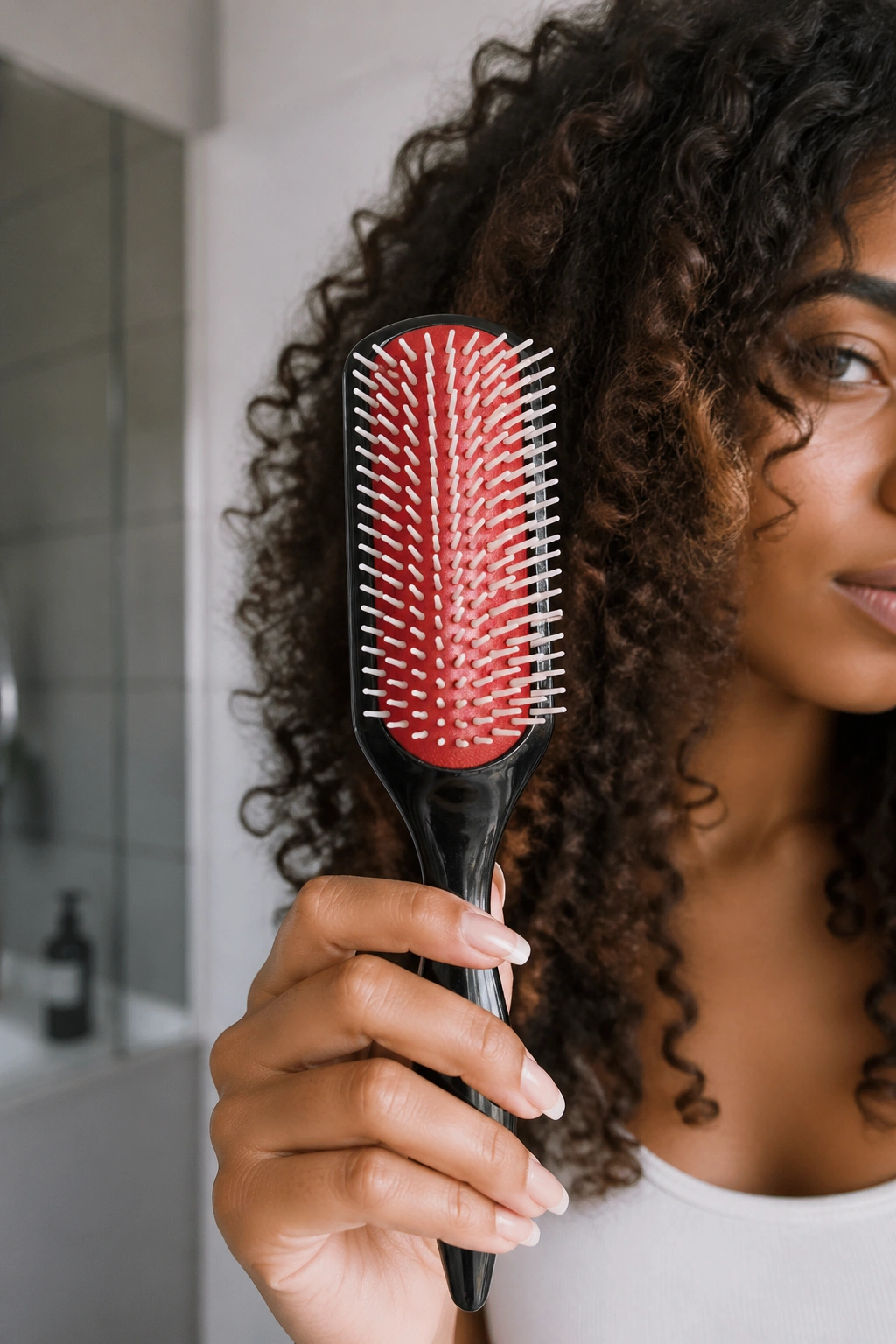
Part your hair deeply to one side and sweep all the volume toward the opposite side. On thick curly hair, this creates a dramatic asymmetry — one side of the head relatively flat, the other side cascading in a massive wave of volume. The effect is instantly striking and photographs beautifully.
Use a wide-tooth comb to create a clean part, then use your hands and an afro pick to direct and encourage the volume to the swept side. Add a decorative pin or clip on the flat side to anchor the sweep in place.
18. Pineapple Updo for Maximum Volume
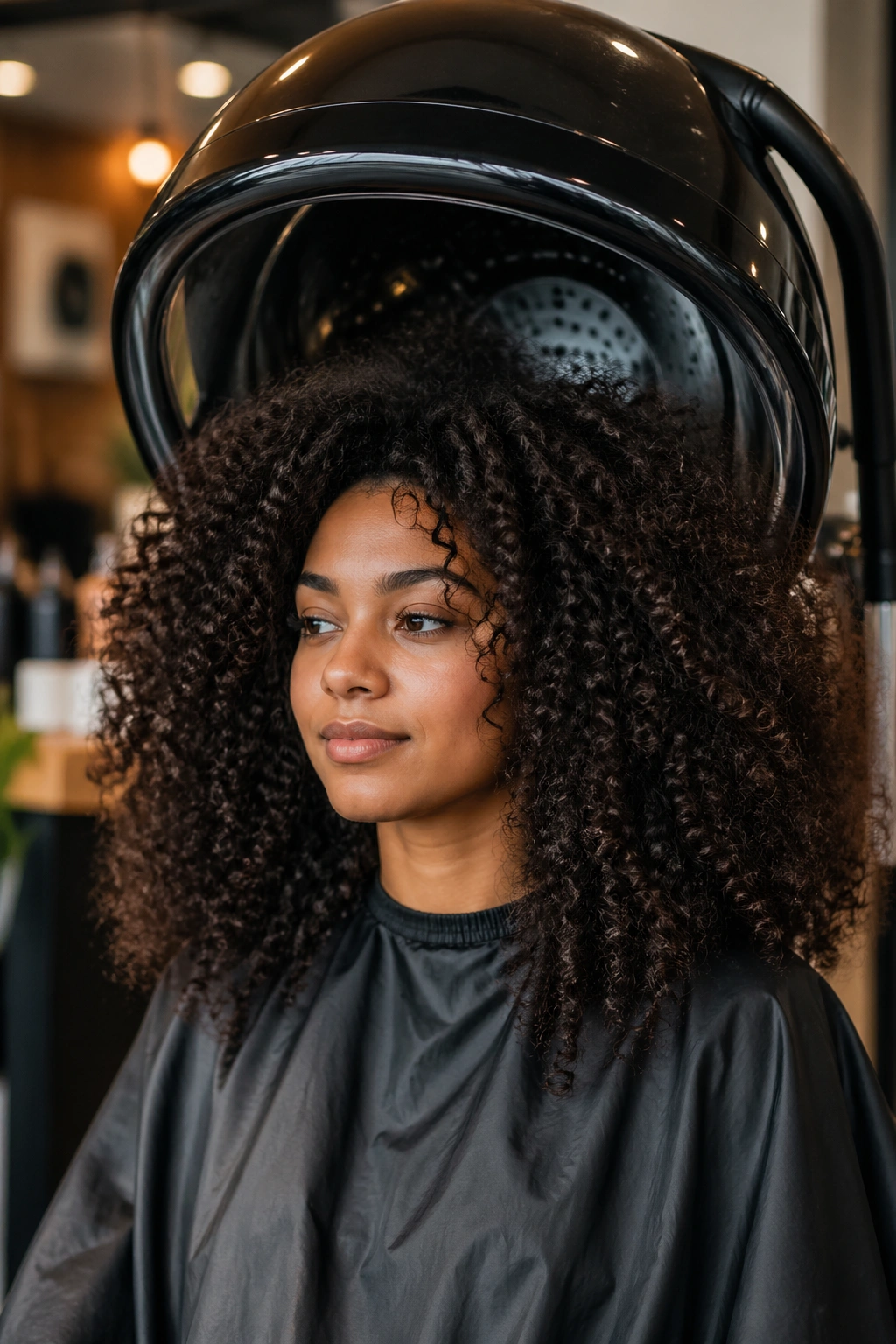
The pineapple on thick curly hair is not subtle. It’s towering. It’s enormous. It fills significant vertical space above your head. These are all good things.
Gather everything as high as possible, secure loosely with a wide satin scrunchie, and use a pick to separate and lift the pineapple outward after securing. The base of the pineapple, where the scrunchie sits, can be decorated with a silk scarf tied in a bow or a decorative hair cuff for a finished look that makes the most of the pineapple’s natural drama.
19. Flat Twist Crown on Thick Hair
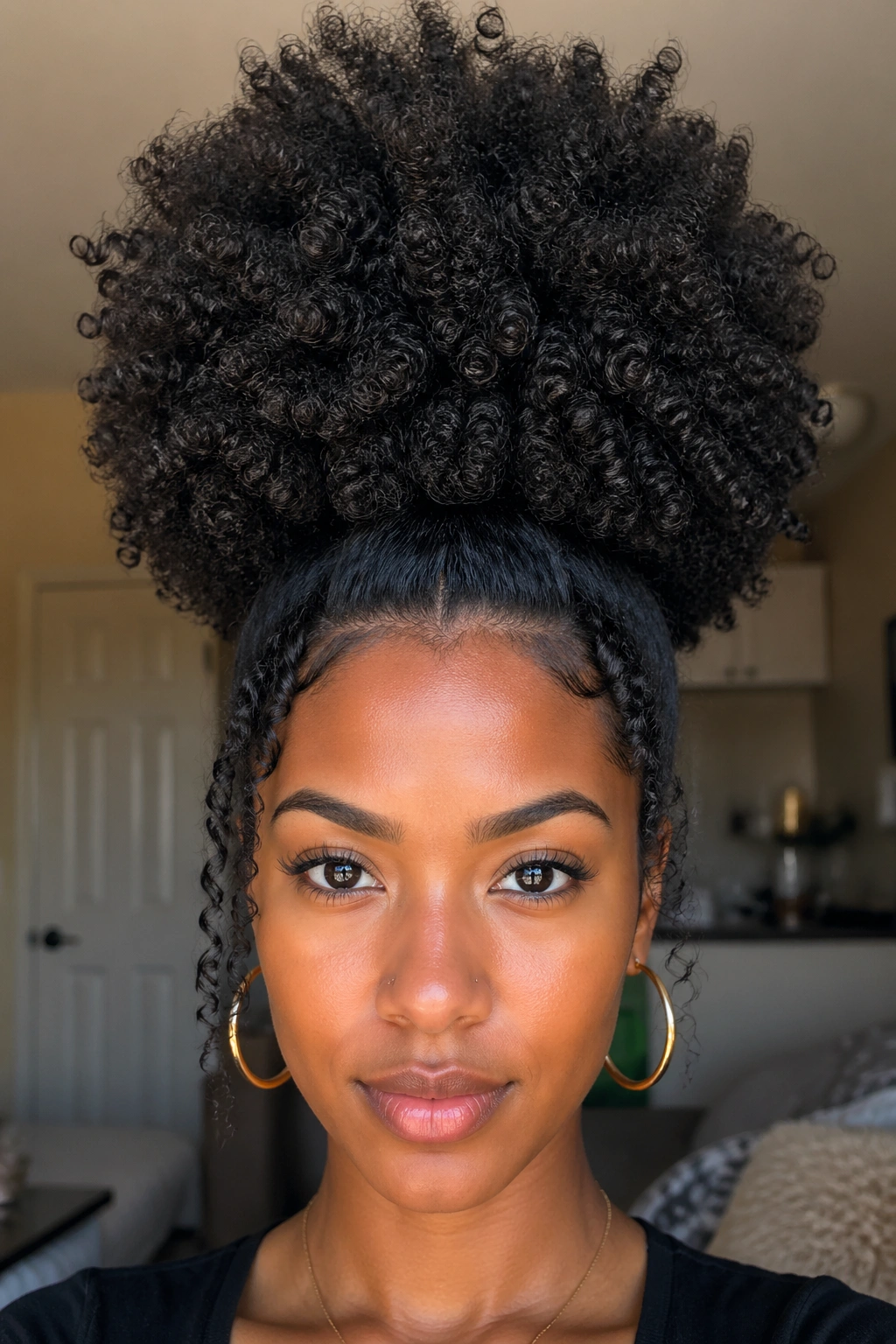
Flat twists on thick natural hair are substantial — each twist section has real weight and volume, and the resulting lines along the scalp are bold rather than delicate. A flat twist crown — where flat twists from each side of the head meet at the top — on thick hair creates a crown arrangement that’s architectural in scale.
Leave the interior of the crown as a puff or loose curls for contrast. The flat twist lines on thick hair are thick and defined, giving the style structure without losing the volume that makes thick curly hair beautiful.
20. Big Loose Wash-and-Go
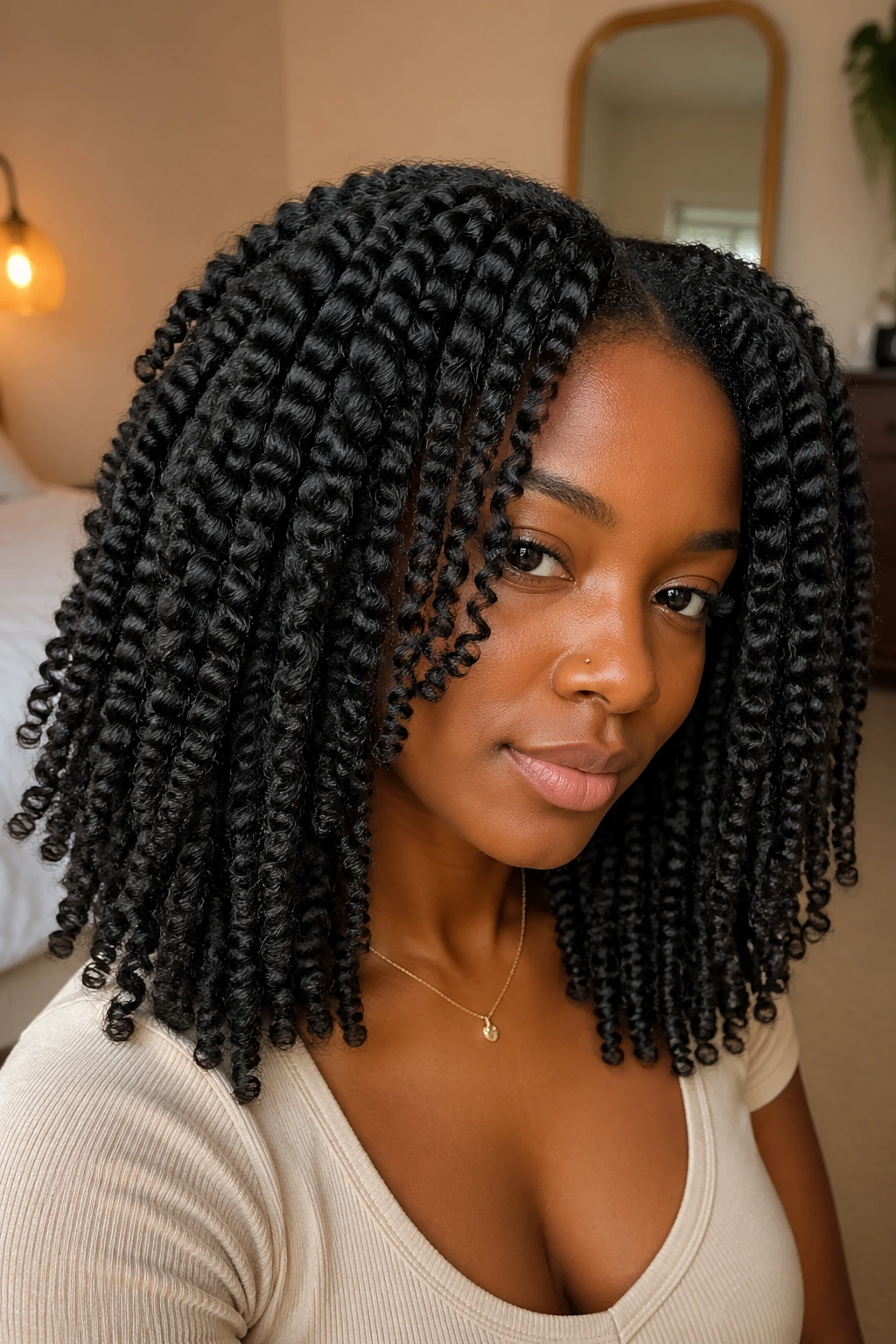
Apply curl cream and gel to every section of soaking-wet thick hair, scrunch, and allow to fully air dry without touching. On thick, high-density natural hair, the wash-and-go doesn’t dry to a small, compressed style — it dries to a big, full, rounded shape with definition throughout.
The thick wash-and-go is one of those styles where the hair’s natural properties do most of the work. Your job is moisture, product application, and patience. The hair’s job is being exactly what it is.
21. Multi-Textured Flat Twist Out
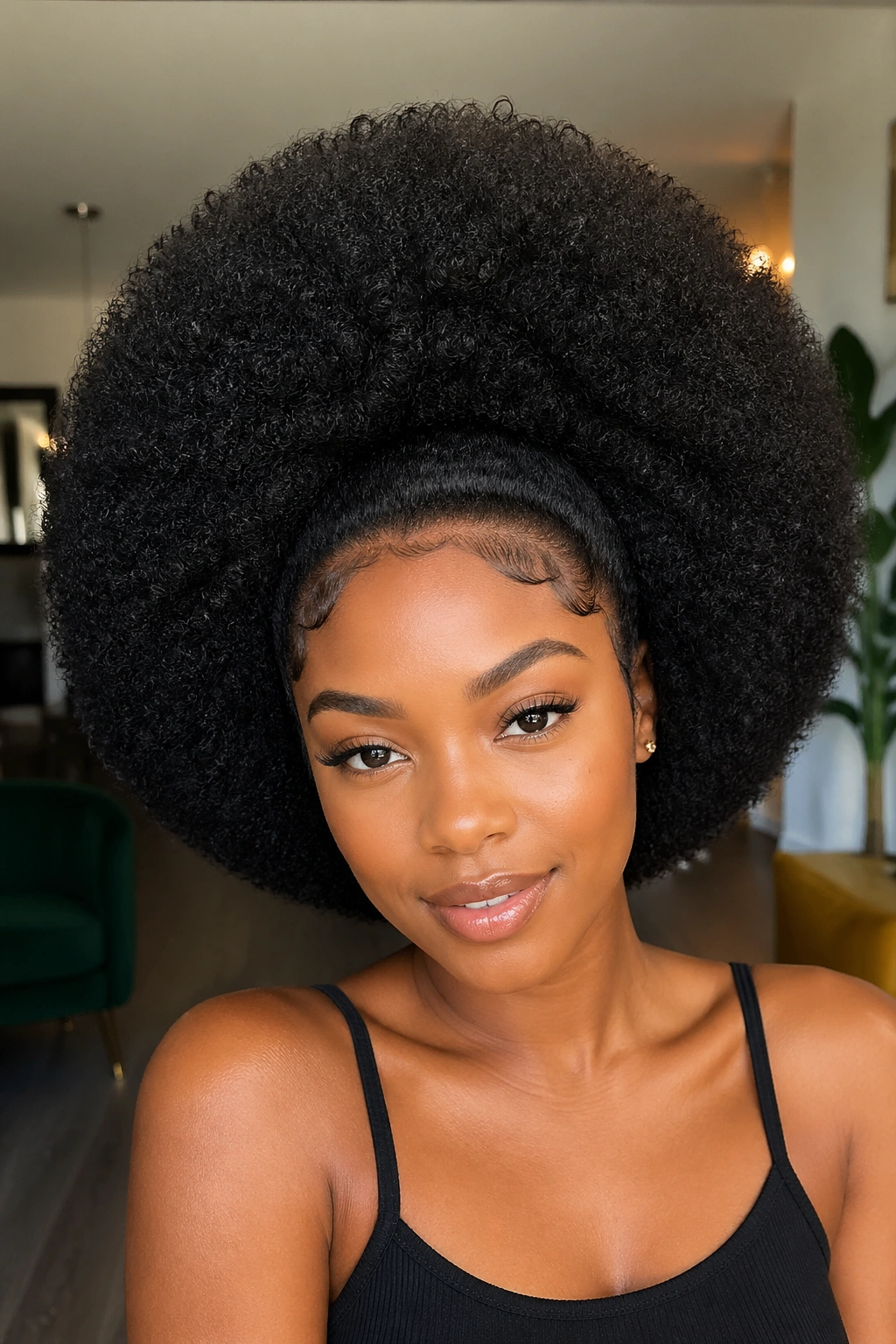
Flat twist your hair in different-sized sections throughout the head — large sections at the crown for big volume, medium sections at the sides, small sections at the nape for more defined pattern. When you unravel, each section has a different wave size, creating a naturally layered, multi-textured result that reads as very dimensional.
On thick hair, the variety in texture from different section sizes adds visual interest and prevents the heavy, uniform look that can sometimes flatten the style.
22. Voluminous Braid-Out Puff
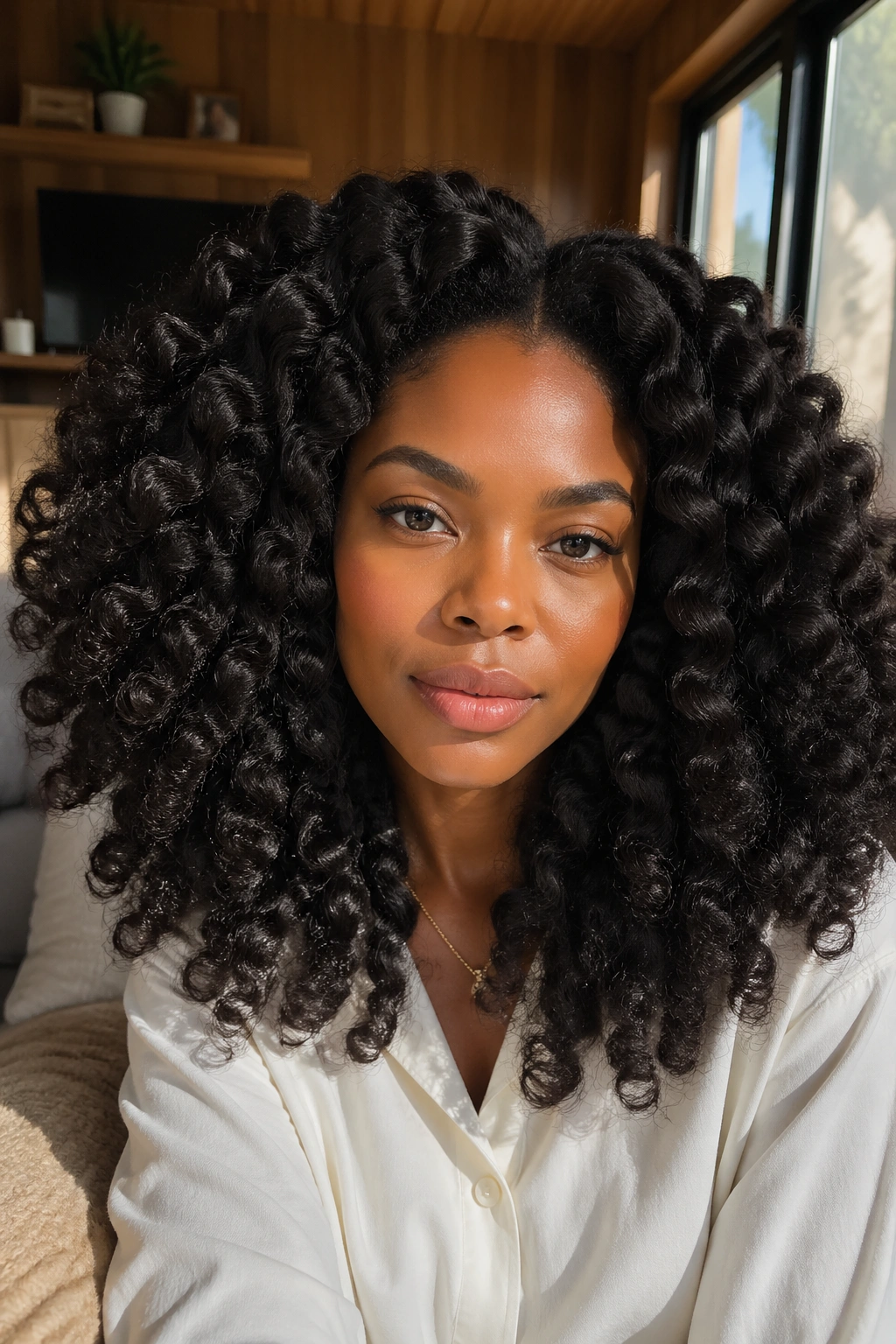
Set a braid-out, allow it to dry fully, unravel, and separate everything heavily. Then gather it all into a high puff. The braid-out’s wave pattern adds texture to the inside of the puff, making it look more interesting than a plain puff — the visible crimped waves within the puff show as you move, giving the style three-dimensional depth.
23. Statement Accessory on Big Curls
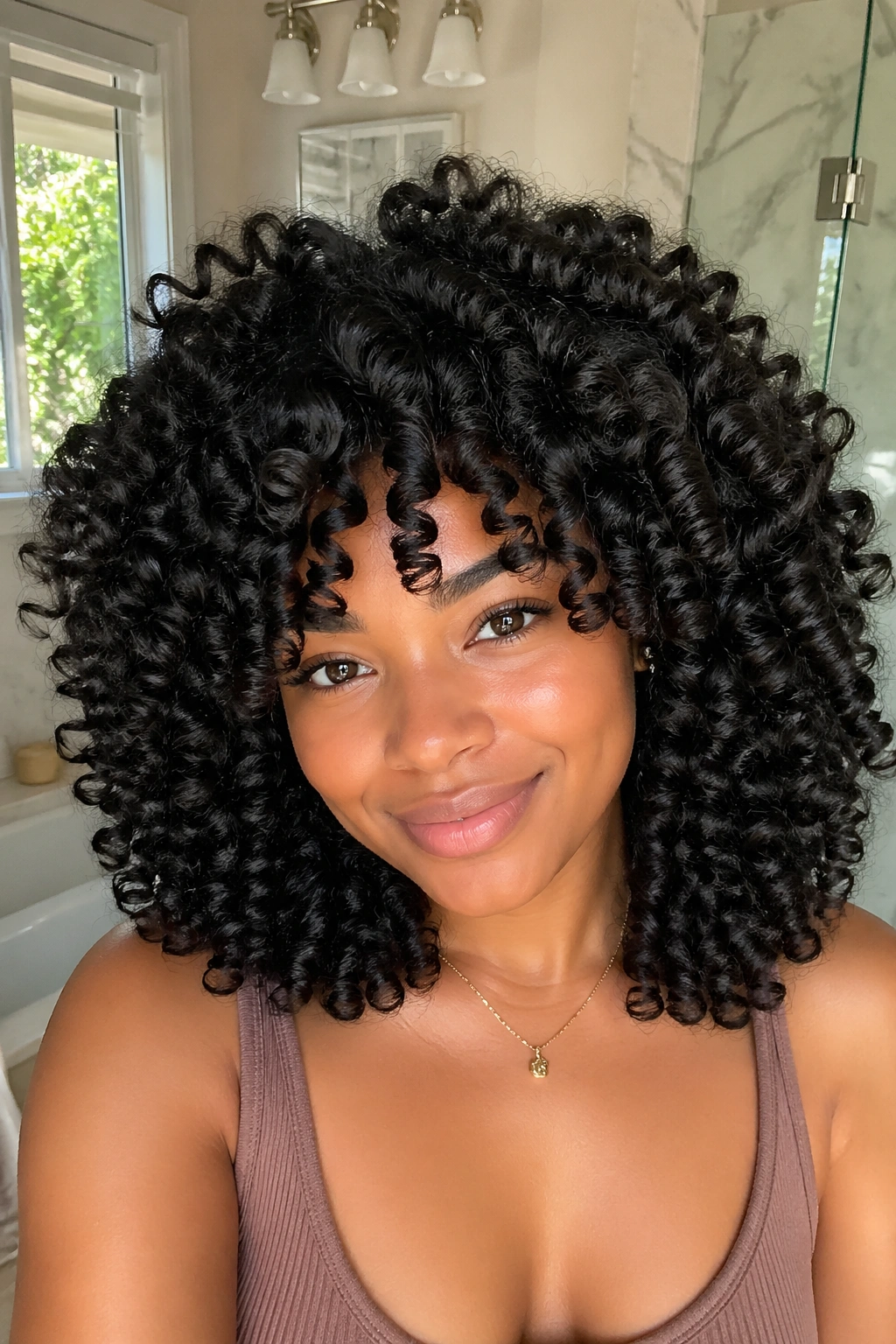
A significant, eye-catching accessory on thick natural curls — a wide jeweled headband, a cluster of large gold pins, a silk scarf tied in a dramatic bow at the crown — pairs with the hair’s natural volume in a way that creates genuinely striking results. The accessory and the thick curls are both strong visual elements, and together they produce a style that has real presence.
Avoid small, delicate accessories that get lost in high-volume thick curly hair. Scale your accessories to your hair’s volume.
24. Twist and Curl
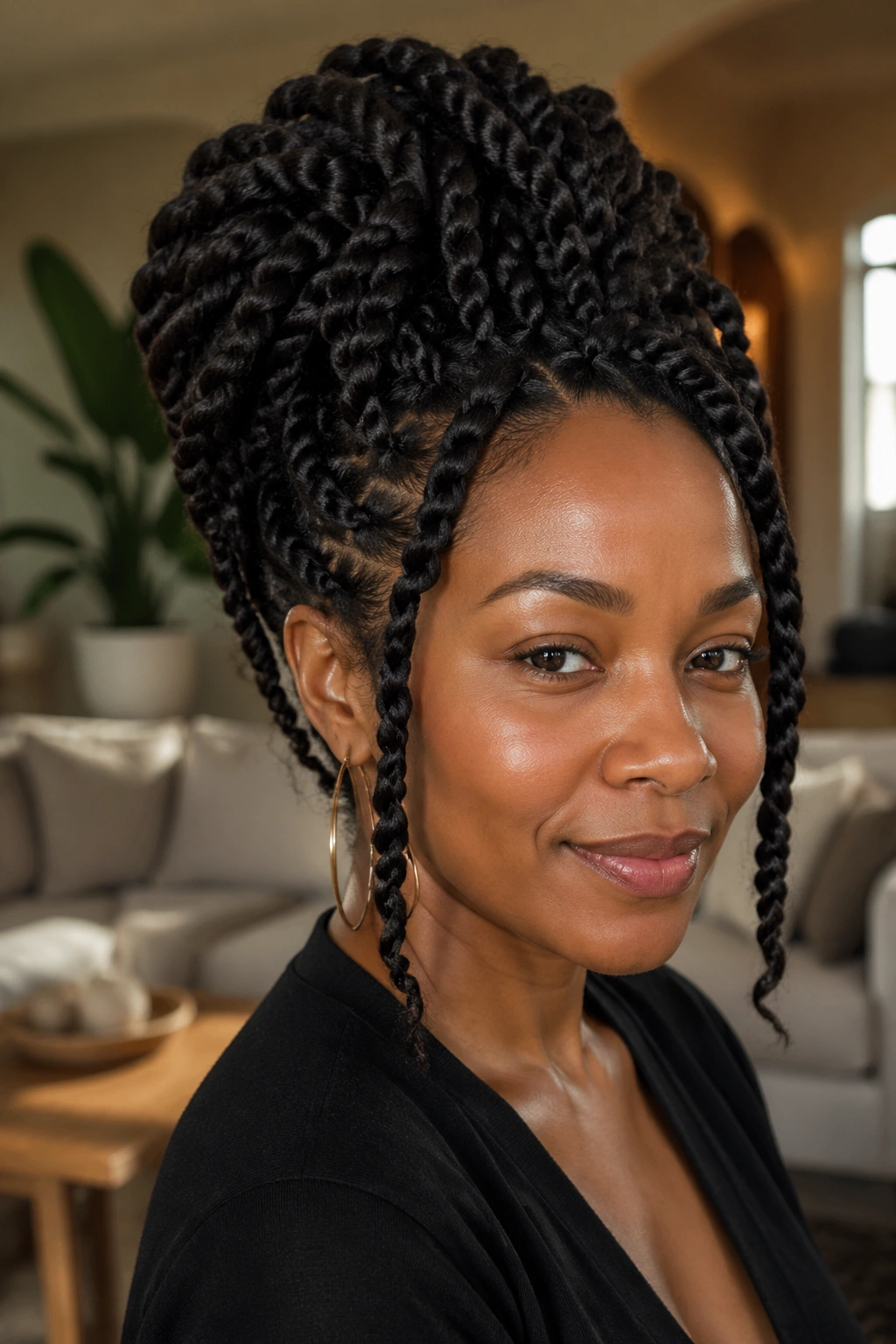
Set two-strand twists through the top section of your hair and leave the bottom section as a loose, defined wash-and-go. Allow the twists to dry in place while the wash-and-go dries beneath them. The contrast between the twisted sections (defined, organized) and the free curls beneath (voluminous, loose) creates a layered style with two distinct textures.
On thick hair, both textures are substantial — the twists are heavy and defined, the loose curls are genuinely voluminous. The combination is one of the more visually complex thick curly hairstyles on this list.
25. The Maximalist Twist-Out
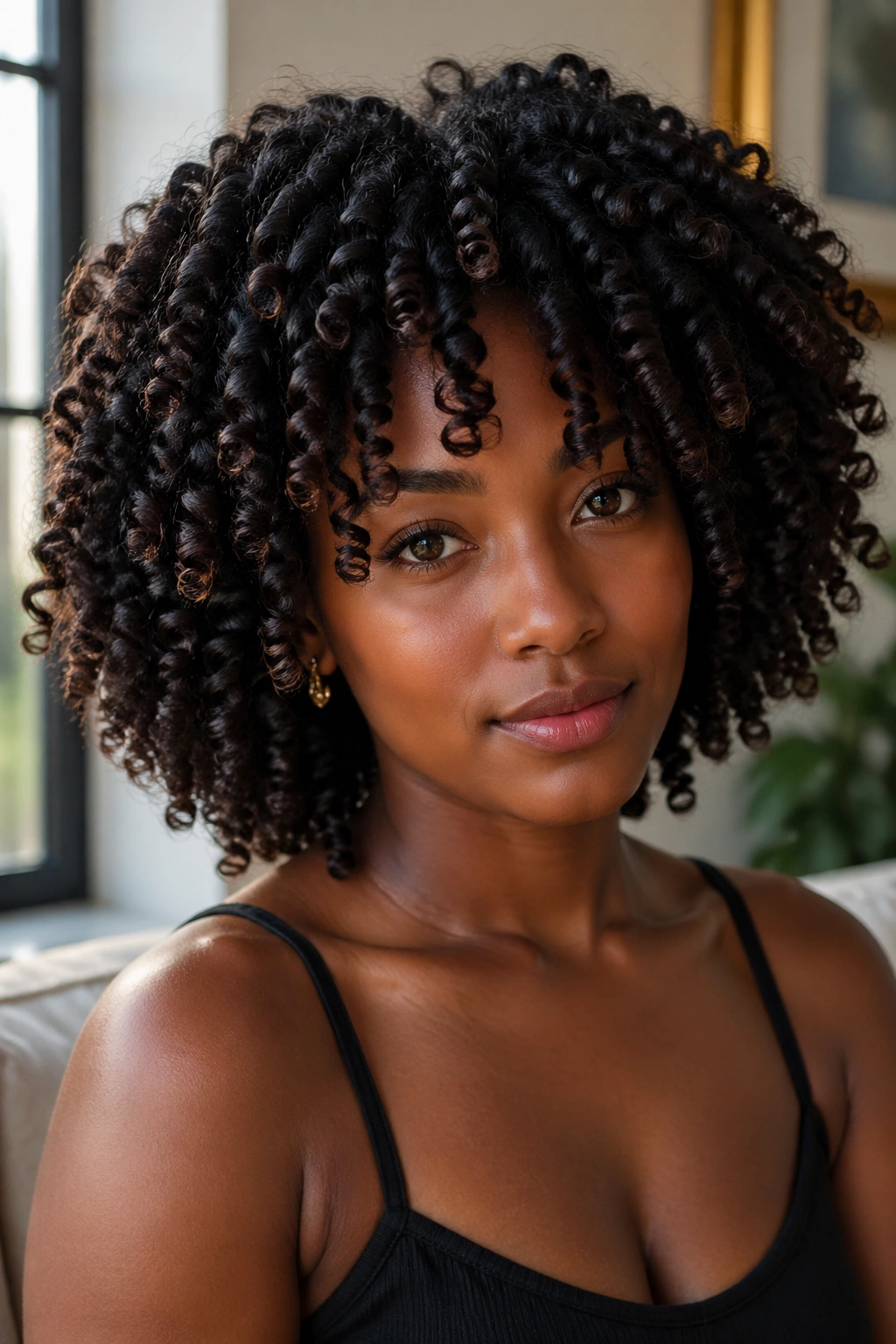
Every curl separated into the smallest individual sections possible. As much oil through the ends as they’ll accept. A full afro pick fluff from every direction. Then — more volume. On thick curly hair, a maximalist twist-out is a fully realized event. The mass of it, the movement, the way each separated curl catches light differently — there’s nothing else that quite replicates this on any other hair type.
This is the thick curly hairstyle you wear when you want your hair to be the entire look. No competition from the outfit, no distraction from anything else. Just your hair, doing what only your hair can do.
Caring for Thick Curls Between Styles
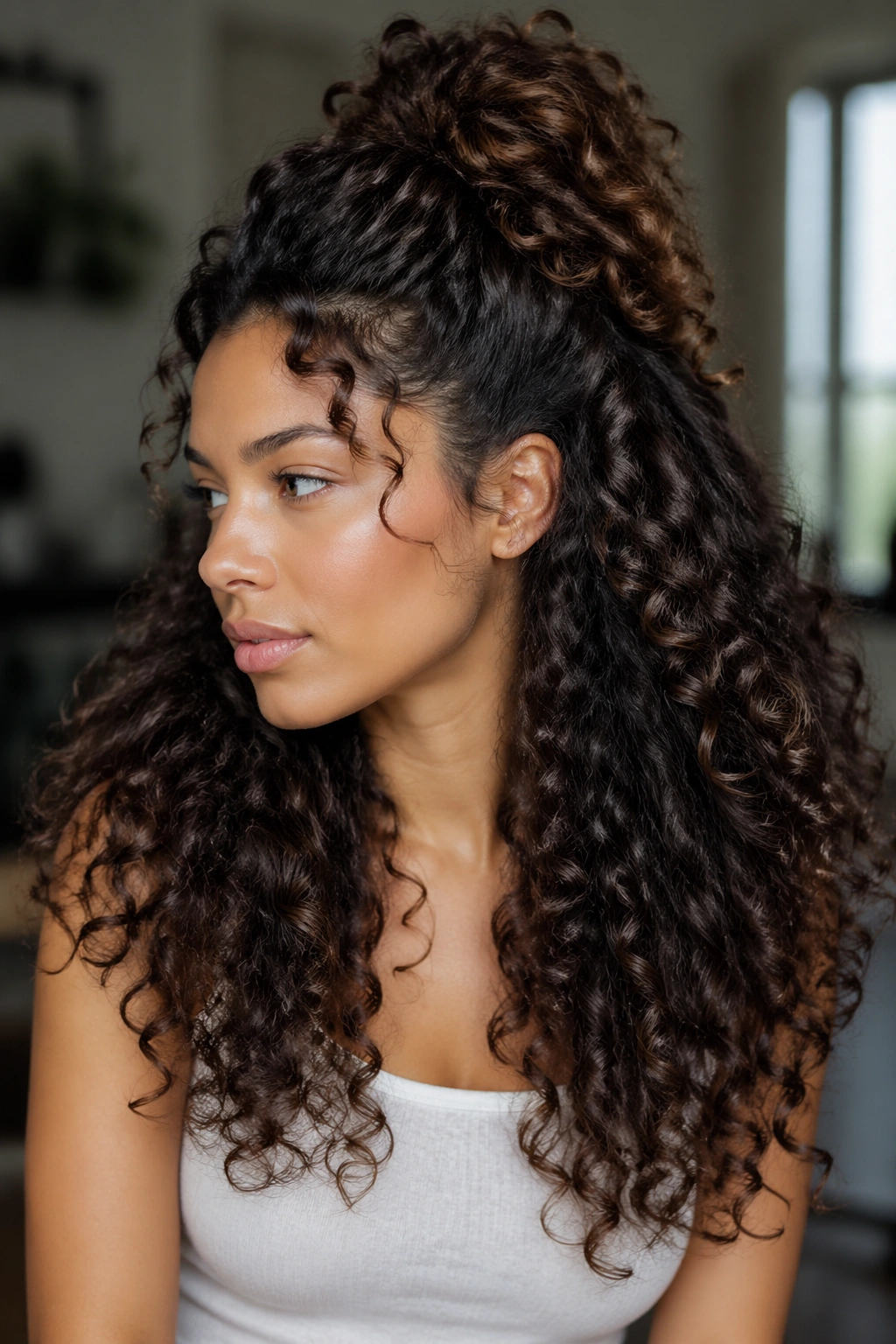
High-density natural hair benefits from styles that don’t require daily manipulation. Protective styles, stretched styles worn for multiple days, and styles that can be refreshed with minimal product all extend the life of both the style and the hair beneath it.
Detangling is the most critical maintenance step for thick curly hair. Tangles allowed to accumulate create matting that damages strands and makes styling harder. Detangle at least once a week on fully saturated, conditioned hair. Work in sections, starting from the ends and working toward the roots. Never rush this step.
Deep conditioning is non-negotiable for thick, high-density natural hair. The sheer quantity of strands means more surface area needs moisture — and the density of the hair means moisture has farther to travel to reach inner layers. A deep conditioning session with heat every week or two maintains the moisture foundation that makes all these thick curly hairstyles possible.
Products Worth Buying in Large Quantities
Thick curly hair burns through product faster than medium or fine hair. Products worth buying in larger sizes or multiple quantities: leave-in conditioner spray, your preferred curl cream, and your edge control. These are the products you’ll apply to every section, every styling session, and every refresh — running out mid-style is a reality for thick natural hair.
Products that go a long way even on thick hair: concentrated protein treatments (a little goes far), castor oil (thick and rich, a small amount is enough), and edge control (applied sparingly to edges only). These don’t need to be purchased in bulk.
Your hair deserves products that match its scale. Don’t shortchange it with products applied too conservatively — thick natural hair needs proper amounts to perform, and when it does, it delivers some of the most spectacular results in the entire natural hair styling spectrum.
Drying Time Strategies for Thick Curly Hair
The drying phase is where thick curly hairstyles often run into the most practical problems. High-density natural hair takes significantly longer to dry than medium or fine hair — sometimes two to three times as long. Planning for this is part of styling for thick natural hair, not an inconvenience to work around.
Air drying is the gentlest method and the best for curl health, but it requires time. For styles where you need to be ready within a specific window, air dry as long as possible and then finish with a diffuser on the lowest heat setting. The combination — long air dry followed by gentle diffuse heat to finish — balances health and efficiency better than either method alone.
For twist-outs, braid-outs, and any style that needs to be set before revealing — always overnight. Thick natural hair set in the evening and unwrapped in the morning has had eight to ten hours to dry and set properly. The result is dramatically more defined than a same-day quick-set. There is no shortcut for this step on thick natural hair. The density requires the time.
A hooded dryer — either a salon-style dome dryer or a soft bonnet dryer attachment for a regular blow dryer — is one of the most useful tools for thick natural hair. The even, enclosed heat dries all sections simultaneously rather than the uneven drying that happens with a handheld diffuser. Sitting under a hooded dryer with a set of twists or flexi rods for 45-60 minutes produces results that rival salon-quality styles.
Shrinkage and How to Embrace or Manage It
Thick 4B and 4C natural hair can shrink to 50-75% of its actual length when dry and unstyled. A six-inch section of hair might appear to be three inches or less when fully contracted into its coil. This is one of the defining characteristics of high-density natural hair — and one that thick-hair styling approaches frequently have to address.
Shrinkage is not a problem with your hair. It’s a property of the curl pattern — tighter coils spring back more dramatically, which is why they’re also so resilient and long-lasting once stretched. But for style purposes, managing shrinkage is sometimes part of getting the thick curly hairstyle you’re going for.
The most effective shrinkage-management methods for thick natural hair: stretching during the drying phase (banding, threading, large section twists), diffusing while gently pulling sections down, or using a blow dryer on the lowest heat setting with a comb attachment to create the stretched style called a “blowout.” Each of these methods gives you the ability to access the actual length of your hair in the style, rather than the shrunk version.
But — and this deserves emphasis — shrunk thick natural hair has its own beauty. The compacted volume, the dense coil structure at its fullest contraction, the way it springs back when you press it and release — these are not lesser versions of the stretched style. Some of the thick curly hairstyles on this list specifically celebrate shrinkage rather than managing it. The knowledge of both approaches gives you the full range of what your thick natural hair can do.
The Social Experience of Thick Natural Hair
There is a specific social experience that comes with wearing thick, high-volume natural curls in the world — and it’s worth naming. People comment. People reach out to touch it — sometimes without asking. People ask how long it took, whether it’s real, how you manage it. Some people are genuinely curious in a warm way; others are intrusive in ways that feel dehumanizing.
You get to decide how you respond to all of it. You don’t owe anyone an explanation of your styling routine. You don’t owe anyone the experience of touching your hair. And you don’t need external validation for the choice to wear your natural texture at its fullest, most voluminous expression.
Your thick curly hair is remarkable. Not because of what other people project onto it — but because of what it actually is: resilient, textured, full of life, capable of dozens of different styles, and entirely your own. Wear every single one of these 25 thick curly hairstyles in that knowledge, and wear them fully.