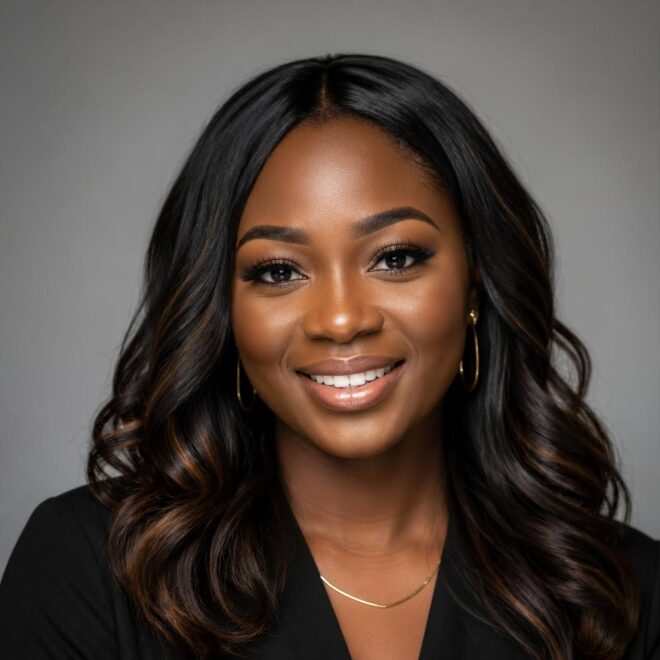


The afro is not a historical artifact or a political statement frozen in time — it’s a living, evolving category of natural hair styling that Black women wear every day, in every context, in thousands of variations. Curly afro hairstyles range from the tight, round, freshly picked fro to soft, loosely defined cloud shapes, sculptural geometric forms, and decorated crowns that turn heads in every room. The afro is the baseline and the canvas. Everything else is a variation on it.
The History of the Afro as Style and Identity
Understanding the afro means understanding that it carries weight. Over the decades, the afro shifted from a symbol of political resistance during the civil rights era to a mainstream fashion moment in the 1970s, to a complicated relationship with professional settings in the 1980s and 1990s, to the full natural hair renaissance that has been building across the past two decades. Each phase left a layer of meaning beneath the style itself.
The natural hair movement made space for Black women to wear their afros — in all their variations — without apology in workplaces, schools, and social settings where textured hair had previously been penalized. The CROWN Act movement formalized this protection in law in a growing number of states. These aren’t just styling choices; they’re civil rights choices. But they’re also just beautiful hairstyles.
Curly afro hairstyles carry all of that history without requiring every Black woman to perform it consciously every day. You can wear an afro because it looks incredible. Both things are true at the same time.
Defining the Modern Afro
In natural hair spaces, “afro” covers a wide range of shapes and sizes. There’s no single correct afro. The tiny, tightly coiled TWA (teeny weeny afro) is an afro. The massive, fully picked-out globe of a 4C fro is an afro. The soft, defined cloud of a 3C wash-and-go afro is an afro. The cornrowed-side frohawk with a free, loose center is an afro.
What unifies them is the presence of natural texture worn loose — not pressed, not heavily manipulated into a different curl pattern, not installed from outside the head. The hair’s own growth pattern is the visible feature.
The “curl” in curly afro hairstyles refers to the natural texture present throughout the afro, from tight 4C coils to the looser 3A spirals. Every curl pattern has its own version of the afro. The techniques, products, and specific approaches differ — but the goal of celebrating and styling the hair’s natural shape stays the same across all of them.
Building an Afro: Volume vs. Definition
One of the fundamental questions in curly afro hairstyles is where you sit on the spectrum between maximum volume and maximum definition. This isn’t a permanent choice — it varies by style, occasion, and personal preference — but it drives the product and technique decisions for each specific look.
On the maximum-volume end, you use an afro pick aggressively, separate everything as fully as possible, and prioritize size and fullness over defined curl pattern. Individual curls blur into a mass of texture and volume. This approach looks bold and dramatic — the afro as a shape rather than as individual curls.
On the maximum-definition end, you use curl-enhancing products, less manipulation, and allow individual curl clusters to remain visible throughout the afro. The shape is still full and rounded, but you can see distinct curls within it. This approach looks more refined and shows off the specifics of your curl pattern.
Most curly afro hairstyles fall somewhere between these two extremes, balancing volume with some level of visible texture.
Afro-Friendly Products
Products for curly afro hairstyles need to work differently depending on which end of the volume-definition spectrum you’re targeting. For maximum volume, you want lightweight products that don’t weigh the hair down — lightweight leave-in conditioners, water-based curl creams, light oil serums. For definition, you want curl-enhancing gels or creams that encourage clumping and hold curl shape as the hair dries.
Anti-humidity products — finishing sprays, light gels, anti-frizz serums — are useful for afros worn in humid environments where frizz can expand the shape beyond what you intended. A thin finishing layer over a completed afro style helps maintain the shape throughout the day.
Shea butter and heavy creams are best avoided as finishing products for afros because they add weight and can collapse the volume. Reserve these rich products for your deep conditioning and leave-in stages, before you style. Your finishing product should be light enough that it doesn’t visibly alter the texture or weight of the hair.
The Pick: The Most Important Afro Tool
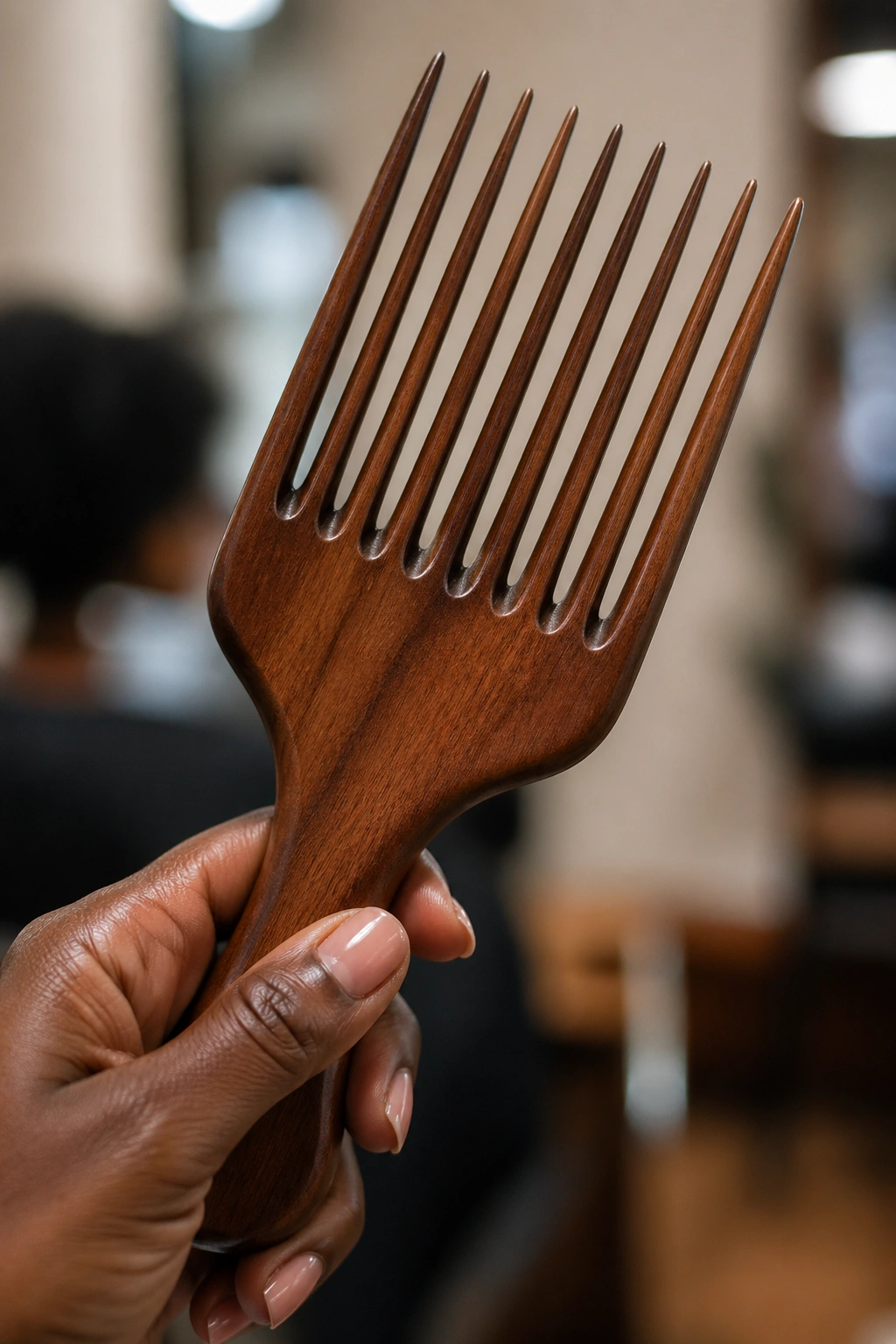
If you own one tool specifically for curly afro hairstyles, make it an afro pick. Wide-spaced, long-tined, ideally with a wide base that can lift from the roots rather than just detangle the surface — a good afro pick is the difference between an afro that sits flat against the scalp and one that projects outward in a full sphere.
Always insert the pick at the roots, not at the tips. Push the pick all the way down to the scalp, then lift upward and outward in one smooth motion. Work from the bottom of the hair upward, adding volume to each section before moving up. The final lift at the very top of the crown determines how much height the afro achieves.
Over-picking — too many passes with the afro pick — can cause frizz and break the curl pattern. Two to three deliberate passes per section is usually enough. You’re lifting, not detangling.
1. The Classic Round Afro
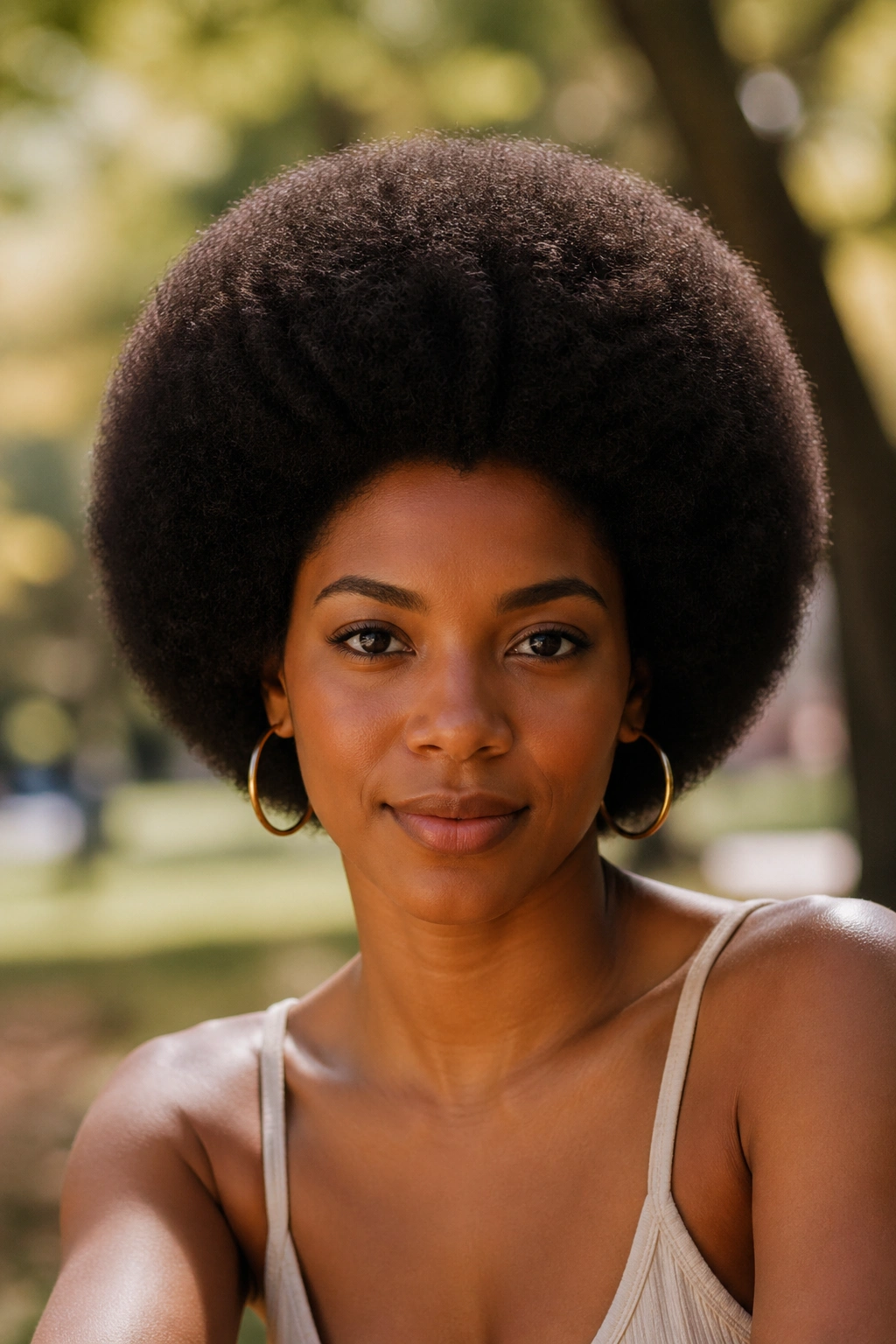
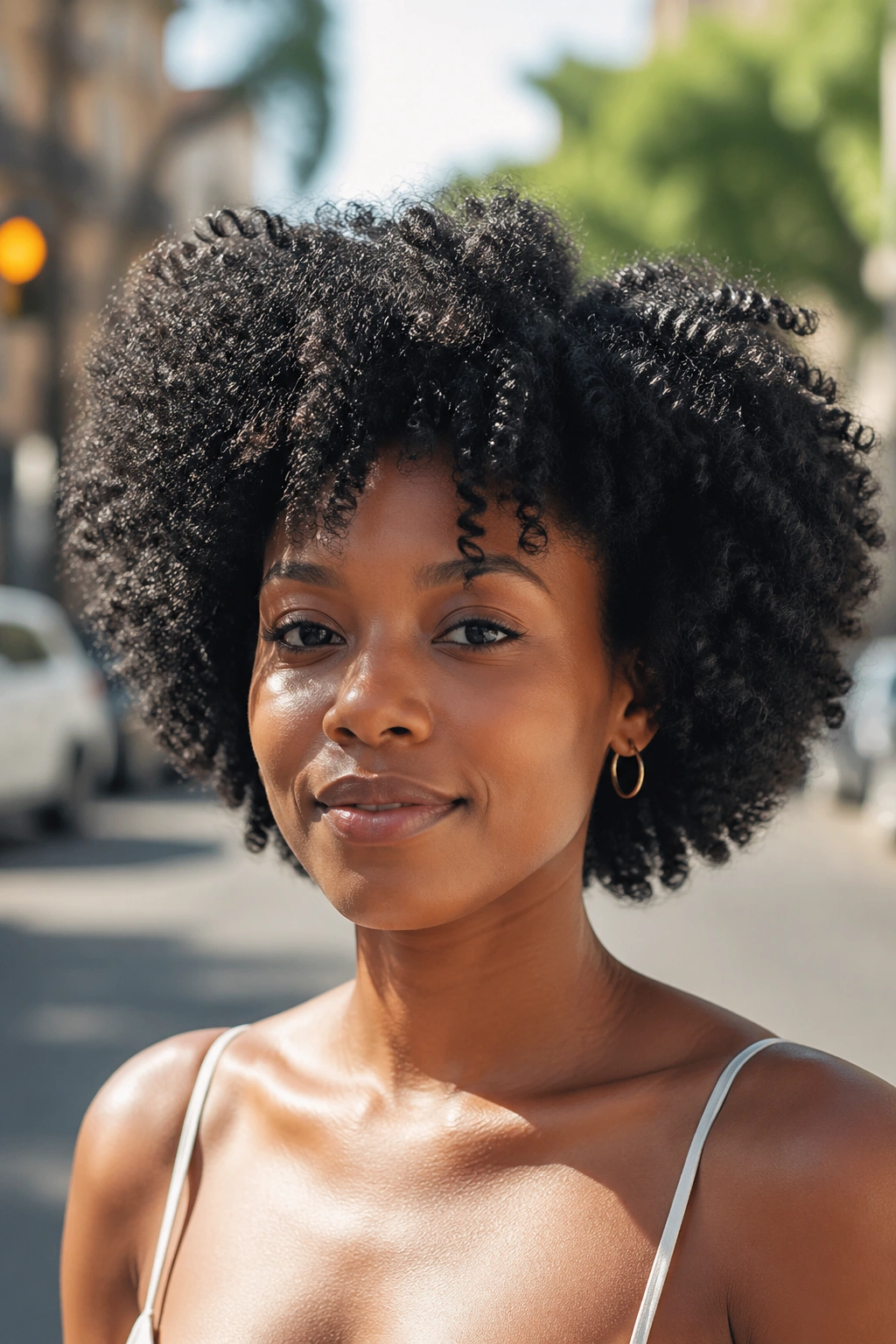
The round afro — symmetrical, full in all directions, sitting like a perfect sphere around the head — is the canonical afro shape. It requires even density across the entire head and consistent picking technique to achieve.
To get the round shape, pick from underneath and from the sides equally, then finish with a light pick at the top for height. Step back frequently and check the shape from the front and sides. The crown should be the highest point; the sides should extend equally left and right; the back should match the side volume. A round afro is genuinely architectural.
For the cleanest shape, pick on freshly moisturized hair with a light leave-in and a small amount of oil. The moisture gives the hair the pliability to lift without breaking.
2. Frohawk
The frohawk divides the head into three sections: the center strip that runs from forehead to nape stays free and full, while the two sides are flattened against the scalp using braids, flat twists, or hair clips. The center stands up in a dramatic ridge of natural texture.
On curly, coily hair, the frohawk center can stand several inches above the scalp — particularly on 4C and 4B textures. Use an afro pick on the center section to maximize height after the sides are set. The contrast between the smooth sides and the full, textured center strip is the defining visual of this style.
3. TWA (Teeny Weeny Afro)
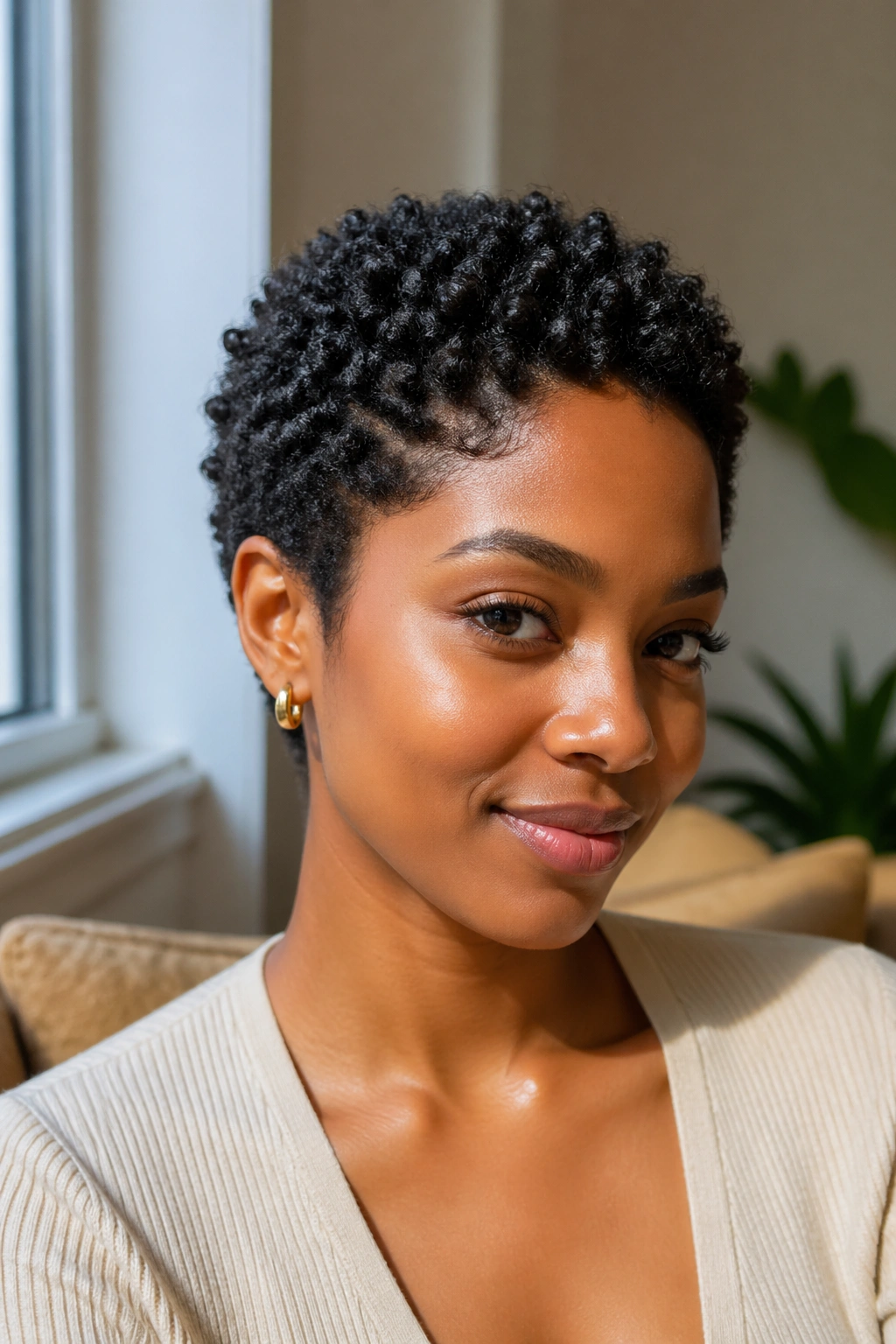
The TWA is the afro at its smallest — usually from a recent big chop, although some people simply maintain their afro at this length. It’s not a style in transition; it’s a complete, beautiful style in itself.
At TWA length, the hair’s natural curl pattern is at its most visible because there’s no length to weigh it down. Every coil is suspended, bouncy, and clearly defined. The shape of the afro at TWA length is entirely determined by your natural curl pattern — no picking or shaping required. Just moisturize and let it do its thing.
A TWA with clean, laid edges and a great moisturizing routine looks like a deliberate, confident choice. Because it is.
4. Elongated Afro with Stretching
Use the banding method — wrapping small sections of hair in thread or small rubber bands at intervals from root to tip — to stretch your afro to a longer, more elongated shape. Allow to dry, remove the bands, and pick out. The result is an afro with visible length and a wider silhouette than your natural shrinkage produces.
Elongated afros are especially dramatic on 4C hair, where shrinkage can reduce several inches of actual length to a tight, compact shape. The stretched and picked-out version reveals the true fullness that the hair’s length can produce.
5. Picked-Out Twist-Out Afro
Set a twist-out on moisturized hair, allow to dry fully, unravel, and then pick it out rather than leaving it in the typical twist-out shape. The picking separates the twist-out wave pattern into a texture that’s fuller and more afro-like than a standard twist-out but has more definition than a plain picked afro.
This is one of the most popular curly afro hairstyles in natural hair spaces because it gives you the best of both: twist-out definition and afro volume.
6. Afro Puff
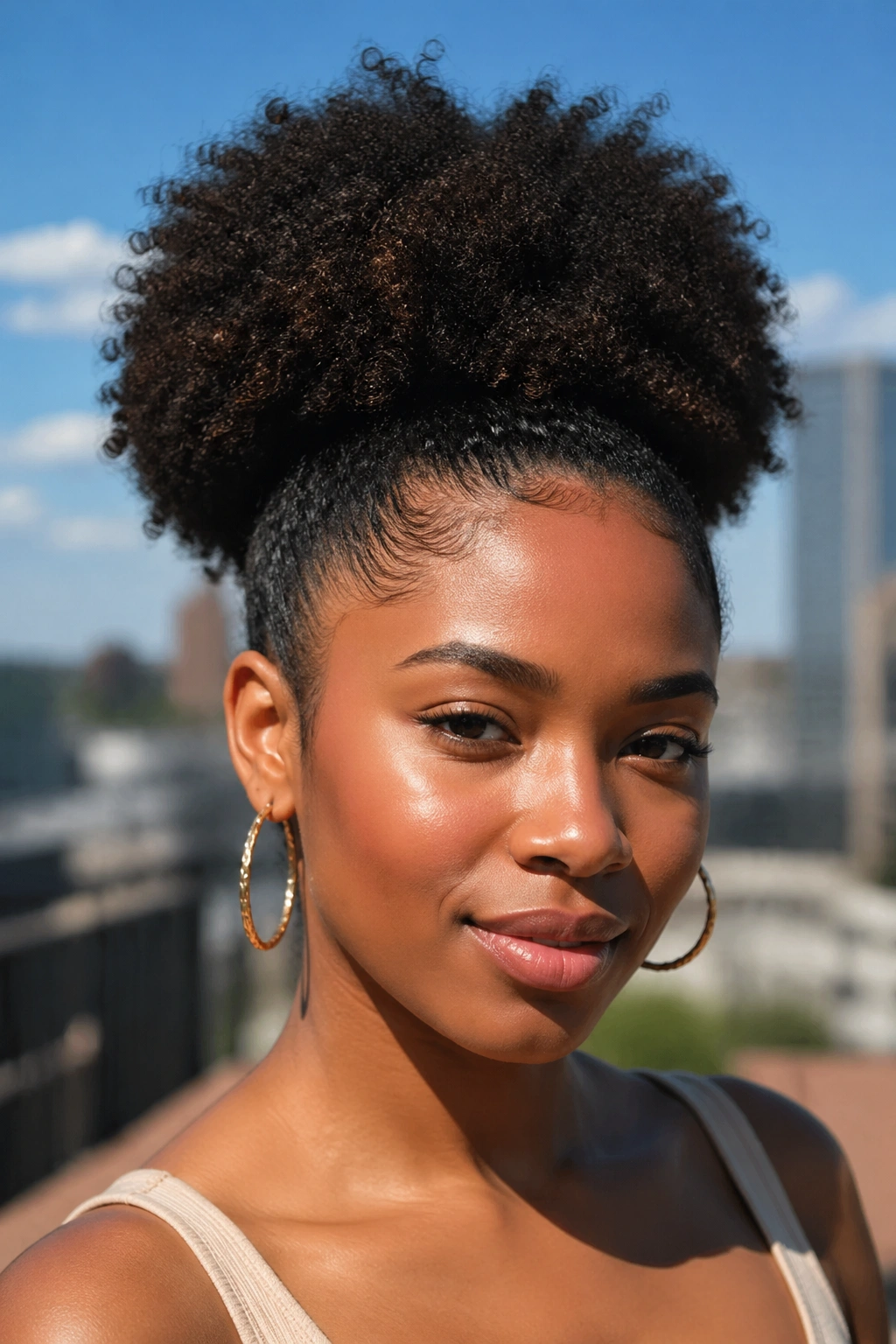
The afro puff is the puff at its most natural expression — gathered at the crown without any slicking or smoothing, letting the texture be fully visible at the base, sides, and within the puff itself. On high-density natural hair, the afro puff has genuine size and presence.
Use a thick satin scrunchie or hair tie for the gather. Pick out the puff section after securing for maximum volume. The edges can be laid for a clean hairline contrast, or left natural and curly for a fully textured look.
7. Side-Swept Afro
All of your afro volume directed to one side — not a puff, not a pineapple, just a full, free afro where most of the mass leans or falls naturally to one side. Achieve this by picking with a deliberate lean, applying product to the opposite side to keep it slightly flatter, and allowing the natural texture to take the asymmetrical shape.
Side-swept afros are dynamic — they suggest movement even when you’re standing still. The visual weight on one side creates an interesting, almost playful silhouette.
8. Low-Cut Afro with Shape Line
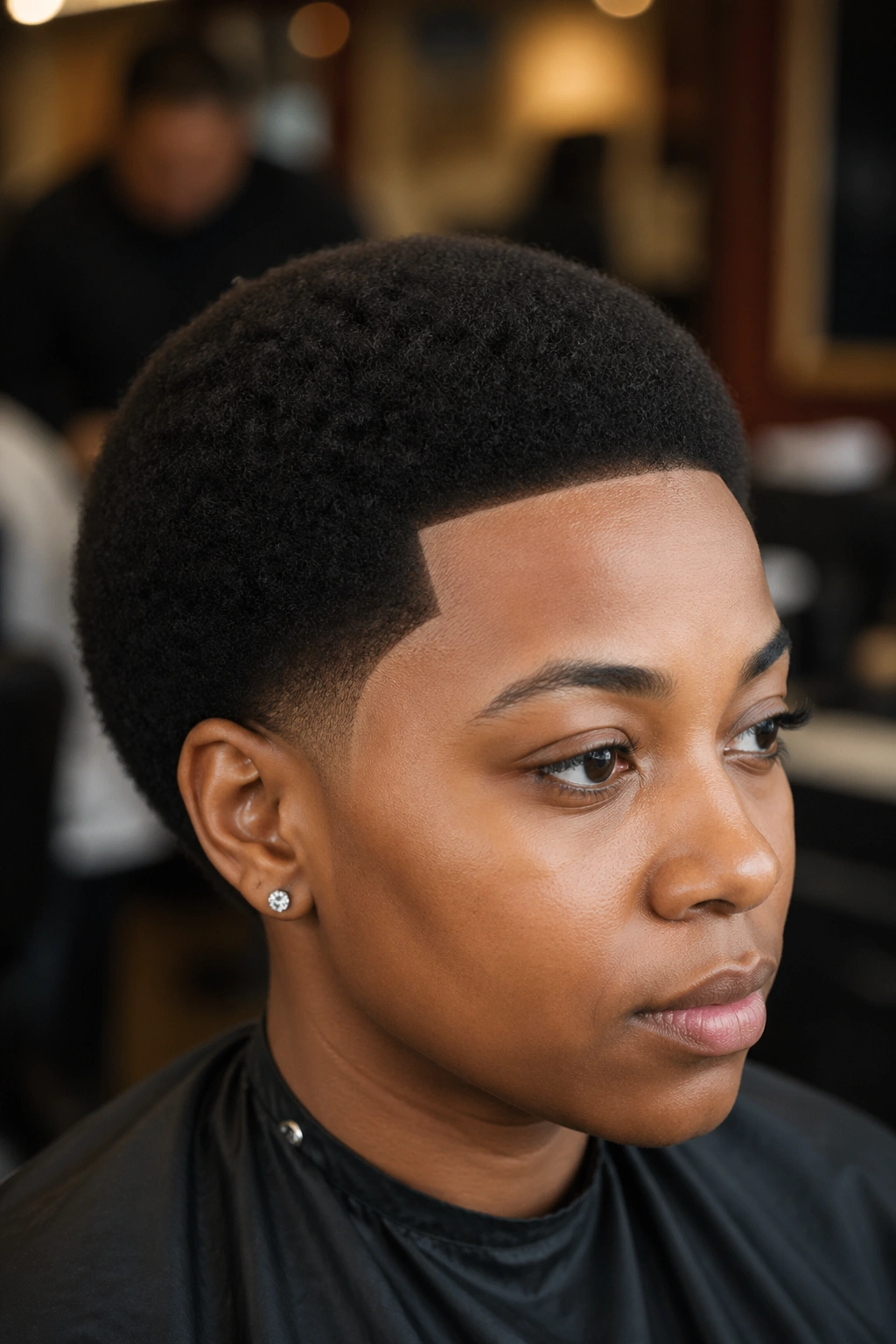
If your hair is natural and short enough to be shaped at the sides — or if you have access to a barber or stylist who can shape your edges — a clean shape line at the perimeter of the afro transforms it into something sculptural and precise. The shape line is a crisp curved or angled line cut into the perimeter of the afro, creating a defined border between hair and skin.
The shape line is particularly striking when the rest of the afro is full and round, because the contrast between the organic texture and the geometric perimeter is visually powerful.
9. Braid-Out Afro
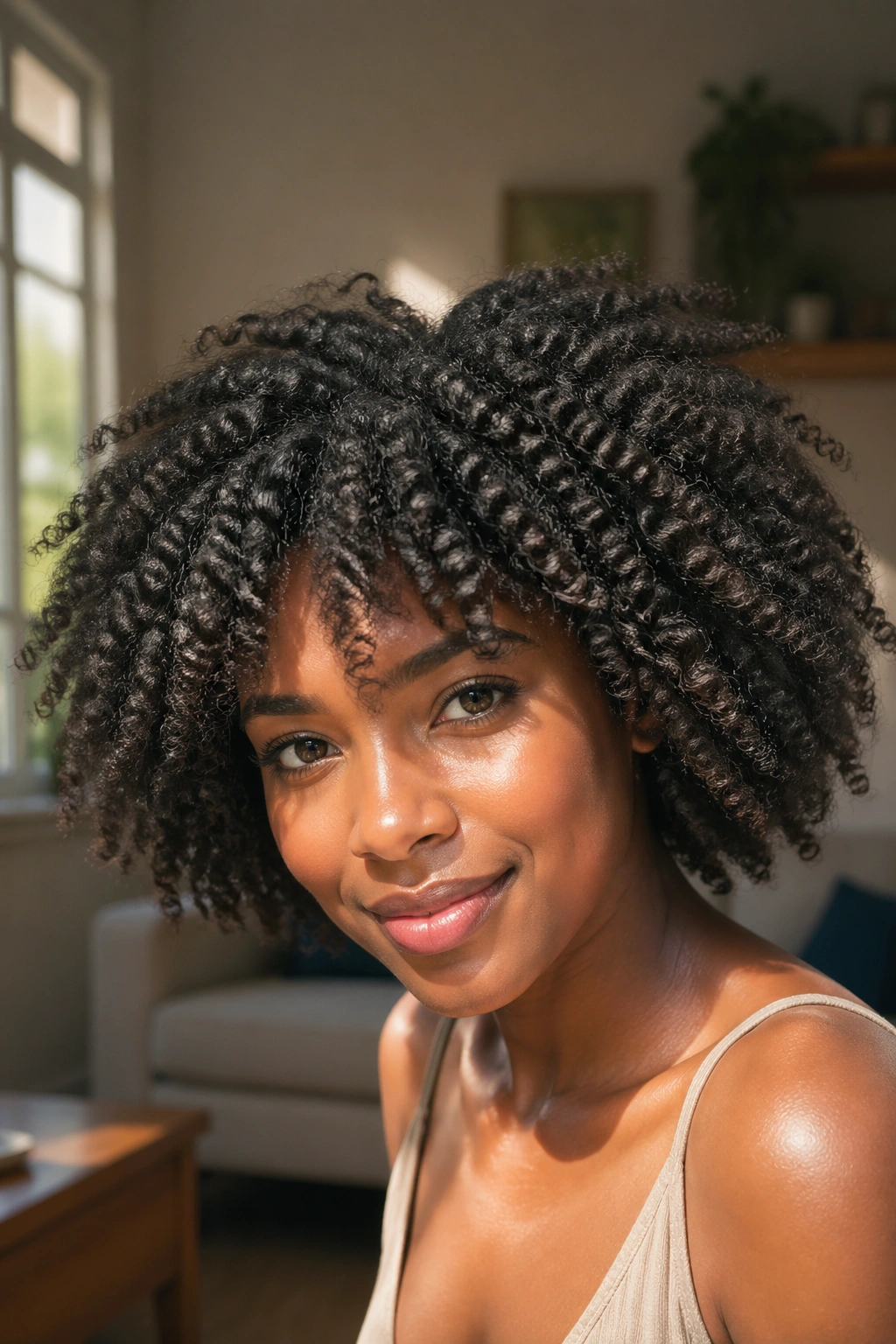
Set a braid-out — three-strand braids through the entire head — allow to dry, unravel, and pick out. The braid-out wave pattern adds texture and depth to the afro shape rather than the uniform coil pattern of an unset afro. The result has visible texture throughout — crimped, angular waves that catch light in interesting ways.
On 4C and 4B hair, the braid-out afro tends to be denser and more textured than the twist-out afro. On looser curl patterns, the braid-out waves are more open and have a more relaxed quality.
10. Afro with Cornrow Design
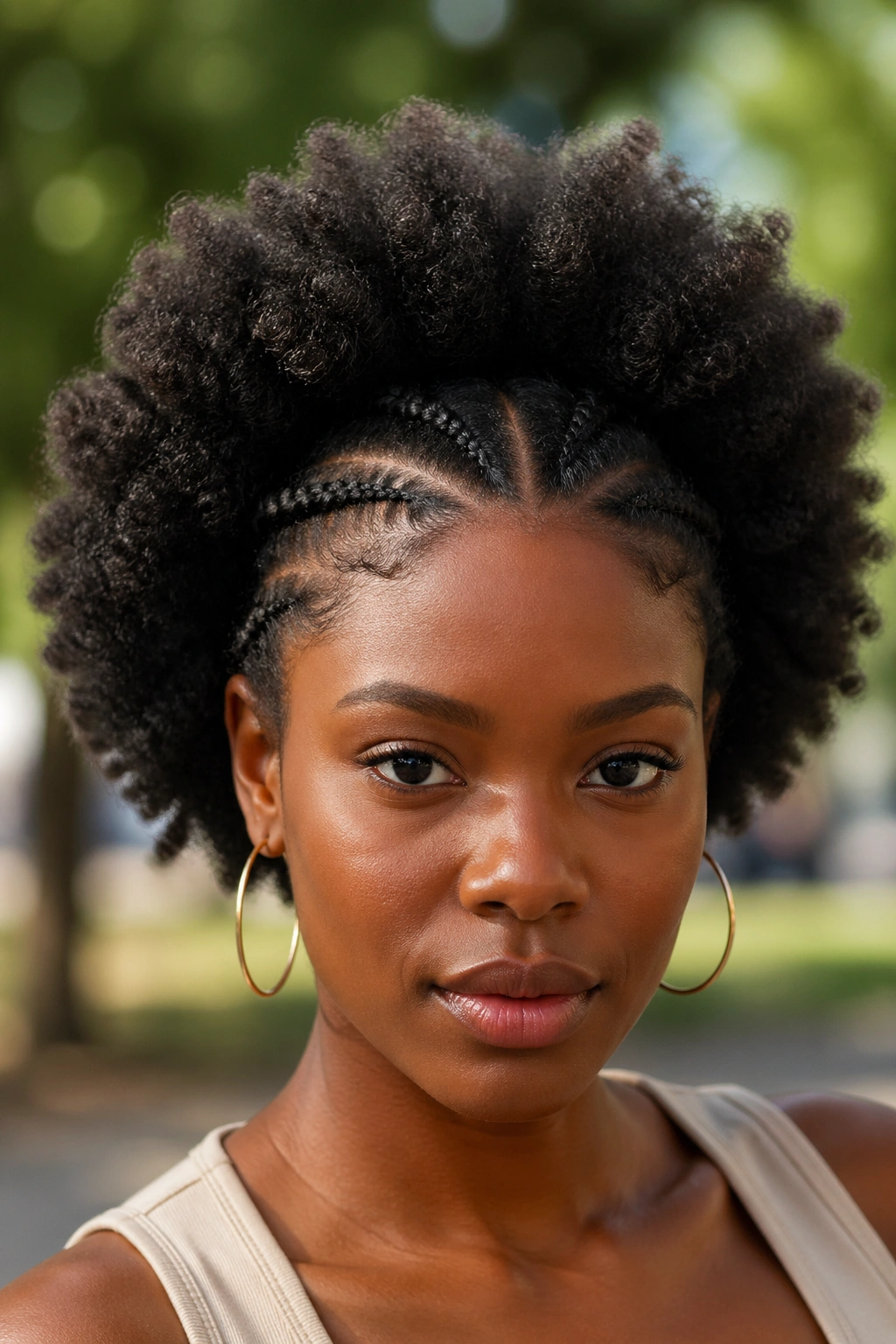
Cornrow one or two sections of the afro — usually at the front hairline, along the side, or creating a graphic line across the crown — and leave the rest of the afro free. The cornrowed section creates a deliberate design element within the afro shape rather than around it.
A single cornrow along one side of the hairline on an otherwise free afro looks intentionally artistic. Two cornrows creating an X or geometric pattern at the crown within a full afro is even more striking.
11. Decorated Afro
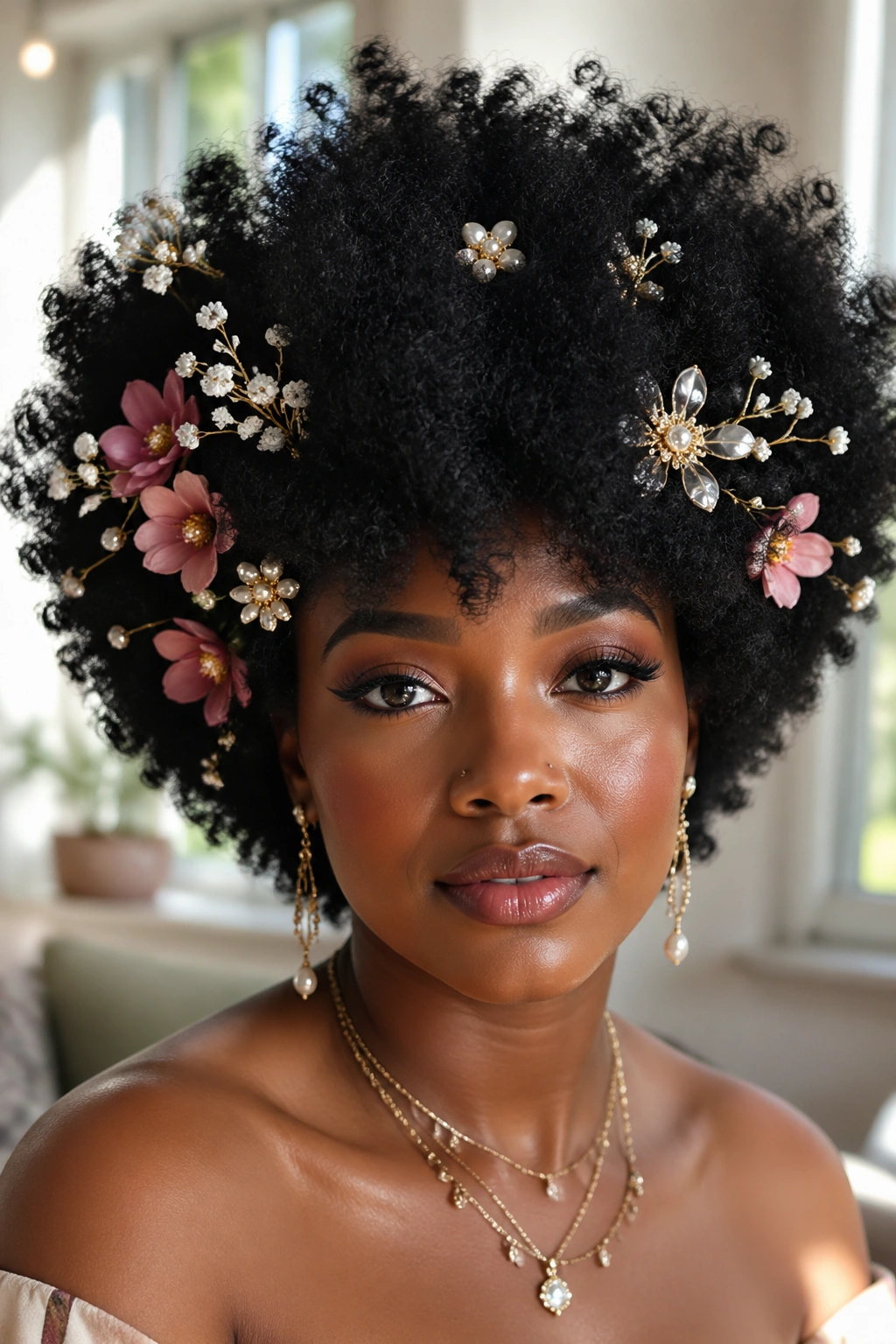
Flowers, pins, pearls, feathers, combs — decorative accessories placed within or on the perimeter of a full afro have the advantage of being visible from across a room. The afro’s volume acts as a backdrop and a stage for whatever you place in it.
Gold pins scattered throughout a full afro create a starfield effect. A cluster of small flowers at one temple looks romantic and distinctive. A series of pearl hair pins placed along the hairline between the afro and the forehead look deliberately artistic. Curly afro hairstyles with accessories are some of the most formal-event-appropriate options in natural hair.
12. Coil-Out Afro
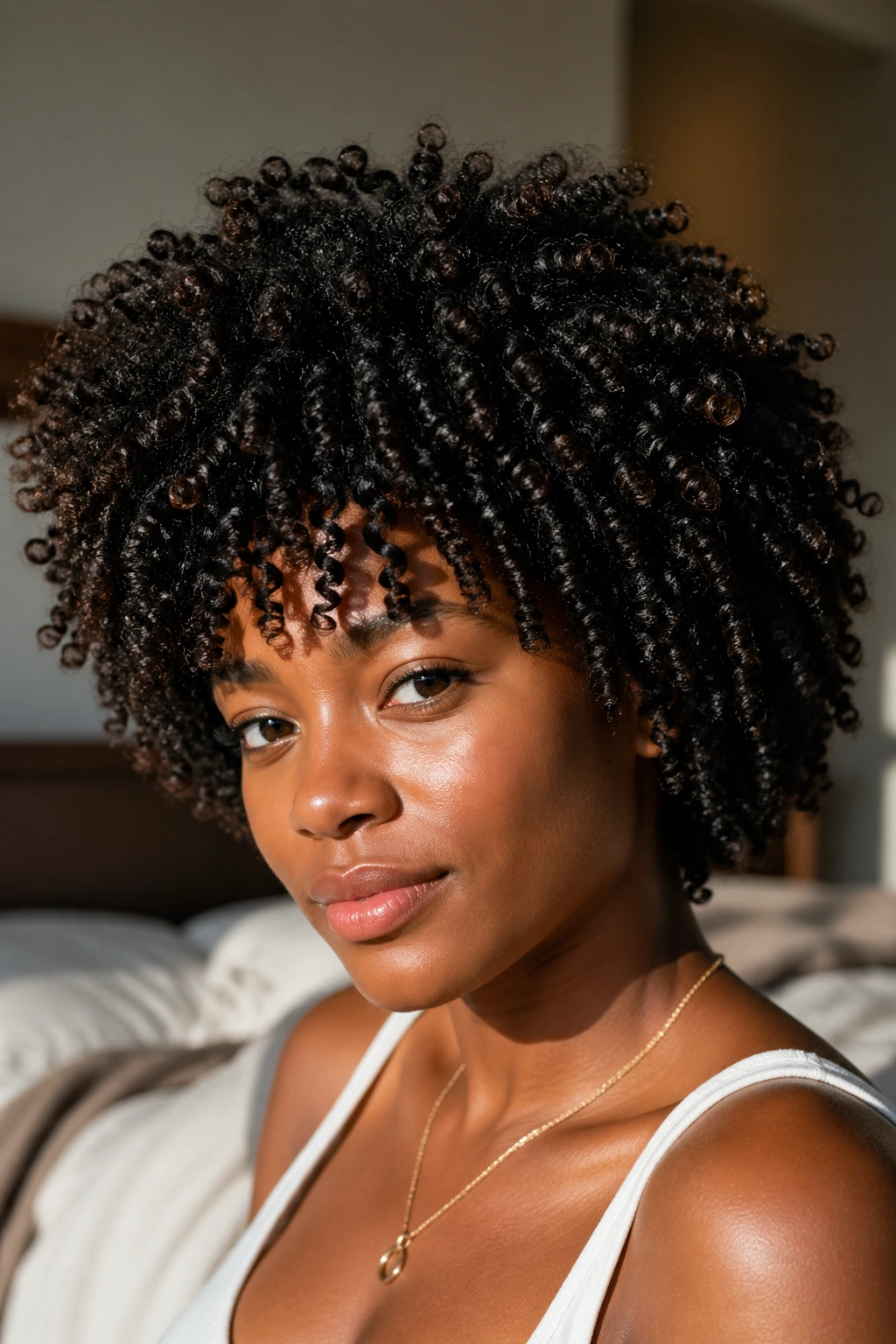
Set finger coils through the entire head and allow to dry fully. Then gently separate only the tops of the coils — leaving the root-to-mid section tightly coiled and only the upper portions loosened. The result is an afro that has tight, defined structure at the scalp and softens into a more open, fuller shape at the ends.
This style requires time to set but almost no time to finish — the coil-out afro, once the coils are set and the tips separated, is complete.
13. Afro Mohawk with Defined Center
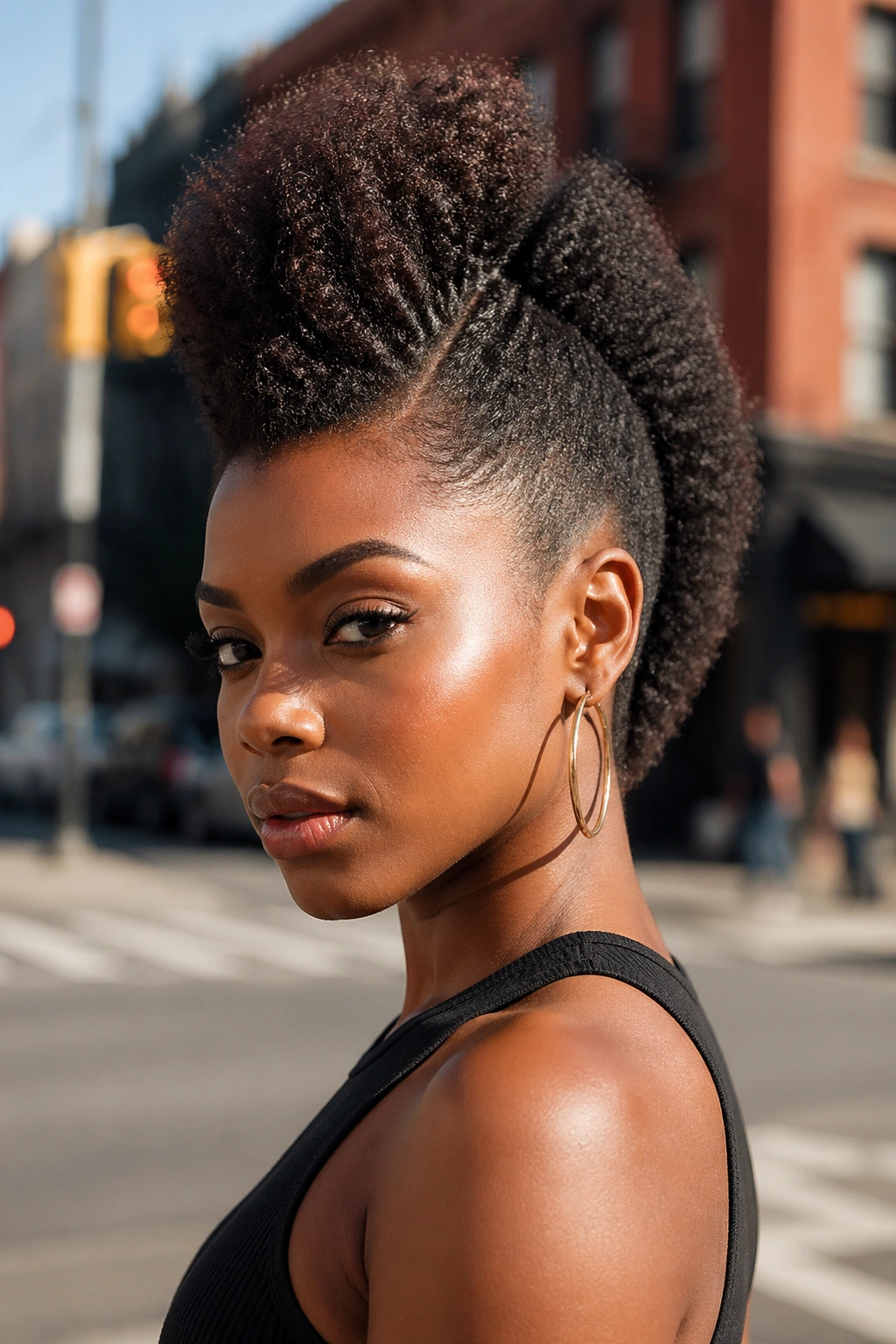
A variation on the frohawk — instead of leaving the center raw and picked out, set the center section in defined coils or a defined wash-and-go before setting the sides flat. The center strip has both height and curl definition, making the style more refined than the standard frohawk while maintaining its bold, graphic quality.
14. Two-Section Volume Updo
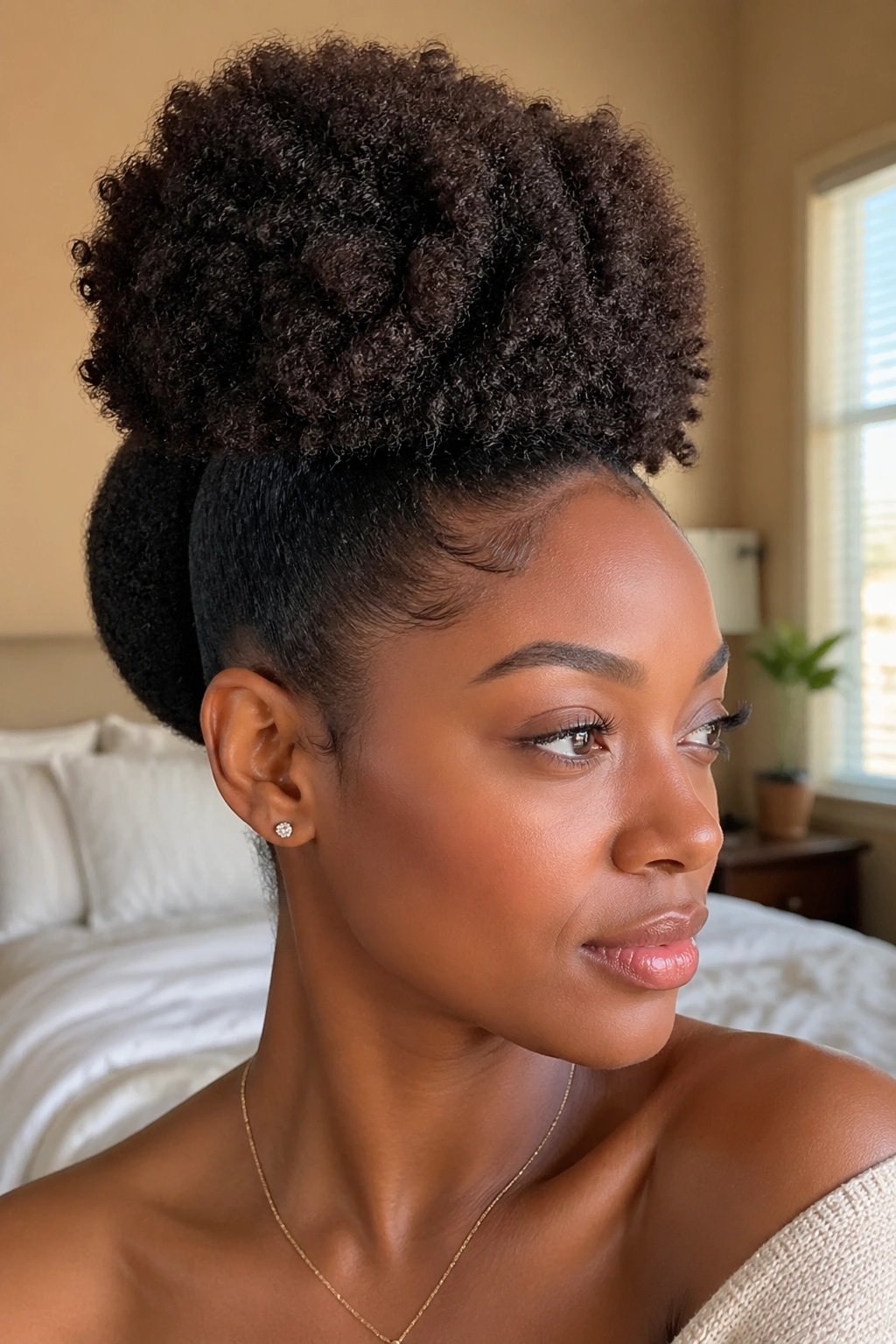
Gather your afro into two sections at the back — a larger section pinned at the crown and a smaller section tucked or pinned beneath it. The layered sections create a stacked afro updo that has more visual depth than a single gathered puff. It looks complex; it’s actually quite simple once your hair is picked out and ready.
15. Natural Afro with Headscarf Accent
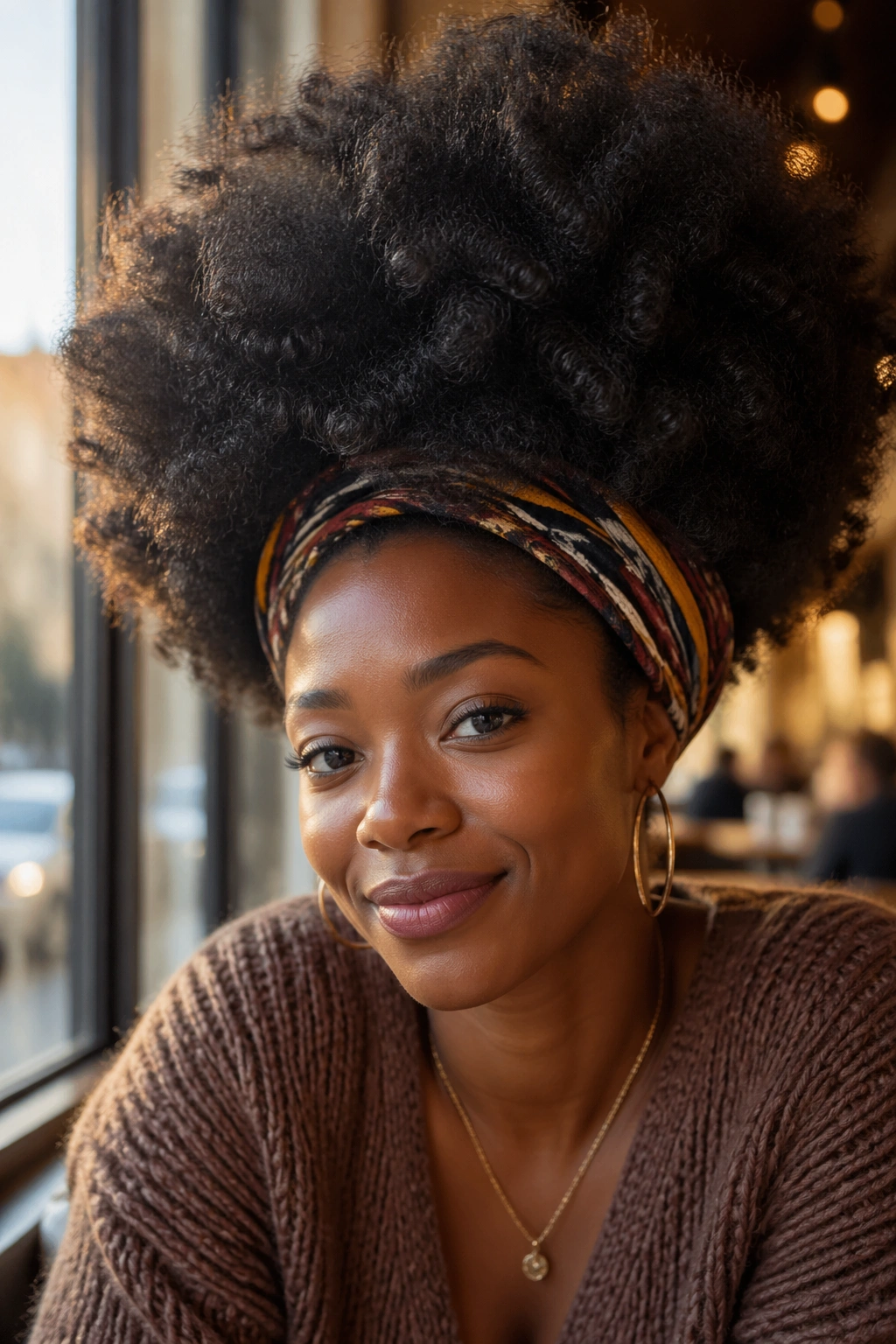
Wrap a scarf or headwrap partially around the base of the afro — not over the afro, but framing its base — and tie it at the front or side. The afro rises freely above the scarf while the scarf provides color, pattern, and framing for the face.
This look has deep roots in African textile traditions and looks distinctly modern when done with the right fabric and styling. Ankara prints, kente-inspired patterns, and solid-color silk scarves all work beautifully with a full afro above them.
16. Faded Sides Afro
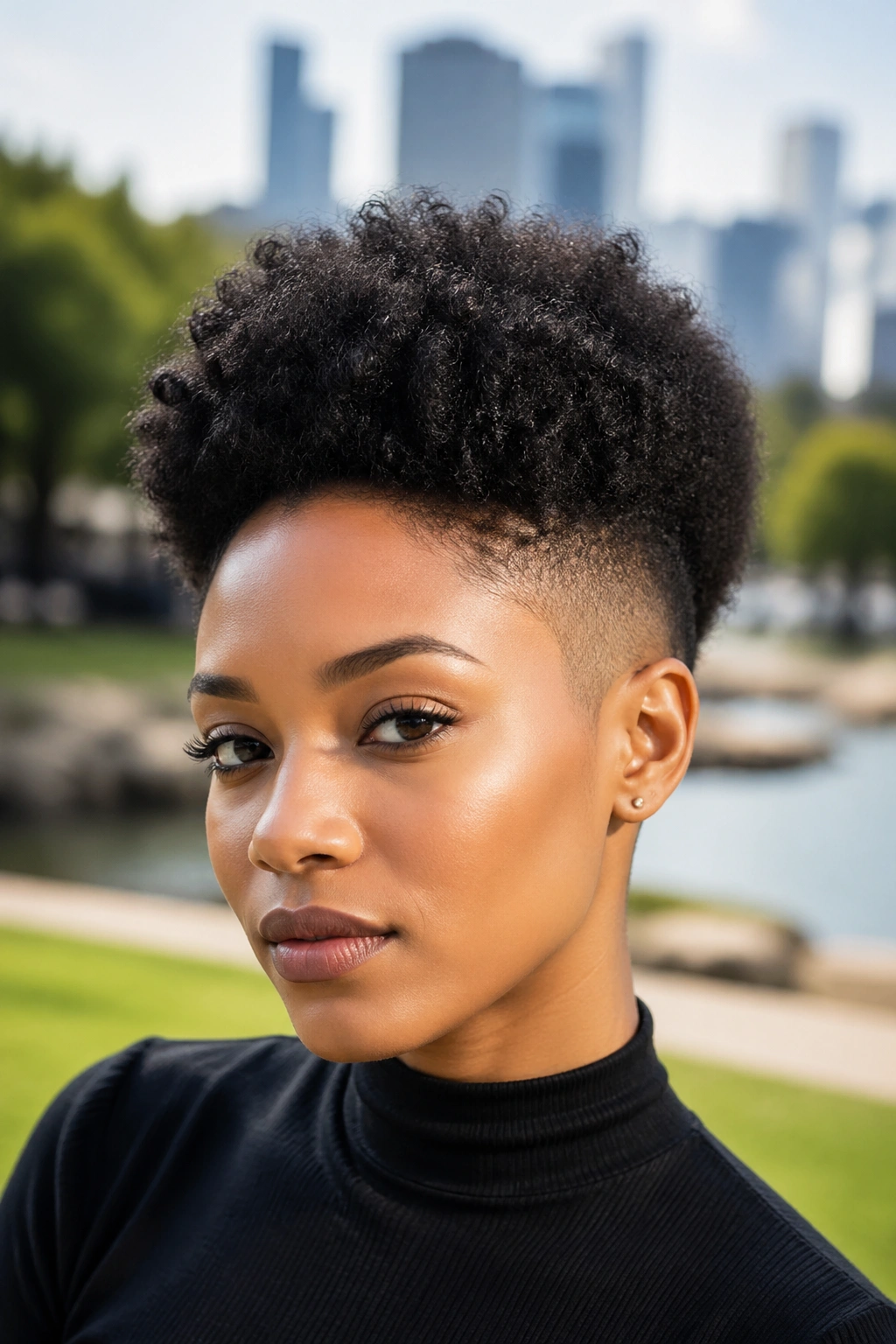
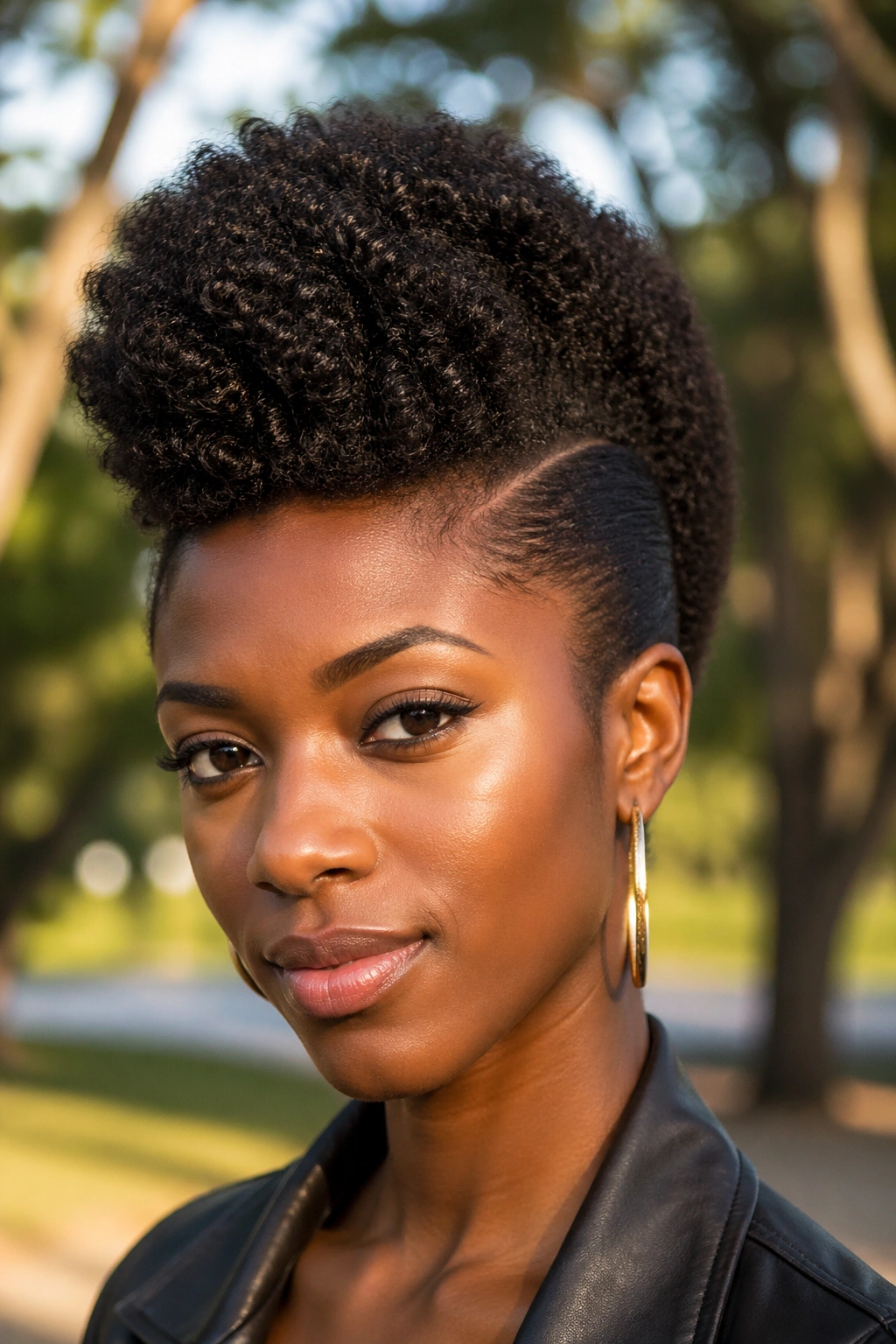
If you work with a barber or stylist, a natural afro with faded sides and a full crown is one of the most visually striking curly afro hairstyles available. The fade creates a gradient from skin to full volume — from bare at the temples to the full afro at the crown. The contrast is bold, graphic, and contemporary.
This style requires professional styling at the sides and bottom, but the afro portion is maintained at home as usual.
17. Heart-Shaped Afro
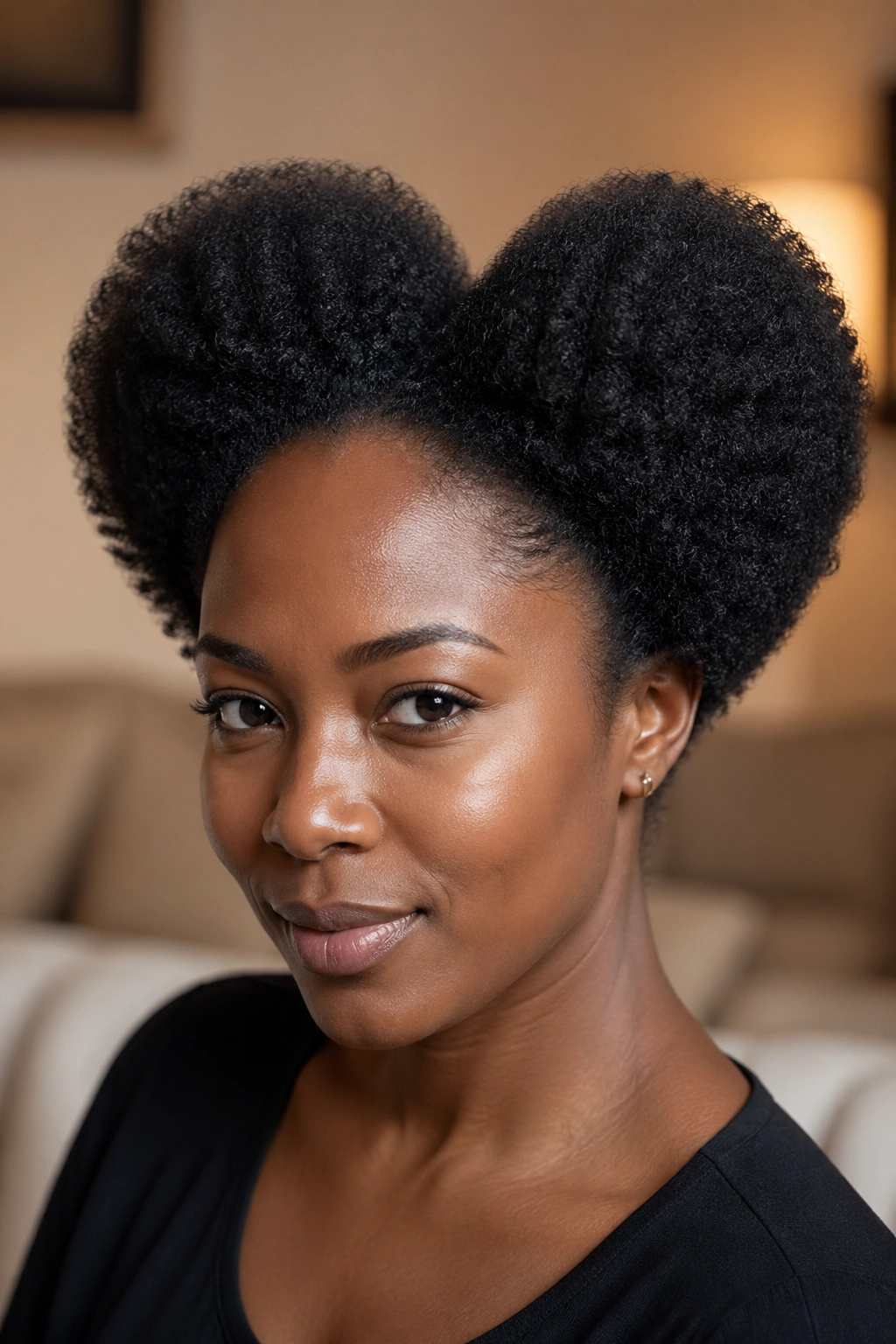
A heart-shaped afro is achieved by picking the afro into a wider, more pronounced shape at the temples — creating two rounded bumps at the crown — and then allowing the sides to narrow slightly below the ear line. The shape, viewed straight on, vaguely resembles a heart.
This is a playful variation on the standard round afro. It requires deliberate picking to achieve and maintain the shape, and works best on medium-to-high density natural hair that has enough body to hold the picked-out shape.
18. Tapered Afro
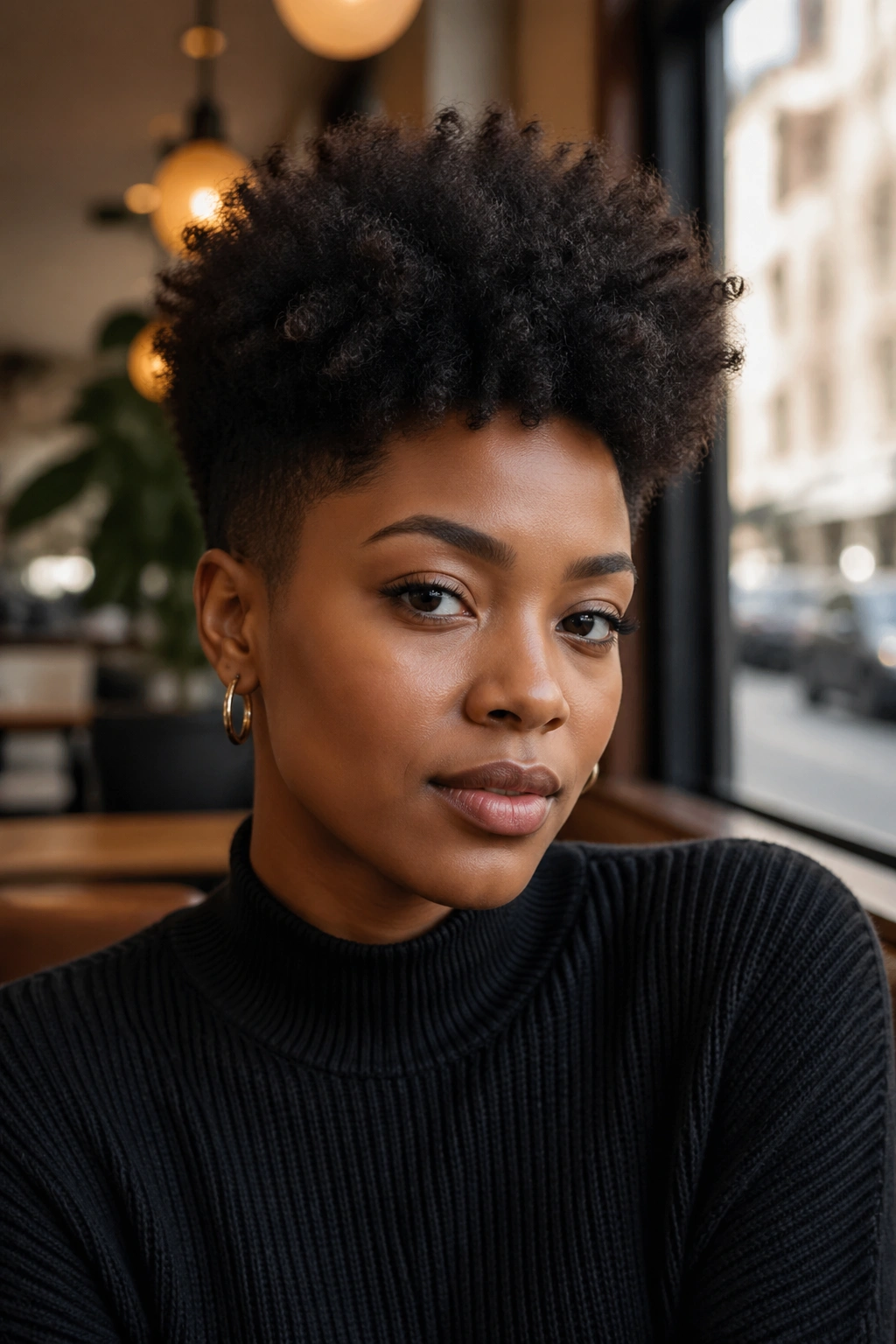
A tapered afro is shorter at the sides and back and fuller at the crown — not because of a fade cut, but because of strategic picking. Pick the crown section to maximum volume, then pick the sides less aggressively, leaving them at a lower height. The effect is a natural taper that makes the top appear even fuller.
This shaping technique works on any length afro and flatters oval, round, and heart face shapes by adding vertical height and reducing width at the sides.
19. Afro with Defined Curl Sections
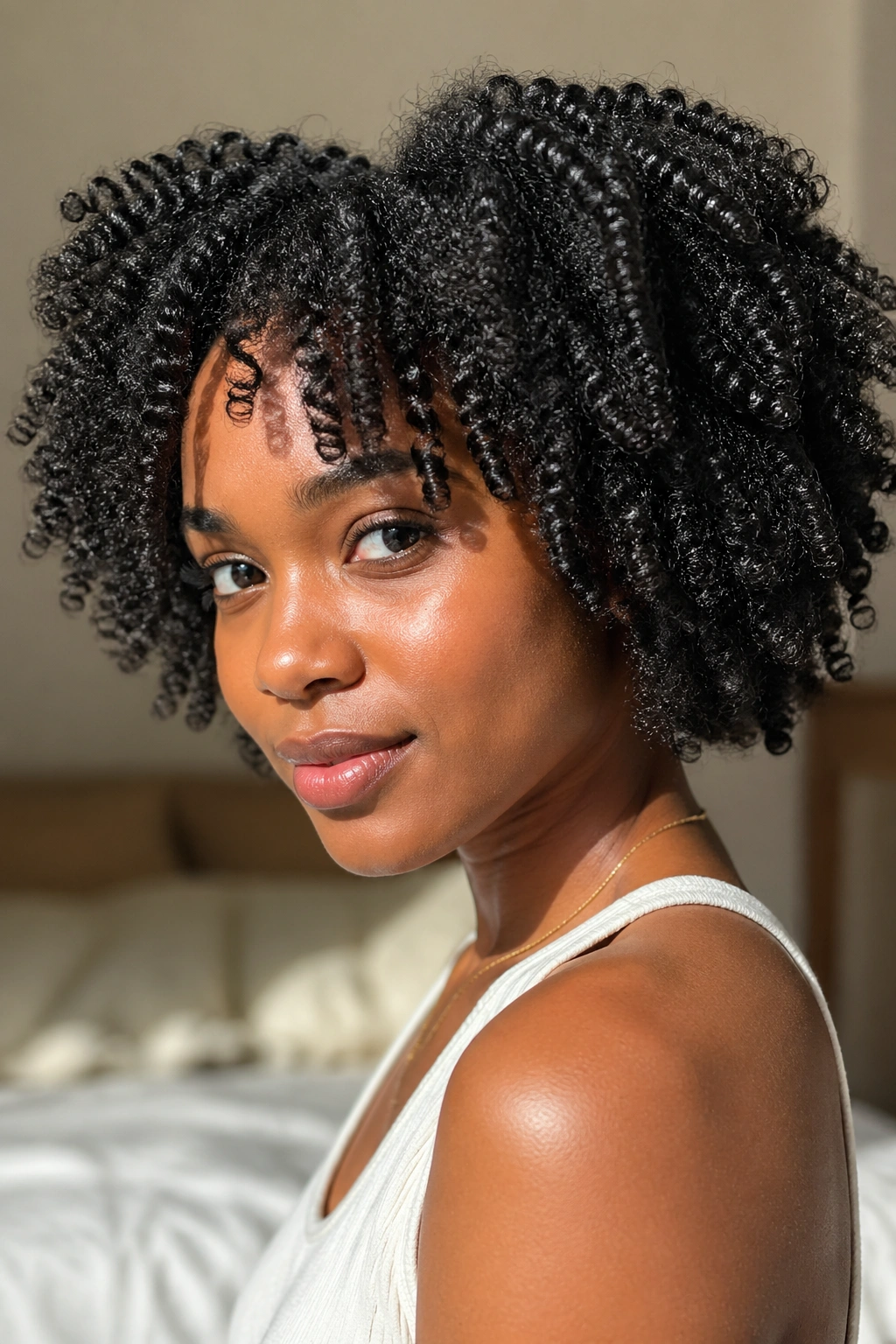
Rather than picking the afro into a uniform mass of texture, apply curl cream to sections throughout the afro while the hair is damp and allow those sections to clump and define. Once dry, pick the afro out gently — separating sections only slightly rather than fully. The result is an afro that has visible, somewhat defined curl sections within it rather than a fully homogenized texture.
This approach shows off the specific qualities of your curl pattern within the larger afro shape.
20. Lopsided Artistic Afro
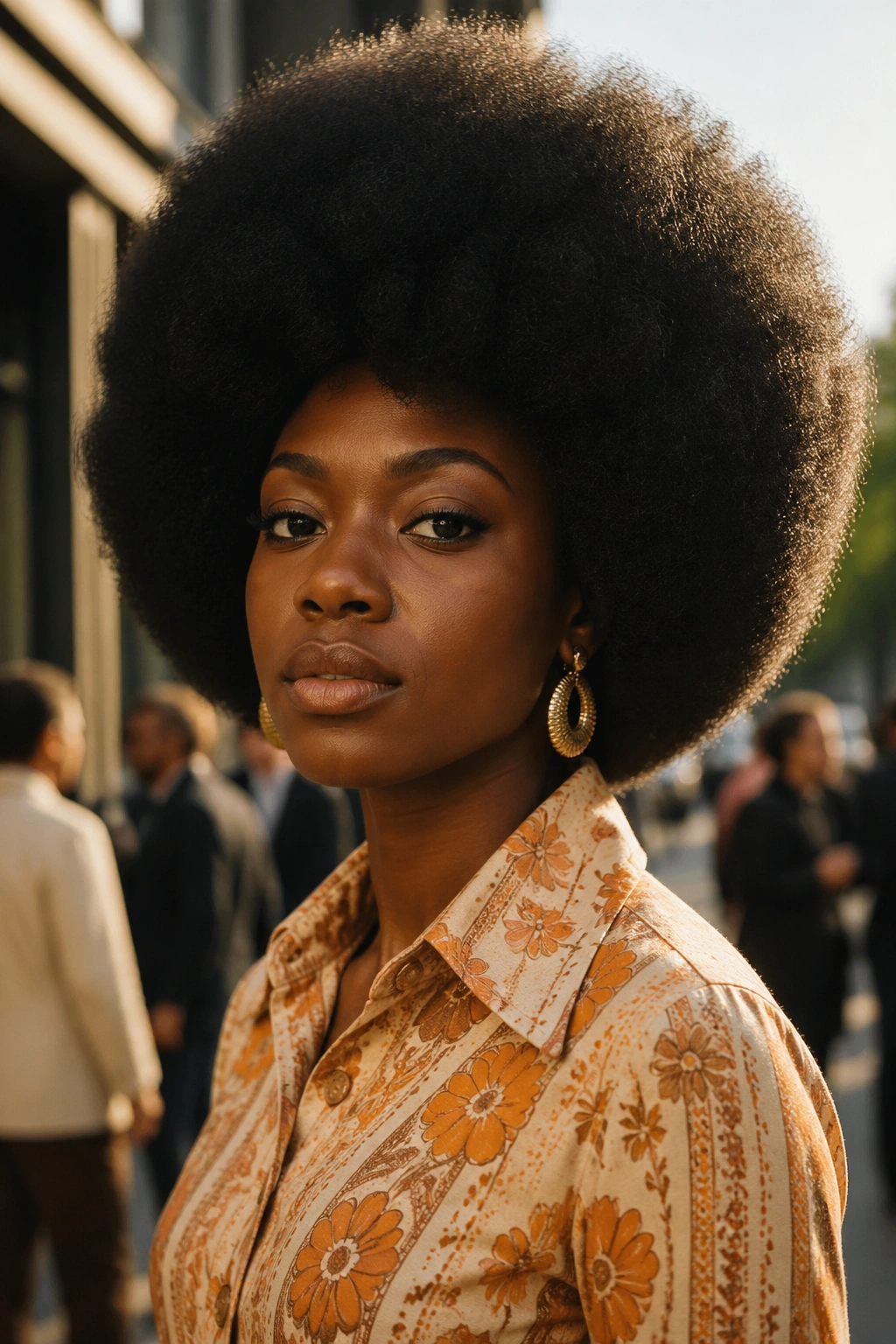
Deliberate asymmetry — one side of the afro picked out significantly higher and fuller than the other — creates a style that looks intentionally artistic. This lopsided shape is not a styling mistake; it’s a design decision that makes the afro more dynamic and visually interesting.
Pick one side outward and upward aggressively while leaving the other side at a lower, more compressed height. The contrast is the style. Clean edges on both sides keep the asymmetry looking intentional.
21. Afro with Bold Color
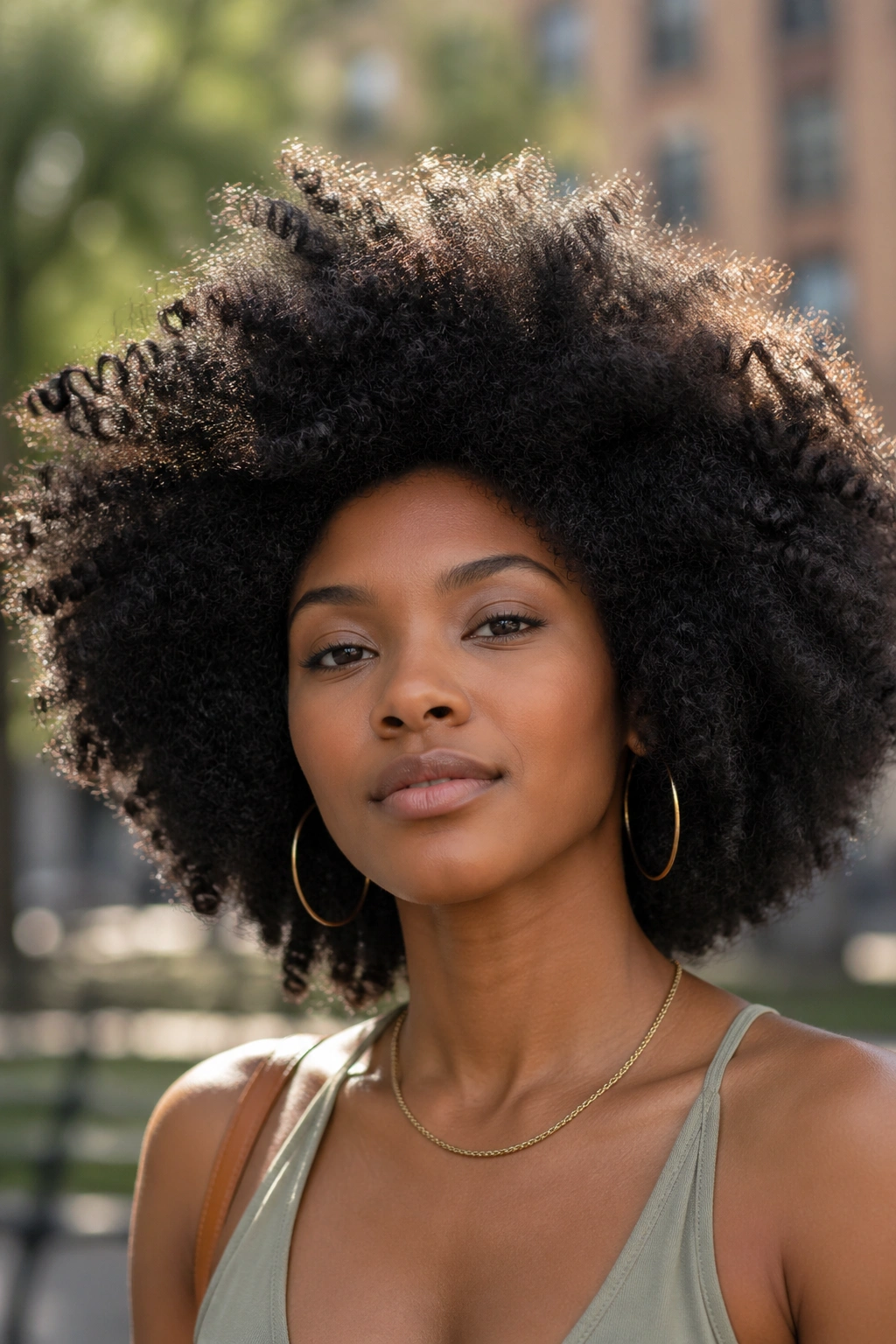
A bright color applied to the afro — whether through a full color treatment, ombre ends, a few highlighted sections, or bold clip-in color pieces — transforms the visual impact of curly afro hairstyles dramatically. Honey blonde ends on a 4C afro. Burgundy throughout a 3C fro. Copper highlights on dark coils.
Color adds a dimension to the afro that amplifies its natural visual power. The texture of the curls catches and reflects color differently than straight hair does — with more depth and variation.
22. High Afro Puff with Scarf
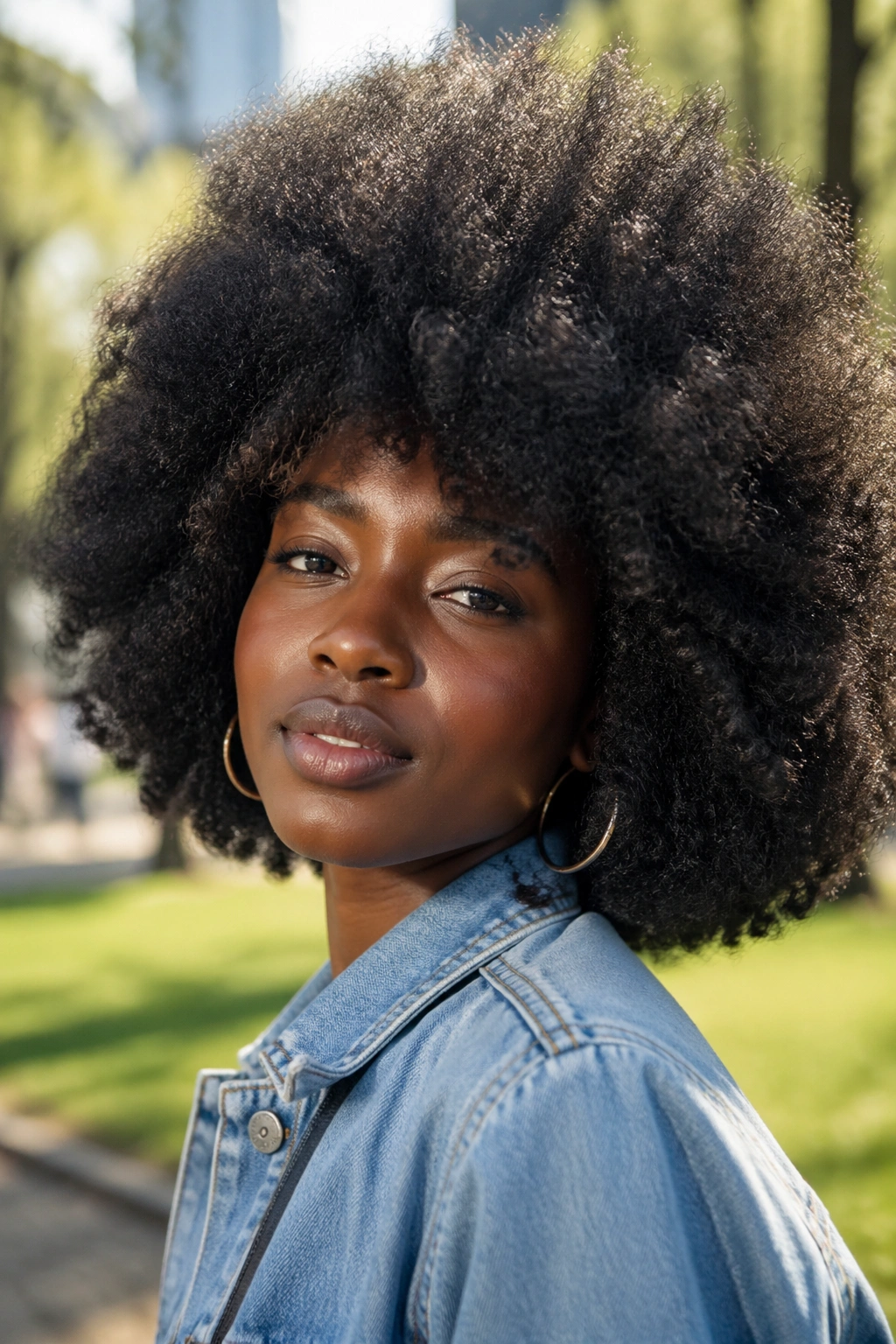
A hybrid style: gather your hair in a high puff but before securing it, wrap a silk or fabric scarf around the base and tie it. The scarf base gives the puff a defined, intentional frame. Above the scarf, the afro puff rises freely. The style looks more formal than a plain puff while being equally quick to execute.
23. Afro with Deep Side Part
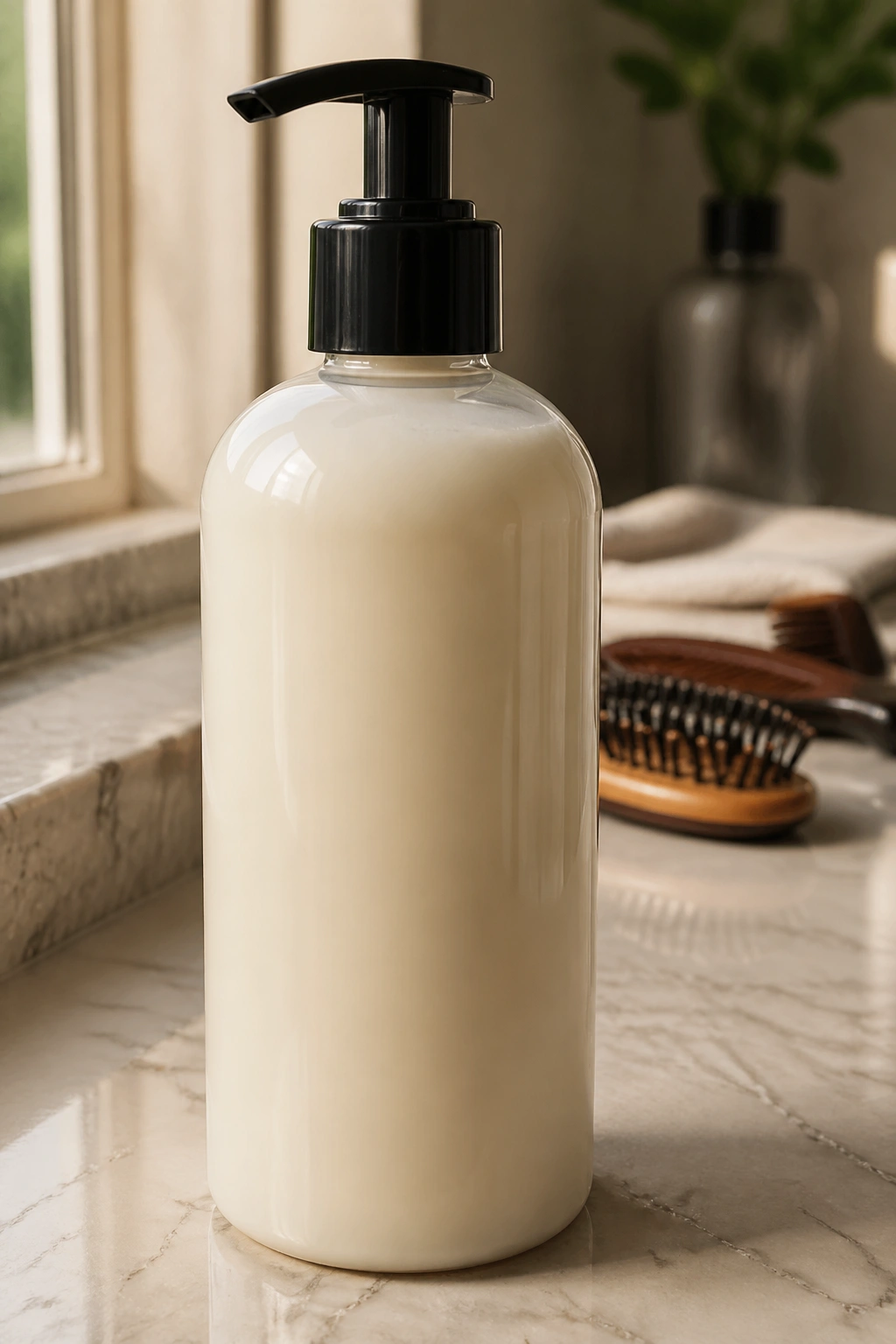
A deep, clearly defined side part in a full afro creates a graphic line that divides the volume asymmetrically. One side has significantly more hair falling over it; the other has the hairline visible. The contrast between the two sides adds structure and visual interest to what would otherwise be a uniformly round shape.
Use a rat-tail comb to create a precise part line, then pick out both sides to their full volumes without disturbing the part.
24. Wash-and-Go Afro
A fresh wash-and-go on natural hair, once fully dry, produces its own version of the afro — definition throughout, some visible curl clumping, full round shape created naturally by the drying process. No picking required. No shaping.
The wash-and-go afro is the most natural-looking version of the style — the shape that the hair grows into on its own when moisture and product are applied correctly and then left completely alone. It’s softer, less dramatic in size than a picked-out afro, but more defined in texture. Both are valid expressions of the afro. One isn’t more “natural” than the other — they just reflect different parts of the styling spectrum.
Caring for Your Natural Afro
An afro requires the same core maintenance as any other natural style — moisture, protein balance, gentle handling, and protection at night. What’s specific to afro styles is the management of volume and shape.
Pick only on moisturized hair. Picking on dry hair without moisture causes breakage along the length, especially at points where the curl bends. A quick spritz of water-and-leave-in before picking makes the process gentler and the result fuller.
Protect the afro at night with a satin bonnet or a satin-lined cap that’s large enough to accommodate the volume without crushing it. Silk pillow cases help but don’t fully protect an afro the way a properly sized bonnet does. Look for extra-large bonnets designed specifically for afros and natural styles — standard-sized bonnets are too small for most full afros.
Afro Shape Maintenance During Wear
An afro changes shape throughout the day. Wind, humidity, contact with surfaces, and natural settling all affect the shape. Carrying a small afro pick and a tiny spray bottle with water-and-leave-in allows midday refreshing and reshaping in under two minutes.
A light misting of water reactivates the curl pattern and makes picking easier and more effective. A quick fluff with the pick from underneath restores the volume that settles over the course of a few hours. These small touch-ups extend the life of any afro style significantly.
The Afro as Personal Expression
Every variation of the afro is an expression of something — of texture embraced, of growth celebrated, of a relationship with your own hair that has been built over time. Whether your afro is shaped and decorated or picked out and wild, worn to work or to a rooftop party or to the grocery store, it represents a choice to show up as exactly what you are.
These 24 curly afro hairstyles give you the range from the smallest, most understated expression of the style to the largest, most decorated versions. The afro belongs to you in every form it takes.
Growing and Maintaining an Afro
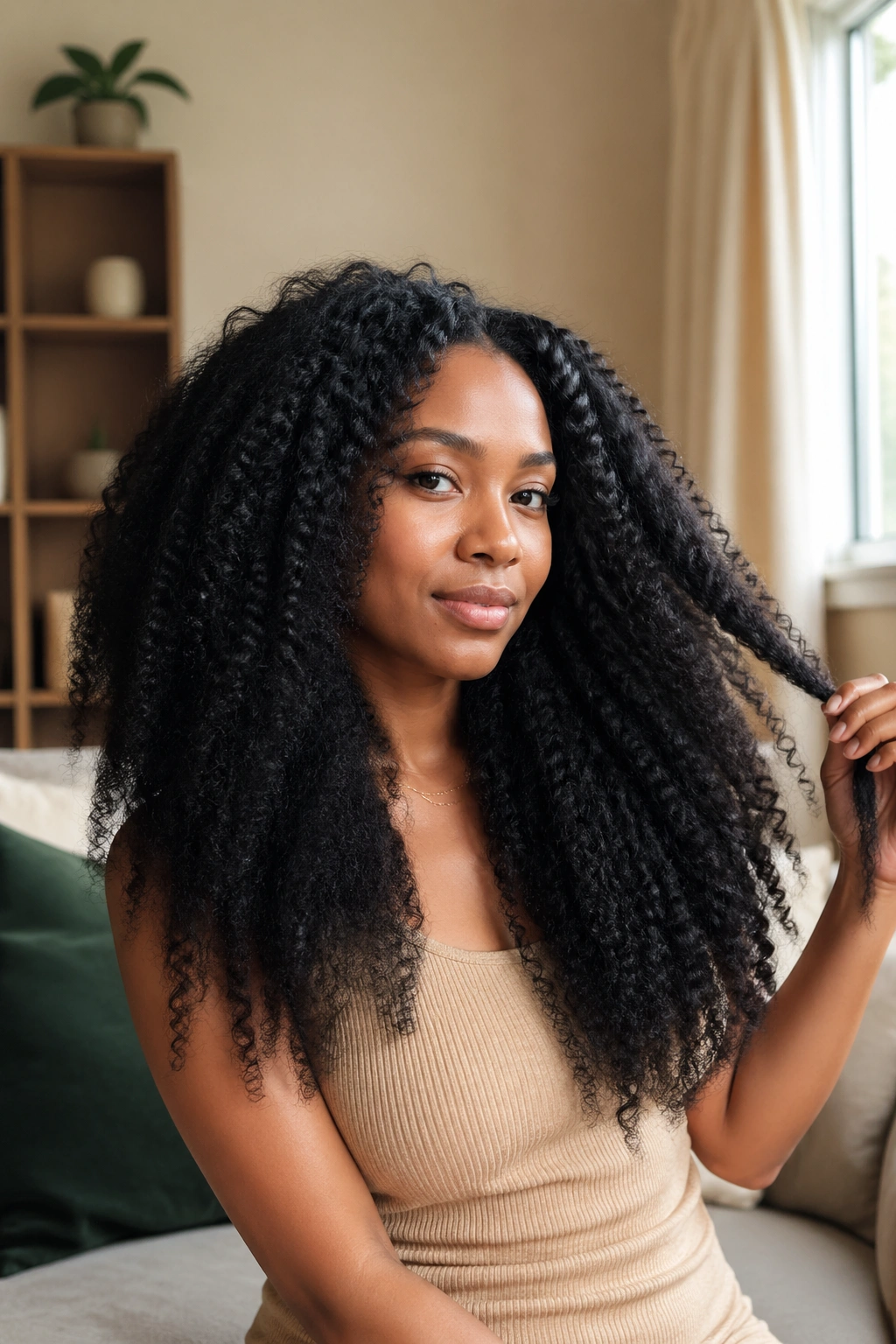
Growing an afro — specifically, growing it to a length where it achieves the round, full shape that most people picture when they imagine the style — requires patience and consistent care. The hair grows from the scalp at a rate that varies by genetics and health, but the visible length grows slowly when shrinkage is a factor. What feels like no progress from month to month becomes visible growth over quarters and years.
The most important maintenance practices for afro growth: keeping the hair moisturized so that breakage at the ends doesn’t offset the growth at the scalp, protective styling during harsh seasons to minimize environmental damage, and minimizing heat use to preserve elasticity and length. Breakage is the enemy of length retention — if you’re growing but breaking at the same rate, your afro won’t grow in actual volume or length.
Scalp health drives growth. Regular scalp massages with a lightweight oil — jojoba, castor, or a dedicated growth oil with peppermint or rosemary — increase blood circulation to the follicles and support healthy growth. You don’t need an expensive product; you need consistency. A two-minute scalp massage three to four times a week, over months, produces measurable results.
Deep conditioning every one to two weeks addresses the hydration needs of natural hair at every stage of the afro journey. Well-moisturized hair has more elasticity, which means it bends without breaking — critical for the kind of manipulation that afro styling involves, particularly picking and separation.
Protecting an Afro at Night
Night protection for an afro is slightly more involved than for smoother or flatter styles because the volume needs to be preserved without being flattened. A standard bonnet works for smaller afros; for very large, full afros, you need either a jumbo-sized bonnet or a satin-lined hat specifically designed with extra depth for natural hair.
The pineapple method works for afros too — gather all the hair loosely at the very top of the head before bed and tie with a satin scrunchie. In the morning, release the pineapple and the afro falls back into its approximate shape, requiring only a quick pick-out to restore volume. The pineapple prevents the flattening that sleeping on an unsecured afro creates, particularly at the back and sides.
For decorative afro styles — the decorated afro, the afro with detailed accessories — it’s worth unpinning the accessories before bed rather than sleeping in them. Pins and clips left in overnight can shift and damage curls. Store the accessories in a small container and reapply in the morning, which takes under five minutes.
Afro Styles Across the Occasions Spectrum
One of the persistent misconceptions about afro styles is that they’re only appropriate for certain settings — casual, creative, outdoor. In reality, curly afro hairstyles work across the full range of occasions when paired with the right accessories, edge work, and accompanying outfit energy.
A large, picked-out afro with detailed baby hair designs and gold accessories is fully appropriate for a formal gala. A decorated afro with small flowers and precision edges is right for a wedding — either as a guest or as a member of the wedding party. A sleek, shaped afro with clean lines and a geometric outline works in professional environments where the style is worn with genuine confidence and the rest of the presentation is equally polished.
The resistance to afros in formal spaces is a bias, not a policy — and in a growing number of institutions, legal protections exist against it. Wearing your natural afro to work, to court, to the corporate meeting, to the formal event, to graduation — these are all valid choices supported by both legal protection and cultural rightness. The afro is as appropriate as any other style in any setting. Full stop.
The Joy of Natural Afro Styling
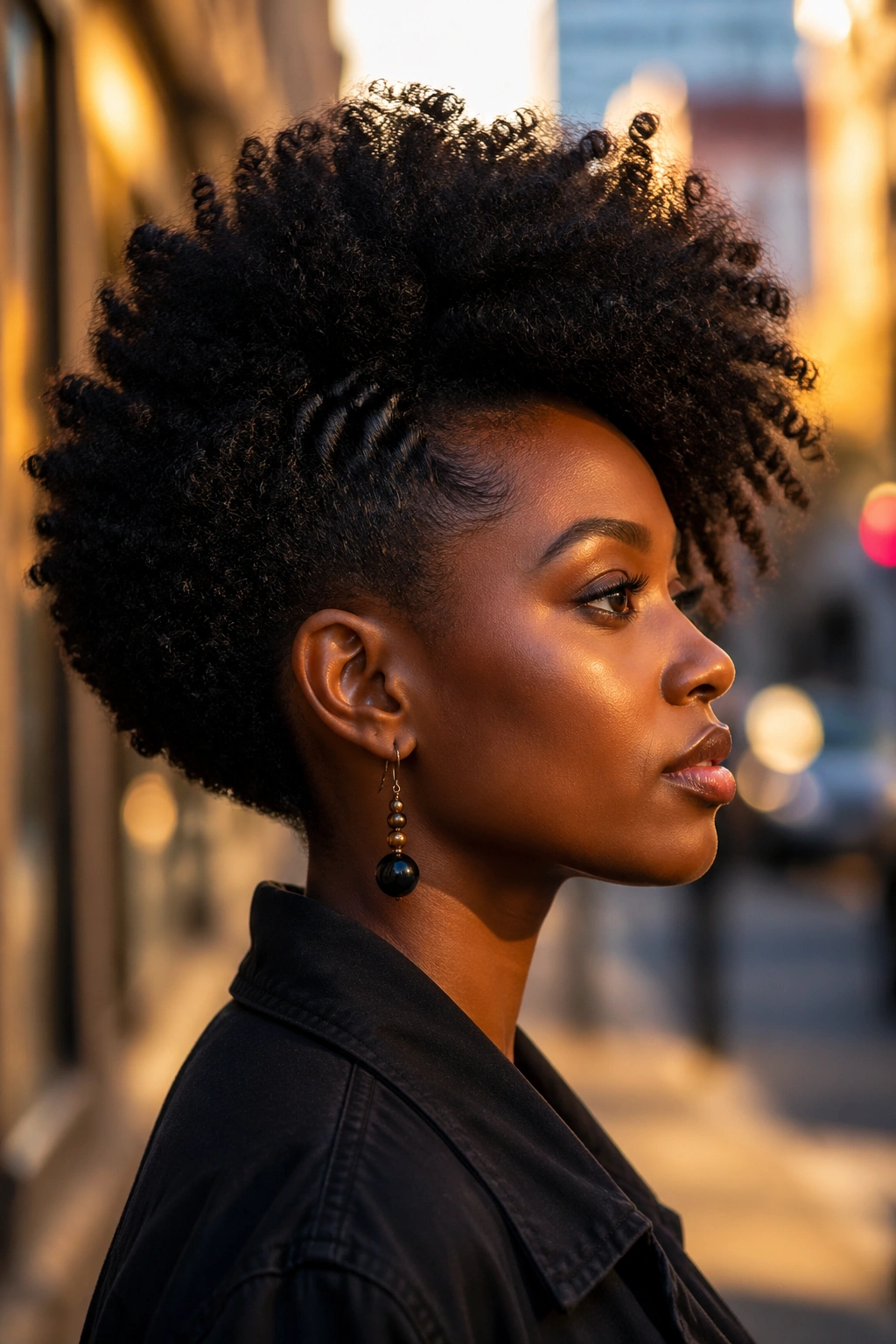
Beyond technique, beyond products, beyond the specific styling breakdown of each individual curly afro hairstyle on this list — there is genuine joy available in the practice of afro styling. The experience of picking out a large, freshly moisturized afro and watching it expand to fill space that was previously occupied by compressed, unstyled hair is tactilely and visually satisfying in a way that’s hard to articulate but instantly recognizable to anyone who has felt it.
There’s also the experience of seeing your reflection with your afro in full — however large it grows, however tight the coils, whatever shape it takes today — and recognizing yourself. Not the version of yourself that’s been modified or managed or straightened toward a different standard. Just you. Your hair, doing what it does, wearing the shape it grows into naturally.
That recognition is worth more than any styling tutorial can quantify. These 24 curly afro hairstyles give you the technical tools. The joy of wearing them is entirely your own.