A ponytail can look plain at the back and electric from the side when the color slides from dark roots into a brighter finish. That is the real charm of ombre ponytails: they turn a simple shape into something with movement, depth, and a little bit of attitude.
The style works because a ponytail naturally stacks color. Every time the hair is pulled up, the eye reads the top, the mid-lengths, and the ends in one glance. If the fade is done well, the elastic doesn’t hide the color change — it frames it.
The best versions are rarely the loudest ones. A soft brunette-to-caramel shift can look more expensive than a neon rainbow if the blend is clean, the shine is there, and the finish matches the cuticle of the hair. Warm tones, cool tones, glossy straight lengths, loose bends, braids, and wrapped bases all change the mood in a big way.
Some of these looks are polished. Some are playful. A few are a little bratty, in the nicest possible way. Start with the shade family that feels close to your wardrobe, then push the contrast harder if you want the ponytail to do the talking.
1. Espresso to Caramel High Ponytail
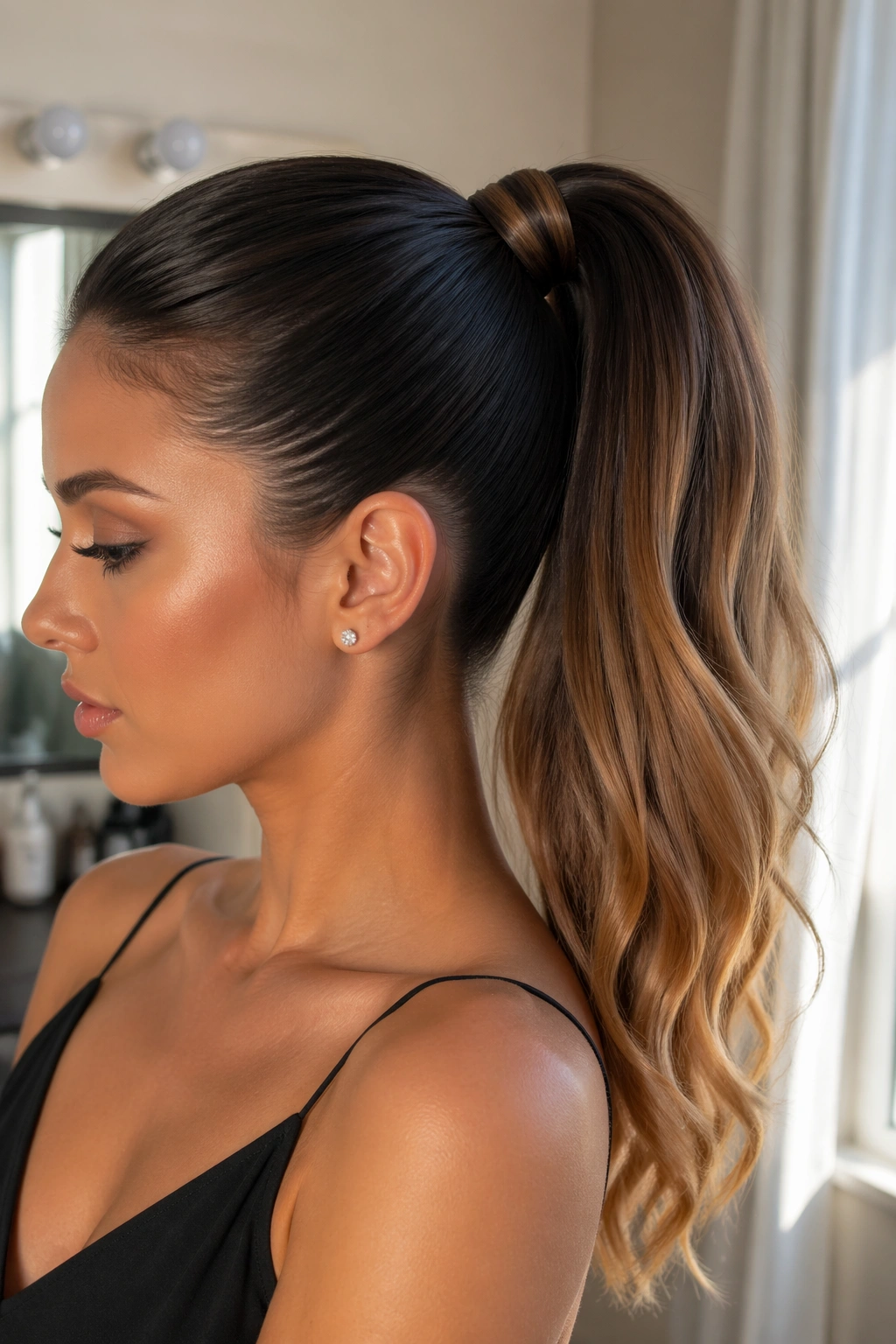
A high ponytail gives an ombre color melt a long, clean runway. The crown stays sleek and dark, then the caramel starts showing off once the hair clears the elastic and drops down the back. That contrast is why this version works so well on straight hair and loose curls alike.
Why the Height Matters
The higher you place the ponytail, the more the light catches the transition from espresso roots to warm caramel ends. A pony at the crown also keeps the fade visible from the front when a few face-framing pieces are left out. I like this version when the goal is polished, not fussy.
Quick Styling Notes
- Keep the base smooth with a lightweight gel or edge control.
- Wrap a 1-inch strand of hair around the elastic to hide the tie.
- Curl the ends with a 1.25-inch iron if you want the caramel to read softer.
- Use a shine spray sparingly so the darker roots do not look greasy.
Tip: If your hair is thick, tease the ponytail base just a little before securing it. The height lasts longer, and the color pop looks fuller from every angle.
2. Jet Black to Platinum Blonde Low Ponytail
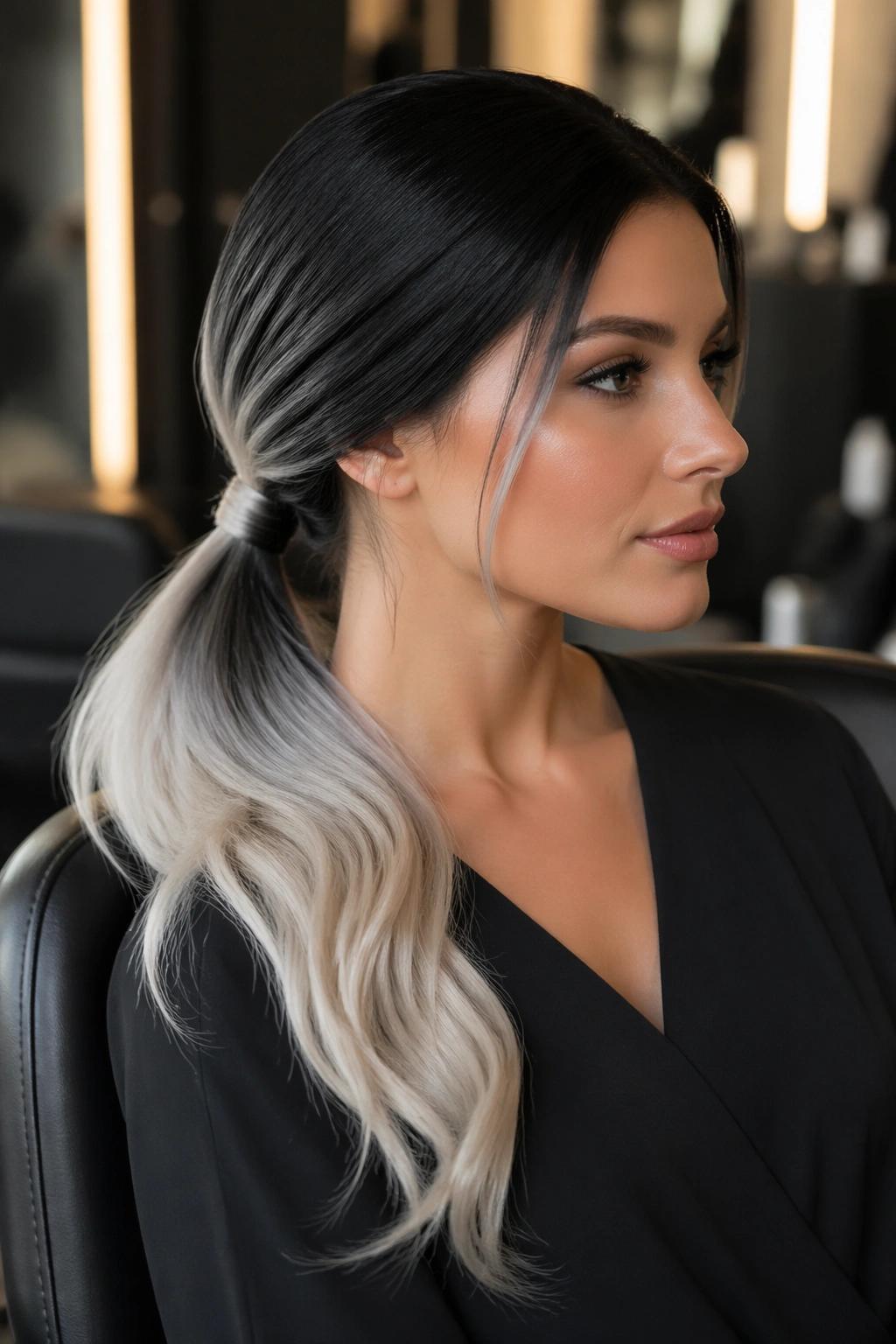
This is the dramatic one. Jet black at the crown and icy blonde at the ends creates a sharp, expensive-looking line, and a low ponytail lets the fade stretch out instead of bunching up. It feels cleaner than a high pony when the contrast is this strong.
A low placement also keeps the transition close to the nape, which makes the blonde ends swing like a ribbon when you walk. That movement matters. Without it, the look can start to feel heavy, almost blocky.
The finish should be glossy and controlled. Flyaways compete with the color change here, so a smoothing cream and a fine-tooth comb help more than volume products ever will. If the blonde is bright, keep it toned. Brass shows fast against black roots, and the whole style can go dull in a hurry.
This one is at its strongest when the hair is straight or only lightly curved at the ends. Loose waves can work, but they soften the contrast quite a bit. If you want the color story to stay crisp, keep the silhouette simple.
3. Chestnut to Copper Mid-Height Ponytail
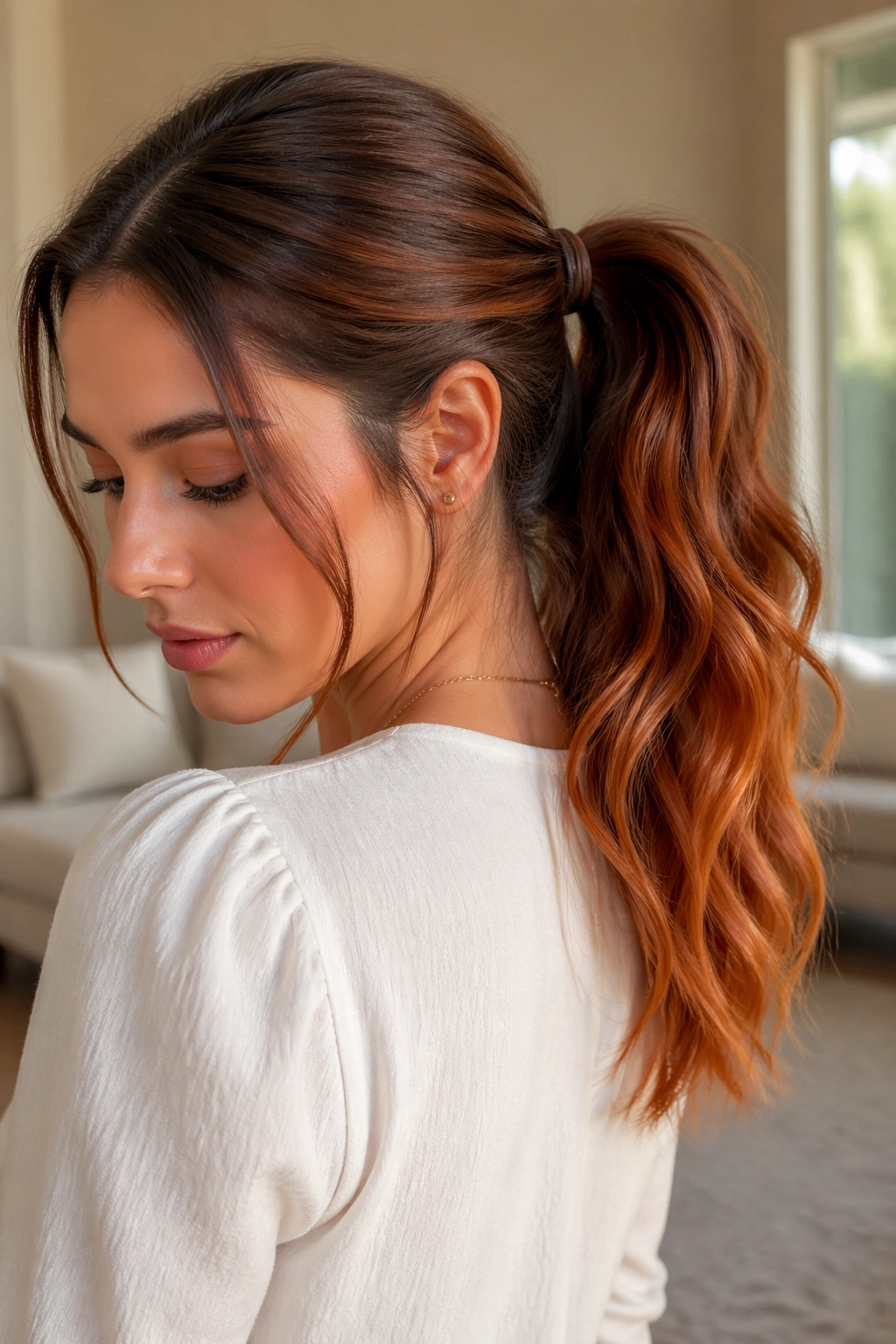
A mid-height ponytail sits in that sweet spot between casual and styled. Chestnut roots and copper ends feel warm without tipping into costume territory, and the middle placement lets both shades show up evenly.
I think this version has the easiest day-to-night range. Wear it with a clean center part and soft face pieces for work, then give the tail a few bends with a curling wand and it suddenly looks more dressed up. Nothing complicated. Just enough polish.
What Makes It Work
- Chestnut keeps the top grounded, so the copper does not take over.
- Copper reflects light well on layered hair, especially if the ends are trimmed blunt.
- A mid-height base keeps the transition visible without stretching the style too far.
- A half-inch of root shadow makes the grow-out softer and easier to live with.
One thing to watch: copper can shift dull if the hair is dry. A cream gloss or color-safe mask keeps the ends looking rich instead of dusty.
4. Dark Brown to Honey Blonde Wavy Ponytail
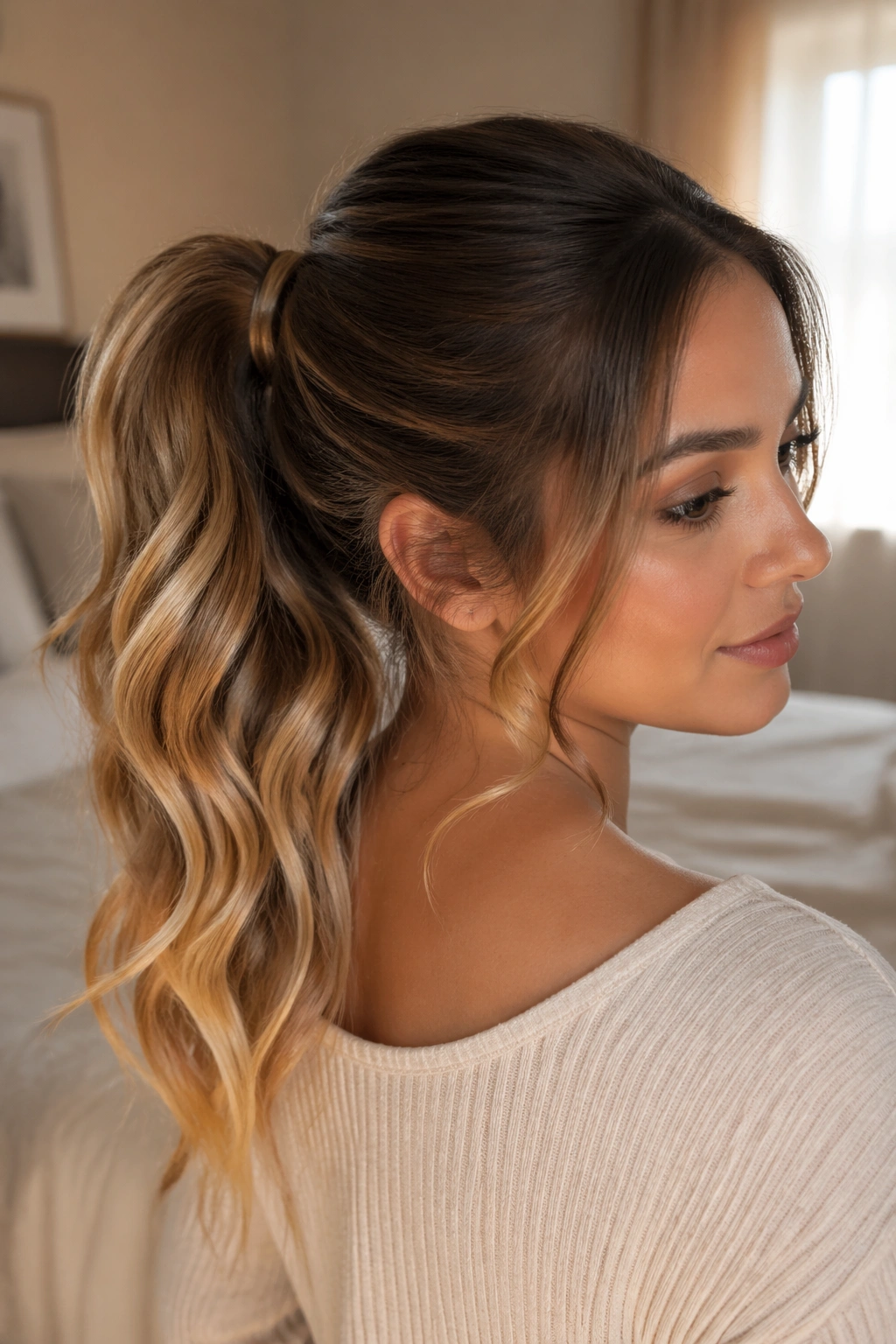
A wavy ponytail changes everything. Straight hair shows the color fade in a cleaner line, but waves give the ombre more texture, which makes the honey blonde ends feel softer and fuller. That softness is the whole point here.
Unlike a very sharp blonde fade, honey blonde is forgiving. It sits close to a natural sun-lightened finish, so the style reads easy even when the roots are deep brown. This is a good pick if you want color without that hard-edged salon contrast.
The best trick is to curl the tail away from the face in alternating directions, then brush it out once. You get a loose, airy bend instead of stiff ringlets. That matters because the ponytail should move. If it feels frozen, the blonde ends stop looking playful.
I also like this on layered cuts. The shorter pieces break up the fade and keep the ponytail from looking like one solid rope. That tiny bit of mess makes the color look more natural, which sounds boring until you see it in person.
5. Brunette to Cherry Cola Ponytail
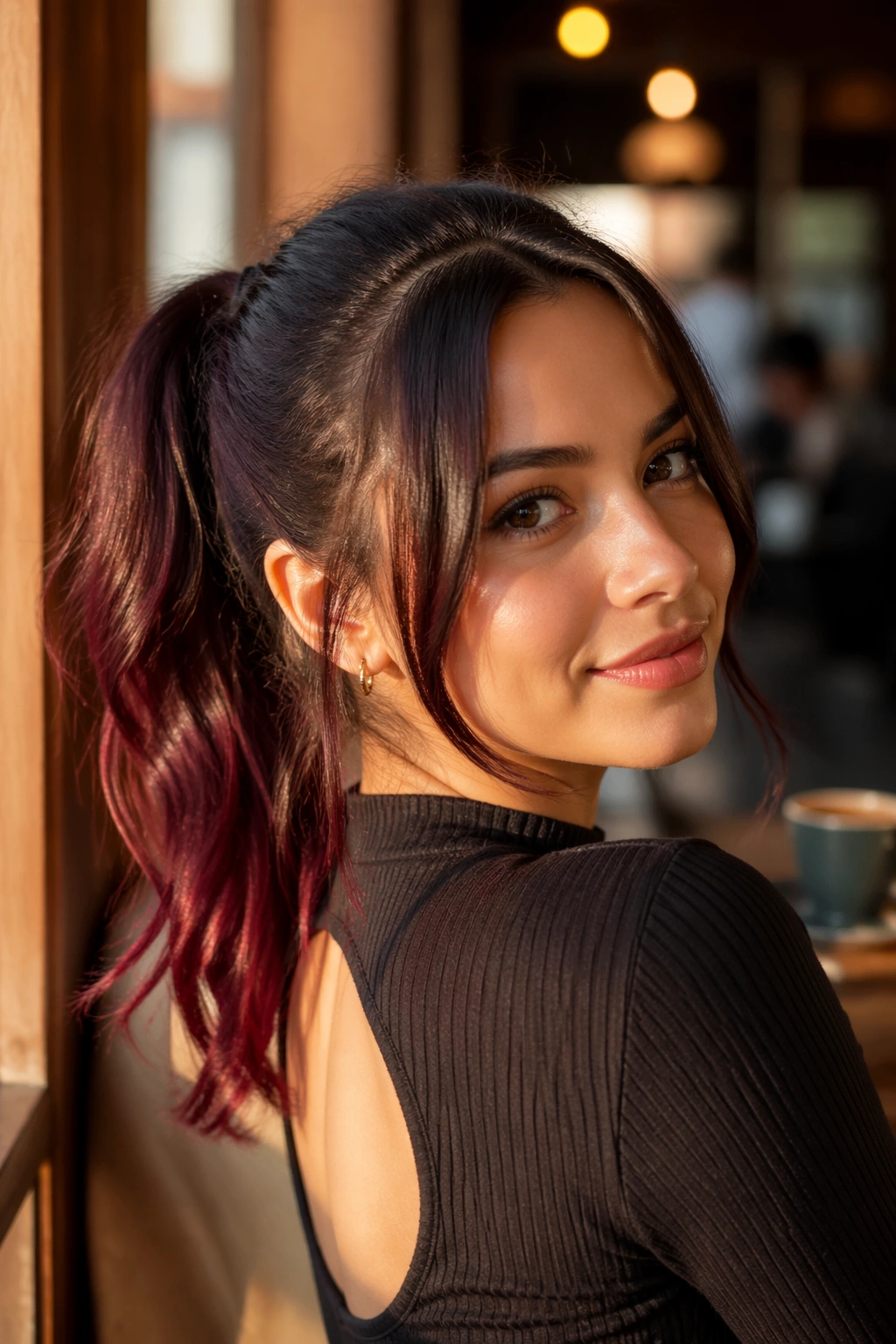
Why does cherry cola work so well in a ponytail? Because the color has enough red to pop, but enough brown to keep the whole thing wearable. The shade shows depth in low light and turns glossy under bright light, which is exactly what a ponytail needs.
Why the Red Reads So Well
Cherry cola is not a flat red. It has that dark, syrupy base that lets the ends look rich instead of neon. In a ponytail, the color appears in layers as the hair stacks on itself, so the shade looks even deeper than it does when worn down.
How I’d Wear It
- Keep the roots a deep brunette or soft black.
- Add soft curls only to the bottom third of the ponytail.
- Use a smoothing serum on the crown so the color stays the star.
- Pair it with a wrapped base in the same dark tone.
This look loves shine. A matte finish drains the color of some of its punch, and that would be a shame. If you want a ponytail that feels a little sultry without shouting, this is the one.
6. Raven Black to Cobalt Blue Bubble Ponytail
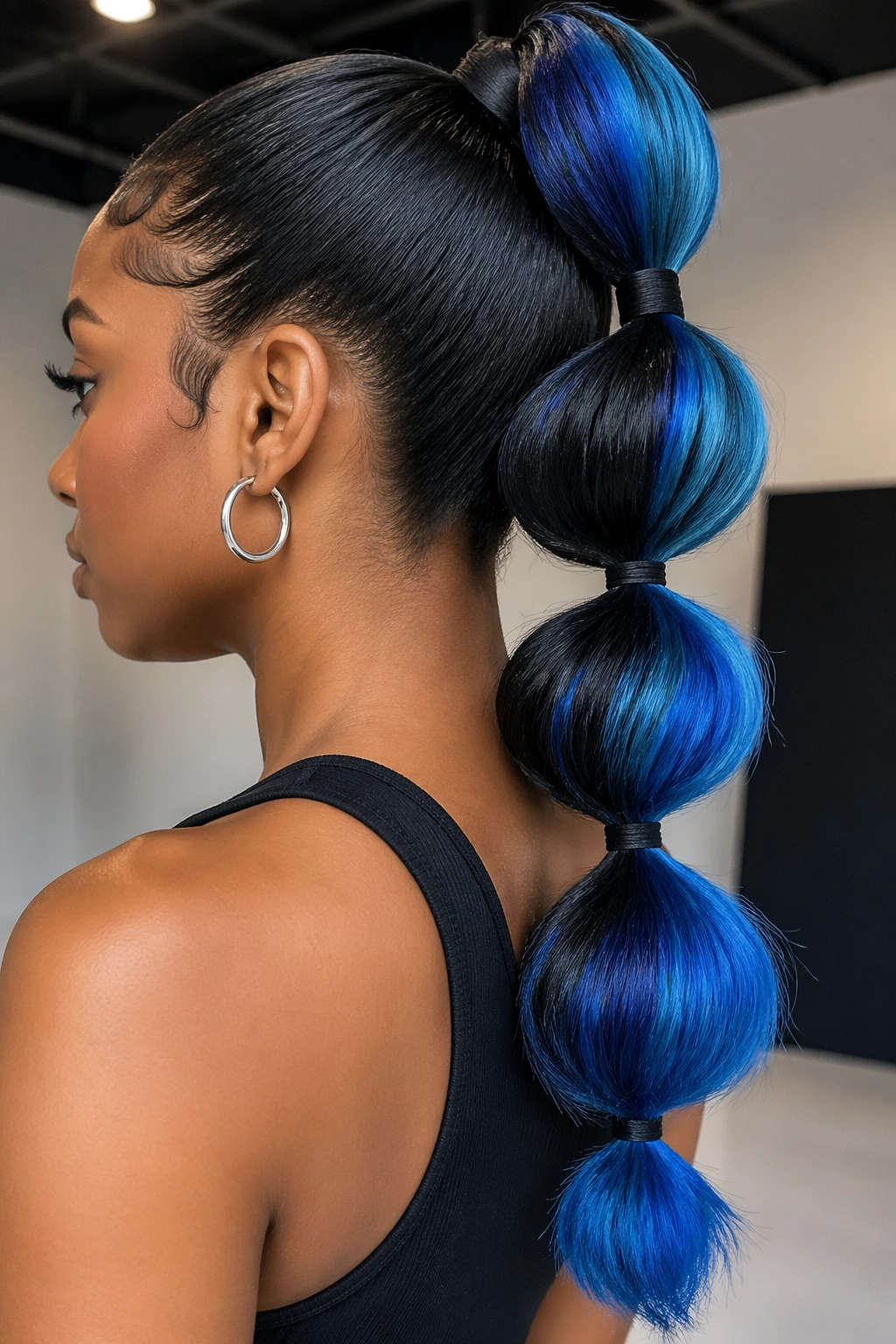
This style has attitude. The bubble shape breaks the tail into sections, and each puff gives the cobalt blue a fresh little flash of light. If you want your ombre ponytails to feel a bit sharper and less classic, this is a strong move.
Bubble ponytails are also useful because they make color look thicker. The elastic ties create visible segments, which makes the blue appear more layered and dimensional. That helps if your ends are fine or you’re using extensions for extra length.
A smooth top keeps the whole thing from looking messy. Then the bubbles do the work. Space the elastics about 2 to 3 inches apart, gently tug each section, and let the blue show up in the gaps. Too much tugging and the style loses its shape; too little and it reads flat.
I like cobalt blue because it has enough depth to sit next to black roots without looking harsh. Bright blue can go cartoonish fast. Cobalt stays richer. It has more weight to it, and that makes the ponytail feel intentional instead of loud for the sake of being loud.
7. Ash Brown to Lavender Sleek Ponytail
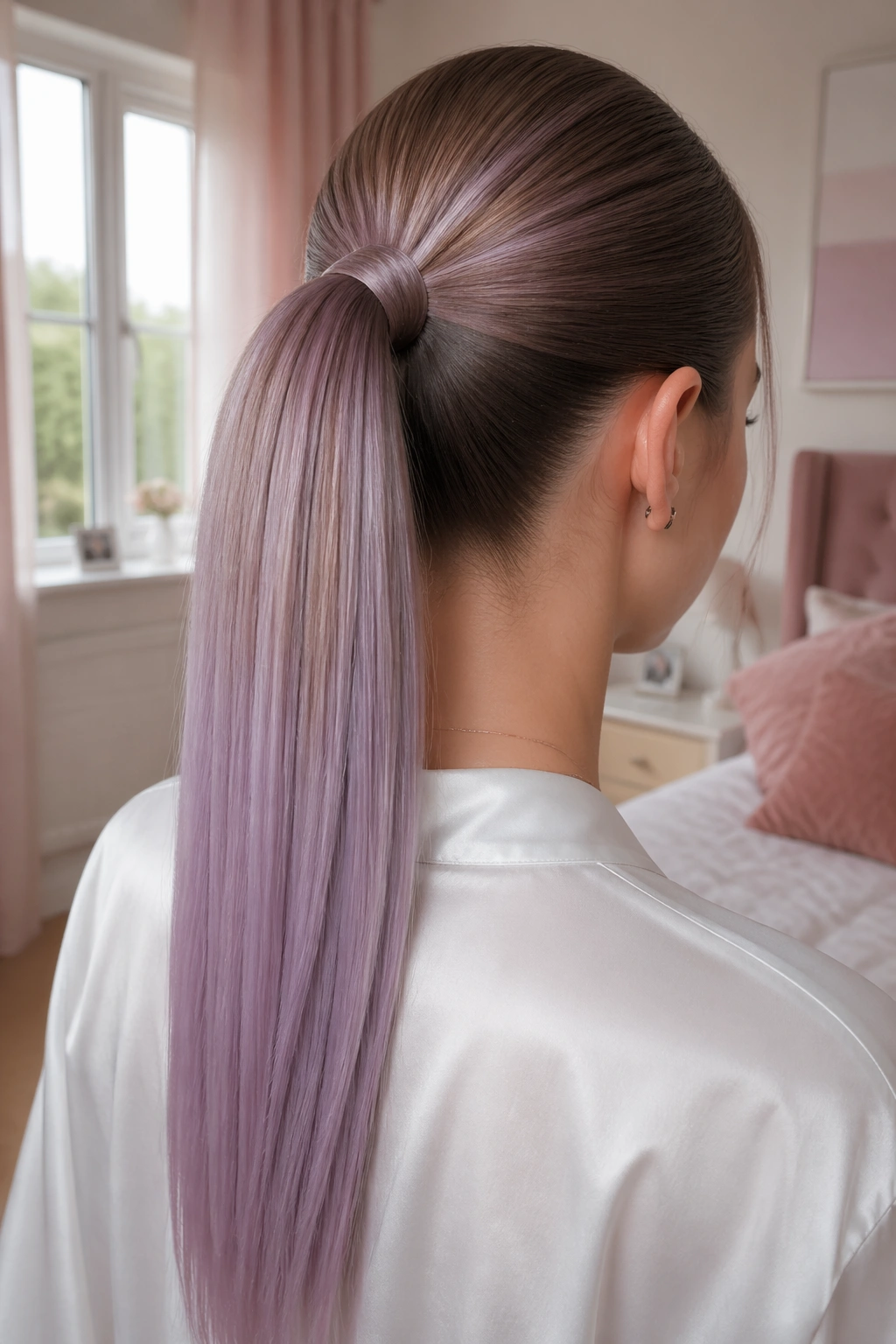
Lavender is one of those shades that can look soft or strange depending on the finish. Put it on a sleek ash-brown base, though, and it suddenly feels calm, cool, and clean. That’s the appeal here.
What Makes Lavender Easier Than Neon
Pastel ends are easier to wear when the top half stays muted. Ash brown gives you that quiet root area, which keeps the lavender from floating off into novelty territory. The ponytail should look smooth at the crown and glossy through the tail, almost like satin ribbon.
The trick is tone control. Lavender works best when it is more lilac than purple and not too opaque. If the ends are too saturated, the style starts to lose that airy look and can feel heavy. A semi-translucent tone is better.
How to Get the Most From It
- Flat-iron the top section on low heat for a polished base.
- Add a tiny bit of serum to the mid-lengths, not the roots.
- Keep the ponytail low or mid-height for a softer line.
- Refresh faded pastel with a color-depositing conditioner once the tone starts to wash out.
This is one of my favorites for anyone who likes color but does not want a jarring contrast. Quiet, but not shy.
8. Golden Blonde to Peach Ombre Ponytail
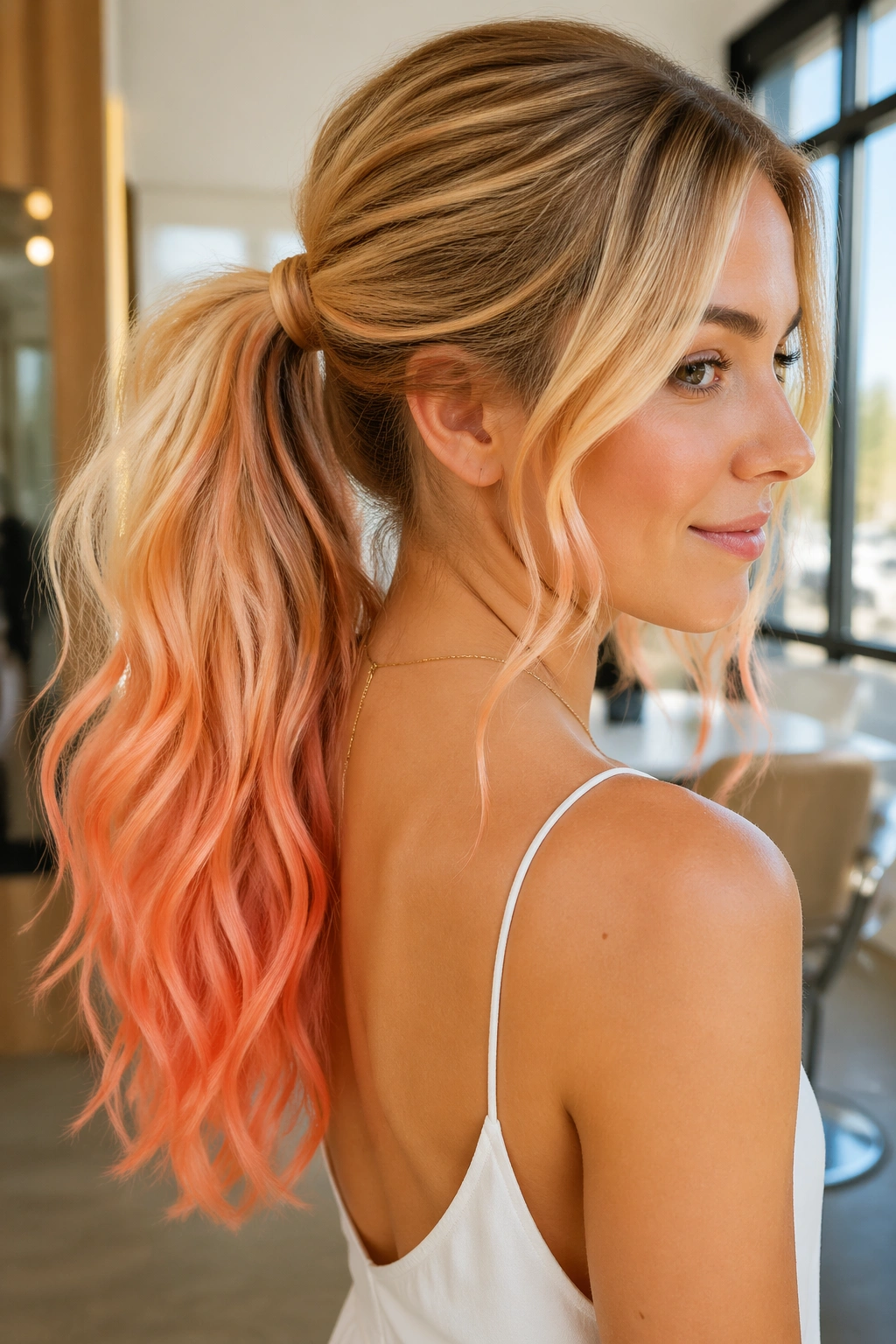
A peach ombre ponytail has a soft, cheerful feel without going sugary. Golden blonde at the top keeps the look bright, and the peach at the ends gives you a warm color wash that stands out in a good way.
I like this one when the hair already has some movement. Beachy waves, loose bends, even a slightly piecey blowout — all of it helps the peach look more natural. Straight hair can make the shade feel a little flat unless the blend is very smooth.
A side benefit: peach is kinder than many vivid colors. It fades into a pale blush tone that still looks decent for a while, especially if you keep the hair hydrated. Dry ends can turn the shade chalky, and nobody wants that.
Key Details That Matter
- Works well with medium to long hair.
- A warm gloss over the blonde base helps the fade stay soft.
- Face-framing pieces in blonde keep the look airy.
- A soft curl at the ends makes the peach show more clearly.
This is a sweet spot color. Not sugary. Not severe. Just enough warmth to make a ponytail feel fresh.
9. Auburn to Burgundy Wrapped Ponytail
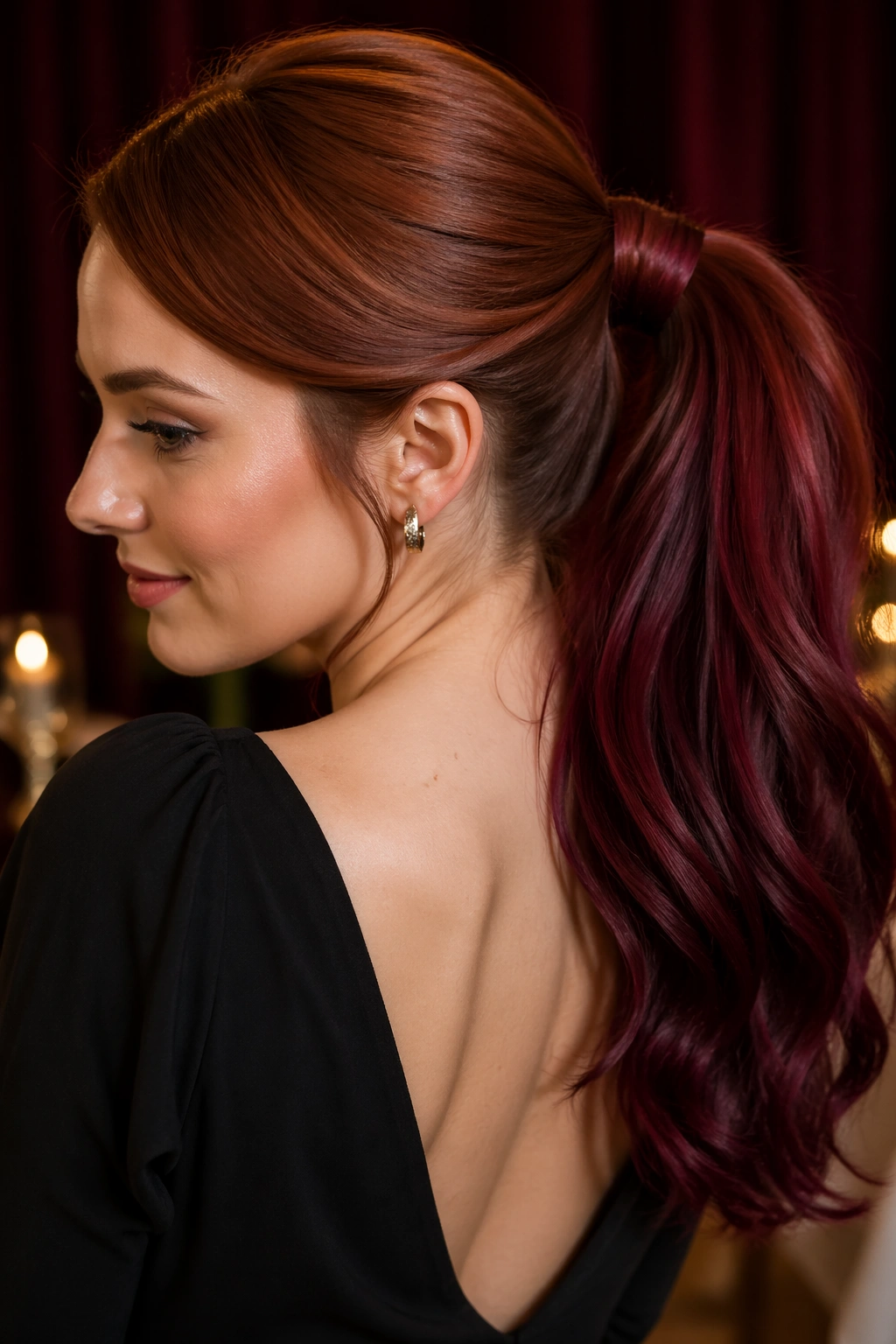
Unlike a full red look, auburn to burgundy lets the color darken as it drops. That makes the ponytail feel richer and more controlled, which is exactly why the wrapped base matters so much here. The wrap cleans up the elastic and turns the ponytail into a proper statement.
This style works especially well when the hair has a dense, almost velvet finish. Burgundy catches the light in a different way than brighter reds; it looks deeper, almost wine-dark, and a wrapped ponytail gives it room to read that way. If the hair is too shaggy at the crown, the effect gets lost.
The nicest version has a little bend in the mid-lengths and a smooth top. Too much curl makes burgundy look costume-y. Too little movement, and the shift from auburn to burgundy can disappear.
I’d choose this for dinner, a night event, or any time you want color that feels grown up. It is dramatic, yes. But it is also easy to wear, which is the part people often miss.
10. Mocha to Rose Gold Curled Ponytail
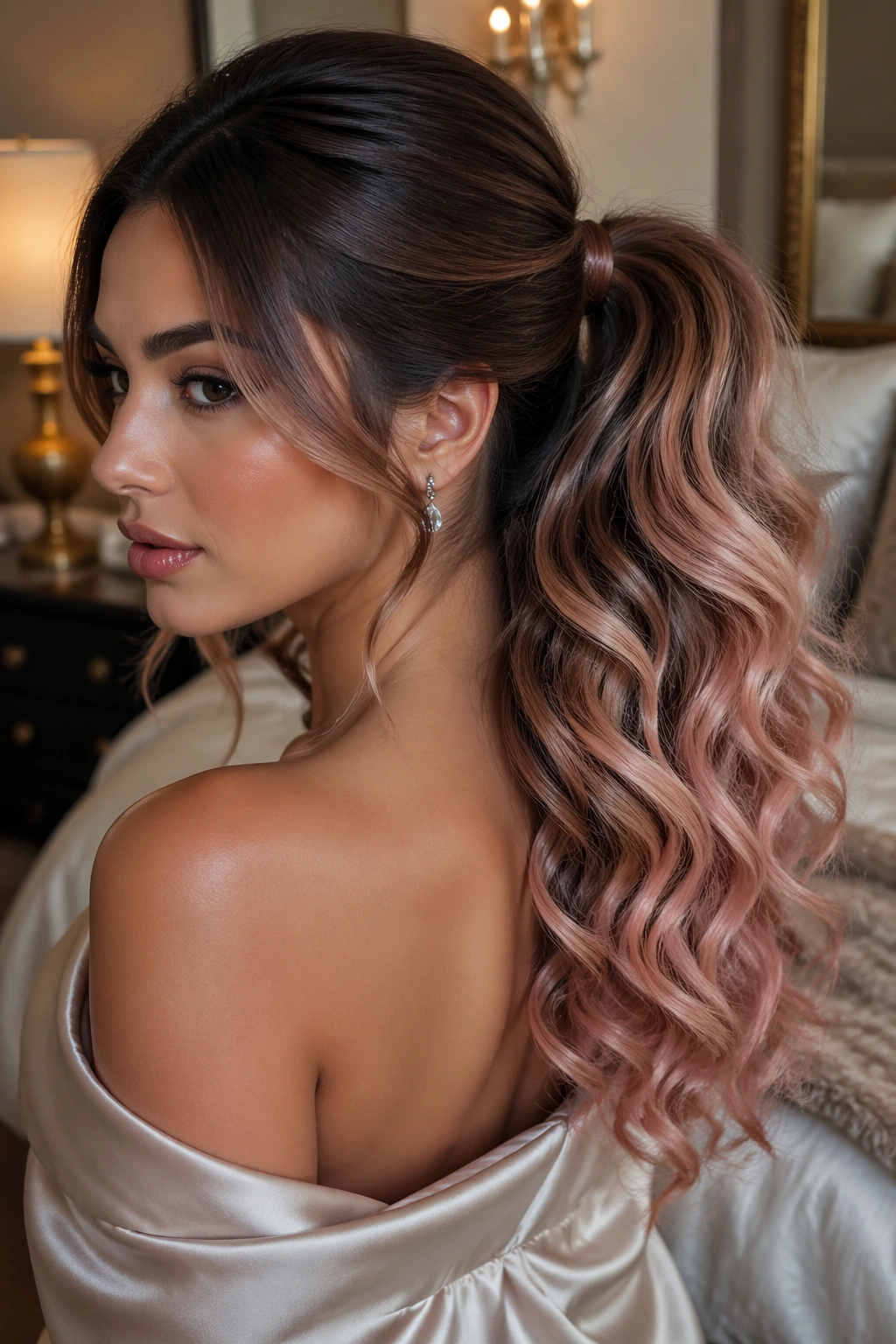
What if you want glamour without going full pink? Mocha to rose gold is the answer I keep coming back to. The brown base keeps the look grounded, and the rose gold ends bring in that soft metallic warmth that catches light beautifully on curled hair.
Why the Curl Pattern Matters
Rose gold looks better when the ponytail has movement. A 1-inch curling iron gives you enough shape without turning the tail into tight spirals, and a brushed-out wave makes the color look richer. The color should live on the surface of the curls, not hide inside them.
How to Wear It Well
- Keep the ponytail mid-height so the ends have room to fall.
- Leave a few front pieces out if you want a softer face frame.
- Use a lightweight oil on the ends to keep the rose tone glossy.
- Avoid heavy hairspray, which can make metallic tones look dusty.
This is one of those styles that feels expensive in a quiet way. Not flashy. Just pretty with a little edge.
11. Sandy Blonde to Coral Side Ponytail
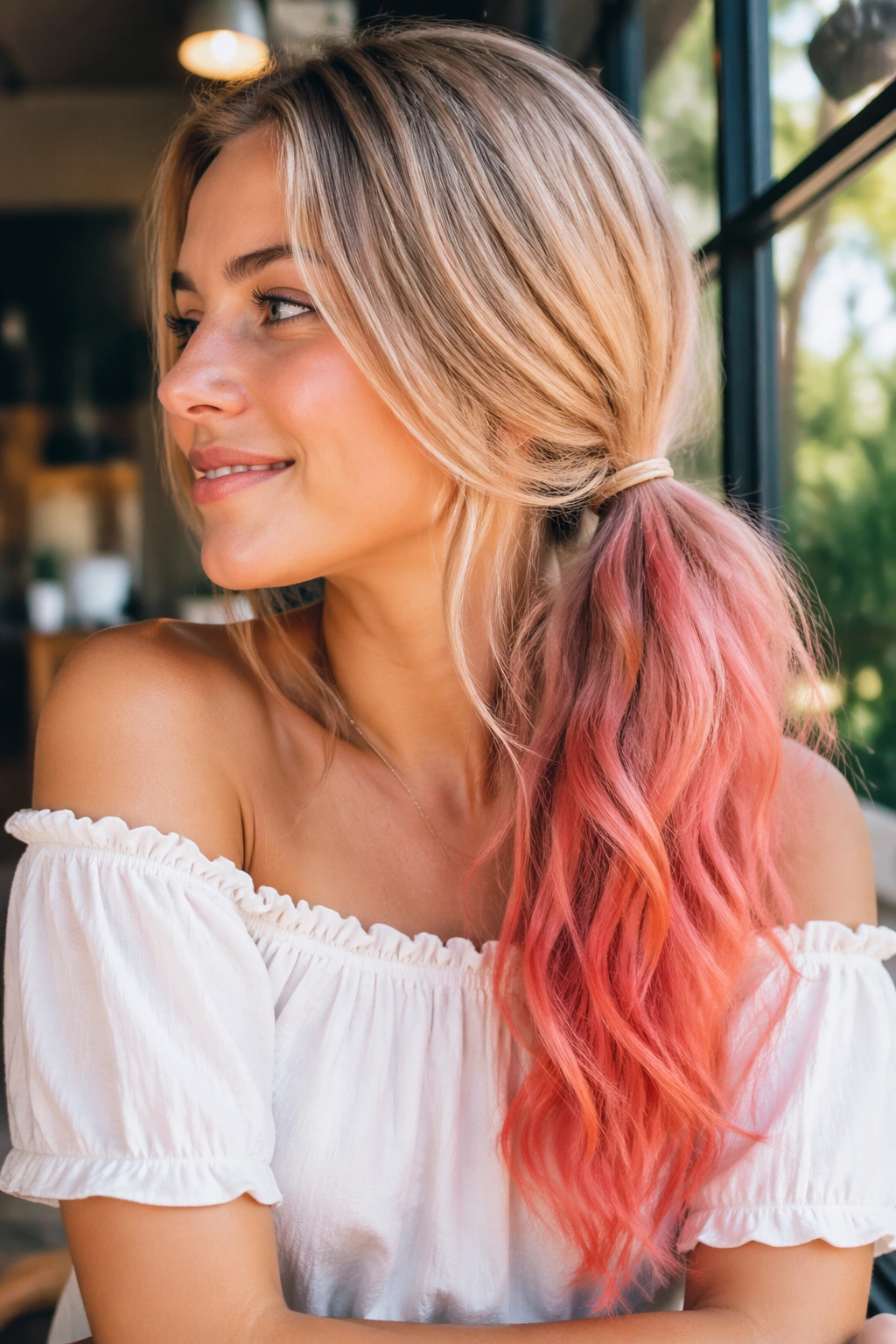
A side ponytail changes the whole attitude of the ombre. The color no longer falls straight down the back; it drapes over one shoulder, which makes the coral ends look more obvious and more playful. It is a good choice when you want the color to be seen without having to turn around.
The side placement also gives the style a softer shape around the face. Sandy blonde at the top keeps things light, and coral at the bottom adds a warm punch that feels lively instead of harsh. If the hair is thick, the side pony can get bulky fast, so smoothing the crown first helps.
I’d keep this version a little undone. A perfect side pony can look a touch formal, even stiff. A few wisps, a slightly textured tail, and soft ends keep it from feeling overworked. And honestly, that looseness suits coral better.
This is a nice pick for someone who wants color that reads friendly. Not shy. Just friendly.
12. Deep Espresso to Emerald Green Braided Ponytail
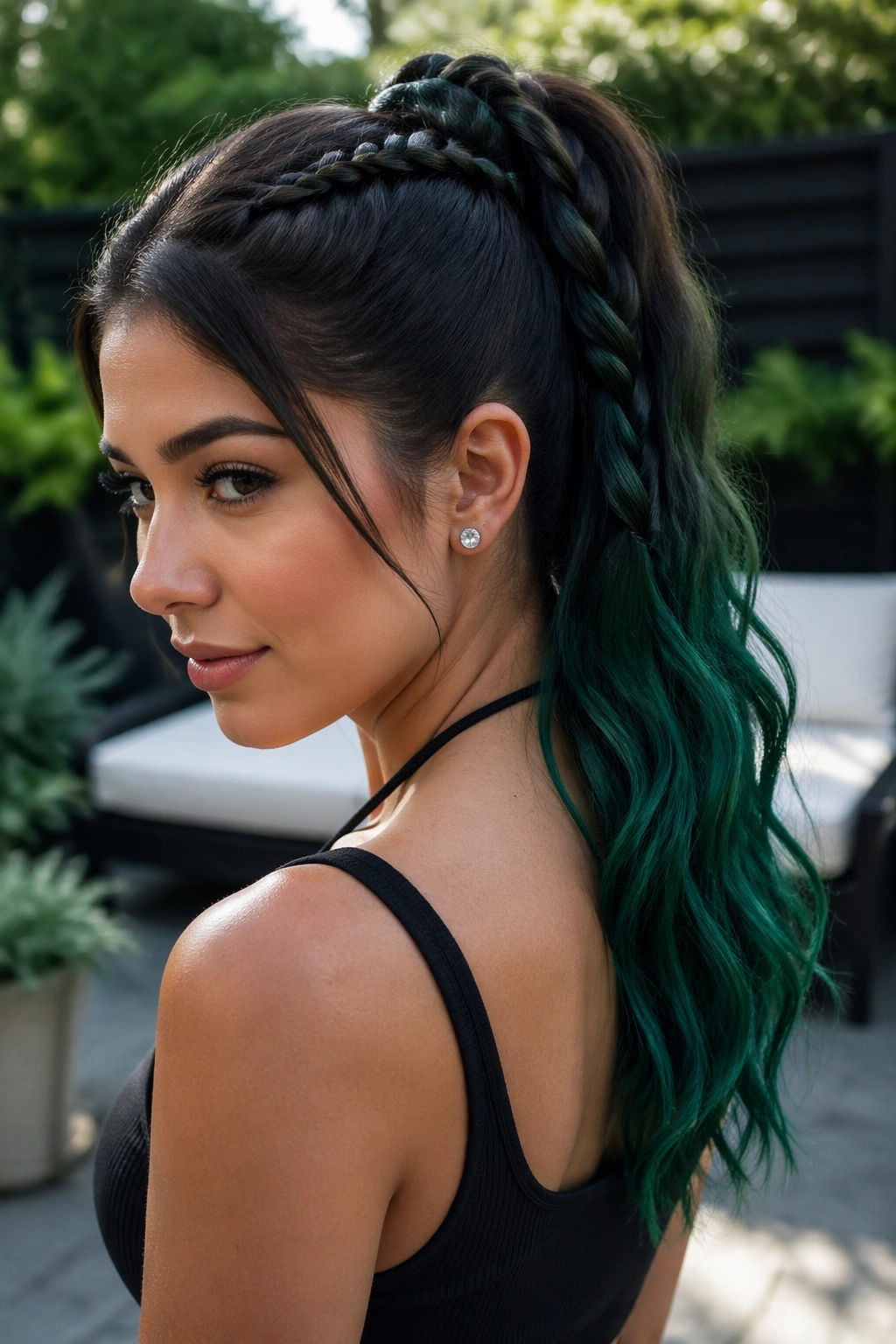
A braid inside the ponytail gives emerald green a sharper edge. The woven sections break up the color and make each strand pick up light at a slightly different angle, which is exactly what jewel tones need.
Why the Braid Matters
Without the braid, emerald can sit as one heavy block at the ends. With it, the color looks more layered. The braid also keeps the style controlled, so the ponytail can be big and dramatic without turning messy.
How I’d Build It
- Start with a deep espresso base and smooth the crown flat.
- Braid the top half or create a cornrow-style accent before gathering the rest.
- Keep the emerald concentrated through the lower half of the tail.
- Finish with a light shine mist, not a thick spray.
This one is especially good on long hair or extensions, because the braid needs some length to breathe. Short ponytails can feel cramped. Long ones let the green show off.
It is bold, but in a disciplined way. That is what makes it better than random color streaks.
13. Soft Black to Silver Gray High Ponytail
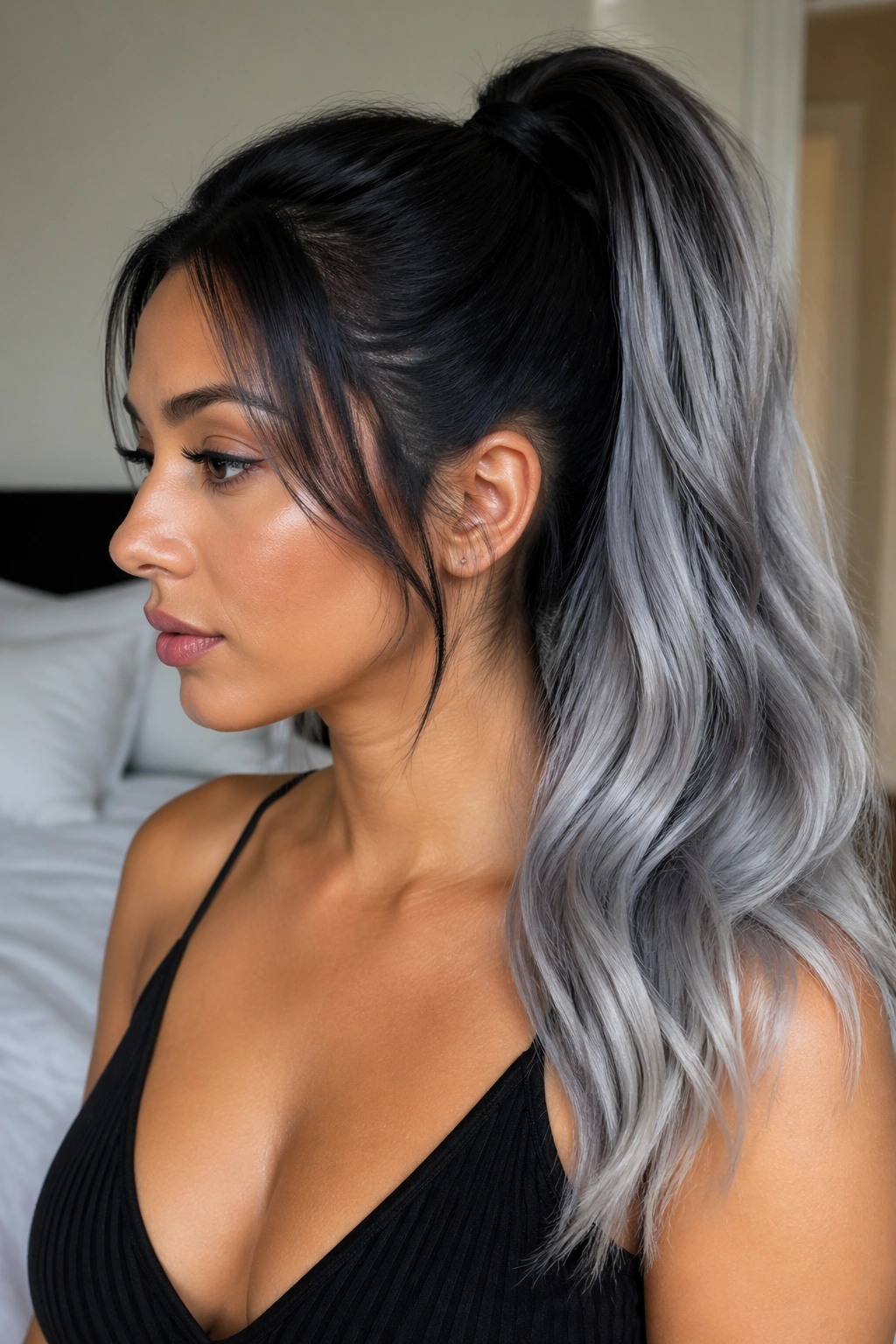
Silver gray in a high ponytail has a sharp, modern look without needing loud makeup or heavy styling. The black base grounds it, and the silver ends bring in that cool, reflective finish people either love immediately or end up loving after the second look.
The honest part: silver shows dryness fast. Every frizzed-out end looks brighter than it should, and the whole ponytail can read rough if the hair is not hydrated. So this style rewards good conditioning more than most of the others on this list.
A high ponytail lifts the gray away from the neckline, which helps the color feel lighter. It also makes the ends fan out a little, especially if the hair is layered. That small movement keeps the silver from looking like a flat strip of paint.
I like this with clean, minimal styling. Strong brows, simple hoops, a sharp liner maybe. The hair already brings enough edge.
14. Caramel Bronde to Blue-Black Tips Ponytail
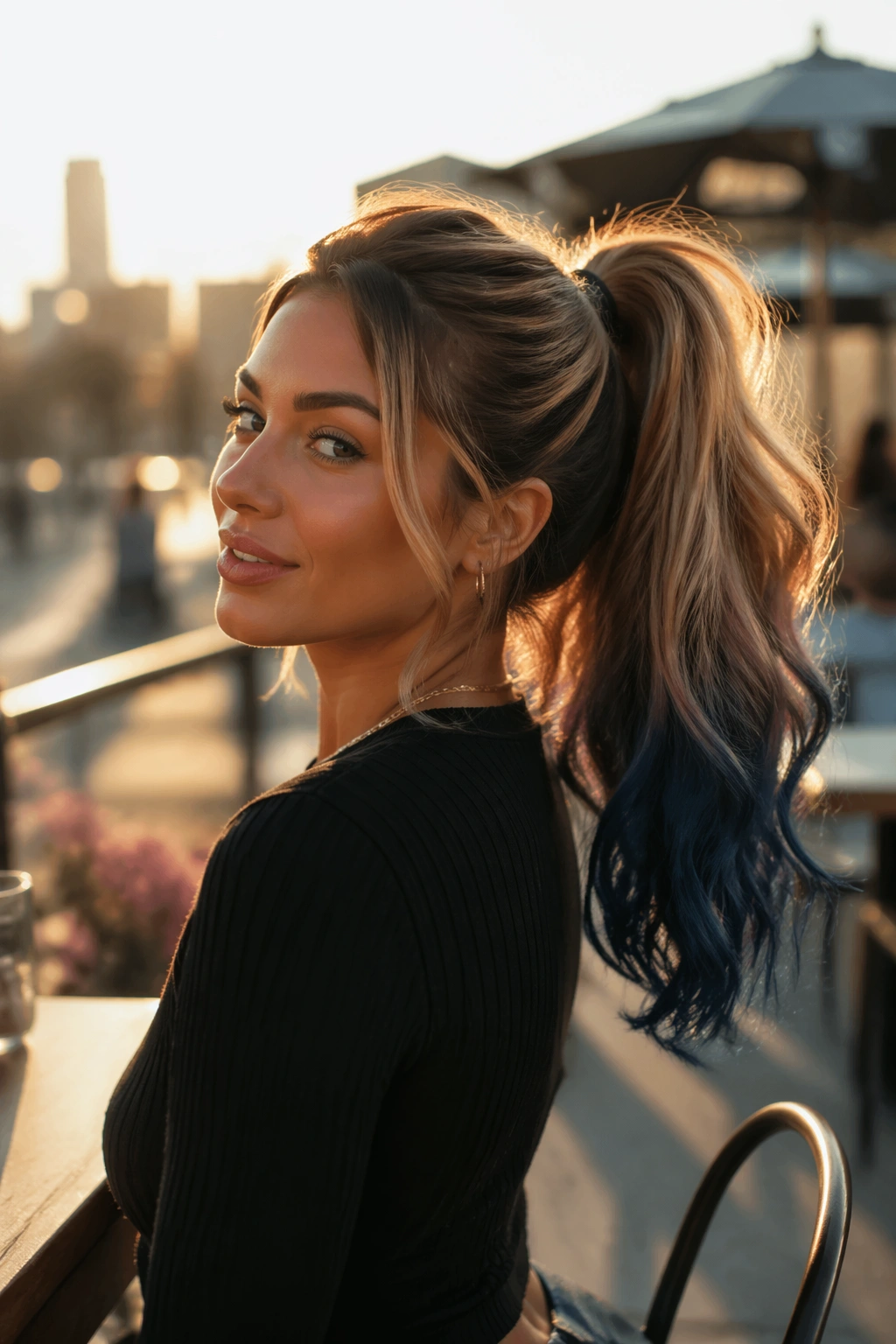
Blue-black tips are one of my favorite ways to add edge without losing wearability. The caramel bronde top keeps the look soft and sunlit, while the blue-black ends give you that dark, inky finish that looks richer than plain black.
The best thing about this combo is how subtle it can be in shade and dramatic in light. Indoors, the ends might look almost black. Outside, that blue tone comes out and changes the whole shape of the ponytail. That little shift keeps the style from going flat.
This is a smart pick if you work somewhere conservative but still want a color story. The top half stays approachable. The ends do the mischief.
A smooth blowout works better than tight curls here. Too much texture hides the blue-black finish, and that would be a waste. Keep the line clean, keep the tail glossy, and let the color do the heavy lifting.
15. Dark Blonde to Strawberry Pink Ponytail
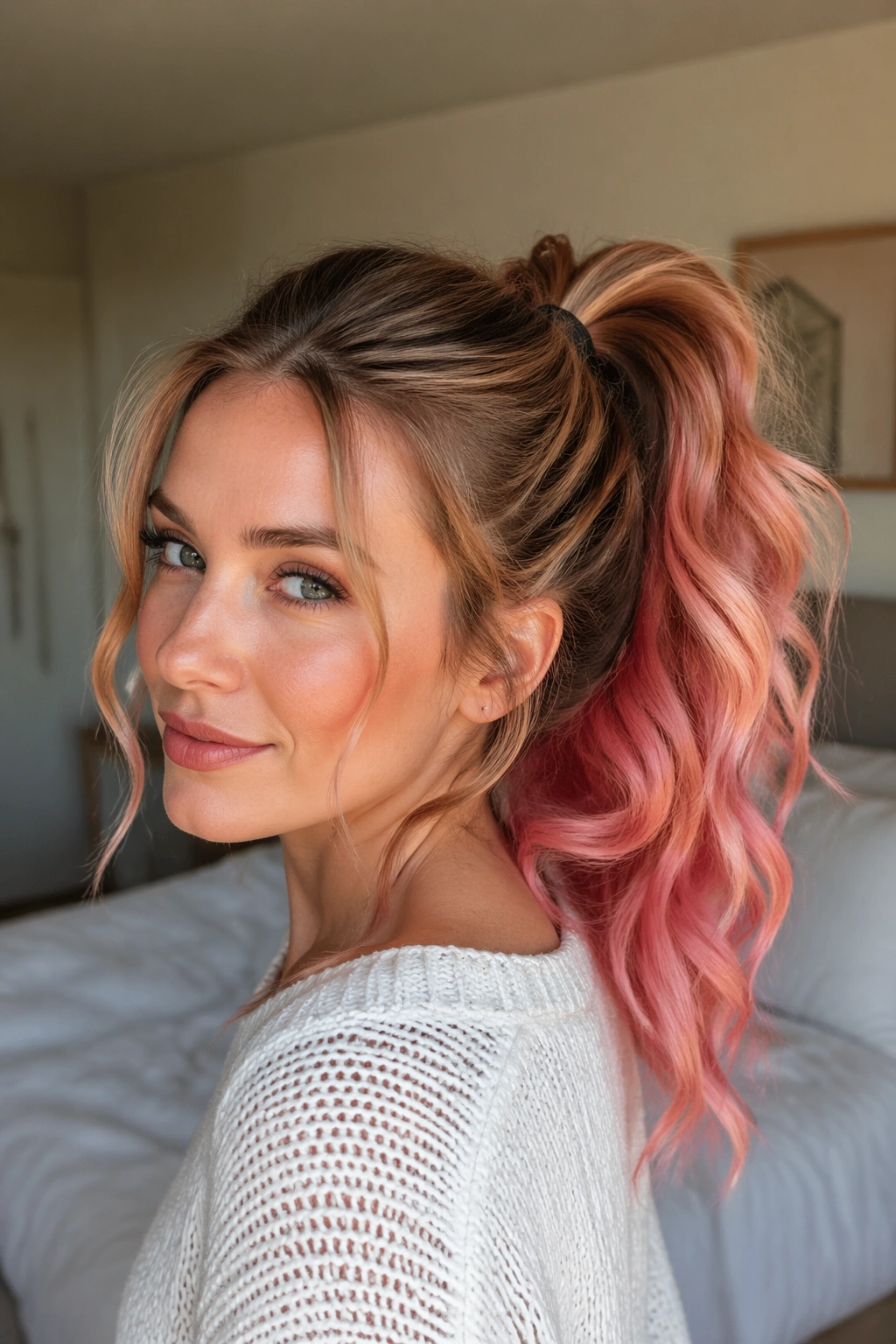
There is something charming about strawberry pink on a ponytail. Not bubblegum. Not neon. Strawberry pink has a soft red warmth that plays well with dark blonde roots, especially when the ends are curled into loose, chunky waves.
A look like this can go sweet fast if the styling is too perfect. I prefer it a little loose around the crown, with one or two face-framing pieces left out. That keeps the pink from feeling too precious. Hair that is slightly undone usually wears a color like this better anyway.
This is also one of the easiest ways to test a bold tone without committing to a hard line. Clip-ins, color-depositing conditioners, and temporary tints all handle this shade pretty well. You can keep the root area natural and let the pink live at the bottom third of the ponytail.
Soft, but not meek. That is the whole point.
16. Chocolate Brown to Gold Dip-Dye Ponytail
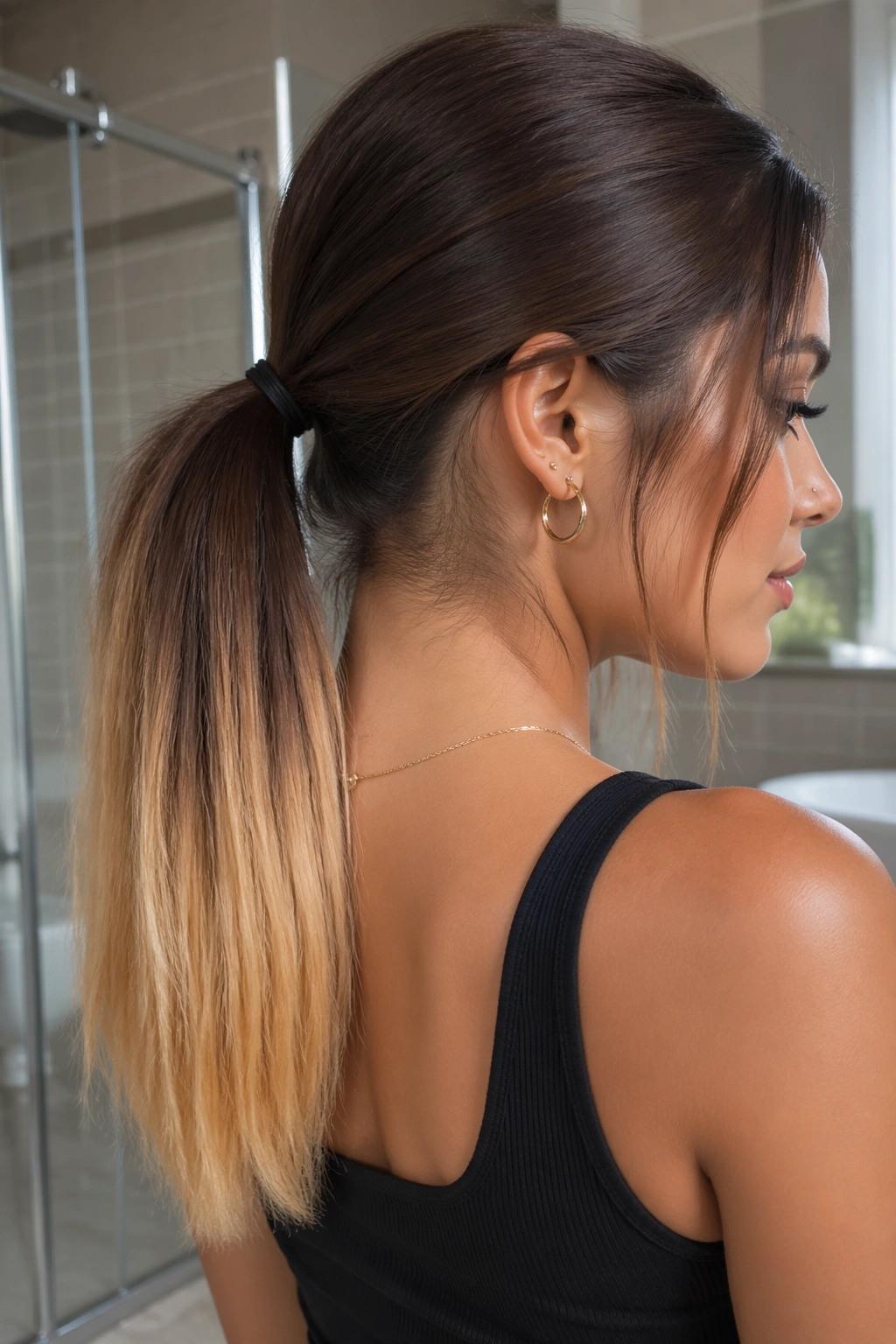
Why does dip-dye sometimes look cleaner than a full ombre? Because the color break is deliberate. Chocolate brown at the top and a gold finish at the ends gives you a stronger visual stop, and a ponytail handles that contrast better than most hairstyles.
The Science Behind the Shape
A ponytail already concentrates the ends together, so a dip-dye effect reads like a designed feature instead of a grow-out accident. Gold works here because it reflects light hard at the tips while the brown base keeps the whole style from feeling too bright.
Best Ways to Wear It
- Keep the transition line around the bottom third of the tail.
- Add soft bends rather than tight curls.
- Use a smoothing cream on the top half and a light oil on the ends.
- Pick gold that leans warm, not pale yellow.
This style is a little bolder than a soft caramel fade, but it still feels wearable. That balance is why it shows up so often in real life and not just in inspiration photos.
17. Icy Blonde to Lilac Cloud Ponytail
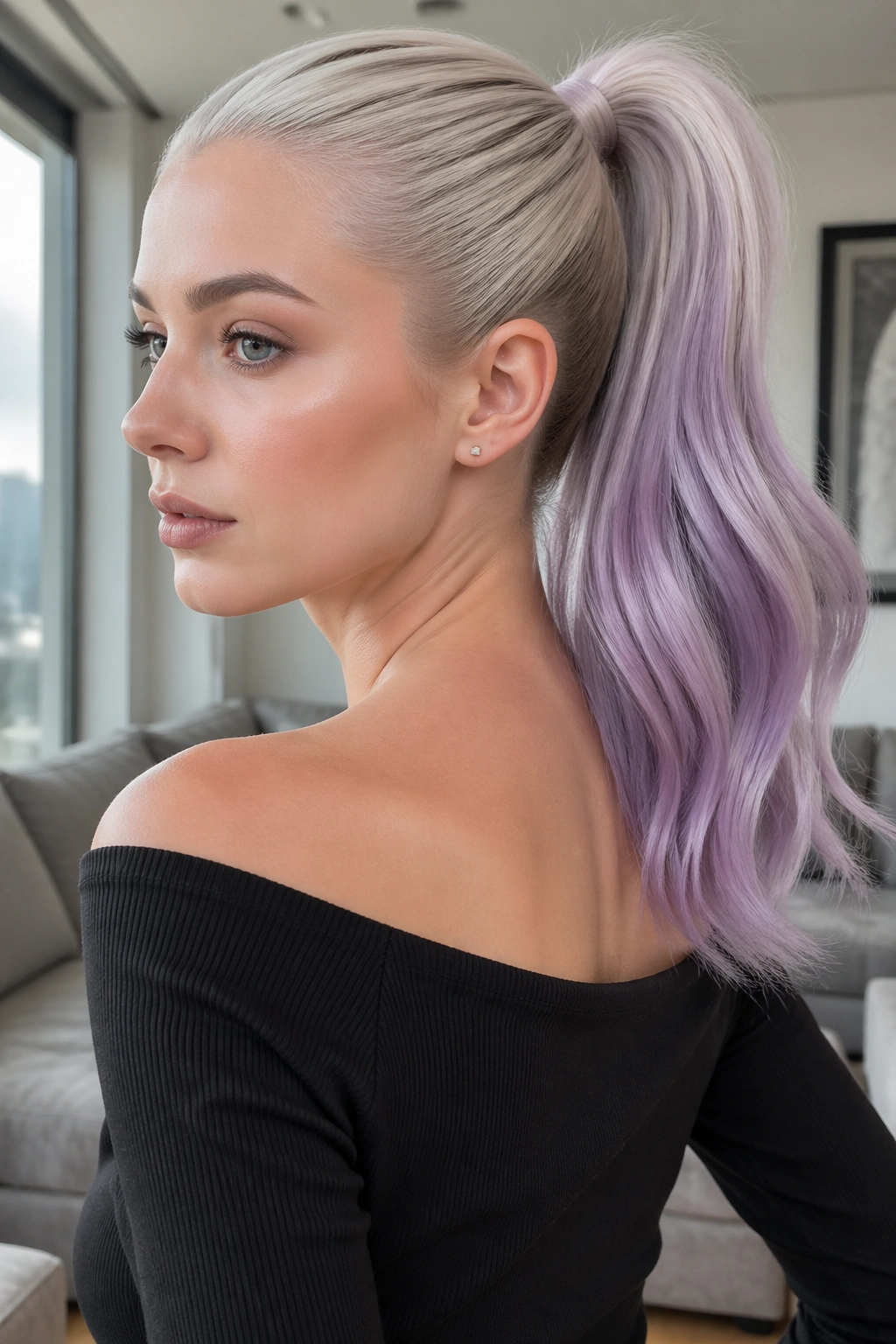
Icy blonde and lilac is a cool-toned pairing that can look airy or severe, depending on the finish. In a ponytail, it usually lands on the airy side, especially if the lilac is softened into a cloud-like pastel rather than a dense purple.
The blonde needs to be clean. Not yellow. Not warm. If the base is brassy, the lilac starts fighting it, and the whole look turns muddy. A glossy toner or a purple mask helps keep the blonde crisp enough for the color shift to make sense.
This style loves sleekness at the top and a bit of movement in the tail. A straight base with softly bent ends keeps the color visible without making the ponytail feel stiff. If you want the lilac to look expensive, keep the texture controlled.
It’s a pretty specific look. That’s the charm. It does not try to be everything.
18. Mahogany to Teal Low Ponytail
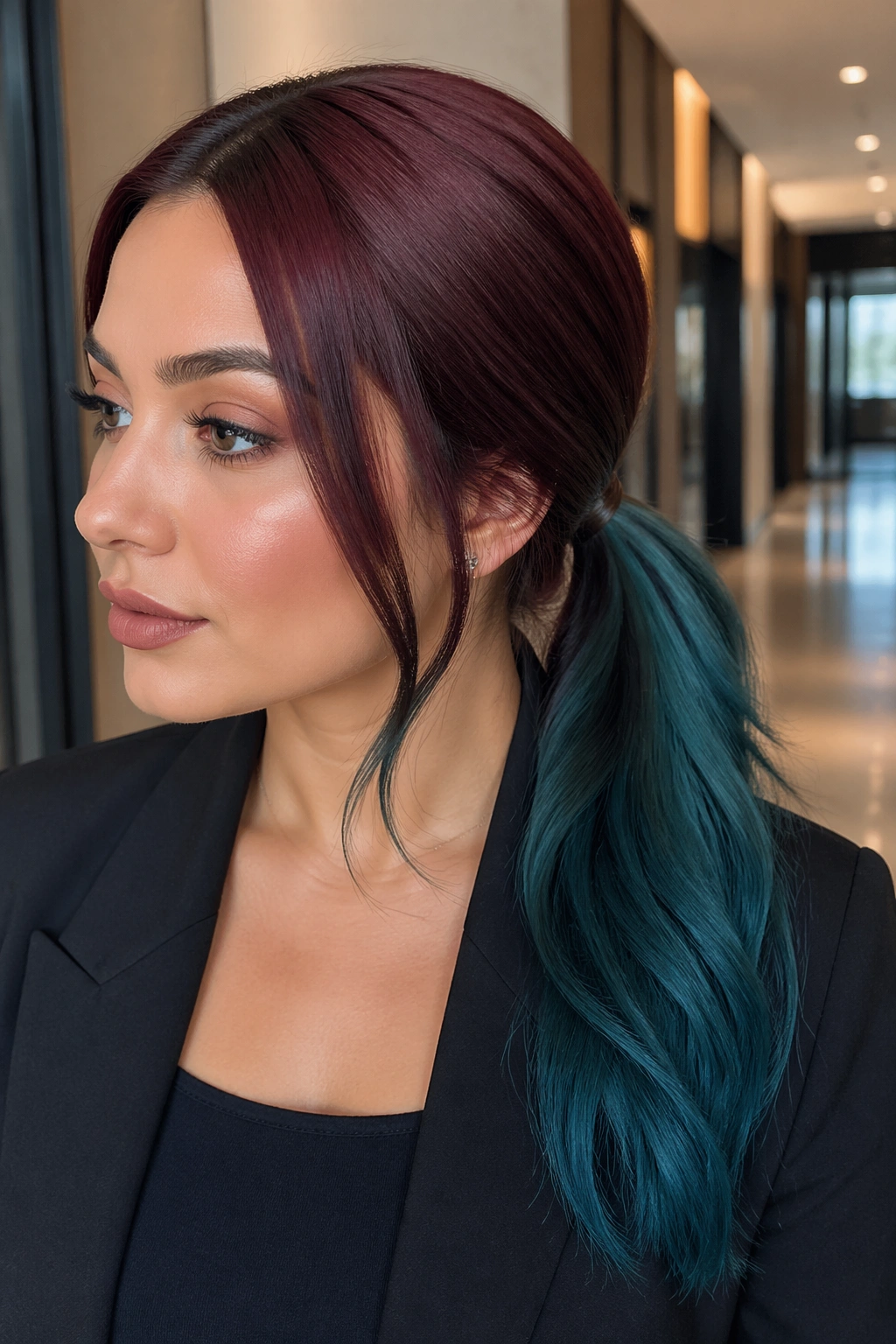
Mahogany to teal is not subtle, and I don’t think it should be. A low ponytail gives the darker mahogany room to stay rich at the crown while the teal ends hang near the shoulders, where they can show off properly. The lower placement also makes the color feel heavier in a good way.
Teal has enough blue in it to feel cool and enough green to keep things interesting. Against mahogany, it pops hard without looking childish. That pairing feels grounded, which helps when the color itself is loud.
I’d keep the base smooth and the tail slightly textured. Too much polish can make the teal look flat, while a little movement gives it depth. A narrow center part also helps this style feel sharper, though a side part can soften it if that’s your thing.
This is the ponytail I’d choose when I want the color to do the talking and the shape to stay simple.
19. Neutral Brunette to Rainbow Fade Ponytail
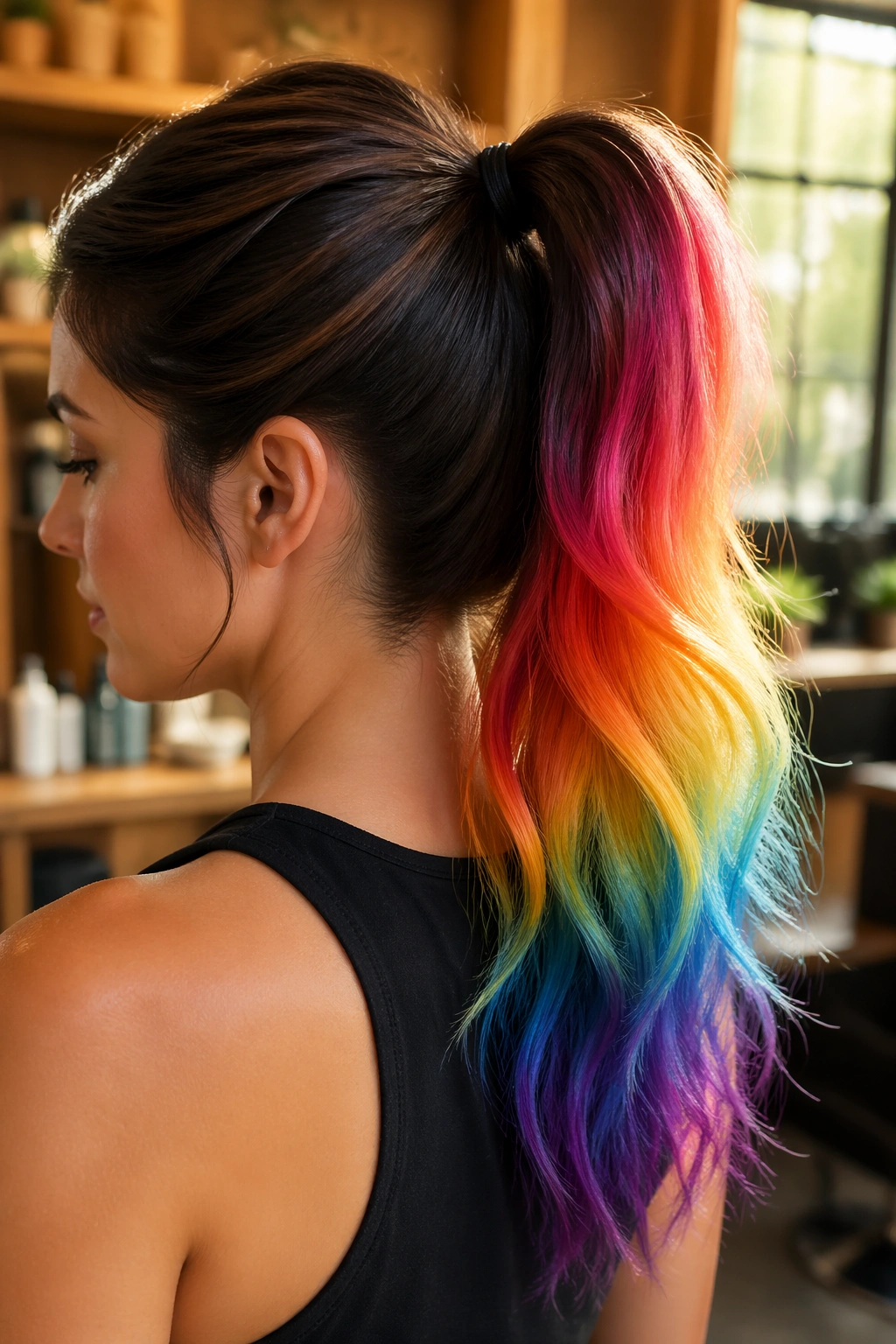
A rainbow fade on a ponytail only works if the brunette base is doing some of the heavy lifting. The neutral brown at the top gives the bright colors a place to land, and the fade can move through pink, orange, yellow, blue, or purple without looking chaotic. Well, not too chaotic.
What Keeps It from Turning Messy
The color order matters more than people think. Warm colors near the brown base tend to blend easier, while cool colors near the ends give the ponytail a cleaner finish. A soft braid or a few small twists near the crown can help separate the shades so they do not blur together.
How to Make It Wearable
- Use colored clip-ins if you want the look without bleaching.
- Keep the ponytail high enough to show the full fade.
- Match the makeup to one or two of the colors, not all of them.
- Add a shine mist so the ends do not look chalky.
This one is for somebody who likes their hair to start conversations. Fair enough. A ponytail can be practical and still be a little outrageous.
Final Thoughts
A good ombre ponytail is not only about color. Shape matters, shine matters, and where the ponytail sits on the head changes the whole mood. A soft caramel fade and a cobalt-blue bubble ponytail can live in the same category and still feel miles apart.
If you want the safest starting point, go for brunette-to-caramel, cherry cola, or rose gold. If you want the hair to walk into the room before you do, cobalt, emerald, teal, and silver will get you there fast.
Take one extra minute to check the style in natural light. That is where the blend either sings or falls apart, and it tells you more than a bathroom mirror ever will.