

A plain ponytail can go flat fast. A braided one behaves differently.
The braid gives the style a little structure, so the hair holds shape, looks denser, and keeps that lift longer than a smooth tie-back. If your hair is fine, that matters a lot. If your hair is thick, it matters in a different way: the braid helps the bulk look controlled instead of wide and fuzzy.
I keep coming back to that because fullness is not only about adding more hair. It is about where the eye thinks the density is. A little lift at the crown, a loosened braid, a wrapped elastic, or a few pulled-out sections can change the whole silhouette.
So if your ponytails tend to sag, split, or look smaller than they should, the right braided shape can fix a lot of that without feeling fussy. Start with the style that matches your texture, your length, and how much volume you want to fake.
1. High Crown Dutch Braided Ponytail
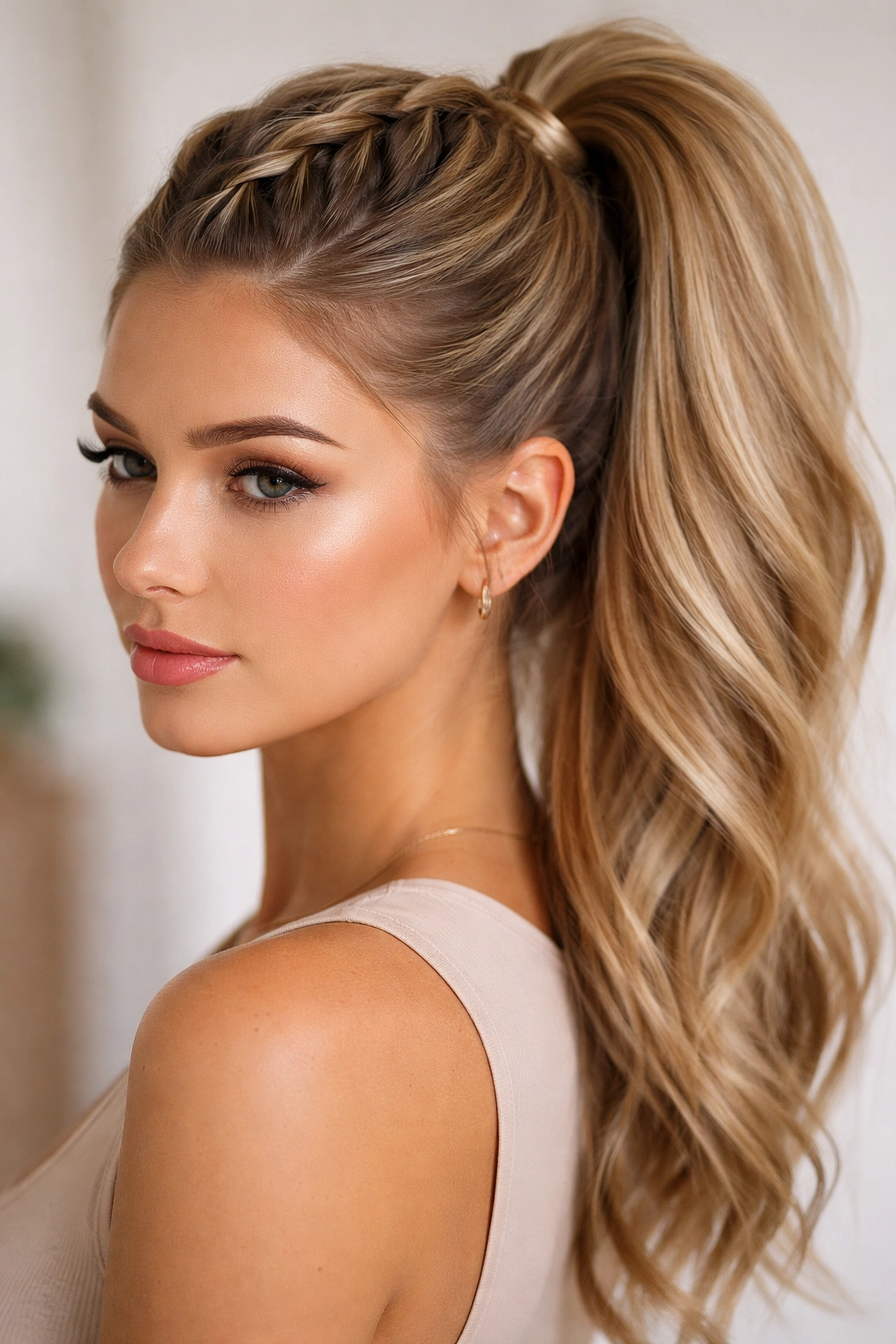
A Dutch braid sits on top of the hair instead of sinking into it, and that tiny difference gives the crown a stronger shape. When you feed that braid into a high ponytail, the whole style reads fuller before you even touch the tail itself.
Why it works
The braid creates a raised ridge from the hairline back to the crown. That ridge gives fine hair a thicker look right where flatness usually shows first. Keep the first 2 inches snug, then ease off the tension so the braid doesn’t look hard or skinny.
Small details that matter
- Start with a side part or a center part, then braid from the front hairline back.
- Use a pea-sized amount of mousse or lightweight styling cream so the sections grip better.
- Tie the ponytail high, around the crown, not at the top of the head.
- Pull the outer braid loops outward with your fingers after tying it off.
Best for: fine hair, long layers, and anyone who wants the ponytail to look lifted from every angle.
2. Pancaked Fishtail Ponytail
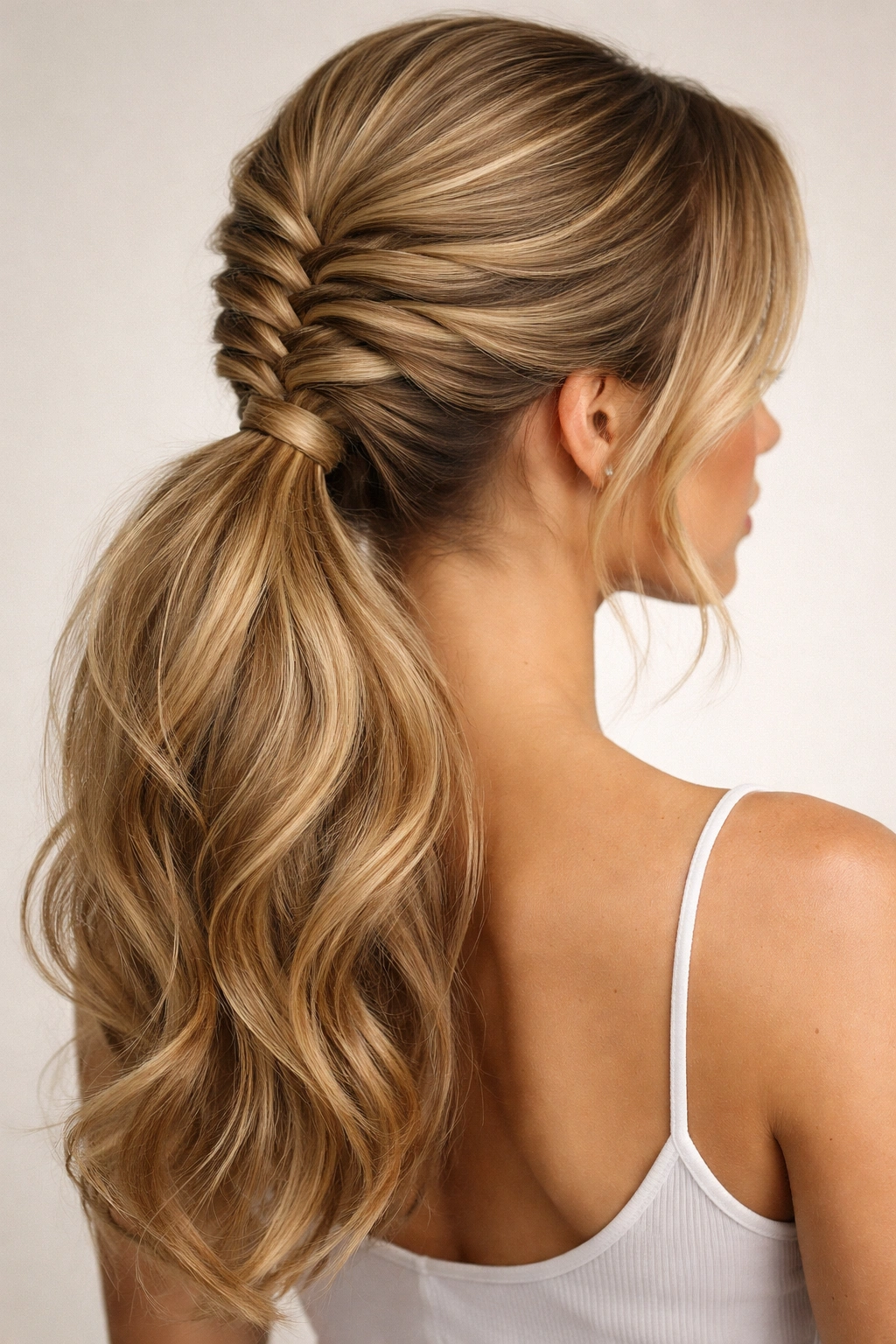
Why does a fishtail look thicker than a regular braid? Because the shape is flatter, wider, and easier to stretch into something that reads as full. The actual hair count does not change. The visual weight does.
A fishtail ponytail looks especially good when you braid loosely and then “pancake” it by tugging the edges from the center outward. Do that slowly. If you yank too hard, the braid starts to fray in an ugly way and you lose the clean fishbone pattern. A little mess is good here. A lot is not.
The tail itself can stay soft and straight, or you can bend it with a 1-inch curling iron for extra body. Either way, the braid up top does the heavy lifting. It makes the ponytail look like there’s more hair than there really is.
3. Double French Braids Into One Ponytail
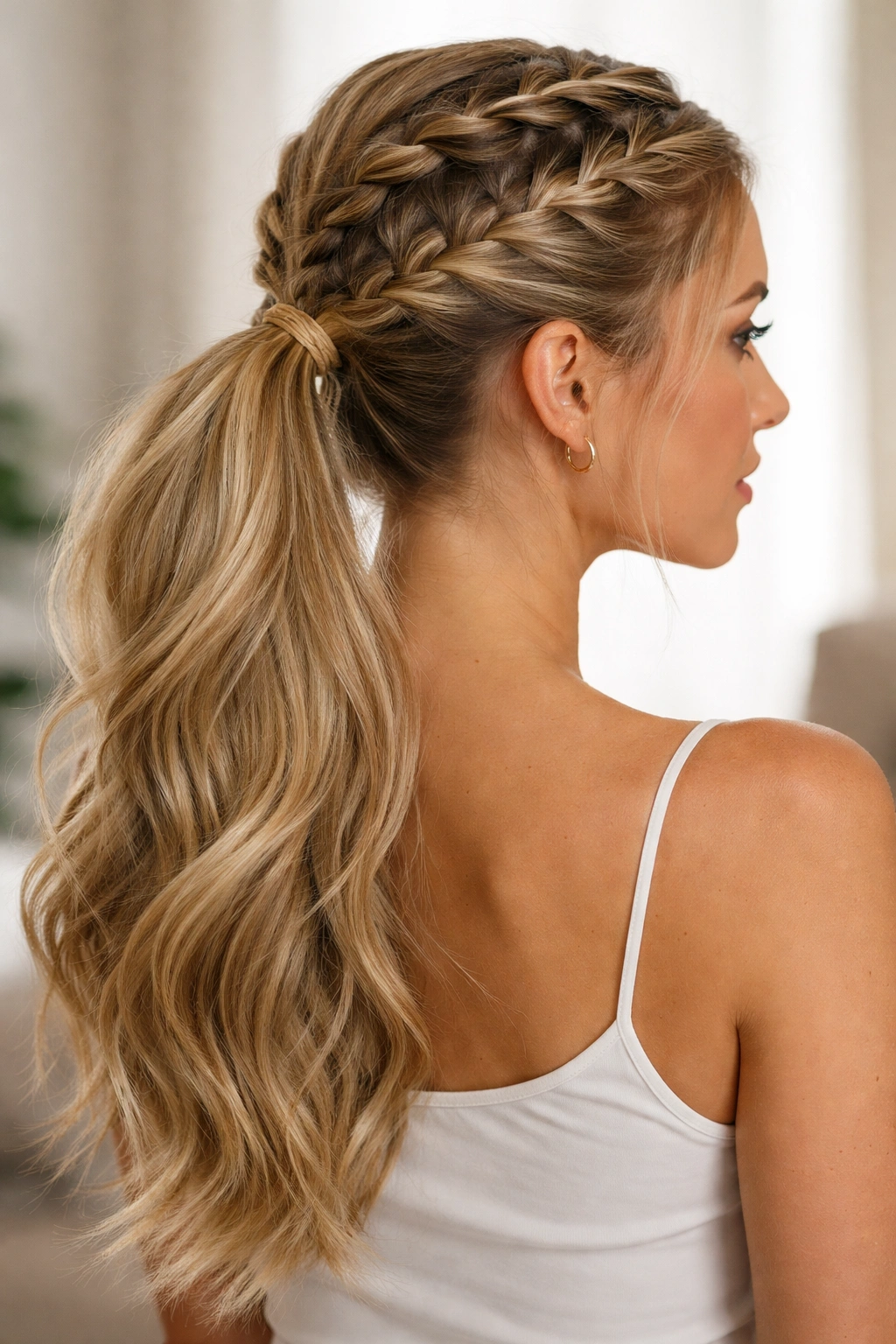
Picture this: the hair at the temples feels too thin, the crown lies flat, and a single ponytail makes the whole head look narrower. Two French braids feeding into one ponytail fix that in one shot.
Each braid adds width along the sides, which is where a lot of people lose visual volume. Then the two braids meet at the back and create a thicker bundle to tie off. It has a sporty feel, sure, but not in a school-uniform way. Done loosely, it looks polished and a little bold.
I like this on medium-to-long hair because it fills the sides without needing tons of teasing. The trick is to braid only until just behind the ears, then stop and gather the rest into one ponytail. Keep the braids slightly raised from the scalp. Tight braiding will flatten the whole idea.
4. Pull-Through Braid Ponytail
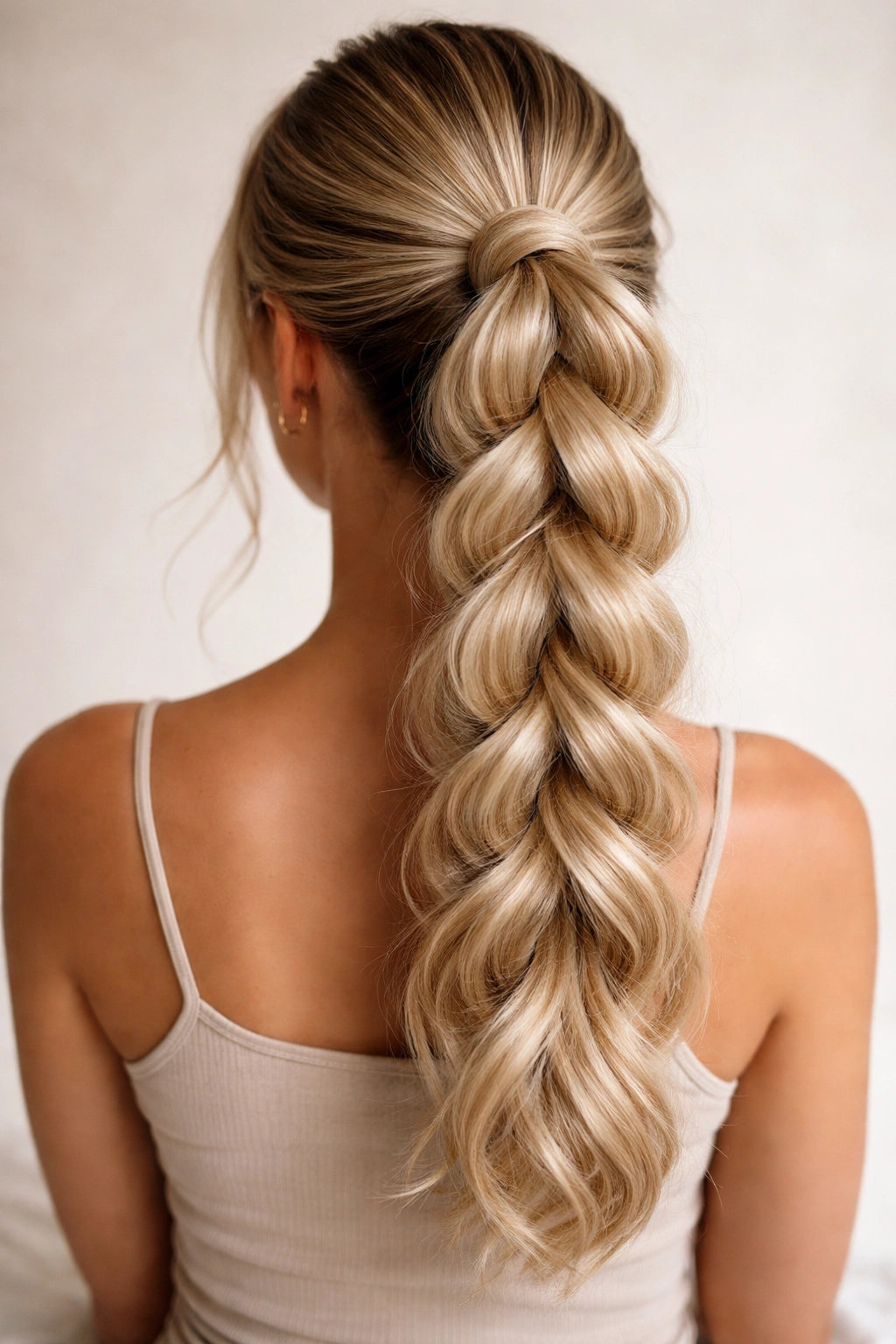
Can a ponytail look like a giant braid without actual braiding skills? Yes. That is the whole charm of the pull-through braid.
You section the hair into ponytails down the center, then split and loop each one through the next. The result is chunky, almost plush, and far thicker-looking than a standard braid. It also works well when you want height on a long ponytail but don’t want the ends to look skinny.
How to make it read fuller
Use small clear elastics every 1½ to 2 inches. Gently tug each loop once it’s secured so the braid expands. Do not cinch the elastics too tight or the sections will look pinched instead of soft.
This style is one of the best choices for long, fine hair because the repeated loops create a lot of visual bulk. It feels like cheating. Honestly, a little bit.
5. Rope-Twist Low Ponytail
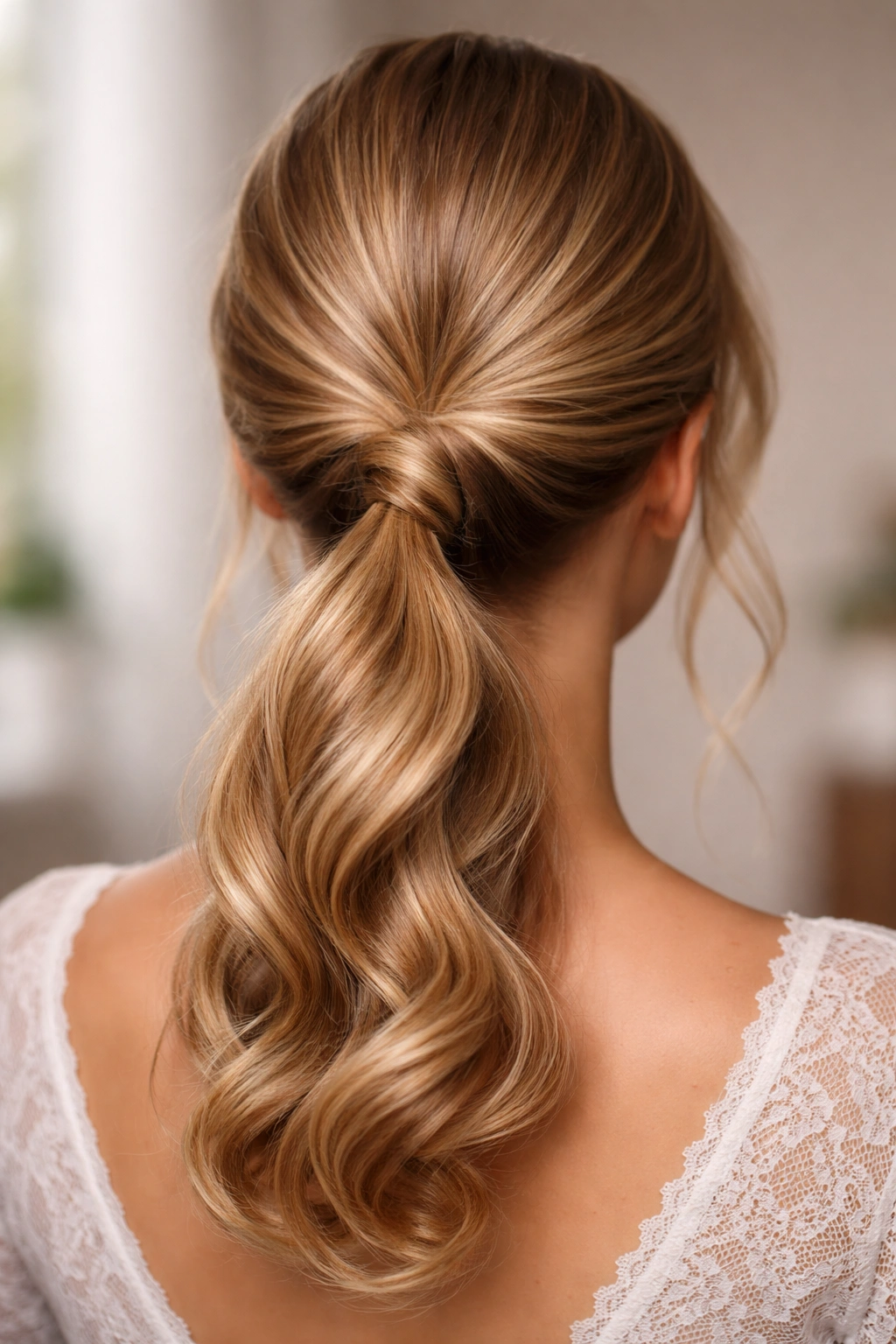
A rope twist is quieter than a braid, but it can look richer, especially on straight hair. Two sections twisted in opposite directions then wrapped around each other create a thick, cord-like effect that sits beautifully in a low ponytail.
That texture has a different kind of fullness. It is not fluffy. It is dense and smooth, almost ropey in the best way. If your hair is sleek and tends to slip out of traditional braids, this style holds up well because the twist hugs the strand shape.
Keep the pony low at the nape, then wrap a small piece of hair around the elastic for a clean finish. If your ends are thin, curl just the last 2 to 3 inches so the tail doesn’t taper off too sharply. That little bend makes the whole thing look more intentional.
6. Side-Swept Braided Ponytail
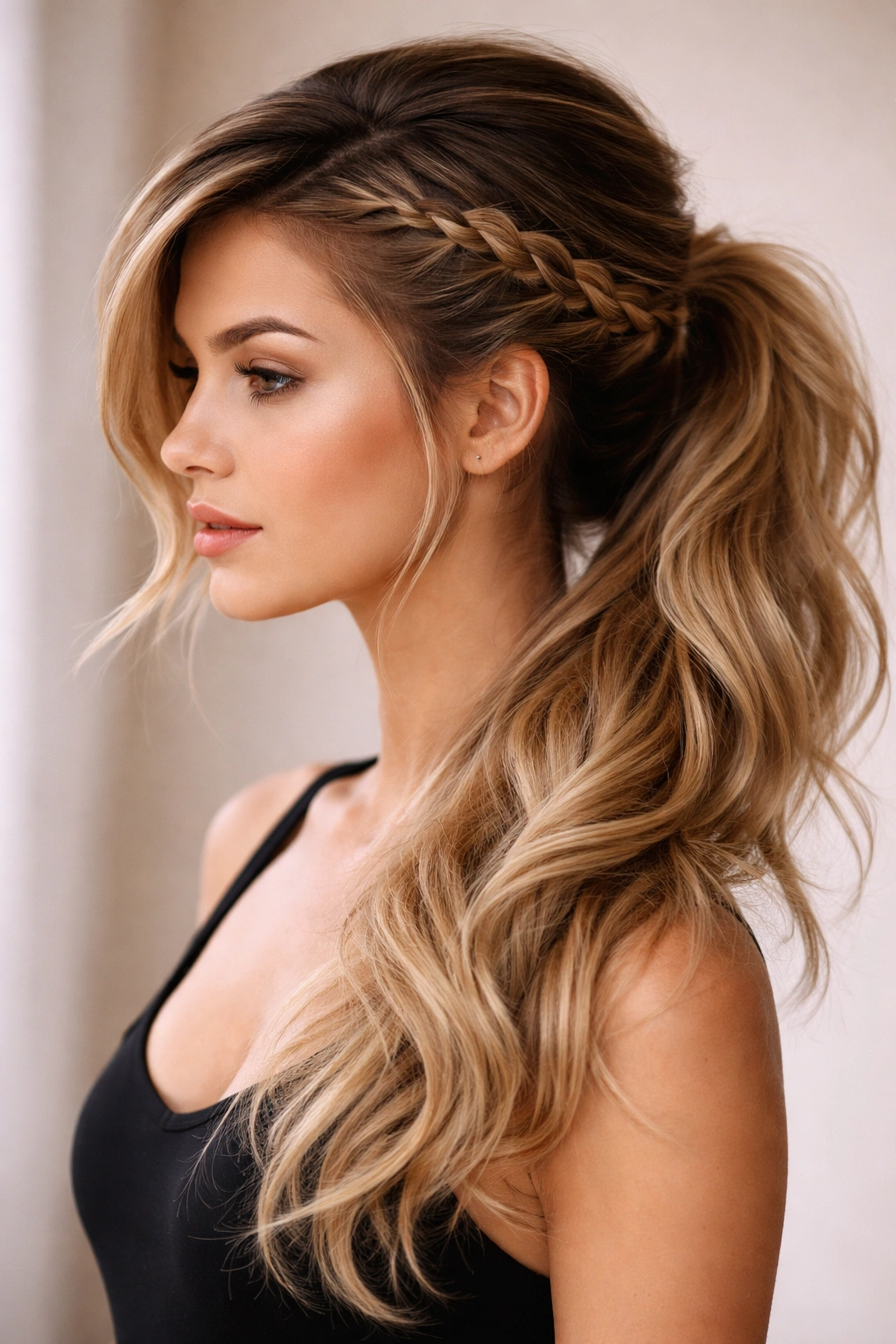
A side-swept braid changes the balance of the whole head. Instead of dividing the hair evenly, it sends the eye to one shoulder, and that asymmetry makes the ponytail look heavier and more dramatic.
The style works especially well with a deep side part. The braid starts near the temple and moves down into a ponytail that sits just behind one ear or lower at the nape. Because the weight is gathered to one side, the ponytail looks longer and thicker than it would in a centered style.
This is a good one when you want fullness without a lot of teasing. A bit of loose braid width around the face does the job. Leave a few soft strands around the front if you like a less strict finish. The whole style gets prettier when it feels slightly undone.
7. Crown Braid Ponytail
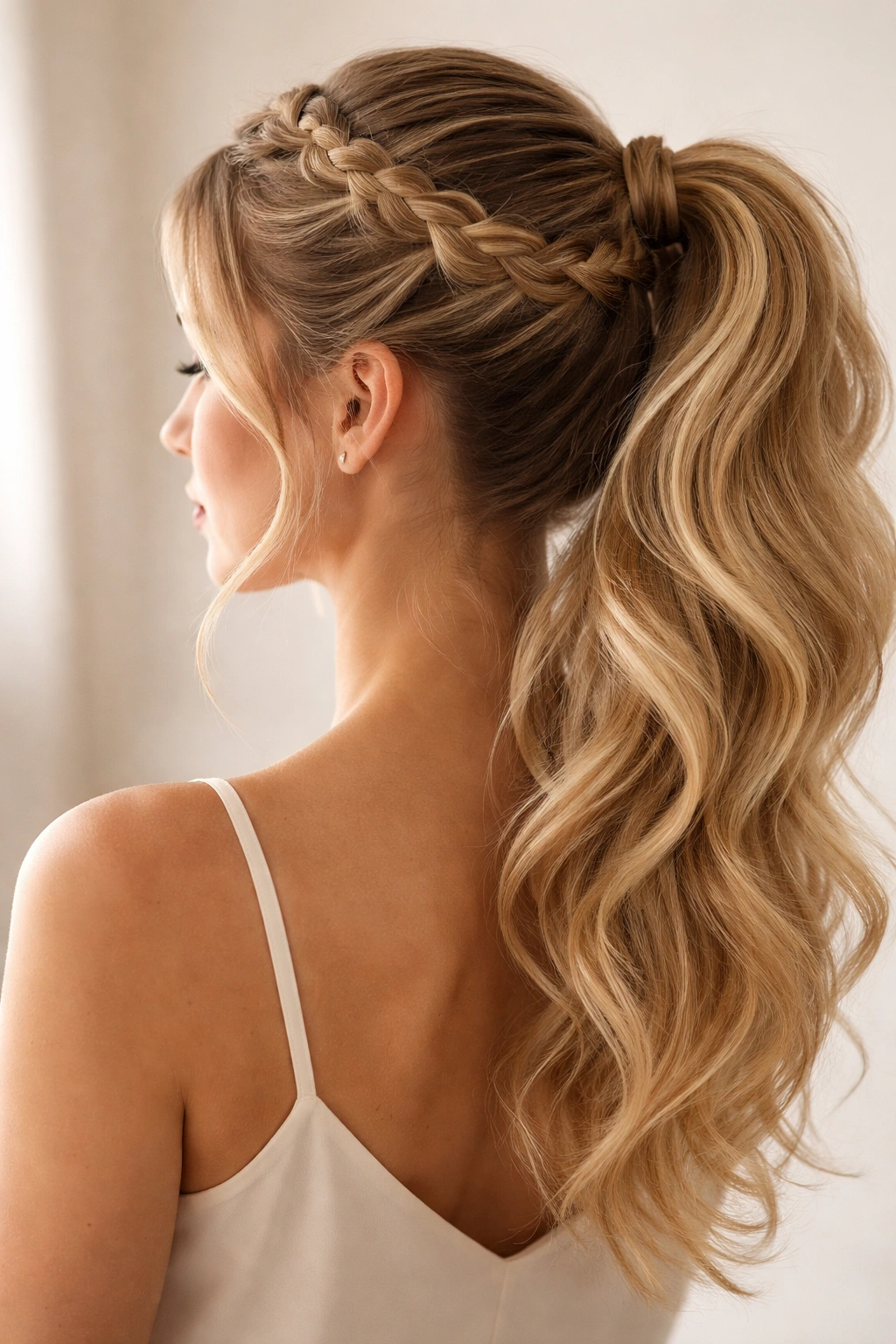
I reach for this style when the temples need help. A crown braid frames the head like a built-in lift, and that framing makes the ponytail behind it look fuller by comparison.
The braid can run from one ear across the top of the head to the other side, then feed into a ponytail low at the back or centered beneath the crown. The looped shape around the head gives the impression of more hair everywhere, not just in the tail itself.
The part that people skip
- Start with lightly rough-dried hair, not glass-smooth hair.
- Pull the braid slightly upward as you go so it doesn’t sit flat.
- Leave the ponytail elastic hidden under a wrapped strand or a small braid tail.
- Use a few pins under the braid if your layers slip.
The style has a soft, almost romantic shape, but the structure is doing most of the work.
8. Messy Teased Braided Ponytail
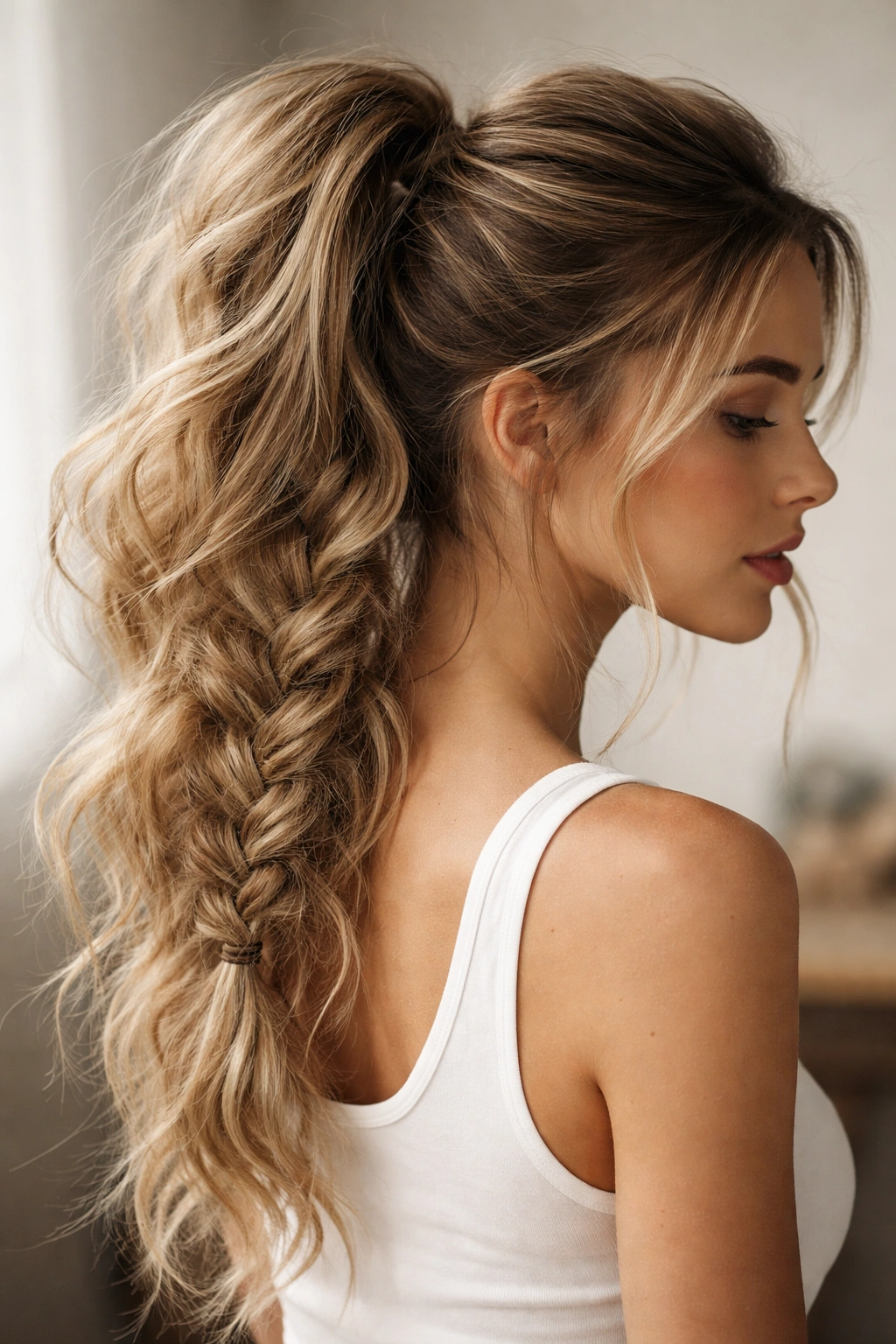
A bold crown can save a flat ponytail. That is the truth here.
Light teasing at the roots, especially at the top 1 inch of hair, gives the braid something to sit on. Then a loose braid through the tail adds texture and breaks up the outline so the ponytail looks thicker than it really is. I would rather see this style slightly messy than overworked; too much smoothing kills the volume fast.
Use a texturizing spray before braiding, not after. Afterward, only touch the outer edges of the braid and the crown. If you go after every section, the style loses shape and starts to look fuzzy in a tired way. A little crown puff plus a loose braid is enough.
9. Braided Base Sleek High Ponytail
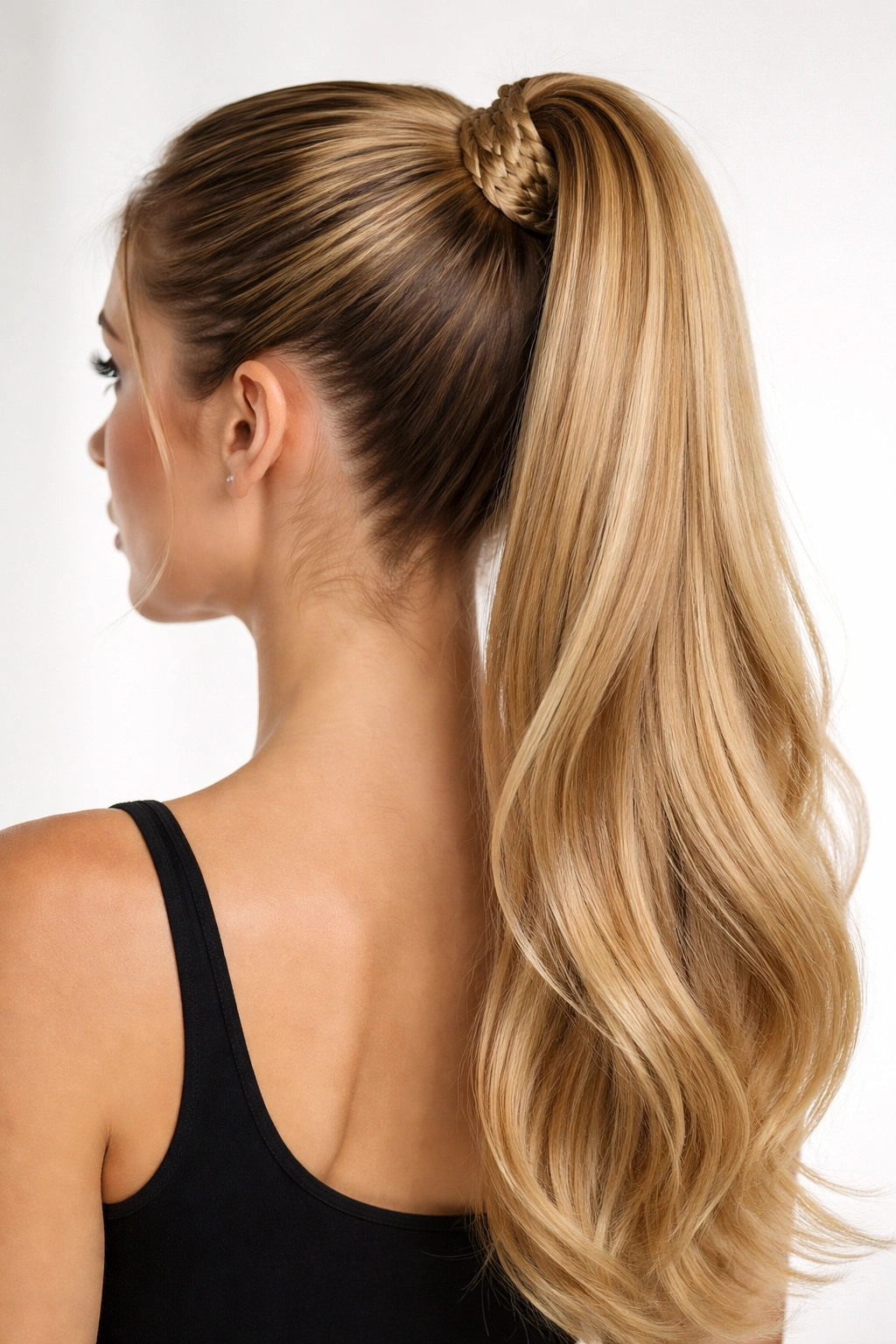
Clean lines. Big payoff.
A sleek high ponytail with a braided base gives you the polish of a tight ponytail and the thickness of a wrapped braid at the anchor point. That braided base makes the elastic disappear, and it also creates a visual break that makes the tail look denser where it starts.
Where the fullness comes from
The trick is not the ponytail itself. It is the contrast. The top stays smooth, the braid sits compact around the base, and the tail can be curled or waved for extra body. That difference in texture makes the ponytail feel more substantial.
Use a boar-bristle brush or a fine comb for the surface, then braid a slim section around the elastic once the pony is tied. If the tail is straight, bend it with a flat iron or soft barrel curls. Flat ends make the whole style look thinner than it is.
10. Bubble Braid Ponytail
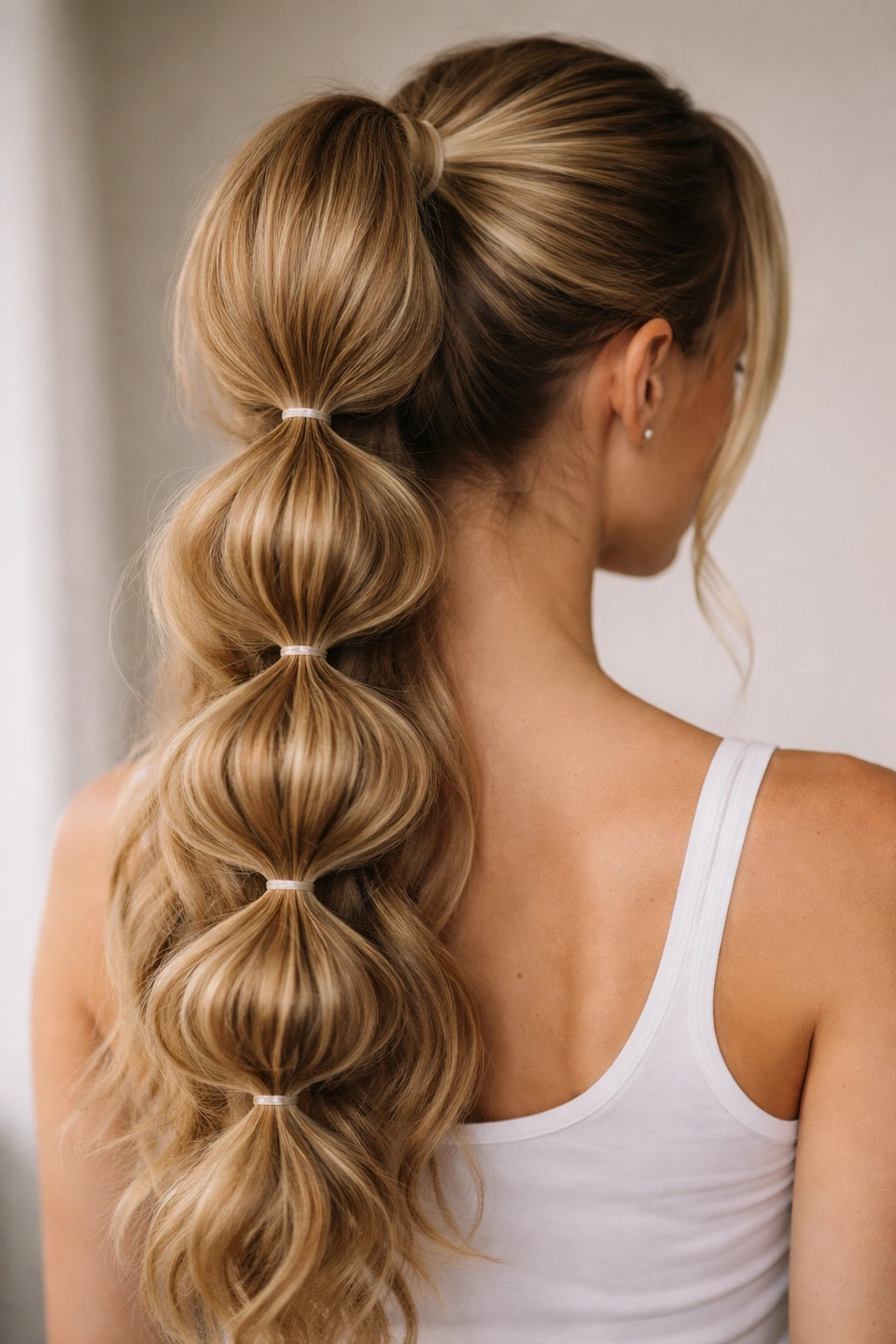
Why do bubble braids look so full even on fine hair? Because each tied section becomes a puffed pocket of volume, and the spacing between elastics turns one ponytail into a chain of soft rounded shapes.
It is one of the easiest ways to fake fullness. Tie the ponytail first, then add elastics every 2 to 3 inches down the length. Once the ties are secure, gently pull each section outward with your fingers until it rounds out. The sections should look plush, not lopsided.
Quick shape rules
- Keep the first bubble near the crown slightly smaller.
- Make the middle bubbles the widest.
- Leave the bottom bubble a little narrower so the shape tapers cleanly.
- Use matching elastics if you want a polished finish, or bright ones if you want a more playful feel.
This style is simple, but it gives a lot of return for very little effort.
11. Four-Strand Braided Ponytail
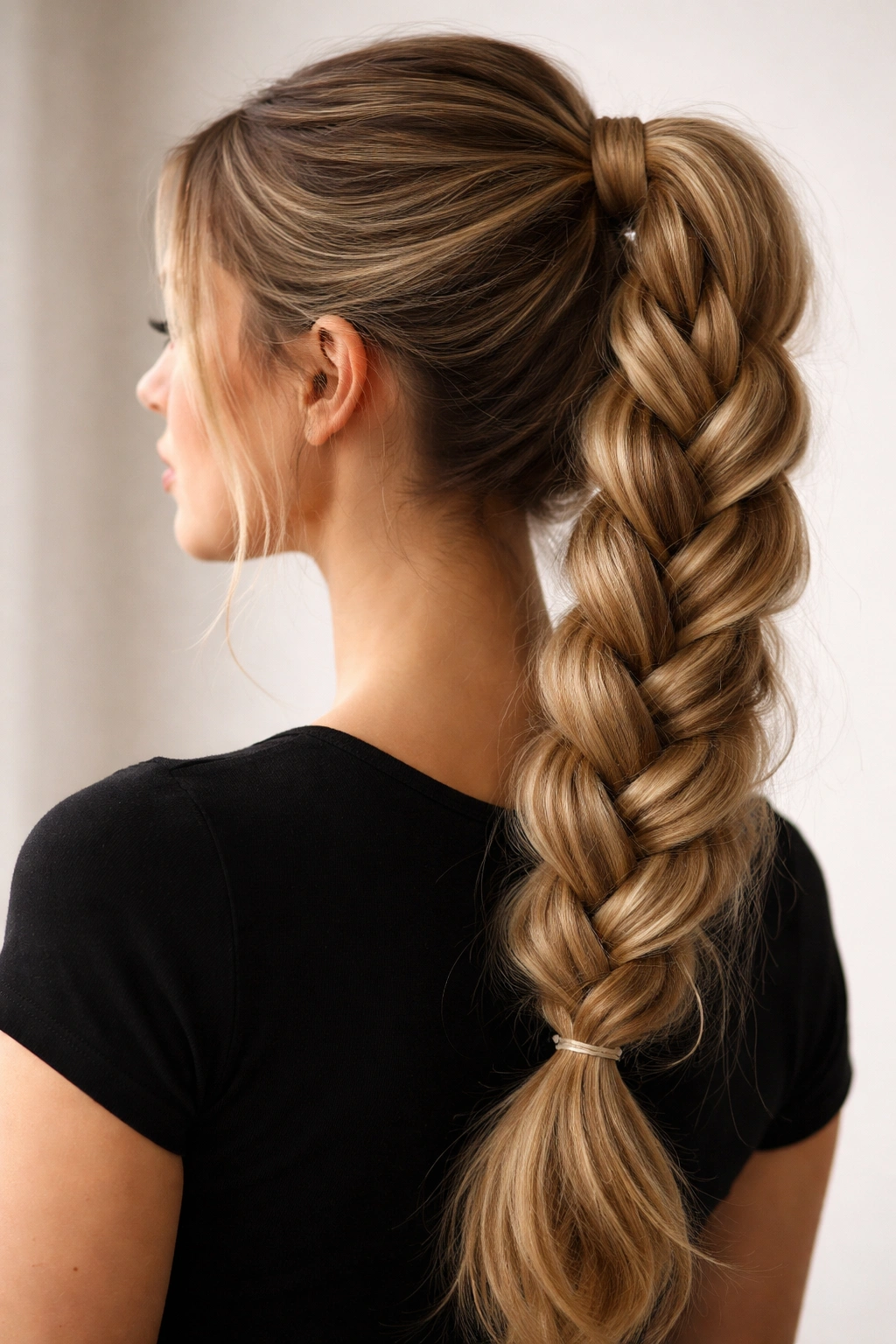
A four-strand braid has more surface detail than a regular three-strand braid, so the ponytail looks broader and richer right away. The extra strand adds a woven look that reads as thickness even before you pull it apart.
Unlike a plain braid, this one has a more rope-like body. That makes it a good pick for medium-density hair that needs a little visual help but not a ton of teasing. It also holds shape well in humid weather because the structure is tighter and less likely to puff in random places.
If you have never done one, practice on a low ponytail first. Once your hands learn the pattern, the style moves fast. I would choose this for a dinner, a workday, or any setting where you want the ponytail to look intentionally styled, not thrown together.
12. Mohawk Pull-Through Ponytail
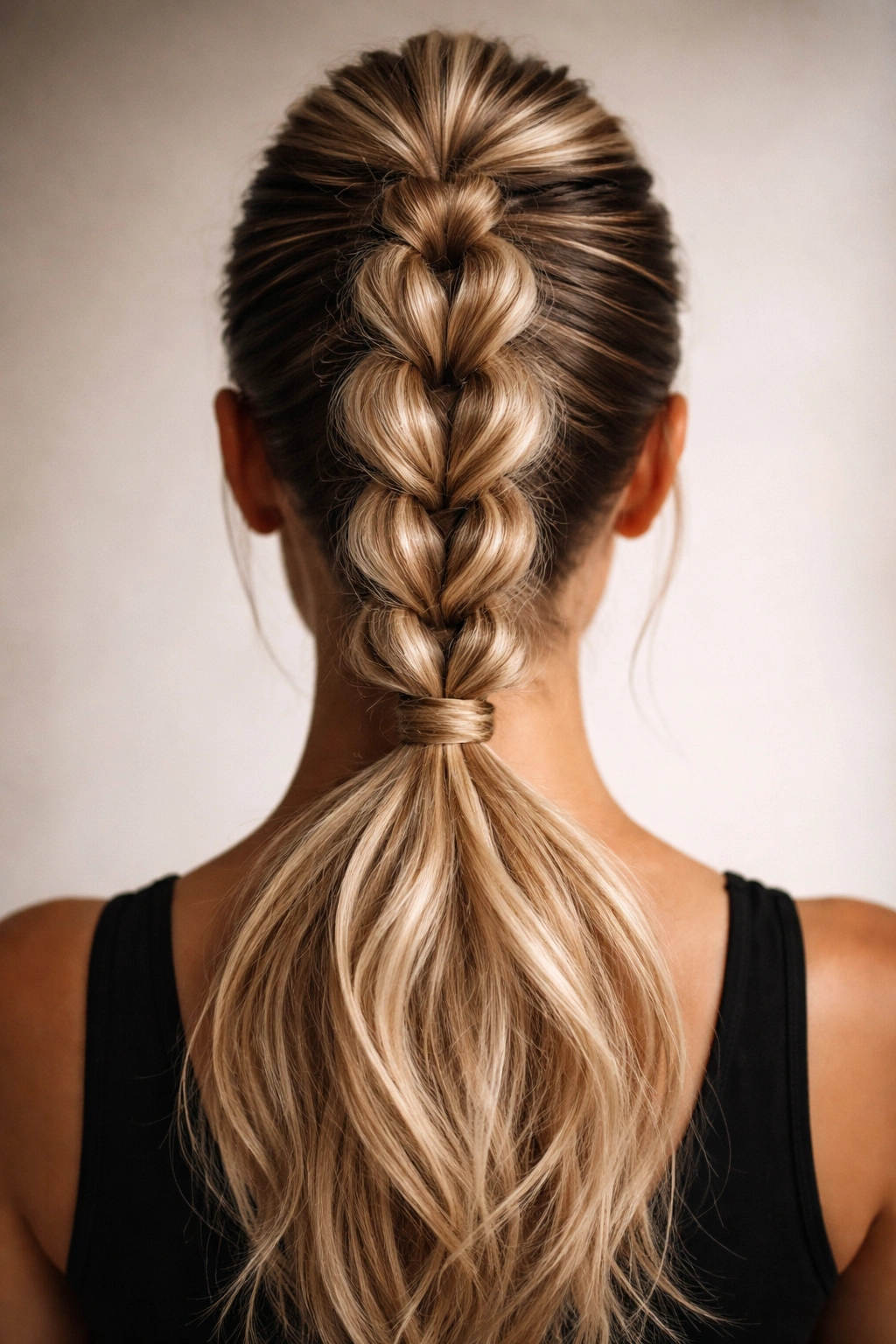
A mohawk-style pull-through ponytail turns the middle section of your hair into the star. The sides are usually slicked back or pinned close, which makes the center braid look taller and fuller by contrast.
That contrast is the whole point. When the side hair lies flat, the center strip has room to expand. Each pull-through section can be puffed outward, so the braid reads almost like stacked cushions running down the middle of the head.
Best way to build it
- Clip the side hair away first.
- Divide the center strip into 5 to 8 small ponytails.
- Pull each ponytail through the next and tug the loops.
- Finish by gathering everything into one tail at the back.
This style has attitude. It also hides thin areas well because the volume sits right on top where the eye goes first.
13. Half-Up Braided Ponytail
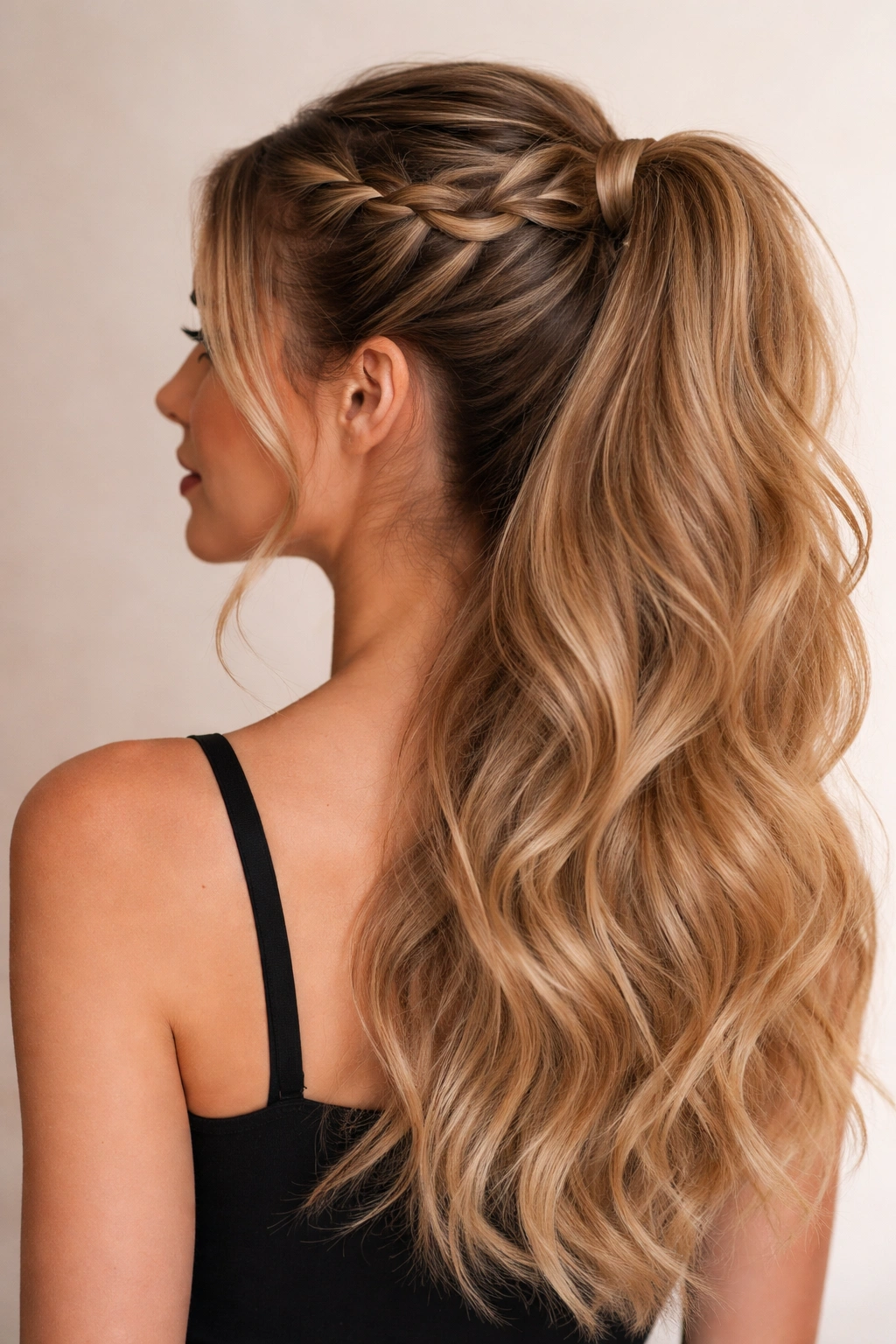
A half-up braided ponytail is a smart move when you want fullness without giving up all your length. The top section gets the braid treatment, and the rest of the hair stays loose, which makes the style feel bigger than a full ponytail alone.
The top half can be Dutch, French, or fishtail, depending on your texture. What matters most is how high you place the tie. If you set it just above the crown, the lifted top section gives the illusion of a thicker head of hair overall. The loose bottom hair adds softness and keeps the ponytail from looking tiny.
This is one of my favorite styles for layered hair. Shorter pieces around the face stay useful instead of slipping out of a full ponytail, and the braid keeps the top from collapsing by midday.
14. Waterfall Braid Ponytail
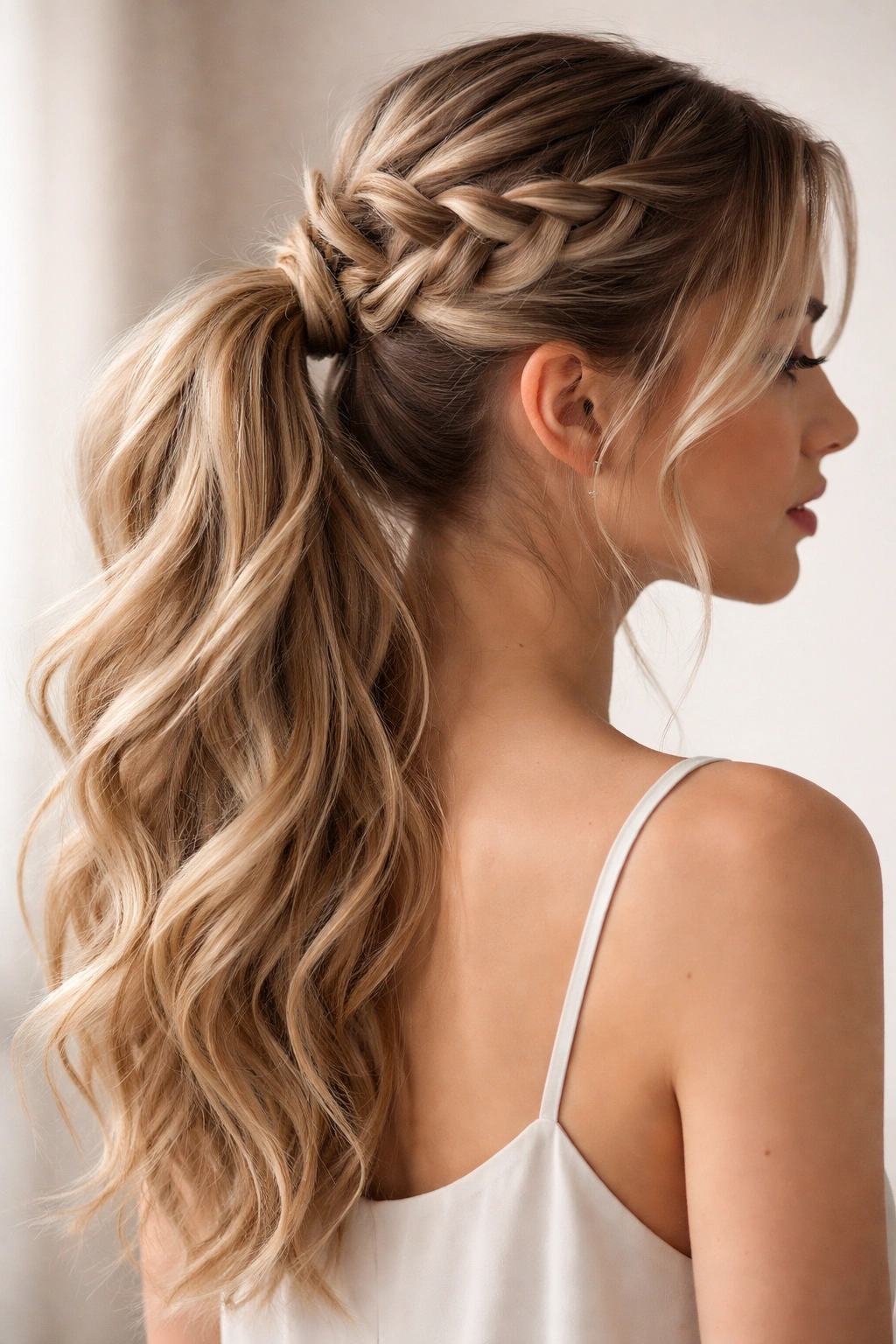
Does a waterfall braid add volume in the usual sense? Not exactly. It adds air around the face, and that air makes the ponytail behind it feel fuller.
The braid drops sections as it moves across the head, so the style has open spaces and a softer edge. Those openings make the hair seem lighter and more lifted. When you pull the remaining lengths into a ponytail, the contrast between the airy braid and the gathered tail gives the whole style more dimension.
Why it looks fuller
- The braid leaves some strands free, so the front never feels heavy.
- The open pattern draws attention upward.
- The ponytail gets a softer silhouette than a tight braid would give.
This works best on layered hair, though a little wave in the loose lengths helps a lot. If your hair is very straight, bend the ends with a curling wand so the tail does not fall flat.
15. Ribbon-Woven Braided Ponytail
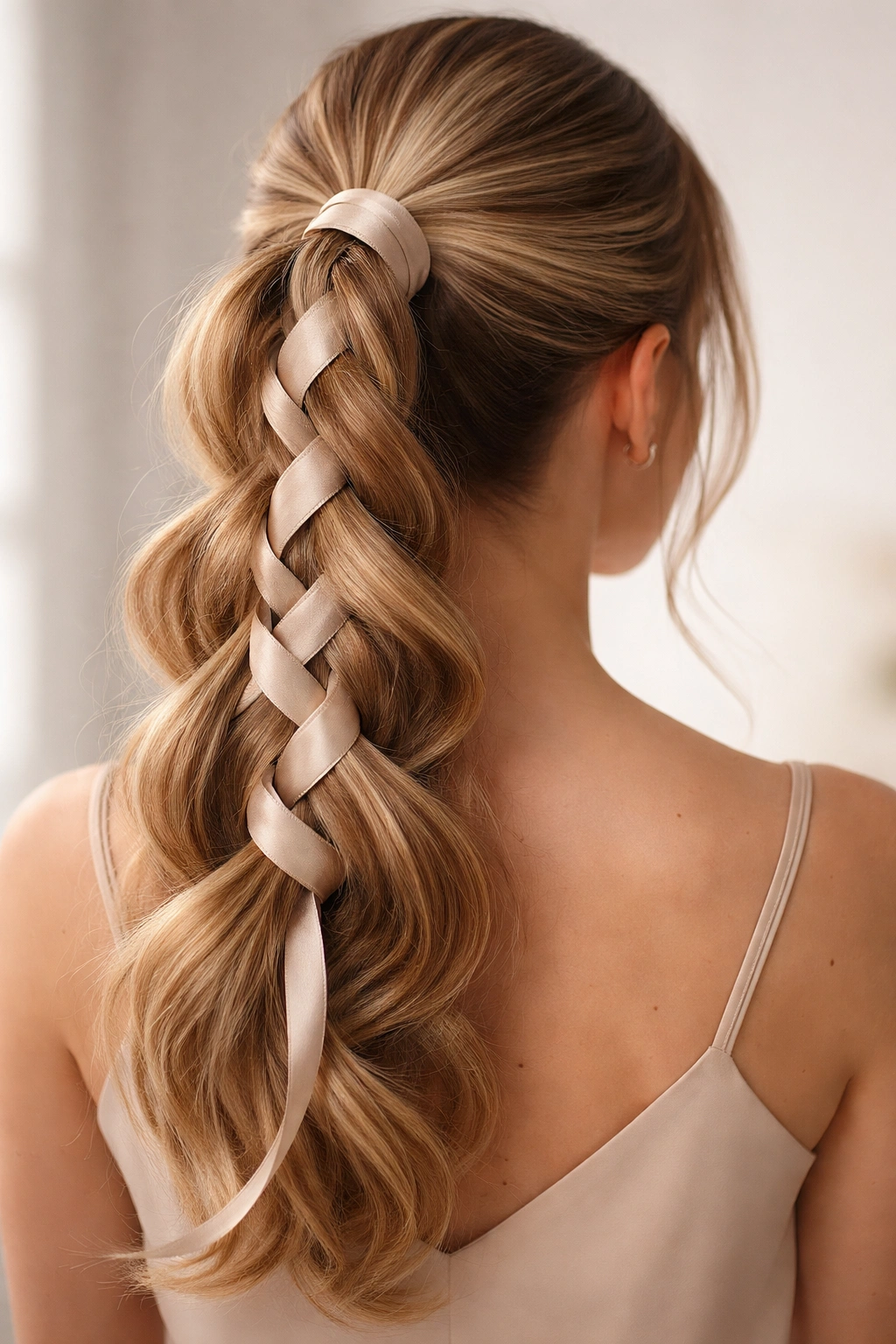
Soft satin ribbon changes a braid in a way you can see from across the room. It adds width, color, and movement without making the ponytail feel heavy.
The ribbon can be woven through a three-strand braid, tied into the base, or wrapped around the elastic before the braid begins. A 1/2-inch ribbon is usually enough. Wider than that, and the braid can start looking bulky in a stiff way. Narrower than that, and you lose the extra body.
I like this style because the fullness is not only visual. The ribbon keeps the braid from collapsing into a thin line, and the texture feels a little softer when the tail moves. That matters if you want a ponytail that looks pretty from the front and back, not just from one angle.
16. Twisted Fishtail Ponytail
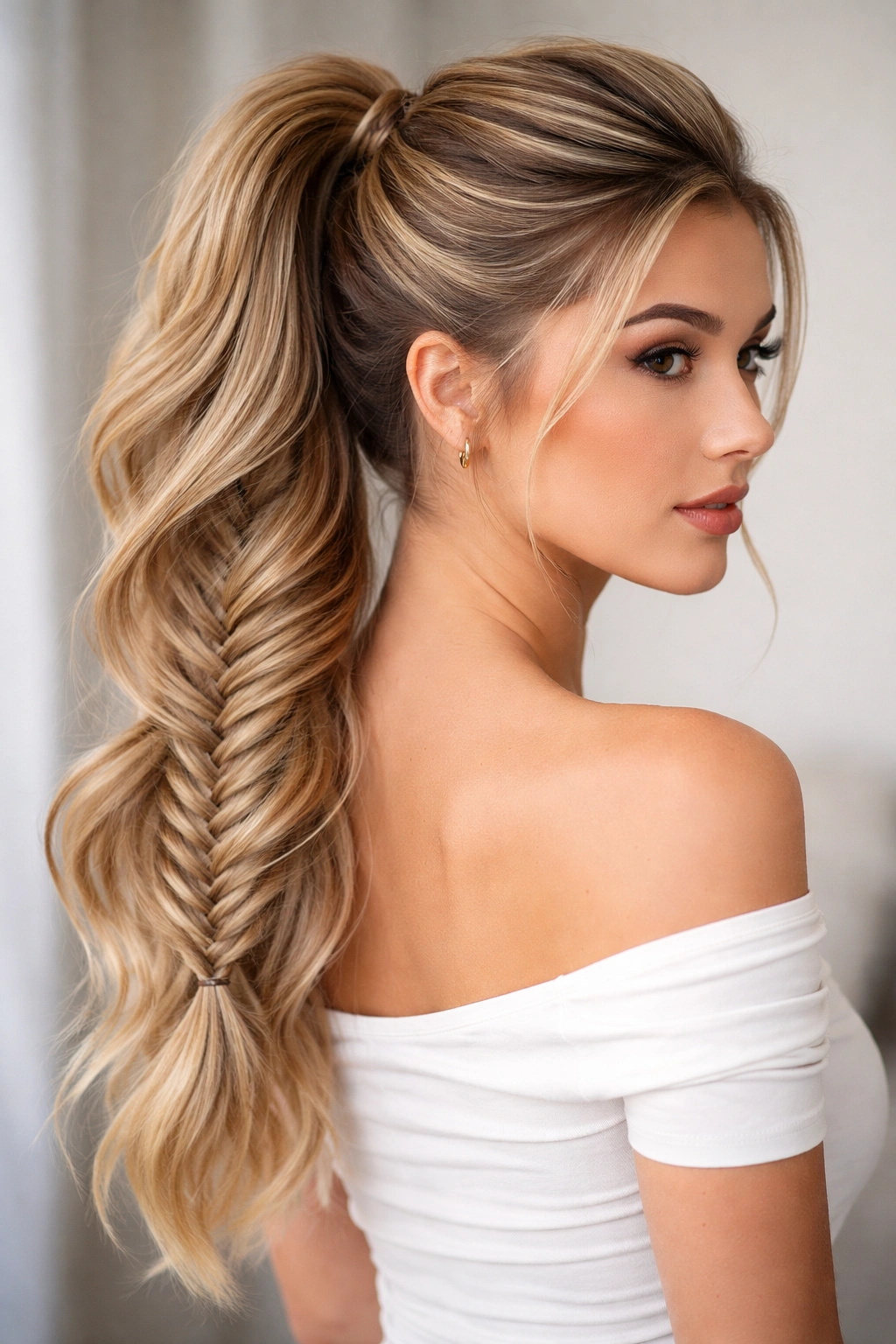
A twisted fishtail ponytail gives you the width of a fishtail with a little extra lift at the root. That root twist helps the braid sit higher, which is what makes the ponytail look fuller overall.
The best part is how forgiving it is. If one section looks uneven, the final shape still reads as soft and full because the twist breaks up the line. You can do the top as a simple rope twist, then switch into a fishtail for the tail itself. That change in texture makes the ponytail feel richer than a single braid pattern all the way through.
This is a nice pick for hair that is long but not especially thick. The shift from twist to braid gives the eye more to look at, so the ponytail does not taper off too fast.
17. Infinity Braid Ponytail
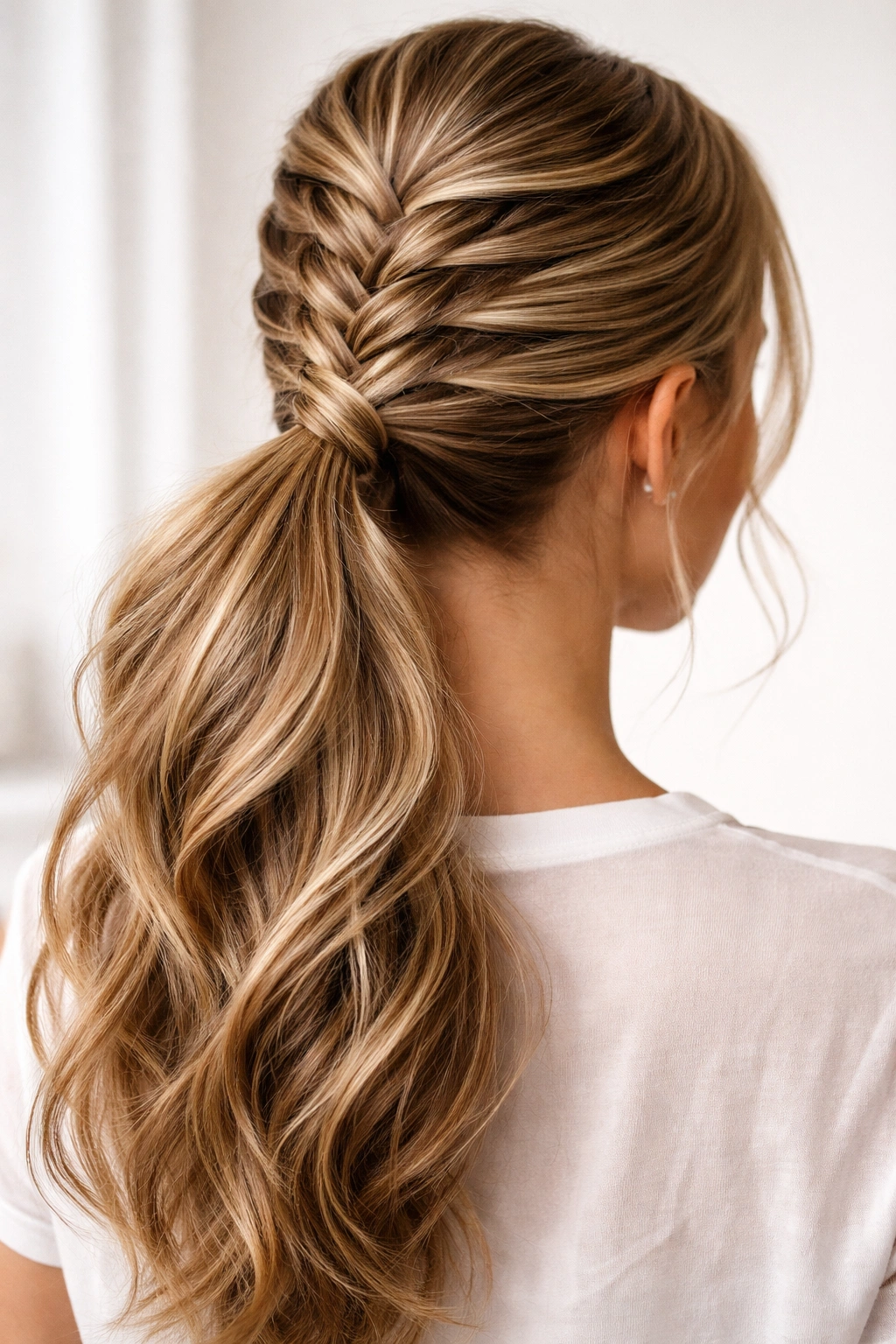
An infinity braid looks more complicated than it is, and that woven loop pattern creates a thick, almost padded look along the back of the head. Compared with a standard braid, it has more visible shape and less open air between strands.
That makes it a strong option when you want fullness without a lot of loose texture. The braid itself becomes the volume. Keep the ponytail section low enough that the loop pattern can show clearly, because the design gets lost if it sits too high and tight.
It suits medium to long hair best. On shorter lengths, the loops can look cramped, and the fullness turns into clutter. On longer hair, though, it has a satisfying, tucked-in thickness that feels finished without needing much else.
18. Curly Ponytail With Mini Braids
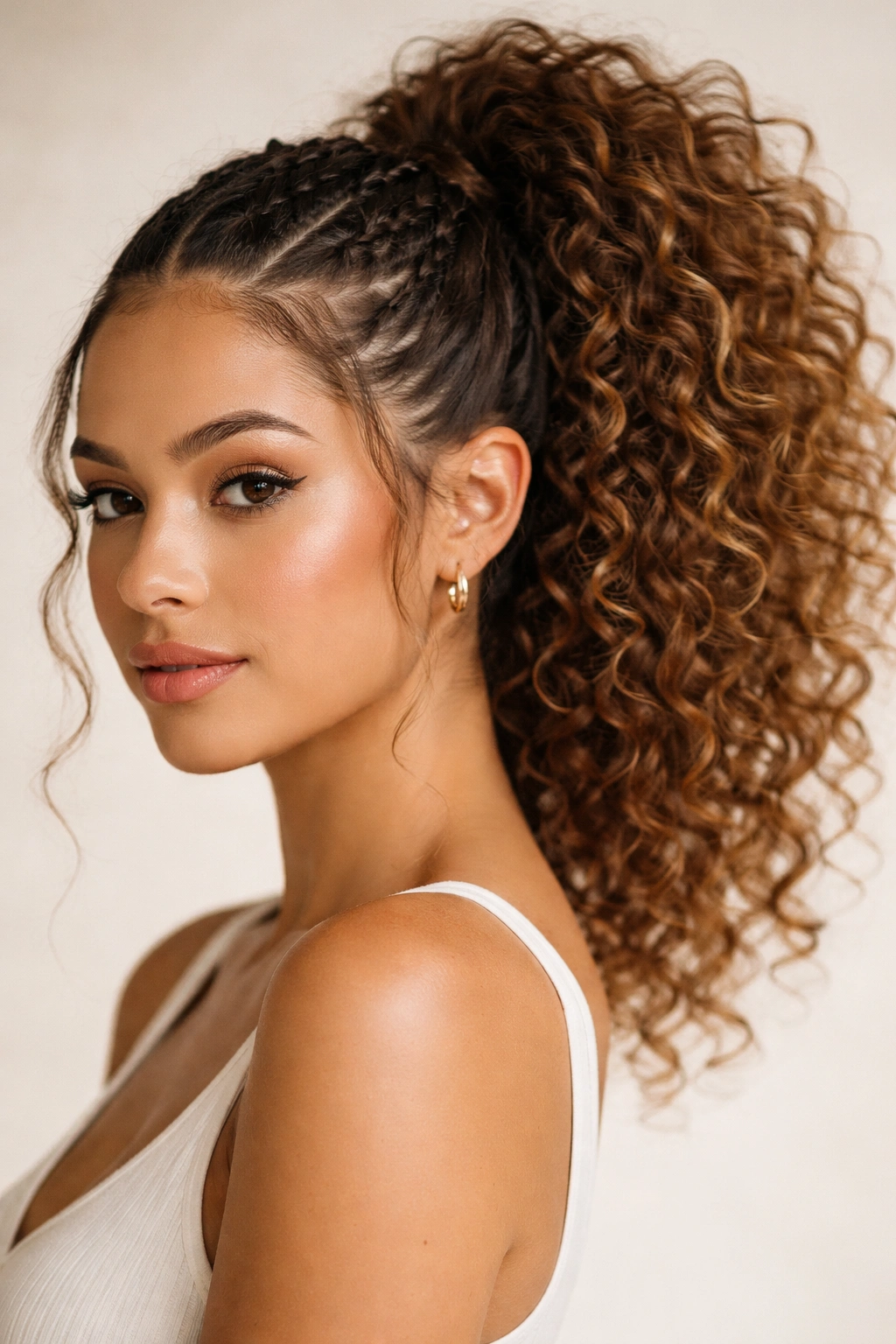
Curly hair already brings its own fullness, so the job here is not to force more volume. It is to keep the curls open and let a few tiny braids add structure at the front.
A couple of mini braids at the temple or along the part line stop the style from looking too loose. They also help pin back pieces that would otherwise puff in random places. The ponytail itself stays curly and full, which is the good part. You do not want to flatten those curls down just to make the braid look neat.
What to do
- Refresh curls first with a mist of water and leave-in conditioner.
- Braid 2 or 3 small sections near the hairline.
- Gather the rest into a mid or high ponytail.
- Fluff the ponytail gently with your fingers, not a brush.
The result is plush, soft, and easy to wear.
19. Low Side Braid Ponytail
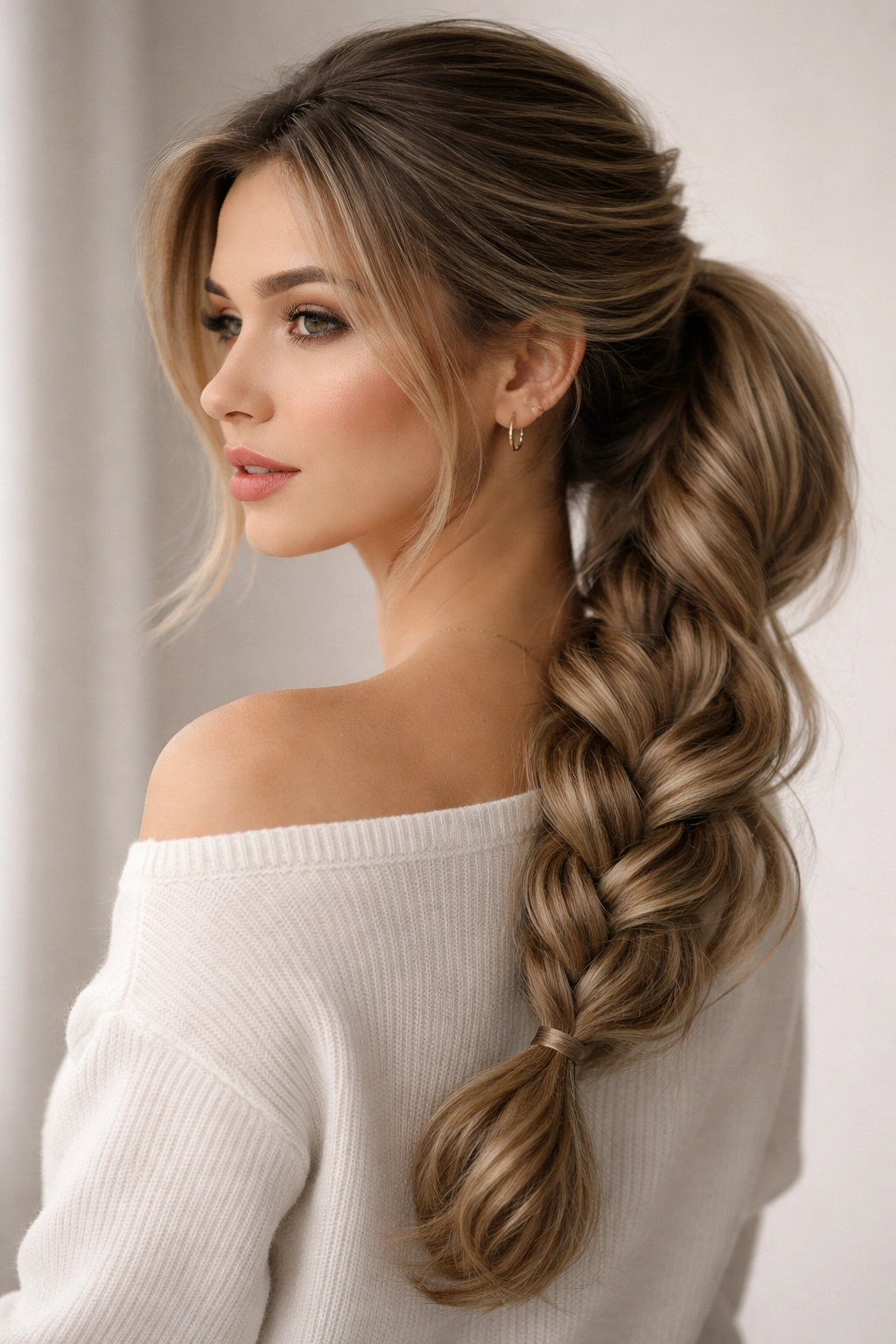
A low side braid ponytail has a softer shape than a centered one, and that softness makes the hair look thicker. When all the volume sits over one shoulder, the eye reads it as a fuller bundle instead of a slim hanging tail.
This style works well with thick hair, but it also gives fine hair a nice boost because the braid lays across a wider area. Start the braid behind one ear or just under the part, then bring it down to the nape and tie it off at the side. If you keep the braid loose at the crown, the top doesn’t collapse.
It feels romantic without getting too precious. That balance is why it works for daytime and evening. A small wave through the tail is enough. You do not need much more.
20. Crisscross Braided Ponytail
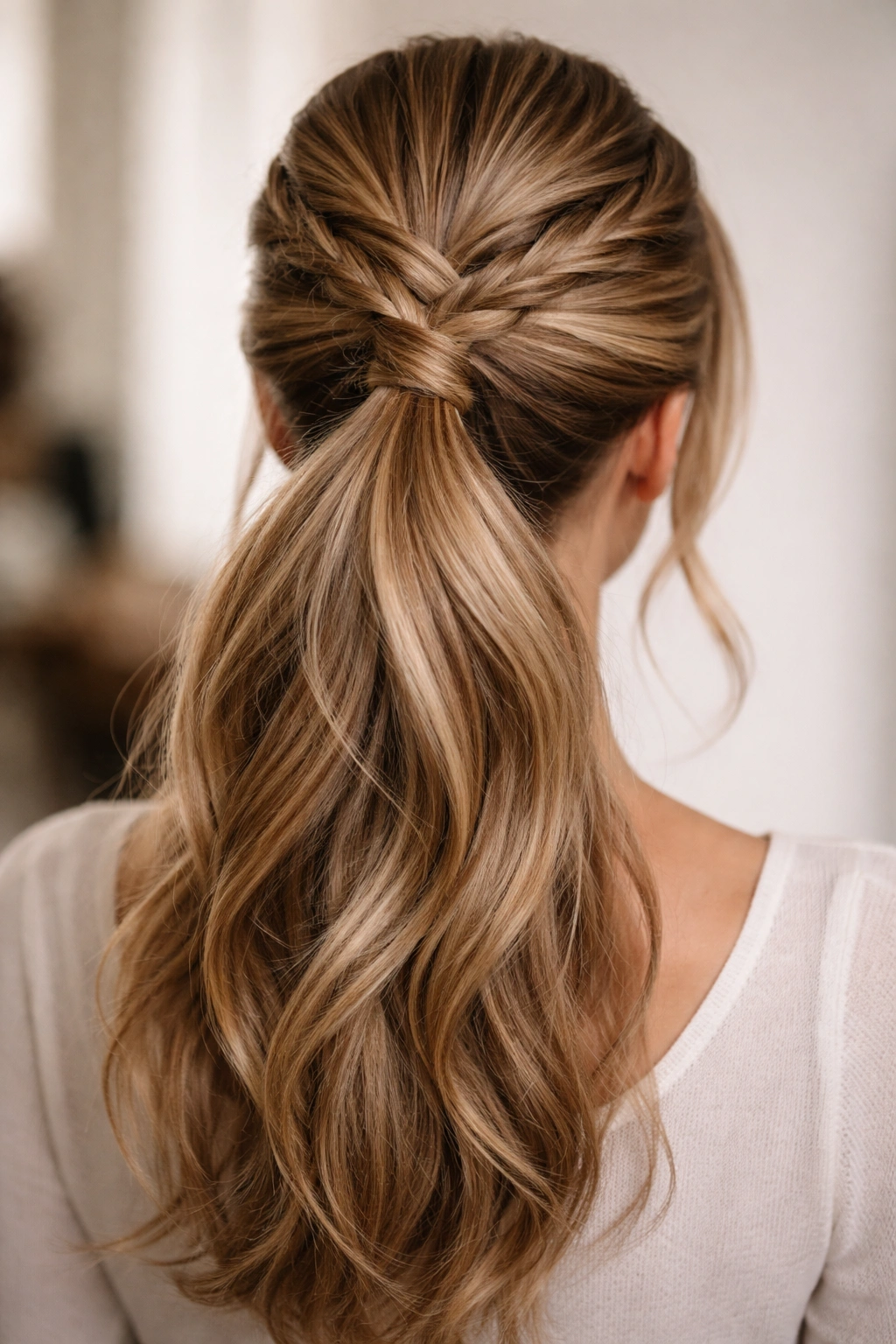
What makes a crisscross braid look so full is the overlap. Two sections cross over each other, then feed into a ponytail, and that layered path adds density where a simple braid would look narrow.
How to get the shape right
Start with two front sections, braid or twist each one, then pin them across the back so they cross in an X shape before joining the ponytail. The crossing hides the elastic point and makes the back of the style look broader. That is especially useful if you have a thinner crown.
Use bobby pins that match your hair color, and pin them under the braid line so they disappear. A tiny bit of texture spray helps the sections hold better, especially if your hair is silky and likes to slide.
It is a little more work than some of the other styles here, but the payoff is clear. The ponytail looks more layered and more full.
21. Braided Wrap Ponytail
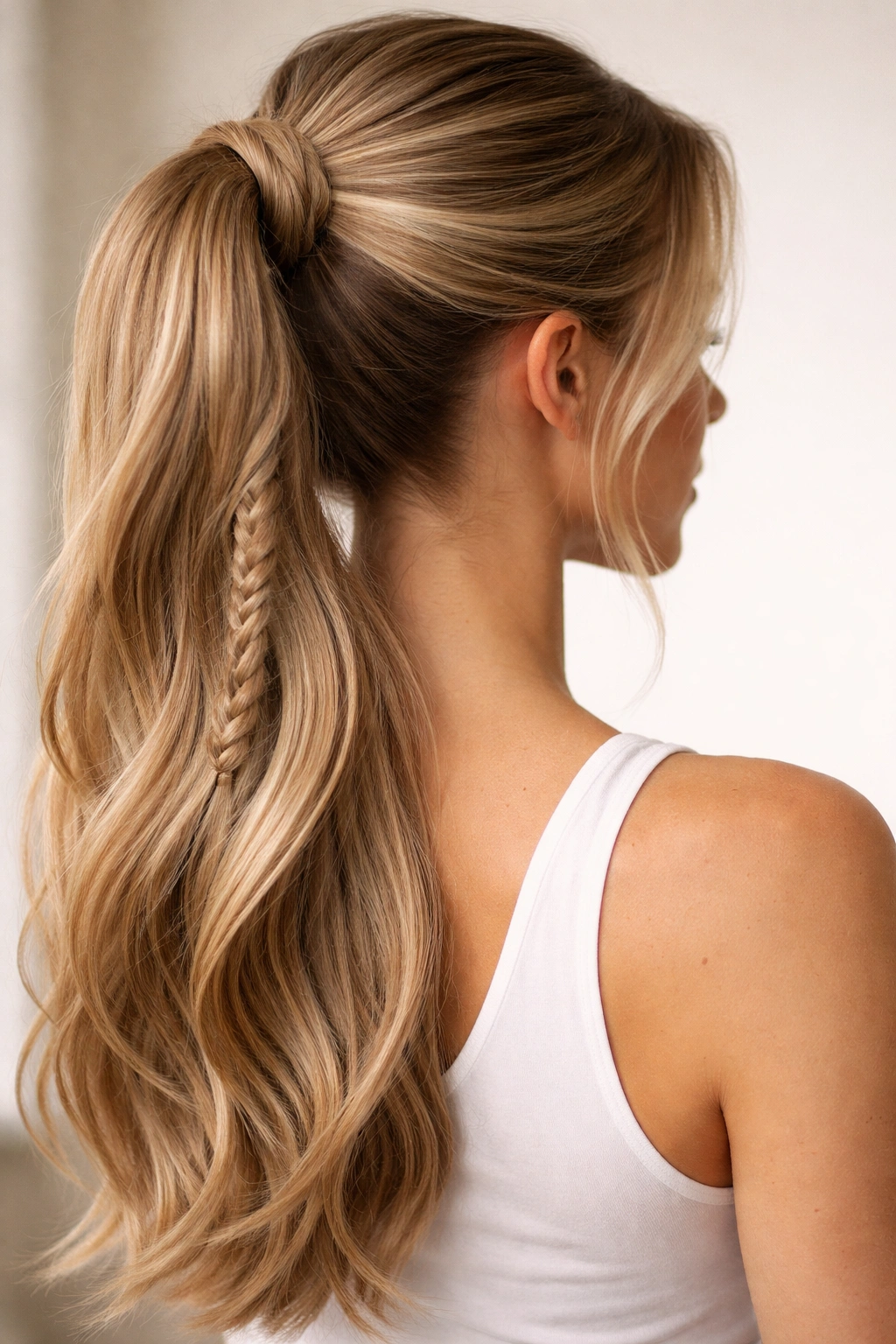
A braided wrap ponytail is one of those styles that looks more expensive than it is. The braid is not doing all the volume work itself. It is wrapping around the base and part of the tail, which makes the whole ponytail seem thicker at the root and denser through the length.
This is a good choice when the elastic area feels too obvious or when your ponytail naturally tapers. Wrap a slim braid around the base first, then continue the braid for a few inches down the tail. That hidden thickness at the top changes the whole shape.
I like this on straight hair because it keeps the style sleek while still giving it body. If your ends are thin, curl them under or add a soft bend with a flat iron. The braid draws attention upward, but the tail still needs a little finish.
22. Multiple Micro Braids Into One Ponytail
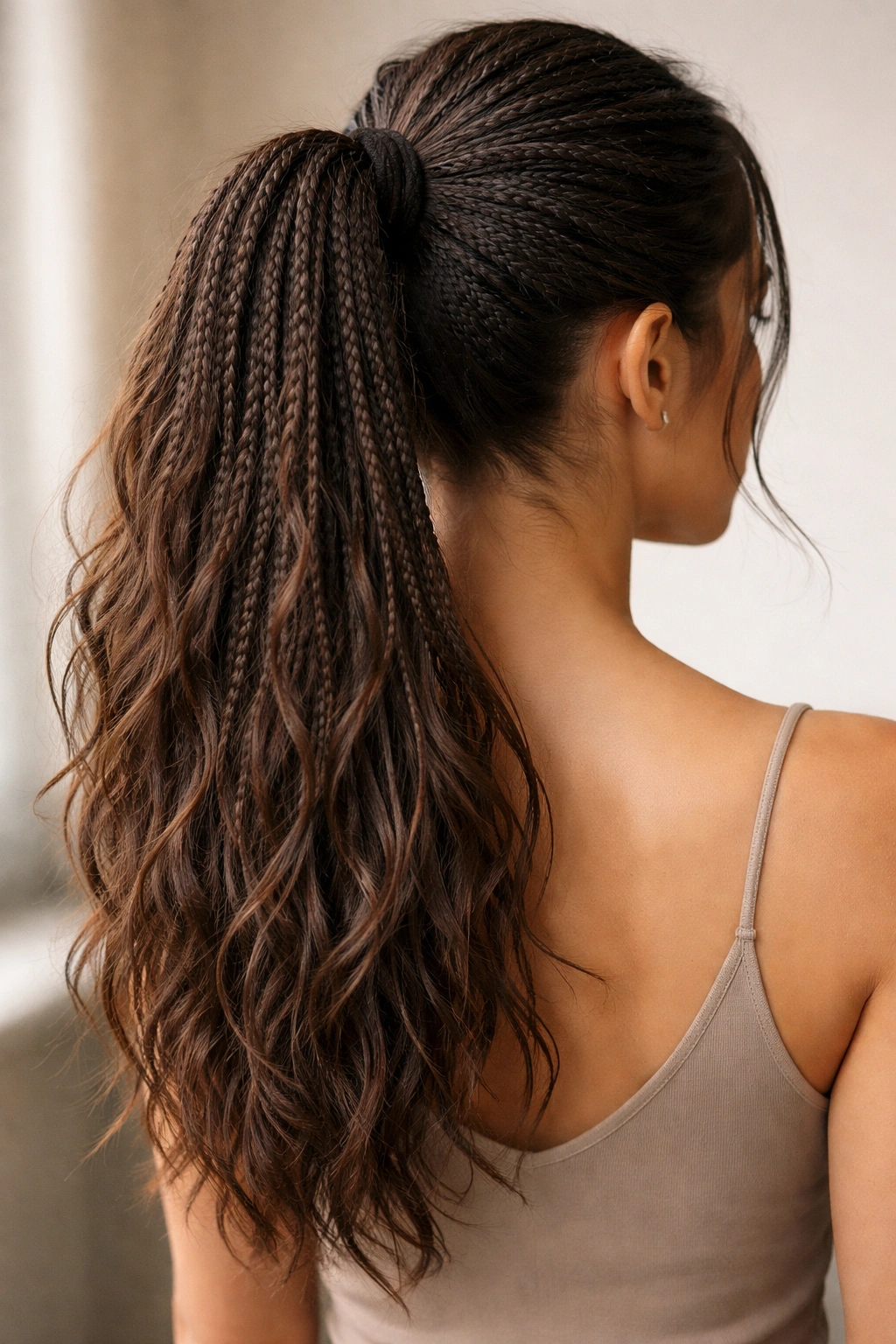
A cluster of tiny braids can make one ponytail look much fuller than a single large braid, mainly because the texture gets busier. The eye sees more lines, more edges, more movement.
The trick is not to overdo it. Three to five micro braids is usually enough. Too many, and the style can start to feel stiff at the roots. Keep the braids uneven in width on purpose — one slightly thicker, one thinner, one tucked closer to the part. That little irregularity makes the whole ponytail look more natural.
Good uses for this style
- festival hair
- layered cuts that need extra structure
- second-day hair with a bit of grip
- ponytails that need to look fuller at the sides
This is one of the easiest ways to add interest without adding heat. It also works well if you like texture more than polish.
23. Diagonal French Braid Ponytail
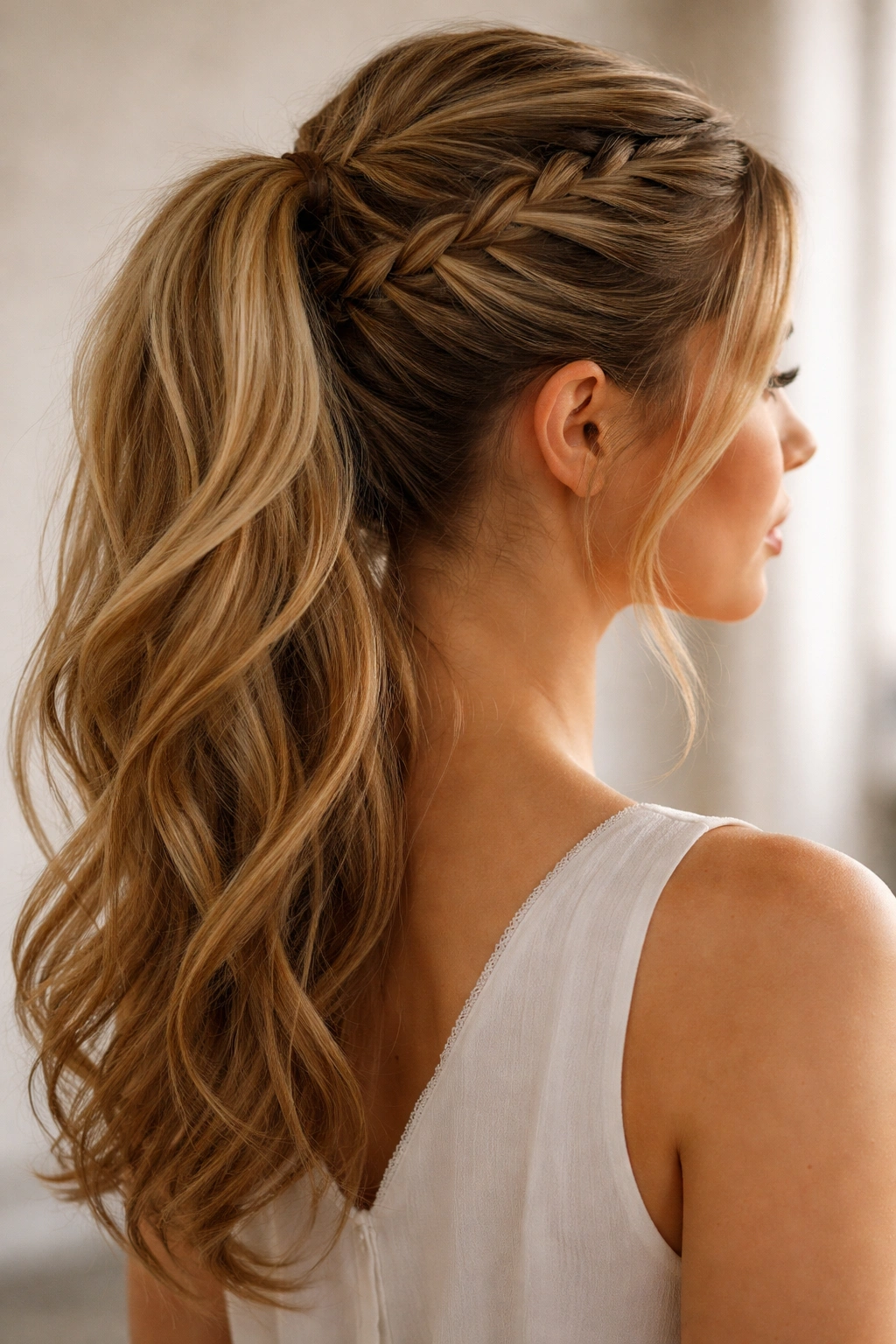
A diagonal French braid pulls the eye across the head instead of straight back, and that diagonal line creates a longer, fuller-looking shape. It is a small shift, but it changes the whole read of the ponytail.
A center braid can feel stiff. A diagonal one feels softer and more dynamic. Start near one temple, braid toward the opposite side, then gather everything into a ponytail just below the braid’s end. The slanted direction gives the crown lift on one side and width across the back, which is a nice trick if your hair tends to lie flat near the part.
I’d pick this when I want the fullness to feel built in, not piled on. It’s a good middle ground between polished and relaxed.
24. Faux Hawk Braided Ponytail
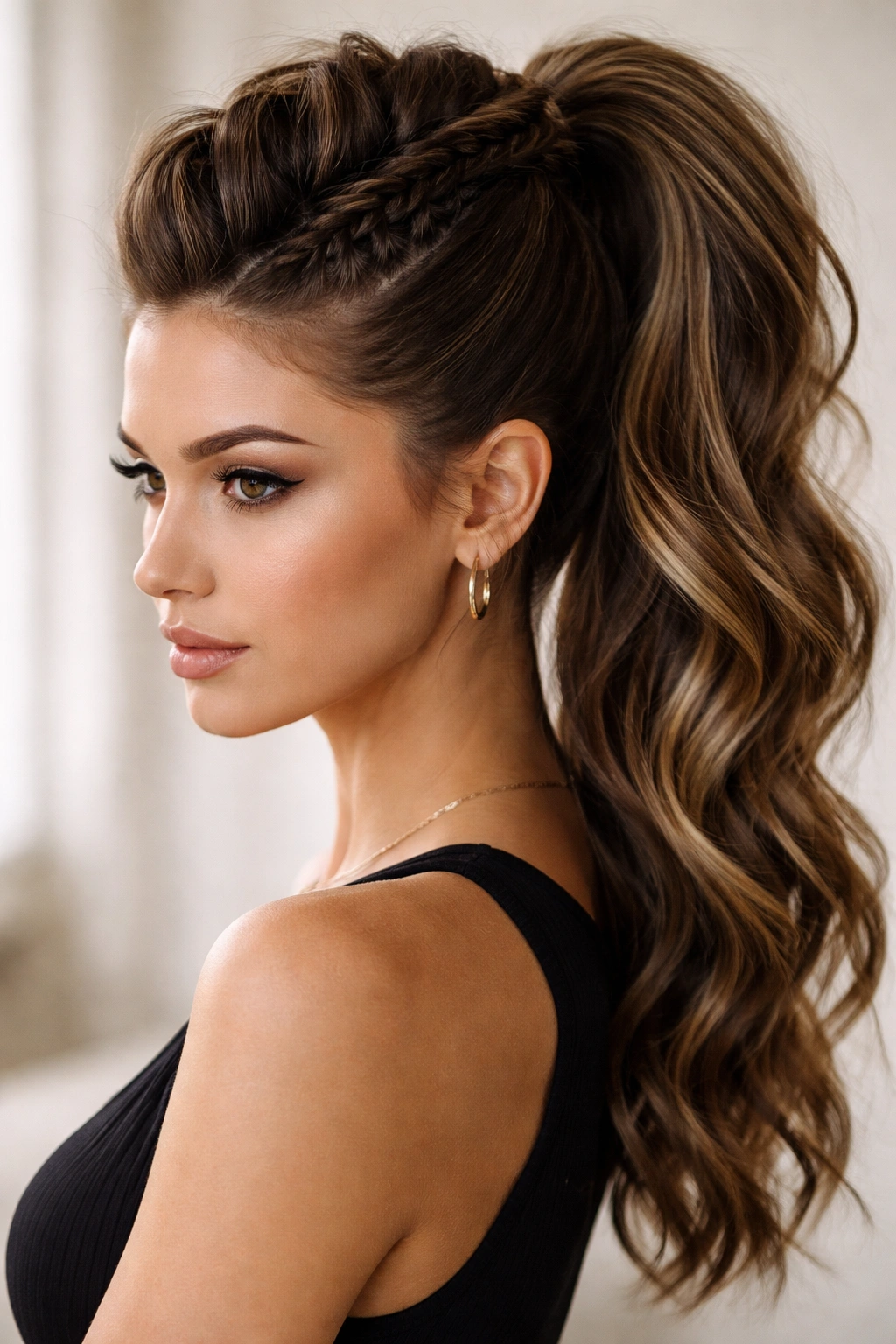
A faux hawk braided ponytail is loud in the best way. The center ridge stands tall, the sides lie close to the head, and that contrast makes the braid look thick from root to tip.
The style works especially well if your hair is not naturally huge at the crown. By pinning the sides down, you let the braid sit up higher than it would in a standard ponytail. That raised center line gives the whole style more presence. Add a pull-through section or a tight Dutch braid down the middle, then gather it into a ponytail at the back.
If you want more drama, tease the center strip lightly before braiding. Just a little. Too much backcombing makes the shape rough instead of full. The point is height, not helmet hair.
25. Soft Romantic Pull-Apart Ponytail
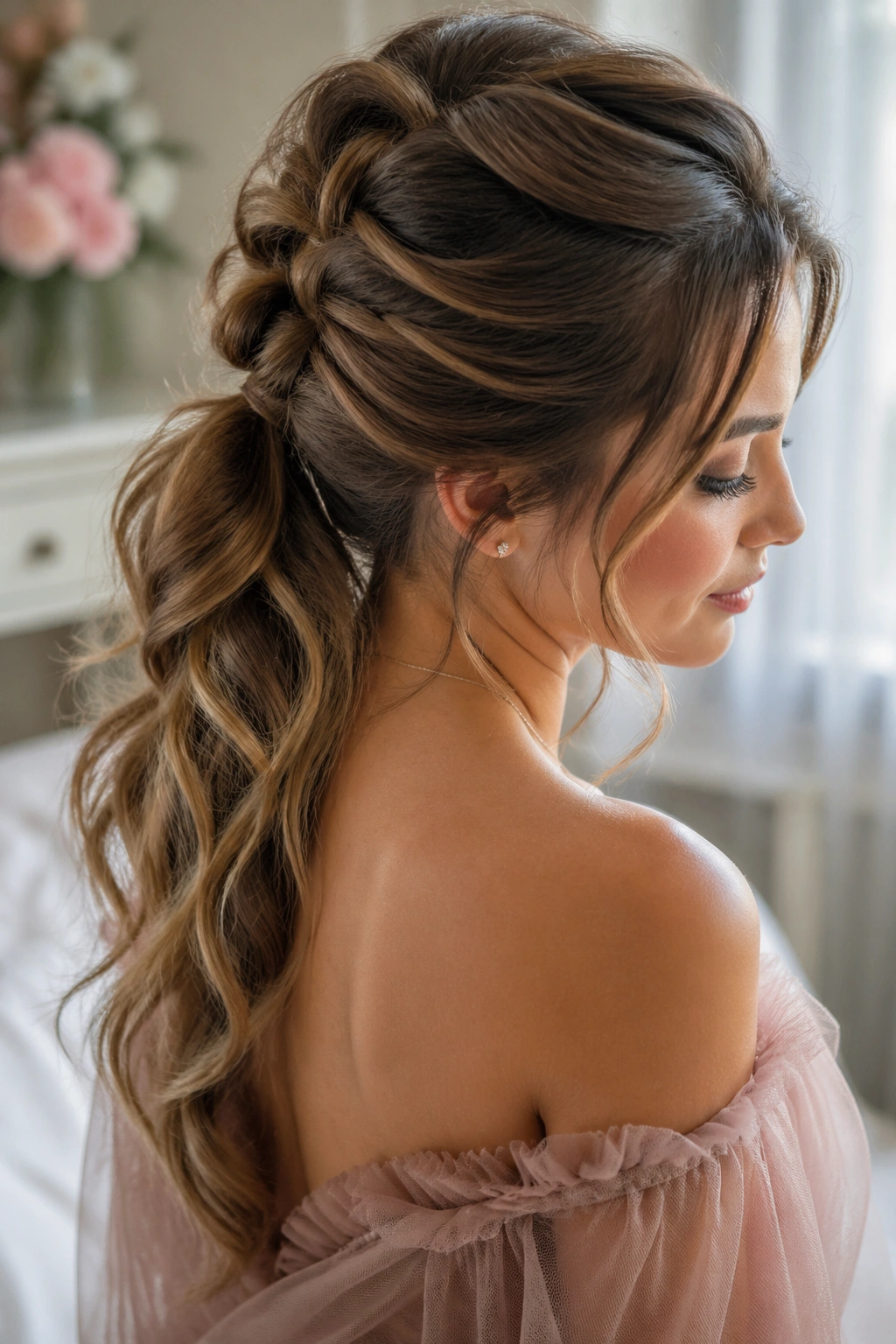
There is a reason this style keeps showing up for weddings, dinners, and every event where people want the hair to look touchable. It gives you fullness without a hard line anywhere.
The braid is loose, the crown has a little lift, and the ponytail itself is gently pulled apart so it looks plush instead of tight. Face-framing pieces soften the front, which keeps the style from feeling severe. On second-day hair, it often looks even better because the strands have a little grip and do not slide as fast.
This is the one I’d reach for when I want a braided ponytail to feel soft rather than sharp. It works because nothing is overly polished. The braid is allowed to breathe, and that breathing room is what makes it look full.
If you want the style to last through the day, mist the finished braid with a light flexible spray and pinch the pulled-out pieces into place with your fingers. Not too much. The prettiest version still moves.