



Curly hair rarely settles for a plain elastic, and that is exactly why faux ponytails for curly hair work so well. You get the lifted shape, the clean neckline, the dramatic swing, but you do not have to bully every curl into one tight, cranky bundle at the back of your head.
That matters more than people admit. Curly hair has its own rules — shrinkage, density, bend, frizz, all of it — and the best ponytail styles respect those rules instead of fighting them. A good faux ponytail uses twists, pins, wraps, and a little bit of camouflage to create the illusion of a classic ponytail while keeping the curl pattern looking full and alive.
The payoff is big. Your hair can look polished for work, weddings, brunch, dance nights, or the kind of day when you want to look put together without spending half the morning in front of a mirror. And because the styles below lean into volume instead of flattening it, they tend to feel easier on the scalp too.
1. Pineapple Faux Ponytail With a Soft Crown
The pineapple is the natural starting point for curly hair, and this version turns that familiar high lift into a faux ponytail that looks intentional instead of sleepy. Think of it as the crown of your curls staying tall while the back is shaped and tucked so the whole style reads like a high ponytail without the tight tug.
Why It Flatters Curls
The best part is the balance. You keep the curl mass at the top, which gives you height, but you do not drag the sides flat or stretch the front too hard. That means less tension around the hairline and a shape that still looks full from every angle.
Use a satin scrunchie, four to six bobby pins, and a light curl cream or mousse if your curls need a little help holding together. If your hair is shoulder-length or longer, pin the lower curls up in loose folds rather than trying to wrap them into a tight bundle. The style looks better when it is a little soft around the edges.
2. Low Nape Twist-In Faux Ponytail
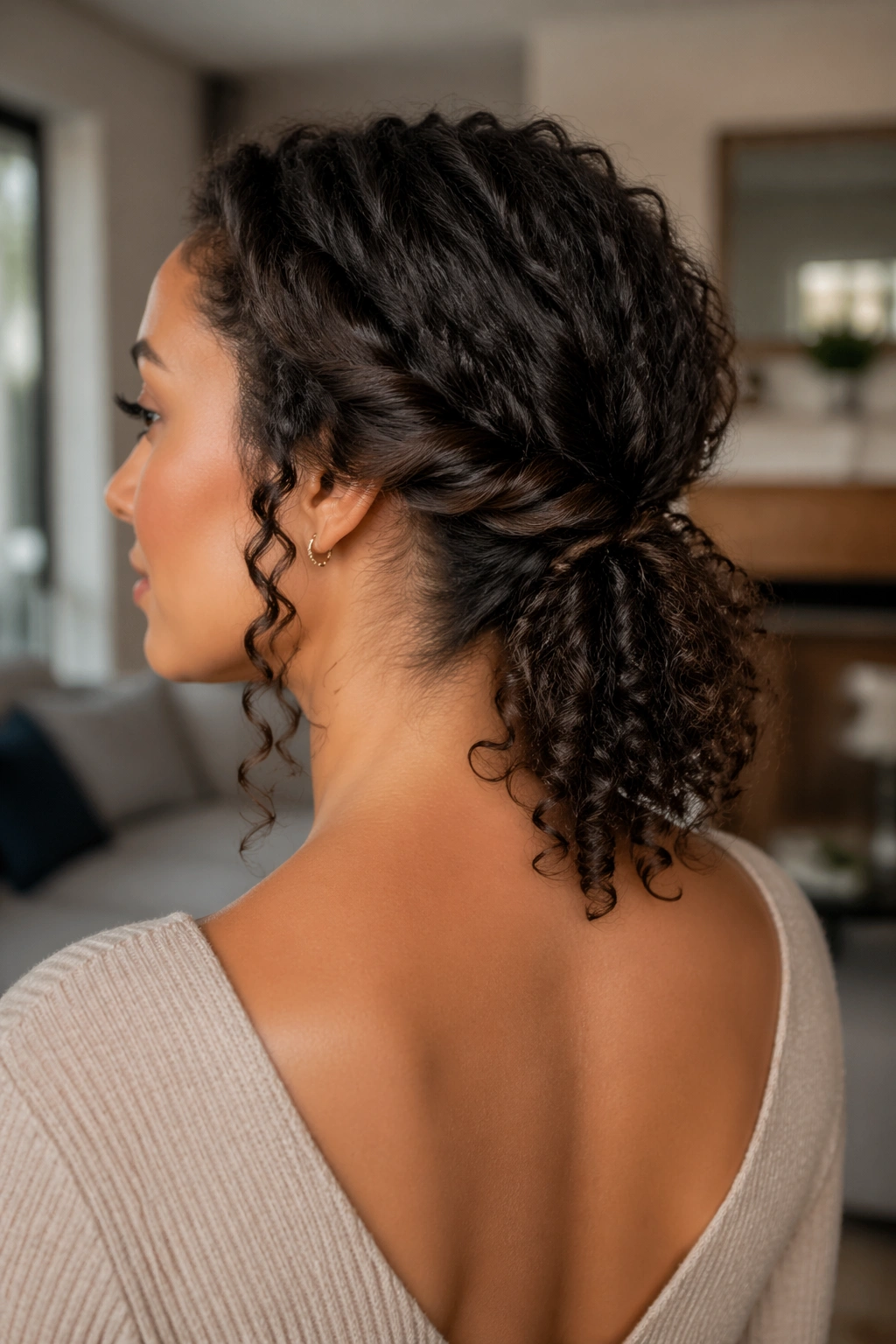
A low faux ponytail at the nape feels calm, clean, and a little more grown-up than a high version. Two side sections get twisted back, pinned at the center, and the remaining curls are gathered in a loose tail that sits right above the neckline.
Why does this work so well? Because the eye reads the twists as structure and the curl mass as the ponytail itself. You get the shape without having to force all your hair into one place, which is where curly styles often go sideways.
This is one of those styles that looks better with day-two curls. The hair has a bit more grip, so the twists stay put. A small clear elastic, a few matching pins, and a dime-sized amount of styling gel at the temples are usually enough.
3. Half-Up Faux Ponytail With Loose Ends
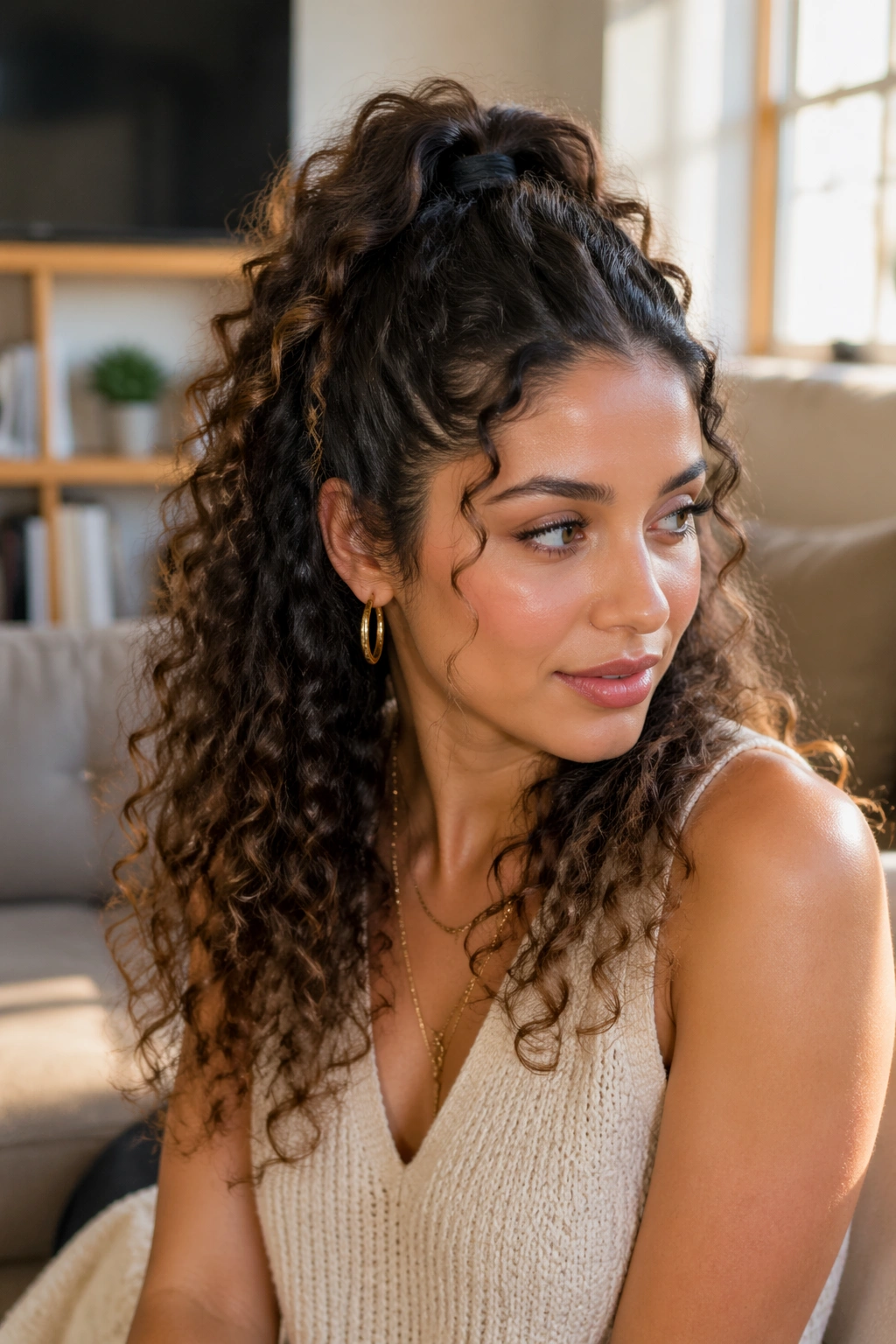
Half-up styles are the cheat code when you want ponytail energy but still want your length and curl pattern on display. Pull the top third of your hair back, secure it, then tuck the base so it sits like a lifted faux ponytail while the rest of the curls fall freely.
It gives you height without flattening the entire head. That matters if your curls are fine and easily crushed, or if your hair gets wider than it gets long when it dries. The top section creates the illusion of a ponytail; the loose bottom section keeps the style soft and full.
A small claw clip can work here too, especially if you want a looser, more casual finish. I like this one for busy days because it takes less time than a full updo and still looks like you made a decision.
4. Crown Braid Faux Ponytail
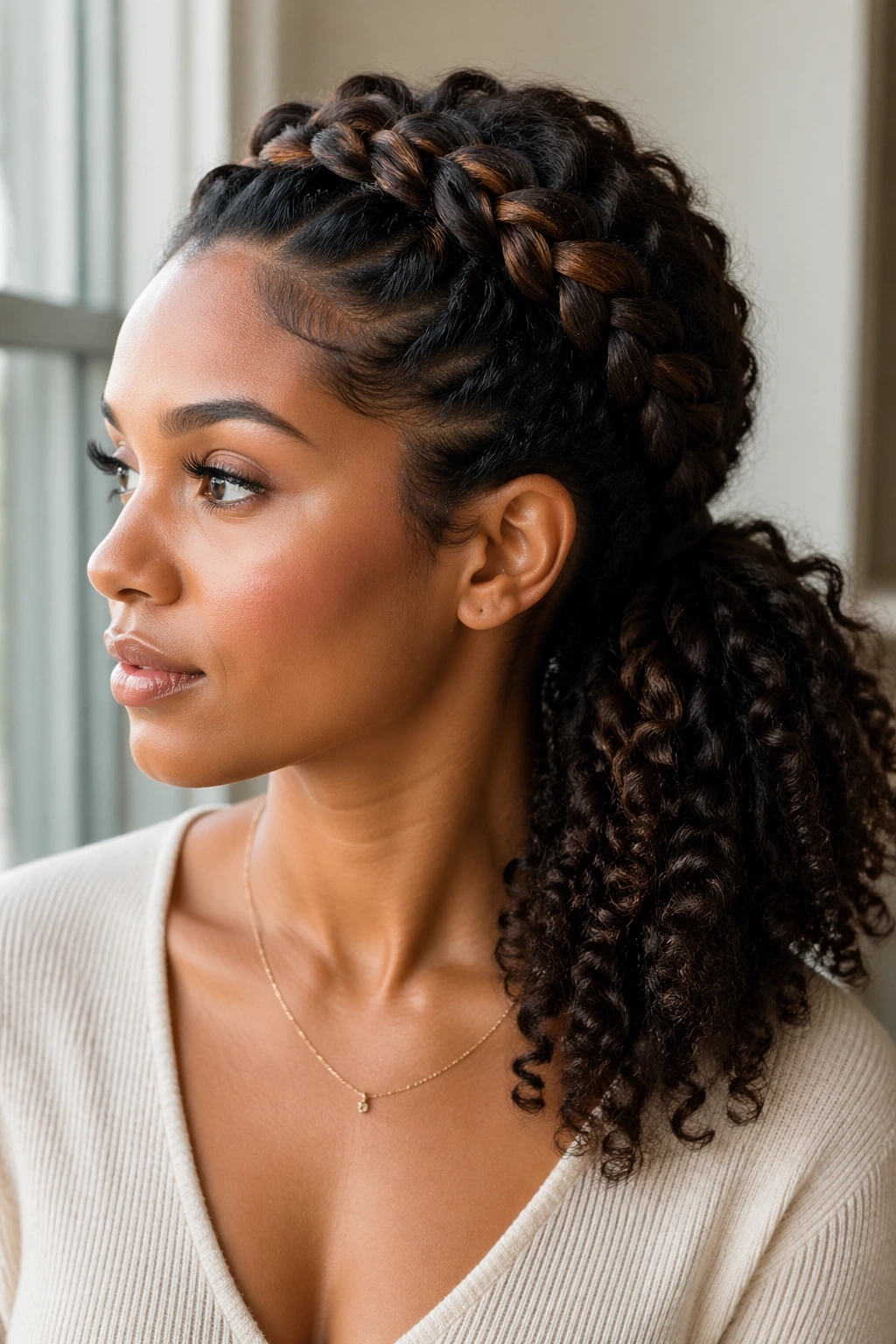
A crown braid leading into a faux ponytail is one of those styles that looks like it took forever, even when the process is fairly simple. Braid or twist along the hairline, wrap the sections toward the back, and let the remaining curls collect into a low or mid-back ponytail shape.
The braid does the visual heavy lifting. It hides the transition point and gives the whole style a sculpted look, which is especially helpful if your curls are dense or uneven in length. You can keep the braid tight or leave it a little loose if you want more softness around the face.
This version is strong for events, but it is not just for dressy moments. If you want something that stays neat through a long day, the crown braid gives the style a backbone. Plain curls can drift; a braid keeps them in line.
5. Bubble Faux Ponytail for Curls
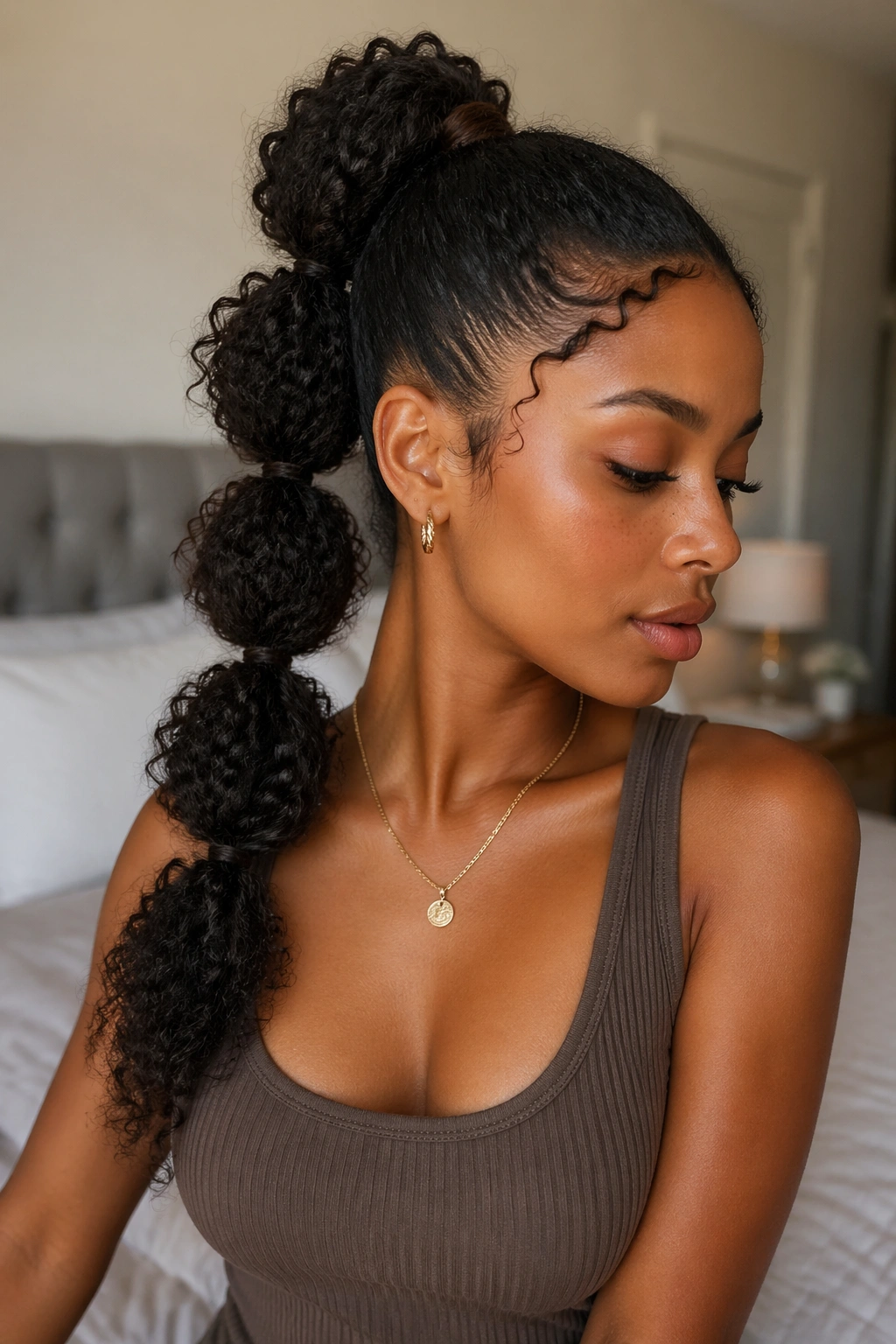
Bubble ponytails are already playful, but on curly hair they become something better: a style that celebrates shape instead of pretending each section should be identical. Secure the length with small elastics every few inches, then gently puff each section to create round, separated curls or coils.
What Makes It Work
The bubbles act like little frames. Each section gets its own shape, so shrinkage and curl variation stop being a problem and start looking deliberate. That is a nice shift, especially if your hair has mixed textures or different curl sizes from root to tip.
Keep the elastics soft and snag-free. Silicone-free ties can sometimes grip too hard, and curly hair is not the place to be rough. A light mist of water or leave-in can help the curls respond when you fluff the sections into shape.
- Best on medium to long curls
- Works with stretched hair or fully dry hair
- Adds structure without looking stiff
- Looks especially good with 3A to 4B texture
Tip: Pull each bubble out with your fingertips, not a brush. A brush ruins the shape fast.
6. Side-Swept Faux Ponytail
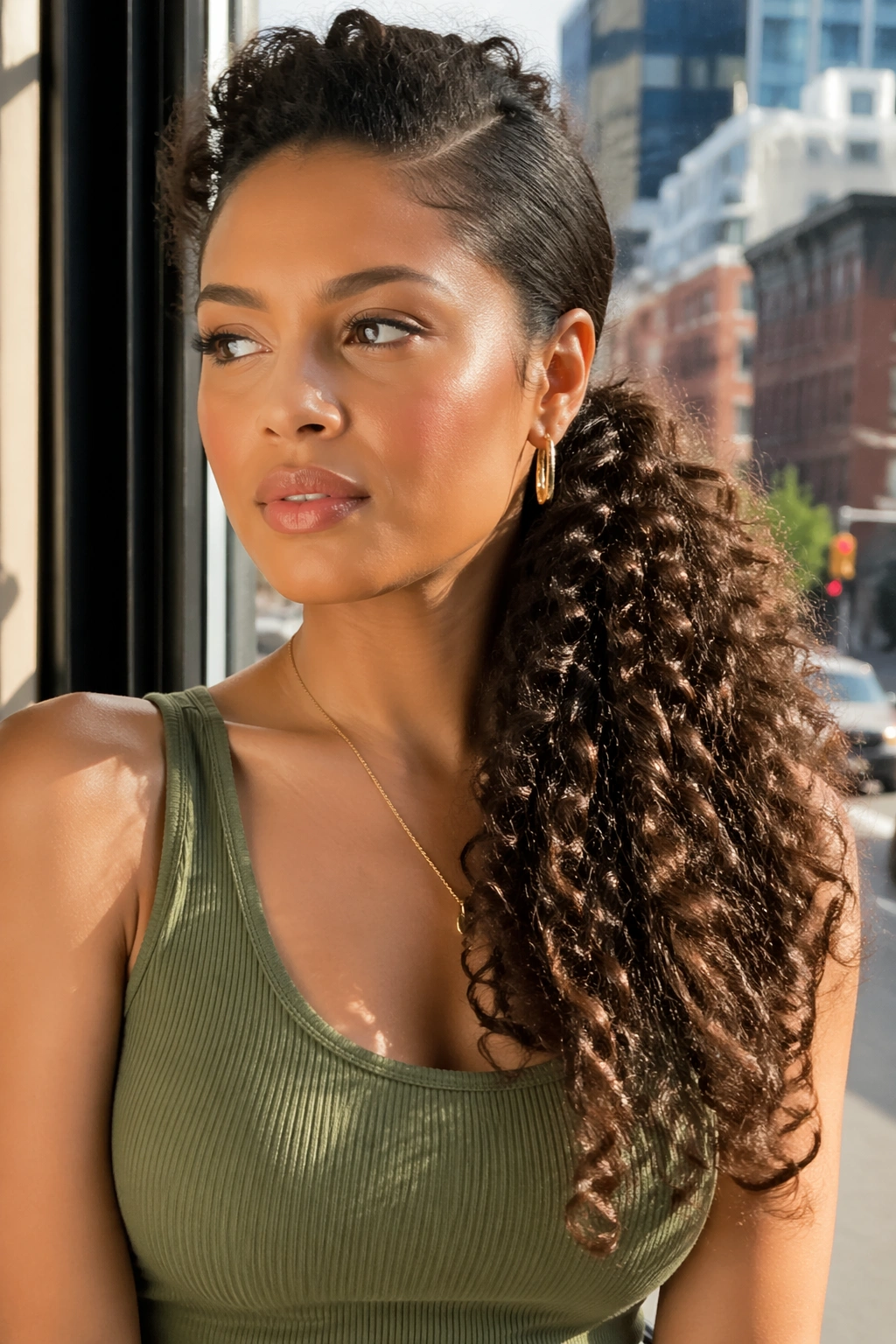
A side-swept faux ponytail gives curly hair that old-Hollywood tilt without asking it to behave too much. Instead of forcing the hair straight back, gather it over one shoulder, pin the opposite side snugly, and let the curls spill across the collarbone.
The charm is in the asymmetry. One side gets sleek enough to show the shape, while the other side stays big and airy. That contrast makes curly hair look rich, not messy. It also frames the face in a way that feels flattering without being severe.
I like this for textured hair because it avoids the too-perfect problem. Curly styles lose personality fast when they are smoothed too hard. Side placement keeps the energy relaxed and gives you a little movement every time you turn your head.
7. Curly Mohawk Faux Ponytail
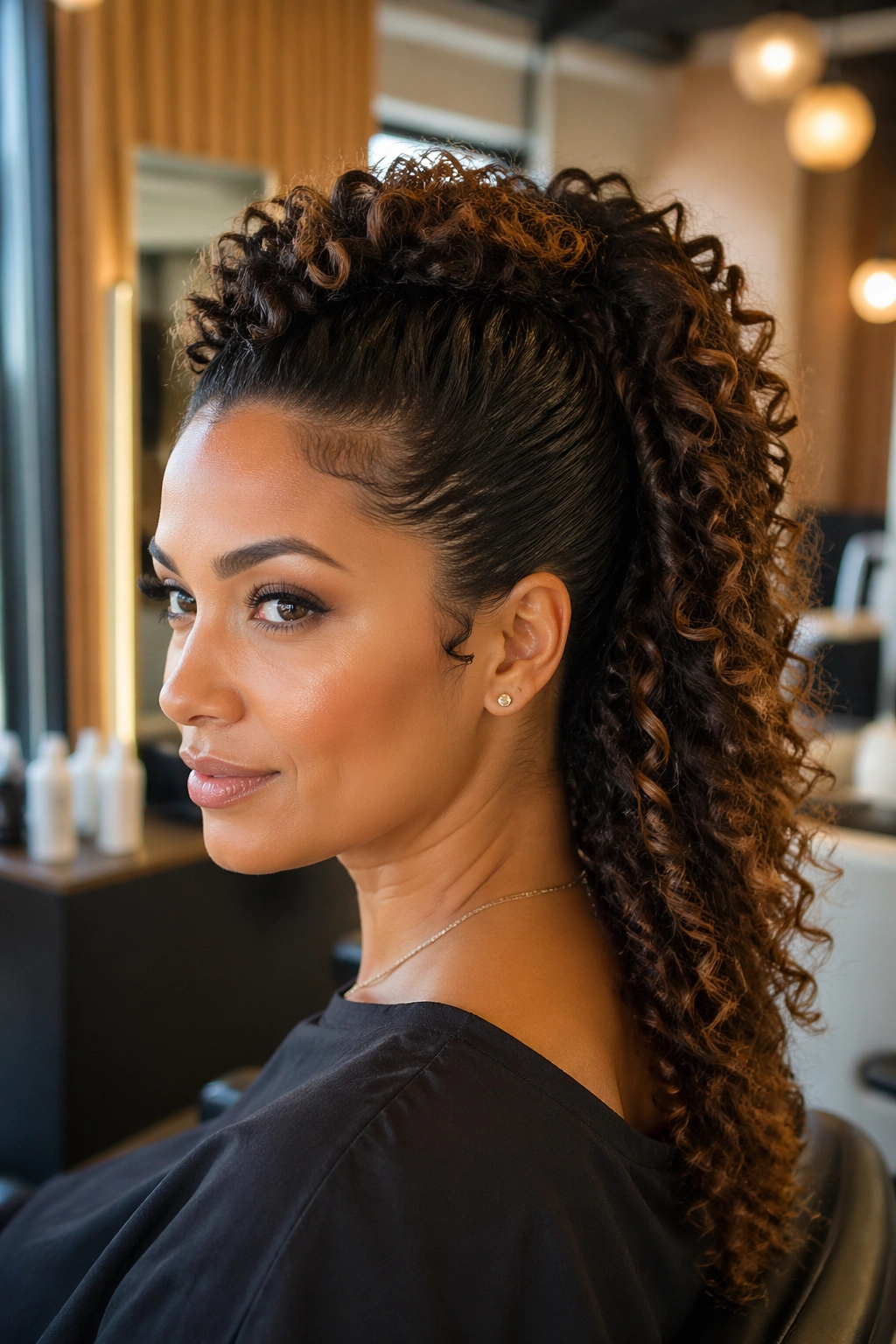
If you want drama, this one gives it to you without turning into a costume. Pin or braid the sides close to the head, leave the center section full, and shape the top and back into one long faux ponytail line down the middle.
The effect is bold, yes, but also practical. It keeps curls away from the face, showcases texture, and makes the crown look taller than it actually is. That tall center ridge can be especially flattering if your curls naturally collapse at the sides.
This style likes strong hold. Use gel or mousse at the sides, then soften the center with a curl cream so the ponytail still feels touchable. The contrast is the point: sleek sides, lively middle, no awkward middle ground.
8. Scarf-Wrapped Faux Ponytail
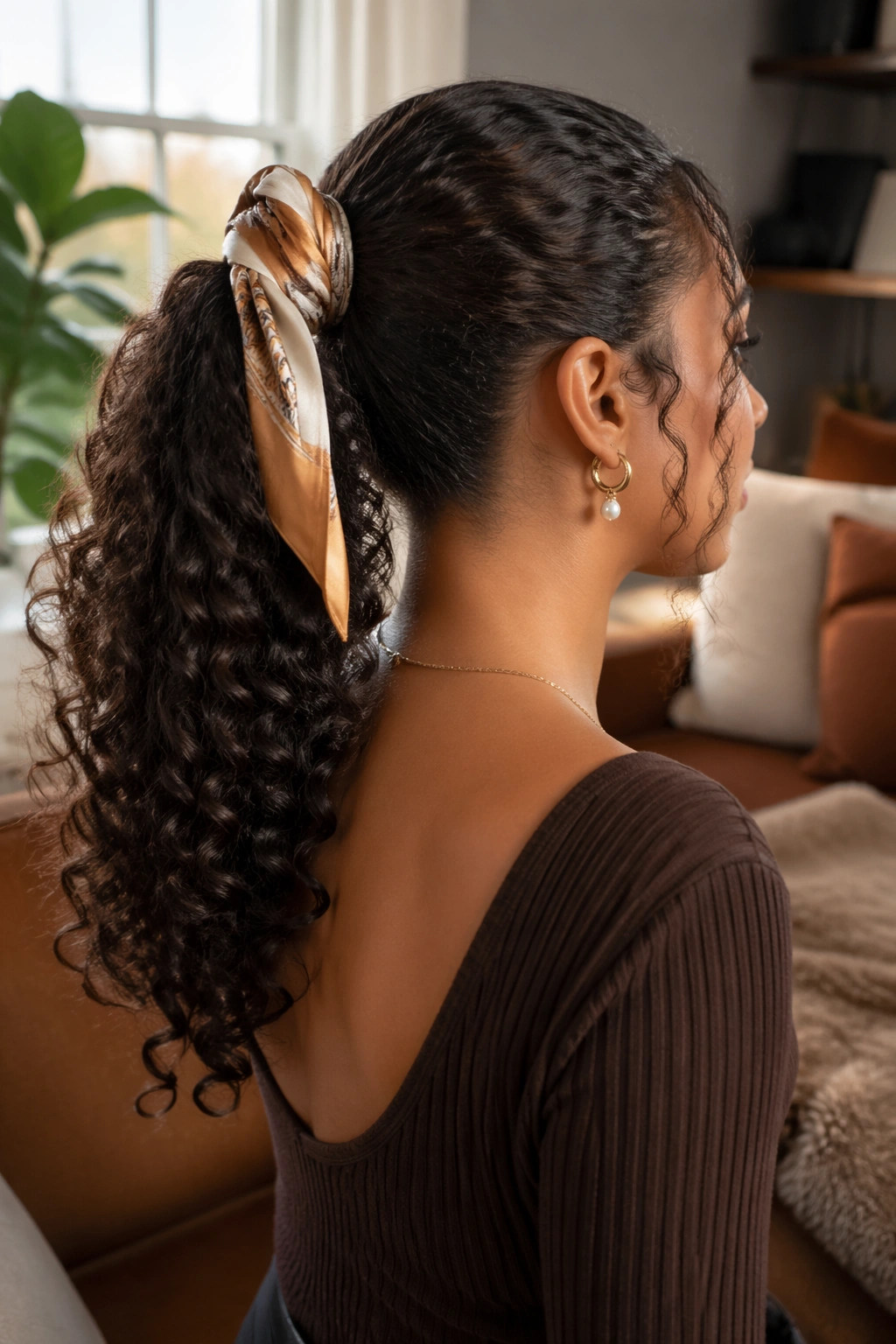
A scarf-wrapped faux ponytail is one of the easiest ways to make curly hair look styled on purpose. Tie or pin the curls into a soft base, then wrap a silk or cotton scarf around the anchor point so the wrap becomes part of the look instead of an afterthought.
The scarf hides the elastic, covers rough edges, and adds color in a way that feels personal. If your roots are not cooperating — and sometimes they simply will not — a scarf buys you a clean finish without extra heat or extra fighting. That alone makes it worth keeping in rotation.
Choose a scarf that is wide enough to knot securely. Thin scarves slip. A 2- to 3-inch-wide band is easier to control, and the fabric should feel smooth so it does not rough up the curls at the base.
9. Claw-Clip Faux Ponytail
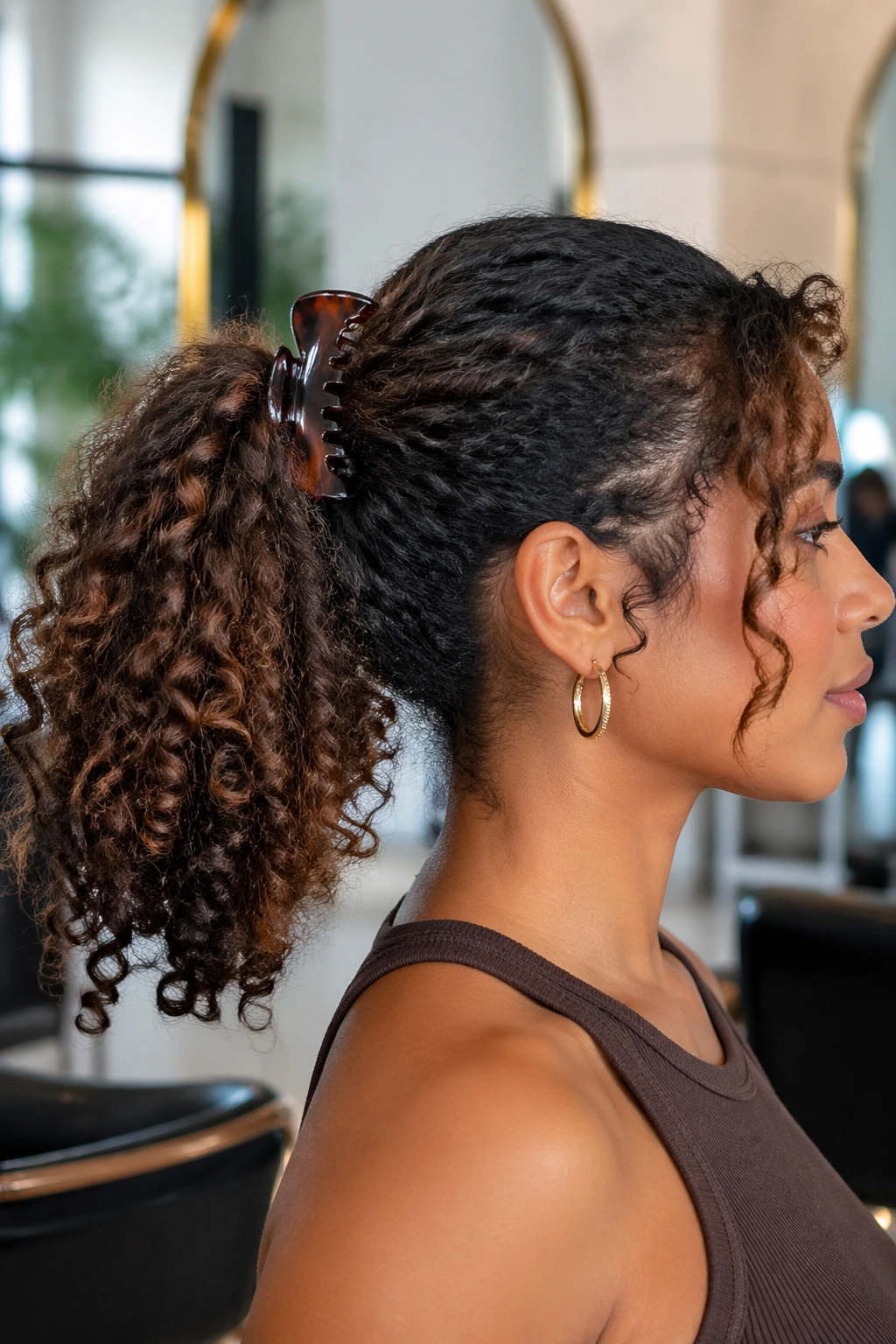
A claw-clip faux ponytail works when you want speed and a little softness. Twist the curls upward or backward, clip them at the base, and leave the ends to fall in a loose ponytail shape rather than squeezing them into a hard knot.
What makes this different from a standard clip-up style is the silhouette. You are aiming for a ponytail illusion, not just a random twist at the back of the head. Let the curl ends sit lower and fuller so the style reads as a tail, not a bun pretending to be busy.
This is a smart pick for thick curls because a clip spreads the weight better than a tight elastic. Still, use one with teeth that are long enough to grab through density. Tiny decorative clips look cute until the whole thing slides down by lunchtime.
10. Braided Base Faux Ponytail
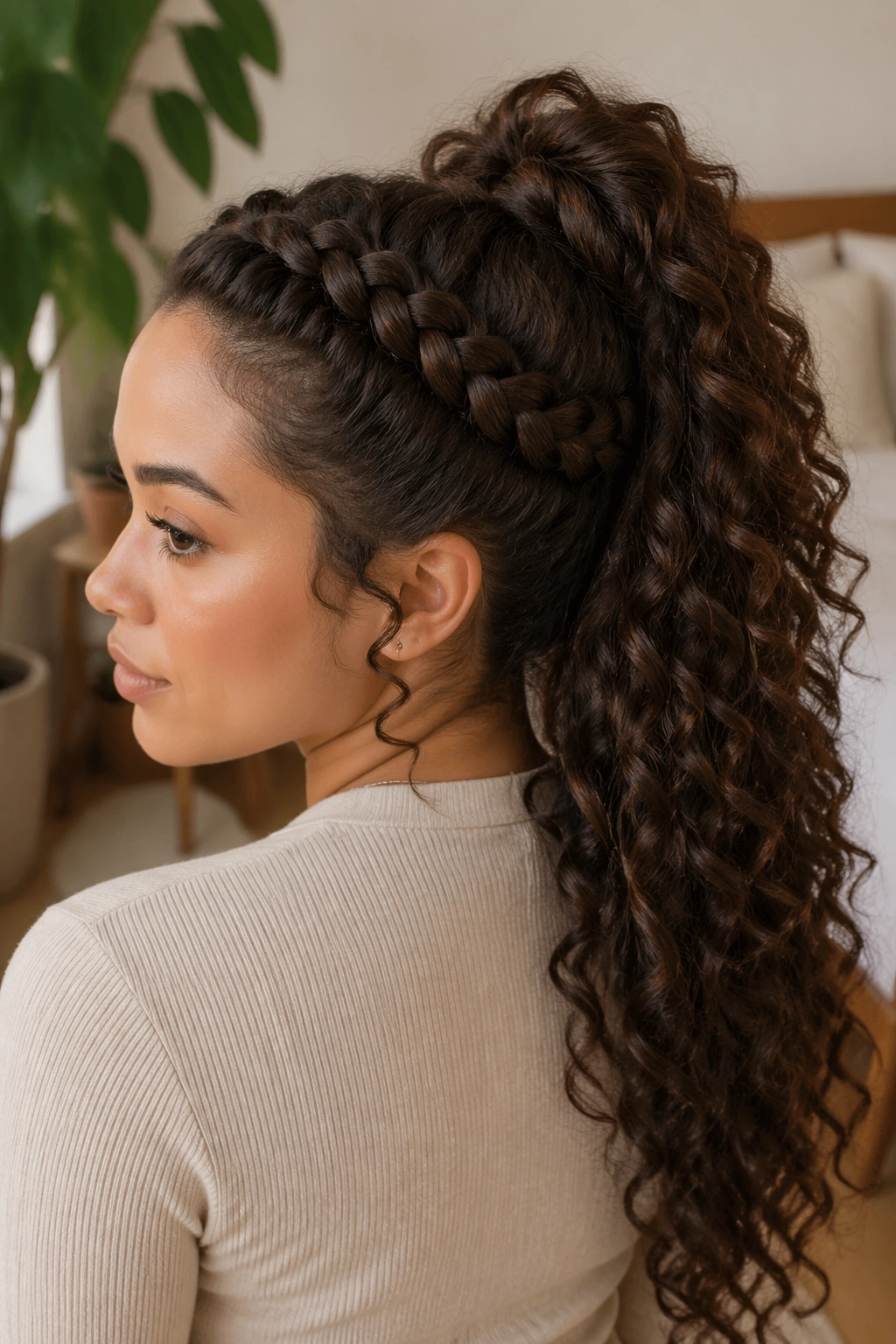
A braided base is one of the cleanest ways to make a faux ponytail look polished. Gather a small section at the crown or nape, braid it tightly around the anchor point, and pin the braid so it covers the elastic and keeps everything looking neat.
Why It Looks So Clean
The braid hides the mechanics. Instead of seeing a band or a cluster of pins, you see a woven wrap that blends into the rest of the style. That matters with curly hair because texture already brings enough visual interest; the base does not need to shout.
This one is good when your curls are frizzing a little at the roots. The braid gives the eye a polished line to follow, and the loose curls underneath do the softer part of the work. If your hair is layered, leave the shortest pieces out around the face so the braid does not feel too severe.
11. Folded Chignon Faux Ponytail
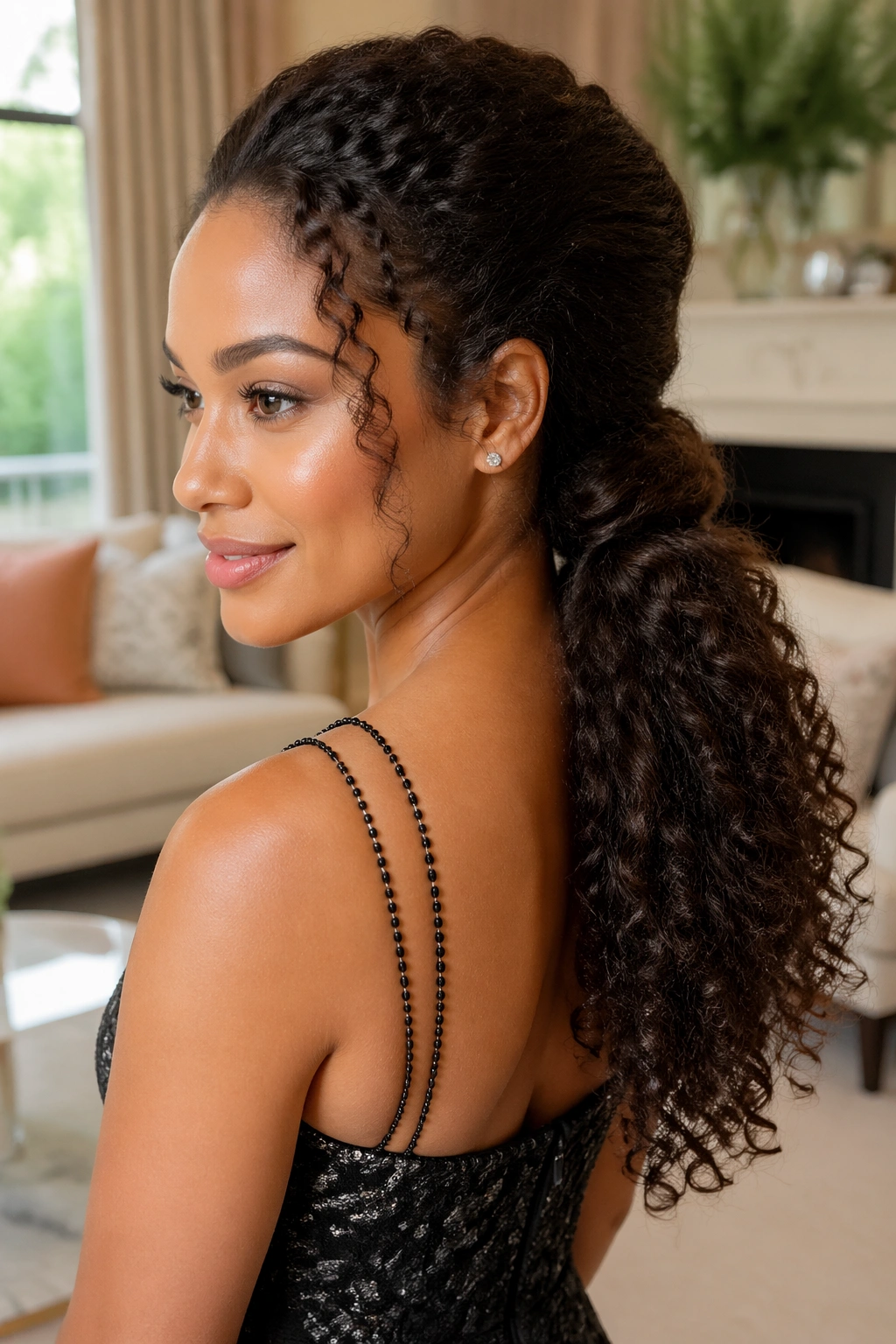
This style starts with a low twist or small chignon and ends with a faux ponytail shape that feels almost architectural. Fold the hair upward, pin the base firmly, then let the ends drop or fan out so it resembles a ponytail that was tucked in and then released.
The trick is not to over-secure the ends. If you pack the hair too tightly, the style turns into a bun. If you leave a little movement, it keeps that elongated ponytail look. Curly hair is good at hiding pins, which helps here. A couple of well-placed bobby pins can hold more than you think.
This one works beautifully for formal settings because it looks intentional from the front and interesting from the side. A low shine cream on the outer curls helps the finish look controlled without making it stiff.
12. Puff Cuff Faux Ponytail
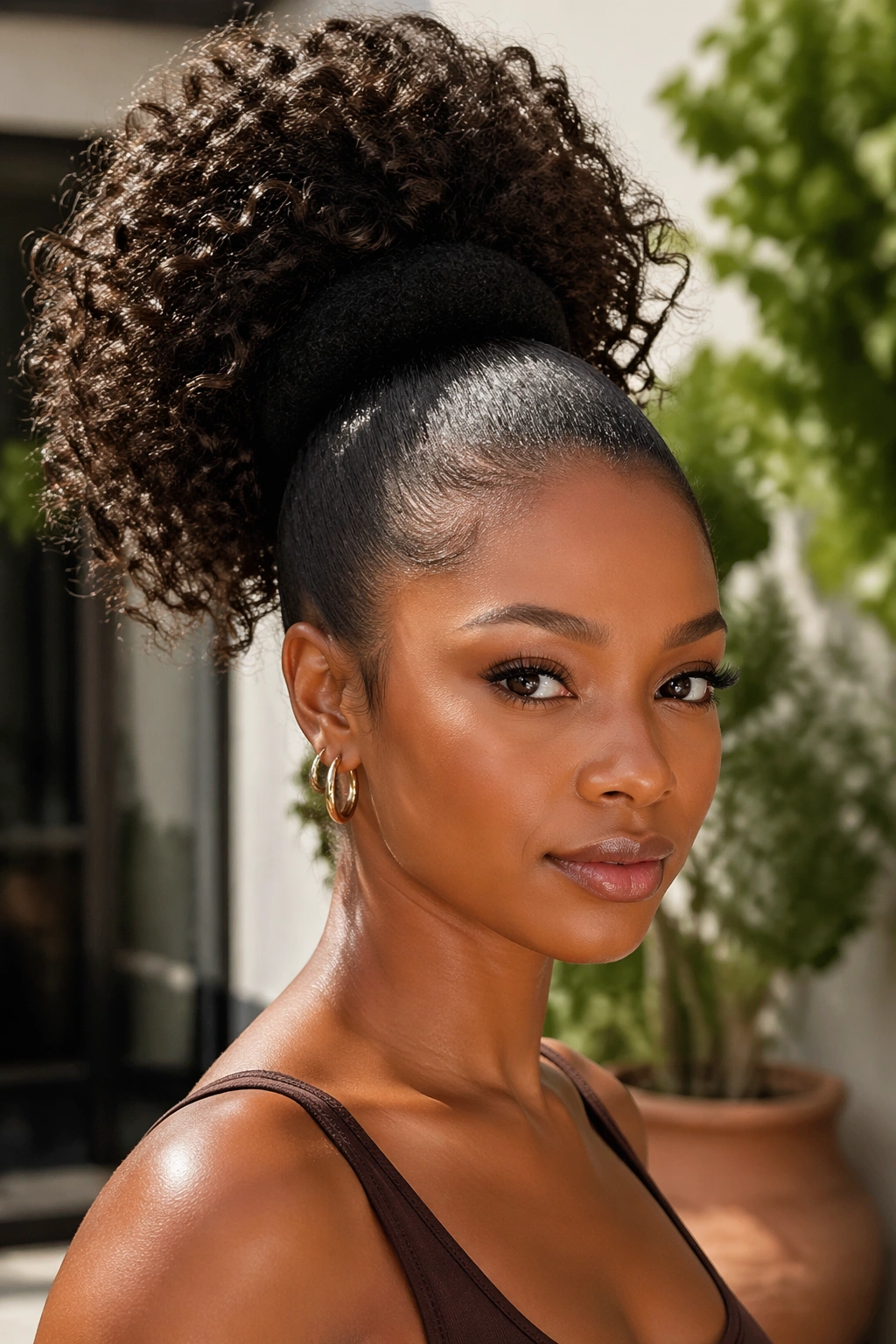
A puff cuff style gives you a dramatic ponytail shape without the usual stress line at the scalp. Gather the curls into a high puff, then use a puff cuff or wide elastic wrap to shape the base into a rounded, lifted ponytail silhouette.
This is a favorite for dense curly hair because it embraces volume instead of shrinking it down. The base feels supportive, the top stays full, and the whole style keeps that airy lift that curls naturally want. You also avoid some of the headache-inducing tension that comes with a tight ponytail.
If your curls are short to medium length, stretch them a little first with a twist-out or banding method. You do not need bone-straight hair for this. You need enough length to build the silhouette, not enough to flatten your identity.
13. Rope-Twist Faux Ponytail
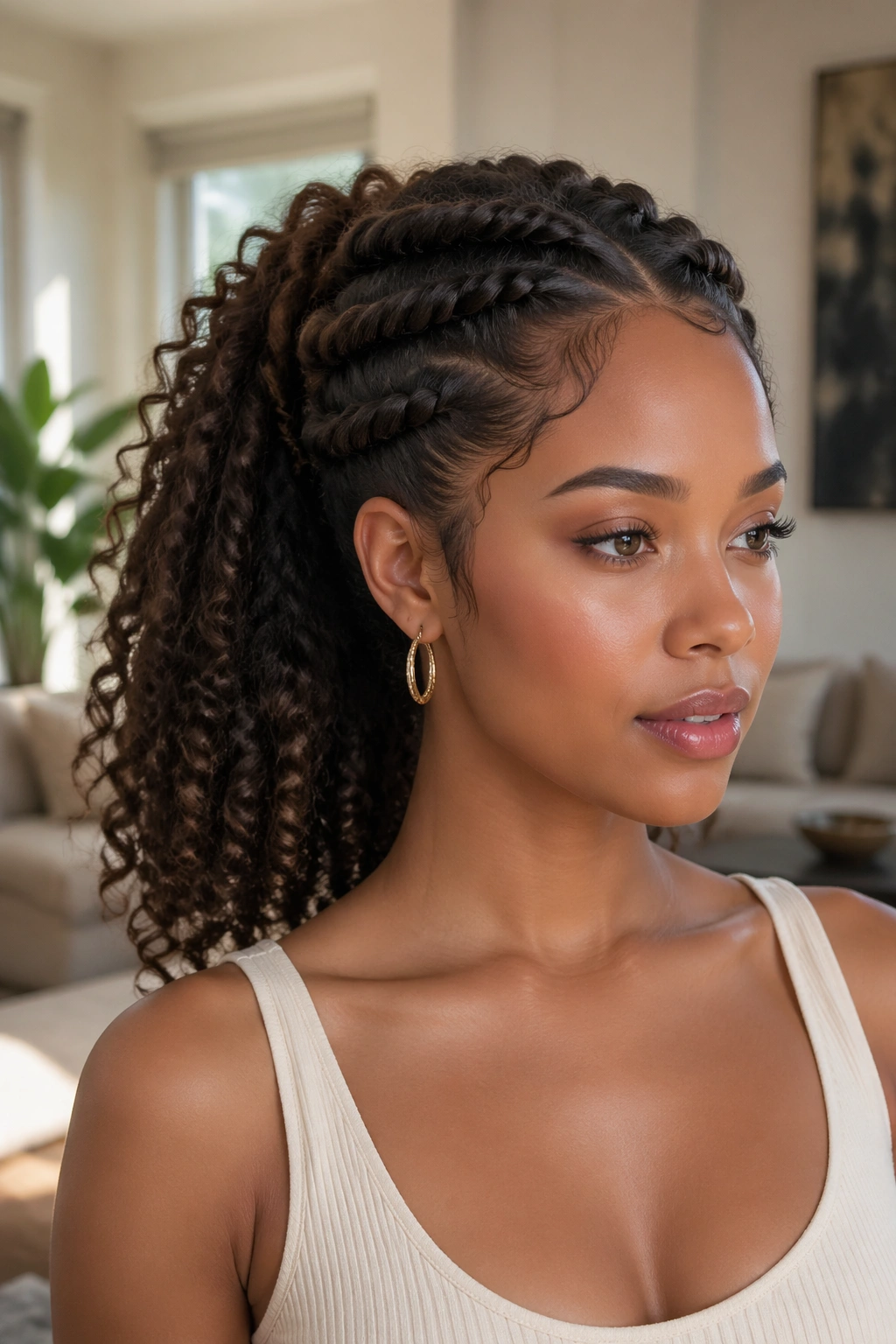
Rope twists make a sharp-looking faux ponytail base, and they are easier than they look. Split two front sections, twist each one in the same direction, then wrap them around each other in the opposite direction before pinning them toward the back.
The result is sleek but not too slick. That matters because curly hair can look overdone fast when every strand is sprayed into place. Rope twists hold shape without stealing all the texture, and the tail itself can stay loose, fluffy, or defined depending on your mood.
Use this when you want something tidy that still feels like hair, not helmet hair. A little edge control at the front helps if you are wearing the twists close to the hairline, but keep it light. Thick, shiny product can make curly roots look greasy by the end of the day.
14. Double-Twist Faux Ponytail
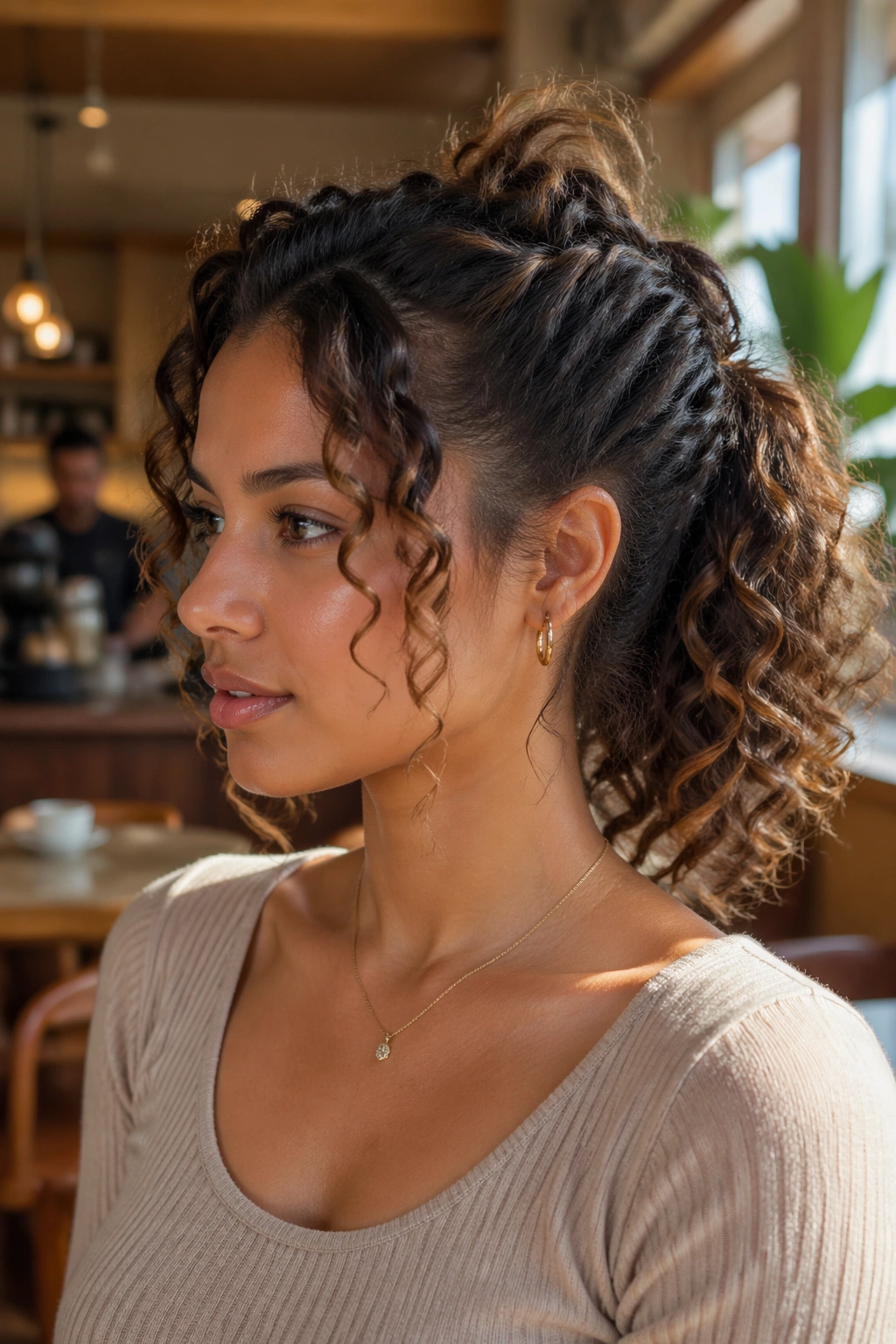
Two twists meeting at the back create one of the nicest faux ponytail shapes for medium-length curls. Twist from each temple or just above the ears, meet them at the center back, and pin them under the crown so the curls behind them fall into a soft tail.
It is neat without being stiff. The twists act like rails, guiding the eye toward the ponytail shape, while the rest of the hair stays free enough to keep its bounce. That combination works especially well if your curls are uneven in length or if you are growing out layers.
This one looks polished on textured hair because the twist lines add order. You get structure up top and movement at the bottom, which is usually what people want when they say they want a faux ponytail but do not want their curls flattened.
15. Feed-In Braid Faux Ponytail
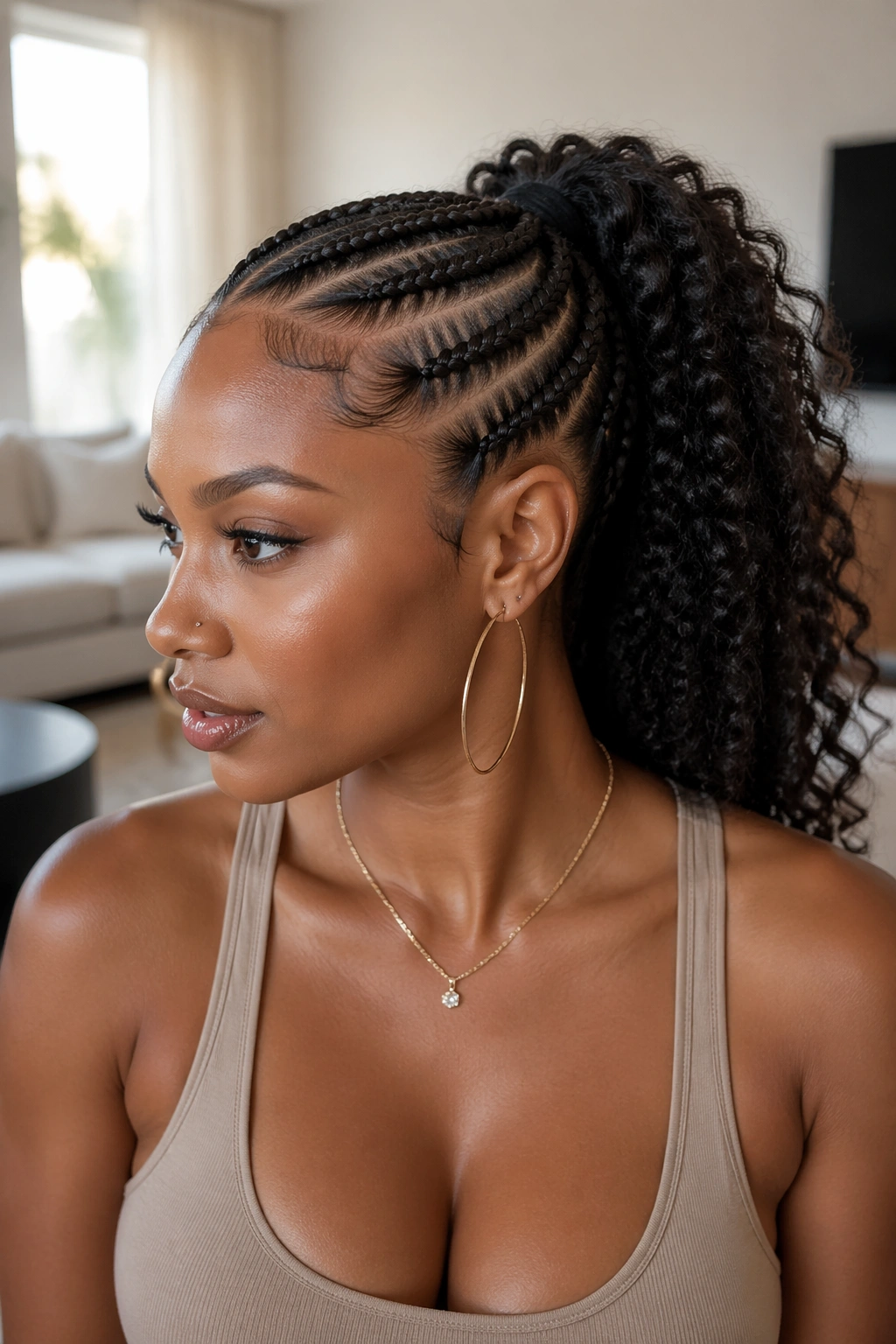
Feed-in braids give this style a clean start and a soft finish. Braid close to the scalp from the front or sides, then let the braided sections funnel into a curly faux ponytail at the back. The braid gradually builds the shape rather than making it feel chopped off.
That gradual shift is the magic. It keeps the front secure, opens up the face, and makes the transition into the ponytail look smooth. If you want extra length, this is also one of the easiest places to tuck in a ponytail extension or a few clip-ins.
The style is protective in spirit and practical in real life. It keeps manipulation lower at the hairline and gives the ends a rest. Curly hair that tends to frizz at the edges often looks calmer when the front is braided first.
16. Sleek Front, Full Back Faux Ponytail
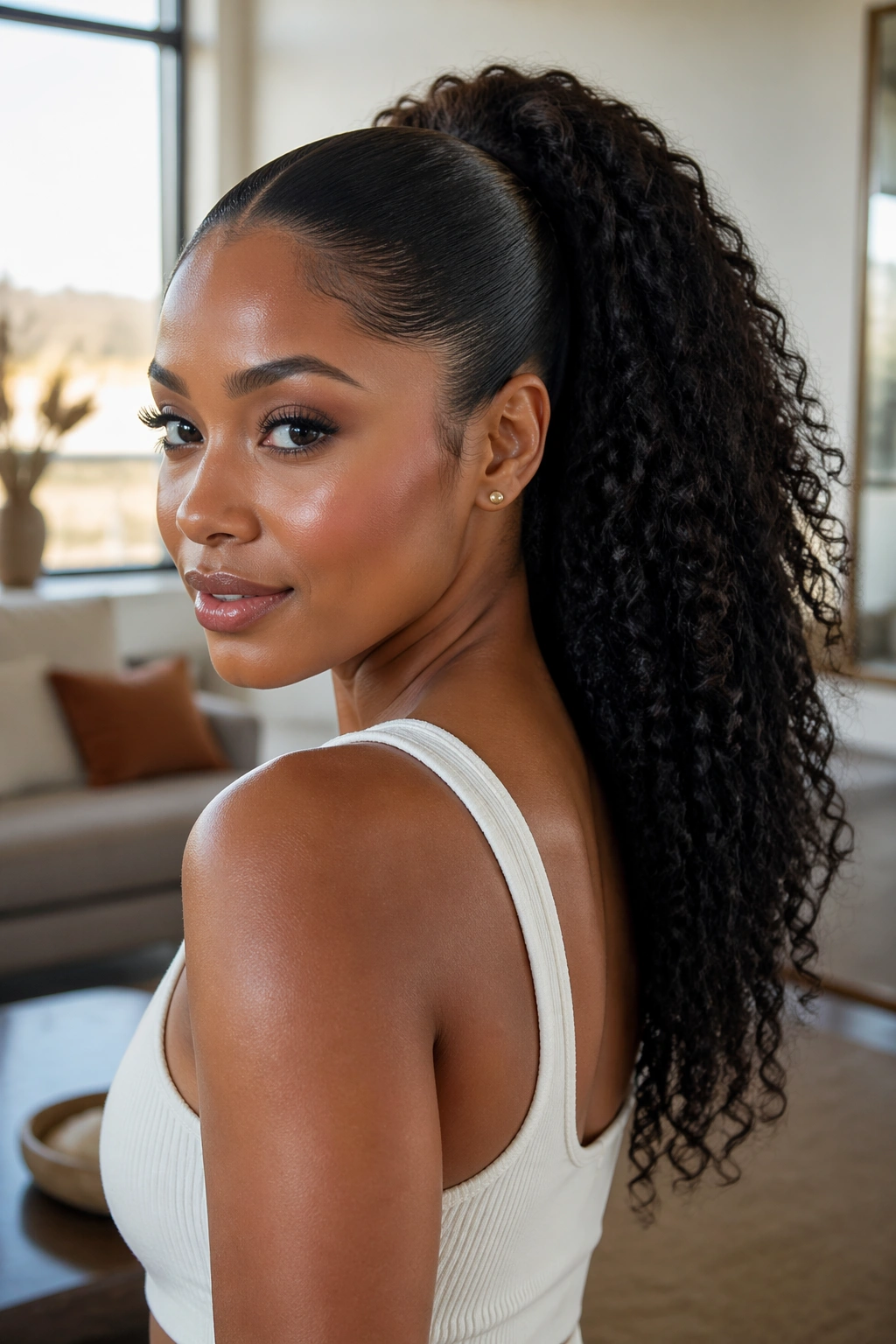
This one is for people who like contrast. Smooth the front and sides with gel or styling foam, keep the back full and curly, and let the style read as a faux ponytail with a clean frame around a big textured tail.
The key is to stop the sleek section at the right place. Do not drag the gel too far back or you will lose the softness that makes curly hair look good in the first place. A neat front line and a voluminous back create a shape that feels deliberate, not accidental.
I think this is one of the best ponytail-style looks for curly hair because it gives you both polish and personality. The front says you made an effort. The back says you did not fight your texture. That combination is hard to beat.
17. Curly Bangs Faux Ponytail
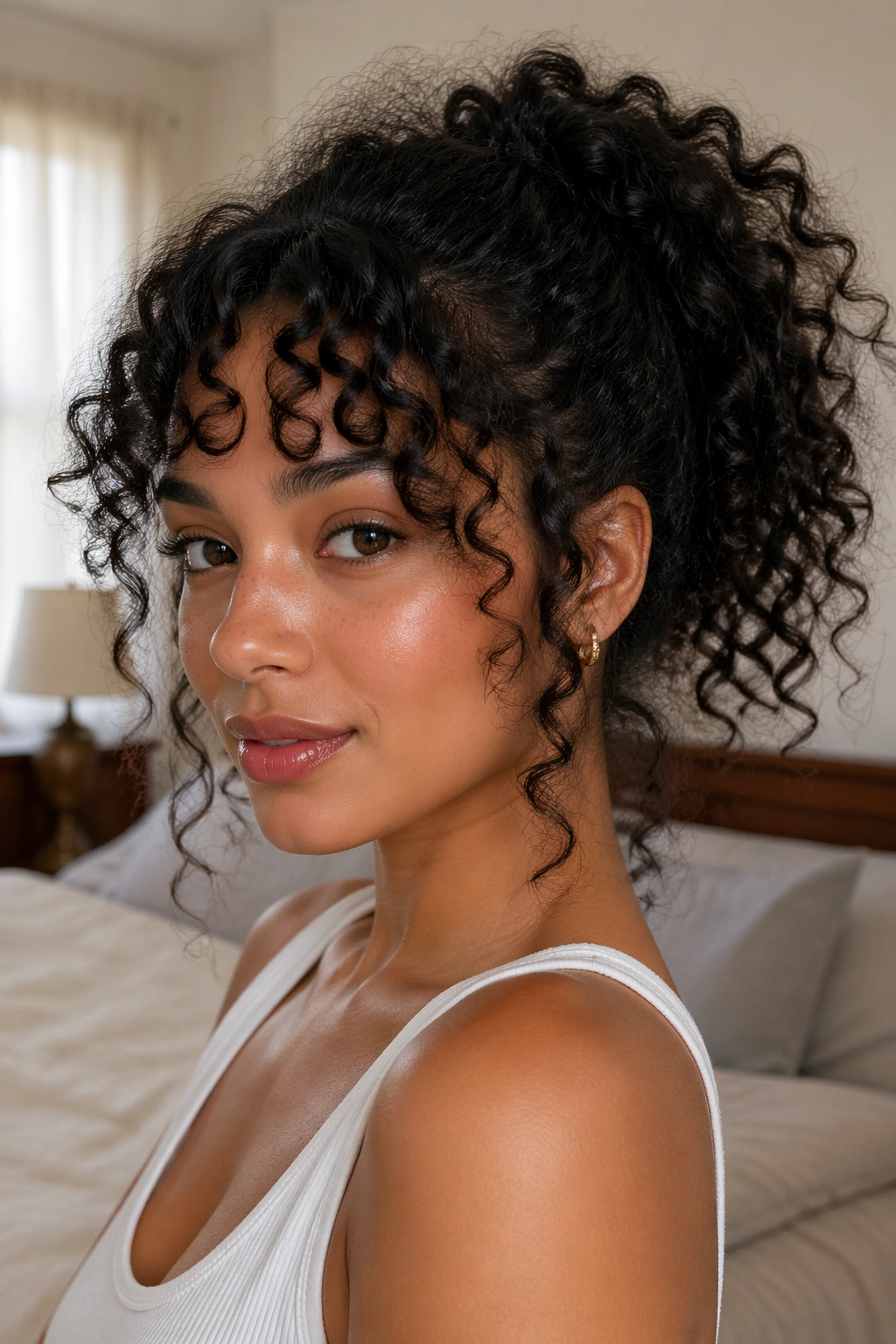
Curly bangs change everything. Leave the fringe out, pull the rest of the hair into a faux ponytail shape, and let the bangs soften the forehead so the style feels playful instead of severe.
This is one of those looks that can save a style from feeling too formal. Without bangs, a ponytail can sometimes pull the face back too much. With bangs, the eye gets a soft landing point, and the curls around the front keep the whole thing from looking overcontrolled.
Keep the bangs moisturized and shaped with a tiny amount of cream or jelly. Frizzy bangs are not a problem here — they are part of the point — but they should still look defined enough to frame the face. A little scrunching goes a long way.
18. Low Bubble Puff Faux Ponytail
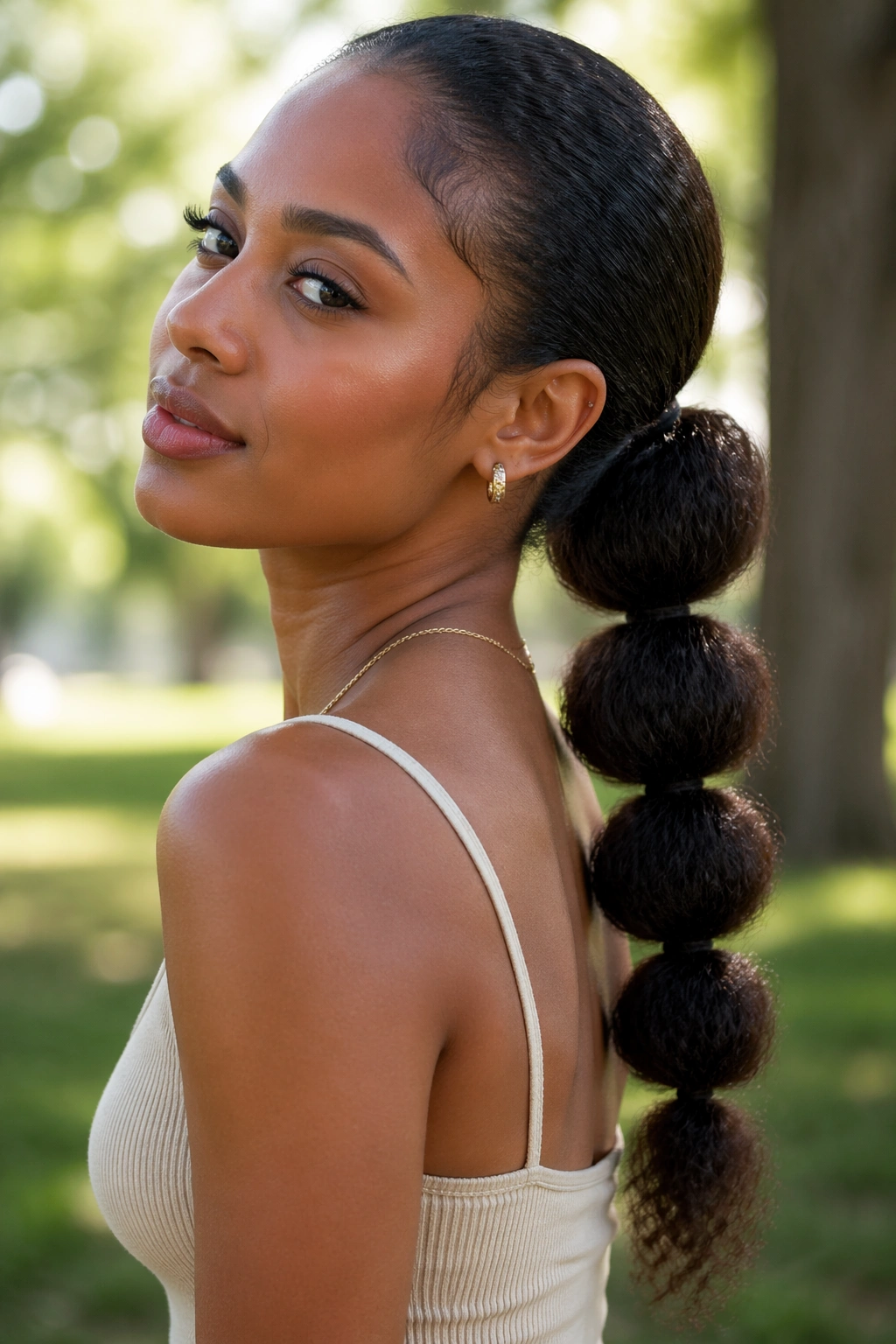
A low bubble puff style feels relaxed in the best way. Gather the curls low at the nape, secure them in a soft puff, then add one or two elastics farther down the length to create separated bubble sections.
The low placement keeps the style grounded and easy to wear. It is less showy than a high bubble ponytail, which makes it perfect for everyday wear or for days when you want a little shape without a big statement. The bubbles still give you rhythm, though, and that keeps the style from reading flat.
This works especially well on thick curls that need structure but not tension. Use your fingers to loosen each bubble after tying it off. If you stretch them too hard, they collapse; if you leave them too tight, the style feels unfinished.
19. Accent Braid Faux Ponytail
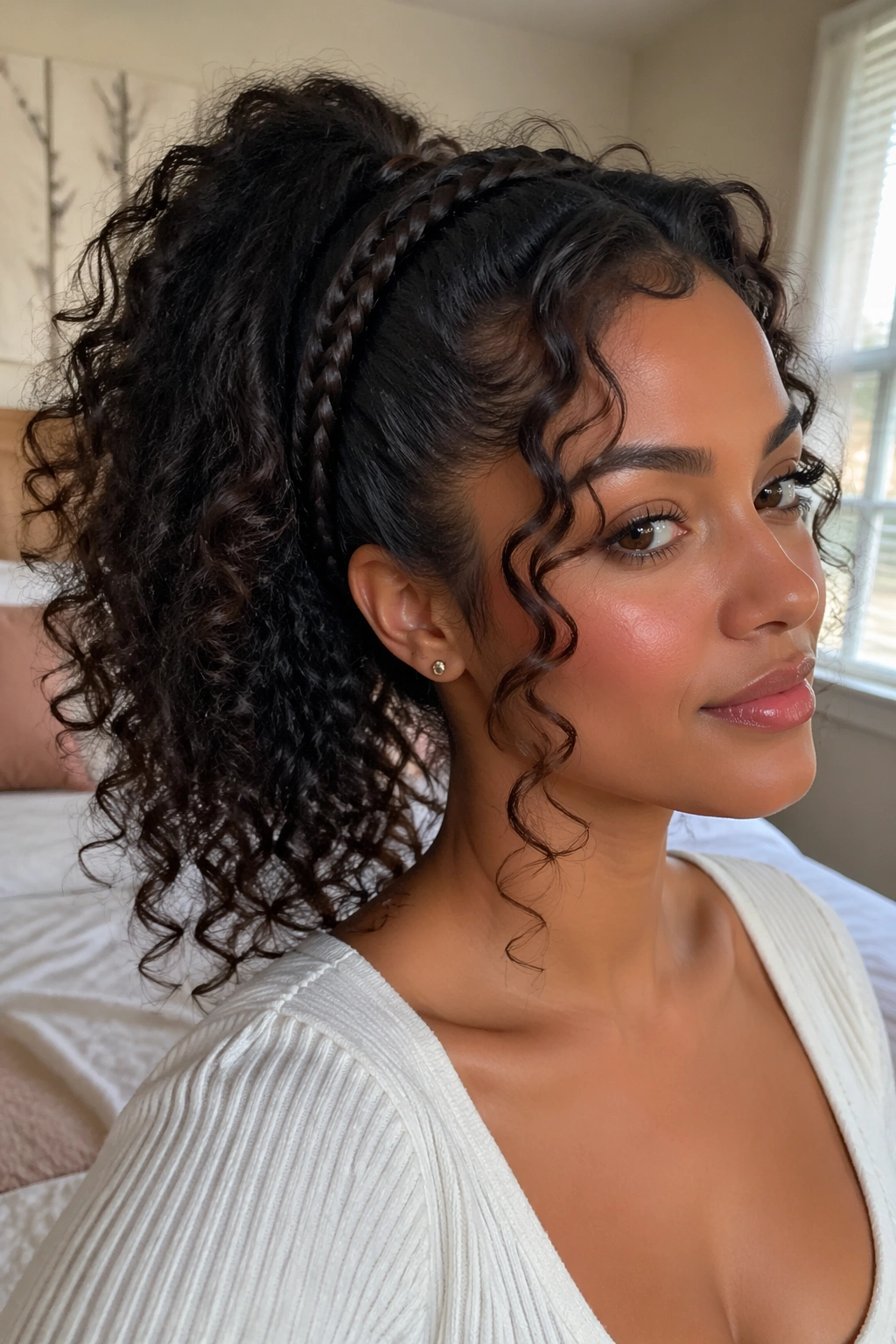
Sometimes one braid is enough. Pull the curls back into a faux ponytail shape, then add a single braid along one side or over the top to anchor the look and break up the texture in a good way.
The braid gives the eye something to follow. It makes the style look designed without turning it into a full braided updo, which is useful if you want speed and flexibility. Curly hair already brings texture, so a small braid can do a surprising amount of work.
This is a nice option when you want your hair off your face but do not want a severe finish. The braid can be thin, chunky, or even slightly twisted instead of plaited, depending on how much detail you want to show.
20. Wet-Look Faux Ponytail
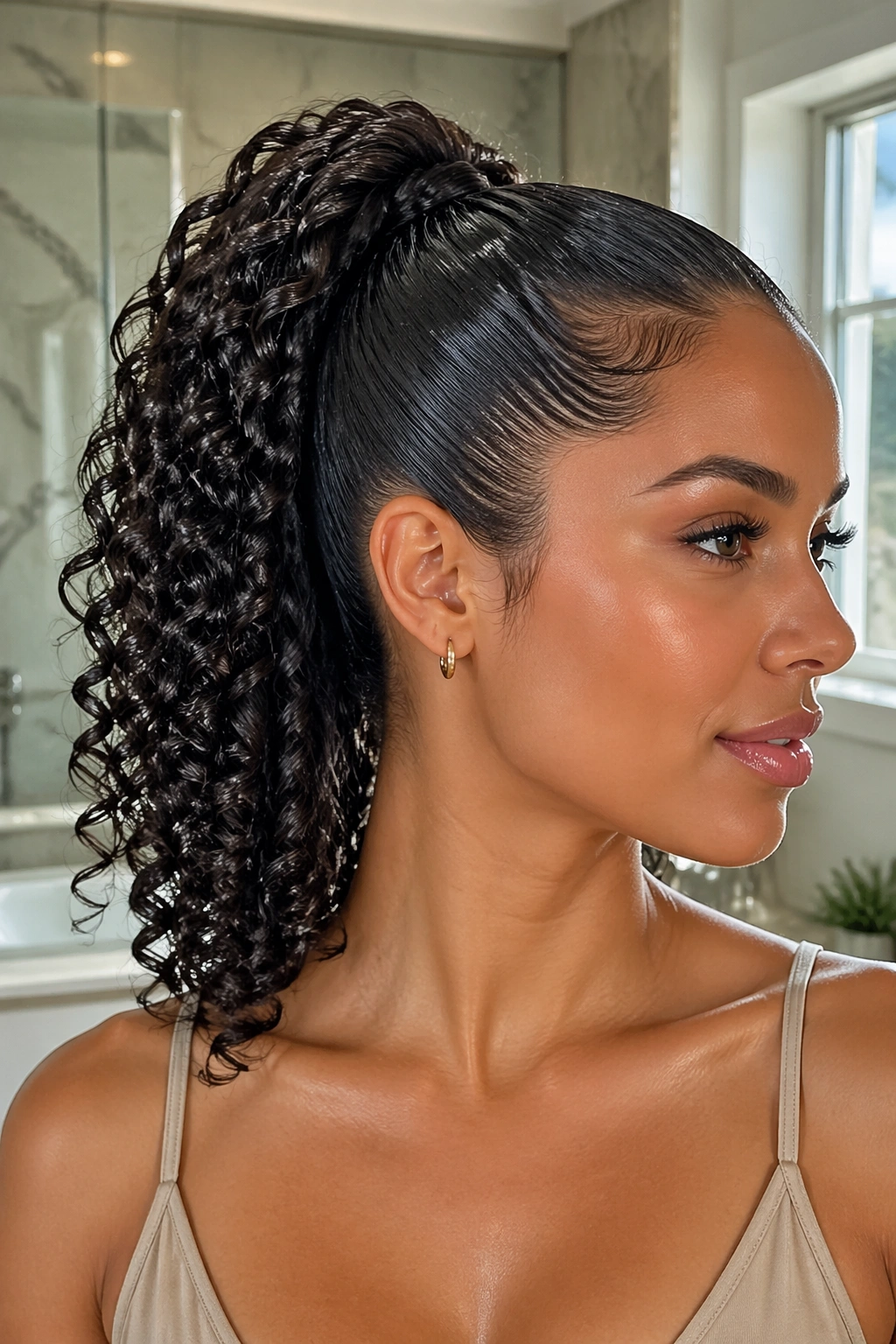
A wet-look faux ponytail can be gorgeous on curly hair when it is done with restraint. Use gel or a gel-cream mix on the front and crown, smooth the surface, and leave the ponytail section defined and glossy rather than crunchy.
The Finish Matters
The trick is not to drown the hair. You want shine and separation, not a helmet. Curly hair holds this style well because its natural texture gives the wet-look finish something to cling to, especially around the roots and edges.
Keep a fine-tooth comb handy for the front and use your fingers on the tail. That mix gives you control without killing the curl pattern. If the ponytail starts to dry unevenly, mist it lightly and scrunch once or twice. Do not overwork it.
21. Accessory-Heavy Faux Ponytail
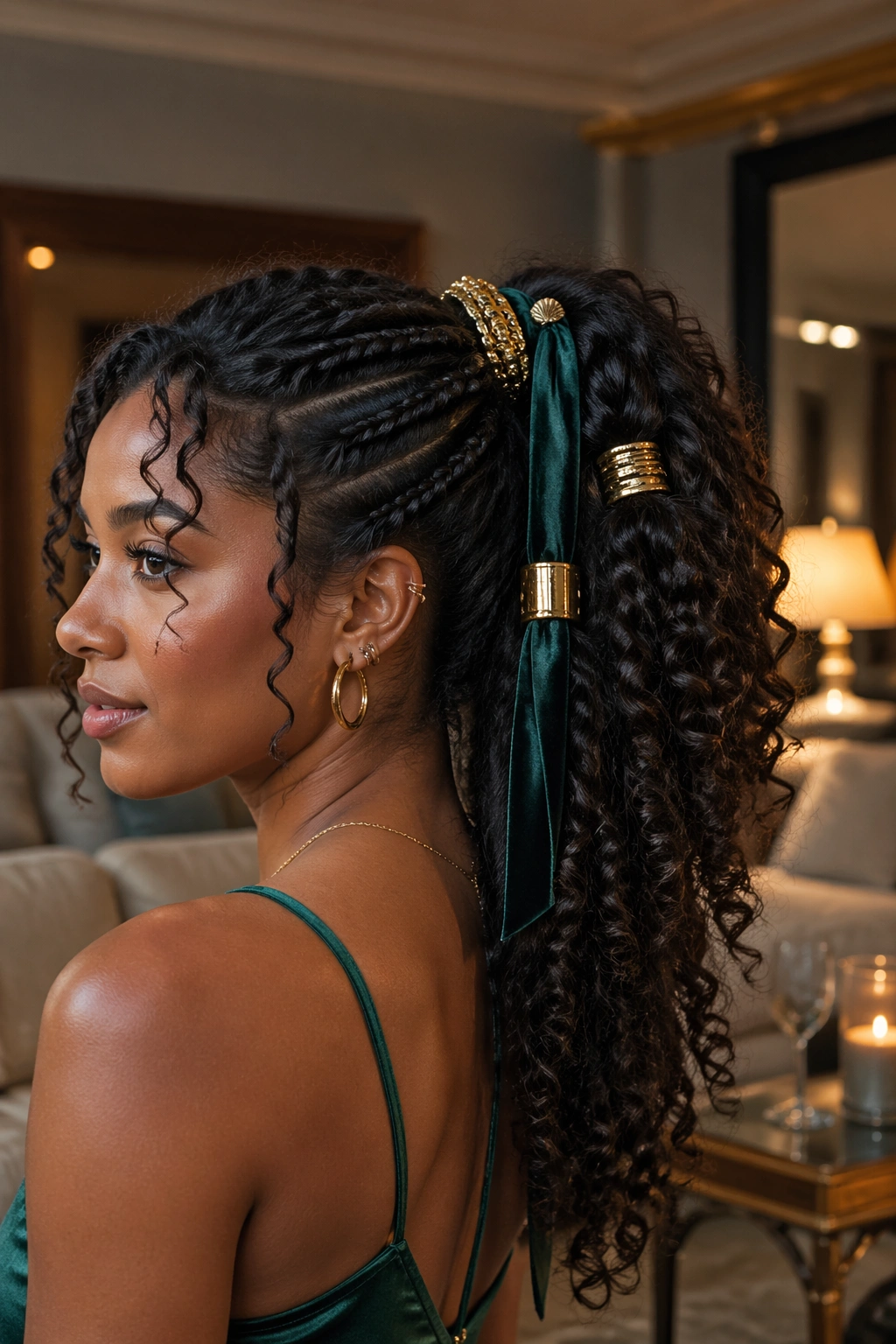
If you like hair accessories, this is your playground. Cuffs, rings, wrapped elastics, pearl pins, ribbons, and metal clips all work on a faux ponytail as long as the base is secure enough to hold them.
The style does not need much else. Curly hair already gives you movement and texture, so the accessories should frame that instead of competing with it. One bold cuff at the base can be enough. Three smaller accents can look rich too, but I would stop before it starts to feel crowded.
This is a smart choice for parties, photos, or any day when the hair itself should be part of the outfit. Match the accessory to the neckline if you want the look to feel cohesive. Short necklace, smaller clip. High neckline, something with more visual punch.
22. Extension-Boosted Faux Ponytail
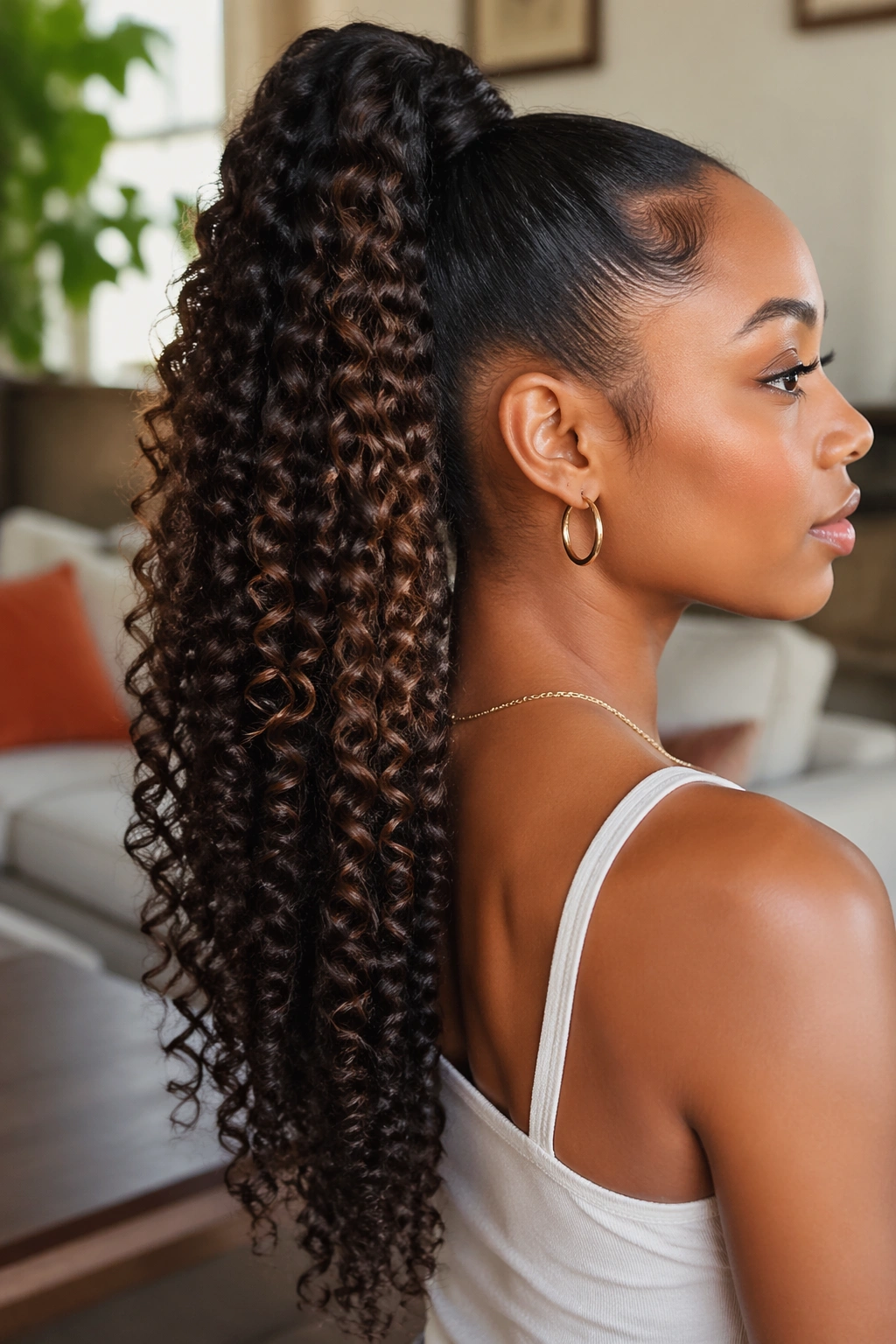
When you want length that your natural curls are not giving you that day, extensions can make a faux ponytail look full and expensive without looking fake. Clip-ins or a drawstring pony piece can be wrapped into the base, then blended into your curls with a little finger-shaping.
The important part is texture matching. Straight hair extensions usually stand out on curly styles unless you curl them first or choose a texture close to your own. If the match is off by too much, the whole style starts looking like a different hairstyle attached to your head, and nobody wants that.
This option is best when you need height, length, or fullness for a special event. Keep the roots secure with pins and use a light hold spray if the extension piece feels too slippery. A clean base makes the extra hair look believable.
23. Minimalist Mini Faux Ponytail
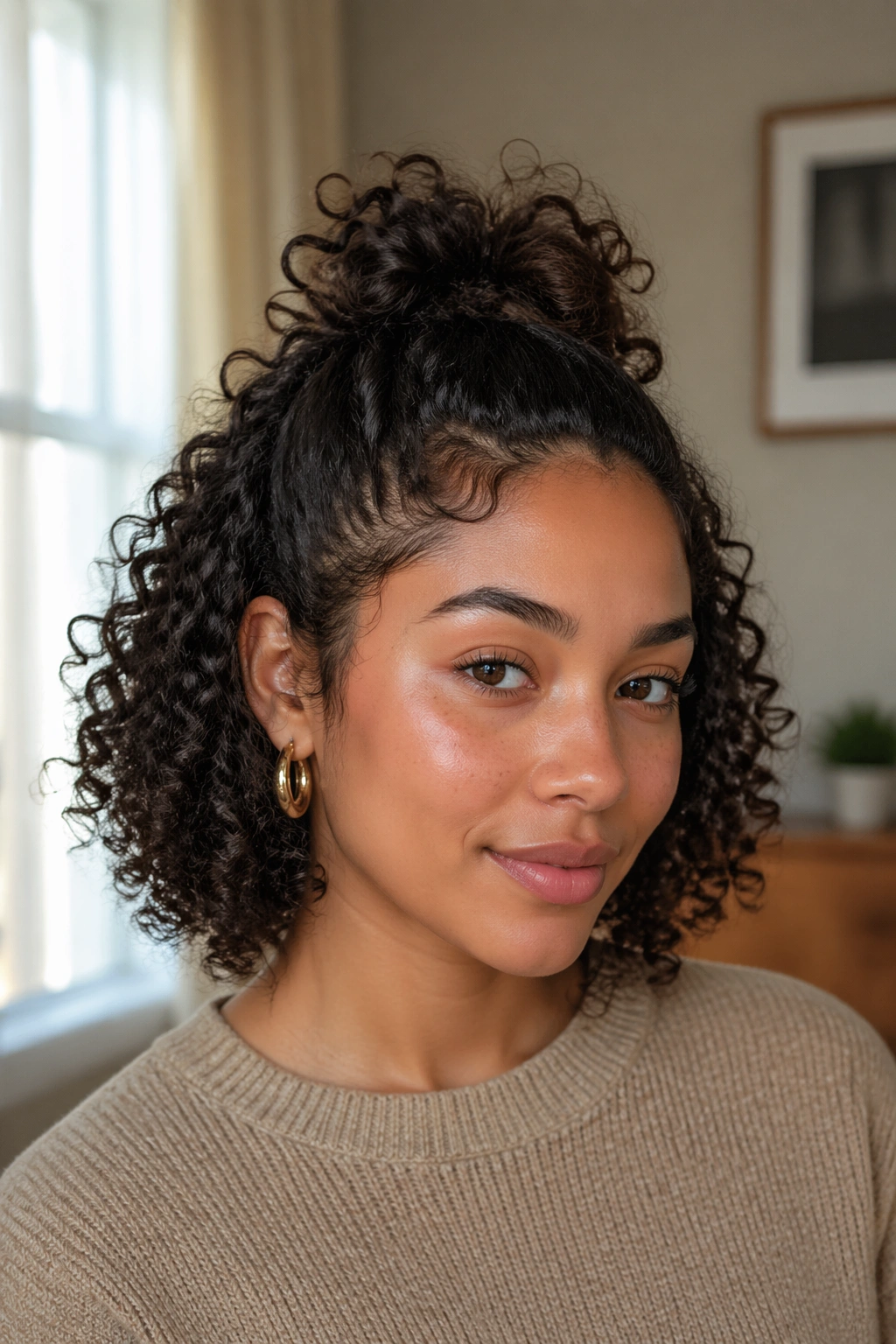
Short curls can wear a faux ponytail too. A minimalist mini version uses a small section at the back or crown, pinned just enough to suggest a ponytail shape while letting the rest of the curls stay cropped and free.
I like this style because it respects short length instead of pretending it is longer. It is tidy, modern, and much more flattering than forcing a tiny ponytail into something it is not. On a good cut, this can look sharper than a full-size style.
Use a small elastic, a couple of pins, and maybe one decorative clip if you want a bit of finish. That is enough. If your curls are tight and springy, the mini faux ponytail will sit naturally. If they are looser, leave a little more volume around the crown so the silhouette stays visible.
Final Thoughts
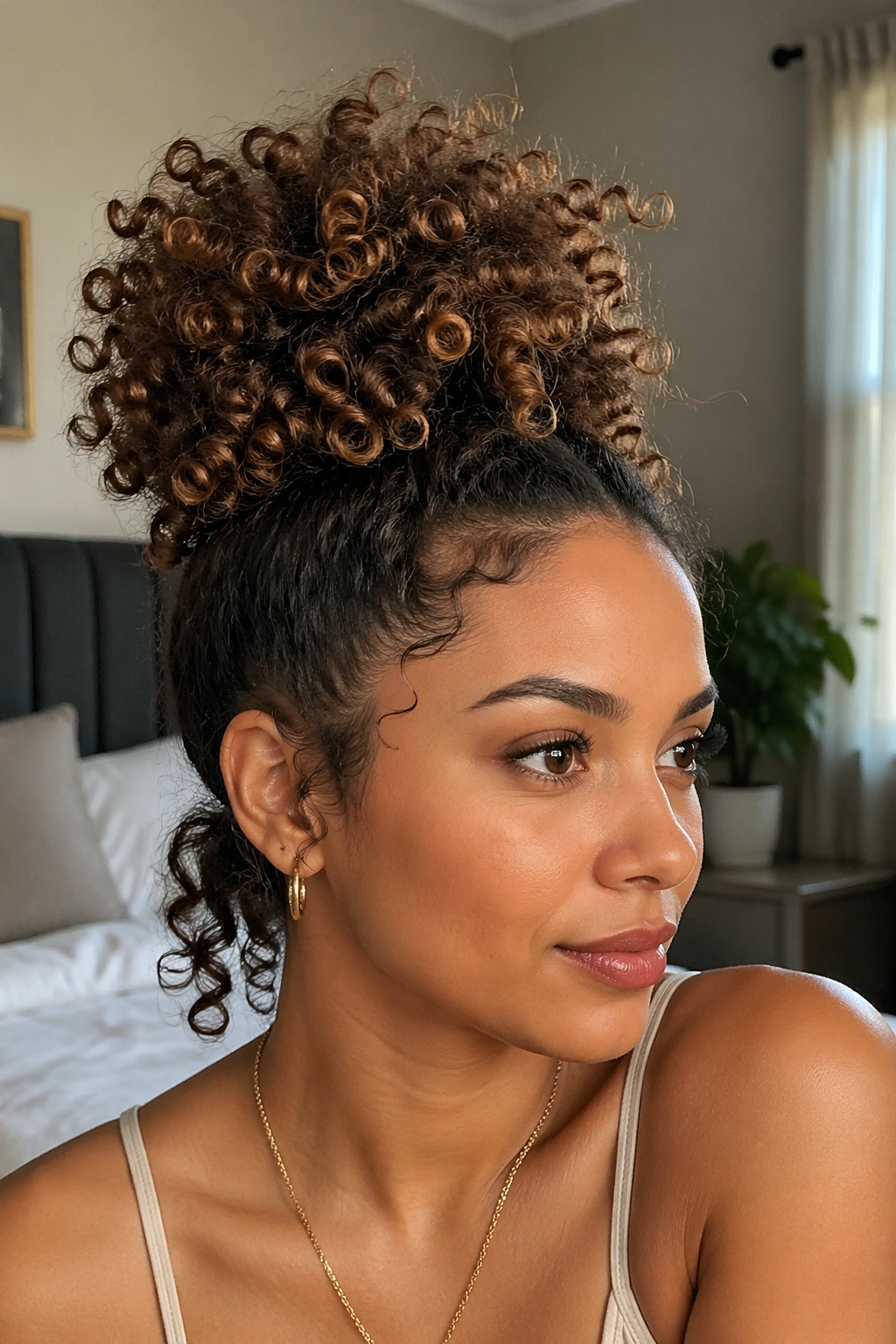
Curly hair does not need to be flattened to look polished. The best faux ponytails use shape, pinning, and a little imagination to make the curls look fuller, not smaller.
Pick the version that fits your curl length, your day, and your patience level. Some of these take five minutes. Some ask for a few pins and a little practice. All of them work better when you stop fighting the texture and let the texture do its job.
