



Cornrow ponytails with bangs sit in that sweet spot between sharp and playful. The scalp looks neat, the ponytail keeps things practical, and the front pieces do enough talking that you do not need a pile of extra styling to make the look feel finished. That mix is exactly why this style keeps showing up everywhere from errands to events.
The trick is the front. Bangs in a braided style are not one thing; they can be blunt, side-swept, curled, beaded, thin, chunky, or carved into a soft swoop. A tight, clean ponytail at the back can look completely different depending on how those front rows are shaped, and that little detail changes the whole mood.
Tension matters too. A crisp part is nice. A sore scalp is not. If the braid at your hairline feels hot or pins-and-needles tight before you’ve even left the chair, that style is too much for your edges, no matter how pretty the finish looks in the mirror.
Some people want a braid style that survives the gym, long shifts, and humid weather without turning fuzzy in an hour. Others want a ponytail that can look polished enough for dinner and still feel easy the next morning. Both goals fit here, and the styles below cover the sleek, the soft, the bold, and the quietly expensive-looking versions that actually get worn.
1. Sleek High Cornrow Ponytail With Straight-Across Bangs
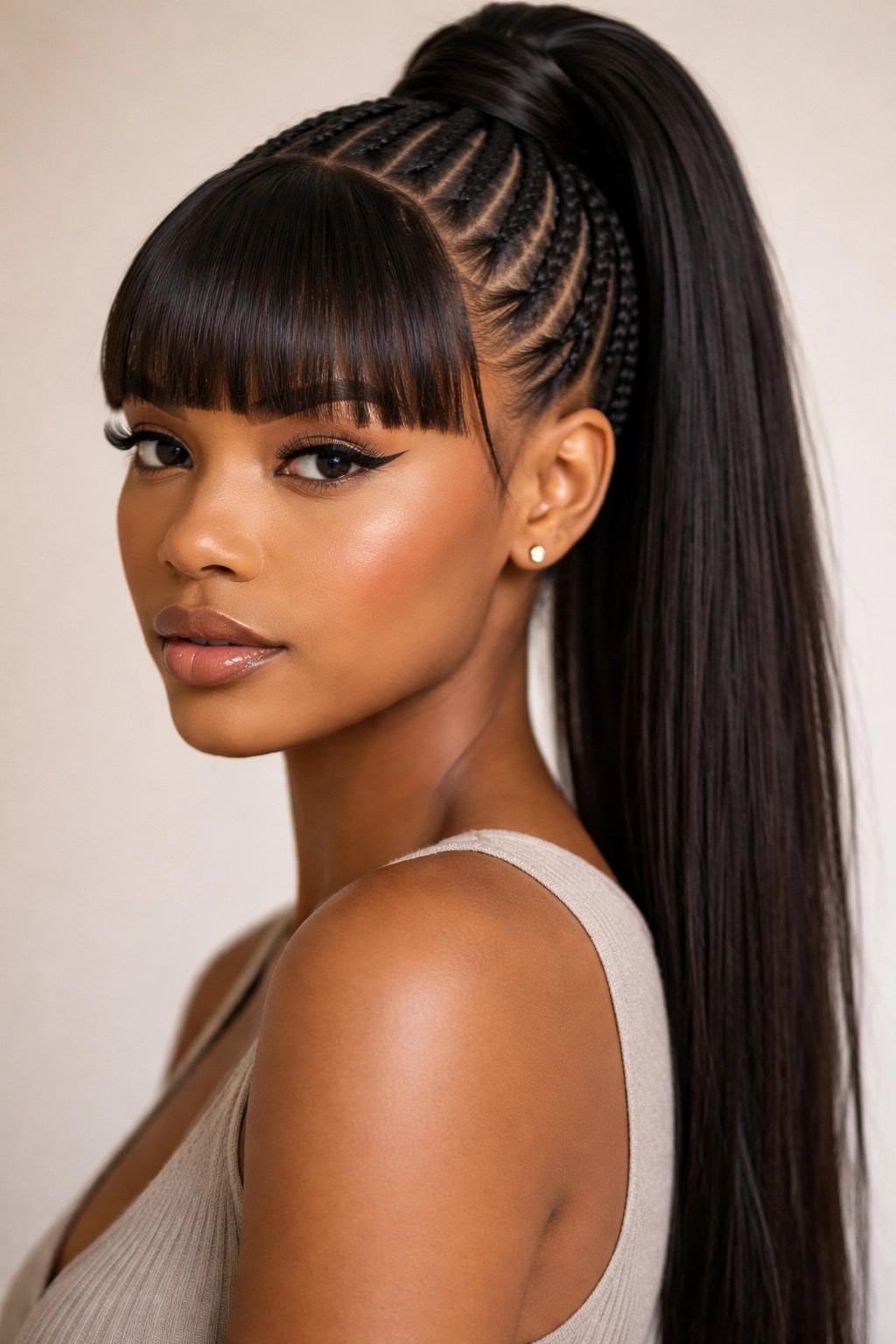
This is the version that makes people straighten their shoulders. A high ponytail lifts the face, and straight-across front braids give it that clean, almost tailored feel. The look works best when the rows are narrow and the parting is exact, because any wobble shows up fast on a style this neat.
Why It Works
A high base pulls the eye upward, which gives the face a lifted shape without needing extra volume at the crown. The straight bang section balances that height by bringing the focus back down to the forehead, so the style does not feel top-heavy.
- Use 4 to 6 slim cornrows feeding into the ponytail for a cleaner finish.
- Keep the bang section short and even, usually brushing the brow line.
- A small amount of gel on the roots helps, but too much turns the scalp shiny in a stiff way.
- A satin scarf for 10 to 15 minutes after styling keeps the front flatter.
Best tip: ask for the bangs to sit a little softer than the ponytail. That tiny difference keeps the style from looking severe.
2. Mid-Height Ponytail With Side-Swept Cornrow Bangs
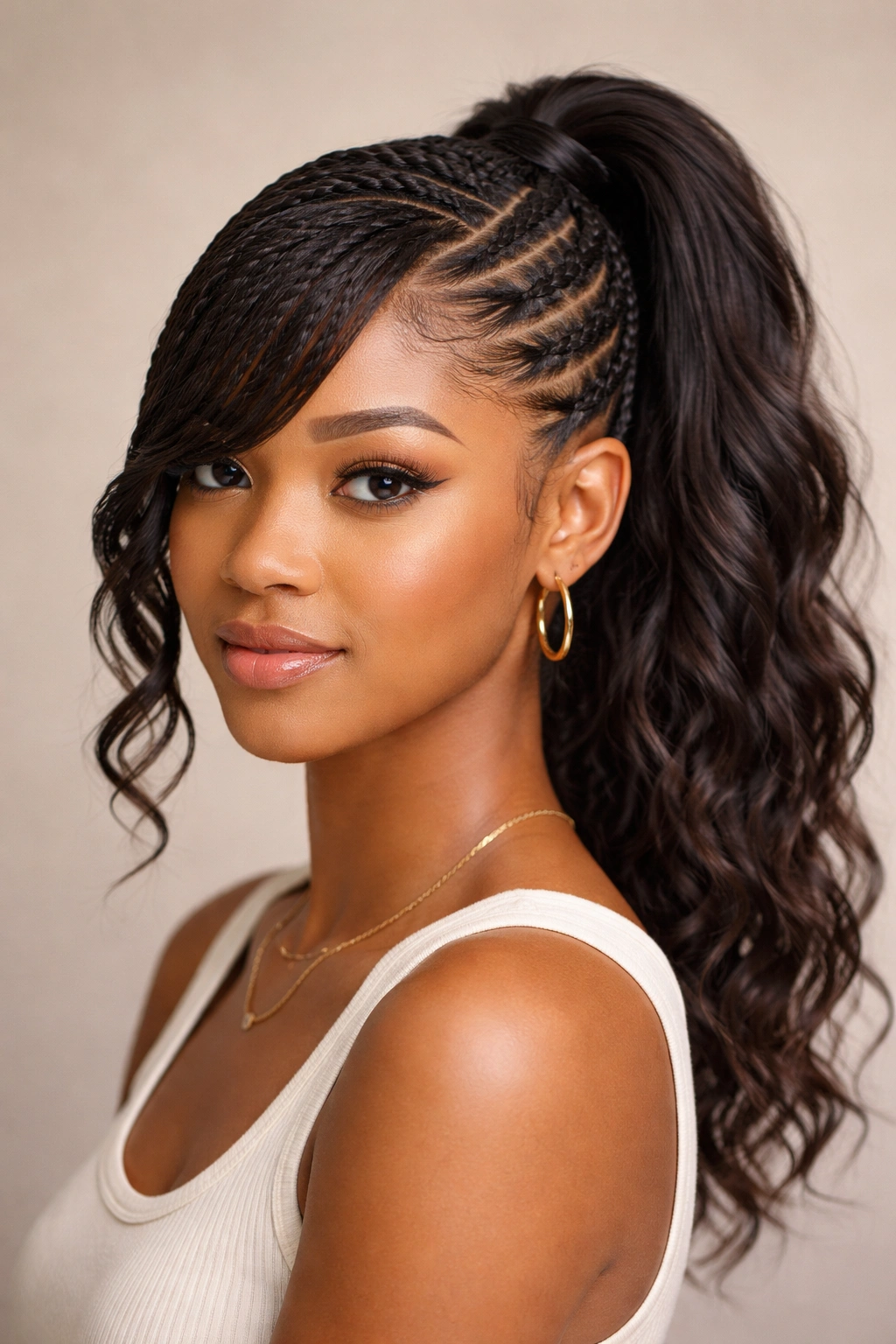
A mid-height ponytail is easier to wear than a sky-high one, and the side-swept bang detail takes away some of the firmness. The result feels friendly, not fussy. It is the kind of style that works on a school run, at work, or with hoops and lip gloss when you want to look put together without trying too hard.
The side sweep matters because it breaks the symmetry. Straight bangs can look strict. A diagonal front section softens the forehead and gives the face more movement, especially if the braids on one side are a touch thinner than the other.
I like this one for people who wear braids often but do not want every style to scream “special occasion.” It still looks intentional. It just reads a little easier.
3. Bubble Cornrow Ponytail With Thin Feed-In Bangs
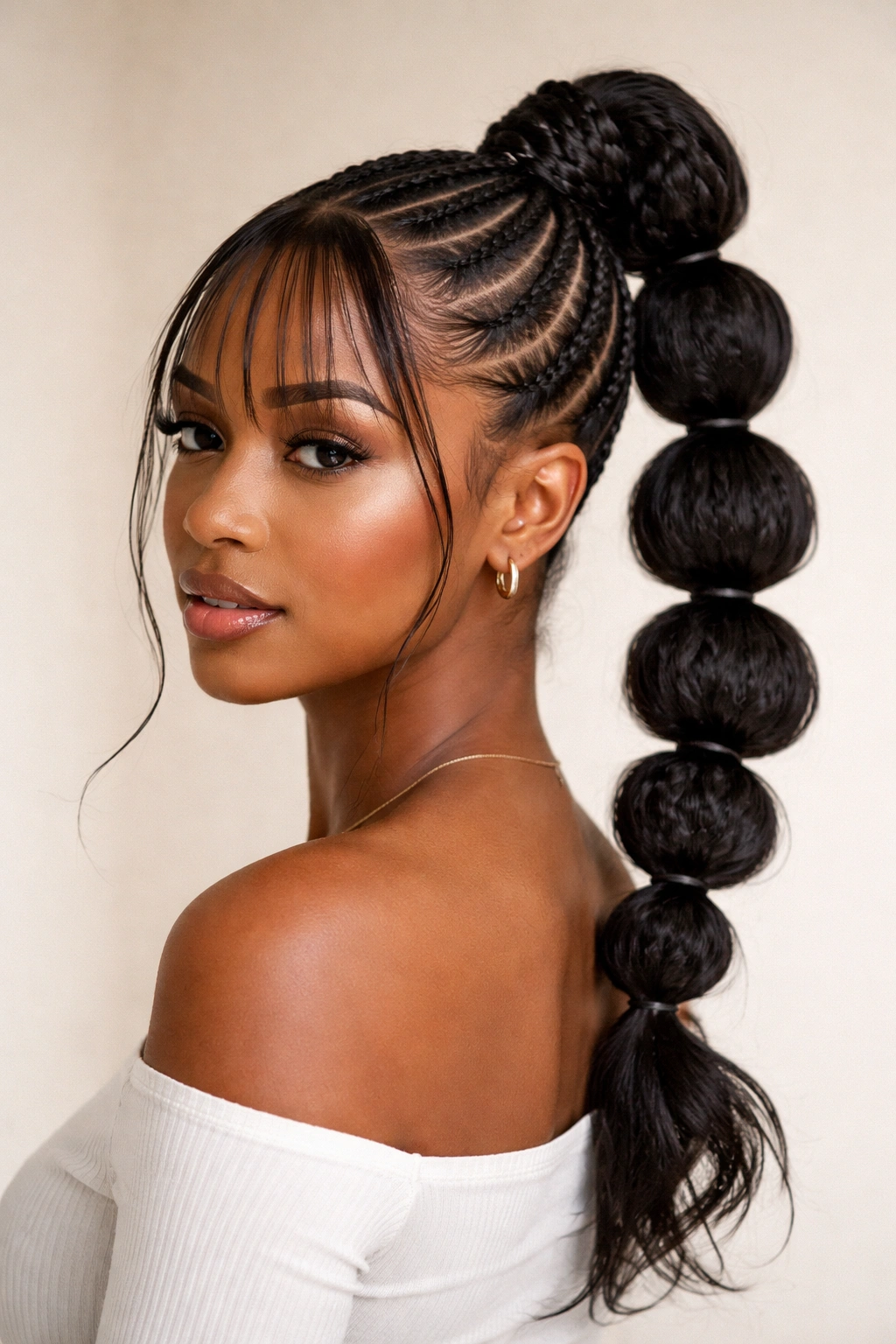
Why does a bubble ponytail work so well with cornrows? Because the braids give you structure and the bubbles give you shape. The front fringe keeps the style from looking too sporty, which is usually the risk with a bubble ponytail. Without that front detail, the look can feel like it belongs on a track field.
How to Style It
The ponytail should start with smooth feed-in rows, then the length gets divided with small elastics every 2 to 3 inches. That spacing creates fuller bubbles, not tiny overworked ones. The front bangs can be skinny, almost wispy, so they frame the face without fighting the rounded ponytail.
Use a light mousse on the braided length before tying off the sections. It helps keep the bubbles from puffing out unevenly. And keep the elastics snug, not crushing. If they dig in, the whole tail starts to look lumpy.
A bubble style like this is great when you want movement. It is playful, but not childish.
4. Low Cornrow Ponytail With Center-Part Bang Rows
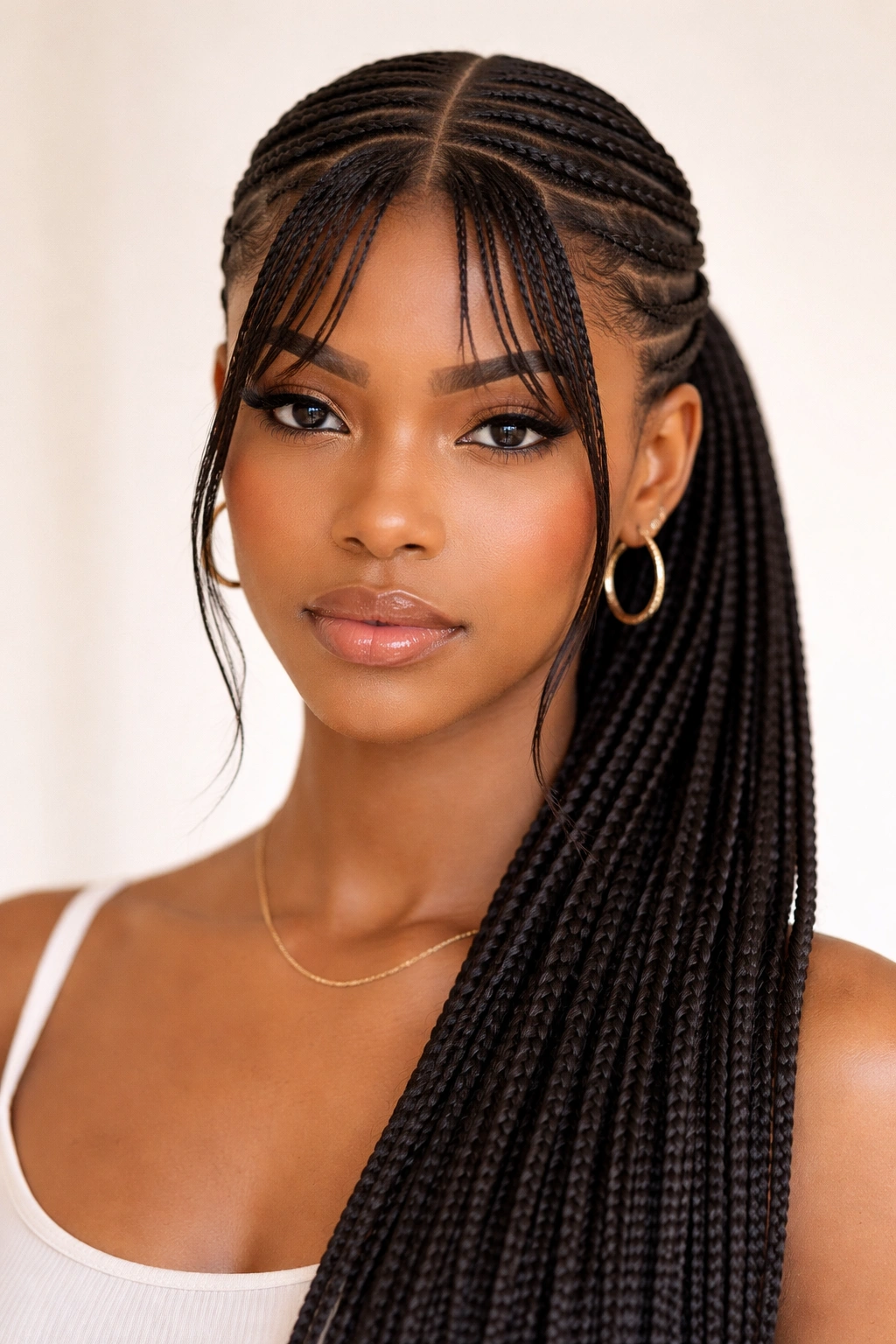
A low ponytail has a calm look that a high one can’t fake. Add a center-part bang section and the style turns elegant in a very direct way. No drama. Just clean lines, a flat crown, and a neat nape that makes the whole thing feel grounded.
The center-part bang rows work because they frame the face in a balanced way. They do not pull attention to one side, which is useful if you want the ponytail itself to be the main event. This version also tends to be kinder on edges than styles that place a lot of stress at the temples.
- Best with medium to long braided lengths.
- Works well for people who like simple, straight parting.
- Looks especially good with a low wrap-around ponytail base.
- Pairs nicely with gold cuffs or a single bead at the tail.
A low style like this gets better the cleaner the sectioning is. Messy parts show. That is the tradeoff.
5. Wrapped Cornrow Ponytail With Curved Front Braids
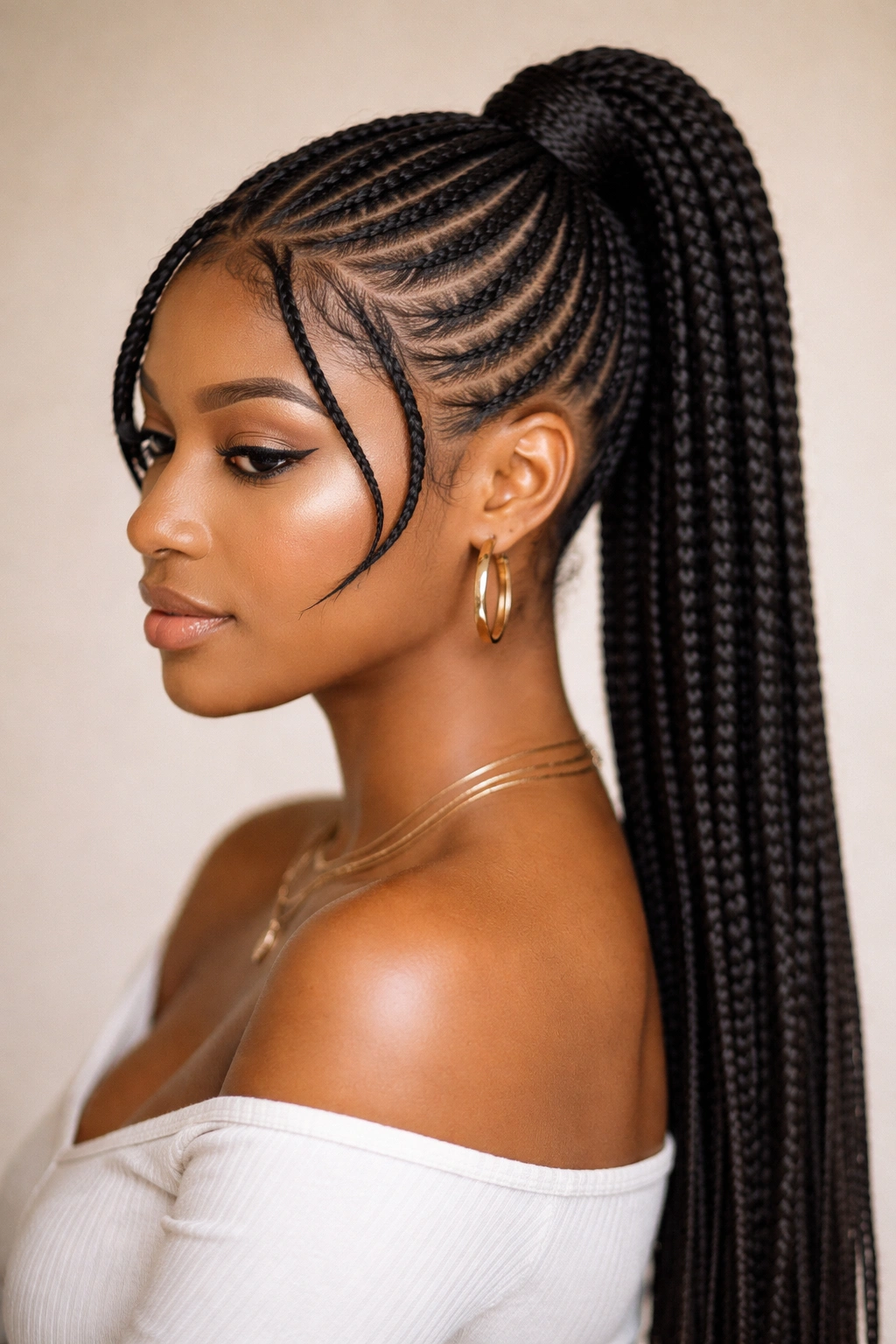
The wrap is what makes this one feel dressed up. Instead of exposing the ponytail base, the braid length circles around it and hides the band. That little move makes the style look finished from every angle, which is why it shows up so often when someone wants a neater profile.
Curved front braids soften the forehead the way a good frame softens a photo. They arc gently toward the temple instead of dropping straight down, so the face gets shape without looking boxed in. This is a strong choice if your features already lean angular and you want a little curve in the style.
There is also a nice practical side here: the wrapped base keeps the ponytail from looking flat after a few hours. The style stays polished even after movement. Not perfect, but close enough that people usually assume you spent more time on it than you did.
6. Feed-In Goddess Braids Ponytail With Layered Bangs
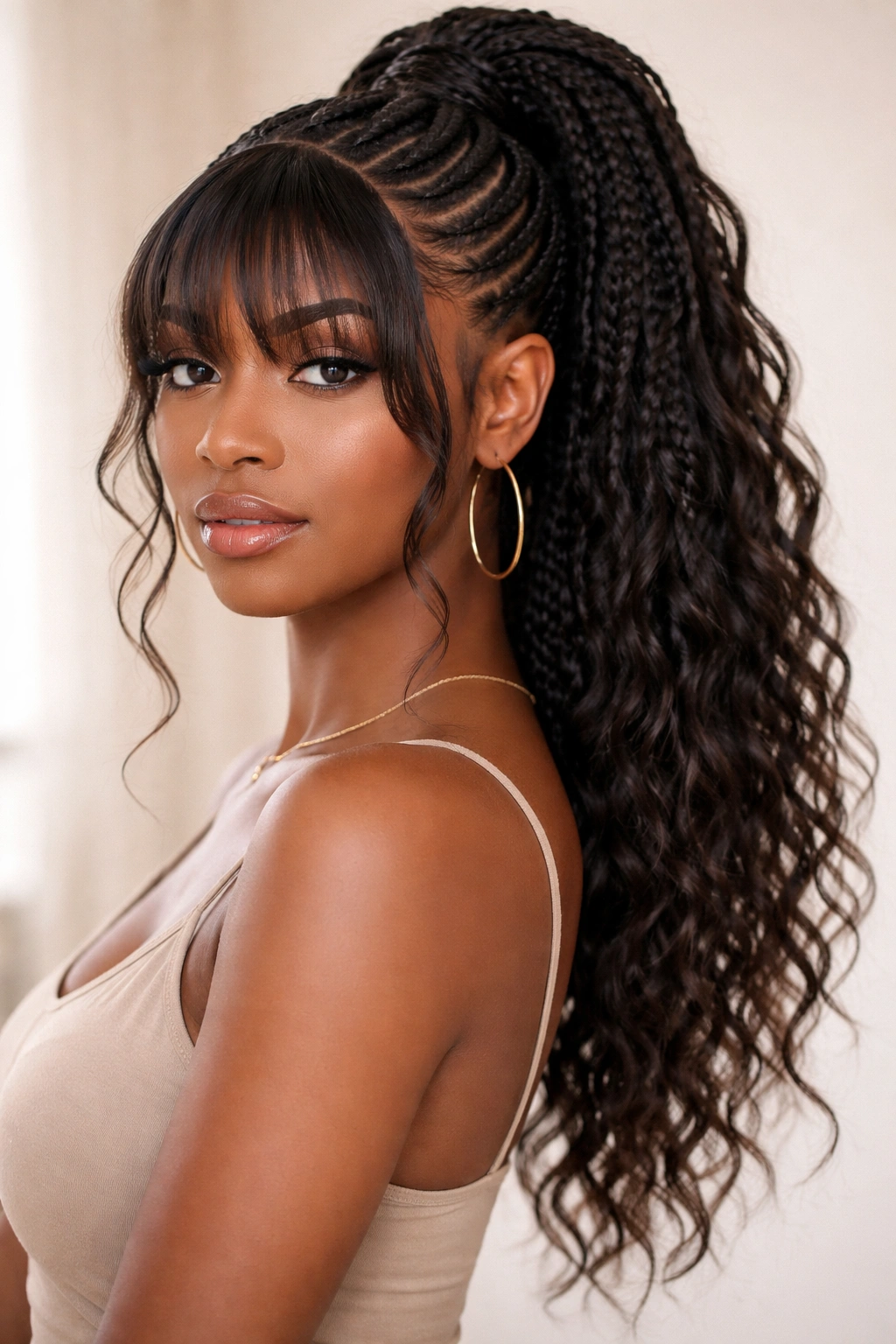
This is the softer, fuller cousin of a classic ponytail. Feed-in goddess braids build into a ponytail with visible thickness, and the layered bangs add movement at the front instead of one hard line. The look has more texture than a sleek set, which is exactly why it works so well on thicker hair or extensions that need a little drama.
What Makes It Different
Unlike a tight, sculpted style, this one leaves room for variation in braid size. The front can start with smaller cornrows near the hairline, then shift into slightly wider pieces around the temples. That layering keeps the bang section from looking flat.
The ponytail itself should feel full, almost plush. If you are using hair extensions, ask for ends that are lightly tapered rather than blunt. The shape falls better when it moves.
Best For
- Medium to thick hair
- People who want a softer forehead frame
- Styles that need to go from daytime to evening
- Anyone who likes a ponytail with real body
This one has a little glamour baked in. Not loud glamour. Just enough.
7. Braided Mohawk Ponytail With Swept Bangs
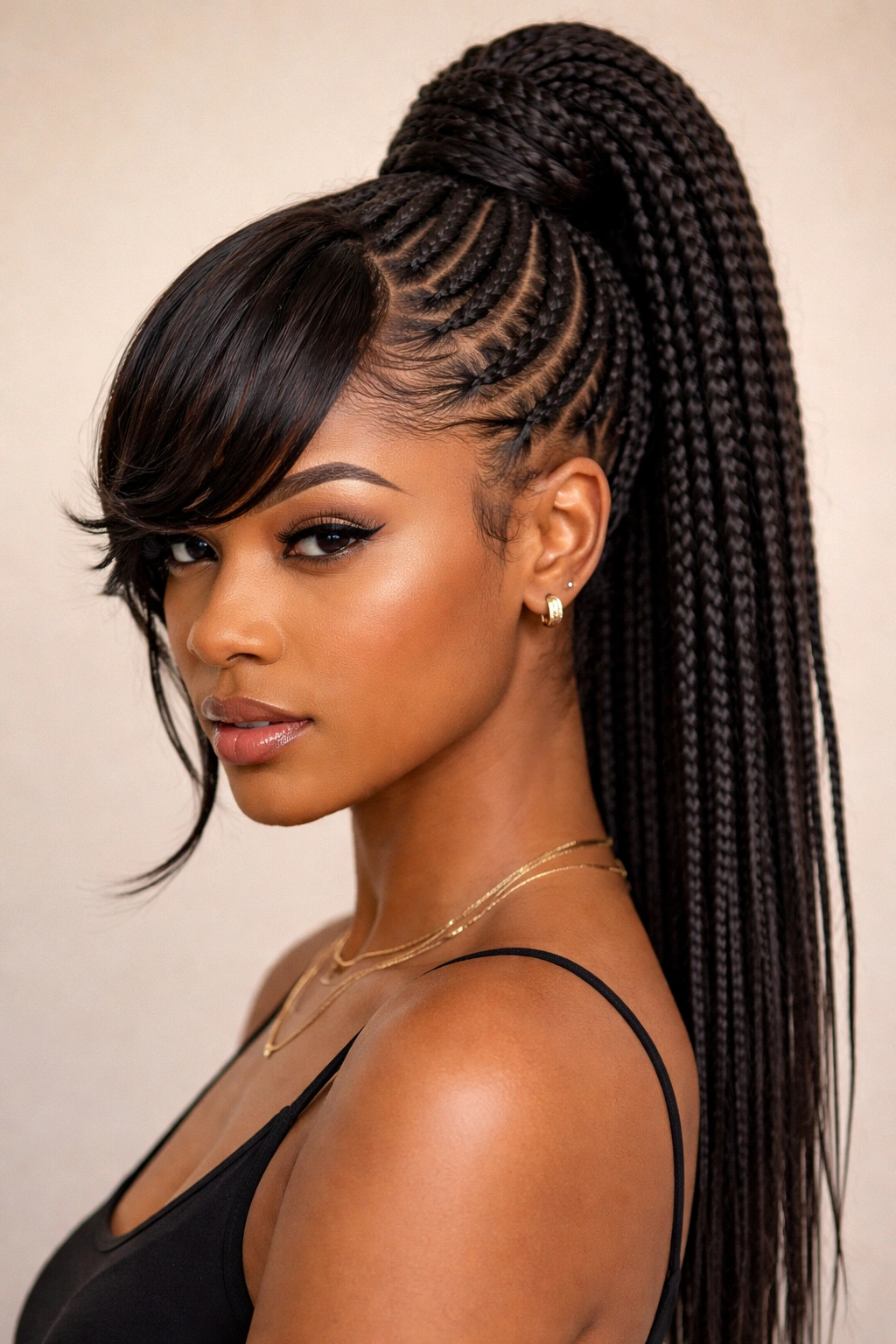
A braided mohawk ponytail looks bold because it changes the silhouette fast. The sides are braided close and directed toward the center, which creates height through the middle of the head. Add swept bangs in front, and the style stops looking severe and starts looking styled on purpose.
Why It Stands Out
The mohawk shape gives you lift without needing a huge ponytail. That can be useful if you want something dramatic but do not want a heavy bundle hanging from the back of your head. The swept bangs keep the front from feeling too sharp, which is important because this style can go fierce in a hurry.
A good version uses medium-size rows on the sides and a slightly fuller tail at the crown. Too many tiny rows can make the top look overworked. Too few and you lose the mohawk effect entirely.
Wear it when you want the braids to do the talking. It pairs well with strong earrings and a simple neckline. Nothing else needs to compete.
8. Jumbo Cornrow Ponytail With Baby Braids In Front
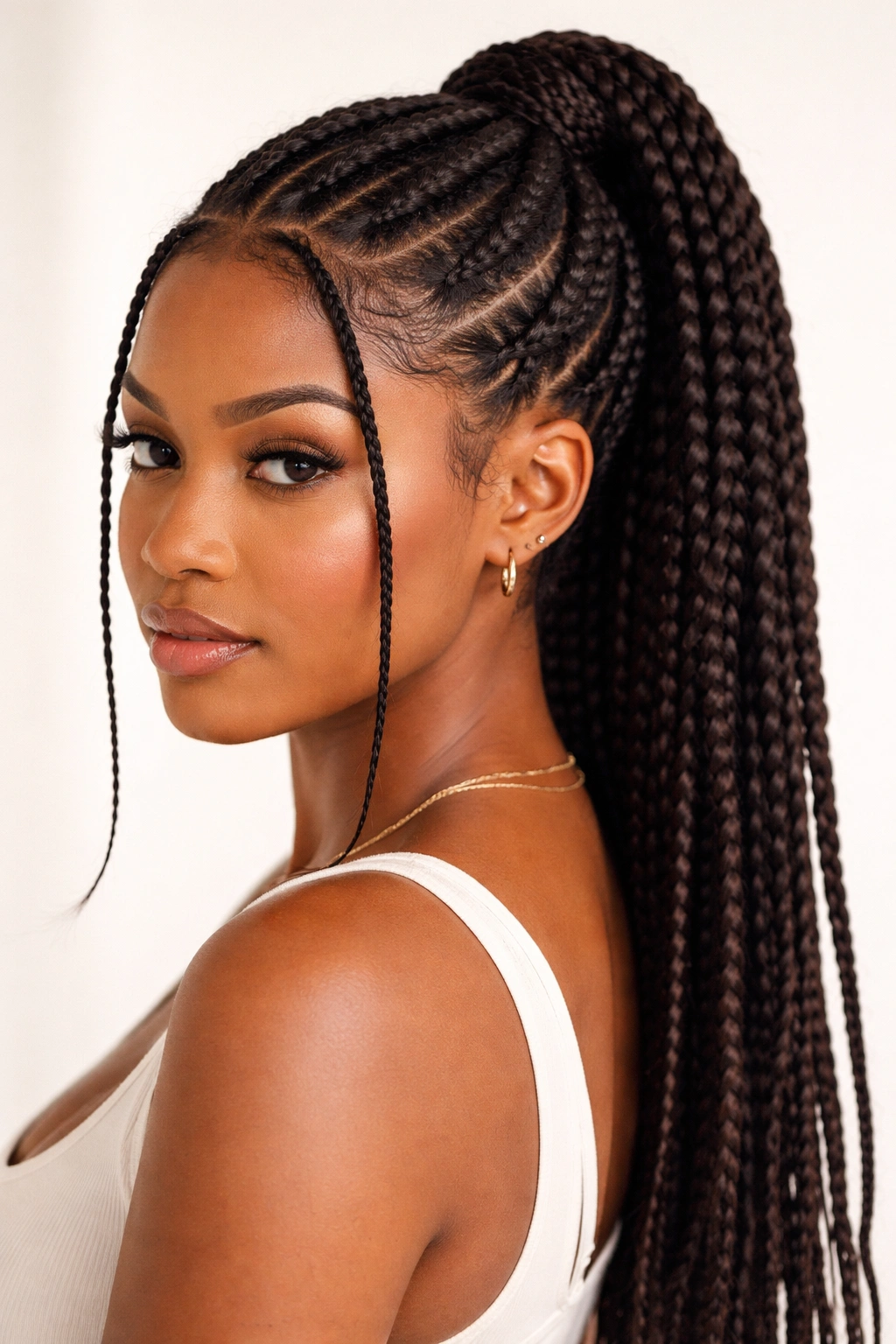
Bigger braids can save time, and that matters. A jumbo cornrow ponytail is faster to install than a style packed with tiny rows, and the baby braids in front give it enough detail that it does not look plain. The contrast is the point: thick structure in back, finer texture in front.
The front baby braids should be kept light. If they get too many beads or too much product, they stop looking delicate and start looking crowded. The ponytail can handle more weight than the front can.
This is one of those styles that makes daily life easier. It is quicker to refresh, easier to retie, and usually less fussy when you are sleeping. If you are the kind of person who likes one strong look that does not need daily adjustments, this one earns its keep.
9. Zigzag-Part Cornrow Ponytail With Wispy Bangs
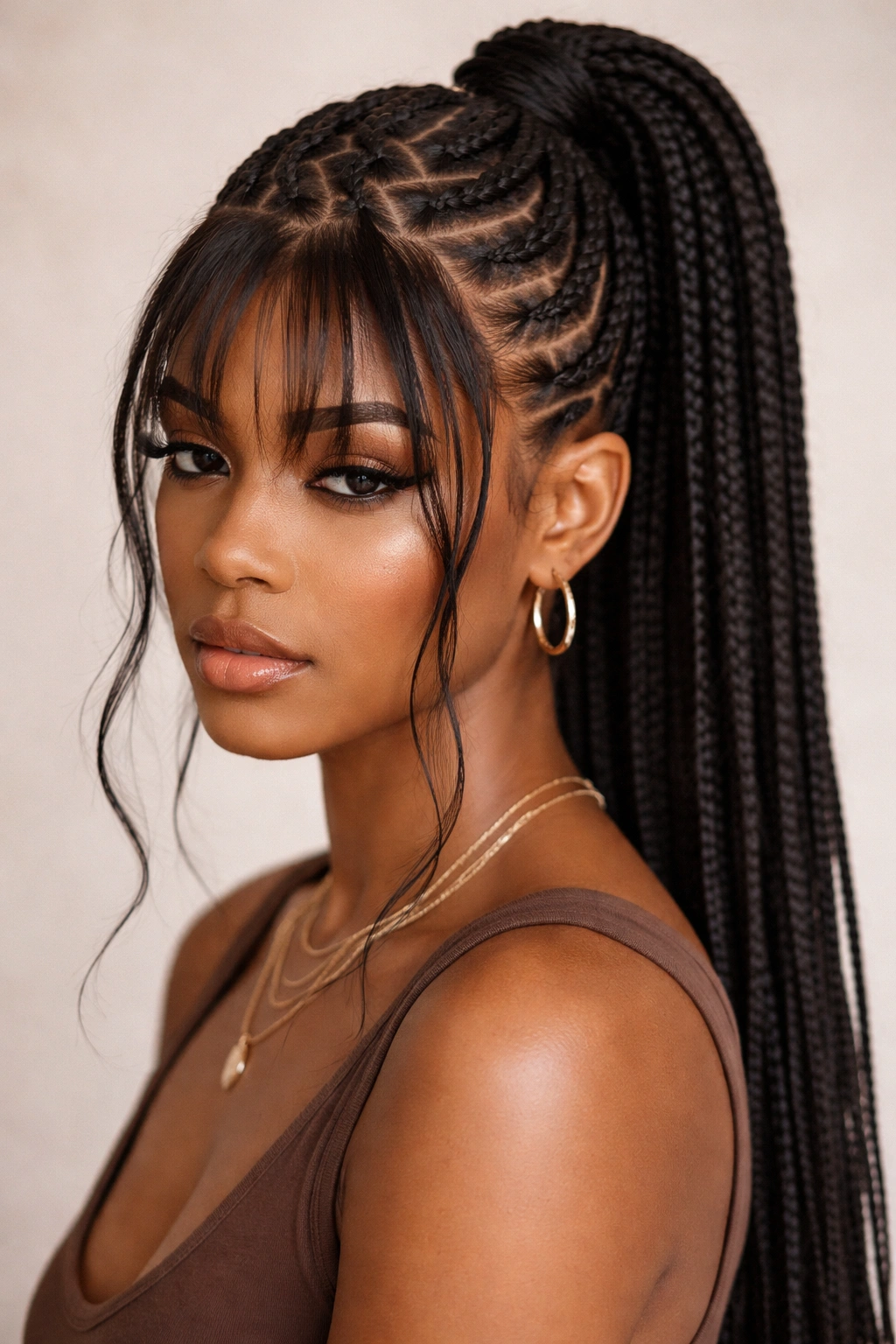
Why settle for a straight part when a zigzag can do more? The zigzag parting gives this ponytail a little edge before the ponytail even starts, and the wispy front braids stop the whole style from feeling too rigid. It is a nice balance of structure and softness.
How to Use It
The parting should be visible but not oversized. A zigzag that is too wide starts to look accidental, which is a fast way to lose the effect. Keep the front bang pieces thinner than the main rows so the part stays the star.
This style works especially well on people who like detail in braid work. It rewards a steady hand. The eye follows the part, then lands on the ponytail, then comes back to the bang pieces around the temples.
A small trick helps here: use a setting mousse on the front after braiding and wrap the hair with a scarf for a short set. The lines stay cleaner. The difference is subtle, but you can see it.
10. Half-Up Cornrow Ponytail With Curtain Bangs
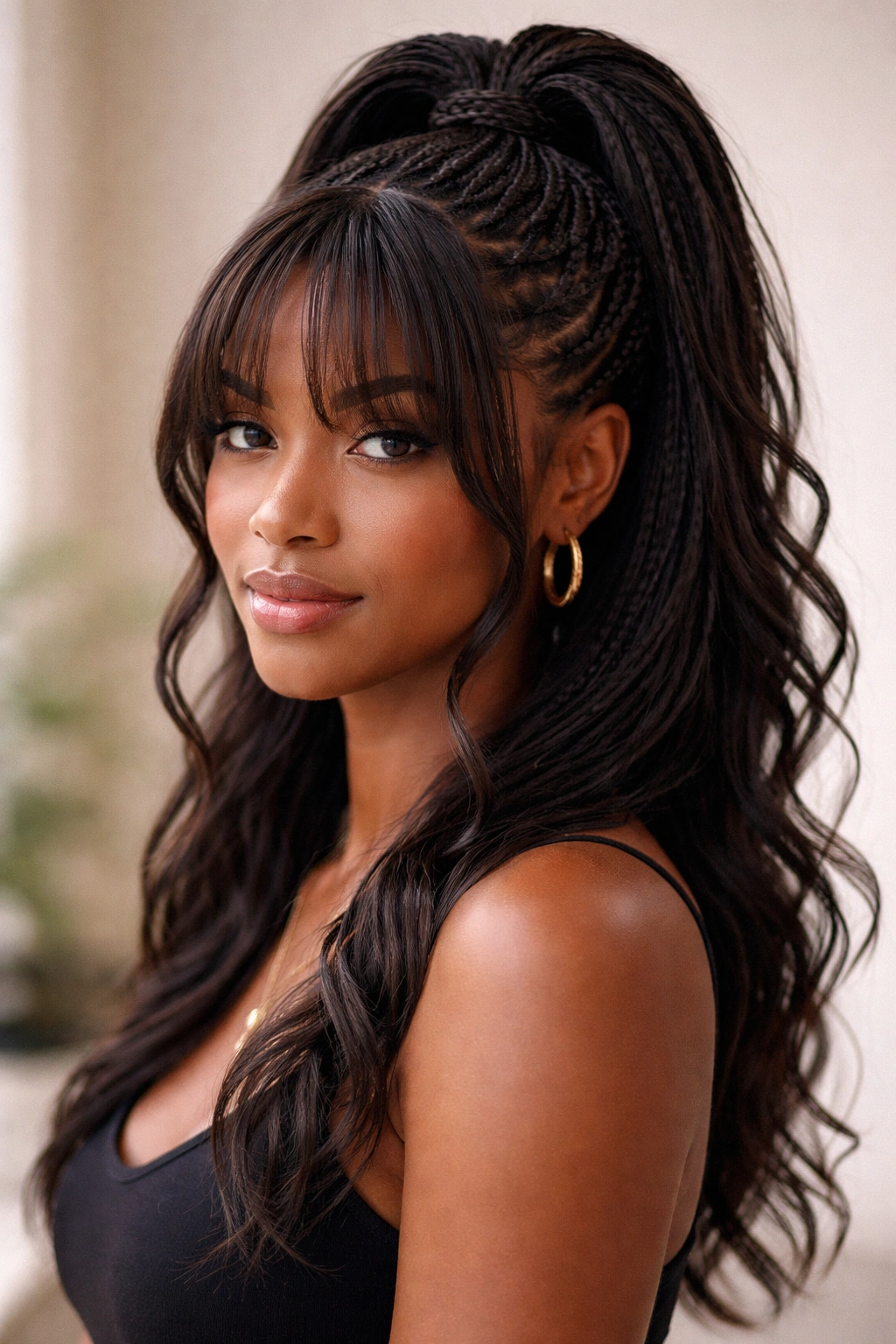
A half-up version gives you the lift of a ponytail without pulling every strand away from the face. That makes it a good middle ground for people who want some movement left at the sides. Curtain bangs, braided or curled, split the difference and soften the center part.
The style feels especially easy on shoulder-length braid installs or longer textured hair. You get height at the crown, but the lower section can hang loose or stay braided for extra length. It does not need to be perfect to look good, which is part of its charm.
- Nice for round or heart-shaped faces
- Works with loose braids below the ponytail
- Lets you keep some softness near the cheeks
- Plays well with gold hoops and a glossy lip
This one has an easy confidence to it. Not formal. Not lazy. Just balanced.
11. Double Cornrow Ponytails With Face-Framing Bangs
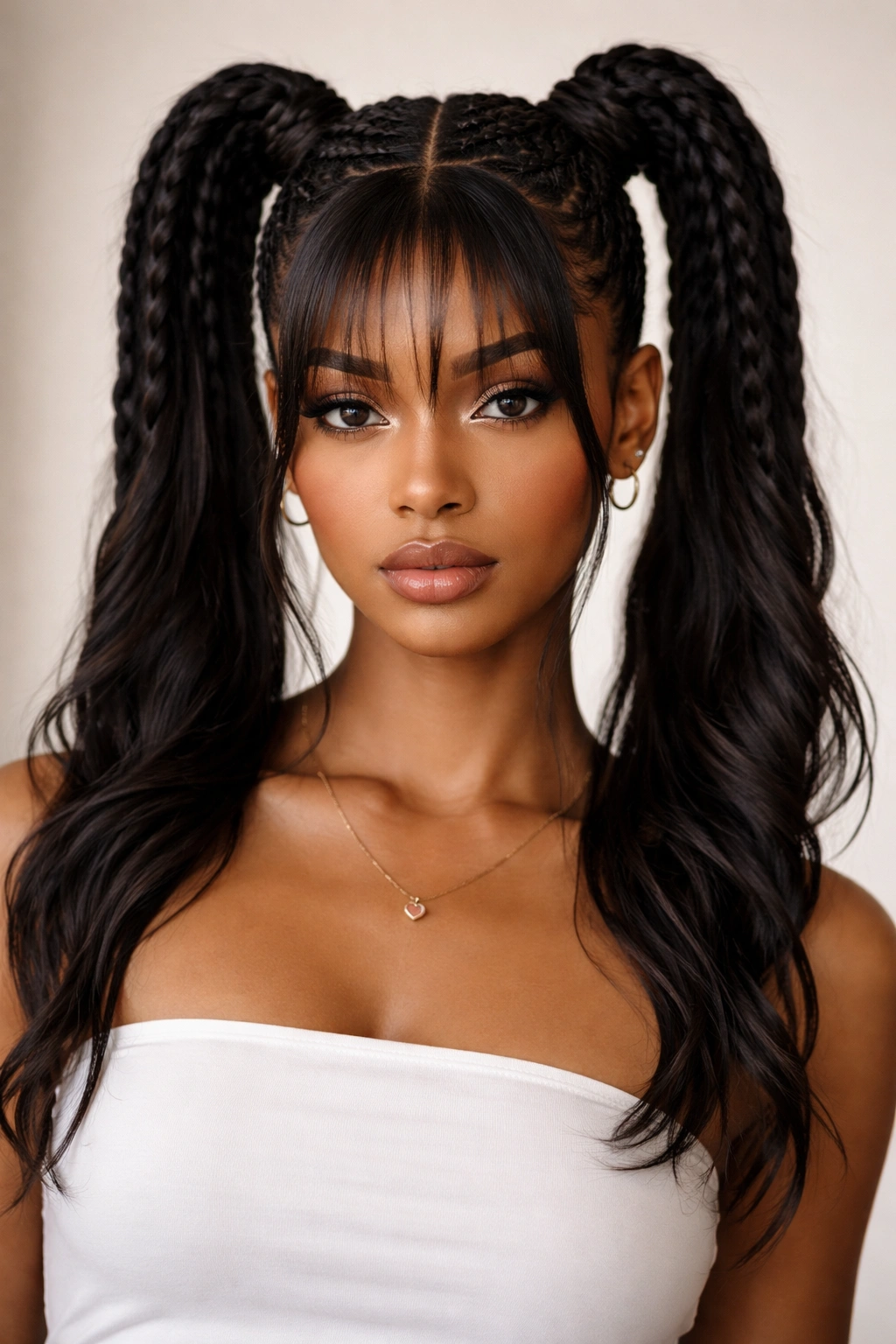
Twin ponytails can look playful, but the cornrow base makes them feel much more deliberate. Two ponytails split the head into a balanced shape, and the face-framing bangs keep the look from becoming too youthful. That matters. The style should feel chic, not costume-like.
The best versions keep the ponytails slightly higher than the ears so the shape still lifts the face. The front bangs can be short and curved, or longer and pulled to the cheekbone. Either works, as long as the braid lines stay clean.
This style is easier to pull off than people think. The key is proportion. If the ponytails are tiny and the bangs are too heavy, the whole thing looks off. If the ponytails are medium-sized and the front pieces are light, it lands in the sweet spot.
12. High Ponytail With Braided Ends and Chunky Bangs
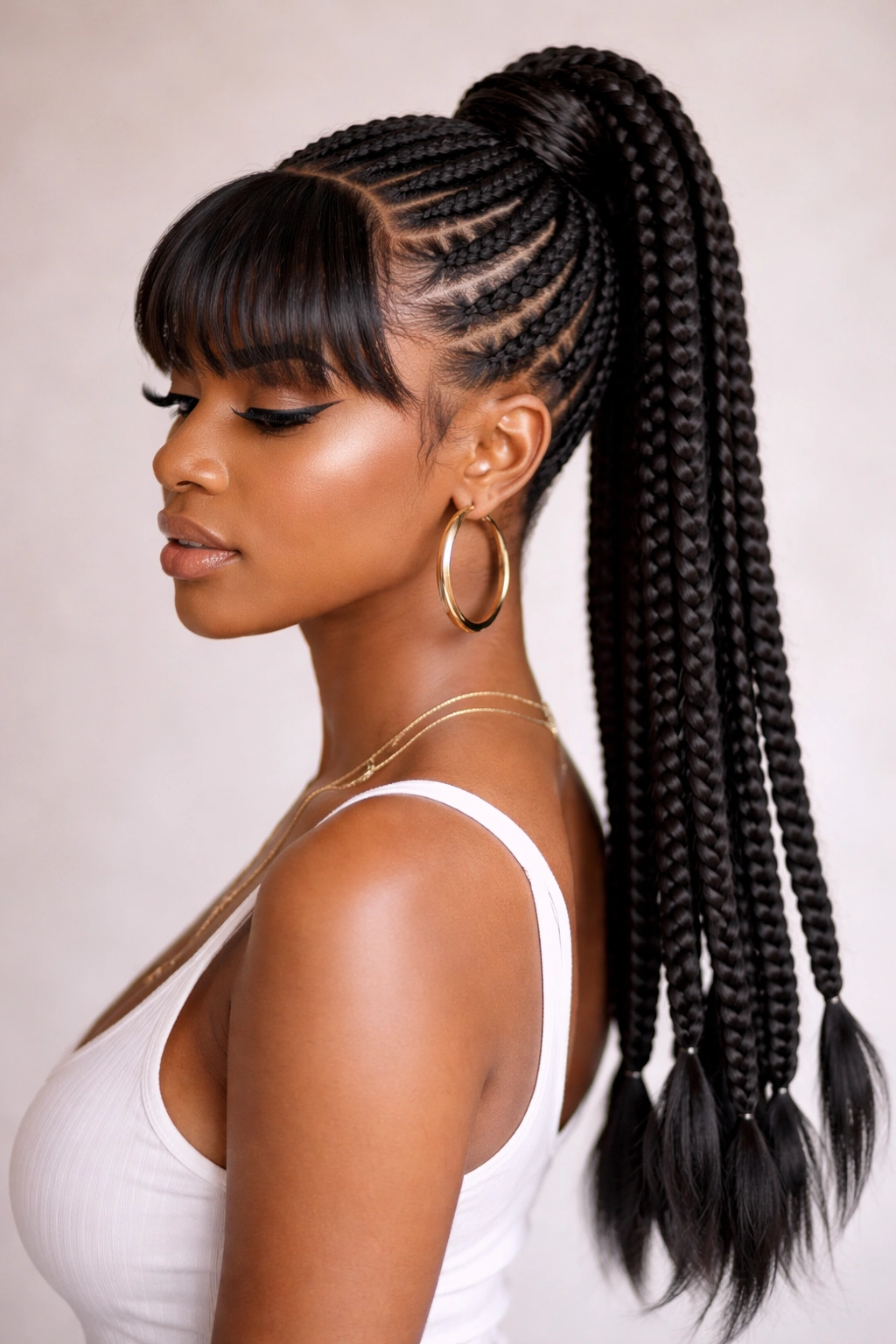
A high ponytail already has energy. Add chunky bangs, and the whole style becomes louder in the best possible way. The front pieces should have enough width to show off the braid pattern, but not so much that they swallow the forehead. It is a strong look, and it likes confident parting.
The braided ends are the nice finishing move here. Leaving the tail long and braided keeps it from fraying, and it gives the whole ponytail a more polished finish than loose ends would. If you want extra length, this is a good place for extensions.
Compared with a sleeker high ponytail, this one has more presence. It is less minimal, more styled. That makes it a better choice for nights out, photo moments, or any time you want the hair to be part of the outfit instead of just the frame around it.
13. Sleek Low Cornrow Ponytail With Sculpted Swoop Bang
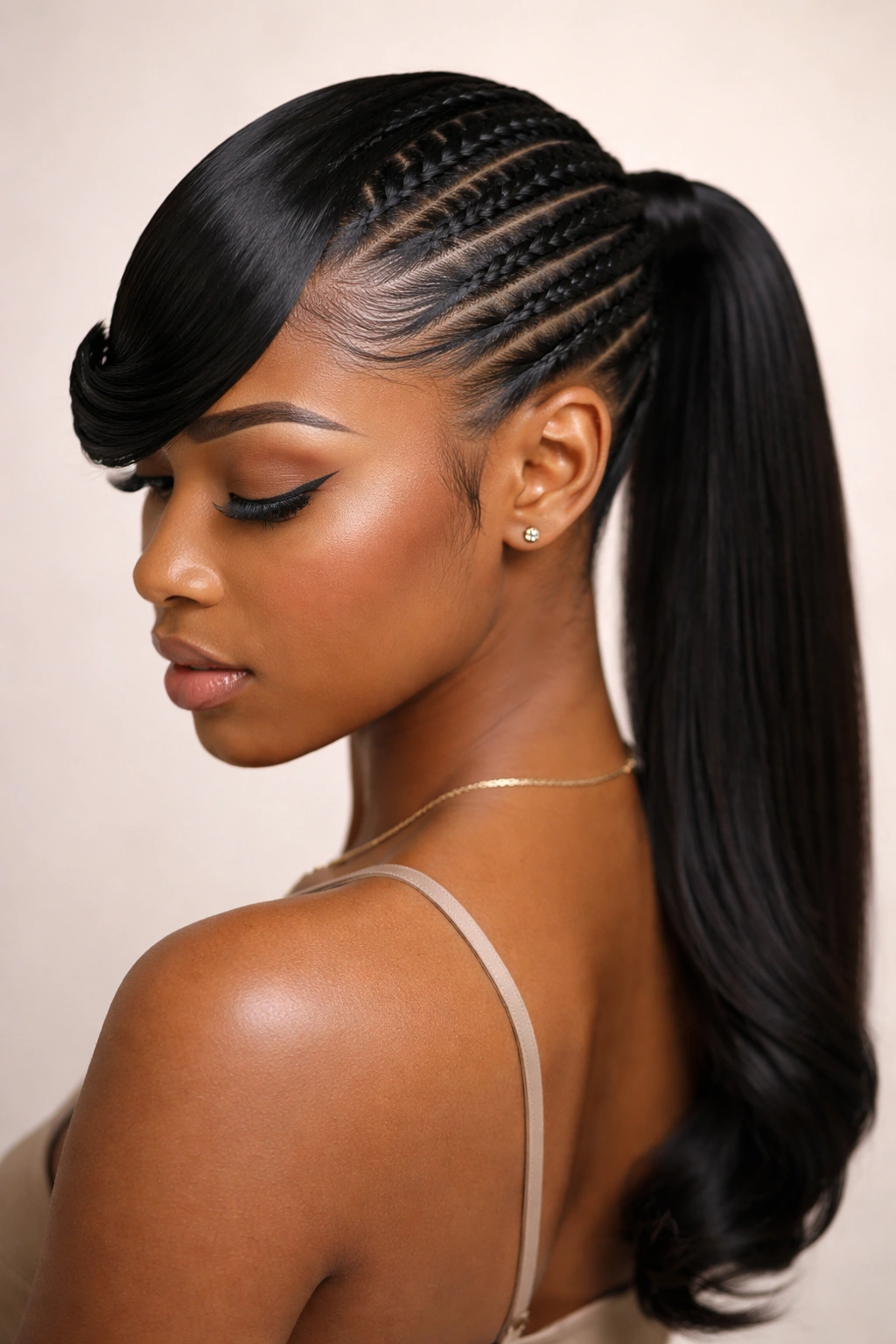
This is the grown-up version of a ponytail with bangs. The low base sits close to the neck, the cornrows are neat and close to the scalp, and the swoop bang curves across the forehead with real shape. It is quiet, but not plain.
Why It Works
The swoop bang breaks up the line of the face and gives the style some softness where a low ponytail can sometimes look too tidy. The low placement also makes this easier to wear for a long day, since the weight sits lower and does not tug at the crown as much.
A rat-tail comb, edge control, and a little patience go a long way here. The front section should be guided into shape before it gets set. Once it is dry, do not keep touching it. That is how the swoop loses its clean line.
Best Use Case
- Formal events
- Office settings
- Dinner plans
- Anyone who likes a sleek profile
It is one of the few braid styles that can look calm and dramatic at the same time.
14. Cornrow Ponytail With Beaded Bangs
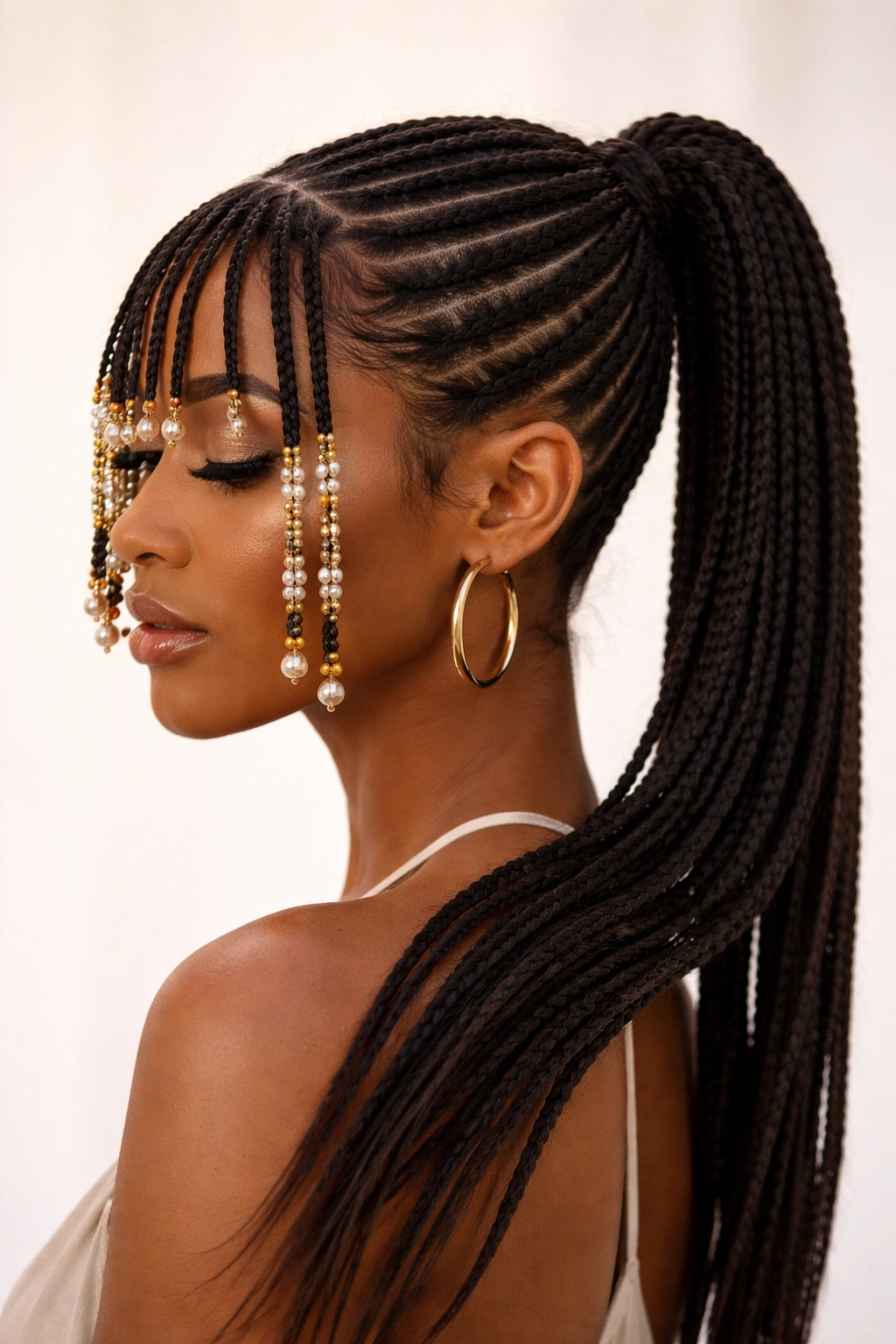
Beads change the whole personality of the style. A cornrow ponytail with beaded bangs feels decorative in a way that plain braids do not, and the sound of the beads moving adds a little character too. Use them with restraint, though. Too many beads at the front can weigh the hair down and make the bang section sag.
The best place for beads is on the ends of the front braids or on a few key pieces near the temples. That gives you shine and rhythm without turning the hairline into a crowded mess. The ponytail can stay simple so the beads have room to matter.
This style has a strong cultural feel and a lot of personality. It works especially well when the outfit is simple. Let the braids carry the detail. That is the whole point.
15. Side Ponytail With Asymmetrical Bangs
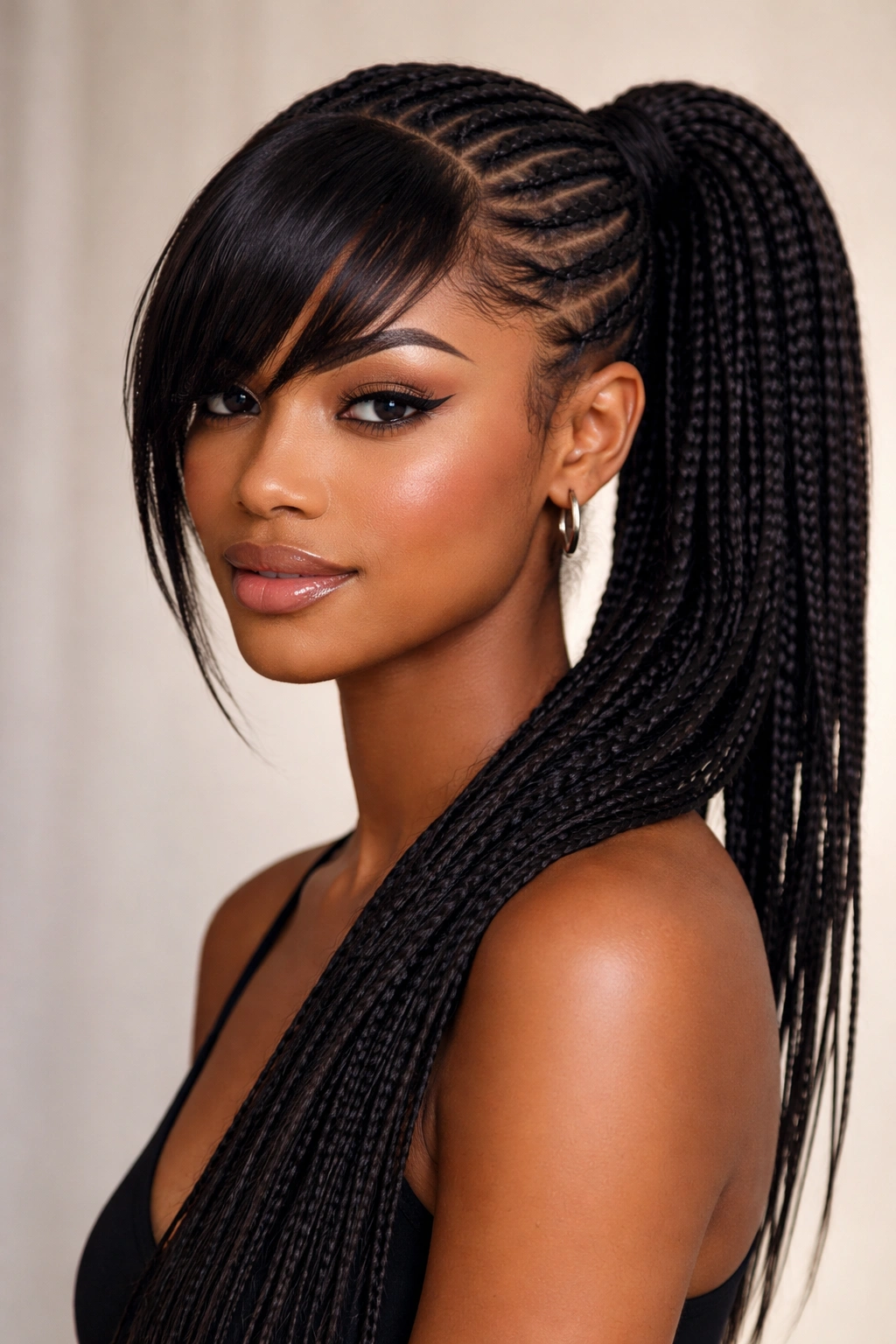
A side ponytail does not ask for symmetry, and that is what makes it fun. The ponytail sits over one shoulder, the bang section angles the opposite way, and the whole style feels intentionally off-center. It is playful without becoming messy.
Why does it work so well? Because the eye follows the diagonal line. A straight-on style can feel formal, but a side set creates movement before anyone even notices the braid pattern. The asymmetrical bangs keep the forehead from looking boxed in, especially if one side is a little longer than the other.
The style looks best when the side with less hair is still anchored tightly. If that side gets loose, the whole shape can slip. Keep the parting crisp and let the ponytail do the swinging.
16. Long Lemonade-Braid Ponytail With Angled Bangs
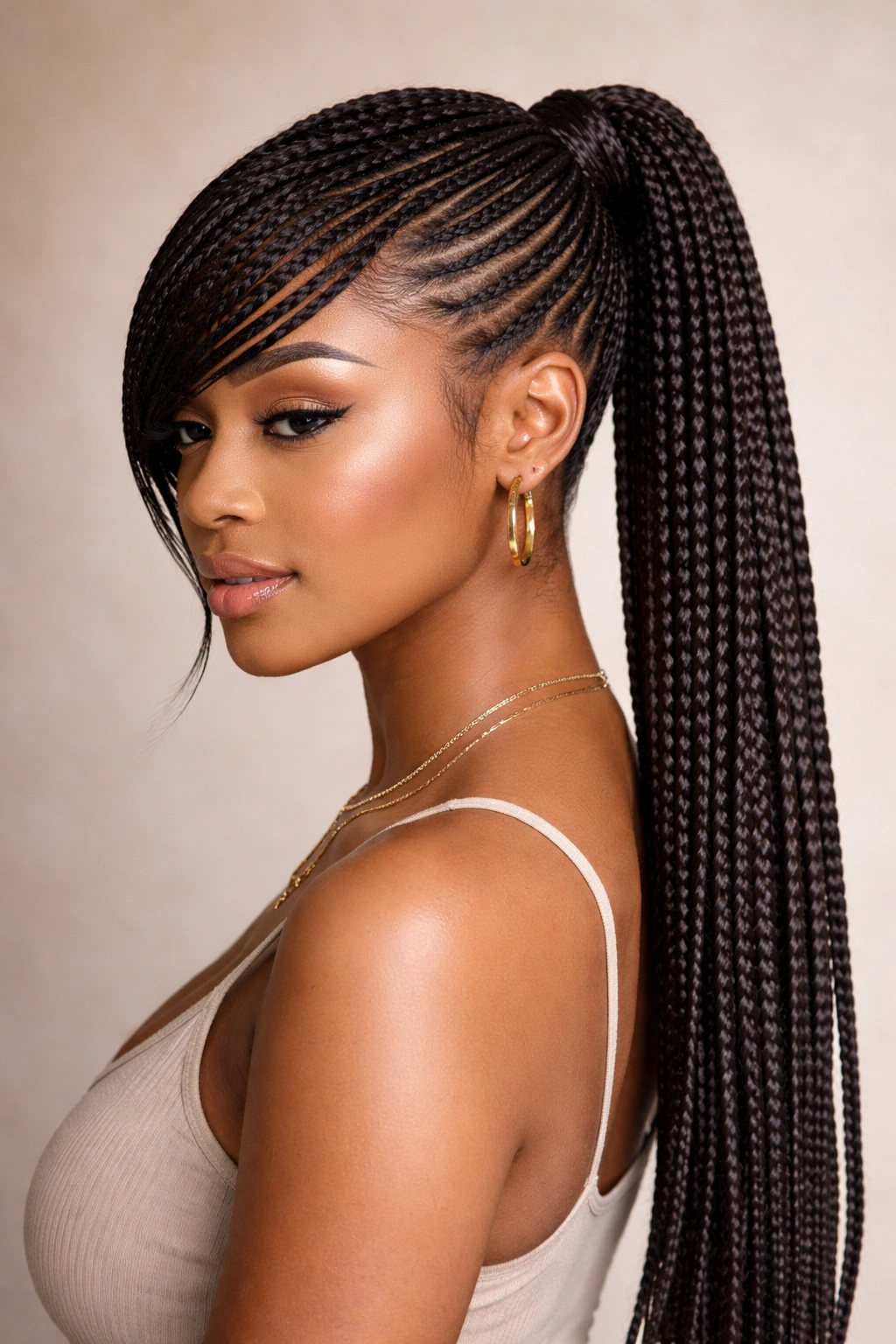
Lemonade braids already have a built-in angle, so turning them into a ponytail feels natural. The braids sweep from one side toward the other, and the angled bangs continue that motion across the front. It is a style with direction. Nothing sits still for long.
Quick Details
- Best with long feed-in braids
- Front bang pieces should follow the same slant as the side rows
- A side part helps the shape read clearly
- Works nicely with a ponytail that hangs over one shoulder
This one is especially good when you want the hair to feel long and fluid, even though it is braided close to the scalp. The side sweep makes the face look slightly narrower, which a lot of people like because it gives the whole style a cleaner line.
A little shine spray on the finished braids helps, but keep it light. Too much and the texture goes greasy instead of glossy.
17. Stitch Braid Ponytail With Micro-Bangs
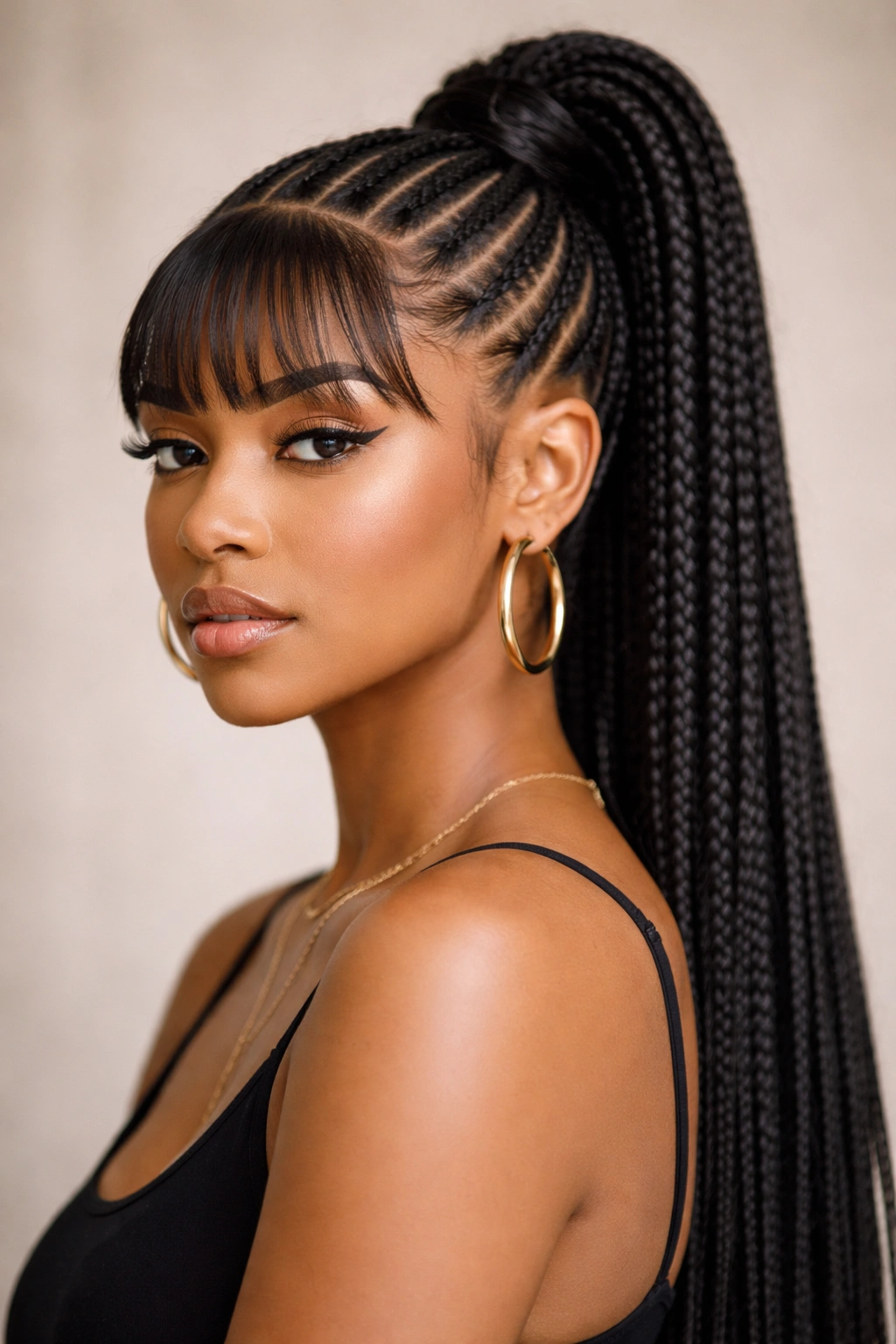
Stitch braids have that precise, lined-up look that people either love or find a little intense. I love them for ponytails. The straight, clean rows make the base look tailored, and micro-bangs in front soften the severity just enough that the style does not feel harsh.
The precision is the point here. Each row should sit almost like a ruler line, with neat spacing between them. That kind of parting takes time, and it shows. If you like braid work that looks engineered, this is your style.
It is also one of the more demanding options on the list. The front micro-bangs should be light on tension, because the clean look can tempt braiders to pull too hard. Don’t do that. A perfect part is not worth a sore hairline.
18. Fishtail-Braided Ponytail With Curved Front Cornrows
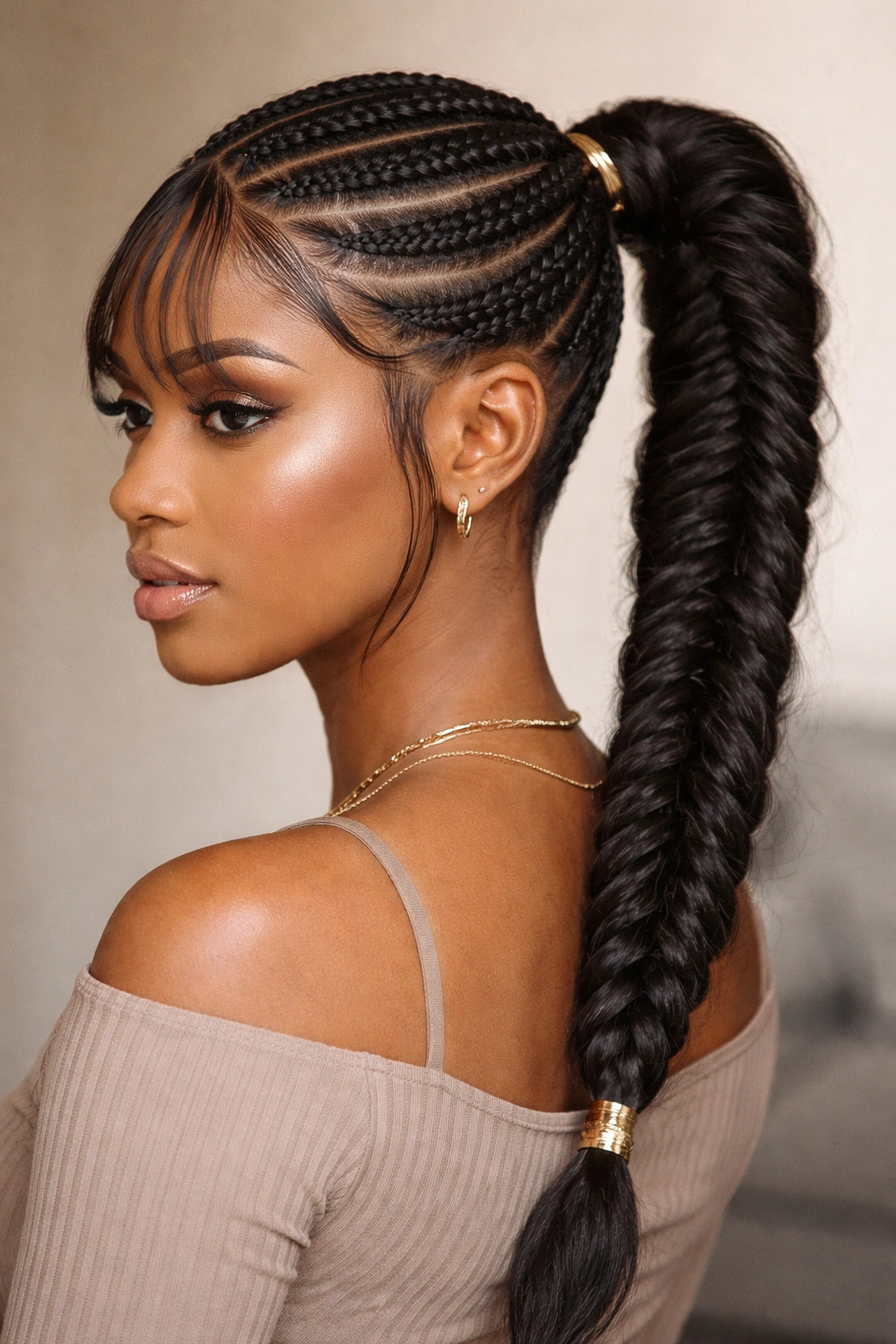
A fishtail tail adds texture that a standard three-strand braid can’t match. The stitch-like weave along the length makes the ponytail look detailed even from a distance. Pair that with curved front cornrows, and the whole style becomes balanced: ornate in back, soft in front.
What Makes It Different
Unlike a basic braided ponytail, the fishtail finish has visible crossing and a tighter visual pattern. It looks more intricate without needing extra decorations. That makes it a smart choice if you want the ponytail itself to carry the style.
The curved front cornrows help the look stay wearable. A fishtail tail can get very busy if the front is also packed with tight rows, so the arc-shaped bangs prevent that overload. The result feels richer, not heavier.
This one is best when the outfit is simple and the hair is supposed to be the statement. A plain tee and good earrings can make it land even harder.
19. Colored Cornrow Ponytail With Contrast Bangs
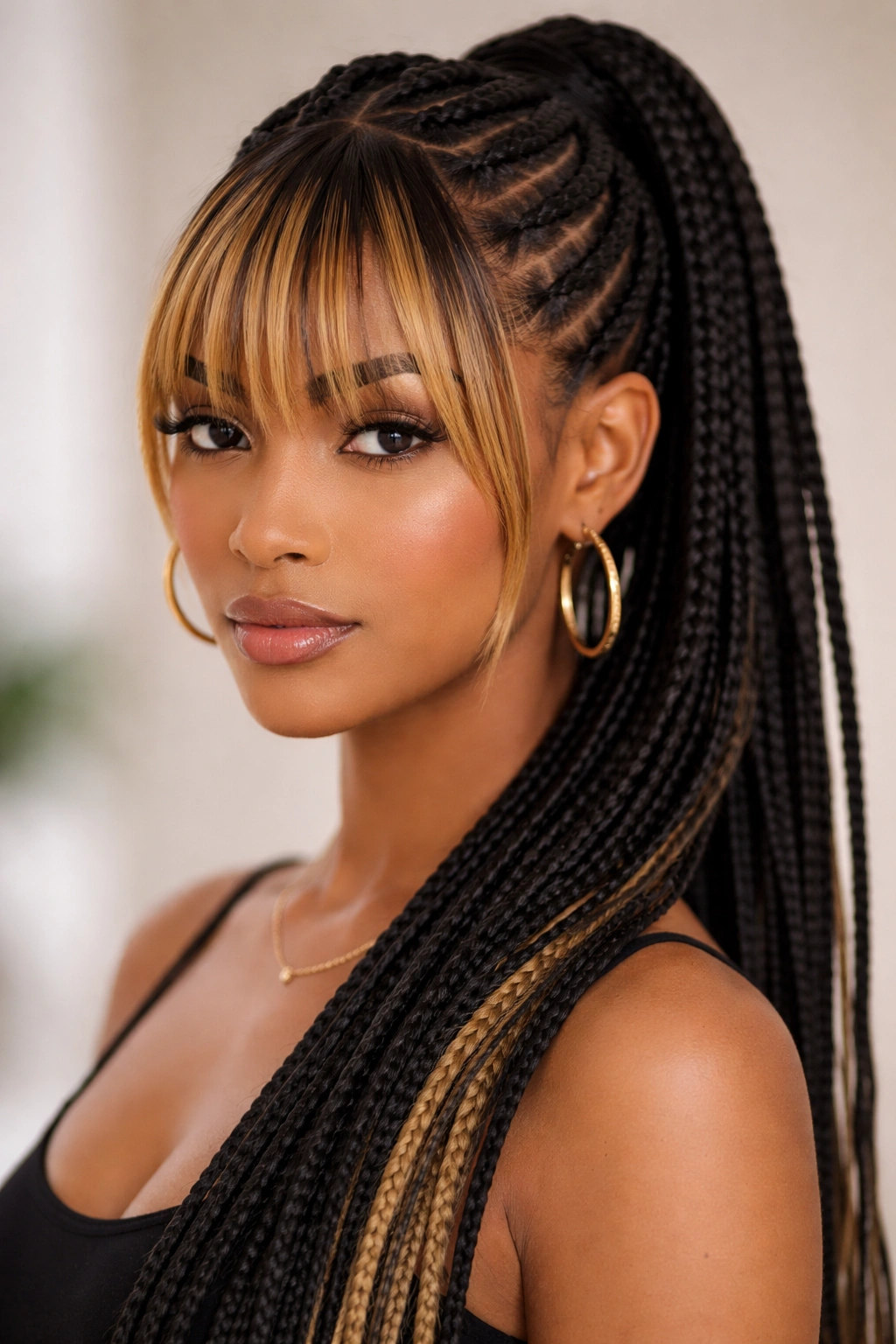
Color changes the whole mood, fast. A colored cornrow ponytail with contrast bangs lets you play with two tones at once: maybe deep black braids with honey-blond front pieces, or burgundy lengths with darker roots. The contrast makes the bang section pop before the ponytail even moves.
Color Ideas That Work Well
- Dark base + lighter bangs for strong face framing
- Warm brown + copper ends for a softer glow
- Black braids + burgundy ponytail for richer depth
- Blond accents near the front if you want the bang section to stand out
The key is to keep the color story intentional. Random color placement can look busy. A planned contrast looks stylish. If the front pieces are lighter, the ponytail can stay darker so the face gets the focus. If the ponytail is the brighter part, then the bangs should stay calmer.
This style is a good match for anyone who wants the braids to do a little more than shape the hair. They should shape the color too.
20. Athletic High Cornrow Ponytail With Secure Bangs
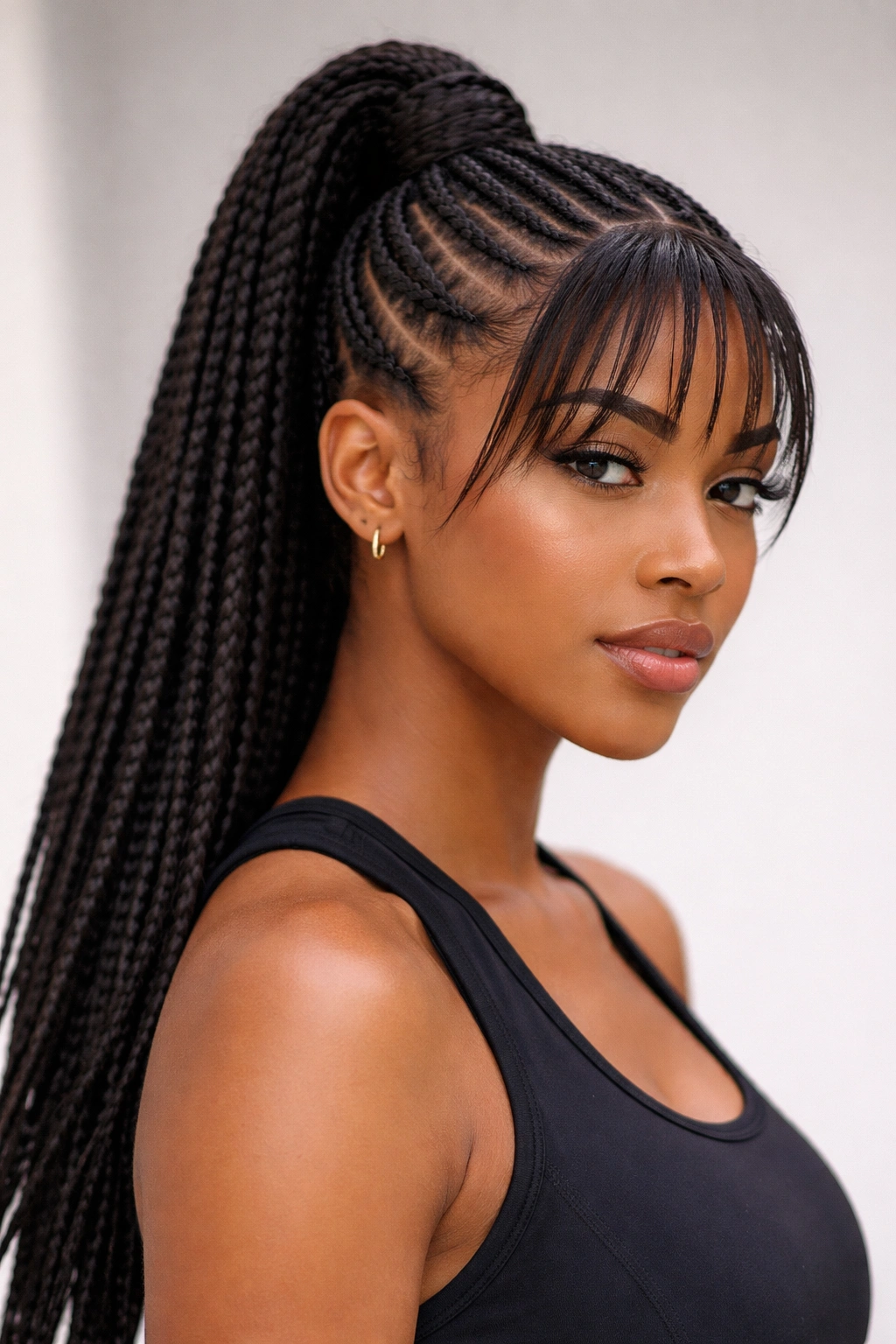
This is the practical one, and that is not an insult. A high cornrow ponytail that stays secure through movement, sweat, and a full day is worth keeping in the rotation. The bangs should be tidy and held close enough to the hairline that they do not flop around, but not so tight that they pull.
The best version uses smaller braids around the front and a firm but not harsh ponytail base. A wrapped elastic or braid knot at the base helps stop slipping. If you work out in it, use a satin scrunchie at night so the base does not get crushed.
Do not over-tighten this style. That is the mistake people make when they want it to last. It lasts longer when the tension is smart, not extreme. Clean and secure is the goal. Pain is not part of the package.
21. Feed-In Ponytail With Loose Curl Bangs
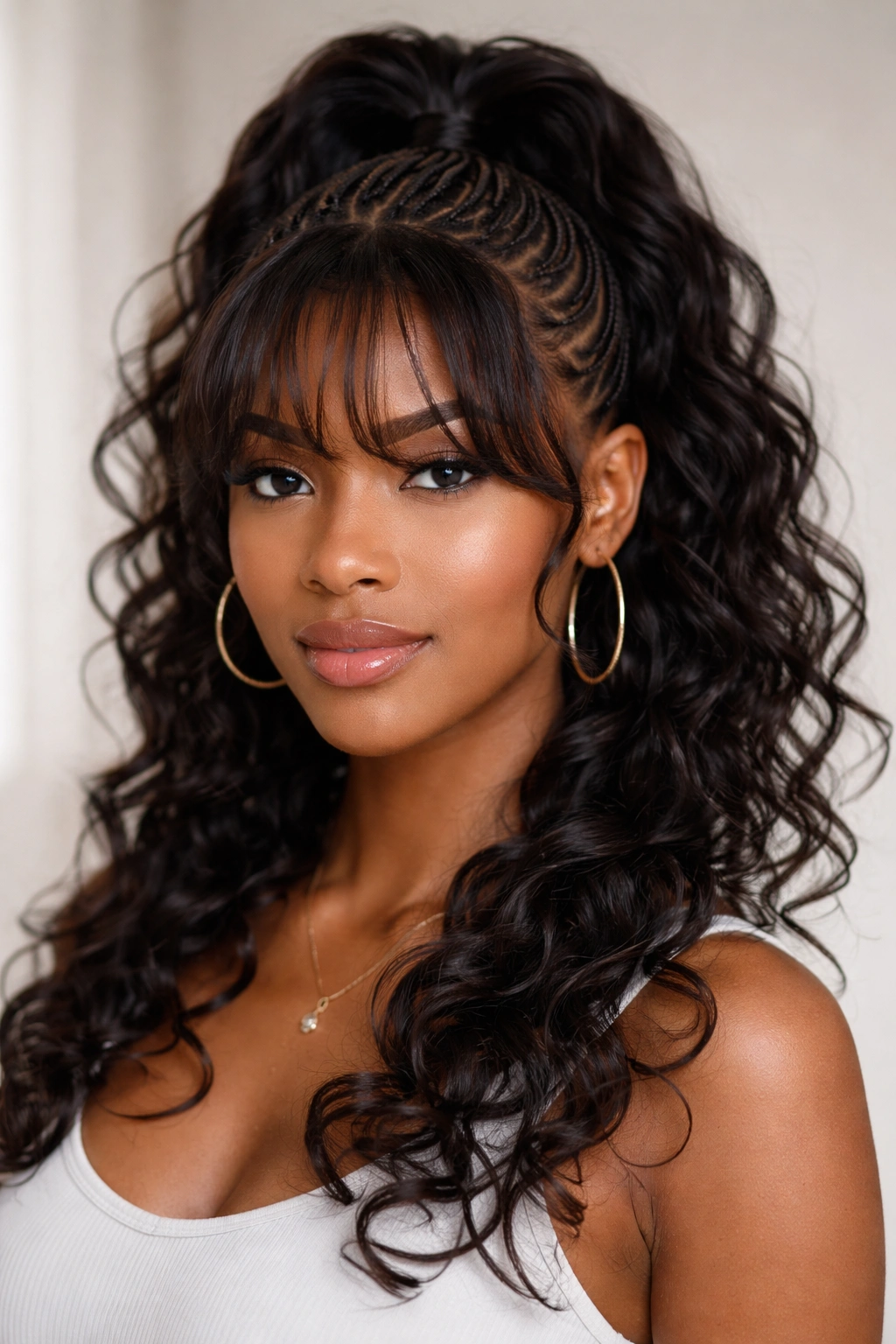
This style gets a lot of love because it feels soft without losing the braid structure. The feed-in rows create a neat base, and the loose curl bangs bring movement near the face. It is one of the easiest ways to make a ponytail look a little more romantic without turning it into a full curly style.
The curls should be left light and springy. If they get too heavy, they fall into the eyes and lose the airy effect. A bit of mousse on the curls helps hold their shape, and a small flexi rod set before installation can give them a nicer bend.
How to Keep the Curls Soft
Avoid heavy oils on the loose pieces. They can flatten the curl pattern and make the front look stringy by day two. A water-based curl refresher works better, and a tiny bit of leave-in on the ends keeps them from frizzing too fast.
This style sits in a nice middle ground. Braided enough to feel secure. Soft enough to feel flattering.
22. Crowned Cornrow Ponytail With Pin-Up Bangs
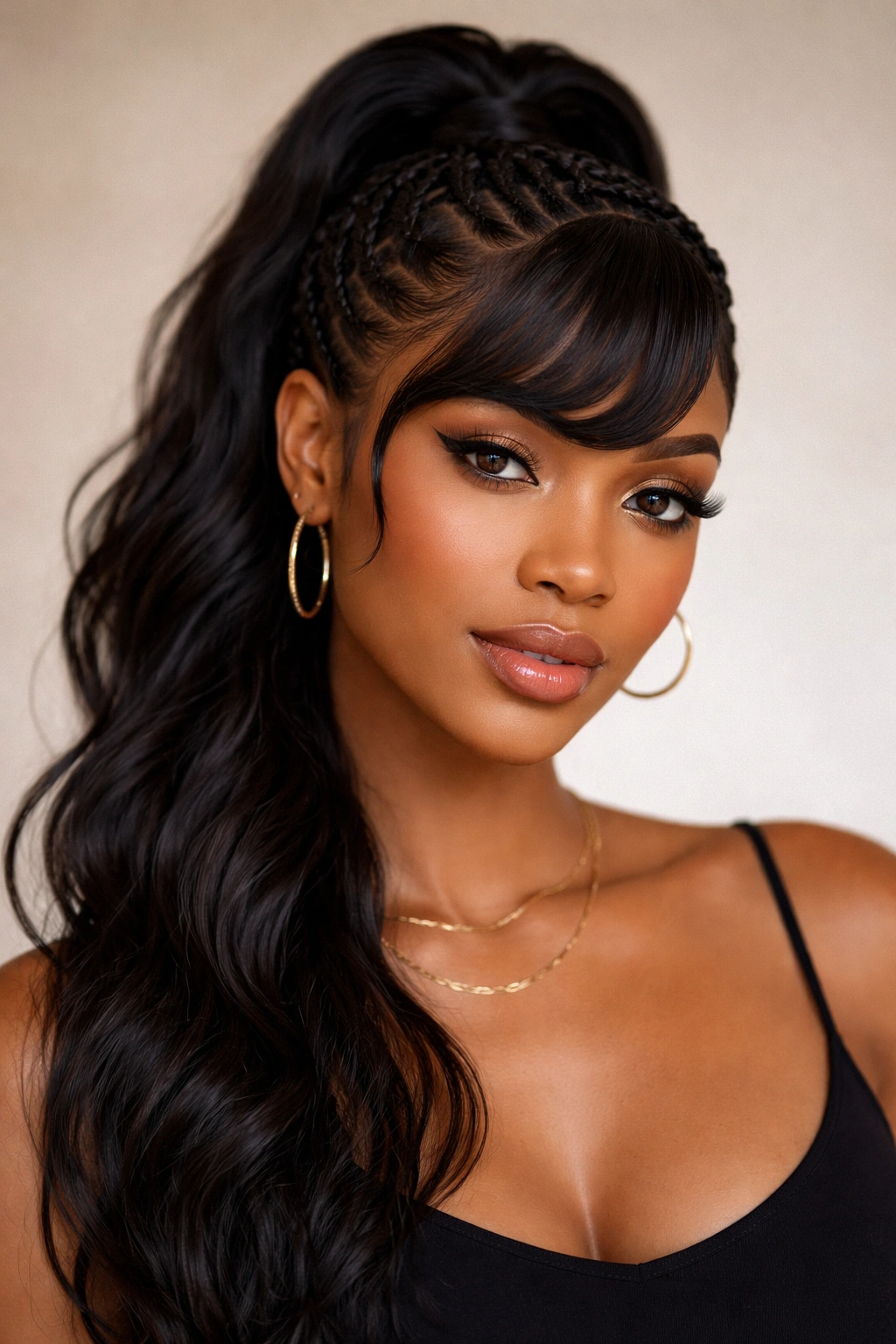
A crowned ponytail wraps the braids around the top of the head in a way that makes the style feel lifted and a little formal. Add pin-up bangs, and suddenly the look has a vintage edge. It is polished, but not stiff.
The crown effect works because it creates a halo line before the ponytail starts. That line makes the head shape look more balanced, especially when the tail itself is medium to long. The pin-up front can be rolled, tucked, or molded into a soft swirl, depending on how dramatic you want the finish.
This one is a favorite for special outfits because it looks composed from every angle. The front is the part to take your time with. If the pin-up section sits well, the rest of the style can stay simple.
23. Statement Cornrow Ponytail With Mixed-Braid Bang Cluster
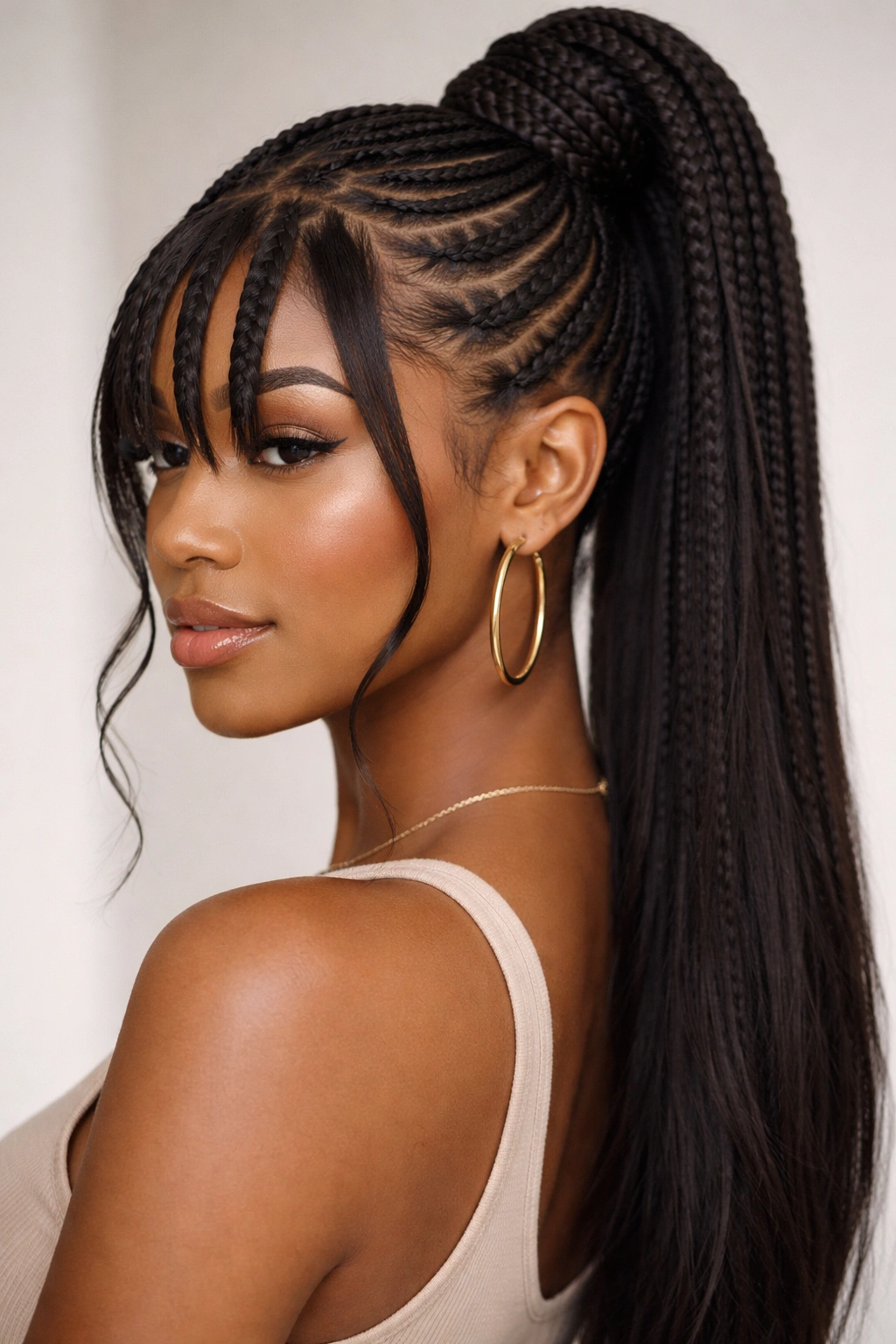
This is the custom-build version. A statement ponytail with mixed-braid bangs uses different braid sizes in the front—maybe one chunky section, two thin accents, and a twisted piece tucked in between. The mix gives the face frame more depth, and the ponytail can match with a full, thick tail or a cleaner one, depending on how loud you want the style to be.
The style works because it refuses to look uniform. That can sound risky, but it is actually what makes it interesting. A braid set with only one size or one direction can feel flat. Mixed pieces give the front more movement and keep the ponytail from looking too predictable.
Bring reference photos if you are asking for this one from a braider. Not because it is confusing, but because the exact mix matters. Two different people can hear “statement bangs” and imagine very different things. Better to be specific.
Final Thoughts
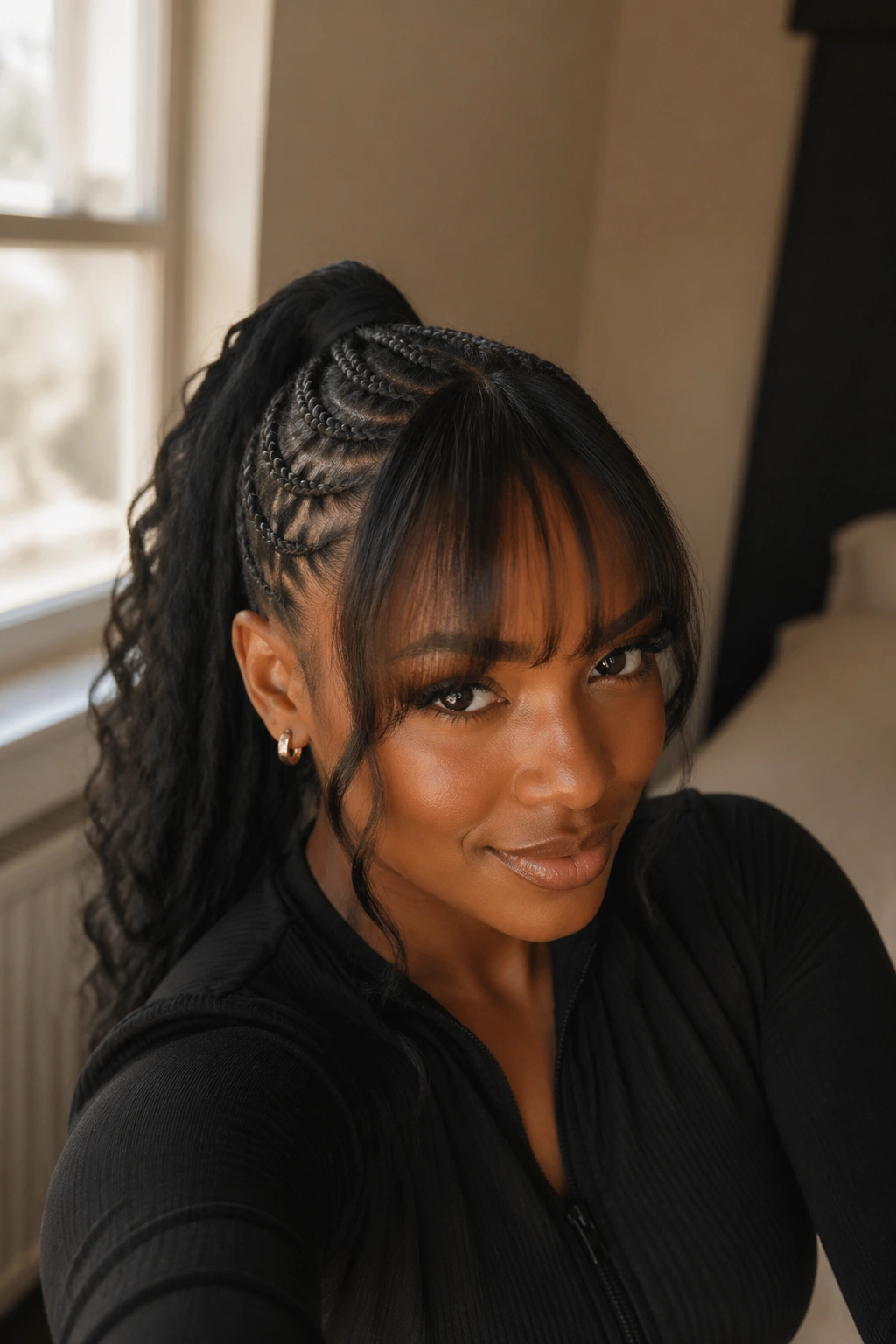
The best cornrow ponytail with bangs is the one that matches your life, not just your mirror. If you want low effort after installation, go sleeker and keep the bang section simple. If you like personality near the face, let the front pieces get softer, curvier, or more decorative.
A style should sit flat where it needs to sit flat and move where it needs to move. That balance is what makes these looks work so well. Too much tightness at the hairline ruins the whole thing. Too much loose structure, and it stops being a ponytail style at all.
If you are choosing between two options, pick the one that feels better at the scalp. Pretty hair that hurts by lunchtime is not a win.
