



A curly ponytail can look lazy in one room and expensive in another. The difference is usually shape, not effort. With voluminous ponytails for Black women with curly hair, the goal is not to hide texture or press it into submission; it’s to build a silhouette that lets the curls sit high, wide, soft, or sculpted on purpose.
That matters more than people admit. Curly hair already has built-in drama, but it also has shrinkage, uneven density, and a tendency to puff in places you did not plan for. Good ponytail styling works with that reality instead of fighting it. A strong ponytail on textured hair should look full at the roots, balanced through the middle, and intentional at the ends. Not stiff. Not scraped flat. Not trying too hard.
I’m partial to styles that keep a little movement near the face. A ponytail that is too tight can feel severe fast, and that’s usually not the vibe most people want. A few curls left loose, a side part, a wrapped base, or a braided foundation can make the whole style feel richer without making it fussy.
The best part is how many directions you can take it. Some of these styles lean sleek and polished, some are soft and fluffy, and some are pure statement hair. Different moods. Different textures. Different lengths. And if you’ve ever wondered whether curly hair can do a ponytail without losing its personality, the answer is yes—and then some.
1. High Puff Ponytail With Lift at the Crown
This is the style I reach for when I want height without pretending my hair is something it isn’t. A high puff ponytail gives you that lifted, full shape right away, and it works especially well on dense curls and coils that already want to stand up. The crown sits high, the sides stay smooth, and the puff does the heavy lifting.
Why It Works
The magic is in the balance. Your roots are controlled just enough to keep the style neat, but the bulk of the ponytail stays soft and airy, which keeps the look from feeling flat. If your hair shrinks hard, stretch the roots a little first with banding or a blow-dry on low heat. That extra inch or two changes the whole silhouette.
A satin scrunchie or stretchy band is better than a thin elastic. Thin bands bite, and you’ll feel it by lunch.
- Keep the puff centered over the crown bone, not too far back.
- Smooth the front with gel or edge control only where you need it.
- Fluff the ponytail outward with your fingers once it’s secured.
- Leave a few curls looser near the hairline if your face likes softness.
The shape should look round, not squeezed.
2. Sleek High Ponytail With Curly Ends
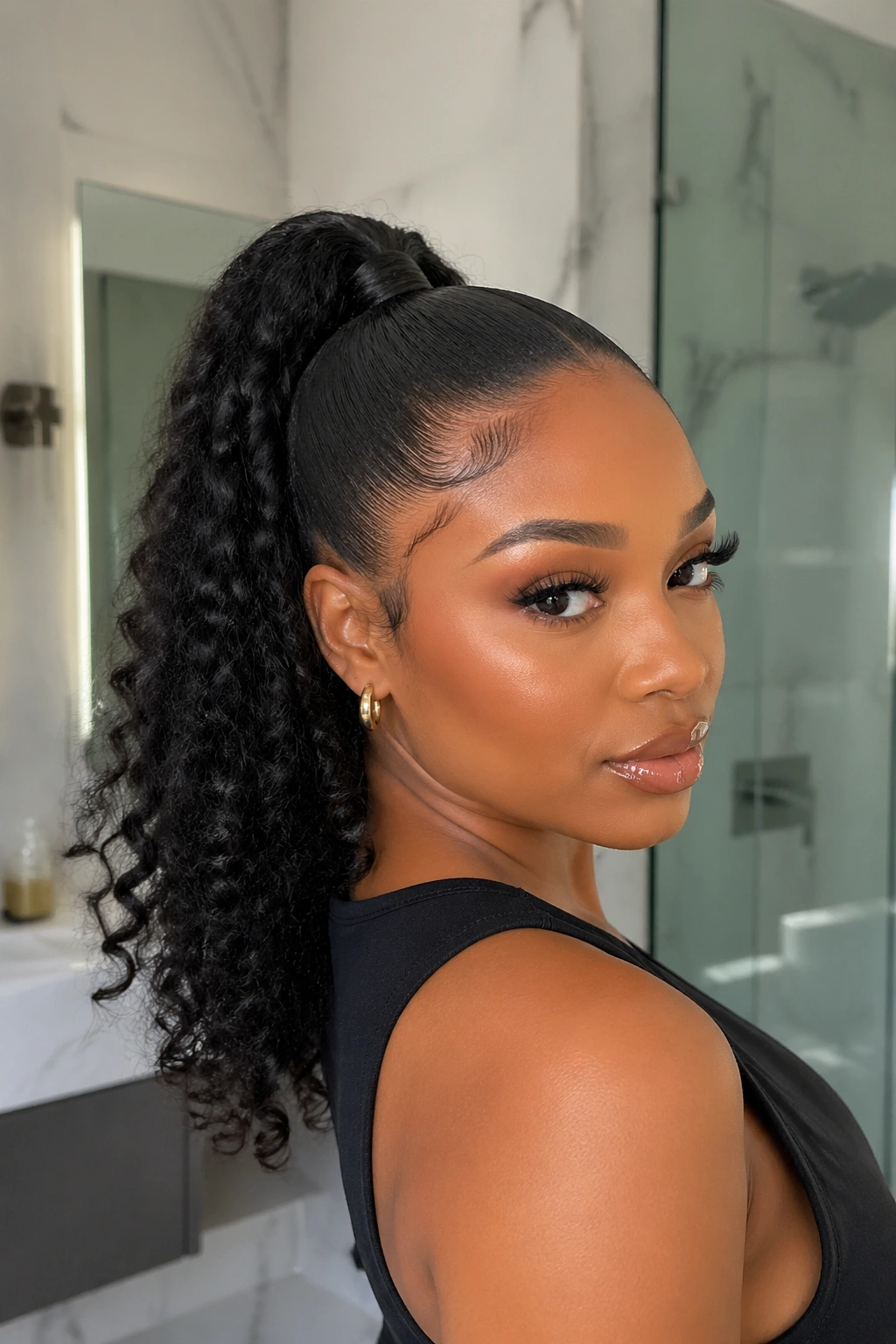
Do you want polished roots and a curly finish? This is the move. A sleek high ponytail with curly ends gives you that clean, lifted base most people love, then lets the texture bloom at the tail so the style doesn’t turn into something harsh or too straight.
The key is contrast. The top should be smooth enough to show deliberate parting and control, while the ponytail itself can stay curly, stretched, or wrapped around with extension hair. If your natural hair is long enough, twist the tail into large sections before securing it so the curls keep their shape. If you’re using curly extensions, pick hair that matches your natural curl pattern instead of going pin-straight at the root and ringlet-tight at the end. That mismatch always looks obvious.
A small strip of hair wrapped around the base cleans everything up. Simple. Sharp. Effective.
3. Deep Side-Part Ponytail
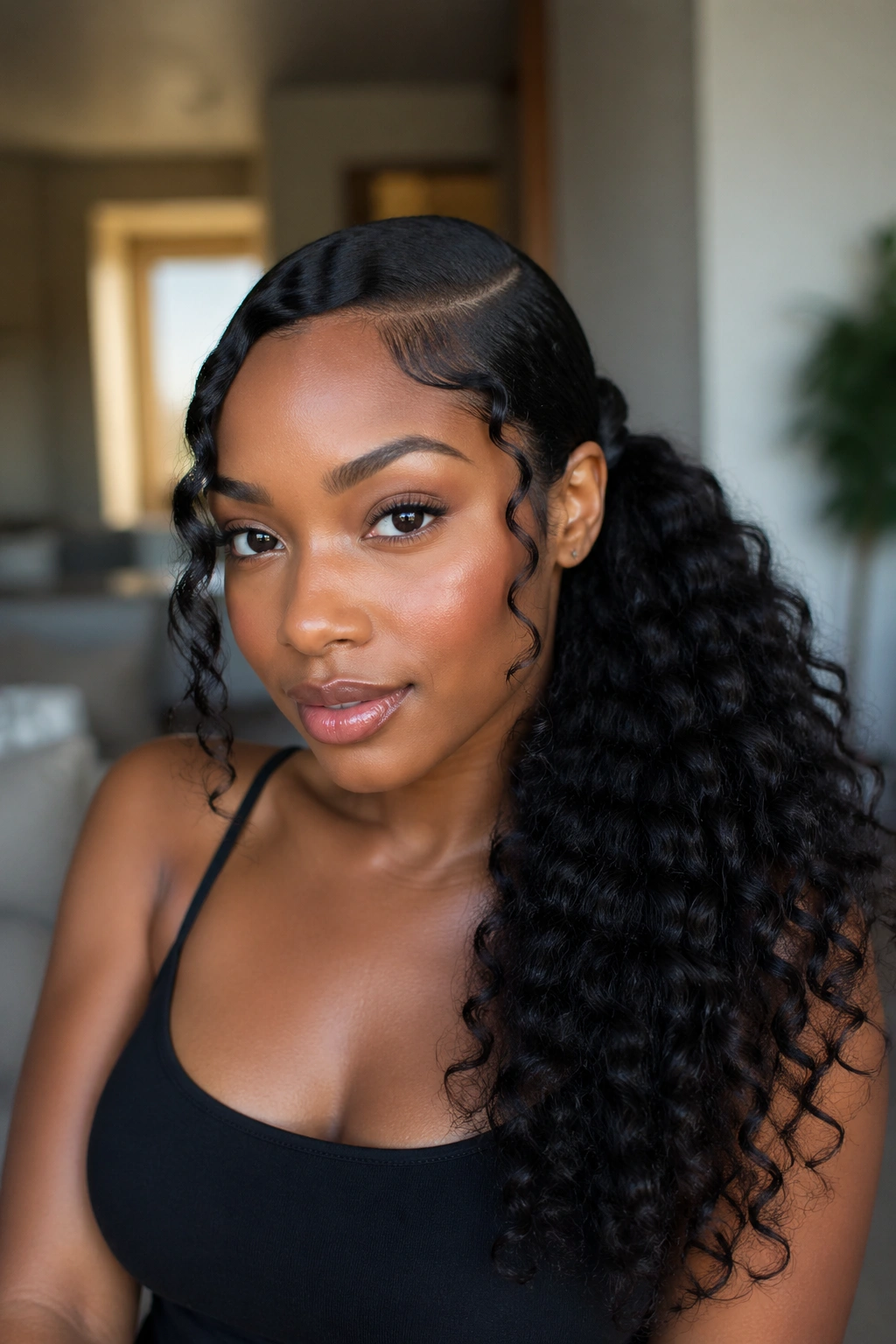
A side part changes the whole personality of a ponytail. It takes the focus off symmetry and puts it on movement, which is great if you want your curls to fall over one shoulder with a little drama.
The deep side part works well with natural curls, blown-out hair, or a textured ponytail extension. What matters most is where the bulk lands. Pull the ponytail to the same side as the part, then keep the opposite side sleek and close to the head. That contrast makes the shape look fuller than it really is. It also softens sharper features and can make the face feel longer.
What to Watch For
A side ponytail can droop if the base is too low or the hair is too heavy. Anchor it a little higher than you think. Use a firm band, then pin the side nearest the nape so the pony doesn’t slide.
If you like earrings, this style shows them off. It also looks good with a chunky hoop. A small detail, sure, but those details matter.
4. Braided Base Ponytail With Cascade Curls
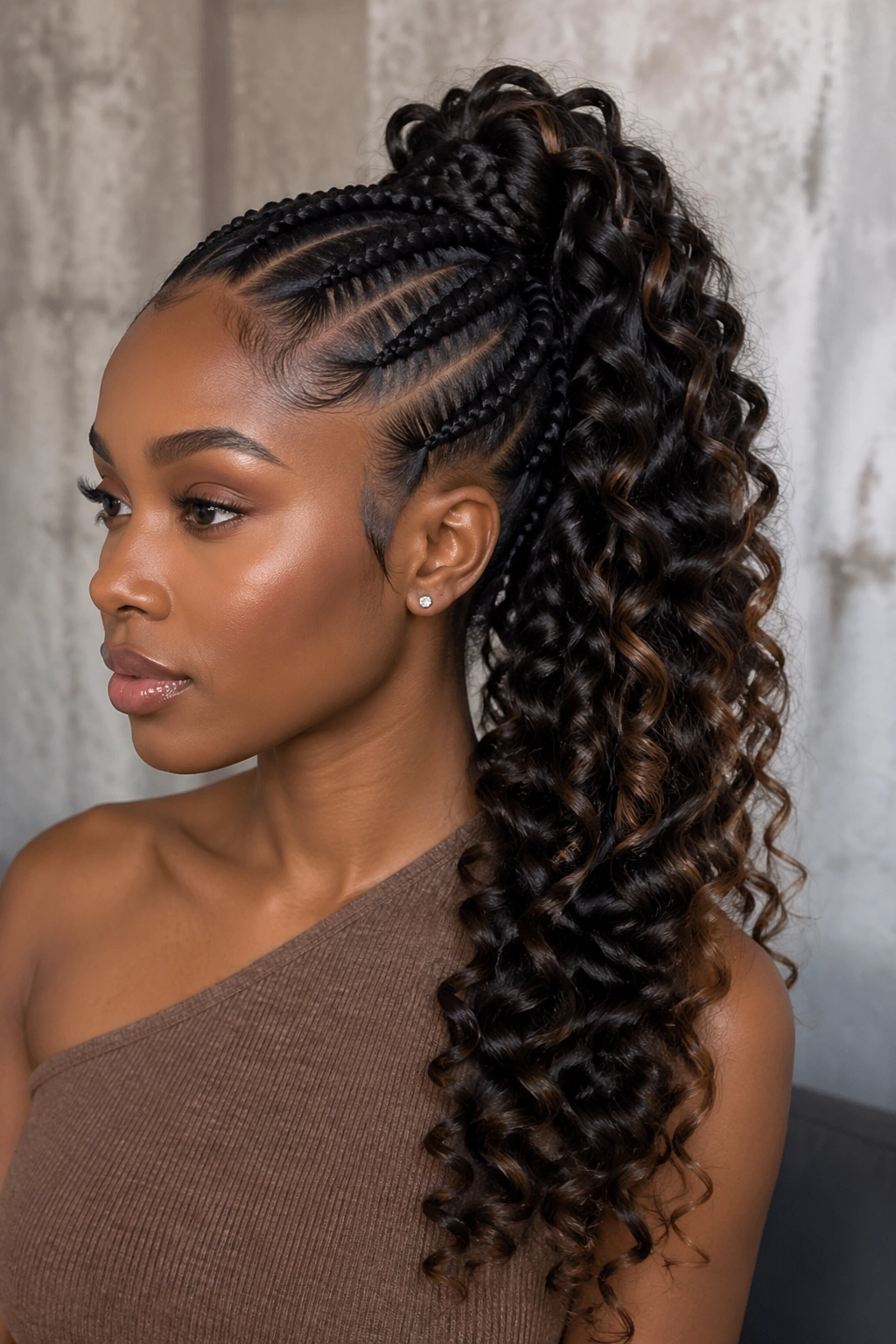
A braided base makes a curly ponytail look finished before you even get to the tail. This style starts with cornrows, feed-ins, or flat twists leading into a thick ponytail, then ends with loose curls or curly extensions that fall down the back.
It’s one of the best choices if you want volume and structure at the same time. The braids keep the scalp neat and the root area compact, while the ponytail length brings the softness. That mix is what gives the style its punch. You can wear the braids straight back for a clean shape, or angle them toward the crown if you want a little lift.
I like this style because it lasts. A lot of ponytails look good for one day and get tired fast. This one keeps its shape.
- Add mousse to the braids so flyaways don’t pop up.
- Use curly extensions with a texture close to your own.
- Wrap the base with a braid or extension piece for a cleaner finish.
- Sleep with a silk scarf to keep the parts crisp.
5. Pineapple Ponytail With Rounded Shape
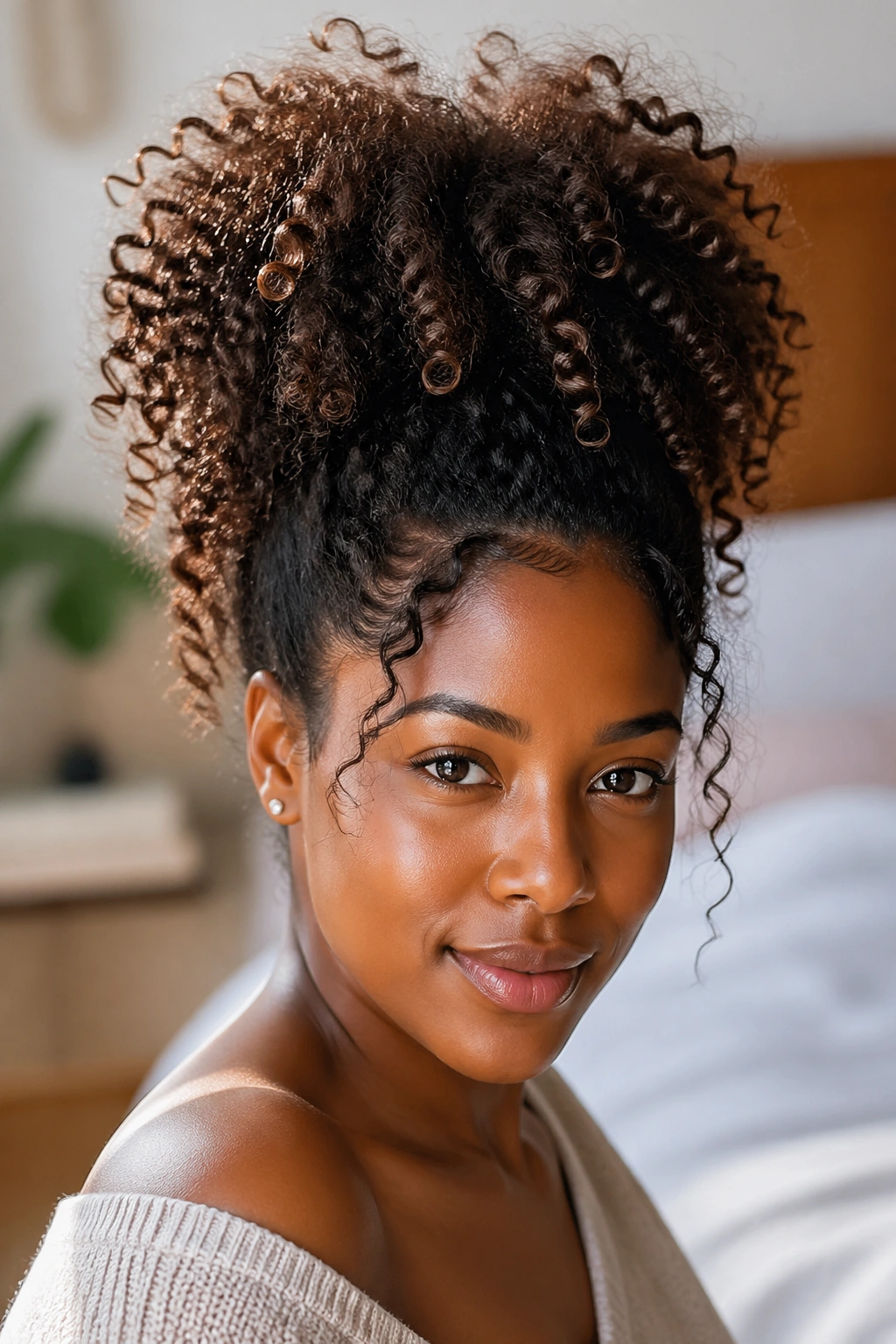
The pineapple ponytail is soft, high, and a little playful. It’s the style that says you want volume first and fuss second. Curls are gathered loosely at the top of the head, usually with enough slack to keep the ends from getting crushed.
This one is especially good for second- or third-day curls. If your hair already has a defined coil or twist-out pattern, the pineapple shape keeps that texture alive instead of flattening it out. The trick is not pulling the hair too tight. You want the hair to sit up, not get strangled into submission.
A wide satin scrunchie helps preserve the curl clumps. And if your hairline is fragile, keep the tension off the front and pin the sides instead. The style should feel light on your scalp. If it doesn’t, loosen it and start again.
6. Bubble Ponytail on Stretched Curls
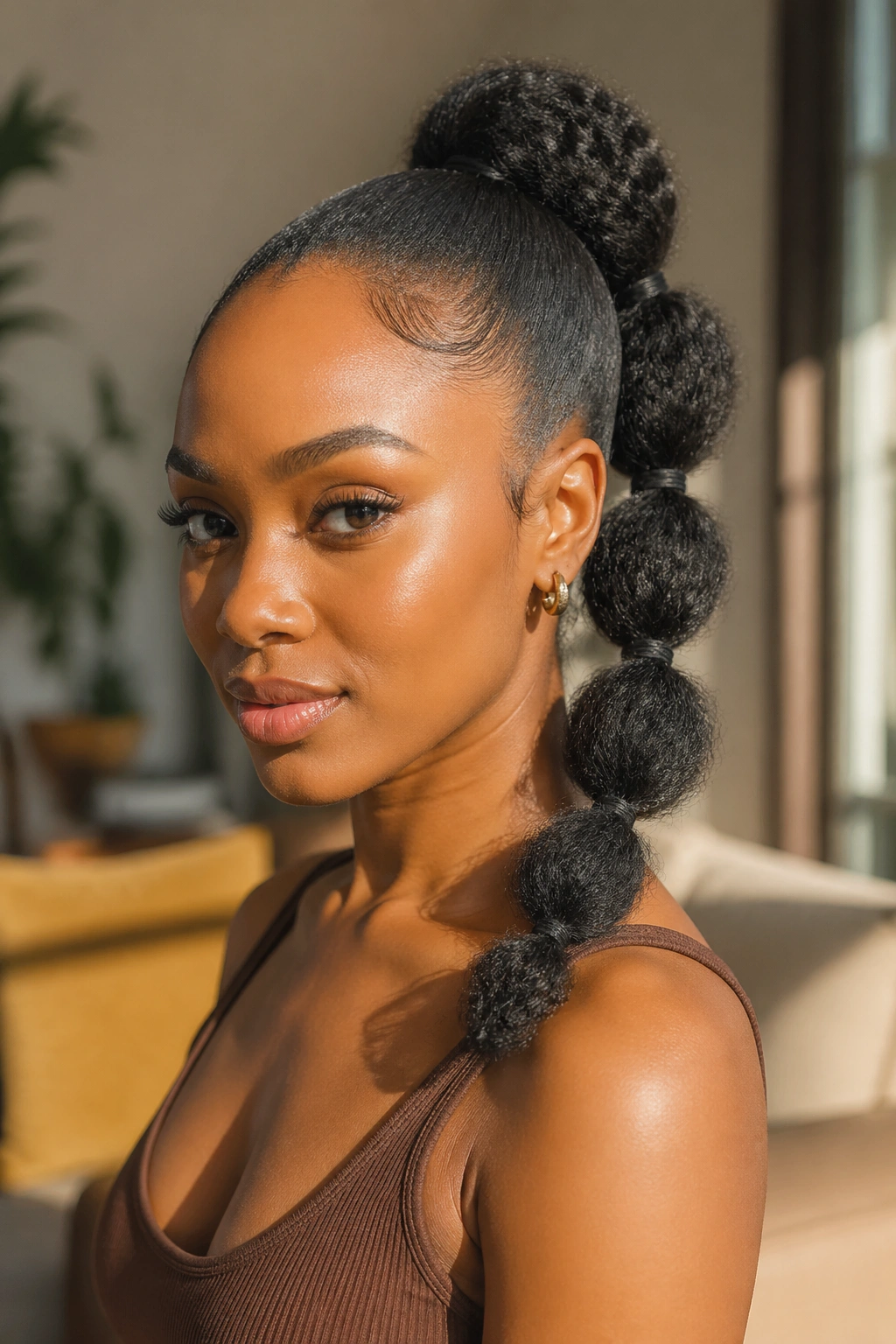
A bubble ponytail is one of those styles that looks complicated but really lives and dies on sectioning. Once the ponytail is secured, you add small clear bands or tiny elastics down the length and gently puff each section outward. That’s where the volume comes from.
On curly hair, this style looks especially good when the hair is stretched first. You don’t need bone-straight hair. You need enough length for the bubbles to show. If the curls are too shrunken, the style can look squat, and that’s not the look. A blowout, braid-out, or banded stretch gives the ponytail room to show off its shape.
How to Get the Most From It
Think of each bubble as a little pocket of air. After you tie each section, tug the hair out a bit on both sides. Not enough to fray it. Just enough to round it out. If you want a softer finish, leave the ends curly and let them spill past the last band.
It’s playful, but not childish. Big difference.
7. Half-Up Voluminous Ponytail
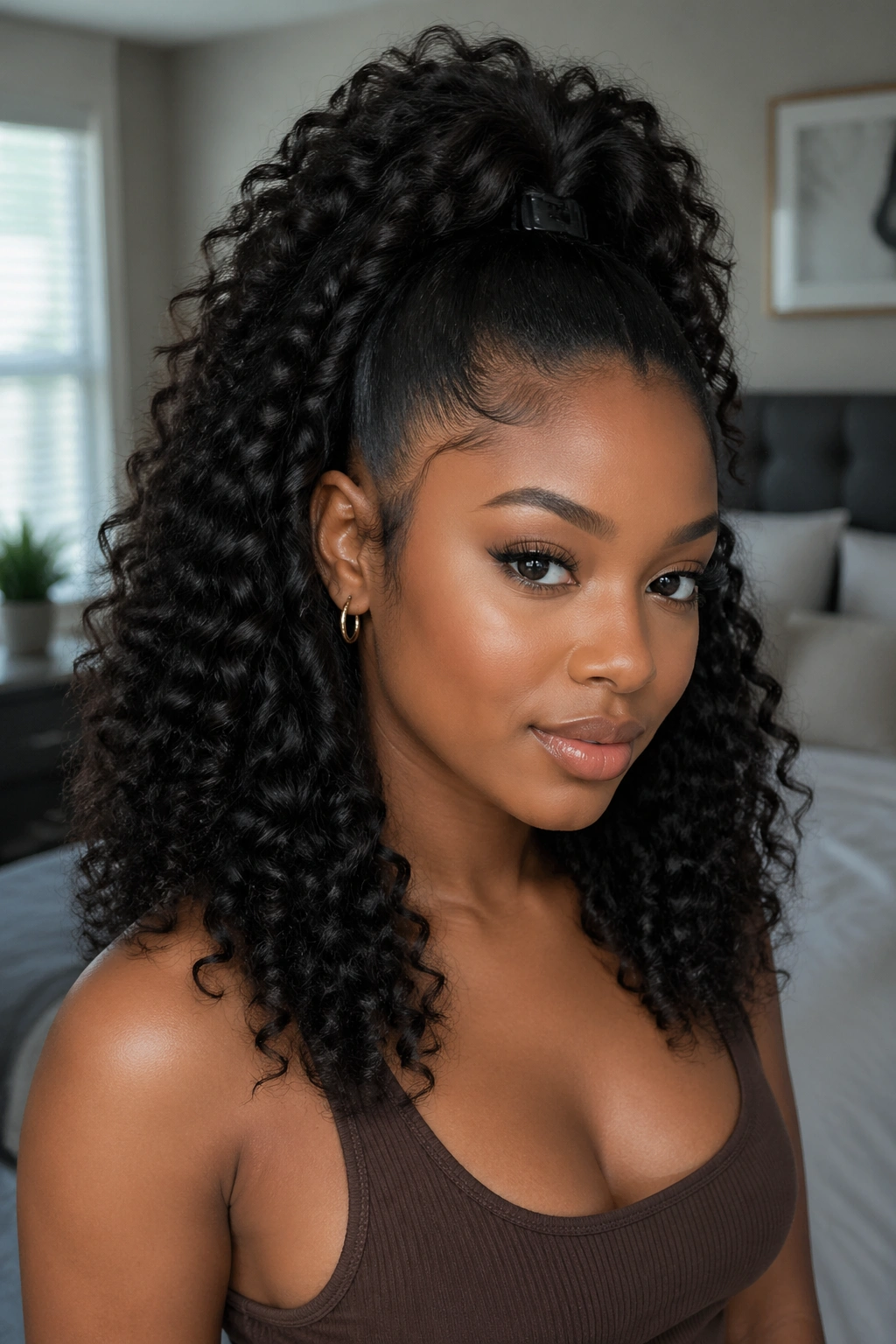
Half-up ponytails are good when you want to keep the length visible while still getting lift at the crown. The top section goes into a ponytail, and the rest of the curls fall free underneath. That’s the whole idea, and it works because the style gives you two textures in one look.
For Black women with curly hair, the half-up shape can be especially flattering because it opens the face without pulling every strand back. It also lets dense curls keep their body. You’re not fighting your texture; you’re giving it a place to land. If your curls are tight, the top section can be puffier and the bottom can stay more defined. If your hair is looser, you can stretch the ponytail base a little and keep the lower curls bouncy.
A tiny claw clip or a wrapped elastic can change the feel fast. I prefer a wrapped base. It looks cleaner. Less school-day, more styled.
8. Feed-In Cornrow Ponytail
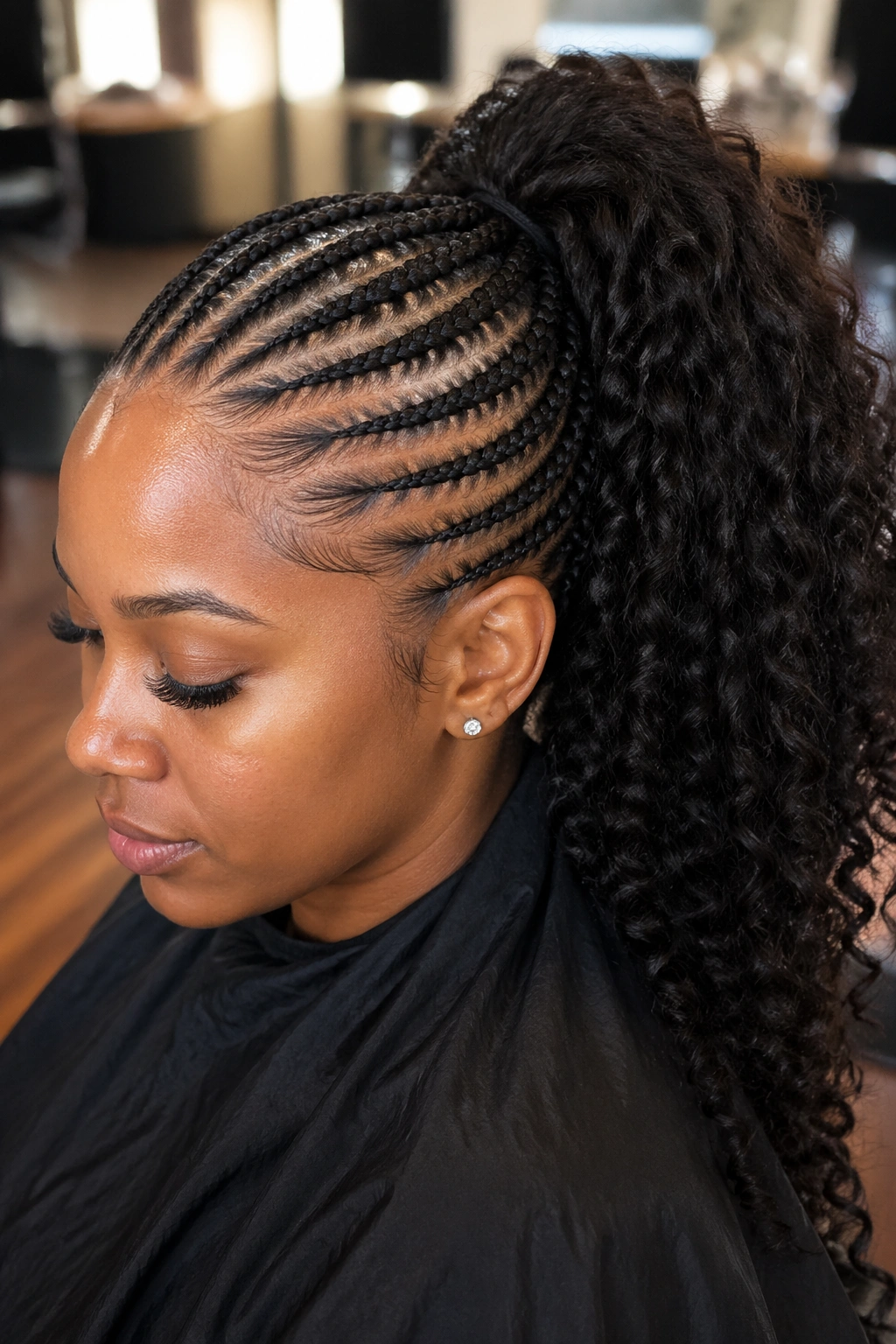
Feed-in cornrows feeding into a ponytail are the kind of style that makes sense the moment you see them. The scalp stays smooth and detailed, the rows guide the eye upward, and the ponytail itself can be thick, curly, braided, or all three at once.
This style gives you control. A lot of it. The braids can start small and get fuller as they move back, which makes the front look neat without creating a heavy lump at the hairline. If you’re using extensions, ask for a ponytail that matches the size of the braid pattern instead of hanging too heavy off the back. Too much bulk can pull the whole look down.
It’s also a smart option when you want a style with staying power. Keep the parts clean with a little mousse, and sleep with a scarf or bonnet. The style rewards maintenance.
9. Curly Drawstring Ponytail
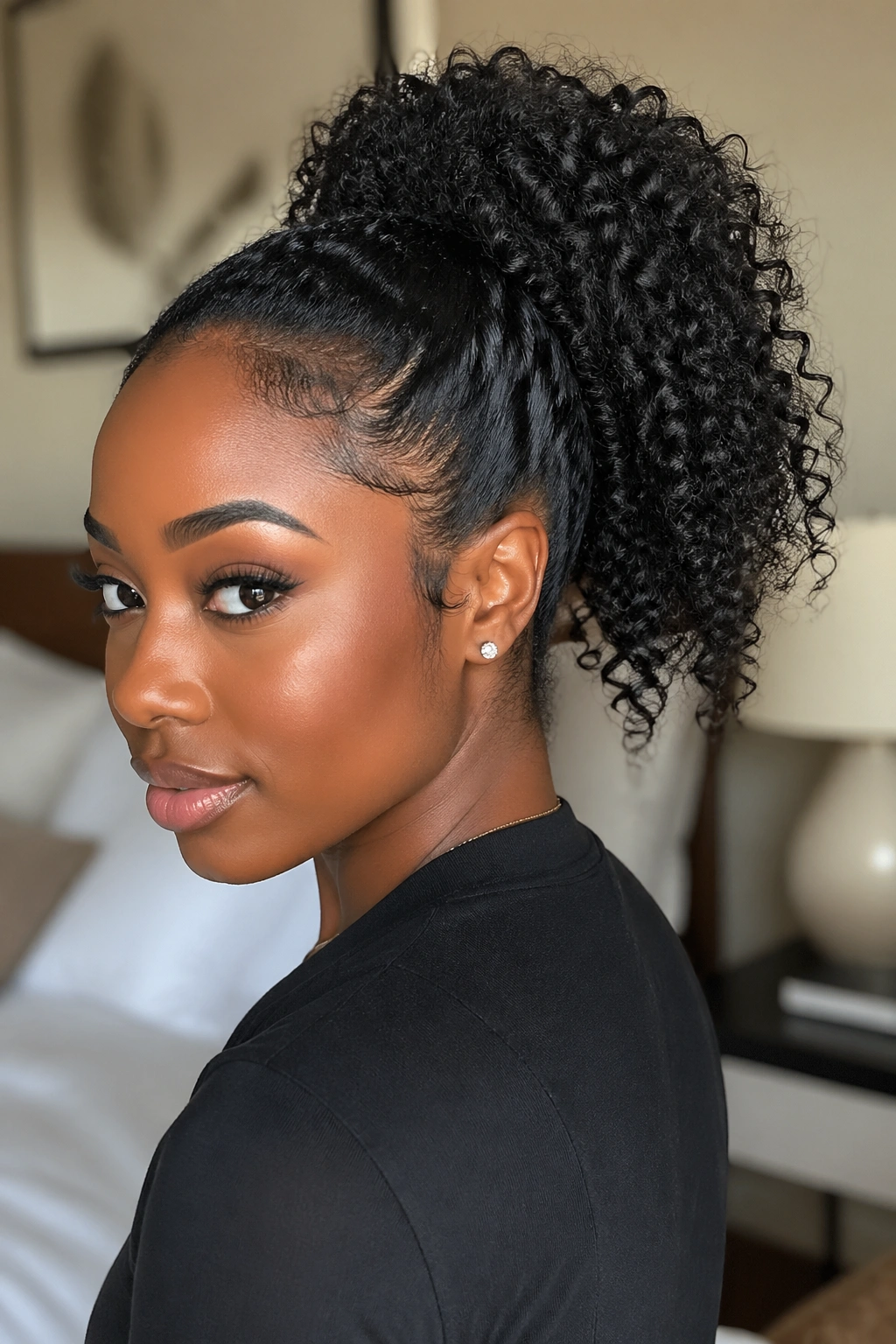
Quick, full, and easy to adjust, the curly drawstring ponytail is a cheat code when you want instant volume. You pull your hair into a small bun or secure base, attach the drawstring piece, and shape the curls until they blend. Done.
The real advantage here is flexibility. You can go soft and fluffy with kinky-curly texture, or tighter and more polished with a denser curl pattern. The better the curl match, the less fuss you’ll have around the base. If your own hair is short or in a protective style, this is one of the easiest ways to get a big ponytail without a long prep session.
- Anchor your own hair flat before attaching the piece.
- Use pins near the base if the ponytail feels loose.
- Finger-separate the curls instead of brushing them out.
- Shake the ponytail gently at the end so it doesn’t sit in one clump.
The finish should look like it grew there, not like it was dropped on top.
10. Wraparound Ponytail With Hair Cuff
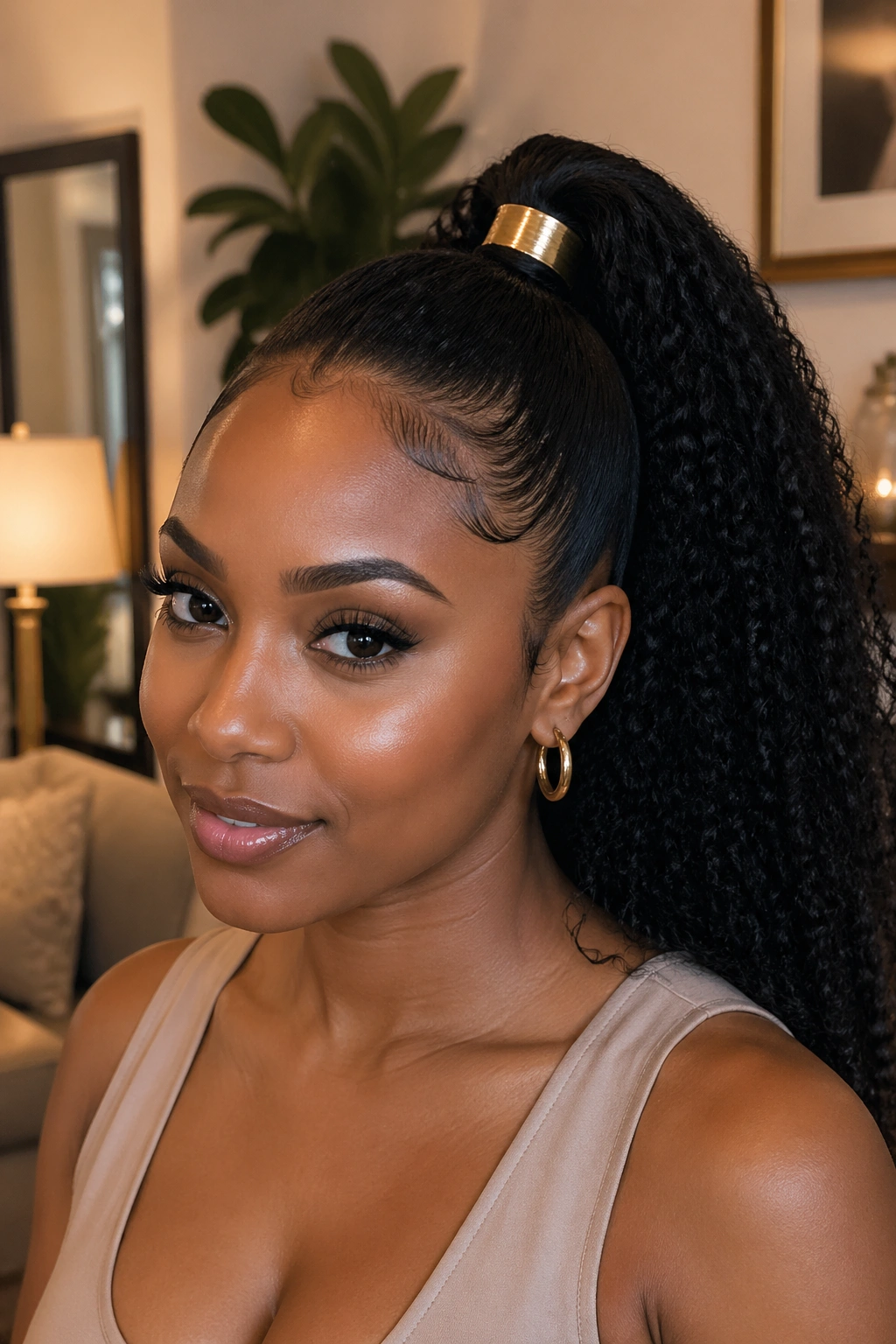
A wraparound ponytail gets its polish from the base. The hair or extension piece is wrapped around the band, hiding the elastic and giving the style that clean, finished look. Add a gold cuff or metal tube near the base, and the whole ponytail suddenly feels more deliberate.
This one works beautifully with stretched curls, twist-outs, or blown-out texture that still has body. You want enough fullness in the tail for the wrap to feel balanced. A tiny ponytail with a huge wrapped base looks off. Big tail, clean base. That’s the recipe.
What Makes It Stand Out
The wrapped section creates a visual break, which makes the ponytail look sculpted. It’s a small move, but it does a lot. If you like jewelry, this is a good style for it. A single cuff near the band is usually enough. Too many pieces can make the style look busy.
I’d wear this one when I want the hair to look dressed up without turning into a full updo.
11. Twisted Crown Ponytail
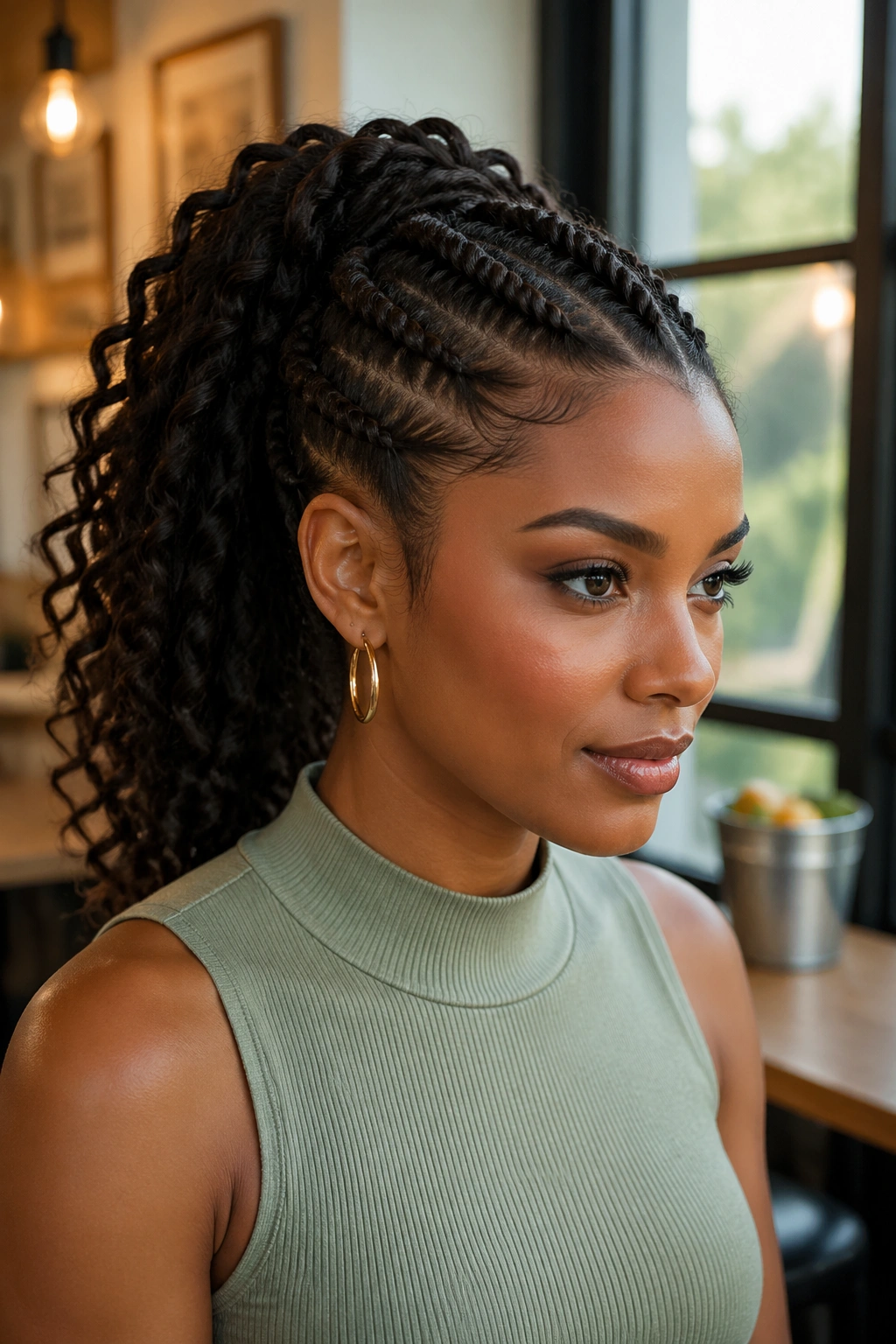
Twists along the crown change the whole top half of the head before the ponytail even begins. That’s the appeal here. Instead of a plain slick-back base, you get a row of two-strand twists or flat twists feeding into the ponytail, which adds texture at the scalp and keeps the style from feeling too plain.
The ponytail itself can be curly, puffed, or extended. What matters is the contrast between the flat, twisted top and the fuller tail. That contrast gives the style depth. It also works well if you want to keep some hair protected while still showing off length.
A side note: twists look better when they’re even in size. One fat twist and three tiny ones will bug you every time you look in the mirror.
The style is neat without feeling hard. That balance is hard to beat.
12. Mohawk Ponytail With Braided Sides
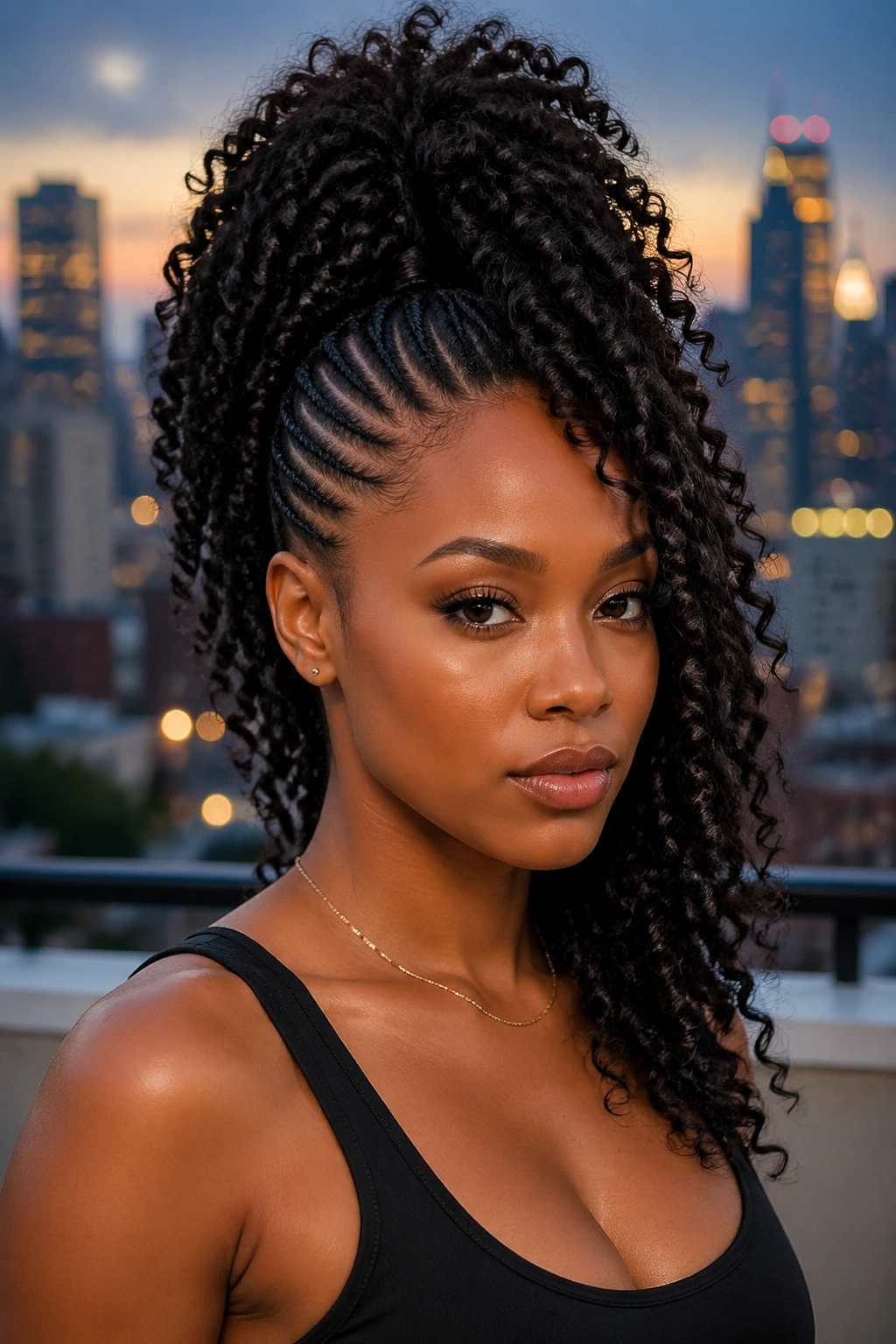
A mohawk ponytail is for the days when you want to look a little louder. The sides are braided down or slicked tightly, while the center strip of hair stays full and high, then gets pulled into a dramatic ponytail.
The shape is strong. That’s the point. It lengthens the face, lifts the eye upward, and makes curly volume look even bigger because the sides are so controlled. If your natural hair is thick, this style can take a lot of weight off the sides and put it where it counts. If you’re using extensions, keep the center ponytail fluffy and don’t over-braid the crown. You still want softness in the tail.
It’s a great style for nights out, photos, or any moment when “small” is not the goal. Pair it with a bold lip and the hair does half the work.
13. Jumbo Rope-Braid Ponytail
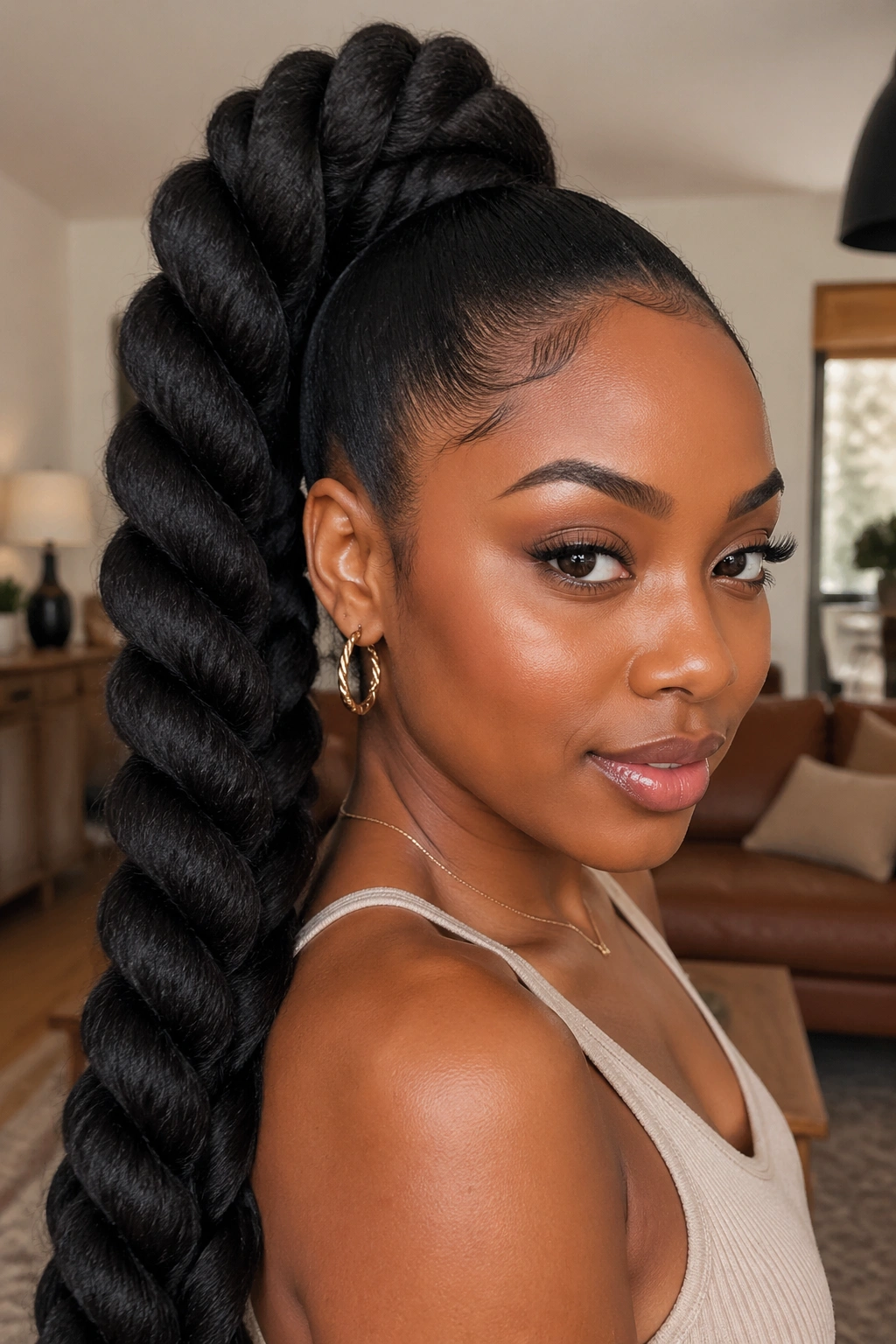
A jumbo rope-braid ponytail is one of my favorite ways to make volume look intentional instead of random. The ponytail is split into sections and twisted into a thick rope braid, which gives the style a sculpted shape that still feels full and textured.
This works especially well with stretched natural hair or braided extensions that have some grip. If the hair is too silky, the braid can unravel faster than you want. Light product at the hands helps, but not so much that the hair turns slick. You want hold, not grease.
- Start with a high or mid ponytail so the braid has room to hang.
- Twist each section in the same direction before wrapping them together.
- Pancake the braid a little by gently pulling the edges apart.
- Secure the end with a clear elastic and tuck it under if needed.
The braid should look thick from top to bottom, not thin at the base and huge at the bottom. That shape matters more than people think.
14. Flipped Ponytail With Big Ends
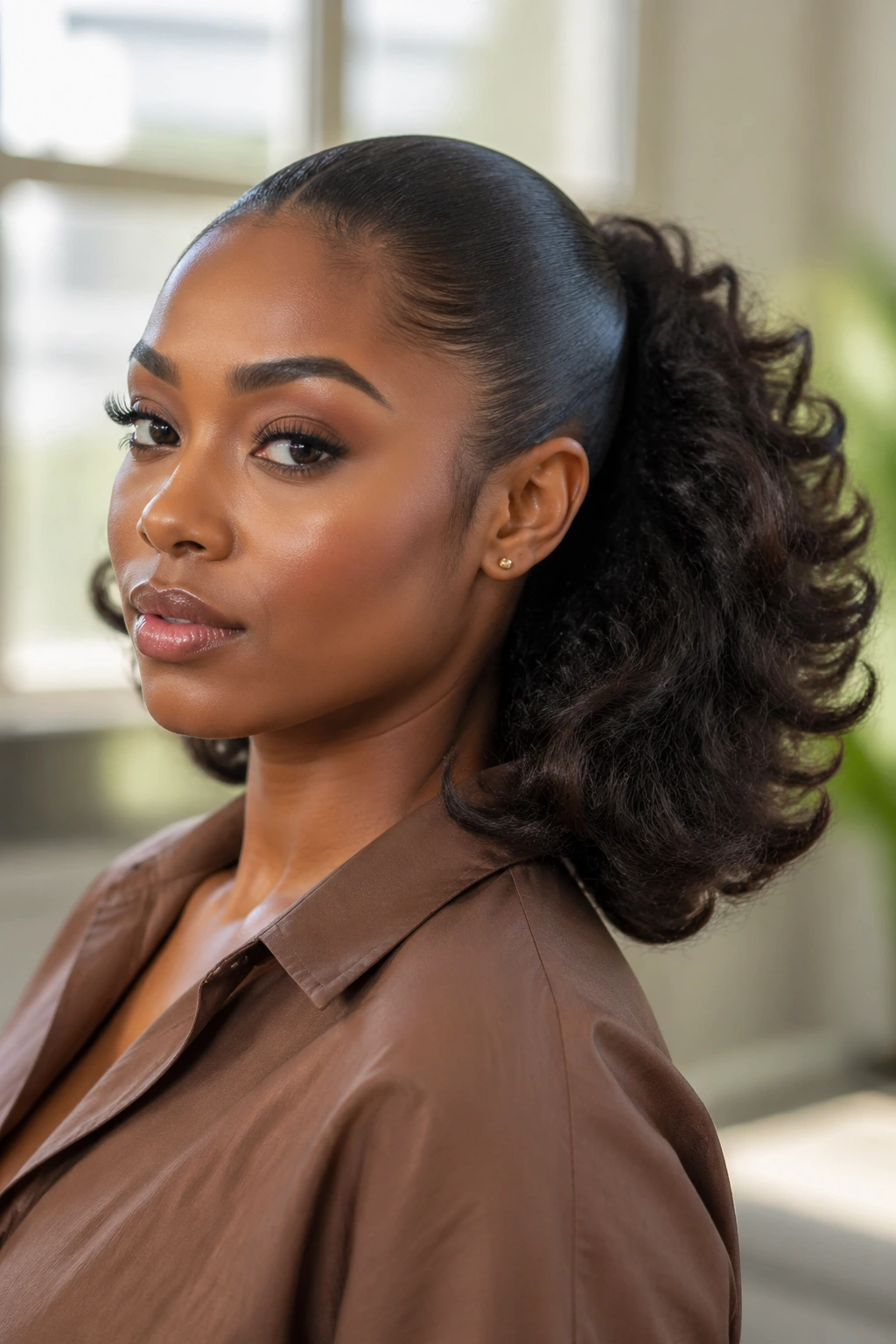
A flipped ponytail has a little retro attitude, and I mean that in the best way. The hair is gathered back, then the ends are curled or flipped outward so the ponytail has movement at the bottom instead of hanging straight.
For curly hair, the flip can be soft and airy rather than stiff. You can set the ends on rollers, flexi rods, or large perm rods if you want a defined curve. If your hair is naturally curly enough, a stretch and a brush-out may be all you need. The point is the same: lift at the root, shape at the end.
This style is good when you want volume but not a lot of weight. It keeps the silhouette open and playful. The ponytail sways when you move, which sounds minor until you wear it and realize how much better it feels than a heavy, dead tail.
Simple style. Strong payoff.
15. Afro Puff Ponytail With Tapered Edges
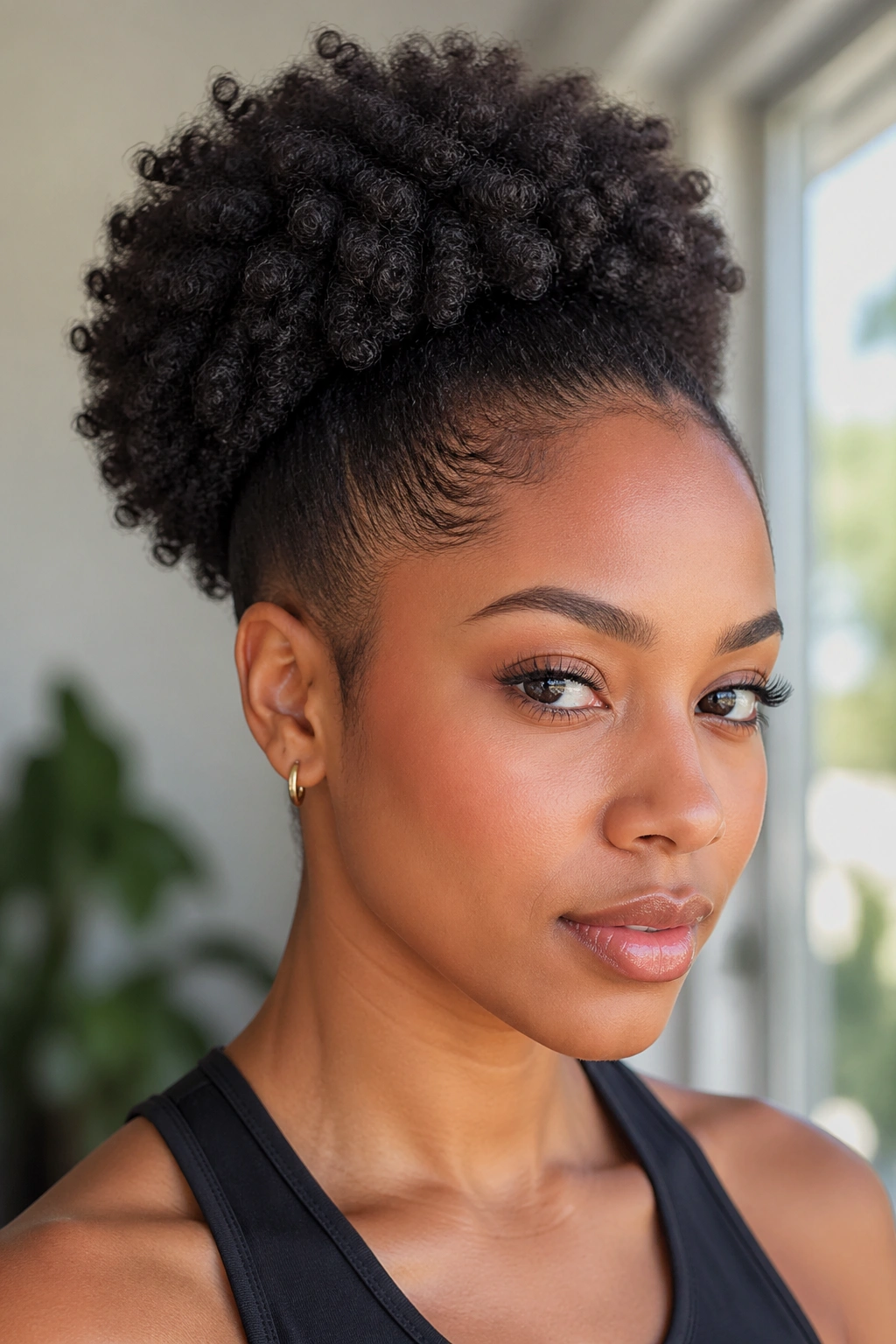
The afro puff ponytail is not subtle, and honestly, that’s why it works. It puts the texture front and center. The hair is gathered into a high or mid puff, but the edges are kept neatly shaped so the puff itself looks rounded and full instead of random.
What makes this version different from a standard puff is the taper. A slightly shaped hairline, a clean side profile, and a rounded crown all make the puff read as intentional. If your curls are dense, a little finger fluffing will go a long way. If they’re looser, stretch them a bit first so the puff doesn’t collapse.
I like this style because it doesn’t ask the hair to be anything else. It’s full, textured, and proud of it. That honesty is part of the appeal.
16. Face-Framing Curl Ponytail
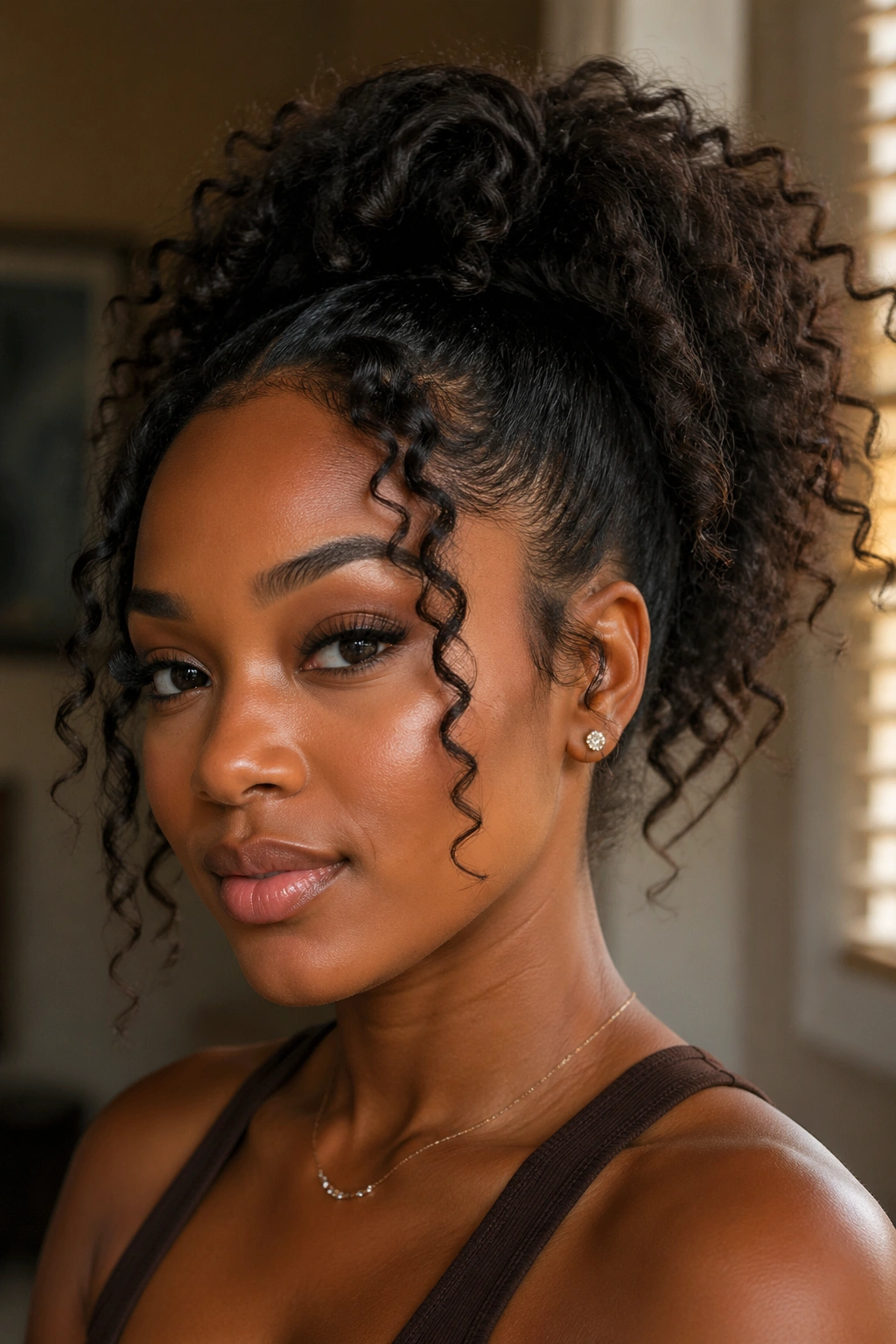
Do you ever pull your hair back and feel like your face disappears? This style fixes that. A face-framing ponytail keeps the ponytail itself full while leaving a few curls out near the temples, cheekbones, or jawline.
Those loose pieces soften the style fast. They can be loose spirals, finger coils, or stretched curls that hang on either side of the face. The ponytail can sit high, low, or in the middle; the framing pieces do most of the softening work. This is a good option if you like volume but don’t want the hair pulled cleanly away from the front.
The trick is not overdoing the face pieces. Two or three curls are enough. More than that and the style starts to look accidental.
It’s a small adjustment, but it changes the mood completely.
17. Scarf-Tied Ponytail
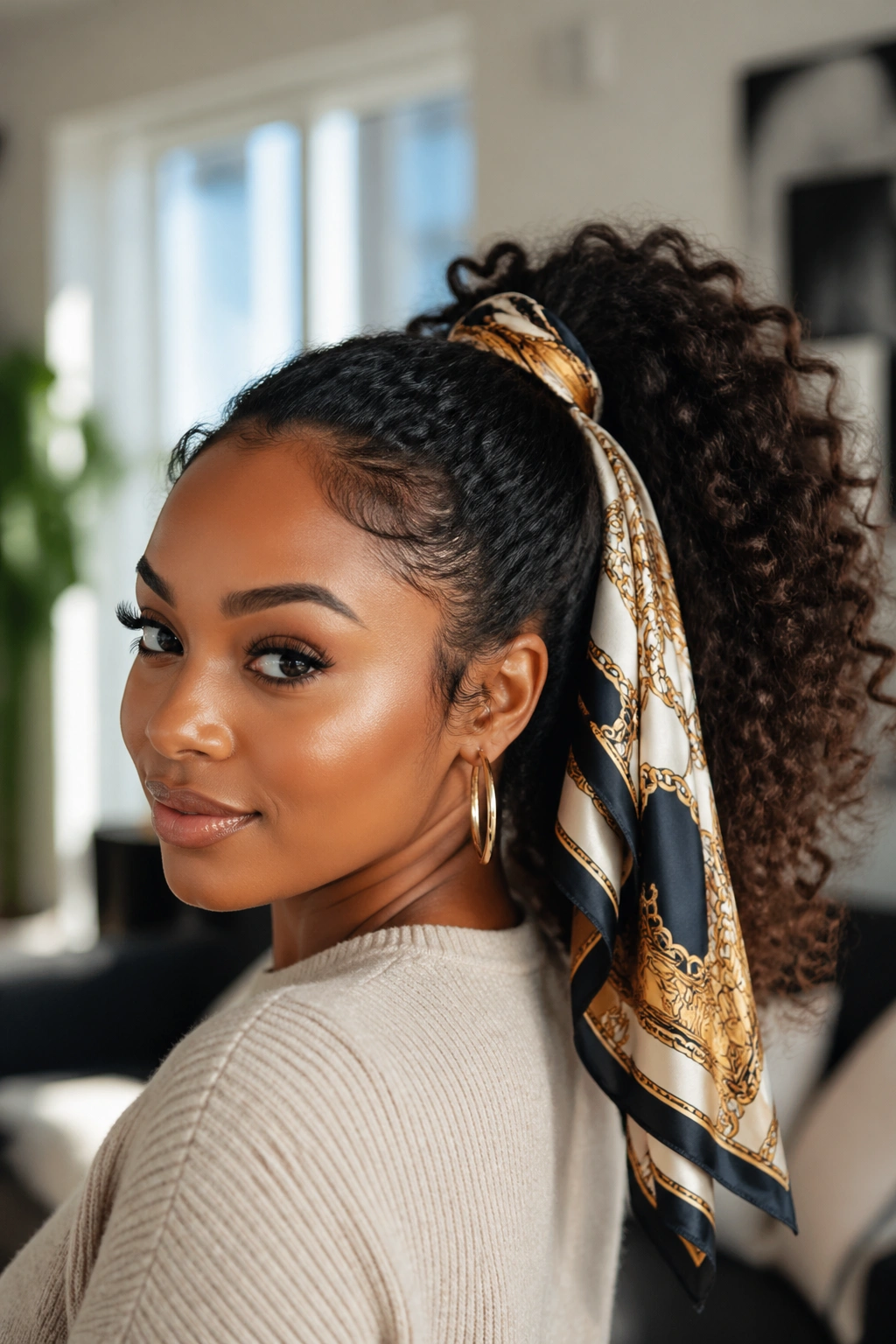
A scarf-tied ponytail gives you volume and personality at once. The scarf can wrap around the base of the ponytail, trail down one side, or sit on top of a wrapped band like a little crown. Either way, it adds shape without stealing the show.
This style works beautifully when your curls are already full and you want to make the base feel more finished. A silk or satin scarf is best if you care about hair health, since rough fabric can create friction. Tie it snug, not tight. The scarf should frame the ponytail, not squeeze it.
How I’d Wear It
Pick a scarf with enough width to show clearly in the hair. Thin strips can disappear. A bold print reads well against dark curls, especially when the ponytail itself has volume. If your outfit is simple, the scarf can do a lot of the styling work.
It’s a good pick for days when you want the style to feel personal.
18. Criss-Cross Ponytail
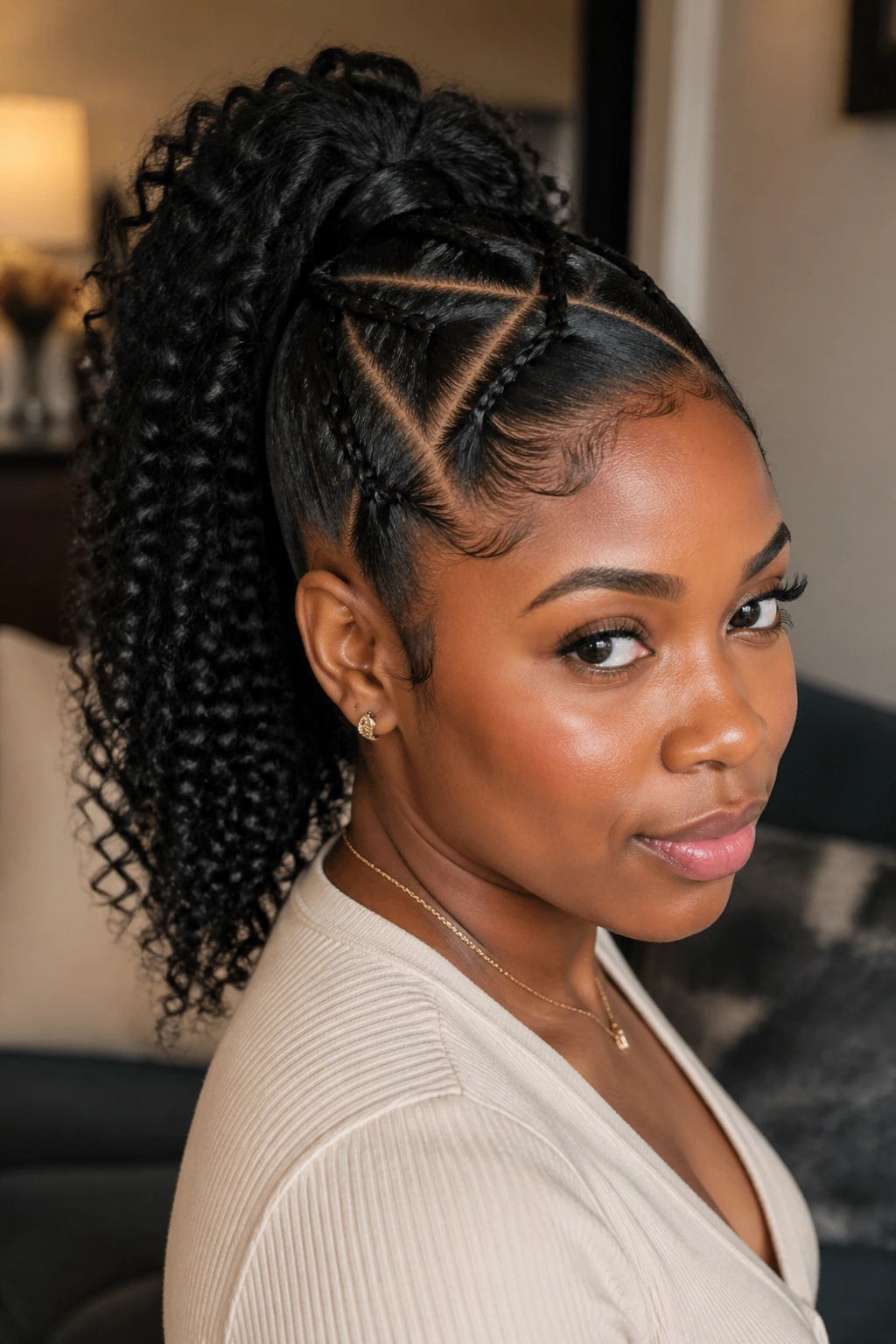
A criss-cross base gives a ponytail structure that looks more detailed than a plain gathered style. The front sections are crossed over each other before they’re pinned or tied into the ponytail, which creates a neat pattern at the crown and leaves the tail full and soft.
This is one of those styles that looks like it took more effort than it really did, which is useful. If your hair is curly, the front can be smoothed and the ponytail can stay textured. If you want more volume, use a curly extension tail and keep the crossed sections tight and clean. The contrast makes the ponytail pop.
The hairstyle feels tailored. Not stiff. Just clean enough to give the curls a stronger frame. That’s the difference between a ponytail that sits there and one that holds attention.
19. Long Curly Extension Ponytail
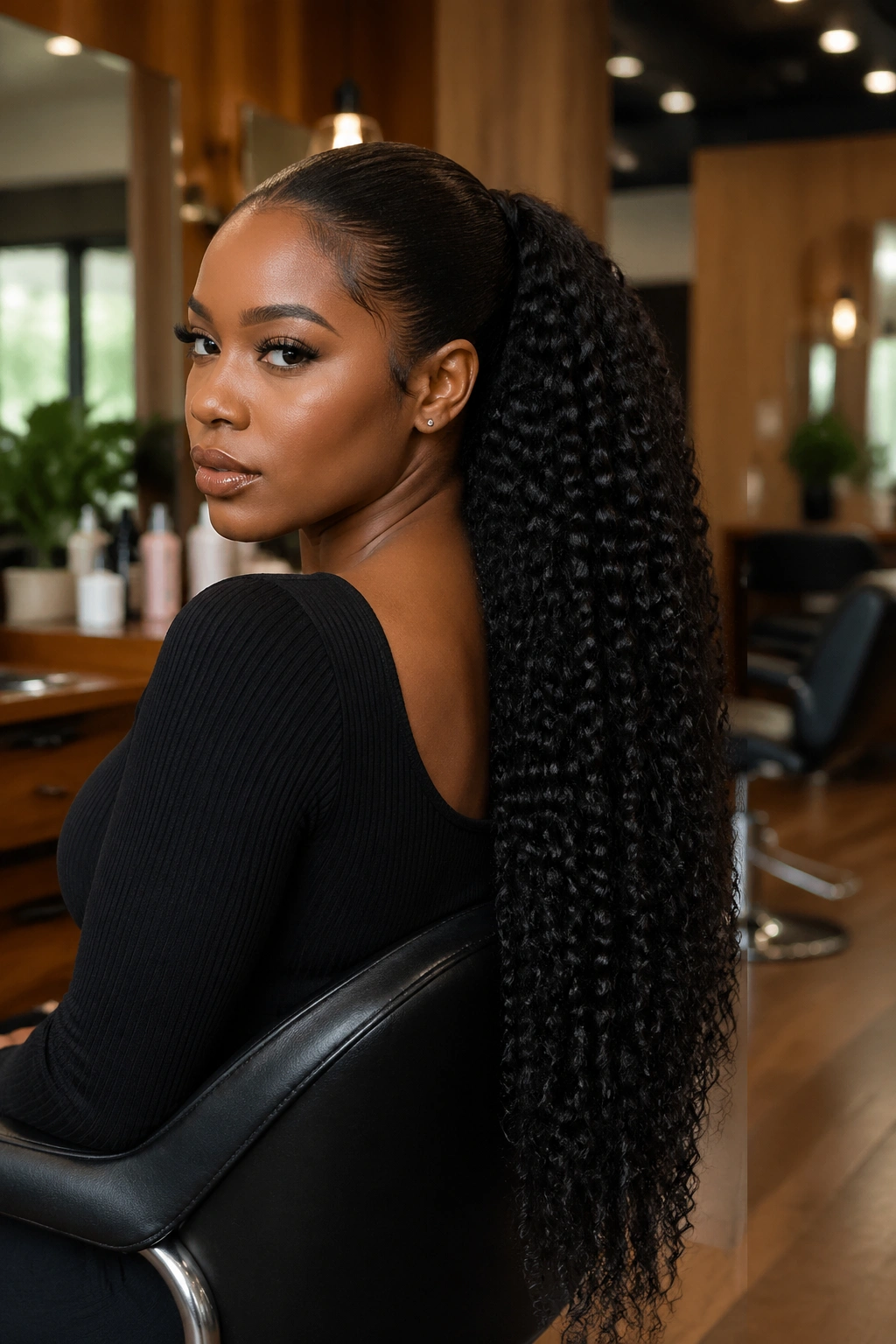
If you want length plus volume, a long curly extension ponytail is the obvious heavy hitter. The length can drop to the waist or beyond, but the real win is the fullness from root to tip. Done well, it looks lush, not bulky.
The trick is blending. Your own hair should be secured flat and smooth enough that the extension sits like part of the hairstyle, not a separate thing. Use curly or kinky-curly hair if you want the finish to feel natural, and match the density to your own hair so the base doesn’t look too small. A huge tail on a tiny base feels off from the side.
This style is ideal when you want dramatic hair without waiting for your own length to catch up. Wear it with a center part for symmetry or a side part for softness. Either way, the tail should look full, not strung out.
20. Low Bubble Ponytail
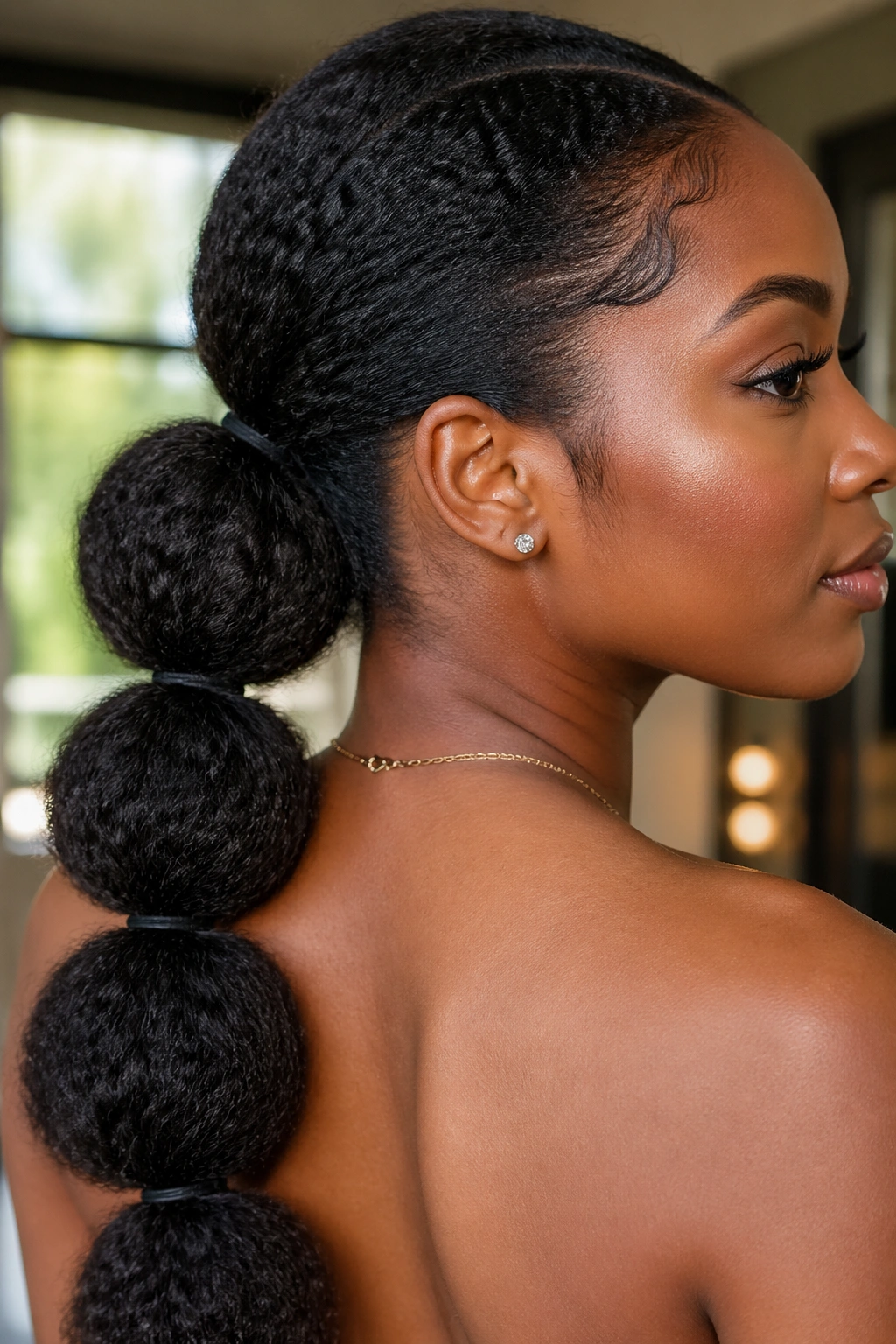
A low bubble ponytail feels polished in a quieter way than a high bubble style. The ponytail sits near the nape, then gets divided into rounded sections with elastics. Each segment is gently pulled outward so the shape looks soft and plush.
Because the pony sits low, this version works well for long days, formal settings, or anyone who wants volume without a high crown. It’s a little less playful than a high bubble ponytail, a little more grown. The bubbles can be even-sized or slightly staggered if you want a more relaxed look.
Don’t skip the fluffing. That’s what makes the sections read as bubbles instead of tight little knots. A little finger separation around each band helps a lot.
Quiet style. Big shape.
21. Side-Moored Ponytail With Volume at One Temple
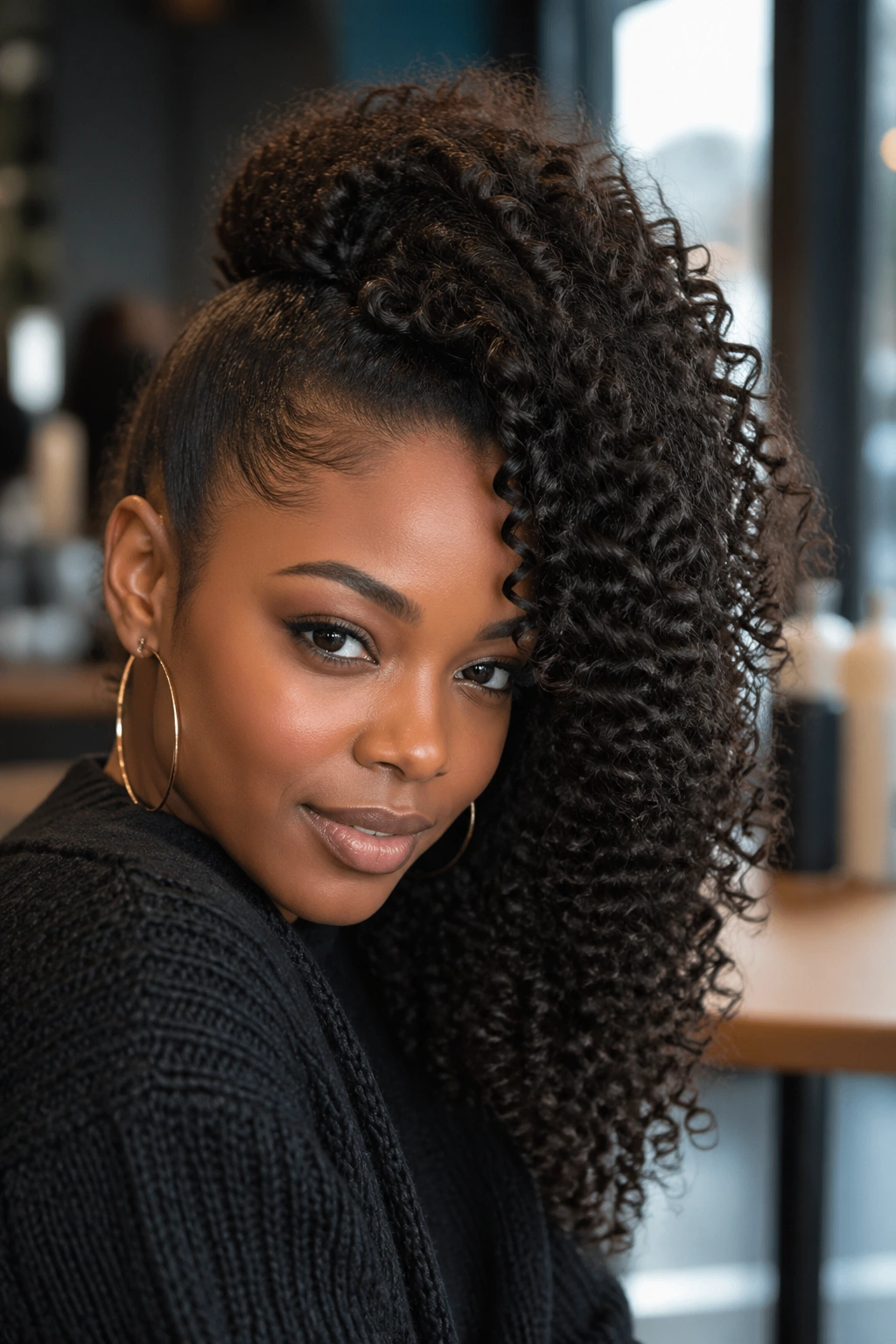
A side-moored ponytail is basically a ponytail that leans into asymmetry on purpose. The base sits low and off to one side, while the top is lifted and shaped so one temple gets more visual weight than the other.
That one-sided fullness makes the hairstyle feel modern and a little dramatic without needing extra length. It’s especially good if your hair grows dense at the crown, because you can use that fullness to build the top before the ponytail drops down. A curved part or a swoop at the front can make the shape even softer.
Why It Stands Out
The eye naturally follows the heavier side first. That gives the style movement, which keeps it from feeling flat or stiff. If you like earrings, this is a lovely setting for them, since the ponytail opens one side of the face instead of covering it.
I’d call this a sleeper style. It looks easy, but it has real presence.
22. Curly Ponytail With Beads or Gold Cuffs
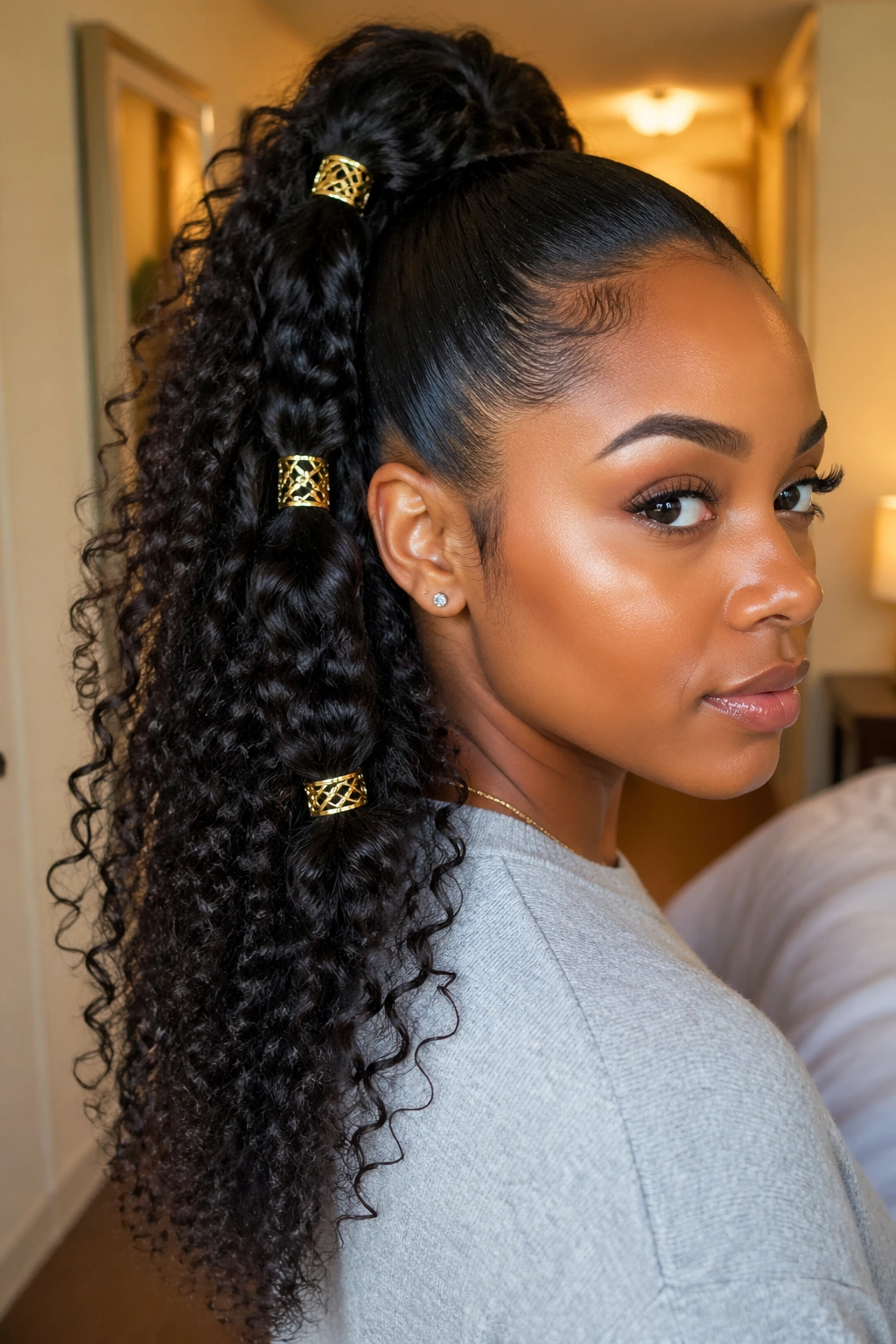
Accessories change volume by changing rhythm. A curly ponytail with beads or gold cuffs breaks up the length of the hair so the eye reads the ponytail as fuller and more detailed, even if the actual thickness stays the same.
This works best on medium-to-long ponytails with enough length to show a few accents. Gold cuffs are sleek and can be spaced down the tail. Beads feel more playful and more rooted in tradition, especially when paired with braided sections or twisted pieces. Just don’t overload the ponytail. Two or three accents usually look better than a whole pile of them.
The hair itself should still do the main work. Accessories are seasoning, not the meal.
A good rule: if the pieces start hiding the curls, there are too many.
23. Two-Tone Curly Ponytail
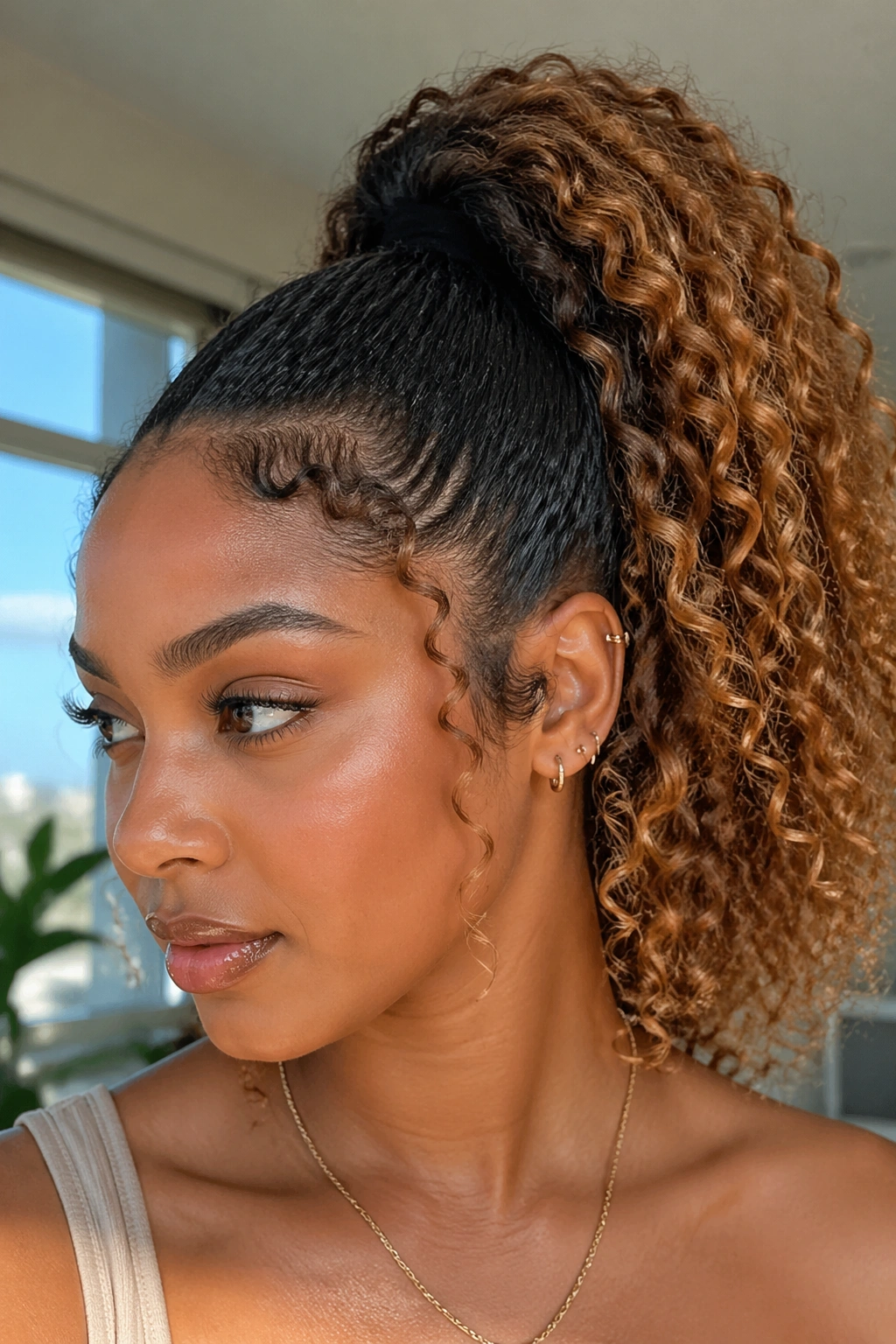
A two-tone ponytail adds depth before anyone even notices the styling. Dark roots with honey brown, auburn, copper, or burgundy lengths create the illusion of extra fullness because the eye catches the color shift and reads the hair as bigger.
This is one of the easier ways to make a curly ponytail feel richer without changing the structure much. You can do it with colored extensions, which keeps your own hair out of the dye process, or with temporary color on the ponytail tail if you want something less committed. The best versions keep the base darker and let the lighter tones live through the length and ends.
I like this style because it gives curls a little more shadow and shine. Flat color can make a very full ponytail look one-note. Dimension fixes that fast.
24. Layered Ponytail for Natural Coil Definition
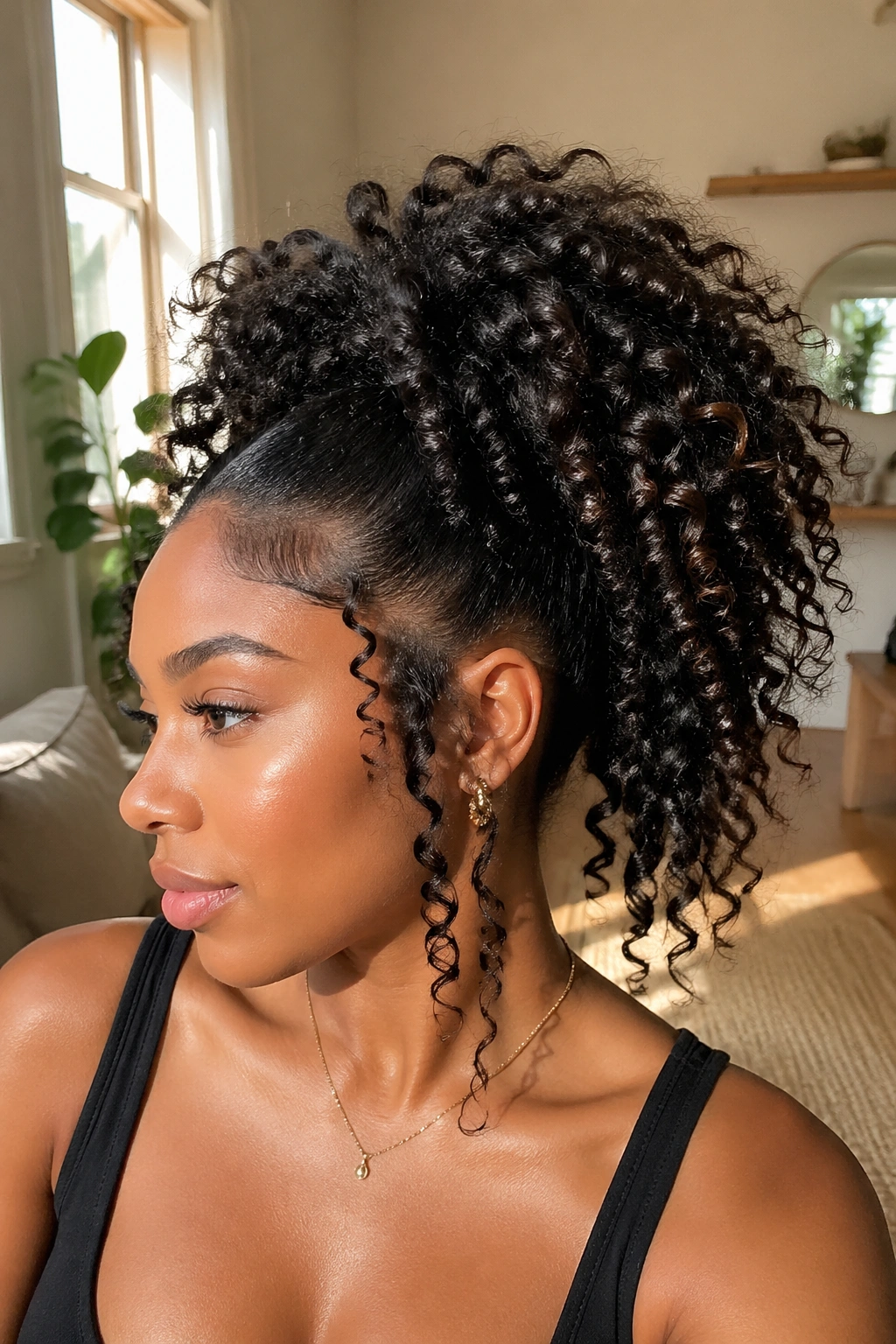
A layered ponytail is one of the smartest choices for dense curly hair that tends to sit heavy at the back. Layers take some of the weight out of the tail, which helps the curls spring instead of collapsing into one thick column.
This is especially useful if your own hair is long and naturally full. A blunt ponytail can look dense in a way that hides the curl pattern. Layers let the shape breathe. They also help face-framing pieces fall in a more flattering way, since the shortest layers move first and the longer ones follow behind.
If the hair is extension-based, ask for layered curls instead of a single block of length. The result is softer and easier to wear. More movement. Less heaviness.
It’s not the loudest style on this list, but it may be the most wearable.
25. Wrapped Gala Ponytail
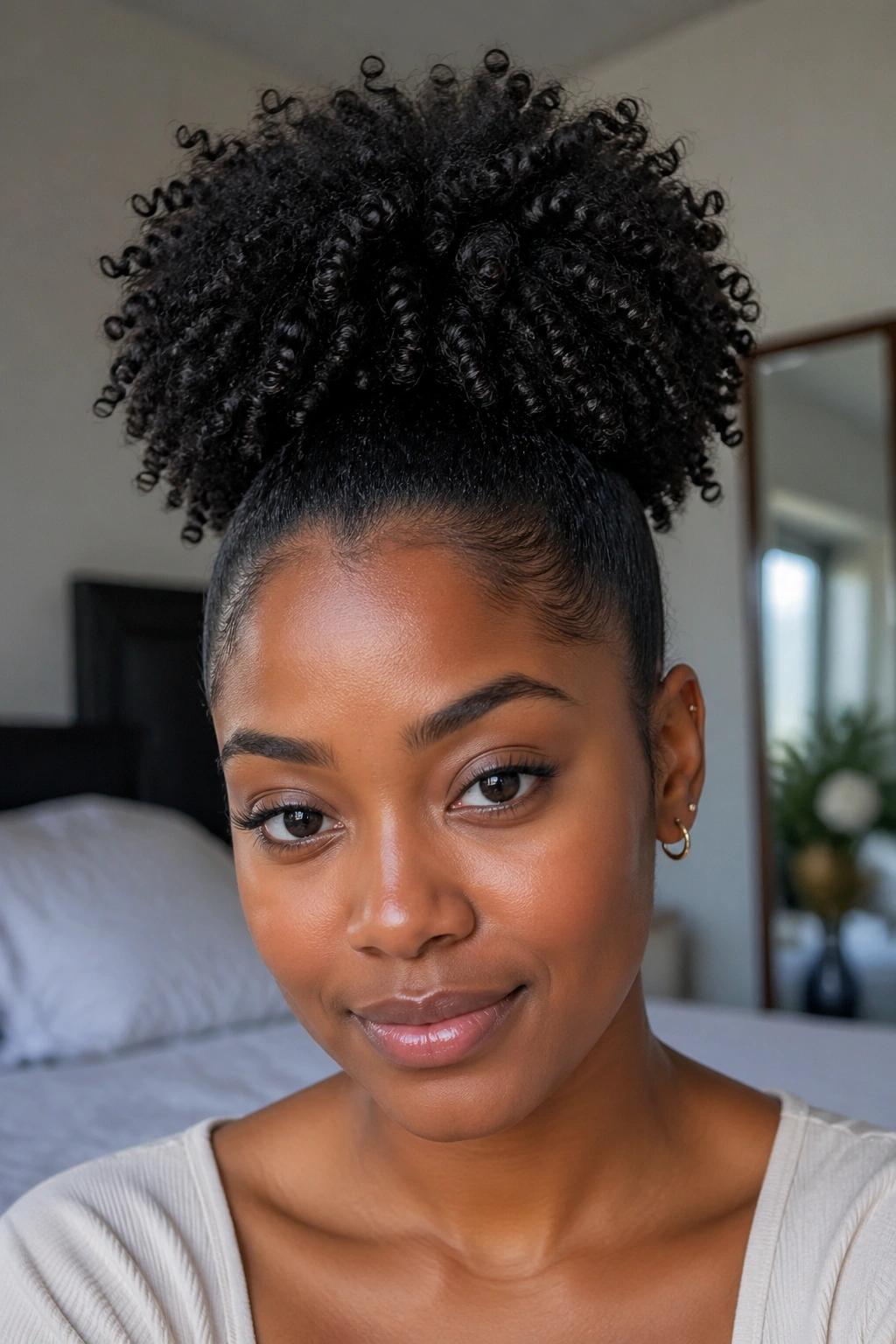
A wrapped gala ponytail is the version you wear when you want the hair to look dressed up, polished, and expensive without actually being stiff. The base is smooth and secure, the wrap hides the band, and the ponytail itself is full, long, and carefully shaped.
This style works for weddings, photo shoots, formal dinners, or any event where you want your curls to feel elevated. The ponytail can be curly, waved, or blended with extension hair, but the overall shape should stay clean at the root and rich through the tail. A small side swoop or a braided wrap around the base can add enough detail without cluttering the design.
I like this one because it respects texture while still looking precise. That’s a hard balance. The best wrapped ponytails don’t flatten the hair’s personality; they frame it.
By the time you finish adjusting the curls, the style should feel like the final word—not the afterthought.
