



Butterfly braid ponytails for Black women work because they do two things at once: they protect the hair and still leave room for personality. The loose loops, the airy braid texture, and the soft ponytail shape keep the style from feeling too hard or too formal. That balance matters. A tight, polished ponytail can look sharp, but it can also feel severe. Butterfly braids soften the whole thing.
They’re also practical in a way that matters when you wear your hair long, thick, coily, or somewhere in between. You can keep the base neat, tuck your natural hair away, and still get movement from the ends. If you’ve ever loved a braided style but wished it had a little more swing, this is the lane. The “butterfly” part comes from those loose, gently pulled loops in the braids, which create dimension without turning the style into a mess.
Some versions lean sleek and dressy. Others feel playful, a little romantic, or even edgy if you add cuffs, color, or a dramatic part. The trick is picking the right ponytail placement, braid size, and finish for the look you actually want — not just copying a picture that looks good on somebody else’s head.
1. High Butterfly Braid Ponytail with Curly Ends
A high butterfly braid ponytail changes the whole energy of the face. It lifts the eyes, lengthens the neck, and gives the style a clean, confident shape without making it stiff. The curly ends keep it from feeling too severe, which is exactly why so many women keep coming back to this silhouette.
Why the height works
The ponytail sits at or just above the crown, so the braids fall from a strong anchor point. That gives you bounce. It also keeps the style off the nape, which can feel cooler and lighter if you’re wearing it for several days.
A good high version usually uses medium-sized braids with a few loosened loops near the middle of each braid. Too many loops can look messy. Too few and you lose the butterfly effect.
- Best with long braiding hair that reaches past the shoulder blades
- Works well when you want a lifted face-framing shape
- Looks sharp with curly or wavy synthetic ends
- Ask for a base that’s snug, not painfully tight
Tip: Leave the edges smooth, but do not flatten the whole hairline into a hard shell. A little softness near the temples keeps the style looking expensive instead of overworked.
2. Sleek Middle-Part Butterfly Braid Ponytail
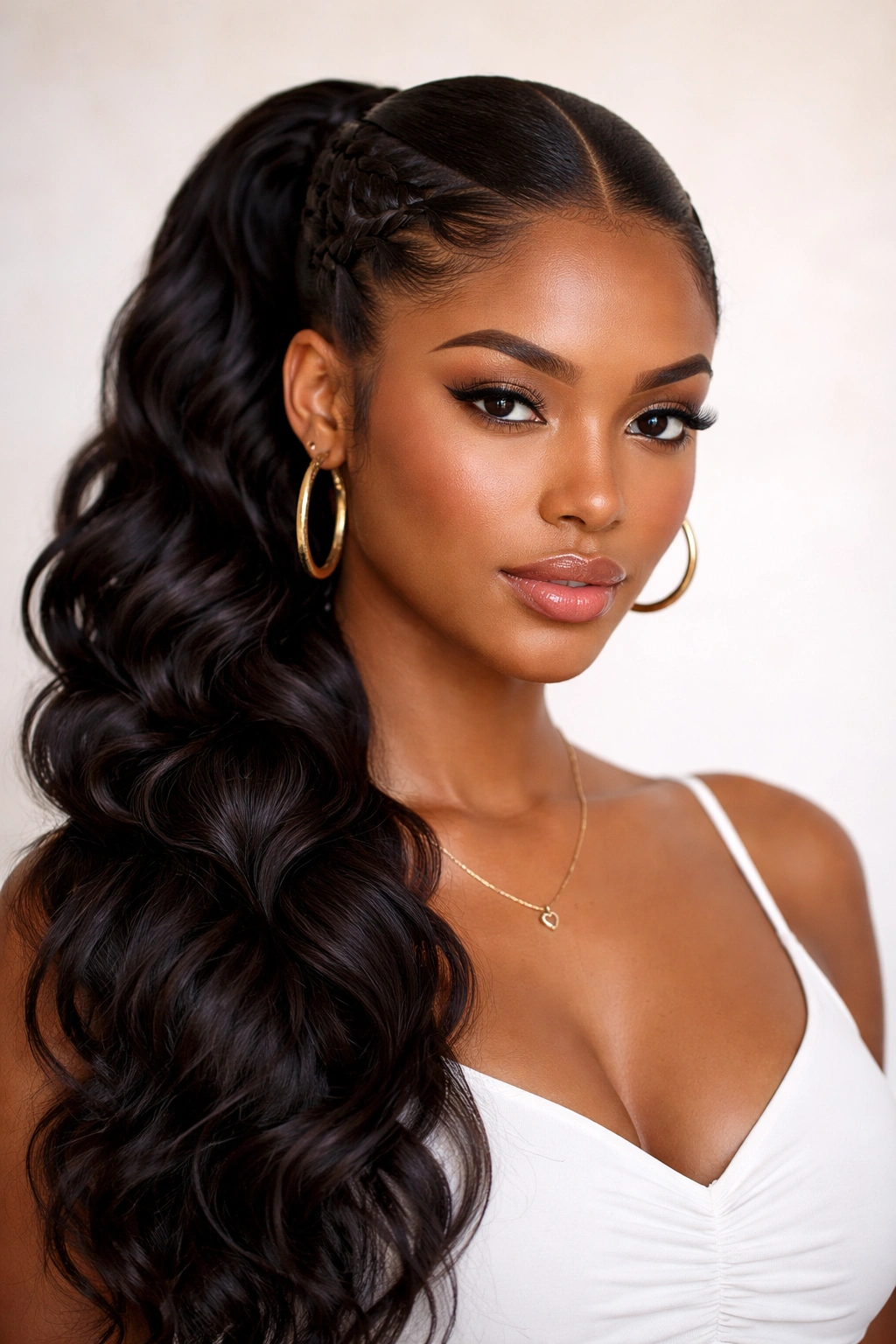
A center part makes butterfly braids feel cleaner and more deliberate. Instead of competing with the braid texture, the part gives the eye a straight line to follow, and that line makes the ponytail look longer. It’s a simple move, but it changes the whole mood.
This version works especially well if you like symmetry. The braids can fall evenly from both sides, and the ponytail base sits right at the back of the head or slightly higher, depending on how formal you want it to feel. If your face is round or heart-shaped, the middle part can add a little length without doing anything dramatic.
What to ask for at the chair
- A crisp center part from hairline to crown
- Braids that start flat, then open up into butterfly loops
- A ponytail base wrapped with one braid for a polished finish
The middle part is not the place to rush. If the part is off by even a little, you’ll notice it every time you look in the mirror. And yes, you’ll keep looking.
3. Side-Swoop Butterfly Braid Ponytail
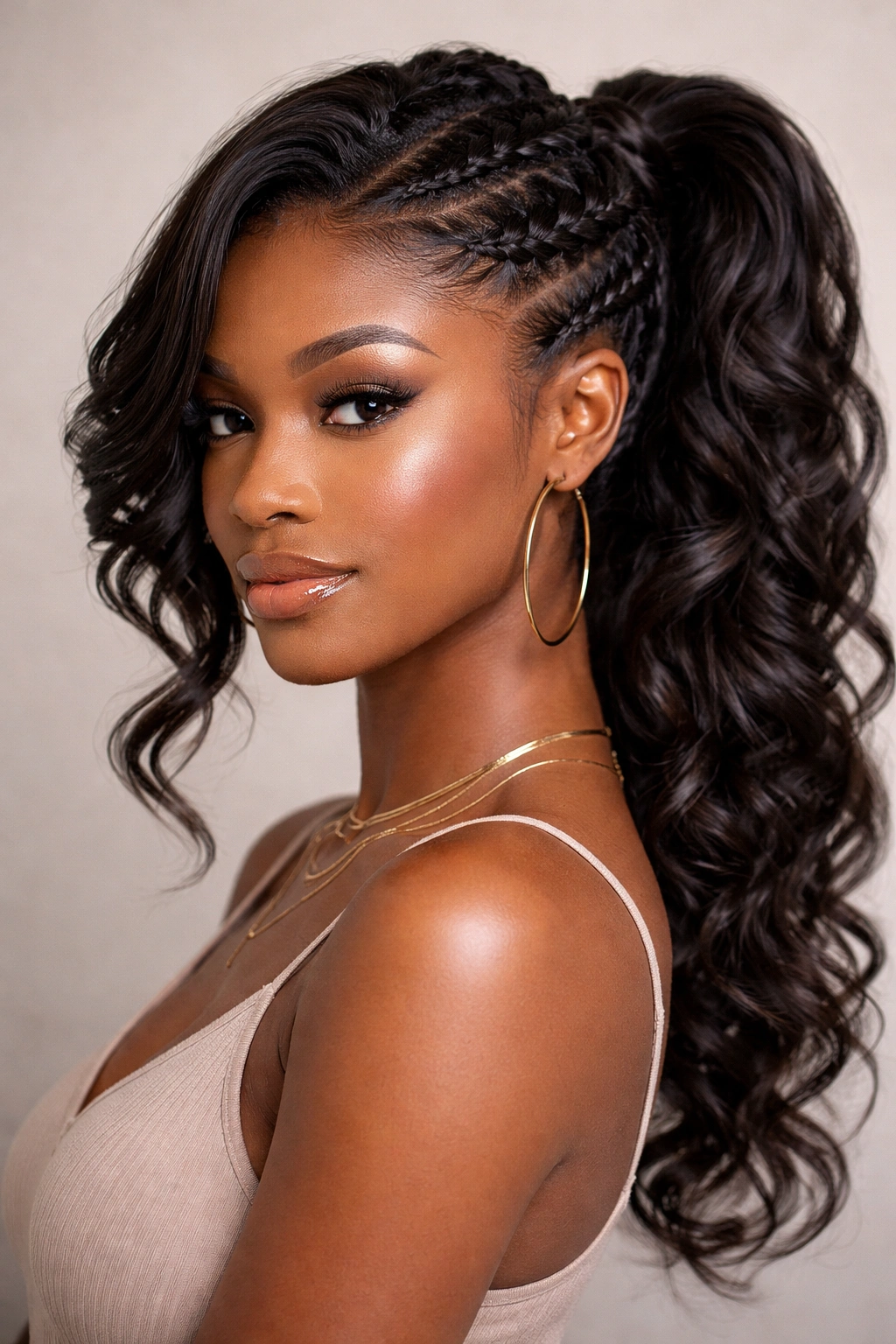
A side-swoop butterfly braid ponytail has a little more attitude. The sweep across the front softens one side of the face, which is useful if you want the style to feel romantic instead of rigid. It also gives you a built-in focal point, so the ponytail does not have to do all the work.
This shape looks especially good when the front braid or side bang is slightly thicker than the rest. That extra weight helps it sit in place instead of flopping around after a few hours. The ponytail itself can stay medium or long. I prefer medium-thick braids here because they balance the swoop better than tiny ones.
Best details for this look
- A deep side part or a curved part
- One front braid directed over the temple
- Soft baby hairs if that’s your thing
- A ponytail that sits mid-height, not too far up
There’s something very flattering about this silhouette. It frames the face without swallowing it.
4. Half-Up Butterfly Braid Ponytail
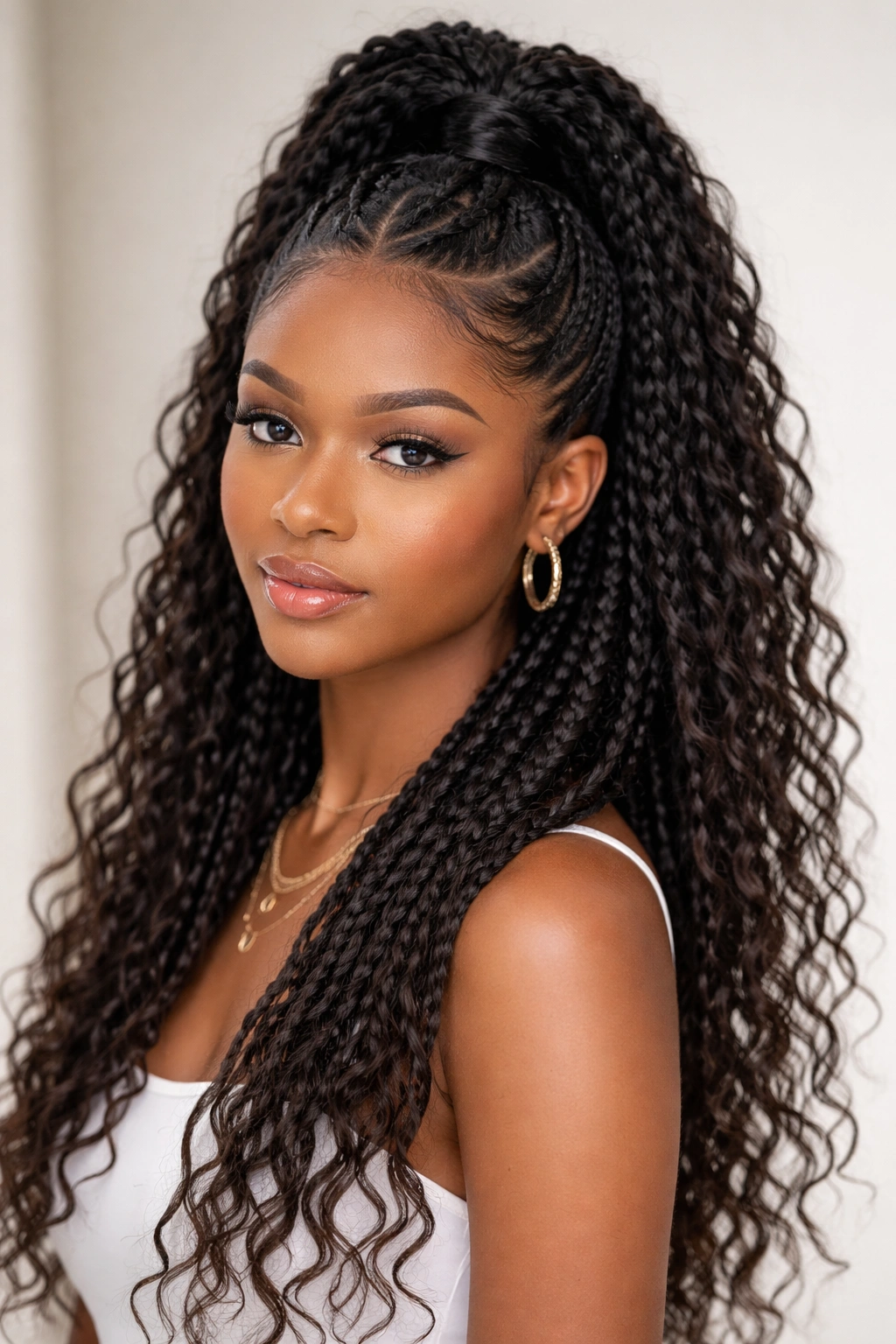
Half-up butterfly braid ponytails solve a problem a lot of women know well: you want your hair up, but not all the way up. So you get lift at the crown and length through the back, which makes the style feel lighter and a little more playful.
This version works beautifully when you want to show off braid detail without committing every strand to one place. The top section can be pulled into a small ponytail while the lower braids hang loose. That split gives the style motion even when you’re standing still.
Why this one stays interesting
The contrast is the point. The top looks tidy. The bottom can be fuller, longer, or more textured. If you use curly extensions on the loose section, the style gets a softer finish that moves when you turn your head.
For busy days, this is one of those styles that looks put together fast. For dressier moments, you can wrap the half-up base with a braid, add gold cuffs, or tuck in a few decorative strings. Easy. But not boring.
5. Jumbo Butterfly Braid Ponytail
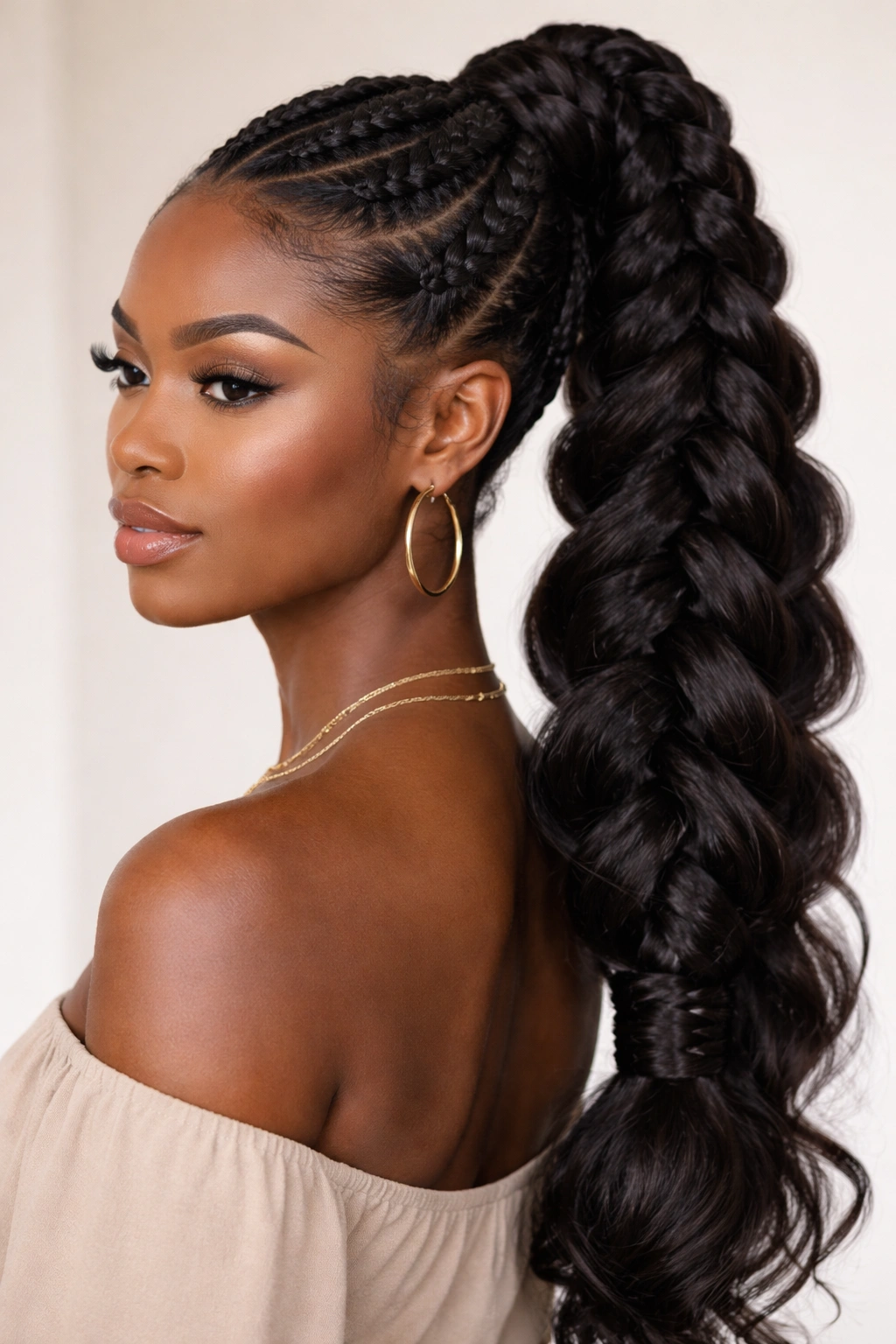
Jumbo butterfly braids are for days when you want the style to make the statement for you. The larger braid size gives the ponytail more presence, and the butterfly loops stand out much more clearly than they do in tiny braids. That means you get texture you can actually see from across the room.
The real advantage here is speed. Fewer braids usually mean less time in the chair, and jumbo pieces tend to feel more substantial without requiring dozens of tiny parts. The ponytail base can be wrapped with one braid or left simple if you like a chunkier finish.
Who this suits
- Women who like bold, heavy braid texture
- Anyone who wants a style that reads quickly from a distance
- Heads that can handle the weight of larger sections better than very fine braids
Jumbo styles do need balance. If the base is too tight, the whole thing can feel heavy by the end of the day. Keep the placement secure, not aggressive. That makes all the difference.
6. Stitch-Braid Butterfly Ponytail
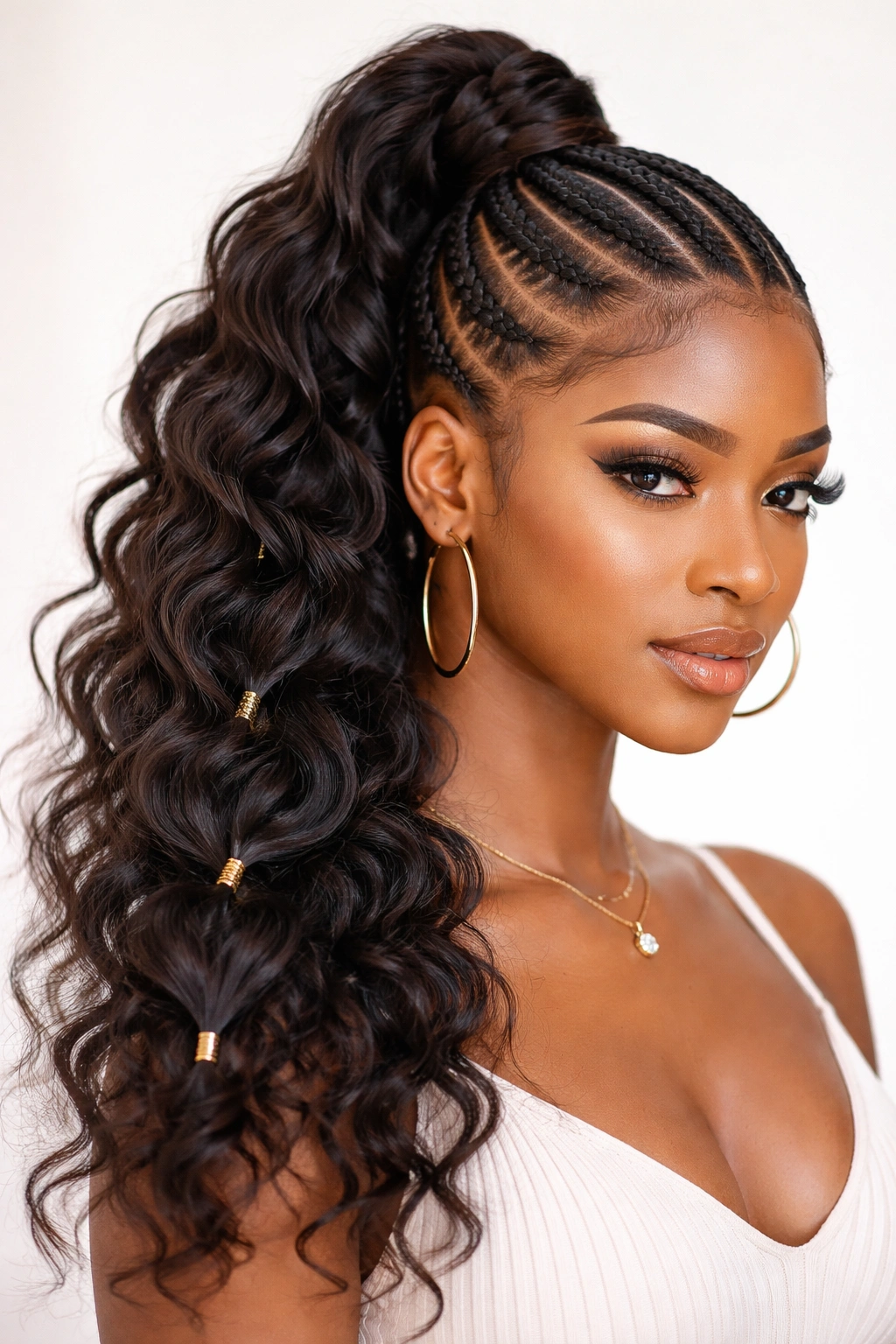
Stitch braids bring a cleaner, sharper line to butterfly braids. The visible, even sections make the ponytail look intentional from root to end, which is why this version has such a strong finish. It’s neat, but not flat.
The stitch pattern works well around the hairline and through the top section because it creates order before the braids open up into those looser butterfly loops. That contrast is what makes the style interesting. You get crisp rows up top, then movement through the lengths.
What makes it stand out
The look is strongest when the stitch lines stay even and the parting is accurate. Uneven spacing is easy to spot here. If you’re paying for this kind of style, the sectioning should look clean enough that the braid pattern itself becomes part of the design.
A stitch-braid ponytail is a solid choice for work, events, and photos because it has structure. It doesn’t need a lot of extra decoration. Sometimes the braid pattern is enough.
7. Feed-In Butterfly Braids into a Ponytail
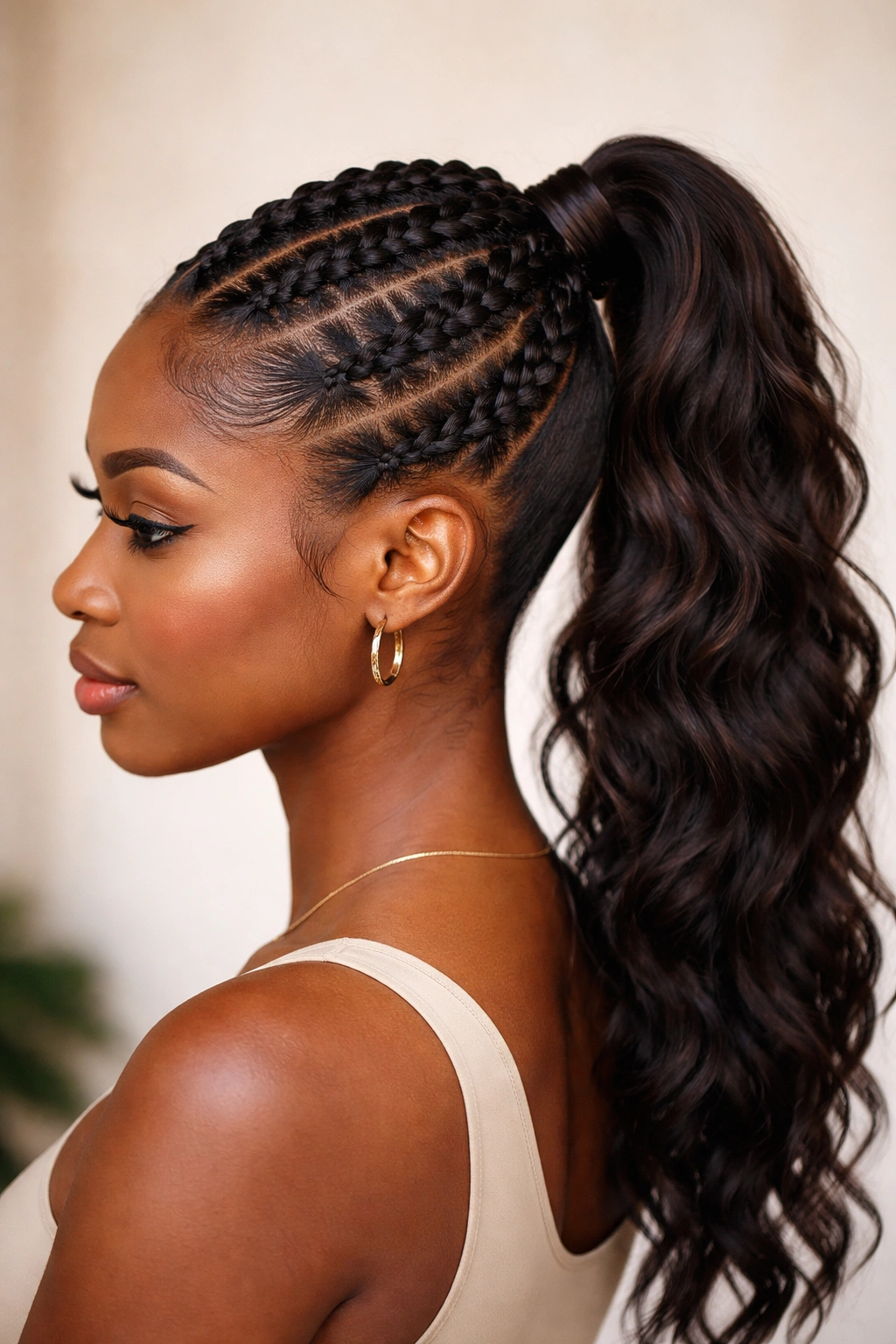
Feed-in butterfly braids give the ponytail a smoother start, which is a big reason they feel so wearable. The hair is added gradually, so the base stays flatter and the transition into the ponytail looks more natural. If you like a neat scalp finish, this is a strong choice.
The feed-in method also helps if you want your ponytail to look long without making the front too bulky. It starts small, then builds. That matters on Black hair because a style can go from beautiful to uncomfortable fast if the front sections are too heavy.
Practical details worth asking for
- Small feed-in braids at the front hairline
- Medium lengths through the crown for balance
- A ponytail base that sits snugly but doesn’t tug the temples
- Extensions that match your hair’s sheen level, not just the color
This version is one of those styles that looks polished even when it gets a little older. The base stays orderly, which buys you some grace between salon visits.
8. Boho Butterfly Braid Ponytail with Loose Pieces
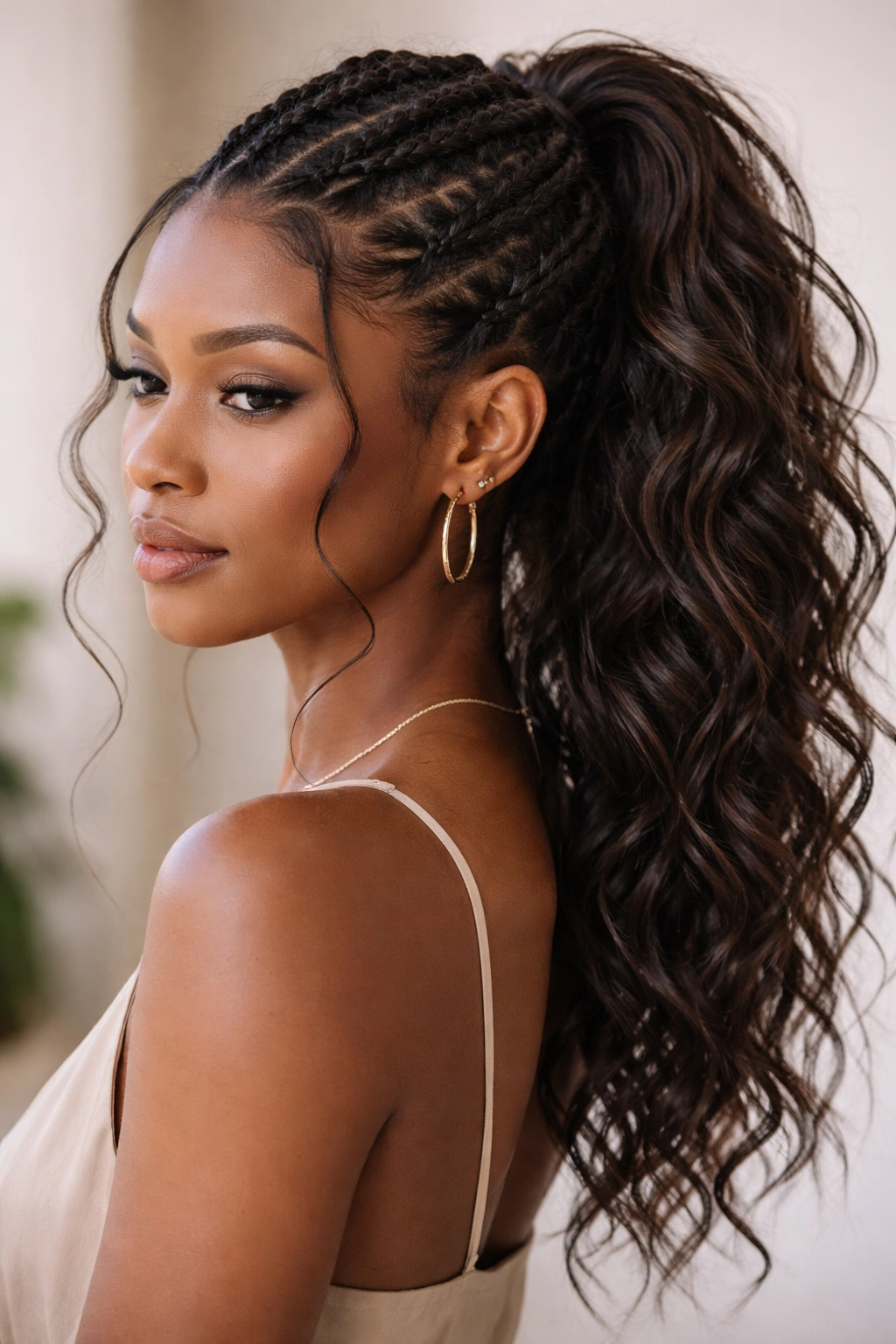
Boho butterfly braid ponytails have a softer, looser mood. Some pieces stay sleek, while others are left slightly undone on purpose. That mix gives the style a relaxed feel that still looks styled, not sloppy.
The loose pieces can be curled, waved, or left with their natural bend if the extension hair already has texture. I like this version when the ponytail itself is full, because the extra movement keeps it from looking too heavy. A little imperfection helps here. Too much perfection kills the charm.
How to keep it pretty instead of messy
- Leave a few face-framing tendrils out near the front
- Use a light mousse on the loose pieces so they don’t frizz up fast
- Keep the braid pattern neat at the roots, even if the ends are relaxed
This style is the one I’d pick for brunch, a casual date, or any day when you want your hair to look intentional without feeling strict.
9. Low Butterfly Braid Ponytail
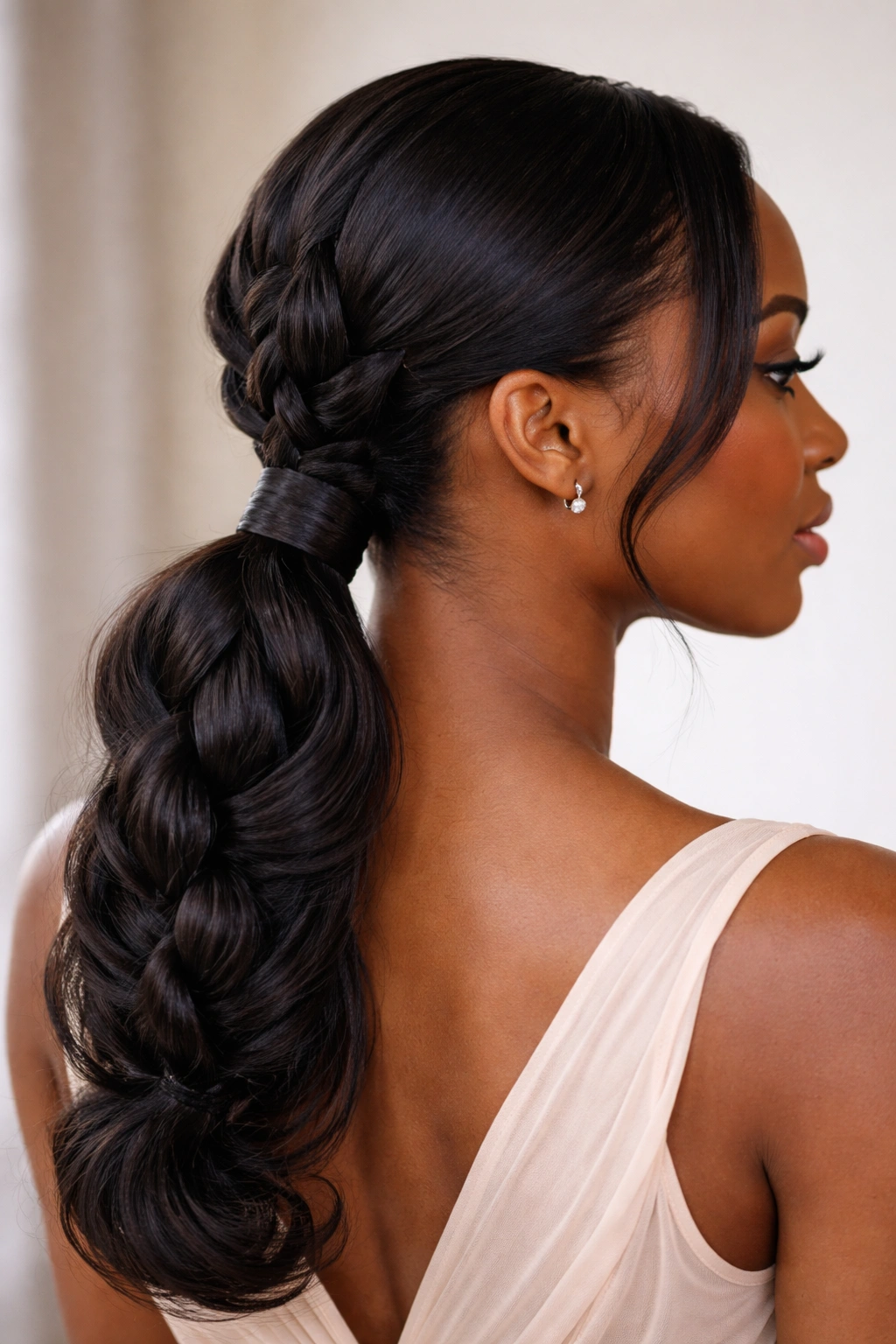
A low butterfly braid ponytail has a quieter kind of elegance. The base sits at the nape, so the style feels grounded and smooth, and the braids drape in a way that looks calm rather than dramatic. If high ponytails feel too loud on you, this is the one to try.
Low placement also tends to be easier on the scalp. That does not mean it can be loose. It still needs a firm foundation. But the lower angle usually spreads the tension more evenly, which many women appreciate after wearing tighter styles.
Why it works so well
The low silhouette lets the braids become the main event. There’s no competition with height or volume. The eye goes straight to the loops, the length, and the finish at the nape.
A wrapped base makes this version look especially refined. If you add curly ends, the whole thing softens in a nice way, almost like the braid is leaning into the curve of the neck. Simple. Strong. Clean.
10. Butterfly Braid Ponytail with Beaded Ends
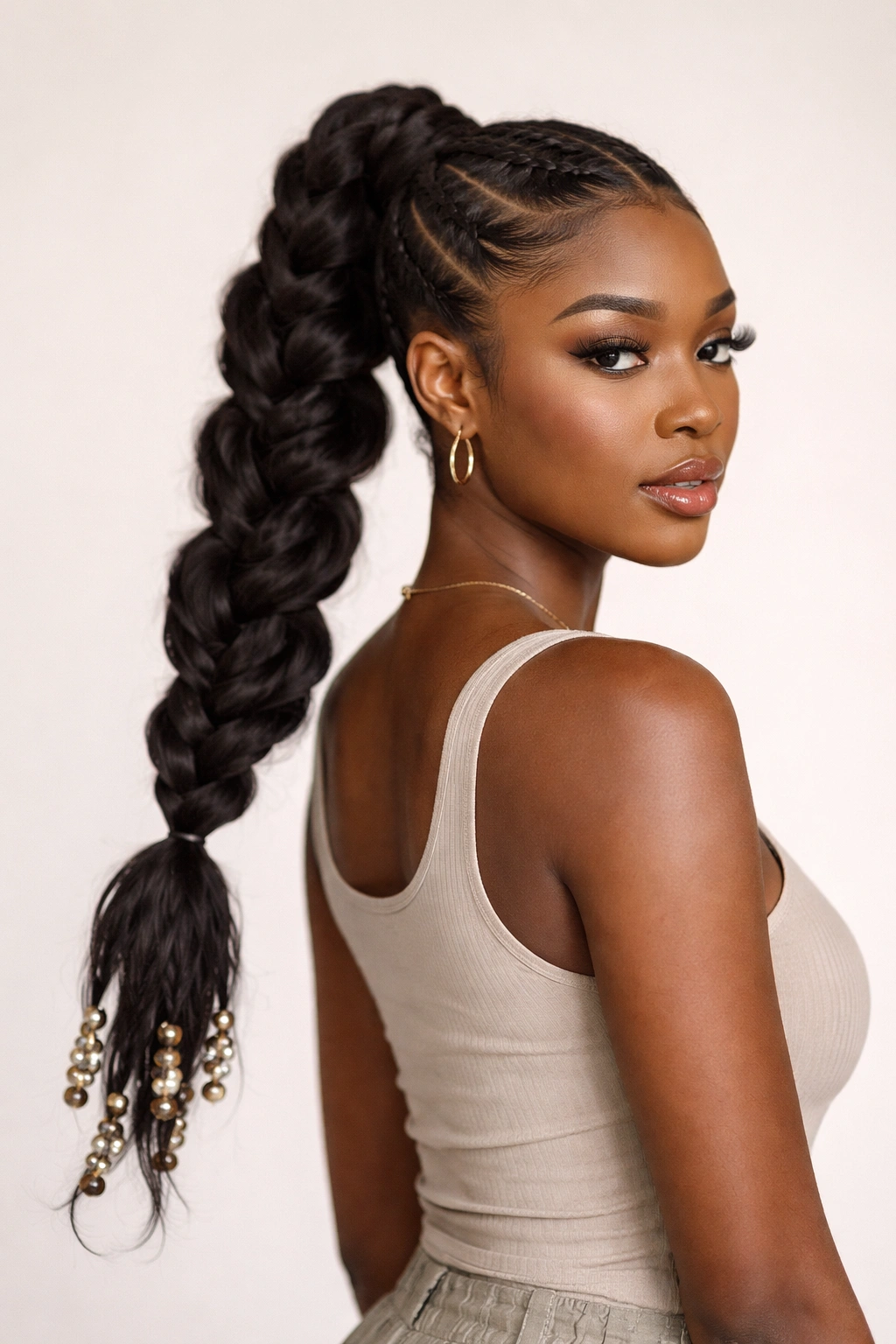
Beads at the ends change the sound and the feel of a butterfly braid ponytail. You get movement you can hear, not just see. That small detail can turn a regular braid style into something with personality, and it’s especially striking when the braids are long enough for the beads to stack naturally near the ends.
This style needs a little restraint. Too many beads can make the ponytail feel cluttered. A few placed with intention is enough. Wood beads, clear beads, or small metallic accents all work, but the shape of the braid should still lead the eye.
Best way to wear it
- Keep the braid size medium so the beads have enough surface to hold on to
- Use two or three bead colors at most
- Place the beads closer to the ends, not all the way up the shaft
Beaded butterfly braids have a youthful, confident edge. They’re not shy. That’s the appeal.
11. Butterfly Braid Ponytail with a Wrapped Base
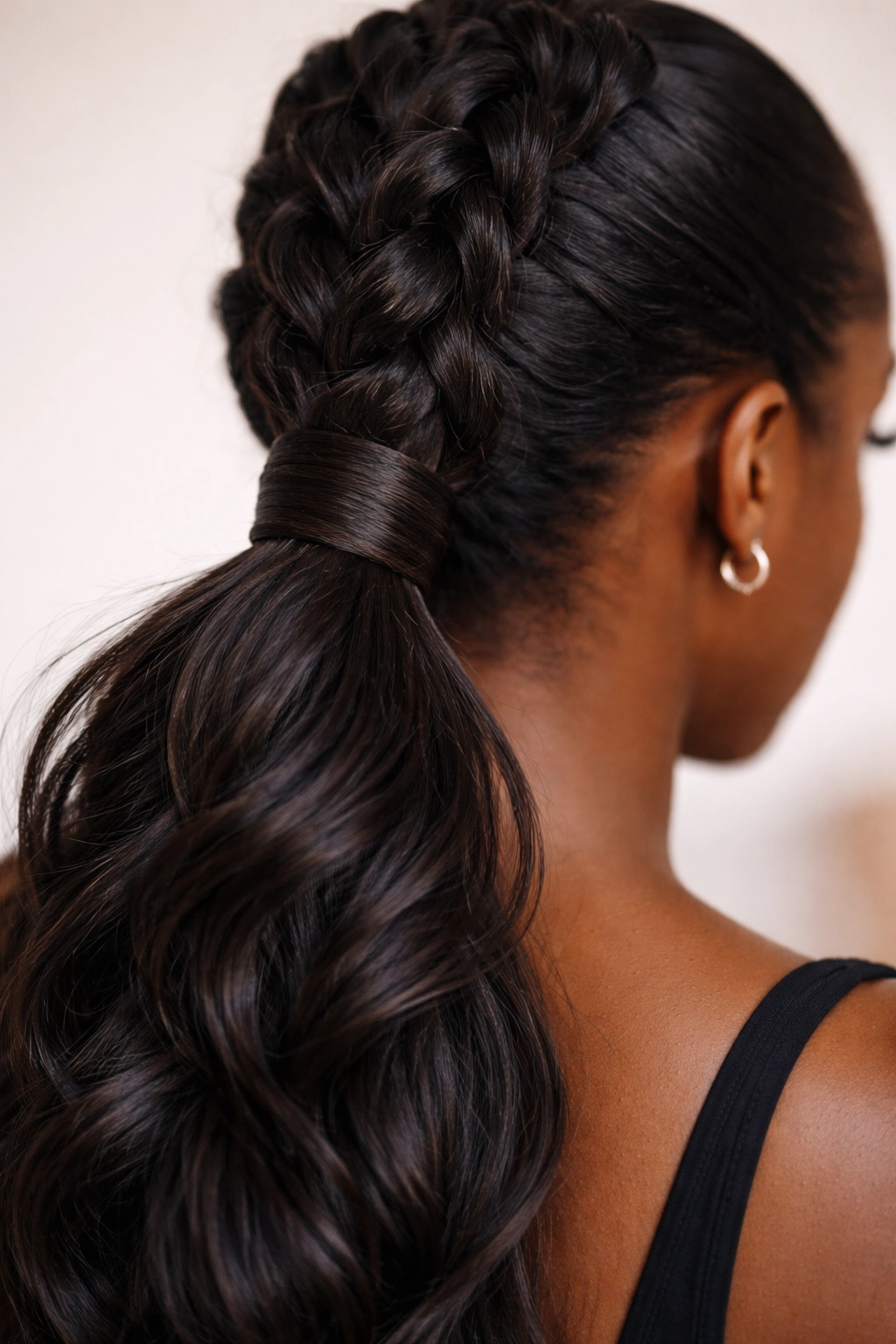
A wrapped base is one of those details that sounds minor until you see it in person. It makes the ponytail look finished, like someone actually cared about the last two inches of the style instead of stopping once the braids were attached.
This version works with almost any butterfly braid size, but it shines when the braids are medium or long. The wrap can be one braid, a section of extension hair, or even a decorative strand if you want a little contrast. The goal is to hide the elastic and soften the point where the ponytail starts.
Why I keep coming back to this finish
It gives the style a more polished backbone. That matters when you’re wearing a ponytail for an event or a photo-heavy day. A visible elastic is fine for errands. A wrapped base looks deliberate.
If you want the style to read a little more expensive without adding much effort, this is the detail that does it. Not flashy. Just clean.
12. Two-Tone Butterfly Braid Ponytail
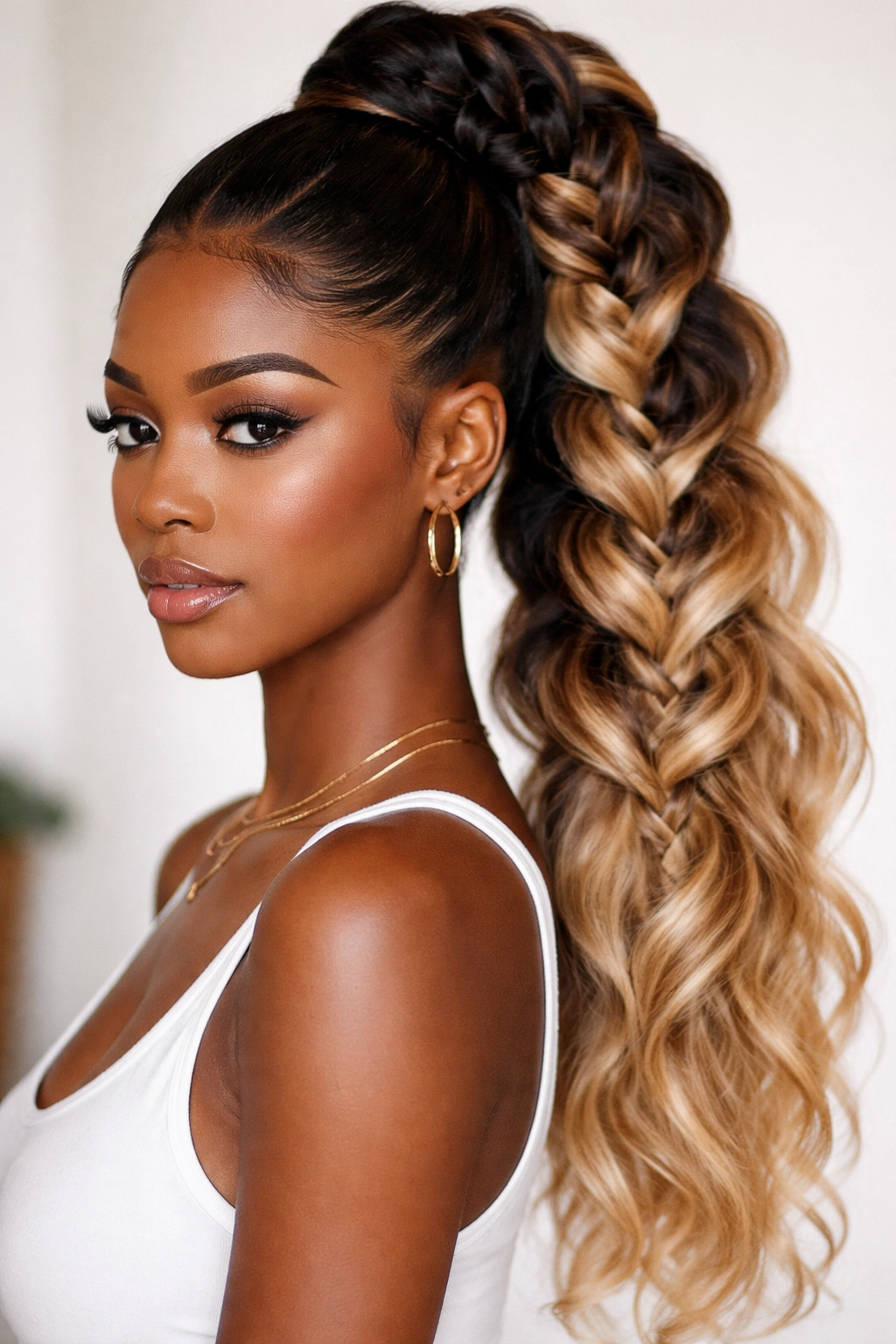
Two-tone butterfly braid ponytails are where color starts doing some useful work. A darker root with a lighter length, or two closely related shades woven together, brings out the butterfly loops because the texture shows up more clearly when the tones shift.
The trick is keeping the color story tight. If the shades are too far apart, the style can look busy. A warm brown mixed with honey tones feels softer than a black-and-blonde split, unless you want something bold and graphic. Either way, the ponytail becomes more dimensional.
Good color pairings
- Black and dark brown for a subtle lift
- Auburn and copper for warm depth
- Honey blonde with chestnut for a softer contrast
Color also changes the way light hits the braid pattern. That’s the real payoff. The loops look more obvious, and the whole ponytail gets a little more movement even when it’s still.
13. Curved Swoop Butterfly Braid Ponytail
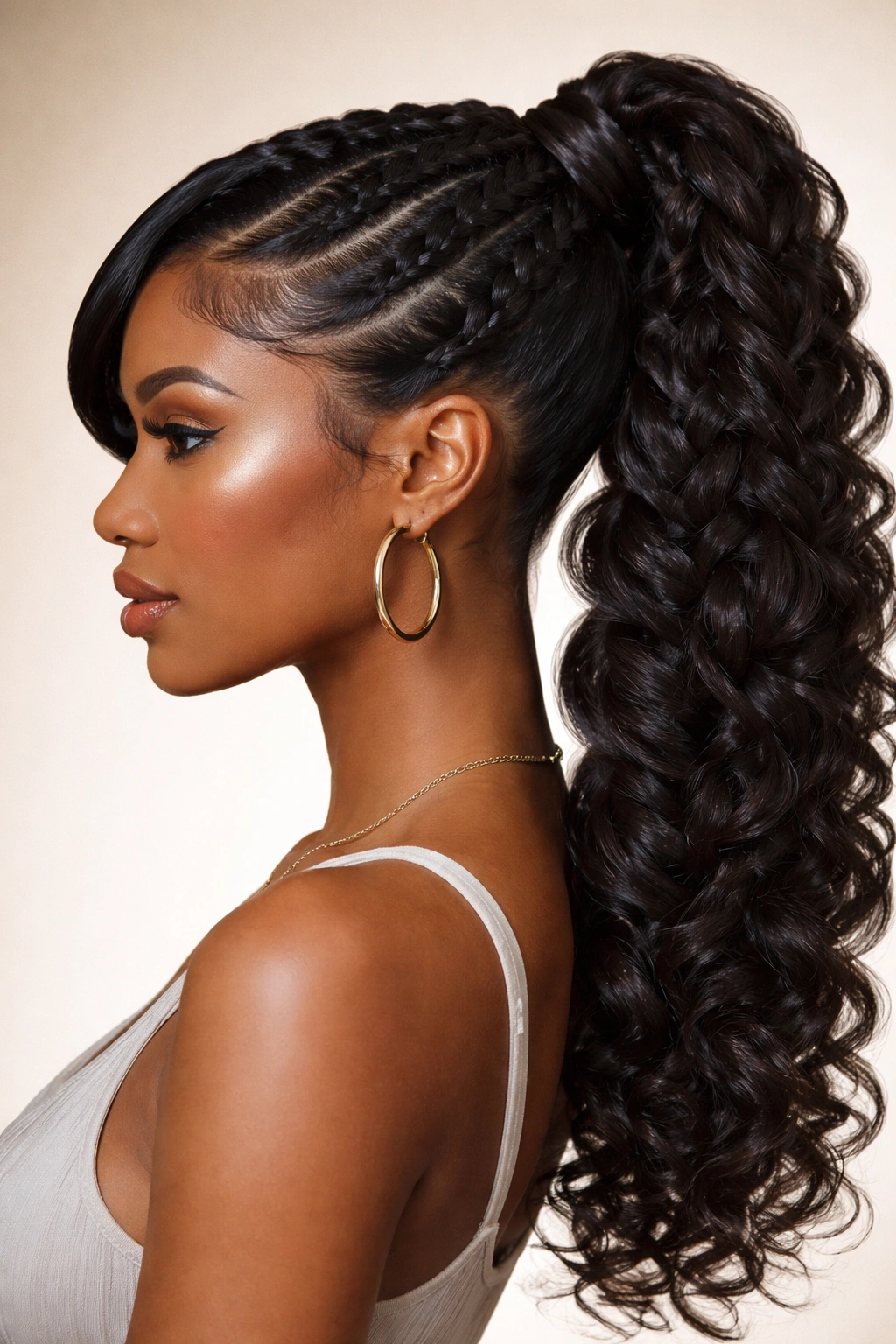
A curved swoop across the front gives butterfly braids a more sculpted shape. Instead of a straight part or a simple side section, the line bends gently, which makes the hairstyle feel tailored to the head rather than dropped on top of it.
This is one of the prettiest choices if you like face-framing detail. The swoop can travel from a temple braid into the ponytail base, or it can sit as a thick front section that melts into the rest of the braid pattern. Either way, it draws the eye in a soft arc.
How to use it well
- Keep the swoop smooth and brushed through before braiding
- Let the curve start higher on the head if you want more drama
- Keep the ponytail itself slightly fuller so the front and back feel balanced
The curved line makes the style feel thoughtful. That’s what I like about it. It has shape, not just length.
14. Bubble-Section Butterfly Braid Ponytail
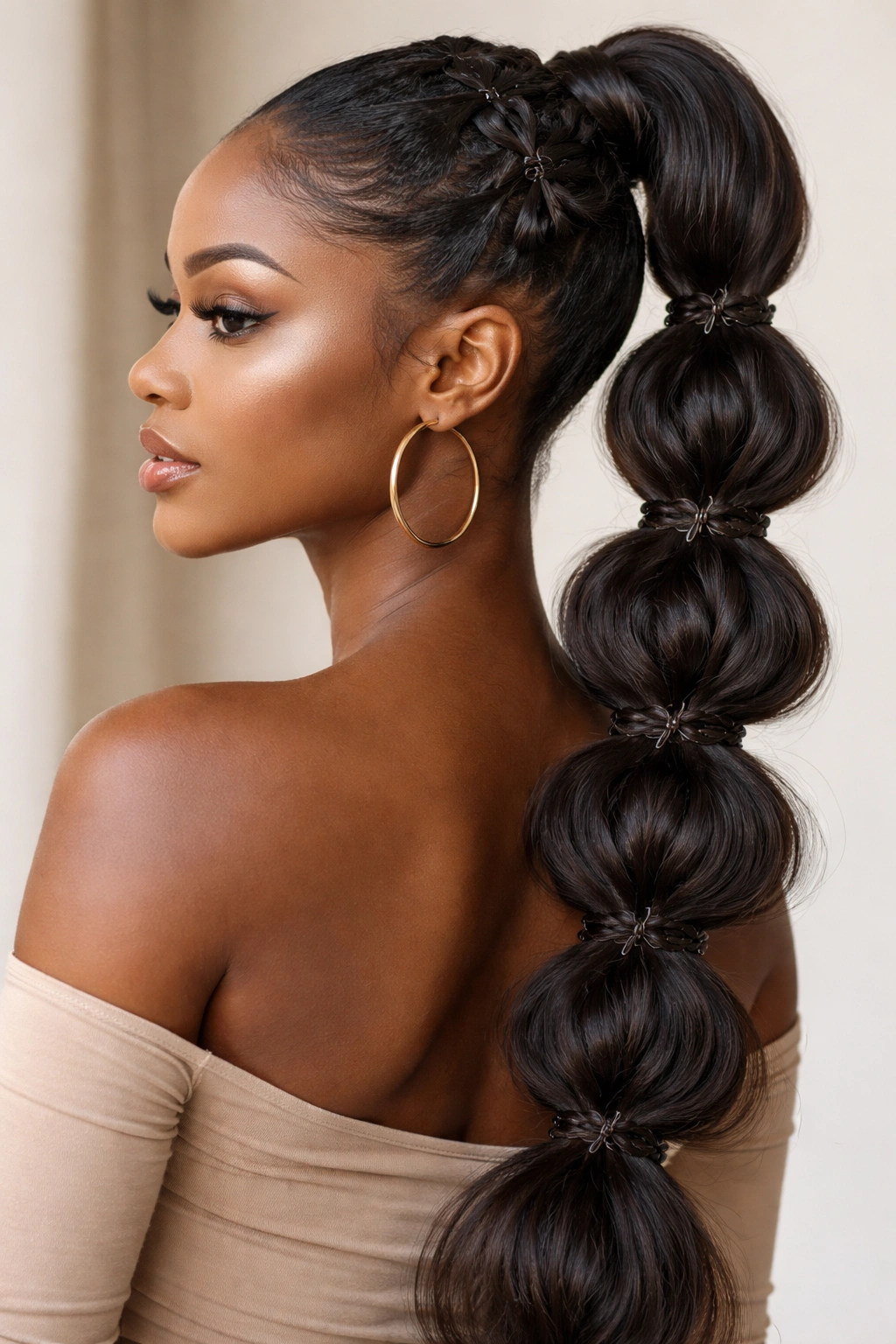
A bubble-section butterfly braid ponytail gives you playful shape without needing extra hair all over the place. The ponytail is divided into spaced sections, and each one gets a little puff or rounded shape. Then the butterfly loops sit inside or between those sections, creating a layered look that feels fun and a little unexpected.
This style works best when the ponytail is long enough to show the bubbles clearly. A short version can still work, but the shape reads better with length. You can keep the bubbles even, or make the section spacing slightly irregular for a more relaxed effect.
Small details that help
- Use clear elastics or braid wraps between sections
- Keep each bubble the same fullness if you want a clean finish
- Add a few curls at the ends so the shape doesn’t stop too abruptly
It is not the most serious ponytail in the bunch. That’s the point.
15. Waist-Length Butterfly Braid Ponytail
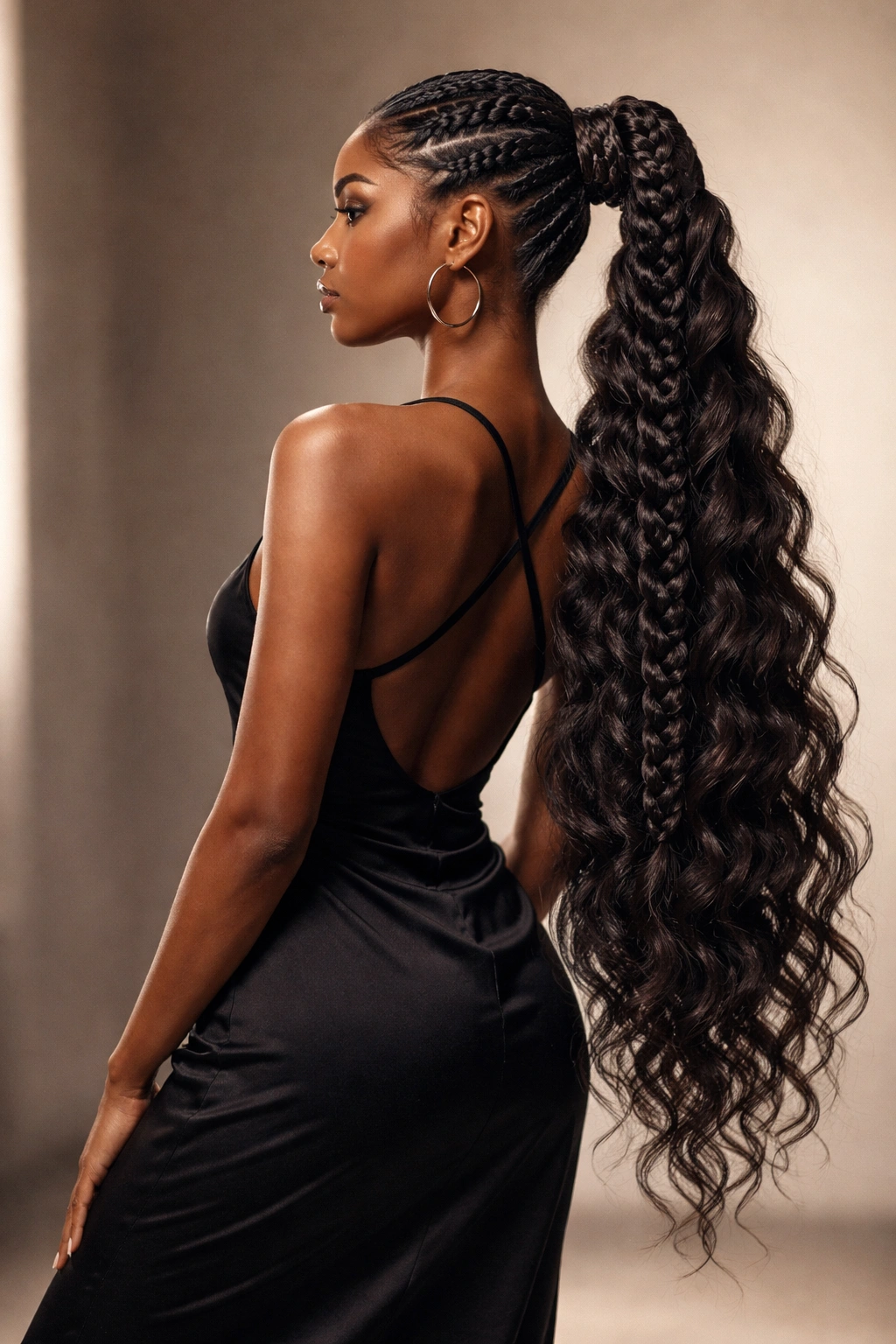
Waist-length butterfly braids are for women who want drama, period. The length alone changes how the style moves when you walk, sit, or turn your head. Add a ponytail base and the whole look becomes a long, swinging curtain of texture.
This version demands good prep. Heavy hair should be anchored well, and the length has to be balanced so it doesn’t drag or pull. That means the ponytail can’t be an afterthought. If the base is weak, the whole thing feels off by lunchtime.
What makes it worth it
The visual payoff is huge. The loops are more visible because there’s so much length to carry them, and the ends can be curled, braided out, or left loose depending on the finish you want.
This is a bold style, but not a noisy one. It has presence. Different thing.
16. Shoulder-Length Butterfly Braid Ponytail
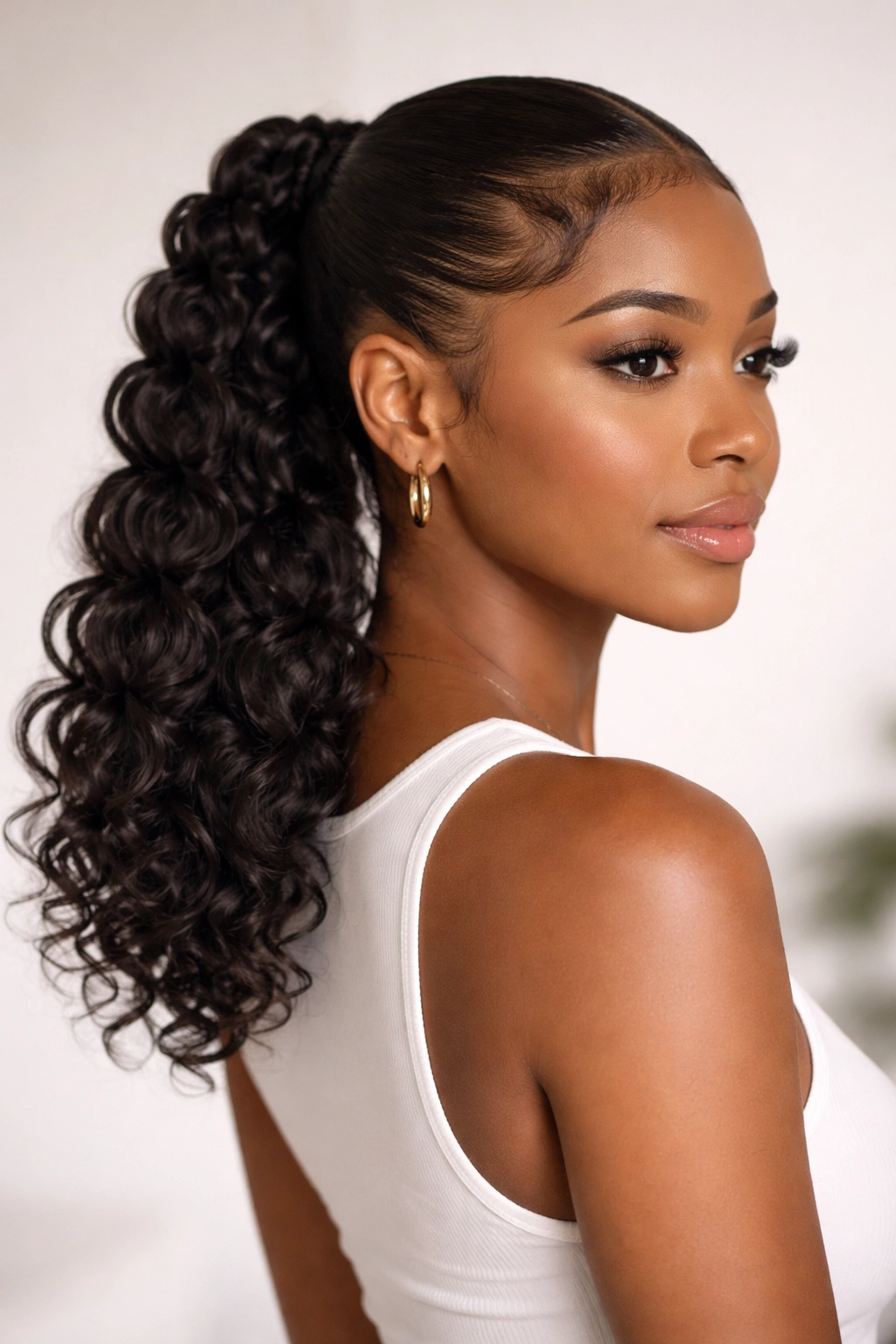
Shoulder-length butterfly braid ponytails are underrated. They give you enough length to show the style properly, but they don’t swing around with the same weight as waist-length braids. That makes them easier to live with, especially if you work with your hair a lot or just don’t enjoy managing extra-heavy braids.
The shoulder-length version also shows off the butterfly loops more clearly because the braids don’t get lost in too much length. Every loop reads fast. That makes the texture the star.
Good reasons to choose this length
- Lighter feel on the scalp
- Easier to pin up or tuck away
- Less friction against clothing and jackets
- Less tangling at the ends than extra-long versions
If you want a style that sits between casual and polished, this length is a smart middle ground. It doesn’t ask for much, and it gives a lot back.
17. Side Ponytail Butterfly Braids
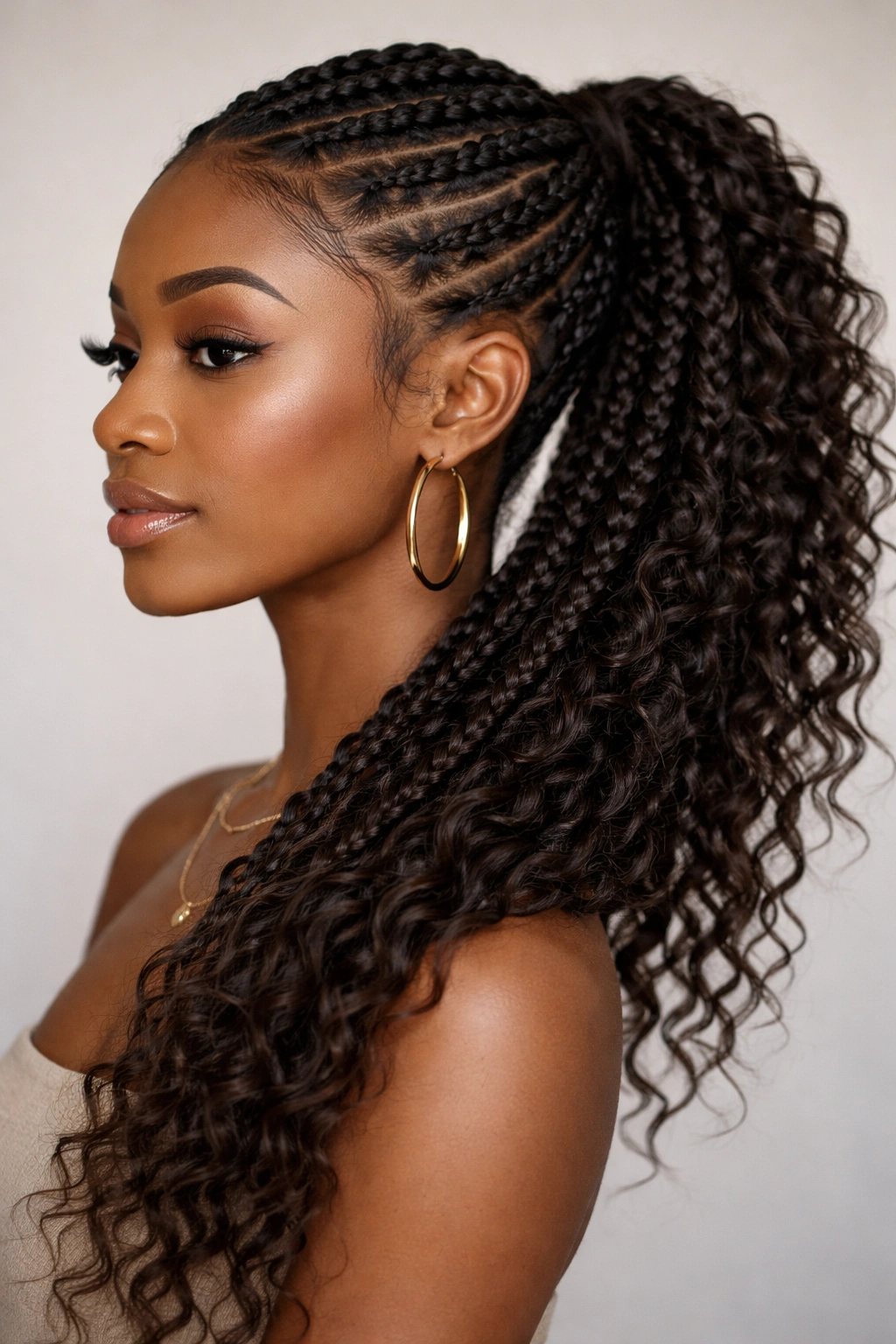
A side ponytail brings a little flirtation to butterfly braids without making the style childish. The weight shifts to one side, which gives the face a softer frame and lets the length fall over the shoulder in a way that feels very deliberate.
This is especially nice when the braids are medium to long. The side placement creates a diagonal line that breaks up the shape of the head and makes the whole style look more dynamic. It also pairs well with long earrings, which, honestly, is half the fun.
Where this style shines
A side ponytail works for dressy events, but it can also be worn casually if you keep the braid size medium and the part neat. The style is strong enough on its own, so you do not need a lot of extras.
One braid wrapped around the base is enough. More than that and it starts to crowd the shape.
18. Cornrow-Into-Ponytail Butterfly Style
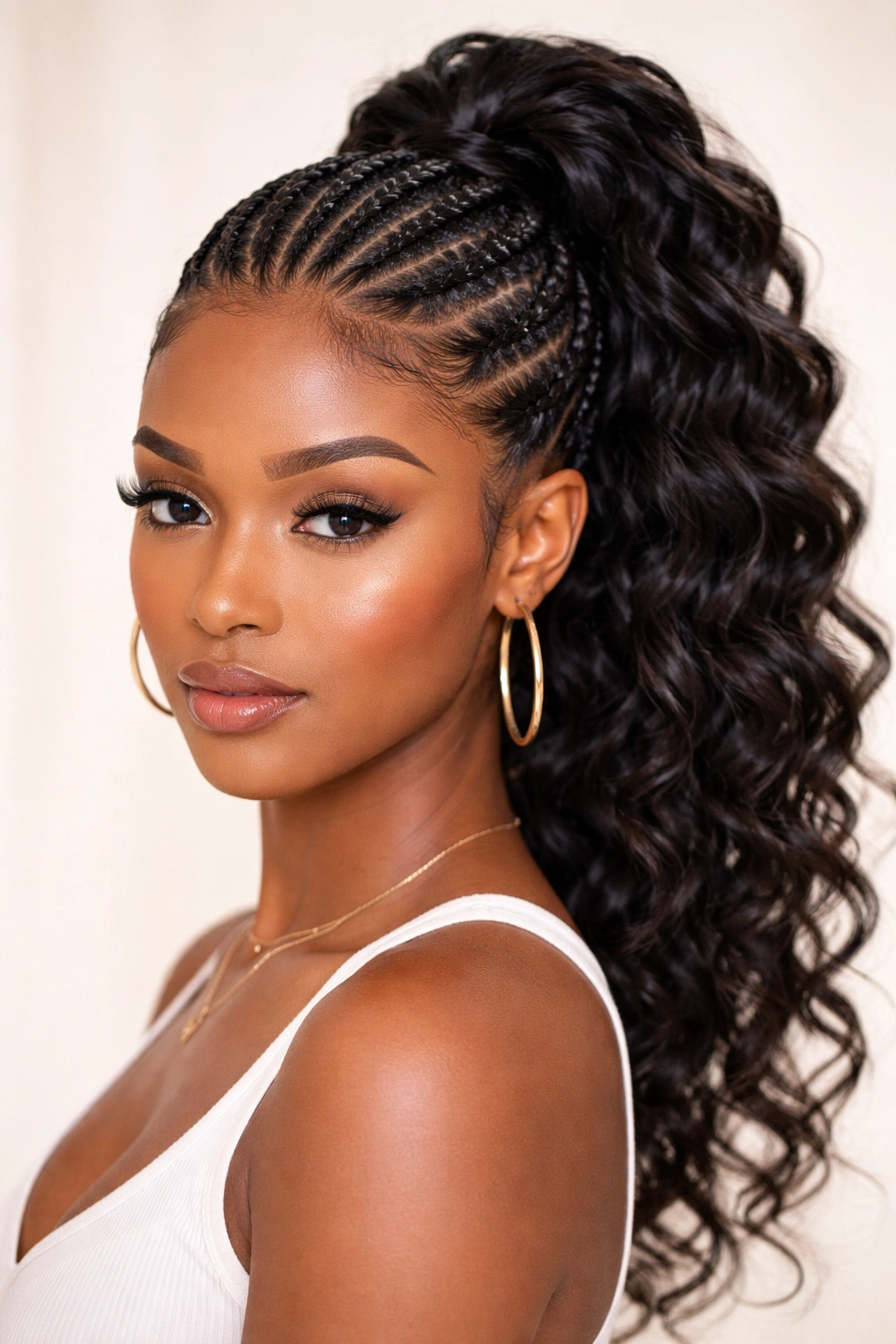
Cornrow foundations make butterfly braids feel secure from the start. The rows feed neatly into the ponytail, which gives the style a strong backbone and helps it last longer without looking messy at the crown. If you want structure, this is it.
The cornrows can run straight back, curve into the ponytail base, or angle slightly for a more custom look. Once they reach the ponytail, the butterfly braid texture can take over and do the softening work. That mix of crisp and loose is what makes the style so useful.
Why it holds up well
- The front stays neat longer
- The base feels anchored
- The braid pattern looks intentional even as the style ages
- The ponytail can be thick without overwhelming the head
This is the kind of style I’d pick when I want fewer surprises. It’s sturdy. And sturdy matters.
19. Butterfly Braid Ponytail with Layered Curly Fringe
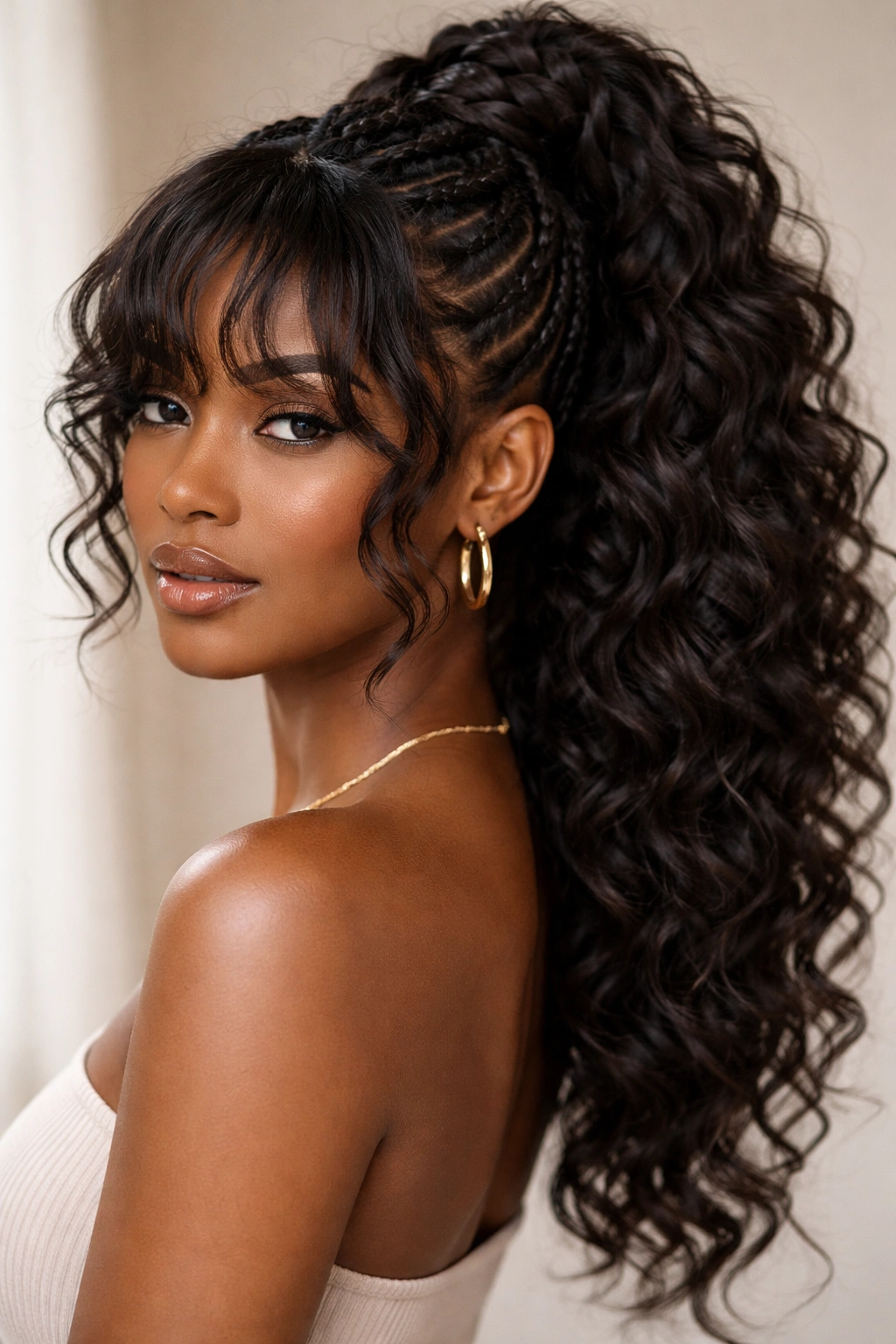
A layered curly fringe gives butterfly braids a softer front story. Instead of a single flat edge or a severe slick-back, you get pieces that sit at different lengths around the face. That framing makes the ponytail feel more romantic and less rigid.
The curls can be synthetic, human-hair pieces, or just the ends of the style left loose and shaped. The point is movement near the face. Once the front softens, the ponytail can stay full and bold behind it.
The part people miss
This style is about balance. If the fringe is too thick, it starts to hide the braid work. If it’s too sparse, the front can look unfinished. A layered approach fixes that by letting the shortest pieces shape the face while the longer ones connect back to the ponytail.
It’s one of the prettiest options when you want softness around the forehead without giving up the drama in the back.
20. Chunky Butterfly Braid Ponytail with Gold Cuffs
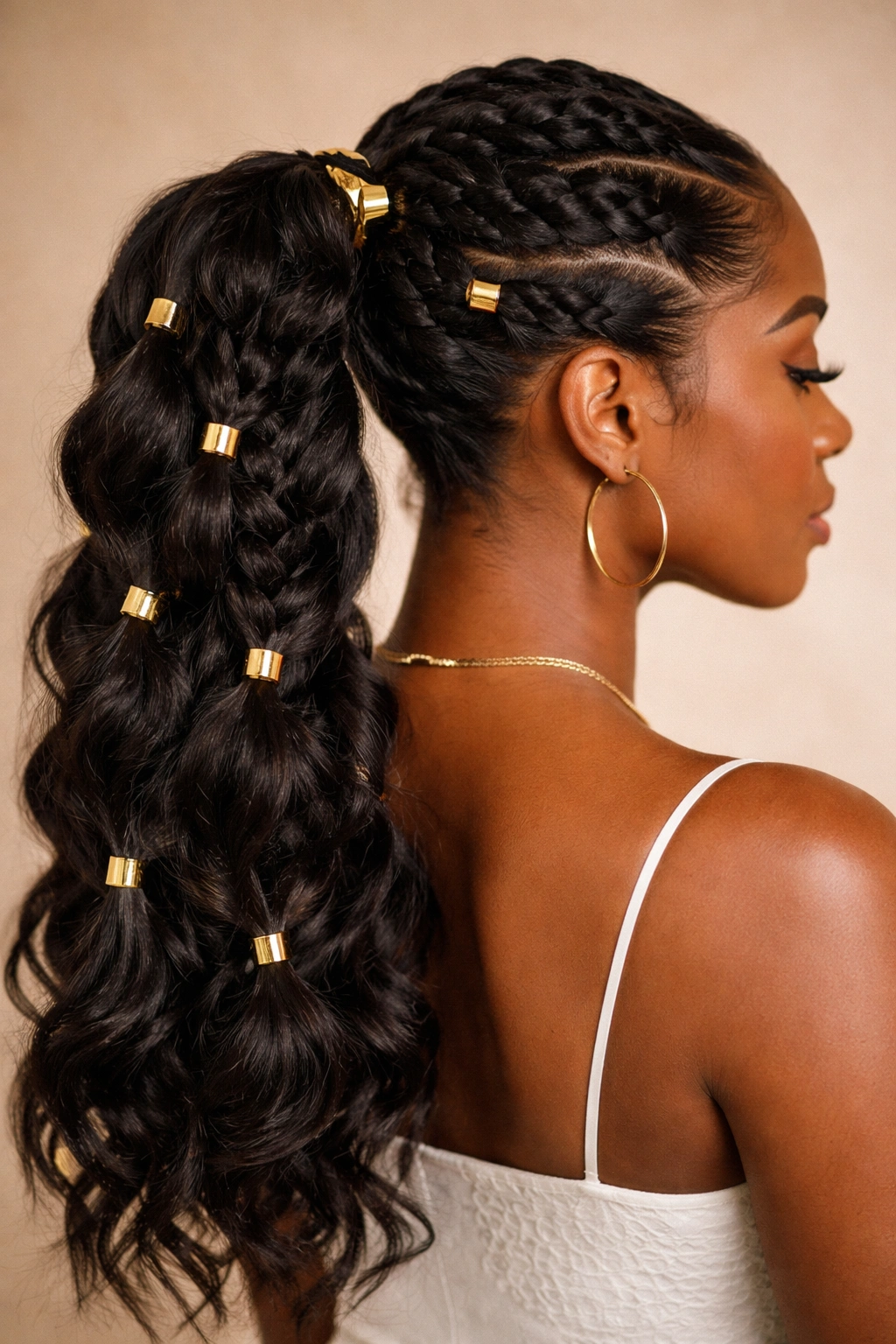
Gold cuffs and chunky butterfly braids go together because both parts have presence. The cuffs catch the eye in little flashes as the braids move, and the larger braid size gives them enough room to sit without looking crowded. This is a style with texture and shine, which is a good combination when you want the ponytail to feel dressed up.
The cuffs should be spaced out. Too many, and the braid loses its shape. A few near the front and a couple closer to the ends is usually enough. You want accents, not armor.
What makes it work
- Chunky braid sections keep the look bold
- Gold cuffs warm up darker braid colors
- A medium-high ponytail gives the accessories room to show
This one feels festive without needing a special occasion. That’s one reason I like it so much.
21. Low Sleek Butterfly Braid Ponytail with Romantic Loose Curls
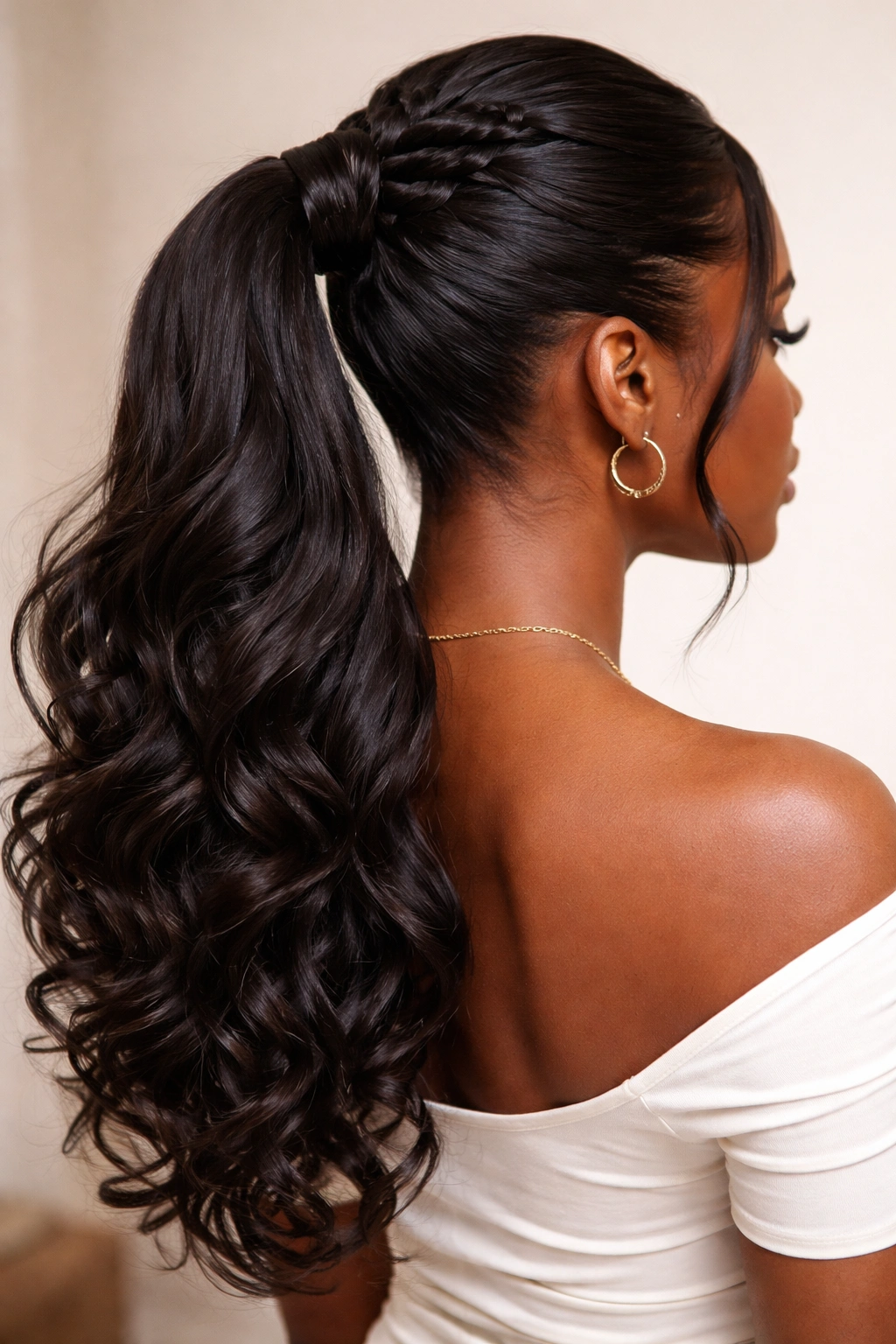
A low sleek butterfly braid ponytail with loose curls at the ends is one of the easiest styles to wear for a long stretch. The base stays neat at the nape, the braid pattern stays readable, and the curly ends soften the finish so it doesn’t feel too formal.
The contrast matters here. The top is controlled. The bottom is freer. That gives the style a little movement without sacrificing structure. It’s a good option if you want something feminine, tidy, and not too heavy-looking.
A few smart choices
Use a fine-tooth comb only where the base needs smoothing. After that, hands are better than over-brushing. A little mousse on the loose curls helps them keep shape, especially if the air is dry.
This style is calm, but not boring. That’s the sweet spot.
22. Mixed-Braid Pattern Butterfly Ponytail
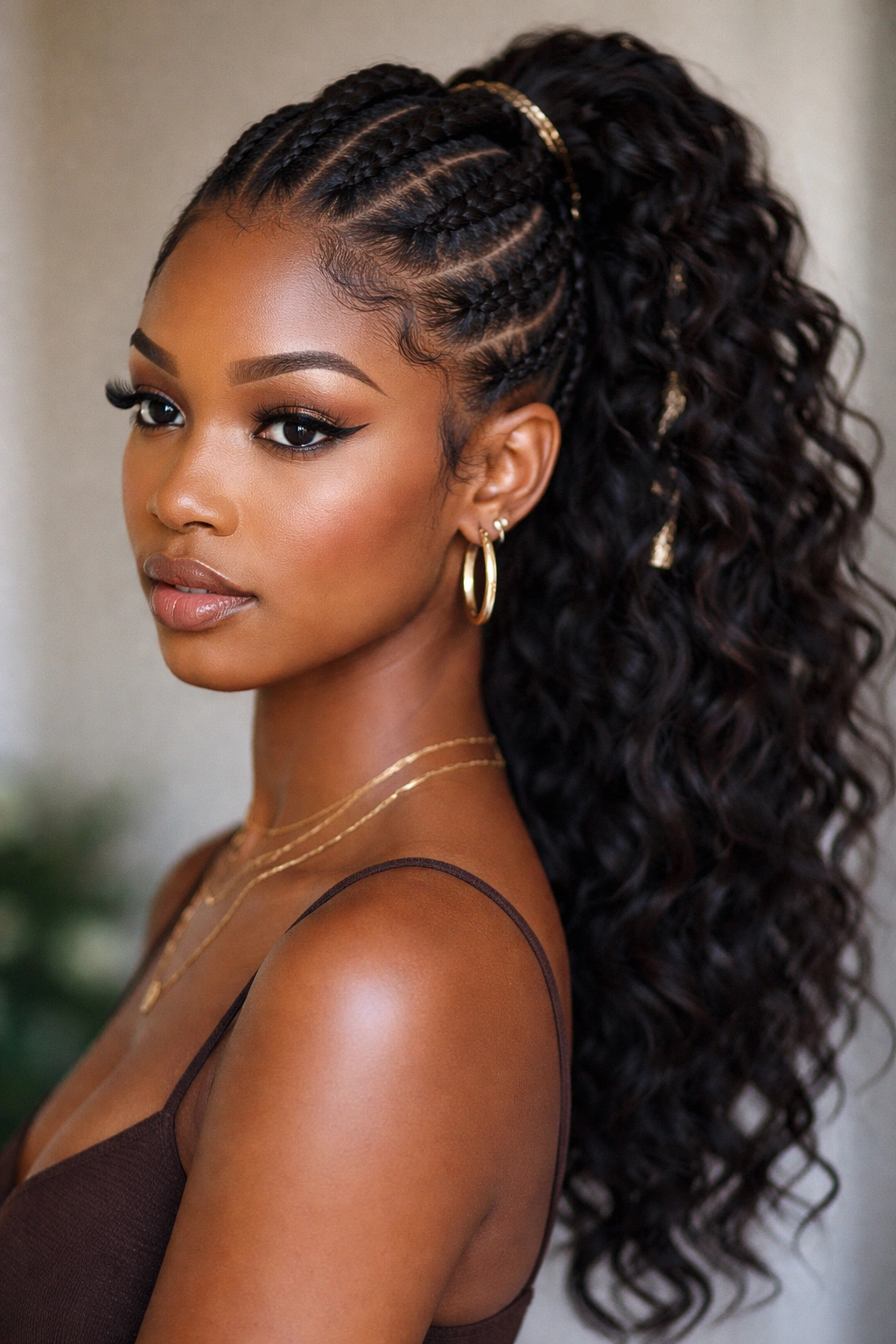
Mixed braid patterns bring real depth to a butterfly braid ponytail. You can blend cornrows at the front, medium butterfly braids through the middle, and a thicker ponytail section in back. The result has rhythm. The eye keeps moving because the texture keeps changing.
This is a smart choice if you like intricate hair that still has a clear shape. It also lets a stylist use different braid sizes where they make the most sense. Smaller braids around the hairline can help the front sit flatter, while larger braids in the ponytail add volume and visual weight.
Why it feels custom
No two parts of the head are doing the same job. The front frames, the middle supports, and the back carries the length. That division makes the style feel built, not just assembled.
If you want a ponytail that looks detailed from every angle, this is one of the strongest picks in the whole set.
23. Soft Everyday Butterfly Braid Ponytail
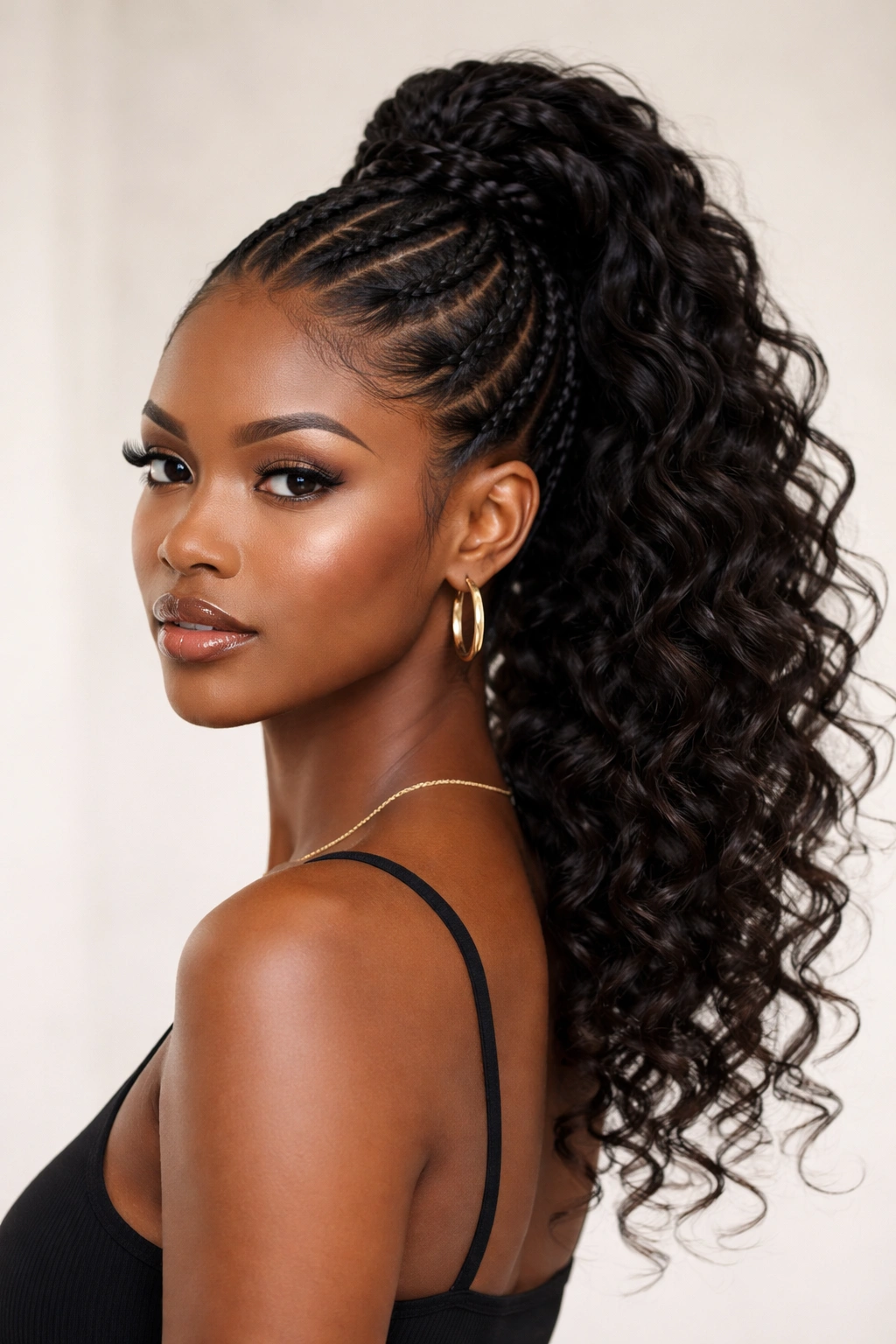
A soft everyday butterfly braid ponytail is the style I’d choose when I want the look to disappear into life instead of taking it over. The braids are neat, the loops are gentle, and the ponytail sits in a way that feels comfortable from morning to night. No drama. No fuss.
That does not mean plain. The best everyday version still has texture, maybe a few loose strands near the hairline or a slight curl at the ends. It just avoids anything too heavy or too precious, which makes it easier to wear with jeans, a blazer, a sundress, or whatever else is already in your closet.
Keep the finish clean, but not tight. Let the style move a little. That’s where the charm lives.
